
PLUS
- The RS 275 Cup Premium is the top-of-the-range special edition RS 275 Trophy R with a slightly softer edge, meaning it keeps sound deadening and its rear seats to save you from going mad during commuting. There are also adjustable two-piece Recaros, 19-inch wheels, an Alcantara steering wheel, titanium exhaust, stickier tyres, and a ‘Zamac’ gearknob to help justify its $9000 premium over a regular RS 265
- In sport mode the car sounds deliciously evil, with pops and crackles from the exhaust. Great if you’re in to a bit of theatre.
- The feedback from its controls makes you feel like a driving god on windy roads… a place where few cars can match it.
- After being facelifted in 2014 the Megane is a right looker, mixing toughness and aggressiveness nicely
- The ride is firm. Expect to bobble around over poor roads and feel pretty much everything through the seat.
- Shifting ain’t as fun as it should be, as the transmission feels a little notchy. There are better manual gearboxes out there if you’re a DIY diehard.
- Renault’s already superseded the standard Megane overseas, so expect a new RS to follow. If it turns out to be worse, that’s great if you’re interested in buying this one, but bad if you’re a sucker for the latest and greatest.
- Its idiosyncrasies. The slanted speedometer dial makes it impossible to tell your speed from a glance, so you must have it displayed on the LCD screen. While the cruise control switch is located in an awkward position on the centre console.
- Nine grand is a whole lot more to pay over the regular Megane RS, a car which offers 90 per cent of the experience.
Mark Skaife turns 49 today – happy birthday Skaifey!
To celebrate we’ve dug up one his finest moments, a scorching effort in the Nissan R32 Skyline GT-R to take pole for the 1991 Bathurst 1000.
Aged just 24, Skaife lit up the timesheets with a 2min12.63sec lap, more than 1.2sec clear of Mark Gibbs in another R32 GT-R and more than 2.2sec clear of Glenn Seton in the Peter Jackson Ford Sierra Cosworth RS500.
Even at this young age Skaife had earned plenty of success, including winning the Ford Laser one-make series in 1986, the Australian 2.0-litre Touring Car Championship in 1987 and the Class 1 Australian Off Road Championship in 1988.
In the early 1990s his career exploded, winning back-to-back Bathurst 1000 and Australian Driver’s Championships in 1991 and 1992 and his first Australian Touring Car title in 1992.
He would go on to win a further four Bathurst 1000s and V8 Supercar titles making him one of Australia’s most successful drivers.
Mark Skaife can seriously, seriously drive.
With five V8 Supercar titles and six Bathurst 1000 victories under his belt, maybe that’s stating the bleeding obvious, however who knew he was such a hoon?
This promo film is from the release of the HSV VY II Clubsport, which scarily enough was over 12 years ago. The big news was the engine upgrade to 285kW, though there were also suspension tweaks and fairly cosmetic changes, with sharp, angular edges replacing the VX’s curves.
Skaifey wastes no time in demonstrating the HSV’s talents, however based on how he treats it, we’re assuming it wasn’t his company car.
Ever wondered what current cars superheroes would drive to fight crime? UK website, CarWow, have shown off their Photoshop skills to give us a super-cool superhero car series.
BATMAN: BMW M2
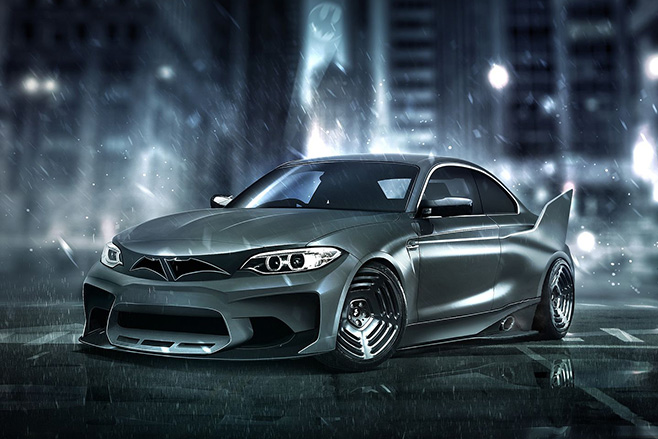
Batman’s packed away the heavy artillery and picked up a small coupe to scour the streets of Gotham. Don’t be fooled by its compact dimensions; this hunkered-down city car is a ballistic missile in Gotham’s crime-ridden alleys. The look is completed with bat ear-shaped tail fins and a side-mounted grappling hook to pull the car through tight corners.
SUPERMAN: BUGATTI CHIRON
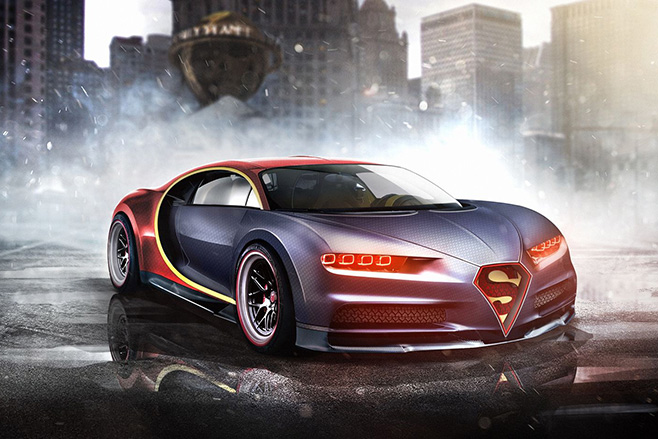
Superman is blessed with abilities well beyond any ordinary superhero, and now he has the car to match. The sat-nav is loaded with an incredible point of interest database, allowing typically demure Clark Kent to locate the nearest phone booth for a quick, covert transformation. Although, we think the car’s colour scheme might give him away.
WONDER WOMAN: LAMBORGHINI HURACÁN
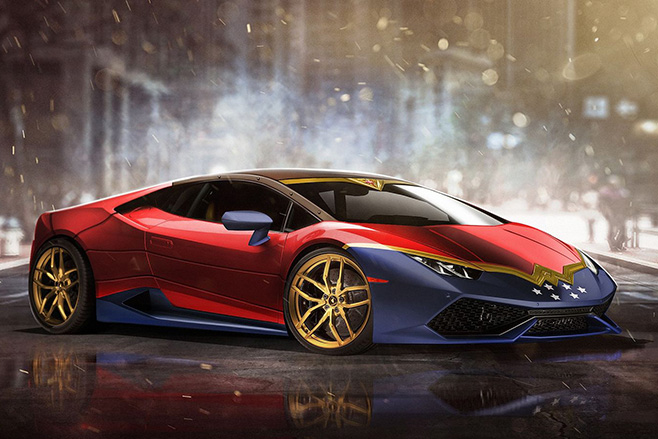
A striking, slender supercar with these muscular proportions is a look only befitting an Amazonian princess. Designed in the image of the Star-Spangled Banner, with gold accents adorning the wheels, bonnet and windscreen, the Lamborghini Huracán is an impressive machine sure to keep the American people safe.
CAPTAIN AMERICA: FORD MUSTANG GT350R
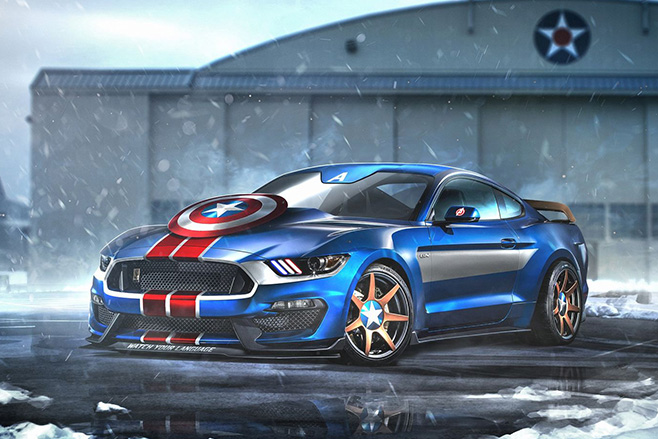
All-American, super-soldier Captain America needs a truly iconic ride to compliment his patriotic spirit. Enter the Ford Mustang GT350R. This Mustang has been modified with some serious racecar technology – carbon fibre air dams and skirts, and a modified raised hood scoop to mount his indestructible shield. Police-inspired day-time running lights are the icing on the cake.
IRON MAN: CHEVROLET CORVETTE Z06
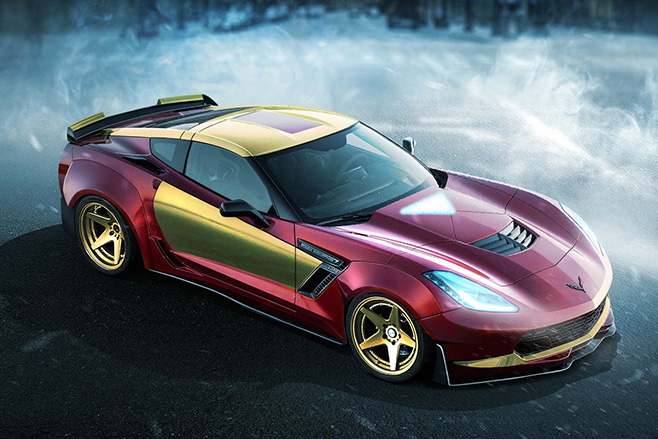
Iron Man’s suit is powered by the latest technology out of Stark Industries, so why shouldn’t his car be too? The Chevrolet Corvette Z06’s push-rod V8 has been replaced with an arc reactor and electric motors for lightning quick acceleration. It even dons the same blue and yellow Iron-man livery and a bolt-on body kit for the authentic neo-industrial look.
SPIDER-MAN: FERRARI 488 SPIDER
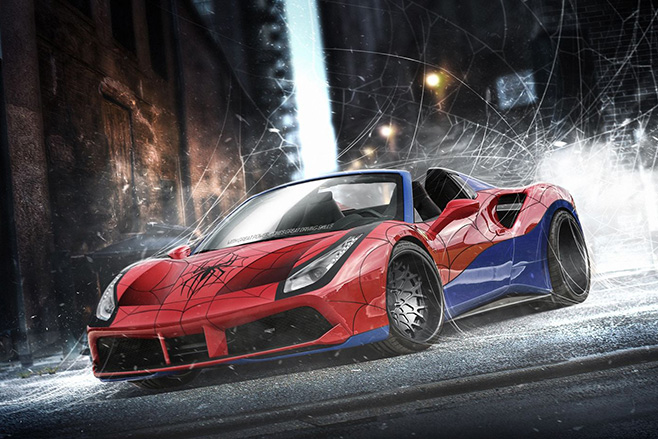
Deep-dish rims and low-profile tyres on this custom Ferrari 488 tour-de-force is a new look for this superhero. The 488 Spider’s masked headlights, blue and red contrast paint job and dramatic contours lend the car a lean, athletic appearance. Not unlike the web-slinger himself. But here’s the real story – an open-air design allows Spidey to exit the car at a moment’s notice. Of course, you couldn’t go past the name match either.
WOLVERINE: AUDI R8
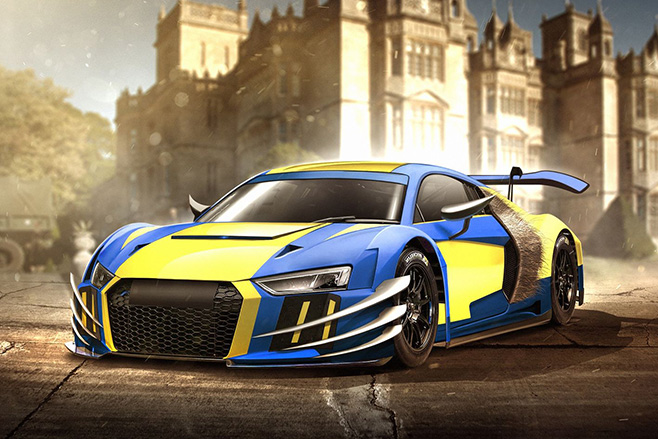
With hairy side blades replacing the factory carbon-fibre design, this Audi R8 certainly speaks to Wolverine’s prickly persona. The tall rear wing and devil-eared door mirrors complete the sporty-yet-deranged look. And check out the front. Those silver blades look sharp!
DEADPOOL: FORD MONDEO/FUSION
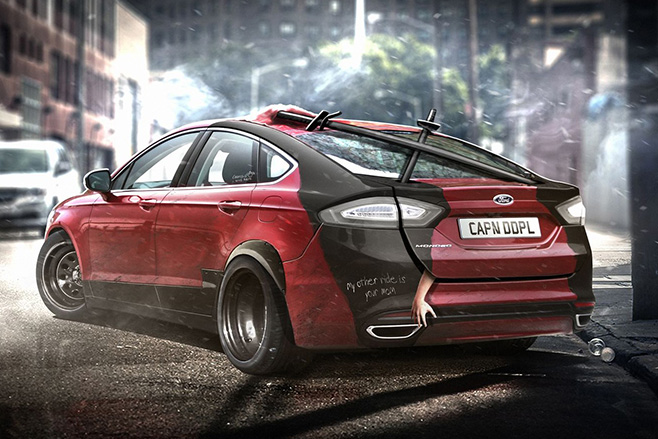
Deadpool’s loud-mouth, cheeky persona has no direct automotive equivalent, so it may not be surprising Deadpool went for a less obvious choice – a sportback family car. The paintjob is your ominous black-and-red standard fare, but the mounting points for his two samurai swords are quite an innovation. Wait. Is that an arm hanging out of the boot?
THE HULK: MERCEDES G63 AMG 6×6
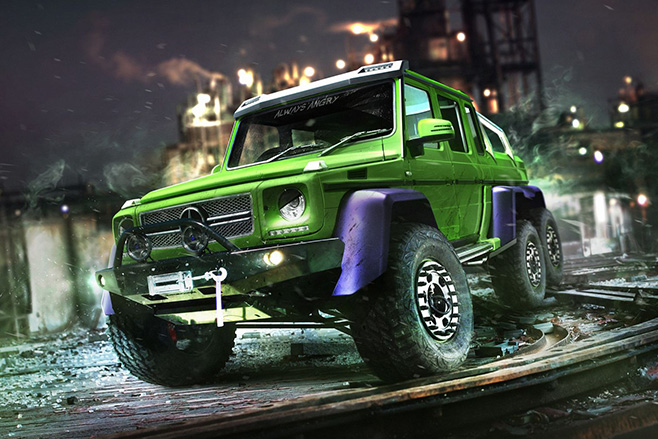
When mild-mannered Dr. Bruce Banner transforms into the Hulk, there’s hardly a doorway to fit him let alone a car. Enter the equally monstrous Mercedes G63 AMG 6×6 truck. Sprayed in iridescent green and splashed with purple across the wheel arches, you know this thing means business.
AQUAMAN: TOYOTA MIRAI
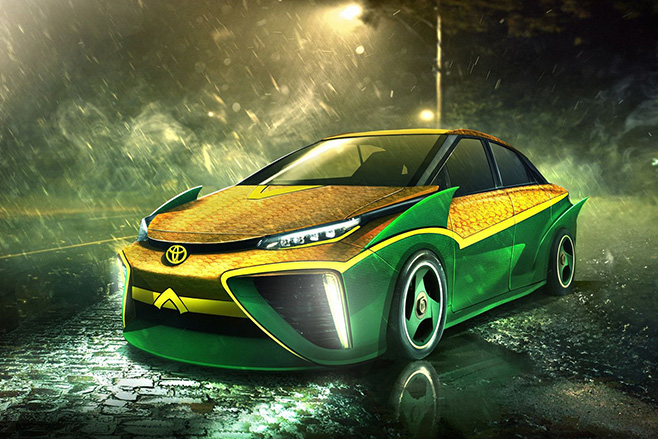
Aquaman opted for what is the only sensible vehicle for an amphibious hero – a hydrogen-powered hatchback sporting some trendy fins. This isn’t just your run of mill eco-car though. This particular Toyota Mirai is in covered in waterproof and bulletproof scales making for safe undersea crime-fighting.
Looking for more cool concepts? Check out our list of 12 cartoon cars here.
Grip, balance, communication, power delivery – these are the aspects we bank on to be able to drive a car quickly, but safely, within its limits.
Last week we tabled five cars to drive flat out and now we’ve gather a group that don’t quite align with one or more of the above aspects. Perhaps they are friendlier to drive below eight-tenths, or simply require race-driver levels of talent to keep them in line.
Either way, it’s best to approach these five with respect.
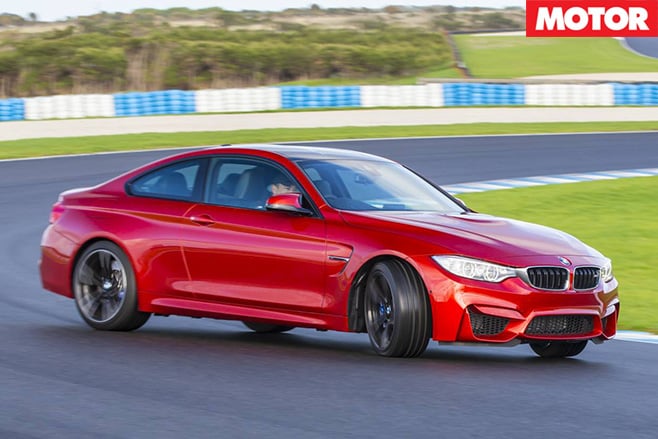
1. BMW M3/M4
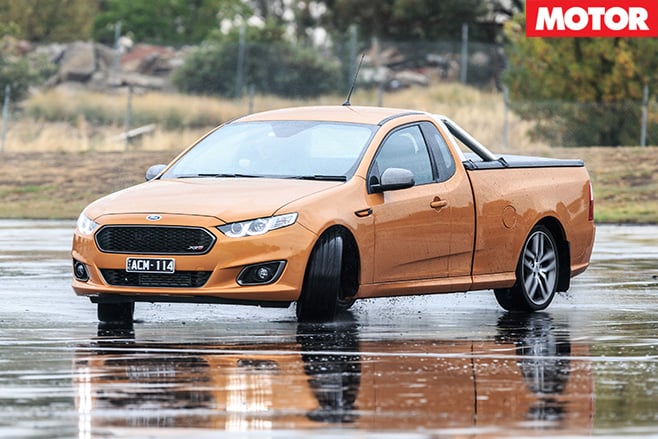
2. Ford Falcon XR6 Turbo ute
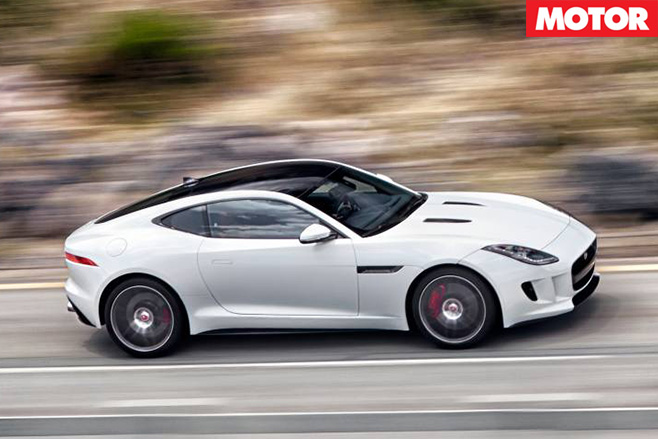
3. Jaguar F-Type R
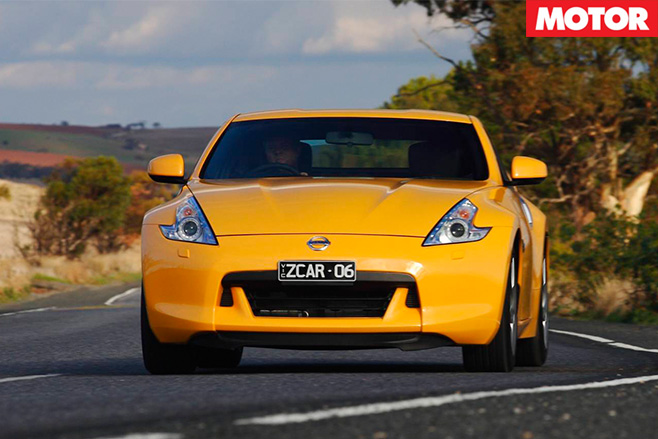
4. Nissan 370Z
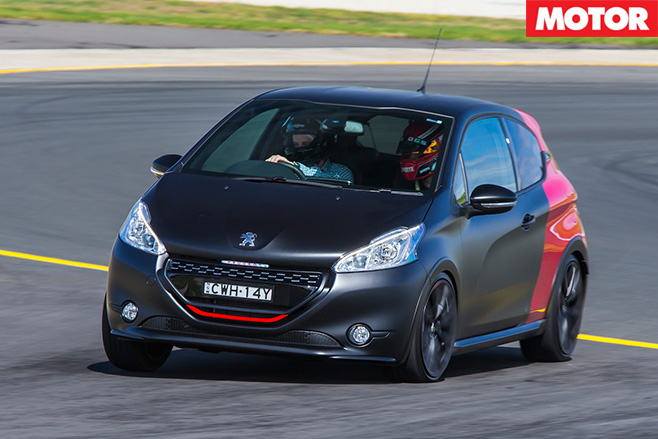
5. Peugeot 208 GTi 30th Anniversary
Tesla Motors revealed these first details at the unveiling of its fourth and most crucial new model yet overnight in the US. The Tesla Model 3 will enter the hugely competitive, circa=$60,000 mid-size luxury car segments contested by the likes of the Audi A4, BMW 3 Series and Mercedes-Benz C-Class.
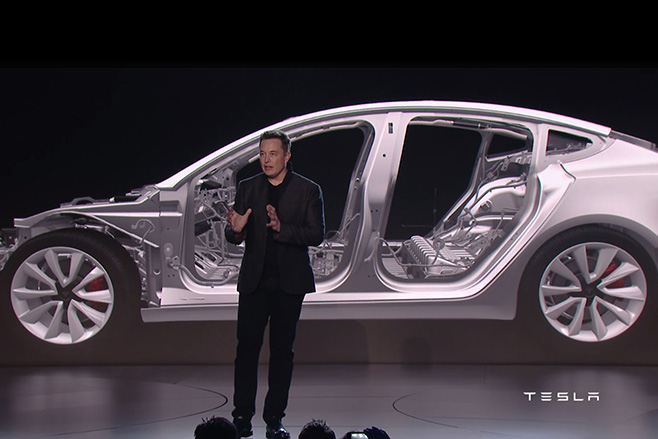
Tesla CEO Elon Musk confirmed a US$35,000 starting price for the Tesla Model 3, which is expected to translate into a $60-70K price tag here. The Tesla Model S sedan and Model X SUV both cost in excess of US$100,000 in the US, a price comparison that showcases the company’s ambitions for its smaller sedan.
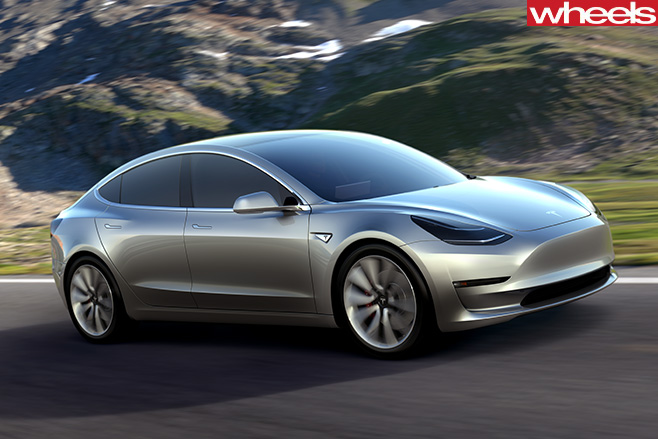
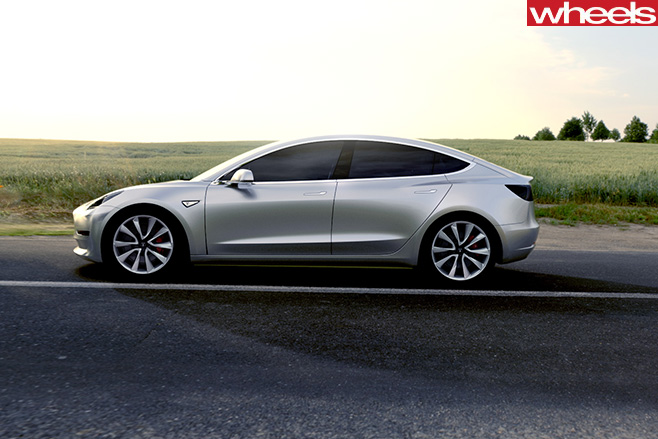
The styling of the Model 3 makes it a clear relative to the larger Model S, particularly with the teardrop-shaped side glass.
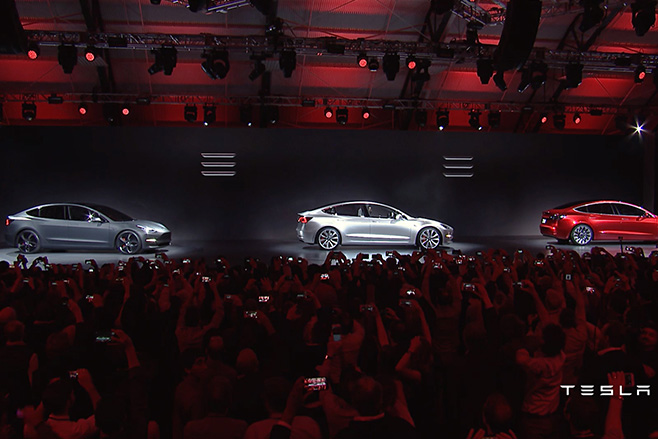
Our first look suggests the proportions aren’t quite as effective as the S’s, though a high roofline promises excellent headspace for up to five passengers.
A single-piece glass roof that runs from the windscreen to the boot is a distinctive design touch that will also guarantee plenty of light in the cabin.
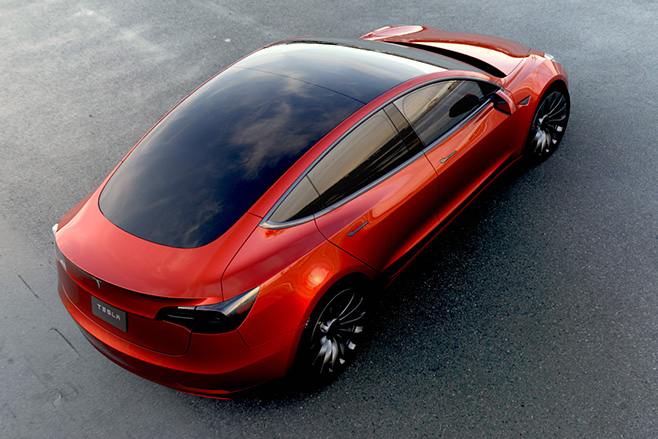
The absence of a regular combustion engine means the Model 3, as with the S, offers boot spaces both front and rear, with Musk claiming its compact sedan will “offer more cargo room than any other gasoline car of similar dimensions”.
Australians will also be pleased to note that Musk added that the car can accommodate a seven-foot surfboard.
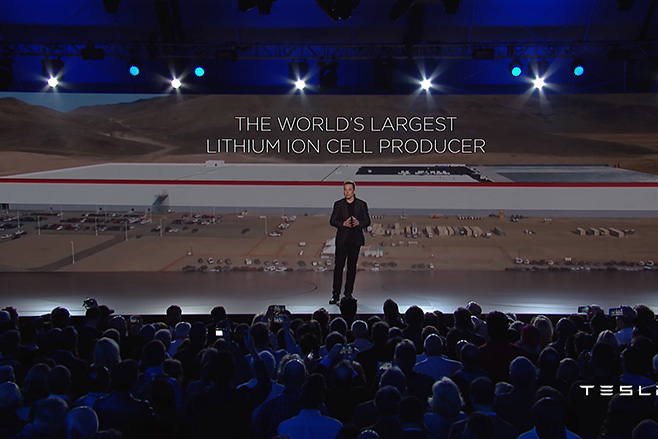
The Tesla Model 3 isn’t set to go into production until at least late 2017. By then, Musk says Tesla will have doubled its high-speed global supercharger network, to more than 7000.
Musk said at the event that the company had received more than 115,000 orders for the Model 3 in the past 24 hours.
Australian orders of the Tesla Model 3 were possible from 31st March, with just a $1500 deposit required.
We’re doing over 200km/h in the new Jaguar F-Type Project 7 on the short main straight of the Navarra circuit in Pamplona, Spain. I’m not sure of the exact speed because there’s a threatening right-hander ahead and this isn’t the moment to start scanning speedos.
The wind is tearing at the top of my head, but the airflow around my bonce feels curiously orderly. My passenger, on the other hand, is hunkered down in his seat because for him a tornado is blowing.
The difference between our comfort levels is down to the single, D-Type-style aerodynamic hump behind my head. The words of the company’s Special Vehicle Operations boss, Paul Newsome, delivered earlier, suddenly come back to me. “Project 7 is a bit of a selfish choice,” he said.
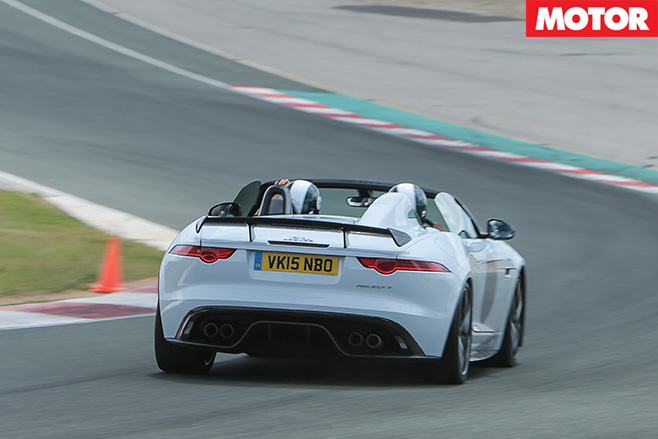
That initial concept has evolved into the car we’re driving today: the Project 7. It’s the most powerful road Jaguar yet, hand-built at the company’s Special Vehicle Operations division and fitted with all the top-end running gear: a specially tuned ZF eight-speed auto, electronic diff, carbon-ceramic brakes, unique-tune adaptive dampers and Jag-specific settings for engine management and chassis stability control.
The Project 7 also has unique springs and anti-roll bars, the most prominent feature being front springs that are a whopping 80 per cent stiffer, to cope with the potential force generated by the brakes and withstand high speed turn-in loads on the soft standard Continental Force tyres. Engineers also moved the Sport and standard suspension settings further apart, to provide good options for short and long-distance use.
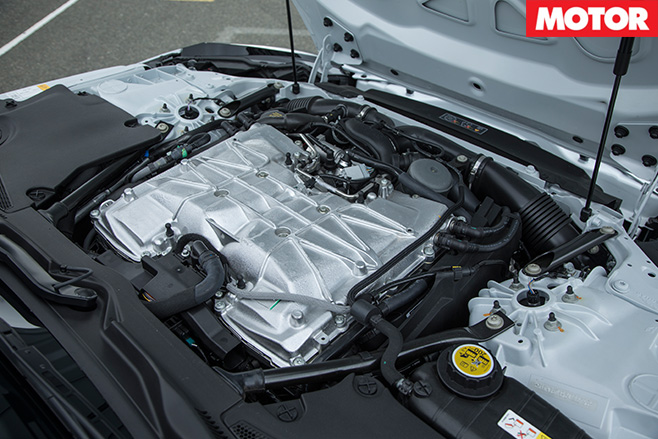
Throw in the effect of a 45kg weight reduction (the ‘roof’ saves 35kg and the seats have race-bred carbonfibre shells) and you get best-yet F-Type straight-line acceleration: 0-100km/h in 3.9sec. The top speed is electronically limited to 300km/h, as with other F-Types.
With the exhaust butterflies open (there’s a special console switch), the car emits a superb bark that turns into a magnificent crackle on the over-run. It’s the one thing that makes you want to slow down.
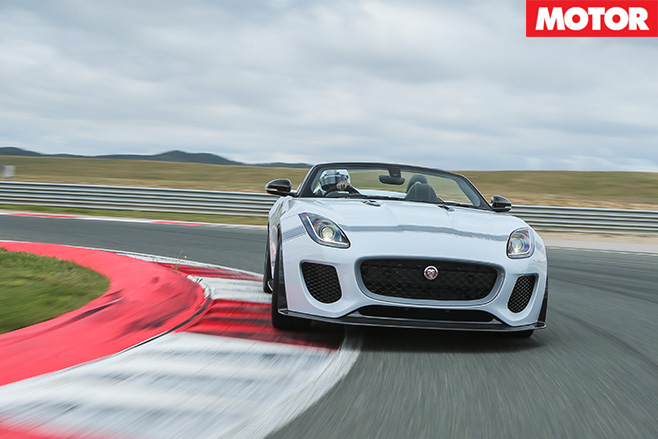
“We increased front negative camber from 0.5 to 1.5deg, to encourage the front wheels to dig in, and we used rear torque vectoring – differential braking of the rear wheels – to make the car turn easily. It’s surprising how much yaw you can achieve with relatively little braking, although the challenge is to make it feel natural.”
SVO engineers also rebalanced the car’s rear-biased aerodynamic downforce by fitting side skirts and a large front splitter, while slightly reducing the effectiveness (and drag) of the boot-lid wing. “You should find the car’s quite a lot more agile than other F-Types,” Newsome said. “The mods we made are most obvious on track.”
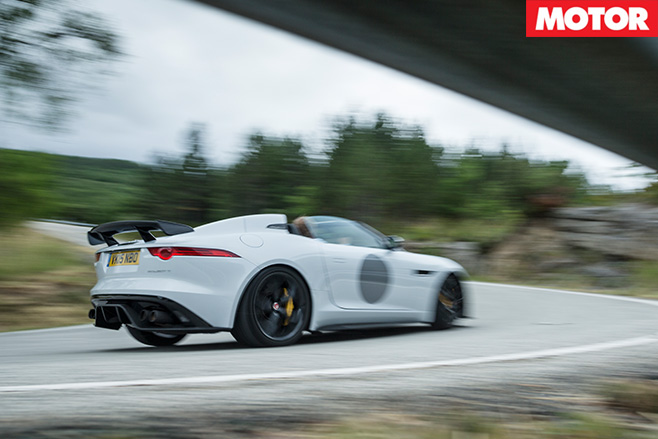
You feel the extra stiffness of the front end within the first 100 metres, along with the almost complete lack of body roll that comes with it. We couldn’t find any Oz-style bumps, but it’s likely the Project 7 is going to feel uncomfortable over such terrain.
On a better note, always present is the powerful initial bite and supreme high-speed retardation of the brakes. The steering feels firmer and a few per cent more communicative than an ordinary F-Type’s, especially when the car is turning. The gearchanges are also very quick, even if you leave the gearbox to its own devices. Bottom line: nothing about the Project 7 changes has harmed the F-Type’s endemic ease of driving.
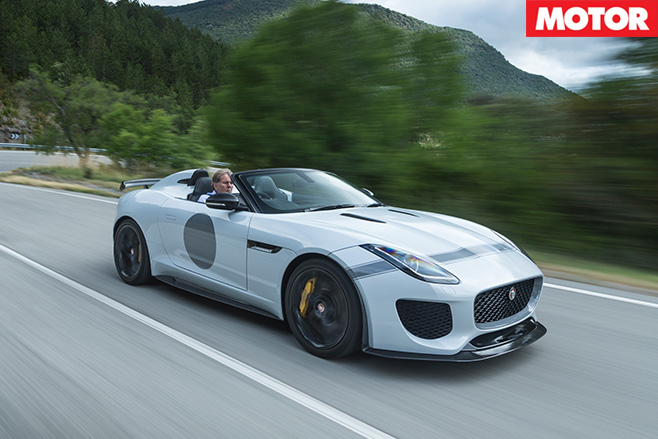
As Newsome promised, the car’s party trick is its supreme stability and grip when plunging at 210km/h-plus into braking areas for 80km/h bends, followed by an almost uncanny ability, for a big car, to turn neatly and fast up against the limit.
That’s the Project 7. Extra agility was promised, extra agility was delivered and a lot more driver improvements came along for the ride.
4 out of 5 stars
Specs Engine: 5000cc, DOHC, supercharged V8 Power: 423kW @ 6500rpm Torque: 680Nm @ 3500rpm Weight: 1585kg 0-100km/h: 3.9sec (claimed) Price: $339,610
TESLA has finally revealed its most affordable model, the Model 3 – the car the company describes as “the final step in the master plan” to create a family of electric vehicles.
After years of build-up and months of hype – which culminated in more than 115,000 fanatical would-be customers slapping down $1500 deposits to be among the first to take delivery – the Model 3 was unveiled in California by charismatic Tesla chief Elon Musk, who was given the now traditional rock star welcome with cheers throughout his presentation.
Priced from $US35,000 (about $A60,000 once local taxes are included), the Model 3 will arrive in Australia early in 2018 – at which point rival carmakers are expected to be providing more serious competition to the fledgling brand that has helped kick-start electric motoring.
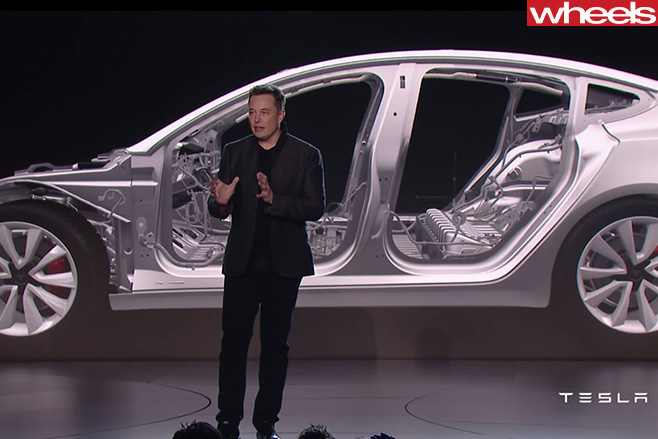
“The revenue from the Model S and the Model X is what’s needed to develop the Model 3,” he said. “The S and the X are what paid for that Model 3 development.”
The Mercedes-Benz C-Class-sized electric car looks like a smaller version of Tesla’s first ground-up model, the Model S, albeit with a cleaner nose without a traditional grille.
But the tail has taken on a hatch-like hump designed to liberate more rear headroom.
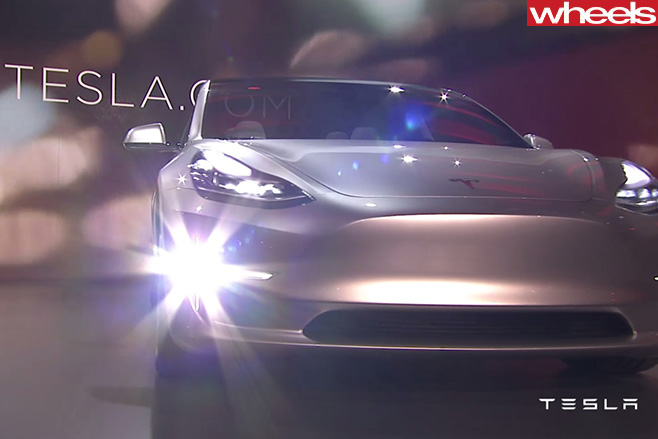
As with others in the Tesla range, though, it’s more about what’s beneath the skin that makes the Model 3 different.
The Model 3 floorpan is a mass of lithium-ion batteries powering an electric motor.
All Model 3s will sprint to 100km/h in six seconds or less and have an electric range of at least 346km.
The interior continues the futuristic theme of other Teslas, right down to the large colour control screen that operates like a tablet computer.
Perhaps predictably, Musk claims the Model 3 will be the best car in its class.
“Even if you buy no options at all this will still be an amazing car,” he said.
Safety, too, is claimed to be class leading for what he calls “an incredibly safe car”.
“It will be five-star in every category,” said Musk.
At the launch of the Model 3, Tesla also committed to doubling its supercharger network by the end of 2017.
Tesla said it would increase its global dealer network from 215 to 441 by the end of 2017.
It’s no secret Mercedes-AMG boss Tobias Moers wants to expand the GT range with a more hardcore version.
Recently emerged footage proves the company is closer to doing so, with a hot GT mule spied belting around the Nurburgring’s Nordschleife, revealing the incoming performance flagship’s latest form. Poised to be called the Mercedes-AMG GT R, the high-performance brand will pit its sharpened supercar against Porsche’s manic 911 GT3 RS.
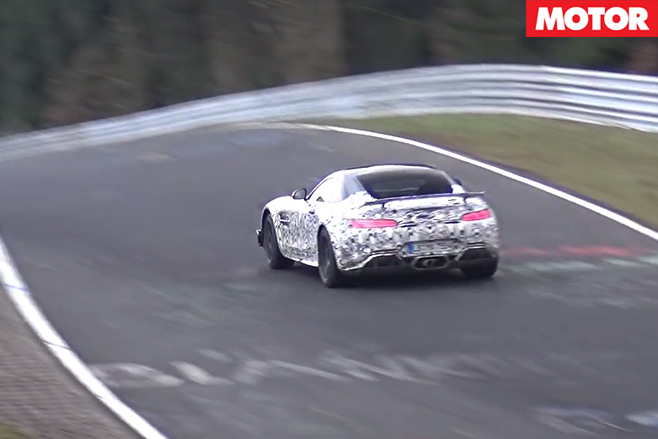
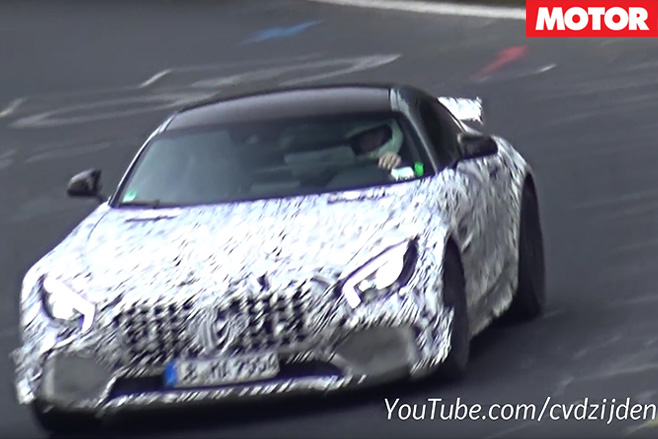
Things up back of the GT R haven’t changed from previous sighting though, as the new prototype still bellows from exhaust tips that feature huddle in the centre of a serious diffuser.
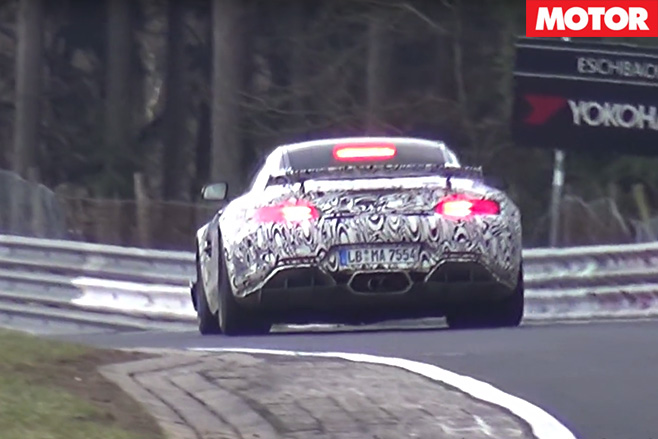
Mercedes-AMG should reveal the new GT R in production trim this year. And with the Nurburgring banishing its pesky speed limits only yesterday, maybe it’ll reveal a smaller lap time as well.
In time-honoured hot-Megane tradition, this limited-edition Renaultsport Clio proves that harder and faster equals better.
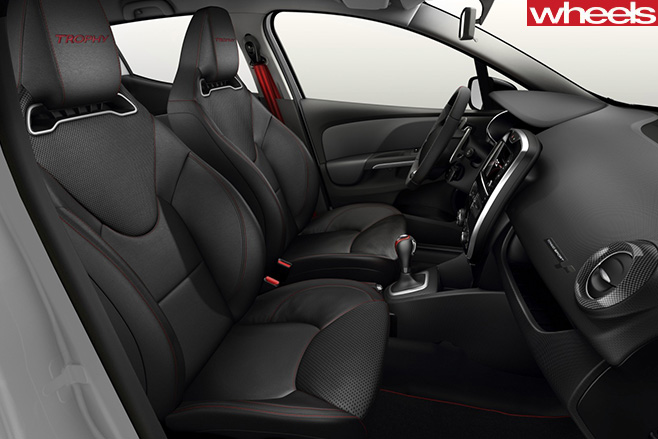
WHAT IS IT? A range-topping Renault Clio RS 220 Trophy version of the Renaultsport-developed Clio 200, now sporting 220 metric horsepower (hence the name), firmer suspension, quicker steering, sportier seats and a whiff of extra bling (including optional Frost White matte paint). Just 220 (of course) are coming here, all for $39,990, though only 77 have arrived since December. The rest will be imported over the coming months.
WHY WE’RE TESTING IT? The current Renaultsport Clio is a more grown-up car than its predecessors, as evidenced by its five-door only, dual-clutch only configuration. And some folks haven’t been too happy about that. This 162kW Trophy version attempts to address some of the regular Clio RS’s concessions to comfort, by sharpening the transmission’s response and tightening up the already capable suspension. More power hasn’t hurt, either.
MAIN RIVALS Given its similar size, Peugeot’s 208 GTi 30, though the Pug is also a limited-run range-topper with just two still unsold. But there’s an obvious price rival for the hardcore Clio and that’s Volkswagen’s brilliant Golf GTI. It’s less focused and less individual, but more rounded.
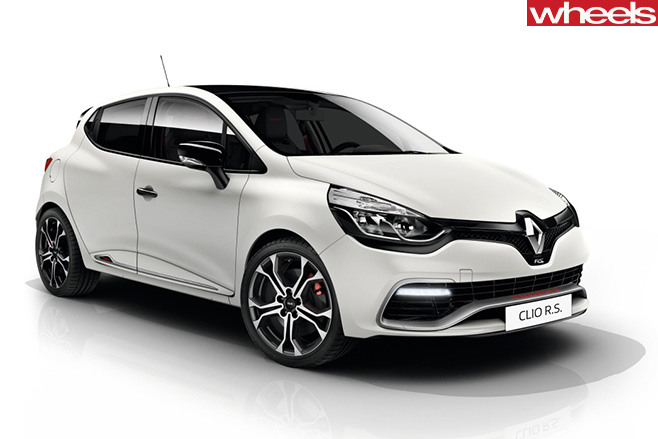
PLUS: Great styling; tough stance; exceptional handling balance and grip; barky exhaust note at full song MINUS: Crying out for a manual gearbox; bulky front seats; dual-clutch ’box is dull and boring unless in Renaultsport mode; firm urban ride
THE WHEELS REVIEW Young person’s car. It’s almost like a back-handed statement from the Baby Boomer generation, bringing to mind an over-stickered, heavily spoilered thing they wouldn’t be seen dead in, with a ride as brutal as the hip-hop thumping out of it. But what about a car that makes you feel young?
While Renault’s current Clio hottie hasn’t quite achieved the cult following its manual-only predecessors still enjoy, you’d have to be desperately morose not to have a good time in one. Nevertheless, Renaultsport has a solution – the harder, faster, stronger, pricier, $39,990 Clio RS 220 Trophy.
Its update list reads like a Who’s Who of go-fast enhancements. The suspension cops stiffer dampers with hydraulic bump stops, and the ride height drops a little (20mm up front, 10mm rear) to make the Clio’s stance even tougher. A faster steering rack (with a drop in ratio from 14.5:1 to 13.2:1) reduces the turns lock-to-lock from 2.67 to 2.41, while the Clio Cup’s 18-inch Radicale alloys score a diamond-cut finish for the Trophy and Michelin Pilot Super Sport rubber (instead of Dunlop Sport Maxx).
Making the most of the Trophy’s match-fit chassis is a considerably enhanced drivetrain. Fresh engine mapping, a larger turbo, a redesigned intake system to reduce back pressure, and a revised exhaust system with Euro-6 catalytic converter nudges power to 162kW (up 15) and torque to 260Nm (up 20). A ‘torque boost’ function in fourth and fifth gears unleashes an additional 20Nm during full-throttle bursts, and the EDC dual-clutch ’box has been injected with adrenalin for 30-percent faster shifts.
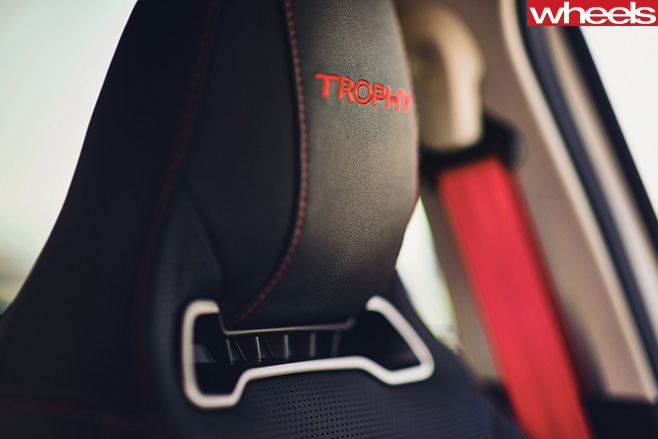
Hasten your pace and the Trophy comes together beautifully, provided you’ve hit the Renaultsport button between its new front seats. Only then do you get the most consistent steering weighting and some exhaust bark to support the Trophy’s superb handling poise and fabulous grip.
When it’s on song, a hearty thrash in the Trophy is like being 21 again, drenched in sweat, fist-pumping the air as your favourite band lights up the stage.
But when it isn’t, the elephant in the room becomes painfully obvious. No manual ’box. Improved as the EDC is, a ripsnorter like the Clio 220 Trophy deserves a stick.
SPECS Model: Renault Clio RS 220 Trophy Engine: 1618cc 4cyl, dohc, 16v, turbo Max power: 162kW @ 6050rpm Max torque: 260Nm @ 2000rpm Transmission: 6-speed dual-clutch Weight: 1270kg 0-100km/h: 6.6sec (claimed) Fuel economy: 5.9L/100km Price: $39,990 On sale: Now
