
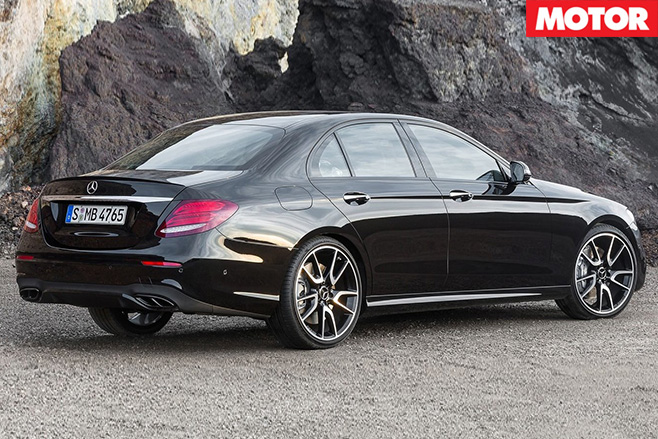
Rekindling memories of the E36 AMG is the newly released Mercedes-AMG E43 – but swap those digits because this is a taster of the E63 still to come.
As with the 1997 E36, the new E43 used a V6 engine. It runs an upgraded version of the 3.0-litre twin-turbo unit found in the AMG C43 now producing 295kW (up 25kW, but surely 300kW was tempting…) and an unchanged 520Nm.
Standard all-wheel drive – dubbed 4MATIC by its maker – boasts a rear-biased torque distribution of 69 per cent that interestingly enough is 2.0 per cent greater than the C43. Driving through a nine-speed automatic, the E43 claims 0-100km/h in 4.6 seconds. The E36 from 20 years ago? Call it 6.7sec.
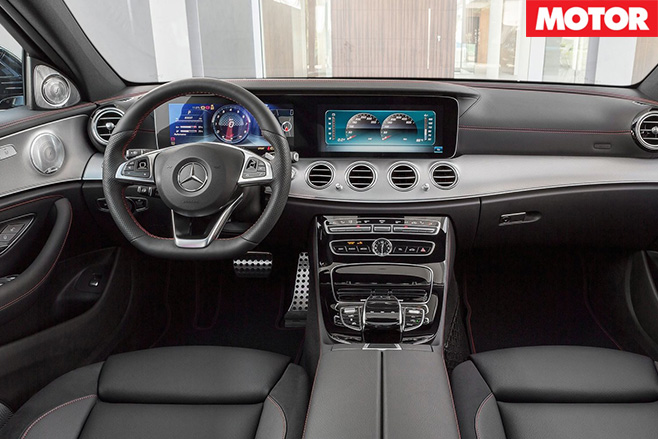
Sports seats, an AMG instrument cluster with Racetimer function and Nappa leather steering wheel with red stitching appears inside to lift the S-Class-like dashboard design of the new E-Class.
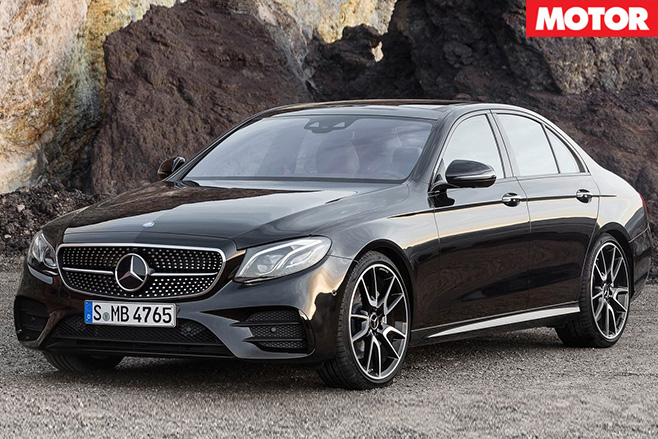
Unique AMG components for the E43 include special steering knuckles and load-bearing joints, increased negative camber on both the front and rear axles, and more rigid elastokinematics.
Street-cred 20s are optional, with four-piston front and single-piston rear brakes with perforated 360mm discs behind them (or the standard 19s).
Where the E43 will closely mirror the E36 is price. The old 1997 model cost $185,000 which in today’s market would place the new Mercedes-AMG model against the $169,510 Audi S6 and bang-on with the BMW M5 Pure Edition.
At either the Paris motor show in September, or Detroit in January 2017, we’ll then see the next generation E63 that is confirmed to utilise higher powered version of AMG’s new 4.0-litre twin-turbo V8 currently rated at 375kW and 700Nm in the C63.
Expect around the same 430kW and 800Nm produced by the outgoing 5.5-litre twin-turbo V8 E63, but partially thanks to a lighter platform a 0-100km/h time that could start with a ‘3’.
JUAN Pablo Montoya has won a Penske-dominated St Petersburg IndyCar season opening race while Aussie Will Power was forced to withdraw due to nausea and vertigo, symptoms later diagnosed as mild concussion.
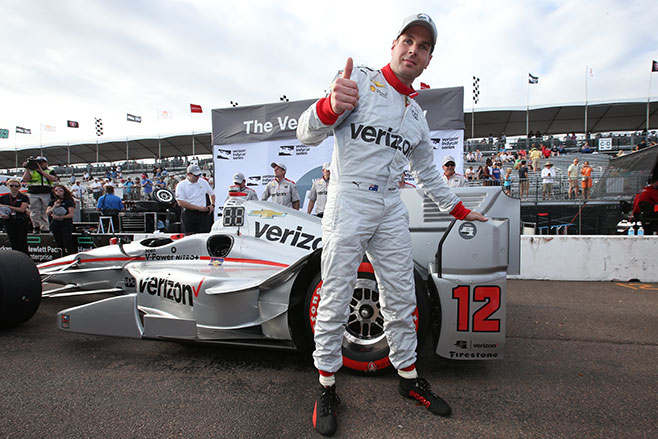
The Australian (pictured, below), who had crashed during Friday practice a day earlier, grittily took pole position with a record-setting lap time before the decision to step aside in favour of replacement Oriol Servia.
A grid reshuffle elevated second quickest qualifier Simon Pagenaud at the head of the field and he and spent the early laps leading from Montoya. The French driver opened his margin to five seconds heading into the first round of pitstops, but Montoya uncorked a succession of lightning laps able to reduce the gap to just 0.7s.
Later in the race, after a caution and different pit strategies came into play, Montoya daringly zipped past Pagenaud into third place. It proved to be a crucial move for there was a massive shunt moments later when Carlos Munoz touched the rear of Graham Rahal, spinning him into the wall, with another seven drivers caught up.
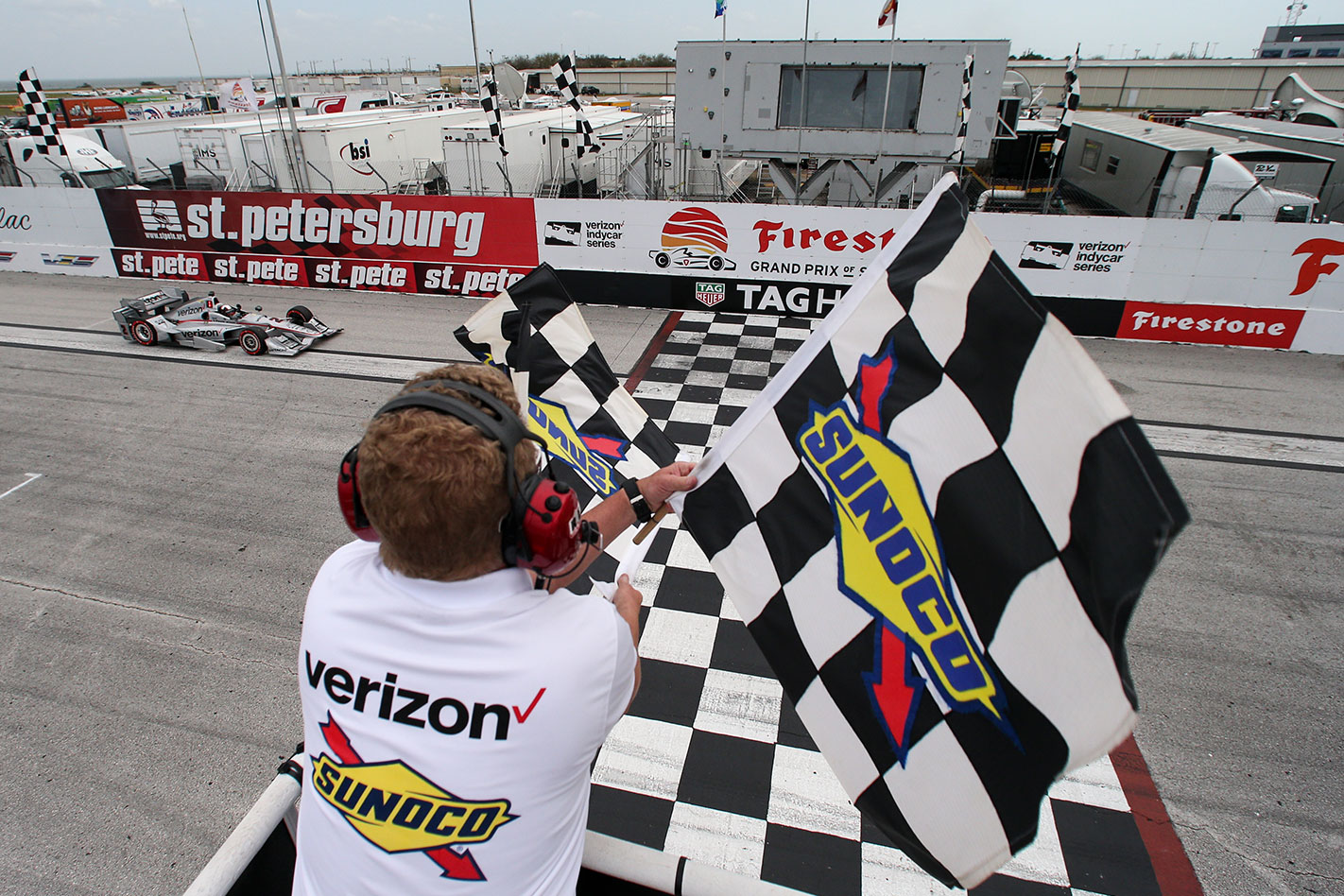
This left Conor Daly in the lead from Montoya, who quickly dispatched his rival at the restart and then went on to a repeat St Pete win from his Penske team-mate Pagenaud and Ryan Hunter-Reay
Best of the rookies was ex-Formula One driver Alexander Rossi in 12th, ahead of Daly in 13th, Spencer Pigot in 15th and former Marussia driver Max Chilton in 17th. Stand-in Servia finished 18th in Power’s car, delayed in the mid-race contretemps.
ONE MAKE: Another Seto on the grid in Toyota 86 Racing Series
It’s in the genes, clearly. Aaron Seton, the son of V8 Supercars Hall of Fame inductee Glenn and grandson of 1965 Bathurst winner Barry, is a confirmed starter for all five rounds of the Toyota 86 Racing Series in 2016.
Carrying an instantly recognisable surname in motor sport, 17-year-old Aaron is a graduate from karting ranks, with some brief stops since in GT and production car racing.
Now he plans to progress further and gather experience in a series designed to encourage and support emerging talent.
Designed to offer emerging young drivers (and anyone else with the inclination and money) the chance to enjoy torrid competition and perhaps attract positive attention from the right people, the Toyota 86 series will hit the track with an expected healthy grid at Winton Raceway in late May.
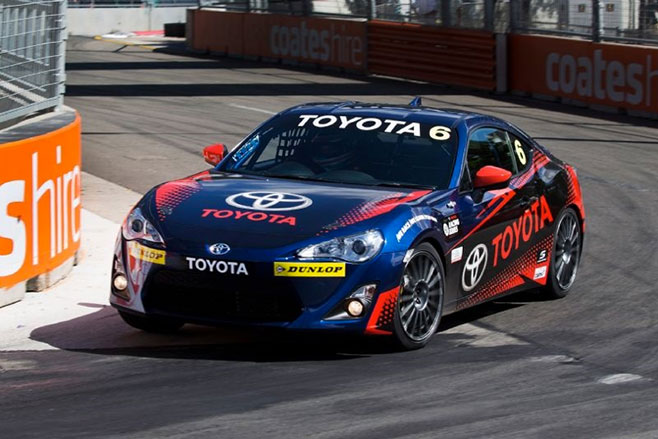
“I’ve got a lot to live up to, with dad and pop’s success,” said Aaron, who will also benefit from having his father build and set up the car, though only using the control suspension, braking bits, exhaust, engine management system and tyres allowed under very tight regulations.
The mandatory race package was developed by Neal Bates Motorsport (NBM), and enhances the 86’s acknowledged balance and agility with more urge, grip and noise.
The series’ organiser is yet to announce the names of selected professional racers to be invited to join the grid to give the regulars yardsticks.
These nominated drivers are not eligible for any of the $125,000 prizemoney, their primary role being to mentor regular competitors by sharing tips on everything from race-craft and driving technique to engineering set-up and team structure.
Open to all manual ARD-compliant variants of Toyota’s cult-classic sports coupe, the series is part of the support program at selected rounds of the Australian V8 Supercars championship.
In inaugural Toyota 86 Racing Series will run over five events: May 20-22 (Winton SuperSprint), August 26-28 (Sydney Motorsport Park SuperSprint), September 16-18 (Sandown 500), October 6-9 (Bathurst 1000) and November 25-27 (Sydney 500).
PRODUCTION RACING: Huge field for Hi-Tec Oils Bathurst 6 Hour
The traditional love of production car racing across Australia dating back to the early days of the Bathurst 500 is still evident today with the interest shown in the Easter long weekend’s inaugural Hi-Tec Oils Bathurst 6 Hour enduro, which has attracted a massive list of entries.
While the final list of starters is still fluid, 53 fully paid-up entries have been received to date, with more to finalise prior to the March 25-27 event.
Organisers now expect a field of at least 55 cars take to the track for first practice on Easter Friday.
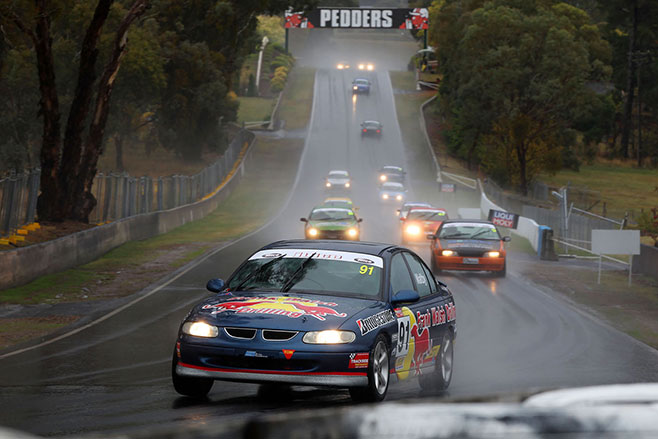
The biggest talking point among the cars is the entry of an AMG Mercedes-Benz A45, the first of its kind in Australia to hit the track and take on the Mitsubishi, BMW and Subaru proddie rockets that have long been favoured by production car racing regulars.
Long-time Bathurst racer Ron Searle and former V8 Supercar pilot Garth Walden will share the speedy all-wheel-drive Mercedes, powered by a 2.0-litre, four-cylinder turbocharged engine.
On paper at least, the A45 appears capable of taking the fight to the Mitsubishi Lancer EVOs that have dominated the sport for the last decade.
The diverse field includes representation from 13 different brands and more than 20 different vehicle models, ranging from the outright-contending Mitsubishi Lancers to the popular Toyota 86 coupe that makes up most of Class D.
Best represented is BMW with 12 entries, while Mitsubishi (nine), Holden Special Vehicles (seven), Toyota (six) and Renault (five) models also feature strongly.
“We’re confident that this race will be a boost for production car racing and will also deliver the Bathurst region a new ‘destination’ event for the Easter long weekend,” said event director James O’Brien, the man who successfully revived the Bathurst 12 Hour.
Most of the successful team and car combinations from the last five years of production car racing have committed to Bathurst’s newest race, with a mix of national and state level champions confirmed.
A two-time Bathurst 12 Hour class-winning BMW 335i Turbo will be out to conquer the Mountain in an outright capacity.
Twenty-one cars make up the cars in Classes A1 and A2 – the Extreme Performance machinery expected to battle for outright honours.
A further nine cars in classes B1 and B2 for High Performance cars will also be highly competitive, while nine will also fight for the competitive Production Performance Class C, made up of hot hatches from BMW, Renault and Mazda.
Boosted by the return of HQ Holden races, in all, more than 300 cars will be challenging Mount Panorama across the Easter weekend. More than 40 Group N Historic Touring Cars will compete as will a high-class field of 34 production sports cars, including entrants running the latest GT3 machinery.
Those not getting the backside trackside can watch free live streaming by logging on to the Bathurst Motor Festival website on race day.
ACCORDING to the timeworn adage, nothing is ever predictable in motor sport. Ahem, sorry, but is anyone prepared to argue that Mercedes-Benz will not win the 2016 World Championship, and by this we mean both drivers’ and constructors’ crowns?
If there is any uncertainty, perhaps – and it’s a big perhaps – it might relate to the fortunes of the two Mercedes drivers. Could Lewis Hamilton have lost some motivation after three titles? And maybe Nico Rosberg is fired up to avoid finishing an ignominious runner-up to his teammate.
Mercedes claims to have eased team orders binding Hamilton and Rosberg to rather inflexibile team strategies. Toto Wolff indicated the two drivers are more comfortable working with each other now – que? – and in any case tightened radio rules for this season limit the influence from the other side of the Armco. Heavens, the drivers may even get to think for themselves as part of their big annual stipend.
Williams, which uses Mercedes engines, has been suggesting it might just leapfrog Ferrari this season, but this a form of optimism not reinforced by any particular evidence.
Boasting is easy – and free – before the rear action starts.
Hamilton senses Ferrari has “seriously picked up its game” and poses a serious threat to Mercedes.
Maybe.
The many questions will move towards some clarity at the opening race, the Australian Grand Prix, next Sunday, when we hope for some uncertainty to accompany the predicted 25 per cent hike in exhaust noise from the 22 cars including newcomer Haas F1’s two machines.
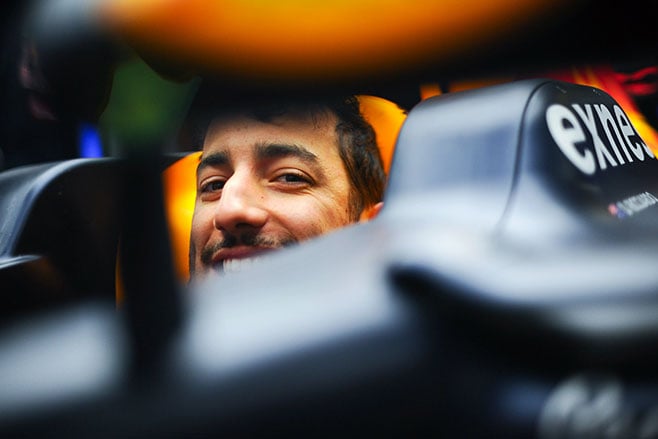
Meanwhile, Daniel Ricciardo (pictured, above) just keeps smiling. He’s pumped and ready to roll: “The track is fun, I love street circuits so for me Melbourne’s got really good flow, really good corner combinations, lots of left/right, left/rights which is cool.
“Testing’s been a lot better for us this year,” he declared. “You still don’t really know where you are until you get to Melbourne, but we’re better prepared than we were this time last year so we can use that as some confidence.
“Me personally, I’m ready to go – I was ready in January and I’m still ready now! Just keen for those lights to go out and to get racing! I think everyone’s excited to get going, but even if the race was elsewhere I think there’s no-one more excited than me to go racing, period!
“But the fact that it’s in Oz and I’m going to have more supporters than anyone else, hell yeah, I’m excited!”
But not necessarily excited about the new qualifying system to be introduced in Melbourne (finally, after a yes…no…um yes dance routine from the rule makers). No-one thinks it’s a terrific idea.
Likewise, car industry parody website Sniff Petrol revealed, only slightly tongue in cheek that F1 has announced a new “shit ideas committee”:
“Formula One has announced the creation of a new body designed to ensure that the sport maintains its high standard of coming up with incredibly bad ideas.
“The Terrible Ideas Team (TIT) will suggest new ways in which F1 can endlessly fiddle around with its own rules and structures to make the sport as needlessly contrived as possible.”
Red Bull owner at it again
Red Bull moneybags Dietrich Mateschitz (pictured, below, with Daniel Ricciardo) broke his recent silence a few days ago to slam Mercedes and Ferrari – the two car giants with which he was not many months ago (unsuccessfully) negotiating for an engine supply deal for his #1 team.
These two manufacturers have shown absolute domination in F1 with the two choosing – as is their right – not to supply power units to any team (like Red Bull) that might threaten to beat them.
The Austrian is insisting the on- and off-track power of Merc and Ferrari is to the sport’s detriment.
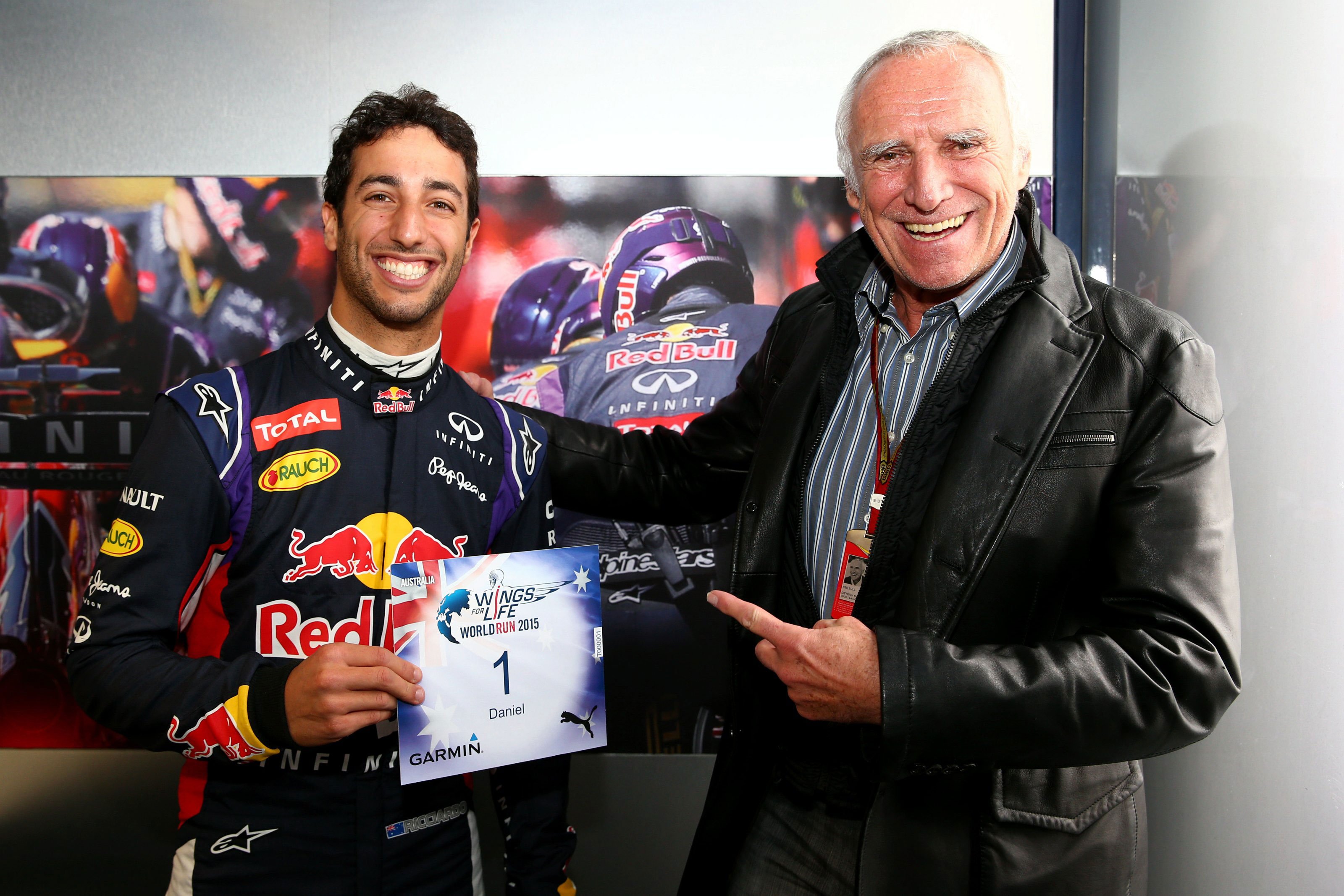
He’s right, of course. But Mercedes in particular will be in no hurry to give up its advantage. Motor sport has always been about producing the best combination with the aim of winning. At present, Mercedes does it better than the rest. Ferrari has been the powerhouse in the past, when Jean Todt and Michael Schumacher found the narrow recipe for success.
For 2016, Mateschitz’s teams have Renault power (Red Bull) and last year’s Ferrari engines (Toro Rosso). According to Autosport, he’s confident that Red Bull will again win the battle for third in the constructors’ standings behind the giants and ahead of the Merc customer teams Williams and Force India, and with Toro Rosso in the scrap for fourth or fifth.
Mateschitz is still up for the idea of an independent power unit supplier, a sort of modern-day Cosworth. But this world only work if the indie came up with a competitive engine and it’s not easy to see such an organisation matching or beating the might of Mercedes and Ferrari.
In any case, the suggestion of an independent engine supplier was blown out of the water by the dominant teams recently, leaving Mateschitz worrying about the future.
He is again threatening to take his two teams away from F1 if Red Bull doesn’t get a competitive engine after 2016.
THE Jeep Grand Cherokee with the Hellcat engine is go – and it’s coming to Australia.
The top-secret program will see the mighty 6.2-litre supercharged V8 shoehorned into the Grand Cherokee body, making it one of the fastest and most powerful SUVs on the planet.
Expect the monster SUV to rattle off the 100km/h sprint in under 4.0sec. That’s faster than a Mercedes-AMG GLE63.
The 527kW/881Nm SUV will likely adopt the Trackhawk badge that will also grace a planned revision to the 6.4-litre V8-powered Grand Cherokee SRT.
A senior Jeep source in the US told Wheels the Hellcat engine program – until now reserved for the US-only Dodge Charger and Dodge Challenger – has been approved, with one insider saying the program is “well advanced”.
The source also confirmed Australia is one of the countries crucial to the project sign-off.
As for when it gets here, Fiat Chrysler Australia is tight-lipped on the subject – refusing to confirm that the Hellcat project has even been approved.
“Australia is obviously a performance-focused market, and there’s also a lot of V8 heritage here,” said an FCA spokeswoman.
“The Jeep Grand Cherokee SRT … is a terrific car for us … there’s obviously an appetite for performance SUVs in Australia.
“A vehicle like that would be a sensational addition to the Jeep line-up in Australia, and we’re sure our customers would agree.”
Fires of hell
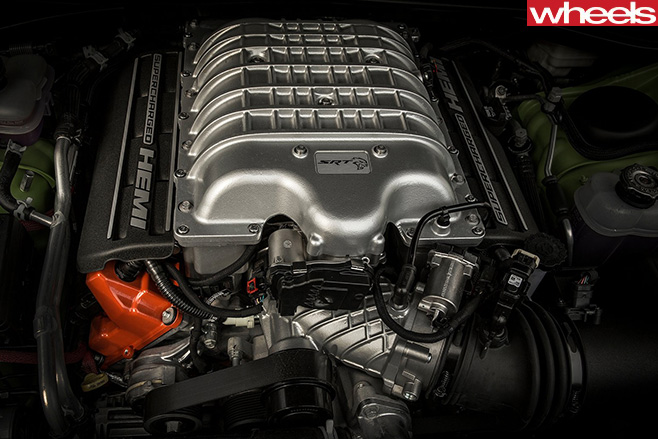
The engine is a unique 6.2-litre supercharged V8, which is based on the 6.4-litre naturally aspirated engine in SRT models but with 90 percent new components, including the IHI supercharger.
Despite the big numbers, it’s old school within, including the cast iron block mated to aluminium heads.
It’s available with a six-speed manual or eight-speed auto, the latter the most likely for the Grand Cherokee version.
Read our full story on performance utes in the April 2016 issue of Wheels.
TODAY is an important day for Peugeot/Citroen and its spin-off DS brand in Australia. It’s the first day for new managing director Kai Bruesewitz.
German-born Bruesewitz arrives at a time when the French brands are undergoing a renaissance of sorts, with Paris-based PSA posting a second annual profit in 2015 after losing €1.04 billion ($A1.54 billion) in 2013. Its success is on the back of a host of new, highly competitive products such as the Peugeot 308, which won 2014 European Car of the Year and was a Wheels COTY 2014 finalist – with more promising vehicles on the way.
Bruesewitz, who moved to Australia from Germany four years ago and has worked for BMW and Mini, says PSA is on the dawn of a new era. “I think both brands, Citroen and Peugeot, have huge potential. Peugeot was roughly at double the volume 10 years ago, then probably lost a bit of mojo,” he said, speaking to Wheels at the launch of the 2016 Citroen Cactus.
“Now we are in the process of getting the mojo back for Peugeot and for Citroen, with the right products – which we have to some extent – but I think there is additional great product coming to get back to where both brands belong.”
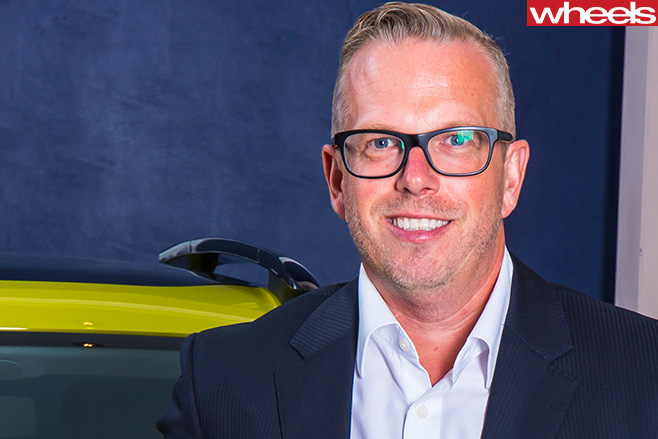
“A revolution? That would be arrogant and disrespectful of all the hard work that has been done,” he said. “However, there may not have always been an awareness of the competitiveness and challenges of the Australian market with the manufacturer being in Europe.
“And we all know that Australia is one of, if not the most competitive market. There needs to be the right support and the right backing, and also the right product offering in order to be successful.”
The support has come under global chief executive, ex-Renault-Nissan Carlos Tavares, who defected to PSA in 2014 and has helped the company get back into the black.
“France understands the conditions of this market – there is a new joint collaboration on which we’re building as the importer of all three brands [Peugeot, Citroen and DS] here in Australia,” said Bruesewitz. “And the manufacturer, PSA, is then of course expecting the respective results,” he said.
The 2015 sales results for PSA’s brands in Australia were hardly stellar. Peugeot’s 4000 sales were down on 2014’s 4394, while Citroen sold a mere 1106, falling from 1307. Making matters worse is that Renault set an Australian sales record of 11,525 cars to post a 15.1 percent increase, easily outperforming the market.
Can we directly compare Renault to its French rival? Bruesewitz says not yet. “We’re coming from different bases … Renault probably four or five years ago, they were in the same situation as we are now.”
In 2010, Renault sold only 1907 cars against Peugeot’s 5649, making its current success even more impressive. “They’ve put the right measures in place to get where they are now, and they’ve done a tremendous job. I think it’s fair to say that if we can replicate that journey, then we would be very happy.”
PSA will announce its long-term global strategy on April 5.
SWEEPING changes to grey import laws that will allow buyers to directly import cars from Japan and Britain won’t come into fruition, the boss of Subaru Australia has predicted.
“I think there’s many reasons why people in the government and the National Party will think it’s not good legislation when they sit down and are taken through it in detail in terms of some of the potential impacts,” Subaru Australia managing director Nick Senior said.
The Federal Government proposal was announced in early February 2016 and will enable Australian new-car buyers to personally import new and near-new vehicles from right-hand-drive markets with ‘comparable’ standards.
The changes to the Motor Vehicle Standards Act 1989 would give Australian buyers more choice while saving $70 million a year in regulatory costs, according to Paul Fletcher, the federal Minister for Major Projects, Territories and Local Government. The reforms are planned to come into play from 2018 – the year after Australian car manufacturing has officially signed off.
Yet the finer points of the legislation are still “exceptionally thin” according to the Subaru boss, who told Wheels that the laws were not a threat to company’s Australian operations. Subaru’s share of the Australian new-car market is 3.8 percent, with a long-term goal of growing to 4.0 percent. Last year it sold 43,600 cars, and has set sales records in 16 of the past 18 years in Australia.
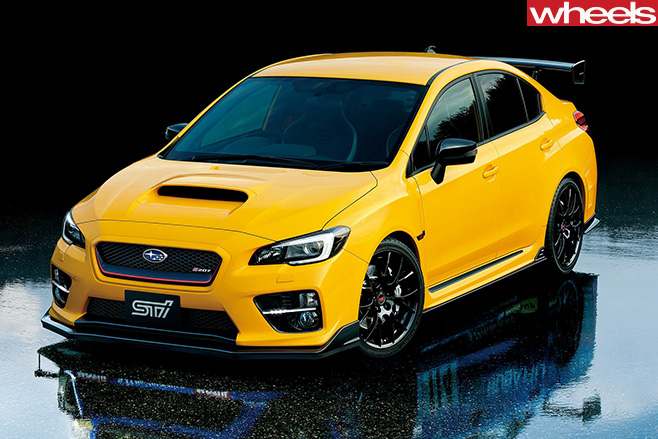
He also flagged potential teething problems for cars sourced from Japan as simply not worth the headache. “The fact that the sat-nav systems are Japanese, and you cannot just chip them to replace them … there’s a litany of other reasons why I don’t think it makes economic sense at the moment for someone to bring in cars.”
That includes the exchange rate, a factor that’s hampered Subaru in other markets such as Britain. “No-one can predict the exchange rate, but you put today’s exchange rate against a WRX in Japan, and it just doesn’t make sense,” Senior said.
Private importation of vehicles has been flagged as a potential threat to carmakers, who with more than 60 brands competing for new car buyers, already operate in what’s regarded as the most competitive new car market in the world.
The Federal Chamber of Automotive Industries was especially critical of the announcement. “Not only is the government taking a ‘buyer beware’ sentiment that would see many Australians caught in high-risk situations with their vehicles being outside established service networks; the government is misleading consumers by telling them a used vehicle with 500km or one that is 12months old, is new,” FCAI’s statement responding to the planned reforms says.
The Subaru Outback has added more gloss to what’s already a shiny package in buyers’ eyes.
WHAT IS IT? The Outback almost owns the soft-roader wagon category, and has flourished despite an influx of SUVS – even from its Subaru Forester stablemate – as one of the brand’s best sellers in Australia.
WHY WE’RE DRIVING IT This is a model year 2016 update (MY16) that introduces some mechanical tweaks and spec changes.
MAIN RIVALS Skoda Octavia Scout, Volkswagen Passat AllTrack
THE WHEELS VERDICT The Subaru Outback has minimal changes for 2016, but the additional safety equipment and suspension changes have direct benefits to buyers. It’s a spacious, practical and relatively economical car in its class, and one of the best value for money SUV alternatives.
PLUS: Additional safety equipment; improved ride quality; practicality MINUS: Lacks overall polish; dynamically bland; drab interior
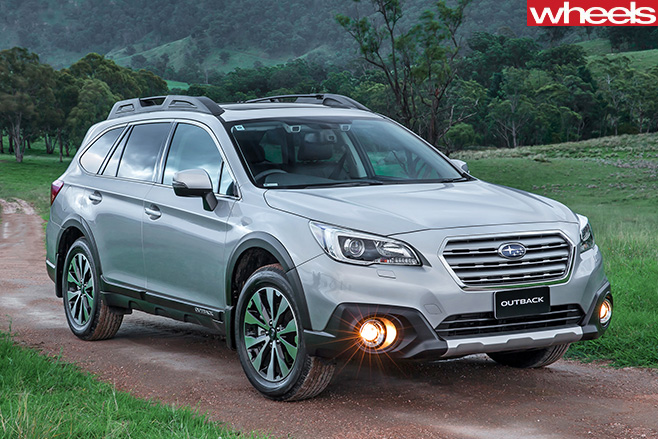
In terms of equipment, the changes for 2016 are quick and brutal: on the outside, LED daytime running lights are now standard. More significant is that Subaru’s camera-based safety-system ‘EyeSight’ is now available on diesel Outbacks for the first time. That means that it’s now standard on every model – both petrol and diesel – that’s equipped with CVT. In other words, 97.5 percent of all Outbacks sold.
On the Premium and 3.6R versions, EyeSight comes with the ‘Vision Assist Package’. This adds five key elements to the system in addition to the adaptive cruise control and pre-collision auto braking/steering. These include blind spot detection, lane change assistance, as well as rear cross traffic alert. On all Outbacks, there’s a new emergency stop signal that turns on the hazard lights when it thinks you’re braking in an emergency.
Mechanically, you’ll need to have an extremely receptive rear-end to distinguish the changes made to this year’s model. That’s because they’re confined to suspension tweaks, which see a more compliant tune at the rear, to give the Outback a genuinely different feel to the Subaru Liberty that is essentially the sedan version of the wagon. There’s also a new mapping for the CVT, which affects the throttle.
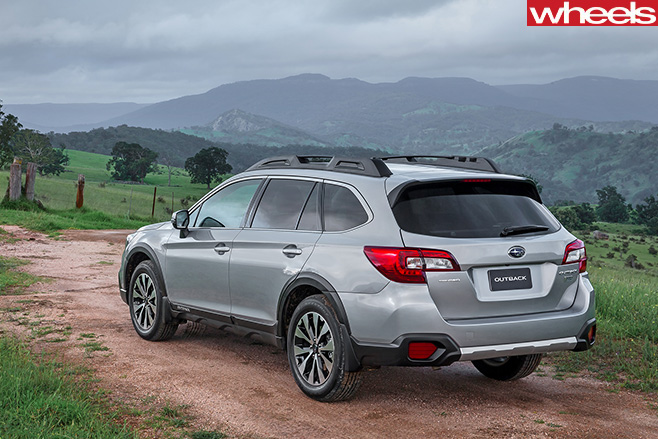
Around town, it’s a relatively serene drive, and while it sells in spades the Outback is hardly a benchmark in terms of dynamics and seductive road manners. The steering is numb, and it’s hardly involving. It’s more than adequate, though, at dismissing a bumpy road – thanks to that increase in suspension compliance, blended with excellent damping – while offering relative manners around town. It’s not as convincing as, say, the Forester, but it is more agile and has the benefits of being lower down and feeling less like it’s on stilts.
That 2.0-litre turbo-diesel has a tinny note to it under load, and a lethargic rolling response. Still, when cruising it’s smooth and relatively quiet, and that CVT makes its faux- gearchanges at 3900rpm without any fuss. That throttle sharpens up in Manual mode, where the engine will hold out until 4400rpm, with a pedal that’s easy to modulate. The brake pedal is the odd one out on the overall weight and feel of the driving controls, with a hard, bitey feel even if the Outback pulls up strongly.
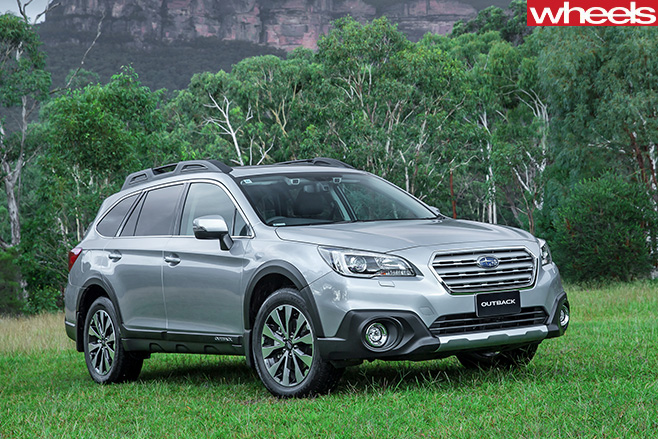
All of this adds up to an Outback that’s safer, smarter and marginally better, but still not a car that stands out for its dynamic or practical nous. The world has moved from raised wagons turned into SUVs, and sadly so too has Subaru’s focus: the Outback lacks the overall polish of the Forester, for instance, and can’t match more expensive, prestige rivals such as the Volkswagen Passat Alltrack if you’re shopping for a wagon that doesn’t mind a steep driveway or occasional localised flash flood.
That leaves price as the Outback’s saving grace. And the fact that the current generation was given a massive price cut of up to $10,000 when it arrived in late 2014 makes this a serious contender. It’s also enough to slightly soften the $1500 increase for our Premium test car, now $44,990, even if the range still starts at an unchanged $35,990.
SPECS Model: Subaru Outback 2.0D Premium Engine: 1998cc 4cyl, dohc, 16v turbo-diesel Max power: 110 kW@3600 rpm Max torque: 350 Nm@1600-2800rpm Transmission: CVT Weight: 1602kg 0-100km/h: 9.9sec (claimed) Fuel economy: 6.3L/100km Price: $44,490 On sale: Now
Click here to read the full range review of the Subaru Outback.
British singer and comedian James Corden has received incredible exposure with his “Carpool Karaoke” videos, where he cruises the streets of LA in his Range Rover singing along with celebs. The segment from his program, The Late Late Show, have gone viral online – clocking hundreds of millions of views.
Corden and TV execs have reportedly been shopping the show around to networks. It will follow the same format as we’re already familiar with – but he will take a “backseat” role, if you will (I’m so sorry). Someone else will host but he will be involved as a producer.
The news comes after the success of the US TV show “Lip Sync Battle” which, funnily enough, is a spin-off from “The Tonight Show with Jimmy Fallon.” Basically it’s just celebrities doing karaoke on TV.
Where was the film crew documenting my incredible antics last Friday night with a few Savvy Bs under my belt?!
Watch the Greatest hits of James Corden’s Carpool karaoke
Favourite carpool karaoke moments have included:
Adele’s hilarious video has been viewed on youtube almost 85 million times.
Justin Bieber via GIPHY
One Direction via GIPHY
Iggy Azalea via GIPHY
AUDI has committed to increasing its spend on research and development in the wake of the Dieselgate emissions scandal that looks set to cost parent company Volkswagen tens of billions of dollars and further damage to its reputation.
Speaking at the company’s annual financial results press conference – in which it was revealed the emissions scandal contributed to a 6 percent drop in operating profit to 5.1 billion Euro ($A7.6 billion) – Audi board member for engineering, Sefan Knirsch, denied the company had slashed its future development spend and was instead increasing the investment on future technologies.
“Of course we’re looking carefully at our R&D expenses but we will never harm our future. We are prioritising projects as we do every time … of course these are the mega trends, like electrification, autonomous driving, these sorts of things.”
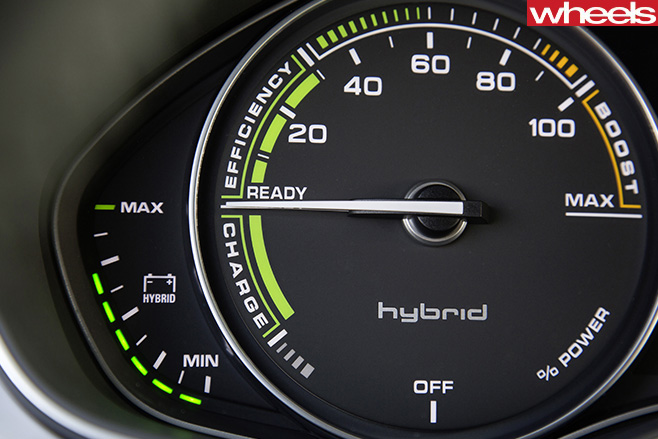
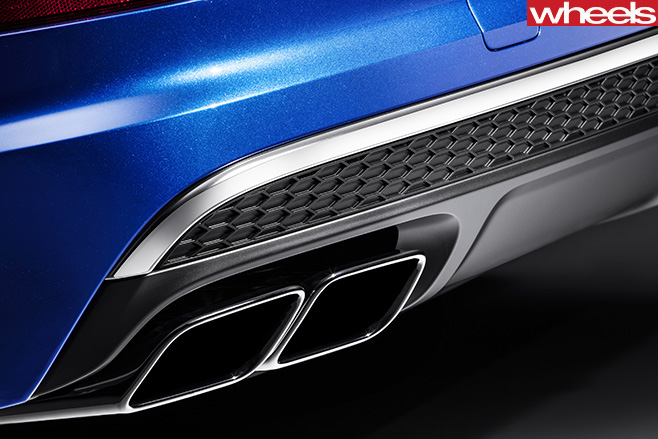
And by the end of the year the company will update or unveil 20 models, including an all-new Q5 SUV, S4 sedan and Avant (wagon), A4 Allroad, Q7 e-Tron (plug-in hybrid) and the Audi SQ7 unveiled this week.
“I think Formula 1 for Audi is currently not a topic,” said Knirsch. “We are still focusing at WEC (World Endurance Championship) and DTM (German touring cars), where we are very strong – we want to win this year; in Le Mans this is our clear focus.”
Porsche has announced it will be revealing the new four-cylinder Macan to the public for the first time at the New York International Auto Show later this month. This new base-model crossover will sit below the Macan S and is likely to be the most affordable Porsche, ever.
But even at a lower price (it could drop under the $80,000 price mark in Australia), don’t expect the Macan to just be a shell of its superior models. The newbie will still include bi-xenon headlights, eight-way power front seats, lane-departure warning, and Porsche’s PCM infotainment system.
Under the bonnet a 2.0L turbocharged four-cylinder engine will power the Macan, generating 185kW of power and 370Nm of torque. The four-cylinder will only be available with a seven-speed dual-clutch automatic and can reach 100km/h in just 6.7 seconds, and is said to be more fuel efficient than the Macan S.
But we’re not likely to see the new Macan on Australian shores anytime this year, with the brand announcing: “With demand of the turbocharged six-cylinder Macan S, Macan S Diesel, Macan Turbo and recently announced Macan GTS still high in Australia, PCA has elected to delay the introduction of the new Macan four-cylinder until not before calendar year 2017.”
