
Driving a McLaren P1 is not something those few lucky enough to have had the experience are likely to forget.
A powertrain with 673kW in a car weighing about the same as a family hatchback tends to leave its impression on you, as does a chassis capable of generating double the force of gravity through fast corners, where most road cars would get nowhere near even 1g.
And yet if the truth be known, and extraordinary as it sounds, the P1 is actually nothing like as fast as it could be. Its powertrain has not only to develop more than 670kW, but also pass all emissions tests in every country in which it is sold, and that costs a few kilowatts.
The active aerodynamics must be arranged so that they provide downforce when it’s needed, but don’t add to overall inefficient drag when it’s not, and that’s a compromise too. And those Pirelli tyres, vast and specially made for the P1 though they are, must also work in all weather conditions, provide reasonable ride quality and last for months or even years in normal use.

The McLaren P1 GTR is a P1 with no strings attached, save for the rather awkward fact that even at £1.98 million, or approximately AU$3.83 million (a standard P1 costs £866,000 or AU$1.67 million), McLaren has now shut the order book. It hoped it might sell up to 35 cars and stopped when requests passed 40 units.
Its engine now runs unrestricted all the way to 1000PS – which we call 736kW – its vast rear wing is fixed in the most aerodynamically-advantageous place and those treaded tyres have been replaced by race-specification slicks with a life expectancy measurable in hours or, if you’re really going hard, minutes.
This makes it quite possibly the most unhinged car based on a production design that has ever been created. And I have presented myself in my race suit at the Losail International Circuit just outside Doha in Qatar to drive it.
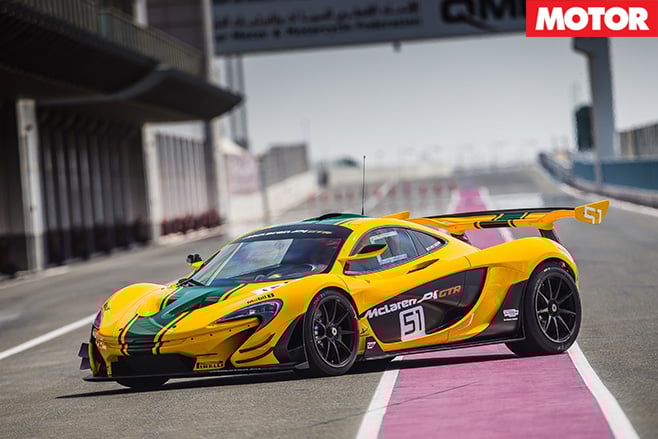
Like Ferrari, McLaren will organise events all over the world for P1 GTR owners to attend with their cars, where they will receive one-on-one driver training as well as advice about fitness, nutrition and anything else you might like to know about driving a car with capabilities outside the experience of all but full-time professional racing drivers.
But while McLaren will also look after your car for you, and transport it around the world, if you prefer to take it home and use it to make every single person at your local track-day venue feel entirely inadequate, you can do that too.

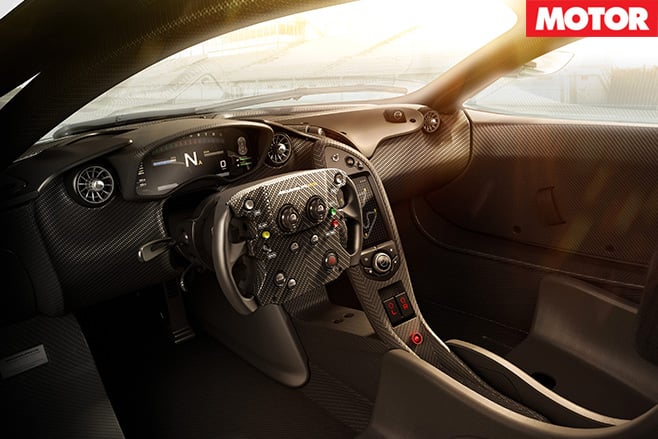
The interior is passingly familiar to those who’ve looked inside a P1, but with all the major buttons relocated to a steering wheel (based on that gripped by Lewis Hamilton as he powered to the 2008 F1 World Championship). There’s no roll-cage in here, as the carbonfibre monocoque is already far stronger than any mere steel cage could ever be.
You start it by pushing a button just as you would a P1, but from thereon in you are in an entirely different world. While a P1 will sit and idle quietly enough for those around you to carry on their conversations, when the GTR’s 3.8-litre V8 blasts into life your first inclination is to duck, your second to find somewhere to hide. And only then do you really focus on the fact you’re listening to an engine with 736kW, and it’s powering a car that’s even lighter than a P1.
And the very first thing you learn from the P1 GTR is that above a certain level of performance, and particularly at low speeds, the power you feel is only that which can be transmitted by the tyre. So the P1 has 673kW, but under violent acceleration in the lower gears electronics have to intervene simply to stop the tyres boiling with wheelspin.
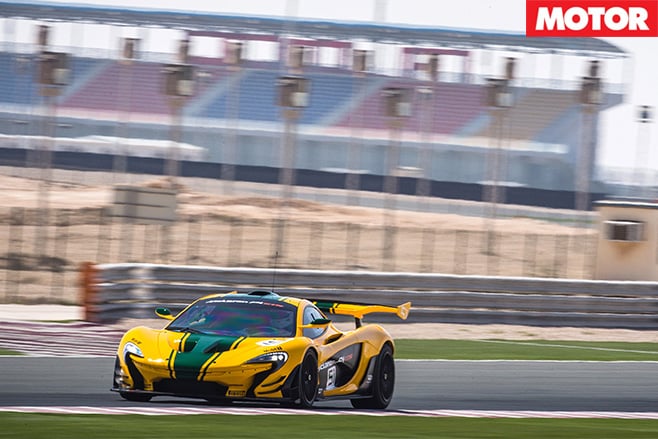
The GTR on its hot slicks has no such problems. It not only has more power, it can use it too. The acceleration doesn’t feel strong, so much as an act of violence committed against you. Instinctively you lift.
It’s the same in the corners and under braking. Driving the P1 GTR can actually be a very demoralising affair, a car whose primary purpose appears at first to be to remind you of your limitations as a driver. You push the car hard, yourself harder still, yet in its ability to shed speed far faster than you’d ever anticipated, and hit every apex without discernible over or understeer, it gives the impression of not being taxed at all.
But then something curious happens. I can remember talking to an F1 driver who was brave enough to admit (off the record) that every spring when he climbed back in the car after the winter break, he quickly concluded all his talent had disappeared, the car was impossibly fast and he would never, ever be able to control it. ‘But,’ he told me, ‘by the end of the first day testing I’d be screaming at the engineers for more power and telling them I’d ridden mopeds with better performance.’ In short, you adapt.
After a short break to process the information force fed into my head, I had time to steel myself before getting back into the car with some knowledge of the experience to come. Now I was ready for it. So when the acceleration came I relished every scenery-shrinking, time-warping second of it.
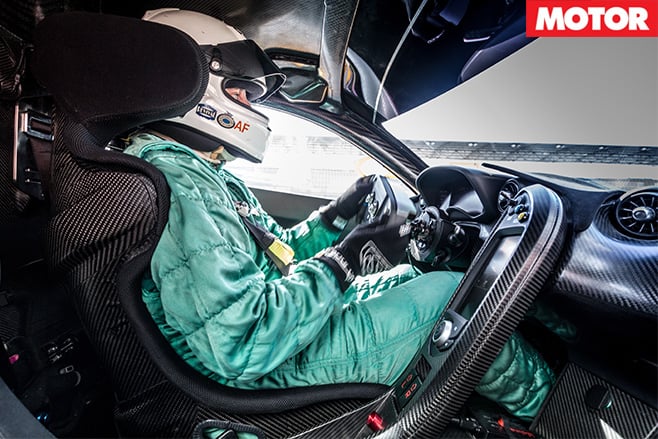
But there’s a problem, one I’ve found in every racing car I’ve driven capable of generating meaningful amounts of downforce. The faster you go, the more the air works to push the car into the tarmac, and the more grip is provided. As a result the car doesn’t feel less stable as speeds rise, but more so.
Indeed in fast corners taken at over 160km/h where the wing, splitter, bodywork and diffusers are doing their best work, the car feels a lot more precise than most cars do at less than half that speed. Simple physics will tell you there is a speed at which the car will not negotiate any given turn, but with the car feeling better and better as the speeds rise higher and higher, what happens when you reach that point?

The GTR is not like this. McLaren recognised from the start that it would be driven by owners of widely differing skill levels and that above all, above even the need for it to be faster than anything else they are likely to have driven, the GTR needed to be friendly and even indulgent on the limit. It’s a fast car, but it needed to be fun too.
And it is: when finally you feel the front tyres first start to slip, the signal is communicated so beautifully clearly through the steering you find yourself not being scared by the news, but actually relieved. You realise you are in fact good enough to work this car hard, and when you do, it’s not going to try to mug you.
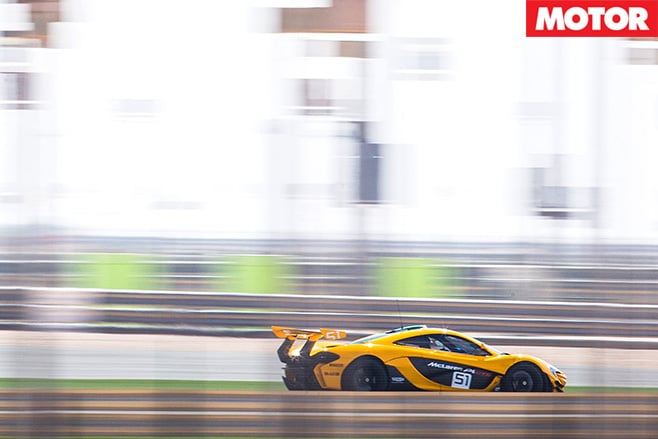
And, if you do apply a little more power than usual quite early in the corner and feel the back step out, instead of backing off and trying to save yourself, the car gives you the confidence to ride it out, correcting with the steering while keeping the taps open.
Only the brakes required more time than I had. Because of the downforce, you can hit the left-hand pedal at 305km/h with all the force your thigh can muster and you won’t be able to trigger the ABS.
Instead your effective body mass will triple under the G-force, but then you must remember that as the car sheds speed, so too does it shed downforce, so the deeper into the corner you go, you actually have to reduce brake pressure. It’s not actually an inherently difficult technique, but it is different and takes time to learn.

Indeed by the end the power becomes merely a means to get you to the speed at which the GTR can show you what it’s really good at: namely cornering so hard you wonder how your head is staying on your shoulders, and slowing like you’d driven into a vat of treacle. In my experience no car based on a road car design has ever had a performance envelope like it.
Of course the McLaren P1 GTR will be seen as an irrelevance to all but those immensely wealthy 40-something individuals who have ordered one. But as a device to show, in the most stark way imaginable, just what can be achieved when one of the fastest road cars ever built is released from its duties to comply with international legislation, it’s not just thrilling, but fascinating.
5 out of 5 stars
Specs: McLaren P1 GTR Body: 2-door, 2-seat coupe Drive: rear-wheel Engine: 3799cc V8, DOHC, 32v, twin-turbo; electric motor Bore/stroke: 93.0 x 69.9mm Ice power: 589kW @ 7300rpm Electric power: 147kW Combined outputs: 736kW/900Nm+ 0-100KM/H: 2.8sec (claimed) Transmission: 7-speed dual-clutch Weight: 1440kg Suspension: A-arms, coil springs, hydraulically-linked dampers (f/r) L/W/H: 4588/1946/1138mm Wheelbase: 2670mm Tracks: 1738/1604mm Brakes: 390mm ventilated carbon-ceramic discs (f); 380mm ventilated carbon-ceramic discs (r); caliper data unavailable Wheels: 19 x 10.5-inch (f); 19 x 13.0-inch (r) Tyres: 285/650 R19 (f); 325/705 R19 (r) Pirelli slicks Price: Sold out
Just like us humans, cars age. Everything may look hunky-dory on the outside, but as the years progress some work is usually required on the oily bits.
As such, a model’s mid-life update is when Mercedes-Benz tends to introduce new powertrains, hence why the CLS’s subtle facelift gives little hint of the fairly major changes under the skin.
Externally, the most significant change is the adoption of fancy MULTIBEAM LED headlights (Mercedes spells it in caps, I’m not yelling at you), which are clever enough to use the sat-nav to know which way you’re going to turn and ‘see’ around the corner, as well as continually adjusting the light distribution to avoid blinding other road users.
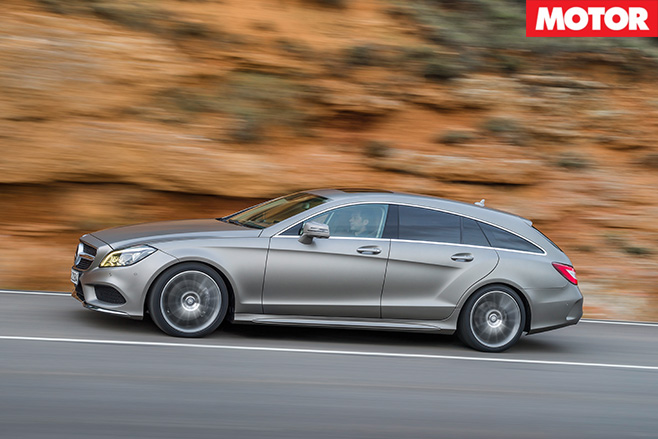
It’s all a bit Nineteen Eighty Four, but most of the tech is unobtrusive enough, bar the lane assist, which knocks you firmly back towards the centre of your lane should you so much as stray near a white line.
The biggest mechanical change is the introduction of a new 3.0-litre twin-turbo V6 in the CLS 400 coupe, but we’re driving the Shooting Brake (read: wagon), a range which has shrunk from four variants to two in the update.
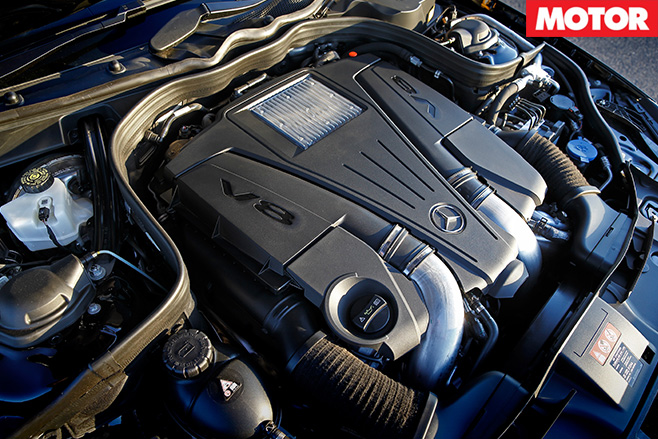
It leaves the CLS 500 as the Shooting Brake flagship, and as substitutes go, it’s a pretty good one. The 4.7-litre twin-turbo lacks the ultimate punch of the AMG, but 300kW/600Nm still makes the 500 a very fast car. Under full acceleration it has a Megane RS275-like turbo roar, but under lighter throttle openings it emits a delicious V8 burble.
Making the most of this impressive power is Merc’s new nine-speed auto. That may sound about four too many, but it rarely hunts, and if no-one told you it had so many cogs, you’d be unlikely to guess yourself.
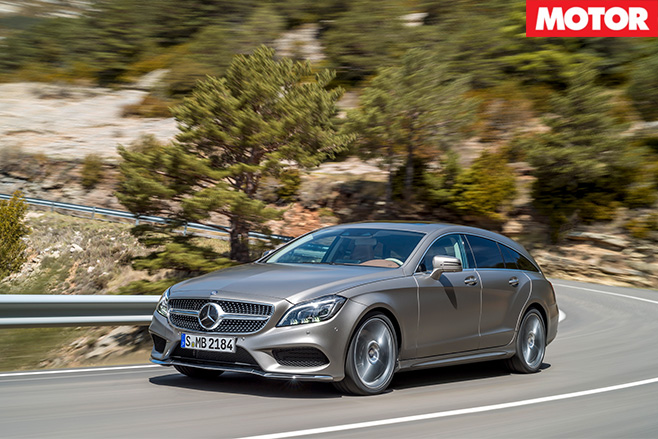
It mightn’t be a thrilling driver’s car, but as everyday transport the CLS 500 Shooting Brake is a very desirable machine. Then again, at $179,900, you could buy a new C63 AMG Wagon…
4 out of 5 stars
SPECS Engine: 4663cc V8, DOHC, 32v, twin-turbo Power: 300kW @ 5000-5750rpm Torque: 600Nm @ 1600-4750rpm Weight: 1880kg 0-100km/h: 4.9sec (claimed) Price: $179,900
A FLEET of hybrid-powered Ferraris is just around the corner.
Ferrari boss Sergio Marchionne has revealed “it’s inevitable” that future Ferraris will ditch conventional drivetrains for hybrid power to improve efficiency and performance.
Currently Ferrari has only one hybrid model in its stable – the 708kW/900Nm LaFerrari supercar.
“I think it’s inevitable that Ferrari will have to go hybrid at some stage,” Marchionne told Wheels in Geneva. “Apart from the fact that it’s going to continue to be a mainstay of Formula One, it’s something that both Mercedes and ourselves consider to be crucial to the development of the sport moving forward. That knowhow is in some way working its way into the production car side of things.
“Obviously the level of sophistication associated with a Formula One car is not required on the passenger car side, but the intrinsic knowledge of how to do this and how to do it well is in the house.”
Marchionne said the success of the LaFerrari, which combines a 6.3-litre V12 with a 120kW electric motor, proves that performance hybrids have a future. His comments also follow recent reports that Ferrari has filed a patent for a new modular architecture to underpin future hybrid models.
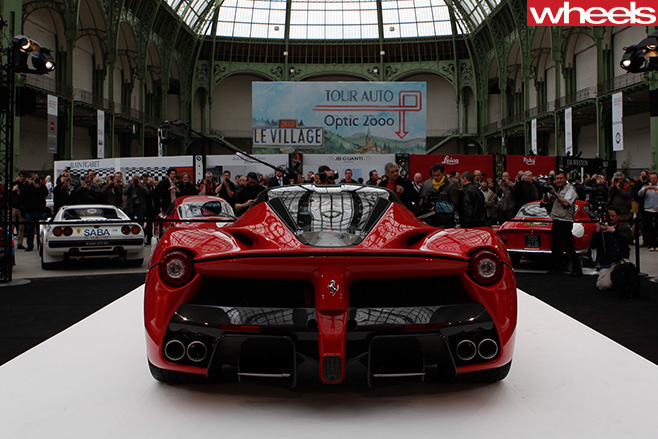
Ferrari won’t, however, move further down the electrification path and build an all-electric model to rival the likes of the upcoming Porsche Mission E.
“With Ferrari, sound is an integral part of the machine,” said Marchionne. “Last time I drove a Tesla, unless I turned on the radio, I knew ‘this is definitely not a Ferrari’. We don’t do that.
“Combustion is going to remain an integral part of what we do, in combination with other technology. It needs the sound so it needs to be combustion driven.”
One piece of emerging technology that Ferrari will never use is any form of autonomous driving tech. Marchionne was adamant on this point.
“Over my dead body,” he said. “You’d have to shoot me first.”
New car sales continue to increase this year, with figures reporting a 6.7 per cent increase in sales compared to February last year.
According to VFACTS, Australians have purchased a total of 180,816 new cars so far in 2016.
With passenger cars still dominating the segments, all be it just 4840 sales ahead of SUVs for the year, the top of the best sellers list belongs to Toyota Corolla, overtaking the Mazda 3 for the lead.
TOP 10 PASSENGER CARS IN FEBRUARY
| Rank | Model | Sales |
| 1. | Toyota Corolla | 3455 |
| 2. | Mazda3 | 3354 |
| 3. | Hyundai i30 | 2461 |
| 4. | Holden Commodore | 2331 |
| 5. | Mazda CX-5 | 2156 |
| 6. | Hyundai Tucson | 1849 |
| 7. | Nissan X-Trail | 1669 |
| 8. | Volkswagen Golf | 1645 |
| 9. | Mitsubishi ASX | 1621 |
| 10. | Toyota RAV4 | 1514 |
It would seem 2016 is the year of the new car. According to VFACTS sales data published last week, new car sales are 6.7 per cent higher than February 2015.
Sitting just behind passenger cars is the SUV segment which is at 69,932 sales year to date, more than 10,000 sales ahead of this time last year.
Of these, medium SUVs are taking the lead with the likes of Mazda CX-5, Hyundai Tucson and Nissan X-Trail topping the list.
TOP 10 SUVS FOR FEBRUARY 2016
| Rank | Model | Sales |
| 1. | Mazda CX-5 | 2156 |
| 2. | Hyundai Tucson | 1849 |
| 3. | Nissan X-Trail | 1669 |
| 4. | Toyota RAV4 | 1514 |
| 5. | Toyota Prado | 1295 |
| 6. | Subaru Forester | 1051u00a0 |
| 7. | Mitsubishi Outlander | 1035u00a0 |
| 8. | Toyota Kluger | 959u00a0 |
| 9. | Subaru Outback | 869u00a0 |
| 10. | Jeep Grand Cherokee | 770u00a0 |
Since the FG-series FPV F6 debuted in 2008 there’s been quite a bit of debate amongst the Ford faithful as to how its 310kW/565Nm 4.0-litre turbo six differs from that of the regular 270kW/533Nm XR6 Turbo.
The argument has reignited with the imminent arrival of the XR6 Sprint, which lifts outputs to 325kW/576Nm (370kW/650Nm on overboost) using essentially a combination of an XR6 Turbo long motor with F6 ancilliaries, as well as some new tricks like a carbon fibre air intake.
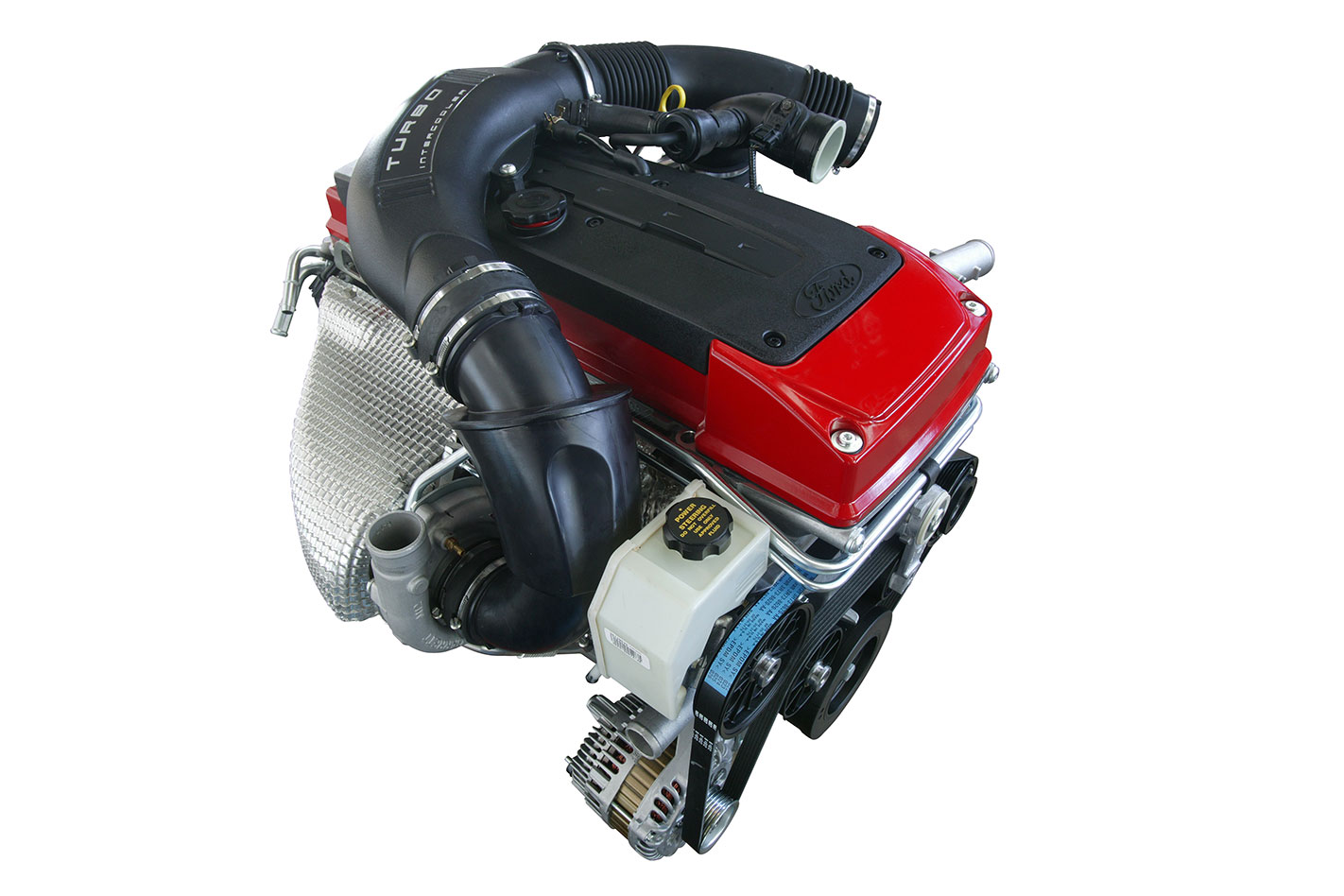
Burn explains: “There’s a bit of debate going on in forum land about the F6 bottom end. There have been a few comments about forged and billet and strengethened and why aren’t we carrying that over into the Sprint? The truth is the only difference is the piston; crankshaft is the same, rods are the same.”
Basically, the only difference between the two engines is the FPV F6 uses a slightly heavier piston, which also has a slightly different profile to lower the compression ratio and allow the use of more boost.
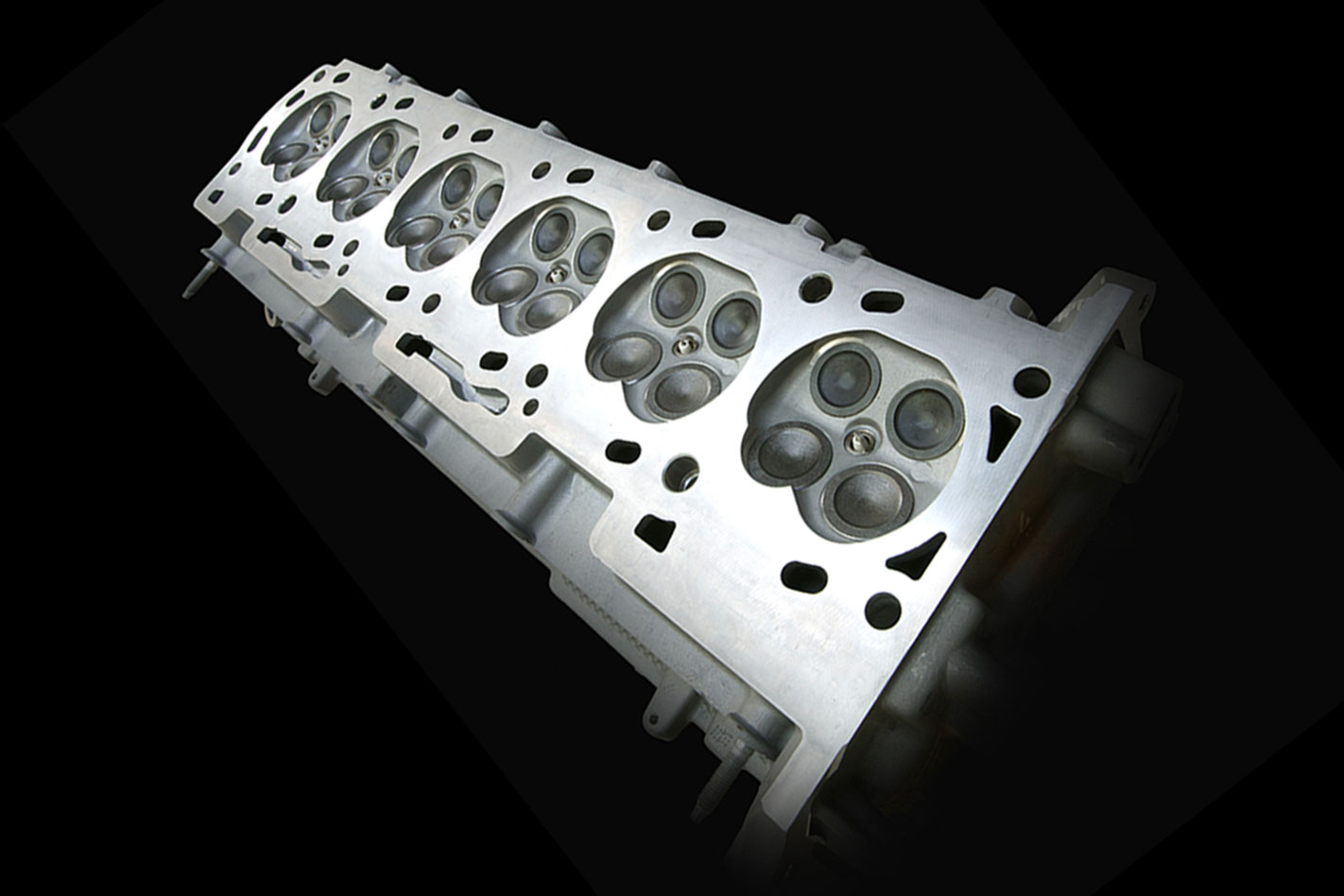
Note that this is in regards purely to the engines themselves, as the ancillaries such as the turbo, injectors, intercooler etc. are unique to each model.
While both David and Justin love the passion of their loyal customers, apparently the odd punter is keen on arguing the point, despite the fact that these are the blokes that actually built the cars, so hopefully this settles the argument once and for all.
And the new Sprint engine? “It’s the best in-line six we’ve ever done.” says Capicchiano.
Opel CEO Dr Karl-Thomas Neumann has confirmed the new Opel Insignia is to be the next Holden Commodore when it takes over from the locally produced VF range in 2017.
Pundits have long expected this outcome, but Neumann is the first General Motors executive to verify the suspicion.
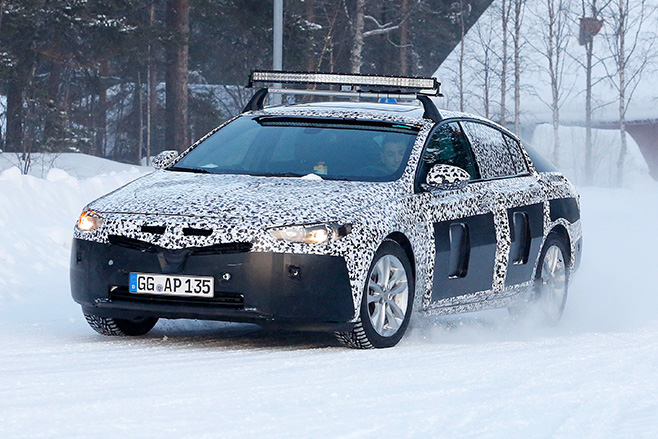
All Holden Commodores to this point have been produced locally however the nameplate has had a German connection since the beginning. The Opel Commodore formed the basis for the first Holden Commodore in 1978.
Speaking to journalists at the Geneva Motor Show, Neumann said, “I think the Australians will like this car a lot.” Asked about volume of cars to be sold in Australia he replied, “I don’t know, as many as possible.”
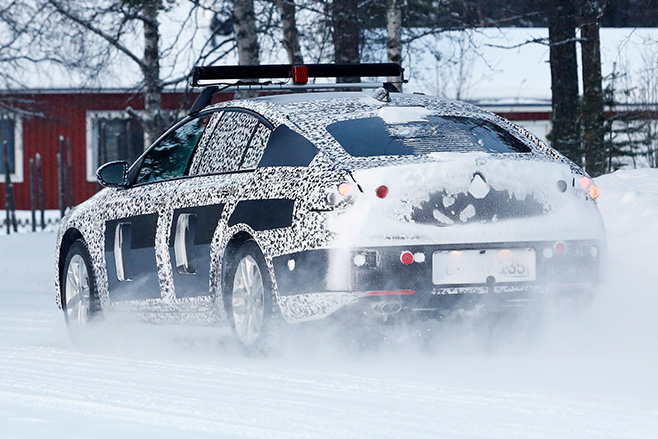
The next-generation Insignia has not yet been officially revealed. It has been spotted testing in cold weather conditions recently, but heavy camouflage has kept most of the car’s design features a secret.
What we do know is that the new Insignia will be smaller than the current Holden Commodore and will not be available with a V8 engine when it arrives. Opel plans to fit a twin-turbo V6 in performance variants, and four-cylinder engines for other models.
Volkwagen has announced it will be planning a big send off for the New Beetle with sales planned to cease here in Australia later this year.
Introduced into the Australian market in 2000, the New Beetle was a modern-take on the classic Beetle (1938 to 2003), but since reaching 1328 sales in its first year, it hasn’t managed to keep up the pace in the Aussie market.
The Beetle, or as it’s more affectionately known, the Bug, has been featured in many pop culture references through the ages, which has no doubt played a huge part in its cult following. Ironically, it was around the year of the Millenium Bug that the New Beetle was referenced in many TV shows, movies and music videos, which goes a long way in teaching us how far product placement can lift a brand. The Beetle even makes a few small cameo appearances in movies like Bring It On, Dude Where’s My Car and of course, Barbie’s classic pink Beetle. We also can’t forget the popular game which allowed you to punch someone every time a Beetle drove past.
So, without further ado, here are a bunch of times the ‘Punch Buggy’ (old and new) has reached our homes and forced its way into our hearts.
THE LOVE BUG (1968-2005)
This has to be one of the most famous references to the VW Beetle. Herbie, the pearl-white 1963 racer Beetle, with a mind of its own, stole the hearts of people across the world as the series, followed by movies, etched its way into people’s TV screens. Even if we are saying goodbye to sales in Australia, Herbie’s blue and red stripes and number 53 will never be forgotten. Long live Herbie.
ABBEY ROAD BY THE BEATLES (1969)
One of the famous names of all time, the cover of The Beatle’s final album as a quartet features a while Beetle to the left of Abbey Road as George Harrison, Paul McCartney, Ringo Star and John Lennon walk across the zebra crossing. At the time of the album’s release, a conspiracy that Paul McCartney was dead was aided by some ‘cues’ on the cover, including the VW’s LMW 28IF numberplate. LMW stood for ‘Linda McCartney Weeps’ and 28IF as a representation of his age IF he was alive. Obviously.
WHAT’S UP, DOC? (1972)
This classic comedy about mixed up identities that leads to a whacked adventure featuring Barbra Streisand and Ryan O’Neal features a blue Volkswagen Beetle which ends up floating in San Francisco Bay – a joke about VW’s advertising campaign promoting the Beetle’s ability to float on water. If you’ve seen it, you’ll know the scene we’re talking about. If you haven’t, you can watch it here but you need to do yourself a favour and hire this classic movie.
SLEEPER (1973)
The Beetle makes a small appearance in the 1973 comedy starring Woody Allen and Diane Keaton. A movie about a nerd who finds himself in the future finds a VW buggy in a cave. Even after 200 years of collecting dust, the engine still starts to which Allen’s character, Miles, says “They really built these things did’t they?”. We’ll let you know in another 200 years, Miles.
TRANSFORMERS (2007)
Despite Bumblebee appearing as a yellow Chevrolet Camaro in the 2007 movie, the alien-robot was originally a Volkswagen Beetle in his earlier life. In the cartoon series, books and toys, Bumblebee always transformed into a yellow Beetle, well until he turned into a Gold Beetle as Goldbug.
AUSTIN POWERS: THE SPY WHO SHAGGED ME (1999)
We couldn’t do a list on iconic Beetles, particularly the New Beetle, without mentioning Austin Powers. His psychedelic Convertible Bug is the one car everyone secretly wanted to own, but no one wanted to be seen driving. Austin pulls it off though, even if he had lost his mojo.
CANDY BY MANDY MOORE (1999)
Then came the music videos which really pushed the New Beetle into life, or at least our lives. And first cab off the rank was Mandy Moore’s first video, Candy. This video clip was so impressionable to teens at the time that the green Beetle is still my first memory of the New Beetle. Mainly because I remember my parents telling me I wasn’t allowed to buy it #neverforgotten.
AARON’S PARTY (COME GET IT) BY AARON CARTER (2000)
Aaron Carter, high school dream boat. Even the girls in his 2000 video clip for Aaron’s Party loved the New Beetle. If they got an invite to Aaron Carter’s party, and they drove a VW Beetle, then obviously that’s what everyone needed to drive. No wonder the sales skyrocketed. “Ain’t nobody do it like Aaron can”. Apparently.
THE GIRL NEXT DOOR (2004)
This MA-rated saucy movie had teenage boys hiding the DVDs world-wide. When Danielle, the porn star, moves in next door, a love affair begins. The only thing we were falling in love with in this movie was Danielle’s robin blue convertible Volkswagen Beetle.
BYE BYE BYE, N*SYNC (2000)
And last but certainly not least, it seemed appropriate to finish the list on this famous song by N*Sync. If you blink, you’ll probably miss the yellow buggy’s appearance during the car chase scene. But it’s there. At 3.22 minutes. Bye, bye, bye Beetle indeed.
PEUGEOT 308 GT DIESEL Score: 77/100
Price & Equipment | 14/20
The $43K GT diesel shares lots with the Mazda – cruise, hill-hold, keyless entry/start, blind-spot monitoring, reversing camera, rear parking sensors, sat-nav, dual-zone climate, auto wipers and lights – then adds front sensors, a bigger 9.7-inch colour multimedia touchscreen (7.0-inch in Astina), auto-park and massage front seats.
Interior & Versatility | 17/20
Peugeot’s floating instrument cluster polarises.
We reckon it works well, but depends on the proportions of the driver. Cabin is classy, well-built and offers terrific comfort with Alcantara/PVC seats, great ergonomics and good space. Cargo bay is more capacious at 435 litres, thanks in part to torsion-beam rear suspension.
Performance & Economy | 16/20
Pug’s GT oiler is auto-only (the petrol GT is manual-only). With 400Nm from 2000rpm, the six-speed 308 charges hard, but with all 133kW arriving early (3750rpm), it’s not especially sporty, despite electronic sound augmentation. Acceleration to 100km/h is decent at 8.4sec, while 4.0L/100km combined-cycle economy is brilliant.
Ride & Refinement | 15/20
Rear torsion-beam suspension that helps cargo bay packaging (and doesn’t unduly affect handling) is nonetheless responsible for some bumpy-road niggles. While the base 308 is an absorbent grand tourer, the GT, ironically, isn’t as supple, riding on stiffer springs and 18-inch wheels. But it’s commendably quiet inside.
Steering & Handling | 15/20
Twenty percent stiffen-up over lesser variants is felt in flatter handling. The snout points quickly in response to the small-diameter wheel and there’s only a subtle sense of the relatively heavy engine blunting the 308’s enthusiasm. Steering not big on feel but dependably linear, and the front delivers a high grip threshold.
MAZDA 3 XD ASTINA Score: 78/100
Price & Equipment | 15/20
Astina’s brilliant turbo-diesel and auto, and the return to a ’90s nameplate, make for an interesting package. It’s pricey ($41K), but tops the 308 with rear cross-traffic alert, auto emergency braking, forward obstruction and lane-departure systems, radar cruise control, powered glass roof, seat heaters and adaptive headlights.
Interior & Versatility | 16/20
Red-stitched leather and suede trim elevates cabin ambience above lesser 3s, while a high level of standard equipment makes it feel worth the money. Rear legroom is more generous but boot smaller at 308 litres. Multi-function commander control knob aids infotainment useability and head-up display is useful too.
Performance & Economy | 17/20
Astina trumps 308 with 420Nm but is heavier, resulting in an identical sprint time. Economy is no match at 5.0L/100km, but the broad power band and throttle response are worth the bowser cost. Astina XD manual in a land of its own for driver-appeal and it’s a weapon – seven-tenths faster to 100km/h than the auto.
Ride & Refinement | 15/20
Mazda’s exhaust sound synthesiser is subtler than the Peugeot’s, in step with the fact it doesn’t spruik its warm-hatch credentials as loudly. More engine noise might’ve helped mask the dull tyre roar on coarse-chip surfaces. While Mazda’s base 3 can’t match a cooking 308 for ride and refinement, the XD is in the league of the GT.
Steering & Handling | 15/20
As with the 308, adding an oiler to the sprightly and entertaining 3 removes some of the sparkle; it feels a bit nose-heavy compared with the petrols. But the steering delivers feel once you lean on the nose, and the engine’s low-rev torque brings a means of exploring the dynamic envelope that isn’t available in an SP25.
VERDICT
Small cars start around $20K, so you need powerful justification to spend double that. And, given that a good hot hatch – say, a Golf GTI – delivers its entertainment with few compromises, an identically priced warm hatch, on the surface at least, exists in no-man’s land. Dig a bit deeper and the XD Astina’s effortless grunt, economy and a truly loaded level of standard equipment (with lots of advanced safety stuff) makes for an alluring package. The 308 GT diesel works with similar fundamentals, though it’s not quite as richly equipped and perhaps removes more from the poise and polish of the excellent entry-level 308 than it deposits in torque and thrift. We’d buy a Golf GTI or, if picking from this pair, the Astina.
This article was originally published in Wheels November 2015.
Belting along a rough road at speed would push most hardcore sportscars well out of composure.
Not so the Nomad. Its body stays flat and its steering wheel steady as the 18in front wheels, shod with moderate off-road rubber, nip gracefully up and down and the Ariel’s suspension absorbs everything.
The Nomad is Ariel’s third model, after the Atom and the recent Ace motorcycle. All that’s carried over from the sports roadster, however, is what’s around the driver: instrument panel, steering wheel, column and rack, the pedal box and the floor panel. Everything else is new, though due to the mechanical layout and those carry-over parts, it feels familiar.
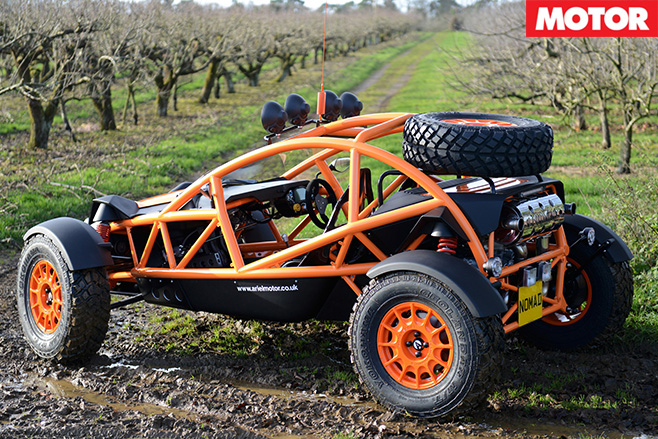
There are double wishbones all ’round with dual-rate springs. It’s the deftness of these springs that makes the Nomad a more appealing road car than an Atom. More appealing even than, say, a Porsche 911 GT3 RS. That’s before even considering the off-road credentials – credentials we’ll investigate when Ariel builds more and can lend us one it doesn’t mind getting caned.
This softness means there are notable body movements; the sort most car makers banish with stiffer springs and even stiffer tyre sidewalls. Ariel embraces them but controls them. Accelerate, brake or corner hard and the Nomad will pitch and yaw, but always with perfect composure.
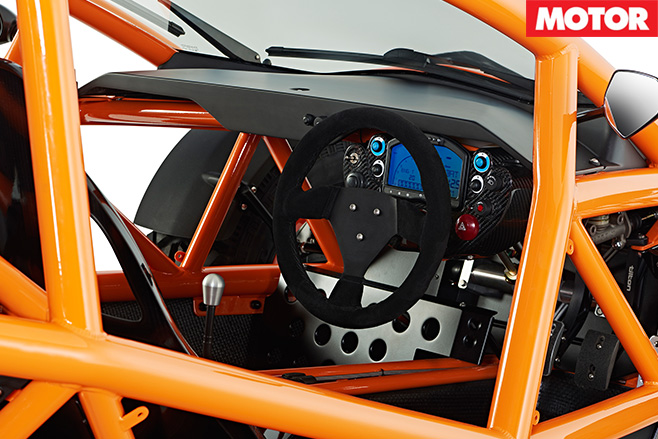
Because the weight is low and the steering fast and unassisted, the compliance in the system is not lost to inaccuracy at the steering wheel. Instead, it helps send every message about what each end of the car is up to, and allows you to manipulate it from bend to bend.
The Nomad is as capable mid-corner as they come. However, the overall handling balance is tricky to find on the road, but you get hints of it. Turn-in on the throttle with the front end lightly loaded and it’ll push on – so what you want to do is settle the nose by braking on turn-in and getting back on the power to let the rear push the car into the turn.
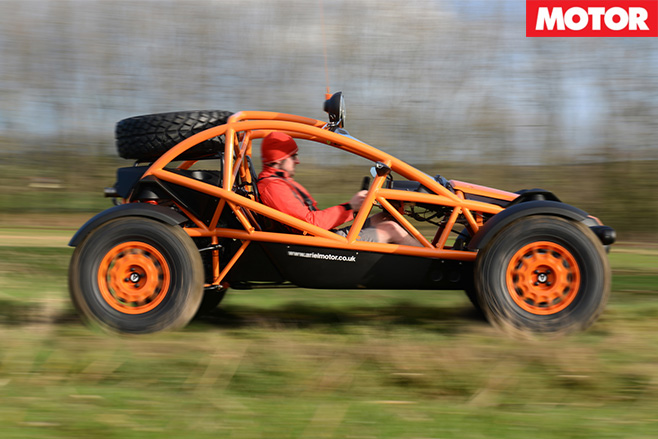
Less than a handful of models have amazed me like the Nomad in my 18 years of testing cars. A Pajero Rally Raid car, or, for different reasons, a Porsche GT3 RS and a Ferrari F40.
Ariel intends to sell only around 75 Nomads each year in its UK homeland, but I wonder if its sales potential extends far beyond that figure. To me, it feels like a landmark car. I adore it.
4.5 out of 5 stars
Specs Engine: 2354cc inline-4, DOHC, 16v Power: 175kW @ 7200rpm Torque: 300Nm @ 4300rpm Weight: 670kg 0-100km/h: 3.4sec (claimed) Price: £36,023 (not coming to Oz – boo)
