
Tesla is leading the game in the technology stakes sitting at the forefront of environmentally-conscious car design. So it’s no surprise it keeps their behind the scenes happenings fairly close to its chest.
But then, in true Tesla form, it does something that gets everyone talking. In this case, it’s releasing a sneak peak of the manufacturing line with a video titled “Symphony of robots building Model X”.
It’s not the first time the electric carmaker has released a video like this, though, with a few other backstage pass videos on the Model S.
It’s fairly safe to assume that with so much new technology coming out of Elon Musk’s brand, people have a keen eye set to the Tesla social media sites, which also hosts the occasional video drop.
On Instagram, Musk even made the statement that Tesla’s product line features up to 542 robots, and by the looks of these videos, it could very well be true.
Zero to 100km/h in 4.7 seconds is probably AMG enough to warrant renaming C450 as the Mercedes-AMG C43, a badge-swap timed with the release of this sedan-supporting coupe bodystyle.
The C450 Sport launched overseas last year – we drove it here – but that badge will never arrive on our shores following a late naming change for both sedan and this newly released coupe version.
“[C-Class] starts the introduction of a whole series of new 43 models this year,” Mercedes-AMG chairman Tobias Moers announced in a statement.
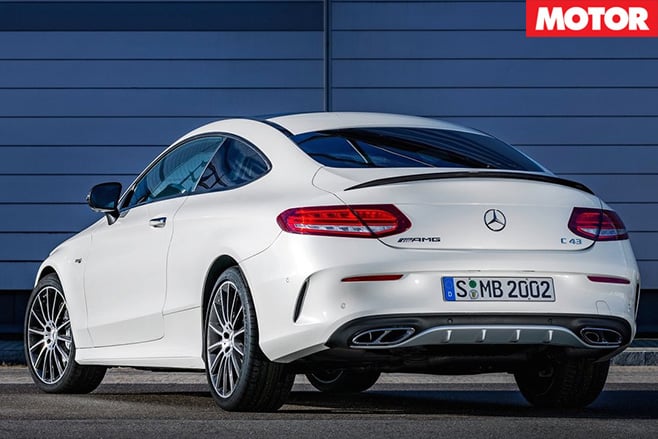
In other words, the C450 AMG Sport was inconsistent – and arguably too long – and the Mercedes-AMG C43 will gel alongside the forthcoming Mercedes-AMG SLC 43, the renamed facelift and turbo-six-powered replacement for the SLK 55 AMG.
Both C43 sedan and coupe utilise the same 3.0-litre twin-turbo V6 engine producing 270kW and 520Nm, but the two-door version is also two-tenths faster from standstill to the 100km/h benchmark.
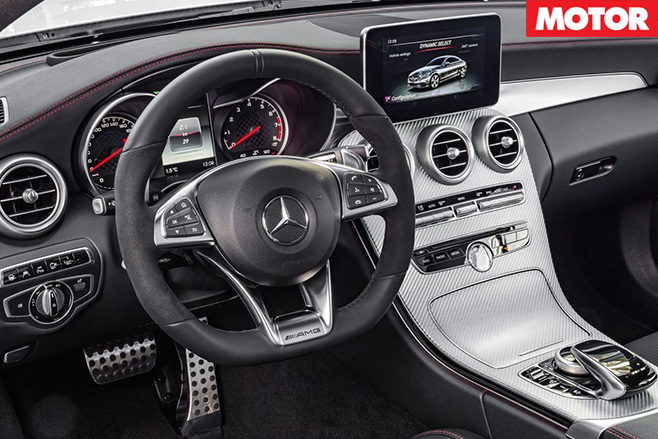
“AMG developers managed to reduce substantially the shift times of the [Mercedes-Benz] nine-speed transmission,” the brand said in a statement.
“The multiple downshift allows even faster short bursts of speed, while the double-declutching function in the Sport and Sport Plus transmission modes makes for an even more emotive driving experience.”
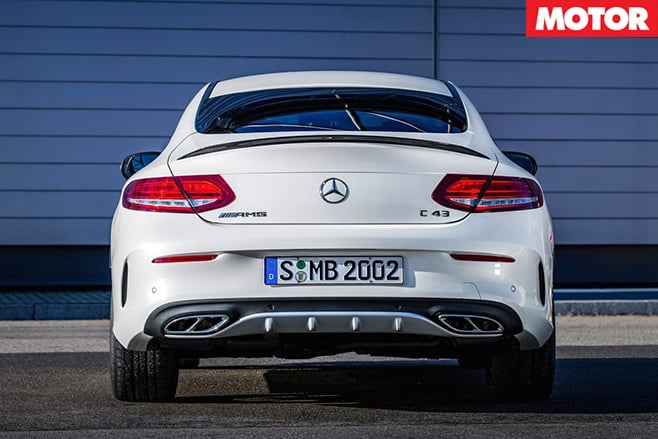
Variable-ratio speed-sensitive steering is standard, as is AMG Dynamic Select driving modes and AMG Ride Control multi-mode adaptive suspension.
The Mercedes-AMG C43 is confirmed to arrive locally in the fourth quarter of this year, with pricing of around $100,000 for the sedan and $110,000 for the coupe. One may arrive before the other, and Mercedes-Benz Australia isn’t confirming full specifications and pricing just yet.
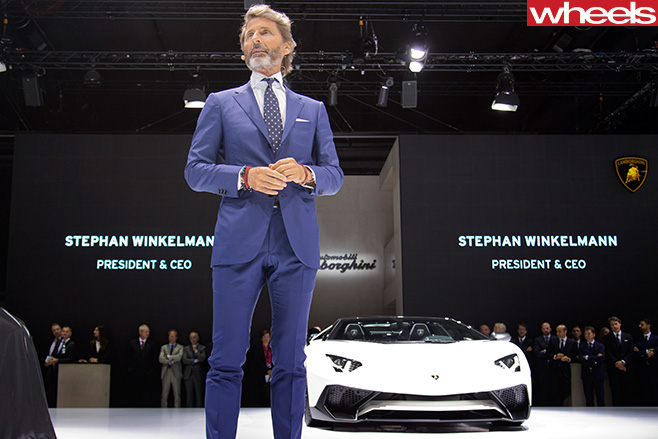
STEFAN Winkelmann, the sharply suited former Fiat salesman who transformed Lamborghini from a niche sportscar brand into an extremely lucrative business, has been appointed to Audi’s specialist performance division.
Volkswagen Group, the owner of Audi and Lamborghini, announced overnight that Winkelmann would head up its Quattro division, responsible for turning out performance-honed S and RS-badged Audis.
Winklemann pushed Lamborghini to 3245 sales globally last year – a booming record for the marque.
Audi Australia says it expects his appointment will bring benefits to buyers here.
“We’ve had very strong support from Audi Sport for the Australian market because we’ve always had steady RS and R8 sales… we’d expect a continuation of the strong relationship.
“There’s certainly room in our range for more RS variants… the Audi Sport brand is clearly expanding, especially with the RS models … there’s a clear change in the way the brand looks at those RS models,” she said.
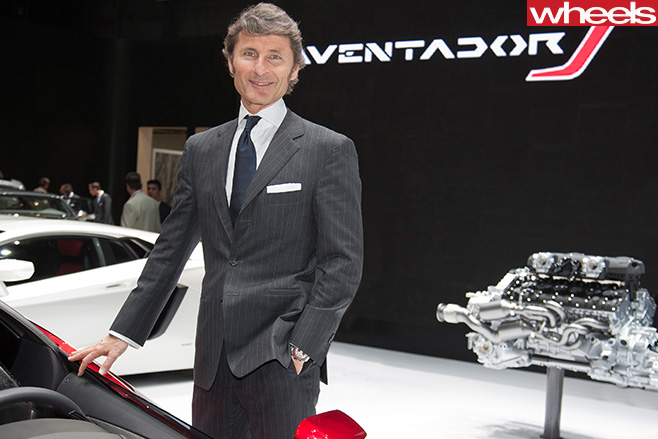
From 2018, Lamborghini will add a third model to its production line – an Aventador-based SUV tentatively named the Urus.
Winkelmann’s empty chair at Lamborghini will be filled by former Ferrari Formula One sporting director and team principal, and more recently Audi’s vice-president of new business initiatives, Stefano Domenicali.
After a decade-long hiatus, Subaru are returning to the Aussie rally scene with Molly Taylor at the helm.
Molly, who was the first female in the Australian Motor Sports Foundation (AMSF) International Rising Star Program and recently awarded the 2016 CAMS Peter Brock Medal, will be taking the wheel of the Subaru WRX STI NR4.
As an international rally driver, New South Wales born Molly has competed in British, European and the World Rally Championship, returning to Australia last season driving a Renault Clio, in which she was the first woman to win a heat in the Australian competition and finished second overall.
“This is a fantastic opportunity and I’m both humbled and excited to be part of Subaru’s new plans to build on their amazing rally heritage in Australia,” she said.
“We’ve got a lot of work to do in testing before the first round in April, but the NR4 is a great car and we look forward to seeing the return of the Subaru rally fans.”
The WRX STI NR4 is closer to the Japanese-spec STI with a 2.0L turbo, as opposed to the 2.5L turbo in the Australian model. Being a rally car, there are several other modifications Subaru to make it FIA-compliant and competitive.
While the co-driver and team name are yet to be announced, Subaru will debut at the Quit Forest Rally in Western Australia from April 22.
Onya, Molly.
Click here to read the full range review on the Subaru WRX.
Volkswagen is gearing up for a big reveal at the Geneva Motor Show. Teaser images of a new SUV have surfaced and an accompanying statement from the company means business.
The currently unnamed concept car seems to take the form of a baby SUV to sit under the Volkswagen Tiguan and go wheel-to-wheel with the likes of Mazda CX-3, Holden Trax, Honda HR-V, Suzuki S-Cross and Nissan Juke.
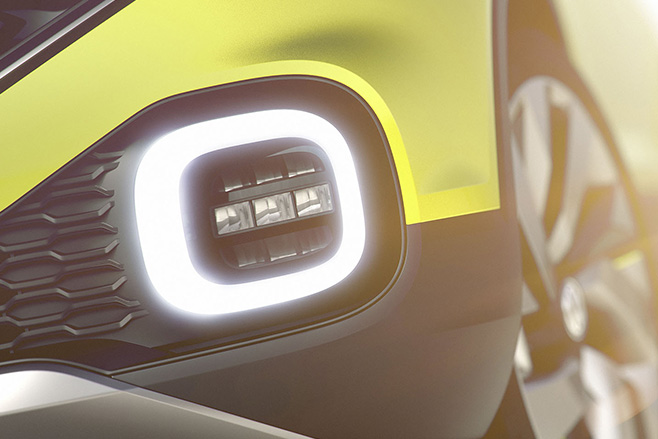
Very little firm information has been shared about the car, so we can’t state anything about the future production model with certainty. What has been said by Volkswagen is that this car “can be seen as the beginning of a broad SUV offensive.”
The small SUV will be shown at the Geneva Motor Show in full with Volkswagen promising that it will deliver “a realistic perspective on a completely new model series.”
Hold on to your hats.
Mercedes-Benz has today announced the addition of a new AMG model to its C-Class Coupe range to be known as the Mercedes-AMG C43 4MATIC Coupe. It will have its global reveal at the Geneva Motor Show next week.
The C43 is now the second performance model in the Mercedes-Benz C-Class range, bridging the gap between non-AMG C-Class variants and the top tier Mercedes-AMG C63.
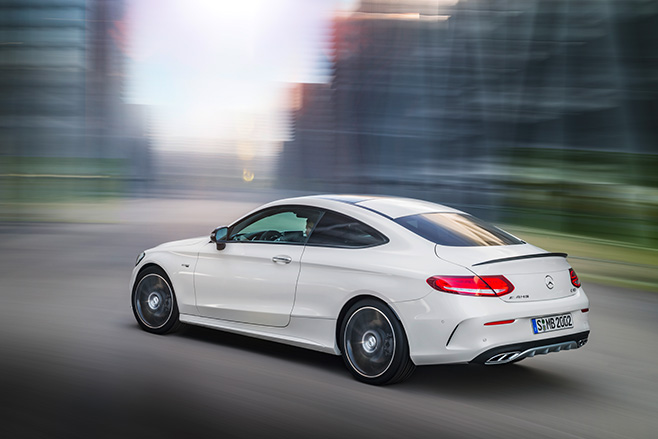
Under the bonnet is a 270kW/520Nm 3.0-litre twin-turbo V6 petrol engine. It is paired with a nine-speed automatic gearbox for increased performance and economy. Acceleration from 0-100km/h takes 4.7 seconds.
Merc’s 4MATIC all-wheel drive system will underpin the C43 with rear-biased torque distribution (31 % front, 69% rear) for a predominately rear-driven feel that delivers on AMG’s brand promise of ‘Driving Performance’ in every respect.
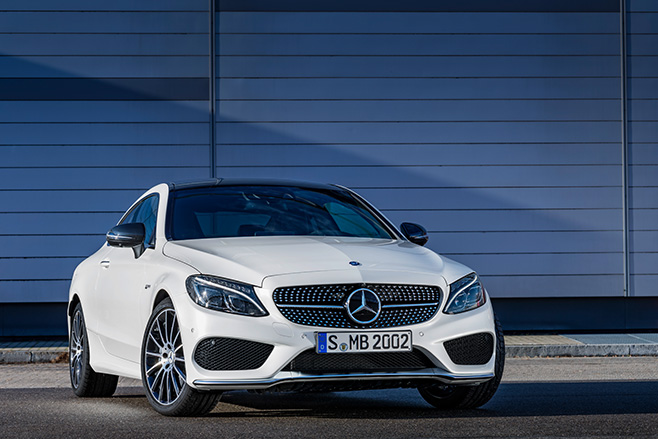
Sports suspension with adjustable dampening lifted from the Mercedes-AMG C63 will be added to the C43. AMG’s ‘Dynamic Select’ drive modes will also be featured along with three-stage ESP.
Styling changes for the C43 aim to beef up the width of the coupe body and make the C43 instantly recognisable as a member of the AMG family.
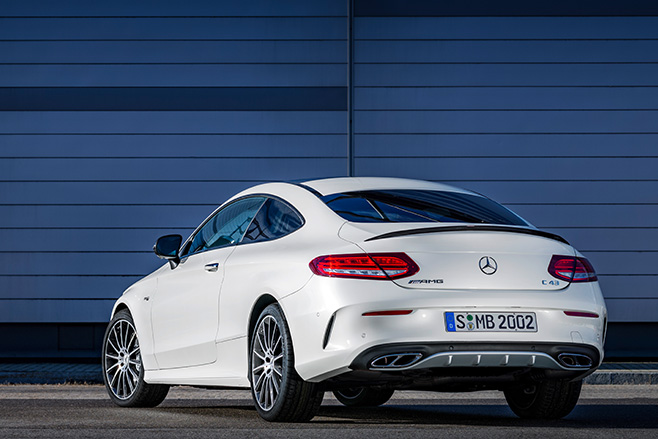
In today’s press release concerning the new C43, Mercedes-Benz says it is the first in a series of ‘43’ models scheduled for release this year.
Chairman of Mercedes-AMG, Tobias Moers, says the new additions are fully-fledged AMGs, “The ’43’ models boast the characteristic AMG genes, which are also included in our GT and ‘63’ vehicles.”
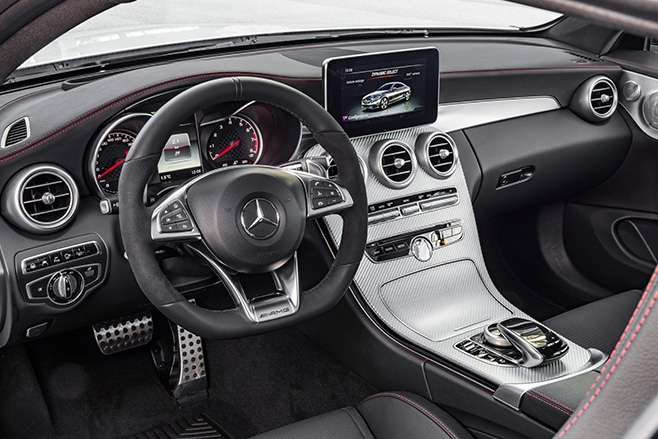
The C43 name has a history dating back to 1997. It was the model designation given to the second ever AMG (the first being the C36). The original C43 was powered by a 4.3-litre V8 – the first C-Class to have eight cylinders.
Click here to read the full range review on the Mercedes C-Class.
Life would be pretty boring if we all liked the same things. You like Coke, I like Pepsi. You like Indian food, I like Mexican. You like Justin Bieber…no, wait, nobody likes Justin Bieber.
Anyway, it means there are plenty of people who won’t go for the obvious choice. Which brings us to the Volkswagen Golf GTI. There’s little argument that it’s the best car in its segment – particularly in MK VII guise, it’s beaten pretty much everything we’ve put it up against.
Judging by regular comments on our social media pages, however, there are plenty of enthusiasts out there who don’t want a Golf, if for no other reason than “everyone’s got one”. Which is fair enough, variety is the spice of life.
But what to buy in that case? To find out we’ve gathered together three premium Euro hatches that, whether on price, performance, or both, position themselves as GTI rivals. A couple of the more obvious contestants aren’t represented here.
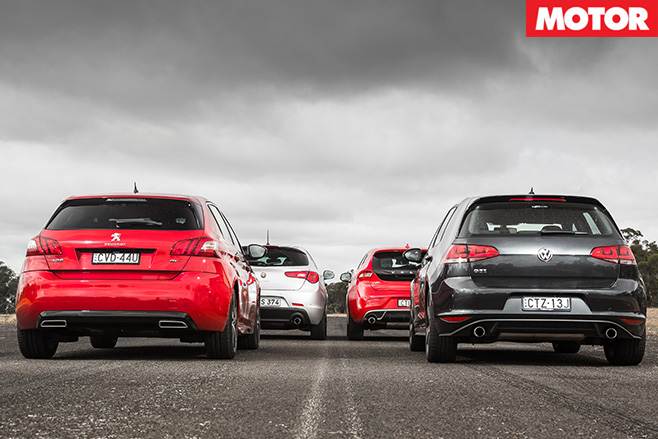
This leaves us with the recently updated Alfa Romeo Giulietta Quadrifoglio Verde in $42,990 dual-clutch TCT form; the similarly facelifted Volvo V40 T5 R-Design, our most expensive contender at $50,400; and the new Peugeot 308 GT, a GTI-matching $41,990 for the manual-only petrol variant.
And, of course, the Golf GTI is here as a benchmark in base manual form, which is arguably the sweetest of all. A motley crew, perhaps, but all are premium hatchbacks with turbocharged four-cylinder engines driving the front wheels.
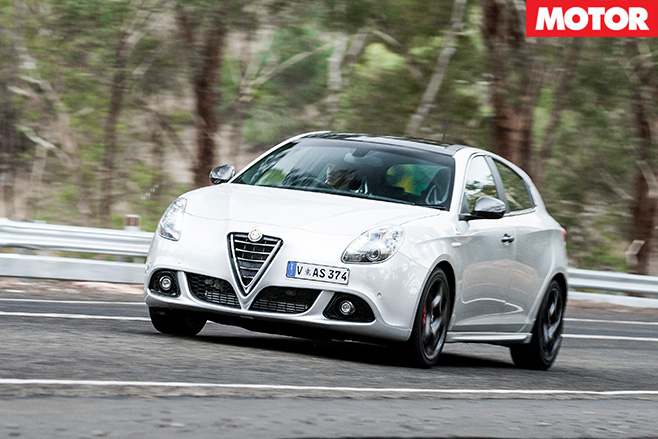
Power increases by only 4kW (the manual, which retains the old alloy engine, continues with 173kW) and torque remains at 340Nm. Both outputs are big numbers from such a small engine, though.
It’s conspicuously turbocharged with a fair amount of lag by modern standards, but the mid-range is incredibly strong. It also sounds suitably angry, particularly from outside, with a deep growl redolent of carb-fed Alfas of old. Unfortunately, the new TCT gearbox is off the pace. It will over-ride manual selections, and downshifts are especially slow.
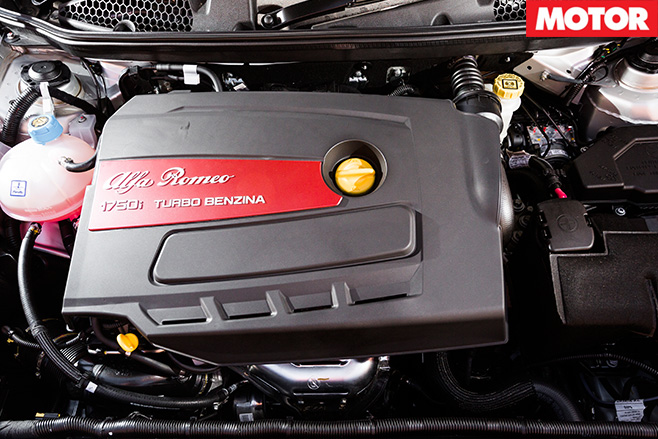
It’s undoubtedly effective, the Alfa matching its 6.0sec 0-100km/h claim time and time again with a best of 6.02sec and a 14.29sec quarter mile at 159.16km/h, making it the fastest of our quartet.
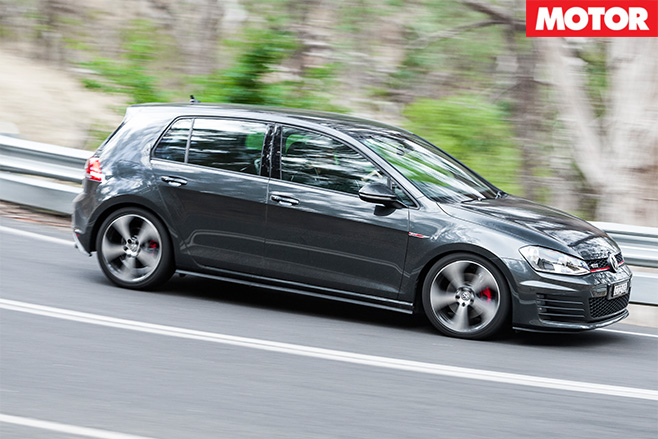
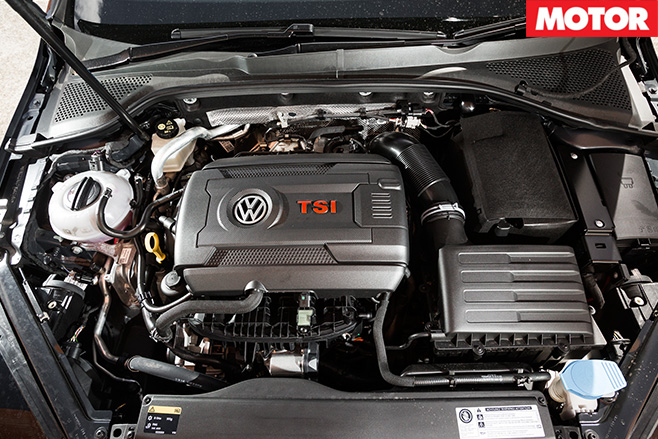
Hot on its heels is the Golf GTI. Clocking 0-100km/h in 6.27sec and crossing the quarter in 14.46sec – the best numbers we’ve managed in a Mk VII GTI – it’s slightly slower, but its 159.99km/h trap speed is a fraction up on the Alfa. In fact, at 160km/h the pair is separated by just 0.01sec. More important than the numbers, though, is the way the VW delivers them.
At the other end of the acceleration spectrum is the 308 GT. With its 1.6-litre turbo four producing 151kW and 285Nm, the Peugeot has the smallest engine and the least power and torque, so its drag strip wooden spoon might come as no surprise. A kerb weight of just 1200kg gives it a competitive power-to-weight ratio, though.
It takes a while for the backwards-facing tacho needle – just like an Aston Martin, though the similarities end there – to sweep its way into the red, but the engine is flexible and reasonably responsive. And though some will hate the synthesised engine sound, personally I quite like it.
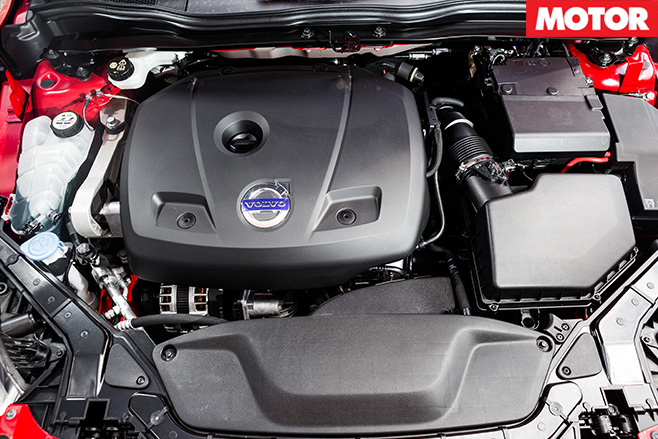
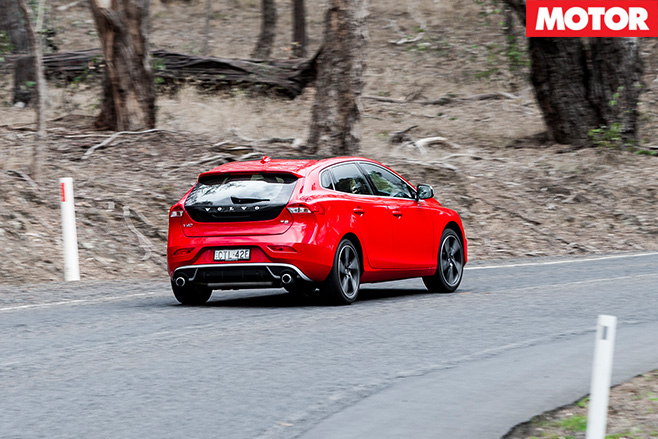
The Volvo’s, however, does not. With 180kW and 350Nm from its new Drive-E 2.0-litre turbo four, it has the highest outputs of any car here, so it’s acceleration times of 6.91sec 0-100km/h and a 15.02sec quarter mile at 153.02km/h are disappointing.
Holding it against the brake spools up 2500rpm, and it launches cleanly with little wheelspin, but despite extremely short gear ratios it’s just not that fast. The culprit? A kerb weight 144kg more than the next-heaviest car (the Golf) and a whopping 268kg more than the lithe Peugeot.
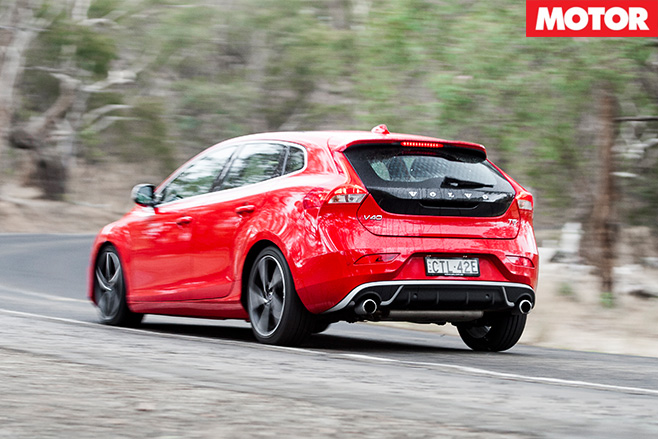
Its cause is not helped by an eight-speed automatic gearbox that, while perfectly acceptable for everyday use, drops the ball when it comes to performance motoring. Downshifts are denied unless less than 4000rpm is showing on the tacho, and the shifts themselves are slow.
In tighter turns, understeer is the predominant handling characteristic and there’s basically bugger-all you can do about it; this is partly due to an inert chassis and partly due to an ESP system that can’t be disabled.
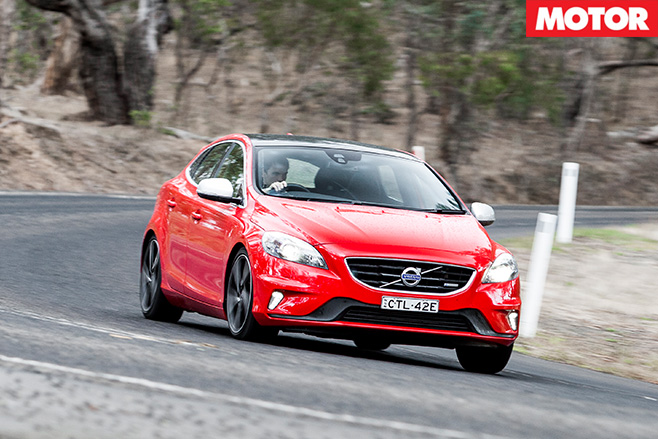
The polar opposite in character is the Giulietta, though it’s arguable whether the Italian is much faster than the Swede over a given section of road. The difference is noticeable from the first turn of the steering wheel; the Alfa’s much faster rack meaning far less lock is required to negotiate any given corner.
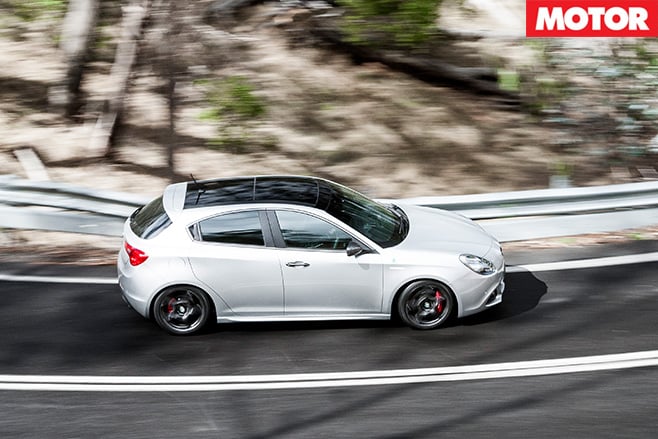
Lateral grip levels are very strong, even in the wet, and the Giulietta is beautifully adjustable using brakes and throttle. Adjustable, that is, until ESP clamps down. While Dynamic mode loosens the reins a little, any keen driver is quickly going to be frustrated that the system cannot be disabled, doubly so because there’s clearly a playful, responsive chassis dying to express itself.
For a manufacturer with the sporting pedigree of Alfa Romeo not to allow ESP to be deactivated is a disgrace. Juan Manuel Fangio would be rolling in his grave if he knew. No such qualms with the Peugeot. Unusually in this day and age, one quick press of the ESP button means you’re driving solo.
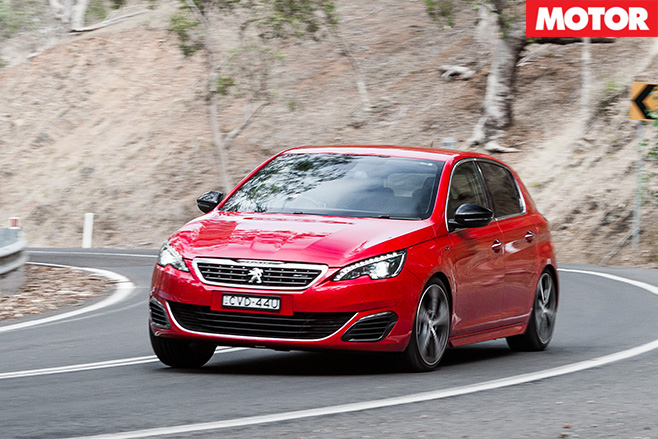
The flipside of this is decent traction; the inside front wheel can spin up when exiting tight corners, but it’s easily controlled and modulated. In general, it’s a very neutral chassis. Understeer is kept in check unless you really go in hot and any attempt to enliven the rear is met with that famous French insouciance. Up to around eight-tenths it’s agile – it only weighs 1200kg, remember – and quick enough, though it’s unlikely to set your heart racing.
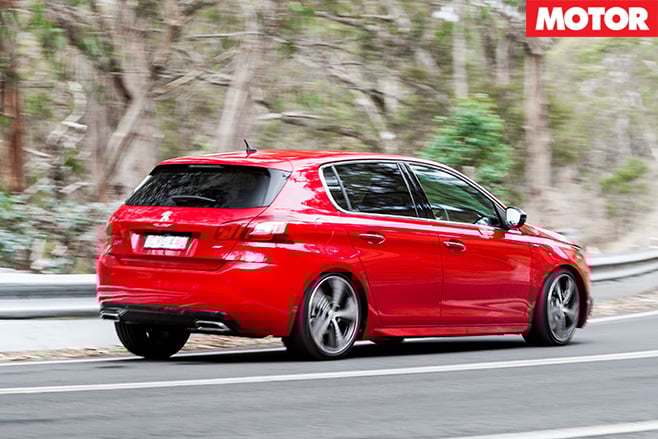
In almost every other area, however, the Golf quickly proves why it’s the class benchmark. The steering is maybe a touch on the heavy side, and the quick response of the variable-ratio rack (just two turns lock-to-lock) takes some acclimatisation, but it soon becomes second nature.
The ride is the best here, courtesy of the standard-fit adaptive dampers, and the chassis is the most playful. Like the Alfa, ESP cannot be completely disabled, but the VW’s Sport mode allows greater freedom to the point where it’s unlikely to interfere too often on the public road. Track-day goers will curse it, though.
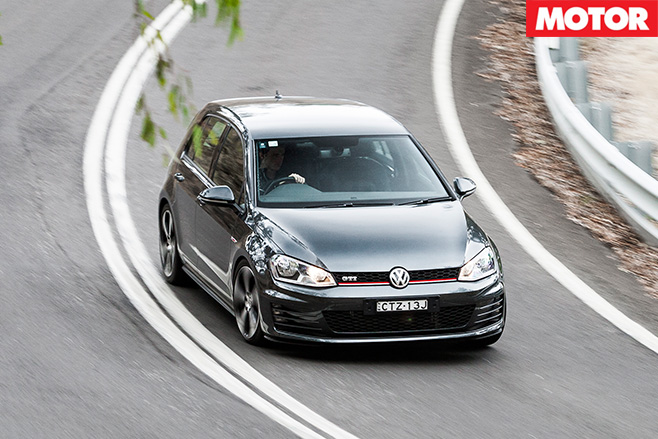
Still, it’s more James Bond than James Hunt in its choice of attire, a theme that continues on the inside. However, while the mood may be sombre, enlivened only by flashes of red stitching and the excellent tartan seats, the materials are high quality, the driving position perfect and it’s well equipped.
Still, if it’s design flair you’re after, the Alfa might be more your shot of espresso. Credit must go to whoever specced this particular press car, as the silver paint contrasted with black roof and wheels looks sensational. The nose is a bit Sam the Eagle from The Muppets, but in general the Giulietta is a very attractive car.
Inside there are neat touches like Italian script on the water (acqua), fuel (benzina) and rev (giri) gauges, cool rotary HVAC controls with digital readouts in the middle, and it wins points for retaining a manual handbrake.
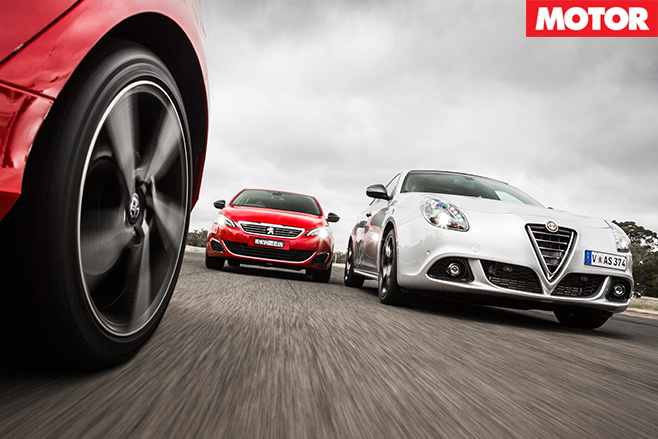
The 308 continues Peugeot’s current trend of mounting the miniature steering wheel low enough so that the dials can be read over the top. It’s meant to significantly assist refocusing after a glance at the instruments, and in this case it works because, unlike Peugeot’s 208, the driver’s seat is mounted low in the car, meaning the wheel is still high enough not to feel like you’re driving with your knees.
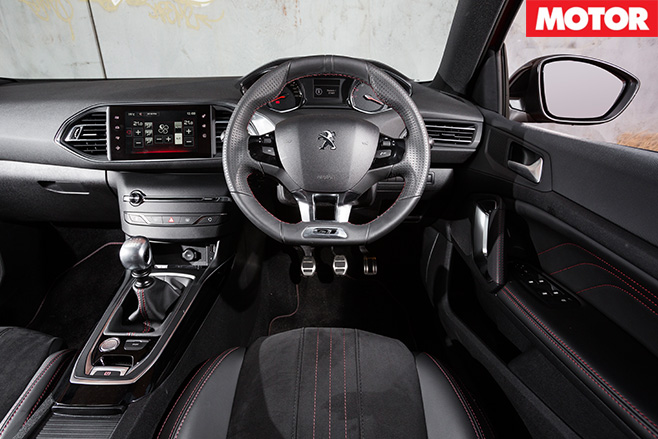
The Peugeot’s looks split opinion, with editor DC calling it fussy, while I think it looks squat and handsome, bar the strange crinkly bonnet that makes it look like the car has already been in a minor accident.
Mind you, if you were going to have an accident, the Volvo is probably the car to have it in. It feels like it’s built like a tank. In contrast to the minimalist Peugeot, the V40’s centre stack is a button fest and it takes time and familiarity to learn what each press, turn and poke does.
In objective terms, the Golf GTI is the clear winner of this lot – it’s the best car in almost every area. The other three have different strengths in different areas, and as such are likely to appeal to different buyers for different reasons.
Sadly, the Volvo falls first as it just doesn’t feel like a particularly sporty product. It’s like its dynamic ability is an accident, which is quite ironic given how hard the car works to prevent you from having one. It’s not a bad car by any means, but from an enthusiast’s standpoint it’s not that fast, not that inspiring to drive, and it’s also the priciest car here by quite a margin.
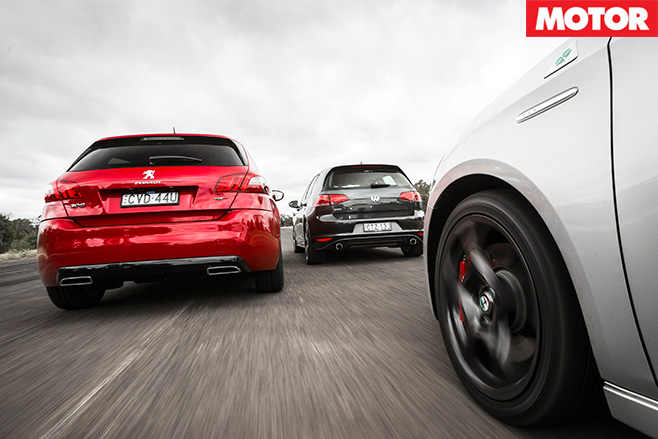
However, it’s the 308 that gets the nod as best of the rest. It may be the slowest car here, but it’s actually the most enjoyable to drive hard and continues Peugeot’s recent resurgence – it’s far better than some of the recent dross the brand has marketed as performance metal. If only it was a bit faster.
The basis is there, now Peugeot Sport needs to get its hands on the 308 and stuff it full of RCZ-R bits – then it’ll have a hot hatch to best not just the GTI, but the Performance Pack as well. And that’s something everyone will like.
| u00a0 | Peugeot 308 GT | Alfa Giulietta QV | Volvo V40 T5 | VW Golf GTI |
| Body | 5-door, 5-seat hatch | 5-door, 5-seat hatch | 5-door, 5-seat hatch | 5-door, 5-seat hatch |
| Drive | front-wheel | front-wheel | front-wheel | front-wheel |
| Engine | 1598cc inline-4, DOHC, 16v, turbo | 1742cc inline-4, DOHC, 16v, turbo | 1969cc inline-4, DOHC, 16v, turbo | 1984cc inline-4, DOHC, 16v, turbo |
| Bore/Stroke | 77.0 x 85.8mm | 83.0 x 80.5mm | 82.0 x 93.2mm/td> | 82.5 x 92.8mm |
| Compression | 10.5:1 | 9.2:1 | 10.8:1 | 9.6:1 |
| Power | 151kW @ 5000rpm | 177kW @ 5750rpm | 180kW @ 5500rpm | 162kW @ 4500-6200rpm |
| Torque | 285Nm @ 1750-4500rpm | 340Nm @ 1900rpm | 350Nm @ 1500-4800rpm | 350Nm @ 1500-4400rpm |
| Power/Weight | 126kW/tonne | 136kW/tonne | 123kW/tonne | 122kW/tonne |
| Transmission | 6-speed manual | 6-speed dual-clutch | 8-speed auto | 6-speed manual |
| Weight | 1200kg | 1299kg | 1468kg | 1324kg |
| Suspension | struts, coil springs, anti-roll bar (f); torsion beam, coil springs, anti-roll bar (r) | struts, coil springs, anti-roll bar (f); multi-links, anti-roll bar (r) | struts, anti-roll bar (f); multi-links, anti-roll bar (r) | A-arms, adaptive dampers, anti-roll bar (f); multi-links, coil springs, adaptive dampers, anti-roll bar (r) |
| L/W/H | 4253/1804/1447mm | 4351/1798/1465mm | 4369/1802/1445mm | 4349/1799/1491mm |
| Wheelbase | 2620mm | 2634mm | 2647mm | 2620mm |
| Tracks | 1559/1533mm (f/r) | 1554/1554mm (f/r) | 1559/1546mm (f/r) | 1538/1516mm (f/r) |
| Steering | electrically-assisted rack-and-pinion | electrically-assisted rack-and-pinion | electrically-assisted rack-and-pinion | electrically-assisted rack-and-pinion |
| Brakes | 330mm ventilated discs, single-piston calipers (f); 268mm solid discs, single-piston calipers (r) | 330mm ventilated discs, 4-piston calipers (f); 278mm solid discs, single-piston calipers (r) | 320mm ventilated discs, single-piston calipers (f); 280mm ventilated discs, single-piston calipers (r) | 312mm ventilated discs, 4-piston calipers (f); 300mm ventilated discs, single-piston calipers (r) |
| Wheels | 18 x 8.0-inch (f/r) | 18 x 7.5-inch (f/r) | 18 x 7.5-inch (f/r) | 18 x 7.5-inch (f/r) |
| Tyres | 225/40 R18 (f/r) Michelin Pilot Sport 3 | 225/40 R18 (f/r) Dunlop SP Sport Maxx | 225/40 R18 (f/r) Michelin Pilot Sport 3 | 225/40 R18 (f/r) Continental ContiSportContact 2 |
| Price | $41,990 | $42,000 | $50,400 | $41,490 |
| Price as Tested | $41,990 | $42,000 | $53,425* | $41,490 |
| Positives | Grippy, neutral handling; high equipment levels | Pace, engine character, grip, style, keen chassisu00a0 | Solid on-road performance, much improved economy | Class benchmark u2013 engine, handling and ride all great |
| Negatives | Should be faster, chassis could be more adjustable | Intrusive ESP, ergonomics, doesnu2019t like bumps | Price, needs to be more involving, weight issues | Can struggle for traction, lacks visual flair, little else |
| Star Rating | 3.5/5 | 3.5/5 | 3/5 | 4/5 |
MAD MAX: FURY ROAD
This George Miller film won the love of feminists and car enthusiasts everywhere. The whole movie was basically a driving-lovers wet dream with a claimed 150 vehicles used in the film. From Nux’s Chevrolet 5-door coup, to the firey Chrysler Valiant Charger V8 seen here.
BRIDGE OF SPIES
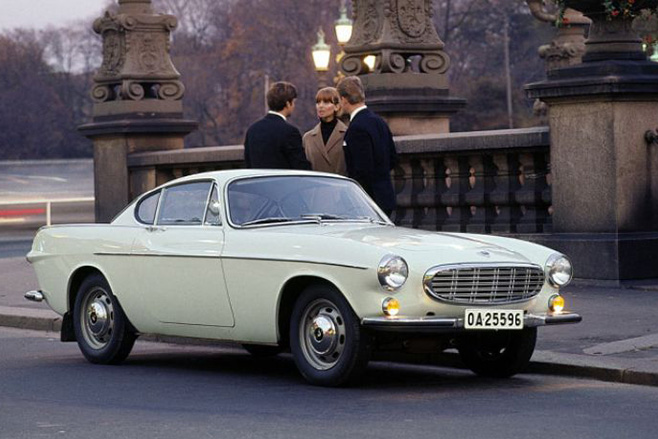
A Steven Spielberg drama about the Cold War, spies, lawyers and the CIA – our kind of movie. Tom Hanks is a lawyer, trying to free a US pilot who was captured by the Soviet Union in 1960. And there to share the screen is Volvo classic, the P1800 coupe.
CAROL
There’s nothing our Lifestyle Editor loves more than a romantic drama, set in the glamorous decade of the 1950s. This movie about the growing bond between two women, starring Cate Blanchett and Rooney Mara, features a range of beautiful classic cars including a 1949 Packard Super Deluxe 8, and a 1952 Cadillac.
STRAIGHT OUTTA COMPTON
When it comes to Oscar nominated movies and cars, Straight Outta Compton gets us talking. The movie, based in Southern LA, is about the revolution of hip-hop in the late ’80s and features an array of cool cars. Our top picks are the 1987 Ferrari Testarossa, the 1964 Chevrolet Impala Convertible and the 1980 Lincoln Continental Mark VI (featured here).
FIFTY SHADES OF GREY
It wouldn’t a movie about some erotic rich guy without some cool cars. The cult movie, Fifty Shades of Grey, was the talk of the town – well, certainly with the female population. But for the car-enthusiasts who were forced to sit through it, there were a couple of hidden treats like the Audi A3 and R8 Spyder. Audi certainly got their fair share of product placement in this movie.
BONUS: FAST AND FURIOUS 7
It was a movie that pulled at heart strings because of the very sad and untimely death of actor, Paul Walker. Fast and Furious 7 may not be nominated for an Oscar but we couldn’t possibly do a piece on cars in Hollywood without including this iconic movie. As you’d expect, this movie wasn’t short of car porn, from the 1970 Dodge Charger R/T and Nissan Skyline GT-R R34 to the Ferrari 458 Italia, 2004 Aston Martin DB9, and 2014 Maserati Ghibli. But our pick of the bunch, the Lykan HyperSport.
Power can be moreish. So when Mercedes-AMG stuffed two turbochargers in the GT S’s nose, it was a safe bet the aftermarket crowd were going to have it push out more puff.
Among the first to try are tuners Renntech, who jumped at the opportunity to squeeze more from the car’s 4.0-litre V8 with its newly released engine upgrade. It’s also developed a suspension upgrade, and tested both at the Nurburgring for a final sign-off.
The engine package focuses on the GT S’s turbochargers snuggled in the engine’s vee, where Renntech have swapped in lightweight compressor wheels.
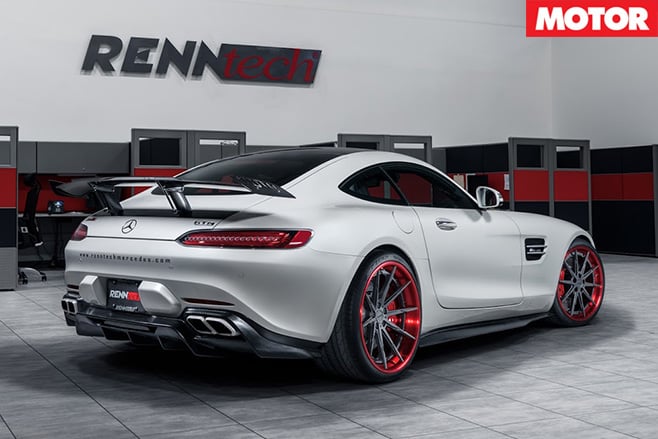
High-flow filters feed the turbos more air, while new dump pipes stuffed with sports cats operate downstream.
An ECU tune oversees the whole operation, and all up allows the engine to drum up 533kW and 890Nm. That’s a whopping amount, equating to 158kW and 240Nm more than the stock car’s outputs.
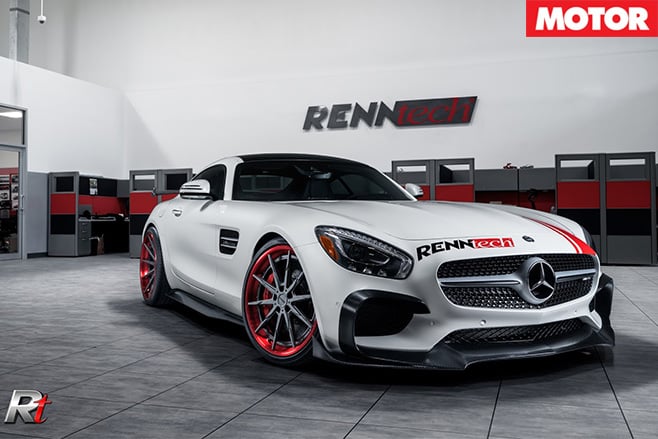
At the same time Renntech has released new lowering springs for the car. They slip over the stock dampers and drop the car by a signficant 1.5-inches. Thankfully they also retain the car’s electronic damper control.
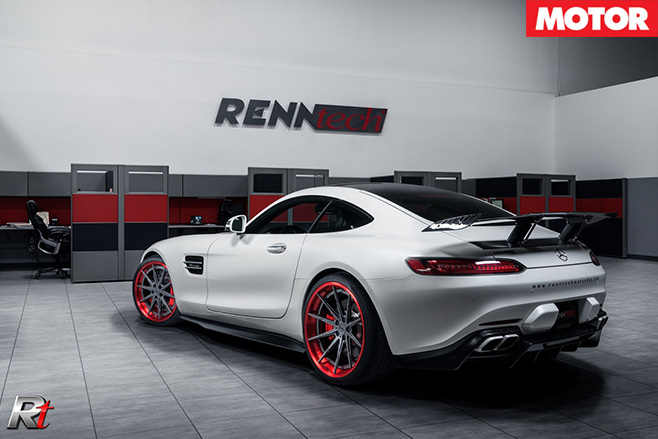
Pictures via Renntech
As facelifts go, the newly updated A6 sedan and A7 Sportback – together with the hotter S-branded variants – need endure no mid-life crisis. Stylish, well built, suitably prestigious and well-appointed, there really wasn’t much to ‘fix’.
The 2015 versions are therefore more massaged than made over, focusing on sharpening the design to maintain visual freshness, along with a few selective fiddles in the vast VAG powertrain parts-bin, and some nifty in-cabin tech to remain relevant.
The sharper nose and tail, particularly the slimmer light design, work beautifully with either body style. Fancy Matrix LED headlights, and ‘strobing’ indicators at both ends, are now handsome cost options.
New-gen infotainment anchors are the obvious interior update, and while it takes trainspotting to notice subtle tweaks to cabin styling, the outgoing A6 breed was a high watermark of presentation and slickness to begin with, so nothing required fixing.
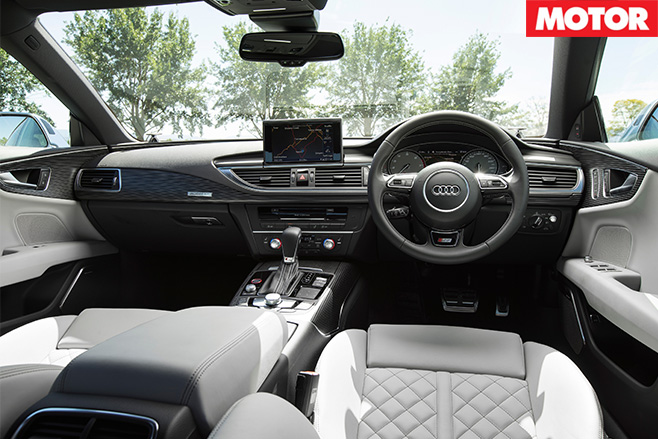
Closer to MOTOR’s fast lane, though, are the S variants. The 4.0-litre biturbo V8 has had a tickle, jumping to 331kW from an outgoing 309kW. It makes peak power slightly higher too (now 5800-6400rpm), though torque remains at a still-heady 550Nm from just 1400rpm.
Quick? You bet. Audi’s claim is a ferociously brisk 4.4sec for S6, 4.6sec for S7, and they certainly feels that potent from the seat of the pants. If Ingolstadt’s track record is any measure, the quattro-driven luxo-rockets will nail their claims without fuss, even on less-than-perfect surfaces. That, then, is the real appeal.
Both sit on 20s, feature adaptable air suspension and adopt luxo q-car manners in Comfort mode. The experience is more polite, mature, livable, super-refined daily driver than the harder-core experience of RS equivalents. But I’d wager an S6 would have the accelerative measure of an M5 or E63 S more often than not. And from $169,900 for the S6, it’s more affordable, too.
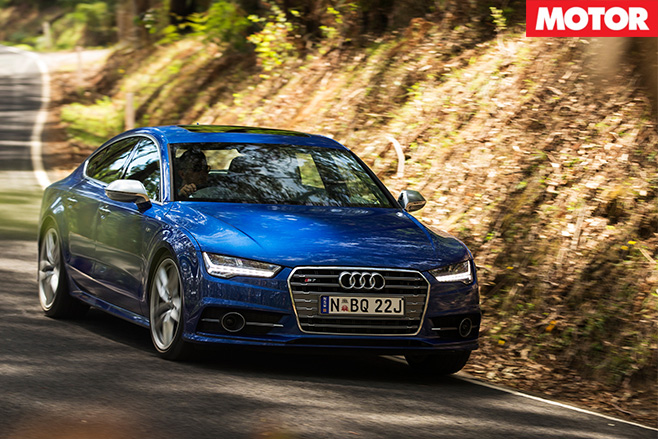
That’s no slight, though. Audi does the RS thing, for a handsome premium, if agility and outright ferocity is your bag. The S6 and S7 instead occupy a space between luxo-touring and the kind of A-to-B back road pace many owners won’t come close to fully exploring.
4 out of 5 stars
Specs
Engine: 3993cc V8, DOHC, 32v, twin-turbo Power: 331kW @ 5800-6400rpm Torque: 550Nm @ 1400-5700rpm Weight: 1970kg (2030kg) 0-100km/h: 4.4sec (4.6sec) (both claimed) Price: $169,900 ($179,900)
