
Mazda has fired up the production line at its Hiroshima plant to build a brand-new CX-9 SUV, the largest in Mazda’s SUV range.
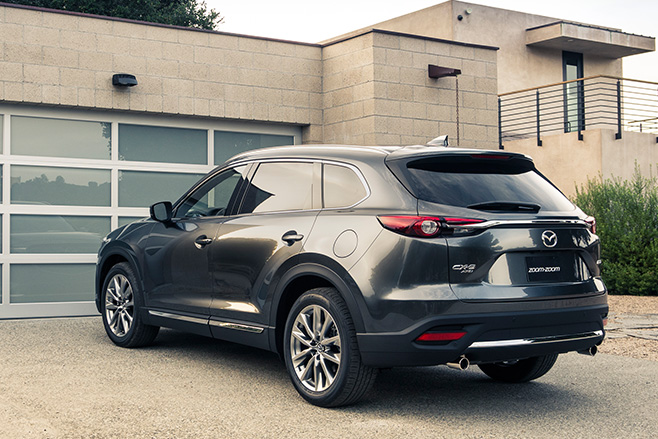
The new generation CX-9 is due to arrive in Australian dealerships in mid-2016 and promises to increase refinement over the current model. A quieter cabin and improved fuel economy have been in Mazda’s sights during development. A press release issued by Mazda says the seven-seater CX-9 will offer buyers ‘an indulgent experience of quality and comfort that goes beyond specs and functionality.’
Coinciding with the CX-9’s arrival is the introduction of a new engine, a turbocharged 2.5-litre petrol four-cylinder with direct injection called Skyactiv-G 2.5T. This new motor replaces the 3.7-litre V6 currently found in CX-9 models is likely show up in the highly anticipated Mazda 3 MPS hot hatch.
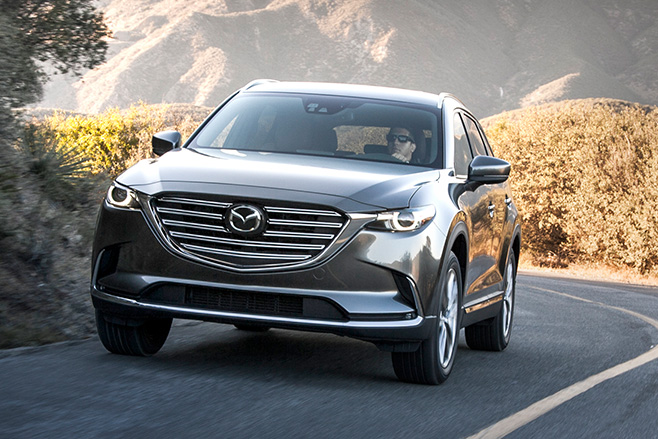
Exterior styling of the new CX-9 ties in with Mazda’s strong ‘Kodo’ design language. The evolution of ‘Kodo’ is identifiable across Mazda’s current range with CX-9 bearing the most resemblance to the recently updated Mazda 6.
The high-end CX-9 has not had a major update since late-2012. Mazda’s smaller SUVs, the CX-3 and CX-5, are selling exceptionally well and challenging rival carmakers to keep up. Mazda expects to sell 50,000 CX-9s globally with most of those going to North America.
CX-9 goes head to head with rivals including Toyota Kluger, Nissan Pathfinder, Ford Territory, Kia Sorrento, Hyundai Santa-Fe and Holden Captiva 7.
This week, Bentley has launched the first ultra-luxurious SUV – the Bentley Bentayga. But with a price tag to match its luxurious title, we took a look at several things we could buy for the same amount of money.
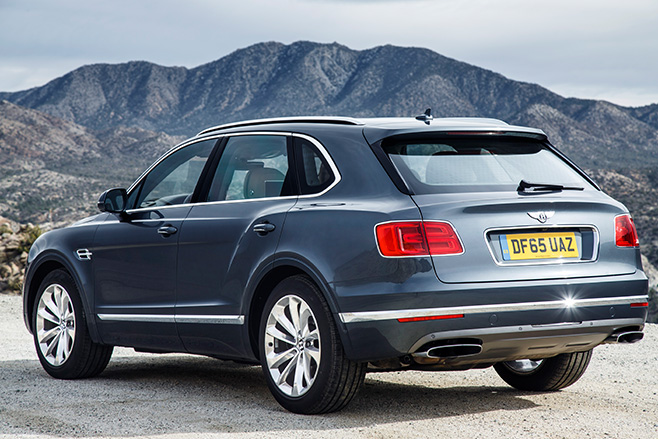
- A small, one bedroom apartment in Sydney. That kind of money won’t get you too far in Australia’s most expensive city, but it’ll get you a room and maybe even a toilet, if you’re lucky. I would rather live in the Bentayga.
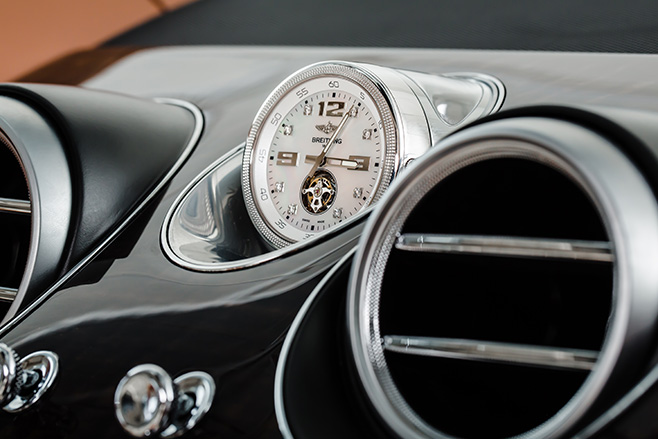
- A Patek Philippe Sky Chart Grand Complication watch. But then again, the Bentayga also comes with a Breitling clock as an option, all be it for an extra $300,000.
- Ten Tiffany & Co rings made from 18k gold and Marquise diamonds set in platinum. A car might be more practical, but then again, a diamond is a girl’s best friend, right?
- A month’s accommodation in the best room at Park Hyatt Sydney.
- Did you know that for around $150,000, you could own an acre of a private island in the Caribbean. Ok, so you won’t get the whole island for the price of the Bentayga, but you’ll get a few acres of it.

- Take your pick of any of the lux-brand handbags. Prada, Chloé, Louis Vuitton, eat your heart out. In fact, you could probably buy close to five of these bags.
- A room full of red roses. We’re past Valentine’s Day but it’s never too late to tell someone how much you love them, even if it does cost close to $400,000.
- Or you could just take all the money and disappear on a round-the-world trip…

Chances are if you’re looking to buy the most expensive SUV in the world, you probably already have most of these things. Either that or you’ve won the lotto and splurging up big, and we certainly approve.
Curious about what else Bentley has in store for the Bentayga? Read about their driverless car concept here.
BMW’s stuck an M badge on its 7-Series, gifting the luxury flagship sedan immense straight-line performance.
The M760Li xDrive, as it will be known, now gives BMW a weapon to fight Audi’s S8 and Mercedes-AMG S63, while also injecting a V12 variant into the new 7 Series range.
BMW’s lowered a 6.6-litre V12 into the long wheelbase sedan. Relying on two turbochargers it musters 441kW at 5500rpm and a huge 800Nm at 1500rpm.

More firepower costs the M760Li at the weighbridge, as the heavier V12 means it tips in at almost 2.2-tonne. So to keep its mass in check, BMW’s teamed its air suspension with active roll technology, a more direct steering ratio, stickier tyres, and dinner plate sized brakes.
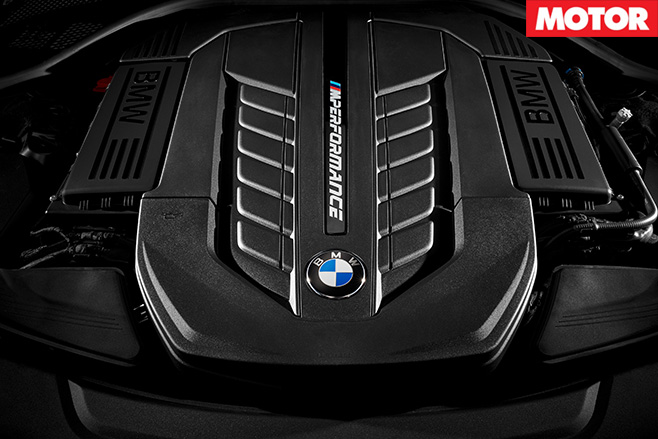
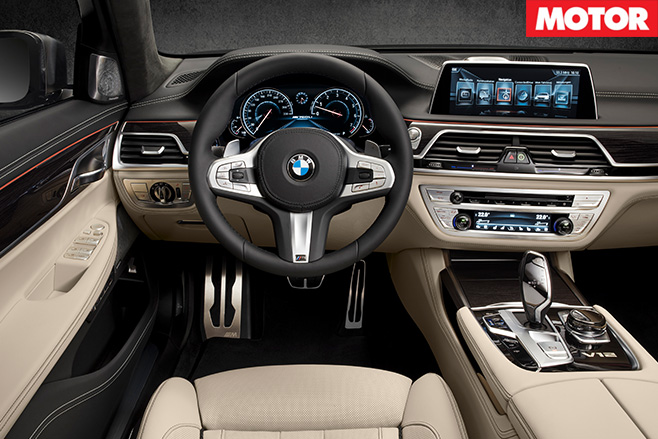
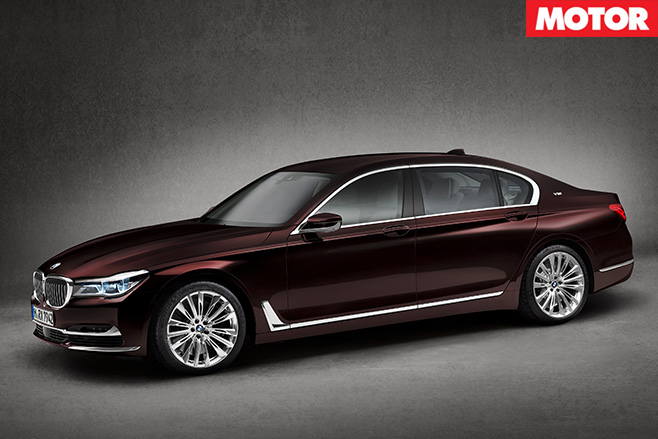
Expected for sale in 2017, we’ll see the both the BMW M760Li xDrive and its ‘Excellence’ variant debut at the Geneva Motor Show this March.
Ford reveals it hasn’t stopped at the engines when developing its send-off Falcons.
THE last models to ever wear the Ford Falcon badge in Australia – the Falcon XR6 Sprint and Falcon XR8 Sprint – will feature revised suspension, grippier tyres and unique styling tweaks.
The XR6 Sprint gets a potent 325kW/576Nm version of the XR6 Turbo’s 4.0-litre inline six-cylinder engine, making it the most powerful six-cylinder to ever emerge from Australia.
But it’s the carbon fibre air intake that engineers are most proud of, apparently creating a better performance feel.
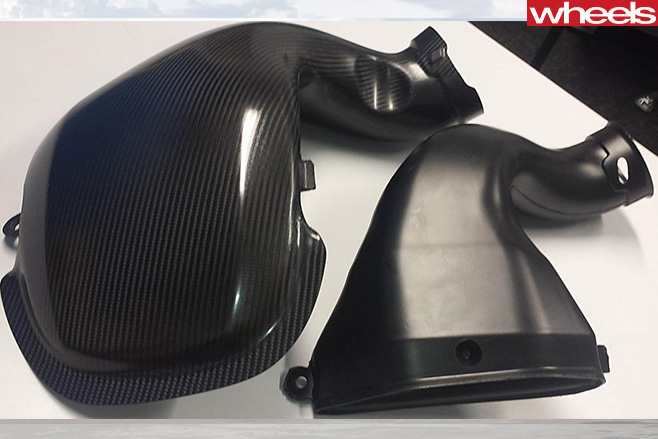
The XR6 Sprint’s output is 15kW more than the 310kW produced by the old FPV F6. Many (wrongly) believed Ford would simply slot the F6’s engine into the Sprint.
After 56 years of local production, the Falcon nameplate is getting a 345kW send-off in the form of the V8-powered XR8 Sprint.
The 5.0-litre supercharged engine was a “special project” that involved an extensive development program as part of Ford’s $300 million R&D spend in 2015.
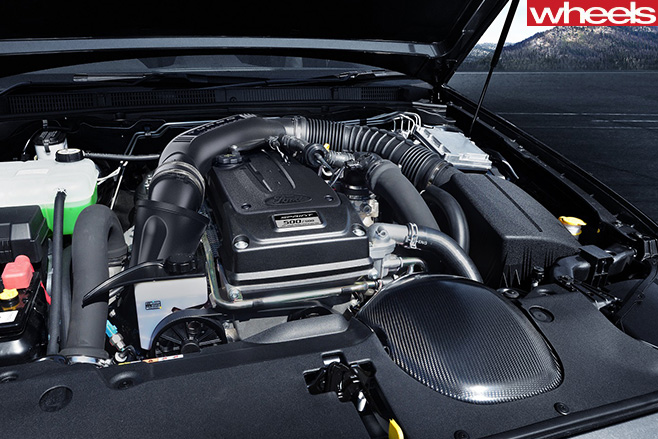
However, there’s even more power available from the Sprints. Both engines have a transient overboost function for short higher-output bursts: in the XR6 it peaks at 380kW/660Nm and in the XR8 400kW/650Nm.
The Falcon Sprints will also get a unique suspension tune teamed with 19-inch Pirelli P-Zero tyres, sad to bring handling benefits and reduce stopping distances.

Visual changes to the Sprints are minimal, and surprisingly understated. The massive gold-painted Brembo calipers are the biggest give-away: they’re the same six-piston fronts and four-piston rears used on the FPV GT-F, the last of the Falcon GTs.
Bumpers and panels are unchanged – although the fog-light surrounds within have changed – leaving the new rear lip spoiler and black 19-inch wheels to do most of the talking.
The chrome strip across the boot has been painted body colour and the XR6 Sprint picks up the XR8’s wing mirrors with built-in indicators.
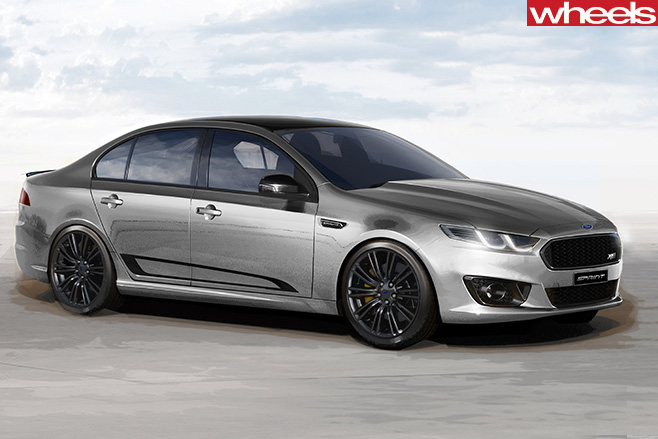
The XR6 Sprint continues with a single large oval exhaust and the XR8 with its quad pipes and bulging bonnet.
Inside, there’s a smattering of Sprint badges, including on the scuff plates, and the seats are a mix of Alcantara and leather.

The auto-only XR6 Sprint costs $54,990 – $9300 more than regular XR6s, which will continue only for police purchases – while the XR8 Sprint is $59,990 for a manual and $62,190 for an auto. That’s $6500 more than the regular XR8.
Both Sprint models will hit Ford showrooms in May.
With the new Fiat 500 hatch and convertible driving into Australian dealerships this week, Fiat has announced a hike in the entry price for the popular baby Italian car.
The revised 500 includes slight style modifications, technology improvements as well as some changes to the variants on offer.
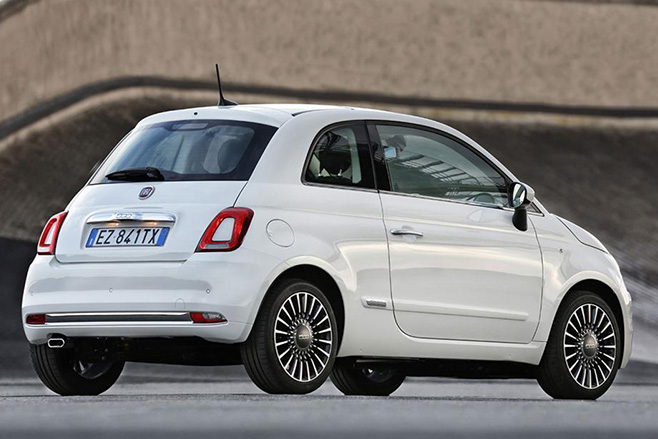
Here’s what you need to know about the new 500:
- The 500 will feature revised styling including refashioned headlights, a Chelsea-Grin like front grill and minor changes to the rear.
- With better equipment in the 500, Fiat has decided to drop the mid-spec 500S. So only entry level Pop (pictured above) and up-spec Lounge will be on sale in Australia.
- While the Pop will see a $2000 price increase, the top-spec Lounge will see a $1000 decrease. Fiat is also throwing in a sweet $1000 deal to cover on-road extras, so drive-away prices sit at $19,000 for the Pop and the Lounge at $22,000. The 500C convertible is slightly more expensive (pictured below)
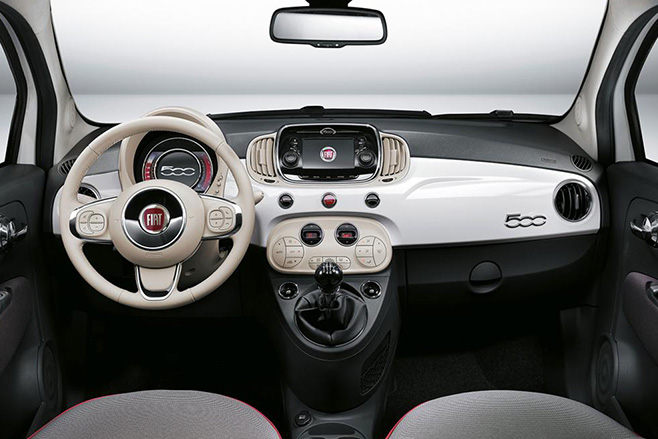
- The Pop will feature a new five-inch display with the UConnect infotainment system also found in Chrysler and Jeep, two-tone seat covers, Bluetooth and leather steering wheel.
- While the Pop features a bunch of standard gear you’d expect in most modern cars, such as electric stability control, tyre pressure monitoring, power adjusted and heated exterior mirrors and manual air-con, the Lounge gets all that plus seven-inch touchscreen, sat-nav, height adjustable driver’s seat, parking sensors, lighting in the boot, premium seat trim with check design, and superior finishes.
- Fiat has also promised improvements to soundproofing throughout the cabin for a quieter ride.
- While the Pop’s engine stays the same, the Lounge now features the same engine previously found in the 500S – a 1.4-litre engine with six-speed manual or five-speed Dualogic auto.
X-PLOSIVE! 345kW XR8, 325kW XR6 Sprints for final Falcon and the 2012 COTY winner takes on this year’s title holder.
ALSO IN THIS EDITION:
- Haval’s luxo-laden Chinese SUV tested
- The cop cars of tomorrow
- AMG’s whisper-quiet future
- How the Ford Mustang V8 translates to Aussie conditions
- Our verdict on Porsche’s 911 turbo push
- Ford Focus RS tracked and tested
- In the shadow of Mazda design chief Ikuo Maeda
- Tassie’s whisky trail via executive express
- Audi A1 v Mini Cooper v Peugeot 208 v Renault Clio
Join us for the ride in this March edition of Wheels in print, iPad or Android editions: on sale now.
Three years after the 208 GTi interrupted the two-decade wake lamenting the passing of the 205 original, Peugeot has now returned to the tombstone marked ‘R.I.P 306 GTI-6’.
It’s been 15 years since that last hot 3-series Pug, and unfortunately for the new 308 GTI it’s a period in which VW’s identically badged Golf has not only rediscovered its form but a rival French brand, Renault, has built a succession of cracking RS Meganes.
Peugeot has followed both the current Golf GTI and Megane RS with a twin-output approach, with the hottest 308 split into 250 (184kW) and 270 (200kW) versions.
If you’re thinking it’s full-fat or bust, it could be the latter for your budget when an extra $5K is required over the $44,990 GTi 250 that is already relatively pricey against its German competitor, and especially the $38,990 Ford Focus ST.
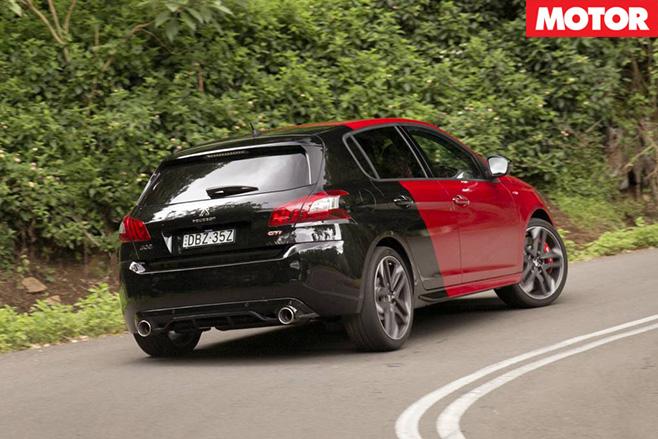
Springs are stiffened, dampers recalibrated, ride height lowered, and anti-roll bars thickened, while brakes are enlarged and power enhanced with the importation of the RCZ-R’s small-capacity, big-boosted (35psi) 1.6-litre turbo.
While the ride is predictably firmer than the GT’s, it’s never tiring – and in return the chassis provides the crucial directional balance, throttle adjustabliity and tied-down feel that encourages quick driving on challenging roads.
The 308 GTi 250’s Michelin Pilot Sport-shod 18-inch wheels offer plenty of mid-corner grip, the brake pedal modulates nicely, and the 1.6-litre four defies its size to produce pupil-dilating pace.
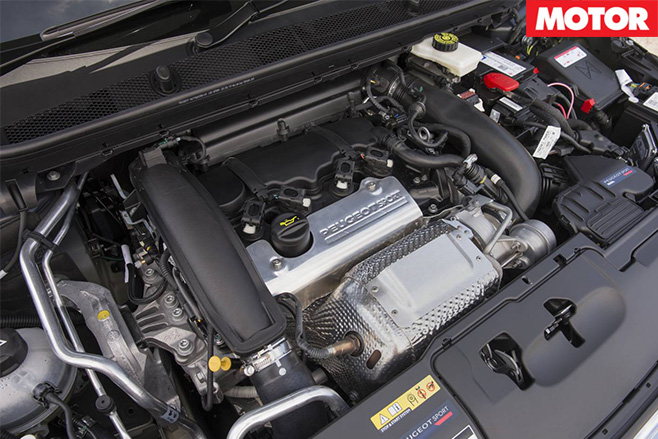
Squeezing the accelerator in the more powerful version brings a difference in poke that feels more night and dusk than night and day. It’s two-tenths on paper in the 0-100 run, with a 6.0 dead for the 270.
There’s still some minor lag and no improvement in sound, even by pressing the same Sport button on the centre console that amplifies the engine note through the audio speakers (and further sharpens the already commendable throttle response and illuminates the instrument dials in red).
And the sole gearbox – a six-speed manual – could be tighter in its operation and shorter in throw, even if it’s still a big improvement on sloppy Peugeot manuals of yore and remains precise even in a racetrack environment.
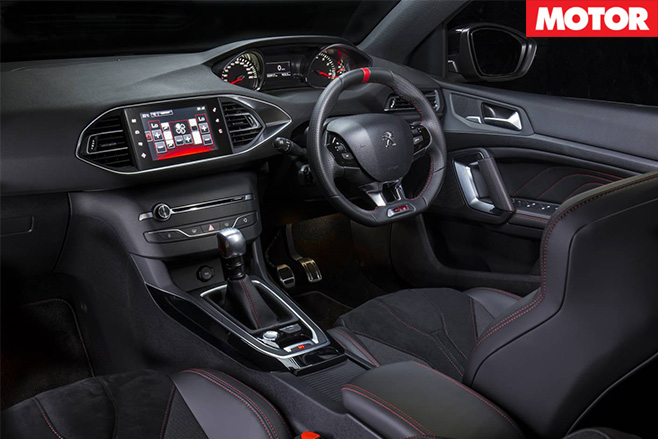
While the 250 isn’t short on traction, under provocation from your right foot it is prone to losing corner-exit momentum through inside-front-wheel slippage – where the 270 is simply able to get its power down more effectively through both low- and medium-speed corners.
You feel the diff working, with noticeable steering wheel tugs, though it’s no torque-steering monster.
So the 270 is hardly less civil than the 250 that’s positioned as the less-hardcore daily driver.
But even if the 308 GTi’s pricing is the only rude aspect of an otherwise hugely appealing package, it’s a pleasure to report that sporty Peugeots are most definitely back from the dead.
3.5 stars out of 5
308 GTi 250
Engine: 1598cc 4cyl, DOHC, 16v, turbo Power: 184kW @ 6000rpm Torque: 330Nm @ 1900-4000prm Weight: 1205kg 0-100km/h: 6.2sec (claimed) Price: $44,990
308 GTi 270
Engine: 1598cc 4cyl, DOHC, 16v, turbo Power: 200kW @ 6000rpm Torque: 330Nm @ 1900-5500prm Weight: 1205kg 0-100km/h: 6.0sec (claimed) Price: $49,990
PLUS
- Warning sounds. While there is still the occasional beep, there are some warnings, like if we don’t put our seatbelt on straight away, which sound more like an angelic ‘eep’. We rate it.
- The looks. The XC90 looks lovely. From the bold lines of the big SUV to the diamond shaped driver mode control in the centre console.
- The options. The XC90 as a model comes with a whole range of options that can take it up a level. We particularly enjoyed the 360 degree surround camera, sunroof, heated seats and steering wheel, and the Driver Support Package.
- A quiet diesel engine always gets a tick in our books. And this one gets a big golden one.
- The XC90 clocks in pretty decent fuel figures. We drove the diesel Inscription from Melbourne to Adelaide and then on to the Barossa Valley in SA on one tank (71 litre tank in the Inscription D5).
- The seats fold down flat to create more space in what is already a spacious car. Even passengers in the back two seats can sit fairly comfortably. Our Lifestyle Ed’s mother (who is 5 foot 3, sat back there on a trip to the beach and mentioned several times how comfortable it was.)
- With the Driver Support Package extra, the XC90 basically drives itself. We’re not even joking; it comes with Pilot Assist which means you push a button and it drives for you – as long as the roads are clearly marked, there’s a car in front of you and you’re sitting below 50km/h.
- It was surprisingly annoying that there weren’t more cup holders in the front. There were two in the centre, but none on the doors.
- There’s only one USB port in the XC90. A very strange omission but also #firstworldproblems.
- The air con is particularly noisy and results in the turning up the radio to block out the blowing noise.
- The centre touchscreen means you can access almost every part of the car from a few taps, but it’s not always easy to find, and boy do those finger prints drive us insane!
- Turning circle. The XC90 has never been known for its turning circle, and while the newer model has improved, it’s still not great.
EVERYBODY’S doing it – Ferrari, BMW, even Porsche. Downsizing, that is. So when Lexus decides to put a turbocharged fourbanger in its BMW 5 Seriessize GS sedan, it shouldn’t come as much of a shock.
The GS200t’s 2.0-litre turbopetrol is an absolute peach.
While it makes the same power as the RC200t, its refinement and buttery-smooth character suit the GS’s premium mantra perfectly.
Lolling about town, the refinement of the engine isn’t immediately obvious because it’s so quiet. In fact, you needn’t bother with the hybrid GS; the near-silent operation of the 200t is remarkable.
At $75,000, the Luxury spec is the entry point for the two-tier line-up, which is headlined by the larger-wheeled, more aggressively styled GS200t F-Sport at $83,000.
The GS has a spacious cabin, with solid, well-finished materials that look a little dated, but it is well finished and executed. It also avoids the dreaded foot-operated park-brake of other Lexus models.
Yet the depth of the GS200t’s talent stretches from aroundtown limousine-like refinement to a dynamic ability that’s pleasantly surprising. The ride on the F-Sport’s 19-inch alloys may not be as silken as the driveline combo, but the GS’s cornering abilities reveal an agility that’s completely unexpected.
The steering doesn’t offer a lot of feedback, despite the chassis communicating the surface beneath, but the roll into corners is well controlled and overall handling is benign and predictable, with strong roadholding allowing a concerted attack through any corner.
Part of this car’s dynamic ability is courtesy of the new ‘performance damper’ fitted to all GS models, which better isolates the front-end, while there’s also revised spring rates and a new shock absorber piston shape, all aimed at reducing NVH.
When pushed, the 2.0-litre livens up, with good response, but it’s more a flow of power than a strong surge, and the eight-speed automatic upshifts briskly and smoothly at 6000rpm. The engine note builds, but even under full load it maintains its hushed composure, never over-reaching to become coarse, nor showing signs of struggle.
Its 7.3sec 0-100km/h claim is a whopping 1.3sec quicker than the GS250 V6 that this car replaces, and its 8.0L/100km economy is significantly better than the V6’s 9.3L/100km as well.
The $75K starting price is almost $3K more, but there is more gear, including a Pre- Collision Safety System. With all that refinement and polish, the GS200t won’t have you rushing to your destination, but it fulfils its premium brief well.The GS will face increasingly tough opposition in 2016. The new-generation Jaguar XF, which is not only a dynamic dream but far more opulent than its predecessor, will be keeping Lexus salespeople awake at night. But the real nightmare will be the new Mercedes-Benz E-Class that arrives in October, taking over the role of Merc’s techno tour-de-force from its S-Class flagship. And before the year is out, an all-new BMW 5 Series and Audi A6 are expected to be unveiled before arriving here in 2017.
Dated interior; base-car cabin feels low-spec; only two trim levels Engine and cabin refinement; fit and finish; far superior to the old V6
Model Engine Max power Max torque Transmission Kerb weight 0-100km/h Economy Price On sale Lexus GS200t F-Sport 1998cc 4cyl, dohc, 16v, turbo 180kW @ 5800rpm 350Nm @ 1650-4400rpm 8-speed automatic 1725kg 7.3sec (claimed) 8.0L/100km $83,000 Now
