
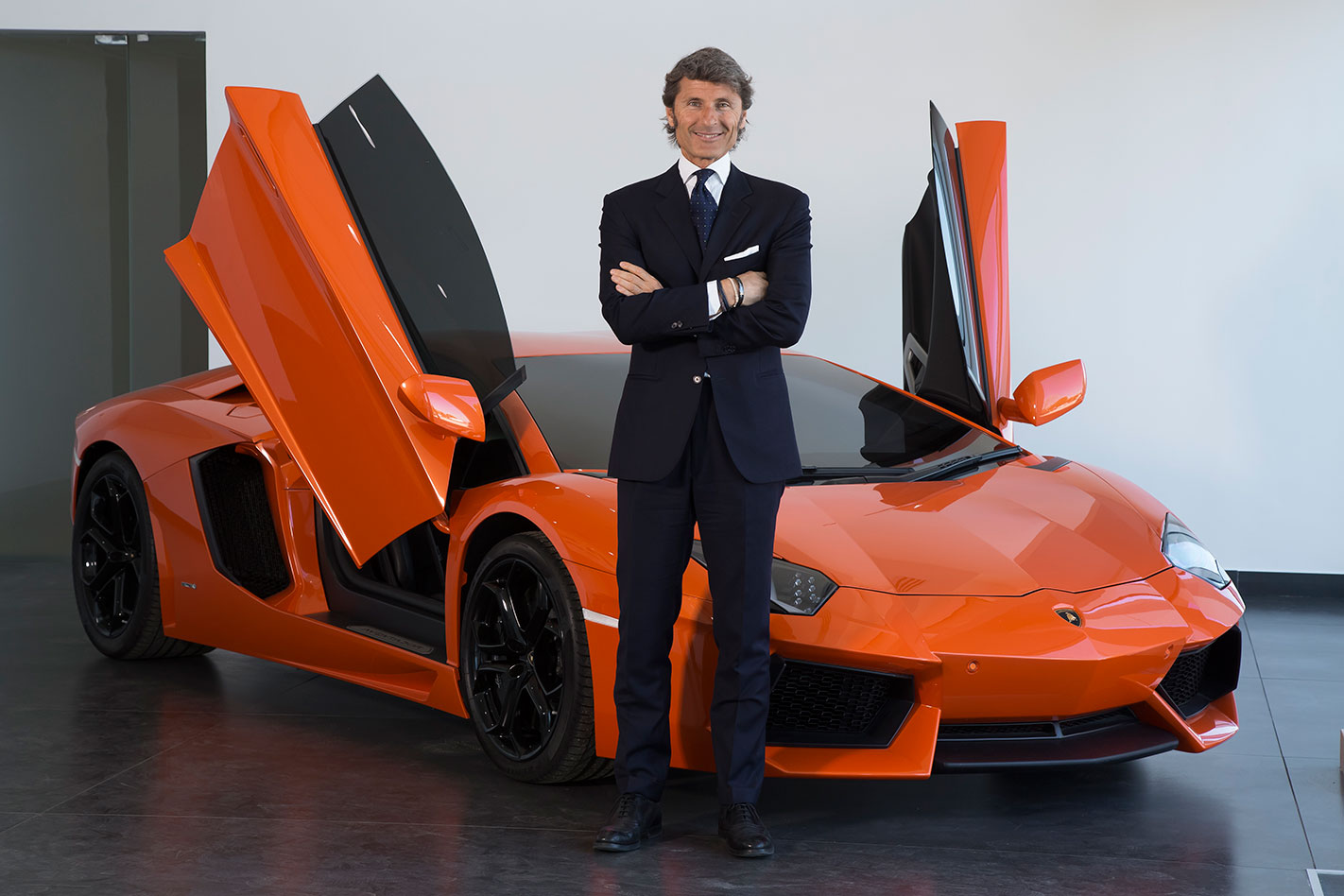
Stephan Winkelmann is set to step down as President and CEO of Lamborghini after 11 years at the head of the Italian supercar manufacturer.
Winkelmann departs on a high, with 2015 set to be Lamborghini’s most succesful year ever, surpassing 2014’s record sales total of 2530 cars.
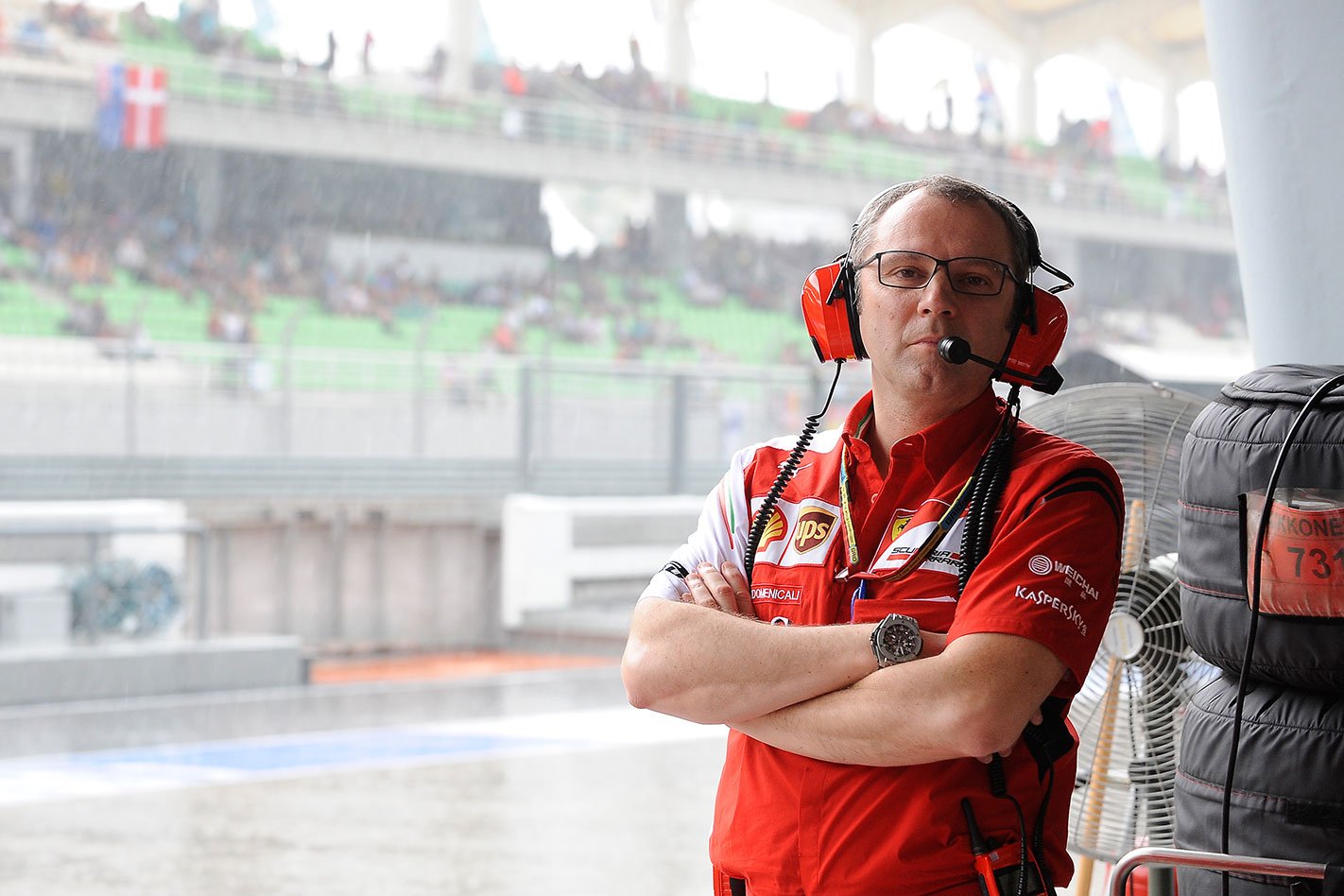
Replacing the charasmatic Winkelmann will be fellow Italian Stefano Domenicali, who from 2008-2014 was team boss of the Ferrari Formula 1 team.
Winkelmann is expected to head to Audi to run its quattro high-performance division, replacing retiring quattro boss Heinz Hollerweger.
BOOSTED! Porsche 911’s force-fed future arrives; COTY turns up the heat; Magnificent Seven tour of Tassie; the men who made Commodore; Wrangling our mad Kiwi cousins.
ALSO INSIDE THIS EDITION:
- Honda NSX: Supercar slayer reborn?
- The real power behind Renaultsport
- Car brands that made the grade in 2017
- Wheels wins Rally Australia. Well, sort of
- That turbo Mazda MX-5 you always wanted? It’s coming
- Classic Wheels: Ford’s failed Falcon killer
PLUS
- Sure, the VW Golf is the ultimate city car and also doesn’t mind spinning its tyres on the freeways. But this popular car also tackles rougher roads with a smoothness its rivals haven’t yet mustered.
- It does include a lot of features like the standard cruise control, touchscreen and Bluetooth. But more notable is its speed limiter which helps prevent those irritating speeding fines, tyre pressure sensors, stop-start engine technology, fatigue alert and multi-collision braking.
- You can expect plenty of style in the Golf, both inside and out.
- There’s plenty of storage spaces inside and leg room, an all-important for those who passenger people around.
- It likes to consume premium unleaded petrol and with the rising costs of fuel, we suspect this will be a bit of an issue for those penny savers, even with lowish-fuel usage figures in some models.
- Those who are big on drivability will probably notice the irregularity of the automatic gearboxes. Sometimes it’ll hesitate at the lights, but note the use of the word – sometimes.
- It’s a popular car. Ok, so probably not so much of a downfall, but for those wanting to stand out from the crowd, it might sway your decision. But, it does back itself as a very decent car, overall, and often a favourite in the WhichCar office.
Click here to read the full review on the Volkswagen Golf.
Join Wheels in Tasmania as we blast around some of Australia’s best driving roads in seven of the best affordable drivers’ cars.
BOATS AND cars usually don’t mix. When describing how a car handles, if you’re painting the picture using any references to water or nautical pursuits, there’s a strong chance that said vehicle is a wallowing, nauseating pile of sick. And therefore not suited to Tasmania’s magnificent roads.
If you’re from mainland Australia, however, and want to traverse the Apple Isle in something other than a rented Camry, it’s across Bass Strait you’ll go by the only means possible, on board the ‘new’ Spirit of Tasmania, which apparently isn’t a boat at all. It’s a ship. A bloody huge one that also transports cars.
When a recent launch invite mentioned ‘new Audi RS3 Sportback’ and ‘Tasmania’ in the same sentence, our ears swivelled like K-9’s, provoking the obvious question: “Any chance one could be left there and we’ll ship over the party?” Followed by another, this time to the office crew: “What should we take?”
Well, how about the Mercedes-AMG A45, BMW M135i, Mini John Cooper Works, Renaultsport Megane 275 Cup Premium, Volkwagen Golf R wagon and – to keep them honest – the Holden Commodore SS-V Redline? Our comparison of sub-$100,000 performance cars of 2015 is now online.
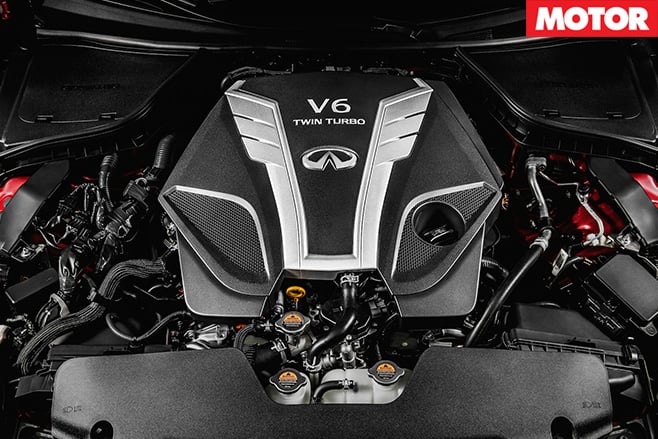
A facelifted Infiniti Q50 will soon challenge the BMW 340i and Audi S4 thanks to a new 298kW 3.0-litre twin-turbo V6 engine.
A development of the Nissan VQ family now dubbed VR, dual snails help deliver 475Nm between 1600rpm and 5200rpm, while power peaks at 6400rpm. There will also be a low-output version with a single water pump, developing 400Nm and 224kW at the same points on the tachometer.
The boosted 3.0-litre is expected to replace the atmo 3.7-litre currently in the Nissan 370Z (with 245kW/363Nm) and Infiniti Q70/QX70 (235kW/360Nm).
Infiniti hasn’t revealed performance figures for its Q50 3.0t seven-speed automatic, however the petrol-only V6 should weigh considerably less than the 1775kg Q50 hybrid that delivers less power (268kW) but more torque (546Nm). It claims a 5.4-second 0-100km/h.
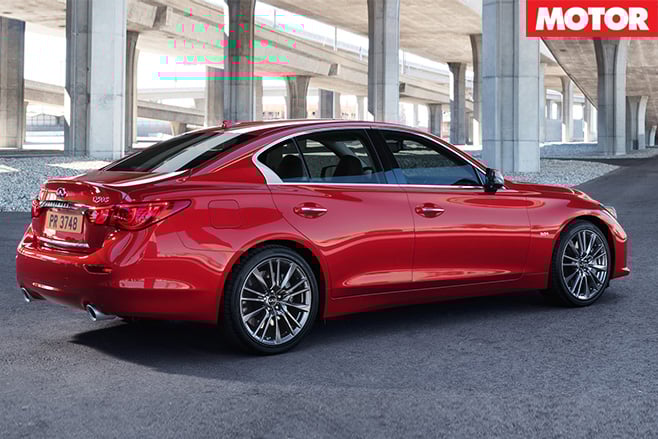
All Q50 models get revised suspension settings, with changes to front and rear stabiliser bars, and on Sport models standard two-mode (Sport and Sport+) dampers dubbed Dynamic Digital Suspension (DDS).
All 3.0t and 3.5h models also get a “next generation” version of Infiniti’s controversial fly-by-wire fully electric steering system. Although rumoured to be canned entirely, the brand instead says, “The system has undergone significant re-tuning to enhance steering feel and feedback.”
There are six steering settings available, including a new Sport+, or drivers can individually mix and match three core modes with three levels of response.
The revised Infiniti Q50 will launch locally in the second half of 2016. High equipment for a lower price than its chief rival 340i ($89,900) is assured, however we also hope the steering and suspension changes in addition to the new twin-turbo V6 make this Japanese mid-sizer a vastly better drive.
It’s that time of the year. Time to grit your teeth, pack those bags to the gills, take a deep breath and hit the road with the whole fam-bam – that’s kids, the pups and maybe even grandma. Summer means road trips and while you can’t control the weather or the traffic, you can control the mood in your car, to an extent.
Letting the passengers graze freely on sugary and empty carb foods can mean quick highs and frayed tempers. So don’t just give it up for the fast food joints that line the highways, embrace the opportunity to manage the highs and lows of a big family in a small space.
Below are 10 easy road trip snacks that deliver the nutritional goods and keep your road trip on the rails.
THE HEALTHIER OPTION
1. DIY Popcorn
The key to kid-friendly popcorn is to cook it in a sealed brown paper bag so it stays fresh. Mix half a cup of popcorn kernels, half teaspoon of vegetable oil, a sprinkle of salt and any other flavouring you feel (e.g, cinnamon) and pour the mix into a tall brown lunch bag. Secure the bag so no popping kernals can escape and microwave for about two minutes (keep an eye on the bag because every microwave is different). Voila! Sealed, popped and travel-ready.

2. Nuts
If each passenger has their own stash there’s less chance the nuts will end up in the seat seams. Sick of raw? Try roasting almonds or cashews in olive oil, tomoato sauce, basil and garlic.
3. Apple slices with cinnamon
Fresh is delicious but soft-baked is extra-special! Pink Ladys and Fujis are great sliced fresh and rolled in cinnamon. They also work well cored, sliced, rolled in ginger, ground cloves and cardamom and baked for 60-90 minutes until shriveled but soft.
4. Almond milk/oat/banana or choc smoothie
Blend almond milk, oats and cocoa powder or a banana plus some agave into a delicious, energy-packed drink that doesn’t need to stay chilled.

5. Jerky
A little goes a long way. But kids can be put off by the shriveled appearance.
6. Vegetables and Dip
Baby carrots, celery, humus, peanut butter, or Nutella for an extra treat. If you save your yoghurt containers you can pack a neat little snack pack for each traveler – throw the dip in the middle and around the cut goodness around the edges.
7. DIY trail mix
Combine granola, seeds, nuts and small pieces of dried fruit. To keep it super healthy, and less damaging to the car, avoid chocolate.

8. Wraps
The classic vegemite scroll (with or without cheese) can also be baked using puff pastry. Just spread vegemite on the flat sheet, sprinkle with mozzarella, roll, slice and bake for 10 minutes. YUM!
9. Pancake Muffins
A classic American trick that avoids the crumbs of a conventional muffin. Use pancake mix to create denser, delicious muffins.
10. Roasted Chickpeas
Drain a tin of chickpeas and thoroughly dry them. Sprinkle with olive oil, cumin or paprika or rosemary plus salt, and roast on high for around 30 minutes.

DRAMA IN THE BACKSEAT: AVOID THESE
1. Yoghurt
Did you know furniture dealers schmear yoghurt on wooden pieces to make them look older because it helps the mold grow? The same thing happens in your car. Save yoghurt for the picnic stop.
2. Chocolate chips
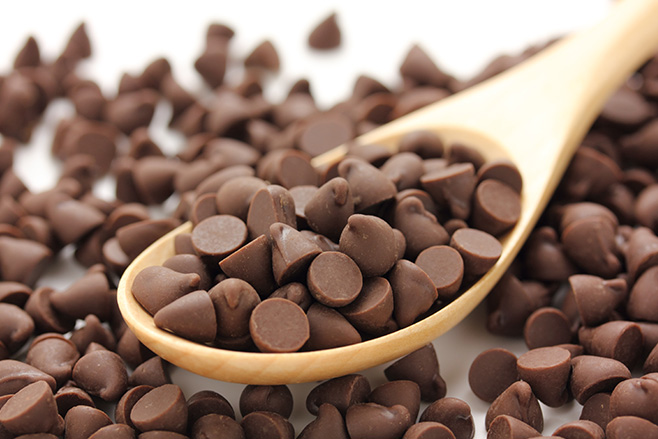
Great in a trail mix, except in a car. It’s impossible to find them until they melt down into the upholstery. Substitute with tiny pieces of dried pineapple and save chocolate for the out of car experience.
3. Gum
Gum is disgusting at the best of times, but it’s even worse when kids think it’s ok to leave it in the door pockets.
4. Containers without lids
Just. Don’t. Do. It. Stick to the disposable or reusable cups with a lid and straw opening. It’s happened to all of us at some point when you’ve been driving along and your car hids a bump. If you don’t have access to the ready-made option, then a handy hint is to use plastic wrap over a regular cup and pierce a straw through it.
5. Bananas
Sure, it’s a delicious and nutritious snack for your kids, but not so great for the upholstery of your car. Plus, it only takes about an hour for the skins to start getting stinky. They’re good for smoothies but probably best left in the fruit bowl at home.
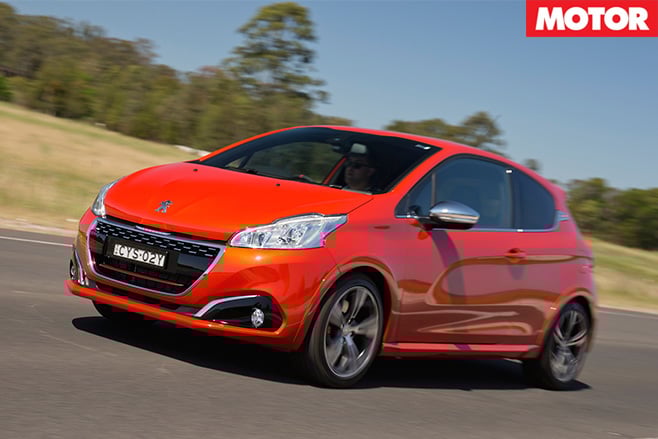
The Peugeot 208 GTi 30th Anniversary is almost entirely sold out, however its overhauled engineering package could soon be available on the regular $29,990 model.
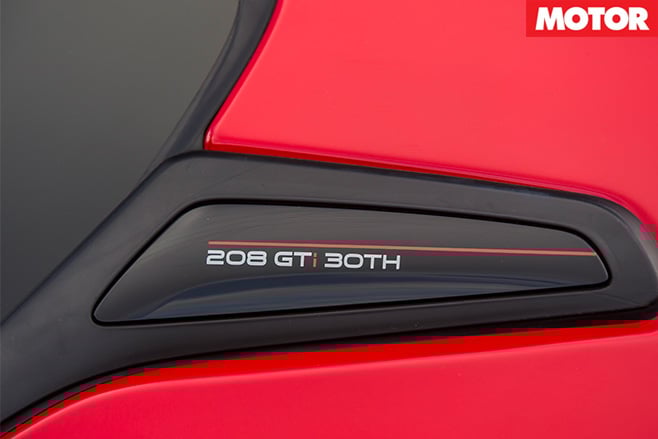
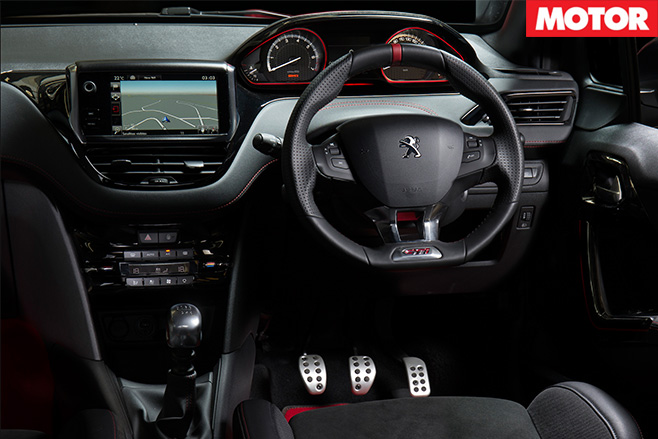
The 30th Anniversary adds a mechanical limited-slip differential, firmer springs and dampers, wider front and rear tracks, quicker steering ratio, larger Brembo brakes and 18-inch (rather than 17-inch) alloy wheels to transform the 208 GTi.
Suddenly, the 6.5sec 0-100km/h, 153kW/300Nm Peugeot becomes a serious hot-hatch, however only 25 examples came to Australia and only a couple are left.
“It’s available as a package that’s effectively everything that’s on the 30th, [but] whether we want to offer all of that are the discussions we have to have,” Bowen said.
“We won’t take the Peugeot Sport package at present, in time there is certainly the option to do that, it’s just how we offer it and when we offer it.”
Bowen explained that GTi sales peaked at 22 per cent of total 208 volume, which he believes is extremely high especially given the hot-hatch is a manual-only proposition.
“We can look at the Peugeot Sport stuff as either a limited edition, but keep it from the 30th Anniversary or we can look at something down the track to keep interest in the line,” he suggests.
It would seem only a matter of time until the chassis goodies return to the 208 GTi.
The people at Monster Energy just get it. They just know how to make an awesome car video.
The meeting probably didn’t even need to go for very long; as soon as someone said “let’s drift a Lamborghini Murcielago against a Ford Mustang” the idea was pretty much done.
But who would be silly enough to drift a Lamborghini Murcielago? After all, a mid-engined Italian supercar with a massive 6.2-litre V12 sitting behind the driver doesn’t sound like the easiest machine to keep sideways.
Daigo Saito, that’s who. The Japanese drift master has campaigned all sorts of wild machinery over the years, including a 900kW Lexus SC430 convertible, so a Lamborghini is fairly normal by his standards. Saito is also responsible for arguably the most insane drift ever.
Battling Saito is US champion Vaughn Gittin Jnr. in his wild Ford Mustang, and their battlefield is the touge course a Niigata, which will be very familiar to anyone who’s watched a Best Motoring video or two.
There’s flames, smoke, lights and plenty of screaming engine noise – it’s awesome.
So, what is it?
An Aussie four-door muscle car that can trace its lineage, at least in the conceptual and spiritual sense, right back to Holden’s golden era of the late ’60s and ’70s. There was a time when the most desirable Australian-made cars were ones with a thumping big V8 up front, rear-drive, a manual gearbox, and room for a family or five mates on a road trip. The Commodore SS-V Redline continues that tradition, albeit not for much longer. It delivers a driving experience dominated by that most endangered of engine species – the Aussie V8 – and manages to blend a level of day-to-day liveability and roominess with proper sports sedan firepower when fully unleashed. All of which it delivers for less than the price of many Euro hot-hatches.
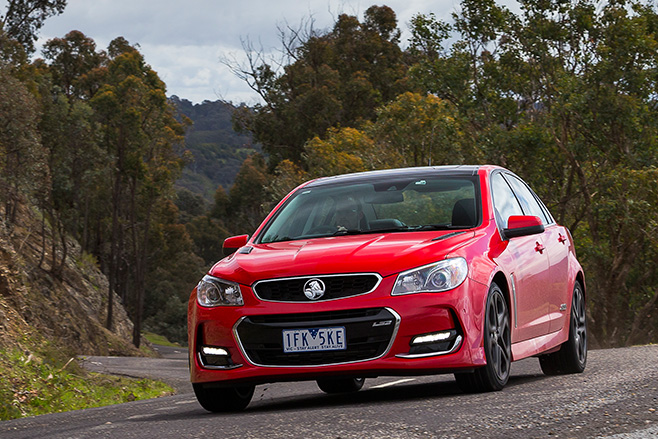
What’s new about it?
The recent facelift and update of Holden’s Commodore to VFII spec saw the introduction of a larger V8 (known as the LS3) in the SS/SS-V/SS-V Redline models. Capacity is now up to 6.2 litres and it makes more power and torque (now 304kW / 570Nm), with a greater capacity for revs than the old 6.0-litre V8. The Redline suffix is important as it brings key upgrades to the brakes and suspension, two areas you don’t want to be underdone in a big, heavy sport sedan like this. The larger brakes from specialist Brembo are able to withstand much greater abuse than the slightly weedy stoppers fitted to the regular SS, while the Redline’s upgraded rear suspension, further developed in this VFII incarnation, is more capable of deploying all that power to the ground and better resists being kicked off line through fast, bumpy corners.
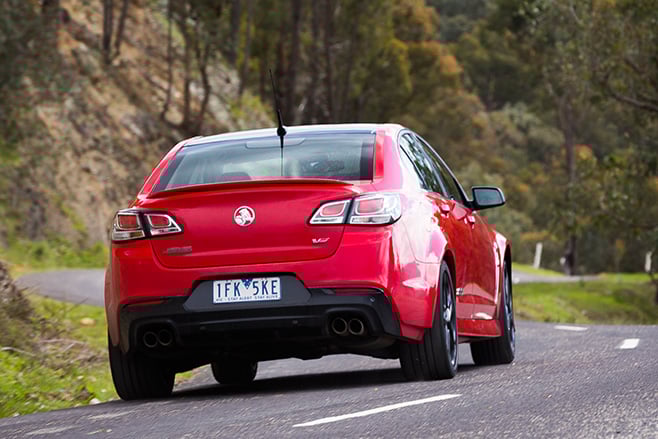
What’s it like to drive fast?
It’s the new engine, previously reserved for the HSV Clubsport R8, that gives the SS-V Redline its terrific breadth of character. Prod the throttle and it growls with a fabulously malicious intent. Really work it hard and it’s an angry, joyous bellowing beast, with a vocal range that moves through baritone to tenor, all overlaid with a wonderful induction snarl that filters into the cabin from the engine bay via some clever audio piping. It’s properly fast, hitting 100km/h from rest in just 4.9 seconds, but it’s the huge reserves of overtaking performance that most drivers will appreciate more often. It blasts from 80 to 120km/h in less than 3.5 seconds, which, you can tell your partner, amounts to safety feature, given it means minimum time spent on the wrong side of the road when passing slower traffic.
The SS-V also has an uncanny ability to shrink around the driver on twisty backroads. This is big car, but it never feels oversized or unwieldy when you want to get stuck into it. The steering allows you to place it accurately into the corner, the body settles quickly, and load builds progressively on the tyres. There are vast levels of grip, its limits are wonderfully transparent, and a brilliantly calibrated ESC system keeps things tidy in wet or challenging conditions. Best of all, there’s a level of interaction and satisfaction in hustling a big manual sedan like this that’s missing in the driving experience of some more anodyne, paddled-shifted performance cars.
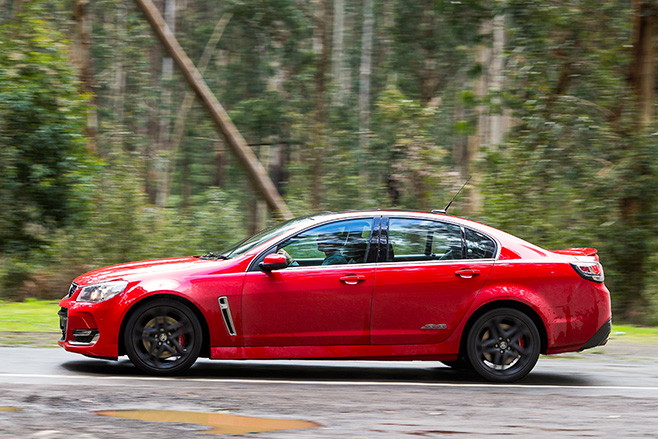
What about the commute home?
Driven with restraint, the engine is never more than a distant, subdued rumble, and you can make easy progress around town or on the freeway without anyone ever really knowing what’s packed under the bonnet. Enthusiasts will order their SS-V with a six-speed manual transmission, but be mindful that the clutch requires a firm application from the left leg, and may becoming tiring in long stints in stop-start traffic. The flipside is there’s so much torque, shifting can be kept to just first/third/fifth when trundling around the city and suburbs, and a tall sixth gear means ultra-relaxed, low-rev cruising.
The interior is not just hugely roomy, it’s also well-equipped, and (mostly) doesn’t feel cheaply built. The head-up instrument display works brilliantly, projecting road speed and other crucial bits of information just under the driver’s line of sight, eliminating the need to flick eyes to the instruments and back to the road ahead.
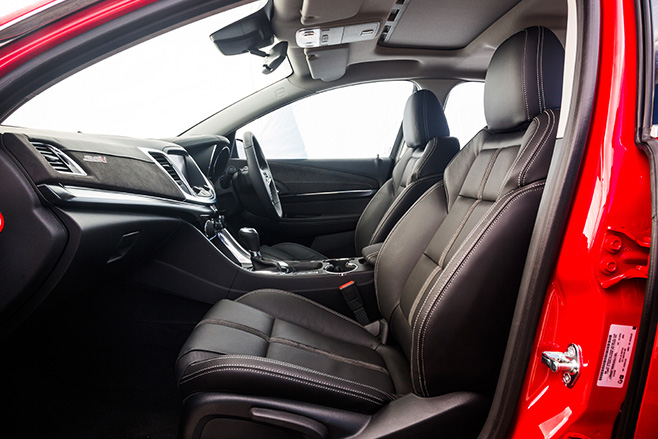
The seats are generously proportioned and supportive, wind and road noise are reasonably contained, and the cruise control works well, even in hilly terrain. So there’s no need to assume that just because it’s fast, your licence will instantly be toast. Duality of character is one of its core strengths.
What’s it worth? And is it worth the coin?
A manual SS-V Redline sedan is yours for $53,990, which makes it something of a performance bargain. The basic SS-V is about four grand cheaper again, but we think the Redline’s premium is money well spent, given the brake upgrade, better sorted suspension and extra equipment. It’s also fundamentally the last of the line before production ends in 2017, so there’s room for sentimentality here.
Click here to read the full review on the Holden Commodore.
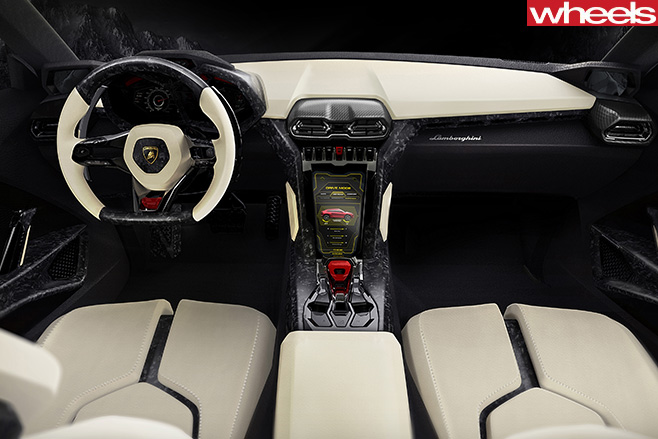
A HYBRID drivetrain and (gasp) even a high-performance diesel engine could power Lamborghini’s Urus SUV, says company CEO Stephan Winkelmann.
Speaking to Wheels at the Huracan LP580-2 launch in Qatar in December, Winkelmann confirmed the production Urus will arrive in 2018 and is likely to be “the first Lamborghini to have more than one engine and one model”.
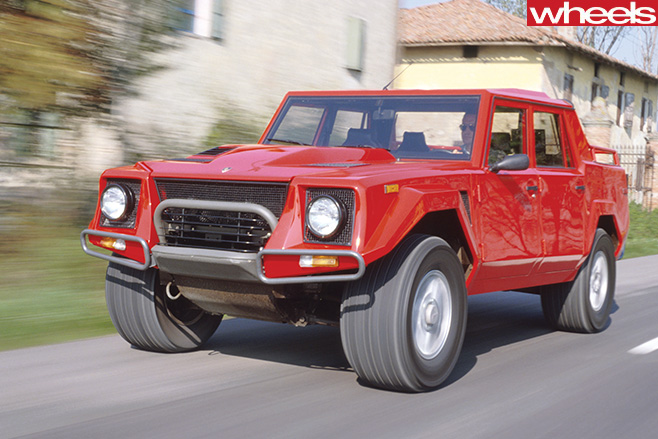
Lamborghini is unlikely to develop its own plug-in hybrid drivetrain, instead leveraging opportunities within the wider Volkswagen group. Porsche and Audi already have hybrid models built off the same all-wheel-drive platform as the Urus, and Bentley is rumoured to be working on a hybrid version of the forthcoming Bentayga SUV.
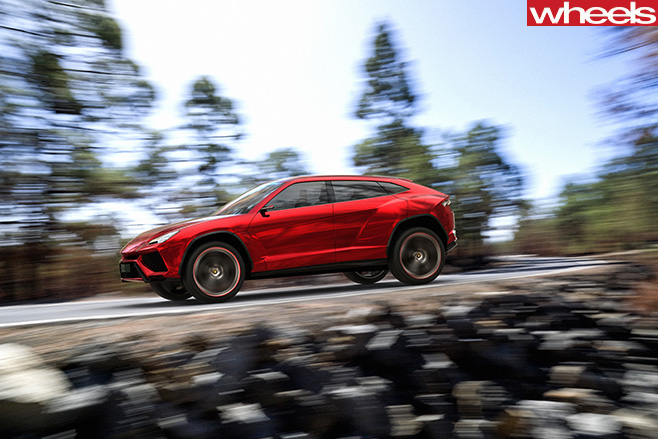
But don’t think the Urus will act as a test bed for hybrid or turbocharged successors to the Huracan and Aventador. Winkelmann says Lambo’s sports cars won’t be ditching their big-capacity, naturally aspirated drivetrains anytime soon.
“For now we say naturally aspirated for the super sports cars, and we are looking into every opportunity in terms of innovation. One day maybe turbos are going to be better, one day the power-to-weight ratio for hybridisation is going to be better, or even go [to] a full electric car. We’re not saying ‘no’ to anything. Innovation is key for the success of Lamborghini, but not to all cars in every field because this will be disruptive of the DNA.”
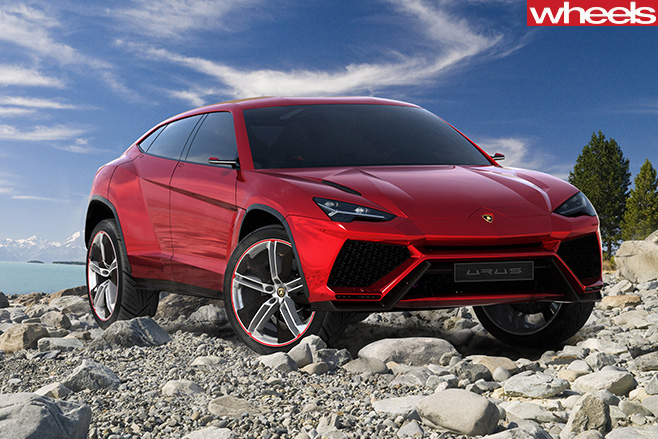
“The electric bi-turbo … boosts sprinting ability and torque and enables high peak power,” ex-Audi R&D boss Ulrich Hackenberg said in May 2015. “In our TDI engines, we are close to production readiness with this technology.”
Lamborghini won’t offer a hybrid or diesel Urus at launch; the sole drivetrain will be the V8TT, which Winkelmann says will be a brand new unit developed by Lamborghini and not in partnership with Audi as previously reported.
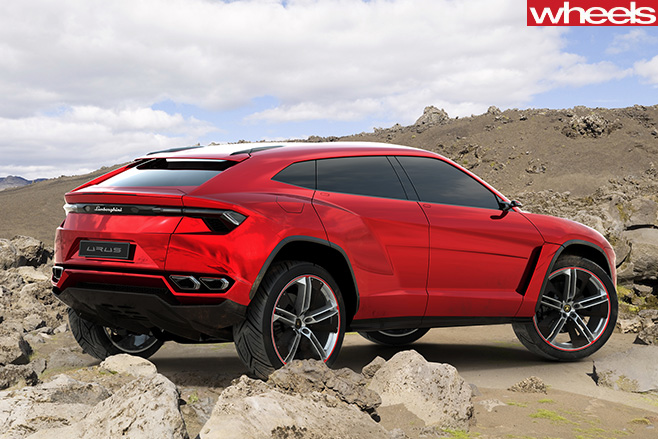
“This is the idea; to have the two super sports cars doing 50 percent and the Urus doing the other 50 percent. So we see Huracan and Aventador doing between 2000 and 3000 cars, and the Urus doing the same so we can reach our maximum between 5000 and 6000.
“Our dealers tell us there are a lot of people who do not own Lamborghinis coming in to put down payments for a car that is coming in three years’ time.”
“We are sure [it will] not. It’s a segment which is growing worldwide in every region in which it’s present. It’s a segment which also has a history with Lamborghini. So even if we are going to more or less double the volumes of today with a new car, still it is very exclusive. It’s not going to happen that you see a Lamborghini every day.”

“We are stretching ourselves to get the first new model … so for the time being a third model is the maximum we can achieve for this decade.”
The SUVs that ate the world
Winkelmann on the world’s hunger for SUVs: “If you look at what is happening in other car companies, they are building an SUV line-up which is a shadow line-up of the passenger-car one. So you will see down the road in maybe 10 years, they will cancel some of the normal cars because the segment is not so big anymore and it is not worth investing in anymore. You have to emulate.”
