
When too much is never enough, there’s always the Walkinshaw Performance Products enhancement of the latest LS3 V8-powered Holden VF II Commodore. Power cranks up to 547kW (hence the name) and torque to a mighty 880Nm.
WHAT IS IT? The W547 is essentially a supercharger kit for the 6.2-litre LS3 Chevrolet engine that is now standard in all V8-engined Holden Commodores. You provide the car and $25,990 and a WPP reseller will do the installation.
WHY WE’RE TESTING IT WPP has launched a series of these feral kits over the years and this is the latest and, sadly, with Commodore production due to end in two years, the last. If HSVs are Commodores dialled up to 11, then this thing is sits at about 15.

THE WHEELS VERDICT The W547 is a hoot, a blast and a bit terrifying all in one. I honestly can’t think of any reason you’d buy it except it’s frickin’ awesome … in a straight line
PLUS: Mega-fast; makes a great noise; surprisingly livable day-to-day MINUS: Engine dominates chassis; guzzles fuel
THE WHEELS REVIEW TRY to think of the W547 in its perfect environment. With 547kW and 880Nm on tap at the flex of an ankle, it’s gotta be smokey burnouts, donuts and oversteer. Whatever it is, there’s smoke, noise and destruction, right?
Yeah, nah. It works pretty well just idling its way up the freeway’s fast lane, 80s Aussie rock hammering from the audio system while Hyundais, Toyotas and other blights on the landscape scatter from its path.

So what is a W547? Essentially it’s a supercharger kit for the Chevrolet-sourced 6.2-litre LS3 that used to be the engine of choice for Holden Special Vehicles and is now standard across the VF II Commodore V8 line-up.
The nutters at Walkinshaw Performance Products, which is another part of the automotive group that owns HSV, have released a series of bonkers engine kits over the years for various Commodore derivatives, and this one is the last of the line.
It costs $25,990, and you can put it on any VF II V8 Commy from the SS up, as well as any 2012-15 HSV. So that means you can be on the road for around $70,000 in a car that has more power and torque than any Ferrari or Lambo on sale in Australia, and all for a fraction of the cost.

Our test vehicle was an SS-V, thankfully fitted with the brake package. Unfortunately, it was also wrapped in the gaudiest vinyl, including a sticker on the bonnet that mimicked the bright yellow cast aluminium engine and coil covers found underneath.
Punters thought it was a highway patrol car and quickly got out of the way. Cool, although I was surprised I was not pulled over by the real thing and handed an infringement notice for bad taste.
The W547 is monstrously fast in a straight line. Using a phone app I clocked a 4.55 sec 0-100km/h just idling off the line and gently ramping up throttle percentage. Okay, so that’s not super-fast, but a drag strip, VBox and some acclimatisation of the right foot would yield some pretty cool results.
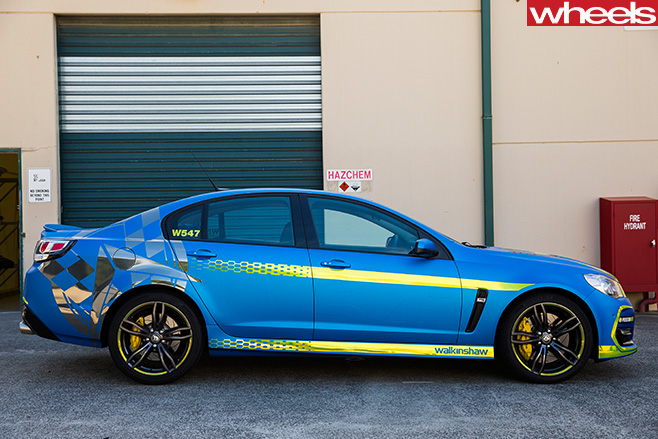
Clearly those customers also like stupid-fast because this thing just keeps on gathering pace, making the mid-range a mind-boggling place to be. Revving it towards 6000rpm rewards with a more vicious mechanical snarl, supercharger whine, more likelihood of the rear-end breaking loose, and a fuel gauge that races to empty.
Beyond the engine the 547 is familiar stuff. The GM 6L80 auto is a bit slow-witted and the SS-V chassis set-up feels tall, narrow and just too reactive to bumps at the rear to ever make this a great car for tackling a tight set of bends on the limit.
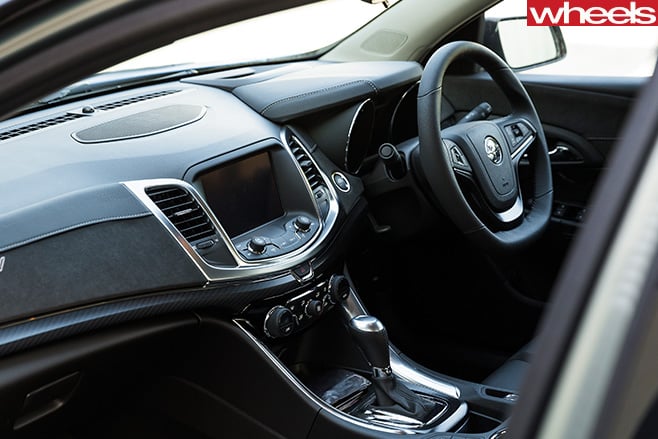
That is what the W547 is all about. If you want yours to be bigger than everyone else’s, then look no further.
BANG-ON PERFORMANCE
There are no changes made to the driveline or chassis of the Commodores and HSVs in concert with the W547. The only concession WPP makes to any concerns about so much power and torque pumping through the system is a driveline warranty. But WPP boss Tony Harris insists the kit does not threaten the 6L80 transmission six-speed auto that most V8 Commodores come with: “We are probably at the absolute peak as far that driveline is concerned but we have not had any driveline failures.”
SPECS Model: Walkinshaw Performance Products W547 Engine: 6162cc V8, ohv, 16v, supercharged Max power: 547kW @ 6500rpm Max torque: 880Nm @ 4000rpm Transmission: 6-speed automatic Weight: 1800kg (est) 0-100km/h: 4.0sec (claimed) Fuel economy: 15.5L/100km (on test) Price: Base car + $25,990 supplied and fitted On sale: Now
The BMW i8 is a vision of what may save the performance car world. It was built to prove that sports cars could still exist and be enjoyable once legislation forced them to be as frugal as the Prius.
Fortunately, however, we’re not quite at the stage of having to drive cars fuelled by a desire to be as fuel-efficient as possible. We can still get away with a big bent-eight in our sports cars. Which is why we’re proposing the BMW M8 – a supercar to rival the new Audi R8 and Honda NSX.
It would use the same lightweight carbonfibre tub and electric motors as the environmentally-friendly i8, but with the internal combustion engine from the X5M. To avoid redesigning the i8’s entire rear subframe to squeeze in the twin-turbo V8, we’d remove the turbos and their bulky intercoolers to save space, then up the newly-naturally aspirated motor’s compression ratio.
Its skinny low-rolling resistance tyres would swap out for bigger, stickier ones and the suspension would receive an M tune.
BMW will celebrate 100 years in the business next year, and a wild V8-powered hybrid supercar based on the i8 would be one hell of a way to celebrate.
DREAM WEAVER Carbonfibre will feature heavily on the M8’s body. You will find the weave on the front bumper, door mirrors, side skirts, bonnet vent, rear diffuser and roof. Just don’t have a crash, as the repair bill will be eye-watering.
HIGH VOLTAGE The M8 retains the i8’s front two-speed electric motor, effectively giving the supercar all-wheel drive. Meanwhile, the rear electric motor can act as a low-end torque boost, as well as charging the batteries.
HOLDIN’ ON The i8’s futuristic interior design is carried over to the M hot rod, but the special eco-friendly wood trim is swapped for carbonfibre. Comfort-based seats are also ditched for the body-hugging buckets you get in the new M3/M4.
FREE BREATHER Because the X5M’s 4.4-litre twin-turbo V8 won’t fit in the puny 1.5-litre three-cylinder’s hole, we’re dropping its turbos to save space. Compression is increased to give the atmo V8 350kW/450Nm.
AIR GRAB The M8 uses a McLaren P1-style active rear wing with air-braking, which works in conjunction with a sharp carbonfibre front splitter. Active aerodynamic flaps under the body also deploy to aid stability at high speed.
SLOW AND SERIOUS Brakes are carbon-ceramic items derived from the ones fitted to the new M3/M4 models. And a set of fat Michelin Pilot Cup 2s give the M8’s beefed-up chassis the grip it deserves.
PLUS
- Engine. All Kugas have turbocharged engines, and they’re all good. The 2.0-litre four-cylinder is an especially sporty drive.
- Room. There’s lots of it. The front seats are great and back seat passengers are especially well catered for with tray tables and a reclinable seat back.
- Handling. Most SUVs don’t cut the mustard for driving enjoyment, but the Kuga does. Its handling and steering are exceptional.
- Safety. Ford has included lots of driver aids as well as an emergency assistance function that will connect with emergency services in the event of a crash where the airbag deploys.
- Interior. The Kuga does suffer from some packaging niggles including a bulky dashboard and somewhat less than intuitive infotainment system that takes getting used to.
- Thirst. If you opt for the sportier Kuga models you may find yourself using a fair swig more petrol than other similar vehicles.
THE Holden Cruze will pitch into a one-on-one showroom battle with the Holden Astra once the tap is turned off Australian manufacturing in 2017, the carmaker has confirmed.
Holden let drop last week that rather than have to make a choice over selling a cheap Cruze small car, or a lower-spec version of its closely related Euro-designed Astra cousin, one would play off against the other.
“We will sell more Cruze with the next generation,” said Holden sales director, Peter Keley, at a media function in Melbourne. “Cruze is at the end of its product life-cycle … and we will replace that vehicle and we will sell more small cars in the future than we do today.”
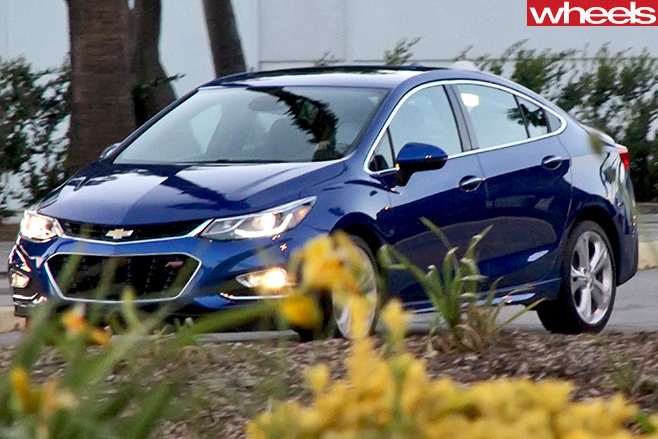
With the Holden Astra already confirmed to arrive in late 2016, Keley’s confirmation that Holden will offer the next generation Cruze means that the brand will deliver a two-pronged attack aimed at the Mazda 3, Hyundai i30 and Toyota Corolla. Currently, the Australian-made Cruze is Holden’s second-best selling passenger vehicle behind the Commodore.
The details of the strategy are yet to be confirmed, but is likely to see the next-generation Cruze sedan sold along a more extensive Astra line-up, which will include multiple body styles beyond the hatch.
Holden managing director Mark Bernhard told Wheels that the Cruze remained a crucial part of its line-up. “Cruze is really important to us today, because it’s part of our manufacturing base. Cruze and Commodore together are not just important to us, but also to the supply base,” he said.
“As we move forward, we know the small car segment’s critically important, so we look at all the different options that we can put into that segment to make sure we maximise our share of that segment.”
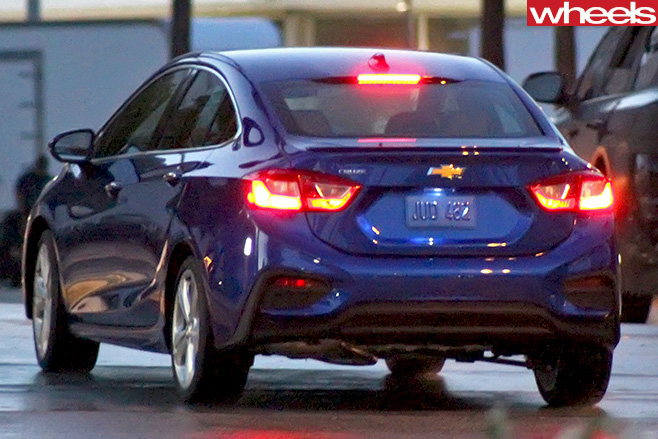
Toyota currently has an each-way bet, as it imports the Corolla sedan from Thailand alongside its Japanese-made hatch.
Bernhard stopped short of clarifying Keley’s confirmation, but wouldn’t deny the remark either. “It’s hard to say having a Cruze and an Astra would draw more people in. To draw people in, it’s our focus around the customer experience piece, our focus around building the brand and providing a full portfolio of products for the customers that meets what’s becoming an increasingly fragmented market,” he said.
Part of Holden’s broader strategy includes a shift away from being ‘the Commodore car company’ as the market has fragmented. “Historically, we’ve tended to be overly-generic in the way we’ve looked at the Australian market.” Bernhard said, emphasising Holden’s small car and SUV focus. “We’re not relying on where the market was, what we’re aiming for is where the market’s going.”
A set of headlights might seem like an obscure reason for a special edition, but if a pair of laser beams gives us another chance to drive the Audi R8 we’re not complaining.
Ingolstadt’s first supercar might be approaching pension age, but only the harshest of critics could possibly says it’s past it. How could they, when the R8, in this, its last year of production, has won both the Nürburgring and Spa 24 Hour races and when it’s still bringing hard-core technology to the road?
Based on the Lamborghini Gallardo, the regular R8 was always a good thing, but then came the R8 V10 Plus, with 404kW, a slick dual-clutch ’box and less weight – it was enough to capture the PCOTY crown last year.
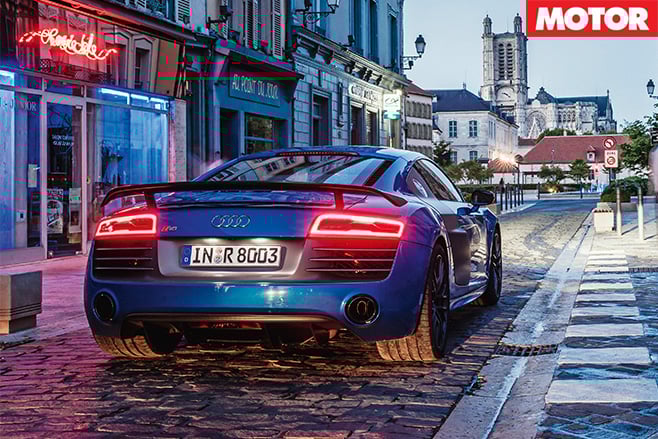
In Australia, it would cost $440,000 to get your hands on an LMX, if all three that are making their way Down Under weren’t already sold.
There are reasons you’d want to spend that kind of cash on the ageing R8 and there are reasons you wouldn’t.
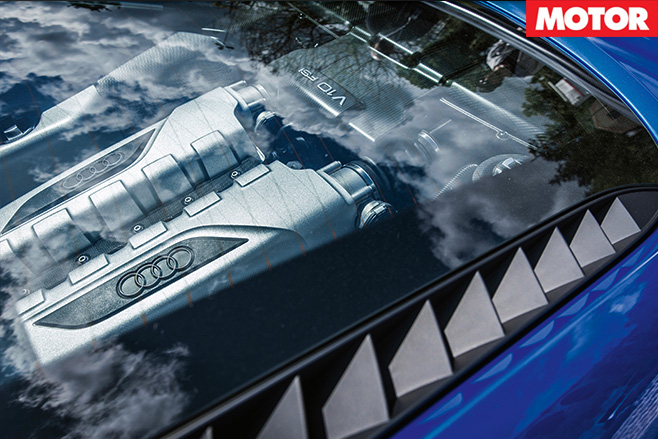
It sound strong, too, with a gruff, chesty roar at full throttle from anything above 3000rpm and a note that gloriously meanders through timbres until it’s sweetly screaming at its power peak.
You can annul that by turning off the Sport button to close the exhaust flaps and give yourself a more comfortable, less-demanding day out. But why would you?
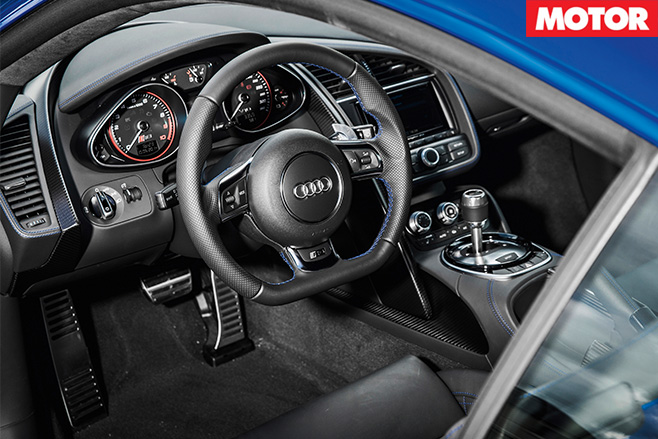
The LMX is helped by its carbon-ceramic brakes and meaty boots to bite and bite and bite and with the all-wheel drive reacting quickly, it swallows corners easily and only stops short of total engagement through slowish steering.
That said, it’s not a wicked machine. There’s none of the soaring wonder that makes the hair on your neck stand up and it doesn’t deliver the kind of drama we’d hoped for this swansong supercar.
Yes, it pulls through to 100km/h in 3.4 seconds and, yes, it should reach 320km/h (though traffic stopped us at 280km/h), but it doesn’t feel that quick. There’s no punch. There’s no awe. There’s no potty-mouth moment at any point in the rev range, even when you’re on the 0-100km/h burst.
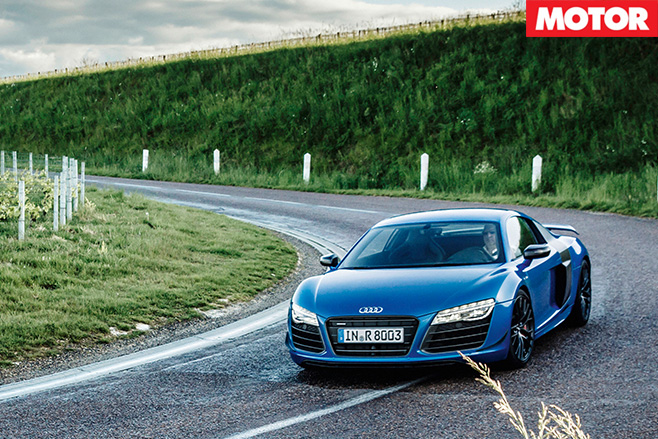
It sounds harsh, but it somehow doesn’t add up to the sum of its individual feelings, like instant throttle response, like faultless and gorgeous trim levels inside, like carbon seat shells.
Maybe it’s that the 1595kg kerb weight dampens the directness of its responses or maybe it’s just that the opposition – Ferrari, McLaren, Porsche – is finally outclassing its chassis, but it feels like $440,000 worth of engineering without quite feeling like $440,000 worth of supercar.
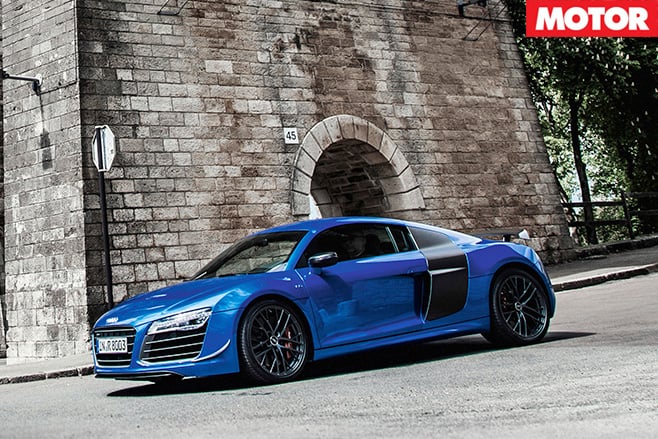
Specs
Engine: 5204cc V10, DOHC, 40v Power: 419kW @ 8000rpm Torque: 540Nm @ 6500rpm Weight: 1595kg 0-100km/h: 3.4sec (claimed) Price: $440,000
HOW THE HEADLIGHTS WORK
So, this Laser Light business. Worth all the carry on from BMW and Audi? Sort of, but it’s limited technology in its current form. For starters, no laser beam ever actually points out of the car.
Instead, the R8 LMX’s headlights use LED headlights for low and high beam (but not the Matrix LED from the upper A8 models) and then adds four Laser Light diodes for what’s effectively an ultra-high beam.
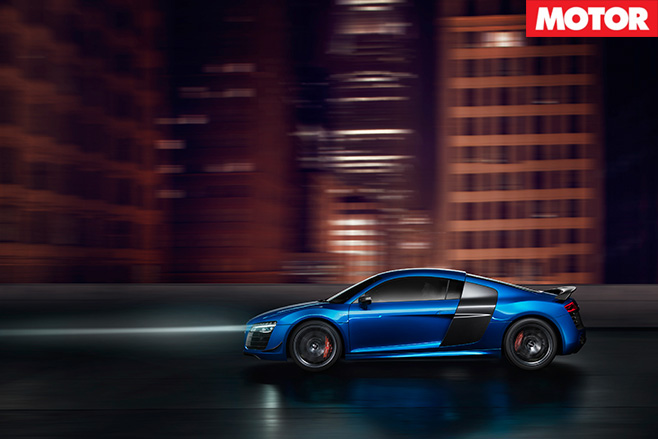
To “arm the lasers”, you flick the high beam onto its automatic setting, then let the computer and the forward-facing camera work out when it can and can’t be used. So there’s no technical way anybody could blind oncoming cars with the Laser Lights and, besides, it doesn’t function below 60km/h.
That’s good, because the lights double the intensity of the LED high beam, though not in the wide spread of the standard light. Get into some clear night air and the lights jump to LED high beam, which reaches deep into the roadside. Keep going and the lasers fire up and it’s like two long, thin strips have split the night.
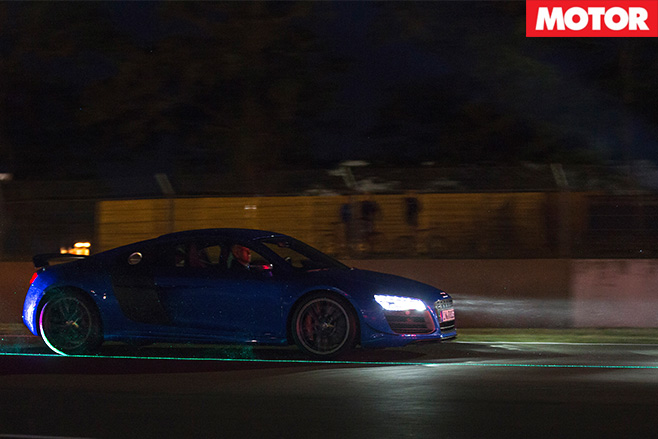
Right now, it’s an effective but limited technology, but there are big, big things to come with laser lights.
Lexus puts a small engine at the bottom of its GS range. And the mid-size four-door saloon appears better for it.
WHAT IS IT? This is the new entry-level GS sedan, a car that’s now offered with four-cylinder, V6 and stonking-great V8 engines, as well as more frugal hybrid models.WHY WE’RE DRIVING IT The GS200t gets the new 1998cc turbo-petrol four-cylinder that we’ve seen in the NX SUV and the RC coupe. It replaces the V6-powered GS250 and is faster, more efficient and comes with more kit.
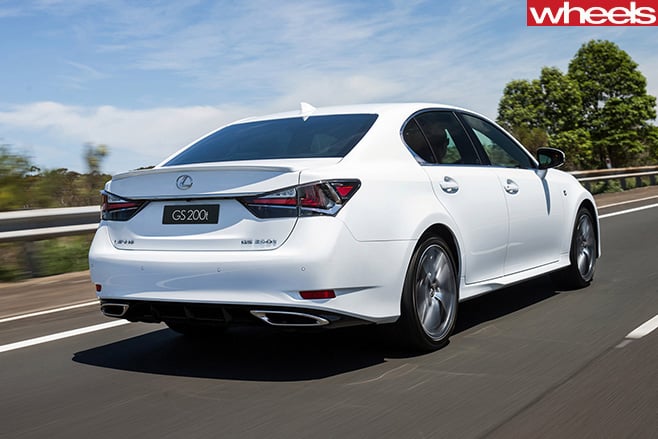
PLUS: Engine and cabin refinement, strong fit and finish, far superior to its predecessor MINUS: Dated interior, base-car cabin feels low-spec, only two trim levels
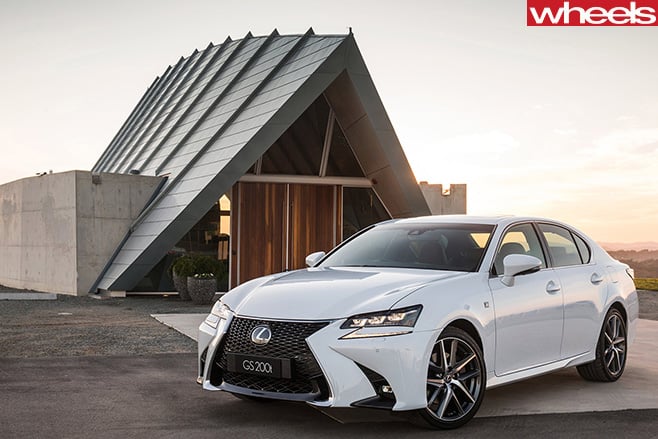
In the GS, the 1998cc turbo-petrol is an absolute peach. It makes the same power as in the RC200t we’ve tested, and the same unit first appeared in the compact NX SUV. Yet its refinement and buttery-smooth character suit the GS’s premium mantra perfectly.
Lolling about town, the refinement of the engine isn’t immediately obvious, as it’s so quiet. In fact, you needn’t bother with the hybrid GS if it’s refinement you’re after, as the near silent operation of the 200t is remarkable.
At $75,000, our entry-level Luxury spec is the starter for the two-model line-up, headlined by the larger-wheeled and more aggressively styled F-Sport, which costs $83,000.
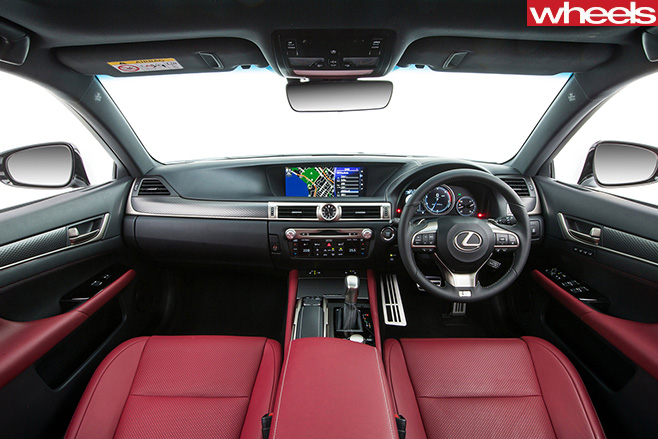
Yet the depth of the 200t’s talent stretches from around town, limousine-like refinement to a dynamic ability that’s pleasantly surprising. The ride on the standard 17-inch alloys, which notes every inch of the pattered test route we’re on, may not be quite as silken as the driveline combo, but the GS’s cornering abilities reveal an agility that’s completely unexpected.
The steering doesn’t offer a lot of feedback, despite the chassis communicating the surface beneath, but the roll into corners is well controlled and overall handling is benign and predictable with strong road-holding allowing a concerted attack through each corner.
Part of that is courtesy of the new ‘performance damper’ fitted to all GS models, which better isolates the front end, while there are also new coil-spring rates and shock absorber piston shapes, all aimed at reducing NVH through better control. Lexus also says that as part of the GS range update, all models now have a stiffer body with additional laser and spot-welds.
When punished, the 2.0-litre livens up with good response but – like in the RC200t we tested, which has the same engine – it’s more a flow of power rather than a strong surge, and the eight-speed auto changes at 6000rpm where it steps up through gears briskly and quietly. The engine note builds, but even under full load it maintains its smooth composure, never overreaching to become coarse, nor showing signs of struggle.
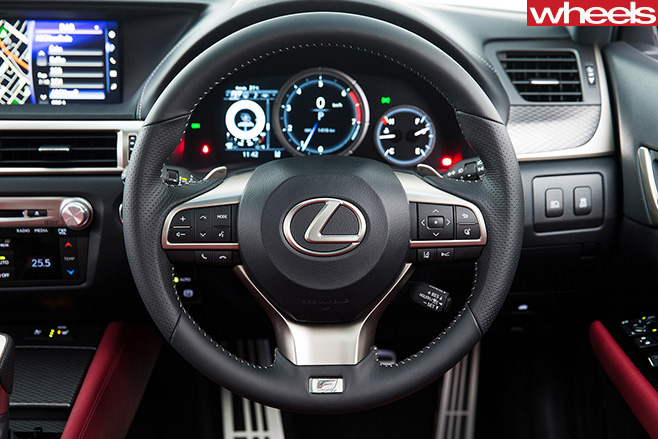
It also means that the $75,000 staring price is almost $3K more, too, but Lexus has added more standard equipment that includes its Pre-Collision Safety System and All-Speed Adaptive Cruise Control, with its Auto Emergency Braking able to bring the GS200t to a complete stop from any speed. Yet with the refinement and polish, the 200t won’t have you rushing to get to your destination as it fits the premium brief so well.
But wait, there’s more
THE GS has a tough fight on its hands in 2016 as it faces increasingly tough opposition. The new Mercedes E-Class will arrive, and will take over the role of techno tour-de-force flagship from the German maker’s S-Class. Also keeping Lexus salespeople awake at night will be a new-generation Jaguar XF, which is not only a dynamic dream, but will be far more opulent than its predecessor. The Audi A6 was updated in early 2015, and the fifth generation is expected to be shown in 2016 before arriving here in 2017. An all-new BMW 5 Series is expected then, too.
SPECS Model: 2016 Lexus GS200t Engine: 1998cc 4cyl, dohc, 16v, turbo Max power: 180kW @ 5800rpm Max torque: 350Nm @ 1650-4400rpm Transmission: 8-speed automatic Weight: 1725kg 0-100km/h: 7.3sec (claimed) Fuel economy: 8.0L/100km Price: $75,000 On sale: Now
This is your future.
This story was originally published in our October 2014 issue
I shall not dwell on the politics of abandoning our indigenous car-building industry, nor will I bore you with my views on losing home-grown performance heroes over the next year or two. But I will say, again, welcome to the future of performance cars.
I’m reminded of this as I drone up the Hume Highway towards Heathcote Park dragstrip, purely because the last few times I’ve made this trek it’s been in a large-capacity, local V8, with the plan to run it down the strip and write down some numbers. Not this time. Maybe not ever again.
Cars like the Golf GTI and Renault Megane 265, meantime, are the future. They’re the cars you and I and any other Aussie performance fan will be buying because, soon, they’ll be the best fast cars you can get for sensible money – if they’re not already.
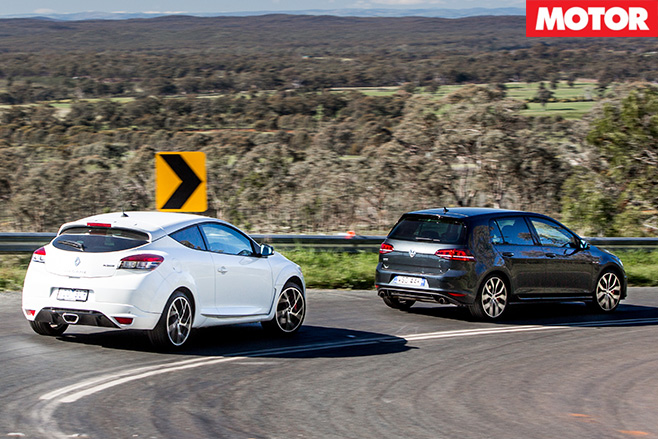
In the past, we were able to forgive the Golf GTI its DSG foibles and the Renault its wayward ergonomics because we all looked at these things as toys (well, some of us, anyway). But now that they’re about to become a bigger player to all men and women with a need for speed, can we continue to cut them this slack?
More specifically, with the latest updates to each vehicle, do those shortfalls even exist anymore? It’s a big responsibility, I tells ya.
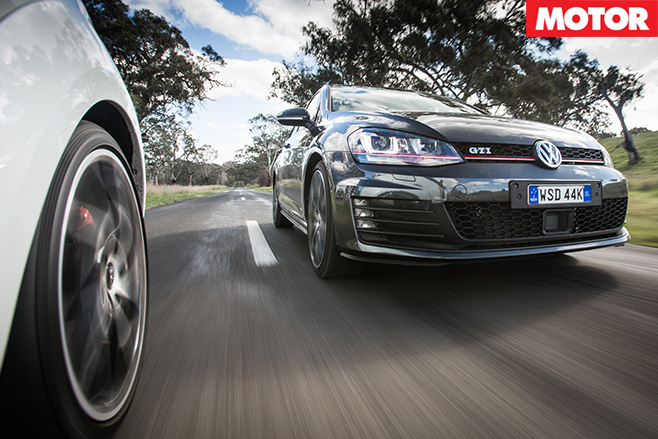
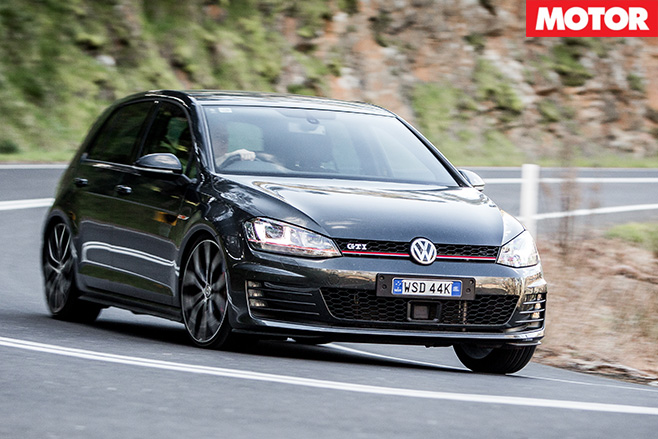
For $4000 on top of the basic GTI’s price, the Performance package gets you R-spec brakes with 340mm rotors up front and 310mm down back, up 28mm and 10mm respectively over the GTI’s stoppers. Inside, you get Alcantara trim pieces for the tartan seats, the bi-Xenon headlights and LED tail-lights from the Golf R and another 7kW under the hood (for a total of 169kW).
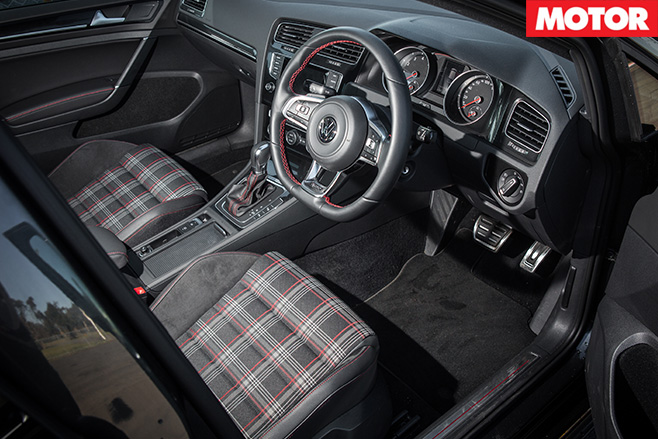
But the biggest news is the addition of an electronically-controlled mechanical limited-slip front diff, replacing the mechanical version. VW says the computer-controlled diff interfaces with the car’s ESP and other electronic traction aids and leads to a quicker, more accurate distribution of torque to the wheel with most grip, including the ability to funnel 100 per cent of drive to one wheel if conditions warrant it.
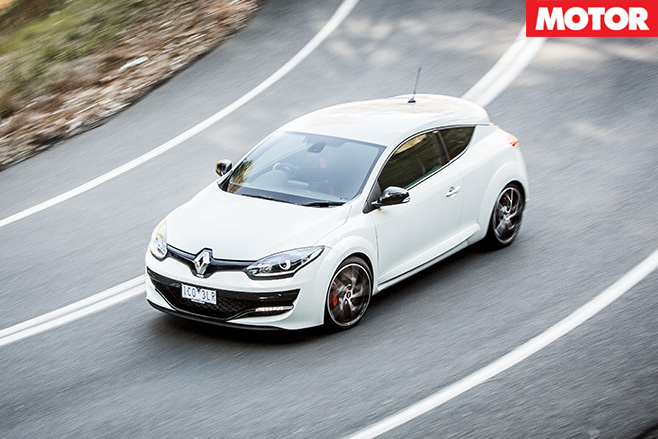
While VW has been busy expanding its GTI range, Renault has gone the other way, shrinking the Megane Sport 265 to a two-car line-up. Specifically, the Trophy and Trophy Plus models have been combined into this car, now called the Premium Cup.
First stop, Heathcote Park dragstrip and I’m curious to see what, if any difference the new diff makes to the Golf’s habit of axle-tramping like a demented jackhammer. None, as it turns out. This also makes launch control useless because it’s not grip that limits things, it’s how far into the bump-stops the front end is pummelling itself. Am I glad these ain’t my driveshafts!
The trick, it turns out, is to ignore the launch control stuff and try to walk the car off the line with a progressive tip-in.
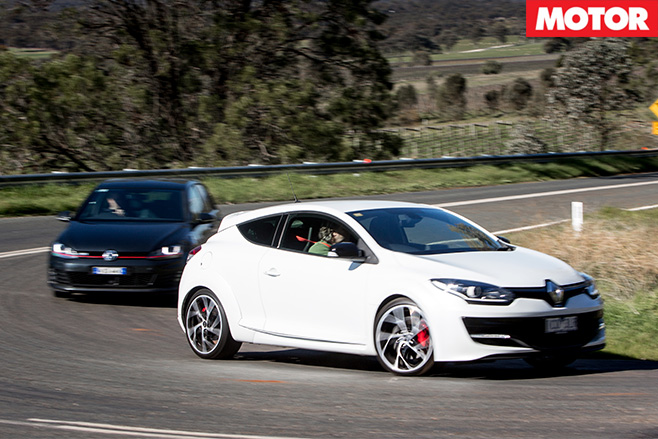
Into the Renault and you’re suddenly aware the French car has a fair bit more top-end thrust and extra willingness to tag the limiter (there’s a little light and a chime that goes off milliseconds before the ignition cut steps in). And, it’s a manual which, unusually, makes it easier to launch.
It axle-tramps, too, but you can feed the clutch and power in together, wait ’til the clutch and tyres have bitten and then feed it some more jandal (thank you Scotty Mac). Again, it’s a balancing act to get it j-u-s-t right, but if you do, say hello to 14.6 seconds at 161.6km/h. Nought to 100 takes 6.7 versus the VW’s 6.8, so it’s only the extra top-end rush that’s the difference.
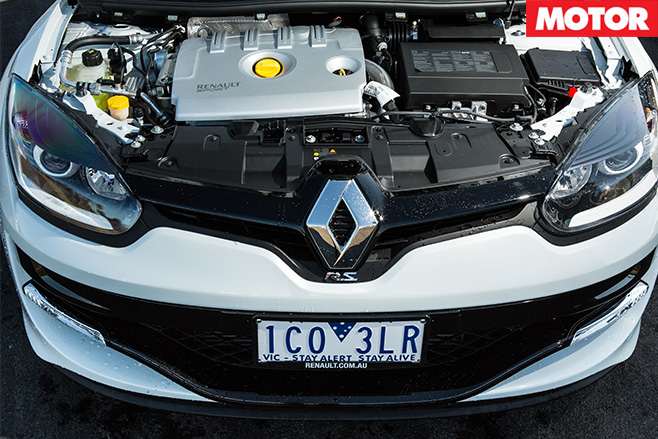
The Renault’s mill is also a bit smoother both in outright terms and just ambling along.
The VW feels a bit grumpy at times because it’s overly keen to get into a taller gear sooner (to nail a fuel consumption number, no doubt). True, you can move the drive-mode to Sport, but then it’s too manic for the road and wants to hold each gear to redline – useless in a Safeway car park.
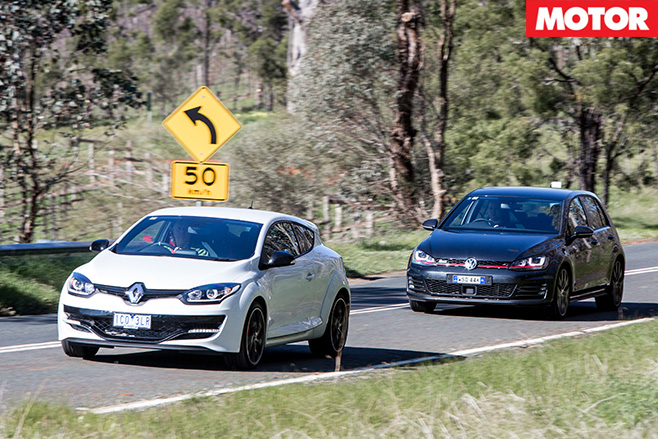
But if you want to talk feel, then let’s discuss steering. Okay, so VW has had a better handle on electric power-steering than anybody else at this end of the market for years.
Nothing’s changed. The Renault’s not bad, but it’s assisted by electricity rather than hydraulics and there’s a distinct smell of rigor-mortis at the straight ahead. Tip it in and it brightens up, but even then, there’s an artificial feel.
In isolation, you mightn’t grizzle, but jump from the Megane into the Golf and it’s a revelation. The GTI not only feels lighter through the tiller, there’s better off-centre response and heaps more realism to the experience.
And the Golf’s tricky diff? Well, if you need a reason to spend another $4000 on a VW hatch, this diff is it. Jam the Renault into a corner and its front-end bites initially in a way most front-drive cars will only dream about.
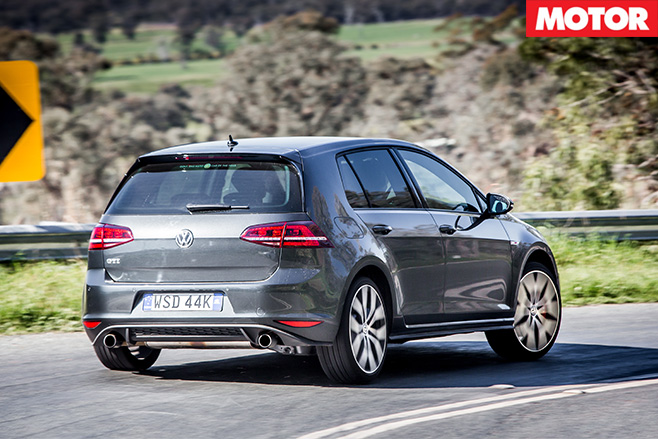
The GTI, though, rewrites the book on this stuff. You can still make it wash wide under centrifugal force if you enter a roundabout too quick, but once you’ve got the thing lined up with the apex, you can bang home the juice with a fair bit of abandon. If you’ve overdone it, you’ll feel a slight hesitation as the traction control detects a looming crash.
But instead of pulling the pin on the fuel and spark right there, the VW goes to Plan B which is to have the ESC tell the diff to get off its butt and shift anything up to 100 per cent of the torque to the outside wheel. At which point the power comes on hot and strong and the car drives itself around its inside front wheel. Brilliant.
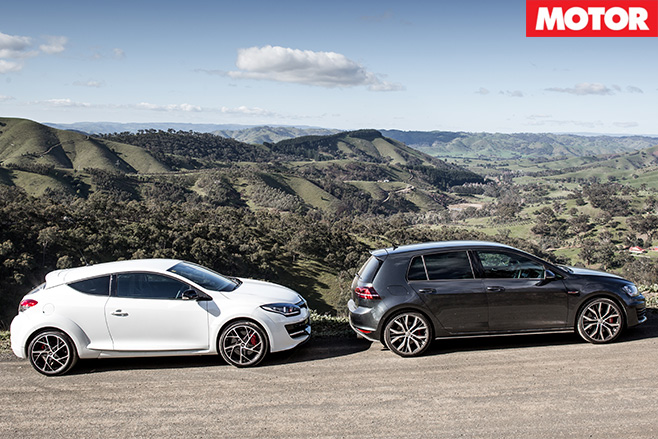
Why it works is simple: post-apex understeer in a car like this is a function of too much grunt and not enough grip. Traditionally, ESC systems have fixed it by limiting the grunt side of the equation. The new GTI comes from the other direction and fixed the grip element, allowing the grunt to remain. And because of the diff-electronics interface, it happens much faster in this set-up. You’ll be seeing more of this.
On the road, both cars have a fair bit of ride compromise thanks to sidewall-less 19-inch tyres (Dunlops on the VW, Contis on the Ren). Even setting the driver mode to comfort in the Golf doesn’t help much – at least the German is sensible in its layout and specification.
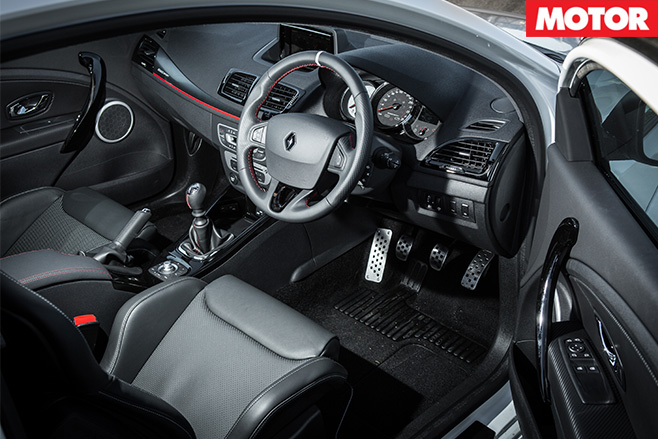
At normal operating temperature, the needle on the temp gauge obscures the temp symbol, leaving you wondering what that gauge is reading. The cruise-control main switch is in the centre console between the seats and needs to be turned off so sports mode can be selected. There is one cup holder but it’s proportioned and positioned such that it’s not worthy of the name. I could go on.
On the other hand, the Golf’s boot is smaller (although the opening is bigger) and Renault has the better looking seats (but they’re both good to sit in) and a conventional park-brake.
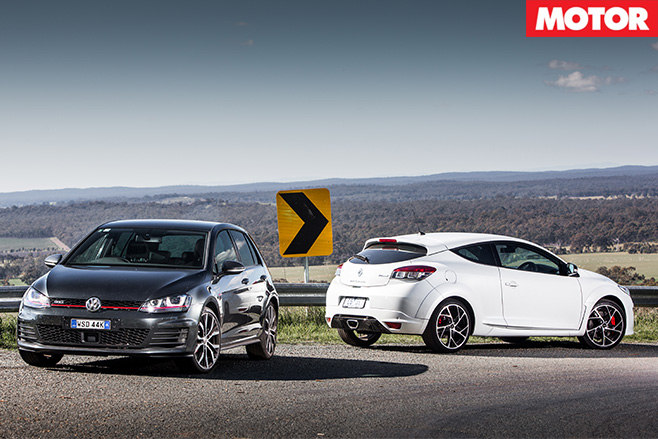
Like I said at the start of this, welcome to the future. Turns out it ain’t so bad after all.
| u00a0 | u00a0 | Volkswagen Golf GTi Performance | u00a0 | Renault Megane RS 265 Premium Cup |
| Body | u00a0 | 4-door, 5-seat hatch | u00a0 | 2-door, 5-seat hatch |
| Drive | u00a0 | front-wheel | u00a0 | front-wheel |
| Engine | u00a0 | 1984cc, inline-4, DOHC, 16v, turbo | u00a0 | 1998cc, inline-4, DOHC, 16v , turbo |
| Bore/Stroke | u00a0 | 82.5 x 92.8mm | u00a0 | 82.7 x 93.0mm |
| Compression | u00a0 | 9.6:1 | u00a0 | 8.6:1 |
| Power | u00a0 | 169kW @ 4700-6200rpm | u00a0 | 195kW @ 5500rpm |
| Torque | u00a0 | 350Nm @ 1500-4600rpm | u00a0 | 360Nm @ 3000rpm |
| Power/Weight | u00a0 | 124kW/tonne | u00a0 | 142kW/tonne |
| 0-100km/h | u00a0 | 5.8sec (tested) | u00a0 | 5.9sec (tested) |
| Top speed | u00a0 | 255km/h (tested) | u00a0 | 248km/h (tested) |
| Consumption | u00a0 | 6.4L/100km (claimed) | u00a0 | 7.5L/100km (claimed) |
| CO2 Emissions | u00a0 | 149g/km (claimed) | u00a0 | 174g/km (claimed) |
| Transmission | u00a0 | 6-speed DSG | u00a0 | 6-speed manual |
| Weight | u00a0 | 1364kg | u00a0 | 1374kg |
| Suspension | u00a0 | struts, coil springs, anti-roll bar (f); multi-links, coil springs, anti-roll bar (r)u00a0 | u00a0 | struts, coil springs, anti-roll bar (f); torsion beam, coil springs, anti-roll bar (r) |
| L/W/H | u00a0 | 4268/1790/1442mm | u00a0 | 4299/1848/1435mm |
| Wheelbase | u00a0 | 2631mm | u00a0 | 2636mm |
| Tracks | u00a0 | 1538/1516mm (f/r) | u00a0 | 1588/1545mm (f/r) |
| Steering | u00a0 | electrically-assisted rack and pinion | u00a0 | electrically-assisted rack and pinion |
| Brakes | u00a0 | 340mm ventilated discs, single-piston calipers (f); 310mm discs, single-piston calipers (r)u00a0 | u00a0 | 340mm ventilated discs, four-piston calipers (f); 290mm solid discs, single-piston calipers (r) |
| Wheels | u00a0 | 19 x 7.5-inch (f/r) | u00a0 | 19 x 8.25-inch (f/r) |
| Tyres | u00a0 | 225/35 R19 Dunlop Sport Maxx GT (f/r) | u00a0 | 235/35 R19 Continental ContiSportContacts (f/r)u00a0 |
| Price | u00a0 | $48,490 | u00a0 | $47,990 |
| Positives | u00a0 | Takes the GTI concept to a whole new dimension; new hatch king | u00a0 | Still one of the best front drivers thereu2019s ever been; faster than GTI |
| Negatives | u00a0 | Canu2019t have a manual; firm ride on 19s | u00a0 | Can be tiring day-to-day |
I’m on a mission to find out what the Yanks think of our VF SS Commodore – but not the American public, who don’t care much for cars weighing under two tonnes (that’s excluding any typical American-sized passengers, of course) but the kind of people Chevy must impress if it wants to sell a few SSs: NASCAR fans.
If the first five minutes of my trip are any indication, having landed in LA and freshly collected ‘my’ Chevy SS, I may as well get back on the plane and head home with my tail between my legs.
A man on the Sunset Boulevard sidewalk, dressed like an extra from a Snoop Dogg music video (and, judging by the bagginess of his trousers, having recently lost a lot of weight) shouts to me as I drive past. I can’t repeat his heckle given MOTOR is a family magazine. Maybe he doesn’t like red cars, maybe it’s the badge – I’m not sure but with 300 million guns in the US, I’m not about to stop and ask him.
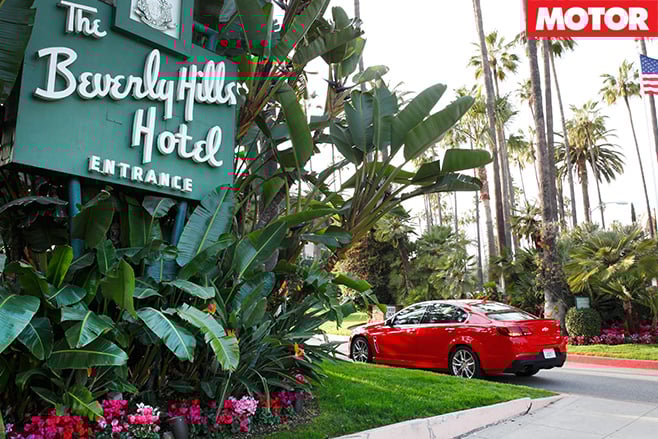
Some more background on this mission of mine. So the Chevy SS is well-known to NASCAR fans, but the sales figures suggest it’s not exactly a smash hit. My task is to introduce them to the real thing and see if a little Aussie culture can win them over. If it’s to sell in numbers, these are the folks the SS must impress.
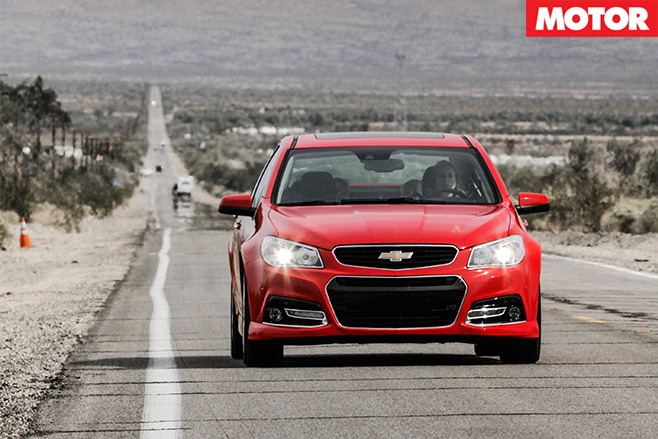
From my perspective, the Yanks are already onto a winner – the Chev is a bargain at US$43K and is way louder than our VF SS. It also scores HSV’s 6.2-litre LS3 in 310kW/562Nm tune. Lucky bastards! I wondered why it felt so healthy.
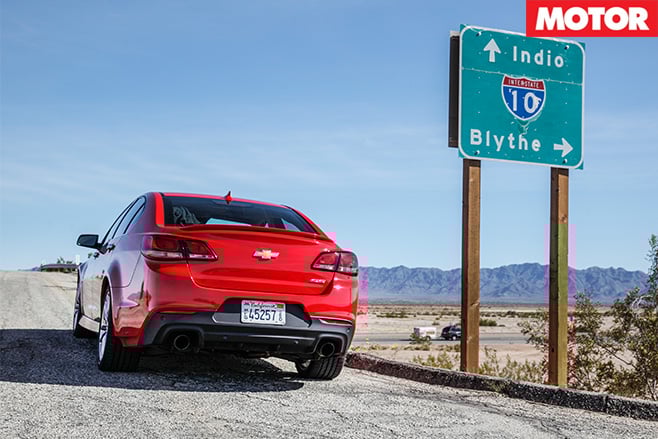
Freeway cruising doesn’t tell you a lot about a car but I learn more when I give full Blundstone to all 310 kilowatts in an attempt to shake off a miscreant tailgating me like I’m leading the Daytona 500. I summon some Aussie muscle and row through the gears until I’m doing a speed that would land me in Alcatraz, but the tailgater is sorted.
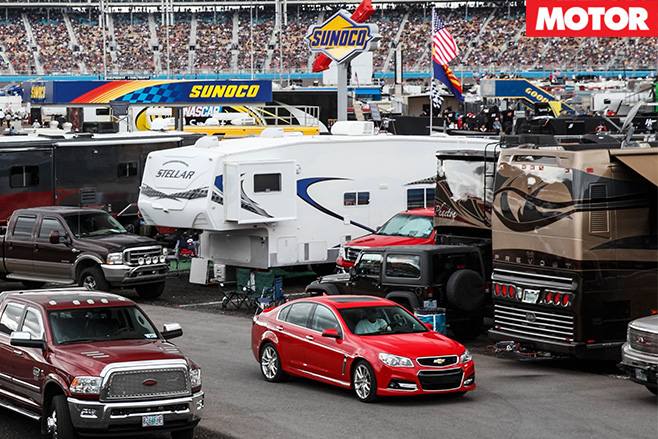
Built in 1964, it’s a 1.51-mile (2.43km) low-banked tri-oval that can seat around 67,000 gurgling hillbillies. It looks more like a footy stadium than a racetrack. The main grandstand looks like it’s 10 storeys high and there are folks and motorhomes everywhere.
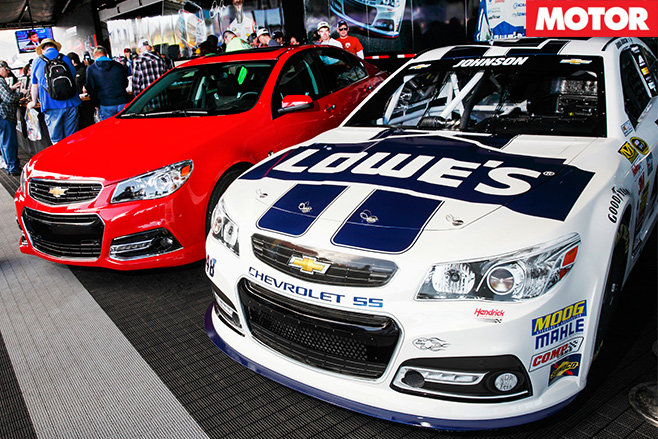
Seeing the two cars side by side is revealing.
I ask a family what they think of the SS. From Iowa, Dad Derrick – dressed in full cammo and looking like he hunted his own breakfast that morning – says he likes that it’s a family car with a sporty, aggressive look. We talk some more but with the race start not far off, I head for the infield to check out the action. Motorhomes circle the whole track and most of them have a viewing deck on the roof and a US flag as standard.
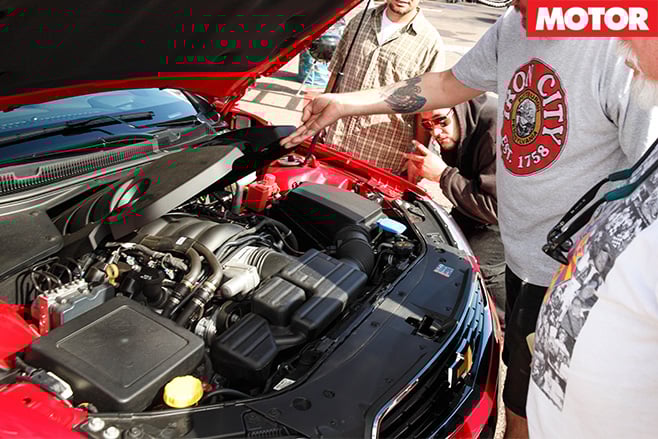
Another man wanders over. He’s got a beer in one hand and a bottle of whiskey in the other. “Fireball!” he shouts and hands me a brimmed shotglass. Suddenly I’m doing shots while Todd, as he introduces himself, tells me how he’s the biggest Chevy fan around.
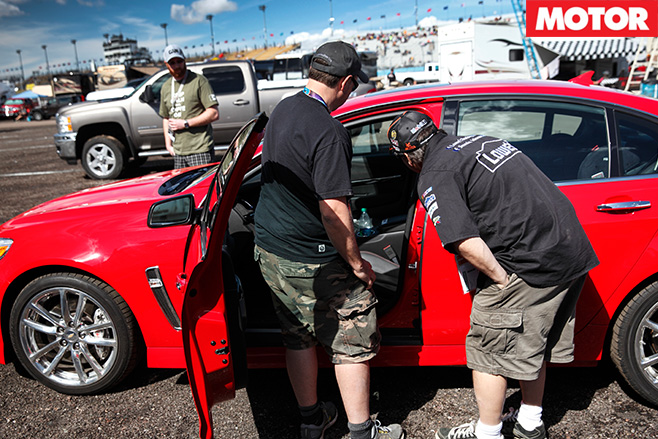
Not keen on throat cancer, I move on before the next Fireball shot and bump into 10-year-old Dakota. He’s on his BMX and reckons the 19-inch rims are cool. But fundamentally he doesn’t like it. “It’s a Chevy!” With a Ford tattoo probably hidden somewhere, Dakota’s choice of ride when he’s ready to give up the BMX lifestyle is an F350. Bless him.
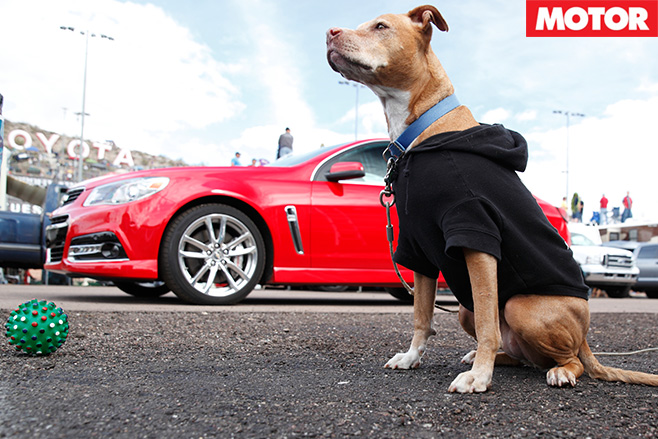
Suddenly, the commotion stops and everyone stands up. It’s the national anthem. Just as I’m thinking I’m in Days of Thunder, there’s a 50-plane flyover, then fireworks. ’Merica!
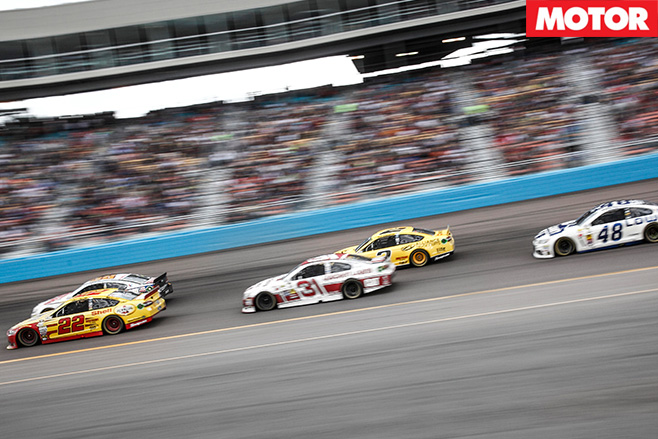
They make V8 Supercars sound like road cars, they’re that loud. You have to hear it for yourself. With earplugs, of course, particularly given that over a brief 26-second lap, the decibel deluge never relents.
Having located earplugs, I head to turn one. Being America, I drive there. I park the Chevy SS next to a monster motorhome where Robert is busy cooking up lunch on the barbecue. He spots the car.
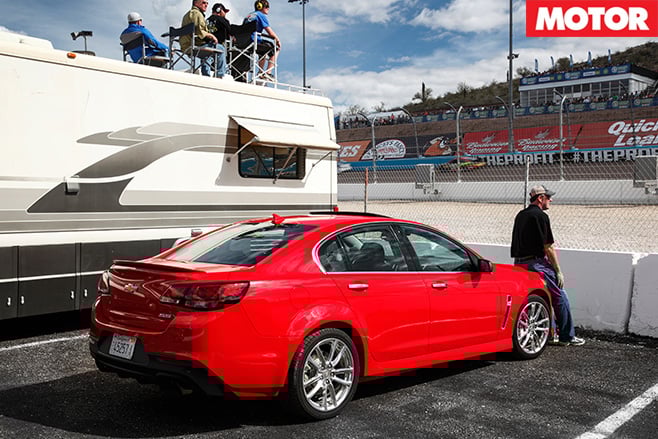
With the race in full swing, it’s hard to ask folks what they think of our beloved SS Commodore as the noise is ceaseless. I’ve no idea who is leading but as a car goes past every half second it doesn’t matter much.
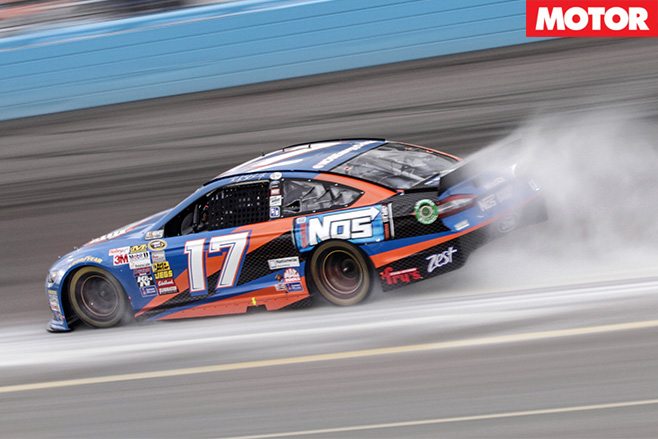
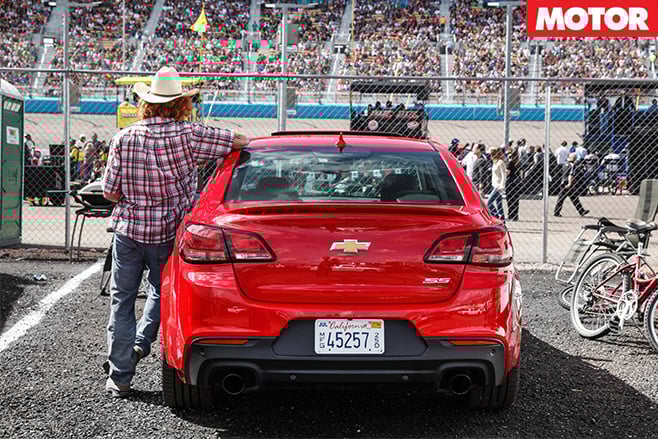
I ask some of the punters where they think the SS is built. Craig, from Burbank, says: “Not in the US; it’s made in Europe for sure.” (We can only take that as a compliment.) Kim, from Tempe, thought it was some kind of BMW until she saw the bowtie. Few realise Australia makes cars.
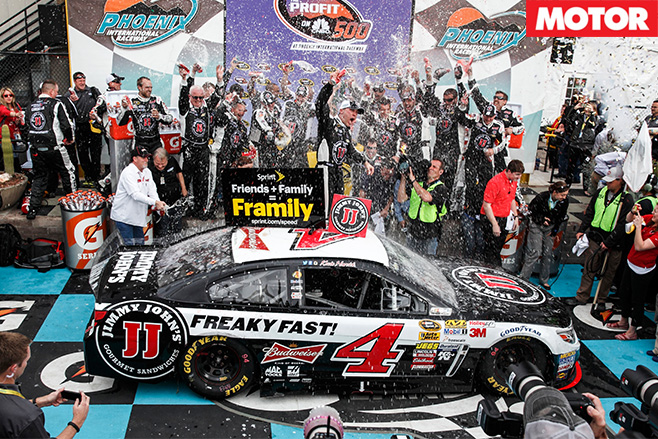
And, day over, I’ve enjoyed my NASCAR experience. The fans are great, passionate about the sport and know their cars. I feel proud to be driving an Aussie car to meet them.
Most people I speak to love the SS. They dig the look, the power and that it’s a proper, rear-drive driver’s car. Now, if only they’d all buy one.
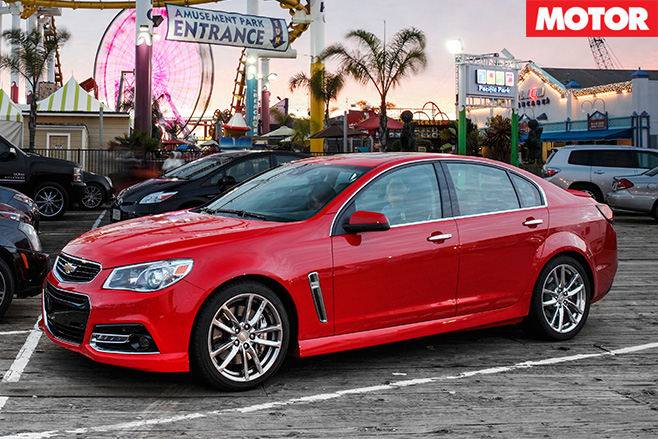
Chevrolet SSSpecs
Body: 4-door, 5-seat sedan Drive: rear-wheel Engine: 6162cc V8, OHV, 16v Bore/stroke: 103.25 x 92.0mm Compression: 10.7:1 Power: 310kW @ 5900rpm Torque: 563Nm @ 4600rpm Power/weight: 173kW/tonne Consumption: 13.8L/100km (claimed) CO2 Emissions: 333g/km (claimed) 0-100km/h: 5.0sec (claimed) Top speed: 250km/h (limited) Transmission: 6-speed automatic Weight: 1793kg Suspension: struts, A-arms, adaptive dampers, anti-roll bar (f); multi-links, coil springs, adaptive dampers, anti-roll bar (r) L/W/H: 4966/1897/1470mm Wheelbase: 2916mm Tracks: 1590/1585mm (f/r) Steering: electrically-assisted rack-and-pinion Brakes: 355mm ventilated discs, 4-piston calipers (f); 360mm solid discs, single-piston calipers (r) Wheels: 19 x 8.5-inch (f); 19 x 9.5-inch (r) Tyres: 245/40 ZR19 (f); 275/35 ZR19 (r) Bridgestone RE050A Price: US$43,475 Positives: More power and equipment than Aussie cars at a cheaper price Negatives: Not very popular Stateside; it’s cheaper than at home!
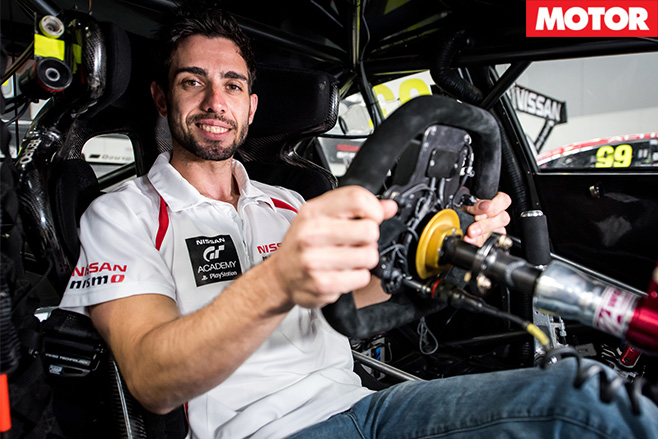
Nissan has announced Matt Simmons, Australia’s recent gamer-turned-racer, will compete in next year’s Blancpain Endurance Series for the brand.
He will join the Nissan GT Academy Team RJN squad for the 2016 season of the Blancpain Endurance Series driving a fully-fledged Nissan GT-R GT3, which features race aerodynamics, slicks, and produces up to 404kW in race trim.
The news comes only months after Simmons, who at the start of this year worked as a Brisbane courier, beat thousands of other hopefuls to win Nissan’s GT Academy International competition, and weeks after his first test of Nismo’s GT3 car at Snetterton, England.
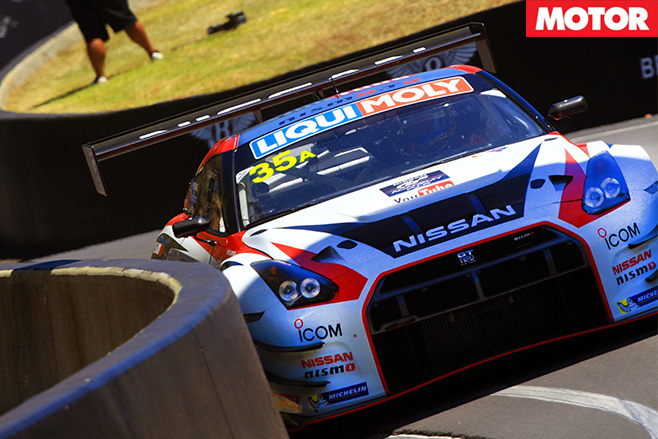
Simmons’ will now skip his planned race debut at the 2016 Dubai 24 Hours to “focus” on competing in the world’s most fierce GT3 championship, where he will face competition from Audi, Mercedes-Benz, Bentley, and Ferrari.
But the 2016 season presents the opportunity for Nissan to defend its pro-class win in this year’s Blancpain Endurance series.
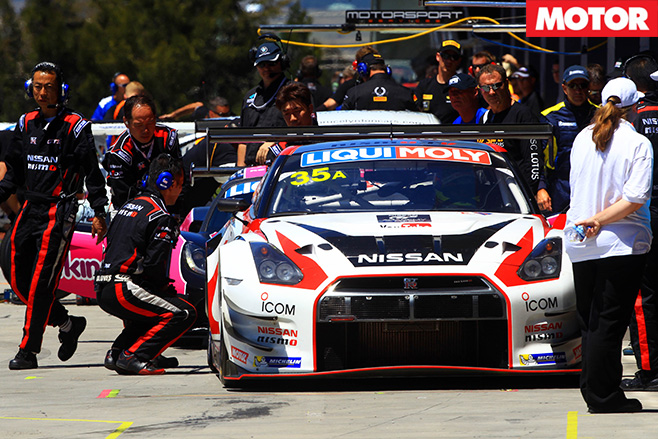
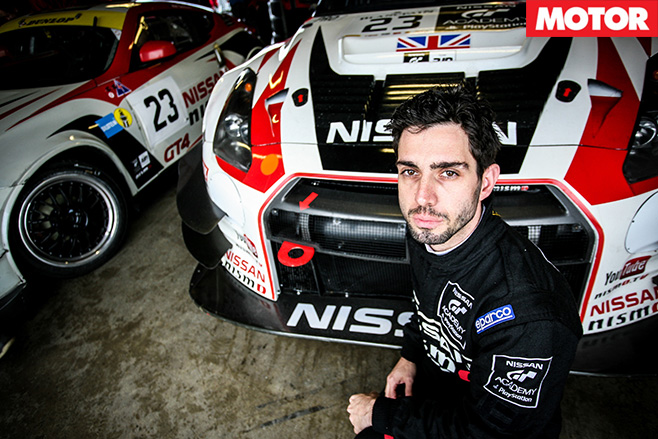
However, the driver line-up for Nissan’s Bathurst effort will be announced at a later date.
Porsche will ditch the petrol engine altogether and hunt down Tesla with its electric Mission E concept now confirmed for production before 2020.
What many tagged as a good looking Panamera – as oxymoronic as that seems – when the Mission E was revealed at the Frankfurt motor show last September will now be on the roads before the end of this decade.
“The first 100% electrically powered Porsche is on its way,” the Stuttgart brand confirmed in a statement. “It will be launched at the end of the decade [as] the supervisory board of the Porsche AG today gave the green light for the Mission E project.”
The four-door four-seater gets all-wheel drive and all-wheel steering, and 440kW from twin electric motors capable of delivering a claimed 3.5-second zero to 100km/h and onwards to 200km/h in “under twelve seconds”.
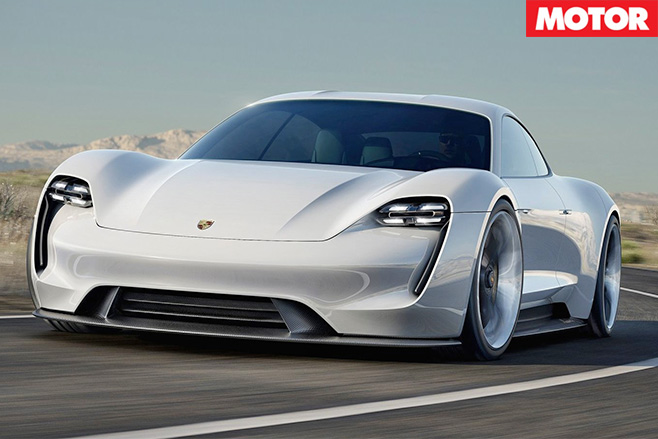
Lithium-ion batteries slide underneath the car from its front to rear axle, lowering the centre of gravity, while Porsche Torque Vectoring can allocate drive to any specific wheel of the 50:50 weight-balanced Mission E.
Many enthusiasts are just getting used to the lowered rev ceiling of a newly turbocharged 911 Carrera range, however an all-electric Porsche may be on an air-cooled-to-water-cooled level of controversy. It probably shouldn’t be, however.
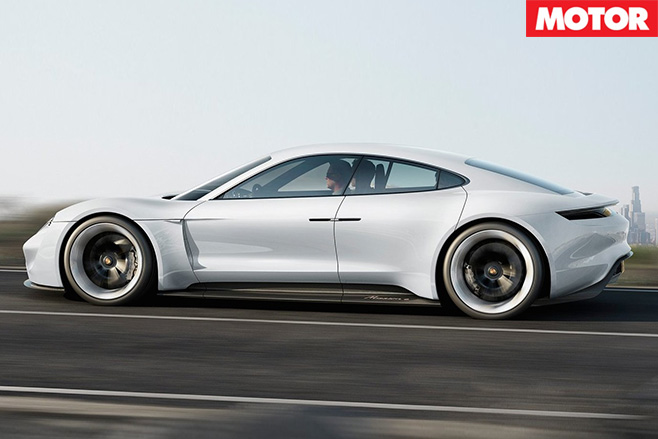
The Mission E is expected to sit on a lighter platform than the next Panamera, using more expensive, exotic materials. While the next Pana is expected to continue to retail between $200K and $450K locally, the Mission E will almost certainly be at the upper end of – or beyond – that range.
