
Your first child comes along and suddenly your life begins to change. Child car seats, child-proofing and noisy toys… Then a second arrives shortly after and before you know it, your third baby is taking up the final seat in the back of your car.
If life hasn’t changed enough, before you know it your family of five suddenly turns to six with the arrival of your fourth child. Sure, the house is already child-proofed, the kids can share a room for a few years, but the car is no longer practical. You have two choices: go to every family outing in two cars, or upgrade to a seven-seater.
Bye, bye city car, hello city bus.
But stress no more, there is another solution. Well, almost.
New innovations are continually popping up in the family-car space to make parenting easier and safer. For example, Volvo has introduced in-built booster seats available in the Volvo XC60.
5 parent hacks to keep youru00a0car clean and fun on a family road trip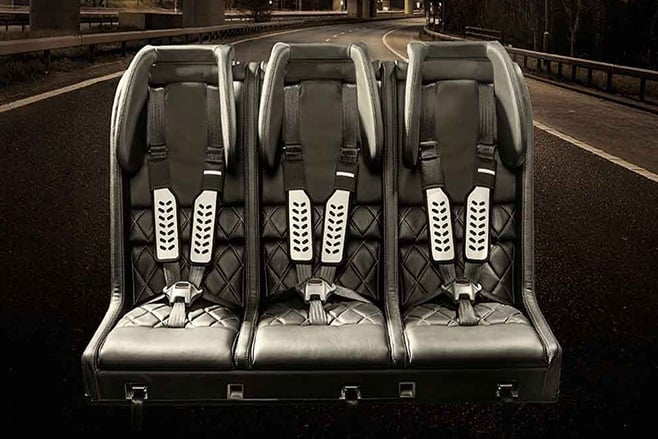
But then there are the aftermarket accessories. Enter Multimac; a UK company that has come up with an innovative child car seat system that will fit three to four kids.
Five-point harness, fully adjustable heights to fit your child as they grow, headrests and baby capsule – there are a variety of sizes and options available to suit all families and cars.
“If your car has a back seat – we have a Multimac that will fit!” the company says on its website.
As an added bonus, the seat is easy to move in and out of the car – it simply sits on top of the back seat, secured by seatbelt mounting points.
Multimac haven’t said they’ll be releasing the seat in Australia, but surely we can’t miss out on something this good – we reckon this revolutionary design is going to take the parenting car-seat world by storm.
Want more options? Check out our top cars for families with four kids.
A few years ago, the hot hatch genome inexplicably split in two.
One branch mutated with huge wheels, swooping coupé rooflines and bulging wheelarches, sacrificing practicality for style and supercar-rivalling back-road pace. Think Renault Sport Megane, VW Scirocco and the now sadly defunct-in-Oz Opel Astra OPC.
The other branch shunned such trendy bling, sticking true to the traditional hot hatch values, offering enthusiast appeal in everyday packaging. And there’s no better exponent of this than the car that has defined the genre for 40 years, Volkswagen’s Golf GTI.
It fulfils every criteria you could want in a car: fast yet fuel efficient, entertaining to drive but with room for five people plus luggage and all at a respectable price.
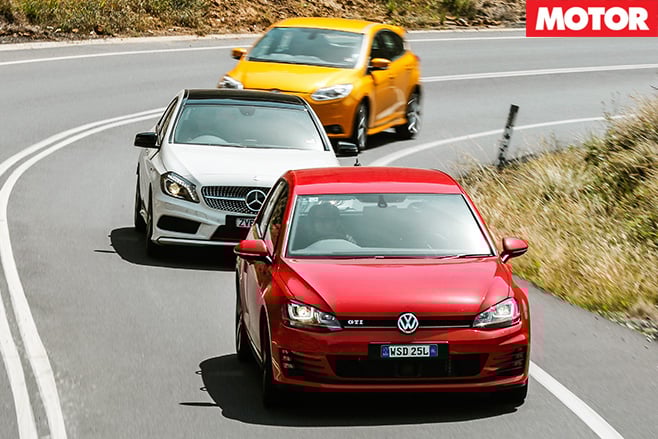
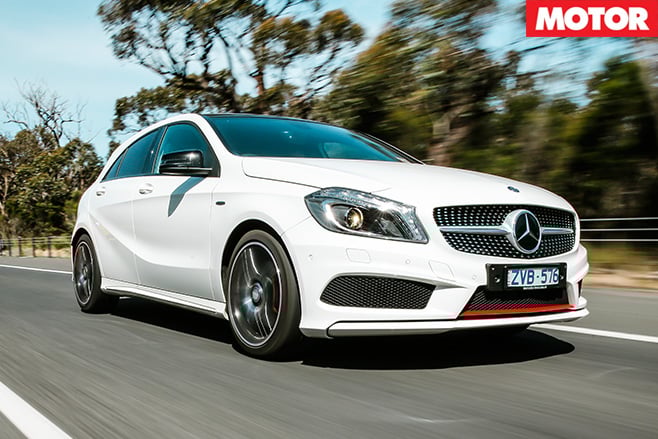
Case in point is the new Mercedes-Benz A-Class. Starting at $49,990, the A250 Sport could be seen as an expensive five-door hatch, but plenty of buyers are viewing it as a cheap way to park a three-pointed star in their driveway, as the baby Merc is flying out of dealers faster than it’s arriving on boats.
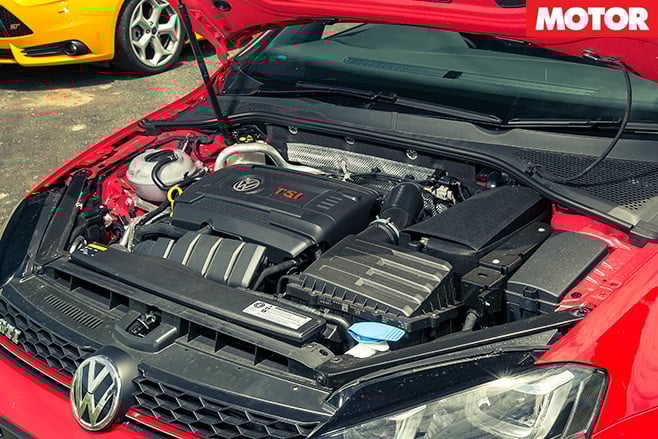
Step inside the new Golf, however, and you’d swear it cost much more. Material quality and fit and finish are excellent, the driving position is widely adjustable, and the level of standard kit – dual-zone climate, satnav, 5.8-inch touchscreen, leather multifunction wheel – might surprise those who can remember when the Germans thought it acceptable to charge extra for floormats.
Inside, the A-Class continues to impress. The driving position is good (though the brake pedal sits a lot higher than the accelerator) and the overall layout and design is impressively similar to models further up the Mercedes heirachy. Optional satnav and manually-adjustable seats feel a bit stingy in a $50K car, though.
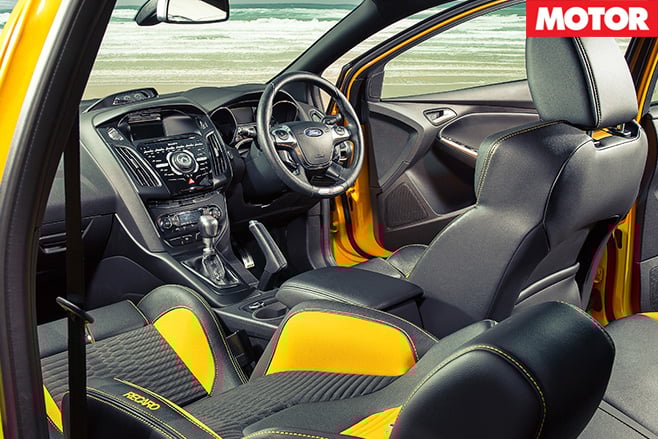
It’s well equipped, the Recaro seats hold you tight and the steering wheel’s size makes it a nice thing to hold. But then your elbow hits the seat bolster when changing gear because the lever sits too far back, the sat-nav screen is so small it’s like watching your telly from the front lawn, and the steering wheel layout means that simple tasks like adjusting the volume or cruise control speed requires taking a hand off the wheel.
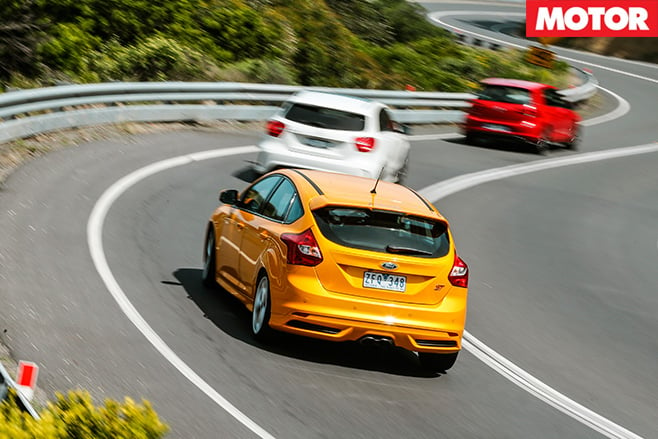
Thankfully, you won’t care about any of this when you’re thrashing the Focus to within an inch of its life, which you will do, often, because it’s brilliant. At first, its hyperactive responses are a bit unnerving, like a dog that’s been fed illicit substances – you want to play with it, if only it would settle down for a second.
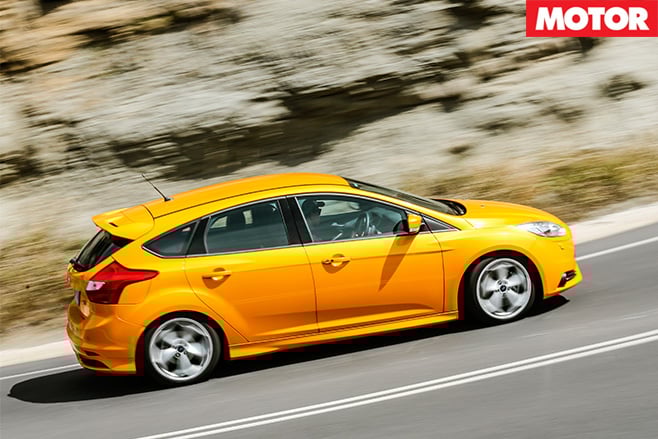
It’s slightly mad, though it can also play sensible. Driven more sedately, there’s plenty of grip and the ride strikes possibly the best compromise between body control and compliance.
It’s certainly better than the Mercedes, which is v-e-r-y firm. It’s not uncomfortable per se, but it reacts to bumps the others ignore and can get wearing on poor surfaces. Thankfully, the taut setup pays dividends in the bends. It’s hard to know what to expect from a Mercedes hot hatch, as it’s never built one before, but the way you can adjust the car’s attitude using throttle and brake proves the engineering team did its homework.
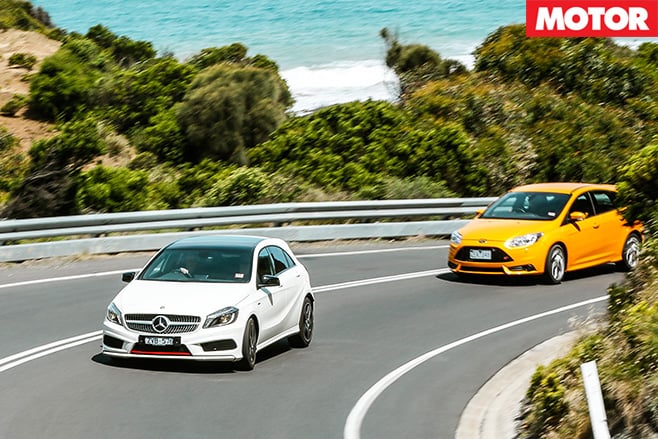
What’s not a highlight is the seven-speed dual-clutch gearbox, its refusal to accept downchange requests made more galling in comparison to the other cars’ slick six-speed manuals.
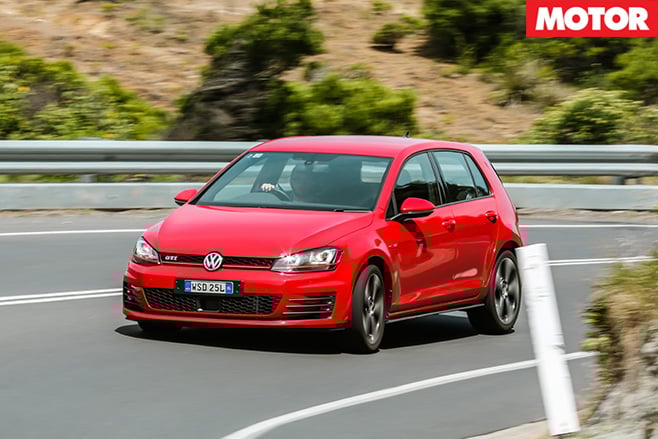
Unsurprisingly, the GTI strikes a balance between the two dynamically. Like the Focus, it has variable ratio steering – just 2.1 turns lock to lock compared to a normal Golf’s 2.75 – but VW’s system feels more natural and intuitive than Ford’s, while still making sure the driver never has to shuffle their hands on the wheel.
One of the biggest changes for the seventh-generation GTI is the adoption of adaptive dampers as standard – in Comfort or Normal modes, the GTI offers a level of ride comfort the others can only dream about, while being just as tied down in Sport. It doesn’t quite have the ultimate grip of the Focus, but the GTI is so easy and forgiving to drive fast, flowing effortlessly down the road.
Where the Golf does fall down is getting its power to the ground. Despite the XDL electronic diff lock, the GTI is too eager to waste time with wheelspin, particularly on slippery surfaces. This is no doubt thanks to the increase in torque for the new model.
With 184kW/360Nm from its 2.0-litre Ecoboost four, the Focus is similarly afflicted, with the steering wheel always keen for a wrestle when you put your right foot down. Ford engineers claimed that the torque compensation ability of the new electric steering meant that we wouldn’t miss the mechanical diff and trick front suspension of the Focus RS. They were wrong – we do – though in faster corners the ST’s front end does nail itself to the ground impressively well under power.
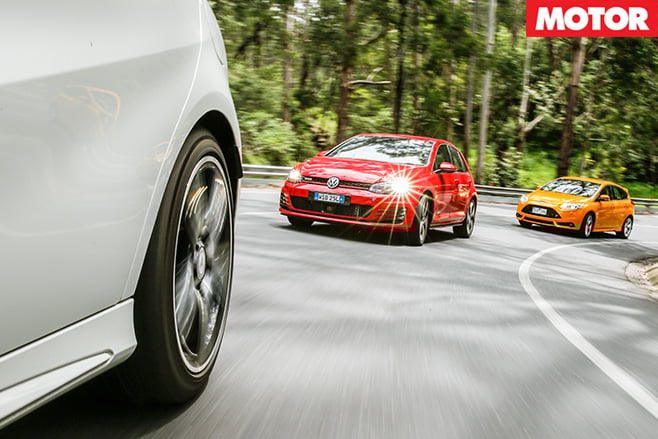
Tested on the same day, the Focus managed 7.24sec to 100km/h, a time which reflects the difficulty of launching it cleanly more than any lack of outright speed. The GTI, tested at PCOTY in DSG form, leaves the others trailing with 0-100km/h taking just 6.44sec.
Once rolling, however, the more powerful Ford blows the others away. At the end of the quarter the Focus is showing 160km/h compared to 157.6km/h for the GTI and just 152.3km/h for the A250. Overtaking acceleration is another clear win for the tangerine ST, taking just 3.29sec from 80-120km/h versus 3.8sec for the VW and 4.54sec for the Merc.
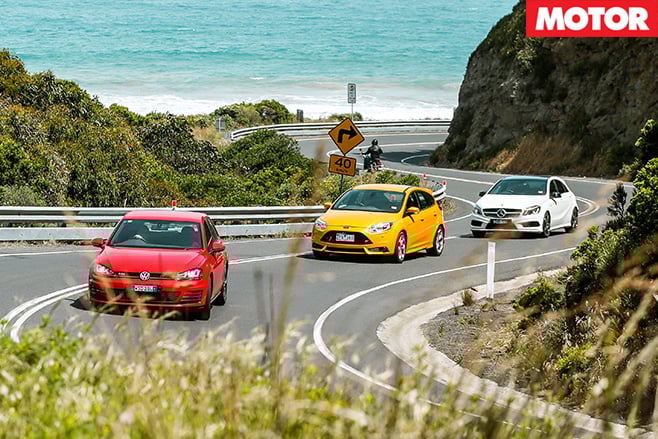
If this was a test purely about the way these cars drive at the limit, the Focus ST would probably win. It’s the only true drivers’ car here, a car that you could own for a year and still feel you’re yet to get the best from it.
But for everything that’s brilliant about it (chassis, engine performance, price), there’s something equally annoying (the torque steer, the interior layout, a turning circle the size of a bus), and these warts stick out like the pimples on a teenager’s face when you’re up against a car that has very few flaws.
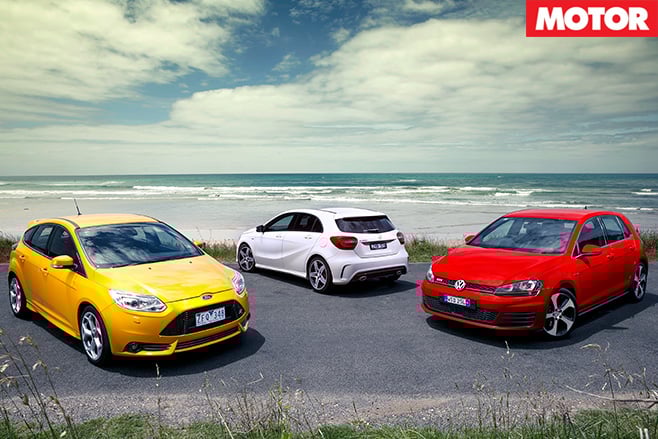
Some will criticise it for not being ‘aggro’ enough, but to make it more hardcore would be to lose part of what makes it such a great car. There may be others faster or more agile, but the GTI remains the car that best fulfils the hot hatch criteria.
Cockpit Comparison
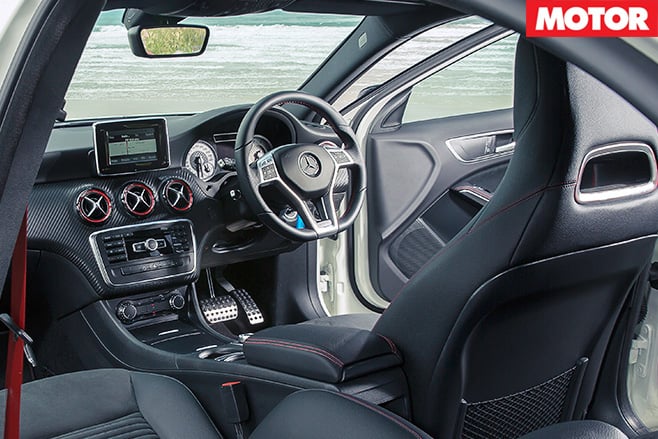
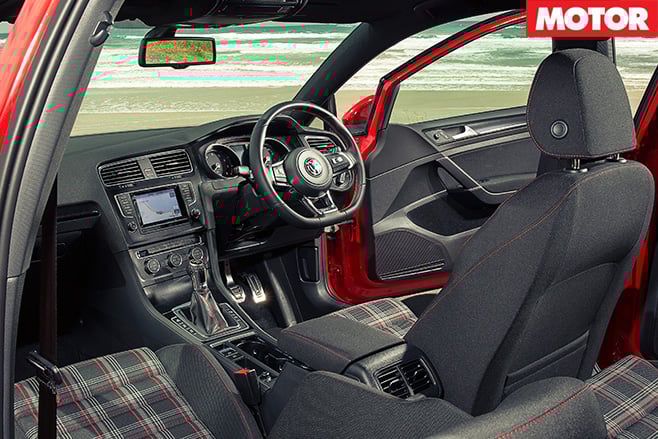
| u00a0 | u00a0 | Ford Focus ST | u00a0 | Merc A250 Sport | u00a0 | VW Golf GTI |
| u00a0 | u00a0 | 4 out of 5 | u00a0 | 3.5 out of 5 | u00a0 | 4 out of 5 |
| Body | u00a0 | 5-door, 5-seat hatch | u00a0 | 5-door, 5-seat hatch | u00a0 | 5-door, 5-seat hatch |
| Drive | u00a0 | front-wheel | u00a0 | front-wheel | u00a0 | front-wheel |
| Engine | u00a0 | 2000cc in-line 4, DOHC, 16v, turbo | u00a0 | 1991cc in-line 4, DOHC, 16v, turbo | u00a0 | 1984cc in-line 4, DOHC, 16v, turbo |
| Bore/ Stroke | u00a0 | 87.5 x 83.1mm | u00a0 | 83.0 x 92.0mm | u00a0 | 82.5 x 92.8mm |
| Compression | u00a0 | 9.3:1 | u00a0 | 9.8:1 | u00a0 | 9.6:1 |
| Power | u00a0 | 184kW @ 5500rpm | u00a0 | 155kW @ 5500rpm | u00a0 | 162kW @ 4500 – 6200rpm |
| Torque | u00a0 | 360Nm @ 2000-4500rpm | u00a0 | 350Nm @ 1200-4000rpm | u00a0 | 350Nm @ 1500 – 4400rpm |
| Redline/Cut | u00a0 | 6500/6800rpm | u00a0 | 6250/TBCrpm | u00a0 | 6000/6900rpm |
| Power-to-weight | u00a0 | 127kW/tonne | u00a0 | 113kW/tonne | u00a0 | 122kW/tonne |
| 0-100km/h | u00a0 | 7.24sec (tested) | u00a0 | 7.48sec (tested) | u00a0 | 6.44sec (tested) |
| Top Speed | u00a0 | 250km/h (claimed) | u00a0 | 240km/h (limited) | u00a0 | 250km/h (limited) |
| Consumption | u00a0 | 7.4L/100km (claimed) | u00a0 | 6.6L/100km (claimed) | u00a0 | 6.2L/100km (claimed) |
| Emissions | u00a0 | 172g/km (claimed) | u00a0 | 148g/km (claimed) | u00a0 | 153g/km (claimed) |
| Transmission | u00a0 | 6-speed manual | u00a0 | 7-speed dual-clutch | u00a0 | 6-speed manual |
| Weight | u00a0 | 1454kg | u00a0 | 1370kg | u00a0 | 1324kg |
| Suspension | u00a0 | A-arms, anti-roll bar (f); multi links, coil springs, anti-roll bar (r) | u00a0 | A-arms, anti-roll bar (f); multi links, coil springs, anti-roll bar (r) | u00a0 | A-arms, adaptive dampers, anti-roll bar (f); multi links, coil springs, adaptive dampers,u00a0anti-roll bar (r) |
| L/W/H | u00a0 | 4362/1823/1484mm | u00a0 | 4355/1780/1430mm | u00a0 | 4349/1799/1491mm |
| Wheelbase | u00a0 | 2648mm | u00a0 | 2699mm | u00a0 | 2620mm |
| Tracks | u00a0 | 1554/1544mm (f/r) | u00a0 | 1542/1541mm (f/r) | u00a0 | 1538/1516mm (f/r) |
| Steering | u00a0 | electrically-assisted rack and pinion | u00a0 | electrically-assisted rack and pinion | u00a0 | electrically-assisted rack and pinion |
| Lock-to-lock | u00a0 | 1.8 turns | u00a0 | 2.7 turns | u00a0 | 2.1 turns |
| Brakes | u00a0 | 320mm ventilated discs, 4-piston calipers (f); 271mm discs, single-piston calipers (r) | u00a0 | 320mm ventilated discs, 4-piston calipers (f); 271mm discs, single-piston calipers (r) | u00a0 | 312mm ventilated discs, 4-piston calipers (f); 300mm discs, single-piston calipers (r), |
| Wheels | u00a0 | 18 x 8.0-inch (f/r) | u00a0 | 18 x 8.0-inch (f/r) | u00a0 | 18 x 7.5-inch (f/r) |
| Tyres | u00a0 | 235/40 R18 Bridgestone Potenza S001 (f/r) | u00a0 | 235/40 R18 Bridgestone Potenza S001 (f/r)u00a0 | u00a0 | 225/40 R18 Bridgestone Potenza S001 (f/r) |
| Price | u00a0 | $38,290 | u00a0 | $50,400 | u00a0 | $41,490 |
| Price as tested | u00a0 | $38,290 | u00a0 | $51,590* *Becker satellite navigation ($1190) | u00a0 | $44,940* Bi-xenon headlightsu00a0with LED DRLs ($2150); Driver Assistance Package ($1300) |
| Positives | u00a0 | Riotous handling; fastest of the trio; value equationu00a0 | u00a0 | Exterior design; handling ability; quality interior | u00a0 | Refinement and ride; interior quality; engine flexibility |
| Negatives | u00a0 | Ergonomic issues; ridiculous turning circle; u2018fakeu2019 engine note | u00a0 | Firm ride;u00a0not that quick; expensive compared to the others | u00a0 | Traction difficulties; canu2019t switch ESP off; lacks a bit of soul |
V8 SUPERCARS: Whincup storms to Pukekohe success
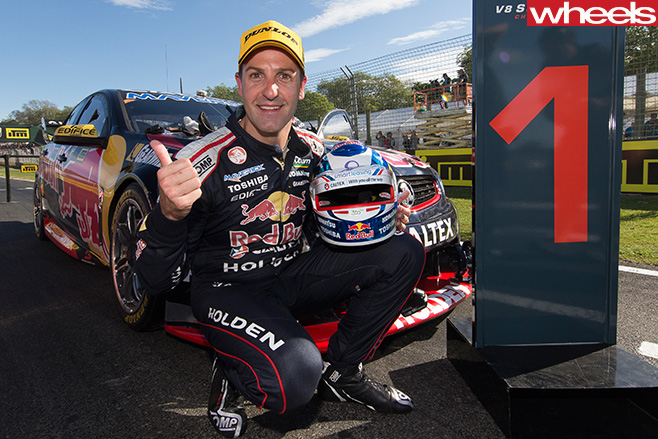
SIX-TIME Champion Jamie Whincup and the Red Bull Commodore team rediscovered the formula to success at the ITM 500 Auckland at Pukekohe Raceway at the weekend, bagging two wins from three races and claiming the Jason Richards Memorial Trophy.
“For me, it’s all about the JR Trophy,” an emotional Whincup said. “We were teammates. We were good mates…first podium, first Bathurst podium.
“I haven’t won much this year, but it’s a good year knowing the JR Trophy is in the cabinet.”
Championship leader Mark Winterbottom was seventh.
Man of the race was Garth Tander, who charged from 17th to 10th. But HRT’s lack of consistency continues to hurt the drivers, especially in qualifying.
Later on Saturday in race two came the huge shunt that may be remembered as the moment Lowndes’ 2015 championship campaign went south.
Leading midway through, Lowndes’ left rear exploded at close to 250km/h, ripping apart some bodywork and pitching the Commodore hard into a wall.
The victory went to Prodrive Ford’s Reynolds after he emphatically repelled a bold move for the lead by renaissance man Whincup.
Whether Lowndes’ collected some debris, or damaged the tyre on kerbing was difficult to determine. The team said later that the Dunlop had full pressure right to the moment it failed.
While Lowndes’ car was miraculously brought back to peak health overnight, V8 Supercars Australia consulted with the teams on possible reasons for the tyre failure and agreed on tyre camber and pressure recommendations for Sunday’s race. It was also decided all cars would start on soft tyres (both soft and hard compounds would be used).
The 69 lapper began with fury and chaos. Whincup blasted to the lead in front of McLaughlin with Reynolds in the picture again, along with Scott Pye in the DJR Team Penske Ford. On lap three, the essential badness that is pack racing brought the championship leader into trouble, nudged into a spin by a HRT car.
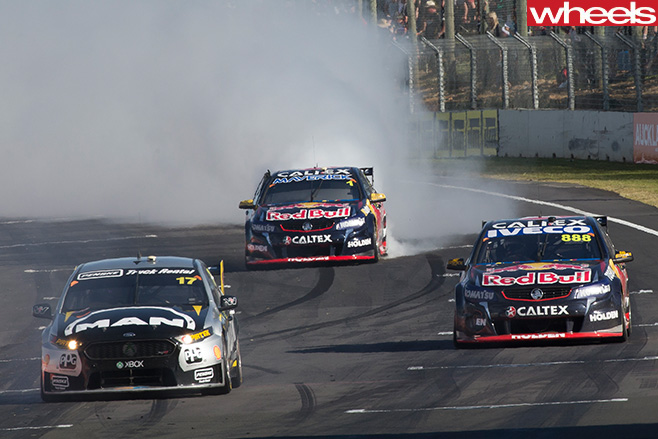
A safety car on lap eight brought the herd into the pits for tyres and varying amounts of fuel. At the restart, the championship battle was this: Reynolds in second position behind J-Dub; Lowndes ninth; and Frosty up to 18th but mired in panel-bending Wallyworld.
When the field shook out after the second round of stops, the order was Whincup, Lowndes, Pye, and Reynolds, while Winterbottom popped out in 17th with much to do. Frosty went hard on a recovery mission, scrambling up to 11th at the chequer.
“That was bad to be going backwards and facing the wrong way,” said Winterbottom. “We had pretty good pace and just pushed on when we got back facing the right way.
“We consolidated what could’ve been a disaster. The car was good; probably the best it’s been all weekend and we didn’t get to use it. It was a good result, and whether it’s Dave or Craig, we are maintaining the [championship points] gap.”
Revelling in genuine car speed, Whincup led home Lowndes in a splendid Red Bull one-two rebound. “We had a great day,” Lowndes said. “It was well deserved for the boys after all their hard work last night.
“They pulled an all-nighter, to not only take the car apart, but get it fixed and put it back together, it’s a real credit to them. The car was great.”
A career-best third went to Pye and the improving DJR Team Penske operation.
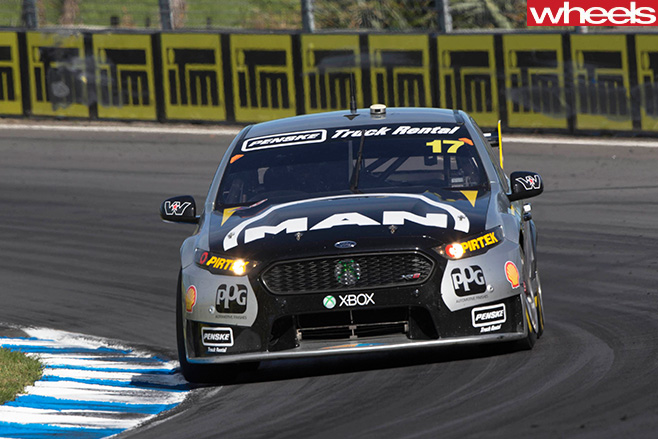
The steady Reynolds followed in fourth, holding off a persistent and speedy Michael Caruso in the Nissan. Pole man McLaughlin was sixth.
Frosty’s margin over his pursuers is a still handy 239 points (down from 258 at the start of the weekend) with Reynolds, in second, one point ahead of Lowndes. Bring on Phillip Island and Homebush.
MOTOGP: Lorenzo seals title in Spanish shemozzle
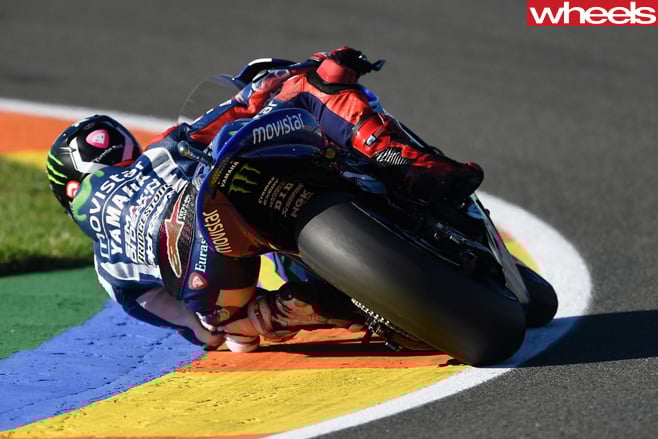
But officials certainly had a conclusive point of view, and the megastar’s bold title tilt in 2015 probably foundered when on November 4 he lost his appeal against the sanction handed down by the FIM stewards.
The penalty – which meant Rossi had to start the championship decider at Valencia from the rear of the grid – came for the Italian making contact with Marquez and forcing him to run wide while the two were battling for third at Sepang.
Marquez and his Repsol Honda team accused Rossi of kicking the Spaniard during the exchange. Rossi denied the claim and insisted Marquez was siding with countryman Jorge Lorenzo in the tight duel for the world championship.
The Court of Arbitration for Sport in Switzerland agreed with the officials and upheld the penalty against Rossi.
Lorenzo turned on blinding pace in Valencia qualifying, taking pole from Marquez and Dani Pedrosa while Rossi, ignominiously, fell off.
After that, Lorenzo looked a shoo-in to blow away Rossi’s seven-point advantage
The final race certainly didn’t live up to what, until Valencia, had been a wonderful season.
Lorenzo won the clincher to seal his third MotoGP world championship. Rossi was fourth. His hopes of taking a 10th career Moto/500cc crown relied on the two Repsol Hondas getting past Lorenzo. Defending champion Marquez, and Pedrosa finished second and third. Rossi angrily accused them of assisting Lorenzo by not pushing him hard.
“I did what I could but it was a strange situation having Marquez as the bodyguard of Lorenzo. It is embarrassing for the sport,” Rossi said later.
“Hopefully the sport’s authorities will be able to sort it out. It is an ugly end to what has been an attractive championship. It has not been a true championship and this should not happen in sport.”
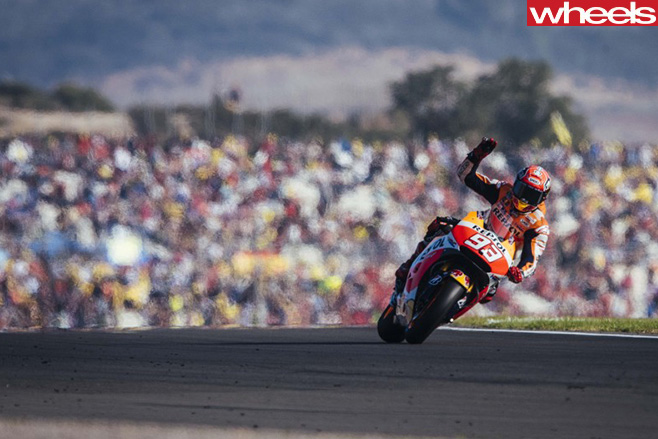
Lorenzo, the champion by five points and the first Spanish rider to win the premier-class world title on three occasions, conceded that it was normal that his countrymen would rather see him win.
“The fact that they knew what I was going for and that they are Spanish has helped me and in another race they may have tried everything to overtake,” he said.
“Dani did well because he could have tried a crazy overtake. We are Spanish and the title remains in Spain. If it had been in Italy and with two Italians behind Rossi then it would have been the same.”
V8 SUPERCARS: Daffy lands at Erebus, Moffat at Volvo
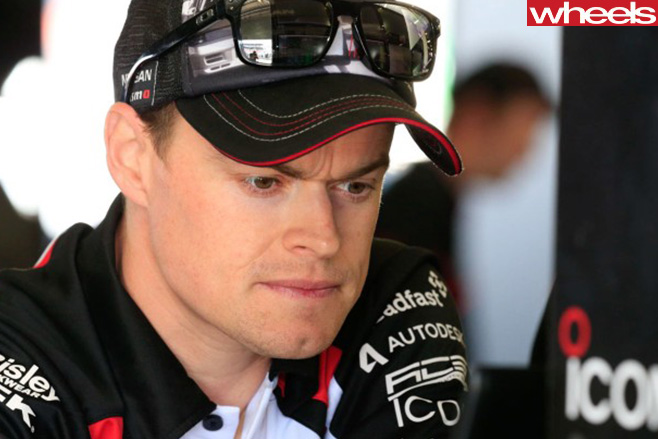
With no slot for him on the Prodrive Ford roster next year – a situation that raised plenty of eyebrows given his competiveness in this year’s championship – Reynolds even faced the possibility of missing out on a ride next season.
The promising Cam Waters is set to take over Reynolds’ Prodrive Falcon next year, with all other prime drives elsewhere taken.
After four seasons with Prodrive, 30-year-old Reynolds will take the seat vacated by the Tekno-bound Will Davison. It’s the latest in a series of team-hopping transfers started months ago when Shane van Gisbergen announced a jump from Tekno to an expanded Triple Eight outfit.
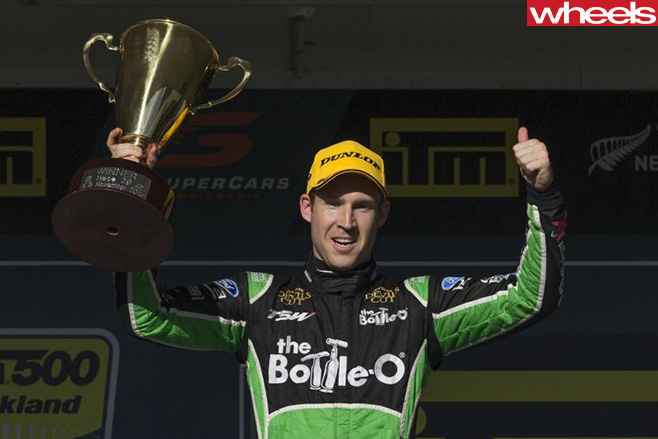
Daffy Reynolds doesn’t lack pace. He should be an asset to Erebus, a team that like Reynolds is hardly conventional. There has also been chat that Erebus might have another Davison – Alex – under consideration next year.
James Moffat, meanwhile, has struck a deal to join GRM Volvo next year in place of another second-generation driver, the departing David Wall. Nissan has indicated that Moffat’s departure from the Kelly gang’s operation doesn’t suggest the team will shrink from four cars next year.
F1: Male bastion as Susie Wolff walks away
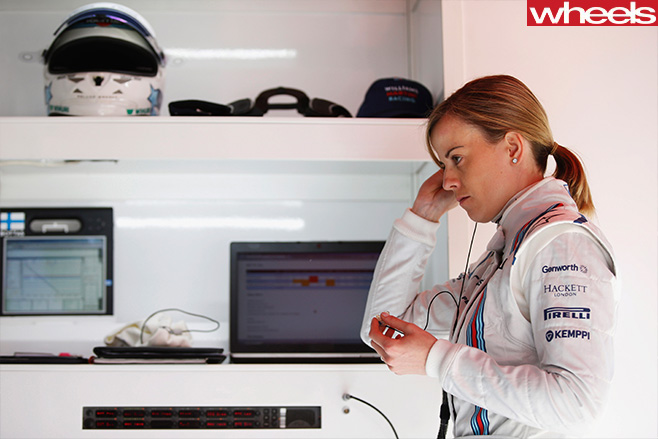
She generated plenty of publicity and some expectations when she joined Williams in 2012. But the closest Wolff got to the F1 grid was driving in four Friday practice sessions, where she was competent yet ultimately not fast enough to join an exclusive club.
The last woman to race in F1 was Lella Lombardi in the 1970s.
Wolff attracted attention with good results in lesser formulae including the British Formula Renault series and the DTM, but F1 proved just too high a hurdle.
She had to wear suggestions that her place in the sport was largely due to her connections – she is married to Mercedes F1 boss Toto Wolff, also a Williams shareholder.
Wolff was passed over in March when Williams drafted Adrian Sutil as a reserve for Valtteri Bottas, who at the time was in doubt with a bad back. It was after that call that Wolff probably realised she was never going to race an F1 car.
“I’d like to thank Williams for the opportunity they have given me over the last few years which has allowed me to achieve my dream of driving a Formula 1 car,” Wolff said, still a believer than a female is cable of performing with distinction at the highest level.
“I am now closing this chapter but looking forward to new challenges in the future.”
She will make her final competitive start in the Race of Champions later this month.
V8 SUPERCARS: Aggrieved Ross Stone targets McLaughlin
A CLEARLY unhappy former co-owner of Stone Brothers Racing, Ross Stone, has taken to Twitter to air his grievance with SBR’s former Development Series driver and current V8 Supercars star, Scott McLaughlin.
Last Friday, on the eve of McLaughlin’s home race in Pukekohe, @RossStone22 unloaded on his fellow Kiwi in a series of tweets which collectively read: “In 2012 Stone Brothers Racing in conjunction with Scott McLaughlin Racing Pty Ltd won the Development Series. Everyone was very happy in victory and I was told I was like a father to Scott. However money is still owing by Scott McLaughlin Racing Pty Ltd to Stone Brothers Racing. We have been pursuing this money through the courts over the last 3 years. We have now been notified that Scott McLaughlin Racing Pty Ltd is insolvent and a month or so ago had a liquidator appointed. A sad end to what began with a promising start.”
If McLaughlin was unsettled by Stone’s claims, there was no sign of it in his on-track performances. He nailed a pole position each day, and finished with a ninth, third and sixth over the three races.
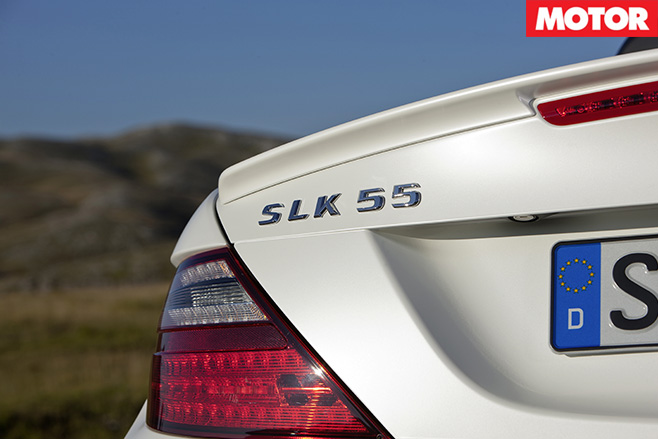
AMG’s V8-powered SLK55 roadster is to be axed, replaced by a 3.0-litre twin-turbo version set to be unveiled at January’s Detroit Motor Show.
It’s another blow for fans of the atmo bent-eight, following the likes of the BMW M3/M4 and Audi’s RS4 in abandoning cubic capacity for a forced-induction six-cylinder.
The SLK55 is the only Mercedes to use a naturally-aspirated version of AMG’s M157 5.5-litre V8 and the small sales volumes do not justify continued production.
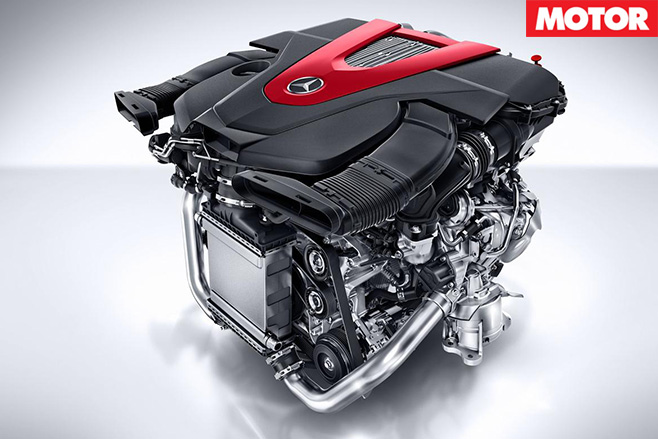
It will be powered by a high-output version of the 3.0-litre bi-turbo V6 currently found in the recently released Mercedes-AMG GLE450 Sport and soon-to-arrive C450 Sport.
While it won’t quite match the SLK55’s 310kW, it would be unlike AMG to step too far backwards, so expect around 300kW/550Nm with a soundtrack and driving dynamics to match.
Can the turbocharged, top-spec Hyundai Tucson Highlander run with the best of the medium SUV bunch, when each is in its most powerful form?
Can’t wait to see the final scores? Jump to the verdict now.
THERE’S plenty of irony in Hyundai choosing to revive the Tucson nameplate for its new-generation medium-size ‘soft-roader’. While the exhumed title is Apple Pie to the core, and Tucson’s interior has a Californian twang courtesy of Hyundai’s Irvine design studio, the remaining collaborators read like a semi-final for Eurovision.
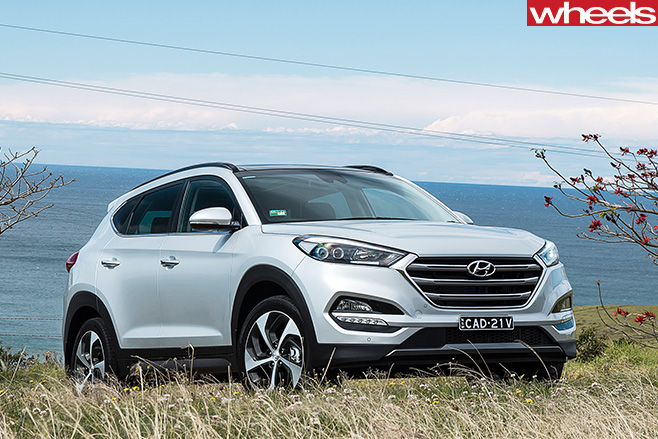
One-time Audi stylist and purveyor of Kia’s recent design savvy, Peter Schreyer, has lent his German aesthetic to the exterior, while Hyundai’s Czech factory handles the nuts and bolts (unless you’re buying an Active X variant, in which case your Tucson still hails from South Korea). But Australia lent a hand as well. Recognising that fun-to-drive DNA should be part of Hyundai’s brand character, this distinctive new locally tuned SUV delivers the dynamic entertainment to bolster its sharp-looking new suit.
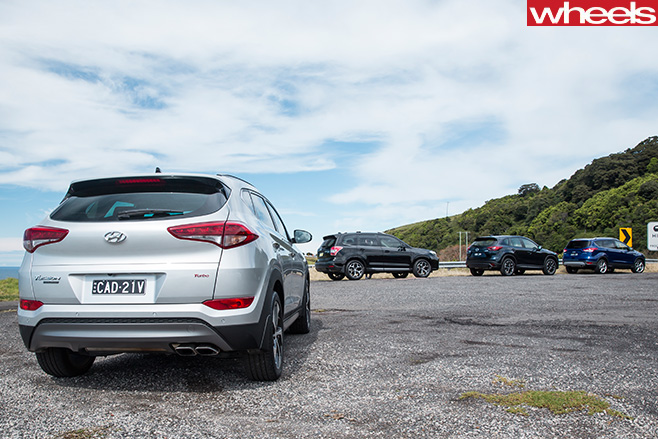
Three turbos, one biggie
Given Hyundai’s ‘driver’s car’ claims, we headed straight for the petrolhead variants. Tucson’s sporting polish gleams brightest in range-topping Highlander AWD spec, packing a detuned version of the Veloster coupe’s 1.6-litre direct-injection turbo four, tied to a seven-speed dual-clutch transmission. Hyundai asks $43,490 for the privilege, placing the top Tucson eye-to-eye with the Mazda CX-5 Grand Touring ($43,390), Ford Kuga Titanium ($44,990) and Subaru Forester XT Premium ($47,990).
In comparison, Mazda’s freshened CX-5 looks proudly Japanese. No matter where you look, its new-for-2015 details – grille, lights and wheels, as well as a much prettier dashboard – have enhanced its visuals considerably, in contrast to the dead-ringer appearance of the MY15 Forester. If only Subaru invested some time adding techy sparkle to the boxy Forester’s dated headlights, and less chintz to its dorky grille, people may want to buy it simply for the way it looks.
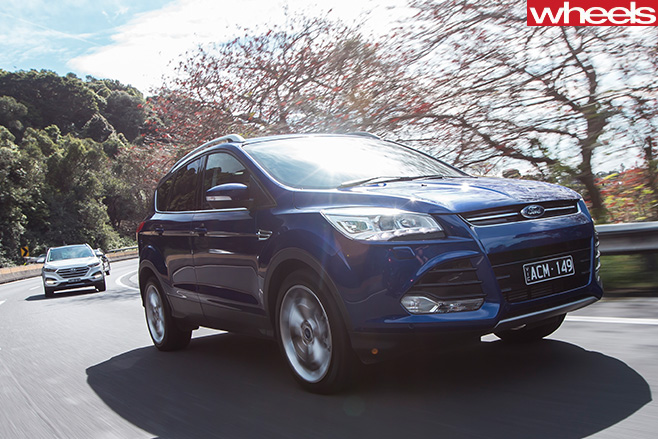
But looks can be deceptive. Beneath the Kuga’s creased bonnet resides one of Ford’s best engines. Packing a solid 178kW, backed by 345Nm from 2000-4500rpm, the 2.0-litre turbo-petrol four is a vast improvement over the underwhelming 1.6 turbo still fitted to the base Ambiente, and its sweetly throaty induction growl is the perfect accompaniment for the Kuga’s hot-hatch-like performance.
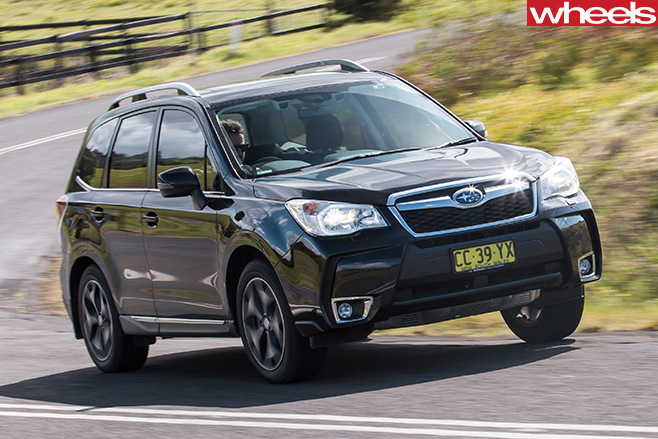
Still, the spritely Kuga can’t quite match the deceptively brisk Forester XT. While 2015’s CVT-equipped generation isn’t quite as rapid as lighter models of yesteryear, the turbo Forrie’s seven-dead to 100km/h isn’t hanging about. And it gets there with impressive smoothness, its tacho needle rigid at 5800rpm as it surges ahead with just a faint hint of horizontally opposed character from its 177kW/350Nm 2.0-litre flat-four.
Sweet and addictive
Interestingly, Subaru’s steering wheel-mounted ‘SI-Drive’ system – with Intelligent, Sport and Sport# modes – has never worked as well as it does in the Forester XT. Finally, eco-minded Intelligent has enough turbo-boosted torque to work with, backed by Subaru’s excellent ‘Lineartronic’ CVT transmission, to make it a viable option for general driving. Sport perks up throttle response and adds meat to the steering weight, while Sport# introduces eight artificially inserted steps into the ratio set and combines neatly with the XT’s wheel-mounted paddles to provide engine braking in corners. But Forester accelerates quicker in regular CVT mode.
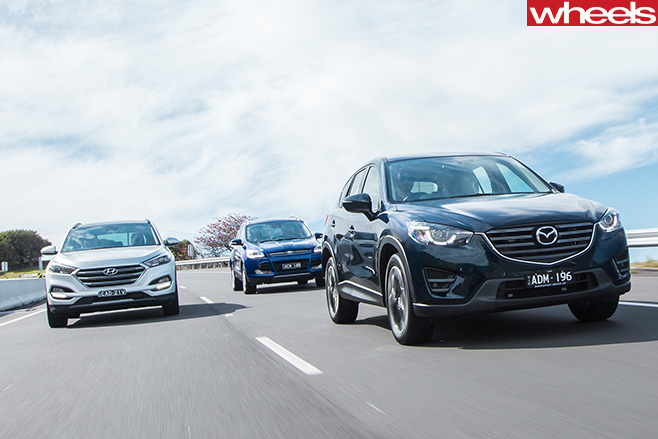
Thanks to the strength of the competition, the turbo Tucson has its work cut out, even running an up-to-date drivetrain. Tipping the scales at a solid 1690kg (64kg more than the CX-5) and with only 130kW against the 2.5-litre Mazda’s 138kW, the Hyundai relies on its seven tight ratios, rapid dual-clutch upshifts and the breadth of its torque – 265Nm from 1500-4500rpm – to marginally outpace the eager Mazda. But in its upper reaches, the Tucson’s engine starts to sound a bit strained, which is at odds with its slick around-town demeanour.
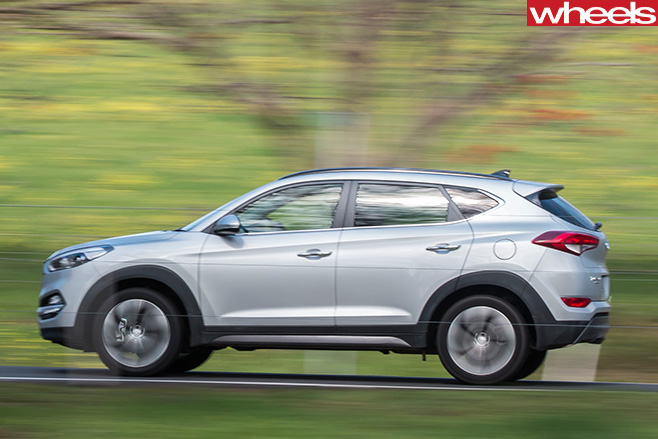
There’s agility, and then there’s finesse
Same goes for its dynamics. Hyundai Oz worked hard at achieving both ride and handling excellence with the Tucson and for the most part they’ve succeeded.
With the console-mounted Drive Mode button switched to Sport, which improves the consistency of its steering weighting considerably while perking up the transmission’s shift mapping, the Tucson is unexpected fun to drive. Its chassis has an innate sense of poise, with the ability to interact via its rear-end to adjust its angle of cornering attack. Yet, thanks to the trustworthiness of its connection with the road, and the marvellous grip from its Continental rubber, you can really throw the Tucson around, without ESC trying to hobble your fun. It has great turn-in, too, and a pleasingly thin-rimmed steering wheel clad in quality leather.
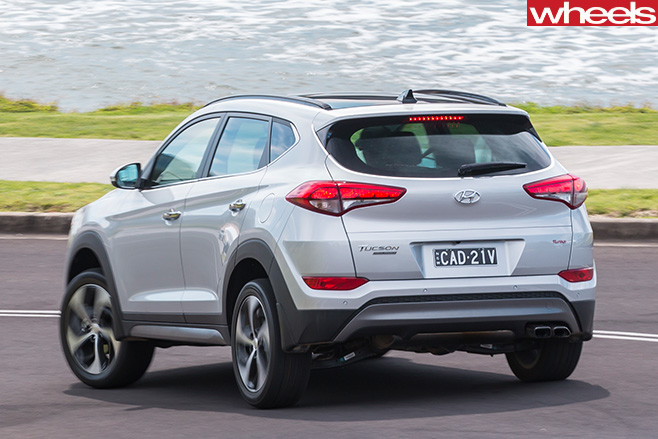
Then there’s Tucson’s engine, which tries hard but lacks inspiration, and its transmission, which won’t downshift early enough when calling for engine braking into a corner. And its brakes, which performed a pair of brilliant 34.9m stops from 100km/h at the strip but became quite whiffy during our back-to-back runs.
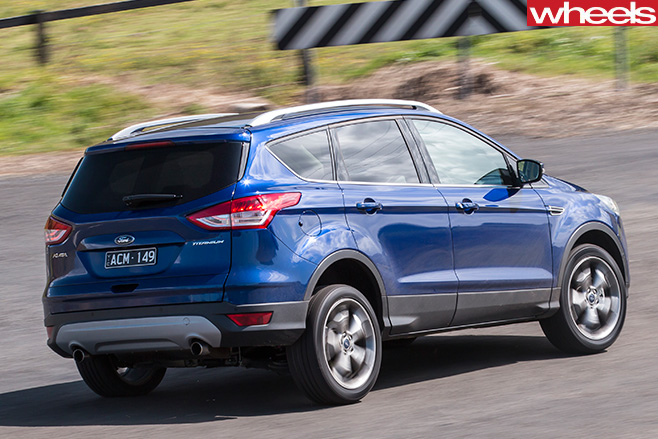
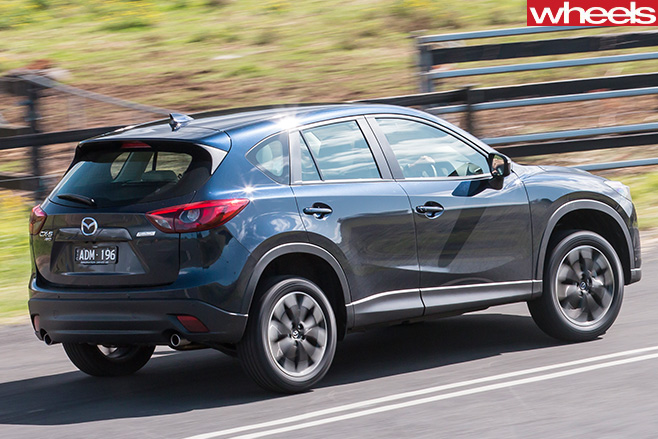
Backed by a super-responsive drivetrain, if you set up the CX-5 by rolling some weight onto its back end, she’s as agile as the best of them, with a surprising amount of oversteer allowed by the ESC before it nibbles at the edges. The CX-5’s retuned electric steering is a lot more consistent in its weighting than it used to be, and its 225/55R19 Toyos grip pretty well, though they produce a lot more tyre squeal than the excellent Continentals worn by the Hyundai and Ford.
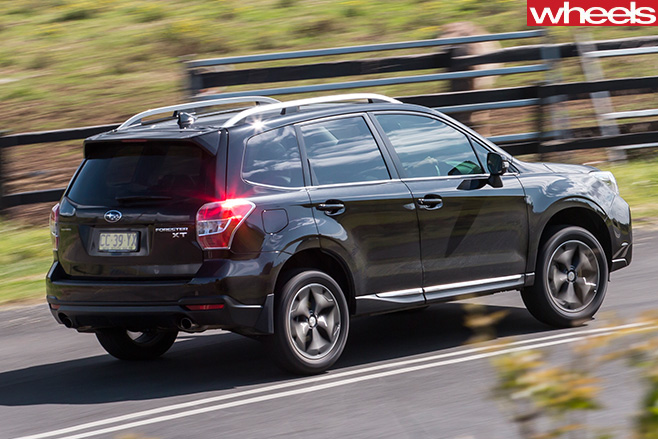
The more deftly you drive the Forester, and the greater your commitment, the stronger its ability. It has tremendous drive out of corners and, while it rolls a fair bit, it’s a hoot to play around with. Pity you drive on what its chassis says, though, and not its steering. Even in weightier Sport or Sport# mode, the Forester’s tiller lacks the crispness of its rivals, Tucson included.
Bump or body control?
But when the going gets tough, boy does it ride. Over our punishing four-up section, the Forester made a mockery of all surfaces, blotting bumps while remaining level and smooth, backed by decent refinement, as well as nuanced and keen handling. Add outstanding vision and a great drivetrain and the whole exercise seemed like a walk in the park.
For body control and all-round confidence, the Kuga shines, though it doesn’t gift its passengers with the same level of suppleness the Forester does. It’s the Hyundai that comes closest to matching the Subaru’s comfort, and in low-speed situations on better roads, it’s actually the better of the two. But it transmits more road noise than the Ford on the same tyres.
The firmer Mazda also has better body control than the Hyundai, but unlike the Euro Ford, it can’t match the supple nuance of the Korean’s Aussie-tuned chassis. The CX-5 can feel a bit stiff-legged over sharp bumps and, in contrast to the Tucson and Kuga, fails to give the impression of a completely happy union between its pretty 19s and its suspension tune. Seated up front, its Toyos are quieter than the Tucson’s Contis, but nothing can out-hush the Forester.
An ace on the inside
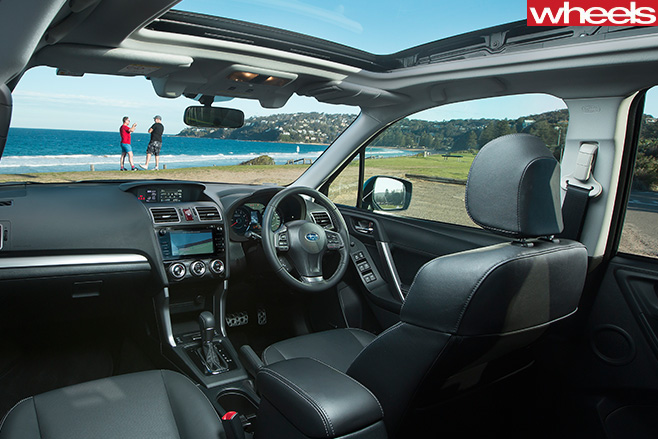
The Subey doesn’t have the greatest seats in the world, either, particularly for lateral support, but on a long trip its comfort, and the incredibly airy feel of its low window line and deep windscreen, are a blessing. We also love the Forester’s new multimedia set-up, and its Harman Kardon stereo is a bass-cranking beauty.
So, which has the edge overall?
Yet there’s something deeply compelling about the XT Premium’s pragmatism. And beneath its practical sense is a fast, refined, roomy, entertaining SUV with enough runs on the board to guarantee near-faultless operation and strong resale, despite its $48K ask. We’d fit better tyres, but the Forester is an SUV that will keep on giving if you don’t mind the look.
The Tucson may not have the Subaru’s badge cred, or its ultimate composure, but for 98 percent of the time this handsome slice of German-inspired SUV is about as far from its American naming roots as possible. It’s nicely built, cleverly packaged, comfortable, practical, and fun to drive, with the polish its ix35 predecessor lacked. But is it better than the CX-5 and Kuga?
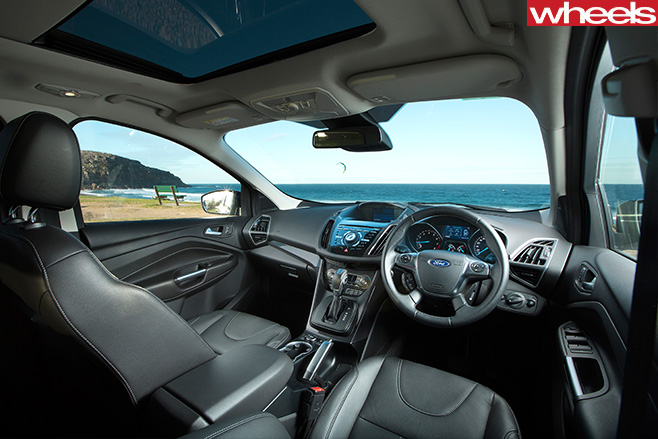
As an all-rounder, yes. The Kuga is a great driver’s SUV, albeit a relatively thirsty one, and pampers its front-seat occupants. But it lacks the thoroughness of the Tucson’s packaging, even though the Ford makes up for a lot with its superb steering and throaty engine.
Its Hiroshima rival is more stylish, more tactile and much more efficient, yet the CX-5 doesn’t quite reach the level of comfort, practicality and driving enjoyment of the Subaru and Hyundai either. Yes, it can be an engaging drive, and it’s definitely a better car than it was last year, but in a fight as tight as this, its few flaws push it down the podium.
So, Hyundai goes from nowhere to a near-match with the Forester. The Koreans might have taken a while to see what it takes to make a really good car, but in AWD 1.6T Highlander guise, the Tucson certainly has it.
Inside: Ford Kuga Titanium Ecoboost
SOME testers disliked the Kuga’s bulky dashboard so much, it would be a deal-breaker, though an update incorporating Ford’s new-gen SYNC2 multimedia screen is on the way. Thick pillars with curved bases restrict vision a little, but steering wheel, seats and driving position are beyond reproach. Manual front passenger seat gets crank-handle height adjustment and side bolsters that dial in and out.
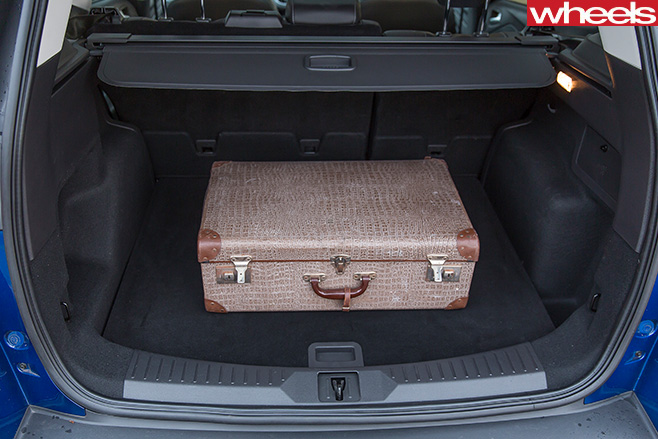
Inside: Hyundai Tucson Highlander
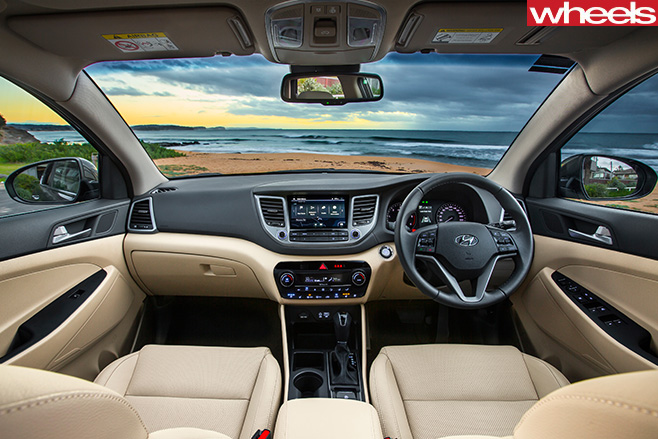
TUCSON’S cabin is clear but characterless. Needs the two-tone trim option (pictured) to overcome its drab plastics, many of which appear scratch-prone. But its upholstery is good quality and its seat comfort is excellent, front and rear. This group’s largest sunroof combines with an airy cabin to make Tucson feel luxuriously roomy. But its centre touchscreen can be confusing and audio quality is average.
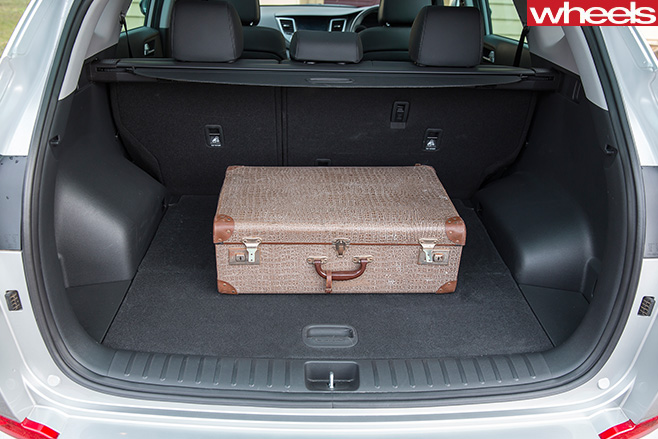
Inside: Mazda CX-5 Grand Touring
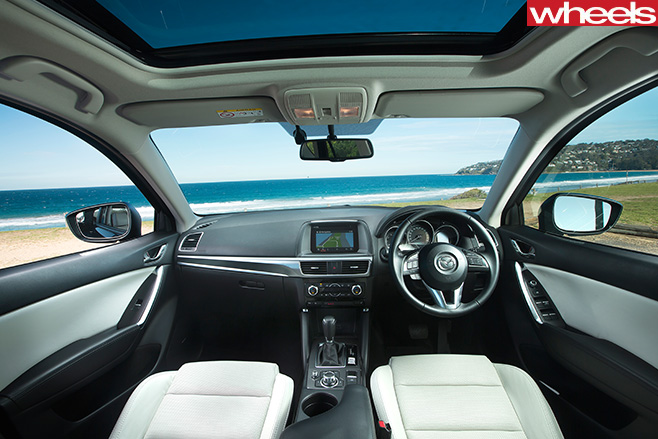
Facelifted CX-5 cabin has been transformed from slightly disappointing to class best. Mazda kept the good bits – classy dials, superb steering wheel, quality switchgear – and revamped the centre console, adding its own MZD Connect sat-nav system. No rival can match CX-5’s finish and trim quality, though its seats don’t quite achieve true comfort, and its rear section is a little austere, lacking air vents.
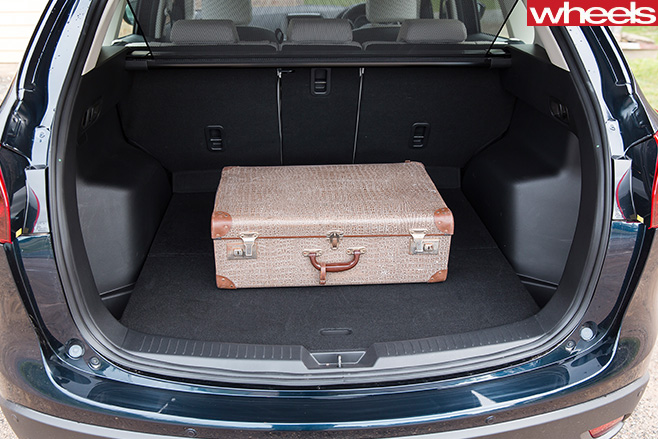
Inside: Subaru Forester XT Premium
IT’S unfortunate Subaru doesn’t devote as much attention to finessing the finer details like Mazda does – cue plasticky power window switches and the budget plastic panel they’re mounted on – but that takes nothing away from Forester’s all-round ability. It might not be the prettiest bauble on the tree, but it’s certainly near the top, with brilliant vision, a superb multimedia interface and outstanding audio quality.
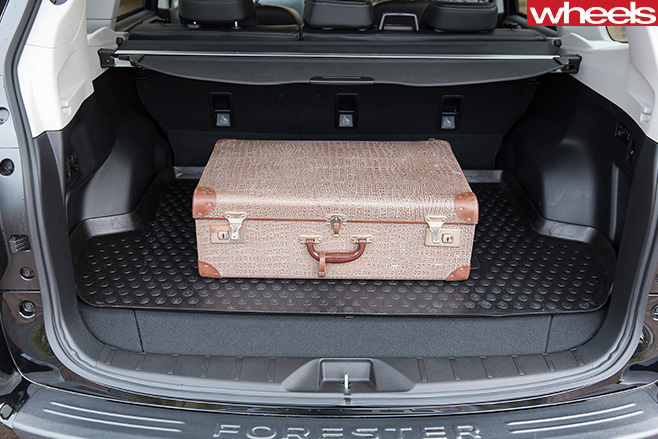
Changing shifts
HAVING a faux-manual mode in an SUV might seem like gimmickry, but you can’t discount the benefits for engine braking. And when your SUV has a sports flavour, a bit of manual action is a nice thing to have.
Despite a lack of steering-wheel paddles, the CX-5’s set-up is the most driver-oriented. Its tip-shift gate works in our favoured style – forward for a downshift, back for an upshift – and it will hold a manually selected gear at redline. It also has an intuitive ‘Sport’ mode that’s so good at pre-empting your driving mood the tip-shift gate is often unnecessary.
The Forester is the only car here to score flappy paddles, though its eight-ratio stepped CVT never feels or sounds as satisfying as an auto with specific gears.
The Kuga’s six-speed auto matches revs on downshifts and mates well with the engine’s muscle, but its Sport mode is little different to regular Drive and its tip-shift (on the side of the gearlever) is awkward and infuriatingly rubbish to use.
The Tucson has a traditional +/– gate next to Drive, but it works in reverse to the Mazda. It also upshifts at redline and won’t downshift early enough when prodded. Its Sport mode is disguised in a ‘Drive Mode’ button near the shift lever that also tweaks steering weight and throttle response, and perks up the dual-clutcher’s shift mapping.
Equipment levels
PAYING $43.5K for the Tucson Highlander buys lots of stuff. It gets a full suite of safety electronics (AEB, lane-keeping and lane-change assist, blind-spot monitoring, rear cross-traffic alert, trailer stability assist and active cruise), as well as leather trim, heated/cooled front seats (10-way electric for driver, 8-way for passenger), keyless entry/start, a huge glass sunroof, and LED lights at both ends (directional at the front).
About the only areas the $4500-dearer Forester XT Premium upstages the Tucson are its wheel paddles and its far superior eight-speaker Harman Kardon stereo. Otherwise, it wears smaller wheels and has a rear camera but no sensors.
The $45K Kuga Titanium gets active park assist and a hands-free power tailgate, but no electric front passenger seat or autonomous electronic safety tech (it’s a $1600 extra, including tyre pressure monitors).
The CX-5 GT saves $100 over the Tucson, but asks more for auto-brake tech and blind-spot monitoring, and doesn’t offer forward collision warning, lane-departure assistance or LED headlights. Small sunroof, too.
Verdict
HYUNDAI TUCSON HIGHLANDER
Price as tested: $44,085 *Includes metallic paint ($595)
NCAP rating: not tested
Fuel economy: 10.9L/100km (test average)
Acceleration: 0-100km/h: 8.1sec (tested)
Plus: Strong and handsome; entertaining chassis; quality seating; ample room
Minus: Uninspiring engine; plain cabin design; short service intervals
Verdict: 8.0/10
SUBARU FORESTER XT
Price as tested: $47,990
NCAP rating: 5 stars (Aus)
Fuel economy: 11.4L/100km (test average)
Acceleration: 0-100km/h: 7.0sec (tested)
Plus: Performance and smoothness; four-up ride; adjustable handling; superb vision
Minus: Utilitarian appearance, outside and in; all-terrain tyres
Verdict: 8.0/10
FORD KUGA TITANIUM
Price as tested: $46,975 *Includes Technology Pack ($1600) and premium paint ($385)
NCAP rating: 5 stars (Aus)
Fuel economy: 12.9L/100km (test average)
Acceleration: 0-100km/h: 7.4sec (tested)
Plus: Handling, steering and body control; excellent front seats; sporty engine
Minus: Packaging niggles; relative thirst; gearshift mechanism; bulky dash
Verdict: 7.5/10
MAZDA CX-5 GT
Price as tested: $43,538 *Includes floor mats ($148)
NCAP rating: 5 stars (Aus)
Fuel economy: 10.2L/100km (test average)
Acceleration: 0-100km/h: 8.4sec (tested)
Plus: Slick and efficient; class-best quality and resale; styling presence; gearbox
Minus: Only comes alive when driven hard; firm seats; no rear vents
Verdict: 7.5/10
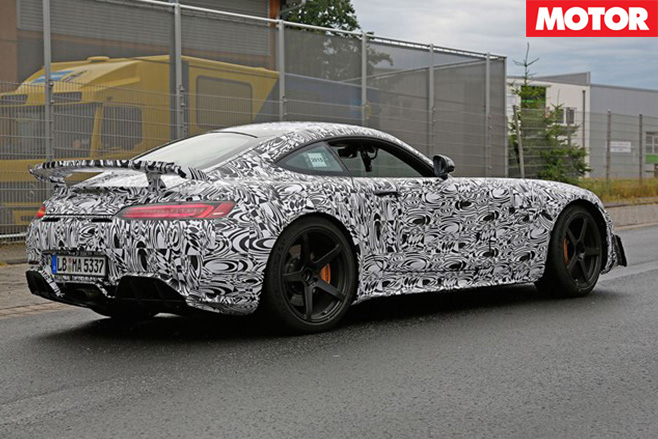
The next chapter in the AMG GT story will be written in 2016, with a higher performance model set to be unveiled around mid-year.
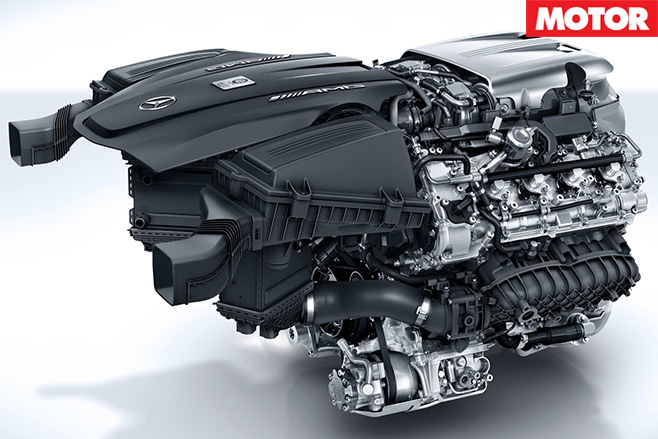
While not one of AMG’s fabled Black Series models, the new sportier GT will offer the first glimpse of a higher-output version of AMG’s latest 4.0-litre twin-turbo V8.
Currently rated at 375kW/650Nm in the GT S, AMG boss Tobias Moers confirmed the next evolution of the engine will produce well in excess of 400kW.
Torque will remain similar, as the current output of 650Nm is close to the reliable limit of the seven-speed dual-clutch transaxle, however Moers told MOTOR that more power at higher rpm will be the focus.
The topic of injuries caused by things in a car hit me while I was driving on the deadly-boring Hume last week. Or rather, it would have hit the person in front of me, had they crashed.
It was a rear window absolutely chockers with stuffed toys. This is not just a scary sight for the car behind (all those vacant, staring eyes), or the fact that the fluffy oddities block out so much of the driver’s rearward vision. It could also be a very real injury waiting to happen, particularly at 110km/h, if those fluffy animals with their hard plastic eyes become airborne missiles.
Okay, so MythBusters already cracked this one. The popular quasi-science TV show tested the feasibility of loose objects and inertia in car accidents, finding out how much physical damage an unrestrained item in the rear of a car (in this case, it was a tissue box) can do to passengers.
Loose items thrown forward in an accident at speed can strike with 30 times their own weight, and the lab-coated presenters wanted to see if a tissue box could kill. It could not.
But that was a light tissue box. How many times have we seen or been in a car with unrestrained objects including umbrellas, first-aid kits or even pets? Imagine little Rover hitting you with the force of a 20kg weight? In an accident, it can all become a major pain in the neck. Pun intended.
There are some good habits to get into when it comes to your car’s cabin, and packing all loose items in the boot is the first one. Many years ago at driver training, we instructors used to comb through the cars before they set off on emergency braking and swerve-and-recover manoeuvres, and we found all sorts of weird and wonderful objects in the cabins of our pupils. This was after asking for all items to be secured or placed in the boot. The best of these was usually the steering lock – remember those deadly nunchucks?
The key is to consider the weight of every loose object in your cabin and multiply it weight by 30. If that makes it the weight of a stone, you don’t want it in your glasshouse.
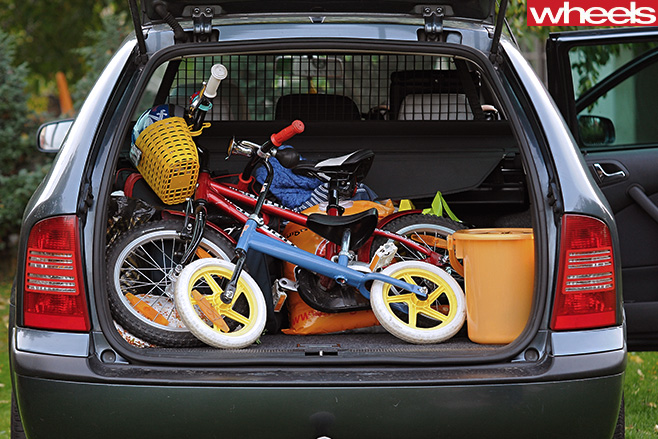
Bags that won’t fit in the boot can be restrained by seatbelts – in modern cars, you usually have to do this anyway, or the vehicle assumes it’s an unrestrained passenger and chimes away incessantly. Cargo barriers are ugly, but so unbelievably useful in wagons and SUVs, and should almost be mandatory if you have children in the back and are packing a full boot.
As for pets, there are many restraint devices that can keep them safe; we aren’t just talking leashes and harnesses, but ‘hammocks’ that keep pets, their toys and their stray hair all slung in the back and away from the seats and footwells.
Speaking of which, it’s also not just your head that you need to worry about. Objects thrown in the back seats or footwell can wind up under the front seats and possibly slide through the mountings and end up under the pedals. That won’t end well.
The only choice one really has is to be pedantic about your car’s cabin. This is a bit rich coming from someone who has a bombsite for a bedroom, but you won’t ever find any fluffy animals, alive or stuffed, on my parcel shelf. I’d rather arrive alive than stuffed, personally.
AUSTRALIA’S new-car market continued to nudge record territory in October, as observers focused on Volkswagen Group to see if the Dieselgate scandal was hurting.
Judging by the figures, the results are varied. While the halo brand Volkswagen suffered a six percent slump in sales, to 4480, compared with the same month last year, its premium arm Audi (2030 sales) managed to outsell rival BMW (2001) for the month, and market minnow Skoda (412) improved its lot.
The Australian new-car market recorded 94,321 sales last month, a 3.4 percent rise over the same month last year and only 2603 sales behind the record-setting October 2013, the latest VFACTS data shows.
Australian sales for the calendar year are expected to crack the one million mark this month, on the way to what could be a record.
The month belonged to business buyers, as both government and private buyers chose to idle along.
Business-bred spending was reflected in the sales numbers. Toyota reckoned its all-new Hilux would have a crack at becoming Australia’s best-selling model, and it wasn’t too far wrong, with the trade ute notching up 3339 sales for the month to relegate the car-fleet friendly Toyota Corolla hatch to second place on 3271 sales.
Third place went to another fleet favourite and last month’s best-seller, the sharply discounted Hyundai i30 (2669 sales), while the Mazda 3 (2582) and last-generation Holden Commodore (2243) rounded out the top five.
Toyota led the overall sales race, moving 16,964 units for the month. Hyundai was a distant second on 9003, with Mazda (8532), Holden (8088) and a resurgent Ford (6098) rounding out the top five.
Ford’s turn of fortune from its lacklustre September again rested on the Ranger trade ute (2597) accounting for two out of every five of the brand’s sales, but stand-out performers for the brand’s passenger car line-up include the Focus hatch and sedan (715), Territory SUV (596), and even the Falcon large sedan (435), which had a strong month.
Toyota’s new entrant to the Australian market, the Hilux-based Fortuna SUV, did well (329 sales) considering it has not been on sale for a full month, while its direct competitors, the Holden Colorado 7 (255) and Isuzu MU-X (496) softened slightly for the month compared with September.
October marked 12 months to the start of the closure of what’s left of the Australian car manufacturing industry, with the figures showing the number of Aussie-built rides joining our driveways continues to decline at a steady rate.
The VFACTS figures show only 7150 locally made cars wheeled out of showrooms nationally, down 6.9 percent on the same month last year and 8.4 percent since the start of this year.
Holden was the biggest local manufacturer, selling 3513 vehicles, followed by Toyota with 2409 and Ford with 1228.
Top 10 passenger cars for October
| Rank | Model | Sales |
| 1. | Toyota Corolla | 3,271 |
| 2. | Hyundai i30 | 2,669 |
| 3. | Mazda3 | 2,582 |
| 4. | Holden Commodore | 2,243 |
| 5. | Toyota Camry | 2,141 |
| 6. | Mazda CX-5 | 2,037 |
| 7. | Volkswagen Golf | 1,705 |
| 8. | Toyota RAV4 | 1,685 |
| 9. | Nissan X-Trail | 1,612 |
| 10. | Hyundai Accent | 1,548 |
Top 10 brands for October
| Rank | Brand | Sales |
| 1. | Toyota | 16,964 |
| 2. | Hyundai | 16,964 |
| 3. | Mazda | 8,532 |
| 4. | Holden | 8,088 |
| 5. | Ford | 6,098 |
| 6. | Nissan | 5,961 |
| 7. | Mitsubishi | 5,508 |
| 8. | Volkswagen | 4,480 |
| 9. | Subaru | 4,112 |
| 10. | Honda | 3,261 |
A wild ‘ 63 AMG’ version of Mercedes-Benz’s new GLC SUV is under consideration, however the project is yet to receive the green light.
While some outlets have reported that the car is a done deal, AMG boss Tobias Moers stated that he is yet to be convinced there is a business case for a hi-po mid-size SUV.
“No decision made so far, still an open topic.” said Moers at the international launch of the C63 Coupe. “There will be a GLC sport model from AMG, but the GLC 63, I don’t know, is there a market?”
The sport model Moers refers to is the GLC450 AMG Sport, which will use the 270kW/500Nm 3.0-litre bi-turbo V6 currently found in the GLE450 and C450 models, the latter of which is due to land in Australia in early 2016.
Such a car would currently be unique in its segment, a rung above the likes of Audi’s SQ5, however with BMW considering an X4 M, should it come to fruition it may not have the market to itself for long.
The new Mercedes-AMG E63 will deliver the biggest step forward in terms of driving dynamics in fast E-Class history – that’s the claim of AMG boss Tobias Moers.
Due to be unveiled in roughly 12 months’ time, it will be based on the new-generation W213 E-Class which will make its debut at the Detroit Motor Show in January 2016.
The new E63 will retain a twin-turbo V8 under the bonnet, but will switch to a high-output version of AMG’s latest 4.0-litre engine. Moers says he is keen to avoid getting embroiled in a horsepower war, however confirms the new car will remain competitive in the segment.
With BMW’s M5 and Audi’s RS Performance models now producing 441kW and 445kW respectively, expect figures of 450kW/800Nm from the new E63, fed through a nine-speed version of AMG’s MCT wet-clutch automatic.
The big change will be how this grunt is put to the road, however, with all-wheel drive almost certain to appear for the first time on Australian models. Performance is set to be shattering, with talk of 0-100km/h taking just 3.5sec.
The current E63 is already available with Merc’s 4MATIC system, however Moers says a new AMG-specific all-wheel drive system is being developed for the car.

A rear-wheel drive version is still under consideration, however the high take-up rate of all-wheel drive – 90 per cent in markets where both rear- and all-wheel drive versions of the current car are on offer – means it is unlikely to be worth the development cost.
While performance will be in another league compared to the current car thanks to the traction on offer, Moers is confident that the driving experience will be the biggest step forward, thanks to incorporating features like the wider, stiffer rear axle from the new C63 Coupe.
We’ll bring you more details as they come to hand.
