
PLUS
- Price. The Suzuki Jimny is an affordable option for those who want 4WD capabilities but don’t want to spend a lot.
- Weight. The Jimny is light so it makes for an easy to drive and a hell-of-a lot of fun off-roader.
- Visibility. It has nice wide, tall windows so it’s easy to see what’s around you.
- Economy. This little 4WD clocks some pretty good fuel figures on-road.
- Fun. For all its faults, it’s a fun little car that makes for ok weekday transportation but really turns into a butterfly when you get it off-road.
- 2015 model introduces electronic stability control.
- Lacks power. The engine lacks power so getting to speeds on highways and freeways can be a bit frustrating.
- Boot space. While it’s high and can probably fit a suitcase, any odd-shaped luggage can become a problem. On a trip to the market, we had to fold down the back seats just to fit our market trolley.
- Bumpy. The Jimny is a short-wheelbase vehicle, so bad or bumpy roads make it a little uncomfortable.
- Comfort. Suzuki’s mini-4WD is based on an old-fashioned setup. The wheel doesn’t move, the cabin is narrow and the seats aren’t the most comfortable.
A Toyota 86 Racing Series will kick off next year at V8 Supercars rounds, with young guns battling it out for a $125,000 prize pool.
The series announced by Toyota Australia is tagged as a “grassroots category designed to discover new motorsport talent”. Fittingly, the Japanese brand’s entry-level sports coupe is being used in a competition that will cost “anyone with the passion and talent to compete” just $1500 per round.
That’s in addition to the approximate $35,000 it will cost to transform the 86 (that teams need to BYO) to control specification, which is being finalised by the Confederation of Australian Motorsport (CAMS).
Neal Bates Motorsport will conduct the changes to engine ECU, tyres, exhaust, brakes, suspension, roll cage and aero.
Following rounds that align with the V8 Supercars calendar at Sydney Motorsport Park (August), Sandown (September), of course Bathurst (October) and Sydney Olympic Park (November) among others, the winner will take home $50,000 cash plus a $20,000 “international VIP experience”.
Second place nabs $30,000 cash and third place half that amount.
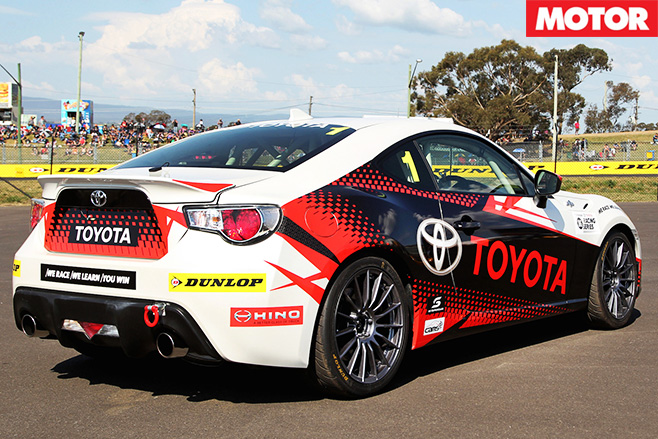
“The Toyota 86 Racing Series is a great way for young amateur drivers to advance their careers,” commented Toyota Australia sales and marketing executive director Tony Cramb.
“Drivers will perform in front of substantial race-day crowds and large TV and internet broadcast audiences, which should assist them gaining sponsors.
“If there’s another Skaife or Longhurst out there, we’ll find them!”
Toyota expects the front-engine, rear-drive 86 to max out at 230km/h down Conrod straight at Bathurst, the expected highlight for each of the 32 drivers participating in each round of three 20 minute races (one on Saturday, two on Sunday, with grids determined by two practice sessions and a qualifier).
The series entry is the lowest of any mainstream national series and will therefore be the cheapest ticket to racing at Mount Panorama.
So, what is it?
Škoda has been chipping away at the local car market since its owner VW Group introduced the brand here in 2007. The mid-size Octavia is the first model to go through a range re-fresh, and this is the third and final variant to arrive, following the standard car and RS sports sedan.
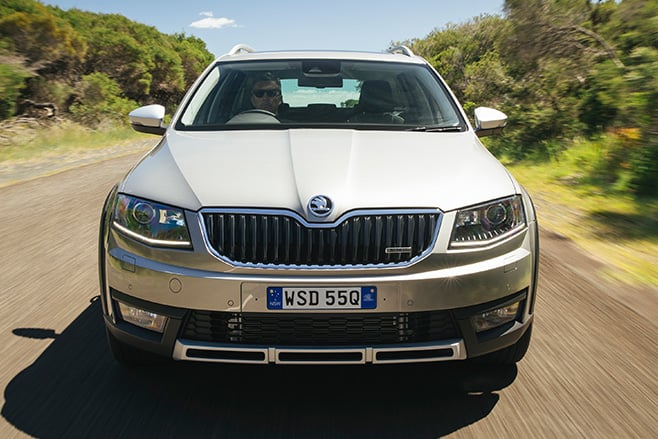
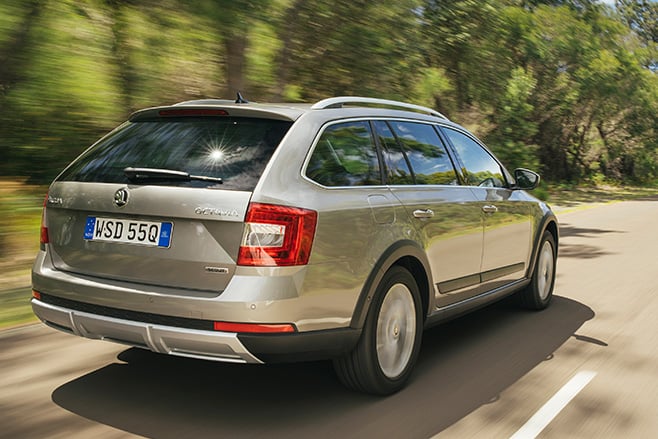
As the name implies, the Scout 4×4 is a high-riding, all-wheel drive, SUV version of the Octavia wagon, powered by a choice of petrol turbo or (two) turbo diesel four cylinder engines.
There are three grades. The 110kW/320Nm 110TDI, followed by the 132kW/280Nm 132TSI (petrol), with the 135kW/380Nm 135TDI sitting on the top shelf. The base 110 is offered with a six-speed manual only, while upper spec variants feature a six-speed dual clutch automatic as standard.
Why should I care?
The previous Octavia was out of step technically, riding on the same chassis as the VW Golf Mk5, but this third-generation car sits on the same (MQB) platform as the current Golf Mk7.
When asked about their car, Škoda owners tend fire up into an evangelical tirade about its all-around brilliance in terms of quality, performance, value, etc, etc, etc. And on the basis of this outdoorsy wagon, we think they’re on to something.
What’s new about it?
Centrepiece of the all-wheel drivetrain is the latest fifth generation Haldex electronic coupling, allowing up to 95 per cent of drive to be directed to the rear axle, working in concert with an electronic diff lock to manage distribution of torque to individual wheels.
Ground clearance is 31mm higher than the standard Octavia (at 171mm), macho plastic mouldings adorn the wheel arches and lower body, as well as the key underbody components including the brakes and fuel lines, and 17-inch alloy rims are standard.
That’s all fine, what’s it like to drive fast?
The Scout offers a similar proposition to Subaru’s Outback; plenty of off-highway ability, combined with comfort and driving dynamics closer to a conventional sedan when you’re on it.
Although most Aussie drivers in 2015 will rarely see a dirt road, let alone drive on one, the Octavia Scout’s launch program took in a bunch of it, courtesy of a loop through some of Tasmania’s great driving roads north west of Hobart.
We scored seat time in the 135 diesel and 132 petrol, and each delivered an impressive performance.
The top-spec diesel is seriously grunty with maximum torque available from just 1,750rpm all the way up to 3,250. Strong acceleration, followed by plenty of mid-range pulling power makes this version a highway star, with heaps in reserve for rapid overtaking and open road carving.
Although the 132 petrol’s peak torque number is 100Nm down on the diesel, it’s available from even lower revs (1,350rpm), and doesn’t start to taper off until 4,500rpm. Combine that with maximum power kicking in at 4,500 and remaining on tap until 6,200, and you have an even more lively and responsive package. Claimed 0-100km/h for the base diesel is 9.1secs, with the petrol and premium diesel both locking in at 7.8.
Engine noise is subdued in both versions at cruising speeds, although the petrol starts to emit a fruity rasp as revs rise. Steering feel is good rather than brilliant, but its gearing is just right for relaxed back-road cruising, while ride comfort and overall dynamic composure is excellent.
Dipping and twisting dirt roads did little to upset either version, the car remaining quiet and grippy across sealed and broken surfaces.
Combined fuel economy ranges from 5.3L/100km for both diesels to 7.1L/100km for the petrol.
And driving home from the city?
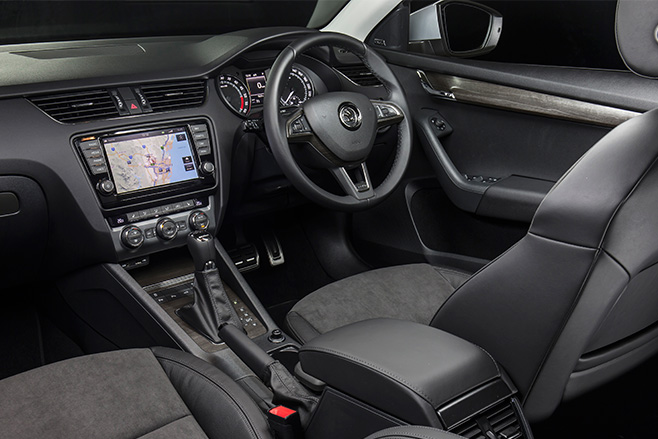
The interior conforms to the VW Group design feel, with key elements virtually interchangeable with VW siblings in particular. That’s not to say it’s bad. The treatment is minimalist, with subtle coordination of materials and finishes contributing to a relatively conservative feel. In typical Teutonic fashion the front seats feel firm initially, but provide twinge-free support over the long haul.
Even the base car features a 5.8 inch touchscreen for control of infotainment functions including the eight speaker audio, with the higher spec cars stepping up to an eight inch screen and extra features like sat-nav and Apple connectivity.
There’s more than adequate room in the back for full-size adults and plenty of cargo space, with 588 litres available, even with the 60/40 split-fold rear seats upright. There are also four folding hooks for shopping bags, two lights and a 12V socket back there; plus a nifty double-sided mat in the boot with carpet on one side and a water-repellent membrane on the other, to suit your load type’s mud and H2O quotient.
Anything bad about it?
The DSG dual clutch throws a hissy fit and briefly dulls engine response if you happen to brush the brake pedal with your left foot while squeezing the throttle with your right. Annoying.
How much would I have to pay? And is it worth it?
Škoda’s brand positioning is ‘European + Value’, and pricing is sharp, starting at $32,990 for the 110TDI, rising to $38,590 for the petrol 132TSI, and finishing with $41,390 for the 135TDI. Standard equipment is generous, with all models featuring air-con, cruise-control, leather trimmed steering wheel, hand brake lever and gear shift, nine airbags, a new fatigue detection system, alloys, tyre pressure monitoring, front and rear fog lights, interior ambient lighting, remote central locking and rear parking sensors.
The two premium models also cop auto tailgate opening and closing, the bigger touchscreen, dual-zone climate-control, privacy glass, Alcantara seat trim and alloy finished pedals.
There’s also an optional ($4,400) ‘Premium Pack’ for the base car to lift its spec closer to the upper variants, and a ($3,900) ‘Tech Pack’ available across the board, including adaptive bi-xenon headlights, park assist, adaptive cruise, lane assist, Canton 10-speaker sound, and driving mode selection.
Škoda has also announced a guaranteed future value program called ‘Škoda Choice’, where owners can dial in an agreed term (up to four years), km per year, and a total payout figure to stabilise residual value (an Achilles Heel factor for a brand relatively fresh to this market).
Would you take the Škoda Octavia Scout 4×4 or Subaru Outback?
Both are excellent packages, but like-for-like the Subaru Outback has the edge on value for money and space. A close win to the Subie.
Click here to find out more about the Skoda Octavia Scout 4×4.
At BMW Welt, the museum-come-mega showroom in Munich, there’s a room for children to draw BMWs of their wildest imaginations.
During one visit, I joked to a company rep there must be a trapdoor installed to swallow the four-year old who rendered the 1 Series, thus disposing of the evidence. Oh, how one of us laughed.
Still, there’s much to like about the five-door, especially in top-shelf M135i trim. Here’s a sub-1500kg device with a turbo straight six, its engine arranged correctly (longitudinally) and driving the correct wheels (the rears). It’s also quite interesting, particularly the adoption of an excellent eight-speed automatic transmission in lieu of the usual twin-clutch or increasingly scarce manual options you usually find in small hatches.
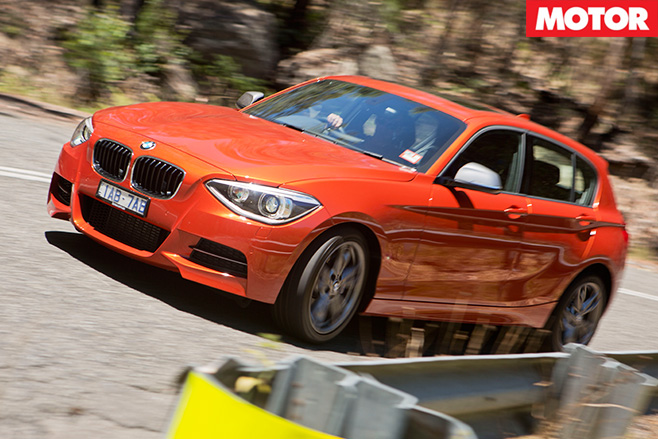
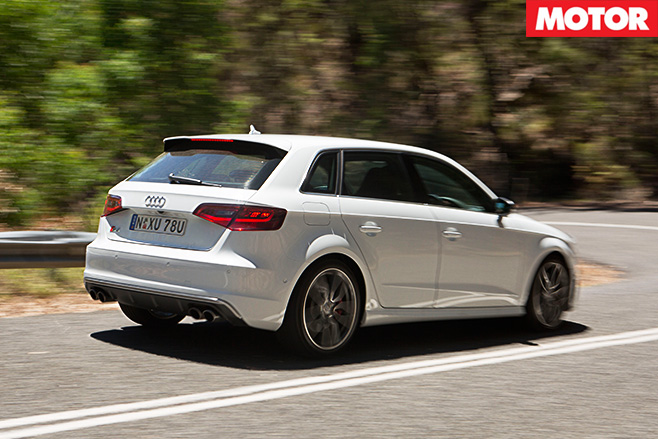
Enter Audi’s S3 Sportback. Could it be any more run-of-the-mill? A 2.0-litre turbo four mounted transversely, foundations shared with VW’s safe-as-houses Golf and, you guessed it, Audi’s signature quattro all-wheel drive. Cog-swapping is a choice of old-school or twin-clutched manuals, six forward ratios apiece. In most respects, the S3 is as predictable as it is conventional.
Then there’s the styling. Exterior-wise, the five-door (we don’t get Europe’s three-door) is sharp, contemporary and proportioned so neatly as to render it almost invisible in traffic, let alone a flock of Audis. It’s handsome and homogenized in equal measures. ‘Restraint’ is the mantra. And it extends throughout the entire S3 package.
With 50 per cent more engine capacity and two extra slugs, the M-lite five-door produces a commanding 235kW and 450Nm. Somewhat evening the tally out, though, is the BMW lists for $64,900, or $5000 more than the base Audi’s price.
Of course, add on top the murky business of German specs and cost options. For instance, the eight-speed is part of the M135i’s mid-2013 update which brought with it “$5000 of added value”, much of it parking and navigational conveniences. Standard fitment, though, are big four- and two-pot brakes, bi-xenon headlights and, believe it or not, sports seats.
Want sport seats in your S3? That’ll be an extra $4990 for the S Performance package, which also adds LED headlights, B&O sound, a unique 18-inch wheel design and magnetic adaptive dampers. BMW can fit tricky damping, too, for an extra $1420, but Audi won’t upgrade its single slide caliper brake for anything bigger. They’re quite evenly pegged.
Ingolstadt claims 5.0sec for the Oz-spec S3’s 0-100km/h sprint. Quicker than the legendary rally homologated Sport Quattro and just one-tenth shy of the Euro S3. Munich claims 4.9sec for the Bimmer. And what the M135i lacks in all-paw traction it makes up for with launch control functionality to get those 245mm rear Michelin Pilot Super Sports hooking up hard. The Audi runs narrower Conti rubber all ’round, measuring 225mm, or the same width as the BMW’s front hoops.
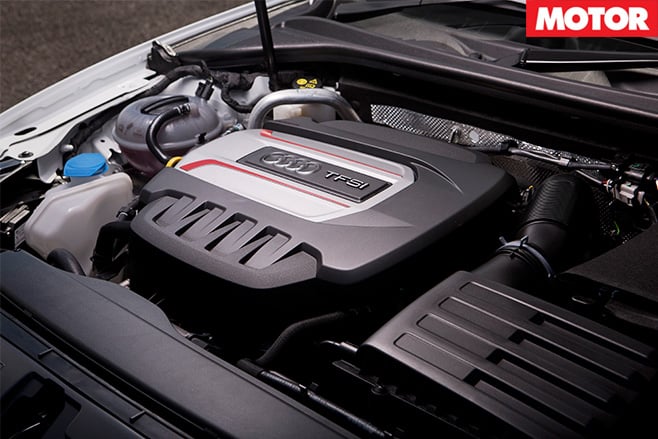
This new-gen direct-injected TFSI design, which features a revised head and turbocharger, seems to blossom the power, its delivery silky and seamless. It’s a sweet match to the handy S-tronic transmission that blats along with its rev-matching, spark-cutting trickery during 6800rpm upshifts. There’s an innate sense of precision in this powertrain combination, its character smooth and robust. If it were a drink, it’d be a fine shot of espresso.
The BMW six, however, is like a shot of vodka. It feels punchier, its response to throttle inputs more immediate, the engine’s added capacity no doubt being the significant contributor.
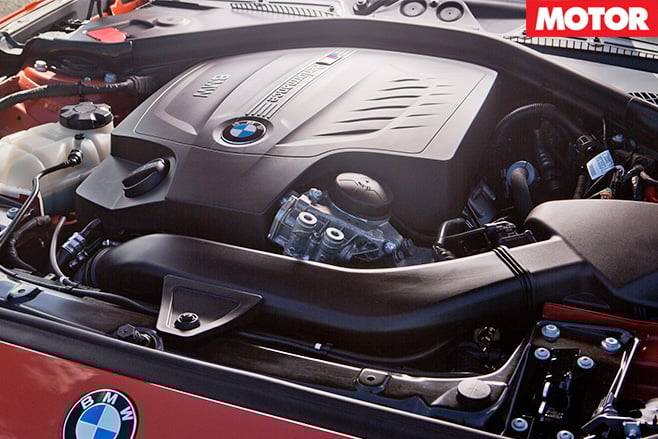
I suspect engineers have fiddled around in the details in this revised 1 Series. The last M135i I drove, with little restraint around the hot-mix formerly known as Eastern Creek, felt like a woollier, incoherent beast. BMW’s turbo engines can, in some instances, forgo precision for sheer shove, but this six feels sharper and more linear than I remember.
The old car’s softer-edged disconnect and lack of discipline extended to its handling package, particularly its eagerness to spit its bum sideways with alarming and disconcerting regularity. It’s been replaced with a noticeably keener balance between the surety of grip and compliance with the playful tail-wagging and edginess of proper sports cars.
A lot of it could be environmental, too – it’s simply happier along less-than-perfect back-roads between Sydney’s northern outskirts and the Hunter Valley than it is on a manicured circuit. They’re a mess of surface and camber changes, alarming imperfections, random compressions and mid-corner anomalies.
They demand more restrained pace and provide a fitter test of real-world handling depth and prowess.
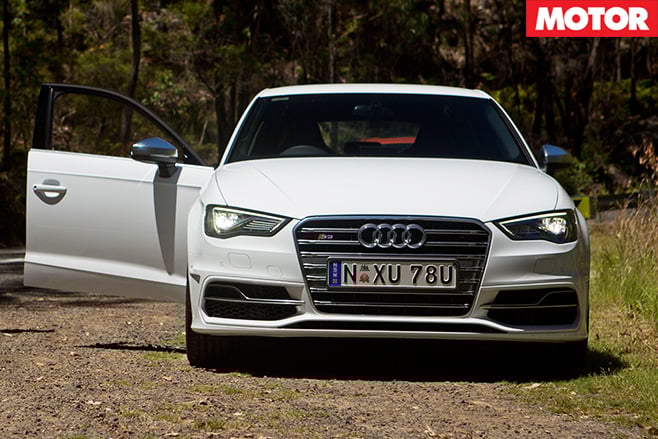
The S3 is no slouch, either. Dial up Dynamic drive mode, switch the electronic fun police to ESP Sport and it does a decent tightening of the reins and kicking of spurs. It mans the battle stations instantly, piles on the pace with gusto and certainly doesn’t lack for output when stringing together backwater apexes.
By sensible measures, it’s very quick. In isolation, the steering’s beaut; weighty, linear and quite clear in its communication. But in Dynamic setting it’s under-assisted, a little ponderous and doesn’t feel quite as genuine in feedback as the BMW’s. Neither car’s rack is slow, both getting from stop to stop in 2.2 turns, though it’s the M135i’s tiller that transmits urgency off centre.
Of the two, the Audi’s a little more fidgety across low-frequency bumps, yet a little softer-edged, and has more pronounced roll over hard bumps. It’s slightly more skittish when sniffing out grip from the outside rear over rough road.
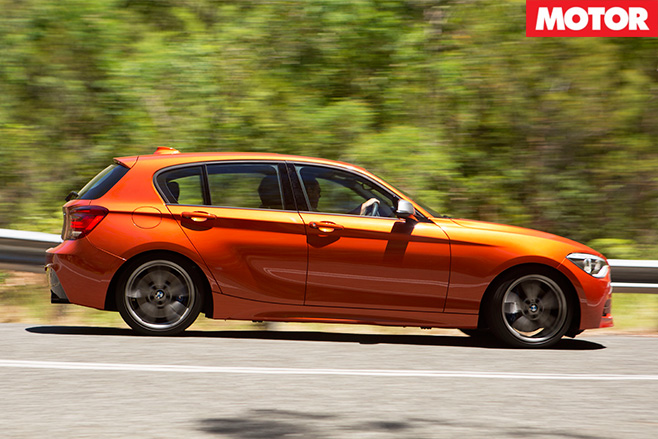
What might’ve iced the cake, though, is having the quattro system feed more torque rearward under throttle, a more focused rear diff and more generous rubber. But as it sits, the S3 is certainly more ‘fast’ than ‘fun’ when blasting through corners.
While the BMW’s low-speed ride quality is a little busy, its dynamic talents – particularly in the damping department – are quite satisfying. Suspension compliance across rough surfaces is polished and front-end grip seems never to give up the ghost.
You can pitch it into a corner hard and it grips up and settles while remaining unflustered over the worst mid-corner bumps. And it takes caveman-like throttle brutally – or ambitious corner entry speed; take your pick – to unglue those rear Michelins. Further, the window for fun between a sweet few degrees of oversteer and half-an-armful of opposite lock is easy to access. It’s quick and an absolute hoot at pace.
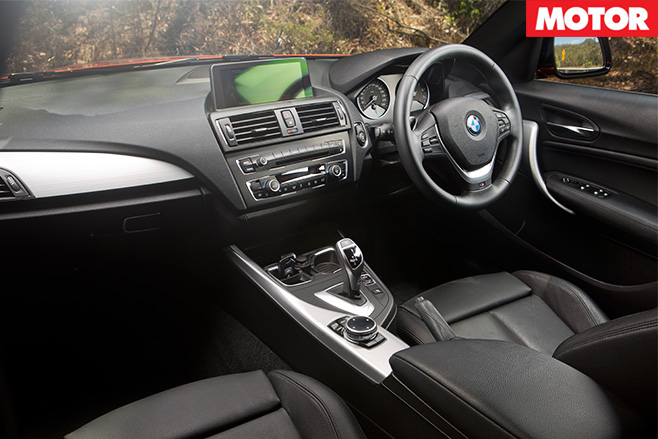
It’s a little claustrophobic, too, though the low-slung seat positioning is suitably purposeful. There’s also less head and knee room in the rear than the Audi.
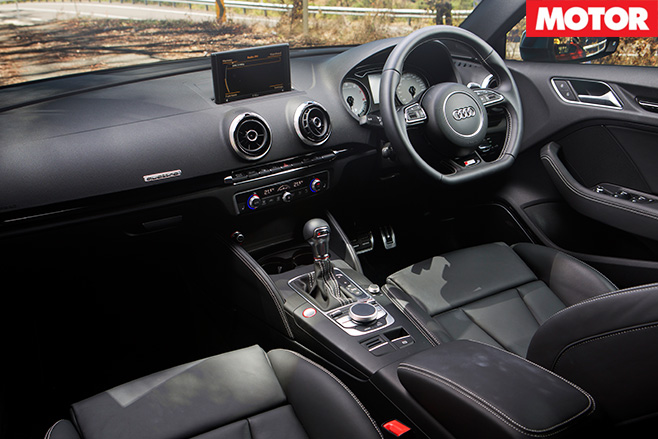
Importantly, and despite many differences, both cars excel in blending their target market’s wants: well-to-do city small families in a one-carspace scenario.
They’re thrilling enough for petrolheads, civilized enough for sensible ‘other halves’, utilitarian and comfortable enough for the (small) kids, affordable enough for the moderately heeled and compact enough to feel at home in the thick of Big Smoke insanity. There isn’t a small SUV – RS Q3 included – with this much all-round accomplishment.
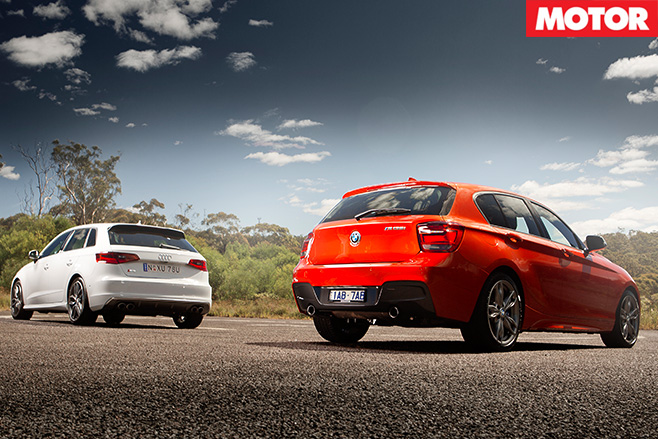
The question, too, isn’t why you would buy a turbo-six, rear-driven, automatic five-door small hatch. But rather, why wouldn’t you?
| u00a0 | Audi S3 Sportback | u00a0 | BMW M135i |
| u00a0 | 3.5 out of 5 | u00a0 | 4 out of 5 |
| Body | 5-door, 5-seat hatch | u00a0 | 5-door, 5-seat hatch |
| Drive | all-wheel | u00a0 | rear-wheel |
| Engine | 1984cc inline-4, DOHC, 16v, turbocharger | u00a0 | 2979cc inline-6, DOHC, 24v, turbocharger |
| Bore/Stroke | 82.5 x 92.8mm | u00a0 | 89.6 x 84.0mm |
| Compression | 9.3:1 | u00a0 | 10.2:1 |
| Power | 206kW @ 5100-6500rpm | u00a0 | 235kW @ 5800rpm |
| Torque | 380Nm @ 1800-5100rpm | u00a0 | 450Nm @ 1200-5000rpm |
| Redline/Cut | 6500/6800rpm | u00a0 | 7000/7000rpm |
| Power-to-weight | 143kW/tonne | u00a0 | 163kW/tonne |
| Consumption | 10.2L/100km (tested) | u00a0 | 11.7L/100km (tested) |
| Emissions | 243g/km (tested) | u00a0 | 278g/km (tested) |
| Transmission | 6-speed dual-clutch | u00a0 | 8-speed automatic |
| Weight | 1445kg | u00a0 | 1425kg |
| Suspension | A-arms, coil springs, adaptive dampers, anti-roll bar (f); multi-links, coil springs, adaptive dampers, anti-roll bar (r) | u00a0 | multi-links, coil springs, adaptive dampers, anti-roll bar (f/r) |
| L/W/H | 4324/1785/1404mm | u00a0 | 4340/1765/1411mm |
| Wheelbase | 2631mm | u00a0 | 2690mm |
| Tracks | 1535/1511mm (f/r) | u00a0 | 1512/1532mm (f/r) |
| Steering | electronically-assisted rack and pinion | u00a0 | electronically-assisted rack and pinion |
| Lock-to-lock | 2.2 turns | u00a0 | 2.2 turns |
| Brakes | 340mm ventilated discs, single piston calipers (f); ventilated discs, single-piston calipers (r) | u00a0 | 340mm ventilated discs, 4-piston calipers (f); 345mm ventilated discs, 2-piston calipers (r) |
| Wheels | 18 x 7.5-inch (f/r) | u00a0 | 18 x 7.5-inch (f); 18 x 8.0-inch (r) |
| Tyres | 225/40 R18 (f/r) ContiSportContact | u00a0 | 225/45 ZR18 (f); 245/35 ZR18 (r) Michelin Pilot Super Sport |
| price | $59,900 | u00a0 | $64,900 |
| price as tested | $64,890* *S Performance package $4900 | u00a0 | $66,320* *Adaptive M running gear $1420 |
| Positives | Clean design; potent performance; rich interior; the thinking manu2019s choiceu00a0 | u00a0 | Hot rod engine; handling balance and communication; velvety smooth auto |
| Negatives | Style can be seen as bland; understeers on the limit; weaker engine tune for Oz | u00a0 | Erm, u2018challengingu2019 looks; incohesive interior; no limited-slip diff |
Here in Australia, it’s not unusual for people to go their whole lives without seeing snow, let alone having to drive through it. But for those who live or regularly visit the alpine country, learning what to do when driving in the snow or on icy roads is an important skill.
DRIVING
Firstly, you should know that driving in these conditions requires drivers to do everything more gently. Speed should be about half the dry-weather speed and braking should be done carefully.
Avoid braking when cornering – gently braking before entering a corner can help prevent skidding and loss of control.
Also keep in mind that driving in snowy or icy conditions is more fatiguing than your everyday driving, because you have to focus more. So be sure to stop every couple of hours, or more regularly if you need.
GENERAL MAINTENANCE
Before you leave for any long trip, it’s important to know your car has been properly serviced and prepared. When it comes to the freezing temperatures, do a once-over before you hit the road.
For those who are unsure, check yourself into a service centre before heading away, but if you’re more comfortable with what’s under the bonnet then a quick check of your wiper fluid, oil levels and adding anti-freeze coolant or washer fluid can help avoid costly maintenance issues.
As for fuel, those in a Diesel engine like our CX-5 should fill up with Alpine Diesel. The last thing you want in freezing weather is to be stranded. Petrol freezes at about -50 degrees Celsius, which is pretty rare in Australia, even during an Antarctic vortex.
OVERNIGHT
If leaving the vehicle overnight, move the wipers away from the windscreen so they don’t freeze stuck.
If you need to clear your windscreen, use de-icer instead of hot water, available from various auto stores. Alternatively, use a credit card to scrape the snow or turn your demister on for a couple of minutes before leaving.
Also, make sure you don’t leave the park brake on to avoid it freezing in place – if there’s a chance your car could roll, chock your tyres instead.
TYRES
Check your tyre pressure. Physics tells us that when the outside temperature drops by five-degrees Celsius, so does the air pressure inside your tyres by around one to two PSI.
Four-wheel and all-wheel drive vehicles can generally travel further in the snow than two-wheel drives and, depending on the conditions, they are generally exempt from the requirement to fit chains. However, in heavy snow conditions, even 4x4s can reach a point where snow chains will become necessary.
Snow chains should be fitted to driving wheels only, so the front wheels on a front wheel drive car, and back for rear wheel drive. AWD vehicles usually have the chains fitted to the front tyres, but there are some exceptions.
Click here to read the full review on the Mazda CX-5.
PLUS
- Variety – So many body styles means there are 31 different HiLux models to choose from, so you’re sure to find the one to suit your needs.
- Engines – Toyota has developed all-new diesel and petrol engines that are quieter and more refined than ever.
- Toughness – There has never been a HiLux this suitable for off-roading. It is seriously impressive in the muddy stuff.
- Towing – Improved payload and towing capacities put the HiLux on par with its competitors for hauling stuff.
- Interior – There’s now more room inside thanks to a raised roof and a wider cab. The new, car-like dashboard and touchscreen look good and are easy to use.
- Strength – If there’s one thing the HiLux is famous for, it’s reliability. Toyota has added even more reinforcement and underbody protection to the HiLux chassis for maximum durability.
- Grunt – The new engines are good, but they’re marginally outdone by the Mazda BT-50 and Ford Ranger for power. So if you want bragging rights, the HiLux won’t quite cut it.
- Ergonomics – We’d love more range of adjustability in the steering column. We couldn’t quite get the driver’s seating position spot on relative to the steering wheel.
- Speedo – Unfortunately the HiLux misses out on a digital speed display. It’s not a deal-breaker, but it does make it harder to check your road speed at a glance.
VOLKSWAGEN Group has plunged further into crisis, adding another 800,000 vehicles worldwide to its emissions cheat tally and setting aside a further $3 billion to fix the problem.
The tally of vehicles, which is now nudging 12 million globally and with VW setting aside a total of $14 billion to fix it, also hints that some of Volkswagen’s petrol engines may have understated fuel use and emissions figures.
“Under the ongoing review of all processes and workflows in connection with diesel engines it was established that the CO2 levels and thus the fuel consumption figures for some models were set too low during the CO2 certification process,” Volkswagen said.
“The majority of the vehicles concerned have diesel engines,” it said, leaving open the inference that some petrol engines had been caught up for the first time in the developing emissions scandal.
The car maker said a “reliable assessment” of the scale of the irregularities “is not yet possible”.
Volkswagen Group chief executive Matthias Muller said the discovery that more vehicles had fallen in breach of emissions regulations was “a painful process” for the company.
“For us, the only thing that counts is the truth. That is the basis for the fundamental realignment that Volkswagen needs,” Muller said.
Volkswagen Australia managing director Michael Bartsch said this week he was “in contact” with VW’s head office, and would keep customers and local authorities “updated with any relevant developments that directly affect the Australian market”.
It has been a troublesome week for Volkswagen Group. On Monday, the US Environmental Protection Agency accused the carmaker of cheating on more emissions tests, this time for its 3.0-litre V6 diesel engine.
That EPA notice of violation, which claims the VW-sourced engine breached the US Clean Air Act, has pulled the group’s most valuable brand, Porsche, into the mess, with the Cayenne SUV identified as one of the vehicles producing more emissions than stated on the official test.
Volkswagen this week denied strongly the EPA accusation on the V6 diesel. It has previously admitted that its EA189 four-cylinder turbodiesel engines contained a cheat device that breached US emissions rules.
This Dodge Challenger GT concept is an American muscle coupe that thinks seriously about how best to put power to the ground.
Even Dodge understands that buyers may be perplexed by that prospect, stating in the first line of its press release, “It’s V8 muscle with all-wheel drive – yes, you read that right”.
The Challenger GT concept unveiled at the SEMA show sends all 336kW and 616Nm from its 5.7-litre naturally aspirated V8 engine through an eight-speed automatic transmission to all four wheels. It sounds way too sophisticated for such a big brute.
Dodge doesn’t detail how the all-wheel drive system works, and insists that it is indeed a concept only. Knowing the shared American-Australian love for burning rear rubber we can understand why, although it does get rather snowier Stateside than it does here.
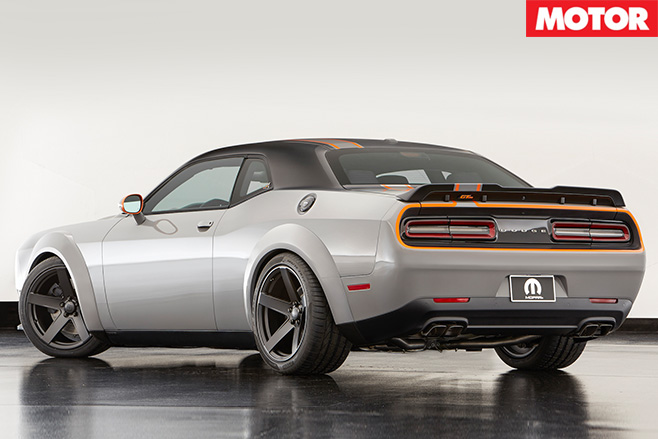
The Mopar-tuned coupe is marketed as, “A one-of-a-kind, year-round muscle car that lets you have your cake and eat it too, combining wickedly fast power and performance with the confidence of increased traction”.
Dodge is a struggling brand locally and we understand Fiat Chrysler Australia has thrown both hands firmly in the air to secure next-generation performance products if they are built in right-hand drive. This AWD concept may give clue to an expanded next-gen range even if the Challenger GT will continue to be LHD/RWD for now.
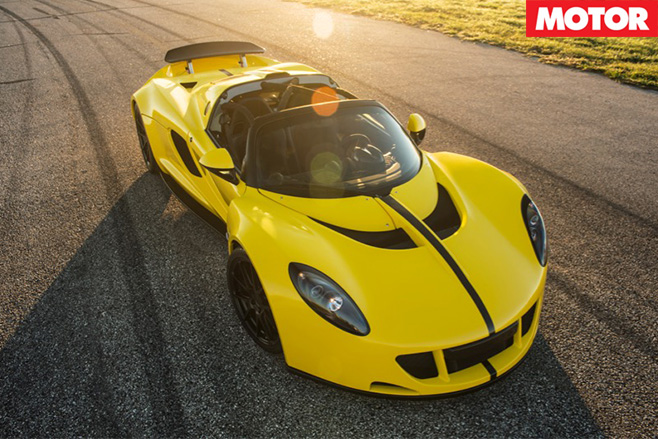
If you’re the type of car enthusiast that’s judges a car by its numbers, then the new Hennessey Venom GT Spyder is your new favourite vehicle.
Based on the Venom GT, a sort-of mutant Lotus Exige fitted with a 7.0-litre twin-turbo V8, the Spyder offers both a more immersive experience thanks to lacking a roof as well as more performance.
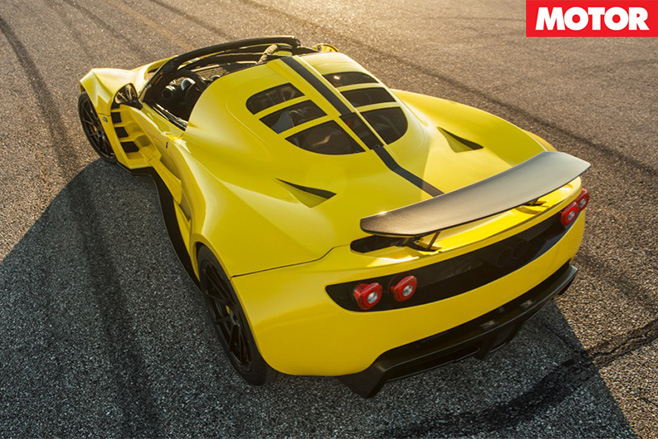
As such, the ability to run on E85 has allowed the Texan tuner to lift boost pressure from 19psi to 26psi, the result of which is an increase of 154kW from an underwhelming 926kW to an almost-adequate 1082kW (your sarcasm meter should be beeping right now).
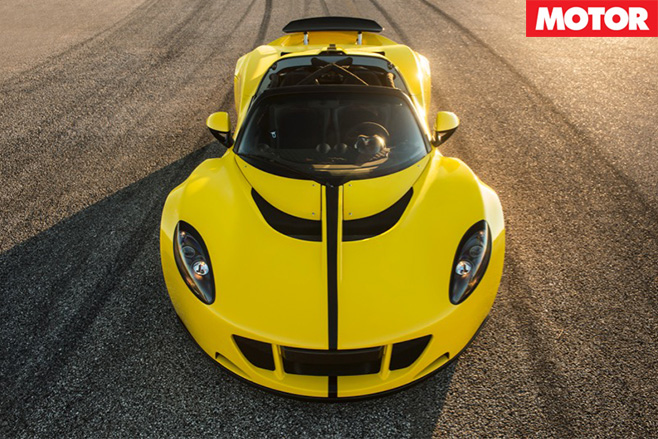
For drag racing fans, a more common measure of performance is its quarter mile time, which is claimed at 9.4sec at 269km/h. Pretty brisk.
The Ferrari 488 Spider gets all the good stuff from the GTB coupe – including a new turbocharged V8 – but adds a retractable hardtop that stows in 14 seconds. Can it be as good to drive?
WHAT IS IT? The Ferrari 488 Spider is a mid-engined V8 convertible supercar. Its engine might be related to that in the California T – Ferrari’s other retractable hardtop – but the Spider is an altogether more focussed proposition, if just as suited to top-down cruising.
WHY WE’RE TESTING IT The Ferrari 458 Spider (this car’s predecessor) was seriously impressive, if never quite as rewarding to drive as the 458 Italia coupe – blame a loss of rigidity due to the roof chop. Ferrari says substantial structural revisions for the 488 Spider remedy that wobbly shortfall.
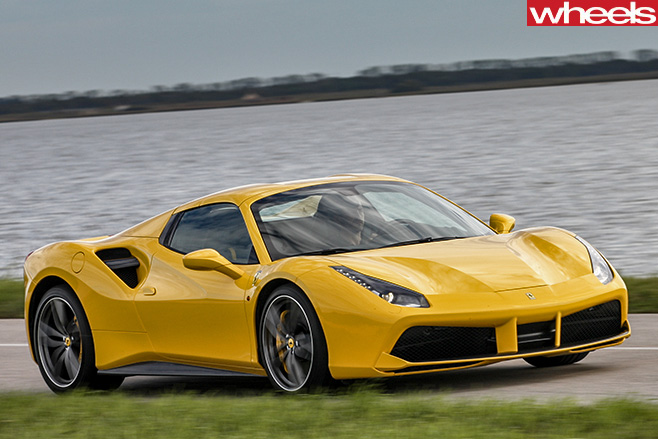
THE WHEELS VERDICT Roof up, the 488 Spider delivers just as much driving excitement as the 488 GTB; roof down, it takes things to a whole new level.
PLUS: Stellar performance, agile handling, supple ride, stand-out design, coupe/cabrio versatility MINUS: Sports seats very firm; slight vibration through the steering column
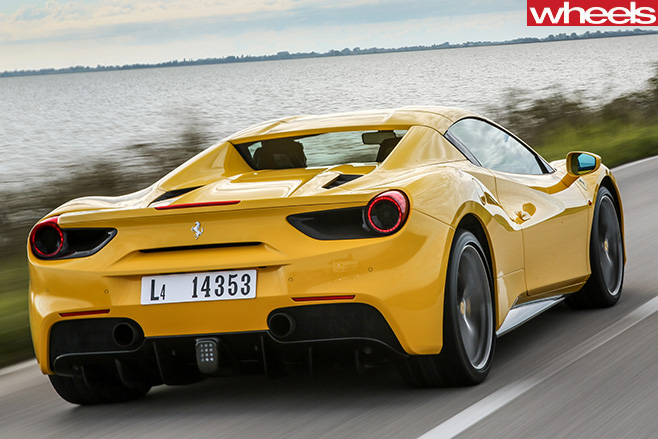
Like that on 2012’s 458 Spider, the 488 Spider’s two-piece retractable hardtop folds beneath a neat rear deck that doubles as roll-over protection, takes around 14 seconds to stow, retains the same mechanism and adds 50kg. This time, though, an uprated pump means the mechanism works at up to 45kph; you have to pull over in Ferrari’s other retractable hardtop, the California T.
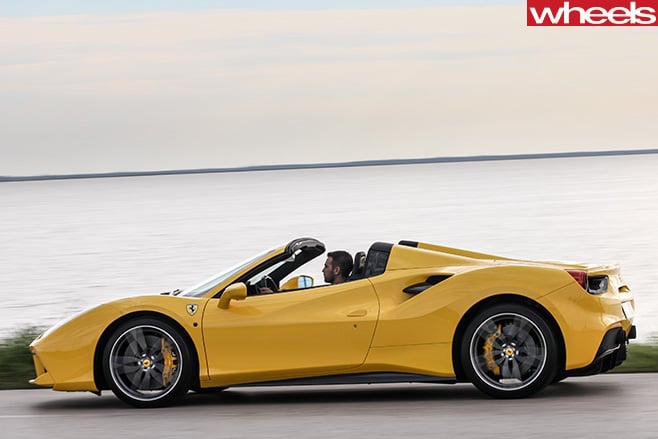
You could always feel a little more shimmy through the 458 Spider’s structure than the 458 Italia’s, and back then Ferrari didn’t have a McLaren 650S Spider to fret over, a rival whose carbon MonoCell doesn’t suffer any loss of rigidity when you remove the roof. Hence the 488 Spider’s body is beefed with an additional vertical aluminium panel by the front axle, and a horizontal one at the rear. Ferrari claims a 20% increase in torsional stiffness. Feels like a big improvement too. Only on cratered road surfaces – and when driving topless – do little tremors sneak up the steering column. Close the roof and they vanish.
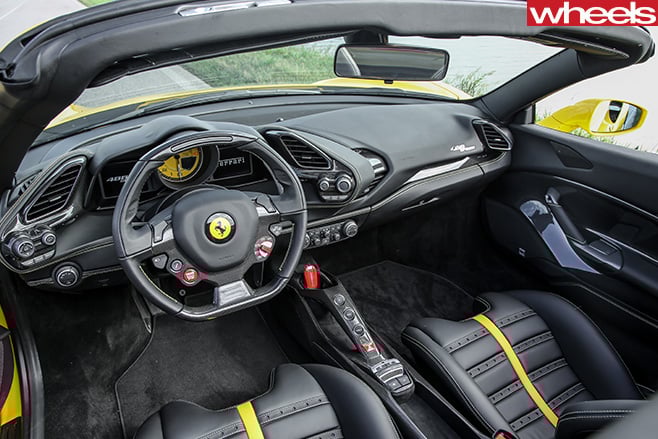
Ferrari says Spider and GTB buyers are quite different – Spider owners cover more miles, often with a partner, and drive less aggressively – yet the choice says more about them than it does about the tangible differences between the cars. Both models are great drives, it’s just that one immerses you even deeper in a mind-blowing experience.
SPECS Model: Ferrari 488 Spider Engine: 3902cc V8 bi-turbo, dohc, 32v Max power: 493kW @ 8000rpm Max torque: 760Nm @ 3000rpm (in seventh gear) Transmission: 7-speed dual-clutch auto Weight: 1525kg 0-100km/h: 3.0 sec Fuel economy: 11.4L/100km Price: $530,000 (estimate) On sale: Now
