
AUDI and Volkswagen have confirmed they will recall Australian cars caught up in the Volkswagen Group diesel emissions scandal.
Audi Australia said today it would recall 16,085 diesel powered cars, while Volkswagen Australia extended its count of affected passenger cars to 61, 189.
The additional 6444 VW passenger cars take the total number of Australian vehicles affected to nearly 100,000, when Skoda cars and VW commercial vehicles are added.
All are fitted with the VW Group EA189 diesel engines that are at the heart of the global Dieselgate scandal, which VW has said involves 11 million cars worldwide.
Neither Australian importer said when the recall would begin, nor what parts would be changed. But both assured owners that the vehicles were safe to drive.
Both companies offered dedicated phone numbers for owners concerned by the recall (Audi 1800 50 2834; VW and Skoda 1800 504 076). Both also said owners could find out whether their cars were affected by visiting the Audi and VW Australian websites.
“We are committed to supporting our customers and ensuring all affected vehicles are rectified as soon as possible,” said Audi Australia MD, Andrew Doyle. “In the meantime, affected vehicles remain safe to drive.”
The announcement comes after Audi removed several EA189 models from sale last Saturday, including A4, A5 and Q5 vehicles that had been certified to the EU5 emissions standard. Volkswagen also removed models from sale.
TDI models certified to EU6 – including current model VW Golfs – are not part of the recall.
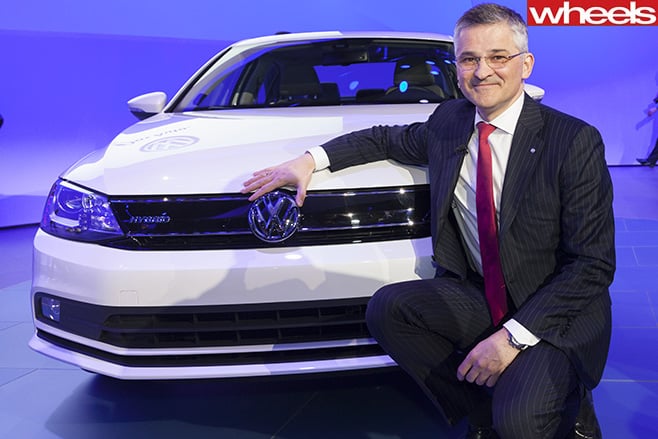
The Dieselgate scandal broke globally more than two weeks ago, precipitating an unprecedented crisis for Audi’s parent company, VW Group, which admitted to fitting ‘defeat device’ software to vehicles with EA189 diesel engines.
The software enabled a test mode in which pollution limits were met, before reverting back to a higher emissions rate when taken off the test bench.
Overnight last night, German prosecutors raided VW offices at its global headquarters in Wolfsburg, Germany, searching for information related to the matter.
Also overnight, Volkswagen’s US chief, Michael Horn, apologised to a Congressional subcommittee for his company’s cheating of emissions standards, which he described as deeply troubling, reports said.
“To the best of my knowledge today, this was not a corporate decision,” he was quoted as telling the subcommittee of the US House Committee on Energy and Commerce.
“This was a couple of software engineers who put this [defeat device] in for whatever reasons and I would also like to find out.”
Pretenders are uncovered ruthlessly in racing. Craftier, older heads exploit weaknesses the debutants never knew they had. Some grow into solid players and a rare few into stars.
This story was originally published in our March 2009 issue
But once in a generation, raw material, hard work and belligerence can transcend stardom to create something greater. They become legends.
Now, nearly 20 years later, the same car maker has thrown up another bombshell with pretentions to greatness. And it has the same name.
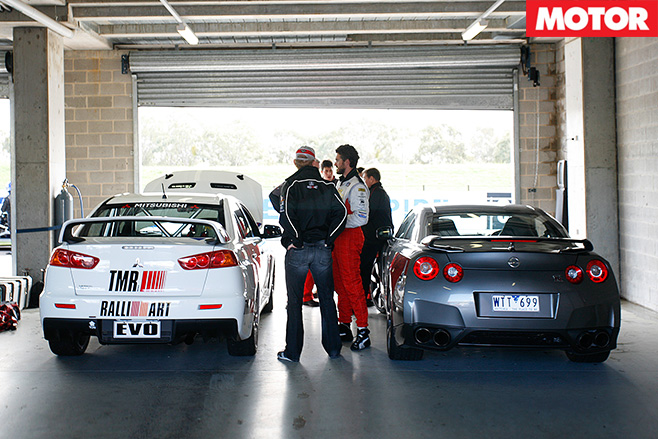
It is, Luffy tells me, waiting in Pit Garage Eight. The key is in it, somewhere. This isn’t the first time we’ve driven it and, for sure, it’s not the first time you’ve read about it. There was Nissan’s long gestation period, including some lap times that Nissan’s benchmark, Porsche, found barely credible. And said so. Loudly.
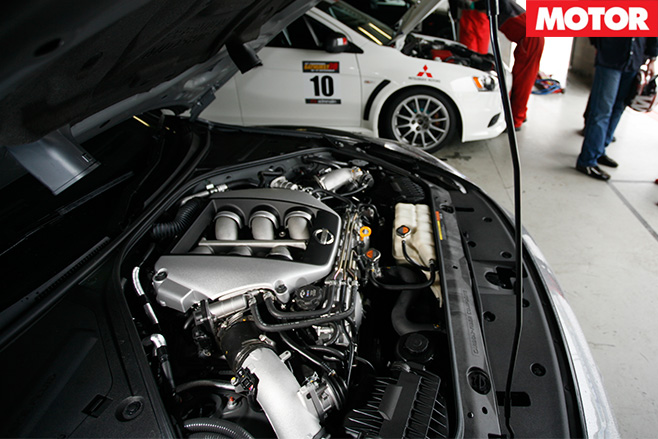
Its numbers were widely known long before it debuted. Everybody knew of the 357kW and 588Nm its 3.8-litre, twin-turbo V6 punched out. Mechanical bits, too: Nissan told all and sundry about its all-wheel drive system, with its double-clutch gearbox, rear diff and transfer case cuddling together in a transaxle on top of the rear axle.
It has the latest in kooky diff technology and grip-maximising software, but Nissan rarely mentions the 1750kg it all has to launch and stop.
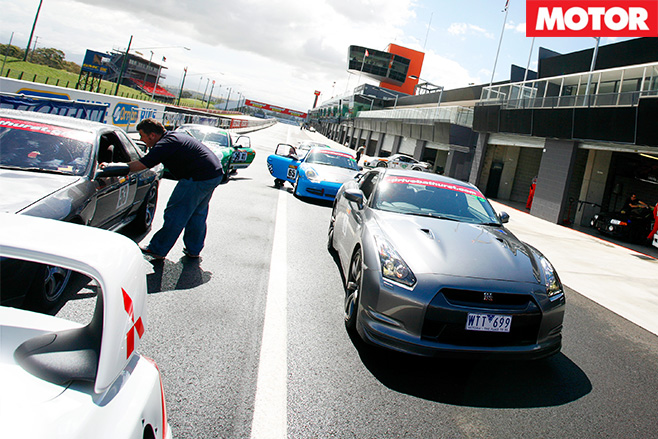
MOTOR has brought the GT-R to Mount Panorama and we’ve brought it here to go hard, not just to take pictures. We’re bringing the GT-R home.
Warren Luff and I won’t be alone, though. We’ll be sharing track space with a motley fleet of Porsches, Commodores, other Nissans, Lotuses and a confusing array of quick machines and quirky vintages. Plenty of them are stripped, striped and prepped for production-car racing, including GT2s, GT3 RSs, early GT-Rs, Subarus, Mitsubishis and HSVs.
Some of their drivers are curious. Some don’t think the fat road car should be here. Most expect to touch up the heavy, ugly machine with its road tyres and standard brakes and pads. Luff isn’t so sure. Worst-case scenario, all that grunt should keep them honest up the hill.
It qualified 11th, but got warmed up in the race, storming past the Cosworth Sierras, flicking aside BMW M3s and destroying the Holdens up the mountain, where their V8 torque was supposed to dominate. It didn’t matter that it broke, because its 2:15.46 wasn’t just the fastest lap of the race, it was the fastest race lap any touring car had ever posted. It would have been enough for fourth in qualifying.
It was dubbed ‘Godzilla’ and the name resonated around the world. It still does, but does it still deserve it? It doesn’t really sound like it when you fire it up. Fiddling around with the different computer screens, the gruff idle in the background doesn’t smack of supercar status, but the GT-R always went its own way.
All sharp angles, odd front quarter panel, monster round taillights and massive exhausts, it still does. Even sitting like this, it exudes the image of a fundamentally angry, purposeful, cranky car. It’s like it was treated badly as a kid and grew to like it.
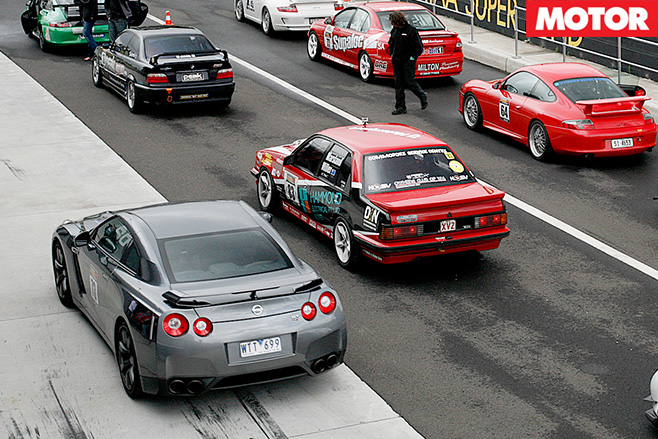
There is a fleet of benchmark Porsches here – most in race trim – so we might soon know, but the question nobody else has answered is whether or not you’d own one. It seems like good buying at $148,800, but it’s a big ask for a Nissan badge.
Compared to the other stuff in our group, it sits high and proud while the Porsche snouts sniff the braking zones. There are no lap times today – at least, not officially. They will be recorded so officials can sort the cars into speed groups, but we won’t know.
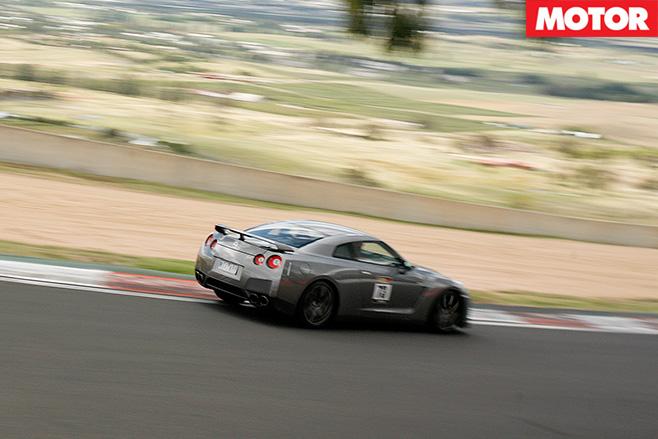
That’s no bad thing, and we’ve waited until all the quick jiggers have left pitlane before pulling the paddle into first to trickle onto Mountain Straight. It’s immediate. It’s still scary fast. There’s no place for a standing start, but the GT-R has grunted its way into third gear before the pit-exit ends, and it’s already streaking past 130km/h.
By the time it reaches the first crest, it’s already pulling 230 and into the braking zone the concrete gets real big, real quick. And this is the out lap. Jesus!
From Turn Two (Griffins Bend), it feels like its engine is arrogantly rejecting the entire notion of a Mountain being here. Its torque spread begins at idle and hits a plateau of 588Nm at 3200 revs and stays there. From the seat, it doesn’t feel like that at all. It feels like the thing builds up all the steam you’d ever need from about 1500rpm and never, ever lets go.
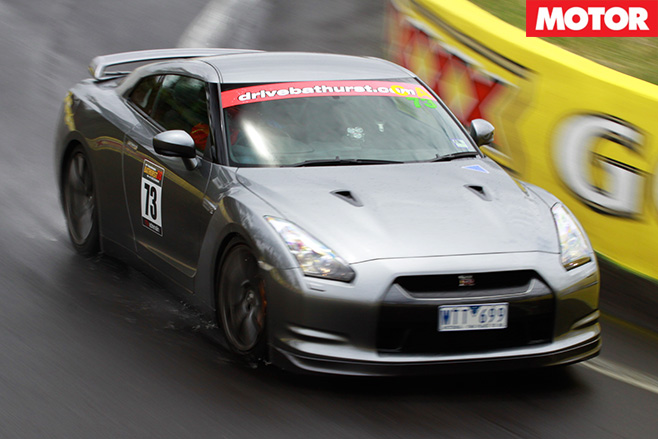
There’s little smoothness, but plenty of gruff bellowing from the V6 and the hiss of the turbos cramming air is what gets your attention. The right paddle gives fourth almost before the ripple strip ends, then you’re in fifth and then you realize something. Something important.
Race mode isn’t always the best mode on race tracks. Especially here. Most Race-type modes stiffen everything up. You don’t want that here. It’s squirming around on the suspension, walking sideways here and there up Mountain Straight, bump steering from one visually non-existent depression to the next. And then you hit the crest. At full speed.
It’s at full roar in fifth and, while you try to keep a bit to the left, it’s walking so much that you give it more margin for error and you steer for the middle. And then you notice something strange; the car’s off the ground. Almost.
The needle’s snatching 250 before the braking zone – and that’s mostly because my jetlag is delivering overt prudence – but the brake pedal bites hard, the GT-R settles easily and it turns in hard.
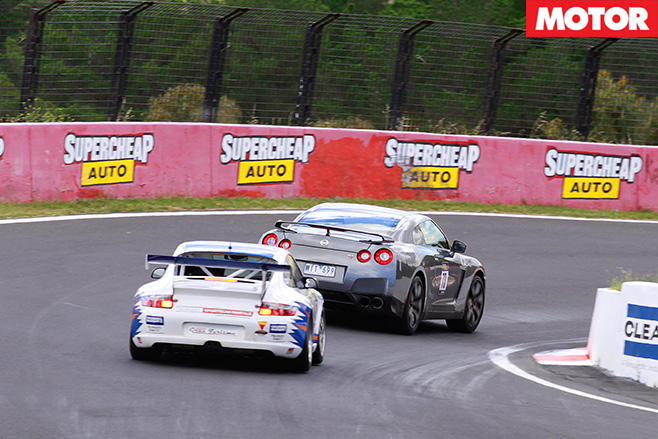
The run up the mountain is something else. Already, we’re amongst the Porsches, and the GT3s can’t hang with the Nissan here. Unlike the Stuttgart stormers, there’s no glorious linear rise in the revs and the power delivery.
It slams hard early and keeps slamming at about the same rate until 7000rpm. It’s already in fifth again before The Cutting and it spits itself out of that steepest of pitches with a disturbing disdain for topography.
From there, the big Nissan builds more and more speed so that by the Reid Park gates, it’s already travelling fast enough to need to run all the way out to the concrete on the exit. Using all the track, the rollercoaster builds momentum until you come to the realisation that you need to back off and recalibrate. This GT-R is just that fast.
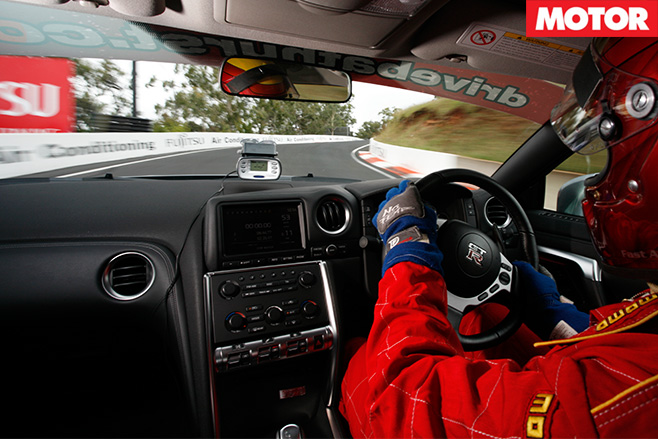
It’s here that you feel its weight slingshotted beyond normality until you have to ask it to do unnatural things coming back down again. It doesn’t feel terribly keen about any of this stuff now.
The blind approach to The Esses is okay, but the right hander makes the Nissan’s gizmos think and The Dipper downright confuses them, to the point where it won’t pick up the throttle at all until it’s travelled another 50 or 60 metres. That’s not so bad, though, because it refuses to deliver all the drive coming out of Forrest’s Elbow, and waits at least 150 metres before it pulls the trigger.
When it does, Conrod Straight never felt so short. It’s already doing 250 at the dip, it’s indicating 280 before The Chase (though prudence washes off 50km/h of that before attempting to turn in) and then there’s the big brake bite. It stops, but … then it reaches Murray’s Corner and it really doesn’t want to stop a second time.
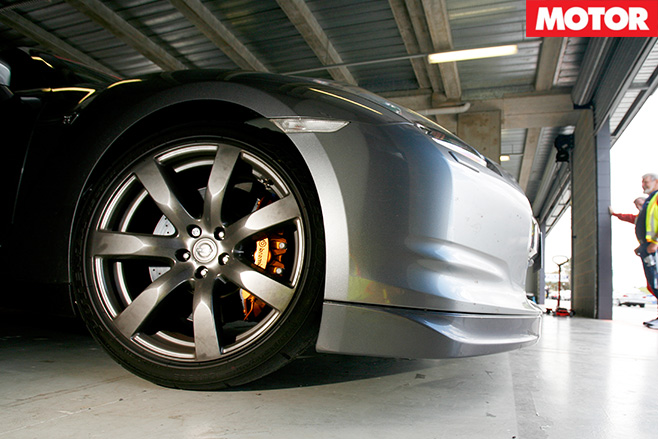
And this is the biggest problem. By any measure, the Brembos are a decent size. There are six-piston calipers up front and four-piston monoblocs down the back, and all four rotors are 380mm, but on a track like this, they don’t feel like they’re enough.
The problem isn’t stopping as such, because they keep climbing off the canvas to have another go. The real issue is feel and confidence, because they feel bad and inspire no-one. From Skyline onwards, the brake pedal is at a different height every time you go looking for it and it asks for a different pedal pressure to get the same jobs done.
For a straight-line shove, that’s not really a problem. Where it hurts is the little, confidence-settling pedal brushes that you need on a fast track like this one, or the small-but-critical bits of help a brake brush can give the steering when things get busy. If the same inputs can’t do the same job lap after lap, then the driver will lose confidence. Times will suffer.
By The Cutting he’s already talking about the Nurburging lap. By the end of it, he’s set a new, but unofficial, production car lap record, though one that’s subsequently been beaten by German touring car ace Bernd Schneider in a Mercedes-AMG GT S.
A 2:25.60 isn’t going to give a V8 Supercar a hurry up, but it would have been good enough for this overweight, stock-standard road car to sit 28th on the grid for the 1992 Tooheys 1000. The R35 is no pretender.
Nissan GT-R Specs: Body: 2-door, 2+2-seat coupe Drive: all wheels Engine: 60-degree V6, DOHC, 24v, twin-turbochargers Material: alloy head/alloy block Bore/Stroke: 95.5 x 88.4mm Capacity: 3799cc Compression: 9.0:1 Power: 357kW @ 6400rpm Torque: 588Nm @ 3200-5200rpm Redline: 7000rpm Fuel/Tank: 98 octane/71 litres Kerb Weight: 1740kg Power-to-weight: 203kW/tonne Transmission: 6-speed dual-clutch Ratios: 4.05/2.30/1.60/1.25/1.00/0.80 Final Drive: 3.70 Suspension: double A-arms, coil springs, anti-roll bar (f); multi-links, coil springs, anti-roll bar (r) Length/Width/Height: 4655/1895/1370mm Wheelbase: 2780mm Tracks: (f/r) 1590/1600mm Steering: power rack and pinion Turning Circle: 10.4m Brakes: 380mm ventilated discs, six-piston calipers (f); 380mm ventilated discs, four-piston calipers (r); ABS, EBD, ESC Wheels: 20 x 9.5-inch (f), 20 x 10.5-inch (r); forged alloy Tyres: Bridgestone Potenza RE070R Size: 255/40R20 (f), 285/35R20 (r) Price: $148,800
We’ve now driven Holden’s new LS3-powered VF II Commodore, but for those short of time here are a few things we like…
- Feel the noise – I can’t remember a lairier sounding stock Holden. Period. Proves that exhaust noise is like money: Some is good, more is better.
- White, black, red – No, not the national flag of Yemen, but the SS-V Redline in white with the black roof and red calipers. Tasty.
- Anchors away – Those Brembos on the Redline are some marvellous stoppers. Staying power galore and a great pedal feel.
- Collectability – You’re unlikely to lose money on a Series 2 SS over the longer term.
- Passion lives here – The people who built this car, love this car. And you can feel that depth of enthusiasm when you drive the SS.
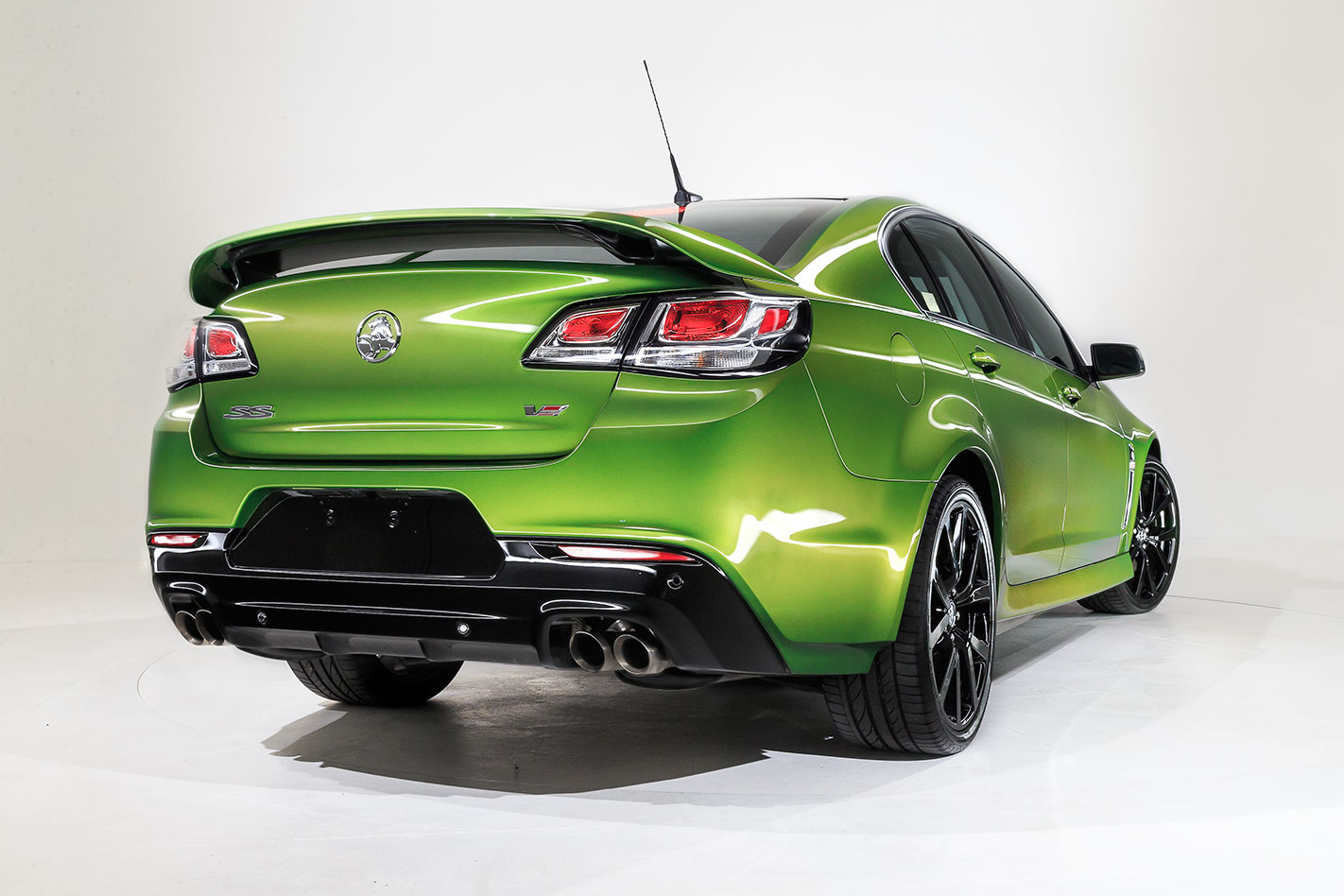
- Bowser blues – I know it won’t bother the faithful, but an extra litre per 100km for the new car kind of grates a bit. No new model Commodore has ever gone backwards on fuel economy before.
- Blind spot – That thick A-pillar remains to hide anything smaller than a Airbus A380 when you’re turning right.
- When is bright not so bright? – When it’s applied to flat surfaces in and around the centre console to reflect every stray ray of sunlight.
- Big fat mama – Can’t help but wonder what a dead-set weapon this thing would be with 300kg lopped off its weighbridge ticket.
- Sayonara big guy – Yep, this is the last Aussie designed, Aussie made big Holden we’ll ever see. And there won’t be a V8 post 2017. Sniff.
Where the rear-drive Carrera goes, the 4 and Targa follow – and with the 991.2 911 that means teaming turbo torque with traction.
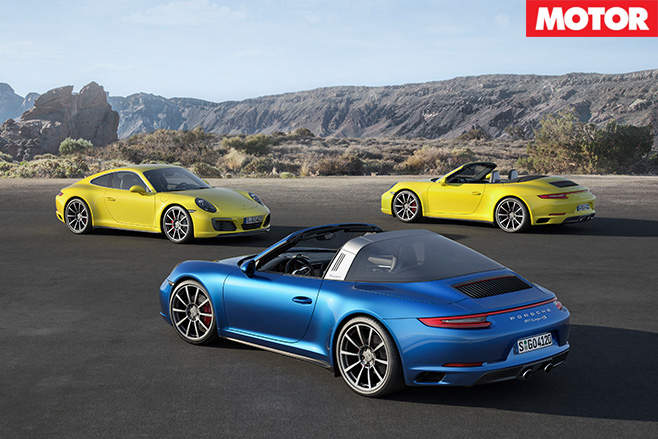
The 911 Carrera 4, Carrera 4S and 911 Targa 4 and Targa 4S all remain with 44mm-wider rear guards compared with the rear-drivers, and the new 3D-effect tail-lights continue indented in the lighting strip for the all-wheel drive variants.
Standard on all models now is Porsche Active Suspension Management (PASM), the adaptive dampers of which drop ride height by 10mm. Only the Carrera 4S gets a rear-axle steering option ($5490) pinched from the 911 GT3 and Turbo that assists agility and also cuts turning circle by 0.4 metres.
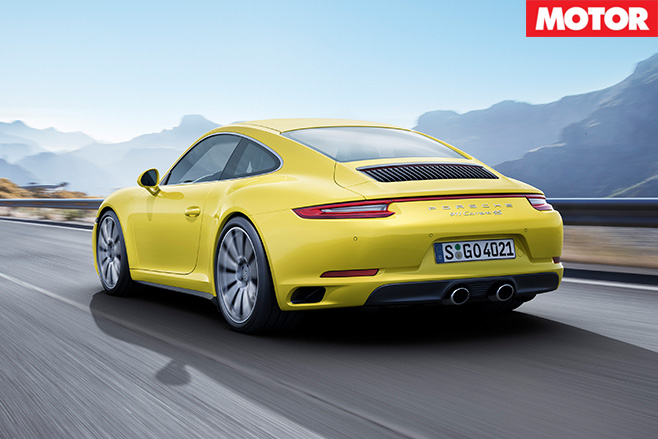
The new turbo 3.0-litre range can now deliver all 272kW and 450Nm (Carrera 4/Targa 4) or 309kW and 500Nm (Carrera 4S/Targa 4S) to the ground without slippage that may afflict the rear-drive versions.
A PDK-equipped Carrera 4 wipes 0.4sec off the 0-100km/h sprint of the old 3.4-litre atmo, and at 4.1 seconds is now a tenth faster than a rear-drive Carrera. The Carrera 4S can comfortably get into the 4s now, a 3.8sec dash also a tenth faster than the Carrera S.
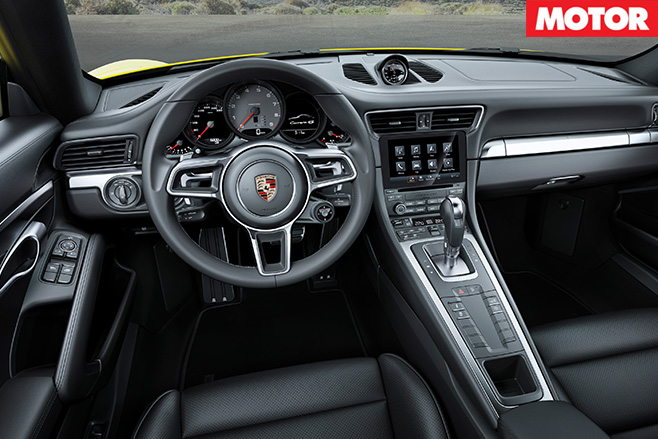
A new steering wheel with Sport Response Button allowing a quick twist of different driving modes, and fresh infotainment screen and software, also follows other 991.2 models.
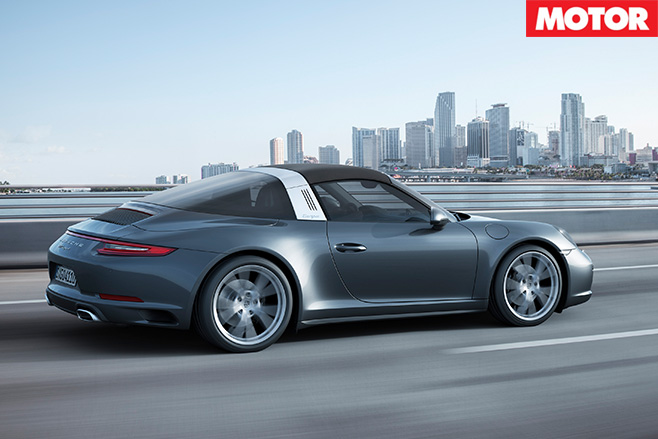
For the first time, Cabrio and Targa models also join at the pricing hips – previously the soft-top was about $5K cheaper than the quirky retractable metal-and-fabric version.
A bigger, more powerful and more vocal V8 for the VF Series II Commodore makes it a fitting send off for the most popular Holden nameplate ever.
WHAT IS IT? The last major update for Holden’s locally-produced Commodore, in this case the most driver-focused, top-spec V8 version. This is the car that will see the real Commodore out.
WHY WE’RE TESTING IT To experience the most powerful V8 that’s ever been fitted to a non-HSV Holden. The new LS3 6.2-litre is all about “making the lion roar again” according to Holden, and we wanted to see if it lived up to its claim.
MAIN RIVALS Ford Falcon XR8 and Chrysler 300C SRT8. HSV Clubsport would also usually be in the mix, except it’s taking a temporary holiday. The Falcon XR6 Turbo – and rumoured Sprint model – is also on the shortlist.
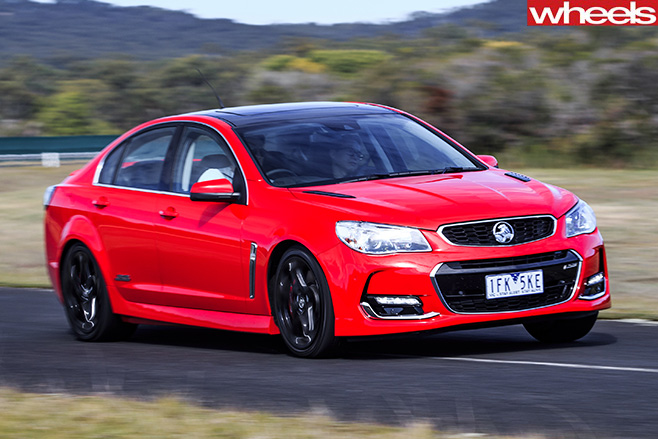
PLUS: V8 noise; V8 performance; brilliant balance and grip; practical and comfortable MINUS: Increased fuel use; interior busy in some parts; rear seat attention to detail
MAIN RIVALS IT’S ALL ABOUT the noise with Holden’s new VF II Commodore. Well, mostly. The addition of the LS3 6.2-litre V8 brings with it a snarl and bark no Holden has come close to for more than a decade.
The newfound lungs are topped off with crackles and rumbles on the overrun. It’s a beautiful thing. Some would say you have to go back to the locally produced 304/308 engines to experience a similarly tantalising tenor.
Loud, too. Tramp the throttle and there’s enough of a deep, guttural roar to momentarily halt conversation in the cabin. It’s a wonderful, old school thump where you can just about hear each cylinder firing enthusiastically within the sizeable alloy block.
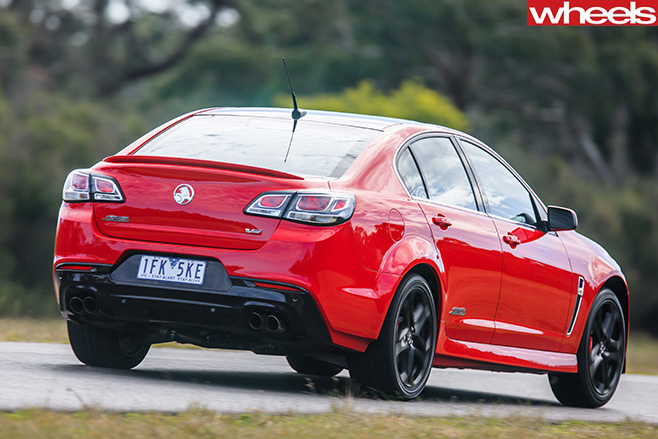
Simple, and the sort of thing we’ll miss once Holden packs up its manufacturing shop at the end of 2017.
Even better is that the SS-V Redline does not drone or boom when cruising. It’s impressively refined on light throttle, albeit never completely hiding the fact there’s eight of the best beneath the bonnet.
Holden has also fitted a bi-modal system that opens a flap in the exhaust to further amplify that glorious muscle-car sound – the sound that will disappear when the Commodore ditches its V8 option with the imported model from 2018.
The VF II V8 also goes hard, not so much thanks to the 304kW – it’s absolutely appreciated, especially the way it revs cleanly to 6600rpm – but the 570Nm.
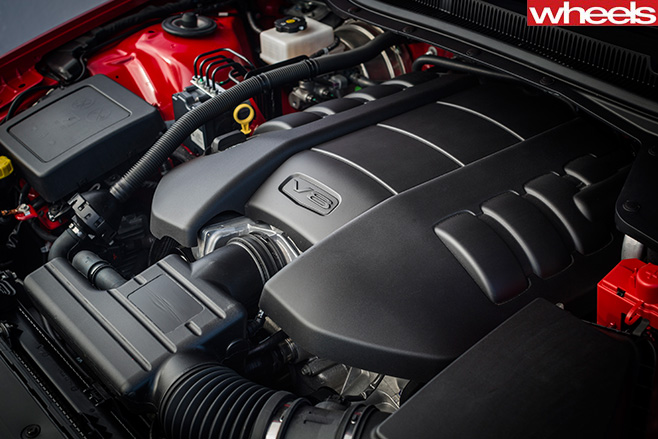
The shorter final drive ratio helps – the manual has dropped from 3.45:1 to 3.70:1, and the auto from 2.92:1 to 3.27:1 – ensuring the Redline is suitably pokey in any gear. The carryover six-speed manual has the trademark direct feel, with a relatively short shift.
Engineers have also taken to the handling of the Redline. The wider stabiliser bar (it’s 500mm longer) unique to the flagship model teams with softer rear springs on the FE3 suspension setting, allowing better compliance on rough surfaces. There’s still some low-speed fidgeting, but the body movement is beautifully controlled, especially at higher speeds.
Launch hard out of corners and the tail squirms but squats in a purposeful yet predictable way, with loads of grip from the Bridgestones that channel that luscious V8 energy. Optional 20-inch hoops are mostly about the look, with grip similar to the standard 19s.
Inside, the Commodore is unchanged. Nicely supportive front seats ensure long-distance comfort, and there’s great adjustability to the driver’s pew.
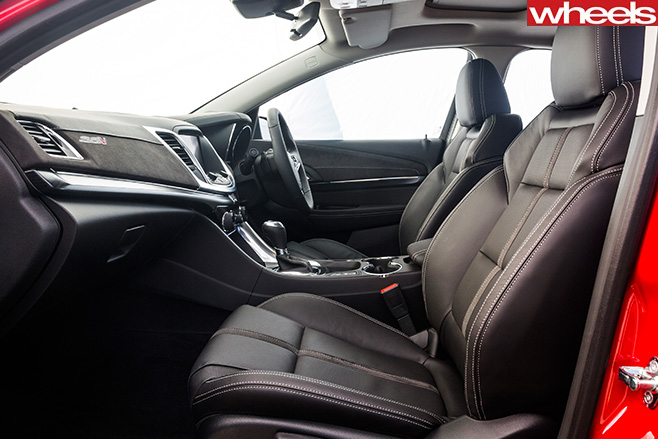
Fuel use, too, is less than stellar at a claimed 12.9 litres per 100km (up 1.1L/100km over a VF SS-V manual). Put that down to the extra grunt, shorter gearing and 36kg of extra weight (it’s 1793kg as a manual, 1803kg as an auto). Punters may not care, but some gumtrees might.
Still, as a celebration of V8 Commodore performance the SS-V Redline is a bullseye. Fast, fun, immensely accomplished and brimming with character. The clock’s ticking…
SPECS Model: Commodore SS-V Redline manual Engine: 6162cc pushrod V8 Max power: 304kW @ 6000rpm Max torque: 570Nm @ 4400rpm Transmission: 6-speed manual Kerb weight: 1793kg 0-100km/h: 4.9s (claimed) Price: $53,990 On sale: Now
Click here to read the full range review of the Holden Commodore
These babies are among the smallest and cheapest cars in Australia, but they are bursting with brio and bonhomie.
First published in the June 2015 issue of Wheels magazine, Australia’s most experienced and most trusted car magazine since 1953.
Can’t wait to see the final scores? Jump to the verdict now.
CHEAP cars are revolting. No, we’re not talking about bargain-basement downers like the Chery J1 or Mitsubishi Mirage, but a promising new wave of inexpensive urban runabouts that deliver a surprising amount of driving pleasure. Affordable fun without any nasty aftertaste, if you will.
The brilliant Volkswagen Up may have left the building last year, but there’s still some life in the so-called Micro class, with two newcomers lobbing for our attention. Suzuki leads the charge with the Celerio while Nissan has finally introduced the facelifted Micra, almost two years after it surfaced abroad.
Good things in small packages
Silly name aside, Suzuki’s Alto replacement hits the ground running with $12,990 drive-away pricing for the 1.0-litre three-cylinder five-speed manual. Not short on spec, it includes Bluetooth audio streaming, power windows, electric mirrors and a trip computer. And, sadly, cartoonish styling, like Chicken Little on wheels.
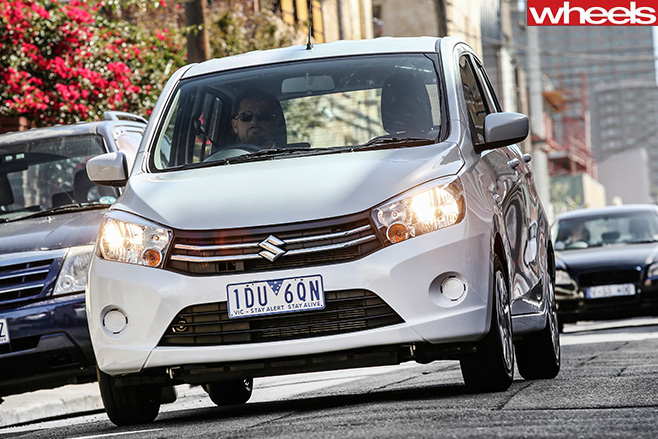
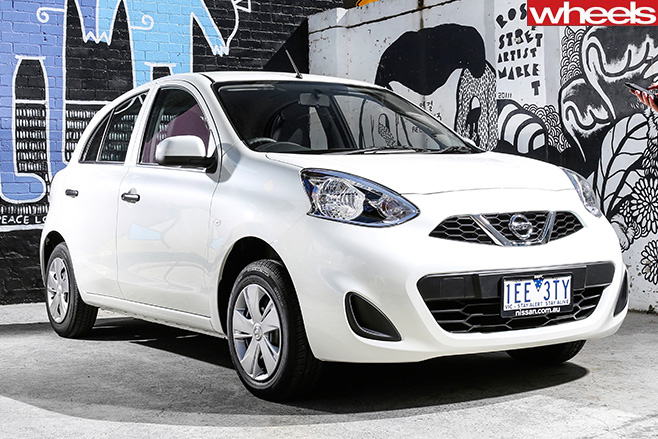
Micra is priced from $13,490 and the refreshed ST 1.2 three-cylinder five-speed manual gains less ghastly plastics to go with a more mature centre console, sharper-looking nose, different tail-lights and tailgate, standard cruise control (a segment first, and missing in the others), fold-down driver’s left armrest, rear power windows, upgraded multimedia with (at times patchy) full Bluetooth and USB connectivity, a boot light and a full-size spare. And it’s the only five-seater in this group. Feature for feature, the Micra is anything but.
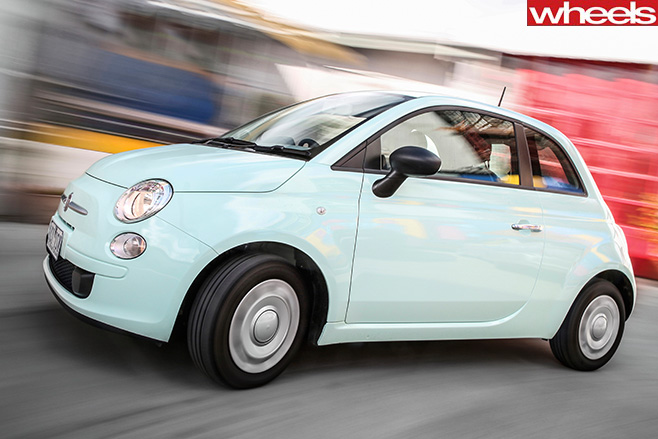
But can the Little Lollobrigida stand the heat? In this assembly of all-atmo aspirants, the 500 is eight years old, two doors short and missing essentials like a proper glovebox, split/fold rear backrests and audio streaming. Plus, after last August’s ‘Series 3’ refresh, the base Pop 1.2 four-cylinder five-speed manual rocketed from $14,000 drive-away to $16,000 plus on-roads, though dealers regularly discount to the old price. Check the papers.
Climb in and chill out
That all counts for diddly if the Fiat’s lack of rear doors strikes it from shopping lists, but consider this: at least the pair of doors the 500 does have shut solid, open wide and feature handy shoulder-height, front-seat slide releases with previous-position memory for effortless back-seat access.
However, the Celerio beats the 500 for entry and egress excellence. Suzuki clearly designed its city car from the inside out, with exceptional interior packaging enhanced by deep windows and lofty seating that heighten the sense of space.
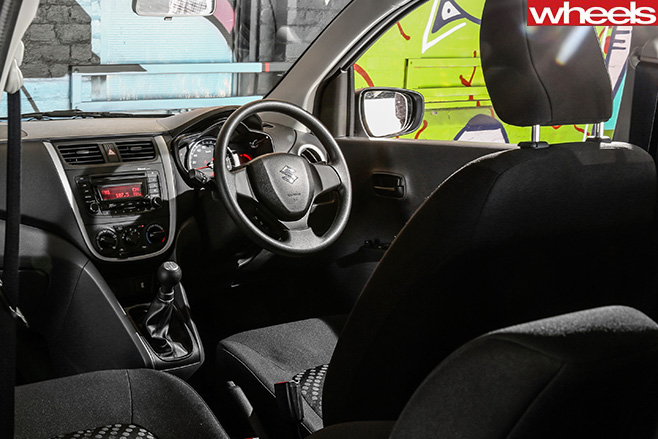
Celerio’s Swift-style dash is a model of clarity and functional cohesiveness, but after the funky Alto it’s all a bit dull and conventional. Some polka-dot trim patterns attempt to groove things up, but practicality wins the day with cupholders, overhead grab handles, a map pocket, ISOFIX child-seat points and a 254-litre boot (a smidge more than Micra and nearly 70 litres ahead of the Fiat’s shallow cargo area, though only the Nissan sports a full-size spare).
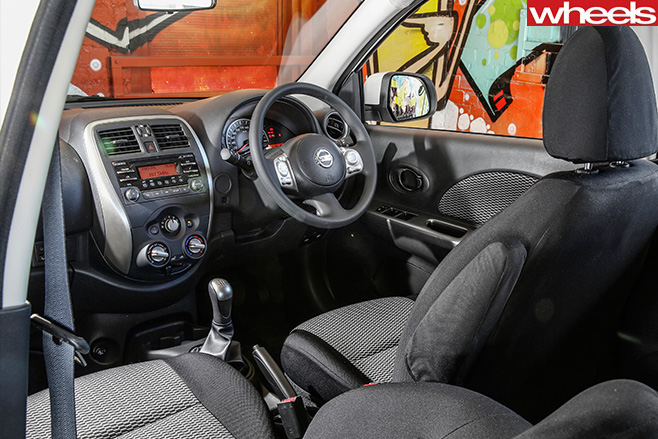
Aside from sharing a commanding driving position and subsequent excellent views all round, the Celerio’s weaknesses are Micra’s strengths. The Nissan’s steering wheel, stereo and rear backrests are strong points, but it squanders its five-seat advantage spectacularly with a torturously bony cushion and poor rear packaging hampered by a sloping roofline (unlike the palatial Suzuki). Also, our test car’s seat cloth trim sagged alarmingly in places, and having no lane-change indicator is downright annoying these days.
However, no rival can match the Fiat’s evocatively retro single-binnacle dash, glossy painted fascia, leather wheel, snooker-ball gearknob, fashionable houndstooth seat material and lashings of faux chrome.
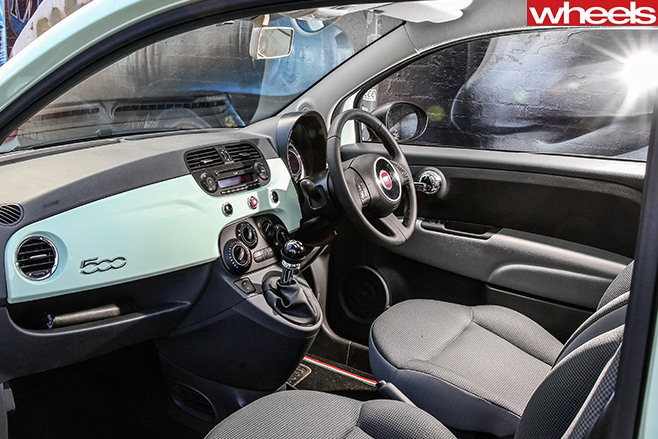
There’s also far less mechanical and road noise intrusion, while not a rattle was detected in our high-mileage test car. Shocked? Don’t be. Fiat has been at it since 1899, with benchmark-setting babies like the Topolino (1936-55), Bambino (1957-75) and Cinquecento (1991-98). It also has this group’s longest warranty.
Lining up at the lights
Nowhere is Fiat’s experience more obvious than on the road, despite relying on a 30-year-old engine. Far from being shamed by its three-cylinder competition, the Pop’s 51kW/102Nm 1.2-litre four-pot eight-valve single-cammer surprises with a velvety flexibility in keeping with its lush ambience.
Smart gearing helps the Fiat’s lively off-the-line acceleration, but beware a flat-spot if the revs drop and you’re in a ratio too high. Pleasingly, then, the five-speeder’s shift quality is the slickest (yet weightiest) here, so the required rowing along isn’t a burden.
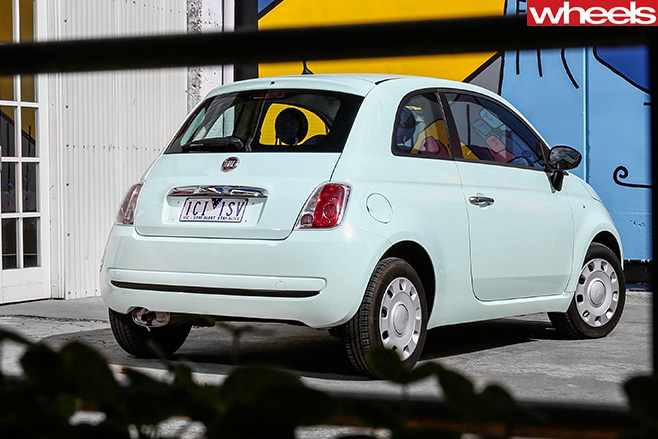
Stepping into the Micra is sobering because, while its 1.2 triple is the power leader here at 56kW/104Nm, it’s the heaviest of the tots, 113kg more than the featherweight Suzuki. So the Nissan is a tad lethargic off the line and doesn’t really hit its stride until well past 4000rpm. The ST’s leading third-gear 80-120km/h acceleration time (10.0sec) reflects the strength and resilience of its top end.
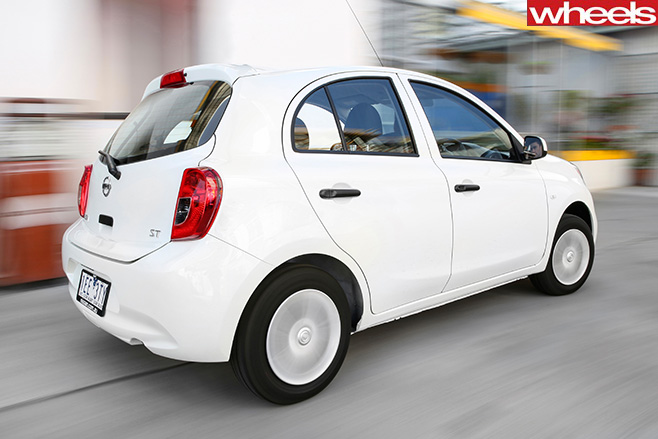
Miserly as the Celerio is, its sparkling 50kW/90Nm 1.0-litre triple is a terrific performer in and out of town, sweeping the 830kg hatch along with infectious enthusiasm. Fizzy without the buzz, its linear torque delivery is a boon, backed up by a sweet and light shift action. This car is happy to crawl around in top gear without hesitation.
Short, sharp and nippy
It’s therefore disheartening that Suzuki didn’t go the extra mile with the steering, which has a sticky straight-ahead dead spot that robs it of potential go-kart dartiness and feel. Beyond that, the Celerio is remarkably responsive and fluent on a winding road, soaking up bumps with a suppleness normally reserved for better French runabouts. There’s more Swift in the Celerio than its frumpy form suggests.
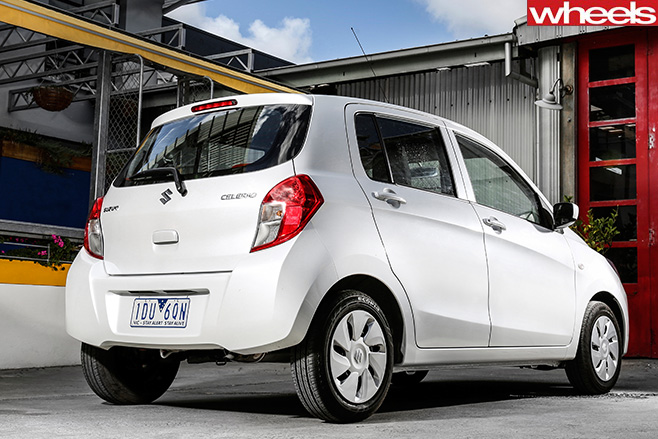
Yet the group’s veteran, the 500, still shows the way dynamically, with the sharpest steering, underscoring the most agile and composed chassis of the trio. The helm is the most alive for both interaction and feedback, without feeling too nervous. And while the short wheelbase makes it bob around at speed on bumpy roads, it remains planted and controlled. ESC intervention on gravel is the gentlest by some margin, further highlighting the car’s engineering thoroughness.
Okay, we’ll play favourites
Besides its timeless beauty, that’s what separates the 500 from the Celerio and Micra. It’s the only car here that looks and feels like one you’d choose out of desire rather than economic necessity. Just don’t pay full price for a Pop – not when it was $14K drive-away little more than a year ago. That should be your haggling starting point. We’re not mugs, Fiat.
Seeing past the Celerio’s dowdiness isn’t easy, but it rises above its pricing with an exceptional drivetrain, packaging and chassis composure. Think of it as a roomier Swift, but hit with the dorky stick. So close.
Micra isn’t disgraced, but it’s clearly off the pace against such polar-opposite obsessives. While showing wrinkles in the drivetrain, dynamics and refinement, the Nissan still presents a sound (if noisy) value proposition. It’s far from the worst in class.
The good news is that all three of our sub-B babies prove that there’s still plenty of life – and plenty to like – at the most affordable end of the market, even if VW’s impressive Up couldn’t make it work.
Endangered species
INEXPLICABLY, unlike everywhere else on the planet, Fiat Australia positions Panda above rather than below the 500, explaining why the five-seater is as rare here as its animal namesake. And just as endangered, too, if the company’s inability to find us a $16,500 Pop manual – currently $14,500 drive-away – for this comparo is any indication. Curious pricing and invisible marketing suggest Panda fans ought to be quick before it goes the way of the VW Up. And that would be a shame for there’s more than enough Cinquecento-derived chassis goodness to justify the Panda’s continued existence.
European exodus
DESPITE increasing congestion, local Micro-segment sales slipped by 30 percent last year, to fewer than 16,000 units. That’s why we’re denied some of Europe’s most beguiling babies, including the rear-engined, rear-drive Renault Twingo and its Smart ForFour twin, the Opel Adam, Toyota Aygo/Peugeot 108/Citroen C1 triplets, Hyundai i10 and the recently discontinued VW Up and its Skoda Citigo sibling.
At least Kia is seriously considering the latest Picanto, also from Europe. Two years ago we drove one in the UK and were impressed with its style, refinement, maturity and efficiency. Brand loyalty is best achieved by snaring young buyers starting out, so if Fiat can make the 500 work here, the others can, too.
Verdict
 FIAT 500 POP
Price as tested: $16,000
NCAP rating: 5 stars (Aus)
Fuel economy: 6.4L/100km (test average)
Acceleration: 0-100km/h: 14.1sec (tested)
Plus: Timeless design; quality cabin; sharp steering; raspy engine; little extras
Minus: Relatively expensive; odd driving position; practicality/storage
Verdict: 7.0/10
 SUZUKI CELERIO
Price as tested: $12,990 *Drive-away price
NCAP rating: 4 stars (Aus)
Fuel economy: 5.8L/100km (test average)
Acceleration: 0-100km/h: 12.9sec (tested)
Plus: Strong engine; supple ride; amusing handling; massive cabin; ace value
Minus: Dorky styling; on-centre steering laziness; intrusive front headrests
Verdict: 7.0/10
 NISSAN MICRA ST
Price as tested: $13,490
NCAP rating: 4 stars (Aus)
Fuel economy: 7.3L/100km (test average)
Acceleration: 0-100km/h: 13.2sec (tested)
Plus: Big space; top-end power; high spec; five seats; decent audio/multimedia
Minus: Notchy gearshift; ill-fitting trim; flawed rear seat; poor tyres
Verdict: 5.5/10
SUV MAKER Haval has become the first Chinese car builder to position itself in Australia as a premium product, launching well equipped small and large wagons that will cost more than popular base models from established competitors.
Haval, which is also the first Chinese passenger car brand to be owned and operated in Australia by its parent company in China, said its four dealerships would get their first cars this week.
The ambitious strategy from Haval Motors Australia (HMA) – owned by Chinese manufacturer Great Wall Motors – distinguishes it not only from the several brands of Chinese commercial vehicle on sale here but also from now flourishing Korean brands such as Hyundai and Kia, and even from the now dominant Toyota. All began in Australia with cheap, small, price-leading cars.
Australia is the first right-hand drive export market for Haval, and the SUV-only manufacturer has begun with three models: a small H2, a large five-seat H8 and a seven-seat H9.
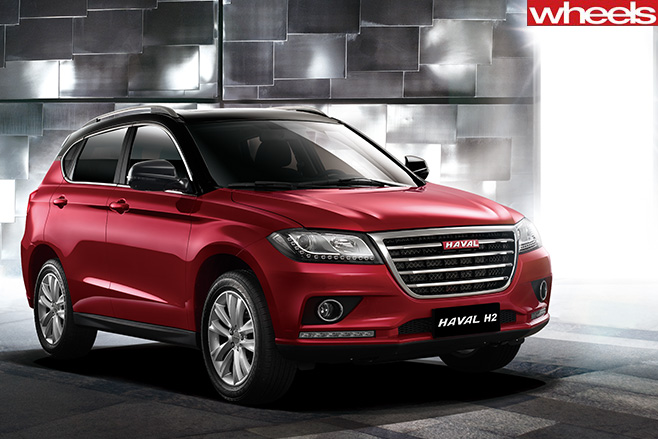
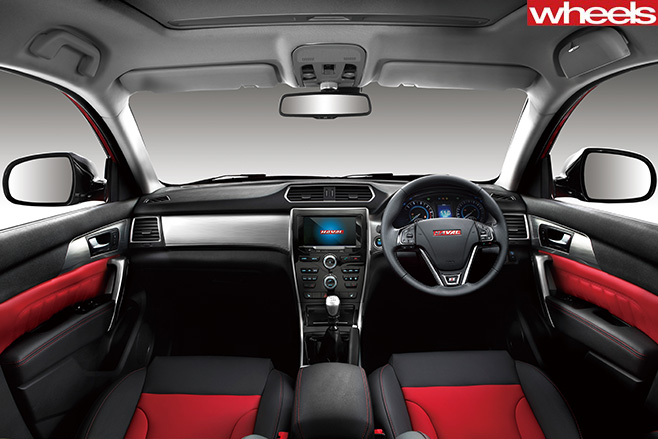
Standard equipment includes a sunroof and a reversing camera, as well as two-tone colour choices. Power comes from a 110kW/210Nm 1.5-litre turbo-petrol engine, with a fuel claim of 8.2L/100km.
Haval says it expects all models will achieve five-star ANCAP safety ratings. That safety claim extends to the leather-trimmed, $41,990 H8, which Haval says is a rival for the Mazda CX-5, Toyota Kluger and Jeep Grand Cherokee, and the H9, which boasts seven seats, a ladder chassis and a proper four-wheel drive system.
The H9 is chasing the Toyota Prado and Ford Everest but it is significantly cheaper, starting at $46,500. However both the H8 and H9 are powered by relatively small, 2.0-litre turbo-petrol engines, with no diesel option. Haval is working on a larger diesel engine but is focussed on a hybrid H7 model, due in 2016.
HMA managing director Parker Shi said he did not fear the slowing down of the Chinese and Australian economies.
Nor did Shi admit apprehension over currency fluctuations and their potential impact on the cost of delivering in Australia.
“If we really think that the exchange rate will kill us, and the company cannot afford the risk, then the company would have no future,” he said. “But the company is big, good – we can carry on [regardless].”
HMA said that by the end of this year it aimed to add six dealers to the four it confirmed this week. It hopes to have 25 operating across Australia by the end of 2016.
At the Shanghai motor show in April last year, CEO Wang Fengying said Haval wanted to become the biggest-selling SUV brand in Australia. Shi said this week that this goal still stood, but he declined to post a volume goal or a timeframe.
“We are at the start. First we must learn how to walk,” he said. “We realise that if we don’t have the target, we won’t achieve our dream.”
Haval declined to comment on the current legal conflict between Great Wall and local importer Ateco, beyond denying it would negatively affect Haval’s sales or brand image.
The SUV market segment is the fastest growing in Australia – and China – this year, accounting for one in three vehicles sold here. Toyota was the segment leader in Australia over the full year of 2014, selling 56,660 SUVs.
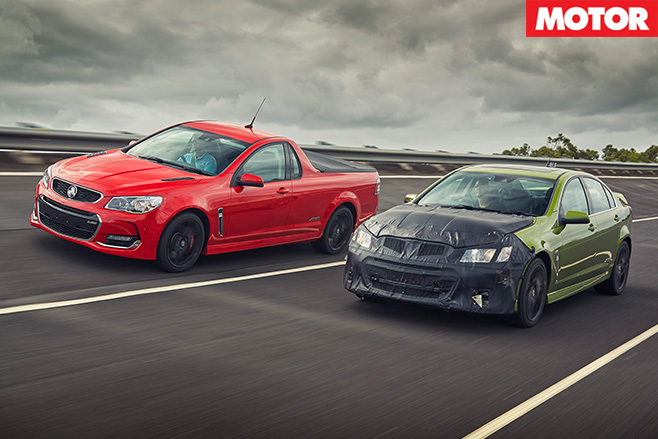
When you consider that almost 60 per cent of Commodore sales right now are of the sports models (that’s SV6, SS, SS-V and SS-V Redline) it makes sense that it’s those halo, big-banger variants that Holden has dropped its cash on for the Series 2 facelift of the VF.
In fact, not much has happened at all on the V6 front, but for V8-powered Commodores, the Series 2 nip and tuck is pretty meaty.
The headline stuff is all about the old six-litre L77 being replaced on all V8 models by the 6.2 litre LS3. No rocket science there, but a bigger stick is always a bigger stick.
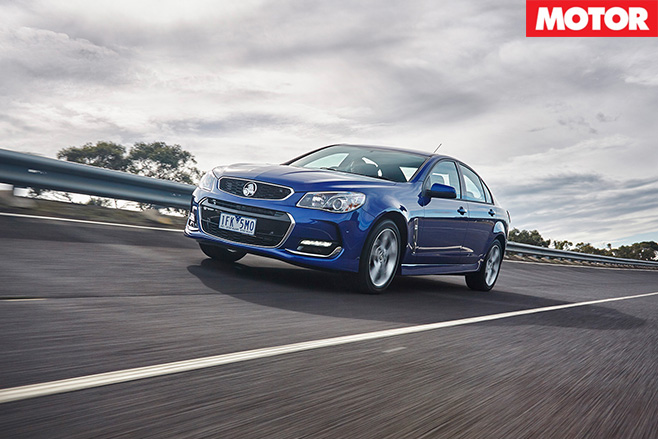
It all works, too, and there’s no doubting the factory claim of 0 to 100 in about five even, but for those of us who like the soundtrack to match the movie, the news is even better. With some clever attention to detail, Holden has made the new VF holler like a whacked walrus, to the point where you’ll wonder whether the thing could actually be street legal (it is).
The magic is in a bi-modal flap that opens up the rear mufflers and allows them to flow into a clever set of tips that send sound back under the car and into the cabin. The other gizmo is a plastic tube that, likewise, pumps noise into the cabin. No synthesised crap played through the stereo for V8 Commy drivers.
Brembo brakes are now included on the Redline model and the caliper change has allowed for a repositioning of the rear sway-bar for better ride with the same control.
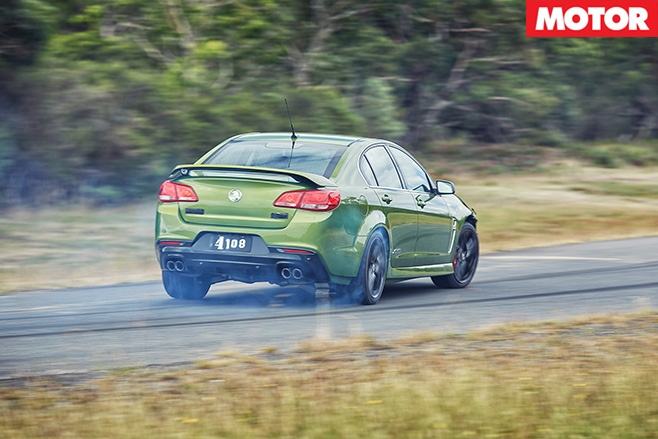
For all that the changes are small (and were almost certainly done on a tiny budget) the results are big. In either manual or auto, the Commodore now jumps much harder and, with the extra revs available, you can go chasing the horizon big time.
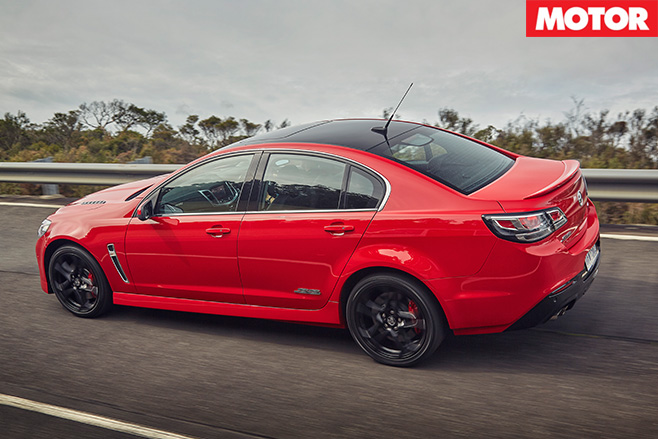
The ride and steering is still a good compromise, too, and the Commodore points well without jarring through the front end. In fact, you can hit big bumps at speed with no fear of it bottoming and the balance is excellent for such a big `un.
Maserati faced an unusual problem when designing the new Quattroporte. In making it better, they may actually make it worse.
Y’see, the old Quattroporte wasn’t actually very good. It was thirsty, had little room for luggage or passengers, didn’t ride very well and the automated manual ’box was about as smooth as Parramatta Road.
Hit the Sport button, though, and you wouldn’t care if it ran over your children and insulted your wife. One run through a tunnel with the 4.7-litre V8’s magic exhaust note enveloping you was all it took to fall in love.
Add in the fact it looked sensational – particularly the Sport GTS in black with the optional 21s – and suddenly the poor ride and lack of room ceased to matter. It had that most elusive of attributes: character.
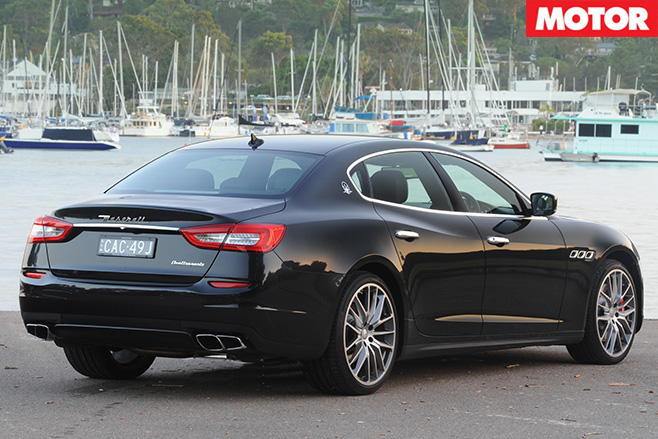
Bigger in every dimension than its predecessor, the growth spurt has done wonders for the new QP’s practicality. The boot has swelled from a marginal 450 litres to a useable 530 and it’ll now easily accommodate full-size adults in the rear, if only two of them.
Sadly, the driver is unlikely to be as comfortable. The seats lack lateral support and the enormous transmission tunnel skews the pedals heavily to the right. A fine mix of leather, wood and carbonfibre clothes the cabin, but there are small reminders that perhaps Maserati didn’t have the development budget enjoyed by, say, Mercedes with the new S-Class.
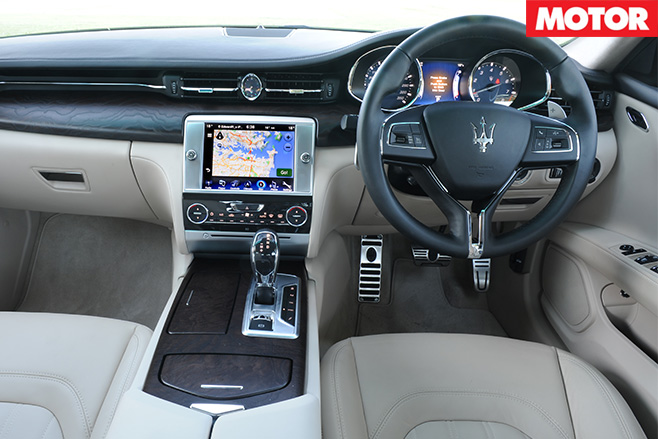
To be fair, the average Quattroporte owner is never going to sit in a 300, and the Italians aren’t alone in doing this (Aston Martin with Ford gear, Bentley with VW bits), but the parts bin approach grates when Maserati asks $319,800 for the pleasure. The shift paddles, too, make an awful, plasticky ‘clacking’ sound that discourages use.
Still, these are relatively small foibles, easily forgiven if the new Quattroporte is dynamically superb. Unfortunately it’s not. Let’s start with the ride: with the two-stage adaptive dampers set to soft, it takes too long to settle over large bumps while constantly fidgeting over small ones.
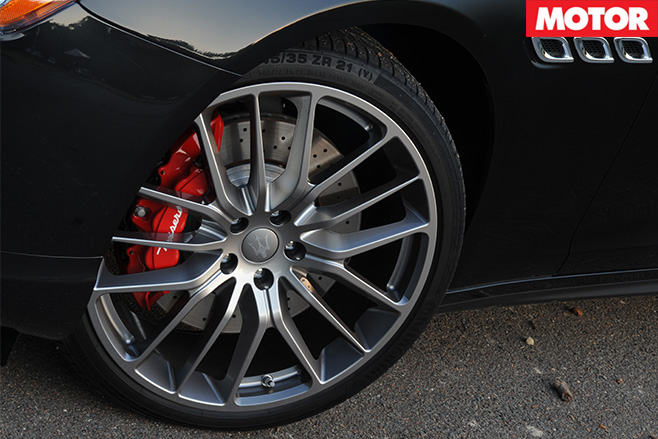
In the corners the 5.2m-long Maser never really shrinks around you and the lack of support from the seats leaves you hanging on to the enormous steering wheel for dear life. There is a caveat, though. The chosen launch route didn’t really allow us to stretch the Maserati’s legs properly so a final handling verdict will have to wait. There’s certainly plenty of grip and traction is strong, the ESP rarely troubled even exiting tight hairpins.
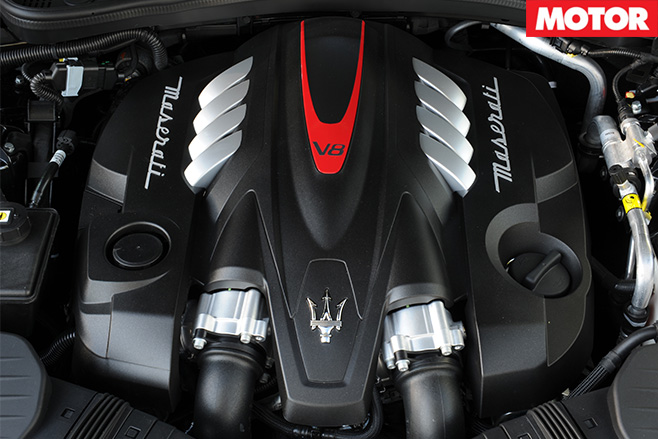
Thankfully, the new Quattroporte’s most contentious feature, the new turbocharged engine, is also a highlight. No, it doesn’t have the theatrics of the old 4.7, but this superb new 3.8-litre twin-turbo V8 still makes a great noise and, thanks to 390kW/710Nm allied to the slick eight-speed ZF automatic, shifts 1900kg of limo down the road with indecent haste.
There’s no doubt the new Quattroporte is a much better car than the one it replaces, it’s just unfortunate that some of what made the old car special has been lost in the process. So it’s better, but also not.
3/5
Specs: Engine: 3799cc V8, DOHC, 32v, twin-turbo Power: 390kW @ 6800rpm Torque: 710Nm @ 2250-3500rpm Weight: 1900kg 0-100km/h: 4.7sec (claimed) Price: $319,800
There’s something inherently right about a 2.0-litre petrol turbo driving all four corners, and the Golf R wagon Wolfsburg Edition finesses the formula better than most.
WHAT IS IT? A well-equipped wagon version of the multitalented Volkswagen Golf R, for those who don’t pack light and need an all-weather heavy hitter.
WHY WE’RE TESTING IT We’ve previously sampled the Golf R wagon at its international launch. Now we get to drive the full-fruit version that Volkswagen Australia hopes will separate us from $59 grand of hard-earned.
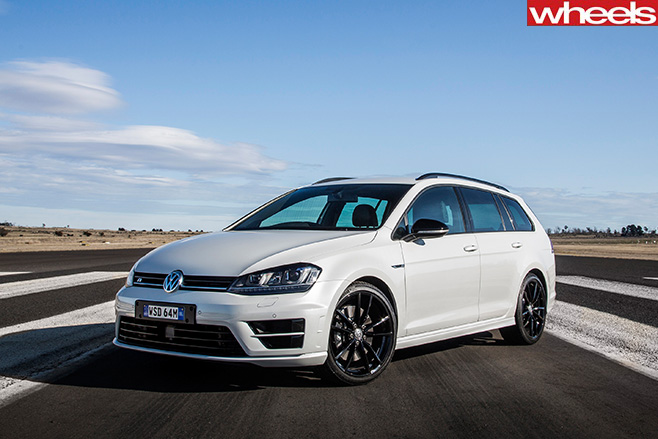
THE WHEELS VERDICT The extravagantly talented Golf R wagon Wolfsburg Edition could easily carry an $80,000 sticker price if it wore Audi rings. So at less than $60k with no real need to add options, this 206kW light load lugger emphatically delivers. Capability, desirability, and charisma? Yep, yep and yep.
PLUS: Soundtrack, composure, torque, build quality MINUS: DSG software calibration, we don’t get as much power as the Euros
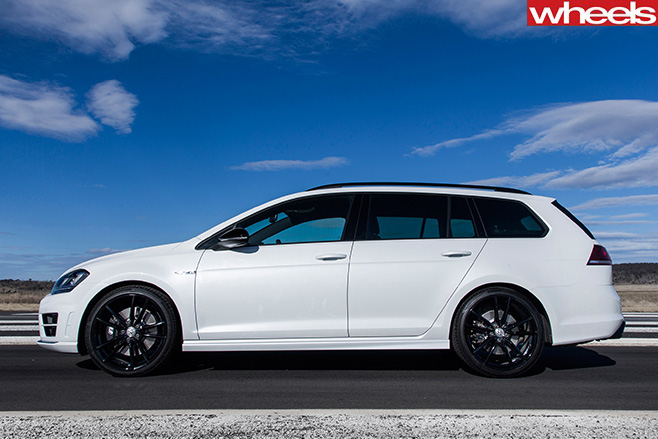
Naturally, Volkswagen will attempt to sell you the benefits of the wagon’s 605 litres of luggage space with the seats in place and 1620 with them folded, but that’s the secondary attraction here. Enthusiasts will enjoy the added emotional capital that’s built into the Golf R wagon. Its 74kg weight penalty tacks two tenths to the sprint through 100km/h, but 5.2 seconds isn’t exactly the response of a darted sloth.
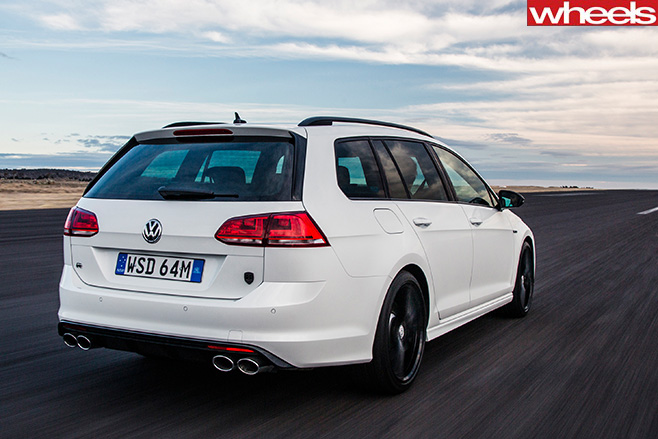
The progressive steering system is one of the more natural-feeling examples of its ilk, but a little more heft when it’s loaded up mid-corner wouldn’t go amiss. The ride, however, is perfectly judged: firm enough to instil confidence yet never lapsing into harshness. The body control of a tectonic plate allows you to dial up the pace without terrifying your passengers.
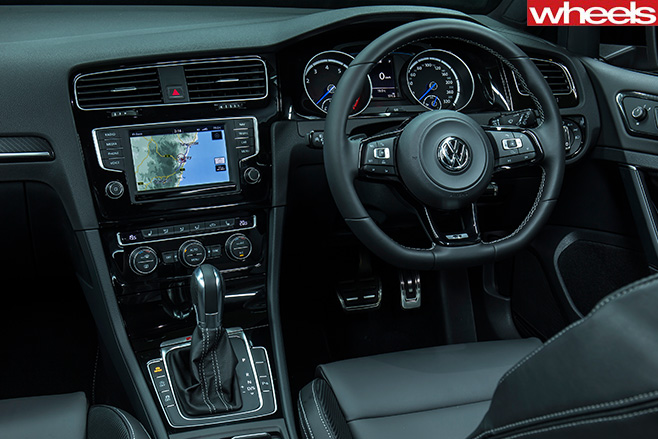
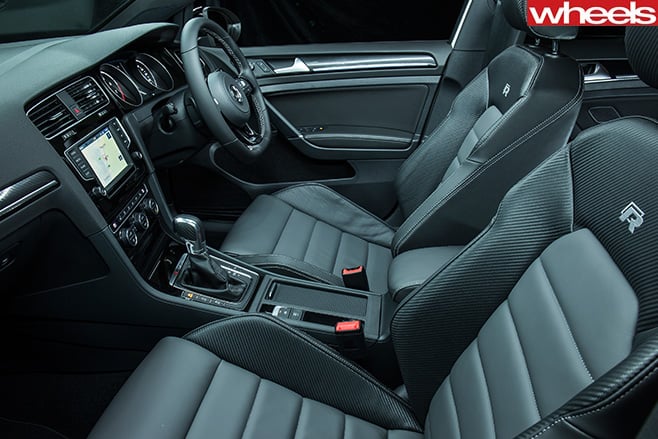
SPECS Model: Volkswagen Golf R wagon Wolfsburg Edition Engine: 1984cc, 4cyl turbo, dohc 16v Max power: 206kW @ 5100rpm Max torque: 380Nm @ 1800-5100rpm Transmission: 6-speed dual clutch Weight: 1509kg 0-100km/h: 5.2s Economy: 7.2L/100/km Price: $58,990 On sale: Now
Click here to read the full range review of the Volkswagen Golf
