
Skoda has added an electronic front diff and more power to its sought-after Octavia RS, to form the RS 230. Will it be worth an even longer wait?
WHAT IS IT? A Volkswagen Golf GTI Performance in drag, with a cheaper price tag and bigger boot.
WHY WE’RE TESTING IT If the normal Octavia RS is good (which it is), this faster RS 230 version promises to be even better thanks to a clever electronic diff and a power hike.
MAIN RIVALS Volkswagen Golf GTI Performance; Subaru WRX; Ford Focus ST; Renault Megane GT220; Holden Commodore SS

PLUS: Sounds brilliant; value and practicality; superb electronic front diff; VW quality; handling MINUS: Still not as sharp or as polished as Golf GTI; interior feels a generation behind; no DSG for Oz.
THE WHEELS REVIEW SKODA IS nailing it with the Octavia RS. The Czech brand’s performance hero is such a popular cocktail of performance, value and practicality that it has had to boost production to meet demand. And customers are willing to wait more than six months for their car to arrive.
Imagine how our mouths watered, then, when news of this even faster RS 230 version reached our ears.
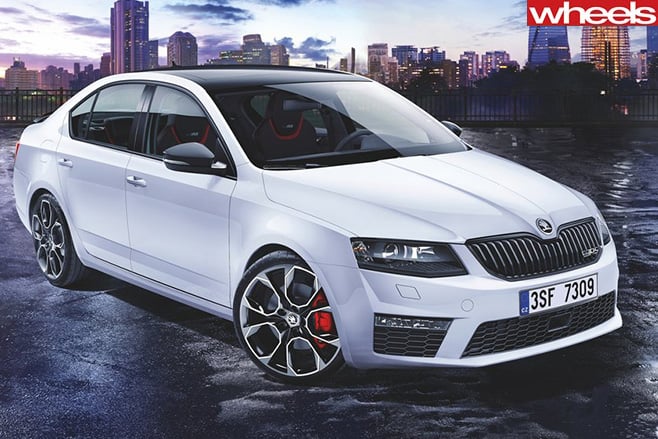
What the 230 adds, though, is a new electronic front differential and a 7kW power hike for its strong, free-revving 2.0-litre turbo four. It’s the same recipe used by the excellent VW Golf GTI Performance, but the Skoda’s killer blow is its price tag. Skoda Oz is still deciding on spec levels but expect the RS 230 to cost under $45K when it lands Down Under next year. That’s a healthy saving of almost $5000 over the Vee Dub.
As you’d expect, the 230’s fatter footprint means its dynamics aren’t quite as sharp as its German cousin, but the improvement over a regular Octavia RS is sizeable thanks mostly to that new electronic front diff.
Throw the 230 at a corner, feel the front begin to slide, and at the exact moment most will think “Ok, time to back off,” you pin the throttle to the floor. What happens next is totally counterintuitive. Instead of washing wide, the front tyres bite and the nose pulls tighter towards the apex. There’s no fuss, no howling tyres or smoke, only grip and electronic trickery.
Importantly, Skoda has also fiddled with the exhaust system to give the 230 the aural fireworks so lacking in the regular RS. Punch the throttle hard and the 230 cracks, pops and snarls in ways the RS simply can’t match.
All this makes the 230 the best Octavia Skoda has ever built and one well worth the small price hike over the regular RS. More than that, though, the 230 is a genuine, and arguably smarter, alternative to the mighty Golf GTI Performance.
Sticking it to the man
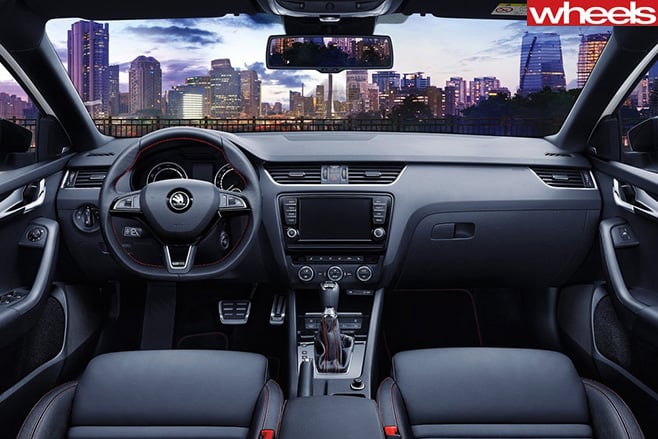
Skoda Oz says the 230 will likely be offered solely with a six-speed manual when it arrives Down Under next year. It’s a decision dictated by factory limitations and gives the 230 another point of difference to the DGS-only Golf GTI Performance. As for visual changes over a regular Octavia RS, the 230 sports a blacked out grille, black mirror caps and unique 19-inch black wheels. The cabin also scores a flat-bottomed steering wheel.
SPECS Model: Skoda Octavia RS 230 Engine: 1984cc in-line 4, dohc, 16v, turbo Max power: 169kW @ 4700-6200rpm Max torque: 350Nm @ 1500-4600rpm Transmission: 6-speed dual-clutch Weight: 1467kg 0-100km/h: 6.8sec (claimed) Fuel economy: 6.5L/100km Price: $45,000 (estimate) On sale: 2016
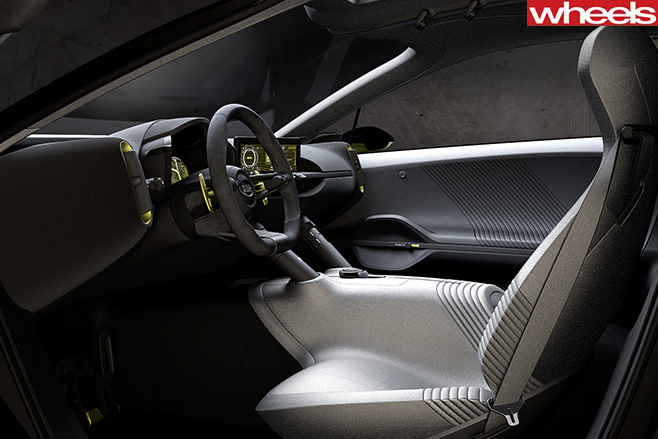
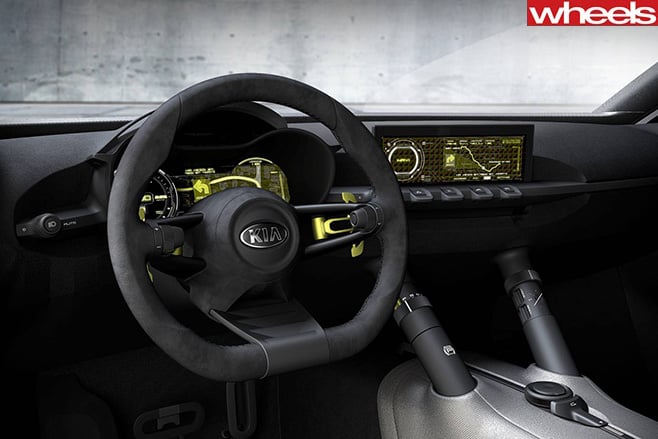
KIA is confident that its upcoming compact SUV will be the sportiest looking yet, with elegant proportions that will make it stand out among the Mazda CX-3 and Renault Captur set.
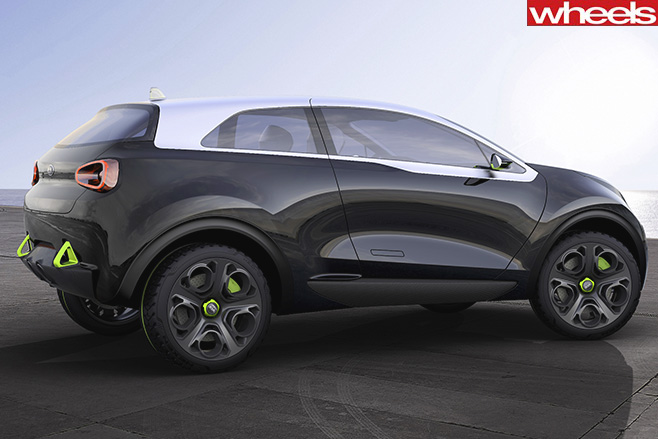
Expected to be unveiled within the next 12 months, the as-yet unnamed crossover will pay only lip service to the Niro Concept pictured here, shown two years ago at the 2013 Frankfurt motor show.
Kia Motors’ chief designer for Europe, Gregory Guillaume, promises that the production model will be worth the wait.
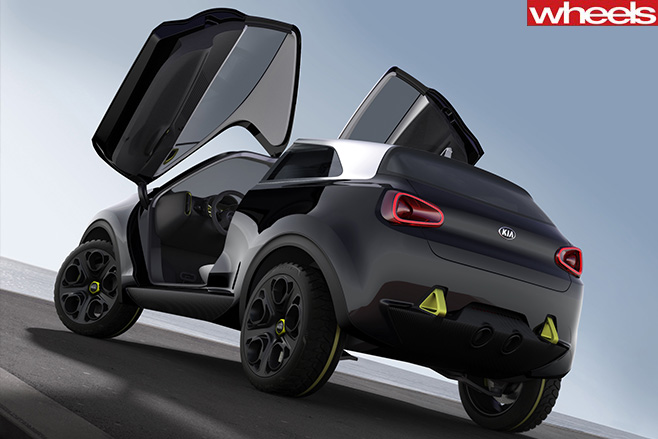
“So the revolution will be more what that car is in its segment, like the Sportage is in its segment. We won’t do it the Renault Captur, we won’t do it the CX-3 way, we’ll do it the Kia way.
Mr Guillaume admitted that Kia underestimated the popularity of the compact SUV, and Kia’s need for one, especially in Europe. But the company is no longer dragging its feet.
“It does take a certain amount of time to develop that sort of car… but you cannot ignore that segment.”
Kia Motors Australia communications manager Kevin Hepworth reiterated that the upcoming compact SUV would be “a very welcome addition to the range”.
I’ve said this before and I’m saying it again: used-car buyers are smarter than new-car buyers.
Don’t get me wrong, there’s plenty to like about buying new. Owning a car no-one else has owned, sniffing fresh bonding glues instead of rotting McDonald’s chips in the seat rail, knowing that if it sh*ts itself, you can take it back and wave your arms indignantly.
The downside is, the entire new-car market is a shemozzle of ridiculous competition, each company trying to outdo the others on price, safety, reliability, gadgets and performance.
It’s tough for the untrained to sort the wheat from the chaff, but looking at some of the stuff fellow journos have bought for themselves, having detailed access to the engineering, handling, design, reliability, safety or electronics backstories isn’t a guarantee of common-sense decisions.
But half a decade after new-car buyers might have been bamboozled into some of the most appalling panel carriers known to man, the used-car market won’t suffer foolish new-car product-planning decisions. It sniffs out crap and makes it suffer.
At the front line of this are auction houses, who shuffle along cars coming off leases, and the wholesalers who move them on to the better second-hand car yards. Here’s the inside tip: vehicle-leasing and fleet companies are better described as used-car futures brokers and they, essentially, negotiate with the wholesalers via the auction houses.
And then there are the buyers themselves, who are usually a lot less susceptible to emotional or historic leanings than the new-car buyers. With the responsibility for determining used-car prices falling on all these parties in unknown proportions, the true value of a car can usually be found by taking a look at a critical mass of its ilk a couple of years after it went on sale.
There are stand-out examples of the used-car market giving a car a level of respect it didn’t have new and there are also good machines that can be snapped up cheaply. The Skoda Yeti and Superb Wagon, the Subaru Forester, old RS Liberty, Land Rover Defender and Porsche Boxster leap to mind. Then there are others consistently punished, and if a car is the most expensive brand on a shared platform, expect it to suffer most.
I have always taken immense pride, during my occasional checks of the Top Six from the PCOTYs I was involved in, to see that they’re all still performing strongly in the used-car market. That means the toughest judges of all, still, think we got it right.
To add to all of this, during a recent conversation with Renault-Nissan boss, Carlos Ghosn, the straight-shooting Frenchman told me it figured the European car-buying slide was over. When I asked how, he referred to the used-car market.
“There are three signs to a recovery in our business. The first sign to a recovery is that the volume of used cars starts to go up and the second sign is the price of used cars starts to go up and the third is the volume of new cars starts to go up with it.
“We are already in the third phase. We can’t say we are rising, but we can say we’ve arrested the slide.”
I wish I’d put my old theory on paper.
I’d be a hundredaire by now.
BMW M has a new member of the family: The first ever BMW M2 Coupé. Offering 272 kW, 500 Nm of torque and 0-100 Km/h in just 4.3 seconds.
The essence of white-knuckle driving pleasure is composed of howling V8s, flickering stability control lights and a lust factor that grows in proportion with speed.
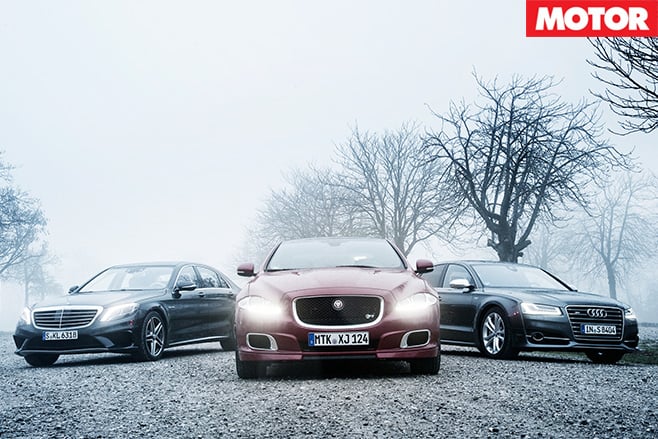
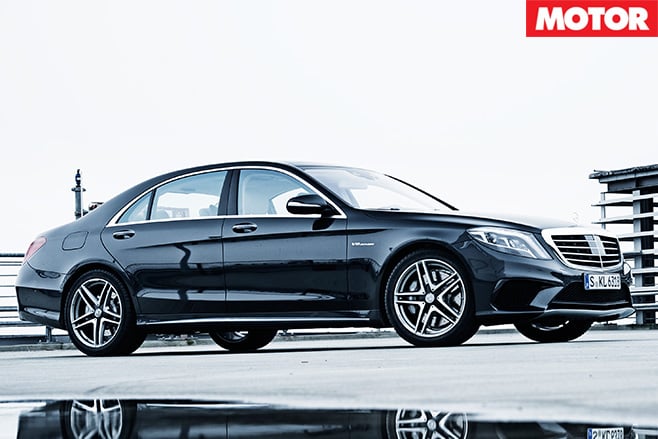
Which is why this trio has absolutely no ambition to stitch up the hole in the ozone layer. Quite the contrary. In 72 hours, we navigated the breathtaking roads of rural Upper Bavaria, Salzburg and Tyrol where we could drive the rubber socks off these three high-performance five-seat flagships – the Audi S8, the Jaguar XJR and the Mercedes-Benz S63 AMG 4MATIC long-wheelbase – in a remote, radar-free environment.
If cost had been the decider, this comparison would have ended before it began. Both the XJR and S63 are the current flagships in each car’s model range, which penalises them with a hefty premium over less-endowed variants whereas Ingolstadt decided to position the A8L W12 as its flagship model, shortening the S8’s price.
Expected to land in Australia at around $270,000, it will undercut the regular Mercedes S63 AMG (long-wheelbase isn’t planned for Australia, nor is the 4MATIC all-wheel drive system) by about $100K, and be around $30K cheaper than Jaguar’s XJR.
But the Mercedes also gives you the most for your money. Grunt wise, the 430kW/900Nm S-Class easily eclipses the 405kW/680Nm Jaguar and 382kW/650Nm Audi. Its 5.5-litre twin-turbo V8 engine runs quietly and smoothly, throttle response (even in sport mode) is relatively restrained and relaxed, and the seven-speed transmission surfs the immense wave of torque in a subtle manner.
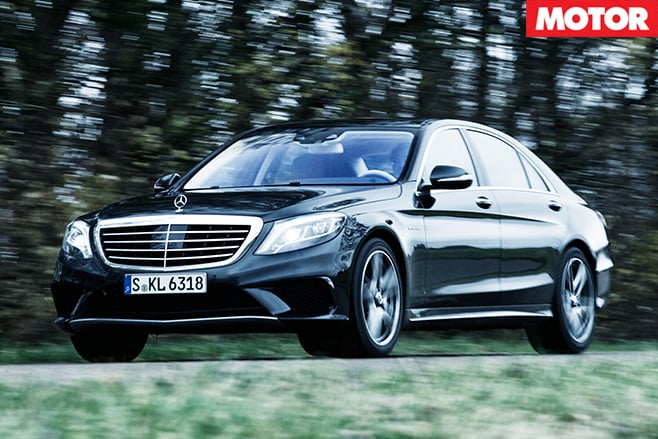
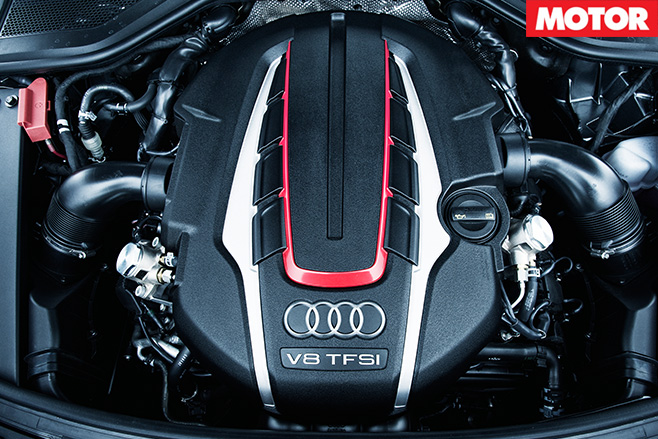
The Audi S8, too, benefits from the grip and traction only four-wheel drive can muster, losing only one tenth to the more powerful but heavier Mercedes to 100km/h. As speeds climb, the smaller 4.0-litre twin-turbo V8 fails to match the Mercedes’ acceleration, but it does manage to slurp 10-15 per cent less fuel than the other two, an on-test 13.4L/100km beating the Benz’s 16.0L/100km and Jaguar’s 15.0L/100km.

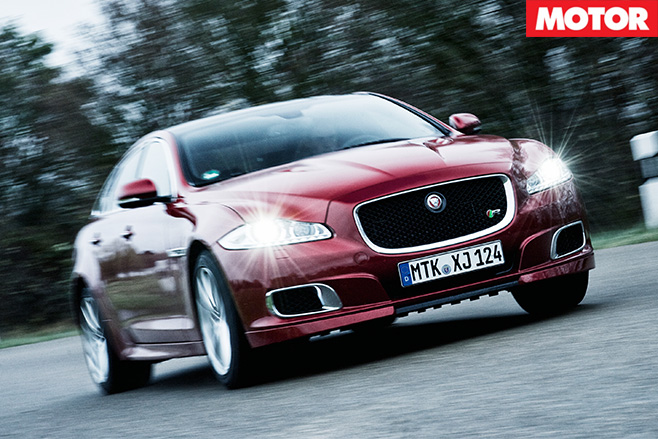
The XJR’s interior ambience is one of modern charm, with cabin accents of polished timber and glossy metal offset with wall-to-wall leather and alcantara and all the usual mod-cons paired with a decent sound system. However, the Brit doesn’t include as much high-tech gadgetry as its challengers from across the pond. Even essentials such as tyre pressure monitoring, adaptive cruise control and blind-spot monitoring cost extra.
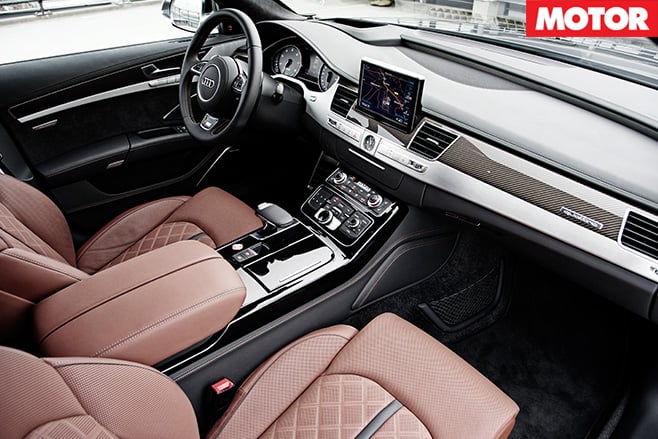
Even though the S8’s interior scores a few points for the best fit and finish, classiest instruments, most tasteful interior and brightest LED headlights, not everything’s perfect. The MMI entertainment system is getting more complex with every round of modifications, access to the extensive Drive Select menu should be more intuitive, and the gear selector often needs two or three attempts to engage and stay in reverse. Further marking it down is the fact that the long-wheelbase version is not available in most markets, so tall back-seat passengers will struggle for space.
In contrast to the charming Jag and the business-like Audi, the Mercedes has received the full go-faster treatment as ordered by the marketing department.
The rubber-studded pedals are milled from solid aluminium; the seats boast bespoke leather, stitching, piping and emblems; the stylish body kit should be as good at reducing drag as it is turning heads; the four tailpipes are almost as wide as wombat holes; and to avoid confusion with lesser Benzes there are about two dozen AMG logos scattered throughout the car.
But it’s when you put the car to the test by waltzing through a set of curves that a larger-than-expected portion of the promised dynamic sparkle is lost in translation. The driver is constantly tailed by a battalion of electronic helpers assisting in changing lanes, keeping a safe distance, braking in an emergency, pulling at the steering wheel, or parking the car automatically.

The Jaguar specialises in the very British art of refined part-throttle cruising, but flex your right foot and the XJR will instantly change down a gear or two and charge at the horizon with the explosive energy of Usain Bolt. But then if you decide you want manic from one moment to the next, bury the loud pedal and hold on.

In sport, it feels more like dual-clutch transmission than an auto, holding on to a given ratio all the way to the redline, then shifting with time-warp efficiency. The brakes bite with unyielding force and roll-on acceleration punches you hard in the guts.
As for the S8, its driving dynamics should be spot-on, and yet in real life they form an odd mix of highs and lows.
Take the handling, which ranges from defensive to indifferent. The steering refuses to feed your palms with enough weight, self-centring action or grip information while the brakes, which are very powerful and totally immune to fade, could do with a more progressive pedal action. Try the air suspension in all three available settings, and you will wonder why not even comfort mode provides a satisfactory level of compliance for a car asking this much.
On the other hand, the Benz has got what it takes to be the best of all worlds, and yet isn’t. It’s a complete and competent car, but its visual appeal is not enhanced by all those nip ’n’ tuck modifications. And it feels like its true dynamic potential has been smothered by many layers of cotton wool and nanny tech.
Instead, you buy a tonne of kit and a 0.8sec 0-100km/h acceleration advantage over a cheaper priced in-house alternative like the S550. The S63 just feels like a fast S-Class, and not enough like the raw driving machine its baby brother E63 AMG is, lacking the same effect on your adrenal glands as most other AMG products.
It reaches its limit earlier than expected and when it does the XJR finds it more difficult to maintain its balance and hold the road than the S8 or S63 AMG. All of which is another way of saying that the Jaguar is competent and controversial, but flawed in a charming way.
The most accurate conclusion is: in terms of their intended purpose, combining autobahn-slaying speed with ultimate luxury and driver enjoyment, they all fall short.
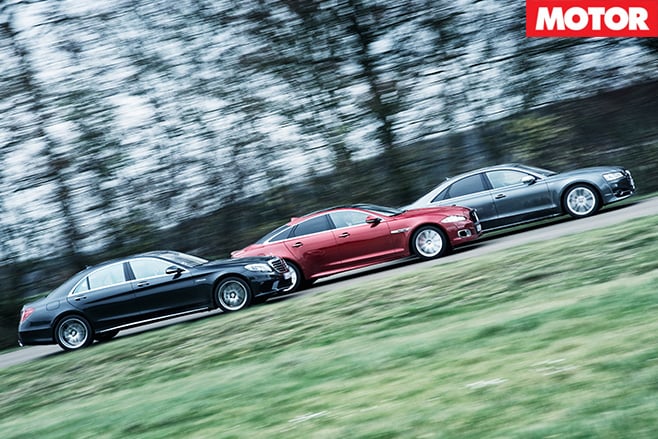
Instead, they illuminate the more conservative offerings in respective model ranges as probably a better place to spend some cash and picking one, if you must, comes down to your personal taste.
The Audi will appeal to those who like to fly under the radar, the Mercedes to the power junkie, and the Jaguar to the executive that likes to indulge in a bit of drifting between board meetings.
| u00a0 | u00a0 | u00a0 | u00a0 | u00a0 | u00a0 | 4/5 | u00a0 | u00a0 | u00a0 | u00a0 | u00a0 | 3.5/5 | u00a0 | u00a0 | u00a0 | u00a0 | u00a0 | 3.5/5 |
| u00a0 | u00a0 | u00a0 | u00a0 | u00a0 | u00a0 | Mercedes S63 AMG | u00a0 | u00a0 | u00a0 | u00a0 | u00a0 | Jaguar XJR | u00a0 | u00a0 | u00a0 | u00a0 | u00a0 | Audi S8 |
| Body | u00a0 | u00a0 | u00a0 | u00a0 | u00a0 | 4 door, 5-seat sedan | u00a0 | u00a0 | u00a0 | u00a0 | u00a0 | 4 door, 5-seat sedan | u00a0 | u00a0 | u00a0 | u00a0 | u00a0 | 4 door, 5-seat sedan |
| Drive | u00a0 | u00a0 | u00a0 | u00a0 | u00a0 | all wheel drive | u00a0 | u00a0 | u00a0 | u00a0 | u00a0 | rear wheel drive | u00a0 | u00a0 | u00a0 | u00a0 | u00a0 | all wheel drive |
| Engine | u00a0 | u00a0 | u00a0 | u00a0 | u00a0 | 5461cc V8, DOHC,u00a0 32v, twin-turbo | u00a0 | u00a0 | u00a0 | u00a0 | u00a0 | 5000cc V8, DOHC, 32v, supercharged | u00a0 | u00a0 | u00a0 | u00a0 | u00a0 | 3993cc V8, DOHC, 32v, twin-turbo |
| Bore/Stroke | u00a0 | u00a0 | u00a0 | u00a0 | u00a0 | 98 x 90.5mm | u00a0 | u00a0 | u00a0 | u00a0 | u00a0 | 92.5 x 93mm | u00a0 | u00a0 | u00a0 | u00a0 | u00a0 | 84.5 x 89mm |
| Compression | u00a0 | u00a0 | u00a0 | u00a0 | u00a0 | 10:1 | u00a0 | u00a0 | u00a0 | u00a0 | u00a0 | 9.5:1 | u00a0 | u00a0 | u00a0 | u00a0 | u00a0 | 9.3:1 |
| Power | u00a0 | u00a0 | u00a0 | u00a0 | u00a0 | 430kW @ 5550rpm | u00a0 | u00a0 | u00a0 | u00a0 | u00a0 | 405kW @ 6500rpm | u00a0 | u00a0 | u00a0 | u00a0 | u00a0 | 382kW @ 6000rpm |
| Torque | u00a0 | u00a0 | u00a0 | u00a0 | u00a0 | 900Nm @ 2250-3750rpm | u00a0 | u00a0 | u00a0 | u00a0 | u00a0 | 680Nm @ 2500-5500rpm | u00a0 | u00a0 | u00a0 | u00a0 | u00a0 | 650Nm @ 1700-5500rpm |
| Power/Weight | u00a0 | u00a0 | u00a0 | u00a0 | u00a0 | u00a0207kW/tonne | u00a0 | u00a0 | u00a0 | u00a0 | u00a0 | 216kW/tonneu00a0 | u00a0 | u00a0 | u00a0 | u00a0 | u00a0 | 192kW/tonneu00a0 |
| 0-100km/h | u00a0 | u00a0 | u00a0 | u00a0 | u00a0 | 4.0sec(claimed) | u00a0 | u00a0 | u00a0 | u00a0 | u00a0 | 4.6sec(claimed) | u00a0 | u00a0 | u00a0 | u00a0 | u00a0 | 4.1sec(claimed) |
| Top Speed | u00a0 | u00a0 | u00a0 | u00a0 | u00a0 | 300km/h(limited) | u00a0 | u00a0 | u00a0 | u00a0 | u00a0 | 280km/h(limited)u00a0 | u00a0 | u00a0 | u00a0 | u00a0 | u00a0 | 250km/h(limited)u00a0 |
| Consumption | u00a0 | u00a0 | u00a0 | u00a0 | u00a0 | 15.0L/100km | u00a0 | u00a0 | u00a0 | u00a0 | u00a0 | 16.0L/100kmu00a0 | u00a0 | u00a0 | u00a0 | u00a0 | u00a0 | 13.6L/100kmu00a0 |
| Emissions | u00a0 | u00a0 | u00a0 | u00a0 | u00a0 | 357g/km CO2 | u00a0 | u00a0 | u00a0 | u00a0 | u00a0 | 381g/km CO2u00a0 | u00a0 | u00a0 | u00a0 | u00a0 | u00a0 | 327g/100km CO2u00a0 |
| Transmission | u00a0 | u00a0 | u00a0 | u00a0 | u00a0 | 7-speed automatic | u00a0 | u00a0 | u00a0 | u00a0 | u00a0 | 8-speed automatic | u00a0 | u00a0 | u00a0 | u00a0 | u00a0 | 8-speed automatic |
| Weight | u00a0 | u00a0 | u00a0 | u00a0 | u00a0 | 1995kg | u00a0 | u00a0 | u00a0 | u00a0 | u00a0 | 1881kg | u00a0 | u00a0 | u00a0 | u00a0 | u00a0 | 1915kg |
| Suspension | u00a0 | u00a0 | u00a0 | u00a0 | u00a0 | multi-links, air springs, tubular torsion bar(f); multi-links, air springs, torsion bar(f); | u00a0 | u00a0 | u00a0 | u00a0 | u00a0 | double A arms, coil springs, anti roll bar(f);u00a0multi-links, coil springs, anti roll bar(r)u00a0 | u00a0 | u00a0 | u00a0 | u00a0 | u00a0 | double A arms, air dampers, anti-roll bar(f); mutli links, air dampers, anti-roll bar(r) |
| L/W/H | u00a0 | u00a0 | u00a0 | u00a0 | u00a0 | 5287/1915/1499mm | u00a0 | u00a0 | u00a0 | u00a0 | u00a0 | 5252/2105/1457mm | u00a0 | u00a0 | u00a0 | u00a0 | u00a0 | 1990/1949/1458mmu00a0 |
| Wheelbase | u00a0 | u00a0 | u00a0 | u00a0 | u00a0 | 3165mmu00a0 | u00a0 | u00a0 | u00a0 | u00a0 | u00a0 | 3157mmu00a0 | u00a0 | u00a0 | u00a0 | u00a0 | u00a0 | 2994mm |
| Tracks | u00a0 | u00a0 | u00a0 | u00a0 | u00a0 | 1624/1637mm(f/r)u00a0 | u00a0 | u00a0 | u00a0 | u00a0 | u00a0 | 1626/1604mm(f/r) | u00a0 | u00a0 | u00a0 | u00a0 | u00a0 | 1632/1623mm(f/r)u00a0 |
| Steering | u00a0 | u00a0 | u00a0 | u00a0 | u00a0 | electrically-assisted rack and pinionu00a0 | u00a0 | u00a0 | u00a0 | u00a0 | u00a0 | hydraulically assisted rack pinion | u00a0 | u00a0 | u00a0 | u00a0 | u00a0 | electrically-assisted rack and pinionu00a0 |
| Brakes | u00a0 | u00a0 | u00a0 | u00a0 | u00a0 | 390mm discs; ventialted discs; fixed calipers(f); 360mmu00a0ventialted discs; fixed calipers(r); | u00a0 | u00a0 | u00a0 | u00a0 | u00a0 | 380mm discs; four piston calipers (f); 376mmu00a0ventialted discs; single piston calipers(r); | u00a0 | u00a0 | u00a0 | u00a0 | u00a0 | 399mm discs; six piston calipers (f); 356mmu00a0ventialted discs; piston calipers(r); |
| Wheels | u00a0 | u00a0 | u00a0 | u00a0 | u00a0 | 19 x 8.5 inch(f); 19 x 9.5 inch (r) | u00a0 | u00a0 | u00a0 | u00a0 | u00a0 | 20u00a0x 8.5 inch(f); 20 x 9.5 inch (r) | u00a0 | u00a0 | u00a0 | u00a0 | u00a0 | 20 x 9.0 inch(f/r) |
| Tyres | u00a0 | u00a0 | u00a0 | u00a0 | u00a0 | 255/40 R20(f); 285/35 R20(r) | u00a0 | u00a0 | u00a0 | u00a0 | u00a0 | 245/45 R19(f); 275/40 R19(r) | u00a0 | u00a0 | u00a0 | u00a0 | u00a0 | 265/40 R20 104Y(f/r) |
| Price | u00a0 | u00a0 | u00a0 | u00a0 | u00a0 | $385,000(Aust. SWB) | u00a0 | u00a0 | u00a0 | u00a0 | u00a0 | $298,000(Aust. SWB) | u00a0 | u00a0 | u00a0 | u00a0 | u00a0 | $270,000(TBC) |
| Positives | u00a0 | u00a0 | u00a0 | u00a0 | u00a0 | Incredibly fast, more technology than NASA; sumptuos interior | u00a0 | u00a0 | u00a0 | u00a0 | u00a0 | Hooligan nature;fantastic engine; distinctive looks | u00a0 | u00a0 | u00a0 | u00a0 | u00a0 | Interior qulaity; fuel economy; bags of grip; (relative) value |
| Negatives | u00a0 | u00a0 | u00a0 | u00a0 | u00a0 | Huge money; nannying electronic systems; no 4MATIC for Ozu00a0 | u00a0 | u00a0 | u00a0 | u00a0 | u00a0 | Unrefined transmission;traction issues; lacks the German’s techu00a0 | u00a0 | u00a0 | u00a0 | u00a0 | u00a0 | Remote driving experience; looks dull; average ride |
VOLKSWAGEN Group has announced it will recall and refit up to 11 million vehicles worldwide as the first step in a plan to move on from the emissions cheating scandal.
New chief executive Matthias Mueller said affected customers would have their cars corrected in the near future, in a move analysts predict could cost VW more than $6.5 billion euros ($10.4 billion).
Reports out of Europe suggest the recall, which VW has said affects 5 million of its own branded passenger cars, will begin soon.
Frustratingly, though, Australian owners are no closer to knowing if their vehicles are affected or even if a local recall will be issued. Volkswagen Australia says it is “unable to comment on the local situation as we are still awaiting details with regards to our market.”
VW Group has assured owners that all cars involved in the scandal “are technically safe and roadworthy.”
Volkswagen will reveal the technical details of the recall next month, today saying “technical solutions [are] being developed and will be presented to responsible authorities before end of October.”
There is no indication yet whether this correction will alter the performance and fuel consumption of models fitted with the VW Group’s EA189 2.0-litre diesel engine.
Volkswagen has confirmed the EA189 engine is fitted to 5 million VW passenger vehicles, 2.1 million Audi models, 1.2 million Skodas, 700,000 Seats and 1.8 million light commercial vehicles.
The recall is one of the largest in history by a single manufacturer. Volkswagen said it had set aside $10.4 billion to pay for the recall, but some analysts say that won’t be enough.
Volkswagen also said all of its affected brands would set up national websites to keep customers informed on developments.
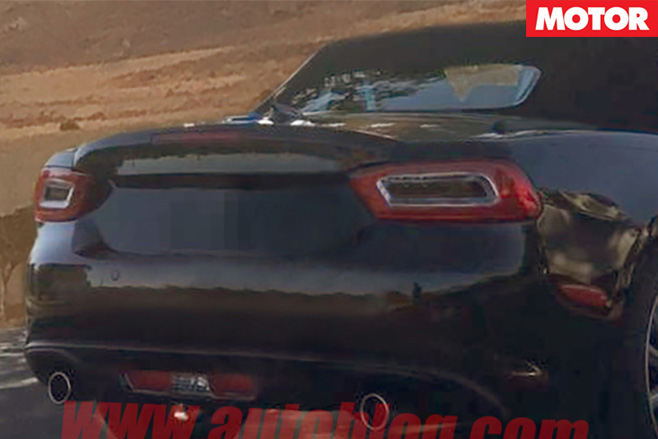
The Fiat 124 Spider, an Italian job of the new Mazda MX-5, has been caught undisguised at a Los Angeles photo shoot.
Snapped by US website Autoblog.com, our first look at the Fiat version of the latest Mazda roadster reveals new front and rear styling … and that’s about it. Larger headlights give the 124 Spyder a less ‘squinty’ face than the MX-5, while the grille has been raised with two separate grille sections.
The A-pillars and header rail have also been switched to thicker chrome compared with the Mazda’s body colour.
There appears to be even less change inside, with the red Fiat badge stuck onto the steering wheel seemingly the only change. It appears the 124 Spider will share the MX-5’s excellent rotary-dial controls for the infotainment system, though it’s unclear whether both will share the MZD-Connect software.
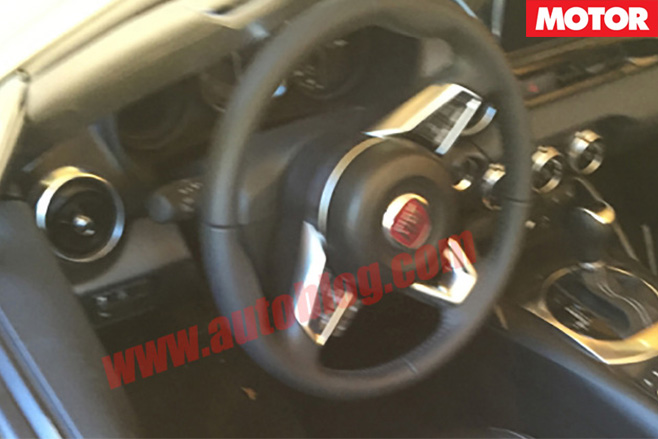
For the Australian market, we may only see the performance Abarth version; a roadster that Fiat’s local product manager has told MOTOR will be a true Abarth in sound and character (read more here). That is likely to mean the Abarth 124 Spider will feel very different to the dainty, modestly powered MX-5, despite utilising the same rear-drive chassis.
The Fiat 124 Spider and its Abarth flagship are both due to debut at the Los Angeles motor show in November.
(Picture credit: autoblog.com)
Right now, Volkswagen is a deeply damaged brand in America.
THEY’RE calling it Dieselgate, of course. More than 40 years after five men linked to Republican president Richard Nixon were arrested attempting to bug democratic offices at the Watergate building in Washington, the “gate” suffix is still applied to any scandal that gets the American mainstream media’s attention.
That’s how bad things are for Volkswagen after admitting it installed cheater software that enabled its EA189 turbo-diesel engine to pass the country’s stringent emissions requirements.
Some on America’s political right – anti-regulationists and climate change deniers – say the problem is the emissions standards themselves. One conservative news website claimed that, while Volkswagen’s behaviour was “awful, nefarious, and indefensible”, cheating was to be expected “when it comes to phony moral imperatives” such as “American automotive emissions standards and their big brother, the worldwide global-warming crusade.”
Volkswagen was already struggling in the US before Dieselgate broke. Though it wrested global sales leadership from Toyota this year, the US has long been a disaster. After becoming Volkswagen CEO in 2007, Martin Winterkorn made growth in America a priority, setting a target of 800,000 vehicles a year by 2018, but execution has failed to match ambition. Sales of Toyota-branded cars and trucks in the US last year topped two million; Volkswagen sales were a mere 366,970.
Diesel was part of Winterkorn’s US growth strategy, offering Volkswagen the opportunity to market driver-oriented, fuel-efficient vehicles to combat Toyota and its hybrids.
A two-part article titled Volkswagen’s New 2.0 L TDI Engine for the Most Stringent Emission Standards, published in the German engineering journal MTZ in 2008, details how the EA189 engine was “redeveloped to comply with the strictest exhaust fume limits in the world, namely the Tier 2, Bin 5 emission legislation in the USA” for launch in the US-market Jetta in mid-2008. The authors, Volkswagen engineers, claimed particulate and NOx emissions had been reduced by more than 90 percent and, crucially, that “emissions under customer conditions had been proven” in testing in the US.
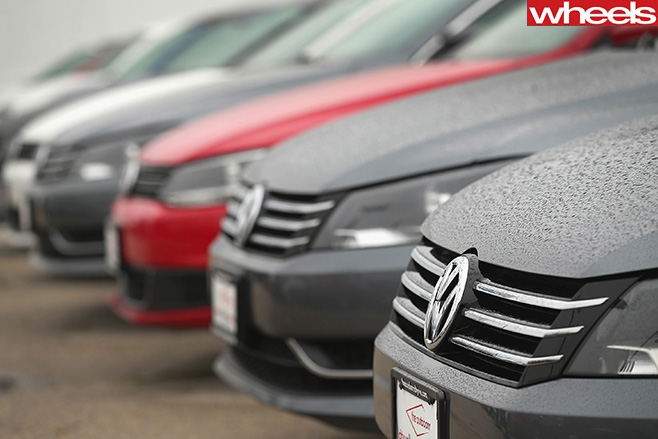
But Dieselgate’s most far-reaching consequence may be increased scrutiny of all vehicle emissions in real-world conditions. Invoking an existing statute, the Environmental Protection Agency has said it may “test or require testing on any vehicle … using driving cycles and conditions that may reasonably be expected to be encountered in normal operation and use…”
That’s a potential nightmare for all carmakers.
Was this the trigger?
THE discrepancy between the EA189’s real-world fuel consumption and its significantly better EPA fuel efficiency rating is the data point that sparked Dieselgate. Now we know how VW achieved that. The question is: Why?
The last-minute delay of the EA189’s US launch may be a clue. A dealer source says engineers found it needed over-fuelling more frequently than expected to burn off particulates from highly variable-quality US diesel fuel. Suddenly the EA189 was barely more efficient than a petrol engine, and a whole strategy was under threat. A quick fix was needed.
Don’t be misled by the familiar look. Under the skin, Audi’s all-new A4 packs a technological arsenal intended to unleash hell on 3 Series and C Class.
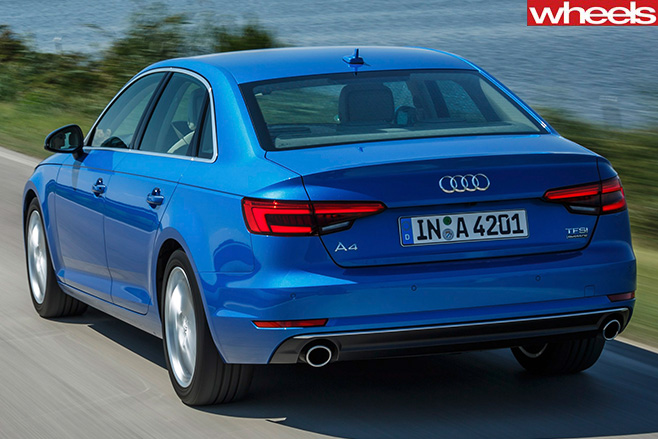
WHAT IS IT? A tech-laden missile aimed squarely at the heart of the Mercedes-Benz C Class, BMW 3 Series and Jaguar XE. It’s the new generation Audi A4 and it’s good, very good. If only it looked more exciting…
WHY WE’RE DRIVING IT Because under that boring, same again styling, 90 percent of this A4 is brand new. Plus it’s lighter and more efficient, and Audi has thrown in fistfuls of tech to make it the smartest, most connected car in its class.
MAIN RIVALS Mercedes-Benz C Class, BMW 3 Series, Jaguar XE, Alfa Romeo Giulia, Lexus IS
THE WHEELS VERDICT There’s a new mid-size heavyweight in town. The new A4 is better in every way, but its killer blow is a rockstar interior with oodles of class-leading tech that makes it safer, cooler and smarter.
PLUS: Terrific interior; class-leading tech; refinement; plush ride; silky diesels; zingy petrols MINUS: Boring, conservative design; DSG better, still not brilliant; a lot of tech is optional
THE WHEELS REVIEW IT’S EASIEST to think of the fifth-generation Audi A4 as a new iPhone, which despite looking similar to your last one can suddenly do new and amazing things.
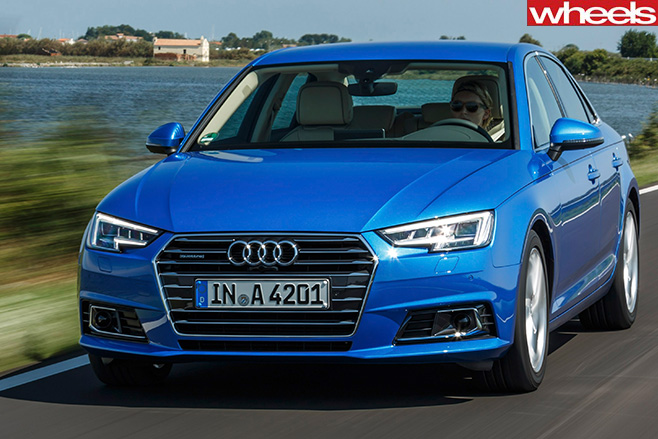
Don’t be fooled. Under that conservative sheetmetal, a quieter and deeply more impressive revolution has taken place that should have BMW, Mercedes and Jaguar worried. And it’s all to do with technology.
Peel back that same-again-only-sharper body and 90 percent of the A4 is new. It now rides on the latest version of Audi’s MLB evo platform, and it is lighter by up to 120kg, 25mm longer and has new engines, new transmissions and new suspensions.
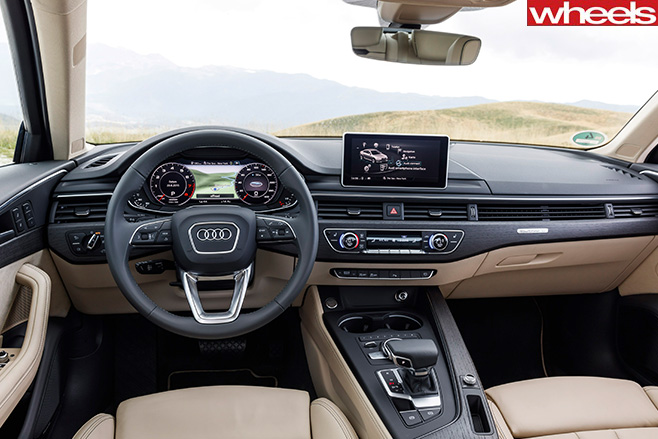
The headline change, however, is a completely redesigned interior that is not only stylish and wonderfully contemporary, but bristling with tech. Even in base poverty-pack trim, the A4’s cabin is a triumph of quality materials, textures and restrained elegance that trumps the mighty Mercedes C-Class. This is mostly down to the seamless integration of a central 8.3-inch touchscreen, which is a class above the tacked-on tablet you get in the Benz, and also because the A4’s restrained dash is effortlessly elegant against the flashier Merc.
It’s the tech, though, that truly sets the A4 apart. Tick all the options and your A4 will arrive with 30 on-board driver assist systems, most of which have been lifted from the new Q7 SUV. The most interesting system is called Traffic Jam Assistant and can transform the A4 into a semi-autonomous car in heavy traffic. It works by combining the lane assist and radar cruise control systems, and at speeds under 65km/h it will steer, brake and accelerate on its own by locking on to the car in front.
The piece de resistance, though, is the A4’s virtual cockpit, which is available as an option. Already proven in the TT, a 12.3-inch screen replaces the conventional instrument cluster. It’s a gorgeous and fully configurable piece of tech that none of the A4’s rivals can match, and one that should sell Audi thousands of cars. Imagine sitting in a dealership and seeing that screen come to life. You’ll be yelling “Sold!” before your feet are out of the car.
Far from just wowing with techno glitz, this new A4 also has the dynamic ability to back up its armoury of technology.
Refreshingly, Audi hasn’t tried to make the A4 a dynamic rival for the sportier 3 Series or new Jaguar XE. With front-drive and quattro variants, it’s never going to match its rear-drive rivals for sheer driving thrills.
Instead, the emphasis is on comfort, cabin refinement and efficiency, helped in part by a hugely impressive drag coefficient of 0.23. Audi says it spent close to 1000 hours in the wind tunnel honing the new A4’s aero-efficient body and yes, at freeway speeds it does feel particularly slippery and whisper quiet. It also feels and handles like an altogether bigger car.
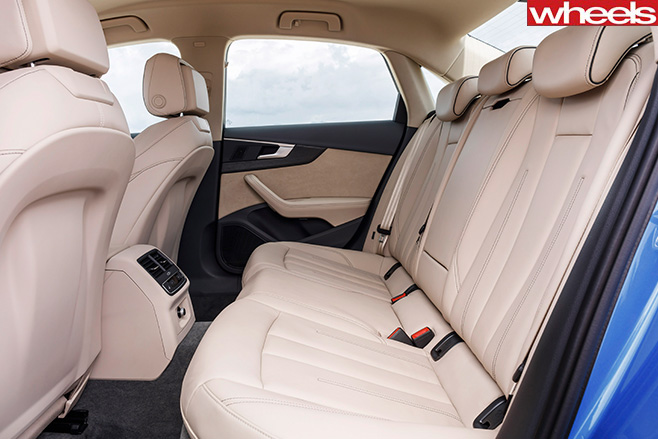
Audi boffins claim it has the same NVH levels as the company’s flagship A8, but don’t stress that this is a dynamic pup. The A4 might not encourage you to actively seek out a winding mountain road but that doesn’t mean it turns into a sloppy, uninspiring mess when you do.
New five-link suspension front and rear ensures the A4 rides superbly on all three wheel sizes (17, 18 and 19-inch alloys are available), and it also displays taut body control. Buyers can choose between three basic suspension set-ups: standard steel springs, or the choice of two adaptive systems with variable damping offered in Sport or Comfort trims. The Comfort system is a first for Audi and, when matched with the base car’s 225/50R17 wheels, delivers a revelation of pliancy and control on coarse, corrugated roads.
Choosing the Sport set-up lowers the ride height by 23mm and, with the dampers in their hardest setting, tightens things up considerably, but mercifully it isn’t so firmly sprung that it tries to bounce you off the road.
The standard electric steering is sharp and, while devoid of feedback, is still preferable to the optional adaptive rack, which feels synthetic. At speed you can feel the variable system changing the ratio, which detracts from the driving experience.
Five engines are under consideration for Australia from launch – three petrols and two diesels – ranging from a base 110kW/250Nm 1.4-litre TFSI petrol to a range-topping 3.0-litre TDI that smoothly churns out a hefty 200kW/600Nm. The most popular variant will be the 2.0-litre TFSI that, in quattro guise, is good for 185kW/370Nm. A less powerful (140kW/320Nm) version of the same 2.0-litre unit will also be offered, as will a 140kW/400Nm 2.0-litre TDI.
It is the thirstiest engine on offer, though, with its claimed 5.9L/100km well up on the 4.9L/100km claimed for both the 1.4 petrol and 3.0 TDI. The 2.0-litre TDI is the most parsimonious drivetrain choice, and sips just 4.4L/100km.
Opting for the quattro system, which can send up to 85 percent of the drive to the rear axle, adds another layer of dynamic ability to the front-driver’s already pointy front-end. Push hard and all A4s will naturally begin to understeer, but on switchback roads the handling is sharp, direct and predictable, if ultimately a little uninvolving. All this points encouragingly towards the already confirmed S and inevitable RS variants that are expected to arrive late next year.
So the dynamic ability is there and the fact this new A4 isn’t overtly sporty should be seen as a strength rather than a weakness. What the A4 lacks in pure driving thrills is more than made up for with fuss-free handling, a smooth and cosseting ride and a rockstar cabin.
While some more creativity on the exterior design would have been welcome, what Audi has built under that familiar shape is a deeply impressive luxury sedan. Ingolstadt has invested the money and time revolutionising the areas it thinks its customers will value most. If you’re the type that places a higher priority on a sublime interior and ground-breaking tech over sheer dynamic ability, this new A4 is untouchable.
SPECS Model: Audi A4 2.0 TFSI quattro Engine: 1984cc 4cyl, dohc, 16v, turbo Max power: 185kW @ 5000-6000rpm Max torque: 370Nm @ 1600-4500rpm Transmission: 7-speed dual-clutch Weight: 1510kg 0-100km/h: 5.8sec (claimed) Fuel consumption: 5.9L/100km Price: TBA On sale: February 2016
BMW performance tuner Alpina has its eyes on Australia and has begun certifying its cars with a view to selling them here as early as 2016.
The brand known for its distinctive 20-spoke wheels has sent one car to Australia and has begun the detailed homologation process with the Alpina B4 Biturbo, which is based on the BMW 4-Series Coupe.
Alpina product manager Jonathan Ganser says Australia is a prime target for the family-owned company that has close ties – but no financial tie-up – with BMW.
“It’s currently a very strong market for BMW in general … and there are a couple of … importer groups [in Australia] who are interested in widening their portfolio [with Alpina models],” says Ganser of the planned Australian expansion.
“We’re starting to look at one model because homologation is quite difficult in Australia … so we’re testing our procedures. The homologation procedure in Australia needs to go through BMW Australia … we’ve started that process.”
While it is independent of BMW, Alpina works closely with the luxury brand. Some Alpina components are fitted on BMW production lines and the cars are sold through BMW dealers, for example.

All get the eight-speed automatic transmission, for example, instead of the edgier dual-clutch gearbox used on M cars. And Alpina focuses slightly more on low-end torque rather than top-end power, as is the case with M cars that top the BMW range.
Alpina’s Ganser says it’s too early to talk about positioning of the Alpina models in Australia, but he points out that in other markets where they are strong – including Germany, Japan and the United States – they are often similarly priced to the BMW M cars.
“Our customers are typically people looking for a high performing car which is easy to use every day, which offers more comfort … and these are customers who are not looking for an M car – it’s too hard core – [and] they don’t find a standard BMW unique enough,” says Ganser.
“They’re really buying something that is exclusive, you don’t see many on the road.”
Alpina is very much a niche brand. Globally it sold 1700 cars in 2014, which is fewer than BMW sells of M models just in Australia.
So at best the tuned BMWs might account for a few dozen sales in Australia, at least initially.
But given the strength of the performance market in Australia – luxury brands here often have the highest percentage of performance sales compared with other markets – it’s clearly a market Alpina is keen to tap into.
BMW Australia spokeswoman Lenore Fletcher confirmed it was looking at Alpina for Australia but that “no decisions have been made at this stage”.
“It’s of interest but it’s merely a feasibility study,” says Fletcher.
