
It takes a certain level of driver to test a Nissan GT-R – a car with a 0-100km/h time of 2.7sec – and say, “Can you make it quicker?”
In the six years since Nissan dropped the Skyline moniker and detonated our dynamic expectations, it has responded to this vocal minority with incremental improvements. Its emphatic answer for the 2014 model year is the 441kW Nismo.
The Nismo is destined to become the flagship of Nissan’s much-expanded tuner division when it goes on sale next year and, although numbers won’t be limited, Nissan reckons no more than 200 will be produced annually. Even with a mighty premium over the stock GT-R, demand is likely to outstrip supply but Nissan has already softened enthusiasts up with news of a stunning Nürburgring lap time of 7min 8sec.
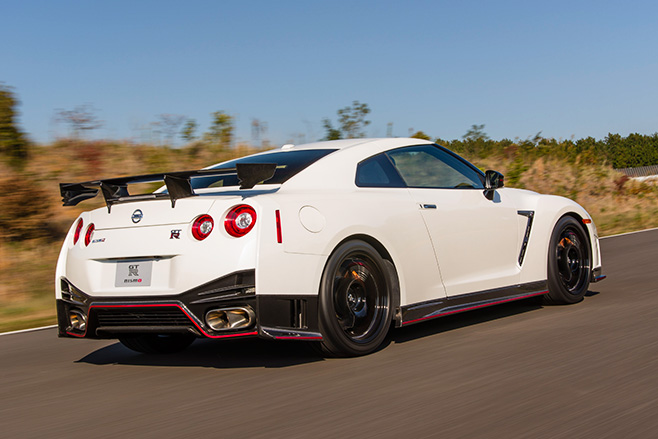
The Nismo gets a new, wider front bar, elongated rear bar and an even lairier rear wing, resulting in an extra 100kg of downforce at track velocities without affecting drag. Custom suspension, featuring Bilstein DampTronic dampers and new upper links on the front wishbones for increased caster trail, is tuned to work with the extra airflow and there is now a 17.3mm, hollow rear anti-roll bar.
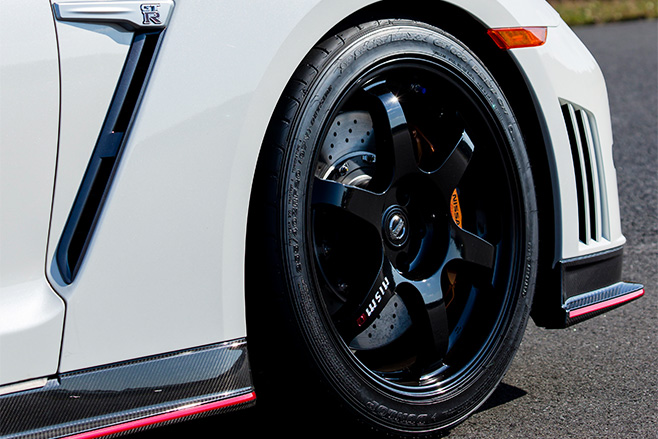
The emphasis is on improved rigidity, stability and greater grip, helped by bespoke Dunlops and slightly wider 20-inch alloys up front.
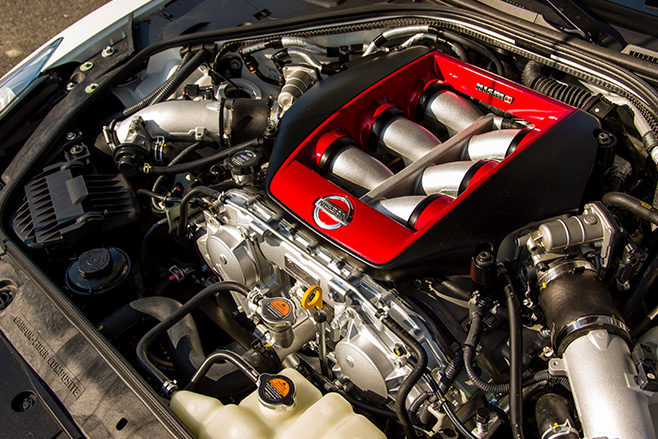
Torque is only up 22Nm to 652 but with a smarter ECU and gutsier turbines, the Nismo has monster in-gear pick-up. The six-speed dual-clutch ’box changes more quickly but an official 0-100km/h time has not been released yet, but we’d guess it’s a few tenths quicker than the ‘regular’ car.
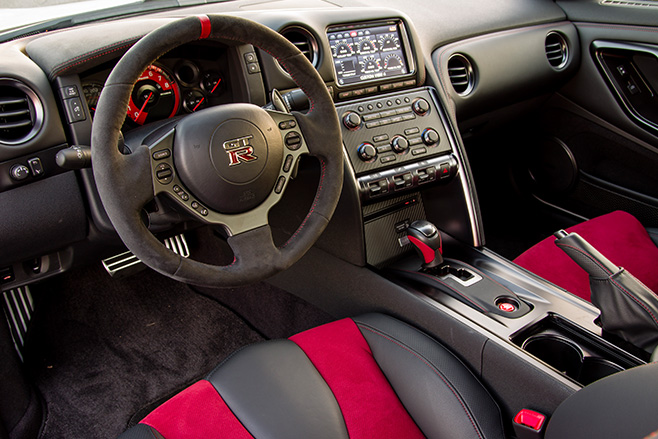
The Nismo is a GT-R with more but isn’t the same car that confounded the stopwatch at the ’Ring. That requires the optional Track Pack (an additional $10-15,000) which adds a bigger rear wing, adjustable dampers and better brake pads – and it’s 50kg lighter. It is the ultimate GT-R.
4.5
Engine: 3799cc V6, DOHC, 24v,twin-turbo Power: 441kW @ 6800rpm Torque: 652Nm @ 4500rpm Weight: 1720kg 0-100km/h: 2.7sec (est.) Price: $200,000 (est.)
BMW M has a new member of the family: The first ever BMW M2 Coupé. Offering 272 kW, 500 Nm of torque and 0-100 Km/h in just 4.3 seconds.
So, what is it?
Australia’s already crowded compact SUV segment is like an Alabama pie eating contest in full swing. Just when you think the final round table’s groaning towards its weight limit, another 12XL contender steps up to the plate, licking his lips, ready to dig in.
More than a dozen brands shove over 20 models into the small SUV market here, in an attempt to satisfy our voracious appetite for these tasty little soft-roaders.
Hyundai dominates, with the likes of the Mitsubishi ASX, Nissan Qashqai, and Subaru XV, not to mention Mazda’s CX-3, looking for a bigger slice of the action.
And this is Jeep’s Renegade. Set for sale in more than 100 countries, and due here in the second half of the year, it measures 4.2m long, 1.9m wide and 1.7m high, to sit under its Compass and Patriot siblings in size and (likely) price.
Final spec and pricing are yet to be confirmed, but there will be four model grades: Sport, Longitude, Limited and Trailhawk, with a choice of three four cylinder petrol engines (diesels are available in other markets, but unlikely for Oz initially), four transmissions and the option of front or four-wheel drive on all but the top-spec (4WD-only) Trailhawk.
Why should I care?
The small SUV segment is one of the world’s fastest growing. Last year global sales across all competitors reached one million, and Jeep’s predicting that number will triple by 2020.
Jeep claims the Renegade is the only “true” 4WD in the category, with the number one priority in its engineering development being superior off-highway capability.
Designed in America and built in Italy, it offers a fresh and unashamedly youthful personality that we think is super-cool but pleasantly unpretentious.
To absorb the Renegade’s core values (freedom, authenticity, adventure and passion), the design team got into a lot of outdoors lifestyle stuff, like snowboarding, mountain biking, paintball warfare and yep, four wheel-driving. That’s rubbed off in a distinctive, rugged look inside and out, combined with a bold colour palette.
There are lots of fun styling touches, too. Like a paintball splash to define the rev-counter’s end zone, a map of the 4WD trails the team drive outside Maob, Utah etched into the bottom of the front console bins, as well as a range of shapes and finishes reminiscent of rock-climbing equipment, crash helmets and ski goggles.
The cross element used in the rear lights, roof and other points around the car is a jerry can-inspired tip of the hat to Jeep’s WWII origins, as are the large headlights hooded ever-so-slightly by the bonnet’s leading edge, hinting at a metal helmet shielding a soldier’s eyes.
Models are defined by subtly different cosmetic treatments. For example, a front lip spoiler and bright grille surround on the Limited, or pronounced orange tow hooks and an all-black grille on the Trailhawk. The Sport and Longitude ride on 16 inch alloy rims, the Limited on 18s and the Trailhawk on unique 17s.
What’s new about it?
Engine offerings kick off with the 82kW/152Nm 1.6-litre ‘E.TORQ’ four used in numerous Fiat models, including the Punto, matched with either a six-speed manual or nine-speed auto. That’s followed by the 119kW/250Nm 1.4-litre ‘MultiAir’ turbo, with a choice of six speed manual or six-speed dual clutch, with the 134kW/237Nm 2.4-litre ‘MultiAir2 Tigershark’, available with auto only.
The all-new platform underpinning the Renegade uses 70 per cent high-strength steel for light weight and maximum stiffness. Suspension is by struts all ‘round, and the shock absorbers are equipped with Frequency Selective Damping (FSD) to negate the post-bump bounciness often afflicting high-riding short-wheelbase cars.
That’s all fine. What’s it like to drive fast?
At the Renegade’s global launch, we had the opportunity to steer the Sport 1.6 in 2WD manual trim, as well as a Limited 1.4 Turbo 4WD auto on twisting Canyon roads, between San Jose and Santa Cruz near the California coast. We also scored some seat time in the 2.4-litre auto Trailhawk over the sweet rocky roads of the Hollister Hills ‘State Vehicular Recreation Area’; an approximately six hectare off-road fun park for grown-ups.
A kerb weight around 1.4 tonnes and 82kW is never going to add up to powerhouse performance for the Sport 4×2, but if it’s any consolation, none of the Renegade’s competitors are anything to write home about when it comes to acceleration.
Even gentle uphill grades demand regular cog-swapping, mainly because the relatively modest torque peak doesn’t come online until 4,500rpm. But the upside is the manual shift is smooth, the engine’s refined and the suspension is well above average for the class in terms of ride comfort and overall balance; helped in no small part by the FSD set-up. The steering’s light, but road feel is good.
With an extra 37kW/98Nm available it’s no surprise the 1.4-litre turbo Limited proved to be more urgent and responsive on the open road. Its nine-speed auto is able to change shift-mapping on the fly by constantly monitoring parameters such as engine-torque, number of kick-downs, longitudinal and lateral loads, as well as grade changes.
It also has a low first gear to help lift step-off acceleration, and the top four ratios are overdriven to optimise fuel economy. It greases through each shift with barely perceptible effort, but it’s worth noting even at 120km/h on the freeway, we struggled to engage the massively high (0.48:1) top gear.
Despite compact exterior dimensions, there’s plenty of room for five inside and generous load space. A choice of 60/40 or 40/20/40 split-folding rear seat is available.
And driving off the highway?
Trailhawk is Jeep code for goes alright off-road, and we can confirm the toughest Renegade does exactly that. And as its name implies Hollister Hills threw up some steep climbs and downhill crawls with water, mud, rocks and sand thrown in just to mix things up.
The nine-speed’s 20:1 crawl ratio comes into its own, as does the ‘Selec-Terrain’ system, driver-selectable through five modes (Auto, Snow, Sand, Mud, and Rock), as well as speed and hill-descent control.
The Trailhawk picked its way up and down boulder-infused tracks that looked like non-snowy mogul runs with ease. The low range setting, hill-descent, and 4WD lock-up are available at the touch of a button, plus hugely accommodating approach, breakover and departure angles put the Renegade in the 4WD big leagues.
Is there anything bad about it?
More grunt on all models please. And the rear seat cushion is flat as a pancake; probably to facilitate a flat cargo floor.
How much would I have to pay for one? And is it worth the coin?
We’re guesstimating a starting point of $24k for the Sport 4×2 manual, and a top of the pyramid sticker of around $35k for the Trailhawk. Without confirmation of exact spec by model it’s hard to make a call on value, but there’s no doubt the Renegade offers a genuine point of difference in a crowded segment.
The Jeep’s strong personality and dynamic competence capture our vote.
Click here to find out more about the Jeep Renegade.
What is it?
It’s an updated Opel Insignia OPC, as last seen in Australia in 2013 when the German brand ended their Oceania experiment. It’s also the only zippy mid-size car in Holden showrooms, next to the ho-hum Malibu and the handsome-but-slow Cascada convertible.
With 239kW and 435Nm driven through all four wheels, the Insignia is brisk and sure-footed. On the other hand, it’s not quite the sporty grunter it’s portrayed as. It’s an expectations game: approach the Insignia VXR as a mid-size sedan with some hidden muscle, and you’ll be satisfied. Approach it as a “no holds barred mid-size sports sedan” – Holden’s words, not ours – and you might be a little disappointed.
What’s new about it?
The Holden badge isn’t the only thing new about the Insignia. This model launched in 2009, so it’s not a youngster, but this mid-life update has delivered a swag of new technology and driver aids, most notably the front-facing radar – the first Holden to ever have it – which enables automatic emergency braking, adaptive cruise control and auto adaptive headlights. It also collects a rear radar for lane change alert and cross traffic alert, plus the usual suite of safety acronyms.
There’s also a tweaked nose, a sharp new rear design that makes the Insignia’s backside more shapely and a new interior including a new 8-inch touchscreen.
What’s it like to drive fast?
The Insignia’s 2.8L turbo V6 produces an admirable 239kW and 435Nm – that’s a lot for a mid-size sedan. (The Liberty 3.6R turns out 191kW and 350Nm, for example.) But despite that, the Insignia isn’t a performance beast, largely because of its (auto-only) transmission. The Insignia is more than happy to accumulate speed in an orderly manner, but plant your foot expecting a sudden leap forward and you’ll be disappointed. It’s not one for short furious overtakes, thanks partially to its chunky kerb weight of 1836kg – that’s about 200kg heavier than the Liberty 3.6R.
But the all-wheel-drive system is cleverly calibrated and provides loads of grip and confidence, so you can pile into corners without coming unglued. Plus, if you ever do break traction, the electronic systems allow a small amount of slip at the rear end, which helps get the tail end around and point the car where you want it, rather than forcing you into understeer.
The Insignia gets a Flexride chassis control system, with three settings – Standard, Sport and VXR – adjusting the suspension stiffness, throttle and shift patterns, and steering response. For our money, VXR is the best of the three – the steering is a little floppy in standard mode, and the car just seems more willing in VXR. The downside is that the fuel economy – already not awesome at 11.3L/100km – gets even higher in VXR mode… and the car drinks 98 RON. Not cheap.
What about the commute home?
The Recaro front seats are a fine balance between support and comfort, and the rejigged cabin is pleasant enough, though there’s not oodles of room – this is a mid-sized car and it feels like it inside. The headroom in the rear seats is not amazing either – though I’m 6’2”, they’re probably okay for kids and short people.
The real bugbear is that the Insignia isn’t quiet – the exhaust is loud, especially in the backseat, and on the coarse roads we drove on, tyre noise is intrusive.
What’s it worth? And is it worth the coin?
The Insignia VXR will set you back $51,990 – there’s only one model, only one engine, and it’s auto only, so there’s no variant shopping here. That’s roughly ten grand cheaper than when it was last here wearing an Opel badge, and with two fistfuls of extra fruit inside to boot.
On the other hand, it’s exactly $10,000 more than the Subaru Liberty 3.6R, and while the Insignia boasts more tech inside – mostly things related to that front-facing radar – you’d have to ask yourself how much you want to pay for adaptive cruise control and auto high-beams. Holden’s not expecting this to be a big volume seller – not when you can get other mid-size cars, or even a Commodore SS, for less cash. But it’s a demonstration that the company has legs beyond the end of local production in 2017.
Click here to find out more about the Holden Insignia VXR.
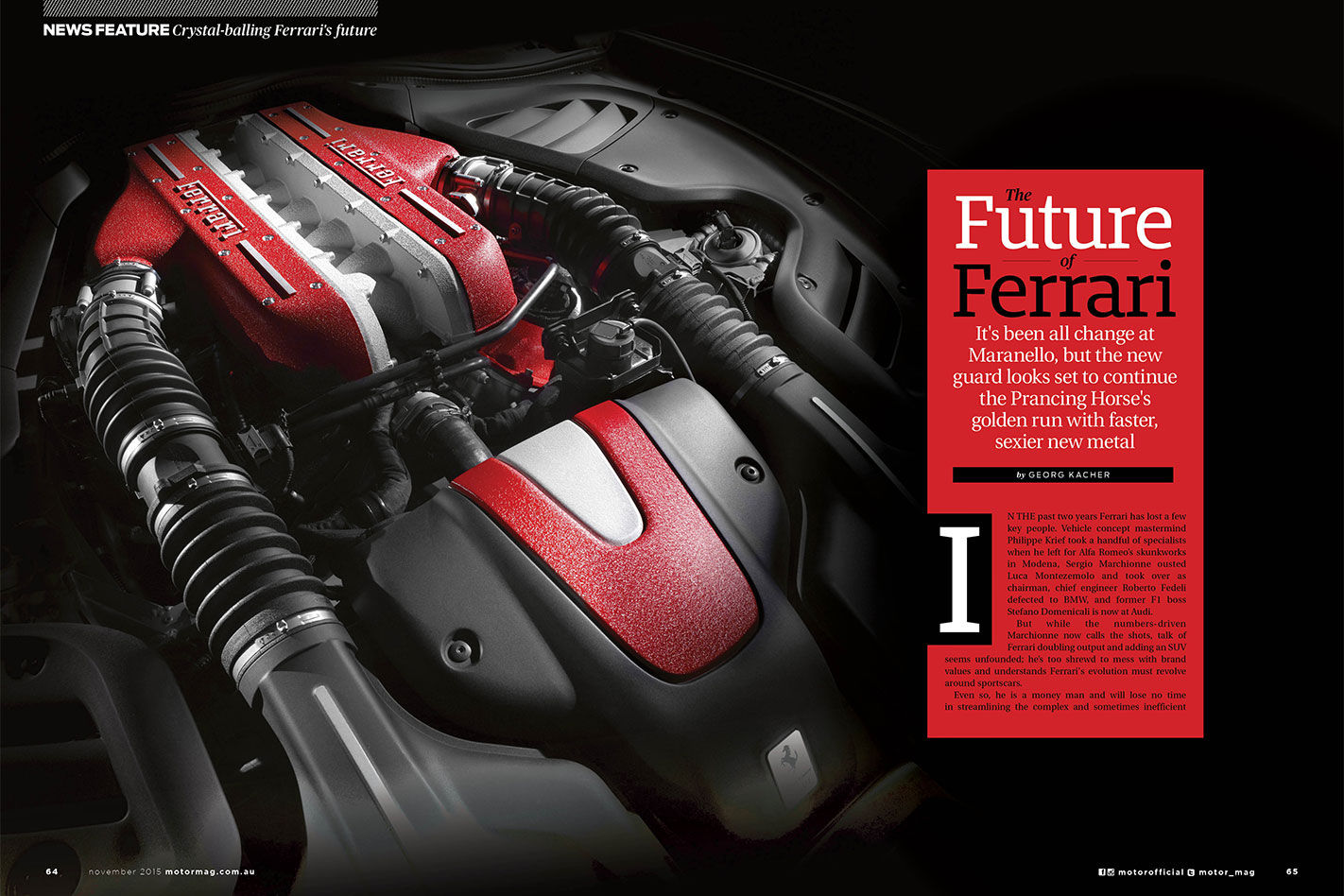
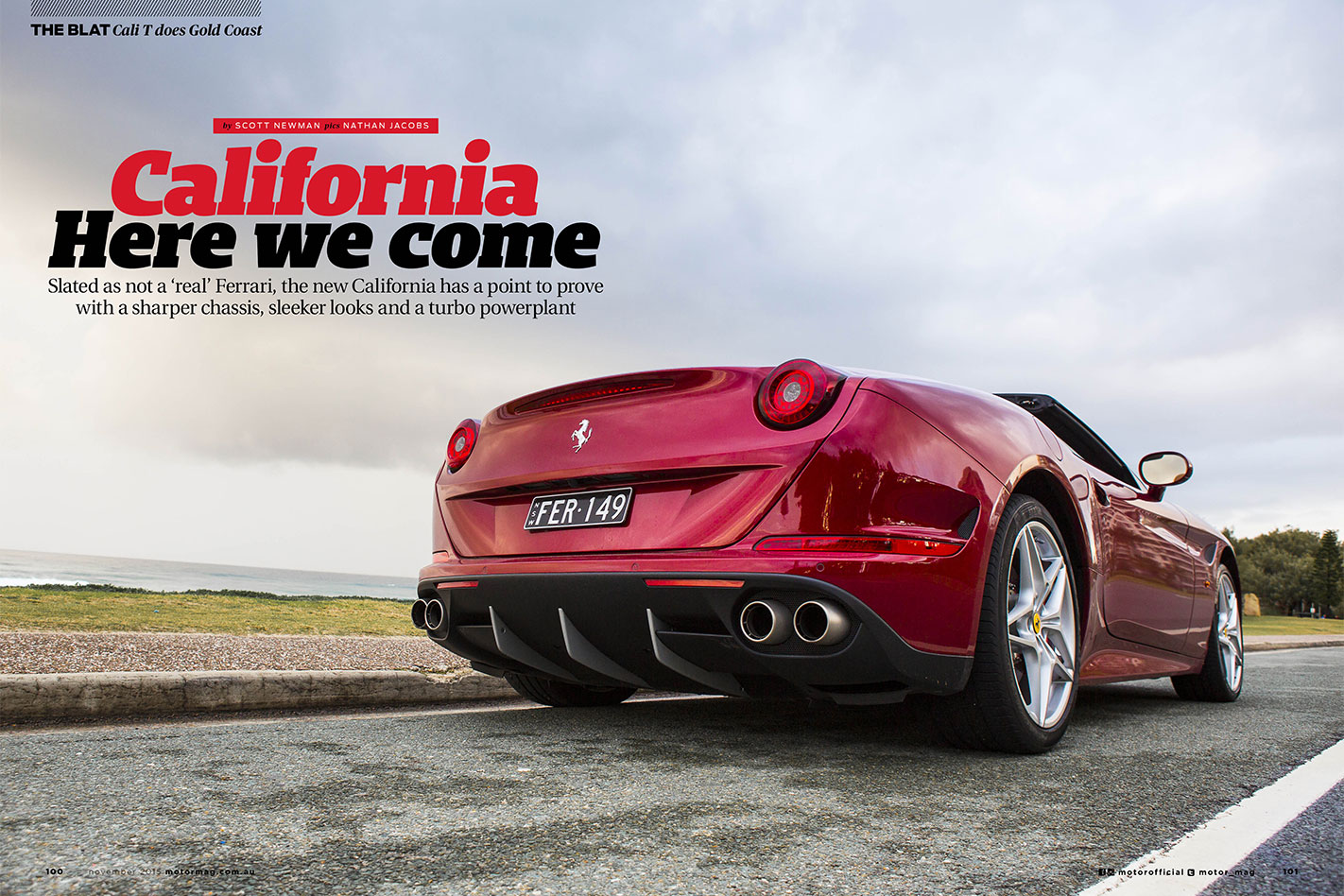
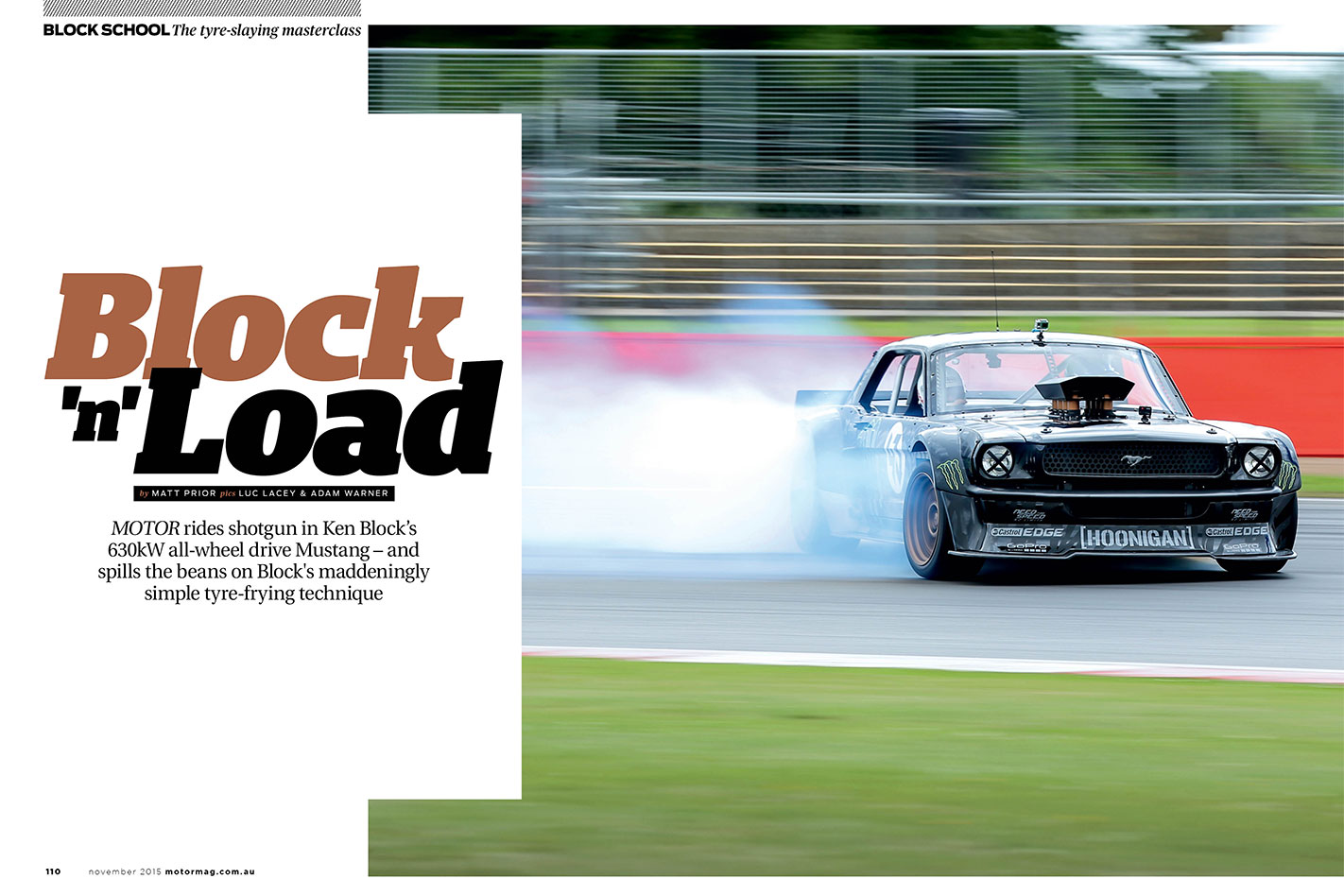
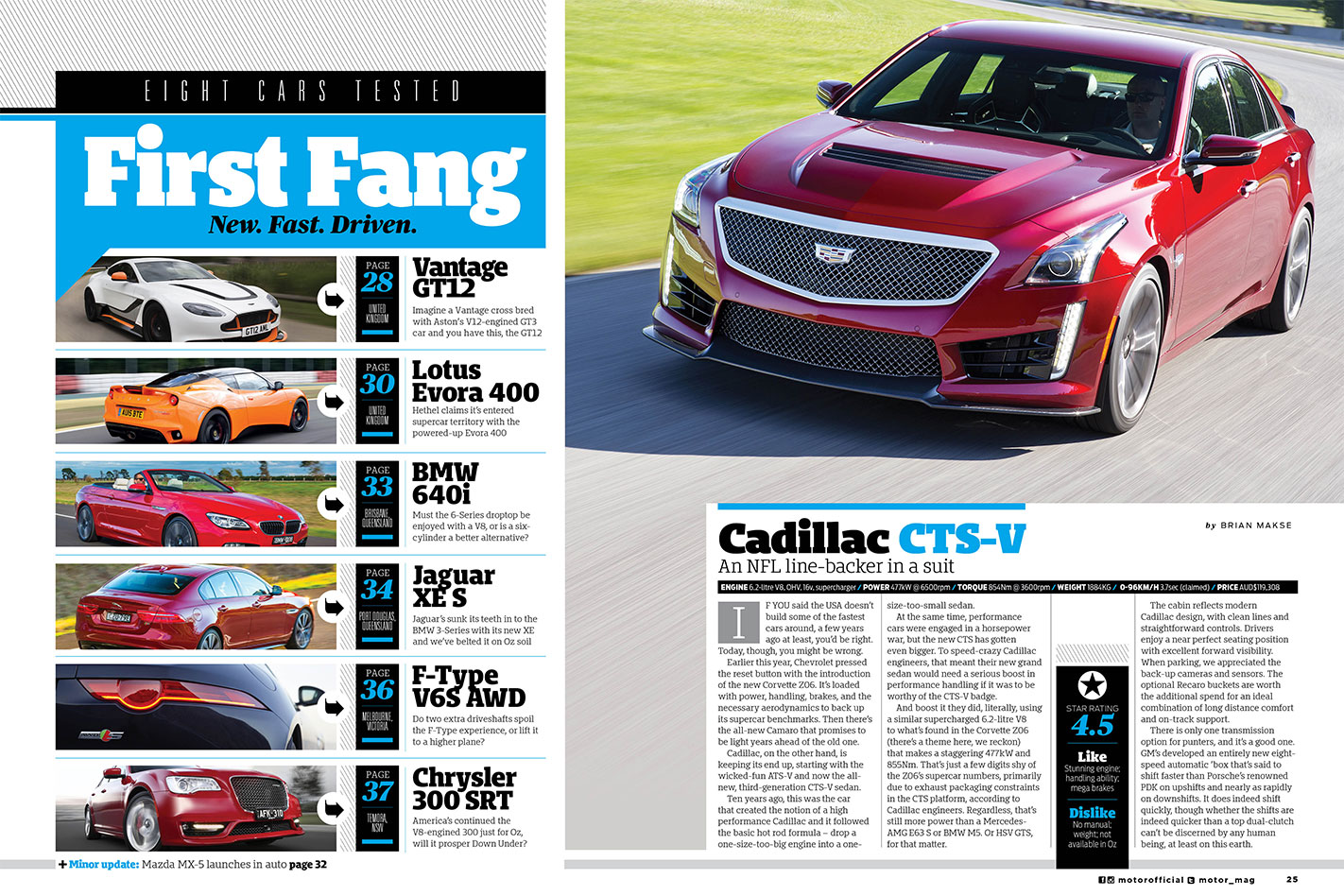
Welcome to a sneak peek of what’s in the November issue of MOTOR. This month we’ve had a bit of a facelift to shake things up, but there’s no change to the content!
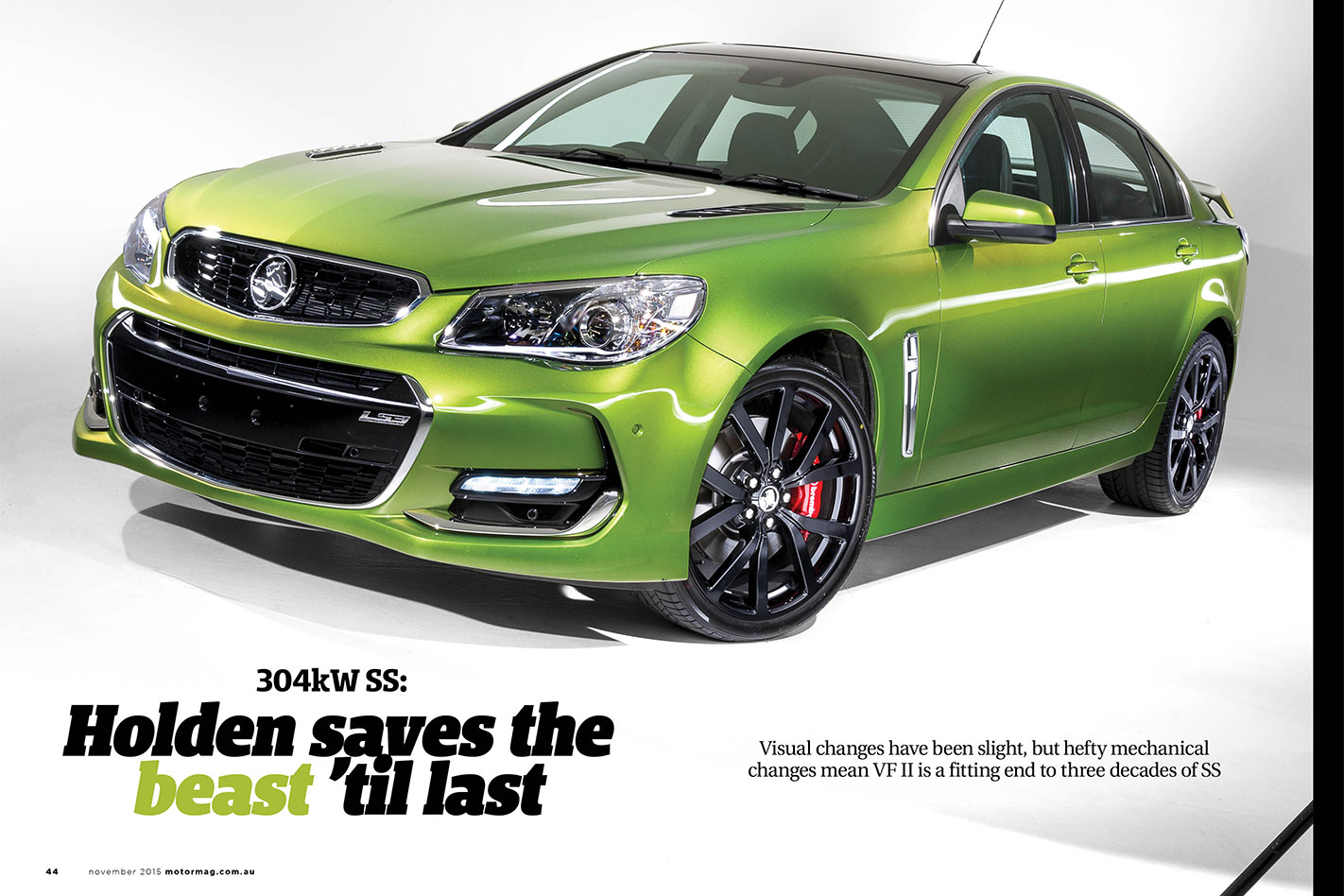
Our cover story this month is our man Morley having a chat with the team behind the creation of the new LS3-powered Holden VF II Commodore SS range.
Apparently Peugeot’s 2008 DKR wasn’t as competitive as it hoped this year.
That’s because the brand has revealed a 2016 car which turns out to have been heavily re-engineered for next year’s upcoming cross continent desert race.
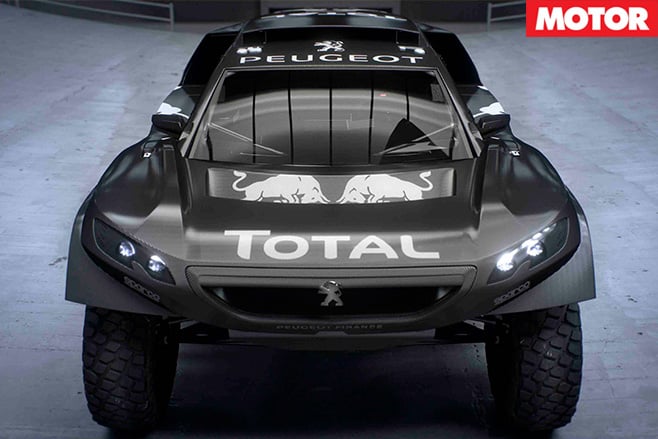
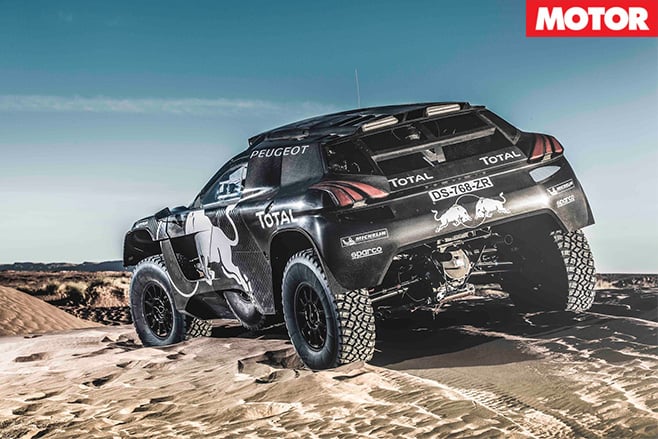
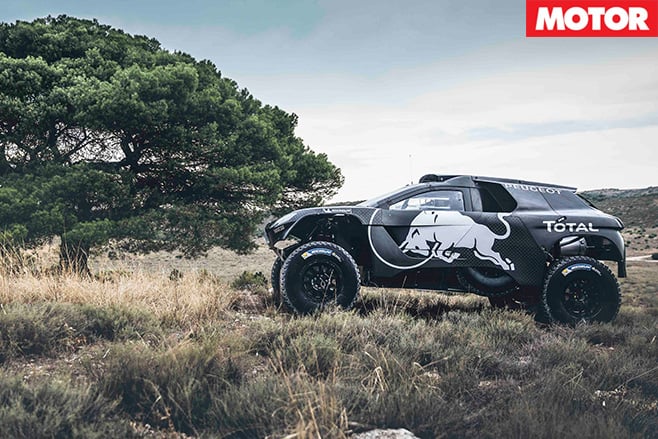
Its two-wheel drive configuration has been retained as it allows the team to use longer suspension travel, shorter front overhangs, and larger tyre diameters in effect.
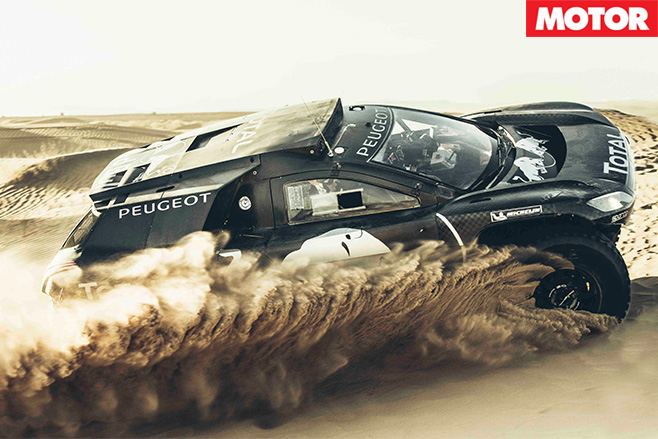
Peugeot’s new Dakar machine stands to make its debut later this year before heading to Argentina in 2016, where sebastien Loeb, nine-time world WRC champ, will also join Carlos Sainz, Stephane Peterhansel, and Cyril Despres at the wheel of Peugeot’s 2008 DKR.
But if you’re stinging to see it action now, Peugeot’s released a rather nice film of its new ‘Lion’ playing in the sand, which you can watch above.
Claiming the crown of ‘Australia’s fastest or most powerful anything’ is a bold statement.
But clocking the fastest lap time for an Toyota 86 or Subaru BRZ at the Yokohama World Time Attack Challenge – Australia’s annual tuner slugfest at Sydney Motorsport Park – goes a long way to certifying such a boast.
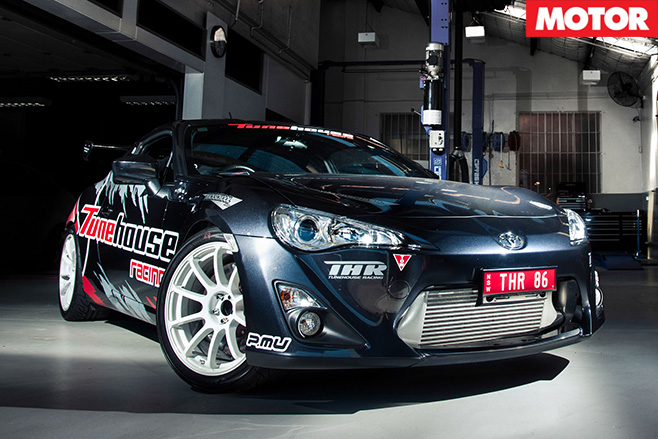
Tunehouse’s supercharged Toyota 86, nicknamed THR-86, took only 1min 44.92sec, in the hands of some-time MOTOR cohort, John Boston, to score what no other Toyobaru could match.
And right now it’s sitting in Sydney gridlock, a 37 degrees Celsius summer heat turning the winged coupe into a pizza oven and yours truly into a Super Supreme because the air-con doesn’t work. Well, the oily bits required do, but are probably in a box labeled ‘unnecessary’ at Tunehouse.

And yet the big surprise is that, despite a bitey Xtreme twin-plate clutch and a slight clunk in the Tomei two-way LSD rear end, it’s almost as docile in the urban crush as the stock sportscar it once was.
Tunehouse has owned the 86 since the first of the freshly-minted Toyota’s landed in 2012, and it quickly became an R&D test bed for the Marrickville shop’s go-faster brands, including Japan’s famed HKS. It’s been on a long and carefully orchestrated path to become the beast it is today, each step crucial in developing the various aftermarket gadgets Tunehouse markets for the 86 and its Subaru twin, the BRZ.
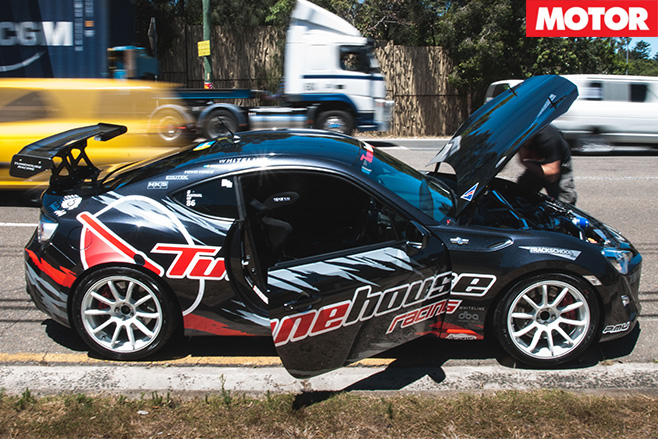
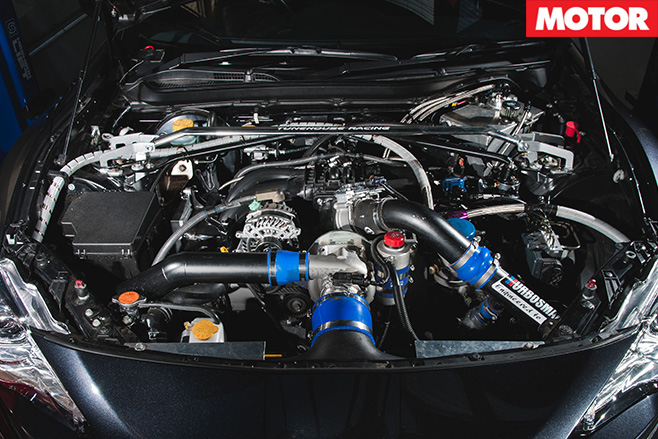
In current WTAC guise, though, THR-86 swings a bigger stick. Despite running a modest 0.6bar (8psi) of peak boost and standard engine internals, the engine now produces around 300kW. Ghelis calls it Spec R ‘Plus’, and it’s only for competition use, and not a bolt-on customer package.
Why? Well, it’s not for lack of public road drivability, in fact, the opposite. The engine now feels about on par with a 2.5-litre turbo STI boxer but unlike the Subie engine, throttle response is crisp, response off-idle immediate, and it’s so razor sharp in the mid-range it demands concentrated precision from your right foot.
The key to screwing extraordinary pace from the 86/BRZ breed, as Tunehouse preaches, isn’t purely down to output gains, but in maintaining balance among all areas of a complete go-faster package. Rewind two years, handling and grip were the first things Tunehouse chased for THR-86.
“Out of the box, the 86 has a fantastic chassis but is underpowered,” says Ghelis. “Still, we focused on tyres and suspension (upgrades) to see what the chassis is really capable of. Only then could we chase power, to balance the equation out.”

Tein Monoflex coil-overs, Super Pro suspension, upgraded DBA rotors with THR Clubsport pads, and an HKS Spec L exhaust system completed the initial ‘lightweight’ tuning combination, with a Spec S engine kit added prior to THR-86’s appearance at MOTOR’s own 2012 Hot Tuner Challenge.
By the time the 86’s first birthday rolled around, the Spec R supercharger kit with THR’s custom Ecutek ECU tune, and four-pot front brakes were installed and Boston had the Toyota flying around Wakefield, in 1min 7.9sec, a full 5sec quicker than standard. Tunehouse now claims it’s the quickest 86 ever to lap Wakefield.
When we first went from 98 to E85, power jumped from 222kW at the flywheel to 279kW! Since changing to E85 for racing, we haven’t turned back.”
Tunehouse then pushed suspension development, switching from Tein to custom Bilstein B16 coil-overs, installing Whiteline bushes, swapping rear camber arms, adding custom strut tops and changing geometry. With handling sorted, they sourced wider 9.0-inch Rota rims and Yokohama ADO8R tyres then went for even more grunt.

“Once we decided to enter WTAC, we really took a different approach with the 86,” Ghelis says. “Custom parts were ordered, others were fabricated and we began modifying the HKS GT Supercharger kit.
” In dyno testing, the engine was pushed to a stratospheric 381kW at the flywheel (at just 0.7bar) but detuned to ‘just’ 300kW for WTAC reliability. That’s still twice the factory power rating using standard internals.

“The standard ’box is holding up fine, though the clutch needs replacing beyond about 200kW. We put in a two-way LSD because sometimes on track, the car can lift onto two wheels across the kerbs and we want as much traction as possible, even when this happens.”
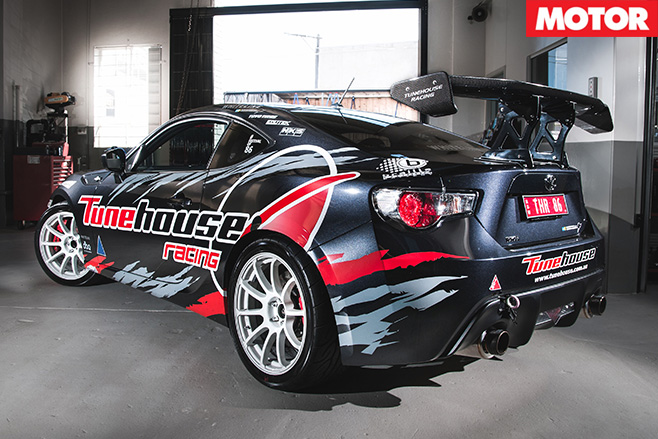
But compared to a street 86, this device is mental; it’s a race car with rego plates, albeit one that’s happy at sane speeds or even in insane summer gridlocks. That said, Tunehouse wants more power, grip, aero and quicker lap times and have plans to source an 86 shell and build a dedicated WTAC car from scratch. We’ll be waiting.
CAR makers should be punished if they make claims about fuel consumption that owners can’t match in the real world, an Australian senator said today.
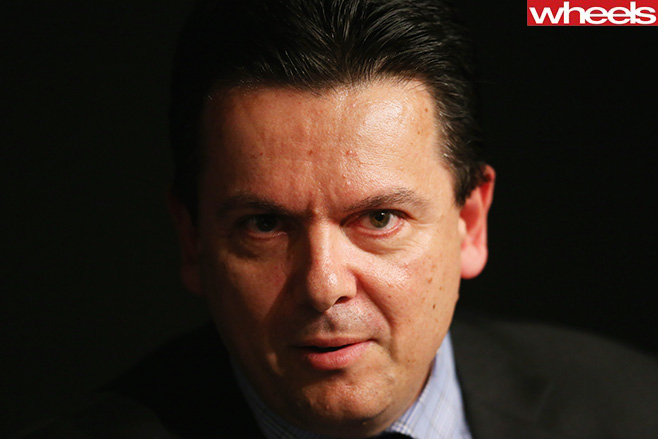
Independent senator Nick Xenophon said action should be taken to protect consumers from getting much bigger fuel bills than they had expected.
“The figures we’ve seen recently are that some vehicles can burn between 25 per cent and 135 per cent more fuel than claimed by their manufacturers,” the South Australian senator told ABC radio.
“If someone buys a car assuming they’ll be spending $1000 a year in fuel, but in fact they end up spending $2000 a year in fuel, even though it’s pretty much typical road use, I think there ought to be some sort of redress for consumers,” he said.
For a range of reasons, most cars use significantly more fuel in the hands of reviewers and owners than they use in the tests.
Senator Xenophon’s comments came as Volkswagen Group continued to reel from revelations it had sold millions of cars that used software which could cheat emissions tests.
Overnight Audi, part of VW Group, released a list of its cars that are potentially affected.
They included the A1, A3, A4, A5 and A6, the Q3 and Q5 SUVs, and the TT sports car.
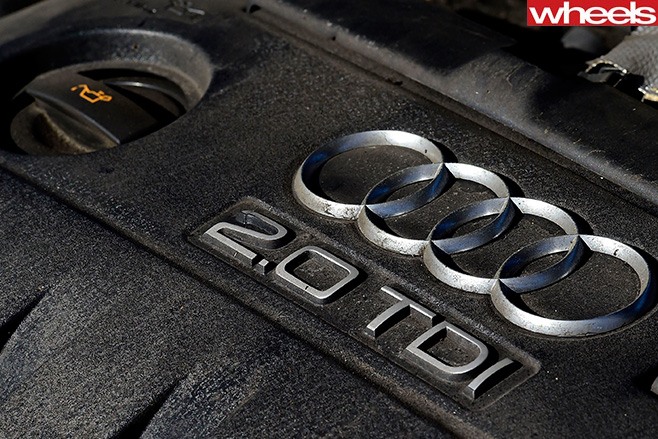
“In order to answer our customers’ questions as fully as possible we are currently analysing all model ranges which incorporate the EA 189 unit (1.6 TDI or 2.0 TDI) that conform to the EU5 standard,” a spokesman said.
Globally, 2.1 million Audis are alleged to have the “defeat device” software that was fitted to cars using the EA189 1.6-litre and 2.0-litre turbo-diesel engines.
On top of Audi’s figure, Reuters reports that 1.2 million Skodas are affected globally. Skoda is yet to confirm specific models or say whether any were sold in Australia.
That adds to the 5 million VW-badged cars that form part of the 11 million VW Group cars affected worldwide.
Cars affected do not include new models that meet the latest Euro 6 emissions rules.
“The Volkswagen Group has already confirmed that new cars with Euro 6 engines – in all models and in all markets – meet the current emission limit,” said a company statement.
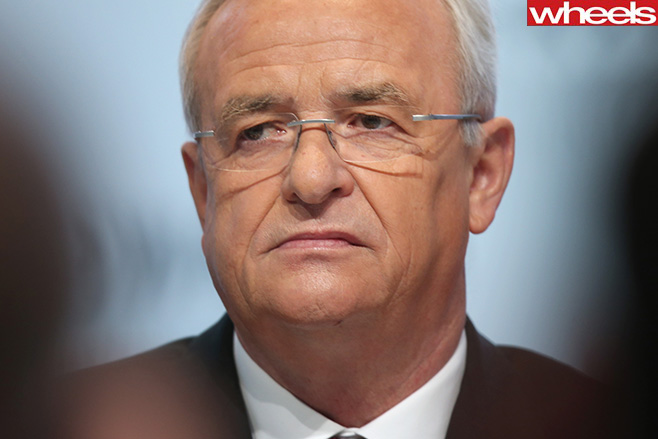
Winterkorn, who was replaced by Matthias Muller last week following the Dieselgate revelations, has said he is not aware of wrongdoing on his part.
There was also an unconfirmed report that VW Group had suspended Audi R&D boss Ulrich Hackenberg and Porsche head of tech Wolfgang Hatz from their respective roles as it sought to respond to the scandal.
In a game of automotive ‘hot or not’, Hyundai makes no bones about the fact that the new SR version of its i30 hatch is closer to the ‘warm’ side of the ledger.
Despite tucking a 2.0-litre version of the all-alloy (Nu) direct-injection four-cylinder under its bonnet, and bringing in global suspension guru David Potter to help tune the i30’s set-up, the unique-to-Australia SR is not gunning for GTIs of the Peugeot or VW variety.
Hyundai’s stated aim in producing the SR is to test the performance waters, build the brand’s ‘fun to drive’ credentials, and grab a bigger slice of the (growing) premium small car market. Boasting 129kW/209Nm, up 17 per cent on the Elite 1.8’s 110kW/178Nm, the six-speed manual i30 SR is claimed to run 0-100km/h in 7.7sec, a handy 1.4sec improvement over the 1.8, while the optional six-speed sequential auto is a few ticks slower at 8.6sec.
The short story is it’s all in the dampers, with the front spring rate only increasing four per cent (largely to accommodate the 2.0-litre’s extra weight) and no change to the rear or anti-roll bar. After evaluating 43 separate suspension arrangements, including 13 front and 23 rear damper builds, the team settled on a specifically calibrated ZF Sachs combination, with computer modelling validated via local running in four prototypes.
The ride/handling compromise is spot-on, the SR delivering sharp steering response and good feel, especially in the final Sport setting of the standard, three-mode ‘Flex Steer’ system. Despite running on bigger 17-inch rims, wrapped in 225/45 Hankook rubber, ride quality is excellent, as is body control and outright grip.
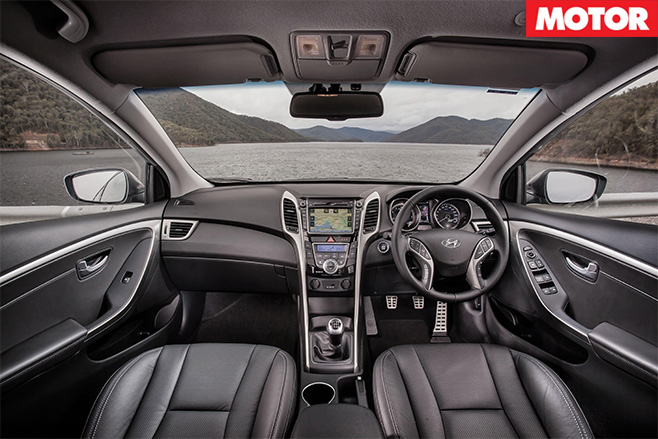
At $27,990 for the manual and $30,190 for the auto, the SR also picks up extra standard fruit, including Xenon headlights, alloy-faced pedals, partial leather trim, electrically-adjustable driver’s seat and an electrochromatic rear-view mirror.
Aside from the machined-faced alloys and Xenon lights, the SR is distinguished visually by a sports front grille with piano-black insert, rear diffuser, and LED rear combination lights.
If warm is good, hot must be better, right? Well, Hyundai is keeping a sharp eye on how the i30 SR goes before jumping in to more serious territory. But European markets are already interested in the car, and an Accent SR has joined the local line-up. It appears things are heating up.
3.5/5
Specs
Engine 1999cc 4cyl, DOHC, 16v Power 129kW @ 6500rpm Torque 209Nm @ 4700rpm Weight 1356kg 0-100km/h 7.7sec (claimed) Price $27,990
Click here to read the full range review of the Hyundai i30.
Due here in March, the five-door Picanto hatch will woo young buyers with style and value – as Kia boldly goes where Volkswagen, Fiat and Ford have failed.
WHAT IS IT Sitting below the established Rio, the Picanto is a European designed and engineered five-door hatch from South Korea, aimed straight at the Holden Spark and Mitsubishi Mirage micro-class heartland.
WHY WE’RE TESTING IT Kia has lately emerged from the shadows as Hyundai’s cheap and cheerful understudy, with impressive new models such as the Proceed GT and latest-generation Sorento. Over in Europe, the German-developed Picanto has found favour as one of the sub-B segment’s leading lights, and so we’re expecting big things of the sub-$15K five-door baby hatch in Australia too.
MAIN RIVALS Fiat 500, Holden Spark, Nissan Micra, Mitsubishi Mirage, Suzuki Celerio
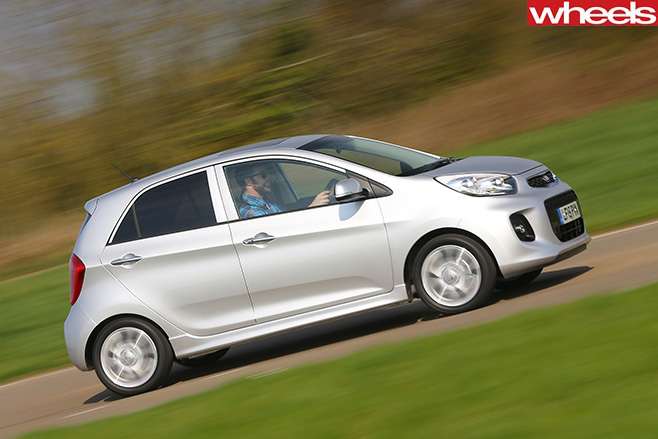
PLUS: Design, packaging, performance, build quality, agile handling, ride, maturity MINUS: Sensitive brakes, flat seats, some road noise, auto has only four speeds
THE WHEELS REVIEW VOLKSWAGEN UP. Smart ForTwo. Fiat Panda. Australia is littered with the still-warm carcases of cool city cars that should have set the sub-B segment on fire but instead fizzled out like a first-term PM.

Brave Kia, however, has the balls to battle it out against the inexplicably popular Mitsubishi Mirage with the new Picanto, a funky sub-B hatch that slots beneath the Rio. Derived from the Spanish word for hot and spicy, it has helped fire up the South Korean brand in Europe over the past decade or so.
Keeping things simple here, only a single, middle-spec, five-door hatch is heading our way next March, with driveaway pricing that means business at around $13,500 for the manual, and $15,000 in four-speed auto guise (compared to $16K plus on-roads for a base Rio S three-door). And you’re not getting some flimsy and tinny buzz box, either.
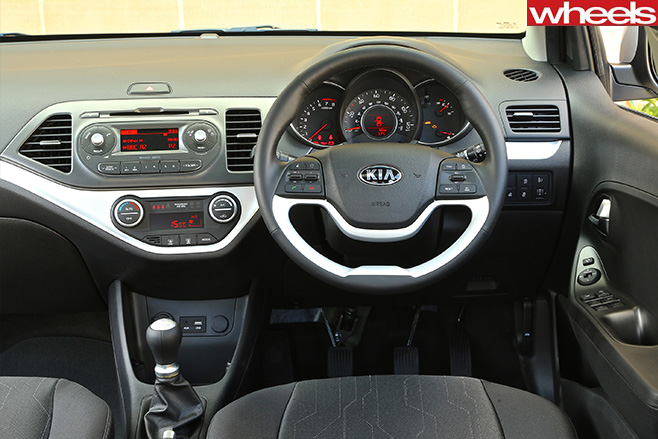
Likewise, and despite being just a smidge under 3.6m long and 1.6m wide, the five-seater Kia’s lofty 1.5m height and near-2.4m wheelbase liberate enough space for four adults (albeit on rather flat seats up front), though the sub-200L luggage capacity (with a space-saver spare) is an unavoidable city-slicker upshot.
Hardy the cabin plastics may be, but the dashboard’s elegant and easy layout shames many bigger cars, and the driving position, ventilation, vision out, and storage is not compromised by the pert-hatch packaging. Extra marks go to the forward-tipping rear seat cushion allowing an extra-low load area with the backrest folded, the very S-Class-esque two-spoke wheel, effective Bluetooth connectivity, and ultra-clear instrument dials. No wonder the Euros rate this baby so highly. Reach adjustable steering would be nice, however.

Kia’s Frankfurt base also sorted out the chassis – purely conventional MacPherson struts up front and a torsion beam rear – with an emphasis on flowing (electric) steering responses, controlled cornering, and a comfy ride. If you’re up for some fun, the Picanto feels pleasingly lively yet grippy. On the flipside, some road noise is evident and the brake pedal is overly touchy. Still, these are minor blemishes in an otherwise agreeably grown-up baby package.
Kia’s plan is a canny one. With no alternatives from big-name players such as Mazda, Toyota, Hyundai, Honda, and Ford, there is every chance that the smartly specced Picanto will meet its 300 monthly sales target, establishing the brand as a sub-B leader – an enviable position to be in when, inevitably, fuel prices soar, pollution taxes hit, and congestion issues worsen.
SPECS Model: Kia TA Picanto Engine: 1248cc 4-cyl, dohc, 16v Max power: 64kW @ 6000rpm Max torque: 123Nm @ 4000rpm Transmission: 5-speed manual Weight: 850kg 0-100km/h: 11.9sec (overseas model) Fuel economy: 4.3L/100km Price: $13,500 driveaway (approx) On sale: March 2016
