
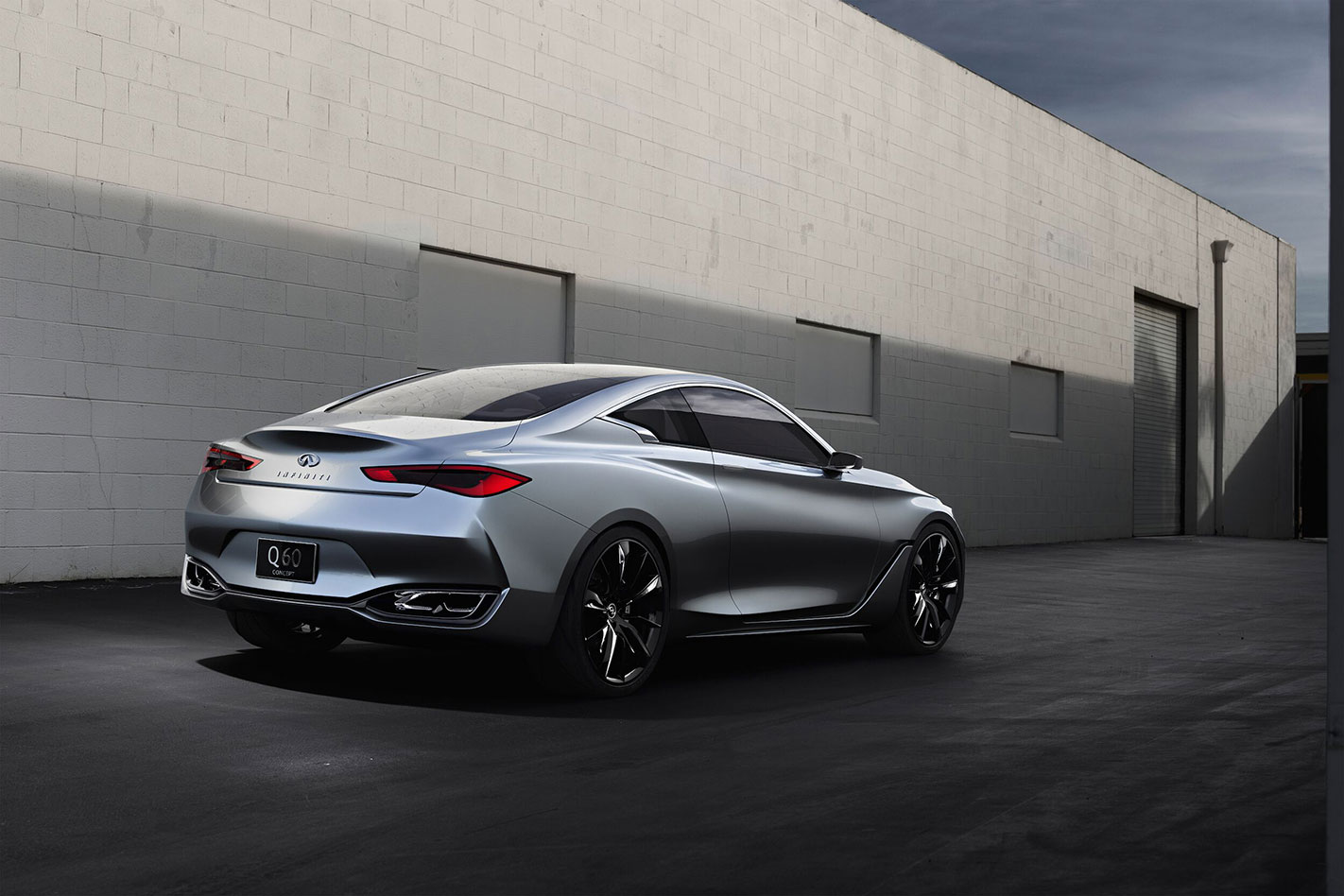
Infiniti’s sexy new Q60 coupe will arrive locally in the third quarter of next year, possibly with twin-turbo V6 power.
The Japanese luxury brand has confirmed the production version of the Q60 concept first shown at January’s Detroit motor show will arrive in US showrooms from the middle of 2016, with Australian orders to follow soon after.
According to Infiniti global boss Roland Krueger, the Q60 concept is, “More than just a design exercise … what you see in this concept vehicle inspires the sports coupe that Infiniti will produce next year.”
The show car debuted a 3.0-litre direct injected and twin-turbocharged V6 petrol engine that Infiniti says will be part of a family of new, smaller, more efficient yet still powerful engines to power its range.
It is unclear if the boosted six will arrive with the first of the production Q60 coupe grades, as the brand said in March this year that the new line of engines are, “Slated to be introduced within the next two years.”
That means the Q60 twin-turbo V6 should be a goer for early 2017.
While that Q60 grade will rival the BMW 435i and Audi S5 coupes, the other engine offering expected to rival the 428i and A5 2.0 TFSI is the 155kW/350Nm 2.0-litre turbocharged four-cylinder borrowed from the Q50 sedan.
Infiniti Direct Adaptive Steering – the electric system lacking a direct mechanical linkage – made an appearance on the Q60 concept, but rumours abound that the brand will drop that controversial method of turning the front wheels.
Particularly if the production Q60 looks as sexy as the concept, Infiniti Australia will no doubt be banking on continuing to increase its sales, which are up 25 per cent this year.
“Officially Australia has flagged it’s very interested in the production Q60 coupe and we expect to introduce it to the Australian market in the fourth quarter of next year,” confirmed Infiniti Australia corporate communications manager Peter Fadeyev.
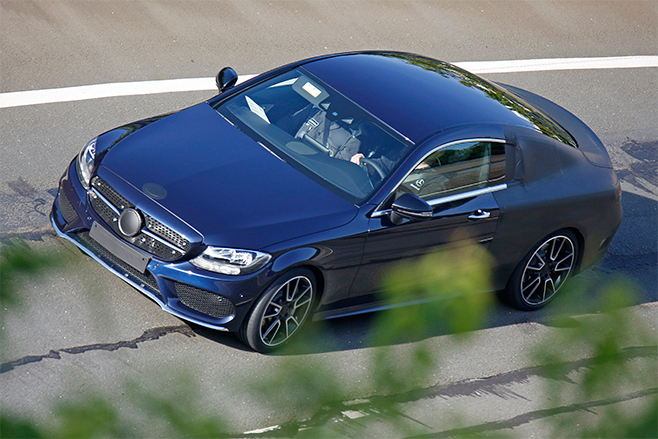
SPY images have caught the next Mercedes-Benz C-Class Coupe taking form as it shapes up for battle against the BMW 4 Series and the Audi A5.
The Benz-badged coupe’s sleek new profile is still a closely guarded secret judging by the lengths taken to disguise the C-pillar and boot-lid shape, the images show.
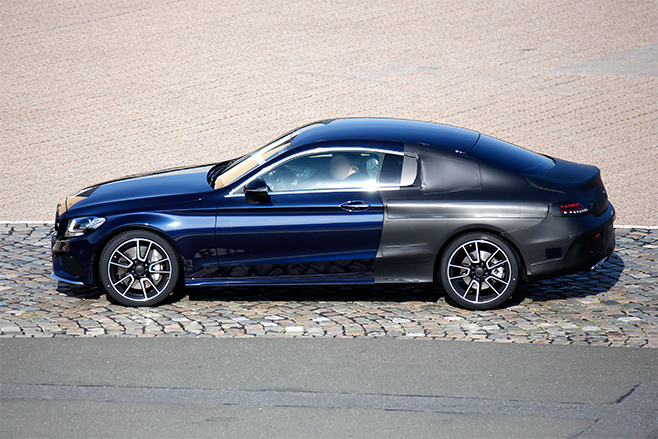
Expected to be one of the biggest drawcards of next month’s IAA Frankfurt Motor Show, the C205-generation two-door Mercedes C-Class, seen here undergoing a final pre-production shakedown, banishes the upright dumpiness of the outgoing version for a smoother, sleeker silhouette that connects the newcomer with its C217 S-Class Coupe big brother.
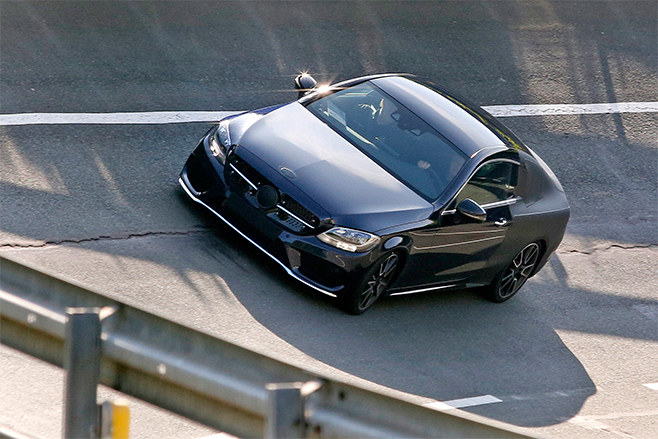
Also crystal clear from the spy shots is the lack of door B-pillars, revealing a more elegant frameless look that puts the Stuttgart car on equal bragging terms with the ageing Audi A5 and BMW’s successful 4 Series coupe alternatives. With the stylish Lexus RC and upcoming Infiniti Q60 coupe (to also star at Frankfurt) providing further competition, it is obvious the Benz team is serious about putting its best-looking foot forward this time around.
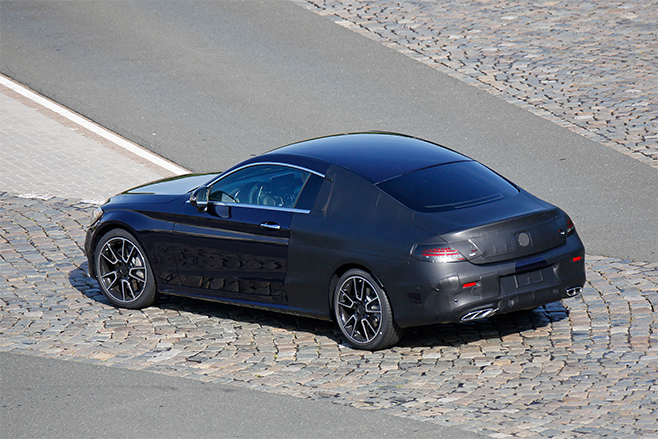
As we’ve reported previously, the oily bits underneath are pure W205 C-Class sedan, meaning a variation of the latter’s modular rear-drive architecture. Among the more interesting powerplants is the return of the Mercedes straight-six cylinder engine, ending almost 20 years of mildly disappointing V6 applications. The upcoming C300’s circa-175kW 2.0-litre direct-injection four-pot turbo should be a winner, too.
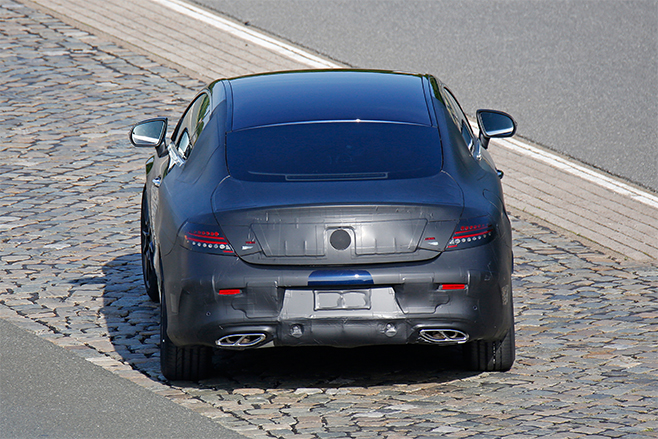
A flagship C63 AMG M4/RS5 basher, brandishing the Three Pointed Star’s M177 375kW/700Nm 4.0-litre twin-turbo V8 and driving the rear wheels via a seven-speed DCT dual-clutch transmission, will be the one to have the coupe set swooning, while the A205 convertible is set to surface sometime later in 2016.
Similar to today’s C204 Coupe launched in 2011, the 2016 C-Class should be priced to appeal, so expect a $60,000 kick-off, extending well past the $150K mark for the C63 AMG.
Have spy pics of your own? We’d love to see them. Just email them to [email protected]
Sign up here to receive the latest round-up of Wheels news, reviews and video highlights straight to your inbox each week.
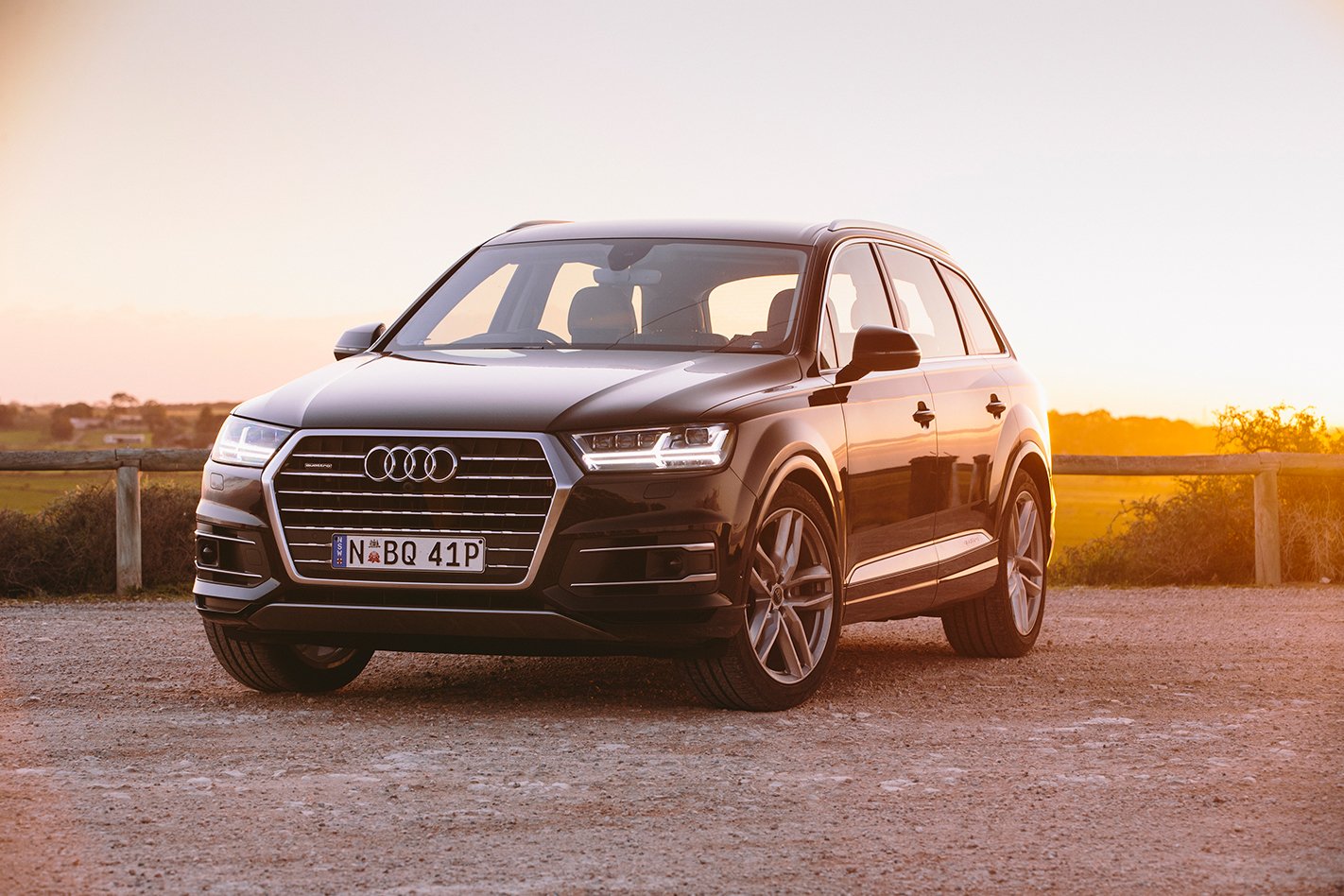
THE Audi Q7 SUV has rolled into its second generation, arriving in Australia spoiling for a fight with the new Volvo XC90, the fresh Mercedes-Benz GLE and the BMW X5.
Here are nine things we reckon you didn’t know about the new Audi Q7.
1. It’s light. OK, calling a seven-seat SUV that weighs 2135kg light might sound strange, but in Audi Q7 land this is big news. The old car weighed 240kg more, which is the equivalent of lugging about a large motorcycle. Or two sumo wrestlers.
2. It has more computing power than the Starship Enterprise. A suite of on-board safety and assistant systems make the Q7 the most advanced mass-produced Audi ever.
3. Some of this tech won’t work Down Under. Boo! As smart as it is, the Q7’s fancy (and brilliant) Trailer Assistant system isn’t available here. Nor is its Predictive Efficiency Assistant, which struggles to recognise our road signs.
4. The options list is extensive. And expensive. Tick a few choice options and you can quickly add the price of a regular family car to the Q7’s $103,900 price tag. The most outrageous option is a $14,850 Bang & Olufsen sound system.
5. It’s fast. Weirdly fast. The Q7’s relaxed but relentless 200kW/600Nm 3.0-litre TDI propels it from rest to 100km/h in 6.5sec, which is enough to embarrass a hot hatch.
6. An even faster one is coming. Remember the bonkers V12 TDI of the previous gen? It’s long dead, but an even faster Q7 is coming, fettled by the boffins at Audi’s RS arm.
7. Australia matters. We’re the sixth most important market for Q7s worldwide, compared with other Audi models where Oz falls outside the top 10. We’re so important that Audi conducted more than 11,000km of Q7 testing here.
8. Smaller outside, bigger inside. Despite its being 37mm shorter and 15mm narrower, Audi has somehow managed to make the Q7 roomier inside. Go figure.
9. It comes with iPads (sort of). Audi wanted to stick removable tablets to the back of the front seats to double as in-car entertainment screens but existing products couldn’t withstand the extreme temperatures often felt in car interiors. So Audi created its own Android based tablet.
Plus one more…
10. It’ll keep you 35 percent cooler. Q7 offers a ‘deluxe air conditioning’ system that essentially turns the entire dash into one big air vent.
Sign up here to receive the latest round-up of Wheels news, reviews and video highlights straight to your inbox each week.
Korean car makers have recognised that a pert bonnet line can shape a new model’s fortunes, and theirs.
Went to a school-night nosh-up with Hyundai recently and had the privilege of watching Sydney-born, South Korea-based designer Casey Hyun sketch freehand.
With a little camera transmitting onto a white screen what his brain was transferring onto paper, I was seriously gobsmacked at this Aussie-boy-done-good’s perspective.
Like any great artist, Casey looked into the blank sheet in front of him and saw another dimension. And even when his main design – an interpretation of what a Hyundai Ute might look like – was approaching completion, all I could see was some stunning, long-nosed reimagining of a 1963 Buick Riviera, not realising I was mistaking the tray for a bonnet. And had ignored the mirrors already drawn on what I thought were the car’s rear flanks.
When I think car drawing, I think like a flat-earther. All my childhood scribblings were wildly fanciful two-dimensional side views with ‘bee-sting’ aerials, mudflaps and exhaust smoke.
Given how much I now detest mudflaps (for their detrimental effect on a car’s styling), I don’t know what I was thinking. At least the cars themselves had taste – Citroen DSs, VW Beetles and boxy HK-HG Holdens were my specialty.
This whole lack of perspective came flooding back at the Audi A3 Cabriolet launch on Kangaroo Island last year. A pre-dinner challenge was to draw the A3 rag-top in a setting that reflected our location and the Audi brand, with the prize being the best room in the lodge. I don’t think I’ve concentrated that hard in years, copying the base grid of the artist on hand to give us hacks a few pointers while desperately trying to produce something respectable. But still no cigar, and certainly not the fancy room. My embarrassingly juvenile A3 Cab looked like a deflated soufflé.
So I’m no car designer. But I definitely appreciate how great design is more than just slapping a badge on a vehicle, or fickly following automotive fashion.
The thing that resonated most from our Hyundai design experience was the statement that “a definitive vision and consistent brand identity become crucial to [a brand’s] growth”. At which point I thought about Hyundai and Kia’s exponential rise from some of the atrocities they’ve produced in the past, and the utter failure of ‘badge engineering’ across multiple generations to achieve anything good for anybody.
It’s a surprise that it took the Koreans so long to learn from the Japanese experience, entrusting the styling of international models to the masters of the craft. Think Datsun’s Pininfarina-styled 410 Bluebird (1963) and the beautiful Giugiaro-designed 1500/1800/Luce (1966) that put Mazda on the map. How anyone at head office in Seoul ever thought the world would want a 1998 Hyundai Grandeur remains deliciously worthy of ridicule.
Casey Hyun told us that car designers can actually pick the signature in someone else’s work and say “that’s a Ponchard” (for want of a better name), which is an incredible skill. Yet Casey remains deeply proud of his early work for Hyundai – the 16-inch steelies on an iLoad. Given the evergreen popularity of the Korean van, he’s just chuffed that there’s a small slice of his art sitting in loading zones all over the country.

Ugly runs deep
EVERYONE surely has an ‘ugliest car of all time’, even though some person’s ugly is definitely someone else’s cuddly. But mine has to be the Triumph Mayflower. As a kid, this mutant on wheels was even more repulsive than eating vegetables.
Sign up here to receive the latest round-up of Wheels news, reviews and video highlights straight to your inbox each week.
Remember ‘shotgunning’ for a ride in the rear-facing dickie seats that folded down in old Mercedes-Benz and Volvo station wagons? Who wants to face forward staring at the back of mum’s seat when you could gesture out the action-packed rear window to tail-gating drivers?
The first child seat was prototyped in 1964 by a doctor emulating the way astronauts travelled rearwards, and the first production child seat was created when Volvo enabled the front passenger seat to spin around in the 1967 Amazon.
Seeing the world go by backwards is the safest way for babies and kids to travel. And while most of us team travelling backwards with motion-sickness, recent research by Volvo’s Car Safety Centre confirms that children have no preference with the direction they face when travelling.
The Centre also reports that rear-facing seats are also safer because a child’s head is proportionally larger and their neck is weaker than adults. According to the research, the head of a newborn baby makes up half its total weight – an adult’s head weighs only about six per cent of the total weight. Rearward-facing child restraints support the neck and help spread the force of the impact over a larger area in frontal incidents, which are the most frequent and usually the most severe impact situation. In response to this research, Volvo recently produced the XC90 Excellence which features the Lounge Console Concept.
Tisha Johnson, Chief Designer Interiors at Volvo Cars Concept and Monitoring Centre, said, “We have been investigating the nature of progressive luxury for some time, and we see a direct connection between luxury and emotional well-being.”
Volvo claims the XC90 is one of the safest cars in the world
The Excellence Child Seating Concept, part of the Lounge Console Concept, is a re-think of how a small child travels with its caregiver, replacing the front passenger seat with a swiveling forward-mounted rear-facing child seat that faces the parent sitting in the back seat. And, the swiveling baby seat will accommodate children until they are around four years old (once their neck muscles are strong enough).
The leather-wrapped curving and pivoting design is similar to that used in the beautiful 2008 Nissan Forum concept and Mercedes-Benz’s more recent F015 self-driving car, but the difference is in the location of the baby seat.
The front passenger seat is currently a no-go zone for babies and children because of the damage dash-mounted airbags can do to a child. Additionally, Australian research suggests that young children using adult seatbelts are more than three times more likely to be badly injured, particular around the head, than those in correctly fitted child restraints.
Assuming your car has conventional front seats, the rear seats are where you will be fitting an Australian Standards AS/NZS 1754-approved baby seat, either facing rearwards or forwards depending on the size of the child. Kidsafe and Neuroscience Research Australia (NeuRA) recommend that the child stay facing backwards until their legs are too long.
Traditional baby capsules only hold a child until their 70cm long, however a new category of rear-facing seats called Type A4 are tested and approved to hold kids as old as three years. After that, it’s a front-facing seat with an in-built five or six-point harness until the kids turns four. The Australian Standard uses height as a guide for when to transition from a baby seat, so look to see whether your child’s shoulders sit within the markers on the seat. Once they are above the top mark it’s time to move on.
Word of warning to vintage car enthusiasts and tradies: A kid seat must be installed using manufacturer-installed anchor points, and some older cars and commercial vehicles don’t have them. There is no other way to anchor your child’s seat so that it protects your child in a crash. The seat, headrests or luggage ties might look tempting, but they won’t work. So don’t do it. And forget about using old-school off-roader side-facing jump seats – our necks don’t like to crick sideways.
There’s another less obvious aspect and that’s what chemicals the child-seat materials contain. HealthyStuff is a non-profit American organisation that tests various products for toxic chemicals that can bio-accumulate in our bodies and affect health.
Stringent rules regarding the fireproofing of baby seats means that most of them (over 70 per cent of the American seats tested) contain hazardous halogenated flame-retardants. Top rated companies including Britax (sold in Australia as Safe N Sound and Steelcraft) and Clek (not yet available here) are proactively reducing hazardous chemicals in their products. The poorest performing company was Graco. The full 2014 report can be found here.
What about kids who are too tall for a toddler seat, but still more fragile than an adult? How about Mercedes-Benz’s rear-facing fold-down jump seat? The Volvo V70 wagon had the dickie seat many Australians grew up with, though Mercedes-Benz is now the only maker with that kid-coveted rear-facing third row seat featured as standard in their E400 Estate wagon.
If Tesla CEO Elon Musk had his way, though, the Tesla S sedan would offer what Musk calls the “safest seat in the car” to kids in Australia. Two contoured rear-facing seats with five point harnesses fit beneath the vast rear window of the Tesla, accommodating children aged from three until they either don’t fit or reach 33kg. Curiously, however, the Tesla jump seat option is unavailable in Australia.
Conventional removable rear-facing seats that are pushing the safety game forward but are currently unavailable in Australia include the Clek Fllo, a versatile self-declared “friggin’ awesome” seat that looks the biz, sports innovative crash protection technology and is free of harmful flame retardants, and Carkoon, a transforming seat featuring Kevlar reinforcement and a built-in fireproof airbag that deploys across the open face of the seat to entirely cocoon the baby from danger.
Our Australian Standards for child-safe car seats are some of the toughest in the world, and as research suggests that kids should stay facing rearward and boosted as long as possible, new products will continue to address that niche. The latest are the ISOFIX latches, finally legal in Australia and highly effective at reducing the risk of incorrect car seat installs.
As we inch closer to the reality of self-driving cars expect to see more unusual seat configurations. Volvo’s Excellence Lounge Console is the harbinger of what is to come.
PLUS
- Nice 2.0-litre turbo engine feels strong not only around town but up windy roads, you’ll also love the constant racecar like crackles from its sports exhaust when you lift your foot off the throttle pedal.
- Six-speed automatic gearbox shifts cleanly, smoothly, with little fuss, and is more than capable handling the tight start-stop driving of car parks.
- Its steering wheel feels tight, light, and accurate to spin, which is a must for a sporty individual like the Mini, while the brakes bite with assuring strength, so you know you can always stop when you want, and seem like they could last ten rounds with Ali.
- The JCW handles with the surefootedness of a tightrope walker, while its sport seats are comfortable and hold you tight during excited driving, something the JCW is made for.
- The high-tech, cool looking, heads up display above the instrument cluster projects your speed up on to the windscreen. This keeps your eyes on the road where they should be and we love this feature. Other crucial stuff that makes day-to-day driving much easier like a reversing camera, cruise control, dual climate control, automatic headlights, and automatic wipers are standard too… as you’d expect for $49,950.
- Like to accessorize? There’s seemingly endless scope to personalise the exterior package to your tastes…
- …Except for the wheels, MINI only offers one style.
- The interior’s rife with typical MINI flair, which is good, but ultimately steers its design and interface in odd directions.
- Even as a top of the range car MINI’s skipped electric adjustment for your driver’s seat, and should you want an alarm system MINI buries it in an optional $1560 Convenience package.
- Your shoulder space feels challenged by the car’s relatively narrow width (it’s a MINI, remember?), bolstered seats and intruding centre console armrest.
- Its suspension lacks the comfort or composure of similarly priced rivals, don’t expect a limo-like ride.
- Some cars come equipped with a Pirelli-made tyre and these dislike greasy conditions, take caution on roads after rain.
- Should you get enthusiastic on a windy road you might find the electric-motor based steering can feel unnatural when straightening the wheel too quickly after a corner.
China has dumped electric power and embraced Yank V8 muscle for the latest installment of its first supercar, the Icona Vulcano.
Developed at Icona of Shanghai, the original Vulcano concept was wheeled out at the motor show of its native city two years ago using a 708kW electric motor/V12 hybrid drivetrain.
For the revised Vulcano Titanium set to be revealed at this Sunday’s Pebble Beach Concours d’Elegance, Icona has fittingly installed a petrol engine from the States.
A 6.2-litre supercharged V8 is pinched from the Corvette ZR1 and is claimed to produce 500kW and 840Nm.
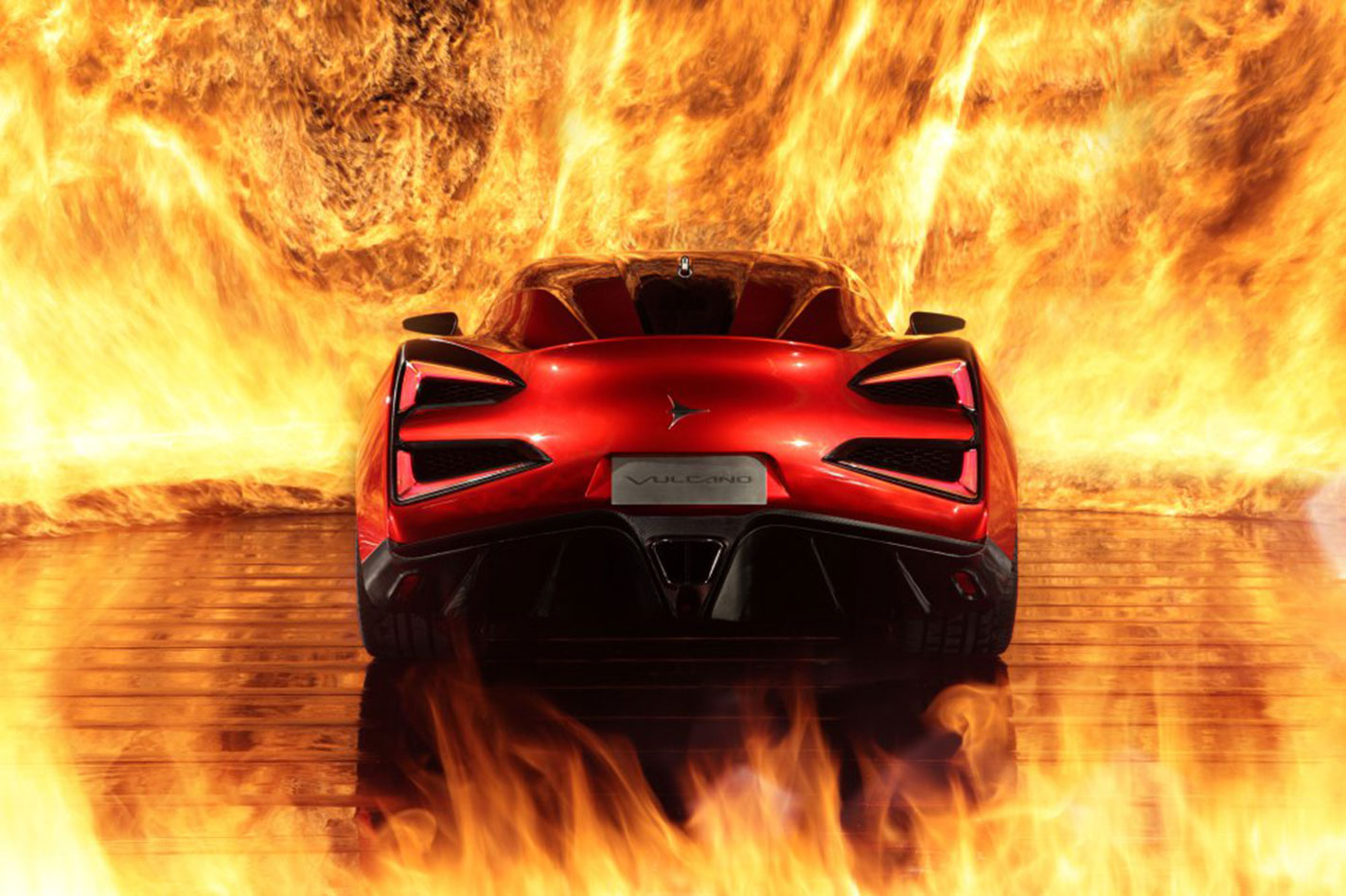
The newly added Titanium tag references the claim that this latest Vulcano is the first car in the world to be constructed of titanium and carbonfibre.
According to Icona – the Italian designhouse that is now Chinese owned and based in Shanghai – it took over 1000 hours to hand craft the “naked” titanium body.
Only a single side photo of the unpainted version has been released so far, but the Vulcano Titanium appears very similar to the 2013 hybrid concept coated in a fiery hue.
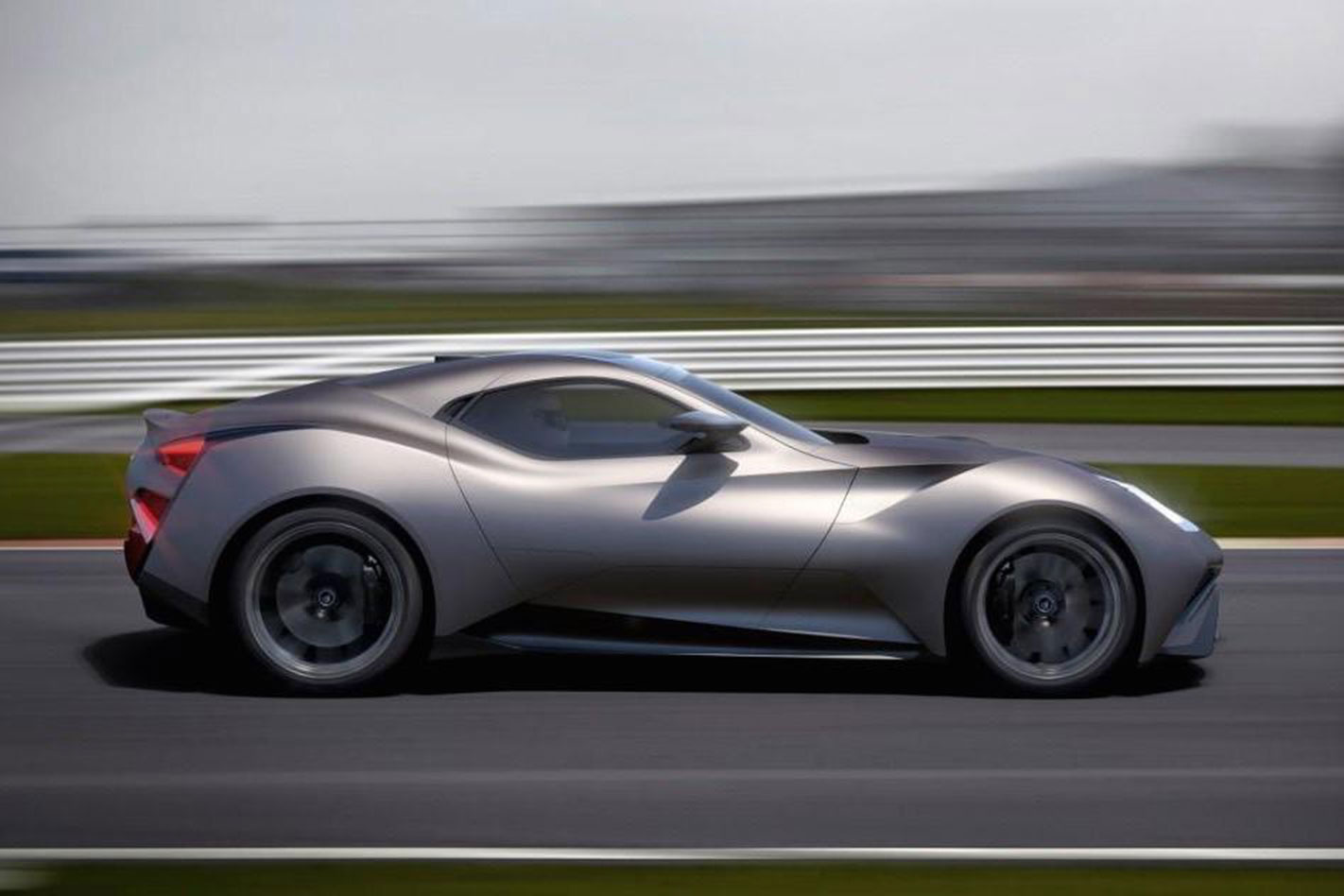
There’s no production announcement yet for China’s first supercar, but according to the company website Icona is hopeful of a transition from concept to showroom in the future.
Five forced-induction V8 super sedans were being let off their leashes deep in the Victorian countryside at the very moment treasurer Joe Hockey was publicly demanding that GM-H boss Mike Devereux ‘come clean’ on Holden’s car-making future in Oz.
This feature first appeared in the February 2014 issue of MOTOR magazine.
But it was business as usual for MOTOR. The time-honoured old chestnut of comparing the greatest high-performance large cars from Germany, England and Australia that all manner of money buys, as we’d done many times before.
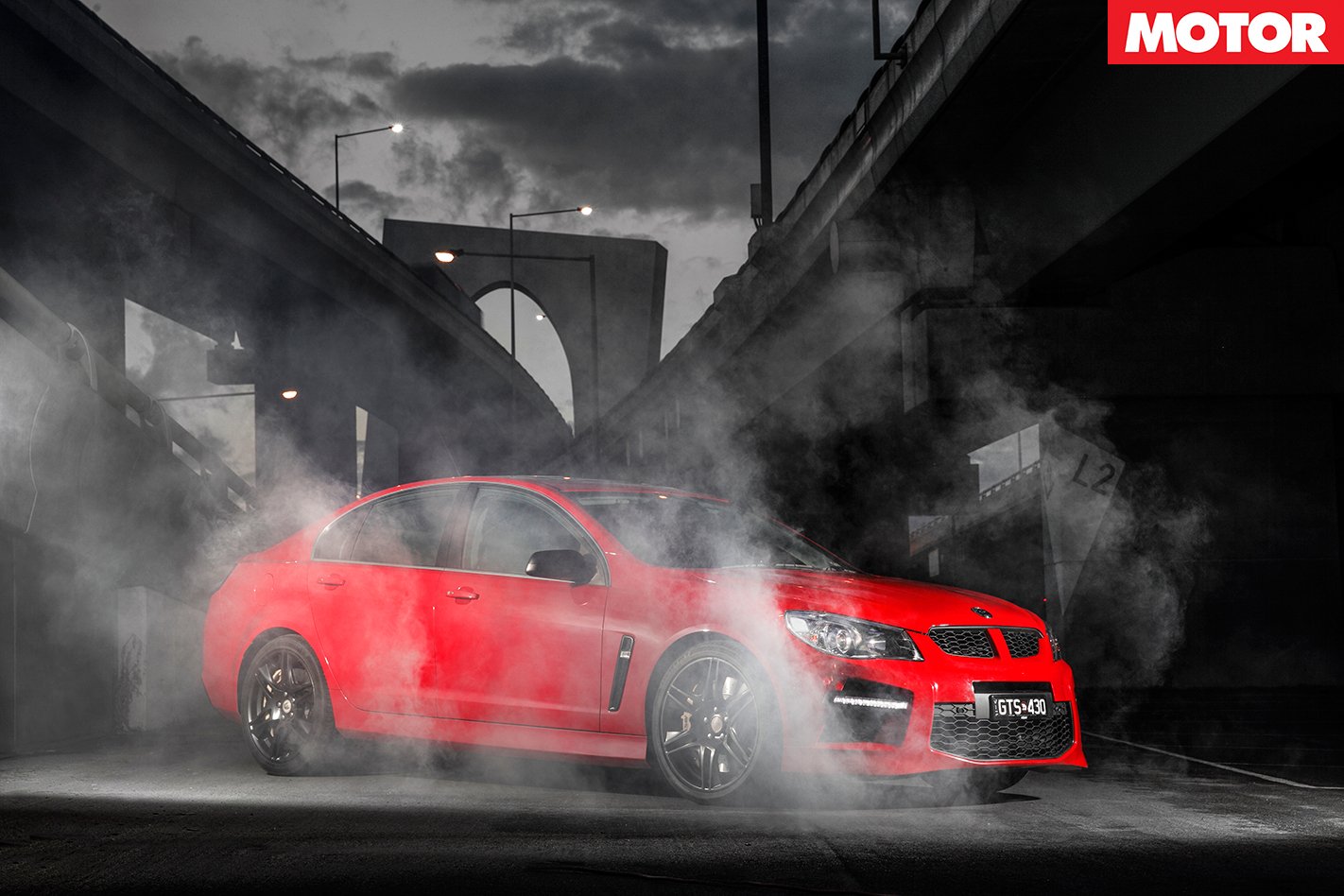
Just 24 hours later, brakes still ‘tinking’ and smoke still clearing from our 400kW-plus club somewhere near Heathcote, the bombshell lobbed by Detroit had reverberated out of Fishermans Bend. It was no longer business as usual for The Lion.
During the fallout in the days that followed, while Holden’s underwear was being waved around so publicly, the mainstream media ignored HSV, the Victorian skunkworks whose business has, for 26 years, been built off locally-produced donor cars now set for the chop in 2017. Despite brave-faced statements from Clayton, the days of the Aussie muscle car are now terminally numbered.
As I climb out of the GTS we dubbed the best Aussie performance car ever created at Performance Car of the Year 2013, I have the overwhelming and inescapable feeling that it’ll also be – last-hurrah special editions apart – among Australia’s last.
While the wider ramifications are best discussed elsewhere, for the task at hand of comparing today’s high-performance family cars, the landmark situation casts a fresh spotlight: has HSV truly ‘made it’ in a straight fight?
HSV has long claimed to produce world-class competition for the German benchmarks and, while there’s certainly a long history of offering exceptional performance and value, the Clayton concern has perhaps brashly claimed to be equal on pure merit, sticker price notwithstanding.
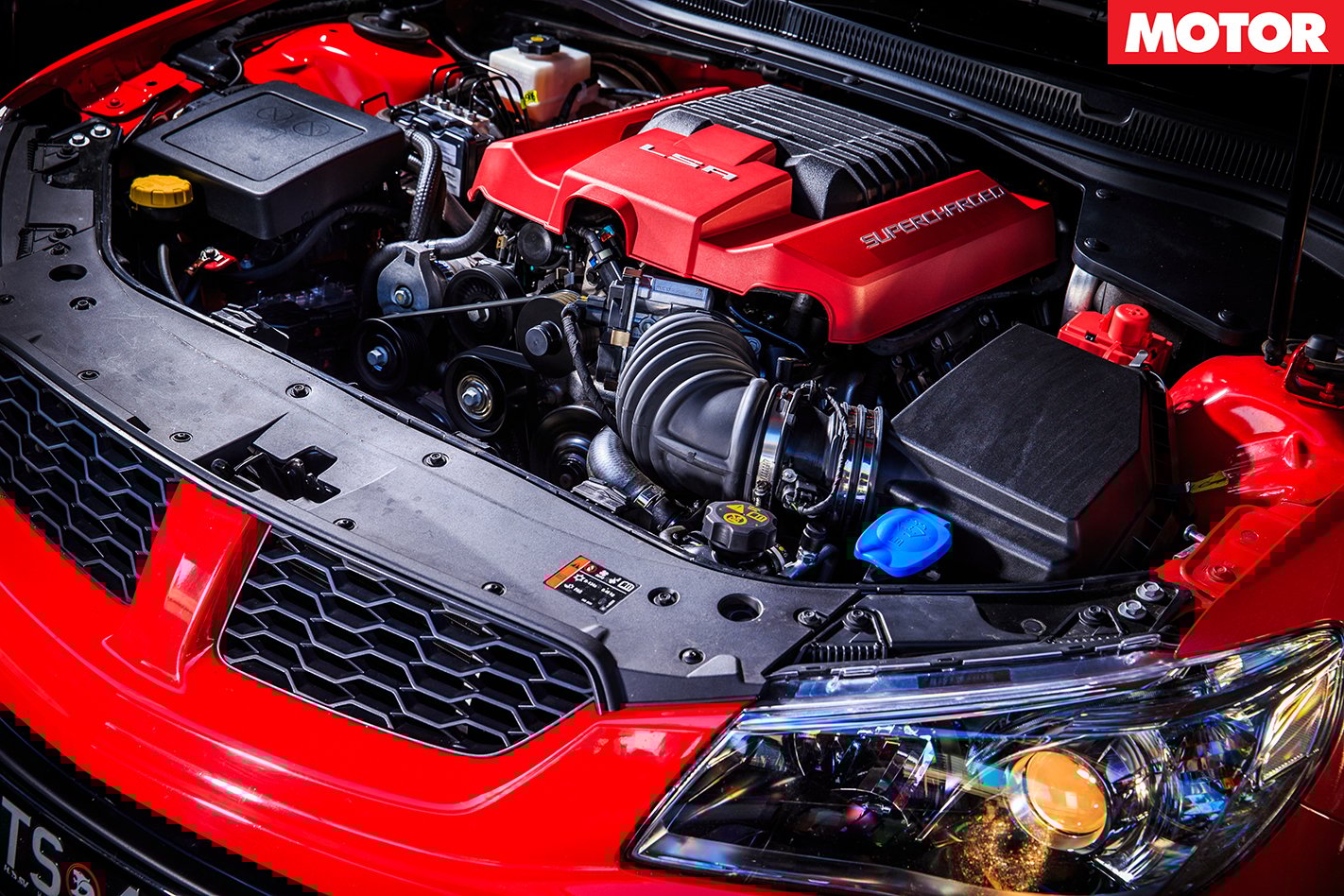
HSV maintains that AMGs, Ms and RSs are in its crosshairs, not FPVs. And, given that the fastest and most powerful car ever built in Australia is in all likelihood a now terminally condemned swansong, the ‘world-class’ legacy rests on the LSA-powered Gen-F GTS’s considerable shoulders.
Let’s be clear: ‘world class’ doesn’t just mean output or performance numbers. These are attributes that HSVs have never lacked, and the GTS’s 430kW/740Nm stacks up favorably against Europe’s latest and greatest, all four of which assembled here command more than twice the flagship HSV’s $95,490 price tag.
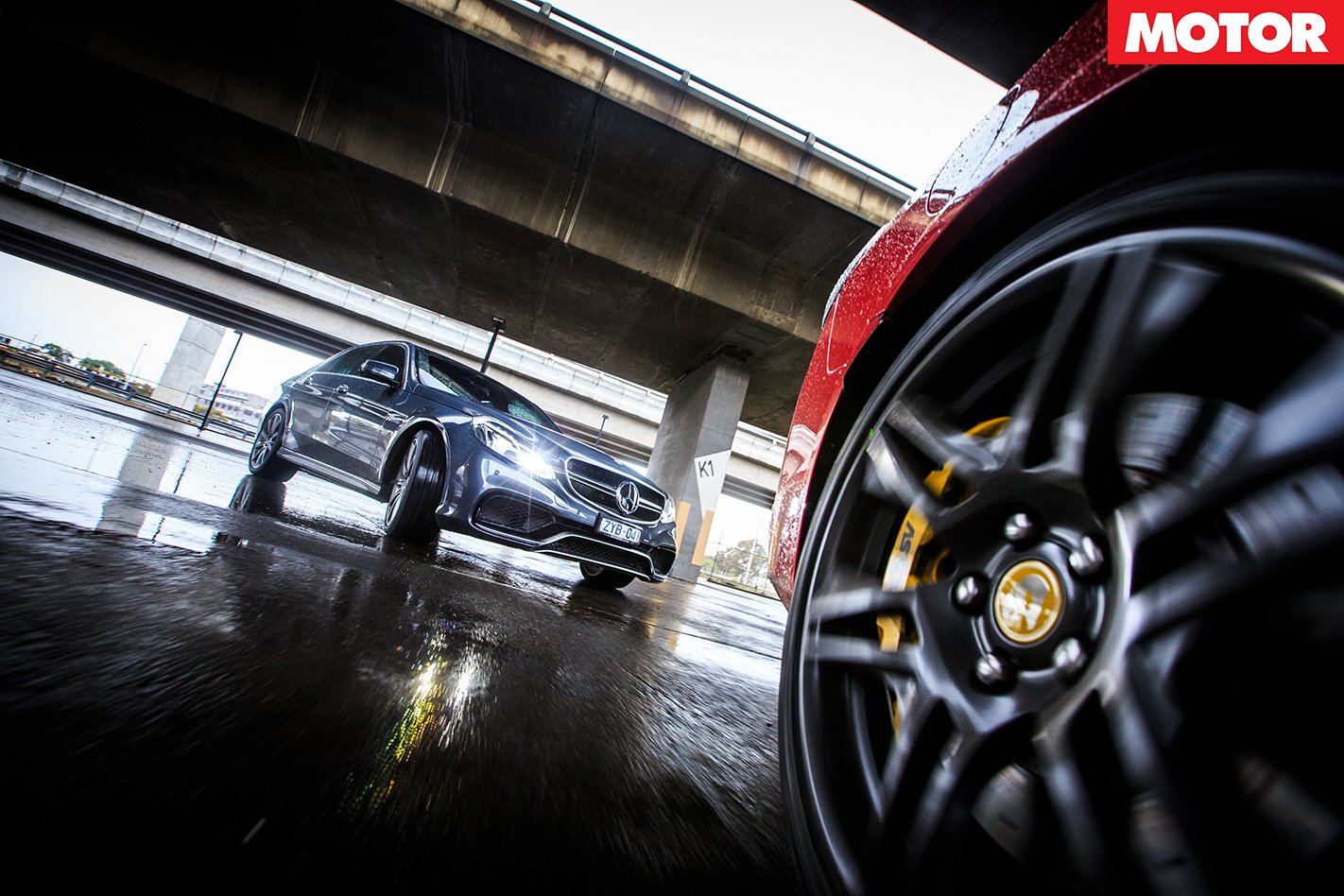
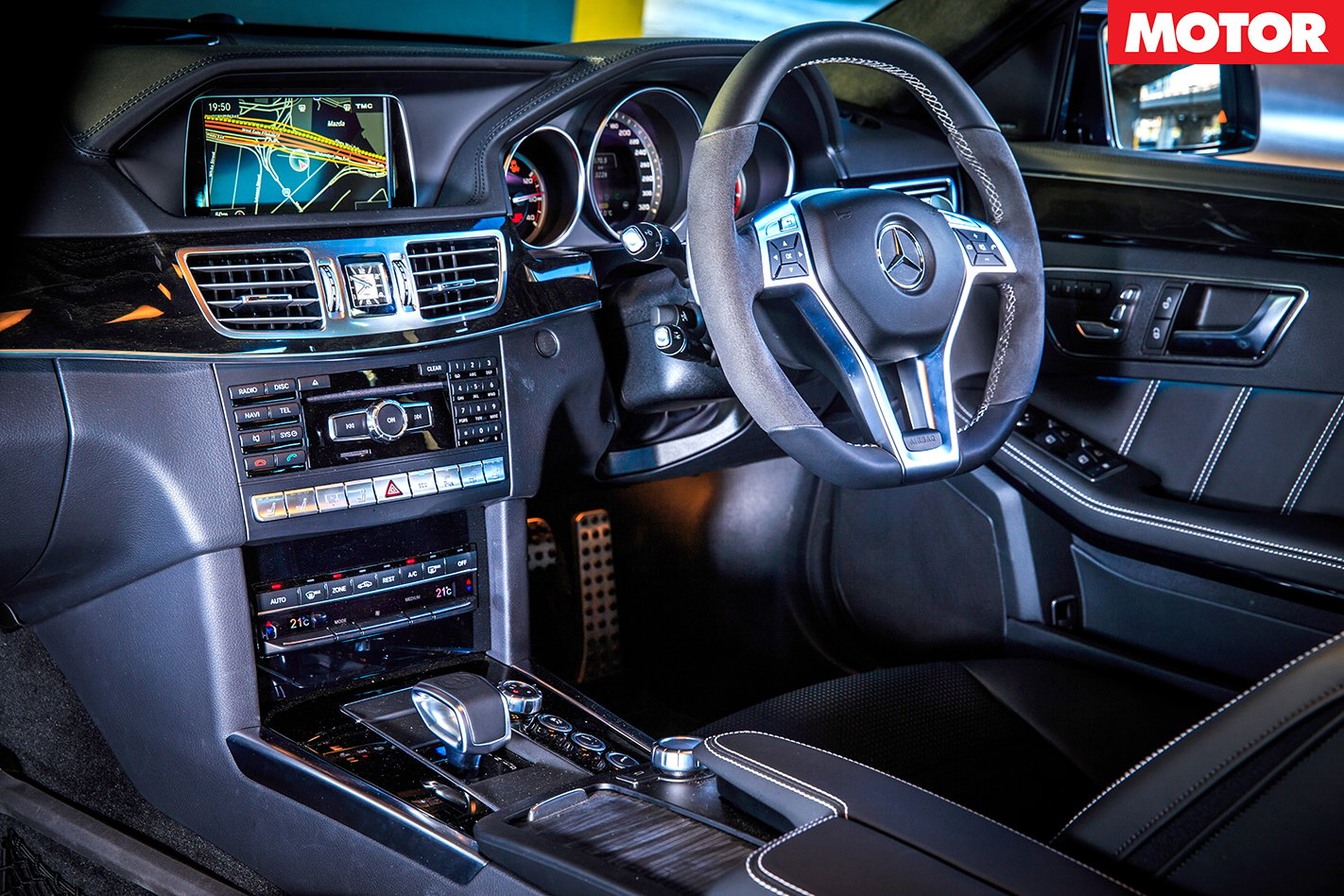
Competitors? Merc’s E63 AMG, the priciest here at $249,545, is available in Oz only in the twin-turbo 5.5-litre V8’s highest ‘S’ tune of 430kW/800Nm. Likewise, the revamped ‘LCI’ BMW M5 at $229,900 gets the M Performance Package fitted as standard, raising the kilowatt count of its 4.4-litre bi-turbo V8 to 423 (up 11kW) and retaining 680Nm.
The Jaguar XFR-S, at $222,545, offers 404kW and 680Nm from the evergreen supercharged 5.0-litre eight. And Audi’s new, leaner RS6 Avant (there’s no RS6 sedan), which ditches the old car’s V10 for a comparatively compact 4.0-litre twin-turbo V8, is good for 412kW/700Nm and wants for $225,000.
The heavyweight numbers continue onto the weighbridge as all five cars nudge two tonnes. The GTS’s 1880kg puts it on par with rivals E63 S (1795kg) and M5 (1870kg), XFR-S (1875kg) and RS6 (1935kg).
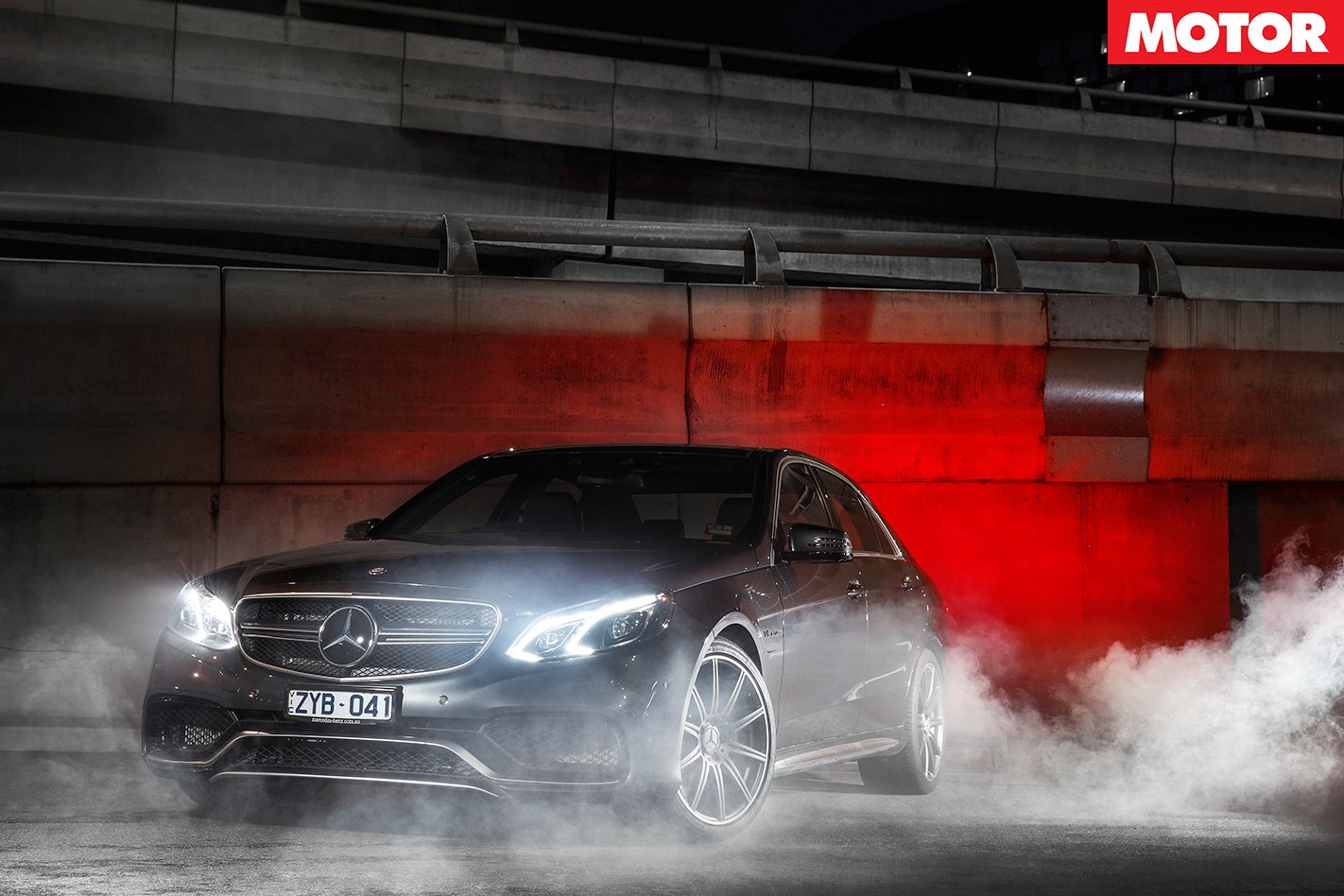
Claimed acceleration times are equally whistle-worthy. However, as we discovered at the drag strip, the numbers begin falling apart. As evidenced with this 400kW-plus club, large mass and big outputs create a narrow window for success when conditions are less than absolutely perfect. That is, at least with the rear-drivers.
The GTS’s 4.7sec 0-100km/h and 12.7sec 0-400m times were marginally slower than the same car managed at the same venue during PCOTY. And nowhere near Clayton’s claim of 4.4sec.
It was even worse with the E63 S’s lackadaisical 4.9/12.7 and, oh dear, the M5’s bests of 5.0/12.9; these cars are claimed to be 4.1sec and 4.2sec prospects respectively. The Jag, meanwhile, comes with a 4.6sec promise and a 4.9/12.9 real-world delivery.
Whinge time: if a test driver with more than two decades’ experience can’t come within a half-second of makers’ claims – that’s you specifically, Merc and BMW – on a rubbered-up drag facility with near countless attempts, how’s your average non-pro owner going to come near tapping these cars’ so-claimed potential under anything like normal conditions?
Further, why aren’t these cars’ launch controls more easily accessible and idiot-proof to use – we even resorted to searching the internet and downloading a user manual CD on-site in efforts to achieve more favorable numbers.
In the real world, then, such fanciful numbers remain fairytales. And the numbers they do produce require some pretty handy wheelwork to keep these cars straight while their rear tyres grapple for traction at well north of the national speed limit.
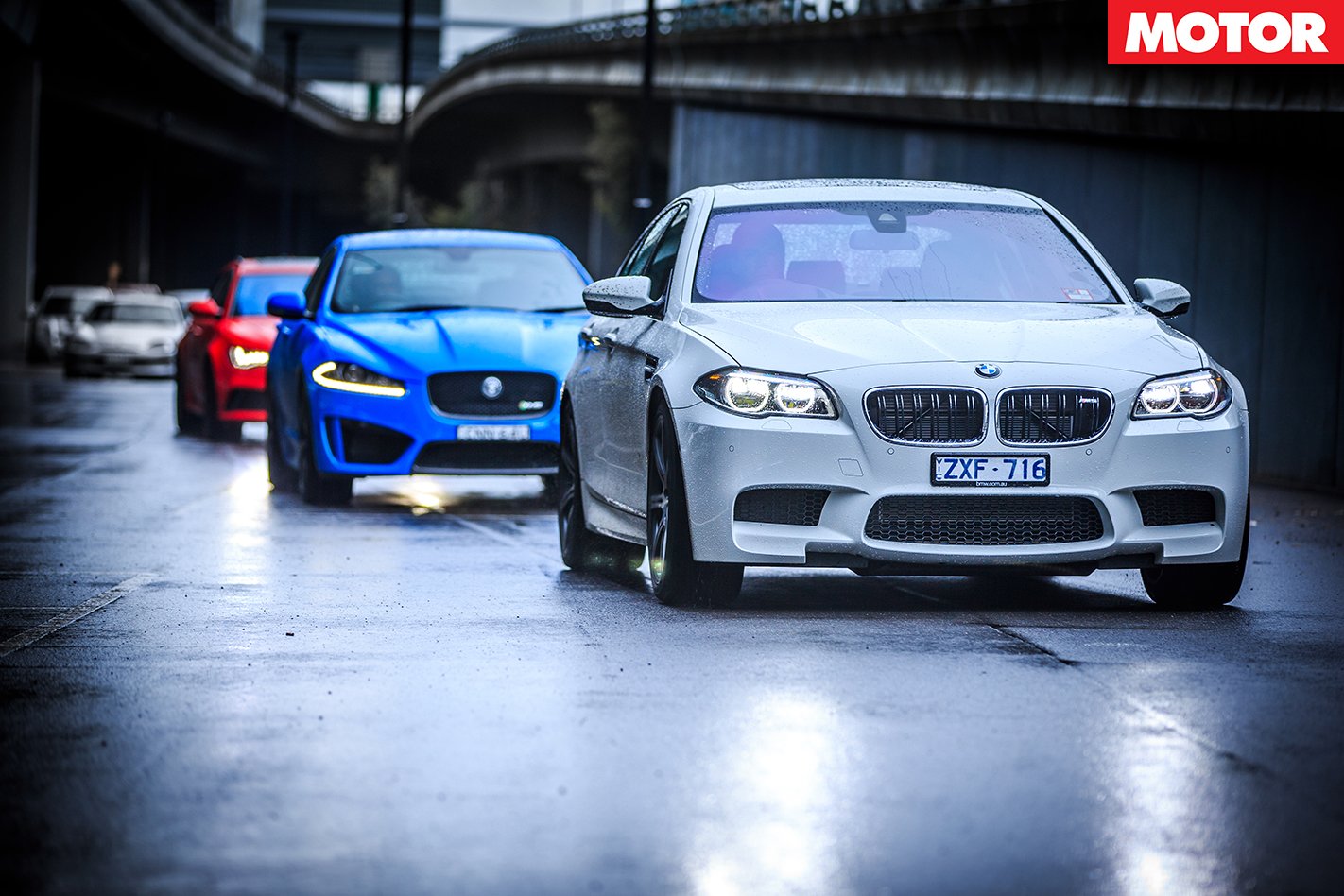
Unless, that is, your name is Audi. The sole wagon here rattled off a stunning 3.9sec run to 100km/h and an 11.9sec 0-400m time. Without fuss, without fluke and with consummate consistency. Sure, it might be all-wheel drive, but, well, there are no buts. There’s no downside (thus far) to quattro drive, and the RS6 does what it claims to do. And it feels equally quick out of the box on regular hotmix, too.
Nor is the Audi plying all of its advantage during the initial launch phase. Its terminal speed of 192.75km/h was only just shaded by the lighter, more powerful E63 S and M5, and its 80-120km/h time of 2.19sec was bettered only by the simply ballistic M5 (1.97sec).
Mind you, even the slowest 80-120km/h time, the HSV’s 2.6sec, illustrates the kind of performance any owner of these cars can harness and enjoy. Each and every one of these five is wickedly, licence-robbingly quick.
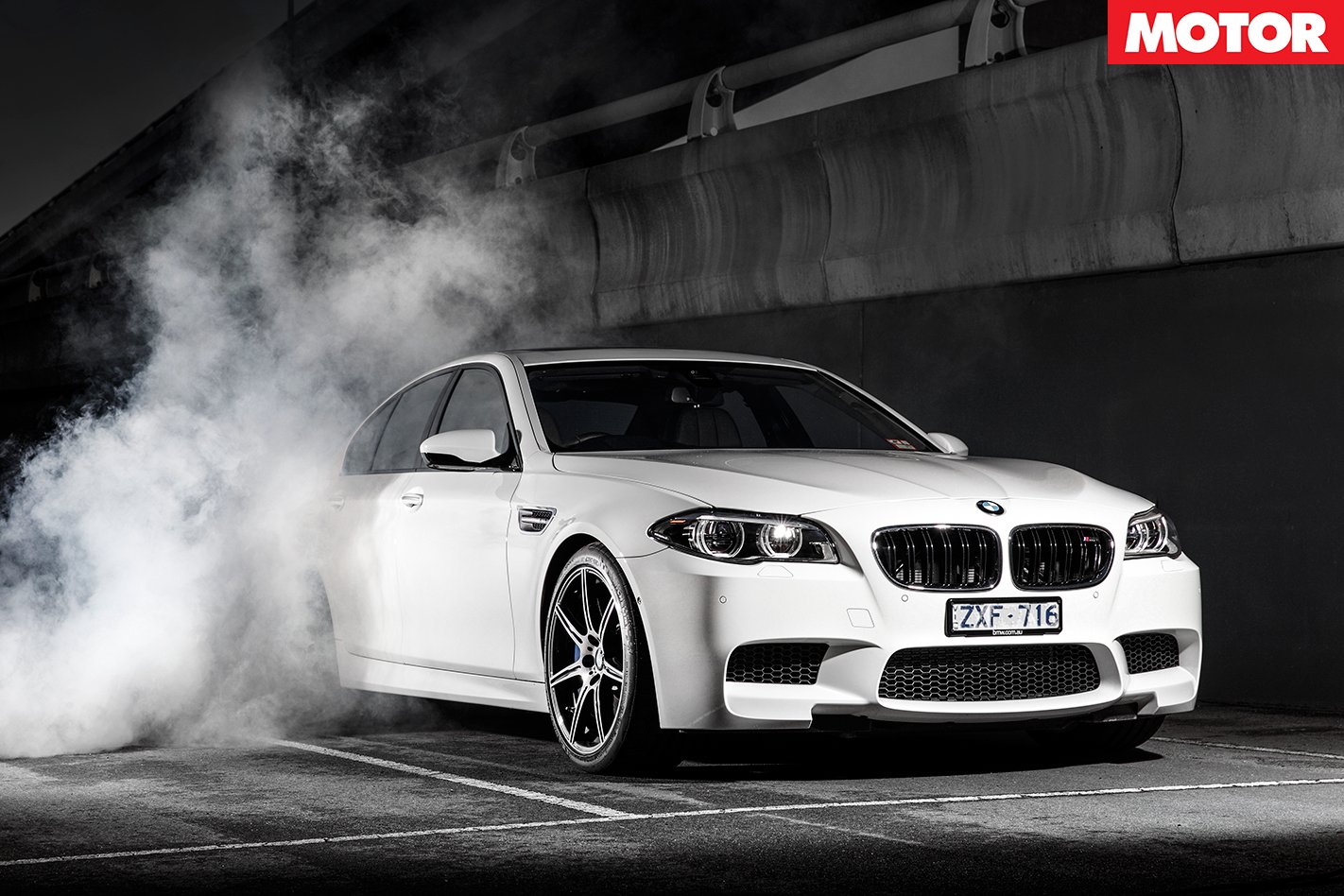
The E63 S, GTS and M5 threaten to nudge their electronically-governed 250km/h limits on a circuit such as Phillip Island and, given enough blacktop, the Jag and Audi will run into their limiters at 280km/h and 300km/h respectively.
It’s no surprise that with so much performance available, some of the five – the Merc and BMW in particular – come on song harder the faster you go. And faster means above 100km/h, where you can stretch their legs and flex their muscles without the threat, at full throttle, of either wheelspin (ESP off) or incessant traction smarts intervention.
At cruising speeds, each of the five has stunning, instant response and incredible overtaking ability. And the differences in character, both tangible and sonic, are markedly different between part- and full-throttle applications.
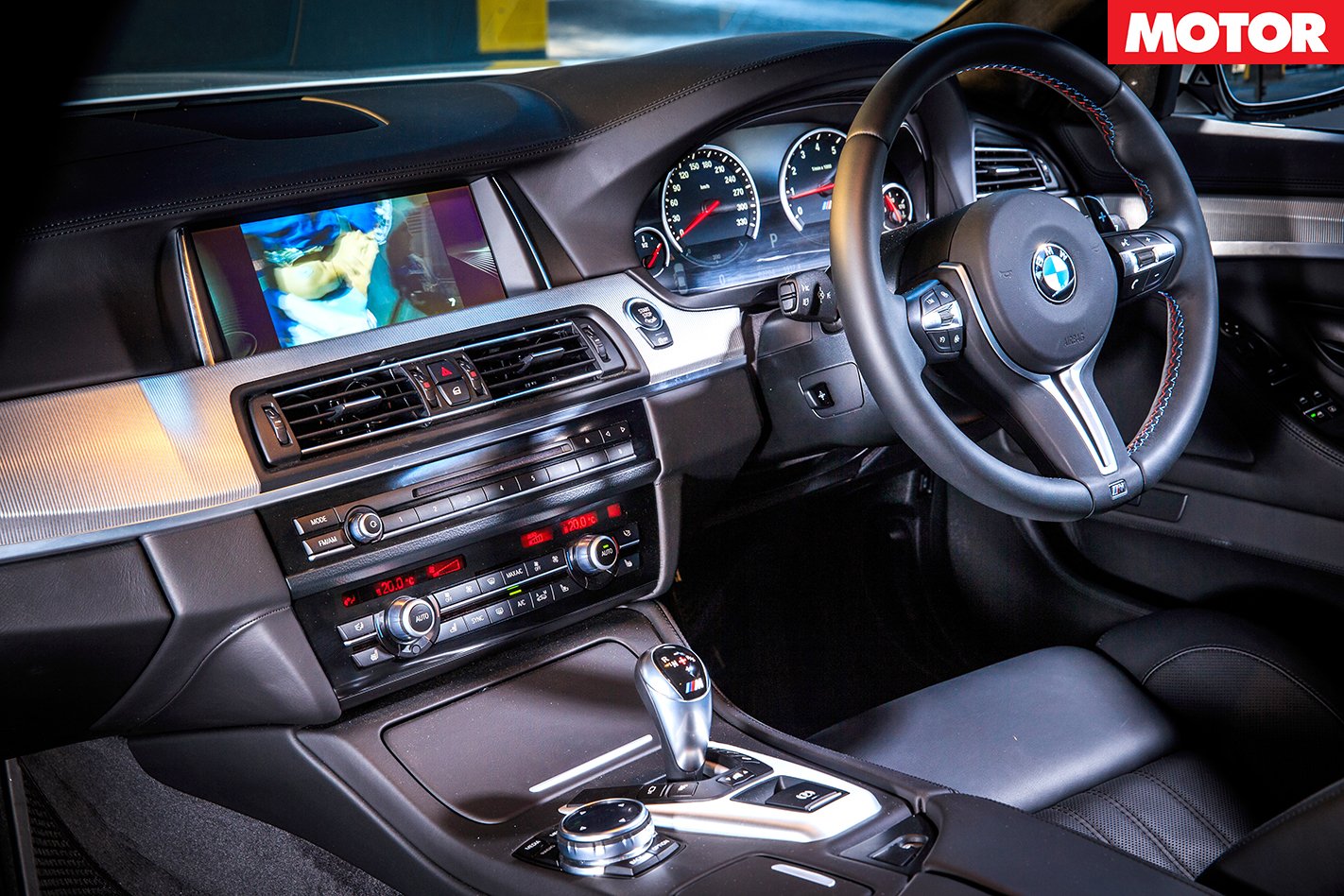
The M5 feels the most docile and mundane – the most bread-and-butter – in most normal driving situations. Its drive modes set to Comfort/Eco, its twin-clutch gearbox reaches quickly for (top) gear, the engine trickling along at 1700rpm at 110km/h with a note that, in this company at least, is borderline insipid.
The E63 S pulls the same smooth-sailing card, yet still manages to underpin big-distance hauling with a rich mix of slightly-too-muted exhaust baritone, albeit with no more rpm on board than the BMW.
You could attribute the M car’s workmanlike audio track to engine design, as its turbochargers are located up in the valley of engine, not the more conventional either-side-of-the-block set-up employed by AMG. And yet the Audi, which shares the BMW’s new-school ‘reversed’ airflow path, presents a satisfying, almost visceral note in most driving situations and throttle positions.
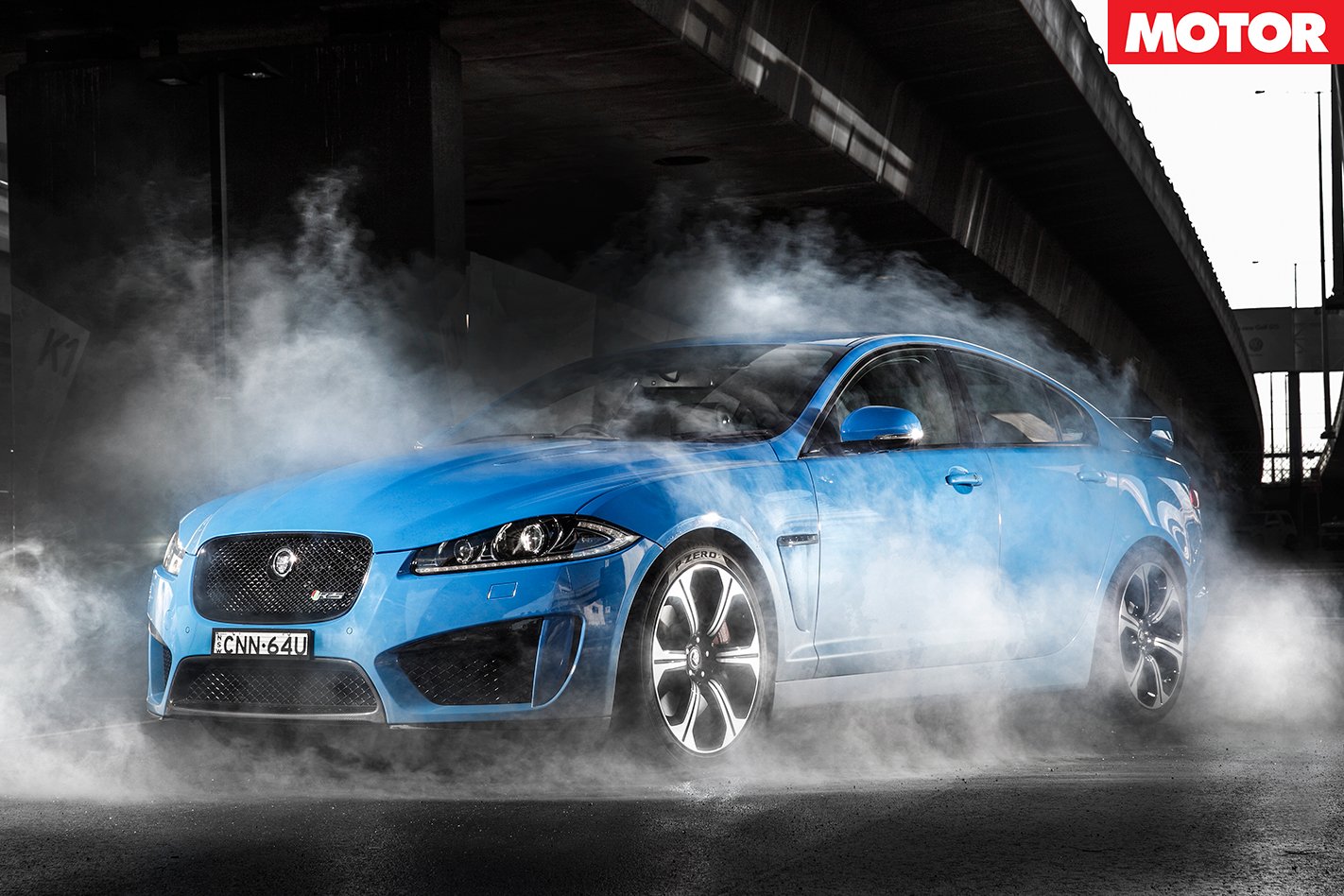
Both supercharged cars, the HSV and Jag, have more conventional, perhaps less ‘technical’-sounding rumbles, though the local car has the most golden tonsils once its bi-modal exhaust cracks open, and it positively roars in the noticeable audible switchover once the blower comes on positive boost. By nature of their forced-induction design, the GTS and XFR-S also offer a tsunami wave of torque anywhere, anytime.
Not necessarily so the German turbocharged cars. The lag in response time might be imperceptible by traditional measures but, with the M5 in particular, it can be caught off guard, usually in low-speed situations. That said, the Merc and Audi are almost seamless, though it must also be said the transition between these cars’ myriad, sophisticated Jekyll and Hyde drive modes can be felt.
Throw some cornering into the equation and, boy, do the tables quickly turn. And, frankly, it’s the Jag that falls behind by some margin. Despite the firmer suspension hardware, tricky Adaptive Dynamics dampers and active electronic rear diff, you sense that the core XF’s fundamentals weren’t really designed for athletics, let alone the kind of Olympic-sized challenge of channelling 404kW and 680Nm.
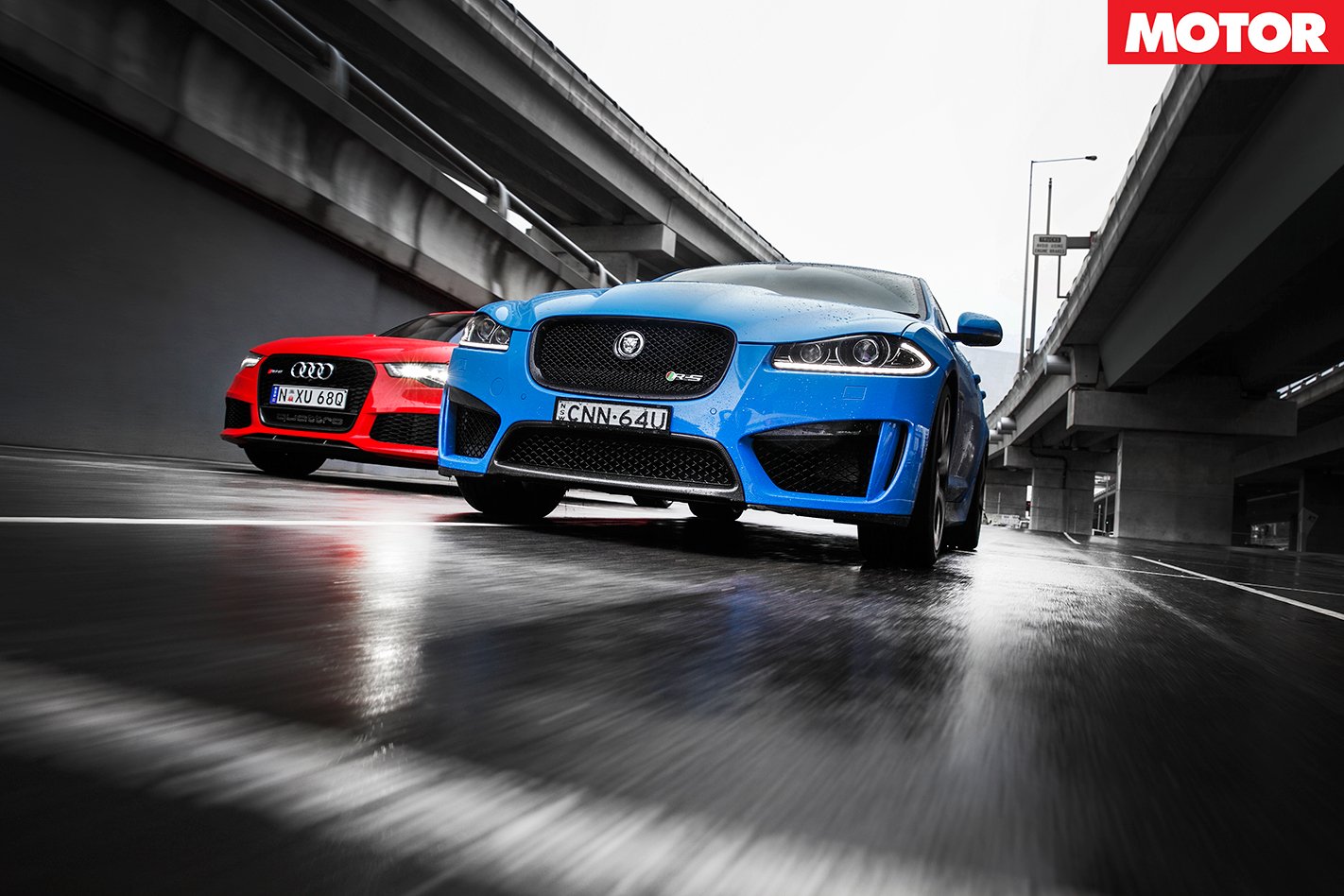
Push on at even a moderate clip and those fat 295mm rear tyres give up the ghost quicker than expected and you spend more time gathering the Big Cat up than digging into the throttle.
This would be fine if the whole experience was a big barrel of fun. But it’s not. The eight-speed Quickspeed auto is neither responsive nor close enough in its ratios to rank as truly high-performance.
Ditto the brakes, which are large, but don’t match the precision and tireless power of all its immediate rivals. And then there’s the steering – decent by normal measures, but lightweight and virtually feedback-free by comparison in this company. For a car that costs that much and looks that purposeful, it’s a little too much of a pussy cat when it’s time to go hunting.
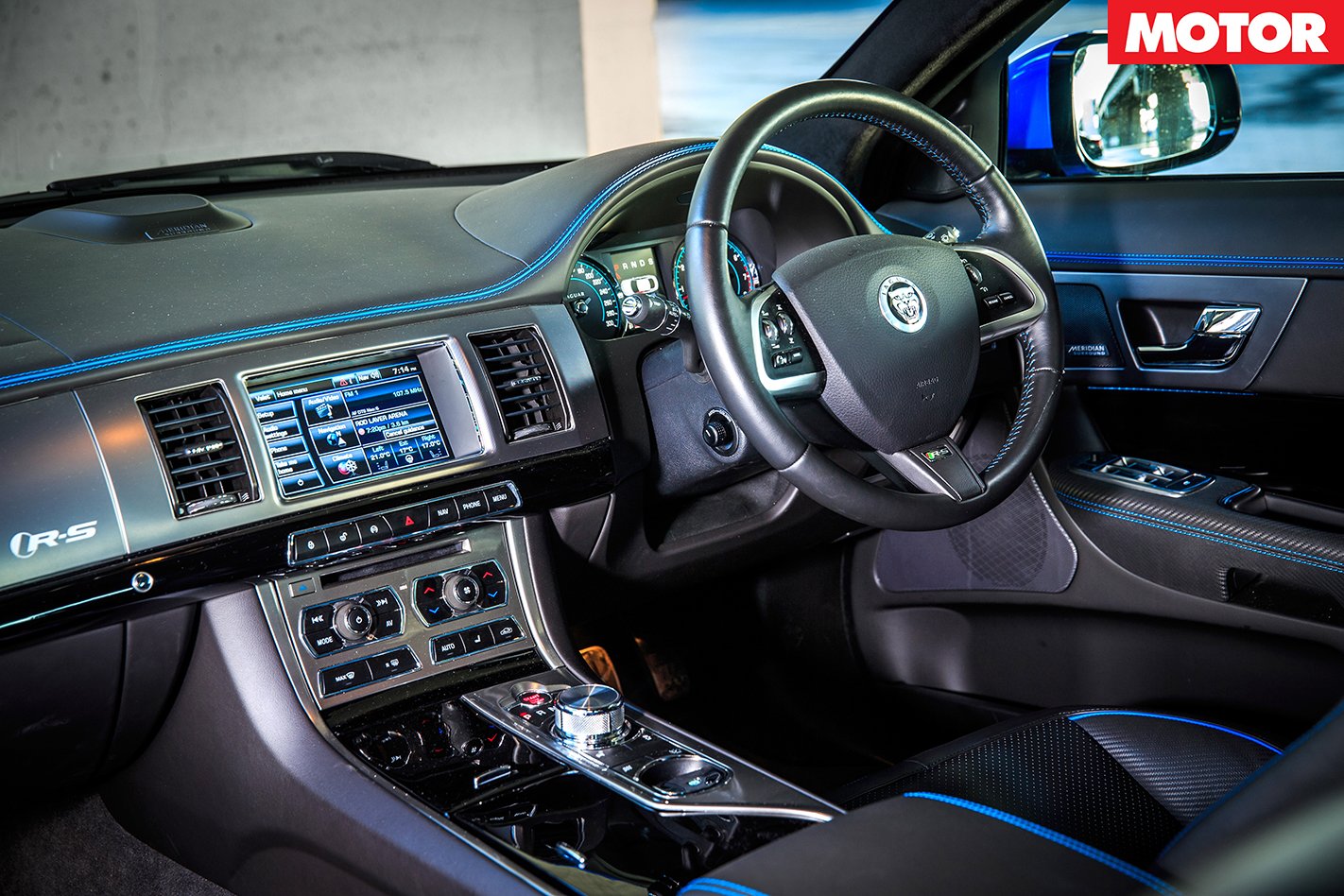
The M5, meanwhile, which feels like a pussy cat under normal driving conditions, simply transforms when it’s time to man the battle stations, though only once you’ve set all its drive modes into Sport+ and switched stability control to its loose, performance MDM setting.
Then the whole car tightens, its muscles flex and it seems to shrink around you. Throttle response and shift times become near-brutal, its steering becomes clear and accurate, and though you’re always conscious of its heft, the chassis develops a grippy, sharp edge provided you’re circumspect with your right foot. It’s got talent, but you must dig through the buttons/settings to find it, otherwise it can feel a bit bloated and unsatisfying.
The GTS never quite transitions into a razor-like device in this way. The steering and throttle, even in the sharpest of its four drive modes, are a little woolier, its edges a little blunter.
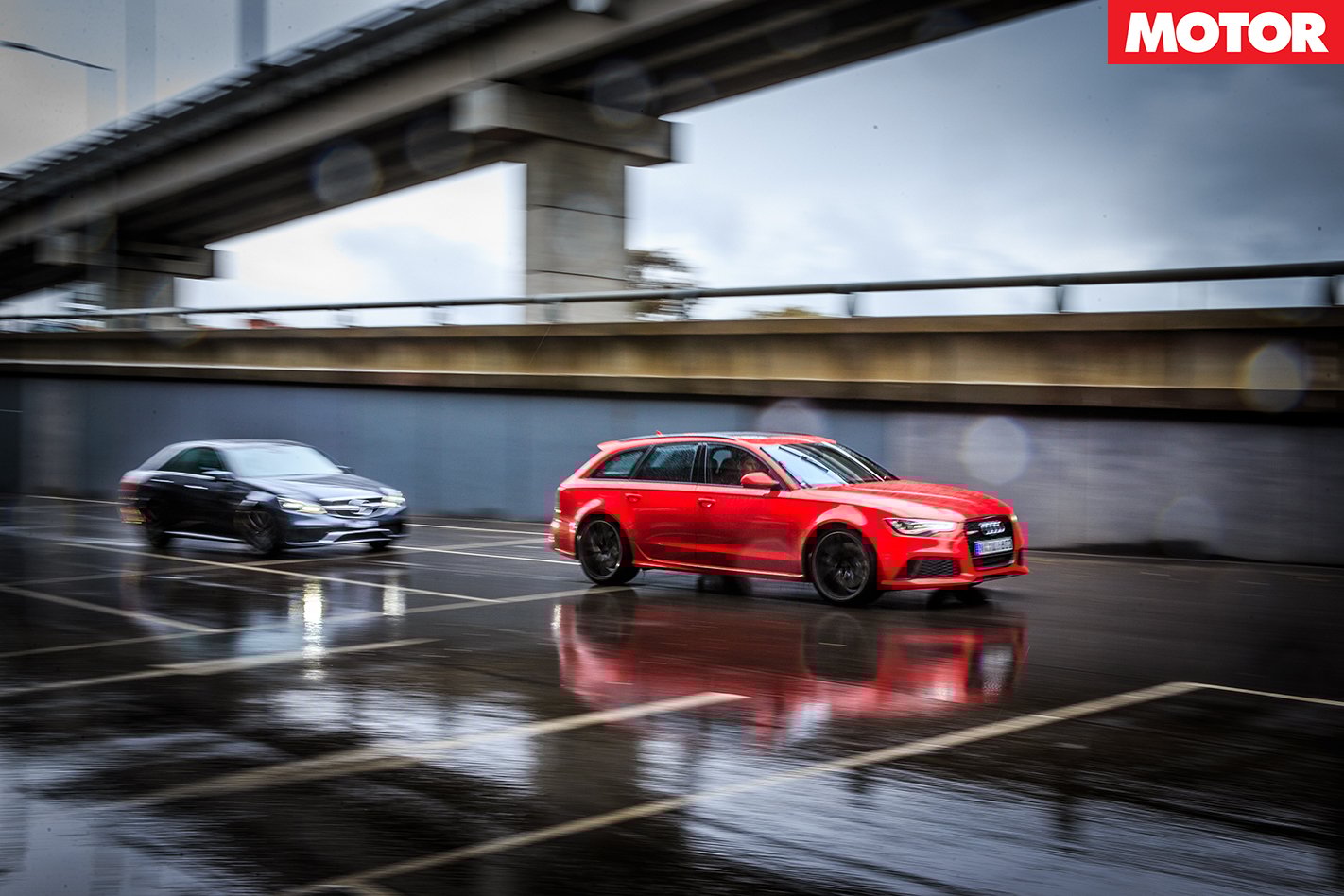
Yet it’s a natural, beautifully balanced package to the core and HSV’s deft hi-po chassis tuning – it’s superbly damped – makes it both incredibly quick and engagingly fun. The six-speed auto isn’t the sharpest tool in the shed — and needs wheel-mounted paddles — but it gives little away in pace to the vastly pricier Germans.
The E63 S is, by and large, a deceptive beast. It’s easy to be duped by its austere looks and by its polished, fuss-free cruising nature from the passenger seats, either around town or in the country. But behind the wheel on a red-misted punt it feels the leanest, clearest and naturally fittest performer of the rear-drivers assembled.
Of any large rear-drive car out there, it has the most naturally balanced, performance-savvy chassis and it becomes more beautifully responsive and intuitive the harder you dig into it. Thrown into a corner, its nose tucks and it points and shoots with an accuracy only the M5 can match.
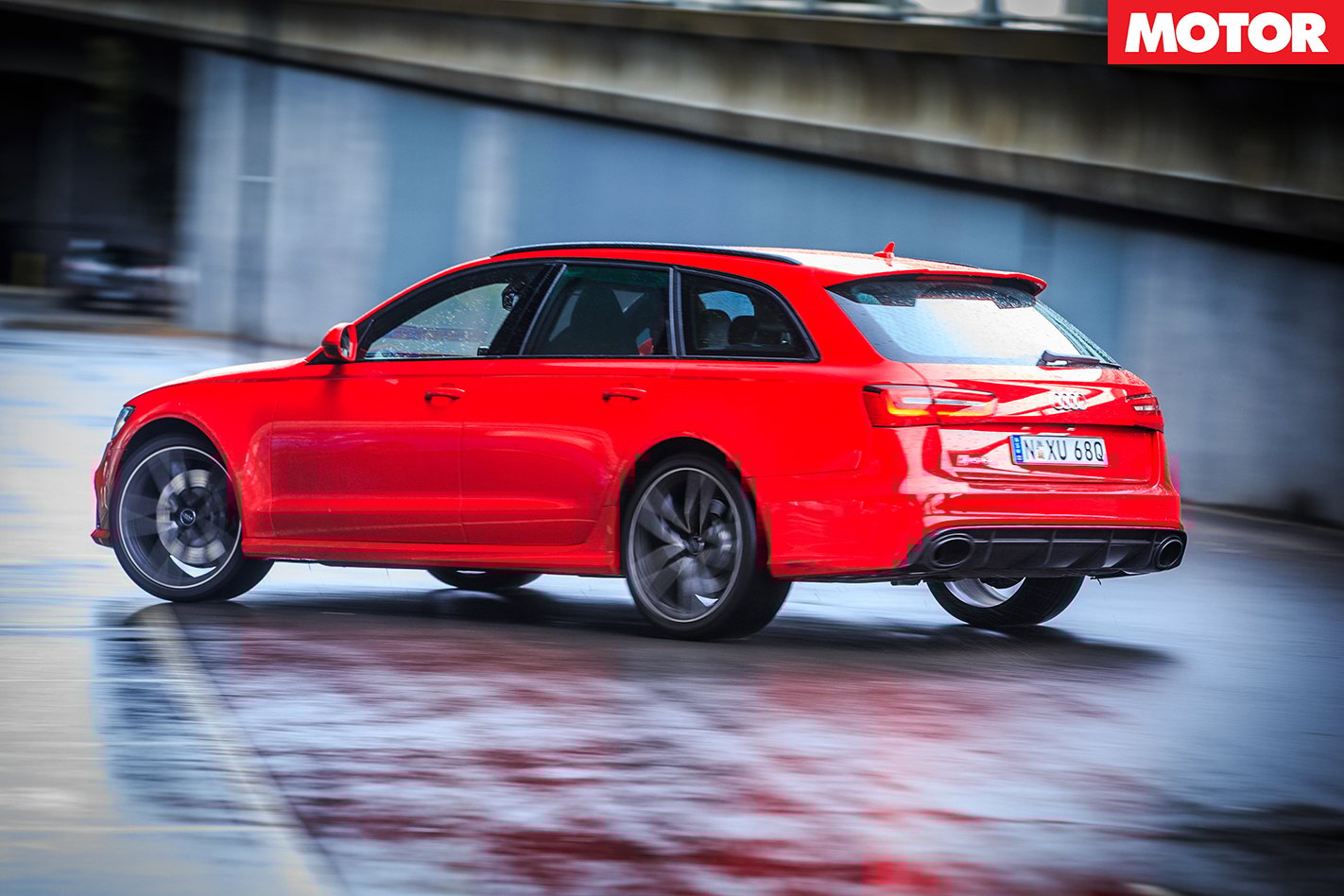
But the most tenacious animal here is the RS6. Even from a moderate punt, the Ingolstadt wagon is brimming with a fizzy performance vibe. Its engine is the most linear and responsive of the Germans, its seven-speed twin-clutcher the most precise cog-swapper in the field, its chassis oozing sharpness and communication.
And provided you keep those dampers in Comfort, it strikes the keenest balance between ride comfort and handling, though one that’s unapologetically sporty in its leaning. The seachange over the old, bloated, numb V10-powered RS6 Avant is truly remarkable.
Not only is the RS6 the most visceral car here for anything from six- up to ten-tenths pace, it feels the most composed, planted and responsive on a twisty back road. There’s much more at play than simply the roadholding benefits of its Quattro system, too.
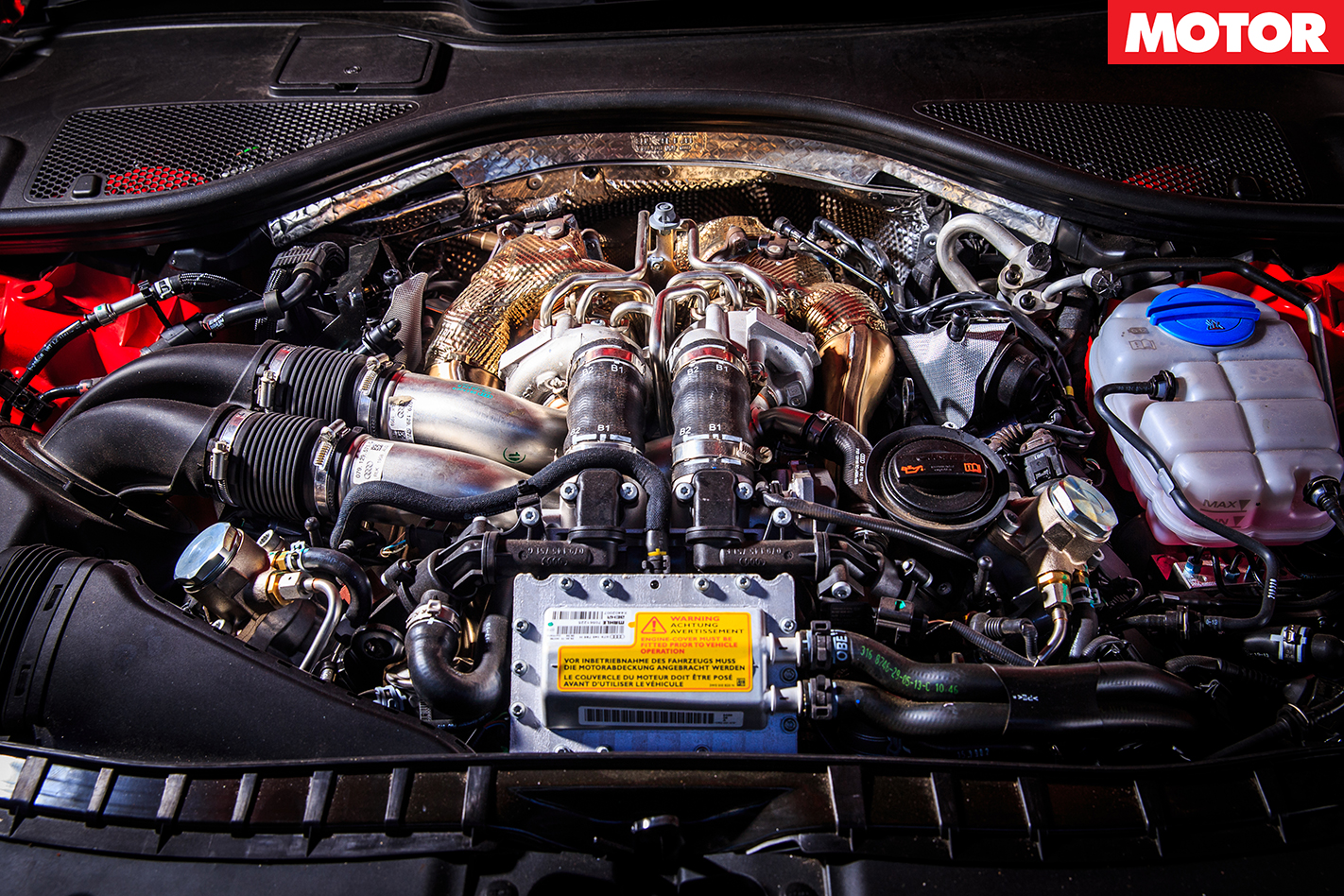
But the tangible upshot is that it feels to be the quickest device of the five cars from A to B. It’s certainly the benchmark for inspiring confidence. That there’s extra room in the cargo area for prams, dogs and soccer balls is neither here nor there: Audi now makes the best large performance car you can buy. It just happens to be a wagon.
And Australia makes, for the time being at least, a performance car that comes close to matching — and in the case of the Jaguar, easily surpassing — imports asking for more than twice the outlay. But is it really, truly world class?
Climb inside all five beasts and it’s obvious that the HSV has a way to go before matching the Germans, price notwithstanding. Its upmarket trinkets feel more of an afterthought, its basic Commodore genes more apparent, the built-to-cost nature of the materials and fit and finish about what you’d expect, no more or less.
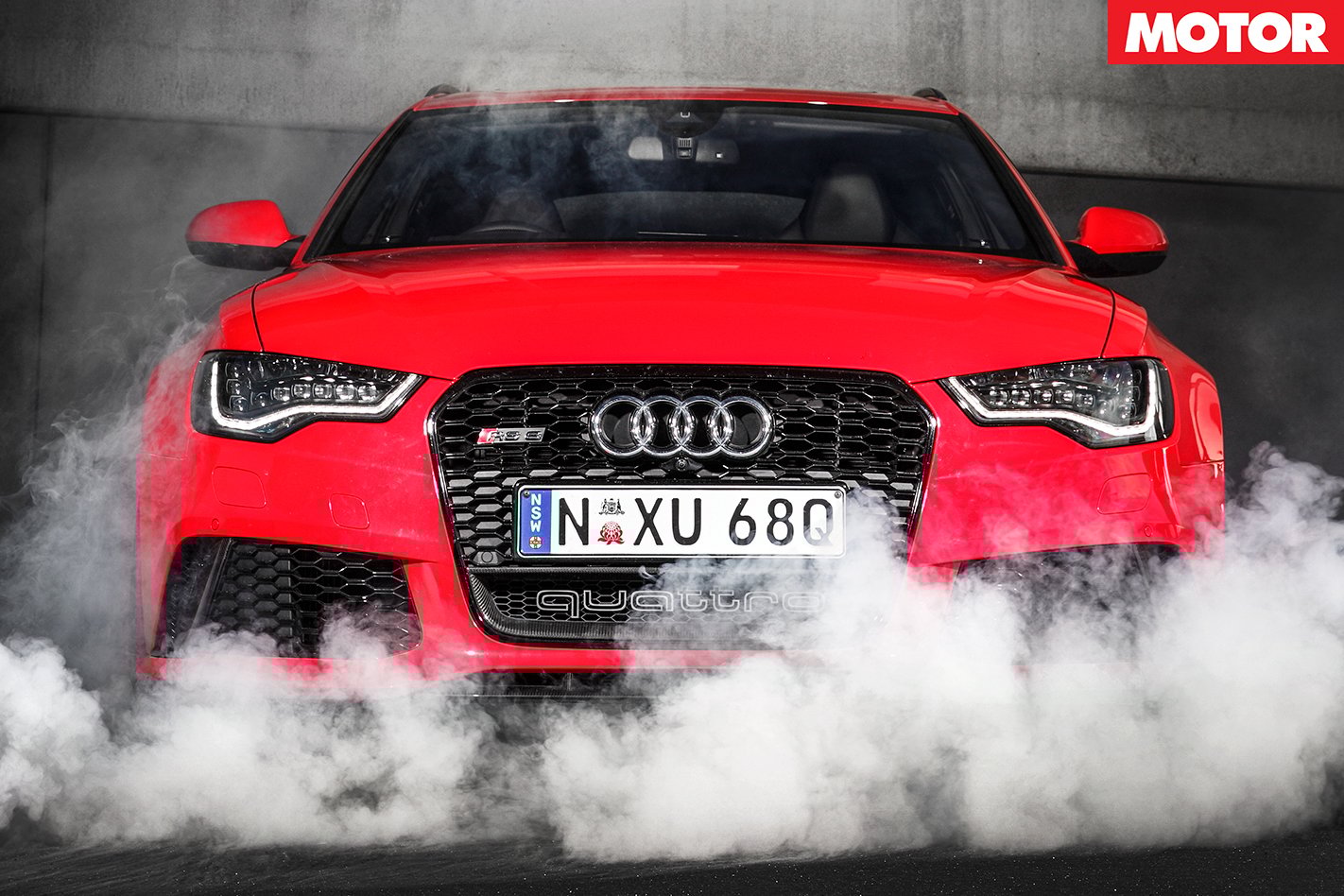
It lacks the aura of premium richness that oozes from the pores of the AMG, Audi and, to a marginally lesser extent, the BMW. Pores that include cold-touch metal trim, peerless shut lines and precision craftsmanship that stands up under the closest inspection.
HSV has about four years to complete its goal of being truly, certifiably world class, not necessarily by shaving yet another tenth or adding another 10 kilowatts, but by getting things like the double stitching on the passenger-side dashpad nice and straight…
| Model | Engine | Power/Torque | Weight | Price | Rating |
| Audi RS6 | 4.0-litre twin-turbo V8 | 412kW/700Nm | 1935kg | $229,500 | 4.5 out of 5 stars |
| BMW M5 | 4.4-litre twin-turbo V8 | 423kW/680Nm | 1870kg | $230,400 | 4 out of 5 stars |
| HSV GTS | 6.2-litre supercharged V8 | 430kW/740Nm | 1880kg | $96,990 | 4.5 out of 5 stars |
| Jaguar XFR-S | 5.0-litre supercharged V8 | 404kW/680Nm | 1846kg | $222,075 | 3.5 out of 5 stars |
| Mercedes-Benz E63 S AMG | 5.5-litre twin-turbo V8 | 430kW/800Nm | 1795kg | $250,930 | 4.5 out of 5 stars |
Picture this: You’re on a ramp leading to a major road, bumping up the speed as you prepare to merge… And suddenly, you’re in a drag race. Why?
More often than not, the other driver is either studiously ignoring you, unaware of your existence, or they’re giving you the side-eye while closing the gap to the car in front.
So, you have two choices. You can slow down and attempt to squeeze into another gap, or you can stop at the end of the lane and block everyone behind you from merging – making you look like the bad driver.
When did driving become such a battlefield? And, what makes some drivers feel the need to be so rude?
I’m not talking the road-ragey type of rude, which we have all seen and probably been ourselves when rushed, stressed, or pushed too far. It’s the passive rudeness – the impoliteness and the ignorance.
Take the right-lane sitters, for example. How can drivers actually miss those big black and white signs on highways and major arterials that say ‘keep left unless overtaking’?
Several years ago, a P-Plate driver felt the need to repeatedly flash the high-beams at me while tailgating as I sat just under the speed limit in the left lane – yeah, the slow lane – while the right lane was completely free. We even passed one of those black and white signs. Perhaps the notice underneath it stating that there is a fine for not adhering to this law should be a little larger.
It’s typically a $300-odd fine and a couple of demerit points to dawdle in the fast lane. Add to that a $242 fine for obstruction if the person is really hampering traffic. For the person sitting on their tail, making gestures and flashing lights? That’s a $415 fine and three points.
It also costs big bucks if you get caught: weaving erratically in and out of lanes to gain precious metres; standing on the horn; not indicating; speeding up while being overtaken, or slowing right down after the manoeuvre is completed.
So the rules are quite clear, and the fines should clearly make many people think twice before driving like a dimwit. In actuality, however, policing them is difficult. And, to be honest, it’s best that the highway patrol keeps hunting speeding cars and erratic driving, rather than a driver doing 20km/h under the limit.
But if fines aren’t going to be the deterrent, what about good ol’ fashioned manners? If we all walked around the same way we drove, there’ would certainly be a few sore heads. Most of us wouldn’t dream of being as impolite on our feet as we are in our car. It’s because of accountability – display passive-aggressive behavior or naivety on the footpath with other pedestrians close by, and someone’s going to pull you up on it. The anonymity of the car’s cocooning cabin leads some of us to have a devil-may-care attitude, or simply a lack of awareness of our wrongdoings.
There’s also a flip-side. It’s possible to be too polite: to stall traffic; to cause misunderstandings at intersections; and to generally make oneself a nuisance by being overly courteous.
There’s nothing more awkward than arriving at an intersection to have the person with the right of way try to wave you through. Watching two people almost crash into each other after gesticulating for half a minute is plain awkward.
The rules are there for a reason and breaking them out of politeness may not be as bad as ignorance, but it‘s still a broken law. Shame we can’t outlaw a bad attitude; we’d have something akin to driving utopia.
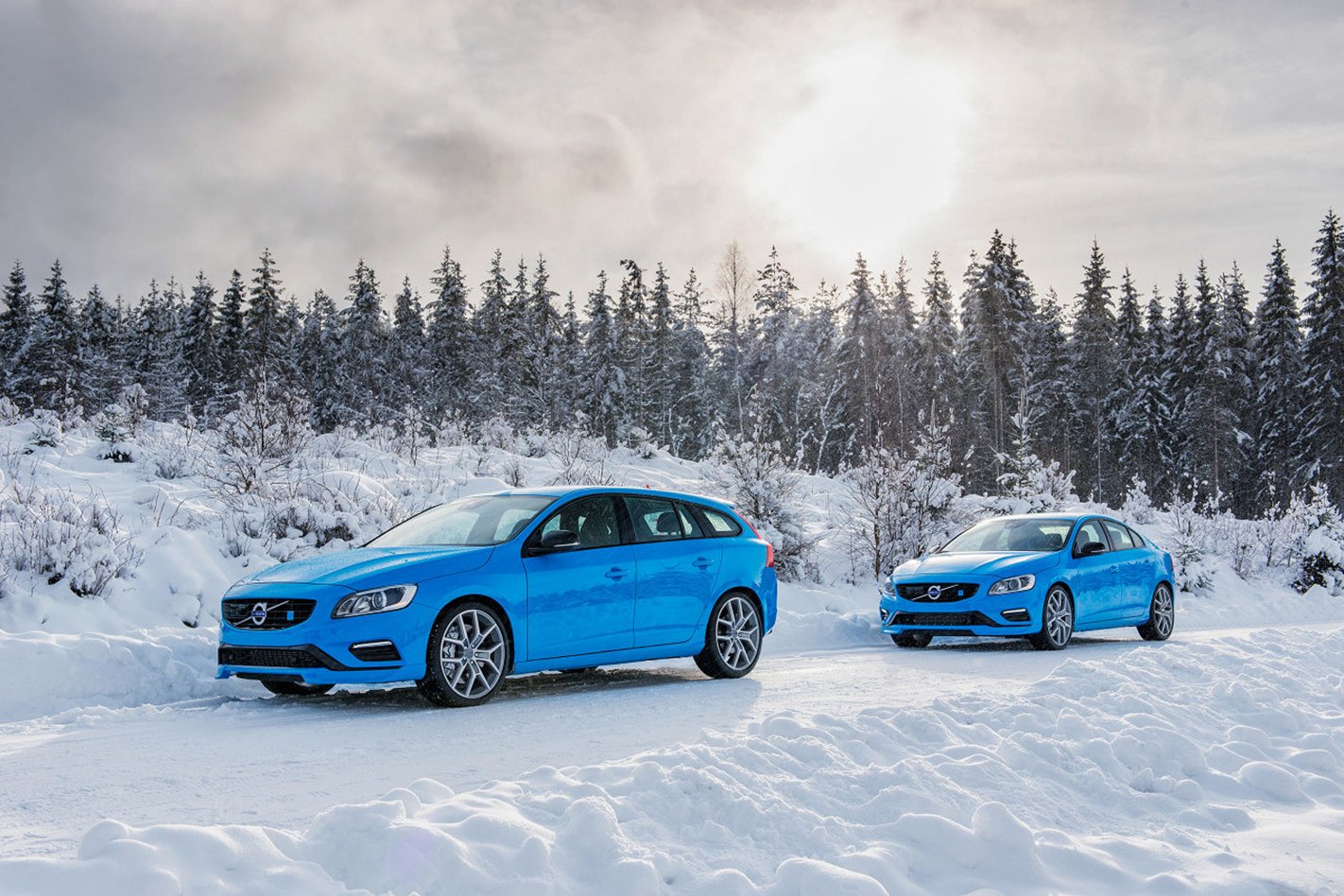
VOLVO Australia is keen to build on the success of the S60 Polestar sports sedan by helping the Swedish brand develop more high performance models, CEO Kevin McCann says.
Speaking recently at the launch of the Volvo XC90 SUV, McCann told Wheels that Australia’s contribution to shaping hot Volvos was likely to continue, now that Volvo had completed the purchase of Swedish high-performance brand Polestar.
“I think because of the acceptance of the brand [in Australia] and the willingness to try different aspects of it … I believe Australia will play a role,” said McCann, appointed to head Volvo Australia less than a year ago.
“It’s all new news at the moment, so there’s nothing formal, but I think there’s a lot of information down here that can be effectively used, and it will give us some benefit from being here on the ground floor as well.”
Australia was the first country in the world – even before Sweden – to get the Volvo S60 Polestar, which has subsequently launched in other markets including the UK and North America.
McCann said this may not have happened if the groundwork put in by Volvo Australia and Polestar, and the feedback from Australian owners, had not been so positive.
The S60 Polestar also paved the way for Volvo Australia to join V8 Supercars to help promote the go-fast models locally.
Volvo’s recent purchase of the road-car and tuning side of Polestar’s business was brought on by the success of the S60 and V60 Polestar models.
“Polestar is a family business owned by one family headed by Christian Dahl, and I think the development timelines and capital requirements have become quite large,” said McCann.
“When you’re investing $100million, if you can see the return coming in six or twelve months’ time … you’d probably invest it. If you were saying, well, the return’s not going to come for five years (which is the automotive business), an individual putting his family’s wealth at risk, is going to say no, I’m not interested.”
McCann rejected the notion that Volvo’s participation in V8 Supercars and motorsport in general contradicted the brand’s core safety message.
“Racing drivers are incredibly safety conscious,” he said.
“If you look at the number of racing drivers that go on to run driver safety training schools and so on, their protection of themselves and the crowds that they’re racing in front of is paramount.
“Motorsport for us is to expand the footprint of the brand beyond safety, and I don’t think we can ever lose safety … but it also stands for other things: being fun, to be associated with, and good design and engineering.
“We don’t have a concern. When I go to a motorsport event, the safety consciousness is so obvious; it’s all about safety.”
