
The Middle East fuel shock is set to make life harder for Australians, already dealing with cost-of-living pressures. But for any car manufacturers selling SUVs that are both a) cheap and b) fuel efficient, it’s a great time as many new car shoppers seek out the cheapest ways to save money on transportation.
Chery fits this bill, sales increasing by 93.8 per cent so far in 2026 thanks to its cheap hybrid SUVs. How does its cheapest hybrid model on sale in Australia fare against its competition? Let’s take a look…
How much does the Chery Tiggo 4 Hybrid cost to buy?
The Chery Tiggo 4 is known as one of the best value small SUVs available, though the hybrid versions require opening the wallet a little wider. Pricing for the hybrid starts at $29,990 driveaway for the base model Urban and $34,990 driveaway for the top-spec Ultimate – Chery has the latter on special for $32,990 driveaway until June 30, however.
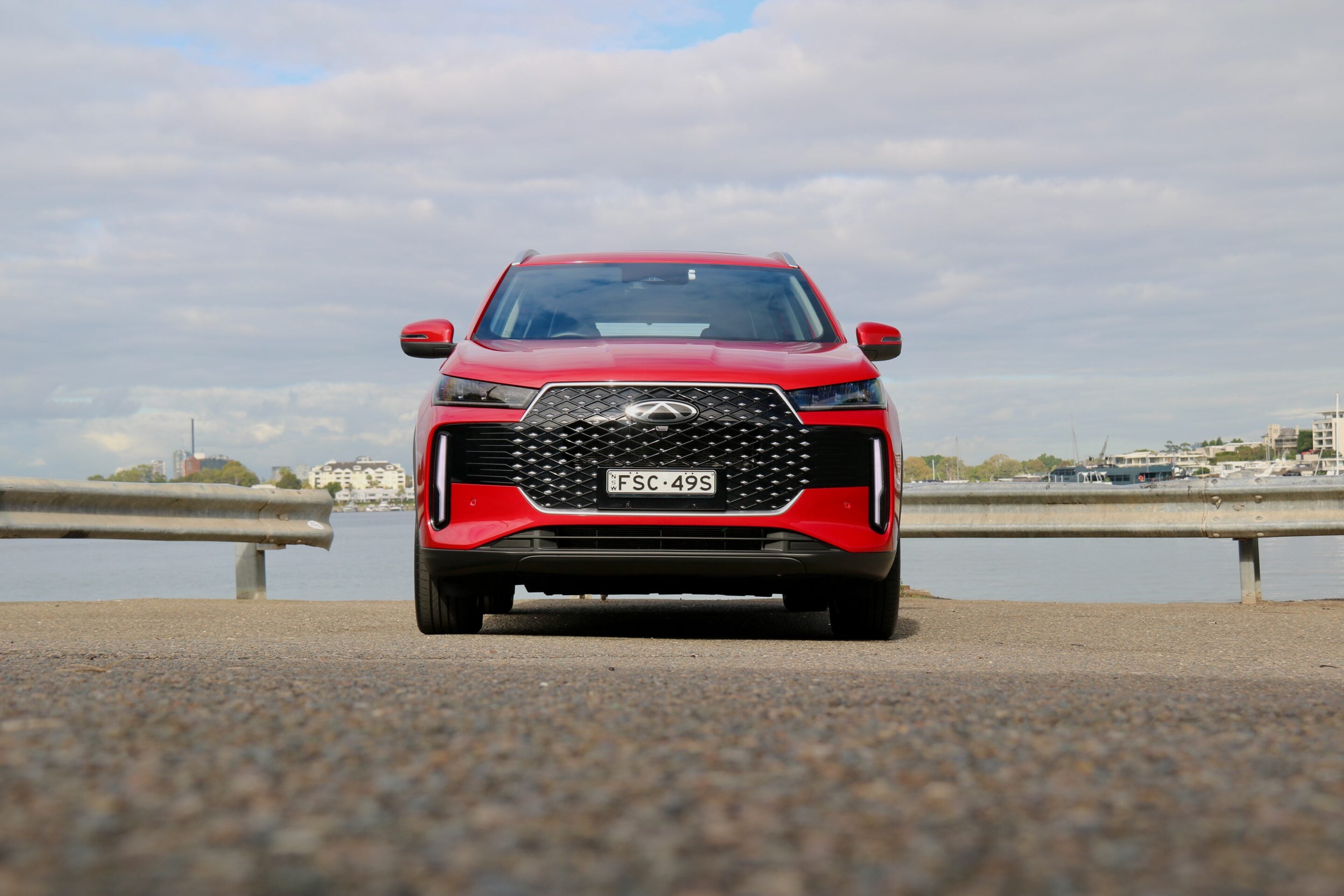
Those familiar with the Tiggo 4 will note that pricing is a $6000 rise on the petrol models, which will buy you a lot of fuel. Most hybrids on the market are priced from around $3000 more than their ICE equivalents so it’s arguable the cost difference could be lessened.
2026 Chery Tiggo 4 pricing (driveaway):
| Urban petrol | $23,990 |
|---|---|
| Ultimate petrol | $26,990 |
| Hybrid Urban | $29,990 |
| Hybrid Ultimate | $34,990 |
Comparatively, however, it still represents good value, as full hybrid SUVs don’t come cheaper than the Tiggo 4. That’s not to say that there aren’t plenty of rivals for the Chery. The MG ZS Hybrid+ is priced similarly to the Tiggo 4, while the Toyota Yaris Cross is priced from $31,790 plus on-road costs, the Hyundai Kona Hybrid $36,950 +ORC and the Honda HR-V e:HEV from $39,900 driveaway.
As we’ve come to expect from Chery, the Tiggo 4 Hybrid Ultimate is loaded with standard features. A full list lies at the bottom of the page, but highlights include 17-inch alloy wheels, LED exterior lighting, synthetic leather upholstery, heated front seats, electric driver’s seat adjustment, dual 10.25-inch displays, a wireless phone charger and safety features like autonomous emergency braking, adaptive cruise control, blind-spot monitoring and a 360-degree camera.
How fuel efficient is the Chery Tiggo 4 Hybrid?
The Tiggo 4 Hybrid uses a 1.5-litre four-cylinder hybrid drivetrain that makes a healthy 150kW of power and 310Nm of torque, which are similar figures to the MG ZS Hybrid+, and almost double the power of the 85kW Toyota Yaris Cross. Both the petrol engine and electric motor can drive the front wheels through a one-speed ‘dedicated hybrid transmission’, which sounds complicated but all you really need to know is it feels mostly like a CVT in the real world.
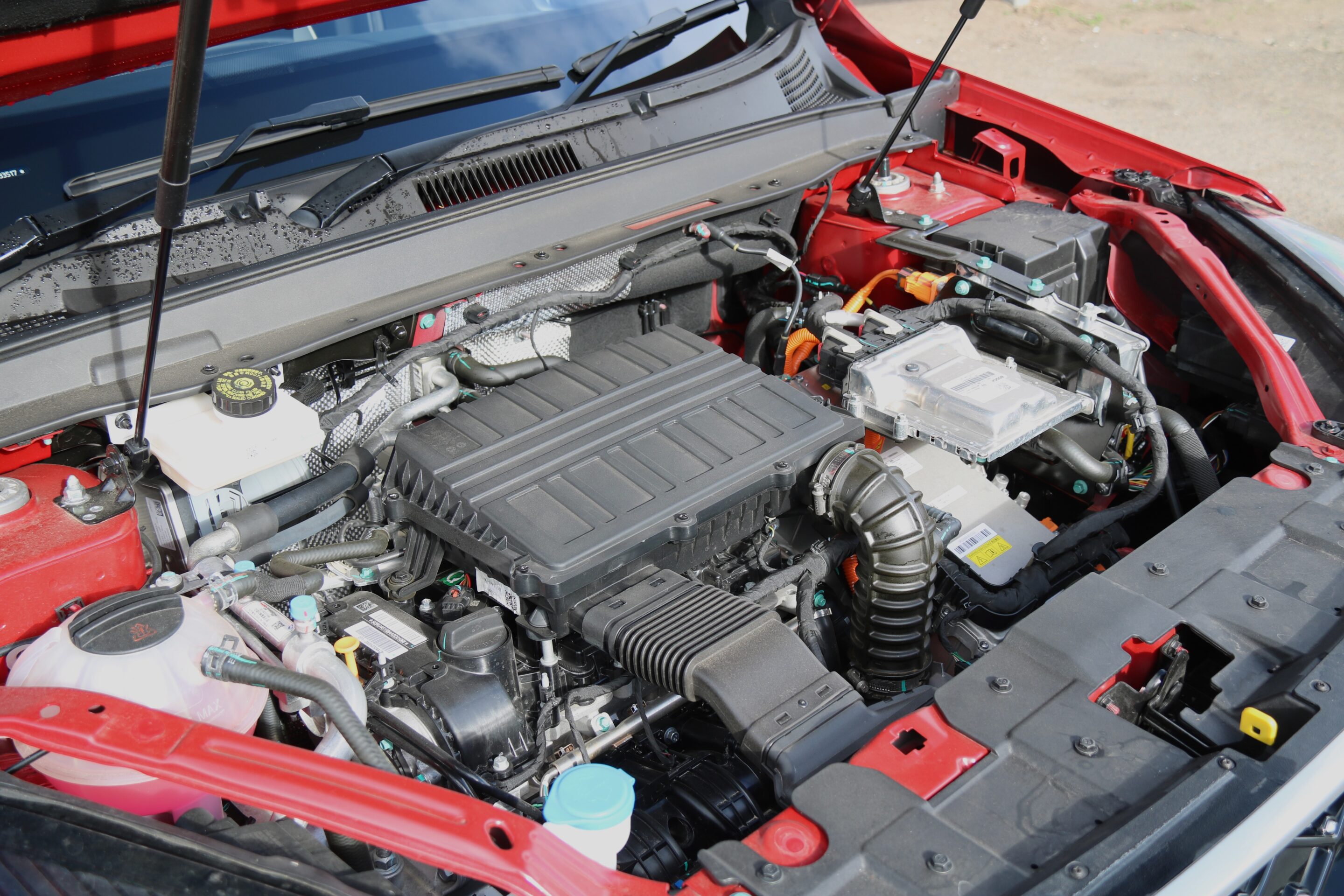
Chery claims combined fuel consumption of 5.4L/100km, which is more than both the ZS Hybrid+ (4.7L/100km) and Yaris Cross (3.8L/100km), but we found that figure relatively easy to beat and scored 5.1L/100km in our week with the car in both urban and highway driving. The Tiggo 4 Hybrid uses 91RON regular unleaded fuel to fill its large 51-litre tank and emits 123g/km of CO2.
How does the Chery Tiggo 4 Hybrid drive?
The petrol Tiggo 4 is pleasant enough to drive, though a sports car it is not. A Kona and Yaris Cross are both superior in the driving stakes thanks to their more fun driving experience and far more settled ride quality.
The Tiggo 4 Hybrid is comfortable enough in everyday driving, but the steering is too light and gives minimal feedback, making it difficult to place on the road, especially at highway speeds when a little change in steering can make an alarmingly big difference.
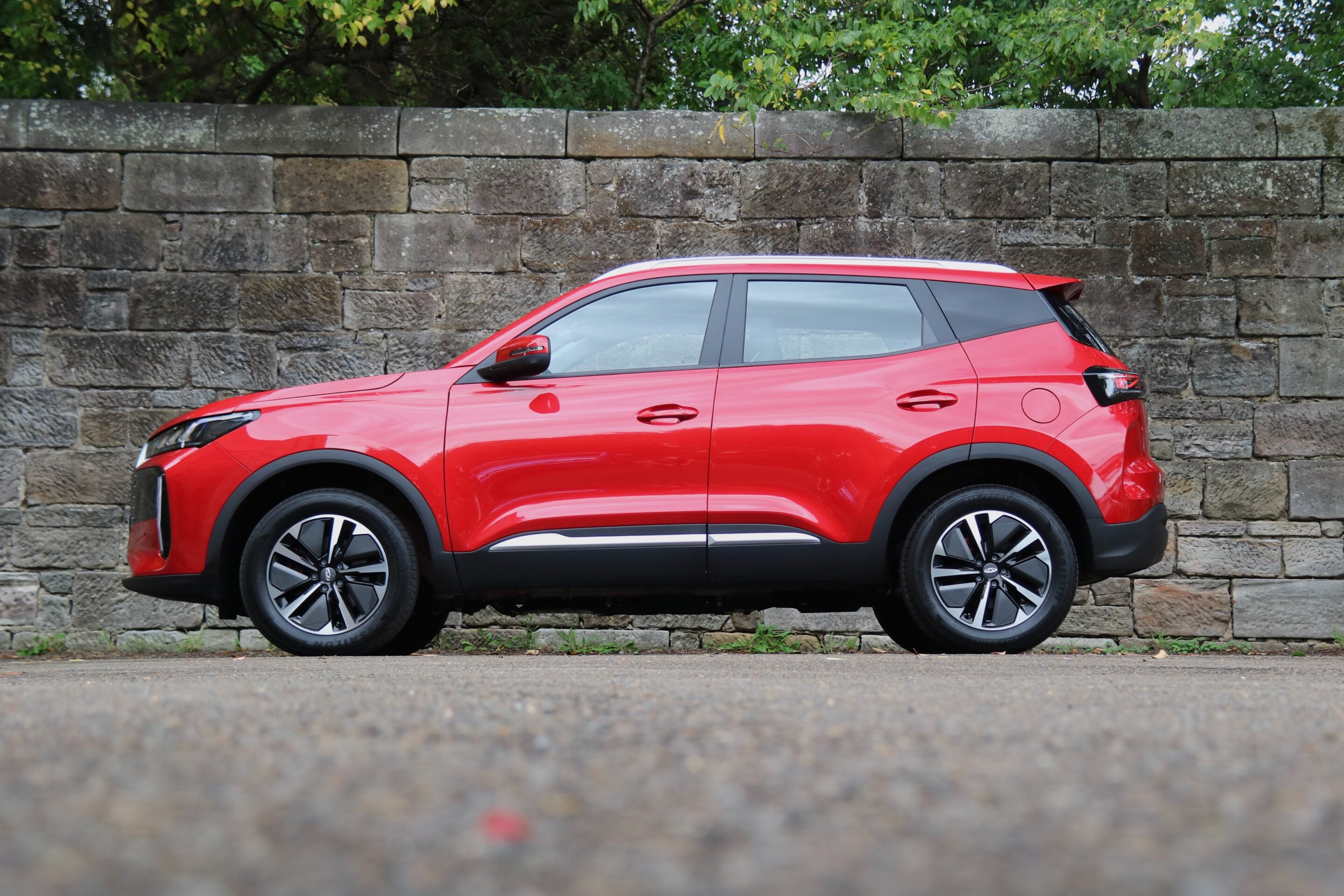
On the plus side, the 1.5-litre hybrid drivetrain in the Tiggo 4 Hybrid is smooth, easily switching between petrol and electric propulsion, and it feels quicker than the petrol version because the torque from the electric motor is instant and it weighs under 1500kg.
Performance in the Tiggo 4 Hybrid is fine, even at highway speeds, though the engine can be loud when more performance is called for. Aside from the sensitive lane keeping assistance, the Tiggo 4 Hybrid’s active safety features are generally tuned well and are far better than they used to be, though still not quite as polished as Japanese rivals.
How practical is the Chery Tiggo 4 Hybrid?
The cabin of the Chery Tiggo 4 is modern, good quality and filled with useable tech that we think will appeal to small SUV shoppers. Unlike the scratchy plastics of some rivals, the Tiggo 4’s front cabin is loaded with soft touch materials, including on the dashboard and door tops, though the liberal use of piano black trim will need effort to keep unscratched. The cloth in the lower-spec Urban feels nicer to sit on and will be cooler in hot weather.
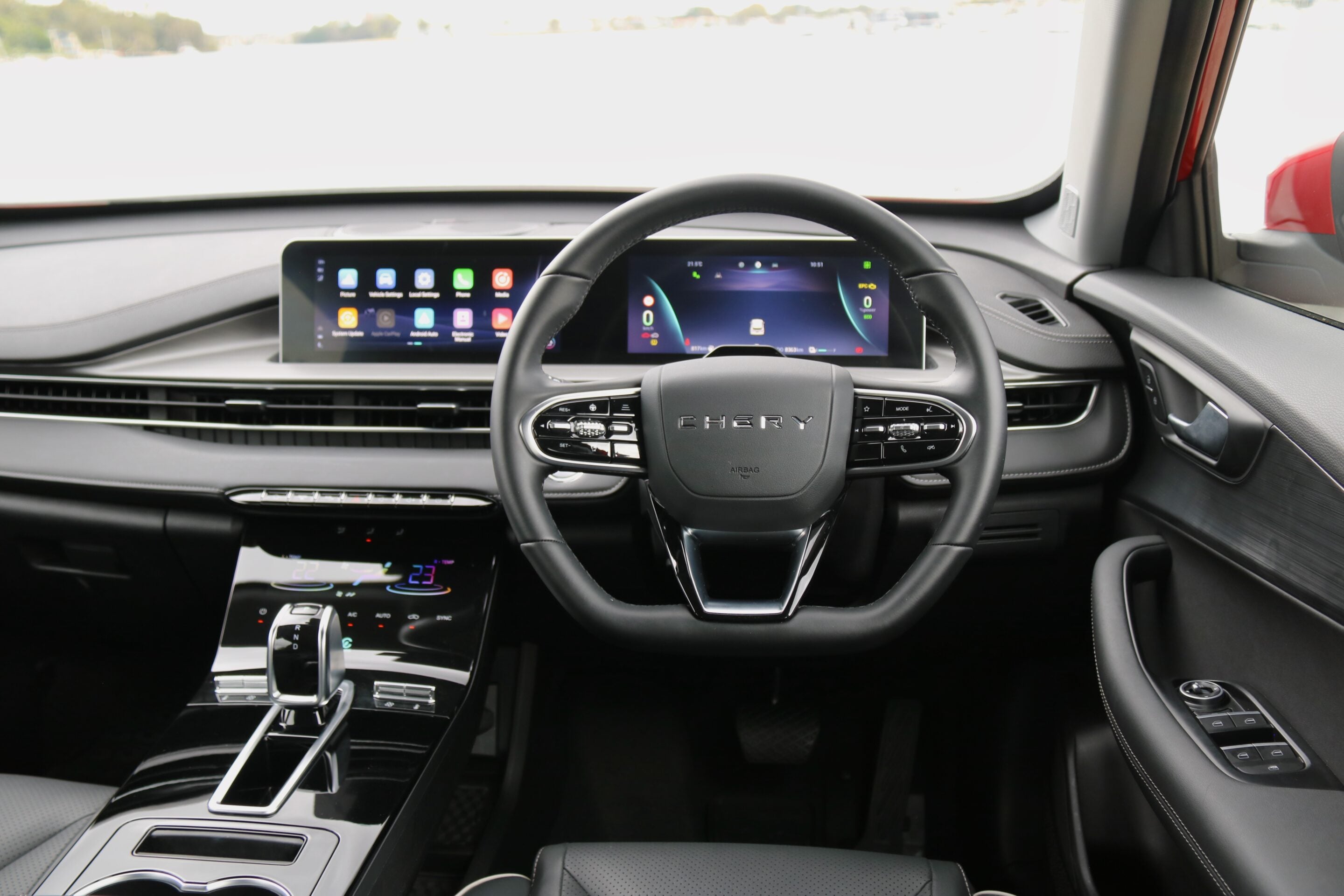
A 10.25-inch touchscreen handles infotainment duties in all Tiggo 4 models with wireless Apple CarPlay and Android Auto smartphone mirroring and DAB+ digital radio featuring, though no satellite navigation or live services. It’s an easy system to use and thankfully, Chery hasn’t tried to fit every function of the car into it, though screen quality and fastness could be improved.
The climate control is controlled with separate buttons below the screen, and there is also a line of physical buttons underneath the touchscreen to aid usability by giving shortcuts to the volume, 360-degree camera, home for the screen and so on, which many new cars frustratingly do without.
Front cabin storage is excellent in the Tiggo 4 thanks to its large door bins, huge under-console tray that can hold handbags and large box underneath the central armrest. Seat comfort is generally good as well, though under thigh-angle adjustment would be great, as would a lower set driver’s seat as you feel like you’re sitting on the seat, rather than in it.
Rear seat space in the Tiggo 4 Hybrid is great for the segment thanks to good legroom, a relatively flat floor and ample headroom from its tall body. Amenities include map pockets, door pockets, an air vent on the rear of the centre console and a singular USB-A charging port so occupants will have to fight over who uses it. ISOFIX points are located on the outboard seats, while the doors open wide too. We also quite like the warning light in the rear door, which alerts those seated in the rear to oncoming traffic.
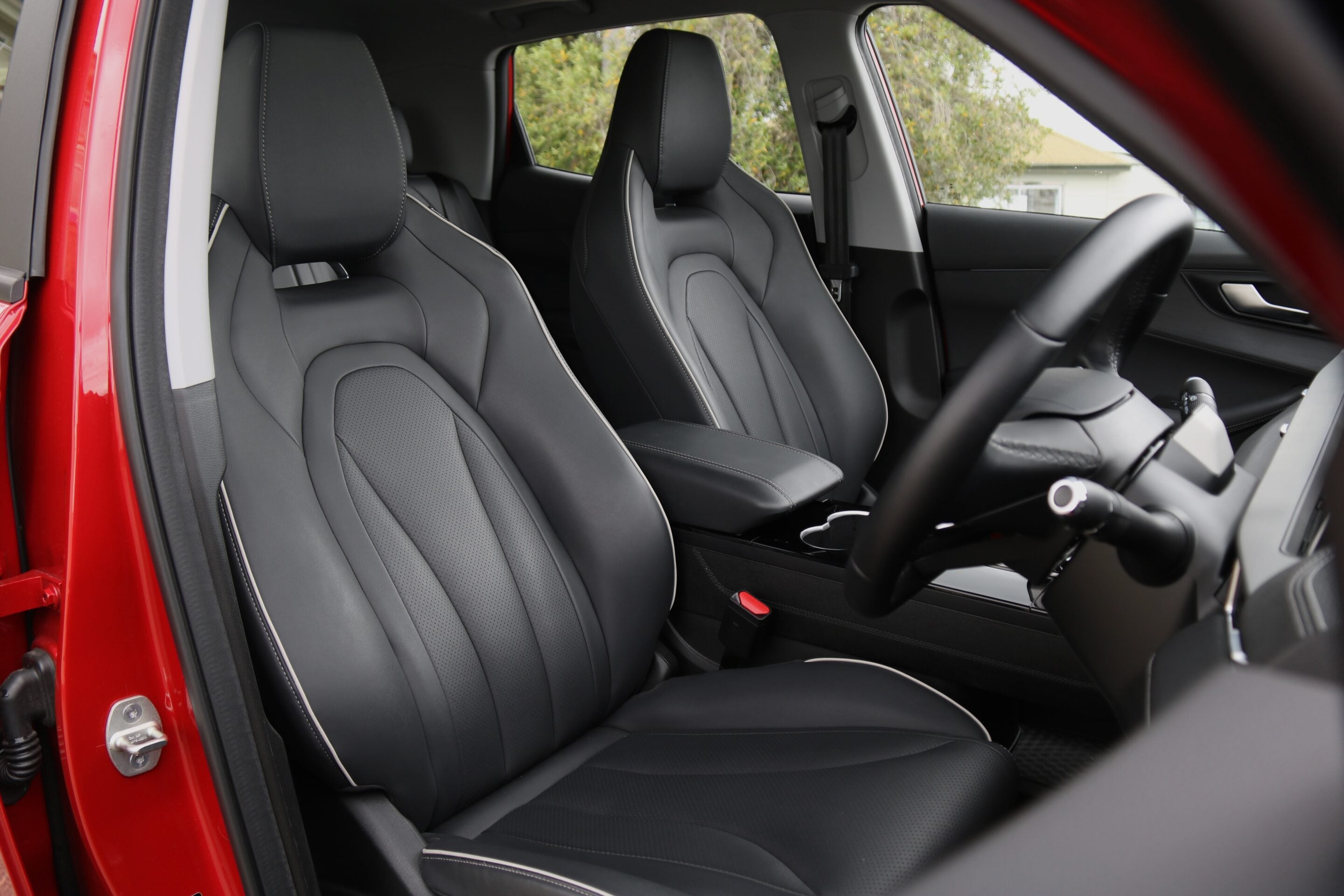
Behind the rear seats lies 470 litres of space, which is curiously 90 litres larger than the petrol Tiggo 4 and 63 litres larger than a Kona Hybrid. There are further curiosities too, such as the small hump in the boot floor to cover the 12V that doesn’t fit under the bonnet. There are also no hooks, nets or tie-down points, and a noticeable jump from the boot floor to the rear seats with them folded.
What warranty covers the Chery Tiggo 4 Hybrid?
The Tiggo 4 Hybrid is covered by Chery’s seven-year/unlimited km warranty with up to seven years of roadside assistance (if serviced through a Chery dealership). A separate eight-year/unlimited km warranty covers the hybrid battery.
Five years/75,000km of servicing the Tiggo 4 Hybrid costs just $1495 ($299 per service), which is quite low in 2026.
Should I buy a Chery Tiggo 4 Hybrid?
Those seeking a cheap, efficient, well equipped and practical small SUV that costs little to run will be quite pleased by the Chery Tiggo 4 Hybrid. It’s well priced against its main rivals and even the entry-level model offers good equipment levels. Plus, the regular Tiggo 4’s comfortable and good quality cabin continues largely unchanged, and like the petrol models, the Hybrid is quite inexpensive to service.
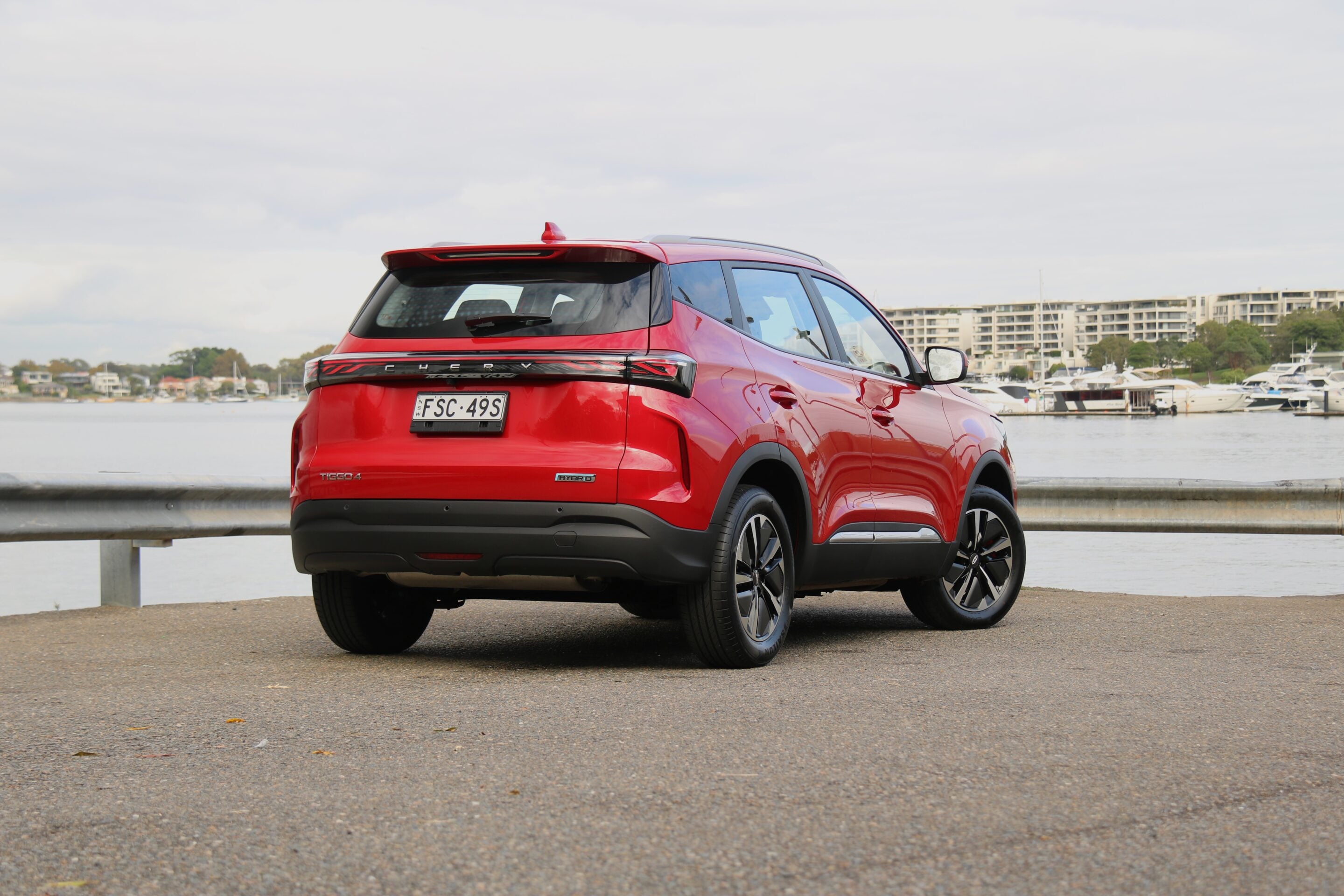
There’s no doubt that the hybrid drivetrain is much more efficient than the petrol Tiggo 4, and it’s also smoother and more refined too. But the hybrid variant doesn’t as yet improve the driving experience, which is a little soft with steering that is too light – and the $6000 premium against the petrol model is a consideration to be weighed up against the likely fuel savings.
Tiggo 4 Hybrid Specifications:
| Model | Chery Tiggo 4 Hybrid Ultimate |
|---|---|
| Price | $34,990 driveaway ($32,990 DA until June 30) |
| Engine | 1498cc four-cylinder DOHC petrol hybrid |
| Peak power | 150kW |
| Peak torque | 310Nm |
| Transmission | One-speed dedicated hybrid transmission, front-wheel drive |
| Claimed fuel economy | 5.4L/100km |
| Claimed CO2 emissions | 123g/km |
| Fuel type | 91RON regular unleaded |
| Fuel tank | 51 litres |
| Dimensions (l/w/h/wb) | 4330/1830/1655/2604mm |
| Boot size | 470 litres (rear seats up) |
| Kerb weight | 1490kg |
| Warranty | Seven-year/unlimited km |
| On sale | Now |
Chery Tiggo 4 Hybrid Ultimate standard features:
- 17-inch alloy wheels with a space saver spare wheel
- Dusk-sensing automatic LED exterior lighting with scrolling front indicators
- Rain-sensing automatic wipers
- Sunroof
- Silver roof rails
- Heated and auto-folding mirrors
- Keyless entry with push button start and remote start
- Synthetic leather upholstery (seats and steering wheel)
- Heated front seats
- Eight-way electric driver’s seat with lumbar adjustment
- Dual-zone automatic climate control with a rear air vent
- 10.25-inch digital driver’s display
- 10.25-inch touchscreen
- Wireless Apple CarPlay and Android Auto
- AM/FM/DAB+ digital radio
- Bluetooth calling and audio streaming
- Six-speaker sound system
- 4x USB ports
- Wireless phone charger
- Anti-theft alarm
- 7x airbags
- Autonomous emergency braking
- Lane keeping assistance with adaptive lane guidance
- Adaptive cruise control
- Traffic jam assist
- Blind-spot monitoring
- Rear cross-traffic alert (with braking)
- Door open warning
- Driver attention monitoring
- Auto high beam
- Front and rear parking sensors
- 360-degree camera
As competitive pressures for Chinese brands grow in their domestic market, a focused effort to increase lucrative export sales is underway.
Chinese automakers began their push into markets like Europe, the UK, and Australia with lightly modified versions of Chinese market vehicles. The focus is now shifting to cars specifically designed to appeal to Western-market buyers.
Reuters reports that a new generation of products from Chinese car companies is on its way, designed specifically for markets like Europe, rather than adaptations of existing Chinese-market products.
In their domestic market, Chinese brands are locked into price wars, chasing volume to make up for small profit margins. Outside of China, brands can often retail cars at twice the price they sell for in China, and still manage to undercut competitors.
The move is not a subtle one either. At the recent Beijing motor show, numerous brands revealed large, three-row crossovers and SUVs with export aspirations. A far cry from the high-end people movers that previously defined the Chinese market, but often failed to lure Western buyers.
The trend is not dissimilar to the way Japanese brands made headway into the North American market with cars like the Toyota Camry and Honda Accord. Those two models quickly evolved into larger, more powerful cars targeted at American consumers, away from their more compact origins.
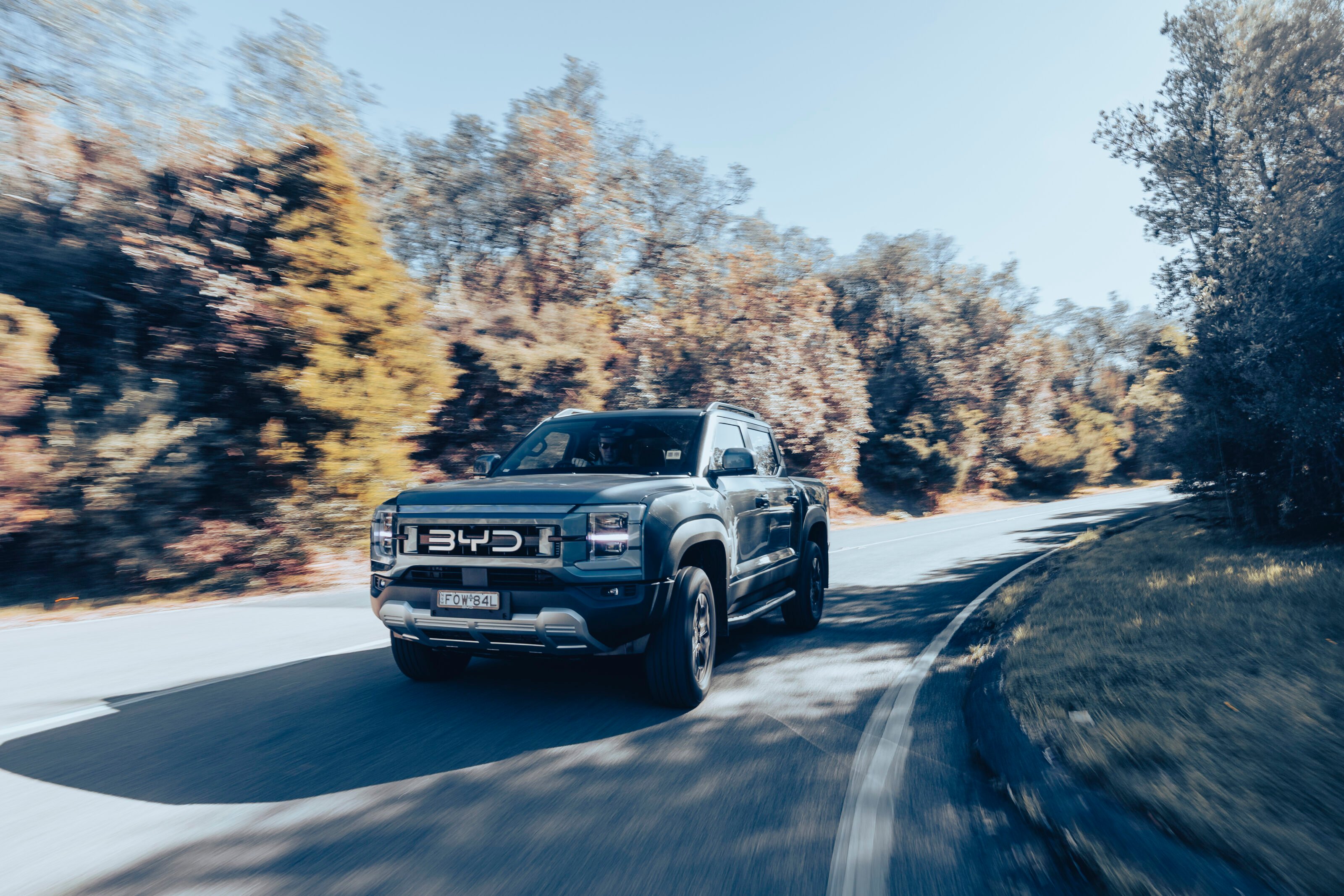
BYD’s export model plans are among the most obvious, with vehicles like the Shark 6 ute (above) developed to crack the Australian and South American markets. In 2025, BYD revealed plans for a kei car designed specifically for Japan, the first of its kind from a non-Japanese brand.
The next product to emerge will be the BYD Dolphin G, a Golf-sized plug-in hybrid hatch developed for Europe, where small hatchbacks still account for up to 40 per cent of the Southern European market. It will join the Leapmotor B05 as another market-specific Chinese take on the European hatchback.
Pedro Pacheco, an automotive specialist at data analytics firm Gartner, described it as China’s “Yaris moment”. Mimicking Toyota’s moves in 1999 with the Yaris and later the Auris, a version of the Corolla, to specifically target the European market.
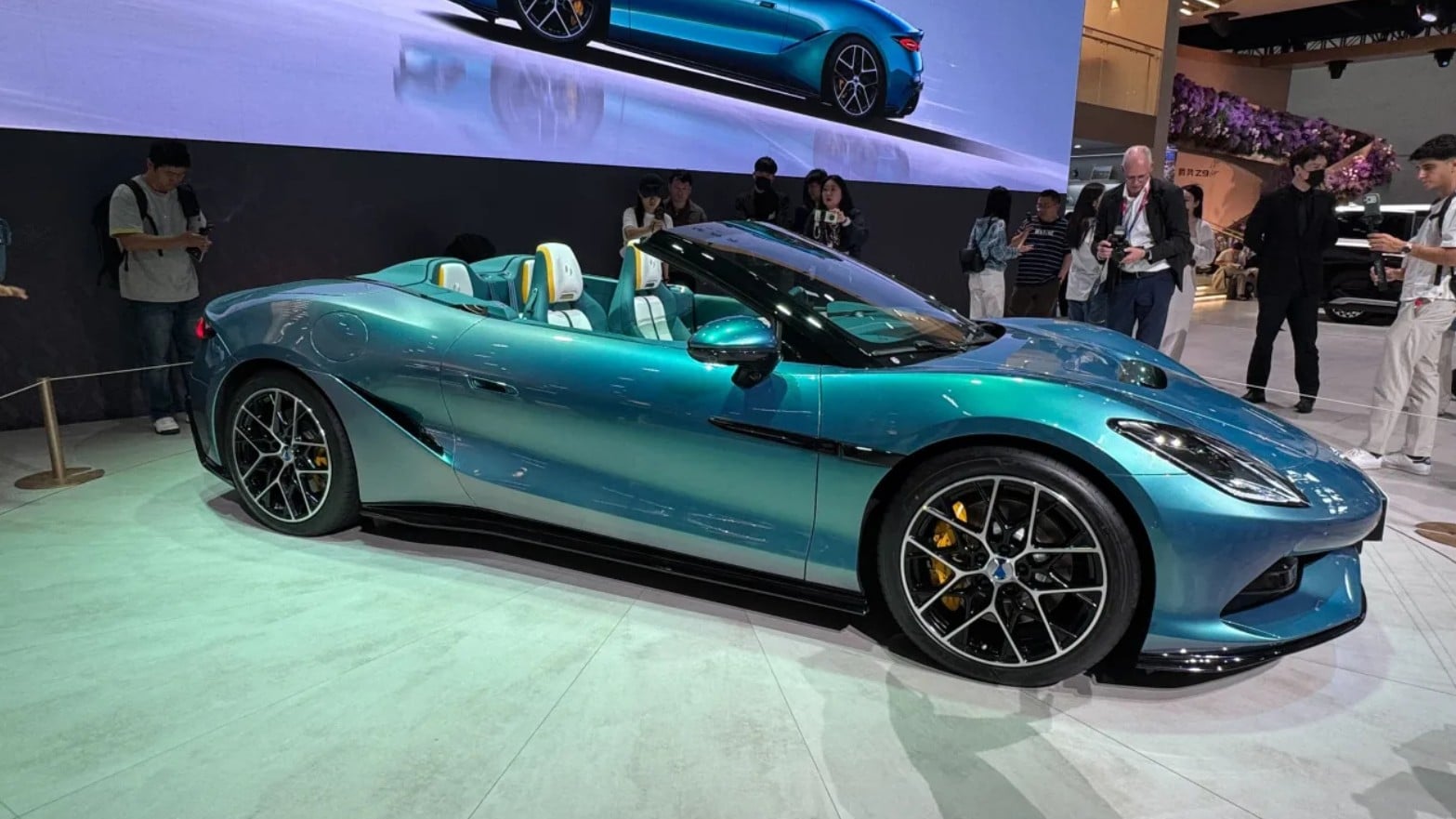
Rather than a single market segment, though, China’s export-first approach sees BYD preparing to launch high-end sports cars (Denza Z convertible, above and main) and sedans to tackle traditional luxury brands, and GAC revealed an off-road-capable four-wheel-drive aimed at adventure buyers.
Chery has a ute and a related SUV to slot into the Australian market, plus a new Freelander brand, built in China but designed by Land Rover, to appeal to European buyers familiar with the British brand.
The move comes as Chinese brands look to better utilise production capacity, and as a means of delivering stronger profits through higher margins on vehicles sold in established markets.
Geely is set to launch a seven-seat rival to the Toyota Kluger in 2027. According to the company, the as-yet unnamed large SUV will be quite similar to the existing Galaxy M9 that was shown at last month’s Melbourne Motor Show, but add an extra seat for a total of seven as used by its biggest rivals like the aforementioned Kluger, Hyundai Santa Fe and Kia Sorento.
Revealed to local media at last month’s Beijing Motor Show and confirmed by WhichCar by Wheels, the new SUV will launch with hybrid and plug-in hybrid drivetrains, with the latter reportedly capable of up to 230km of electric-only driving.
In China, the M9 is currently available with a plug-in hybrid drivetrain combining a 1.5-litre turbocharged four-cylinder engine with either one or three electric motors, with the latter making up to 649kW of power and 1165Nm of torque.
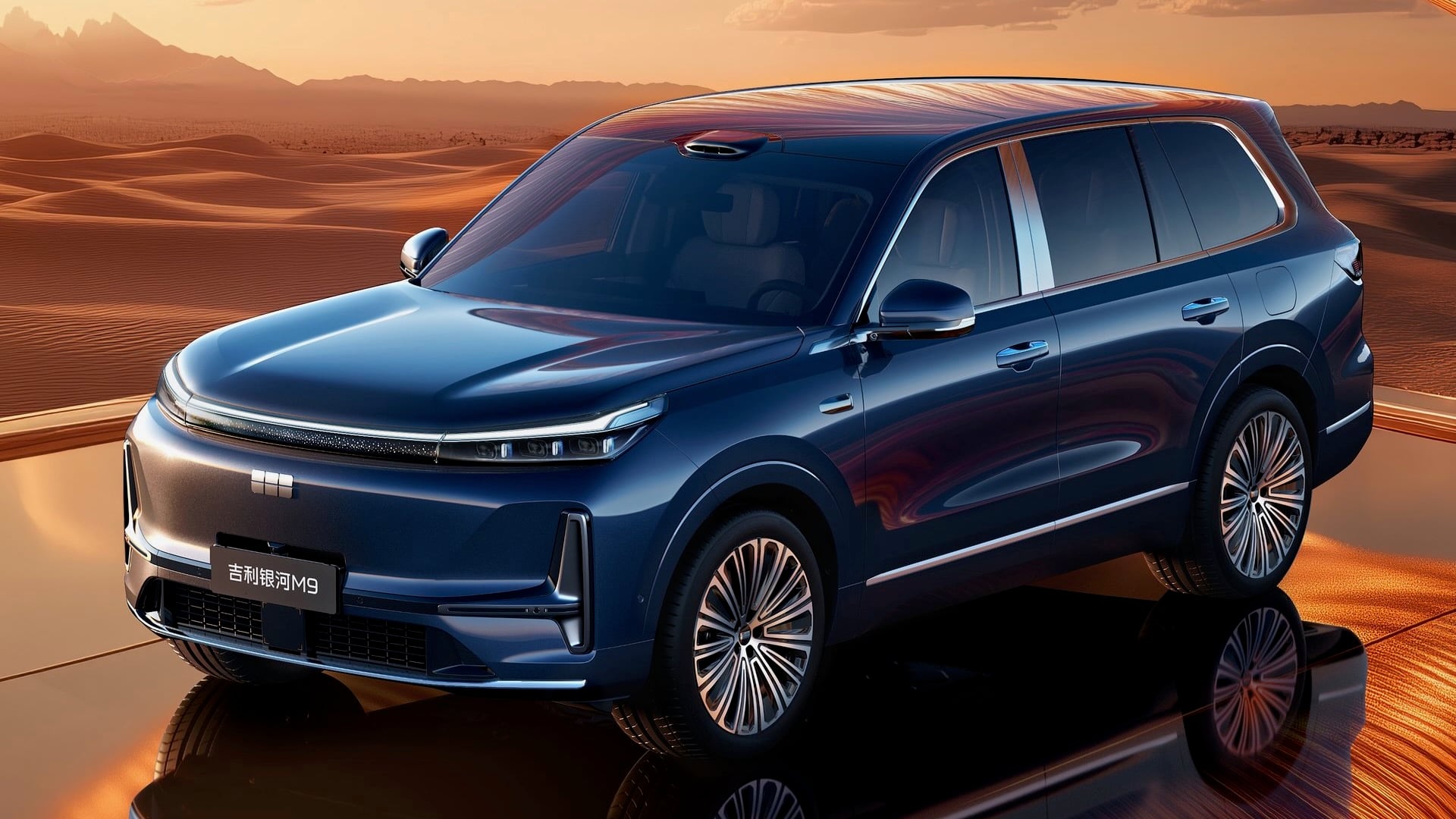
The M9 offers either 18.49kWh or 41.46kWh LFP battery options for electric driving range of up to 230km in China, and over 1300km of total range. According to Geely, its 3C charging capability allows for a 30 to 80 per cent charge time of as little as 15 minutes.
Measuring 5205mm long, 1999mm wide, 1800mm tall and 3030mm between the wheels, the M9 is even larger than the one-size-up Hyundai Palisade (it measures up to 5065mm in length) and offers plenty of interior space.
In China, it’s only available as a six-seater – something that won’t translate to Australian models as we’ll get seven seats – and features include a huge 30-inch touchscreen with a Qualcomm Snapdragon 8295P processor, heated/ventilated/massaging seats, 27-speaker audio and even a 17.3-inch ceiling-mounted screen for rear passengers.
In China, the M9 is priced from between 200,000 and 300,000 yuan (A$41,000 – $61,500), likely translating into much lower pricing than equivalent Kluger models, which ask over $90,000 once on-road costs are included in the price.
Geely will announce more information about its new seven-seat SUV closer to its 2027 local launch.
Chery has narrowed down a shortlist of names for its upcoming dual-cab ute after receiving more than 20,000 submissions from the public.
The naming competition, first reported earlier this year, was launched as part of the brand’s push to engage Australian buyers ahead of the arrival of its first ute – set to be a plug-in hybrid diesel model.
Nine names have made the final cut, reflecting a mix of traditional Australian themes and more contemporary ideas. Among them are Outrider, Orca, Ironbark, Bushwalker, Stockman, Longreach, Ridgeback, Terra and Mate.
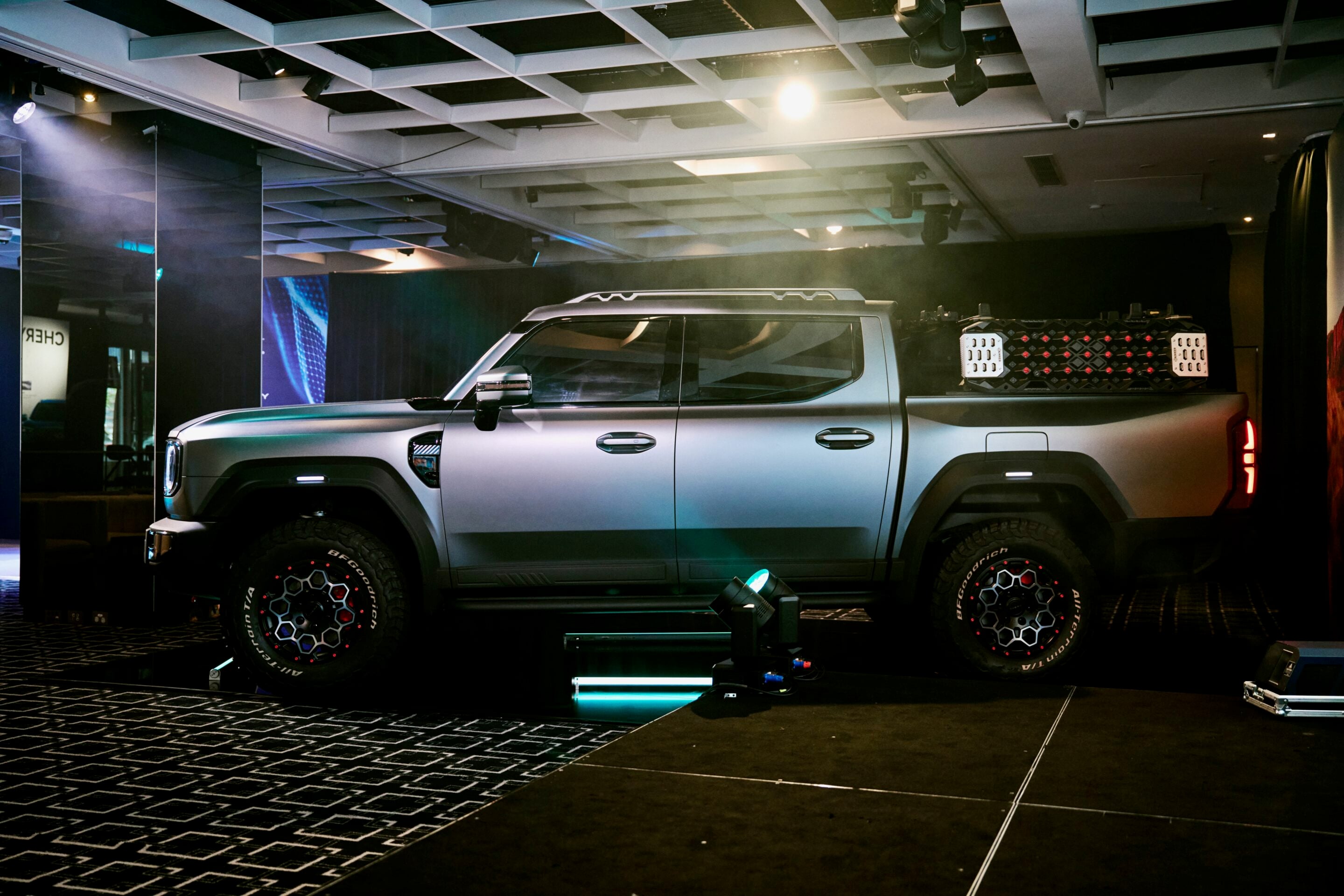
Many of the shortlisted entries draw on imagery associated with durability, rural life and off-road capability – long-standing attributes linked to the ute segment in Australia. Others lean into broader themes such as adaptability and everyday usability.
Chery said the volume of entries highlighted strong local interest in the new model, which is expected to combine diesel power with plug-in hybrid technology – an unusual pairing in the ute market.
The competition now moves into its next phase, with a public vote to determine the final name. Voting opens on May 5 and runs until May 19, with the winner to be announced ahead of the vehicle’s launch later this year.
The person who submitted the successful name will receive the first example of the new ute in Australia.
While most submissions followed predictable themes, some entries reflected a more humorous take on the task, including names such as “Dropbear” and “B-ute”.
The campaign is part of a broader effort by Chery to build awareness of its expanding line-up in Australia, with the new ute expected to play a key role in the brand’s next phase of growth.
McLaren has unveiled its new MCL-HY Hypercar, confirming its return to the top class of endurance racing at the 24 Hours of Le Mans in 2027 and the FIA World Endurance Championship (WEC).
The reveal marks a significant step in the British marque’s long-term motorsport ambitions, with the new car forming part of a broader push to compete across Formula 1, IndyCar and endurance racing simultaneously.
Developed to LMDh regulations, the MCL-HY combines a lightweight carbon-fibre chassis with a hybrid powertrain built around a twin-turbocharged V6 engine. Total output is capped at around 520kW, in line with class regulations, with power delivered to the rear wheels.
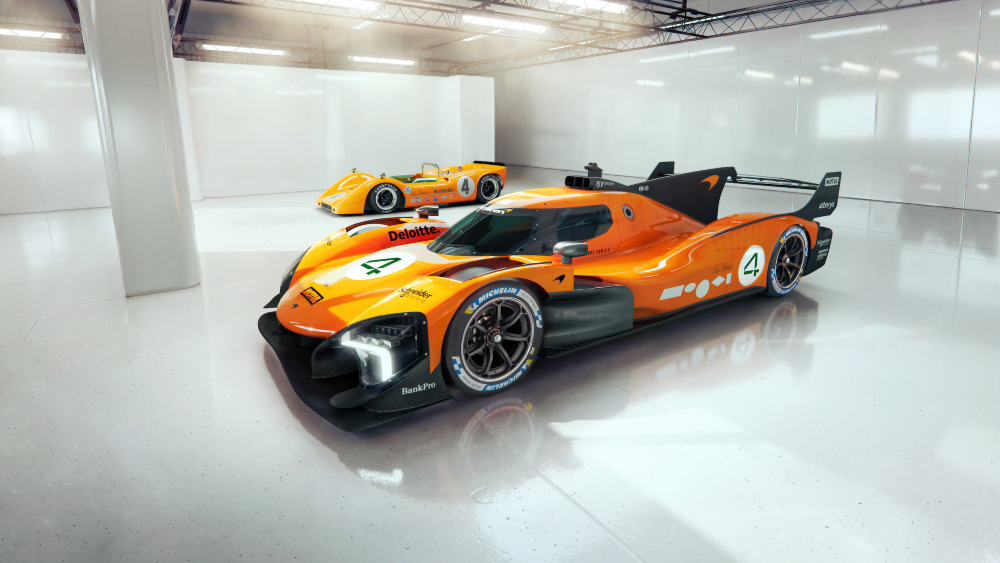
The car will undergo an extensive testing programme throughout 2026 ahead of homologation, with McLaren drawing on both its racing division and automotive arm to shape the final design and performance package.
McLaren’s return to Le Mans’ top category is its first since its famous outright victory in 1995 with the F1 GTR. The move also completes its presence across motorsport’s three most prominent arenas, aligning with its long-held ambition to compete for the so-called Triple Crown – wins at Monaco, Indianapolis and Le Mans.
Alongside the race car, McLaren has also revealed a track-only derivative, the MCL-HY GTR, aimed at a small number of private buyers. Unlike the race version, it drops the hybrid system and relies solely on a twin-turbo V6 producing around 730PS, while also benefiting from a lower weight.
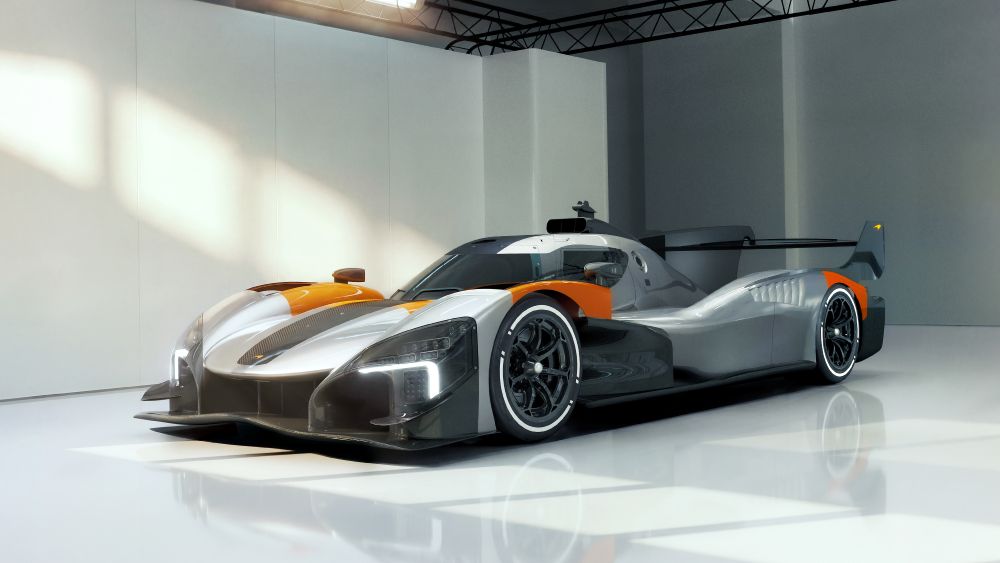
The GTR forms part of a broader customer programme dubbed Project: Endurance, which includes access to McLaren’s race team operations and a two-year track driving schedule across international circuits.
McLaren says deliveries of the track car will begin in late 2027, coinciding with its competitive debut in the WEC.
Toyota has released Australian pricing and full specifications for the Toyota LandCruiser 300 Series Hybrid large SUV, ahead of its local launch in mid-2026.
Priced from $156,060 plus on-road costs, the hybrid variant will only be offered in the top-spec GR Sport and Sahara ZX models when they arrive. The focus of the transformation to hybrid form is a 3.4-litre twin-turbo petrol V6 engine making 341kW and 790Nm outputs, but using 10L/100km on the combined cycle.
Like the related Tundra large ute, the LandCruiser 300 Series Hybrid uses a twin-turbocharged 3.4-litre V6 petrol hybrid making a combined 341kW of power and 790Nm of torque. That’s mated to a 10-speed automatic transmission, which sends power to all four wheels.
Compared with the twin-turbo 3.3-litre V6 turbo-diesel currently employed in the LandCruiser 300 Series, the hybrid makes 114kW and 90Nm more grunt and its 10L/100km combined fuel consumption figure is only 1.1L/100km more, while its 98-litre fuel capacity is 12 litres less.
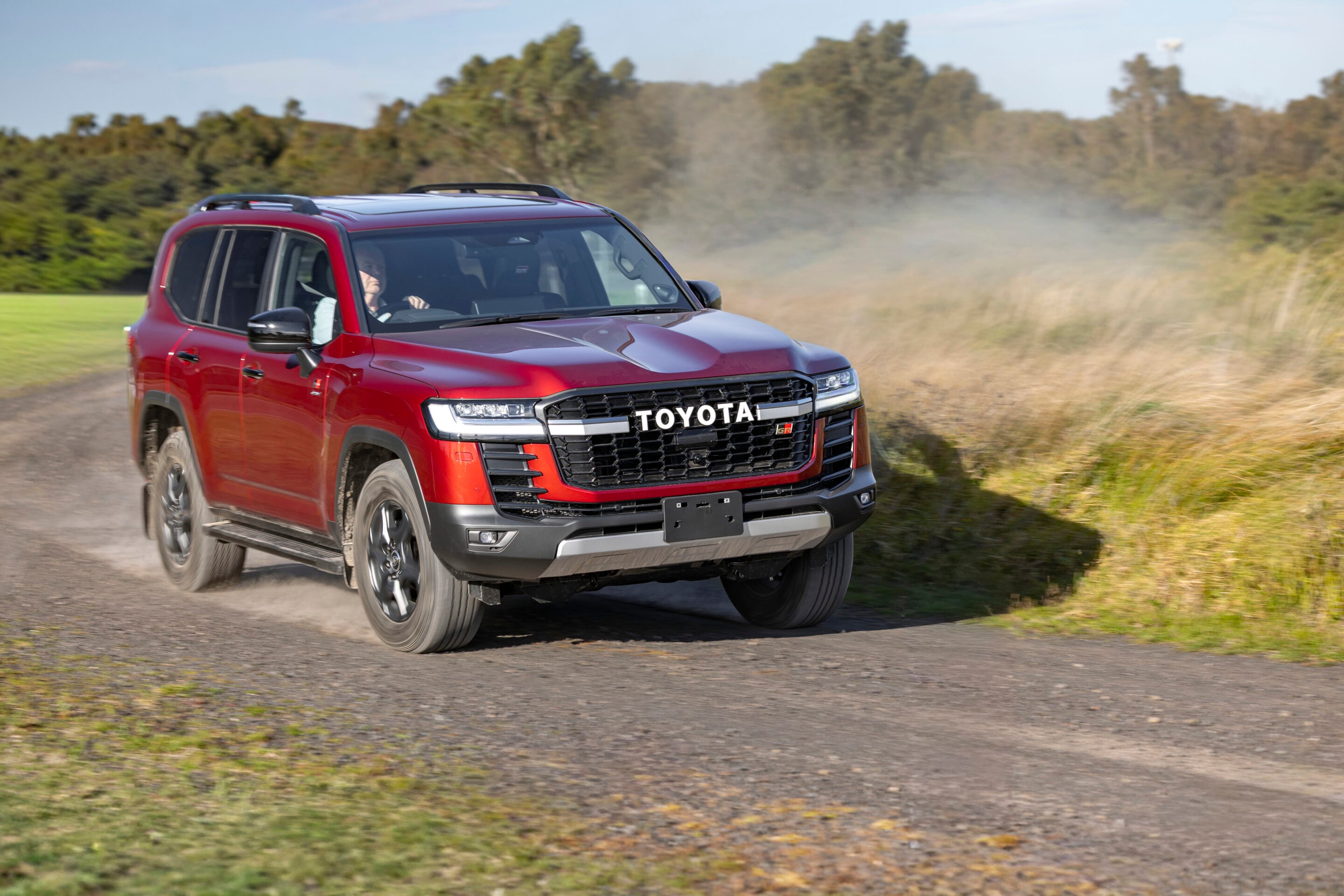
Importantly, the new hybrid models retain the diesel’s 3500kg braked towing capacity, and their GVM (gross vehicle mass) is 100kg more than the diesel at 3380kg.
Together with the new powertrain, the two new flagship hybrid models feature electric power steering – turbo-diesel LandCruiser 300 Series models maintain a hydraulic power steering system – an upgraded 200V/1500W rear auxiliary power socket capable of powering small appliances, and a 40/20/40-split rear seat back.
Apart from those changes, the hybrid GR Sport and Sahara ZX maintain the same level of driving performance features as their diesel siblings, including their full-time four-wheel drive system, five-mode multi-terrain select, and adaptive variable suspension.
The Sahara ZX features a rear Torsen limited-slip differential, while the more off-road-focussed GR Sport offers fully lockable front and rear differentials and electronically-controlled suspension.
2026 Toyota LandCruiser 300 Series hybrid pricing (excluding on-road costs):
| GR Sport | $156,060 |
|---|---|
| Sahara ZX | $156,810 |
The hybrid Toyota LandCruiser 300 Series will launch locally from mid-2026.
Electric vehicles are gaining ground in Australia at a record pace, accounting for 16.4 per cent of all new car sales in April 2026 – roughly one in every six vehicles sold.
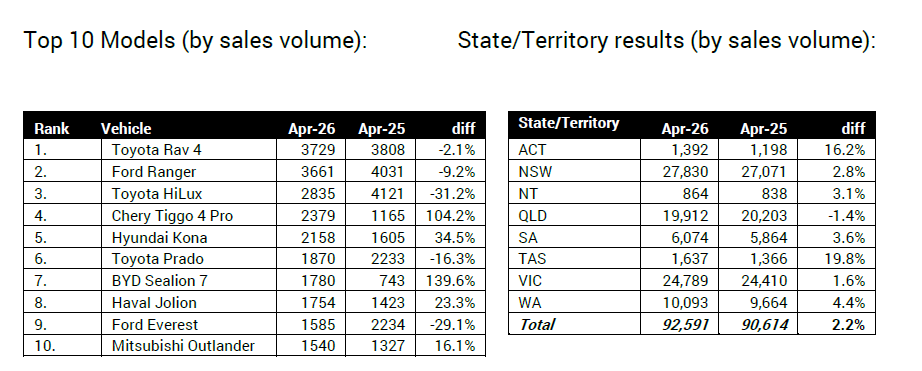
The latest figures come as the broader new car market also shows resilience, with 92,591 vehicles sold in April, up 2.2 per cent on the same month last year despite ongoing global uncertainty and the prospect of further interest rate rises.
Industry leaders say a combination of improved supply, rising fuel prices and government incentives is now translating into stronger demand for EVs.
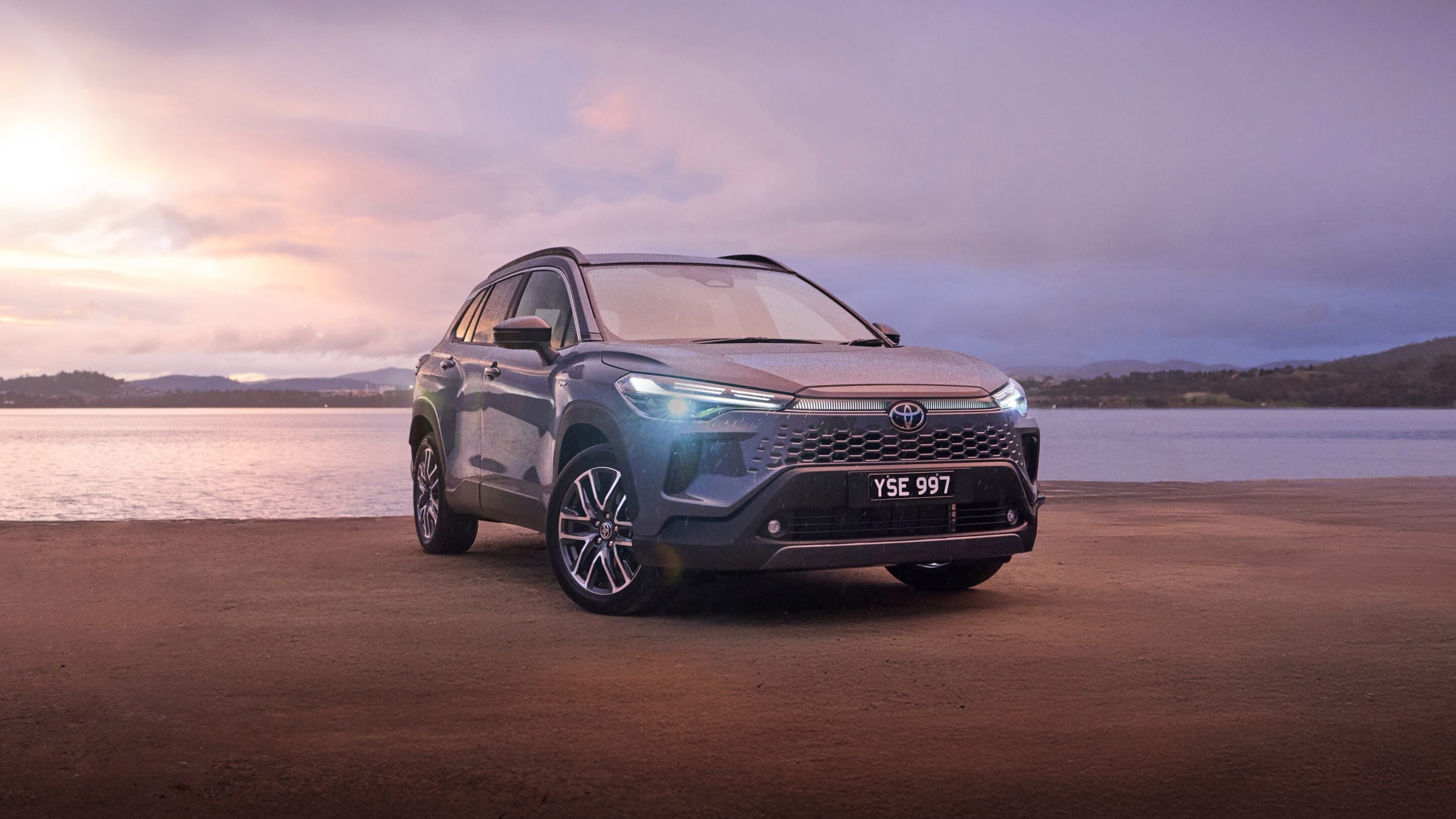
Federal Chamber of Automotive Industries (FCAI) chief executive Tony Weber said the growing availability of electric models has played a key role, alongside policy support such as the Electric Car Discount.
“There are now around 110 EV models available to Australian buyers, and supply continues to increase,” Weber said. “That’s helping drive stronger uptake across the market.”
Weber added that the continuation of the Electric Car Discount would help sustain momentum, though he warned infrastructure investment must keep pace.
“Stronger EV uptake is driving increased demand for public charging, and that demand must be matched by a step change in both public and private investment,” he said.
The April results also highlighted shifting brand dynamics. Toyota remained the market leader with 15,185 sales, but BYD sold the second highest number with 7,702 vehicles, capturing 8.3 per cent of the market. The result underscores the rapid rise of Chinese manufacturers, which collectively accounted for around 30 per cent of total sales during the month.
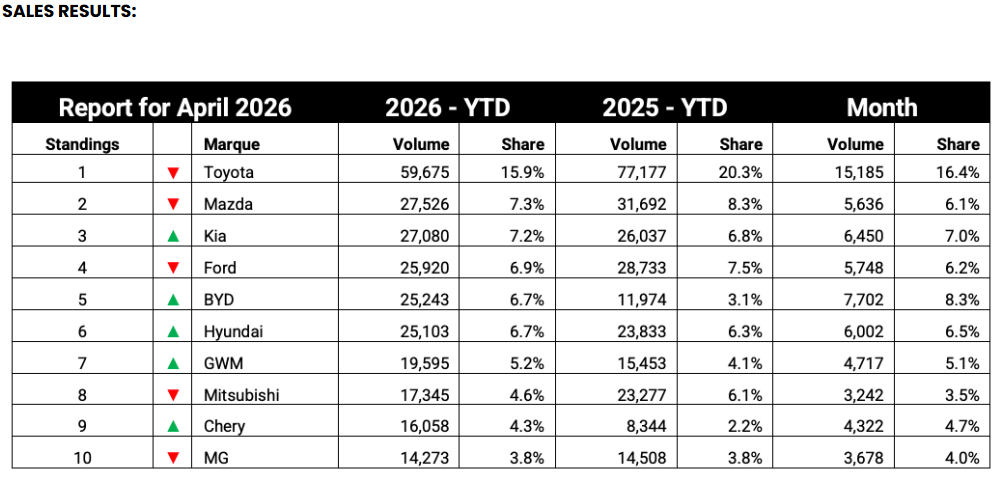
Mazda, Kia, Ford and Hyundai rounded out the top-six selling brands.
Among individual models, the Toyota RAV4 led the charts with 3,729 sales, narrowly ahead of the Ford Ranger and Toyota HiLux. Notably, several electrified or hybrid-focused models featured strongly, including the Hyundai Kona and BYD Sealion 7, reflecting changing buyer preferences.
The figures point to a market in transition, with electric vehicles moving further into the mainstream as supply expands and more buyers weigh alternatives to traditional petrol-powered cars.
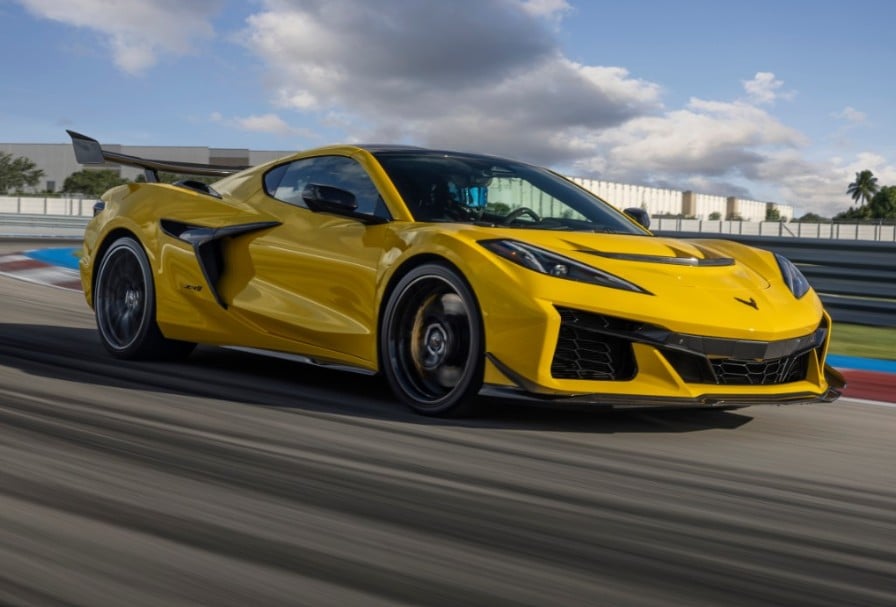
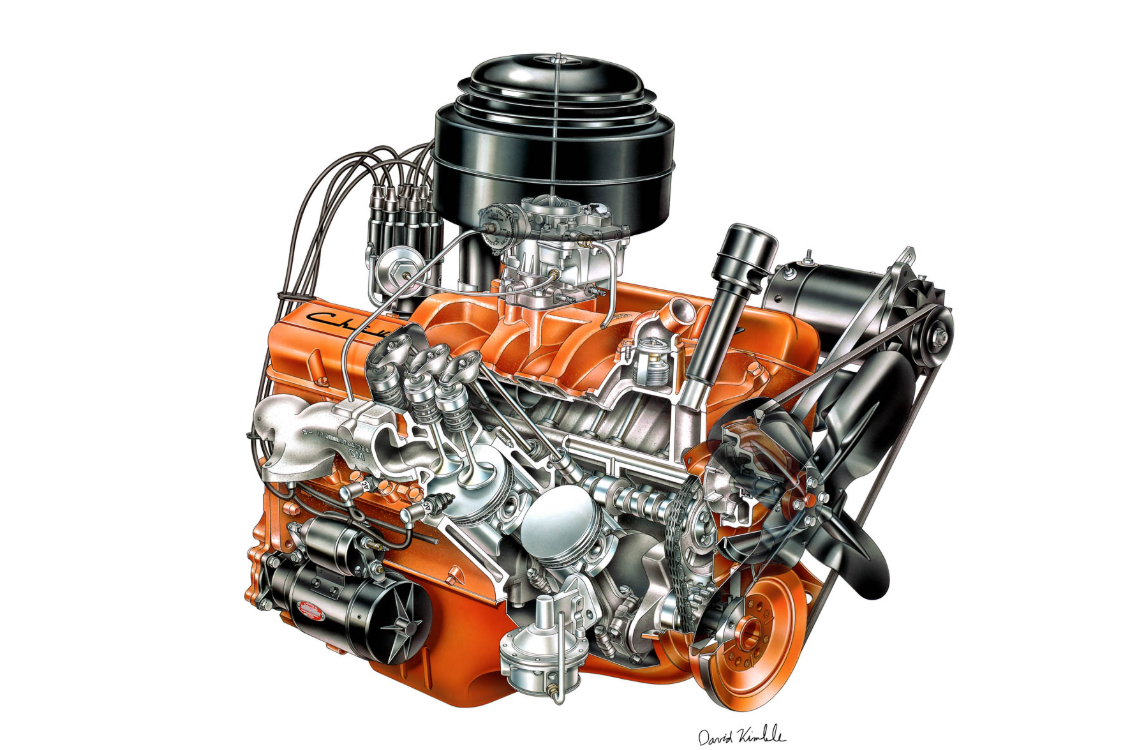
Old-school V8 engines are back in the spotlight – in a good way – despite the global fuel crisis. General Motors has just confirmed it will spend $3 billion to keep its ‘small block’ V8 running into the 2030s and now Formula One is promising a return to V8 power by 2031.
The move by GM is part of a giant $7 billion spend on its engine and transmission facilities in the USA and Canada which includes the sixth generation of its historic V8 powerplant. The upcoming small-block V8 will be used in GM’s next generation of trucks and SUVs, as well as performance models including the Chevrolet Corvette.
GM is promising better performance, more efficiency and reduced fuel consumption for its next-generation products, which will first use the new V8 in the 2027 Chevrolet Silverado and GMC Sierra.
The surprising shift in Formula One was confirmed at the Miami Grand Prix by the president of the FIA, Mohammed Ben Sulayem, who has been promoting a return to V8s for more than a year.
Now he believes it’s time to move after widespread turmoil and disappointment over new hybrid regulations in F1, which promote a 50:50 split between electrical and combustion power.
The complicated craziness in F1 has seen cars decelerating on long straights to recharge their batteries and prompted widespread complaints from drivers, led by four-time world champion Max Verstappen.
Grand prix racing moved to hybrids with 1.6-litre V6 combustion engines in 2014 with a combination of harvesting from cars’ exhaust and braking. For 2026, the regulations were comprehensively revised with the removal of the exhaust harvesting and complicated limits on where and how energy can be captured and then deployed.
Ben Sulayem has been pushing hard for a return to ‘old-school’ combustion power, with only mild hybrid assistance, firstly proposing V10 engines and then switching his focus to V8s.
He has given no detail yet on the size of the V8s, or how the implementation of the rule changes would work, but the FIA chief is adamant. He believes the switch to old-school noise and fury could be happening in 2030.
“V8 is coming. At the end of the day, it’s a matter of time,” Ben Sulayem said.
His aggressive approach is likely to conflict with the aims of major carmakers who have driven the move to hybrid systems which parallel, and advance, their work on road cars. Mercedes-Benz, Ferrari, Ford, Honda and Audi – who currently supply the latest F1 hybrid powerplants – have yet to respond to the FIA’s proposal.
As things stand, any change from the current regulations would require agreement from the powertrain supplies, but Ben Sulayem believes he can go ahead without their support.
“Do I need their support? No, it will be done,” Ben Sulayem said.
“In 2031 the FIA will have the power to do it, without any votes from the power unit manufacturers.”
The federal government will wind back its popular electric vehicle tax break from 2027, tightening eligibility for the Fringe Benefits Tax (FBT) exemption as costs surge well beyond initial forecasts.
Under the changes, EVs priced below $75,000 will remain exempt from FBT from April 2027, while those above that threshold will be taxed at 75 per cent of the standard rate. By April 2029, the concession will be further reduced, with all EVs subject to the 75 per cent rate – except luxury models, which will continue to attract full FBT.
The move is expected to save $1.7 billion over four years, after the scheme’s cost ballooned to an estimated $1.35 billion this financial year, far exceeding the original $90 million forecast.
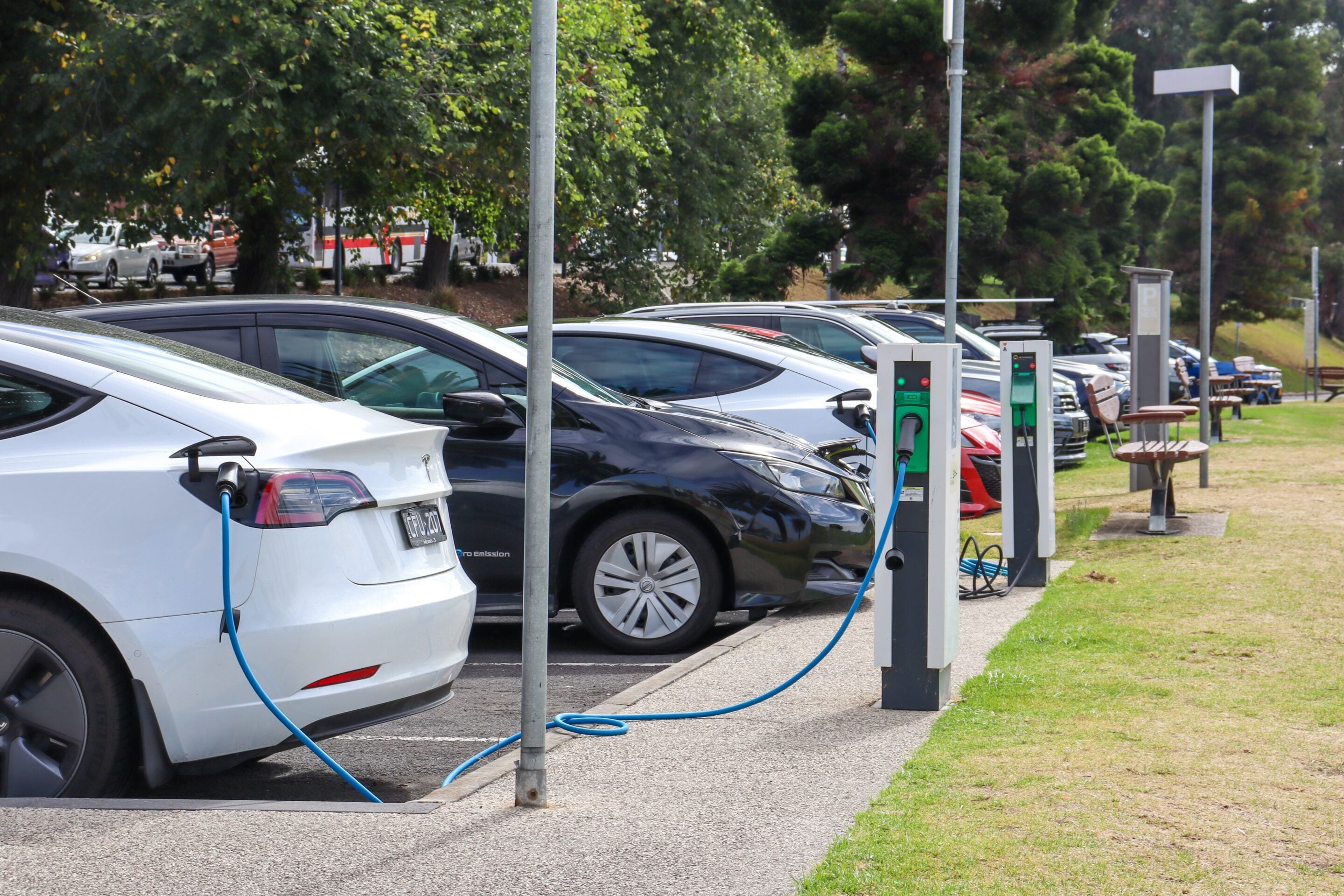
The exemption has been a key driver of EV uptake, particularly through novated leases, which allow buyers to package vehicle payments through pre-tax income. Around half of all EV sales are estimated to occur via this pathway.
From 2029, however, the financial equation will change. EVs that are currently exempt could attract thousands of dollars in annual FBT, narrowing the cost advantage over petrol vehicles. For example, a $50,000 EV that currently incurs no FBT could face a tax bill of roughly $7,300 per year, depending on the lease structure.
That said, existing novated lease agreements will be grandfathered, meaning buyers who enter into a lease before the changes take effect can retain the current tax benefits for the life of the contract – potentially well into the 2030s. This is expected to drive a short-term surge in demand as consumers look to lock in savings before the rules tighten.
Industry groups have broadly welcomed the government’s staged approach. Australian Finance Industry Association CEO Diane Tate said the phased changes provide much-needed certainty.
“A clear pathway gives consumers and businesses confidence to plan, invest and act,” she said, describing the exemption as the “single-most critical incentive” for EV adoption.
Electric Vehicle Council Chief Executive Julie Delvecchio said the decision gives Australians a clear pathway to ditch petrol costs and the certainty to act now.
“This is good news for everyday Australians who are doing the sums on going electric,” Ms Delvecchio said.
“The Albanese Government and Minister Bowen have listened and shown they understand EVs are a cost-of-living measure. This decision means most electric cars in Australia will remain eligible for the Electric Car Discount, allowing people to save thousands on their annual fuel bills.”

The National Automotive Leasing and Salary Packaging Association also supported the decision, with CEO Rohan Martin saying the one-year extension of current settings would help maintain momentum.
“At a time when Australians are feeling real pain at the pump, the Electric Car Discount is helping households take control of their fuel bills,” he said.
However, both groups warned that broader policy support – including charging infrastructure and finance access – will be essential to sustain growth as the market matures.
Geely has launched a sharp end-of-financial-year finance offer across its Australian line-up, headlined by a low-rate deal on the EX5 electric SUV and Starray EM-i.
Running from May 1 to June 30, 2026, the offer centres on a 0.88 per cent comparison rate over 36 months, with no minimum deposit, no establishment fee and no repayment fees for approved customers.
The deal applies to the EX5 Extended Range and Starray EM-i (below), with Geely targeting buyers looking for lower upfront costs and predictable repayments as the EOFY sales period ramps up.
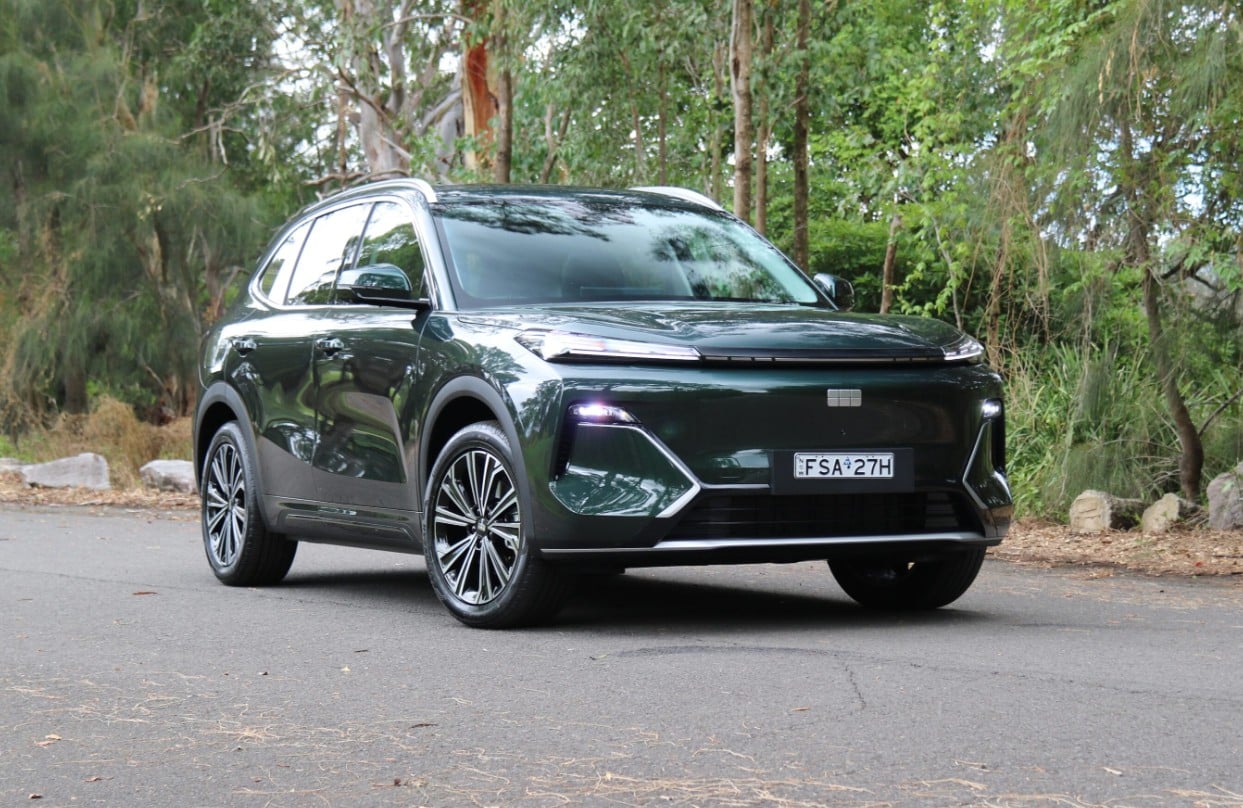
Buyers opting for the EX5 Extended Range also receive a complimentary 7kW single-phase home charger, although installation costs are not included. The bonus is limited to new stock vehicles and is not offered on remaining EX5 Standard Range units.
The finance package is available only on approved applications and excludes fleet, government and rental buyers. Contracts must be approved by June 30 and finalised by July 11.
Geely’s EOFY push comes as competition intensifies in the growing EV and hybrid SUV segments, with brands increasingly using sharp finance offers and added-value incentives to attract buyers.
The EX5 Extended Range represents Geely’s core electric offering in Australia, while the Starray EM-i broadens its appeal with hybrid power, giving buyers multiple pathways into electrified driving during the key sales window.
