
Reviews

Gallery 1
7.8
/10
Score
Score breakdown
7.5
Safety, value and features
8.0
Comfort and space
7.5
Engine and gearbox
8.0
Ride and handling
8.0
Technology
Things we like
- Contemporary styling
- In-car tech upgrades
- Cabin a big step up, but...
Not so much
- … too many cheap, hard plastics
- A-C controls a mish-mash
- Overall performance a backward step
Overview
Toyota has always been a remarkably consistent carmaker. Witness the evolutionary updates across its range of vehicles over decades – cars like Corolla, Camry, HiLux, you name it – have all improved with each successive generation. Backward steps? Toyota seemingly doesn’t know the meaning.
The latest model to go under the knife is also its most important: the Toyota RAV4 medium SUV.
The best-selling vehicle of any kind globally for the last two years, the RAV4 has become the standard bearer for the Japanese brand around the world.
1
In Australia, where it remains the third-best seller behind only the Ford Ranger and Toyota HiLux dual-cab utes, the new RAV4’s importance to the brand cannot be understated.
The medium SUV segment is Australia’s heartland battleground. And it’s a battleground pioneered, and dominated, by the Toyota RAV4.
This new sixth-generation model is well-placed to maintain that dominance by adhering to Toyota’s evolutionary philosophy. This is no clean-sheet, from-the-ground-up new generation RAV4. Instead, Toyota has used the solid foundations of the previous RAV4 – which debuted in Australian in May, 2019 – to underpin its successor. After all, if it ain’t broke…
1
The big-step change comes later this year, when for the first time, RAV4 will be available across a range of plug-in hybrid models including the flagship GR Sport which brings 227kW and a 0-100km/h time of just 5.8 seconds.
For now though, the focus is on the regular hybrid RAV4 line-up and it’s a comprehensive one.
How much is the new Toyota RAV4?
Buyers will certainly be spoilt for choice when it comes to the model line-up with eight variants across five distinct model grades with either front- or all-wheel drive. Unsurprisingly, prices have increased over the older model, between $3020 and $6430 depending on the model grade, while three new plug-in hybrid models give buyers more choice than ever before, albeit at a premium.
2026 Toyota RAV4 pricing (plus on-road costs)
| GX Hybrid 2WD | $45,990 (+$3730) |
|---|---|
| GX Hybrid AWD | $49,340 (+$4080) |
| GXL Hybrid 2WD | $48,990 (+$3180) |
| GXL Hybrid AWD | $52,340 (+$3530) |
| Edge Hybrid AWD | $55,340 (-$3020) |
| XSE Hybrid AWD | $58,340 (+$6430) |
| XSE Plug-In Hybrid 2WD | $58,840 (new) |
| XSE Plug-In Hybrid AWD | $63,340 (new) |
| Cruiser Hybrid 2WD | $56,990 (+$5580) |
| Cruiser Hybrid AWD | $60,340 (+$5930) |
| GR Sport Plug-In Hybrid AWD | $66,340 (new) |
Toyota’s launch program for the new RAV4 afforded WhichCar by Wheels the opportunity to drive four of the eight-variant range – the second-from-bottom GXL all-wheel drive, the more ‘adventure’ focussed RAV4 Edge ($55,340 plus on-roads), and two- and all-wheel drive versions of the range-topping Cruiser, $56,990 and $60,340 respectively, both before on-road costs).
1
We reckon the $52,340 (plus on-road costs) GXL in all-wheel drive trim might be the pick of the bunch in this company and will be the primary focus of this First Drive review, although buyers keen to get into the most affordable RAV4 are served by the $45,990 GX in front-wheel drive trim.
What engine does the new Toyota RAV4 have?
Built on Toyota’s existing TNGA-K architecture that also underpinned its predecessor, Toyota has wrought changes – some major, some incremental – across the RAV4 range.
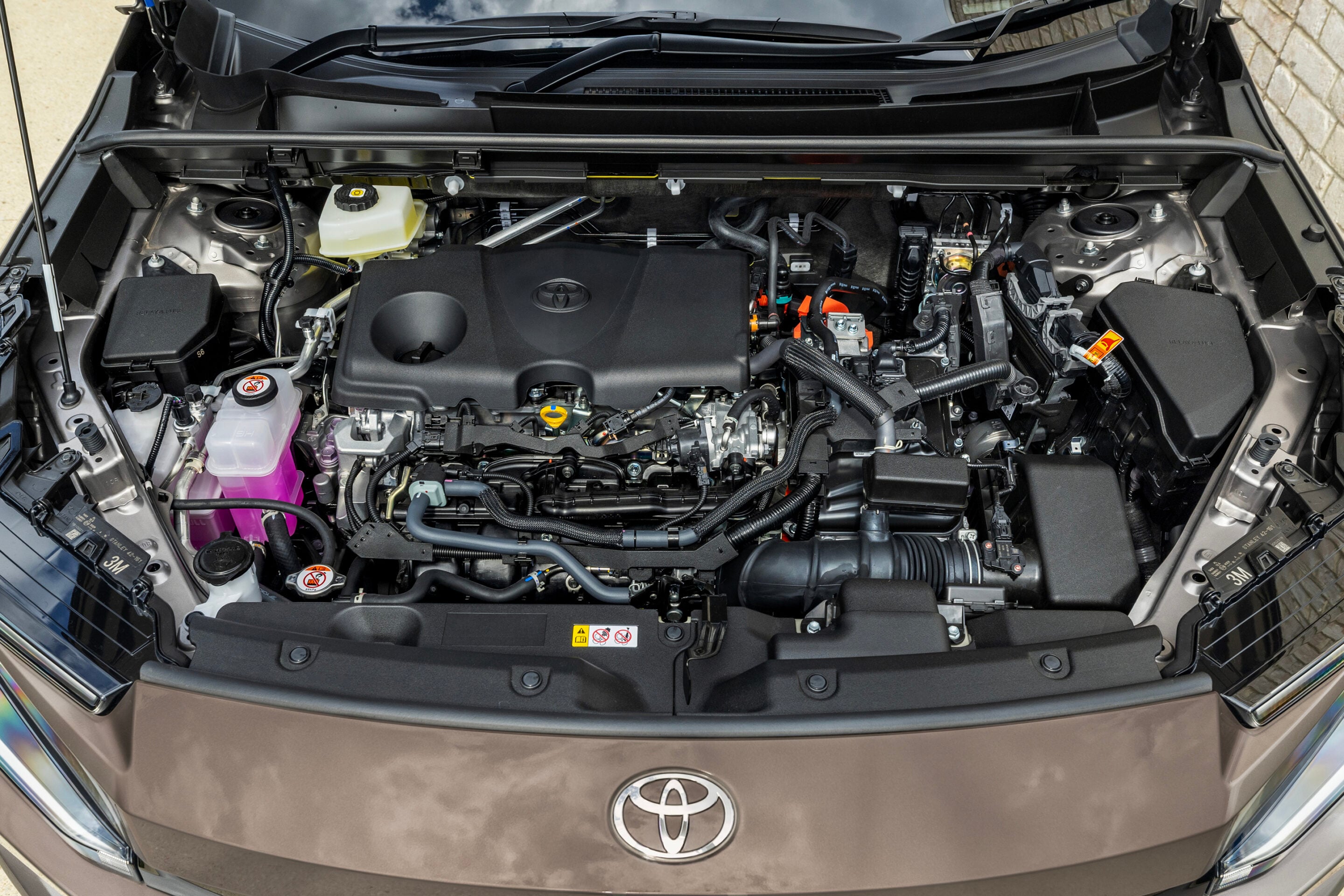
All models are powered by Toyota’s fifth-generation hybrid system that matches a 2.5-litre petrol engine with either two (front-wheel drive) or three (all-wheel drive) electric motors fed by a 1.1kWh lithium-ion battery.
1
Thanks to stricter emissions regulations both in Australia and Europe, power has taken a hit, now rated at 143kW across the entire range, down from the previous generation’s 160kW for FWD and 163kW for AWD models. Toyota says this reduction hasn’t impacted on performance, the new model on par with the outgoing model.
The RAV4 plug-in hybrid will join the broader range later this year and it promises a significant performance boost over regular hybrid models.
Power comes from a 2.5-litre naturally-aspirated four-cylinder petrol paired with a single motor up front in the front-wheel drive XSE PHEV, combining for total systems outputs of 200kW.
All-wheel drive variants (XSE and the flagship GR Sport), are fitted with an additional electric motor at the rear wheels for a combined 227kW and a brisk 0-100km/h claim of just 5.8 seconds.
All plug-in hybrid models are fitted with the same 22.7kWh battery pack giving up to 100km of driving range (WLTP tested), according to Toyota. DC charging is capped at 50kW while AC charging maxes out at 11kW.
Is there anything interesting about the new RAV4’s design?
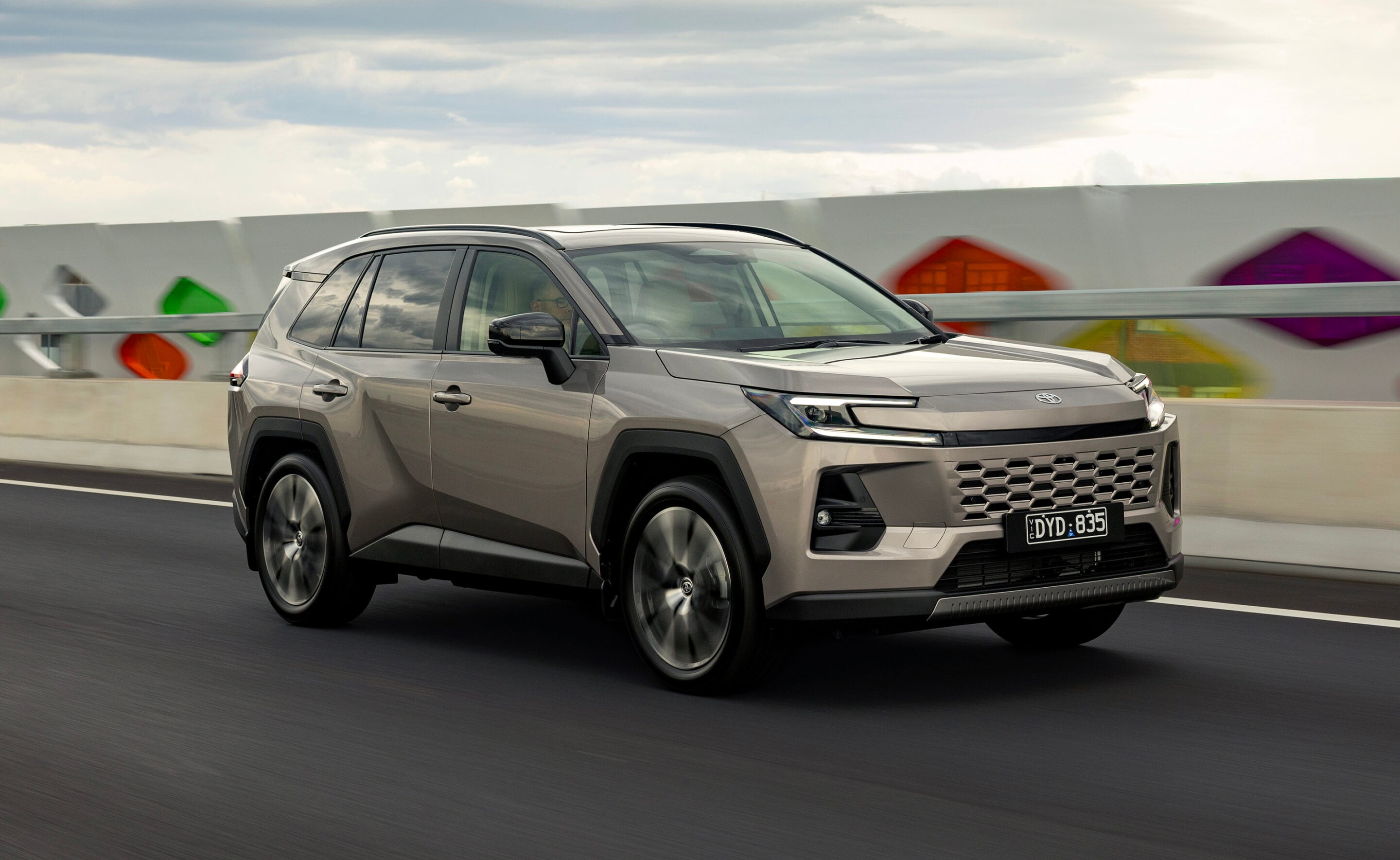
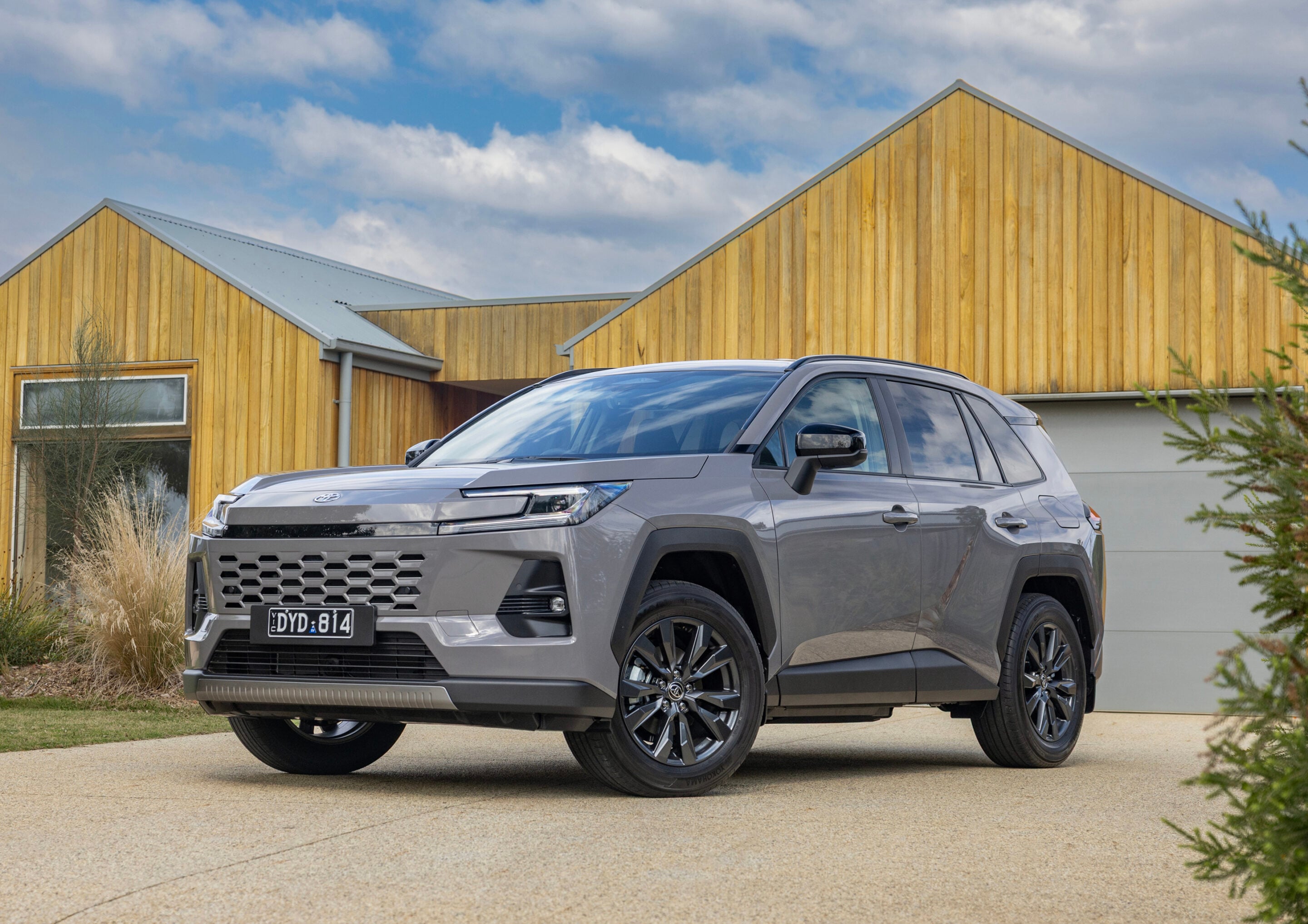
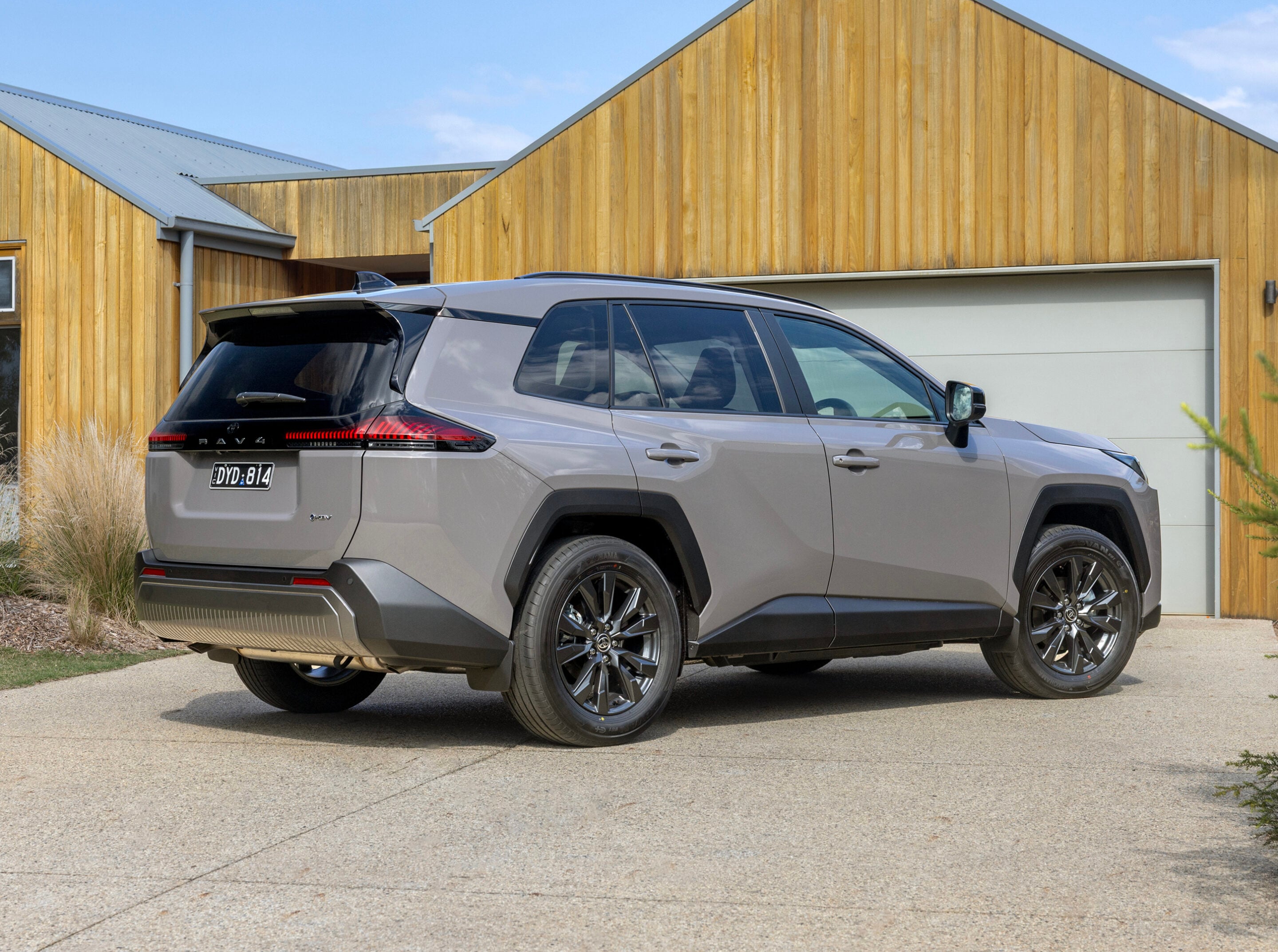
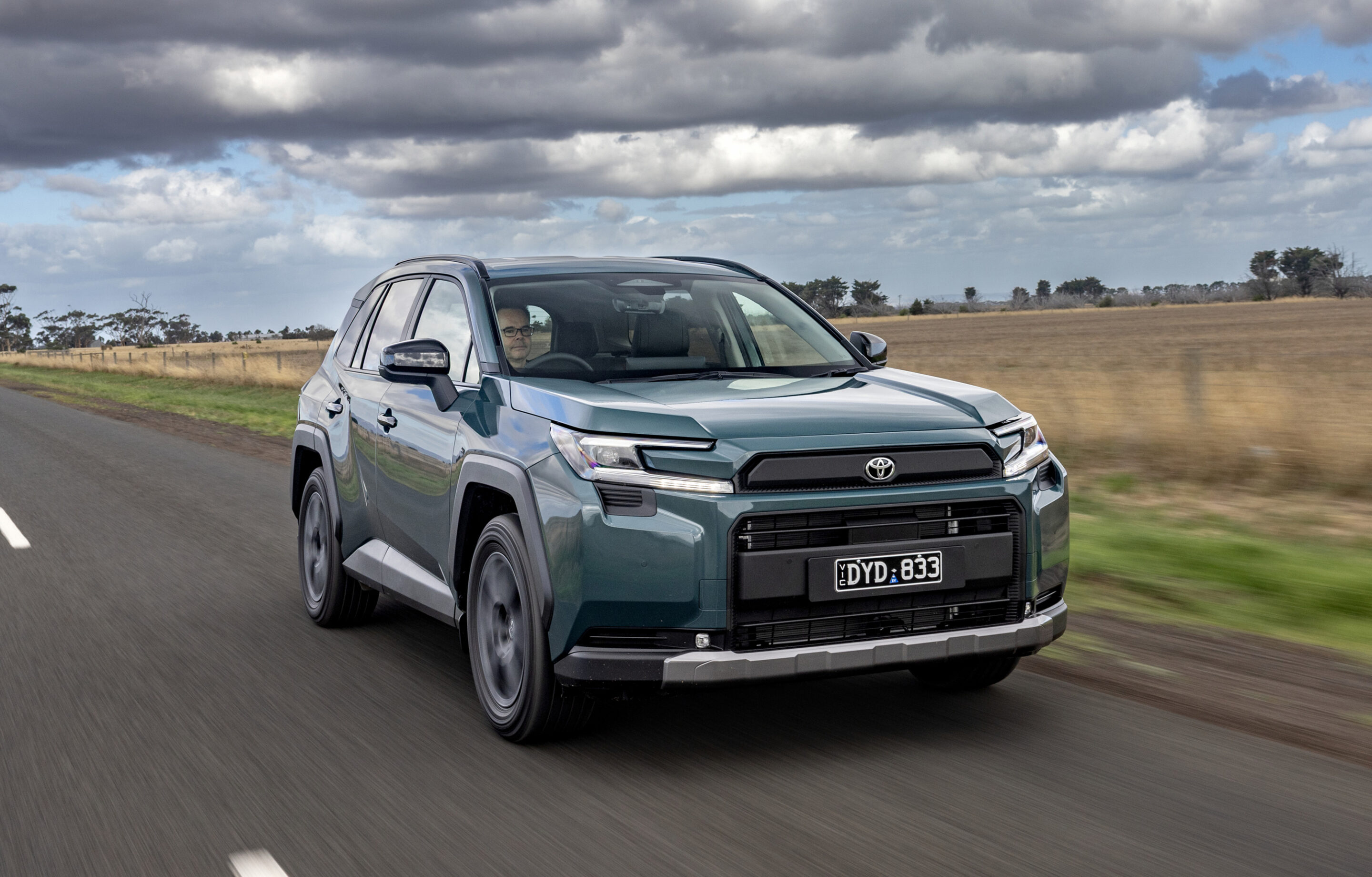
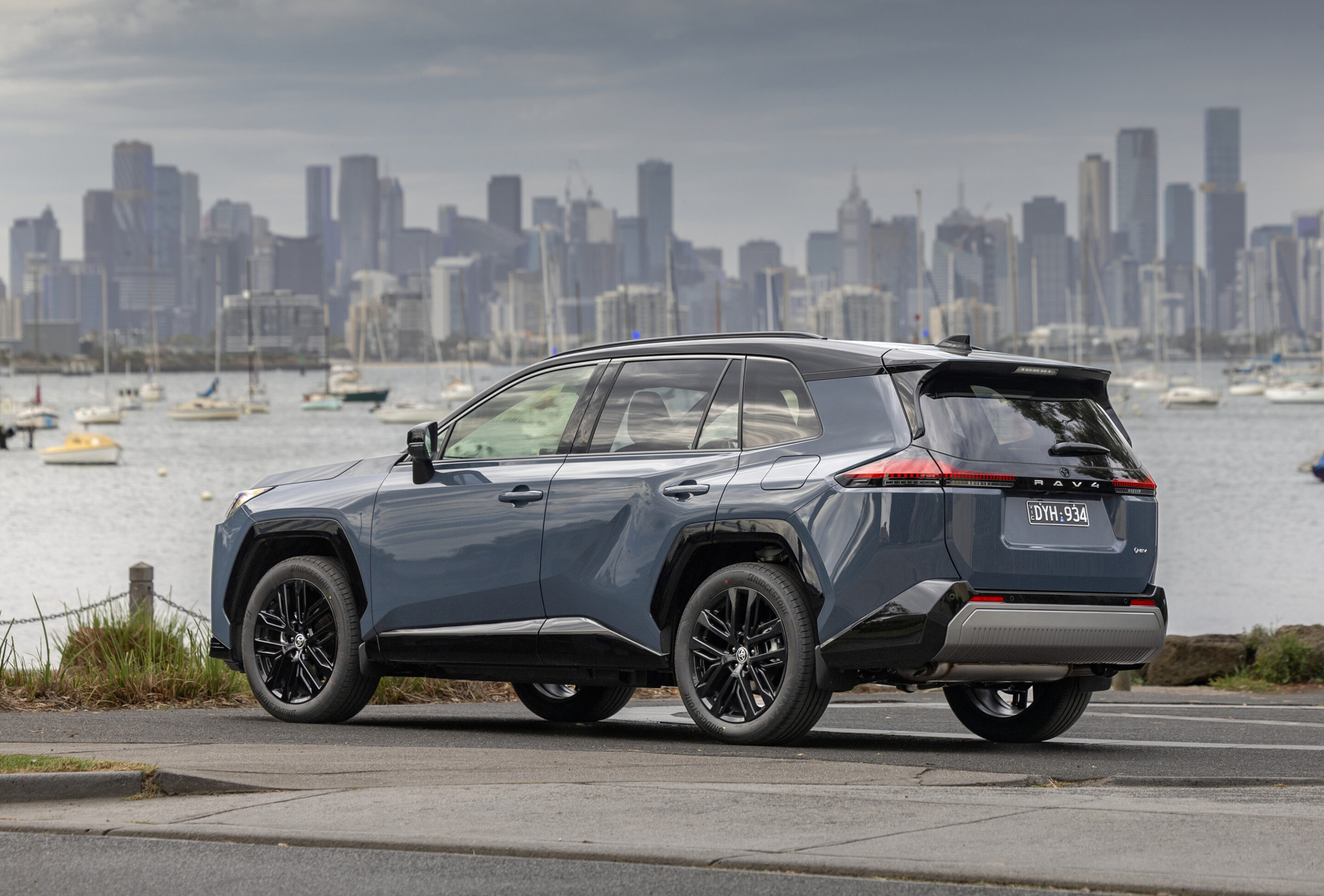
From the outside, the new RAV4 taps into today’s boxy styling zeitgeist, an altogether more aggressive looking medium SUV than its predecessor, but with one eye kept firmly on its mass appeal. It’s an evolutionary design, still instantly recognisable as a RAV4 but with sharper and cleaner lines, and a boxier profile.
1
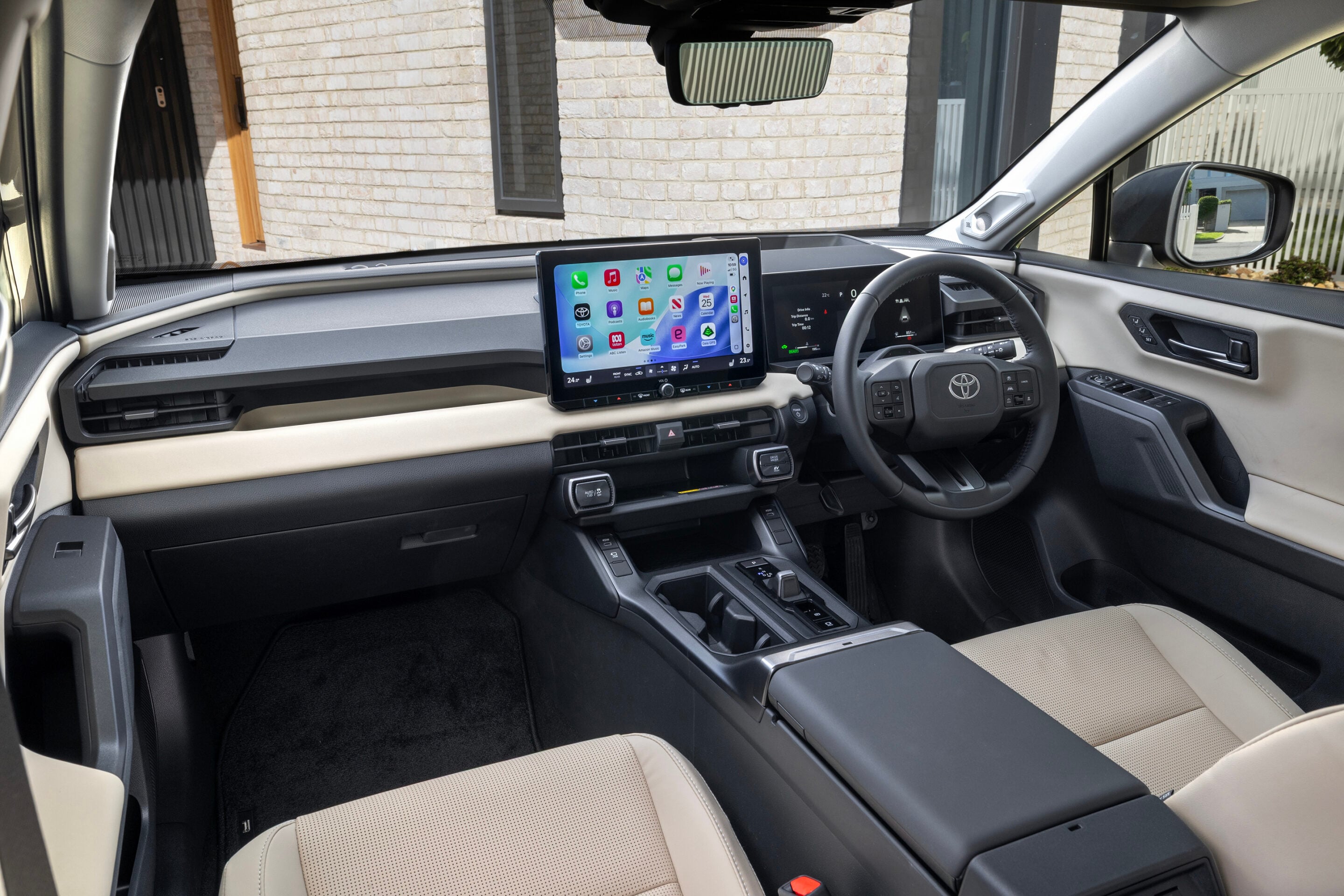
Inside, the RAV4’s cabin has been transformed. Toyota is by-and-large a conservative carmaker, and that has traditionally resulted in its designers playing it safe. But the cabin in this new model is a big step forward in terms of quality and design.
New screens underpinned by Toyota’s Arene digital platform are the standout features, but overall cabin design has been lifted, bringing the RAV4 into line with the wider mid-size SUV segment. Somewhat disappointingly, there’s more than a smattering of hard plastic surfaces, even in the top-of-the-line Cruiser spec, which detract from the overall ambience.
Cloth seat trim underpins the lower grades in the range (GX, GXL and Edge) with leather not making an appearance until RAV4 XSE variants. Interestingly, the entry-level GX grades no longer feature a leather-wrapped steering wheel, the tiller in the base model relegated to urethane status. Nit-picking yes, but it does cheapen the overall in-car experience in those entry-level models.
3
Second row comfort is, as it always has been in the RAV4, excellent with good space in all key metrics while out back, Toyota’s quotes 705 litres of luggage space to the roof with the second row in use, although stops short of quoting a number with the second row folded away.
What technology comes with the new Toyota RAV4?
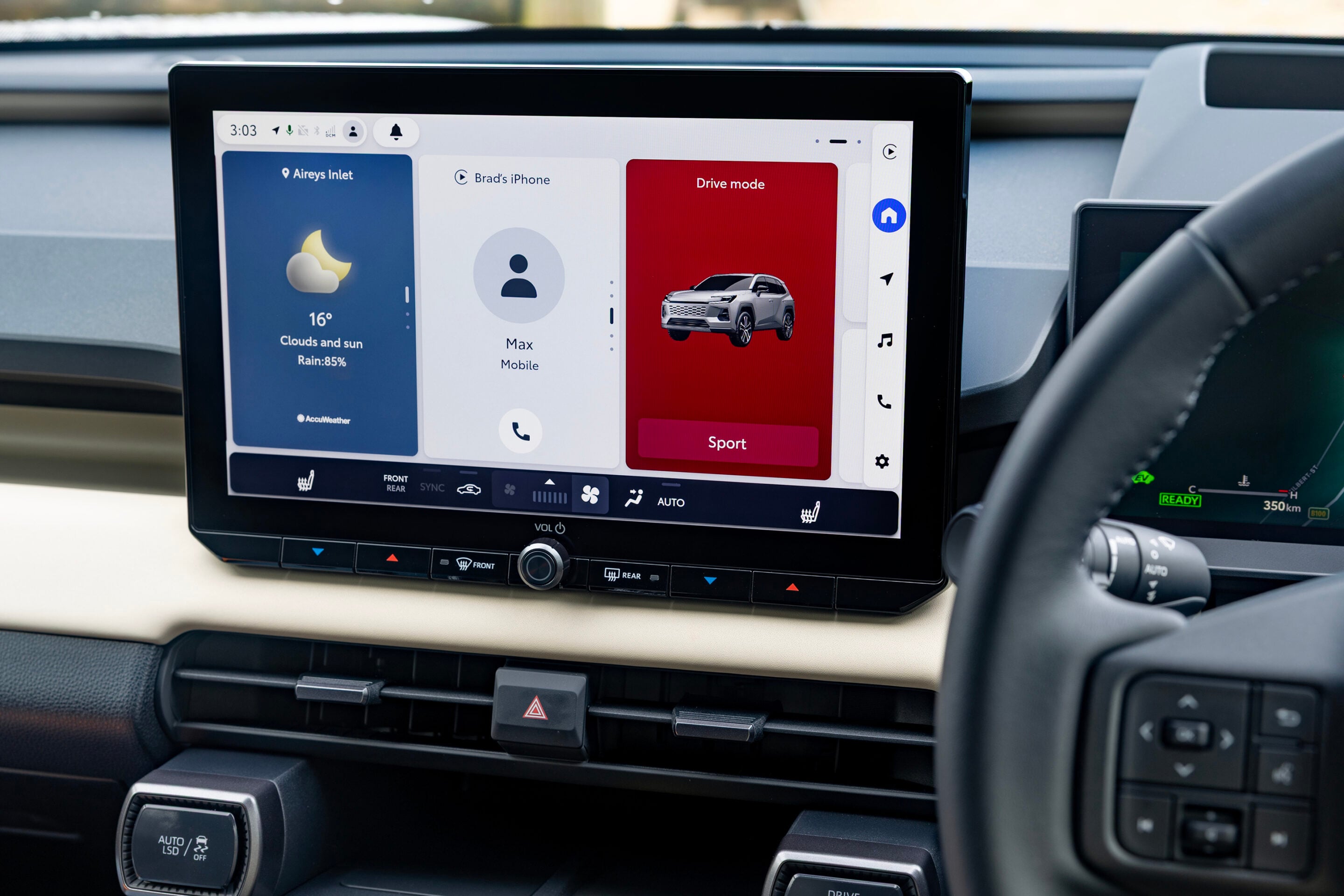
Toyota’s new infotainment setup is a big step-up over previous RAV4. But what the gods of tech giveth, they also taketh away.
Yes, the general interface is vastly improved, but the decision to in integrate some commonly-used functions, such as the climate control’s fan speed, into the screen is frustrating, especially when there are chunky – and nicely damped – dials for selecting drive modes, real estate better saved for more commonly used functions… such as adjusting climate controls.
The basics such as Apple CarPlay and Android Auto are covered off across the range while higher grades get convenience features such as wireless smartphone charging (and in the case of top-spec Cruiser, two charging pads) as well as the usual array of USB outlets. A new 12.3-inch digital instrument display is highly-customisable, including the ability to project full-screen mapping.
3
In a win for buyers, all models, including the most-affordable entry level variants, are equipped with native satellite navigation. Why a win? It’s become an increasingly common practice for some carmakers to drop native sat-nav from the cheapest models in their respective line-ups, leaving the route guidance heavy-lifting to smartphone mirroring. Credit to Toyota for not taking that cost-cutting path.
What’s the new Toyota RAV4 like to drive?
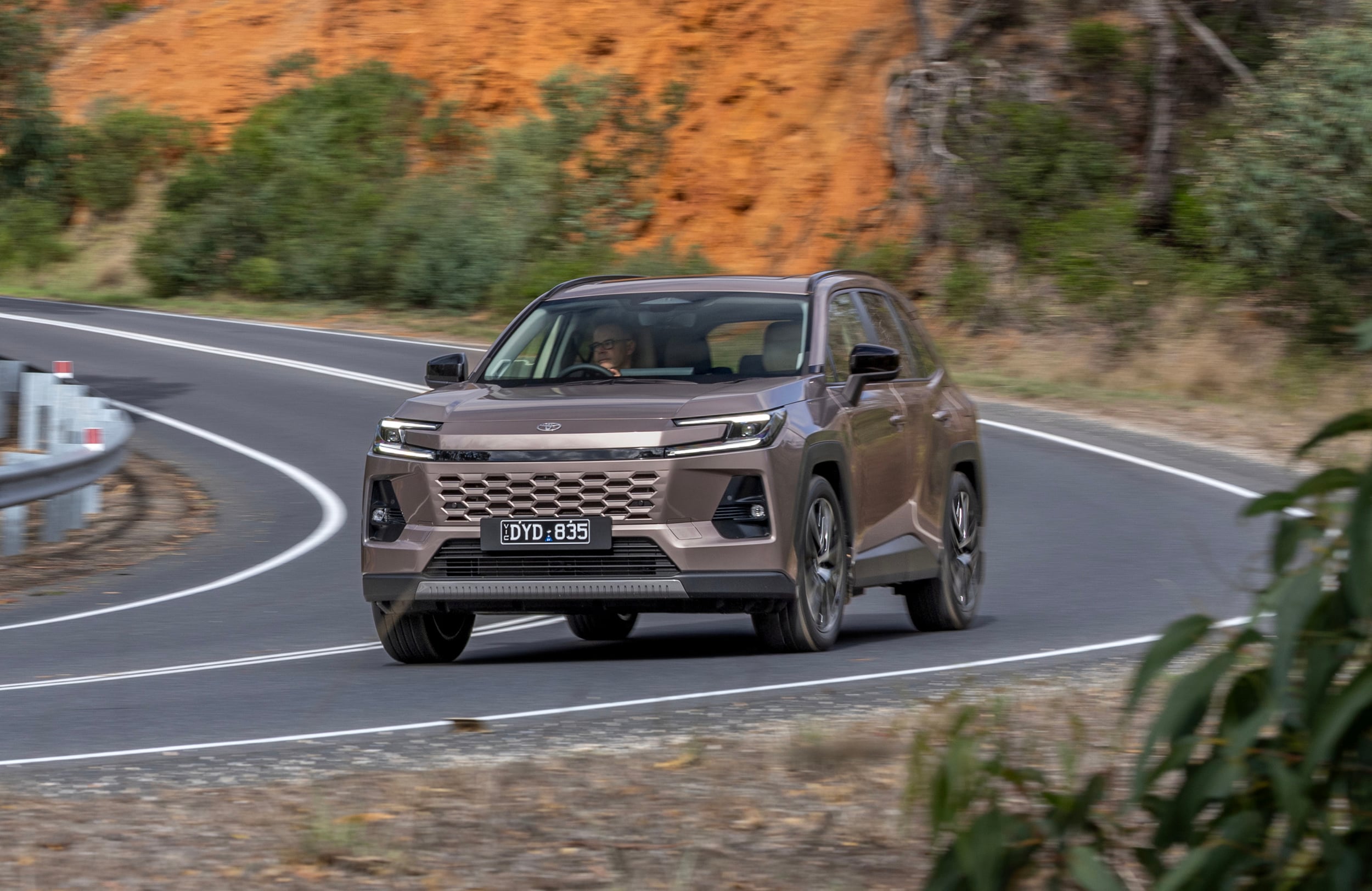
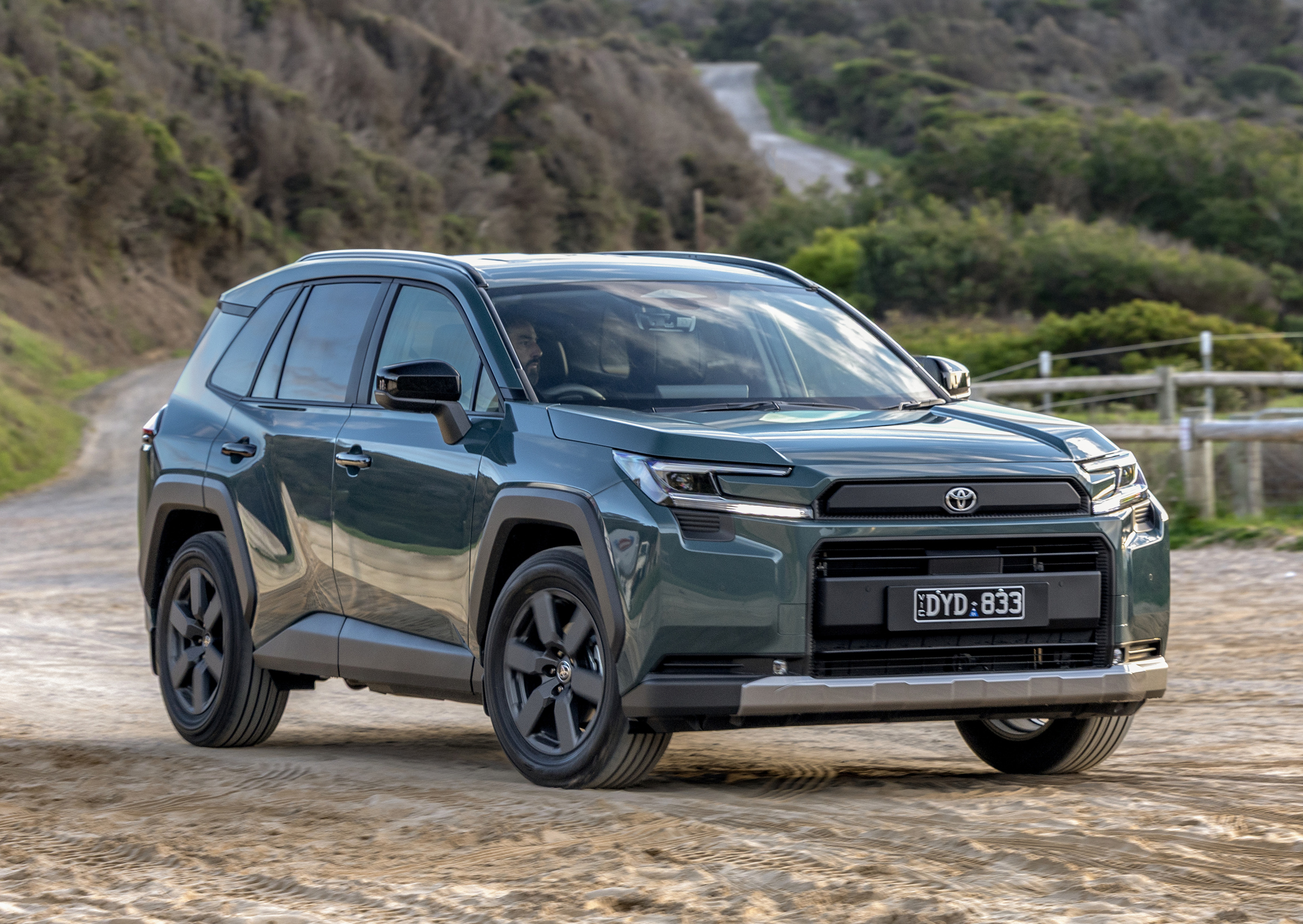
On the road, the RAV4 treads a well-worn path. Toyota’s decision to ‘detune’ its hybrid system so that all (hybrid) models now make 143kW across the board, has resulted in a driving experience that is perfectly in tune with what buyers in this segment would expect. Certainly, on the road, the new RAV4 will feel very familiar to anyone stepping out of the previous model.
Toyota’s hybrid system continues to set the standard, a smooth integration between petrol and electric motoring that pays dividends at the bowser.
1
There has been a change to how the RAV4 behaves, however. The reduction in power to meet today’s more stringent emissions regulations isn’t immediately felt, the RAV4 taking off from standstill in a brisk fashion on electric power alone before the petrol engine kicks in once speeds climb.
Where the power reduction is most keenly felt is in the mid-range (and beyond) when the push from 40 or 50km/h to a cruising speed of 100km/h feels less urgent than it once did. It’s not a seismic shift, but it is noticeable under harder acceleration. Here though, improved sound-deadening has paid off with a quieter cabin overall, the engine’s soundtrack remaining more muted than previously.
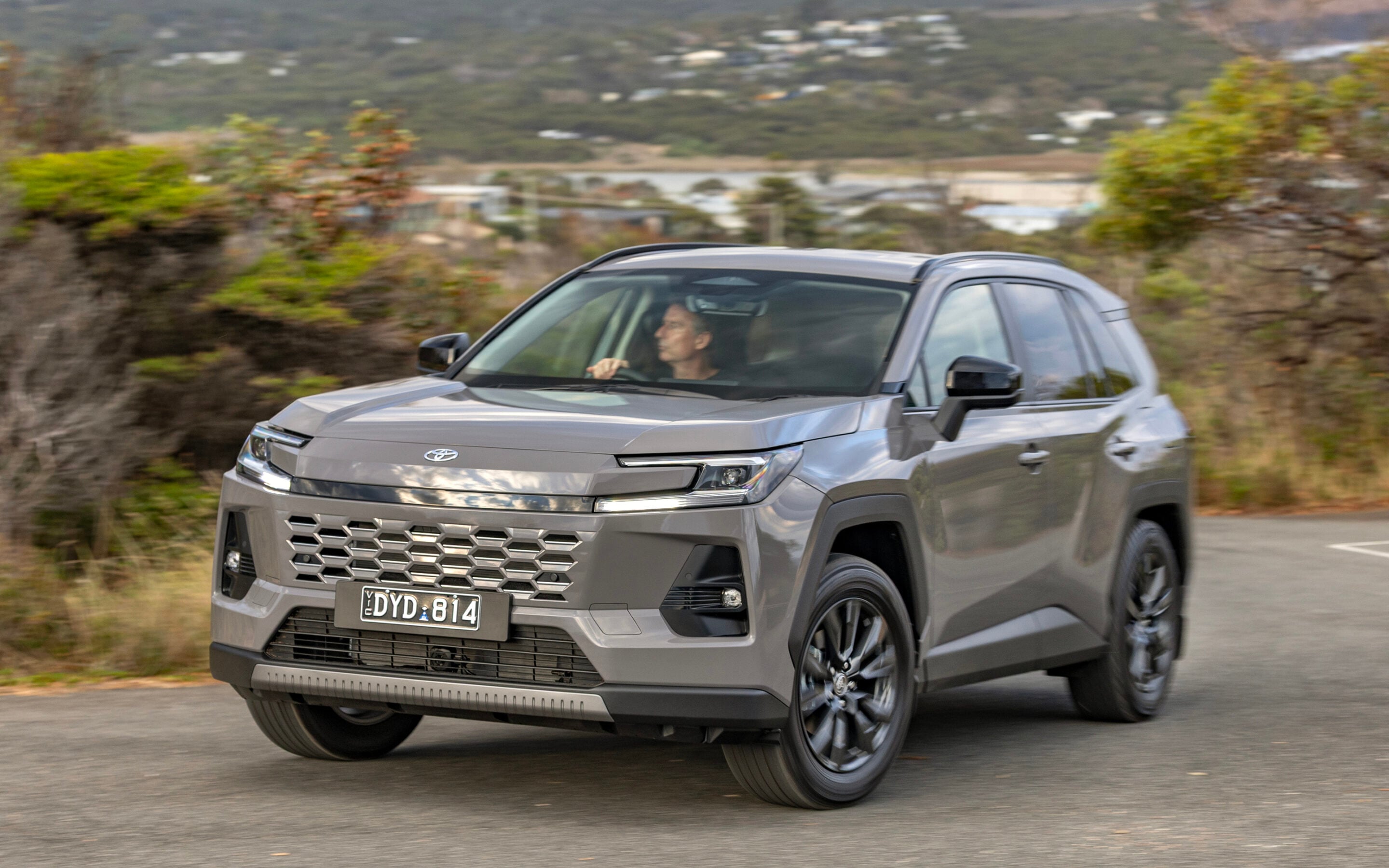
Road comfort feels a little more taut than in the outgoing model, certainly on the 20-inch alloys shod in Bridgestone Alenza rubber of the top-spec Cruiser model, which transmitted road junk through the wheel and into the cabin. The Bridgestones proved noisier too, than the Yokohama Advans wrapped around the 18s of the GXL.
It’s the all-wheel drive GXL that impressed the most on the road, its bigger rubber translating to a softer ride that soaked up minor bumps and lumps with barely a ripple.
1
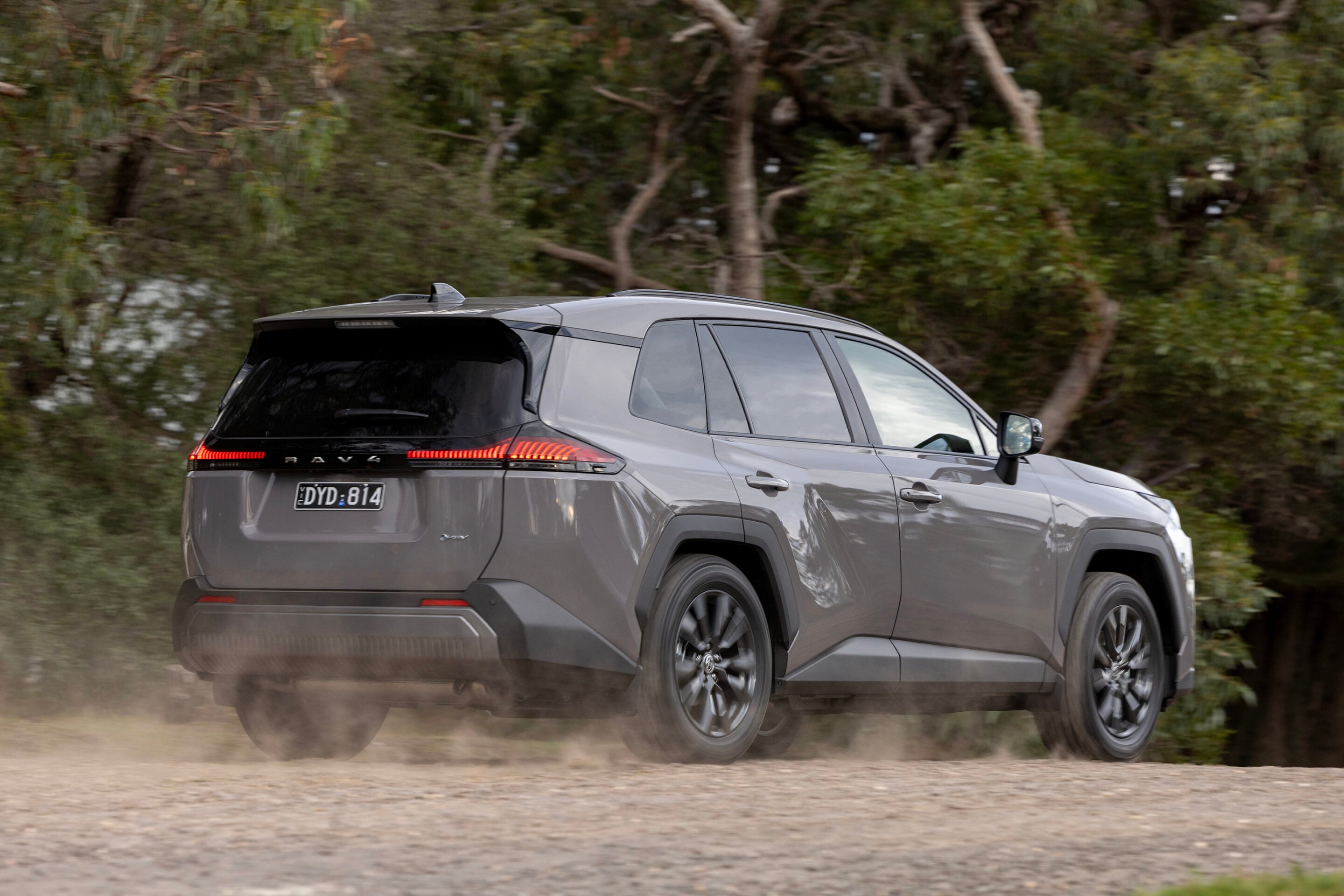
Chassis improvements across the RAV4 range have added rigidity, improving handling and body control commendably. The new RAV4 remains remarkably composed navigating undulating surfaces while mid-corner bumps, and there were some, did little to unsettle it.
Steering remains nice and direct, and feels a little heavier than previously, offering a touch more tactility in the connection to the road that is a welcome improvement. The steering of the old RAV4 always felt a touch too light and twirly and while that may have been part of its appeal for a cohort of buyers, the ever-so-slightly heavier inputs feel more reassuring.
Brake pedal feel remains firm but friendly, the step between regenerative braking (to keep the battery topped up with free-flowing electrons) and friction brakes as seamless as it ever was.
1
On the downside, some of the RAV4’s advanced driver assist systems proved a little to eager to intervene, especially driver attention monitoring which would trigger even after a casual glance at the speedo or a quick check in the rear-view mirror. Lane-keeping assist was, for the most part, acceptable, but unmarked roads, such as those we covered at the RAV4 launch in rural Tasmania, did on occasion confuse the system, resulting in needless tugging at the wheel when it wasn’t needed.
Crucially, the RAV4 is yet to be tested by ANCAP after production delays saw the launch of the new model rolling over into 2026. That’s resulted in some of the RAV4’s safety technologies needing to be updated to align with ANCAP’s new and stricter 2026 testing protocols. Those updates will be rolled out by the end of the year and Toyota fully expects to achieve the maximum five-star score.
How much fuel does the new Toyota RAV4 use?
The big unanswered question remains on the new RAV4’s fuel consumption. Toyota’s launch drive through rural Tasmania – as beautiful as the roads were – didn’t provide the perfect canvas for gauging real-world fuel use where day-to-day traffic mixed with urban driving and motorway cruising are the order of the day.
1
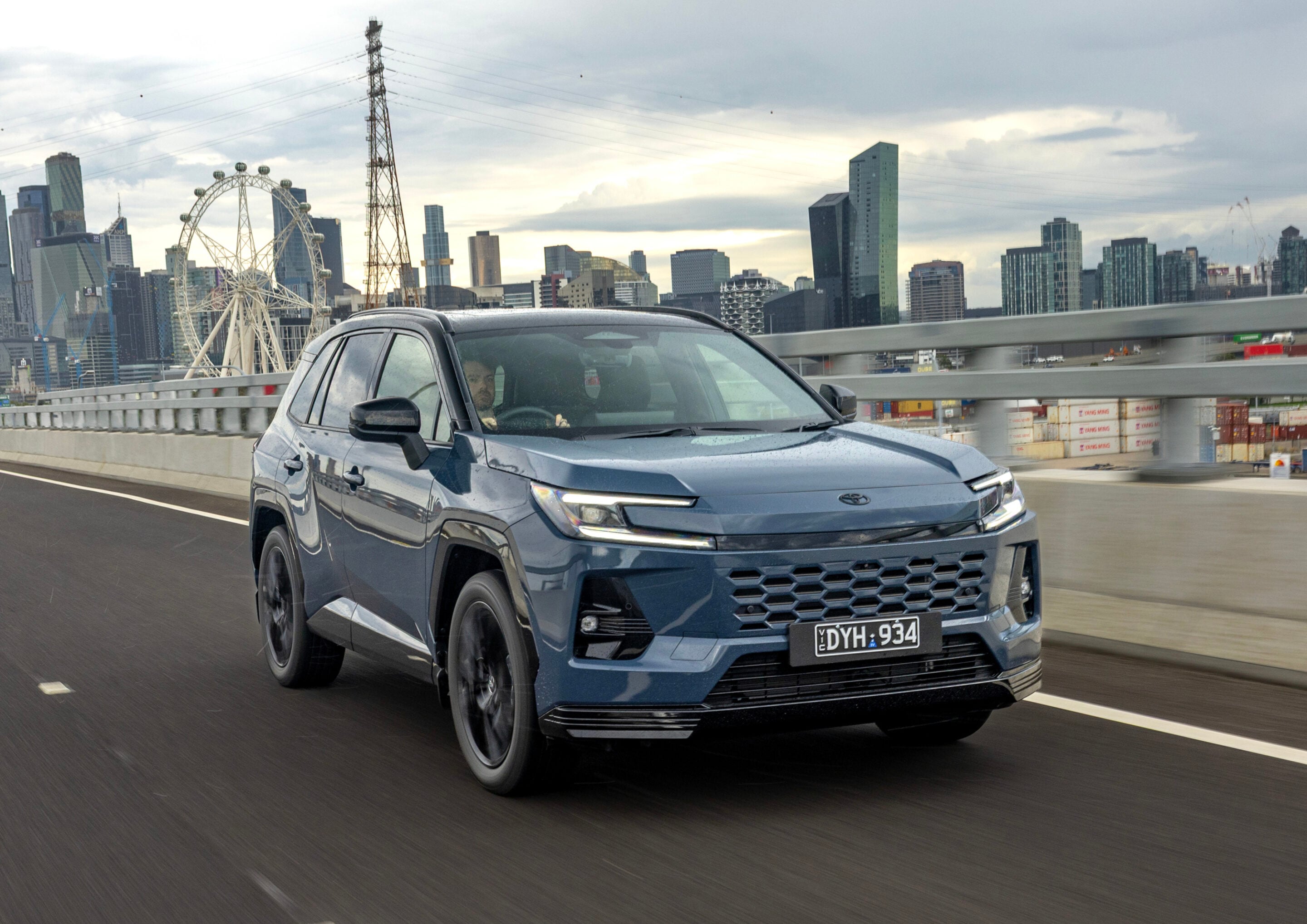
Toyota says efficiency has been improved and quotes consumption figures between 4.5-4.8L/100km depending on the model grade and whether front- or all-wheel drive, improvements of 0.2L-0.6L/100km depending on the model.
The closest I got to Toyota’s claim at launch was 5.8L/100km in a front-wheel drive Cruiser. The GXL all-wheel drive returned an indicated 7.1L/100km while switching to all-wheel drive netted a return of 7.9L/100km. Real world testing through the WhichCar by Wheels garage awaits for some more indicative consumption numbers.
What’s the verdict on the new Toyota RAV4?
So, what to make of the new Toyota RAV4? Certainly, the updates have not strayed too far from the winning formula of the world’s most popular new car, one that redefined the segment with the launch of the previous generation in 2019.
But its rivals have caught up, and in some cases overtaken, Toyota’s segment buster.
1
But the new RAV4’s updates across the board – cabin refinement, technology, design and driving – bring Toyota’s medium SUV back in line with its segment rivals.
And that right there is the rub, because while this sixth-generation RAV4 is unquestionably a very good family SUV, one that does a lot of things very well, it hasn’t moved the needle forward nearly as much as we’ve come to expect from Toyota in recent years.
The imminent arrival of plug-in hybrid models might yet change that perception. For now, we wait.
Specifications Toyota RAV4 GXL AWD
| Model | Toyota RAV4 GXL AWD |
|---|---|
| Price | $52,340 plus on-road costs |
| Engine | 2.5-litre four-cylinder petrol-hybrid |
| Peak power | 143kW (combined) |
| Peak torque | 221Nm @ 3200-3600rpm (petrol) |
| Transmission | e-CVT |
| Fuel consumption (claimed) | 4.6L/100km |
| CO2 emissions (claimed) | 102g/km |
| Fuel type | 95RON premium unleaded |
| Dimensions (l/w/h/wb) | 4600/1855/1680/2690mm |
| Boot space | 705 litres (to the roof) |
| Kerb weight | 1730kg |
| Braked towing capacity | 1500kg |
| Warranty | 5-year/unlimited km |
| Servicing costs | $325 per service for first 5 years/75,000km |
| On sale | Now |
7.8
/10
Score
Score breakdown
7.5
Safety, value and features
8.0
Comfort and space
7.5
Engine and gearbox
8.0
Ride and handling
8.0
Technology
Things we like
- Contemporary styling
- In-car tech upgrades
- Cabin a big step up, but...
Not so much
- … too many cheap, hard plastics
- A-C controls a mish-mash
- Overall performance a backward step
Follow WhichCar/Wheels on Google
Click the button below to make WhichCar by Wheels a preferred source for your news.

We recommend
-
 Reviews
2026 Toyota RAV4: The Wheels’ verdict on the sales giant’s new model
Toyota’s sixth-generation RAV4 brings hybrid power across the range, a first-ever PHEV option and a major technology overhaul as the medium SUV icon fights back to the segment’s sharp end.
-
 Reviews
2026 Toyota RAV4 review: Early international verdict finds it sharper, smarter and sportier – but still playing it safe
In a new first drive our friends at Auto Express find the all new 2026 Toyota RAV4 (GR Sport variant) sharper and more refined – but too cautious to truly shake up the mid-size SUV class.
-
 News
News2026 Toyota RAV4: Why its new Arene software platform is considered a game-changer
The reveal of the 2026 Toyota RAV4 included news it would employ a significant advance in vehicle software by the automaker.
