Reviews


Gallery 1
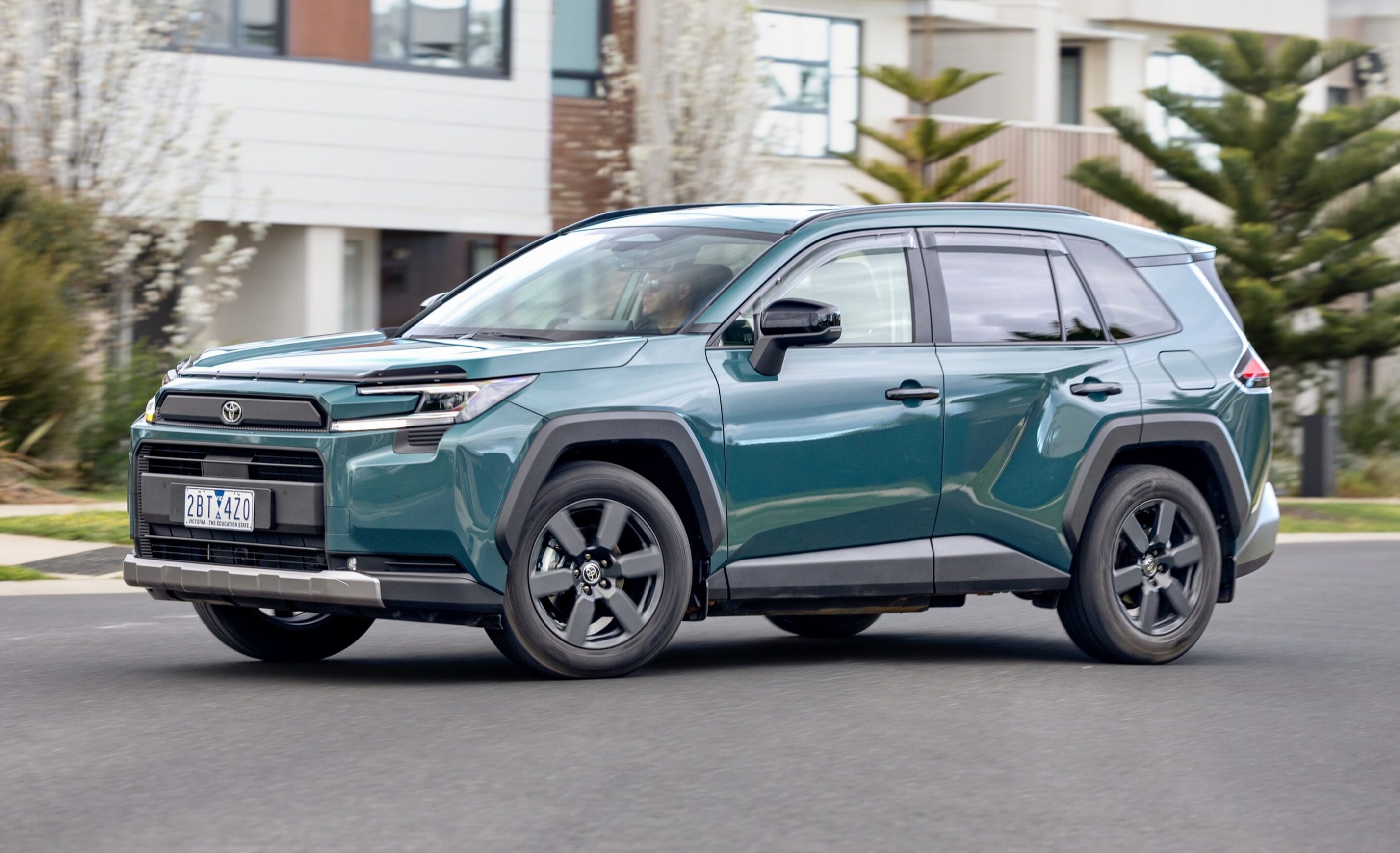
Medium SUVs remain a critical battleground for just about every manufacturer in Australia and one of the original entrants to the segment was Toyota with the RAV4. Along with Honda’s CR-V, you could credit Toyota’s volume seller for building the segment, such is the enduring popularity of the now legendary RAV4.
There’s plenty for potential buyers to research with this new model, too, so before we get into this brief first drive – undertaken on a closed test facility rather than open roads – let’s take a look at the model structure.
The table included here below details the range, including the addition for the first time of a plug-in hybrid (PHEV) variant.
4
Five model grades make up the hybrid model range, with both 2WD and AWD available, while the PHEV range gets two grades, also with 2WD or AWD available. In total, there are 11 different permutations across the range. The prices listed are before on-road costs.
The key option beyond this basic pricing, for us at Wheels anyway, is the $300 full-size spare for GX 2WD and AWD. Spend that money and add it to your purchase. Our advice is pretty simple in regard to the usefulness of (indeed, non-negotiable presence of) a full-size spare tyre where available. Those of you with a passion for road trips and longer driving know exactly how vital one can be. Other models get a space-saver spare.
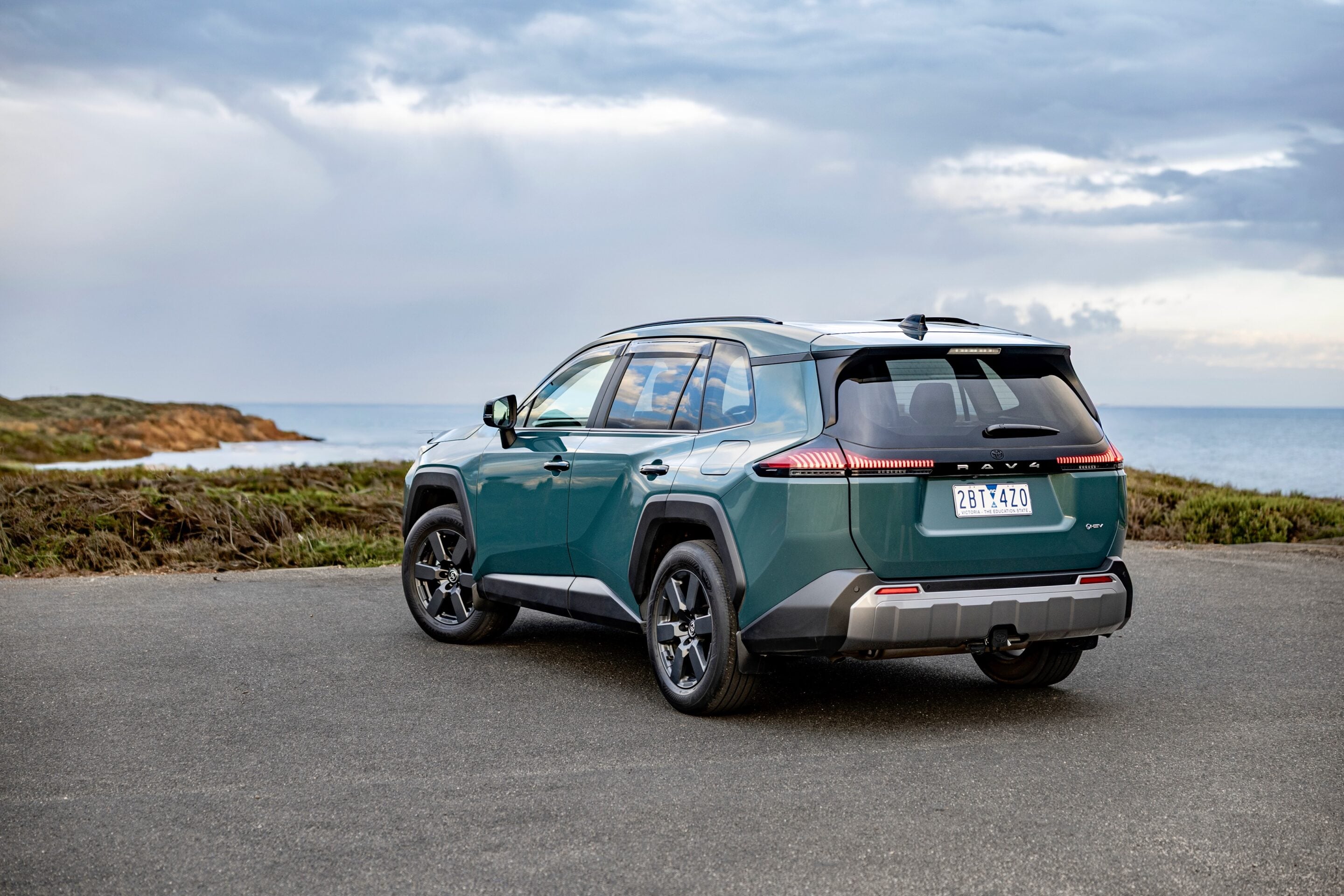
The new model we’re sampling here, believe it or not, is the sixth generation of RAV4 to go on sale Down Under. The main improvements include a heavy revision of technology, safety, general cabin amenity and comfort. Key to this new model, though, is the availability of a hybrid powertrain across the range. Toyota’s customers, more than most, have gravitated heavily toward hybrid in every segment where it is available and as such, it’s a central focus of this new model.
2
That means you can access hybrid power from the base GX 2WD all the way through the range, and you won’t feel like you’re missing out if your budget doesn’t stretch to the more expensive models.
Standard equipment on the base model includes 17-inch grey metallic alloy wheels, LED headlights, roof rails, rear spoiler, acoustic windscreen glass, a 10.5-inch infotainment touchscreen, new user experience and functionality, enhanced suite of Toyota Connected Services, wireless Apple CarPlay and Android Auto, dual-zone climate control, 12.3-inch digital driver’s display, six-way manual adjustable front seats, rear-view camera, six-speaker audio system and five USB-C ports.
Pricing
Hybrid-Electric
| GX 2WD | $45,990 |
|---|---|
| GX AWD | $49,340 |
| GXL 2WD | $48,990 |
| GXL AWD | $52,340 |
| Edge AWD | $55,340 |
| XSE AWD | $58,340 |
| Cruiser 2WD | $56,990 |
| Cruiser AWD | $60,340 |
PHEV
| XSE 2WD | $58,840 |
|---|---|
| XSE AWD | $63,340 |
| GR Sport AWD | $66,340 |
Opt for the regular hybrid system and you get the fifth-generation version of Toyota’s 2.5-litre series parallel hybrid system, with both 2WD and 4WD making peak power of 143kW. Toyota’s sales pitch for the hybrid will once again be seamless driving dynamics and real-world efficiency, as it has been for more than a decade now.
Interestingly, the PHEV model isn’t just about electric efficiency, it’s also the most powerful RAV4 ever offered. The 2.5-litre petrol engine gets twin electric motors (for AWD models) and a 22.7kWh lithium-ion battery pack, for a total power output of 227kW. Even the 2WD PHEV, with its single electric motor at the rear axle, makes a system total of 200kW. The battery pack supports 50kW DC charging, and 11kW three-phase AC charging.
Toyota Australia hasn’t yet quoted the electric-only range for the PHEV, but European specs claim up to 100km on the WLTP cycle. Even if that translates to 80km in the real world, average Aussie drivers will be able to commute to and from work in pure EV form.
1
The good news, if you’re holding out for the new RAV4 to launch, is twofold. It looks like a new RAV4 and it feels like a new RAV4. The latter fact is perhaps even more important than the former. In the face of newer, more modern and more technologically advanced competition, RAV4 has felt off the pace for some time now. Especially inside the cabin, where the tech progress of key competitors has left Toyota lagging.
That’s not to detract from RAV4’s strong points. Robust build quality, cabin ergonomics and comfort, and genuine efficiency in the real world, mean it’s remained a strong seller despite newer, shinier objects being available. However, the new model is a significant leap forward.
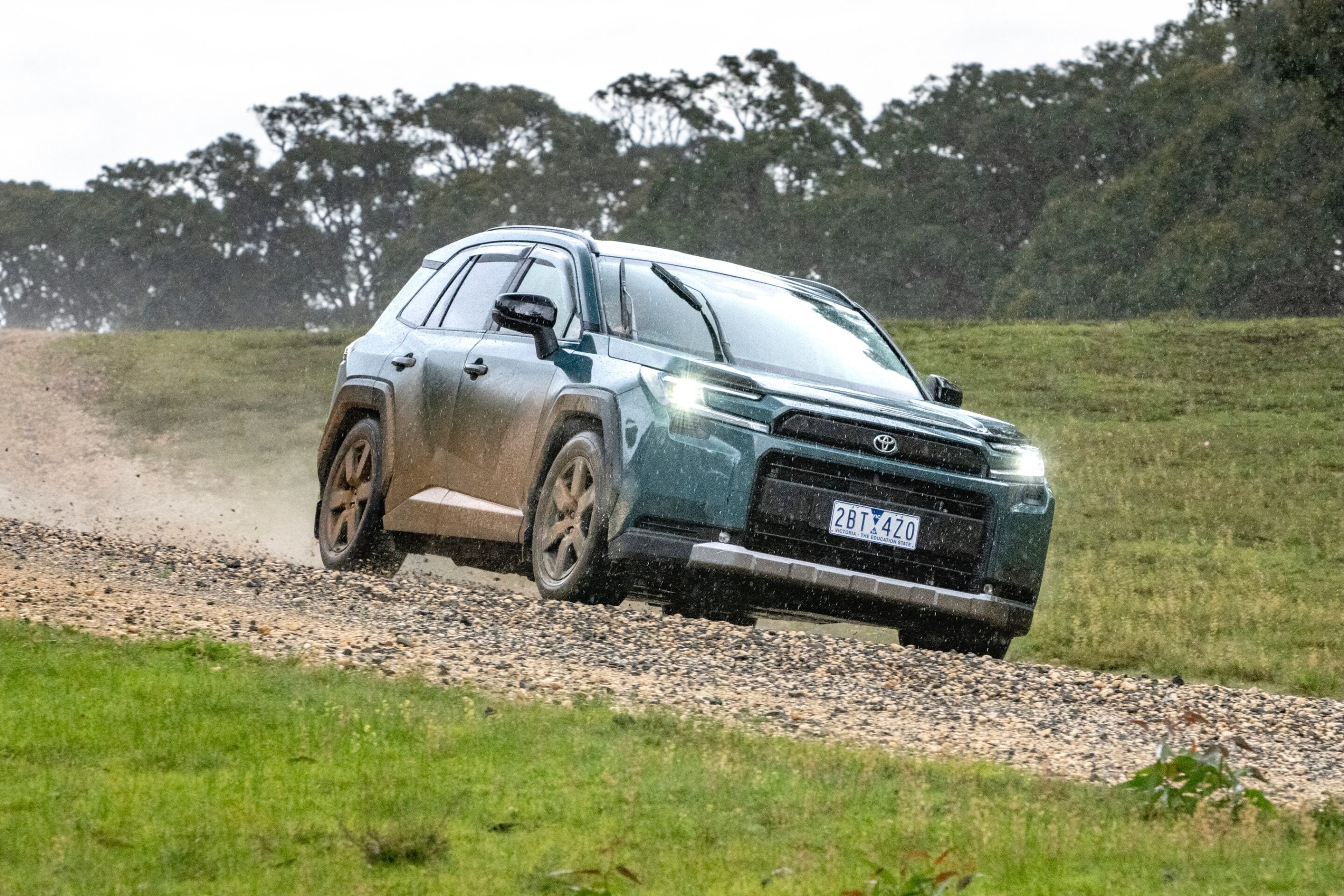
During our brief test drive, we sampled the Edge on a typical dirt/gravel course, and the Cruiser on a twisty, highway-style course. Wheels is asked often whether you ‘need’ an AWD, and the answer these days (unless you live in rural areas) is not really. So, unless you really need or want AWD, a 2WD RAV4 will do everything you need in safety. The fact you can climb as high as the Cruiser variant and still access 2WD is a smart move from Toyota.
We didn’t get to spend enough time in the RAV4 to truly dig into its driving chops, but it certainly feels like a familiar old jacket in the way that any new iteration of a Toyota does. The ride quality, cabin insulation, steering, braking and general feedback all feel very much like the model it replaces, but with the caveat that you’re experiencing it from a vastly more modern cabin.
3
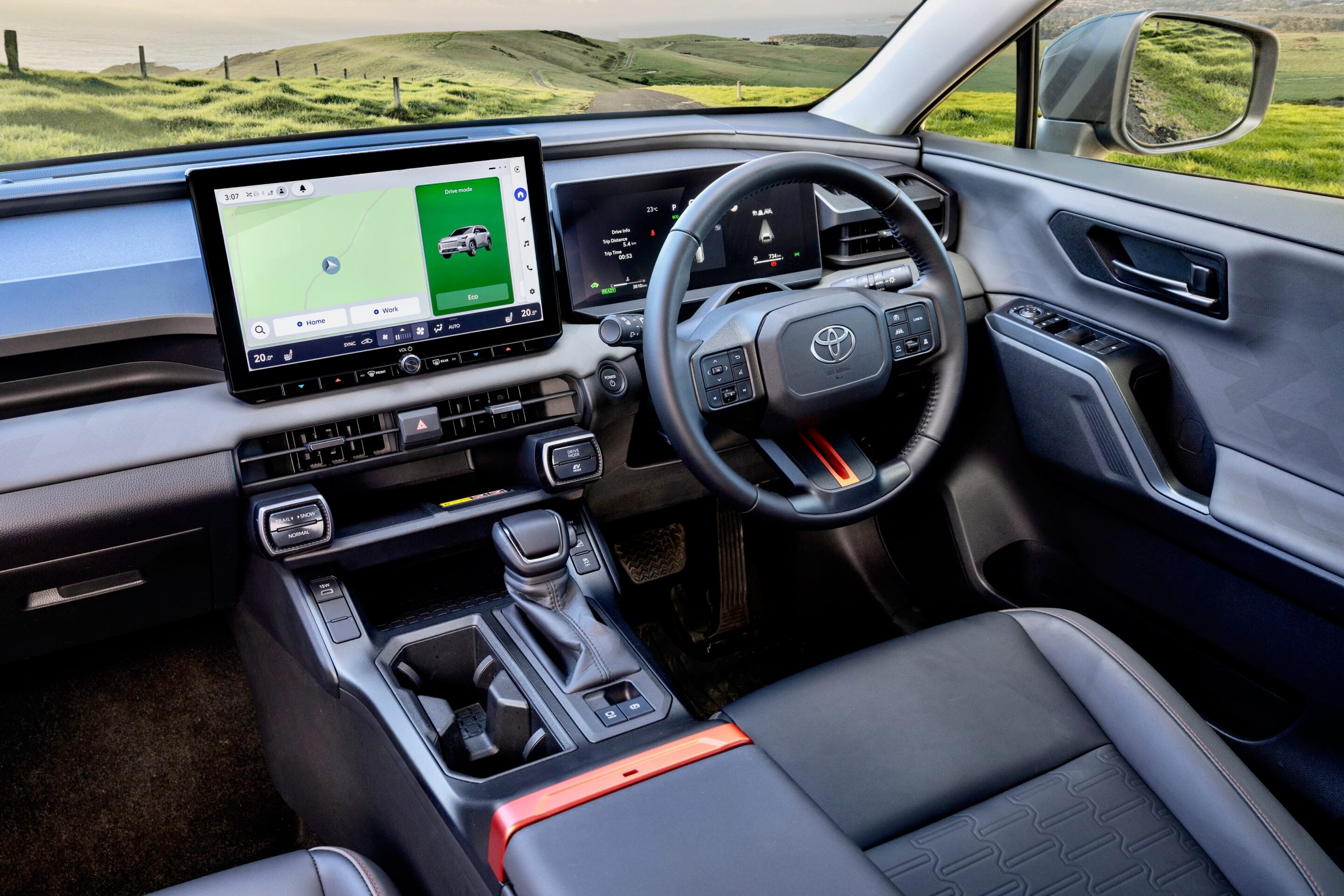
The interior changes make for a vastly improved experience, and it’s amazing the effect more modern infotainment, better screens, and improved functionality can have. In the same way that moving to a new phone or computer feels like a whole new ballgame, so too does driving a vehicle that’s had its tech markedly improved. From the steering wheel to the screens and choice of materials, the new RAV4 is now a different proposition inside.
RAV4’s centre screen is clear and concise, and the driver display is likewise excellent. Both are sized just-right, and the centre screen is placed in the right spot so as not to be too high up in your eye line. Toyota has listened to feedback from existing owners, and features like buttons and switches for crucial controls remain, but the centre console is also quite clean with space for cupholders and wireless phone charging.
The execution is neat without being too austere. It’s an easy cabin to get comfortable in.
Visibility and seat adjustment are also excellent, and general comfort – although we haven’t yet spent hours behind the wheel – looks to be good also. Medium SUVs, given their family popularity, need to be the Swiss Army knife of vehicles now, and the new RAV4 is primed to take the fight up to the best in segment.
We’re looking forward to the launch proper and the opportunity to spend more time behind the wheel, but at first glance the new RAV4 is more competent, better equipped, modernised and revised in exactly the way it needed to be to move back to the head of the segment. Comparison testing awaits to see if it has done exactly that.
Specs
| Model | 2026 Toyota RAV4 |
|---|---|
| Drive type | Front or all-wheel drive |
| Electric | Regular hybrid or plug-in hybrid |
| Battery pack | 22kWh for both hybrid and PHEV |
| Engine | 2.5-litre, four-cylinder petrol engine |
| Gearbox | CVT |
| Power | 143kW (hybrid) 200kW (single motor PHEV) 227kW (dual motor PHEV) |
| Claimed electric range | Up to 100km |
This article first appeared in the 2025 Yearbook issue of Wheels. Subscribe here and gain access to 12 issues for $109 plus online access to every Wheels issue since 1953.
Follow WhichCar/Wheels on Google
Click the button below to make WhichCar by Wheels a preferred source for your news.

We recommend
-
 Features
The best hybrid alternatives to the Toyota RAV4
The Toyota RAV4 hybrid is one of the most popular cars in Australia, but it's not perfect. What do you buy if you're keen on an alternative?
-
 Comparisons
Toyota Corolla vs Hyundai i30 spec battle: Which hybrid small sedan is best?
They're some of the cheapest cars to run but which hybrid small sedan is the best buy? Let's find out.