Reviews

Gallery 1
7.4
/10
Score
Score breakdown
7.0
Safety, value and features
7.0
Comfort and space
8.0
Engine and gearbox
7.0
Ride and handling
8.0
Technology
Things we like
- Solid feel
- Bold new face
- Much improved interior
Not so much
- Menu-driven functions tricky
- Basic tub lacks features
- Rear seat remains tight
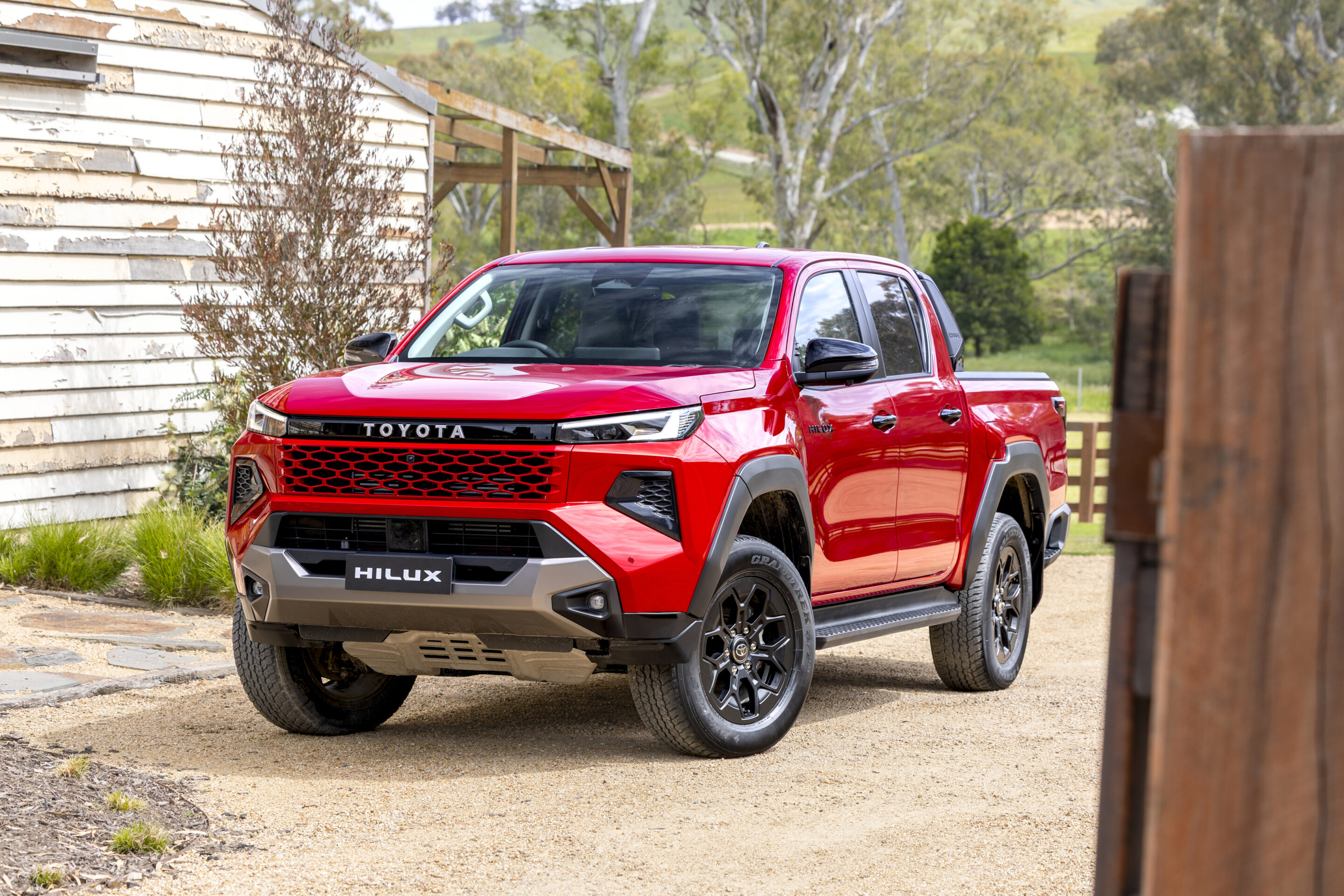
A new dual-cab is something pretty much guaranteed to get Aussie car buyers excited. And when it’s a new Toyota HiLux dual-cab, well, the stakes are pretty high.
Fact is, it’s more or less impossible to over-estimate the importance of the HiLux to Toyota Australia. Or Australians generally. The celebrated dual-cab four-wheel-drive (yes, and its single-cab, extra-cab and two-wheel-drive siblings) are a major part of Toyota’s ability to be the country’s number one car brand for the 23rd consecutive year. In the process, the HiLux itself has been the nation’s favourite four-wheeled purchase for seven of the last nine years. More than 1.4 million of the blighters have been sold here since the first-gen version of 1968.
Globally, Australia is the fifth largest consumer of HiLuxes and, of the 235,000 cars and light commercials Toyota plans on selling this year (according to the numbers thus far), about 53,000 of those will be HiLuxes. So, yeah, pretty important. Throw in the fact that the exterior styling update was largely the work of Toyota’s Melbourne HQ – a big deal for a global car selling in around 180 countries – and you can see why there might be a certain amount of pride on show.
1
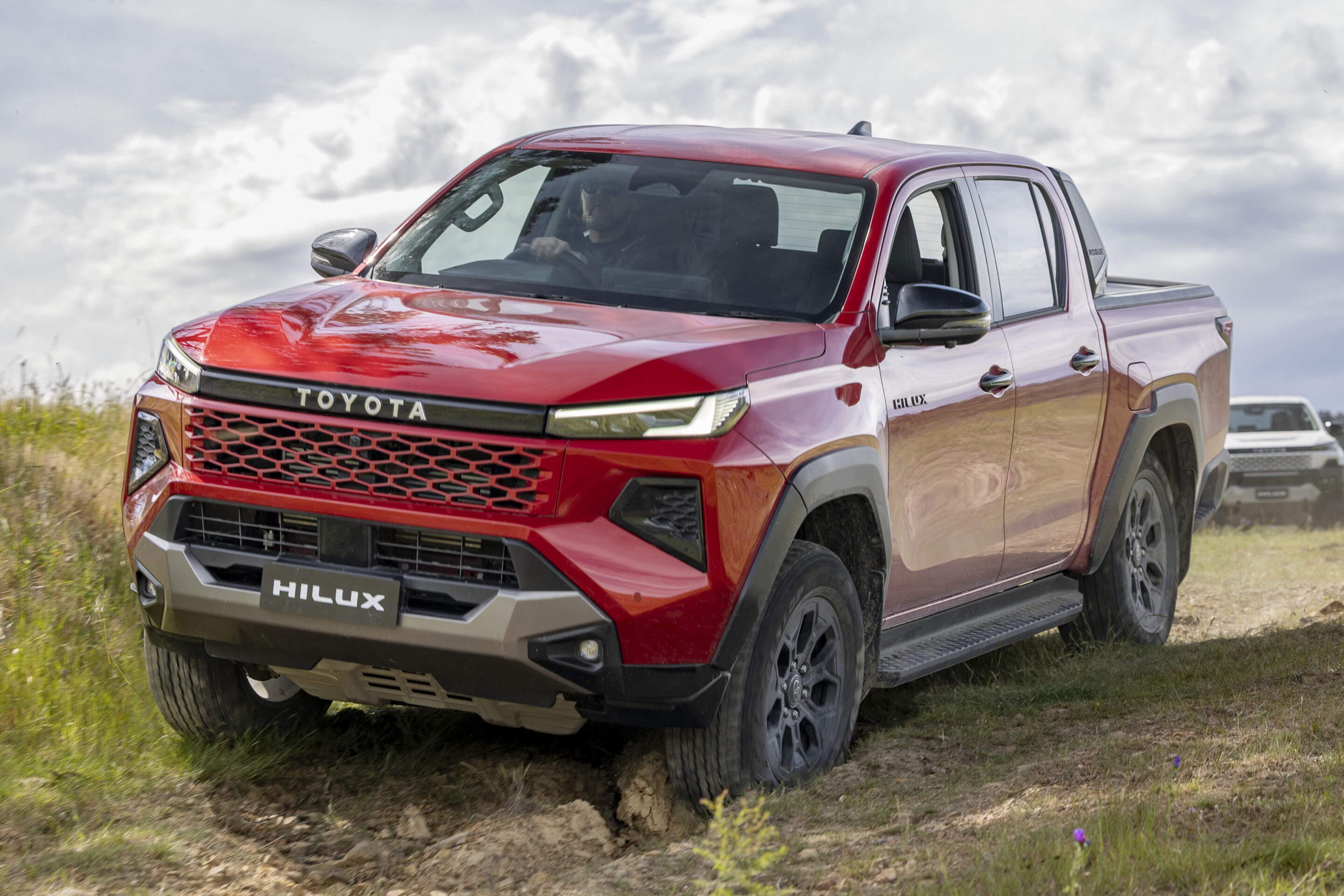
While a new model of anything often throws up more questions than answers, the existential meat-and-veg of the new HiLux isn’t really perplexing at all. And that’s because it’s really not that different. More puzzling, as it happens, is Toyota’s decision to call it an all-new (the ninth) HiLux generation. And that’s because there’s an awful lot of the eighth-gen HiLux involved here.
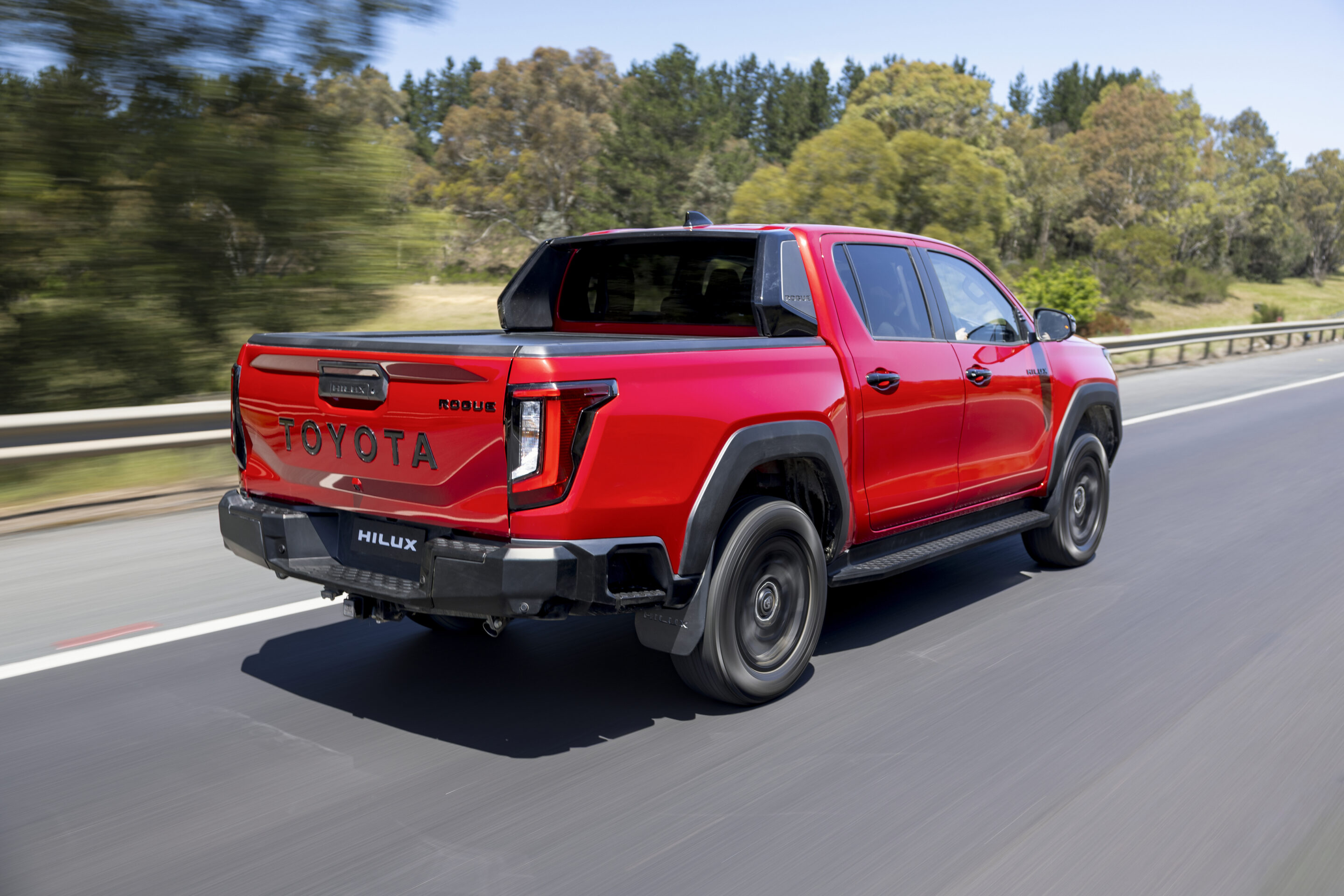
The carry-over bits are numerous, and it’s quicker to list the bits that are actually, genuinely new. They include the front sheet metal, the tub and the interior. Which means, of course, that the central body structure, all the mechanical hard-points, glass, most of the suspension and all of the driveline are carried over from the old model.
For all that, Toyota Australia’s senior product planning specialist, Rod Lyons, maintains that the new ’Lux represents “far more than a new skin”. He points to modifications such as thicker steel in the chassis, reinforced side rails, beefier front suspension towers, stronger cabin-mount brackets and extra spot welds (36 of ’em). The engine mounts that were rubber are now hydraulic.
1
Front suspension is also tweaked with a new stub axle, a thicker roll-bar, retuned dampers, re-rated coil springs and new dampers and spring rates for the live-axle rear end. And there are now two suspension tunes; one for the blue-collar models (Workmate and SR) and a slightly softer set-up for the more expensive variants. The difference is all down to payload and buyer expectations.
But the suspension changes have also wrought an increase in Gross Combination Mass, now up to 6300kg for 4X4 models, representing a 450kg increase.
Put simply this means you can hitch up a big caravan and put people and their luggage in the dual-cab, towing it without going to jail.
2
By far the biggest mechanical change has been the switch from hydraulic steering assistance to electric power steering. The actuator mounts directly on the rack and is claimed to reduce kickback and effort, and improve fuel efficiency.
All dual-cab automatics with the exception of the Workmate now feature the 48-volt mild-hybrid system as standard, as do the dual-cab-chassis versions of the SR and SR5 (the most popular forms of dual-cab in these trim levels).
Interestingly, Toyota has kept the manual-transmission option, but ditched the petrol engine. Which kind of explains why the prices of the base models appear to have leapt into the stratosphere, when, really, it’s just that there’s no petrol option any more.
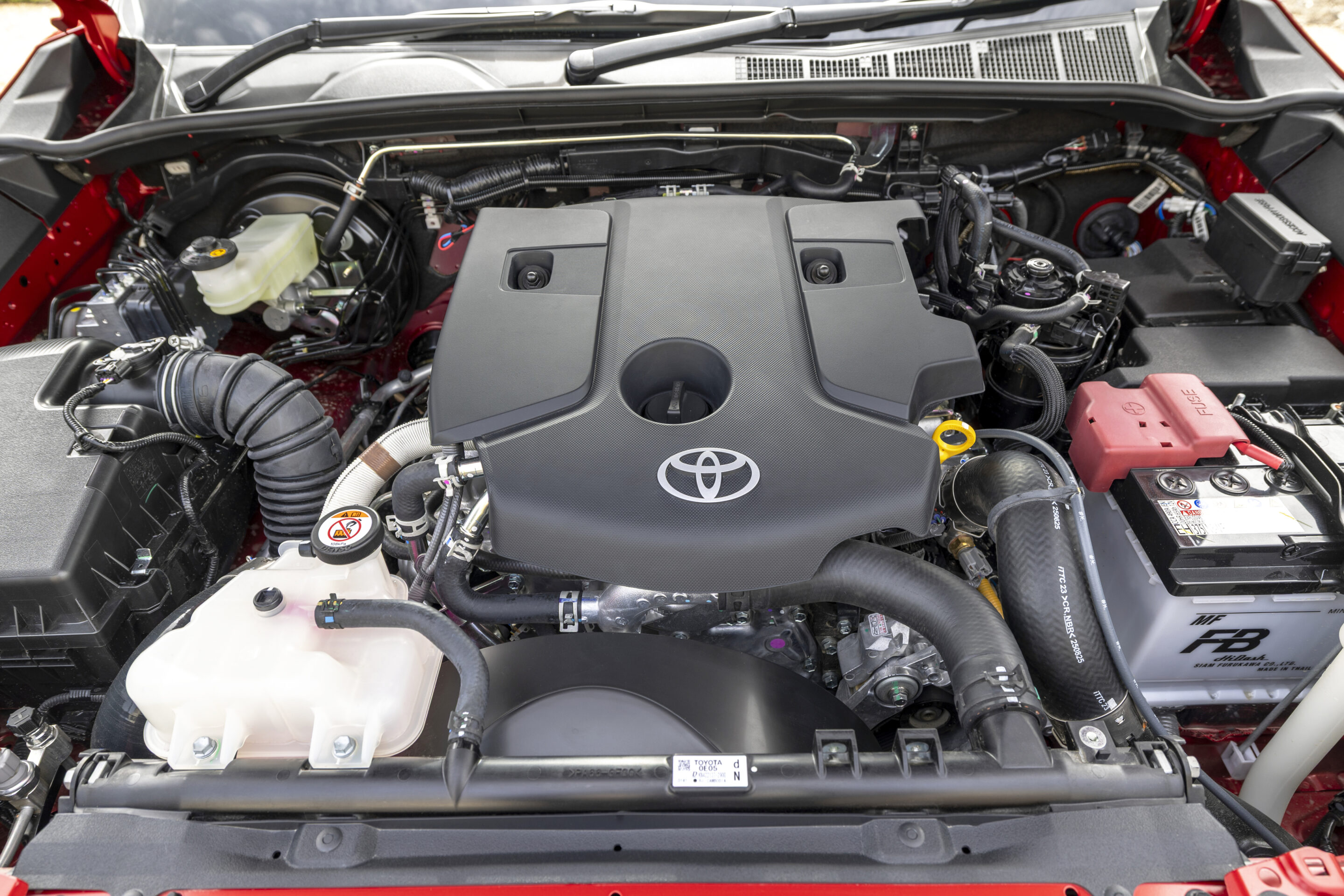
That leaves us with just the one engine, the familiar 2.8-litre turbo-diesel, cranking out an equally familiar 150kW and 500Nm. The exception is any variant with the six-speed manual gearbox which maintains the peak power number but limits torque to 420Nm in the interests of keeping the gearbox internals, er, internal.
1
For the record, the HiLux line-up looks like this: It kicks off with The Workmate 4X2 and 4X4 which now get the turbo-diesel engine standard and LED lights, along with upgraded safety tech including driver aids and eight airbags.
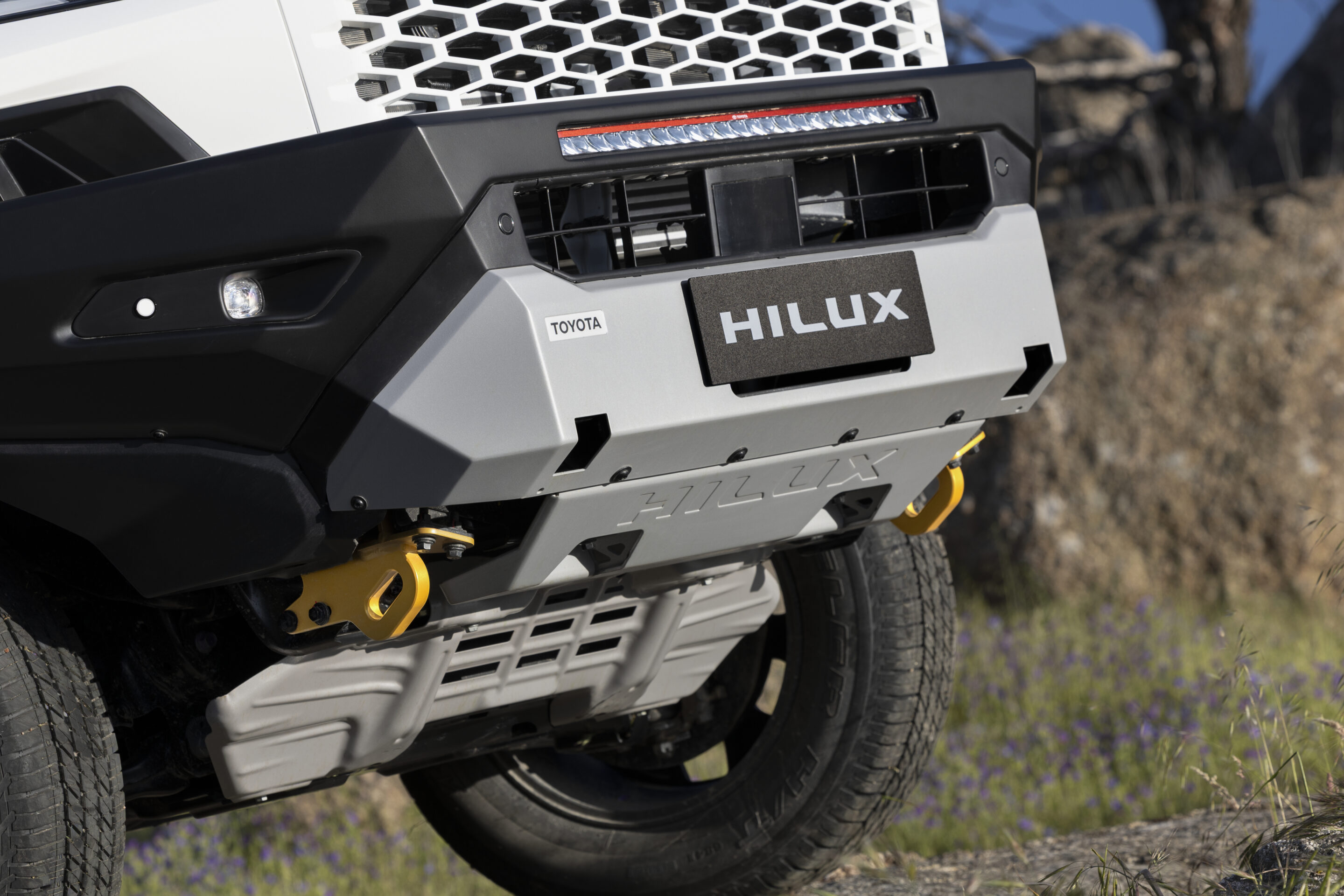
Things then move up to the SR 4X4 which now gets selectable terrain modes and then to the SR5 4X4 which has the slightly softer suspension tune, new rear disc brakes and the larger 12.3-inch display. The Rogue 4X4 is next with its matte-black wheels, leather accented trim and the Rugged 4X4 tops things off with the hoopless bull-bar (so, a heavy-duty bumper, then) bash plates and rated recovery points.
Prices start at $33,990 for the Workmate 4X2 single-cab while the first of the 4X4 models is the same Workmate single-cab at $45,990. Of most interest to Wheels readers will be the SR dual-cab 4X4 automatic at $57,990, the SR5 dual-cab 4X4 auto at $64,990 and the Rogue and Rugged dual-cab auto 4X4 twins at $71,990 apiece.
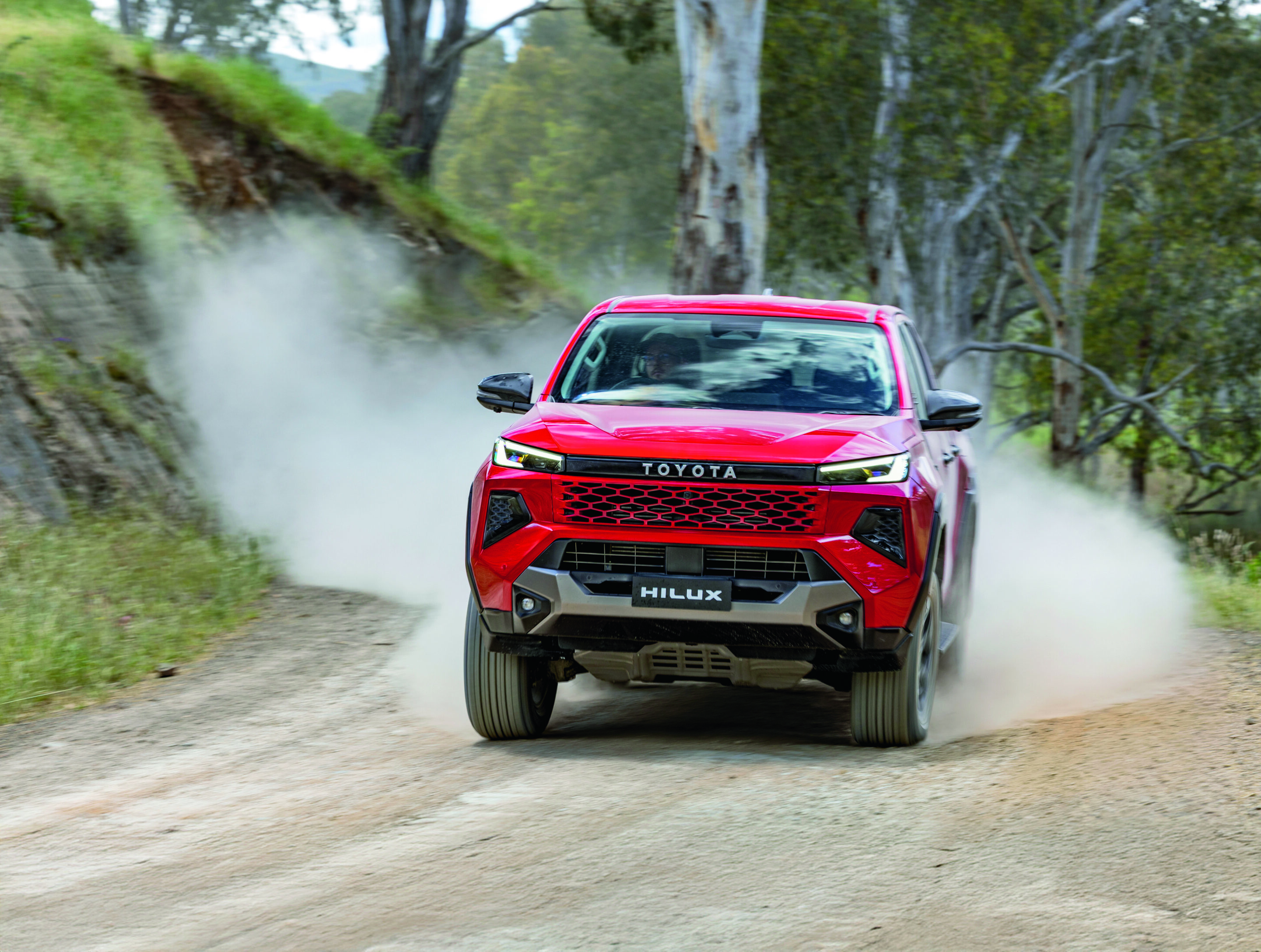
Given the mellow modifications, you might imagine the driving experience would be pretty familiar. And you’d be dead right. There’s not much to choose between the two suspension tunes and the HiLux follows dual-cab tradition by offering a reasonably firm ride when unladen. Frankly, there’s no way around this, and the sort of springs required to keep a tonne of payload off the deck, will never translate to a cushy ride. End of.
The worst of it is when large bumps arrive too close to each other and the suspension, already semi-compressed from Bump A, is punched farther into discomfort territory by Bump B.
But the switch to electric power steering seems to be a move in the right direction. There’s improved
on-centre feel and zero kick-back from the rack even over pattery stuff at speed.
2
The engine is exactly as the 2.8-litre turbo-diesel has ever been. Good but not class-leading. If you can pick the point at which the mild-hybrid motor makes itself felt, you’re a better judge than I am, and the engine has pretty much given its best by the time 3000rpm has appeared on the animated tacho.
It’s quiet enough, though, and while there’s some diesel clatter at idle, at highway speeds there’s but a faint hum that turns into a soft growl as you pour on the coals to go up a hill. Tall gearing means it’s never raising a sweat, although you do need to watch the speedo to avoid kilometre-creep.
The six-speed automatic gearbox is equally familiar, but I’m left wondering if it’s been recalibrated to be a bit more excitable. As it is now, there’s an argument to be made that it seems a fraction eager to drop a gear and equally keen to hold on to that lower ratio slightly beyond its usefulness.
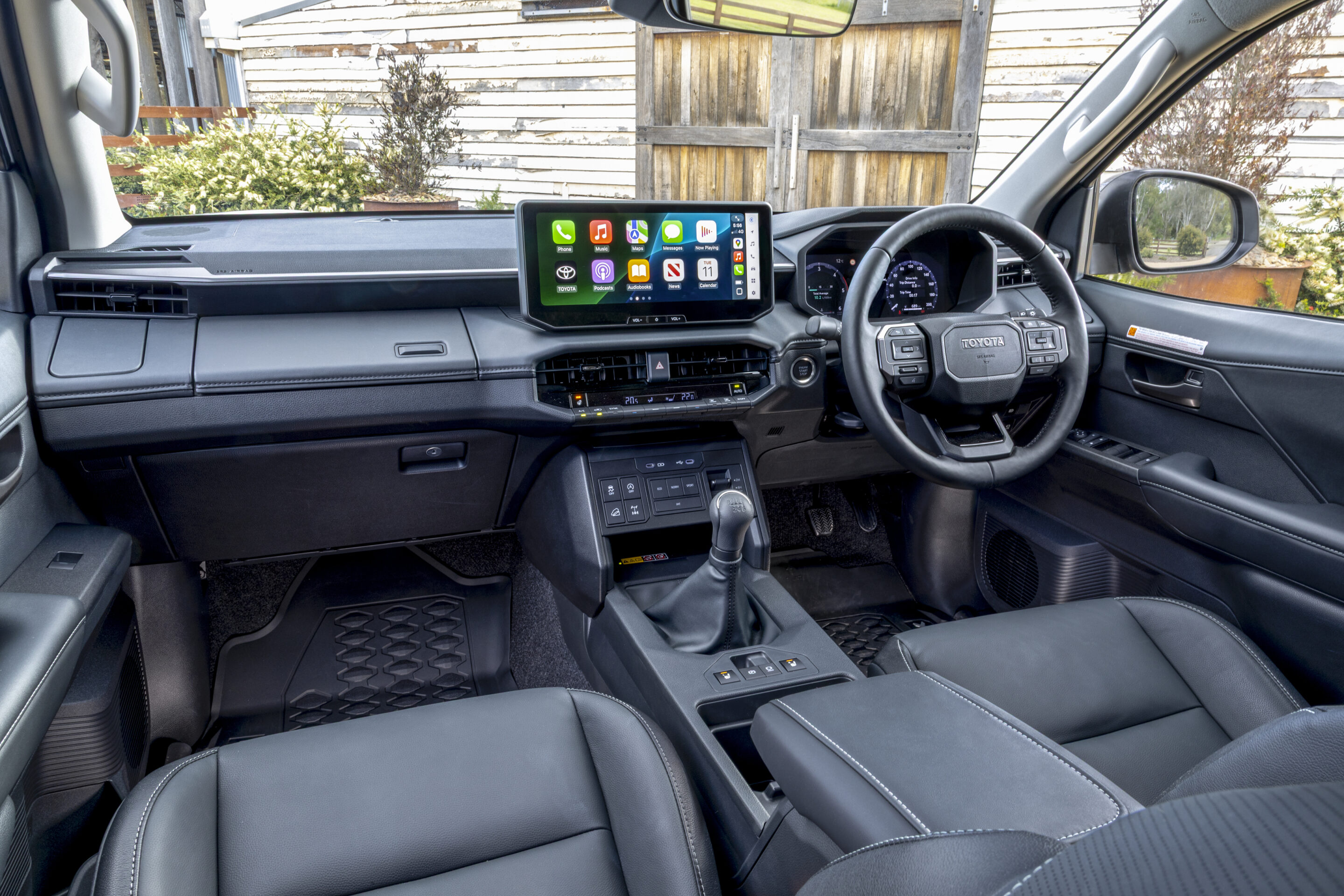
Inside, the interior is much better than before with some obvious Prado themes but without all the soft-touch surfaces. But while the button-driven info system in the steering wheel might make perfect sense to a Gen-Zer, I couldn’t always make it display the info I was after. True, there are some hard buttons for major functions and, thankfully, the paddle to engage four-wheel-drive and low-range has a positive feel and action and never missed its target once. The rotary-dial alternative in many of the competition doesn’t seem as sure-fire.
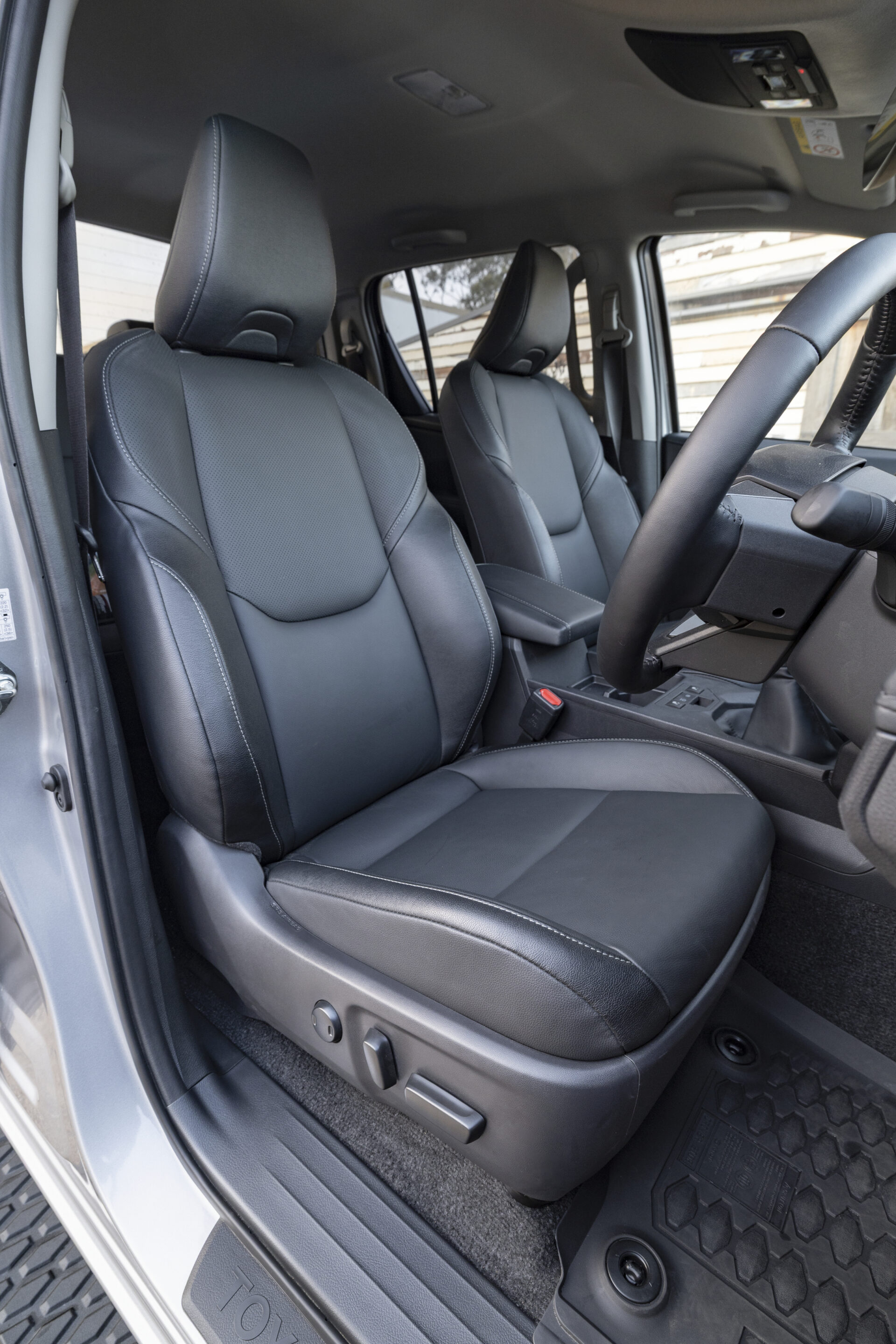
Less positive is the decision to give even the range-topping models electric adjustment on the driver’s seat only, leather seat trim that looks like vinyl, and a speed-limit warning light that flips to red-on-black and becomes unreadable the millisecond you’re one km/h over the limit. On the plus side, the type-pressure monitoring includes a reading for the often-neglected spare tyre, meaning you’ll know when it starts to go flat as well as being able to use it at a pinch and still have full monitoring. Nice.
2
The retention of the previous car’s cabin and hard points mean the interior is still a bit on the slim side compared with some other dual-cabs. The same goes for the rear seat space which remains tight in every direction and continues to feature a too-upright backrest.
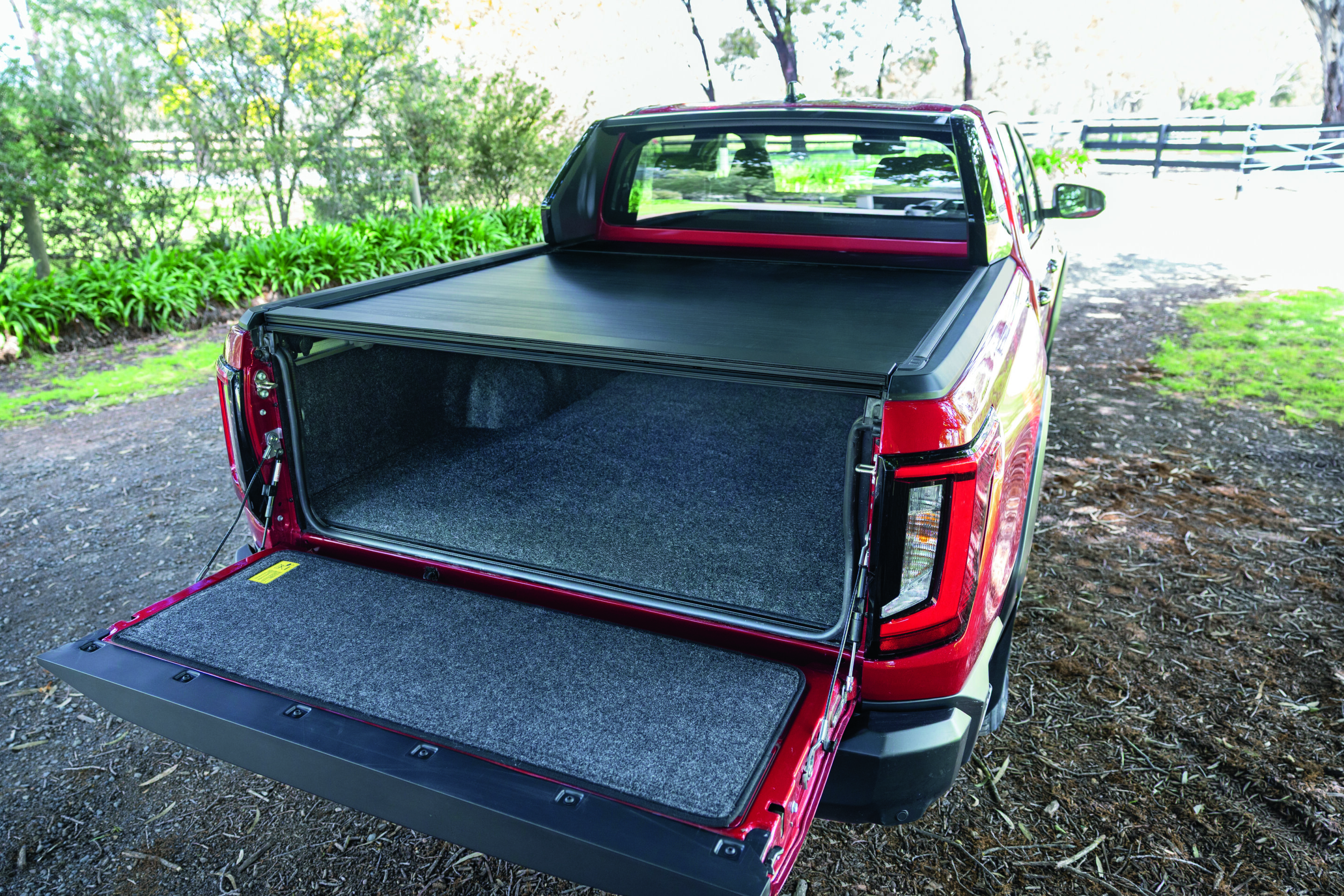
The tub, too, retains its basic dimensions and doesn’t have either a standard liner nor cover of any sort in the more basic models. The tie-down points are limited to four and they’re mounted too high up the tub sides to do their best work. And don’t get me started on the sports-bar…
Safety gets a leg up with new driver aids including autonomous emergency braking, pre-collision safety system, active cruise-control, rear cross-traffic alert, reversing camera, lane-departure alert, road sign assist, blind spot monitoring and lane-keeping assist. The latter seems a bit zealous to me but switching it off is a one-button job.
So, what’s missing? While paddle-shifters for the transmission might seem useless on a light-commercial, off-road they’re worth their weight in snatch-straps. Being able to hold a lower gear off-road for fidgety, delicate, light-footed work across rocks or gullies is a major bonus and paddles just make it easier. The other thing we’d like to see (and this goes for all dual-cabs) is an Auto 4X4 setting, allowing the vehicle to operate with an open centre differential and, therefore, use four-wheel-drive on bitumen. For towing on a wet road, there’s no tech you’d rather have at your disposal. Next time, huh Toyota?
You can see why Toyota has gone easy on the changes. The old show-tune ‘if it aint broke’ can be heard playing in the background of every kilometre you drive in the new HiLux. And fair enough; when the thing is slaying the opposition in the showroom aisles, why mess with such a successful product? Although I still reckon Toyota is taking the mickey calling it Gen 9. HiLux 8.5, would be a lot more accurate.
1
Specs
| Model | Toyota HiLux |
|---|---|
| Price | $57,990 (SR dual-cab auto); $64,990 (SR5 dual-cab auto); $71,990 (Rogue and Rugged dual-cab auto) |
| Peak power | 150kW @3400rpm |
| Peak torque | 500Nm @ 1600-2800rpm (automatic)/420Nm @ 1400-2800rpm (manual) |
| Transmission | 6-speed automatic/6-speed manual |
| 0-100km/h | Not given |
| Top speed | 176km/h (claimed) |
| Fuel consumption | 7.4-7.6 litres per 100km |
| Fuel tank | 80 litres |
| Dimensions (l/w/h/wb) | 5320mmmm/1885mm/1880mm/3085mm |
| Kerb weight | 2000-2342kg |
| Warranty | 5 years/unlimited kilometres |
| On sale | Now |
1
7.4
/10
Score
Score breakdown
7.0
Safety, value and features
7.0
Comfort and space
8.0
Engine and gearbox
7.0
Ride and handling
8.0
Technology
Things we like
- Solid feel
- Bold new face
- Much improved interior
Not so much
- Menu-driven functions tricky
- Basic tub lacks features
- Rear seat remains tight
Follow WhichCar/Wheels on Google
Click the button below to make WhichCar by Wheels a preferred source for your news.

We recommend
-
 News
News2026 Toyota Hilux: Specs for the workhorse's first electric version revealed
Toyota Europe spills the beans on the capabilities of the first electric Hilux.
-
 Comparisons
2026 Ford Ranger XLT vs Toyota HiLux SR5: Spec Battle
A deeper dive into the pros and cons of Australia’s two most popular vehicles.
-
 News
News2026 Toyota HiLux revealed! Discover all the details on the new-gen Aussie favourite
The ninth-generation 2026 Toyota HiLux is finally revealed with a new look and new features the brand hopes will keep it at the top of the Australian sales charts.