
Regardless of whether you’re a lover of all things with four-tyres and an engine, or you’re more interested in what Catherine the Dutchess of Cambridge wore to give birth, I’m hoping you will take something away from this column – even if it is just a polite laugh.
This week in the WhichCar office, we joined forces with 4X4 Australia to drive the team’s long-term 4-door Jeep Wrangler Blackhawk. To say I was excited would be an understatement. The Wrangler saw faces light up faster than a group of women at a Magic Mike opening night.
Those of us that are less inclined to understand the definition of torque are probably more interested in a car’s aesthetics or the ‘celebrity-factor’. Which brings me to the appeal of a Wrangler: Stephen Baldwin, David Beckham, Avril Lavigne and Khloe Kardashian are just a few of the big names spotted driving a Wrangler at some point – but let’s face it, celebrities crash change cars like Melbourne changes weather. But perhaps the biggest name, and the one that will reside in the hearts of most women’s inner-child, is Barbie. Remember the little pink Jeep with big white alloy wheels and purple roll bars? Well that’s exactly what we got, only black, and shiny and marginally more expensive.
So there I was, getting the keys to my childhood dream-car handed to me on a chrome platter. As I climbed into the seat, I felt like a queen in her throne; so tall, so much power… such… a… big… car! Being all black, it was hot. Like really hot. I was going to suffocate. Challenge: how does one open the window in a Wrangler? No window! Panicked…Survived. Controls were on the centre console. I repeat, the centre console. Crisis averted.
Once I got over the initial ordeal, I pulled the autostick to R, and waited for the reverse camera to set in. Wait, no reverse camera? SHIT! After ensuring the path was all clear, mentally measuring the distance of the car behind me and checking there were no small children or puppies in sight, I managed to get out of the car park. Alive.
The steering on the Jeep was loose and if I took my eyes off the road ahead for even a moment, it would start to steer itself left or right. The accelerator was also set in an unusual spot and a little behind the brake; this is not the car to drive in Havaianas. And don’t get me started on the noisy tyres.
On the plus side, it looks good. Really good. And you don’t have to be at a stand-still to set the navigation system, which is a bugbear of mine – not that I recommend you play with the navigation while driving, especially in this mind-of-its-own truck, but it sure comes in handy when you’ve got Ken someone in the passenger seat.
Eventually I got back to the office with myself and the Jeep in one piece. It took me a whole two seconds to hand the keys back to the 4X4 staff, at which stage my eyes were filled with tears and disappointment. Barbie lied – bitch!
But it didn’t stop me from trying again. I couldn’t help myself; I was determined to find the positive in this beast. If Barbie could do it, so could I! So after a few test runs, I came to appreciate it for what it was. Yes, it may have taken me 30 minutes of sitting in extreme heat to find the window controls, the steering is less than ideal and it could be more aligned to a hummer than a Jeep. But this is an off-roader after all, and a fully adaptable one at that. You can take off the roof panels, the bonnet, and the side doors. It even comes with the soft-top loaded into the back when you drive out of the dealership so it’s like you’ve bought two cars for the price of one. There’s not a lot you can’t do to modify the Jeep Wrangler and that is exactly its appeal.
Give me wide open spaces, dirty mountain tracks and a pair of Hunter gumboots any day of the week and this vehicle would be at the top of my list. But if you’re not prepared to get your heels stuck in the mud and you just want a car that looks good for those trips to Oxford Street, then maybe you should be looking for something a little more like Barbie’s convertible.
Torque: A force that causes a rotation or twisting motion. So, basically, it’s the force that moves your car.
New Camaro looks tougher, goes faster and wants to send the Ford Mustang packing
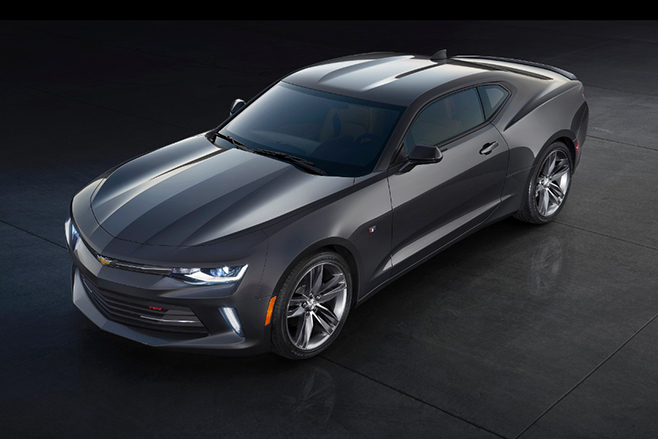
THE 2016 Chevrolet Camaro has been revealed ahead of its US-market launch later this year. Based on the new Alpha platform, it’s the sixth generation of the classic Chev and is lighter, more powerful and comes with a choice of four, six and eight-cylinder engines.
Slightly smaller overall with a shorter wheelbase, narrower tracks and lower ride height, the new Camaro sees the existing model’s Coke-bottle hips and overall shape tweaked ever so slightly – the look of the original 1967 F-body pony car is still there, in tune with its key rival, the 2015 Ford Mustang that’s due in Australia in December this year. With more surface sculpting and sharper edges, thinner LED head and taillamps, the Camaro has turned up the aggression in the looks department. Chevrolet says that the styling has been wind-tunnel tested to reduce front lift and improve handling.
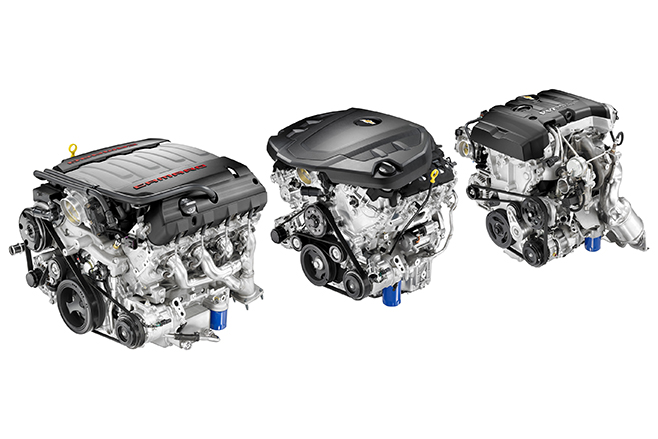
It will need a good chassis, as this is the most powerful Camaro ever built. The hero is the 6.2-litre LT1 V8 that was first seen in the 2014 C7 Corvette – but the best news is that it hasn’t been de-tuned for the Camaro. In the SS, it delivers 339kW and 617Nm of torque. That compares to 317kW/569Nm for the current Camaro SS, and means the new model should easily dust off 0-100km/h faster than the current model’s 4.7sec claim (for 0-60mph).
There’s also a new 3.6-litre V6 offered, and despite the familiar capacity, it’s an all-new engine boasting direct injection, variable valve timing and active fuel management (GM-speak for cylinder deactivation). It still delivers a hefty 250kW/385Nm without a turbo in sight, up from 241kW/377Nm, and should see 0-100km/h off in around 5.6sec.
Yet for 2016, Camaro comes with a third engine choice: the first four-cylinder offered since the third-generation Camaro’s fabled ‘Iron Duke’, sold between 1982-84. Unlike the Ford Mustang EcoBoost that sits above the V6, for Camaro, the 2.0-litre turbocharged four-cylinder will be the entry-level engine, and despite no official power claims, Chevrolet says it is capable of a sub-6.0sec 0-100km/h time. All engines in the 2016 Camaro are offered with a choice of six-speed manual gearbox or eight-speed auto, while the four-pot is the only model not to have a ‘sound-enhancer’ in the cabin.
So too does the use of aluminium in key areas such as the front McPherson-type suspension and five-link rear suspension, which should also reduce squat when the Camaro gets spanked off a standing start. The 2016 Camaro also benefits from the magnetic dampers that we’ve seen in HSV models Down Under as well, and was previously only offered on the track-focussed Camaro ZL1.
Also improving point-to-point performance, Brembo brakes will be offered across the range, with 320mm four-piston front calipers housed inside 18-inch alloys on LT models, growing to 345mm for the SS with its 20-inch wheels. The SS also gets four modes of the all-new Drive Mode Selector, with a Track mode for its most ferocious tuned of its electric power steering, throttle response and damper settings. Track mode is offered in addition to the three modes – Snow/Ice, Tour and Sport – offered in regular models, just as the HSV GTS runs four modes against the Clubsport’s three.
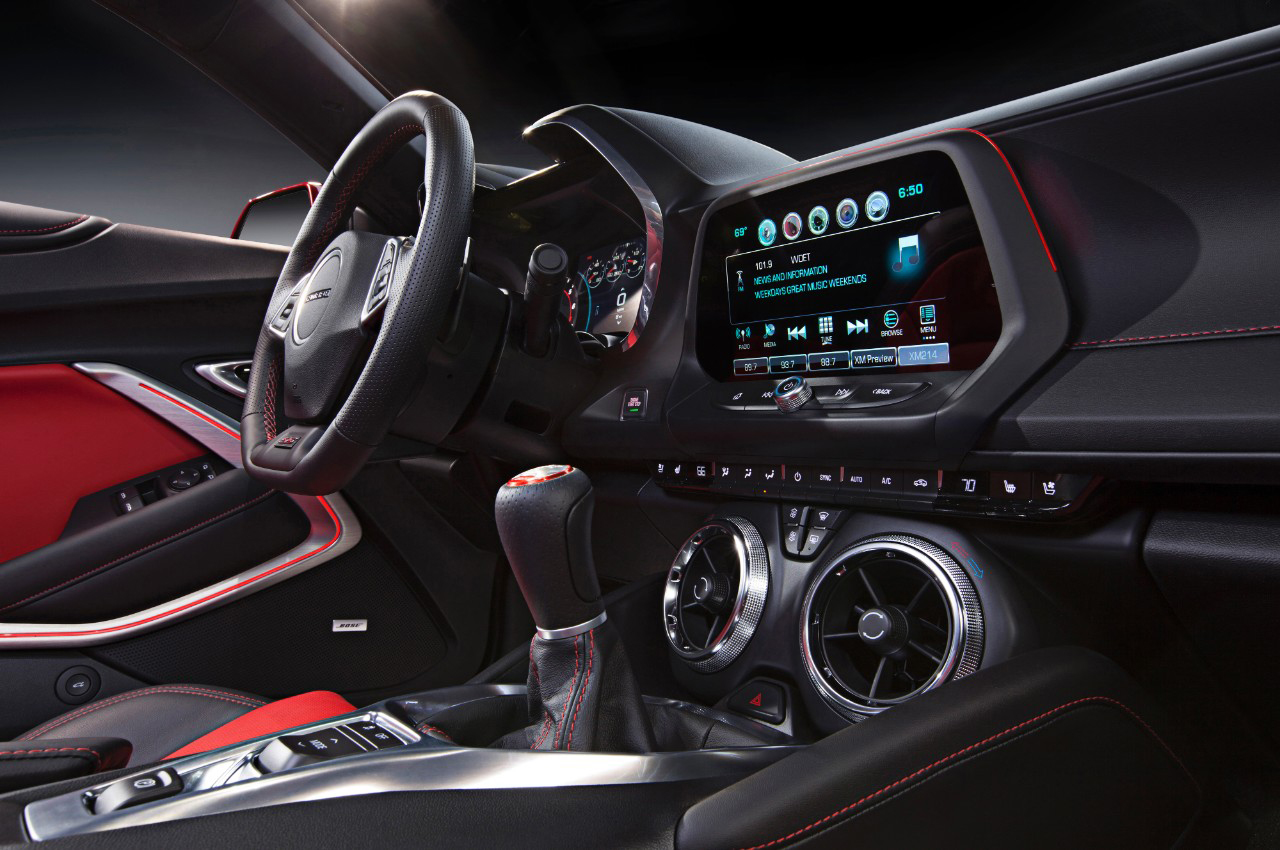
The interior of the Camaro is more ‘driver-focussed’ – a term used more often than not, it seems – with 24 different ambient light settings, including a ludicrous ‘Car Show’ feature that cycles through the entire colour palette when the Camaro is parked – sure to wow the kiddies. There’s also an eight-inch HD touchscreen and digital instrument cluster, both of which are customisable, as well as neat touches such as temperature control incorporated into the air-vents.
The 2016 Chevrolet Camaro goes on sale in the US later this year, but it may not make it to Australian market. GM Asia-Pacific boss Stefan Jacoby confirmed that a dedicated sports model will be part of Holden’s line-up once local manufacturing ends here in 2017; however a right-hand drive version of the Camaro is yet to be confirmed.
Sign up here to receive the latest round-up of Wheels news, reviews and video highlights straight to your inbox each week.
INDY 500: Dixon beats Power to pole at The Brickyard
QUEENSLAND-born Scott Dixon just pipped Toowoomba’s Will Power to snatch the pole for the 99th running of the Indianapolis 500 – after IndyCar officials ordered last-minute changes to cars before qualifying.
This came after yet another practice crash in which a car became loose, hit the wall and flipped at high speed.
When Ed Carpenter’s car crashed and soared upside down on Saturday, IndyCar officials subsequently ordered teams to lower turbocharger boost levels to their pre-qualifying levels, a move intended to drop average lap speeds below 230mph (370km/h).
Teams also were ordered to go into the race with the same aerodynamic trim used in qualifying, forcing teams away from faster but edgier low-downforce qualifying set-ups.
Carpenter was unharmed and released from the track’s medical centre after a check by doctors and later qualified 12th.
Another Australian, James Davison, is also in the race, which will be held next Sunday (Monday morning AEST).
Davison will start 21st after 25-year-old French driver Tristan Vautier qualified his car because he had a conflicting sports car commitment in Canada on qualifying day.
V8 SUPERCARS: Prodrive Ford clean-sweep in Ned Kelly country
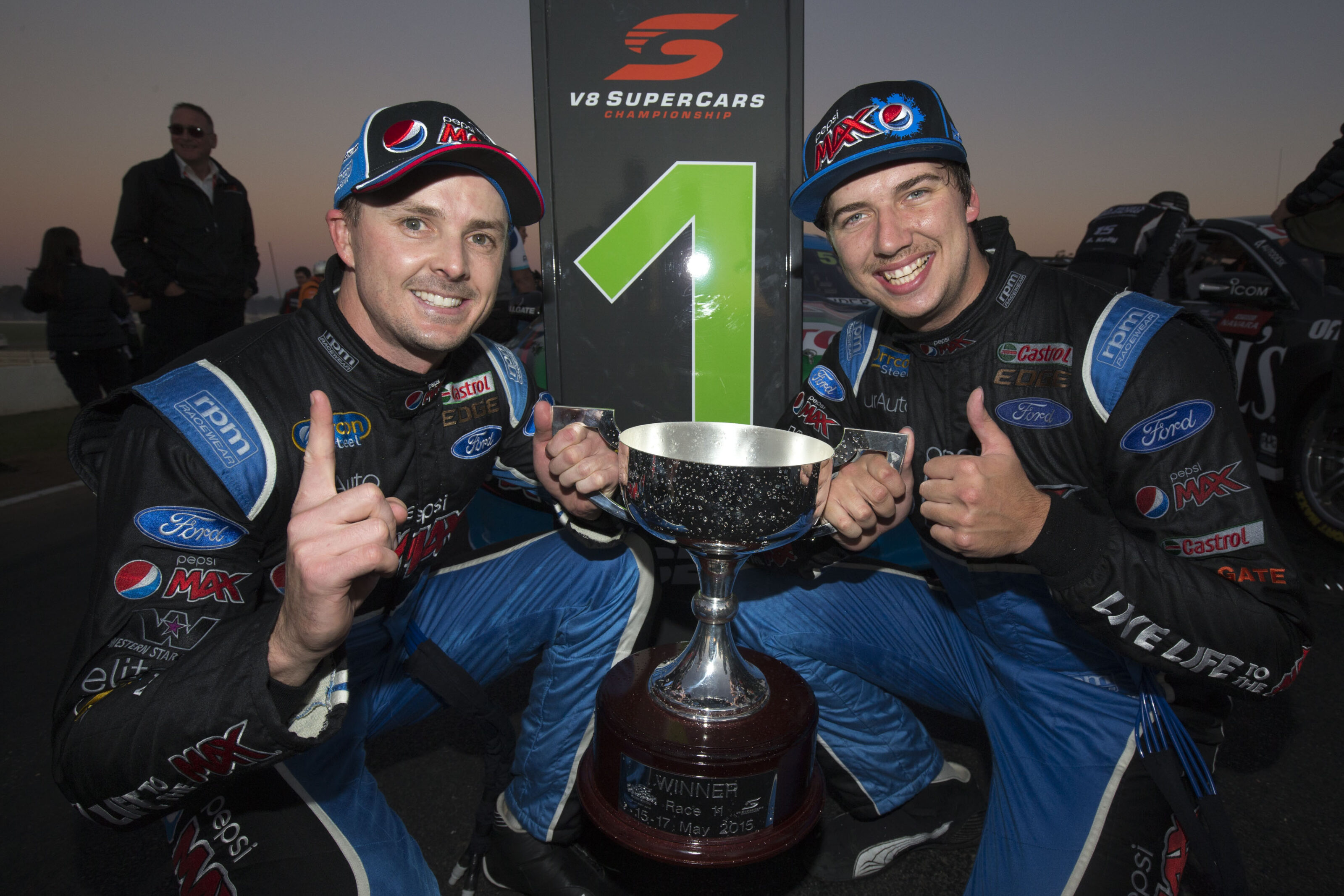
PRODRIVE kept its early season momentum going around claustrophobic Winton Raceway at the weekend, young speedster Chas Mostert winning pole for all three races while also bagging the first Saturday sprint before Mark Winterbottom scored wins on both days.
Winterbottom, a contender who couldn’t quite nail it in previous seasons, has moved to the lead in the championship and is now looking ominously strong as the series heads north into warmer climes.
It was a weekend of contrasts, Saturday’s sprint races running largely to qualifying form.
Mostert’s victory was his first in V8 Supercars since he and Paul Morris won last year’s Bathurst 1000. It was also his first successful solo effort.
James Courtney’s 300th race start was auspicious only for his monumentally ambitious dive into the first corner, which ended in him drilling his HRT teammate Garth Tander and the Walkinshaw Holden of Lee Holdsworth. Courtney spent that night in HRT’s metaphorical doghouse.
Sunday’s 62-lapper thankfully brought some spectacularly hard and fair racing at the front, firstly between Mostert and Red Bull’s Craig Lowndes, then later – after the young Ford driver spun into a tyre wall – between Lowndes, Winterbottom and Freightliner’s Fabian Coulthard. And further back, few cars escaped bent panels.
Tyres again provided the subtext, with the leading protagonists struggling on fading soft-compound tyres.
Frosty had just enough to win from Coulthard and Lowndes.
One of the weekend’s great mysteries was the pace of defending champ Jamie Whincup. While teammate Lowndes was battling for the lead, the team simply couldn’t get Whincup’s car to work, though he typically pulled reasonable results out of the fire, particularly on Sunday when he came from 22nd on the grid to 10th.
It was also a heartening day for Scott Pye and DJR Team Penske. Eighth was the one-car squad’s best result of a tough year.
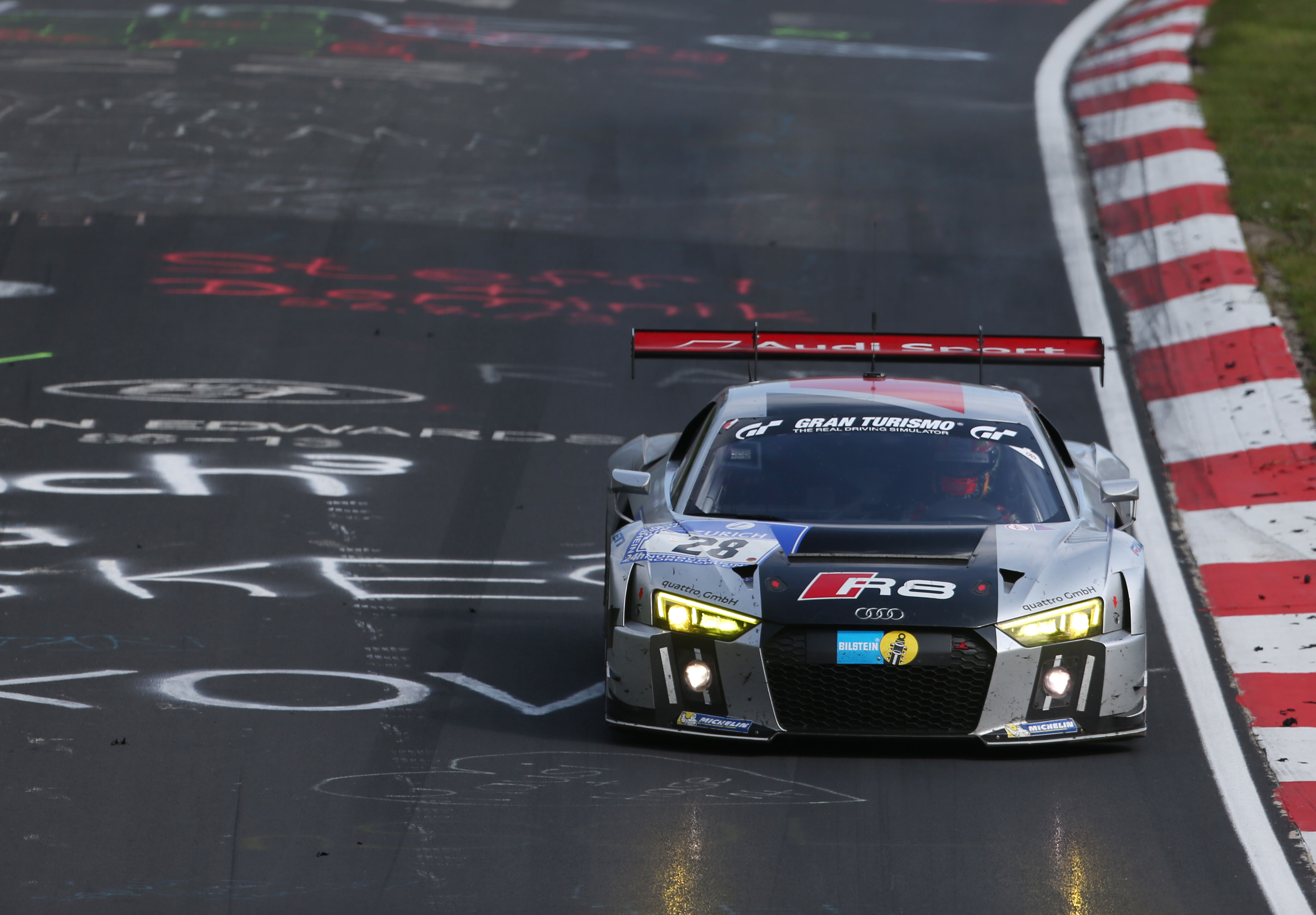
NURBURGRING 24HR: New Audi R8 LMS wins on debut
IT DOESN’T get much better than winning one of the world’s great endurance races on debut and Audi gave its new R8 LMS racer the best possible baptism with a win in the weekend’s always tough Nurburgring 24 Hour.
Driven by Christopher Mies, Edward Sandstrom, Nico Muller and Laurens Vanthoor, the winning Audi took control of the race after others fell by the wayside during the night.
Muller had a lose in the 20th hour, but the #28 R8 spun harmlessly across the grass without damage.
The only other drama was the minor inconvenience of a flash fire during a pitstop, after which the #28 Audi R8 LMS stormed home, 40 seconds ahead of the #25 Marc VDS BMW Z4 that chased it to the chequer.
As ever, there were plenty of hard luck stories and ‘what ifs’ for many competitors, including three cars that crashed out having led the race.
Aston Martin farewelled its 71-year-old racing CEO Ulrich Bez in the best way, helping the V8 Vantage he shared with Aussies Mal Rose and Peter Leemhuis to class honours and 58th overall.
It was Rose’s 12th consecutive Nurburgring 24 Hour and fourth outing with Aston Martin Racing.
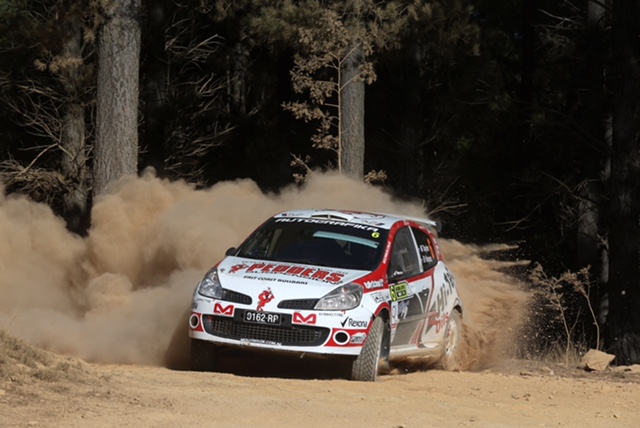
ARC: Molly Taylor claims her first round victory
BACKING up her heat win at the previous round in Western Australia, Renault driver Molly Taylor exceeded even her own expectations by claiming overall victory in the National Capital Rally in Canberra at the weekend.
Taylor, co-driven by Bill Hayes, took the outright victory – the first for a female driver in the ARC – after placing second in each of the two heats.
Saturday’s heat winner, Tony Sullens, took second overall second for Citroen.
A stunning third on his ARC debut was Harry Bates, son of four-time national champion Neal.
Poppa Bates had his own success with regular co-driver Coral Taylor (Molly’s mother), the pair taking victory in the Classic division in their Toyota Celica.
Much of the excitement came on Saturday when Sullens claimed his first career heat win, holding a hard-charging Taylor at bay by just two seconds.
Sullens’ tiny margin came after Molly received 35 seconds in time penalties for departing midday service late.
Eli Evans was also in trouble, the turbo intercooler pipe blowing free on his Citroen’s engine and forcing him to limp to the end of the stage for 25 kilometres, incurring the wrath of older brother Simon, who was trapped behind the ailing car.
The fuming Simon rammed his brother’s Citroen at the finish, then pulled alongside and opened his Honda’s door into Eli’s.
To make matters worse, Simon’s engine later blew after overheating. “We’re certain the engine ingested a lot of dust trailing Eli this morning,” he said.
Eli bounced back strongly to win Sunday’s heat and maintain his championship lead with 75 points, ahead of Taylor (70) and Simon Evans (69).
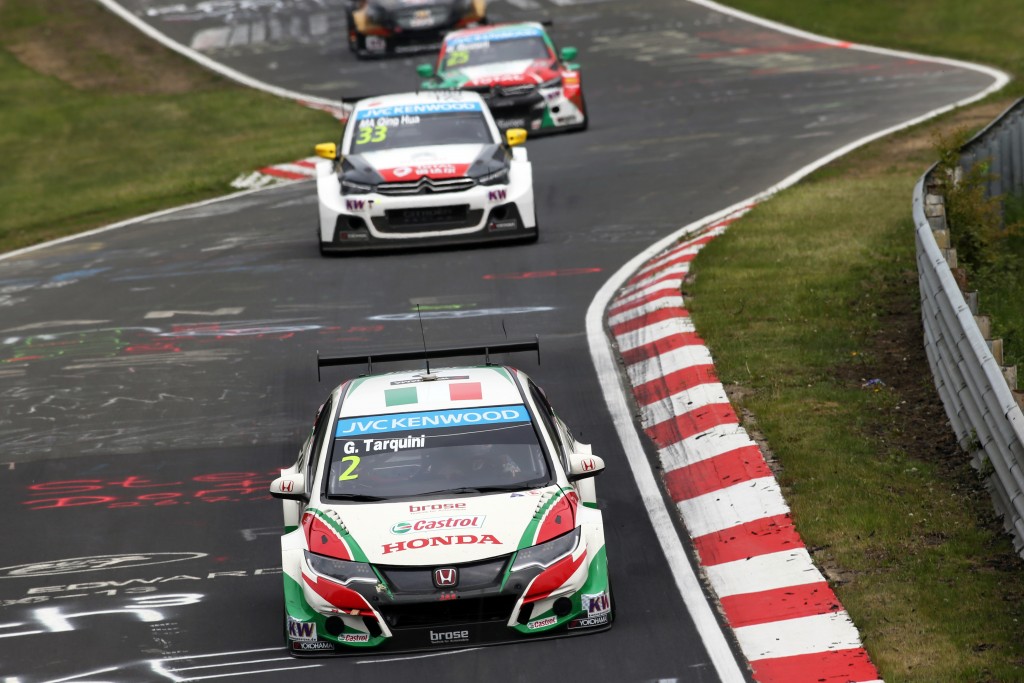
WTCC: Citroen on top at the Ring
THE FIA World Touring Car Championship’s stopover at the Nurburgring lived up to high expectations in terms of action, though ultimately saw Citroen continue its domination of the series.
The star driver line-up of Jose Maria Lopez, Sebastien Loeb and Yvan Muller scored a podium lock-out in the first of two races supporting the Nurburgring 24 Hour enduro.
And despite a reverse grid for race two, Muller and reigning champ Lopez also claimed the top two spots after toughing it out in a big and frantic pack battle for the lead on the last of three long 25-kilometre laps.
With everything to play for going into the final straight, Muller put himself out of reach, while Lopez overcame first Gabriele Tarquini and then Tiago Monteiro (both driving Honda Civics) to snatch second, Loeb claiming fifth.
FORMULA ONE: Thanks for nothing
THE inmates are certainly in charge of the crazy house that is Formula One.
Here’s how we see it. The sport is too expensive, with not enough furious wheel-to-wheel driving, the cars sound like flatulence on wheels, they don’t slide around enough, and overtaking is too hard without technical aero assistance…
F1 is a place where the rich teams get richer and the battlers have to beg for handouts. And fans can go to hell.
In a broader sense, the rules are so restrictive and complex that design geniuses exemplified by Adrian Newey want to go do other things.
Among other things, the strategy group comprising FIA President Jean Todt, F1 group CEO Bernie Ecclestone and six teams (McLaren, Mercedes, Ferrari, Force India, Red Bull and Williams), wants to see higher revving and louder engines, and more visually aggressive cars.
So it came up with these half-baked suggestions: the reintroduction of mid-race refuelling, cars lighter by 30-50kg, free choice of two rubber compounds and wider tyres, six-speed gearboxes reqiring more revs that would lead to lap times coming down by around five seconds, and a requirement for drivers to use a clutch at the start
There was no enthusiasm to change the current hybrid power pack architecture due to cost.
And for this season, the request by some teams (Red Bull!) to stretch the engine allowance from four to five was rejected.
Sign up here to receive the latest round-up of Wheels news, reviews and video highlights straight to your inbox each week.
The new Lamborghini Aventador SV promises to be quite something.
That might sound like the understatement of the century, but safe to say that few would have predicted that the new ultimate bull would dip under the seven-minute mark around Germany’s famed Nurburgring circuit.
It’s a time beaten only by the mega-dollar Porsche 918 Spyder hybrid and puts the new hardcore Aventador firmly in the hypercar club.
Revealed at this year’s Geneva Motor Show, the Aventador SV packs a 552kW 6.5-litre V12 and loses 50kg compared to the standard car, while comprehensively revised aerodynamics are claimed to increase downforce by 170 per cent.
This last features contributes heavily to the SV’s stunning lap time, with much of the ‘Ring’s 20km layout covered at frighteningly high speed.
Italian race driver Marco Mapelli is apparently the man behind the wheel, and he certainly has his work cut out for him, as the sharpened-up Aventador looks quite a handful.
Mapelli is clearly giving it everything, the car crashing over kerbs and bottoming out on the sharper bumps, and increasing armfuls of opposite lock later in the lap suggest the rear tyres were giving up.
That doesn’t stop him holding it flat through the kink at the end of the long straight at 325km/h! Respect.
Now, if only McLaren would release the time for the P1.
Get your free weekly report from the world of fast cars – subscribe to the MOTOR newsletter!
The sixth-generation Chevrolet Camaro has been revealed in Detroit as a smaller, lighter and faster coupe than the Aussie-engineered model it replaces.
Ready for a 2016 showdown with the Ford Mustang that would make those working out at muscle beach blush, Camaro Six will be available with a 205kW/400Nm 2.0-litre turbo four-cylinder, 250kW/385Nm 3.6-litre V6 or 339kW/617Nm 6.2-litre LT1 V8.
The four-banger promises a sub-6.0-second sprint to 60mph (97km/h) and 7.8L/100km economy, with a sound amplifier boosting engine noise via the speakers.
The powered-up V6, meanwhile, gets cylinder-deactivation tech for the first time, and the V8 scores an auto-rev-matching facility for the standard six-speed manual and optional magnetic ride control borrowed from the Corvette ZL1.
An eight-speed automatic is optional with all three engines.
Every bit of the Camaro body and chassis is new except for the Chevy bow-tie badge and ‘SS’ bootlid badge.
This means an end to Camaro being Australian engineered, having shared over the past five years its Zeta platform architecture with the Holden Commodore.
The new Camaro is built on the Alpha rear-drive platform that underpins Cadillac models, yet Chevrolet claims 70 per cent of parts are unique. The new coupe is 28 per cent stiffer and up to 90kg lighter than the car it replaces, though it is also smaller.
The sixth-gen Camaro stretches 4784-millimetres long (57mm less than before), 1897mm wide (down 20mm) and 1348mm tall (also reduced 20mm), riding on a 2811mm wheelbase that puts 41mm less distance between the axles.
Between 18- and 20-inch wheels are available, and although there is no burnout mode for the two-stage stability control like you’ll find in its Ford foe, we reckon the rear-drive Camaro will be able to do skids just fine.
A four-mode drive selector – with Snow/Ice, Tour, Sport and SS-only Track settings – changes the auto and ESC mapping, power steering weight and throttle sensitivity, and if a dual-mode exhaust is fitted even has a ‘stealth’ program in its quietest mode; very cool.
While the red, white and blue-badged Chevy coupe looks familiar on the outside, the interior appears transformed.
Lashings of leather atop the doors and alloy-look trim, knurled silver air vent surrounds and twin 8.0-inch high-resolution colour screens look to give Camaro a galloping big edge over its Mustang rival.
What you won’t find, however, is the steering wheel on the right hand side, at least not for now.
“A RHD variant is not in the current plan,” Holden spokesperson Kate Lonsdale told MOTOR. “Of course, if this was to change in the future, Holden would take a very close look at this exciting car.”
Holden has promised to deliver a V8-engined two-door sports car to Australian buyers by 2018 when local production of the Commodore V8 ends, but currently neither the Corvette nor this Chevrolet Camaro places the tiller on the right.
“We will continue to leverage GM’s global product portfolio and as promised will deliver a true sports car as part of this strategy,” adds Lonsdale.
We’ll have a closer dissection of what Camaro may mean for Aussie buyers in the July issue of MOTOR magazine.
Get your free weekly report from the world of fast cars – subscribe to the MOTOR newsletter!
BMW’s 3 Series has just turned 40.
The Munich car maker is making a big fuss for the birthday of its smallest sedan, timing the launch of the F30 facelift to coincide with celebrations.
There’s been the occasional wobble, but by and large there’s never been a 3 Series that hasn’t been great to drive.
E21 – 1975-1982
The car that started it all, replacing the much loved but ageing 2002. Top of the tree was the 323i, unveiled in 1977, with a 107kW 2.3-litre six and all-wheel disc brakes.
E30 – 1982-1993
The legend. Looked great, performed well and ushered in the first M3, which is now one of the most desirable cars of the 1980s. End of line 2.5-litre Sport Evo now worth big bucks.
E36 – 1990-2000
Somewhat unloved in M guise, though the range now stretched to sedan and convertible as well as coupe. Good enough to win MOTOR’s Performance Car of the Year in 1997, though. Aussie-only M3 R an absolute weapon, only 15 built.
E46 – 1998-2007
Was arguably the class benchmark during its entire production run, and the M3 earned BMW its second Performance Car of the Year title in 2002. Limited-run CSL still special today, but we’d aim for a manual CS, which picked most of the good CSL bits for far less money. Also spawned the wild V8 GTR, of which 10 were built.
E90 – 2004-2012
Didn’t dominate as the E46 did, partly because the introduction of run-flat tyres didn’t do the ride or handling any favours. Still a great car, and the V8 M3 is one of the all time greats. Rare (and expensive) GTS become the ultimate M3, but we’d prefer the GTS-engined, carbon-panelled CRT sedan. Only 67 exist.
F30 – 2011-Present
The jury’s still out on whether the latest generation will join the list of greats, but as a performance sedan BMW’s latest is still right up there. New M3 divides opinion with its turbocharged 3.0-litre six, but its shattering performance is inarguable.
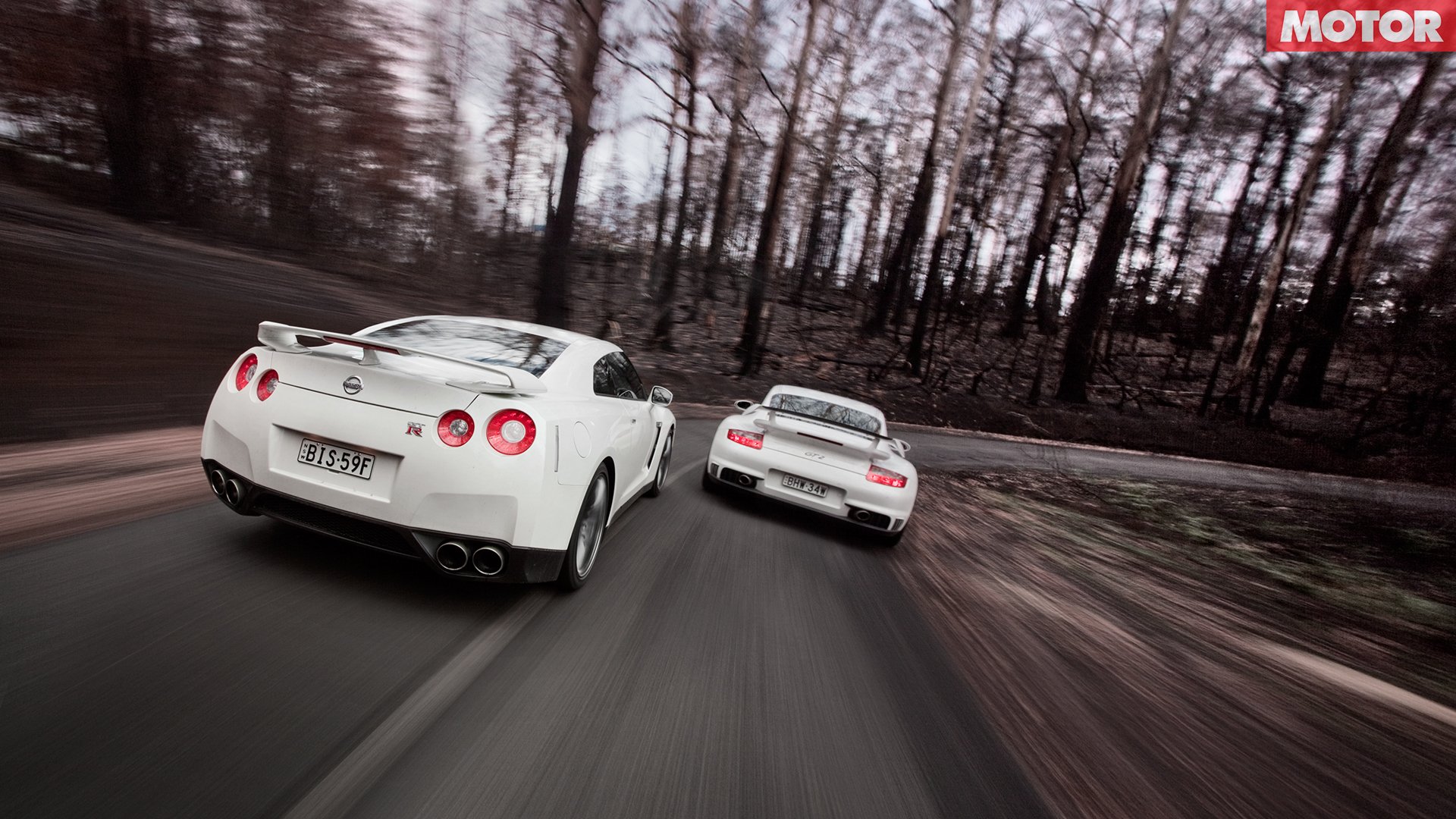
Back in 2009, we found ourselves in a predicament. How did you throw the just-released Nissan GT-R in to a traditional comparison?
It would have vaporised a BMW M3 and simply laughed at a similarly priced Mercedes-Benz CLK. Nothing in the Japanese mega car’s modest price range had a chance of sniffing its bumper on race track or back road.
So we went straight to the waters where Nissan said its GT-R swims: Porsche territory.
There we fished out the most suitable contender, which became the GT2. Two-turbos, six cylinders, fat grippy tyres and motorsport DNA in a two-door coupe made it a direct rival to the super Nissan – at almost three times its price.
It was, though, a sure way to settle the argument that erupted from Nissan’s 7:27.56 claimed lap time around the ’Ring, which Porsche reckoned was fudged.
And while the prices may have been unequal, their sparring match on Victoria’s roads, as evidenced by these gun pictures by Cristian Brunelli and Easton Chang, looked more than right.
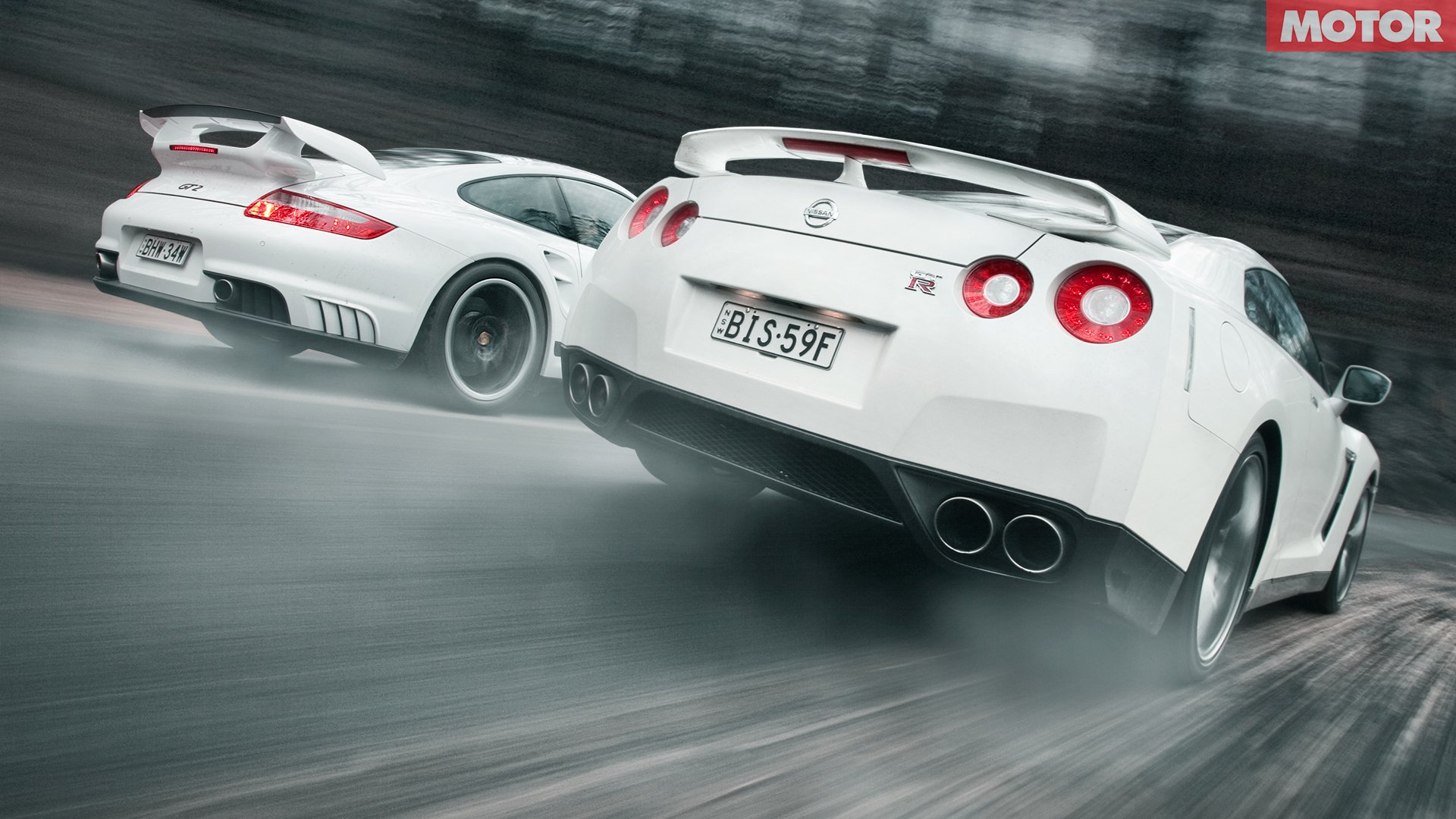
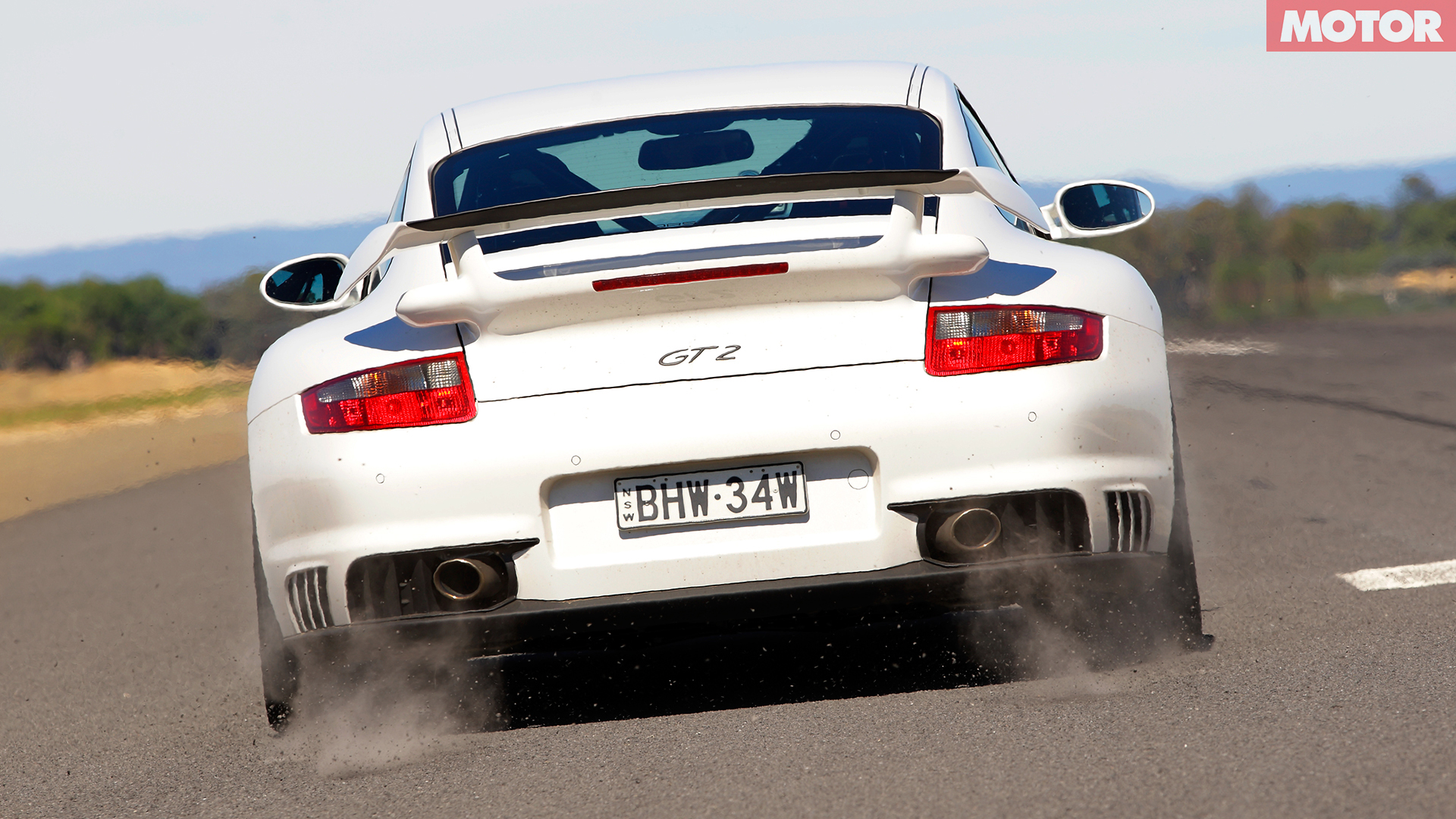
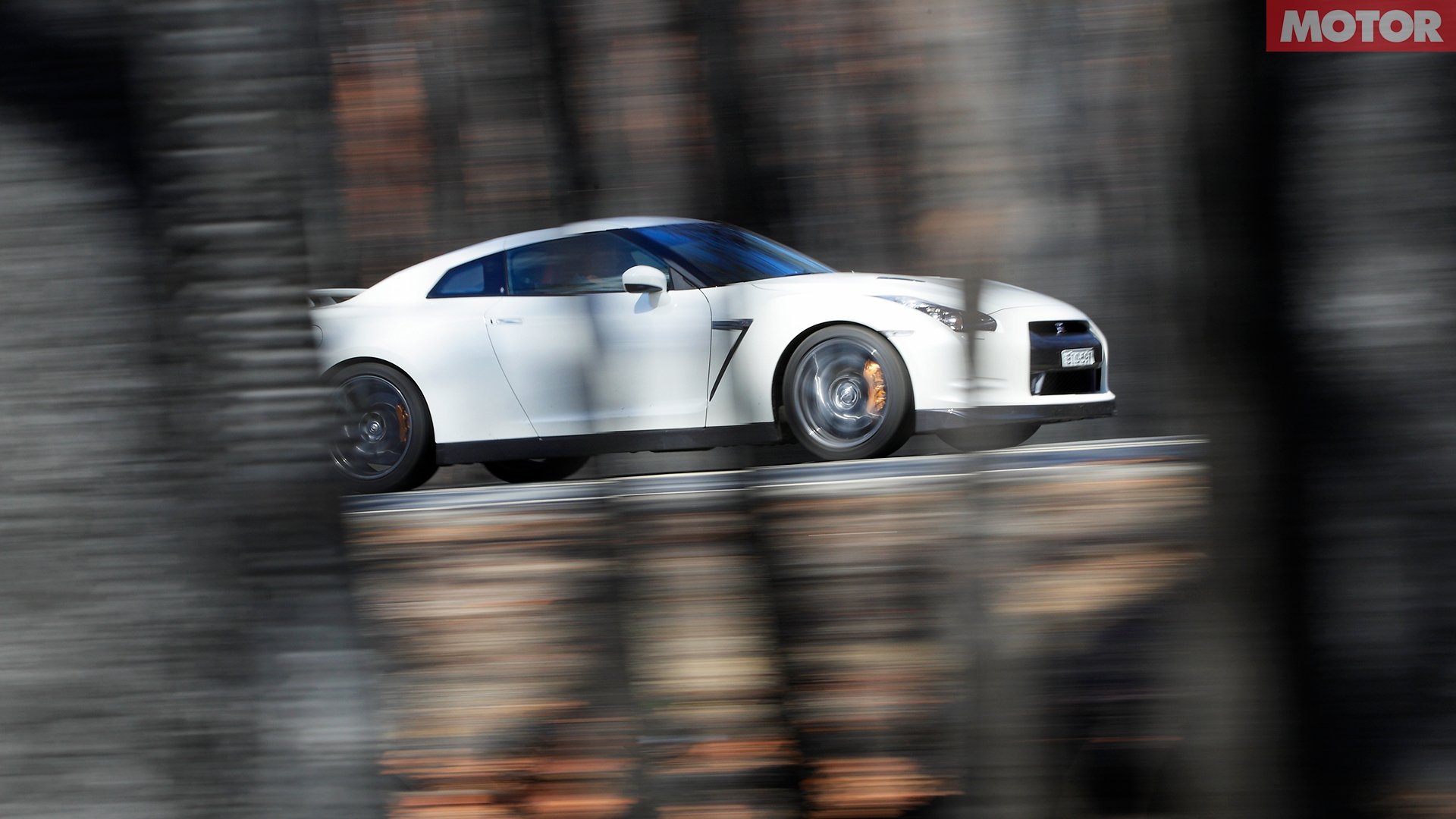
Often we apply a good deal of scepticism to acceleration times quoted by manufacturers.
Nissan, for instance, claims its GT-R can fire from 0 to 100km/h in 2.7sec – something you’d achieve only if you dropped it from a plane.
However, we know Tesla isn’t lying about performance claims for its impending Model S P85D, because when one decided to line up a Ferrari F12 at a drag strip, it was the driver of Maranello’s fiercest GT that received the biggest shock when the tree went green.
Performance has come easy to Tesla’s Model S thanks to an electric motor that drums up maximum torque from zero revs.
Then to fatten the appeal of Tesla’s range topper, the Model S P85D scores two electric motors, meaning it not only benefits from a significant increase in power, but also full use of its four tyres under acceleration – the second motor lives on its front axle.
How this all pans out over a quarter mile is seen above, where the Tesla’s 515kW/931Nm delivered at zero rpm lobs the 2.2-tonne electric sedan well ahead of the rear-drive F12.
Soon enough, though, the Ferrari’s 30kW extra comes in to play, and it cruises by the EV before the finish line with ease, helped by the fact its transmission is allowed to row the 6.3-litre V12 through seven powerbands.
None the less, we’re firmly convinced of the P85D’s potential. And after the Tesla Model S went full drift mode, we’re seeing more reasons why electric cars might be as fun as their petrol powered counterparts.
Tesla’s P85D is expected to launch in Australia next month.
The Volkswagen Golf GTE Sport concept is a lightweight, all-carbonfibre three-door with a 280km/h top speed, 4.3sec 0-100km/h and zero emissions capability for up to 50km.
Revealed at the Worthersee annual Volkswagen meet, the brand is going deep into the future of what the humble hatchback Golf may look like, in a variant said to bridge the gap between road cars and motorsport.
What you get is a 1.6-litre TSI turbo engine from the Polo R WRC car, producing 220kW and 400Nm. A front electric motor mounted within the housing of the six-speed dual-clutch DSG and developing 85kW/330Nm helps the petrol engine power the front wheels only. A second, rear-mounted electric motor with 85kW/270Nm drives the back wheels only, and together you have the total 295kW/670Nm all-wheel drive Golf GTE Sport powertrain.
As the first Golf with three motors, Volkswagen is touting the “electric propshaft” as its own for-production patent. When battery charge is low, the petrol engine will act as a power source and supplier of energy to the front electric motor, which itself now only becomes a generator to (with no mechanical connection, only via wires) feed the rear electric motor. That way power to every 20-inch tyre (235mm front/275mm rear) is always maintained.
There are buttons for GTE Mode (all systems on max performance), Hybrid Mode (switching between petrol engine and electric motors for performance/efficiency) and E-Mode (electric running).
Along with lightweight carbonfibre construction, Volkswagen claims a focus on aerodynamics, optimum weight distribution and low centre of gravity to ensure the 4.12m-long Golf GTE Sport is ready for track lapping.
Lift a gullwing door and there are five-point belts on the racing bucket seats, paddle shifters behind the steering wheel and plenty of carbon and microfibre. There is even a button to deploy a fire extinguisher, and a lap timer and counter for the number of laps you’ve tallied, the latter also providing a virtual indication of the best driving line for a particular race track.
When you’re not chasing racing lines, the Golf GTE Sport is claimed to consume just 2.0L/100km – not bad for a two-seat racer. Thanks to increasingly stringent emissions regulations, this is a view to how the Volkswagen Group will produce sports cars in the medium to long term.
Get your free weekly report from the world of fast cars – subscribe to the MOTOR newsletter!
“Cars are almost like another layer of clothing you wear when you go out into the world” – Leslie Kendall, curator at Peterson Museum.
This statement is not so great if you’re cash-strapped and driving a beater. Fortunately, some of the most iconic vehicles have left an indelible impression on fashion by the masters of couture. Sometimes they worked, and other times… well, think Zoolander’s Derelicte collection! Alas, from rock and roll to the runway, here are a bunch of times a set-of-wheels inspired the stitch.
PIERRE CARDIN’S 1972 JAVELIN COLLECTION
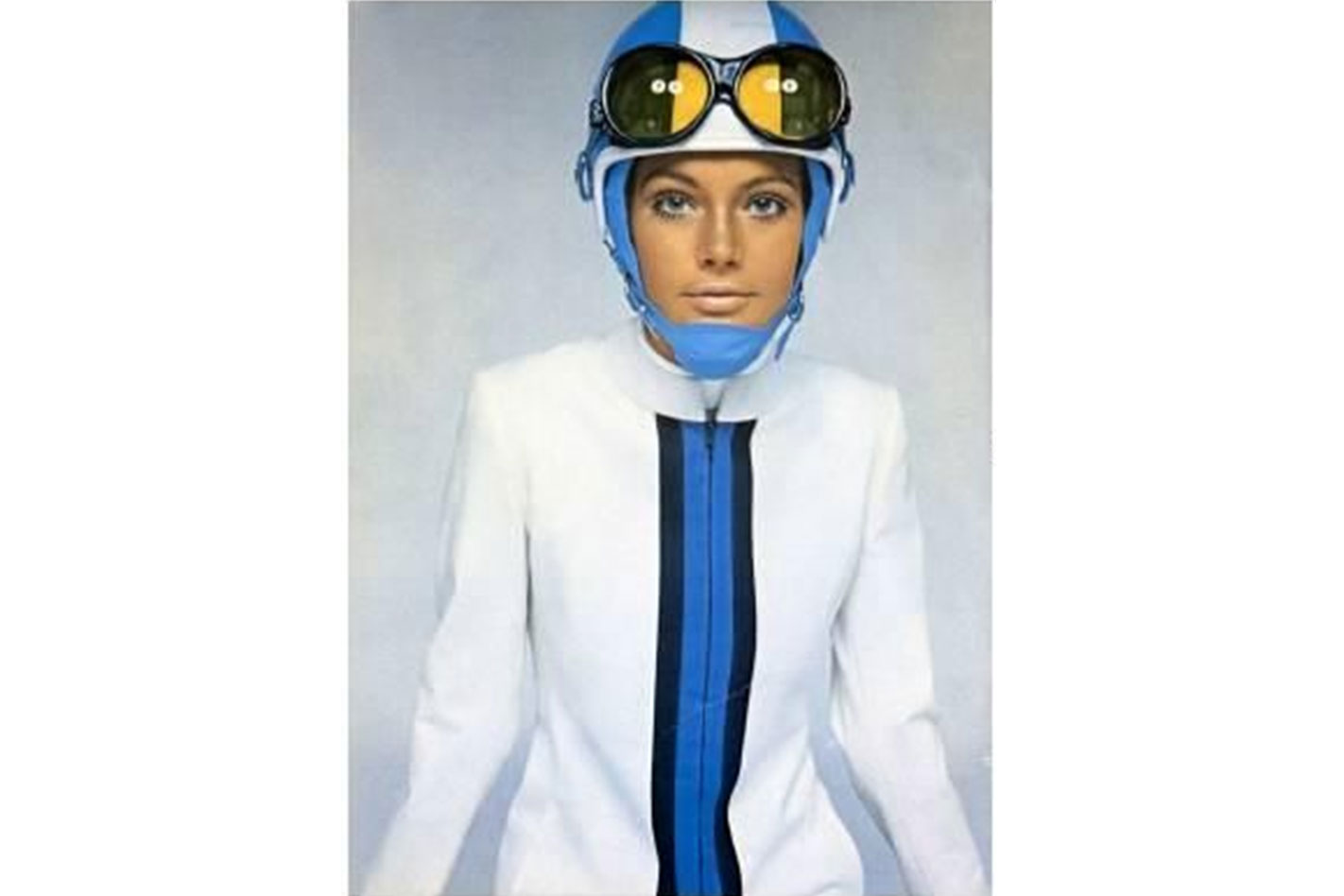
Aficionados of vintage rejoice. In 1972, fashion designer Pierre Cardin teamed up with American Motors Corporation (AMC) to design the interiors of the Javelin. It featured a six-stripe pattern in colours that matched the exterior: Trans Am Red, Snow White, Stardust Silver, Diamond Blue, Wild Plum and the limited Midnight Black. We know, the names of the colours mean nothing to you, but they sound so pretty, don’t they!?
CADILLAC CORSET (1989) BY THIERRY MUGLER
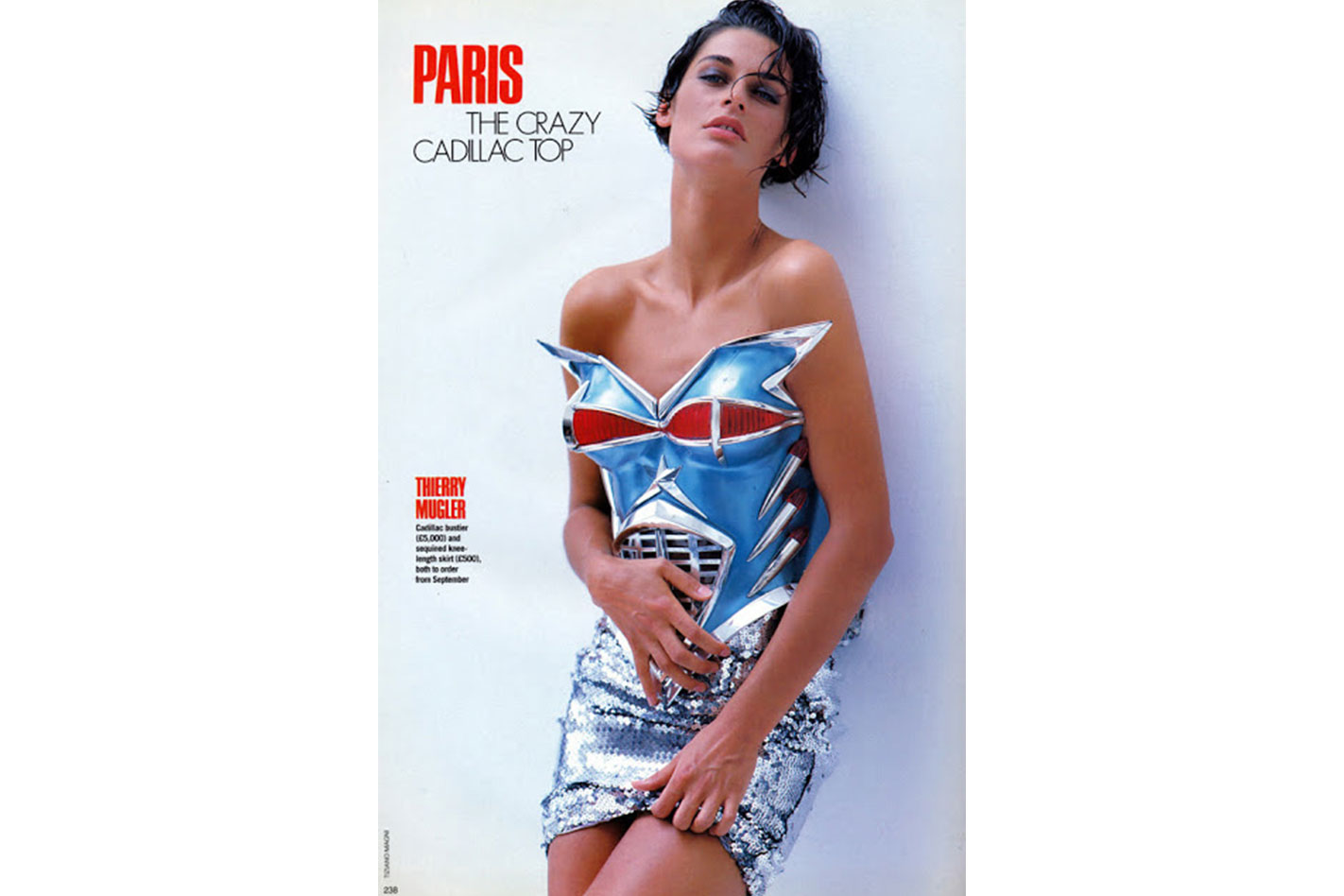
In 1989, Mugler had a stroke of genius and released his Cadillac corset which has been donned by many over the years, including Naomi Campbell in a 1989 issue of Vogue Italia. The sexy sass is Mugler at his best and the optional black gloves with red tail-light detail take it up a notch. Broom broom indeed!
MOTORCYCLE BUSTIER (1992) BY THIERRY MUGLER
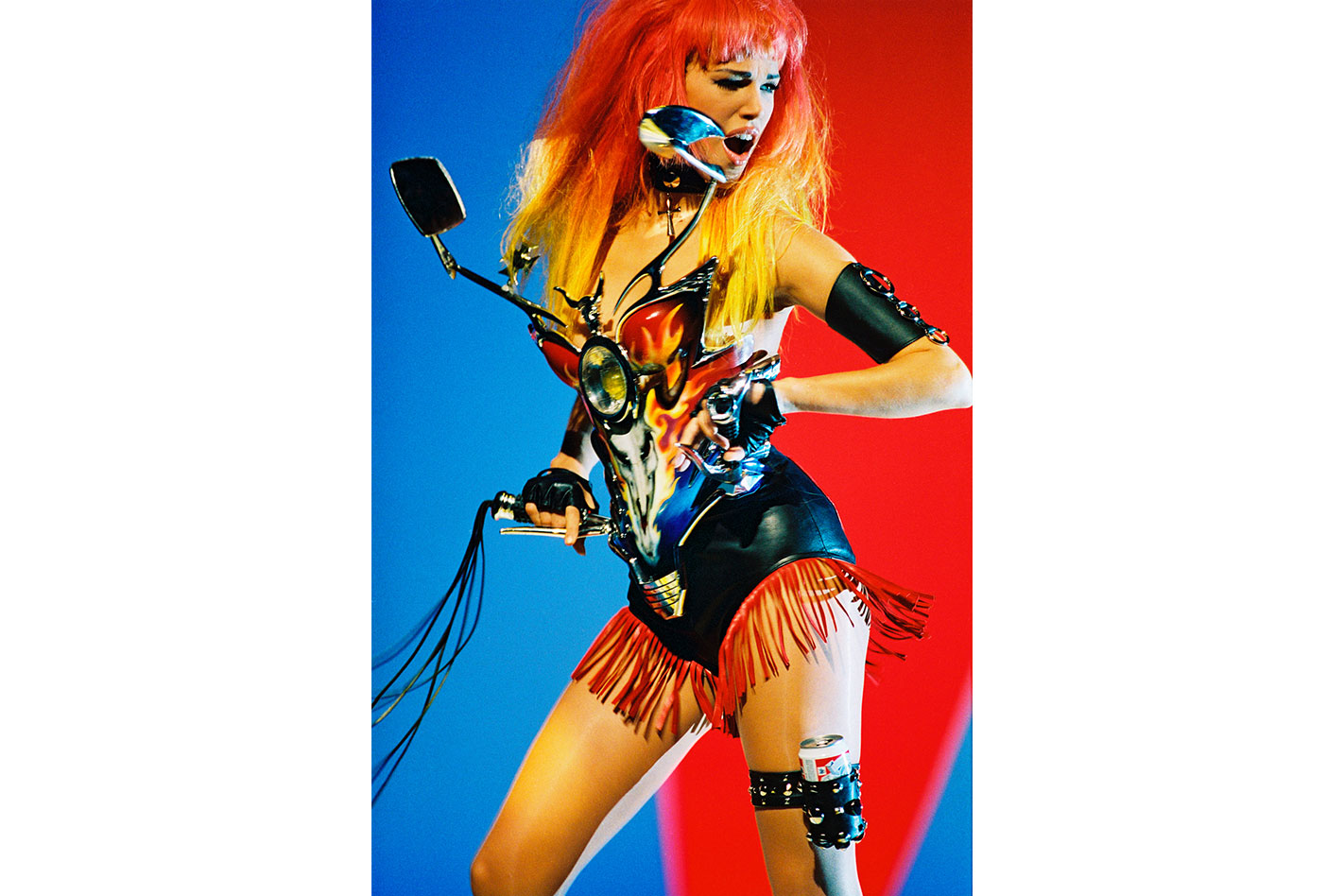
Technically a bike but what is a missing pair of wheels among fashionistas? Anyone too young to have seen it stalking through George Michael’s Too Funky video clip would have caught it on bodacious Beyoncé’s I Am… Sasha Fierce album. Resplendent with side mirrors, handbrakes, handles for resting, and a quilted derriere for sitting, this leather-fringed motorcycle bustier is the epitome of biker grrrl! If it’s good enough for Beyoncé….
“TRAILER TRASH” HANDBAGS BY CARS (2001) BY JOHN GALLIANO FOR DIOR
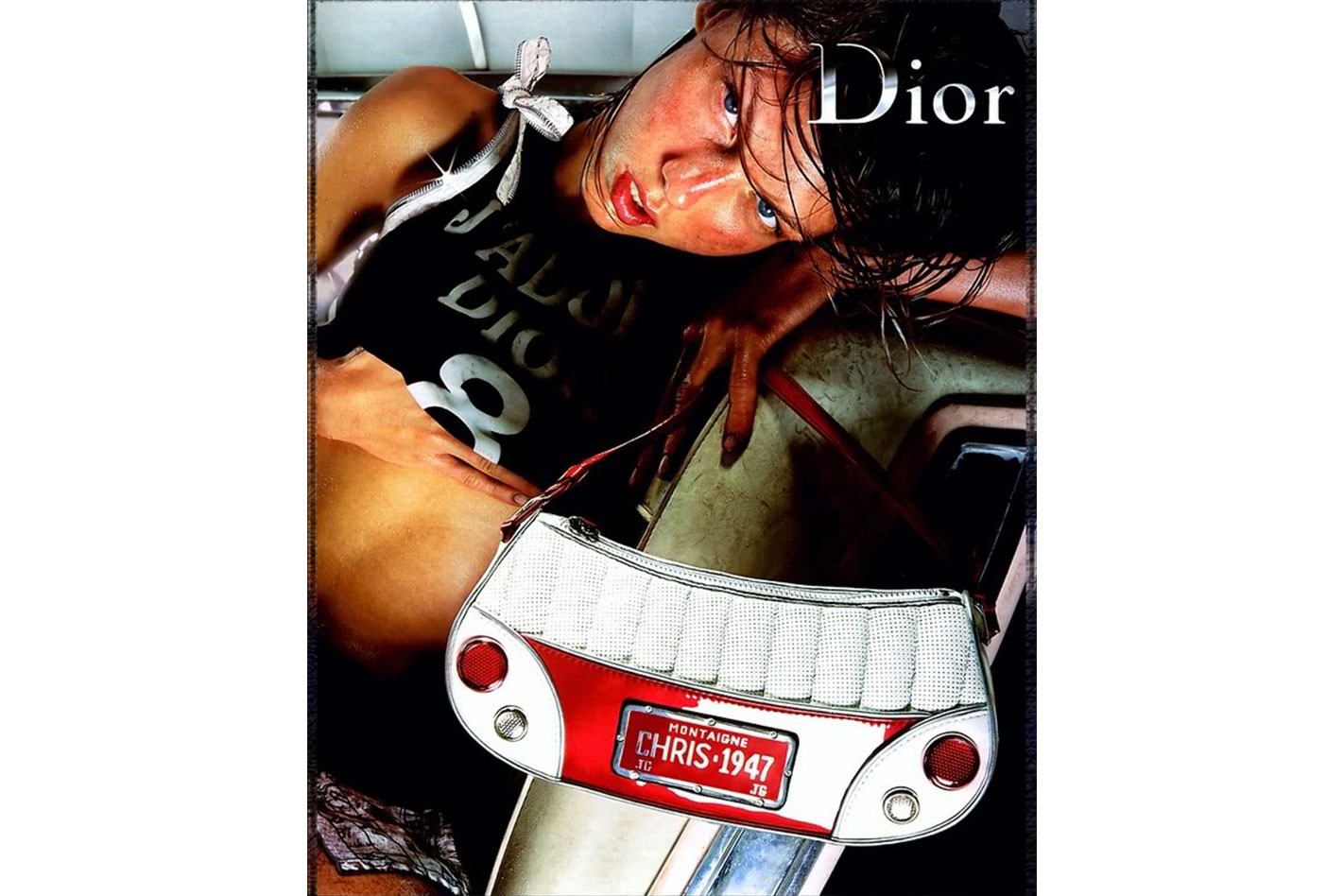
John Galliano designed the controversial and wildly successful Trailer Park collection for Dior in 2001, glorifying “the status symbols of an invisible class” with accessories that were a blend of Cadillac and Fender guitars. The bags, which were part of the Trailer Trash range, featured miniature steering wheels to fasten the strap to bags, tiny taillights, perforated tuck-and-roll upholstery, door handles and reflectors. The 1947 license plate adorning the bags, was a link to the year Dior opened his Avenue Montaigne boutique. We’re not sure if this is très chic or très ick.
PRET-A-PORTER STREETKA (2004) BY BRUCE OLDFIELD
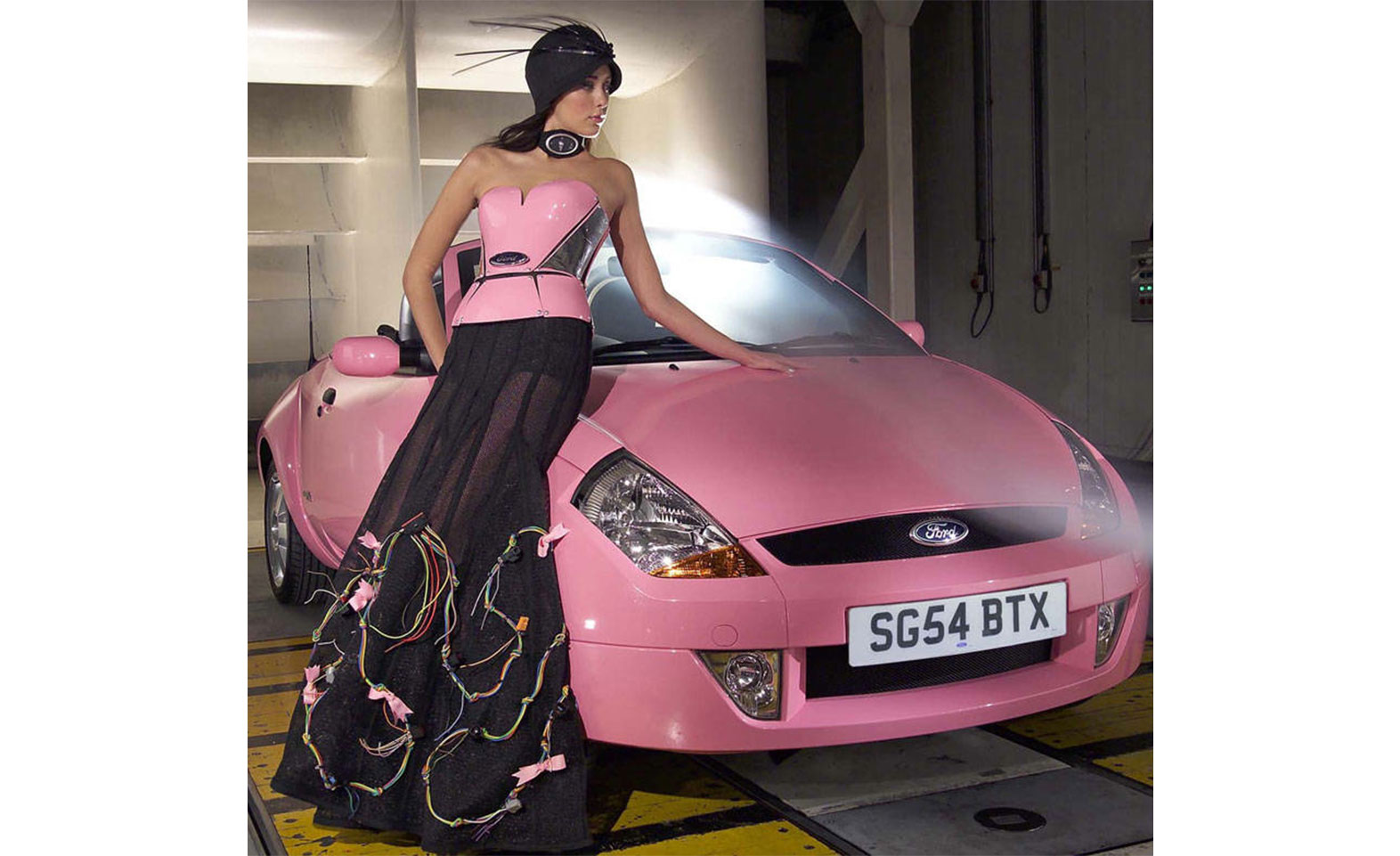
Possibly the only car-inspired dress actually constructed by the car maker, the Streetka dress was a collaboration between designer Bruce Oldfield and Ford to raise money for charity and awareness for the Thunderbirds movie. Oldfield incorporated 85 car parts including the pink fiberglass corset, a chocker made from the car’s clock, and a peek-a-boo skirt made from the mesh of the front grille plus cable ties. We’re pretty sure Jennifer Mirrson and Selena Gomez wore something similar, once, minus the cables.
AMERICAN DREAM American Dream WEARABLE ART BY SARAH THOMAS
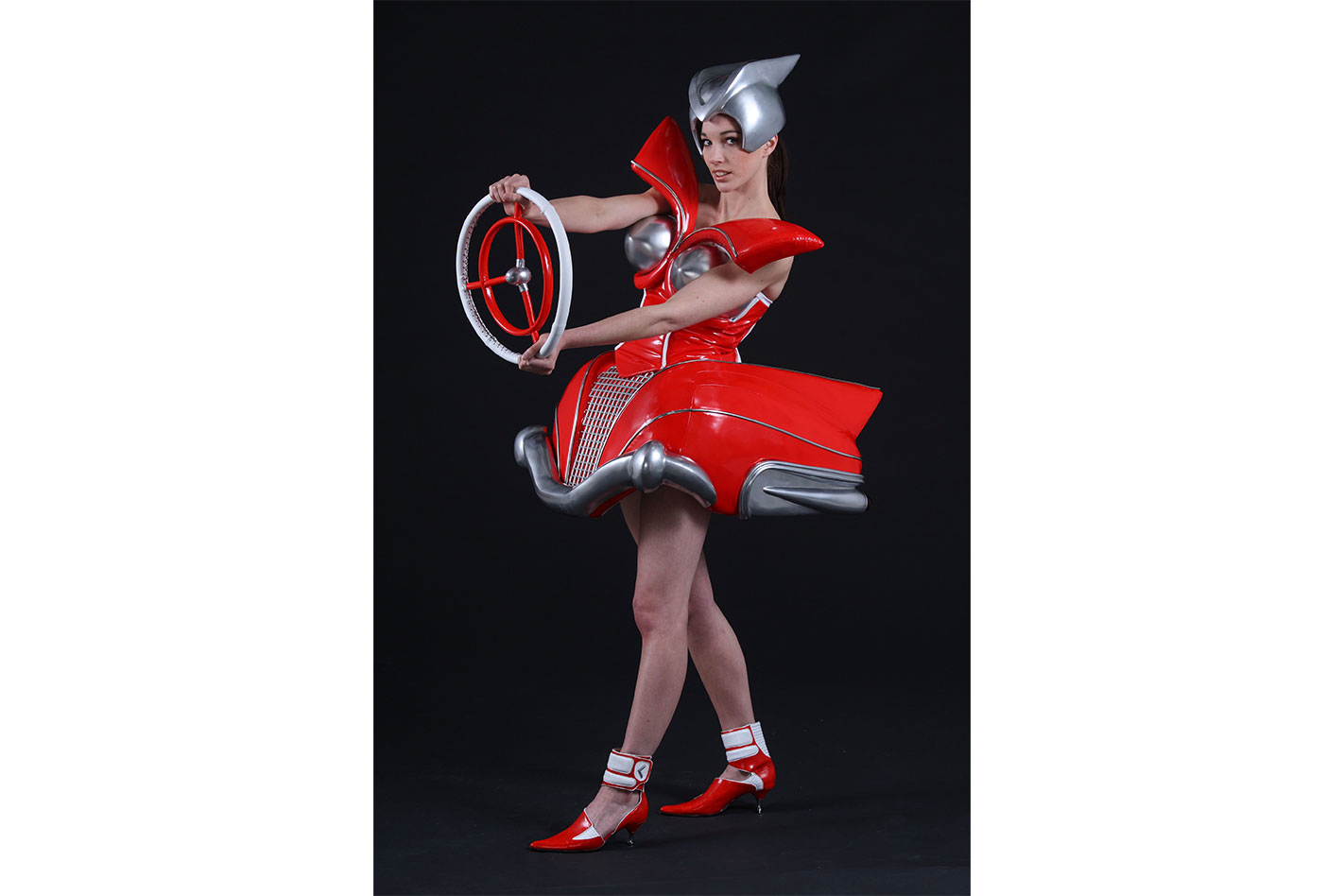
Kiwi and Timaru artist Sarah Thomas took out the 2009 World Wearable Art competition with her wearable 1950s Cadillac costume. Created from vinyl, leather, papier-mâché, builders foam and plastic, this dress features a perky bustle, ‘chromium’ conical breastplate and matching winged helmet and a detached steering wheel for impact – how could you go wrong? Fancy dress party anyone?
PRADA SPRING/SUMMER 2012 SHOES STYLED ON CLASSIC CARS
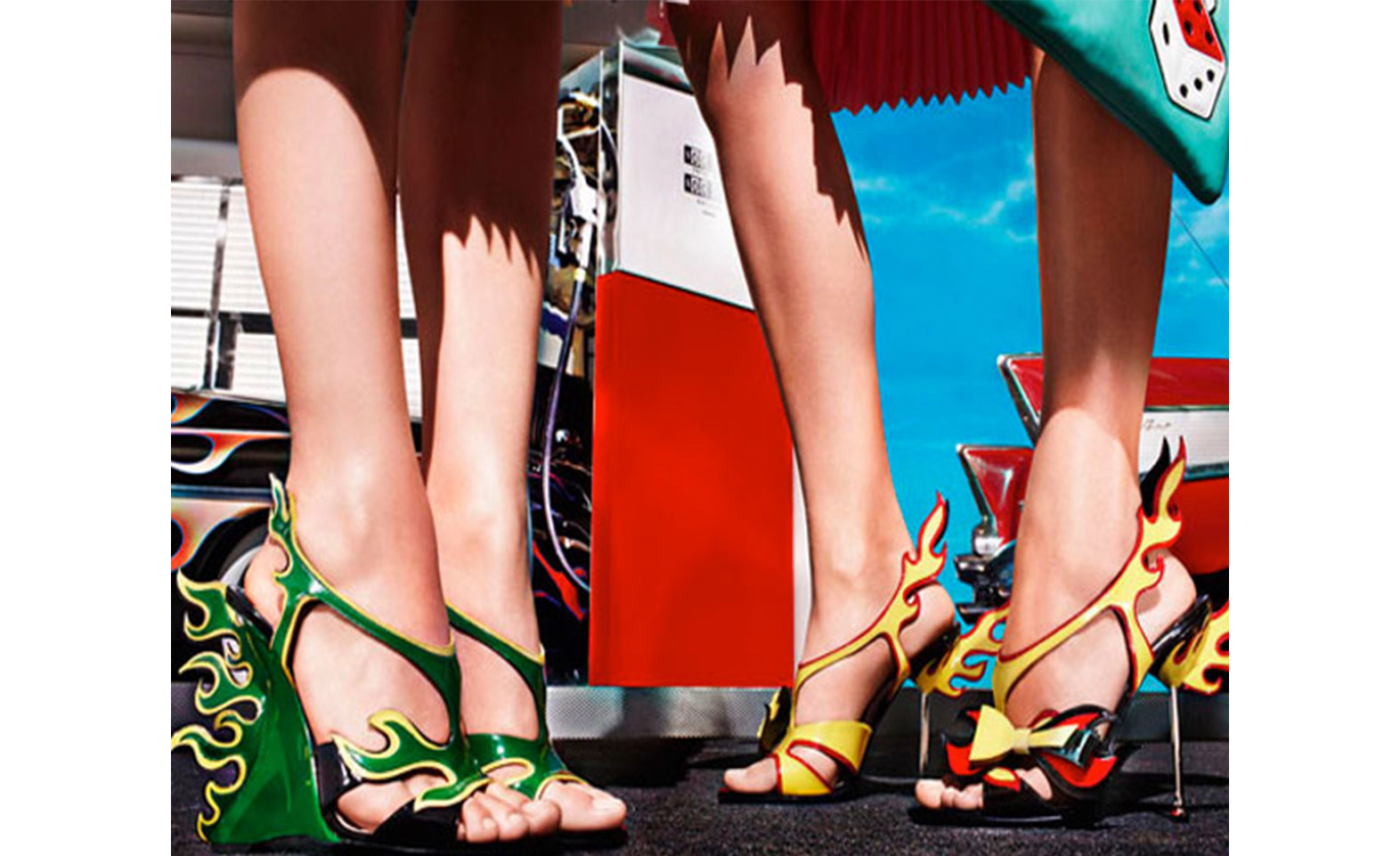
Miuccia Prada’s Spring/Summer 2012 shoe collection was inspired by classic American cars. The campaign featured models atop vintage cars at a 1950s-style American gas station. The hot rod-heels were designed using flames, spoilers, wings, taillights, patent vinyl and chrome, perfectly capturing the 1950s, an era when the automobile changed the face of American culture. Hashtag, love!
GIVENCHY SPRING 2014 MENSWEAR FEATURING TRANSFORMERS
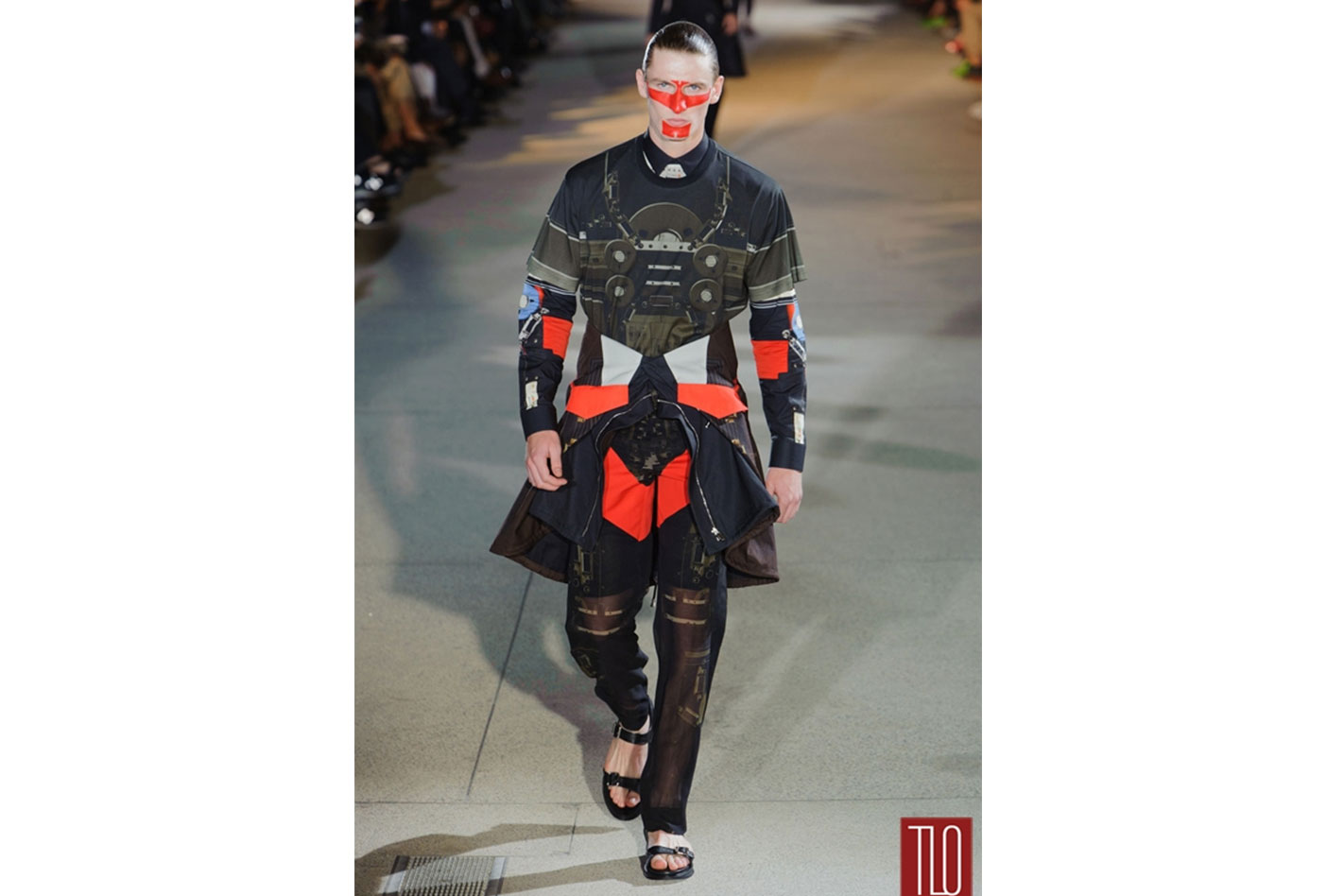
Men already identify their car affiliations with branded shirts, hats and muscle car graphics, but Givenchy’s creative director, Ricardo Tisci, took it to a whole new fashion level in 2014. Officially titled Nerd African, the extensive use of those car/robot graphics on the clothes and the models’ faces is 100 per cent Transformer – it would seem Optimus Prime can transform himself into more than a Fire Engine.
