
The E63 BMW M6 coupe was and still is a total cruise missile.
Built to be just as comfortable doing 300km/h down the Autobahn as it was at the race track, the M6 was the ultimate track-tuned super tourer.
Key to its charm was the 5.0-litre naturally aspirated V10 screamer under the bonnet producing 373kW/520Nm.
The 0-100km/h sprint took 4.6 seconds and with the 250km/h speed limiter removed this era of M5/6 could crack 322km/h (200mph).
It’s only real downfall was its peanut sized fuel tank, which drained very quickly when connected to the M6’s burly V10 engine.
When new the big Beemer would’ve cost you $275k, now it can be had for $59,990, less than a base 320d diesel sedan – isn’t depreciation wonderful?
It’s not lacking in the amenities department either, equipped with all the mod-cons like a seven-speed gearbox with selectable gearshift ferocity, a carbon fibre roof, tyre pressure sensors, iDrive with satnav, parking sensors – pretty much everything you get in a new BMW. We’re not quite sold on the brown leather though.
The M6’s unique styling has also held up pretty well over the years. Its ‘Bangle butt’ won’t be to everyone’s taste, but the thing has presence.
For more images and information click here.
Get your free weekly report from the world of fast cars – subscribe to the MOTOR newsletter!
Mitsubishi has extensively revised the engineering and styling of its Outlander SUV, while enhancing value. But has enough been done to shake up the hotly competitive mid-sized market segment?
WHAT IS IT? Mid-size SUV with choice of two- or four-wheel drive, aimed at families who demand the versatility of a third row of seats. Take your pick of two petrol engines and a turbo diesel. Sometimes a people carrier; occasionally an off-roader.
WHY WE’RE TESTING IT Significant mid-life facelift covers redesigned nose, tail and cabin styling and extensive re-engineering. This includes new-generation CVT, recalibrated steering, improved structural rigidity, lower NVH (noise, vibration and harshness), revised suspension tune and with the promise of enhanced ride quality and comfort. Richer features for a value boost, too.
MAIN RIVALS Jeep Cherokee, Mazda CX-5, Toyota RAV-4, Kia Sportage, Nissan X-Trail
THE WHEELS VERDICT The Outlander is in a hotly contested segment where good is barely enough, and average merely guarantees consumer indifference. The mid-life upgrade, though worthy, is not quite there.
PLUS: Quieter; smoother; improved seat comfort; drives nicer; smarter looks; seven-seat capacity MINUS: Petrol engines lack urge; confusing infotainment system; no wow factor inside
THE WHEELS REVIEW JUST what does the Mitsubishi brand represent these days? That was an easier question to answer back a bit when its catalogue offered up robust four-wheel-drive wagons and utes, and some lightning-bolt turbo sporties.
The turbocharged Starion, Galant VR-4 and a succession of manic rally based Evos showed Mitsubishi could be daring and inventive if not always hitting the target (3000GT). Mitsubishis were over-engineered, solid, durable…
Crippling debt, a period of “occupation” by Daimler and subsequent cost-cutting, sliding morale and a subjugation of ideas did hurt sales and reputation. The recent dearth of fresh product, specifically much needed replacements for the Lancer and Pajero, has brought no sign of a revival.
Hope arrives with the well-received, more refined new Triton ute – the company’s best seller in Australia – and a facelift for the mid-size Outlander.
More handsome than before on the outside, the Outlander’s cabin also benefits from an upgrade in furnishings, with some pleasing soft-touch areas, and a new steering wheel. Improvements to the seat bolstering guarantee the tush and torso stay happy on long road trips.
The base LS looks and feels smarter with its new headlining and a sunglasses holder, along with new trim materials and stitching.
However, the infotainment system is confusing and frustrating; phone pairing and audio streaming should be simpler.
Nicer though the interior now is, it’s not as premium as its Jeep, Subaru and Mazda rivals.
Mitsubishi has endowed a generous level of standard gear on the Outlander, including a reversing camera and sensors.
The mid-grade XLS 4WD (highlighted here) now gets digital radio reception, electric folding and heated door mirrors, and electro-chromatic auto-dimming interior mirror in addition to auto lights and wipers, dual-zone climate control and satellite navigation.
Some significant engineering has gone on under the skin but, frustratingly, the 2.0-litre and 2.4-litre four-cylinder petrol engines don’t benefit from much more than minor fuel consumption improvements. The $35K XLS’s torque-deficient 2.4 does its best work on the flat but struggles on hills and overtaking.
The upgraded constantly variable transmission on the petrol models has improved off-the-mark acceleration and fuel efficiency. It is now less likely to drop into that annoying “slippy clutch” sensation that blighted many early CVTs. Not as slick as the Subaru CVT, though.
Most noticeable is serious work done in the area of NVH (noise, vibration and harshness). The Outlander is certainly quieter inside, with muted engine and road sounds, and more refined overall. Redesigned door seals also give a new, improved solid sound when closing the doors.
New, bigger rear dampers and retuned electronic steering have helped improve straight-line stability and ride comfort. While the front suspension can still be caught out on sharper bumps, the ride/handling package is more agreeable.
The seven-seat option isn’t widely available in this segment and should be a popular pick.
The extensively rejigged Outlander does represent a step forward in looks, comfort and refinement, but it needs more to put the frighteners into rivals led by the Mazda CX-5, Toyota RAV4 and Jeep Cherokee.
SPECS Model: Mitsubishi Outlander XLS seven-seat 4WD Engine: 2360cc 4cyl, sohc, 16v Max power: 124kW @ 6000rpm Max torque: 220Nm @ 4200rpm Transmission: CVT automatic Weight: 1535kg 0-100km/h: n/a Fuel economy: 7.2 L/100km Price: $36,490 On sale: Now
MORE: Mitsubishi Outlander Range Review MORE: Mitsubishi Outlander Specs, Range & Price
The Race to the Sky hillclimb, located in New Zealand’s Cordrona Valley, is one of the world’s greatest gravel roads.
Its 14.5km course is terrifyingly fast with enormous drop offs, and now Pikes Peak is paved, it’s the longest gravel hillclimb in the world.
This year’s event was won by Scotsman Alister McRae, fittingly driving a highly modified 600kW Subaru Impreza World Rally Car that once belonged to the late Possum Bourne.
Following an engine failure in qualifying, the Possum Bourne Motorsport team raced against the clock to fit a new engine, which despite being slightly down on power, McRae used to good effect to climb the hill in 8min17sec.
The Scotsman, brother of Colin, hasn’t competed at an elite level for almost a decade, but appears to have lost none of his speed or commitment, judging by this jaw-dropping footage.
Get your free weekly report from the world of fast cars – subscribe to the MOTOR newsletter!
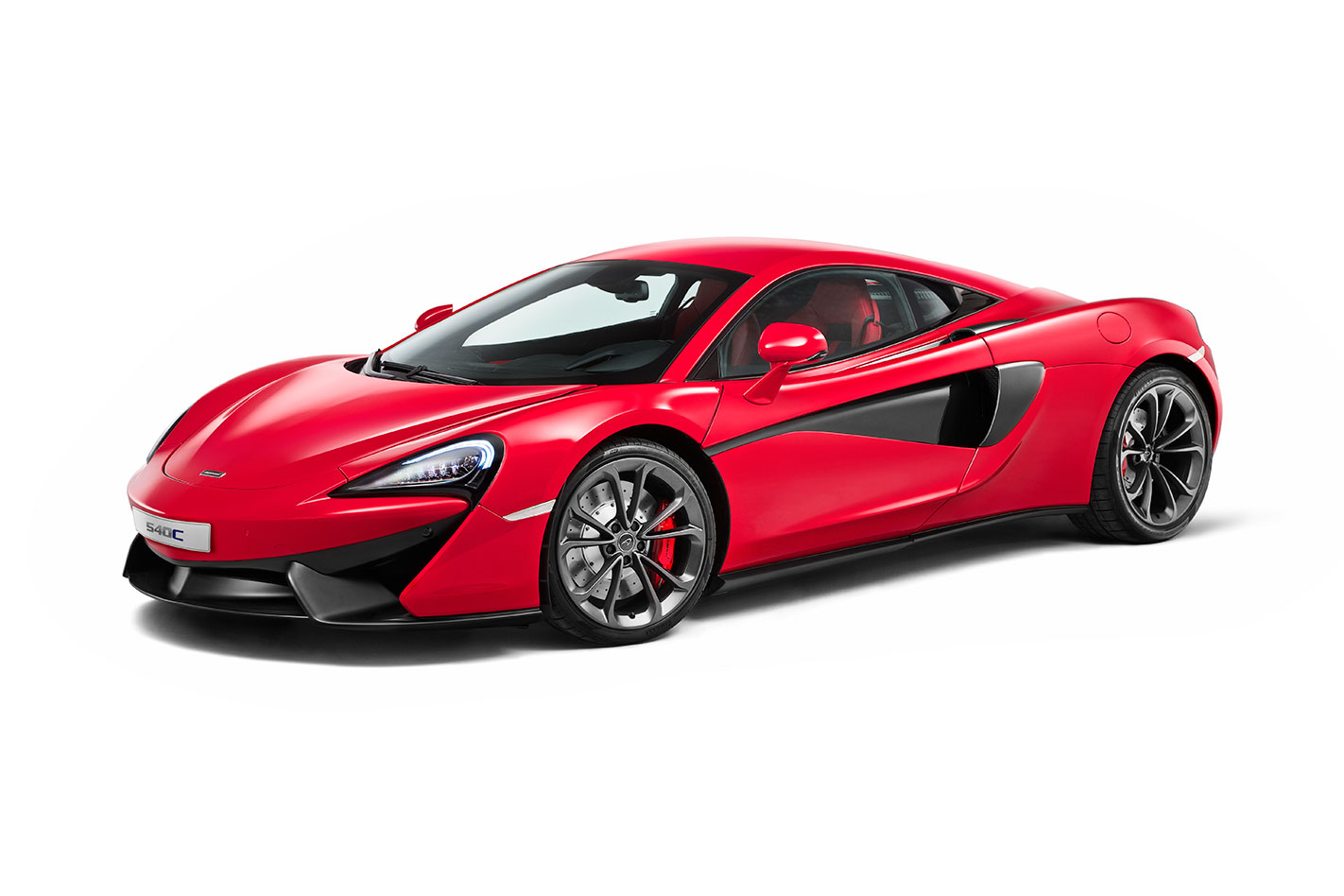
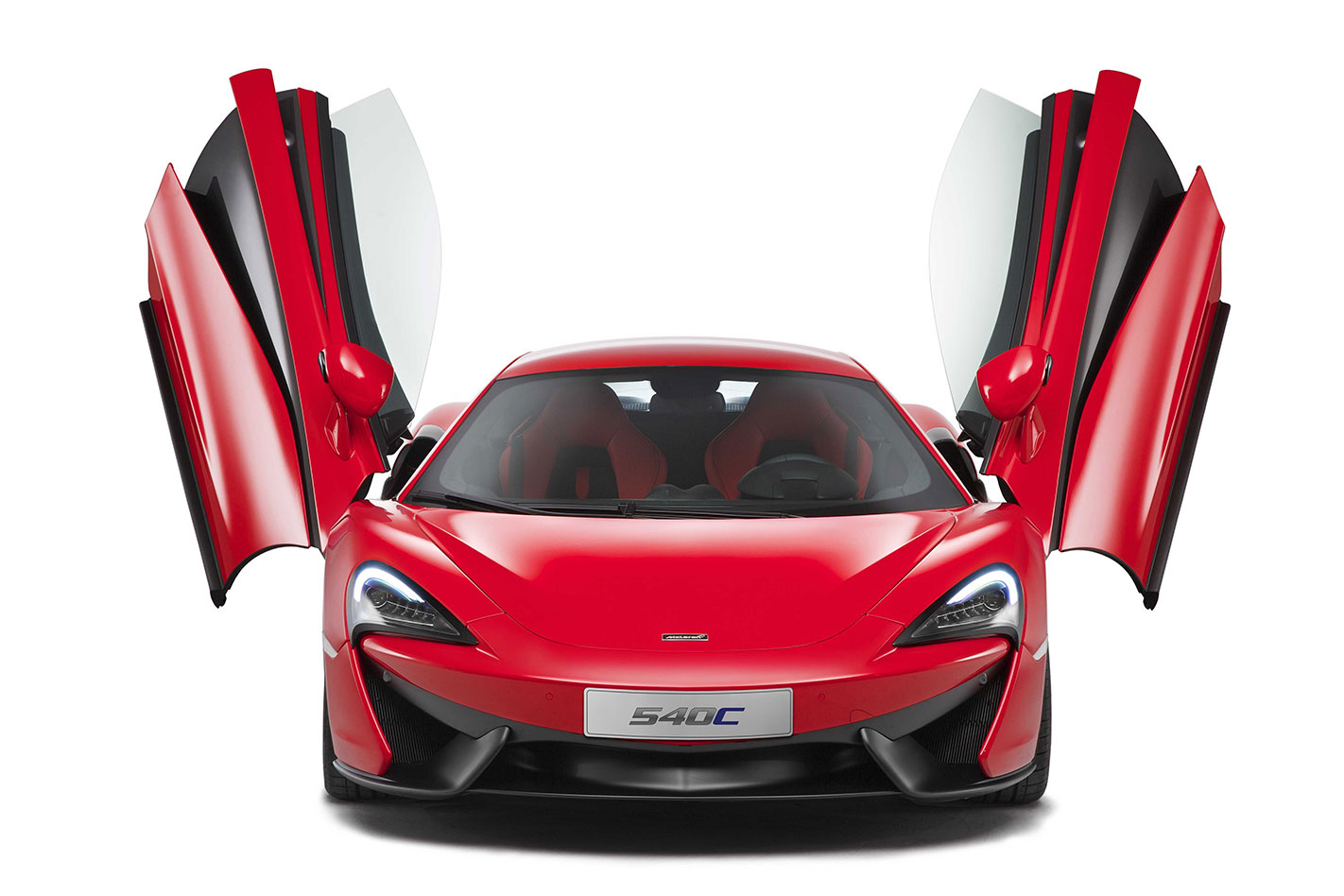
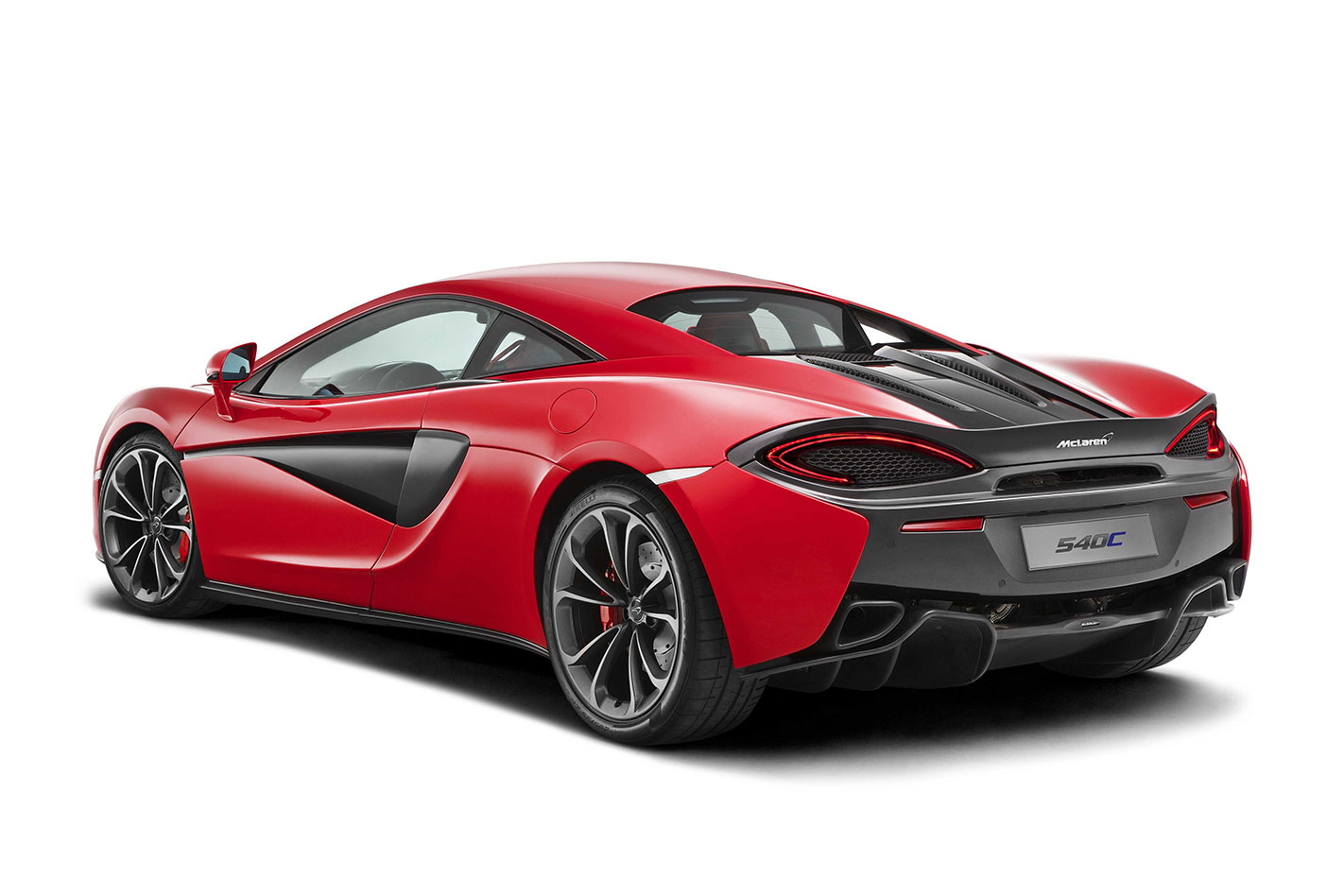
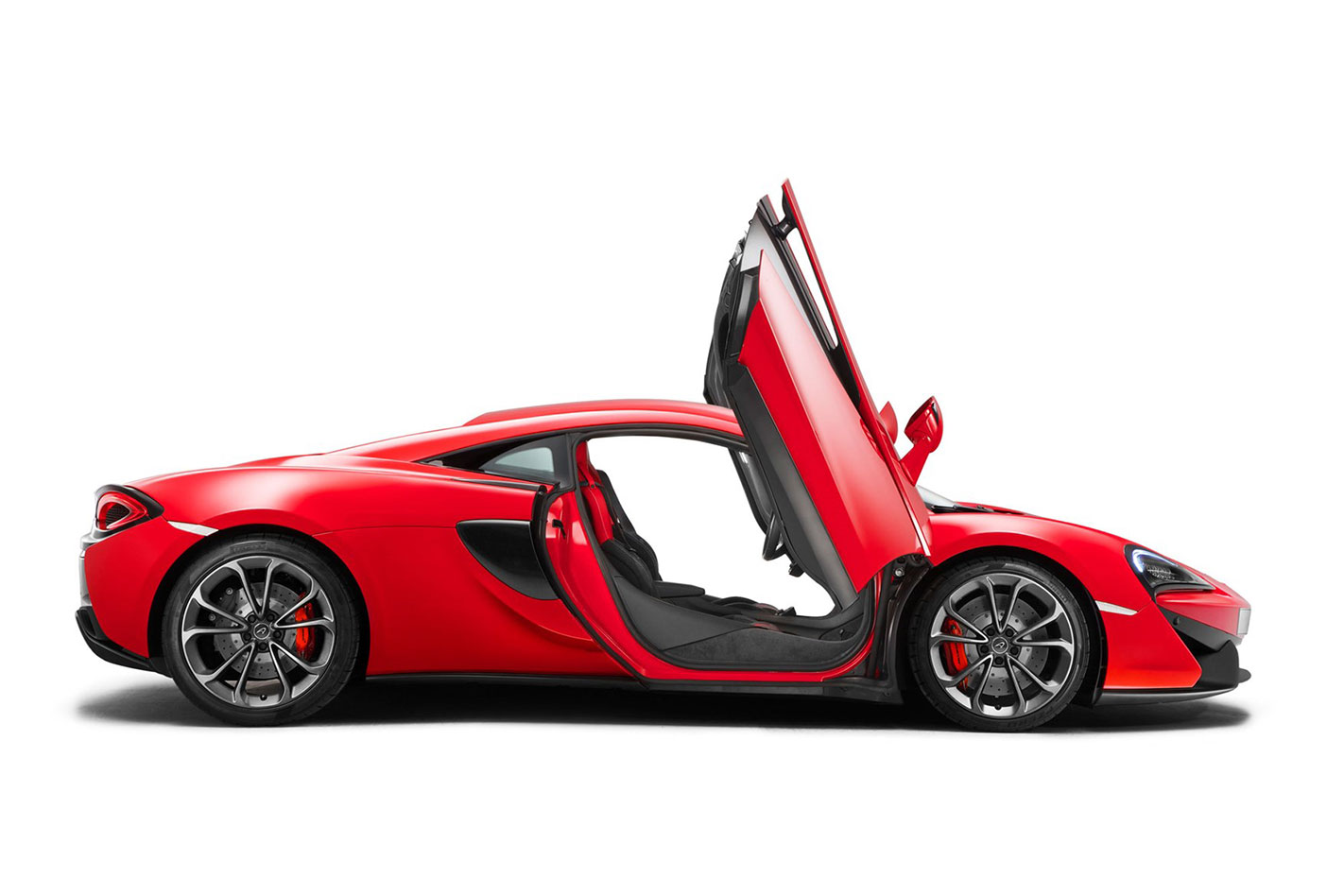
THE McLaren 540C has been unveiled at the Shanghai motor show, aimed directly at the Porsche 911 Turbo and Audi R8 supercars and creating the most affordable performance car from the sports car maker yet.
Yet the supercar maker is confident that sales of the second Sports Series model to join its showroom ─ alongside the 570S ─ won’t be hit by the McLaren racing team’s disastrous start to the 2015 Formula One season.
At last weekend’s Bahrain Gran Prix, McLaren’s lead driver, former world champion Fernando Alonso, recorded his best result of the year ─ a lowly 11th ─ but has still failed to score a single point so far. Nor has teammate Jenson Button, whose McLaren MP4-30 failed to complete Friday practice, then qualifying, and couldn’t even make the grid for Sunday’s race.
“The heritage of the company is built on racing,” McLaren’s executive director of product development, Mark Vinnels, told Wheels. “But as a road car business we’ve only been around three or four years.”
Vinnels said the road car division of McLaren now dwarfed the racing arm in terms of the size of its operations, but the achievements of the more than five decades old McLaren race team had enabled the young road car department to develop far more quickly than what would be possible using a new name from scratch. “We’d all love the F1 team to be doing better, but we knew it would be a tough challenge,” he said.
That’s in contrast to F1 rival Ferrari, where at the 2014 Paris motor show, Fiat Chrysler Automobiles boss Sergio Marchionne said that despite record sales of Ferrari road cars, winning in Formula One was ‘not negotiable’ for the Italian brand.
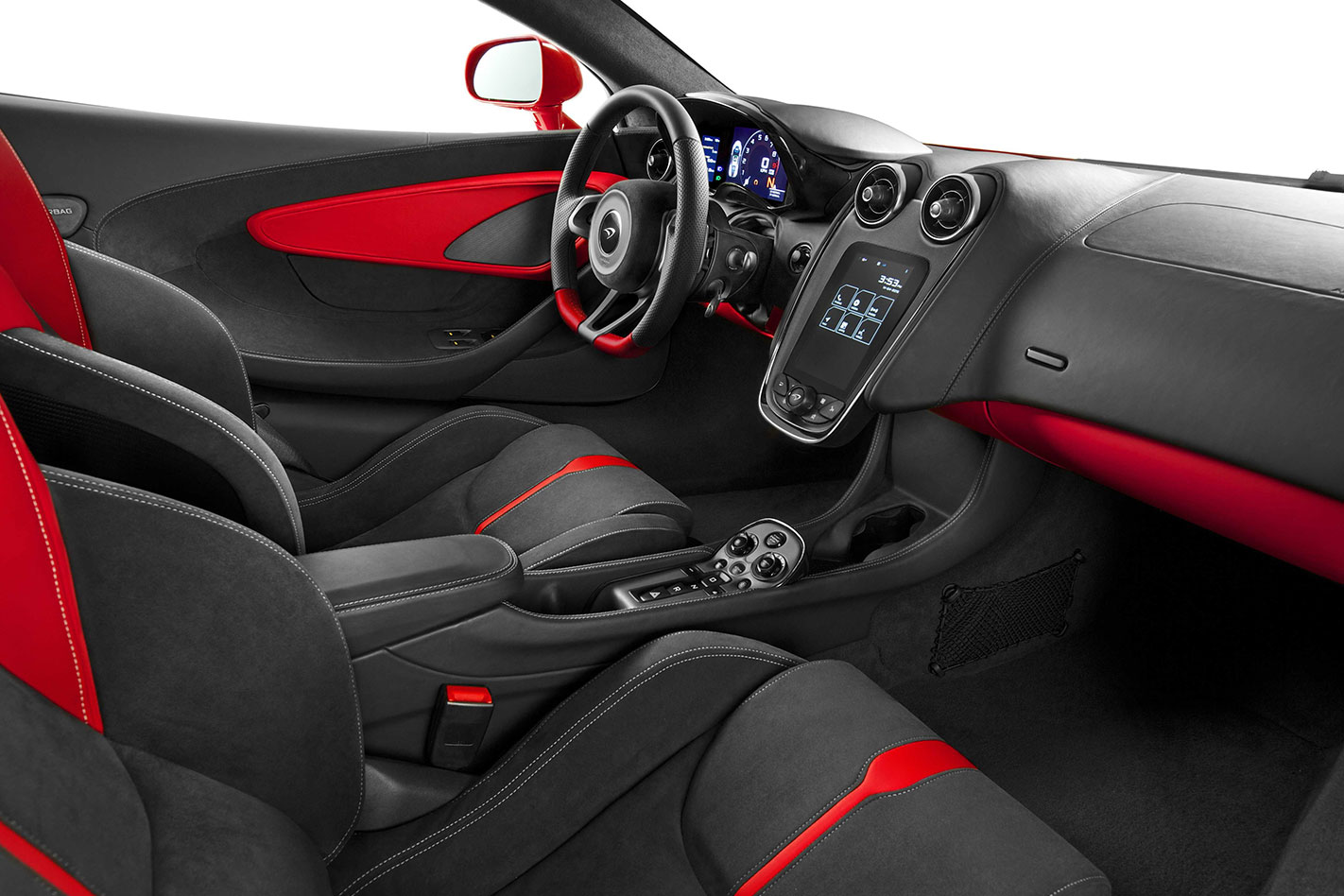
The McLaren 540C is based on the same carbonfibre monocell chassis as the 570S and powered by a 397kW version of the 3.8-litre twin-turbo V8 used throughout the McLaren line-up. Its performance claims boast a 0-100km time of 3.5sec and a 320km/h top speed.
While pricing for the Australian market is yet to be confirmed, the 540C’s UK price of £126,000 is within a breath of the Porsche 911 Turbo at £120,598 and the Audi R8 V10 that costs £123,485. That would translate to an ask of around $300K here.
Yet despite using derivatives of the same chassis and engine, Vinnels denies that McLaren’s products are too similar, and that its more costly models appear overpriced.
“No that’s totally not true ─ I don’t agree with that,” he said. “It was always part of the plan to roll out as part of the platform strategy models in three price points; Ultimate, Super and Sports. And we did understand and consider cannibalisation issues that could occur, but now for us it’s really important that we communicate clearly that there is a marked difference in performance.
With the company’s expansion, Vinnels told Wheels that we’re not about to see a McLaren on every corner, each rapper’s music video or every merchant banker’s McMansion.
“We don’t want to be more than around 4000-4500 cars,” Vinnels said. “We’re never chasing volume ─ we want the brand to be recognised, we want the car to be recognised, but it’s an aspirational and exclusive brand. Certainly our economics are based on thousands and thousands of cars.”
Sign up here to receive the latest round-up of Wheels news, reviews and video highlights straight to your inbox each week.
Peugeot has confirmed its sexy RCZ coupe will not be replaced by a new model.
Speaking to Autocar at the Shanghai Motor Show, Peugeot Brand CEO, Maxime Picat, confirmed that the RCZ will be culled as the French manufacturer reduces its model range from 26 to 13 by 2022.
Peugeot has struggled financially for many years now, racking up enormous, multi-billion dollar losses in 2012 and 2013. The simplification of its model range is one of a number of drastic measures taken to ensure the company’s survival.
Picat explained that 13 models account for 95 per cent of Peugeot’s sales and 100 per cent of its profit, making cutting the slow-selling RCZ an easy decision.
As of March 2015, Peugeot’s local arms has sold 917 RCZs since its introduction in 2010, with almost a third of those sales coming in 2011, the car’s first full year on sale.
While it hasn’t raced off the dealer forecourts, there is a lot to like about Peugeot’s sleek front-drive coupe.
Its distinctive looks are unlike anything else on the road and its driving dynamics are excellent in turbo-petrol form. The range-topping RCZ-R lifted its game even further, finishing fourth at last year’s Performance Car of the Year.
While the demise of the RCZ is unfortunate, cars like the 208 GTi 30th Anniversary and 308 R Hybrid concept prove that Peugeot still has plenty to offer enthusiasts.
Get your free weekly report from the world of fast cars – subscribe to the MOTOR newsletter!
Sant’Agata has taken its providence by the horns, establishing a new caretaking department for historic Lamborghini models.
Dubbed the Lamborghini Polo Storico, the new arm of Automobili Lamborghini reestablishes the company’s Restoration Center while offering a host of key services aimed at cementing and validating its rich road car history.
One key to the new department is the administration of the brand’s historical archives, called the Archivo Storico Lamborghini, which aims to curate records of historic car models, which includes technical schemes and details about body colours and trim materials.
The Archivo Storico Lamborghini will also become custodian of historic images, official factory publications and other documentation as record for the use of owners, researchers and journalists.
The Lamborghini Polo Storico is more than a brains trust for the supercar maker. It’ll offer a range of “unique services that allows owners to preserve, maintain and restore their vehicles to original specification using exclusively original spare parts.”
Lamborghini claims that its new retro skunkworks will ply its official parts supply and “unique techniques” to restore less-than-concourse old models to a level that is certifiably factory approved.
In fact, old vehicles restored or not can, for a price, be inspected by a “technical committee” and processed for written certification.
Lamborghini Polo Storico will also launch a website portal where owners and buyers can retrieve catalogues of old models and order spare parts from anywhere in the world. Or, at a stretch, have bespoke parts reproduced from original blueprints.
While this all might sound like pedantic excess to those of us outside of Lambo ownership, this new department is sure to become a crucial resource for owners and buyers navigating the often murky and treacherous waters of classic exotica.
THE banana in the corner of the 2015 Shanghai motor show is the Mercedes GLC Coupe. The GLC is Mercedes’ answer to the BMW X4 SUV, and is essentially a coupe version of the GLK replacement.
The big banana is based on the C-Class platform but rides on 21-inch wheels in show guise, and is draped with a body that carries the same design language that started with the A-Class. It puts on a Mercedes grille and LED headlamps, aping the C-Class’s front and rear bumpers with sharp, sculpted sides, a swooping roofline and elongated glasshouse that gives it the name. Of course, it still has four doors and is essentially a preview of the GLK replacement, the regular GLC that will take on the BMW X3 with its higher roofline.
It’s much smaller than the similarly styled GLE Coupe, with a 4.73m length and 2.83m wheelbase, and sits just 1.63m high. Those wheel arches will be able to comfortably house 21-inch wheels for production, says Mercedes, which for the show are shod in 285mm wide tyres. They will cop the full brunt of the 274kW/520Nm twin-turbo V6 that’s currently offered in 245kW guise the Mercedes E400 sedan, and sends its power through a nine-speed auto to all four wheels.
The production version of the GLC Coupe will likely kick off with a 2.0-litre turbocharged four-cylinder, but the fact that Mercedes has shown a coupe points to a Mercedes-AMG GLC 63 powered by the growling 375kW 4.0-litre twin-turbo V8 that’s also under the bonnet of the C63 AMG. Yet Mercedes hasn’t confirmed an AMG version, which would make a natural enemy to a BMW X4M that’s also yet to be confirmed.
The GLC Coupe is one of seven SUVs Mercedes-Benz will eventually offer, with the Stuttgart-based brand soon to fill its showroom with more SUVs than its domestic rival, BMW. Mercedes will offer the GLC that’s expected to be shown at Frankfurt in September this year, as well as a production version of the GLC Coupe that will sit above the A-Class based GLA, and below the GLE and GLE Coupe twins. There’s also the brash and boxy G-Class, which will be renamed GLS under the new Mercedes nomenclature.
The Mercedes GLC Coupe is expected to be on sale in Australia in 2016, starting at an estimated $70,000.
Sign up here to receive the latest round-up of Wheels news, reviews and video highlights straight to your inbox each week.
NISSAN’S Australian casting and parts business will make components for a top secret future model in a deal that will secure its future “well beyond 2020”, the carmaker says.
“Some people will tell you local manufacturing is dead,” said Nissan Australia chief executive Richard Emery. “I can tell you it’s alive and well here at Nissan Australia.
“Our manufacturing business is going from strength to strength,” Emery said.
“Nissan Casting Australia continues to run close to capacity to satisfy global demand.”
Nissan’s Dandenong factory – a remnant of the carmaker’s local manufacturing and engine-casting business that ran from 1980 to 1992 – currently employs 160 workers.
It exports more than 2.3 million castings and 25,000 vehicle accessories to countries including Japan, US, UK, Thailand, South Korea and Mexico. All up, Nissan says its casting plant reaps around $65 million a year.
“We’re quietly flourishing,” said Peter Jones, the managing director of Nissan Casting Australia. “Amid the turmoil that’s been reported about our country’s manufacturing sector, especially in the local automotive industry, Nissan’s been working away in the background.
“At the moment we employ 160 staff, but we’re recruiting for more. Right now we have 30 job vacancies,” Jones said.
“We’re currently running three shifts a day, seven days a week and we’ve been doing that for six months. But we’re about to become busier.”
The Dandenong facility forges parts for 38 different vehicles across Nissan, Infiniti and Renault, including six models sold in Australia; the Nissan Leaf, Qashqai, Pathfinder and X-Trail, Renault Koleos, and Infiniti Q50. Every casting made in Australia includes a small kangaroo embossed on the aluminum.
Ironically, Nissan’s positive announcement came only hours after Holden revealed plans to fast-track the redundancies of 270 workers at its Elizabeth plant in Adelaide.
But while the contrasting announcements show the mixed fortunes of Australia’s manufacturing industry, Nissan told Wheels it had been waiting to reveal the news of its new deal for months.
“We didn’t want to be dancing on anybody’s graves to be honest, so I’ve been dancing around the topic for a year,’ said Emery.
“We didn’t want to be seen to be taking advantage of other people’s circumstances, so we sat back a bit. But as it turns out waiting has been positive because since then we’ve gained some more business.”
But while Nissan plans to employ more workers, Emery said any expansion beyond that was unlikely.
“There are some capacity issues,” said Emery. “We have lots of machines to employ people but we can only melt a certain amount of metal a day.
“We’re never going to absorb the number of people that will lose out of the Holden, Toyota and Ford position, but I think upwards of another 50, 60 or even 70 additional staff is where we might get to.”
Emery ended the interview by offering some sage advice for Holden, Ford and Toyota.
“Like us, decide what you’re good at, decide where you’ve got a competitive advantage and concentrate on that. That’s the best thing.”
Sign up here to receive the latest round-up of Wheels news, reviews and video highlights straight to your inbox each week.
While so many of today’s motor show prototypes sidestep the long-view and truly innovative spirit of the term ‘concept’, Chevrolet’s FNR boldly pioneers a snapshot of future motoring.
The centerpiece among 11 other models on the Chevrolet stand at the Auto Shanghai 2015 is, as pure design, a jaw-dropping collision of technical fancy and science fiction as art.
Developed by what GM calls its Pan Asia Technical Automotive Center joint venture, or PATAC, the FNR envisions what the autonomous electric car might look like in the distant future…or, perhaps, what could incubate creatures in some forthcoming Aliens franchise.
Its glass capsule has no ‘door’ design by any conventional sense – instead, the side glass and side structure essentially splits in two fore- and aft-hinged sections and raises skyward in what’s described as a “dragonfly” motion. It’s a great party trick.
The technical crystal-balling extends beyond styling and construction, most notably the magnetic hub-less electric motors application on each wheel – though the application is, as you’d expect, theoretical rather than applied.
A wireless auto-recharging system, crystal laser headlights and taillights, roof integrated radar and car-to-car ‘networking’ for autonomous drive systems and iris recognition start-up are, in designers’ fertile minds, what future generations can look forward to on the road.
In self-riving mode, the first-row seats in the cabin can rotate 180 degrees to face the rear seats – what manual-auto drive switching can be made using gesture control, a technology long trialed in the car industry but yet see production application.
While the FNR might be pure smoke and mirrors in terms of actual near-term application, it’s a neat insight into the minds of the car industry’s (far) forward-thinkers.
Get your free weekly report from the world of fast cars – subscribe to the MOTOR newsletter!
THE Opel-built next-gen Holden Astra hatchback has been sprung undergoing European spring testing in Germany, showing it will take the fight up to rivals including the Volkswagen Golf and Peugeot 308.
Due to make its global debut at September’s Frankfurt motor show, the Holden Astra is poised to replace the ageing Holden Cruze when production of the last-ever Aussie small car ceases in 2017.
The five-door Astra K hatch you see here will be built on the D2XX C-segment platform that, ironically, will also spawn the closely-related Holden Cruze replacement.
However, rumours suggest that the stylish three-door coupe body style may face the chop, leaving only the evergreen wagon and four-door sedan models.
GM is believed to be redirecting resources into the development of a C-segment crossover based on its global small-car architecture – a smart move considering that SUVs is where all the action is.
Besides boasting a sharper set of clothes and completely redesigned interior that’s about the same size as before, the Astra K is following in the footsteps of its Golf and 308 nemeses by focussing on significantly higher quality.
It is also reportedly shedding upwards of 100kg of weight in the interests of improved fuel efficiency and driveability.
A slew of lightweight three and four-cylinder downsized direct-injection petrol and diesel engine ranging from 1.0 to 1.6 litres are expected, all underpinned by a variation of the existing model’s Watts Link rear suspension system.
Holden fans should not confuse the all-new Astra K with the existing-gen Astra J-based GTC and VXR three-door hatch models returning to Australia next month, almost two years after their short-lived last visit wearing the Opel blitzkrieg badge. These are based on a design that dates back to 2009.
That’s not to say there won’t be high-performance offshoots to take on the GTI and co, with some reports suggesting future VXR variants will deliver more than 200kW of power.
As before, the Astra K will be built in the UK and Poland.
Concentrating only on the niche variants such as the existing coupe and related Holden Cascada convertible for the time being, Holden has yet to confirm the arrival of the more mainstream Astra hatchbacks as the eventual replacement for the Cruze, which still has about two years of fighting left despite being in long-term decline after six years on the Australian market.
However, it is clear that General Motors is in the midst of streamlining, with the next Astra stepping up as the corporation’s global small car combatant. The result will be pricing that will put the 2017 model right in the heartland of the Toyota Corolla, Mazda 3 and Ford Focus segment.
Have spy pics of your own? We’d love to see them. Just email them to [email protected]
