
MAZDA has the Toyota 86 in its crosshairs with a two-tiered MX-5 line-up aimed at tempting younger buyers back to the iconic roadster.
For the first time the MX-5 will be offered in Australia with the choice of two engines – a 1.5-litre four-cylinder and a 2.0-litre four (MX-5s have previously had 1.6, 1.8 and 2.0-litre engines, but only one has been available at any one time).
The smaller of the two direct injection engines, with just 96kW of power and selling from about $37K, will be the price leader and used to tempt younger buyers, something that has eluded the current $47,280 MX-5 as it approaches its 25th anniversary and rushes towards one million sales globally.
Mazda Australia boss Martin Benders said the current model was predominantly bought by people “reliving their youth” and that the younger buyers that once queued for MX-5s were now buying other vehicles, with the Toyota 86 and its Subaru BRZ twin at the top of the list.
“What we want to do with this new one, with the 1.5, is get back to our roots and start attracting some younger people,” said Benders, pointing to the success of the 86 and BRZ.
“What that’s shown is if you can get an attractive package in the $30-40 grand range you can get some serious volume out of it. There are young people out there wanting the right sort of car to drive … hopefully we can deliver an MX-5 package that does that to them.”
Benders said he did not want to alienate the older buyers who have kept the current generation of the diminutive roadster popular in the twilight of its life.
“I want to keep the current demographic but widen it.”
The new MX-5, codenamed ND and due in the third quarter of 2015, will bring with it an all-new body that is shorter than even the original MX-5 from 1989.
It also gets the most radical styling departure from all previous generations of MX-5s – the original NA, the NB and the NC that will soon be replaced.
There was some big news from Japan’s biggest car maker this week.
Toyota announced that it intends to return to the World Rally Championship in 2017, fielding a Yaris run by its Motorsports arm located in Cologne, Germany.
Why is this such a big deal? Well, along with Lancia and Ford, Toyota has one of the longest and most successful rally heritages of all time. We visited TMG last year and its rally back catalogue caused plenty of drooling.
It began in 1972, with Swede Ove Andersson, who would go on to run Toyota’s Motorsport Operations for 30 years, campaigning a Celica in the RAC rally that year.
The first win came at Rally Finland at 1975, but success would be sporadic for the next decade. Toyota took a number of wins on the gruelling Safari rally during the Group B era, where its slower, but simpler, two-wheel drive Celica Turbo was able to outlast the faster all-wheel drive opposition.
It was in the late-’80s that Toyota really got serious. The combination of the all-wheel drive Celica GT-Four and Spaniard Carlos Sainz took a little while to gel, but culminated in drivers’ championships in 1990 and 1992.
Further drivers’ titles followed in 1993 (Juha Kankkunen) and 1994 (Didier Auriol) while it also won the constructors’ title in 1993, 1994 and 1999, its last year of participation. Our tribute video features a selection of awesome footage from these glory days.
The arrival of Toyota will mean there will be five top-level manufacturers competing in WRC, providing a level of competition that hasn’t been since rallying’s halcyon days of the late’-90s.
The sleeping giant has awoken. Toyota will return to the World Rally Championship in 2017.
After months of speculation Toyota confirmed today in Tokyo, Japan, it will again compete in the WRC with German-based racing arm Toyota Motorsports GmbH spearheading the factory effort.
Toyota Motor Corporation has approved the WRC campaign and revealed its future rally machine will certainly be more hostile than the 79kW city car it’ll be based on.
Unveiled today in fresh livery, the all-wheel drive Yaris WRC test vehicle features a 1.6-litre turbocharged four-cylinder producing 221kW and 420Nm. The engine’s married to a six-speed sequential transmission and sees 8500rpm before up-shifts.
New resources will be allocated to developing the Yaris WRC as Toyota ramps up to the 2017 debut. More bodies are promised for the car’s engineering crew and Toyota has founded a development driver program with 27-year-old French test driver Eric Camilli its first selection.
Rumours had been circulating about the marque’s return since last year after TMG began testing a Yaris built to current WRC specifications.
Meanwhile Akio Toyoda, company president and well-known petrol head, had been consistently vocal about his desire to get Toyota rallying again. He’s confident the car will reach its planned goals, saying when the car enters WRC in 2017 it will be much more competitive than it is now.
It’s understood Toyota had been waiting on the FIA to lock in technical rules for 2017 in order to reach a decision about its return.
Racing outfit TMG is confident the WRC program will not affect its World Endurance Championship commitment that will see it contest the 24 Hours of Le Mans once again this June after today re-committing to the 2015 season.
When Toyota last contested the WRC in 1999 it claimed four driver’s and three manufacturer’s titles in the space of 10 years.
While Toyota may have left the sport with its head high, Volkswagen’s current dominance and Hyundai’s growing competitiveness means Toyota has a busy two years ahead. And Akio Toyoda knows this: “We’re not announcing a return, but perhaps a start. We must begin again from scratch.”
TOYOTA has confirmed that it will contest the World Rally Championship in 2017. The Japanese maker confirmed its return to the sport in a press conference in Tokyo, and has confirmed that it will use the Toyota Yaris WRC car that has been in development since March last year by Toyota Motorsport, based in Cologne, Germany.
Toyota is the third manufacturer in the last four years to sign up to the WRC after current champions, Volkswagen, entered the Polo in 2012, followed by Hyundai the following year. They join Citroen, who had dominated the series ahead of VW’s arrival thanks to nine-time title winner, Sebastien Loeb. Ford had officially pulled out of rallying at the end of the 2012 season after decades in the sport, its long-standing entry earning it the description as the Ferrari of the sport.
Toyota will continue to run its WEC sports car campaign at the same time as it tackles the WRC. “To run two works motorsport programs simultaneously is of course a challenge but we believe we have the expertise and determination to succeed,” said Team president Yoshiaki Kinoshita. “There is much to do as we make the journey back to WRC but to have received the support of Toyota Motor Corporation and our President Akio Toyoda is already very encouraging,” he said.
While its competition car has been confirmed as the Yaris (pictured), Toyota is yet to announce its driver line-up for its assault on the title, which it has won three times (1993, ’94 and ’99). Its previous drivers have been of the highest calibre, including Bjorn Waldegard in the ’80s as well as Carlos Sainz, Juha Kankkunen and Didier Auriol – all world rally champions with the brand.
“We are looking forward to taking the next steps with an extensive development plan and a junior driver development program. It is an exciting time and we are looking forward to this new challenge with great anticipation,” Kinoshita said.
The announcement is welcome news for the World Rally Championship, which has struggled to for relevance as it attempts to emulate the heights of its past, from the 1980s Group B machines to the cult of Colin McRae and the Subaru Impreza WRX in the ’90s.
We actually wouldn’t mind being pulled over by some of these wildest police cars from around the world
01 – FPV GT-F (NSW Highway Patrol)
Aussie police fleets have a long history of hi-po models, but none more so than this 600kW FPV GT-F.
A collaboration between Ford tuner Rob Herrod and racing legend Dick Johnson, who also acts as an ambassador for the NSW Highway Patrol, let’s hope it receives better care than the previous GT R-spec, which blew up after being fed low-grade fuel.
02 – Lamborghini Huracan (Italian Carabinieri)
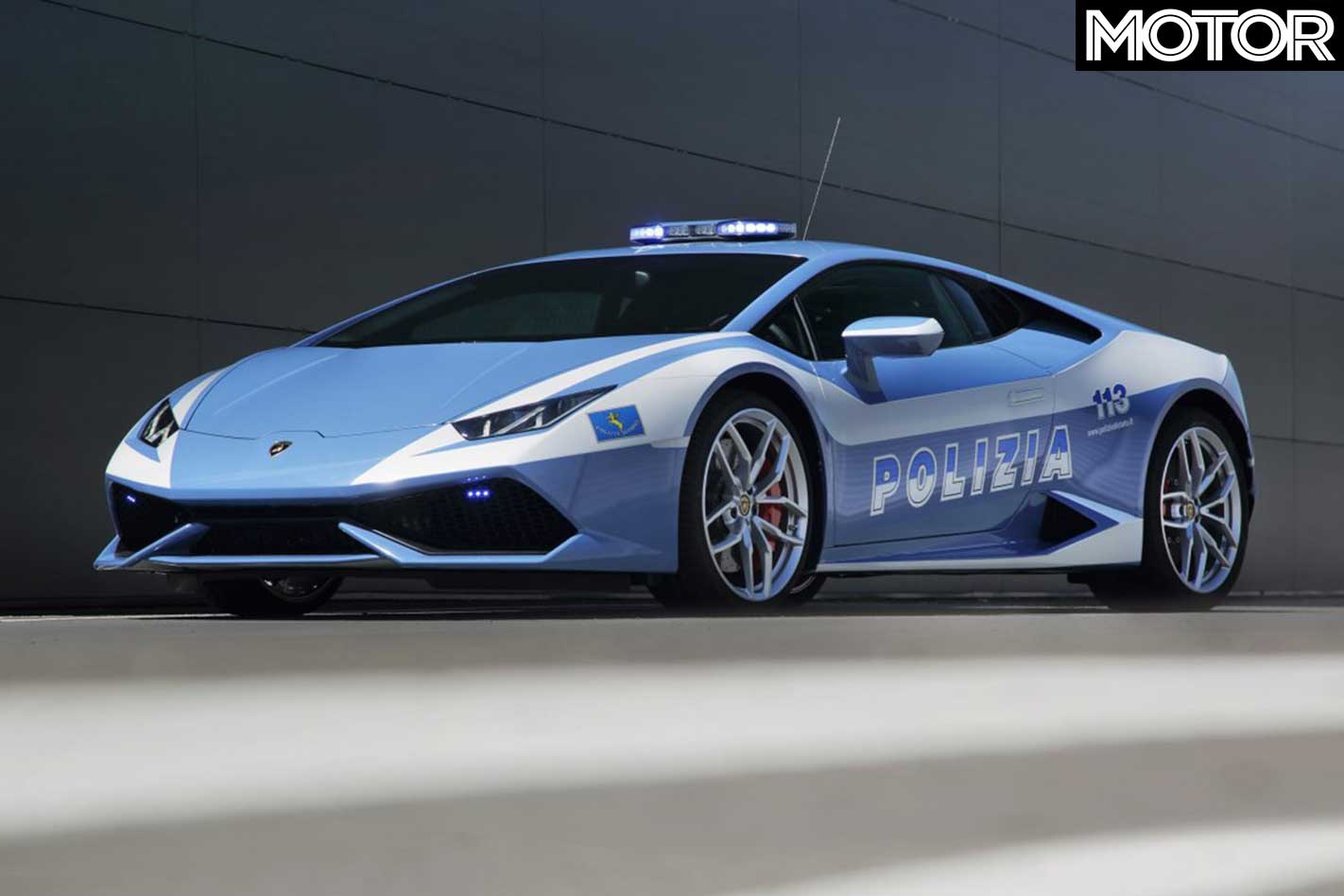
Italy has long had a fairly liberal approach to speed enforcement (though it’s a lot more strict now), but is it any wonder when the police drive Lamborghinis? In a show of goodwill, Sant’Agata donated a new Huracán to the carabinieri, officially for the purpose of high-speed organ transport – definitely not for doing launch control starts at traffic lights.
03 – Chevrolet Caprice (American Police)
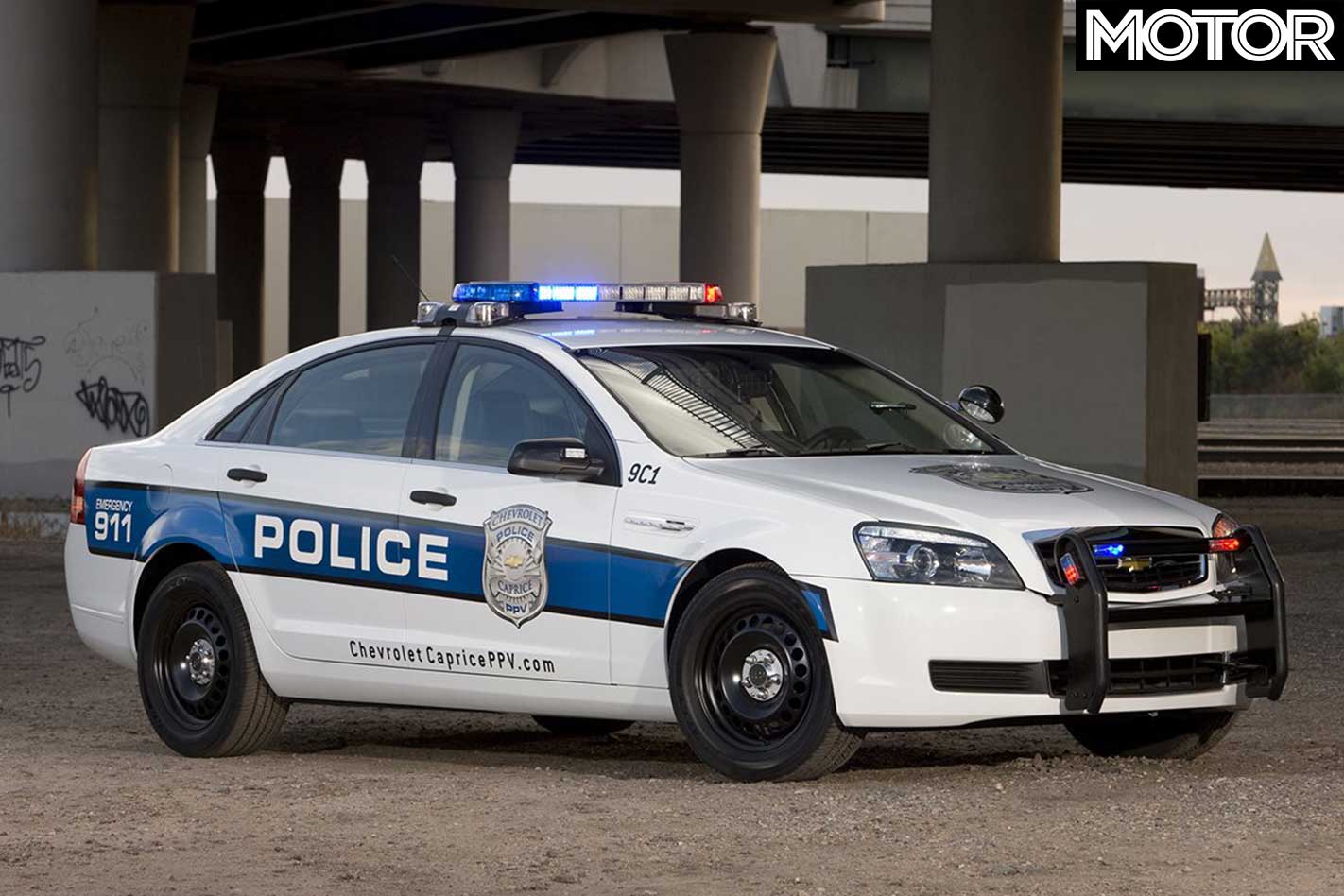
A little bit of ’Straya in ’Merica. When Ford’s venerable Crown Victoria shuffled off to the great police yard in the sky, the race was on to find a suitable replacement, with space, V8 power and rear-drive high on the list of requirements. Holden answered the call, fitting out its Caprice with lights, sirens and gun racks. If only it was available to the public!
04 – Caparo T1 (UK Police)
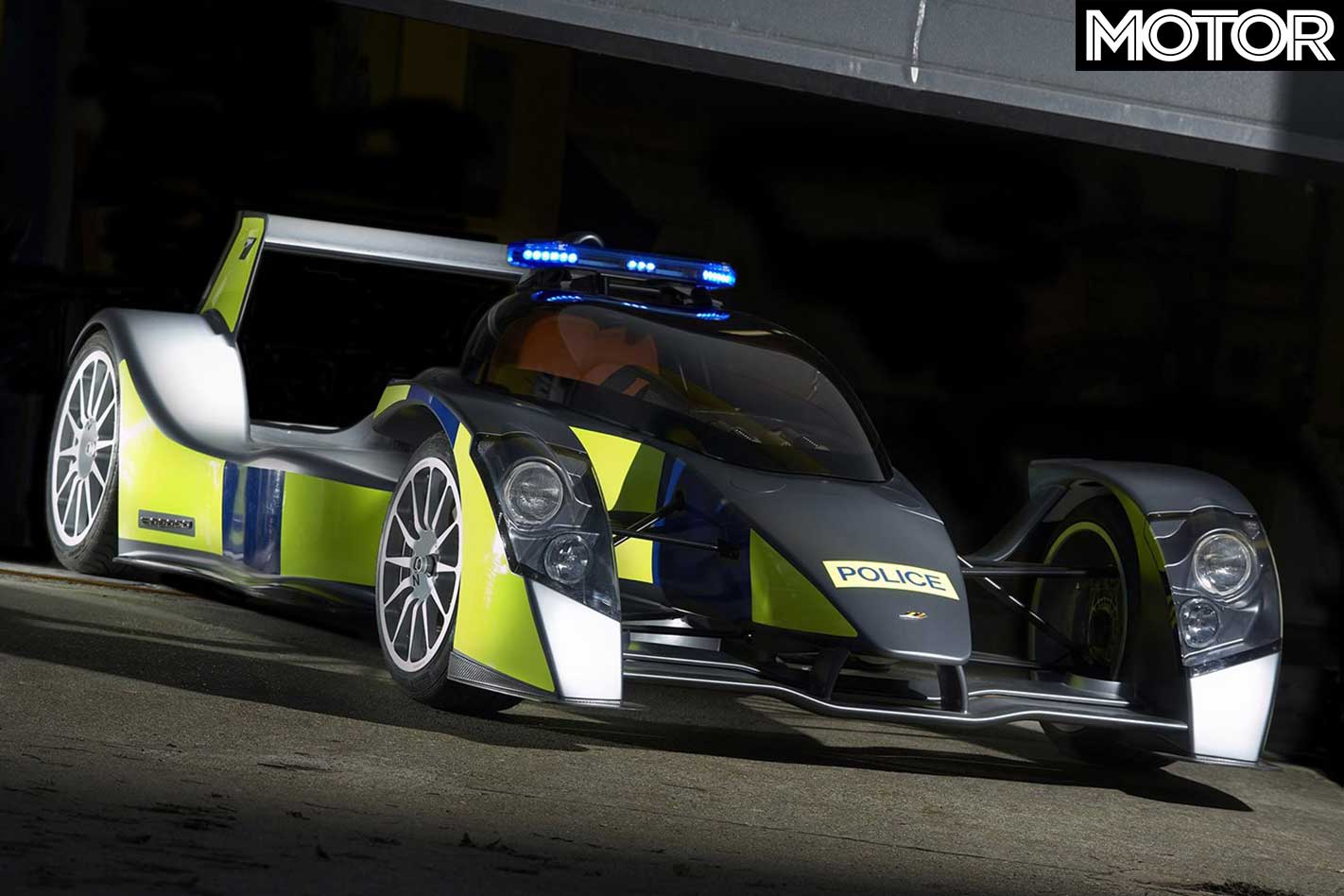
We don’t blame UK police. If we received an email saying “Would you like a Caparo T1 to drive around in?” we’d say yes pretty damn quick as well. They didn’t really think it through, though. Where are they going to put the bad guys? And while the T1’s insane speed is helpful, its zero ground clearance means it’ll grind to a halt at the first sign of a kerb.
05 – Lamborghini Aventador (Dubai Police)
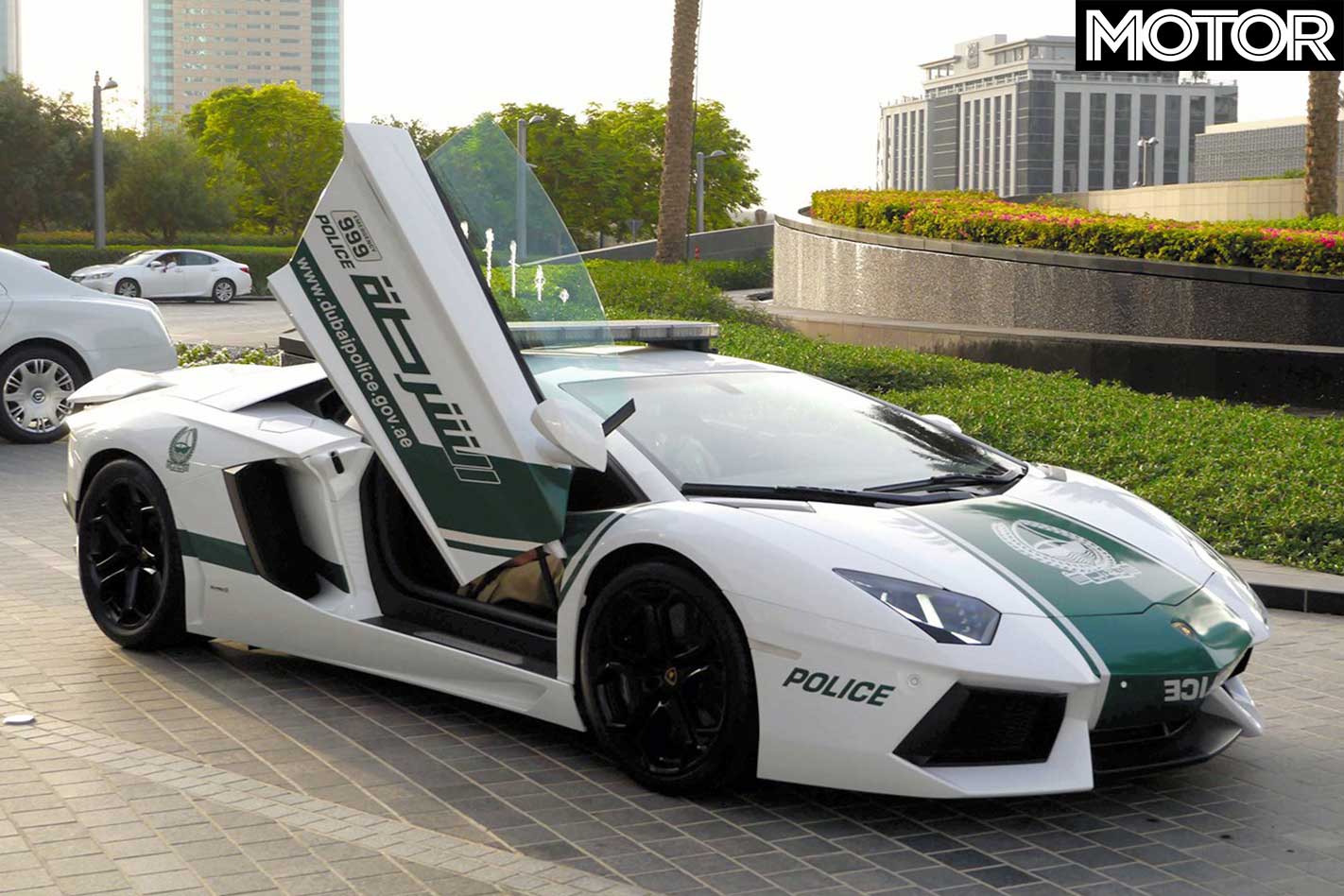
When half the population drives supercars, it’s little wonder Dubai police have filled their own garage with some of the world’s fastest machinery. Joining Ferrari, Aston Martin and Brabus is this Lamborghini Aventador. Its speed is not in question, but getting out with dignity once you’ve pulled someone over is another matter entirely.
06 – Brabus B63S-700 (Dubai Police)
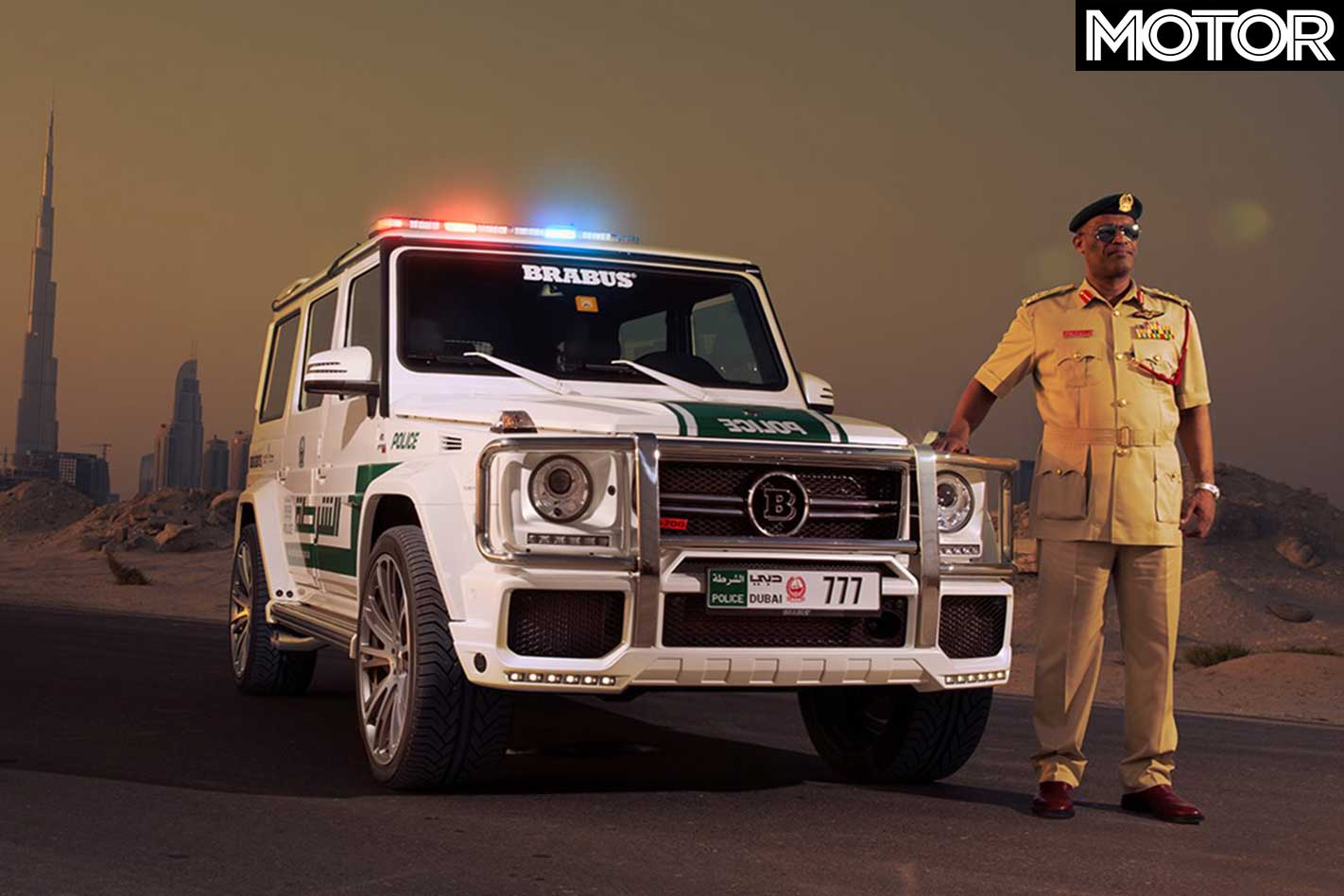
Nobody does wild quite as well as Brabus. It takes the already loopy G63 AMG, widens it, fits the biggest wheels imaginable and lifts power to 515kW/960Nm. None of this makes it any better as a police car of course, but it seems that when it comes to choosing new vehicles, suitability for purpose doesn’t seem too high on the Dubai constabulary’s list of priorities.
07 – Ford RS200 (UK Police)
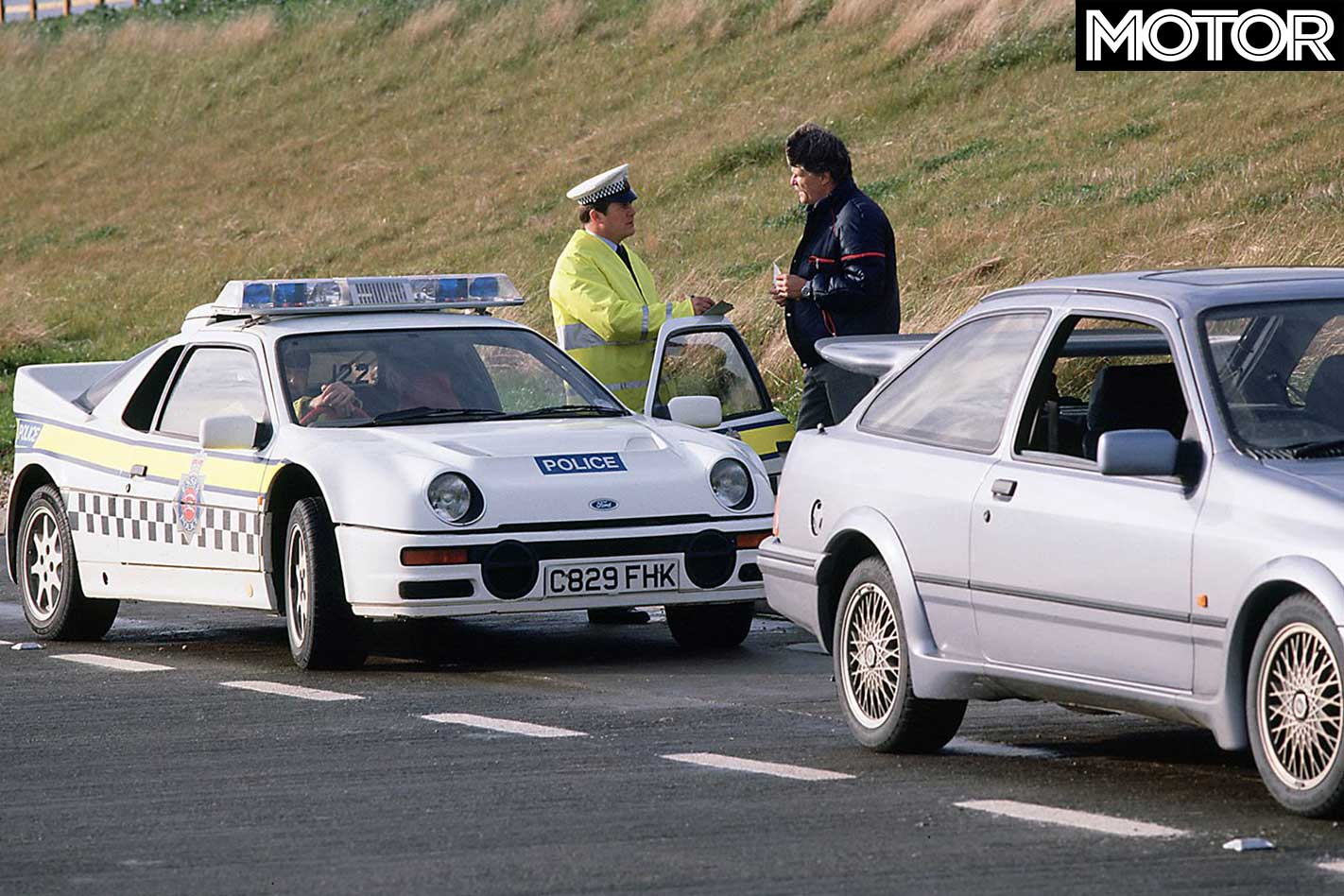
The legendary Group B racer was for almost two decades the fastest car in the world from 0-100km/h, so forget about trying to outrun it. It wouldn’t be the most comfortable car in which to spend a 12-hour shift, but beats driving a diesel Vauxhall Astra! Pulling over one of your own – another RS Ford – is surely a bit mean, though.
08 – Aston Martin One-77 (Dubai Police)
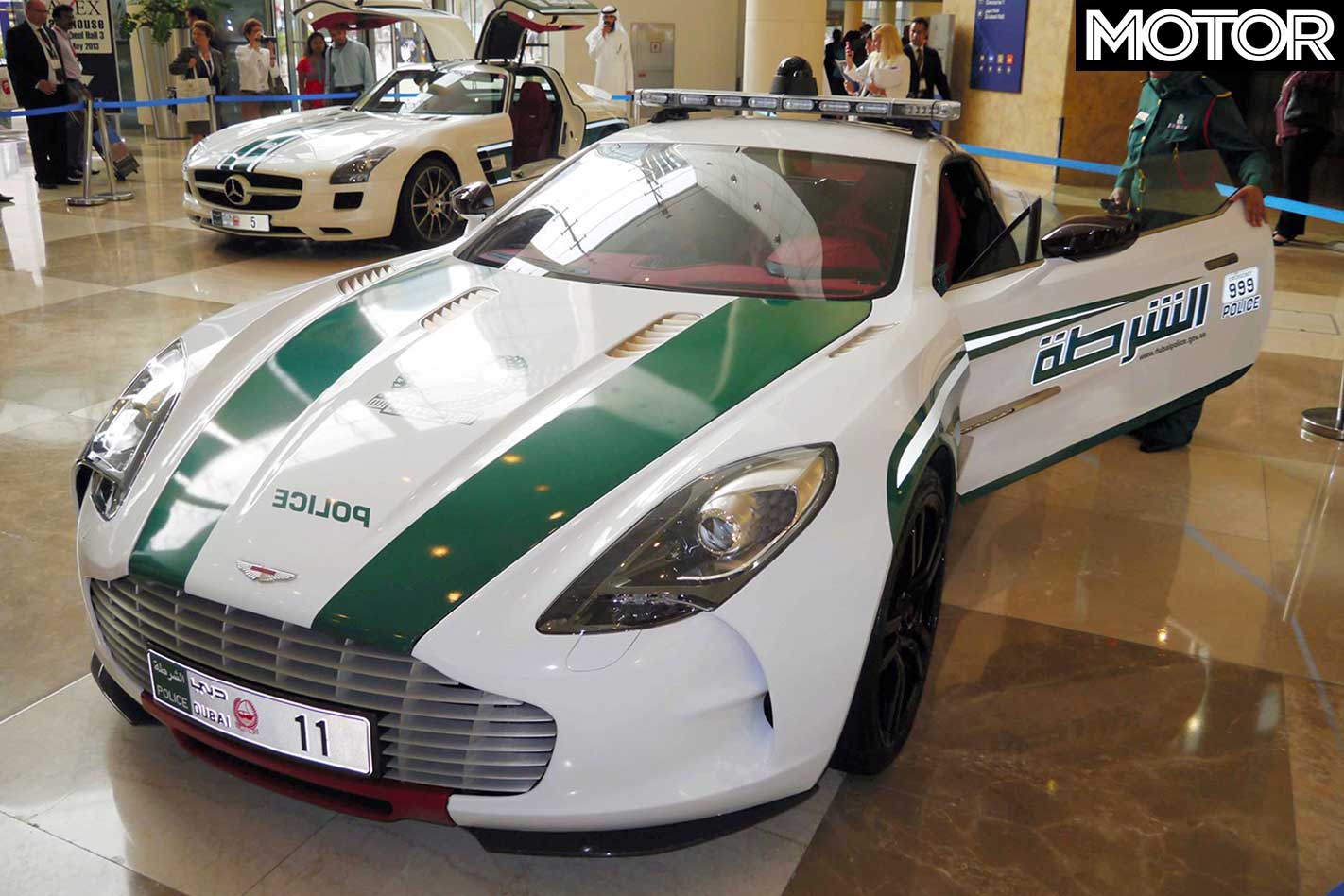
Ah, Dubai – a land of excess. Excess sun, excess sand and excess money. And nothing screams excess like adding a multi-million dollar Aston Martin One-77 to your police fleet. Just 77 of the carbon-bodied beasts were made, all with a 559kW 7.3-litre V12 under the bonnet. And yes, that is a police-spec Mercedes-Benz SLS AMG behind it.
09 – Porsche 911 Carrera (NSW Police)
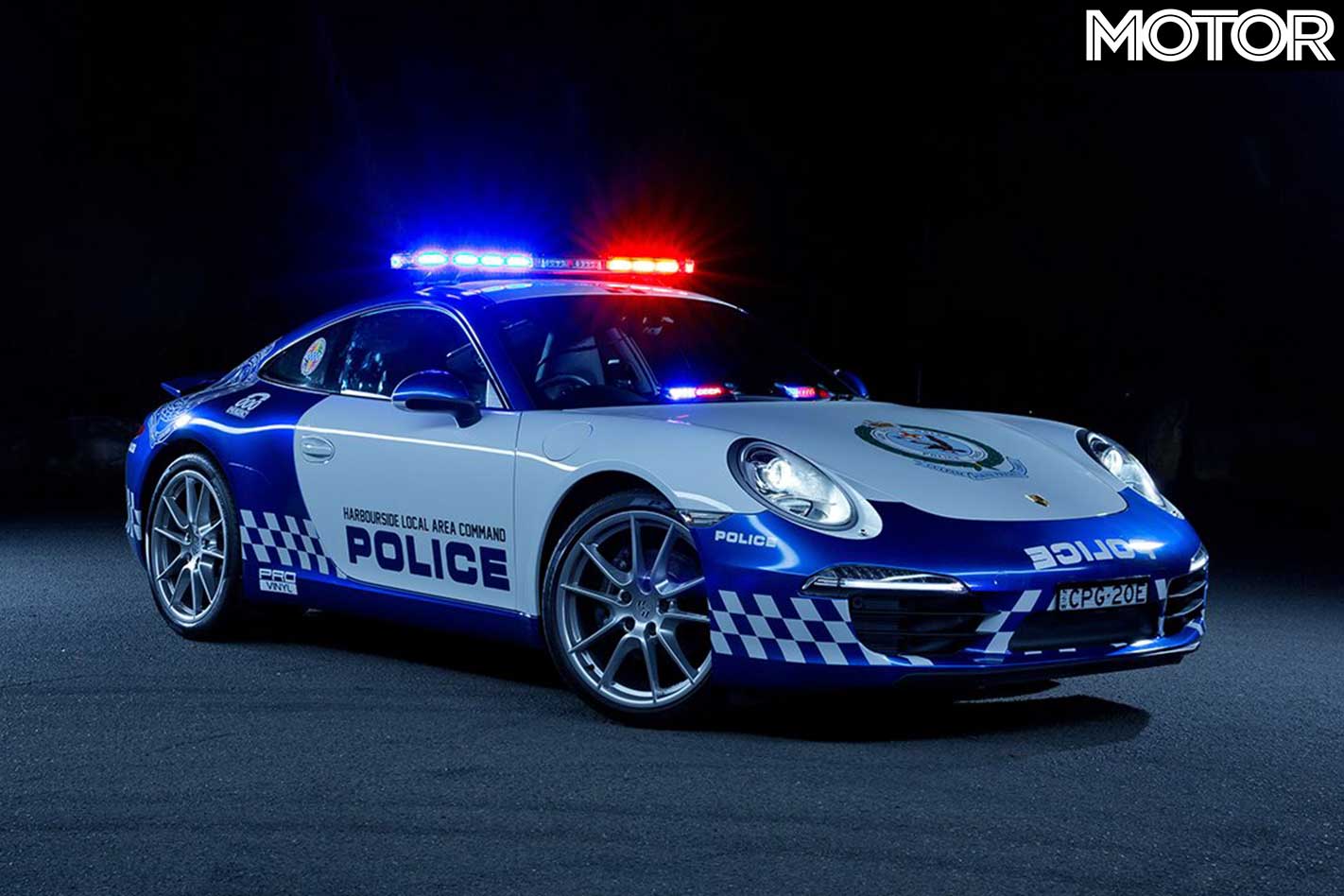
NSW police have been lucky enough to have a variety of flash metal, including an HSV GTS, Lotus Exige and Porsche Panamera, but this is the first time they’ve got their mitts on a 911. Rather than being used for the dirty work, the car is intended to help the force engage with younger members of the community – become a police officer, drive a Porsche!
10 – Ferrari FF (Dubai Police)
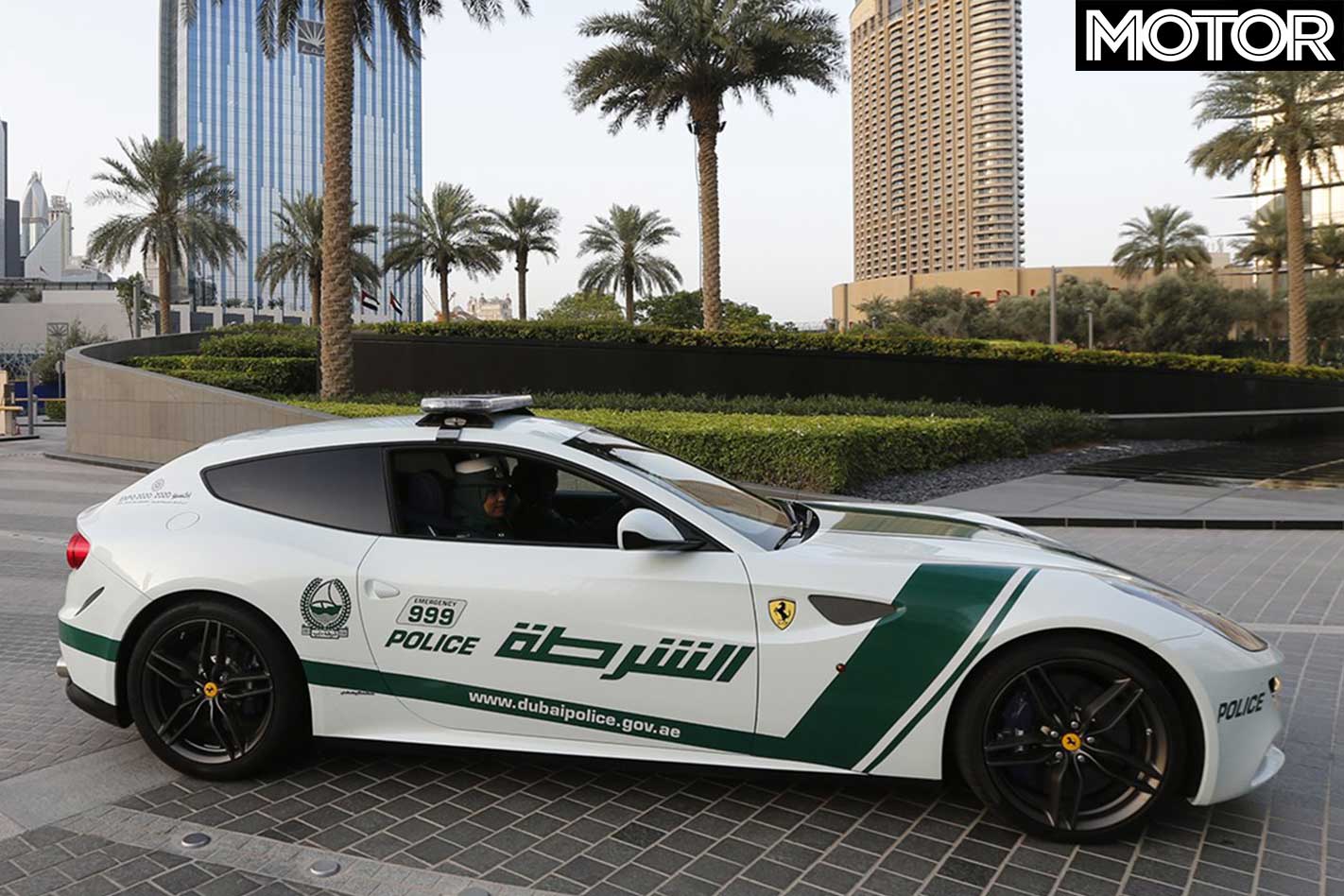
As the ‘practical’ Ferrari, it makes sense that the FF would be pressed into police service. Its clever all-wheel drive system was intended to help owners scale icy slopes; there probably isn’t a lot of need for that in the 45°C temperatures of Dubai, but it could still prove beneficial on slippery sand-covered roads. There’s even room for the baddies in the back.
BMW has been spotted cold-climate testing a test mule of its M5 sedan fitted with all-wheel drive, firming up rumours that the flagship muscle car will adopt ‘XDrive’ for its 2017 update.
Though all-paw traction represents a big seachange for the traditionally rear-driven M5 breed, it’s not a huge conceptual stretch given Audi’s soon-to-be launched RS6 is a Quattro stalwart and AMG offers E63 in 4Matic form in some markets.
Nor is adopting xDrive to M5 a huge technical stretch as the powertrain format is currently offered in some 5 Series variants.
It is, however, speculative as to whether xDrive will be offered in right-hand drive form to suit markets such as Australia and it will most certainly be available as an option rather than the mainline norm.
Though little detail has surfaced about the 5 Series’ 2017 revamp, the entire range is expected to be on a weight reduction program – good news for BMW fans hoping that 5 Series reasserts itself as a large-car benchmark for driving enjoyment.
A leaner, meaner M5 xDrive will no doubt surpass performance parameters of the current F10 and be gunning to beat E63 S 4matic’s 0-100km/h claim of 3.9sec.
BMW has been spotted cold-climate testing a test mule of its M5 sedan fitted with all-wheel drive, firming up rumours that the flagship muscle car will adopt ‘XDrive’ for its 2017 update.
Though all-paw traction represents a big seachange for the traditionally rear-driven M5 breed, it’s not a huge conceptual stretch given Audi’s soon-to-be launched RS6 is a Quattro stalwart and AMG offers E63 in 4Matic form in some markets.
Nor is adopting xDrive to M5 a huge technical stretch as the powertrain format is currently offered in some 5 Series variants.
It is, however, speculative as to whether xDrive will be offered in right-hand drive form to suit markets such as Australia and it will most certainly be available as an option rather than the mainline norm.
Though little detail has surfaced about the 5 Series’ 2017 revamp, the entire range is expected to be on a weight reduction program – good news for BMW fans hoping that 5 Series reasserts itself as a large-car benchmark for driving enjoyment.
A leaner, meaner M5 xDrive will no doubt surpass performance parameters of the current F10 and be gunning to beat E63 S 4matic’s 0-100km/h claim of 3.9sec.
BMW reckons the world needs another front-wheel drive people mover and the BMW 2 Series Family Tourer is it. It’s the second BMW-badged model from the brand’s front-drive range as it attempts to stave off a resurgent Mercedes-Benz and strong Audi in the global sales race.
Based on the same front-wheel drive platform that underpins the 2 Series Active Tourer and the new Mini range, the Family Tourer (as it’s mooted to be badges) has a larger rear glasshouse and its own roofline, hence the disguised rear-end, in order to house two additional passengers, making it the only seven-seat BMW on sale outside of its SUV range.
The Family Tourer won’t be as large as the ill-fated Mercedes-Benz R-Class, and will ride on the same 2670mm wheelbase as the Active Tourer, meaning it has the same overall footprint. While this means it won’t feel like a truck around town, the relatively lithe dimensions mean that the third row seating will only fit small children, as in the BMW X5 and cars like the Volvo V70.
The FT will also offer the same engine line as the AT, starting with the superb 1.5-litre 100kW three-cylinder engine also used in the Mini, with more potent 2.0-litre diesel and petrol engines to choose from. All Australian spec models will be automatic.
BMW claimed that the Active Tourer ‘broke new ground’ and that it is set mainly as a conquest car as the demand for small premium vehicles increase. BMW expects annual premium segment growth of 4.5 percent until 2020, and expects a large portion of this increase to be at the smaller end of the market.
BMW has been the top-selling global car maker since 2005. While sales figures for 2014 are yet to be announced, its global sales leadership was under attack as Audi and Mercedes-Benz closed the gap year-on-year. At the end of November 2014, BMW remained on top however second-place Audi had narrowed the gap by 20 per cent to 43,000 cars, while Mercedes was 17 per cent closer to trail by 147,000 units. Still, Munich is expected to take remain the market leader for a tenth straight year.
In 2014, Mercedes was the top-selling premium brand in Australia, followed by BMW and Audi.
The BMW Family Tourer is expected to be on sale in Australia in 2016 at the earliest, with pricing expected to be marginally above the $45K starting price of the 218i 2 Series Active Tourer.
The BMW Family Tourer is expected to be on sale in Australia in 2016 at the earliest, with pricing expected to be marginally above the $45K starting price of the 218i 2 Series Active Tourer.
McLAREN has announced that the Longtail name will return with confirmation a cheaper, more powerful model, the McLaren 675LT, will be shown at the 2015 Geneva motor show.
As predicted in Wheels (January 2015 issue), the return of the name is a tip of the cap to the legendary McLaren F1 GTR Longtail, the nickname given to the stretched version of the famed sportscar. It is the third model of McLaren’s new Sports Series, after the 650S and 625C.
McLaren isn’t spilling any more beans on the 675LT apart from the fact that it will have more downforce with a more effective aero package, while the naming confirms that it will have the most power of the three-car staple range, with 675PS (496kW) topping the 650S and Asian-market only 625C, with 478kW and 460kW respectively. The 675LT will be offered exclusively as a coupe, McLaren confirming that no Spider will be offered.
While still a strict two-seater, Wheels sources within McLaren suggest that the 675LT will offer more luggage space behind the mid-mounted 3.8-litre twin-turbo engine, as McLaren wants it to compete with cars such as the Porsche 911 Turbo and Audi R8 V10 as a practical, daily-driven performance car.
We’re also told to expect a concave rear screen, similar to that of Ferrari’s original Dino, and a clever cooling system to make sure heat from the engine doesn’t melt anything in the boot.
It will share the same basic carbonfibre tub as the bigger car, with McLaren’s plan always being that all three of its models would be spun off the same architecture. The carbon ‘monocell’ will be modified from the existing models, including revised sills to make getting in and out easier.
In 1997, McLaren produced a ‘Long Tail’ version of its original supercar, the F1 GTR. The extended bodywork of the low-volume homologation special was designed to make the GTR even more slippery down the long straights at Le Mans, where the short-tail car had been unexpectedly victorious the previous year.
Although the Longtail GT version will probably be sold at a slight premium over the Coupe, McLaren insiders reckon it’s likely to be the most popular of the new variants.
The three new models will dramatically increase production at the company’s Woking factory in England, with the Sports Series set to more than double McLaren’s current volume of around 1400 cars a year.
There’s no word on pricing yet, but to achieve those volumes it will have to be considerably cheaper than the 650S, which sells in Australia from $441,500. Expect something closer to $300K.
Watch the McLaren 675LT official teaser video here but be warned, it won’t show you much at all…
Mercedes-Benz has kicked off what’s set to be a huge year of performance model releases in Australia with its face-lifted CLS-Class.
Both four-door Coupe and five-door Shooting Brake return with revamped styling, enhanced specification, pricing realignment and couple of notable new powertrain features.
A new, four-door-only CLS400 trim level introduces a biturbo 3.0-litre V6 petrol engine boasting outputs of 245kW and 480Nm and hits showrooms at $139,900.
The CLS500, available in both Coupe ($169,000) and Shooting Brake ($179,900) body styles, packs 300kW and 600Nm of 4.7-litre V8 shove with a new 9G-tronic nine-speed automatic transmission.
Again topping the range is the mighty CLS63 AMG S, its biturbo 5.5-litre bent eight producing a formidable 430kW and 800Nm capable of propelling the four-door to 100km/h from a standstill on just 4.1sec.
The bad news for fans of high-performance wagons is the there will be no Shooting Brake version offered in AMG S trim.
However, the sole four-door version of the CLS63 AMG S cops a price drop and now asks for ‘E63 AMG money’, or $249,000.
The entry-level trim is the 250 CDI, offering a 2.1-litre turbodiesel four outputting 150kW and 500Nm on both Coupe ($114,900) and wagon ($124,900) options.
This year will also see the imminent release of the AMG-fettled S-Class Coupe, followed by the highly anticipated 911-rivalling GT S sports car and the revamp of the ever-popular C63 AMG around mid-year.
