
If the SV is the Murcielago’s final fling as a coupe, will this garish limited-edition special be its farewell as a roadster? Inside word is: don’t bet on it, because the big Murchey still has two years to run.
Lamborghini has made sure you won’t wonder about its extra 10hp by plastering LP650-4 in Day-Glo orange all over. The car carries largely the same all-wheel drive mechanicals as the standard 6.5-litre V12 Roadster, so hits 100km/h (62mph) in 3.4 seconds on its way to a 330km/h (205mph) top speed.Your one-of-50 LP650-4 Roadsters will stand out from your neighbour’s LP640 Roadster by virtue of grey bodywork with glaring orange highlights: brake calipers, gearshift paddles, console trim and flashes on the sills.A bit more tasteful is the clear view in to the engine bay, where the carbonfibre bracing seems a long way in front of the welded steel tube chassis.
Mazda has launched its new BT-50 ute in Australia with a potent 3.0-litre common-rail turbo-diesel engine pumping out a claimed 115kW and 380Nm.
Despite its new skin, the BT-50 is based on the same chassis as the superseded B-Series ute. The suspension is basically the same too: torsion-bar front end and live-axle at the rear with leaf springs, although it has been significantly retuned for the new model and features longer leaves at the back and new dampers all-round.The BT-50 4X4 range consists: Single Cab Chassis DX ($31,975); Freestyle Cab Chassis DX+ ($36,980); Freestyle Ute DX+ ($38,850); Freestyle Ute SDX ($42,750); Dual Cab Ute DX ($39,150); Dual Cab Ute SDX ($43,550); and Dual Cab Ute SDX auto ($45,550).Driver and passenger airbags are optional on single-cab models and standard on the rest of the 4X4 range. Front seatbelts feature pre-tensioners and load limiters. ABS brakes are standard on top-spec SDX models and are offered as an option on the rest of the 4X4 range. The BT-50 is yet to be given a crash rating.Mazda will offer a genuine accessory, airbag-compatible alloy bullbar.
Click here to read the full range review of the current model Mazda BT-50.
Very rarely does a movie sequel live up to the original. Even on the off chance that the latest Hollywood blockbuster is actually a decent flick, you can bet Gran’s false fangs that Revenge of the Porky Titans on Ice will stink like February prawn heads.
Why filmmakers can’t leave well enough alone is beyond me, but, hey, one more thing I don’t understand isn’t going to rock the galactic boat, is it? Anyway, my theory holds true even for that most Aussie of all Aussie road flicks, Mad Max (1979).
Oh sure, there have been other Oz car culture flicks; a blind Max Cullen blasting through the mulga in a black ’57 Chev was a nice touch in Running on Empty (1982). And, as a Mopar fan, I still dig the thought of Nadine Garner in the jump seat of that wicked, silver, Hemi-powered Charger in Metal Skin (1994).
But let’s face it, Mad Max was, is and always will be The One. The second, post-apocalyptic Mad Max 2 (1981) had its moments, but chapter three (Mad Max: Beyond Thunderdome, 1985)? Spare me.
The point is that the original Mad Max is legendary. Mel Gibson was great in it (’cos they didn’t let him talk much and told him to just brood off into the distance a lot), Steve Bisley was masterful as bike cop Jim Goose and the short dress worn by Max’s squeeze, Jessie, also deserves a mention.
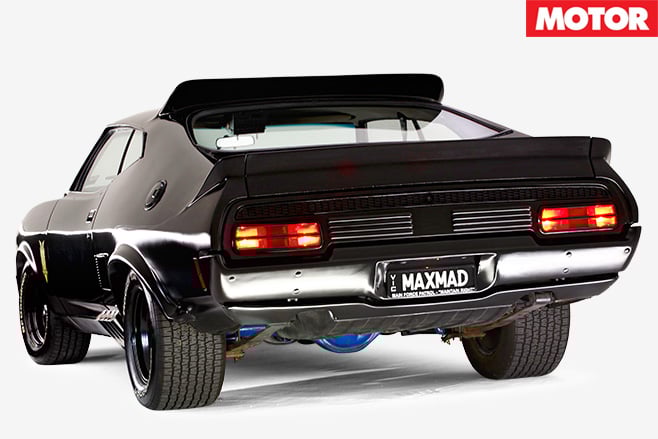
But it was the bad black coupe that had the star turn. Right from the Interceptor’s first scene in the workshop of the Halls of Justice (how corny does that sound now?) to the bitter end, as Max lays waste to the baddies, the two-door Pursuit Special is the film’s calling card.
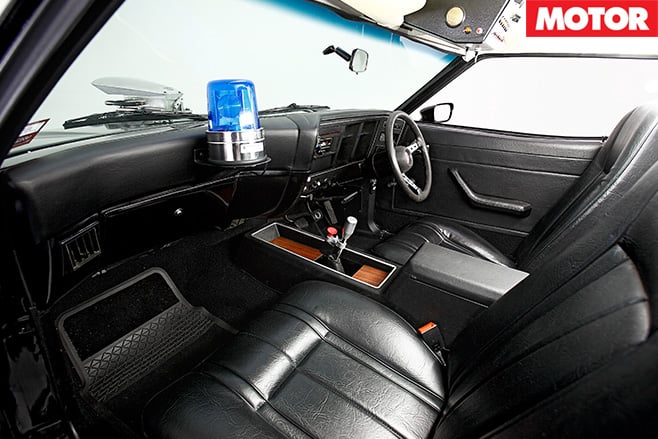
The story goes that the coupe was originally Smith’s own road car and it was ‘discovered’ when somebody from the production company drove past his house and saw it on the driveway. Smith was convinced to sell the XB to the production company and was hired as an on-set mechanic.
He was joined by Ray Beckerley and another bloke by the name of Peter Arcadipane who worked for Ford and who, in a future life, would be a graphic designer on Motor Manual, which became Car Australia, which became MOTOR. There you go!

Aside from the slant nose, the bodykit included the roof spoiler, bootlid spoiler and wheel-arch flares. The colour was black, but what you mightn’t have noticed is that the top half of the car was gloss black while the lowers were more of a satin black.
The wheels were Sunraysia steelies as fitted to the yellow Interceptors in the movie, but painted black and fitted with BF Goodrich Radial T/A tyres. The side pipes were popular with the panel van crowd of that era, although the story goes that even though the pipes were functional, all the engine sound effects were dubbed anyway.
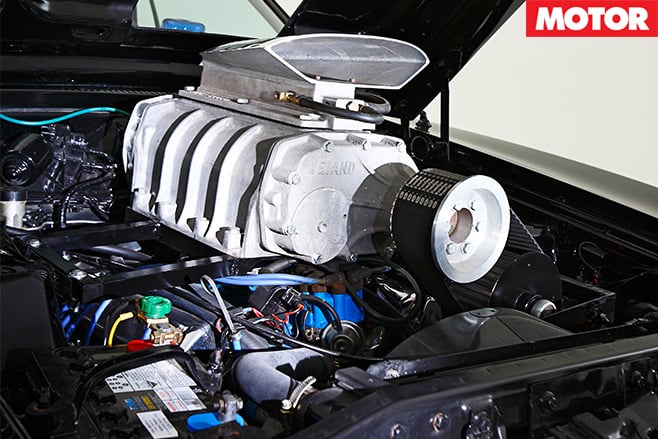
That ‘blower’ was a Weiand 6-71 case. Inside, there was a single carburettor (probably a Holley), and a small water pump on the front of the blower case carried the blower belt pulley as well as moving the belt away from the stock 351’s true water pump. The ‘blower’ was spun by a small electric motor.
The actual car started life as a 1973 XB GT Hardtop. As a GT, it had a 351ci engine with 4V heads, Top Loader four-speed and nine-inch diff.
‘Interceptor’ was written across the boot of the yellow and blue sedans but if you want to be a real nitpicker the black XB is a Pursuit Special, as was the Holden Monaro the Toecutter baddie stole and died in with his ‘floosie’.
There was only ever one Hardtop built for the original film. It was dragged out again and modified and patinaed as Max’s wheels for the sequel. A second, look-alike car was built and destroyed in a crash scene at the end of the movie.
After filming on Mad Max 2 was finished, the remaining car – the original – was due to be scrapped, but nobody had the heart to do it. It sat outside a scrapyard in South Australia for years with kids climbing over it and nobody really knowing what to do with it.
Eventually it was bought, restored and then did the rounds of shopping centres and car shows (less the blower and side-pipes) for a few years before eventually being sold and shipped to the UK.
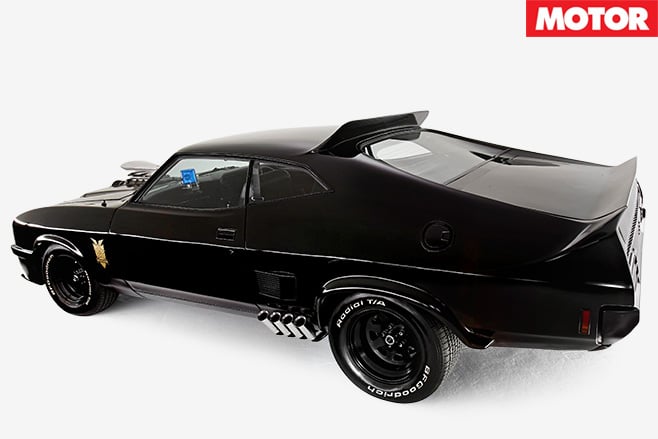
Sounds like a dull end for such a wild car, but if you’ve been out to Silverton near Broken Hill NSW where Mad Max 2 was filmed, you’ll see some of the other cars from the movie, rolled into balls and rusting away; abandoned as soon as their film-making days were behind them. So fate could have been worse.
THE GOOD
1. Gets attention driving a Mad Max replica, whether it be one of the yellow MFP Interceptors or the black Pursuit Special, gets as much attention as running down a street naked.
2. Quality stays in style Mad Max is so deeply entrenched in Australian car culture that a Max car will always be recognised and – if it’s built faithfully – collectible
3. Cheap to run Okay, so buying or building a Max replica is not cheap, but at least routine servicing costs won’t break the bank like similarly-priced Euro fun cars can
THE BAD
1. Friends in high places Many Mad Max replicas often have their mirrors filled with reds‘n’blues. Mostly it’ll be by enthusiast police, fans who just want a look and a chat. Mostly
2. You’ll make new mates Highway Patrol cops will show respect – so will flannel-wrapped bogans. They will do this by kissing the bitumen in front of the car and spluttering, “Kick it in the guts!”
3. Costs a bit of dough Building one will cost quite a bit: a good Falcon Hardtop is $20K plus, before restoration and modifications. They don’t trade like ‘ordinary’ Aussie cars
THIS ONE
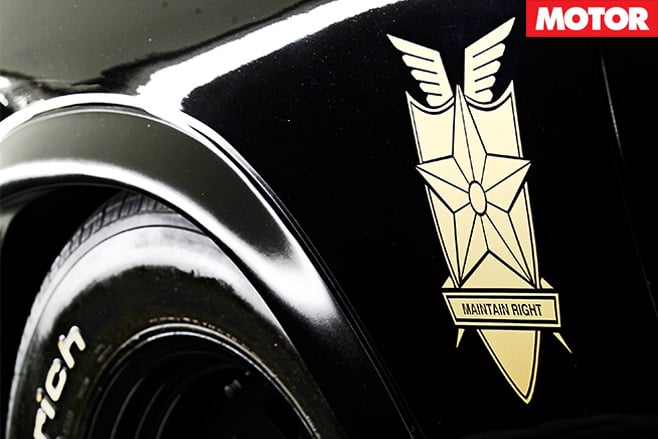
This stunning replica was built by Mad Max fan Tim Ridge, who is the director of the upcoming documentary, The Madness of Max, in which this car plays a role. Tim has since sold the vehicle to another fan, Scott of Melbourne, who cherishes the car and cruises it regularly.
“Back in the ’80s, the favourite double-header for XB coupe owners at the drive-ins was Mad Max and Mad Max 2,” says Scott, who owned a Hardtop when he was just 17. “We’d all be lined up wishing we had the car that was on the screen. We all loved the movie, but we loved the car even more.”
WHERE DO I GET ONE?
These days, the original Interceptor lives in the Cars of the Stars museum in England. But don’t fret if the thought of warm beer and crook grub puts you off. See, there are other Interceptor replicas out there not unlike the one on these pages. And you can always build your own.
Check the Net for details on who’s making what bits; many are available. The only catch is that Arcadipane reckons the original moulds for the Concorde (to give it its proper name) front end were destroyed and the bloke who allegedly owns the mould for the roof spoiler doesn’t want anybody to know about it in case somebody starts making copies.
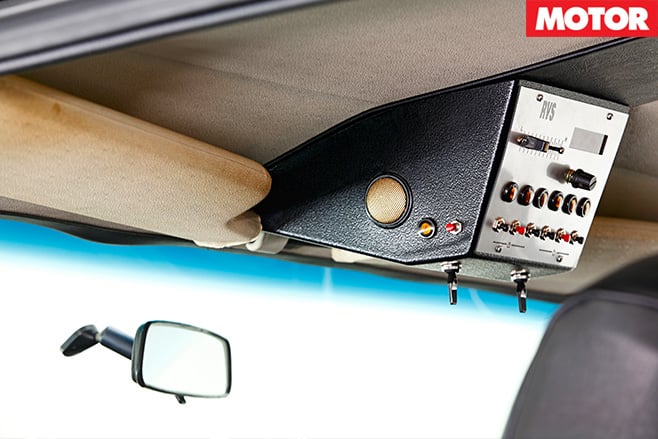
Uh-huh. You can buy ‘correct’ parts such as the blower switch, MFP decals and radio console. Some of the Interceptor replicas are more accurate than others, but all of them ooze attitude and the ability to take you back 30 years; back to when the gangs first took over the highways and we prayed he was out there.
Stuttgart jumps on the lean, green and oily bandwagon.
You can smell it’s a diesel, but only when you place your nostrils close to the exhaust. You can hear it’s a diesel, but only with pricked ears during its warm-up phase. You can see it’s diesel, but only by clocking the tacho’s 4700rpm redline. You can feel it’s a diesel just through your hip pocket: a 28 percent reduction in consumption over the petrol V6 FSI and (in Europe) a 40 percent-plus reduction in fuel costs.But in most respects the Cayenne Diesel is virtually identical to the controversial in-your-face SUV that, incredibly, accounts for half of Porsche’s current sales.As far back as 2001 there were heated debates about whether a high-performance Cayenne V10 TDI was ever likely. As recently as 18 months ago, chairman Wendelin Wiedeking was still on record claiming that Porsche and the diesel engine were unlikely to ever find a common denominator. Here is the answer.Like so many Porsche models over the years, the Cayenne diesel is a windfall product. After all, the Cayenne shares its DNA with the VW Touareg and the Audi Q7, and the new V6 oiler engine was conceived by Audi. And Porsche, the new owners of the Volkswagen/Audi group, is giving its own brand first dibs on the most advanced version of the 3.0-litre turbocharged 24-valver.Major improvements centre on a more responsive variable-vane turbo, a higher maximum-boost pressure of 2.3bar, more efficient five-phase piezo injectors, a more flexible 1800bar common-rail fuel-feed system, integrated auxiliary heating, a pair of intercoolers and a more free-flowing intake with two switchable tumble blades providing added bottom-end urge. Unique to Porsche is the Sport button which speeds up the throttle response, the calibration of the standard six-speed Tiptronic and the setting of the optional air suspension.The 2967cc V6 develops 176kW between 4000 and 4400rpm, while its maximum 550Nm is available between 2000 and 2250rpm. Although 70kg up (2315kg) on the petrol V6 Cayenne, the diesel version nails 0-100km/h in 8.3sec. The Tiptronic’s gearing is relatively aggressive and one downside is a top speed of just 214km/h – hardly the sort of figure worthy of the Porsche badge. On the up side, average fuel consumption is a reasonable 9.3L/100km, while enviro-conscious CO2 emissions are 244g per kay. The 100-litre tank permits a realistic driving range of 800km, enhancing the Cayenne’s appeal as a brisk but frugal long-distance cruiser.The V6 TDI is a tight fit in the Cayenne engine bay and going diesel required a number of modifications. The electronic platform had to be completely revised and the chassis was tuned differently for the more nose-heavy weight distribution that required new programming for throttle, stability and damper software.The most irritating downside of the Cayenne diesel is the fact that it is a Cayenne. First launched in 2002, the overweight crossover isn’t fresh enough anymore. Its main handicaps are the compromised packaging, the overly taut suspension, the hard and narrow seats, and macho styling that acts like a red rag to SUV haters.On the other hand, it is almost impossible not to be smitten by the gentle giant’s magnetic roadholding, inspired handling, terrific brakes and transparent steering, all retained in the diesel.Somehow the Cayenne blends the comfortable, relaxed and unhurried nature of a diesel with the ballsy personality expected from the sports car of the SUV community.The V6 TDI is neither noisy nor unrefined with the traditional, dreaded diesel knock conspicuous by its absence. It’s also nothing special, acoustically. In fact, the big problem is that this vehicle wears a Porsche badge, yet fails to deliver real performance.Progress is quite lively up to 160km/h, then it hits a hedge of drag, rolling resistance, gearing, weight and, ultimately, lack of power. It just painfully lacks the oomph and top-end go of any of its petrol siblings. Grunt-hungry Cayenne aficionados will have to wait until late 2010 for the more potent 225kW TDI engine.According to Porsche, diesel-equipped vehicles accounted for around 84 percent of the SUV market in recent years. And it’s ordered enough V6 TDIs to fit one-in-three Cayenne engine bays.So, if demand justified it, would Porsche alternatively offer a V8, V10 or V12 diesel? For reasons of weight, efficiency, complexity and cost, the answer is officially “no”.Heard that before?
New V8, ZF auto and clever engineering make this Maser a winner.
If you’re not up to speed on Maserati’s current status in the Australia, then let us educate you. Maserati sold 201 cars in 2008, which ranks the brand second overall in the $200K-plus Sports Car segment, behind Porsche…and ahead of Aston Martin, Audi, BMW, Lamborghini and Mercedes-Benz. Oh, and Ferrari.The brand’s growing, the product has improved of late, and Maserati Australia proactively hits its carefully defined ‘executive’ target market through regular racetrack drive days and other smart buyer-reaching activities.But the core reason goes much deeper: Maserati knows its customers’ wants. Take the specs of the 317kW 4.7-litre V8 newly introduced to the Quattroporte S, for instance, to see how accurately Maserati has taken aim at its buyers. The new engine, the first in an emerging family, has been specifically developed with a wet-sump lubrication system. Yet the same engine was already available in Alfa’s gorgeous 8C, but with a more performance-focused dry-sump arrangement. So why the costly downgrade?Well, it all comes back to the reason why dry-sumped engines have become popular. Firstly, they afford a lower centre of gravity, as the removal of the sump allows the engine to be dropped into the engine bay. And, secondly, they provide more consistent lubrication under extreme driving conditions, like on a racetrack. Neither of these is going to impact on your typical Maserati owner, who primarily lusts for a swift and extravangantly comfortable GT. See, they’ll get a bigger kick out of the NVH advantages the wet-sump set-up offers on the open road.So it’s ironic, then, that our only flog in the grown-up Quattroporte S was around Sandown Raceway. Here, the Skyhook suspension system (with adaptive dampers that temper pitch) managed the Quattroporte’s considerable size and weight well. Good balance isn’t that surprising, though, with a front/rear weight distribution of 49/51.The huge Brembo-developed brakes provided powerful, lasting stopping power, and the V8 delivered its grunt expertly through the new ZF six-speed auto. And it sounds deliciously brutal doing so – especially above 5000rpm. With the ESP switched on we found the calibration to be a little cautious, but again, that should suit the less demanding Maserati buyer.New LED lights at all four corners form part of the tweaked Pininfarina design in the new model. But the overall stance still looks tough, and is especially menacing from the front.There’s lots to like about the new Quattroporte, which is why buyers are keen to snap them up. It’s a sensible executive’s choice while still offering plenty of sporting ability and heritage.At $323,800, the S costs $38K more than the garden-variety Quattroporte, but you get 20-inch wheels, the Skyhook suspension system and the mighty soundtrack of the 4.7-litre V8.Did someone say financial crisis?
Bigger engine and a revamp, yet the sporty 3 remains much the same.
The notion of what is and what is not an all-new design is getting harder and harder to pin down.Take, for example, the Mazda 3 SP25. It’s an all-new design in that the bodyshell uses different grades of steel in different places and not a single body panel is interchangeable with the previous model.But beyond that, the five-speed automatic (dubbed ‘Activematic’) gearbox is a carry-over from the previous 3 range, and while the engine has been both bored and stroked, it’s really just the old 2.3-litre mill with bigger slugs and a longer-throw crankshaft.Then there’s the footprint. See, even though the steel is new, the actual wheelbase and track is the same as the old car. The suspension is more or less carry-over, too, which means – in a rather large nutshell – that the new car feels rather like the previous one.The new front end offers a bit more grip (you’ll need a back-to-back drive to pick it) and there’s allegedly less NVH (though tyres vary on different models, which makes proper analysis difficult).Under the bonnet, there’s an extra 7kW and 24Nm on offer, for a total of 122 and 227 respectively, but the new car’s extra 40kg has pretty neatly blotted this advantage out.Of course, had the old Mazda 3 SP23 been a complete dawg this would be a tragedy, but that one wasn’t, so this one isn’t. Though the SP25 isn’t the clean-sheet thing it may’ve been, it’s still a damn good warm hatch, if not quite a hot one.Actually, had the new car been an all-new design, Mazda would have done itself a disservice by making it so aesthetically similar to the previous model. So, as it stands, the new car is an evolution, not a revolution.Cynically stated, the new design is a reskin with a few driveline tweaks. But it manages to move the game on a little, particularly around the front end. And yet it still manages to look like a Mazda 3, which is certainly no criticism whatsoever.It’s quite a big car, too, and while 17-inch alloys can look roller-skatey on some hatches, the SP’s generous wheelarches swallow them without making things look disproportionate.Inside, it’s even classier than ever, with soft-touch materials everywhere and a level of tactility, fit and finish that smacks of Japanese quality.Mazda’s 3 still sells strongly even after half a dozen years. So the new range sticks with a proven hierarchy, starting with the Neo and working through Maxx, Maxx Sport and the SP25. The brain-out MPS is coming, but it won’t arrive until the second half of this year.Standard kit looks good, with cruise and dynamic stability control loaded on every variant, and sat-nav and Bluetooth standard on all versions north of the base-model. In fact, the only thing missing in the entry-level car is the full six air-bag treatment.
Remember those kids who always hung out at the bike shed at school? Those rebels who choofed down Winnie Blues, bragged about girls and compared battle scars from weekend BMX benders.
Even though you knew what they were doing was far from acceptable behaviour, they were oh-so-cool. And when – not if – they got busted, you still admired them for their ruthless arrogance and, even worse, envied the crap out of them if they still got top marks. Bastards.In automotive terms, Mazda Australia is that rebellious genius which seemingly gets away with everything and, also, gets everything right. And it’s not by fluke either.

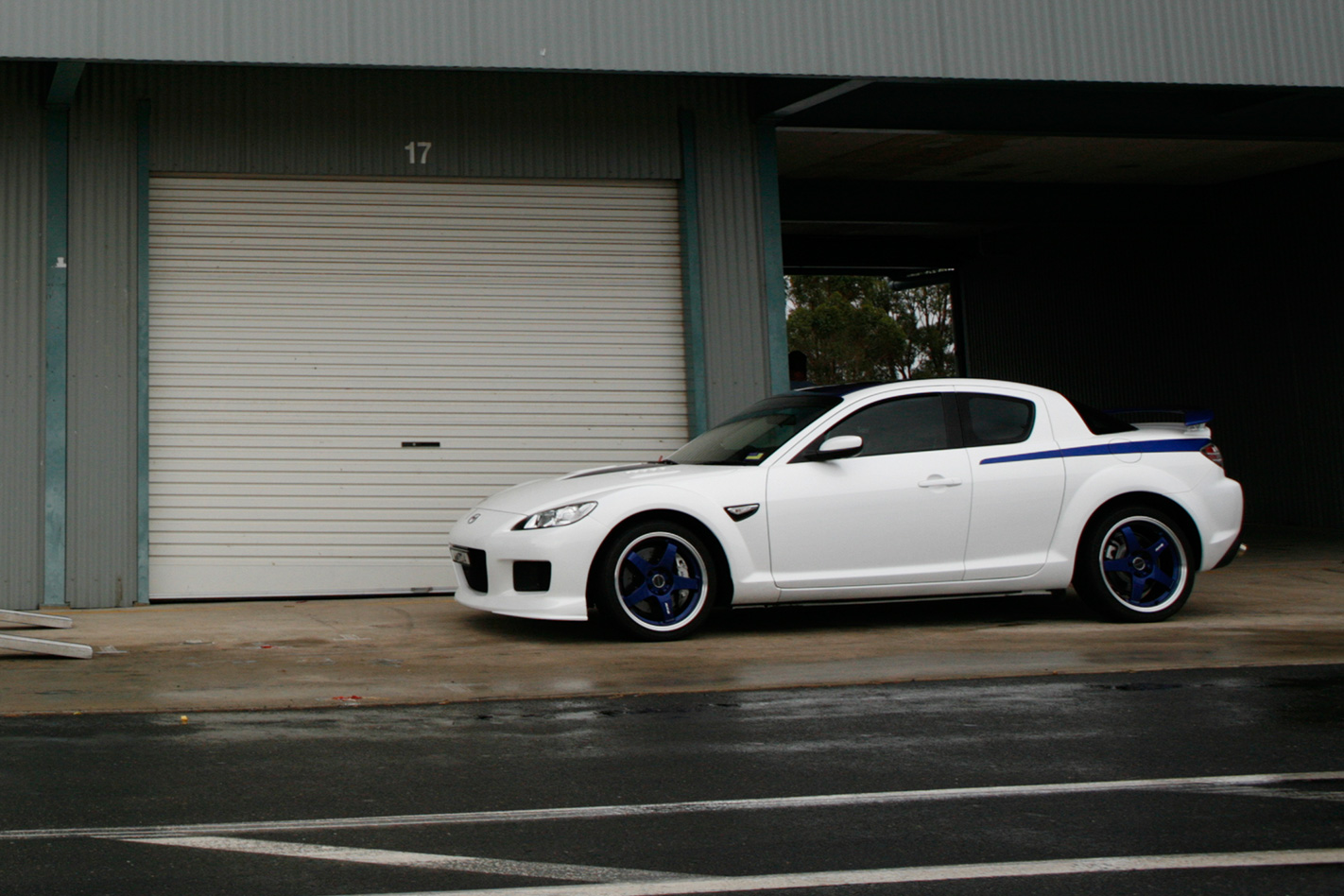
But then there’s its flagship RX-8: brilliantly engineered, sublimely balanced and surprisingly practical, yet ostracised as the geek’s sports car. When it first lobbed in 2003, Mazda banked on a one-size-fits-all model to try to attract a broader audience than the boy-racers that loved the Mazda RX-7.
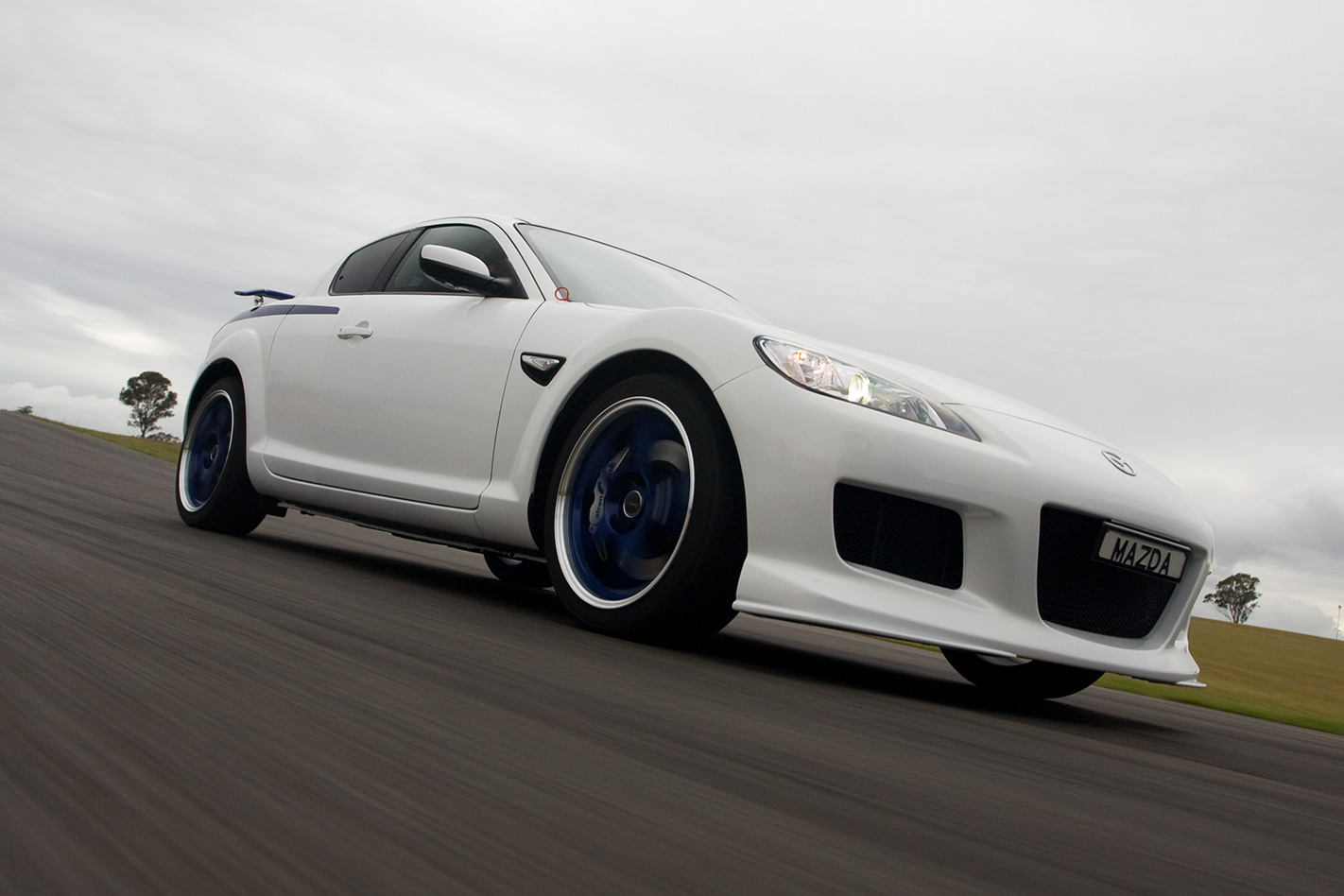
And, we all you know why; it’s because the RX-8 just lacks the grunt turbocharged rotaries became renowned for. Sure, its revised twin-rotor spins to high heaven and its chassis is almost flawless, but the final FD Series RX-7 was just so damn good that it was, and still is, considered the ultimate RX. Seven years after being discontinued, the last RX-7 iterations still look modern and go like a cut cats.
There is, however, a solution to that little issue, and it all revolves around two letters – S and P. Not salt and pepper, but any Mazda with an ‘SP’ at the end of its name certainly has had a liberal dose of spice added.
Ask any Rotarian (not the community helpers, but die-hard fans of the Wankel engine) and the RX-7 SP is The King. You know, the school legend; the tough, good-looking, athletic braniac that won everything.
And this is where we come back to Mazda Oz as being those rebellious geniuses that hang out in the bike shed, because the SP programs are as homegrown as the Ford GT HO Falcon, developed from a skunkworks operation led by its motorsport boss, Allan Horsley − and most of the time without full approval from Mazda’s Hiroshima HQ.
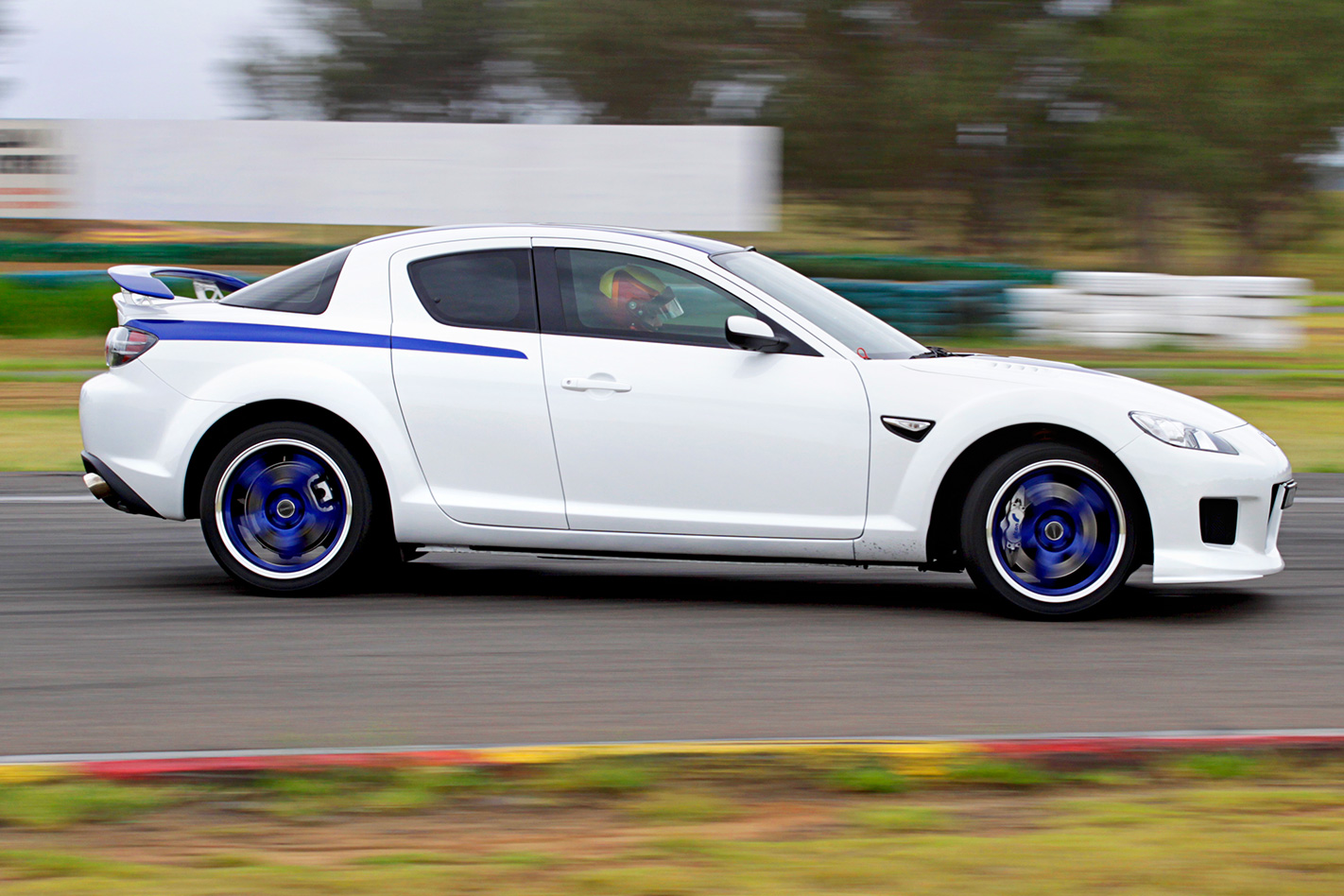
Mazda Australia had to build 25 of them so the limited edition would be considered legal for the event, but eventually built an additional 10 to satisfy demand. Mazda also added the SP badge to its locally developed turbo MX-5, which was so good that the Japanese couldn’t resist doing its own (albeit softer) version.Which brings us to the car on these pages. Mazda Oz and Horsley have done it again with a car that is so brilliant it could – and should – revive the SP badge. At the moment, this turbocharged RX-8 has been created to topple a super league of Supercars in next month’s Targa Tasmania road rally (see breakout). It all sounds too familiar really, doesn’t it?
But is this RX-8 good enough to wear the SP badge? Look back at everything Horsley has done during his 30-odd-year stint with the Japanese carmaker, and that question suddenly becomes completely redundant. The bloke doesn’t do anything by halves.The pearl white RX-8 on these pages is actually the fifth turbo RX-8 he’s built, and had only just come off the dyno a couple of days before we drove it with the ‘development engine’ fitted. The full-house race engine is still being built, and Horsley is reluctant to give away any power figures before Targa − just in case it scares the beejesus out of the competition.

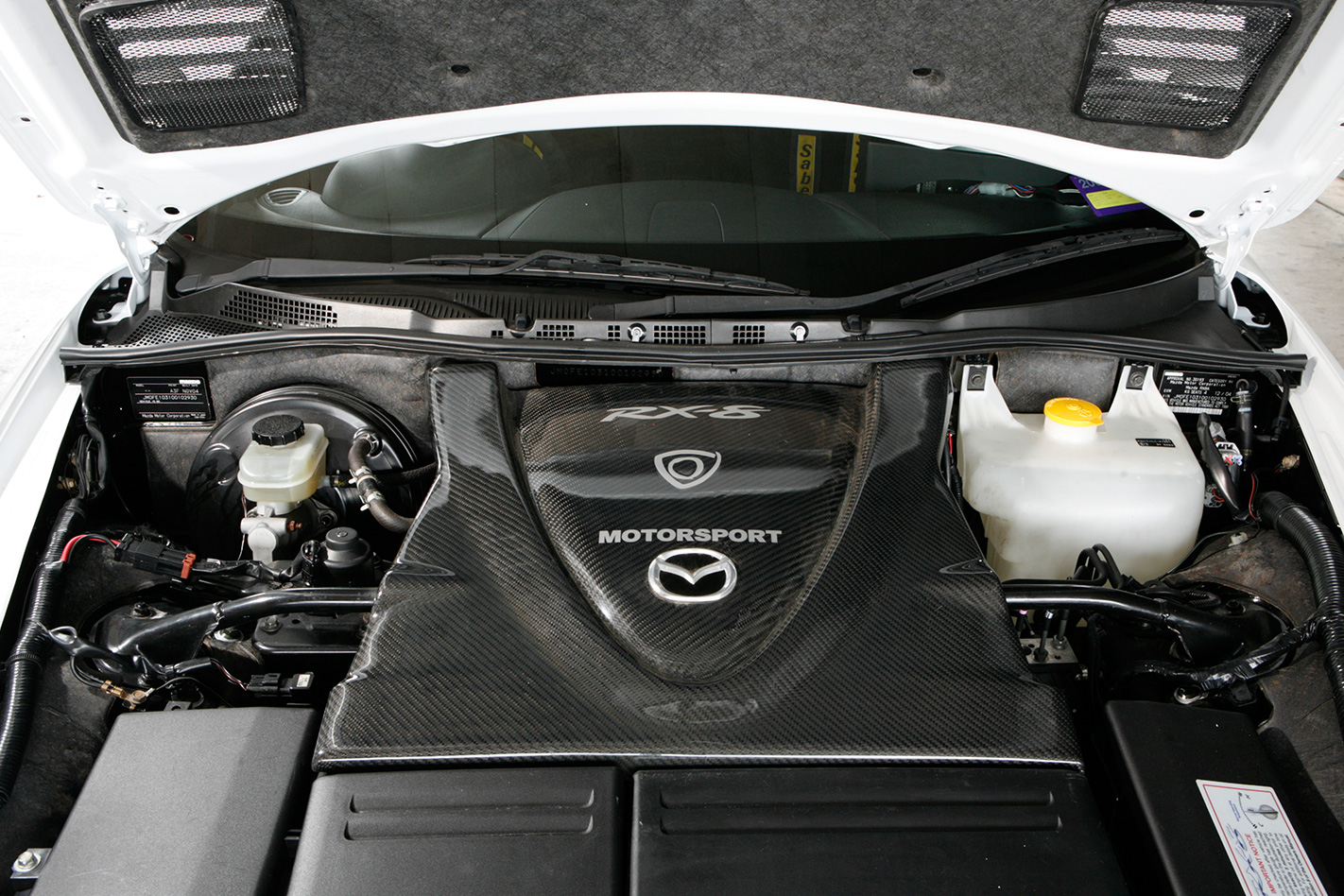
What he’s done to achieve that is nothing short of amazing. Considering the engine is positioned so far back in the RX-8’s bay, almost every aftermarket turbo kit on offer has the snail mounted on top of the engine. But lift the lid and you can’t even see the blower. In fact, the only telltale sign that this is something special is the non-standard carbonfibre engine cover.
Horsley and his team have, somehow, managed to fit a custom-made Garrett turbo, on only 0.4bar (6psi) of boost, down on the side of the engine near the firewall, which means shorter intake and intercooler plumbing for sharper throttle response and better airflow for cooling.
The charged air is forced through a PWR intercooler into a custom intake and expelled via a 2.75-inch exhaust that, surprisingly, retains the standard cats and mufflers, but ends with two cannon-like tail pipes.
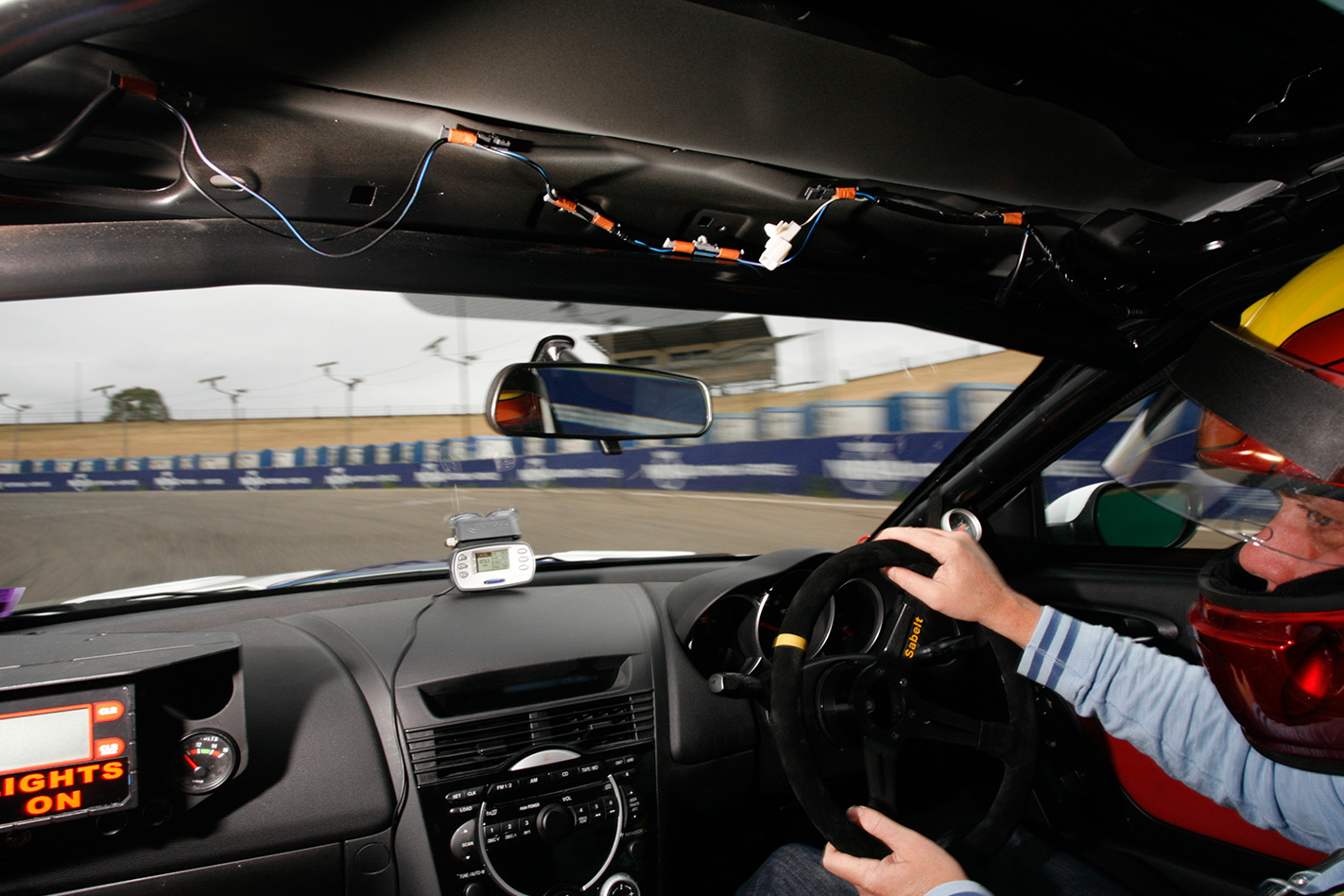
Despite the extra power through the driveline, the six-speed manual gearbox has not been touched and still retains the standard carbonfibre propshaft, but there is a Torsen diff down the other end to further improve traction and handling. Not that a standard RX-8 really needed much in that department, but Horsley didn’t stop there.
For Targa at least, this car is fitted with a tailored suspension upgrade from former Australian rally champ, Murray Coote, that features fully adjustable, remote-canister dampers, stiffer and lower King Springs and lightweight 18-inch alloys wrapped in 235/40 semi-slick Dunlops.
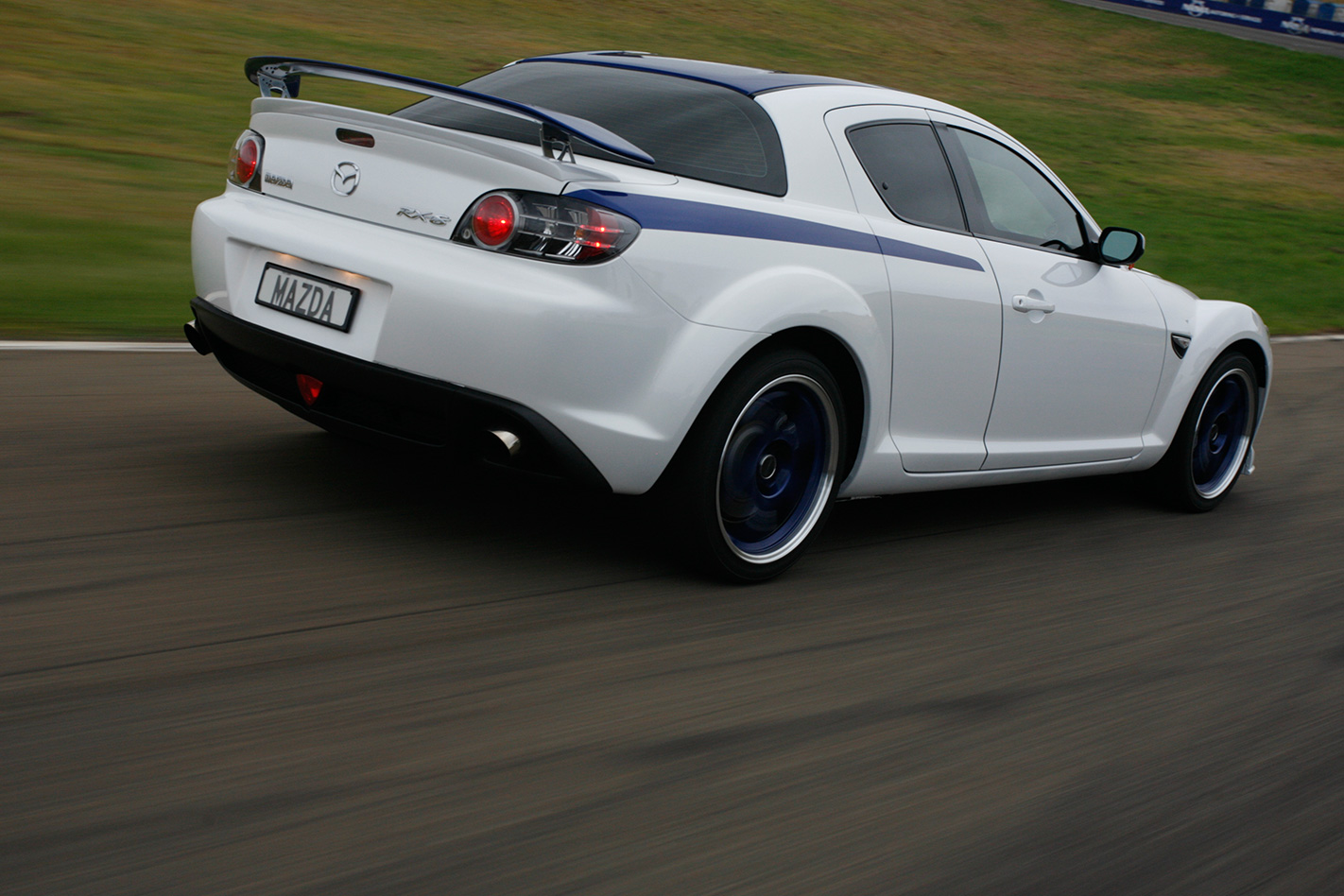
And, at Oran Park, where we gave the RX-8 SP its maiden run, the upgrades were immediately evident. I cranked the key and the boosted rotary idled smoothly but distinctly louder thanks to its bigger exhaust.
I had clear instructions from Horsley not to bend his beast, but conversely, to “treat it like any road test car you’d drive around here, and give it a go!” So I snicked it into first, gave it a blat and crawled down the pitlane with a fair degree of trepidation and excitement.The first few laps were treated with an element of caution as the cold Dunlops were a bit skatey, but that allowed me to play with the engine under more normal conditions. And holy rotary does it work. Even under 2000rpm in fourth gear − normally the RX-8’s torque-less black hole − it picked up pace stronger than any Evo or STI, with minimal lag.
With a bit more heat in the Dunlops, the chassis also came into its own. The standard RX-8 is already a benchmark for handling dynamics thanks to its near-perfect weight distribution, double-wishbone front-end, multi-link rear, torsionally strong backbone construction and the best electric steering in the business. Throw in semi-slicks, custom suspension and big Alcon front brakes and you really can’t go wrong.
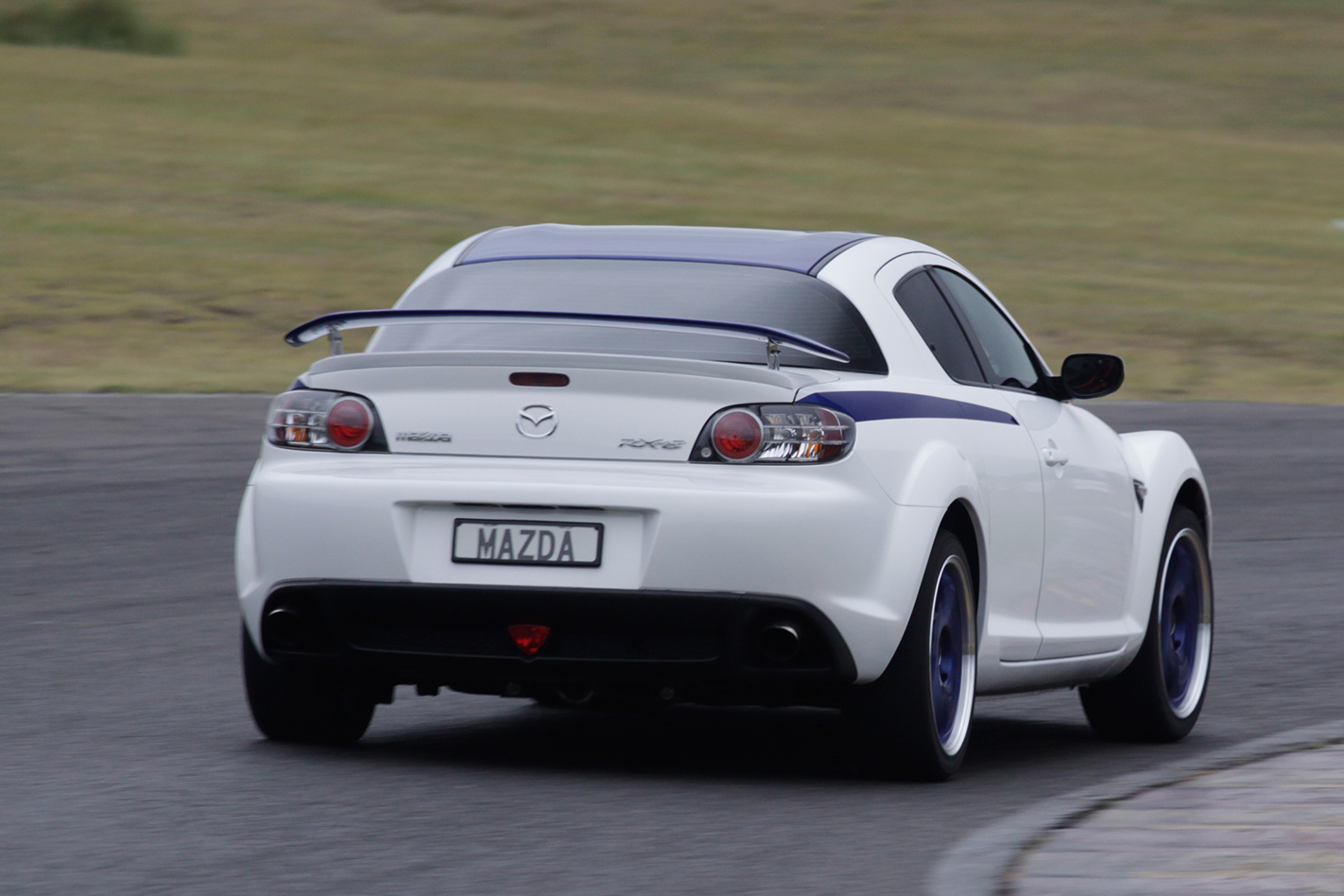
And that’s what it’s like straight out of the box, without any testing, tuning or tweaking. And, remember, the “race” engine is yet to go in it, which has to bode well for its chance to create an upset victory in Targa Tasmania and shake some of those supercars off the apple tree.
The Poms have produced some shocking rubbish over the years – the Morris Marina, The Good Life, the English cricket team for much of the last decade – but it should be no surprise that Jaguar’s new M5-bashing XFR sedan isn’t.
Not even remotely close. Instead, 2009’s newest super-sedan is more like Jonny Wilkinson’s Rugby World Cup field goal or Kate Winslet’s chest. They are victories, wonders, and champions of the highest order.
That’s a big call when your trophy cabinet includes such gems as the original E-Type and the first XJ12, but it doesn’t take long behind the wheel of the new R-branded XF to realise that this car is a tremendous achievement.
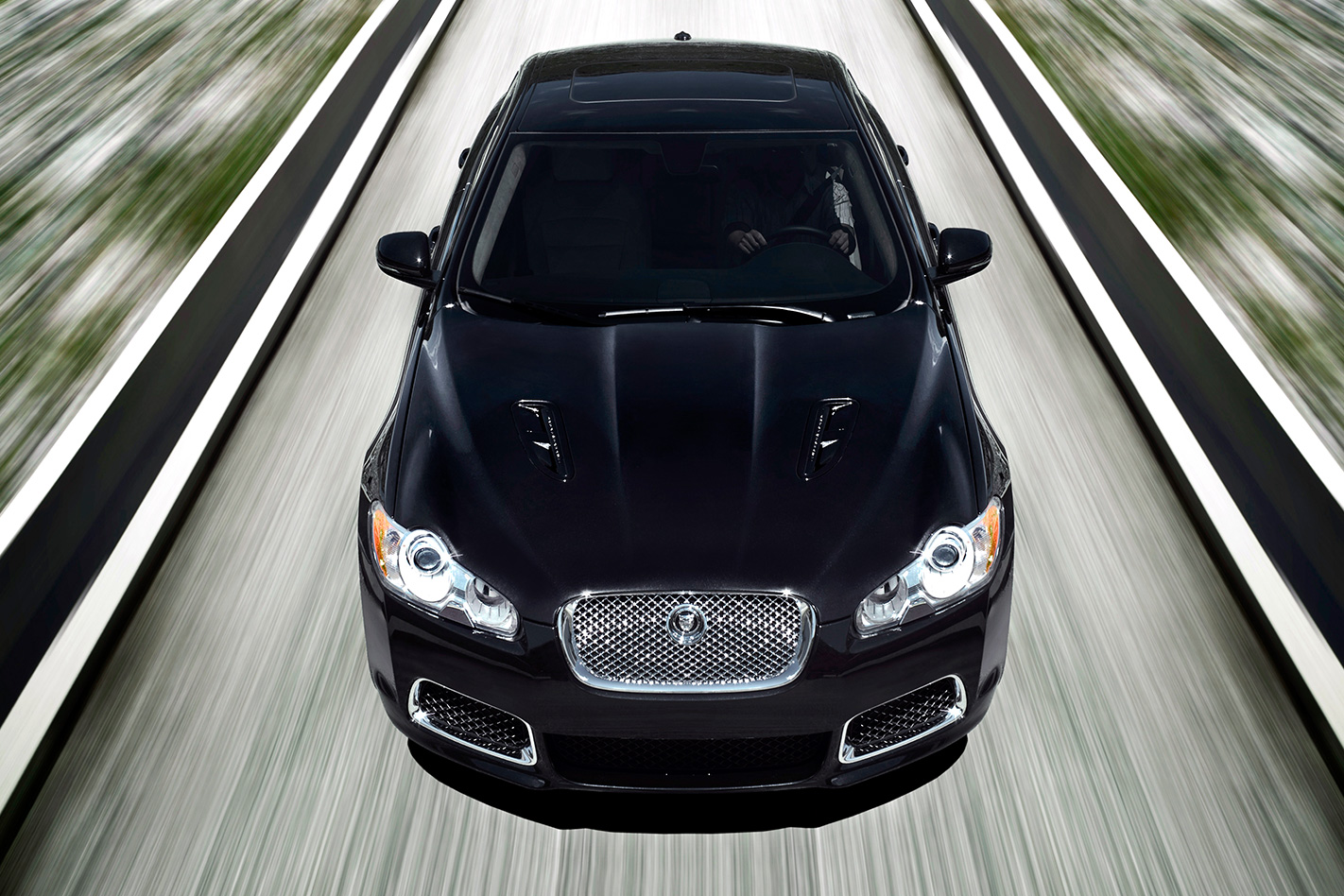
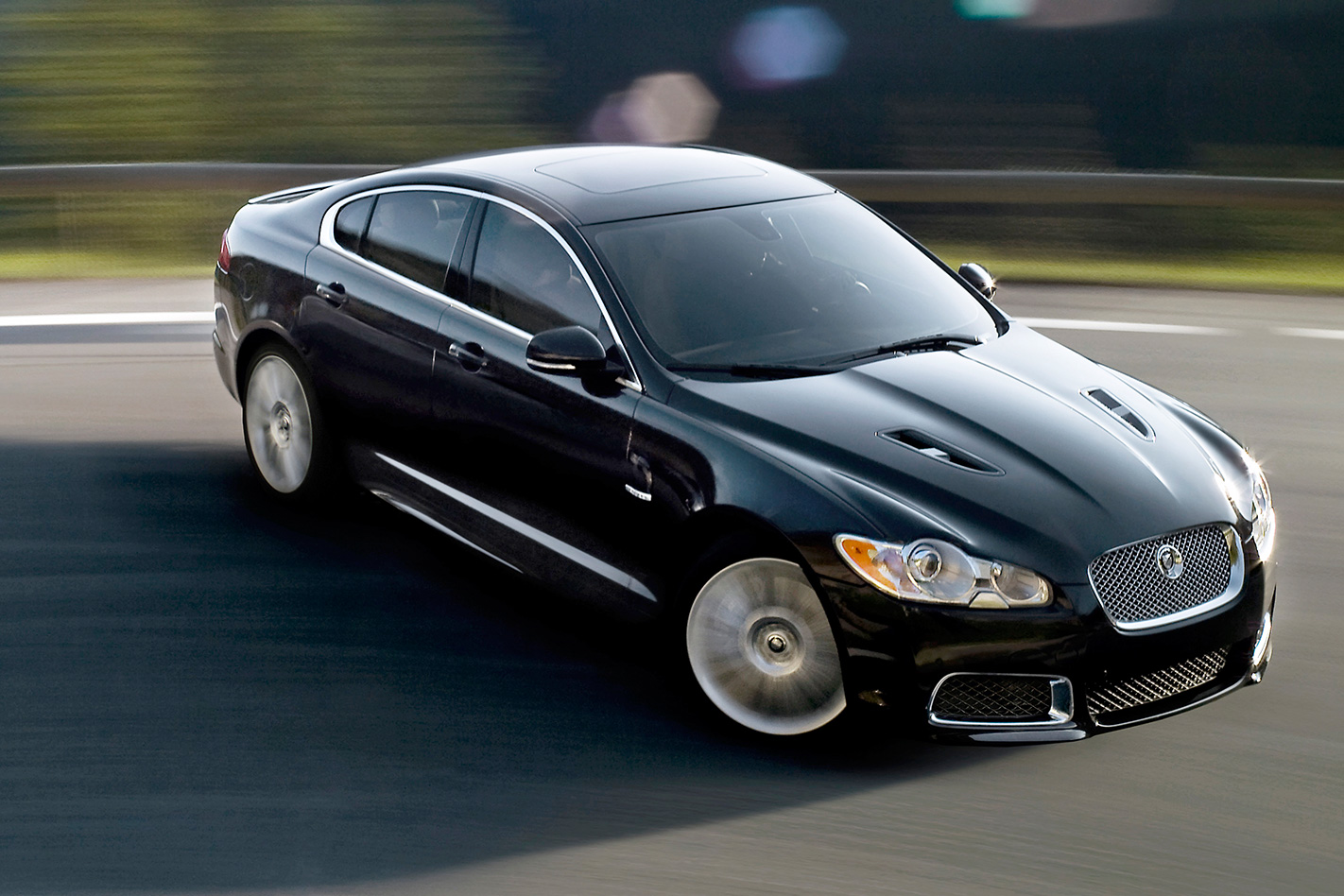
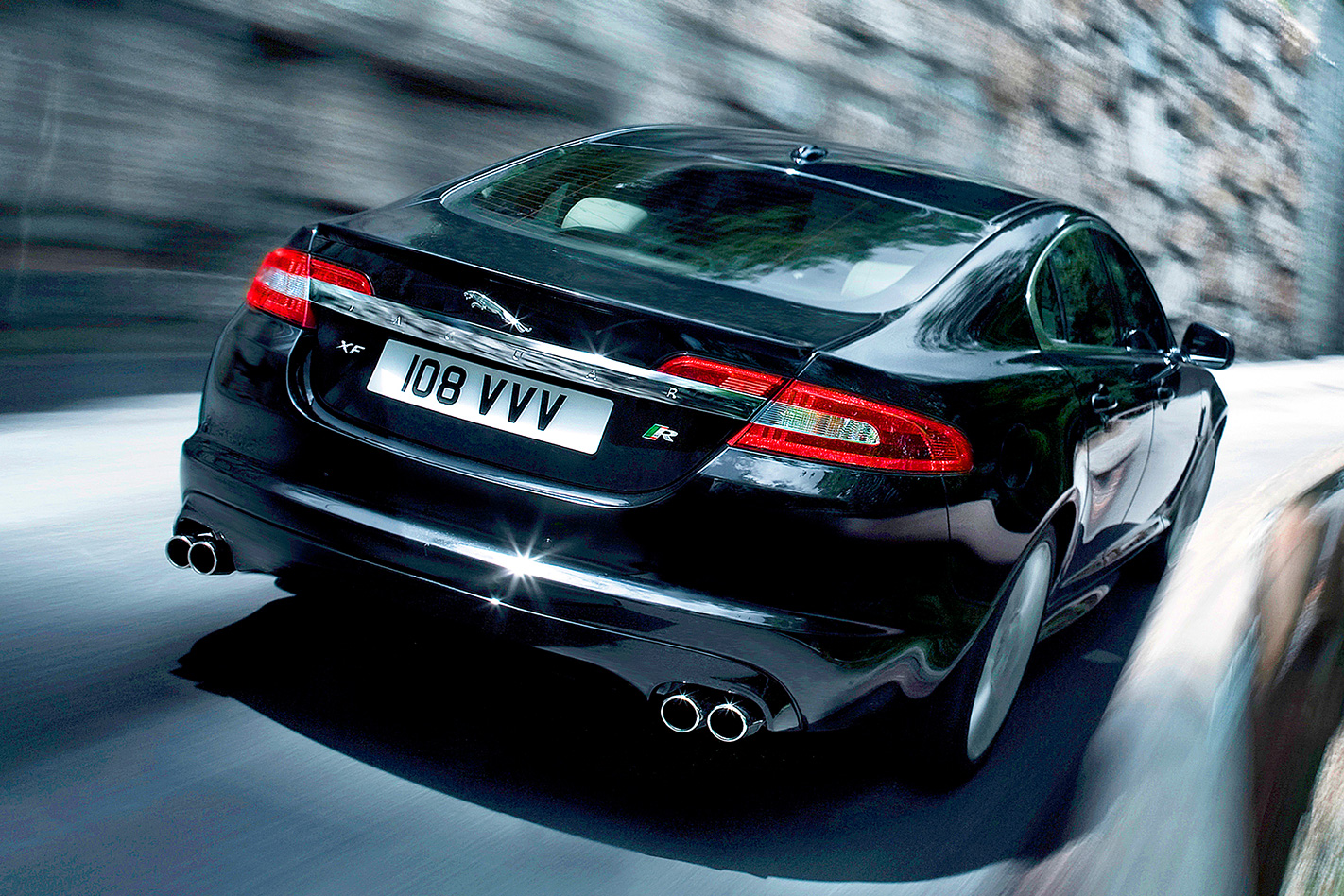
The R scores a deeper front bumper with large, meshed lower air intakes rimmed in chrome, a subtly louvred bonnet with functional heat-extracting vents, meaty side skirts, a small boot spoiler, and four purposeful, protruding chrome rear pipes.
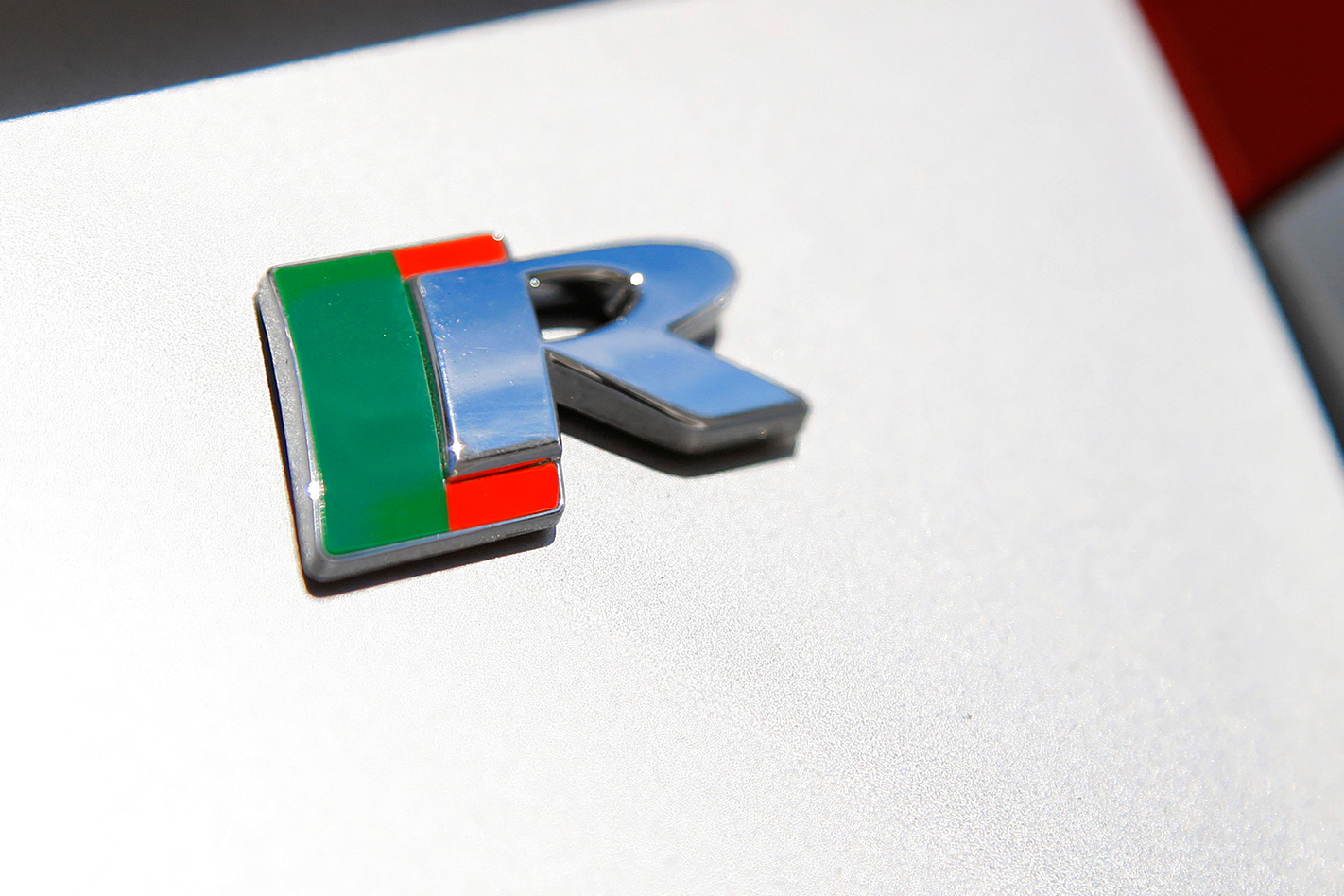
The mirrors feature new LED indicator lights (as do all 2010 XFs) and the R wears new 20-inch Nevis alloys along with a single ‘R’ bootlid badge.But the visuals are nothing more than garnish to the XFR’s banquet of talent. It is what’s growling behind the crinkly mesh grille that really sets this new Jag apart.
Gone is the likeable but long-serving 4.2-litre AJ-V8, in is the virtually all-new 5.0-litre direct-injection AJ-V8 ‘Gen III’.
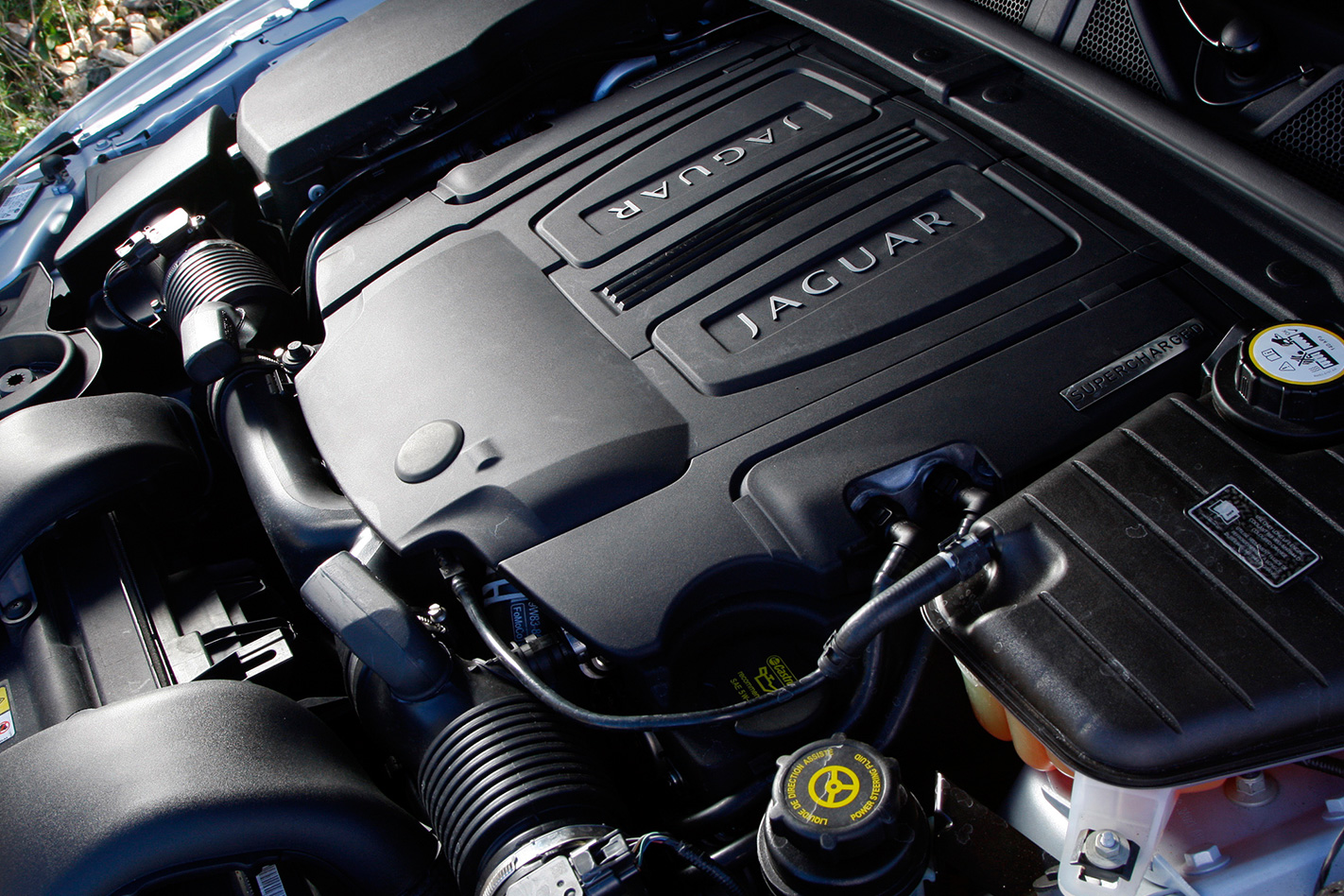
According to Tim Clark, Jaguar’s Principal Technical Specialist, “we chose to stay with a supercharger because the transient response is so much better than with a turbocharged engine, even a twin-turbo one.”The new blower is claimed to be 20 percent more efficient, while a completely redesigned and more direct air intake reduces flow losses by more than 30 percent.
Jaguar offers nine new XKSS The result is dynamite. Power jumps from a respectable 306kW in the SV8 to a thumping 375kW, from 6000rpm to the engine’s six-five cut-out and shift-up point. That’s 23 percent more in a car that was already bloody quick.
Torque swells, too, from 560Nm to an AMG-rivalling 625Nm, but it’s the manner in which all that force comes into play that sets Jaguar’s new R engine apart.
In fact, Jaguar’s 5.0-litre R engine has managed to cherry-pick a whole bunch of the characteristics of its rivals’ engines, but the final blend is arguably the sweetest of all.
While the XFR offers similar bottom-end shove to Audi’s ludicrously potent RS6, there’s a far more natural progression to the way it builds torque. Its kick-in-the-back shove isn’t quite as violent, but lacking light-switch torque delivery in no way makes it feel any less satisfying.The XFR has substantially more low-rev muscle than its revvy AMG and BMW M nemeses, yet the fact that it only revs to 6500rpm fails to diminish its appeal. It simply suits the car’s suave yet devastatingly effective nature.
After much debate, Jaguar’s engineers decided to invest a lot of time eliminating the blower whine that once characterised an R-badged Jag in lieu of a clearer acoustic brand identity.
Some people will miss it, and others won’t, but there’s so much depth to the XFR’s soundtrack that you soon forget it was ever there in the first place. Indeed, the direct-injection 5.0-litre V8 plays a finer tune than ever.Jaguar’s acceleration claims don’t really do the XFR’s drivetrain justice. An 1816kg automatic sedan that hits 100km/h in 4.9sec (half a second quicker than the old SV8) and can nail the quarter in 13.1 isn’t hanging around by any means.
And it indicates what gear you’re in with a large, easy-to-see digit in the centre screen of its instrument pack.Approach 6000rpm when using the paddles and the previously white gear-number pulses yellow, and when you’re done with manual play and tire of exhaust-crackle games on overrun, you simply hold the upshift paddle for a moment and the XFR calmly slots back into either Drive or Sport.
Unlike an ABS/braking-based system, an electric motor controls the clamp load in the clutch pack to alter torque bias between the rear wheels.Jaguar claims this prevents low-speed understeer and delivers a progressive oversteer transition in all conditions, significantly enhancing traction, agility and vehicle stability.
But the effect in the real world is that the XFR offers superb levels of rear-end traction in both wet and dry, as well as potentially the best rear diff for power-sliding and drifting ever – even better, Jaguar reckons, than BMW’s brilliant mechanical M Differential in the M3/M5/M6. A racetrack drift session test surely awaits…On the road, with TracDSC activated (the mid-setting that allows some oversteer movement), the XFR’s traction and power-down capabilities are both immense.
Obviously huge 285/30ZR20 rear tyres help in this regard, but it’s the XFR’s superb adaptive suspension (with Jaguar-designed and developed electronics controlling Bilstein damper hardware) that keeps this large sedan feeling planted and balanced, yet comfortably playful.Even though the electronics are frantically monitoring every movement – from wheel position to damping compression, ride level, roll rate, and pitch from throttle and brake inputs – the XFR’s dynamics feel totally natural.
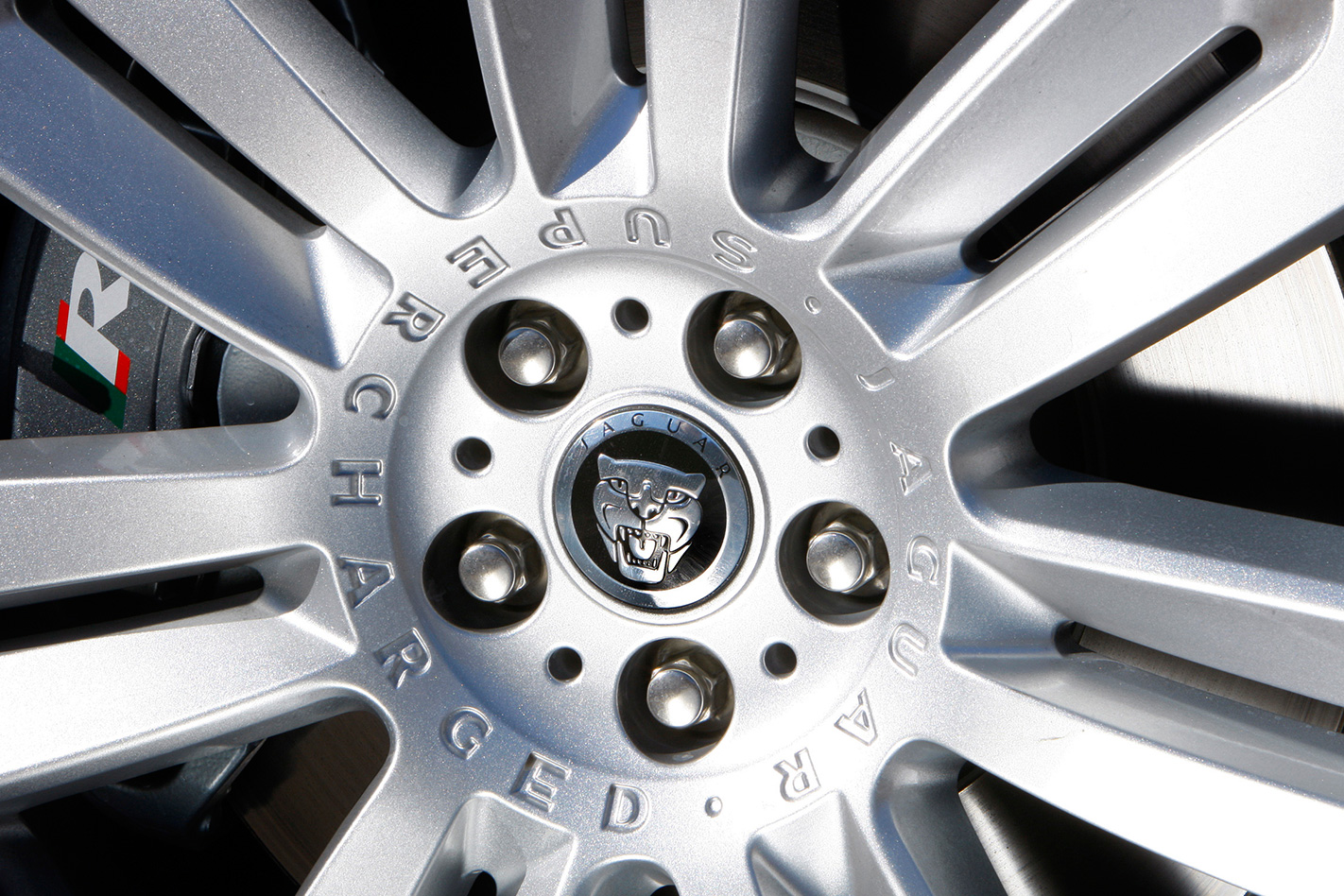
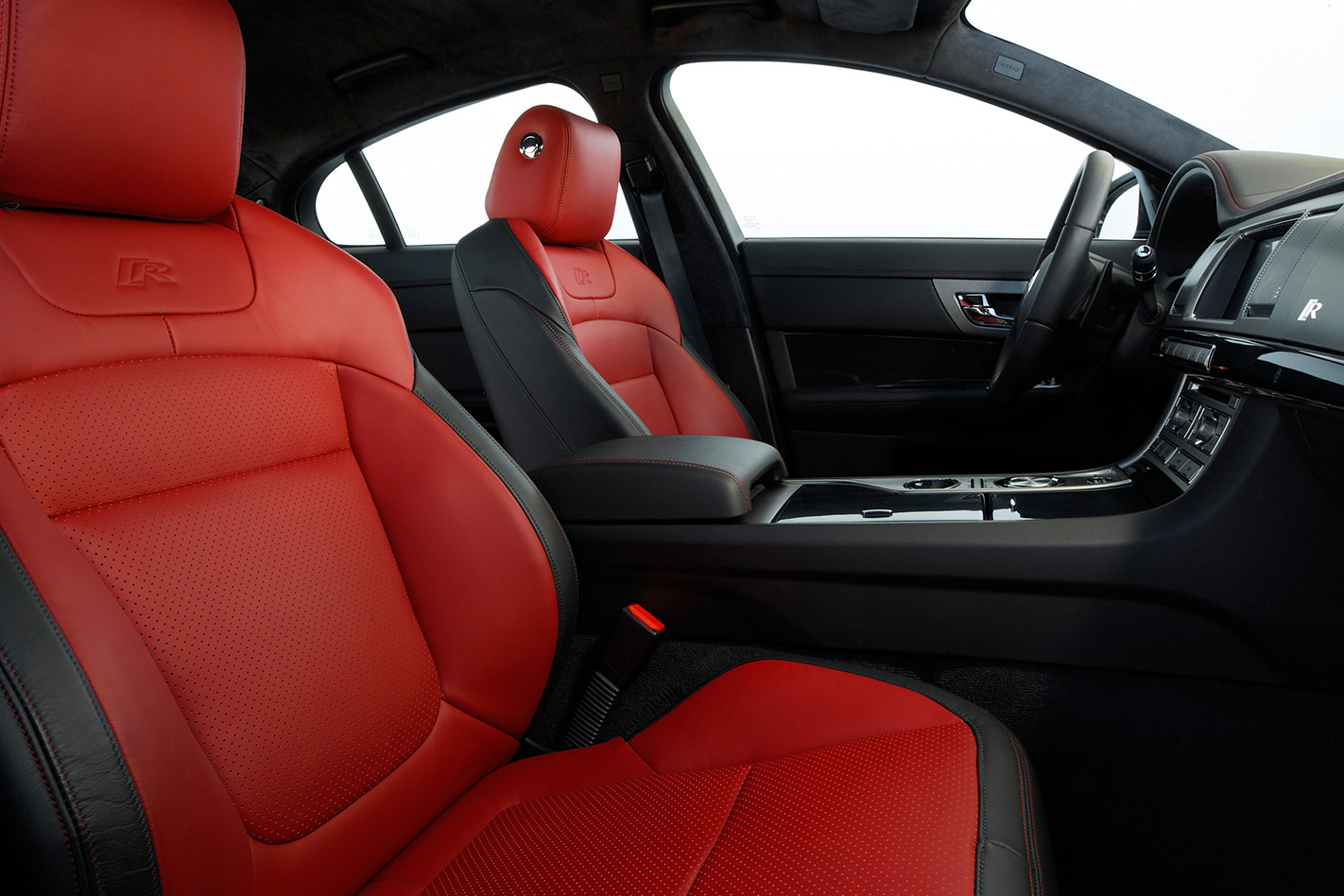
It’s more disciplined than the old SV8, but no less serene, making it impossible to pin-point a rough edge.Only its tyre rumble and rough-road ride quality await final confirmation on Australia’s sub-standard surfaces. In Spain, on fabulous roads outside Seville that are better surfaced than anything Australia has to offer, it performed superbly, carry-over brakes included.Beyond the thumping engine and even more polished dynamics, the biggest difference from the XFR’s driver’s seat is the seating itself. The SV8’s were comfortable, but didn’t hold you in place during hard cornering.
The verdict on road noise from the XFR’s Dunlop SP Sport Maxxs will have to wait until the XFR lands in Australia, too, but that shouldn’t be far away. May/June is its current arrival date.We can’t wait to drive the XFR at home. Much as we love having a dig at the Poms, you have to hand it to ’em. They’re bloody clever at doing great stuff at the premium end of the scale, and the Jaguar XFR is a shining example.
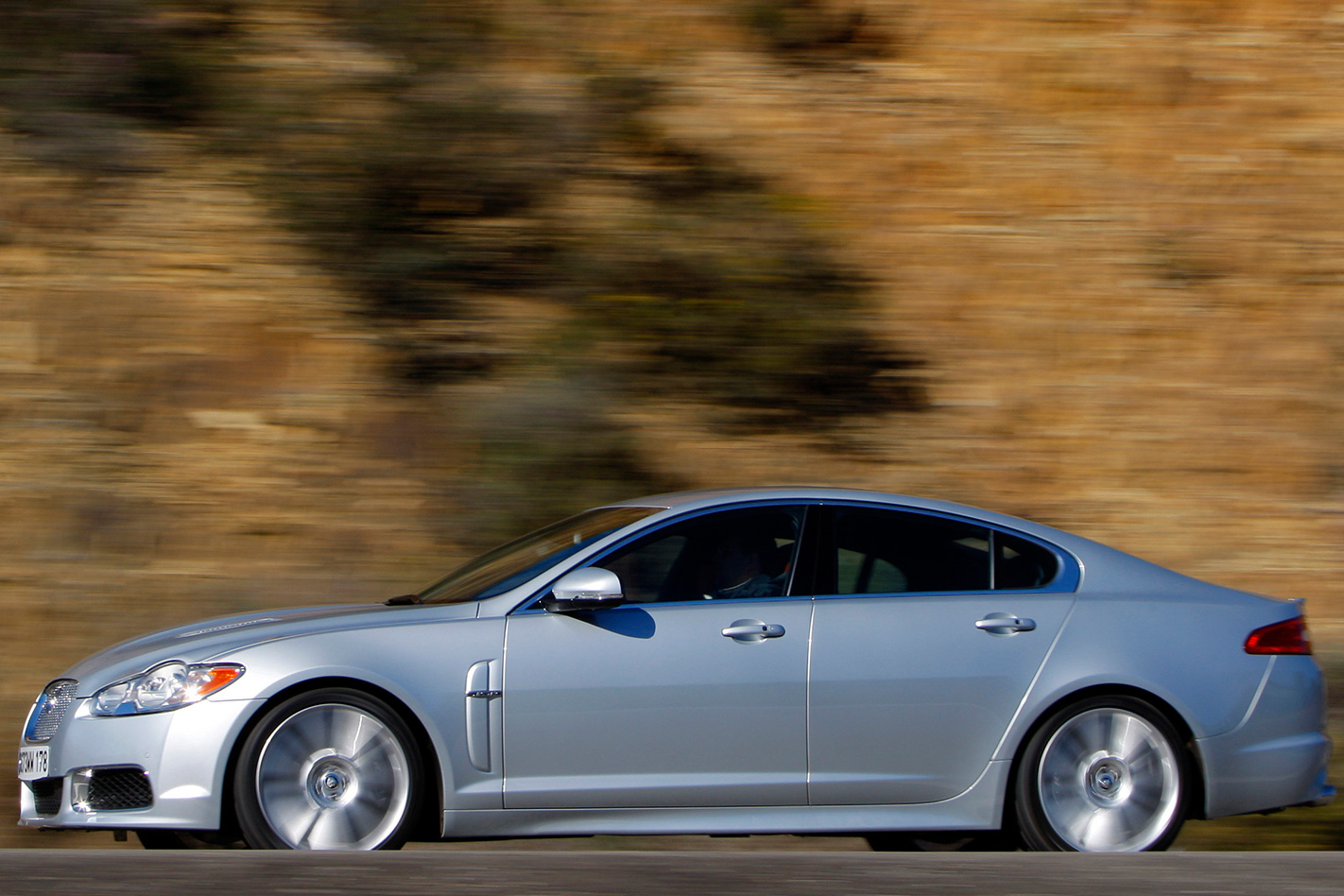
It’s as polished as you could ever hope a supersonic sports-luxury sedan could ever be, yet never to the point of being too slick. Despite the sophistication of its brilliant drivetrain and superb suspension, it is crammed full of character and personality. Not everyone thinks it looks great, and those 20-inch wheels are just a little too bright and pretty for this definitive British bulldog. But you just can’t help falling in love with it.Jaguar has had its ups and downs over its 78-year history, but when it produces a blinder, it does so in spectacular fashion. And the XFR, along with the equally stunning new XKR, is just that.
It is without doubt one of the best Jaguars ever built, and that’s gotta be a more lasting legacy than the bloody Ashes.
Next-gen golf GTi engine debuts in Audi’s semi-sporty A4.
Good things often come to those still in love with the manual gearbox. Used correctly, it brings kudos from women-folk and silent admiration from the male of the species, but it’s also often accompanied by a more generous serving of performance.In the A4 2.0T’s case, the six-speed manual gets not only quattro all-wheel drive, but an uprated 2.0-litre TFSI four with 155kW/350Nm compared to the front-drive 2.0T Multitronic’s 132kW/320Nm.You’ll pay an additional $11,651 for the privilege, but the 2.0T quattro is garnished with extra gear, too – namely xenon headlamps with LED strips, front parking sensors, electric front chairs with electric lumbar, a sports steering wheel, keyless entry and start, and 6-disc audio with a 6.5-inch colour screen.But the cover story is the 2.0T’s engine – a fresh-for-’09 update of the 147kW/280Nm direct-injection turbo that has been doing sterling service since 2004. Power is up 8kW to 155kW (at 4300-6000rpm), but torque has jumped 70Nm to a V6-bashing 350Nm, available all the way from 1500-4200rpm.The engine’s compression ratio has actually dropped from 10.5:1 to 9.6, enabling it to produce full thrust on 95 octane, but it remains exceptionally efficient. Audi claims the manual 2.0T will hit 100km/h in 6.6sec – just 0.2sec slower than the 3.2 FSI – yet averages a diesel-esque 7.4L/100km, which is outstanding for a big petrol sedan.Alterations to the TFSI 2.0-litre are modest, but clearly effective. It scores variable lift on the exhaust camshaft, chain drive, new six-hole injectors, optimised turbocharger internals to improve response, a lighter and more efficient intercooler, and reduced friction for the conrod bearings and cylinder linings. It also meets strict Euro V emissions rules.On the road, the engine’s muscle is immediately apparent. Pace gathers swiftly from 1600rpm, but becomes urgent at 2000rpm and never lets up until about 6500rpm. The redline reads 6800rpm, but there’s little point stretching that far – the 2.0 TFSI does its best work in its buxom mid-range, and sounds happier there, too, if never as rorty as it has in other applications. And it’s matched to a fantastic six-speed gearshift. If you can’t drive the A4 2.0T manual smoothly, maybe you shouldn’t be driving at all.Then there’s the rest of the B8 A4 experience. On fairly unsporting 225/50R17 Dunlop SP Sport 01s, and without Audi’s flawed ‘Drive Select’ three-mode suspension, the A4’s ride is actually very good, but its steering is numb at straight ahead and, while quick off-centre, transmits little feel. The 2.0T quattro is capable enough when the going gets tough, but it never really encourages press-on driving. It would definitely feel sharper with ‘Drive Select’, but then its ride would be reduced to tatters.The 2.0T quattro should’ve been the new A4’s sporting sweet spot. Instead, it’s simply a reminder that this is not what the A4 is about.
Limited-run senator more than just a sticker special.
I’ll cut to the chase – this is a road test of a gearbox, pure and simple.While HSV’s limited-edition Senator SV08 has a host of unique bits and pieces, the only thing that changes the way it drives is the new-for-2009 Tremec TR6060 six-speed manual transmission that is now available across the HSV range.Everything else remains as it was, including the 317kW LS3 6.2-litre V8, Performance-spec Magnetic Ride Control suspension, four-piston brakes etcetera, etcetera.Not that I’m complaining, mind you, because I reckon the Senator is actually the pick of HSV’s E-series crop – apart from the ultra-exclusive, ridiculously-expensive and blindingly-quick 7.0-litre W427.Its less-extroverted (rather than ‘subtle’) add-ons, such as the classy front bumper and rear lip spoiler, work better with the restrained aggression of the VE’s taut body than the wannabe-V8 Supercar look of the Clubsport and GTS.I could take or leave the SV08’s special black-painted lower sills and the blink-or-you’ll-miss-’em chrome mirror scalps and door handles, but the standard 20-inch Pentagon alloy wheels look the biz and fill out the guards, although be warned they’re prone to gutter-rash as the spokes protrude slightly beyond the bead of the tyre.Created to commemorate the 20th anniversary of the VL Calais-based SV88 (HSV’s first attempt at a luxury sports sedan that cost a whopping $40,850 back then and even came with an optional in-car fax machine), the SV08 is likely to follow suit as an unsung collectible as HSV will only build 50 of the buggers, and only 20 of them with the six-speed manual.Which brings me back to the whole point of this, and what has kept HSV’s engineering bunker busy since the E-Series was launched. The Tremec TR6060 is a more robust version of the previous T-56 six-speeder, with an increase in torque capacity thanks to an upgrade from a 10-spline to a 26-spline input shaft, as well as a stronger case and wider gear faces.It also has improved shift quality through the addition of triple synchros on first to fourth gears, and double synchros on fifth, sixth and reverse.HSV installed it in W427, and it’s used in Ford’s FG manuals, but it also features in a wide range of Yank muscle cars including the Mustang, new Camaro, Pontiac G8 GXP, Dodge Challenger and Chevy Corvette.It immediately feels well sorted and a welcome change from the sloppy, truck-like T-56 as soon as you click the SV08 into first gear. There’s a more precise and mechanical snick as the cogs meet, and far less play across the gates from first-to-third and fourth-to-fifth. This not only provides you with more feedback, but means you can shift quicker and easier to access the LS3 V8’s tractable grunt more effectively.The TR6060 is still nowhere near as sweet as a benchmark manual (like something from Porsche or Honda), but is a significant improvement on where HSV has been for far too long.
