
Limited-run NURBURGRING edition reminds us why we like HSV’s VXR.
When it comes to brawny hot hatches, few punch harder than HSV’s Astra VXR. The 177kW turbo four, straight from the Opel Performance Centre (OPC) in Germany, stands alongside the Mazda 3 MPS as one of the fastest, if unruliest, front-drivers ever created.It’s fierce all right, but it lacks a little polish compared to the benchmark Renaultsport Megane R26. With almost as much power, the sweet-handling R26 owes a lot to its limited-slip differential.Which is why we hoped HSV’s Astra VXR Nurburgring Edition, named in commemoration of the VXR’s 8min 35sec laptime around the Nordschleife, might also employ something similar to set it apart from the ‘standard’ VXR and to help put all that grunt to more productive use.Unfortunately, the Nurburgring’s additional $2K ask buys you nothing of the sort. Sure, the lightweight, all-white 18s marginally reduce unsprung mass and they look cool until covered in brake dust, but they’re no fix for the Astra’s errant on-throttle behaviour.After the initial promise of the front-end’s grippy, responsive turn-in on your way into the apex, powering out of corners isn’t easy. As soon as you accelerate, the front wheels bicker between themselves about which way each wants to pull the car, blunting the steering’s usefulness and leaving finite throttle control as your only hope of exiting the corner on-line.The Remus sports exhaust is a welcome addition, with the edgier note from the chrome centre-rear exhaust drowning out some of the standard VXR’s Hoover-like whoosh. HSV claims the system also offers a slight performance increase, but even they admit that any gain is negligible.But what the Nurburgring pack does award you is a pair of snug leather Recaros with the track map stamped in the back, which look great, and a host of other cosmetic bits and pieces.The striking love-it-or-hate-it chequered decal that stretches over the length of the car, along with the imitation carbonfibre external door mirrors, B-pillars and side sills all look the business.But what doesn’t look so hot, as with the standard HSV VXR, is the mis-match of HSV, Vauxhall, OPC and Opel badges scattered throughout the car. We’ve no complaints about the Vauxhall-derived VXR logo, as it’s the name of the car, but the whacking great Opel badge staring you in the face from the centre of the steering wheel is an expedient touch.Sure, it’d cost money to glue an HSV logo on a standard Astra wheel boss, but when it’s that prominent, we reckon it’d be worth the expense. The OPC dials – necessary because of our km/h requirements – don’t match, either.Of the 835 Nurburgrings to be built (again, a reference to the car’s laptime), Australia will only receive 20. So if you’re considering buying a VXR anyway, the Nurburgring’s tougher exhaust note, all-white style, and model exclusivity make it worth the extra $2K. It’s been a while since we last drove the VXR, but its raw appeal, along with the overt Nurburgring styling, reminds us exactly why we like it.
If Kylie Minogue decided to record a thrash-metal album, the Queen would probably ask her to hand back her OBE, but at least there’d be a parallel for the Lexus IS F.
Two decades of building ultra-refined, four-wheeled sedatives with all the character of Sorbent toilet tissue and then ‘shazam!’, out pops a growling V8 Japanese muscle sedan hell-bent on ending Germany’s sporting dominance.
Of course, that’s harder than it sounds when your first proper performance car happens to be competing head-to-head with the new BMW M3 sedan and Mercedes-Benz’s thundering C63 AMG.
But so extensive are the changes to Lexus’s compact-luxury IS that the hardened-up ‘F’ stands one helluva chance of knocking the M3 and C63 from their elevated perches, or at least severely denting their pride. And its model designation suggests as much – the ‘F’ signifying Japan’s famous (Toyota-owned) Fuji speedway, though it may well allude to Gordon Ramsay’s famous “F@#k me” exclamation.
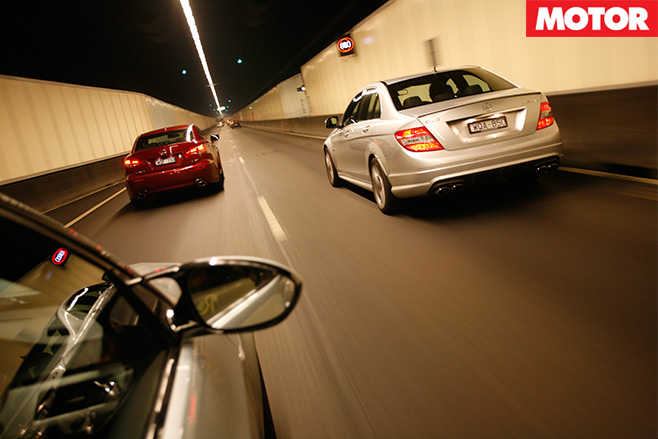
On paper, the IS F has seemingly nailed its target. She’s somewhat heavier than the competition, just like the standard IS250 is over a 325i or C280, but its 5.0-litre direct-injection V8 punches out an impressive 311kW at 6600rpm – two more than the M3, 1700rpm sooner.
The F’s engine is a development of the 4.6-litre from the GS and LS460s, but the cylinder block and heads, intake and exhaust systems, lubrication system, crankshaft, pistons, connecting rods, electronic throttle body and camshaft profiles are all unique.
First-for-Lexus technical highlights include a dual air-intake system, large-diameter titanium valves (for increased lift and greater engine speed), hollow camshafts, and dual variable valve timing with electric actuation on the inlet camshafts.
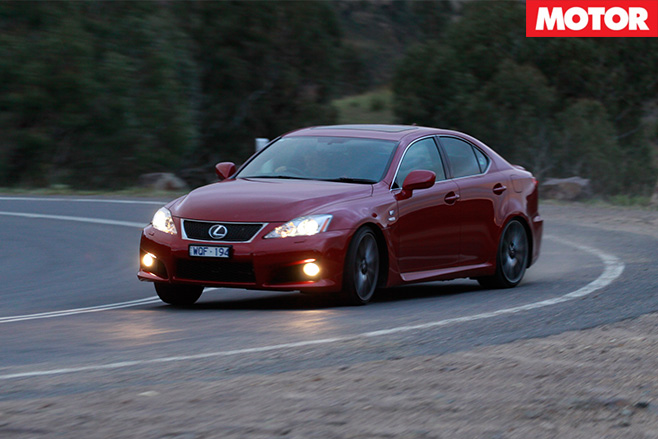
Considerable track time behind both German V8s confirms that they, too, are strong and meaty enough to handle lengthy track thrashings without bursting at the seams, but it’s the difference in character between the M3’s 4.0-litre, the IS F’s 5.0-litre and the C63’s 6.2-litre that is the focus of this exercise. And they call this work…
Newbie first. The IS F V8’s party trick is undoubtedly the snorty induction growl that sharply interjects when its second air-intake port opens above 3600rpm. What begins as a distant burble from its engine and its curiously arranged tailpipe quartet quickly turns nasty, erasing any pre-conceived doubts that Lexus can’t do noise.
It’s a deep cabin-filler that never fails to satisfy your inner revhead, though it does peter out a little as the IS F nears its somewhat premature 6900rpm ignition cut-out. Keep it grunting between three-six and five-and-a-half on the F’s luminescent tach’, however, and it’s a veritable meat market.
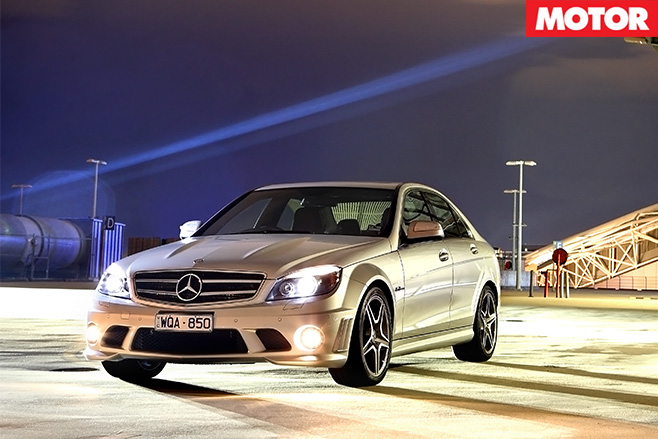
It has noticeably more top-end shove than the Lexus V8, and despite its greater dimensional capacity, it has another 500 revs up its sleeve, too – charging with serious aggression right to 7400rpm. But the loud-and-proud AMG V8 performs that trick at any speed, in any gear.
It’s the supreme spontaneity of the C63’s urge, and the brilliance of its transmission in assisting this hunger for the horizon, that makes this one of the greatest drivetrain combinations ever. You don’t have to flog it to fall head-over-heels in love with it, but when you do, even non-Catholics might feel the need to go to confession.
Alongside the brutal Benz, the M3’s demeanour is far more suave, like meeting a world-champion boxer who happened to be educated at Eaton. Its metallic V8 rumble is much more subdued until it starts to pile on revs, but beyond 5000rpm, it just keeps getting faster, frothier, and more intense.
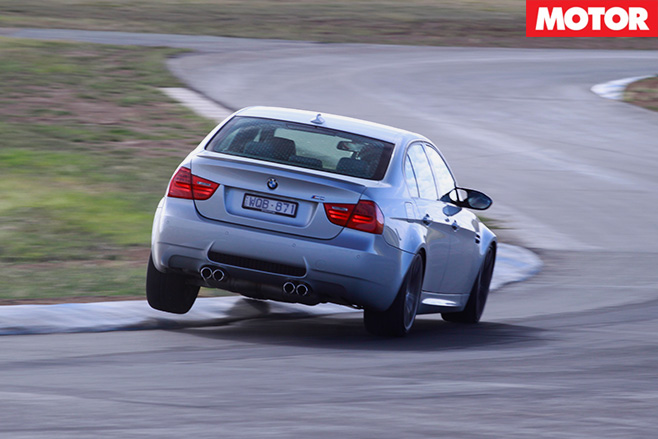
While the BMW’s two-pedal seven-speeder is a vast improvement over the old, unlamented SMG, it has one particularly annoying trait. In light-throttle situations in urban environs – like mounting a speed-hump or slowing for, then entering, a roundabout – the DCT tranny perpetually hesitates before choosing a gear.
With the adjustable shift program showing any less than three bars (of five in total – with five being the most hardcore, ESP on), it can be frustratingly lazy to respond. But at four bars (which is arguably the ideal shift setting), it still pauses before grabbing a low gear and surging.
It’s virtually impossible to drive around without having the DCT ’box in manual mode, but with seven ratios to pick from, that involves a lot of paddle-prodding. Thankfully, none of this is evident on the open road.
But the switch sits invisibly on the dash behind the steering wheel, and every time you start the IS F, it defaults to ‘Normal’, which means dopey gearshifts, dumbed-down throttle response and lighter steering. And yet another fumble for the ‘Sport’ button.
Even then, in Drive, with the dashboard’s green ‘Sport’ light glowing, upshifts feel and sound lazy, with big pauses between gear changes. And the ’box only throttle-blips on downshifts in Sport Manual. In contrast, the BMW’s M-DCT does it whenever, wherever. Ditto the C63’s ‘AMG Speedshift Plus’ 7G-Tronic.
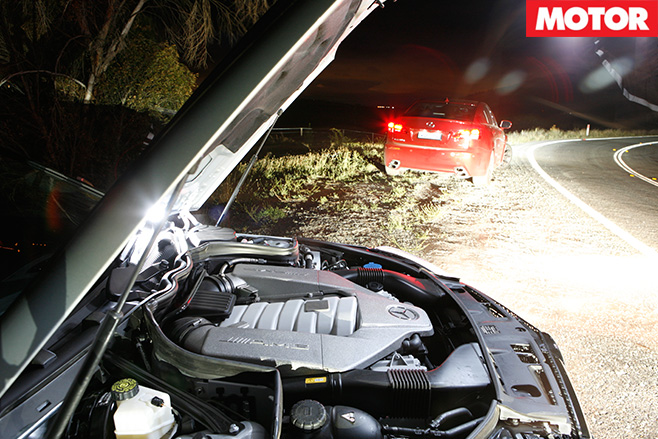
Ah, yes, the C63’s transmission. Not every Benz seven-speeder we’ve tried over the years has felt completely on-song, but the example in this C63 (the same car we hammered over several thousand kays in the PC08 final last November) was basically flawless – perfectly attuned to the 6.2 V8’s brawn, always in the right gear, always shifting smartly and throttle-blipping perfectly.
Not only did the big-dicked C63 finally prove that it can put its muscle where its mouth is, in Drive with ESP fully off, but the M3 M-DCT’s launch control also worked properly in its preferred environment – scrabbling off the line with minimal wheelspin and slamming home the double-clutch box’s gearshifts.
Despite a deliberately shortened first gear, the IS F can’t quite match its Kraut rivals out of the blocks, but it maintained its margin to the BMW right to 180km/h, and its rolling-start performance is up to speed, as you’d hope with eight friggin’ gears!
Why the IS F needs so many ratios is anyone’s guess, particularly when most cornering up to 150km/h requires only second or third gear, but if it was for fuel-economy purposes, then objective achieved.
The other area where the Lexus puts clear distance between itself and the Germans is its turning circle – an amazingly tidy 10.2m, or a metre-and-a-half less than its rivals. It might require nearly three turns from lock-to-lock, but thanks to this brilliant manoeuvrability, it never feels in the least bit low-geared. Indeed, with the ‘Sport’ button engaged (which it should always be anyway), the IS F’s steering is impressively communicative and concise, and blends well with its chassis’ light, agile, balanced feel.
The IS F turns in sharply and does a highly convincing job of masking its 1.7-tonne kerb weight – relishing being thrown from one corner to the next and four-wheel-drifting cheekily as both its front and rear ends relinquish grip.
Right on its cornering limit, things become slightly untidy – it understeers, then as its front tyres bite, the rear goes into oversteer – but up until this point, Japan’s super-sedan is enjoyable and pointable. Interestingly, the IS F manages to combine dynamic elements from both its rivals. But ultimately, the German pair convincingly out-drive it. Why? Because both the C63 and M3 perform several disciplines substantially better than the IS F.
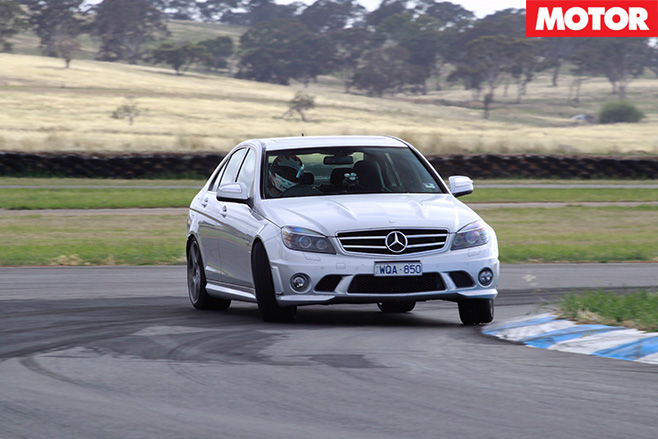
The Benz’s gorgeously chunky steering wheel is infinitely preferable to the IS F’s waif-like rim, droopy spokes and arced height adjustment, however, and while the C63 is similarly well-balanced, its P Zeros hang on longer, its handling generally feels more fluid in its transitions, and, most obviously, it has much more grunt to adjust its rear end with.
And there’s its ride – firm, but much better damped and far less pitchy than the unsettled IS F. Over one severe undulation on our test route, the C63 devoured it virtually unflustered. The M3 (in its damper’s mid-setting) was a touch abrupt, but clearly the best at reigning in body movement, while the IS F seemed to springboard off the road, sending its driver’s head towards the headlining, with arse-cheeks simultaneously leaving the seat, as it soared highest with too much vertical movement.
But it’s grip, or the relative lack of it, that lets the IS F down most. While its four-wheel-drifting shenanigans do make hard cornering entertaining, jumping into the M3 straight after puts things into perspective.
The M3 walloped the IS F everywhere, but was travelling 10km/h faster going onto the back straight and managed to slaughter the IS F’s lap time by three seconds, despite their relative parity in a straight line.
The M3’s larger footprint (on optional 19s) could explain some of its cornering superiority, but it’s a car that always seems to keep up with its driver – feeling more alive and even more accomplished the harder you drive it, particularly its steering. On the road, the M3’s cornering limits are so high that few will manage to unsettle it, yet there’s little trade-off for this handling excellence.
Even in the EDC damper’s middle ‘Normal’ setting, the M3 rounds off bumps and avoids jiggling around too much, with an even more GT-like ‘Comfort’ setting still up its sleeve. And its brakes – same-size 360mm vented and drilled fronts as the Lexus and Merc, but with the largest (350mm) rear rotors here – are strong enough to back up its pace, on either road or track.
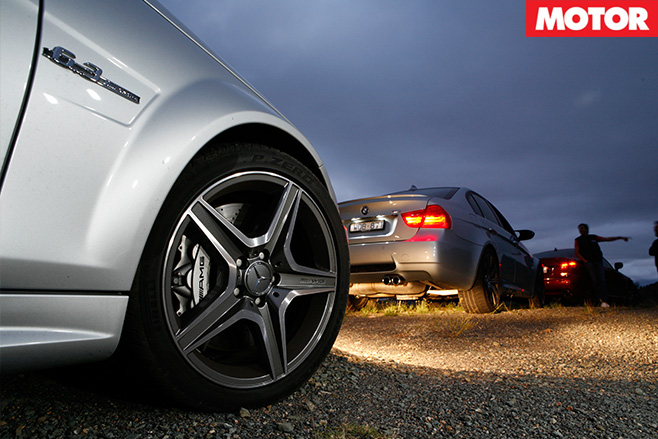
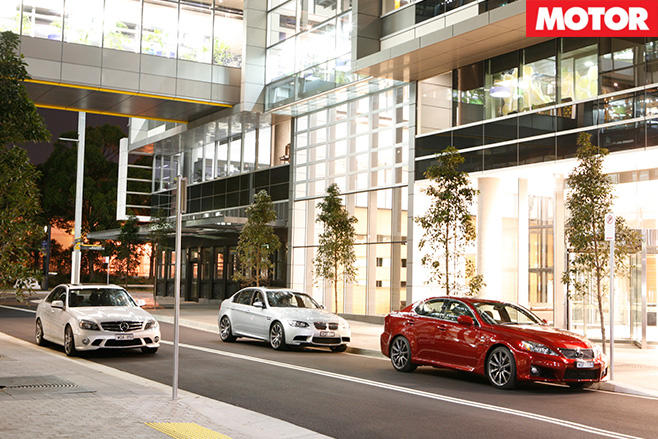
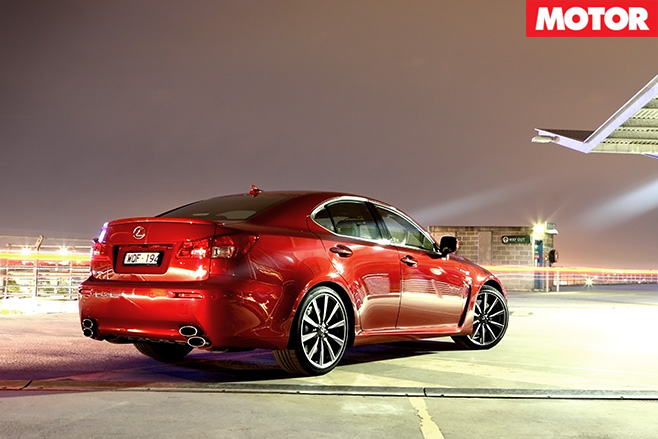
Certainly, the brakes on this lot look sizeable enough hiding behind suitably tough-looking rims – forged-alloy 19s in the case of the IS F. With all three modelling heavily flared guards and four impressionable exhaust pipes, it’s difficult to confuse any of them with lesser-engined models.
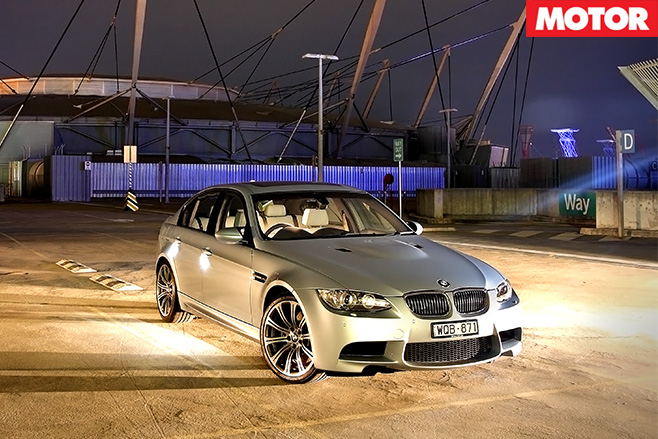
But it’s the BMW that has arguably the greatest presence, front, back, or side-on. Blending the coupe’s sexy front-end with a taller, chunkier middle and the sedan’s freshly facelifted rear (with classy new LED lights) makes the new four-door the toughest-looking M3 yet – even in metallic steel blue, and especially on the test car’s guard-filling 19s.
The handsomely pumped and nicely cut C63 is spoiled only its relatively bland tail (though its fat pipes try and make up for it), while the IS F looks muscular as hell from side on and any angles that capture its deeply vented front guards, but has fussy taillights, and a little bit too much chin.
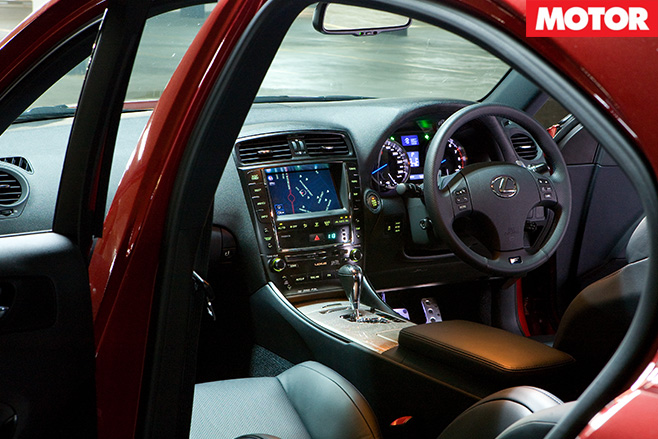
Its tacky, stylised ‘F’ badge is only really visible on the bottom steering-wheel spoke, but it’s embroided on the sides of all the seat cushions, too, and there’s one ergonomic failing that is impossible to miss. The front seat’s electric controls are already fairly close to the folding door pockets, but the drink-holder bulge sits right on the switches, making minor seat adjustments next to a bottle of water like squeezing your hand into a post box.

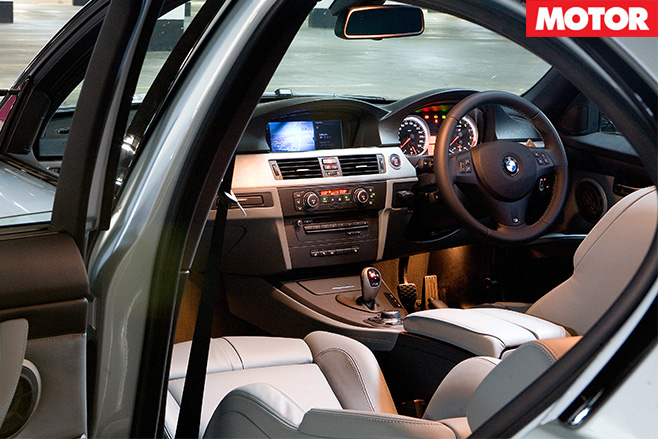
But it’s the revised M3, with its two-tone palette, stitched-leather trim, great seats and vastly improved new-generation iDrive that, unexpectedly, gets the vote for best interior. Impressive back section, too, with the best seat support and the most room. Unlike the IS F, with its idiotic two-person bench, split by an immovable mound of cheap, hard plastic, the M3 can actually cop three in its back seat.
It isn’t as comfortable or as practical, and doesn’t ride anywhere near as well as its rivals. Ultimately, its repertoire is fairly narrow and it has enough small, yet irritating faults to occasionally distract you from what it does best – drive hard.
With finesse and experience on their side, the C63 and M3 are clearly more car than the IS F, though for more money. The BMW is quite possibly the ultimate race-car-for-the-road, with tremendous depth to its dynamics and so many facets to its personality.
Its balance, grip, adjustability and chuckability are all first rate, and in updated, enhanced sedan form, its overall appeal is greater than ever. But it’s a car that takes time, and committed hard driving, to truly appreciate. And the M-DCT double-clutch ’box isn’t without its flaws, though BMW still offers a preferable, and cheaper, six-speed manual.
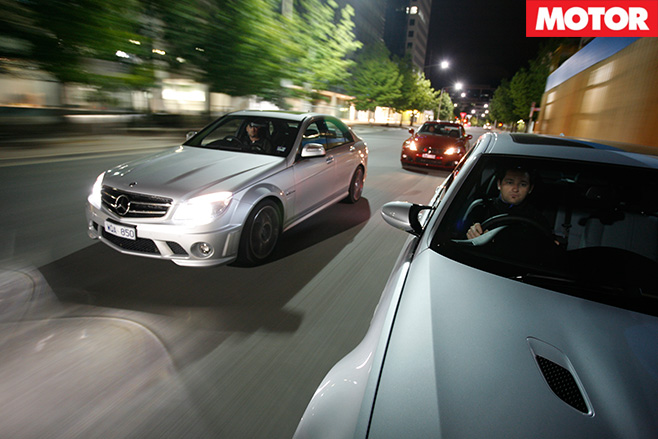
But the M3 sedan is ultimately the better car, simply because of its superior handling ability, its mean looks and its greater practicality. We’d stick with the $7300-cheaper manual version, though, just like we’d go for a C63 AMG Estate, not the sedan.
Despite its near-miss, what the IS F does is serve as a clear warning to the Germans that they’ve had this market to themselves for way too long. So be warned. The Japanese are on a mission and next time around, with a little more practice, the outcome could get ugly. In the meantime, it’s pretty much a German dead-heat, depending on the day, the weather, or your mood. But both of them are stunners.
| SPECS | |||
| u00a0 | MERCEDES-BENZ C63 AMG | LEXUS IS F | BMW M3 |
| Body | 4-door, 5-seat sedan | 4-door, 4-seat sedan | 5-door, 5-seat sedan |
| Drive | rear wheels | rear wheels | rear wheels |
| Engine | 90-degree V8, DOHC, 32v | 90-degree V8, DOHC, 32v | 90-degree V8, DOHC, 32v |
| Material | alloy head/alloy block | alloy head/alloy block | alloy head/alloy block |
| Bore/Stroke | 102.2 x 94.6mm | 94.0 x 89.5mm | 92.0 x 75.2mm |
| Capacity | 6208cc | 4969cc | 3999cc |
| Compression | 11.3:1 | 11.8:1 | 12.0:1 |
| Power | 336kW @ 6800rpm | 311kW @ 6600rpm | 309kW @ 8300rpm |
| Torque | 600Nm @ 5000rpm | 505Nm @ 5200rpm | 400Nm @ 3900rpm |
| Redline/Cut | 7200/7400rpm | 6800/7000rpm | 8250/8400rpm |
| Fuel/Tank | 98 octane/74 litres | 95 octane/64 litres | 98 octane/63 litres |
| Test consumption | 17.2L/100km | 15.0L/100km | 16.9L/100km |
| Kerb weight | 1655kg | 1700kg | 1625kg |
| Power-to-weight | 203kW/tonne | 183kW/tonne | 190kW/tonne |
| Transmission | 7-speed automatic | 8-speed automatic | 7-speed double-clutch |
| Ratios | 4.38/2.86/1.92/ 1.37/1.00/0.82/0.73 | 4.60/2.72/1.86/1.46/ 1.23/1.00/0.82/0.69 | 4.78/2.93/2.15/1.68/ 1.39/1.20/1.00 |
| Final drive | 2.85 | u00a02.94 | 3.15 |
| Suspension | multi-links, coil springs, anti-roll bar (f); multi-links, coil springs, anti-roll bar (r) | upper A-arms, lower L-arms, coil springs, anti-roll bar(f), multi-links, coil springs, anti-roll bar (r) | struts, A-arms, adaptive dampers, anti-roll bar (f), multi-links, coil springs, adaptive dampers, anti-roll bar (r) |
| L/W/H | 4736/1795/1439mm | 4660/1815/1415mm | 4580/1817/1447mm |
| Wheelbase | 2765mm | 2730mm | 2761mm |
| Tracks (f/r) | 1569/1525mm | 1560/1515mm | 1540/1539mm |
| Steering | power rack and pinion | electric rack and pinion | power rack and pinion |
| Turning circle | 11.8m | 10.2m | 11.7m |
| Lock-to-lock | 2.5 turns | 2.9 turns | 2.4 turns |
| Brakes | 360mm ventilated/drilled discs, six-piston calipers (f), 330mm ventilated/drilled discs, four-piston calipers (r); ABS, BA, ESP | 360mm ventilated/drilled discs, six-piston calipers (f), 345mm ventilated/drilled discs, twin-piston calipers (r); ABS, CBC, VSC | 360mm ventilated/drilled discs, single-piston calipers (f), 350mm ventilated/drilled discs, single-piston calipers (r); ABS, DSC |
| Wheels | 18 x 8.0-inch (f), 18 x 9.0 inch(r), alloy | 19 x 8.0-inch (f), 18 x 9.0 inch(r), forged alloy | 19 x 8.5-inch (f), 19 x 9.5 inch(r), alloy |
| Tyres | Pirelli P Zero | Bridgestone Potenza RE050A | Michelin Pilot Sport |
| Tyre size | 235/ 40ZR18 93Y (f), 255/35ZR18 94Y (r) | 225/ 40ZR18 93Y (f), 255/35ZR19 96Y (r) | 245/ 35ZR19 93Y (f), 265/35ZR19 98Y (r) |
| Price | $144,365 | $129,000 | $152,300 |
| Price as tested | $150,191 | $129,000 | $165,790 |
| Rating | 9/10 | 7.5/10 | 9/10 |
| Like | Brilliant drivetrain, wonderful character, one of AMGu2019s best | A fine first effort that comes close to the Germans… | Even better than the coupe, with unmatched dynamic depth |
| Dislike | Brakes struggle a bit on track, M3 ultimately out-handles it | ..but stumbles with several irritating detail faults | Lacks C63u2019s instant appeal – hard driving exposes its talent |
| FAST FIGURES | |||
| u00a0 | C63 AMG | LEXUS ISF | BMW M3 |
| 0-10km/h | 0.43sec | 0.56sec | 0.35sec |
| 0-20km/h | 0.84sec | 0.97sec | 0.69sec |
| 0-30km/h | 1.26sec | 1.45sec | 1.06sec |
| 0-40km/h | 1.65sec | 1.90sec | 1.45sec |
| 0-50km/h | 2.04sec | 2.32sec | 4.95sec |
| 0-60km/h | 2.47sec | 2.78sec | 2.45sec |
| 0-70km/h | 2.99sec | 3.35sec | 3.00sec |
| 0-80km/h | 3.49sec | 3.92sec | 3.40sec |
| 0-90km/h | 4.06sec | 4.53sec | 4.09sec |
| 0-100KM/H | 4.74sec | 5.18sec | 4.75sec |
| 0-110km/h | 5.44sec | 6.01sec | 5.39sec |
| 0-120km/h | 6.19sec | 6.83sec | 6.28sec |
| 0-130km/h | 7.00sec | 7.66sec | 7.16sec |
| 0-140km/h | 7.89sec | 8.57sec | 8.12sec |
| 0-150km/h | 8.90sec | 9.64sec | 9.11sec |
| 0-160km/h | 9.97sec | 10.78sec | 10.27sec |
| 0-170km/h | 11.13sec | 11.97sec | 11.50sec |
| 0-180km/h | 12.32sec | 13.24sec | 12.80sec |
| 0-190km/h | 13.53sec | 14.68sec | 14.20sec |
| 400M | 12.81 @ 184.1km/h | 400m 13.26 @180.3km/h | 400m 12.85 @ 180.4km/h |
| 80-120km/h(Drive) | 2.9 | 3.2 | 3.1 |
| 80-120km/h 3rd | 3.1 | 3.5 | 3.7 |
| 80-120km/h 4th | 4.6 | 4.8 | 4.9 |
| 80-120km/h 5th | 7.2 | 6.0 | 5.8 |
| 80-120km/h 6th | – | – | 7.2 |
| 80-120km/h 7th | – | – | 9.3 |
Porsche must be tiring of wearing the lazy tag for not making radical changes to its cars every few years.
Forget the fact that the brilliance of the 911 dictates that evolutionary changes have been enough to keep it right at the pointy end of things, and that a design born better than four decades ago can still stuff it to the rest of the world.Forget, too, that buyers can be confident that the Porsche they buy this year won’t be completely upstaged by next year’s model and, therefore, won’t have its resale value slaughtered.
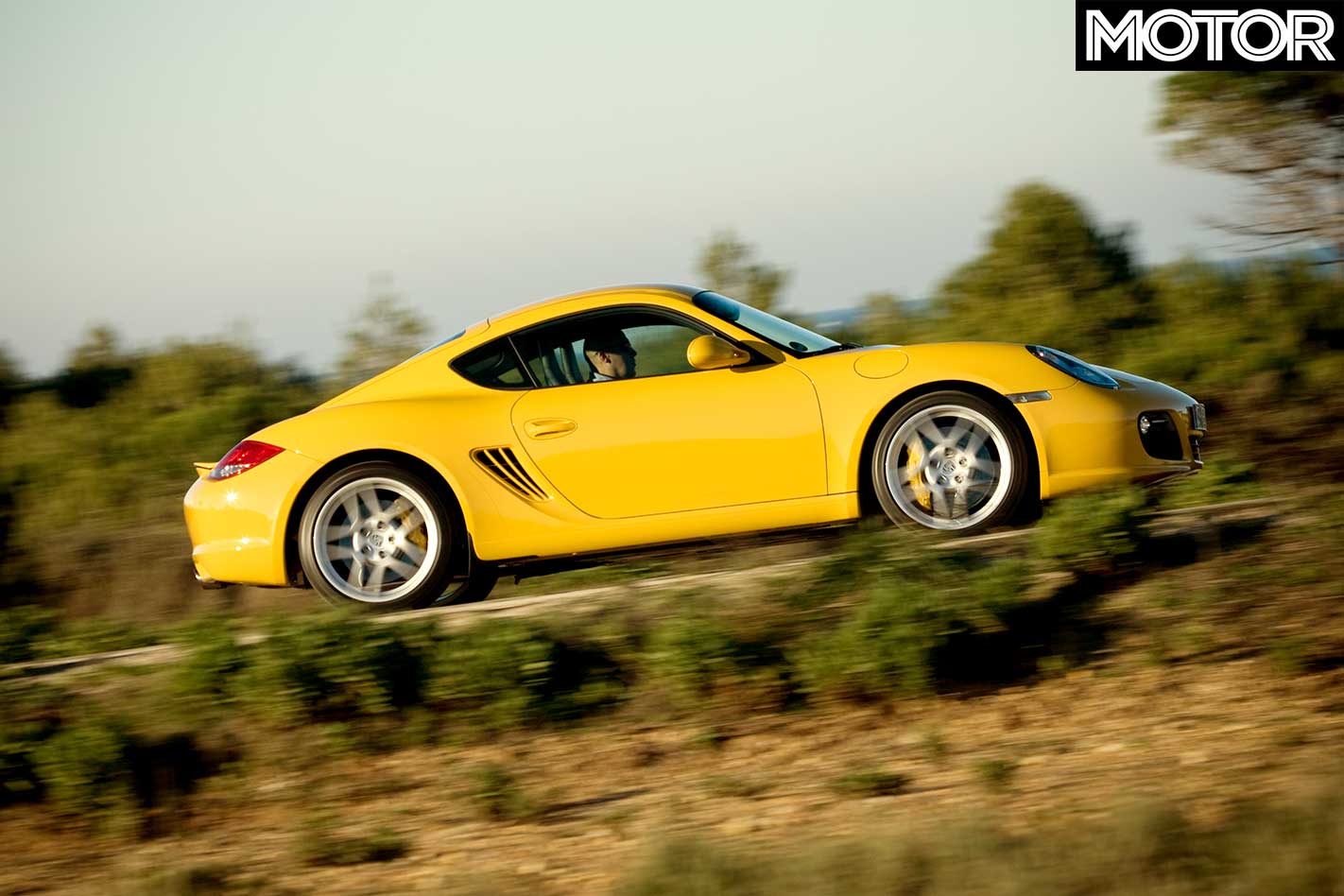
In fact, while they mightn’t admit it, we’d almost bet that other car makers would love to be able to fiddle here, hone there and confine a decade’s alterations to the odd nip and tuck, rather than a Pamela Anderson-magnitude trip to theatre.Of course, if Porsche has become a bit thin-skinned about all the big-mouths who would have it reinvent its cars every nine years like the rest of the industry, it plainly isn’t showing it.Not only has the updated 911 arrived with a direct-injection engine and the optional new double-clutch PDK (which stands for something like Computer-maken, Clutchen-pullen, Flippen-flappen) gearbox and the tiniest visual changes, now the facelifted Cayman has arrived with approximately bugger-all bar the implementation of the same new technology.The Boxster will follow, too, and we can expect to see it and the new Cayman in local showrooms by mid-March. Mind you, even when you do see it, you’ll have to be a bit of a trainspotter to pick it as the new one. I know it’s cruel to laugh at the Germans, but there were sniggers all round when the slide showing the differences between the old and the new went up at a recent press launch.To make the point that there were some changes, the Porsche folks had to resort to a red highlighted line in an attempt to illustrate the new bits. It looked like somebody had marked the old model’s design drawings with a red crayon and, even then, you still had to look hard.But, in case you care, the front apron and spotlights have been tweaked and the rear splitter is a bit different. Not better or worse, just different.
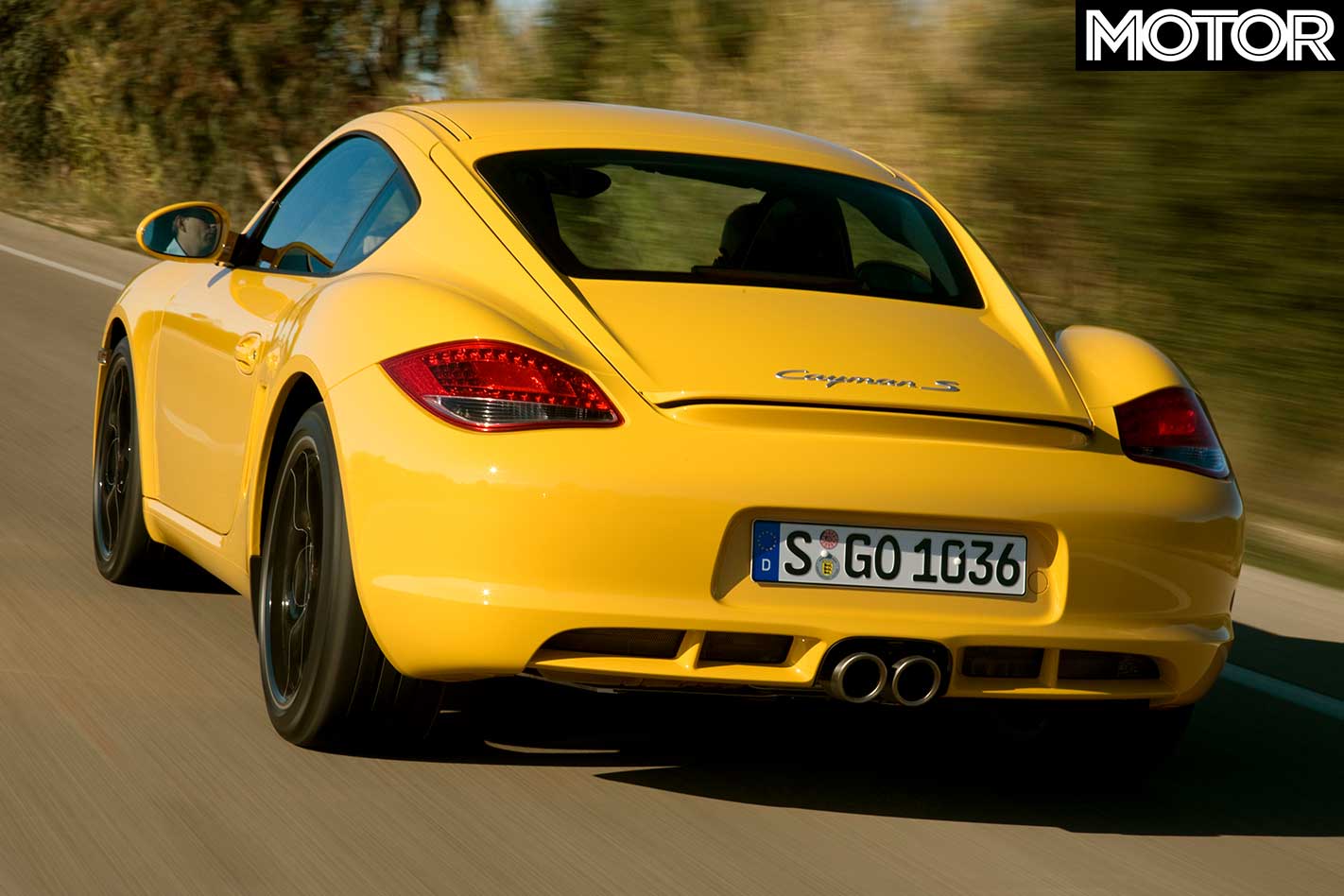
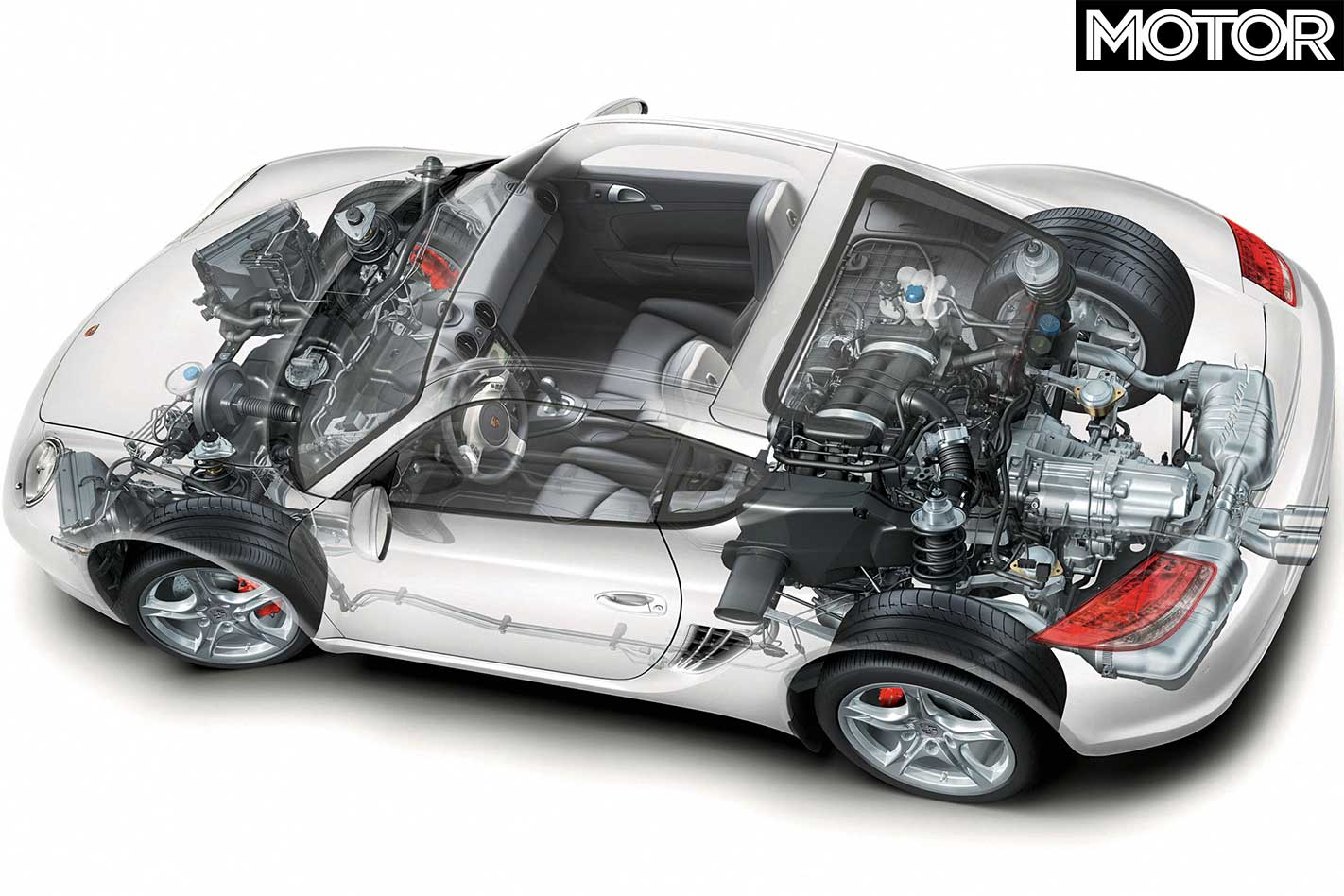
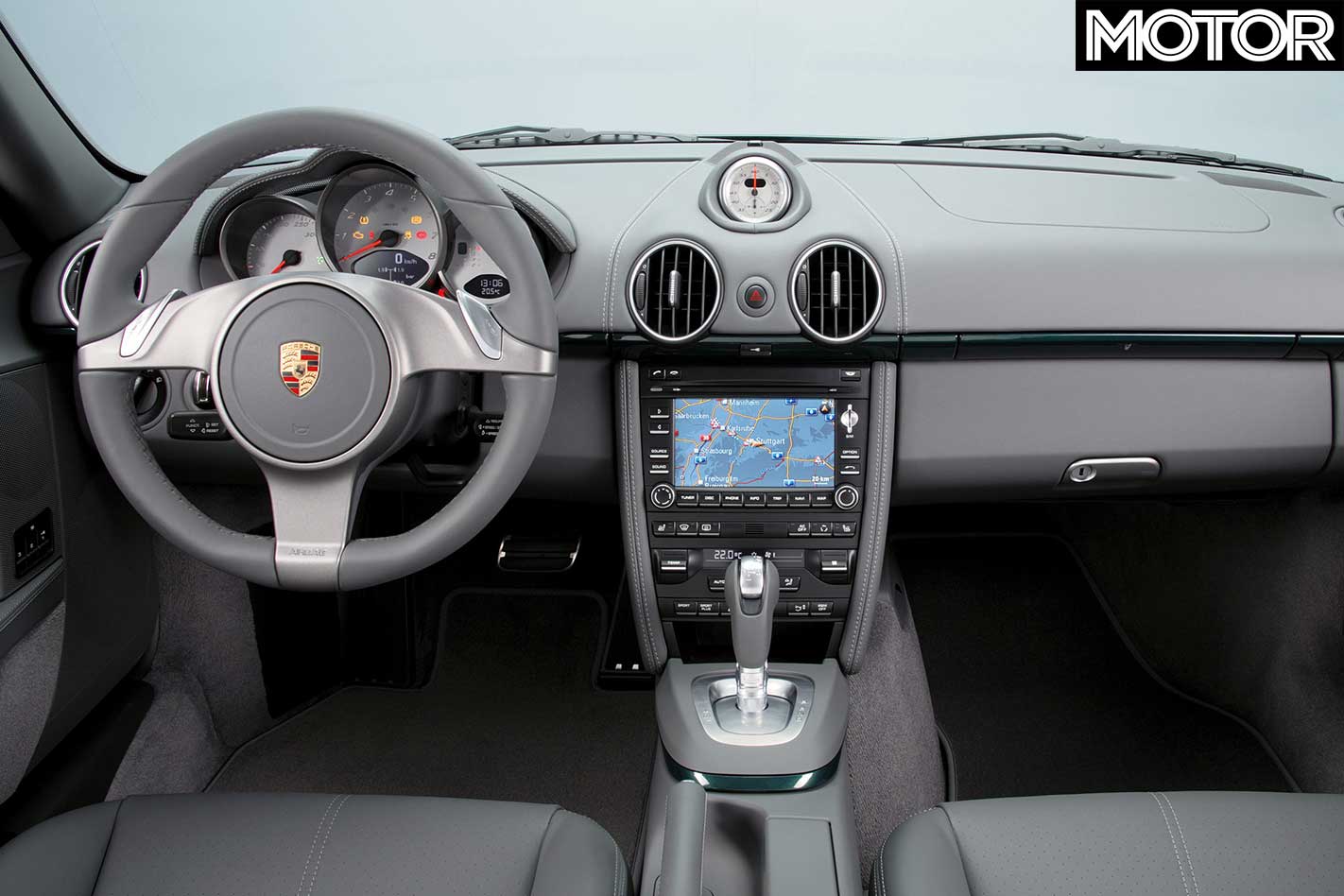
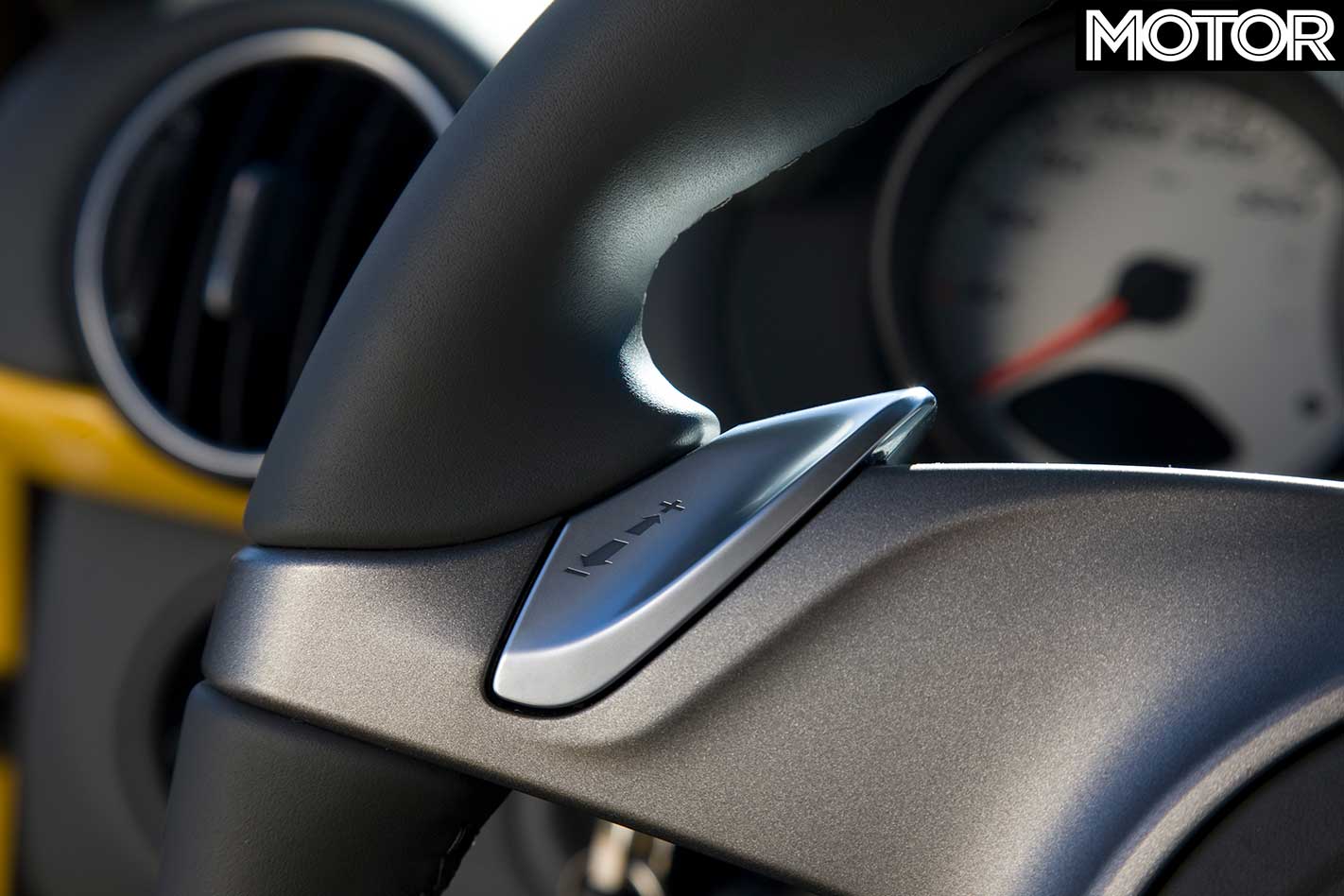
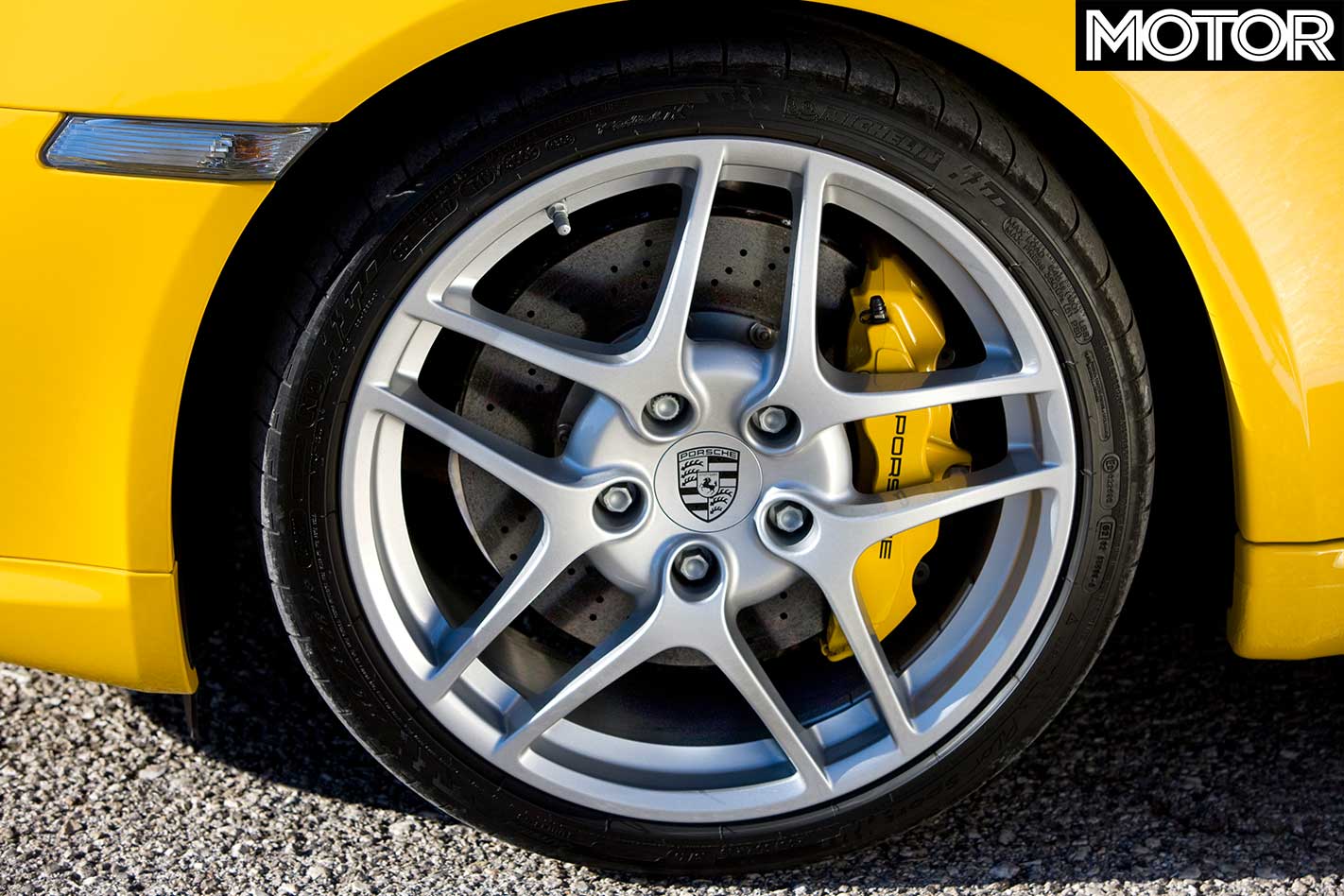
And if that wasn’t enough, fuel consumption has been slashed with a claimed 16-percent reduction in CO2, with the new engines both Euro 5 and ULEV-compliant.So, the driveline ticks all the boxes, but is the basic chassis starting to feel its age? Um, no, actually. And just to make sure that’s the case, there are a couple of new options to keep the Cayman at the front of the pack.The first is a mechanical limited-slip diff, which can achieve 27-percent lock-up on its max setting. But unlike some makers, Porsche hasn’t felt the need to control the thing via yet another ridiculous and unnecessary dashboard button. It’s all done by purely mechanical means and it tames the mid-engined Cayman’s slight tendency to lift and spin an inside wheel when you’re really hammering along through a corner.The other addition to the Cayman for 2009 is a set of utterly gorgeous ceramic brakes. Although these puppies are not cheap (figure on a cost option of anything up to $20,000), the 350mm rotors and monster calipers will no doubt be the option of choice for anybody venturing to the noisy side of pit-wall.
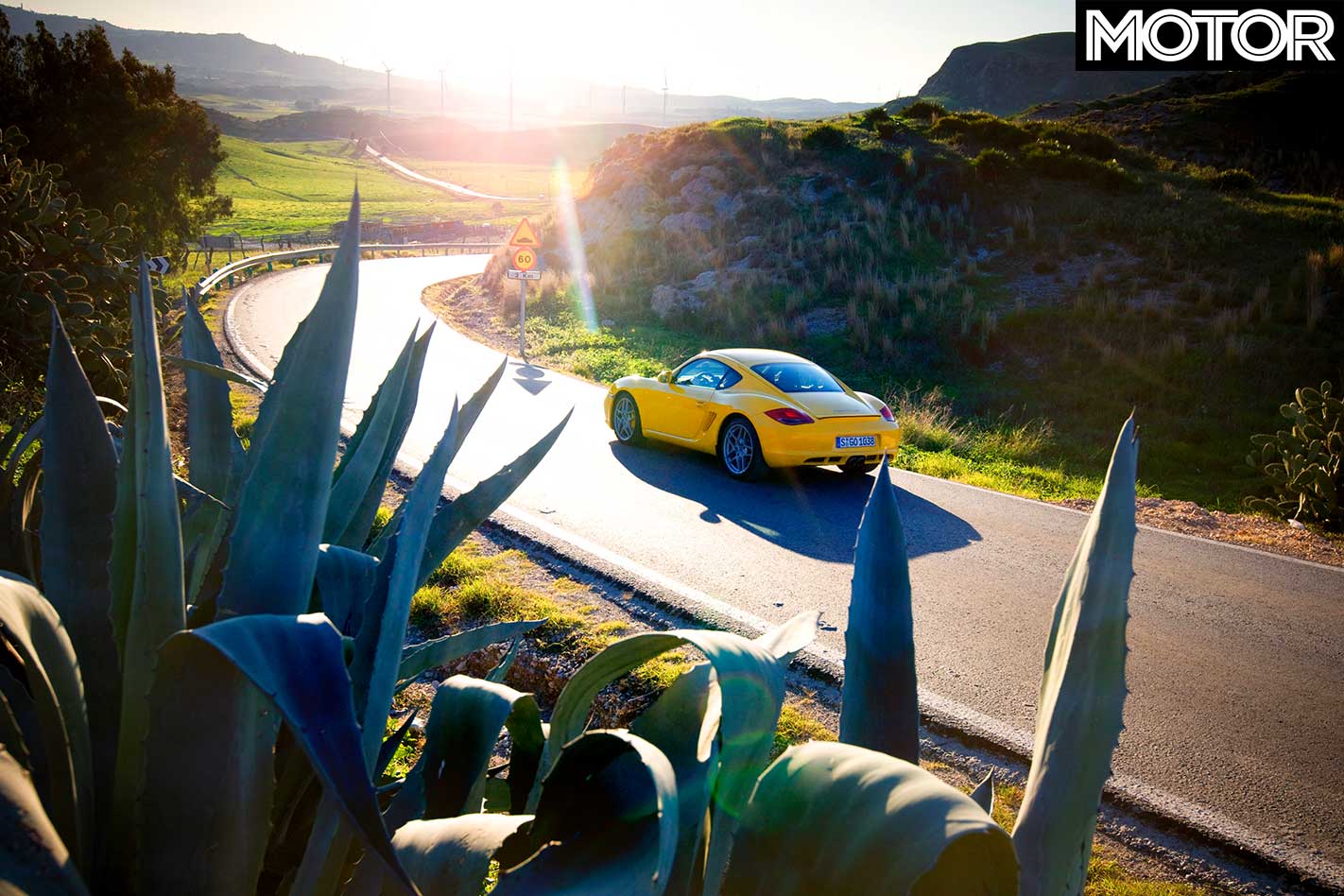
Fanging along some Spanish backroads, I soon work out that the mid-engine layout is a big plus for the inherent balance that it brings with it. But there’s more to it than that. There’s very little body roll and a tight sensation whenever you ask it to change tack, yet the ride remains almost unbelievably good regardless of the road surface.Okay, so this is all nothing new in Caymans (or is that ‘Caymen’?) but it still makes you grin like a loony whenever a series of twists looms into view through the windscreen. And that vista forward, where the bonnet disappears and all you’re left with are the gently bobbing tops of each mudguard, remains one of motoring’s great views.
No mention was made of price when the Porsche blokes hauled the covers off the Cayman recently, but the smart money suggests that the GEC (Global Economic Crisis) will force everybody, Porsche included, to keep a lid on things.
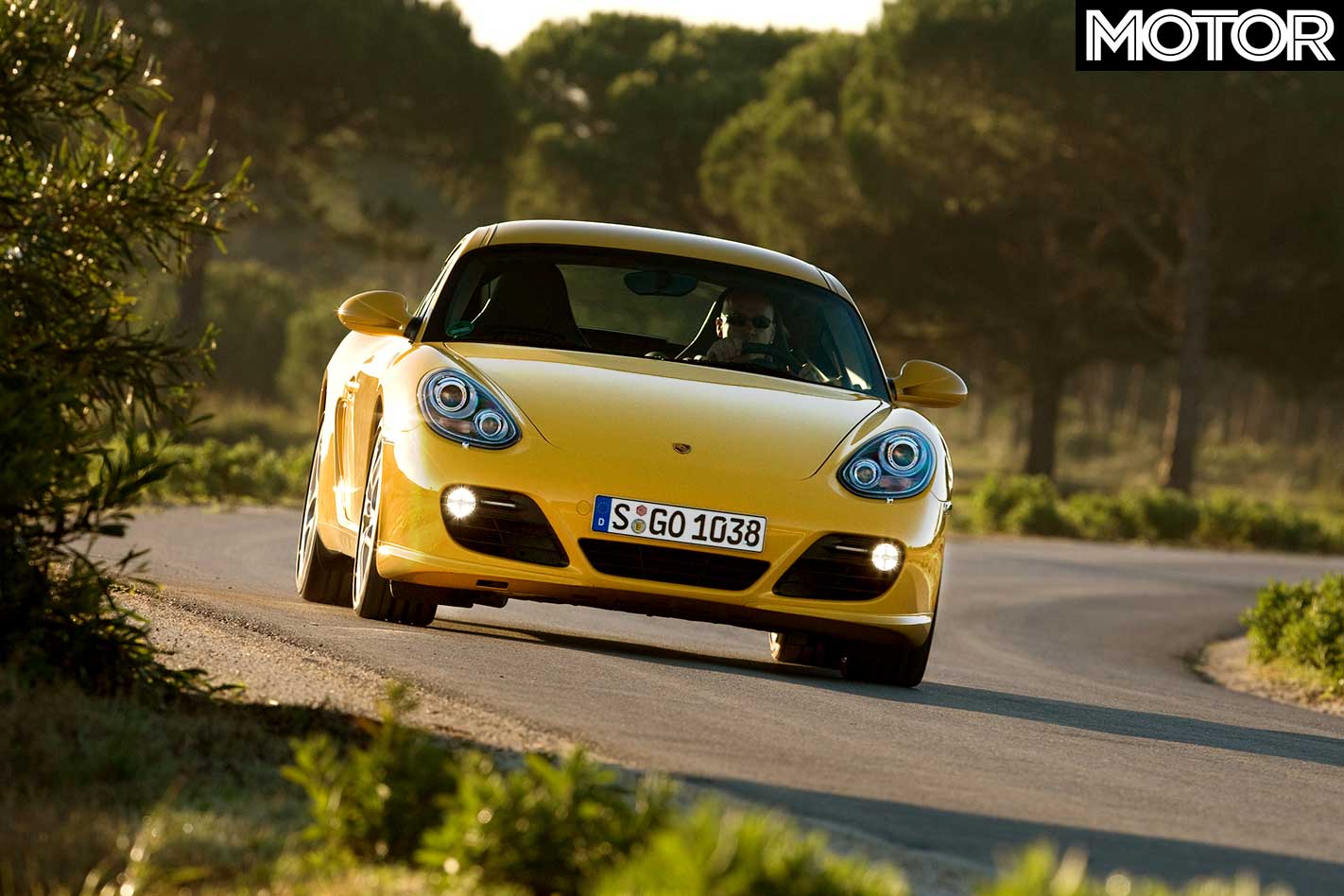
So we’re suggesting that the new Cayman S will cost around the same $150K as the current model, while you can expect the PDK transmission to add around the same $7000-odd it stacks onto the price of a 911. Sports-Chrono, diff, PCCB and 19-inch 10-spoke rim options, as tested, turn the Cayman S into a $180K-plus prospect.The only real question surrounding the Cayman has nothing to do with its abilities. Rather, it’s along the lines of: do I really need a 911? Porsche’s suits don’t believe the Cayman is a real threat to sales of the evergreen 911, but when the former is so damn good and makes all the right moves and noises for a lot less folding stuff, it’s a prospect that has to be considered.Sure, there’s nothing quite like a 911. But if anything has ever crept even remotely close, for far less money, it’s the new Cayman S.
2009 PORSCHE CAYMAN S PDK SPECS:
Body: 2-door, 2-seat coupe Drive: rear-wheel Engine: 3436cc flat 6, DOHC, 24v Bore/Stroke: 97.0 x 77.5mm Compression: 12.5:1 Power: 235kW @ 7200rpm Torque: 370Nm @ 4750rpm Transmission: 7-speed dual-clutch Ratios: 3.91/2.29/1.65/1.30/1.08/0.88/0.62 Final Drive: 3.62 0-100km/h: 4.9sec (claimed) Top Speed: 275km/h (claimed) Kerb Weight: 1350kg Power-to-Weight: 174kW/tonne Suspension: struts, locating links, adaptive dampers, anti-roll bar (f); struts, locating links, adaptive dampers, anti-roll bar (r) Length/Width/Height: 4347/1801/1306mm Track (f/r): 1486/1528mm Wheelbase: 2415mm Steering: power rack and pinion Brakes: 350mm carbon-ceramic ventilated/drilled discs, six-piston calipers (f); 350mm carbon-ceramic ventilated/drilled discs, six-piston calipers (r); ABS, EBD, PSM Fuel: 98 octane/65 litres Wheels: 19 x 8.5-inch (f), 19 x 10.0-inch (r); alloy Tyres: Michelin Pilot Sport; 235/35ZR19 (f), 265/30ZR19 (r) Price: $180,000 (est. as tested)
Likes: Handling, sharpness and ride better than ever; PCCB superb Dislikes: PDK’s unintuitive buttons and shifter, engine lacks ‘zing’ Rating: 9 out of 10 stars
The 2009 Porsche Boxster S might only seem slightly different, but many minor changes hone what is already a superb sports car.
Although an extra 11kW (now 228kW) and 20Nm (now 360Nm) don’t quite transform the Boxster S into a 911 Turbo chaser, the extra mid-range oomph has made the Porsche more playful.
Revised intake and exhaust manifolds enhance throttle response, and the larger-diameter dual exhaust aids the car’s strong aural presence.
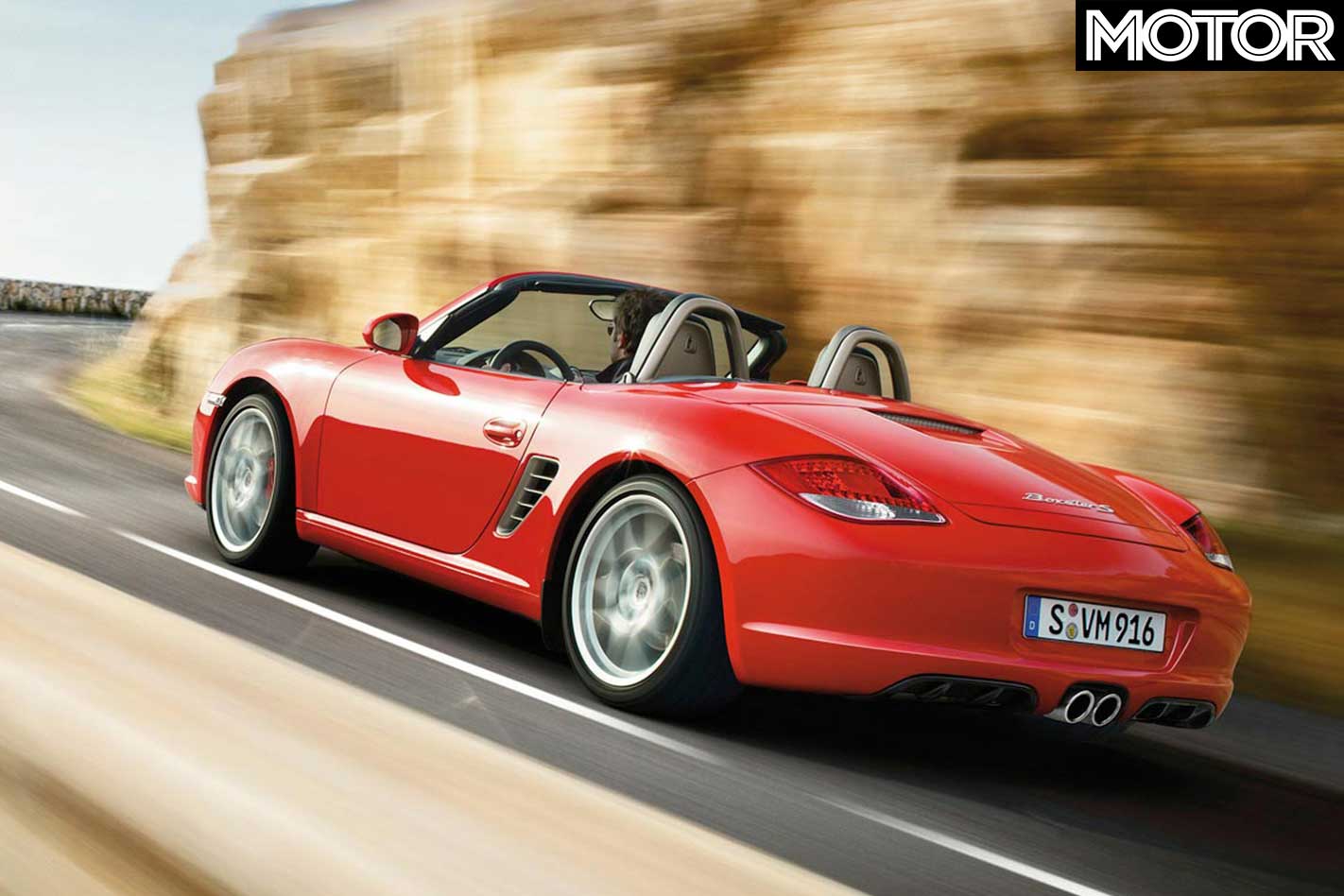
The tyres, specified with lower pressures, feel more compliant, which helps especially when you have the PASM locked in Sport.
This mode is almost mandatory, as it’s the only way to keep the biggest upgrade to the Boxster – Porsche’s double-clutch gearbox (PDK) – on alert.
With PASM set to comfort mode, the ’box will change up too early, so one can’t order a mix of spine-friendly ride and energetic drivetrain tune. Otherwise, PDK is competent and rarely gets it wrong, despite its awkward buttons.
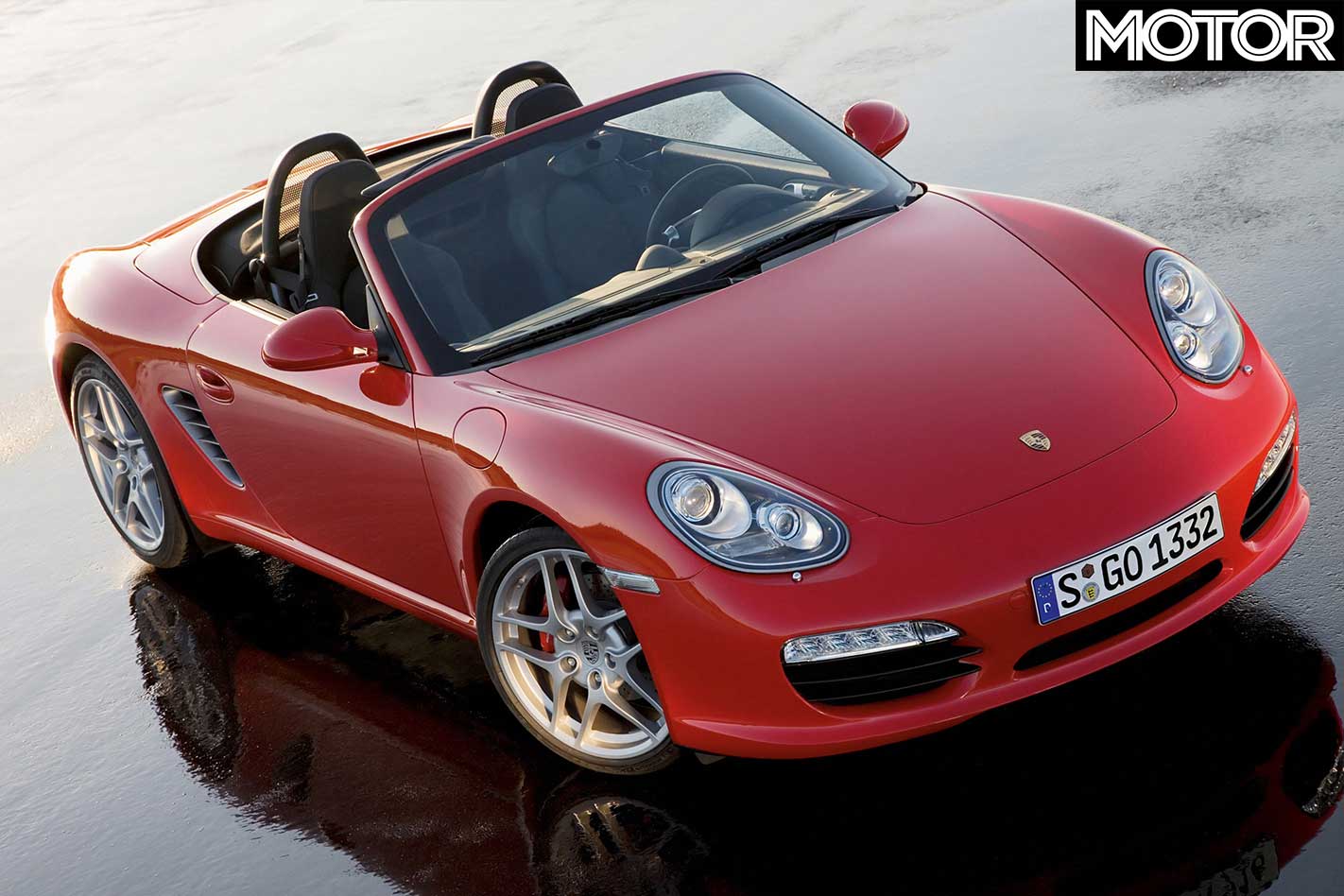
Inside, a more accessible centre stack sees an optional touchscreen monitor and a newly positioned (read: now foolproof) roof switch. Space is still at a premium, though. There’s nowhere to put stuff and leg- and head-room are more economy than business class. Tall drivers might find that the cockpit is a difficult place to get comfortable.
This serves to prove that Boxster is less about convenience and more about ability. Like handling, which has always been this car’s forte. On wet surfaces, in particular, you can corner the S with consummate ease and predictability.
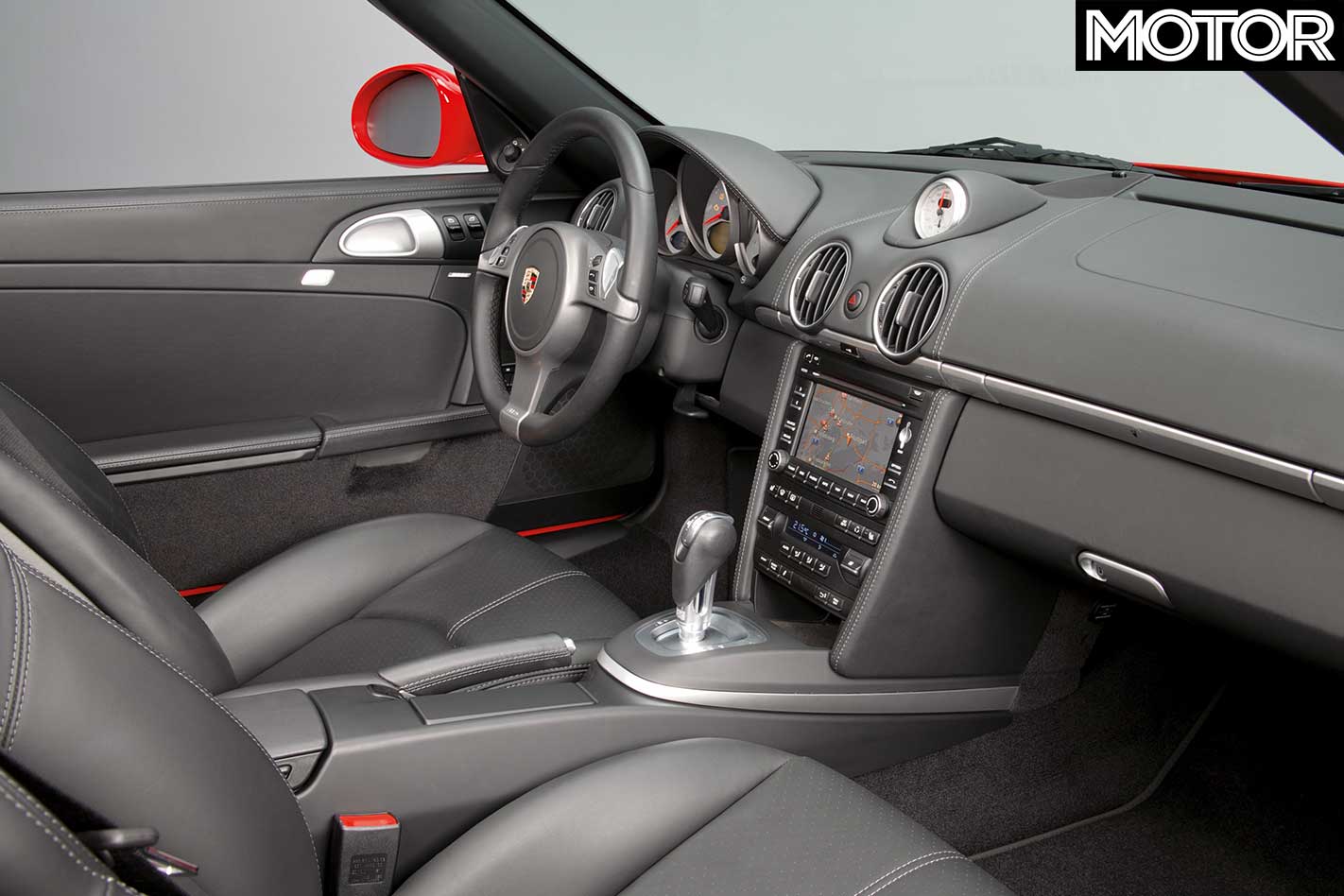
Everything operates with the right amount of weight and playfulness. The electronic throttle responds to the spontaneous direct-injection flat-six, and is supported by powerful and progressive brakes.
More than ever, the ’09 Boxster S is a highly tactile kaleidoscope of actions and responses, input and feedback, stimulation and satisfaction. With PSM off and PDK in manual, this is a live act of a special kind – unfiltered, unsweetened, with no artificial movements added.
There’s no turbo to upset momentum, no clutch to interrupt torque, no electronic watchdog to limit thrills – just open and instant communication between friends – an ongoing exchange of trust and confidence. Hardcore roadsters don’t come much more pragmatic than this.
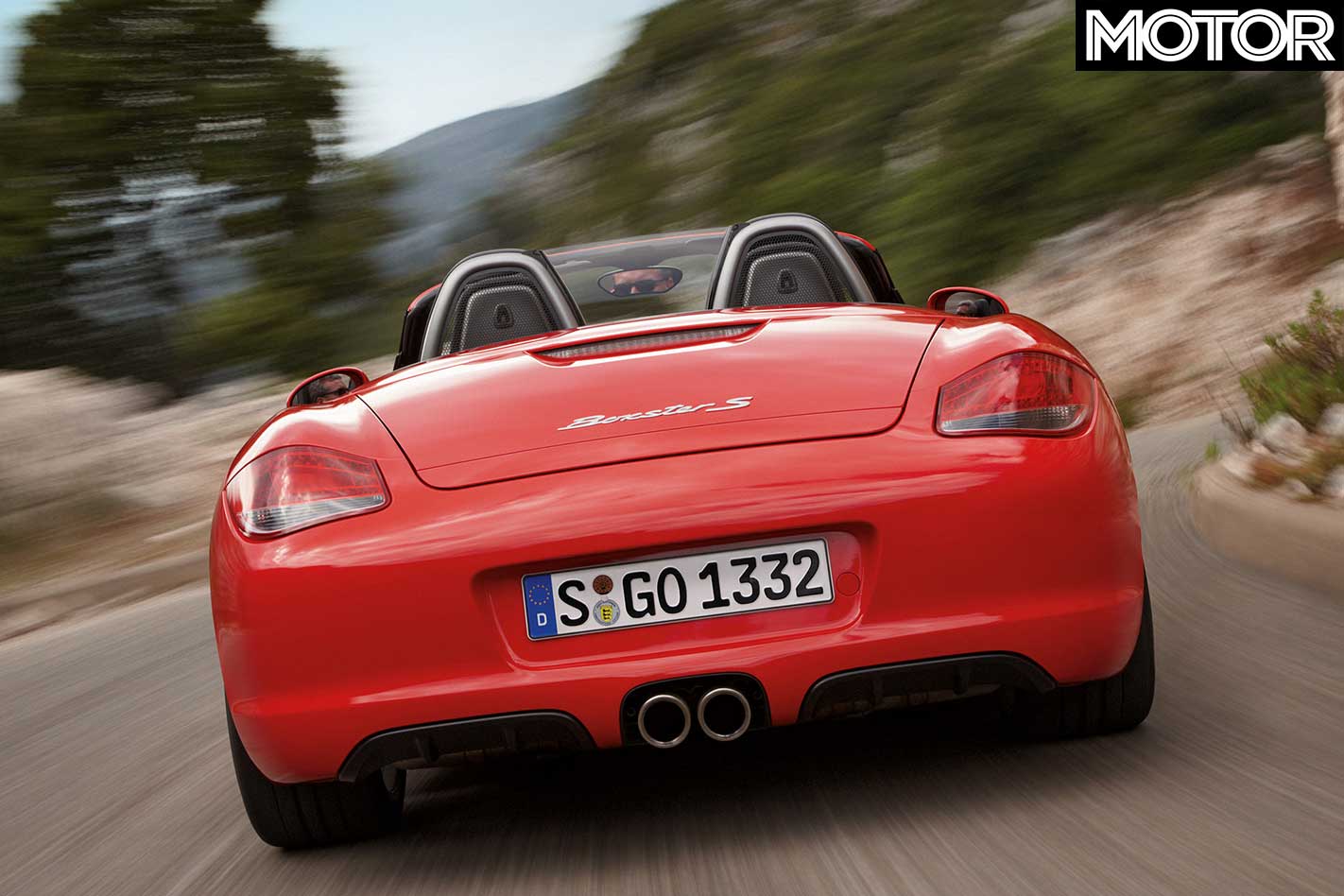
ENGINE: 3436cc flat 6, DOHC, 24v POWER: 228kW @ 6400rpm TORQUE: 360Nm @ 4400-5500rpm WEIGHT: 1380kg (PDK) TOP SPEED: 5.0sec (PDK – claimed) 0-100KM/H: 272km/h (PDK – claimed) PRICE (2006): $145,000 (estimated)
LIKE: Handling, stability, exhaust note, new double-clutch ’box DISLIKE: Can’t team soft ride with punchiest setting, lack of space
If the X is an attempt at a family-friendly Evo, a mix of daily driveability and red-mist performance, then it succeeds … to a degree.
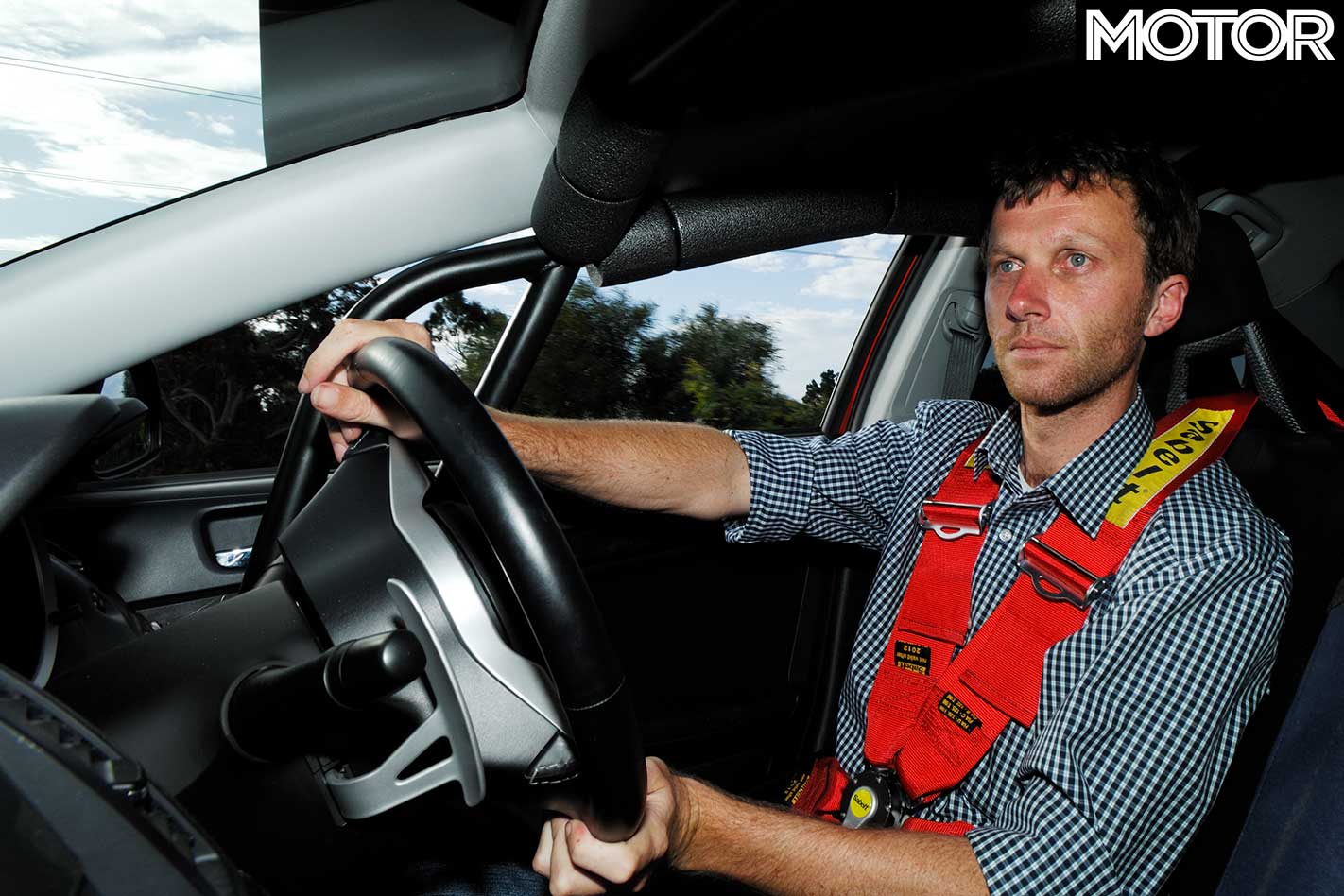
But it’s still a bit harsh to be called comfortable, and a bit soft to be called genuinely hardcore.The new TMR Club Spec goes a long way in addressing the latter.
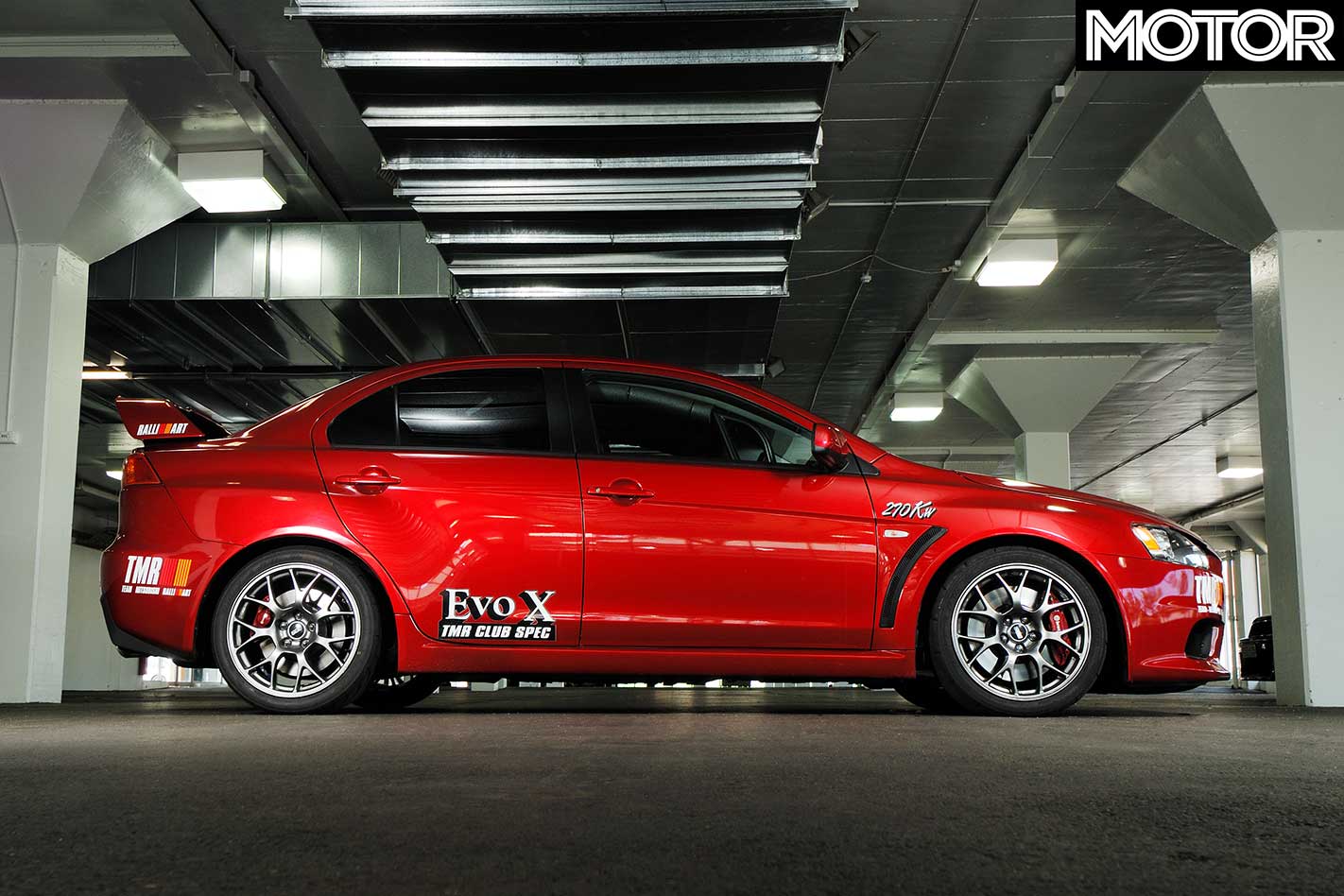
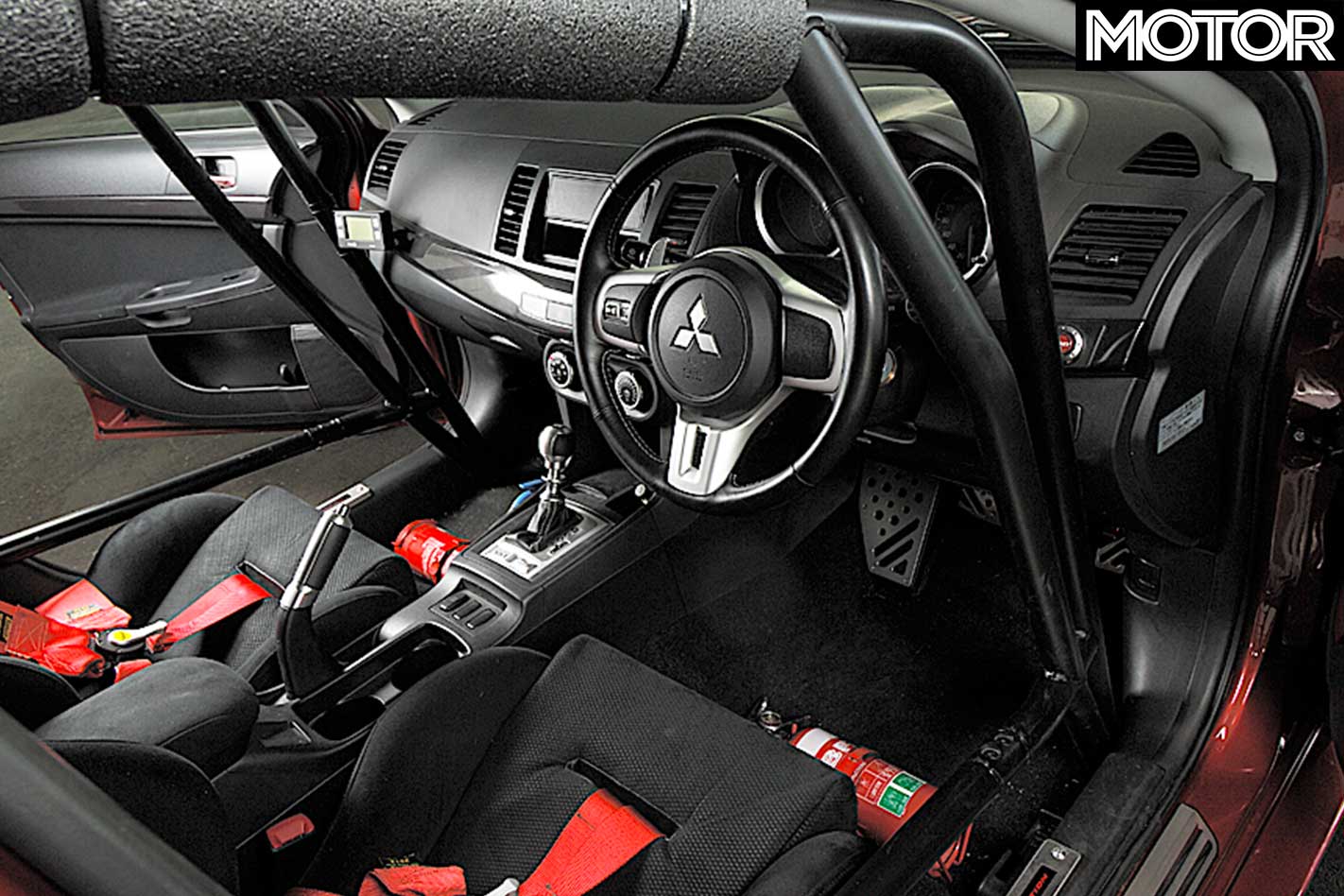
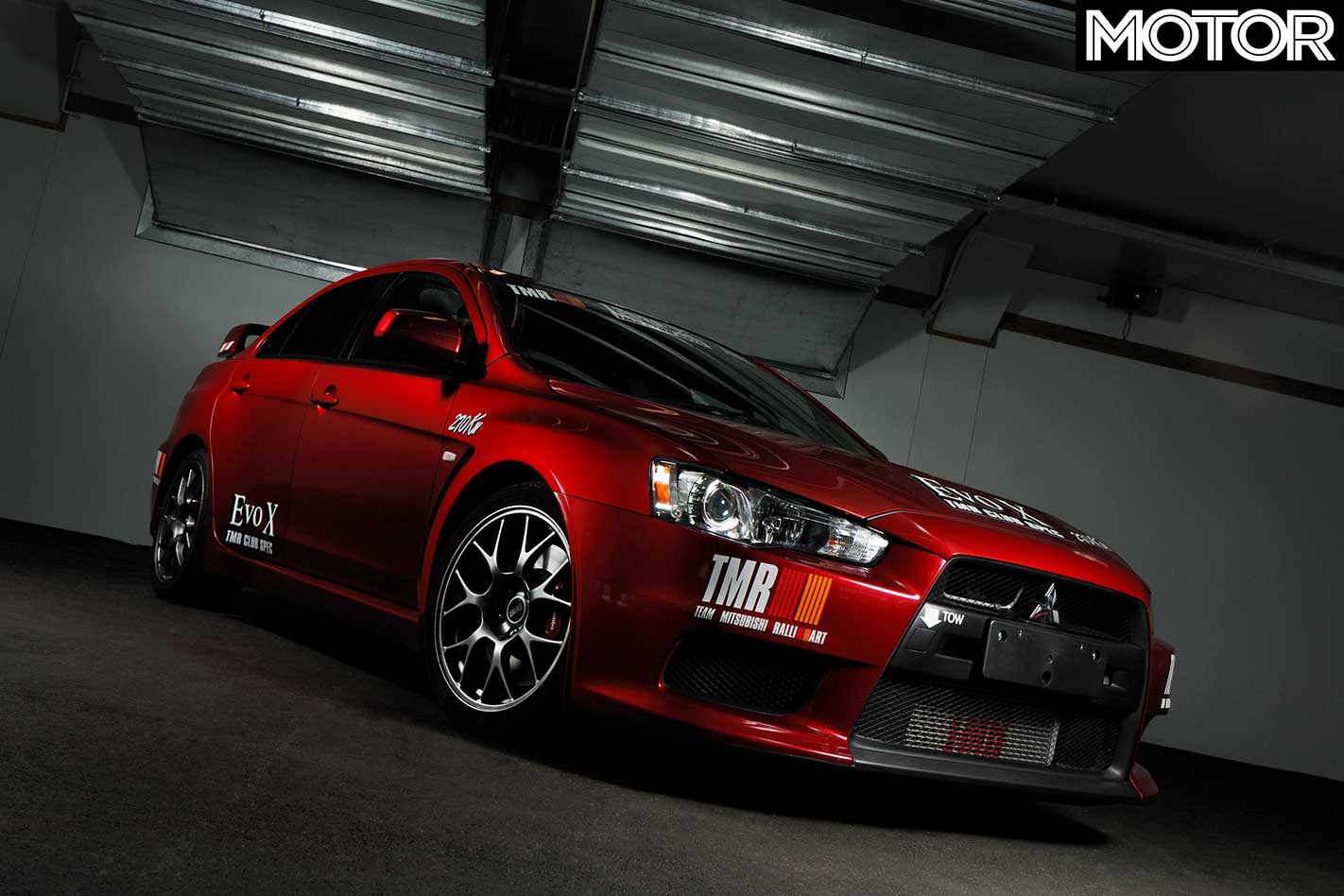
ENGINE: 1998cc 4cyl, DOHC, 16v, turbo POWER: 270kW @ 6500rpm TORQUE: 490Nm @ 3500rpm WEIGHT: 1595kg TOP SPEED: N/A 0-100KM/H: N/A PRICE (2006): $85,875 (as tested)
LIKE: Mega output gains, sharper chassis, a true giant-killer (finally) DISLIKE: At $86k, its a very expensive Lancer, and those squealing brakes
It’s been on the market for less than a year, but already Mr GT-R – race engineer and chief engineer of the Japanese supercar, Kazutoshi Mizuno – can barely contain his excitement as he unveils the Nismo upgrades for the R35.
“We wanted to create parts that made the GT-R feel more at home flat-out on a track, and we believe this Nismo GT-R more than responds to that need,” Mizuno says.
In collaboration with Nismo, Nissan’s racing arm, Mr GT-R has created the GT-R Nismo Club Sports Package, an aftermarket kit that can be fitted to any current R35 GT-R anywhere.
It comprises three parts. To start with, you can fit the chassis package, which includes specially developed three-mode Bilstein DampTronic shocks, higher spring rates, stronger Rays 20-inch wheels and Bridgestone RE070R run-flats with stiffer side-walls and a more-aggressive tread pattern. The alloys also reduce weight by a total of 3kg over the regular GT-R.
You’ll shed another 5kg by adding the second stage; a titanium exhaust with rear diffuser. Nismo tells us that in no way does it up power. It was mainly added to get weight down and to improve the car’s cooling efficiency, in conjunction with specially fitted cooling ducts and cooling fins.
The final stage sees Recaro seating, which while improving side and shoulder support, continues Mizuno’s weight reduction campaign by losing a further 12kg. All up, the mods reduce the R35’s weight by 20kg.
Despite the weight loss, the Nismo improvements are most effective in the corners – that’s why we feel most owners will initially just go for the suspension package. Nismo developed the package at the Sendai Highland Raceway, which consists of 4km of tricky, twisting blacktop, 400km north of Tokyo. Get the set-up right here, and you can take your Club Sports pack anywhere.
The Nismo GT-R is not only quicker, but delivers greater all-round stability on a racetrack than the stock GT-R. After just one lap of Sendai on a semi-wet surface, we were blown away by the car’s improved grip levels.
The suspension lets the driver know what the tyres and rear-end are doing earlier. Its improved stability at speed also allows you to brake later and harder, loading the suspension up more in the corners, while generating less body roll, more neutral turn-in with greater steering precision, and almost no understeer.
The Nismo set-up also loses traction later and more progressively than the standard GT-R. If Mizuno wanted to give amateur racing drivers and GT-R owners more confidence and more fun at higher speeds on a track, then he has certainly done that with this car. And the ride quality hasn’t suffered in the transformation, either.
The downsides? Mizuno has left the 3.8-litre twin-turbo V6’s power at 353kW and 588Nm. “That’s plenty,” he says, stressing that his job was not to tweak anything under the bonnet. “This package basically gives drivers more confidence.
It features parts that lift cornering limits and overall stability levels, especially under heavy braking and acceleration, but at the same time make it more comfortable for the driver thanks to more supportive seats.”
And while this is all good and well, there’s the cost. The chassis pack costs $33,000; the exhaust set-up $28,500 and the Recaros another $28,500. Total? $90,500, but if you buy all three at once you’ll pay a mere $82,500. For no engine mods, it’s a big ask. And Nismo may find it difficult convincing owners they need to spend 50-odd grand for non-handling, non-power upgrades.
2018 Nissan 370Z NISMO to launch in Australia
While enthusiasts are salivating at the Spec V, Mizuno says that he has completed only 70-percent of what he wants to do. “What I really want to do is to tweak the base GT-R, like we have here. That’s where the fun lies. It must be a car for the road as well.”
Mr GT-R has waved his magic wand over the R35 to catapult Nissan’s charger into a whole new league. It’s not cheap, but boy, is it worth it. For owners with wads of cash and unlimited time to blast around circuits on track days, this package is for you. Thanks to Nismo, the GT-R just got a whole lot better.
This will set tongues wagging: BMW’s 135i edges the latest-and-greatest WRX STi out of the PC08 Final.
But while it was good enough to slay the indifferent Sube, the 135i wasn’t the shoe-in its specs suggest it should’ve been.Dropping BMW’s 3.0-litre twin-turbo six into the eagerly anticipated 1-Series Coupe looked like it couldn’t possibly fail. Big engine, small car, rear drive: the tried and tested regulations of Formula Fun.The engine is a cracker – we know that from previous experience in the fabulous 335i Coupe – and BMW is more than capable of engineering a great car. What could go wrong?Surprisingly for a BMW, especially as the car maker gets a better handle on how to make run-flat-tyred cars ride better, it’s the chassis and suspension that fall short. Honestly.Every judge noted that the 135’s ride was overly jiggly, which is a run-flat trait that BMW must overcome if its non-M-cars are to live up to previous reputation. That translates into an unsettled basis from which to hustle when you really need the 135i to hunker down, take the hits and get on with things. We sampled some great roads on our drive to Queensland, and only on the very smoothest of those did the BMW show enough composure.Furthermore, the 135i doesn’t quite achieve the fantastic balance of other great BMWs. It’s prone to a little more understeer than we’re used to unless you dial it out with the throttle.And it’s also a bit lacking in connection through the tiller. When you’re looking for that last little bit of feedback as you really press on, the Coupe’s new electric power steering set-up can only manage a cloudy assessment of what the front wheels are up to. This is disappointing from a manufacturer that knows exactly how to do the job properly.But the story’s not all bad. The jittery ride and mild understeer aren’t an issue on the track, as evidenced by the 135i’s excellence around Lakeside’s fast layout.The throttle is beautifully linear, allowing you to use the engine’s impressive torque to throttle-steer it out of trouble. It will still understeer, but only if you let it, and as long as the car is willing to work with you that’s fine by us. It’s just that we’re used to driving great BMWs without deficiencies that need to be compensated for.The drivetrain, on the other hand, remains typically BMW. The 225kW/400Nm twin-turbo six is amazingly smooth, yet happy to punch on with the baddest engines around. Want proof? How does 5.7 seconds to the speed limit and 14-dead down the standing-quarter sound? On gravel. That’s only four-tenths slower than the STi, despite the Sube’s AWD traction advantage, which the 135i’s engine wrestles back over the standing kay anyway, with both cars clocking 25.2sec.The 135i is a seriously fast, perfectly sized coupe that packs a great engine and a decent chassis. It’s a well-executed attempt at shoehorning a big, powerful engine into a small, lightweight car, but for all 135i’s good points, it just doesn’t quite hit the spot. With the hatch’s hydraulic steering set-up and normal tyres, though, who knows… OVERALL RANKJUDGES RANK (5) ANDREW MACLEAN “Its not perfect, and it’s a bit pricey. But still a great drive.”(=5) Nathan Ponchard “Love the concept, but it’s not quite the full deal in reality.”(6) DAVID MORLEY “best engine, smallest body, but it misses the bullseye.”(5) CURT DUPRIEZ “Big bang. Should’ve been great, but was merely good.”(5) SHAUN CLEARY “Smokin engine tries hard, but the 135i, isn’t good as it should be.”(=4) WARREN LUFF “one the road its stiff and jittery, but once you start using more of the suspension it rides the bumps well. It’s a fantastic chassis even by provoking it, it wont step out; mild understeer, surprising front grip.”
Wheels ventured into the heart of Australia’s awesome outback to celebrate 60 years of Land Rover.
Wheels honours Porsche’s 60th anniversary with some of its iconic models.
Wheels blogger Luke Markof caught this left hand drive GM Chevrolet Camaro Convertible test mule at his local Watergarden shopping centre in Victoria. Thanks Luke!
