
We’ve driven the 2023 Toyota GR Corolla! Make sure to read the full road test here, and watch the video below!
Snapshot
- GR Corolla lands with $62K starting price
- Undercuts Golf R and Civic Type R
- 25 Hardcore Morizo Editions confirmed
The 2023 Toyota GR Corolla has been released in Australia with a starting price of $62,300 before on-road costs for the GTS.
The car will be on sale from March 7, and dealers have already been inundated with nearly 5000 expressions of interest.
Toyota was able to up the initial allocation of 500 GR Corollas for 2023 to 700 in total. But with almost 300 dealers across Australia, GR Corolla stock will still be thin on the ground. If you’ve not already placed an EOI – like the 4900 others – you’re probably out of luck.
Compared to rivals such as the Volkswagen Golf R ($66,990 before on-road costs) and front-drive Civic Type R ($72,600 drive-away) the GR Corolla’s price isn’t outrageous, either – though it doesn’t have the shock value of the $39,990 drive-away GR Yaris.
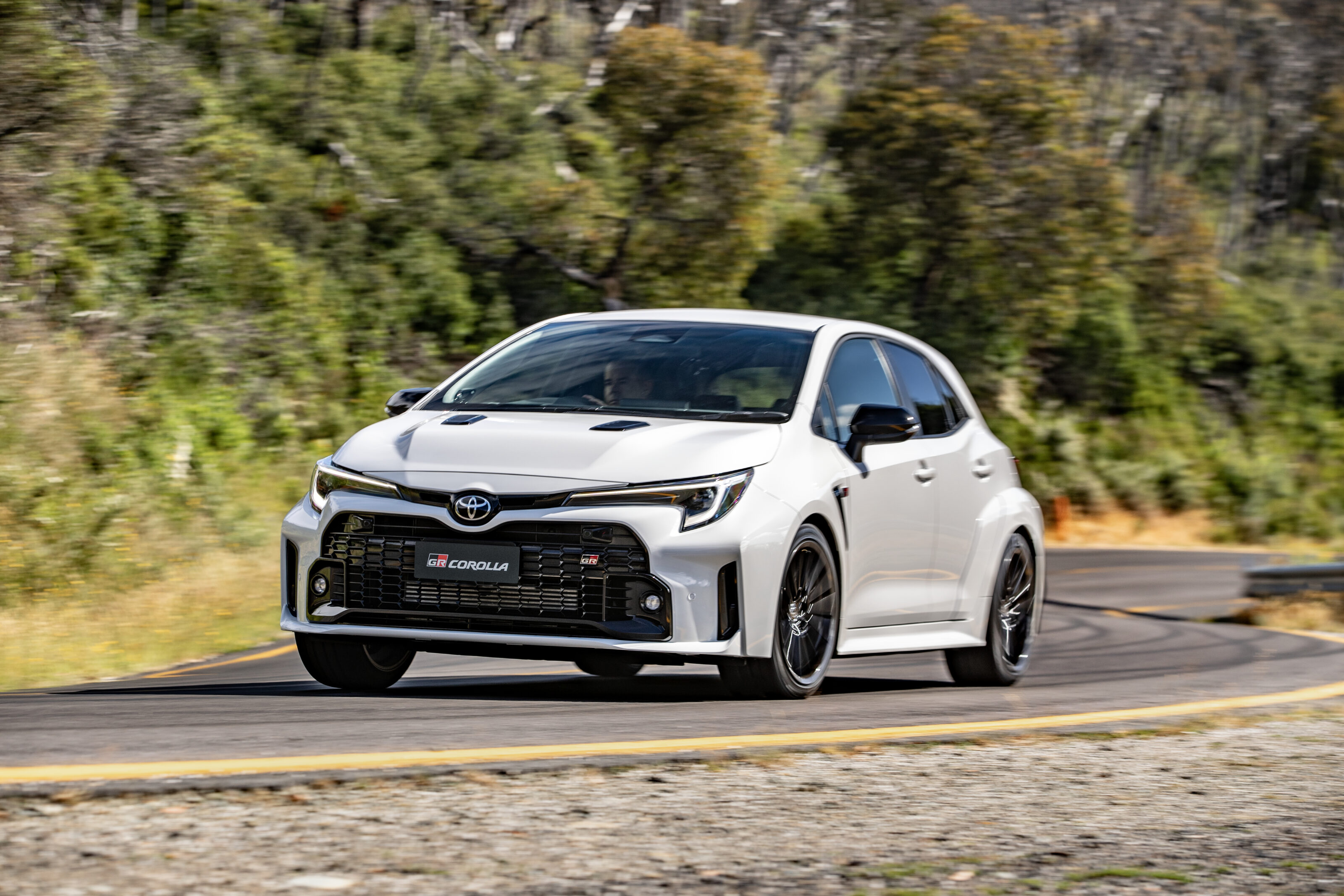
The GR Corolla uses the same ‘G16E-GTS’ turbo-petrol three-cylinder engine as the GR Yaris, though it is refined and enhanced – developing 221kW of power and 370Nm of torque.
Joining the GTS in May will be 25 hardcore, two-seat Morizo Editions with 30Nm more torque, lighter weight and bespoke chassis tune wearing a $77,800 price tag.
The GR-Four AWD system uses a similar centre diff to the GR Yaris, and all Australian GR Corollas will be equipped with Torsen-type limited-slip differentials front and rear.
“Motorsport has long been a part of Corolla’s DNA, so to have a fully-fledged hot hatch version of our venerable small car is a huge thrill”, said vice president of sales, marketing, and franchising, Sean Hanley.
RELATED READING
Looking for more details on the wider Corolla range? Our full range review has everything you need to know.
JUMP AHEAD
- GR Corolla pricing
- GR Corolla features
- Colours
- Engine and drivetrain
- Safety
- Dimensions
- Warranty/servicing
- Availability
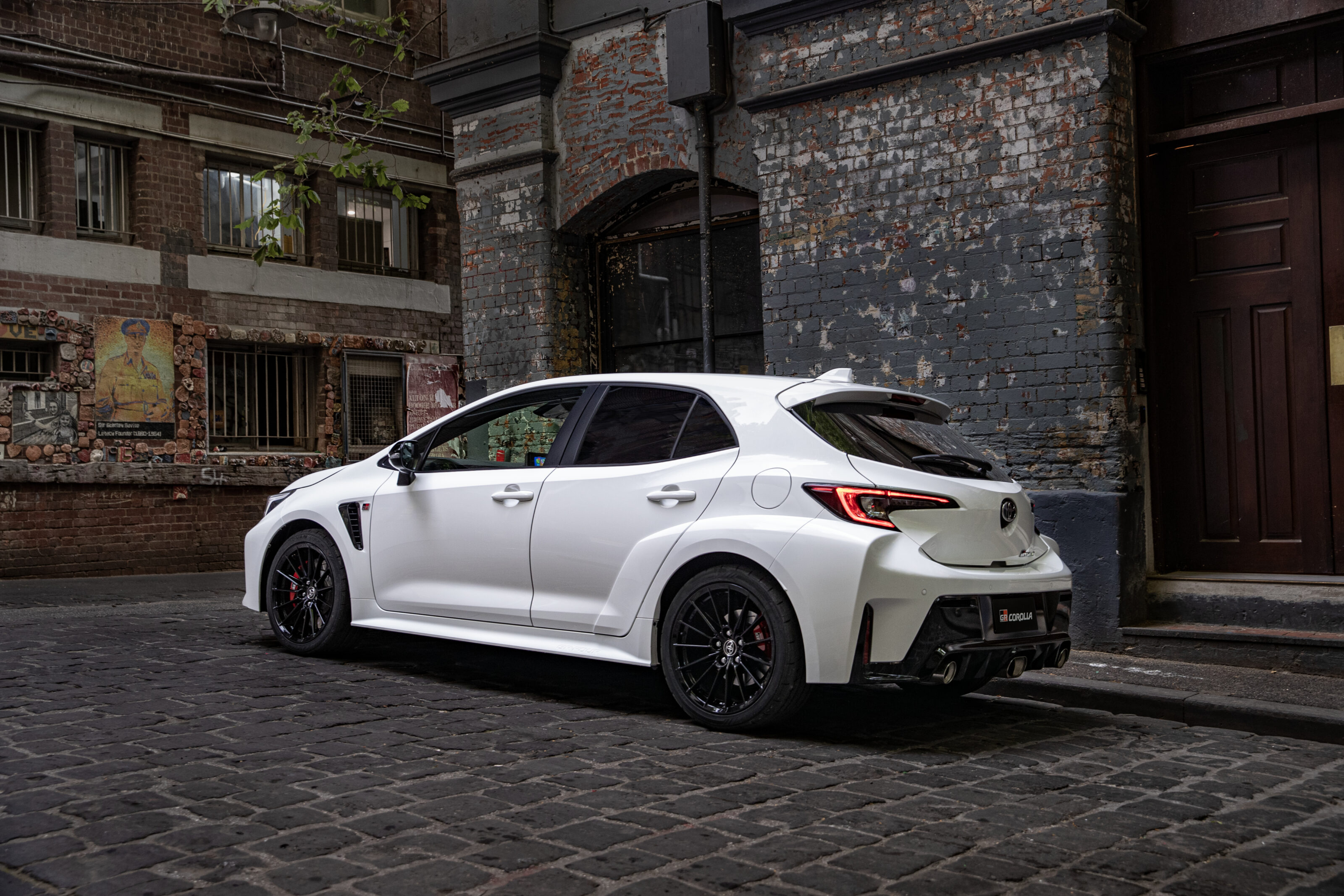
2023 Toyota GR Corolla pricing
| Variant | Price (before on-road costs) |
|---|---|
| GR Corolla GTS | $62,300 |
| GR Corolla Morizo | $77,800 |
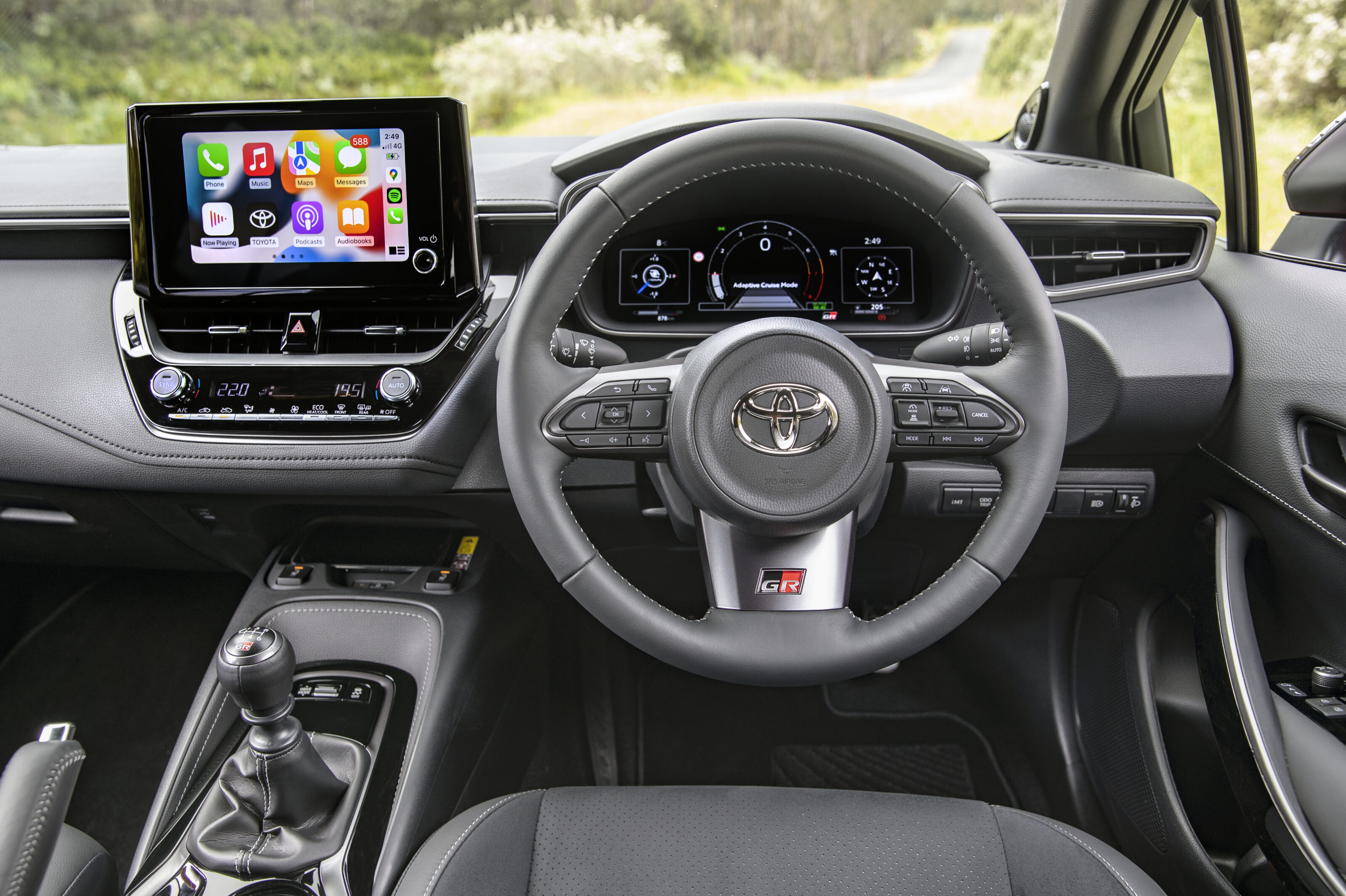
2023 GR Corolla features
| 2023 Toyota GR Corolla standard features | |
|---|---|
| LED headlights | 18-inch Enkei cast alloy wheels |
| Dual-zone climate control | Suede/vinyl upholstery |
| 8.0-inch multimedia touchscreen | Wireless Apple CarPlay/wired Android Auto |
| 12.3-inch digital driveru2019s display | Surround-view camera |
| Heated front seats | 8-speaker JBL sound-system |
| Heated steering wheel | DAB+ digital radio |
| Keyless entry w/ push-button start | 2x USB-A chargers |

2023 Toyota GR Corolla Morizo edition specs
| 2023 Toyota GR Corolla Morizo features | |
|---|---|
| 18-inch forged BBS alloy wheels | Carbon fibre roof |
| Michelin Pilot Sport Cup 2 tyres | Sports seats |
| Rear-seat delete | Single-zone air-con |
| 2-speaker sound system | No parking sensors |
Colours
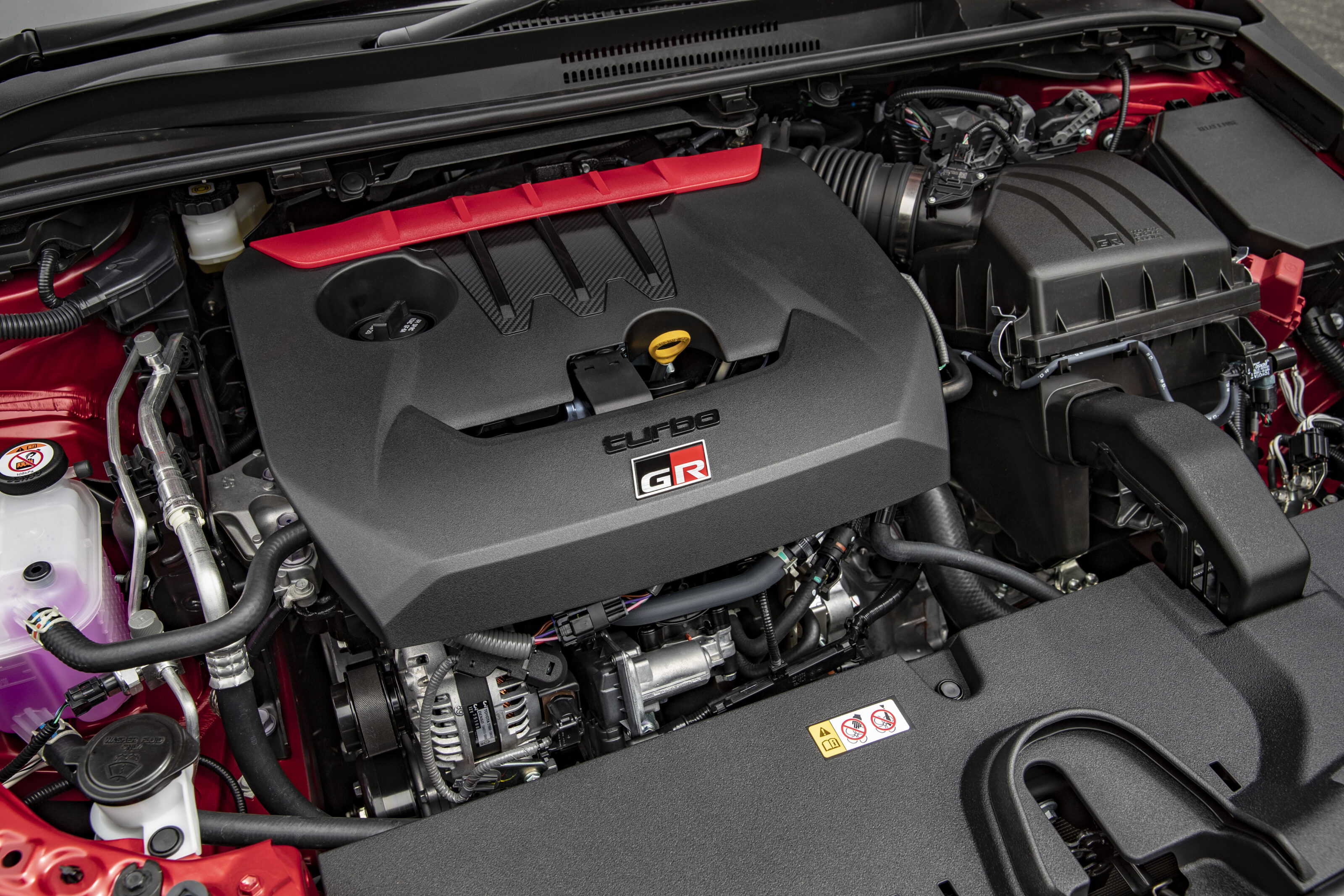
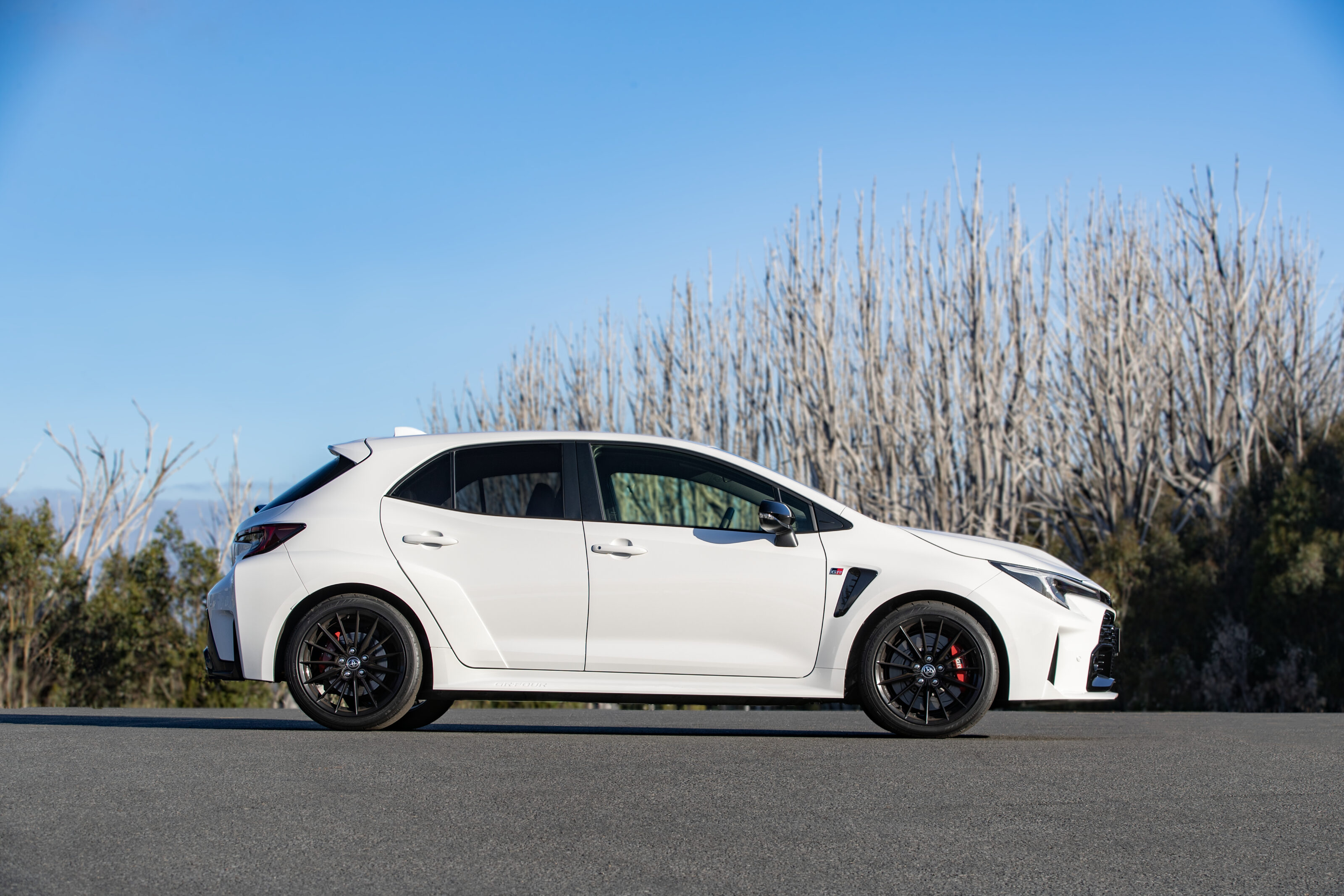
The GR Corolla’s flared guards and 25 millimetre bulging bonnet with functional vents can be complemented by one of four exterior colours, as listed below. Glacier white is included in the price, but all other colours add $575.
| 2023 Toyota GR Corolla colours | |
|---|---|
| Glacier white | Ebony |
| Liquid mercury metallic | Feverish red mica |
Morizo Edition colours
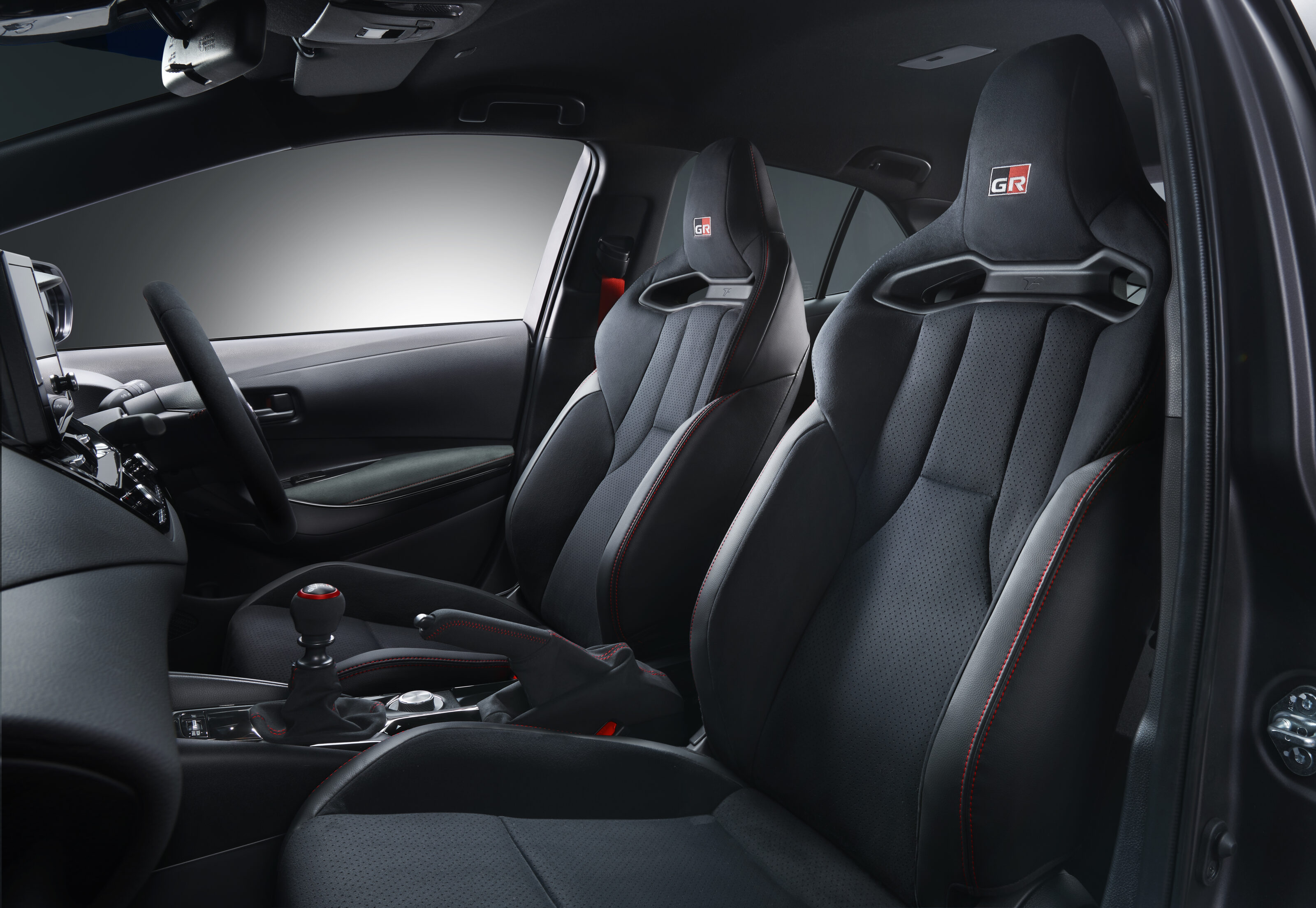
The Morizo gets premium paint as standard, but to get the flagship matte steel communications colour is an additional $2500.
| 2023 Toyota GR Corolla Morizo colours | |
|---|---|
| Frosted white pearl | Matte steel ($2500 Morizo exclusive) |
| Tarmac black metallic |
Engine and drivetrain
Under the bonnet is a familiar name, the G16E-GTS engine first put to work in the GR Yaris. But there are changes: enhanced oil and water cooling, higher pressure fuel injection, more boost, and triple-exit exhaust to reduce back-pressure.
The result is a 21kW increase in power over the GR Yaris, and (in theory) improved longevity under duress, such as track days. Outputs are 221kW at 6500rpm, and 370Nm between 3000-5500rpm. The Morizo gets more boost still, raising torque to 400Nm.
Toyota claims a 0-100km/h sprint of 5.29 seconds for the GR Corolla GTS, and 5.21 seconds for the Morizo.
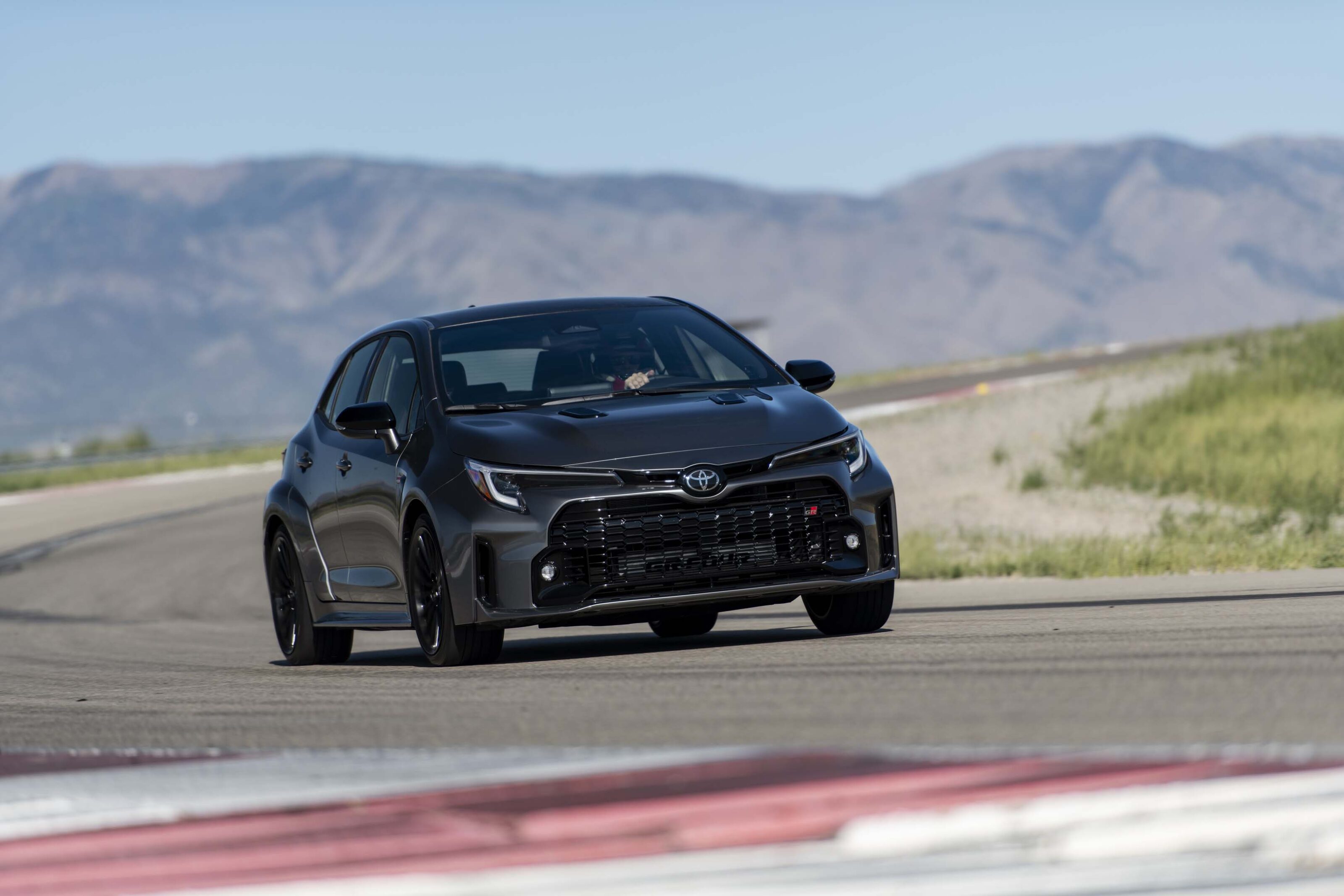
The GR-Four AWD system has been optimised to suit the Corolla’s longer wheelbase, and like GR Yaris Rallye there are Torsen limited-slip differentials mounted on the front and rear axle.
The front-rear torque split is controlled electronically by a clutch-pack differential, and there are three base settings: Normal (60:40), Sport (70:30) and Track (50:50). GR Corolla also gets Eco, Normal and Sport drive mode selection.
A six-speed manual transmission is the only option, naturally. GR Corolla’s combined fuel consumption rating is 8.4L/100km.
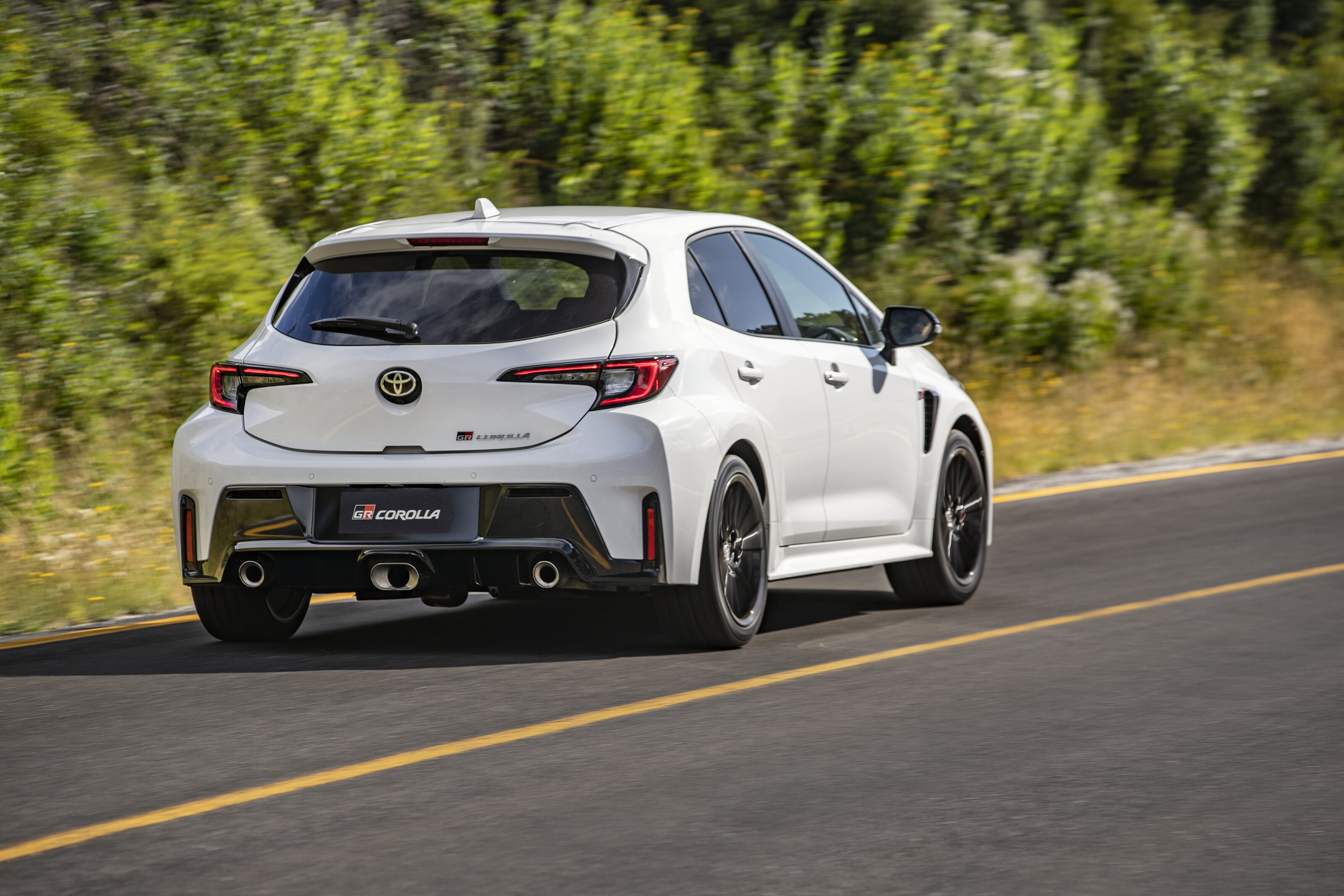
Bespoke springs, dampers, 349 more spot welds, and 2.8m more structural adhesive enhance GR Corolla’s rigidity. New Yokohama Advan Apex V601 tyres in 235/40R18 are wrapped around 18-inch cast Enkei alloy wheels. The Morizo gets wider 245/40R18 Michelin Pilot Sport Cup 2 tyres on BBS forged alloys.
Safety
The GR Corolla is no track-only special, and as such benefits from the host of adaptive safety features fitted to the standard Corolla range.
Active safety and driver assistance systems include:
| 2023 Toyota GR Corolla safety features | |
|---|---|
| Adaptive cruise control | Lane-keep assist with lane-follow |
| Front AEB with pedestrian and cyclist and junction detection | Rear AEB |
| Rear cross-traffic alert | Blind-spot monitoring |
| Tyre pressure monitoring | Reversing camera |
| Traffic sign recognition | 7 airbags |
Dimensions
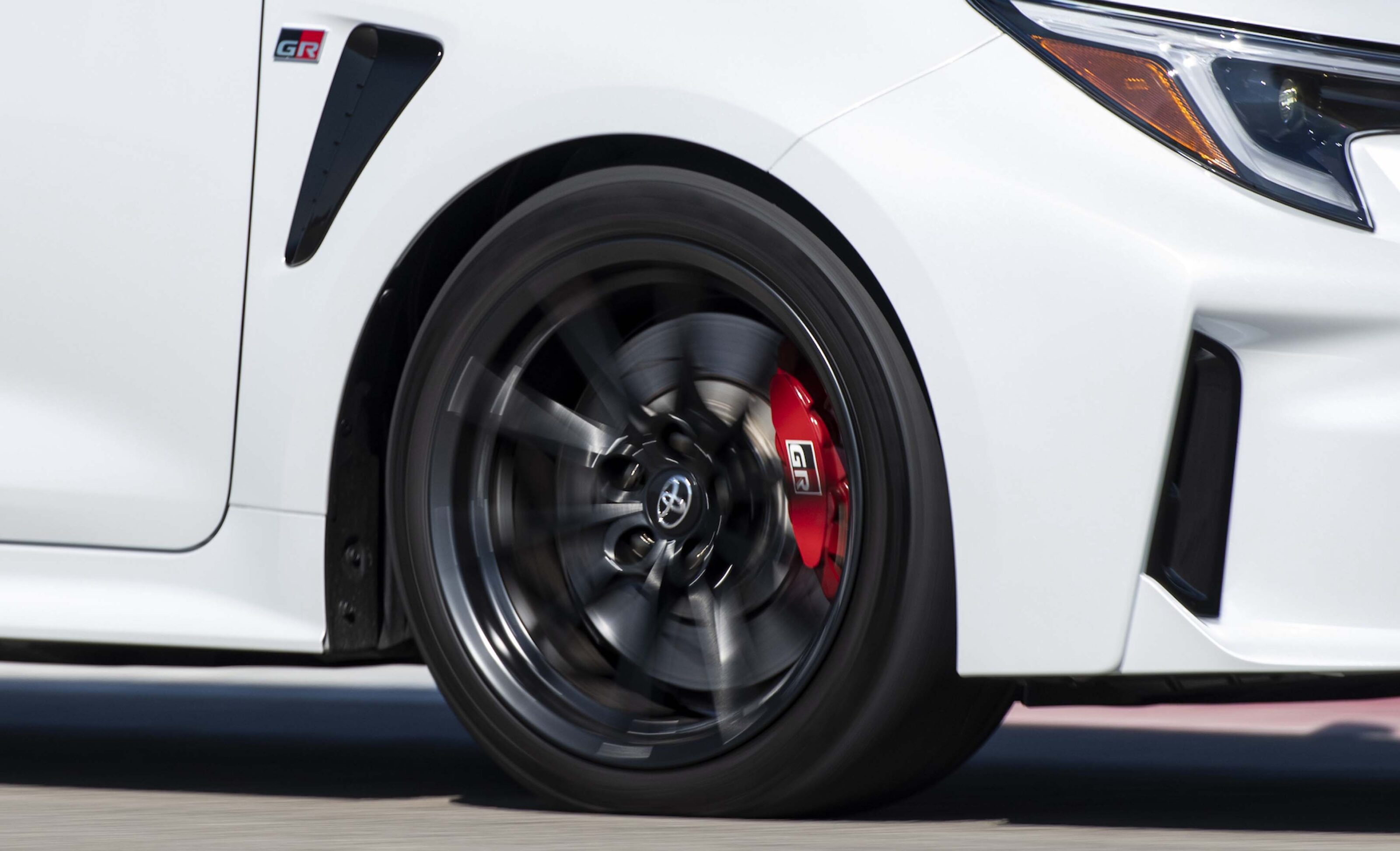
The GR Corolla is 35mm longer than a cooking Corolla due to its more aggressive bumpers and functional aero addenda. It measures 4407mm longer, and rides of a 2640mm wheelbase.
It’s wider too – by 20mm at the front and 30mm at the rear to accommodate 59mm wider front and 90mm rear track width. The boot is 213L in the GTS, or 229L in the Morizo.
Weight is up 65 kilograms compared to a regular Corolla – an impressive feat given the added AWD system and turbocharged engine. The GTS weighs 1485kg, while the 45kg lighter Morizo 1440kg.
Warranty and servicing
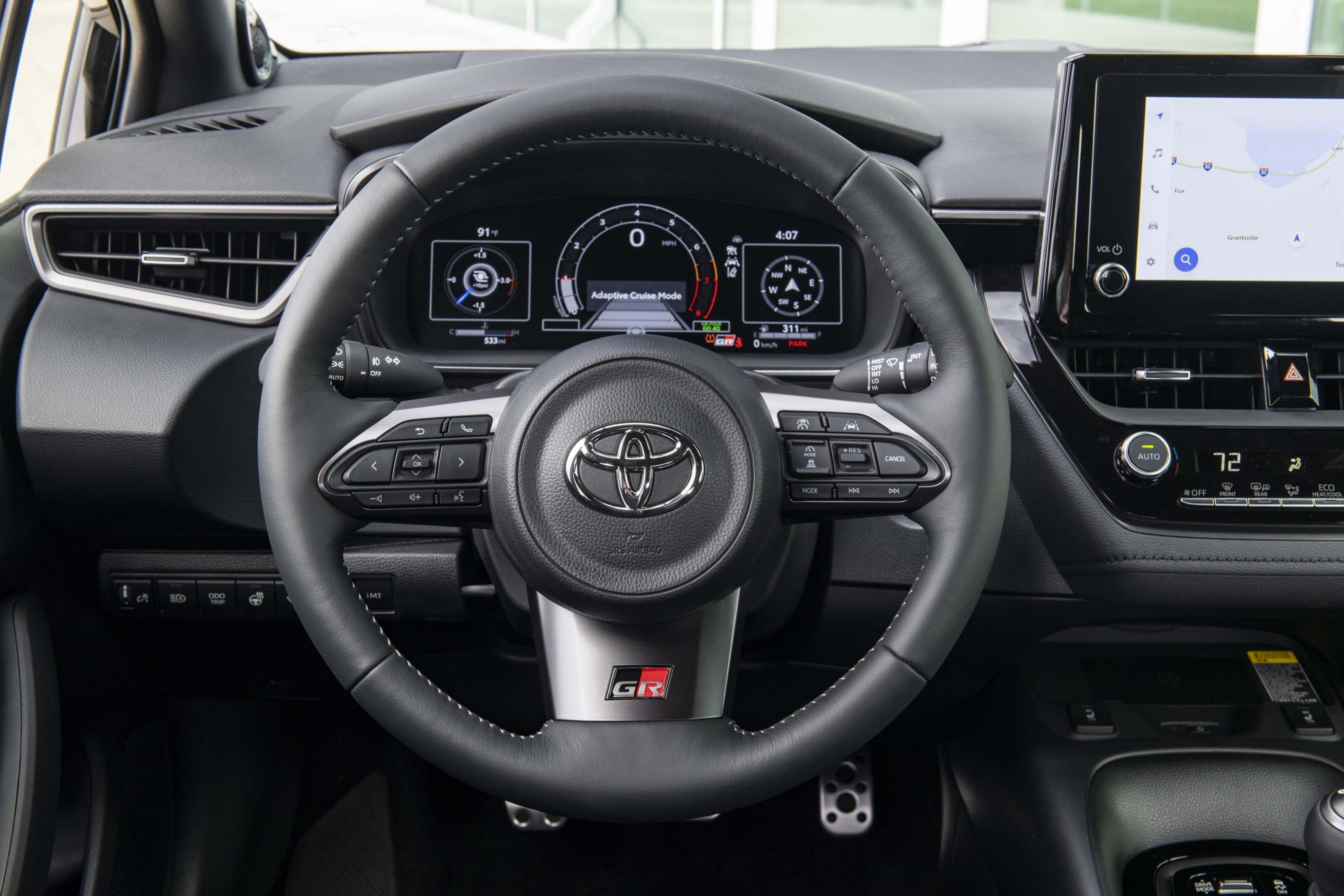
Being a Toyota, the GR Corolla is guaranteed affordable capped-price servicing. Reflecting its hardcore intent, intervals are shorter than a Corolla hybrid, with maintenance due every six months/10,000km.
Three years of servicing is capped at $300/visit, for a total of $1800. The GR Corolla is covered by a five-year unlimited kilometre warranty.
Although Toyota doesn’t publicise a track day warranty for GR Corolla like Hyundai’s N Performance arm, Hanley said any issues will be assessed on a case-by-case basis. Hanley added that it won’t be a surprise to dealers or head office, saying: “We do understand it will be used on track.”
Availability
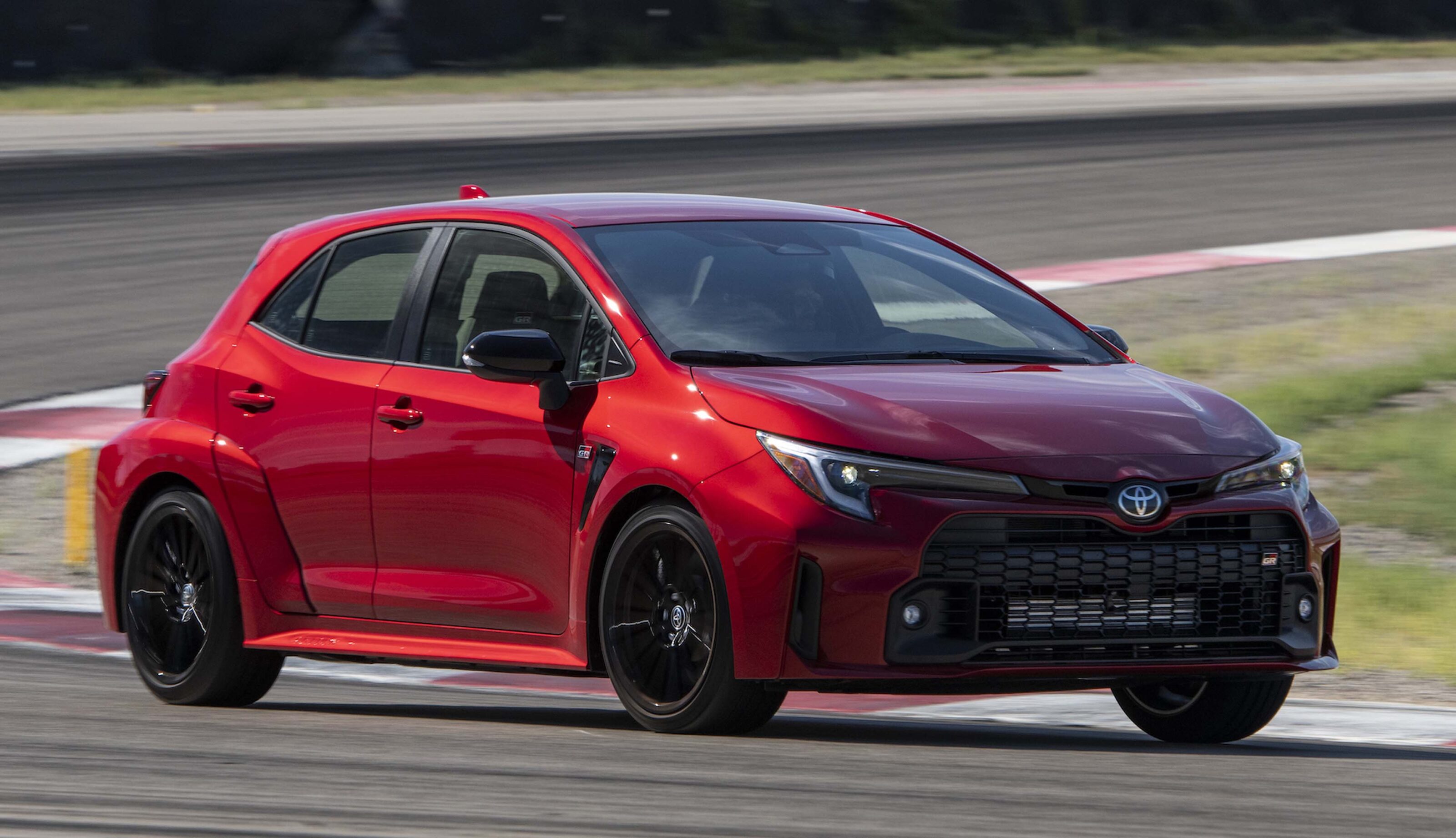
Toyota is bringing 700 GR Corolla GTS examples to Australia in the first year on sale, with an additional 25 Morizo editions on top. This won’t be it for the GR Corolla either, as it will continue to serve a sales life into 2024 and beyond.
As for assuring scalpers don’t get their hands on GR Corollas, Toyota’s dealer EOI takes into account more than just whether you can pay for it.
Additional information, such as your history with Toyota/GR products, previous performance vehicles owned, and car-club affiliations are taken into account for receiving the cars.
“We want these cars to get into the right hands”, said Hanley, though he noted the system won’t be completely in charge. “In the end, the dealer will determine who gets the car”, he added.
RELATED READING
Looking for more details on the wider Corolla range? Our full range review has everything you need to know.
Snapshot
- Prices to start at $106,950 and stretch to $140,950
- Four-grade local lineup confirmed with short- and long-wheelbase versions
- All carry a 4.5 tonne braked towing capacity
- Order books are now open; deliveries set to commence in third quarter 2023
The highly anticipated 2023 Ford F-150 will undercut its key rivals on price by a substantial margin when it arrives in Australia in the third quarter of this year.
Now set to arrive slightly later than predicted, Ford will offer two trim levels of the F-150 in Australia with prices set to start at $106,950 for the entry-level F-150 XLT SWB and stretch to $139,950 for the flagship F-150 Lariat SWB.
Both models will be available in short- and long-wheelbase forms, with LWB models offering an additional 303 millimetres of length between the axles for an extra $995 over the asking price of SWB versions.

2023 Ford F-150 pricing
| 2023 Ford F-150 Australian model range | |
|---|---|
| Model | Price (before on-road costs) |
| XLT SWB | $106,950 |
| XLT LWB | $107,945 |
| Lariat SWB | $139,950 |
| Lariat LWB | $140,945 |
Exact dimensions for SWB versions are a 3683mm wheelbase with a tray which measures 1676mm deep, while the LWB rides on a 3987mm wheelbase and offers a 1981mm tray.
Today’s pricing confirmation also sees order books open officially for the first time, with the initial shipment of 2023 F-150s now en route to Australia where they will be converted to right-hand-drive by Melbourne company RMA Automotive in a process that takes 36 hours.
Ford Australia wouldn’t confirm how many F-150s were being sent to Australia in the initial shipment, however it’s understood to be in the hundreds of units.
“We are incredibly excited that the first batch of F-150s will be landing soon,” a Ford Australia spokesperson told Wheels. “We have strong supply to meet what we anticipate will be high customer demand ahead of F-150 deliveries beginning in Q3.
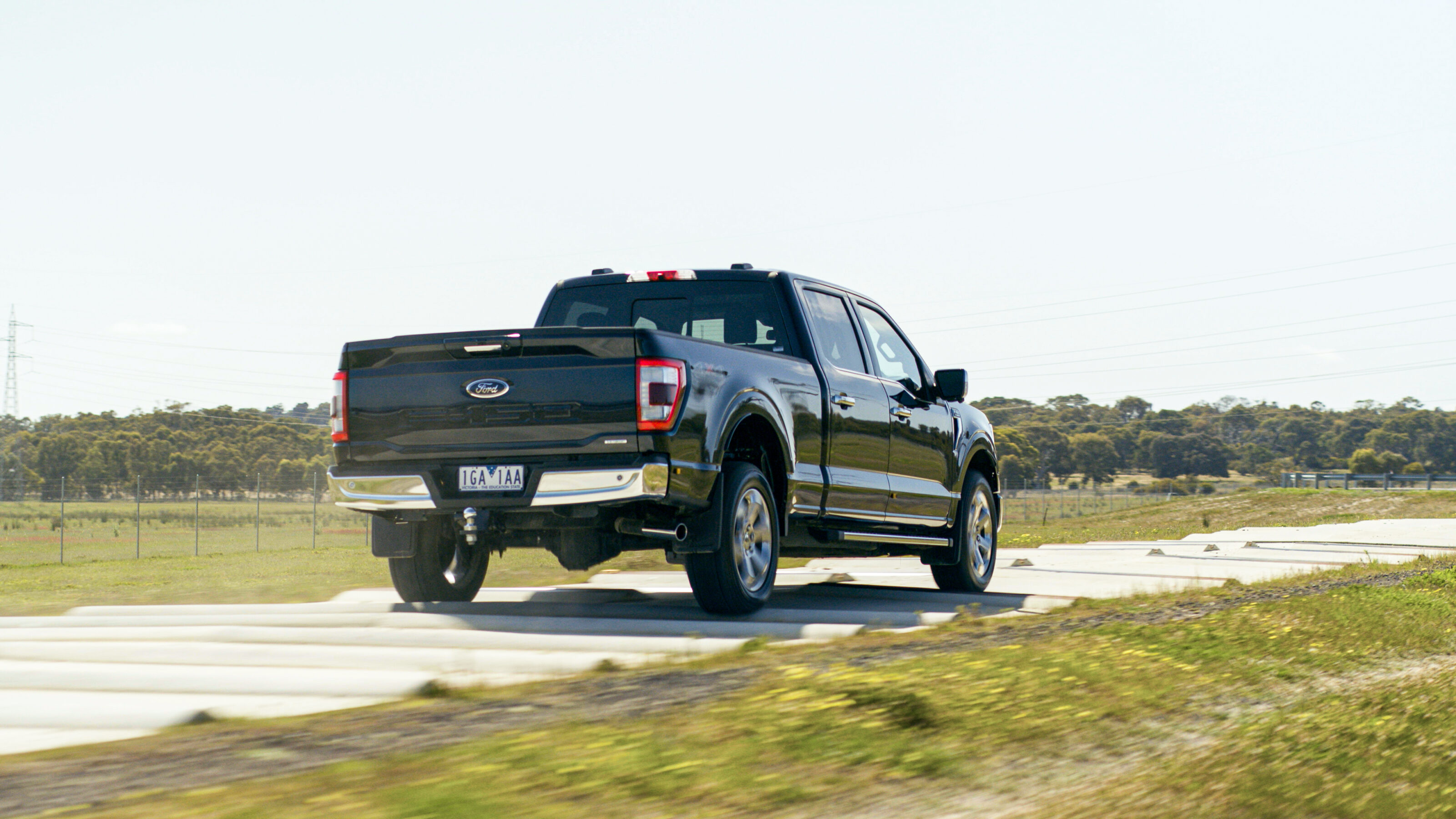
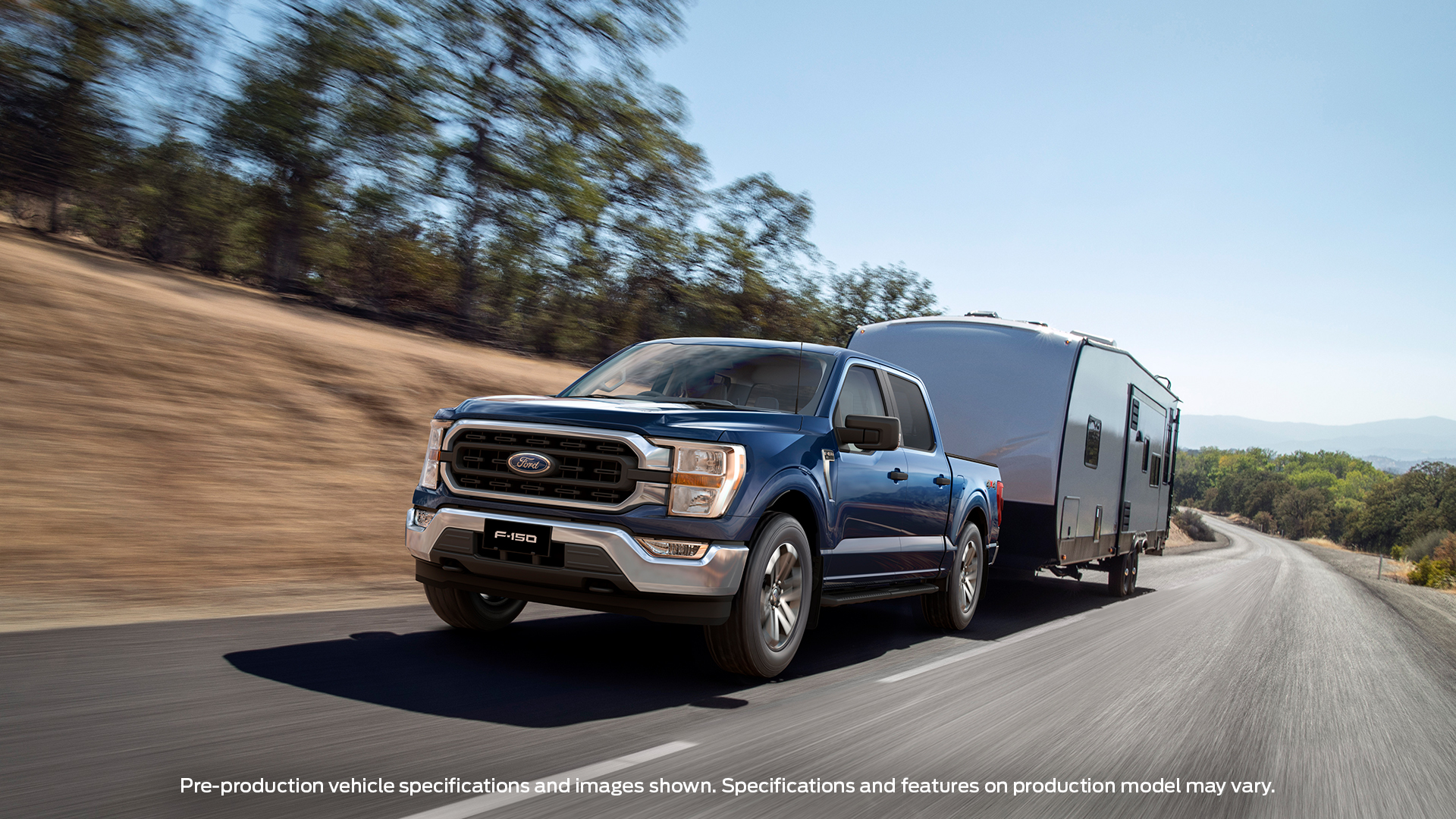
Set to be a rival for the RAM 1500 and Chevrolet Silverado 1500, the Ford F-150 will soon offer Aussie buyers a less expensive alternative. The F-150’s starting price of $106,950 easily undercuts the Chevrolet Silverado 1500 LTZ Premium which costs $121,000 before on-road costs, while the fifth-generation Ram 1500 Laramie Crew Cab is more expensive again at $127,950.
Engine, transmission and fuel economy
| Ford F-150 XLT SWB | RAM 1500 Laramie Crew cab (fifth generation) | Chevrolet Silverardo 1500 LTZ Premium | |
|---|---|---|---|
| Price (before on-road costs) | $106,950 | $127,950 | $121,000 |
| Engine | 3.5-litre V6 twin-turbo petrol | 5.7-litre V8 | 6.2-litre V8 |
| Power | 298kW | 291kW | 313kW |
| Torque | 678Nm | 556Nm | 624Nm |
| Gearbox | 10-speed automatic | 8-speed automatic | 10-speed automatic |
| Braked towing capacity | 4.5 tonnes | 4.5 tonnes | 4.5 tonnes |
The Ford also outguns its competitors for engine performance. While down slightly on power compared to the Silverado, the Ford’s smaller capacity 3.5-litre V6 twin-turbo has more torque than both of its key rivals – which use naturally-aspirated V8 engines.
Towing heavy loads is a high priority for buyers of large utes and the Ford F-150 matches it rivals with a braked towing capacity of 4500 kilograms. Ford is yet to confirm a payload figure for Australian examples.
“The specific payload capacity for F-150 in Australia is not yet finalised,” said a Ford Australia spokesperson. “We are conducting further testing and validation ahead of the vehicle’s official launch, and will be able to confirm an exact figure closer to that time. However, we are confident the F-150 will deliver a payload consistent with the full-size pick-up segment.”
As you’d hope at this price point, every F-150 is fitted with a high level of standard equipment and comes armed with 20-inch alloy wheels, chrome exterior styling touches, Ford’s SYNC4 infotainment software, and a spray-in tubliner.
Six exterior colours are offered across the range, with Oxford white being a no-cost option. The other colours command a $700 additional charge and are Agate black, iconic silver, antimatter blue, carbonised grey and rapid red.
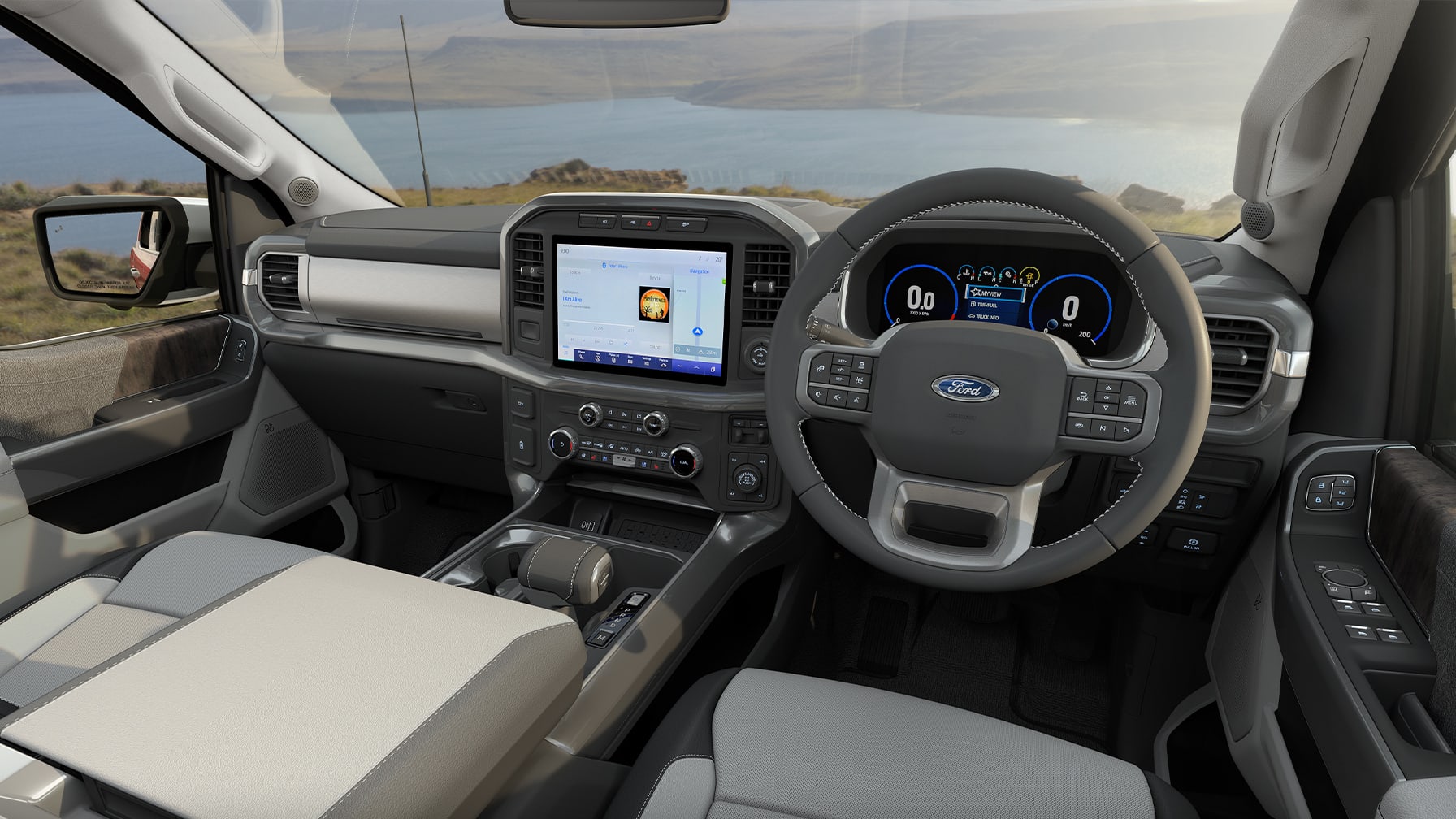
Features
XLT
Standard equipment on XLT models includes:
| XLT standard equipment | |
|---|---|
| 20-inch six-spoke alloy wheels | Satellite navigation |
| Chrome front and rear bumpers | Seven-speaker sound system |
| Black platform running boards | 8.0-inch digital dial pack |
| Tailgate with flexible step and work surface | Dual-zone climate control |
| Spray-in tubliner | Reversing camera |
| Column-mounted gear shifter | Power adjustable foot pedals |
| 12-way power cloth driver’s seat | Rear parking sensors |
| 10-way power cloth passenger seat | Cruise control |
| 8.0-inch centre touchscreen | |
Lariat
Flagship Lariat versions have a stronger focus on comfort and luxury and offer the following as standard, in addition to the XLT’s base specification.
| Lariat standard equipment | |
|---|---|
| Mesh insert for the front grille with chrome surround | Heated rear-seats |
| Adidtional chrome on wing mirrors, door handles, tow hooks and running boards | 12-way power adjustment for driver & passenger seats |
| Two-panel panoramic sunroof | Floor-mounted gear shifter |
| LED headlights and tail-lights | 12.0-inch centre touchscreen |
| Power release and close tailgate | 12.0-inch digital instruments |
| Power sliding rear window | 18-speaker B&O sound system |
| Leather accented seats | Front-parking sensors |
| Heated/cooled front seats | Wireless phone charging pad |
Safety
Standard safety equipment levels are also high across the range, with the XLT offering six airbags, autonomous emergency braking, blind-spot detection with cross-traffic alert and trailer tow coverage, and lane-keep assist/alert.
Lariat versions build on that with a host of additional advanced safety systems including: intelligent adaptive cruise control with stop and go, a 360 surround-view monitor, lane-centering, speed-sign recognition, intersection assist, and evasive steering assist.
Ford Australia will not crash test the F-150 locally and it will not carry an ANCAP safety star rating.
“F-150 will not be locally ANCAP tested, however it will be fully ADR compliant and contain all of the safety systems expected of a brand-new Ford vehicle,” Ford told Wheels. “Ford F-150 has received a five-star rating in the United States’ Insurance Institute for Highway Safety testing.”
Warranty
All versions of the F-150 will carry a factory-backed five-year, unlimited kilometre warranty. Ford has also run an extensive local engineering program for the F-150 to ensure the popular American truck will be well-suited to Aussie roads.
Availability
The 2023 Ford F-150 will arrive in Australia in the third quarter of this year.

Bentley‘s lauded 12-cylinder petrol engine will cease production by April 2024.
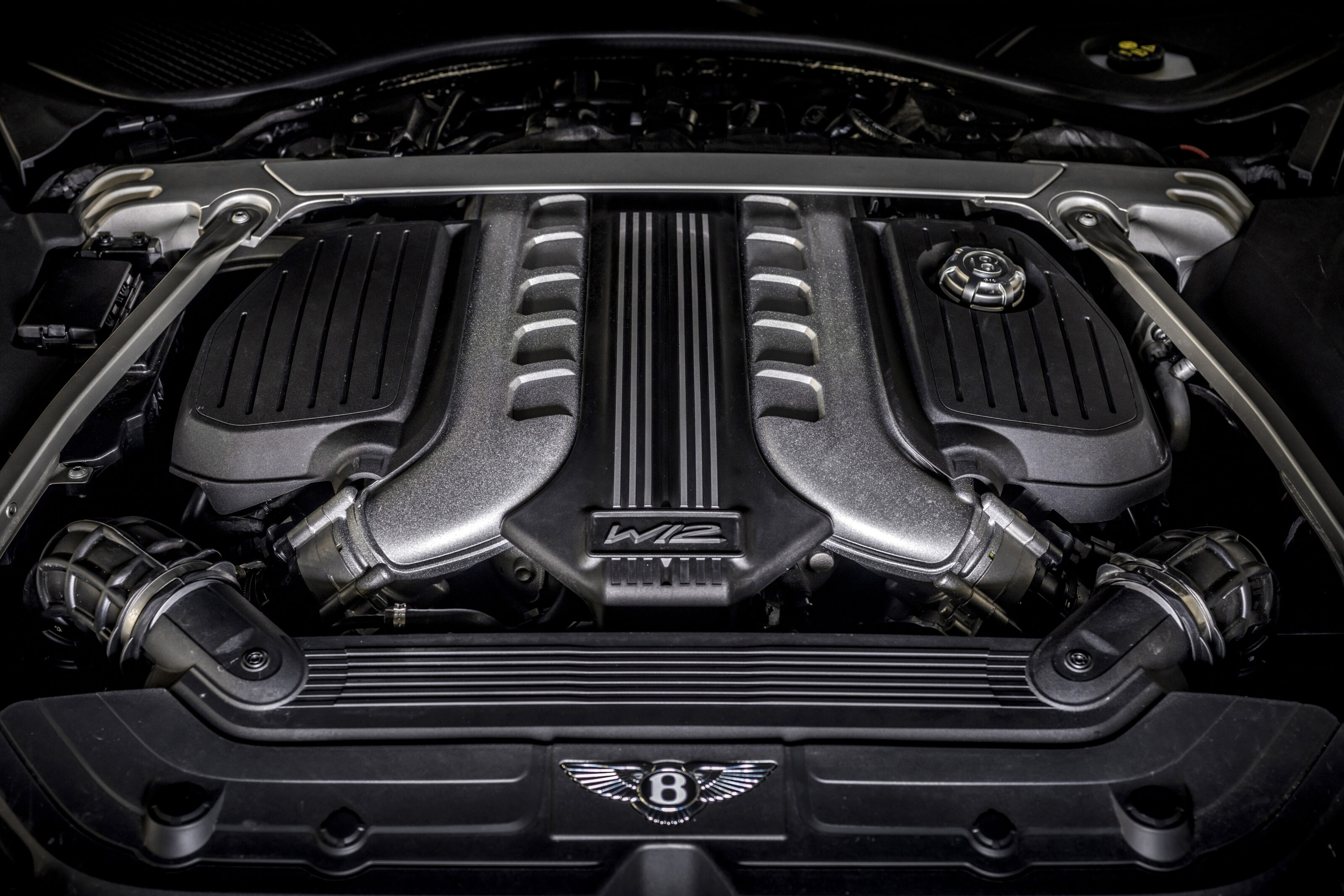
More than 100,000 examples of the 6.0-litre W12 will have been produced by that time, after making its debut on the 2003 Continental GT.
To send off the signature powerplant, Bentley has developed its most powerful iteration yet, turning up the wick to produce 551kW and 1000Nm of torque.
Just 18 of these high-output motors will be crafted by hand, and fitted to Bentley’s ultra-exclusive Batur, built by the brand’s specialist Mulliner coachbuilding department.
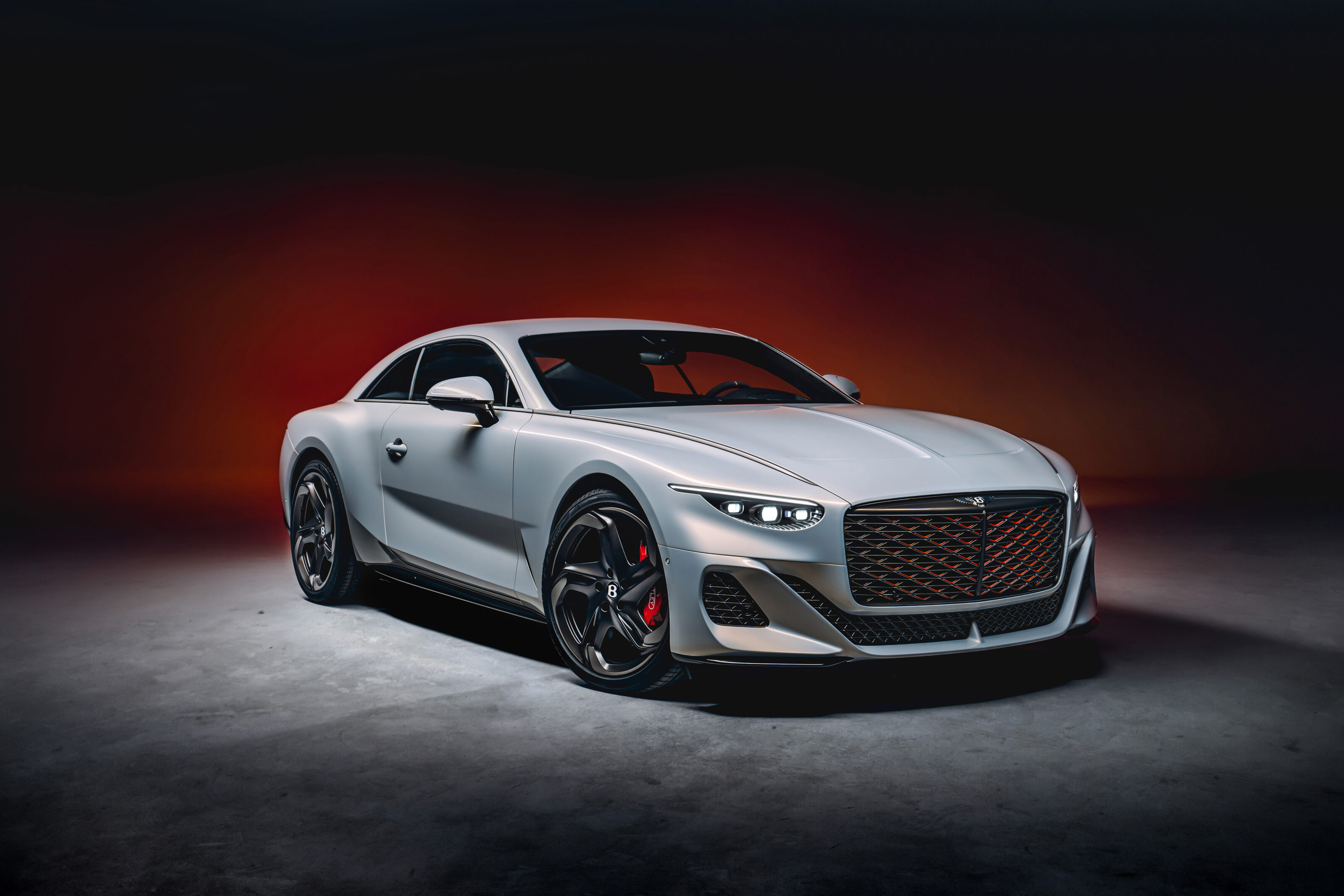
The decision comes off the back of Bentley’s accelerated Beyond100 strategy, which will see the brand’s entire model range fully electrified by 2030.
The transition has already begun, with Bentley having introduced hybrid versions of its Bentayga SUV and Flying Spur limousine. After the lights flick out on W12 production next year, Bentley’s entire model line will be offered with a hybridised powertrain.
Adrian Hallmark, Bentley Chairman and Chief Executive, stated: “Our progressive journey towards sustainable luxury mobility means making changes to every area of Bentley Motors.
“When we first launched the W12 back in 2003, we knew we had a mighty engine that would propel both our cars and the brand forward at speed. Twenty years and more than 100,0000 W12s later, the time has come to retire this now-iconic powertrain as we take strides towards electrification – but not without giving it the best send-off possible, with the most powerful version of the engine ever created.”
The record-setting outputs from Bentley’s ultimate 6.0-litre W12 were achieved through significant reworks of the engine’s thermodynamics and heat management – with intake, exhaust and cooling systems all massaged for increased efficiency and performance.
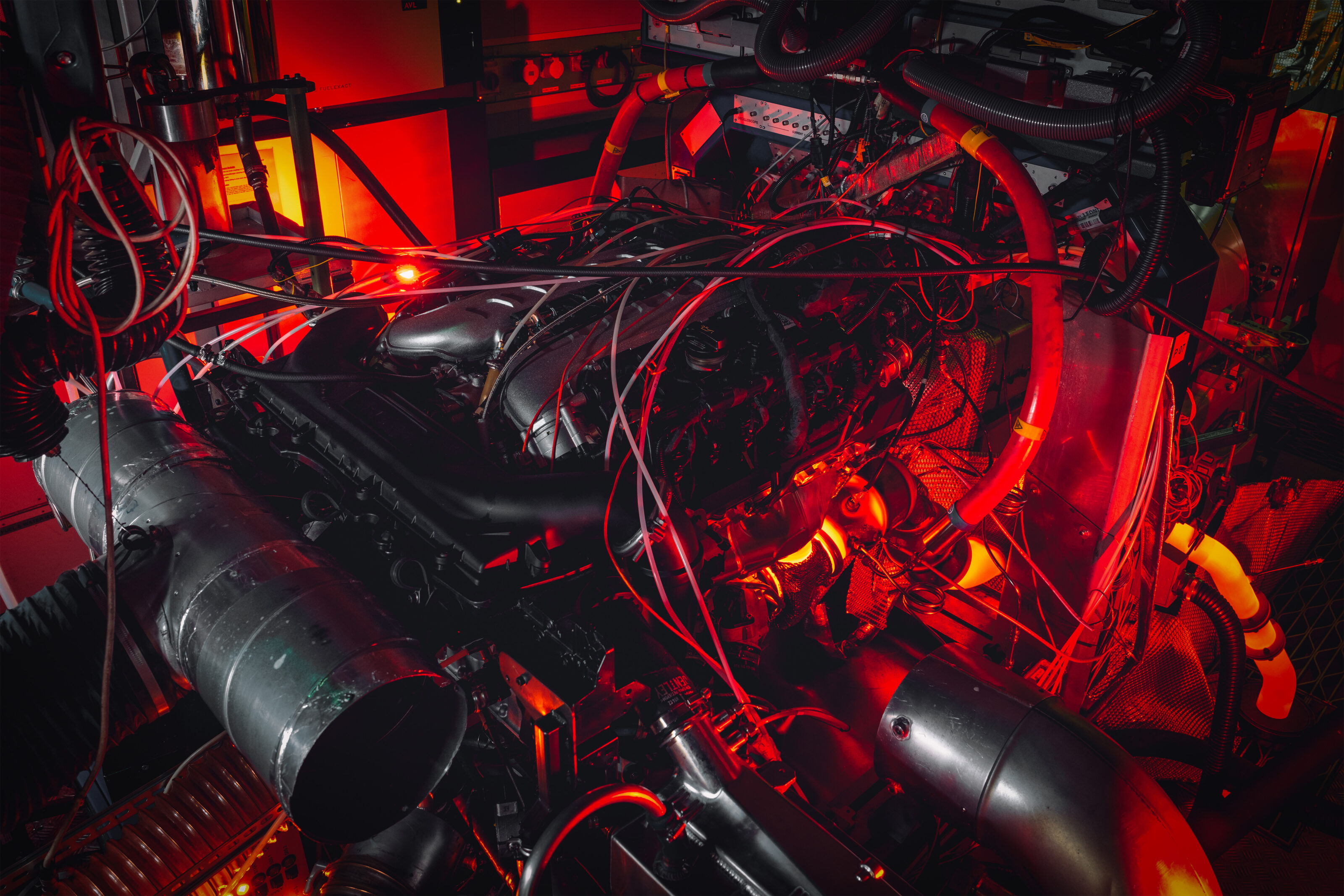
The turbocharger compressors are a new, more efficient design and are fed by air intakes which have been enlarged by 33 per cent.
The 6.0-litre’s sizeable charger air coolers have been thickened by 10 millimetres and house a redesigned core that rejects 35 per cent more heat from the pressurised intake air, reducing intake temperatures and a subsequent denser air charge resulting in more power from the turbos.
The big unit’s freer-breathing ‘cold side’ has been met with revised engine and gearbox calibrations to optimise delivery of the increased torque and power loads, enhancing the exclusive Batur’s driving experience.
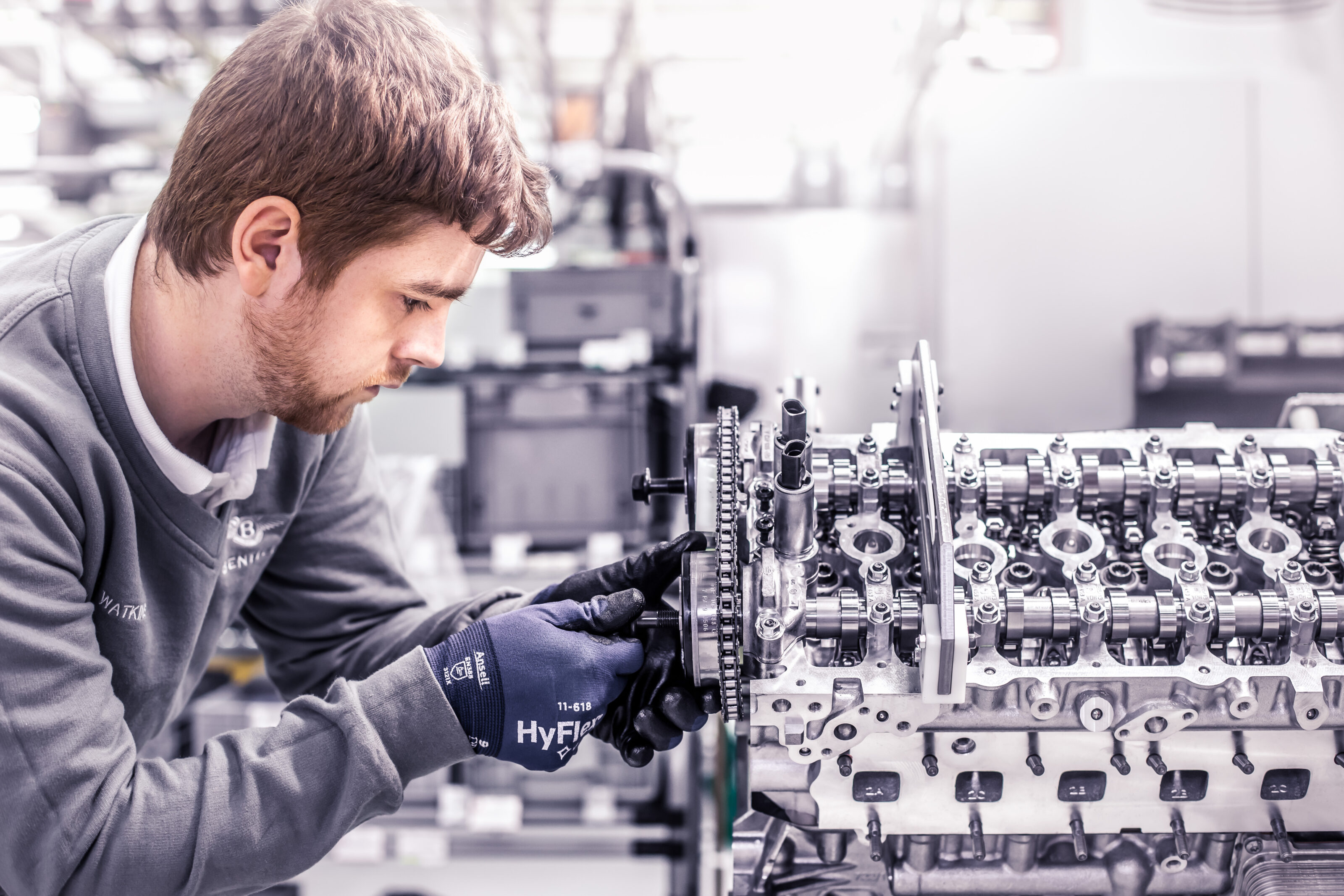
Each W12 engine is hand-assembled by a specialist team of 30 at Bentley’s Pym Lane factory in the brand’s historic home of Crewe, England, over the course of 6.5 hours.
Bentley states that its aim is to retrain and redeploy all 30 craftsmen elsewhere in the business, while the W12 engine facility will make way for expanded production lines of Bentley’s plug-in hybrid 3.0-litre twin-turbo V6.
Sadly, all 18 examples of the 551kW Bentley Batur have sold out, but Bentley’s 6.0-litre W12 can still be ordered in 484kW guise in the Continental GT Speed, Bentayga Speed and Flying Spur Speed, and can also be specified in special Mulliner-made examples of the Continental GT and Flying Spur. These will be the final series production vehicles fitted with Bentley’s ubiquitous 6.0-litre W12.
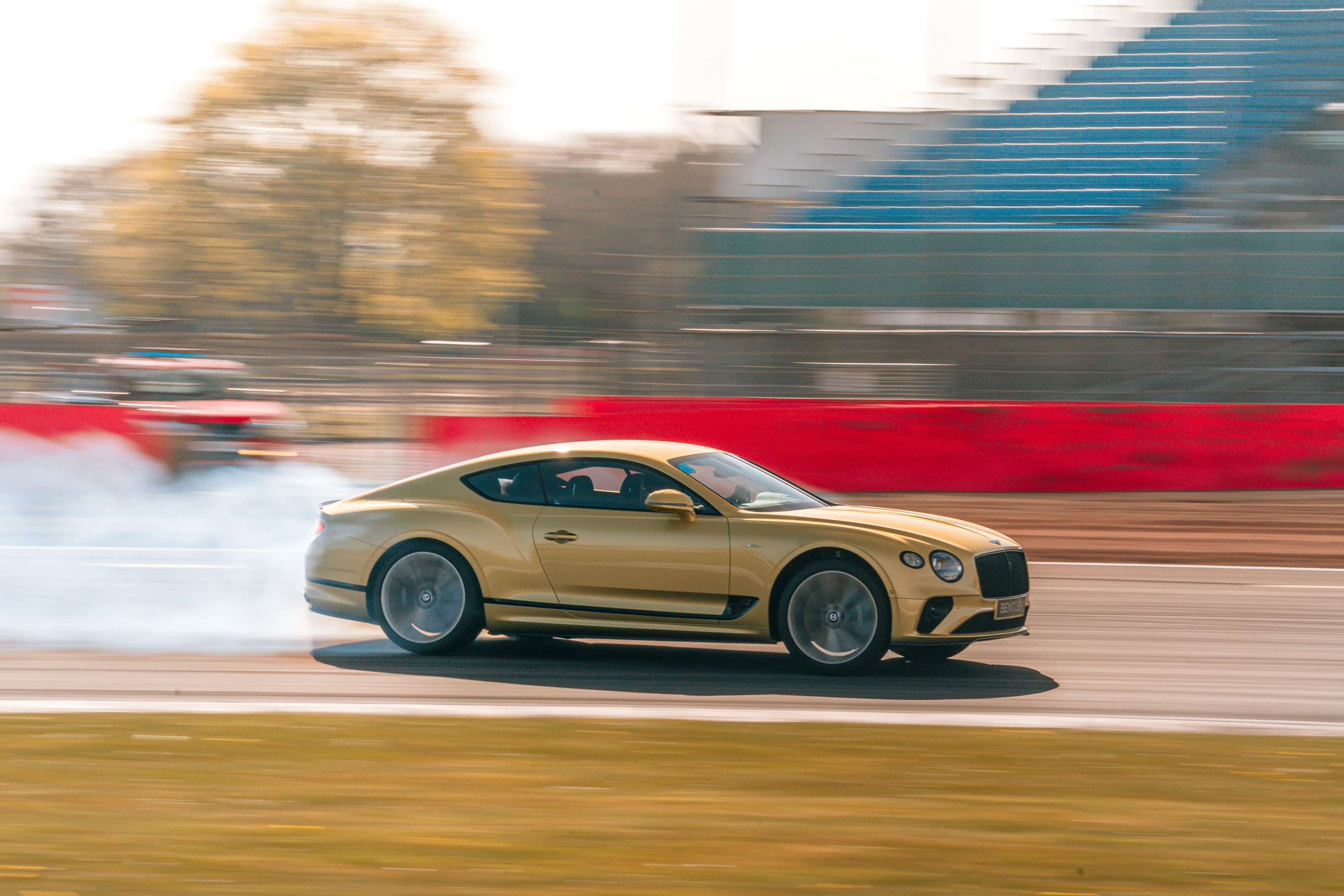
Under mounting societal and environmental pressures, such large capacity engines with double-digit cylinder counts are becoming increasingly endangered, and less favoured in comparison to the benefits of electric augmentation and developments in the turbocharging arena.
After Bentley’s W12 bows out next year, the likes of Aston Martin, Ferrari, Lamborghini, Mercedes-Maybach and Rolls-Royce will be among the last 12-cylinder stalwarts in the Australian market.
Snapshot
- Sixth-gen Supra coupe may go electric-only in 2026
- Hotter Supra GRMN coming as last petrol engine send-off
- u2018BEV-firstu2019 mindset for incoming Toyota CEO, who current leads GR
The current fifth-generation Toyota Supra sports coupe could be the last with a petrol combustion engine.
According to BestCarWeb, the flagship next-generation Supra may go all-electric with a rear-wheel-driven layout, ride on an updated version of its e-TNGA platform, and could launch as soon as 2026.
Though, the Japanese publication didn’t explicitly state whether it will have a battery-electric, hydrogen fuel-cell or hydrogen-combustion powertrain.
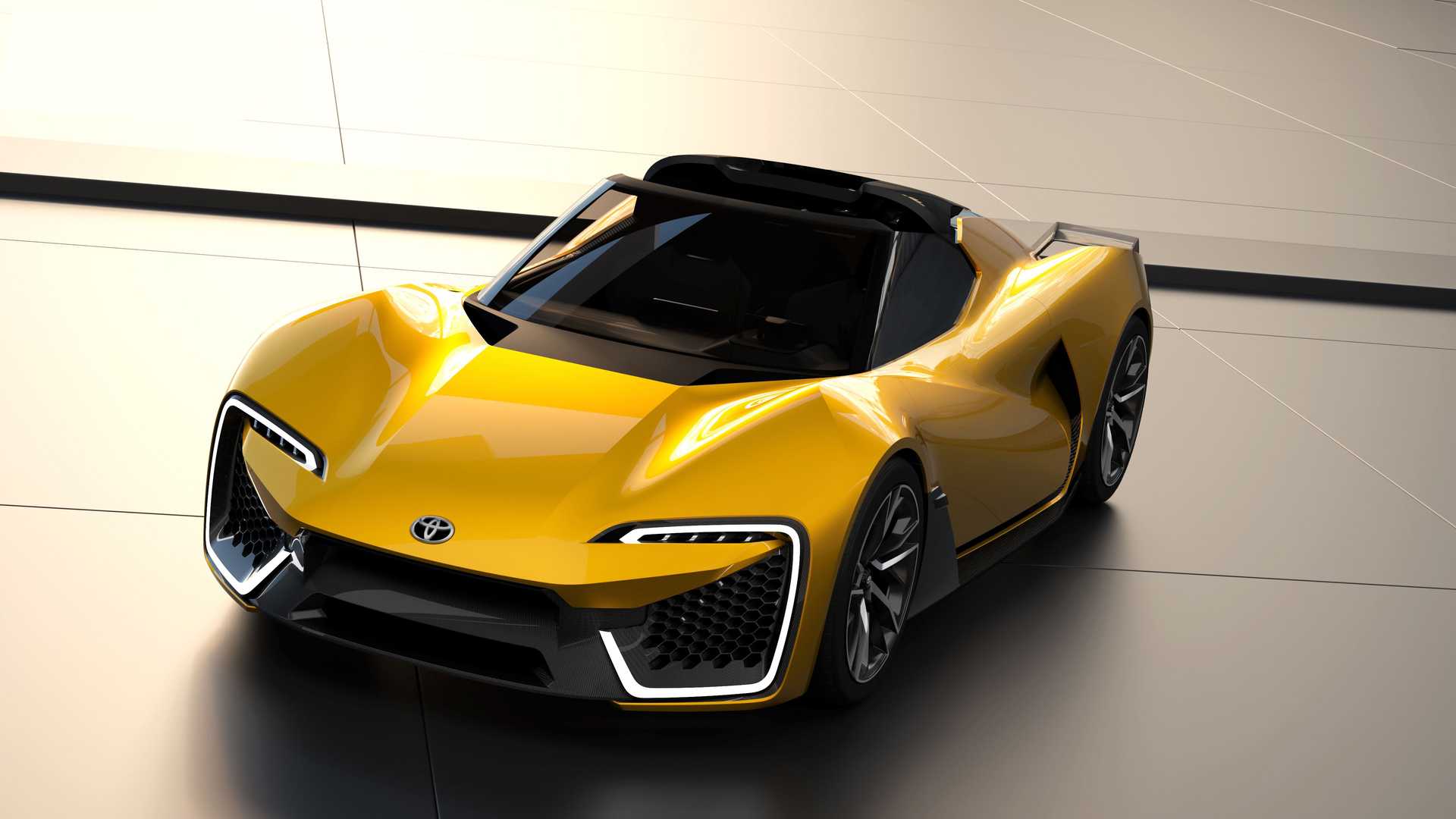
But, Toyota will reportedly give the current BMW Z4-based Supra one last send off before 2025 with a limited-run hotter GRMN variant featuring the same turbocharged 3.0-litre inline six-cylinder engine – but tuned to deliver 404kW of power (up from 285kW).
The rumour comes as Toyota is set to usher in new CEO Koji Sato in April – who currently leads Gazoo Racing (GR) and Lexus – and has already promised to prioritise battery-electric vehicles (BEVs), while maintaining the firm’s diverse powertrain strategy.
“To deliver attractive BEVs to more customers, we must streamline the structure of the car and with a BEV-first mindset, we must drastically change the way we do business,” Sato said.

“We are trying to find a characteristic unique to Toyota. We need to go to the next step. We are going to accelerate specific and concrete activities.”
However, Toyota Australia’s vice president of sales, marketing and franchise operations, Sean Hanley, previously told Wheels that its performance GR sub-brand may not be electrified in the imminent future.
“In our public statements, we’ve made an exception for our GR performance cars when saying that, by 2030, we’ll have an electrified version for every model in our range,” Hanley said.
“Again, that doesn’t necessarily mean forever.
“At some point in the future, Toyota GR cars will embrace the instant torque of electrification, and meet the other requirements of enthusiasts – perhaps before 2030, [or] perhaps even after.”
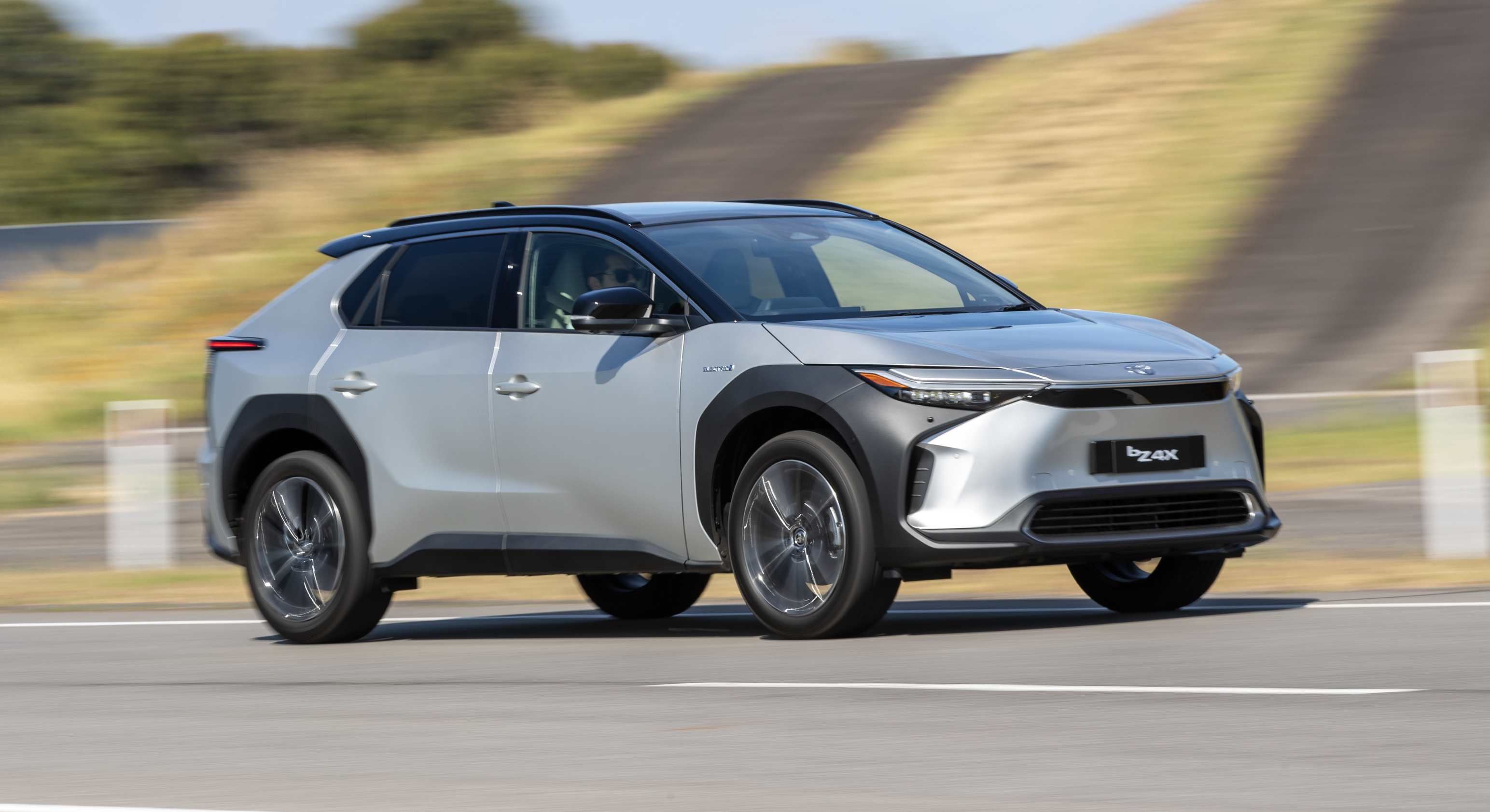
Three Toyota battery-electric models are promised to launch locally by 2027, including the BZ4X SUV – which will land later this year.
The Japanese automaker previously unveiled a hydrogen-combustion powered Corolla Cross small SUV concept, which adopts the hydrogen tech from the Mirai sedan and the same 1.6-litre turbo three-cylinder engine from the GR Corolla hot hatch.
In 2021, Toyota teased 16 EV model concepts, including the GR Sports Concept with a Toyota MR2 or Supra-like two-door coupe silhouette.
Snapshot
- Stellantis group CEO criticises impending Euro 7 emissions regulations
- Argues it is a u2018diversionu2019 to electrify petrol and diesel engines ahead of ban
- Sees Chinese car brands as the biggest threat
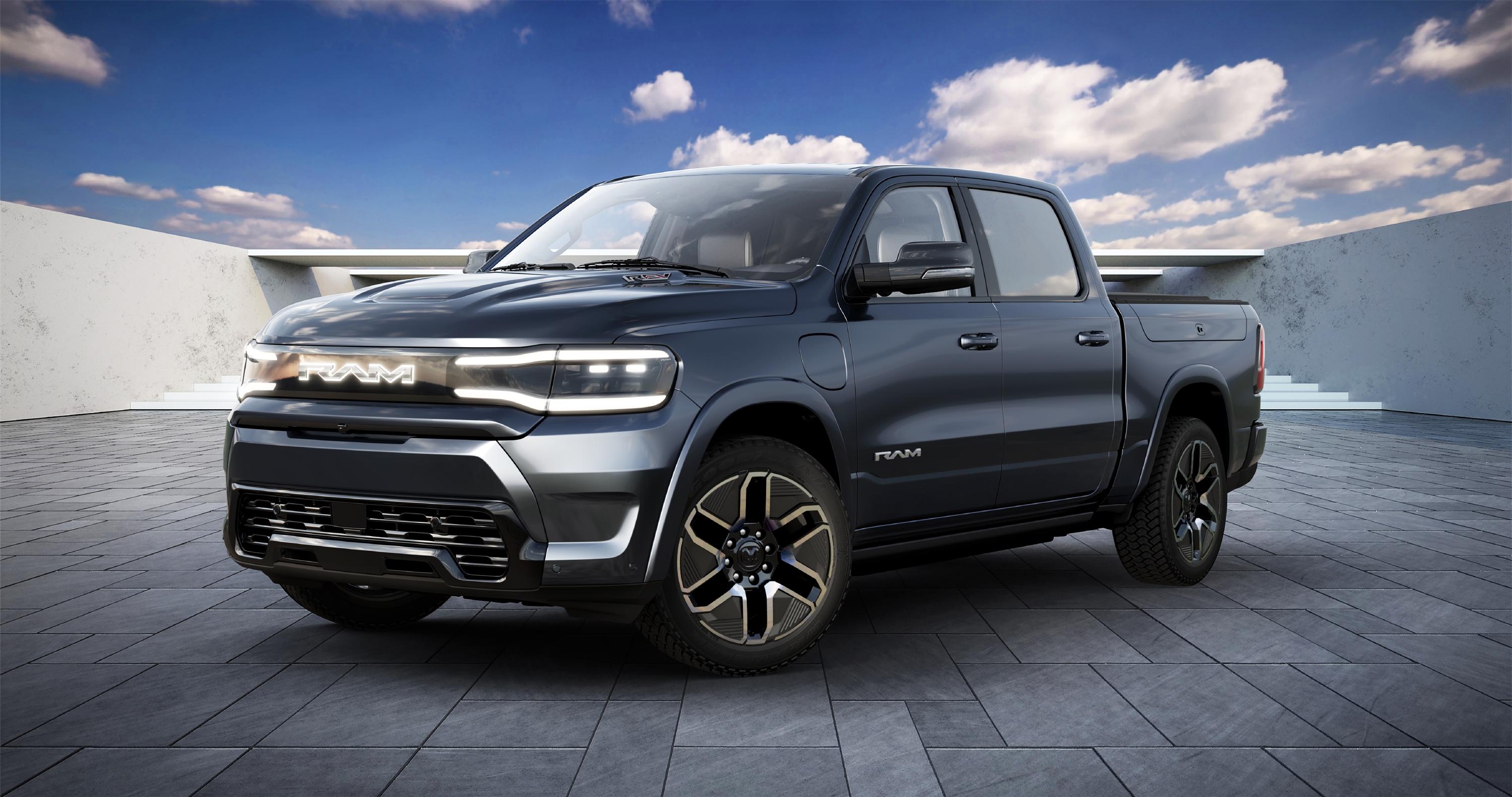
Stellantis CEO Carlos Tavares has doubled-down on criticising impending Euro 7 vehicle emission mandates as nonsensical.
“It is not helpful, it is costly, it does not bring customers benefits, it does not bring environmental benefit,” Tavares told Reuters.
“The ICE [internal-combustion engine] emission part is something which just makes no sense.”
The European Commission will enforce the stricter emissions standards from July 2025 for all new mass-produced cars, which includes lower exhaust pollution, tyre and brake emission limits, and assesses lifetime emissions.
However, the boss of the group – which has a portfolio of brands including Peugeot, Citroën, Opel, Fiat, Jeep, Ram, and Alfa Romeo – supports the particle emissions rule from tyres and brakes.
Australia’s best electric cars for 2023
We’ve tested nearly every EV below six figures in Australia to rank the best on sale today
Tavares previously labelled Euro 7 as a ‘diversion’ to invest in electrifying conventional combustion engines with mild-hybrid, hybrid or plug-in hybrid tech in the interim amid inevitably transitioning to full EVs-only when European regulators ban the sale of new petrol and diesel vehicles from 2035.
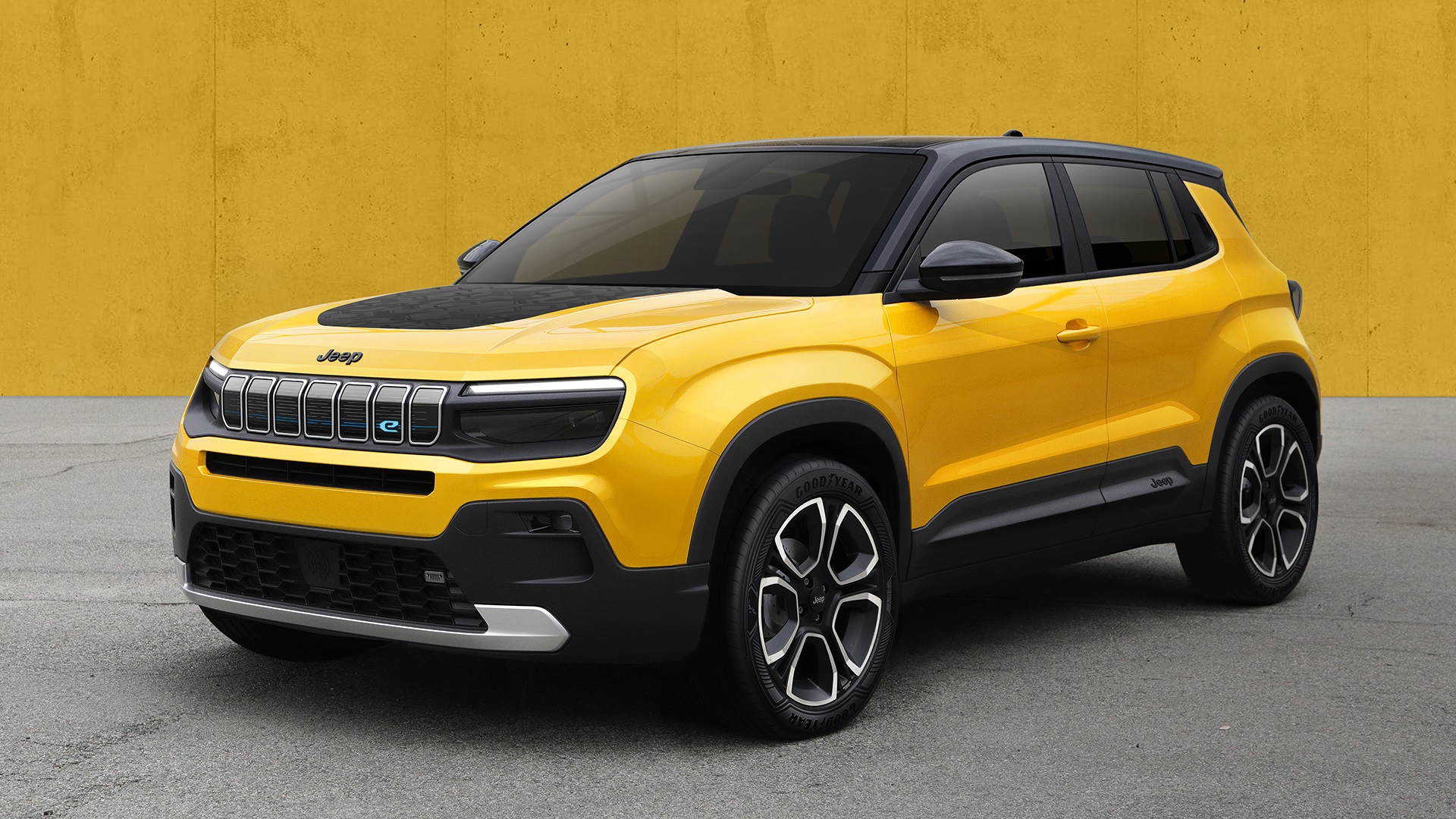
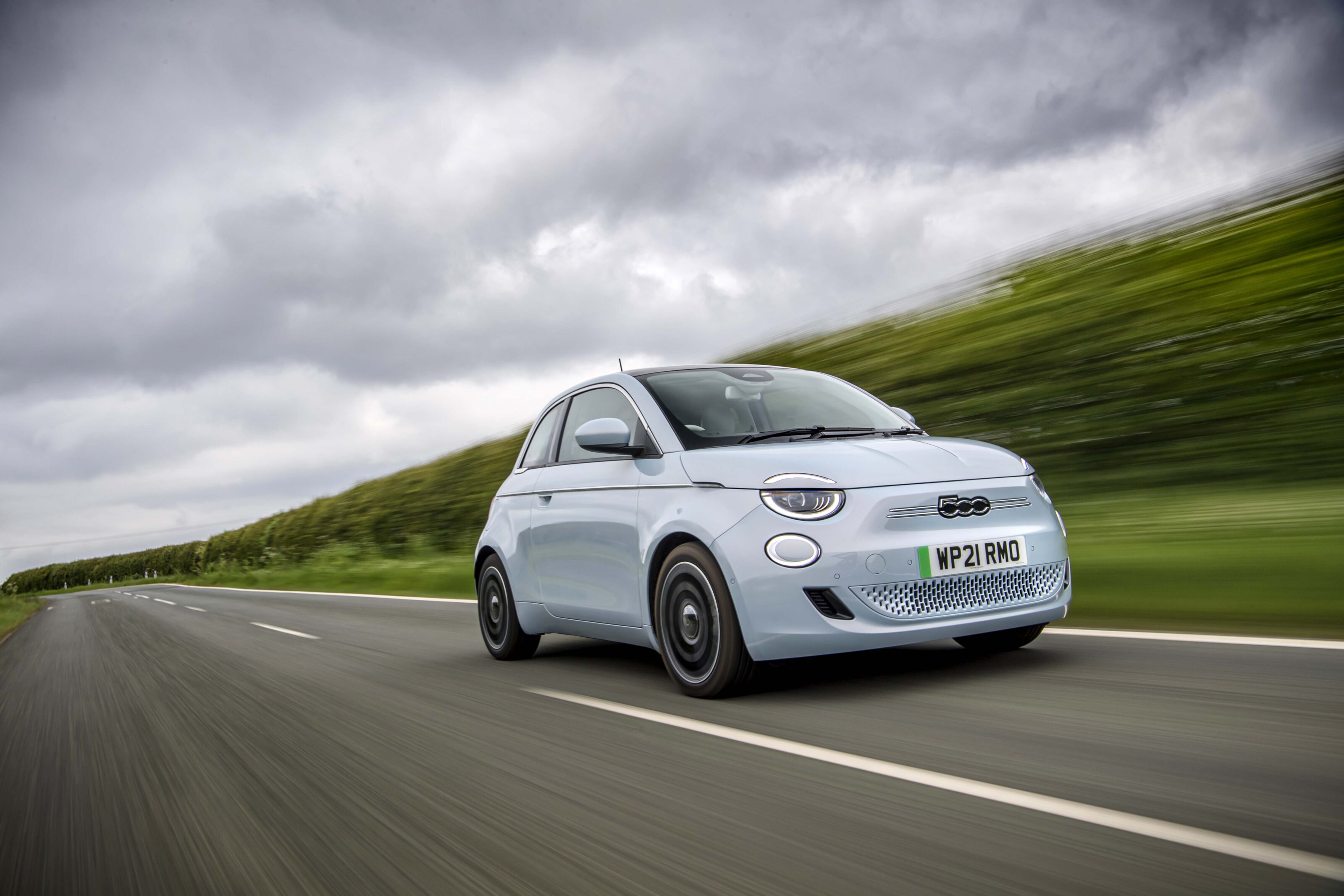
That’s despite the conglomerate already ramping up its offering of all-electric vehicles today, including the Peugeot e-2008, Fiat 500e, and Jeep Avenger.
“I don’t think Europe needs Euro 7… it is going to divert part of our research and development power to something we don’t need, while our Chinese competitors enter the market with the single technology of battery-electric vehicles,” Tavares told Reuters.
“Why are we using our resources for a technology we want to ban? It’s not common sense.”
Mazda Europe’s CEO Martijn ten Brink has recently come under fire by the Electric Vehicle Council by criticising the 2035 ban as forcing carmakers to adopt battery-electric technology.
The Council suggested Brink wants policymakers to slow down and have weaker emissions reduction targets instead.
Cupra Australia will offer fixed-price three- or five-year service packages from April 1.
Currently, the newly-launched Spanish brand has a complimentary three-year service plan with every internal-combustion vehicle, with a two-year ‘top-up’ available to purchase at delivery.
The current cost for the two-year top-up plan is between $1200 and $1400 – equating to more than $600 per service.
From April 1, 2023, Cupra will introduce standardised packages across its entire lineup – including for the all-electric Born hatchback – for three or five years.
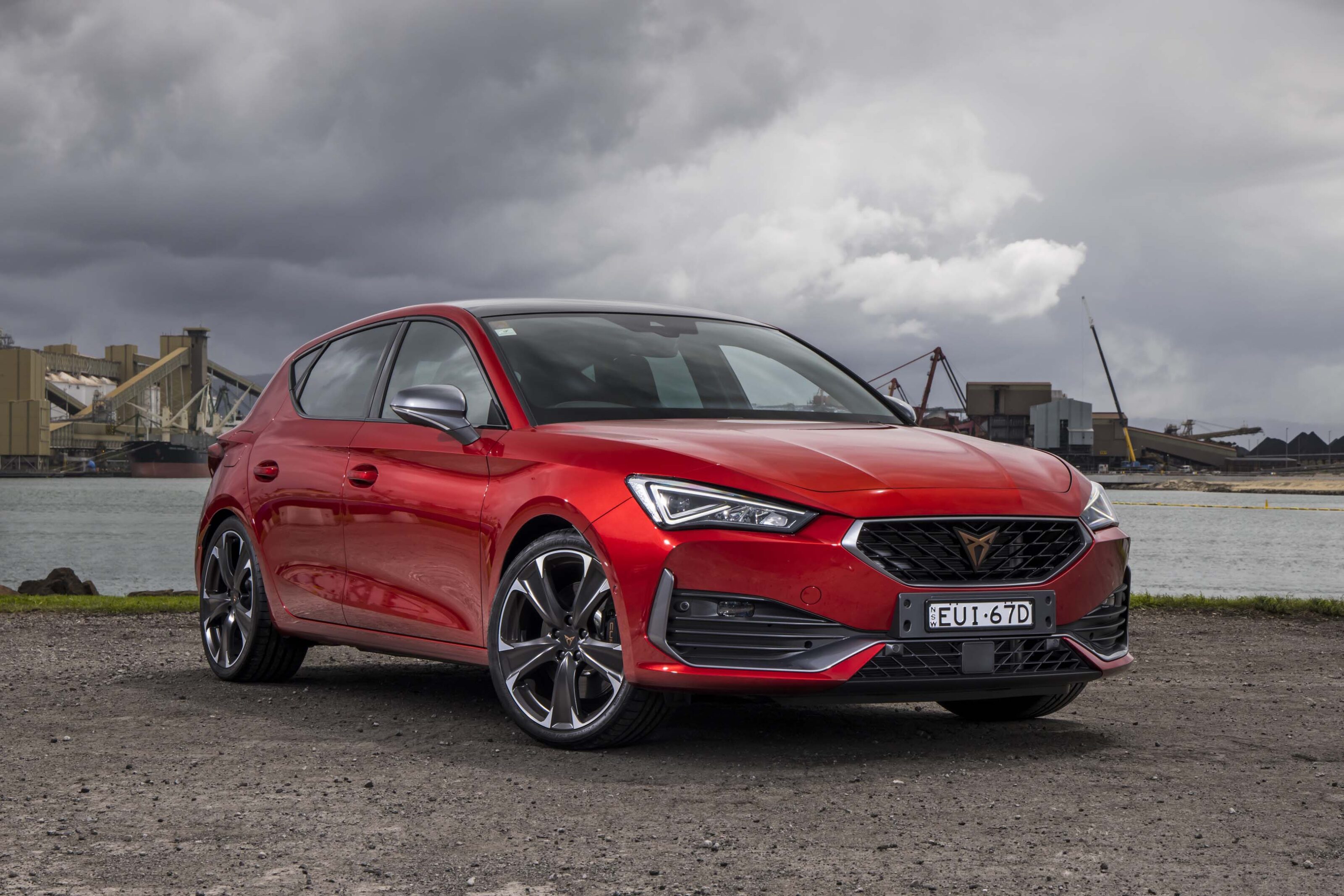
The three-year package will be offered at $990 – averaging $330 a pop – while the five-year plan for the Leon, Formentor and Ateca is priced at $1990, at an average cost of $398 per service.
A five-year package from sister brand Volkswagen will cost between $2650 and $3200 for an equivalent Golf, T-Roc and Tiguan.
While the Born has identical pricing to the Cupra’s turbo-petrol and plug-in hybrid vehicles for the three-year plan, it is cheaper over five years, priced at $1590 – or $318 per service.
All Cupra models – including the Born – require maintenance every 12 months or 15,000 kilometres, whichever occurs first.
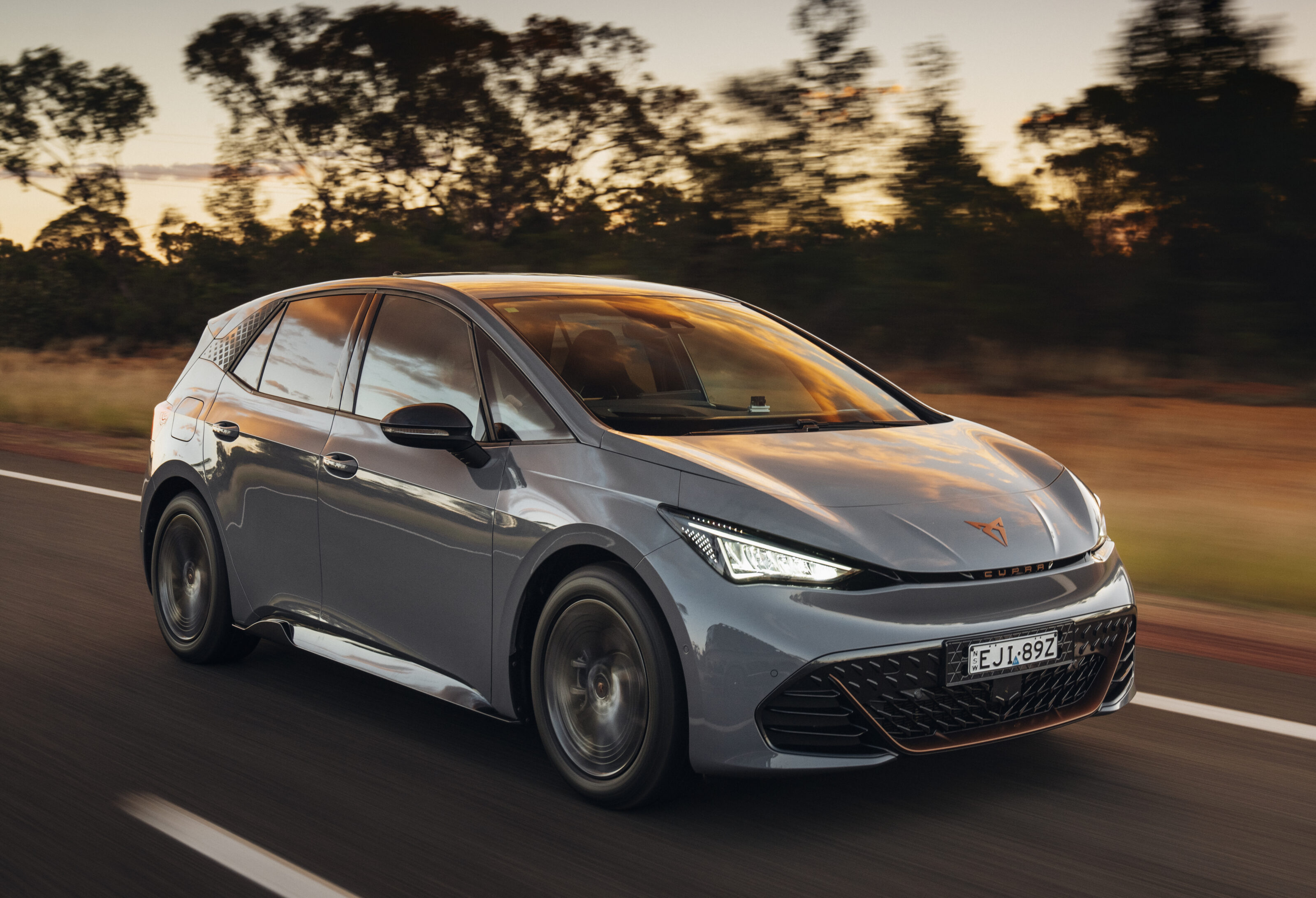
Cupra claims the five-year service plan for the Born is “more affordable than two comparably priced BEVs and within $190 of others from non-European brands.”
For reference, the BYD Atto 3 will cost $1384 to maintain over five years, while the similarly priced Hyundai Kona Electric Extended Range costs $1445, when serviced through the dealer network.
It is cheaper than a Nissan Leaf and Kia Niro EV, however.
While Tesla vehicles do not have fixed service intervals or capped-price servicing, Gizmodo Australia reports a Model 3 and Model Y should cost less than $1000 to maintain in the first five years of ownership.
Earlier this month, Cupra Australia said it had secured a further 200 examples of the Born, with approximately 100 vehicles remaining unallocated.
“Now as the Cupra Born heads towards 500 pre-orders and Cupra moves towards its second year on sale, it became increasingly important for us to provide ongoing service pack standardisation, certainly and attainability,” said Cupra Australia brand director, Ben Wilks.
“We’re also giving customers clear transparency, and all Cupra Leons, Formentors and Atecas orders between now and March 31 will still be available with three-year complimentary servicing.”
As everyone feels the pinch of rising fuel prices, Victorian motorists looking to save money at the bowser can save as much as 30.3 cents per litre if they take the time to shop around.
To save you driving around the neighbourhood, however, RACV’s Arevo mobile app has expanded in functionality to offer a real-time Fuel Finder function, allowing users to easily compare prices across the state.
According to the latest Australian Automobile Association (AAA) Transport Affordability Index, Melbourne is the second most-expensive city in Australia to travel within, with Melburnians spending an average of $468.67 per week on transport costs. This is second only to Sydney, at $492.52, and a decent mark up on the nation’s capital cities’ average of $417.39.
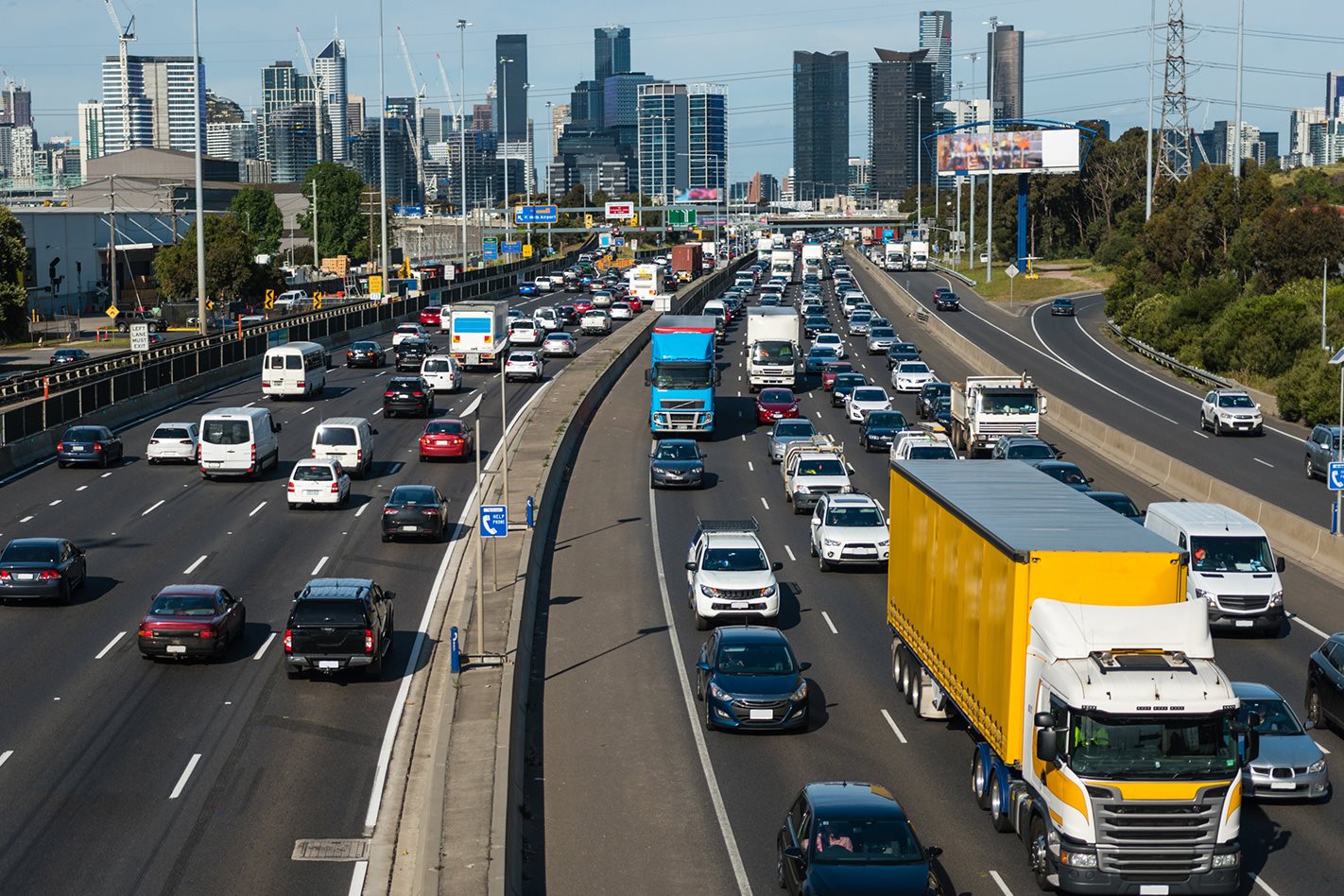
For the average weekly transport spend, fuel is costing Victorians $96.10 every week (up 15.6 per cent from this time last year), and is the highest such cost behind car loan repayments.
The Fuel Finder within RACV’s Arevo app has been developed in partnership with local mobility data/software provider Intelematics, and is free to use for all Victorians.
The interactive map compares prices at petrol stations across the state in both metro and regional areas, is accurate to the cent and is refreshed every 15 minutes.
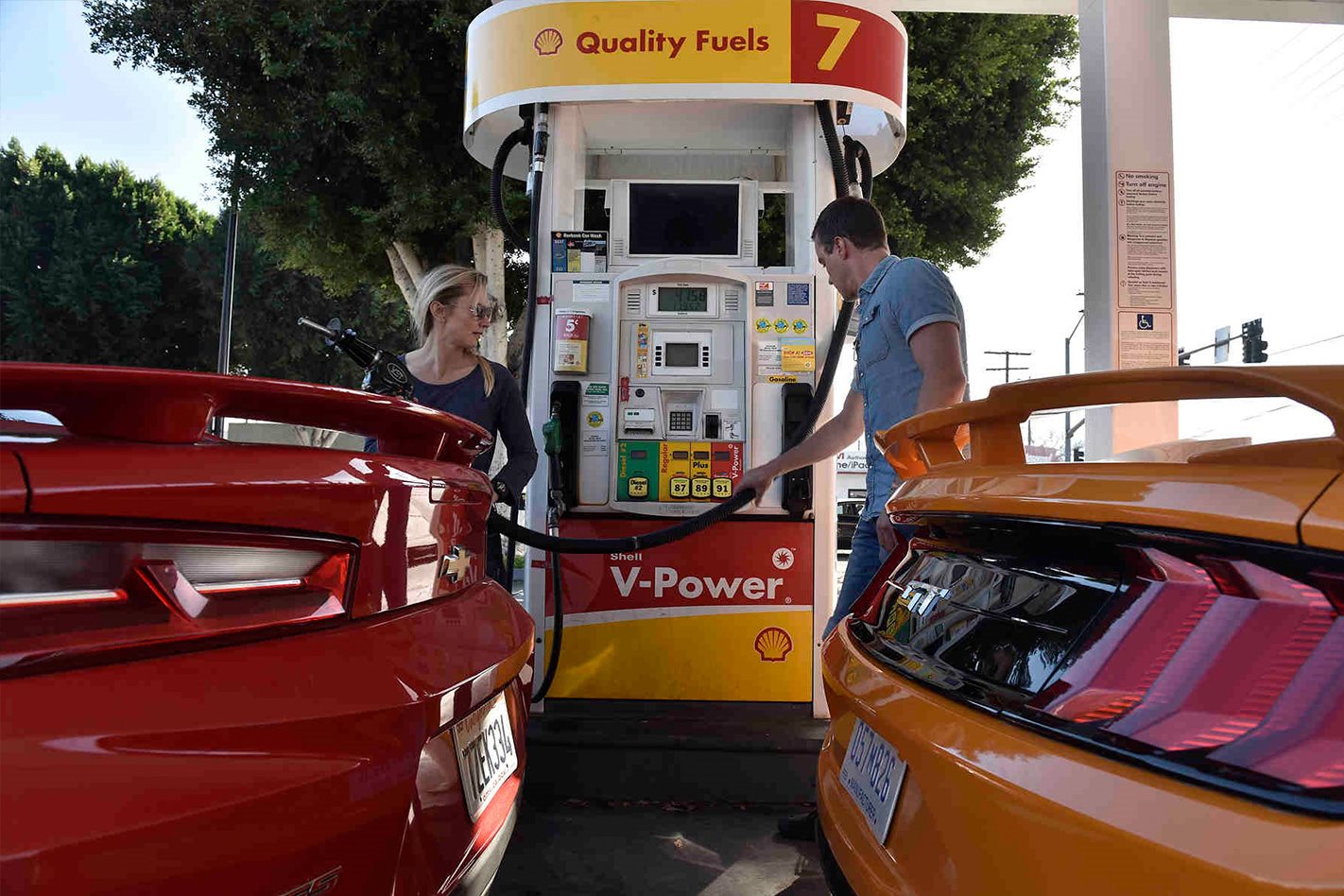
Users can personalise their search preferences in terms of fuel type and retailer of choice, as well as the ability to sort results by price or distance. Users may also be offered in-app discounts, including up to 12 cents per litre off when purchasing at EG Ampol outlets, and other benefits including discounts for Woolies Rewards members.
“There are often substantial price variances for fuel even in the same suburb or town”, said the RACV’s general manager for mobility, Julia Hunter.
“By using the Fuel Finder in the Arevo app and simply shopping around for the cheapest price every time they fill up, users can save an average of $299.05 a year or up to 30.3 cents-per-litre on any given purchase”.
The Arevo app also includes a comprehensive journey planner function, which includes alternative modes of transport such as bicycles and public transport to help minimise travel costs.
The app is freely available to download from both the Apple and Google Play Stores.
The all-new 2024 Mercedes-Benz E-Class is gearing up for a European launch mid-year.
Snapshot
- 2024 Mercedes-Benz E-Class interior revealed
- Three screens, downloadable apps, selfie camera
- Next-generation 5 Series rival to be released in Europe mid-year
Wheels has contacted Mercedes-Benz Australia for a local arrival date, and this article will be updated as further information comes to light.
Mercedes-Benz has given an early glimpse inside the ‘W214’ E-Class, with its new cabin architecture based around a more powerful processor. It will feature onboard 5G connectivity and over-the-air software update capability.
The E-Class’s third-gen MBUX operating system will be compatible with third-party apps such as Zoom, TikTok, and Angry Birds. There’s even a third screen for the passenger to enjoy the apps on the move.
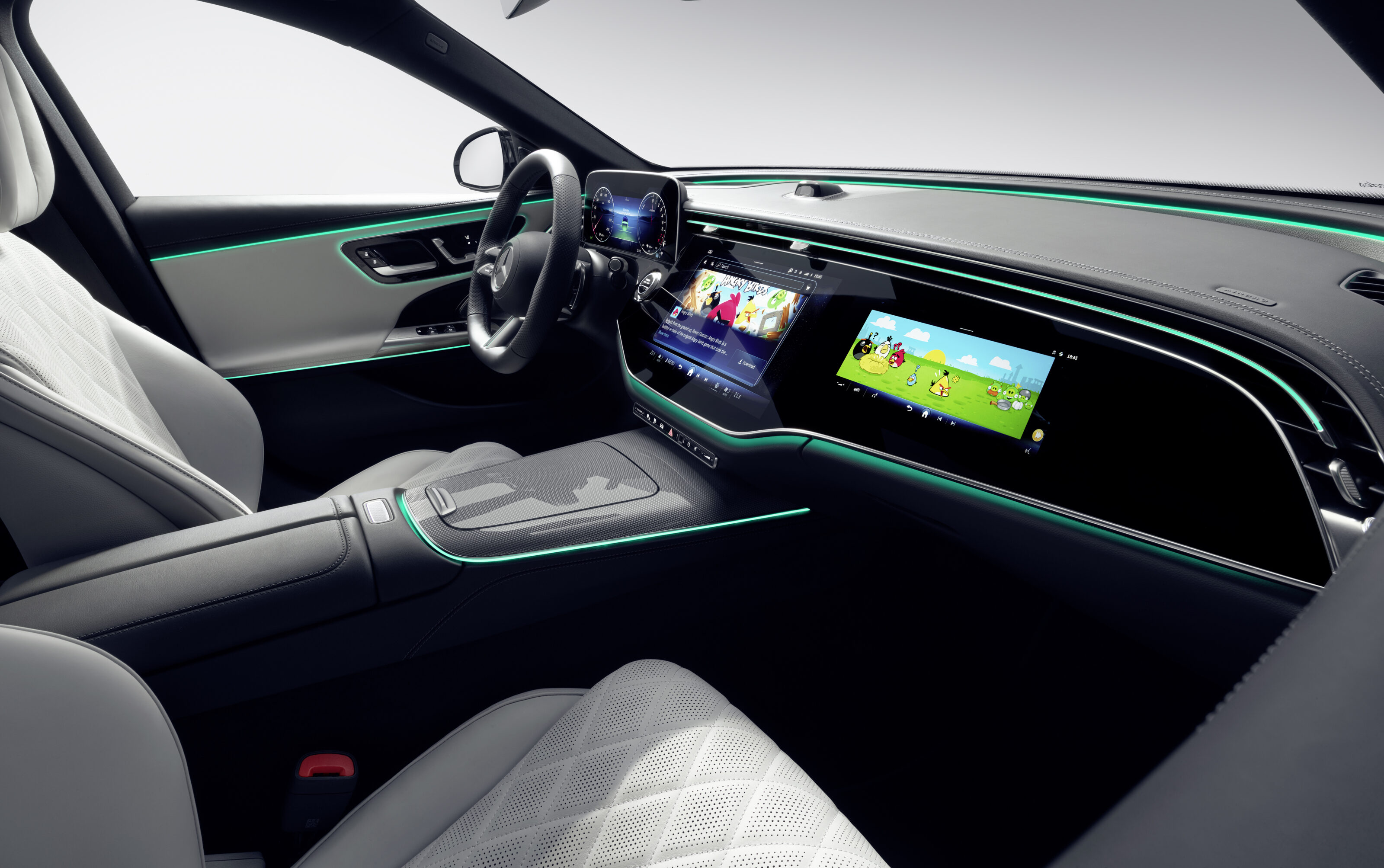
Aside from significantly improved processing power, the E-Class’s cabin architecture picks up the latest Mercedes-Benz familial cues, including; a three double-spoke steering wheel, prominent ambient lighting, and a button-free look.
The E-Class becomes the latest long-standing Mercedes-Benz nameplate to receive a new generation, following the W223 S-Class in late 2020 and W206 C-Class in 2021.
It is a long-standing rival to the BMW 5 Series and Audi A6, with a brand-new 5 Series and all-electric A6 E-Tron expected later this year.
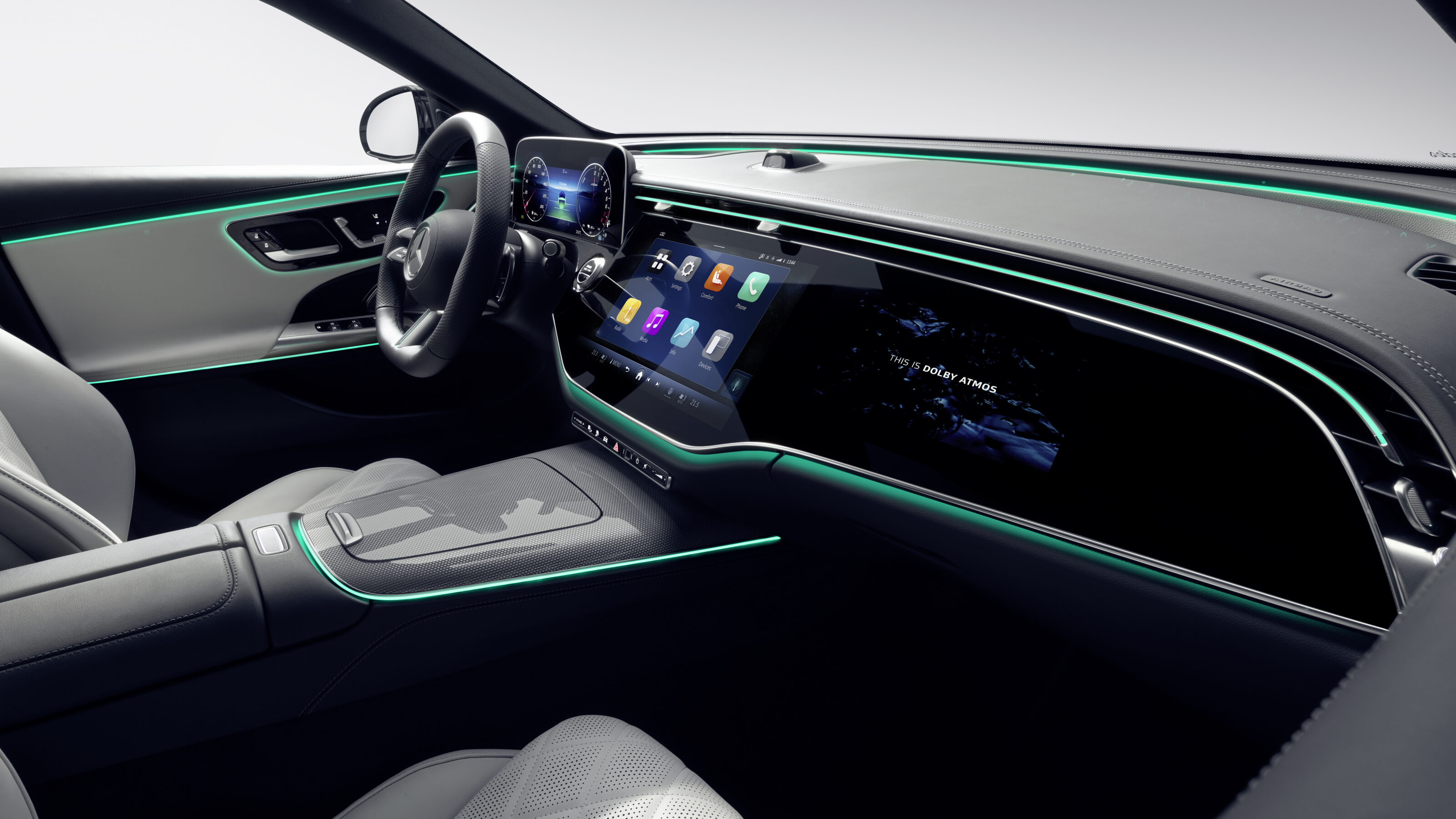
Inside the W214 E-Class
Based on an improved version of the brand’s MBUX operating system, the E-Class will support app downloads such as the Vivaldi web browser, and in-car movies/TV using the Zync streaming service. It’s a preview to the future – and even more customisable – MB.OS system.
Following the lead of the Mercedes-Benz EQS, Porsche Taycan and Jeep Grand Cherokee, the E-Class will be available with a passenger touchscreen that can be used for streaming while the car is in motion thanks to clever tech that blocks the screen for the driver.
There’s even a built-in camera for selfies that can be uploaded directly to popular video-sharing platform TikTok.
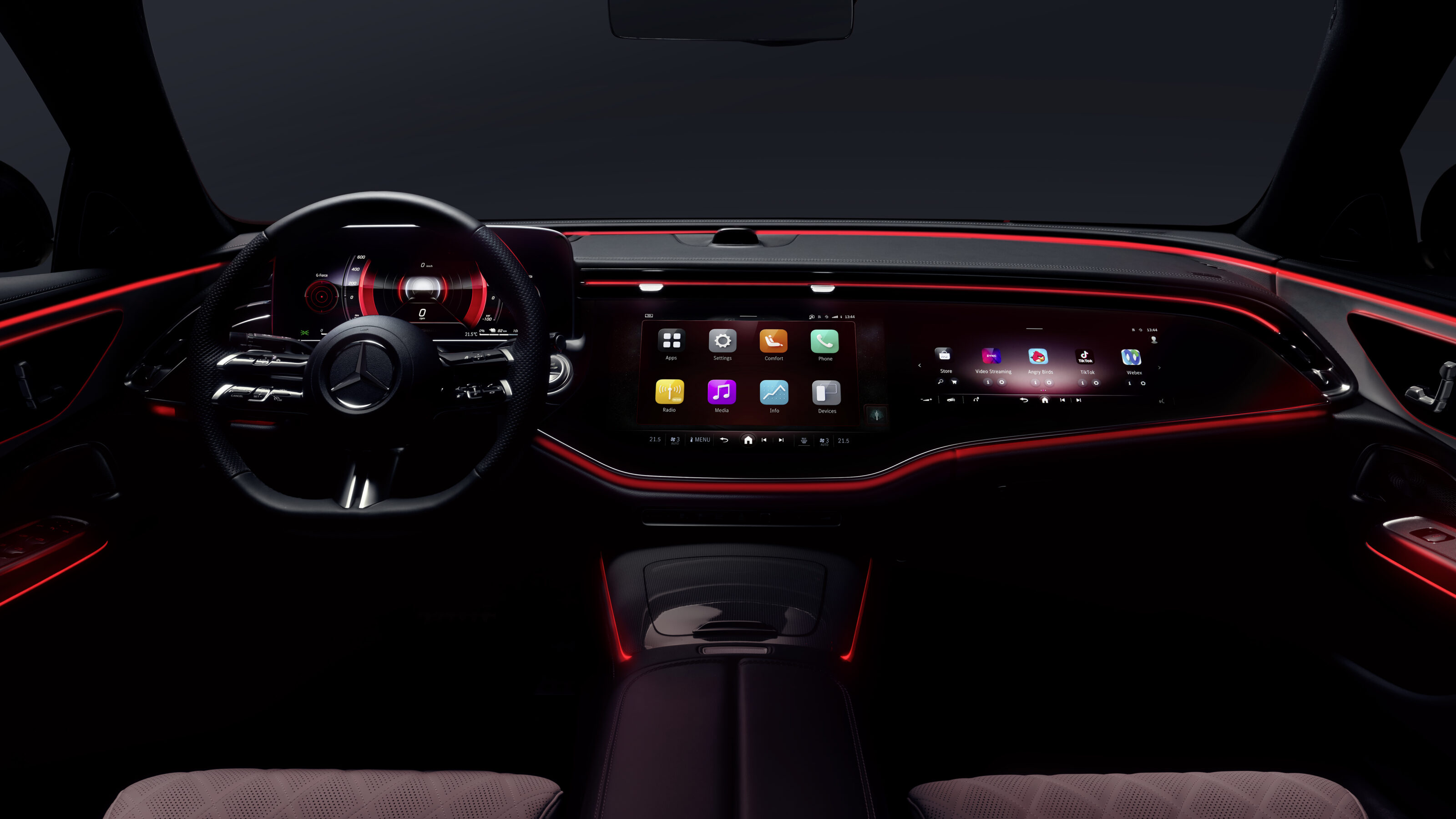
Mercedes-Benz has not detailed how large any of the screens in the new E-Class are, but it’s safe to guess that the digital dials and passenger screen are 12.3 inches in size, while the landscape-oriented central screen appears to be about 15 inches.
In addition to the new screens, the E-Class will be available with sound visualisation. Mercedes says the ambient lighting will respond to tracks plated through the optional Burmester 4D surround sound system – expect high energy pulsing for Drum and Bass or soothing sweeps for Debussy.
The optional seats will include a massage function and heating which combines with ‘soothing sounds’ and a light show or a “comprehensive wellness program”, says Mercedes-Benz. There’s even a motion-sickness prevention program.
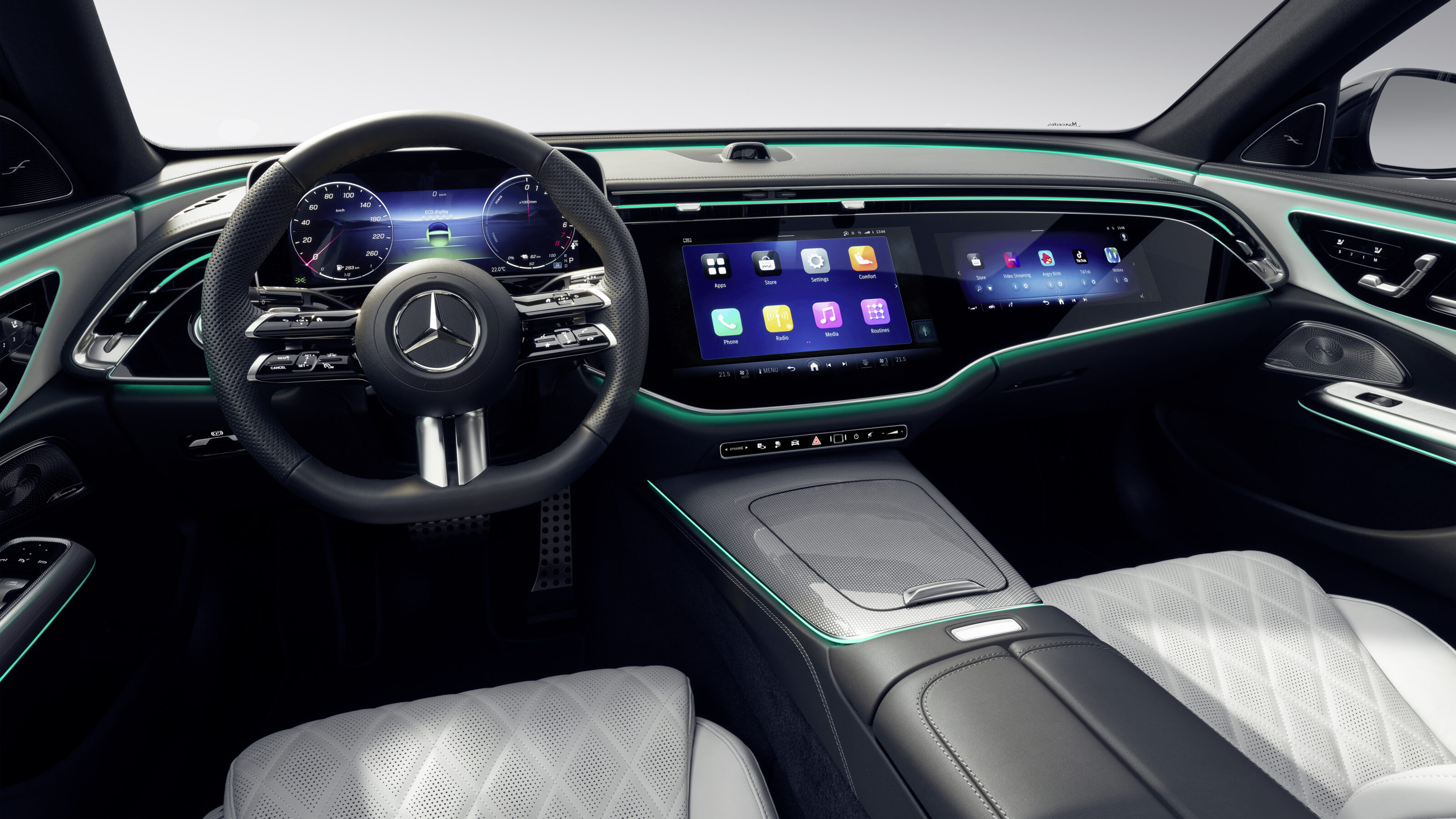
The climate controls are accessed through the central touchscreen, and the vent control is digital. It’s teamed with the memory seat function to adjust the ventilation setting for each driver automatically.
While powertrains have yet to be confirmed for the new E-Class, it is expected to mirror the smaller C-Class line-up.
As such, expect the E-Class to start with the 1.5-litre four-cylinder ‘200’ powertrain, and following the four-cylinder-only C-Class, it’s unlikely that we’ll ever see a V8 in the high-performance E-Class again.
However, unlike the latest Mercedes-AMG C63, Autocar reports the range-topping E63 will likely switch to a six-cylinder plug-in hybrid setup to deliver more than 520kW.
The next-generation 2024 Mercedes-Benz E-Class will be unveiled in the coming months, with local details set to be announced closer to its arrival.
Few cars are as well-known as the Toyota Corolla.
It’s such a powerful name that when other markets changed its name to Auris – I still cannot work out why that happened – Toyota Australia was having none of it. A generation passed and the nameplate returned the world over.
Despite the path well-trodden by the Prius to get out the word about hybrid, that car has disappeared from our shores because nobody bought it. Why would you when you could buy a Corolla for a lot less money and, perhaps almost as importantly, have fewer people laugh at you in your under-wheeled spaceship.
Toyota could have built an empire on electrification but instead of chucking itself at EVs, has decided to keep sharpening the hybrid saw. A few weeks back I drove the Corolla ZR hybrid hatch and came away even more impressed than I was before. Now it’s the sedan’s turn, but this time in entry-level Ascent Sport form.
RELATED READING
Looking for more details on the wider Corolla range? Our full range review has everything you need to know.
JUMP AHEAD
- How much is it, and what do you get?
- How do rivals compare on value?
- Interior comfort, space and storage
- What is it like to drive?
- How is it on fuel?
- How safe is it?
- Warranty and running costs
- VERDICT
- Specifications
How much is it, and what do you get?
The hybrid Corolla sedan kicks off at a very competitive $31,680 before on-road costs. I don’t think there’s any other hybrid on the market that brings this much space for the money, and it’s a thing that continues to baffle me in such a competitive market.
| 16-inch alloy wheels | Reversing camera |
| Six-speaker stereo | Space-saver spare |
| Climate control | Auto LED headlights with auto high beam |
| Wireless Carplay | Auto wipers |
| Wired Android Auto | Satellite navigation |
| DAB digital radio | Climate control |
| Cloth trim | Active cruise control |
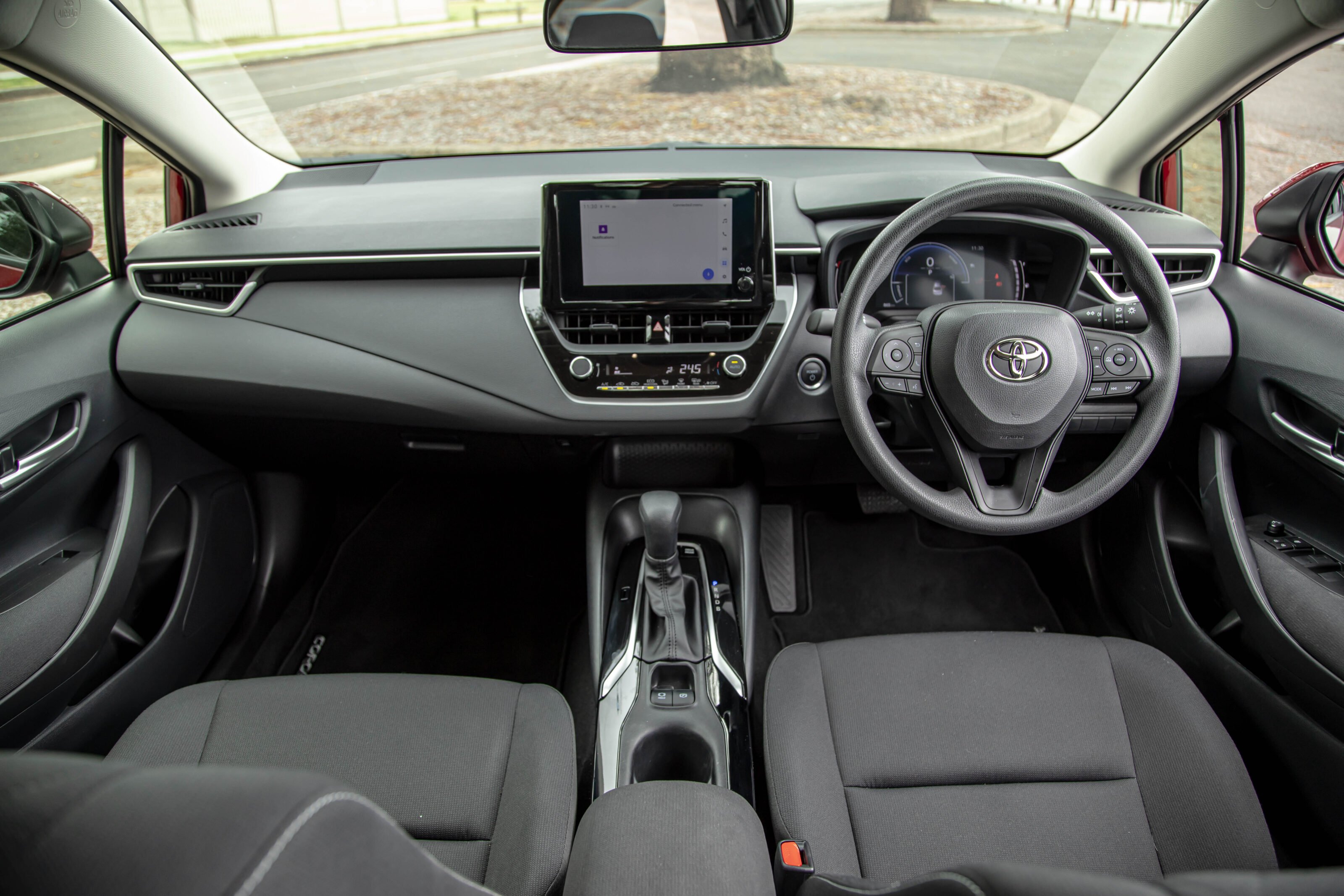
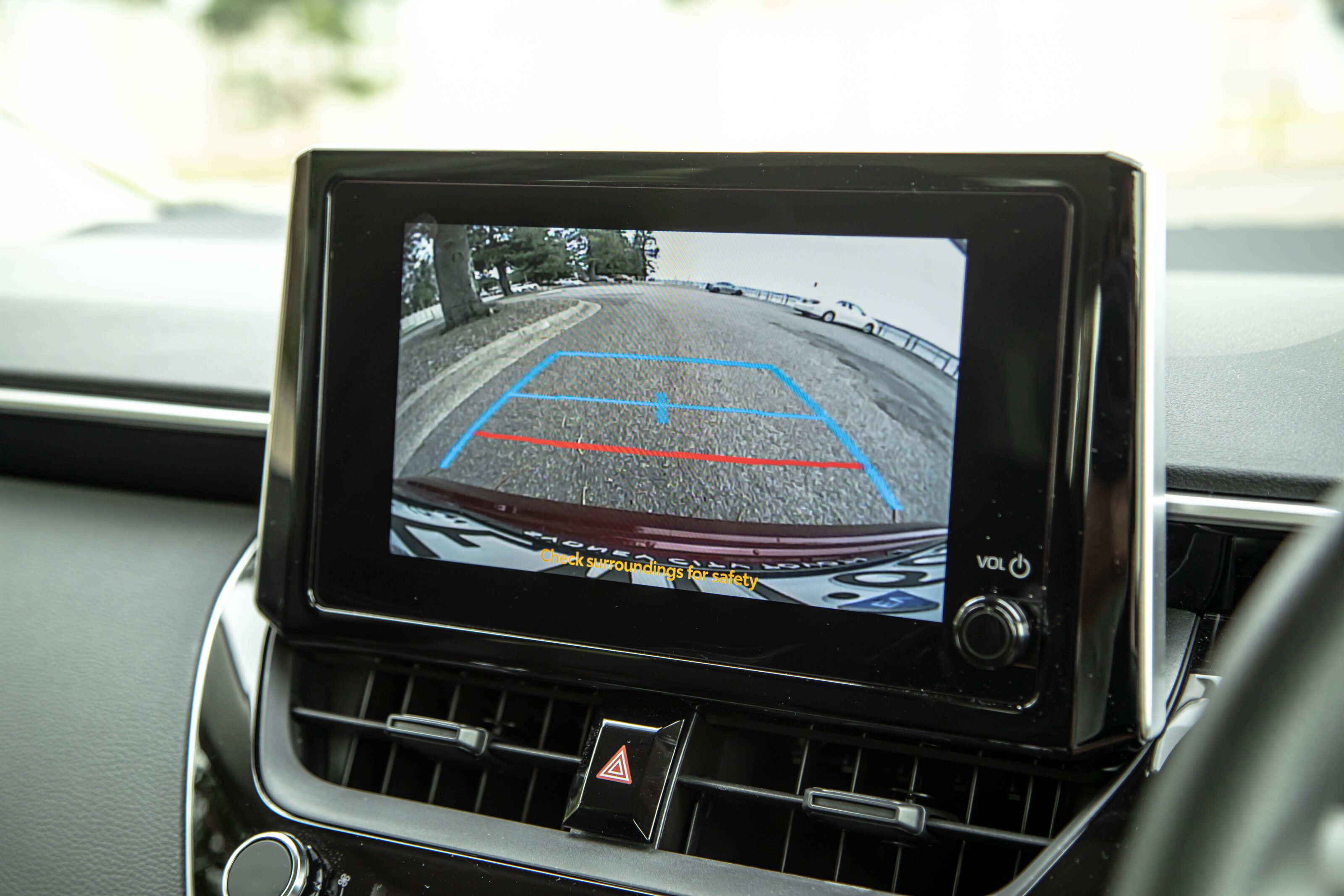
The new media system looks much more modern, with a lighter sat-nav interface. Sadly the same cheap buttons flank the screen.
How do rivals compare on value?
A small hybrid sedan from another manufacturer? There isn’t one, and definitely not at this price. The closest thing you can get is the Kia Niro hybrid, but it’s substantially more expensive, and not a sedan.
Interior comfort, space and storage
The sedan’s wheelbase is 2700mm, just 40mm longer than the hatch’s. The Hyundai i30 sedan rides on a longer wheelbase and the Kia Cerato sedan and hatch ride on identical but longer wheelbases but seem to make more of it. The length seems all about the boot.
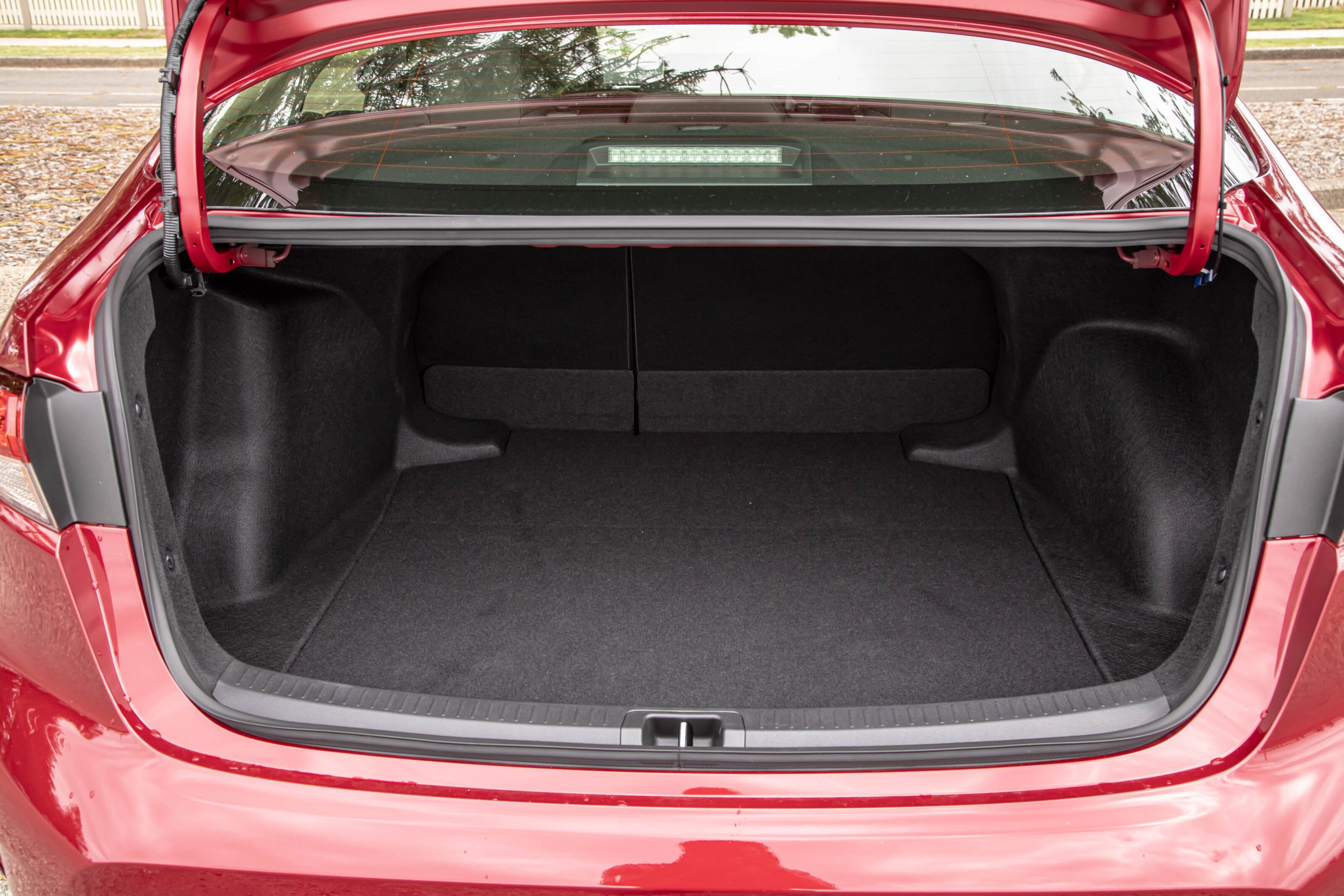
Behind a nice wide-opening boot aperture is 470 litres of cargo space, much bigger than that of the Corolla hatch. If you need a hybrid that can carry things, this is the Corolla for you. The boot in the sedan is also more usable than that of the, with a more regular shape. Toyota doesn’t offer a seats-down capacity figure.
Compared to the Corolla hatch, things still aren’t exactly roomy in the sedan’s back seat, with tight legroom but improved headroom. You have pockets in the doors – which are larger than those of the hatch – and the cup holders move to the centre armrest.
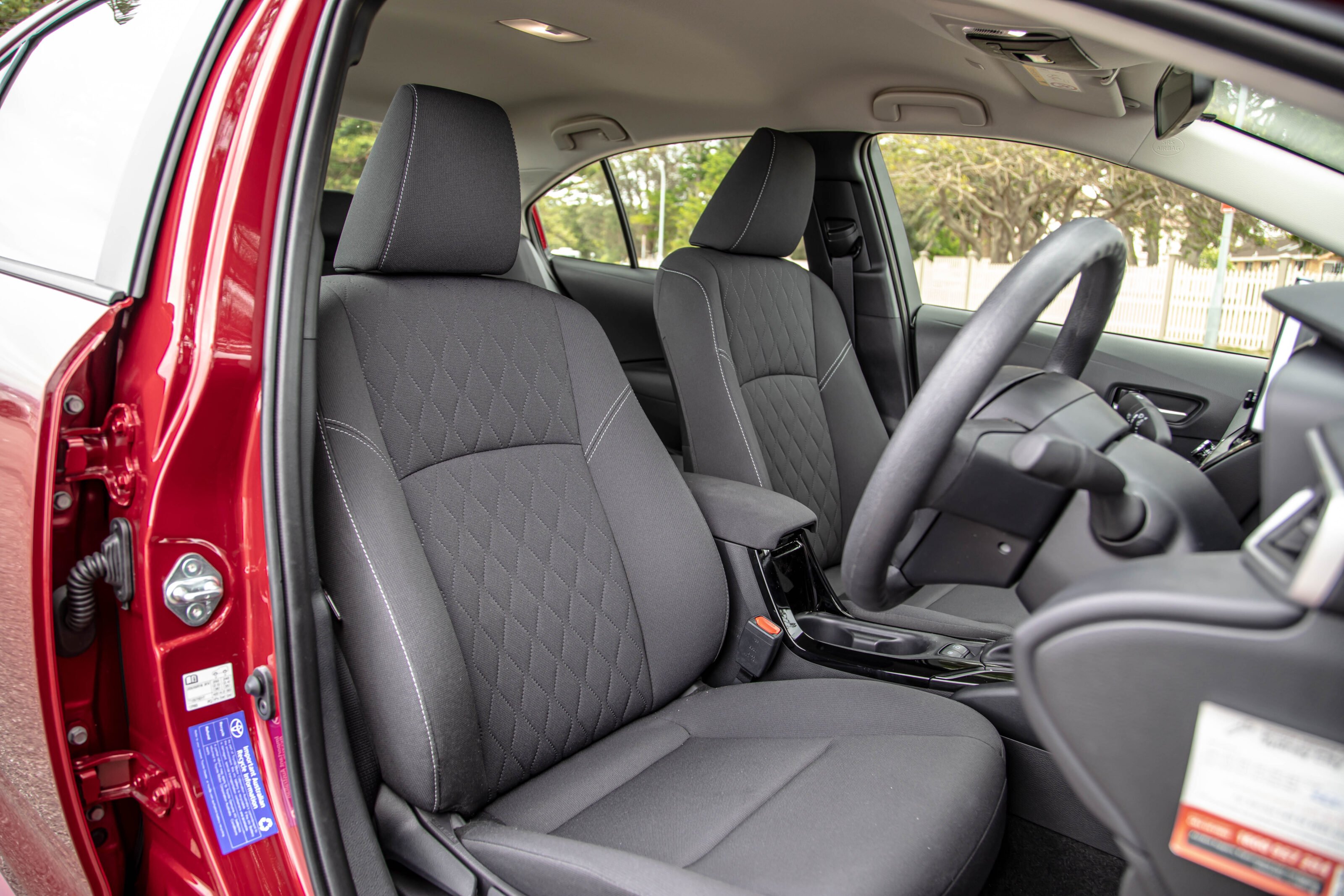
The rear seat itself is comfortable enough and a middle passenger won’t be so uncomfortable that a short trip will cause problems.
In the front, you’re treated to the excellent front seats from the hatch. I’ve said it before; I feel like someone from Toyota rode in the front of a Peugeot and said, “Hey, they’re really nice, we should do that!” They look good and apart from being a little soft with the cloth trim, are quite supportive.
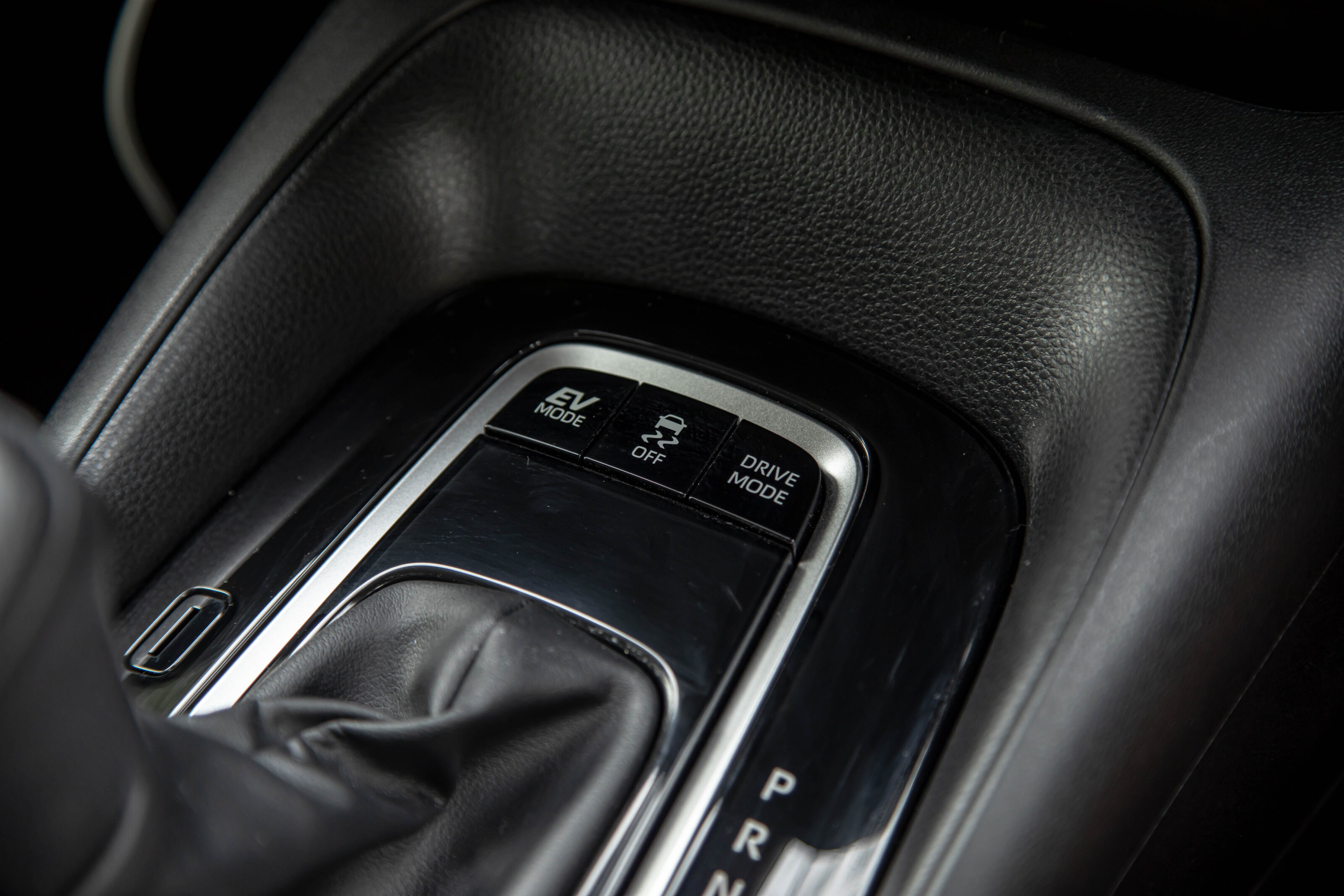
The narrow centre console houses two cup holders, a couple of switches and the gear selector. Ahead of these is a space for your phone and the USB-C port.
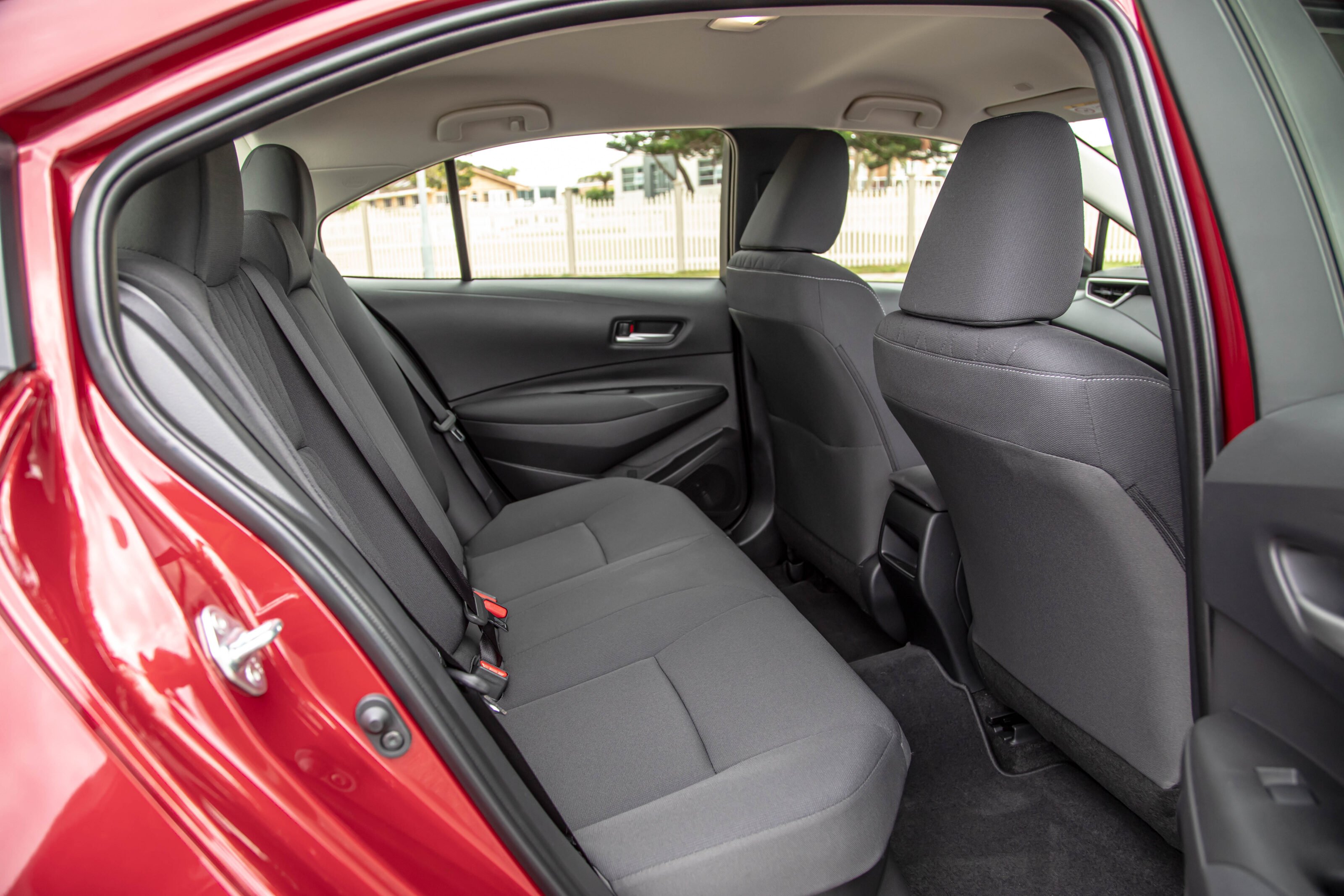
I can’t say I’m a fan of the plastic steering wheel and genuinely wonder if they’re that much cheaper than something wrapped in a nicer covering. It just feels really cheap and even the base model Kia Seltos doesn’t have one anymore.
The new touchscreen is so much nicer to use than the old one and has wireless Apple CarPlay and wired Android Auto. Much nicer hardware and software bring this car into the 2020s although it still takes a little getting used to.
Climate control switchgear is still a naff line of chrome buttons that look really cheap, along with some of the low-grade plastics in the cabin. It is, however, pretty hardy looking and feeling in here, with the vibe of a fleet special.
What is it like to drive?
The last time I drove a Corolla hybrid sedan I was disappointed. It was really quite slow, although very smooth and didn’t use much fuel. The lack of pace was disappointing and meant I had to work it hard to get it moving.
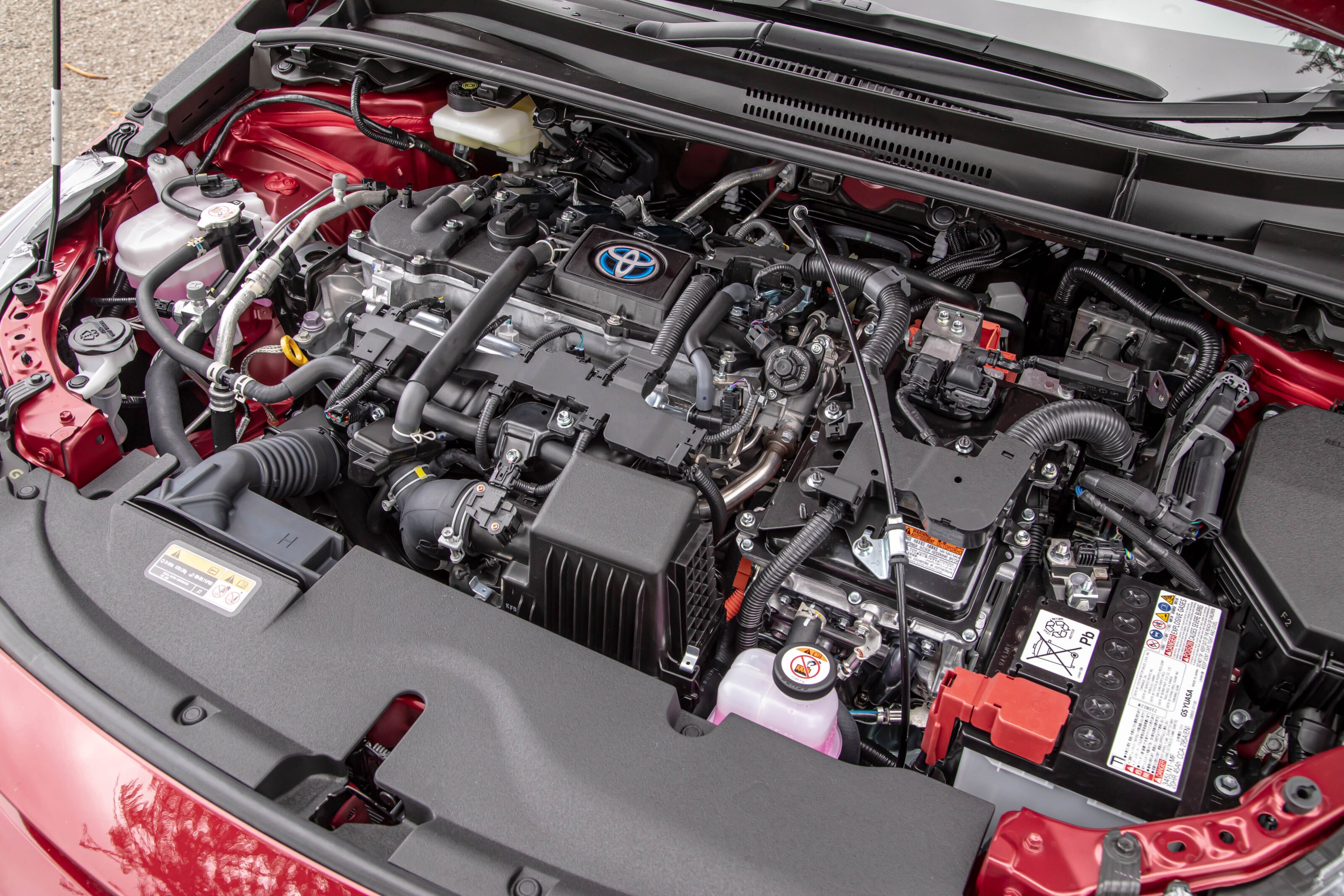
Luckily, Toyota’s mid-2022 Corolla refresh sorted that right out. For MY23, Toyota has fitted an updated electric motor, smaller hybrid componentry and switched to a lithium-ion battery pack from the ancient Ni-Mh unit.
The whole system is lighter and power increases by 13kW. I can’t help feeling that more torque reaches the front wheels, but Toyota won’t say what the combined torque figure is.

| 2023 Toyota Corolla Ascent Sport hybrid sedan drivetrain | |
|---|---|
| Drive | front-wheel |
| Engine | 1.8-litre four-cylinder hybrid |
| Transmission | continuously variable |
| Power (ICE) | 72kW @ 5200rpm |
| Torque (ICE) | 142Nm @ 3600rpm |
| Power (EV) | 70kW |
| Torque (EV) | 185Nm |
| Combined power | 103kW |
| Combined torque | not specified |
Toyota cheekily calls this a self-charging hybrid when in fact it’s exactly the same hybrid concept it has had on the market for two decades. The 1.8-litre petrol engine turns the front wheels via a continuously variable automatic transmission, with an electric motor buried in there to deploy on acceleration and harvest energy from braking.
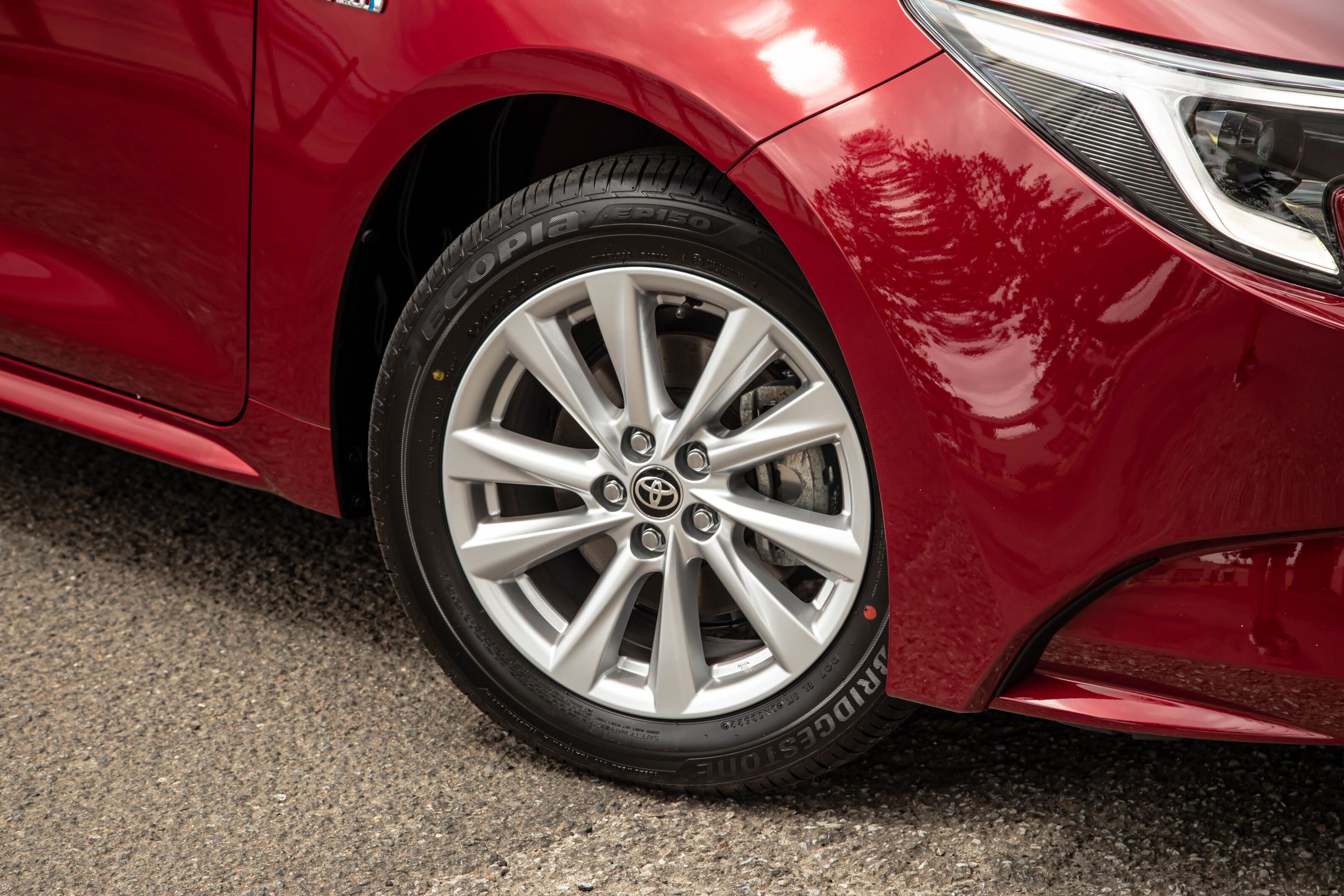
It now feels far peppier due to the extra power of this new hybrid set-up, which is quite handy and sufficiently gruntier that the front wheels cheerfully chirp. Although that could be down to the very cheap tyres fitted by Toyota to help keep costs down. They’re fine, I guess, but if they can’t handle the torque of the engine in the dry, perhaps a slightly better set might be in order.

Ride and handling aren’t as sparkly as the hatch, with a bit of extra weight and length and, I assume, a more conservative suspension tune. The result is a little more roll than the hatch, but nothing to upset stomachs or take away from the fairly serene driving experience.
Disappointment with the old car’s slowness has been replaced with a new-found fondness for the way it goes about its business. It’s not going to win any races but it’s more relaxed for someone like me knowing it’s got a bit more go.
It’s quite a nice car to drive around in even if it doesn’t look particularly cool.
How is it on fuel?
The silly ADR test spat out a 3.9L/100km combined consumption figure to put on a sticker but in this case, it wasn’t so silly. In a week of varying use, our Corolla hybrid sedan returned an indicated 4.3L/100km.
| 2023 Toyota Corolla Ascent Sport hybrid sedan fuel consumption | |
|---|---|
| Fuel economy (ADR combined cycle) | 3.9L/100km |
| Fuel economy (tested) | 4.3L/100km |
| Fuel capacity | 43 litres |
| Fuel type | 91 RON / E10 |
Some folks swear blind that the trip computer could be off by 20 per cent, but I think that’s probably a little brave because it turns out that I filled it and came away with the same 4.3L/100km calculation.
The fuel tank is only 43 litres but with these figures, it’s not a big drama.
How safe is it?
The Corolla won its five-star ANCAP rating in 2018. The testing regime today may not see it hold on to that crown given the need for a centre-front airbag.
There is, however, a good list of features, such as my personal favourite, reverse cross-traffic alert.
| 2023 Toyota Corolla Ascent Sport hybrid sedan safety features | |
|---|---|
| 7 airbags (including driveru2019s knee) | Lane-keep assist |
| ABS | Reverse cross-traffic alert |
| Blind-spot monitoring | Reversing camera |
| Junction assist | Road sign recognition |
| Lane departure warning | Safe exit warning |
| Lane trace assist | Traction and stability controls |
| Forward auto emergency braking with pedestrian, motorcyclist and cyclist detection | |
The updated safety package includes more features in the auto emergency braking system, such as looking out for motorcyclists and helping to stop you from launching out across a junction if someone is coming your way.
For the kids, there are two sets of ISOFIX points and three top-tether anchors.
Warranty and running costs
Toyota’s five-year, unlimited-kilometre warranty applies to all Corollas.
And, as ever, you’d be mad not to service with Toyota because each of the first five services will cost $205 each for a total of $1025 over the five years.
It’s entirely likely that most if not all of these will be done in under 90 minutes so you can mooch around and play with your phone while they do it.
Service intervals are set at 12 months or 15,000km. A further two years of cover is on offer for the drivetrain if you keep servicing it with Toyota after the regular warranty expires.
VERDICT
The Corolla hybrid sedan is not particularly stylish, roomy, cutting-edge or exciting, least of all in base Ascent Sport trim. The hatch isn’t hugely exciting either, but it does look a bit sportier and drives better than ever.
Regard the sedan as more of a load hauler and the real keys here are the improved media system and boosted hybrid set-up. The two of them deliver a more appealing package and despite a fairly basic cabin, it’s a pretty comfortable ride, even for long journeys.
You probably won’t buy a Corolla sedan for any other reason than it ticks the financial box, but with low running costs, a good warranty and lots of other sensible things, it’s definitely one where the head will win.
RELATED READING
Looking for more details on the wider Corolla range? Our full range review has everything you need to know.
| 2023 Toyota Corolla Ascent Sport hybrid sedan specifications | |
|---|---|
| Body | steel, four-door, four-seat small sedan |
| Drive | front-wheel |
| Engine | 1.8-litre four-cylinder hybrid |
| Transmission | continuously variable |
| Power (ICE) | 72kW @ 5200rpm |
| Torque (ICE) | 142Nm @ 3600rpm |
| Power (EV) | 70kW |
| Torque (EV) | 185Nm |
| Combined power | 103kW |
| Combined torque | not specified |
| Bore stroke (mm) | 80.5 x 88.3 |
| Compression ratio | 13.0 : 1.0 |
| 0-100km/h | 10 sec (estimate) |
| Fuel consumption | 3.9L/100km (combined) |
| Weight | 1430kg |
| Suspension | MacPherson struts front/double wishbone rear |
| L/W/H | 4630mm/1780mm/1435mm |
| Wheelbase | 2700mm |
| Brakes | 274mm ventilated disc front / 231mm solid disc rear |
| Tyres | 205/55 R16 |
| Wheels | 16-inch alloy, no spare |
| Price | $31,680 + on-road costs |
Snapshot
- Michael Filazzola to start top job in March
- Kevin Flynn retiring to South Africa
- Filazzola has worked for Holden and General Motors
Automotive conglomerate Stellantis has appointed a new managing director to oversee its brands in Australia.
Former Holden executive Michael Filazzola will be in charge of the Jeep, Alfa Romeo, Fiat, Fiat Professional and Abarth brands when he starts in the role from March 20 this year.
Filazzola has worked in the automotive and aftermarket industry for more than 28 years, working across Australia, China and the south east Asia markets.
While at General Motors, Holden Australia and Bapcor, he held a variety of senior executive roles across sales, aftersales, customer experience, purchasing and supply chain, and product development.
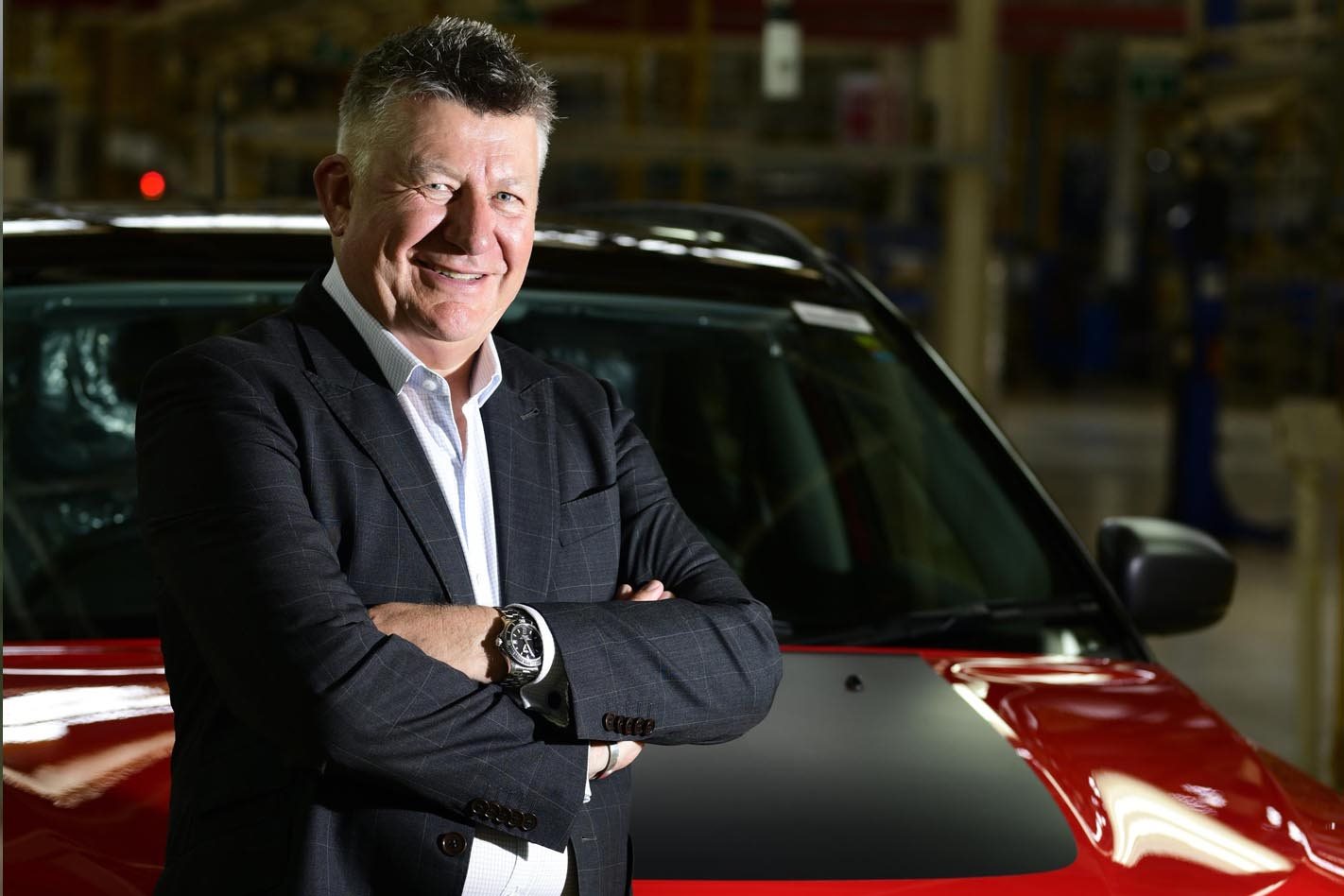
Most recently, Filazzola was the General Manager for Product Development at Bapcor, overseeing the growth of private brands within the aftermarket industry in Australia.
“With proven leadership capabilities and a diverse skillset, we are confident that Michael will continue to drive the growth and success of the Stellantis business in Australia,” said Billy Hayes, Stellantis’s Senior Vice President for India and the Asia Pacific region.
He replaces current boss Kevin Flynn who, after 47 years in the automotive industry, is retiring to spend more time with his family in South Africa.
Flynn worked across multiple countries and brands including Lexus, BMW, Jaguar Land Rover and Porsche before joining Fiat Chrysler Automobiles (FCA) to lead its India arm in 2015 and then joined the Australian team in 2019.
“I want to thank Kevin for his dedication and commitment to our business and the industry. He’s had an exemplary career and I, along with the rest of the Stellantis team, wish him the very best,” added Hayes.
