
Our product manager Michael Fisher climbs into Mitsubishi’s popular 2022 Pajero Sport to give us his regular-bloke “I’m no journalist” take, and to see how it compares with his older-generation Kluger and Sportage cars
Following on from my experience in the Subaru WRX Wagon, Stevo was keen to see how I fared in the large SUV segment, this time giving me the keys to the 2022 Mitsubishi Pajero Sport GSR.
Having owned one of the most popular large SUVs from the late noughties, the 2009 Toyota Kluger, I was interested in how today’s large SUVs compare. In the case, a ute-based off-roading option!
JUMP AHEAD
- The car
- First impressions
- Comfort
- Technology
- On the road
- Warranty
- Safety
- Fuel economy
- Parking
- Last impressions
- Specifications
The Car
2022 Mitsubishi Pajero Sport GSR: $61,440 before on-road costs
As standard, the Mitsubishi Pajero Sport is powered by a 2.4-litre turbocharged four-cylinder diesel engine with 133kW of power and 430Nm of torque coupled to an eight-speed automatic transmission.
Fuel consumption is listed at 8.0L/100km in either two-wheel-drive and four-wheel-drive configuration, with a maximum braked towing capacity of 3.0 tonnes on 4x2s and 3.1 tonnes on 4x4s.

First impressions
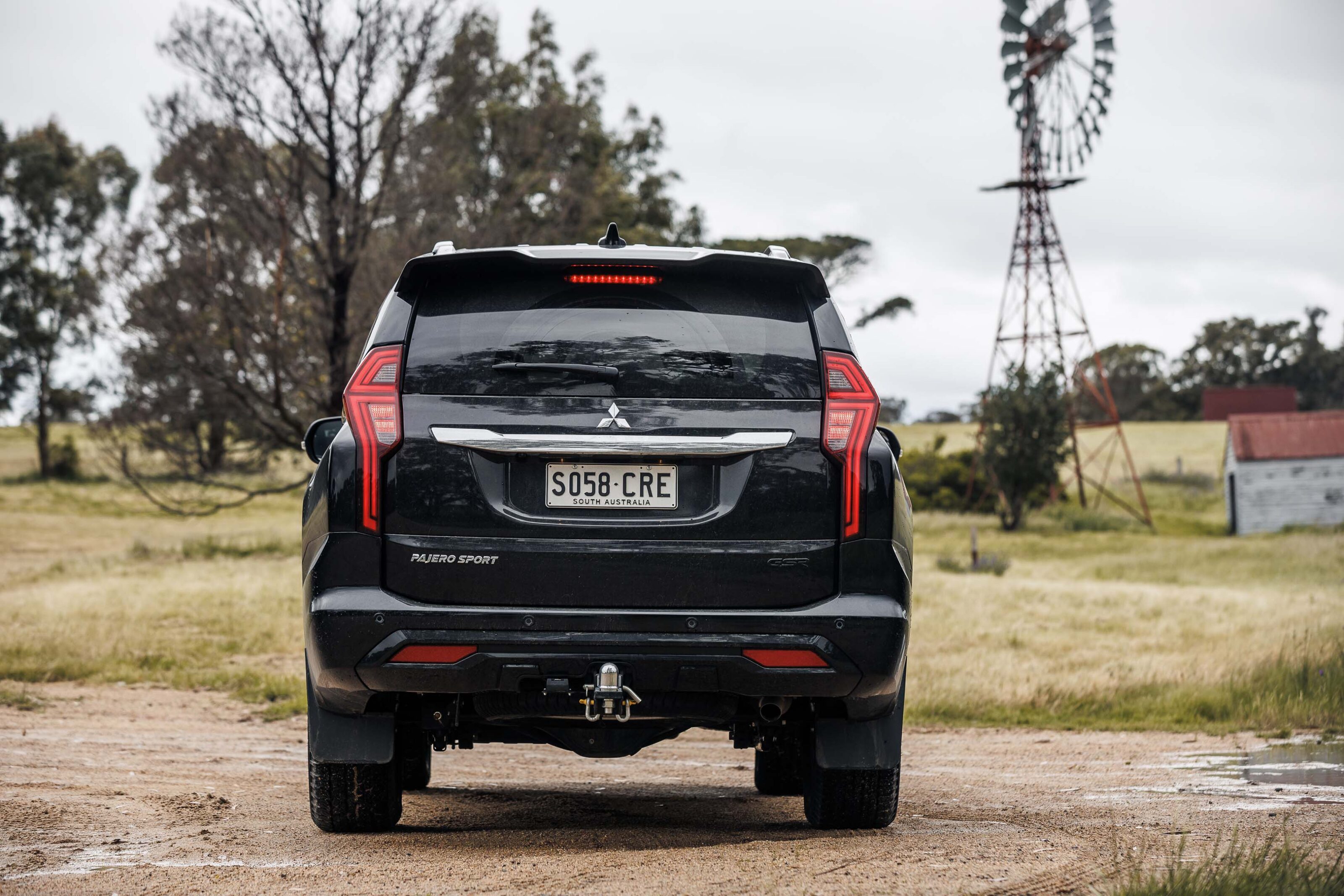
The immediate thought when I trotted out to the carpark was that the Pajero Sport seems slimmer than your standard large SUV. Tapering around the way it does, it just doesn’t have that bulky rear end of the Isuzu MU-X or Ford Everest.
I also like the the all-black theme including alloys and grille, with the stripe of silver down the side, gave it a sleek look.
Jumping inside, it really felt like your classic simple cabin setup – no oversized screens, not too many dials and a standard steering wheel. This one didn’t take me too long to set up before I hit the road, straight to school pickup.
Pajero Sport GSR key features above Exceed
| 18-inch black alloy wheels |
| Black rear spoiler |
| Black front bumper garnish |
| Black rear bumper garnish |
| Black grille |
| Black headlight garnish |
| Two-tone roof (black) |
| Black u2018Pajero Sportu2019 bonnet emblem |
| GSR tailgate badging. |
Comfort
The GSR is fitted with an all-leather interior, the seats are plush and provide plenty of comfort for the driver, but heated seats are only included in the front row, which the kids would have liked. (Nothing unusual here though! – Stevo.)
Climate is controlled in the front for all passengers, with vents in all rows to ensure the comfort levels are met. The second row has cup holders that fold out of the middle seat, and the third row has them on each side.
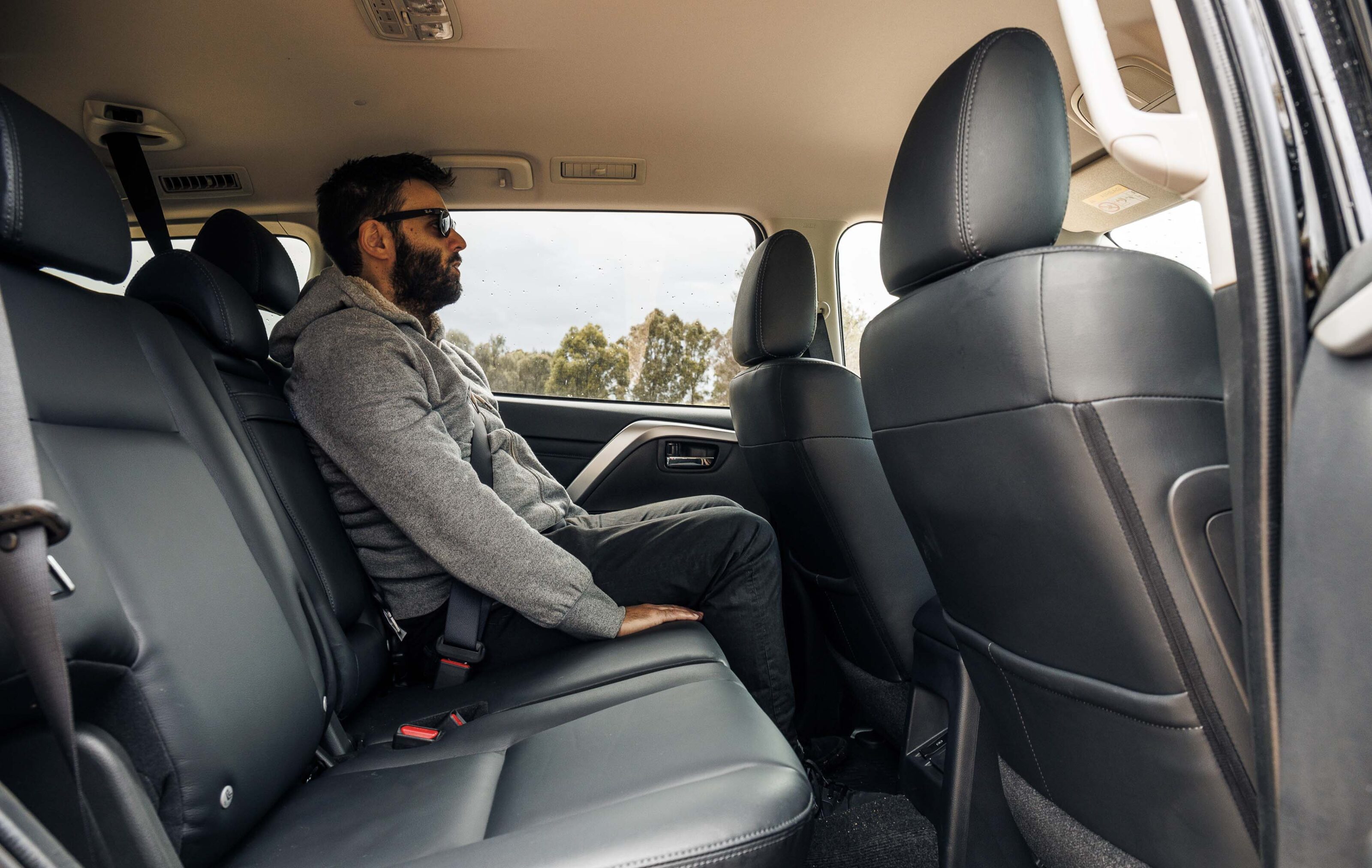
For a large SUV, it wasn’t as roomy as you would expect in the second row. I found with three 13-year-olds it wasn’t too bad, but for three adults, it would feel squishy. It would have been nice to be able to slide the second row back to provide more legroom.
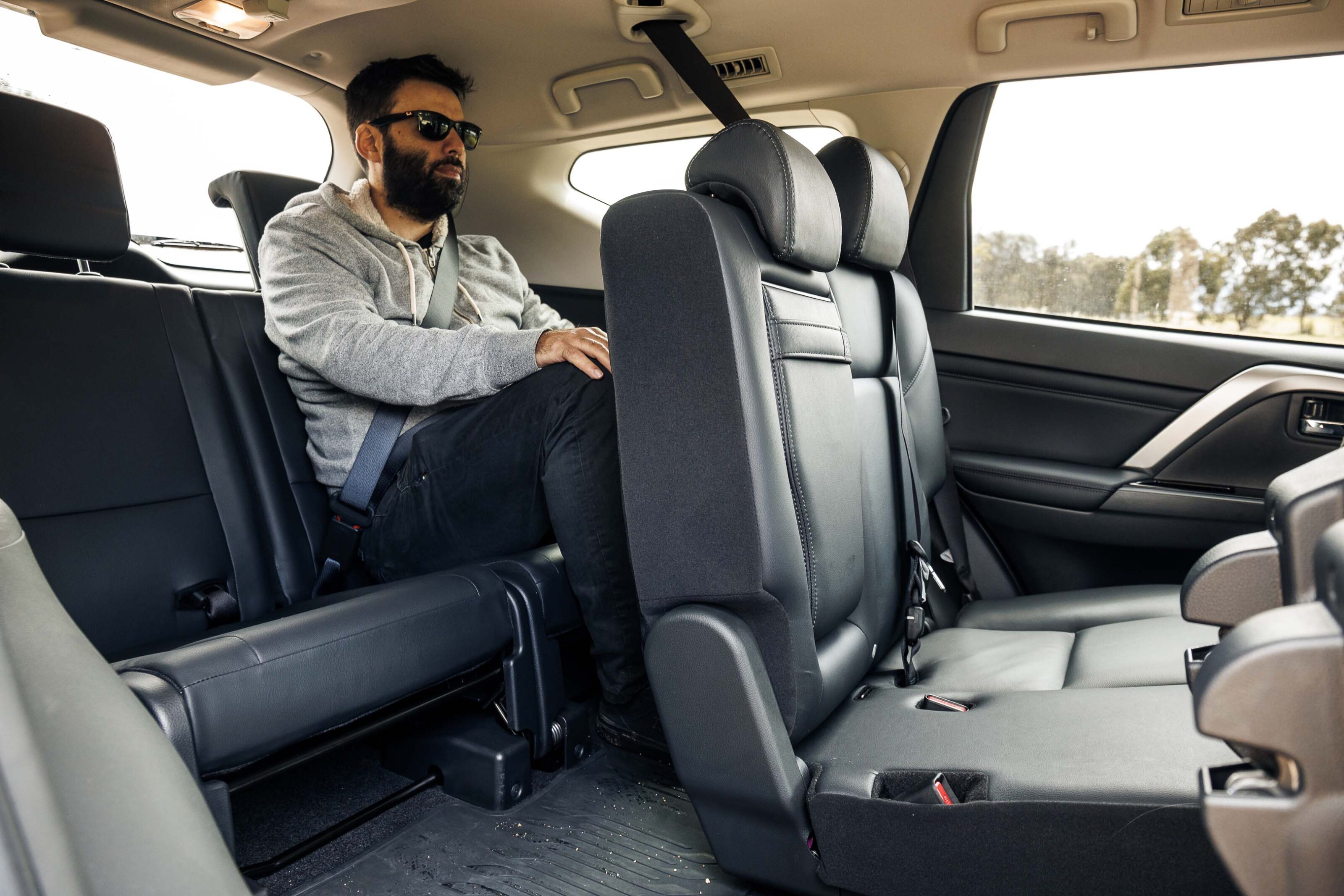
I tested the third row, and whilst it was okay for the kids, I wouldn’t want to be a six-foot-plus adult being stuck there for a long trip.
2022 Mitsubishi Pajero Sport: Boot space
With the third row folded there is ample room for a large shop, or for all the things we take away on a holiday for a family of four.
I was able to get a bike and a (folded!) gazebo in the back by laying the second row down, and this wasn’t a big task.

Technology
There’s nothing in the Pajero that you would say is state of the art new world tech. In saying that, it still has everything needed to make it an enjoyable ride.
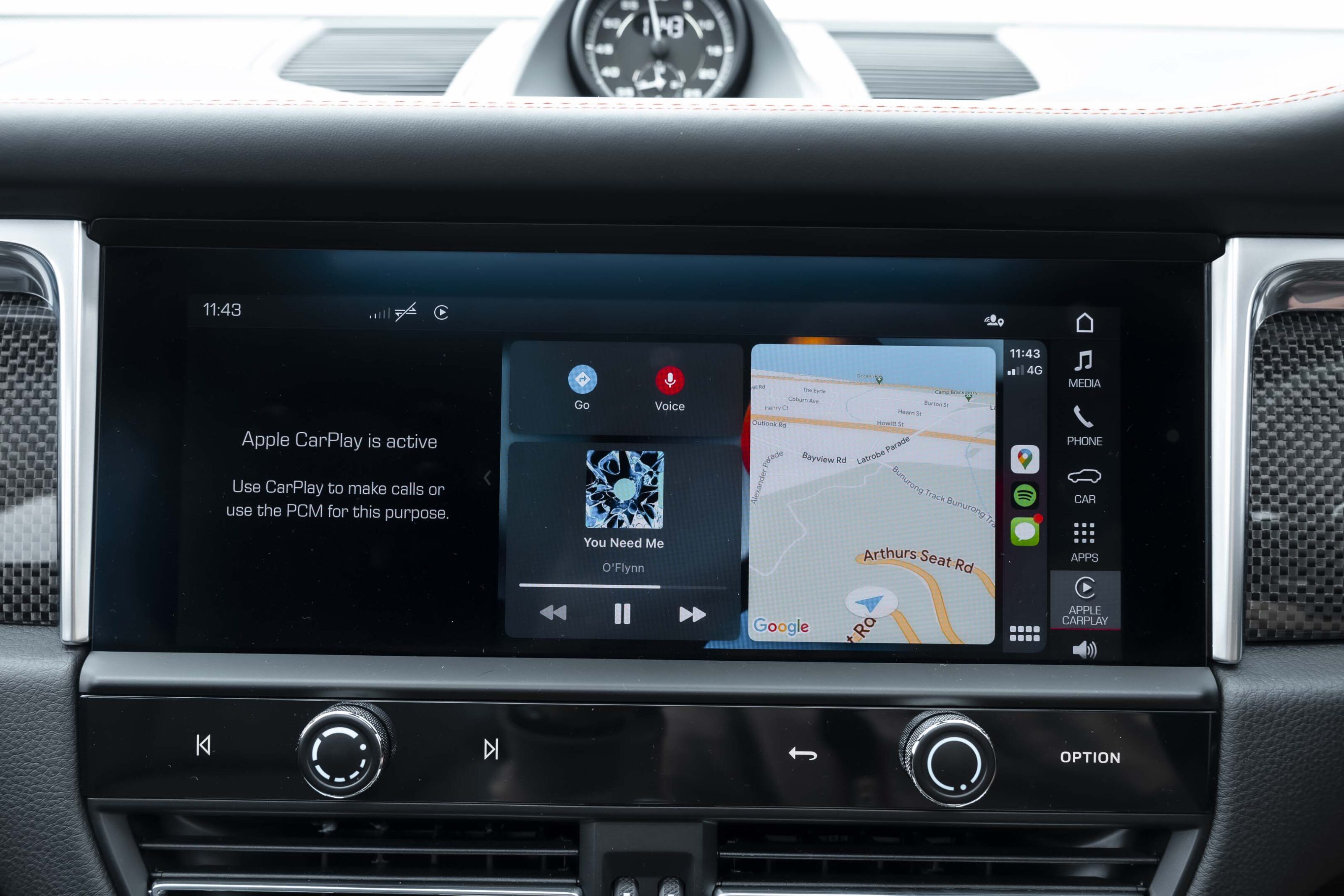
The 8-inch screen user interface is nice and simple, and easy to quickly integrate Android Auto or Apple Carplay, both work well without issue.
The native Mitsubishi navigation app is what you would expect, and easy to use. John Law covers it well here: “To illustrate the tech difference, the Outlander’s infotainment screen was switched on and ready to select your favourite tune in 10 seconds, against the Pajero Sport’s 18-second boot time.”
As with most new cars, It does beep a lot. It took me a short while to figure out the main culprit was the navigation making noises to alert you about upcoming red light cameras and the like, but it wasn’t hard to turn this off.
The addition of DAB digital radio is welcome, and the audio experience throughout the cabin was ample. There are plenty of USB ports and even a 240V plug in the second row.

The one part of the tech I found a little hard to work with was the climate controls. These are hidden below the screen, and whilst it was relatively easy to see the display of temperature and so forth, the buttons are on an angle which doesn’t make it easy to read the labels whilst driving, but that’s being nitpicky.
On the Road
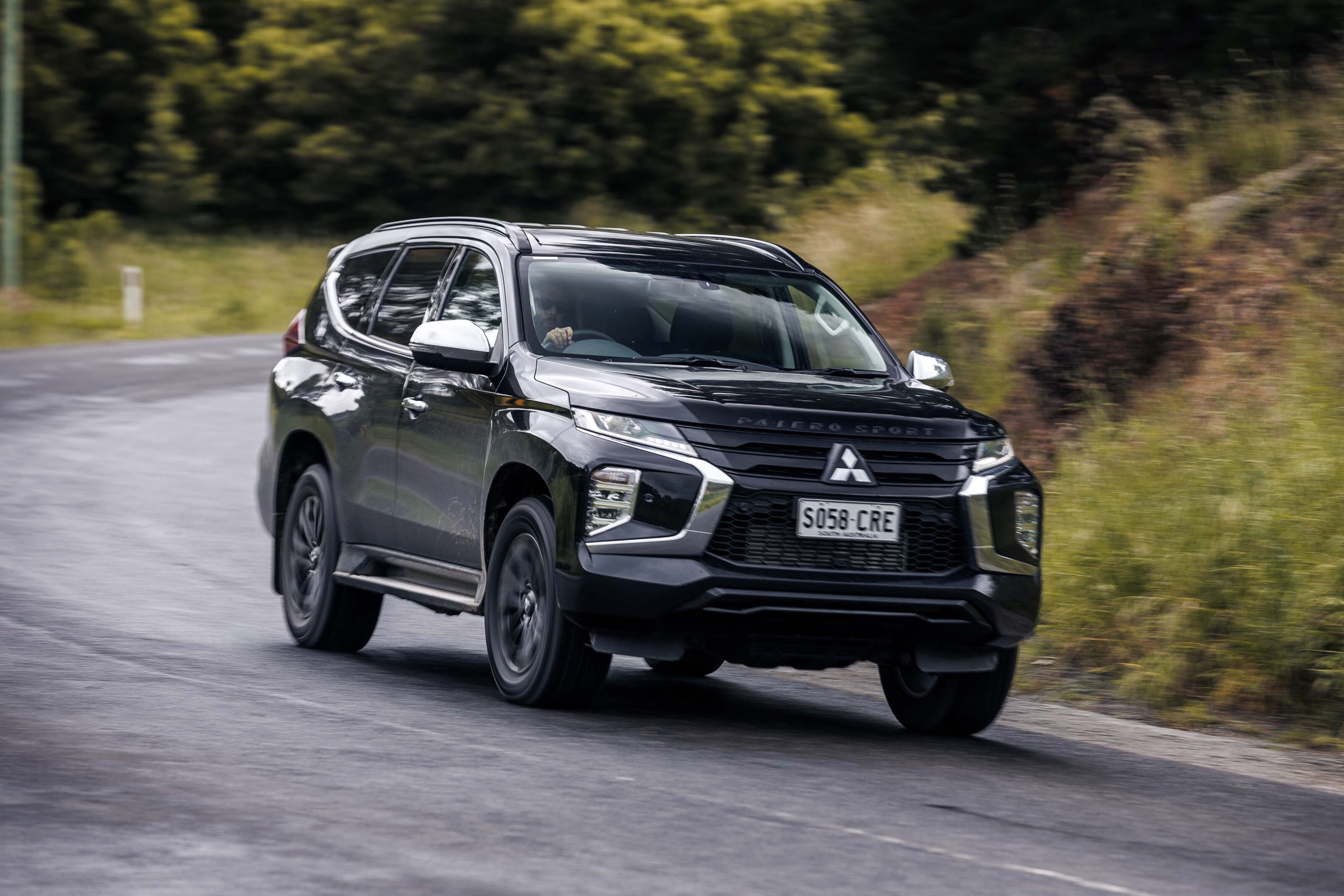
Coming from what was once considered a large SUV to this new ‘upper large’, I did expect it to feel like a “truck” – but I was pleasantly surprised with how well it drove.
It was sluggish off the mark at times, and the drive wasn’t as smooth as with my old Sportage, especially when on back roads, but it’s to be expected in a car that has been built for performance off road.
Once on the highway, it was a nice ride, and still had that diesel kick when I needed to overtake at speed.

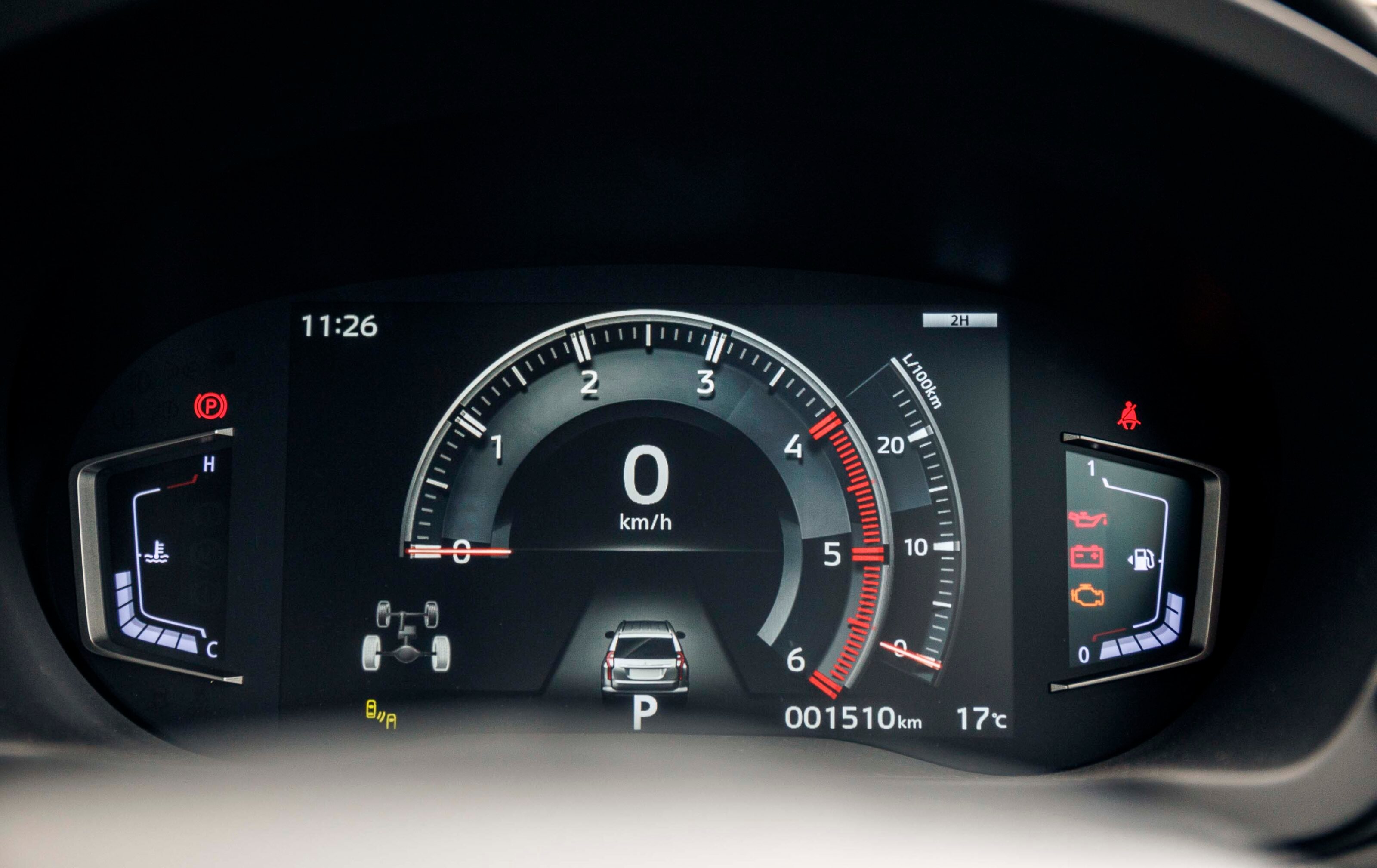
The visibility for the driver is excellent, with a nice seating position and large mirrors. The display on the dash is very neat and simple, quite easy to see how fast you’re going and all of the other important metrics. For those that love being able to alter their dash, no luck here.
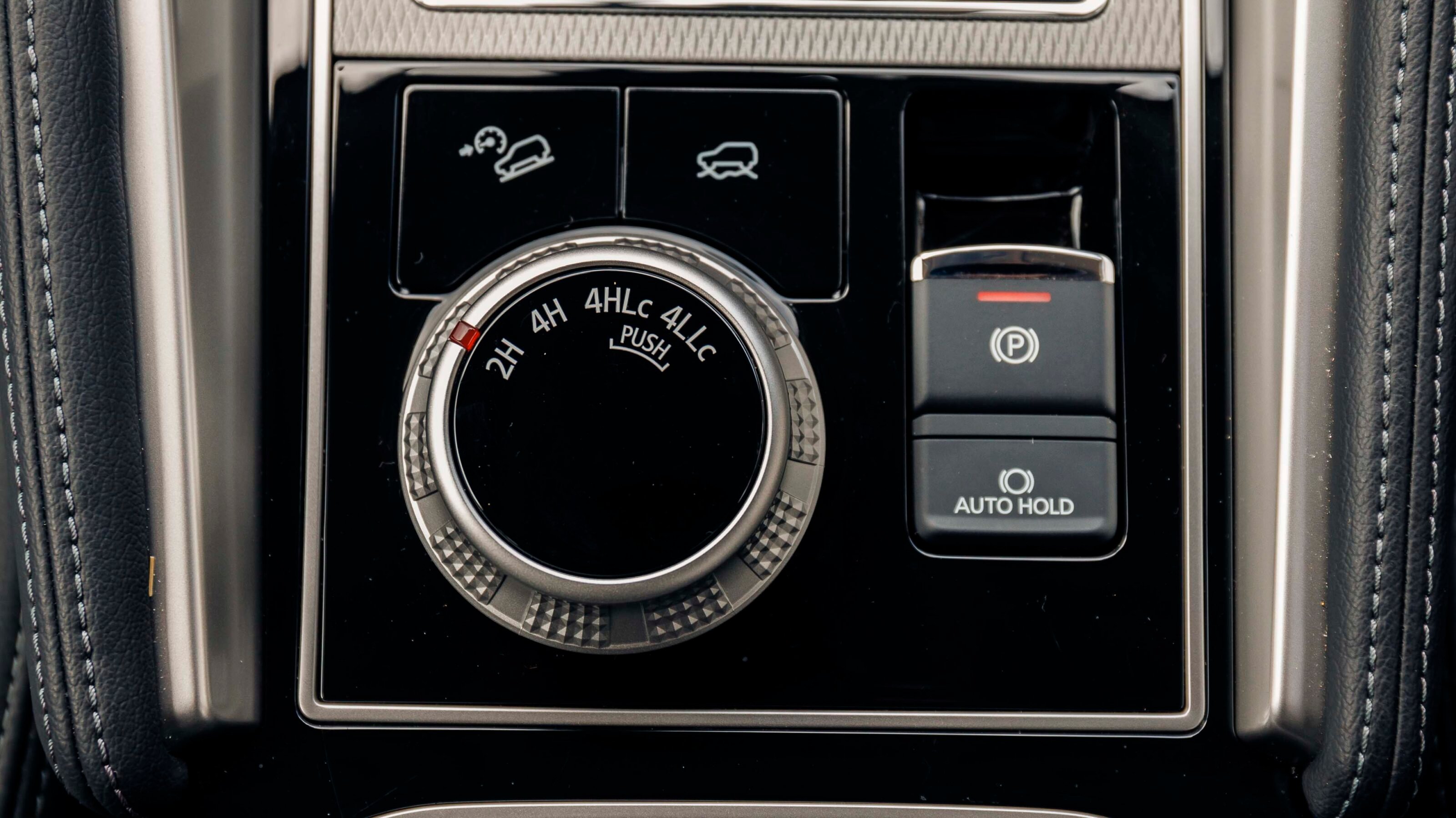
I didn’t take the Pajero Sport off road, but it has all of the necessities with Super Select II, giving drivers selectable drive modes, lockable diff and high and low range.
Warranty and servicing
Like the wider Mitsubishi range, the Pajero Sport is covered by the marque’s 10/10 Diamond Advantage coverage with a 10-year/200,000km warranty and 10 years of capped-price servicing. If the vehicle is serviced outside of the Mitsubishi dealer network, the program reverts to a standard five-year/100,000km warranty.
A complimentary 12-month roadside assist program is available, with the service also able to be expanded for up to four years – provided the vehicle is serviced by a Mitsubishi dealership.
Safety
As well as the excellent visibility for the driver the GSR has a 5 star ANCAP safety rating.
Unlike other variants of the Pajero Sport, the GSR includes blind-spot warnings, rear cross-traffic alerts, and front/side cameras.
Also included is Hill Descent Control and Hill Start Assist, which I did find handy.
The standard-fit safety suite includes:
| Forward collision mitigation system |
| Adaptive cruise control |
| Seven airbags |
| Electronic stability control |
| Anti-lock braking system |
| Emergency stop signal |
| Emergency brake assist |
| Hill start assist. |
GLS variants add rain-sensing wipers, while blind-spot warning, rear-cross traffic alert and lane departure warning are exclusive to the range-topping Exceed and GSR grades.
Fuel Economy
For the weekend I had the GSR, it sat around 9.6L/100km – which wasn’t bad for the short trips and hilly runs. Mitsubishi has it listed as 8.0L/100km for city driving.
Parking
Again, given the size, I really expected this to be something that I would notice, but I found it an easy task. The display clearly directs you in reverse, and with the additional front and side camera angles, and the sensors, the Pajero was easy in all parking scenarios.

2022 Mitsubishi Pajero Sport GSR: Last impressions
I enjoyed my time in the Pajero Sport, as the kids get older and the need to have seven seats becomes more (picking up friends), this car is definitely something I would add to the list to look at.
It has all of the features you really need for the weekday activities, but excels for weekend and family holidays with the additional seats, ample boot space and the ability to also tow the boat and the camper trailer without an issue.
All of these combined with a price point just above $60k and the 10 Year Warranty makes the Pajero Sport a real challenger in the 4X4 Large SUV segment.
Specifications
It’s not hard to see why the Macan is Porsche’s top-selling model by some margin.
Not only is it one of the most handsome midsized SUVs on the market, but it’s also the most affordable route into new Porsche ownership.
Entering the Porsche family starts from $89,300 before on-road costs for the most affordable Macan, which is powered by a turbocharged petrol four-cylinder. However, stepping up to the V6 turbo powered requires another $23,000 added to the budget.
But, as part of a mid-life update, Porsche has narrowed the void between entry and mid-range Macan with the more generously equipped Macan T that, at $91,500 before on-road costs, is priced just $6700 higher than the base model. In the context of other Porsche models and even some of their options, that’s virtually free.
Does the second most-affordable Porsche in Australia represent a premium-label bargain or is it a bit of a sheep in wolf’s clothing?
JUMP AHEAD
- How do rivals compare on value?
- What do you get?
- Interior comfort space and storage
- What’s it like to drive?
- How safe is it?
- VERDICT
- Specifications
How do rivals compare on value?
In terms of specification, a Mercedes-Benz GLC300 makes for very similar reading with a price that’s about $3000 cheaper than the Porsche with power and performance figures almost identical across the board.
In 45 TFSI trim, Audi’s Q5 is less cash again at $80,800 but takes a bit of a hit in the power and performance department, while BMW’s X3 xDrive 30i offers AWD coupled to a 2.0-litre turbo and a price from $91,900 (both before on-road costs).
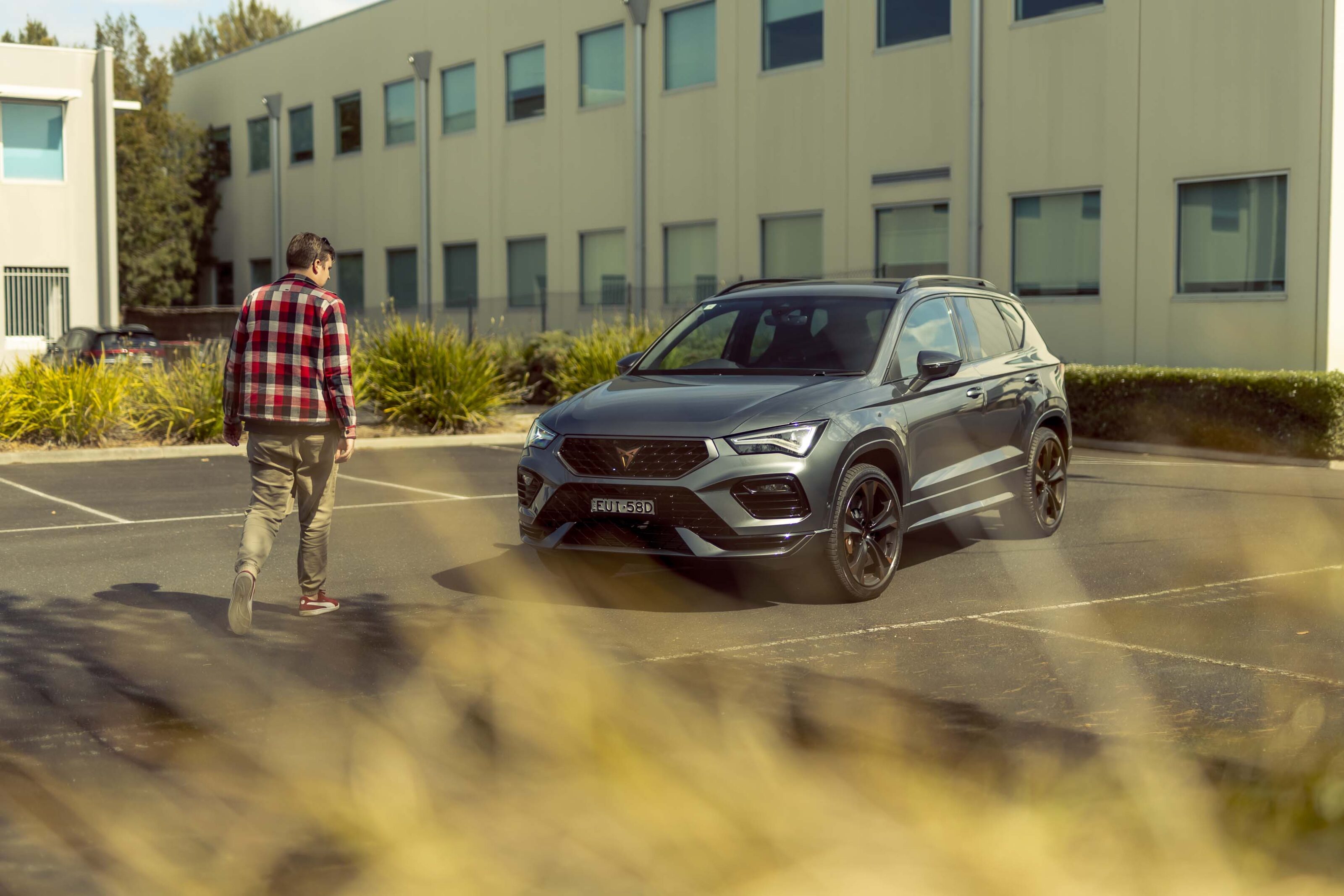
As a wildcard, Cupra’s freshly arrived Ateca VZx has a bargain price of $60,990 before on-road costs yet shares an engine with the Porsche and even wicks its power up by 26kW to 221kW, while maintaining the same 400Nm of torque, and 0-100km/h acceleration falls to under 5.0s.
What do you get?
Let’s start with the all-important boot badge. Unlike most of Porsche’s other esteemed brands, this one doesn’t denote mountains of extra horsepower or track-munching performance.
Introduced first on the boot of the 1967 911T, the T instead stood for Touring and packaged a number of features that made longer distances in the little two-plus-two coupe a bit more pleasant.
The German car-maker’s line-up sure has changed a bit and grown significantly in the ensuing 55 years but the Macan T does retain a few of the features first debuted by the 911.
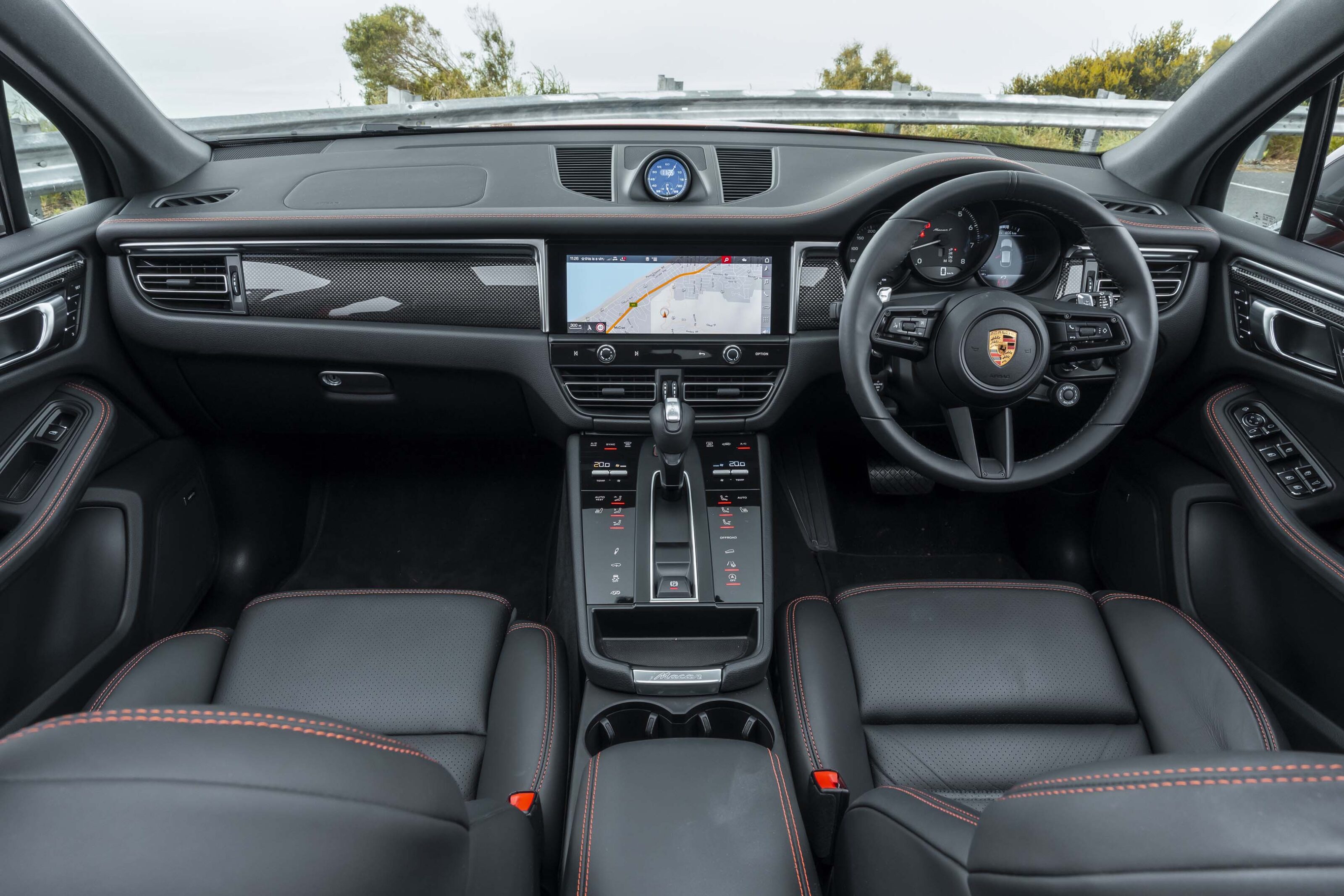
For a start, the Macan T has a four-cylinder engine – but rather than an air-cooled flat-four, it shares the same 195kW/400Nm petrol found under the bonnet of the entry Macan.
It’s bolted to a seven-speed dual-clutch automatic transmission sending drive to all four wheels, weighs 1845kg, accommodates five adults, has a 488-litre boot, and will use 8.8 litres of fuel per 100km on the combined cycle – just like the most affordable Macan. So what do you get for the cash?
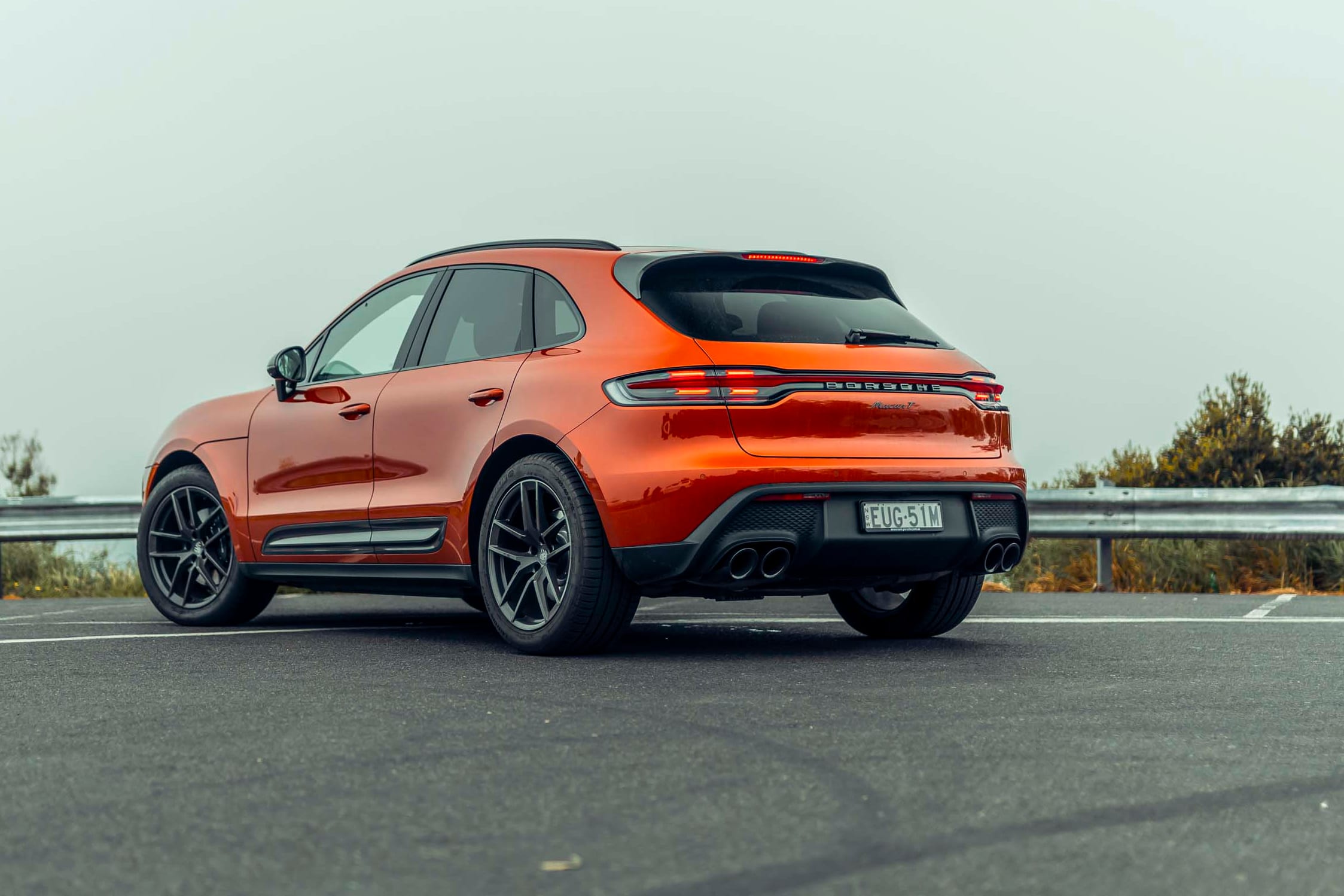
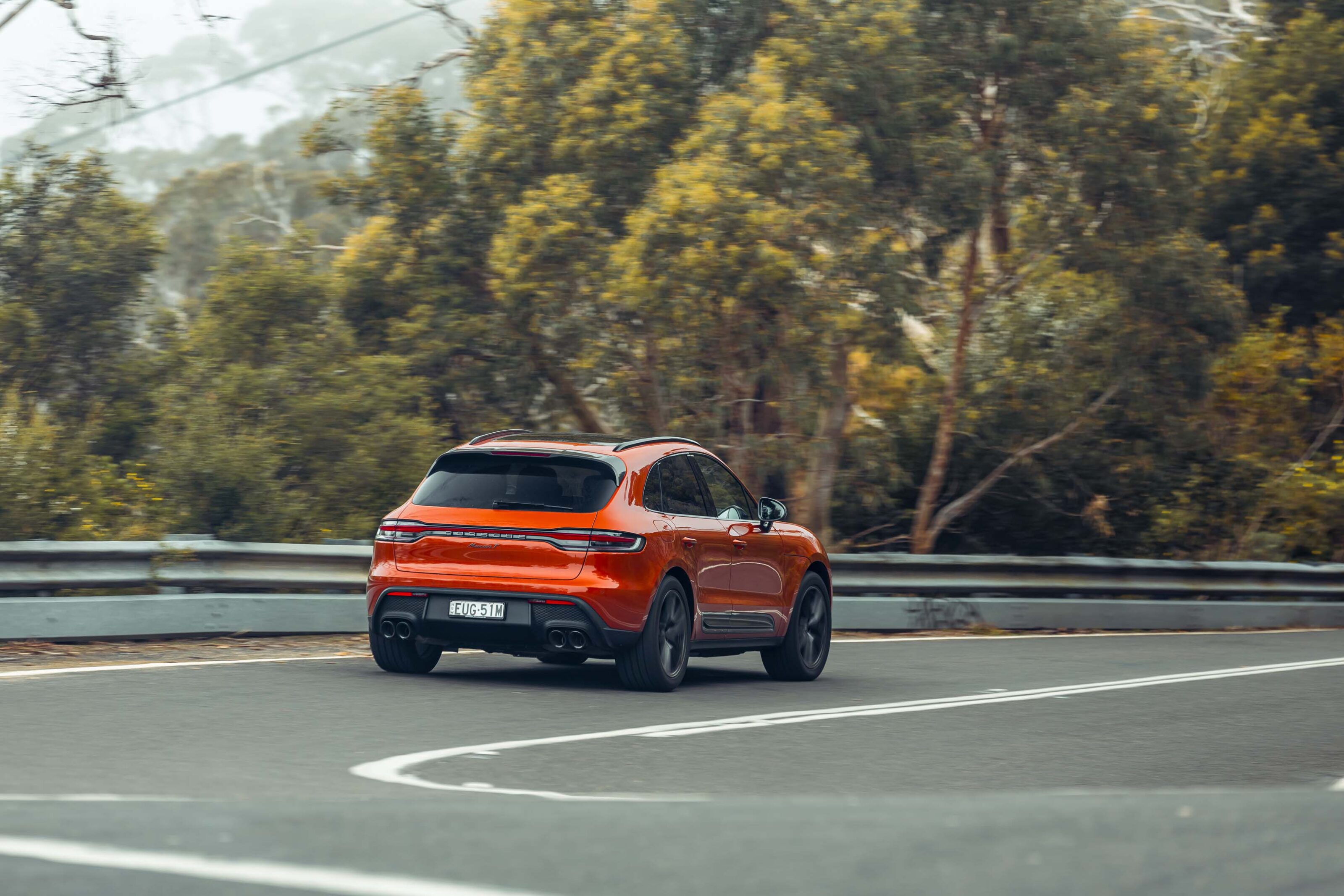
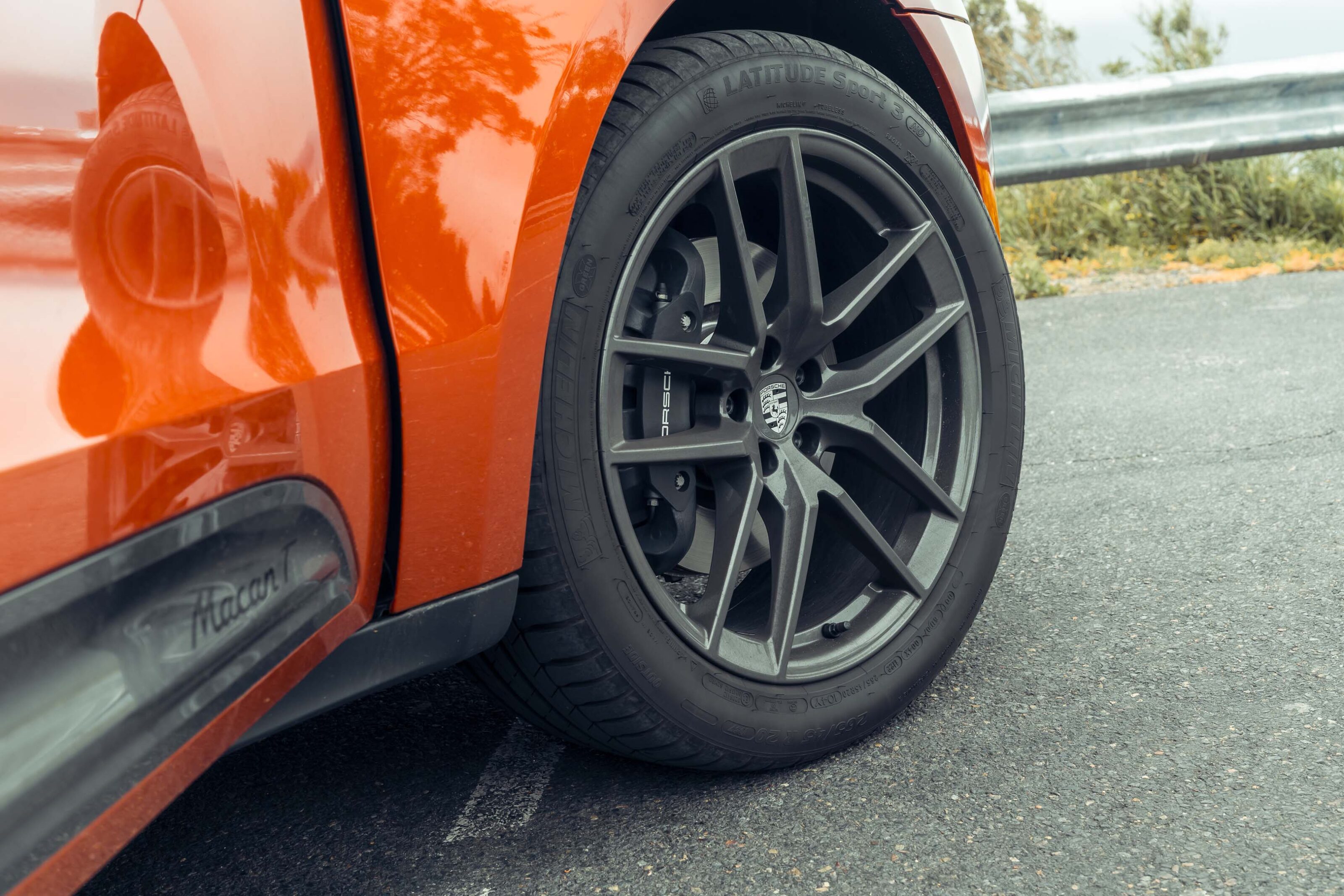
On the outside, the T gets more sporty accoutrements including 20-inch wheels donated by the Macan S, replacing the 19-inch versions on the entry version, and their Dark Titanium finish matches Agate Grey touches applied to the front facia, side mirrors, skirts, spoiler and badges.
It also sits lower thanks to a sportier tune of the standard coil-sprung suspension that drops the ride height by 15mm and adds a stiffer front anti-roll bar. Hand Porsche another $2790 and the T will be fitted with adjustable air suspension that drops the Macan by 10mm. Adaptive dampers branded Porsche Active Suspension Management (PASM) are thrown in as part of the T deal.
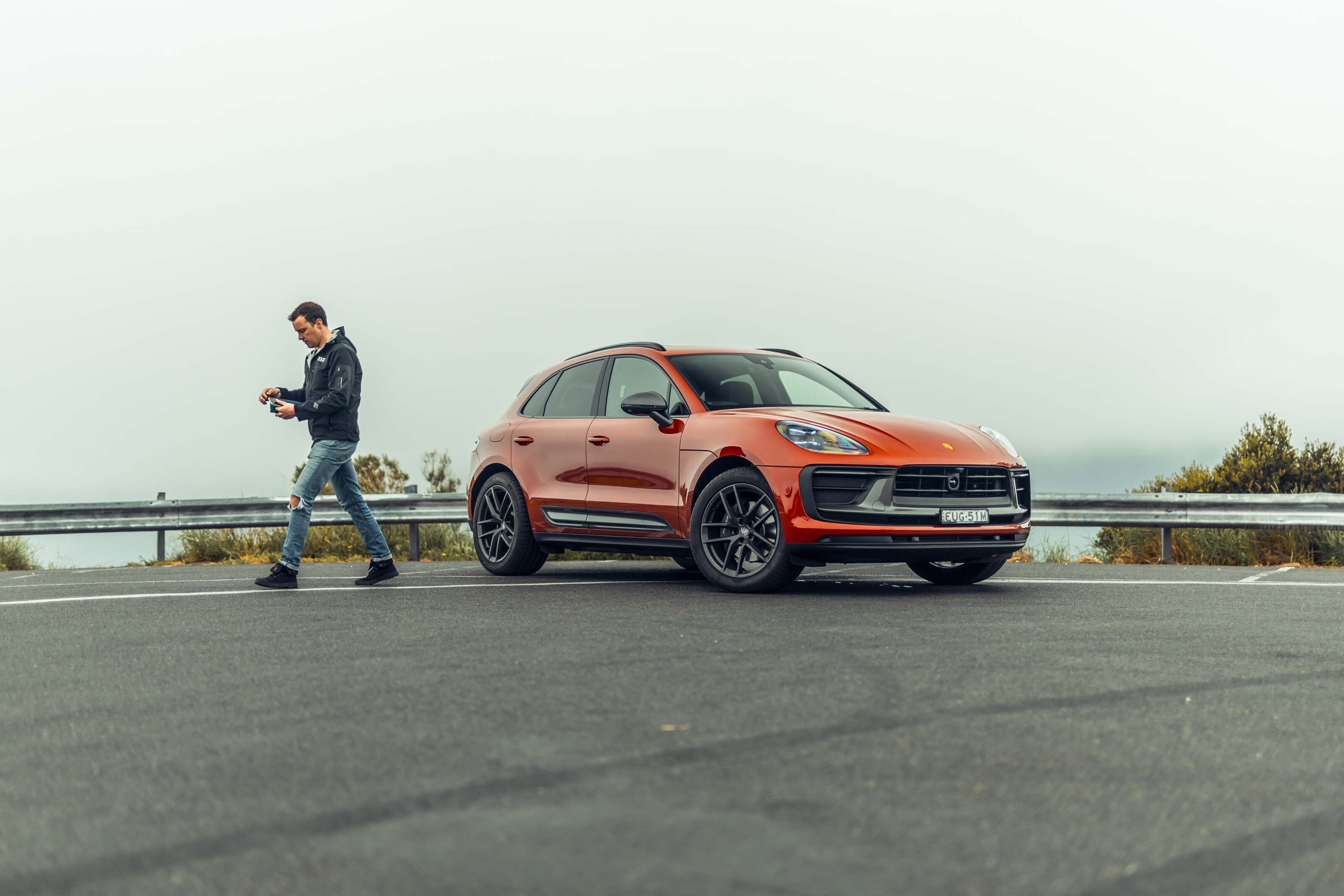
If first impressions count then the Macan T makes an impressive statement with its enhanced looks alone – especially if you order it dressed up in an $1800 Papaya Metallic suit like this one – and the Macan T looks as though it should cost a greater premium than it does. And it’s a similar story on the inside.
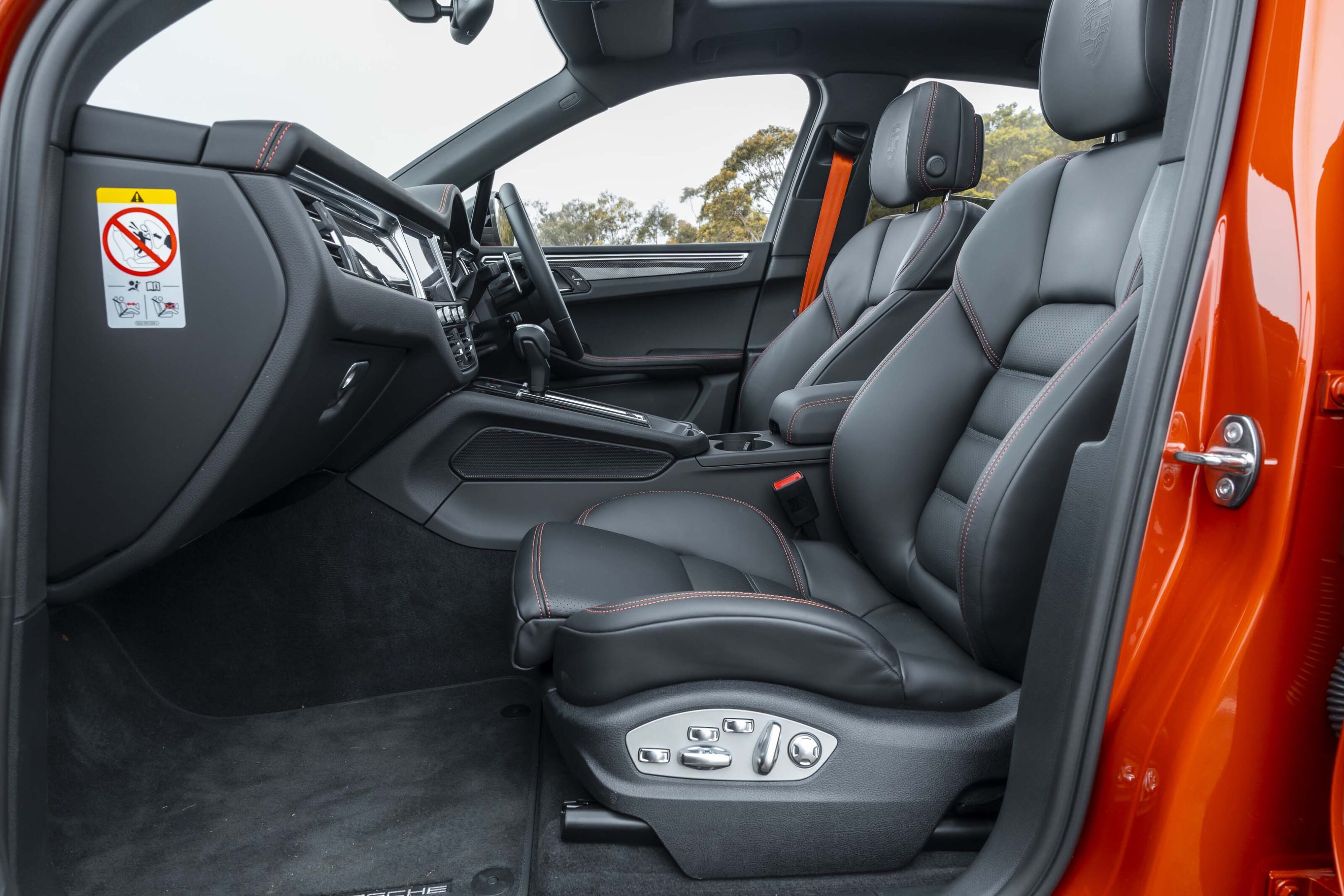
Eight-way adjustable GTS sports seats are included in the front row as standard, matching the two-plus-one seats in the second row with an attractive upholstery that looks like four of the positions are already occupied by Kendo fighters.
Standard T equipment also enhances the cabin with leather and Sport-Tex synthetic suede combination upholstery with contrasting stitching (ours had been colour-coordinated to the exterior paint), a 360mm heated GT steering wheel and Porsche’s Sport Chrono pack which alone ordinarily adds $1880 to the price.
Of course, it’s a Porsche, which means the starting price of a Macan T can be dramatically inflated with a liberal visit to the options list – but this unfortunately includes some safety technology such as adaptive cruise control, lane-keep assist and parking assistance. Items you might expect to be included with a premium German SUV considering they are standard kit on cars costing a fraction of the price.
Of course, it’s a Porsche, which means the starting price of a Macan T can be dramatically inflated with a liberal visit to the options list
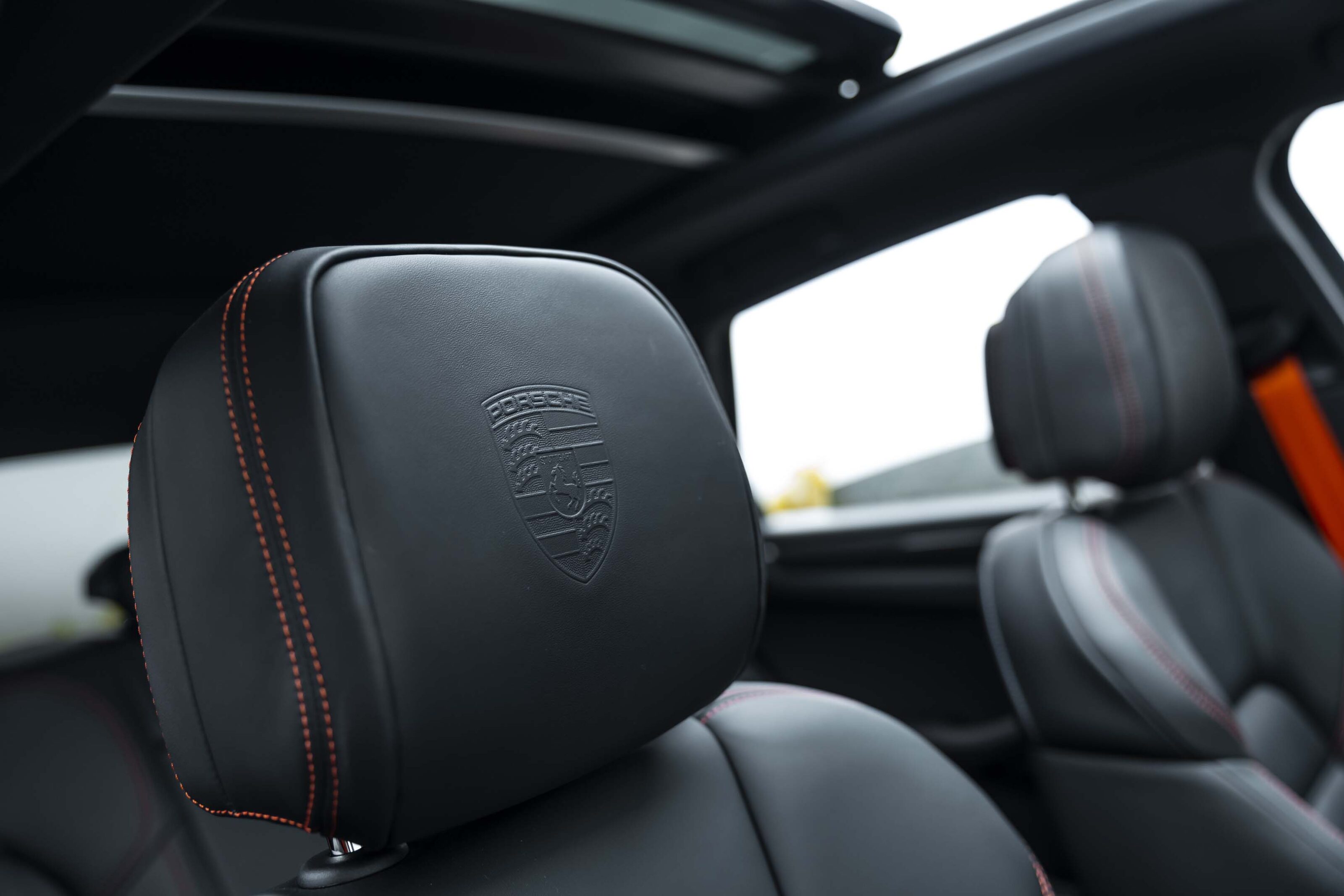
Other notable equipment omissions include no Android Auto – even with the mid-life update (Apple CarPlay is included) – and you must pay extra for a panoramic roof. While tyre pressure monitoring is standard, a full-size spare isn’t, although there is the next best thing – a space-saver.
If there’s nearly nine grand burning a hole in your pocket, don’t be tempted to drop it on the optional Burmester sound system because the standard Sound Package Plus stereo (with speakers slotted into the centre console) sounds absolutely sensational.
For those who can resist running the options gauntlet, the Macan T’s price is good value (at least in Porsche terms) and the brochure certainly doesn’t look like it represents a car costing less than $100,000.
But that’s only part of the proposition when buying a Porsche.
Related video: 2022 Macan, first Australian drive
Interior comfort, space and storage
Ergonomically, the Macan T feels exactly as a Porsche should and after only a short time in the driving seat, it’s even more of a wonder how few brands nail the driving position and comfort. The Macan is close to perfect.
With the GTS seats comes a level of comfort that feels as though Porsche asked for your waist measurement and height on the order form. That said, there’s not so much support to make you think the Super Sport Carbon Race Plus Weissach Pack box was accidentally checked.
The relatively small leather-wrapped steering wheel is heated and adds to the beautiful ergonomics and sense of quality without becoming vulgar or showy. But the GT wheel also gives access to one of the nicest steering systems in the SUV world.
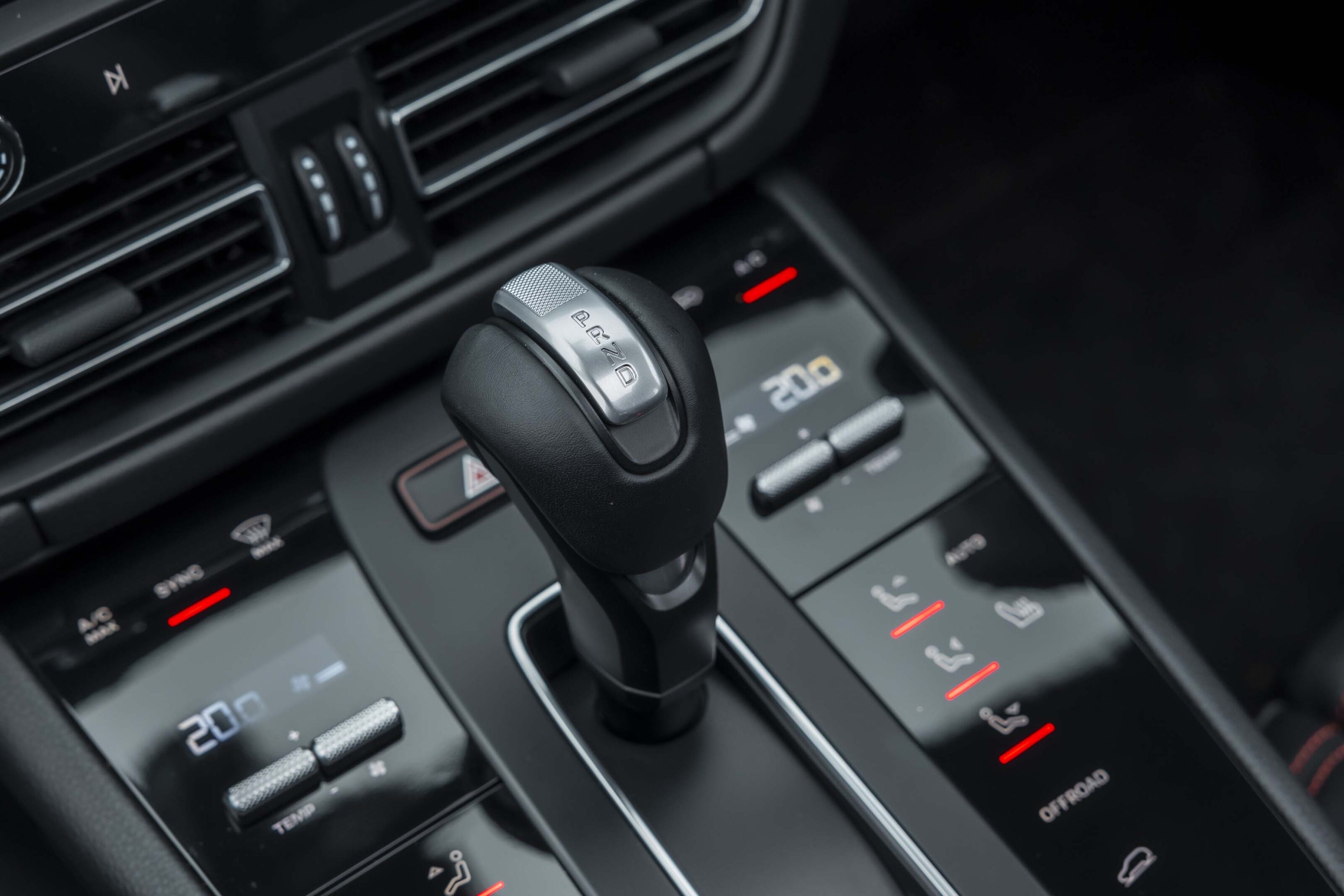
Second-row seating is every bit as cosy and comfortable as the front row, even if they don’t get the eight-way electric adjustment and heaters but there’s plenty of space and headroom. The only downside to the clean and tidy interior is a lack of places to put things such as phones and keys around the gear selector.
What’s the Macan T like to drive?
The basics
| 2022 Porsche Macan T specs | |
|---|---|
| Engine | 1984cc 4cyl, dohc, 16v, turbo-petrol |
| Power and torque | 195kW / 400Nm |
| Transmission | 7-speed dual-clutch |
| Economy | 9.5L/100km (claimed) |
| 0-100km/h | 6.2sec (claimed) |
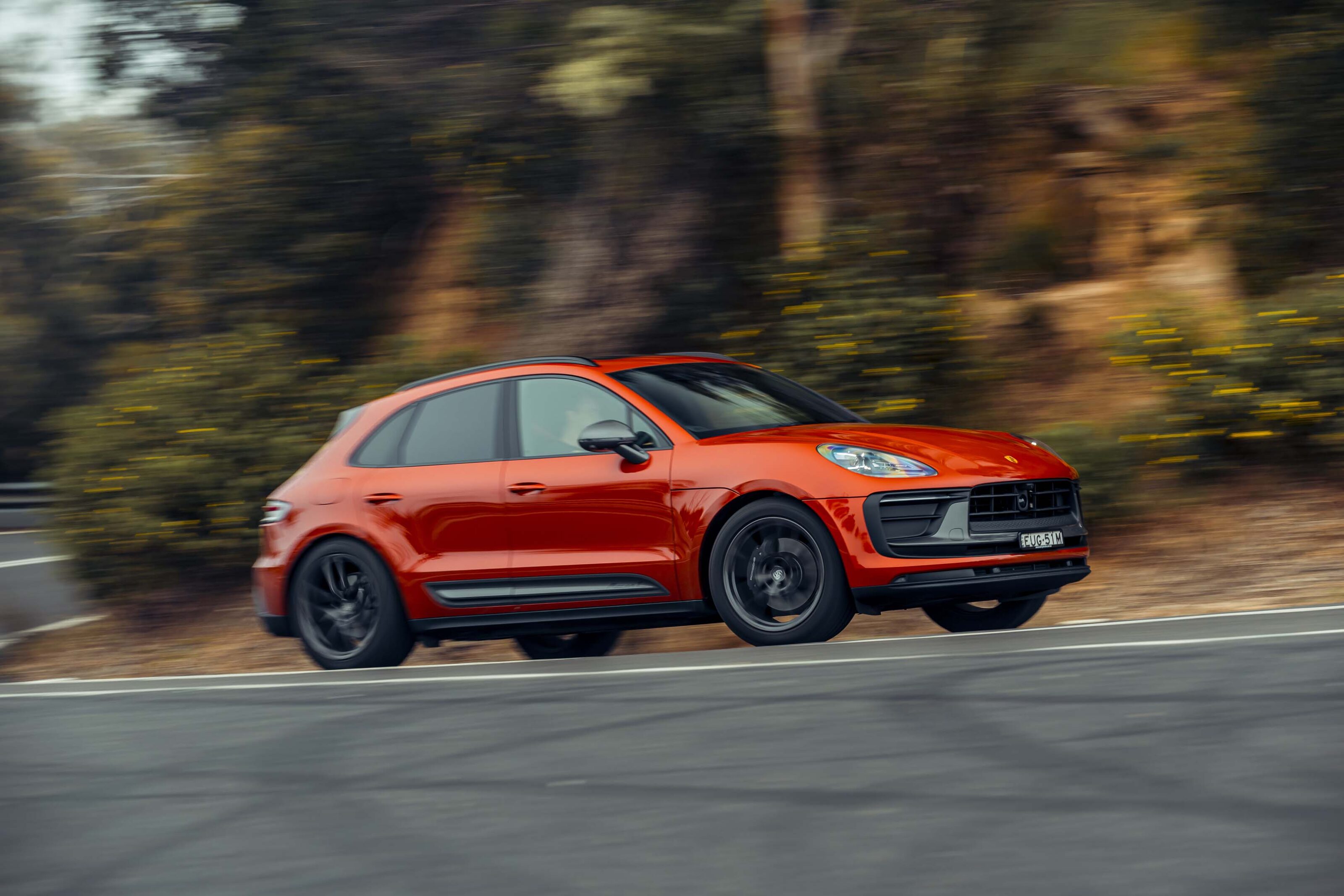
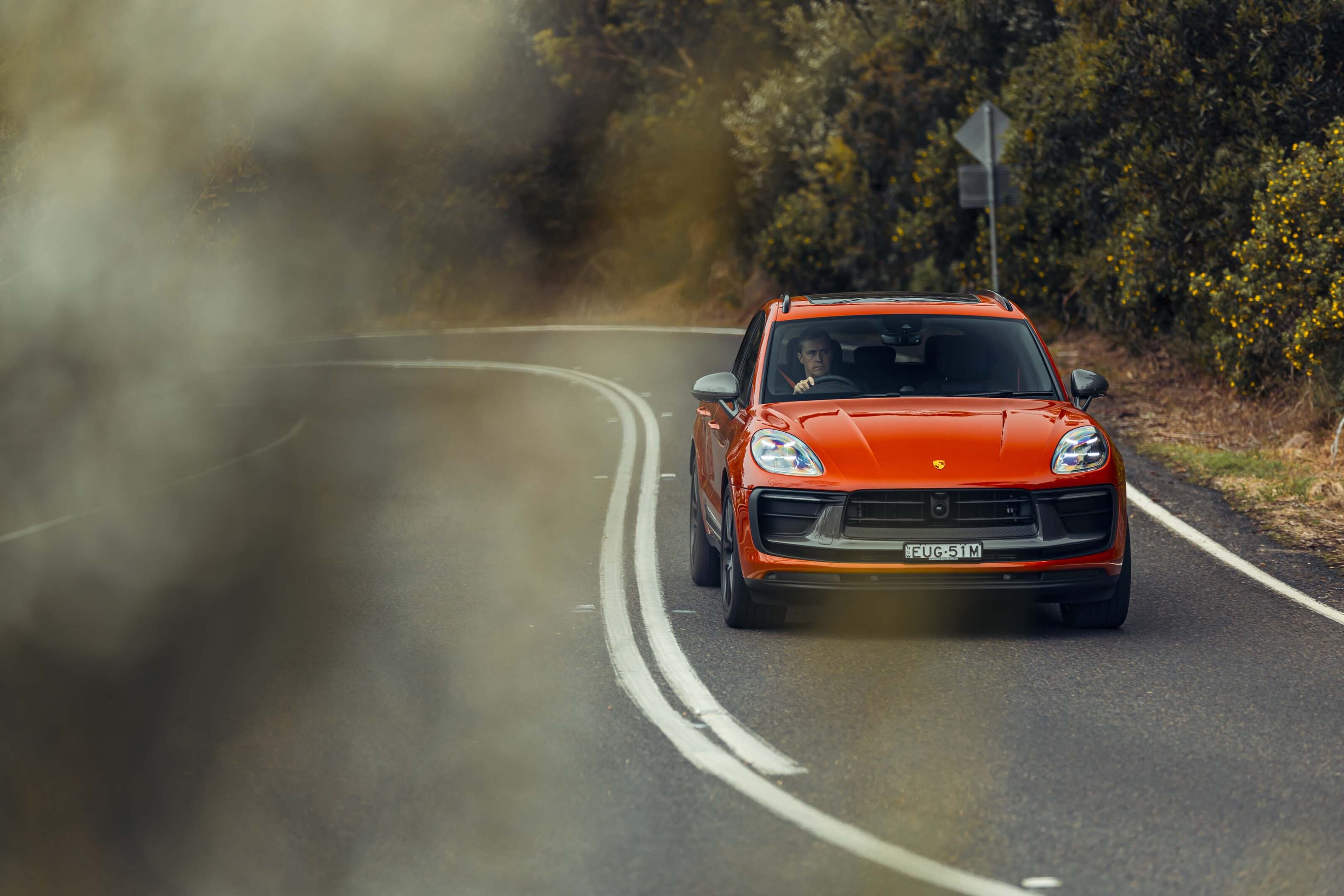
Leaving the Mornington Peninsula freeway behind in search of more enjoyable roads and views, the lightness of the Macan’s steering is replaced by a sensitivity and precision that Porsche has worked hard to achieve in all its models.
Bigger wheels have perhaps compromised the ride and road noise marginally over the standard 19-inch rims, but the advantages combined with a lower ride height and stiffer front anti-roll bar far outweigh any of that.
The Macan is a joy to chuck at some corners with hard-working diffs at either end, cooperating with the snappy dual-clutch auto for an honest and mechanical drivetrain, not the synthetic, over-controlled systems of some rivals.
The Macan is a joy to chuck at some corners with hard-working diffs at either end
It would be interesting to see how the likeable manners are affected by a hardcore set of performance tyres as Porsche has elected to fit more all-round Michelin Latitude Sport 3 rubber. Grip levels are still very high and complement the chassis mods well.
Braking is similarly excellent with a classically Porsche firm feel and there’s a decidedly un-SUV character when pushing the Macan into turns under braking and feeling the chassis load up progressively.
Perhaps the only part of the equation that doesn’t transpose so naturally is the engine itself.
Expecting a similar bump in power and torque is not unreasonable given the successfully tweaked chassis, but the standard EA888 engine carries over from the entry Macan.
Like virtually all its applications, the in-line turbo four is a very sweet unit with a flat torque curve and rev-happy nature but it still only produces 195kW and 400Nm of torque – not exactly meagre but under the bonnet of something carrying the iconic Zuffenhausen shield, not quite enough.
Despite the same outputs, the T manages to be slightly faster than the entry Macan thanks to the standard Sport Chrono pack, which introduces a launch mode that helps dispatch the zero-to-100km/h dash in 6.2 seconds, so it’s certainly not slow.
But it doesn’t exactly feel fast either, and that tarnishes the T’s polished presentation just a touch.
How safe is it?
The Australian New Car Assessment Program (ANCAP) has not tested the Porsche Macan but its European equivalent NCAP has, awarding the model the full five-star rating.
Despite its excluded driver assistance systems, it still gets parking sensors all round with reversing and 360-degree cameras, auto emergency braking, cruise control, lane departure warning, signature four-point LED headlights, rain-sensing wipers, side and curtain airbags for both rows of seating, and ISOFIX mounts for two child seats.
VERDICT
The Macan T is absolutely a Porsche in styling, quality and handling – but its engine and performance don’t keep the promises that the enticing looks make.
In that regard, the Macan T has more in common with the original 911T than we were expecting.
If you can look past the handful of omitted features and focus on what you do get included in the price, the T badge brings a significant upgrade to the standard Macan variant for not much extra cash.
To a majority of aspiring Porsche owners, that’ll make a lot of sense.
2022 Porsche Macan T specifications
| Model | Porsche Macan T |
|---|---|
| Engine | 1984cc 4cyl, dohc, 16v, turbo-petrol |
| Max power | 195kW @ 5800rpm |
| Max torque | 400Nm @ 1800-4500rpm |
| Transmission | 7-speed dual-clutch |
| Economy | 9.5L/100km (claimed) |
| Weight | 1845kg |
| L/W/H/W-B | 4726/1927/1606/2807mm |
| 0-100km/h | 6.2sec (claimed) |
| Price | from $91,500 + on-road costs |
| On sale | now |
Over on our Insta…
https://www.instagram.com/p/Cj_ZzdmNVDT/
Snapshot
- Amarok EV due in 2026
- Could preference payload over towing
- Range ideally upwards of 800km
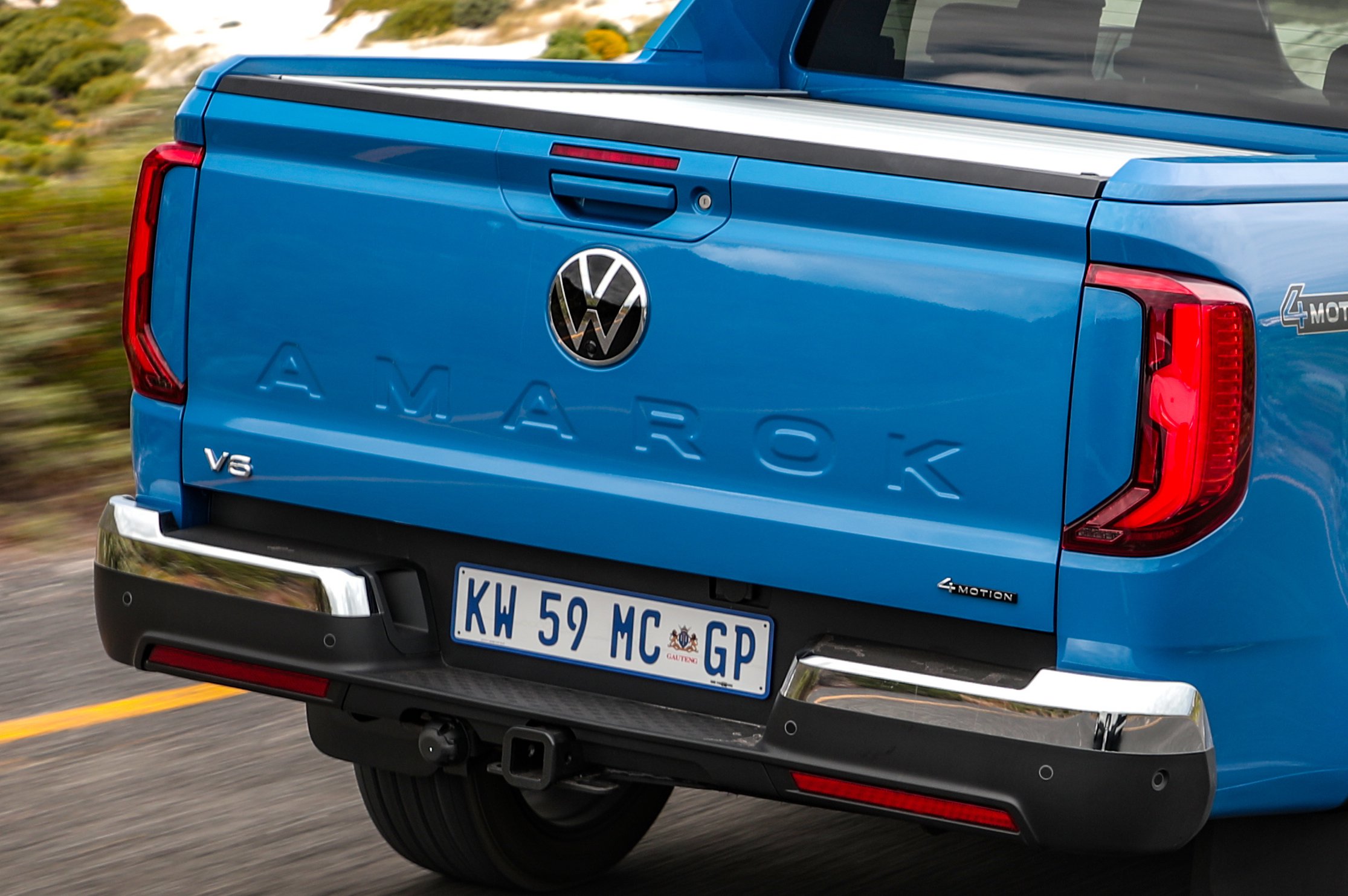
The latest model from Volkswagen and Ford’s commercial vehicle partnership is the new T6.2 Ranger-based Amarok, and it appears the companies have baked in electric capability for their dual cab utes.
Without getting too specific, VW Aus said we’re likely to see an electric Amarok in the second half of the decade, potentially as soon 2026.
Ford America saw sense with its groundbreaking F-150 Lightning to chase maximum towing capacity, with 4.5-tonnes of the stuff. Senior member of VW’s global product management team, Petr Sulc, told Wheels at Amarok’s global launch he agreed that is the way forward for an electric Amarok.
But Australian requirements may differ, and with Oz being Amarok’s most significant market, we’ll have a big say in the final product.
“We’d like to see the payload as close to the current [Amarok] as possible and I think with towing capacity, I don’t really have a good feel for what that could be”, Director of Volkswagen Commercial Vehicles Australia, Ryan Davies, told Wheels.
Naturally, if competitive payload, range and towing capacity are achievable in a reasonably-priced package, that’d be ideal – but commercial and small business operators in Australia are likely to need payload from an EV ute more regularly than huge towing capacity in Davies’ eyes.
And although the F-150 Lightning is still capable of lugging 1014 kilograms around in its tub, a 4500kg towing capacity was the main goal.
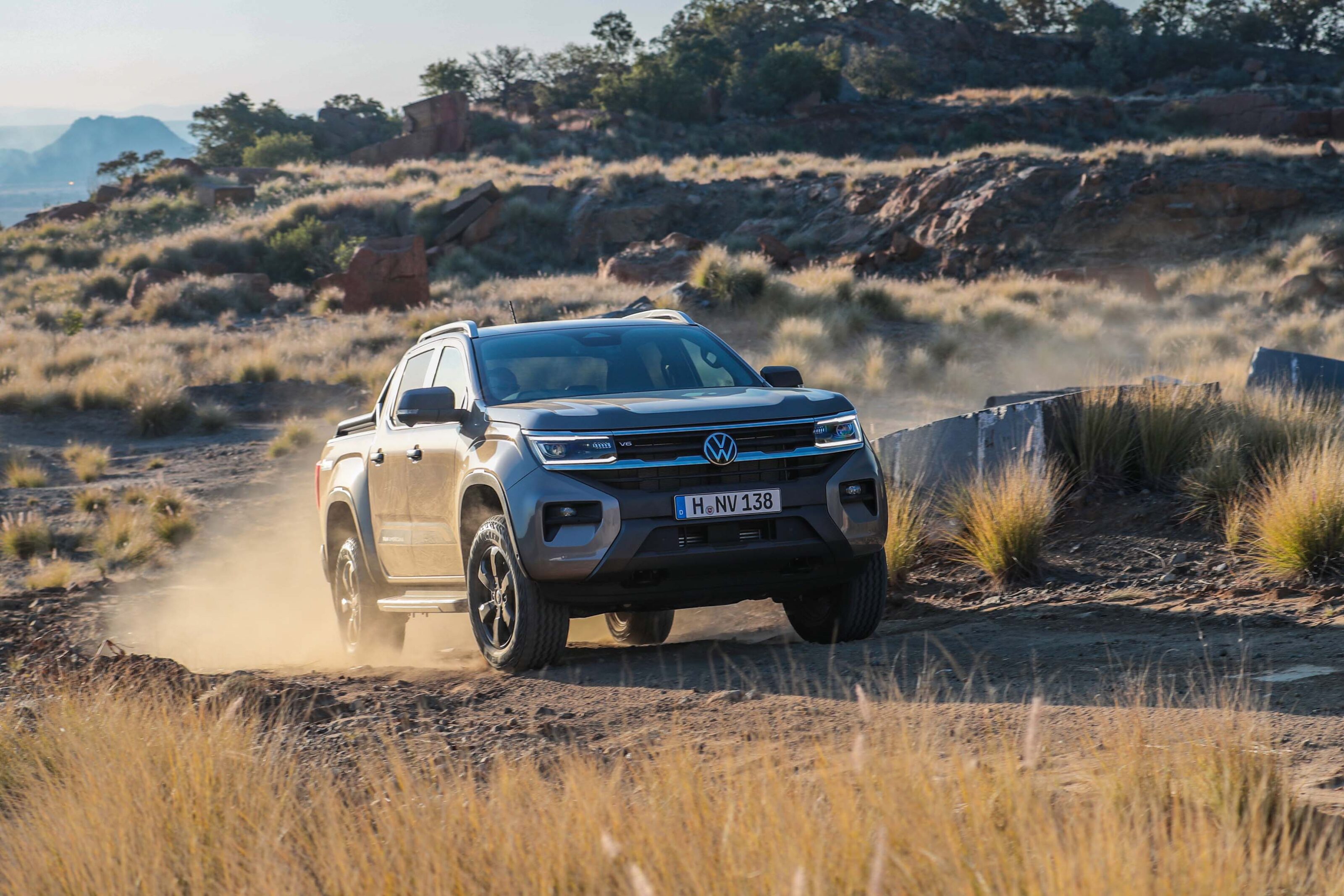
VW Australia seems to be happy to sacrifice 500-1000kg of absolute tugging ability if that means a payload in line with the current Amarok’s ability. That would mean between 1100-1200kg in the tub without trouble. The latest Amarok is certified to tow a maximum of 3500kg.
“I think we want to see towing capacity as close to between 2.5-3 tonnes as possible. I don’t know that you’re gonna hit that three tonne number – our requests would be two-and-a-half, three, and whether we can achieve that is another story.
“That’ll be a compromise until we get batteries that can really go for, say, 800-1000km from a charge, and then you can generate a driving range of say 400-500km [while towing]. That’s preferable”, Davies added.
Snapshot
- Order paused on Ferrari’s first four-door
- V12 SUV costs $728K + ORCs
- Execs say 12 cylinders was the right call
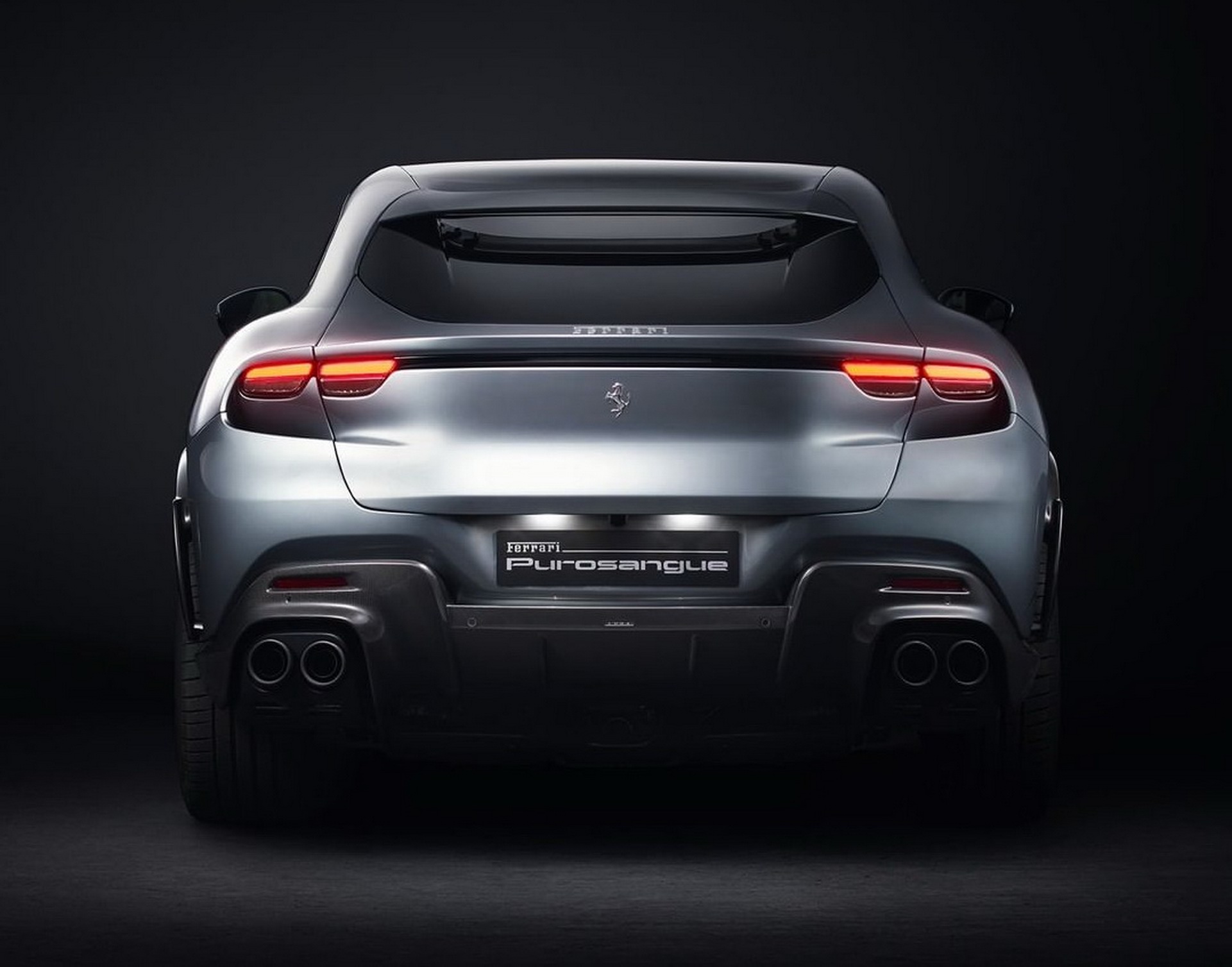
Italian sports car manufacturer Ferrari has had to pause orders of its $728,000 Purosangue – that it is emphatically not calling an SUV.
“It’s the first time in Ferrari history that a non-limited car has stopped taking orders before delivery has begun”, chief marketing and commercial officer Ferrari NV, Enrico Galliera, told Wheels.
For those wondering, the Purosangue’s Australian release, and therefore first customer delivers, are expected in the fourth quarter of 2023.
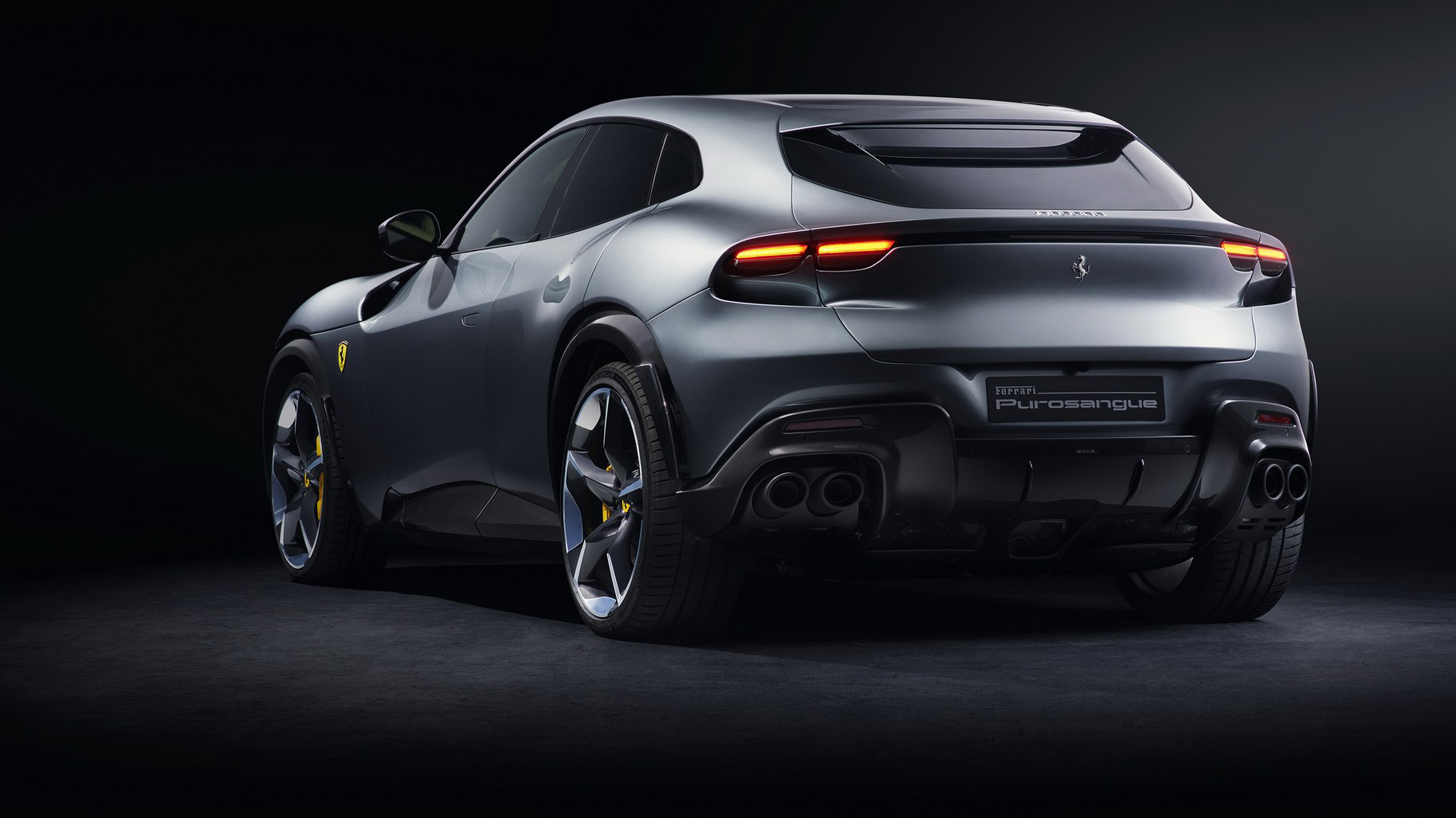
It may be the case that Ferrari only has capacity to produce enough Purosangues for 20 per cent of total sales, but president Ferrari Far and Middle East, Dieter Knechtel, is adamant the V12 four-seater won’t dilute the brand’s athletic image.
“The Purosangue is not going to be a volume model… we don’t want to do as others have done, where other sports car brands then find themselves with a high percentage of SUV sales and intra-brand competition to the sports cars models.
“We don’t want to sell more than 20 per cent per year, we want to keep it reasonable and make sure we have an equal distribution of volume across the entire [Ferrari] range.”
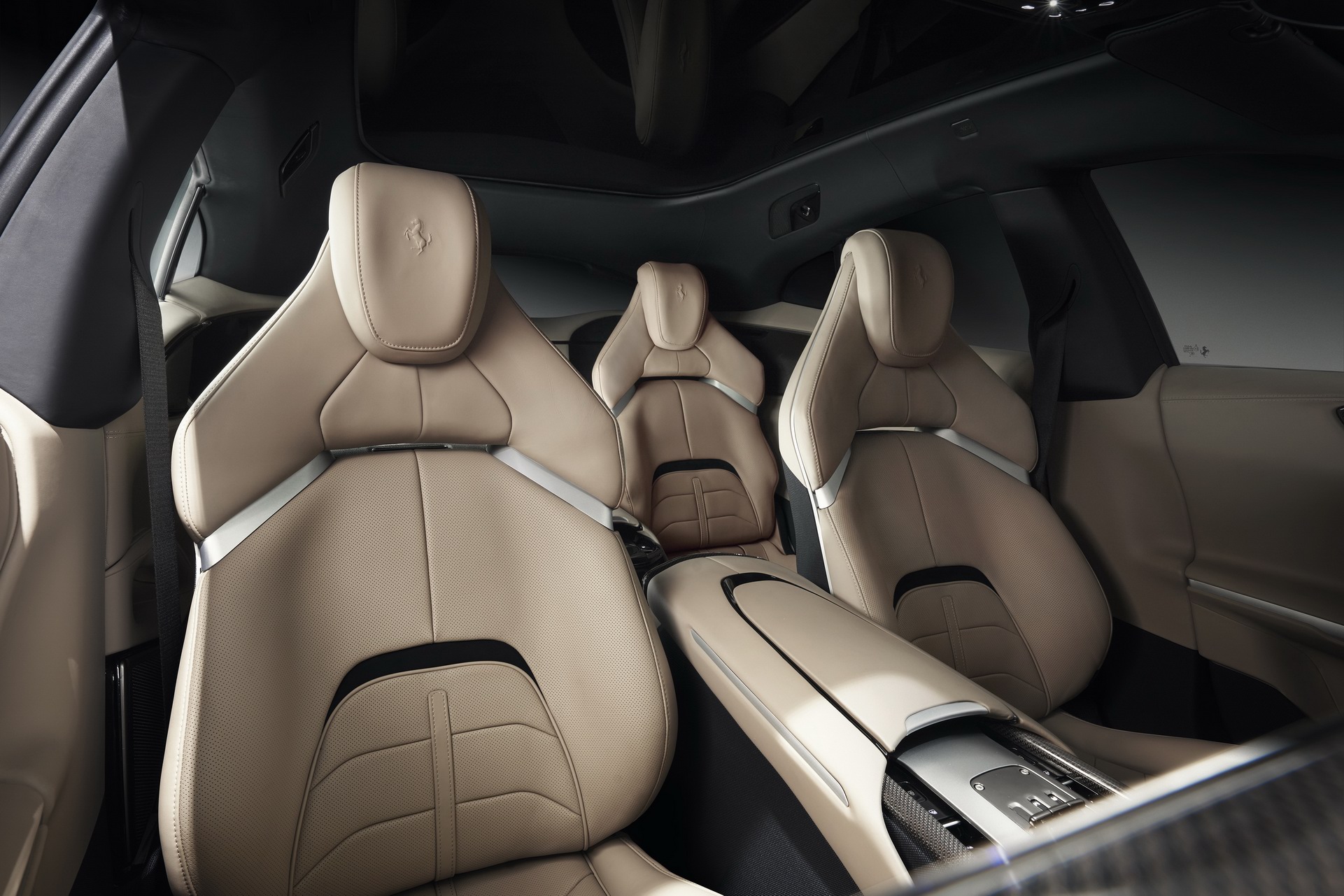
The Australian reveal of the Purosangue occurred at the Universo Ferrari exhibition, alongside the first Aussie spotting of the stunning Daytona SP3.
During the four-door’s reveal, Ferrari executives discussed the kind of customer the Purosangue brought in.
There were new names, but overwhelmingly it’s existing customers that want to add the brand’s first ever four-door production vehicle to the stable, so they don’t have to rely on a Lamborghini Urus, Bentley Bentayga or Aston Martin DBX for the weekly shop.
Naturally, Ferrari is giving first preference to existing owners, with new customers to be served as production opens up.
Why no hybrid?
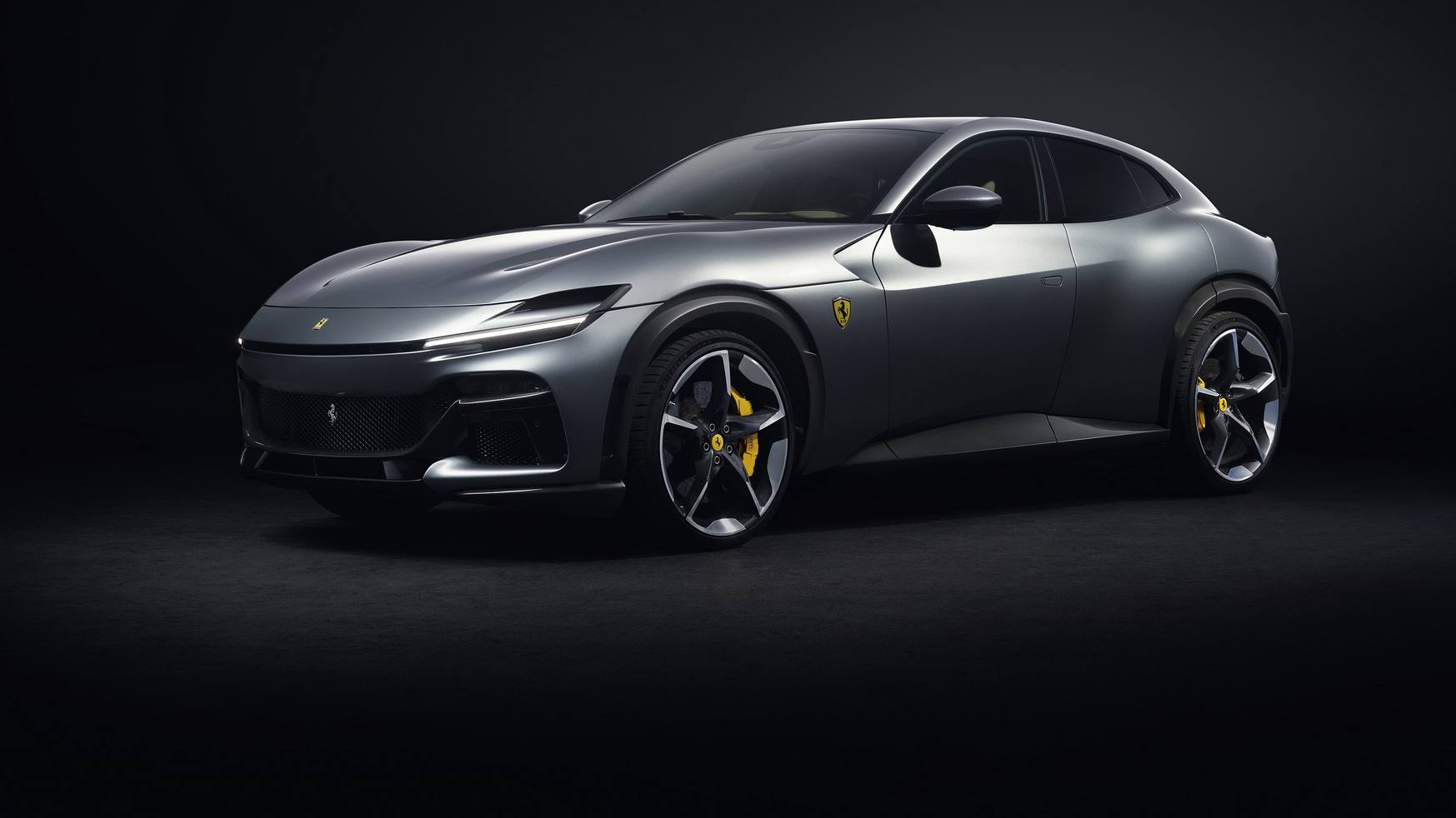
Under the Purosangue’s long, luxurious bonnet is a 6.5-litre petrol V12 derived from the 812 Competizione’s engine, but with a focus on greater mid-range punch rather than outright power.
The result? A meagre 533kW of power at 7750rpm and 716Nm of torque sent to all-four wheels (under 200km/h) via a seven-speed dual-clutch automatic.
But as the world pushes for more electrification, surely the Purosangue was the perfect test-bed for electrification? With the Purosangue’s high ride height and 3018mm wheelbase, packaging batteries would be easier than in the 296 GTB or SF90 PHEVs.
However, with turbochargers, inverters and batteries, there’s the danger the Purosangue would have been seen as another cookie-cutter luxury SUV, and Ferrari isn’t about that, it says.
“The concept of Purosangue was actually to come up with a product that is a game changer in the long run, because we are having a versatile, larger car that functions or fulfils different purposes for new clients and existing clients”, Knechtel explained.
It seems to have worked, too, given the strength of the order bank. Speaking to Wheels, Galliera outlined two reasons Ferrari chose the V12 in the end.
“Number one because we thought it was perfect for the positioning of the car. And second, because we thought that for our clients, that V12 power was perfect. It was a bet, because the world was moving.
“And the market is telling us that we were right, even more than we expected”, Galliera finished.
Snapshot
- Toyota HiLux Revo BEV concept unveiled in Thailand based on Australiau2019s most popular ute
- Slightly tweaked face and front-left charging port for EV ute
- Toyota boss doubles-down on offering multiple powertrains, criticises news media
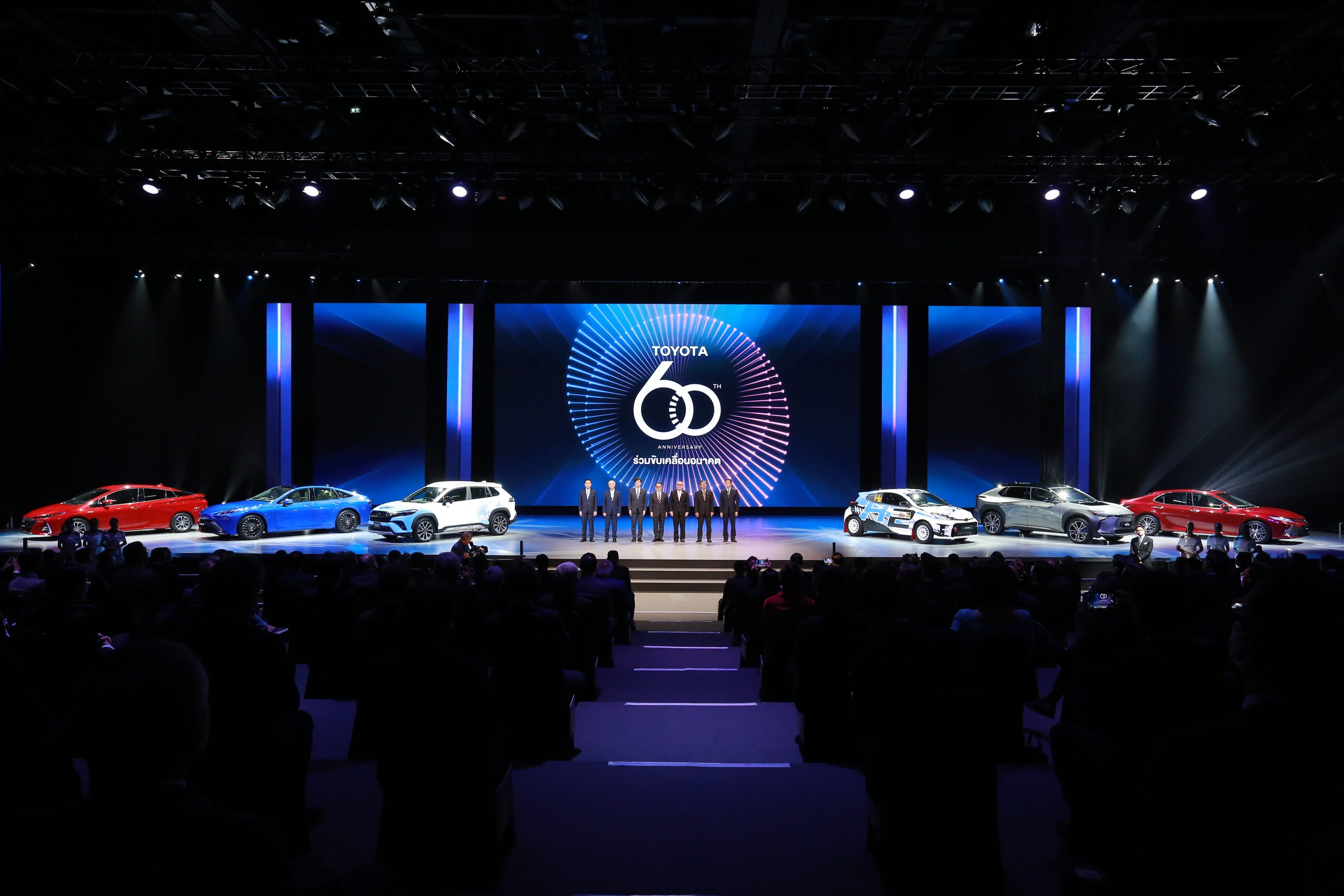
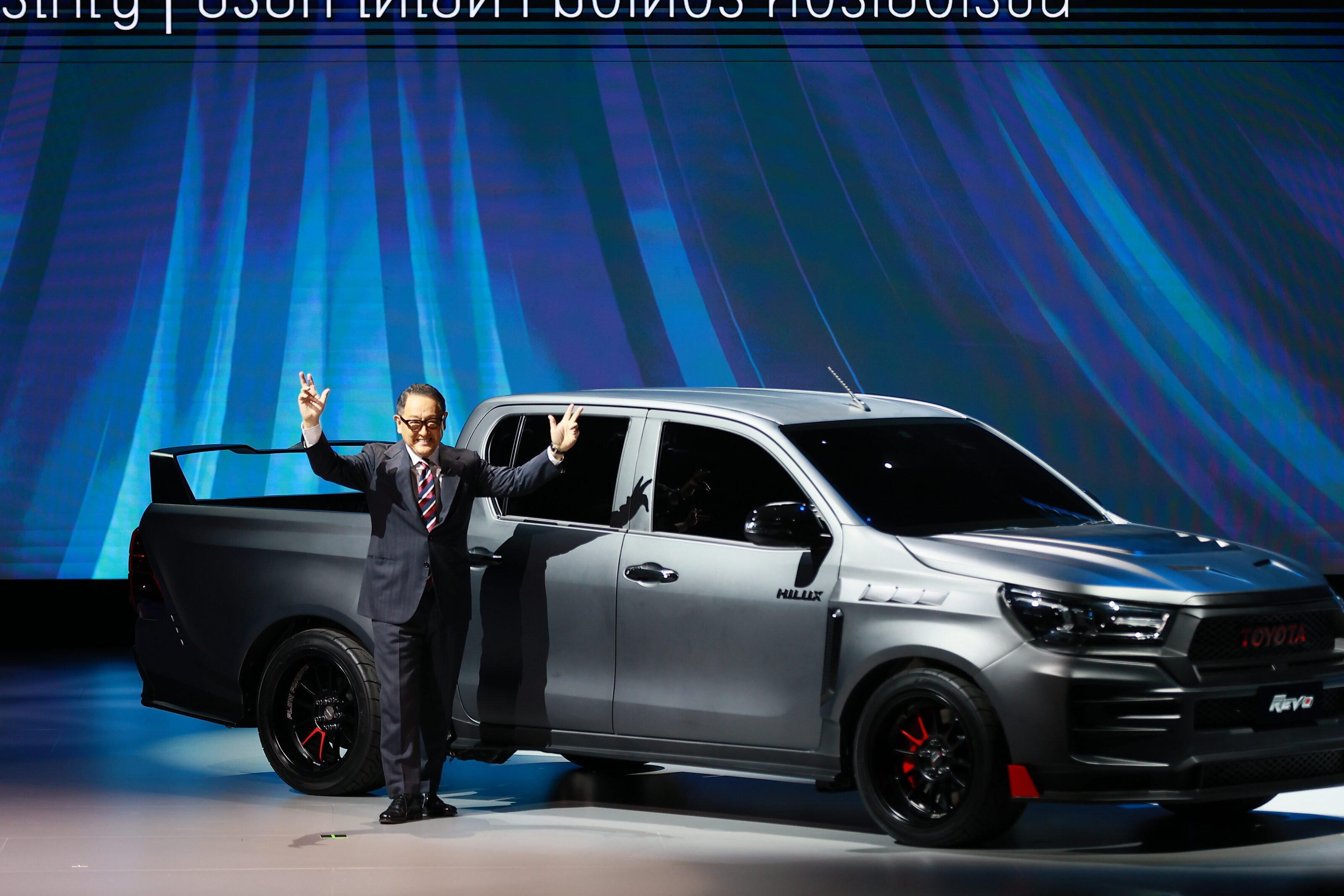
Toyota has shown off a full battery-electric vehicle (BEV) HiLux ute concept overnight at its keynote celebrating 60 years in Thailand.
Full details like driving range, towing capacity and payload weren’t divulged, but from the images, the HiLux Revo BEV concept is based on the current eighth-generation HiLux ute that is produced in Thailand and the best-selling model in Australia.
The electric ute features a closed-off aerodynamic face, a single-cab configuration, unique alloy wheels, and charging port at the front-left wheel fenders.
“[It’s] designed to support carbon neutrality and a better environment for all,” Toyota president Akio Toyoda said.
“Toyota does not take a one-size-fits-all approach to our products or our powertrains. In fact, I am often criticised in the press because I won’t declare that the automotive industry should commit 100 per cent to BEV.
“Because just like the fully-autonomous cars that we were all supposed to be driving by now, I think BEVs are just going to take longer to become mainstream than the media would like us to believe. And frankly, BEVs are not the only way to achieve the world’s carbon neutrality goals,” he said.
Brisbane-born startup ROEV will sell retrofit electric ute conversions for 2016 to 2022 model-year Toyota HiLux and Ford Rangers next year. But, it’ll be available for fleets only at launch with a starting price of $47,990 on top of the vehicle price.
Meanwhile, the only original equipment manufacturer (OEM) electric ute on sale in Australia is the Chinese-made LDV eT60, with a price tag from $92,990 before on-road costs.
Toyota also unveiled the IMV 0 concept, a Suzuki Jimny-like compact truck “designed to support economic growth and mobility for all”.
The Japanese car giant is also working on a hydrogen fuel-cell powered Toyota Corolla Cross small SUV using a Corolla GR hot hatch engine and Mirai hydrogen tech, with some unique design tweaks compared to the regular model.
October: Toyota EPU ute concept revealed
Toyota is getting serious about booting up an electric ute, although this one is of a unibody design.
Here’s everything you need to know about the new 2023 Ford F-150 coming to Australia in the second half of next year.
JUMP AHEAD
- Dec 15: New F-150 in Oz for testing and tuning
- Sep 19: F-150 could be just the first RHD conversion for Oz
- Apr 5: History of the F-150 in Australia
- Mar 29: F-150 v Ranger, how do they compare?
- Mar 22: 2023 Ford F-150 confirmed for Australia
- Oct 2021: EXCLUSIVE: Ford F-150 lands in Oz for evaluation
December 15: New F-150 arrives in Australia for testing and tuning
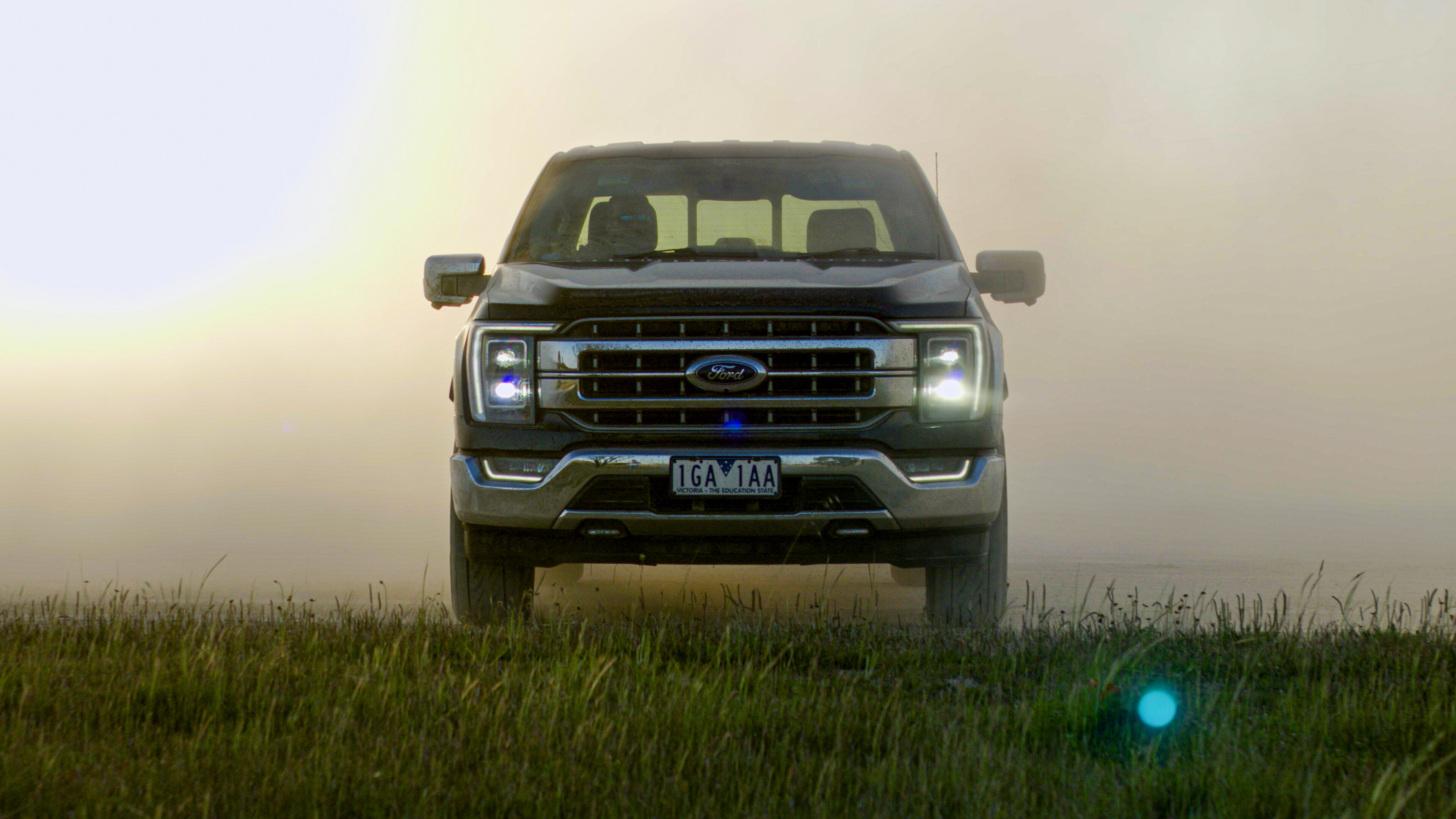
Both the F-150 XLT and Lariat to go on sale in Australia from the second half of 2023, and both variants are now with local engineers to make sure they’ll live up to expectations. Story at the link below.
September 19: The F-150 could be just the first RHD conversion for Oz
Speaking with Wheels Media, Ford execs have admitted that if the F-150 does well in Australia, and if production capacity can be found, then we might also see the Maverick and Bronco come down under. Story at the link below.
April 5: History of the F-150 in Australia
As Ford brings the F-150 back, we take a look at the pick-up’s relationship with our market. Story at the link below.
March 29: F-150 v Ranger, how do they compare?
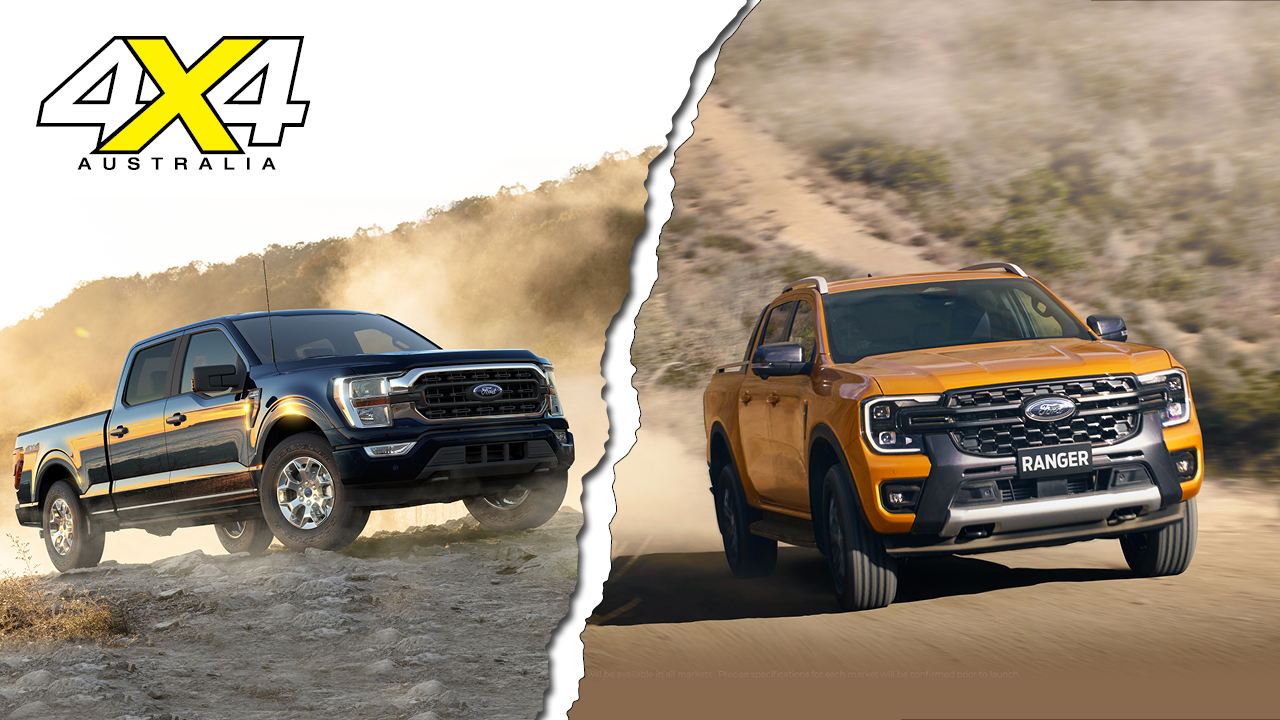
Will the big F-150 step on the Ranger’s toes? We take a look at the specs released so far. Story at the link below.
March 22: 2023 Ford F-150 confirmed for Australia
Snapshot
- F-150 to go on sale through Ford dealers from mid-2023
- Remanufacturing to right-hand drive will be completed by RMA in Melbourne
- Ford will offer a five-year/unlimited-kilometre warranty across Australia
The 2023 Ford F-150 pick-up truck will be sold officially in Australia, marking a return for the iconic F-series after a 16-year hiatus.
Ford Australia will import the 14th-generation F-150 and convert America’s best-selling vehicle to right-hand-drive through Melbourne company RMA Automotive.
Australian suppliers will account for three-quarters of its parts to pass Australian Design Rules regulations, but also to take on our local roads.
An official return for the F-series has been rumoured for years – with anticipation increasing last year after a 2021 model was seen shortly after landing in Australia.Ford Australia has been noting the local sales successes of the big pick-up trucks from RAM and Chevrolet. The RAM 1500/2500/3500 range is distributed by Ateco in Australia, with conversions performed by the Walkinshaw company also responsible for localised versions of the Chevrolet Silverado.
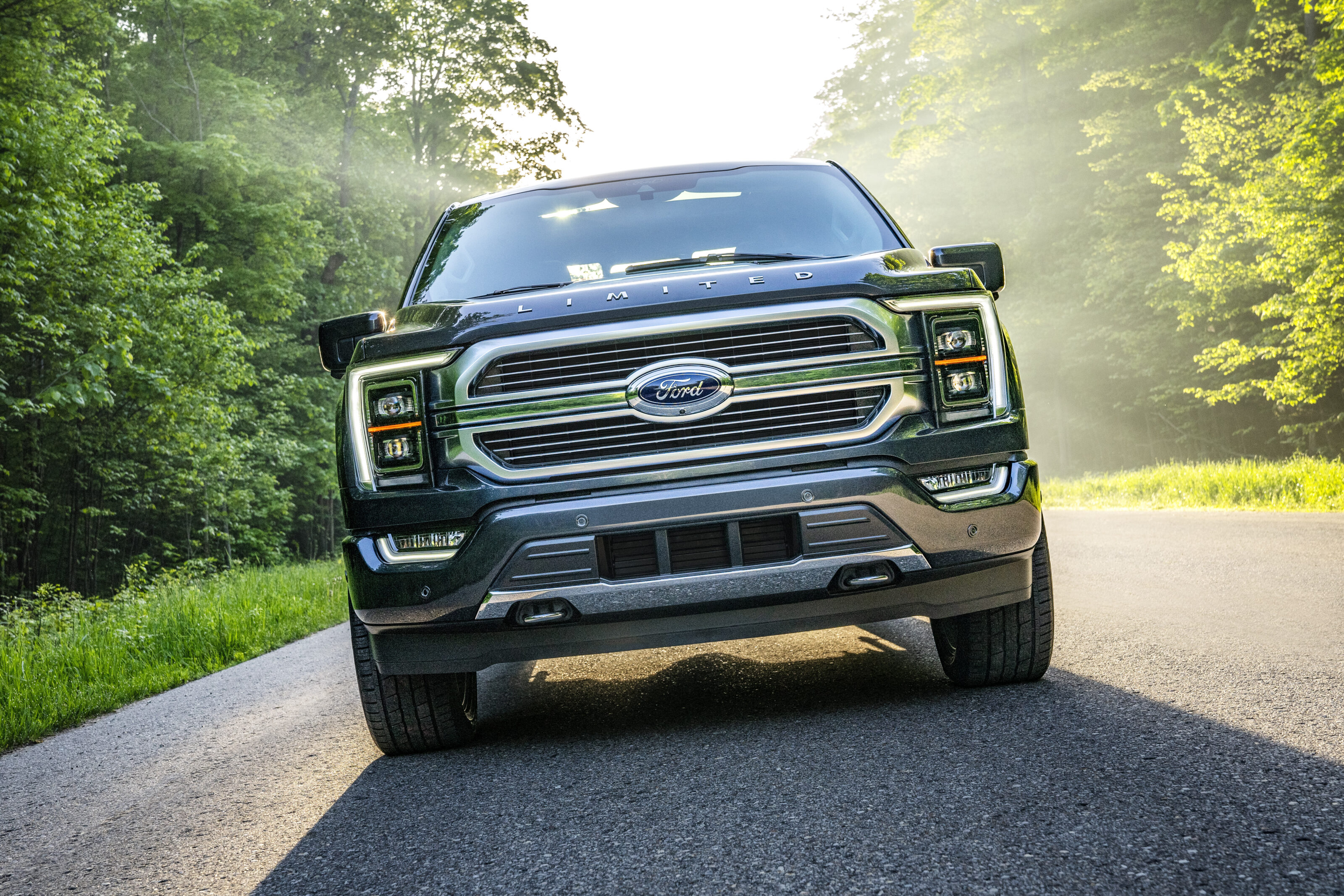
Off the back of demand for the pick-up from Australian customers, Ford will copy the most popular grades from the United States market for local buyers, shipping the F-150 with a 3.5-litre ‘EcoBoost’ twin-turbo V6 petrol engine as its sole powertrain, paired with a 10-speed torque-converter automatic transmission and four-wheel drive.
The 298kW/678Nm EcoBoost F-150 has a 4.5-tonne towing capacity in the US – on par with both the Ram 1500 and Chevrolet Silverado 1500, the American competitors that are now local rivals.
It’s also an improvement on the upcoming flagship Ranger Raptor, which scores the 3.0-litre EcoBoost V6 for the first time with outputs of 292kW/583Nm, although the two models are designed for very different jobs.
An official confirmation of the F-150’s payload capacity has not yet been announced, but American specifications suggest it would carry between 1000-1200kg in the bed.
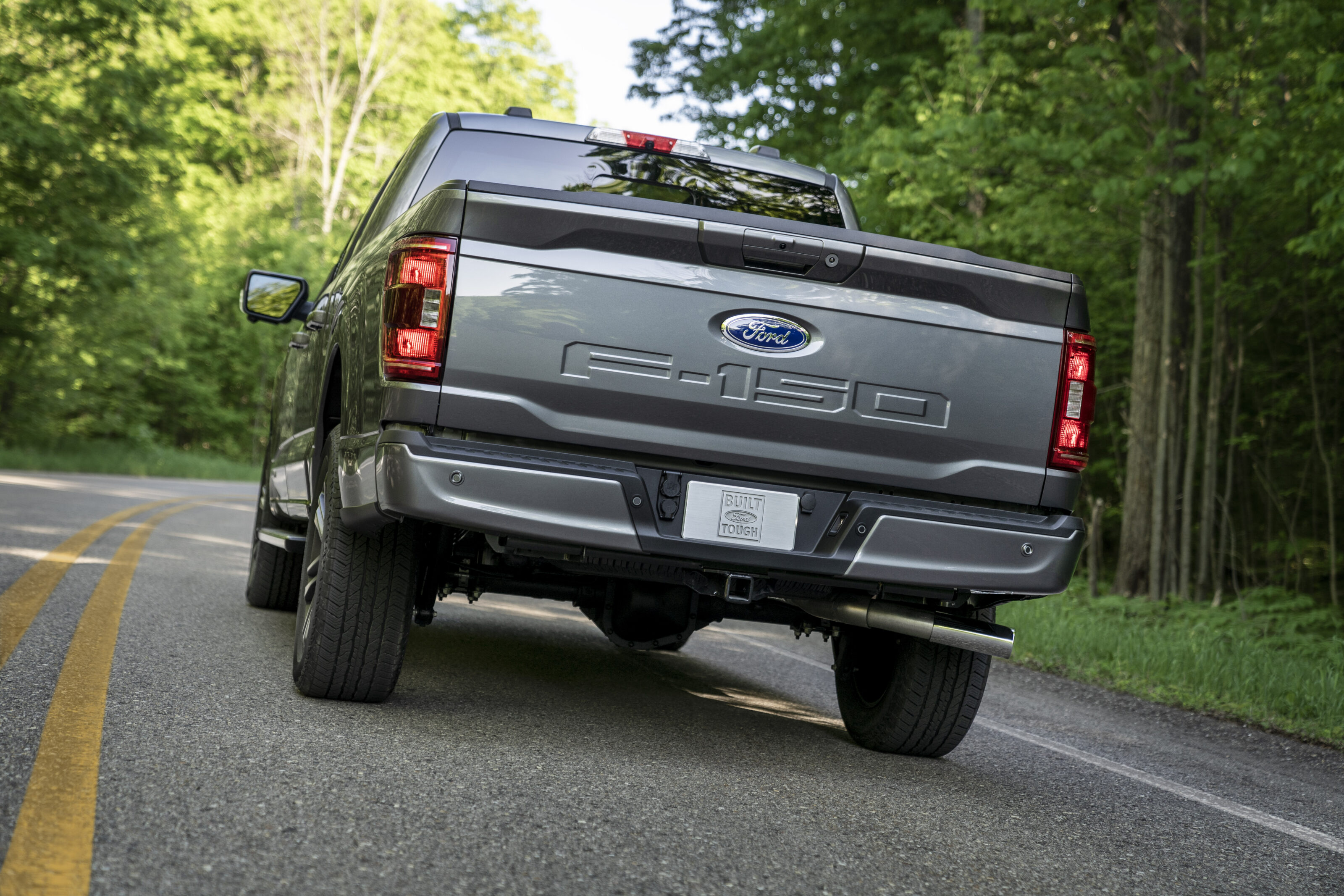
Just two grades of the Crew Cab F-150 will be available from launch, with both the XLT and Lariat carrying across from the F-150’s home market thanks to their proven popularity. Specific details regarding pricing and features will be announced closer to launch.
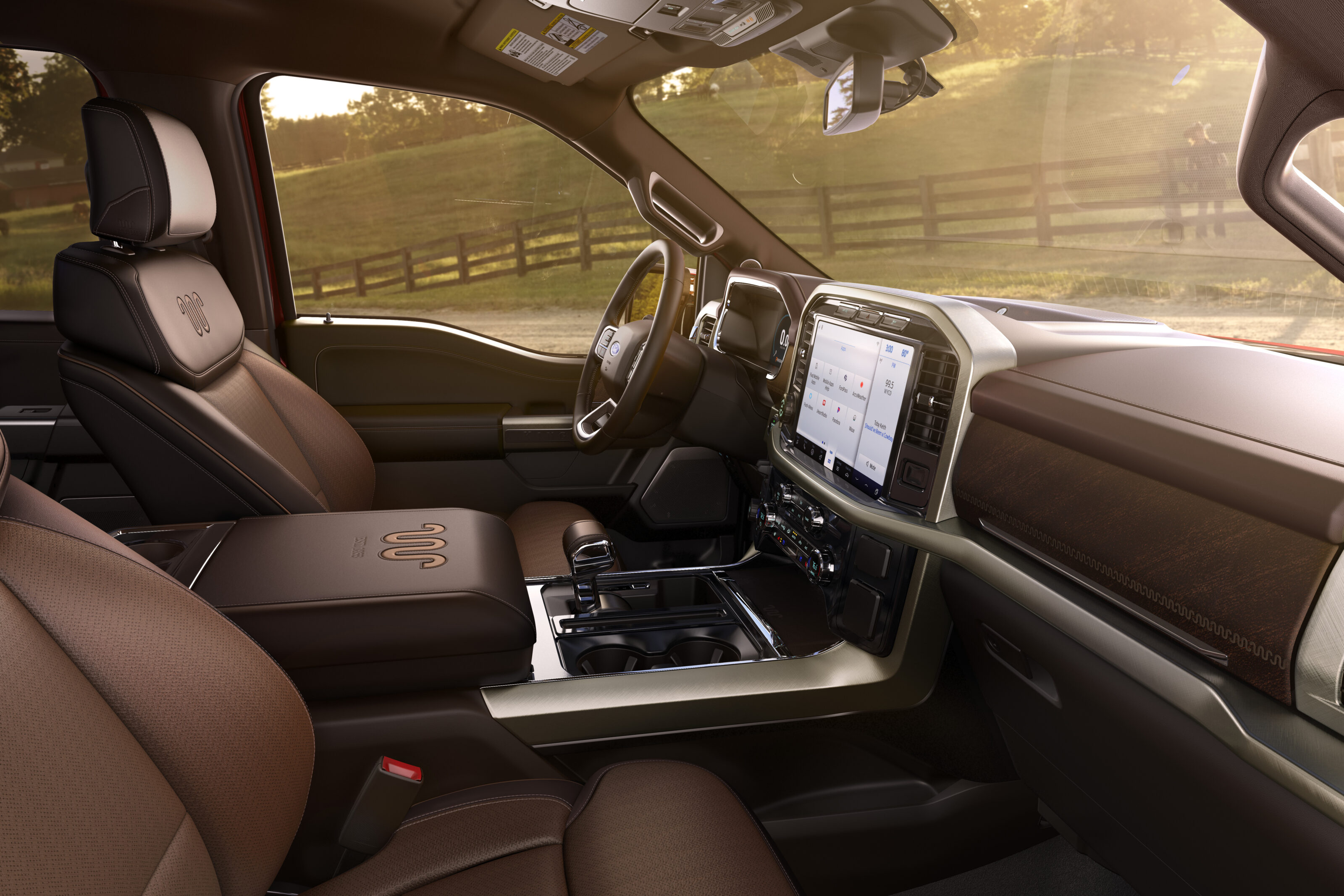
Ford, however, has confirmed standard equipment will include its SYNC4 infotainment system, as well as safety technology such as: collision assist with automatic emergency braking, BLIS (blind-spot information system) with cross-traffic alert, lane-keeping system, rear view camera, auto high beams, reverse brake assist, reverse sensing system and post-collision braking.
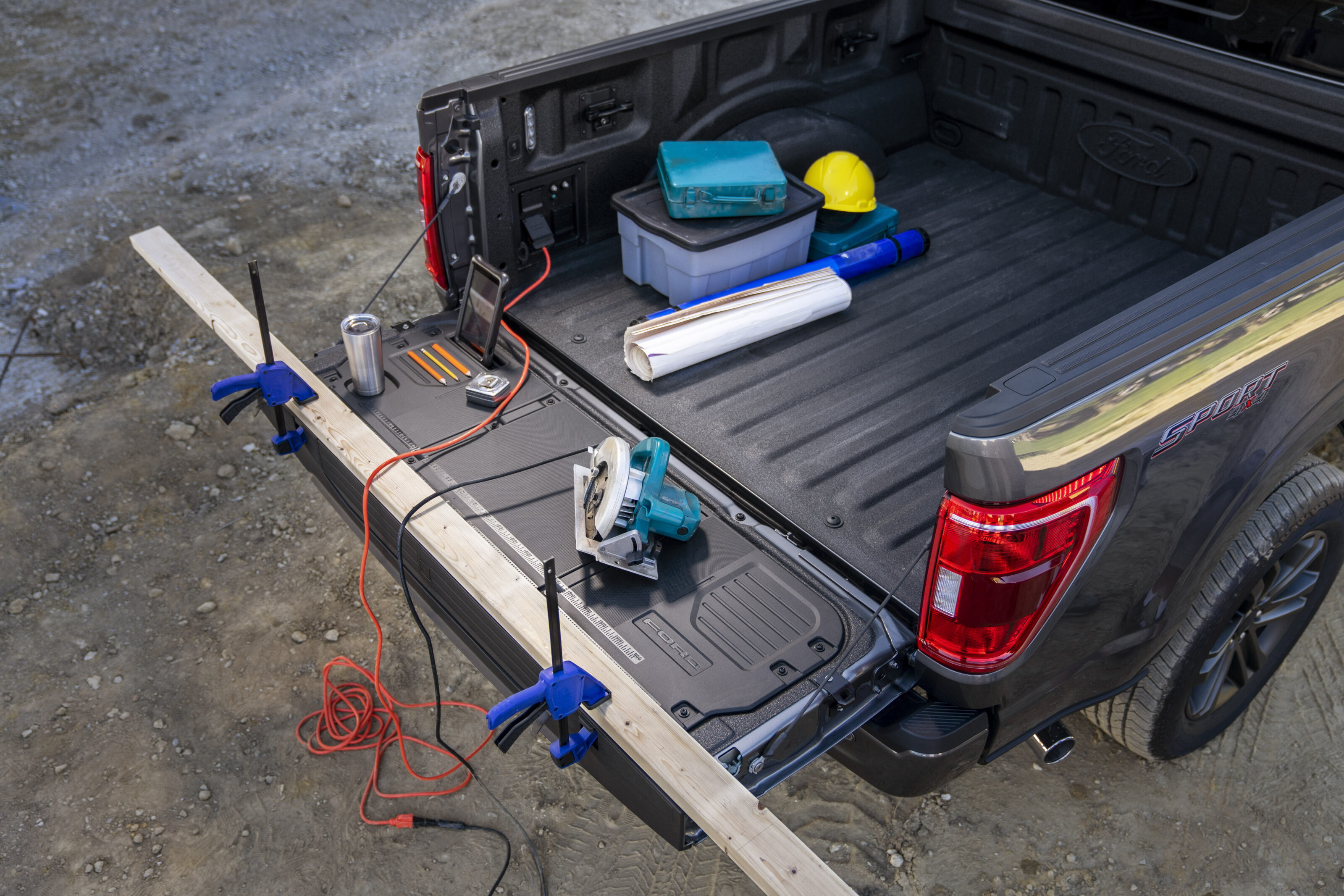
Ford Australia CEO Andrew Birkic said local interest for the F-150 has never been higher, making it an obvious decision to introduce the pick-up to the Australian market.
“We’ve listened hard to fans and dealers and found a way to bring F-150 to Australia,” he said.
“As the pinnacle of ‘Built Ford Tough’, it will give our customers even more choice when they’re in the market for a pick-up. We just can’t wait to unleash it.
“F-150 has been part of F-Series, America’s best-selling vehicle line, for the past 40 years, with more than 40 million F-Series Trucks produced to date. With such a local fan base, and with full-size truck sales in Australia tripling in recent years, we just knew we had to find a way to bring it back to Australia.
“With the introduction of F-150, alongside our Ranger line-up, Ford’s comprehensive pick-up truck range will offer a vehicle for every situation.”
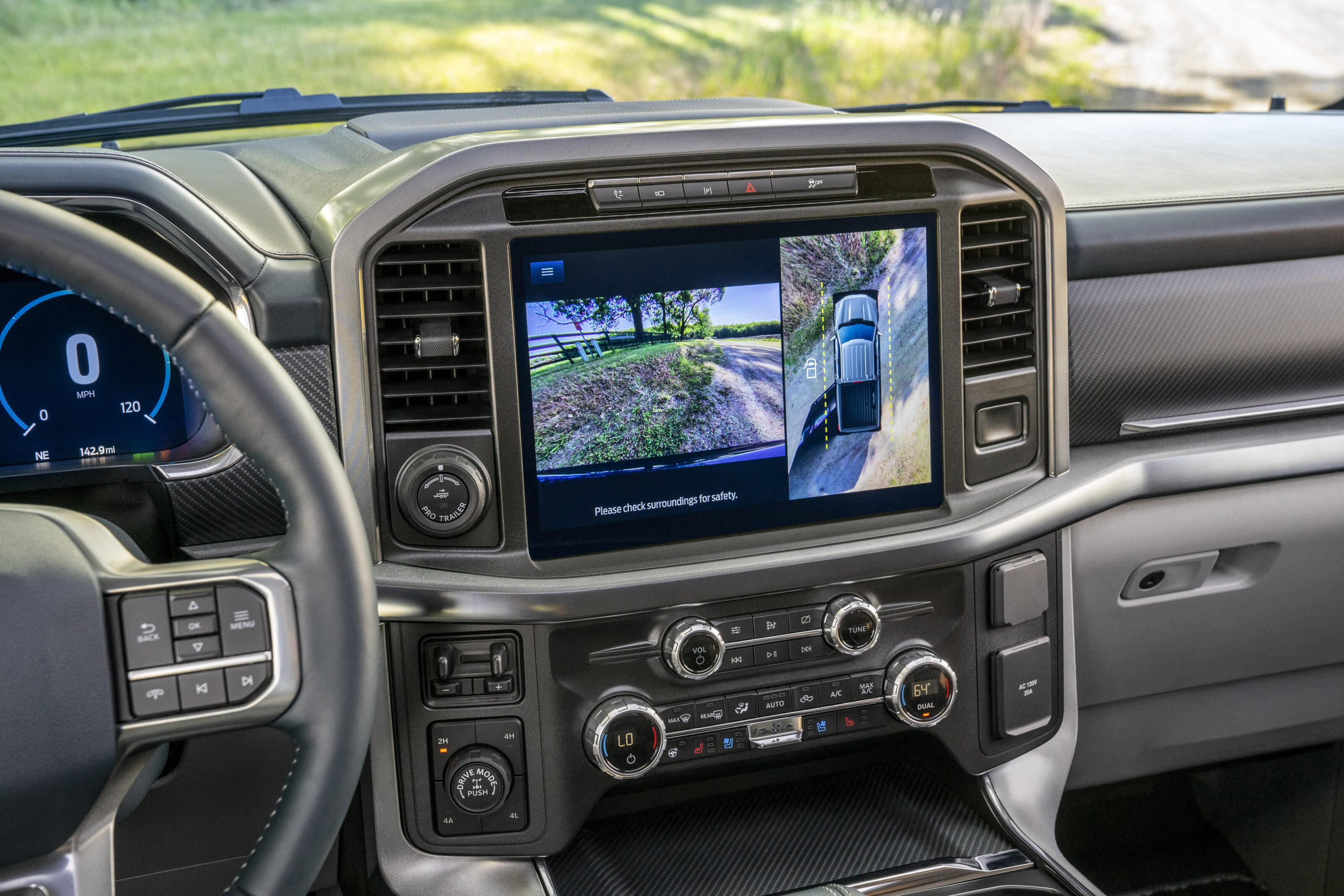
Asked whether the F-150 will gain the same in-house and aftermarket parts support as the Ranger, which saw ARB develop official accessories for the dual-cab, Natalie Manariti, Ford Australia’s Global Trucks Enterprise Product Line Manager, said accessories for the pick-up are still under development with Australian partners.
The Ford F-150 will be sold in Australia with a five-year/unlimited-kilometre warranty – longer than Ram and Chevrolet offerings, which are limited to three-year/100,000-kilometre warranties.
More models from Ford’s global operations are not yet off the cards, with Birkic saying the F-150 could open the floodgates for Blue Oval fans in Australia.
“The F-150 is part of a new wave of Ford vehicles for our Australian customers,” the boss added.
“We’re listening to customers and breaking down barriers to give them what they want – the best of our global line-up. There’s more where F-150 came from.”
The F-series was last sold in Australia between 2001 and 2006, when F250 and F350 variants were imported from Brazil in right-hand-drive guise.
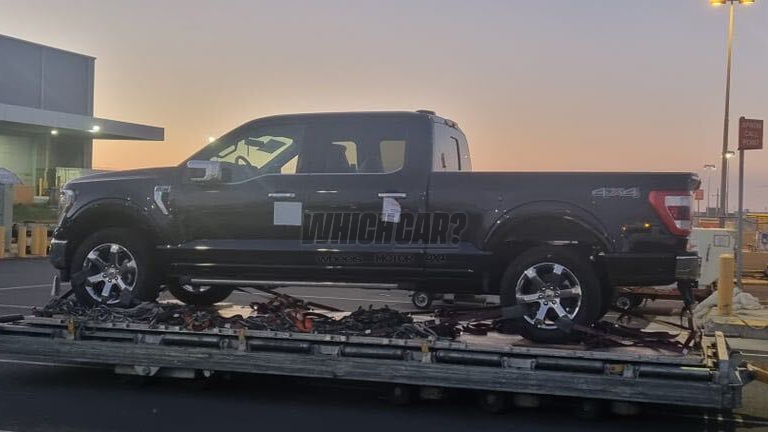
October 2021: EXCLUSIVE – 2021 Ford F-150 lands in Australia for evaluation
Ford has flown an F-150 pick-up into the country, as the company looks to muscle in on Ram, Chevrolet, and Toyota.
Snapshot
- New touchscreen software with mobile app connectivity
- No more finicky touchpad, tweaked centre console
- Hybrids now cheaper than petrol-only with price cuts and increases for 2023
The Lexus LS luxury sedan has gained better tech, mobile app connectivity, and removal of the awkward touchpad for the 2023 model-year.
Interestingly, hybrid variants are now cheaper than their pure petrol-engined counterparts – ranging from an almost $4000 saving for the flagship hybrid LS Sports Luxury to a $1240 price increase for both the petrol-only F Sport and Sports Luxury.
All models now feature the Japanese company’s latest infotainment operating system, which first debuted locally on the Lexus NX medium SUV.
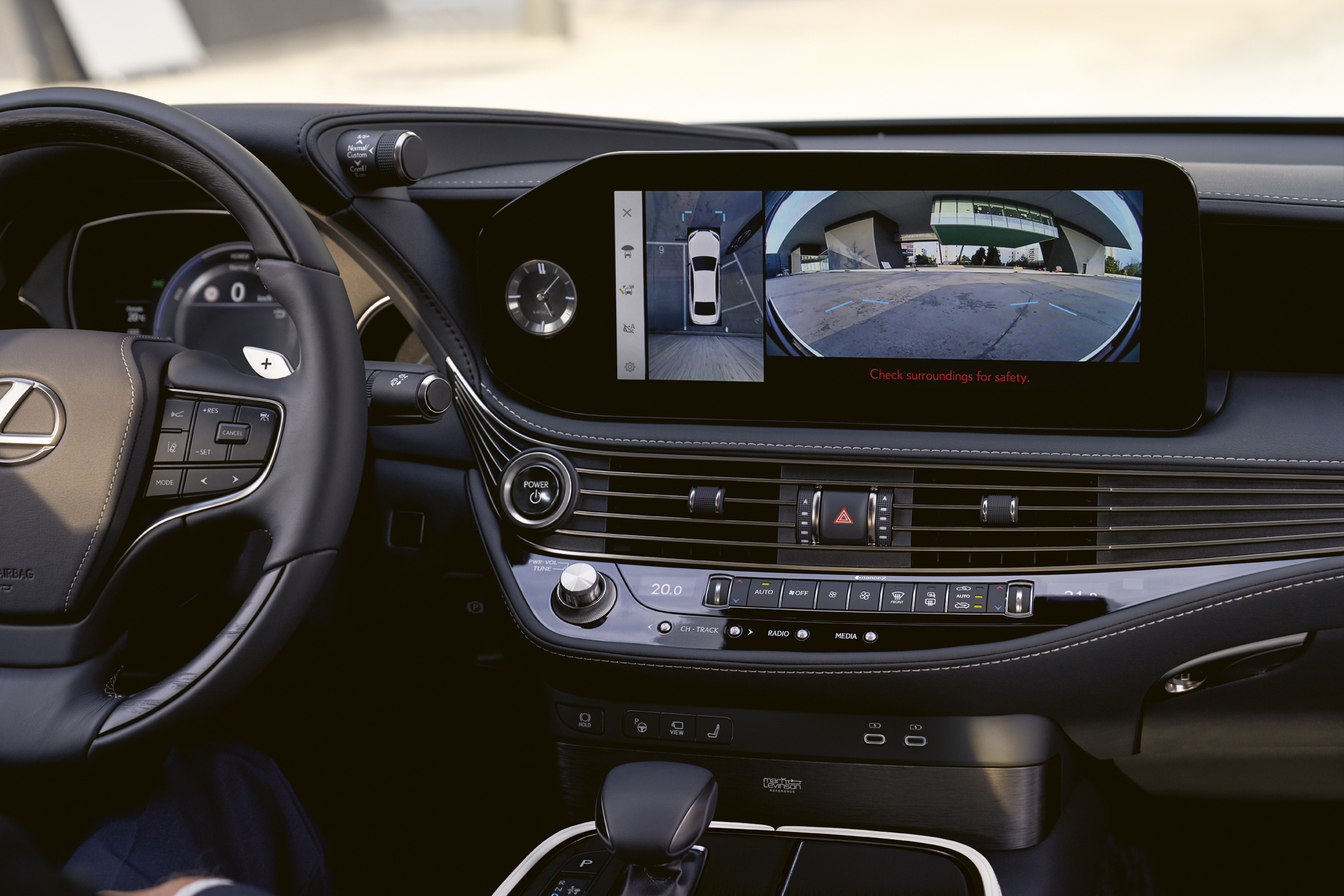
It’s the same 12.3-inch unit with an analogue clock on the side as before, but has a more modern user interface, improved performance, and built-in “Hey Lexus” voice control. Apple CarPlay is now wireless, but Android Auto still requires a cable to connect.
It’s also now a touchscreen-only proposition, with Lexus ditching the finicky touchpad on the centre console to free up space for a grid of seat heating/ventilation, heated steering wheel and rear sunshade buttons, plus adding a slot for a smartphone.
The standard 360-degree surround-view camera now has a transparent underbody function.
Additionally, the 2023 LS gets internet-connected telematics and mobile app features, dubbed ‘Lexus Connected’. For the touchscreen, it offers connected built-in navigation with live traffic, weather, parking and map updates, as well as location searching.
Meanwhile, the smartphone app allows owners to remotely start the engine, lock/unlock doors, turn on the hazard lights, and check things such as tyre pressure and remaining fuel.
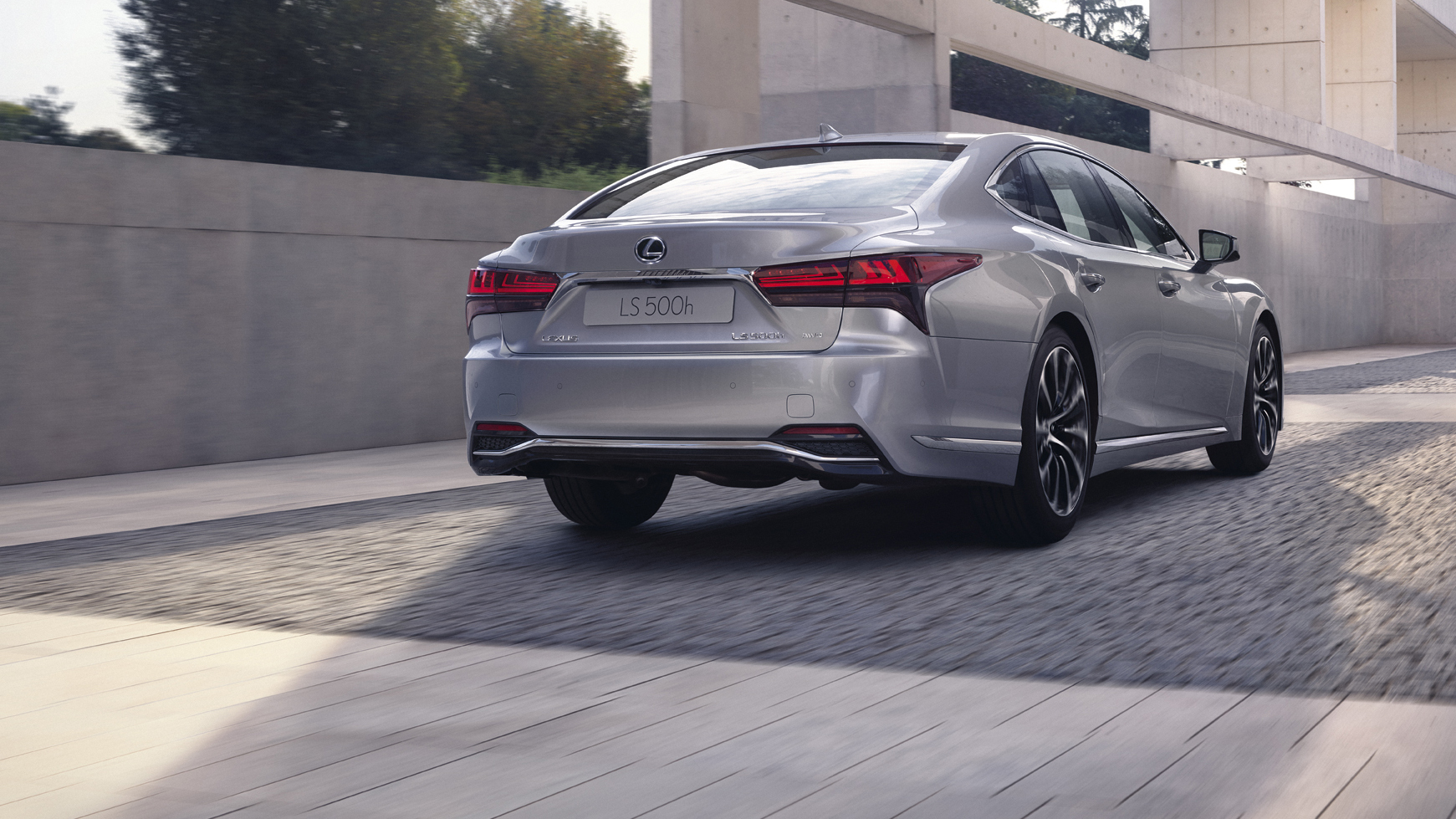
The Japanese automaker has made its flagship luxury sedan more discreet by deleting the Lexus badge on the boot lid, while all hybrid variants remove the hybrid badge beside the doors, the signature blue hue in the Lexus logo, and ‘500h’ model badge.
It retains the same V6 twin-turbocharged petrol and V6 hybrid power plants, which were tuned with its facelift in early 2021.
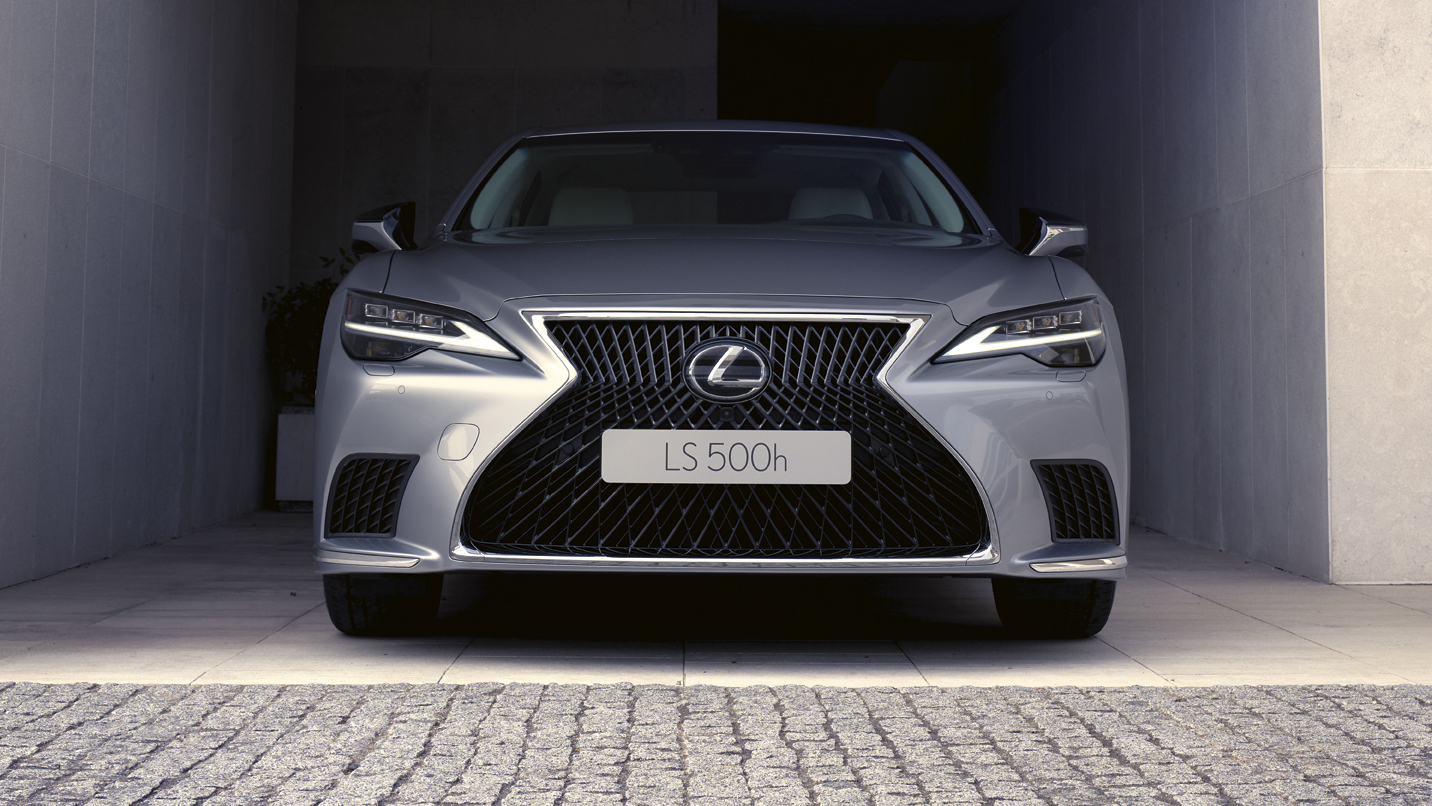
2023 Lexus LS pricing
The 2023 Lexus LS now starts from $195,920 before on-road costs and is available now.
| Model | Price | Difference |
|---|---|---|
| LS500h F Sport | $195,920 | -$33 |
| LS500 F Sport | $197,190 | +$1237 |
| LS500h Sports Luxury | $197,190 | -$3888 |
| LS500 Sports Luxury | $202,320 | +$1242 |
June: New C-HR unveiled!
Euro-built second-gen C-HR small SUV here next year with two hybrids – including an all-wheel-drive GR Sport flagship. Details at the story below.
The story to here
March 2023: New C-HR will be hybrid-only, due in Australia in early 2024
While it is still to unveil the model’s final design, Toyota has confirmed its next-generation C-HR will be offered in hybrid form only – moving the brand one step closer to its plans to sell only electrified models in the coming years. Get the full story at the link below.
Story continues…
December 2022: New C-HR imagined
Snapshot
- New 2024 Toyota C-HR confirmed, will it look like this?
- Australian launch for 2024 C-HR is confirmed
- Hybrid and plug-in hybrid powertrains announced
The new 2025 Toyota C-HR was previewed last week with the unveiling of the Prologue concept (shown below), offering our first look at the successor to the first-gen C-HR that debuted as a concept in 2014 and entered production in 2016.
As a concept, the C-HR Prologue wears a bold new look that gives the C-HR a lot of European flair – with a little bit of Hyundai through the doors – while taking front and rear styling cues from the new Prius and Crown models that have already entered production for other markets.
But, while Australia will miss out on those two model lines, the new C-HR will come to Australia.
“The current C-HR was embraced by customers for its bold styling and unique small SUV packaging and the concept vision for the next generation C-HR takes that to an even higher level,” said Toyota Australia’s sales and marketing boss, Sean Hanley.
“We are looking forward to the reveal of the final production version and introducing it to the Australian market in the coming years.”
How it will look in its final production form, of course, remains to be seen.
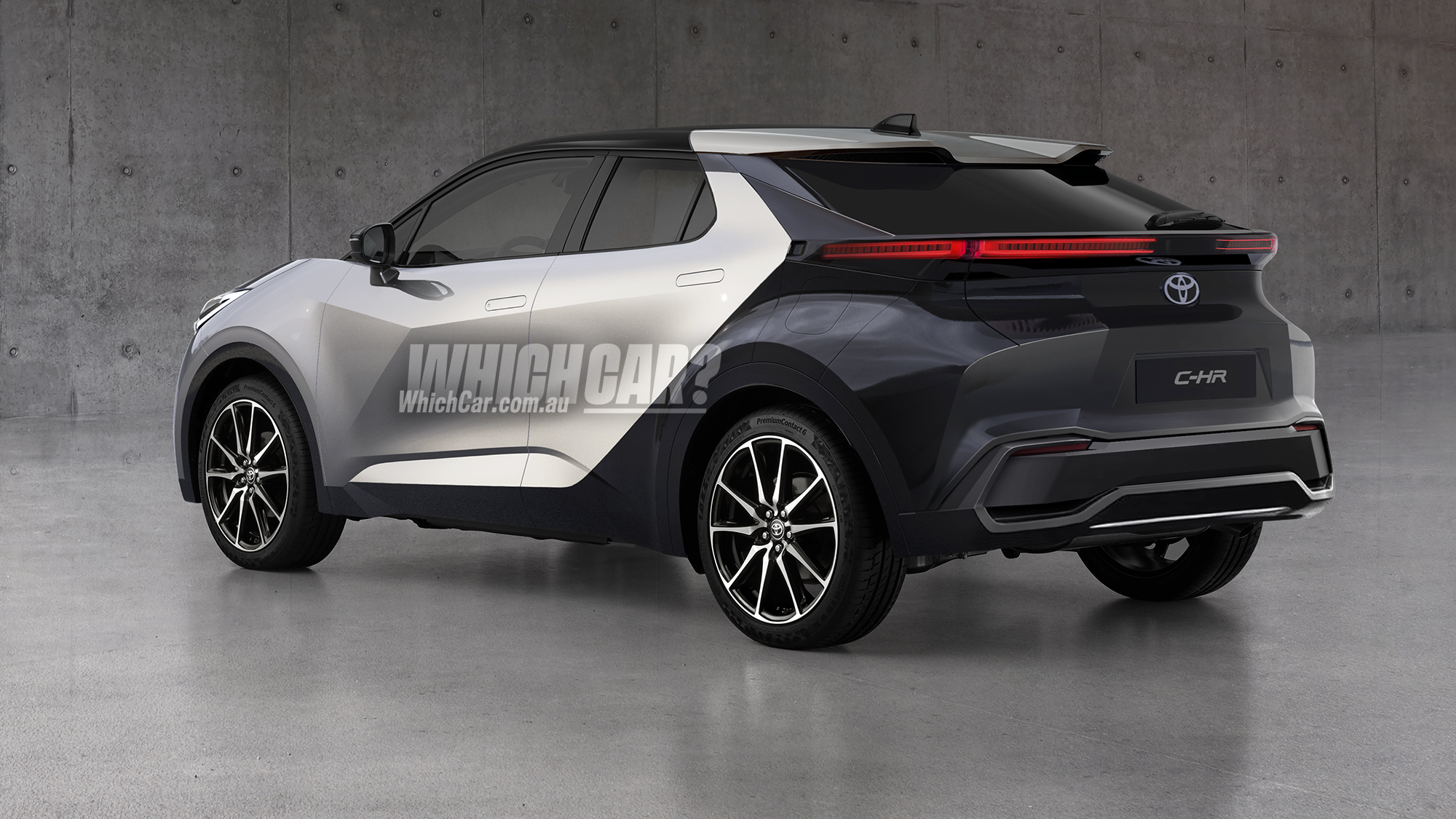
To imagine what buyers might expect to see in Toyota showrooms in 2024, we’ve had a crack at rendering the Prologue concept as a production model.
Below: The concept and our renderings, side-by-side
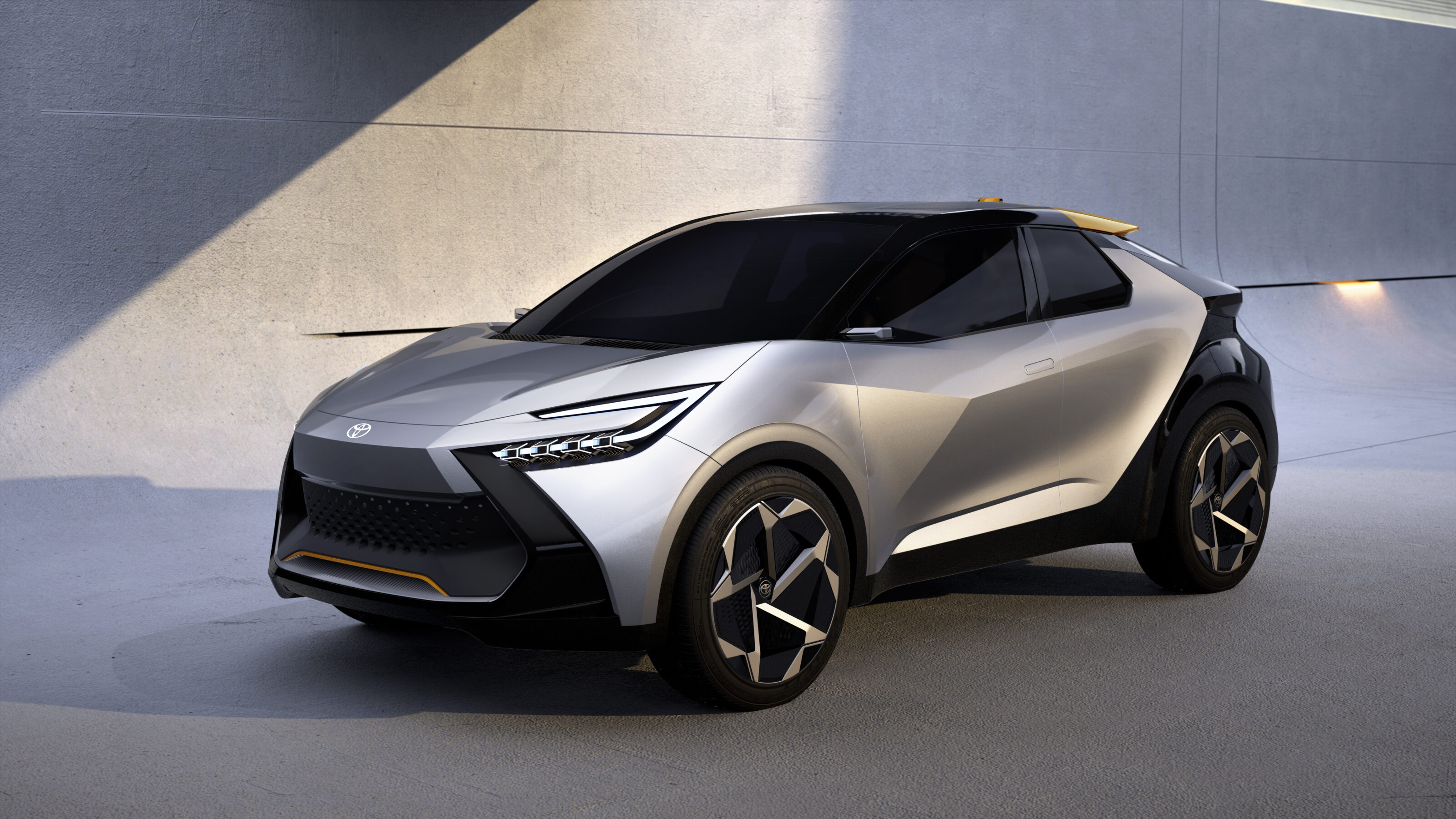
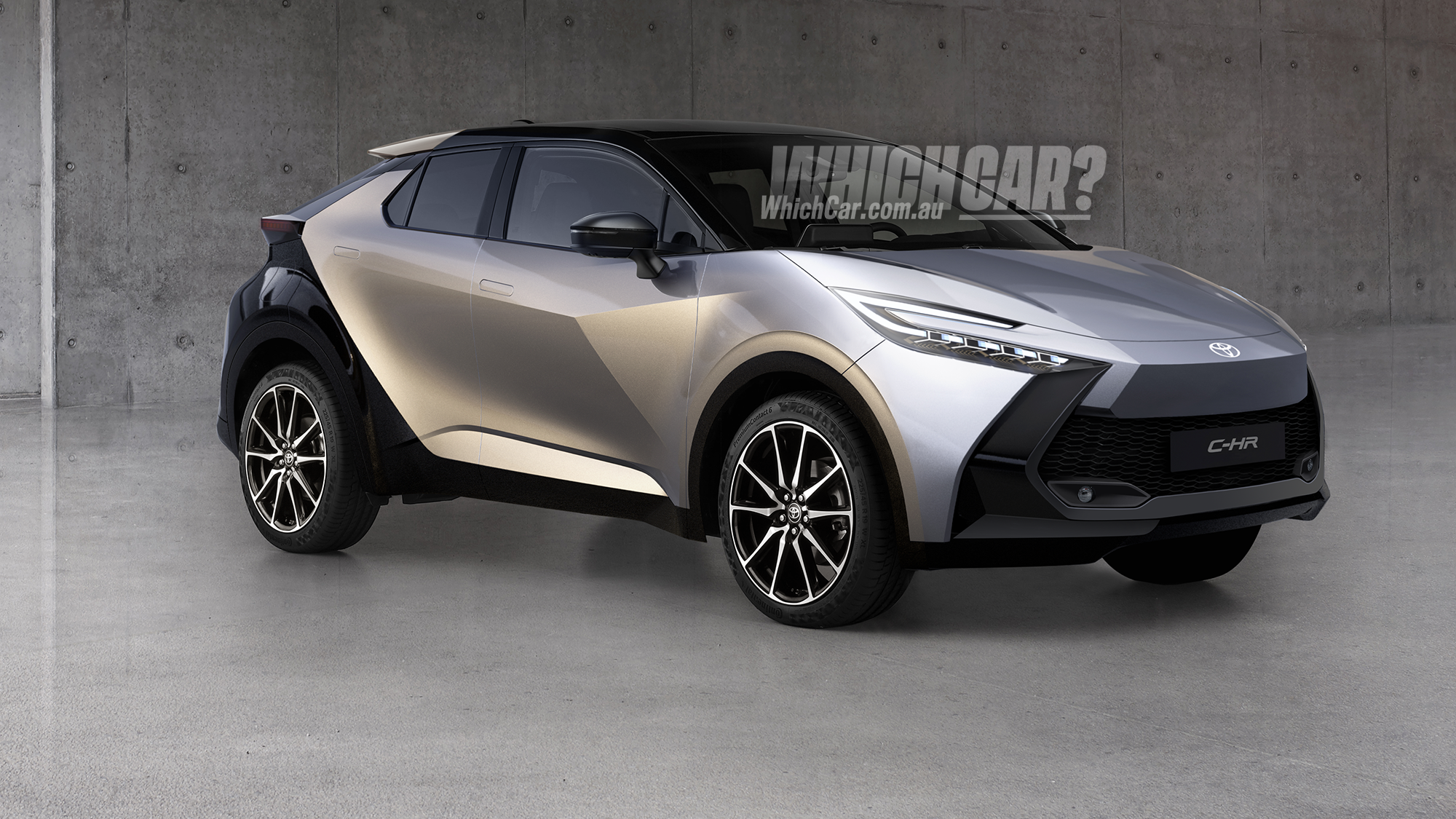
We’re confident the Prologue will make its way to market with very few changes.
More and more, thanks to advancing market tastes and improved manufacturing capabilities, brands are unveiling concepts that end up seeing very few changes on the road to production.
For the most part, changes tend to be to overall proportions and panel edges, usually driven by architecture hard points that can’t be fiddled with, and the few remaining manufacturing sacrifices to production speed and cost.
So, if you said you’re struggling to see the differences here, you’d be right. We haven’t made many, because we don’t reckon it’ll change much. There’s a new lower front bumper and smaller wheels, a rear door handle, and regular door mirrors too.
Below, we’ve applied a more production-friendly bumper design and a new look to the tail lights – but again, there’s really not much stopping Toyota from releasing the new C-HR with the Prologue concept’s existing rear end.
What do you think of the new C-HR’s look?

To learn more about the new C-HR, which we expect to share a lot in common with the new Prius, see our Prologue reveal story at the link below.
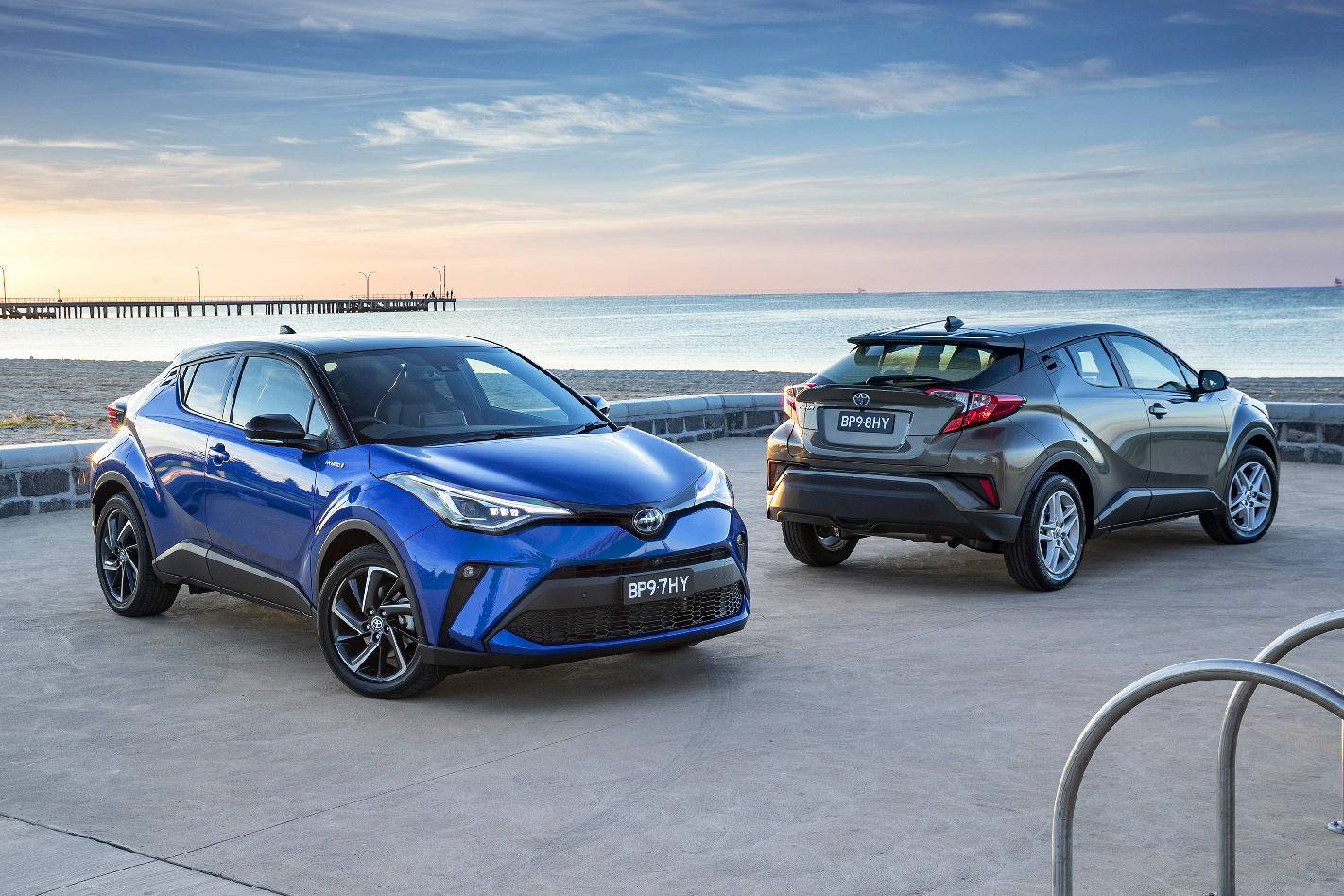
Below: The first-gen C-HR in its current facelifted form
Related video: C-HR GR Sport Hybrid review
Key Points
- Petrol-powered Mifa awarded five-star ANCAP rating under 2022 criteria
- Identical scores with Mifa 9 EV twin
- Child seats should only be installed in second row or left side of the third row
The 2023 LDV Mifa people-mover has been awarded the full five-star safety rating by the Australasian New Car Assessment Program (ANCAP) under the 2022 testing criteria.
The rating applies to all petrol-powered variants, but is identical to the full battery-electric Mifa 9 twin already tested.
The safety body praised the upmarket Chinese-made family van for scoring maximum points for protecting the driver and small female rear passenger in the full-width frontal test, front seat passenger in the frontal offset test, and the driver in the side impact test.
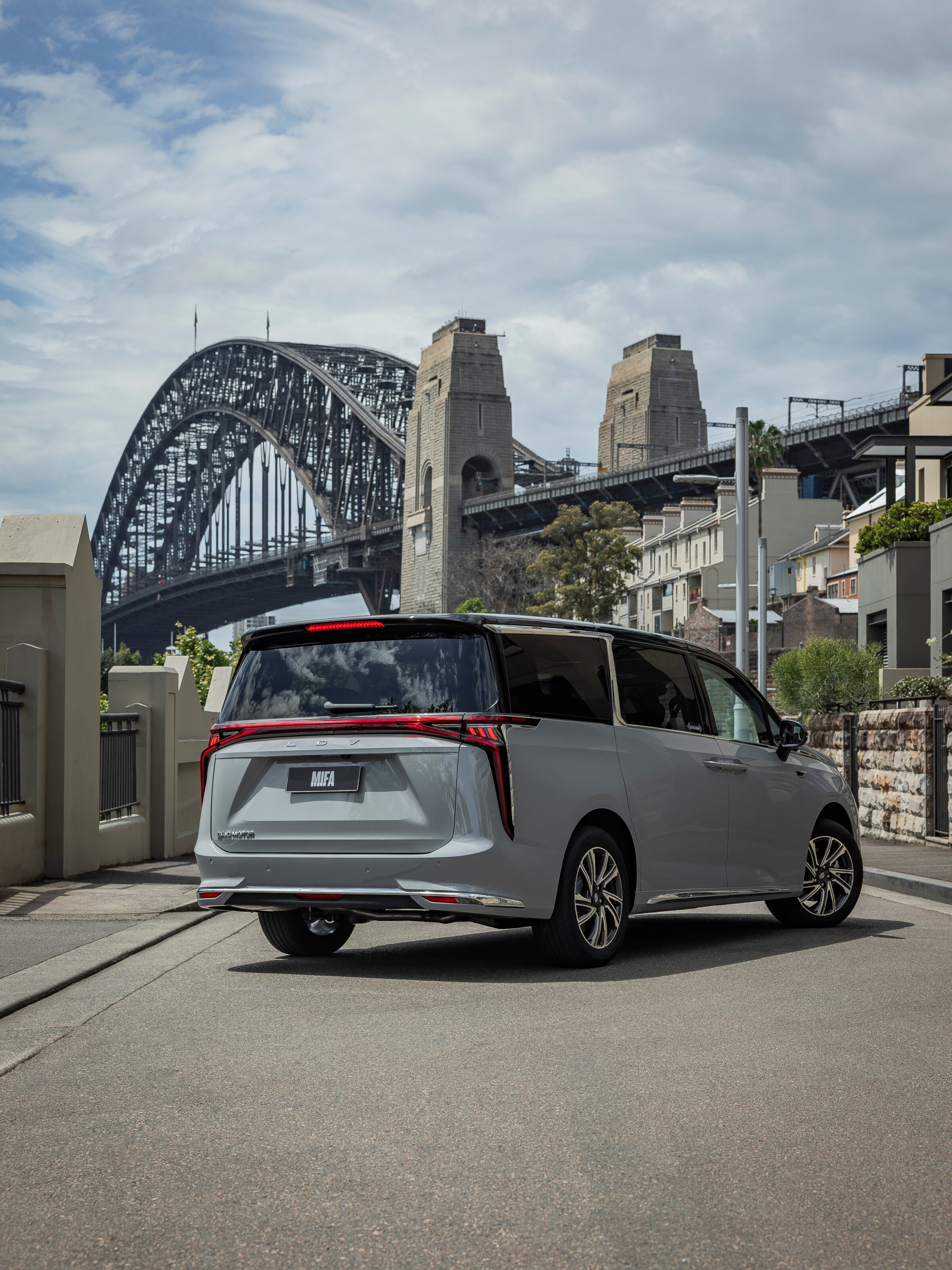
However, it warns child seats should not be fitted to the centre or right-hand-side third row seats due to a lack of top-tether anchorage points. All second-row seats feature top tethers.
It also had a marginal score for protecting the driver’s chest in the oblique pole test.
The petrol LDV Mifa has obtained the same ANCAP safety rating as its electric Mifa 9 counterpart, including 93 per cent for adult occupant protection, 88 per cent for child occupant protection, 73 per cent for vulnerable road user protection, and 90 per cent for safety assist.
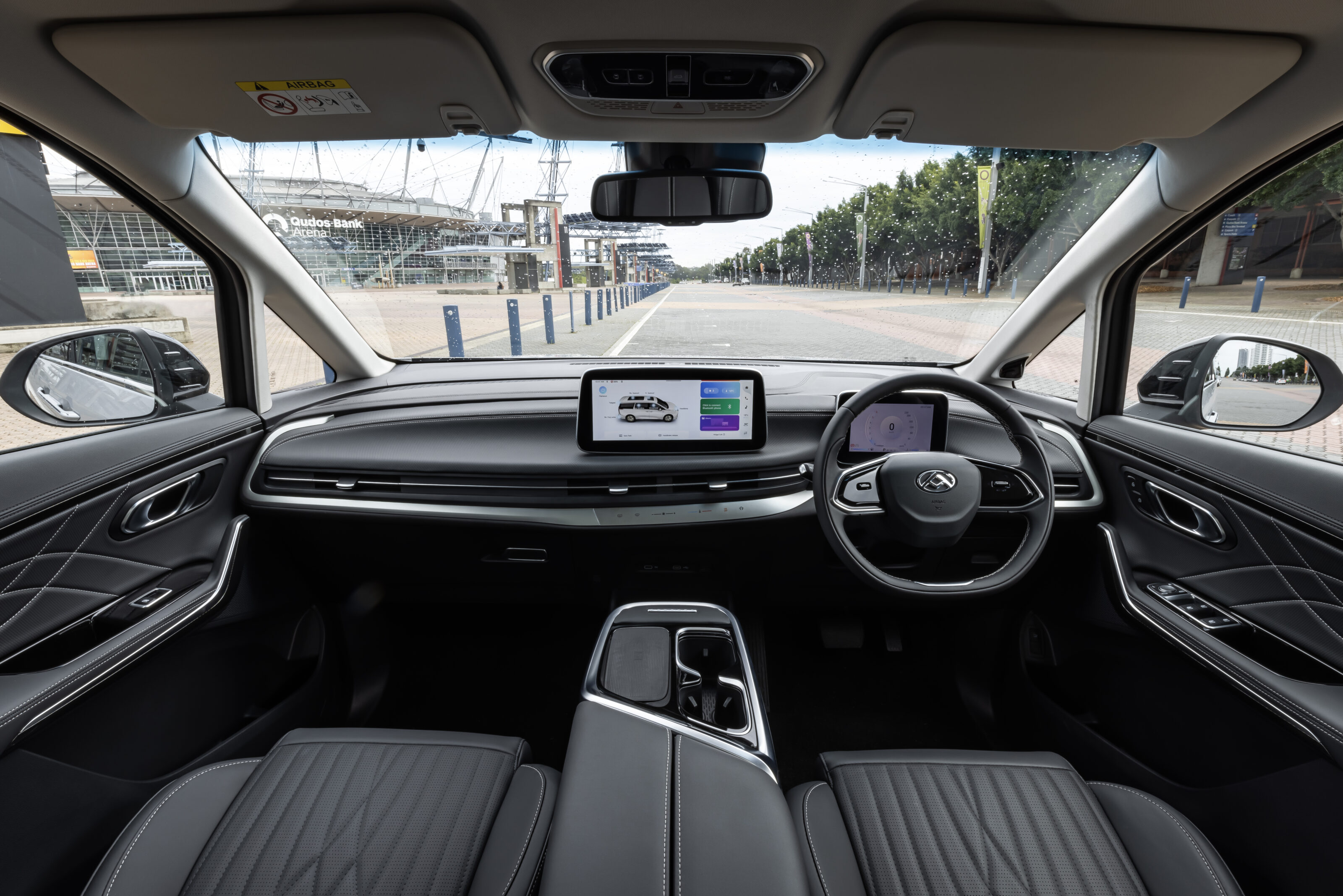
The Kia Carnival rival starts from $53,990 before on-road costs with front and rear auto emergency braking; blind-spot monitoring; rear cross-traffic alert; lane departure warning; lane-keep assist; adaptive cruise control; safe exit warning; and a reversing camera and sensors as standard.
Meanwhile, the mid-spec Mifa Executive adds front parking sensors and a 360-degree surround view camera system for $10,000 more.
A stricter 2023 ANCAP testing criteria will come into effect soon, which will evaluate floodwater testing, child in-car detection systems, car-to-motorcycle safety assist systems and more.
Snapshot
- HR-V receives four-star ANCAP rating under 2022 testing criteria
- Weaker child occupant protection and safety assist
- No centre airbag, but still performed well for adult occupant protection
The latest generation Honda HR-V small SUV has obtained a four-star safety rating from the Australasian New Car Assessment Program (ANCAP) under the 2022 testing criteria.
It’s one-star short of the full scoring system due to weaker performance in its child occupant protection (77 per cent) and safety assist (69 per cent) testing categories.
The HR-V had weak head protection for a 10-year-old child in the side impact test and lacks a centre airbag for front row occupants.
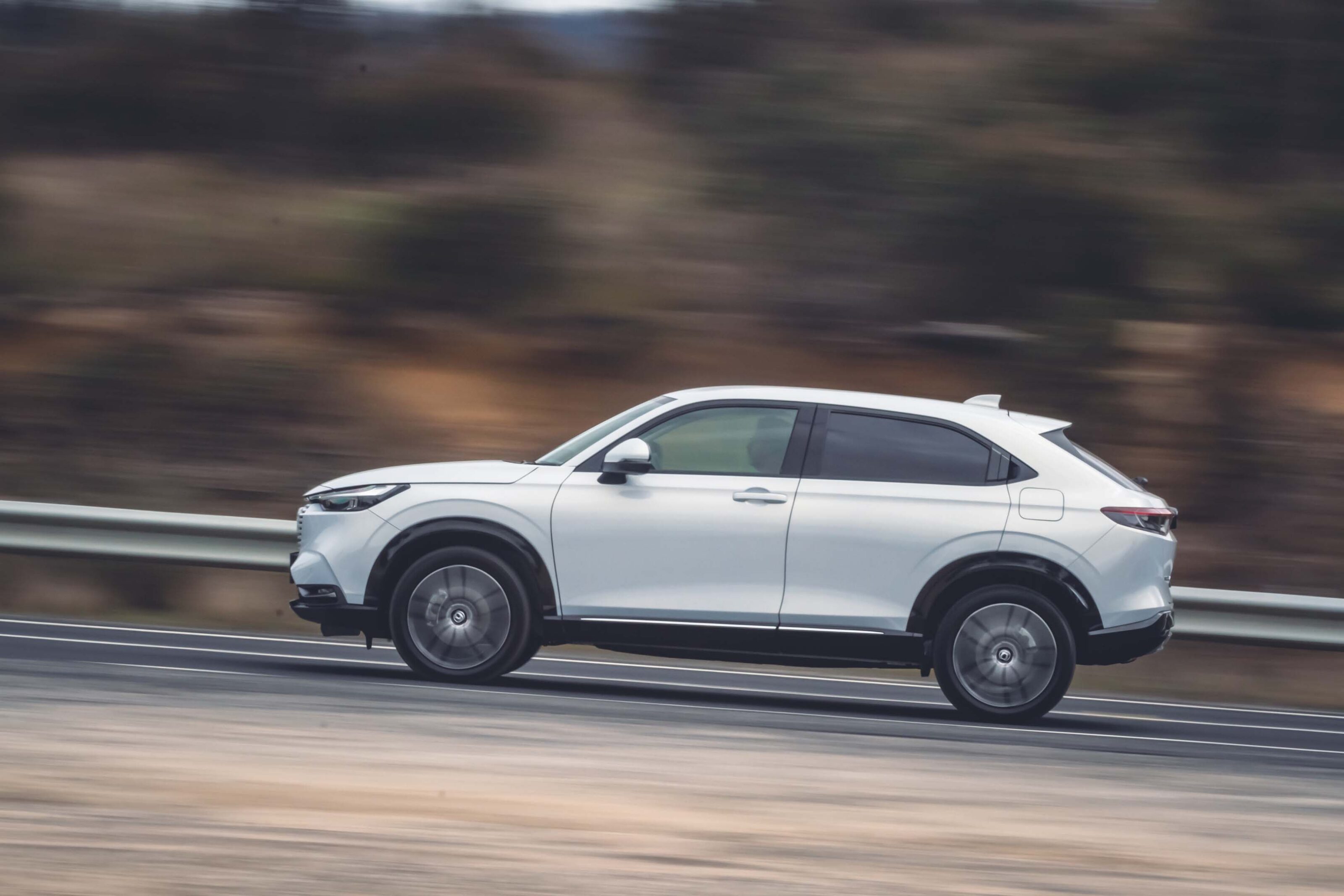
Safety assist features – such as detecting whether a passenger has been left in the rear row, driver fatigue monitoring and reverse auto emergency braking (AEB) are not available. But, the HR-V’s active safety assistance systems still mostly performed with the best ‘good’ rating across car-to-car and junction turning auto emergency braking, and lane-keeping assist tests.
The ANCAP rating applies to both petrol and hybrid HR-V variants.
The Japanese-made crossover scored 82 per cent for adult occupant protection and 72 per cent for vulnerable road user protection.

The 2022 Honda HR-V is priced from $36,700 before on-road costs and comes with safety equipment including front AEB; lane-keep assist; lane departure warning; road departure mitigation; adaptive cruise control; traffic sign recognition; a reversing camera; and front and rear parking sensors.
Stepping up to the $10,300 dearer e:HEV L flagship with a more economical hybrid powertrain gains blind-spot monitoring and rear cross-traffic alert.
A stricter 2023 ANCAP testing criteria will come into effect soon, which will evaluate floodwater testing, child in-car detection systems, car-to-motorcycle safety assist systems and more.
