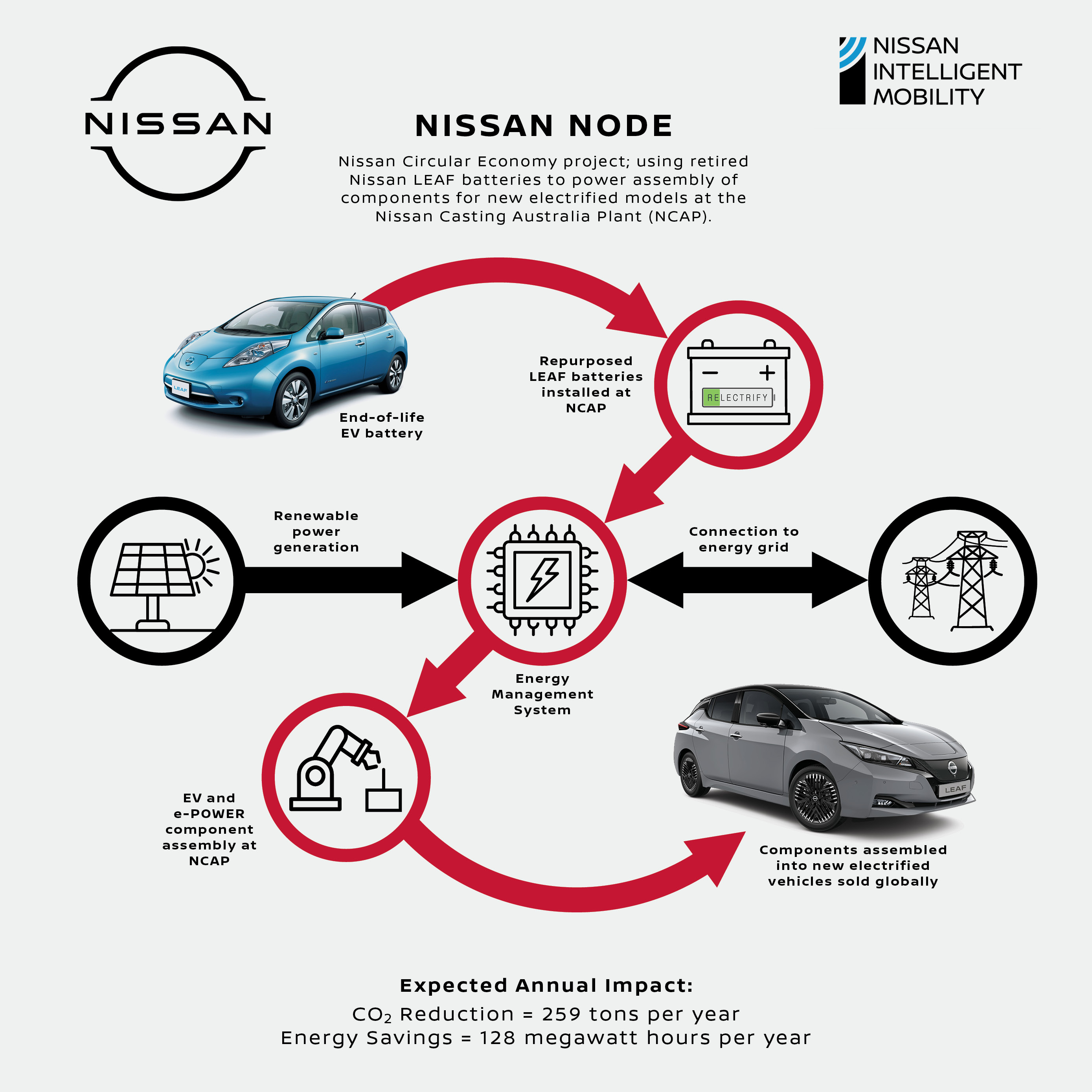
Nissan Australia is to recycle old batteries from its Leaf electric vehicle to power production at its casting plant in Melbourne.
Snapshot
Batteries to be repurposed at Dandenong Casting Plant
Energy to power production of new EV components
Will also be harnessed and used to charge staff cars
The project, dubbed Nissan Node and being carried out in partnership with Melbourne-based battery developer, Relectrify, will see a new solar array installed at Nissan’s casting plant in Dandenong in Melbourne’s outer east, as well as new EV chargers.
The Nissan Node will include the installation of a new battery energy storage system made of nine repurposed first-generation Leaf batteries – which will be charged via the solar array and the renewable energy used to power part of the production of components for Nissan’s global EV models, as well as help supply the new EV chargers to recharge staff vehicles.
At present only the new X-Trail’s tow bar is produced in Australia, no other E-Power specific components are.
1
The project is estimated to reduce Nissan Casting Australia’s annual C02 emissions by 259 tons, while saving 128 megawatts of energy every year.
“This isn’t just a hugely exciting project, but an important step into the future for end-of-life EV batteries,” said Nissan Casting Australia’s Managing Director, Peter Jones.
“As an early pioneer of the electric vehicle both globally and locally, we can also demonstrate leadership in second-life battery initiatives. I’m proud that this solution is every bit as innovative as the launch of the Leaf in Australia was more than 10 years ago.
“Already the Nissan Leaf comes with vehicle-to-grid technology from factory, which will allow Australian EV owners to use their vehicle to power their homes, and could be used to help stabilise the electricity grid, but commercial circular economy projects like this are a viable, sustainable and innovative solution for end-of-life EV batteries, too.”
1
The Nissan Node project will be completed this year, though similar schemes are already underway around the world, including a trial with the East Japan Railway Company which uses second-life Leaf batteries to power railway crossings, and with the 4R Energy Corp in Japan, which is developing the technology and infrastructure to recycle, resell and reuse the batteries in Nissan EVs as a power storage solution.
Nissan’s Dandenong operation has been in operation since 1982. Today, in excess of 50 per cent of the facility is dedicated to the manufacturing of high-quality aluminium castings that are fitted to Nissan’s battery-electric and hybrid vehicles sold globally.
Nissan claims its E-Power hybrid system is compatible with different architectures, including four-wheel drives.
Touted as the “pinnacle” of 4WD technology, the company said its E-Power hybrid and e-4orce all-wheel-drive systems could be scaled up – potentially for use in the Nissan Navara and Patrol, amongst others.
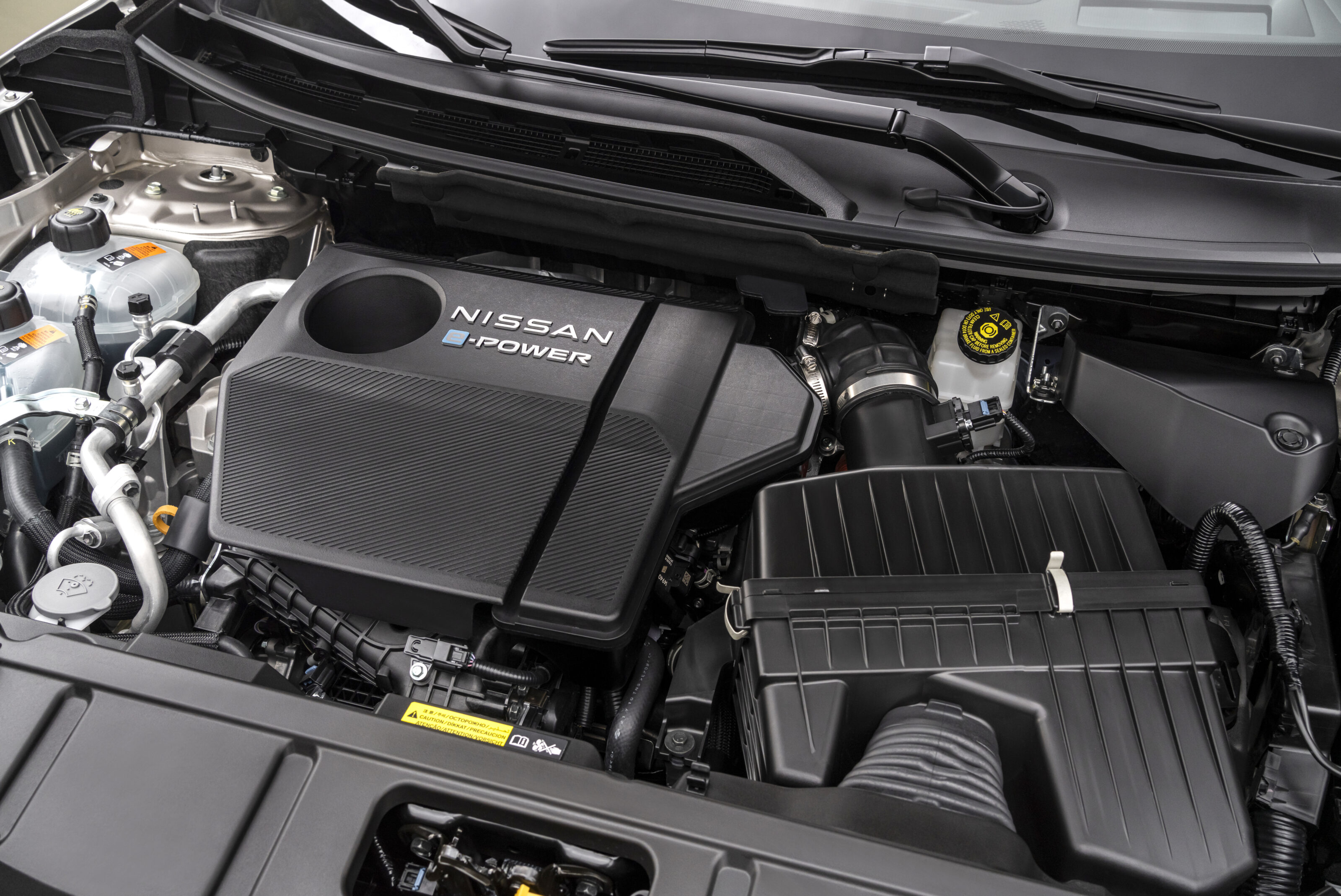
The brand’s unique E-Power setup features a petrol engine acting as a generator for the vehicle’s electric motors, rather than directly sending power to the wheels like a traditional hybrid.
Nissan declined to comment on future product plans – including whether we could see a hybrid Navara or Patrol, and what petrol engines could be used – but said the components and elements seen on its E-Power system can be deployed across the Renault-Nissan-Mitsubishi Alliance’s platforms.
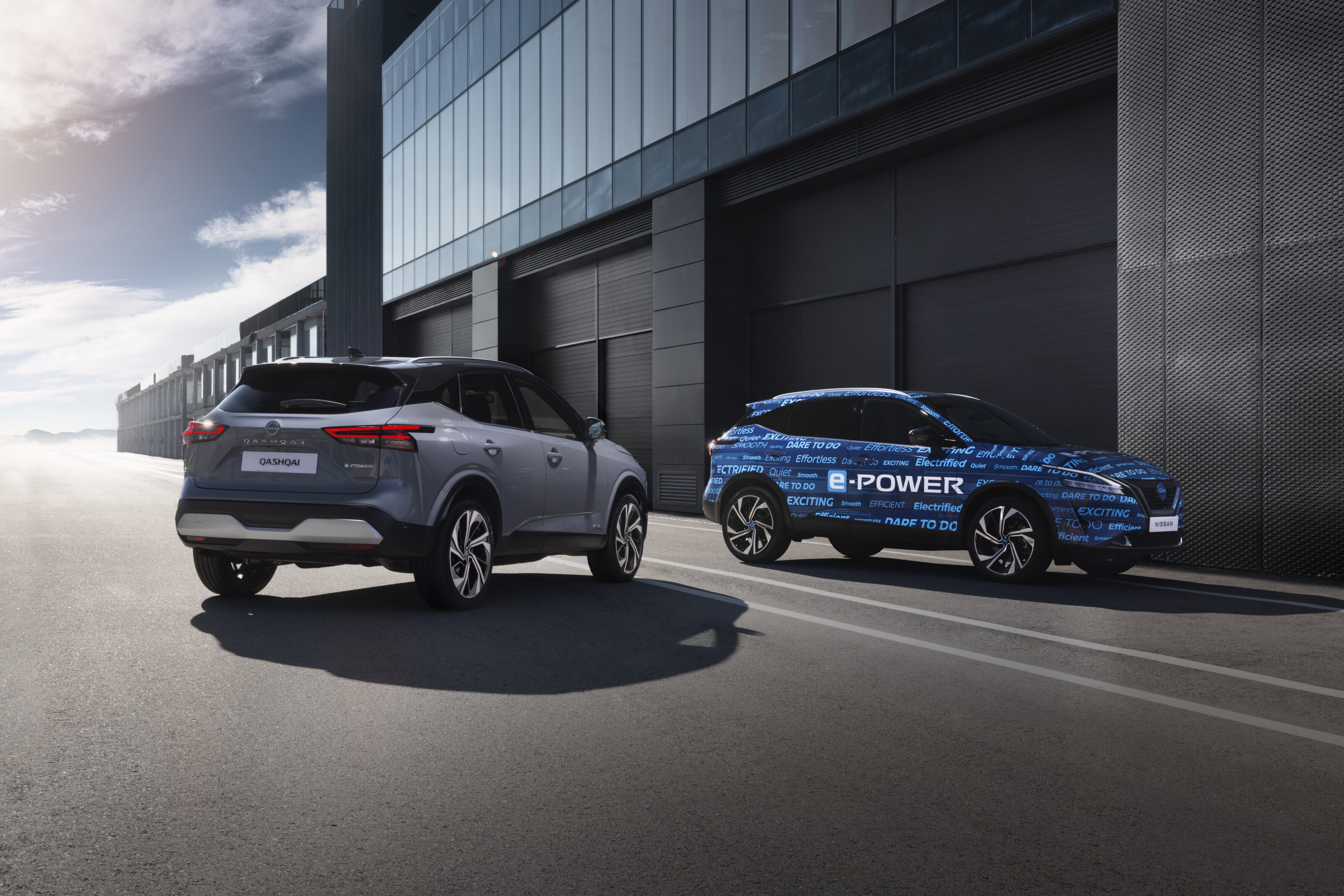
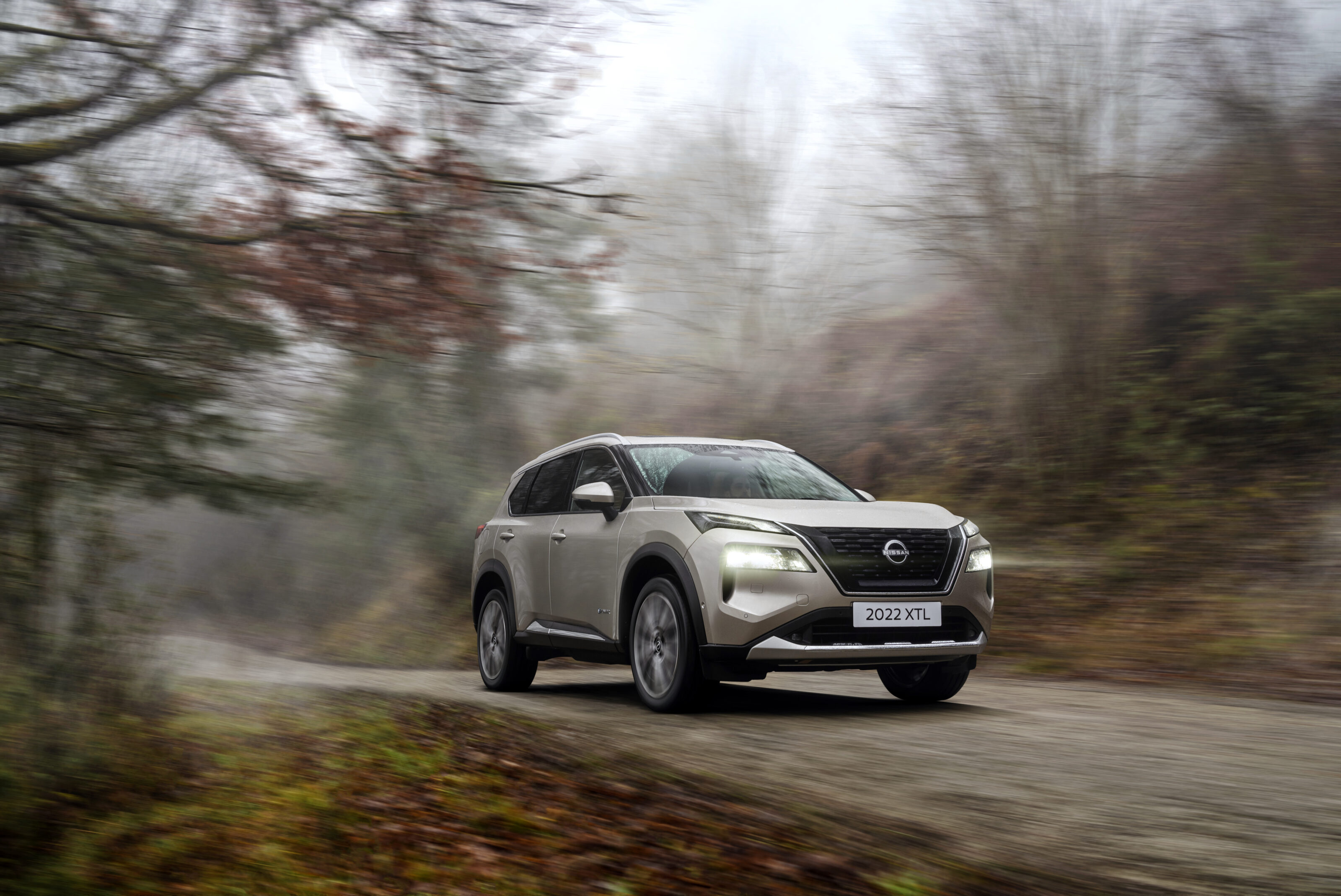
The latest-generation Nissan Qashqai and X-Trail are based on the monocoque CMF-C platform and will offer E-Power hybrid technology in Australia from early 2023 – headlined by the standard e-AWD system on the X-Trail.
“For Qashqai and X-Trail as you mentioned, [E-Power] has been developed for the CMF-C platform … in Japan, [E-Power is used] on a different platform [the Note hatch] and in different components,” said Adam Robertson, a lead engineer for the E-Power program, speaking with Australian media this week.
“Ultimately the technology is scalable. E-Power as a concept is scalable.”
Robertson suggested Nissan’s E-Power technology and electronic AWD system are superior to a conventional 4WD setup, with instant power from the electric motors, potentially allowing for the off-roading prowess typically associated with a Navara or Patrol.
“There’s no reason at all why not. The torque response for electric motors is instant; one ten-thousandth of a second is incredibly quick. I always liken it back to being 10 times faster than the stopwatch used in Formula One. It’s incredibly fast; you’re not going to get any quicker,” he said.
1
“And it means you’ve got … [a] permanent all-wheel-drive system, so you apply torque wherever you want at any time. Of course, that is the pinnacle, and you can use that in other applications as well.
“I wouldn’t comment on any future plans on any other models. But obviously, this technology offers some very, very strong benefits.”
A diesel-powered version of the E-Power technology was effectively ruled out, at least for the European market, where diesel engines are being phased out across Nissan’s line-up with declining sales and looming emissions regulations.
1
“At the moment we are going out of the diesel offer, generally speaking,” said Ilya Deminov, a regional product planner at Nissan Europe.
“We do not plan to come back, so we are constantly now removing our diesel offerings from the portfolio.”
Representatives for Nissan Australia quickly pointed out the difference in demand for diesel between the Australian and European markets, solely dominated locally by the only remaining vehicle still offered with a diesel engine, the top-selling Navara ute.
“What we’ve said for Europe, and obviously Europe is quite a specific market, is that our current investment in this diesel technology for Europe is basically at an end. We’ve got the ambition that in Europe [we are] moving towards electrified-only powertrains from 2030,” added Robertson.
1
“We’re well aware that obviously … India, Middle East and [Australia and New Zealand], the customer expectations around powertrains vary wildly, and rolling in their different status of being ready for electrification. So it’s [an] incredibly complex subject that our product planning teams have to face.
“There’s the challenge of how much do we force our customers to go in a certain direction, but how much do they sort of compel us to go in a certain direction, and there’s a challenge that we face.
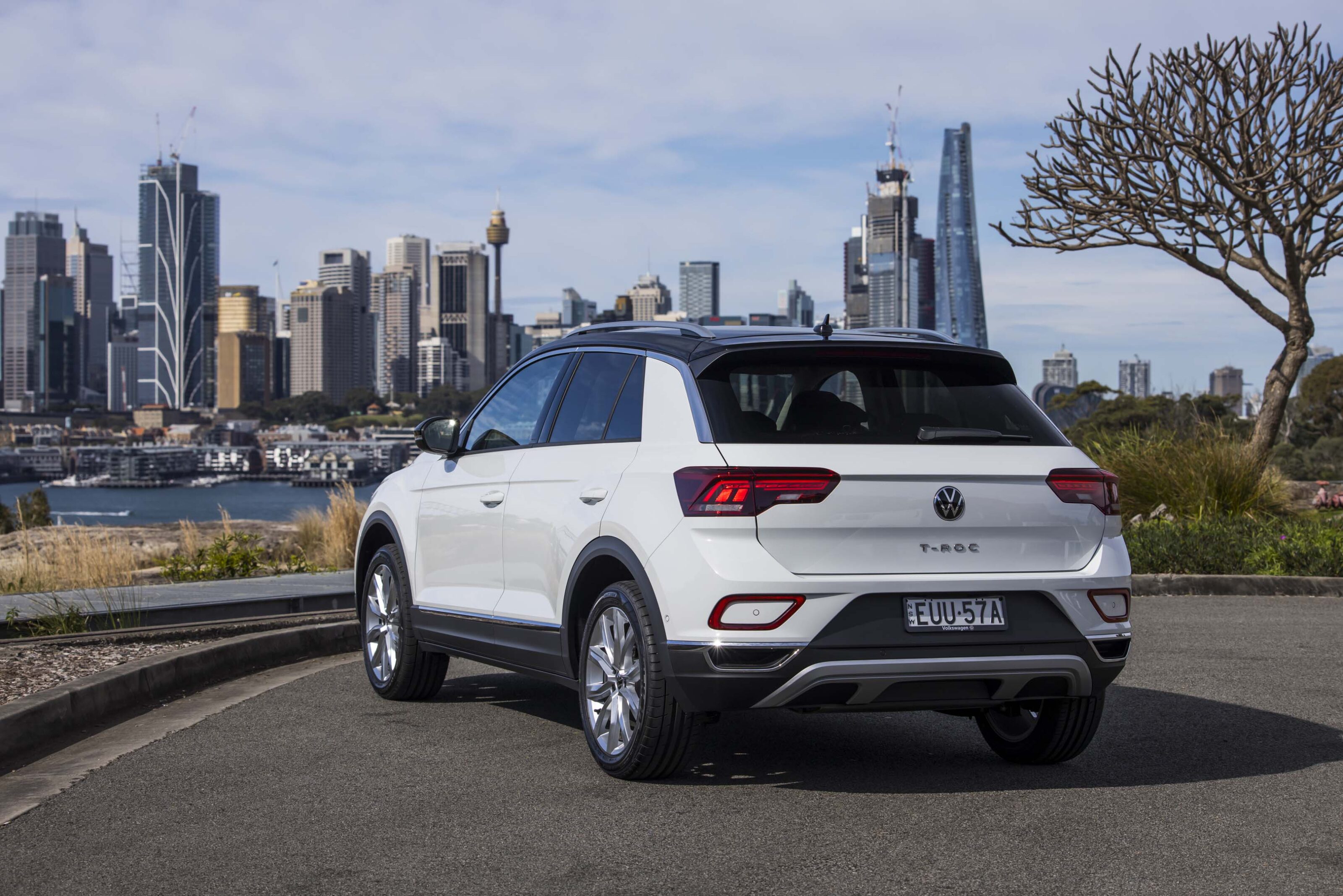
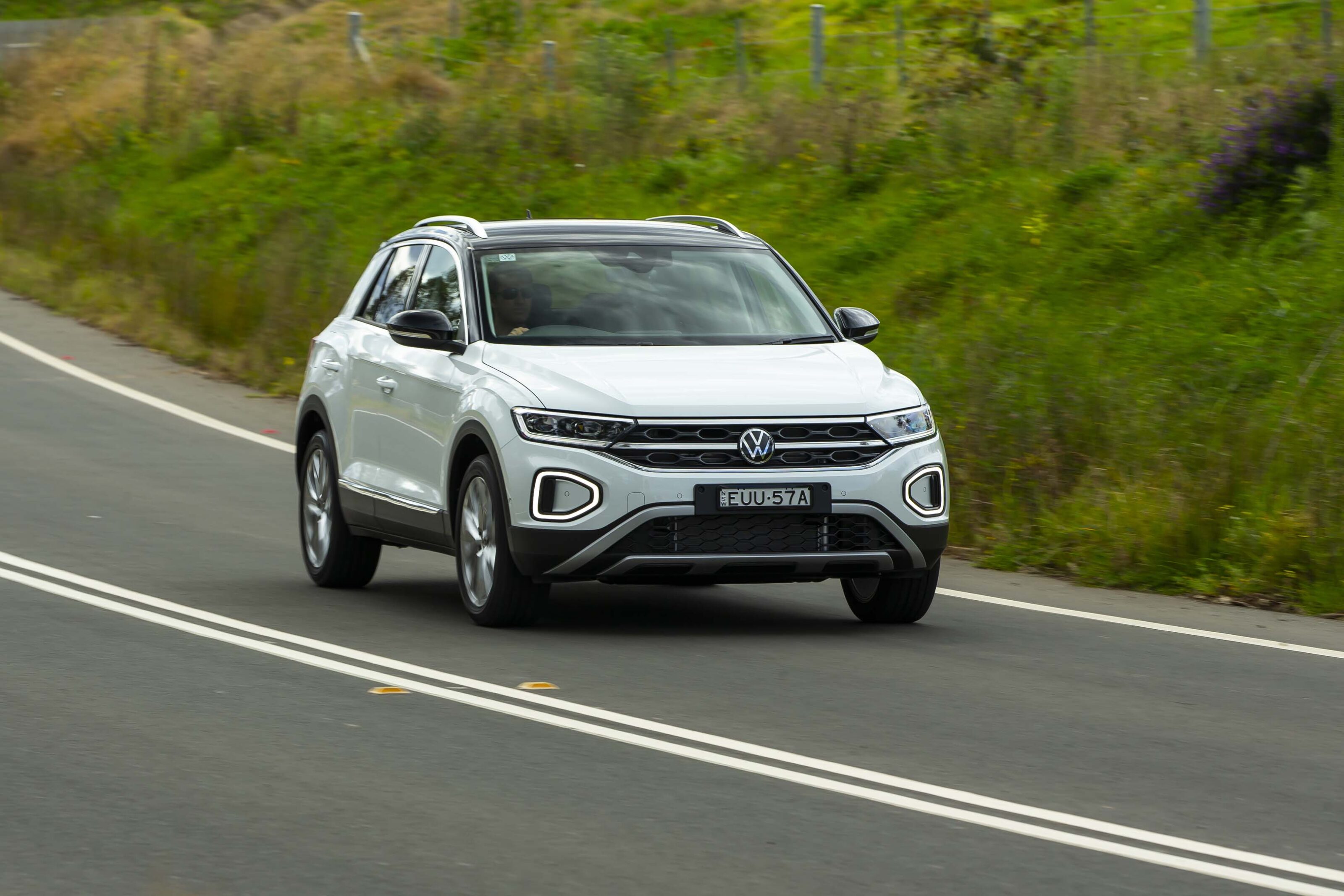
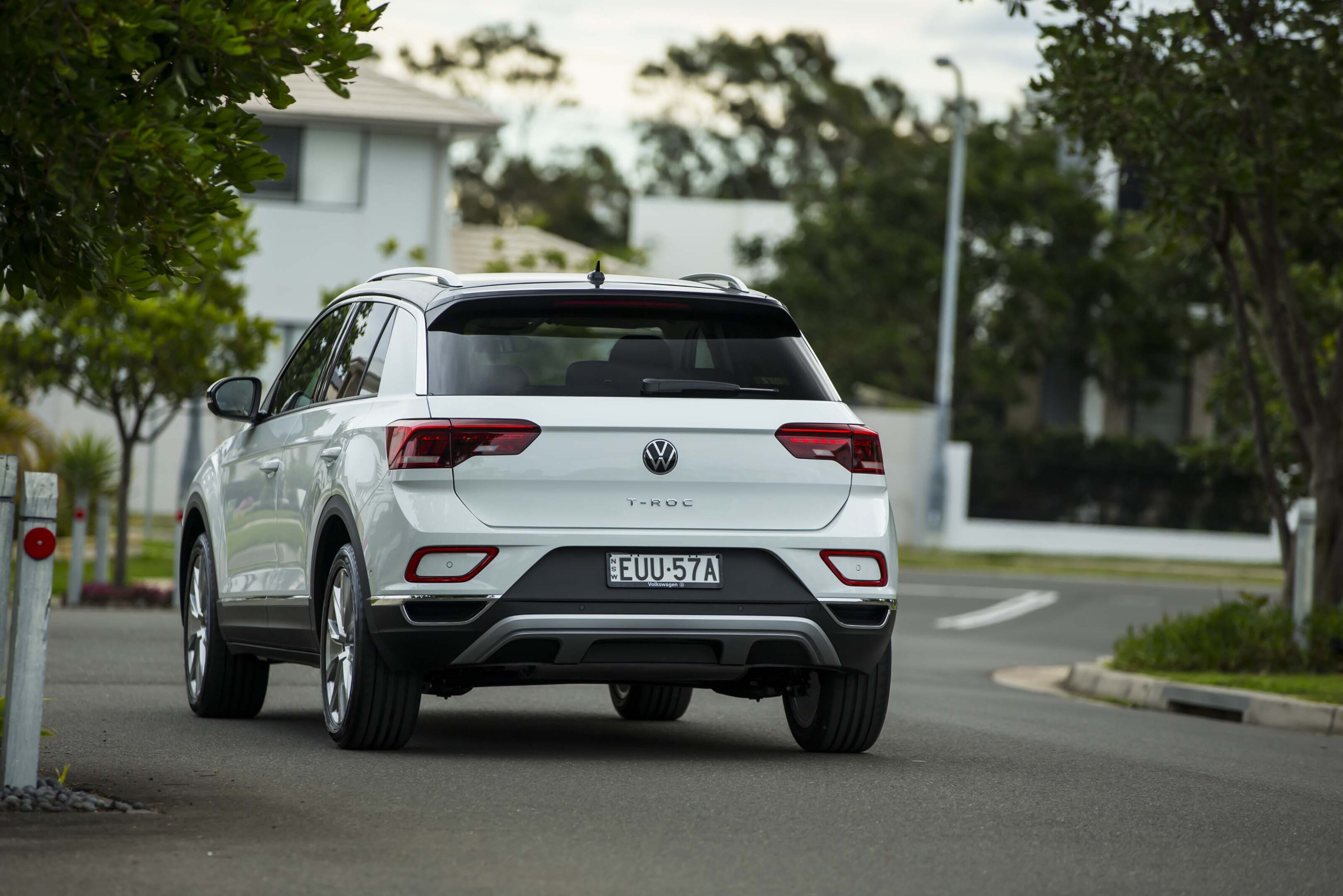
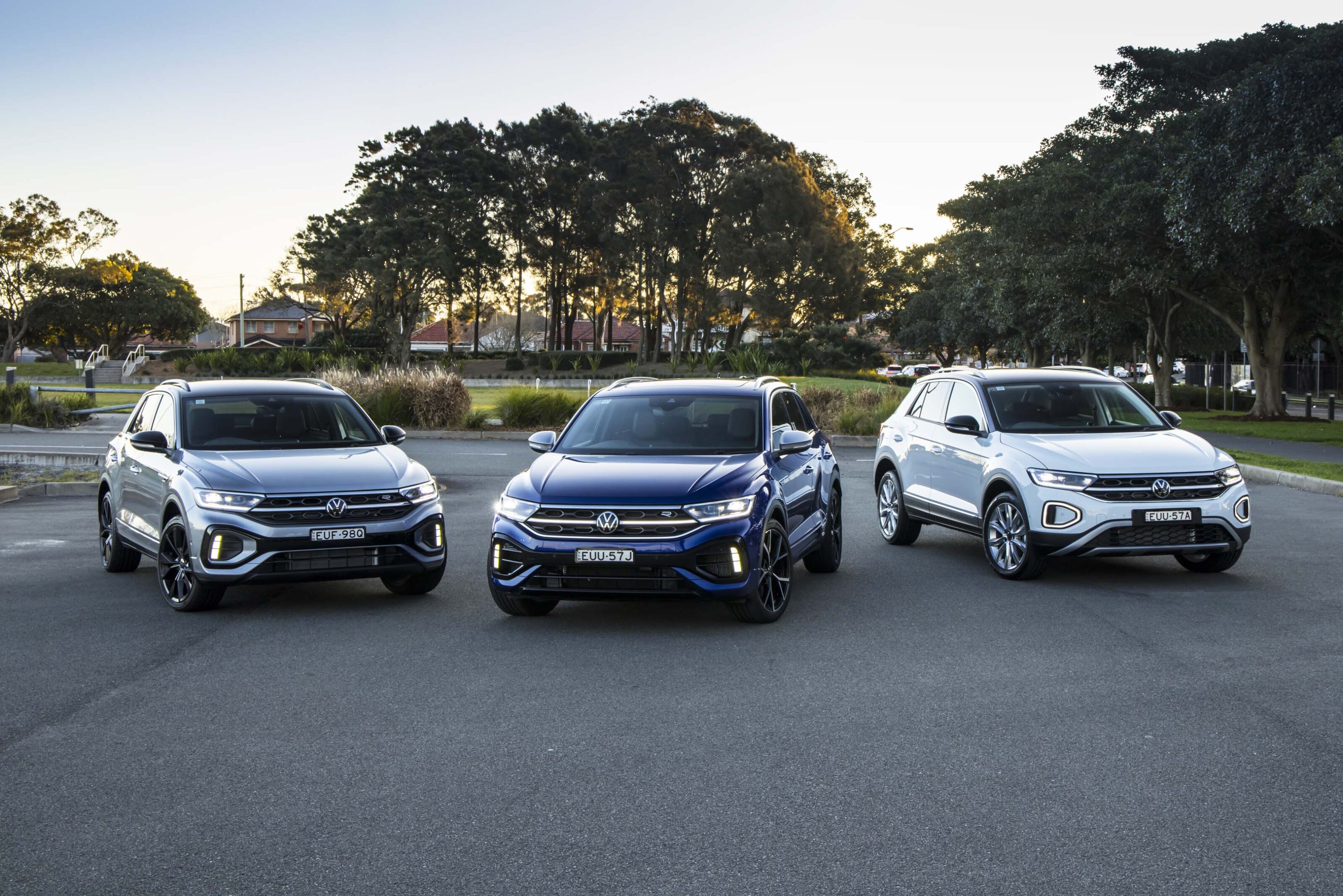
The Volkswagen T-Roc was starting to build momentum in 2021, its second year on sale, before it became one of the most-affected victims of the global supply crisis.
Now an updated range has been released to pick things up again, with the German brand optimistic about deliveries for what is one of the more expensive offerings in the mainstream small SUV segment.
This rival for notable models such as the Hyundai Kona, Kia Seltos, Mazda CX-30, MG ZS and Toyota C-HR is slightly pricier again, starting from $37,250 before on-road costs – or close to $42,000 drive-away with charges added plus a body colour other than white.
1
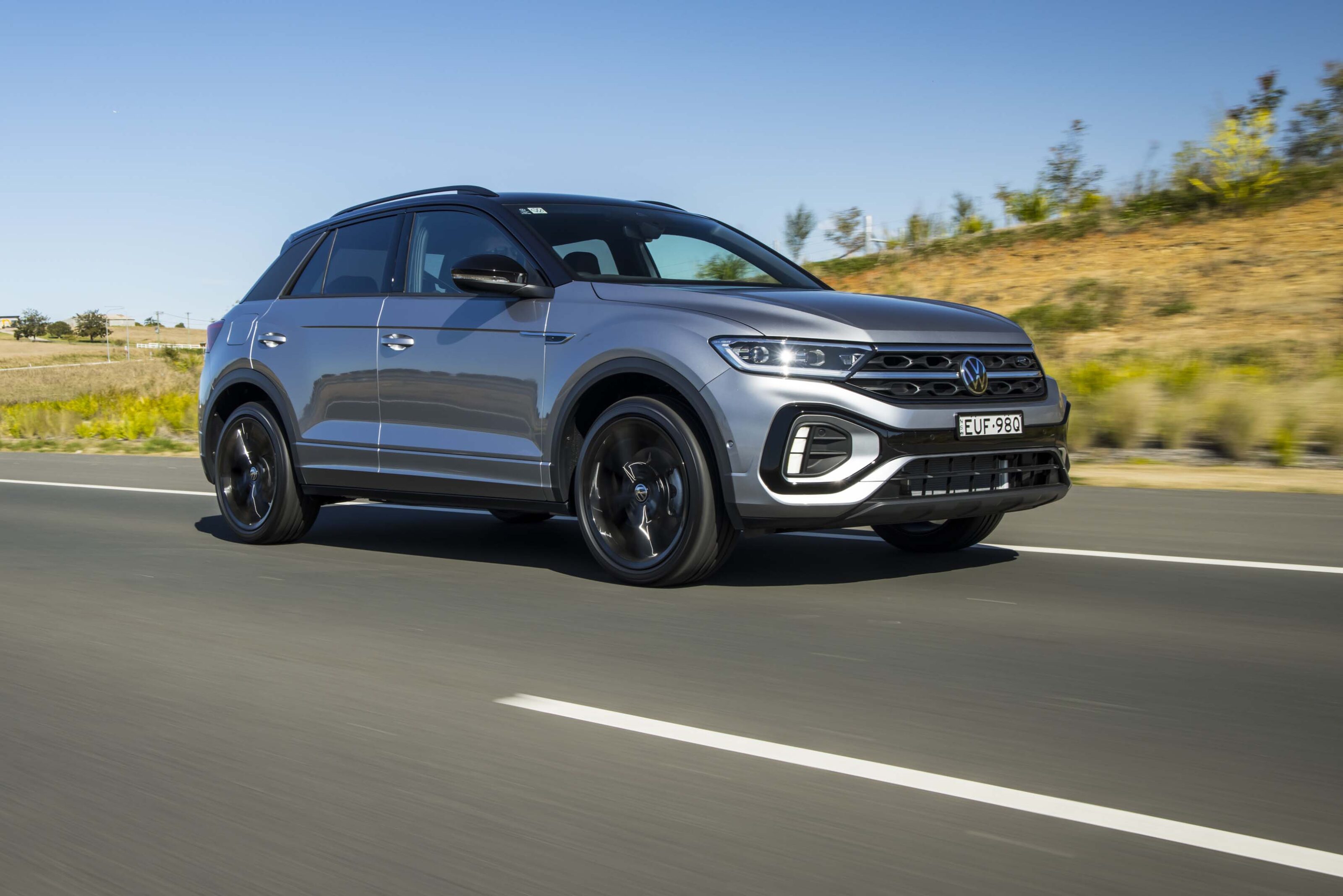
This entry-level VW T-Roc 110TSI Style is joined by a $45,250 (before on-road costs) 140TSI R-Line variant that replaces what was previously the 140TSI Sport, while the big news for the range is the arrival of the high-performance R not previously offered. The R is priced from $59,300 before on-road costs.
On the spectrum of mild updates to major overhauls for mid-lifecycle cars, the 2023 T-Roc most definitely falls into the latter camp.
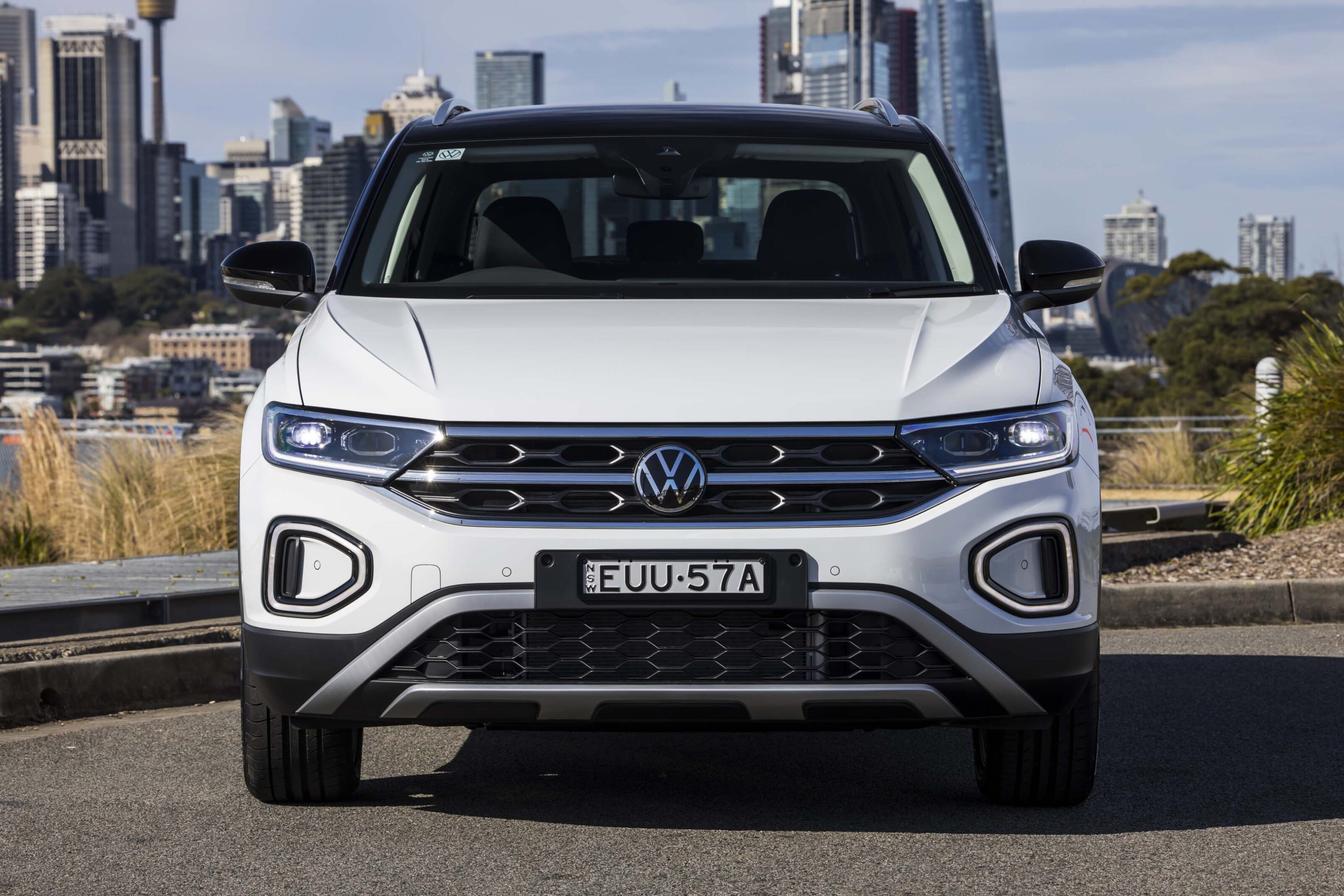
Besides a revamp for the front-end design that brings new LED headlights, a revised lower bumper and a new grille with integrated LED strip, the T-Roc’s interior has been given a thorough makeover and extra technology has been thrown into the mix.
1
The cabin update is much needed for an SUV that is based on the previous-generation Golf rather than the current Mark 8.
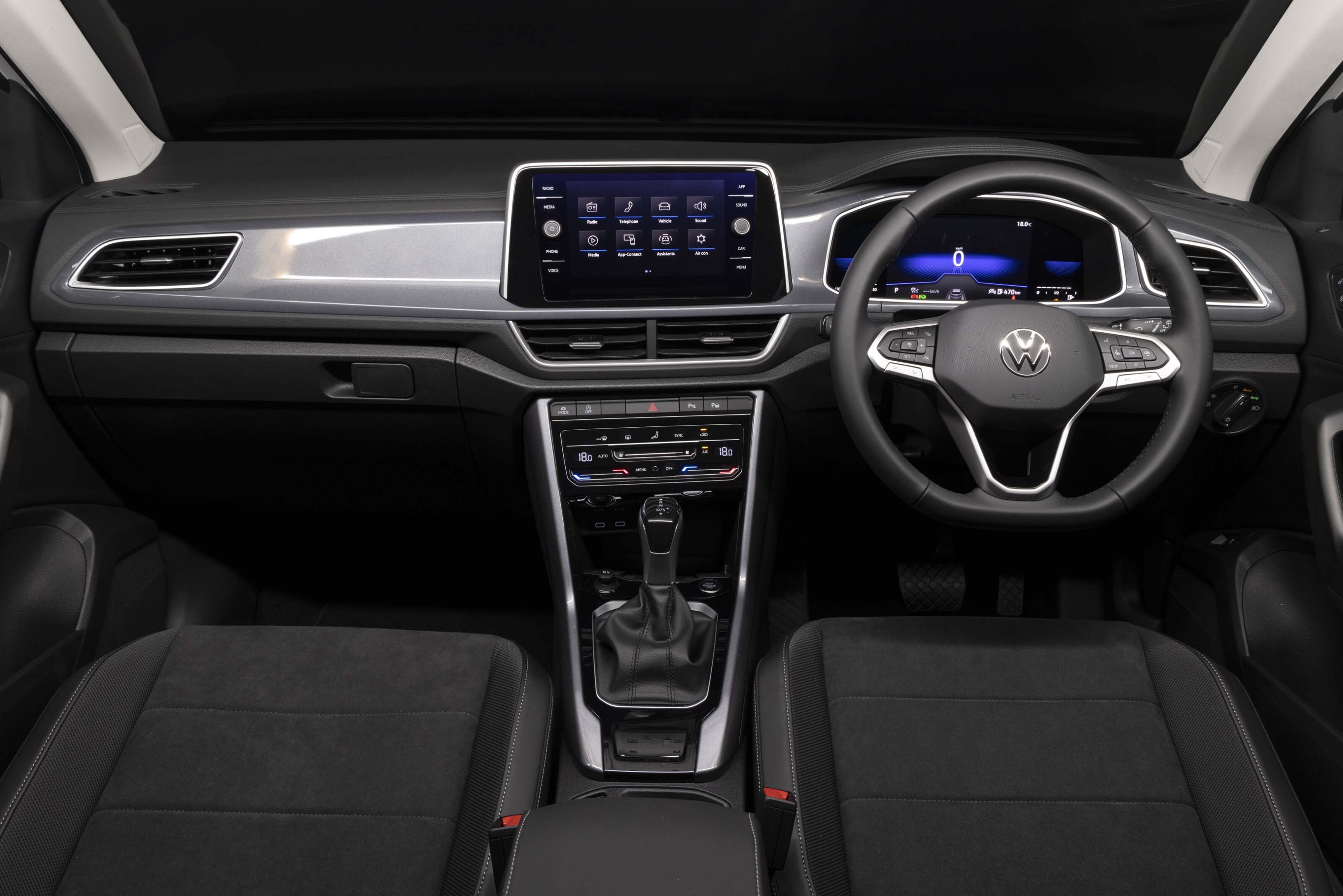
It still misses out on the modern-minimalist look of the latest Golf’s interior but the dash is now more contemporary, with an 8.0-inch digital driver display becoming standard in the base T-Roc upwards – a 10.25-inch version carries over from the Sport to the R-Line – in addition to a new touch-button climate control panel.
Helping to address criticism that the original T-Roc struggled to match the interior quality of a Golf despite being more expensive, the dash top is now constructed from soft rather than hard plastic and all models gain sportier seats.
1
The infotainment display now rises out of the dash rather than being integrated, combining an 8.0-inch screen with an array of physical dials and buttons. (The R features a full-width 9.2-inch screen.)
Enough hard plastics remain to remind you that you’re not in a compact luxury SUV, and it doesn’t quite pull off the same premium interior look as rivals such as the Mazda CX-30 or Peugeot 2008.
Storage remains a great attribute of the T-Roc. The door cubbies are generously sized, the glove box is larger than average, the centre console includes a slot for the key fob, and all models now feature a wireless charging tray for smartphones.
MY23 Style and R-Line variants miss out on blind spot and rear cross traffic alert (which use the same sensors) to alleviate supply issues, with a $650 discount factored into pricing. The T-Roc R isn’t affected.
1
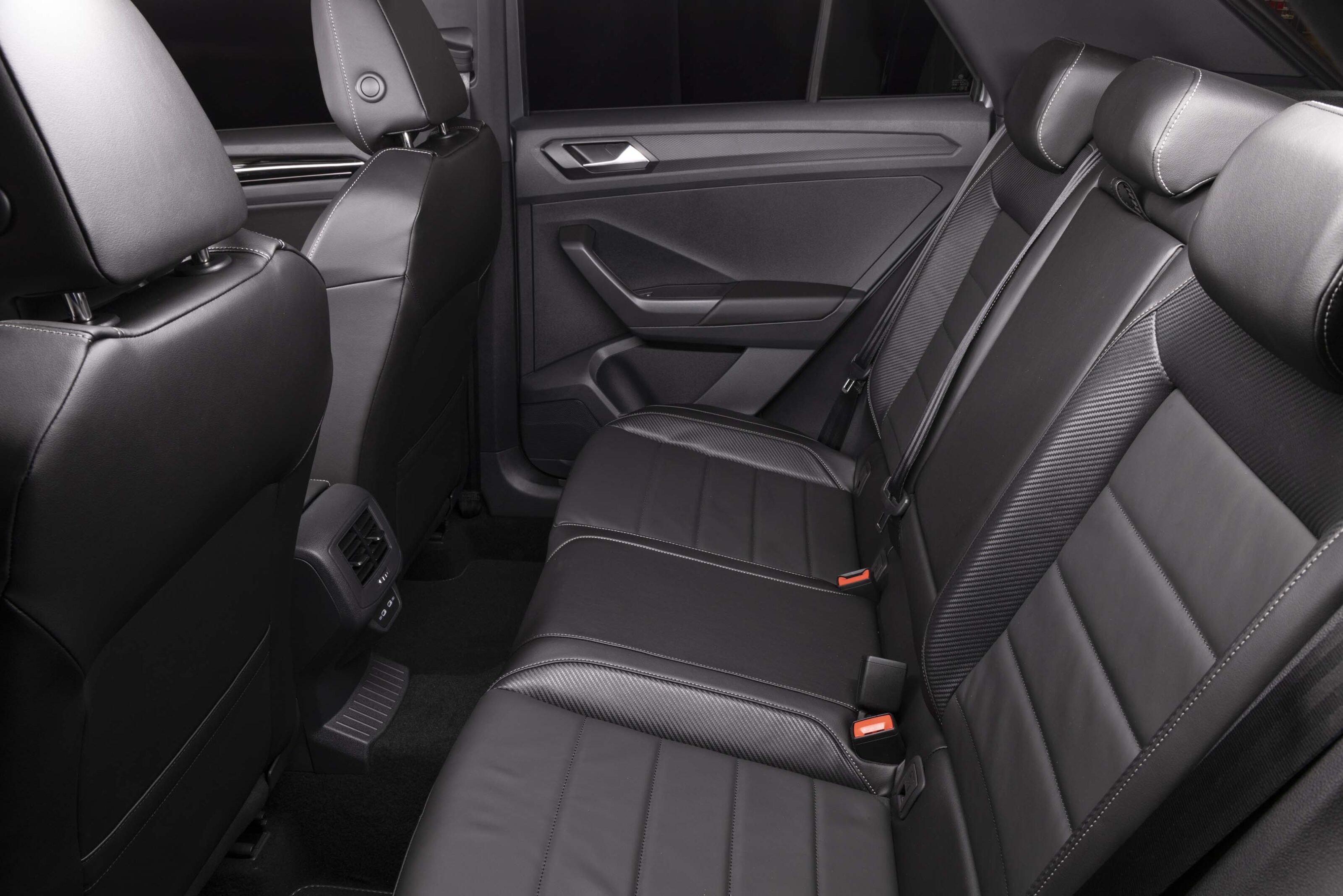
There’s a respectable amount of space in the rear seat if regular occupants don’t break the 182cm mark; this includes plentiful foot space. And it’s certainly plenty spacious for kids. (ISOFIX points are in the outboard seats, with top tether anchors across all three seating positions).
Excellent comfort is provided in the rear bench’s outboard positions, which are scalloped. The cabin’s not particularly wide and the transmission tunnel is high, so any adult having to sit in the centre seat would need to be very lean or very game.
The rear cabin provides vents, two USB-C ports, a centre armrest with cup holder, seatback pouches, and bottle holders in the doors.
1
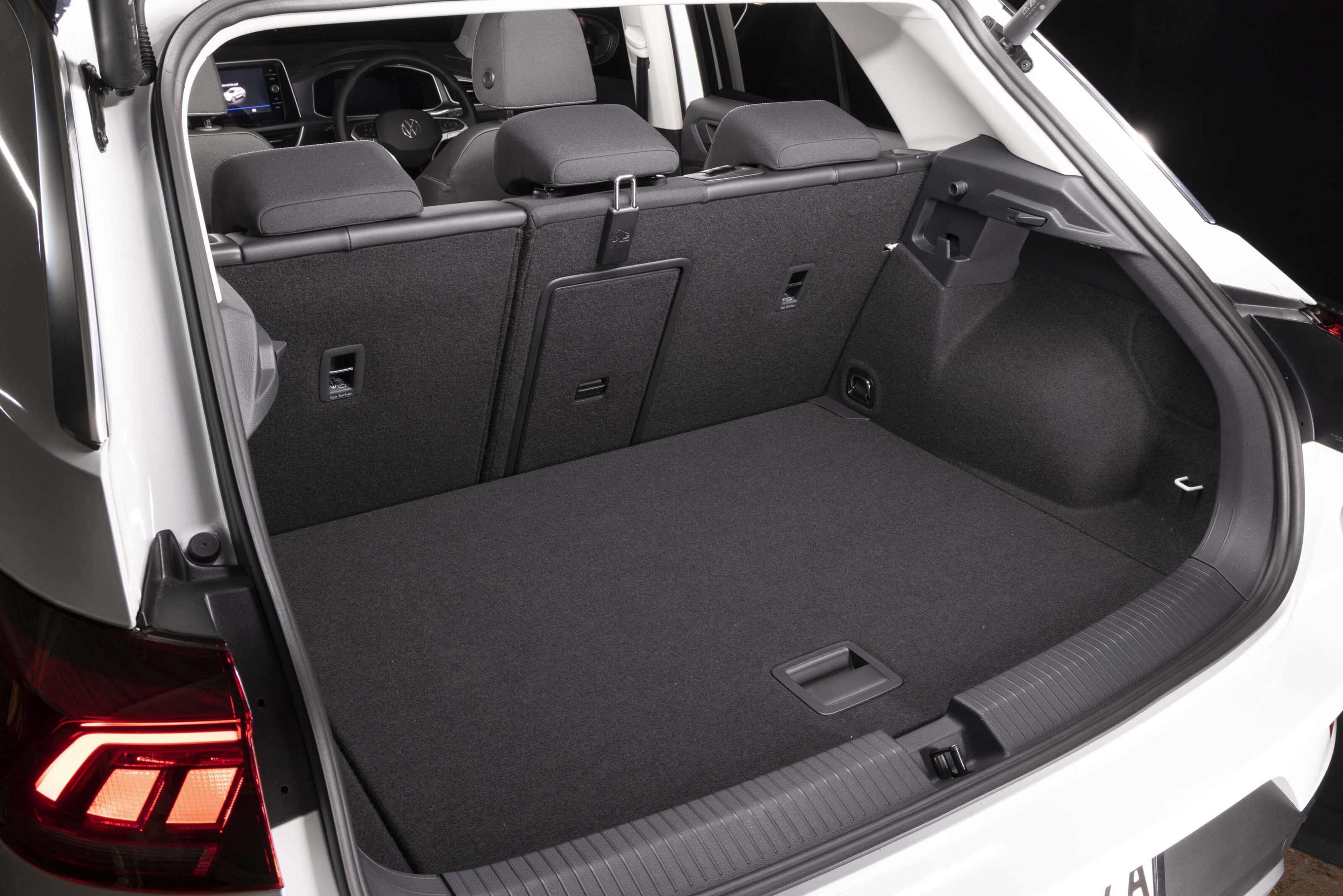
Boot space differs between T-Roc variants. The base Style has 445 litres – well above the related Golf’s 380 litres – thanks to its cheaper but more compact torsion-beam rear suspension. The T-Roc R-Line, which has a multi-link rear suspension that also factors in all-wheel-drive hardware, provides 392 litres.
That’s only slightly more than the 385L capacity of the T-Cross – and VW’s smallest SUV can expand its seats-up luggage area to 455 litres thanks to its sliding rear bench.
You’ll find larger boots in the T-Roc’s segment with vehicles including the Jeep Compass (438L) and Kia Seltos (433L), though it’s also a more spacious boot than you get with the likes of the Mazda CX-30 (317L), Subaru XV (310L), and Toyota C-HR (377L).
1
Fold down the 60:40 split rear seats and the T-Roc’s cargo room increases to 1237 litres. Snow bunnies will be delighted with the ski port.
When the T-Roc landed in 2020 it quickly established itself as one of the best vehicles to drive in its segment. With no engineering revisions, including drivetrains, nothing changes here.
The T-Roc Style may have inferior rear suspension on paper but it matches a Golf for ride sophistication, providing compliance over imperfect surfaces whether around town at slower speeds or at a faster clip on country roads.
1
The T-Roc Style may have inferior rear suspension on paper but it matches a Golf for ride sophistication
If you want a T-Roc with the quietest, plushest road manners, the Style is the pick over the R-Line that features a firmer suspension set-up. Our test car’s optional 19-inch (black alloy) wheels also elevated road noise noticeably.
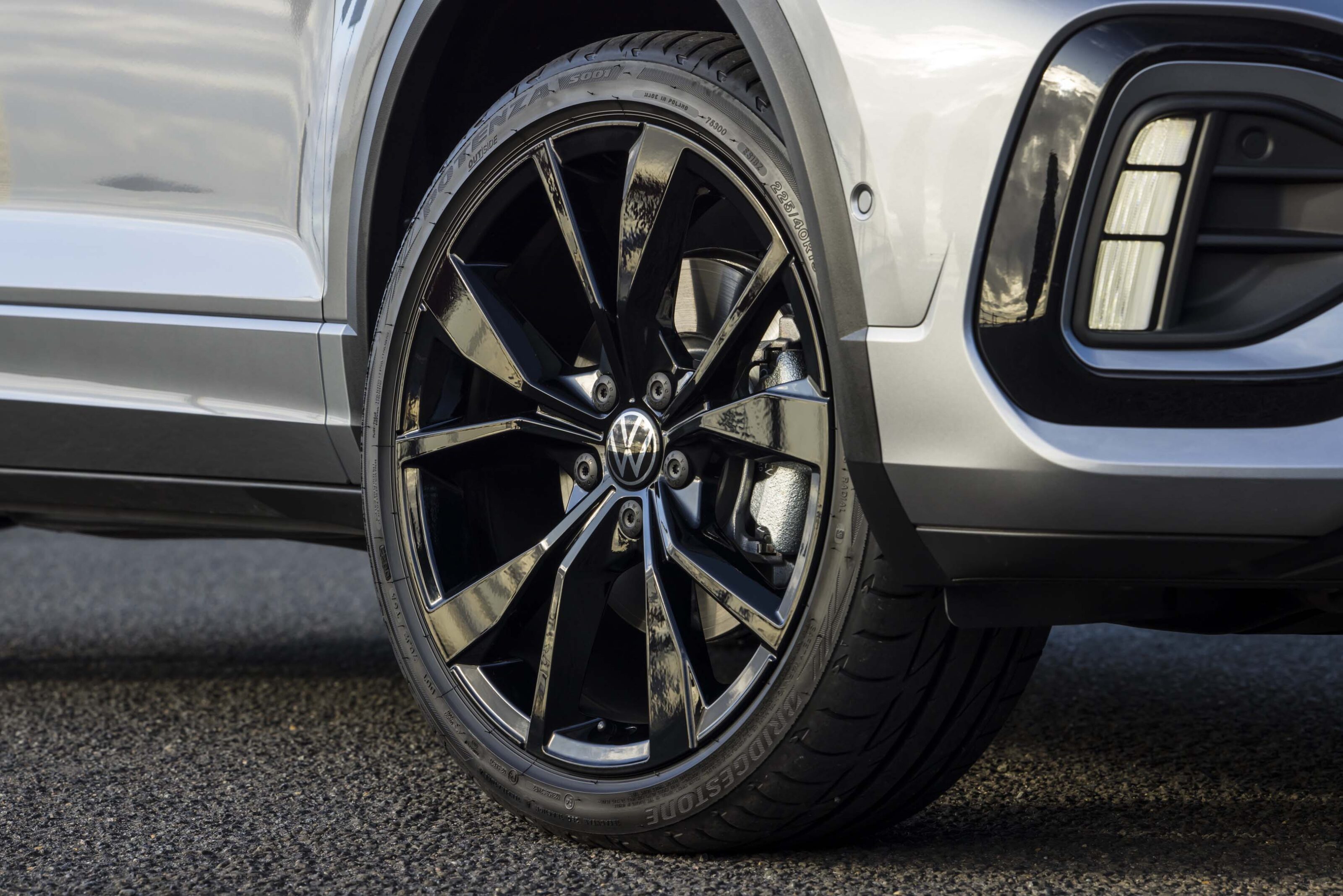
These bigger wheels form part of a $2900 Black Style Package, which also adds adaptive dampers plus a 300-watt Beats audio system and various cosmetic enhancements including a faux carbon fibre wrap for the C-pillars.
It isn’t a challenge to use the T-Roc R-Line for daily driving if you pop the adaptive suspension into Comfort mode via the central touchscreen, but the ride is noticeable stiffer even without engaging the firmer Sport setting.
1
The pay-off for keener drivers is increased levels of grip – though the Style’s tyres still offer plentiful adhesion – as well as better body control when the dampers are in Sport.
Extra punch from the T-Roc R-Line’s bigger engine is also obvious.
It would be unfair to describe the entry Style’s 110kW/250Nm 1.4-litre turbo-petrol as underpowered because its performance is sufficient for many buyers. Equally, the 140kW/320Nm 2.0-litre helps justify some of the $8000 premium for the R-Line.
Not only is there more torque but it’s generated across more of the rev range.
1
There’s a 1.3-second difference between the two variants in VW’s 0-100km/h acceleration quotes: 8.5 seconds for the Style versus 7.2 seconds for the R-Line. (The T-Roc R is in another league at 4.9 seconds.)
Official fuel consumption determines that the bigger engine uses 7.3 litres of petrol (95 RON minimum) per 100km compared with 6.3L/100km for the Style’s smaller powerplant.
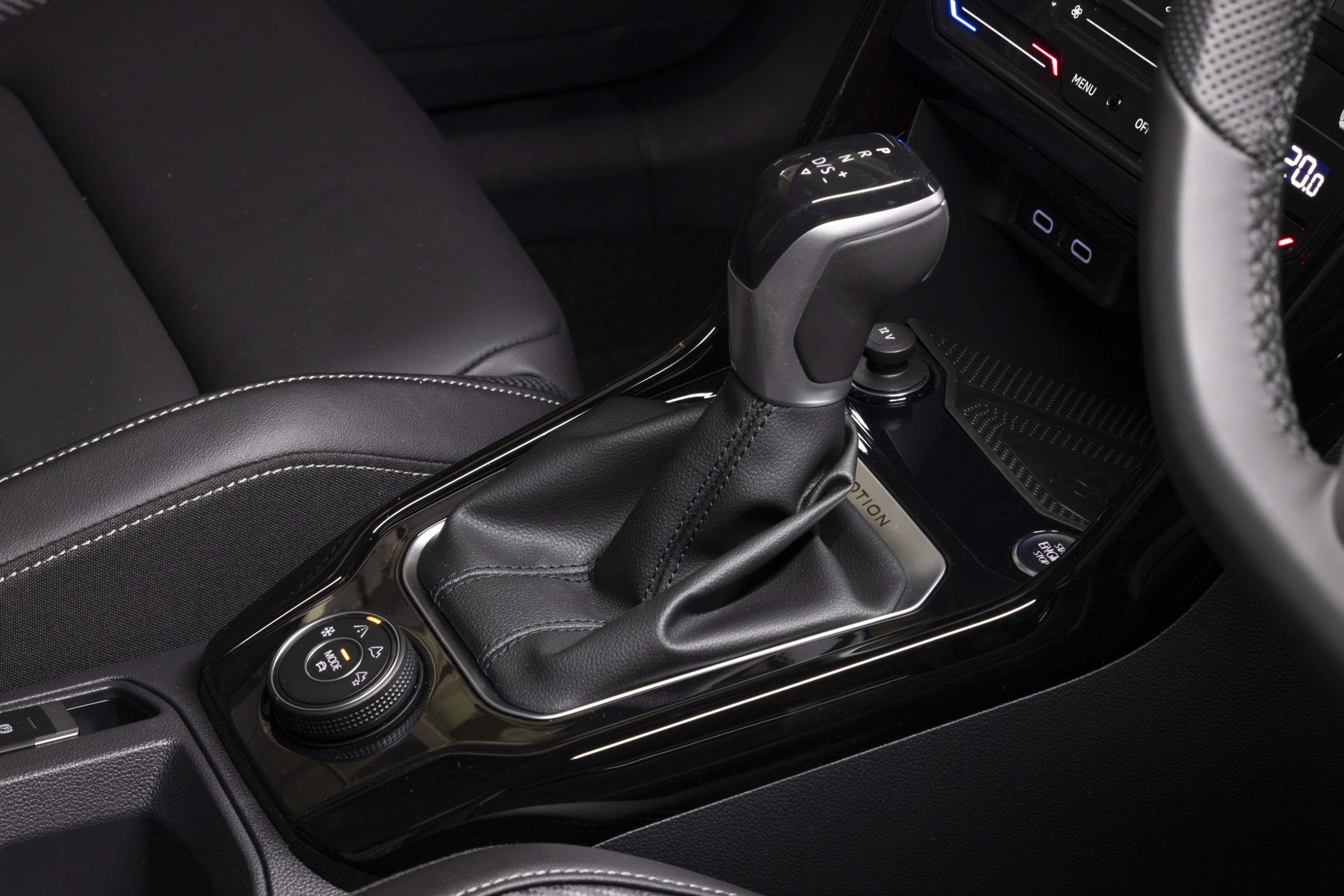
Transmissions also vary the driving experience slightly, suiting the character of each variant. The Style employs a more relaxed eight-speed torque converter auto whereas the R-Line opts for a faster-shifting seven-speed dual-clutch unit.
1
A compromise of the dual-clutch is that activating the Auto Hold function becomes important on hills as the vehicle otherwise tends to roll backwards or forwards; we also found with this transmission that there was a noticeable lag between the stop-start system restarting the engine and responding to throttle input. It’s only a minor point but one we thought worth noting.
Driving positions are excellent in both variants. Seat support and comfort are also impeccable whether you’re sitting in the microfleece/fabric pews of the Style or the R-Line fabric seats of the higher-grade T-Roc.
Vision in all directions is also hard to fault, and there’s very much a sense of driving a high-riding Golf.
1
It could be argued that a T-Roc range sweet spot is missing: a variant that blends the plush, refined manners of the Style with the punchier performance of the R-Line.
As it stands, there’s a clear choice here for T-Roc buyers beyond price. Both the Style and R-Line make strong individual cases and a tempting offering in a busy category.
Oh, and if you’re interested in the full-blown T-Roc, Volkswagen will let us tell you all about that next week on the 15th of September.
All-electric E-Transit Custom van to join Australian lineup in 2024
One of at least five new electrified Fords due by the end of 2024
Targeted driving range of 380km and 124kW fast-charging
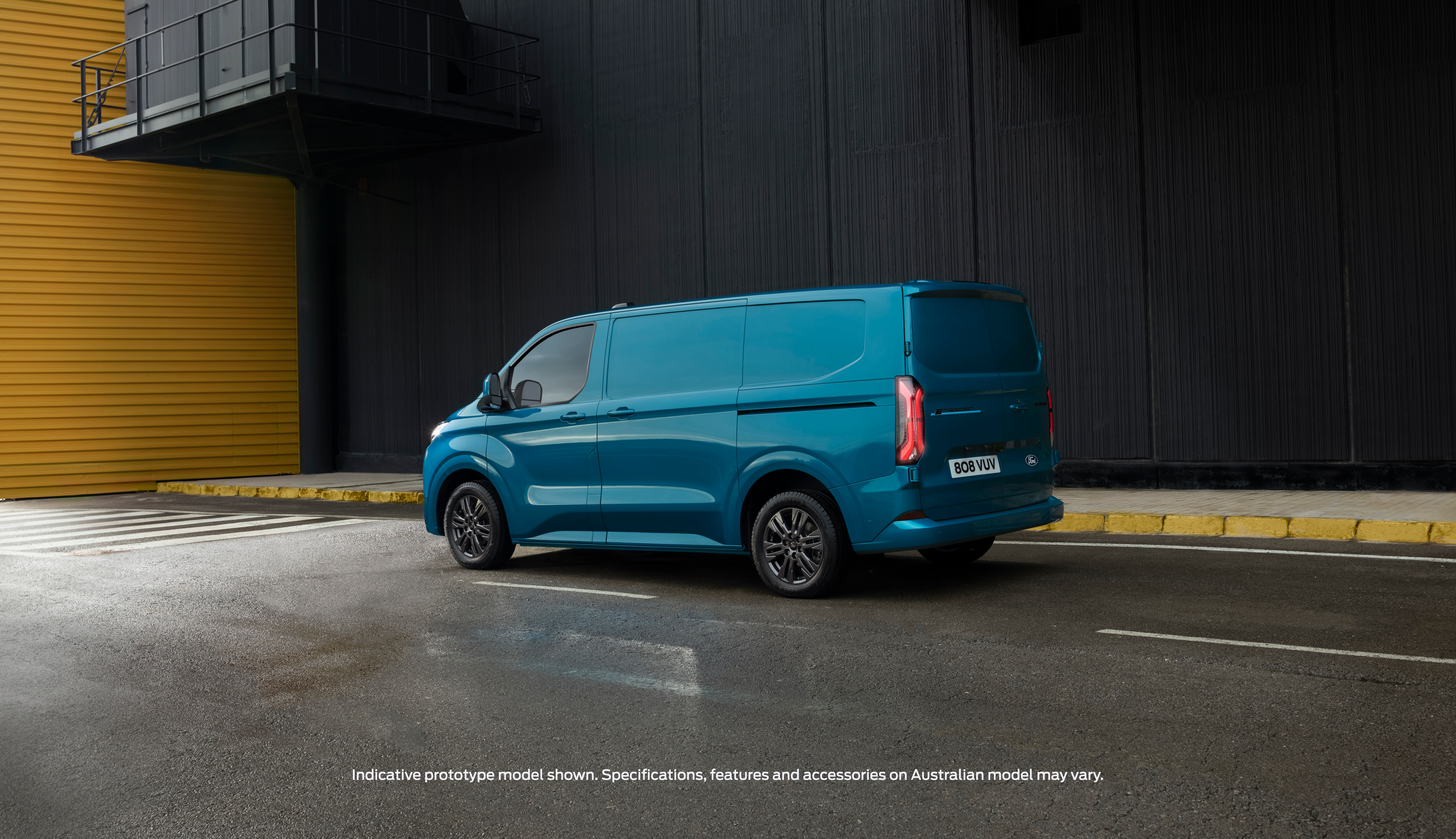
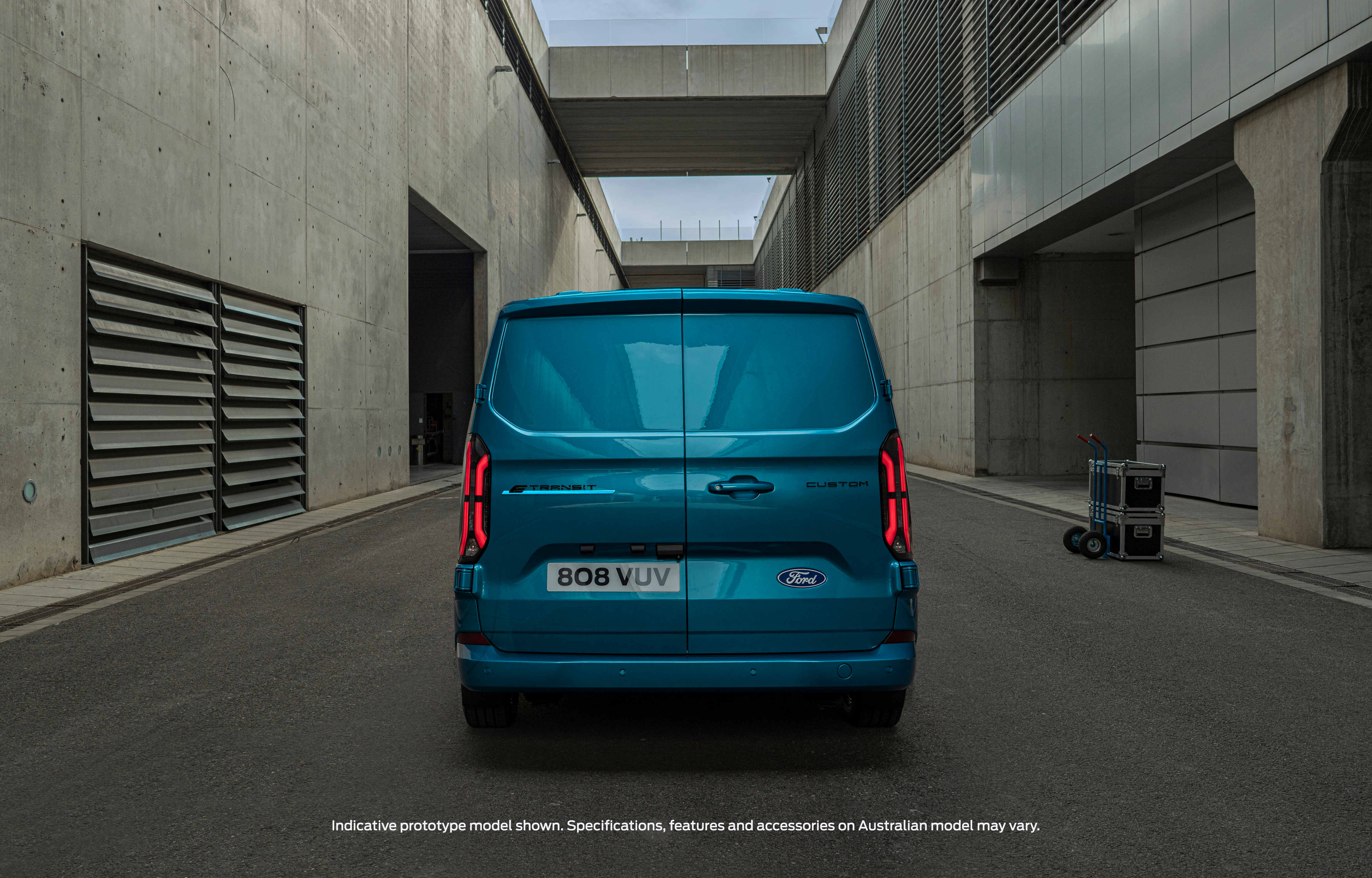
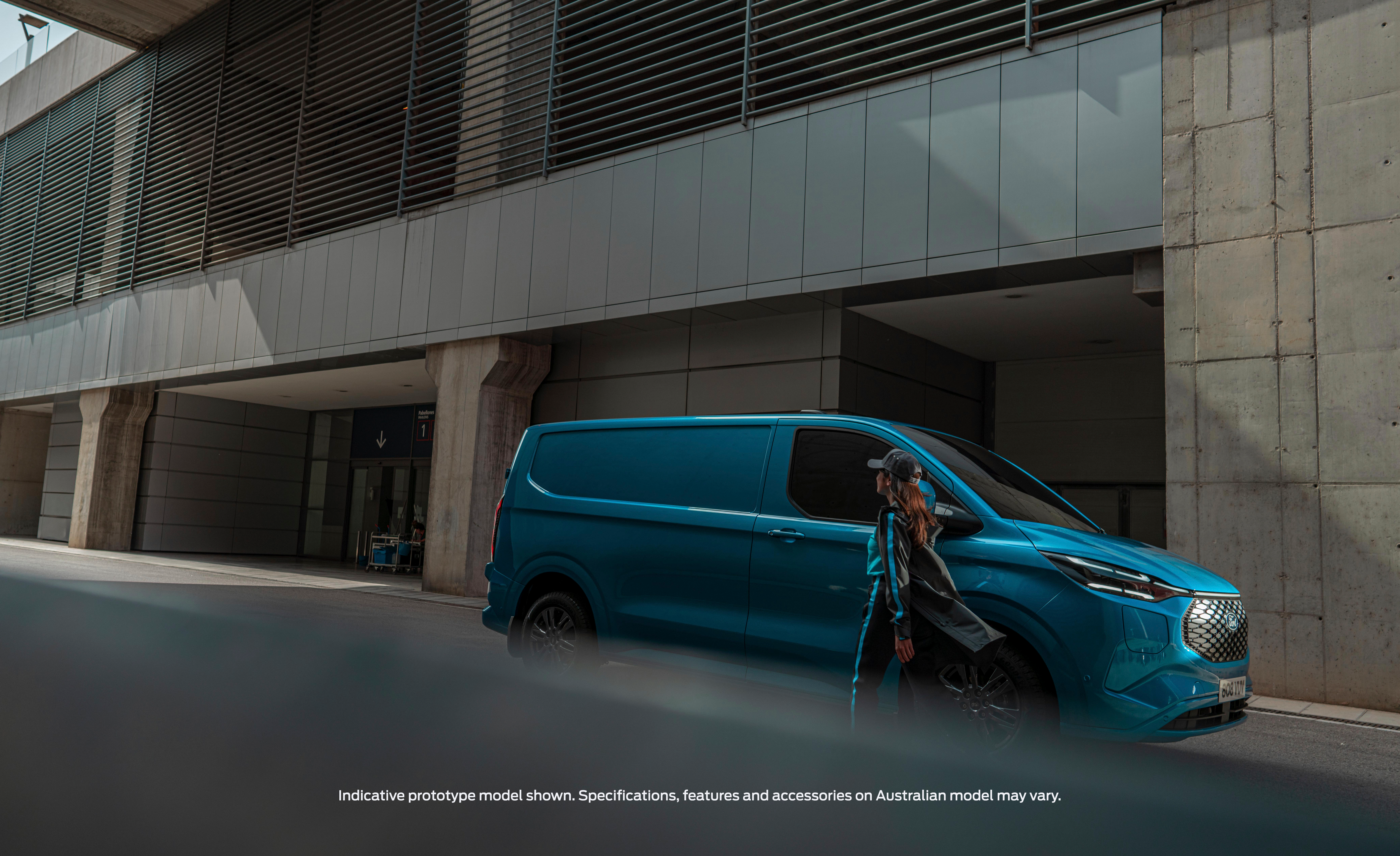
Ford Australia has released further details of the all-electric E-Transit Custom which will be one of five electrified vehicles due in local showrooms by the end of 2024.
In the current age of rising petrol prices and an increasingly urgent environmental crisis, Ford is pitching the E-Transit Custom towards small businesses, combining intelligent and functional ergonomic packaging with innovative experiences based on cloud connectivity and digital technologies.
1
With the launch still over a year away, ultimate local pricing remains unconfirmed for now.
What we now know is that Ford’s E-Transit Custom harnesses a 400-volt system with a 74-kWh battery pack, which shares its 81.2Ah pouch cells with the larger American-market F-150 Lightning. The battery enables a WLTP-rated driving range of 380 kilometres.
1
Australian-spec E-Transit Customs will be equipped with a single 160kW/415Nm motor driving the rear wheels. The motor itself is mounted directly to the vehicle’s floor, removing the need for a dedicated subframe, and further reducing weight and complexity. Regenerative brake-by-wire is a feature, and can be driven in ‘one-pedal’ mode.
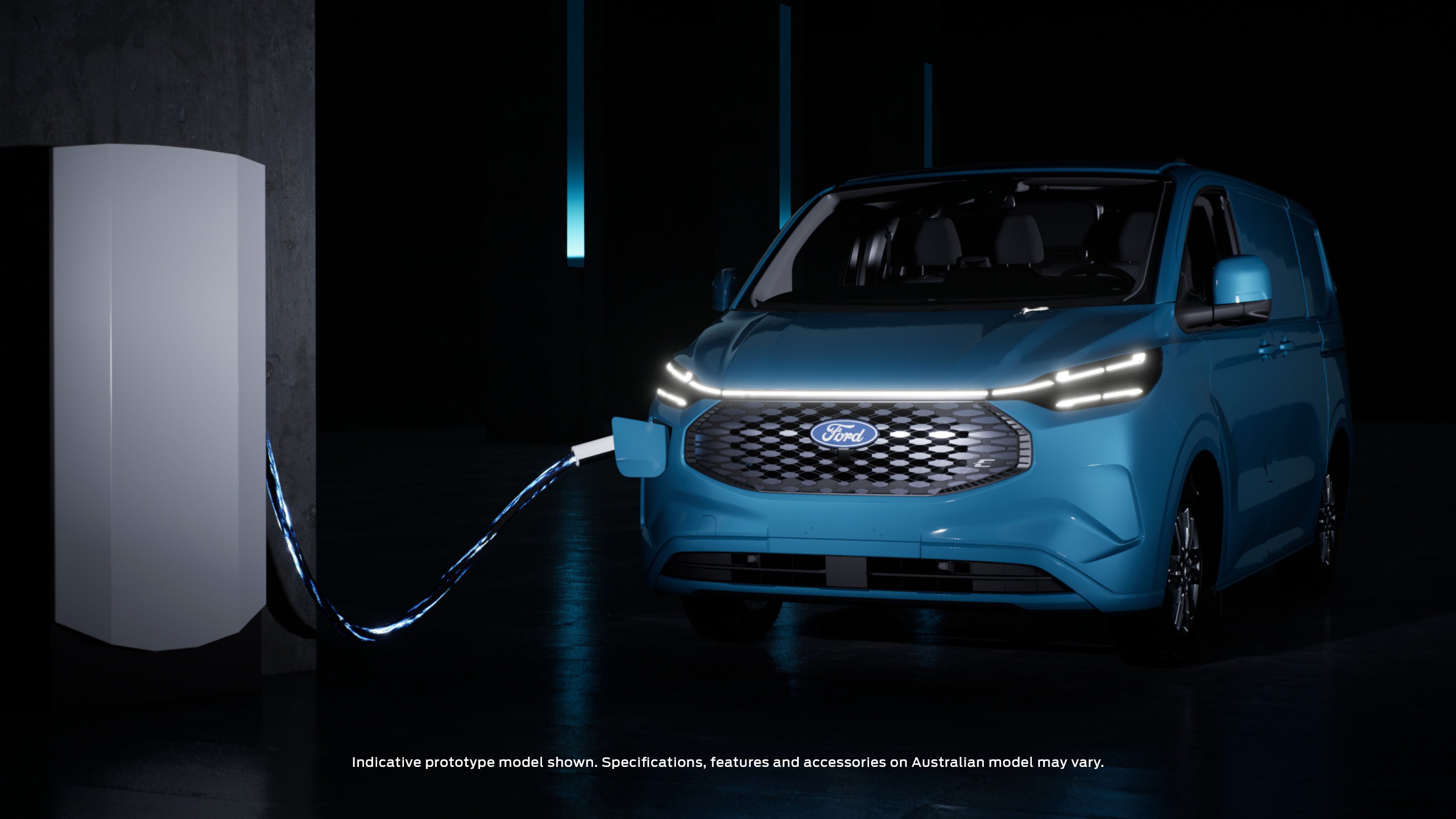
Charging by three-phase power, at home or work, will fully recharge the E-Transit Custom’s battery in a little over seven hours, comfortably overnight. Otherwise, the T-Transit Custom also supports up to 124kW DC fast charging for a 15-80 per cent recharge in 41 minutes. A new charge profile front-loads the energy, delivering quick, useful top-ups. Ford’s lab testing shows the system delivered almost 38km of driving range in five minutes using a 124kW charger.
3
Ford’s innovative transformation of the humble Transit van doesn’t just lie in the powertrain, however, with ingenious packaging features found throughout.
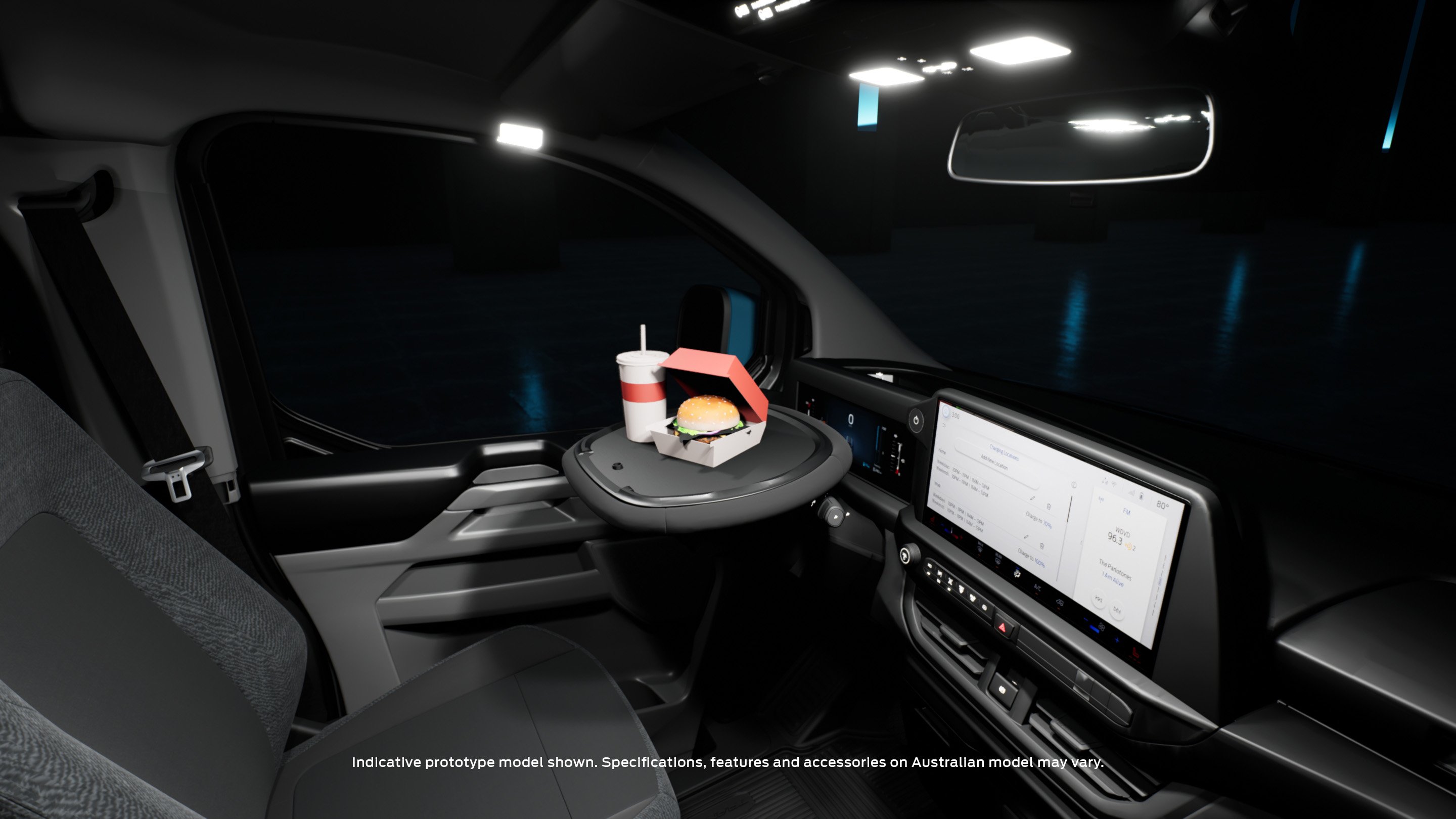
An optional Mobile Office option pack sees the fitment of a new tilting steering wheel that can transform into a stand for tablets or laptops, as well as a flat-surface for writing – or even lunch breaks.
Full LED exterior lighting highlights rebalanced proportions for a smart and confident stance, while aerodynamics were optimised by use of a flat-floor design, honeycomb grille, aero wheel designs and even rear light clusters to maximise range and efficiency.
1
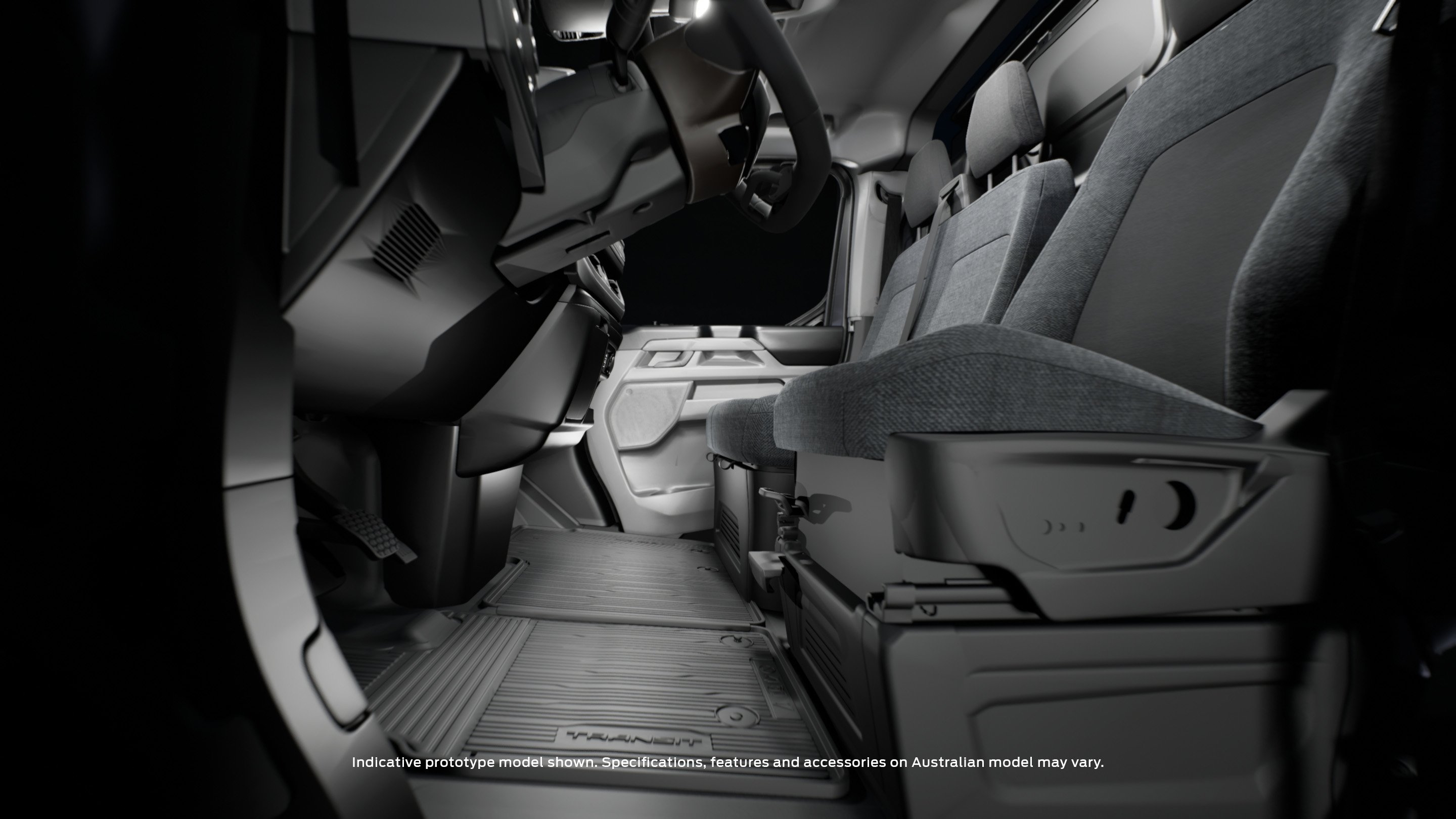
Packaging of the EV powertrain allowed Ford’s engineers to lower the load floor by 100 millimetres compared to the outgoing Transit Custom. Maximum load length is 3450mm, with an ultimate load volume of 6.8 cubic metres in standard, or 9.0 cubic metres in ‘high roof’ body configurations.
The rear end is suspended by semi-trailing arm independent rear suspension, while the MacPherson strut front assembly has been moved forward, lengthening the wheelbase, and improving front-seat footspace and legroom.
1
A standard safety suite features pre-collision assist, lane-keeping assist, driver alert warning, adaptive cruise control, traffic sign recognition, intelligent speed assist, wrong way alert, front and rear parking sensors and a rear-view camera.
The smart cabin anchors on a sculpted dashboard, centred by a 13.0-inch landscape touchscreen operating on Ford’s latest SYNC4 infotainment system.
Elsewhere around the cabin, material and textures that avoid trapping dirt and water were specifically chosen for durability and ease of maintenance.
1
The Transit van is something of an icon in the one-tonne commercial segment, and is truly one of Ford’s global smash hits. In-fact, when global sales surpassed 8 million in 2015, it was the third best-selling commercial vehicle ever. Australia’s E-Transit Custom variants will be manufactured in Turkey.
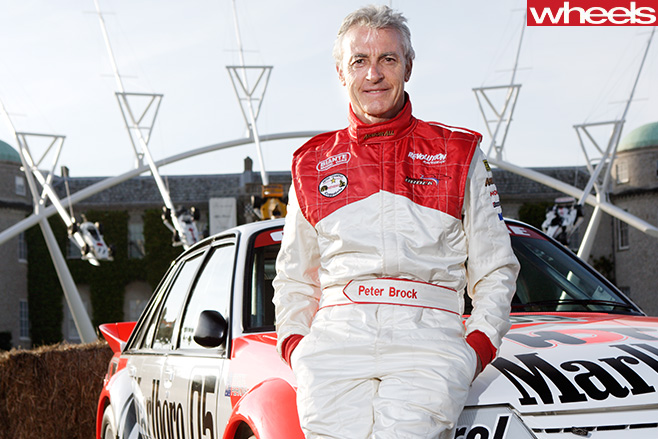
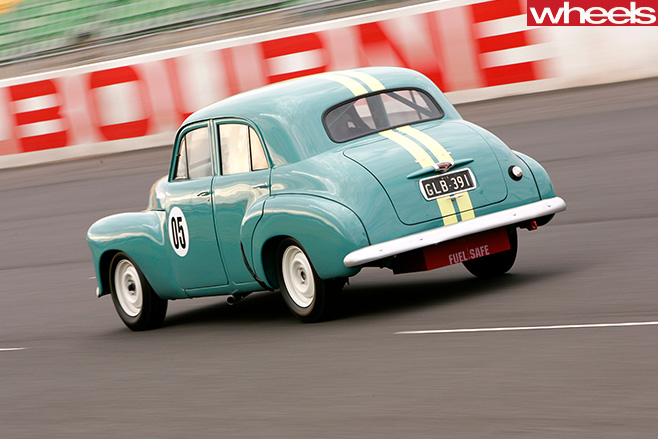
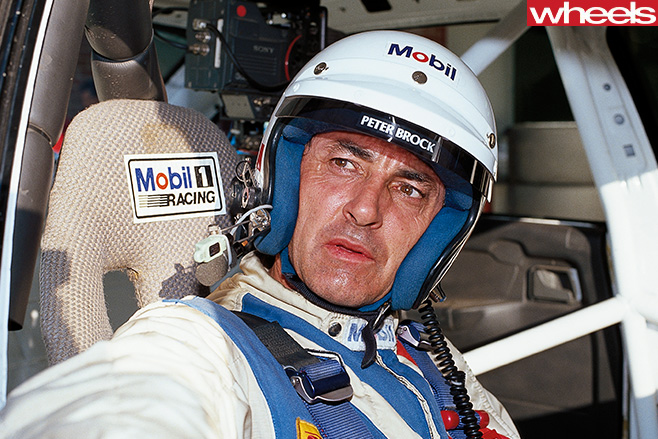
This feature was originally published in 2016 to mark the 10th anniversary of Peter Brock’s passing.
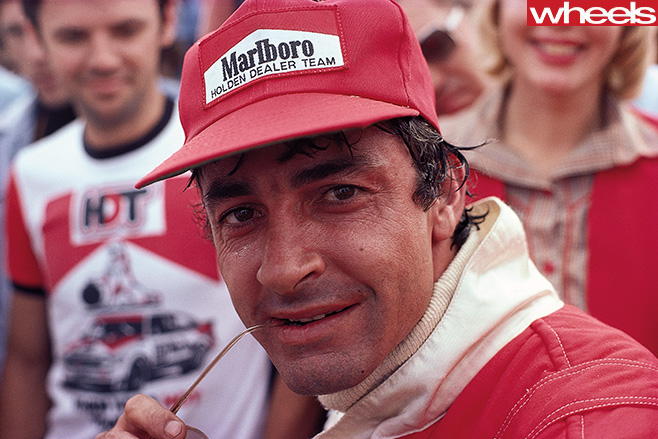
There are plenty of ghosts here in Hurstbridge, the heart of Peter Brock country. It was in this outer suburb of Melbourne that he lived much of his life, terrorising these roads in everything from bush jalopies to Holden factory prototypes.
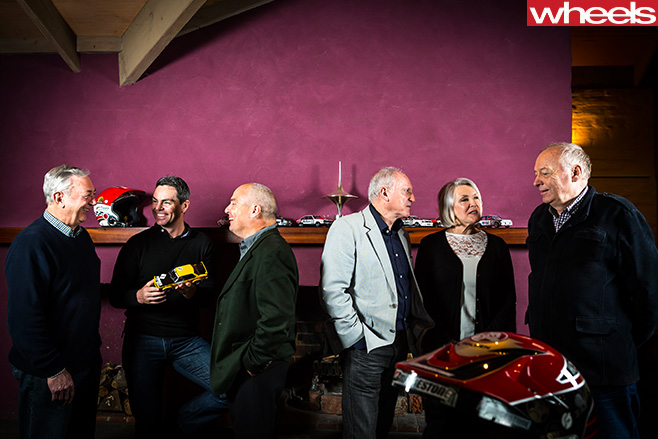
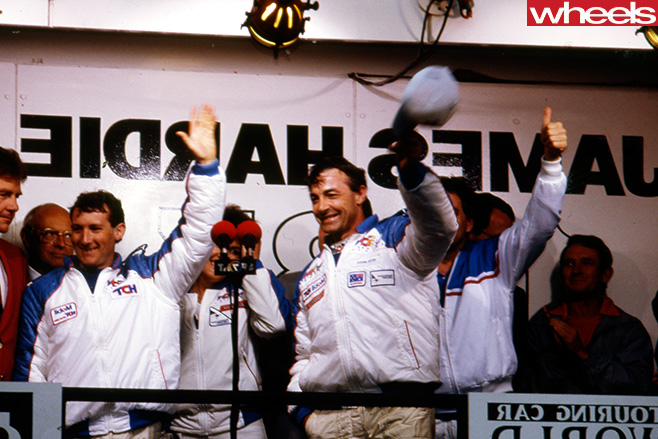
There’s also a ghost at Bridge’s Restaurant, where a select group of friends, family and former colleagues have gathered for lunch on the 10th anniversary of Peter’s death. The last time we were all here was for Brocky’s wake. The room is full of poignancy.
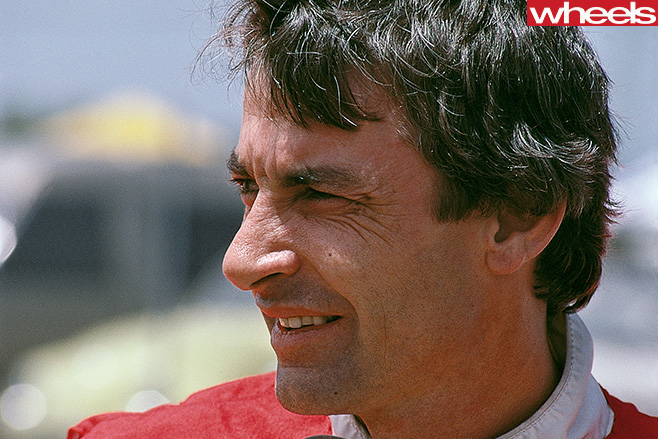
We’ve come together again to remember Brocky with a perspective only the passing of time can provide. He was a hero to many, but he was also a friend, a partner, a boss, a colleague, a mentor… a mate.
Bev Brock knew her partner of 28 years better than anyone. She’s a strong and independent woman, yet remains defined by her surname, adopted by deed poll because she and Peter never married.
An unrelenting protector of ‘Brand Brock’, Bev is keen to dispel some of the less savoury myths surrounding her partner and, while everyone is respectful of her views, we all knew Peter pretty well and saw other sides of what she admits was a multiple personality.
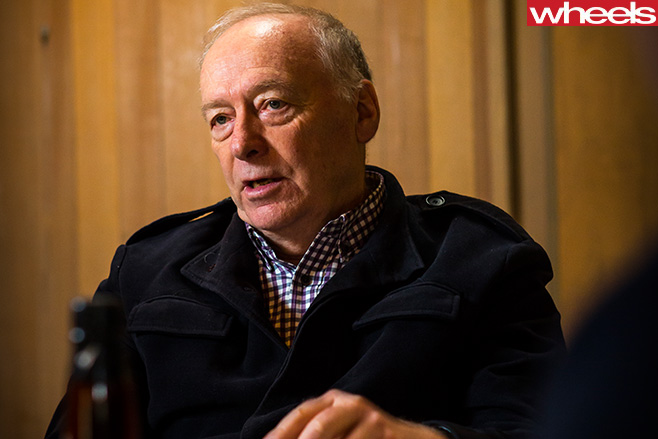
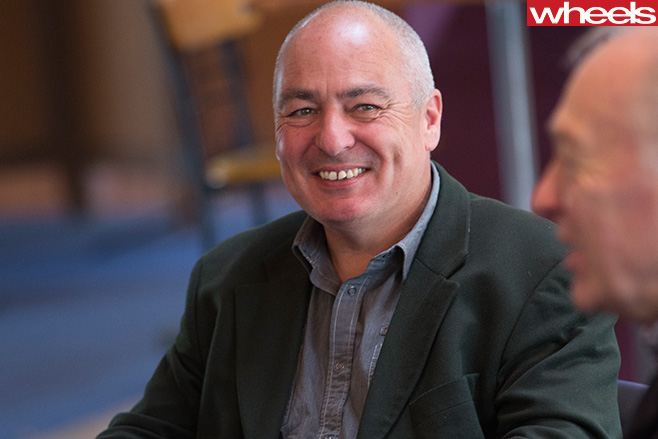
Tim ‘Plastic’ Pemberton, Brock’s long-time publicist and a strong voice of reason in the face of some lunacy over the years, asks Bev: “Didn’t you once say you’d wake up in the morning and not know who was lying next to you in terms of which Brock he was that day?”
“It depended on his schedule,” she replies. “Where was he going? Was he going to a media schedule, a business meeting, into the workshop? And often he’d be dreaming it through the night, so he’d get up in character.”
One issue Bev is keen to address is the allegation of wife-bashing by Peter’s second wife Michelle Downes, a former Miss Australia and popular TV weather girl.
In my discussions with Peter, he questioned Michelle’s mental stability and said she was prone to hysterics that required him to exert physical restraint.
Plastic says Peter’s best mate Grant ‘Spear’ Steers, a brutally honest straight-talker who died last year, recalled witnessing Michelle losing control in an argument and falling down some concrete stairs, then reporting she’d been bashed.
Bev says he would literally not hurt a fly. “I know from the family stories it was a very dysfunctional relationship, but from the day I knew him, this was a guy who was so gentle. Not once did I see him lose his temper. Not once did he raise his hand to anyone. I had to release the mice down into the paddock, the kids weren’t allowed to have toy guns… I can never comment on him with [first wife] Heather or with Michelle, but certainly in the 30 years with me, he was far from that.”
At the end of our long lunch, though, Ian Tate, Peter’s first HDT mechanic, confides: “There’s no doubt it happened. I know of several instances, and I witnessed it once.”
Heather (who died in 2010) had said that Peter became aggressive when he drank, but Bev, while admitting he was “a lousy drinker”, never saw that.
Plastic remembers seeing Peter drunk “heaps of times”, and said he’d “go off” on occasion, but there was never any physical aggression. Just shouting.
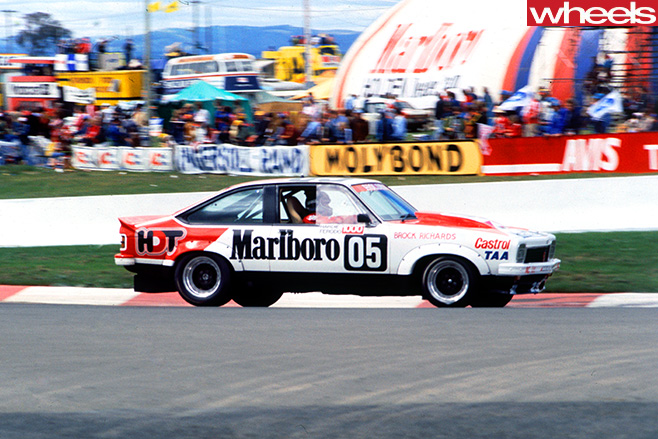
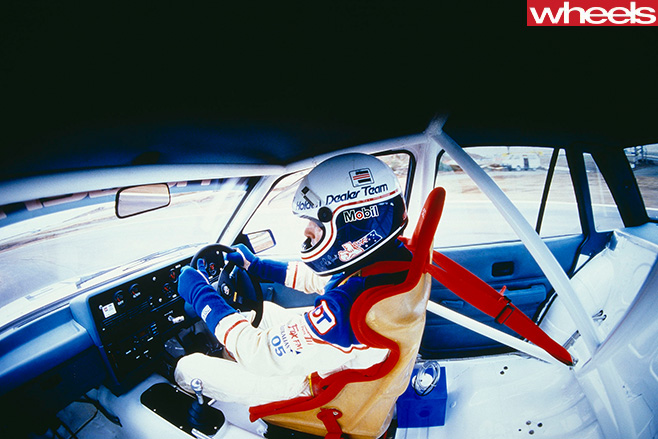
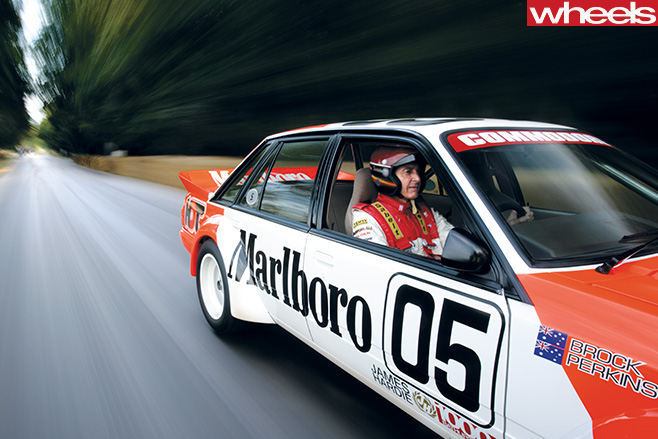
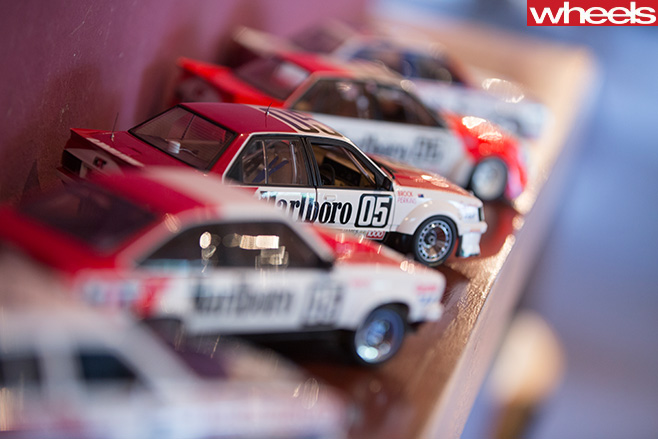
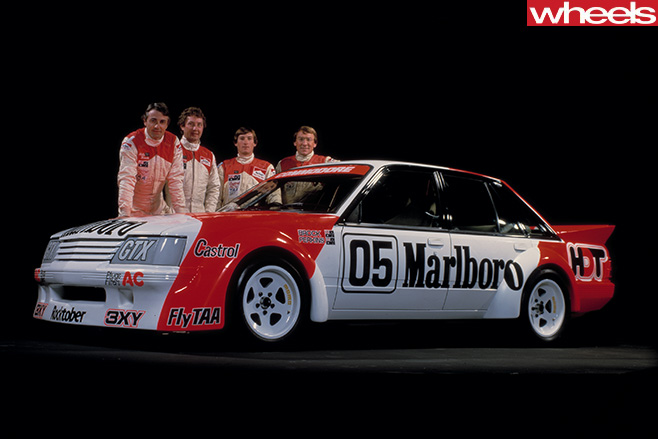
“He’d just get very passionate about something because it was his nature to be passionate. Never was there a better drunk to run around with 05 on his car because that was about all he could drink!”
Brock’s fame took off in the early 1970s. “Peter was starting to get a big head,” says Tate. “He was married to a Miss Australia, and he was Mister Australia, and he was very difficult to get on with.”
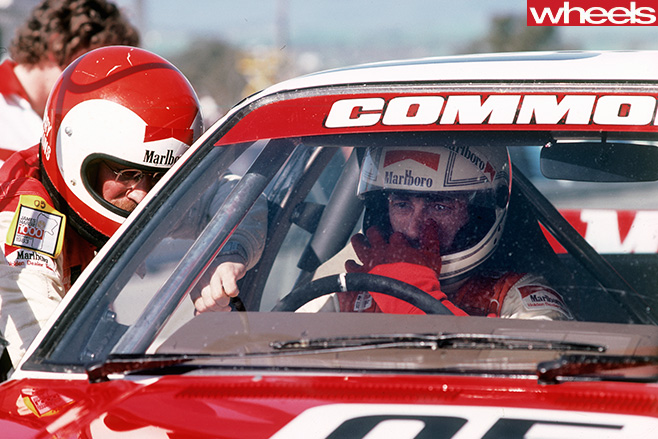
One outcome was that in 1974 Holden decided it could no longer tolerate him as the face of their ‘works’ team. Bad publicity dogged Peter’s personal life, he was experimenting with open-wheelers, demanding a prime city Holden dealership and rumour has it he was trying to pinch HDT’s Marlboro sponsorship. Holden decided to cut him loose for the first time.
“We cried when we heard; couldn’t believe it,” admits Tate, who encouraged Peter to seek opportunities with Vauxhall in Europe. Instead he chose to come back to Australia, and subsequently won the triple crown – Sandown 500, Bathurst 1000 and Phillip Island 500 – as a privateer in an L34 Torana, which simply enhanced his reputation.
Three years later in ’78 Brock returned to the Holden fold in a Torana A9X and dominated the sport like none before or since, winning Bathurst six times in seven years. There’s little doubt he had the best equipment in that era, but all agree he was the best driver out there.
“He was very special, no doubt about that,” says Tate. “The best three drivers in Australia were Moffat, Bond and Brock, and we were lucky to have two of them. Colin was quicker than Peter in the early days [but] it started to change over in 1971-72. All of a sudden Brock was doing it easy and Bondy was tearing the car apart trying to keep up with him.
“Leo and Pete Geoghegan were special in their day, especially at Bathurst. Leo was driving with Bondy [in 1973] and did a brilliant lap in practice and made the mistake of saying, ‘Nobody is ever going to go around Bathurst in an XU-1 quicker than that’. Peter said to me, ‘How much fuel is in the car? Enough to do three laps?’ I said yeah, and as he hopped over the counter he spat in the gloves, you know. I think he carved two and a half seconds off Leo’s time. Leo was demoralised. Peter didn’t say a word, just came back and said, ‘Okay, Tatey, put it away’.”
Plastic recalls asking a couple of Brock’s high-profile contemporaries if Peter was the best driver. “They didn’t like that question at all because it didn’t make them look too good.
“They said he was an excellent front-runner – get out front and he’d be away, turning immaculate lap after immaculate lap in the very best cars – not so good racing down in the pack because he wasn’t aggressive enough.”
Tate counters that, saying some of Brock’s best races were from the back. “There was ’73 at Bathurst when he ran out of fuel and lost a couple of laps and he caught back a lap on Moffat. That drive was bloody incredible. Lap times were the same for 30 laps through traffic, and don’t forget that in those days it was 60 cars on the track.”
Plastic reckons one of Peter’s best efforts was chasing the Jaguars in ’85.
“I reckon that was the best Bathurst driving performance. Those Jaguars were so far superior…”
“…and so illegal it wasn’t funny!” Tate finishes.
And let’s not forget Sandown ’76, when Peter and two mechanics built a Team Brock L34 in just two weeks, missed qualifying, ran-in the engine around the streets of Bundoora on Saturday night, started from the back of a 36-car field and still won the two-part ATCC sprint.
Jeff Grech, who worked for Brock in the mid-’80s, witnessed Peter’s heroic last lap at the ’79 Bathurst, when he broke the lap record for fun while leading by six laps in the HDT A9X.
“He came across the top on the brink,” Jeff recalls. “The car looked out of control but he was in control and that’s what’s always stuck in my head. And he would do that when we worked together, too. He would just get in the car, do two laps, and then waddle off.”
“The one that turned it for me,” says Bev, “was after Moff came and drove for us. We were at Pukekohe and Peter wanted to give Allan time in the car. He was grinding away lap after lap after lap, session after session. Then, with not much time left, Peter had to qualify. He does a sighter and then goes two seconds faster than Moffat managed. Moff was totally demoralised. He just turned to me and said, ‘We mere mortals just can’t do that’.”
But Tate defends Moffat as being a top operator in his day. “I still think Moffat was a very good driver. You can’t take anything away from him.”
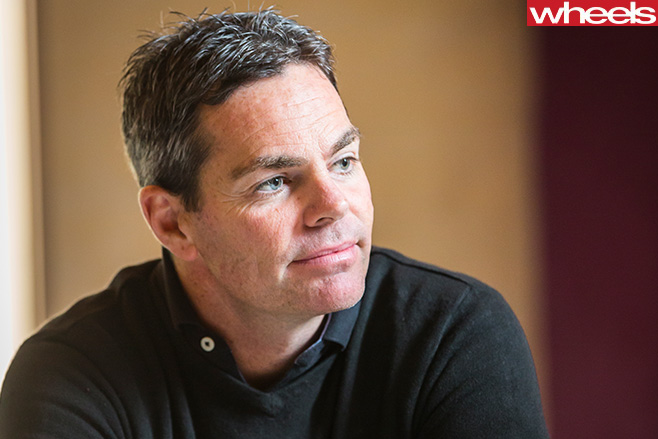
Craig Lowndes, looking younger than his 42 years, has come from Brisbane for this Wheels lunch. He is comfortable sharing his experiences with the old timers of a man he rates above all others.
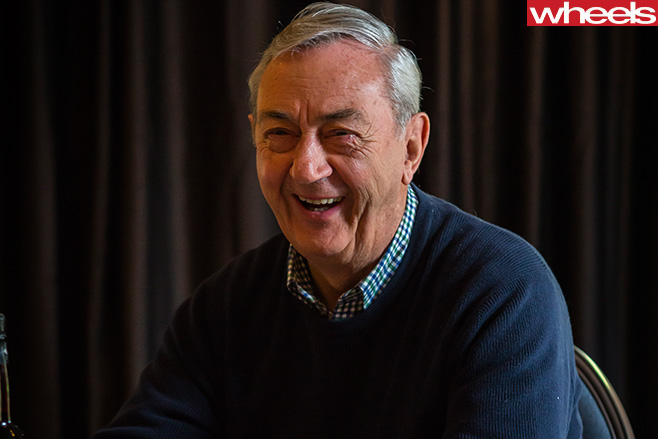
“Brock was the greatest,” says Lowndes. “You have people who are naturally talented and people who have to work bloody hard to drive a car fast, and Peter was just naturally talented.
“I’d listen to the feedback he was giving Bridgestone, what the tyre was doing, what the car was doing; his feel and his feedback were exceptional. He could drive around issues when the car wasn’t perfect but his actual bum-seat-feel of what the car was doing was amazing.
“Every generation has its group of drivers, and cars change, but then you see the longevity he had in the sport and what he was still doing when I came along at the end … even when he was retiring he was still top five so it’s not as if he was just hanging on to keep driving.
“When I joined HRT in 1994, I knew Sandown pretty well but when we went to Bathurst we had a mountain to climb. I was struggling, at least two seconds off the pace, until Peter sat me down in the back of the pits and talked through a lap, what you need to focus on, where you need to position the car, how to flow it across the grate across the top, and I still use those points today. I went from being frightened of the place to actually enjoying it.”
Come race day, the 20-year-old rookie found himself in the car at the finish and famously overtook John Bowe for the lead before having to settle for second with fuel running low. Brock’s protege has now won The Great Race six times.
In the mid-1980s Brock was at the height of his fame, making heaps, living fast and getting run-down. Bev recommended him to chiropractor Eric Dowker, who not only gave him an intensive 10-day ‘detox’ but introduced him to alternative thinking that included crystals. They soon invented the Energy Polarizer – named by Plastic without realising just how polarizing it would become.
Even today Bev provides a vigorous defence of the device, but her zeal has little effect on our other guests, who – after she leaves to collect the grandkids – openly condemn it as useless and the cause of the collapse of Peter’s empire.
Plastic believes Peter was deluded. “There are a lot of people around who’ll tell you what you want to hear. People just told Brock what he wanted to hear.
“I’ll tell you a little incident. About 12 months before this all happened, myself and Brock were sitting in the office and we thought up something or other. It was all bullshit but I thought it would be a good story to throw out to the media. Sure enough, it got a big run [because] anything [Peter] did got a good run.
“Then he said to me ‘That’s unbelievable because now it’s in the newspapers it’s true. It’s become a fact’.
“I said, ‘Come on, Peter, you’re starting to believe your own bullshit.’
“That was a frightening moment because it hadn’t happened before. You get to the stage where you’re surrounded by yes-people saying, ‘Yeah, yeah, that’s fine, go in your direction’, and it’s not what he needed.”
Grech, who in 1982 joined his hero as a young mechanic and saw HDT Special Vehicles grow into a powerhouse, regrets that the Polarizer and Peter’s refusal to acquiesce to Holden’s directive saw the business collapse.
“The sad part about the whole thing was just the upheaval of everything,” Grech says. “We were all sad about what could have been the Peter Brock empire. You just cringe. It was a licence to print money, even though he couldn’t run a business. Could you imagine a Peter Brock HDT with [former HSV boss John] Crennan running it? It would have been huge.”
The emotion of the day really gets to Bev when talk turns to the events surrounding Peter’s death. When Craig brings up the TV news choppers suddenly landing at his property, Bev recalls through tears how she hadn’t been able to contact Peter’s kids, James, Alexandra and Robert.
No one knows why he chose to race that Daytona Coupe in Targa West ’06, less than a week after being at the Goodwood Festival in the UK driving an old Humpy.
“Six weeks before, he rang to tell me that he had actually retired, and meant it; he’d lost his dreaming (because he’d always dreamed his events), he’d lost his timing, he’d lost the drive. He was really emotional.
“I don’t know why he changed his mind. He wasn’t even game to tell us [that he was doing the WA event]. We didn’t know. By his own acknowledgement, the car was a pig to drive and he couldn’t wait to fix it.
“When it came to retirement, I didn’t realise how deep his depression was. My last conversation with him was [tearing up again], ‘Bevo, I’m a failure. I’ve never done anything worthwhile. I’ve let you down, I’ve let the kids down, I’ve let myself down’.Peter was his own harshest critic.
“This was weeks before he died. I’m not saying the accident was a direct outcome of that, but he was questioning his own self-worth. For a man like that to come out and say those words…
“That was probably the most difficult time that you can imagine because it wasn’t the Peter we all knew. He was no longer the confident, self-assured, successful person. He was questioning every single thing he did.
“You try to focus on all the great things, but when someone you love dies, you want to think that they died content and happy with their lot in life. And you [just] know he was questioning.”
Later, Tate offers a counterpoint. He says Peter was incredibly happy that week in the UK, clearly in love with new partner Julie Bamford and positive about the future.
“I’d left him on the Monday to drive through the Cotswolds. The last thing I said to him was, ‘What are you rushing back for? Why don’t you spend a couple of weeks driving around with us?’ But he said he had to go. He had a commitment to drive the car and that’s all there was about it.”
As the waiters clear the main course, talk turns to Peter’s legacy. Each of our guests has a different perspective.
Plastic says Peter took motorsport into the general media. “Prior to that motorsport was on the car pages and that was it.
“He went way above that and became a notable person on anything. If you wanted a point of view on something that was going on, get Brock’s point of view, which would make a bit of sense … Peter just raised the whole profile, for which Craig is probably the equivalent now.
“One of the first things we did with Peter was when he won Bathurst and the race was worth $100,000, which at the time was huge. I thought here’s a bit of fun, so we went straight into the ANZ bank in Collins St with a photographer in tow and said, ‘Give us $100,000 so I can load this bloke up for a photograph and we’ll say it happened in your bank’. It got page 3 of The Sun or something, which you wouldn’t normally get in those days.”
Lowndes believes Peter’s legacy is the way he dealt with the fans rather than his on-track records.
“He’d stay signing autographs until the last person had come through. To have the patience to do that was incredible.
“Once, after I crashed at Bathurst, Peter said it didn’t matter what the result was on track, the fans are there to support you regardless, and for me that clicked pretty well. Even if you have a bad race you still get out and say hello to the fans, whereas a lot of the current drivers don’t seem to grasp that.
“And he wasn’t just a race driver, he was a mentor at the Olympics, and the whole thing with 05… Peter used motorsport as a vehicle to accomplish so many other things outside of the sport.
“If you look at Supercars right now, they’ve got a big problem. I’m probably the last of that old generation. I’m a qualified motor mechanic. Jamie [Whincup], for example, is not qualified at anything. We grew up in the same area and raced in the same go-kart club; his dad was a printer and Jamie says if he wasn’t a racing driver he’d be on the dole. He has no back-up outside of motor racing.
“Moffat and Brock is Jamie and I. Jamie won’t do a lot of the public stuff; he won’t put himself out there.
“It’s like [the current breed] have got this attitude it’s their right to be a race driver and they don’t want to give anything back. They’ll do the bare minimum that Supercars wants, like signing autographs. Peter was so good at that, but these guys, if they could dig a tunnel between the transporter and the garage to get away from people, they would.”
Bev says Peter never told Craig anything different to what he told the other young drivers, “but you’re the one that listened. That’s why you have the standing you do in the sport”.
“Peter never wanted to let anyone down,” Bev continues. “He would tell the other guys: ‘You need to remember that motor racing is only a small percentage of your life and if you want to have any relevance in the community you have to be more than a motor racer’.
“Peter was passionate about the environment, he loved his art, he loved breeding birds. He made sure there was a broader perspective to his life and he wanted others to do that.”
Grech compares Brock with the great global sports personalities. “I don’t say this lightly, but it’s probably a bit like Muhummad Ali was in America … Peter was iconic. He related to a lot of people who didn’t watch motor racing. And he brought his love of the sport into the general public.”
“He was the total package,” Bev agrees. “There’s been a lot of very good drivers in Australia, but when it comes to dealing with the public and the media, part of the package was missing. Peter was bigger than the sport.”
Dessert is finished, our anniversary lunch is over. Time then to distil Peter Brock’s legacy.
One aspect of his multi-faceted and sometimes flawed character shines brightly: Peter was powered by his passion. It fuelled how he dealt with fans, how he drove, his road cars, the Polarizer, veganism, his environmental zeal… When Peter decided something was for him, he pursued it with a passion. Sometimes to his detriment, sure, but far more often the outcome was overwhelmingly positive. For Brock, for his fans, for motor racing, for the wider community. For Australia.
If passion was what he gave so freely, then it’s no surprise the fans were passionate in return. No other Australian race driver had as many diehard supporters. And no surprise that, of all the drivers who followed in his slipstream, his protege Craig Lowndes comes closest.
Ten years after Peter Brock’s death, his legacy is as simple – and as complex – as that. It’s how he lived, and how he should be remembered.
The crew
The Mechanic: Ian Tate
Mechanic 1969-1974 and Goodwood car preparer 2006
Harry Firth mechanic 1956-75; started car prep and engine-building business and continues to work there at 77; major player in historic car racing as long-time president of Victorian Historic Racing Register; occasional classic car racer
The Protege: Craig Lowndes
Teammate 1995-1997
Son of early-’70s Brock mechanic Frank Lowndes; six-time Bathurst winner; record 13 Bathurst podiums; first ATCC/V8SC driver to win 100 races; three-time series champion; awarded OAM in 2012 largely for work outside motorsport
The Manager: Jeff Grech
Mechanic 1982-1985 and team manager 1994-1997
Known to all as Hog because he used to ride a Harley; has worked for HDT, Perkins Engineering, Gibson Motorsport and Holden Racing Team; been involved in 10 Bathurst wins; now runs Team 18 with Lee Holdsworth in Supercars
The Partner: Bev Brock
Partner 1977-2005
Former science teacher; mother of three and grandmother of six; life coach; charity worker; yoga devotee; author of two books; awarded an OAM in January for her extensive community work; unsuccessfully trying to be retired
The Publicist: Tim ‘Plastic’ Pemberton
Publicist 1975-1987 and 1994-1997
Started Pemberton Publicity Services in 1976 to assist Peter Brock and the ‘05’ campaign for the Road Safety and Traffic Authority; contracted by Holden for three decades from the mid-1980s to promote racing activities; vintage-tram enthusiast
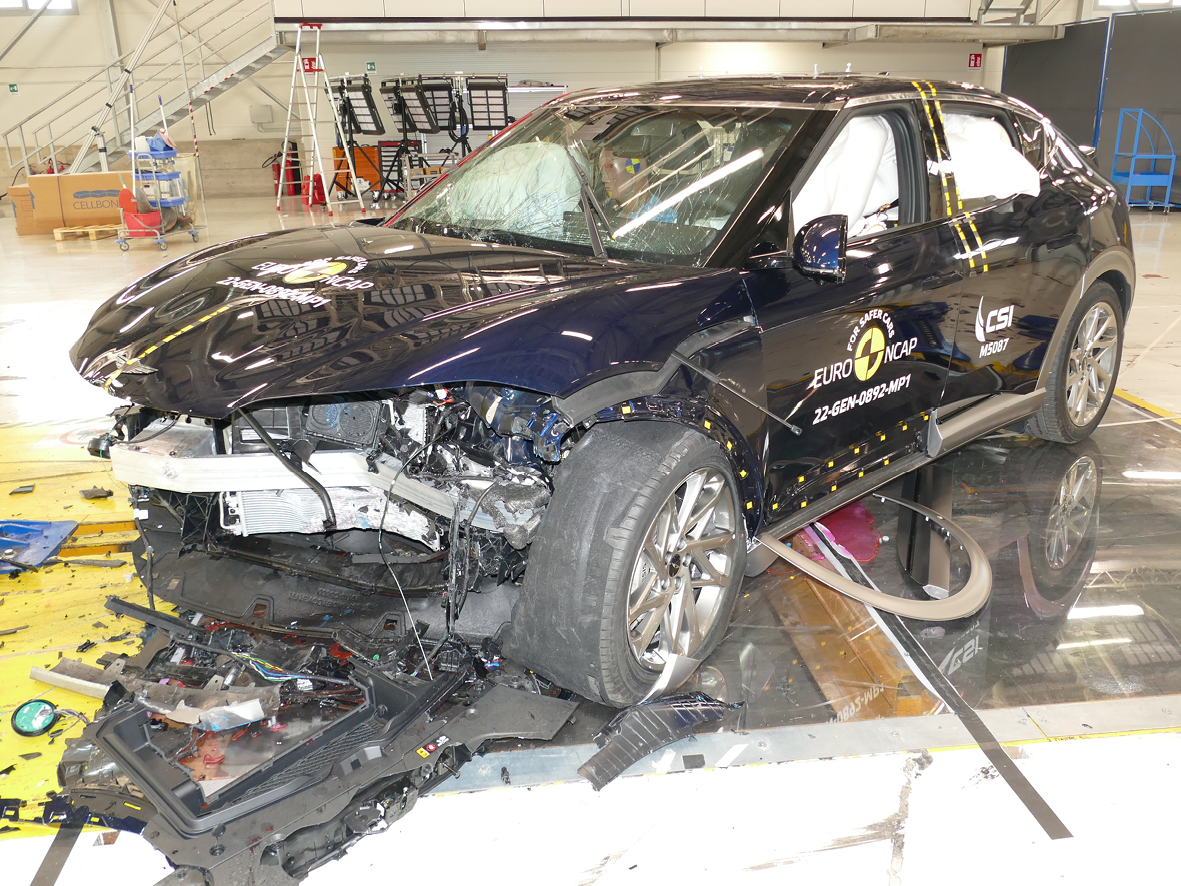
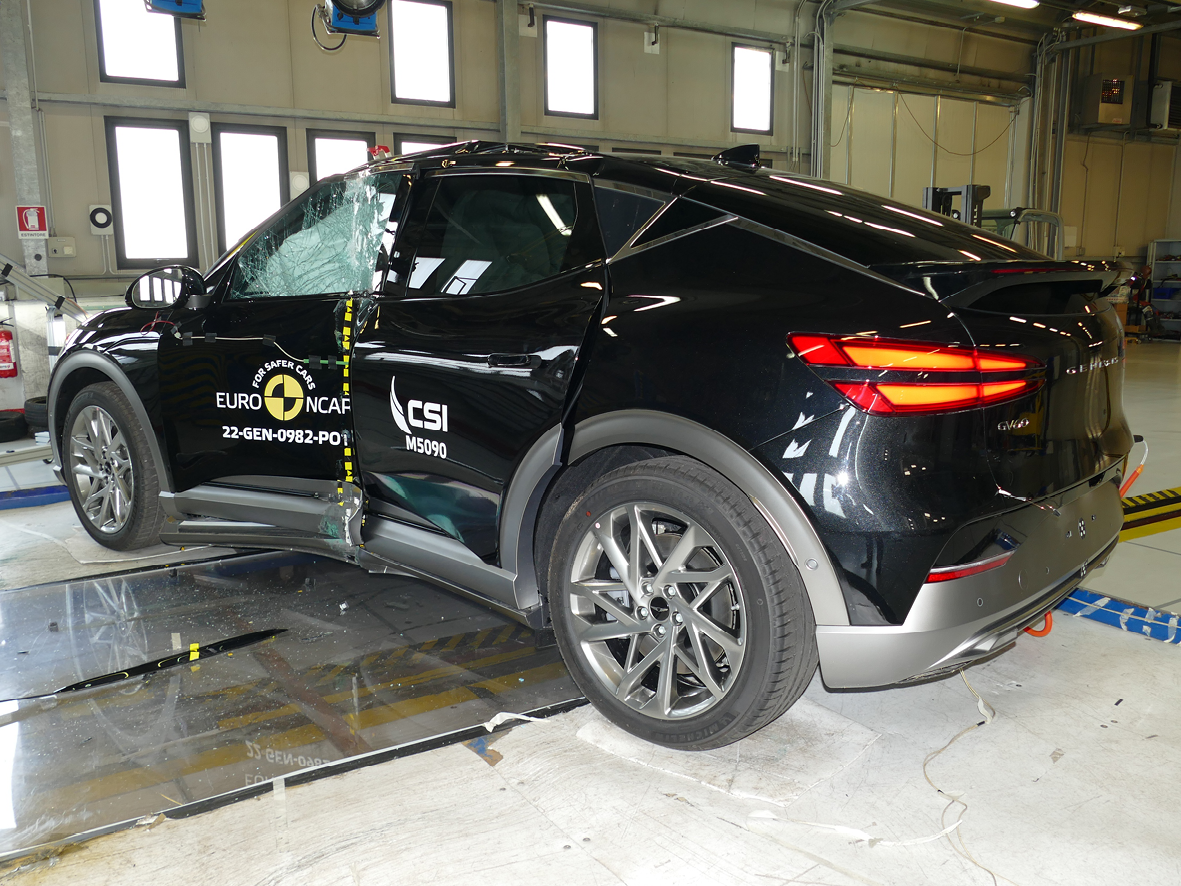
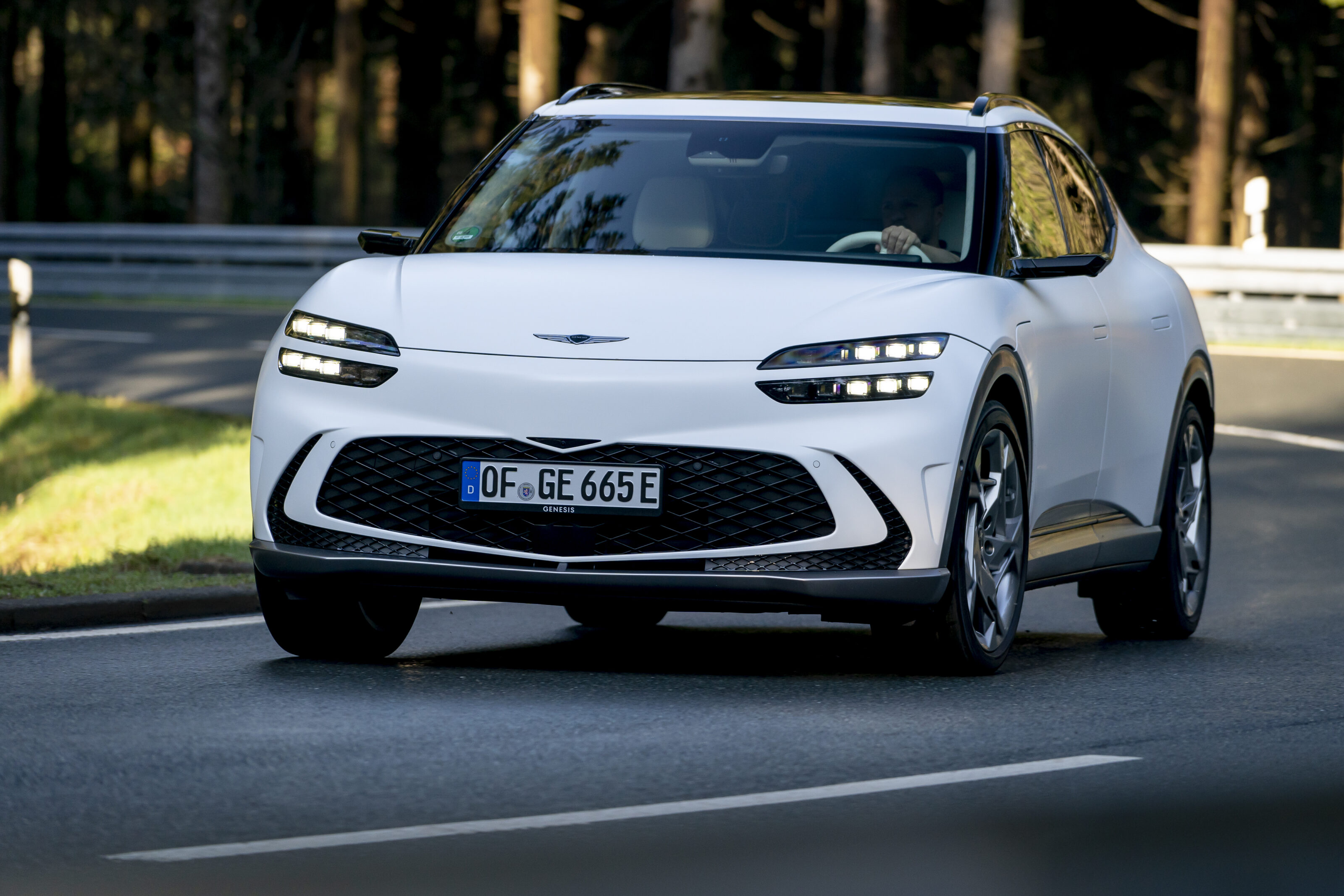
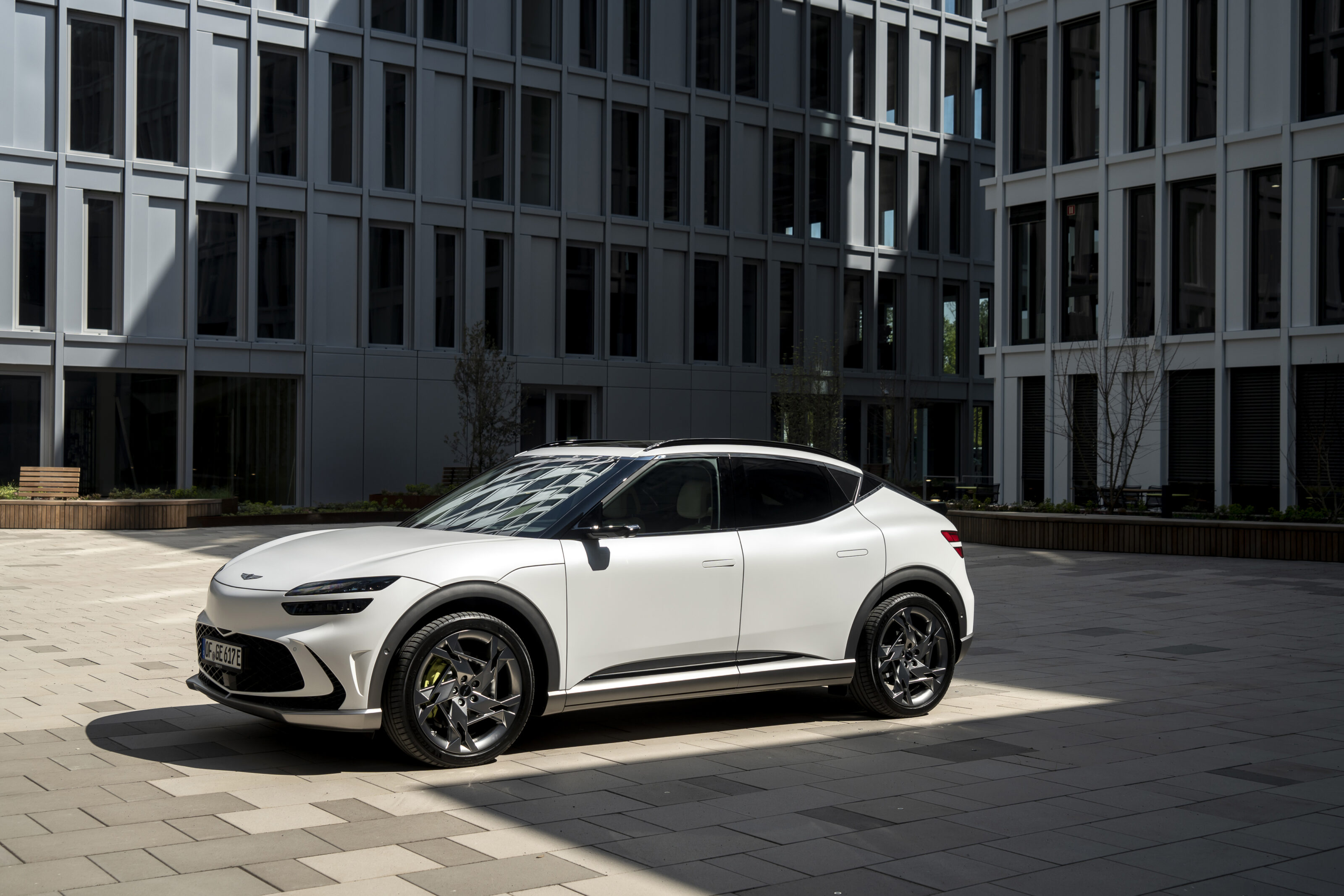
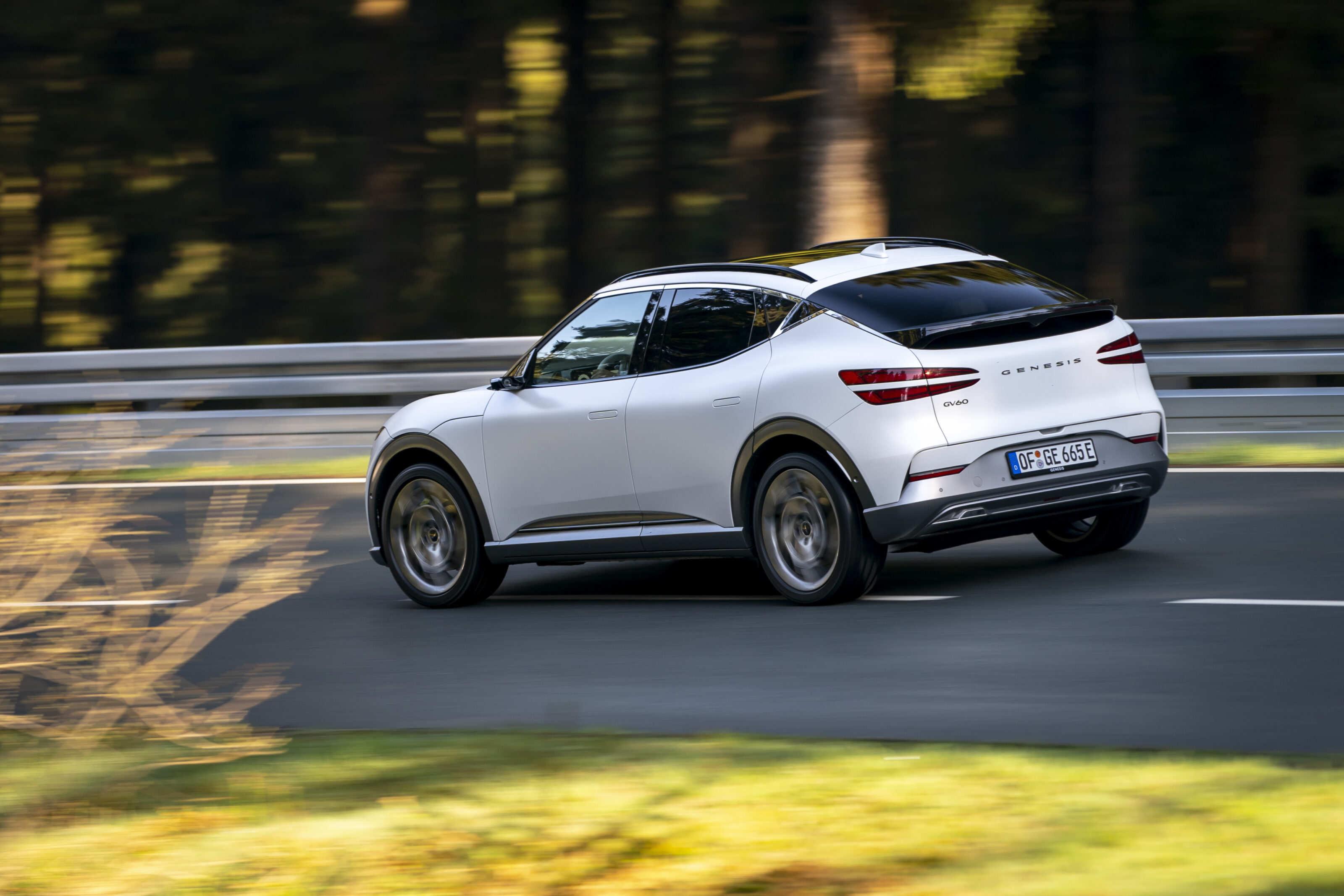
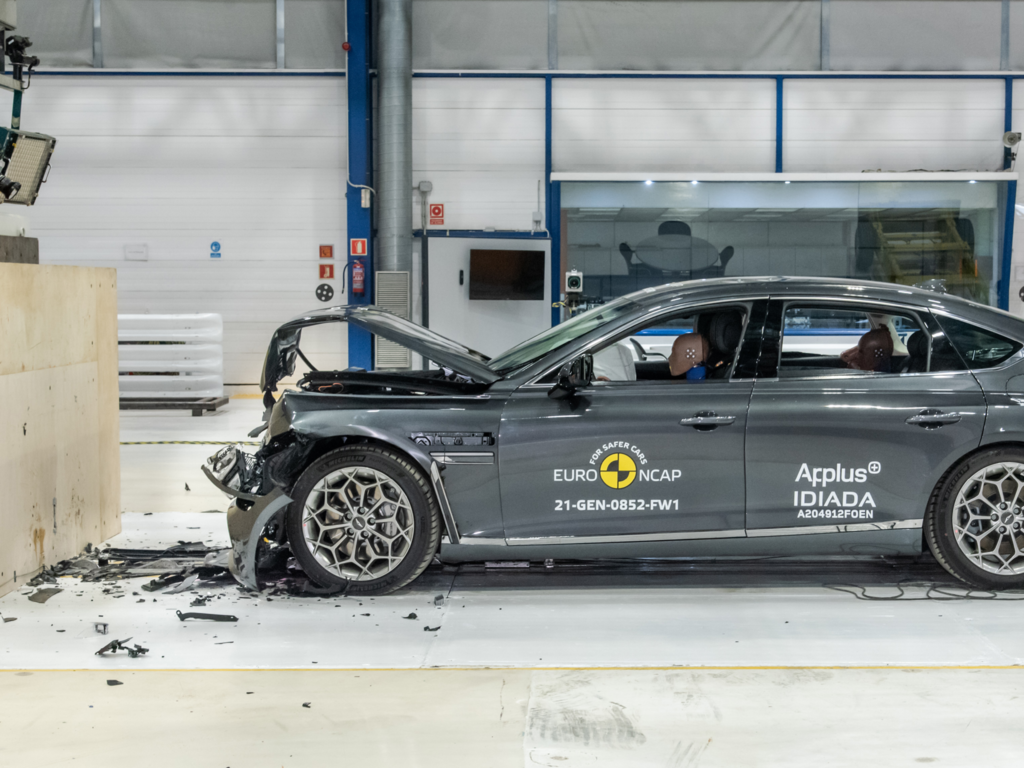
The 2023Genesis GV60 electric SUV has received a five-star ANCAP safety rating, based on testing conducted by Euro NCAP.
This rating applies to the single-variant Performance AWD, which will arrive in Australia this month, priced from $103,700 before on-road costs.
The all-new GV60 small SUV scored 89 per cent for adult occupant protection (34.09 out of 38 points), 89 per cent for child occupation protection (43.62 out of 49 points) and 63 per cent for vulnerable road user protection (34.22 out of 54 points).
1
It is the third Hyundai Motor Group vehicle based on the E-GMP electric architecture to receive a five-star rating under the latest criteria, alongside the related Hyundai Ioniq 5 and Kia EV6.
Maximum points were awarded for the lower leg impact tests for pedestrians, however, ANCAP expresses concern for upper leg impacts, with the GVg0 receiving a ‘poor’ mark at 0.45 out of six points.
Standard safety equipment includes; autonomous emergency braking with junction assist, lane departure warning, lane-keep assist, blind-spot monitoring, rear-cross traffic alert, and adaptive cruise control with a speed limiter.
8
This allowed it to receive a safety assist score of 88 per cent (14.22 out of 16 points), with top marks (2 out of 2 points) for its junction AEB system, which can detect a vehicle entering the road from the side and apply the brakes to prevent a collision.
Eight airbags (dual frontal, side head, side chest, driver’s knee and centre) are fitted as standard.
The centre airbag is designed to prevent head clashes between the driver and front passenger in a collision.
ANCAP has also released results for the Tesla Model Y and Kia Niro this week, with all vehicles scoring a maximum five-star safety rating.
Two grades will be offered on the local market, in AWD and Performance AWD grades, available from $103,700 (before on-road costs).
“We are delighted to introduce GV60, our first dedicated electric vehicle, as the beginning of Genesis Motor’s journey towards electrification,” said Head of Genesis Motors Australia, Connal Yan.
“In an exciting year for Genesis, GV60 will be the first of three EVs to launch locally in 2022, and will be closely followed by Electrified G80 and Electrified GV70.
“GV60 applies the Genesis Athletic Elegance philosophy to provide an unprecedented luxury experience on a new dedicated electric platform that delivers all the powerful, emissions-free benefits of an advanced long-range, ultra-rapid charging EV.
As was revealed last month, the GV60 will go on sale from $103,700 (before on-road costs) in the entry ‘AWD’ guise, while the up-spec ‘Performance AWD’ variant incurs a $7000 premium.
Prices exclude on-road costs.
12
Features
GV60
Standard equipment for the GV60 is to a high grade, with the EV including features such as:
20-inch alloy wheels
Vision glass roof with power sunshade
Puddle lights with Genesis logo
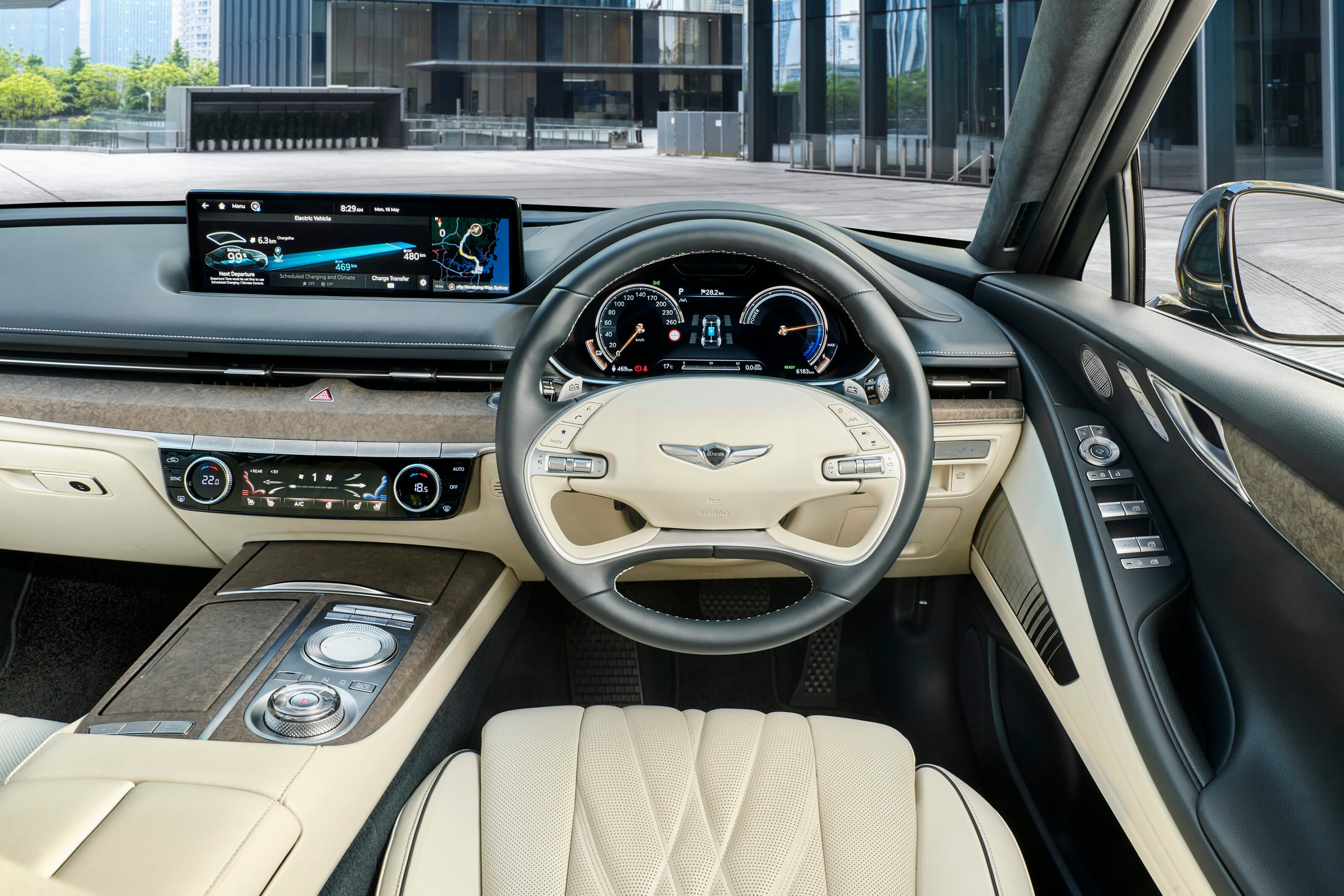
Crystal sphere Shift by Wire (SBW) controller
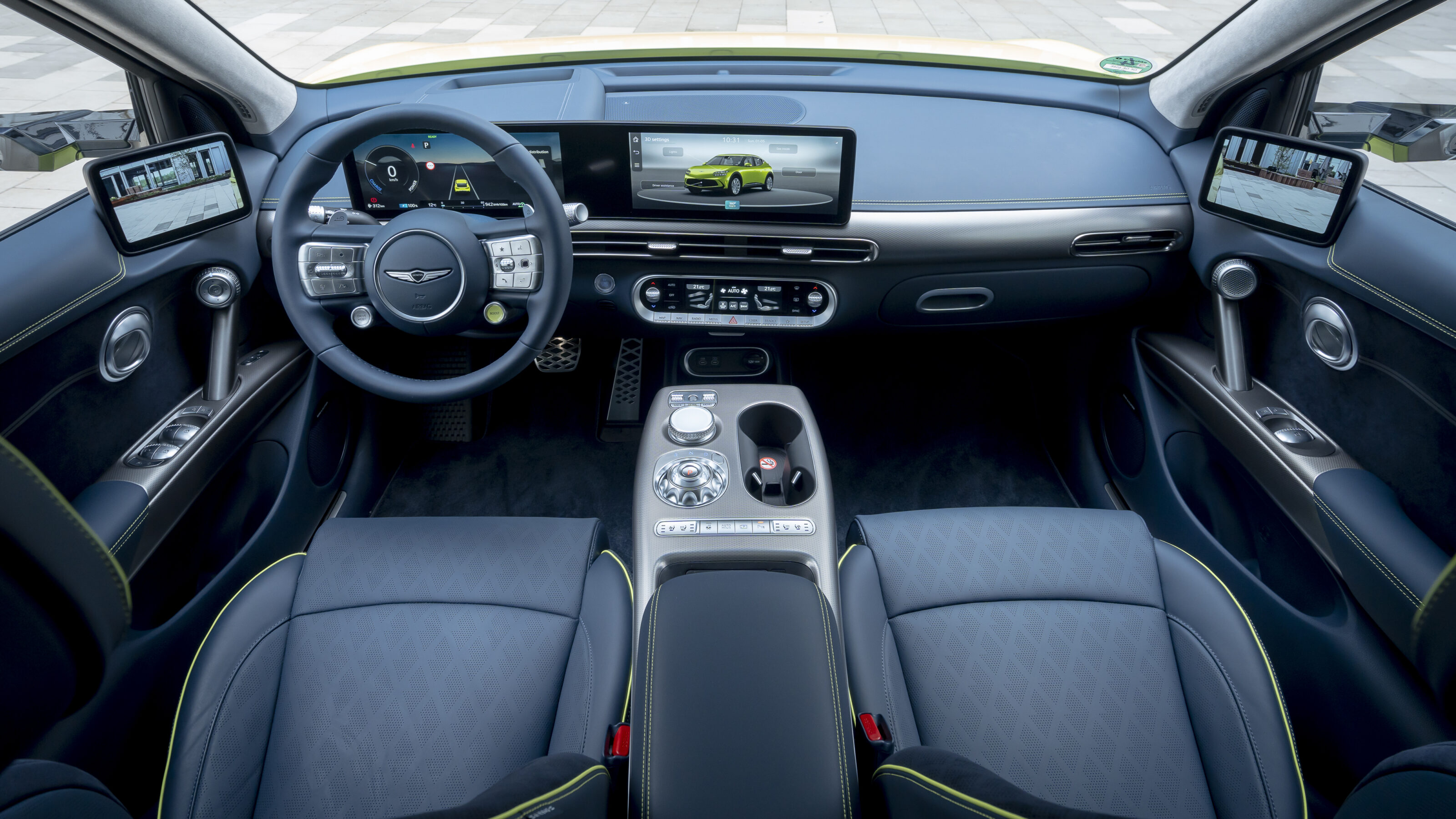
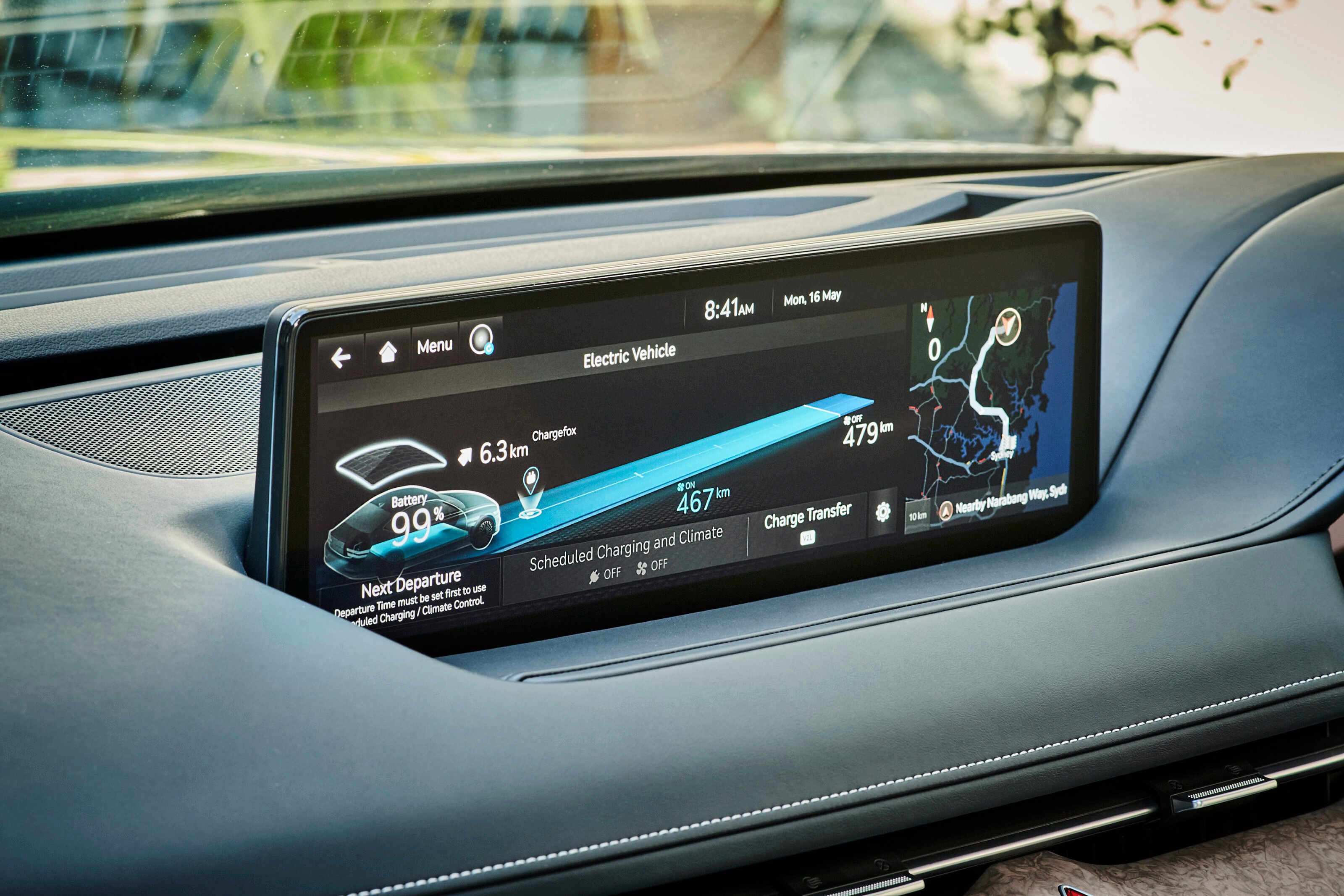
2 x 12.3-inch screens
Three USB-C ports
Augmented reality satellite navigation
Head-up display
18-way electrically adjustable driver’s seat, with ergomotion massage function
17-speaker Bang and Olufsen sound system
Apple CarPlay, Android Auto, multi-connection Bluetooth
Wireless phone charging
Active noise control
Dual-zone climate control
Heat pump system
Fingerprint recognition
Remote smart parking
Full safety suite, including blind-view monitors and intelligent front adaptive headlights
Digital side mirrors
Exterior vehicle-to-load adaptor and interior three-pin plug for charging.
GV60 Performance
On top of the above features, the Performance scores:
21-inch alloy wheels
Boost mode
Road Preview electronic suspension and electromechanical LSD
Black monobloc front brakes
Alloy pedals
Paint finishes
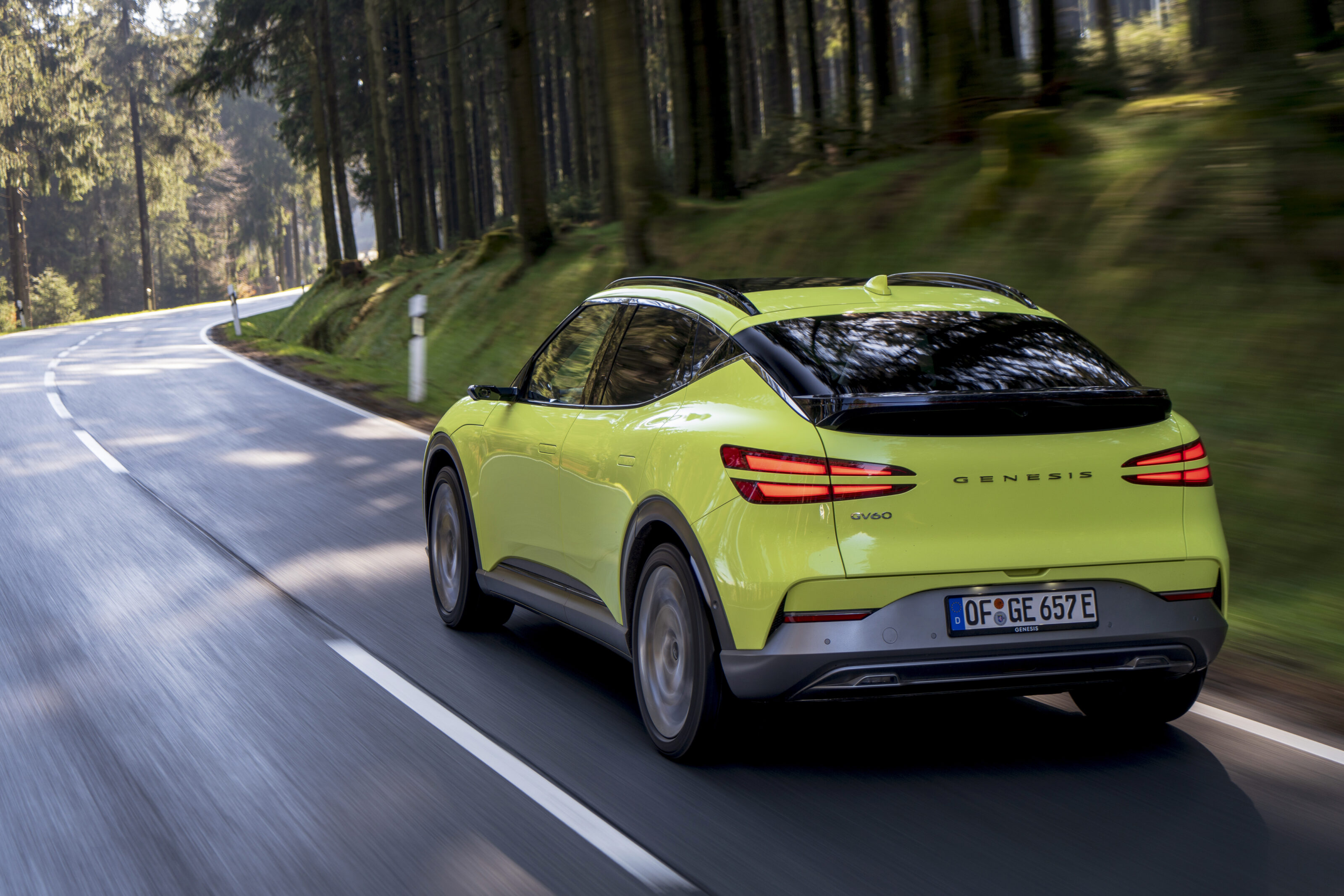
Both variants of the GV60 are available in a range of paint finishes including São Paulo lime, Uyuni white mica, Savile silver, Himalayan grey, Vik black, Adriatic blue, Barossa burgundy, Mauna red and Hanauma mint.
Only the flagship Performance grade can be ordered in one of three matte exterior colours, with Matterhorn white, Melbourne grey and Atacama copper available on the top-spec variant.
Interior upholstery
The base GV60’s interior features Digital Dots aluminium garnish, with a choice of three Nappa leather and copper accent finishes, such as obsidian black, ash grey and glacier white or monstera green and glacier white.
The Performance gets a similar treatment, this time with Arrows aluminium garnish, Nappa leather and metallic accents, ranging from obsidian black, ash grey and glacier white or torrent navy.
1
Powertrain
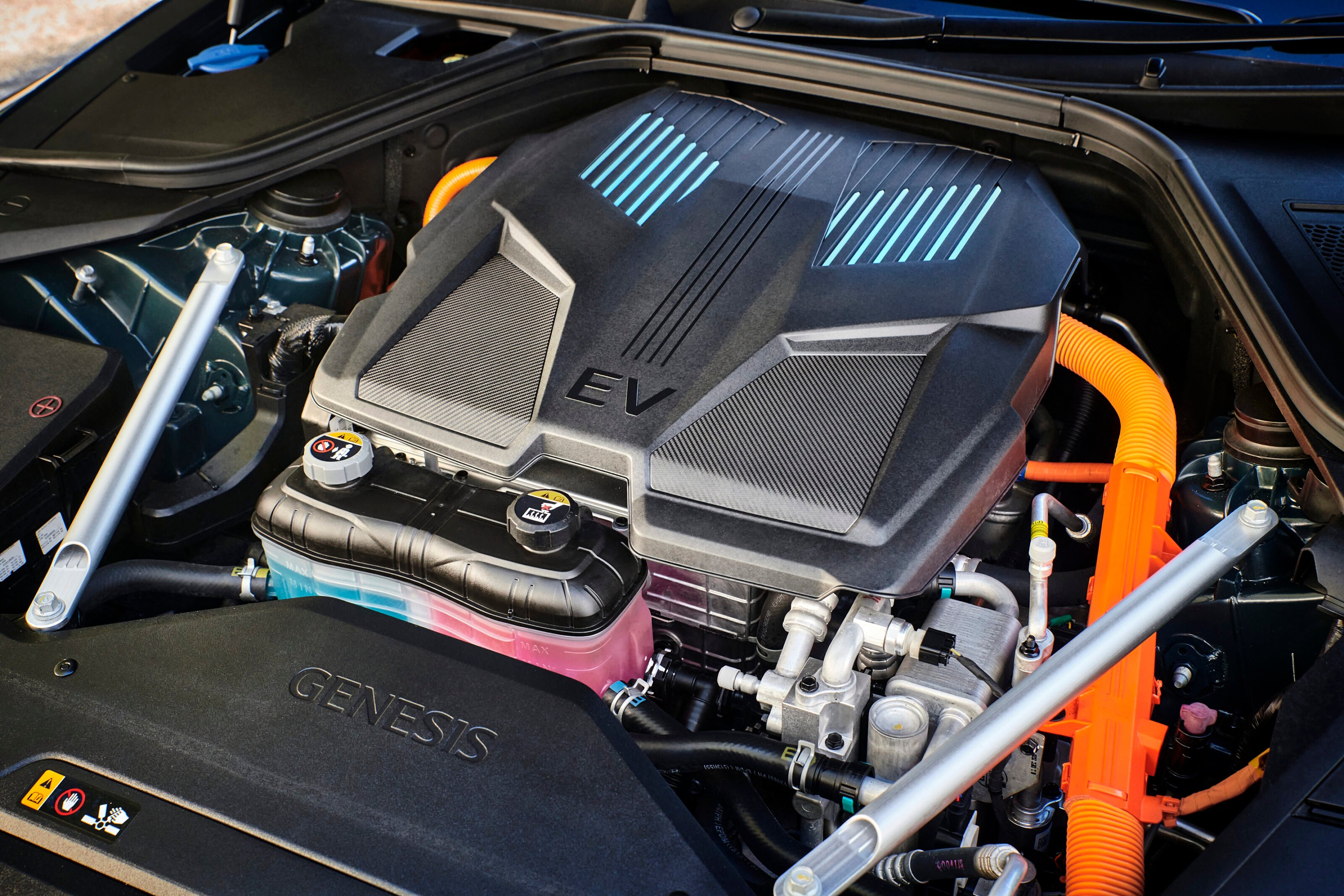
Running on the same E-GMP platform as the Hyundai Ioniq 5 and Kia EV6, both GV60 grades are all-wheel-drive although they deliver differing levels of performance.
The entry-level GV60 AWD harnesses a 160kW motor on its rear axle and a 74kW motor up front, providing a total system output of 234kW with 605Nm on tap.
Stepping up to the Performance AWD sees a 180kW motors mounted on the front and rear axle allow for a maximum output of up to 360kW when Boost Mode is enabled. Torque increases to 700Nm which helps it achieve a 0-100km/h time of four seconds (or 4.6 seconds when Boost Mode isn’t engaged).
Both variants use the same 77.4kWh battery pack, boasting driving ranges of 470km and 466km respectively – aided by the disconnector actuator system (DAS) which can separate the motor and driveshaft depending on driving conditions, maximising range.
The GV60’s 400/800-volt multi rapid charging system boosts the 400-volts supplied by the charger to 800-volts, allowing for 10 to 80 per cent charge times of 18 minutes when using a 350kW charger.
1
Safety
After its pricing and features were announced, the GV60 was awarded a full five-star ANCAP crash safety rating. You can read about that here.
As standard, the Genesis GV60 is equipped with:
Eight airbags, including front centre side airbag
Blind-spot collision avoidance-assist (BCA) u2013 rear and side
Blind-spot view monitor (BVM)
Driver attention warning (DAW), including leading vehicle departure alert
Forward collision-avoidance assist (FCA), including car/pedestrian/cyclist detection, junction turning/junction crossing function, lane-change oncoming/side function and evasive steering assist function
High beam assist (HBA)
Intelligent front-lighting system (IFS)
Intelligent speed limit assist (ISLA)
Manual speed limit assist (MSLA)
Lane keeping assist u2013 line and road-edge (LKA-L/R)u00a0
Lane following assist (LFA)u00a0
Parking distance warning (PDW) front, rear and side
Smart cruise control (SCC) including stop and go function, machine learning
Surround view monitor (SVM) with 3D surround view
Trailer stability assist (TSA)
1
Warranty and Servicing
GV60 buyers will be given five-year/unlimited-kilometre warranties upon purchase of their EV, extending to five years of complimentary servicing as well.
Genesis also offers a number of added benefits to its GV60 owners, with the below services included in the purchase price:
Five-year/unlimited-km warranty
Eight-year high voltage battery warranty
Five-year complimentary servicing
Five-year Gensis To You & valet service
10-year 24/7 roadside assistance
10-year complimentary map updates
Choice of five-year Chargefox subscription or home A/C charger and installation
Servicing intervals for the Genesis GV60 are every 15,000kms/12 months – whichever comes first.
Availability
The 2023 Genesis GV60 has arrived in Australia and is available for order now, through the manufacturer’s limited dealer network.
2023 Genesis Electrified G80 arrives in flagship single-grade
Priced from $145,000 before on-road costs
Choice between five-year Chargefox subscription or home charger installation with purchase
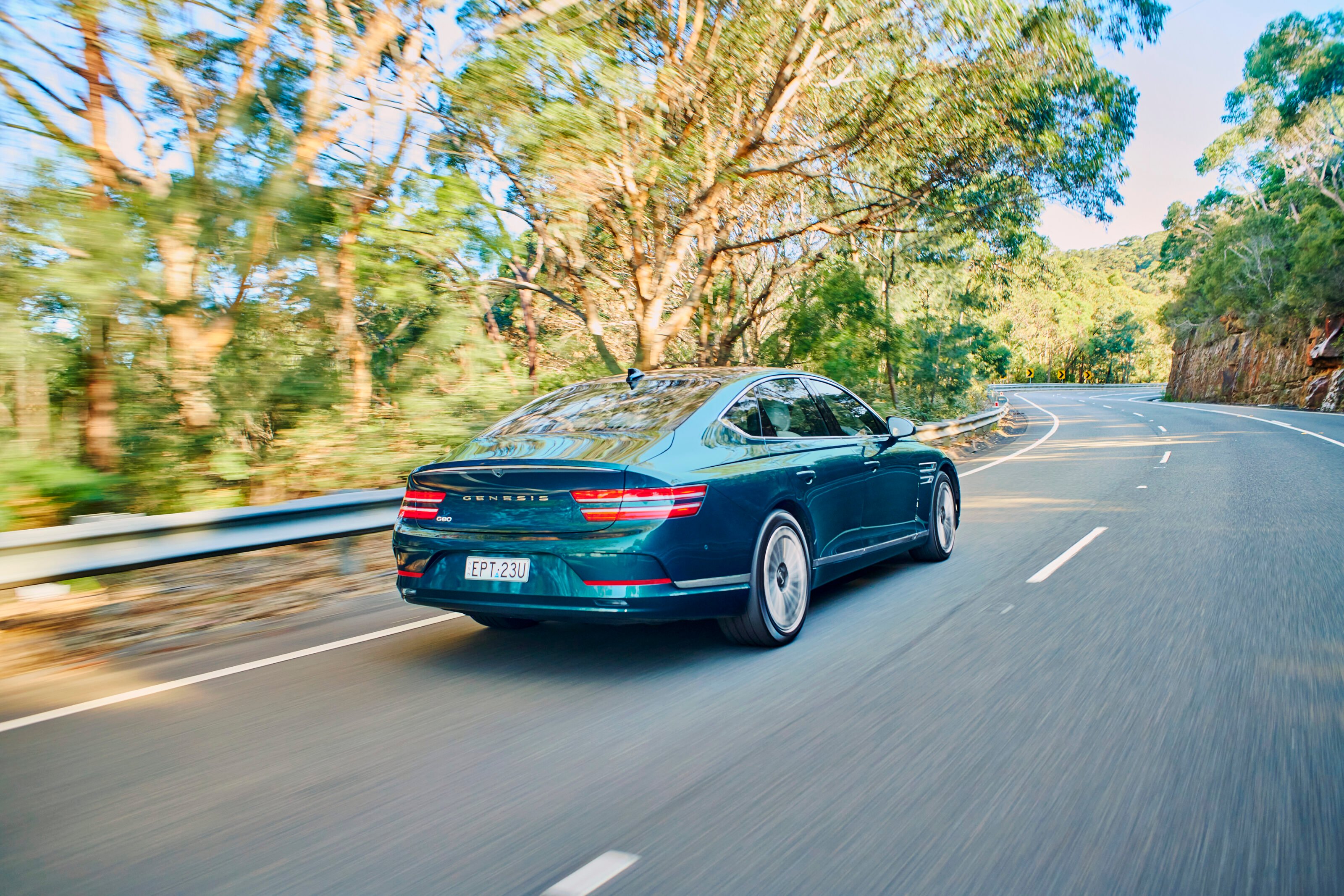
The 2023 Genesis Electrified G80 electric sedan will arrive in Australian showrooms next month, alongside the GV60 and Electrified GV70 in the brand’s line-up.
It is priced from $145,000 before on-road costs, available exclusively in one flagship Luxury Pack grade.
The electric version of the Genesis G80 features similar specifications to the flagship 3.5-litre twin-turbo V6 variant – available from $101,191 – but trades petrol power for two electric motors.
With an electric motor on the front and rear axles, the Electrified G80 sends power to all four wheels, offering 272kW and 700Nm.
This allows for a claimed 0-100km/h time of 4.9 seconds.
Underneath, the Electrified G80 features an 87.2kWh lithium-ion battery, allowing for a WLTP-rated 520-kilometre driving range.
Featuring an 800-volt electric architecture, the vehicle can charge from 10 per cent to 80 per cent in approximately 22 minutes, when plugged into a 350kW public charger.
Genesis will offer Electrified G80, GV70 and GV60 buyers with the choice of a complimentary five-year Chargefox subscription or home A/C charger and installation.
1
2023 Genesis Electrified G80 Australian pricing
Prices exclude on-road costs.
Model
Pricing
Genesis Electrified G80
$145,000
2023 Genesis Electrified G80 features
Options
Matte/EV-exclusive paint – $2000
Powertrains, charging and driving range
Genesis offers the Electrified G80 globally with a single flagship powertrain configuration.
It features dual electric motors producing 272kW and 700Nm, with an electronic all-wheel-drive system.
It has a 87.2kWh battery pack, with a WLTP-rated 520-kilometre driving range.
According to the marque, the Electrified G80 will complete the 0-100km/h sprint in 4.9 seconds.
It supports direct current (DC) charging, with the 10 to 80 per cent fast charge claimed to take approximately 22 minutes using a 350kW charger.
Genesis’s Disconnector Actuator System (DAS) allows for the seamless on-the-fly switch between RWD and AWD mode to maximise driving efficiency when possible, or to maximise road-holding when required.
1
Varying levels of regenerative braking cater for a range of driving styles, from ‘one-pedal’ to light coasting. A dynamic Smart Regenerative Braking system also automatically adjusts regenerative braking forces based on the speed of the vehicle ahead, following distance and taking into account pertinent GPS road map data (ie. speed limit change).
There are various other notable technologies that have sprouted from Genesis’s advanced electric drivetrain. The Genesis G80’s Exterior Vehicle to Load (V2L) function allows the Electrified G80 to share household-grade power outputs (3.6kW) with devices and appliances – and even allows Vehicle to Vehicle (V2V) charging, and the ability to share its juice with another electric vehicle.
The G80 also possesses torque vectoring through partial brake and torque splitting. This gives the big luxury sedan uncanny levels of agility, as increased torque is fed to the outside wheel when cornering, or arresting yaw moments with subtle inside-wheel braking control.
Electronic-controlled suspension ties in with the forward-facing camera to ‘read’ the road ahead to identify oncoming potholes and speed-bumps, and preemptively adjust the suspension to suit.
1
Safety
The Genesis Electrified G80 is yet to be scored by ANCAP; however, the petrol G80 received a five-star rating, based on testing conducted in 2021.
It has a 91 per cent score for adult occupant protection, 86 per cent for children, 77 per cent for vulnerable road users, and 80 per cent for safety assist.
A suite of 10 airbags is fitted to each Genesis G80, complemented by both active and passive safety systems.
Each variant includes the following active safety equipment as standard:
Forward collision-avoidance assist
Evasive steering assist
Junction turning/crossing assist
Lane change assist
Blind-spot collision-avoidance assist (rear/side)
Driver attention warning
Forward attention warning
Blind-spot monitor
High beam assist
Intelligent front-lighting system
Smart cruise control with machine learning
Lane following assist
Rear cross-traffic collision-avoidance assist
Reverse parking collision-avoidance assist
Smart parking assist
Remote smart parking assist
Manual speed limit assist
Intelligent speed limit assist
Rear occupant alert
Safe exit assist
Sound view monitor
Multi-collision brake
Emergency stop signal
Tyre pressure monitoring system
Front and rear parking sensors
1
Dimensions
The Genesis Electrified G80 has a wheelbase of 3010 millimetres, and is 5005mm long, 1925mm wide and 1475mm high.
This makes it 10mm longer and 10mm taller than the internal-combustion G80, due to its unique bumper designs and placement of the batteries underneath the vehicle.
Warranty and servicing
As per the wider Genesis range, the Electrified G80 is covered by a five-year, unlimited-kilometre warranty and five years of complimentary servicing.
Genesis also offers a number of added benefits to its Electrified G80 owners, with the below services included in the purchase price:
Five-year/unlimited-km warranty
Eight-year high voltage battery warranty
Five-year complimentary servicing
Five-year Gensis To You & valet service
10-year 24/7 roadside assistance
10-year complimentary map updates
Choice of five-year Chargefox subscription or home A/C charger and installation
Availability
The 2023 Genesis Electrified G80 will arrive in Australia this September, going on sale through the manufacturer’s dealer network.
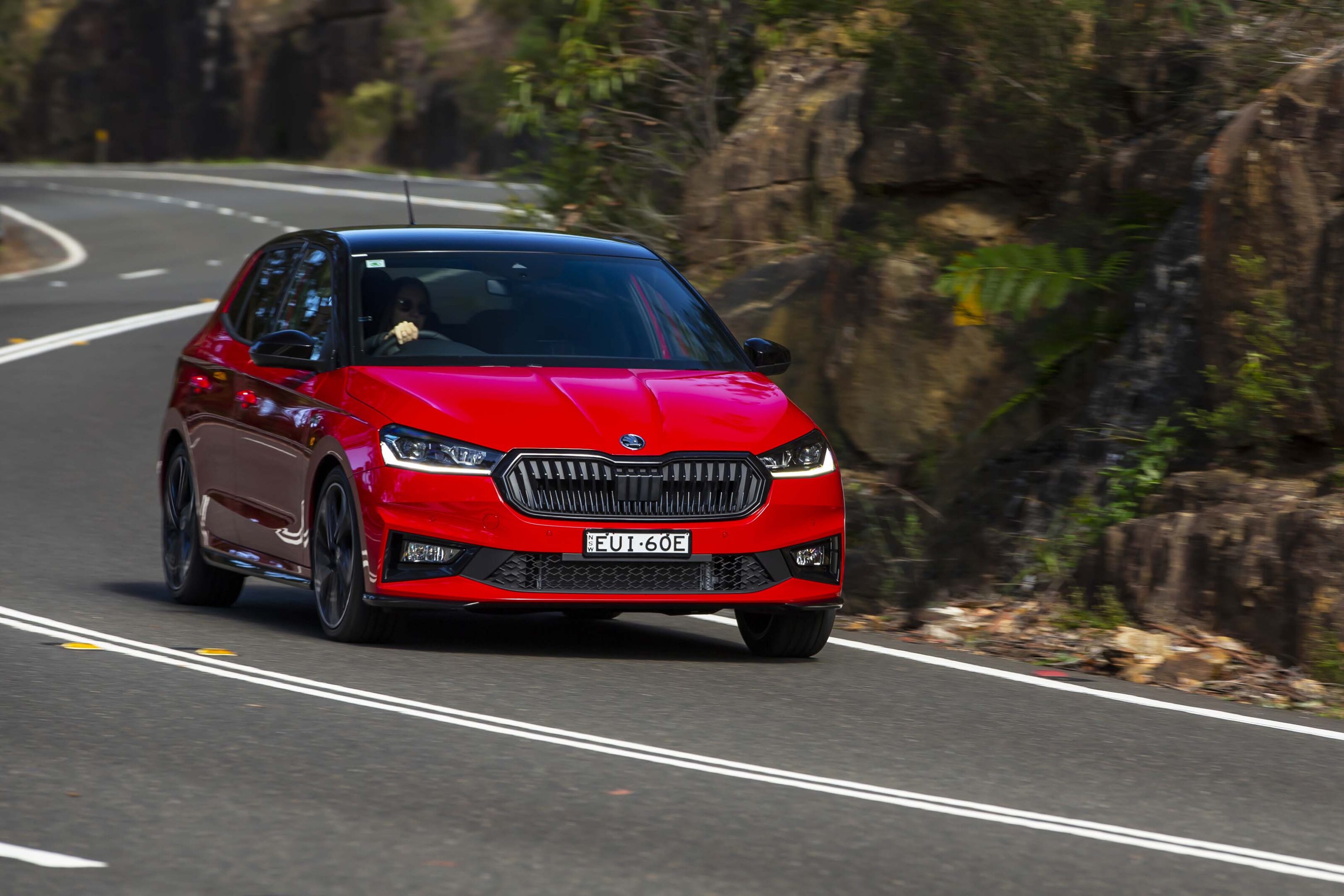
Skoda Australia has today announced it is extending its new car warranty to seven years, available on all new Skoda models “with immediate effect”.
The newly lengthened warranty period is included within nationally advertised drive-away pricing of all Skodas, including RS variants, and is valued between $1150 and $1670 – depending on your chosen model and variant.
1
Skoda also indicates that warranty coverage in the term’s later years is uniquely identical to the first few years’ coverage, making Skoda’s seven-year commitment a comprehensive one.
Skoda Australia Director, Michael Irmer, said: “Seven years’ warranty is full cover without common exclusions, such as infotainment systems or starter batteries”.
The new warranty bolsters Skoda’s ‘ease of ownership’ fixtures offered to its customers, including pre-paid five- or seven-year service packs, and ‘pay as you go’ service and maintenance subscription offerings.
1
“Value means more than a sticker price”, said Irmer.
“Ease of ownership, peace of mind and more metal for the money – these are values on which Skoda prides itself on”.
Skoda’s new seven-year warranty is already in effect, applicable on all new vehicles sold from today. However, recent buyers need not feel left out. Customers who have purchased a new Skoda in the past five years are also able to upgrade their existing warranties.
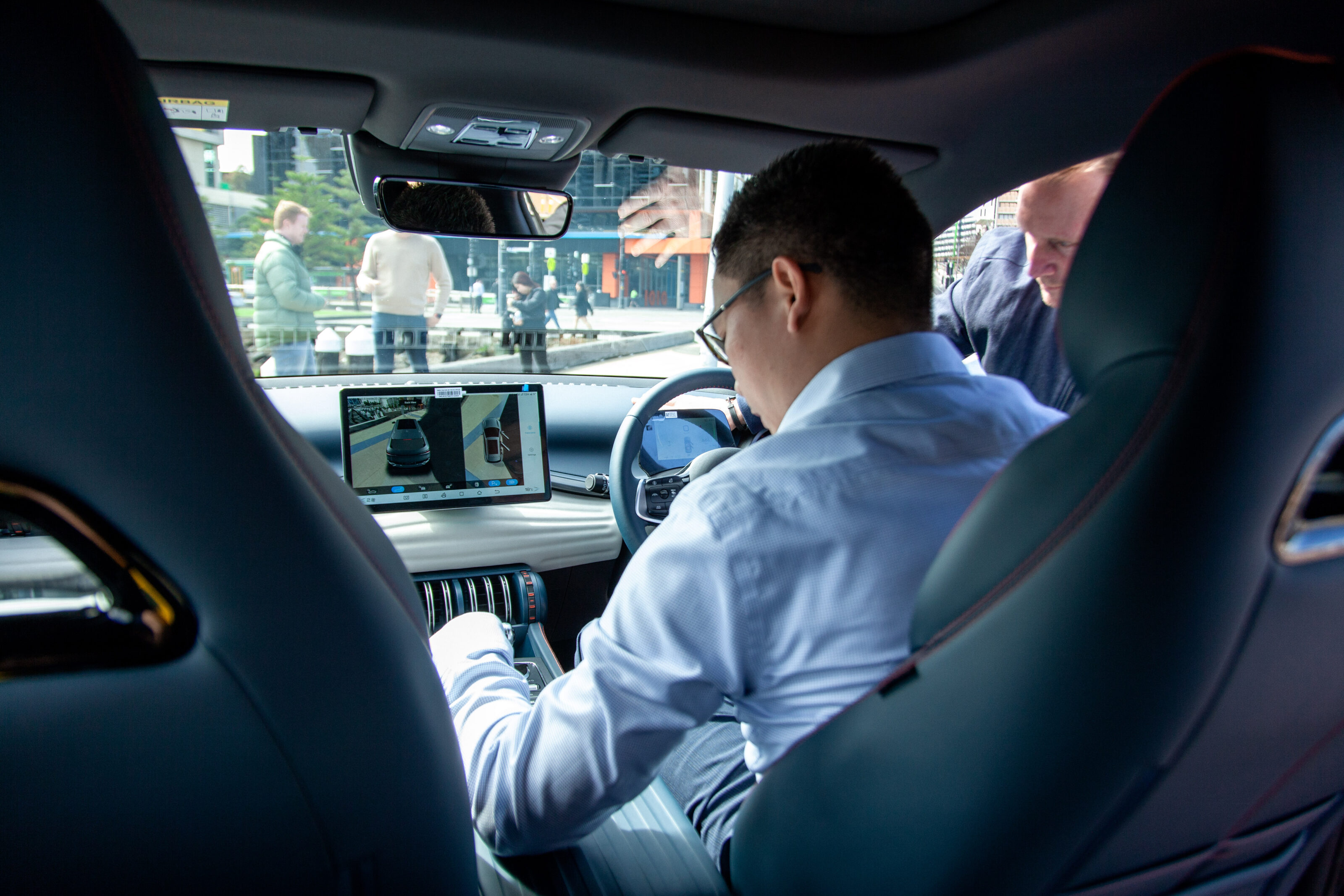
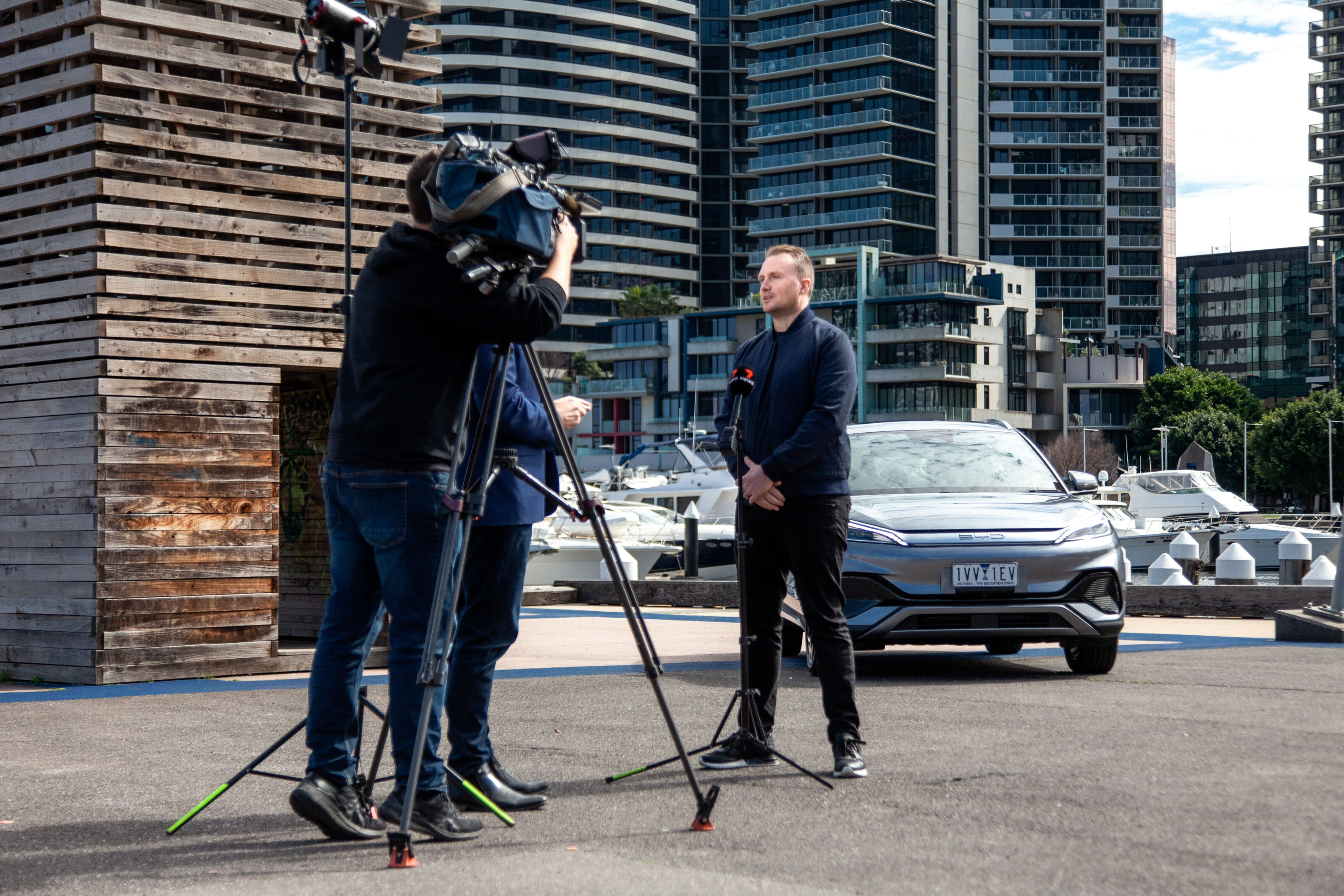
The highly anticipated BYD Atto 3 has made local landfall, with the first vehicle in Melbourne delivered just yesterday to Victoria’s first buyer at a public event, held in the heart of Melbourne’s inner-city suburb of Docklands.
This marked the first opportunity for the Victorian public to lay eyes on one of Australia’s newest EV SUV challengers, with the presentation taking place on the corner of LaTrobe Street and Harbour Esplanade, Docklands, at 12 noon on Wednesday September 7.
1
BYD MD Luke Todd was on-hand to personally deliver Victoria’s first BYD Atto 3, ahead of an impending national rollout, with over 4500 Atto 3s said to have already been sold, with the first three container ships already docked and unloading.
There are two variants available to buyers, with the entry-level 50kWh Atto 3 asking $44,381 (before on-roads and without applicable state incentives), and the larger 60kWh vehicle, asking $47,381.
Luke Todd said: “We are so excited to be a part of such a significant milestone in Australia, where we can ring in the start of a new era in motoring – bringing affordable EV’s to Australians and changing the landscape to greener, more affordable transport in the country”.
1
The Victorian unveiling follows the first national display of the BYD Atto 3, revealed last month by Socceroos star, and part owner of BYD Distributors EVDirect, Tim Cahill at AutoMall West in Brisbane.
The BYD order books are currently open, with customer deliveries commencing before the end of the year.