
The internal-combustion 2022 Renault Megane has stopped production for select European markets, according to an overseas report.
UK publication Autocar reports final versions of the fourth-generation Megane hatchback, wagon and sedan have rolled off production lines in Spain and Turkey, after 27 years and four generations.
However, a spokesperson for Renault Australia indicated the Megane RS will “continue… in limited numbers into 2023”, with production likely to continue for some regions, including Australia.
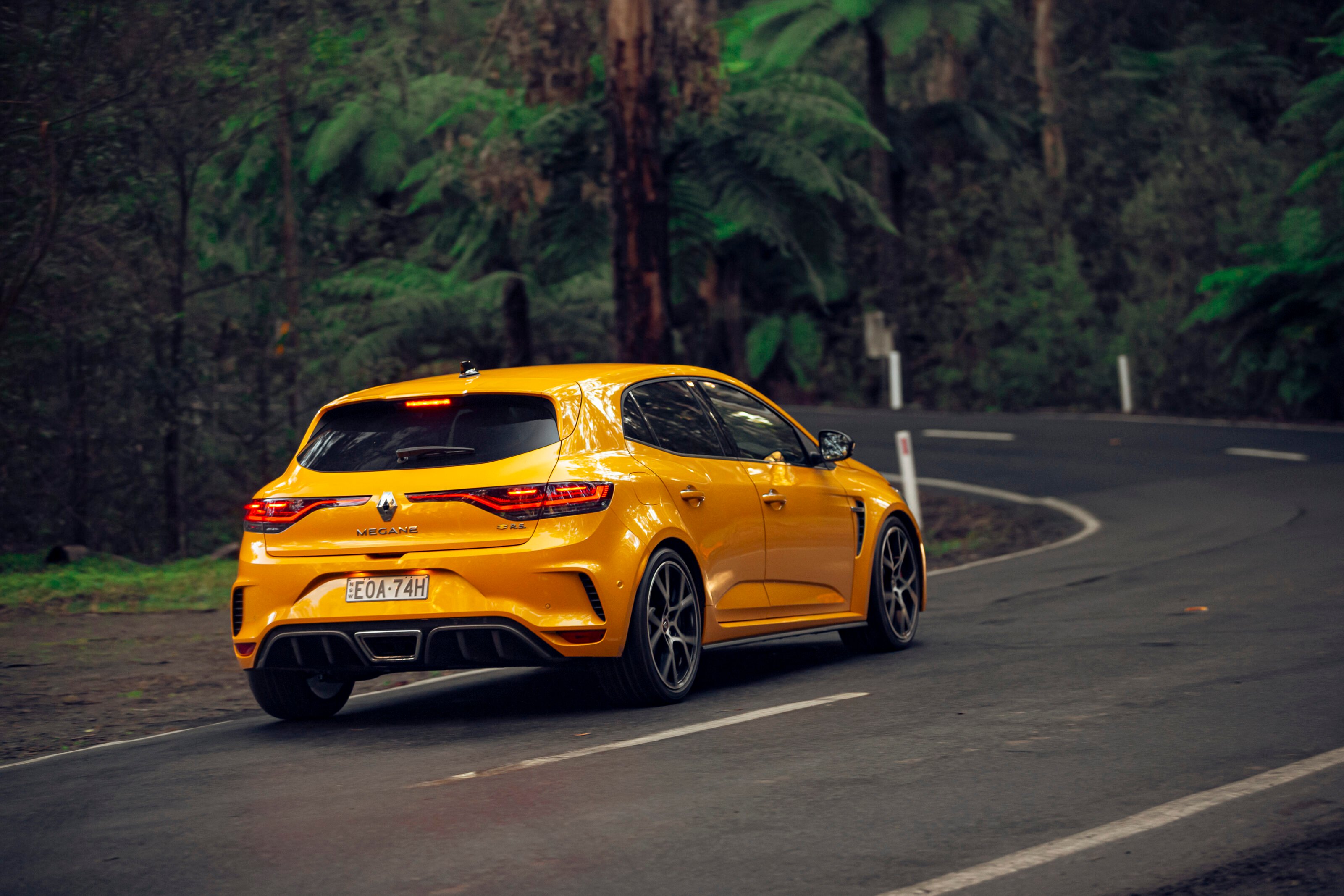
Renault has not confirmed the report; however, the Megane has been removed from the brand’s UK consumer website.
Last year, a plug-in hybrid powertrain was added to the Megane in the UK, where it replaced traditional petrol and diesel engines.
It remains online on the official Renault pages for other European markets, including France and Spain.
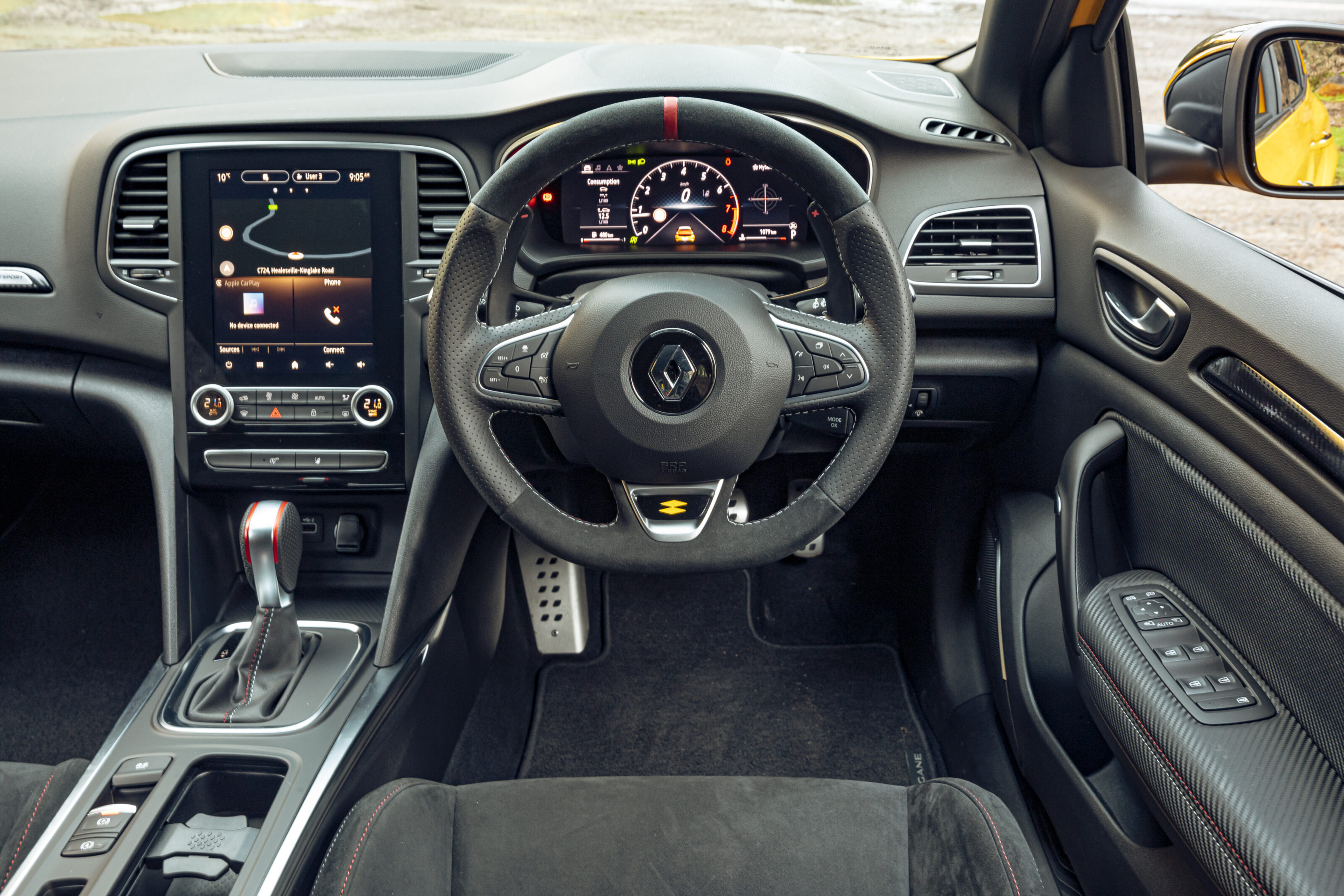
The small car will be succeeded by an all-electric small SUV, the Megane E-Tech Electric, which offers a ‘crossover’ body preferred by most new vehicle buyers.
It rides on the Renault-Nissan-Mitsubishi Alliance’s dedicated CMF-EV architecture, shared with the Nissan Ariya, and will launch in Australia next year.
The current-generation Megane was revealed at the 2015 Frankfurt Motor Show and launched in Australia a year later.

A full line-up, including wagon and sedan variants, was available before Renault Australia axed every model – excluding the RS hot hatch – throughout 2019.
The current local range solely consists of the high-output RS Trophy, available with a six-speed manual or dual-clutch automatic transmission.
In recent months, Renault has increased local pricing for the Megane RS, rising from $53,990 plus on-road costs in early 2021 to $62,300 plus on-roads from July 1, 2022.
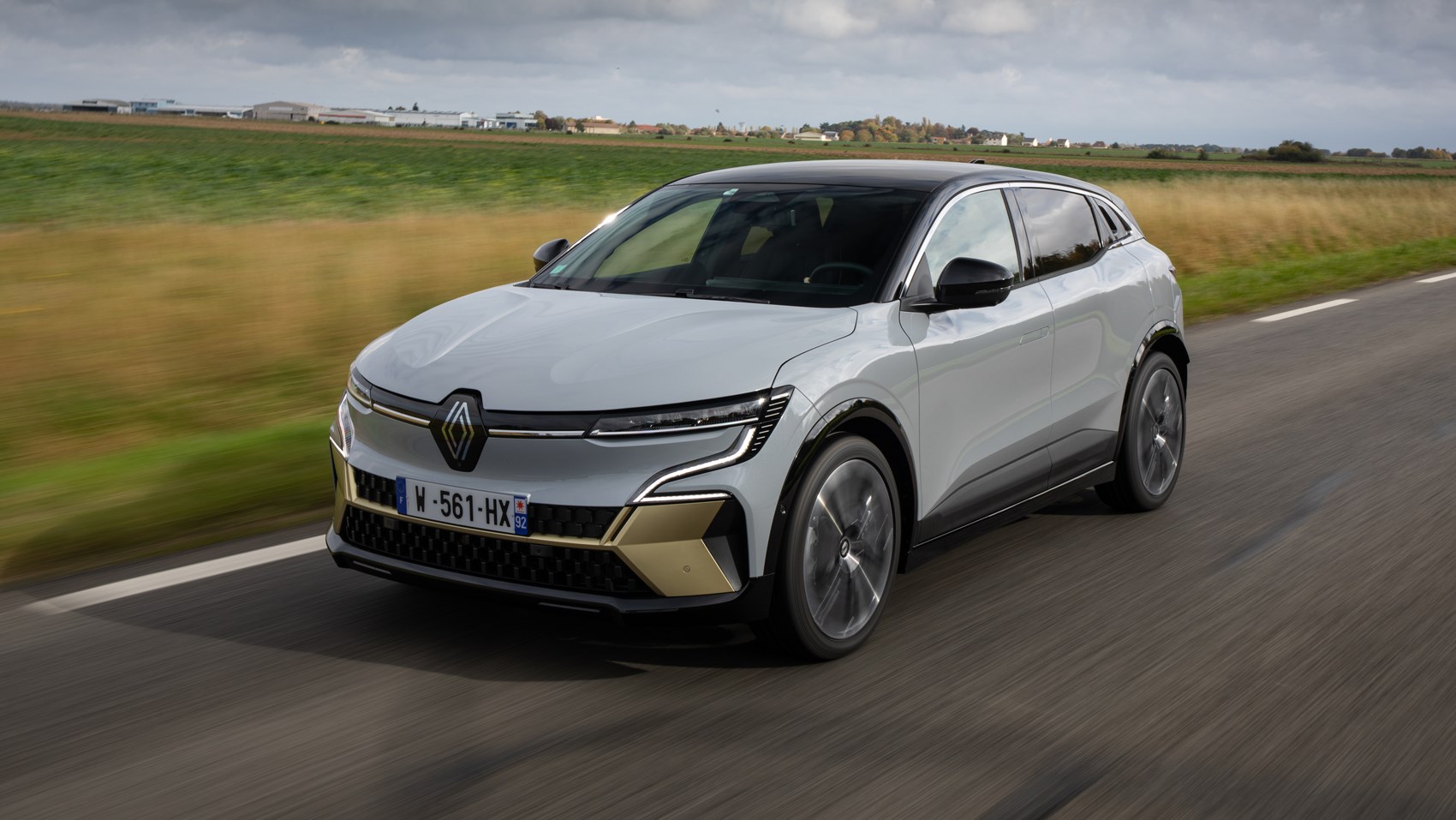
It will become the final Renault Sport model offered by the French marque, as the performance division has been rebranded as Alpine.
Local sales of the Megane have declined over the past five years, with 80 units reported as sold in the first half of 2022, compared to 636 examples over the same period in 2017.
Autocar states Renault sold 783 examples of the Megane in the United Kingdom during 2021, compared to 30,800 Volkswagen Golf and 21,800 Ford Focus models.
UPDATE, July 19: Kia XCeed facelift revealed for Europe
The updated 2023 Kia XCeed crossover has debuted in Europe – but Australia will miss out.
Slotting between the Stonic and shorter-wheelbase Sportage in Kia’s European SUV line-up, the XCeed has received a mid-life update with design tweaks and a flagship GT-Line trim.
Locally, the gap between these models is filled by the Seltos, which is due for a facelift later this year without electrified powertrains.
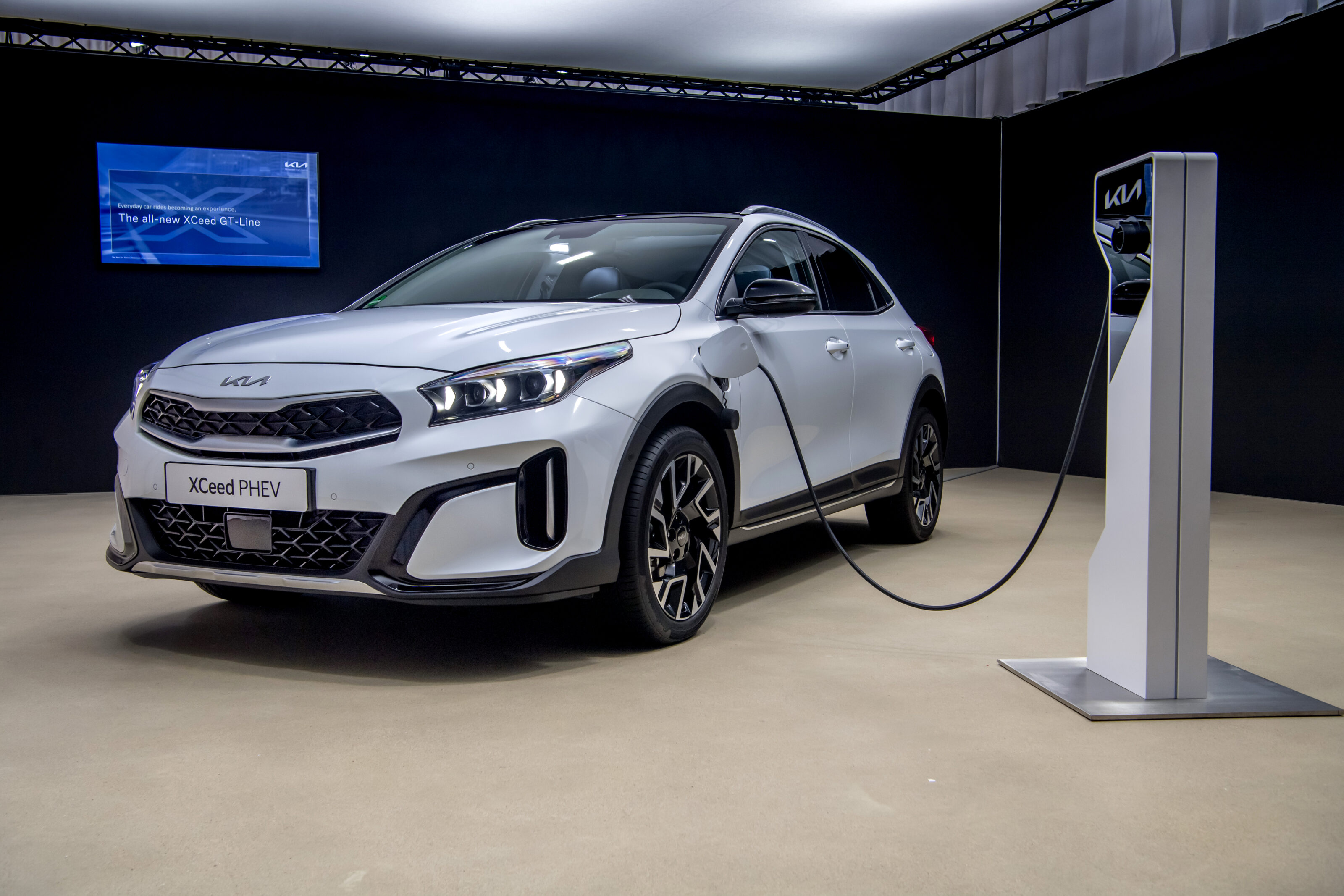
Similar to the Stonic’s relation with the smaller Rio, the XCeed is a lifted version of the Ceed hatchback, with a unique body, a 44-millimetre higher ride height, and plastic body cladding.
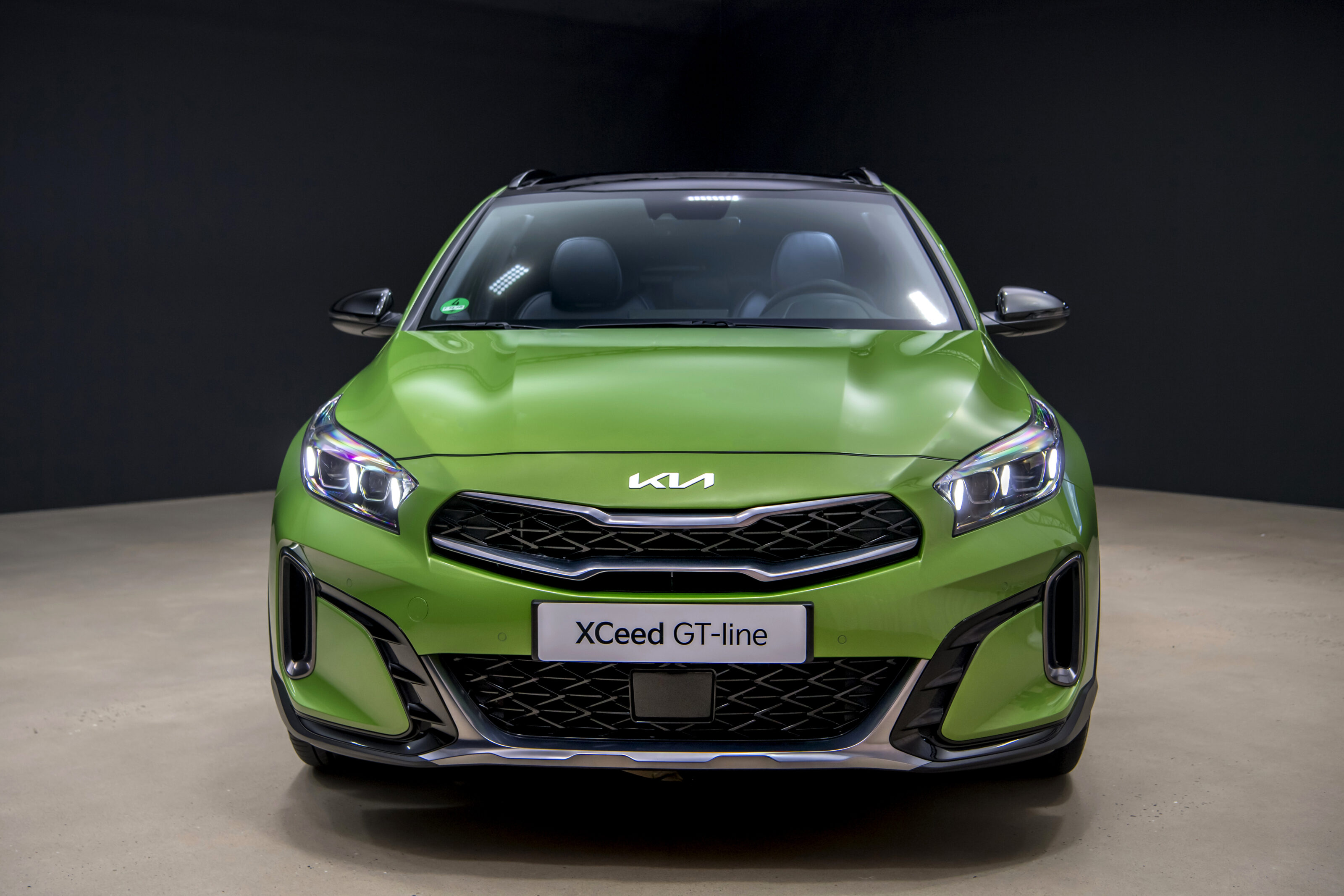
Following the revised Ceed revealed last year, the XCeed gains redesigned LED headlights, a reshaped grille, front bumper and air intakes, and Kia’s latest corporate badging.
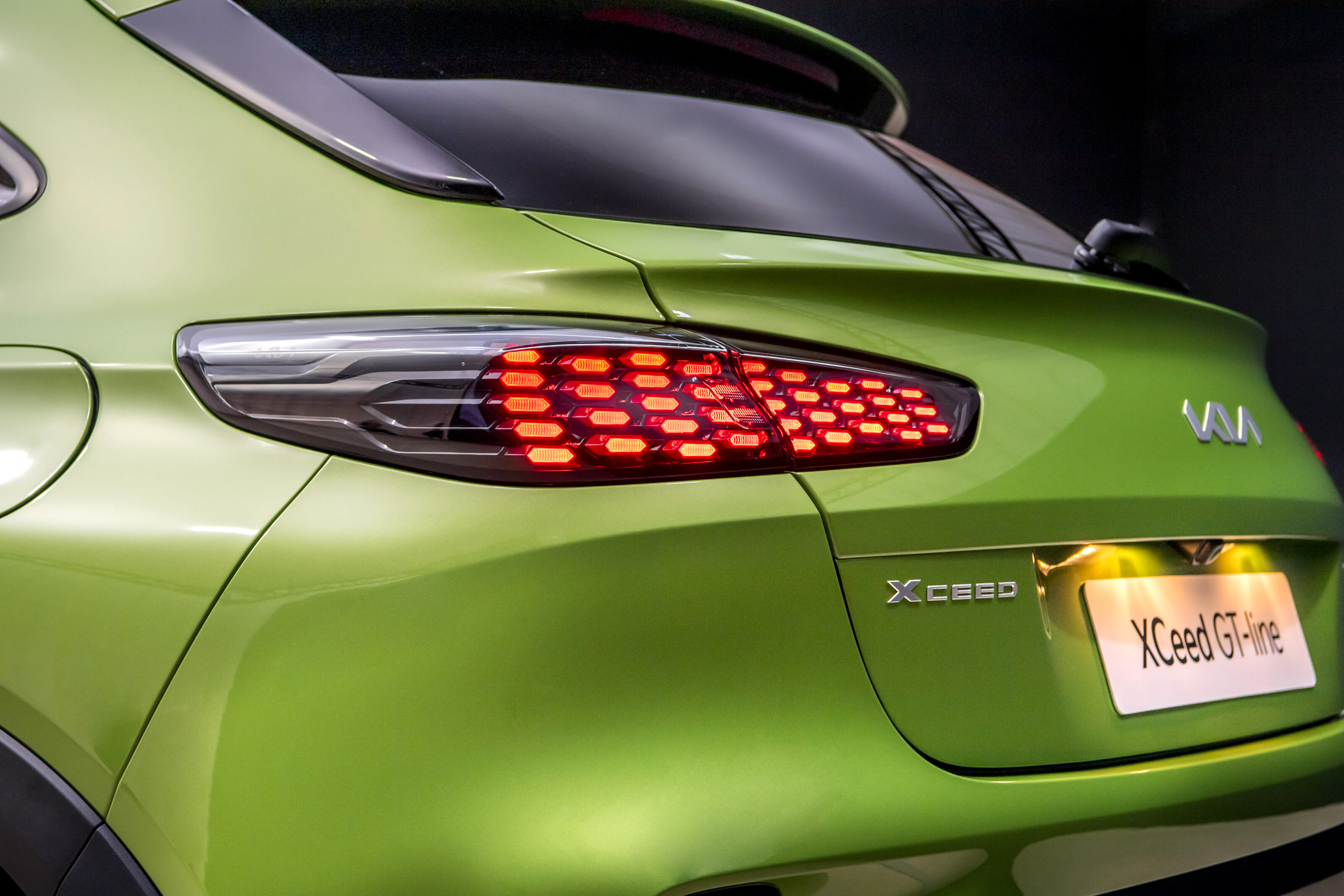
At the rear, the XCeed features slimmer LED tail-lights, with hexagonal-shaped units on the GT-Line trim.
In addition, there are new 18-inch alloy wheels and a body-coloured rear diffuser, with an ‘exhaust-look’ design.
Kia has improved technology, with the existing 12.3-inch digital instrument cluster and 10.25-inch infotainment system supplemented by wireless Apple CarPlay and Android Auto, USB-C ports, and improvements to the Kia Connect suite.
Kia’s connected service refinements include customisable user profiles and a sports feature to display live scores and highlights.
Kia Connect debuted in Australia on the second-generation Niro GT-Line, with upcoming models to feature the service, which uses an embedded SIM connected to the Optus 4G network.
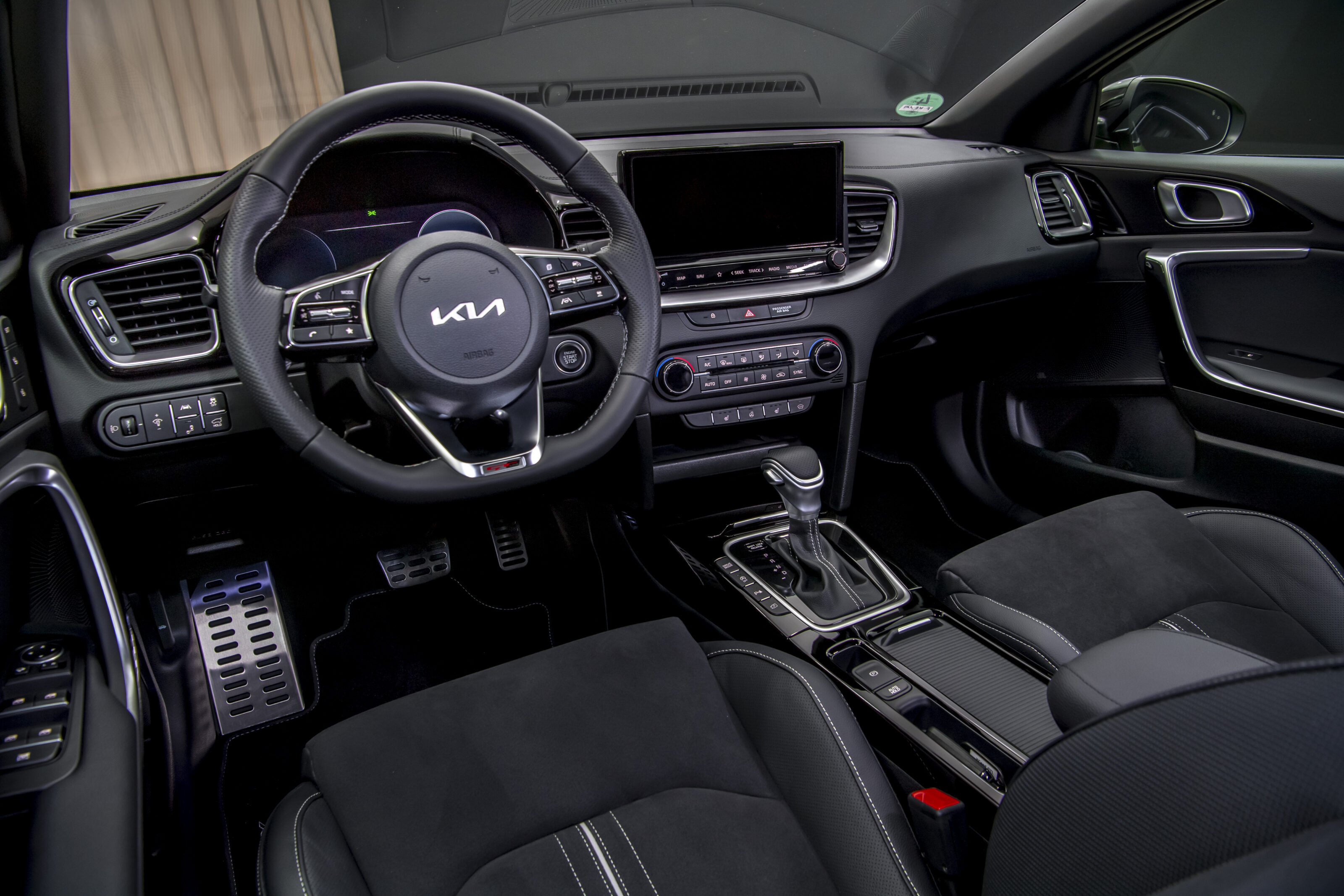
GT-Line variants pick up a ‘D-cut’ sports steering wheel, black headlining, a perforated leather gear shifter and sports seats.
Kia has retained the XCeed powertrains, with 48-volt mild-hybrid and plug-in hybrid options.
The plug-in hybrid consists of a 1.6-litre four-cylinder petrol engine matched with an 8.9kWh battery and electric motor, for a combined power output of 104kW and a claimed electric-only driving range of 50 kilometres.
The story to here
July 15: Kia has teased its upcoming update of the XCeed crossover, although the model will remain unavailable for Australian buyers.
A European-market only offering, the XCeed is a crossover version of the regular Ceed (first made famous on Top Gear as the Reasonably-Priced Car), with the facelift set to pull the high-riding hatch in line with its conventional counterpart.
For the first time in the model’s history, Kia will attach its GT-Line nameplate to the flagship grade, following in the footsteps of its other model offerings.

Powertrain options will include a pair of electrified engines, with choices of a 48-volt mild-hybrid and plug-in hybrid (PHEV) offered to buyers – the latter of which is lifted from the upcoming Niro PHEV.
Unfortunately for any keen Australian buyers, Kia’s local arm has ruled out the XCeed for our market, not wanting the Slovakian-made model to take sales away from its Seltos, itself due for an upgrade in the near future.
The ‘Ceed’ name has only been used in Australia once before when the short-lived pro_cee’d (which reads like a secure password) was sold here between 2014 and 2015 – less than 750 units found homes.
Volkswagen has revealed the newest, enhanced version of its popular 1.5-litre TSI petrol engine.
The TSI evo2 will make its debut in the European T-Roc and T-Roc Cabriolet models – joining more models in Europe by the end of the year.
The new evo2 motor promises improvements to both fuel consumption and CO2 emissions. Available initially with an output of 110kW, Volkswagen Europe indicates that more variants and tunes will follow in future.
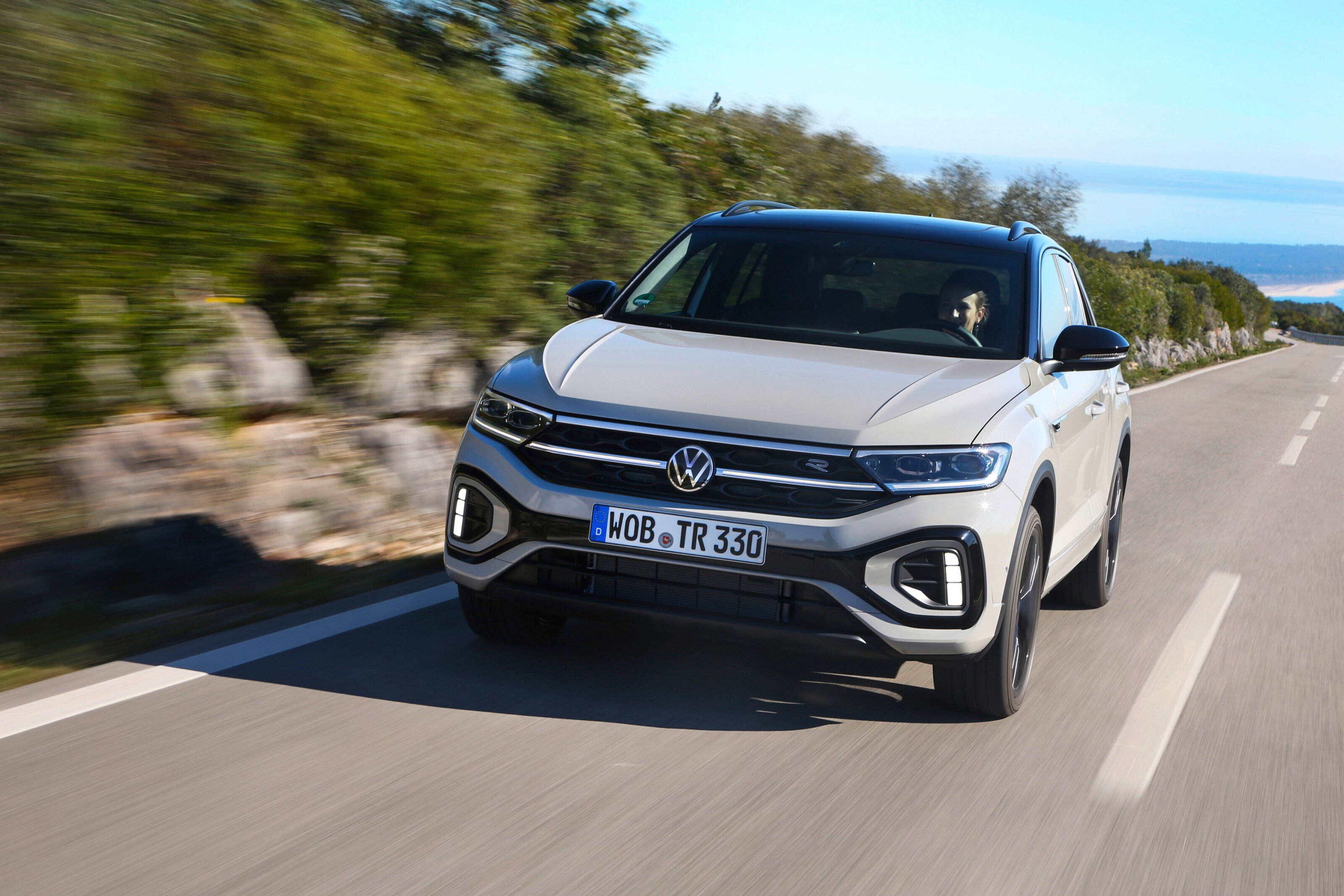
Volkswagen’s local arm has confirmed to Wheels that the evo2 motor remains an overseas market engine at this stage, with no confirmation for the Australian market.
From the Golf to the Tiguan, the 1.5 TSI powers a range of Volkswagen Group models and now offers significant fuel consumption benefits through years of continuous development.
The evo2 harnesses enhanced Active Cylinder Management (which Volkswagen calls ACTplus), yielding a wider scope for partial cylinder deactivation, in order to subsequently improve fuel efficiency.
The three-way catalytic converter and petrol particulate filter have been moved further up the exhaust tract, closer to the engine and within a single emission control module. A variable-geometry turbocharger, high-pressure fuel injection system, plasma-coated cylinder walls and pistons cast with cooling ducts help optimise the combustion process.

The TSI evo2 engines have also been developed with future-proofing in mind, and are designed to operate with fuels containing ingredients sourced from renewable energy sources. They are also compatible with various hybridisation levels, with a plug-in concept producing up to 200kW.
Despite Volkswagen announcing the ceasing of development of new internal combustion engines, back in 2021, key engines such as the 1.5 TSI remain a feature of Volkswagen’s ‘Accelerate’ electrification strategy.
The German manufacturer is targeting a 70 per cent sales share of electric vehicles by 2030, but remains committed to continually developing key combustion engines to comply with future emissions standards (such as Euro 7), and to service key markets where electric mobility is lagging.

The enhanced TSI evo2 engine will make its European debut within overseas T-Roc variants. While the stylish crossover is set to be updated locally later this year, the new engines won’t feature. Volkswagen Australia has stated that there is currently no confirmation for the updated engines on the local market.
Snapshot
- 2023 Ford F-150 Raptor R sees eight-cylinder return
- Powered by the 5.2-litre supercharged V8 from the Mustang Shelby GT500
- Brute rival for the Ram 1500 TRX; unconfirmed for Australia
After months of rumours and teasers, the V8-powered Ford F-150 Raptor lives again – but a local launch is unconfirmed.
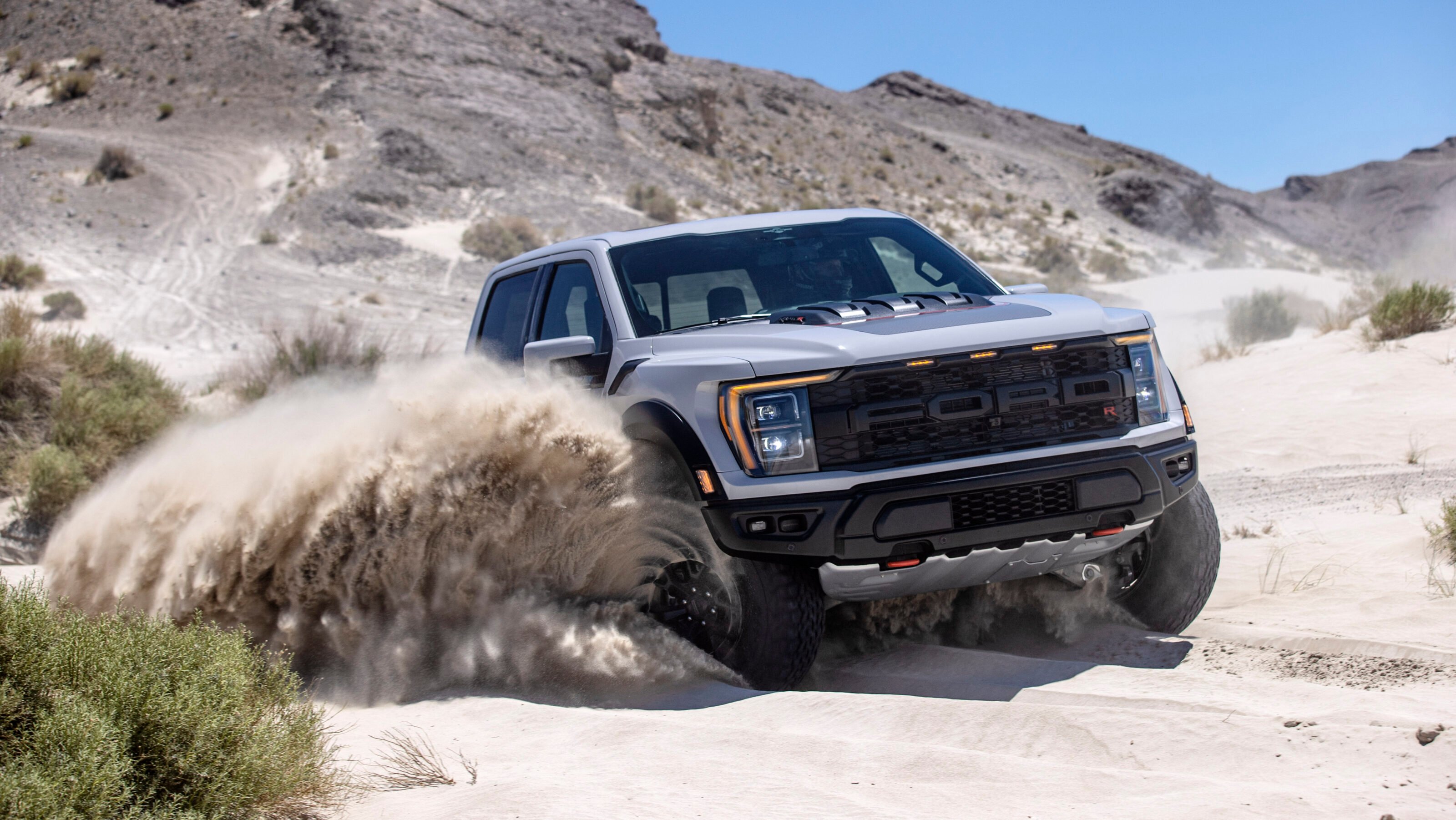
The 2023 Ford F-150 Raptor R offers a 5.2-litre supercharged V8 engine borrowed from the Mustang Shelby GT500 sports car, providing a significant performance increase over the base 3.5-litre twin-turbocharged V6.
Ford has modified the eight-cylinder ‘Predator’ for application in the F-150 Raptor R for improved low- and mid-range performance, with 522kW of power and 867Nm of torque – a 45kW drop and 20Nm increase.
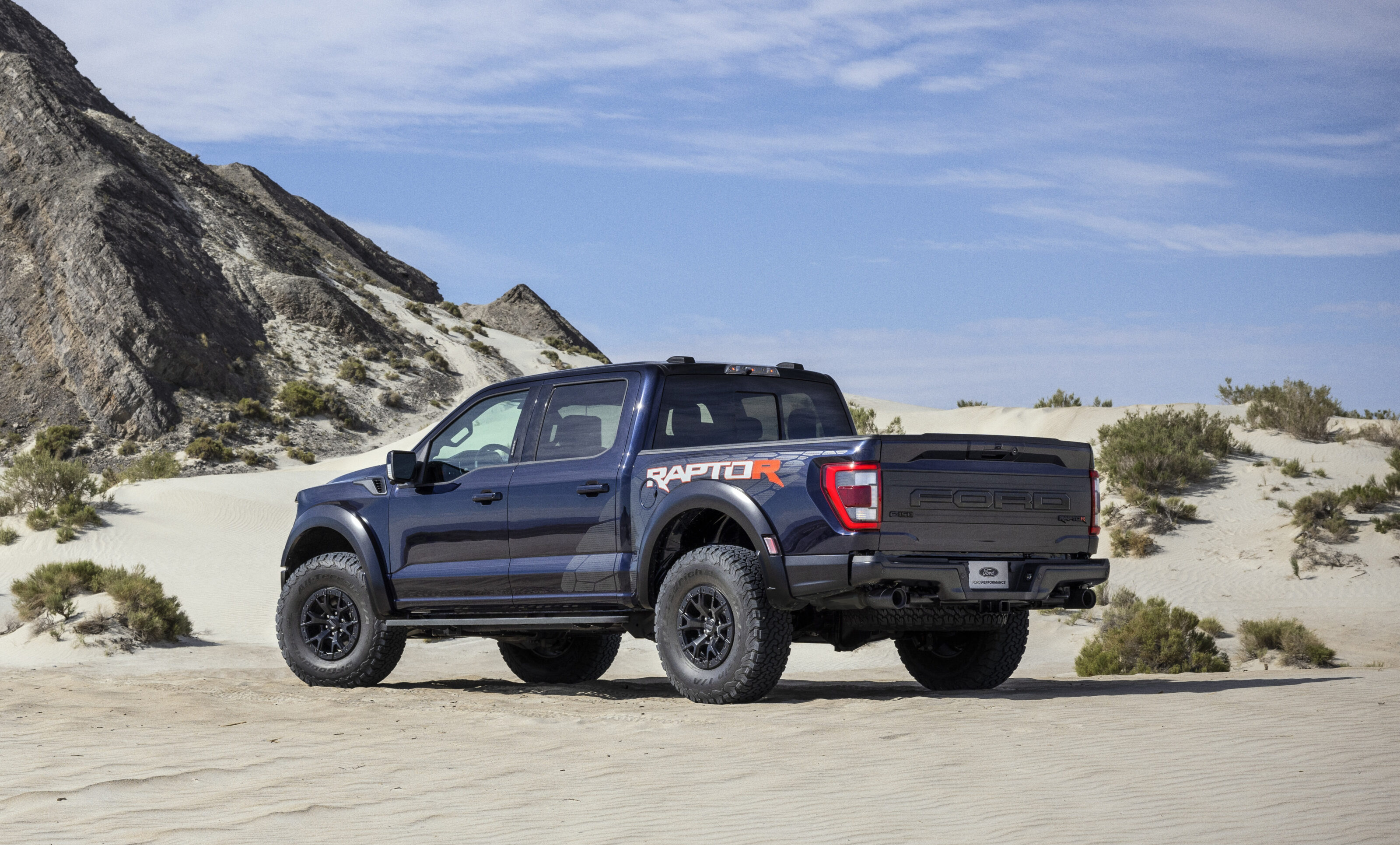
For reference, the Raptor R’s main rival – the supercharged Ram 1500 TRX – has almost identical power outputs, at 523kW and 882Nm, while the regular F-150 Raptor produces 336kW and 691Nm.
Despite the local availability of the Ram 1500 TRX, Ford Australia has not yet confirmed plans to ‘remanufacture’ the Raptor or Raptor R as part of its factory-backed, right-hand-drive conversion of the F-150 – due in 2023 with a twin-turbo V6 petrol engine.
Ali Jammoul, vehicle program director for Ford Performance and Icons, told Wheels “never say never” on the possibility of a locally-converted F-150 Raptor (and Bronco).
“We have to look at the opportunities. Right now, we are so focused and we have to get the Ranger [Raptor] into production, but… we’ll evaluate opportunities as they come,” said Jammoul.
“And like we did with F-150 for example, if the opportunity is there, we can make financial sense out of it, and it’s the right fit in the market strategically, we’ll do it. Right now we have no plans but hey, never say never.”
While the Ford F-150 Raptor R is less powerful than the Ram 1500 TRX, US media reports it will tip the scales at approximately 2700 kilograms – around 200kg less than the TRX.
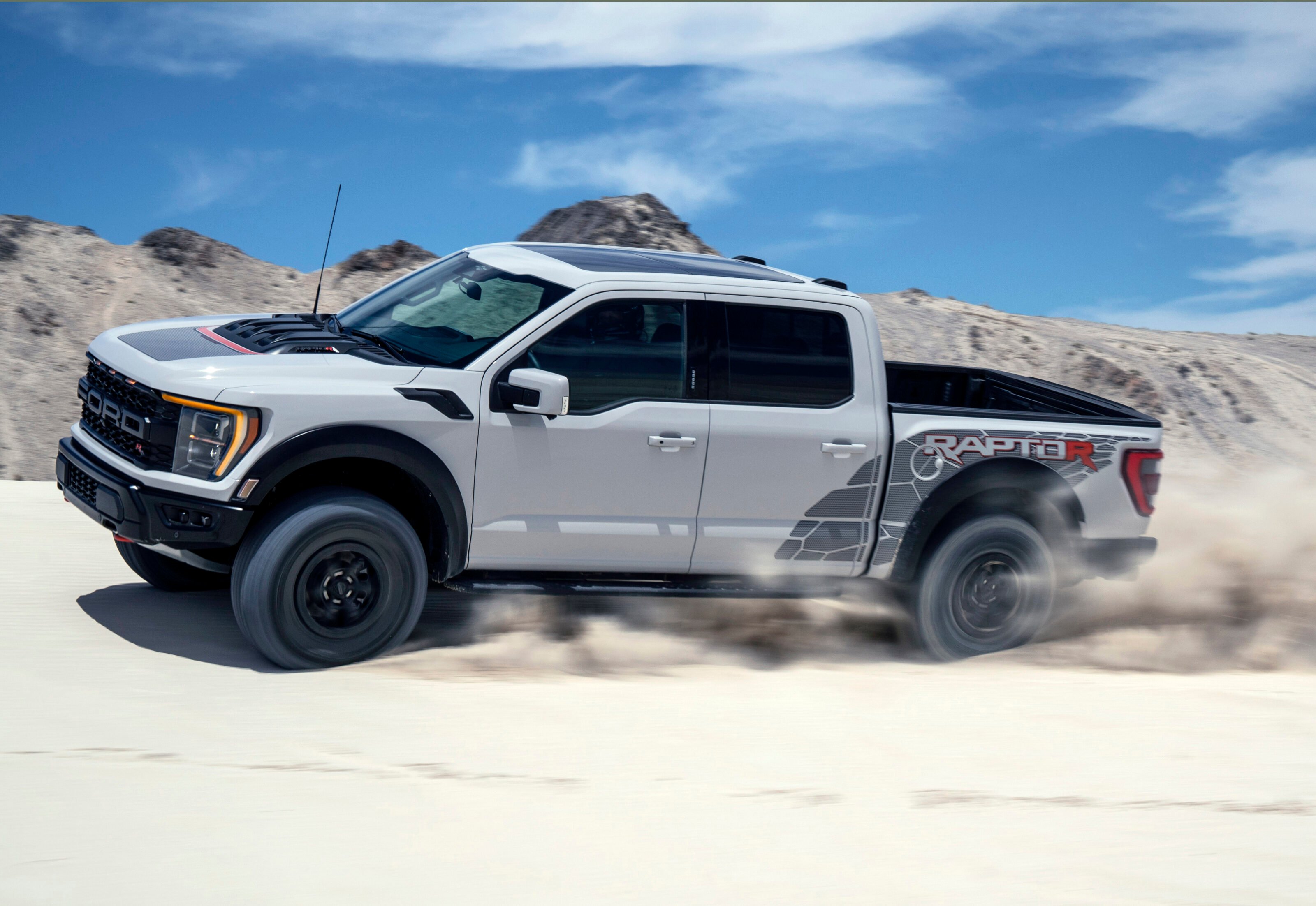
The weight advantage should allow the F-150 Raptor R to exceed the quoted 4.5-second 0-60mph (0-97km/h) time for the 1500 TRX, with Ford yet to provide an official number.
“We’ve heard our customers demanding the sound and power of a V8 back in Raptor,” said Ford Performance chief engineer, Carl Widmann.
The power loss compared to the GT500’s engine is due to a recalibration of the 2.65-litre supercharger and a smaller pulley, with Ford claiming the modifications will allow the Raptor R to “offer more performance at the speeds where customers spend most of their time driving.”
There is also upgraded intake parts and a new oil system, with power sent to all four wheels through a revised 10-speed automatic transmission, featuring a specially-tuned torque converter and a larger driveshaft.
Other modifications include: a more-robust front axle, stainless steel exhaust manifolds, a unique oil cooler and filter, deeper oil pan, wider air intake inlet, and a high-flow conical air filter.
A dual-exhaust system with active valves allows owners to start their F-150 Raptor R in quiet mode, with normal, sport and Baja drive modes also offered.
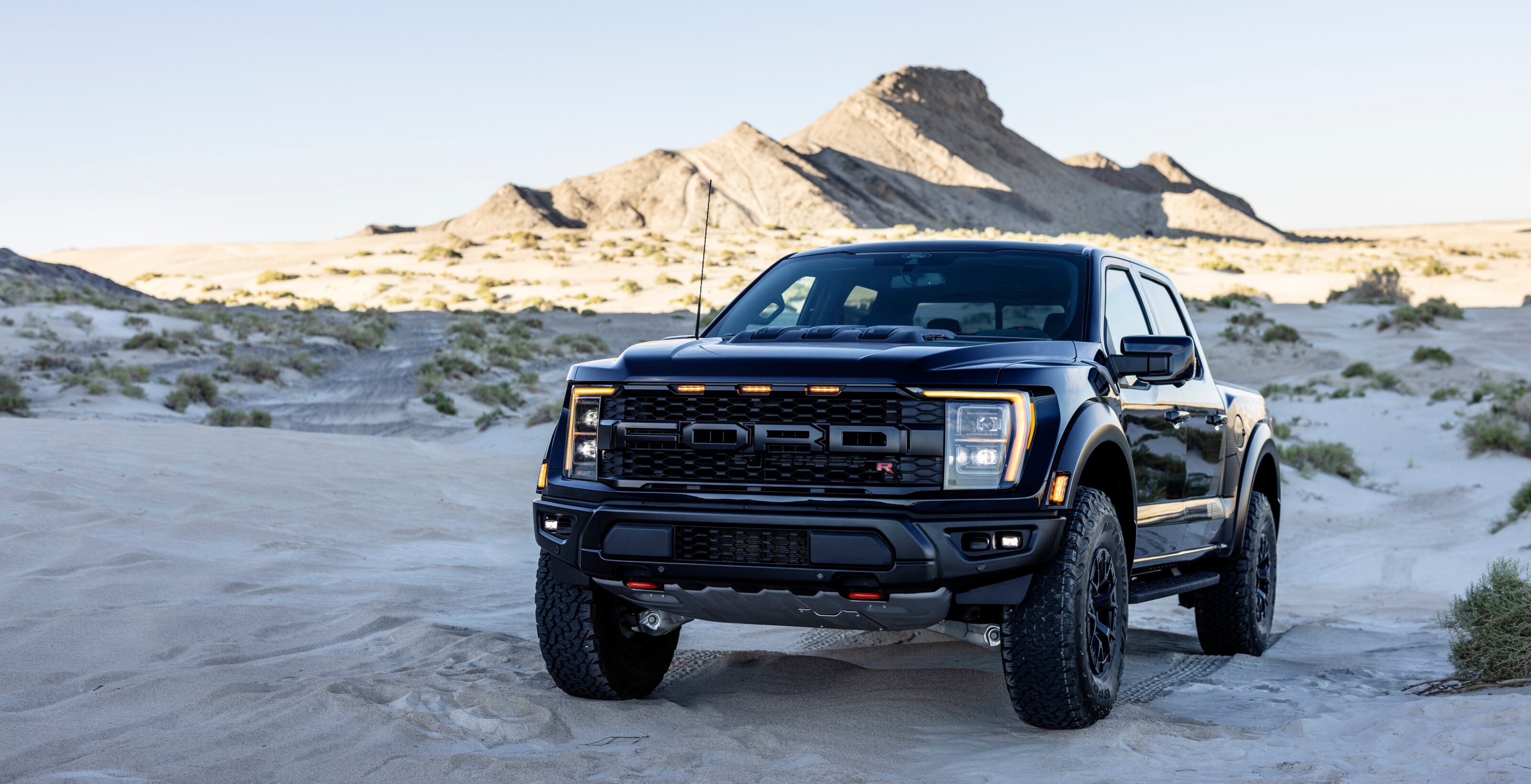
Under the skin, the F-150 Raptor R shares its Fox Live Valve shock absorbers with the V6 Raptor, with electronically-controlled dampers and height sensors.
With electronic suspension, selecting the Baja drive mode will increase the front spring rate by five per cent to improve ride quality over rough surfaces.
Ford claims the F-150 Raptor R has 333 millimetres of ground clearance, a 33.1-degree approach angle, 24.4-degree breakover angle, and 24.9-degree departure angle.
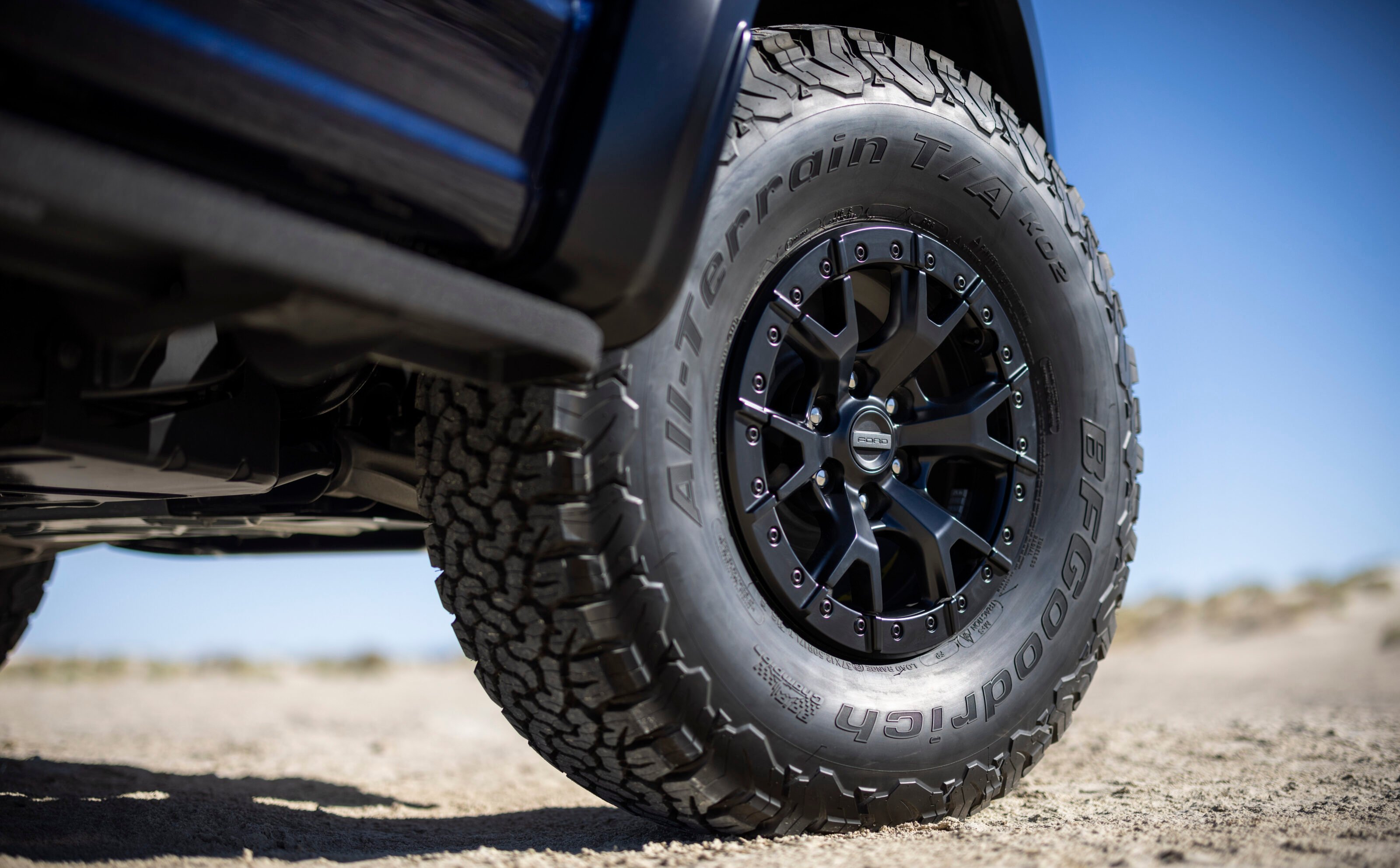
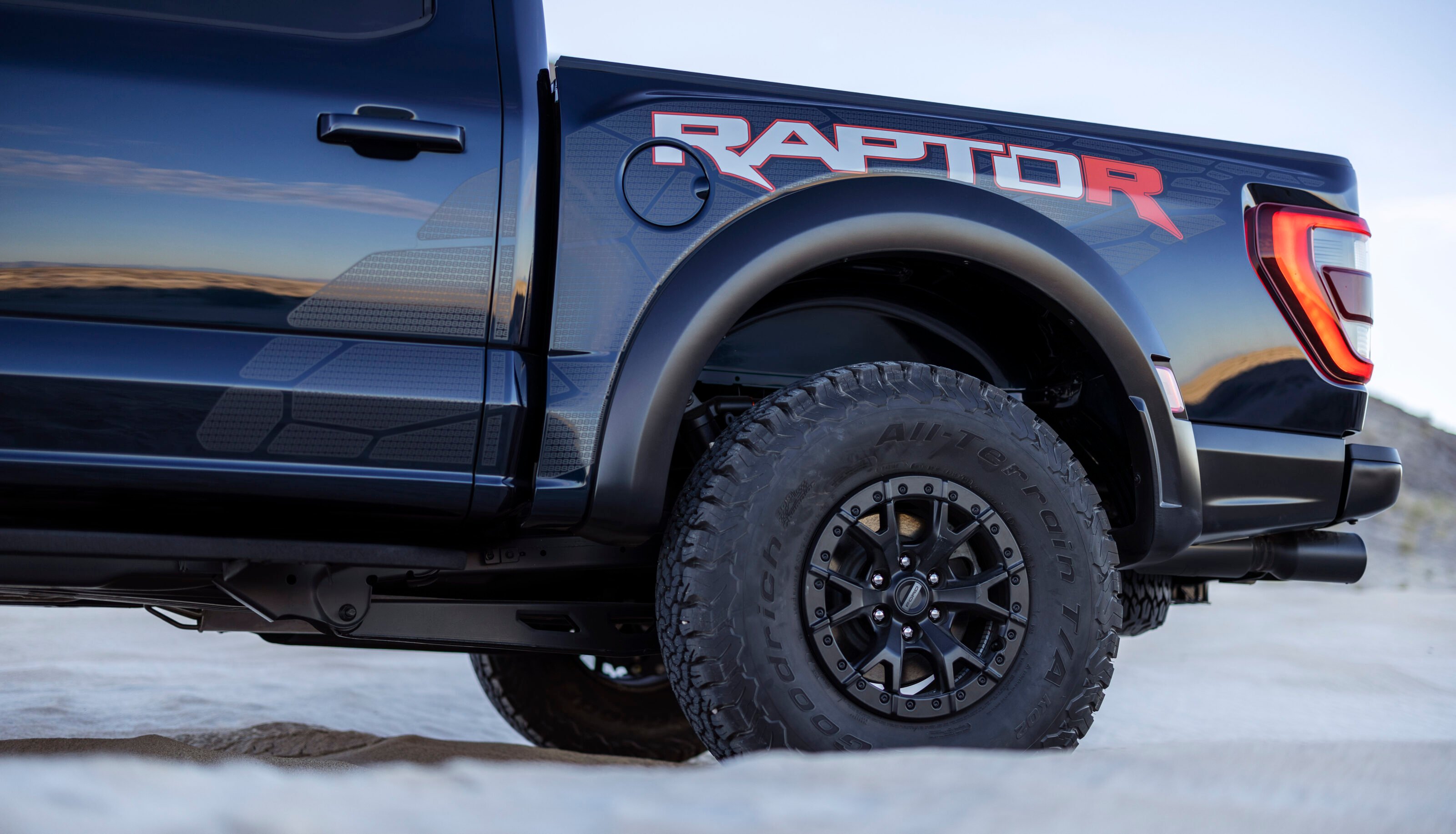
As standard, it features 17-inch ‘beadlock-capable’ matte black alloy wheels and 37-inch BFGoodrich KO2 all-terrain tyres – both available as options on the V6 Raptor.
Compared to the twin-turbo V6 Raptor, the V8 R has unique design elements, with a 25mm-taller ‘power dome’ intake on the bonnet, a black grille, bumpers and wheel arches, R badging in Code Orange, and an optional graphics package.
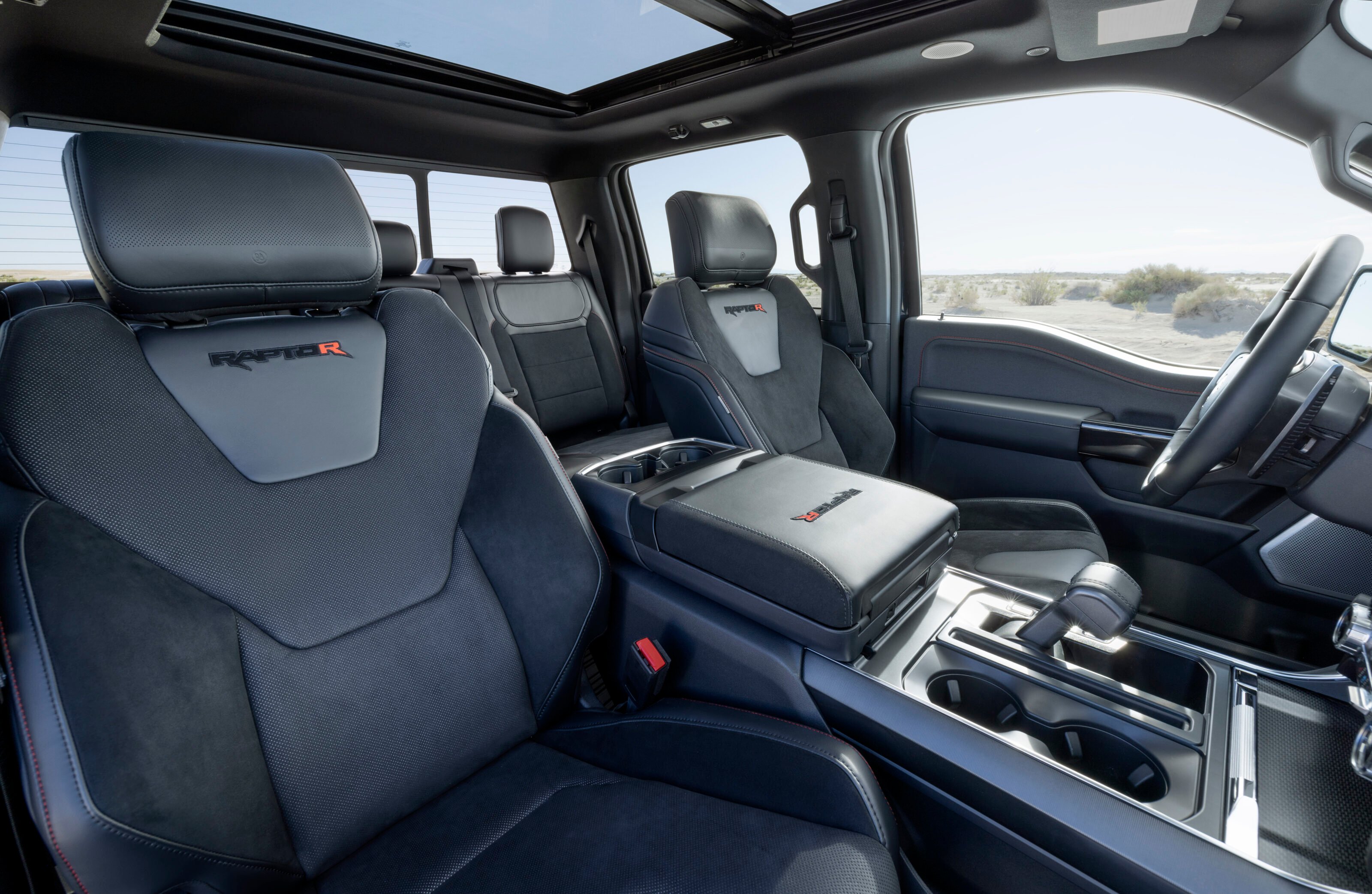
Inside, the F-150 Raptor R wears leather and suede Recaro seats, with real carbon fibre on the doors, dashboard and upper instrument panel.
The 2023 Ford F-150 Raptor R is available to order in the United States, with pricing starting from US$109,145 (AU$160,000) – around $US30,000 (AU$44,000) higher than a RAM 1500 TRX.
However, to match the standard equipment offered in the F-150 Raptor R, the TRX requires around US$20,000 (AU$29,500) worth of options.
Ford Australia is yet to confirm if the F-150 Raptor or Raptor R will be offered locally, following the launch of the regular, twin-turbo V6-powered F-150 from mid-2023.
The Ford Ranger Lightning isn’t anything that Ford’s people will talk about.
Not explicitly in any case. But read between the lines of the engineering specifications of the new 2022 Ranger and it’s clear that moves are afoot to ready the vehicle for electrification. How much electrification? That’s the key question.
Certain facts are immutable. The last Ranger enjoyed an 11 year lifespan. Less than seven years from now, the Ranger – as it stands – will butt up against the 2030 combustion engine bans in many regions.
And remember that although we think of this Ranger as Australia’s own, it’s a vehicle that will now go to 180 different markets around the world. So, something needs to change, and, in terms of engineering timescales for a behemoth like Ford, relatively soon.
UPDATE, July 2022: New Ford Ranger review – it’s here at last
The new 2023 Ford Ranger is now on sale in Australia, and the local media launch has been run. The Wheels and 4×4 Australia teams have both driven the new Ranger, and you can find their stories at the links below.
Story continues…
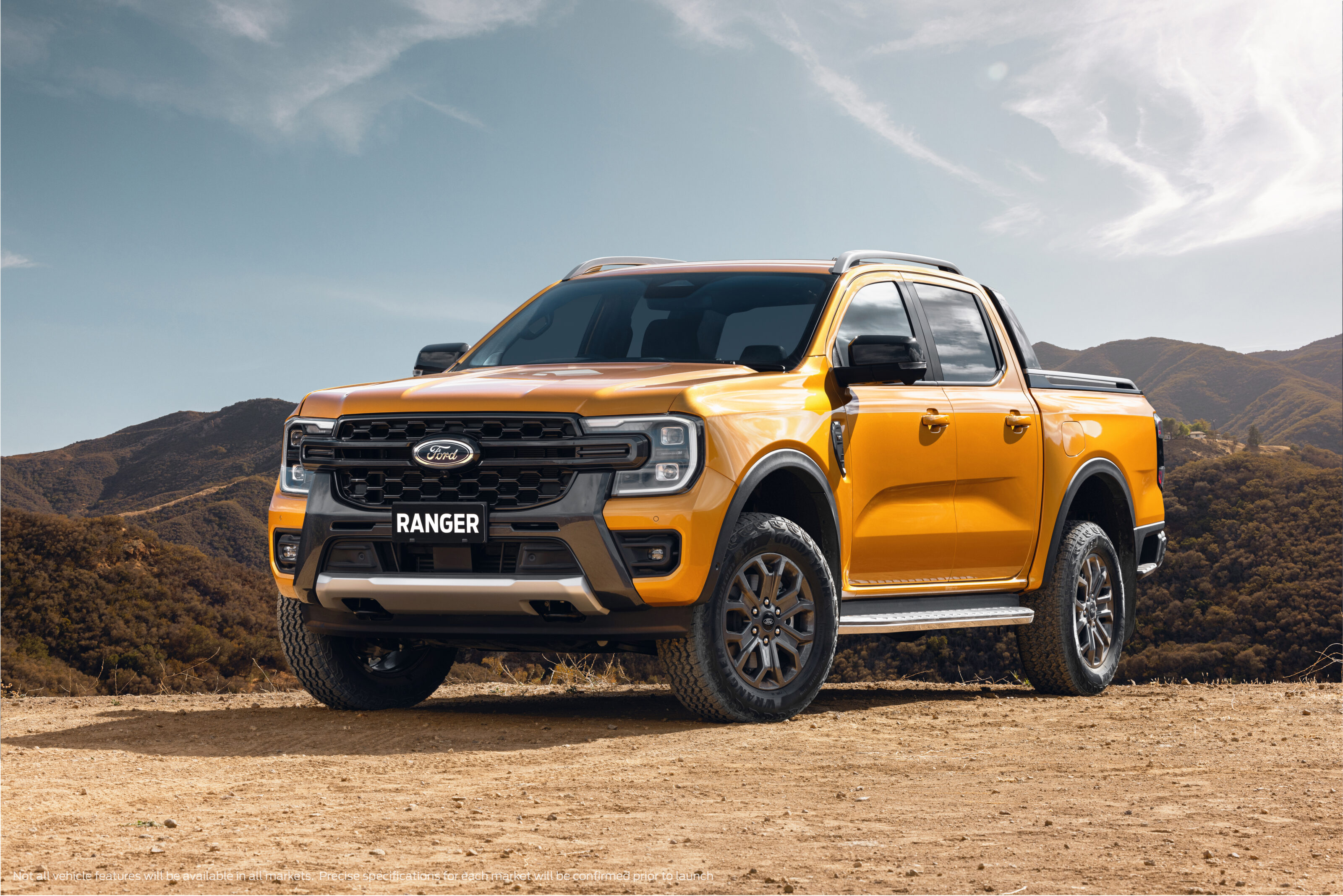
Ford’s T6 chief platform engineer Ian Foston has gone on record to confirm that the product lifecycle for Ranger means that some form of electrification is a given.
“The platform lifecycle is anything up to 10 to 12 years…clearly electrification is going to be something which we have to consider going forward,” Foston said.
“So we made sure the platform was capable of it. And we engineered electrification into it, to make sure that all the different propulsion technologies would be able to fit within the platform going forward.
“We’ve got a bandwidth of electrification hardware that enables us to go anywhere from a 24-volt mild hybrid all the way through to a fully-electric version,” he noted.
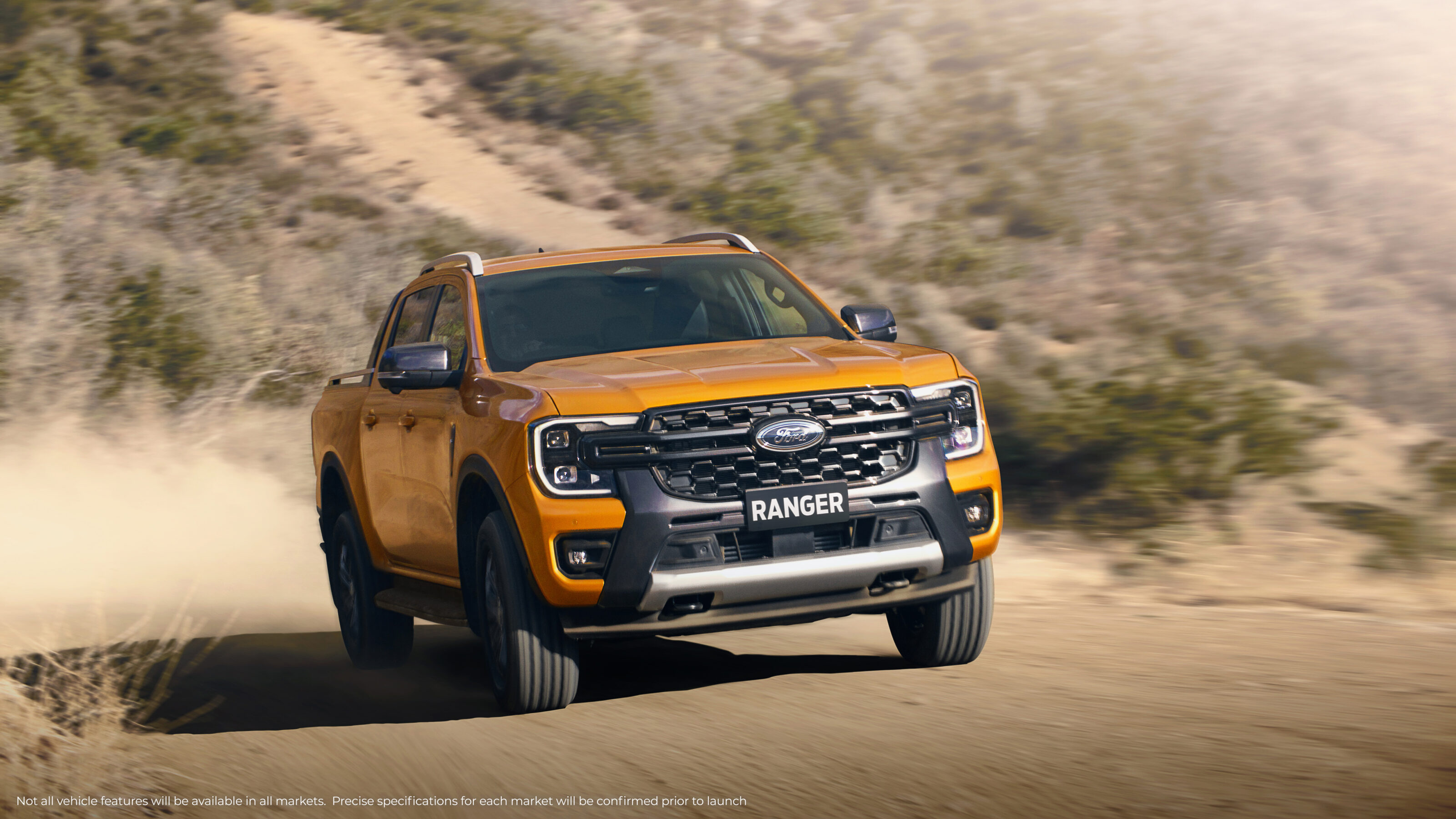
That much is clear when you delve beneath the new Ranger and see how Ford has engineered it. The hydroformed engine bay allows plenty of space for any sort of ancillaries or motors to be fitted. Or a bigger engine if you’re of that bent.
The company has stanced the front and rear tracks out by 50 millimetres each side with outboard dampers. When asked what was the key reason for the outboard dampers, dynamics weren’t the overriding concern. A Ford engineer suggested that it helps free up width for the tub at the rear and allows them to further expand the centrelines of the vehicle.
In addition to that, the standard Ranger ships with an 80-litre fuel tank. We saw a customised Ranger that had a 140-litre tank which fits with zero modifications, so Ford has massively oversized the area where the production fuel tank fits.
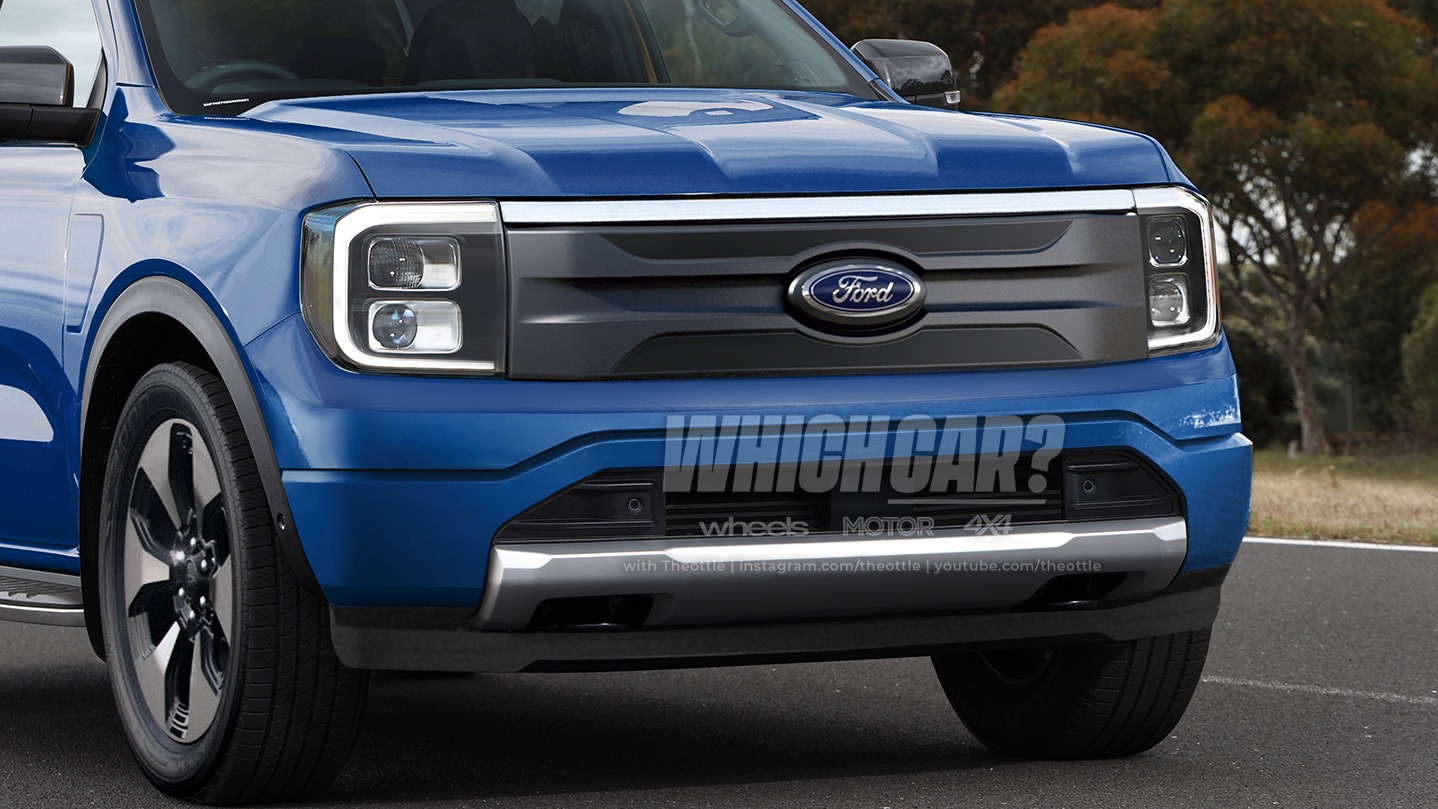
Volkswagen, which will use the Ranger’s bones for its next generation Amarok, has already confirmed that the Ford’s body-on-frame chassis can accept an electric drivetrain and battery pack.
There are teething issues though. Lars Krause, the Volkswagen Commercial Vehicle with responsibility for marketing said the carmaker is “looking at a pure-electric version.”
Briefing media at a presentation for the new Amarok in Wolfsburg, he went on to note: “Right now, we’re not satisfied with the electric range of the plug-in hybrid. I’d never say never, but we’re looking more towards a fully-electric version.”
Krause was confident that the chassis could house a BEV drivetrain and battery pack. “Yes, we think it is possible”, he noted. “Obviously, we’d need to modify certain elements. But, yes, we are seriously considering an electric variant,” said Krause. Notice the use of the word “we’d”. That suggests that a BEV version of the Amarok is something that Volkswagen would need to engineer rather than being a Ford-led initiative.
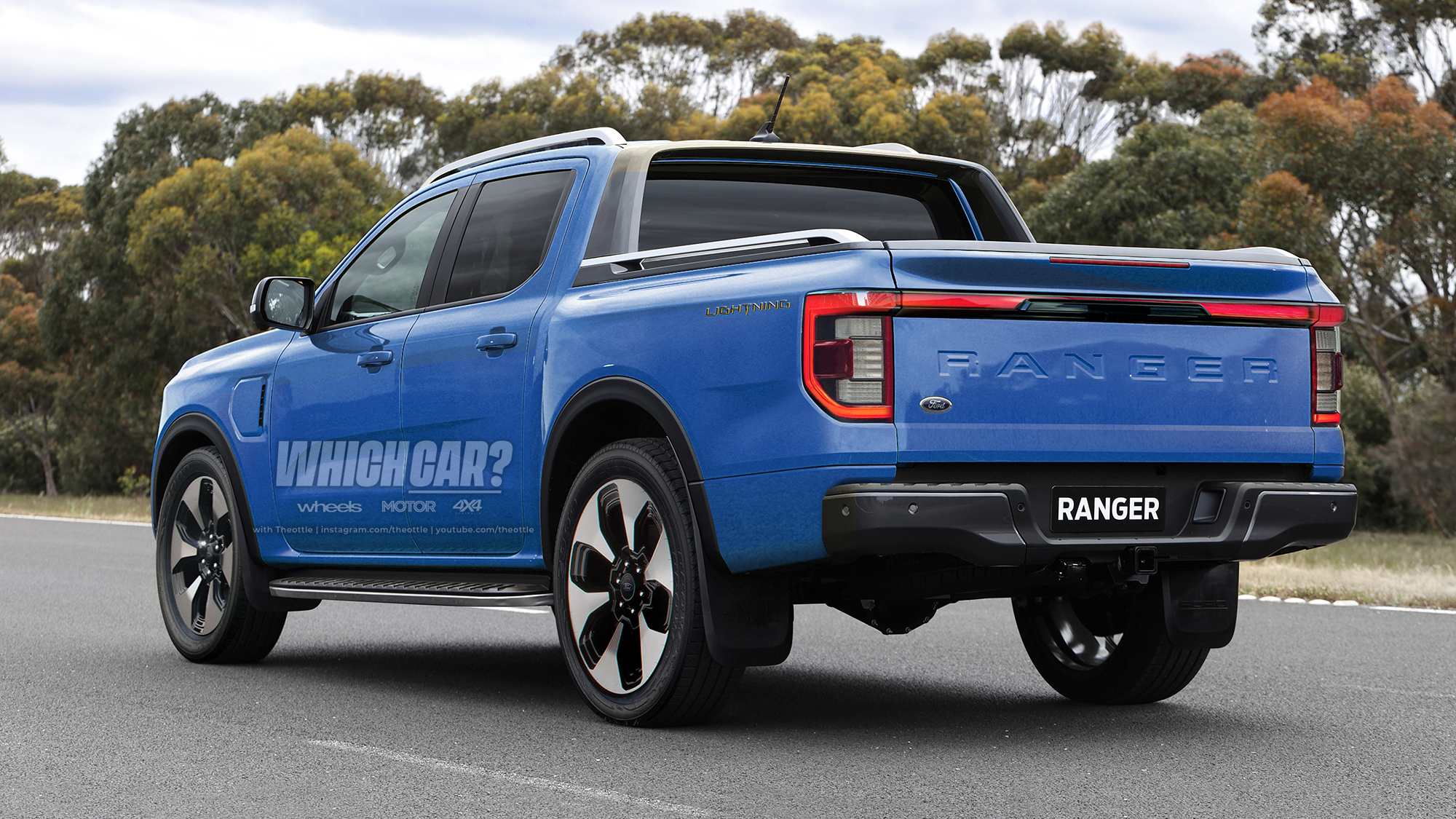
Clearly, the first priority for Ford – and the wisest use of development budget for Ranger – has been to clear the path to the long-awaited plug-in hybrid variant, said to be due in 2024.
Aside from the F-150, Ford has also stated that it’s looking at developing another fully electrified pick-up. The grey area is what form that would take: either a full customised EV skateboard beneath it like the F-150 Lightning, or whether the intention is to utilise the amount of space freed up in this 2022 Ranger body by developing a T-shaped battery pack running down the centreline and into the existing fuel tank void.
Some illumination came from Ford’s 2021 Capital Markets Day. Hau Thai-Tang, Ford’s Chief Product Platform and Operations Officer, confirmed that the dedicated battery-electric vehicle platform with a RWD/AWD drivetrain platform would spawn a mid-size electric pick-up truck.
Ford markets the Ranger as its mid-size pick-up and the timescale for the launch of this range of “emotive vehicles” was a vague “between now and 2030”. Ford CEO Jim Farley backed up those comments in April, saying: “We’re already pushing dirt down in Blue Oval City in Tennessee for another electric pick-up that’s different than [the F-150 Lightning].”
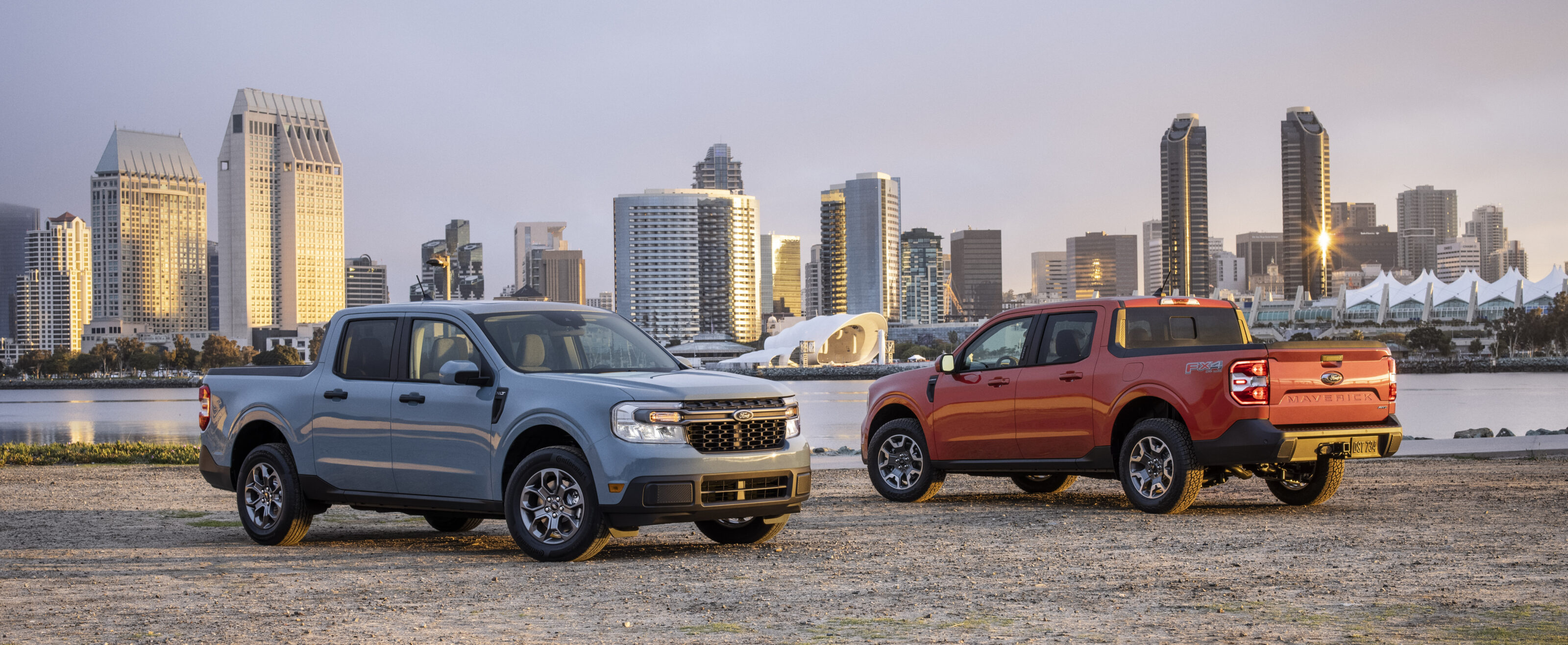
While Ford has engineered this generation Ranger with enough space for a plug-in hybrid battery pack and the development potential for a full BEV application, it is also developing a dedicated BEV chassis for a Ranger-sized vehicle that will appear within the next seven years.
Chatting with Ford’s engineers on the launch of the 2022 Ranger, there seemed to be the odd nod and wink with suggestions that we’d be surprised what this platform is capable of, with Pritika Maharaj, T6 Global Program Manager, saying this platform was “fully protected”.
This generation Ranger’s platform lifecycle is 10-12 years. But given the global reach of this model, it could soldier on profitably throughout that period in many markets without being adapted for full electrification. A trademark for the Ranger Lightning nameplate was recently registered in Europe alongside the Maverick Lightning badge, this being a smaller USS-market pickup spun off the Focus chassis.
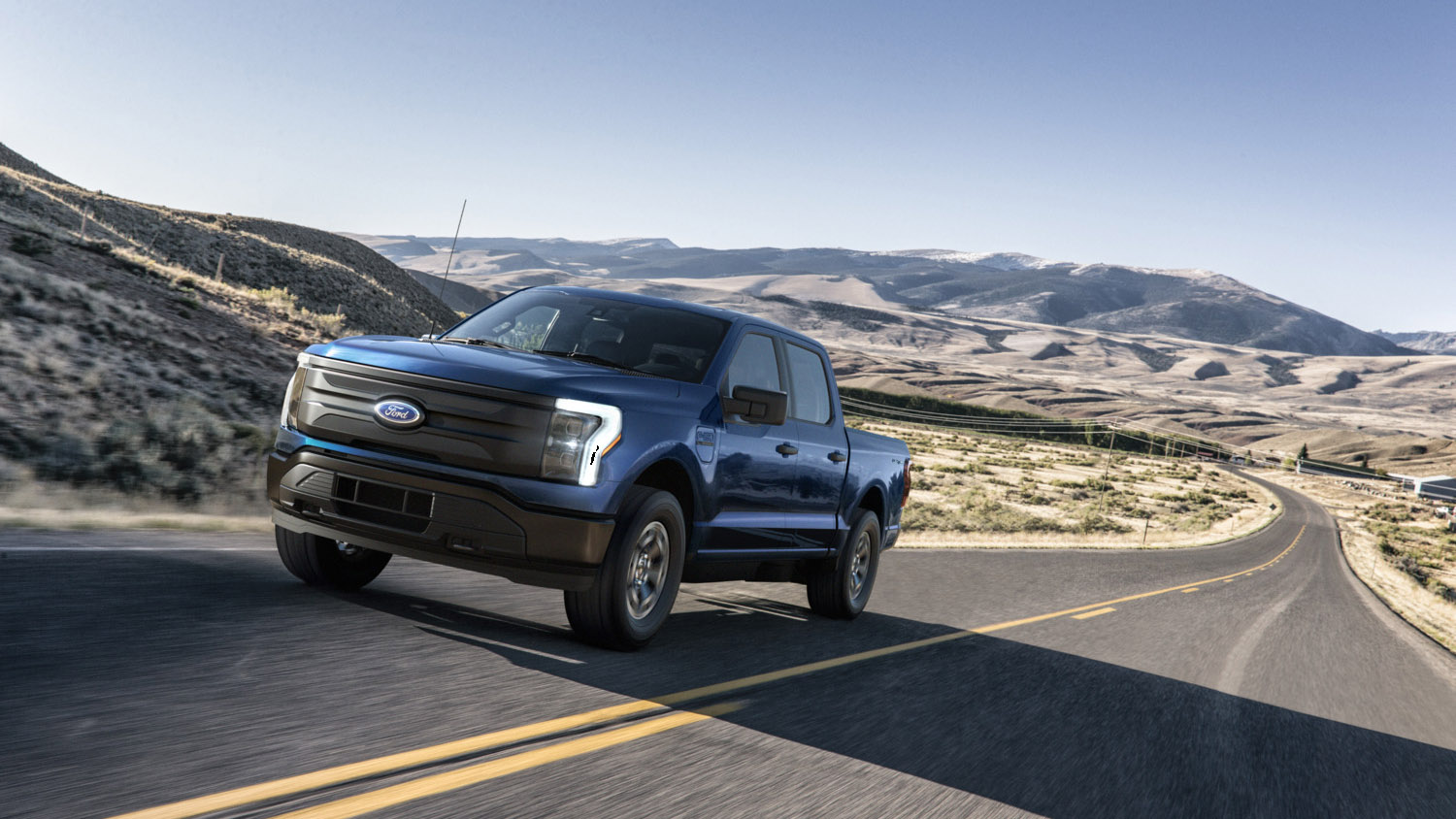
Piece all these facts together and the power demand of any putative Ranger Lightning means that it would likely to be spun off the dedicated EV skateboard and therefore won’t be appearing any time before the 2024 launch of the Ranger PHEV.
So if you’re sitting on a stack of cash waiting for a seriously rapid electric Ranger, it looks like you’ll have to wait a little while yet before you can press it into the hand of your local Ford dealer. The good news? It sounds as if Ford isn’t going at it half-hearted.
Snapshot
- Vehicle submergence to become part of testing
- More assessment of Child Presence Detection
- Changes coming from 2023
Upcoming changes to ANCAP’s safety criteria from 2023 will include floodwater testing and assessing alert systems that detect when a child has been left in a car.
Updated every two years, the next protocols from the Australasian New Car Assessment Program (ANCAP) will come into effect from January 2023.
As part of the upgraded tests, ANCAP will encourage carmakers to equip vehicles with systems which allow the car windows and doors to remain functional and able to be opened despite it entering flood waters or other body of water.
‘Child Presence Detection’ will also be used to assess systems that can notice when a child has been left alone in a car and alert the driver, while new car-to-motorcycle tests will look at how a vehicle’s autonomous emergency braking (AEB) and lane support systems (LSS) detect and respond to motorbikes.
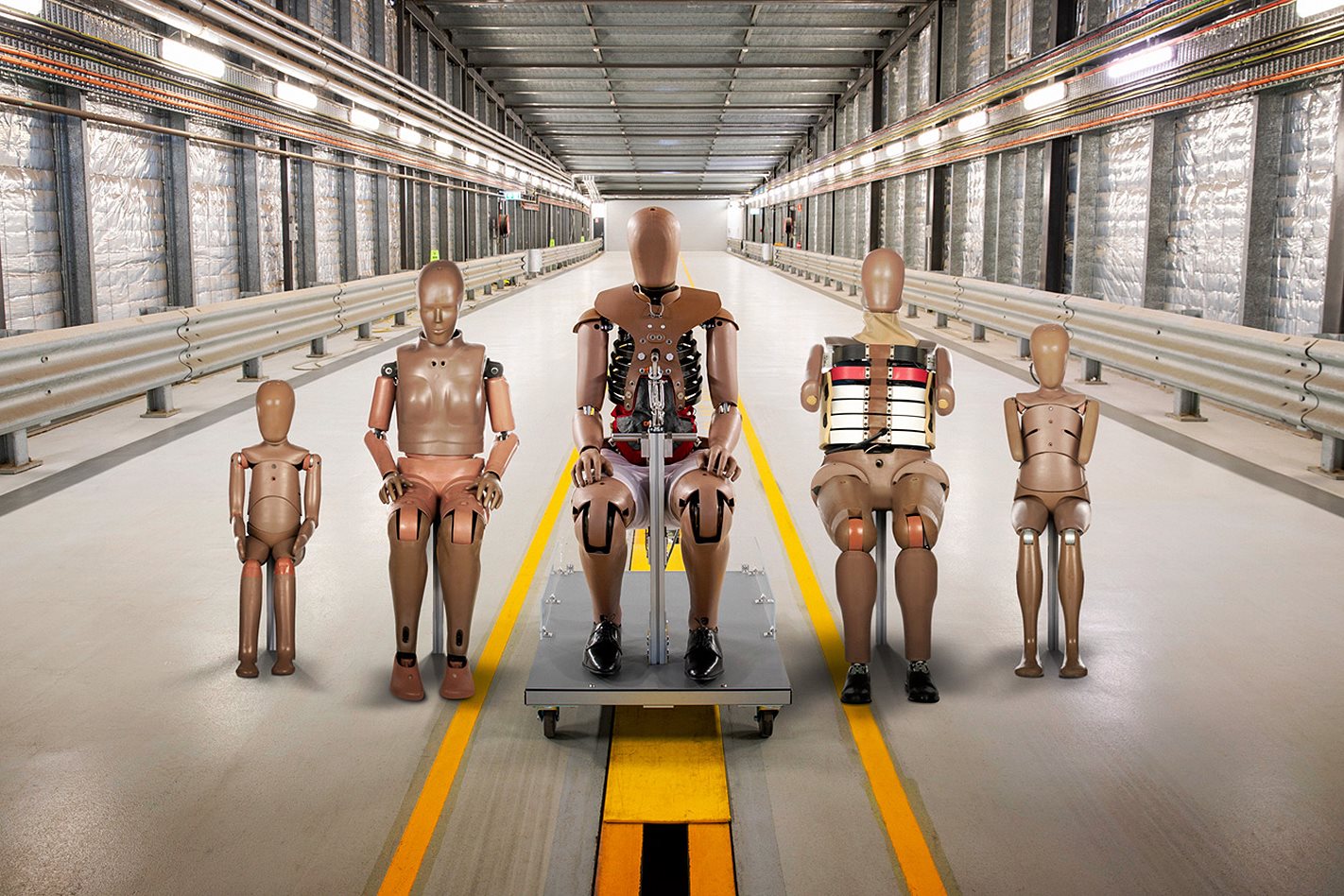
“Traditional vehicle safety has focussed on vehicle crashworthiness – how the structure of a car protects its occupants – but today our view of vehicle safety is much more holistic,” ANCAP CEO Carla Hoorweg told Wheels.
“Our requirements now encourage the standard fitment of crash avoidance technologies and features which assist and protects vehicle occupants, other road users and emergency services teams.”
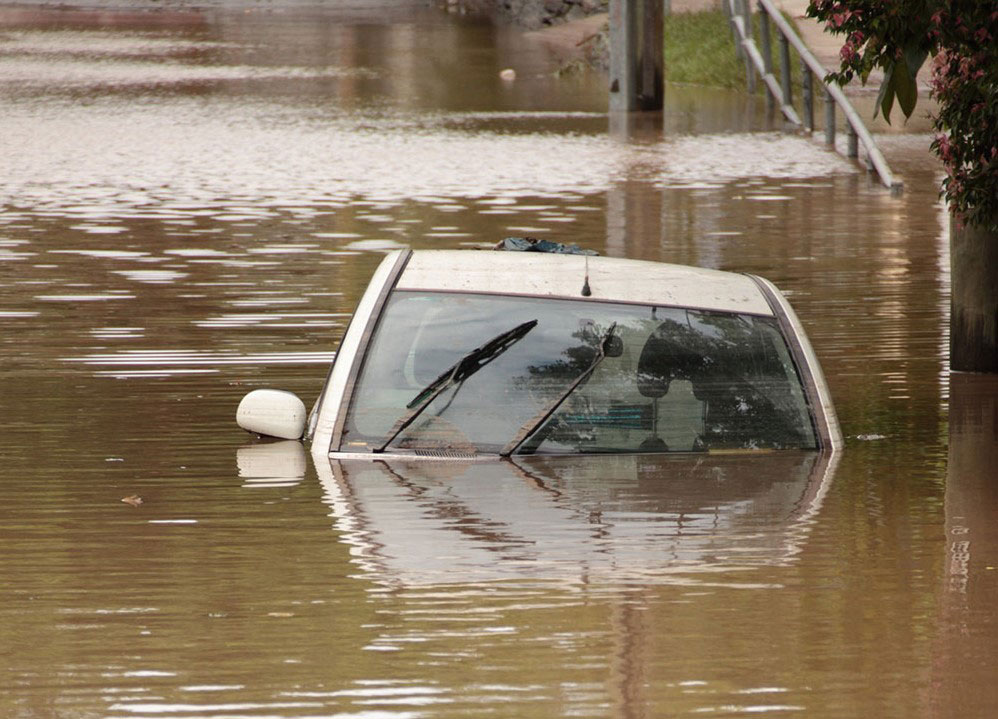
Vehicle submergence criteria is being introduced as an extension to ANCAP’s post-crash rescue protocols, which assist first responders in rescuing occupants when a car becomes trapped in floodwaters.
According to the safety authority, points will be awarded in the Adult Occupant Protection category to manufacturers which equip vehicles with submergence countermeasures.
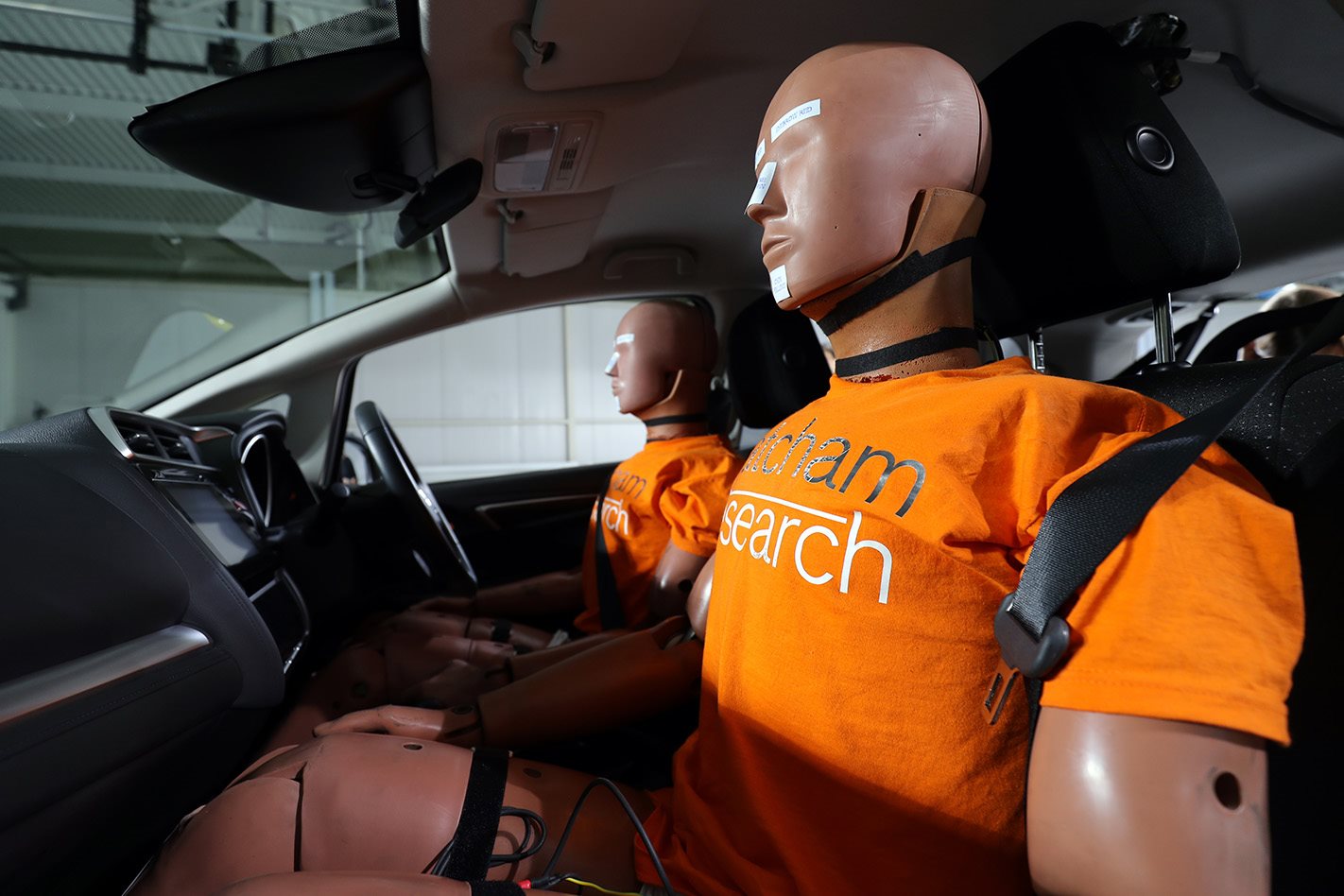
Tests will mean carmakers need to provide evidence to show a vehicle’s doors can be opened from the inside and outside without power and the windows can be operated for up to 10 minutes after a vehicle goes underwater. If it can’t, the manufacturer must provide a method for occupants to open or break a side window to be able to exit in an emergency – which must be outlined in the owner’s manual.
“Post-crash response is a critical element in ensuring survivability. Submergence systems require the vehicle’s electronic systems to remain operable once submerged, so that car doors and windows can be opened,” Hoorweg added.
“While it is important never to deliberately enter flood waters in your vehicle, recent flooding events have again reminded us that flooding can unexpectedly take a vehicle and its occupants.”
Major flooding in February caused a significant spike in motor vehicle claims, with more than 22,500 claims related to the events in south Queensland and New South Wales filed by March.
Another new aspect to ANCAP’s star rating regime from 2023 will include an assessment of child presence detection systems, which will need to monitor the rear seats and doors and notify the driver or emergency services of a child that may have inadvertently been left in a locked car.
These alerts may be through visual or audible warnings, such as through the vehicle’s infotainment system, a honk of the horn, a notification or alert to an app on the driver’s mobile phone, or an ‘eCall’ to emergency services.
More advanced systems may also have the ability to automatically open the windows of the vehicle or activate its air-conditioning system. While some vehicles use door opening or weight to detect a person or object, some more advanced CPD systems may have the ability to detect the presence of an actual human inside by tracking heartbeat, respiration, movement, or any other sign of life.
“CPD monitors the rear seats to notify the driver of a child that may have inadvertently been left in a locked car,” Hoorweg said. “In more advanced systems this includes an audible alert if movement is detected in the second row seats after the ignition has been turned off and the car locked.”
Snapshot
- 700 new fast chargers
- NSW leading the way in charger numbers
- EVs made up 1.6 per cent of all new vehicle registrations in 2021
A new report has revealed there are 85 per cent more electric vehicle fast chargers in Australia than there were two years ago, and 700 more are on their way over the next five years.
With the EV debate consistently focused on two things: driving range and infrastructure, online financial broker Savvy has assessed the national picture – breaking down state by state how many chargers there are now, and how many are expected in the years to come.
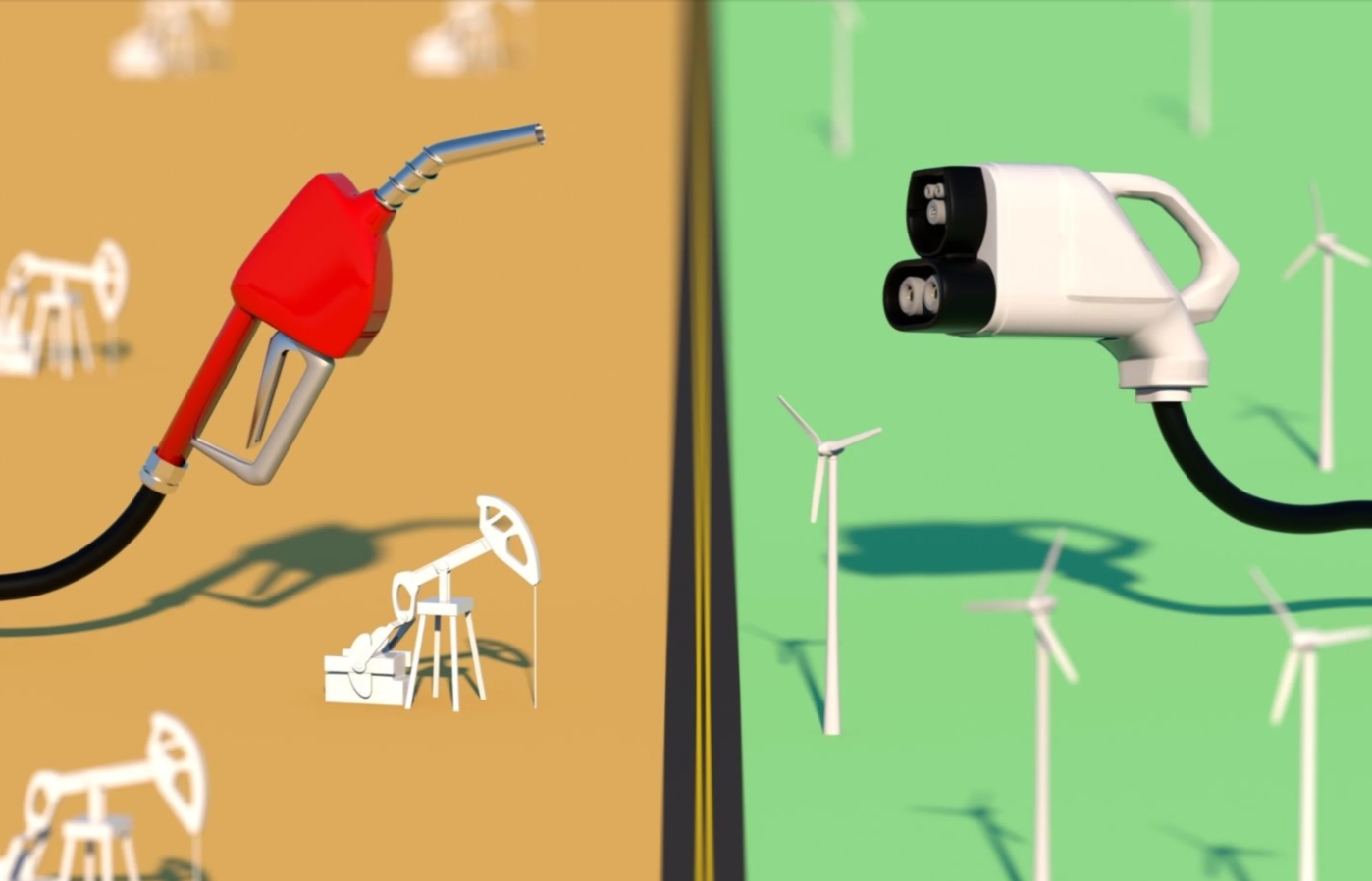
How many public charging stations are there in Australia?
As of January 2022, there are 293 fast charging locations (50kW or above) around Australia – an increase of 85 per cent compared to August 2020 – and 1580 regular charging stations (below 50kW), up 29 per cent since the same time.
“People have gotten used to not having to wait for anything,” said Bill Tsouvalas, Savvy’s Managing Director. “When we fill up our regular cars at the pump, it takes five minutes max, in and out. Who is going to be willing to spend an hour charging their car on a long journey? What if you get there and all the bays are full?
“I’m still not convinced this problem has been solved. We are seeing inroads now however, with the increase in 350kW ultra-rapid chargers and cars coming out that can take advantage of that. So, my prediction is that when prices drop below $50k and charging times drop below 15 minutes, you can expect a real EV boom.”
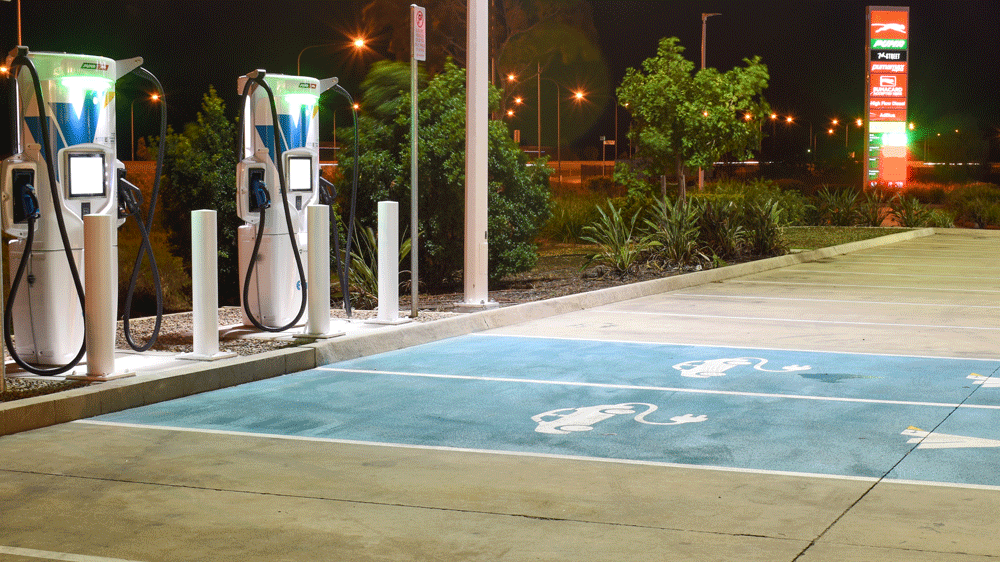
How many are planned for the future?
According to the Electric Vehicle Council, based on estimates of funding from state and federal governments, 700 new fast charging locations will be added across Australia over the next five years. Each location will have multiple charging points to accommodate many vehicles.
Other state government programs will increase the density of fast charging equipment currently in use, so more cars can take advantage of charging at the same time.
The previous Coalition government pledged $24.55 million to co-funding 400 fast-chargers across approximately 200 sites, mainly in metropolitan locations.
The new Labor Government announced a pre-election policy of a $39.3 million investment in a national electric vehicle charging network to establish charging stations every 150 kilometres on Australia’s major transport routes – with the amount set to be matched by the National Roads and Motorists’ Association (NRMA).
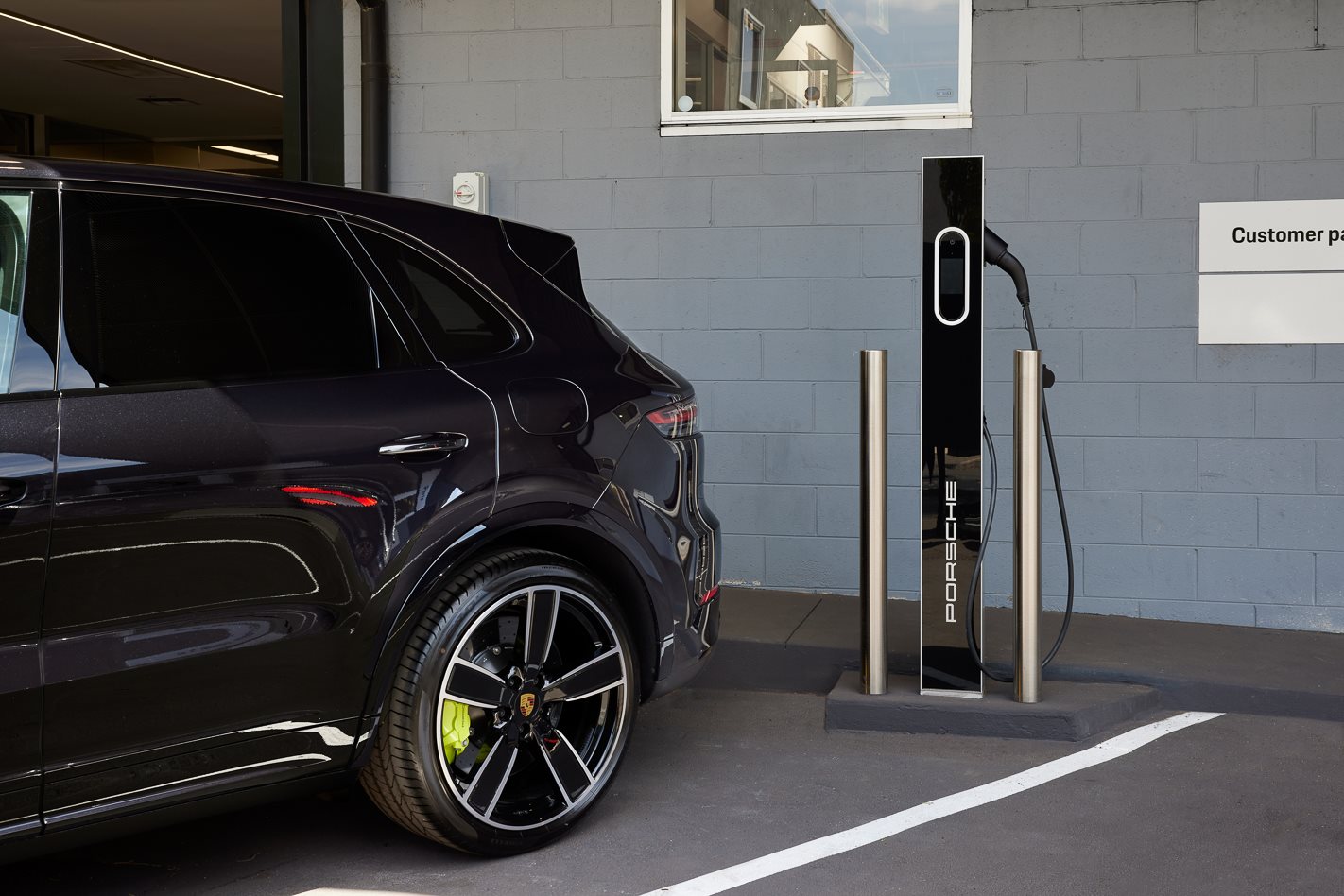
Where are they now, and where will new ones be located?
Currently there are 93 fast chargers in NSW, 67 in VIC and 63 in QLD. WA has 31, TAS has 18 and SA 14. At the back of the pack are the ACT with five and NT with just two.
Meanwhile, when it comes to slower chargers, NSW has 463, VIC 363, and QLD 262. WA is next with 202, followed by SA with 180, TAS with 67, ACT with 29 and NT with 14.
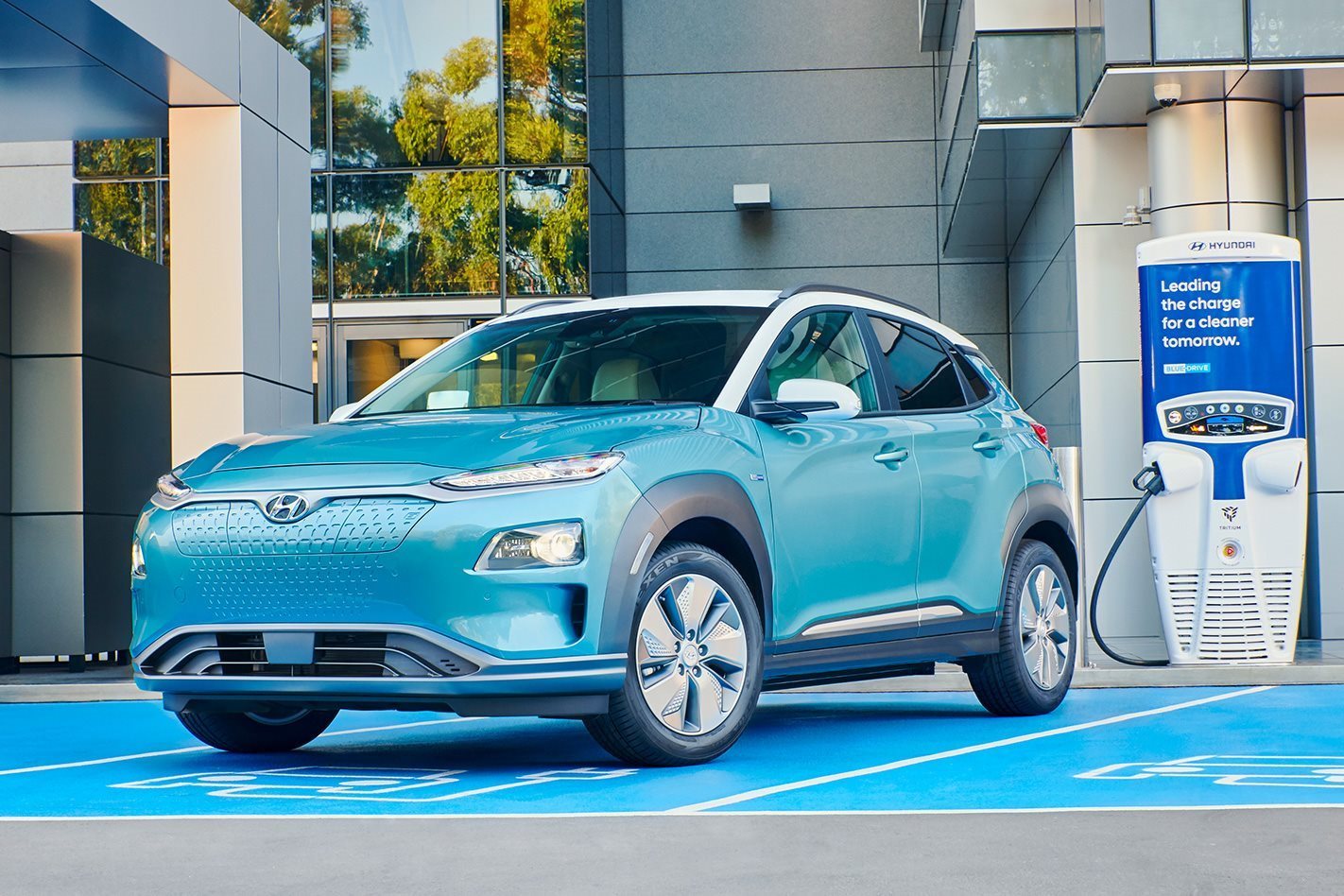
In the coming years, NSW will commit $131m to co-fund 1000 fast charging bays across 250 locations, ACT will do the same for 20 new fast chargers and QLD’s “Queensland Electric Superhighway” will see 18 new fast-charging sites added at a cost of $2.75m.
The NT has committed to funding fast-chargers, with details still to come, while SA has pledged $13.4m to add 28 new regional fast charging stations.
TAS, meanwhile, will provide $600,000 to build additional fast charging stations in the state, and WA has pledged $20 million to fund points across 45 sites in regional areas.
The Victorian Government has promised $6 million to co-fund fast charging stations across 50 regional locations.
Snapshot
- BYD to show and sell vehicles through Eagers Automotive showrooms
- Buyers can either purchase online or in-store
- Existing partnership with Mycar remains
UPDATE, July 18: BYD locations announced
The locations at which Chinese car company BYD will sell its models across Australia have now been announced.
The firm, which recently revealed it was partnering with Eagers Automotive to showcase its electric vehicles via the latter’s dealership network, will have points in every state and territory except for the Northern Territory – with the most sites in New South Wales.
A full list is available here, and our original story continues further below.
BYD locations
| NSW | QLD | VIC | WA | SA | ACT | TAS |
|---|---|---|---|---|---|---|
| Darlinghurst | Indooroopilly | Dandenong | West Perth | Medindie | Canberra | Hobart |
| Sutherland | Robina | Brooklyn | ||||
| Castle Hill | ||||||
| Cardiff |
The story to here
June 28: BYD models to be sold through Eagers Automotive
Chinese electric vehicle manufacturer BYD’s upcoming models will feature in Eagers Automotive showrooms around the country, its Australian distributor has announced.
EVDirect.com, Australia’s exclusive distributor of BYD, announced it has formed a retail partnership with Eagers Automotive for the EV brand after a Memorandum of Understanding was signed earlier this year, allowing the manufacturer to make use of the dealership network’s existing market experience and after-sales facilities.
While exact locations of BYD dealers are yet to be finalised, the brand still plans to offer online sales in conjunction with the traditional bricks and mortar model, with fixed prices to remain across both formats.
“This is an important milestone in the journey to bring BYD, the most anticipated and exciting new auto brand to market in Australia,” said Luke Todd, Managing Director of EVDirect.com.
“The arrangement allows us to retain the benefits of a streamlined direct to customer model, while also expanding our physical sales and after-sales infrastructure in line with the growth trajectory of the BYD product range.
“Between BYD and EVDirect.com we have invested heavily over the last few years to establish mass scale production of BYD electric vehicles for the Australian market.
“Eagers was a natural choice to be part of our BYD retail dealer solution to facilitate wider access to the latest EV technology for Australian customers, combining a national footprint with its retail expertise and experience to support and expedite our ambitious growth plans.
“From day one of our discussions, we were impressed by Eagers’ desire to innovate in line with our strategic plan to optimise the BYD customer experience with new retail formats, such as the recently opened Automall in Indooroopilly Shopping Centre in Brisbane, allowing us to offer BYD customers the best of online and in-store experience with an unrivalled national aftersales support network.”
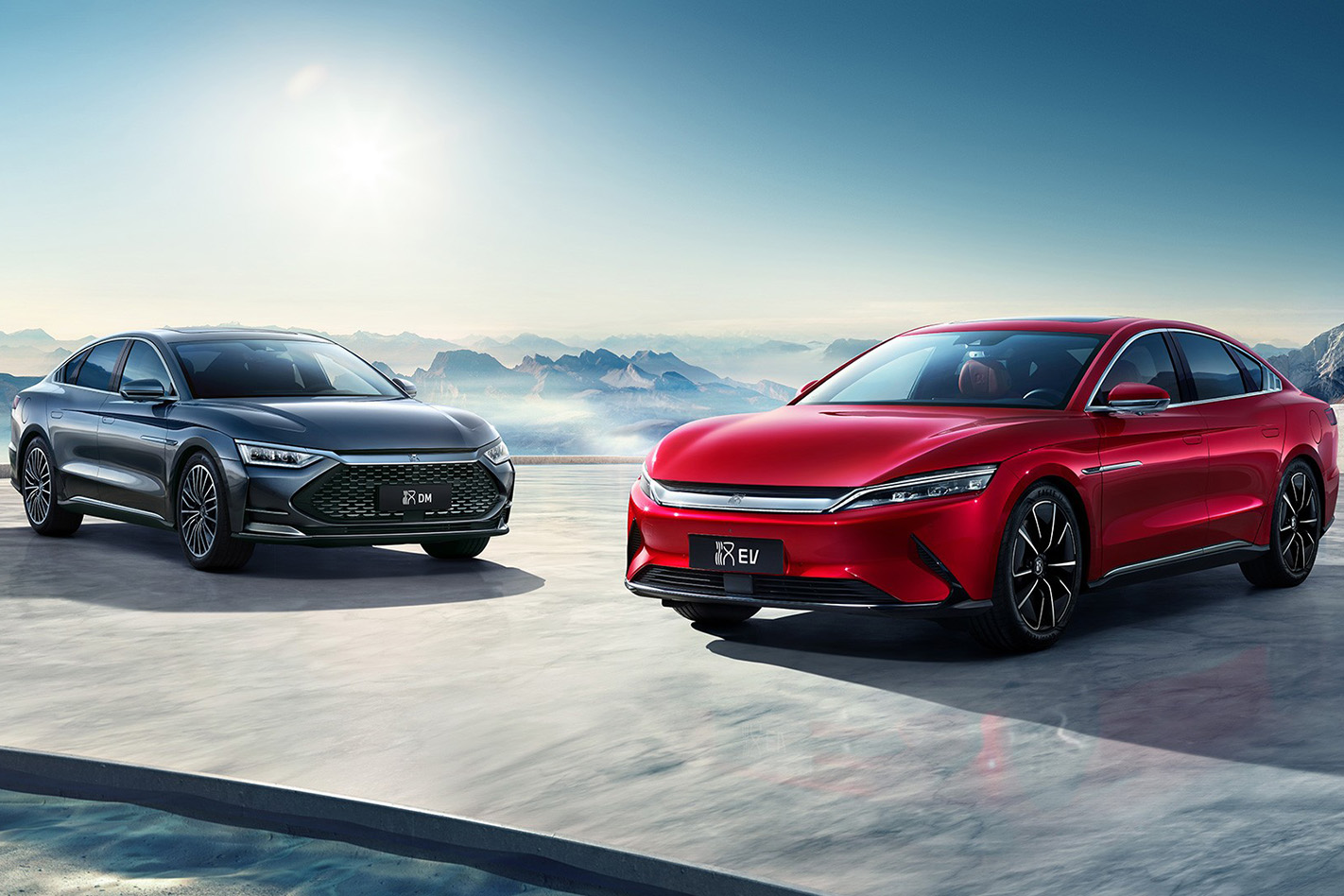
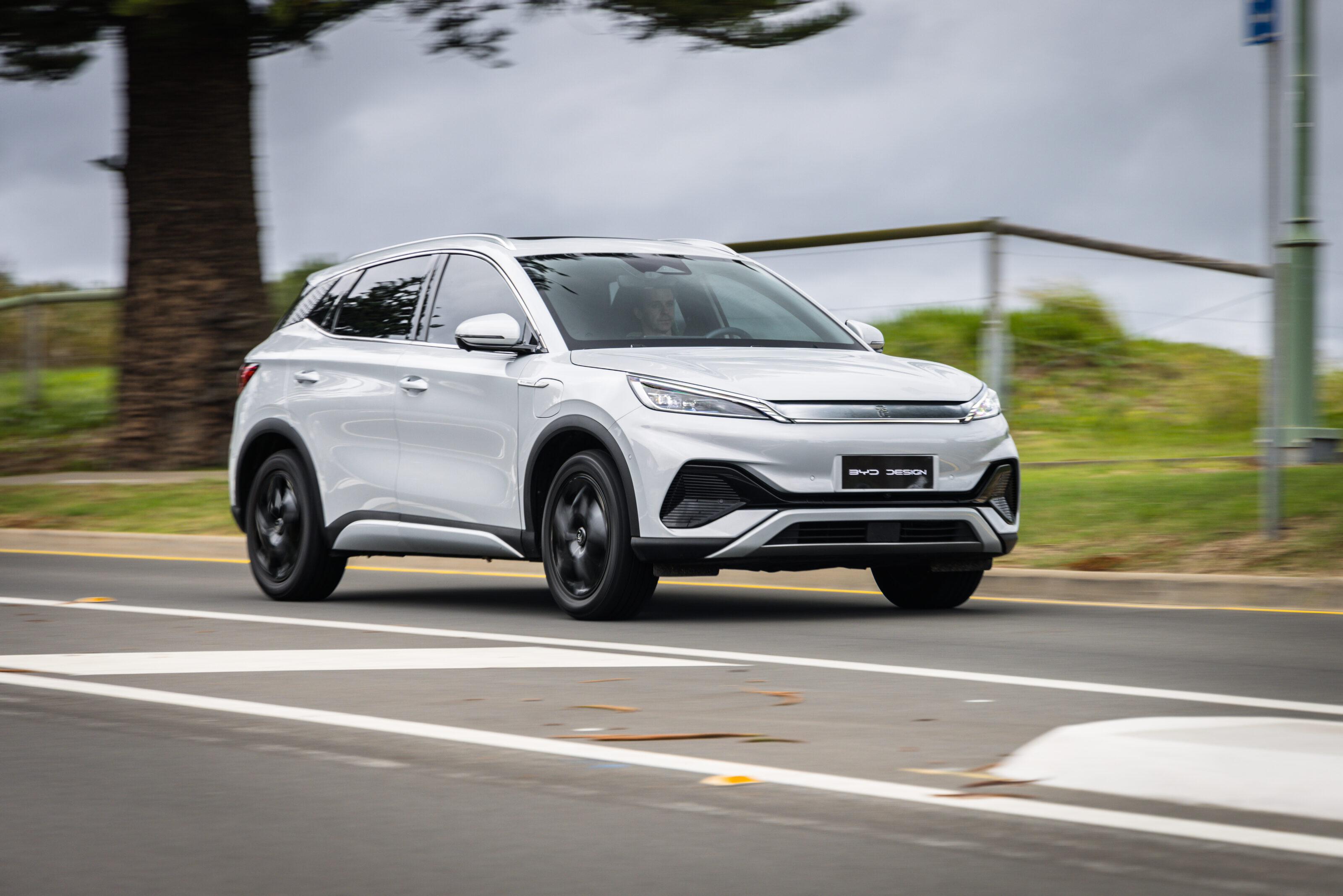
BYD Australia’s General Manager, Wing You, said the new partnership will enhance the projected success of the marque’s $44,990 Atto 3 model, having secured more than 3000 orders before its third-quarter arrival.
“We are extremely confident that BYD’s first mass produced vehicle for Australia the Atto 3, will be an amazing success with more than 3000 orders already placed,” said Wing.
“We have been working closely with our distributor partner, EVDirect.com, on how best to implement an extensive network to provide immediate scale and support for our expanding range of new BYD products, and are very excited with the inclusion of Australia’s largest dealership group – Eagers Automotive – as our retail dealer partner to complement our long-term relationship with EVDirect.com.”
Late last year, BYD announced it would partner with Mycar – formerly Kmart Tyre and Auto – to manage servicing and deliveries, with the deal set to remain as an alternative to Eagers.
I know it’s a tired old cliche, but this middle-aged guy from the suburbs grew up on manual gearboxes like the one in the 2022 Mazda 3 G25 Evolve SP tested here. My parents swore by them and resisted the switch to automatics until their knees and hips began to wear and Sydney’s traffic became worse and worse.
Dad, one of the cheapest people I know, also saw the fuel economy gap narrow and thought it was time. Manual cars are now a tiny three per cent of sales in this country, with the vast bulk of those being sportscars like Mazda’s own delightful MX-5 and its cross-town rival, the 86/BRZ. Along with a bunch of hot hatches, of course.

Kia dropped its manual Cerato last year, a combination of low sales and a bug/feature in the ANCAP rating system that meant the lack of advanced safety features on the three-pedaller would apply across the board, something Kia wasn’t confident was worth the loss of a five-star rating.
It’s a rare opportunity to drive a car like the Mazda 3 with a six-speed manual gearbox. I was expecting a charming if inconsequential roll down memory lane. What I wasn’t expecting was a car that lost almost none of its usability even in heavy traffic but delivered so much in the fun stuff.
Pricing and features
For 2022, Mazda replaced the Evolve G25 with the Evolve G25 SP, a subtle addition of darker alloys and a few bits and pieces to add a bit of visual aggro.
In return for what seems like an entirely reasonable $31,490 (before on-road costs, a grand less than the automatic) you get 18-inch alloy wheels, an eight-speaker stereo, dual-zone climate control, reversing camera, keyless entry and start, adaptive cruise control, sat-nav, auto LED headlights, leather steering wheel and gear selector, cloth upholstery, head-up display, electric windows and mirrors, auto wipers and a space-saver spare.

There are eight colours. Platinum Quartz (sort of a champagne colour), Jet Black Mica, Deep Crystal Blue, Sonic Silver and Snowflake White Pearl are all freebies. The very lovely trio of Machine Grey, Polymetal Grey and Soul Red Crystal are $595. That’s the only option.
You also get the rather lovely new widescreen media system but as is Mazda’s current kick, it’s not operated by touch; you can only control it from the console-mounted rotary dial. I have no problem with that, largely because I can’t reach the screen to touch it anyway.
Because the rotary dial control can be a little erratic, familiarity and judicious use of Siri/Google Assistant/whatever else might reduce the aggro

There are two USB-A ports connect your phone for Apple CarPlay or Android Auto and they’re both great to look at on the screen. They’re not as pleasant to use because the rotary dial control can be a little erratic, so familiarity and judicious use of Siri/Google Assistant/whatever else might reduce the aggro.
Unlike Kia and Hyundai, the safety package doesn’t suffer with the loss of the automatic transmission. You get seven airbags, ABS, the usual stability and traction controls, blind-spot monitoring, forward collision warning, forward and reverse auto emergency braking, reverse cross-traffic alert, driver attention monitor, road-sign recognition and speed alert, meaning the 3 maintains its five-star ANCAP rating from 2019.
There are also three top-tether anchors and two ISOFIX points.
Comfort and space

Up front, the seats are very, very comfortable and with lots of adjustment on offer. Which is handy, because you sit low in the 3, evoking the feel of its tiny MX-5 sibling. You get a pair of cup holders and bottle holders in the doors as well as a decent-sized centre console bin covered by an armrest. Your phone gets its own space in the tray under the climate controls.
I really love the dash design in the Mazda 3. There are so few buttons you wonder where they’ve got to, but they’re in sensible places with just enough of them to prevent having to hunt for commonly-used functions in the media system. I’m not a font guy, but the script is consistent across the cabin. It’s weird, but I find that oddly calming.
Rear leg- and knee-room is sufficient for me at a scooch under six feet tall, with good headroom

Rear leg- and knee-room is sufficient for me at a scooch under six feet tall, with good headroom. You also get a centre armrest with cup holders and the all-too-rare rear air vents. Three across the back will be tight for short trips let alone long ones.
The sedan’s 444-litre boot is a very good size and rather more useful than the hatch’s 295 litres. There isn’t an official figure for when the rear seats are folded down.
On the road

It’s always a treat to step into a 2.5-litre Mazda 3 because that is the pick of the three available engines. The 2.0-litre is far too much hard work (although might be fun as a manual…) and the 2.0-litre hybrid compression engine doesn’t really deliver on the promise and nor is it available without an automatic. Nor is it a hybrid in the generally accepted sense of the word.
Rather unusually, the quoted ADR fuel figure on the combined cycle – 6.2L/100km – is 0.3L/100km better than the six-speed automatic, something that rarely happens these days. Real-world usage put that right, however, with the 3 in my hands (my wife refuses to drive manual) returning 8.3L/100km, identical to the auto I had earlier in the year.
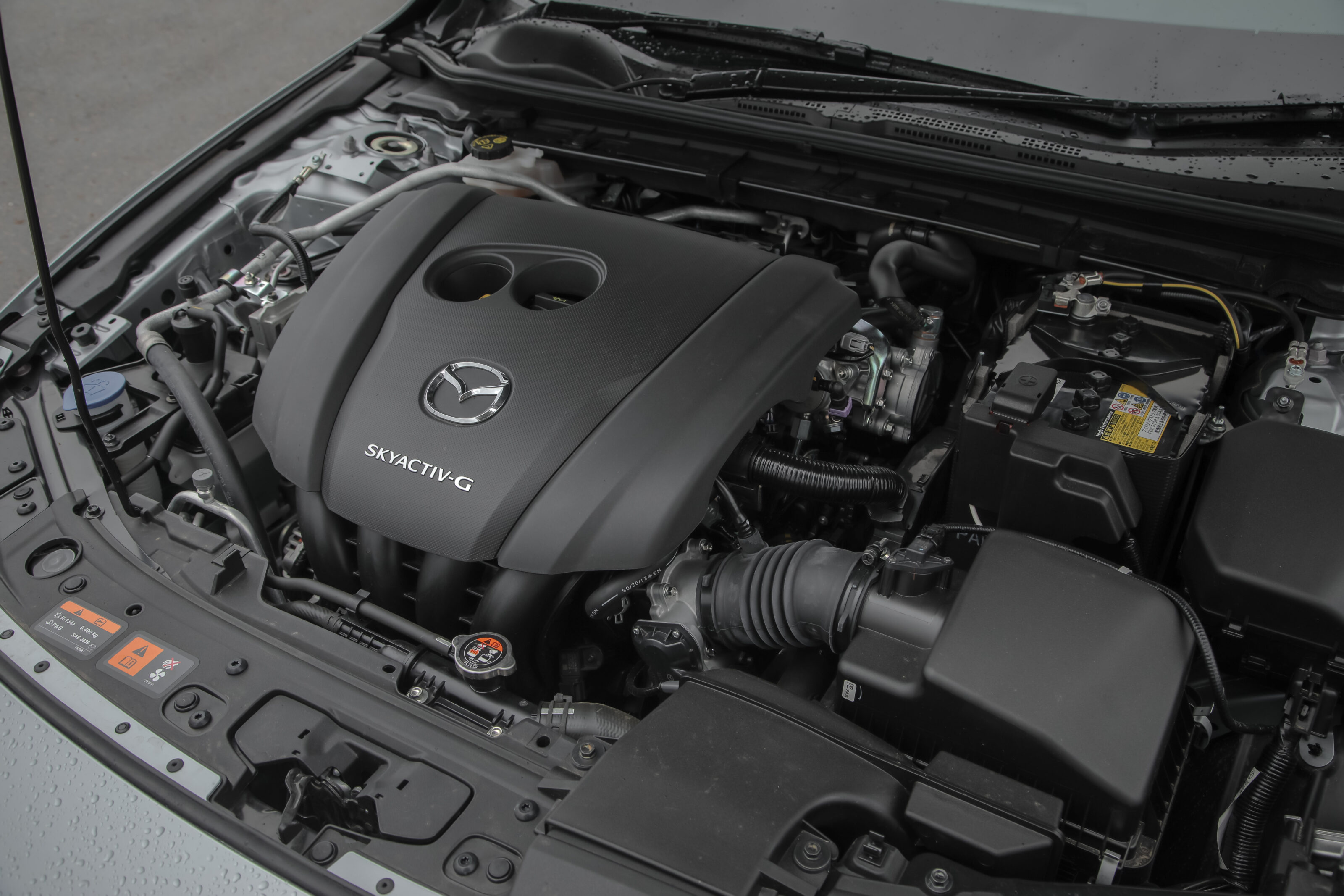
From the second you settle in low behind the thin-rimmed, large-diameter leather steering wheel, the SP feels right with a manual gearbox. This isn’t an out-and-out sportster like the long-lamented Mazda 3 MPS, partly because it doesn’t have the bonkers, torque-steering performance but mostly because it still has the 3’s fluid chassis.
It’s never not amazing to remember that this quite plush-riding machine manages to be comfortable, secure and actually quite handy with a torsion beam rear end as opposed to a more complex (and expensive) multi-link setup. It also rides impressively for a car so suspended riding on 18-inch alloys and 45-profile tyres, with not even a hint of harshness unless you’re on some properly horrible surfaces.
It’s all about the fluidity, with concentration the order of the day when you’re pressing on, but absolutely mindless, easy motoring if you’re in traffic

The manual gearbox is very slick, with a reasonably short throw (not as short as its MX-5 sibling’s for obvious reasons) and a light clutch. As ever with contemporary cars, the armrest is a bit high for really rowing the car along on the gears, so you’ll probably need to sit a little higher if you’re planning on enthusiastically changing gears at every opportunity.
Light steering but with enough feel to let you know what’s going on underneath the Toyo Proxes tyres means any kind of progress in the 3 is calm and predictable. It’s all about the fluidity, much like the 6, with preparation and concentration the order of the day when you’re pressing on, but absolutely mindless, easy motoring if you’re in traffic.

The light controls mean that the latter isn’t the chore many would have you believe and with the linear power delivery from the 2.5-litre four-cylinder, progress is super-smooth.
Given the last manual 3 I drove was my very own 2007 SP23 – which I hated with my soul – this 2022 model couldn’t be further from that car, with a much nicer vibe.
Ownership

Mazda offers a five-year, unlimited-kilometre warranty, which is competitive for the segment.
Mazda persists with short service intervals on the 3, measuring 12 months or just 10,000km between dealer visits. It’s a bit frustrating that this is still a thing in 2022, but I guess it’s not stopping people because Mazdas are selling quite nicely, thanks very much.
Servicing is capped for the first five visits and you’ll pay either $334 or $380 per service for a total of $1762 over the duration of the program. That’s not outrageous but if you’re doing more than 10,000km – less likely than it used to be given how many of us now work from home – that will mount up against rivals who only want to see you every 15,000km.
Its most obvious rival, the turbo-engined Hyundai i30 Sedan N-Line is also a 12-month/10,000km proposition so it’s not like you’re losing out there.
VERDICT

Manuals are having a sort-of revival in the Zoomer generation, looking for something a bit more involving than the point and shoot of automatics. My son was furious when I replaced the manual he wrote off with an auto, at least partly because of the cachet of driving something so unusual. My explanation that finding a manual car from the last ten years is almost impossible didn’t wash and I kind of wish I was wrong.
You have to hand it to Mazda for not only continuing to supply the market with a manual 3 but also for putting together a really nice package. You don’t miss out on power or safety, you get everything you get in the automatic.
The 3 Evolve SP is not a replacement for any previous SP but instead a nice addition to the current, more conservative range of one of the company’s biggest-selling models.
It might only make up a few per cent of sales, but it deserves a lot more than that.
Get out there, Zoomers, make some money and buy some manual 3s.
2022 Mazda 3 G25 Evolve SP specifications
Snapshot
- Toyota unveils 16th-generation Crown flagship, not for Australia
- Offered in four body styles: Sedan, Crossover, Sport and Estate
- Part sedan, part SUV variant to be sold in the US after 50-year hiatus
Toyota’s iconic Crown has undergone a major transformation in both look and purpose, with four body styles on offer and a massive global sales expansion on the cards.
An Australian revival for Toyota’s second-oldest nameplate is already looking unlikely, however, with the brand confirming it has “no plans” for the Crown in our market.
The 16th-generation 2023 Toyota Crown will include a traditional four-door sedan aimed at chauffeurs, and three additional models: the Crown Crossover liftback, Crown Sport smaller SUV, and Crown Estate larger SUV.
Toyota is not expected to offer the Crown locally, but the brand has confirmed the Crown will be “rolled out in 40 countries and regions”.
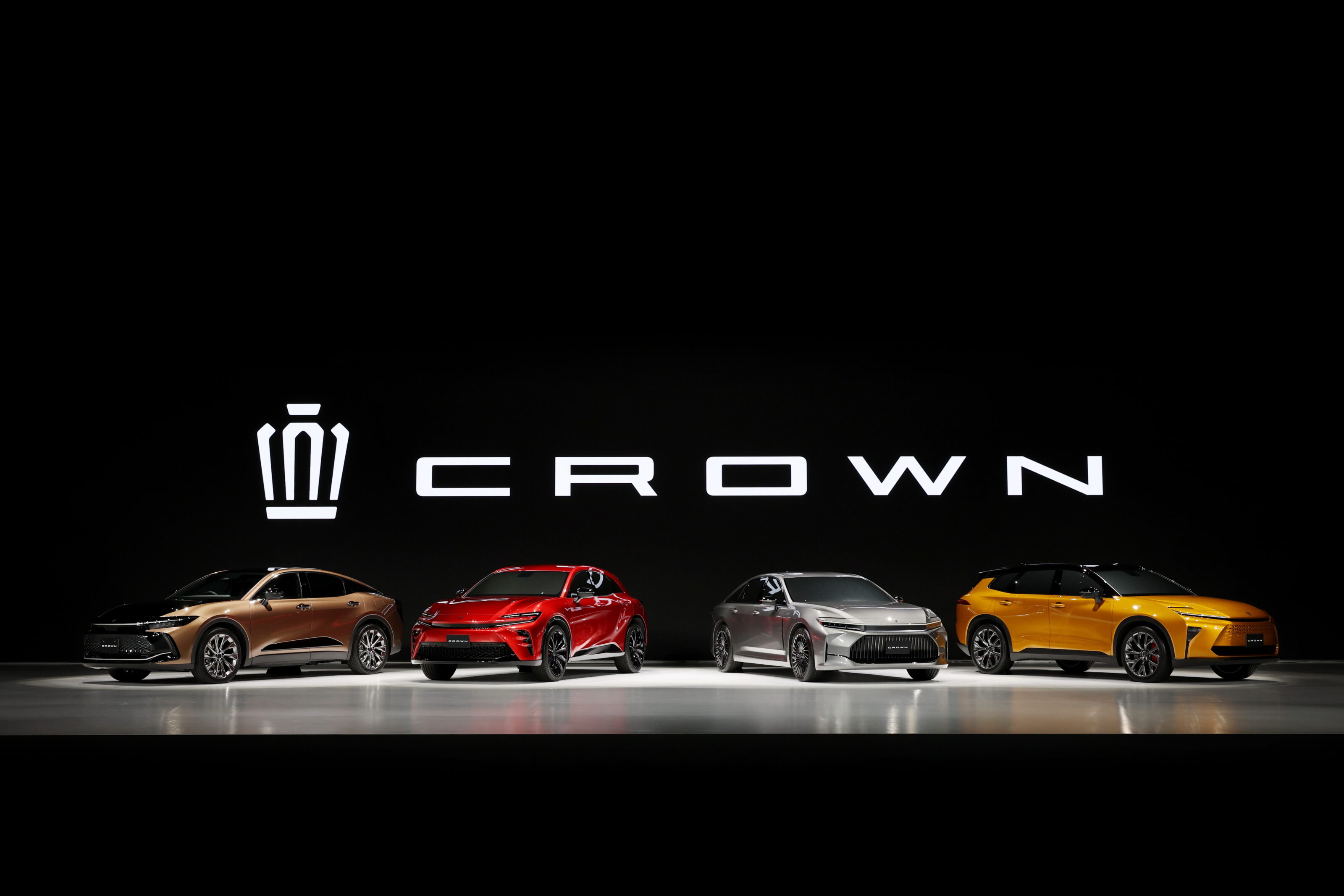
It plans to sell 200,000 units per year globally, with a return to the United States after a 50-year hiatus.
Locally, the Toyota Crown was last sold between 1967 and 1988, with production initially taking place in Port Melbourne by Australian Motor Industries (AMI) using complete knock-down kits.
Later generations were fully imported from Japan.
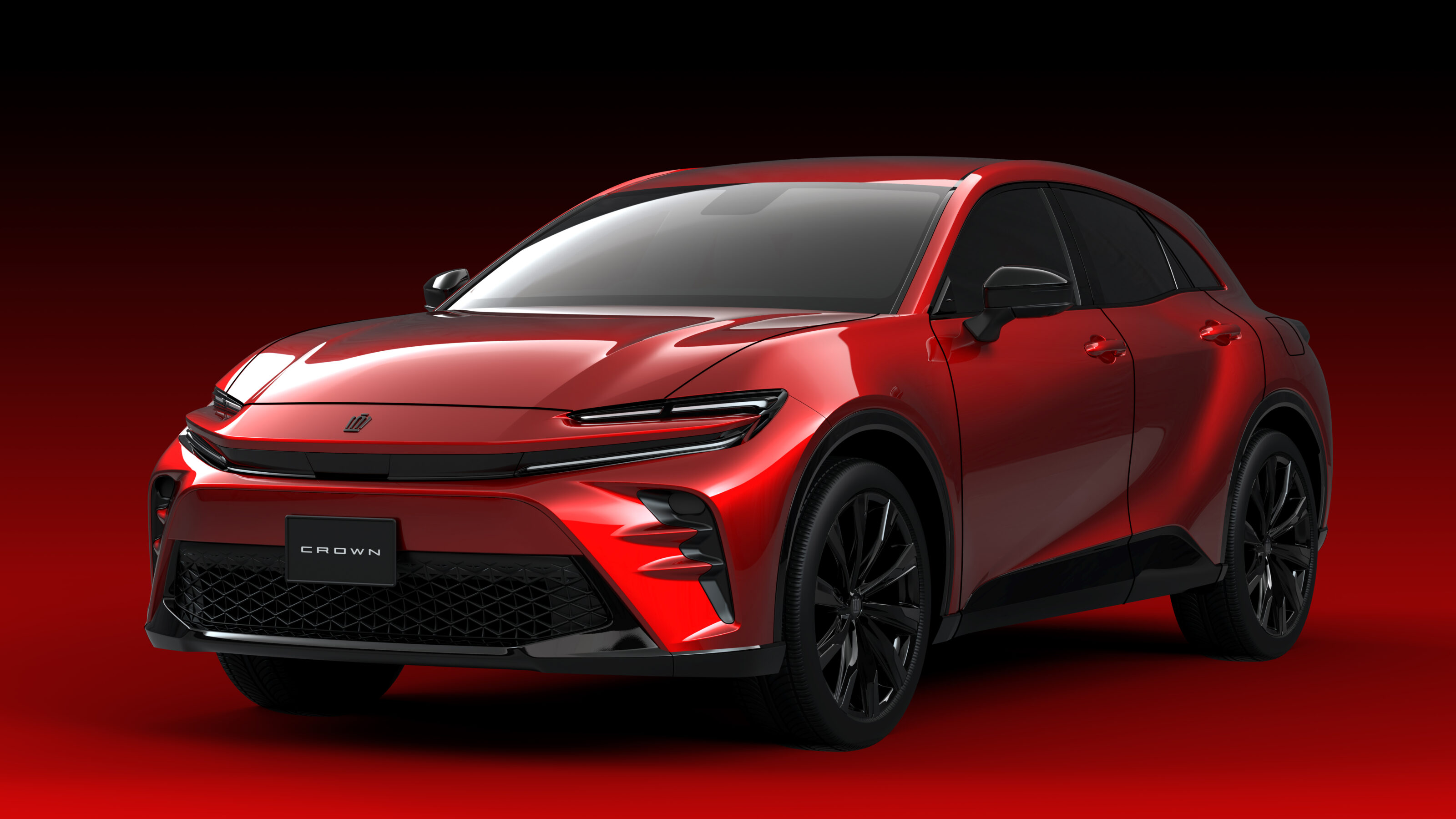
The brand says the Crown Sport “offers a sporty driving experience”, while the Crown Estate is “a functional SUV with ample driving space”.
If the Crown Sport crossover looks familiar, that is because it first debuted as the ‘Crossover EV concept’ at Toyota’s electric vehicle showcase in late 2021 – potentially hinting at the availability of an all-electric variant for the first time in the 68-year history of the Crown.
A filing for the Crown nameplate was submitted to the Australian trademark office earlier this year.
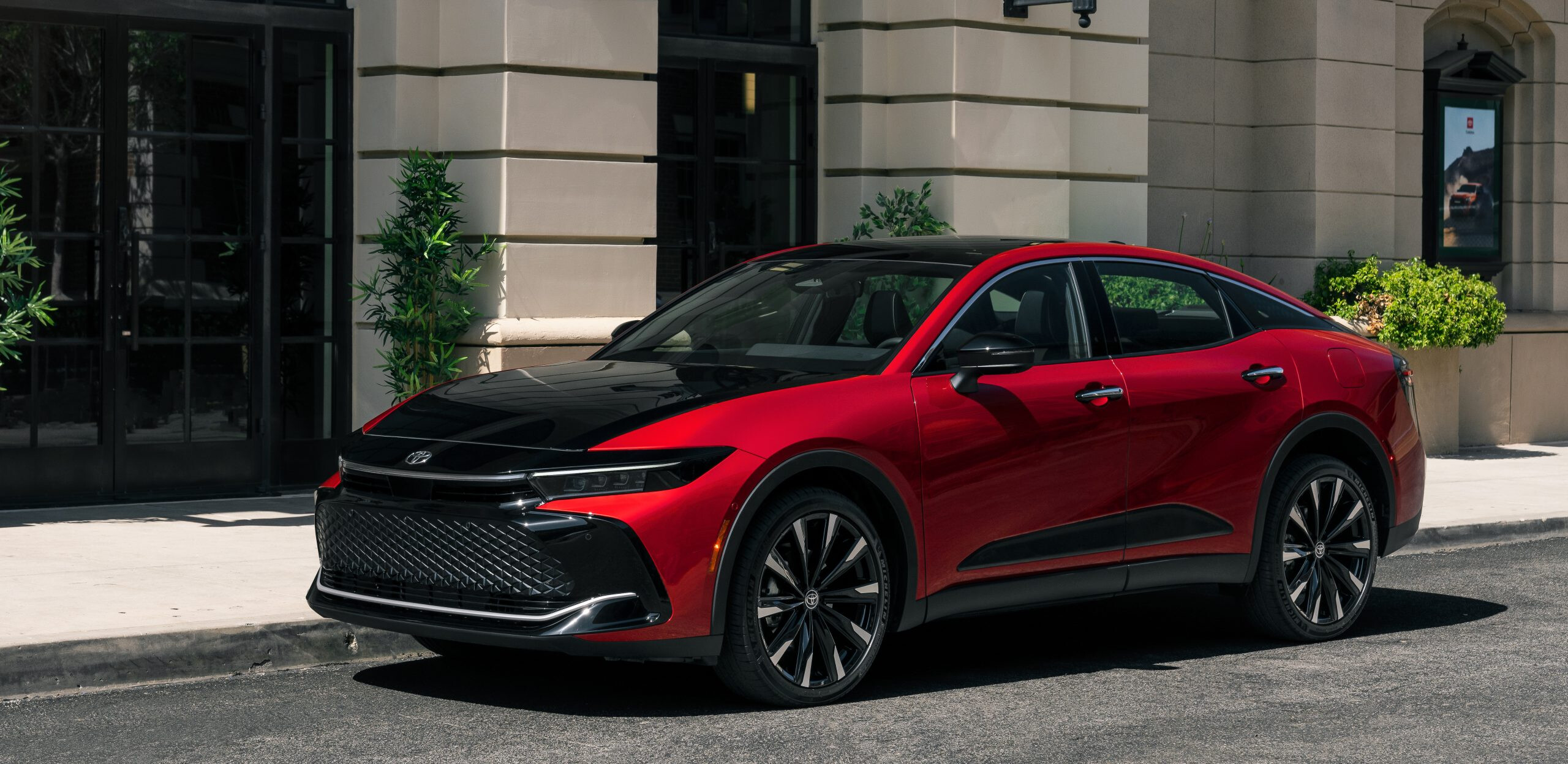
Crown Crossover
The first model to launch globally will be the Crown Crossover set to begin production later this year.
In a similar fashion to a Polestar 2, the Crossover blurs the line between a traditional four-door sedan and a SUV, with a “higher ride-height design”.
The part SUV, part sedan will be the only Crown offered in the US, with Toyota emblems, to replace the Avalon as the marque’s flagship sedan.
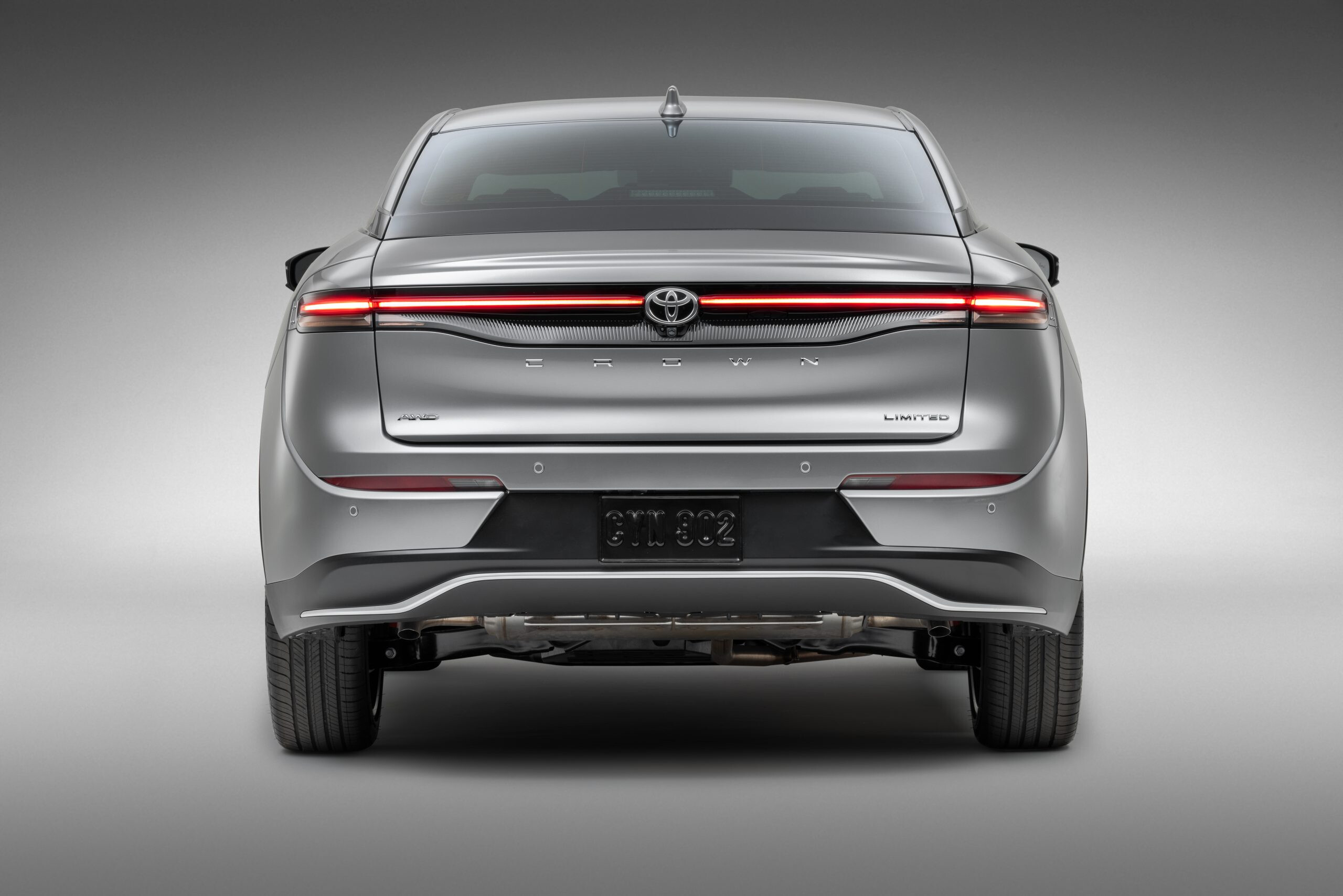
Unlike all previous rear-wheel-drive generations, the Crown Crossover is based on Toyota’s front-drive GA-K architecture shared with the Toyota Camry and Lexus RX, amongst others.
It is 25 millimetres longer than a Camry, but a substantial 95mm taller, at 4930mm long, 1540mm high and 1840mm wide, on a 2850mm wheelbase.
Hybrid powertrains shared with the Lexus RX are offered, starting with a 2.5-litre naturally-aspirated four-cylinder petrol engine with electric motors producing 176kW, sending power to all wheels through an electrically-assisted continuously variable transmission (e-CVT).
A more-powerful 2.4-litre turbocharged petrol-electric engine is standard on flagship variants, with 254kW of power, a conventional six-speed automatic, and a more-advanced all-wheel-drive system that can send up to 80 per cent of power to the rear wheels.
Adaptive dampers are standard on the range-topping variant in the United States, which is claimed to minimise body roll and improve agility.
The design of the Crown Crossover shares elements with the BZ4X electric SUV, with slim LED headlights, a full-width rear light bar, and plastic body cladding.
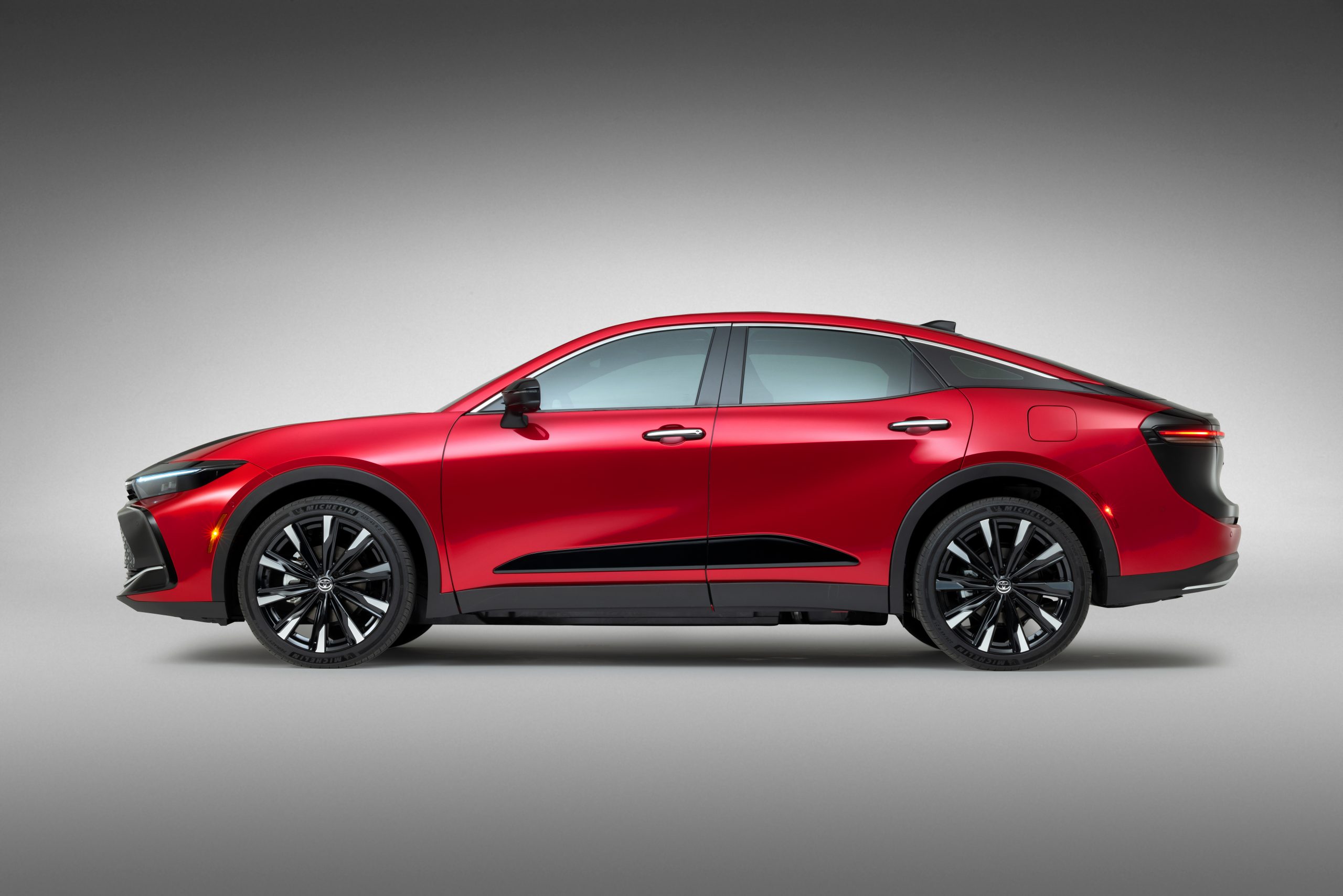
Up to seven body colour options will be available, with a black contrasting finish available for the bonnet, roof and bootlid on select colours.
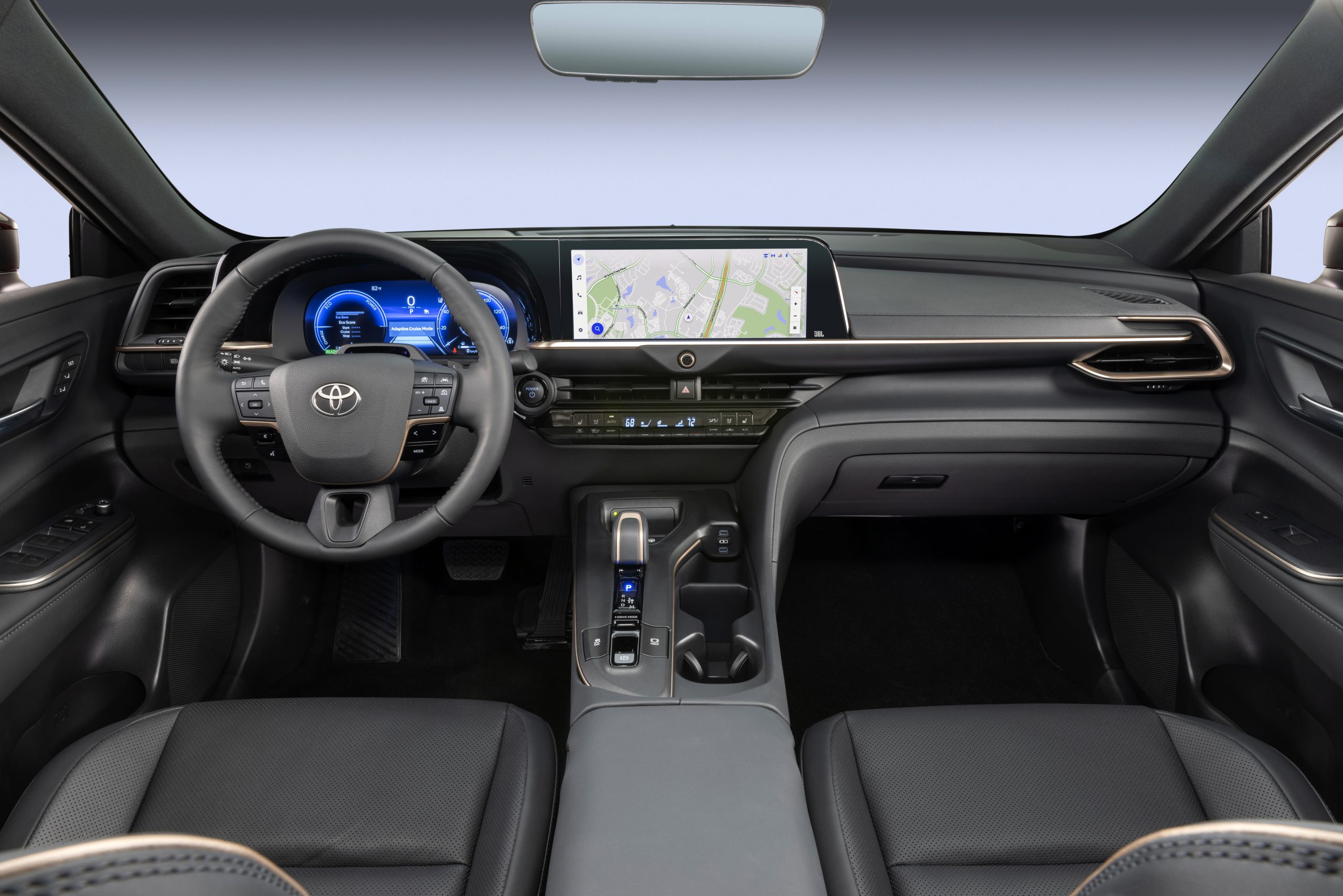
Inside, it adopts the brand’s latest technology, including; a 12.3-inch infotainment system, wireless Apple CarPlay and Android Auto, ‘Hey, Toyota’ voice functionality, over-the-air software updates, a 12.3-inch digital instrument cluster, and a digital rear-view mirror.
A digital key – allowing owners to unlock the vehicle with a smartphone – is offered, while Japanese variants are expected to sport convenient features for rear passengers, such as electric window shades and a tablet for audio and climate controls.
Toyota will offer a full suite of active safety technology across the Crown range.
GR Parts and Modellista kits
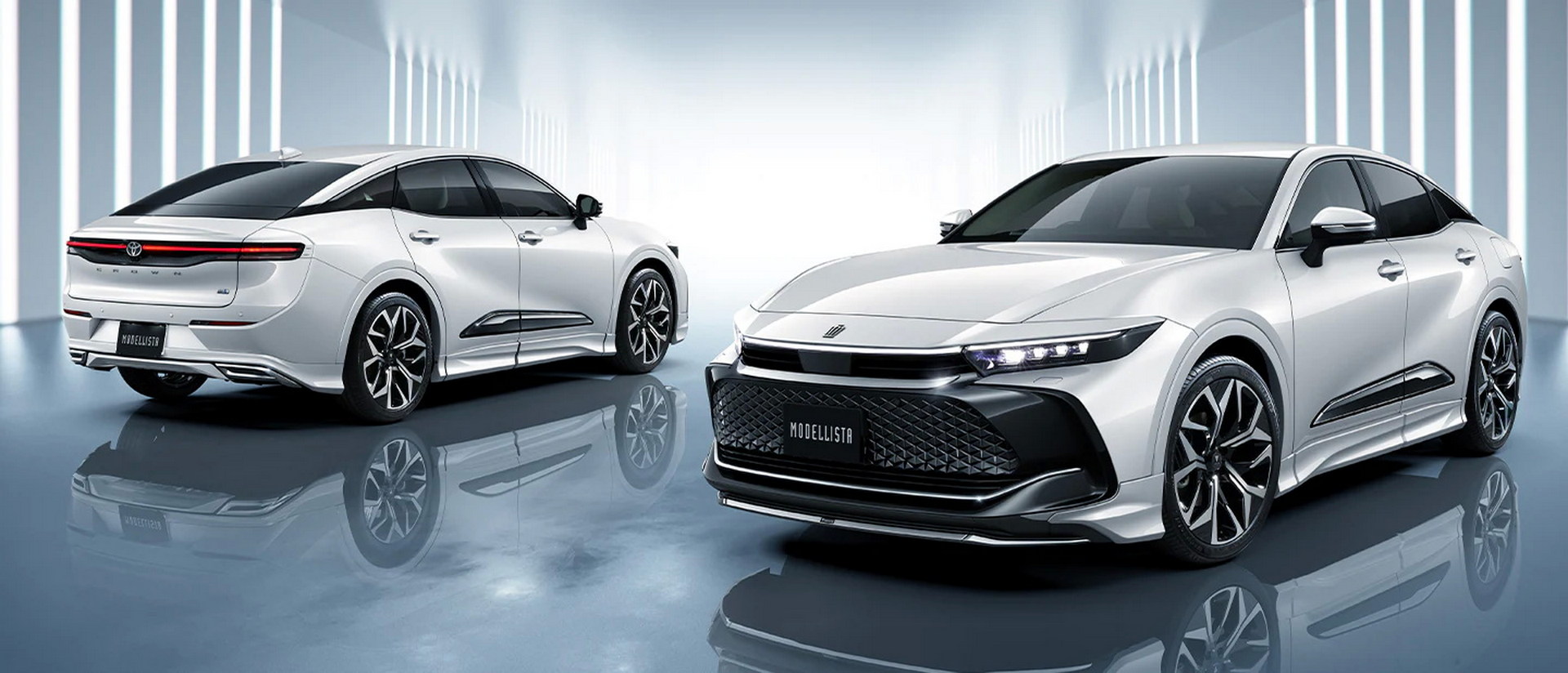
Toyota is providing multiple ways to customise the Crown Crossover in Japan, with styling kits available from GR Parts and Modellista – both featuring two-tone 21-inch alloy wheels.
Both in-house tuners will offer the Crown Crossover with unique styling, with a sports focus from GR Parts and luxury for Modellista.
The changes provided by Gazoo Racing include modified front and rear bumpers, bulkier side skirts, and Yamaha-branded dampers, while Modellista will fit garnishes for the front grille, mirrors, and doors.
