
Click the play icon in the header image to watch the new Forza trailer
Snapshot
- Turn 10 Studios announces new Forza Motorsport game
- Set to launch next year on the Xbox Series X|S consoles
- Last Forza Motorsport title was released in 2017
The team at Turn 10 Studios is set to break a dry spell of Forza Motorsport video games, announcing the latest installment in the series will go on sale in 2023.
After waiting since Forza Motorsport 7’s release in 2017 on the Xbox One, the eponymously titled Forza Motorsport has been developed for the new generation of Xbox Series X|S consoles to deliver “the most technically advanced racing game ever made”, although it’s understood those on the older Xbox One will still be able to play the latest addition.
Unlike previous installments of Forza Motorsport, the latest addition will see the dynamic time-of-day and weather systems apply to every circuit, with the more advanced system now altering ambient and track surface temperatures – a first for the series.
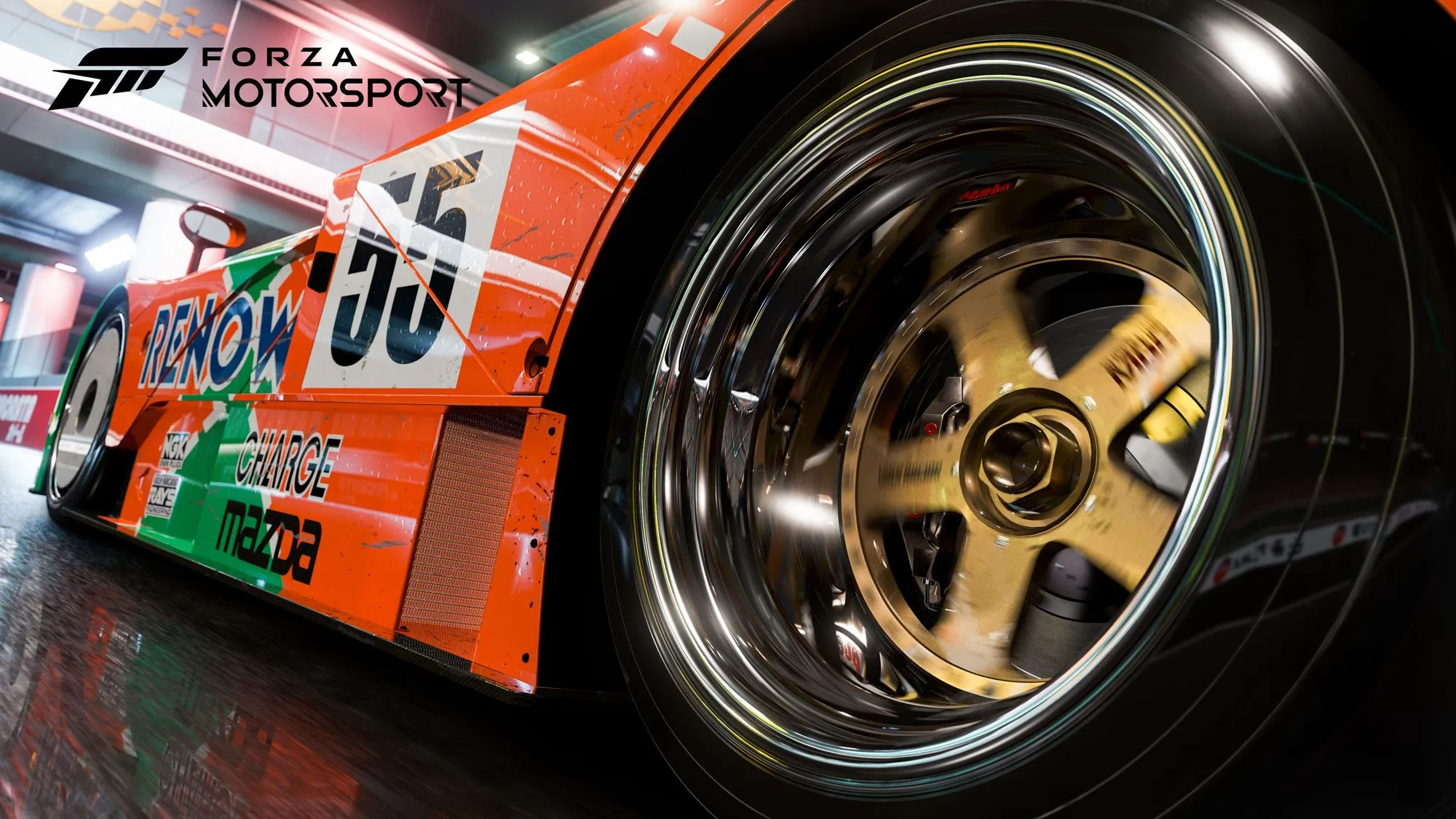
Making use of the powerful ninth-generation console, Turn 10 Studios has made a 48 times improvement in the fidelity of its physics simulation, allowing for enhanced or previously unseen capabilities such as tyre and fuel management, multiple tyre compounds and new in-depth car building for better customisation than before.
Often critiqued as the weak spot of racing games, the damage model for Forza Motorsport has also been overhauled, now able to produce individual, directional scratches and scrapes, which mimic how paint would be peeled away in an actual crash.
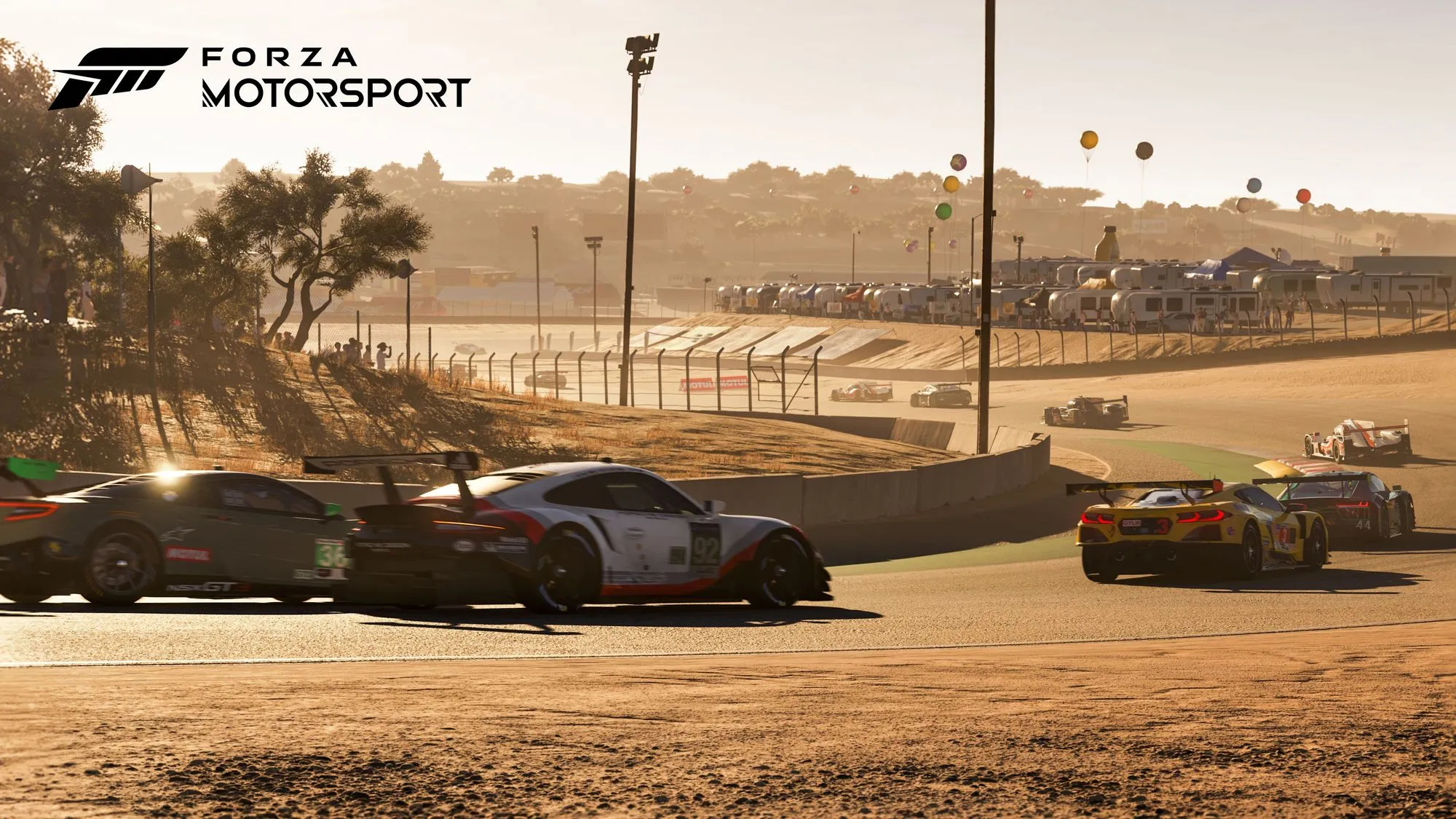
While it’s the first appearance in the Forza Motorsport franchise in more than five years, Playground Games has released two editions of Forza Horizon (4 and 5 respectively) since the last motorsport-focused title, cashing in on the popularity of arcade-like games over the track-based offerings.
With its launch scheduled for the Australian autumn of 2023, Forza Motorsport’s release will come over a year after its Playstation-native rival, Gran Turismo 7.
Forza Motorsport gameplay demo

Lead breathtaking expeditions across the vibrant and ever-evolving open world landscapes of Mexico with limitless, fun driving action in hundreds of the world’s greatest cars.
Michelin has released its new Pilot Sport 5 high-performance road tyre, six years after the arrival of the ‘4’ this newcomer effectively replaces.
That’s a somewhat shorter lifecycle than that of most vehicles it’s likely to be fitted to and proof that the French tyre maker isn’t sitting on its hands, because the holistic improvement expected from one generation to the next isn’t unlike that of car manufacturing. And in some ways, it’s tougher.
It’s easy to forget, or to be ambivalent about, what goes into the evolution of a black rubber hoop. And what’s expected in the improvement dividends. Particularly given ever-increasing demands for higher fuel efficiency and better sustainability, be it cleaner manufacturing or end-of-life recycling. And that the new model ought to surpass its quite successful PS4 predecessor by all critical measures.
As unsexy a starting point for new hi-po tyres as it might seem, the new PS5 is manufactured from 40 per cent sustainable materials and, in use, produces 20 per cent fewer particulate emissions than the outgoing PS4. In fact, Michelin says 80 per cent of a tyre’s environmental impact is on road.
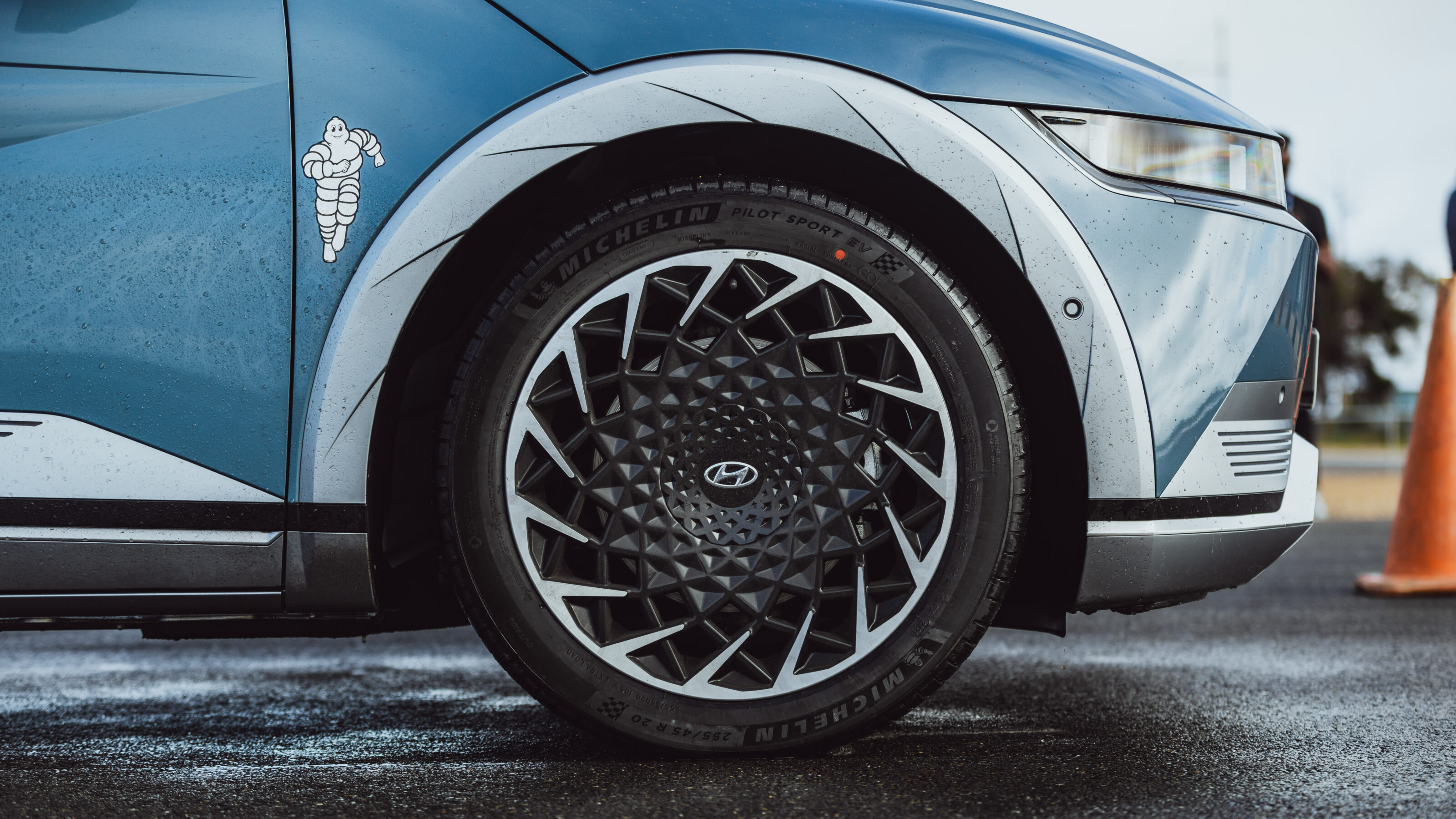
On one hand, the French manufacturer is pushing to use more bio-sourced and recycled materials for construction. On another, a main aim for the PS5 was longer wear characteristics as well as so-called “sustainable performance,” or more consistency in dry and wet grip from when the tyre is new to when it’s due for replacement.
Amalgamating improved performance with longer-lasting wear is no easy feat.
In addition, ‘performance’ isn’t a simple concept. Critical measures for a road tyre, even a hi-po so-called ‘summer’ tyre, include dry and wet lateral grip, dry and wet braking, the tread’s associated water evacuation properties, comfort, noise, rolling resistance and, importantly for petrolhead consumption, how much dynamic precision they offer the driver. Be it hot or cold.
At the local launch, held at The Bend race circuit in South Australia, I asked Michelin what the key improvement is in PS5 over PS4, and where was the compromise in trade?
The response is, there are no compromises. The new tyre must match or better the old in every critical measure.
“[…]‘performance’ isn’t a simple concept.”
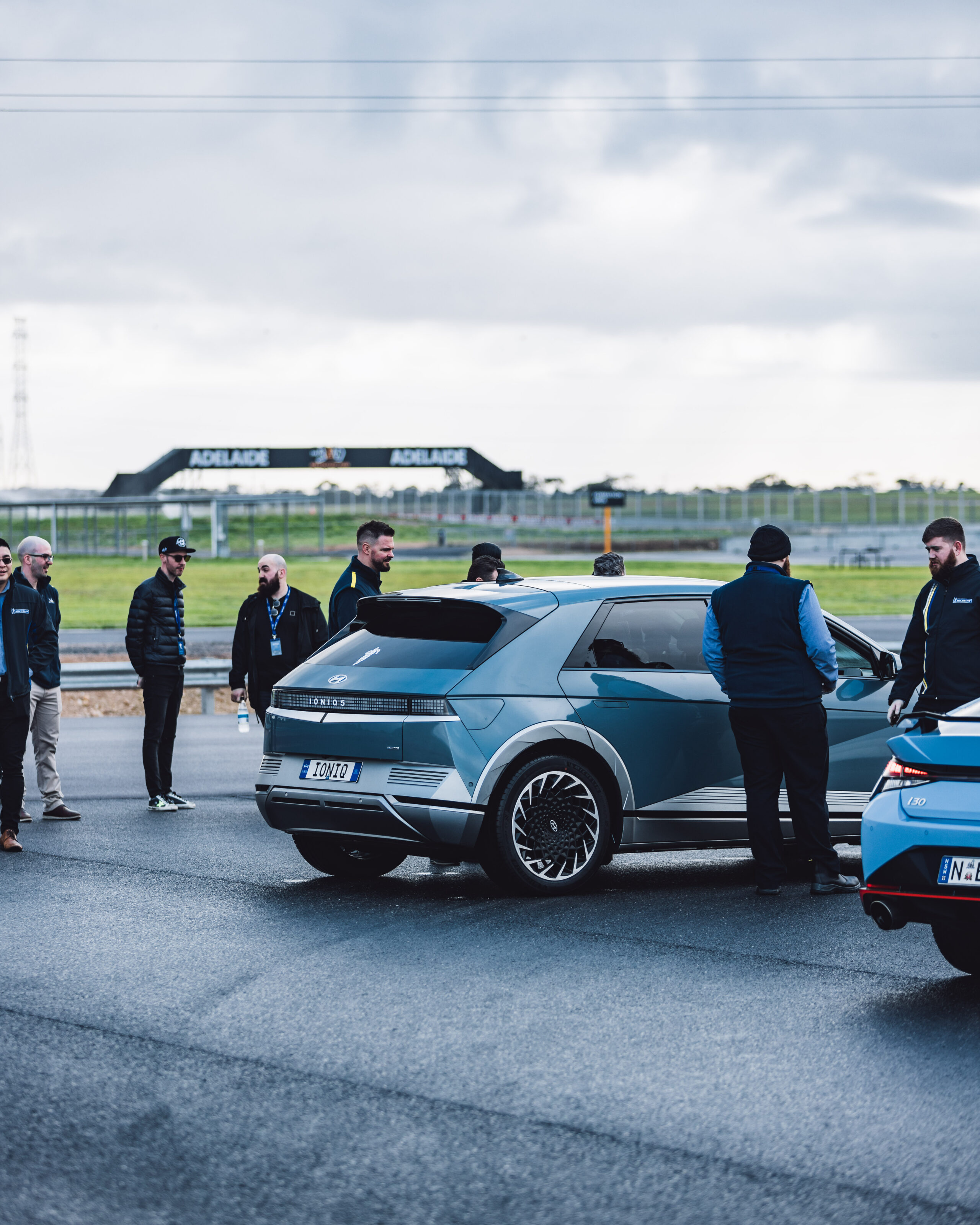
That’s a tougher ask for an all-rounder its maker describes as “a road tyre you can use on track” compared with, say, the more focused if less multi-talented Cup 2, the maker’s “track tyre you can use on road”.
That said, Michelin describes PS5’s key highlights as high dry/wet grip, wear longevity and, interestingly, appearance, thanks to its Velvet Touch sidewalls that bring a “matte-black aesthetic”.
Interestingly, the existing Pilot Sport 4S, a harder-core more track-savvy evolution of the PS4, remains on the market, if in selective 19-to-22-inch sizes.
The PS5 now sat alongside it offers a broader-ranging fitment, from 17-to-21-inches, in 50 different tyre dimensions. On that, the local Pilot Sport line-up is bolstered by both SUV and EV lines in specs better suited to those vehicle types.
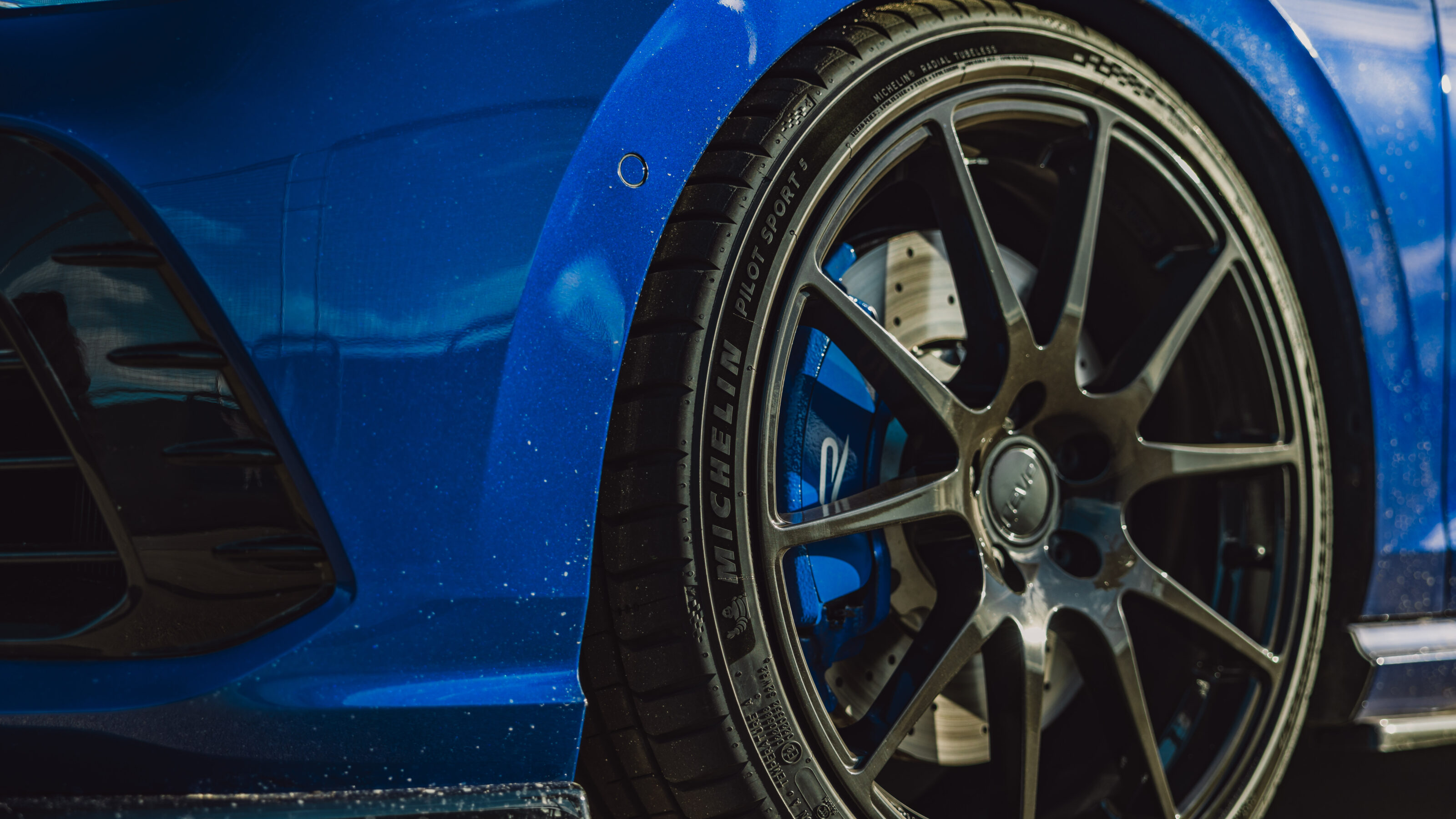
Without falling too far down the technical rabbit hole, the PS5 uses what its maker calls a Dual Sport Tread design trickled down from motorsport.
The inner portion of the tread (around 40 per cent) features large grooves and a high void ratio to do the heavy lifting during wet running.
The outer side of the tread face (around 60 per cent) features broader, more rigid blocks that cope better with heat build-up and are better suited for dry, promoting dynamic consistency and improved wear characteristics.
Belt construction is a hybrid of nylon and Aramid, or aromatic polyamide, a synthetic fibre used in aerospace and body armour. Branded as Max Touch, this construction is designed to ply the footprint more evenly to promote precision and response, without adverse heat build-up along the tyres’ shoulders.
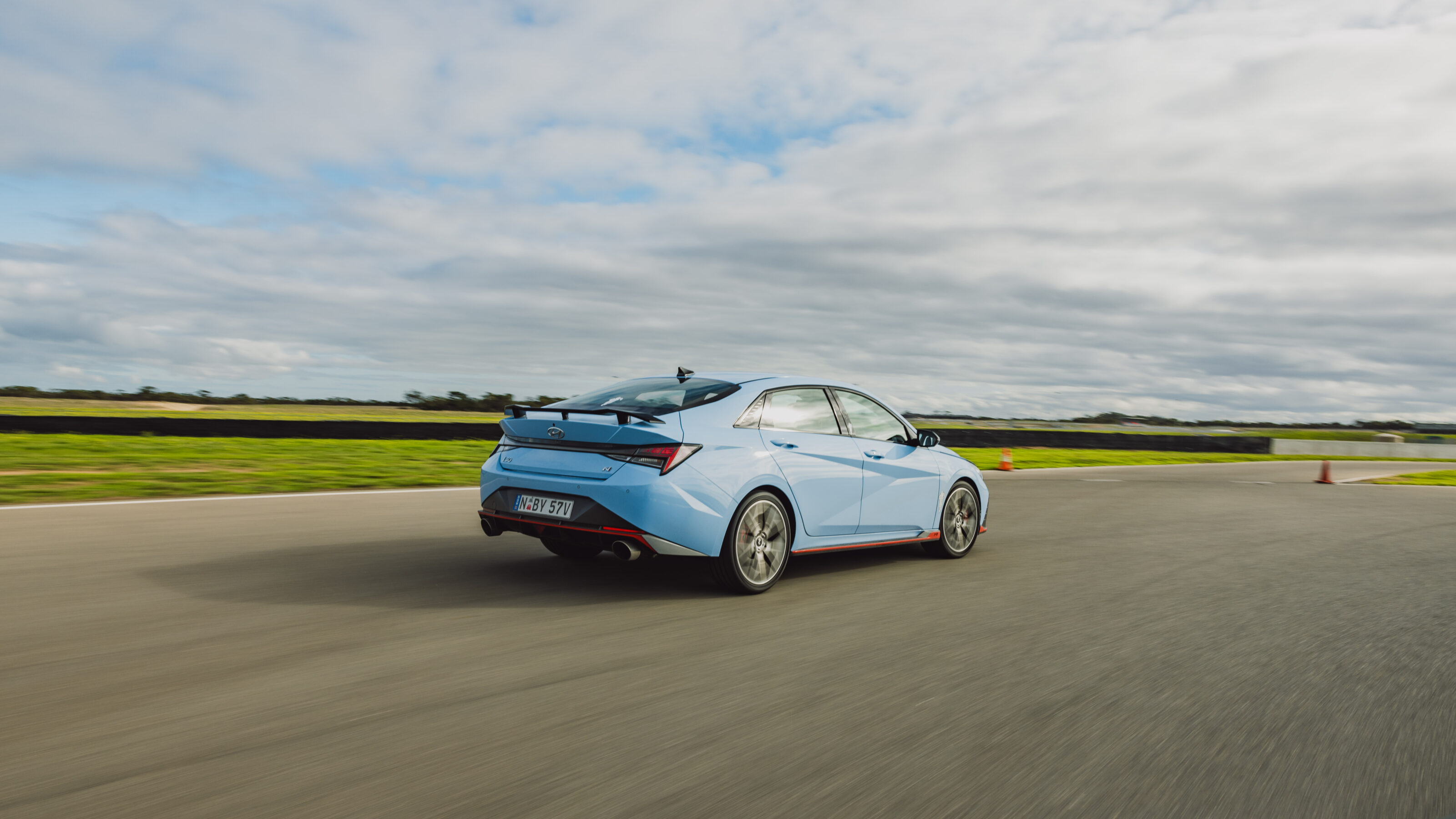
Michelin Pilot Sport 5 on the track
A cold and wet snap has left The Bend Motorsport Park’s wonderful 7.8-kilometre circuit in a state not ideal for assessing the outright dry-running capabilities of the PS5, but the slightly damp and chilly conditions offer quite a clear snapshot of the newcomer’s real-world, all-rounder chops.
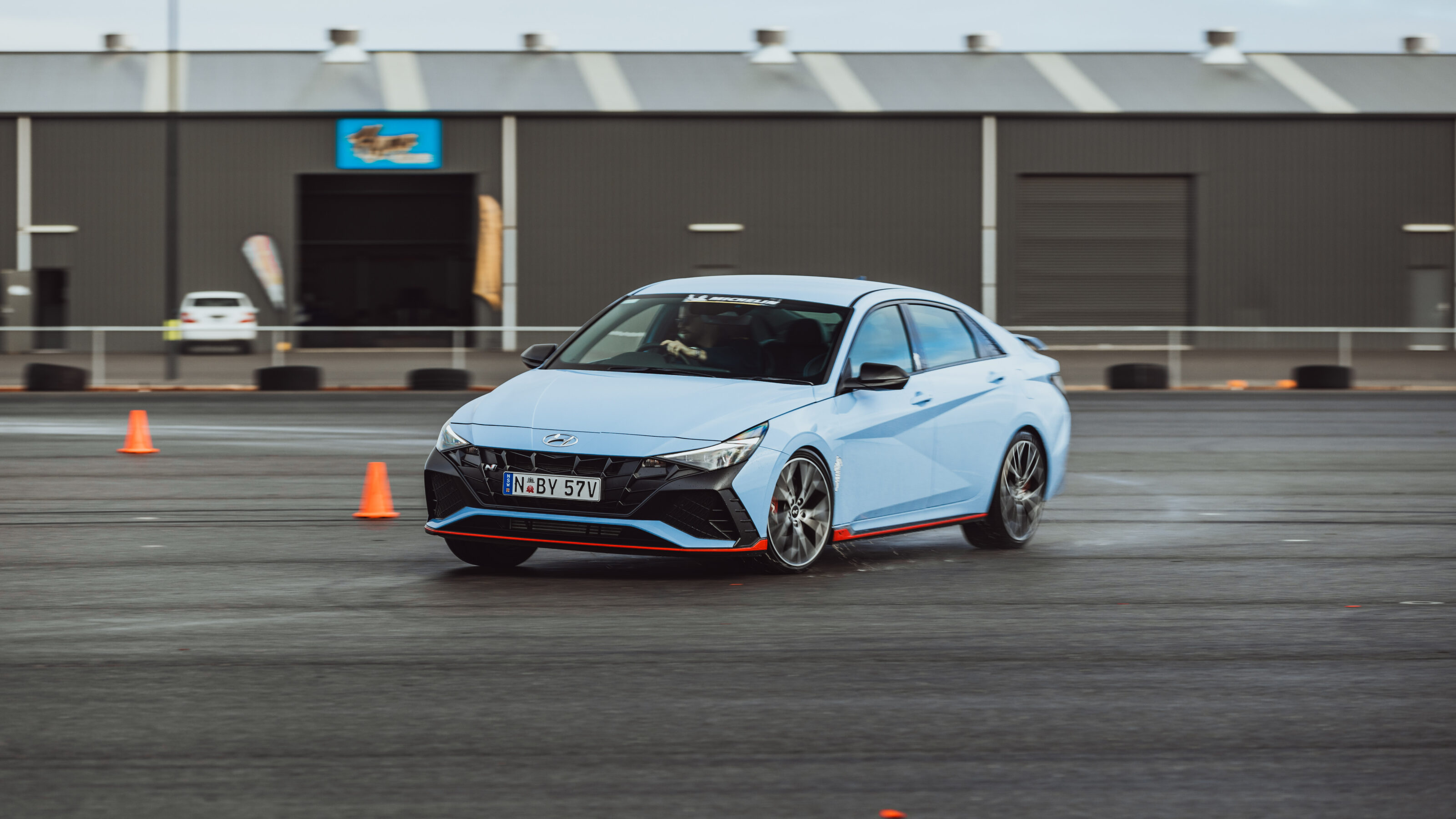
As an OE supplier to Hyundai, a pair of PS5-fitted i30 N Sedans – one for track, one for skidpan – are suitable and fitting test mules for the day’s red-misted activities.
First up, track. The course begins with a tight slalom, tackled in both directions at a velocity left largely to the driver’s discretion. The initial run is at a circumspect pace, the cold PS5s returning enough grip and front-end accuracy to encourage us to dial up considerably more velocity next go through.
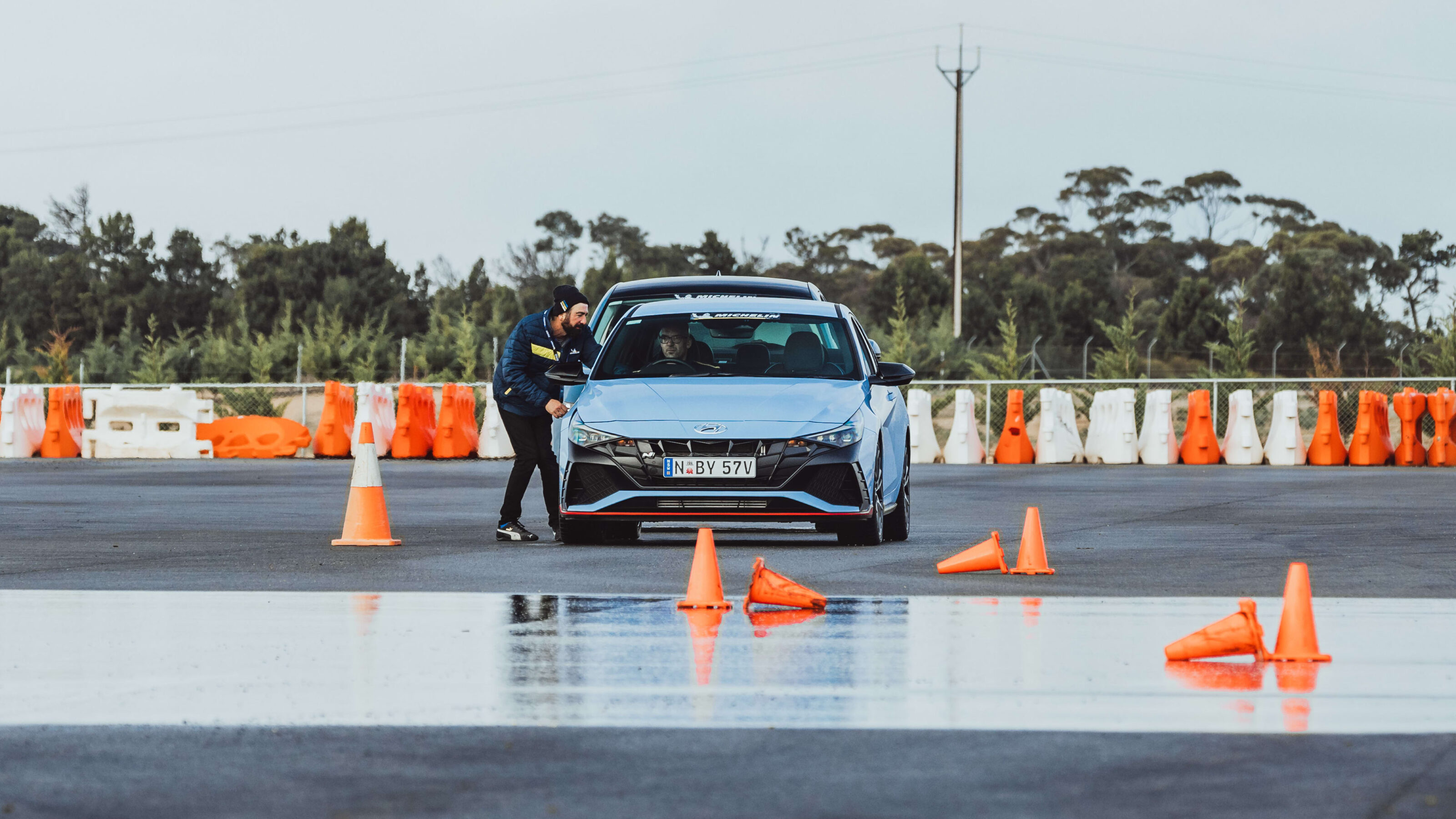
Even thrashing away at the wheel too and fro, the Hyundai makes neat and brisk work of the sequence of safety cones.
Next up, full-ABS braking from 100km/h along the back straights. Here, the PS5s are perhaps more impressive than in the slalom, responding with rapid deacceleration and no secondary tyre-skipping chatter, stopping in damp as if the surface was dry. Nice.
What follows is a chance to attack some of the circuit’s more flowing corners at pace on a close return loop.
Here, the surface is mixed – half dry with a lot of damp patches – but rather than return inconsistent levels of friction, the PS5s maintain a solid constant purchase to the bitumen.
There’s enough lateral adhesion that it takes some foolhardy input to force either end of the i30 N to cry freedom. Keep it smooth and even with a decent head of steam the Michelins barely hint to breaking away.
Dive too deep into a corner, or lift off mid-corner aggressively, and whatever loss of lateral adhesion is met with polite and predictable sliding, with no sudden snapping or anything unruly. Push on and these are very predictable tyres at and beyond their limits.
Not much sustained punishment was involved so it’s unsurprising that, back in the pitlane, the tyres have barely any warmth to the touch, due mostly to the low-ambient and damp track temperatures. Which makes the amount of grip that the PS5s do ply in such conditions quite remarkable.
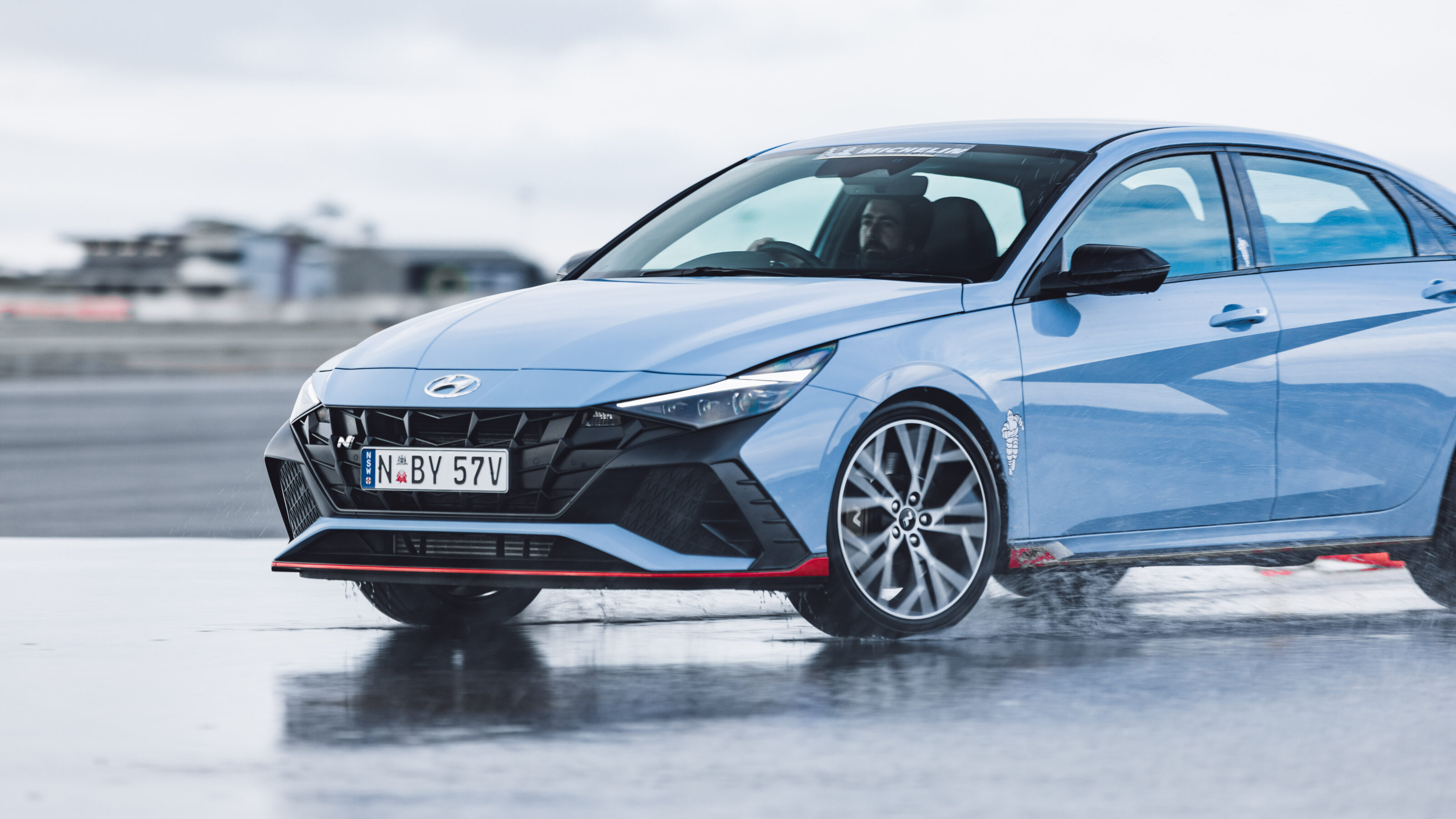
They really feel perfectly suited for anytime, anywhere backroad punting, such is the confidence-inspiring purchase they drill into the road surface in any direction.
However, given the situation on test, the jury is out on their outright dry capabilities and how much staying power can be sustained before grip succumbs to prolonged and excessive abuse.
Skidpan time!
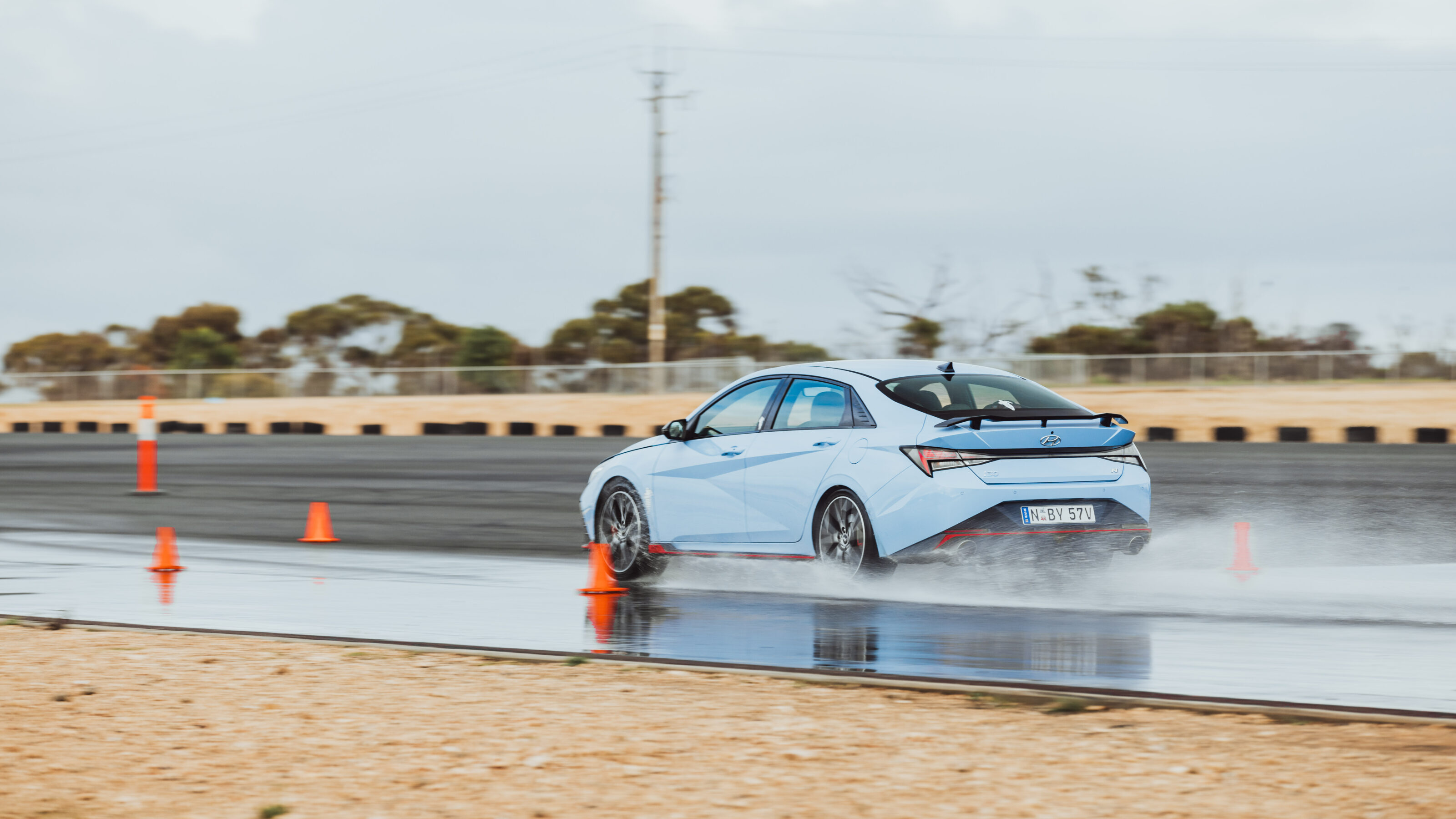
A course is created on the skidpan mixing a slalom, a sustained radius sweeper and a braking ‘box’ erected using safety cones. And virtually all of it is submerged in water. We’re encouraged to attack it as hard as we like, with a timed shootout after a number of practice runs.
The amount of wet grip, some of it on virtually standing water, is truly impressive.
Bar diving into the sweeper section too hot to induce chronic understeer, it’s quite tricky to get the Hyundai properly out of shape.
Indeed, the i30 N is beautifully balanced on throttle-lifted oversteer, sitting neatly and obediently on its Michelins, clearly the quickest technique through the constant-radius turn.
VERDICT
In terms of feedback and connection, the PS5s are a class act. But how much they improve upon that of their forebears is tough to determine without back-to-back comparison. Indeed, it’d be very interesting to see how the new hoops fare in an on-track stoush with the PS4S still in Michelin’s line-up.
During our curated launch program, the PS5s demonstrated ample goodness and flashes of greatness, though it’d take stretching their legs longer and harder (and drier) to get a proper read on the broader talents available.
Whatever that outcome, it is pretty clear from a cursory taste test that Michelin has a damn fine mainstream high-performance tyre on its hands.
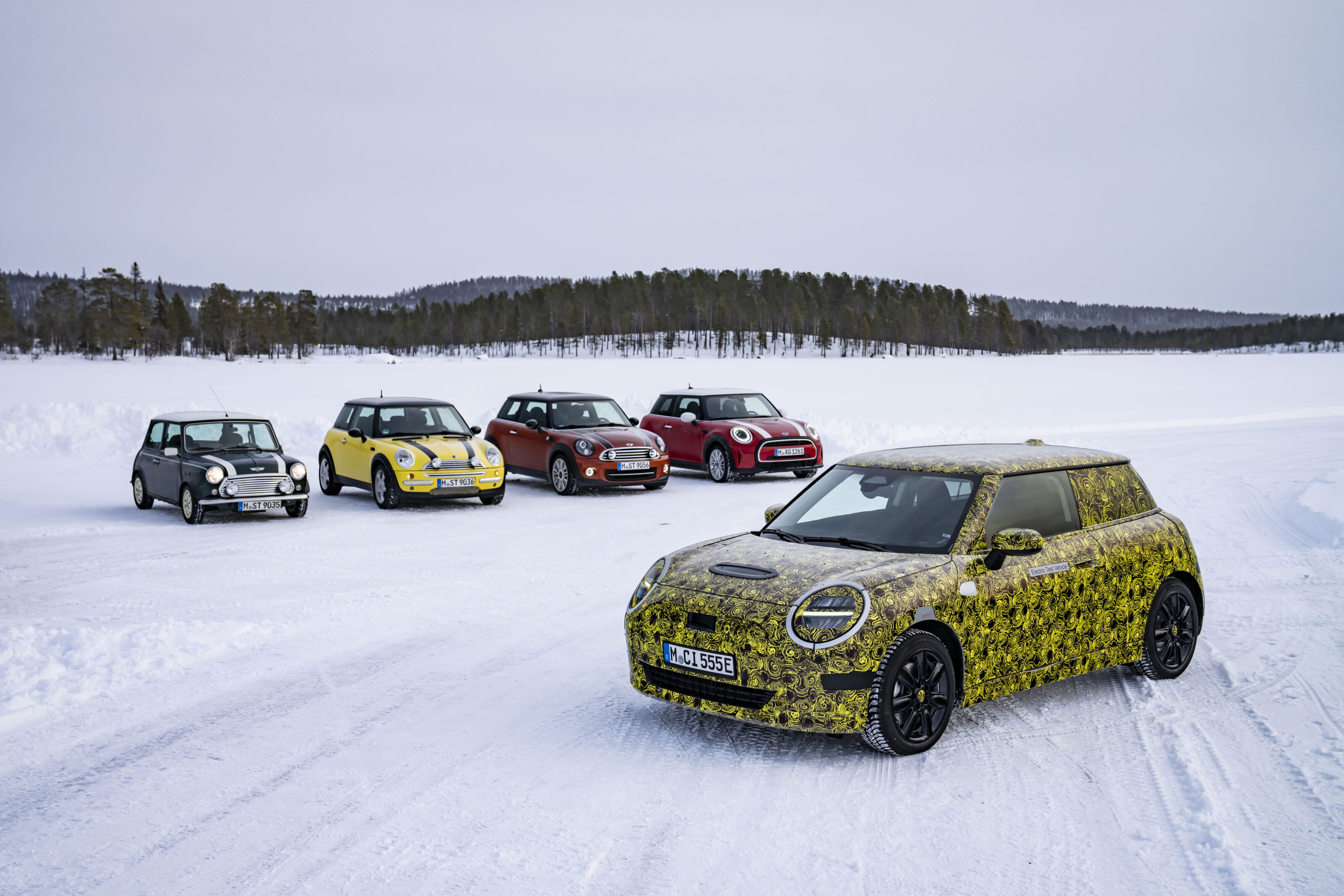
Mini has confirmed it is planning to produce an all-electric crossover model, with the concept set to be revealed next month.
Previous reports had rumoured a fully-electric crossover would drop into the line-up underneath the Countryman, which seems to be backed up by Mini’s announcement of the concept – saying it is a “crossover model for the premium small-car segment.”
It’s understood the concept will showcase Mini’s ‘Charismatic Simplicity’ design language for its future EVs, influencing the all-electric successor to the Countryman – while the three-door Hatch looks to retain its iconic features.

Just like Alec Issigonis’s original Mini, the upcoming generations of models from the manufacturer promise to deliver comfortable interior space with a minimal exterior footprint.
“Purely electrically-powered models from Mini give us a unique opportunity to rethink our design,” said Mini’s head of design, Oliver Heilmer. “At the same time, we retain the attention to detail, sense of tradition and passion for innovation that Mini is renowned for.
“The Mini Design DNA will clearly come through in every model of this new generation, leaving its brand affiliation in no doubt whatsoever.
“At the same time, the Mini design team has successfully created strong product features with individual accents that, more than ever before, underscore a sense of independence.”
Features from the Vision Urbanaut concept, such as an OLED digital instrument cluster and infotainment screen, will carry across to the upcoming crossover concept – with the world-first round-surface touchscreen to be positioned in the middle of the dash, as has become tradition for Mini models.
Mini will take the covers off its electric crossover concept in late July, as it also gears up to reveal the all-new Hatch – the first generation of its iconic model to go all-electric.
Snapshot
- Haval H6 GT initially slated to arrive in second quarter this year, new launch set for July
- Sporty looks given to exterior as well as interior equipment
- Power and torque remain unchanged
UPDATE, June 14, 2022: Haval H6 GT Australian launch delayed to July
Chinese manufacturer GWM Haval has announced its upcoming H6 GT SUV will be arriving on Australian shores in July, with supply constraints delaying its local launch.
Originally planned to arrive in showrooms in the second quarter of 2022 (April to June inclusive), Haval says the H6 GT was hampered by supply chain restrictions, with production of its new slant-roofed SUV starting in May.
With its shipment of H6 GTs en route to Australia, the local arm of GWM Haval confirms it is on track to launch the new model in July – with pricing and specific details to be announced closer to its launch.
The story to here
January 18, 2022: Haval H6 GT revealed, set for Australia in second quarter of 2022
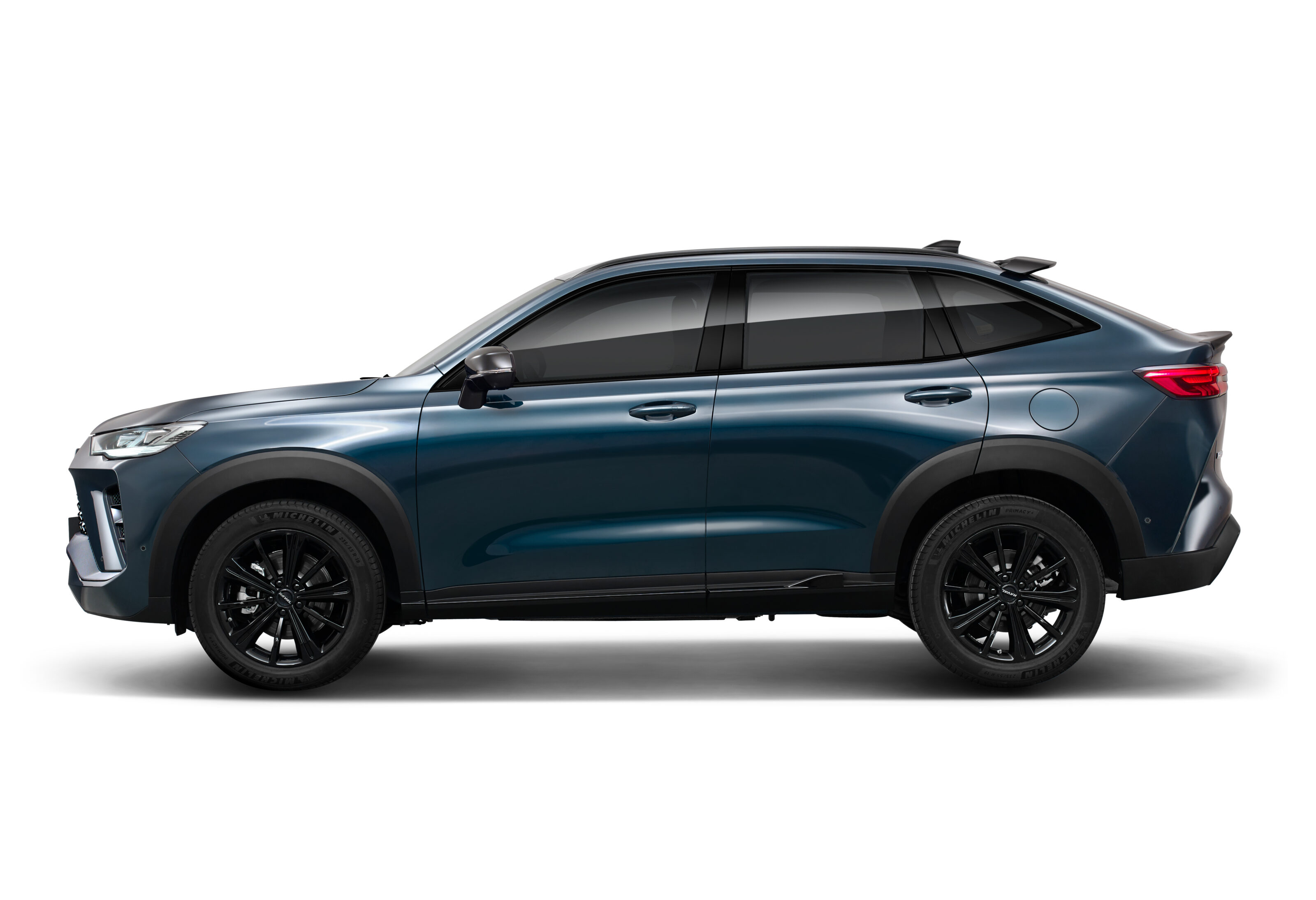
Haval has unveiled the H6 GT, a slant-roofed version of its standard H6 SUV with a plethora of sporty additions.
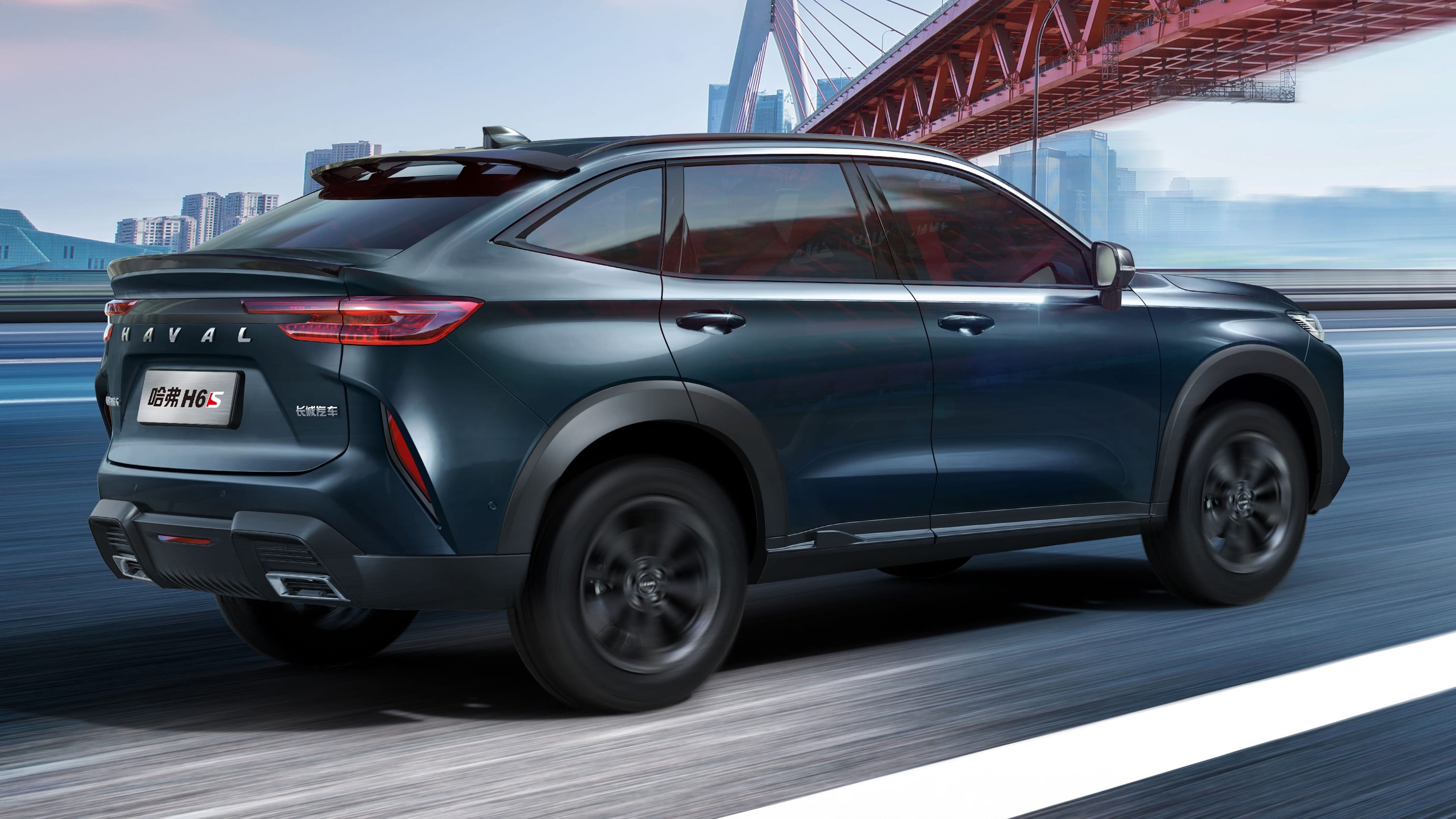
Known as the H6S internationally, the GT’s front bumper assembly is far more angular than its H6 sibling but a massively revised roofline makes the difference discernible, now sloping downwards in a coupe-like way – similar to offerings from BMW in the form of the X6, Audi’s Q5 Sportback and the Mercedes-Benz GLC Coupé.
There’s a few more additions to the GT which allow it to stand out from the standard H6 – dual spoilers and twin exhaust outlets are found at the back, while Brembo brakes and Michelin tyres help to ensure the new model’s handling characteristics can back up its sporty looks.
Inside the cabin, the H6’s 10.25-inch digital instrument cluster and 12.3-inch infotainment screen remain, although sports seats and “unique cabin trim” add another point of difference to the GT.
Exterior dimensions have been bolstered thanks to the changes. Still retaining the H6’s 2738 millimetre wheelbase, the GT has undergone an increase across all other measurements – length is now 4727mm (+74mm), width bumps up to 1940mm (+54mm) while height now stands at 1729mm (+5mm).
Under the bonnet, the 2.0-litre, turbocharged petrol four-cylinder engine remains unchanged, developing 150kW and 320Nm while mated to a seven-speed dual-clutch automatic transmission – Haval has not confirmed whether it will be available as both a two- and four-wheel-drive.
The H6 GT will also include an array of safety tech when it launches in the second quarter of 2022, ranging from autonomous emergency braking (AEB) with pedestrian and cyclist detection, to adaptive cruise control with stop and go, forward collision warning, lane keep assist and lane departure warning.
The Chinese manufacturer has not yet released pricing for its new SUV, but keep your eyes peeled as Wheels will provide updates when they become available.
UPDATE: Model Y driven in Australia
The Tesla Model Y is now in Australia, and we’ve driven it. Catch our video and review at the link below.
The story to here
Snapshot
- Tesla Model Y launches in Australia
- Base rear-wheel-drive variant starts at $68,900 before on-road costs
- Performance trim on sale from $98,689
UPDATE, June 14: Tesla Model Y demand triggers increased production
Elon Musk says production of Tesla’s Model Y SUV could be ramped up for right-hand-drive markets to meet soaring demand.
After the Model Y officially went on sale in Australia late last week, a surge in orders for the electric vehicle has resulted in Tesla projecting delivery times between February and May 2023 due to supply constraints.
In a Twitter thread, Elon Musk said Tesla is trying to secure more production slots for right-hand-drive Model Ys from its Shanghai factory, admitting the brand didn’t expect demand to be so high for the SUV.
The Model Y had already been delayed from its original Australian launch date of mid- to late-2021 to only just before the second half of 2022, although the extra eight- to 11-month wait will show the dedication of those who truly want the EV on their driveways.
Tesla announced full pricing and features for the Model Y last week – with the entry-level variant kicking off at $68,900 before on-road costs, while the Performance variant incurs a $25,000 premium, going on sale from $93,000 excluding on-roads.
https://www.instagram.com/p/Ce0PzWrAsuv/
June 11: 2023 Tesla Model Y Australian pricing confirmed
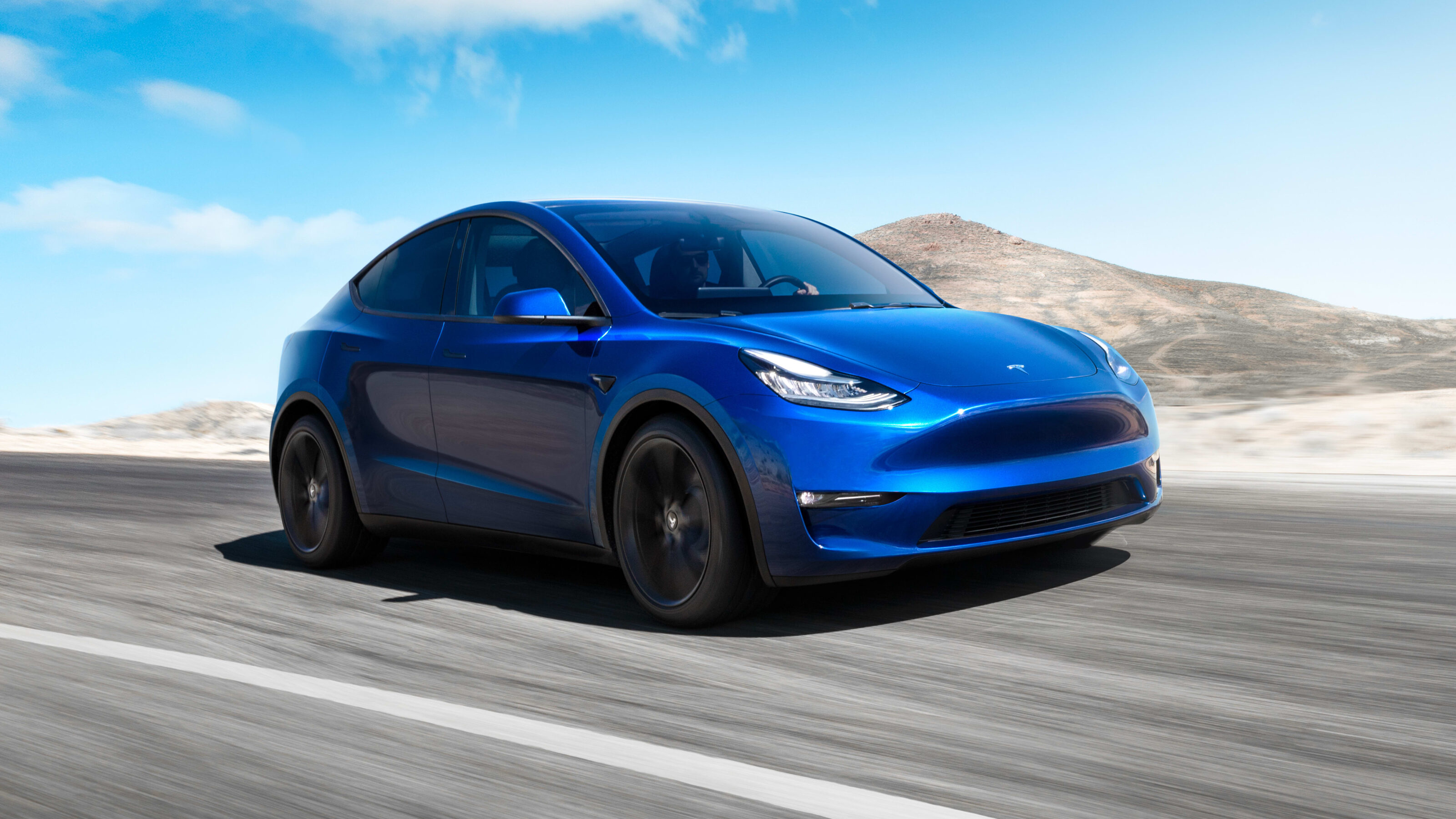
Tesla has officially launched the Model Y electric SUV in Australia, going on sale from $68,900 before on-road costs.
Launching in two grades – the base rear-wheel drive trim and all-wheel drive Performance – Tesla’s entry-level Model Y will start out at a $5000 premium over its Model 3 sedan sibling at $68,900.
Moving up to the Performance grade, its list price of $98,689 before on-road costs is just over $7000 more than the Model 3 Performance, although its price is affected more by the Luxury Car Tax.
Click the link below to see our full price and features story on the Model Y.
June 10: 2023 Tesla Model Y spotted in Australia ahead of launch
The 2023 Tesla Model Y looks set to finally launch in Australia as a number of examples have been spotted en route to Melbourne.
While the first examples of the Model Y arrived locally in August last year, these cars were understood to be used internally by Tesla for training purposes or for Government certification before customer deliveries began.
However, after multiple delays and a reported suspension of deliveries throughout the second quarter of 2022, Tesla tracker VedaPrime has declared a shipment of 150 to 200 vehicles had arrived in Port Kembla, with a number of Model Ys later seen en route to Melbourne on a car transporter (see below).
Initially slated for a late 2021 launch in Australia, the Model Y’s arrival has been plauged by delays thanks to shutdowns at its assembly plant in Shanghai, having most recently been impacted by the city-wide lockdown due to a surge in COVID-19 cases.
Earlier this year in April, the Model Y briefly appeared on Tesla’s Australian website before quickly being removed, with one customer saying they had placed an order before a company representative reportedly contacted them to cancel and refund the purchase.
The Model Y is expected to go on sale from $67,990 before on-road costs in its base trim, with the Model Y Performance jumping up to $98,172 before on-road costs.
Jaguar Land Rover has announced it will add the innovative ‘what3words’ navigation technology as a part of an over-the-air update to compatible vehicels.
The first manufacter to enable the use of what3words in an ‘always-on’ capacity, Jaguar Land Rover’s update will transform the Earth into over 57 trillion three-by-three metre squares, each with its own unique three-word reference.
Unlike traditional navigation systems which require a specific address or landmark, what3words allows users to input any destination in the world through the use of three words, while the always-on technology means it doesn’t have to be connected to a mobile network.
This gives added incentive for off-roaders to head away from the sealed roads and into the unknown, potentially sharing the position of camp sites or picturesque locations which would have been impossible before.
The over-the-air update will be available to those using Jaguar Land Rover’s Pivi Pro infotainment system, rolling out into 150 countries with 24 languages.
It’s worth noting Mercedes-Benz was the first automotive manufacturer to adopt what3words in its MBUX infotainment system from 2018, while Google Maps features a similar capability called a “Plus Code”.
Ferrari’s home of Maranello is set to gain another production line, dedicated to the Prancing Horse’s electrified vehicles.
As reported by Automotive News Europe, the Maranello plant expansion is enabled by Ferrari securing space near the current factory, with the third production line focusing only on electrified vehicles.
While the information won’t be officially confirmed until later this week, the new site is also tipped to become the home of Ferrari’s battery research and development centre, not only helping to make its hybrids more efficient but also to potentially work on the marque’s first all-electric vehicle – with patents having surfaced for the latter earlier this year.
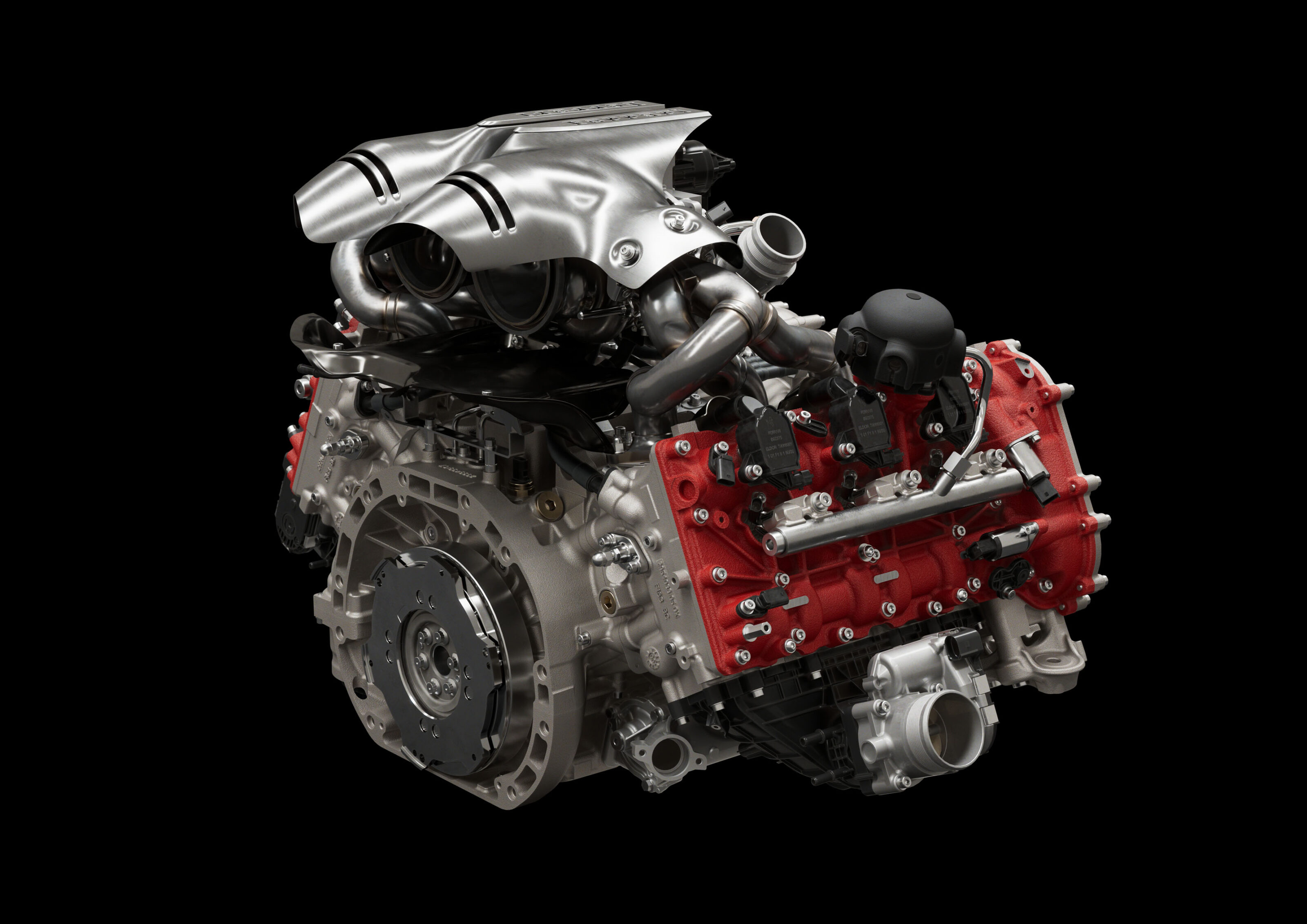
Despite the LaFerrari taking the honours of being Ferrari’s first mild-hybrid production car in 2013, the SF90 became the brand’s first mass-market hybrid in 2019 with its plug-in hybrid (PHEV) powertrain combining a 4.0-litre, twin-turbo V8 with a 7.9kWh battery pack and three electric motors – one mounted to the transmission and one for each front axle.
Ferrari still utilises a PHEV powertrain in the new 296 GTB, as its 3.0-litre, twin-turbo V6 is paired with a 7.45kWh battery and two electric motors for a total system output of 610kW, while also providing enough power for the car to drive up to 25km on electric power only.
On behalf of Ferrari and other Italian manufacturers such as Lamborghini and Pagani, the Italian government has been lobbying for an exemption around the European Union’s proposed internal combustion engine ban by 2035, claiming the marques produced a small enough number of vehicles that produce an insignificant amount of emissions.
Last year Ferrari appointed Benedetto Vigna as its new CEO, with his experience at STMicroelectronics touted to be a catalyst for the manufacturer to not only electrify more of its models but to finally launch its first fully-electric vehicle in the coming years.
Snapshot
- Cupra teases update of its Leon, Formentor and Born models
- Facelifted models won’t debut until 2024
- Australian range set to launch next month
Spanish performance brand Cupra has revealed its facelifted Leon, Formentor and Born models – nearly two years before the updated vehicles go on sale.
In an unconventional move by the Volkswagen Group’s performance offshoot, Cupra wheeled out its planned facelifts for the Leon, Formentor and Born in Spain last week, although it doesn’t plan to put any of the refreshed models into production until 2024.
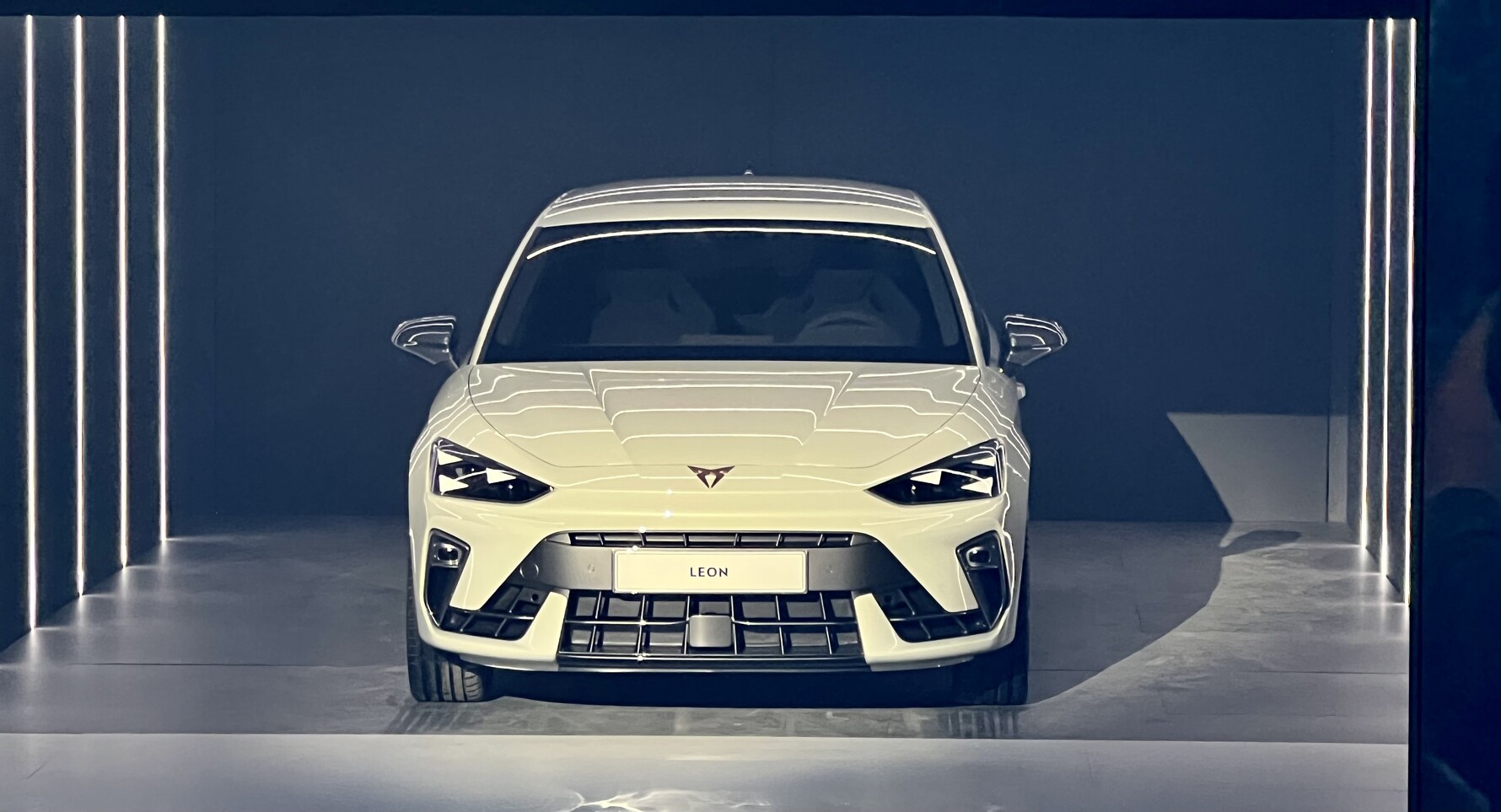
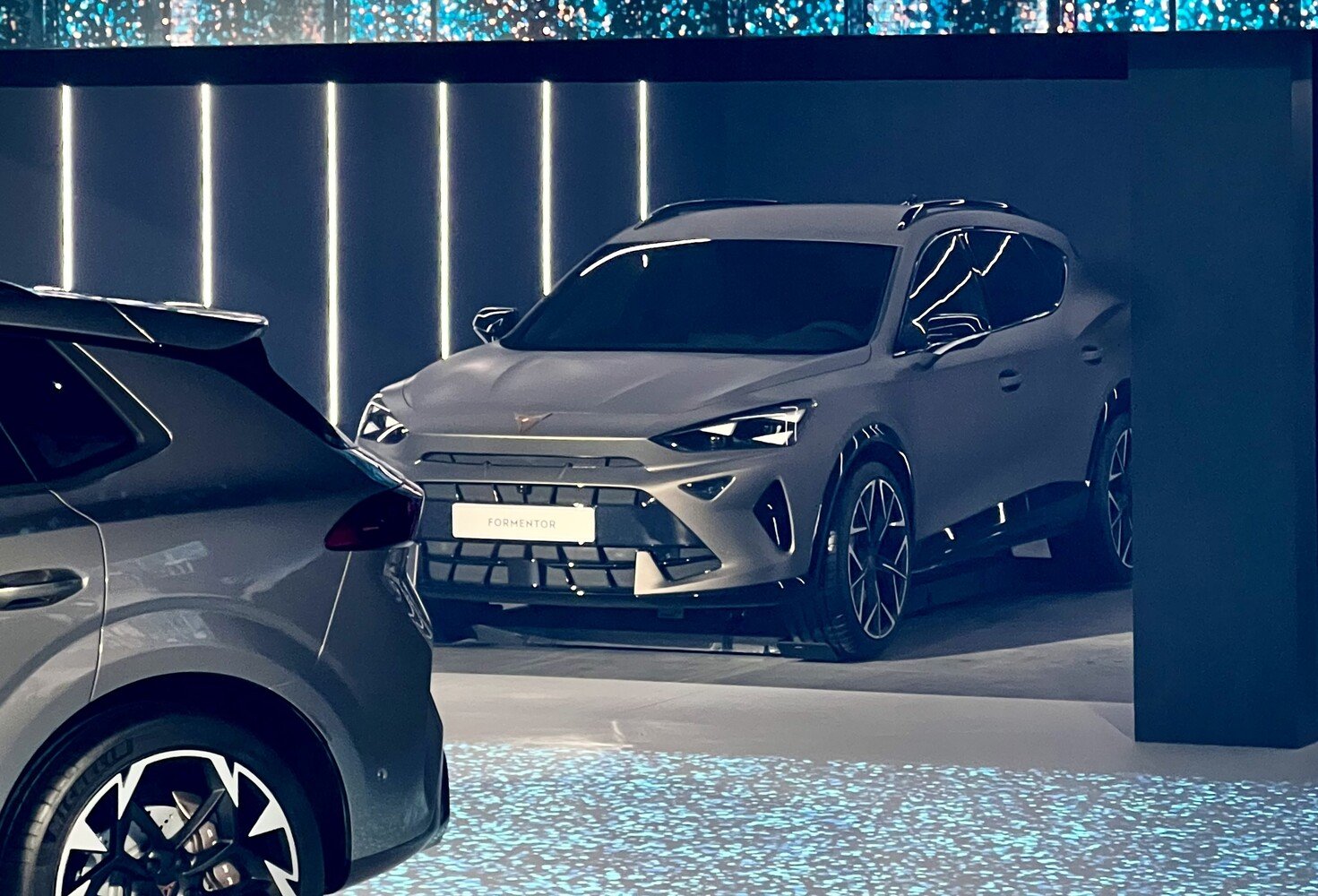
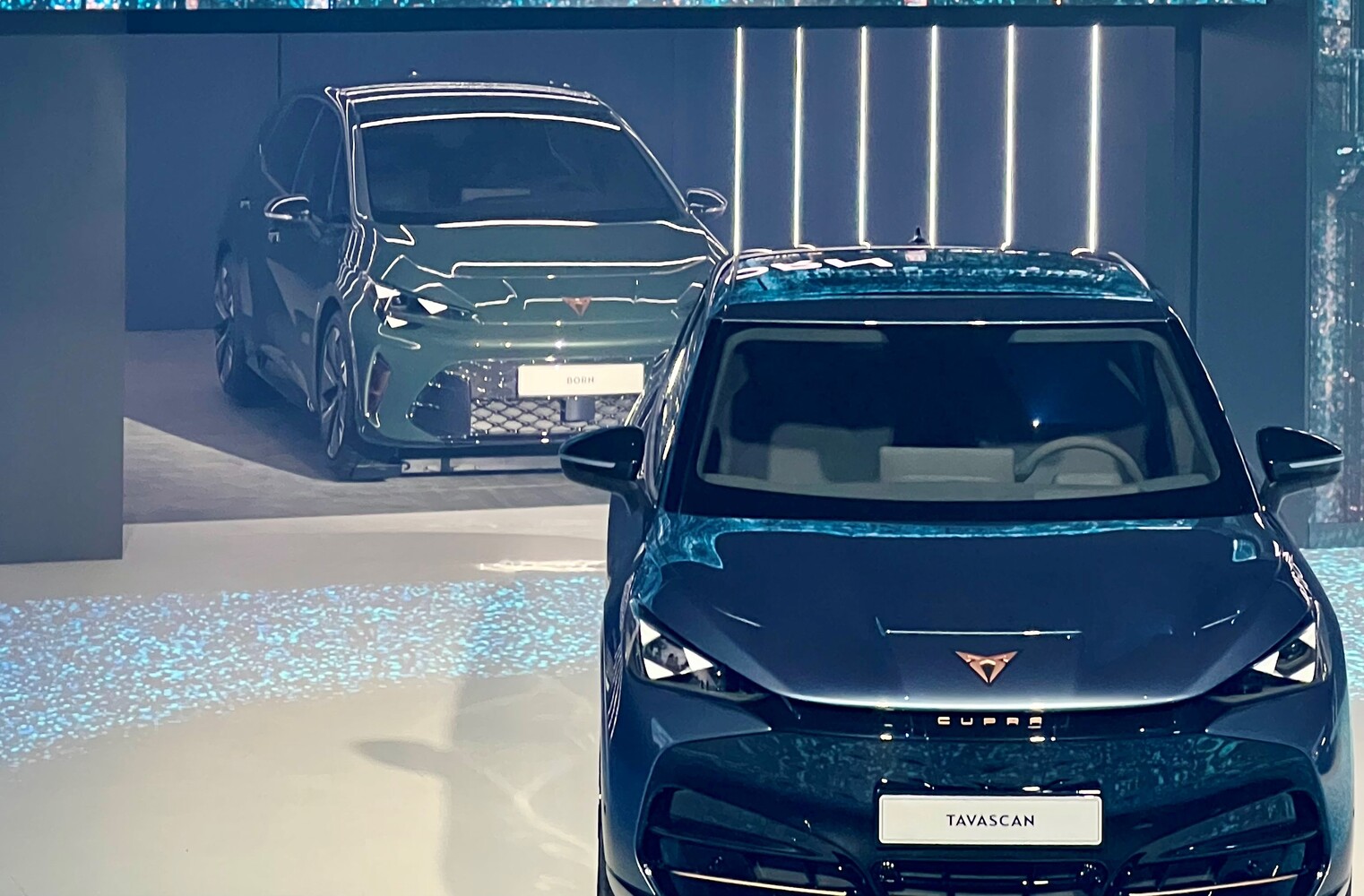
Pictures taken by German publication Autonotizen show the three models will each gain thinner headlights that incorporate three triangle-shaped LED daytime running lights – mirroring the design of the recently revealed Tavascan, Terramar and UrbanRebel.
The new Leon’s front end is designed to set it further apart from the Seat upon which it is based, allowing Cupra to develop its own unique design language.
In a radical departure from the upcoming Leon, the new hatch will adopt a significantly smaller grille design while the lower part of its bumper now has a more prominent radiator intake, as well as neatly packaged fog lights on each front corner.
The design of the Formentor SUV leans heavily on that of the new Terramar medium SUV, adopting a similar stepped front bumper with sharp, angular lines.
Nearly every feature on the front of the Formentor is triangulated, from its headlights, DRLs and foglights to the side air intakes in front of the wheels – although carrying across from the current model is plastic cladding around the lower section of its bodywork.
Even though the current Born has influenced the Tavascan, the facelifted electric vehicle will feature an even bigger grille – bucking the trend of EVs closing up the front end for better efficiency.
The smoother central section of its front bumper is similar to that of the Leon, its combustion engine-powered counterpart, although Born looks to gain a unique green paint that is unavailable on the rest of the range.
Cupra is set to launch in Australia next month with the Leon, Formentor and Ateca – all of which will be available in their pre-facelift form – while the Born will debut in the back end of 2022 or early 2023.
UPDATE, June 13, 2022: Stellantis matches fast-charging efficiency on inductive charging road
Automotive manufacturer Stellantis has made a breakthrough with its inductive charging road, and it could revolutionise how electric vehicles are charged in future.
Having built its 1.05 kilometre “Arena del Futuro” facility last year (more on this below), Stellantis has been able to replicate the efficiency of roadside fast chargers with its inductive charging road, allowing vehicles to continue driving without needing to stop to charge.
Using the new Fiat 500 as its test vehicle – a model that is set to come to Australia next year – Stellantis was also able to prove the magnetic field generated by the inductive charging tech doesn’t have any health impacts on occupants of the car.
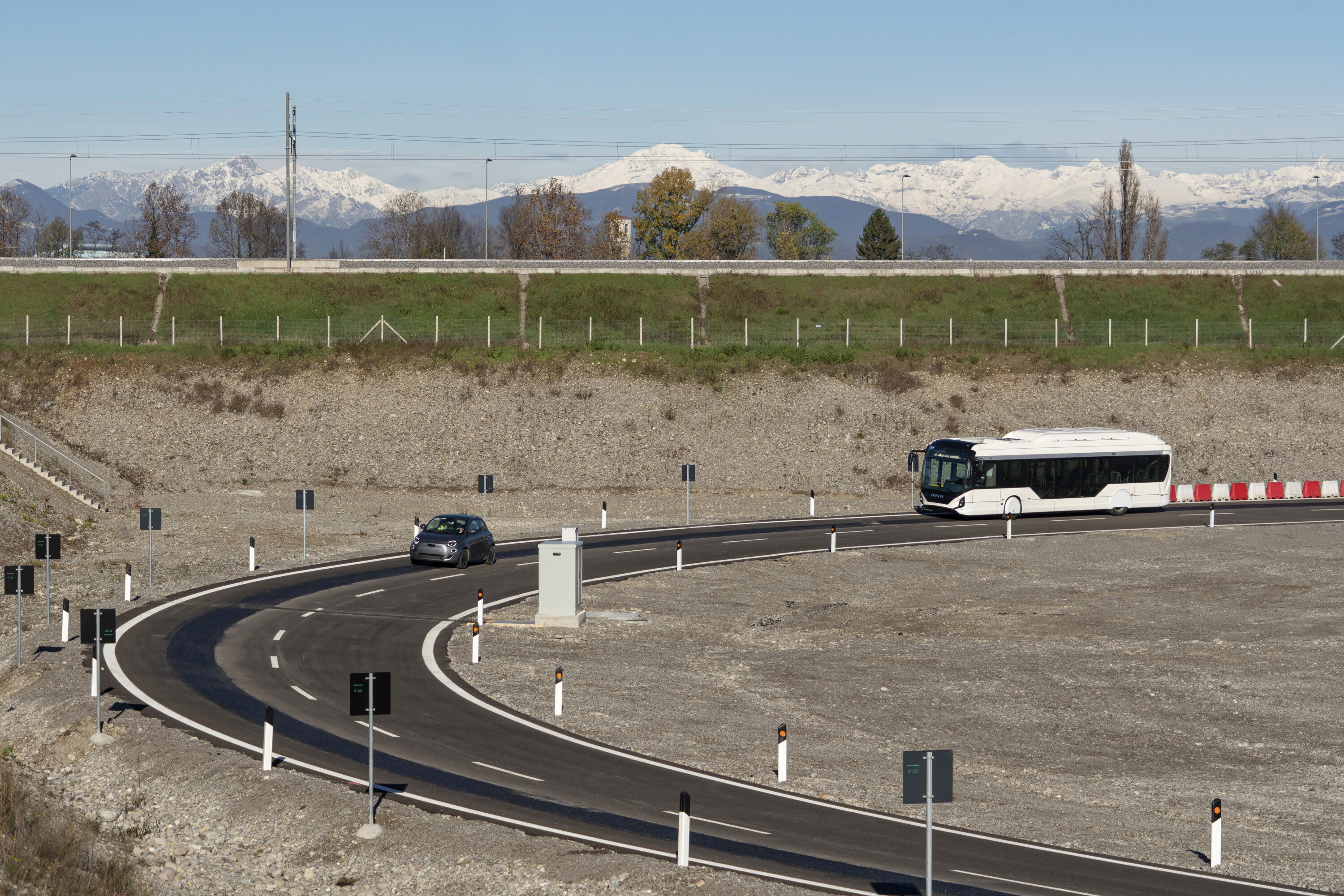
Running on DC rather than AC power, the system benefits from the advantages of direct current such as the ability to use thinner cables for better packaging, future integration into the renewable energy network and the ability to use aluminium cables rather than copper, saving money as well as being easier to recycle.
Stellantis recently announced its Dare Forward campaign, in which it committed to 100 per cent of its sales in Europe to come from EVs by 2030, by which time it aims to offer 75 full EV models.
Read on below to find out more about the wireless charging road.
The story to here
December 8, 2021: Stellantis opens new induction charging test circuit
Wireless charging – it has been around for nearly a decade and has revolutionised how we use everyday items such as smartphones.
However, the quest for wireless charging to be implemented for electric vehicles is a difficult and expensive road – quite literally.
Automotive manufacturer conglomerate Stellantis has opened its first induction charging test facility, based in Italy just off the A35 autostrada, named “Arena del Futuro” or “Arena of the Future”.
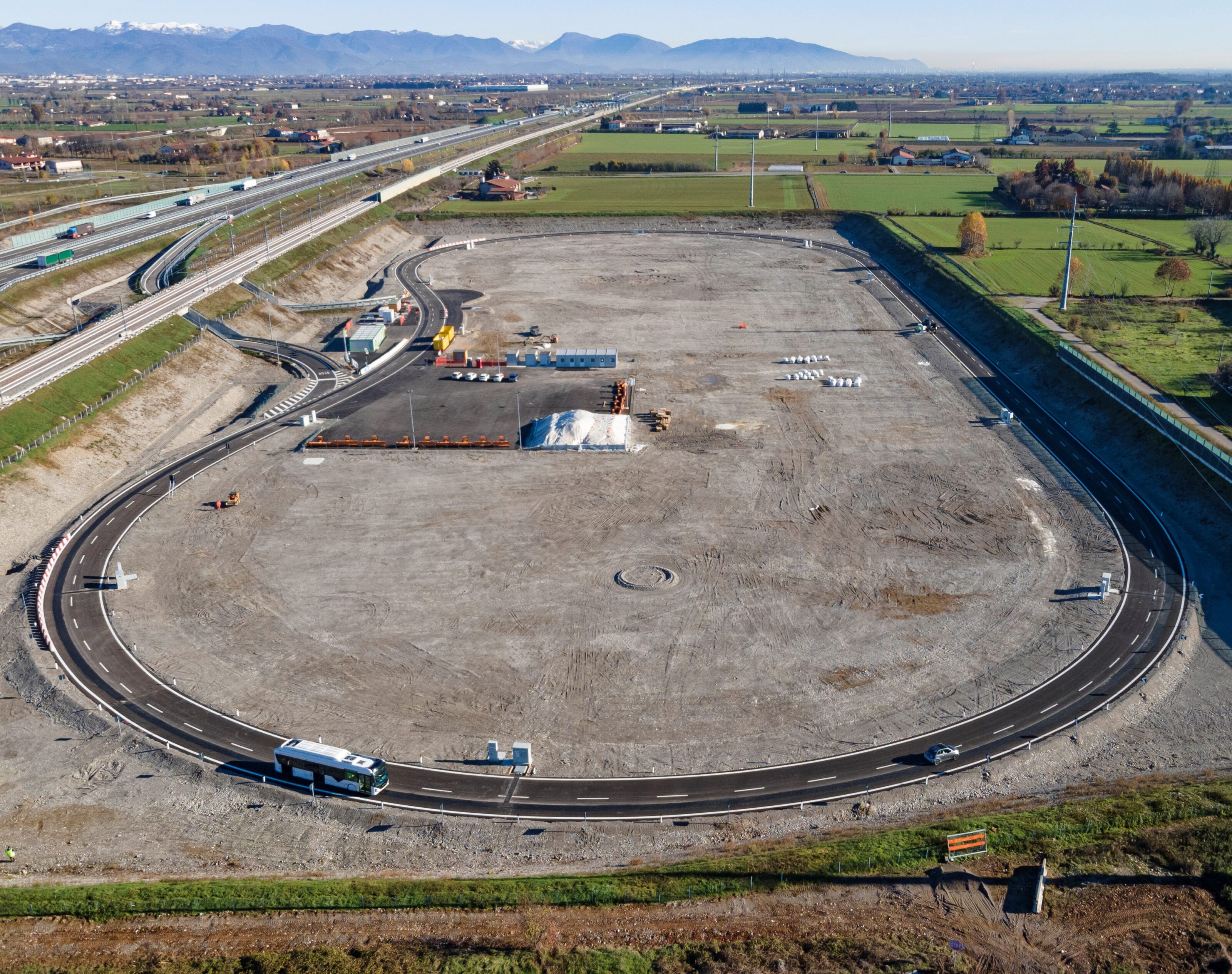
Measuring up at 1050 metres and with an electrical output of one megawatt, the circuit will be the primary testing facility for Stellantis’s induction charging development.
Here it will be able to trial technology which will allow its vehicles to be charged while on the move, all but eliminating driving range anxiety or the need to stop to recharge.
The manufacturer has wasted no time in getting underway at the circuit, having already racking up laps in the new Fiat 500 and an Iveco E-Way bus to test out the tech – with Anne-Lise Richard, head of the Global e-Mobility Business Unit at Stellantis, saying induction charging will be a major factor for EV adoption in the future.
“This is a cutting-edge solution to provide a concrete answer to the issues of [driving] range and charging, both of which customers are concerned about,” said Richard.
“We’re accelerating our role of defining the mobility of the future and, in this sense, DWPT [Dynamic Wireless Power Transfer] technology seems to us to be in line with our desire to offer a concrete response to customers’ requirements.
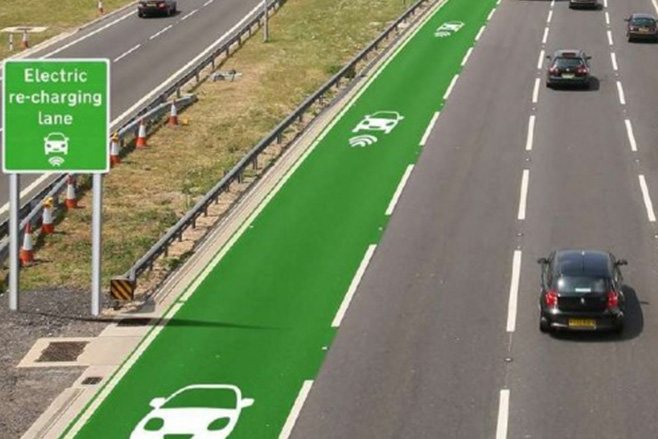
“Charging vehicles while they are on the move provides clear advantages in terms of charging times and the size of their batteries.”
Stellantis isn’t the first automotive manufacturer to experiment with induction charging – Mercedes-Benz, Ford and BMW have all previously developed pads to slide under vehicles which can wirelessly charge them, although none have been able to do so on a mainstream level as yet.
Imagine an electric vehicle that can go from zero range to 500km in just three minutes – without even asking you to unbuckle your seatbelt.
It sounds like something from 2050, but it’s here right now. In China, upstart electric vehicle (EV) manufacturer Nio has installed more than 700 battery ‘swap stations’ for its budding range of new electric models, and has performed more than four million battery exchanges since 2017. In the next three years, it hopes to have 3000 such stations in China, and 1000 more overseas – including, potentially, Australia.
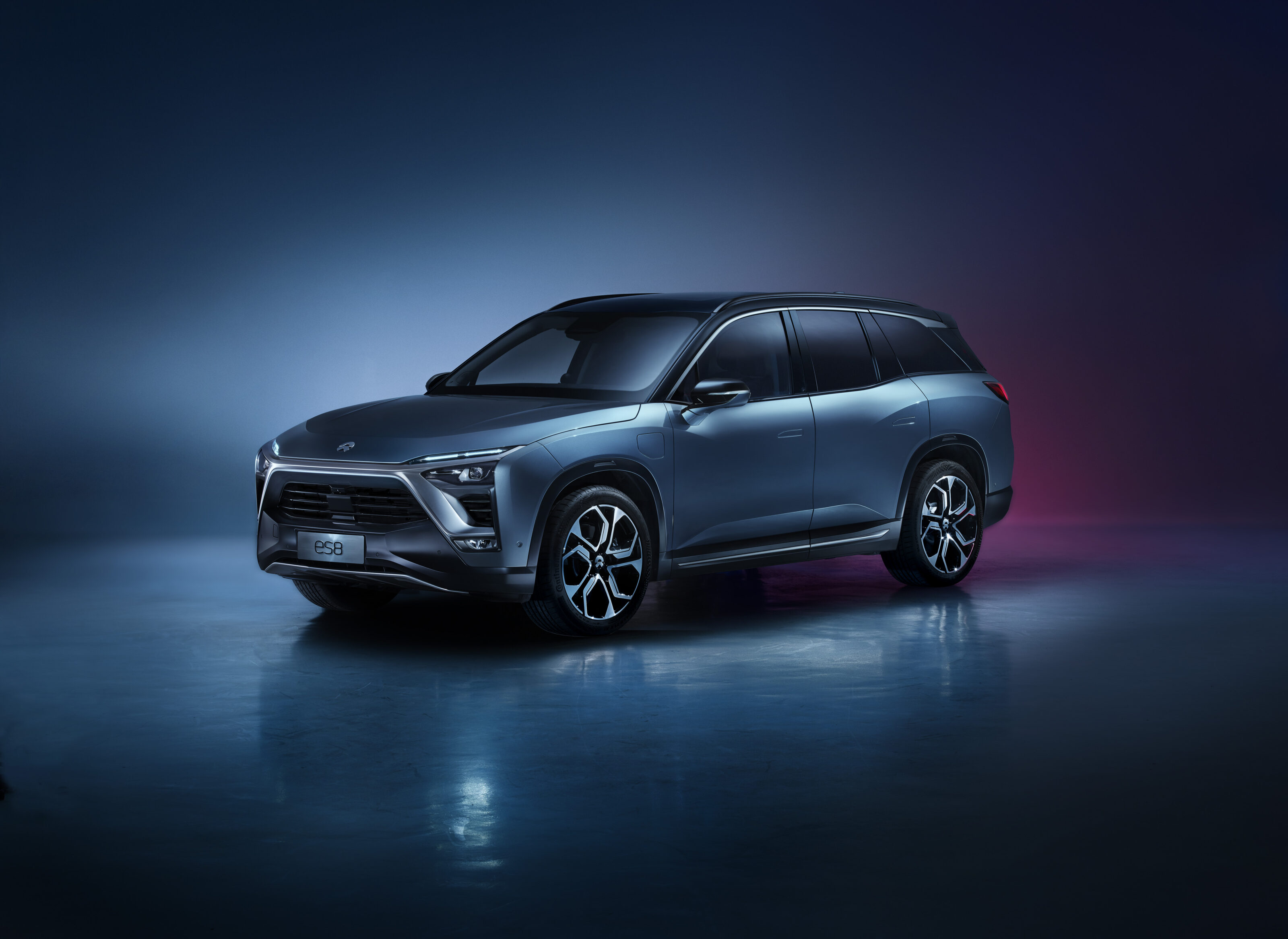
The technology is as simple as it sounds. Nio – launched in 2014 by Chinese tech billionaire William Li, dubbed the ‘Elon Musk of China’, and pumped full of Chinese government cash – can sell you its flagship model, the ES8 SUV, without a battery.
With lithium-ion battery packs typically being the single most expensive component of an EV, this can wipe up to $25,000 off the vehicle’s as-new purchase price. Nio then sells you a ‘subscription’ to what it calls its Battery-as-a-Service (BaaS), for around $250 a month, granting as many swaps as you need.
While it’s focused its efforts so far on its home Chinese market, Nio, still a relatively tiny player, producing just 100,000 units a year, last year opened its first hipster-esque, cafe showroom in a high-class shopping strip in central Oslo, Norway.
Nio hopes to use oil-rich Norway – where generous incentives pushed EV sales to 65 percent of its roughly 175,000 new vehicle market in 2021 – as a proxy for European expansion before possibly Australia and, ultimately, trying its hand against Tesla in the US.
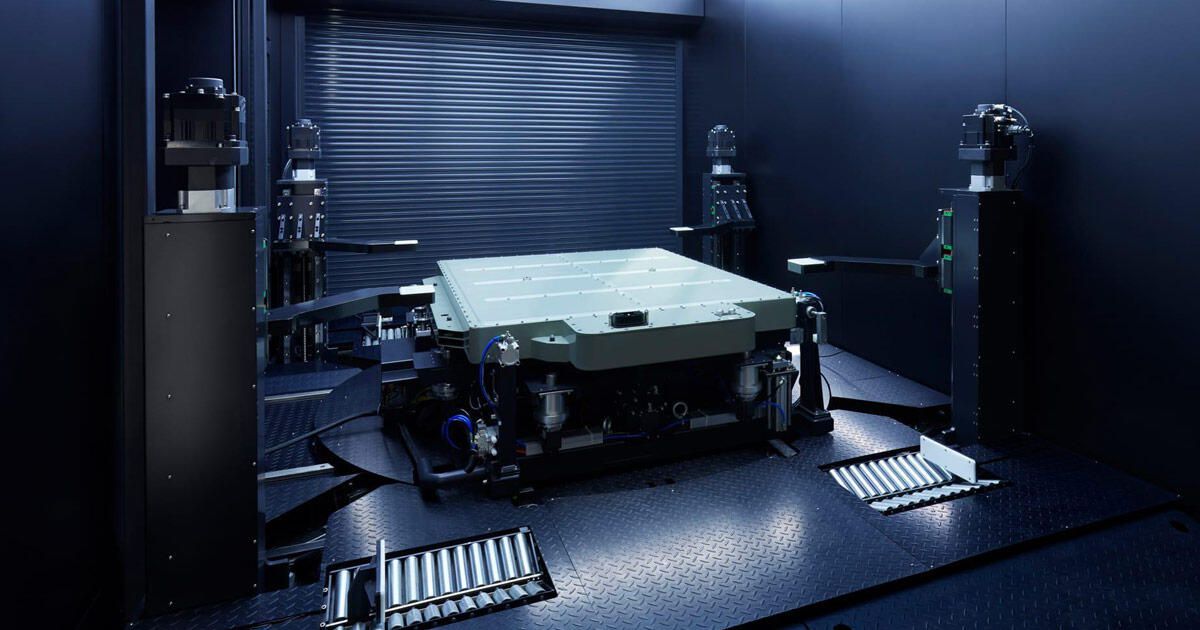
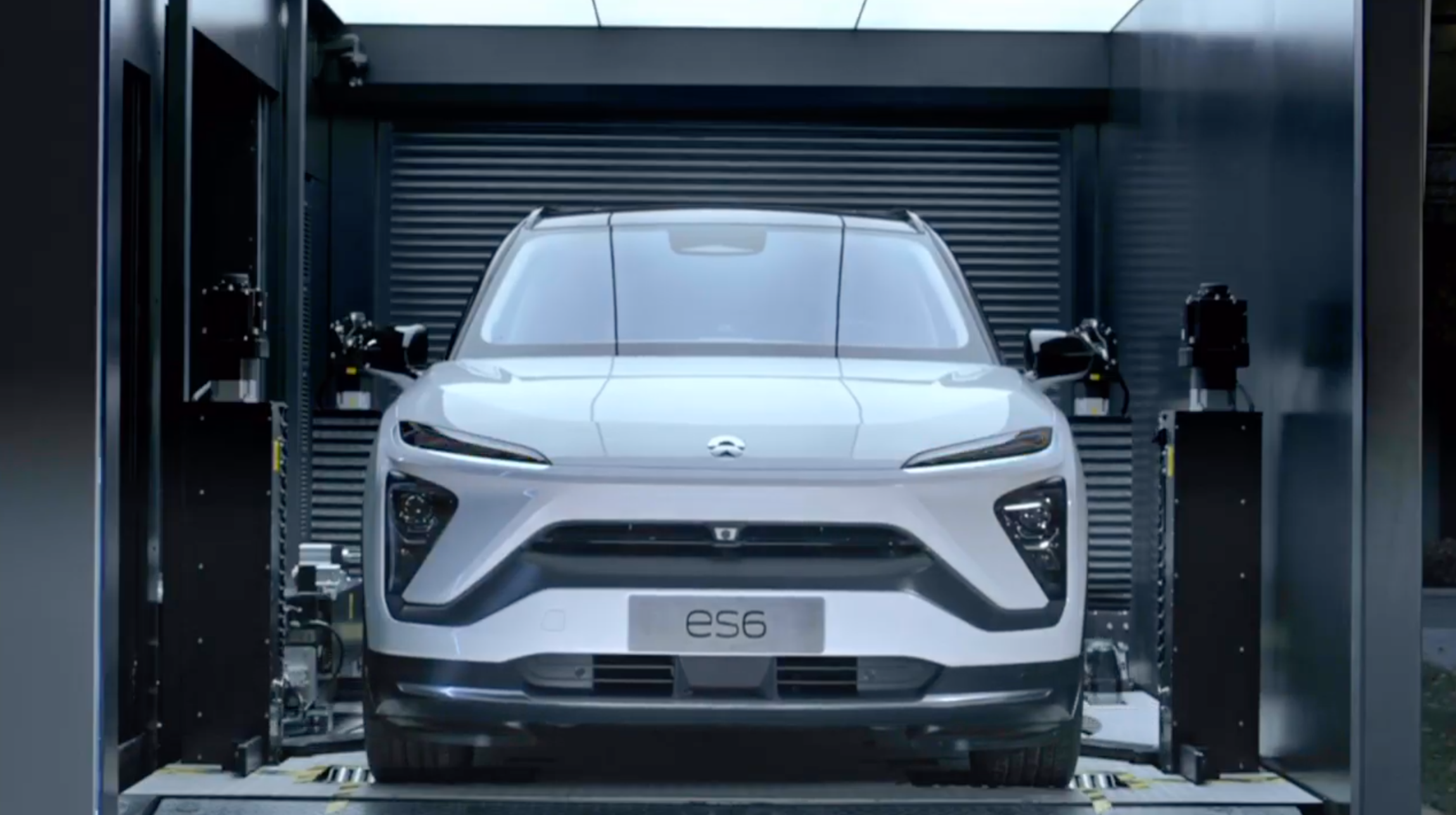
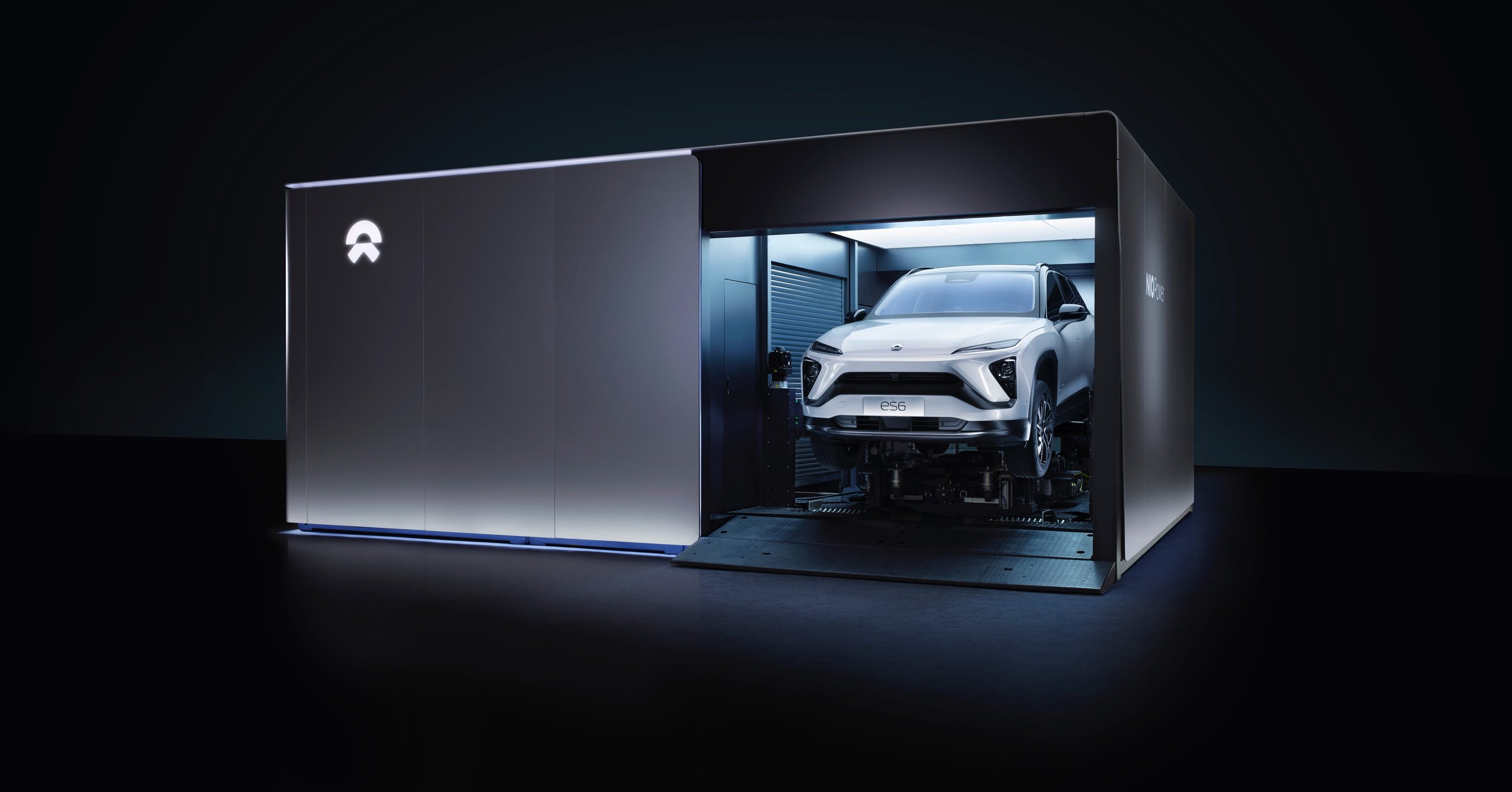
In what is something of a philosophical challenge to Tesla’s Supercharger network, Nio’s battery swaps take place at a demountable, fully self-contained ‘swap station’, a structure about the size of a large double garage. Like driving into an automatic car wash, computers do all the work as you simply relax in the car.
Battery swapping has several key advantages. For starters, you can switch between smaller, lighter battery packs and bigger, heavier ones with just the tap of an app. Nio offers its ES8 with either 75kWh or 100kWh packs, offering 375km and 500km WLTP range respectively. Driving around the city? Save weight and get about with a 75kWh pack. Weekend away? Go get the 100kWh fitted just to be safe.
If you just want to plug your car in like a normal EV, Nio can sell you your ES8 with a battery at full price and offer all the usual at-home recharging options. In China, Nio has an established plug-in charging network.

But by making the battery someone else’s problem, even as your car ages you’re guaranteed to be using the most cutting-edge technology available, guarding against obsolescence and helping protect resale values (in theory).
Nio says it’s working on a 150kWh solid-state battery pack with up to 750km range, which will be able to be swapped into older models when available. In future, battery packs could also be much lighter.
As well as extending the possible useable life of an electric vehicle – you never have to worry about battery degradation over time, or outright failure – battery swapping might make recycling easier and therefore more commercially viable, too. In Australia, only two percent of our annual 3300 tonnes of lithium-ion battery waste is recycled, a problem growing fast.
Battery swapping, however, might turn out more of a bridging solution as battery technology itself continues its rapid advance – and plug-in charging infrastructures expand and mature.
Future 800- and 900-volt systems could recharge at a pace we can’t currently imagine; but also Tesla – which investigated battery swapping early on, only to dump the idea – continues to bet heavily on the plug-in model, with future vehicles using structural battery packs, improving packaging and reducing weight.
Battery swapping has also failed in the past. In 2007, start-up Better Place partnered with Renault to offer a robotic battery swapping service with stations spread across Israel and Denmark. In 2013 it filed for bankruptcy.
It may have been ahead of its time, but also the daily distance travelled by the typical Israeli and Danish motorist is quite short, a potential lesson for Nio as it sizes up the European market. Plug-in recharging infrastructure is also now well-established in Europe.
The opposite of both those things is true in Australia, at least for now. Nio mimics Tesla’s early days in burning through vast reserves of cash while chasing a first profit, but hints that it could be here by 2025 with a couple of attractive EV SUVs. Vehicles so high-tech they make petrol look like the new steam – and along with a ‘swap station’ in your local Coles carpark.
01
Your Nio automatically reverses on to rollers. Small actuators nudge against the base of the tyres, perfectly positioning the car horizontally. It’s all computer controlled, with 239 sensors at work.
02
The car is automatically hoisted, a laser-guided robot unscrews the depleted battery pack, lowers it, then swaps in a freshie in reverse order. The whole process takes three minutes.
03
The depleted battery enters a stack to be recharged. Each station contains 14 battery packs. An app tells drivers what battery pack sizes are at a station, and how many are ready to go.
04
Each station can complete 312 swaps per day. In China, battery swapping is free for new Nios; second-hand Nio owners pay a kWh rate. But even then, a swap – and 400-odd kilometres of range – is around A$15-$20.
Meet the Nio ES8
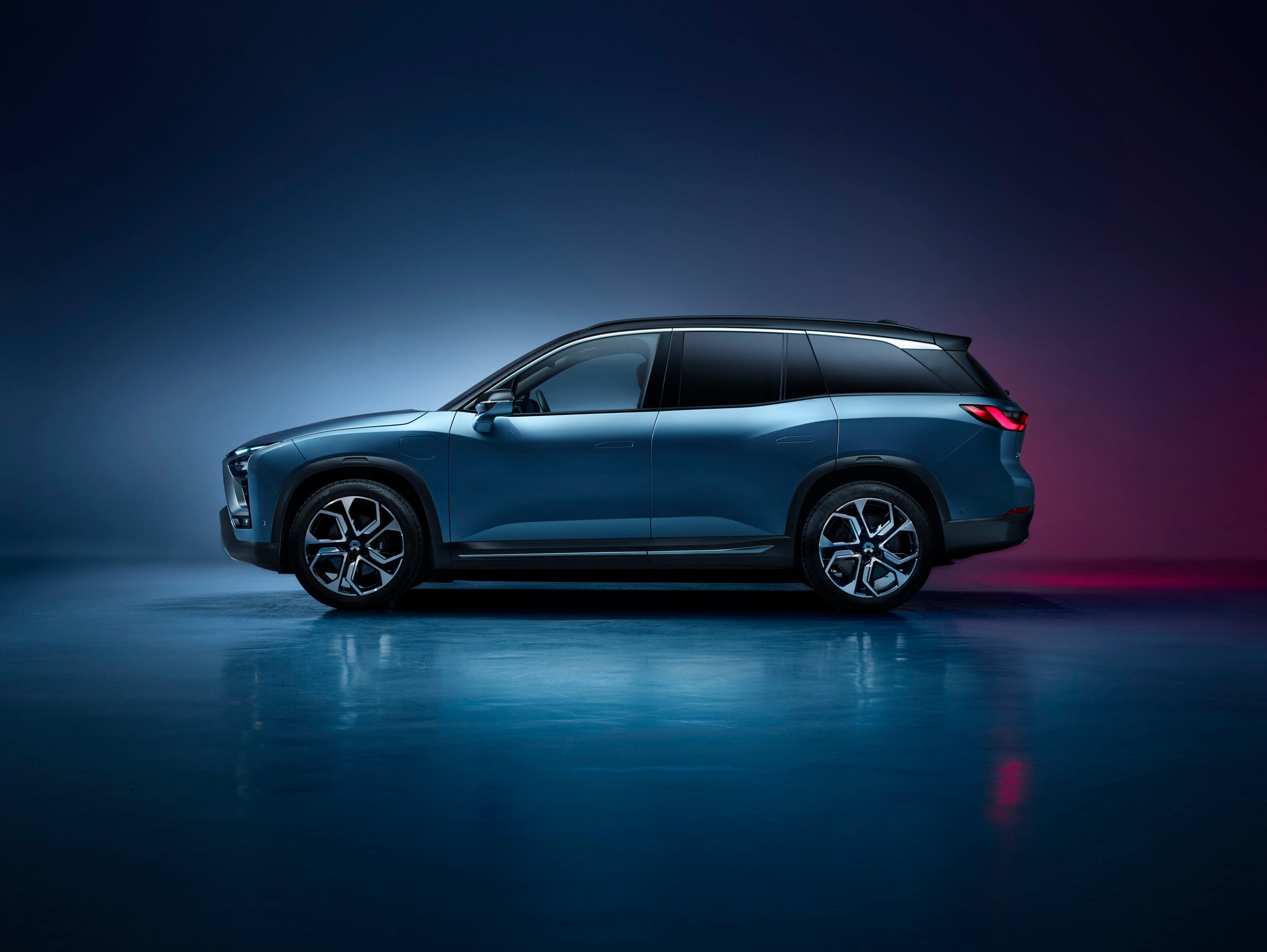
If you ignore its low-slung, EP9 electric supercar that blitzed records at the Nurburging out of nowhere in 2017 (remember that?), the Nio line-up comprises three SUVs: the mid-size EC6 and ES6 and the flagship, full-size ES8. The ES8 is a smart-looking, aluminium-rich EV seating six or seven and powered by two electric motors with claimed outputs of 400kW and 725Nm, and 0-100km/h potential of 4.9sec.
There’s also Brembo brakes and air suspension, and some of the most cutting-edge autonomous driving tech on the market today. In Norway, the ES8 costs about $82K without a battery, $96K with a 75kWh battery pack or $107K with 100kWh. In Australia it would cost an estimated 25 percent more.
