
UPDATE, September 21: New 2023 BMW 3 Series review
The new 2023 BMW 3 Series has made its European debut, and we’ve driven it. Get our review at the link below! Continue reading for full pricing and features.
The story to here
New-look 3 Series revealed
Snapshot
- 3 Series facelift mimics the China-only i3 electric vehicle
- All grades now score BMW’s curved display
- Local pricing and features to be confirmed closer to late-2022 launch
The covers have come off the 2023 BMW 3 Series, as the popular mid-size sedan and wagon score a facelift for the coming years.
Teased just yesterday, the upcoming 3 Series facelift – or Life Cycle Impulse (LCI) in BMW-speak – brings some significant design tweaks to the sedan and wagon body styles, as previewed by the Chinese market-only i3 electric sedan revealed last month.
At the front, a completely refreshed bumper is combined with new-look, slimmer headlights – which feature ‘inverted L’ shaped daytime running lights distiguishing it from the current model’s design where the DRLs are rotated 180-degrees.
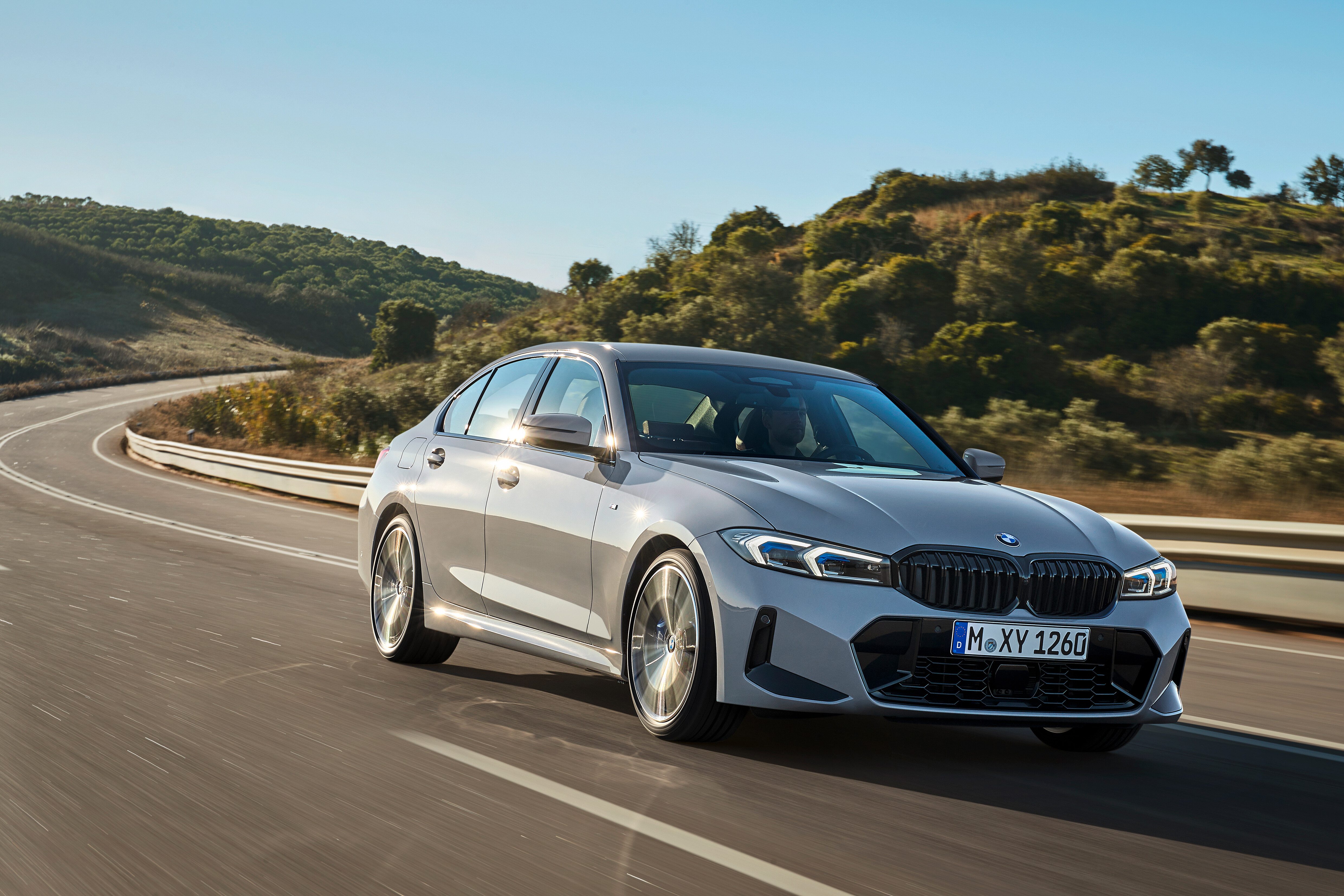
The new headlights will be standard across the entire 3 Series range, but those who order the M340i xDrive sedan will benefit from the addition of adaptive LEDs – incorporating cornering lamps, non-dazzling matrix high beam, dynamic headlight range control and variable light distribution – all of which can be set apart from the standard set by blue effects within the housing.
BMW has tweaked the rear design of the 3 Series as well, with a more aggressive lower bumper highlighted by contrasting black trim, incorporating a taller ‘diffuser’ than the outgoing model.
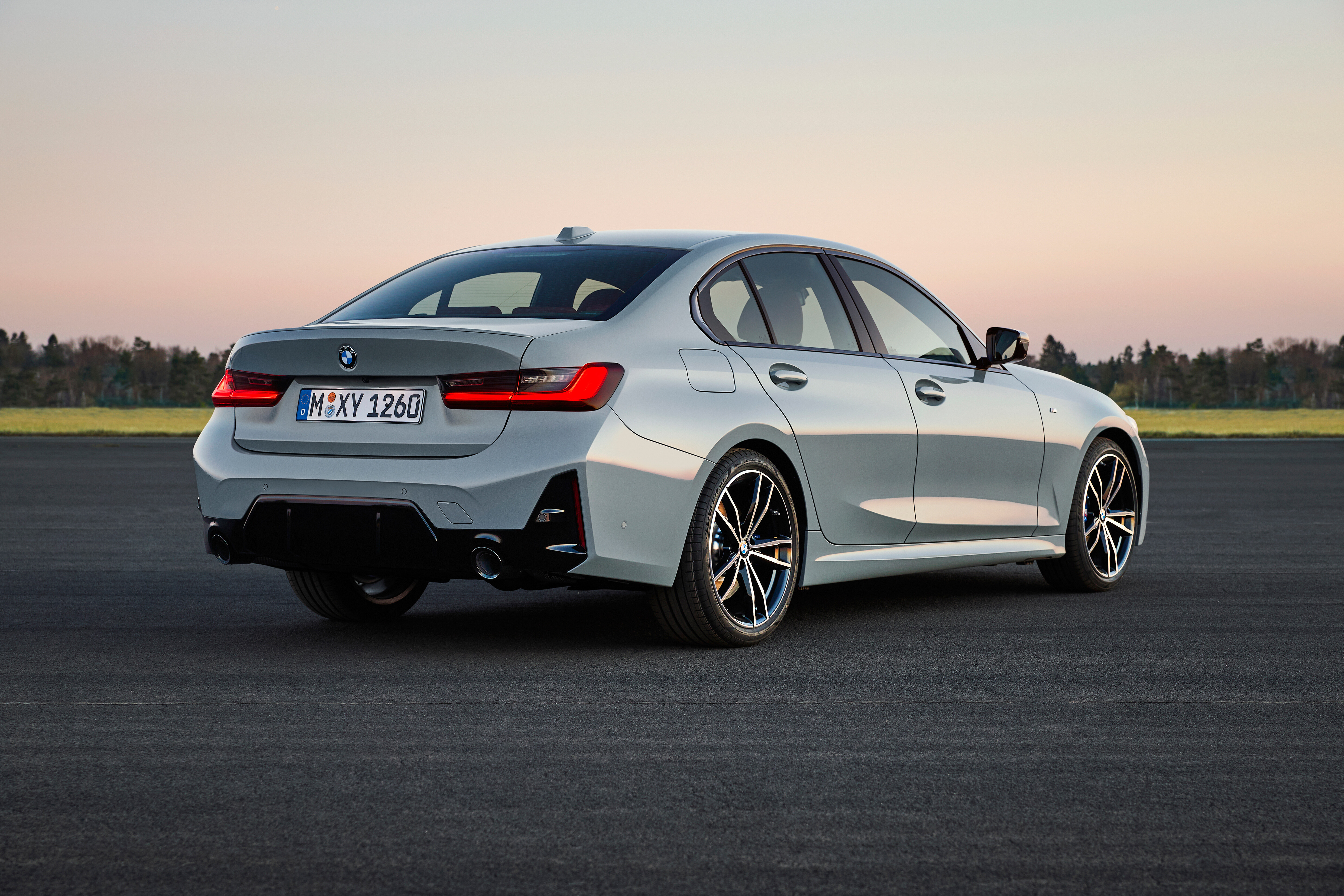
As with the current 3 Series, all Australian-delivered models come standard with BMW’s M Sport package, boasting additional black design pieces on the front and rear bumpers, as well as; a mesh design kidney grille, trapezoidal tailpipe trims, black mirror caps and a choice of 18- or 19-inch wheels.
On top of this, BMW Australia will now offer the M Sport Package Pro, which includes; extended M high-gloss Shadowline trim, M lights Shadowline and an M Sport braking system with red callipers.
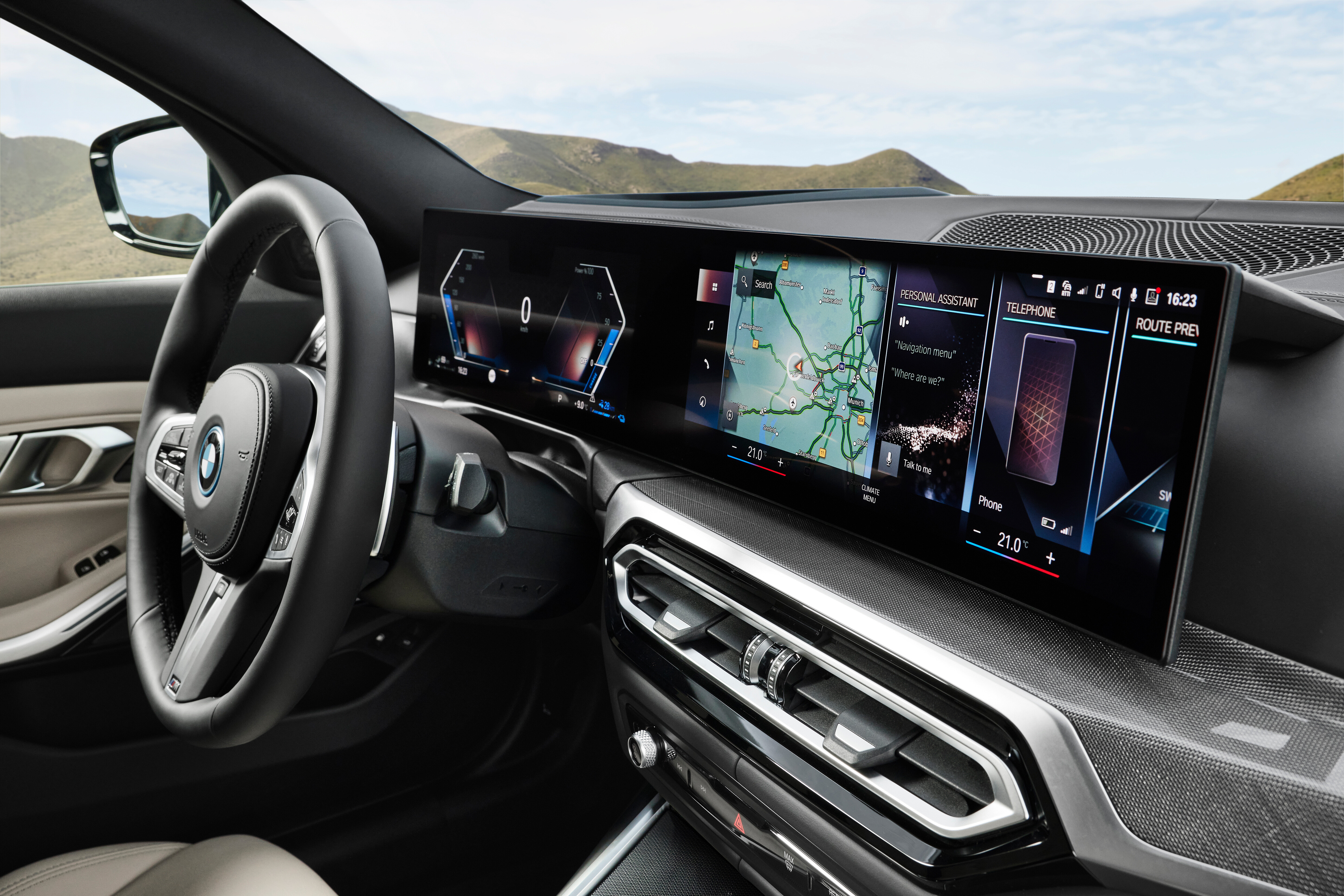
Inside the cabin, BMW has made a big change by introducing its curved display from the iX and i4 into the 3 Series, running its latest version of iDrive software.
Combining a 12.3-inch digital dash with a 14.9-inch infotainment screen, the two are merged together to create a single unit, incorporating satellite navigation, Apple CarPlay and Android Auto.
An automatic three-zone climate control system is standard across the range, with its dials now embedded in the touchscreen or accessible via voice command.
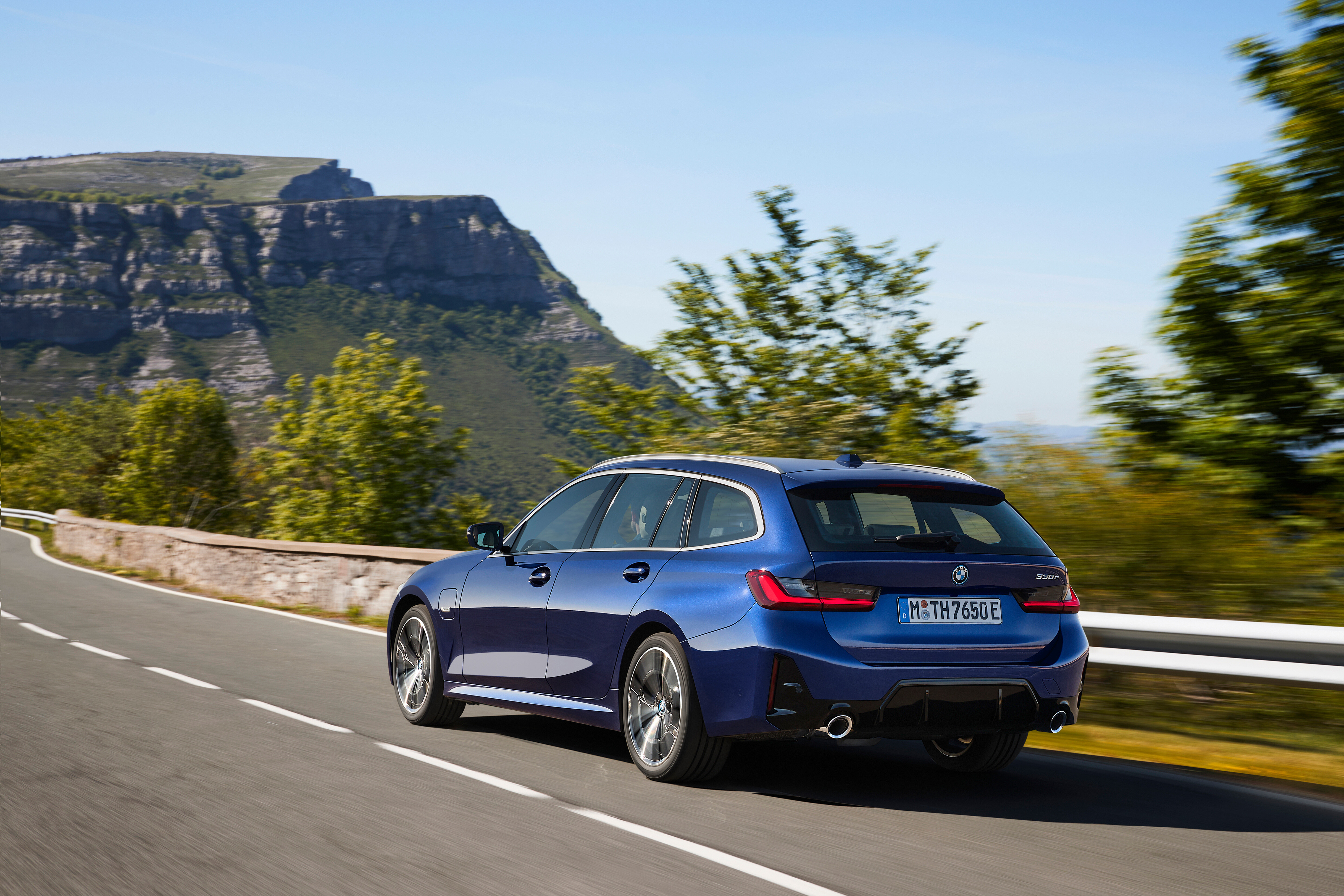
As with the current model, the new 3 Series will be available with four base grades – 320i, 330i (only variant for the wagon), 330e and M340i xDrive – all using an eight-speed automatic transmission with the all-wheel-drive xDrive being the only non-rear-wheel offering.
A wide range of safety equipment will also remain as standard, including; lane departure warning, lane change warning, front collision warning with brake intervention, rear crossing traffic warning, rear collision prevention, reversing assist camera and reversing assistant.
BMW Australia says it expects the new 3 Series line-up to arrive locally in the fourth quarter of 2022, with pricing and features set to be announced closer to its launch.
UPDATE, May 18, 2022: 2023 Mercedes-Benz GLC teased ahead of June reveal
Mercedes-Benz is less than a month away from revealing its new GLC, locking in a June debut for the new model.
Having been teased in the lead-up to its official unveiling, Mercedes-Benz has already confirmed the entire GLC line-up will be electrified as well as benefitting from the addition of air suspension, adjustable damping and rear wheel steering.
Covers are set to come off the new-look SUV on June 2 at 1am Australian Eastern Standard Time. Keep your eyes peeled on Wheels as we provide updates on the new model.
The story to here
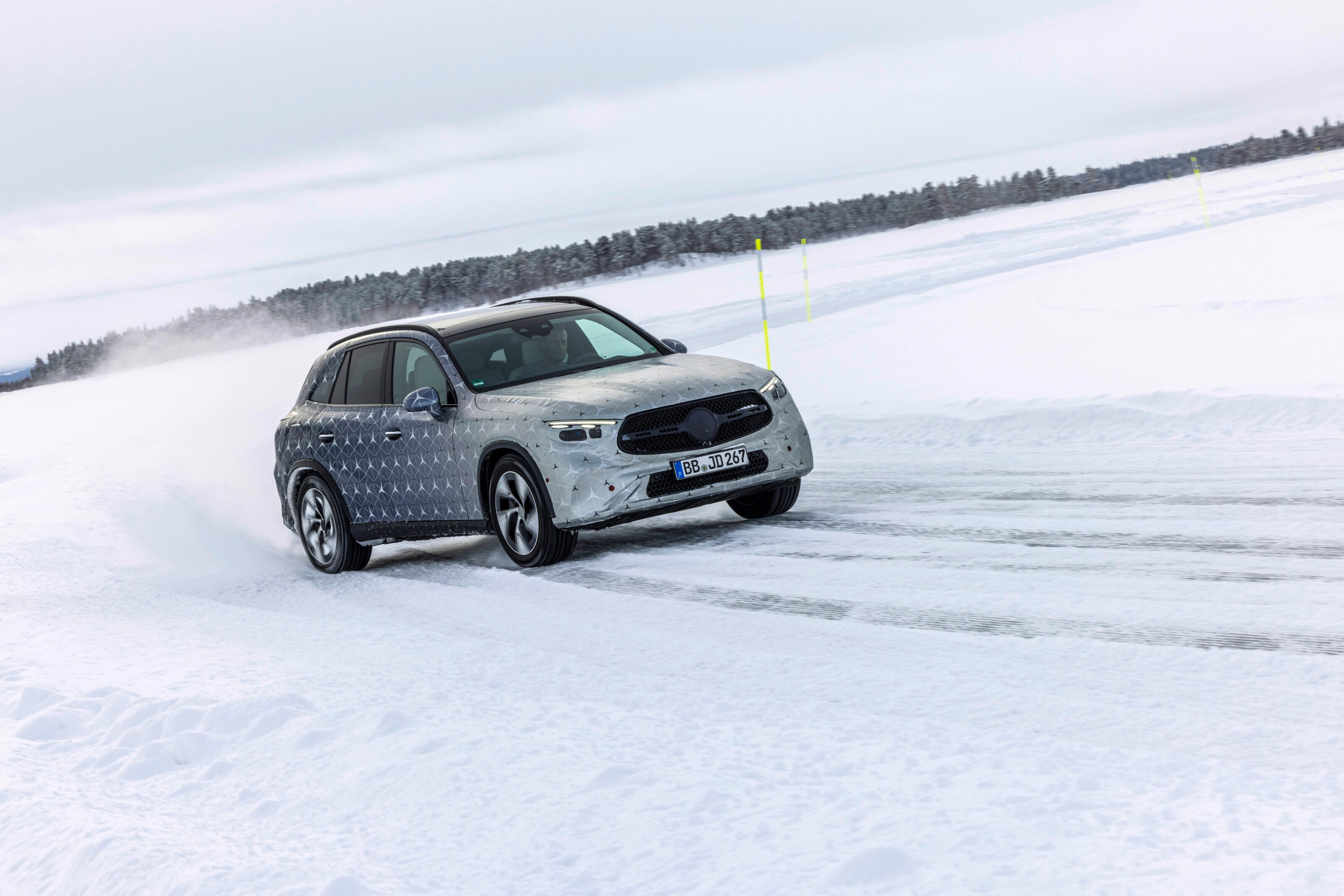
March 30, 2022: 2023 Mercedes-Benz GLC winter testing in Sweden
The 2023 Mercedes-Benz GLC is currently undergoing cold-weather testing in the frozen proving grounds of Arjeplog, Sweden.
The next-gen SUV has been shown off gathering data in the tough conditions.
With ambient temperatures of minus 30 degrees celsius, roads covered in snow and ice as well as an unproven platform, Mercedes-Benz believes its Lapland testing program has allowed it to shake down the GLC in the coldest environment possible – discovering its potential weaknesses with handling, ergonomics, thermal management and interior comfort.
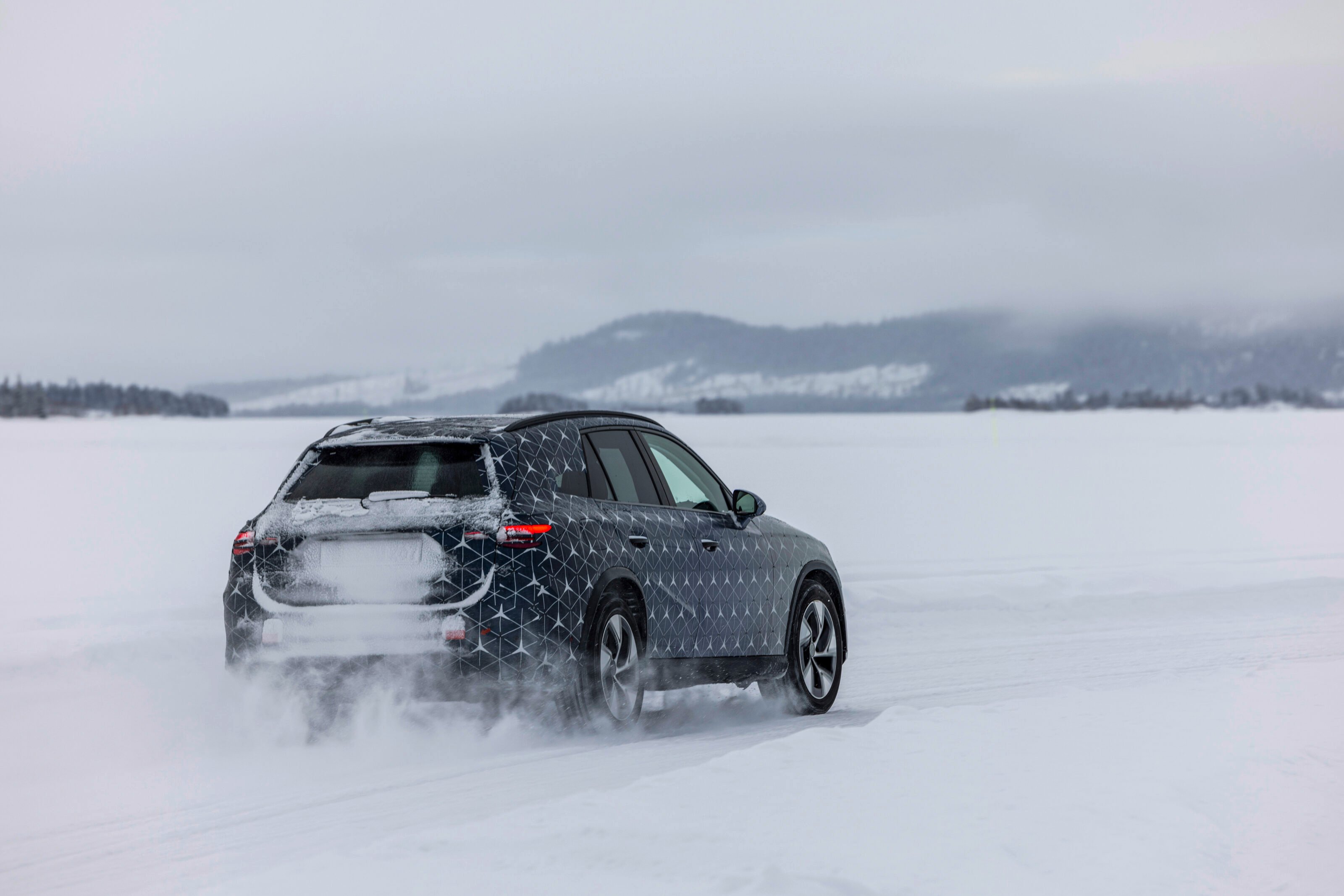
According to the manufacturer, a host of equipment upgrades will find its way onto the SUV, with air suspension, adjustable damping and rear wheel steering to feature on the GLC.
Inside the cabin, a 12.3-inch digital display will be used as the instrument cluster, while an 11.9-inch central touchscreen provides infotainment and climate controls, incorporating Merc’s MBUX system.
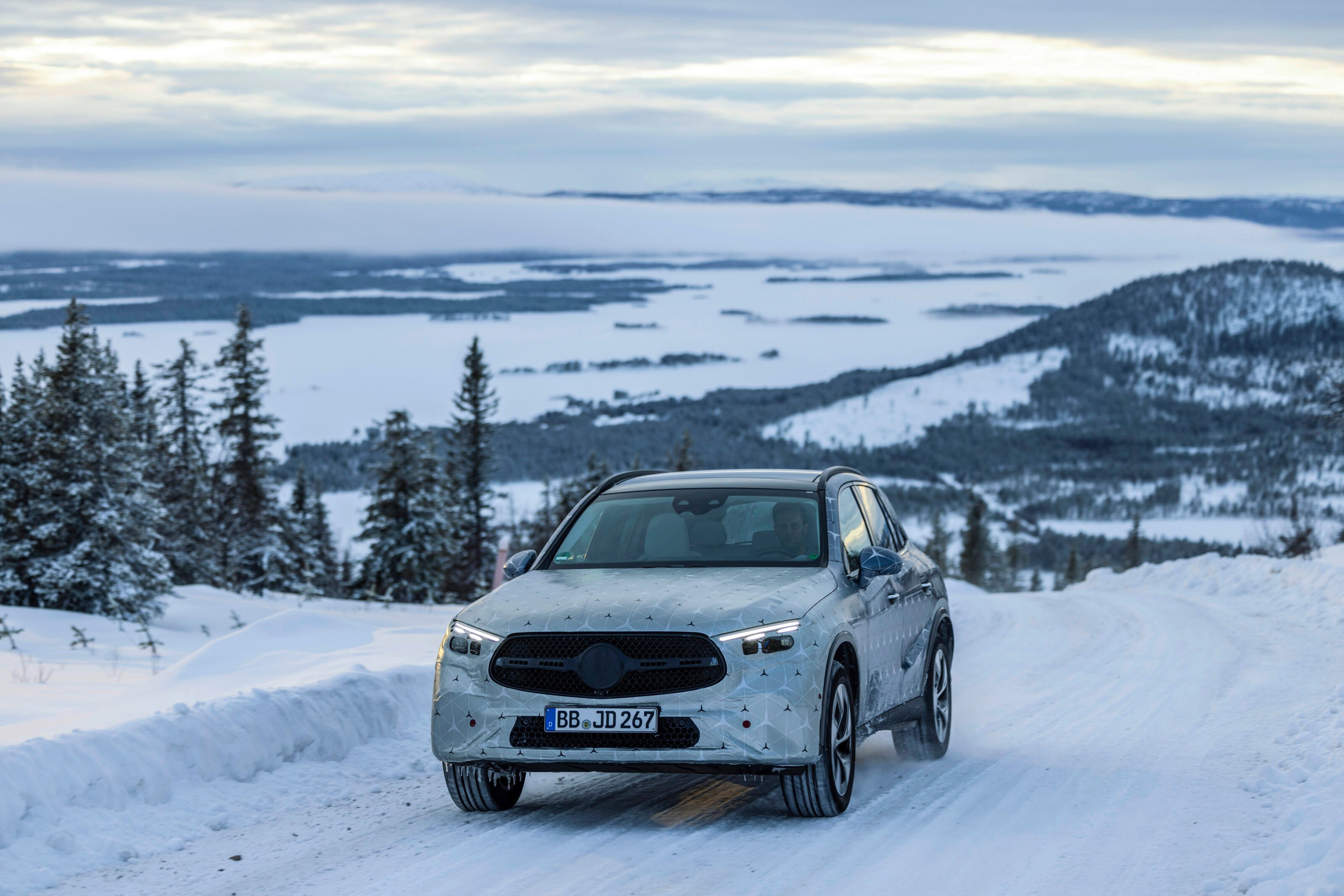
Two internal combustion engine choices have been confirmed for the upcoming GLC, with 2.0-litre, turbocharged four-cylinder petrol and diesel options both available – both fitted with 48-volt mild-hybrid motors.
A trio of plug-in hybrid powertrains will also bolster the line-up, all of which see their electric motors integrated into the nine-speed automatic transmission’s casing, providing an additional 100kW and 440Nm.
It’s expected the GLC will be revealed in greater detail towards the second half of the year, with specs for Australian-delivered models due to drop closer to launch.
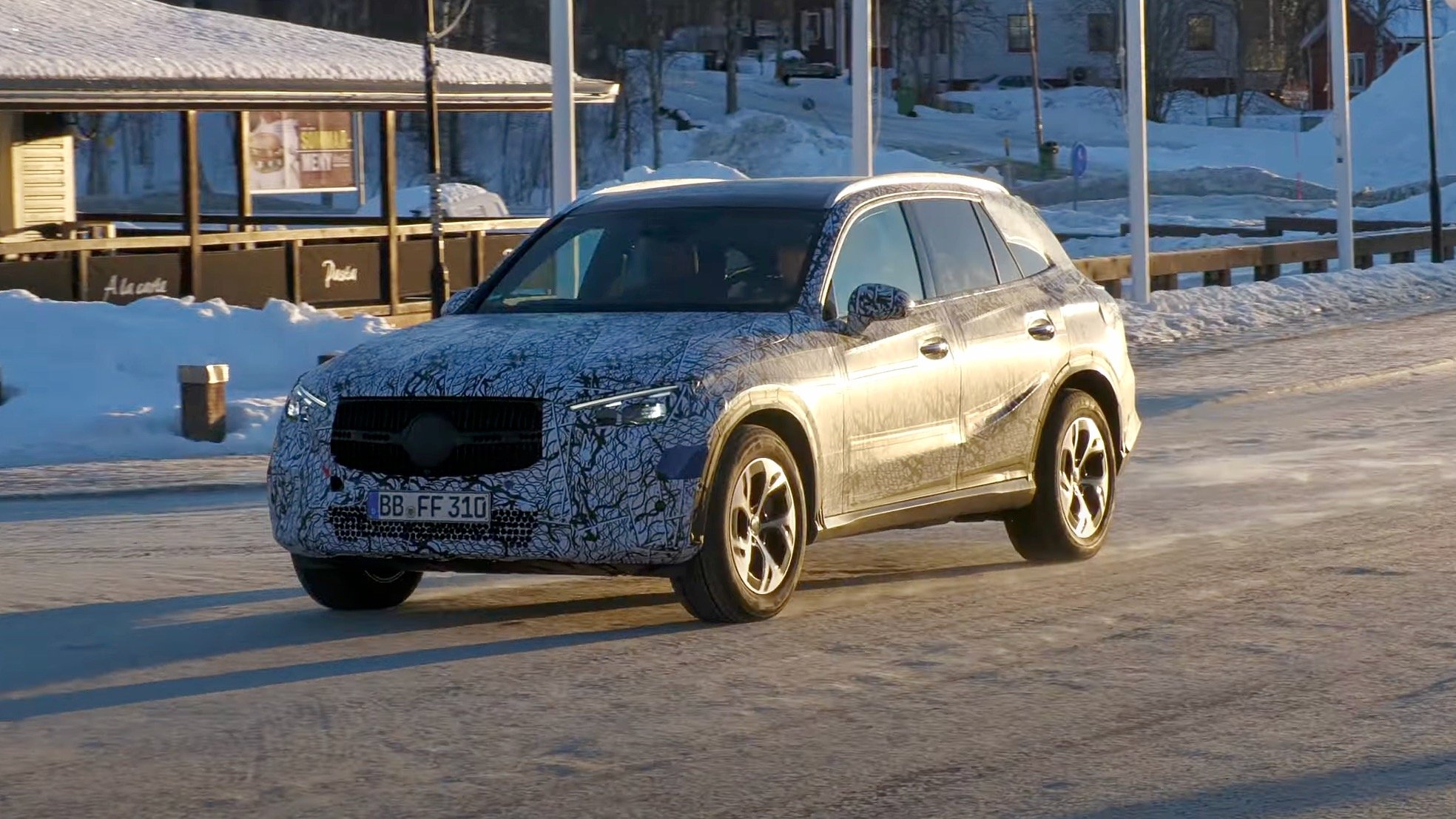
March 10, 2022: 2023 Mercedes-Benz GLC spied
The 2023 Mercedes-Benz GLC has been caught on camera while cold-weather testing ahead of its unveiling later this year.
Mercedes-Benz was conducting its winter tests in Scandinavia when YouTube channel CarSpyMedia spied the GLC, complete with its camouflage wrap.
While details remain unconfirmed, it’s thought this prototype is using a plug-in hybrid powertrain – possibly the 2.0-litre turbo four-cylinder petrol engine and 25.4kWh battery pack found on the C350e, sending 230kW and 550Nm to all four wheels through a nine-speed automatic.
Up to 100 kilometres of all-electric driving range is available on the more aerodynamic C350e, so it’s likely buyers of the 2023 GLC 350e will sacrifice a little range for its more practical SUV body.
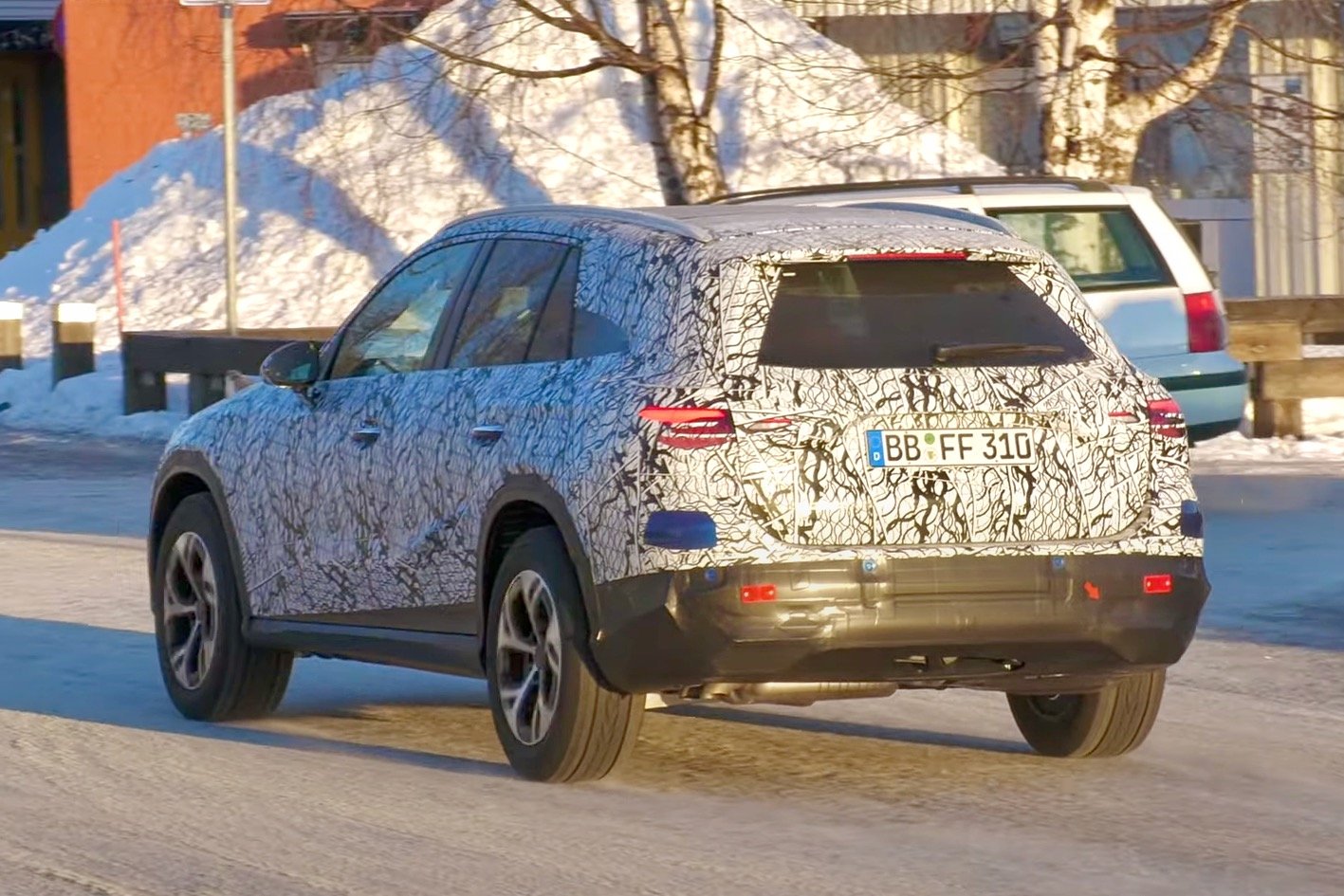
Expect the GLC to also borrow its style from the newest C-Class, but the overall shape doesn’t appear to differ too dramatically from the current model.
The 2023 Mercedes-Benz GLC is expected to be unveiled in the coming months, with a launch likely before the end of the year.
Snapshot
- Immediate recall of Mercedes-Benz ML, GL and R-Class
- 17,687 vehicles built between 2005 and 2013 affected
- Owners asked to stop driving immediately if their vehicle is one of those listed
Mercedes-Benz has put out a wide-spread recall notice for its ML, GL and R-Class models built between 2005 and 2013.
Impacting a total of 17,687 units, the notice says the sealing of the brake booster in all three models may corrode, leading to an air leak which could result in a reduction of braking performance.
Mercedes-Benz says examples of the ML, GL and R-Class, which have suffered particularly severe corrosion, could have their boosters damaged by hard braking.
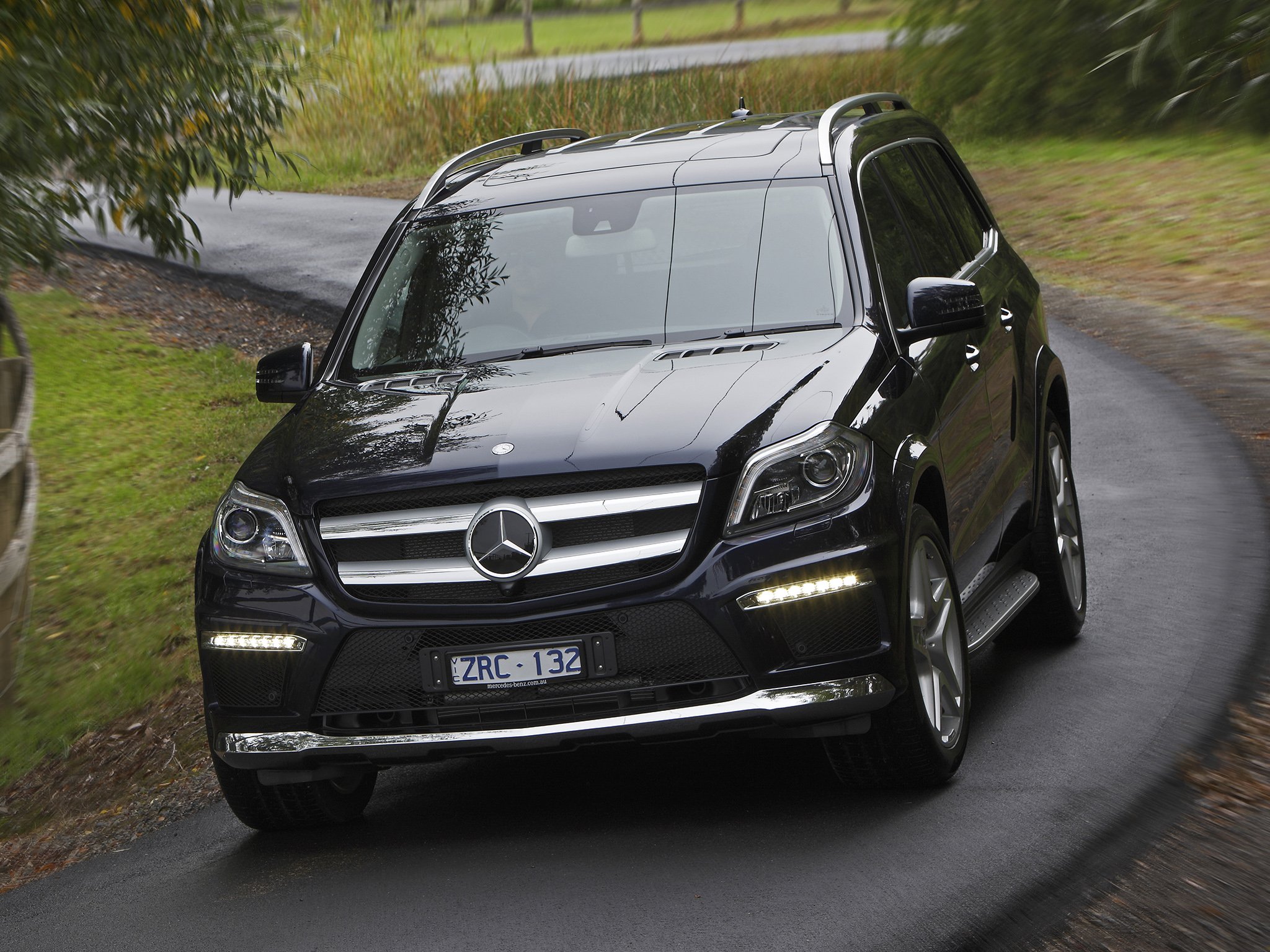
The German manufacturer has asked owners to stop driving their vehicles immediately, telling those affected to “contact an authorised Mercedes-Benz service centre to arrange for an inspection as soon as possible”.
“The recall process will involve inspecting potentially affected vehicles and, depending on the results of the inspection, replacing the parts where necessary,” said a spokesperson for Mercedes-Benz Australia.
“Until the inspection takes place, we ask our customers not to drive their vehicles. If necessary, Mercedes-Benz will work with the customer to arrange an alternative transport solution, free of charge, during this time.”
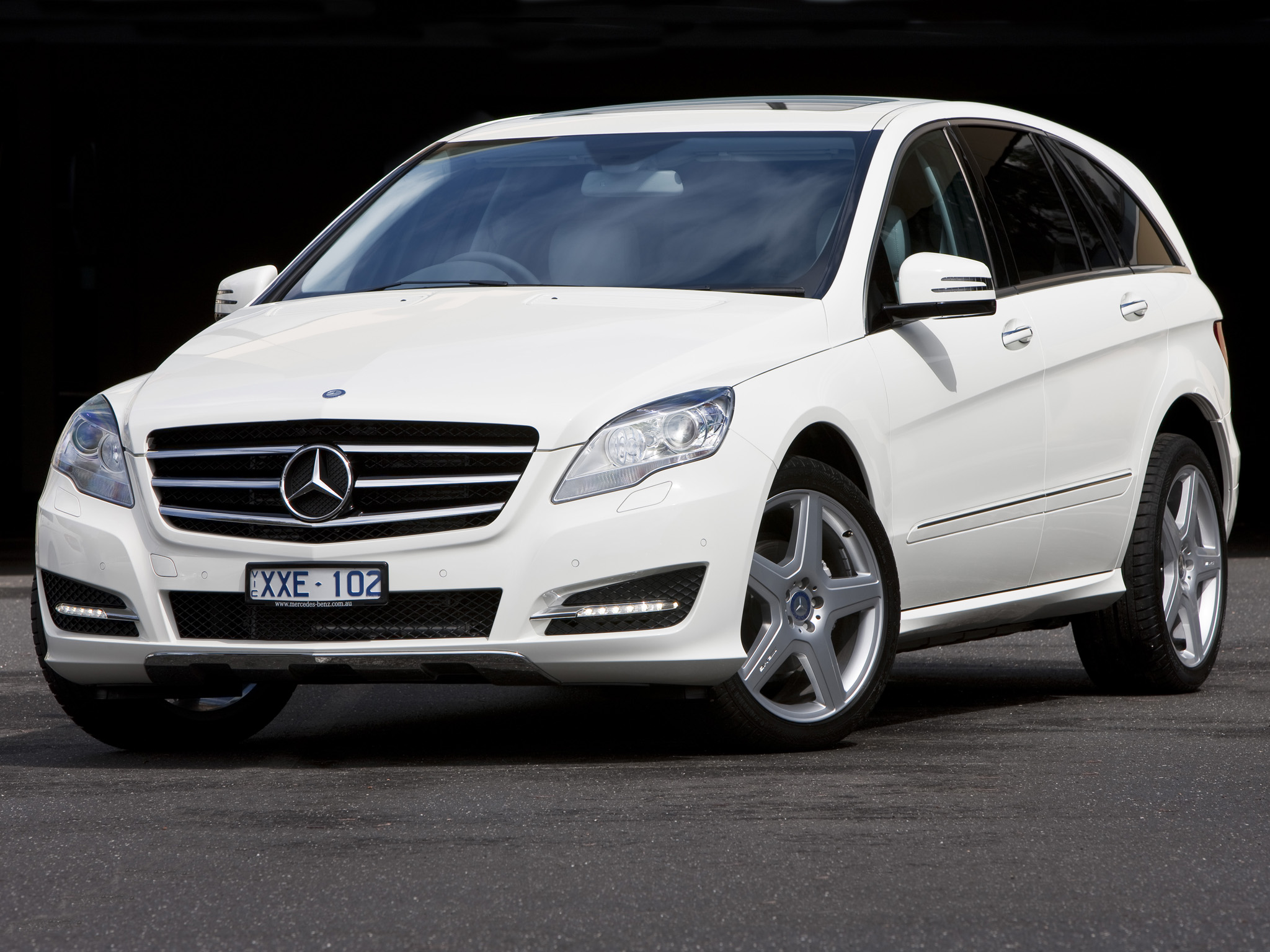
Owners who are seeking further clarification about the issue are encouraged to contact their preferred Mercedes-Benz service centre or the Recall Campaign Helpline on 1800 074 939.
A list of VINs for cars involved can be found here and below:
| Model | First six VIN digits | Build year |
|---|---|---|
| ML 280 | WDC164 | 2005 u2013 2011 |
| ML 300 | WDC164 | 2005 u2013 2011 |
| ML 320 | WDC164 | 2005 u2013 2011 |
| ML 350 | WDC164 | 2005 u2013 2011 |
| ML 500 | WDC164 | 2005 u2013 2011 |
| ML 63 | WDC164 | 2005 u2013 2011 |
| GL 320 | WDC164 | 2006 u2013 2012 |
| GL 350 | WDC164 | 2006 u2013 2012 |
| GL 420 | WDC164 | 2006 u2013 2012 |
| GL 450 | WDC164 | 2006 u2013 2012 |
| GL 500 | WDC164 | 2006 u2013 2012 |
| R 280 | WDC251 | 2005 u2013 2016 |
| R 300 | WDC251 | 2005 u2013 2016 |
| R 320 | WDC251 | 2005 u2013 2016 |
| R 350 | WDC251 | 2005 u2013 2016 |
| R 500 | WDC251 | 2005 u2013 2016 |
| R 63 | WDC251 | 2005 u2013 2016 |
BMW-style polarisation 2.0 comes in the shape of this XM 60 xDrive, a 559kW badass SUV in shitstorm livery that takes no prisoners. Have they gone nuts in Munich – or is this hewn from solid Marvel meets Manga PHEV behemoth firmly on the pulse of time after all?
The response to the XM show car, which was unveiled far afield in Miami late last year, could not have been more scathing. Social media scorned and derided the first new model released under the second regime of M chief Franciscus van Meel.
Malicious tongues discredited it as a Skoda Kodiaq avatar deformed by a Russian Kamaz truck grille, notorious pessimists feared demolition of the BMW brand by a single product allegedly capable of delivering the blow of death to an already touseled image, and professional design analysts diagnosed a brutal monster predestined to divide society.
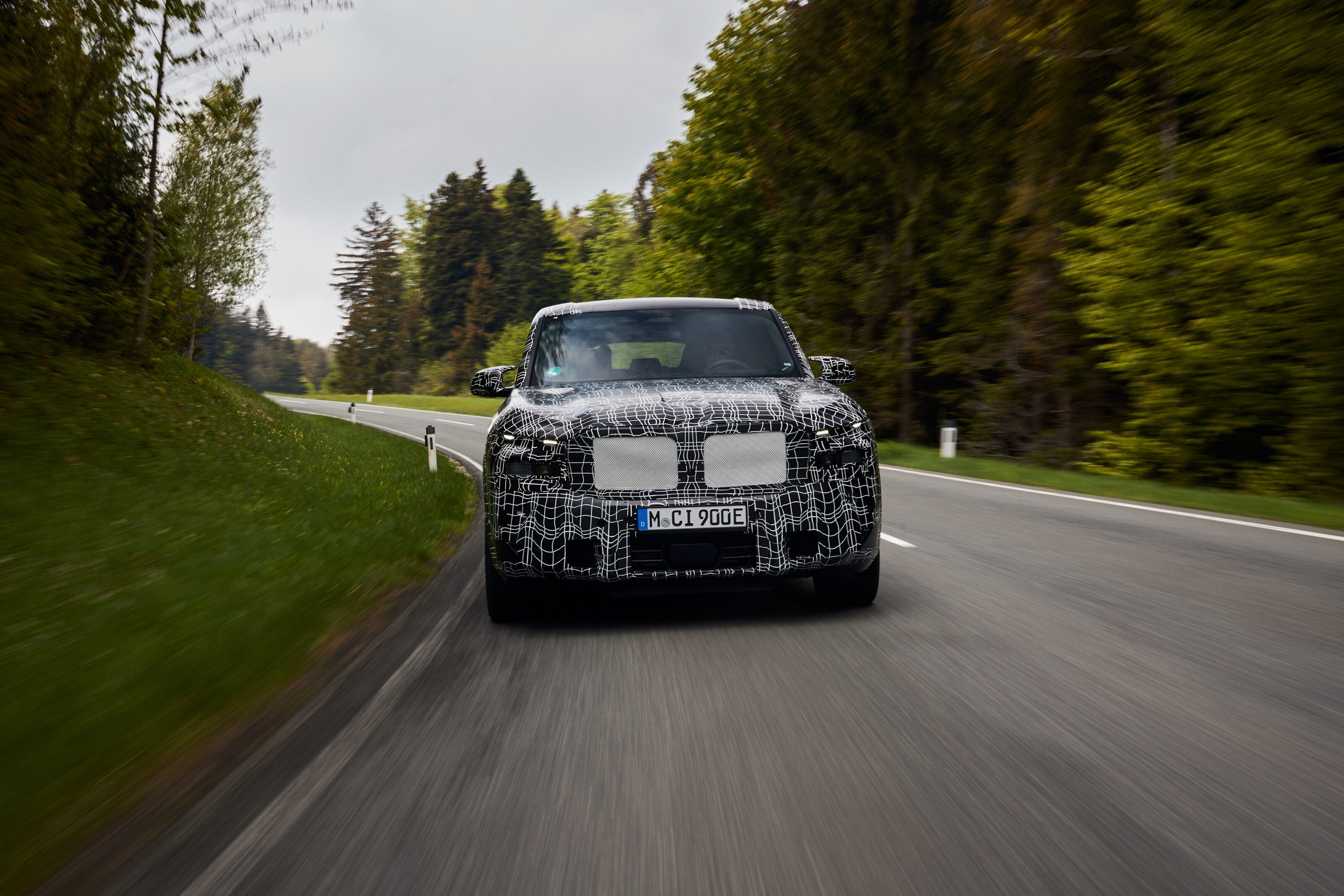
Strong stuff – after all, the latest hate magnet is merely a motor car, not a tyrant or a convicted child molester. Perhaps we should reserve final judgement until the real thing without camouflage panels gets introduced later in the year.
Quite unexpectedly, the cumulative crushing criticism triggered the protective instinct of this author, who has in the past assigned several BMW models to the zenith of awfulness, poor taste and visual anarchy. Think for instance of the current 4 Series range disfigured by that ugly upright rodent grille, a foreign matter that simply does not connect with the rest of the car.
The outgoing 7 Series and the iX also carry a high risk of eye trauma. The new 7 Series, however, manages to fuse the cathedral kidney, the optional Black Pack and the M Sport outfit to a surprisingly coherent piece of street furniture. It’s not pretty but it is at least expressive.
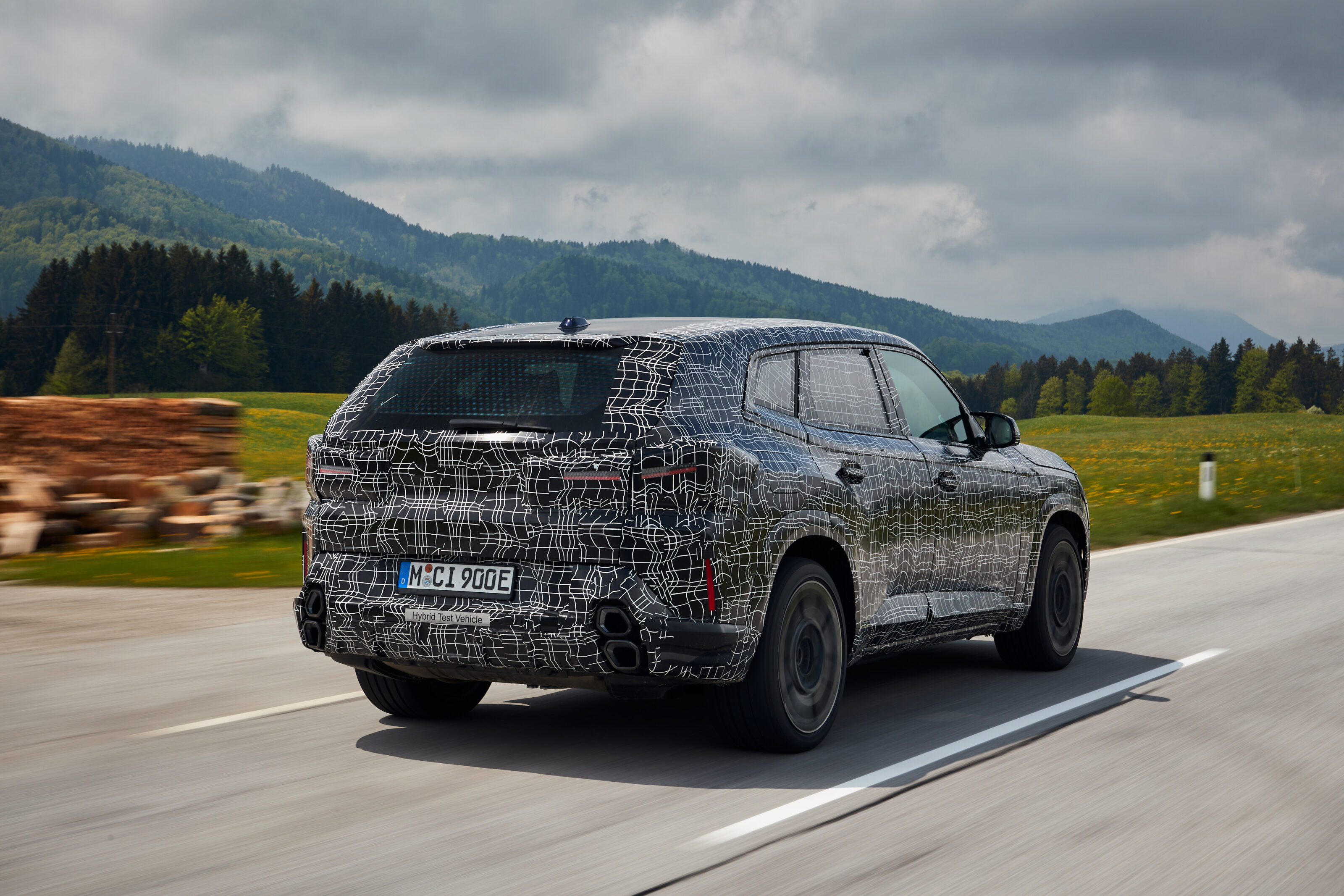
A similar verdict would seem to apply to the XM, which consciously does not wear its mink coat inside out but enjoys showing off, a garishly groomed dandy sporting 23-inch designer sneakers, ready to flex its muscles as soon as a smartphone pops up at the horizon.
Subjectively, the front end is 90 per cent grille and 10 per cent body colour. Surrounding the XXXL double air intakes are origami surfaces made of sheet metal and composites that throw hard shadows complemented by continuously changing shine effects.
Running high up – only an inch or two below the brow of the bonnet – are two pairs of slim daytime running lights. Two floors down, the main matrix illumination armada hides behind rectangular smoke screens that render the content virtually invisible during daytime.
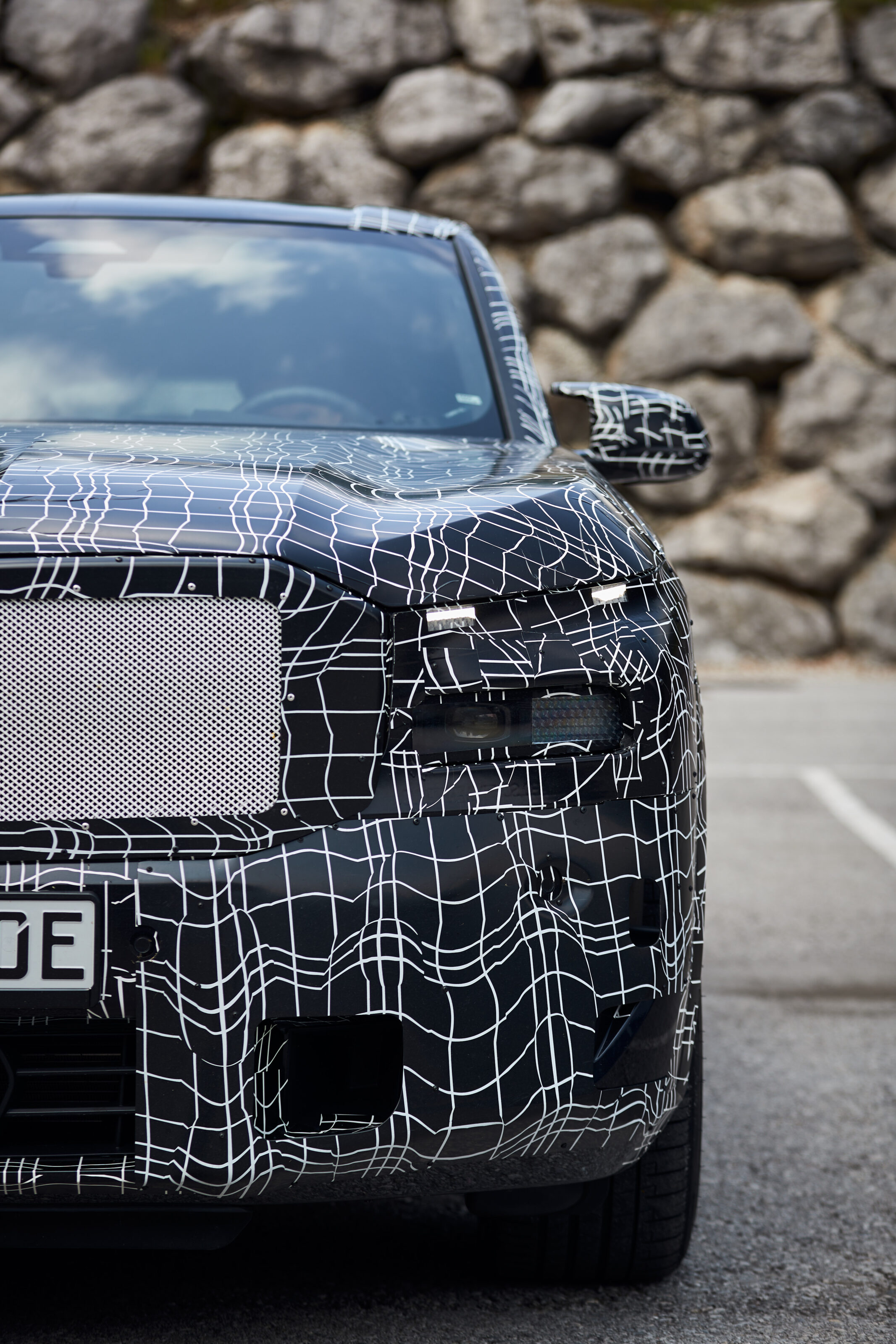
At night, the illuminated kidney grille makes the XM unmistakably a Bee-Emm. The nixing of conventional styling themes continues at the rear, where the stacked tailpipes are reminiscent of the Ferrari California. Perhaps even more extreme are the split, garland-shaped taillights that grow from bulges in the wings before they almost meet on both sides of the BMW roundel.
Buyers can choose between two styling themes: relatively discreet and positively flamboyant. The latter option includes jewel alloys, two-tone paint and a contrasting ribbon in gold or copper that runs from the bottom of the A-post to the top of the wide C-pillars.
Those who wear D&G, Off White or Gucci will love it, the rest can only hope that a monochrome outfit makes them less visible.
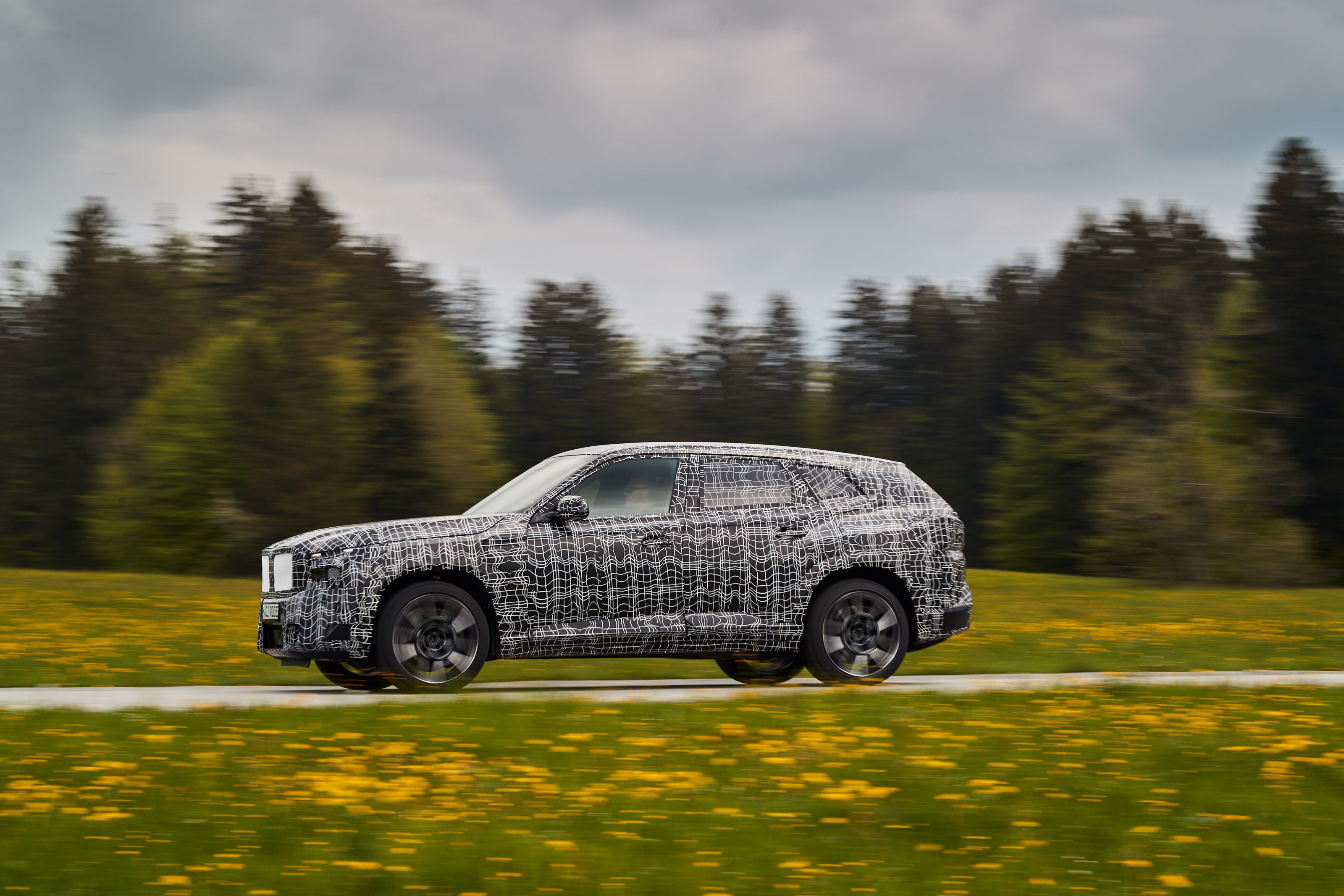
You guessed it – this car does not cater primarily for the European market. An electric range of up to 80km is simply not enough to jump the social acceptance barrier firmly supported by the XM’s artillery-like proportions, superhero stance and underworld detailing.
In stark contrast, customers from North America, China and the Middle East where the XM should sell like hot cakes are bound to adore the broad-shouldered posture, self-confident presentation and 360-degree bling-bling overflow.
According to the M marketing squad, main rivals are similarly imposing fast lane regulars like the Mercedes GLS63 AMG and the G63 AMG, Lamborghini Urus, LWB Bentley Bentayga and the new Range Rover SVO.
Since new car prices are currently going through the roof, BMW has recently hiked the MRSP for the 355kW base model to well over €100,000 (AU$150,000). The 486bhp XM 60 we drove is now tipped to cost a smidgeon under €160,000 and the top-of-the-line 559kW/1000Nm tarmac peeler commands at least another €35K.
That’s a lot of money for a lot of a car in a segment where the queues get longer by the day and certain used models fetch list price after 12 or even 24 months. All output numbers factor in a 152kW e-power module.
That electric motor is nestled inside the gearbox, matched to a 4.4-litre bi-turbo V8 – and it’s not the one you’re familiar with. Rather, in celebration of its 50th birthday, BMW’s M division has developed a new engine, the S68.
Destined to be shared in lower tunes with ‘regular’ BMW and M Performance models, the S68 is a wholly new beast, similar in concept to the existing S63 but in fact sharing no parts with its predecessor.
That means that along with everything else new, the S68 has a 48V mild-hybrid system inside the new-design ZF eight-speed transmission for more direct power, and a new crankshaft, oil cooler, oil sump, new turbochargers and a new VANOS system that utilises electric power rather than oil pressure.

Asked why the first bespoke M product since the M1 is not a super sporty coupé or convertible, the chief project engineer Sven Ritter answered like a shot: “Because SUVs are where the market is. Not only in Europe, but globally.
“The XM fuses luxury and performance on the highest level. It is not an X6 on steroids, an evolution of the X5M or a rebodied X7. We designed and engineered this vehicle from scratch because it must compete against the icons in its segment.
“That’s why excelling on a race track is not part of its DNA. Instead, this is the ultimate statement of style and substance. As state-of-the-art PHEV, it is a transitional stop-gap concept which will go fully electric as soon as suitable batteries are available.”
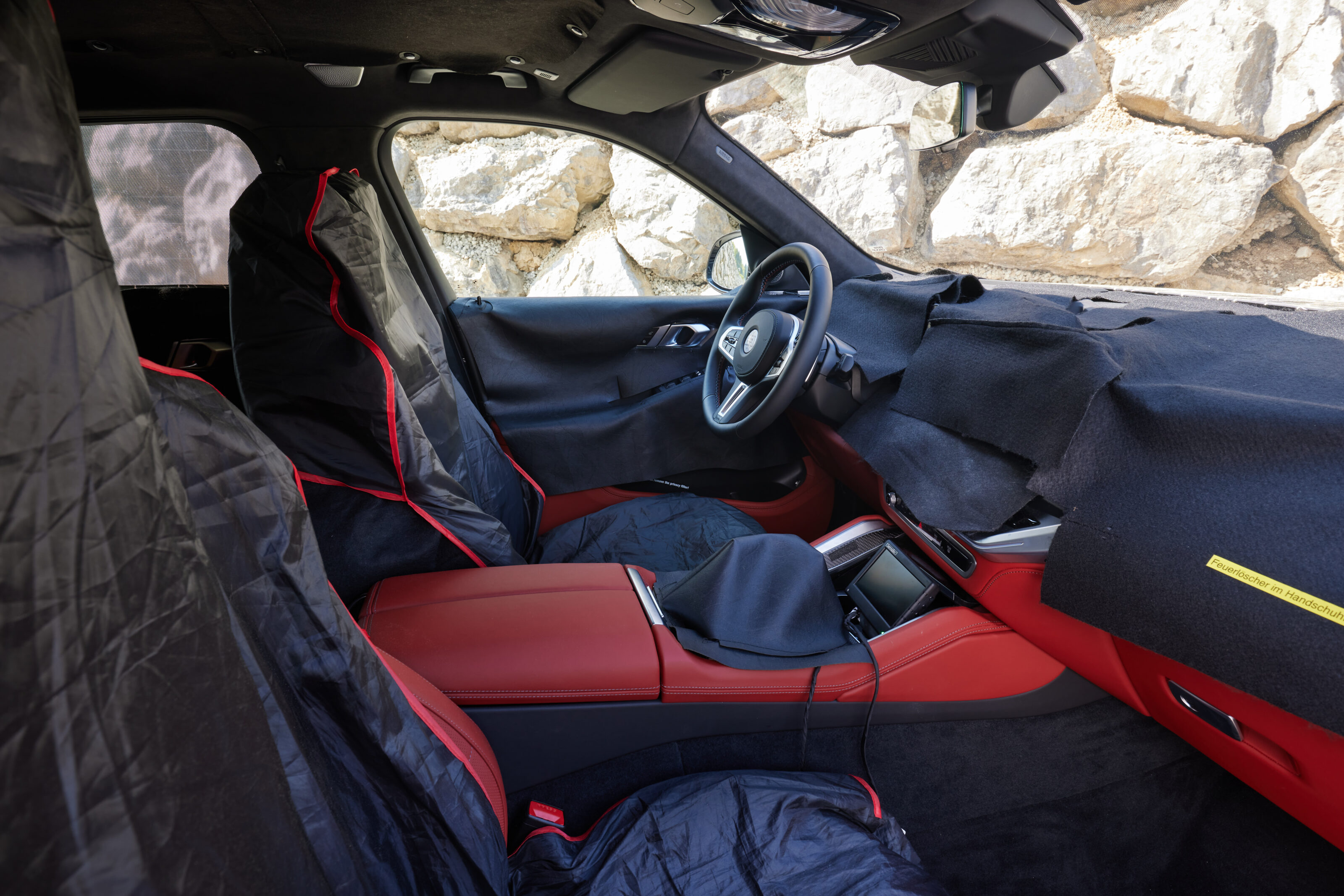
Measuring 5110mm in length, 2200mm in width and 1730mm in height, the boxy newcomer shares a wheelbase and footprint with the X7. The accommodation for driver and passenger is to an extent compromised by the wide unpadded centre console and protruding armrest, but the noise level hits a new low thanks to the world’s first four-seal door insulation system.
The rear seats wrap around like a generously padded transverse chaise and while the floor space in row two eclipses the iX only by a token margin, the seating position is notably more relaxed since the compact battery pack leaves plenty of depth for long legs.
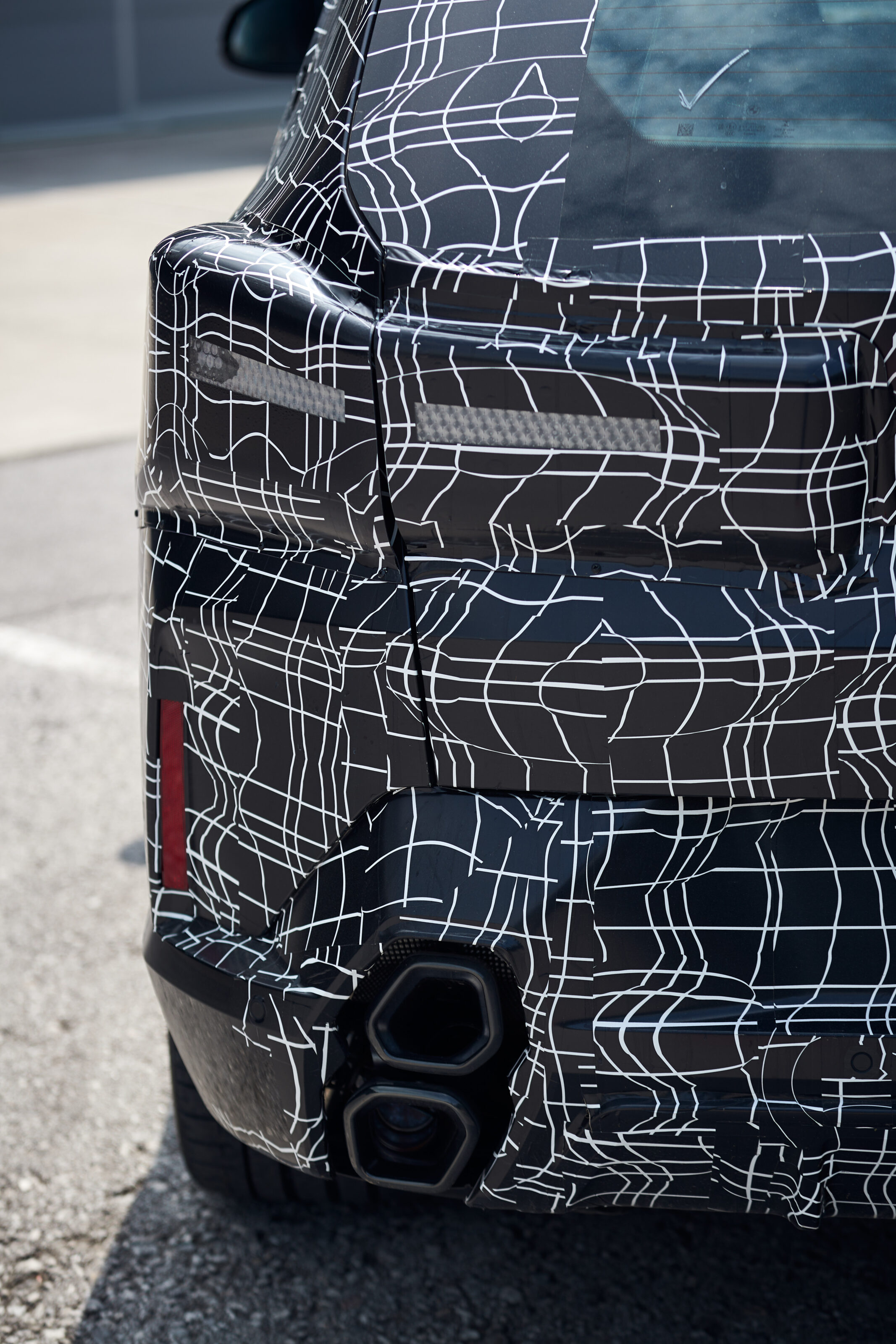
Tipping the scales at just under 2.8 tonnes, the XM is a proper heavyweight that puts on even more body fat when the customer goes crazy on extras. All that mass, the upright front end and our heavy right foot pushed the test car’s consumption to an indicated 16.4L/100km.
Since the homologation is not yet complete, the 3.9sec acceleration time from 0-100km/h and a top speed of 282km/h with the Driver’s Pack are still provisional.
There are two regenerative braking stages, but even the battery-friendlier setting is too defensive for that controversial one-pedal feel which, according to the M drivetrain wizards, does not really suit the car’s sporty character.
As expected, the driver can tweak the XM’s throttle feedback, shift speed, steering action, damper setting and even the calibration of the brakes. Selecting Sport shortens the pedal travel and quickens the response. It’s a debatable feature. At the end of the day, we prefer the Porsche approach that does not tamper with steering or brakes.
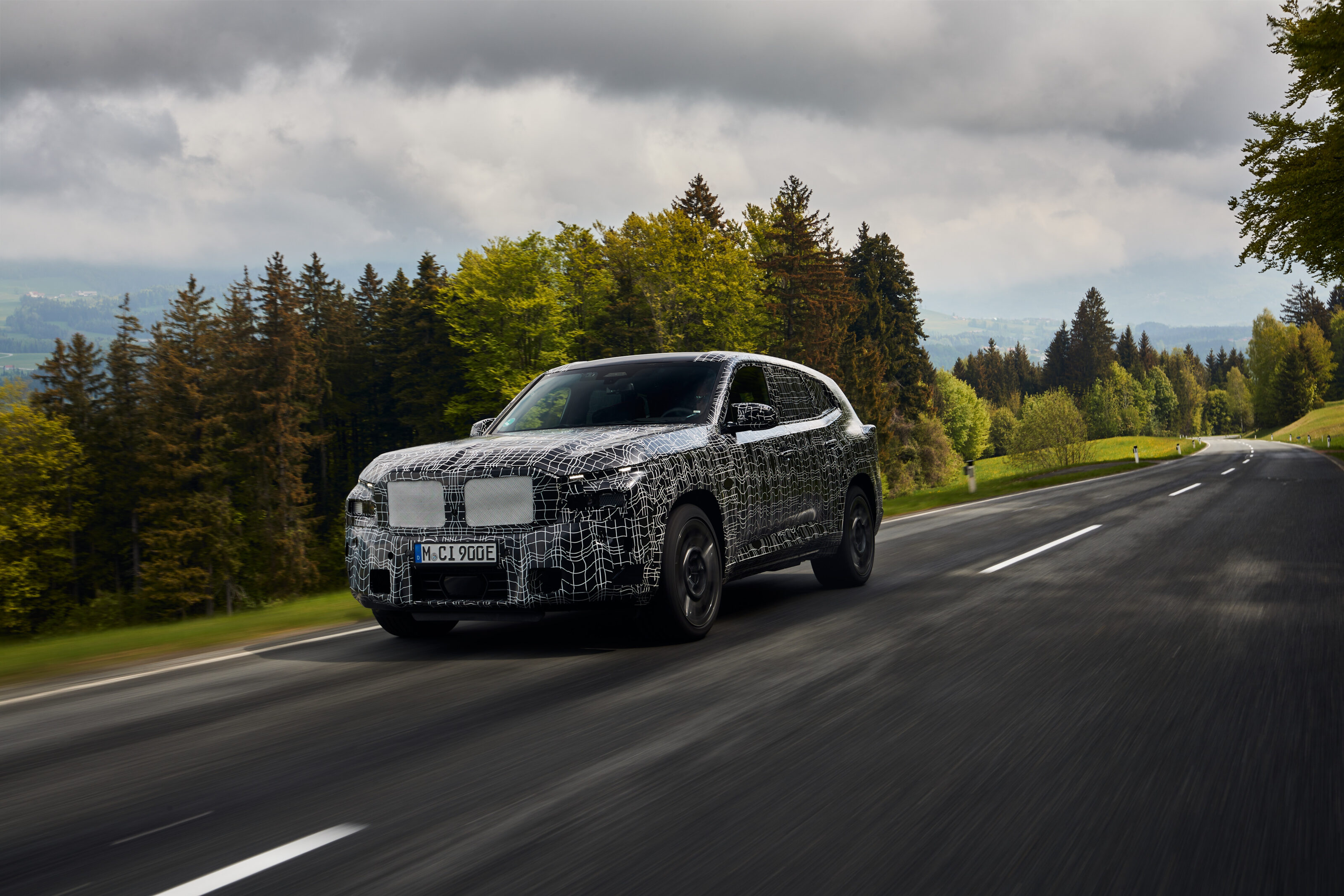
Unlike the X5/X6M, the XM does without air suspension and carbon-ceramic brakes. Sven Ritter explains why: “Especially with more than two people and luggage on board, the classic adjustable shock absorbers offer a comfort advantage over air springs. The 20in steel brakes decelerate with aplomb, and they are neither susceptible to rain and temperature nor do they squeal or drone.”
A 48-volt system feeds the switchable sway bars that, in combination with the rear-wheel steering, create an anti-roll effect that contributes to inspiring yet super failsafe handling only topped by the Urus in this segment.
According to the go-faster squad from Garching, the Cayenne Turbo, Audi RSQ8, Range Rover Sport SVO and X5/X6M play in a more track-focused league than the luxury-biased XM. The new arrival is a very quick yet totally relaxed high-end crossover.

Its supple ride is more hovercraft than speedboat, grip and traction are seemingly inexhaustible, it is much more agile than its bulk and weight suggest, and the brakes perform with the determination of an executioner.
The rear-wheel steering adds an X1-like manoeuvrability through tight corners and in town, as well as directional stability at speed.
After an hour of hard charging on a mixed bag of roads, first impressions cement a smile on the driver’s face. What makes the XM special is the mix of massive turn-in grip, magnetic roadholding and failsafe handling that is ready to play but only when told so.
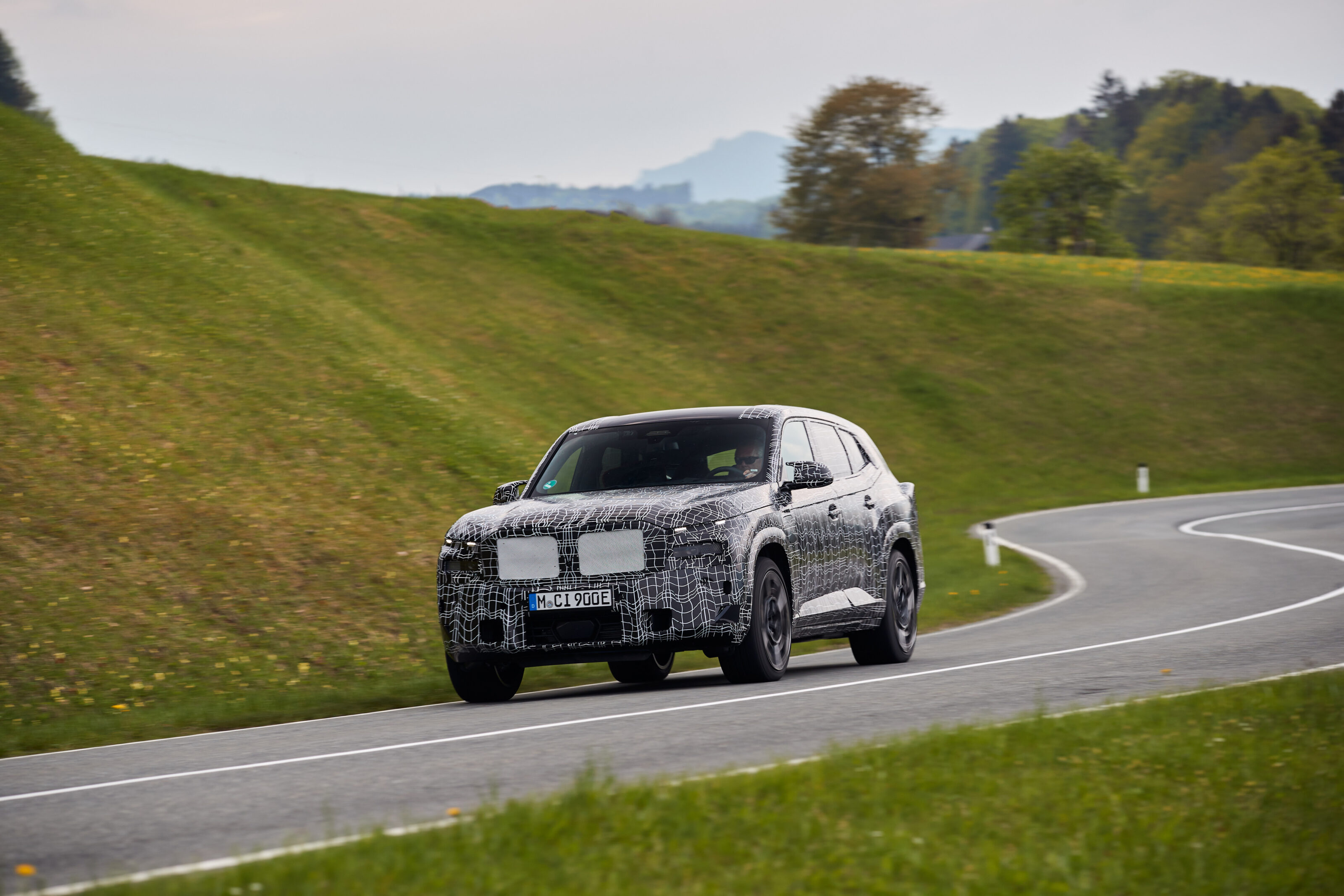
If one had to create a motto for this car, No Understeer would be the slogan of choice. Since the front wheels act like mighty precision plotters even when the radius tightens and the surface deteriorates, confidence builds corner by corner, apex by apex.
But in contrast to certain other, notably looser BMW M models, the XM knows its etiquette and how to present it.
In E-mode, it almost out-wafts the noble Cullinan, even in Sport Plus it refrains from making puerile noises and harsh gestures, and its refined manners – as well as that mountain of power and torque – shine through clearly in every drive mode.
There is no doubt about it: even this opulent, part-time aggro, full-time luxury tarmac peeler fits the description of the ultimate driving machine.
Below: the BMW XM concept, revealed in November 2021


UPDATE, May 17, 2022: Maserati MC20 Cielo reveal set for May 25
Maserati has given its upcoming convertible MC20 a name, confirming the new model will be called Cielo.
Having first teased the model last year and hinting at a reveal last week, the Italian manufacturer has announced the MC20 Cielo will be its cabriolet mid-mounted V6 sports car.
The Cielo name is derived from the Italian word for ‘sky’, as Maserati says the model’s name “highlights the fact that it is a model devoted to driving pleasure in the great outdoors, while maintaining all the prerogatives of a true super sports car”.
Covers are still slated to come off on May 25.
The story to here
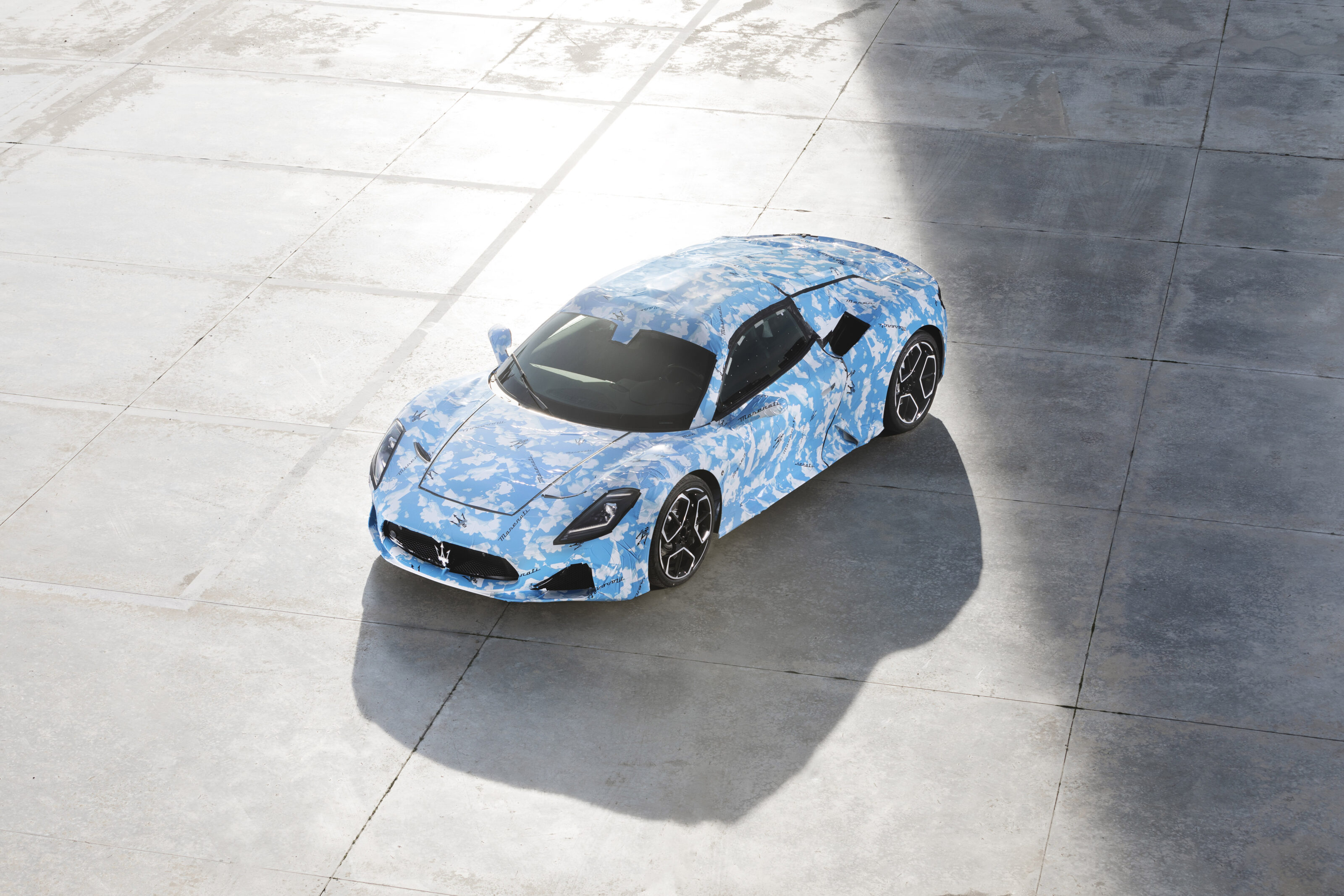
May 12, 2022: Maserati MC20 Cabrio teased ahead of potential reveal
Mark your calendars for May 25 – Maserati might be taking the covers off its topless supercar.
Previously teased in the back end of last year, Maserati’s MC20 Cabrio is tipped to be revealed within the next fortnight, that is if cryptic posts from the Italian manufacturer are pointing us in the right direction.
On its Instagram page, Maserati showed off three photos looking to the sky and the clouds, as an occupant of a convertible would.
https://www.instagram.com/p/Cda6vtRq_bu/
Earlier teasers of the model showed it finished in a blue and white vinyl wrap, mimicking a blue sky with whispy clouds, although those with a keen eye could see the roof structure and rear design were different to the existing model.
With Maserati set to go all-electric by 2030, it’s highly likely the MC20 will also gain an electric variant in its lifetime, however its 3.0-litre twin-turbo V6 is expected to do the job for now.
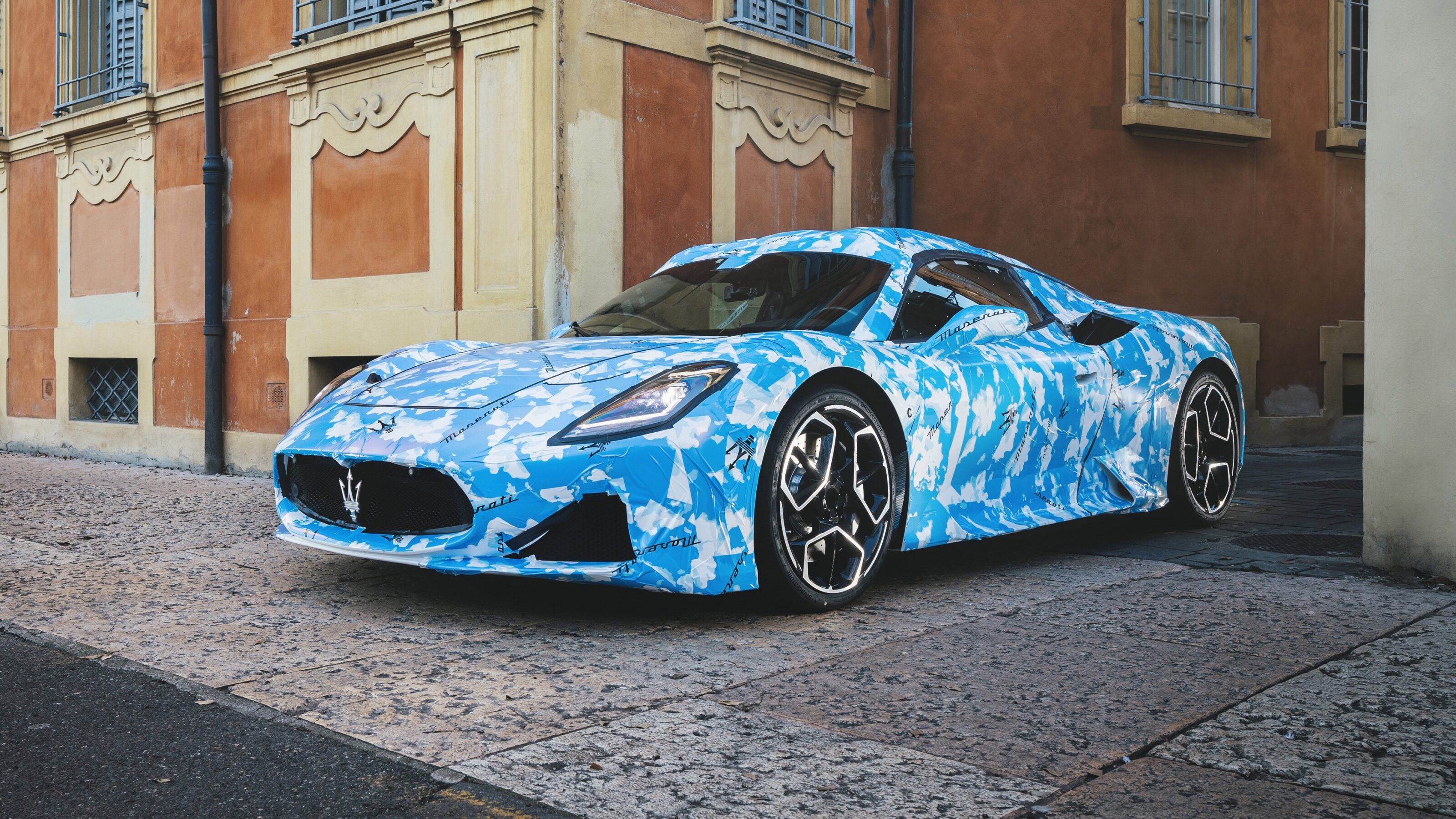
December 22, 2021: Maserati MC20 Cabrio previewed
A prototype of the 2022 Maserati MC20 Cabrio has been teased by the Italian carmaker.
Pictured at the gates of the Maserati plant in Moderna wearing a ‘cloud’ wrap to help hide details, the convertible prototype gives a glimpse of what we can expect when the model joins the MC20 line-up next year.
Under the wrap we can see the roof appears to have a central intake vent, suggesting the variant will actually be a hard-top cabriolet or targa-top – similar to the Ferrari F8 Spider and McLaren 600LT Spider.
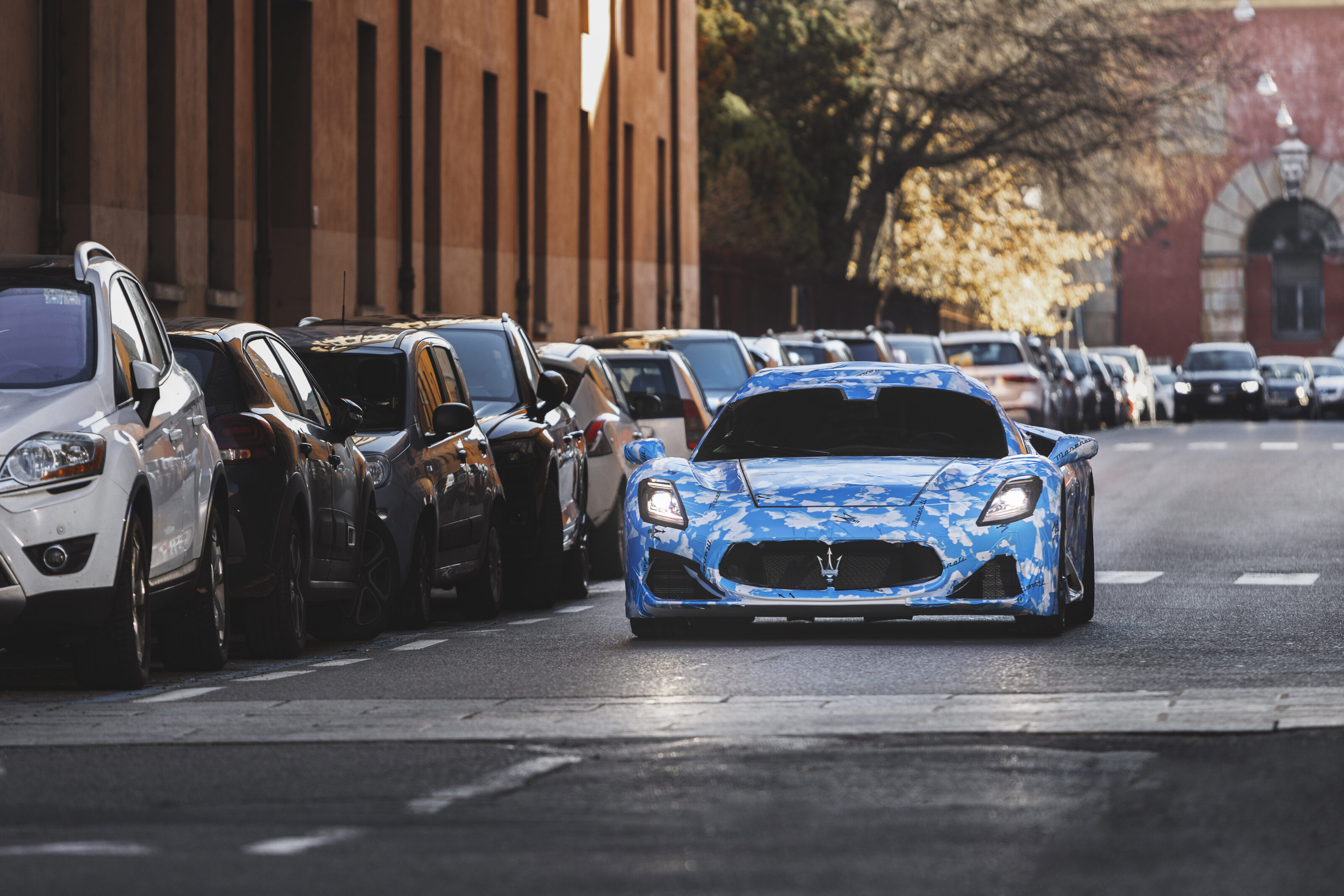
The two-seater spider is powered by a mid-mounted 3.0-litre twin-turbo V6 producing 463kW and 730Nm, developed and manufactured in-house by Maserati – the first such engine from the company in two decades.
Power is sent to the rear wheels through an eight-speed dual-clutch automatic transmission, sending the 1500 kilogram supercar to 100km/h from a standstill in 2.9 seconds for the coupe body.
From the outset, the MC20 was designed to be offered with a convertible variant, while a fully-electric version is also expected in the future.
Details of the 2022 Maserati MC20 Cabrio have yet to be outlined, but the model’s full unveiling is expected early next year.
Snapshot
- Porsche transplants Mission R components into 718 Cayman
- All-electric Cayman GT4 currently laps as quick as a 911 GT3 Cup car
- Cayman and Boxster set to go electric by 2025
Porsche’s 718 Cayman has gone all-electric, with the GT4 ePerformance revealed as Flacht’s concept study into race-ready electric vehicles.
While on the outside it might look like any “regular” 718 Cayman GT4 Clubsport, Porsche has been hard at work taking the best bits of its Mission R concept study and putting them into its popular sports car – already slated to go all-electric by 2025.
Revealed at last year’s IAA show in Munich, the Mission R was developed as a motorsport concept study for electric vehicles with a combined power output of up to 800kW, although in race trim it is designed to produce a mere 500kW.
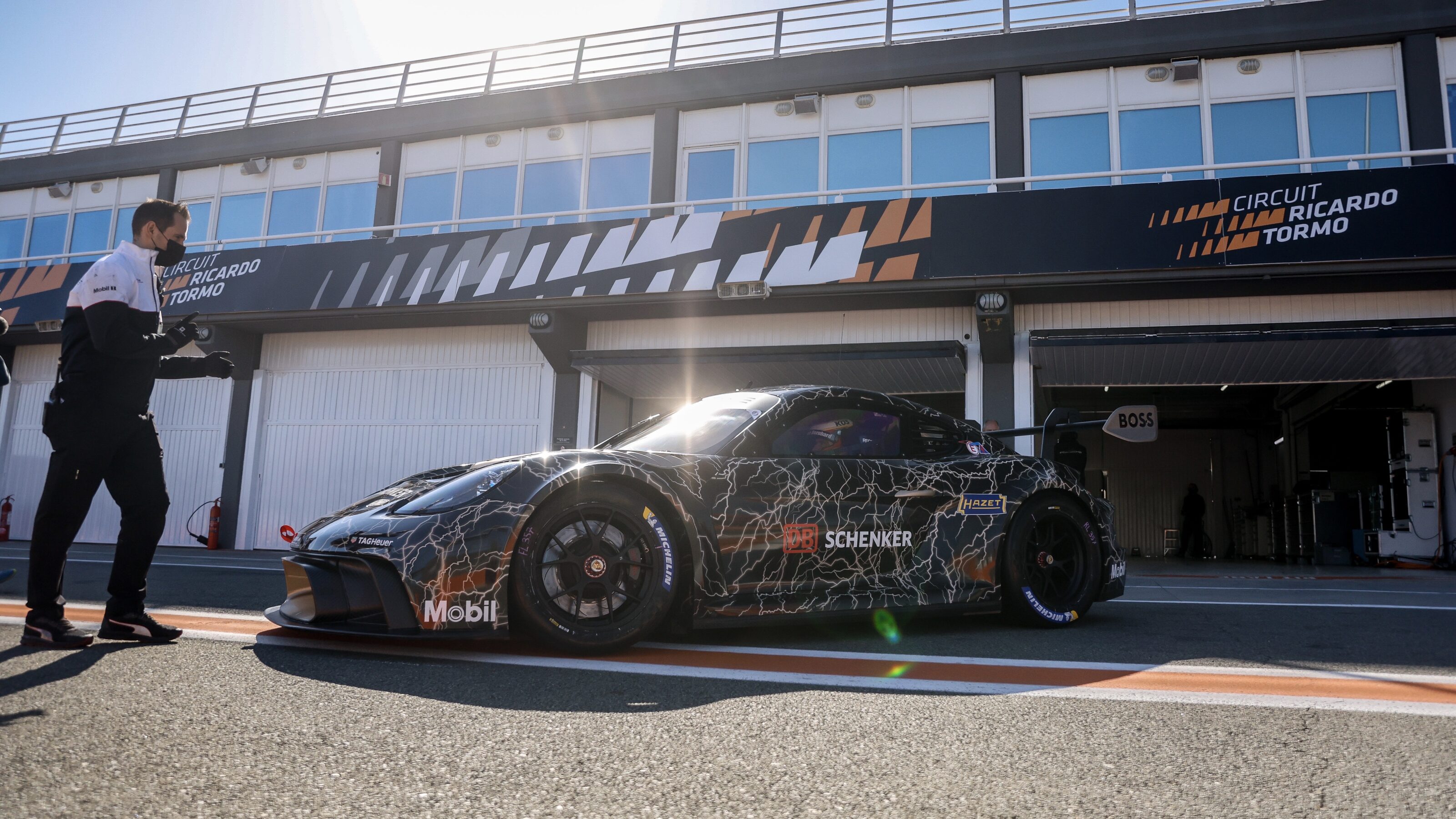
For the 718 Cayman GT4 ePerformance, Porsche took the electric motors and battery pack from its concept study, dialling down its outputs to a conservative 725kW peak and 450kW constant power.
Compared to the 911 GT3 Cup racer, which is used in Porsche’s Carrera Cup championships around the world, the GT4 ePerformance can lap just as fast as its combustion engine-powered counterpart – opening the door to its EV eventually spawning its own one-make race series.
“With the Mission R, we’ve shown how Porsche envisages sustainable customer motor racing in the future,” said GT racing vehicle project manager Matthias Scholz.
“The 718 Cayman GT4 ePerformance now demonstrates that this vision works impressively on the racetrack.
“We’re very excited about the response, because a one-make cup with electric racing cars would be an important addition to our existing customer racing programme.”
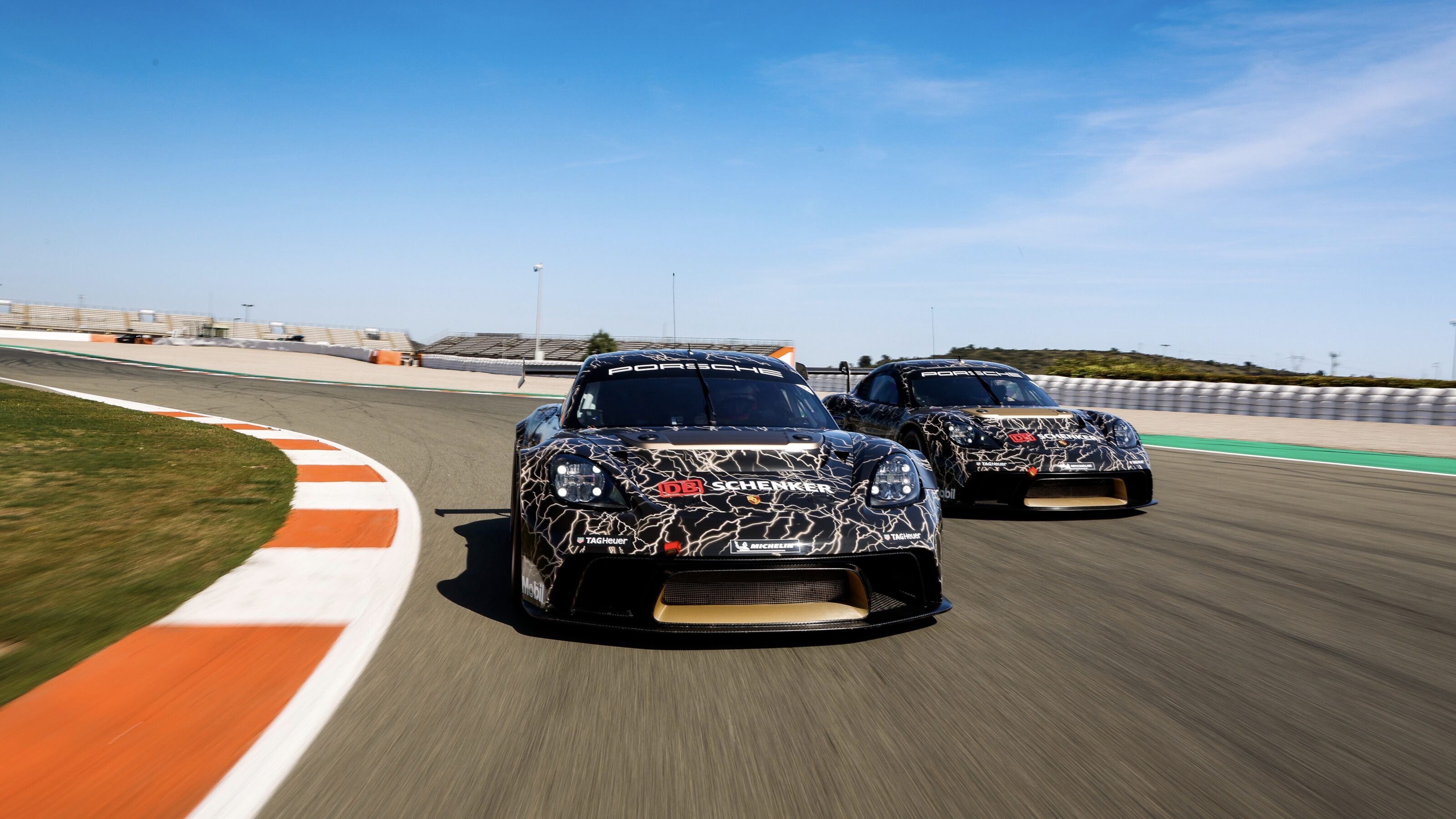
Although the base Cayman GT4’s design has been retained, its electric sibling is actually a massive 14 centimetres wider to help fit its fatter tyres, with roughly 6000 new parts designed from scratch to make the ePerformance work, adopting low-emission material production to reduce its carbon footprint.
GT4 ePerformance project manager Björn Förster says the concept is able to run consistently at race pace for around half an hour – or roughly the same amount of time as a Carrera Cup sprint race.
“The integration of oil cooling has significantly impacted the vehicle concept,” said Förster.
“With experts in the fields of aerodynamics and thermodynamics, as well as high-voltage and bodywork specialists, the development team created an architecture to tap the full potential of the battery cells for the first time – since there is no thermal derating. In this way, the power output in racing mode remains constant for half an hour.”
The GT4 ePerformance will make its first public outing at this year’s Goodwood Festival of Speed between June 23 and 26, running up the iconic 1.9-kilometre hillclimb.
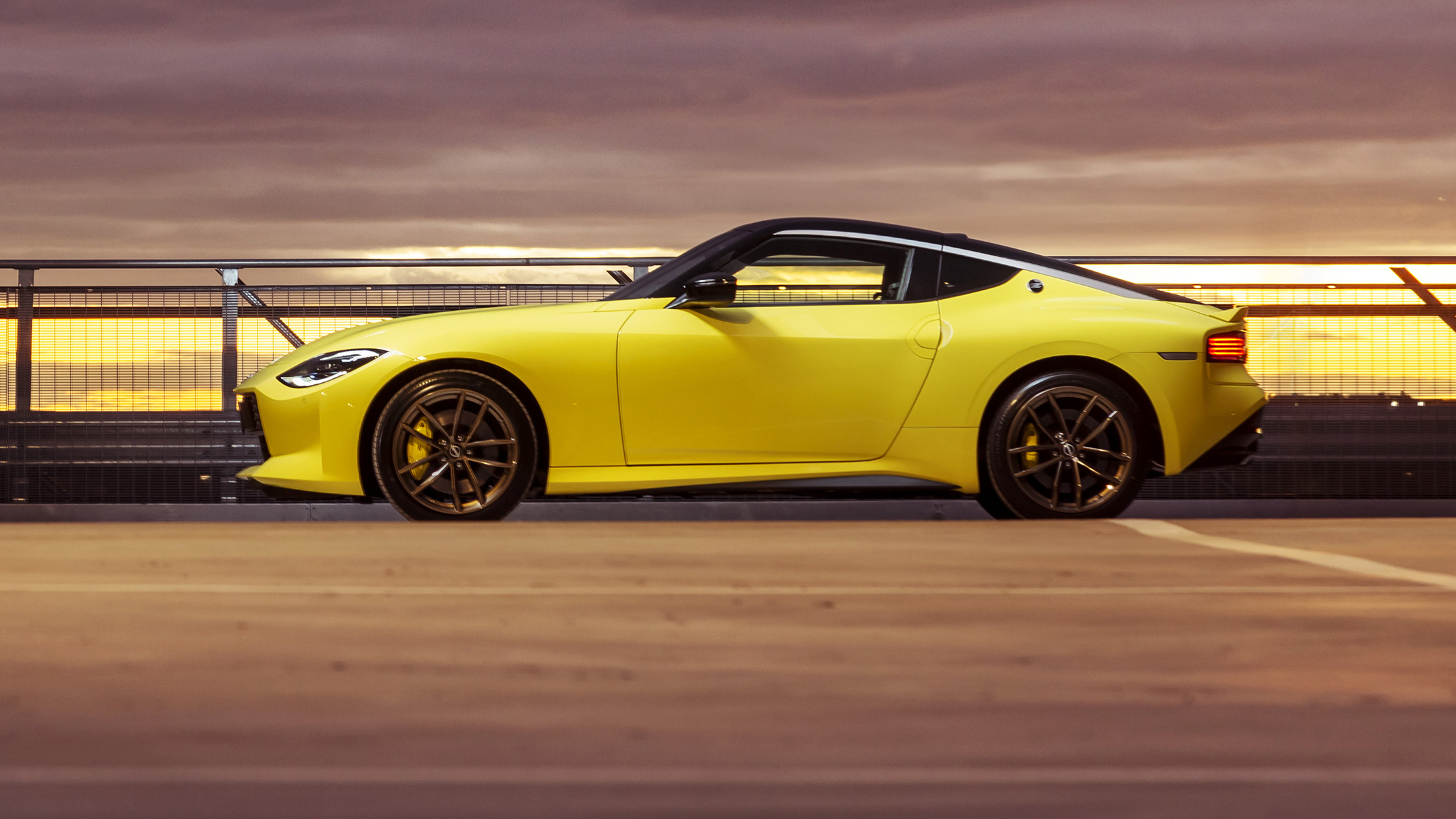
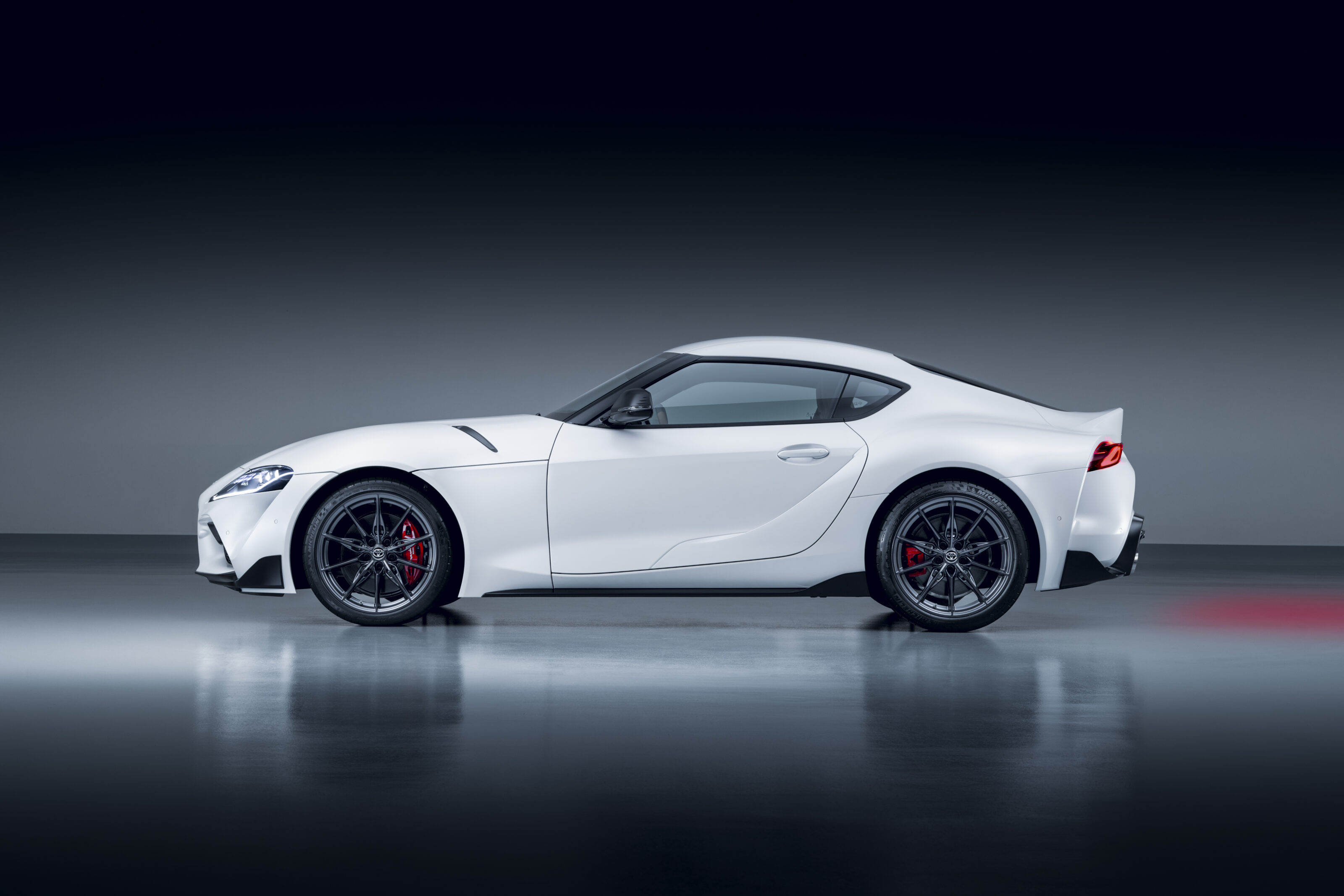
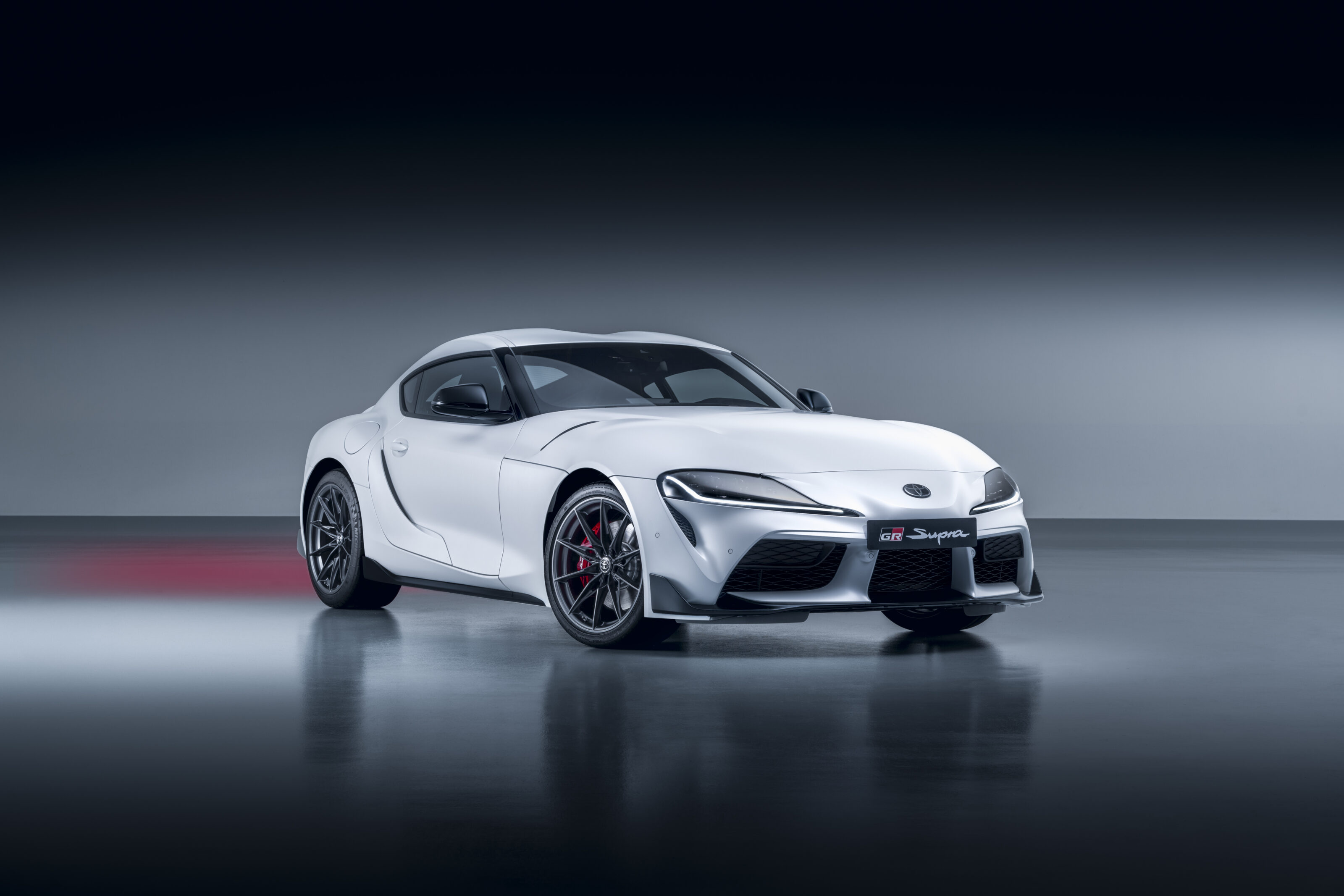
With Nissan officially unveiling the new Z coupe, the question on everyone’s lips is how will it stack up against the Toyota Supra?
Both cars are from rival Japanese manufacturers, both feature 3.0-litre, six-cylinder turbo engines, two seats and similar dimensions so how can we split them?
Let us run you through the key specs of the two cars to see how they compare on paper.
Dimensions
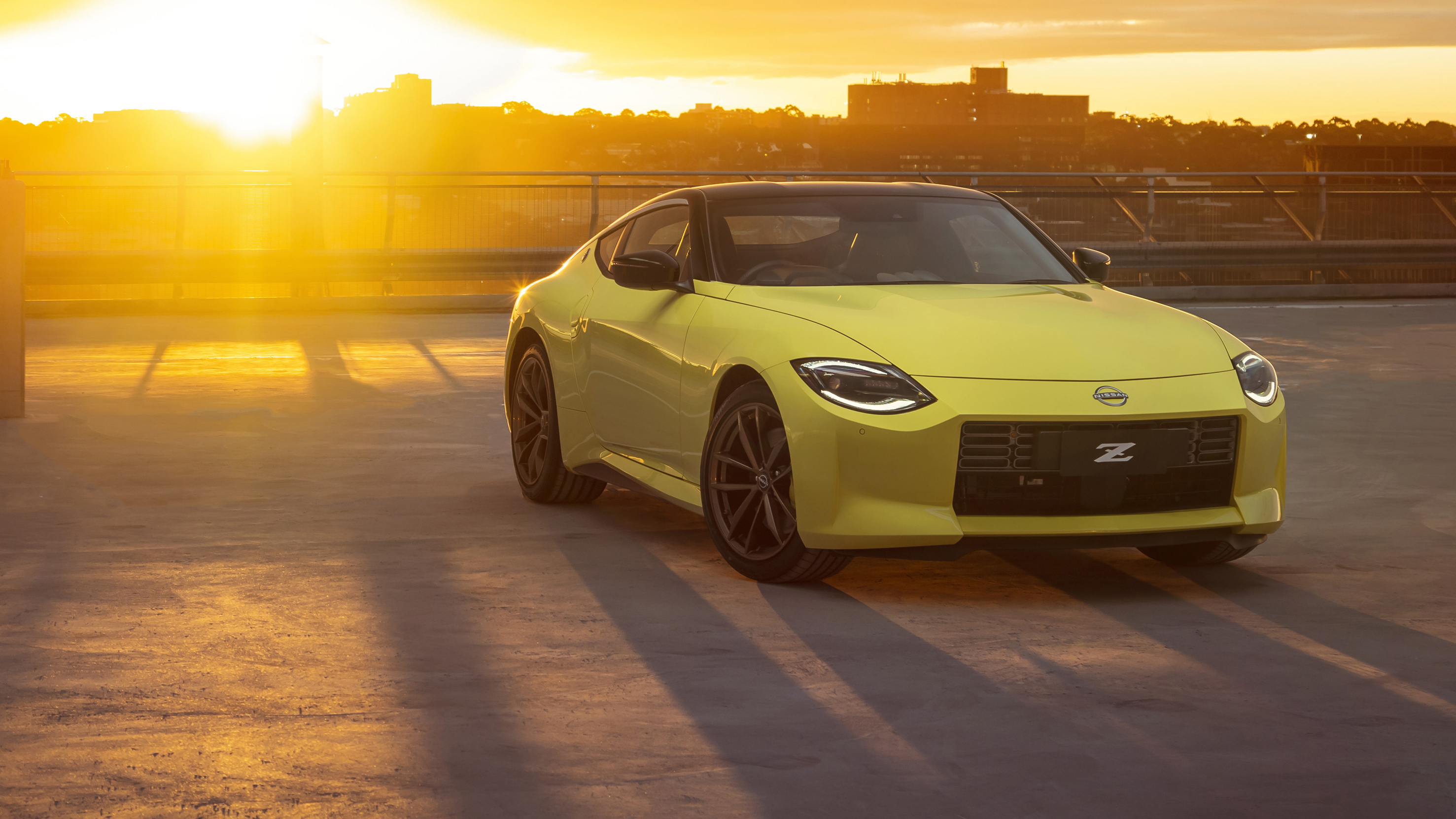
You might be surprised to learn the Z and Supra have more in common than just being two-door, two-seat, rear-wheel drive coupes.
Having a look at the exterior dimensions, they actually share the same body length at 4379mm, an uncanny similarity although the Z’s longer wheelbase means it has shorter overhangs – measuring up at 2550mm wheel-to-wheel compared to the Supra’s 2470mm.
Width and height are also extremely close, with the Supra’s hips resulting in it sitting 10mm wider than the Z at 1854mm, while the Z is slightly taller at 1316mm versus the 1299mm high Supra.
Around the same ballpark as the 1505kg Supra, the Nissan Z has a tare weight of 1561kg locally.
Engine/drivetrain
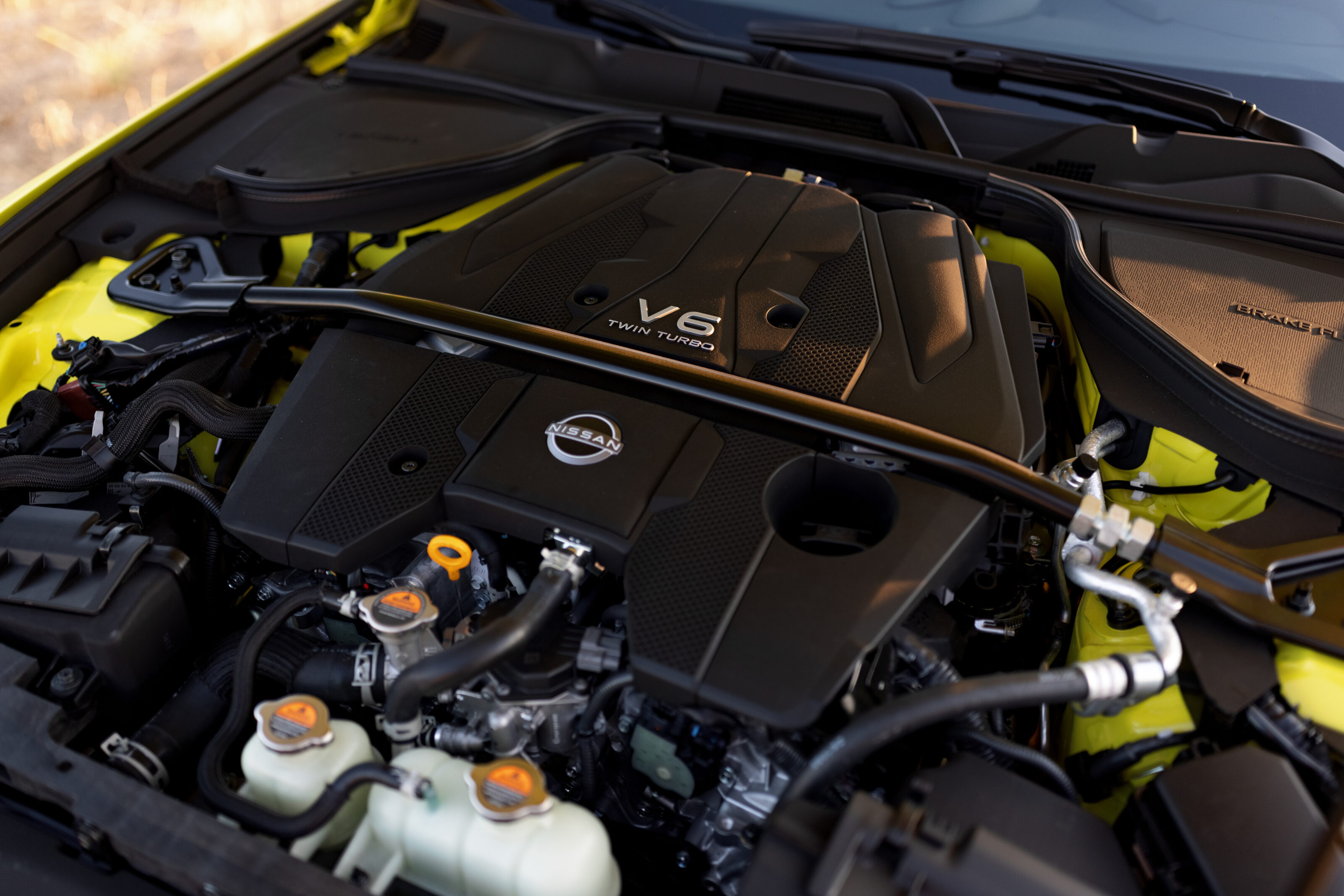
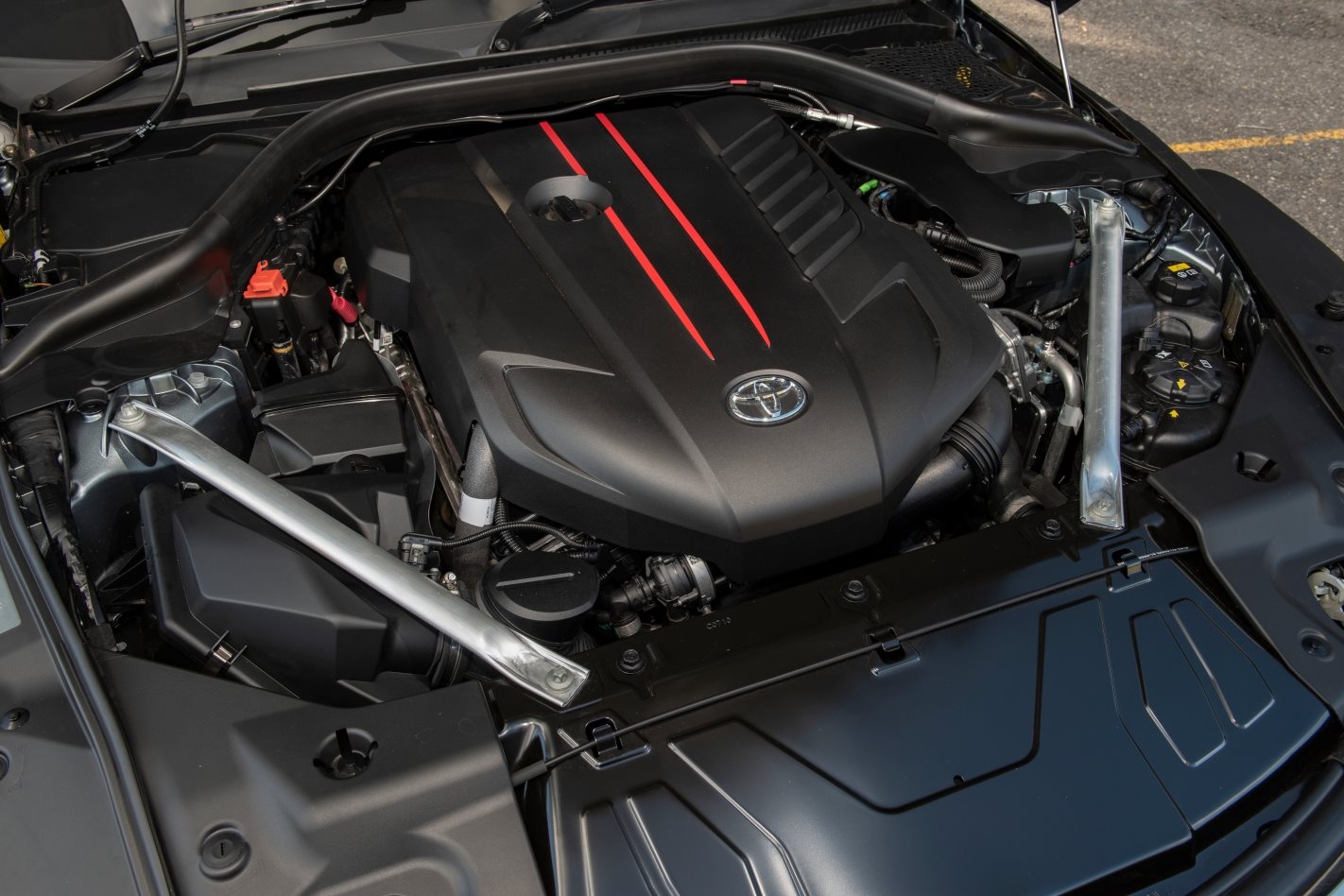
Despite both featuring 3.0-litre, six-cylinder engines, Nissan and Toyota have gone about achieving power and torque in different ways.
For the Z, it adopts the VR30DDTT from the Infiniti Q50 and Q60, a V6 unit with twin-turbochargers which helps it punch out 298kW at 6400rpm and 475Nm between 1600 to 5600rpm.
In the Supra you’ll find the BMW Z4’s B58 straight-six, single turbo engine, a powerplant more than capable of producing 285kW at 6500rpm and 500Nm from 1800 to 5000rpm.
Since the Supra’s reveal, fans of the nameplate have been crying out for a manual transmission, having to make do with the ZF eight-speed torque converter box which can still help the car achieve 0-100km/h sprint times of 4.1 seconds.
The brand has listened to these calls by confirming a six-speed manual Supra is set to go on sale globally, including Australia, later this year.
Nissan has seemingly been listening to the purists’ prayers, offering the Z as either a six-speed manual or a nine-speed torque converter auto – borrowed from Mercedes-Benz and also used in the North American Titan and Frontier models.
Perhaps the biggest difference between the drivetrain lies in how the power is sent to the rear wheels through the differential. In the case of the Supra and the Z Sport variant, power distribution is controlled through an electronically controlled diff, while the Z Performance scores a mechanical limited-slip diff – a more traditional way of balancing torque distribution.
Wheels, tyres and brakes
As the old saying goes, power is nothing without control and it seems Nissan and Toyota have adopted similar methodology to keep their cars on the tarmac.
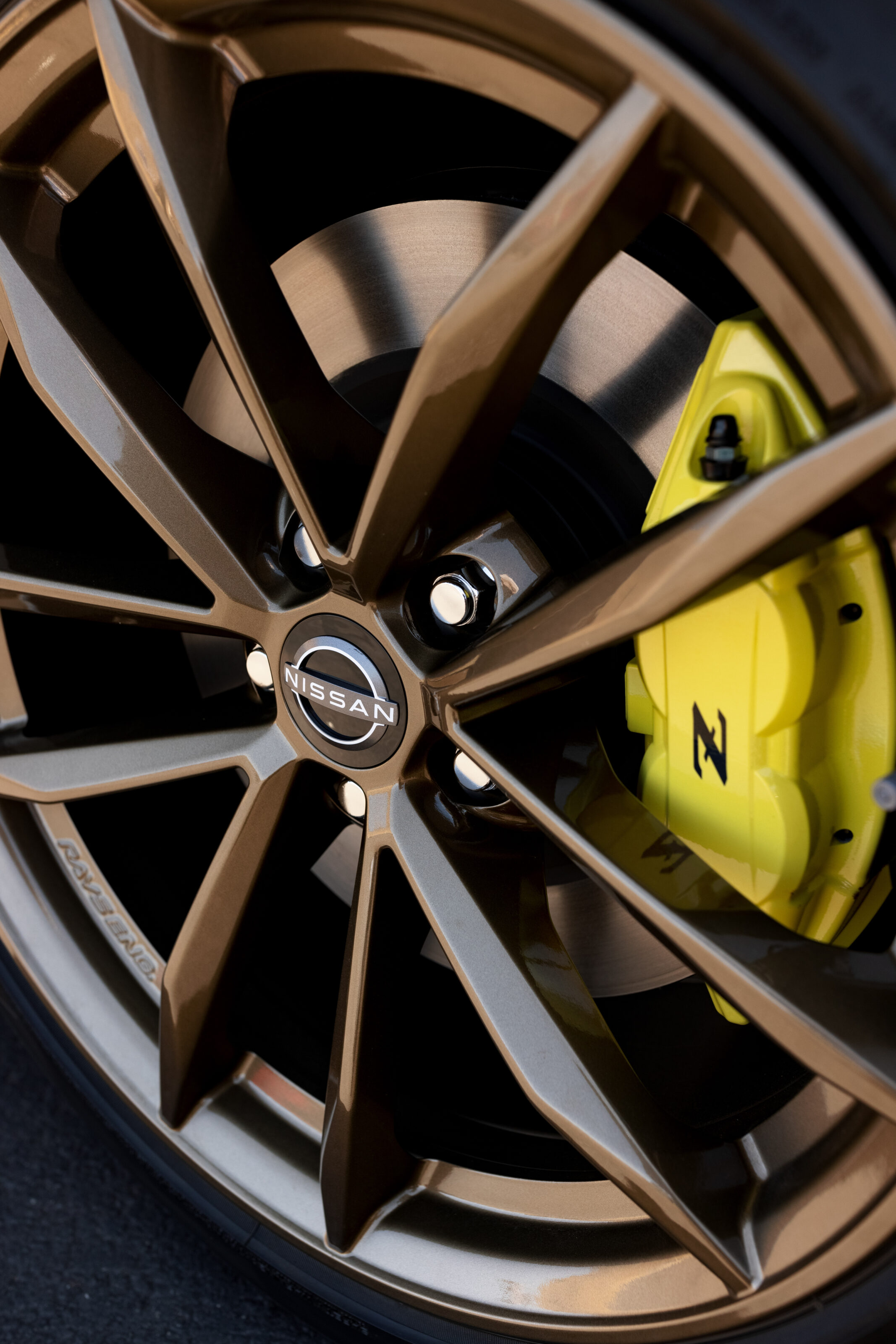
While entry-level Sport versions of Z ride on 18×9-inch wheels all round wrapped in 245/48R18 Yokohama Advan Sport tyres overseas, Australian variants receive the Performance package as standard.
This provides an upgrade to 19×9.5 and 19×10-inch wheels front and back, shod in 255/40R19 and 275/35R19 Bridgestone Potenza S007 rubber respectively.
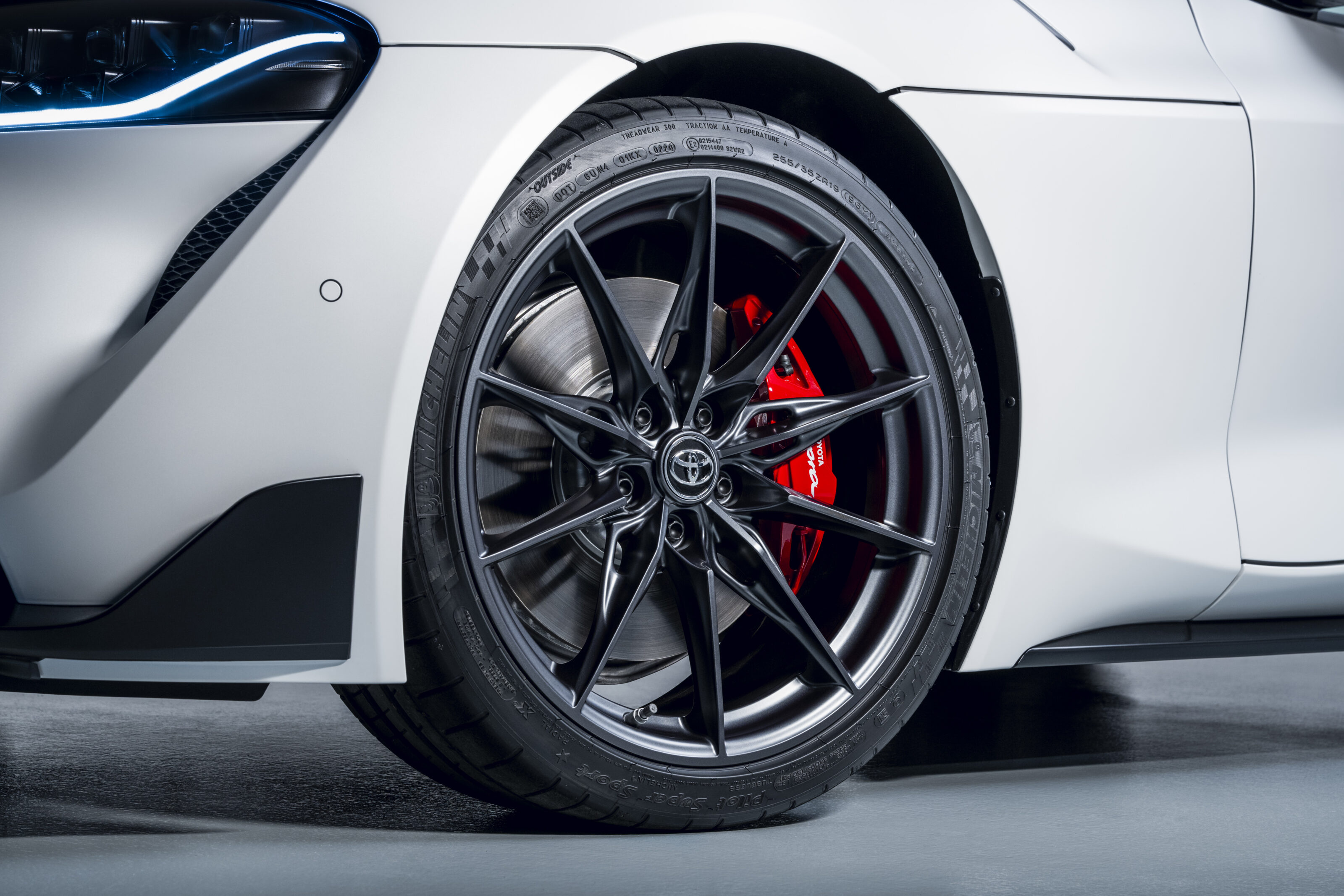
For the Supra, the base GT is equipped with 18×9 and 18×10-inch wheels on the front and rear, as the Michelin Pilot Super Sport tyres measure up at 255/40R18 and 275/40R18 respectively. For the range-topping GTS, width remains the same, but diameter is increased to 19-inches, with the Pilot Super Sports now 255/35R19 on the front and 275/35R19 at the rear.
While the Supra retains the same brakes across its two variants – 348mm rotors, four-piston calipers up front, 345mm rotors and single-piston calipers out back – the Z provides different packages on the Sport and Performance.
The lower-spec Sport utilises 320mm rotors and two-piston calipers on the front corners, with 307mm rotors and single-piston calipers at the rear. However, the Performance beefs up the stoppers to 355mm and four-piston calipers as the front set-up, with 350mm rotors and two-piston calipers on the rear axle.
Price
Nissan has confirmed the Z will be priced from $73,300 before on-road costs in Australia, replacing the previous 370Z that topped out at $64,490 in Nismo trim.
Available in a single, highly-specified variant, the price is identical for the six-speed manual and nine-speed automatic transmissions.
The limited-edition Z Proto Spec is listed at $80,700.
For the Supra, Toyota’s flagship performance model is available from $87,000 in GT trim or an extra $10,000 for the GTS, with both prices excluding on-road costs.
These prices relate to the outgoing 2022 model with its eight-speed automatic transmission. Toyota is yet to confirm pricing and specification details for the updated 2023 Supra, which will include a manual gearbox option.
Snapshot
- Tunnel will be 11 kilometres long
- Will connect Blackheath and Little Hartley
- Work will get underway early 2023
The New South Wales Government it is to build what it says is Australia’s longest road tunnel, with work due to start early next year.
The tunnel will connect Blackheath and Little Hartley in the Blue Mountains and will be 11 kilometres long in total.
The Government also confirmed there will be no toll charged and predicts it will slash travel times by as much as 30 minutes.
“In May last year, we started investigating plans to join the two to create the longest road tunnel in the entire country – and today, we’re locking that plan in as the preferred option,” said Deputy Premier and Minister for Regional NSW, Paul Toole.
“This is a history-making legacy project that will deliver safer and more efficient journeys for locals, tourists and freight travelling between the Central West and the East Coast.”
The upgraded roadway has been designed with two separate twin tunnels, providing dual carriageways heading both east and west at a gentler gradient to help cut travel times for motorists – with the hope it will especially speed up the transport of freight.

Minister for Regional Transport and Roads Sam Farraway said the Blue Mountains tunnel would deliver a ‘raft of benefits’ that would transform the connection between Sydney and western NSW.
“This tunnel project, as part of the major upgrade of the Great Western Highway between Lithgow and Katoomba, will help improve the economic development, productivity and accessibility in and through the Blue Mountains, Central West and Orana regions,” Farraway said.
“It will improve the resilience of the state’s major road corridor across the Blue Mountains during traffic incidents and natural disasters and will be built to accommodate future population growth west of the Blue Mountains.
“Once the full upgrade to the Great Western Highway is complete, it is predicted to save motorists up to 30 minutes between Katoomba and Lithgow during busy periods.”
Transport for NSW says it will continue to consult the Blue Mountains, Central West, Wiradjuri, Dharug and Gundungurra communities through a series of online and face-to-face information sessions about the tunnel project in coming weeks, with a more formal process due later this year.
Snapshot
- 3 Series update officially teased
- Current G20 generation debuted in 2018
- Light signature identical to Chinese-market i3 electric 3 Series
The BMW 3 Series is set for an update this year, with the German manufacturer announcing a facelift is on the way.
First launched in 2018, the current G20 generation of 3 Series has been in service for four years without a major update, and it seems BMW is ready to make changes to its popular sedan.
From the brief teaser posted to Twitter, a new light signature is shown off with a pair of C-shaped LED daytime running lights in each headlight – differentiating itself from the current model, which has the horizontal section of the DRL on the bottom rather than the top.
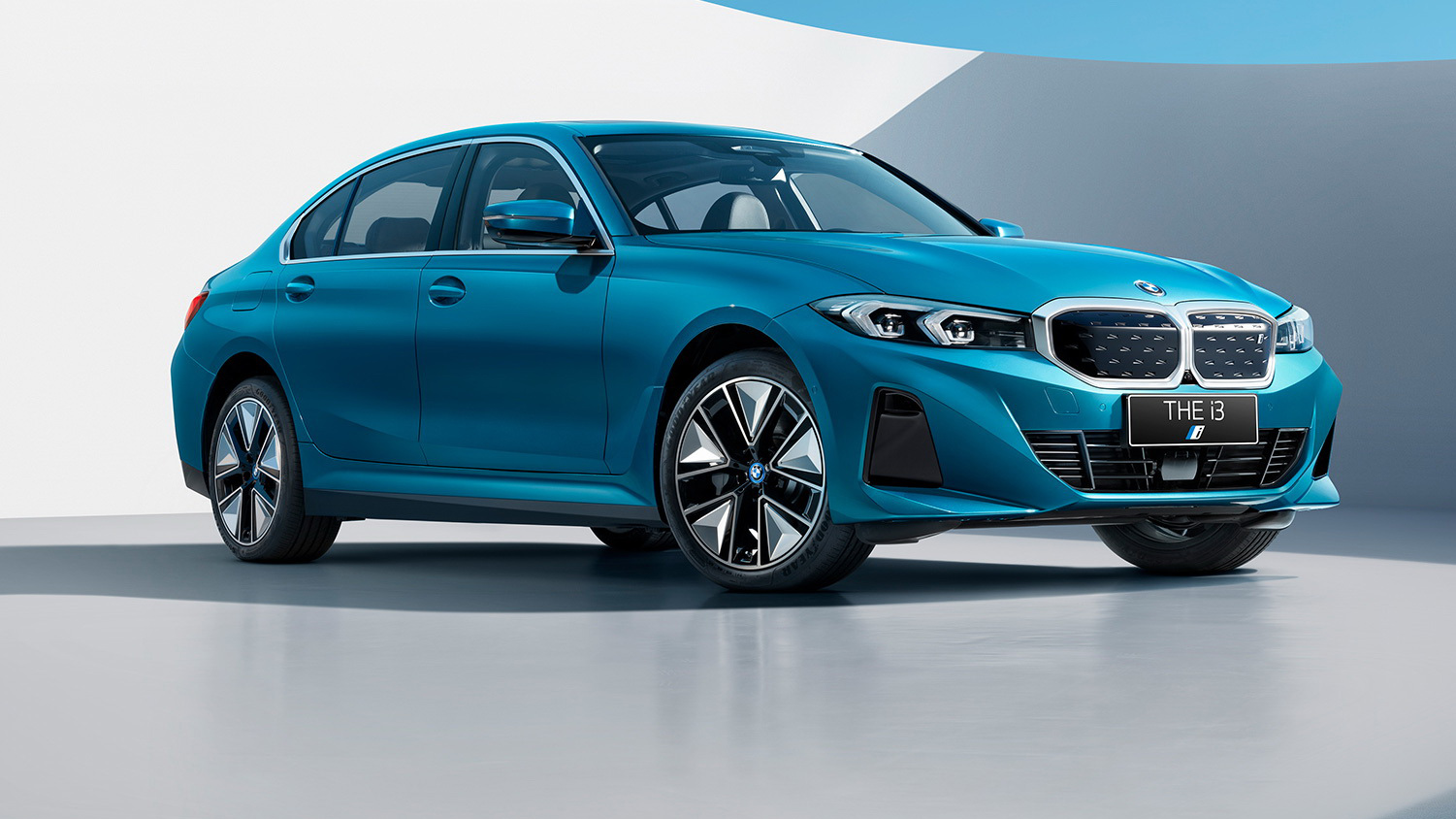
It’s likely the new 3 Series facelift – or Life Cycle Impulse (LCI) as BMW calls it – will result in the combustion engine-powered sedan sharing a number of design cues with the new i3, its China-only electric equivalent.
Leaked images from last year all but confirm this, with the upcoming 3 Series update adopting a number of frontal features from what is now known as the i3.
Inside the cabin, further cosmetic and technology changes are also expected, with certain grades potentially gaining the iX SUV’s massive curved display screen – which would lead to further tweaks to the heating, ventilation and airconditioning (HVAC) system layout.
The impending update to the 3 Series could be the final refresh of its internal combustion engine lifecycle, as BMW looks to introduce its ‘Neue Klasse‘ (New Class) electric vehicle architecture in the coming years, starting with the 3er.
Snapshot
- Renault sells 100 per cent of its stake in Renault Russia
- Also overloads chunk of ownership in AvtoVAZ
- Over a dozen manufacturers have already paused Russian operations
UPDATE, May 17: Renault sells stake in Russian arm and AvtoVAZ
The Renault Group has sold its Russian operations as well as its controlling stake in AvtoVAZ, the company has announced.
On Monday, the Group’s Board of Directors unanimously agreed to sell 100 per cent of its shares in Renault Russia to Moscow City entity and also its 67.69 per cent interest in AvtoVAZ, the parent company to Lada, to the Central Research and Development Automobile and Engine Institute (NAMI).
However, the agreement has a caveat that the Renault Group can buy back its interest in AvtoVAZ at certain points during the next six years if it wishes to do so.

“Today, we have taken a difficult but necessary decision; and we are making a responsible choice towards our 45,000 employees in Russia, while preserving the Group’s performance and our ability to return to the country in the future, in a different context,” said Luca de Meo, CEO Renault Group.
“I am confident in the Renault Group’s ability to further accelerate its transformation and exceed its mid-term targets.”
March 7: Renault takes financial hit over links to Russia
A historic deal with Russia is causing big financial issues for Renault – with the French carmarker unable to pull out of its second-biggest market.
The economic sanctions imposed on Russia, and businesses which operate in the country as a result of its war on Ukraine, have had a major impact on Renault’s share prices, falling to €22.38 at market close on March 4 from €36.33 on February 18 – its lowest level since the global pandemic began in March 2020.
According to Automotive News Europe, Russia accounted for €5 billion (AU$7.36bn) of Renault’s revenue in 2021, with €315 million (AU$463.61m) of operating profits potentially at risk due to the situation.
In 2007, Renault CEO Carlos Ghosn made a US$1 billion (AU$1.36bn) deal with Vladimir Putin to take a 25 per cent stake in AvtoVAZ – makers of Lada – which has now increased to a majority stake of more than 67 per cent, allowing the French marque to attribute 12 per cent of its overall revenue to the Russian market alone.
Ghosn – currently residing in his native Lebanon after escaping Japan while facing major misconduct charges – said the deal made sense at the time, but Renault’s lack of transparency is a surprise.

“When we decided to move into Russia and make this alliance with AvtoVAZ everything was fine,” Ghosn said in an interview with Bloomberg TV. “It made a lot of sense.
“I’m stunned by the fact that it’s complete silence,” he said of Renault’s response to the current situation.
The past week has seen numerous automotive manufacturers announce their intentions to leave Russia amid the ongoing conflict with Ukraine, either halting new car sales or production in the country.
They include; Volkswagen, Porsche, Bentley, Nissan, Honda, Mazda, Toyota, BMW, Ford, General Motors, Volvo, and Jaguar Land Rover.
