
NOTE: To see which new EVs are still on the way, check out our list of electric vehicles coming to Australia in 2023 and beyond.
We’ve been inundated with questions about the lap times of the cars at Performance Car of the Year 2022. Most we can answer. With some of the more detailed requests for cornering information, it’s probably best that you do your own investigations.
So, for the very first time, we’re releasing all of our Phillip Island lap data to our readers.
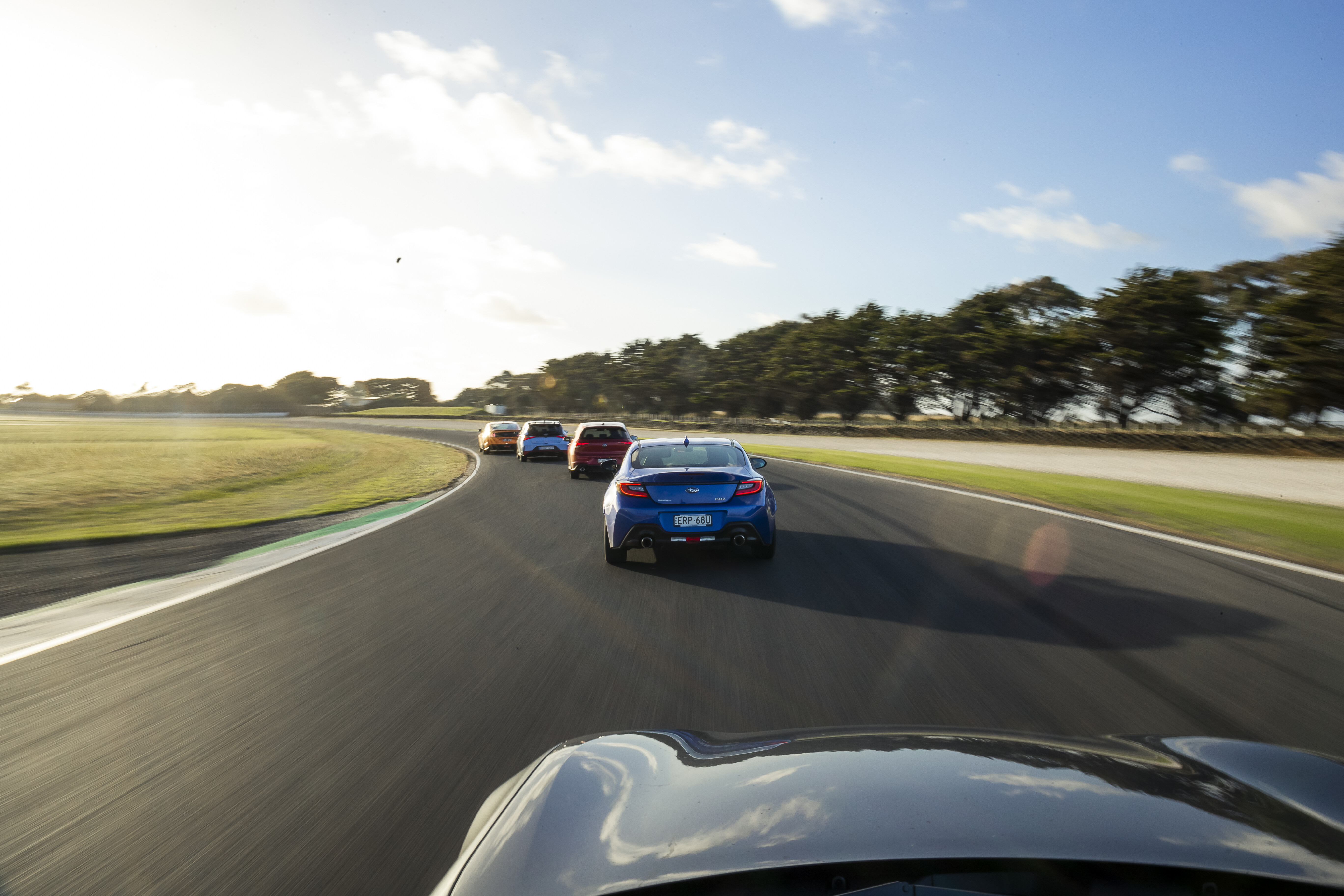
You’ll be able to see for yourself where a GR Yaris gains on a Hyundai i30 Sedan N or how the BRZ and the i20 N tackle Southern Loop.
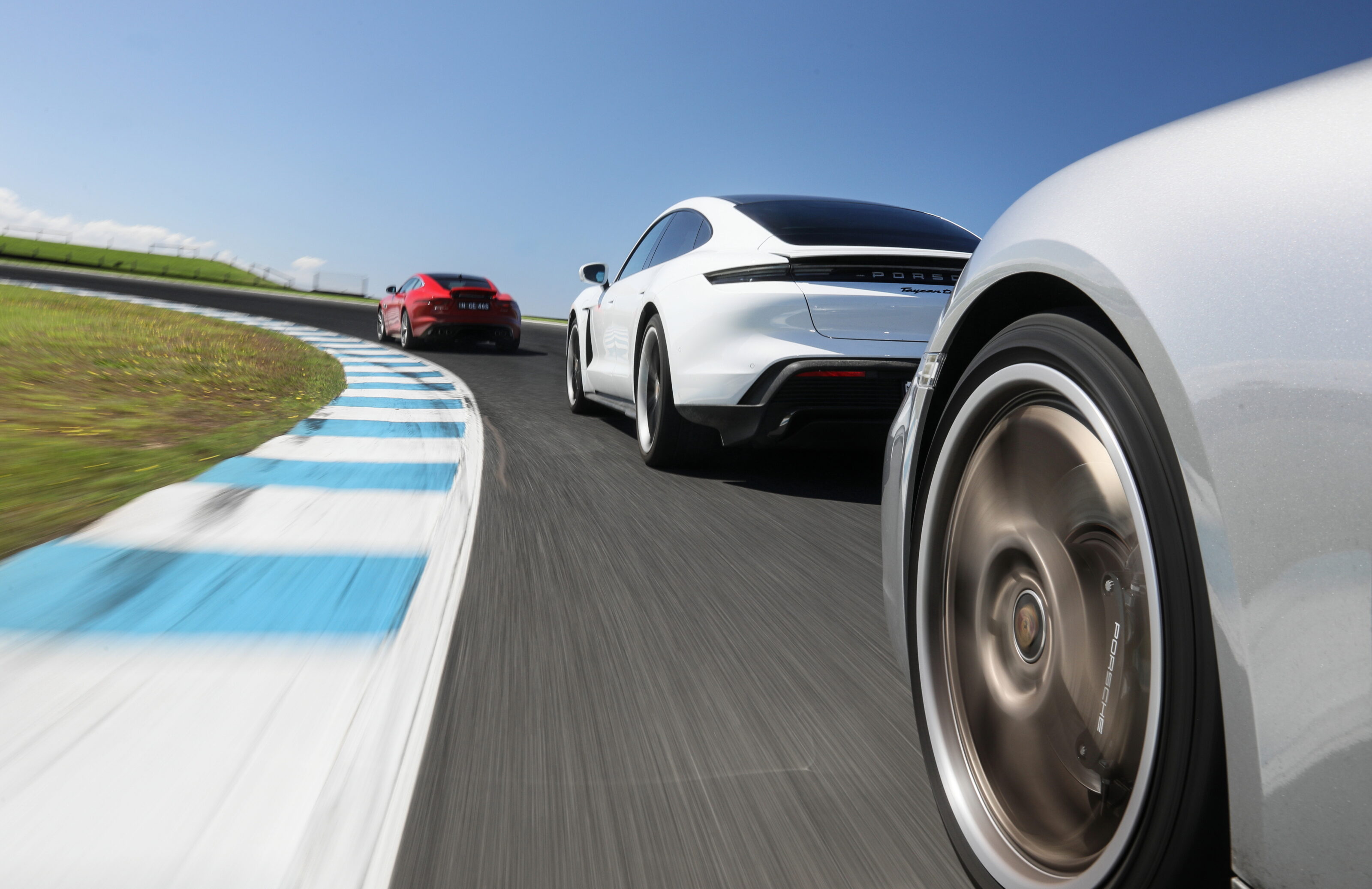
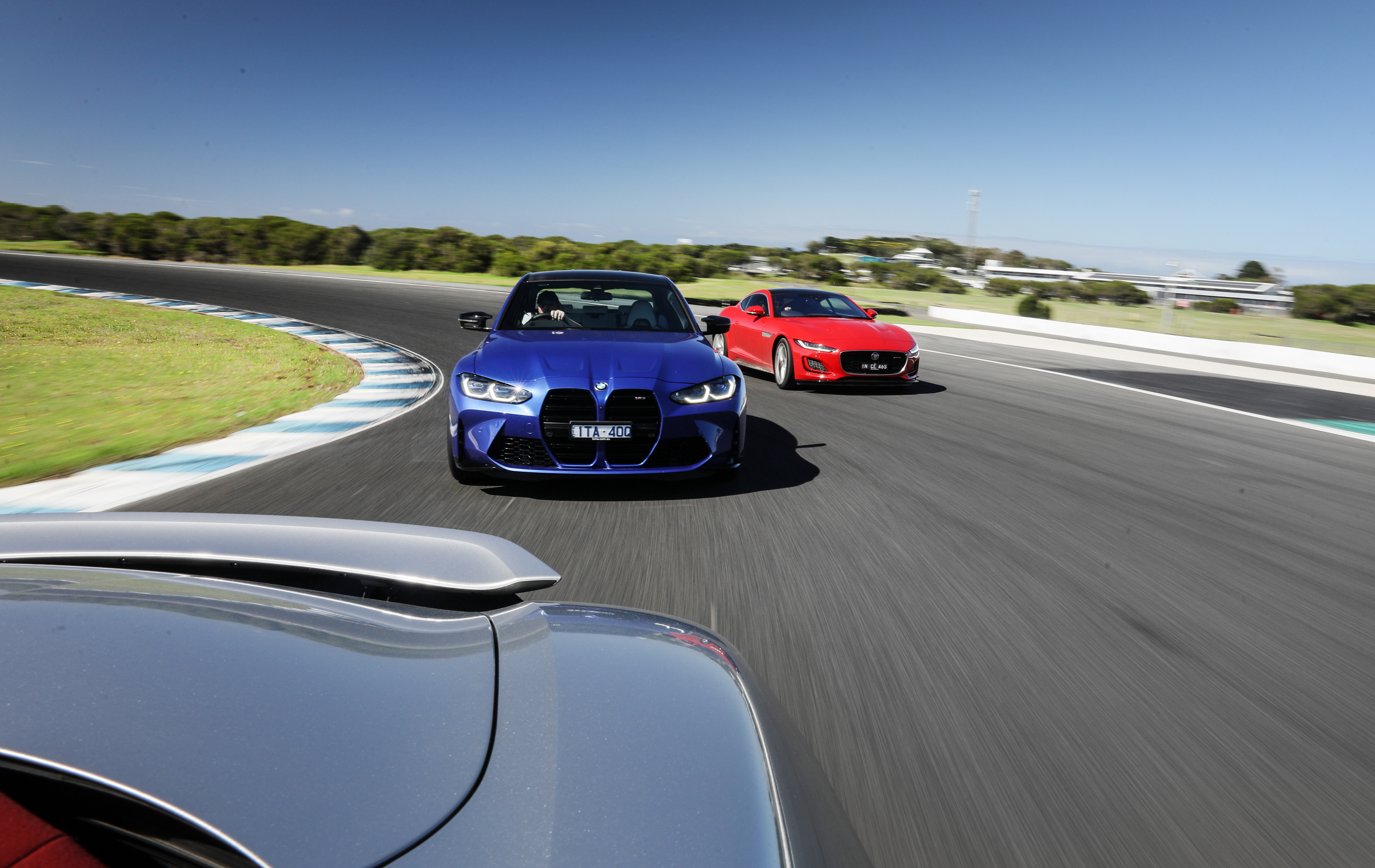
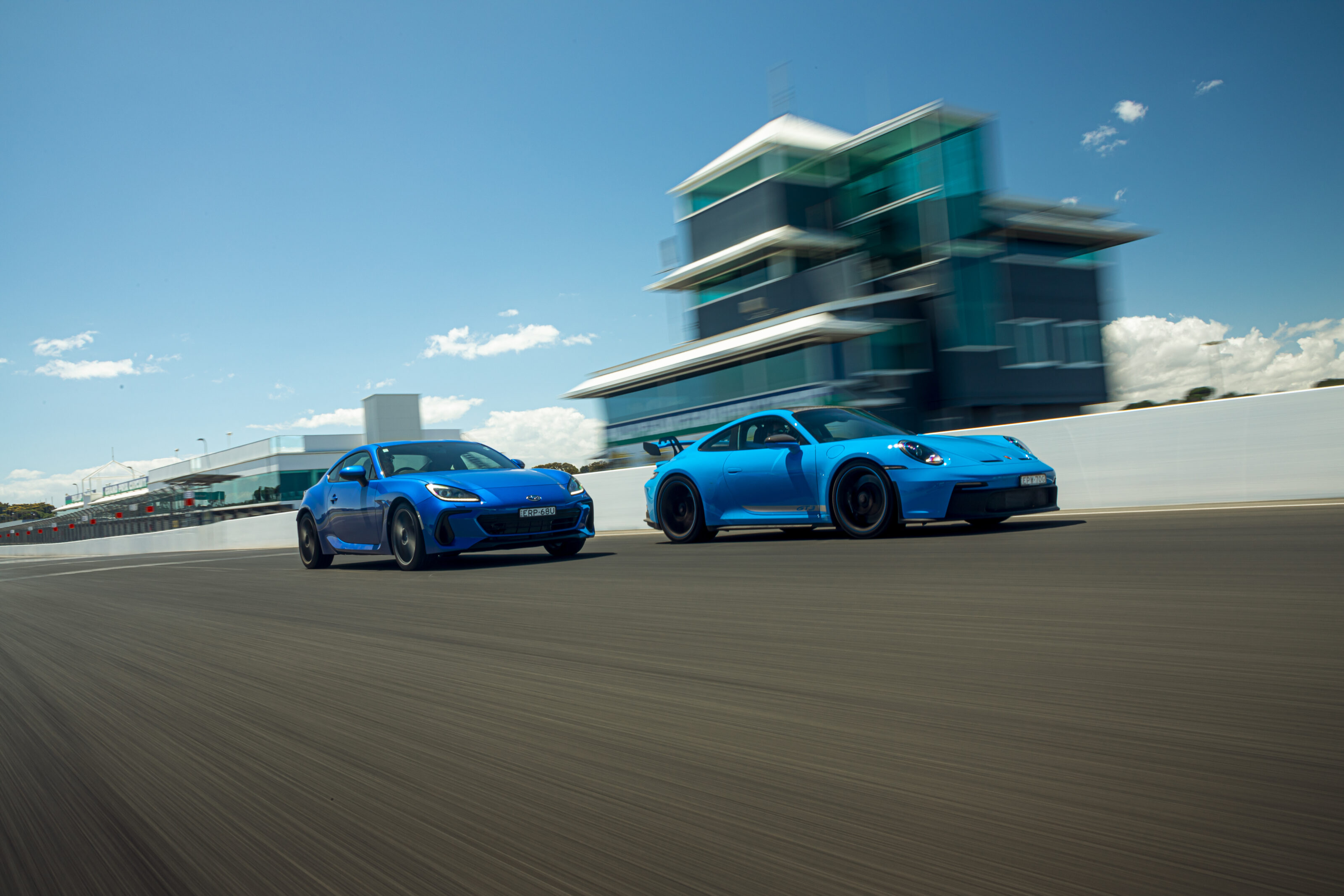
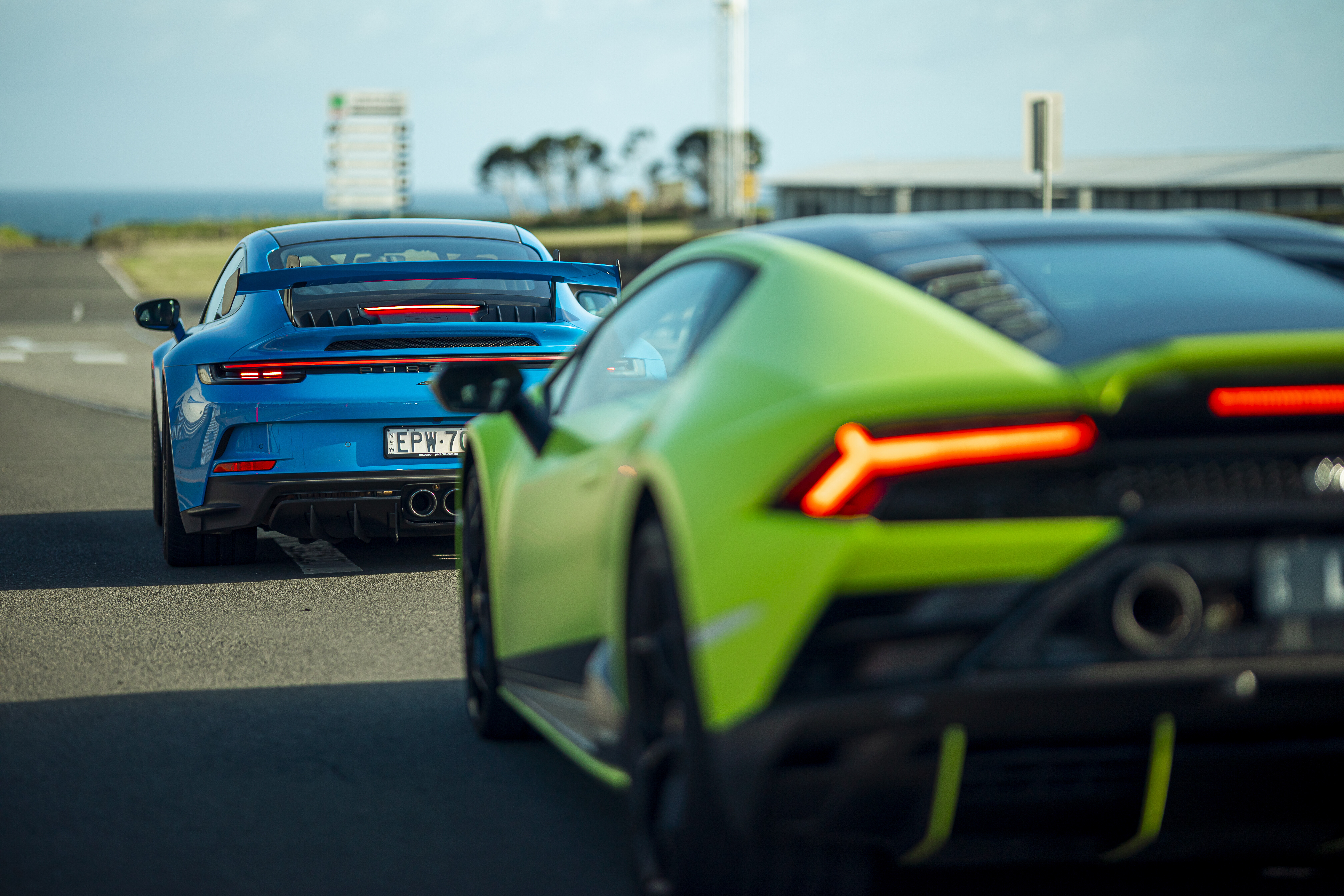
How did the Porsche 911 GT3 run down the markedly more powerful Lamborghini Huracán Evo and how does a manual BMW M3 tackle an electric Porsche Taycan Turbo S?
1
In order to open the VBOX files, you’ll first need to first download a small software package called Circuit Tools, developed by Racelogic, the same people who make the VBOX data loggers. You can find it here.
Listed below are all the individual data files for every one of the SCOTY cars, all piloted by Warren Luff.
Simply save the .vbo VBOX file to your computer, open it in Circuit Tools and should you want to compare it against another car, simply go to File – Load and choose another car.
1
Click and drag on the graph and track schematic to zoom in and out. Get really keen and you’ll even be able to see where certain vehicles understeer or where manual gearchanges occur.
Best of all, if you have your own lap data from Phillip Island, you’ll be able to load up the lap delta schematic and see where you gained or lost against Luffy.
So have at it. But make sure you have some time on your hands. Once you go down this rabbit hole, you’ll never view a hot lap of the Phillip Island GP Circuit in quite the same way again.
1
Sports Car of the Year Data
- Ford Mustang Mach 1: 1:48.32
- Toyota GR Yaris Rallye: 1:51.20
- Hyundai i30 Sedan N: 1:52.29
- Ford Focus ST manual: 1:53.42
- Volkswagen Golf GTI: 1:53.76
- Skoda Octavia RS wagon: 1:53.93
- Subaru BRZ S manual: 1:54.41
- Hyundai i20 N: 1:55.79
- BMW 128ti: 1:56.16
- Mazda MX-5 GT RS: 1:58.02
1
Performance Car of the Year Data
- Porsche 992 GT3: 1:39.74
- Lamborghini Huracán Evo: 1:43.09
- BMW M3 manual: 1:45.04
- Corvette C8 LT3: 1:45.22
- Porsche Boxster 25 Years: 1:45.60
- Porsche Taycan Turbo S: 1:45.89
- Alpina B3: 1:48.71
- Jaguar F-Type P450 RWD: 1:49.69
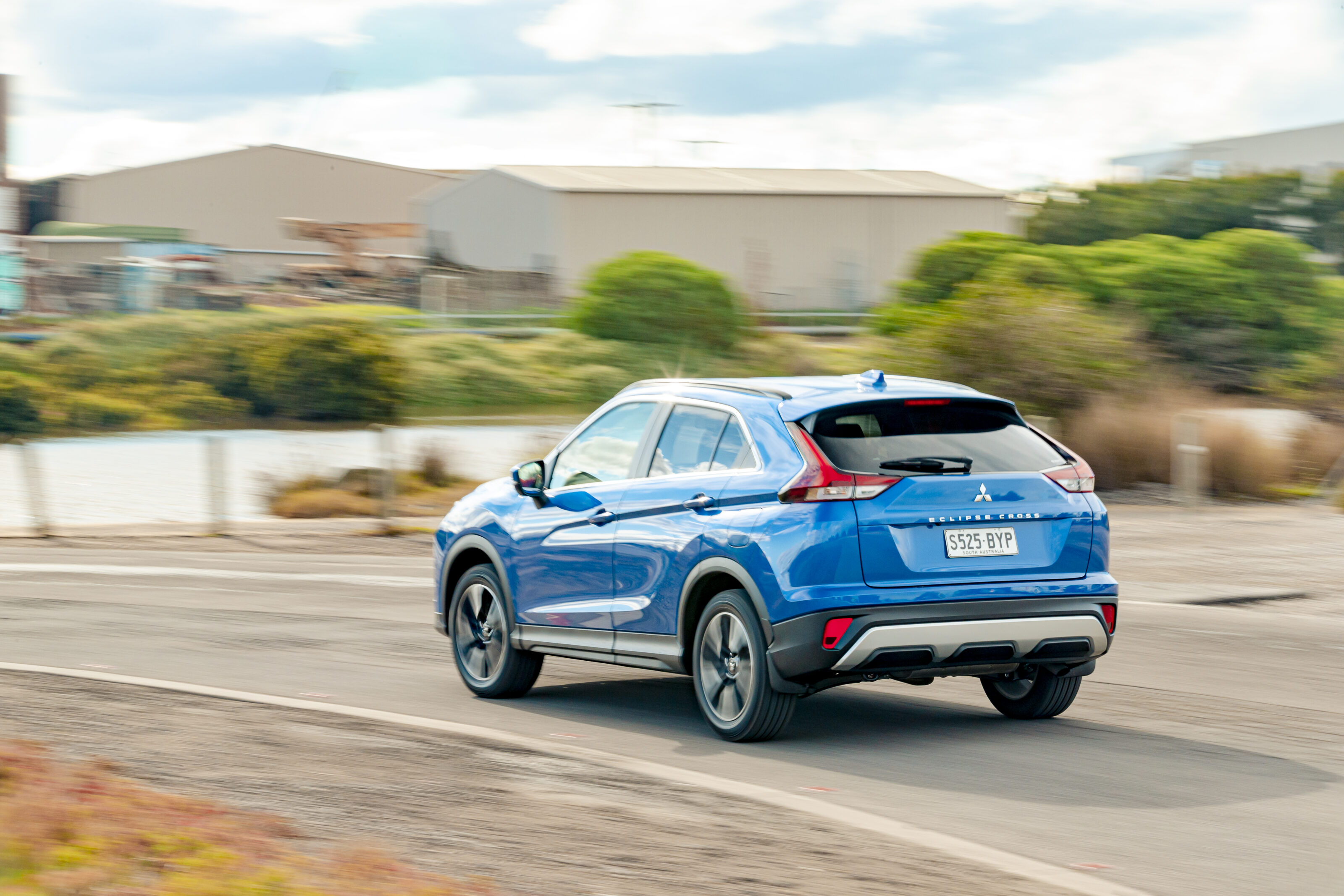
The 2022 Mitsubishi Eclipse Cross will continue to be offered with front-wheel drive (FWD) in Australia, despite the model moving exclusively to all-wheel drive (AWD) in other markets.
Last week, Mitsubishi’s North American arm announced the Eclipse Cross would stop offering FWD variants, with buyers now only given access to AWD models.
A spokesperson for Mitsubishi Australia has confirmed to Wheels the Eclipse Cross will continue to be sold locally in both FWD and AWD forms, citing strong demand from its customers for the decision.
Sales data obtained by Wheels shows FWD variants make up the vast majority of purchases in Australia, with around 85 per cent of Eclipse Cross buyers preferring front-wheel drive.
1
Industry sales data from FCAI shows the Eclipse Cross is sitting in fifth position within the crowded Small SUV segment.
Of the 22 different models within the category, the Eclipse Cross sits behind the Mitsubishi ASX in fourth on the March leaderboard, and just a nose ahead of the Volkswagen T-Roc in sixth position.
The price difference between an equivalent FWD and AWD Eclipse Cross LS is around $2500.
August 2023: Up-to-date full EV pricing
The Australian electric vehicle market has quickly expanded in just a year. Check out our story below for more up-to-date pricing on every new EV on sale in Australia today, plus the best models from the rest.
The story continues below unchanged.
As more electric vehicles enter the local market, we are starting to see diversity when it comes to pricing and vehicle types.
Here is a list of what you can buy today, delivery delays permitting.
EVs under $50k
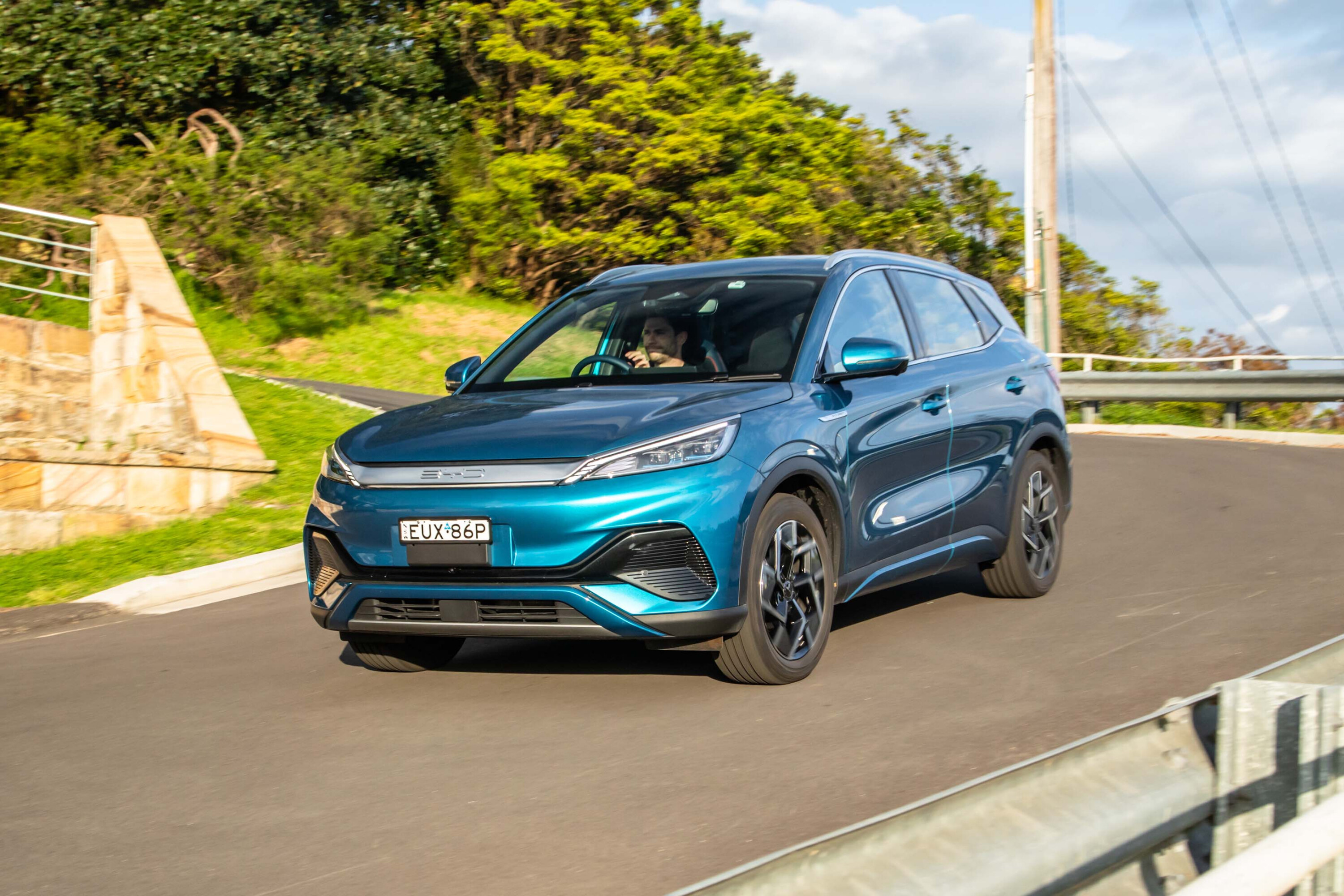
- BYD Atto 3
- GWM Ora
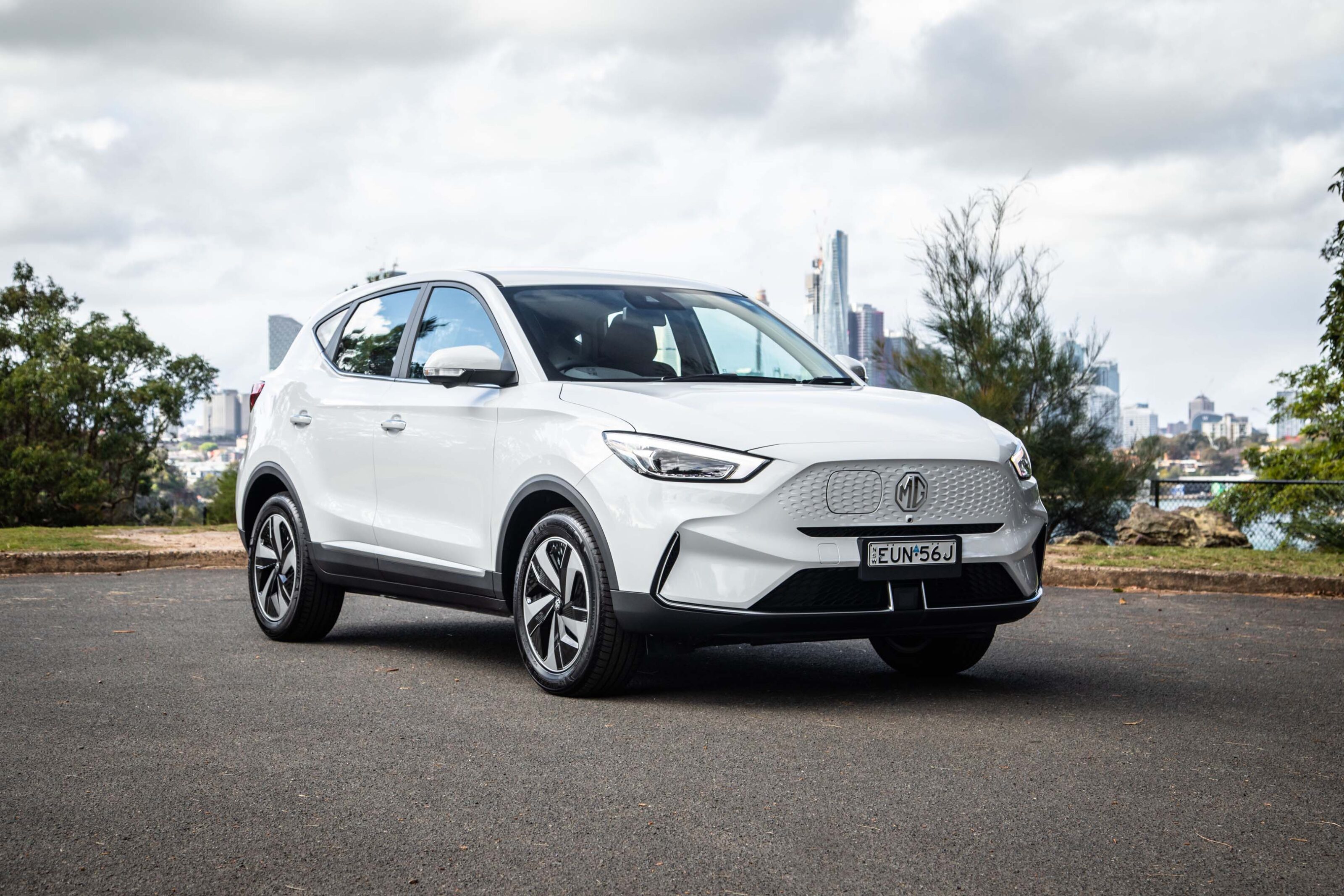
- MG ZS EV
EVs between $50k and $75k
- Cupra Born
- Hyundai Ioniq 5
- Hyundai Kona Electric
- Kia EV6
- Kia Niro EV
- Lexus UX300e
- Mazda MX-30 Electric
- Mini Cooper SE
- Nissan Leaf
- Polestar 2
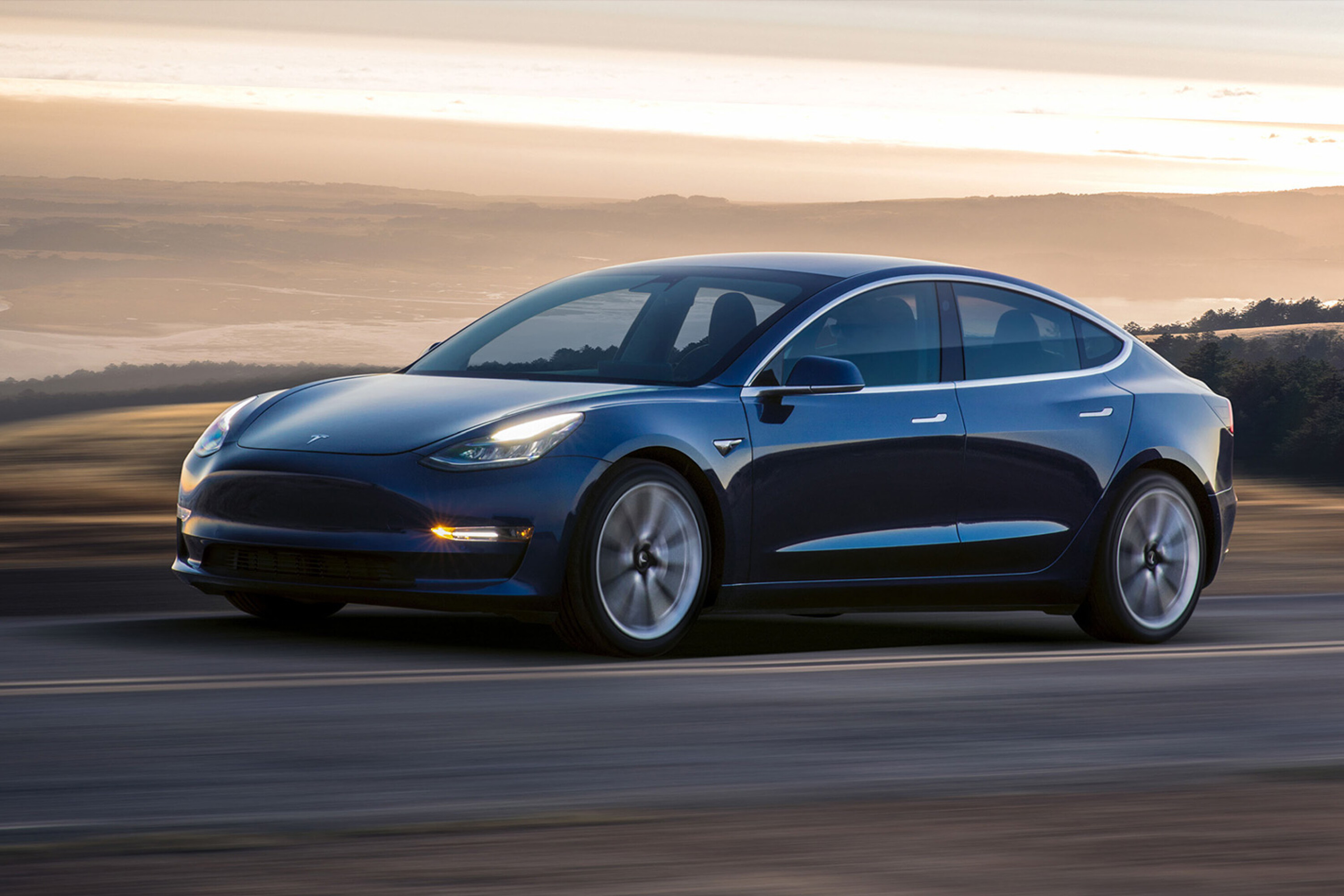
- Tesla Model 3
- Tesla Model Y
- Volvo XC40 Recharge
EVs between $75k and $100k
- BMW i4
- Hyundai Ioniq 6
- LDV eDeliver 9
- LDV eT60
- Mercedes-Benz EQA
- Mercedes-Benz EQB
- Mercedes-Benz eVito
- Volvo C40 Recharge
EVs between $100k and $150k
- Audi E-Tron
- BMW iX3
- BMW iX
- Mercedes-Benz EQC
- Mercedes-Benz EQE
- Mercedes-AMG EQS
- Mercedes-Benz EQV
- Jaguar I-Pace
- LDV Mifa 9
EVs over $150k
- Audi E-Tron GT
- BMW i7
- Porsche Taycan
EVs under $50k
Our pick: BYD Atto 3
1
MG ZS EV
1
Australia’s cheapest electric SUV might be made in China, but isn’t that true of most of the stuff you buy? We wouldn’t be too quick to write it off either way, as MG is trying hard to produce a quality EV at a low price, and it’s mostly succeeded.
EVs between $50-75K
Our pick: Tesla Model 3
1
Still the world’s benchmark electric car and for good reason: it just does most things very well. That’s overlooking some build quality concerns as Tesla has attempted to find its feet as a vehicle manufacturer.
But as our comparo with the Ioniq 5 proves, the entry-level Model 3‘s status here as our ‘pick’ is very much under threat from the Korean and a horde of other electric vehicles that have recently arrived or are coming soon. This pricing segment is shaping up as the bloodiest battleground in the intensifying EV turf wars.
Nissan Leaf
1
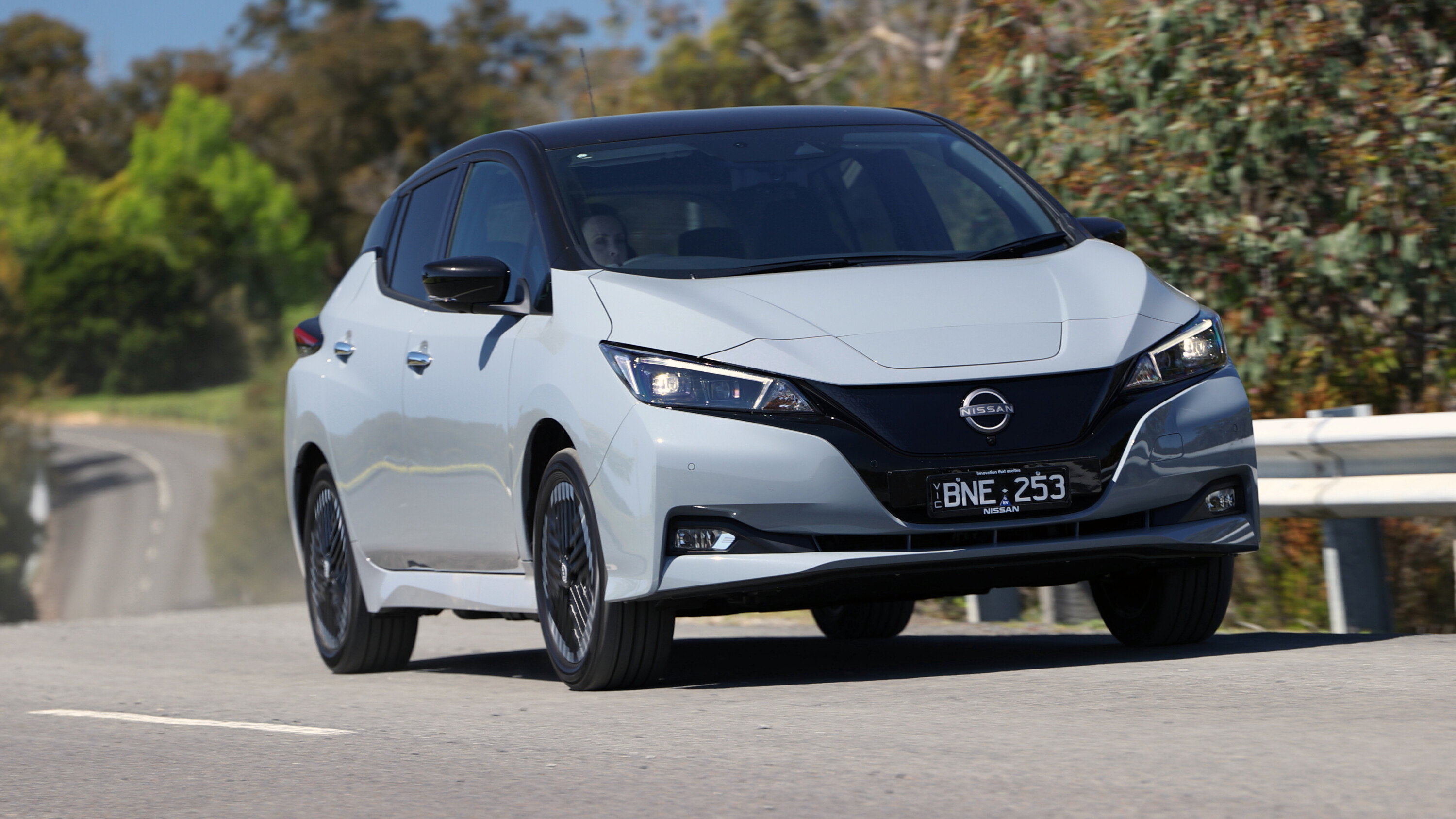
It’s an EV pioneer, but these days the Leaf is a lot of money for an ageing, mediocre-driving Nissan hatchback. But, unlike most other EVs, the Leaf supports EV-to-grid reverse powering – meaning your Leaf could in theory power your home, for whenever the grid and your home itself is just as high-tech.
Hyundai Kona EV Standard Elite

2
Unique styling lets people know there ain’t no dinosaur juice exploding under the bonnet of this Kona. Much like its Kia Niro cousin, the electric Kona is a solid EV all-rounder providing decent overall performance and range for the price. More powerful (and expensive) longer-range versions also available.
Polestar 2
1
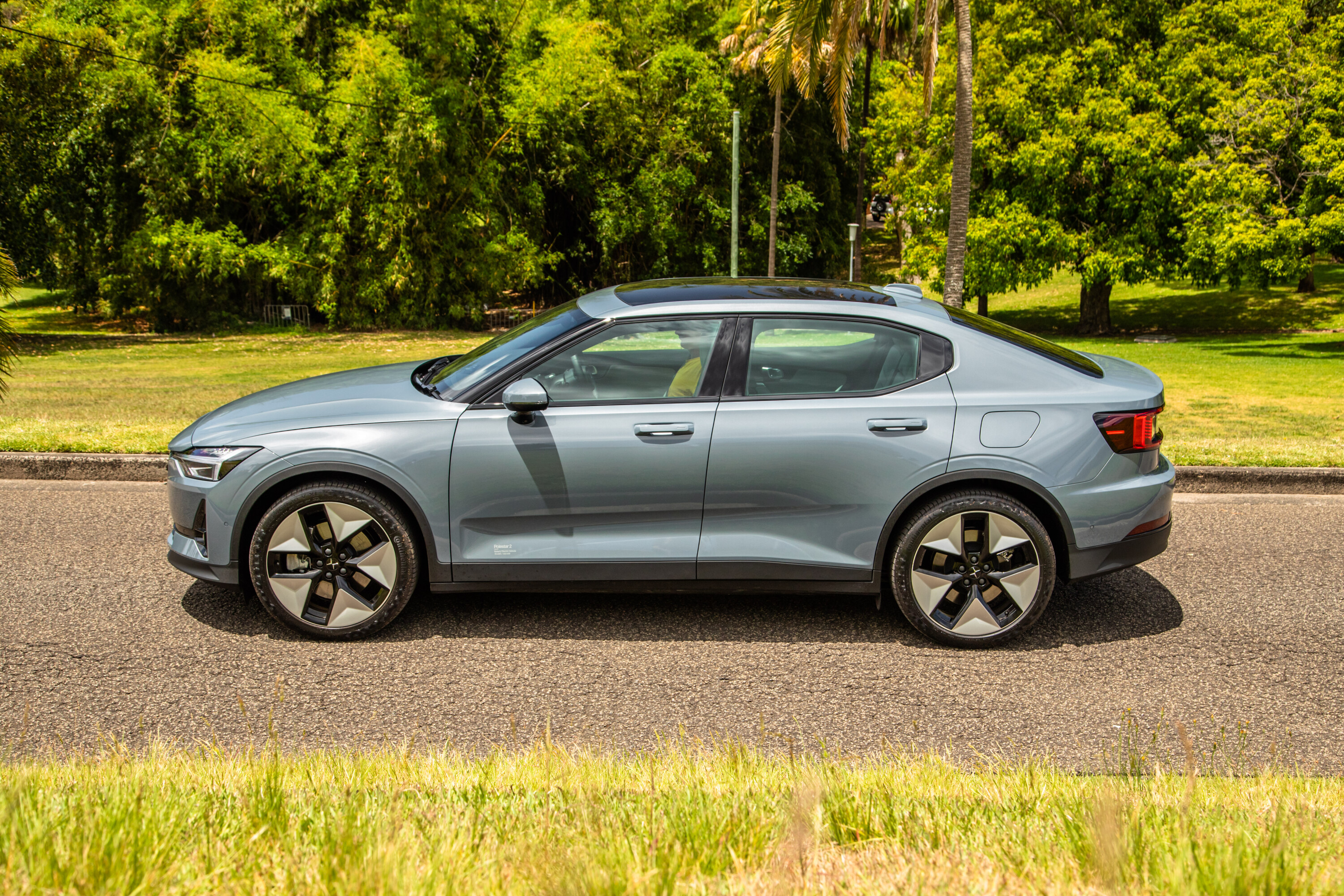
Oozing Scandinavian style, the Polestar 2 is Volvo and parent company Geely’s first crack at a proper Tesla rival and is available with Standard and Long Range variants with starting prices all under $70,000.
It may not match either the Model 3 or Ioniq 5 for standard safety features, but neither does it make them completely unavailable. And even after ticking a few option boxes each version will still come in under the price of the Ioniq.
Kia Niro EV
1
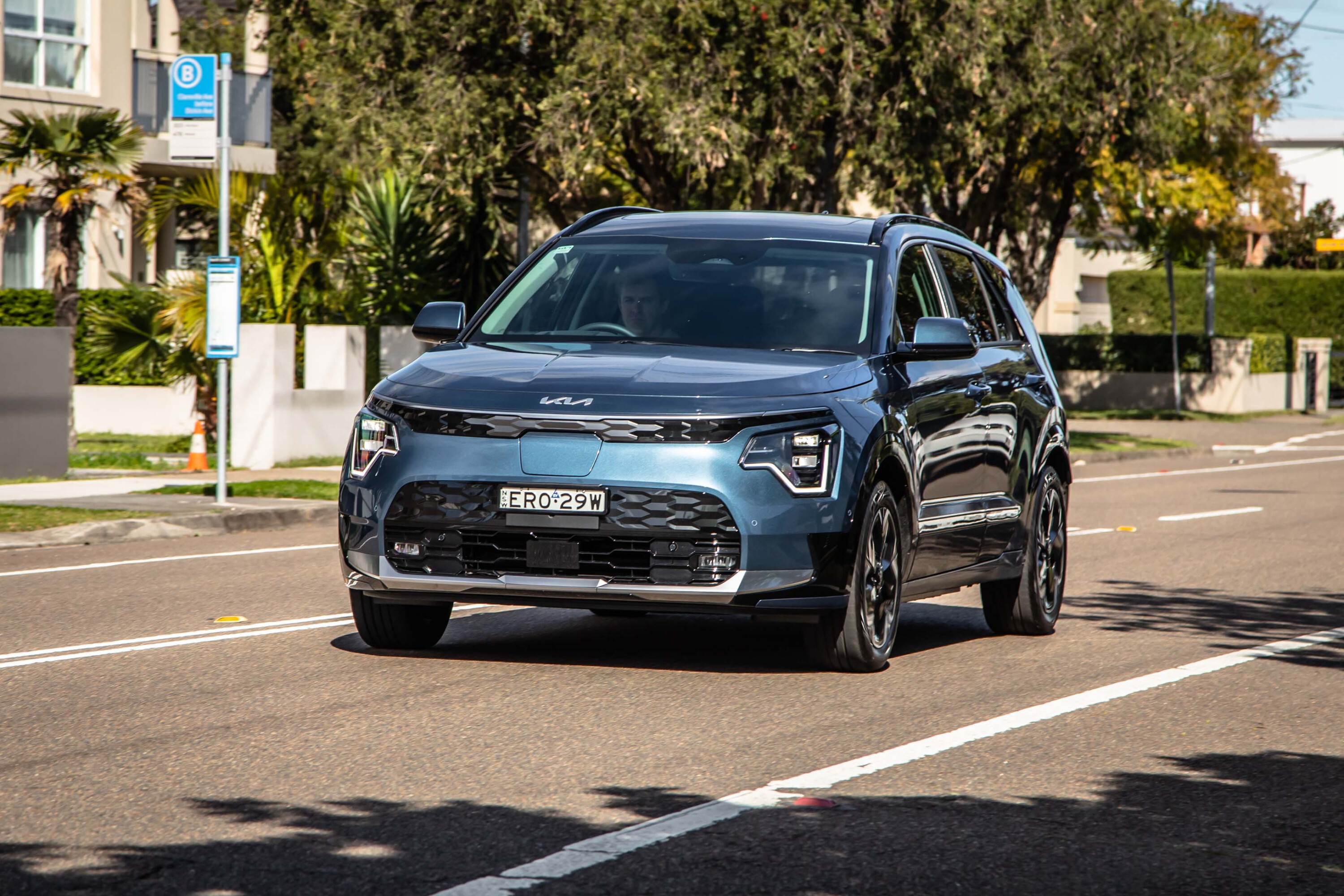
A single electric motor imbues the little Kia Niro SUV with a level of refinement missing in its cheaper hybrid and plug-in equivalents (although the entry-level hybrid is $25K cheaper). The Niro offers decent performance and range for the price, but it’s dated and doesn’t really offer anything in terms of wow factor, which you’d expect in this price range.
Mazda MX-30 Electric
1
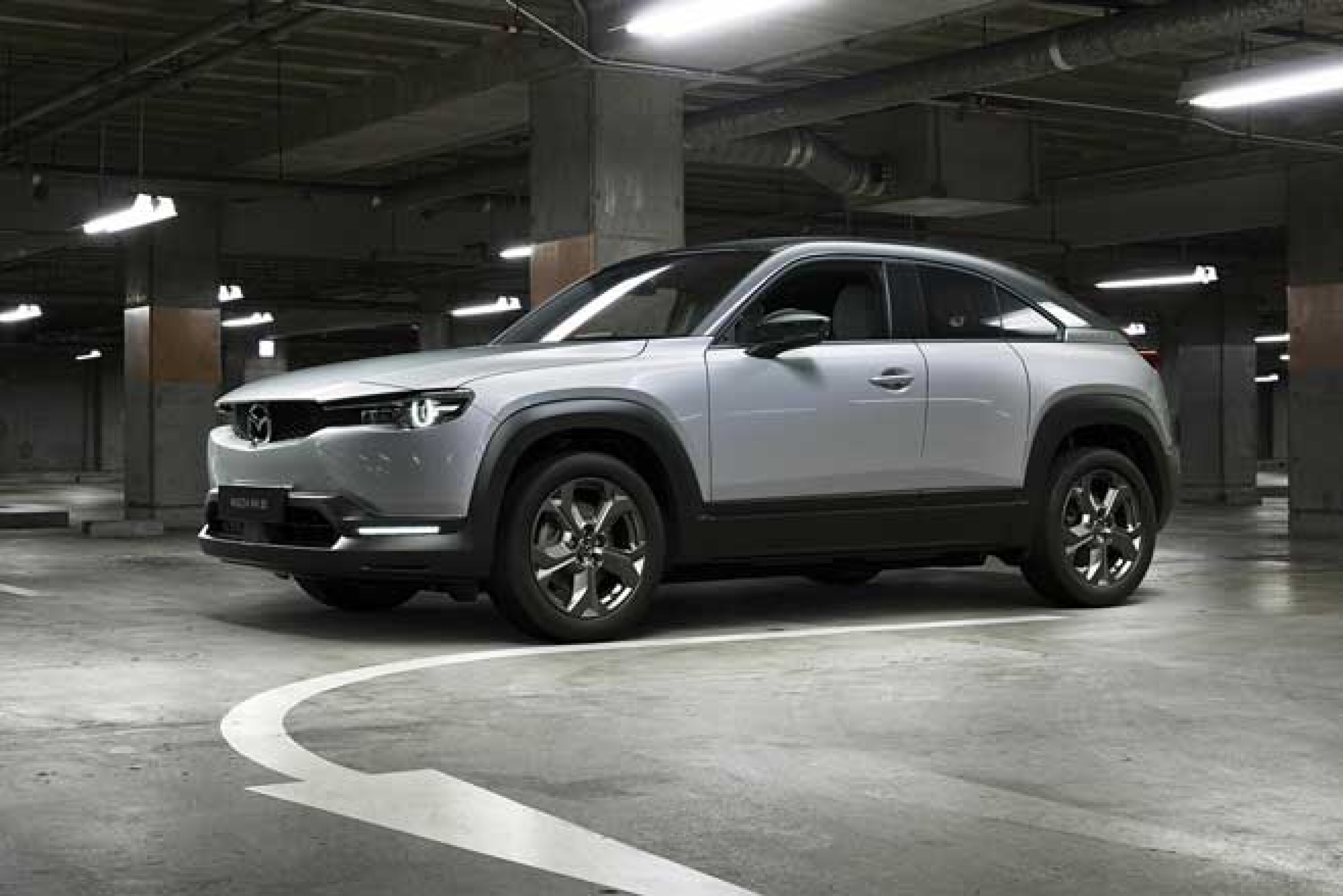
Funky doors, quirky exterior and cool interior details don’t quite make up for the relaxed acceleration and controversially short driving range of Mazda’s first-ever EV. Mazda says city-dwelling owners wouldn’t want to pay for, or have to lug around, a bigger battery; we’ll find out when it joins our long-term fleet. On the plus side, it drives well.
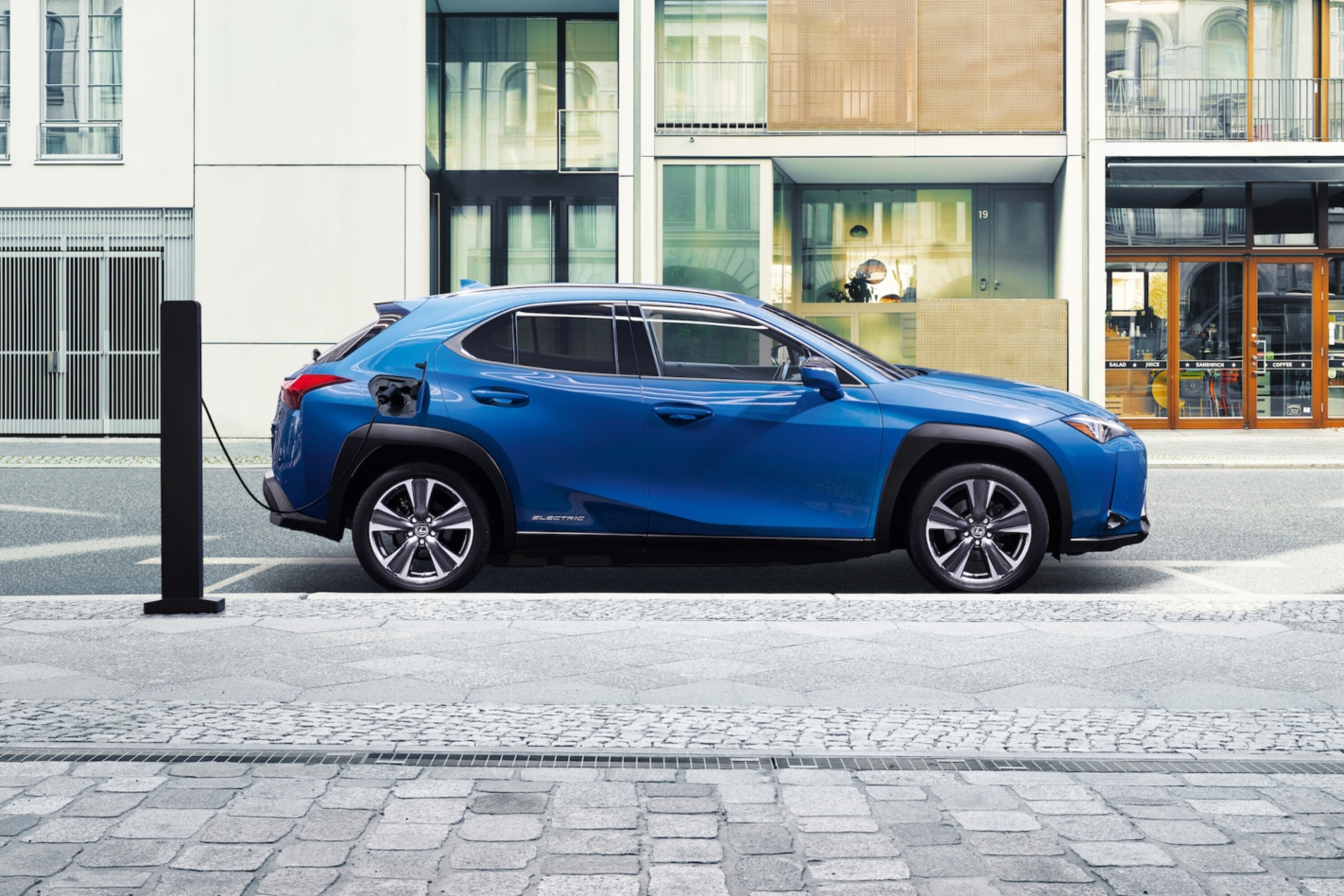
Lexus UX300e
1
Lexus’s first BEV is a seamless conversion of its popular UX crossover, which looks virtually identical to its petrol and hybrid siblings.
It’s not the most powerful or long-distance EV on the market, but it’s packaged nicely and offers surprisingly sharp handling. The price includes a heap of standard features and freebies, such as a 7kW AC home charger and three years of Chargefox charging.
A UX300e Sport Luxury range-topper is available for $81,000 and brings a bunch of extras, but the same powertrain and performance.
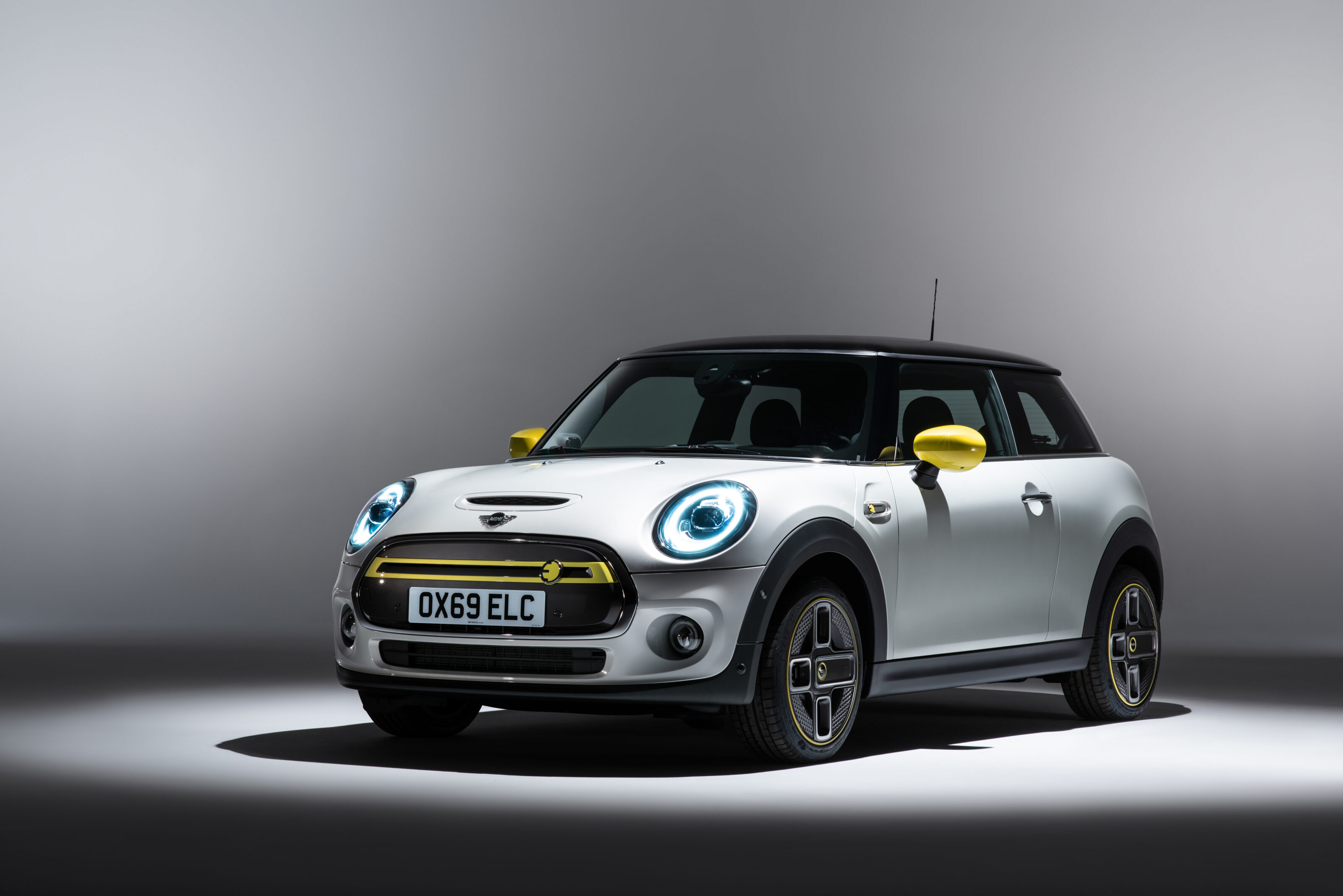
Mini Cooper Electric
1
Wouldn’t it be cool to drop the BMW i3’s tiny-yet-mighty electric motor into a modern Mini bodyshell? Well, you’re looking at it. The three-door SE Classic appeals more than we’d like to admit – and not just because it’s not another infernal SUV – but its equally cutesy driving range will be a deal-breaker for some.
Kia EV6

1
Kia’s first bespoke battery-electric model offers a comfortable and fun drive, quality materials, excellent fit-and-finish, loads of tech and safety, and room for the family.
It’s priced from $67,990 before on-road costs, it features two RWD variants priced under $75k, which brings it within range of the Tesla Model 3 while undercutting its cousin the Hyundai Ioniq 5 – which has so far been offered only in an expensive, high-specification grade.
But like the Ioniq 5, availability of the EV6 is extremely limited, with only 500 making their way to Australia in the new electric vehicle’s first allocation.
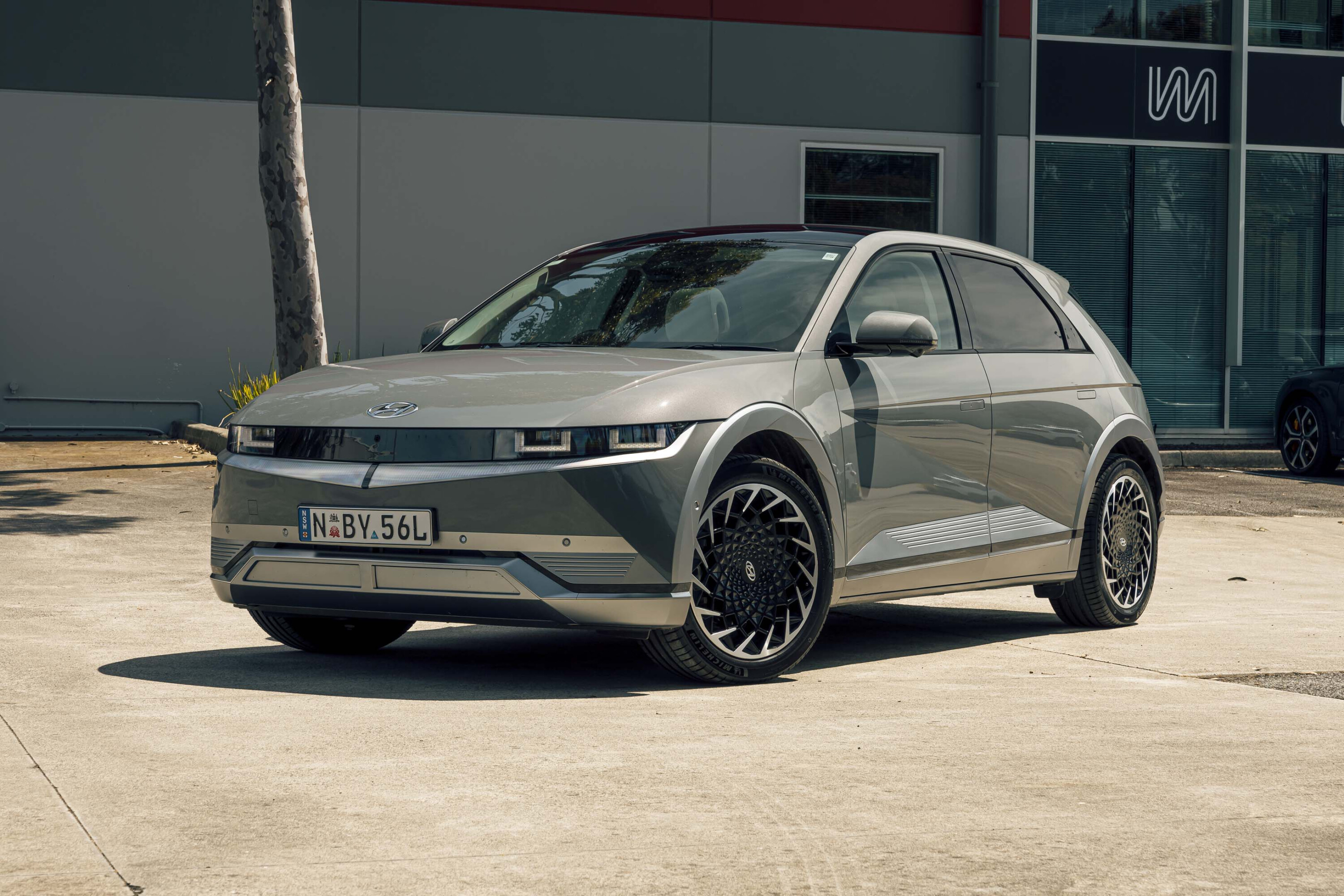
Hyundai Ioniq 5
1
Like its EV6 cousin, this is a red-hot contender for ‘our pick’ for this price bracket. Decent acceleration and range, but also futuristic interior and exterior styling, crammed full of cutting edge technology and the best engineering Hyundai currently offers. Tesla is on notice as additional variants arrive.
EVs between $75-100K
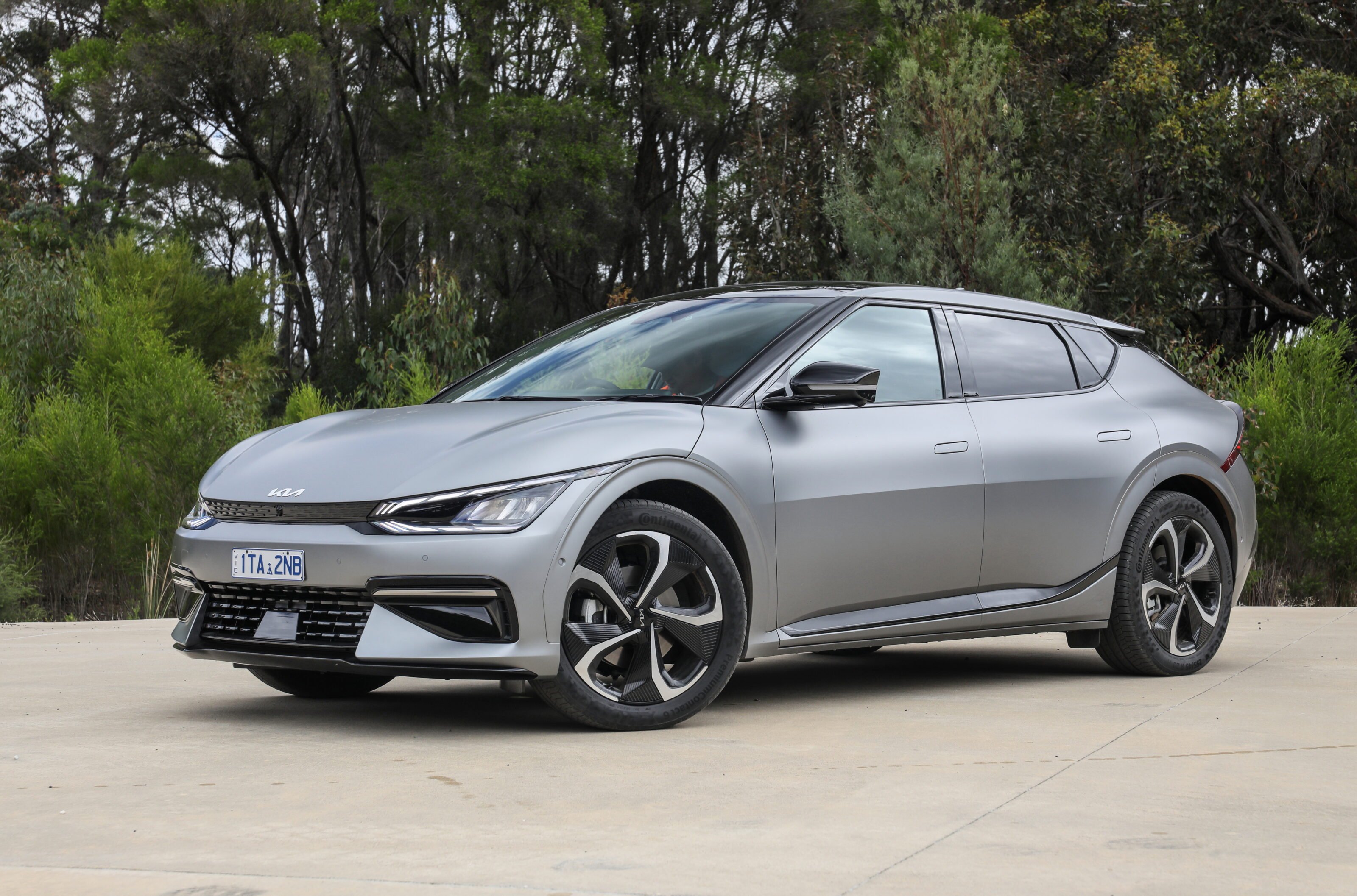
Our pick: Kia EV6 GT-Line AWD
At the top of the Kia EV6 range is the all-wheel-drive, dual-motor GT-Line, which is capable of getting to 100km/h in 5.2 seconds, offers 484km and is pitched at $82,990.
It recently came up trumps in a recent comparison test with the Ioniq 5 AWD and Polestar 2 Long Range Single Motor and where it justified its additional cost over its Korean cousin with its additional tech, longer range, slightly quicker pace, longer factory warranty and more sophisticated suspension.
1
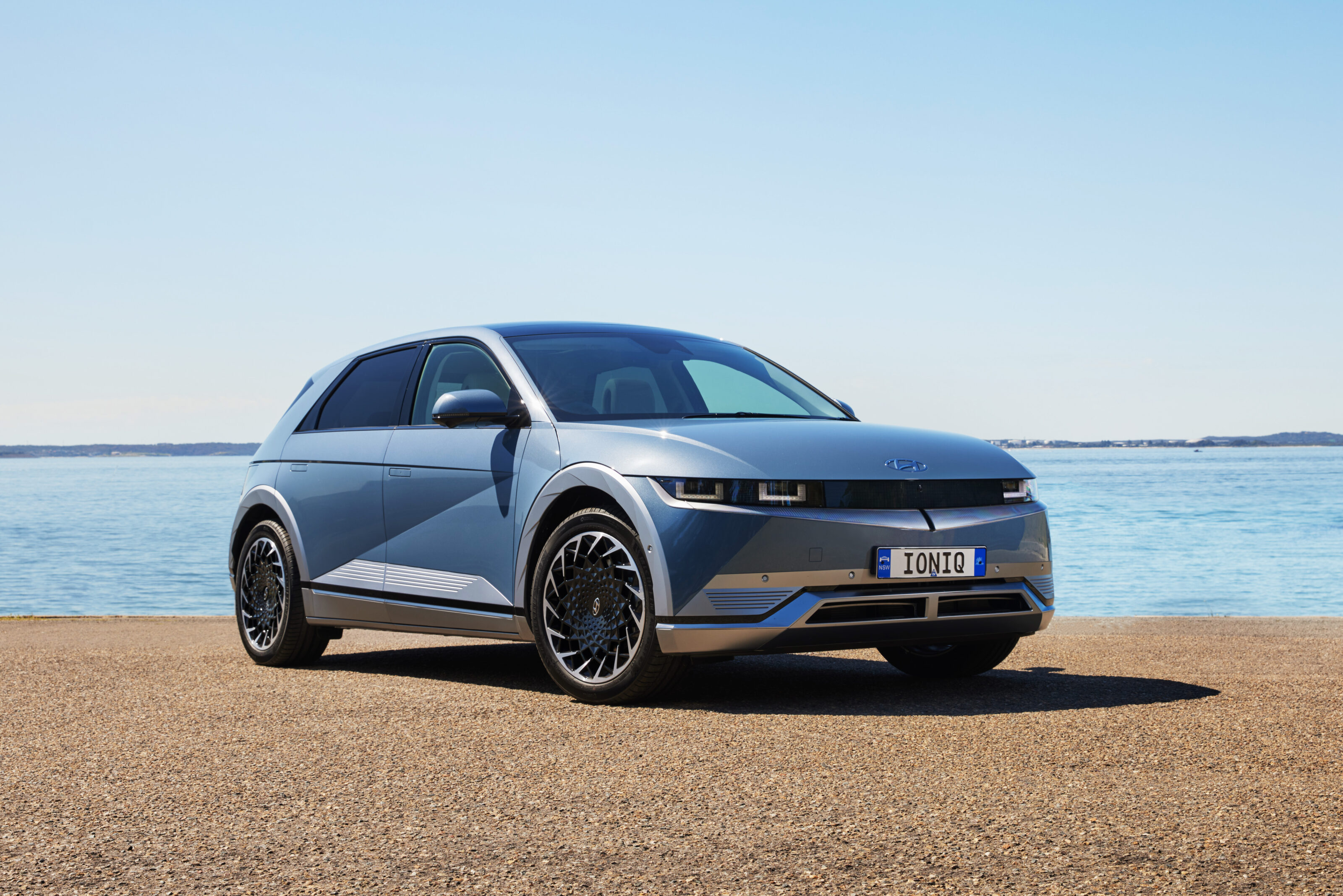
Hyundai Ioniq 5 AWD
1
One of the hottest electric cars right now. Hyundai has thrown its engineering might behind the machine it hopes will topple Tesla. And the all-wheel-drive, dual-motor variant (this one) is the one you want. Luxe interior, fine comfort, potent performance and high-tech recharging capabilities, it’s the car that really announces the Koreans’ arrival into the EV space.
How much does it matter that it doesn’t match the $78,458 Tesla Model 3 Long Range’s claimed 580km WLTP driving range?
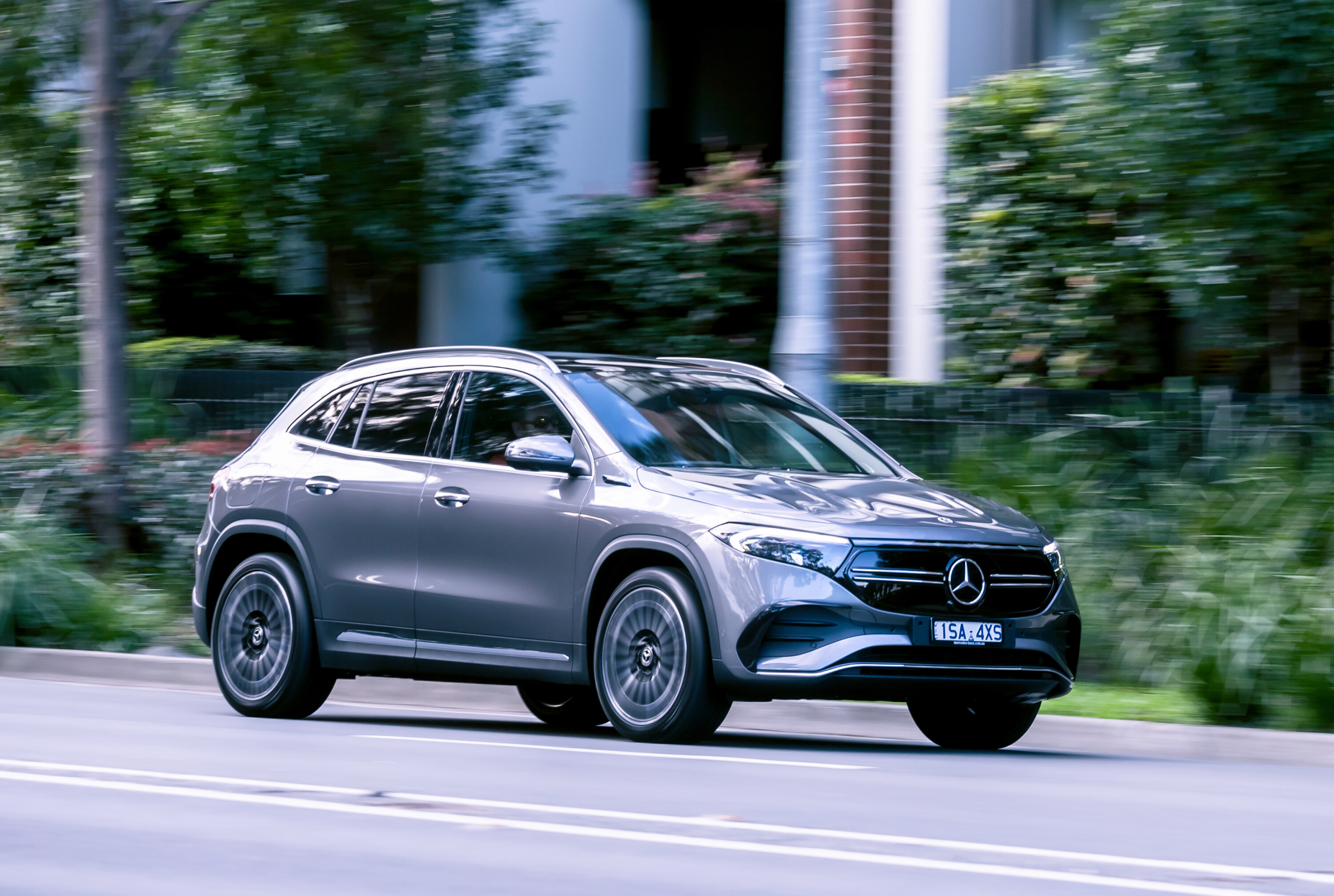
Mercedes-Benz EQA
1
The second instalment in Merc’s EQ range, the EQA is a restyled GLA with a front-mounted single electric motor. It offers Mercedes-Benz quality, a decent combination of driving range and performance, and that famous green clear conscience. Hotter, dual-motor, 214kW/520Nm EQA350 coming early next year.
Volvo XC40 Recharge

1
Volvo’s first-ever EV is also one of the most powerful cars in its 94-year history. Packing dual motors for potent acceleration, the XC40 slays its Tesla price rival for build quality and finish – as we would expect, given the petrol-powered XC40 was our 2019 Car of the Year.
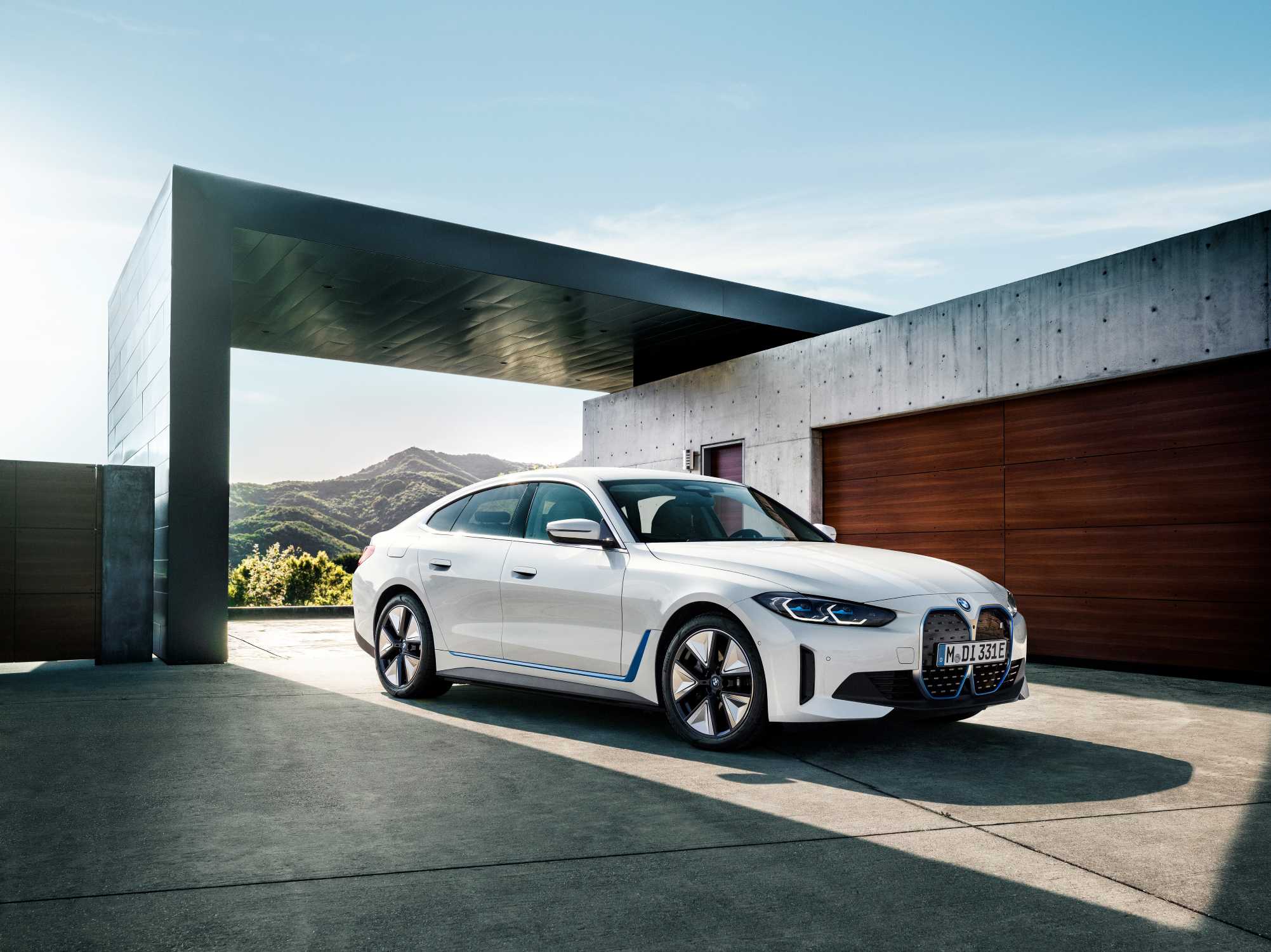
BMW i4
2
Just sneaking into this category with a retail price of $99,900, the battery-powered version of the BMW 4 Series Gran Coupe uses fifth-generation BMW eDrive technology, with a big 84kWh battery capable of 200kW DC charging.
The eDrive40 features a single electric motor sending 250kW/420Nm to the rear wheels, with a driving range of 520km.
EVs between $100-150K
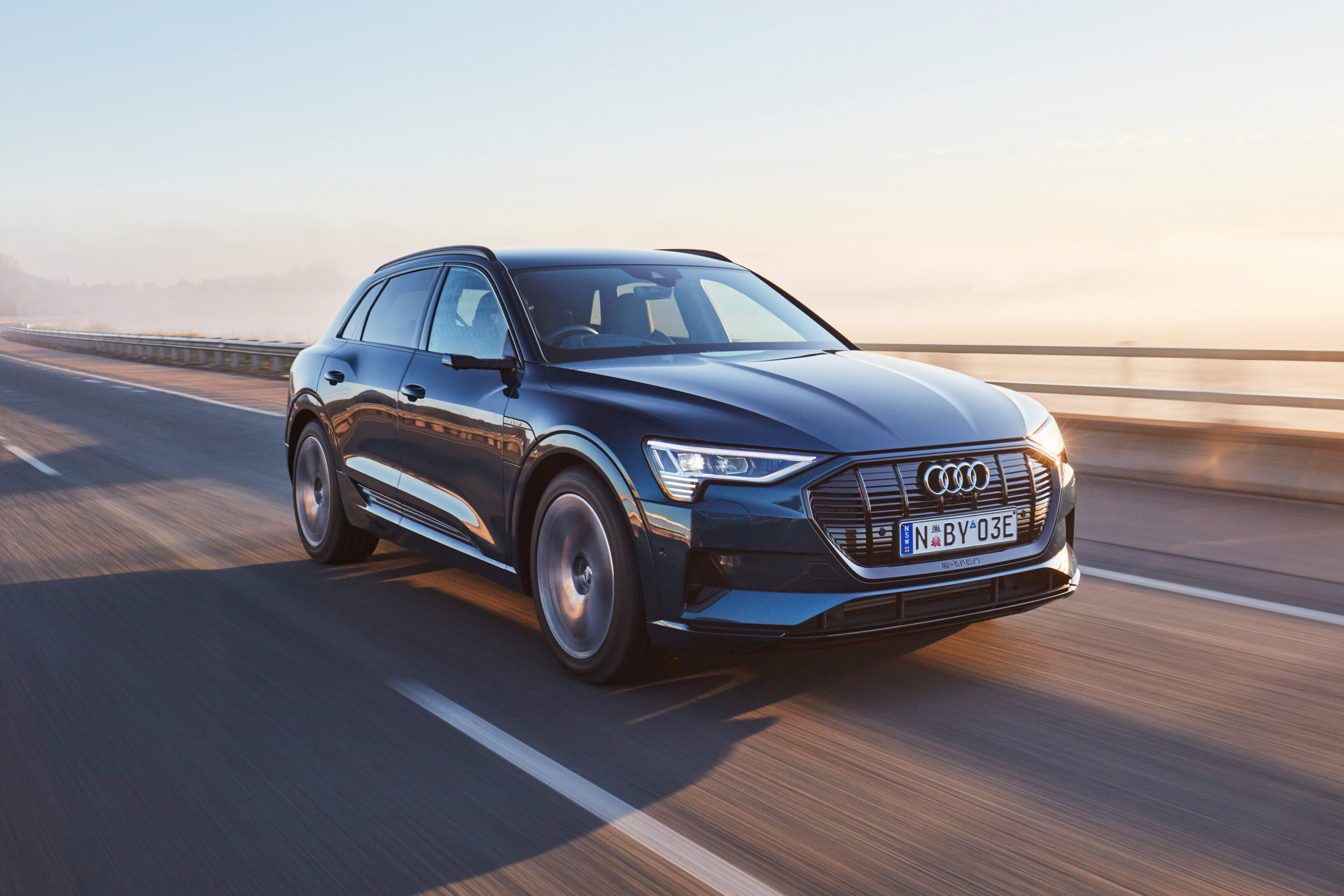
Audi E-Tron
1
It’s got cameras for side mirrors to make your buddies think they’re in an episode of Futurama, but the incredibly polished, super-stylish dual-motor e-tron is for those who want a normal large SUV with all the advantages of electric – sans, perhaps, a big front boot. Fun to drive, if very heavy. Range could be better. Won a comparo against Merc EQC; might struggle to repeat the feat against the BMW iX.
BMW iX3
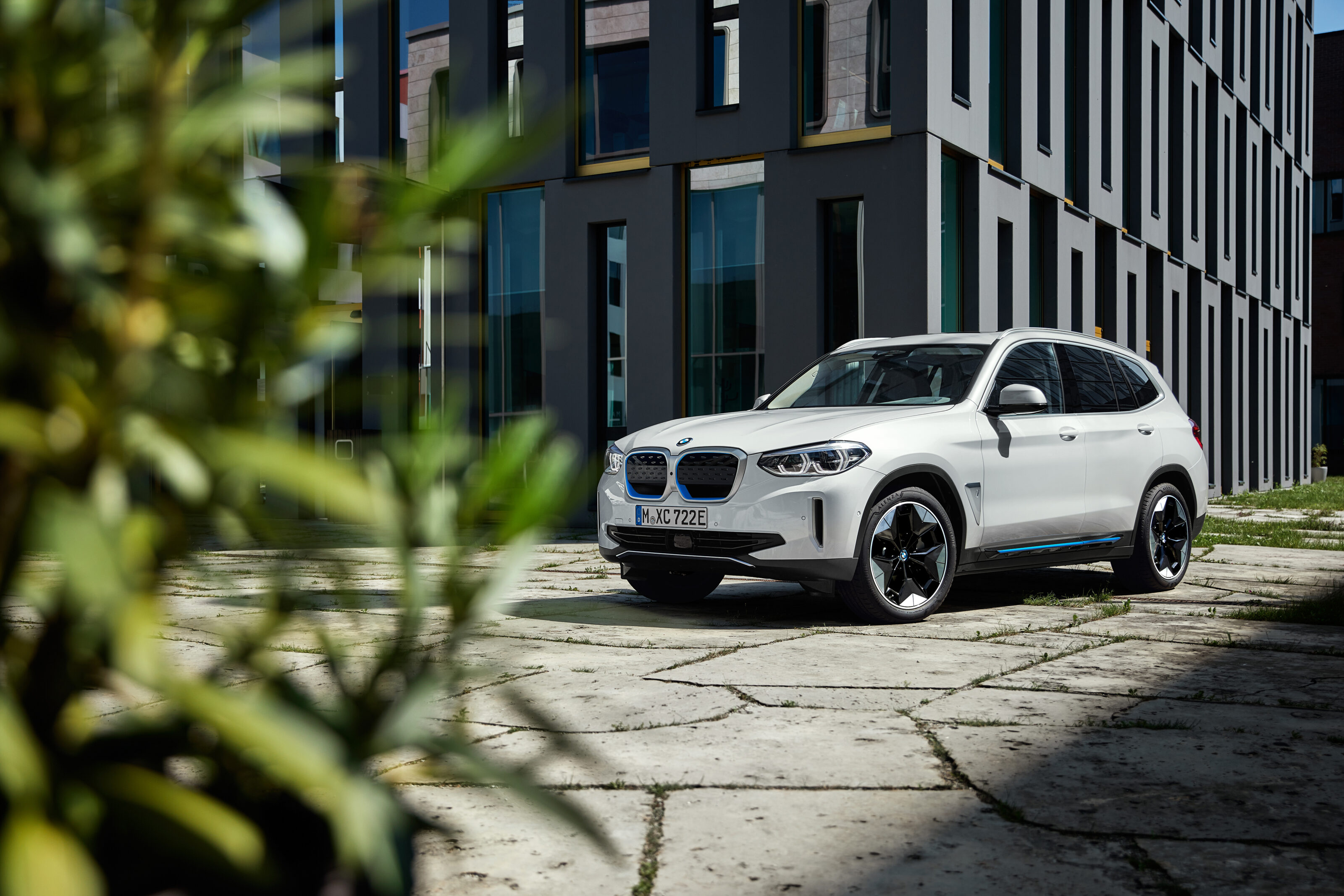
4
Only the second pure-electric BMW after the i3, the iX3 is, yep, an X3 with an electric motor under the boot driving the rear wheels only. Its EV retrofitting means it misses out on a big front boot, but the iX3 has potential to be an all-star EV all-rounder. We drive it in Oz soon.
BMW i4 M50
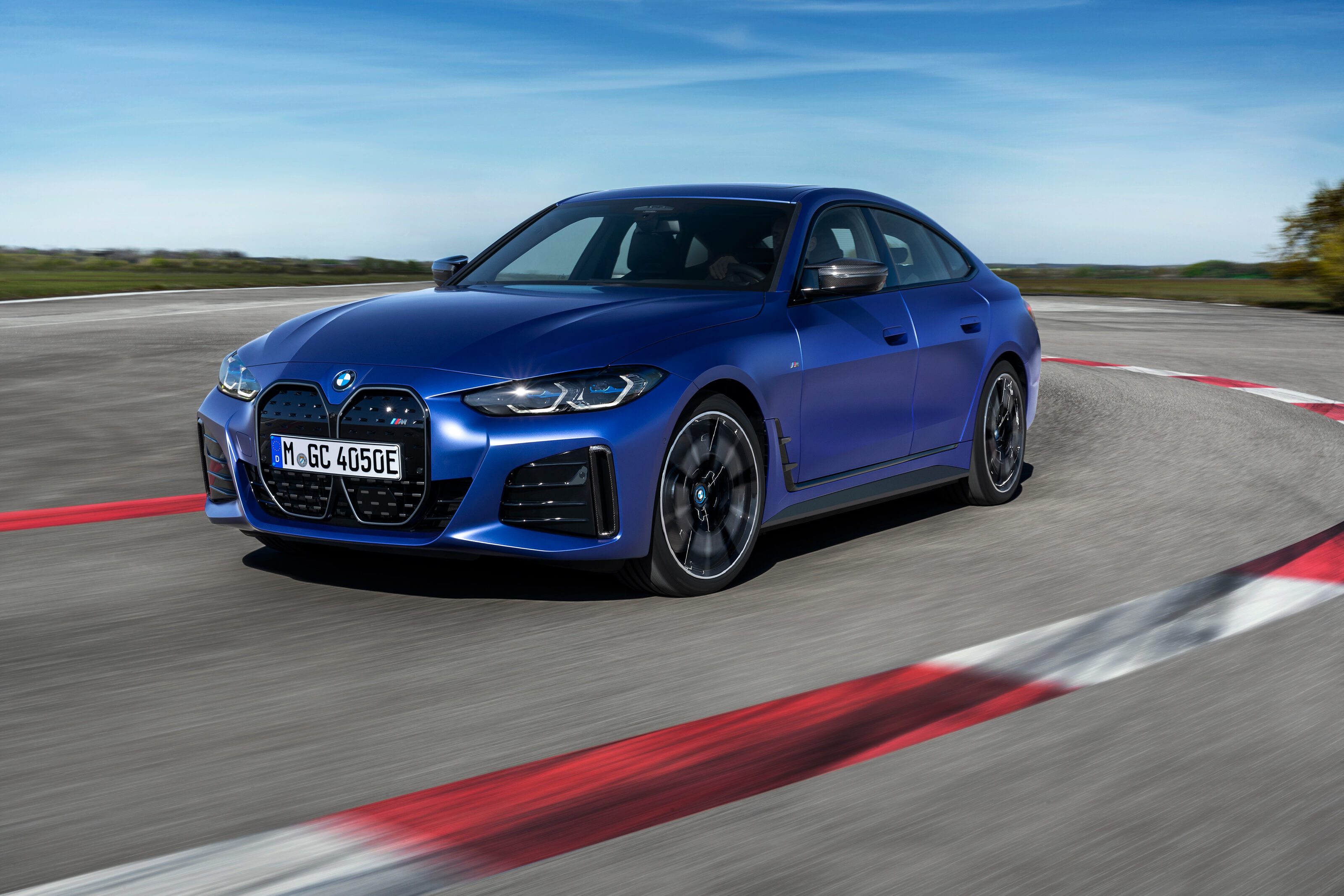
6
BMW’s first all-electric M car is at $124,900 before on-road costs. Like the i4 eDrive40 it uses an 84kWh battery capable of 200kW DC charging, but employs two motors, powering both the front and rear axles for a brutish 400kW/795Nm output and 3.9-second sprint to 100km/h. Driving range is reduced to 465km per charge.
BMW iX xDrive 40

8
Fresh off the boat in Australia, the new iX SUV could be our ‘Wheels pick’ for this pricing category when we drive it, which should be very soon. Debuts ‘Gen5’, the most cutting-edge electric vehicle tech in the BMW line-up to extract optimum range and performance from the battery.
Mercedes-Benz EQC 400
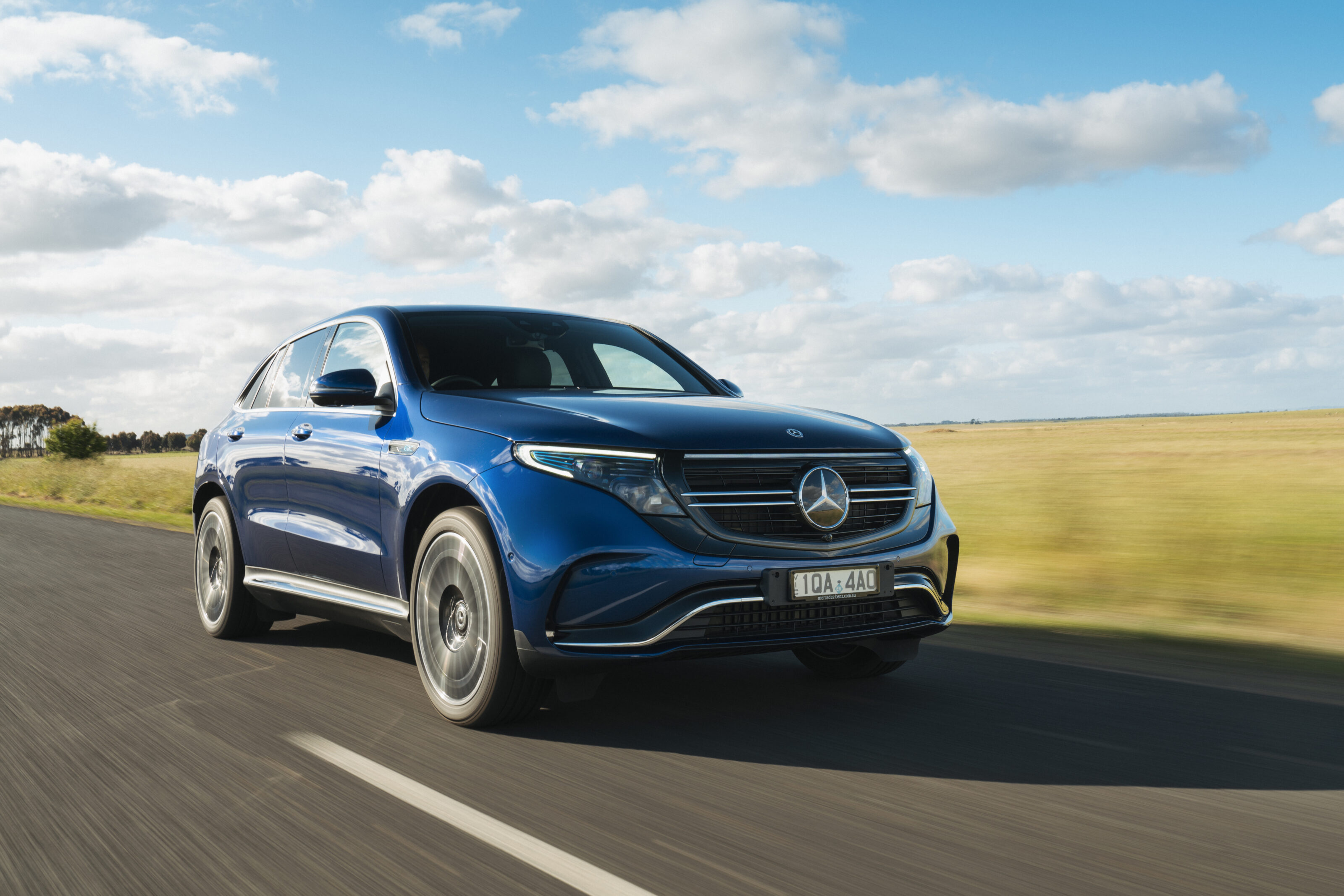
10
As the first member of Mercedes’s new EQ family, the EQC was more than just a restyled GLC with two electric motors and no petrol tank. It was so good, in fact, it was our 2020 Car of the Year. Recently scored a generous price cut (although now has less standard kit).
Jaguar I-Pace EV400 S
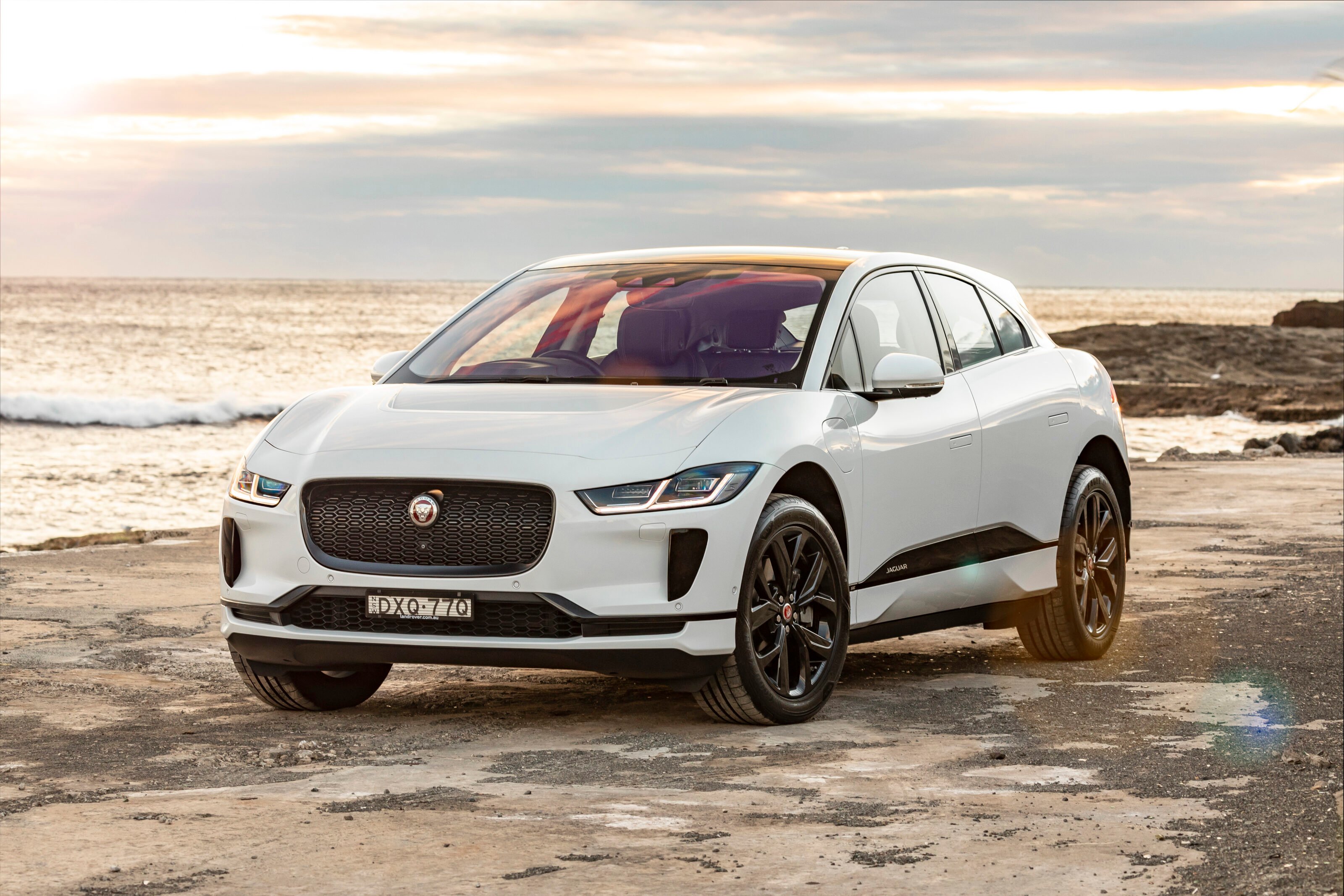
1
Not quite a car, not quite an SUV, there is no other vehicle quite like the swoopy Ian Callum-designed I-Pace. A finalist at our 2019 Car of the Year, the I-Pace has struggled to meet its claimed driving range, but remains one of the more dynamically talented and polished premium EVs.
EVs more than $150K
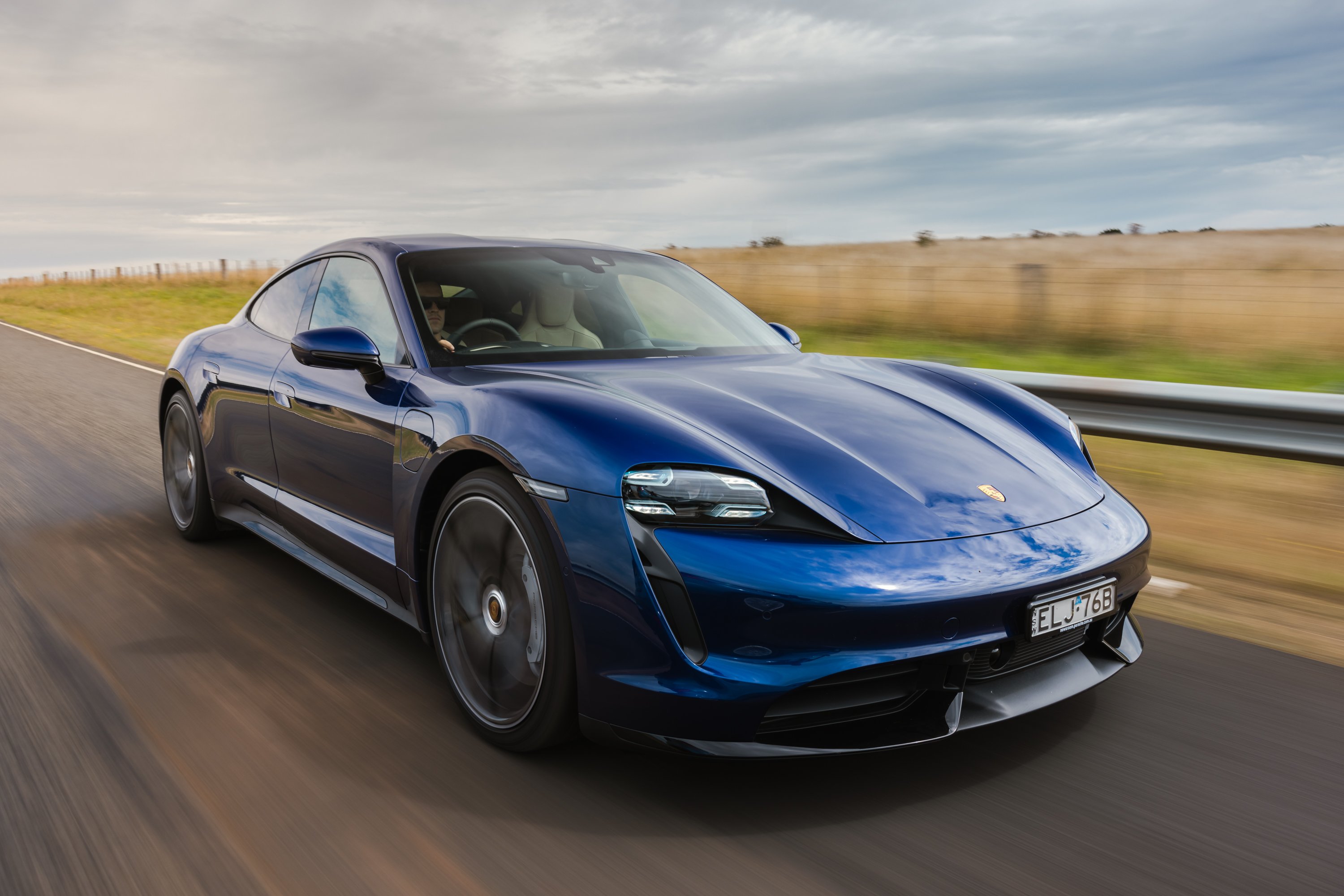
Our pick: Porsche Taycan
1
Globally, Porsche’s first all-electric production model has been given a resounding thumbs-up by customers, with sales to date neck-and-neck with the 911.
While it obviously lacks a thumping V8 note or a scorching flat-six scream, the rapid Taycan bristles with Porsche ‘feel’ so many other manufacturers have spent billions trying – and mostly failing – to imitate. Don’t tell A Current Affair, but the Taycan will even drift and do doughnuts.
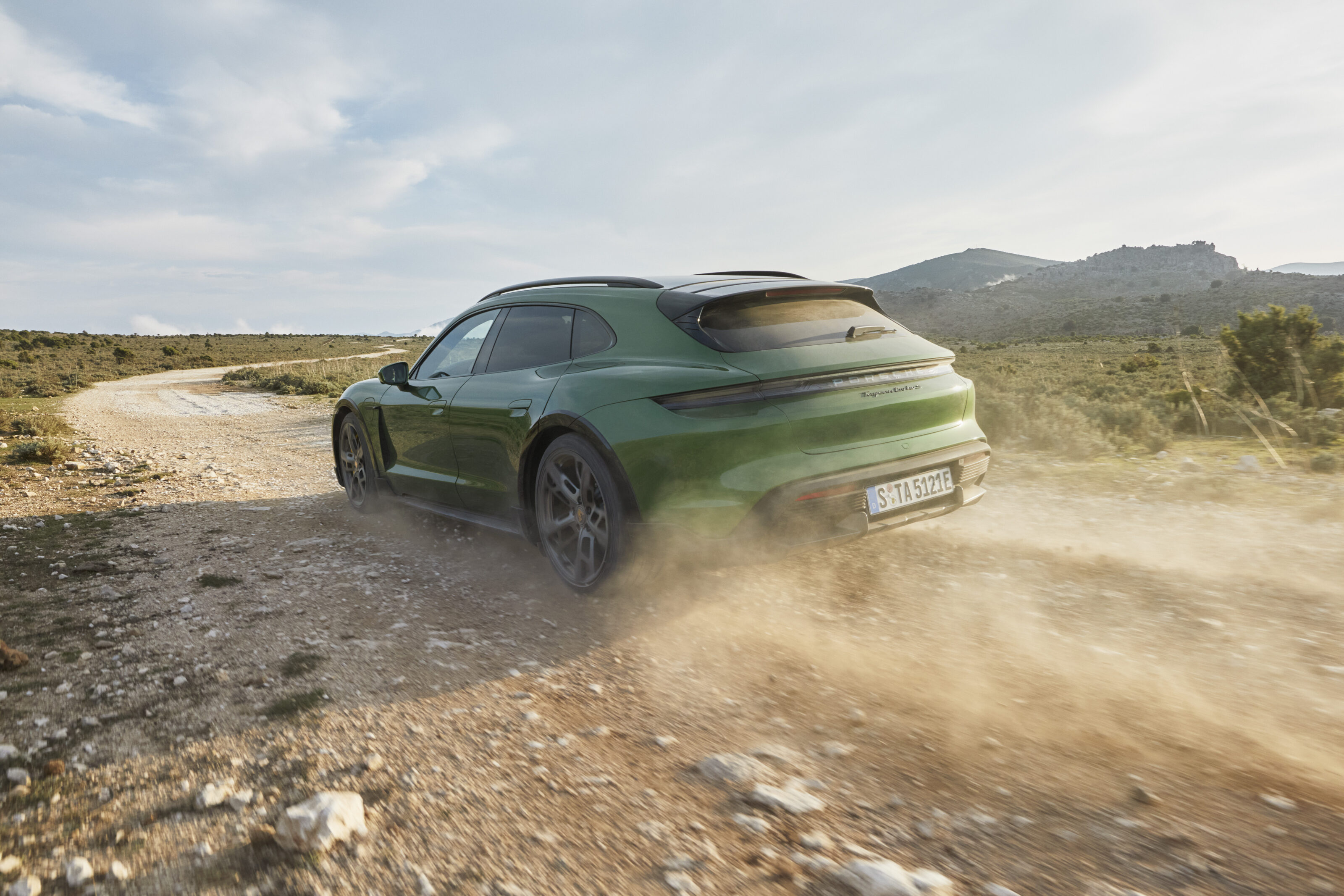
Porsche Taycan Turbo Cross Turismo
9
If the word ‘budget’ is nothing more than a footnote in your EV purchasing process, this may appeal. The Cross Turismo – packing 500kW on ‘overboost’ – is the brilliant Taycan engineering in a drop-dead sexy shooting brake body on slightly higher-riding suspension. Give us a moment, please.
MORE
EV Buyers Guide
Snapshot
- Audi Urbansphere concept to debut on April 19
- Joins the existing Skysphere and Grandsphere concepts
- Teaser image previews urban-focused design
Audi has announced its Urbansphere concept will be revealed later this month.
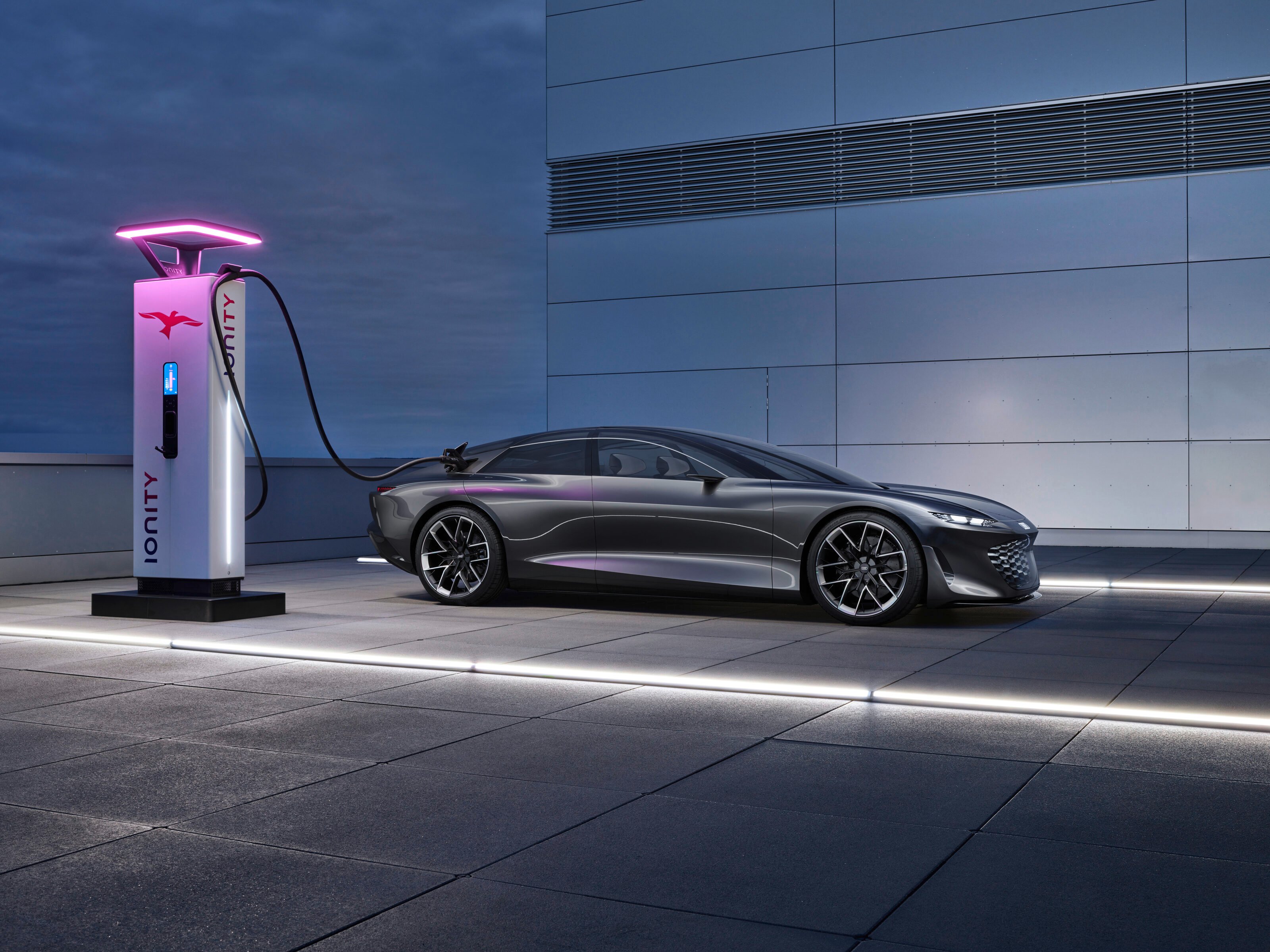
Set for debut on April 19 in an online event, following the postponement of the 2022 Beijing Motor Show due to COVID-19 concerns in China, the Urbansphere is the final iteration of the marque’s ‘sphere’ line-up – joining the Skysphere and Grandsphere concepts.
First teased in 2021, the Urbansphere sports a short front-end, long and steep windscreen and a lengthy flat roof to provide a “private space in urban environments”.
The most-recent teaser indicates the Urbansphere will feature a set of large suicide doors and two rows of seating, with ambient lighting and futuristic design elements also present inside.
Think of the Urbansphere as a follow-up to the AI:Me concept that debuted at the 2019 Shanghai Motor Show. At just 4.3m long, the AI:Me is more compact than the Urbansphere, but also features an urban-focused mono-box design.
2
Size-wise, expect the Urbansphere to slot in between the Q5 and Q7, its short front and rear overhangs demonstrating the advantages of EV technology, with a focus on maximising interior space.
As the third member of Audi’s ‘sphere’ concepts, the Urbansphere will round out the range of EVs, which preview the future of mobility and the brand.
Revealed at Pebble Beach Concours d’Elegance in 2021, the Skysphere is a two-door electric cabriolet with an unusually large bonnet and a sleek profile. Meanwhile, the Grandsphere concept focuses on pure luxury, featuring a 5.35-metre long body and Level 4 autonomous capability.
MORE
All Audi stories
“Hmm, I don’t think that bump is quite right.” I’m riding shotgun with guest judge Bernie Quinn in the Hyundai i30 Sedan N (still a dumb naming convention). We are on a recce to finalise the loop judges will use to assess the SCOTY field in forthcoming road testing.
Discussion ebbs and flows, the two of us sitting in silent anticipation while Bernie runs the Hyundai’s Michelin Pilot Sport 4S tyres over a mid-corner corrugation before returning to a flurry of discussion and debate. To the surprise of many, discussing the finer aspects of potholes is a not-infrequent part of the gig at MOTOR, and for PCOTY our selection process must be exhaustive.
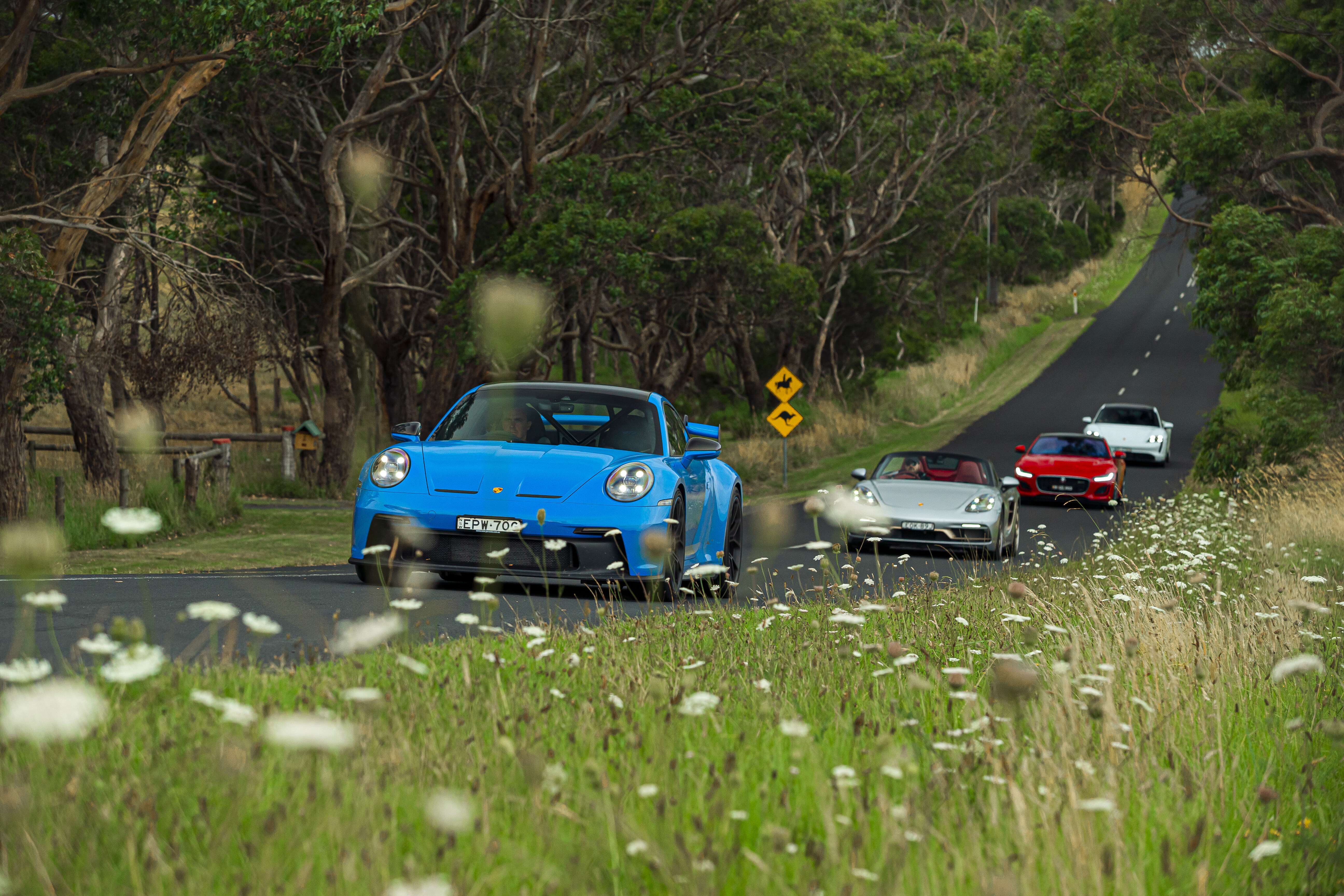
Bernie and I are on the hunt for something ultra-specific. We need a road that is relatively remote so we don’t upset any nearby residents by driving up and down it all day. There needs to be a turnaround point where six vehicles can get off the road completely. That point needs to be a reasonable distance from the main staging area where all 10 cars will be kept, along with a member of the video team.
1
Balancing the distance is difficult. Too short and the judges won’t be able to get a proper assessment from the cars. Too long and we won’t be able to get through all the cars in time. Oh, and did we mention that the final road needs a solid mix of corner radiuses and cambers, along with that Goldilocks level of bumps and surface changes that’s monopolising discussion in the Hyundai.
We’re in the right place to try and find something that can tick all of these sometimes contradictory boxes with testing for PCOTY 2022 taking place in Victoria’s verdant Gippsland region. Traditionally the stomping ground of our friends across the aisle at Wheels for their Car Of The Year testing, MOTOR has conducted a high-horsepower coup in temporarily claiming the route as our own while the other crew conducts their testing elsewhere this year.
To coincide with the dual awards, road testing for PCOTY will take place over two days, on different roads for each respective category. A humble hatch and raucous track-ready supercar sit at opposite ends of the performance spectrum, so it’s only appropriate that we test them on roads best suited to their typical usage and abilities.
1
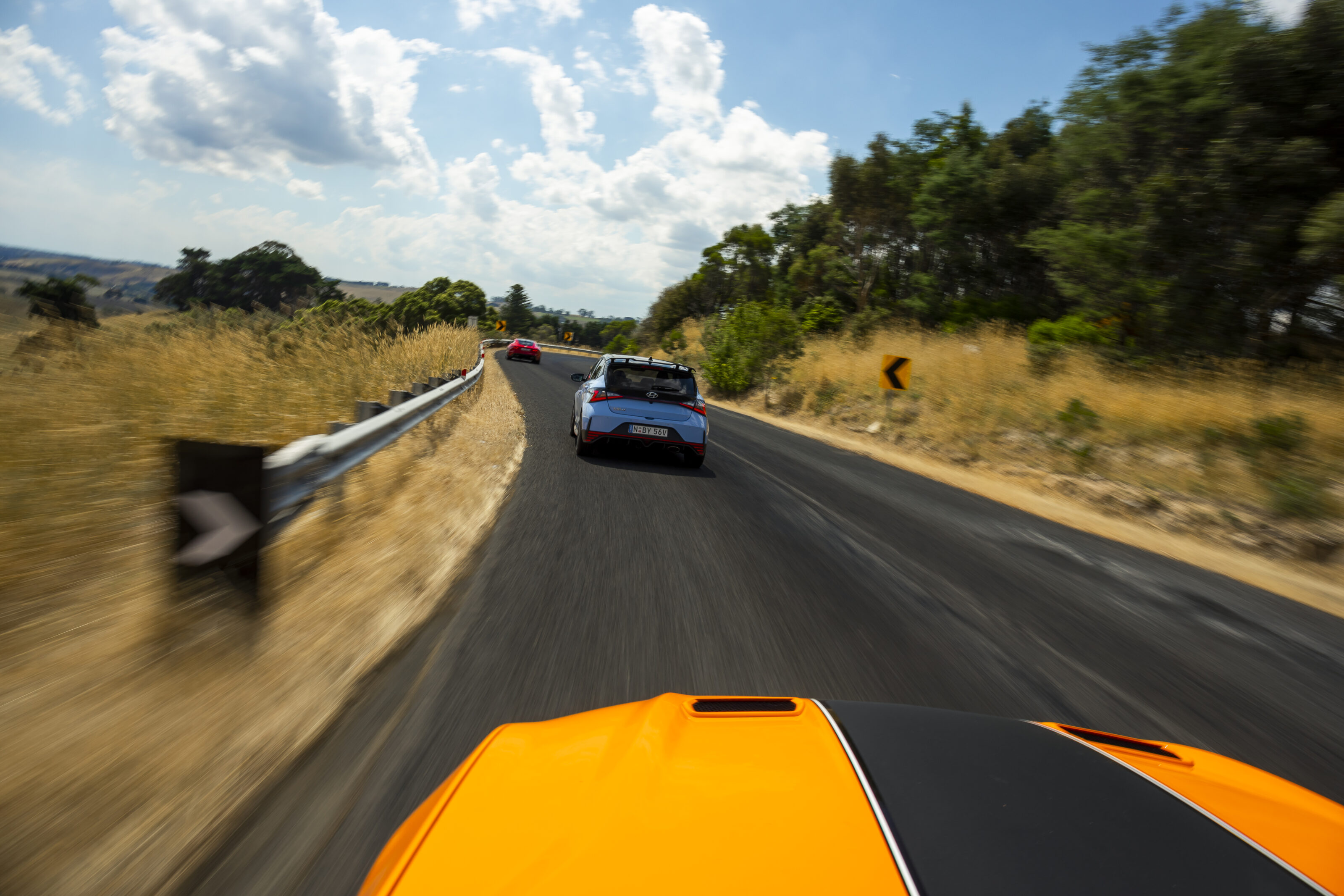
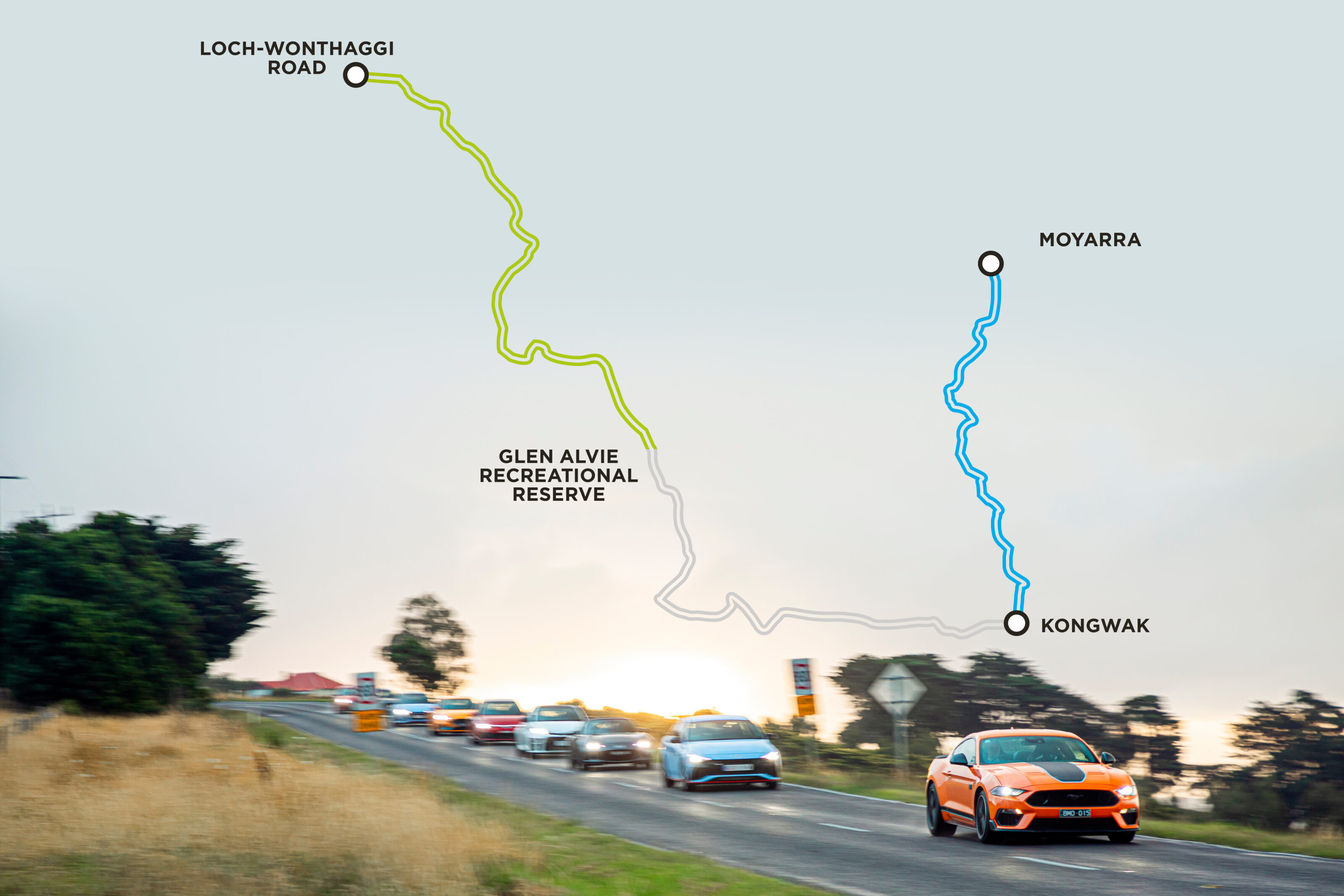
Our Sports Car of the Year loop is found on the outskirts of Kongwak, a sleepy town of just 197 people at the last census. It’s a small sample size, but every local we encounter throughout the day is happy to see us, waving cheerily as we pass on the road or walking up with intrigue to chat at our staging area. Talking from experience, not every sleepy town is happy to have a single buzzing sports cars spending the day driving back-and-forth on a nearby road, let alone 10.
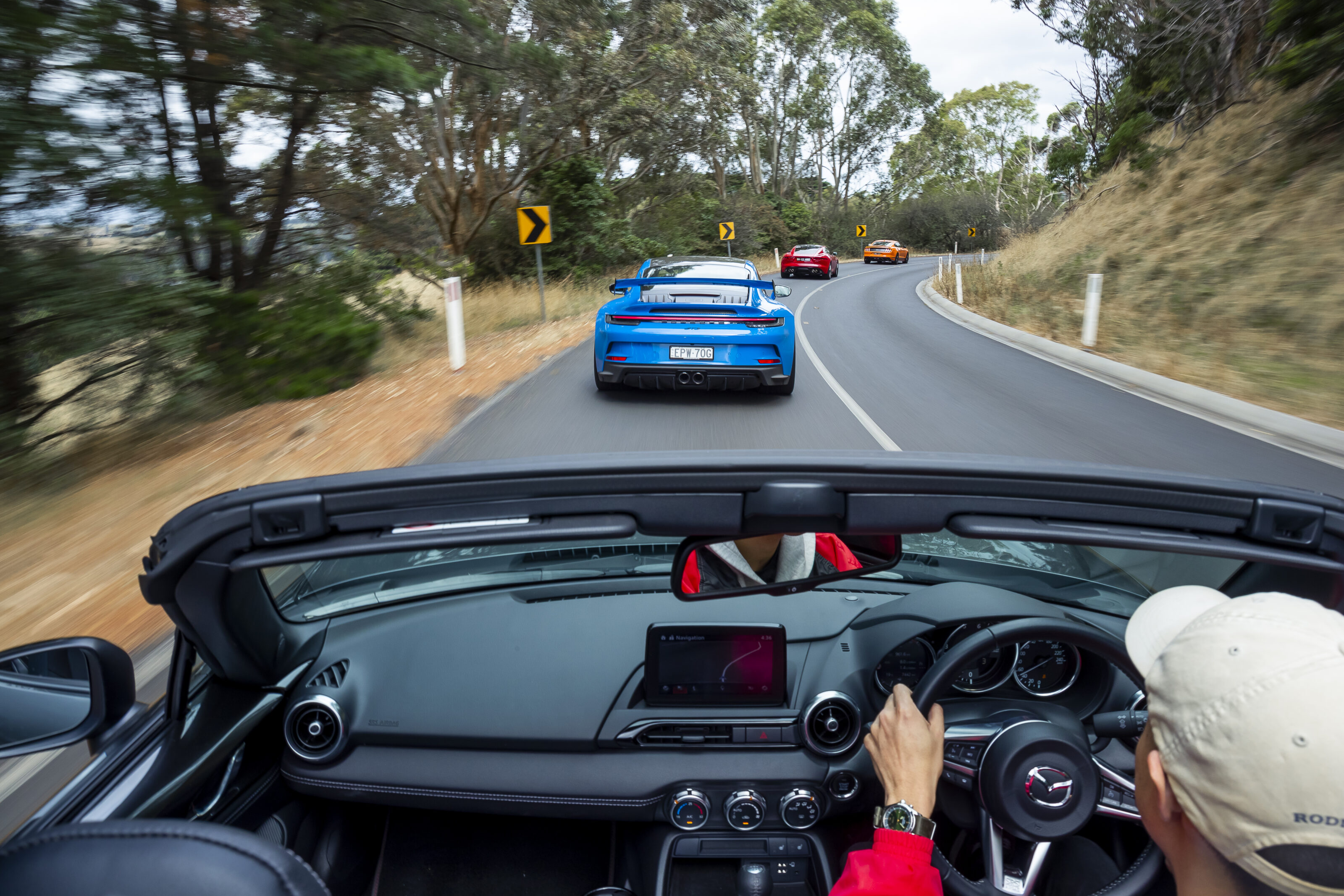
Trent is the first person in the MX-5, and he immediately lowers the roof to get some extra Vitamin D. Andy is into the Hiroshima drop-top next. Here’s a fun fact about our fearless leader: he absolutely hates convertibles. Enright only makes it 50 metres up the road before reaching over his shoulder to put the roof back up, clattering a camera the video team had set in-between the seats in the process.
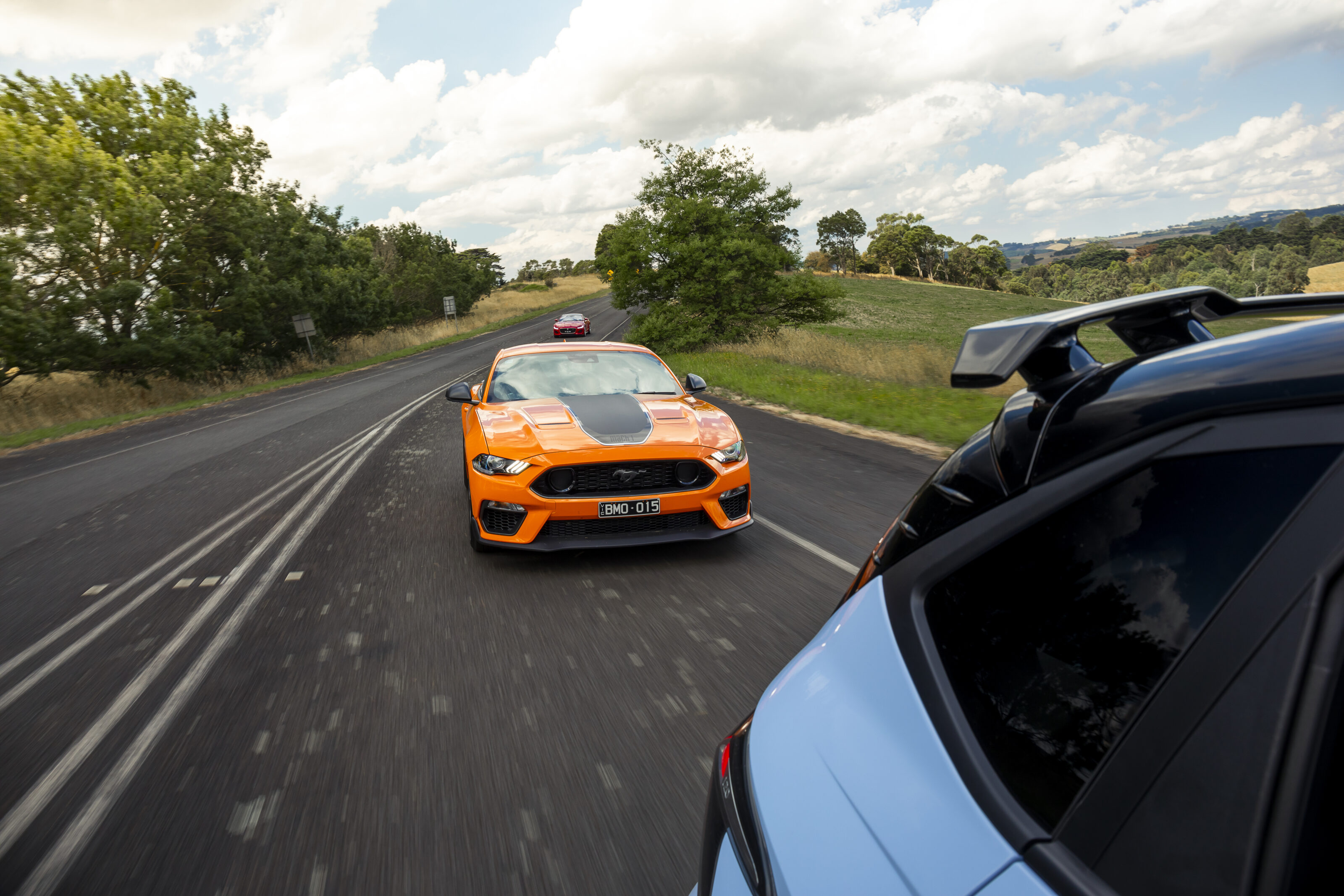
I set off after him in the Hyundai i30 Sedan N after allowing for our 10-second gap between each car. Despite my best efforts I can’t quite get onto his bumper by the turnaround point, and I arrive to Andy’s mile-wide grin. I’m similarly beaming ear-to-ear thanks to the frankly outrageous acoustic performance coming from the sports sedan’s exhaust. It’s only outclassed here by the Mustang, which gives away our location from the first run. Thankfully, no one pays us much mind.
1
Quickly the judges discover that the SCOTY field is breaking into three distinct groups. We have a handful of cars that are pooling naturally at the bottom of the rankings, but the mid-field is absolutely stacked and more than a few of us end the day scratching our heads about how we’ll decide on a final order.
At the top end of town early event favourites are beginning to form a breakaway group. Hyundai’s N pairing and the Ford Focus ST are both impressing in their no-fuss on-road ability, reminding everyone that you don’t need bottomless pockets to have buckets of fun nowadays. Defending rear-wheel drive’s honour against the front-drivers is the Subaru BRZ.
At the end of the route heading back into Kongwak there is a downhill, heavily cambered series of S-bends. On this snaking bitumen the BRZ dances beautifully, judges regaling each other with stories of wondrous chassis balance at the end of each run.
1
While the GR Yaris Rallye’s mechanical ingredients make up for the ills of the regular GR last year, the seating position is causing significant consternation among judges who are having to button out of left-handed corners due to the cramped and hamstrung visibility caused by the raised seating position, low rear-vision mirror placement and creeping height of the central infotainment screen.
Utility is more than just how readily the performance abilities can be accessed. The Rallye catches my ire in particular. “I can’t get over the fact that I don’t enjoy driving that car on the road because of the seating position,” I note as we reflect on how the cars performed. “It’s fine as long as you don’t turn left,” winks Luffy.
And so the discussion continues, each judge putting forth their findings and thoughts, while the others add their inputs and bounce off each other. That chat could, and does, continue for hours as we unpack every facet of every car in detail, six minds working together, each noticing quirks and assessing the contenders independently as individual car fanatics.
1
It takes almost all day for all 10 cars to be put through their paces, and we have a pre-dawn start the next morning. It’d be a great time to head to the motel early for some well-earned sleep, but photography demands require all the cars assembled for a sunset group shot that predictably runs late. You learn quickly here that giving a photographer the hurry-up is as futile as trying to nail jelly to a ceiling.
Despite the judges sneaking out of our rooms as quietly as possible to not disturb the rest of the team at the start of the next day, the Lamborghini’s high-revving cold start undoes all our attempted subterfuge. Absconding to the only open bakery in town we meet a few local tradies. One can’t seem to peel his eyes off us, staring in mute confusion. It’s only as we depart do we hear him comment to his companion “That bloke looked a lot like Warren Luff!” Eerily like him, mate.
Stepping up to the PCOTY field, where the least powerful contender is knocking on 400 horsepower, with the electric Taycan capable of turning the treads with 750hp, space and flow is top of the priority list for today’s road and we find it just north of Glen Alvie.
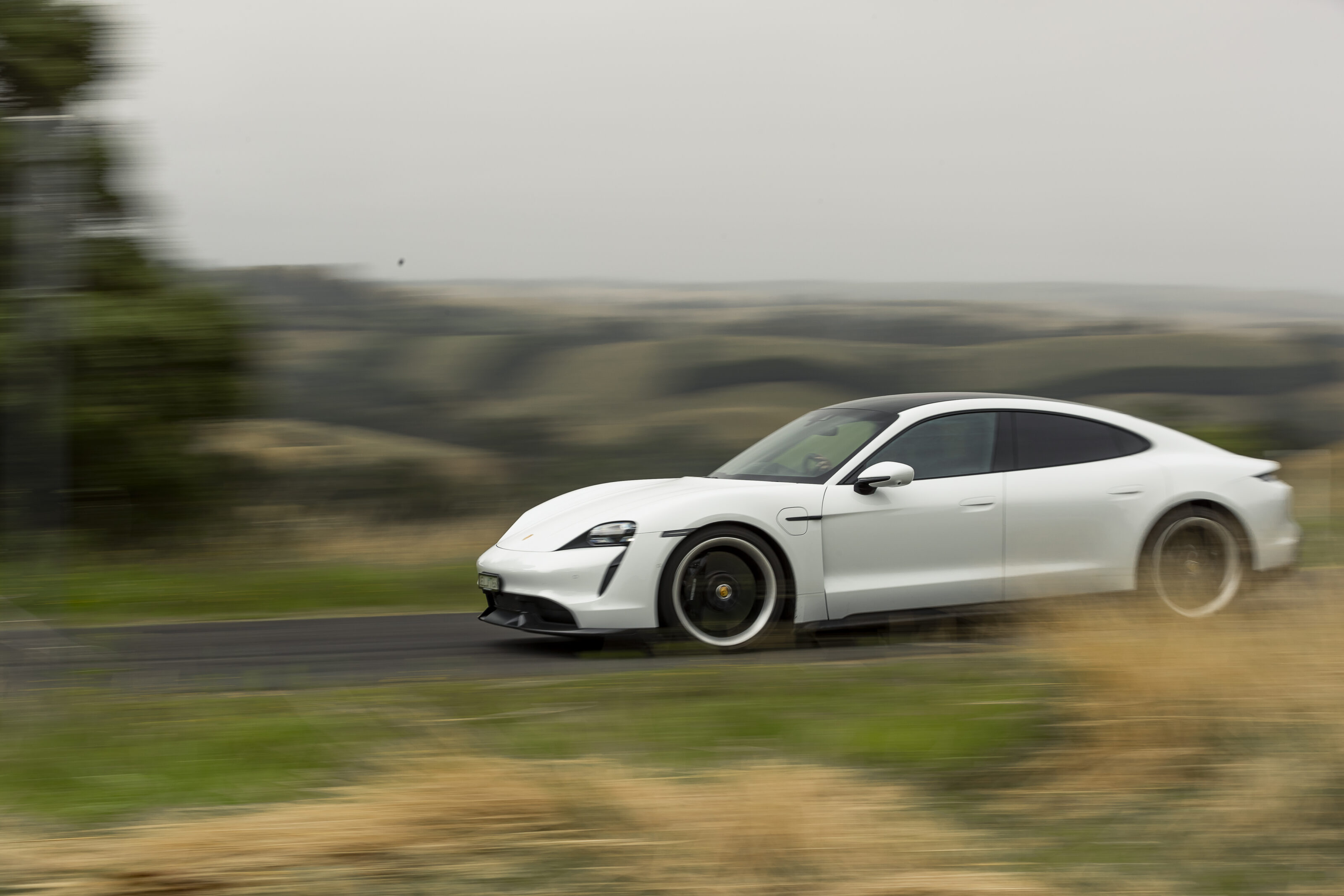
1
Aside from their outright speed capabilities, one of the biggest problems with the PCOTY field is noise. Put the visual extravagance to the side for a moment – two 4.0-litre flat-sixes, a 5.2-litre V10, a pair of V8s in supercharged and atmo guise, and two twin-turbo straight-six engines make quite the racket.
For the PCOTY field, a member of the support team is brought in to drive one of the more subdued SCOTY contenders ahead of the judges, conveying radio messages back about on-road hazards, traffic, and errant fauna. Getting six people through eight cars isn’t the work of a moment, and thankfully our route is remote enough that we avoid the ire of either local farmers or the boys in blue.
Tensions rise late in the piece when a brief squall of rain passes over, suddenly reducing the available grip on hand. I’m made acutely aware of the limitations of the Corvette’s front-end grip, while Bernie returns to the staging point abuzz as he steps out of the Taycan. “If you just grab it by the scruff of the neck and thrash the thing, it’s bloody brilliant!” he enthuses with the kind of grin usually reserved for a teenager who just discovered how to build a potato cannon.
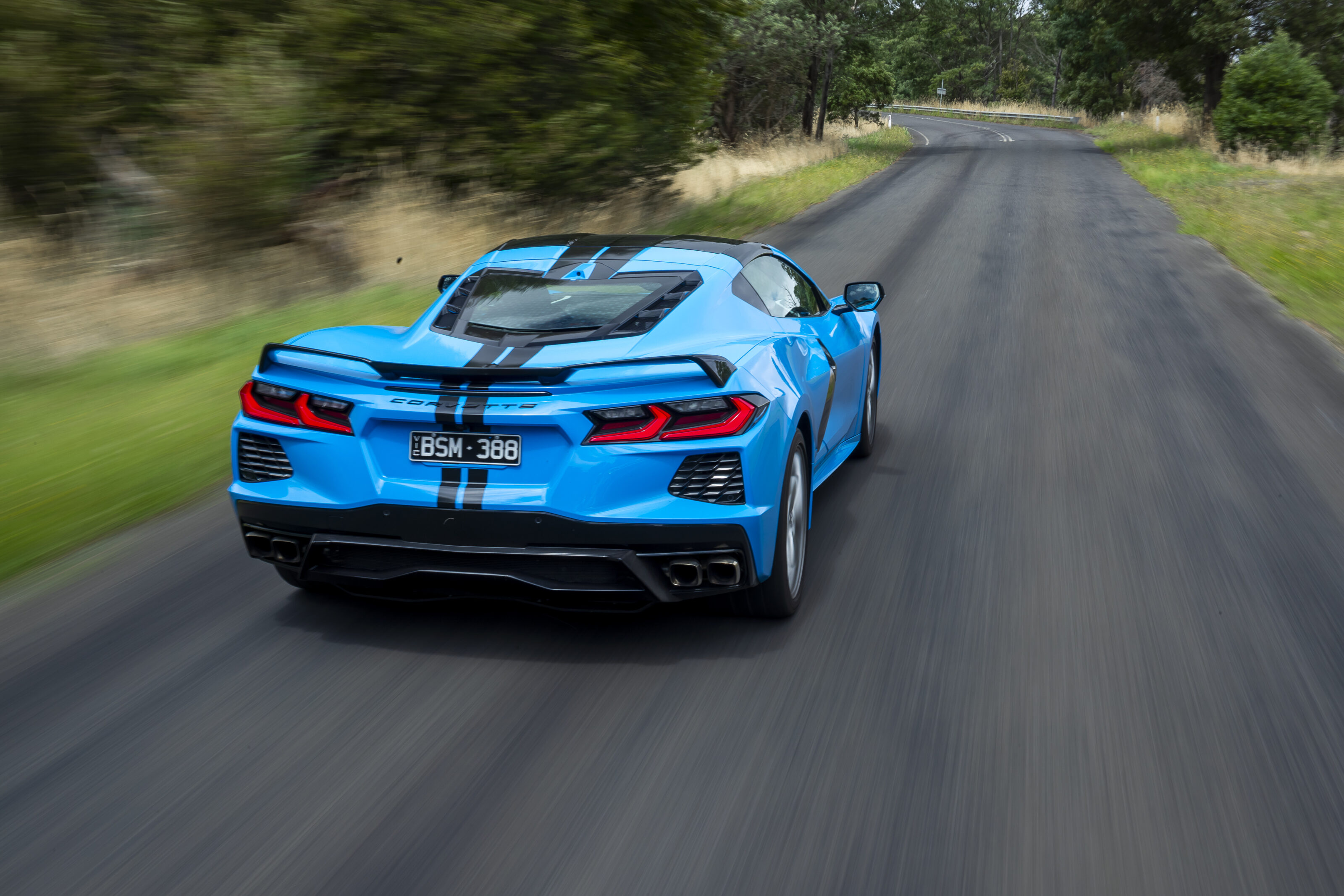
1
The two BMW-based sedans quickly differentiate themselves, with the Alpina’s subdued nature standing in stark contrast to the M3’s pointed aggression. Each judge cycles through the trio of Porsches back-to-back-to-back. The three-car assault is a show of force from Stuttgart, and each is a reminder of why Porsche is the most successful manufacturer in PCOTY history.
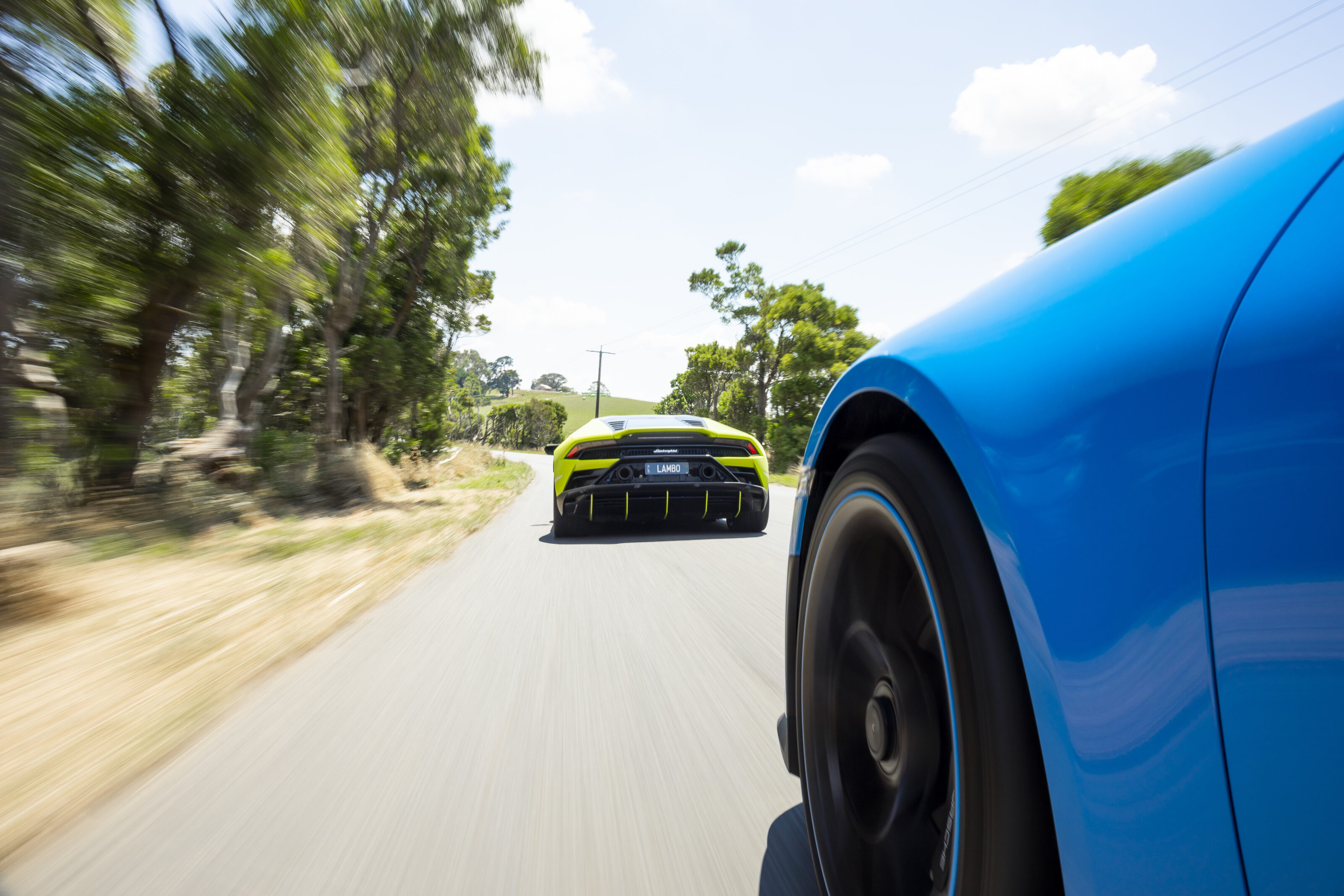
The sheer competence of the Germans pales to the theatre of the only Italian in the whole field – the Lamborghini Huracán. Dipped in a shade of paint more resembling a rave-prone sentient tennis ball, drama follows it everywhere. As the day progresses, each judge tries and fails to get in and out of its cabin gracefully.
Nevertheless, we all need a moment to decompress after the experience, with the driving experience akin to having a high-voltage cable shoved directly into your spine. In contrast the Jag seems altogether stately and sensible. Surprising considering its 331kW supercharged V8, rear-drive ingredients. Its windows are permanently lowered throughout the day, even in the rain, as we all let its industrial racket wash over us.
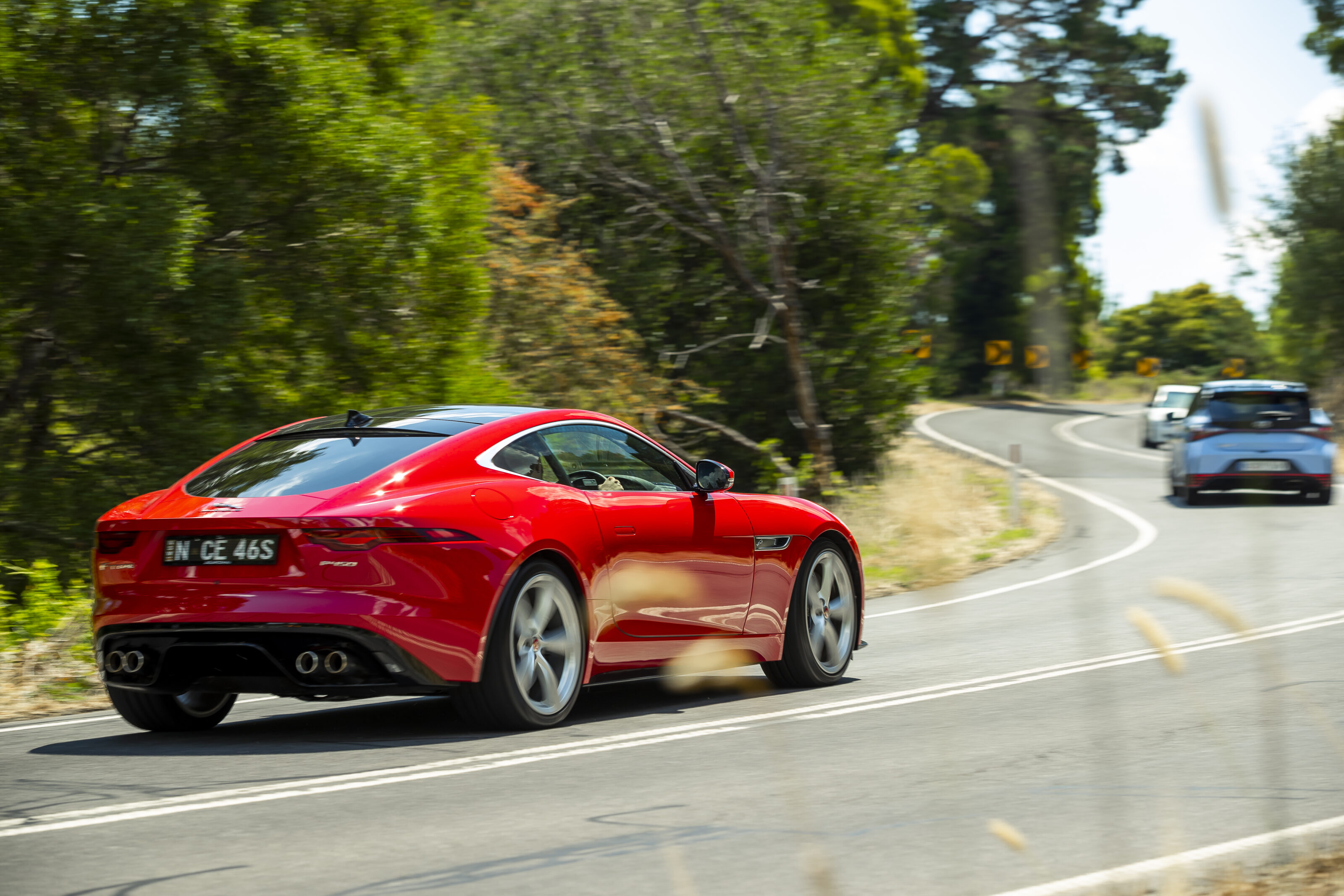
1
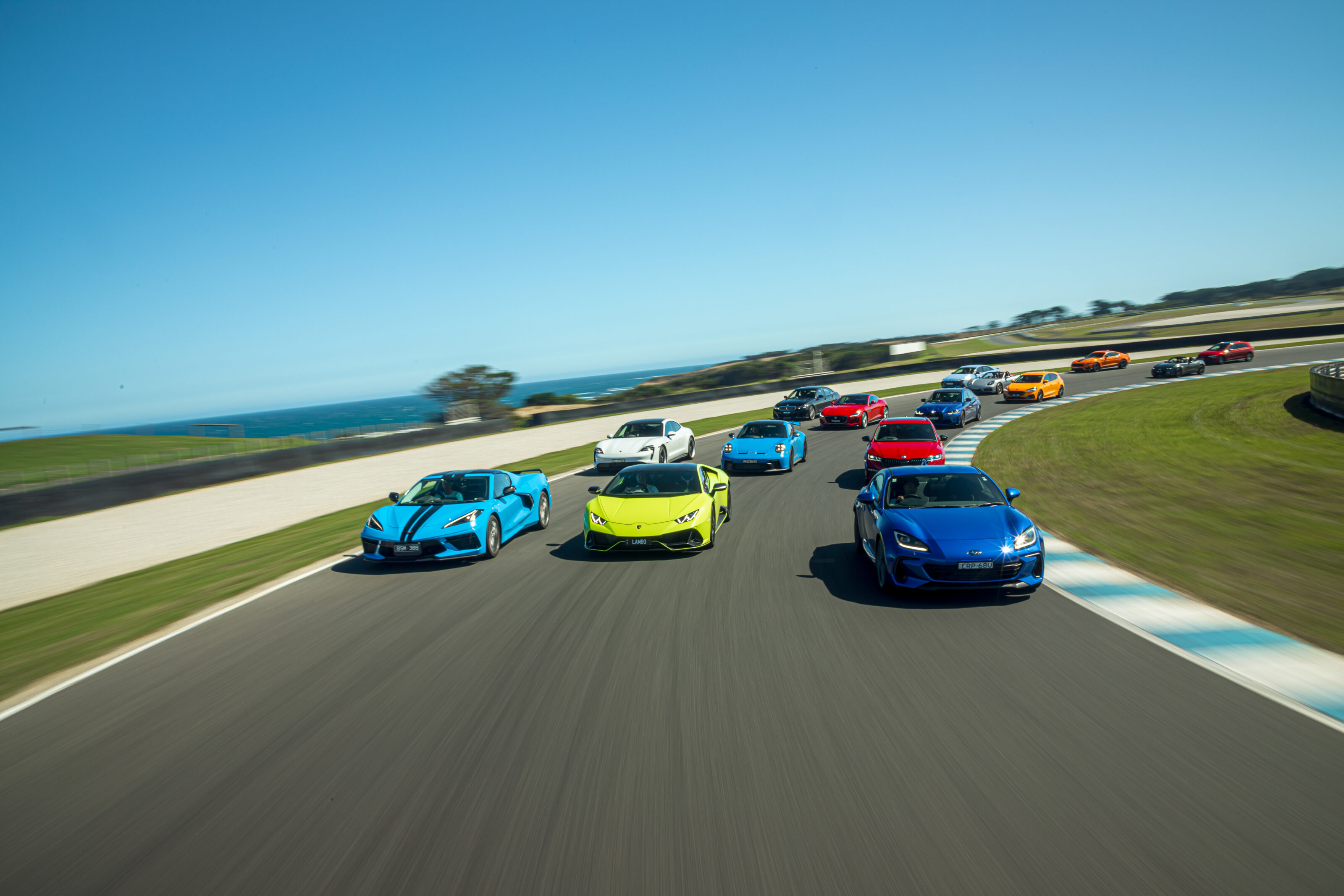
If you isolated each of these eight PCOTY contenders and drove them on the same road, I can guarantee you’d have a brilliant time. Combine them together in one climactic convoy on repeat, and you’ll never forget it. There are those who complain that performance cars are no fun anymore – they are too powerful to be useable. Here’s proof that particular opinion misses the mark.
At the end of the road loops some early front-runners are beginning to form, while it becomes abundantly clear that both the PCOTY and SCOTY fields are absolutely stacked with vehicles that would leave any customer beaming with pride at their purchase. Even the battle for the wooden spoon prompts fervent discussion between the judges as we thrash out which car has failed to meet its brief by the biggest margin.
Final adjudication must wait though, as the Phillip Island Grand Prix Circuit beckons for both judges and contenders alike. Hey Luffy, how many left-handers are there on the track again?
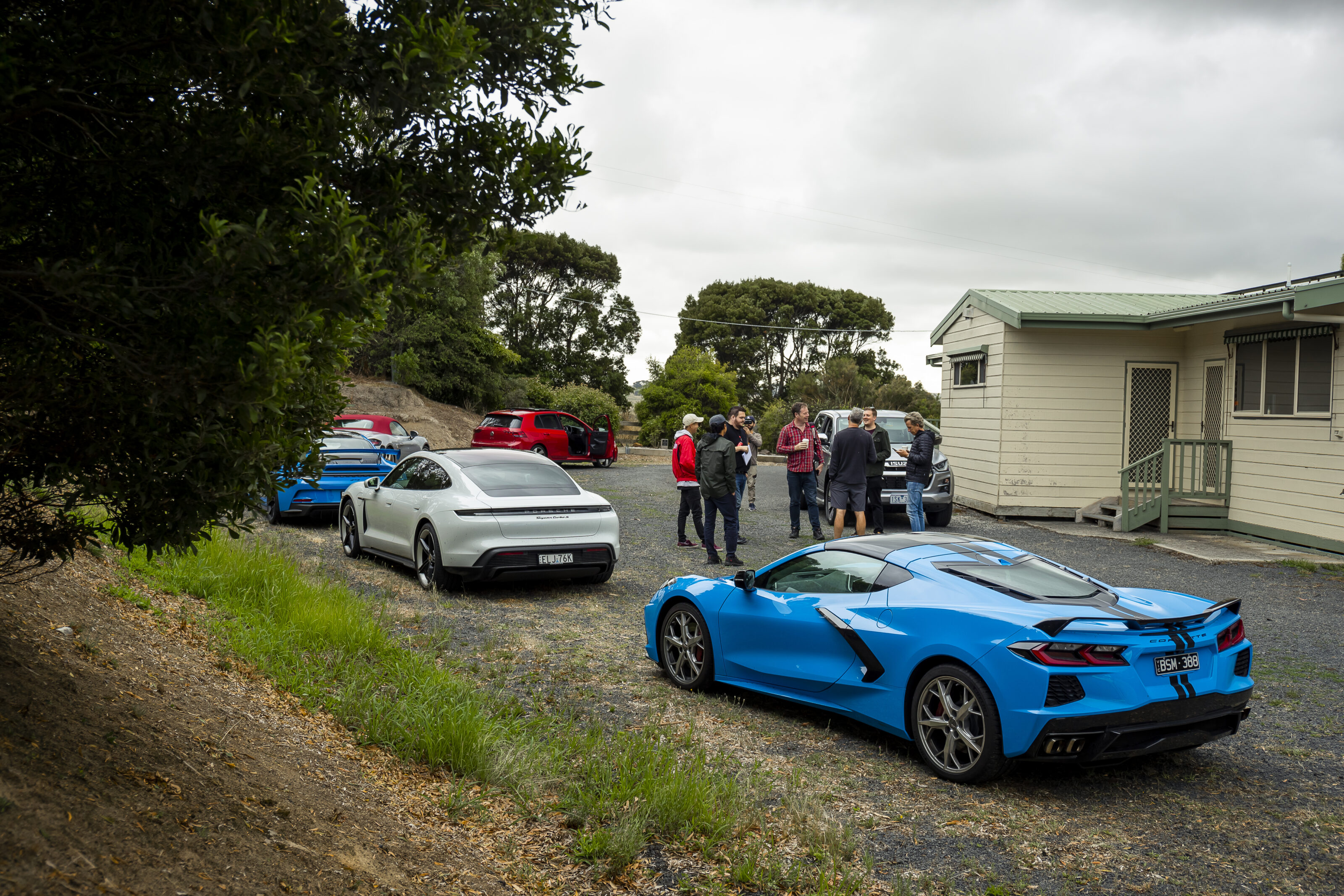
1
The finer details of road selection
The PCOTY loop: 12.2km, +271m ASL
For the quicker – and lower slung – cars in the convoy we chose a more open, flowing route with a marginally better grade of bitumen.
This route climbs consistently from Glen Alvie, with a technical middle section before ending with well-sighted sweepers punctuated by the odd crest. It’s a great test of ride refinement, drivetrain flexibility, driver assist systems, steering fidelity and general ease of use.
The SCOTY loop: 10.6km, +71m ASL
The SCOTY loop climbs sharply out of Kongwak straight into a series of rapid left-right bends. From there the road opens and rolls across a plateau before diving into river drainages and past farms.
The road surface is scarred, with frequent bumps and a couple of wicked compressions that would splinter the chins of our PCOTY contenders. Mud and grit dragged onto the road by farmers only adds to the challenge. It’s a short but very sharp test.
1
Snapshot
- Klaus Zellmer new Skoda boss
- Thomas Schu00e4fer has new role as group Chairman for passenger cars
- Changes take effect from July 1, 2022
Skoda’s current global CEO is to step down from the role later this year, as he instead takes up the top job of heading up the whole of the Volkswagen Group’s ‘Volume’ sub-brand.
Thomas Schäfer, who has only held the CEO position since August 2020, will become Chairman of the Board of Management of Volkswagen Passenger Cars, as well as joining the Group’s Board of Management and becoming Head of the ‘Volume’ brand group on July 1 this year. Just days ago on April 1 he was officially appointment as VW’s Chief Operating Officer.
His replacement comes in the form of Klaus Zellmer, who is currently the member of the Group’s Board of Management responsible for sales, marketing and after sales of the Volkswagen Passenger Cars brand. From July he will join Skoda’s Board and be elected as Chairman.

1
The movements at Skoda come as part of a wider reshuffle of the VW Group’s management. According to a report from Autocar late 2021, current Volkswagen cars CEO Ralf Brandstatter will join the main VW Group board, and from August will take over as the head of the group’s China operation. Meanwhile, Group chairman Herbert Diess has now taken over direct control of Cariad, the firm’s software division, succeeding Audi boss Markus Duesmann.
“Thomas Schäfer has laid the foundations for a promising future for the brand by successfully launching the electric Enyaq iV and other planned e-models, taking on responsibility for regions and platforms for the Volkswagen Group and successfully implementing the India 2.0 project. I would like to thank him for this on behalf of the entire Supervisory Board,” said Murat Aksel, Chairman of Skoda’s Supervisory Board.
“At the same time, Klaus Zellmer has more than 20 years’ experience in the industry. During this time, he has not only distinguished himself as a leading automotive expert but has also demonstrated great strategic and entrepreneurial foresight. I am convinced that, alongside the Board team, he will do everything in his power to continue to systematically advance Skoda’s successful development.”

1
Klaus Zellmer, who earned a degree in business administration, began his professional career in 1997 as an assistant to a Member of the Board of Porsche AG. In 1999, he moved to Porsche France to work in sales network development, subsequently taking over as area manager for North America.
In 2000, as project manager, he oversaw the development of the sales and marketing areas relating to the new Porsche plant in Leipzig. After managing the customer centre at the Porsche plant, Zellmer became Head of Marketing at Porsche Germany in 2007. He then rose to the position of Chairman of the Board of Management in 2010.
Five years later, Zellmer joined Porsche Cars North America as President and CEO. He’s been in his current role since September 2020.
MORE
All Skoda
MORE
All Volkswagen
Snapshot
- Launch timing unclear, but 2022 could be on the cards
- It will become Maserati’s first EV alongside the GranCabrio
- 485kW electric motor could make it the company’s most powerful car ever
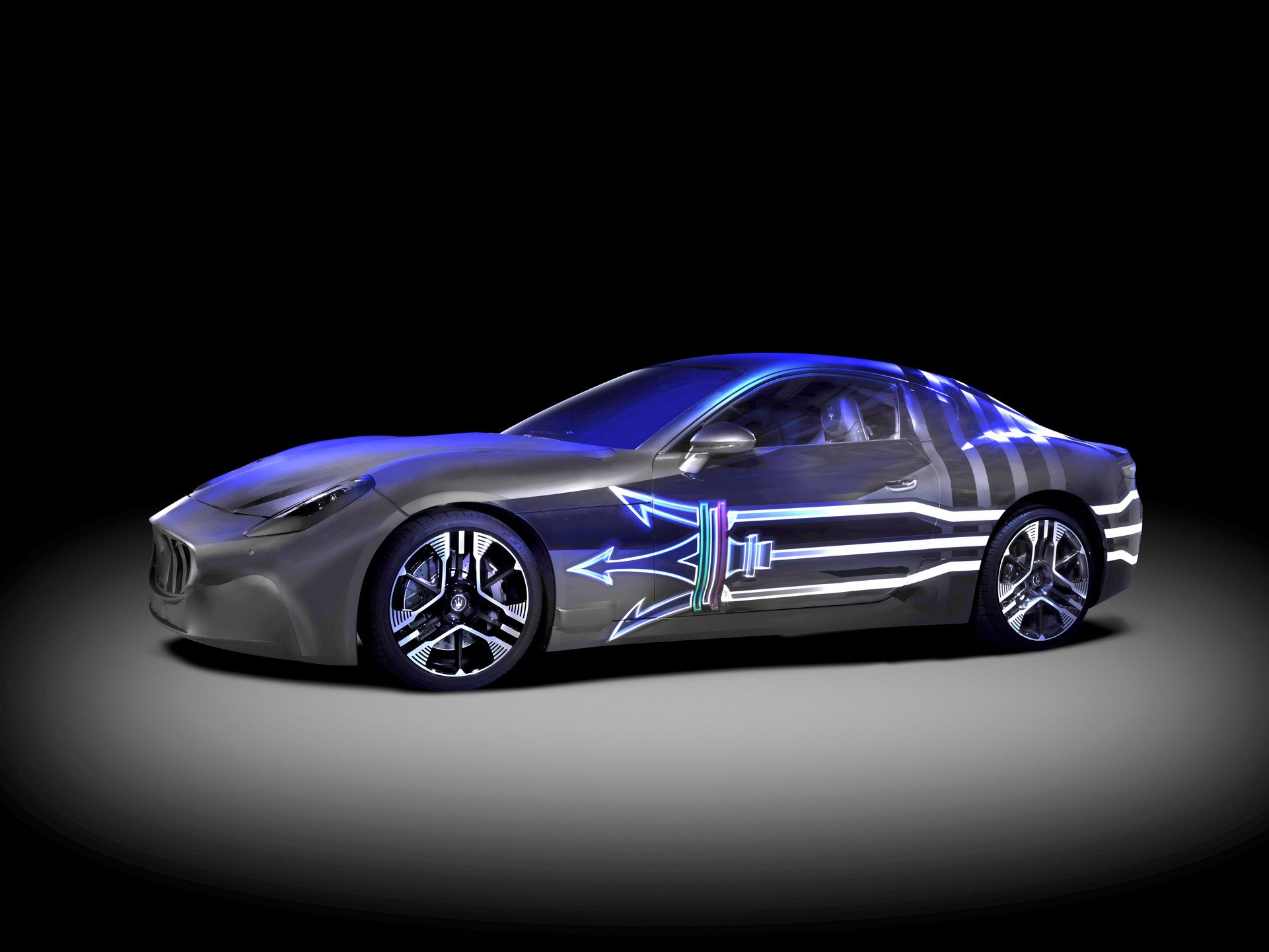
UPDATE, April 9, 2022: More than a year since it first dropped some camouflaged teaser photos, Maserati’s new GranTurismo Folgore electric coupe has been teased in its most revealing form yet.
Well, we say that, but the front intakes are actually more disguised now than they were previously – but without the dizzying graphics seen before, this is still the clearest look Maserati has offered.
The photo above shows Maserati boss Davide Grasso and ROKiT Venturi Racing chairman Scott Swid, signalling the start of a partnership in next year’s Formula E season – the ninth so far.
Click the photo below for more images, and continue reading for everything we know so far.
3
The story to here
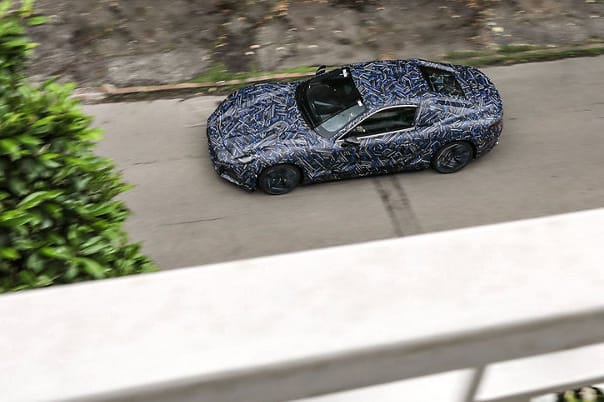
June 13, 2021: New images of Maserati’s first EV have surfaced after the Italian manufacturer released ‘spy’ photos of its heavily camouflaged prototype online.
Announced in September 2020, the GranTurismo and GranCabrio will be the first 100 per cent electric Maserati models, adopting the Folgore nameplate – the Italian word for lightning.
No concrete details have been released about the GranTurismo’s powerplant, but it’s expected the Folgore will have up to 485kW on tap – helping it to a 0-100km/h time of 2.5 seconds.
A more conventional petrol variant of the new cars could have the MC20 supercar’s 3.0-litre twin-turbo V6, detuned to avoid showing up the supercar.
3
The two-door grand tourer looks to embrace the design language set by the MC20, adopting vertical headlights and a wide radiator grill with large side intakes.
Further back on the body you’ll find integrated handles in the door, leading to an angular C-pillar section above the thin rear lights, almost making it look like a Jaguar F-Type from some angles.
A minimalist rear spoiler sits atop the boot lid with chrome exhaust tips sticking out from the rear bumper, all but confirming this prototype is running the V6 petrol engine.
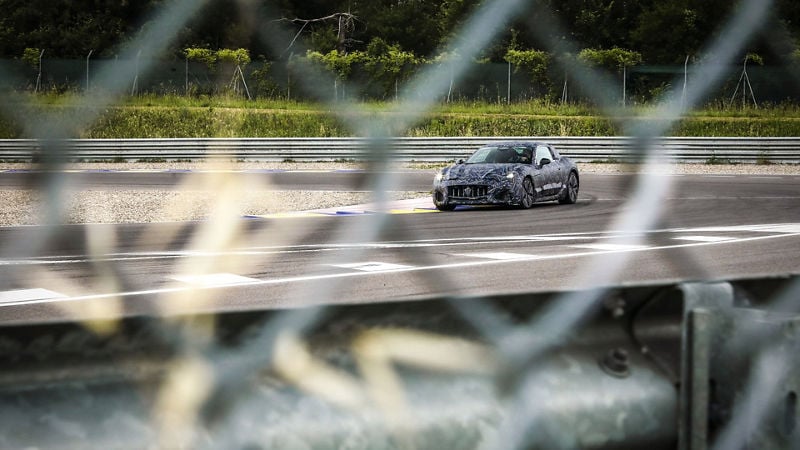
There’s no word yet on the official launch date though Maserati states, “Ahead of the launch of the new model, the prototype cars are currently undergoing a period of intensive road and circuit testing, in various conditions of use, to acquire vital data for the preparation of the final setup.”
As of the start of 2021, Maserati is now a part of the Stellantis family, parent company Fiat having been a major part of the merger between FCA and PSA.
1
MORE
All Maserati stories
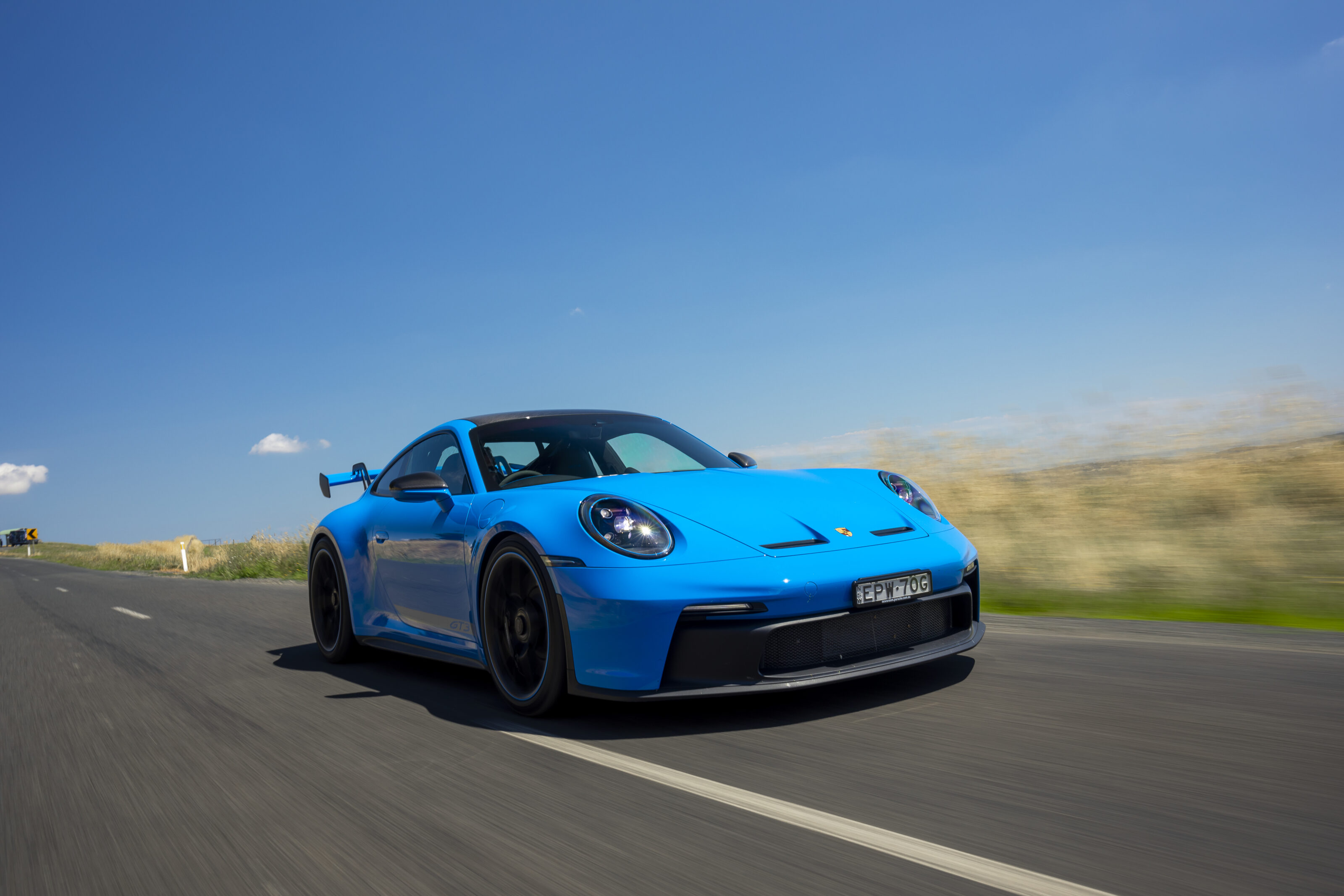
Predictable? Maybe. Fully deserved? Beyond any reasonable doubt. Hail the Performance Car of the Year 2022 champion – the Porsche 992 911 GT3
1
Excellence can look a lot like perfection. You only have to look at launch reviews of the Porsche 911 GT3 as a case in point. Each generation, whether it’s the 996 generation of 1999, the 997 of ’06, or the 991 of ’13, established itself as the best driver’s car in its class. And because, in each instance, there was nothing better to measure it against, perhaps it’s understandable that their individual shortcomings only coalesced over time.
Of course, given the way that cars are developed, Porsche is already at work on the next car and understands that the car that arrives box-fresh in dealerships can be improved in very specific ways. As ex-Porsche engineer and now Williams F1 boss Jost Capito has said, he never wanted to buy a car that he’d developed, because by the time it was launched it was an old car and he knew that something better was on the way.
1
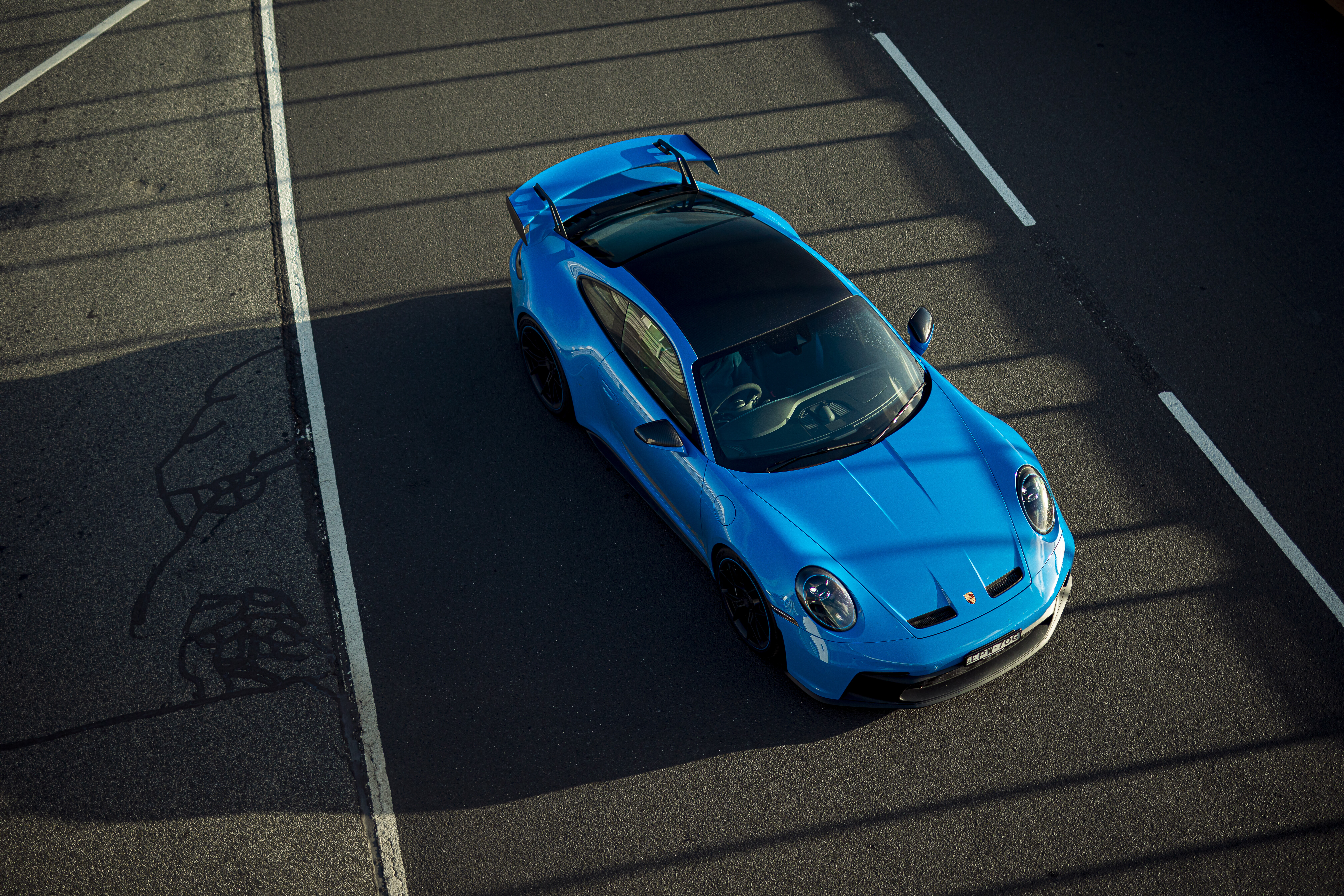
Even knowing all of this, watching judges emerge from the Porsche 992 GT3 at this year’s Performance Car of the Year was instructive. Depending on how demonstrative the personality, there was a curious mix of elation, admiration and shoulder-shrugging resignation, the latter because it was clear that the pre-event favourite had just annihilated the rest of the field. Kirby climbed out, stood with hands on hips and then muttered “it’s just so annoyingly good”. PCOTY ’22 wasn’t a competition as a result: it was more of a demonstration event.
Every judge placed the 992 GT3 in first place on their list of preferences, the margin of victory reminding us why Porsche has been victorious in 16 of 26 PCOTY events, the 911 in particular claiming 13 overall wins. Some years, PCOTY is a judging wrangle, an exercise in trying to tease out the subtleties of subjective and objective preferences. Not this year.
1
We will say this. If you look at this year’s PCOTY as a guide to buying a road car that you rarely if ever intend to take on track, don’t waste your $369,600 on a 911 GT3. Spend ninety grand less on a 911 Carrera S (PCOTY winner of 2020) and you will be rewarded with a more rounded road car; possessed of more torque, far superior cabin refinement and ride quality that’s significantly friendlier.
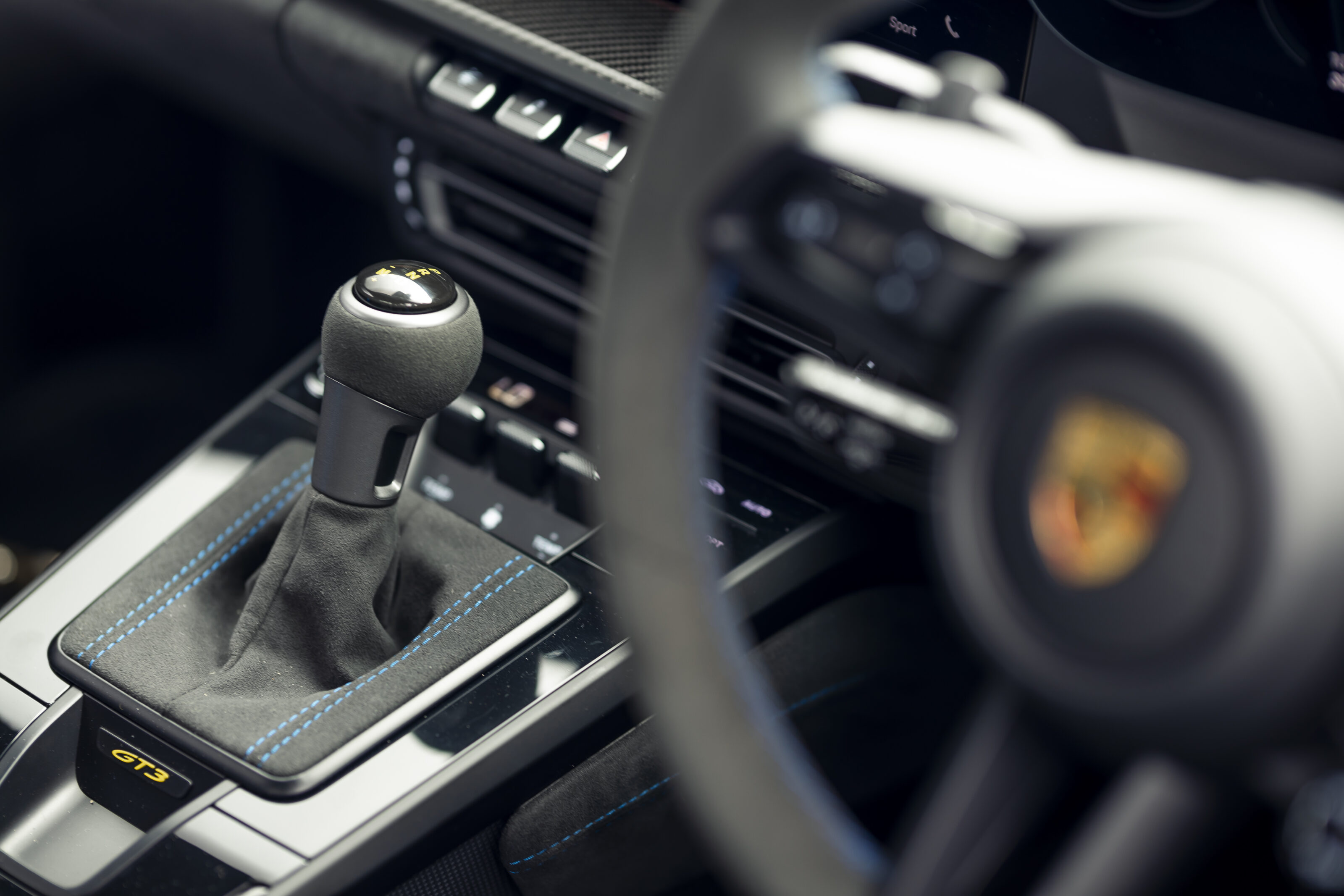
As with prior generations, the GT3 is a track-oriented vehicle that works on road the closer the road resembles a track. That’s why we asked for the PDK-equipped version. Faster, crisper, more aggressive and capable of wringing every last rev out of the engine before upshift, it’s a transmission that suits the GT3’s persona better than a six-speed manual. Porsche’s Andreas Preuninger, father of this vehicle, is pretty unequivocal on that score.
1
Some reviews have suggested that this 992 version of the GT3 has become a little too focused for its own good to work as a road car. We’d take issue with that. Yes it is loud and firm, clumsy even at low speed, but it finds a just about legal cadence where it flows acceptably, shucking off that low-speed recalcitrance. The new double-wishbone front end coupled with changes to the electrically assisted power steering introduces a newfound delicacy to the way the GT3 steers. It now tips sweetly into cambers, the wheel guiding into the dish of a corner by a few degrees. It’s reminiscent of a late model Exige, and that’s a huge compliment.
Because a MacPherson strut setup directs the braking force into the shock absorber, Porsche has traditionally relied on a very stiff front unit for the GT3. Because the damper now sits between two forged aluminium wishbones, Weissach has considerably more scope to elegantly tune it without having to burden it with a stack of anti-dive requirement.
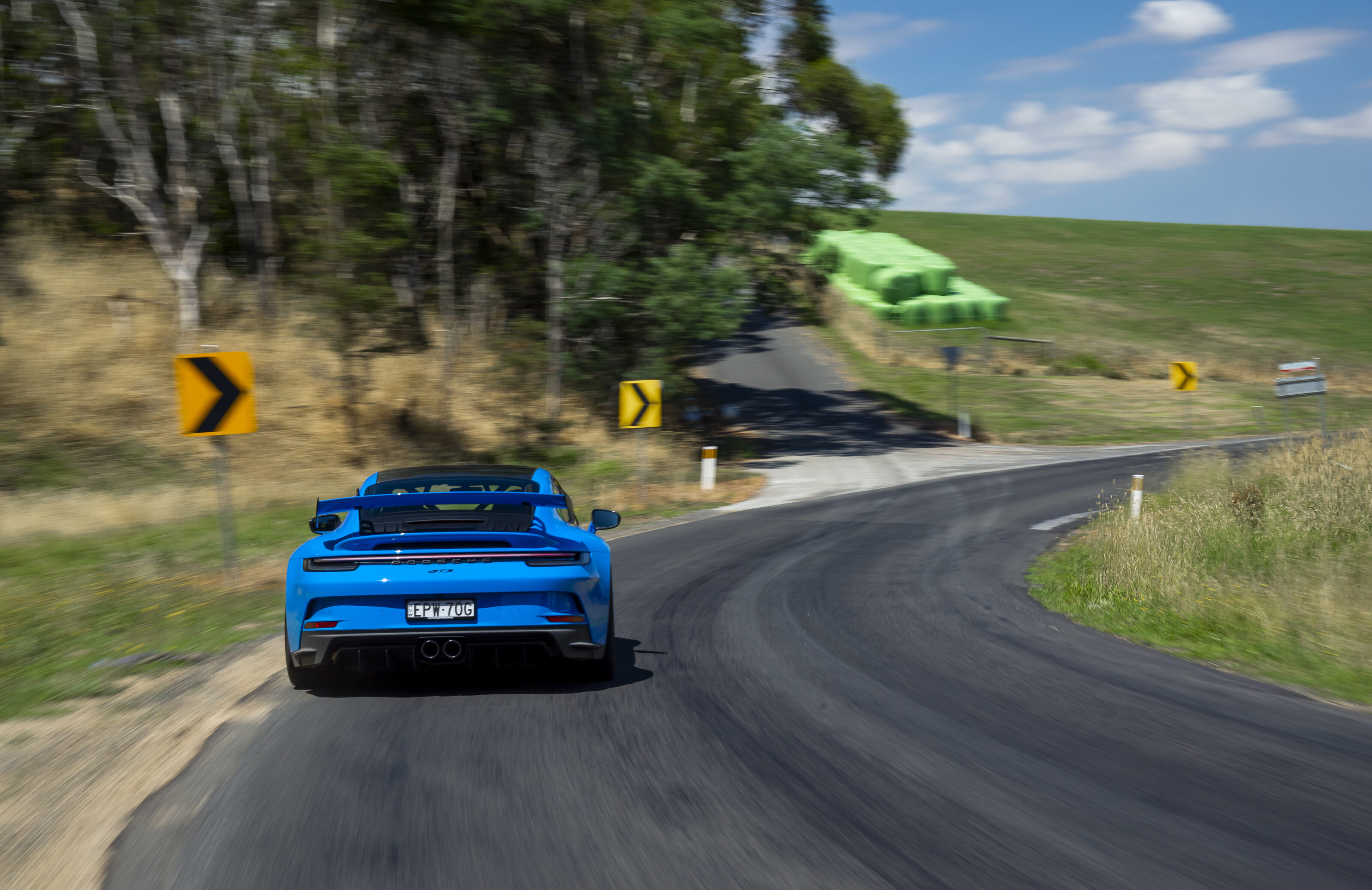
1
Don’t read too much into the fact that front spring rates have gone up from 40 to 100N/mm. Due to the change in front suspension, these are apples and oranges measures, the increase in spring rate being offset by the square of the motion ratio and the spring angle to result in a modest increase in actual wheel rate. From the seat of the pants, it doesn’t feel night and day stiffer than the 991.2 GT3 and is certainly more yielding than the 991.2 GT3 RS.
The typical 911 front end bob and susceptibility to mid-corner understeer (via squat) have been massaged away a little. On really poor roads, however, it can become very lively and you’ll need to keep an eye open for tarmac deformations that can send the front end into sudden and full compression. The same could be said for many supercars.
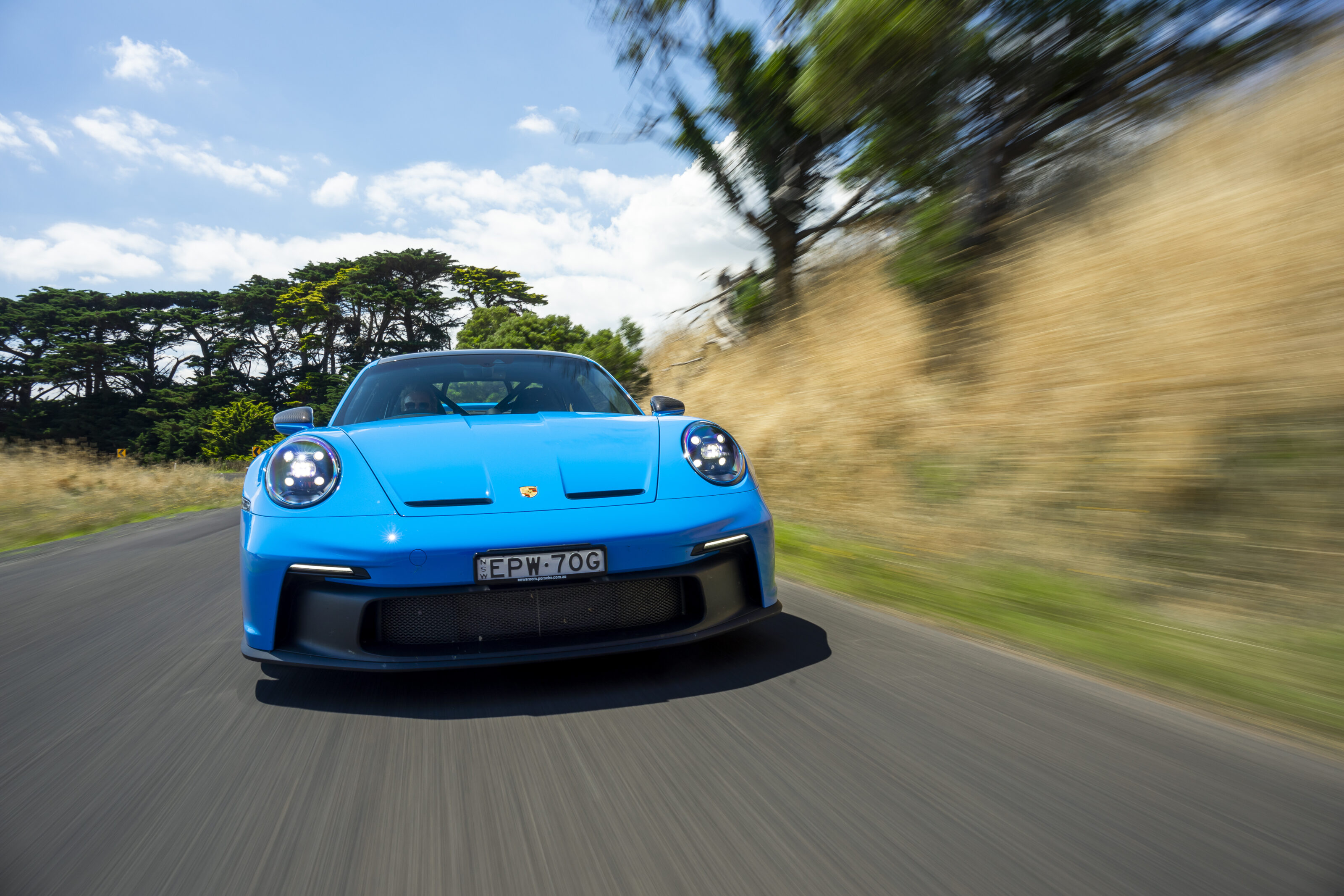
1
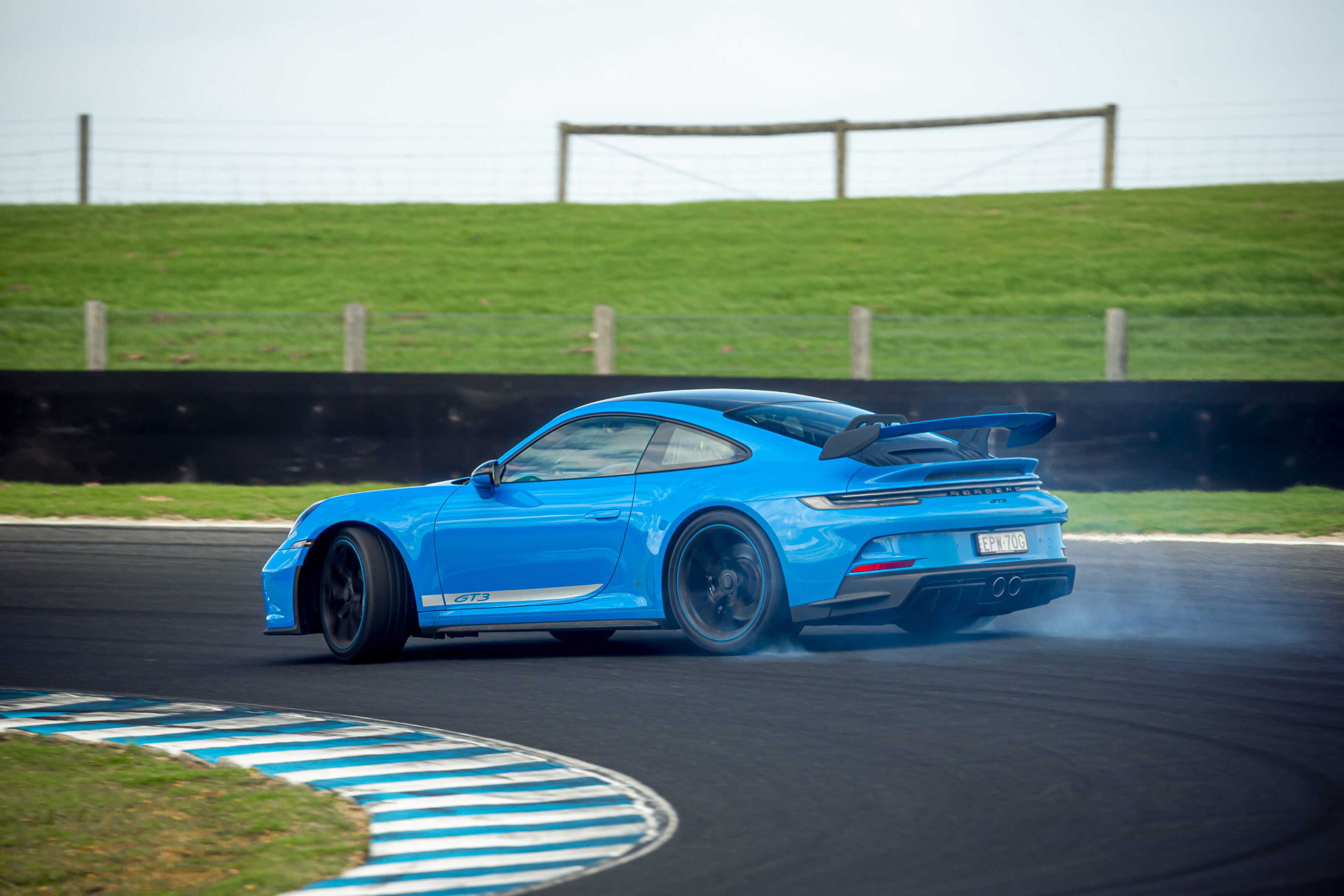
Admittedly, I did jump into the GT3 after emerging from the Taycan for the road loops, but it is loud. Porsche’s current philosophy with its GT cars is to manage exterior noise, primarily from exhaust to satisfy drive-by regulations, but amp up cabin sound effects. This has an interesting effect. Whereas in the 991 GT3, you felt you absolutely had to chase the redline to get that sound, in the 992 you’re rapidly saturated in decibels.
It deepens at 4000rpm, gets angry from 5000 and just swells through the peak torque point of 6100rpm. Going for the redline – and remember that this model makes peak power at 8400rpm – feels utterly illicit on road. Pair that with the vibrations and racket from the cage in this Clubsport-equipped car and it makes any open-road trip feel a deeply immersive event. You can even hear the rear dampers exhale like a boxer flicking out a jab.
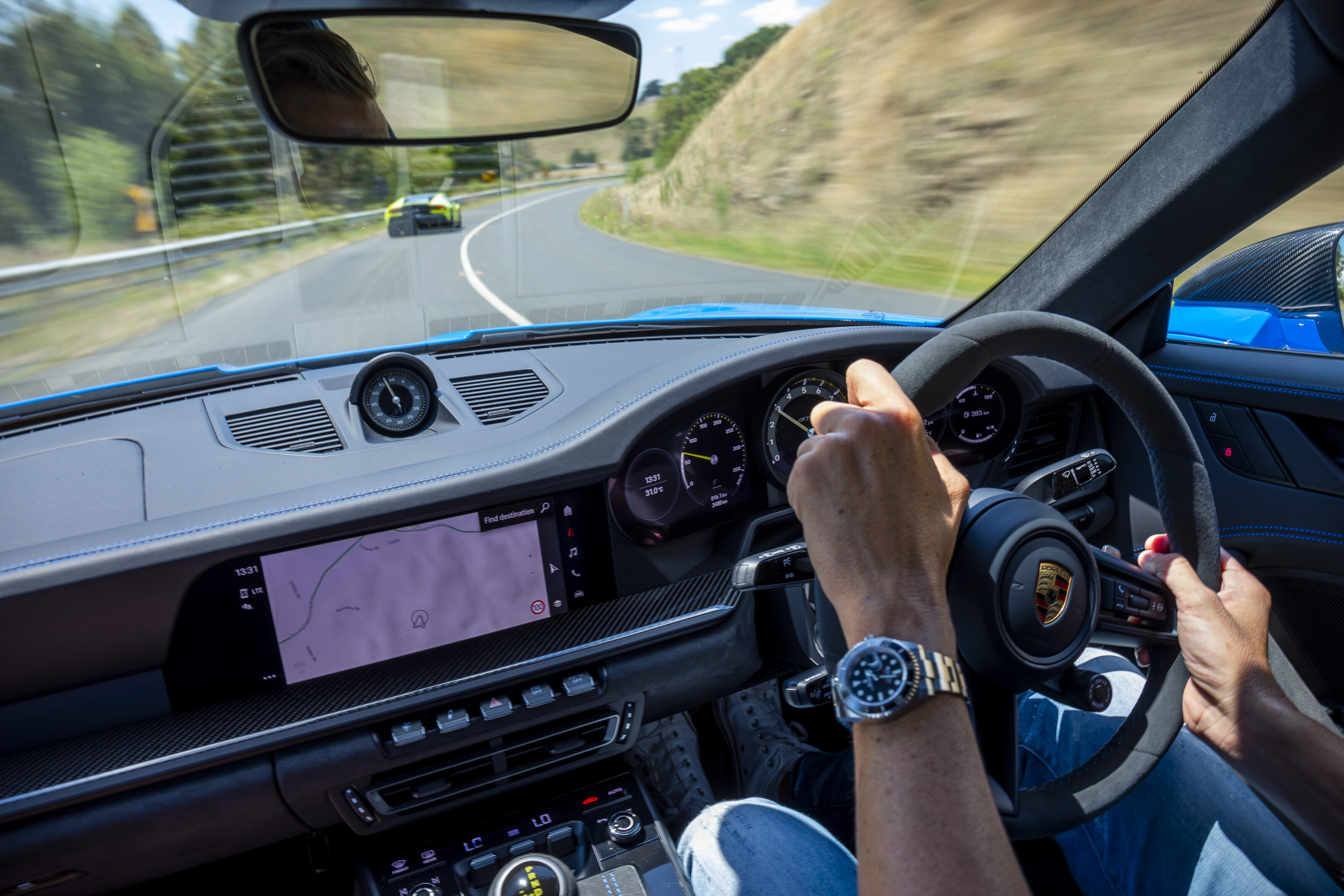
1
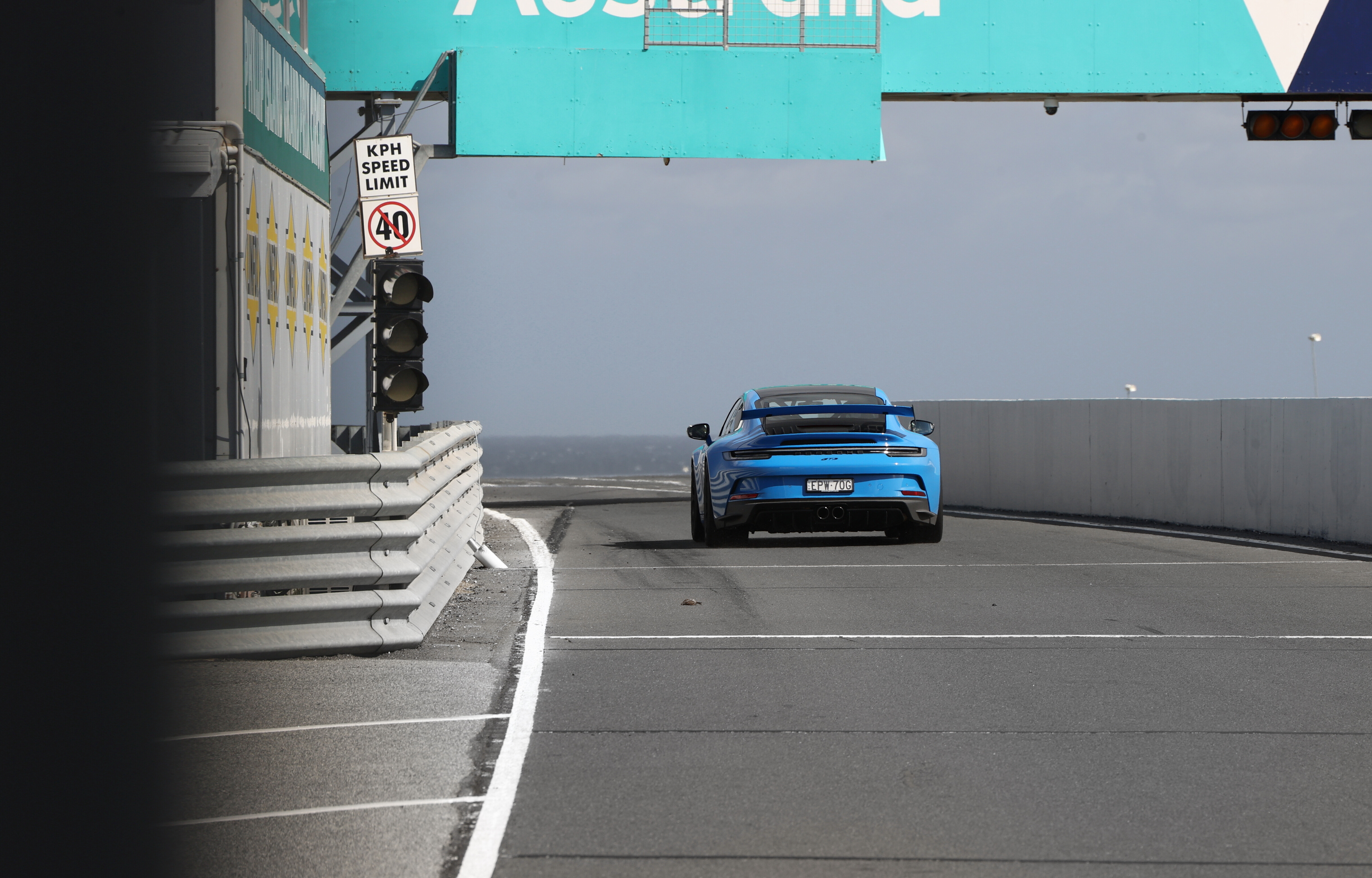
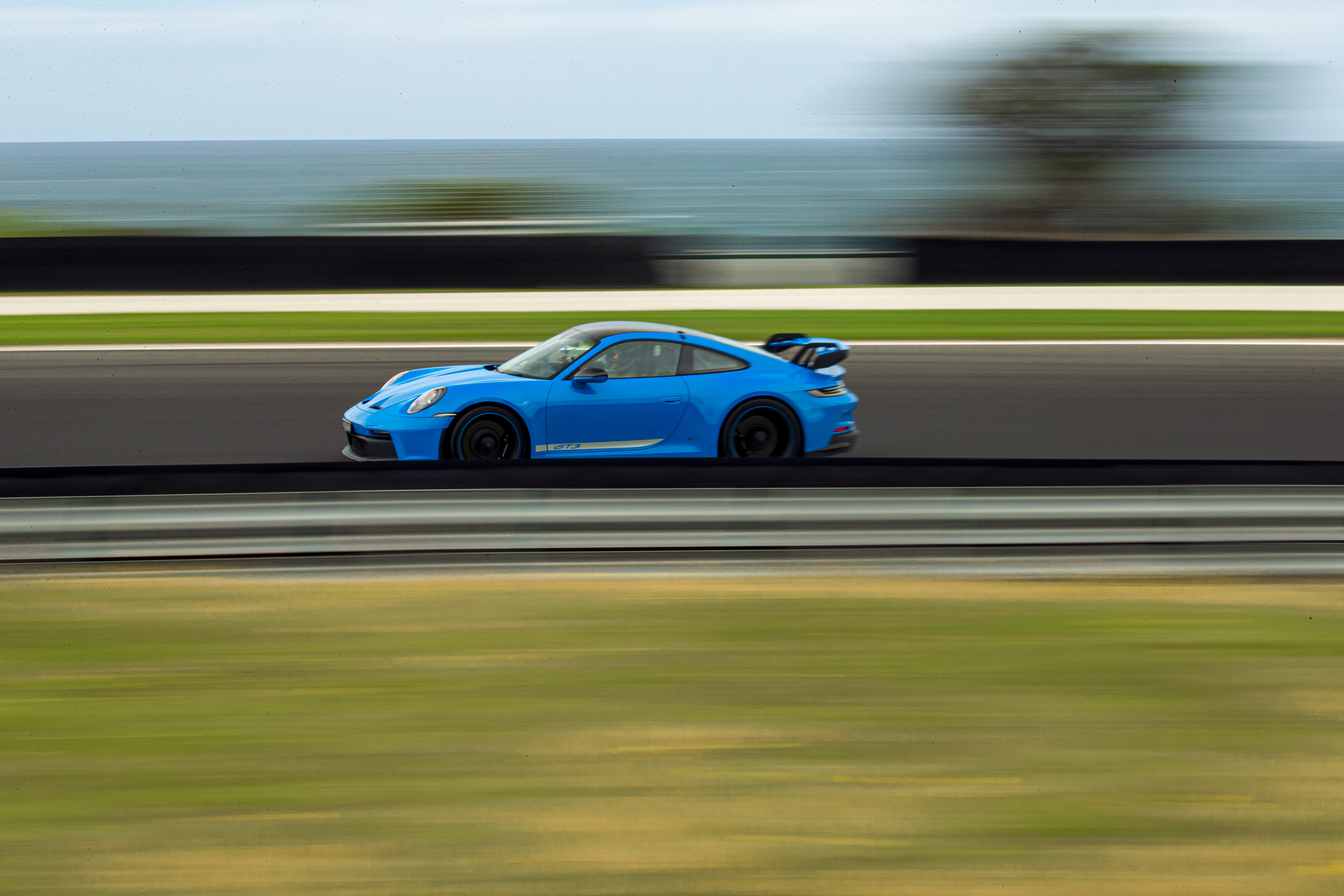
Exhilarating is good, but it’s not enough to win PCOTY. The Audi R8 V10 and the Mercedes-AMG A45 S both delivered that last year but failed to ascend to the top step. After the road loops, the GT3 wasn’t miles ahead of the rest of the pack, but the fact remains that it only needed to be there or thereabouts given what was in store. Phillip Island, you see, is just about the perfect circuit for the 992 GT3. Beautifully surfaced and fast, with flat-chat corners where the aero could get to work and tight ones where the redesigned four-wheel steer could rotate the nose sharply, the only question that needed to be answered was whether the Porsche could run down the lap time of the Lamborghini, the latter wielding a healthy 95kW/130Nm advantage plus the tractive benefit of all-wheel drive.
The VBOX doesn’t lie, and the GT3 was fully 3.35sec quicker. Sure, some of the Porsche’s lap time advantage can be put down to tyre choice but overcoming a 70kW/tonne power-to-weight deficit is jaw-dropping.
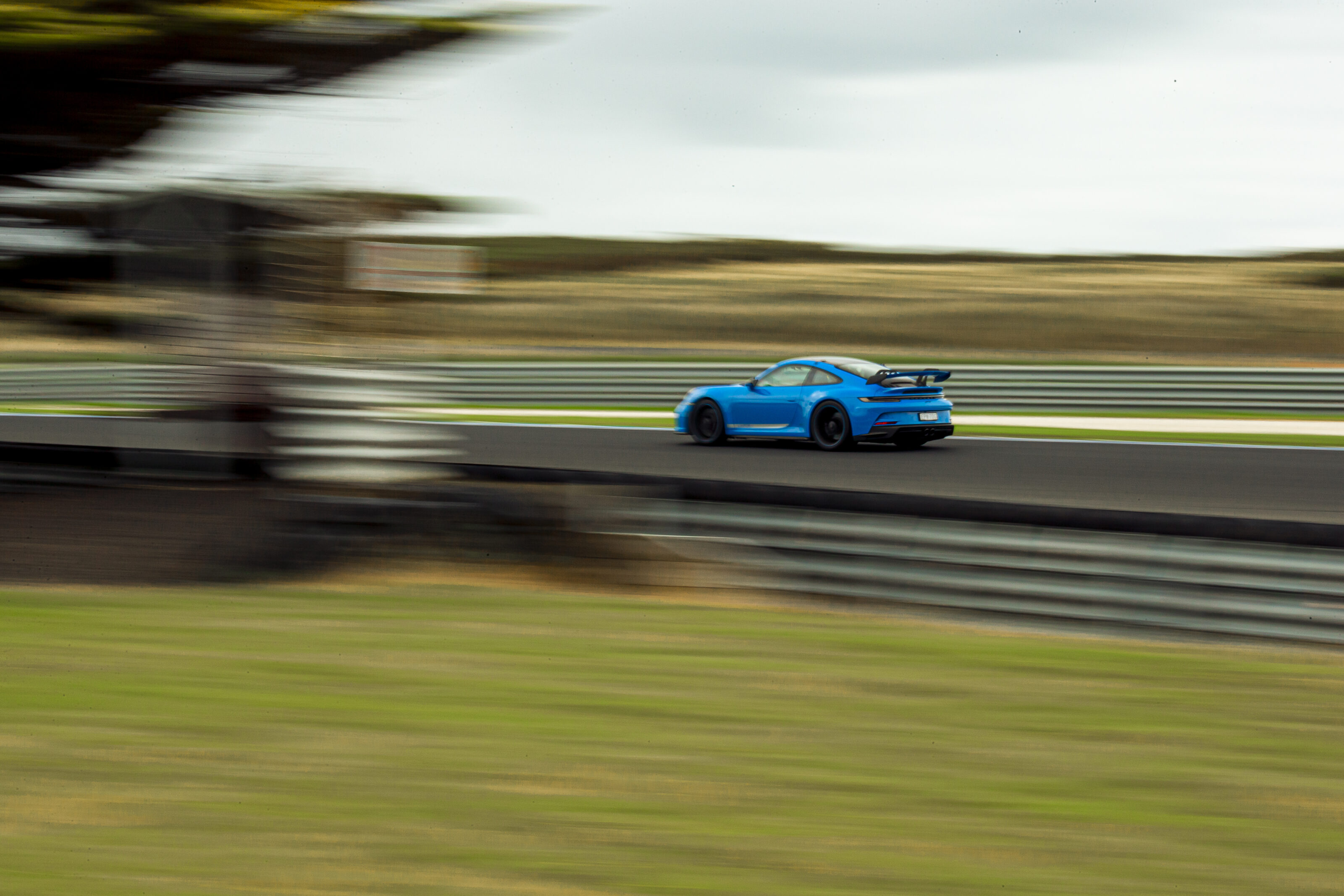
1
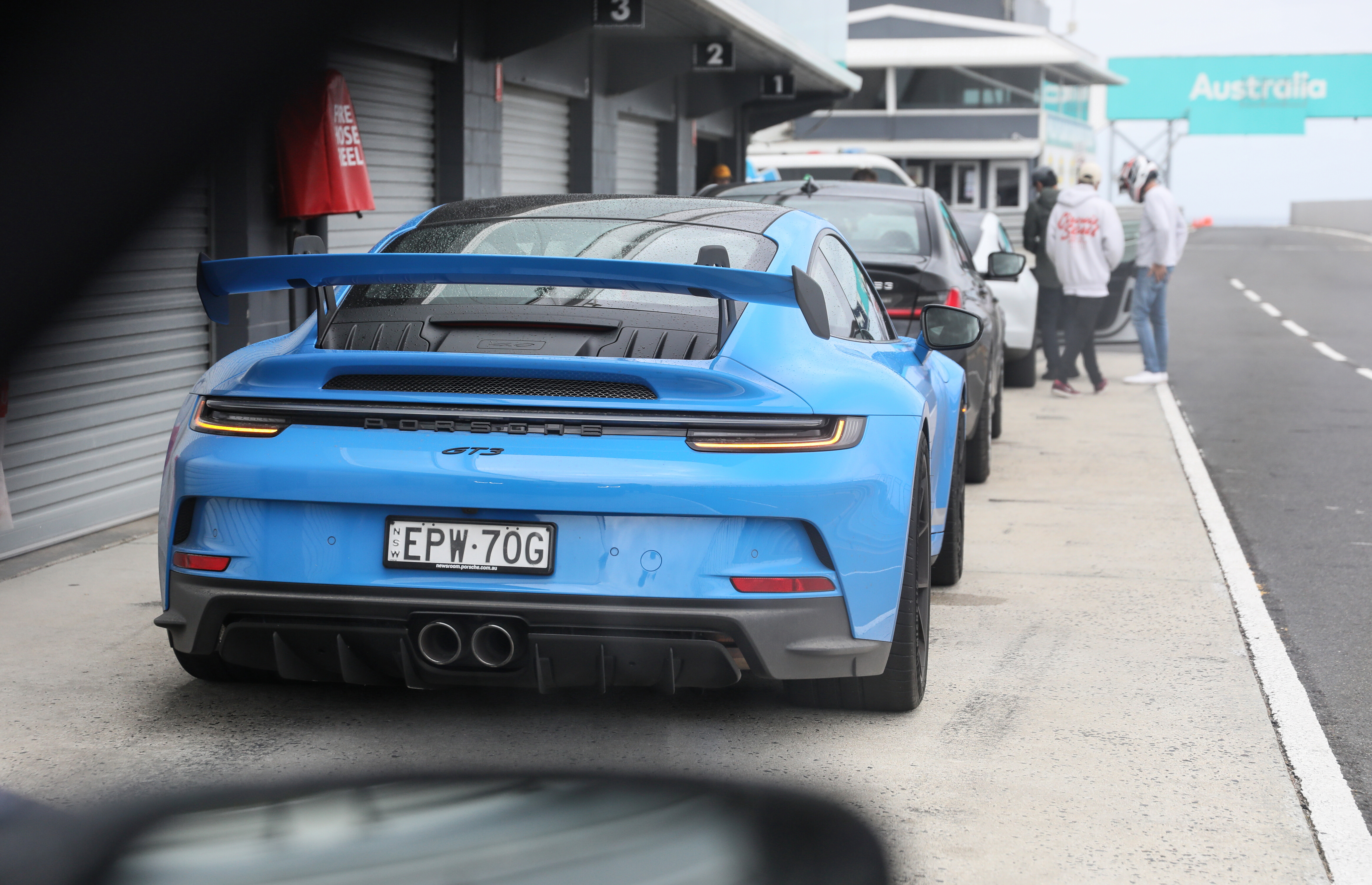
What’s most impressive about the GT3’s performance on track is that it offers such a seamless choice between chasing a lap time while driving in a fully disciplined manner and performing like an utter hooligan. I’d have enjoyed a little more heft to the steering, but that’s a personal observation and I’m probably an outlier in that regard. On both road and track, rear visibility in this caged car is terrible, the combination of roll cage, carpeted shelf and rear spoiler obscuring the view of most everything behind. If you have a car appearing in your rear-view on track, you’re probably not trying hard enough.
Brake calibration is near-perfect, the standard iron discs (408mm front and 380mm rear) delivering superb pedal modulation through a relatively generous pedal arc. Power? Well, we’ve had much the same power in a GT3 ever since the 997 GT3 RS 4.0 over a decade ago and it’s genuinely ample. You never emerge asking for more horses. Even Bernie Quinn, who likes a reassuring surfeit of Newton metres to play with noted that “the powertrain is not overwhelming with respect to torque, but the power is vast and the top end huge and dramatic.”
1
It’s not perfect. Had Mercedes-AMG fronted up with an AMG GT Black Series, the 992 GT3 wouldn’t have been the fastest. That said, we can’t think of another PCOTY champ that dominated the competition so demonstratively. Its superiority was never in doubt. The suite of incremental changes that Weissach has wrought upon this car have resulted in a package that, for now, seems unbeatable.
Of course, Porsche knows what’s in the works for the second generation of this car and is already aware of its relative deficiencies. That’s slightly scary. But until then, the 992 GT3 is as close to perfect as we’ve ever driven and Performance Car of the Year has never had a worthier winner.
1
The judges’ comments
Alex Affat
“Turn-in on corner entry feels almost telepathic such is the responsiveness of its razor-sharp front end.”
Ranking: 1st
Andy Enright
“How capable is the GT3? Every judge could lap faster in this than Walter Röhrl in a 997 GT3. Let that sink in.”
Ranking: 1st
Trent Giunco
“Given how the GT3 drives on track, you’d think your fillings would rattle out on road, but no.”
Ranking: 1st
Cameron Kirby
“Luffy appeared around the last corner in the GT3 and was clearly going way faster than everything else.”
Ranking: 1st
Bernie Quinn
“The rear end feels like the tyres are two feet wide. Unbelievable levels of grip with no squidge.”
Ranking: 1st
Luffy’s view
“I loved the gearbox in the GT3. Just flick it and it’ll jump gears. How are they ever going to improve it?”
1
Key figures
The honour roll
Every PCOTY winner through the years
Every once in a while, along comes a car that is truly special but is overlooked because it’s not as excessive as its competition. One that transcends its time and place in the world and then, several years in the future, will be fondly remembered for its enchanting character. The 2022 Lexus IS 500 F Sport Performance is one of those cars.
By consequence of rapid change in the automotive industry, this V8-powered Lexus is perfectly out of step with the competition. In a time when M-cars, AMGs, and Audi RSs fit their go-fast sedans with cutting edge tech like all-wheel drive, forced induction, fancy differentials, or gearboxes with multiple clutches, Lexus engineers confidently embraced solutions that the Germans have long discarded. For those who love all things mechanical, this is your performance sedan.

1
It starts with that five-litre V8 that we know and love from Lexus hits like the GS F, RC F, and LC 500. The best way to describe this engine is as modern automotive jewellery, so smooth in operation that the feeling is akin to wearing a smooth-spinning and perfectly balanced mechanical timepiece on your wrist.
For something naturally aspirated, it has all the makings of a legendary motor – an alloy block, Yamaha-massaged alloy heads, dual overhead camshafts, four valves per cylinder, variable valve timing and direct injection. With its 12.3:1 compression ratio, it produces 347kW at a lofty 7100rpm and 536Nm at 4800 revs.

1
The transmission is an eight-speed automatic that is engineered to handle the torque output of the V8 and it uses the lock-up torque converter from the RC F coupe. Rear-drive only, power gets to the ground through a mechanical Torsen limited-slip differential.
Rightly, the suspension uses double wishbones at the front, while the rear is a multi-link set-up. Dampers are the adaptive type and speaking of dampers, similar to the LC 500, this IS is fitted with that Yamaha chassis damper. It’s a horizontal, energy-absorbing damper mounted in the rear bumper structure that’s intended to reduce unwanted chassis vibration.
To the casual observer, this V8 IS looks like its siblings in F Sport trim … To the trained eye, there are some subtle cues that point at this being the most potent in the range

1
Brakes are uprated from lesser IS models, but notably not as robust as those found on the RC F and LC 500. At the front, there are four-piston calipers and 356mm rotors matched with 323mm rotors with single-piston calipers at the rear. Brakes get improved cooling over the regular IS. Steering is electrically assisted and the IS 500 uses the quicker, rear-drive-specific steering rack of the other IS models. Wheels are staggered 19-inchers from Enkei with modestly sized Bridgestone Potenzas that measure 235mm wide in front and 265mm at the rear.
A serialised Launch Edition model is available and while most of the differences amount to colour, trim and upholstery, it’s worth mentioning because the wheels for this model are forged pieces supplied by BBS that are each a couple of kilos lighter than the standard Enkeis.

1
This generation IS dates back to 2013 and the age of this sedan is most apparent inside the cabin. Lexus has subtly iterated with each model year and in 2022 we have a somewhat modern cockpit with current tech like Apple CarPlay and Android Auto. The basic dashboard design dates back to 2013 – a compact disc player resides in the centre of the dashboard to remind you of this car’s legacy – but the dash has all of the expected modern conveniences with updates to the steering wheel, climate controls, and infotainment interface, which now uses a touchpad-style controller.
To the casual observer, this V8-powered IS looks much like any of its siblings in F Sport trim. A subtle spoiler atop the boot, some F Sport badges, and the 19-inch wheels look like the result of ticking the box for some type of sport package. To the trained eye, however, there are some subtle cues that point to this being the most potent sedan in the range.

1
The bonnet rises nearly fifty millimetres taller than standard, hinting at the oversized power plant that resides underneath, and both the front wings and bumper have been lengthened to accommodate the V8. The net result is that this IS 500 measures 48mm longer than any other model in the line. Kerb weight is 1765kg, which is a scant few more than an all-wheel drive, V6-powered IS, and weight distribution is 56 per cent front, 44 per cent rear – but it’s not static weight distribution that matters, it’s how you use it.
Despite the platform’s age, Lexus fits the IS with a full suite of active and passive safety systems, including an adaptive cruise control system with stop and go. The active lane keep assist is something that may not be desirable in a driver’s car, but it is thankfully switchable.

1
Behind the wheel, you have a wonderful, low slung seating position, with a bolstered, supportive seat, and generous adjustment in the steering column, so it’s easy for any driver to set themselves up perfectly. The steering wheel has a performance feel to it with a small overall diameter and a hefty, sportier rim thickness. The wheel-mounted shift paddles are unobtrusive and remain out of the way until needed.
More cosy than spacious, occupying the driver’s seat gives a feeling of sitting in the IS rather than atop the seat. The seating position and cockpit design are focused on the driver being comfortable and secure for the business of carving corners. A lounge, this car is not. Rear-seat room is similarly small and passengers might complain about the cramped quarters, but, as the driver, that gives you license to leave the whiners at home and enjoy the Lexus to yourself.

1
The interior design and finish is not much different than any other IS model and for some, the lack of special trim might be disappointing. Ergonomically, it’s a typical Lexus design, where all controls are laid out somewhat logically and every single button, knob, and dial is well finished. With its traditional Lexus build quality, everything the driver touches seems like it’s going to last several decades.
Of course, the infotainment system’s touchpad will often infuriate the driver, particularly when using the standard Lexus software. The integration of Apple CarPlay makes interfacing with the system significantly easier and almost satisfactory.
On its own, the Mark Levinson sound system is wonderful, however, it does possess a superfluous feature – engine sounds

1
On its own, the Mark Levinson sound system is wonderful and well above average for cars in this category, however, it does possess a superfluous feature – Lexus has programmed the system to produce engine sounds. If you recall what Gran Turismo 2 sounded like, you’re not too far off. Perhaps Lexus decided to pump some sound into the cabin because the engine and exhaust sounds are muted, save for the most extreme conditions, but the gorgeous V8 in this Lexus deserves to be heard. Just not through the sound system and you’ll want to switch this feature off. Permanently.
The drivetrain imbues the IS 500 with a Jekyll and Hyde character because, in normal driving, it’s a sedate and relaxed experience. Then, when flipped into Sport or Sport+ drive modes and driven aggressively, the Lexus comes alive. To get the most performance and excitement from the V8 requires an adventurous right foot and a willingness to explore the outer reaches of the rev range.

1
It comes alive after 5500rpm and makes maximum power at 7100rpm, just shy of its 7300rpm redline. When shifting manually, the engine feels most responsive at high rpm and gives the driver precise control over that V8. Feeding in additional throttle to adjust some power-on oversteer attitude is child’s play. Breathing off the throttle to tighten a line through a corner is similarly natural.
To achieve maximum acceleration, it’s best to be shifting gears manually to ensure the engine is always operating above 5500rpm. That’s due to the classic power and torque curves of this naturally aspirated V8 with its 7100rpm power and 4800rpm torque peaks. Lexus quotes a modest zero to 100km/h time of 4.6 seconds, but rest assured this sedan is more at home on flowing canyon roads than a drag strip.
The eight-speed automatic is engineered and calibrated to be the ideal partner for the engine. From the driver’s seat, it feels like gearchanges are quicker when playing with the engine at high revs while in one of the more aggressive drive modes. Shifts aren’t as quick as some of the ultra-high-performance automatics found in the competition, nor as quick as any dual-clutch gearbox, but in daily driving, the transmission shifts smoothly, nearly imperceptibly, and it always seems to be in the correct gear for the given driving conditions.

1
Overall, the drive modes don’t have much of an effect on the attitude of this Lexus. From damper settings to the transmission shift protocol to throttle sharpness, the difference from one mode to another is minor. In cars with more electronic wizardry, this might be an oversight, but it’s perfectly aligned with the character of the IS 500. It’s perhaps even deliberate in terms of philosophy because in this car, the mechanical systems speak for themselves, not the software.
One of the things that makes this IS 500 unique in this category of mid-size performance sedans is how the suspension is calibrated. It’s easy to put ultra-stiff springs, dampers and anti-roll bars into a car like this so that it achieves a reasonable Nordschliefe lap time, but the net result is a rough ride in normal driving conditions. Instead, they’ve set up this Lexus with a suspension package that’s wonderfully balanced between ride and handling. Firmer than all of its siblings, it still delivers a comfortable and composed ride that won’t upset your most sensitive passengers.

1
Through the corners, body and wheel control is excellent and the IS shows modest, but well-controlled body roll. In essence, the engineers at Lexus have allowed this suspension to work, eschewing a track-focused and skittish ride for something much more comfortable.
Steering is precise, though feedback is muted through this electrically assisted system. If this IS were tuned to be more extreme, one could argue for a quicker steering rack, but given that this is tuned for the road, it’s perfectly suited to this sedan with the right amount of heft and responsiveness.
The purity, balance, and liveliness bestowed by its rear drive set up differentiate the IS 500 from the all-wheel drive competition

1
If there is one area that Lexus has overlooked, it’s the brakes. Not because they underperform, but rather because bigger and more powerful pieces are already in use on the RC F. This IS 500 fares well with its slightly uprated set-up, but it would benefit from that Brembo kit used on the RC F with only a mild penalty in unsprung weight.
Pedal feel is soft and a little less positive than expected from a performance sedan of this calibre. Once into the pedal, feel and modulation are good, but a firmer pedal would deliver more confidence and control to the driver.
This Lexus sedan makes no bones about being anything other than a Lexus. The naturally aspirated V8 is a jewel of motor, making this a genuine anachronism in an era of turbocharging. Similarly, the purity, balance, and liveliness bestowed by its rear-drive set-up differentiate the IS 500 from the all-wheel drive competition.
This Lexus is not pretending to be anything but a wonderfully mechanical, well-rounded performance sedan.
MORE
All Lexus
2022 Lexus IS 500 F Sport Performance specifications
Hot lap testing has remained a mainstay throughout Performance Car of the Year‘s history and, for 2022, we went bigger and better than ever with more cars, double the awards, and one heck of a backdrop – Phillip Island Grand Prix circuit.
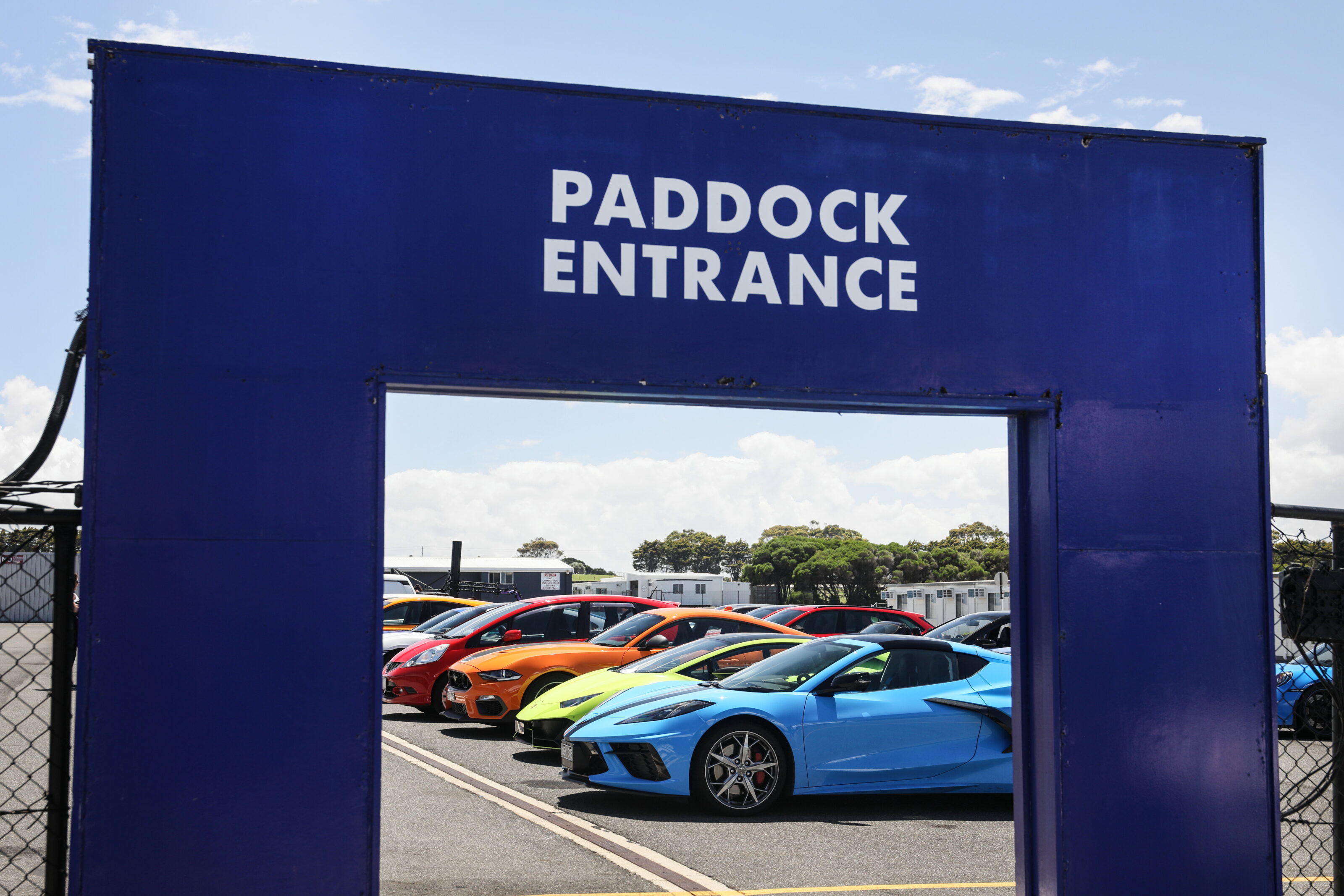
Gathering data in a fast-moving environment like PCOTY isn’t easy. We’d like to say a hearty thanks to Peter Campbell of VBOX Australia, who wrangled the Racelogic VBOX equipment we used for straight-line testing and lap data. Test cars were fitted with the latest VBOX Touch units, which measure at 10Hz and feature 4.3-inch colour touchscreen functionality.
1
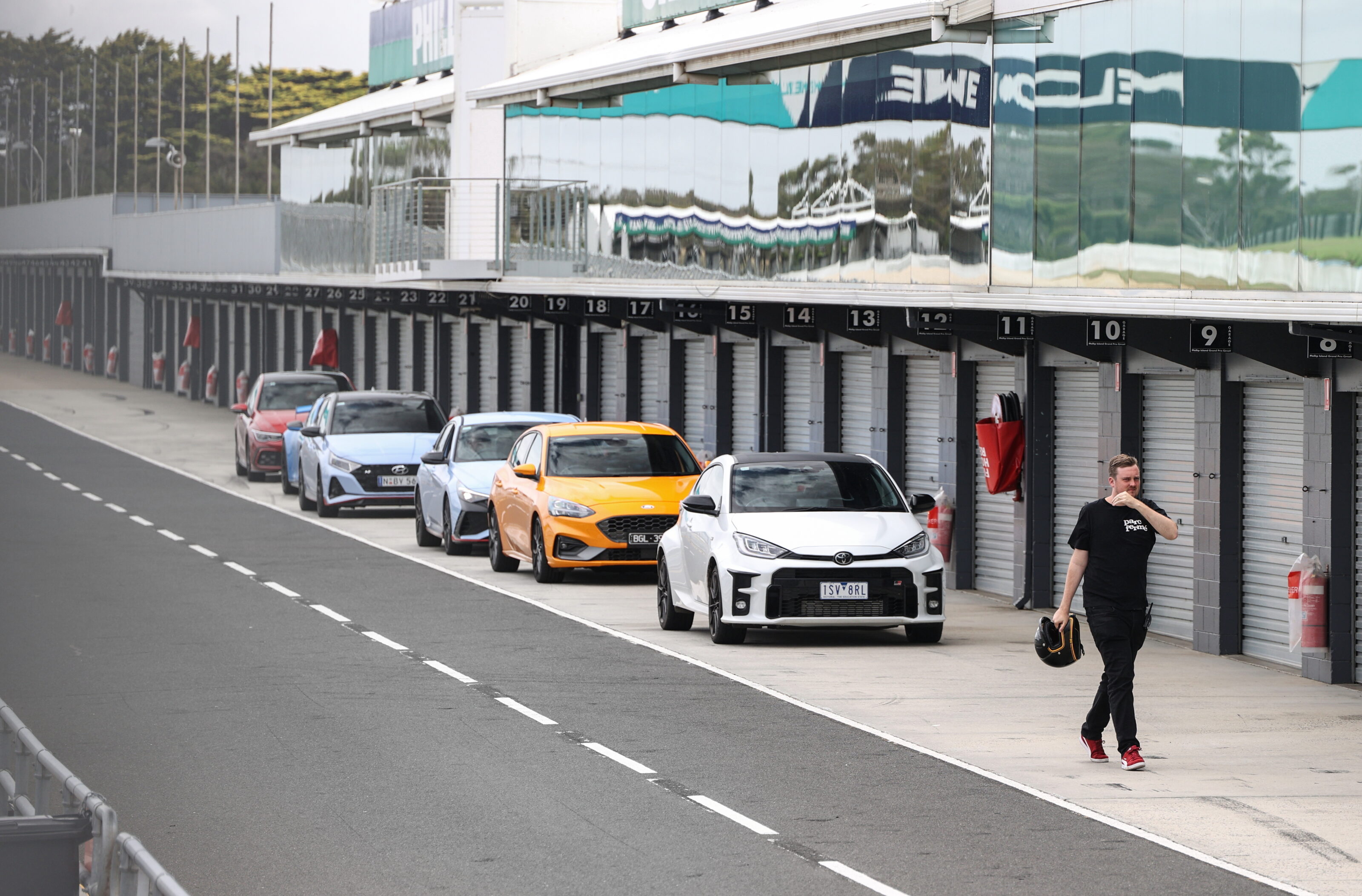
The task of testing one of the biggest fields in PCOTY history put a time squeeze on Luffy’s track sessions. We gave him one out lap and two timed flyers to extract the best number possible from each car. In the meantime, the next car is rigged and prepared.
Conditions were cloudy and cool, with temperatures approximately between 15-20 degrees. A few cases of intermittent light rain was quickly dried by strong coastal winds.
1
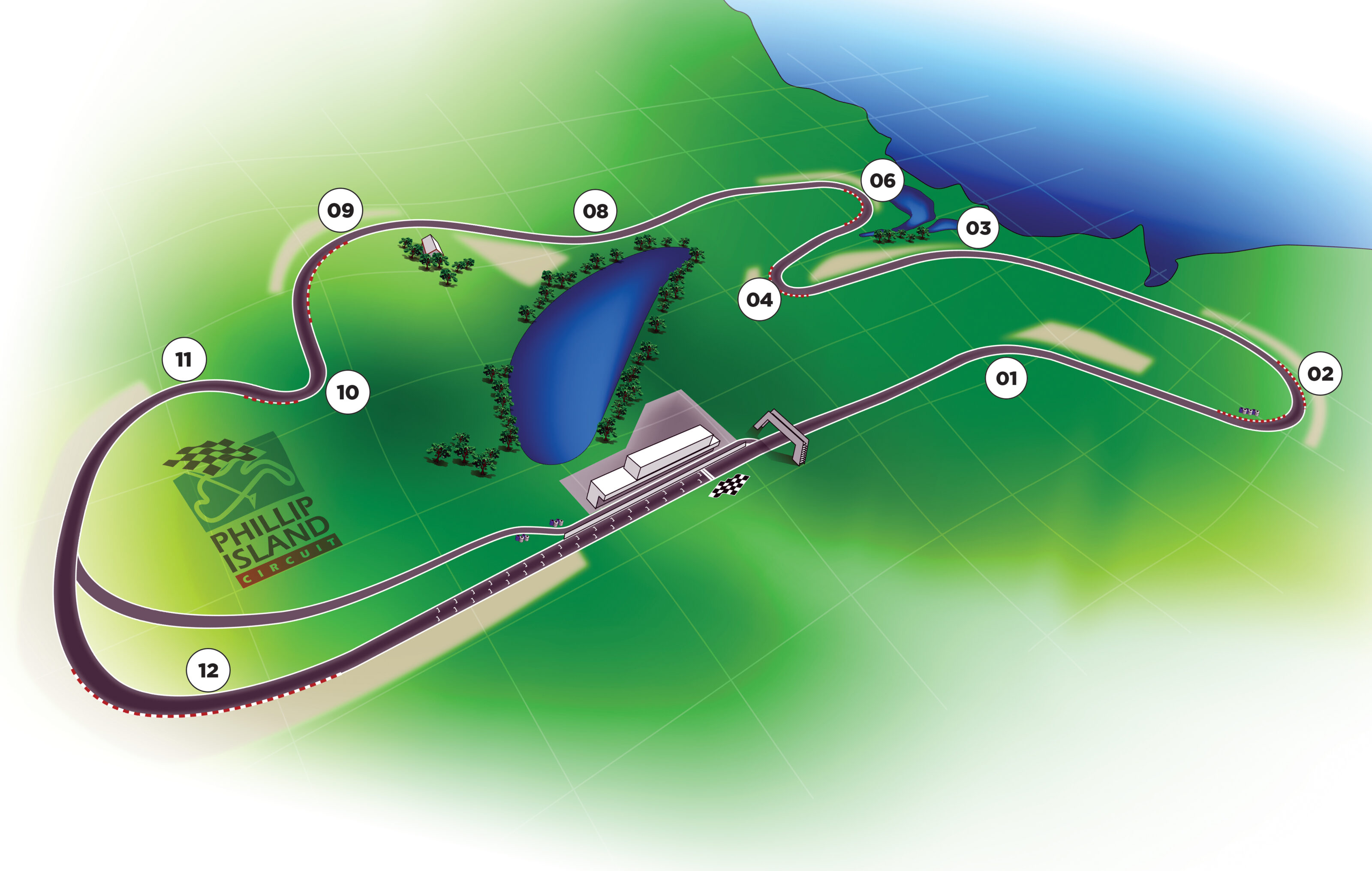
In case you’re wondering why no Turn 5 or 7 data, they were ignored due to being a largely inconsequential kinks in the circuit.
Eagle-eyed readers may notice that a wild McLaren 720S has appeared in testing. It’s not a competitor in this year’s awards, it’s actually Kirby’s long-termer and we couldn’t resist strapping on the timing gear and sending it out in the name of science. Its figures are marked with an *asterisk.
1
Turn 01
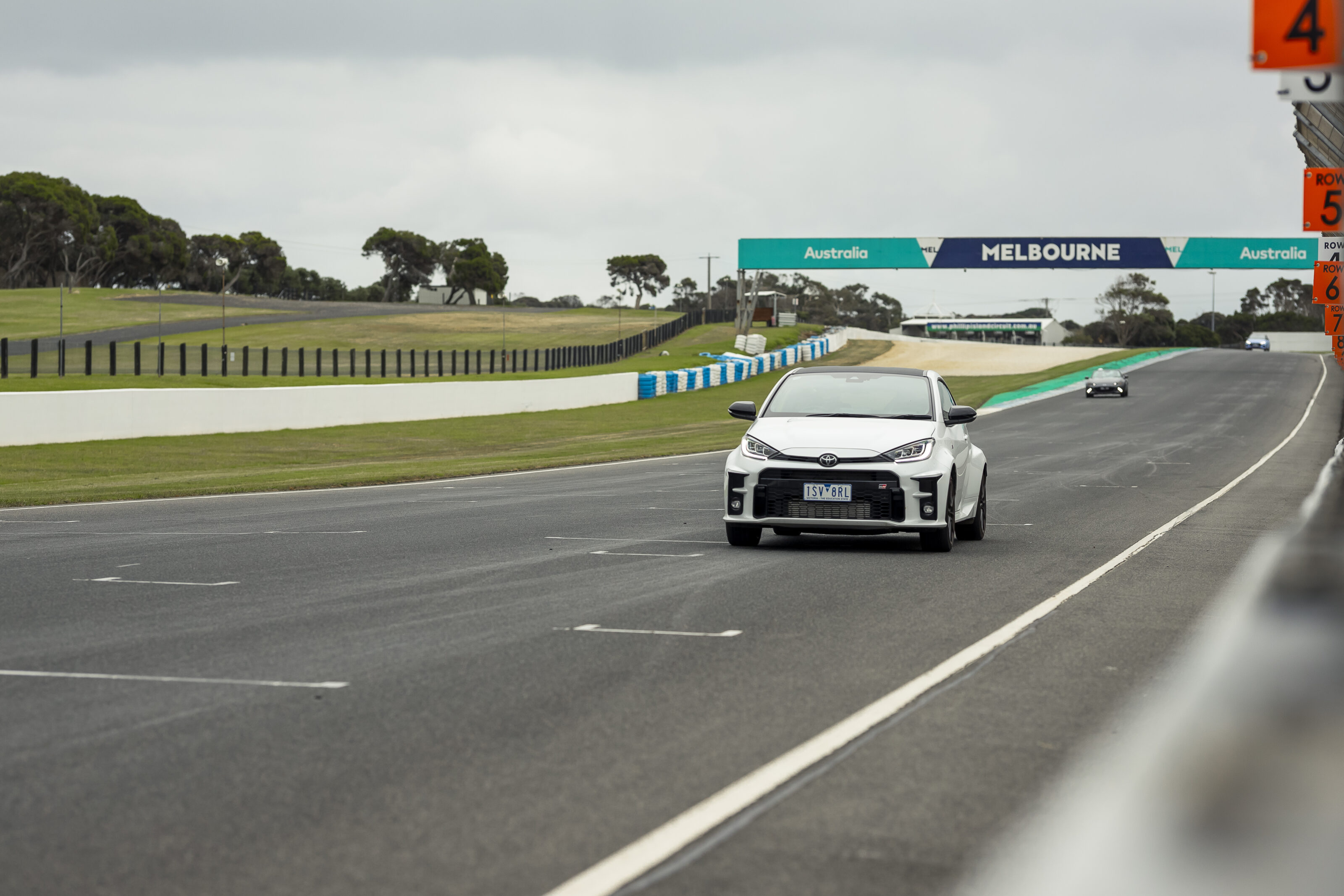
The capable i30 Sedan N made an impressive show of speed into Turn 1, delivering the highest entry speed from the sub-$100k Sports Car division with an impressive 168.1km/h measured at the trap. The Subaru BRZ‘s efforts are also mightily impressive for the aspirated coupe.
The Porsche GT3 leans heavier on its Cup 2 tyres and aggressive aero package which helped it carry 181.4km/h into the fast and fearsome right-hander.
1
Turn 02
A much narrower spread of trap speeds indicates an inherent lateral limit of grip that many road cars face through the long double-apex left.
Despite producing a lower power output than many of its competitors, the nimble i20 N and its razor sharp front end carry the highest speed through Southern Loop, while the M3, Boxster and GT3 measure precious tenths of a kilometre per hour, apart.
1
Turn 03
A fast open left-hander gives the powerhouse Mustang Mach 1 and Lamborghini Huracan a chance to stretch their legs, leading the charge through Stoner Corner at a blistering 199km/h and 213.3km/h, respectively.
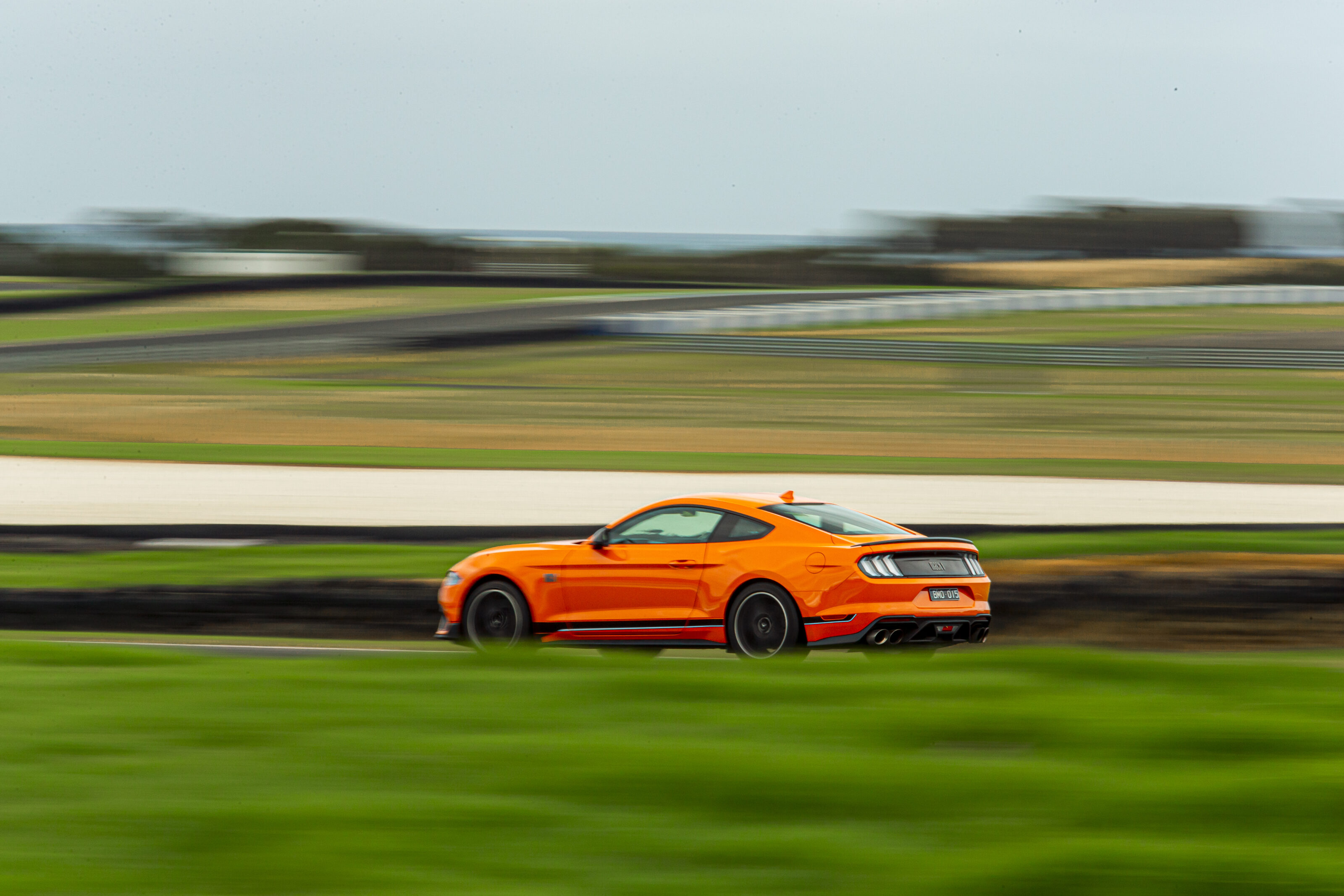
1
Turn 04
Would anyone have guessed that, at any point in the track, a GR Yaris, Ford Focus ST and Subaru BRZ would be eclipsing the 992 GT3 in mid-corner velocity?
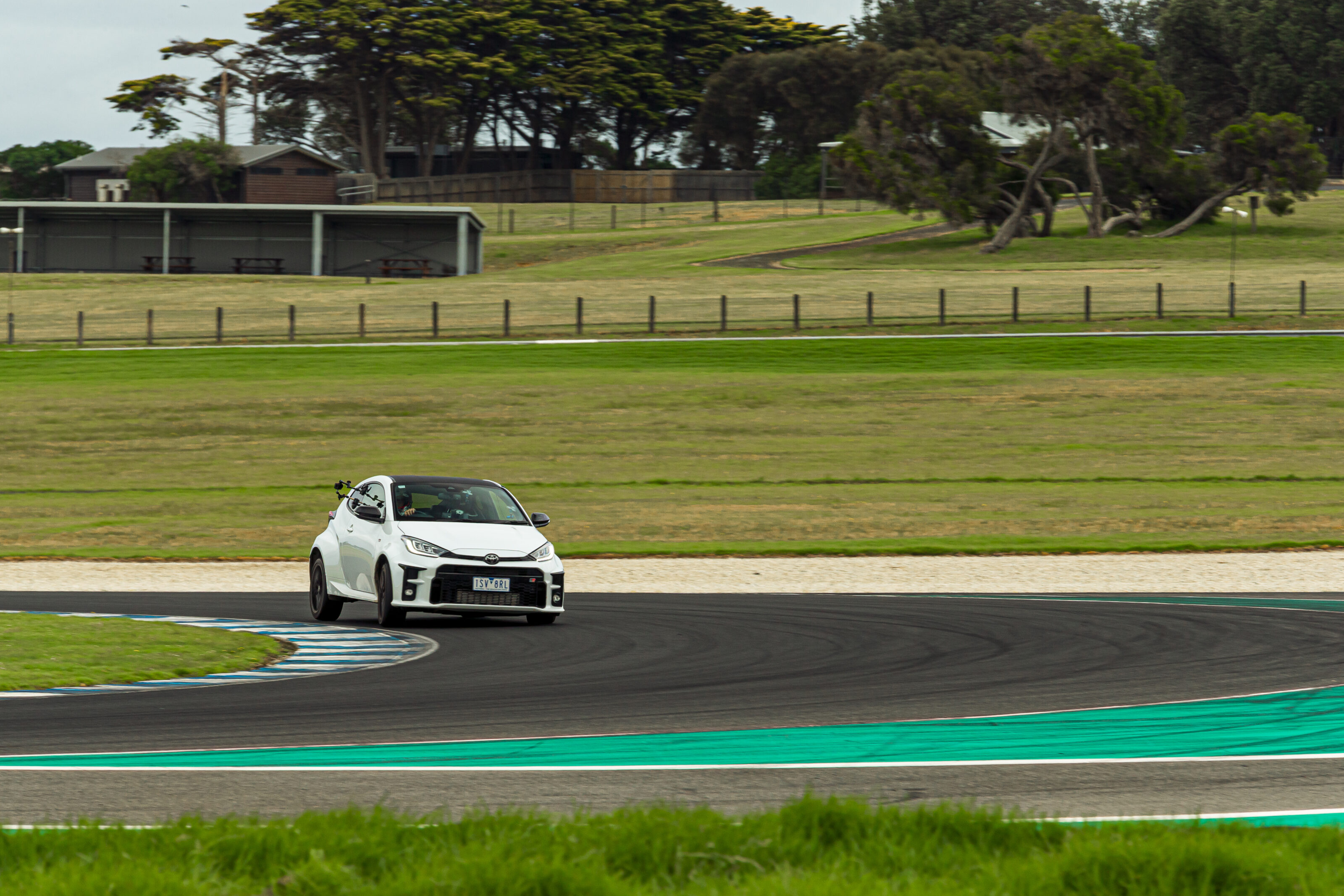
1
Turn 06
Another tight corner flatters the trap speeds of the junior Sports Car division, with the Focus ST topping the charts, measuring 91.3km/h through Siberia. Even the humble Mazda MX-5 hustles through carrying more speed than the supercharged 5.0-litre V8 Jaguar F-Type.
The GT3 tops the Performance Car field, flexing its aero and rubber advantage over the wildcard McLaren 720S, which trails almost 7km/h slower at the same point.
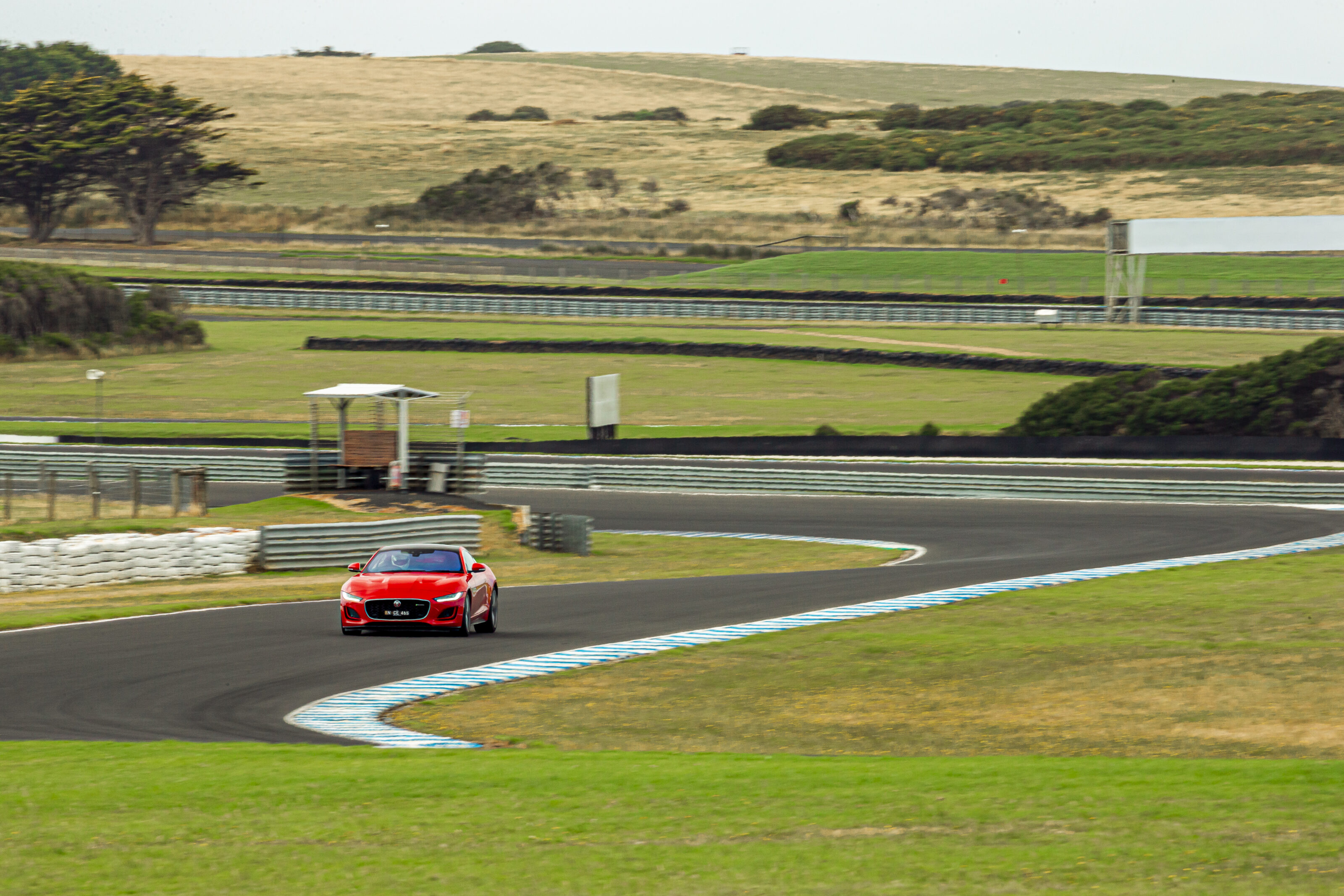
1
Turn 08
As the field rushes through Hayshed, the Huracan and McLaren are able to put the hammer down, both topping 192km/h through the fast kink.
In the Sports Car division, the Mach 1 Mustang and Hyundai i30 Sedan N comfortably lead proceedings, both carrying a 5km/h advantage over the next-placed Golf GTI.
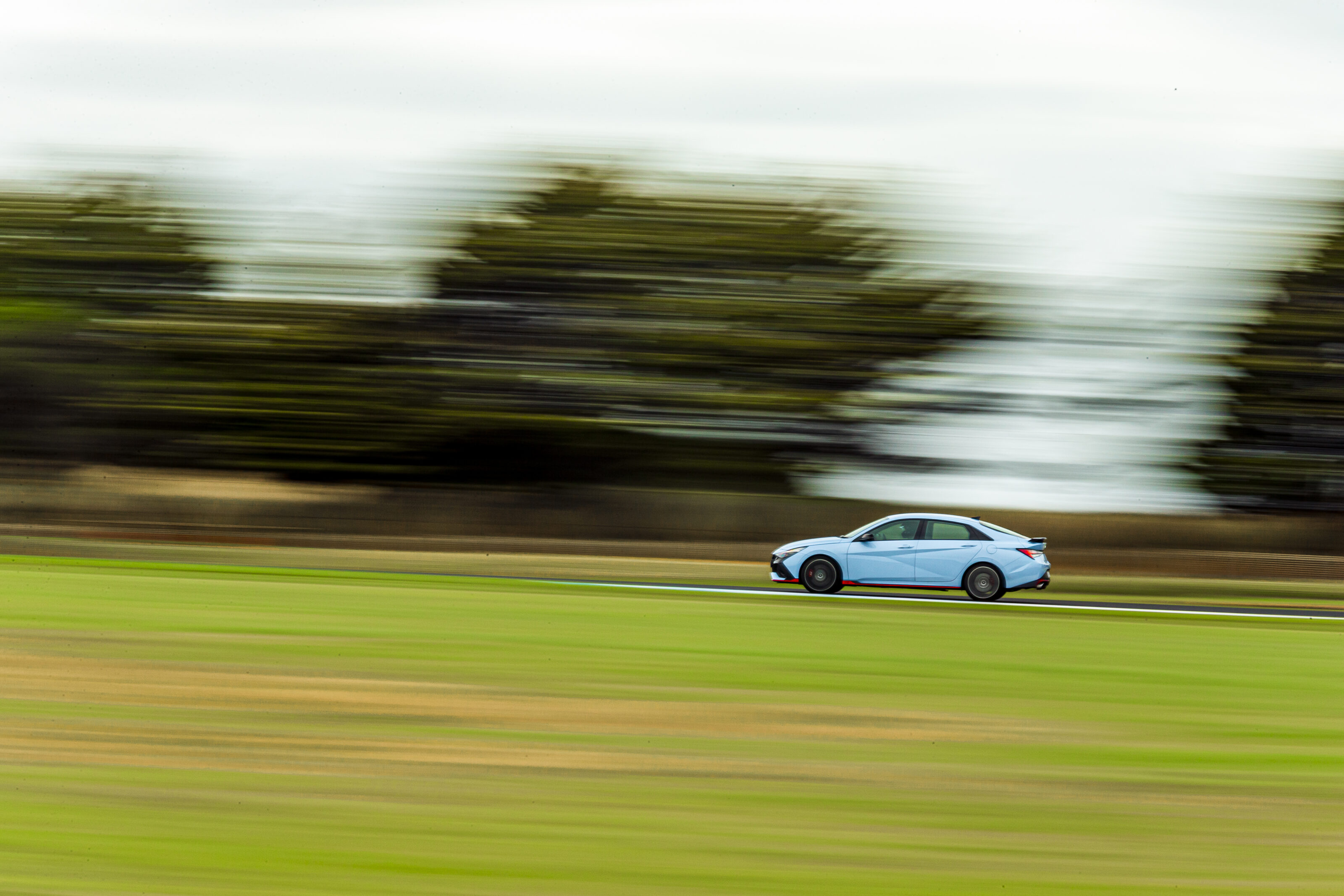
1
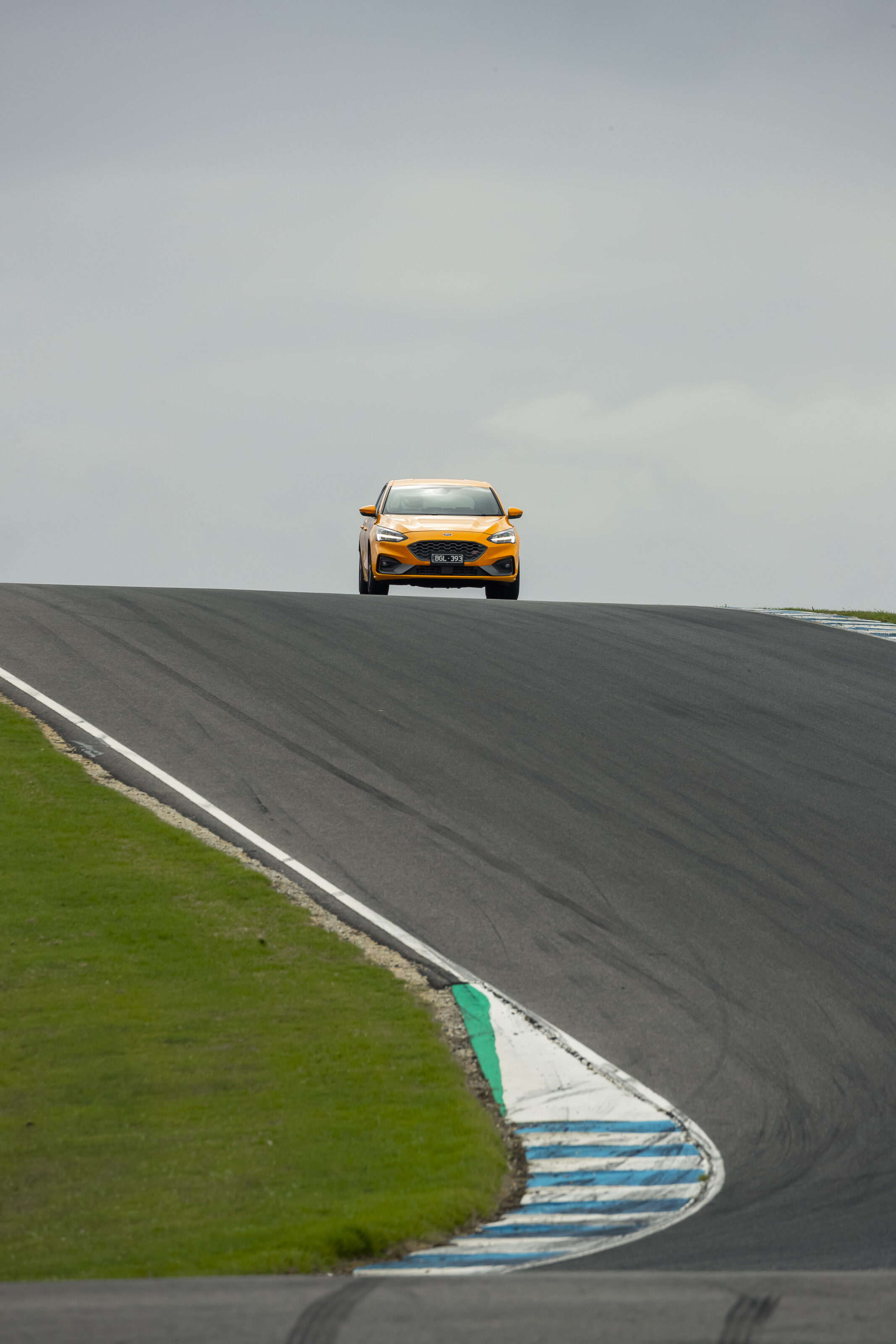
Turn 09
Hyundai’s N Division leads the pack over Lukey Heights, but it’s the Subaru BRZ that impresses with its ability to carry more speed than that of the much more powerful Mach 1 Mustang, GR Yaris and even the Corvette, Porsche Boxster and BMW M3 from the Performance Car class above!
1
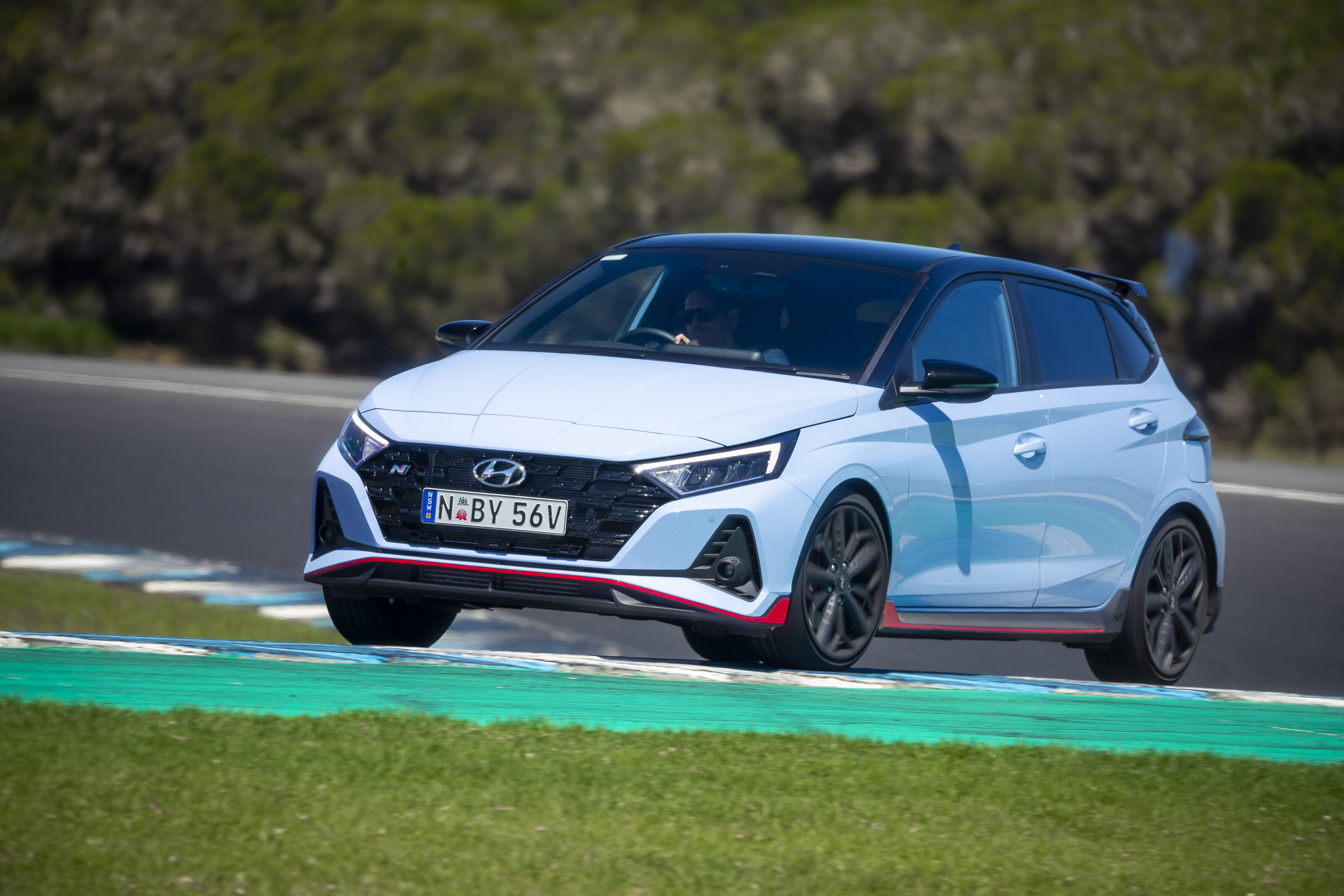
Turn 10
A big downhill braking zone into MG Corner sees the nimble i20 N post the fastest speed at the trap, utilising less of its brakes and more rapidly tapping back onto the throttle.
The heavyweight Taycan Turbo S tops the Performance Car class for the first point in the track, leveraging its trick torque vectoring, four-wheel steering and delivering its huge torque loads virtually instantaneously.
1
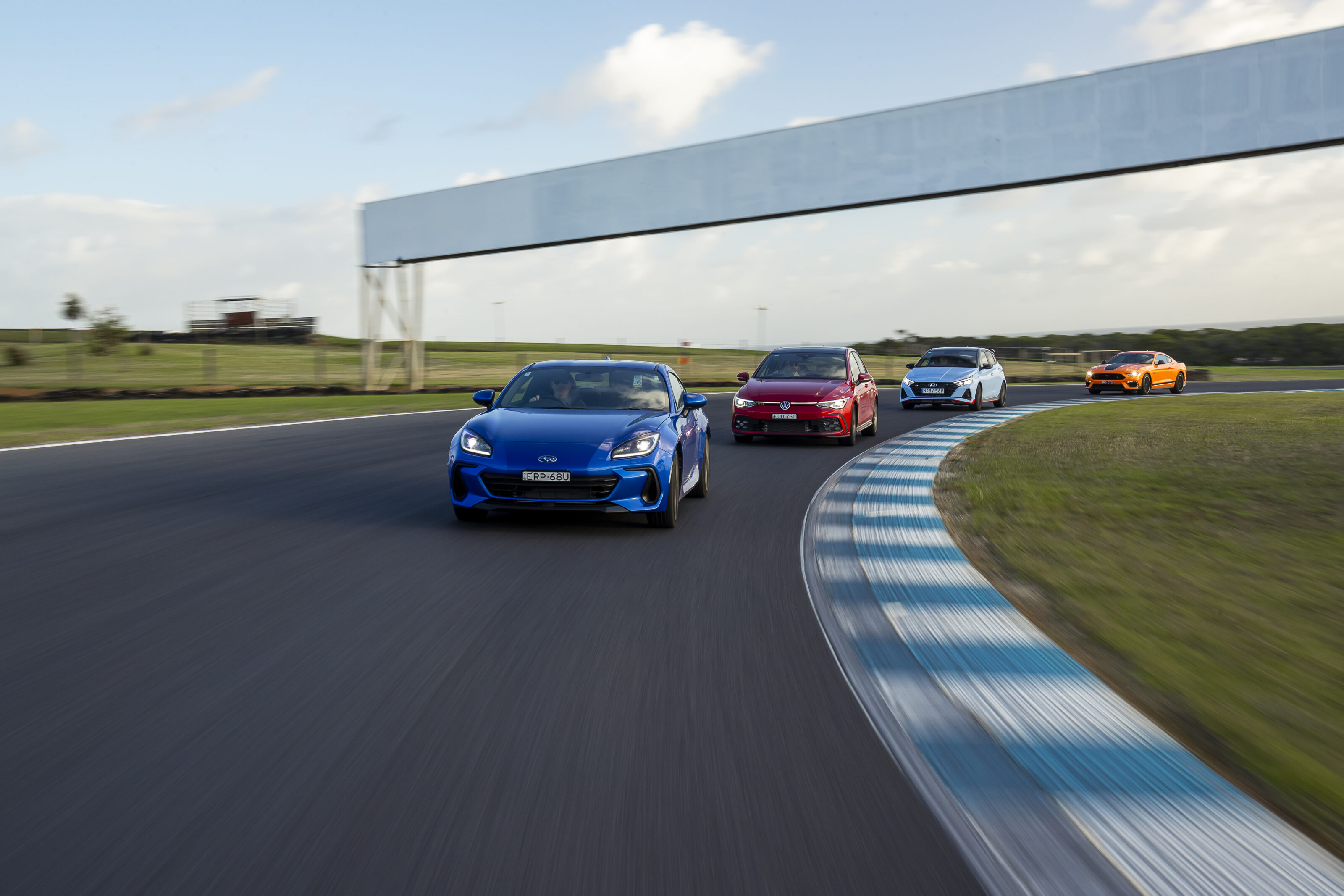
Turn 11
The pair of Performance Blue Hyundais stamp their mark, posting the fastest trap speeds of all but the dominant 911 GT3.
Subaru’s BRZ is the standout result, matching the Boxster 25 at the same point in the track, and measuring quicker than the Lamborghini Huracan Evo and sublime BMW M3.
1
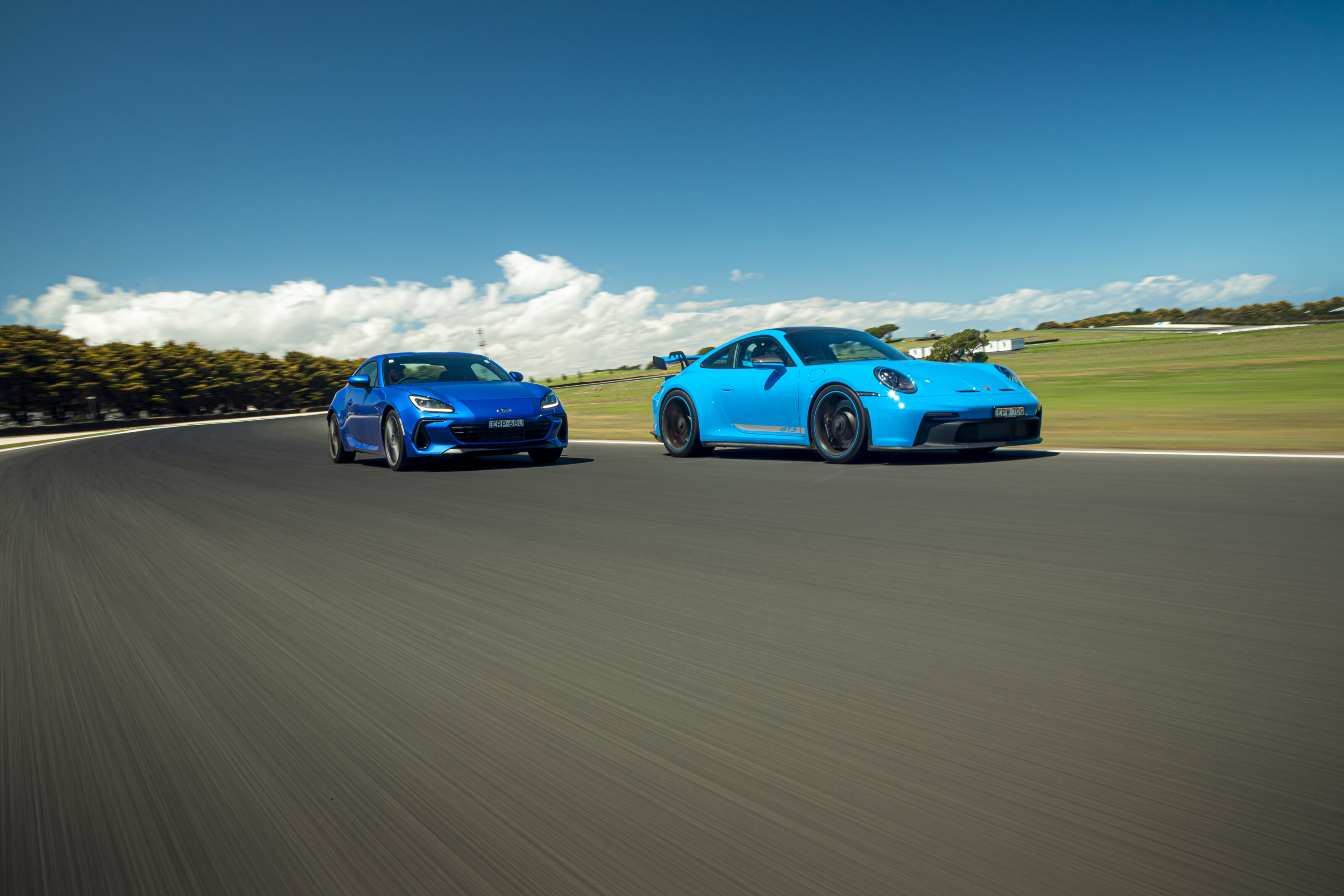
Turn 12
The final run home sees both hot lap leaders fastest through Turn 12 and onto the main straight, with the Mach 1 Mustang and GT3 measuring quickest.
The GT3 runs a full 7km/h faster of the Huracan and ballistic McLaren 720S.
1
Lap times
The 911 GT3 was always going to emerge as this year’s hot lap hero, but just a .5-second delta to the McLaren 720S has us wondering what the McLaren might have achieved with better tyres and a bit of aero.
The Huracan Evo was also hampered by modest Pirelli P Zero tyres and a lack of aero. It begs the question as to how a lighter, harder version of the Huracan might have fared.
| Ford Mustang Mach 1 | 1:48.32 |
|---|---|
| Toyota GR Yaris Rallye | 1:51.20 |
| Hyundai i30 Sedan N | 1:52.29 |
| Ford Focus ST | 1:53.42 |
| Volkswagen Golf GTI | 1:53.76 |
| Skoda Octavia RS | 1:53.93 |
| Subaru BRZ | 1:54.41 |
| Hyundai i20 N | 1:55.79 |
| BMW 128ti | 1:56.16 |
| Mazda MX-5 GT RS | 1:58.02 |
1
Lap time V-Max
Nothing could touch the terminal velocities achieved by the manic McLaren, which makes the GT3’s ultimate lap time all the more remarkable.
| Ford Mustang Mach 1 | 235.5 |
|---|---|
| Hyundai i30 Sedan N | 220.8 |
| Toyota GR Yaris Rallye | 217.7 |
| Ford Focus ST | 216.6 |
| Volkswagen Golf GTI | 216.1 |
| Skoda Octavia RS | 213.1 |
| Subaru BRZ | 210.9 |
| BMW 128ti | 210.5 |
| Hyundai i20 N | 200.5 |
| Mazda MX-5 GT RS | 196.5 |
1
