
UPDATE, February 22: The 2022 Mazda CX-60 will be revealed to the world on March 8, the company has said.
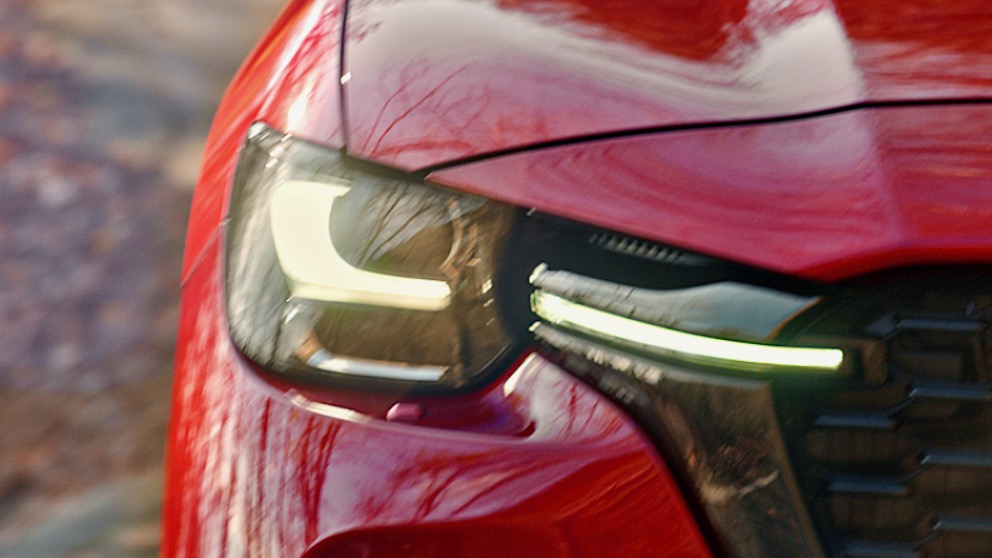
According to a statement released overnight, the CX-60 introduces for the first time the ideas of ‘Kaichô’ – the harmony which comes from mixing different materials and textures.
These include; maple wood, Nappa leather, Japanese textiles, chrome details, and Musubu – the uniquely Japanese way of binding textiles, which was the inspiration for the instrument panel stitching.
Mazda says the all-new Mazda CX-60, which is confirmed for Australia, will be a totally new experience for drivers and passengers.
The story to here
December 8: The 2022 Mazda CX-60 will be unveiled early in the new year, according to a company official.
A representative from Mazda UK confirmed the reveal date when responding to a customer on Twitter, according to Japanese publication Creative311 – however it appears the post has since been deleted.
With the CX-60 confirmed for a local launch, Wheels has contacted Mazda Australia regarding the leaked timing information, and this story will be updated with its response.

November 17: The 2022 Mazda CX-60 has been spied without camouflage before its official unveiling.
The CX-60 has been confirmed for an Australian debut by Mazda – the only model locked in from the company’s revised line-up, announced in October.
The five-seater CX-60 was caught on video by Japanese YouTube channel CSK Review, while the model was being professionally filmed, suggesting the SUV is just months away from its reveal.
Though details have yet to be announced, we know the CX-60 will be powered by a range of petrol and diesel six-cylinder engines shared with the upcoming 2023 Mazda 6.
Following Mazda’s ‘Kodo’ design language, the CX-60 echoes the core styling found on the more rugged CX-50 revealed earlier this week, but notably with the addition of a new embellishment on the front quarter panel.
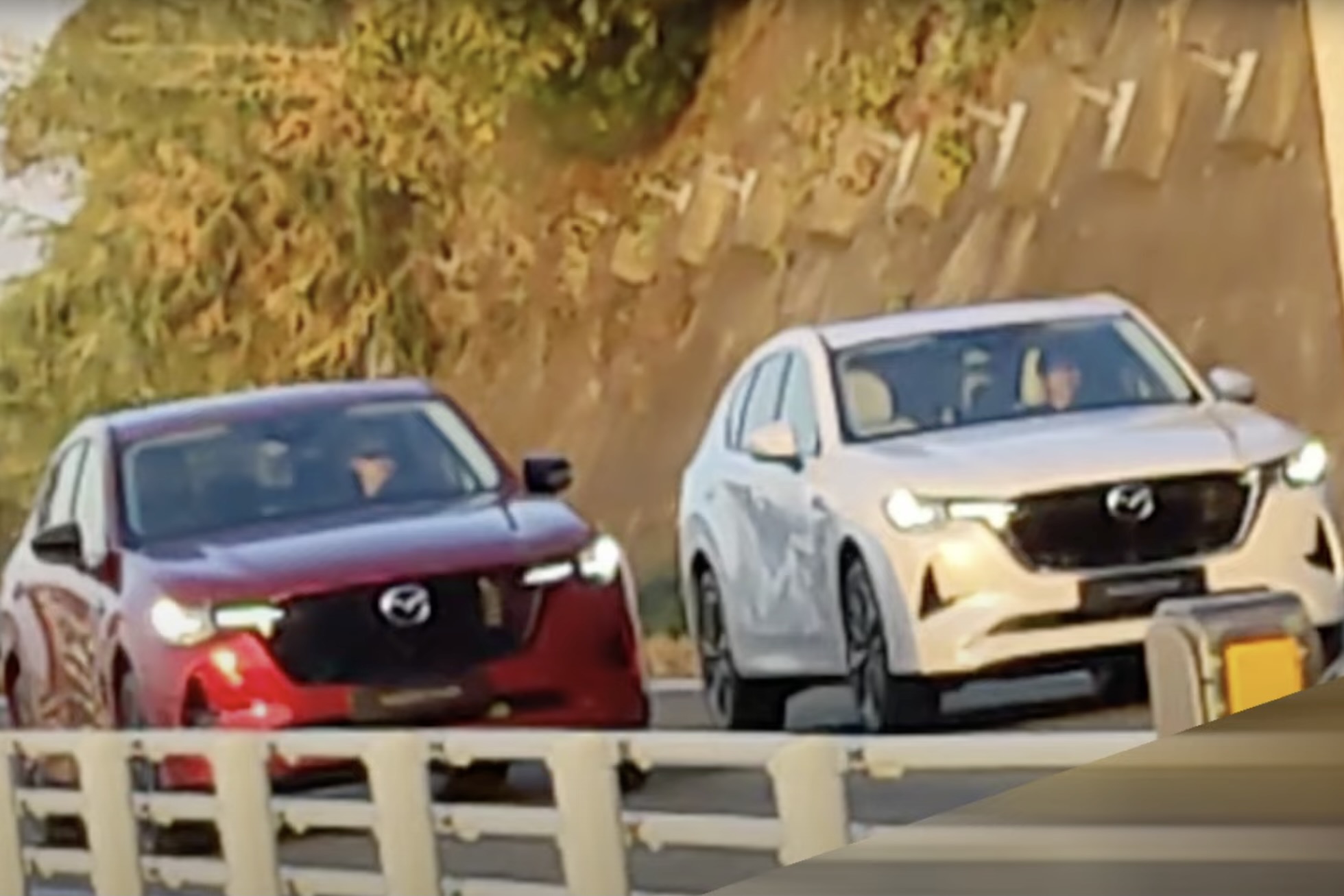
While the white model appears to be a range-topping variant, a second red vehicle can be seen with black exterior highlights – likely to be badged as the Mazda CX-60 GT SP when it lands in Australia.
The CX-60 is part of Mazda’s new international ‘Large Product’ portfolio, which includes the CX-70, CX-80, and CX-90 SUVs – the latter two of which will offer three rows of seating – but the CX-60 is so far the only vehicle confirmed for the Australian market.
What do you think of the new Mazda CX-60? Let us know in the comments section below.
Snapshot
- 50GWh annual capacity targeted
- Volume production of 5000 vehicles per week outlined
- Over AU$7.8bn has been invested in the site
UPDATE, February 22, 2022: Tesla’s planned expansion of its Berlin-based gigafactory has been delayed indefinitely, with series production still yet to take place at the US automaker’s only European factory.
The plant was originally intended to build the European supply of Tesla’s Model Y, but according to Automotive News Europe only the press shop of the factory (where sheet metal parts for the car bodies are shaped) is operational and approved for expansion.
The expansion of the facility has been consistently delayed by lawsuits from environmental groups, which have hindered Tesla’s ability to obtain the environmental permits needed to complete the upgrades.
Tesla still claims it intends to start full series production of the Model Y at the facility in the coming weeks.
The story to here
October 12, 2021: Tesla’s new Gigafactory Berlin will be the American manufacturer’s new production hub in Europe, with CEO Elon Musk announcing a target for operations to begin.
The result of a €5 billion (AU$7.87bn) investment, the fourth Tesla gigafactory is yet to be completed but could start producing vehicles as early as November, according to Musk.
Initially slated to open in July this year, the plant’s sign-off process has been pushed back due to resistance from local residents, red tape and government regulation, plus a pause in construction last year thanks to an NGO reporting species of endangered lizards and snakes nearby.
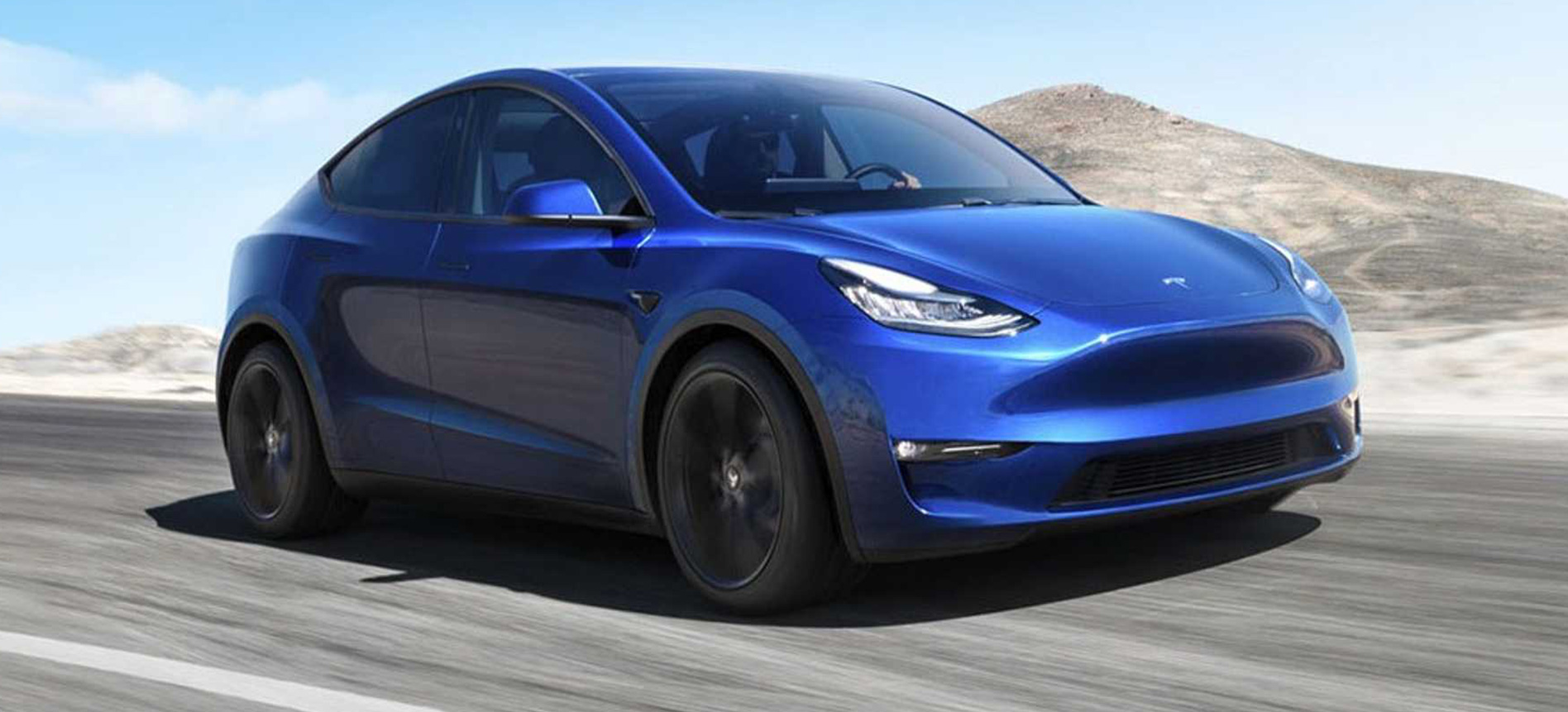
As well as being the European base for production of Tesla’s updated Model Y, the factory will also produce up to 50GWh of battery cells annually, including its latest 4680-cell structural battery pack.
Set to underpin the Model Y, the new pack is sealed between the floor rather than in modular units between the front and rear frames, reducing the vehicle’s mass by up to 10 per cent as well as increasing driving range by up to 14 per cent.
Ahead of production finally kicking off at the Berlin site, Musk said the easy part is nearly done.
“Starting production is nice, but volume production is the hard part,” said Musk at the event.
“It will take longer to reach volume production than it took to build the factory.”
With an initial target of 5000 vehicles per week, this could be doubled to 10,000 if the plant can hire up to 12,000 staff as is planned – many of whom are expected to come from outside of Germany to work for the company.
Despite the setbacks in Europe, Tesla’s plant in Shanghai started production of right-hand drive Model Ys in the back end of July, although this was paused in August due to a shortage of semi-conductors.
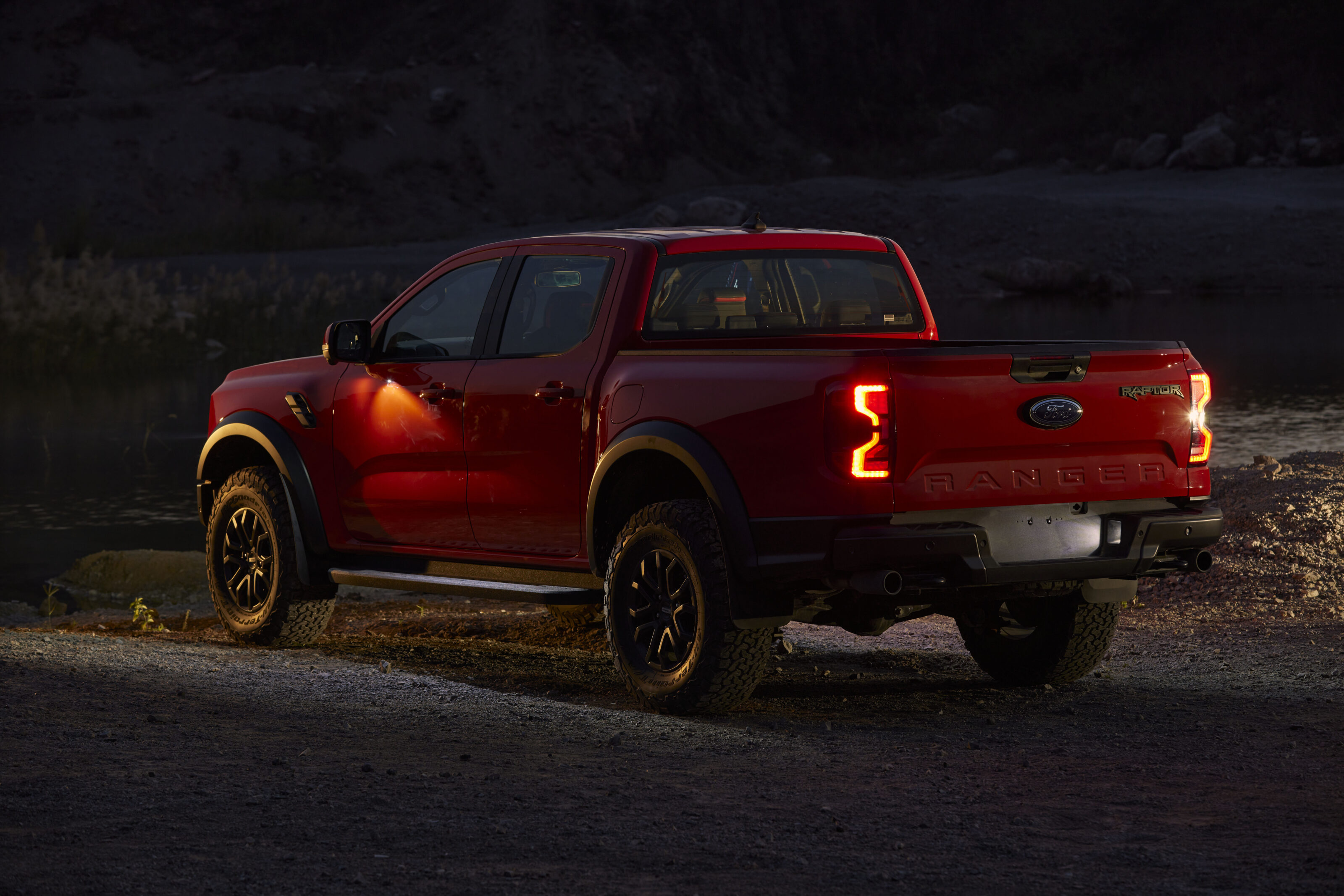
2022 Ford Ranger Raptor revealed: Ford has revealed full details of its all-new second-generation Ranger Raptor and the headline numbers are huge: 292kW/583Nm from a 3.0-litre twin-turbo V6 petrol, a 0-100km/h time slashed by four seconds, next-gen chassis tech and a switchable exhaust that you can hear from more than half a kilometre away.
A bold exterior design and much-improved cabin complete the update that Ford says has totally transformed the popular performance dual-cab.
“It’s a quantum shift, I’ll tell you that,” Justin Capicchiano, Ford Performance program manager told Wheels. “The step change is huge; it’s a different thing altogether. You guys aren’t ready for it.”
UPDATE, May 12 2022: As the new 2023 Ford Ranger nears its local launch, we’ve now driven a prototype. Get the full story and video at the link below!
The story to here
2022 Ford Ranger Raptor engine: 3.0-litre twin-turbo petrol V6
The biggest change, and the one that will most obviously alter the Raptor’s personality and performance, is its engine. Gone is the controversial (and arguably underpowered) 2.0-litre twin-turbo diesel of the first-gen Raptor.
In its place slots the same 3.0-litre Ecoboost twin-turbo V6 petrol as found in the recently released Bronco Raptor, with which the new Ranger shares its T6 architecture. Power and torque have both increased sharply to 292kW at 5500rpm and 583Nm at 3000rpm. That means power is almost double the original Raptor’s 157kW, but if you need some context to better understand just what a performance leap the new engine delivers:
“It’s like night and day,” says Capicchiano. “The current car used to be 0-100km/h in 10.6 seconds. Now it’s close to 4.0sec faster. It’s about as fast as a Focus ST to 100km/h and it’ll do it on dirt.”
Customer feedback drove the switch from diesel to petrol power, with Ford insiders acknowledging Australia is a ‘power hungry’ market. A bored and stroked version of Ford’s 2.7-litre twin-turbo ‘Ecoboost nano’ V6, the Raptor’s new engine is built around a graphite-iron block and includes an anti-lag system which can hold the throttle open for up to 3.0 seconds after the driver has backed off to reduce lag and improve response.
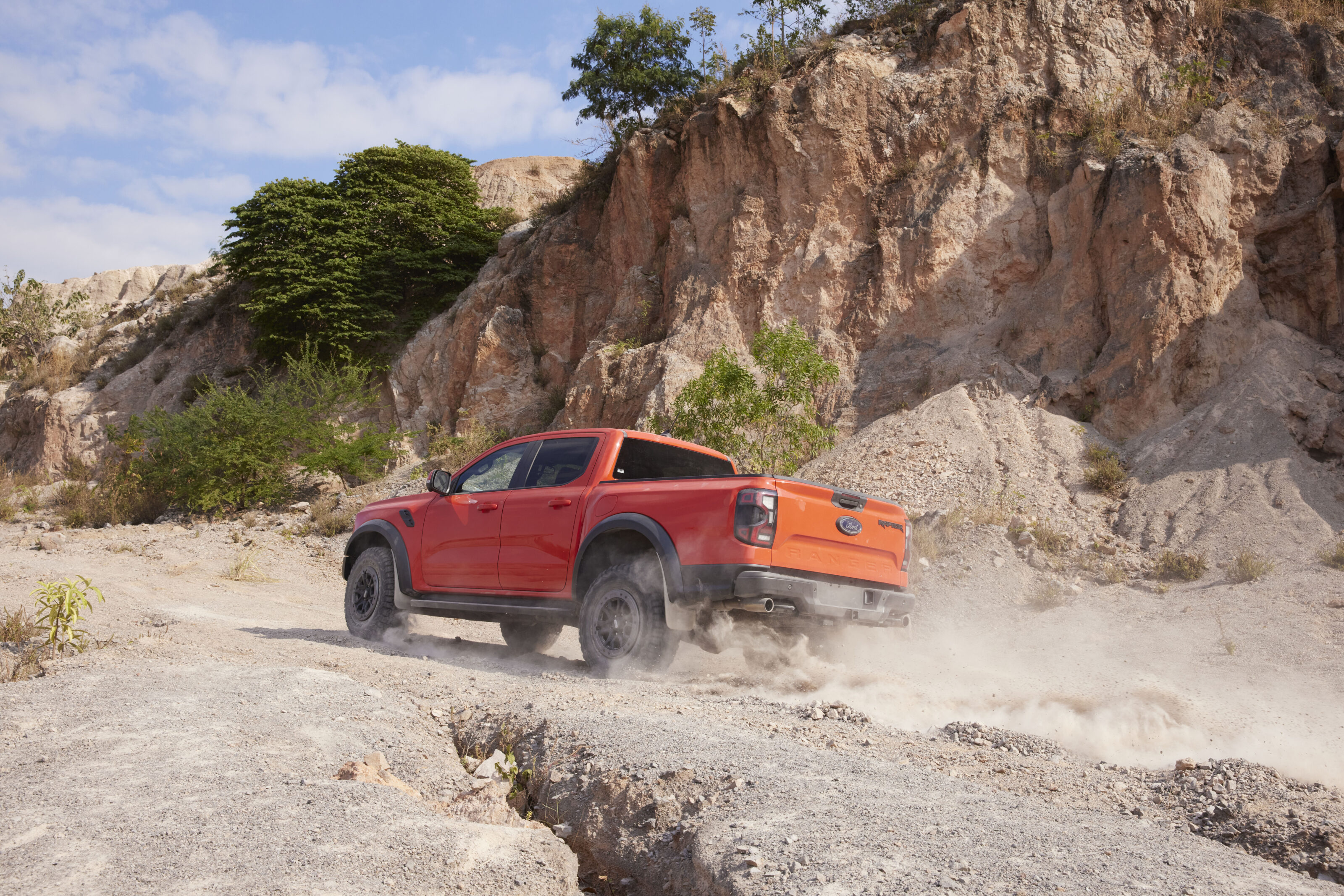
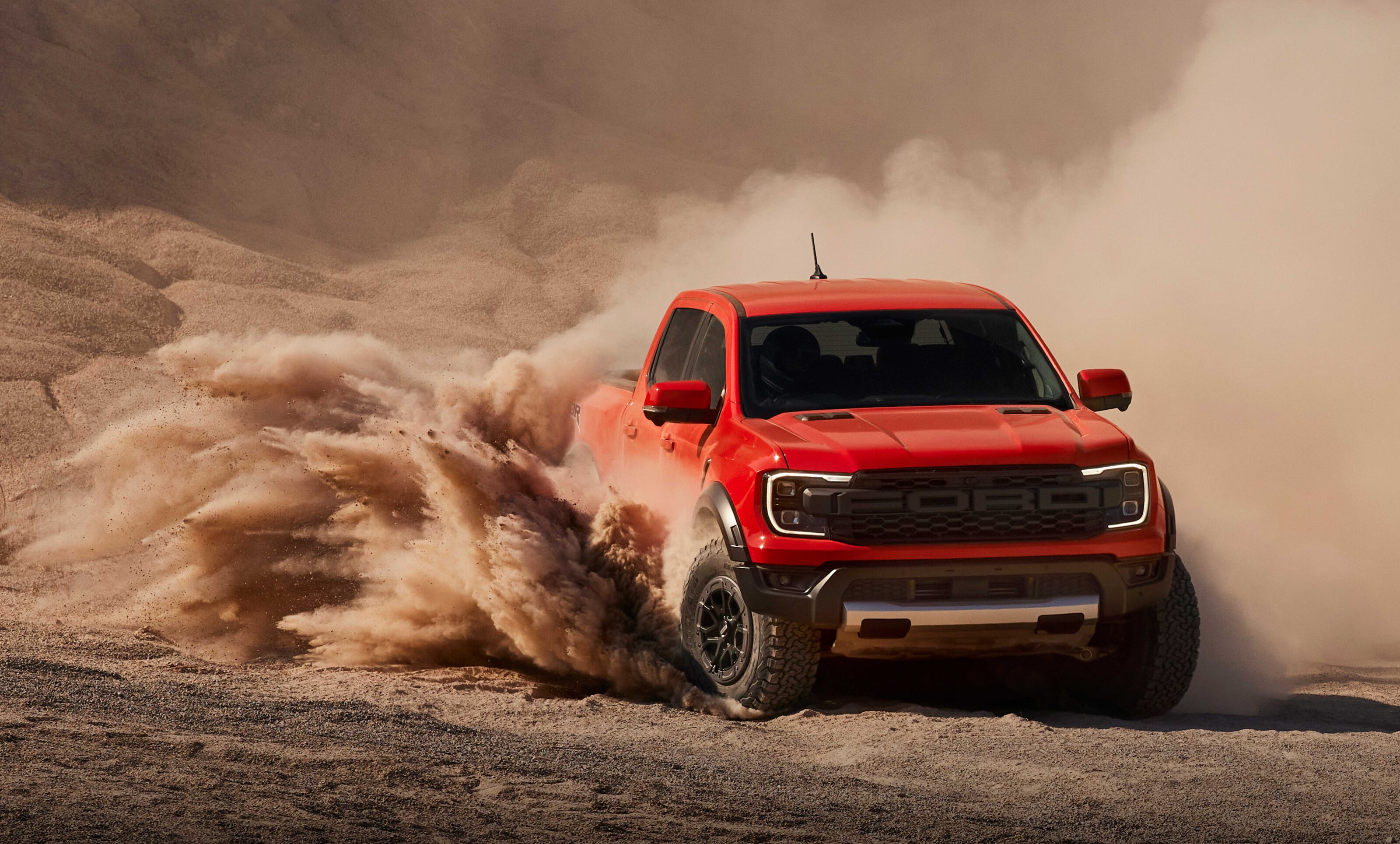
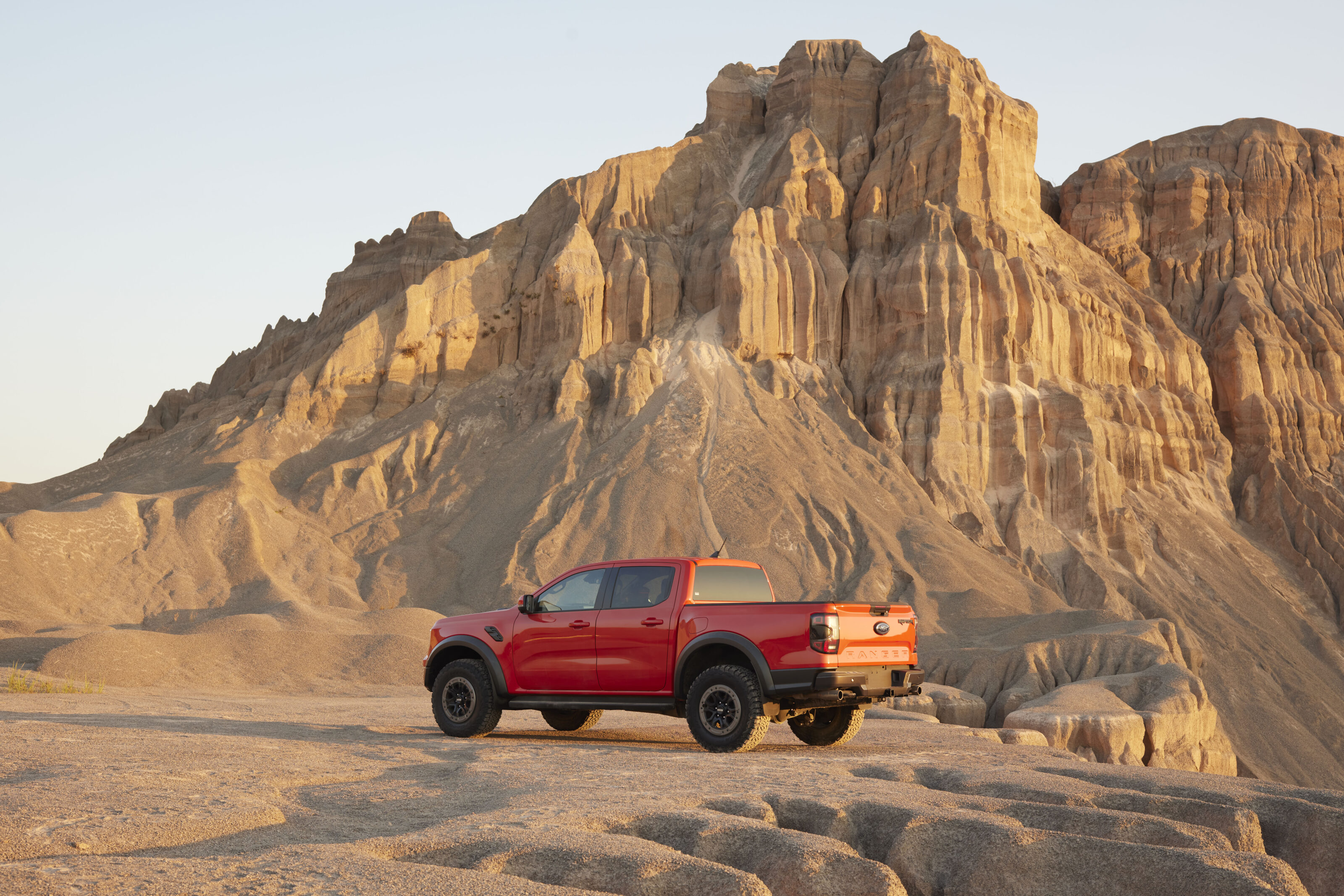
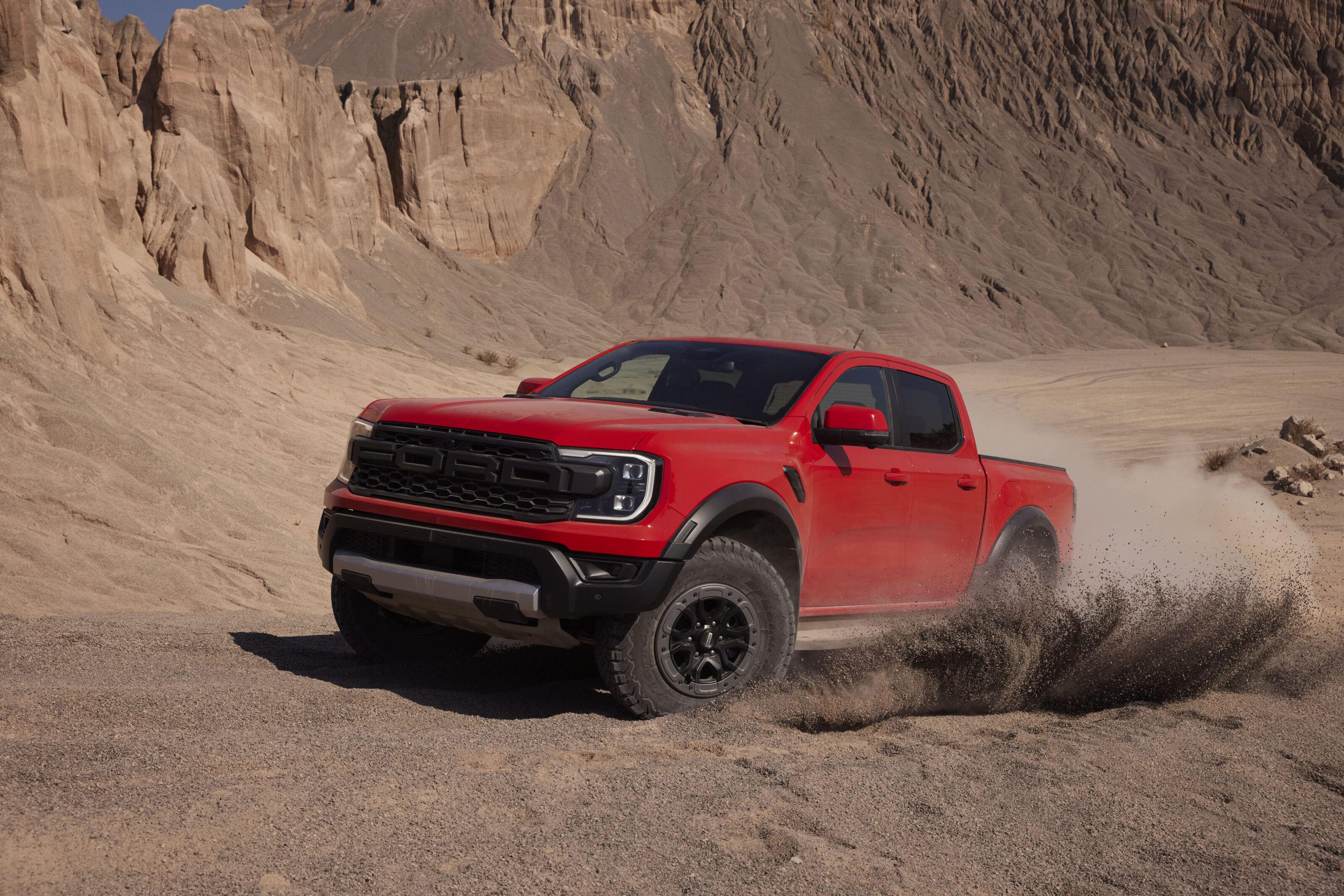
On the outside the imposing Raptor retains its signature F-O-R-D grille, blistered arches and pumped-up guards, although the visual difference with the regular Ranger has diminished a little due to the new donor ute’s larger dimensions.
“Track width is the same as the current Raptor and the width of the entire car is the same as well,” says Capicchiano. “But the new Ranger has grown by 50mm, so the gap has closed. We couldn’t go any wider with Raptor because it’s the widest car we can fit down the production line in Thailand.”
The old ute’s composite panels are gone, too, with conventional steel now the material of choice for the front quarter panels and bonnet (total kerb weight has crept up a little compared with the first-ten Raptor), although the latter now sports functional vents.
“That has no impact on weight because the composite wasn’t a lightweight material, it was malleable which allowed us to get around the headlight shape,” explains Capicchiano. “But with the new headlamp design, we could go back to a more traditional material in that area.
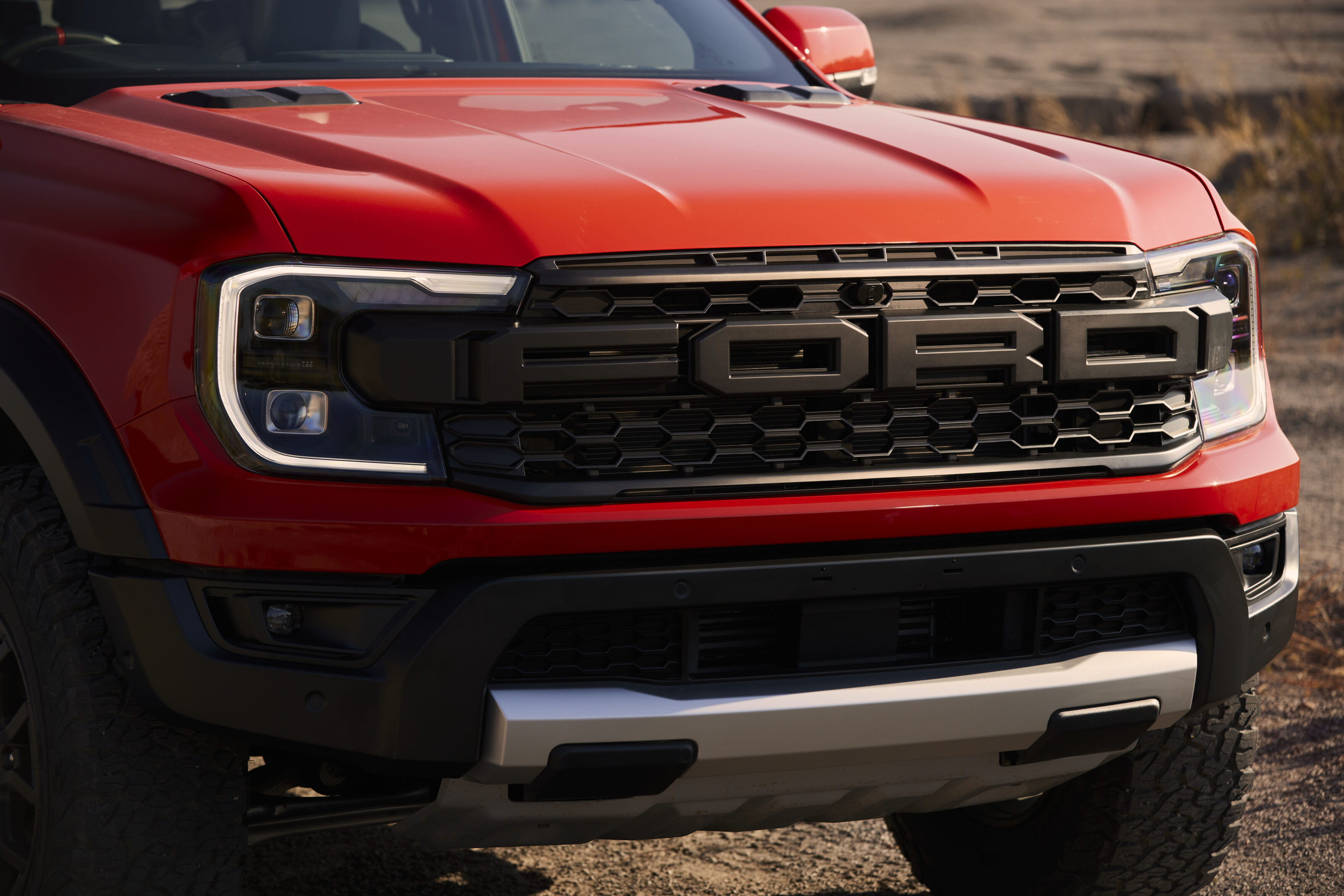
LED lights feature front and rear, with the headlights including Matrix technology which can mask out oncoming traffic to avoid dazzling other drivers.
Two alloy designs are available for the 17-inch wheels, including one with beadlock capability which helps prevent the tyre from rolling off the rim when pressures are dropped to tackle off-road terrain. The tyre spec itself is unchanged from the previous Raptor with BF Goodrich all-terrain K02 tyres fitted as standard in Australia.
A new electronically controlled active exhaust will ensure the Raptor has the soundtrack to match its tough exterior. Adjustable through four modes (Quiet, Normal, Sport and Baja), the 2.5-inch exhaust system exits through twin 65mm anodised tips and can even bypass the mufflers to behave as “a full straight-through exhaust” in Baja mode. The result is a ute that can be heard from more than half a kilometre away, according to Ford.
“It’s loud; Baja is right on the legal limit for decibels,” says Capicchiano.
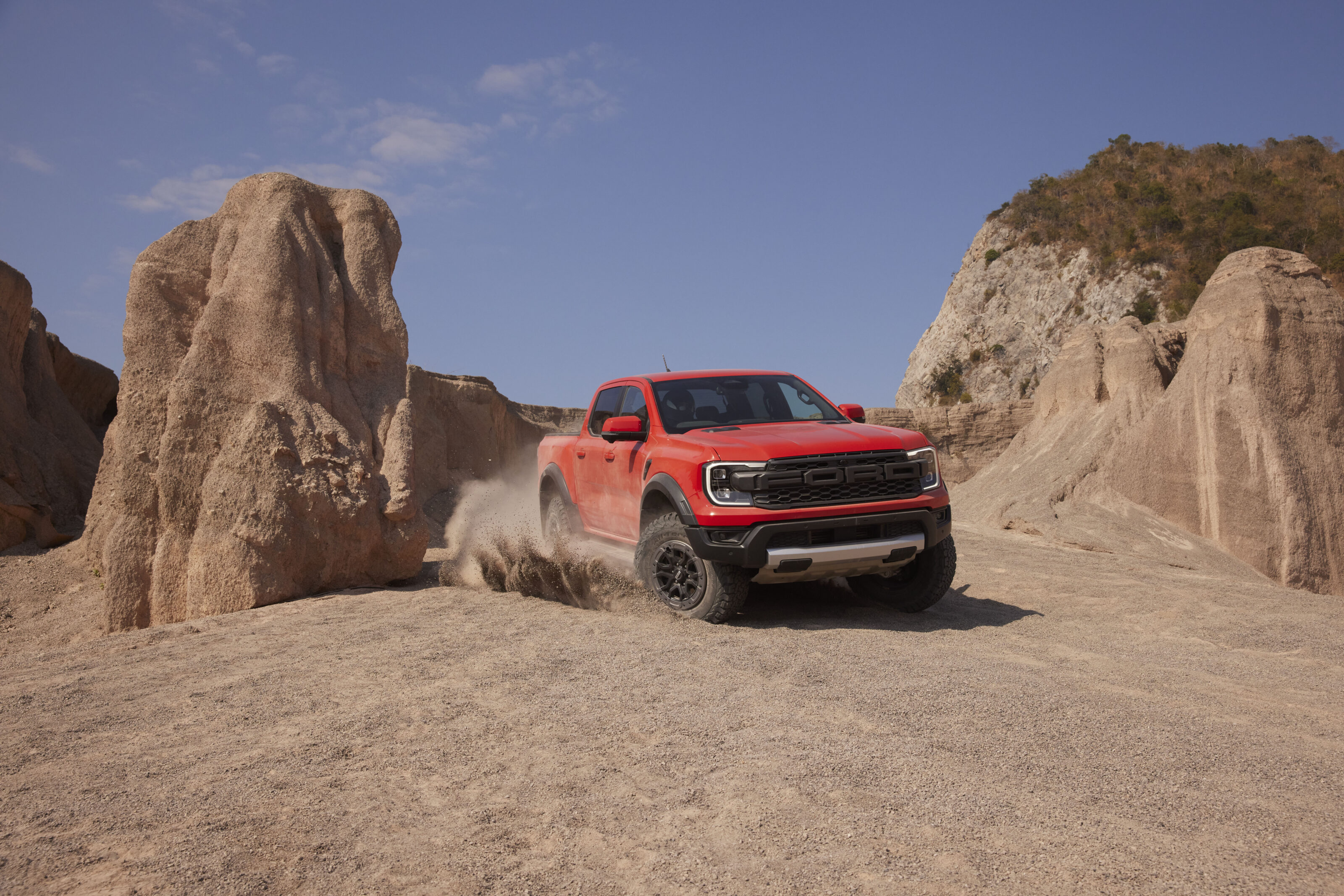
Paired with a new 10-speed automatic, which features some clever software that gives each ratio its own boost profile, the new Raptor’s T6 platform also allowed an upgrade to a full-time all-wheel drive system with an electronic two-speed transfer case and locking differentials front and rear.
This means the new Raptor now defaults to 4-Auto rather than 2-High, with the system’s tune-ability opening a new dynamic window for Ford’s engineers to play with. Combine that with a suspension set-up built around next-gen, semi-adjustable shocks from US supplier Fox, and Ford’s engineers say the new Raptor is a different animal entirely to drive quickly.
“People might see the chassis as an evolutionary change but it’s a generational shift in relation to performance,” says Capicchiano. “It’s significantly improved the amount of speed we can carry in this car. I’ll give you an example: our off-road testing circuit is a 10km loop. Around that 10km we are 10 seconds faster than the previous truck. That’s a second per kilometre. And both were being driven flat-out.”
A punishing off-road testing regime was core to the Raptor’s development. As well as Ford’s usual durability tests, the Raptor was subjected to an additional 1000km ‘race simulation’ around off-road tracks near Alice Springs. Peter Spence, vehicle engineering manager for Raptor, says the new ute dealt with the punishing schedule so easily that they threw a few hundred extra kilometres at it just for fun.
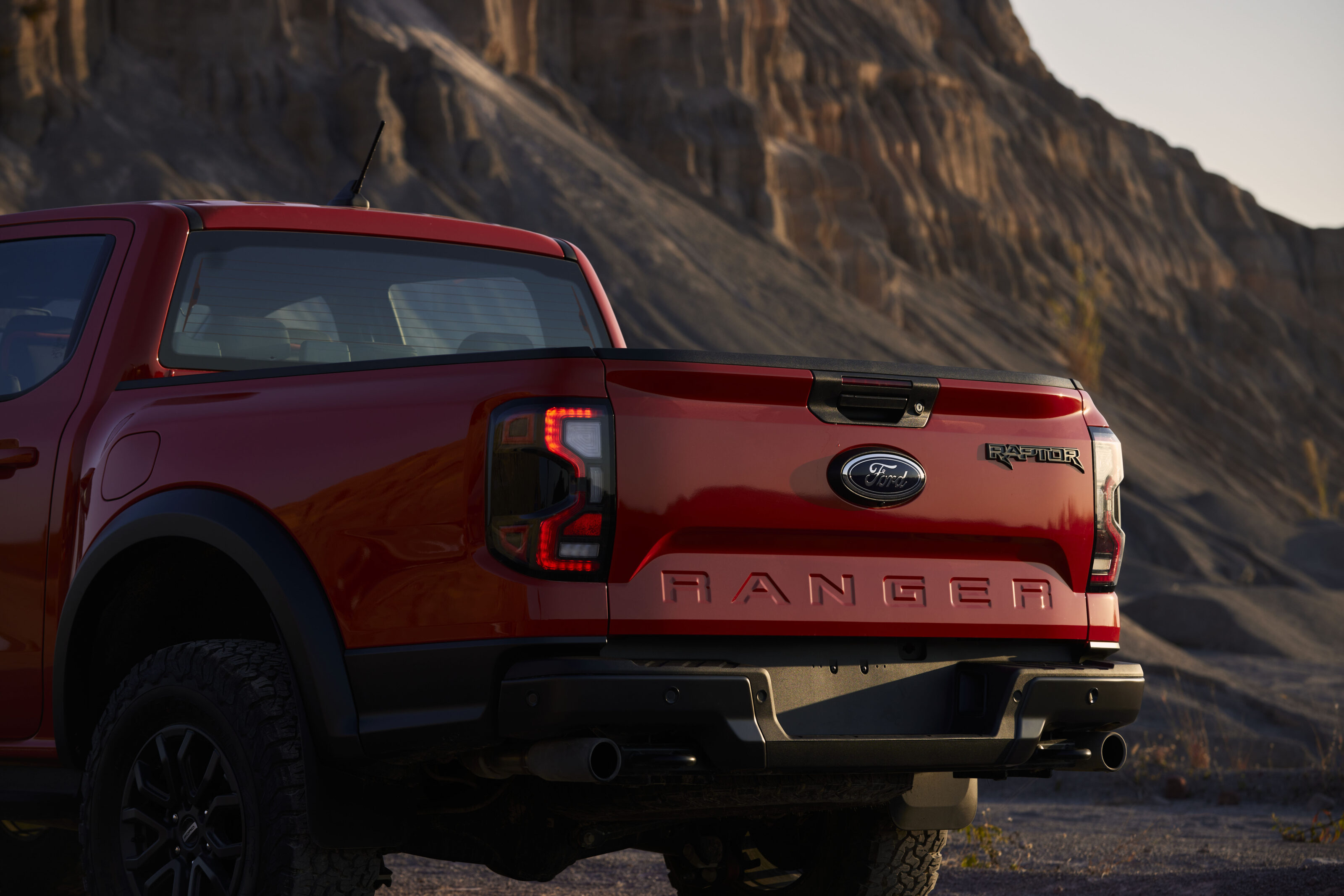
“We’re blasting through the desert at ludicrous speed as fast as we can to simulate the Baja race in the US,” he tells Wheels. “And we try to break things, basically. But we came through the test with so little damage, even though the speeds were much higher and the power levels are much greater. So everything was more challenging for the car yet it performed better than the previous Raptor.”
Additional body bracing and a greater use of high-strength components help the Raptor cope with the punishment, as does a 23mm steel front bash plate which helps to protect key components like the radiator, sump, differential and steering hardware.
It wasn’t all smooth sailing, of course. Isolating and removing rattles in the exhaust system were key challenges, as was overcoming packaging issues with the V6’s air intake. Parts of the system were collapsing unexpectedly which led to the turbos overspeeding and failing. “That was really tricky to diagnose,” says Spence.
Making improvements to limit handling was a key focus this time around, and the Raptor’s move to electronically controlled dampers allowed greater scope for tune-ability. Built around a double-wishbone front and Watt’s link rear suspension set-up, the new Fox 2.5-inch ‘Live Valve’ system utilises conventional coilovers up front but features shocks with external reservoirs at the rear.
The shocks are able to control the amount of damping force needed during compression (but not rebound) and drivers can adjust damper stiffness by cycling through the Raptor’s seven drive modes (Normal, Sport, Slippery, Rock Crawl, Sand, Mud/Rut, Baja).
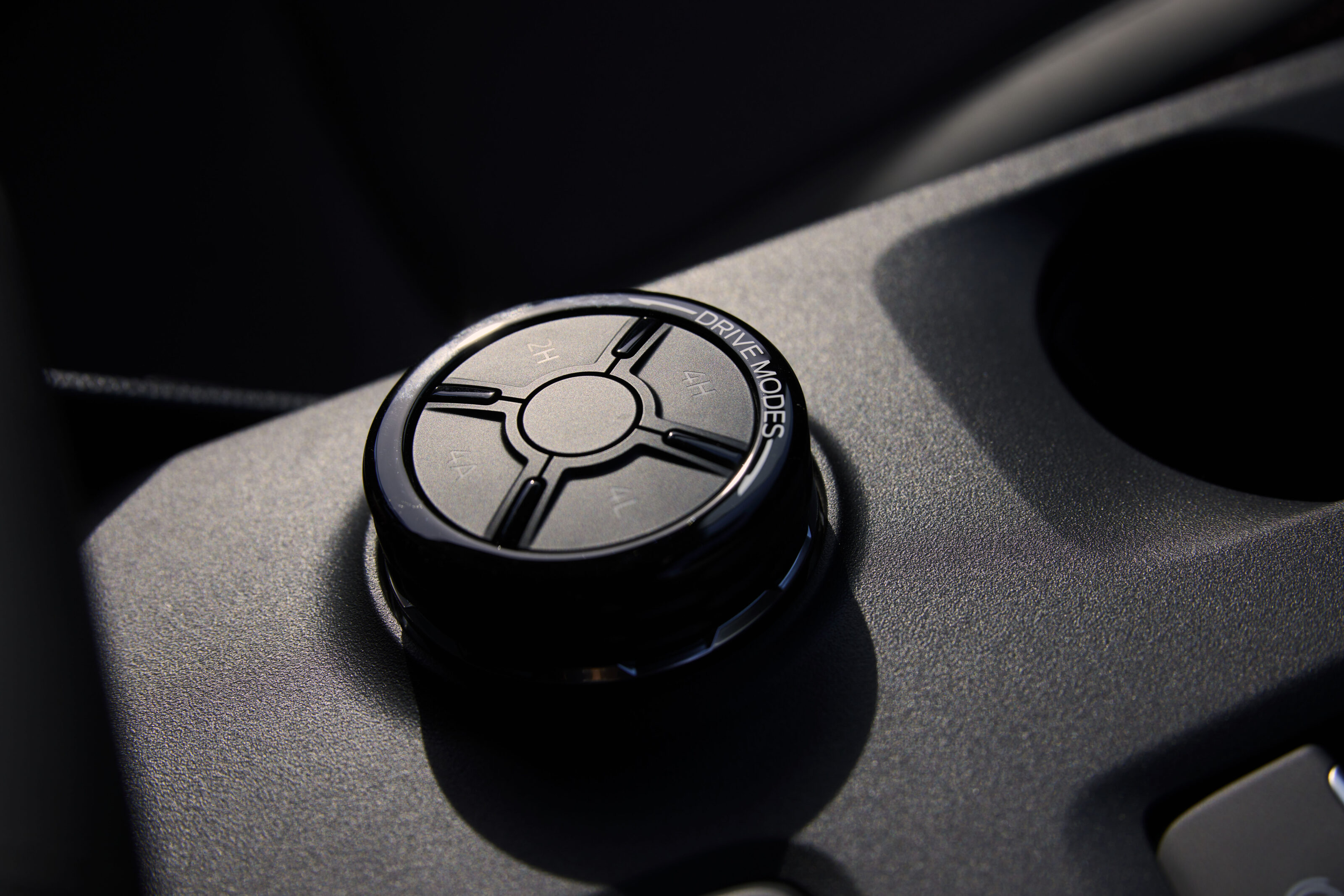
Ford has also added a specific damper mode labelled ‘Loud Pedal’, which is designed to limit squat under hard acceleration. The shocks themselves are filled with Teflon-infused oil that Ford says reduces friction by 50 percent compared with the previous Raptor.
A further gain in performance was found in the braking system which has moved to an electronically controlled brake booster. While the hardware is largely unchanged in terms of disc and pad size, Capicchiano says huge improvements were found by tuning the system’s software.
“It’s disc brakes all round and threshold braking limits have increased,” he says. “The ability to trail brake into corners has improved and the off-road braking element is a completely different thing. We’ve gotten so much out of it compared to the old car.”
If the abundance of different modes for the exhaust, powertrain, steering and suspension sounds daunting, it isn’t meant to. Ford has deliberately given the driver as much scope as possible to tailor the new-gen Raptor to suit their personal preferences.
Owners can also split the modes and individualise them to suit their preferences. So the dampers, powertrain, steering and exhaust can all be adjusted individually.
Core to the Raptor’s development process was the knowledge that different owners use their cars in different ways. Some use their utes mostly in low-range situations, others favour sand driving while others enjoy high-speed runs through forests and deserts.
Creating a vehicle that’s equally capable in every situation and terrain was the focus. Ford also had to consider the fact that unlike the previous Raptor, this generation will play a bigger role as a ‘global model’ that’s sold in Asia Pacific, Europe and for the first time, America.
“At the moment we’re aiming for one global chassis tune,” says Spence. “And the chassis character is different this time around. We’ve increased the vehicle’s ability at the extreme end and given up a little bit at the comfort end.”
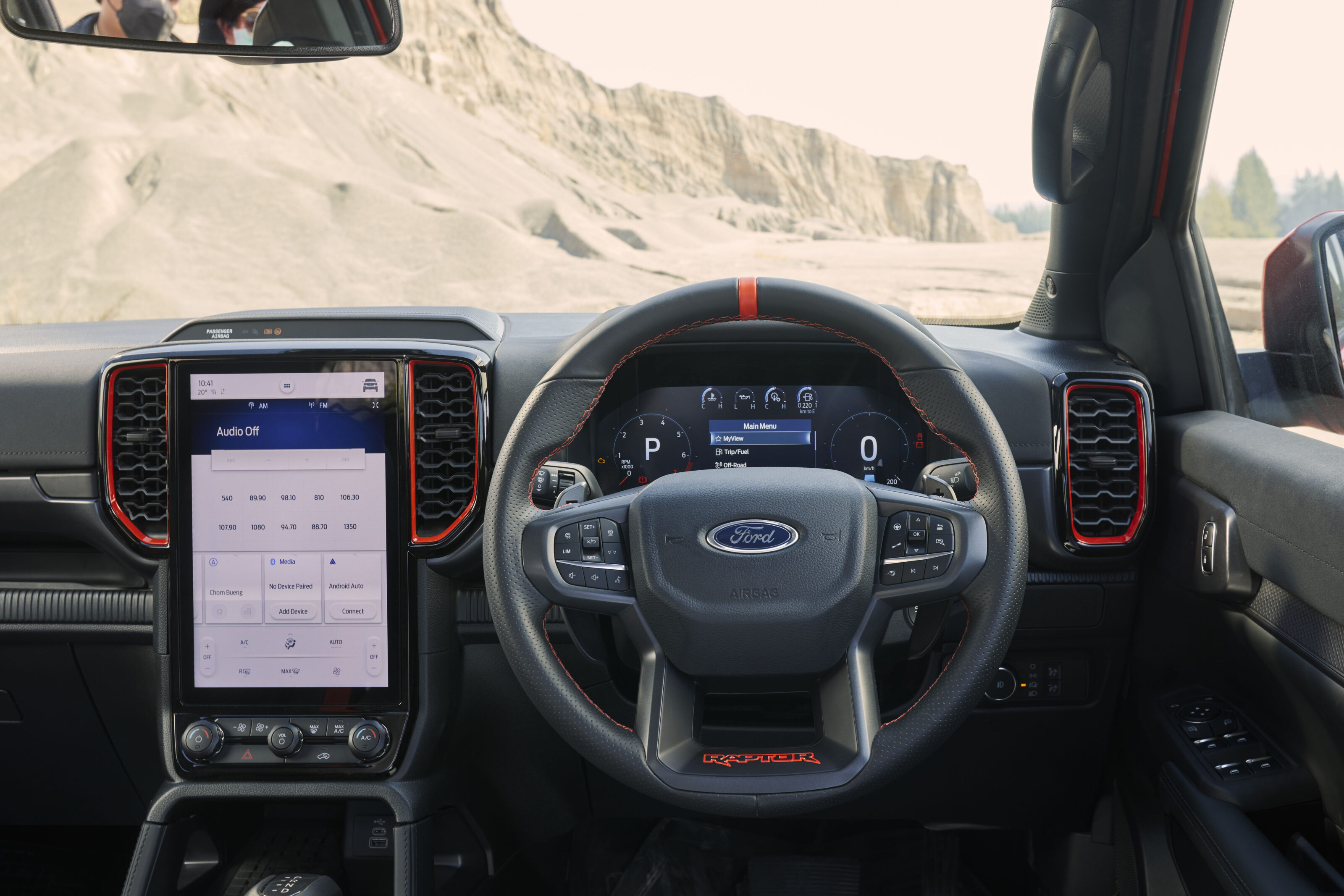
One area where comfort has been enhanced, however, is inside the cabin. Like the new Ranger on which it’s based, the Raptor’s cabin has taken a significant step forward in equipment and technology.
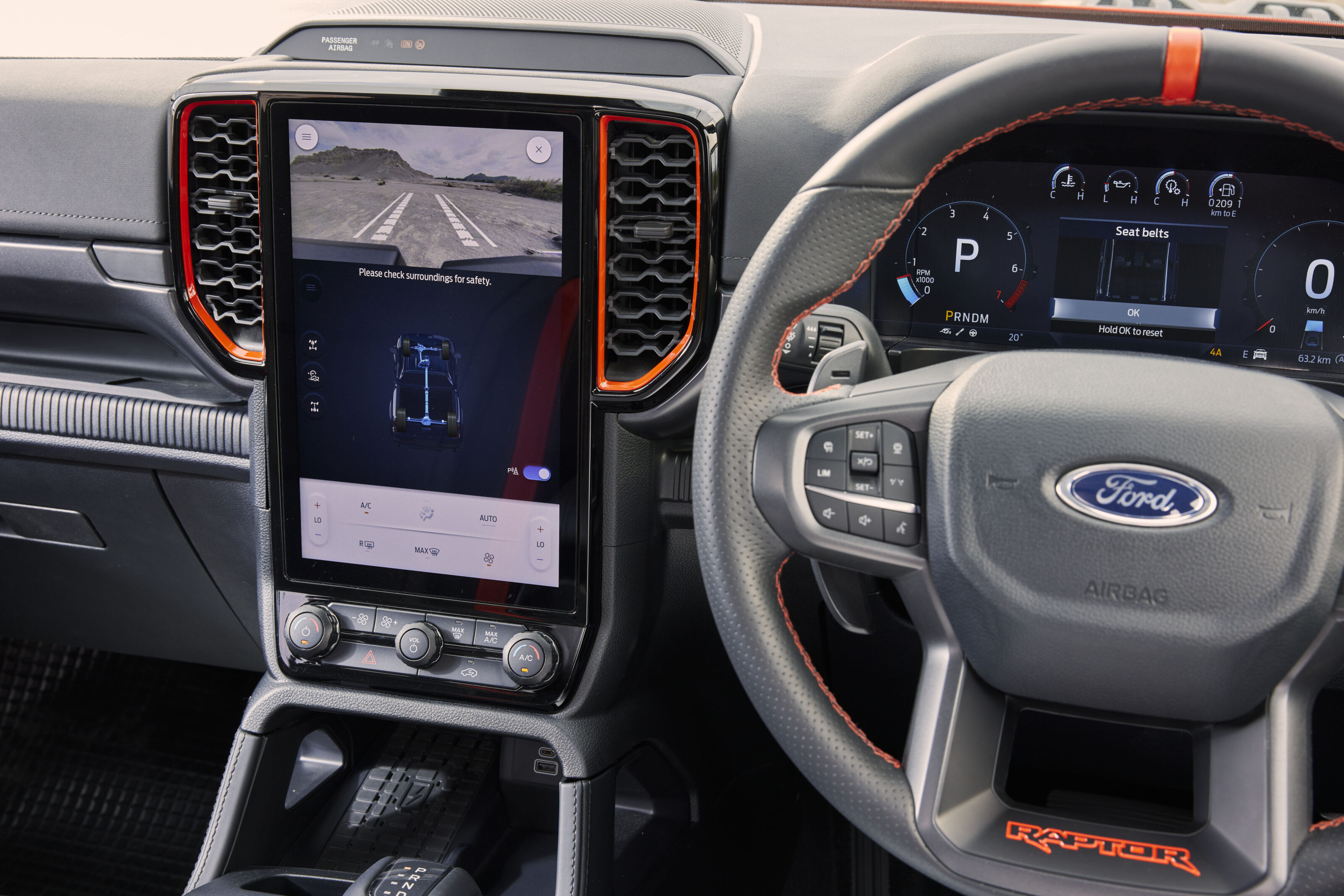
A ‘fully digital’ cabin includes a 12.4-inch digital instrument cluster and a 12.1-inch portrait central touchscreen that runs Ford’s latest SYNC4 infotainment software. Apple CarPlay and Android Auto are both wireless, while the sound system comes from Bang & Olufsen.
Expect different spec levels in international markets but Aussie cars will be fully loaded, meaning every option and system will be included as standard. Whether that means the new Raptor will demand a higher price compared with the current ute’s circa-$80K remains to be seen, though a price rise is likely. Ford says it hasn’t yet finalised pricing but will release it closer to the Raptor’s on-sale date later in 2022.
As before, special Raptor design touches abound inside including Code Orange inserts for the dash, bolstered sports seats and leather steering wheel. The shift paddles, a key touch point for the driver, are made from cast magnesium.
So it’s faster, louder, significantly more powerful and promises to be even more engaging to drive. And the Raptor’s arrival so early on in the new Ranger’s product cycle has our mouths watering. If this is the starting point, what else might Ford Performance have in store over the next decade?
Like the look of Ford’s new V6 twin-turbo Ranger Raptor but want even more power and torque?
A faster and even more powerful version of the performance dual-cab is currently in development and will soon be sold by well-known aftermarket specialist Herrod Performance.
Set to build on the second-generation Raptor’s already impressive factory outputs of 292kW and 583Nm, the enhanced ute will also be offered with a full Herrod Performance warranty.
Herrod Performance is a sizeable player in the Australian aftermarket industry and has strong links with Ford in Australia and also at Blue Oval HQ in the United States. Headed up by Rob Herrod, the company is well-known for its work on the current-generation Mustang which has culminated in models like the limited-edition supercharged R-Spec and 578kW DJR 40th Anniversary.
“We’re very interested in the new Raptor,” Rob Herrod told Wheels. “And we have some programmes already happening which we can talk about soon. So you will see a performance hot-up for Raptor through Herrod that will come with a full warranty.”
The new-gen Raptor’s switch from diesel power to a 3.0-litre twin-turbo V6 petrol is what attracted Herrod to offer a performance upgrade.
“We’ve never really been interested in the previous Ranger,” said Herrod. “The engines in the diesel models have been on the limit and tuning them can be tricky and cause issues. But the new potential performance wise of the new Raptor really interests us. The shift is huge.”
Wheels understands the Herrod upgrade will concentrate on the powertrain, meaning the chassis and exterior design will be left largely unchanged from factory spec.
“We’ve looked at that engine before and we’re coming up with a really good product,” added Herrod. “We’ll warrant it and are doing stuff no one else can do.”
While Herrod is clearly excited about the new Raptor’s performance potential, ask Ford’s engineers about how much headroom there is in the new V6 for a more powerful version from the factory and they downplay expectations.
“From a factory perspective we’re pretty close to where we think the limit is with that engine,” said Ford Performance program manager Justin Capicchiano. “I’m sure tuners will find their way through and make more power but where that limit is, I’m not sure.”
And if you’re hanging onto hope that Ford might build a road-going Raptor with a V8 engine? Ford has ruled it out, but that doesn’t mean a V8 Raptor won’t be built to go off-road racing.
“For us it’s the V6,” said Capicchiano. “That’s what we want to focus on now.”
“That doesn’t preclude doing things off-road and taking the car and pushing it in the world of racing. We’d love to do that stuff. You’ve heard Mark Rushbrook and Trevor Worthington talking about off-road racing being a desire for us. That’d be a great goal.”
One avenue Ford Australia may explore with the race version of the Raptor is to follow the same recipe as the Ford Bronco DR, which shares the same platform as the new Ranger.
Built in partnership with Canadian outfit Multimatic, the Bronco DR uses a 5.0-litre Coyote V8 and is set to make its debut appearance at the 2022 Baja 1000 in November.
Ford Australia says that it isn’t concerned about a shortage of the new 2023 Ford Ranger Raptor when it goes on sale in Australia later this year.
The flagship of the Ford Ranger line-up includes a raft of new tech, revised suspension and four-wheel drive system, shunning diesel power for a more potent twin-turbocharged petrol V6. It also includes a 12.0-inch centre display and a crisp, 12.4-inch full colour digital instrument cluster, features which other brands have removed from vehicles given the challenges facing semi-conductor supply during the pandemic.
“Everything in semi-conductor world is still a challenge, and you’re seeing that played out – not just for us, but for everyone … there’s a lot of people dedicated on working on that solution,” said Ford Performance Program Manager, Justin Capicchiano.
Despite Ford idling some of its plants in North America, including its Ohio and Kansas Assembly Plants, and operating reduced shifts at Kentucky, Chicago and Dearborn truck plants, Ford Australia says that it’s confident that it will be able get strong supply of the new P703 Ranger Raptor when production begins for the second half of 2022.
A Ford Australia spokesperson told Wheels: “We have a steady of supply of T6 product currently – European and North America vehicles are more challenging – so hopefully we can continue that.”
Aiding Ranger Raptor supply will be the change in manufacturing strategy for the new model, with global sourcing now from a single factory. “South Africa used to make Ranger Raptor for Europe,” Capicchiano said. “We’re now moving that over to Thailand. South Africa needed the capacity to make normal Ranger – so it’s a good problem to have.”
That doesn’t mean that there won’t be a wait time for Ranger Raptor customers, given the current wait time for new vehicles industry wide has blown out to an average of four months. Additionally, the previous Ranger Raptor saw a wait-list given its popularity upon launch in late 2018, well before the impact of the pandemic and semi-conductor supply issues.
Ford claims to have sold 10,000 Ranger Raptors here since, equating to around one-in-thirteen Rangers sold.
“The current car’s a massively popular car – in Europe Raptor gets almost 15 percent of their volume – it’s huge,” said Capicchiano. “It’s really popular in Australia, and I don’t think we’re going to have a problem selling all the ones we can take, to be honest.”
The 2023 Ford Ranger Raptor doesn’t arrive in showrooms until the second half of this year, but Ford is already eyeing a race program for its new V6-petrol powered off-road predator.
“There’s a strong desire to see where the capability of this car stops,” said Ford Performance Program Manager, Justin Capicchiano, at the reveal of the new Ford Ranger Raptor.
So far, Ford’s F-150 Raptor is no stranger to Baja competition, while Ford US has just announced the DR Bronco – standing for ‘Desert Racer’ and billed as ‘Competition Ready’ – yet the Ranger Raptor has remained on the sidelines as a success in the showroom only. That’s likely to with the new 2022 model.
“Racing’s definitely on our radar,” said Capicchiano. “We’ve got to find the right program that makes sense for it, but I think it’s a ‘watch this space’ more than a ‘no we’re not’.”
With the new Ranger Raptor packing a huge punch with its 292kW/583Nm twin-turbo petrol V6, nearly double its predecessor’s 157kW/500Nm turbodiesel, and further extension of its already class-leading suspension and off-road capability, the new model appears absolutely ripe for racing – especially given the switch from diesel to petrol power.
“Petrol gives you a lot more options in relation to the high-speed desert capability – and that’s a core element of Raptor DNA. More than anything else, that’s where the Raptor’s got to work,” Capicchiano says. “There’s other gains we’ve been able to get just around the way the thing performs now … throttle response, immediacy of power, ability to be steered.”
What’s more, the V6 – taken from the US-market Bronco, which shares its T6 underpinnings with the Ranger – packs technology such as an anti-lag system for its Garrett turbochargers, while in perhaps a sign from the racing gods, Ford says its iron-graphene block is the made of the same material as the FR9 engine that powers Ford’s Mustang NASCAR.
“I think if you were around at Bathurst, Trevor [Worthington, Vice President, Global Product Development] and Mark [Rushbrook, Global head of Ford Performance motorsport] were pretty animated around what they wanted to see … Ford Performance in the US is very interested in what this car does.”
The Australian Off-Road Championship is sponsored by BF Goodrich, the very brand fitted on every Ranger Raptor, and includes the St George 399 in March, as well as the famed mid-year Finke Desert Race.
It may be a stretch, but Ranger Raptor could even compete in the world’s premier off-road event, the Dakar Rally – yet Capicchiano says it’s not thinking too far ahead just yet.
“There’s a number of different off-road categories that this car could slot into; it could go into Showroom categories, it could go into T2 categories, it could go into Class 4 – there’s so many different places where you could put this thing. What our job is to figure out the right opportunity for everyone.”
Snapshot
- Average price of 91 octane fuel jumps to 179.1 cents per litre
- Sydney region records highest average of 190.2 cents per litre
- Brent crude oil peaked at US$96.48 per barrel last week
Australian motorists are taking a bigger hit to the hip pocket than ever before as average fuel prices across the country soar to their highest levels yet.
At the conclusion of the week ending on February 20, the Australian Institute of Petroleum reported an average price for fuel in Australia of 179.1 cents per litre (cpl) for 91 octane unleaded, an all-time high and a surge of nearly 30 cents above the lowest point over the last six months – having bottomed out at 150.6cpl on September 5.
Unsurprisingly, the most populous city in Australia has the most expensive fuel, with Petrol Spy showing Sydney’s average price has risen to 190.2cpl at the time of writing, well and truly beyond the record-breaking high of 173.2cpl reported in October last year.

At that time, Brent crude oil had passed the US$80 per-barrel marker and was selling at US$83.80 – however, the push upwards has continued to hit US$97.35 at the time of writing, an increase greater than US$30 a barrel, more than a year prior.
Despite having a touch under five per cent of Sydney’s population, Hobart’s average price also sits at 190.2cpl, just a few cents more than Darwin which is currently experiencing a high of 187.6cpl.
The nation’s capital is sitting just above the national average with Canberran prices recorded at 179.2cpl while Melbourne, Perth and Adelaide are the only three capital cities to sit under the 179.1cpl mark, Adelaide recording the lowest average of 164.8cpl.
Off the back of Queensland’s capital Brisbane hitting its own high of 191.4cpl on February 15 (now down to 182.9cpl), RACQ’s Kate Leonard-Jones said motorists can expect a fall in prices over the next few weeks.
“Unfortunately for drivers, international supply and demand issues as well as ongoing geo-political tensions have led to surging oil prices,” said Leonard-Jones.“When combined with the south east [Queensland] regular price cycle, this has created the perfect storm of factors and resulted in these eye-watering bowser prices.“Now that prices have peaked, we will start to see the cost of fuel slowly fall by one or two cents each day as markets enter the discounting phase of the cycle.“If you do need fuel, make sure you’re only topping up with the bare minimum for now, as we will see prices ease over the coming weeks.“The bad news is oil prices are extremely volatile, so if we see a continuation or worsening of those global factors, this will eventually flow on to what drivers are charged at the bowser and in the next price hike, we could see the cost of petrol soar even higher.”
Diesel owners are experiencing minimal savings compared to their petrol-buying counterparts, as the average price of diesel at the end of last week stood at 178.5cpl, just 0.6cpl less than 91 octane.
Australian average fuel prices – February 22
Data via Petrol Spy.
| City | Cents per litre (cpl) |
|---|---|
| Sydney | 190.2 |
| Hobart | 190.2 |
| Darwin | 187.6 |
| Brisbane | 182.9 |
| Canberra | 179.2 |
| Melbourne | 171.1 |
| Perth | 170.1 |
| Adelaide | 164.8 |
Snapshot
- 2.5-litre and 3.5-litre petrol engines now the only options as diesel dropped from range
- New Sport Line package available on both variants
- Luxury pack scores minor 2022 upgrades
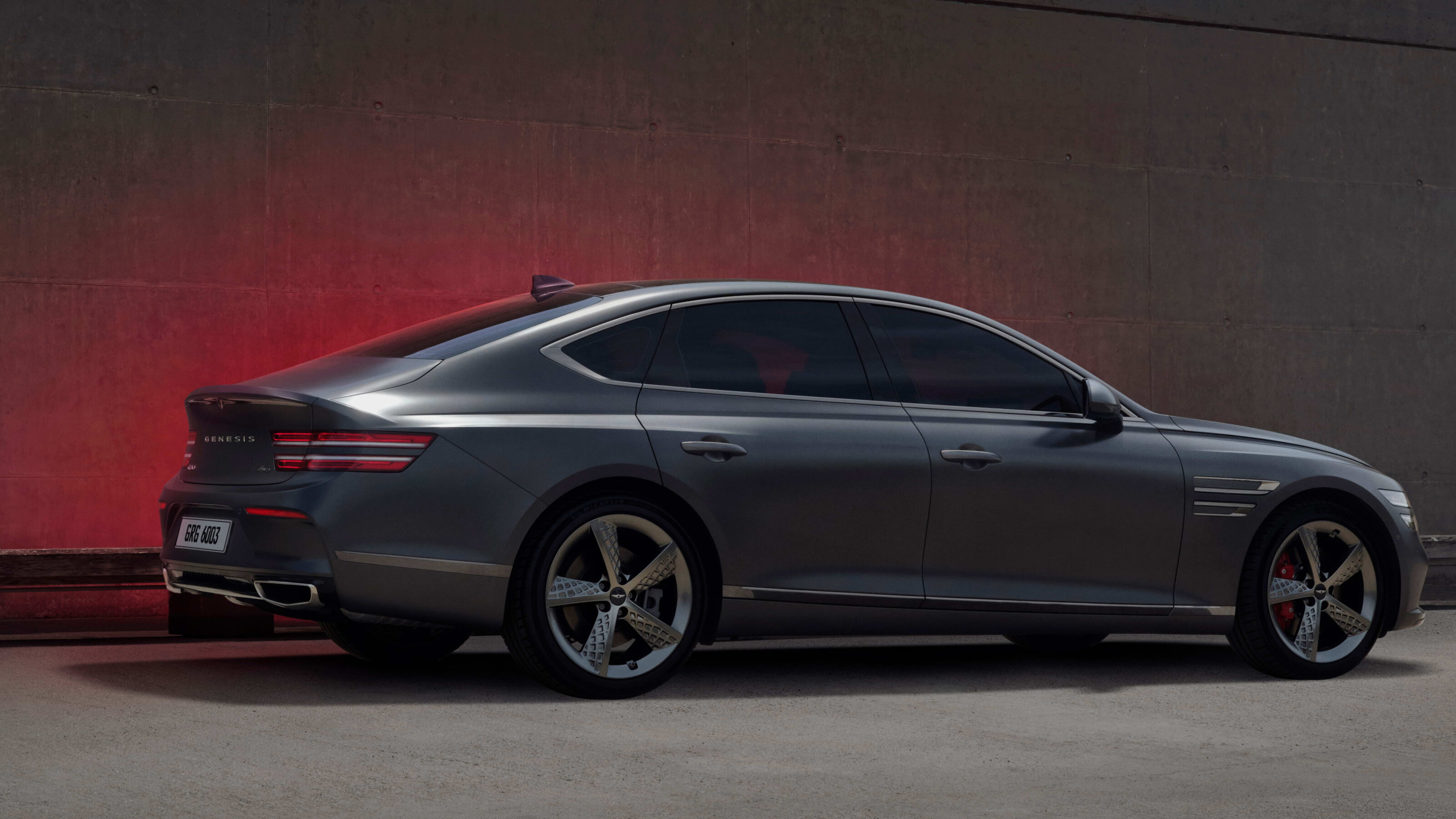
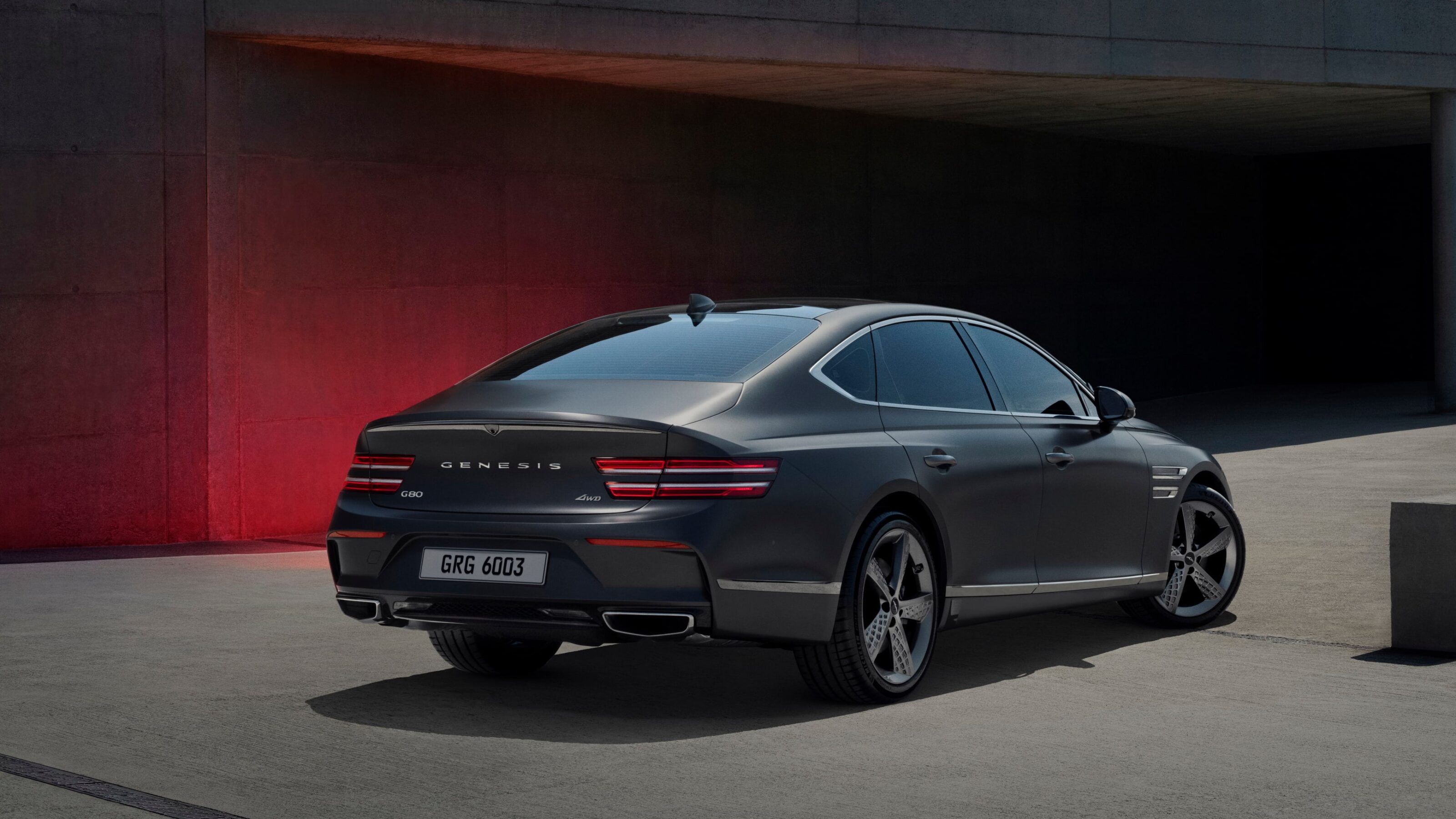
Australian pricing and features for the updated 2022 Genesis G80 have been announced today, introducing key upgrades to the large luxury sedan.
Launching in Australia at the back end of 2020, this MY22 offering marks the first major update for the G80. The most notable change is the omission of a diesel engine, as Genesis has dropped the short-lived 2.2D four-cylinder turbo-diesel for this year.
This leaves the 2.5-litre turbo four-pot and 3.5-litre twin-turbo V6 petrol as the only engine options, although both are now able to be purchased with the new optional Sport Line package, adding a host of performance-oriented upgrades.
Pricing
Both engine variants have undergone a minor price hike over the existing G80, with the flagship 3.5T now in excess of $100,000 before on-road costs.
2022 Genesis G80 pricing for Australia
| Model | Price (before on-road costs) |
|---|---|
| G80 2.5T | $86,000 (+$1224) |
| G80 3.5T | $102,000 (+$2224) |
Options
In addition to the prices of the base vehicles, Genesis offers three option packs for its G80 range.
The $6000 Sport Line package and the $13,000 Luxury package are detailed further below, with the only standalone option coming in the form of matte paint – a $2000 premium across the G80 variant line-up.
Features
G80 2.5T
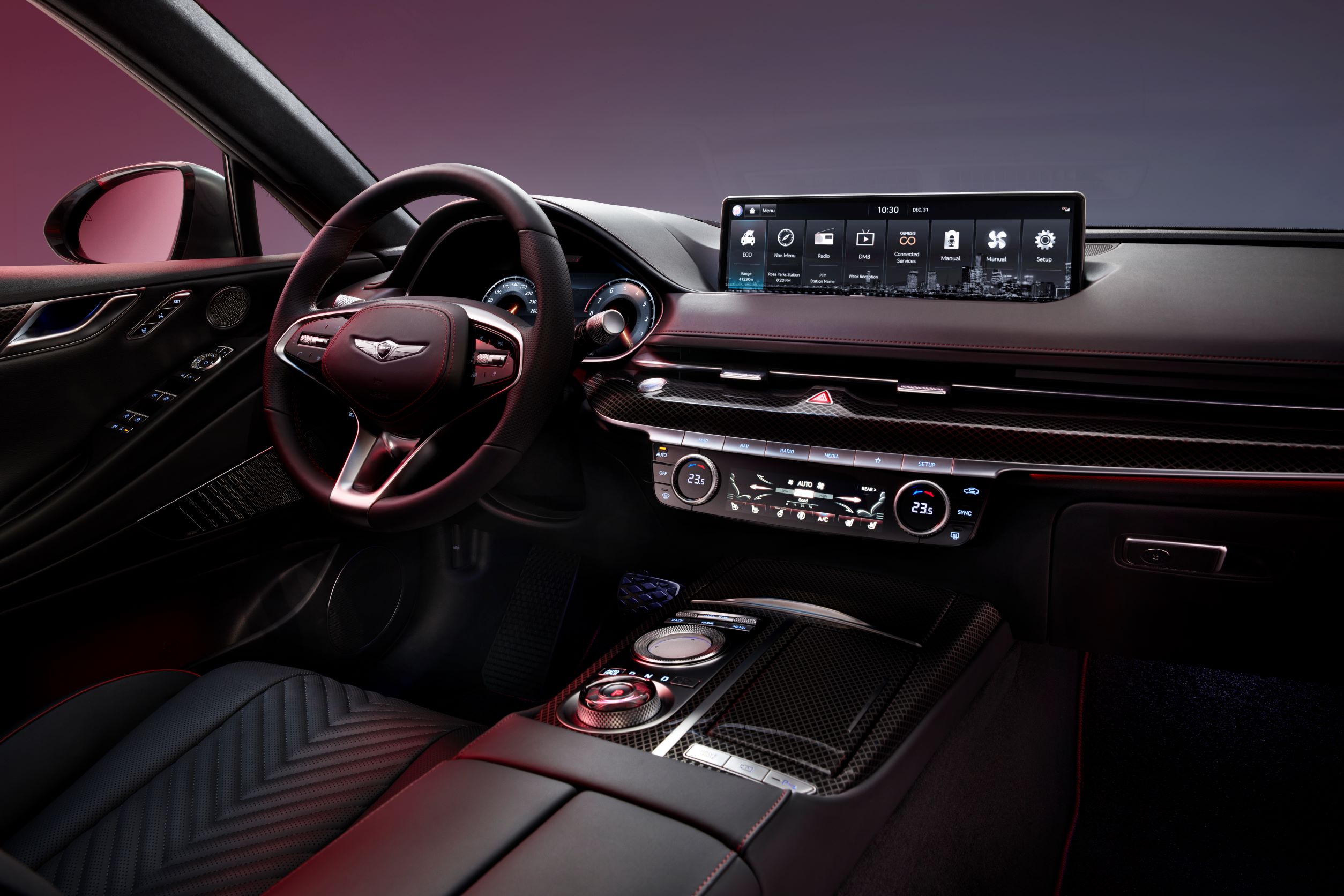
The G80 2.5T serves as the model’s entry-level variant, scoring a wide range of standard equipment.
| 19-inch alloy wheels with Michelin Pilot Sport 4 tyres (245/45 front, 275/40 rear) |
| Ventilated front disc brakes (345mm), solid rear disc brakes (325mm) |
| Panorama sunroof |
| Dual exhaust with crest grille shape finishers |
| LED headlights with LED daytime running lights |
| Auto light control |
| High beam assist |
| LED taillights |
| Auto folding, heated and electro-chromatic side mirrors |
| Welcome system with Genesis logo puddle lights |
| Solar control glass |
| Acoustic laminated windscreen/front door glass |
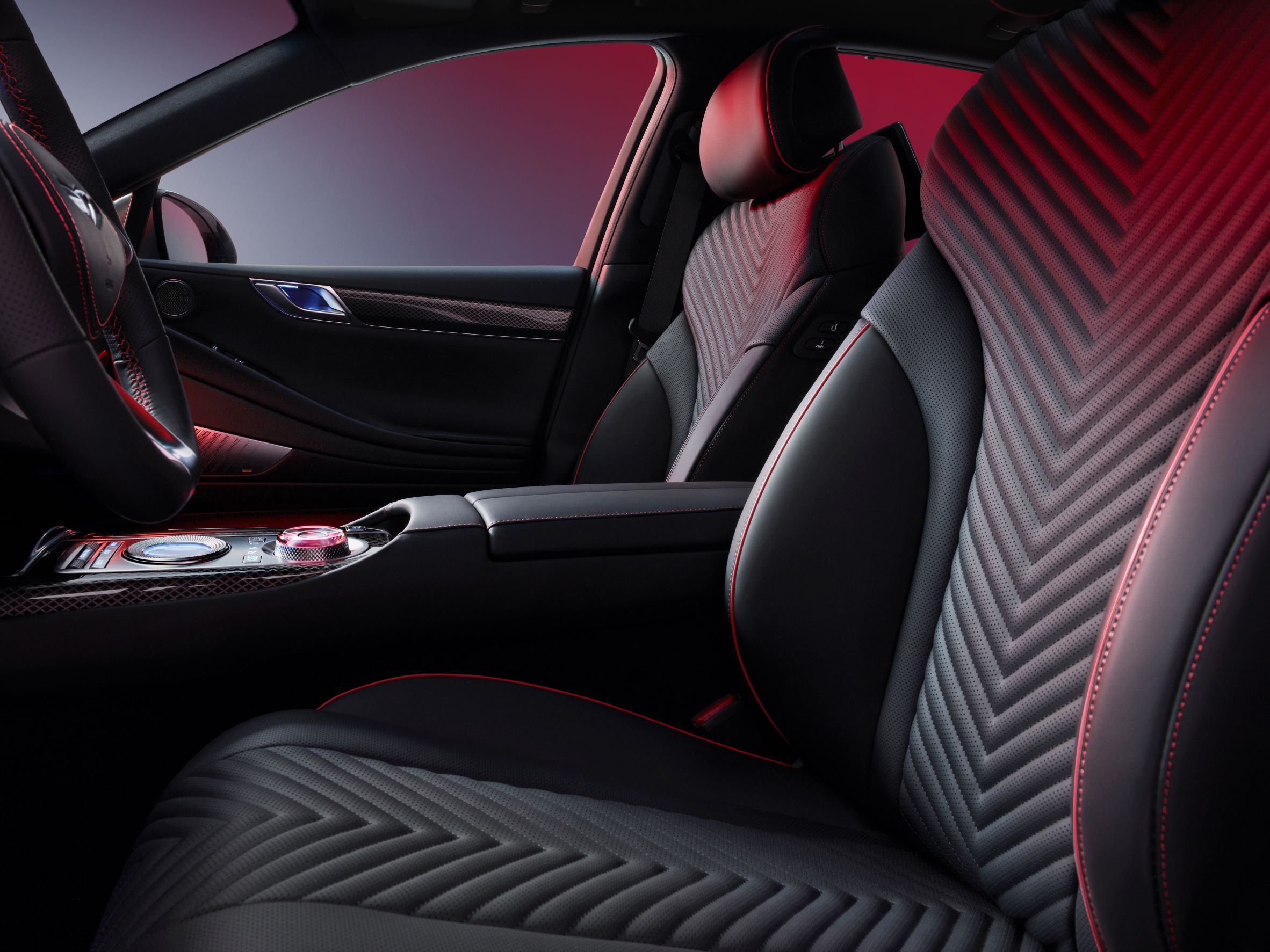
| Leather seating with premium quilting seat pattern and seat/headrest piping |
| Leather appointed dashboard, door trim and centre console package |
| Two-tone leather steering wheel |
| 12-way power front seats with four-way air-cell lumbar |
| Rear seat centre armrest with cup holders, storage compartment |
| Open pore real wood trim |
| Stainless steel door entry scuff plates |
| Ski-port |
| Luggage net |
| Rear door sunshades |
| 8-inch TFT-LCD instrument cluster |
| 12.0-inch Head Up Display |
| Power tilt and telescopic steering column |
| 14.5-inch multimedia with augmented reality navigation |
| Genesis Integrated Controller with handwriting shortcut |
| AM/FM/DAB+ radio with RDS |
| Apple CarPlay and Android Auto |
| Wireless phone charger |
| Front USB charger, two rear USB chargers |
| 21 speaker Lexicon premium audio |
| Active Sound Design |
G80 3.5T
The more powerful 3.5T V6 adds:
| Road Preview Electronic Control Suspension (ECS) |
| Four-piston Monobloc front brake calipers |
| Ventilated front and rear disc brakes (360/345mm) |
| 20-inch alloy wheels with Michelin Pilot Sport 4S tyres (245/40 front, 275/35 rear) |
Sport Line package
Available on top of both the 2.5T and 3.5T, the sportier package includes:
| Road Preview Electronic Control Suspension (ECS) (2.5T only) |
| Four-piston Monobloc front brake calipers (2.5T only) |
| Ventilated front disc brakes (360) (2.5T only) |
| 20-inch alloy wheels with Michelin Pilot Sport 4S tyres (245/40 front, 275/35 rear) (2.5T only) |
| Sport seat quilting |
| Three-spoke sport steering wheel |
| Real carbon interior trim |
| Alloy pedals |
| Dark chrome exterior garnishes |
| Sport front and rear bumpers |
| Rear wheel steering (RWS) (3.5T only) |
| Sport+ Drive Mode (3.5T only) |
| Active Road Noise Control (ANC-R) (3.5T only) |
| Launch control mode (3.5T only) |
Luxury package
Finally the flagship Luxury package, now including a number of upgrades over the existing model:
| Forward Attention Warning (FAW) |
| Parking Collision-Avoidance Assist u2013 Reverse (PCA-R) |
| Power door latch for soft close doors |
| Intelligent Front-Lighting System (IFS) |
| Nappa leather appointed interior with Luxury quilting |
| Suede headlining, pillar and rear shelf trims |
| Leather appointed driveru2019s airbag |
| 12.3-inch TFT-LCD instrument cluster with 3D function |
| Smart Parking Assist (SPA) |
| Remote Smart Parking Assist (RSPA) |
| 18-way driver & front passenger seat with two-way bolster adjuster, pelvic adjustment, cushion extension |
| Ergo Motion driver and front passengeru2019s seat (new) |
| Driveru2019s seat position change and switch function alert |
| Three-zone climate control |
| Heated steering wheel |
| Power rear outboard seats with heating and ventilation |
| Power rear window sunshade |
| Rear Seat Entertainment (RSE) with dual 9.2-inch screens |
| Rear armrest console controls |
| Rear door acoustic laminated glass |
| Rear wireless phone charger (new) |
Engine and drivetrain
Aside from the aforementioned diesel engine being dropped, the existing 2.5T and 3.5T powertrains remain unchanged.
The 2.5-litre, turbocharged four-cylinder petrol engine in the entry-level G80 develops 224kW and 422Nm, delivering power to the rear wheels through an eight-speed torque-converter automatic transmission.
Stepping up to the 3.5-litre, twin-turbocharged V6 sees outputs jump to 279kW and 530Nm, with the extra power and torque now being put to the ground through an all-wheel drive system, utilising the same eight-speed gearbox as the 2.5T.
Safety
Having scored five stars in ANCAP’s safety crash tests last year, the updated G80 is bolstered by a number of tech additions:
| 10 airbags u2013 front, front centre side, driveru2019s knee, front thorax and pelvis, rear thorax, curtain |
| Blind spot view monitor |
| Blind spot collision avoidance assist |
| Driver attention warning |
| Emergency stop signal |
| Intelligent speed limit assist (new) |
| Forward collision avoidance assist u2013 car/pedestrian/cyclist, junction turning/crossing, lane change oncoming/side |
| Evasive steering assist |
| Front amd rear seatbelt pre-tensioners |
| Rear outboard ISOFIX |
| Lane keeping assist |
| Lane following assist |
| Manual speed limit assist |
| Multi collision brake |
| Parking distance warning u2013 forward and reverse |
Warranty and servicing
Genesis offers a five-year/unlimited-kilometre warranty across all models, also covering the G80 with complimentary scheduled servicing every 12-months/10,000km for the first five years.
Also included is the Genesis to You concierge service, valet service and 24/7 roadside assistance, all of which are free for five years after purchase.
Availability
The 2.5T is currently on sale with the 3.5T expected to arrive from March 2022.
An all-electric variant of the G80 will launch in Australia sometime in the second quarter.
Introduction: Ranger Anxiety
Ford Performance’s most controversial vehicle gets a second chance
“I think I’ve made a terrible mistake.”
As an opening impression to a new long termer, that’s not fantastic. I had a moment to consider my opinion having driven the Ford Ranger Raptor X just 50 metres.
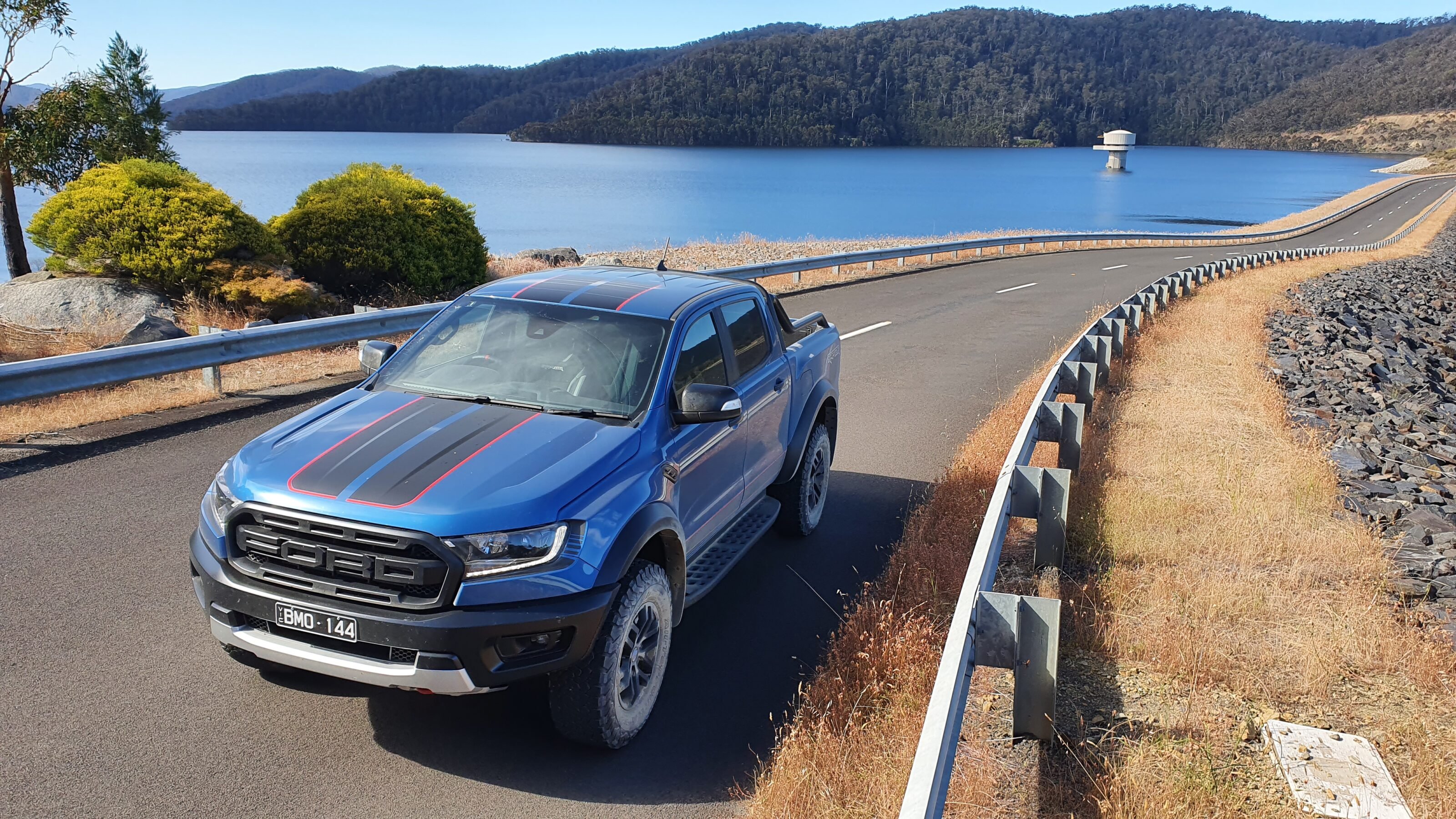
I’d spent the previous few days in a Porsche Taycan Turbo S, so I’d had my expectations of meaningful acceleration somewhat realigned. Such as it was, I pulled out across three lanes of traffic from Ford’s Broadmeadows plant, at a velocity that would have seemingly seen me in danger of being rammed up the chuff by a perky tectonic plate. Slow didn’t even cover it.
A friend called me that evening to ask if I was keen to join him on a drive into the hills that weekend and I had to admit that I didn’t have a vehicle that could keep up with the group. I looked at the huge blue truck and wondered how the hell I was about to sell the benefits of a vehicle with a power-to-weight ratio of 66kW per tonne to the readers of MOTOR.
The next morning dawned wet, so I headed on a solo excursion into the hills. Even with a power-to-weight figure monstered by a Kia Picanto GT, the Ranger is surprisingly immersive, largely because the rear tyres and damp bitumen offer a modest coefficient of grip. In four months with a GR Yaris Rallye, I experienced sealed surface oversteer once. After half an hour in the wet in the Raptor X, you’re in danger of wearing out the stability control warning light.
I swap the blacktop for the vast network of deserted logging tracks that spear off into the hidden folds of the Yarra Ranges, engage four-wheel drive, Baja Mode and let rip. Suddenly, the dozy standard gearbox calibration and clumsiness is expunged and on wide, well-sighted corners, it’s possible to shuck off all that weight and let the big pick-up get up on its toes, albeit at a speed of maybe 25km/h.
I have to say, it’s about as much fun as I’ve had in a day of driving for a long time and it’s a fascinating exercise in honing car control skills. No police, no cameras, no other traffic, nobody to disturb; just you and a few bemused kookaburras for company.
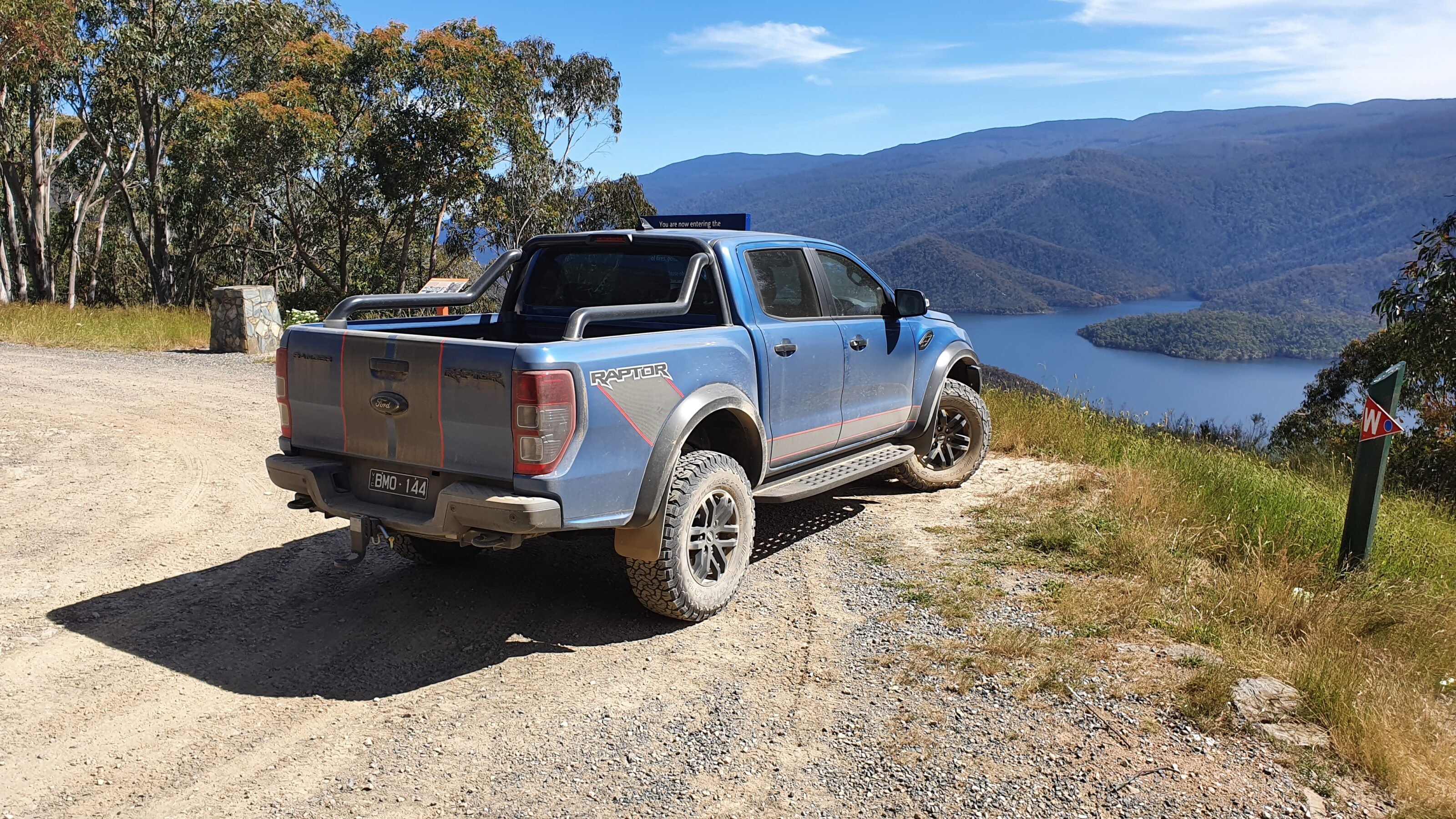
It feels like a particularly Australian recipe for pure driving fun, albeit in a way that you may not at first expect.
I recall Scott Newman claiming much the same when he drove the Raptor for a comparison versus the Holden SportsCat in the December 2018 issue of MOTOR, only to be subsequently buried in an avalanche of hate mail for even featuring pick-ups in the magazine.
I’m opening myself up to being tarred and feathered again here. I can, to a certain extent, appreciate some of the readers’ concerns. The Raptor is a vast lug of a thing that’s conspicuous and, with its well-documented payload and towing limitations, doesn’t always bring a significant practicality payoff by way of recompense.
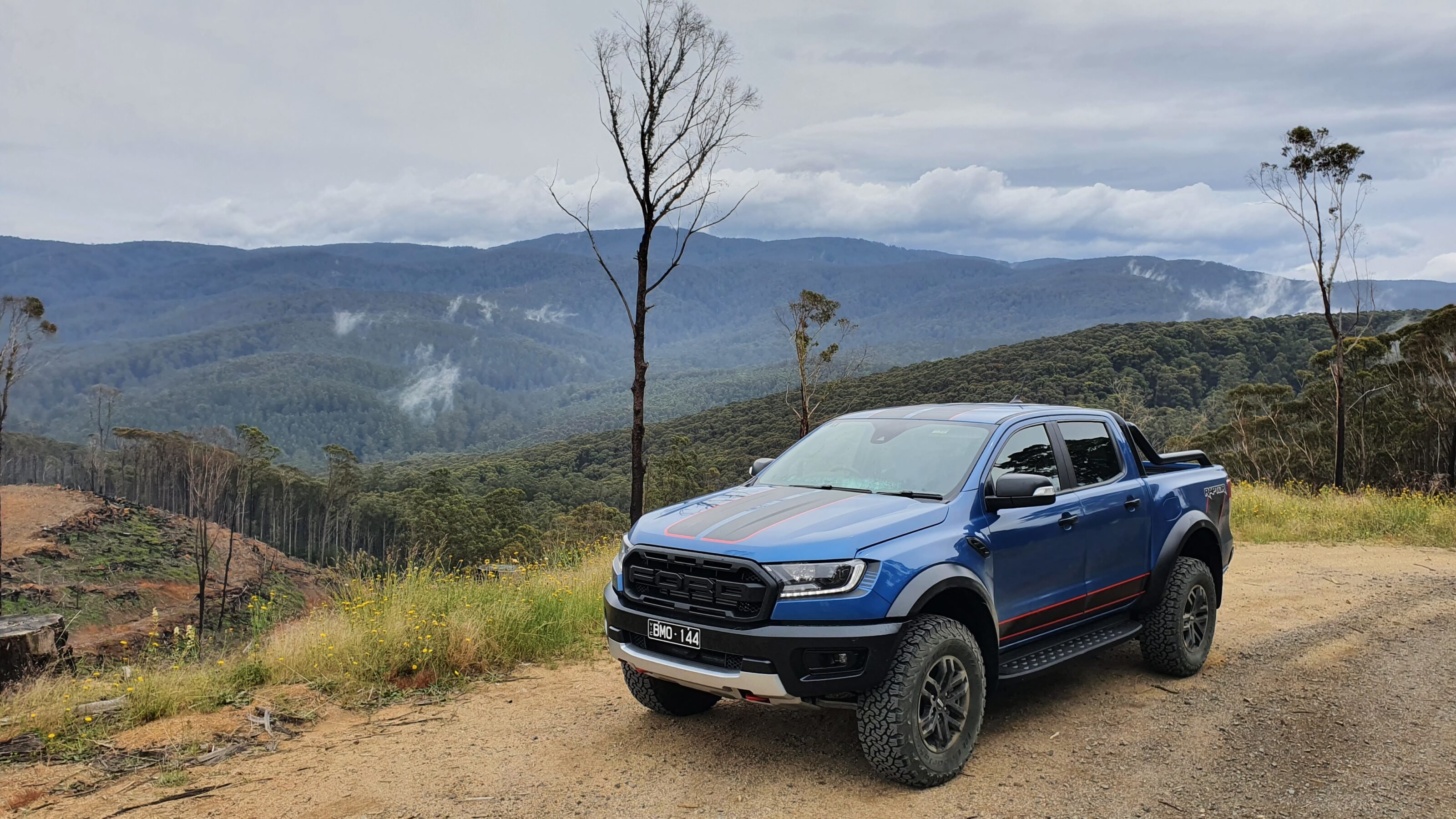
It is huge fun in the right circumstances though, and the key to getting the best out of the Raptor is to weave enough of those occurrences into your driving. I’m fortunate enough to live within minutes of a huge network of dirt roads, so I’ve found a way for it to work for me. Emerging back onto the blacktop after a long gravel drive then feels as if you’ve got superhuman levels of grip. Unless it’s wet, that is.
Is it a MOTOR sort of car? On road, not really. Get it in its element and it delivers a huge dynamic payback. That’ll do for me. – AE
Things we love:
- Gravel chops
- Fun drive modes
- No traffic on route
- Awkward to park
- Wet grip on-road
- Yeah. Not quick
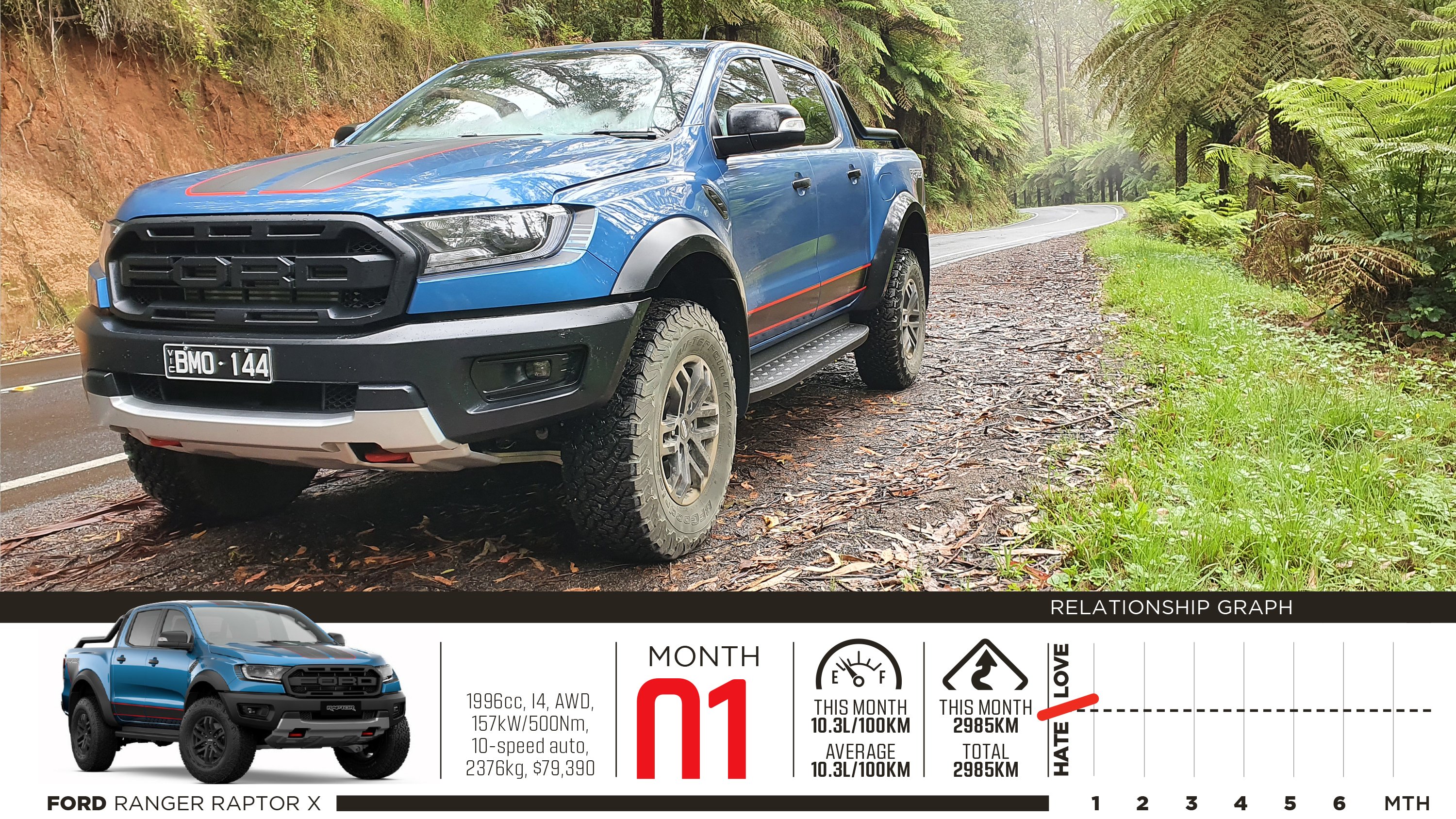
Month Two: Baja Fresh
Is the Raptor X’s Baja mode a gimmick or something genuinely useful?
Let’s face it, the Ford Ranger Raptor isn’t particularly quick.
We couldn’t breach the 10-second barrier to 100km/h in one, but making your Raptor feel a good deal faster doesn’t entail a trip to your local tuning shop. Just press a couple of buttons.
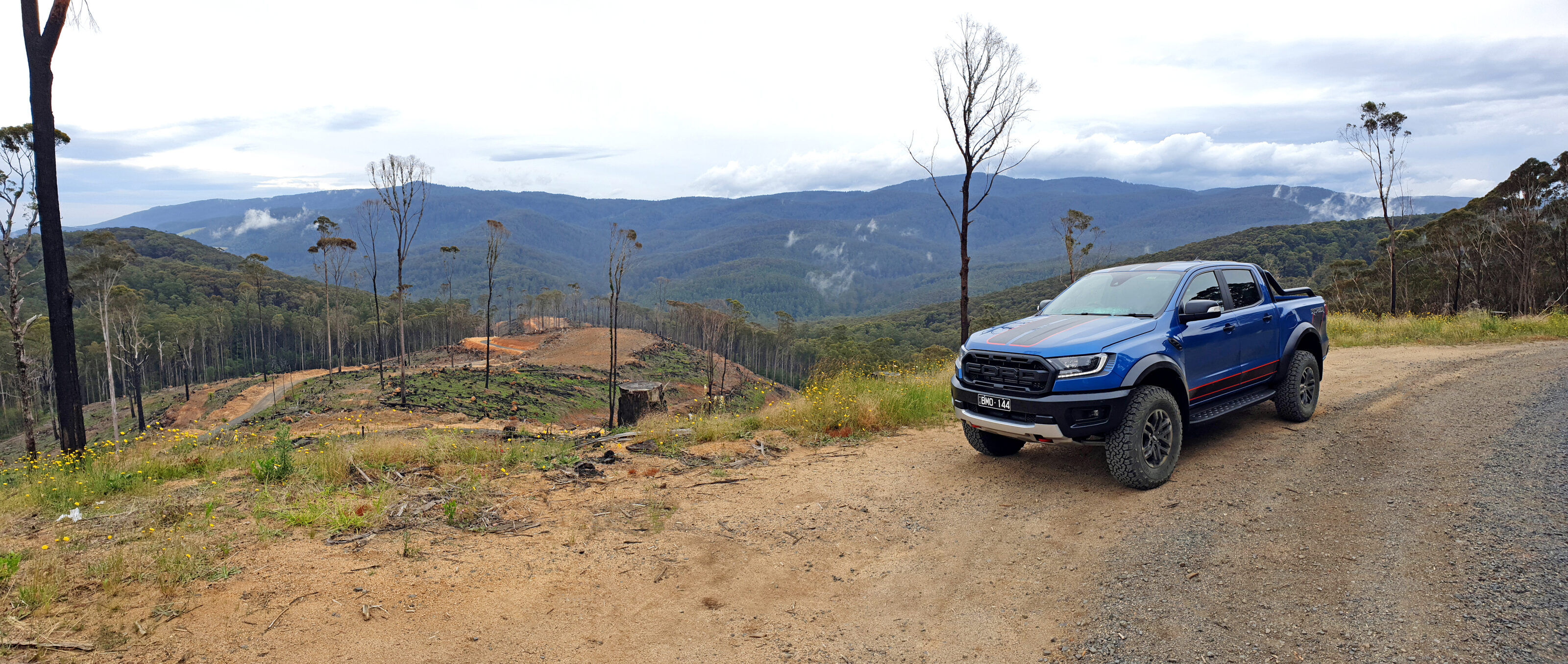
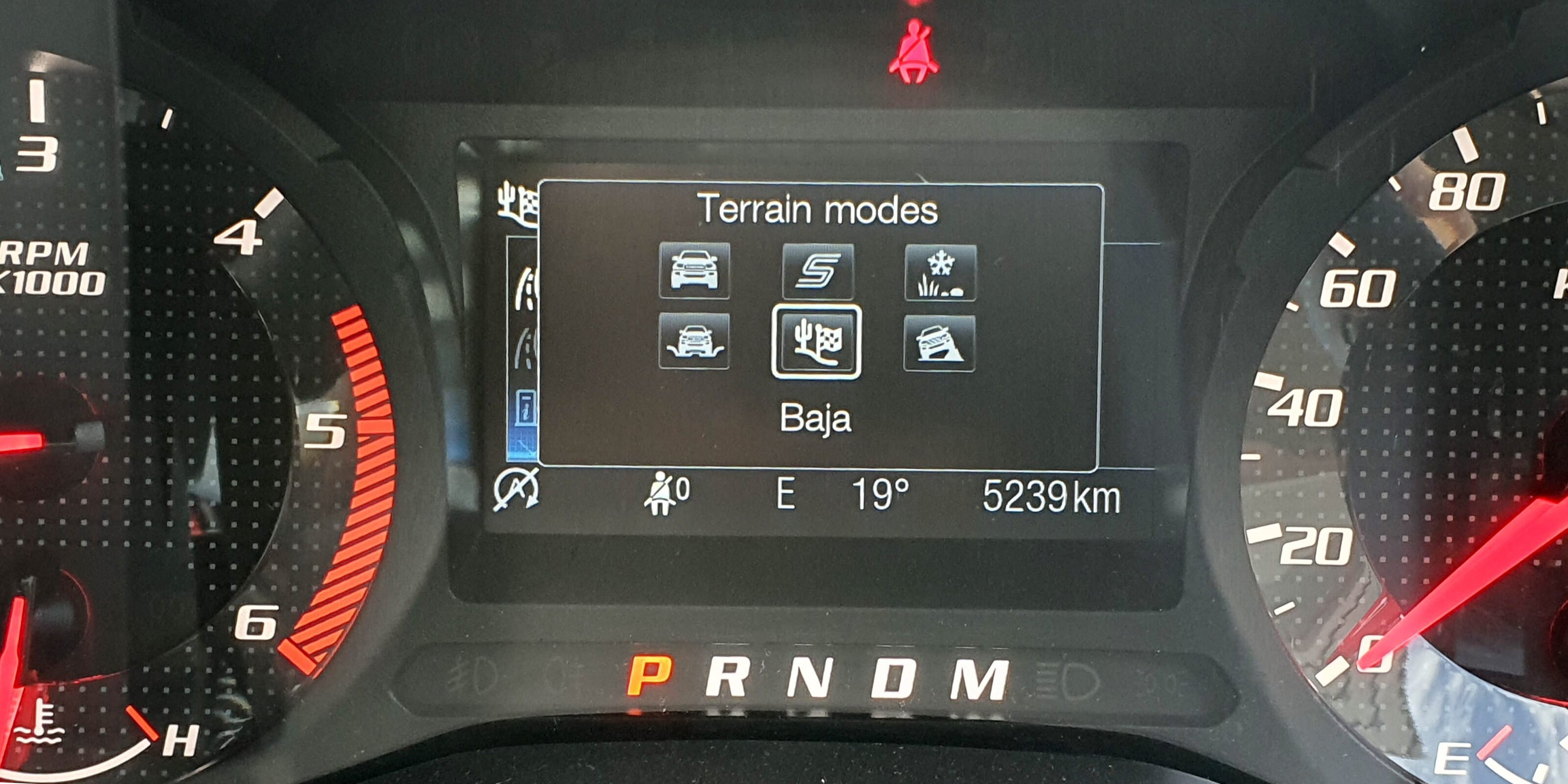
Prang the MODE button on the steering wheel and choose either Sport if you’re on the blacktop or Baja if you’re on the loose.
Both are available in either rear or all-wheel drive and deliver a crisper throttle pedal and quicker-witted transmission management. Instantly, it wakes up from its darted sloth default setting and feels a bit spryer.
Baja mode also backs off the stability control threshold a bit, although not so much that it’ll allow big yaw angles. For that, a five-second press on the stability control system switches everything off and lets you have a slide if you think you’re up to it.
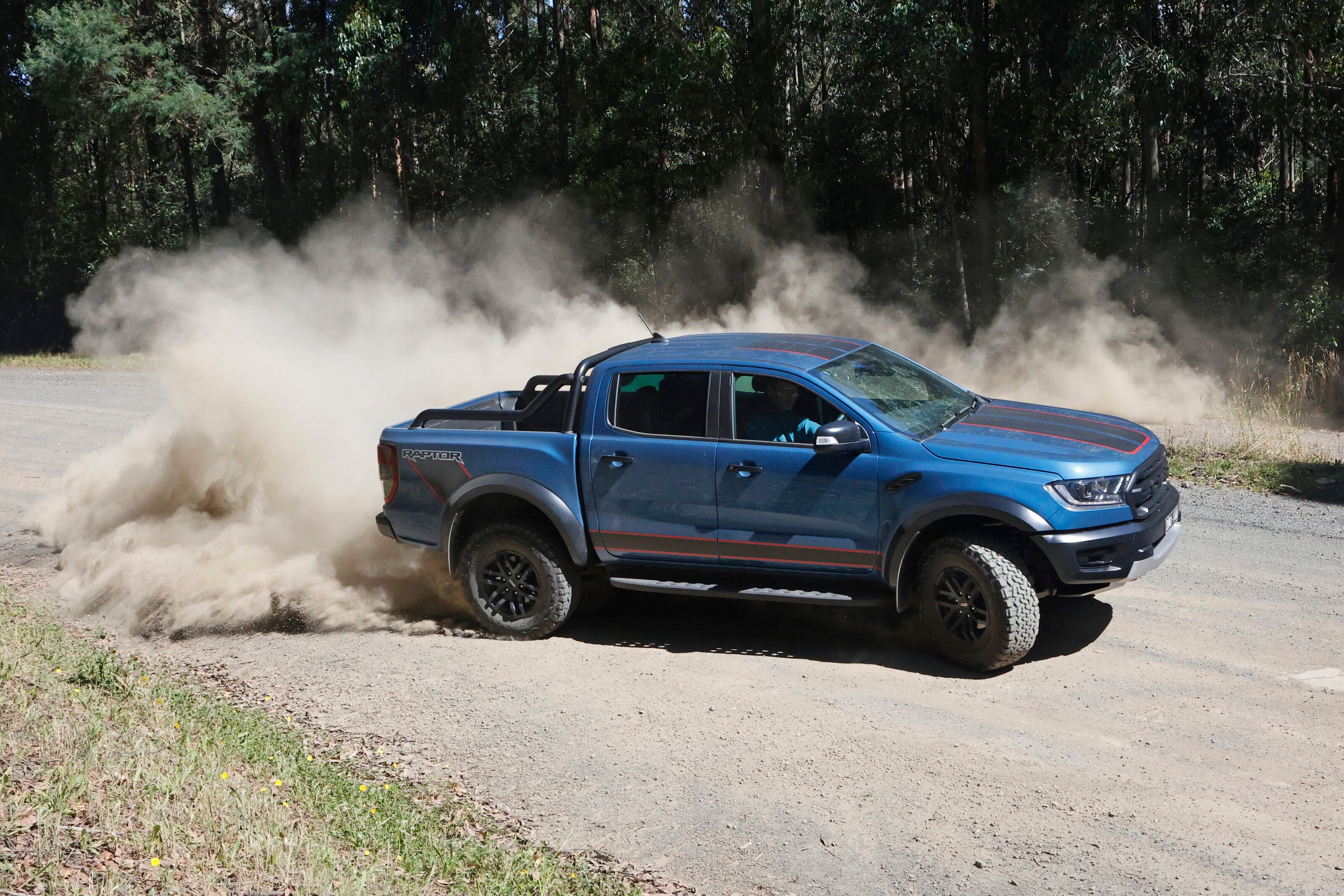
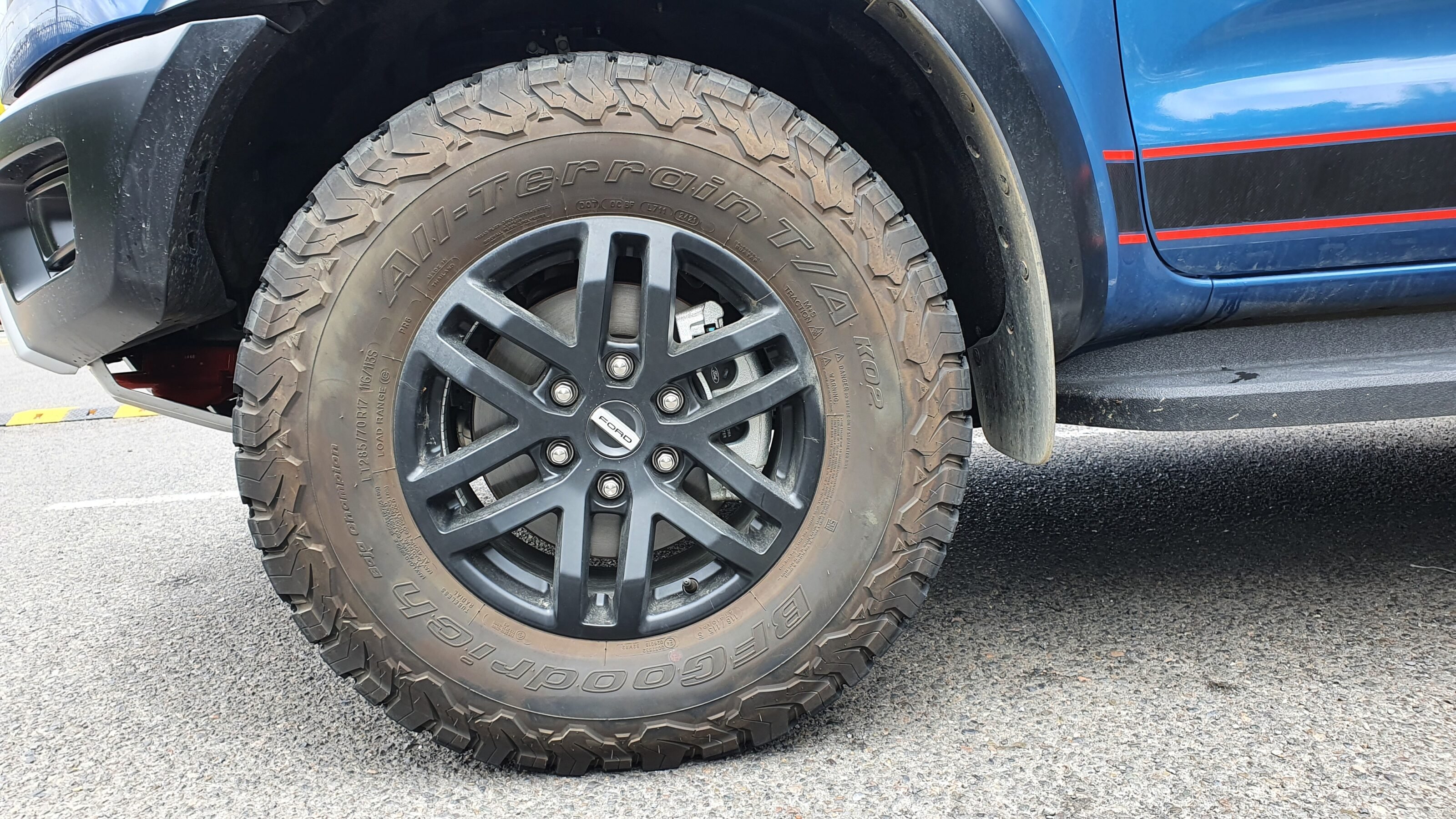
You’ll need quick hands though. At 3.5 turns lock to lock, there’s a fair degree of wheel flapping involved. A half-hand of heroic-feeling opposite lock won’t do anything but gently deflect the sidewalls of the 285/70 17 BF Goodrich light truck tyres.
You need to pick your places to safely drive so expressively in something that weighs nearly 2.4 tonnes. You’ll require a lot of space, good visibility and very few people; a combination that Australia seems to do very well.
I prefer to leave the stability on and play in the envelope that Baja mode allows, which seems to give more leniency in all-wheel drive than in rear-drive.
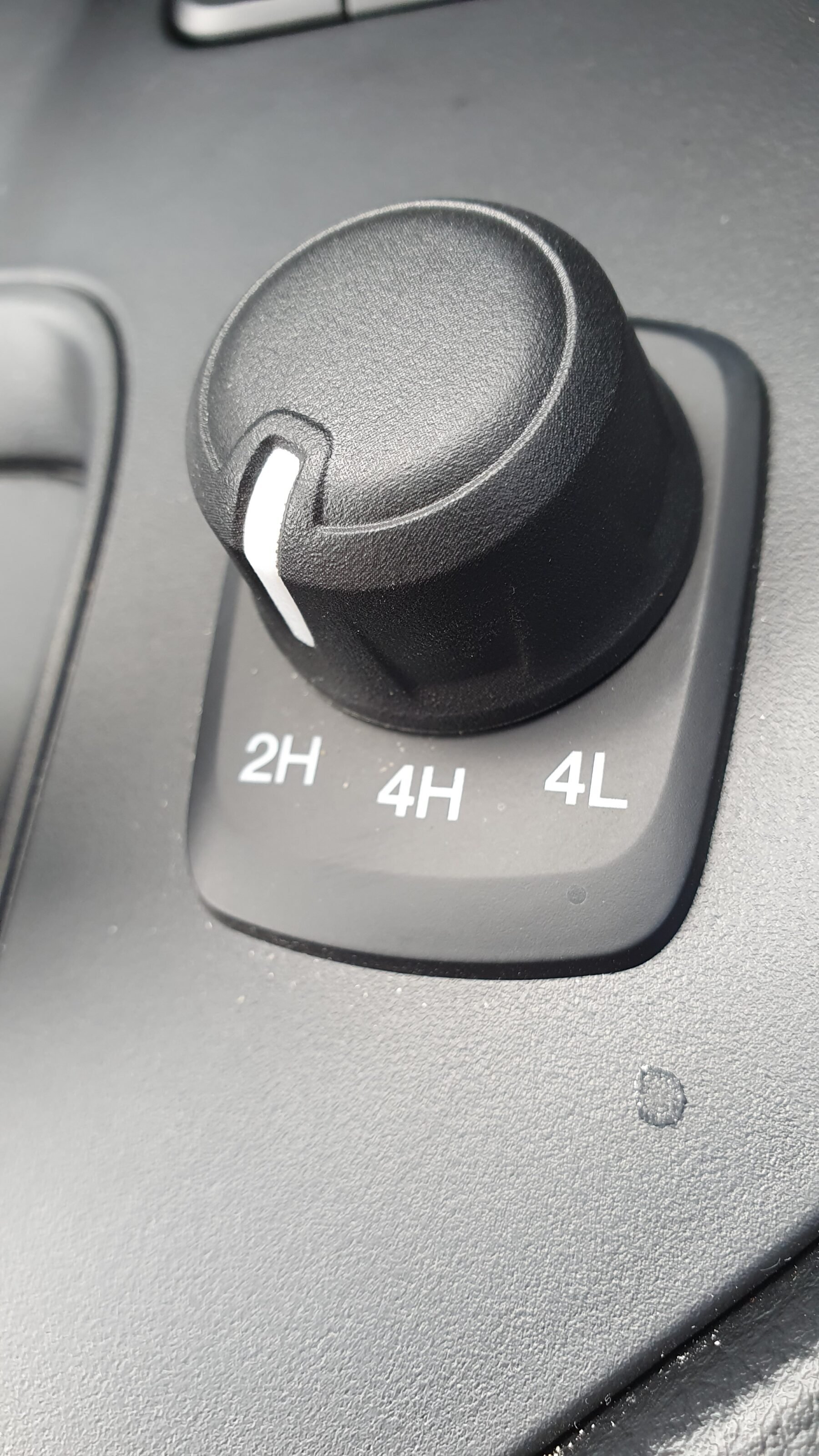
On one occasion I forgot to switch the manual dial out of all-wheel drive when rejoining the blacktop, however, the driveline shunt rapidly reminds you that remedial action is required.
Another bonus of Baja mode is that it seems a good deal more tolerant of two-footed driving, allowing you to left-foot brake while the right foot keeps the forced induction diesel unit on song.
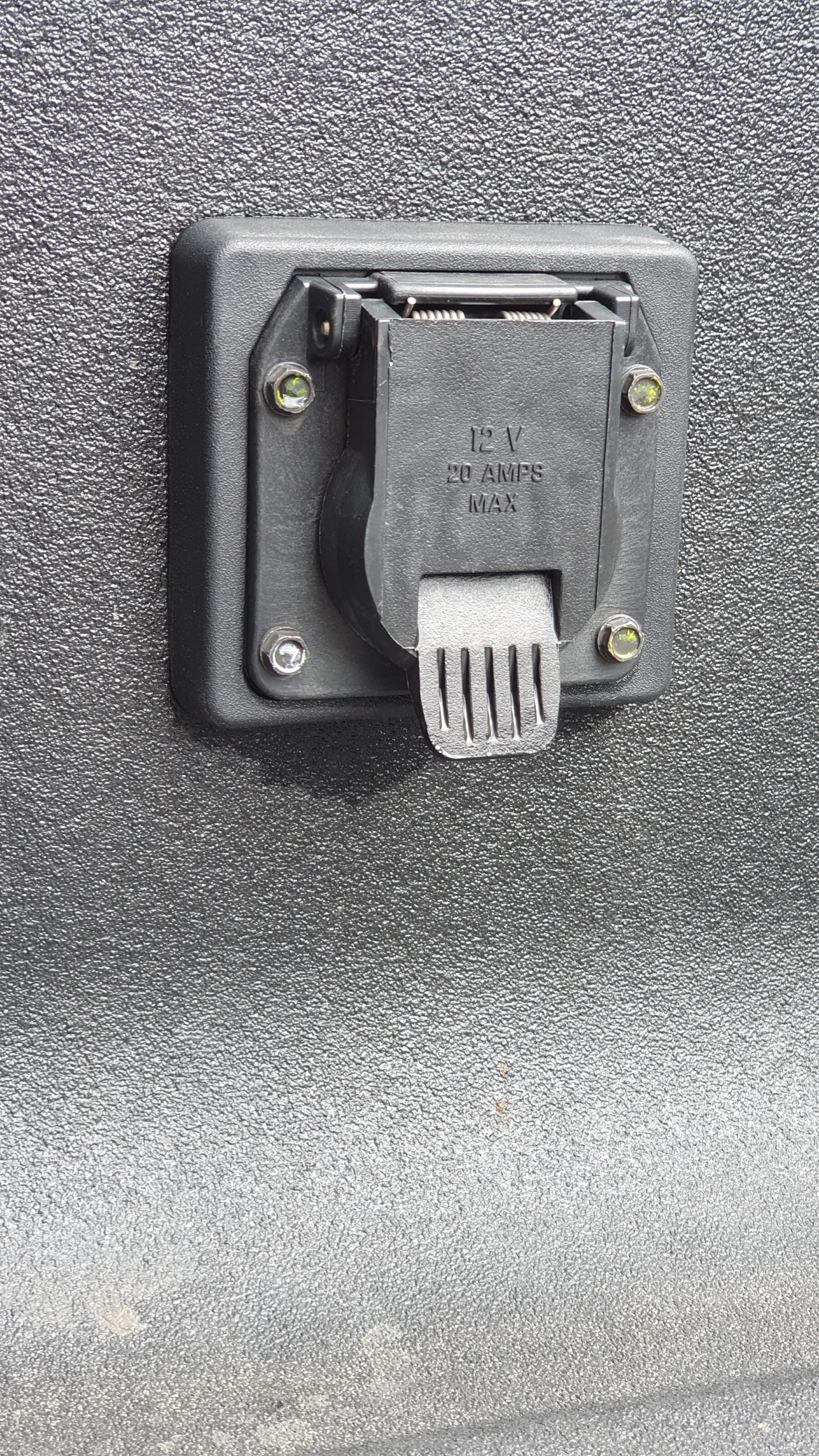
Aside from walking into the standard fit tow bar twice, giving me matching welts on both shins, I ought to issue a word of warning about the 12v power outlet in the tray bed.
While wielding an air compressor, I attempted to lift the sprung lid and jam the plug into the socket one-handed but such is the strength of the return spring that all I managed to do was rasher the skin off my thumb in the process. Seems that this particular Raptor is as bloodthirsty as its name suggests.
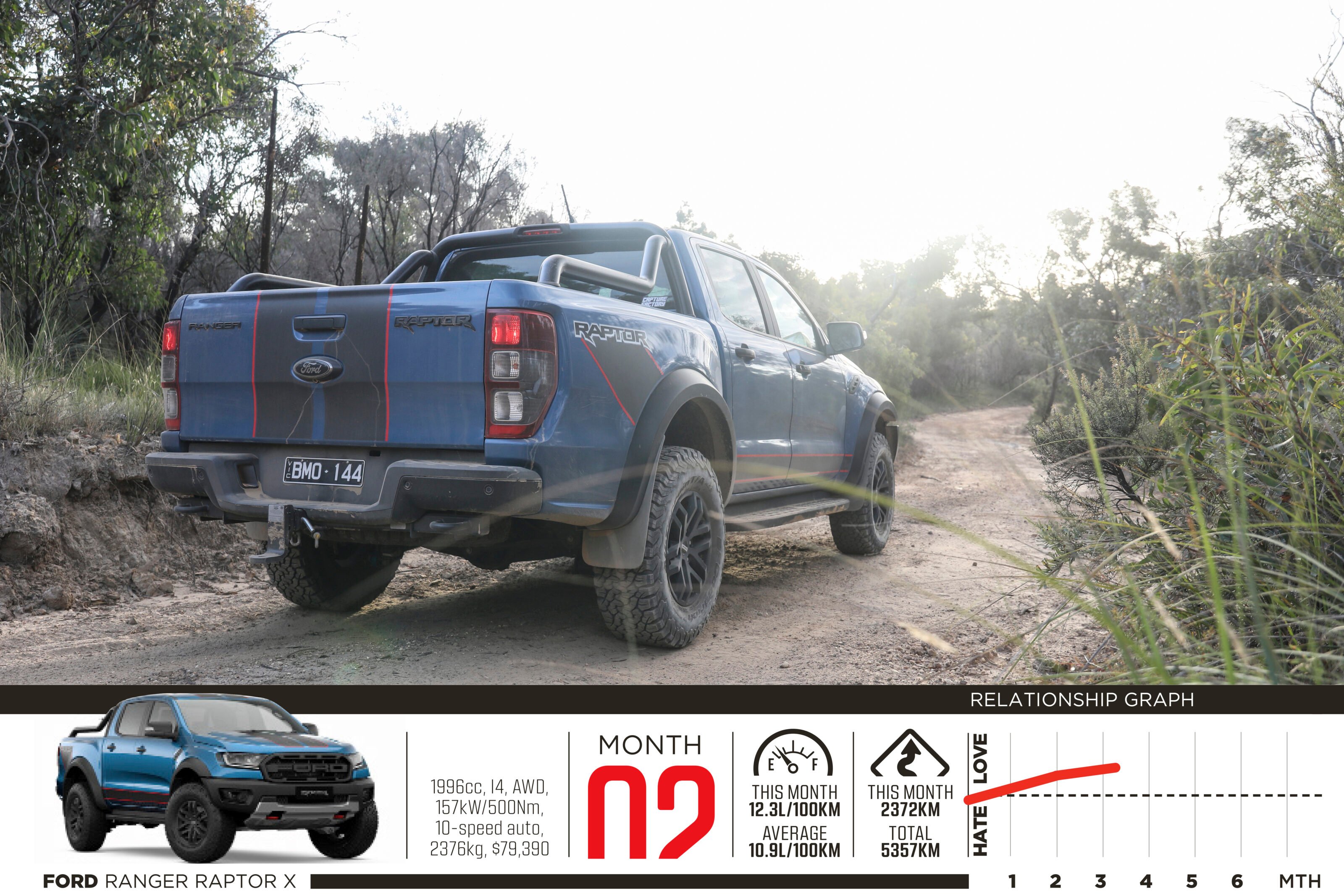
Otherwise, things have been extremely enjoyable. It really comes into its own as a beach vehicle, where you can throw fins, board shorts and reef shoes straight into the bed to dry, but manoeuvring it into a parking spot at the beach can require a bit of attention.
The 12.9-meter turning circle is some 20cm broader than that of a regular Ranger, and you need to take its leisurely lock into account when swinging into a bay if you don’t want to have to take a couple of bites at it.
With details of the next-generation Raptor now in the public domain, it’ll be interesting to see how this first-gen car is remembered. Sure, the 2.0-litre diesel is peaky, with a 250rpm band of max torque between 1750 and 2000rpm, but the 10-speed gearbox logic is smart enough to keep you in business, so long as you’re in Sport or Baja modes.
At the moment, I’m waiting for the Raptor to return from duties as a camera car at Wheels’ Car of the Year shindig. There’s a stack of tasty metal in the MOTOR car park, but there’s something about heading into the forests in the big Ford and knowing that it’ll lap up all the punishment that you can throw at it that has me counting down the days until it returns.
That in itself has to be the mark of something good. – AE
Things we love:
- Baja mode works a treat
- Adventure seeker
- Comfy for a ute
- Vicious 12v socket
- Others stealing it
- Turning circle
Snapshot
- Y4 FMC was used in the 2001 and 2002 WRC seasons
- Originally campaigned by Colin McRae and co-driver Nicky Grist
- Crash on the final day of Rally GB ended McRae’s title ambitions
One of the World Rally Championship’s most iconic cars has come up for sale, with genuine pedigree from one of the sport’s favourite drivers.
Built in 2001 by the Malcolm Wilson-led Ford World Rally team, this Ford Focus was designed to take 1995 WRC champion Colin McRae and co-driver Nicky Grist to the title.
A two-time rally winner in 2001, this chassis won both the gruelling Argentina and Acropolis events, which allowed McRae to take the title fight to fellow Briton Richard Burns, culminating in a two-way shootout at the season finale on home soil.
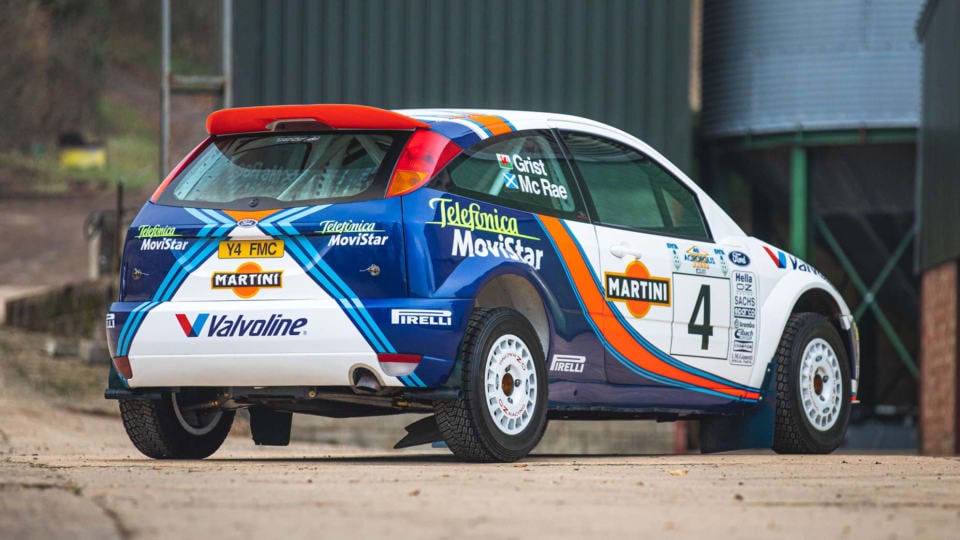
Despite leading on the final day of competition and in position to win the title, McRae hit a rock in the inside of a fast right-hander, launching the Focus into the air and ending his championship aspirations, allowing Burns to claim his only world title.
Rebuilt for the 2002 campaign, McRae and Grist couldn’t replicate their success from the year prior in the car bearing registration ‘Y4 FMC’, with the it being moved on to a British owner, competing in national-level competition.
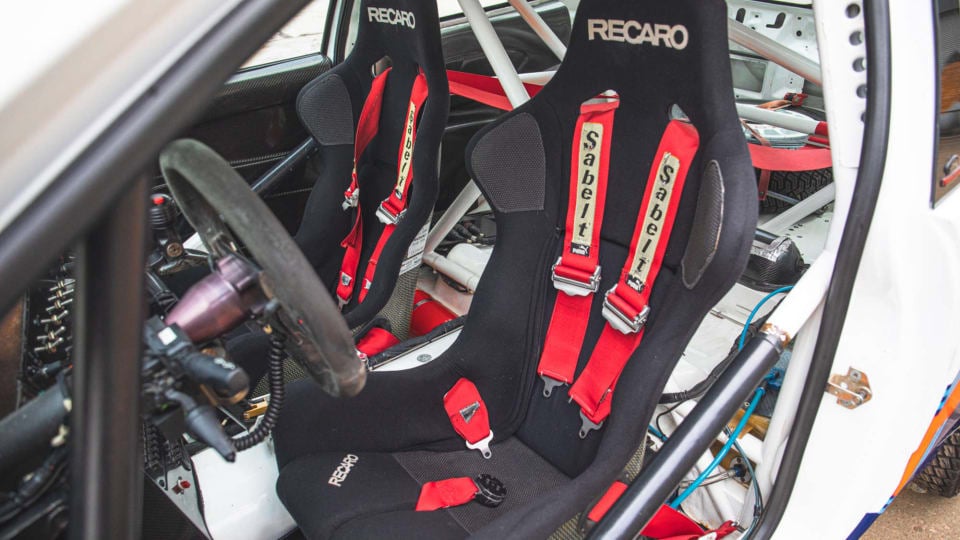
Returned to its former glory in the iconic white, red and blue Martini colours, the car has been meticulously restored by a rally specialist, with all original M-Sport created parts fitted, as well as logbook documentation.
As Lot 319 in Silverstone Auctions’ season opener for 2022, its guide price is estimated around £300,000-350,000 (AU$565,000-660,000), although who knows how much it more it could have been worth had McRae been able to seal the championship.
