
The 2001 Le Mans 24 Hour is most frequently remembered for the torrential rain that hammered the great race from start to finish, causing absolute bedlam. Bentley mechanics were spotted in the pit garages frantically opening up panels and drying out sodden circuitry with hot-air guns, crashes caused by the horrendous visibility were tallied faster than the laps, and the iconic glowing brake discs after dark were as notably absent as sunburnt Poms. But, as a spectator that particular year, something else stands out for me.
After unsuccessfully searching around in the general location of my tent during the race, I realised I wasn’t lost or under the influence of too many a Kronenbourg, but my entire campsite had, in fact, been stolen. I don’t mean a few valuable bits and pieces half-inched, I mean literally everything including my accommodation and tragically, my beer, thrown in the back of a van and taken.
That’s why my second night at Le Mans was spent not drinking in the palpable post-race atmosphere of the circuit, but in a ‘Formule 1’ budget hotel. Disaster? No. As it happens, the Pilbeam team was also staying at the same hotel after a disastrous race (crashing out in the third lap) and we had a wonderful night over dinner drowning our sorrows immersed in conversation about cars – it was great.
Even the best-laid plans sometimes go awry and that’s exactly why the Porsche Cayenne Turbo GT you see here is not hunting the 300km/h milestone on a German autobahn as was the original plan but, like my misappropriated tent in the north of France, this adventure also has a happy ending.
The plan started falling apart as soon as I arrived at Porsche’s headquarters in Stuttgart to collect the car. It was technically the third day of the German winter and, with typical Porsche efficiency, the Pirelli P Zero summer tyres had been swapped for winter rubber.
But this is Porsche’s flagship SUV and while Nurburgring records make it easy to forget as much, this car must be able to handle adversity exactly like this
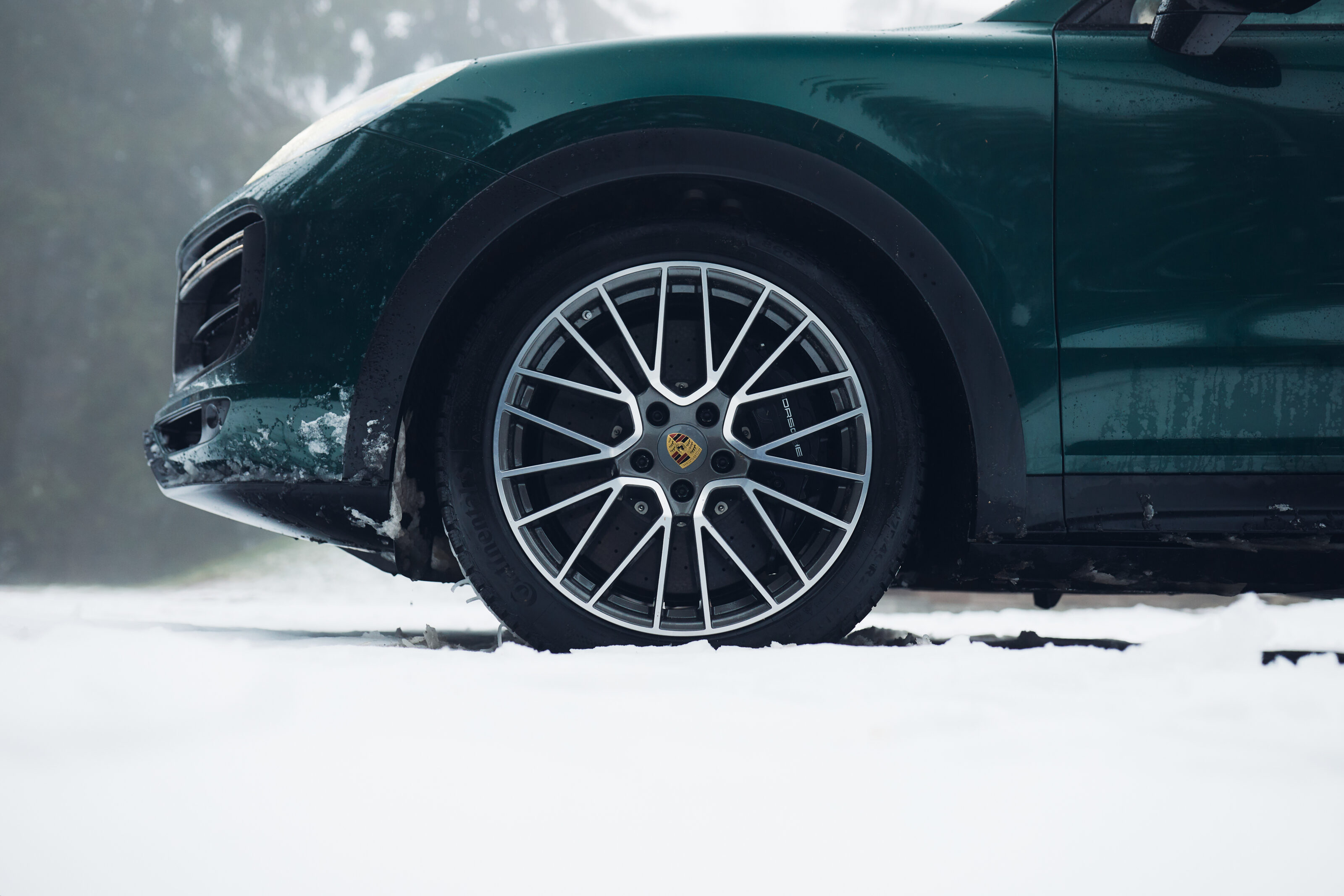
Unfortunately though, Conti Winter Contact tyres are not available in 22-inch fitment so not only had the stunning model-defining forged Neodyme wheels been substituted for a more conventional 21-inch rim, Porsche’s fastest SUV to date was now only permitted to go 240km/h.
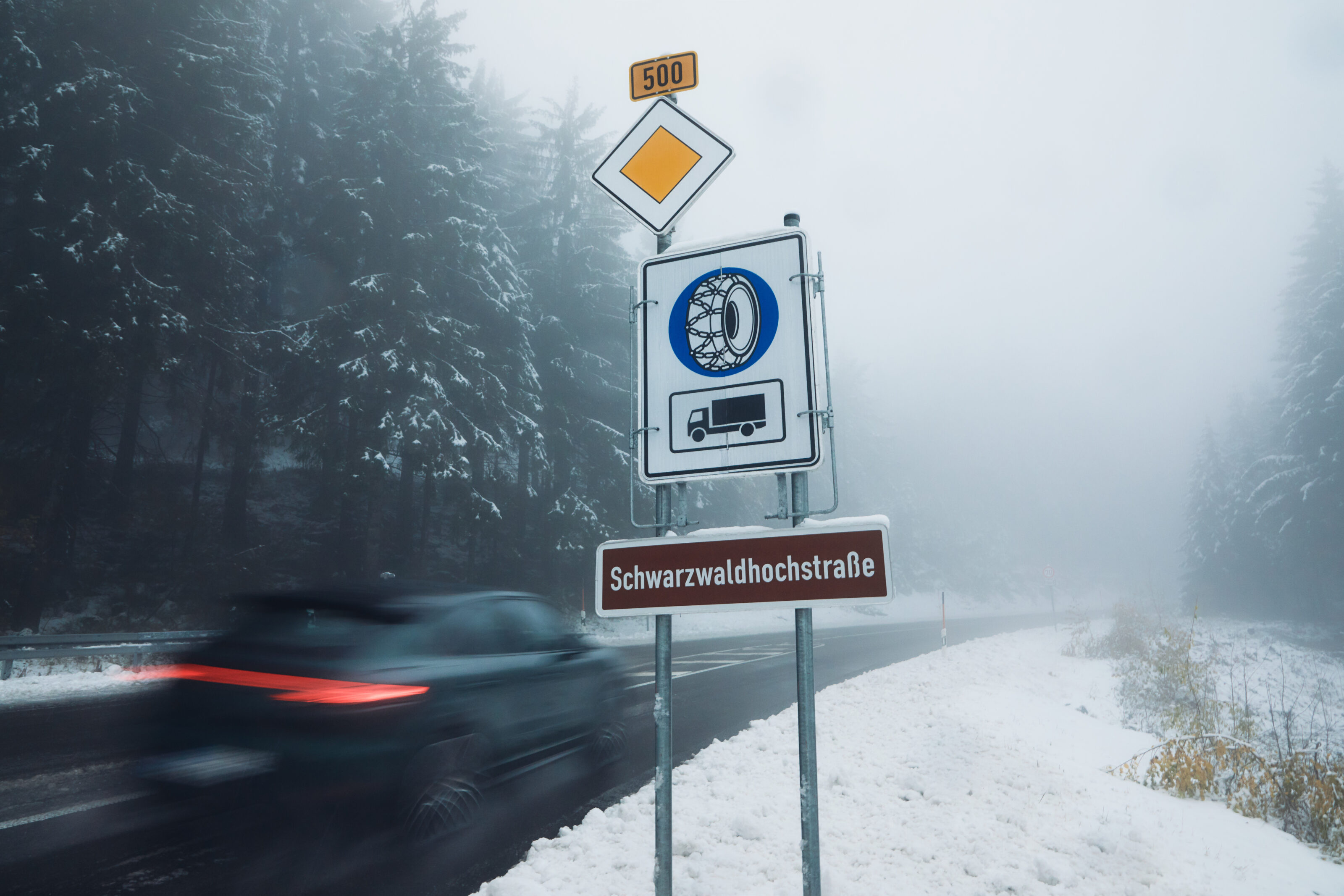
Photographer Max had a plan B. Instead of a mission to crack the 300km/h top speed on the freeways outside the city, we would instead head southwest to the Black Forest where the abundant natural beauty would provide a pleasing backdrop to our monster whatever the weather chose to do.
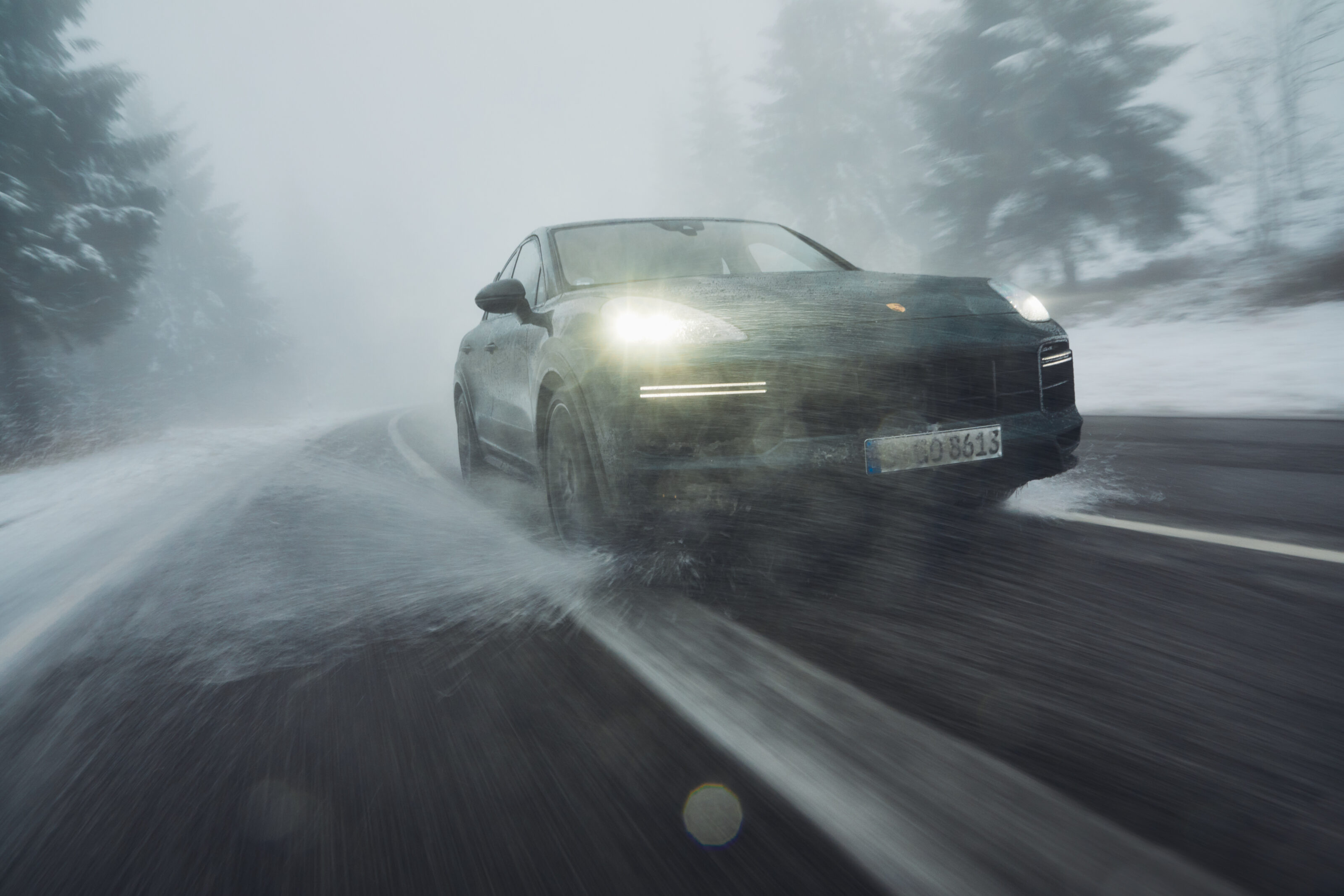
And what the elements chose was rain – lots of rain. Except, when you’re 1000 metres above sea level and an unseasonably cold front decides to visit, that rain quickly turns into a blizzard.
The weather deteriorated rapidly and the difficult conditions quickly caught out unscrupulous drivers who hadn’t been as organised as Porsche. Beached by their summer tyres, the sides of the roads were littered with scuppered cars and, dare I say it, had we arrived in a rear-drive 911 or Cayman, our day may have ended similarly.
But this is Porsche’s flagship SUV and while Nurburgring records and carbon-fibre bits make it easy to forget as much, this car must be able to handle adversity exactly like this.
I can tell you from experience that other Cayenne variants are surprisingly good off-road but the Turbo GT has been honed to enhance its fair-weather agility and place it firmly at the top of the performance pack. A 17mm reduction in ride height, remapped PSM and revised PTM all-wheel drive transmission management could all conspire against the GT’s manner in wintry conditions, while its more tail-focused power delivery and increased power and torque might be difficult to manage when a VW Golf’s 110kW is evidently enough to get others into trouble today.
Before I can answer any of these many questions and more, we need to find out way out of a traffic jam. Another unlucky summer-rubber-clad vehicle has pirouetted, this time into a second car and blocked the road. I’m about to make a heroic departure from the line of cars but seconds before I execute my planned exit using something other than a road, the black BMW 3 Series that has been tailing me erupts into a mass of blue strobes and disappears on the opposite side of the road. It won’t be the last lucky escape of the day.
With deep snow now covering everything, it’s impossible to differentiate regular highway from forest track and a detour sends me under canopy so thick that even the GT’s navigation gives up trying to find a path. I’m somewhat cowardly when it comes to manly, adventurous off-road excursions away from friendly sealed roads and drive-through fast food, but the GT inspires confidence even when the weather is horrendous and, by definition, I’m lost.
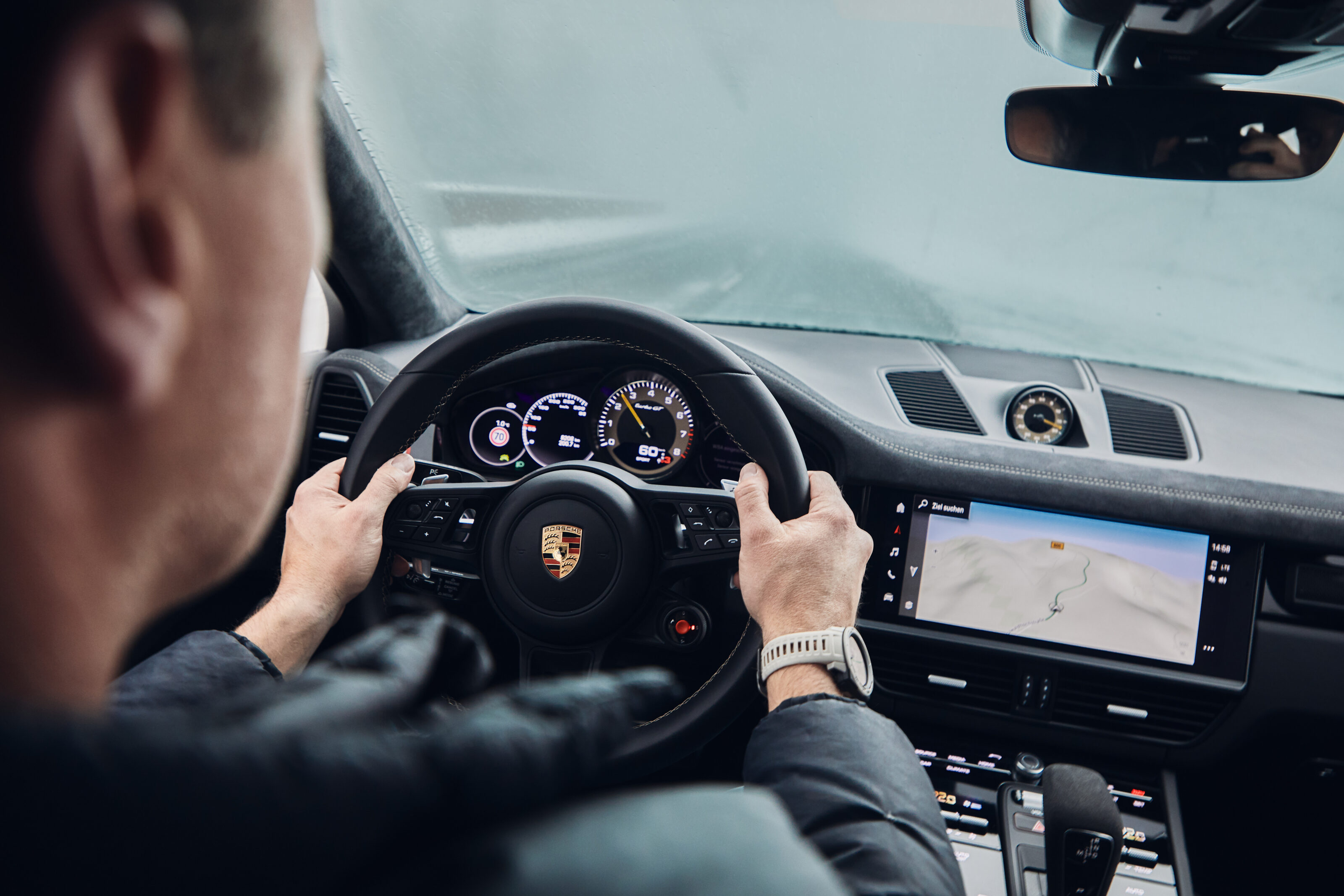
I needn’t have worried. Between clever differentials, simply brilliant traction control technology and those Contis I’d initially berated, the GT is quite remarkable in challenging conditions. With all safety systems on, the Porsche is utterly foolproof and if you had to be somewhere in a hurry, in a blizzard, PSM will get you there. But we’re not in a hurry, we’re in a forest, in the snow.
The GT is quite remarkable in challenging conditions. With all safety systems on, this Porsche is utterly foolproof
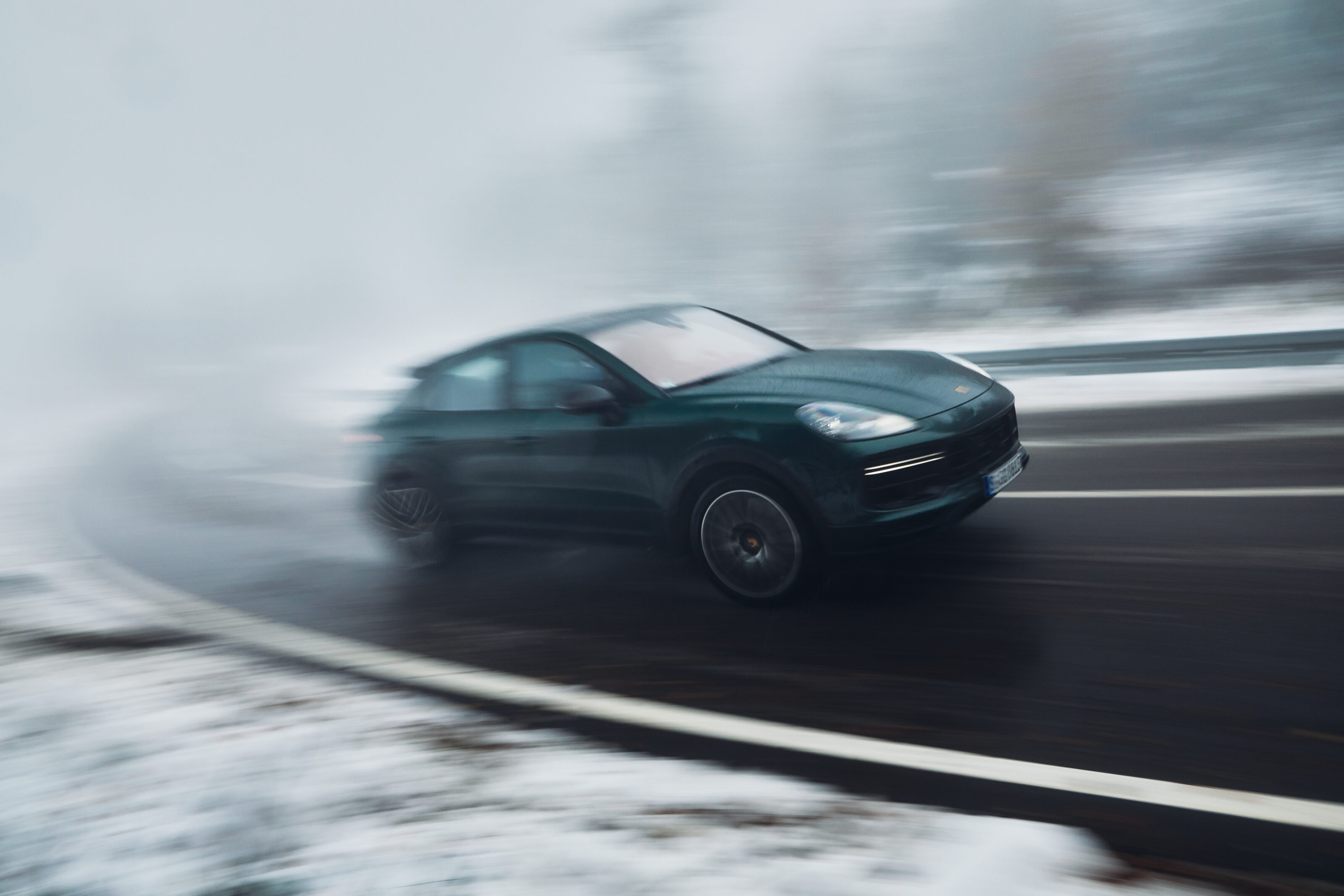
Unlike some high-performance models, pressing and holding the ESC button really does cancel all assistance but one click for Sport ESC is more than enough to make snowy forest drives extremely memorable. The GT has a delightful rear-biased power delivery but with the insurance policy of driven front wheels when necessary. Add to that a beautifully sensitive steering system with a ratio that is surprisingly quick for a big SUV, and this incredible green hulk dances through the snow.
Where some traction systems would cope by constantly pinching brakes at each corner, the Porsche approach is to lean on clever power distribution before intervening with vectoring through braking as a last resort. The effect feels much more natural and the intervention of electronics is harder to detect. Despite the lower ride height, there’s still adequate ground clearance to avoid becoming a plough and the chassis remains supple and reactive throughout.
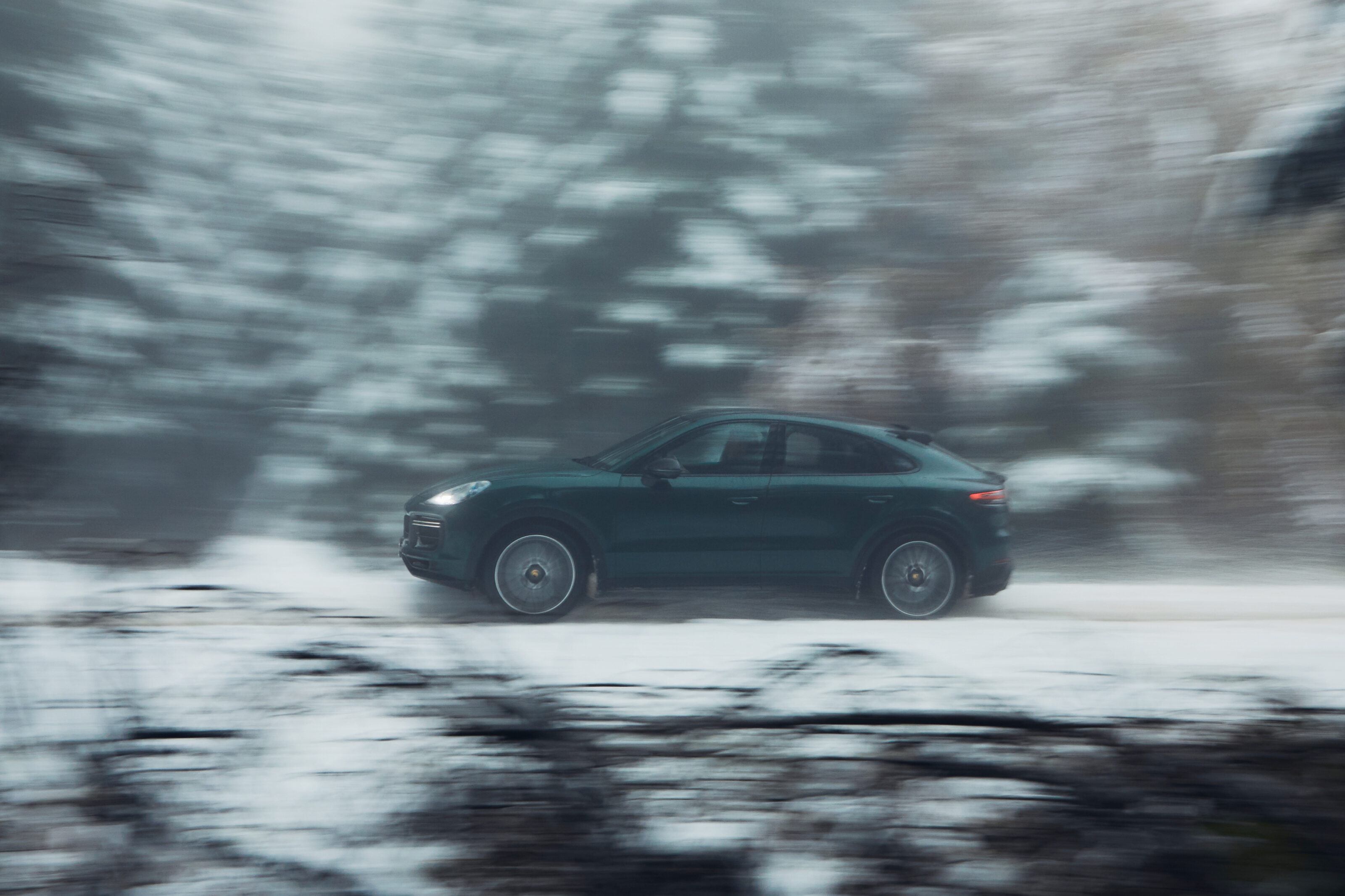
Grip and traction are so surprisingly abundant that even in these conditions, far more of the mighty 4.0-litre V8’s grunt can be deployed than you’d think feasible and the turbocharged unit can demonstrate what a triumphant engine it is.
Some modular powertrains can feel a little forced when in higher states of tune but with 471kW and 850Nm, the prolific 4.0 TFSI has never felt more right. Combined with monstrous traction, I’ve seldom sampled petrol power that’s almost as immediate as electric and the report from its tailpipes is completely glorious.
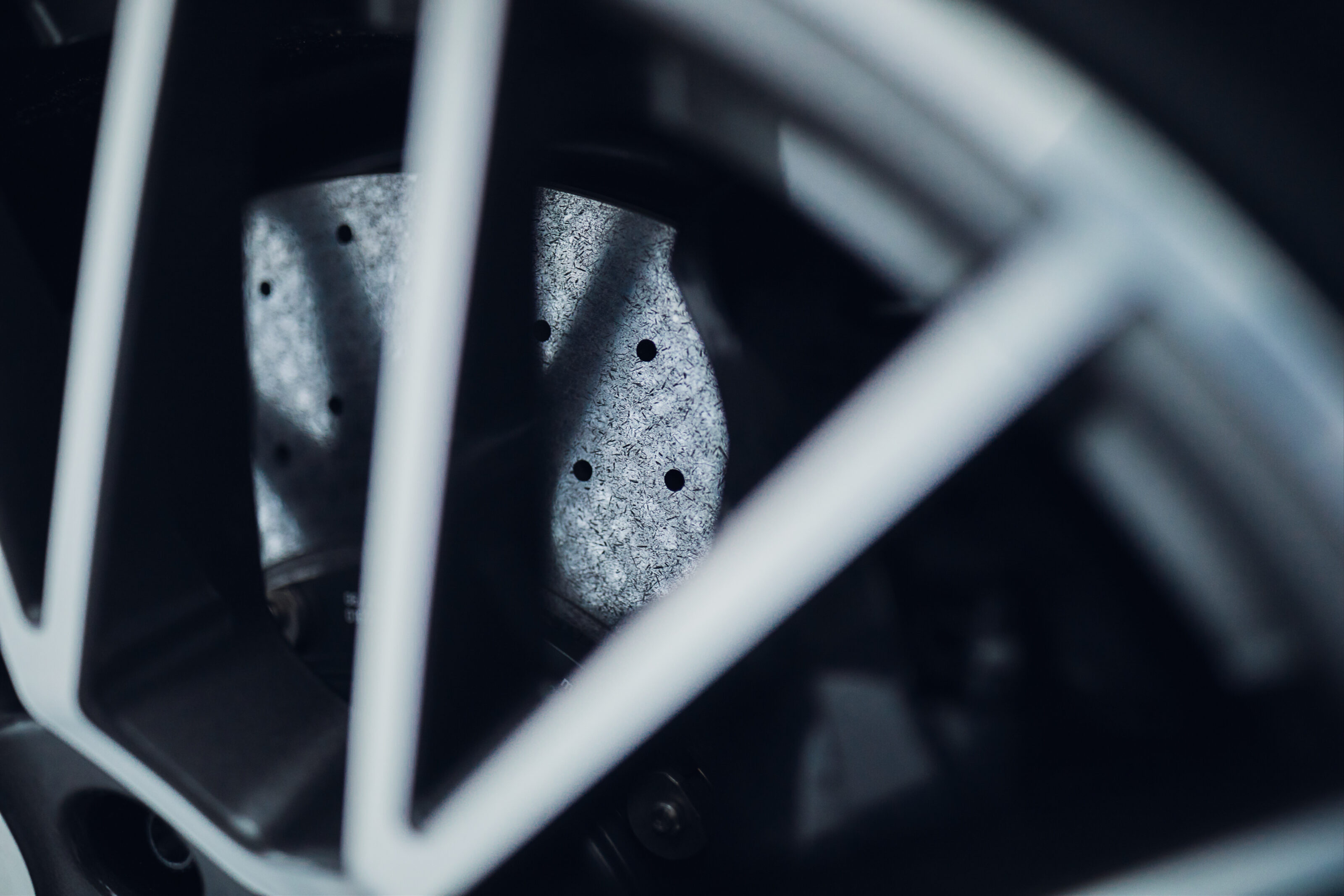
There aren’t many opportunities to give it full noise in snow and ice but on the few occasions I had chance, I fully believed the claimed 3.3s 0-100km/h acceleration. The whole theatre of making a Cayenne go fast would be nowhere near as pleasant if it weren’t for the vast carbon-ceramic brakes in each corner.
Each prod of the pedal was a revelation with classic Porsche firm feel, progressive action and, thankfully, no need to warm the rotors before full stopping power is achieved. Just as remarkable as Porsche’s re-engineering of the Cayenne is what Continental has done with the Winter Contact.
Keeping a 2.2-tonne SUV attached to the road under any circumstances is an impressive feat but the Contis not only find grip but deliver it consistently and predictably. There’s only so much provocation the four wheels can take, but when the Porsche does eventually break into a slide, it’s progressive and manageable.
I was expecting the GT to be a little flummoxed when thrown at some unseasonal snow and ice with a stability program more tuned for the track than the outback. But development of the Turbo GT has been typically Porsche and wonderfully complete. Many have sampled and demonstrated its agility in perfect weather but the way it responds and thrives in less favourable conditions is a testament to the badge on its bonnet.
Aside from its performance, this Porsche ironically stands out for its subtlety. There’s not a single rival that comes close to the Turbo GT’s potency without shouting about it
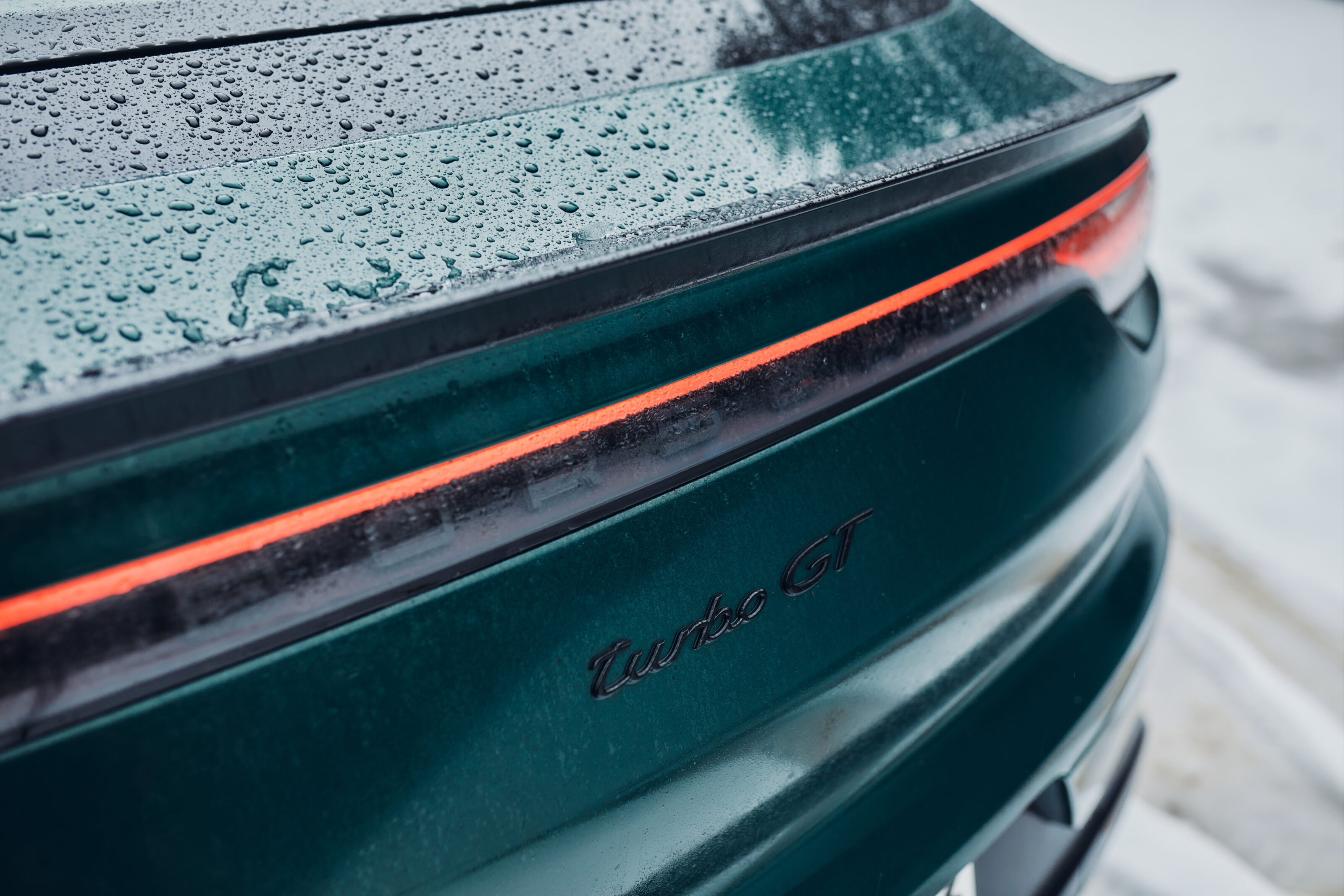
A lot of car comes with a lot of dollars on its price tag though, and the Turbo GT will set you back $336,100 before on-road costs and options. That’s $36,200 more than the less thirsty and more powerful (but not as quick) Turbo S E-Hybrid coupe but for the cash, you’re getting a Cayenne that’s significantly faster in a straight line and around corners. The beauty of statistics, however, is how you can skew things any way you want.
When compared to the $208,500 Audi RSQ8, which shares many of the mechanicals, the Porsche seems viciously steep. But when you bring in the $392,000 price of a Lamborghini Urus, the faster Porsche looks like a bit of a bargain.
Aside from its performance credentials, the Porsche ironically stands out for its level of subtlety. There’s not a single rival that comes close to the Turbo GT’s potency without shouting about it.
The GT, however, is a very stealthy assassin – especially this particular example. Not only is it painted in a lovely but understated metallic BRG, the 12 o’clock marker on the steering wheel has been deleted, as has its suede covering in favour of more conventional leather, while the calipers – which are yellow as standard with any Porsche carbon-ceramic brakes – have been optioned black.
Combined with the temporary 21-inch wheels, this GT could sneak up behind an AMG GLE 63 S coupe and snap its neck.
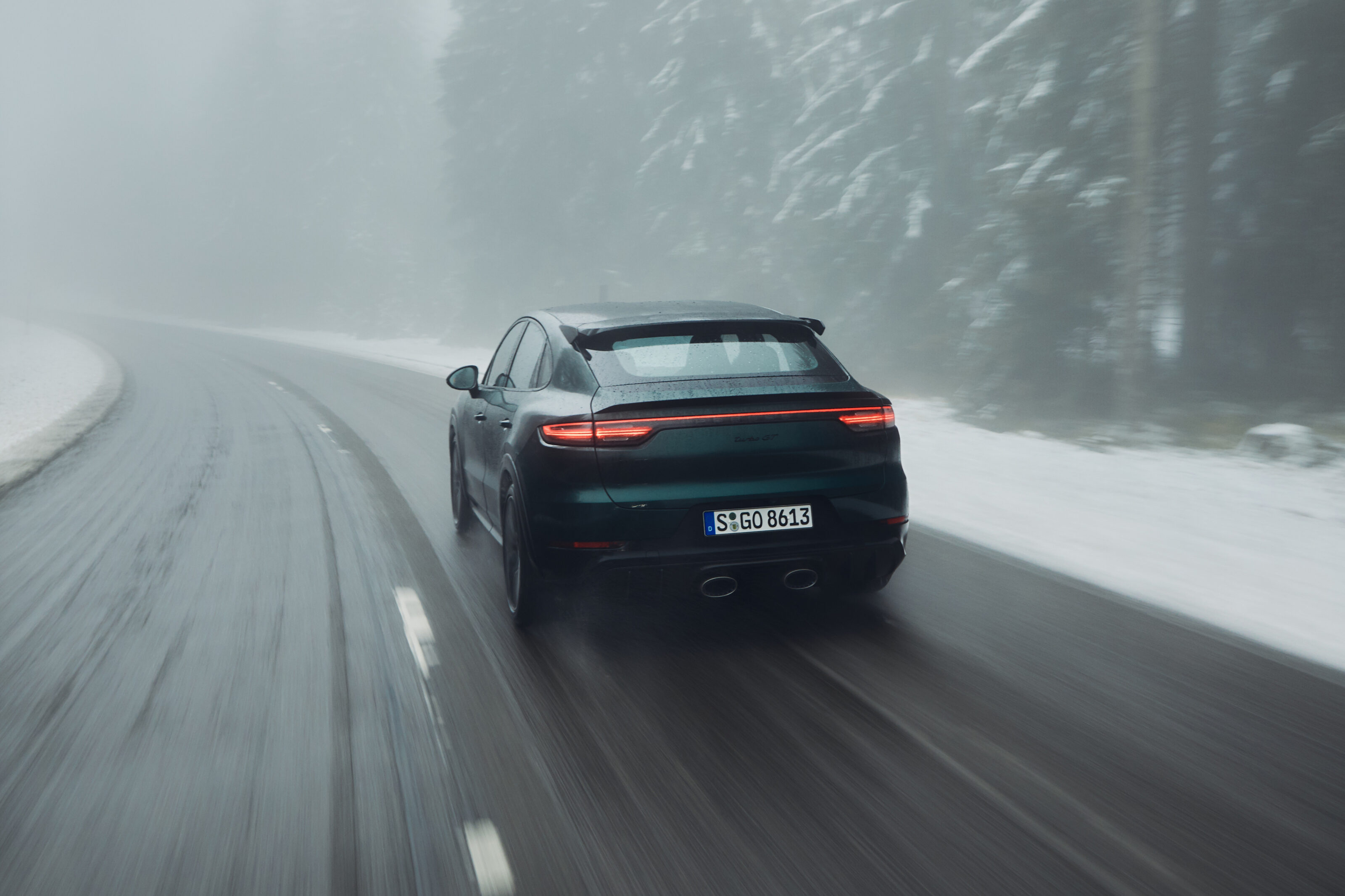
There’s no denying the popularity of high-end, high-performance SUVs and the appeal for many is versatility. Within one parking space, cars like this are incredibly multi-tasking and offer a vehicle that can embarrass a lot of hot hatches on twisty roads yet accommodate the entire family on a camping holiday. Their luxurious cabins are comfortable for long drives, but they possess the dynamics and performance to significantly shorten the journey should you get the urge.
The Porsche Cayenne Turbo GT certainly does all of this admirably well but to its list of talents, I’d like to add one more.
In some lesser machines, this particular trip might have resulted in some blank pages in MOTOR and a 404 error on this web page but when the Black Forest turned white, the adventure that unfolded was even better than we had planned.
2022 Porsche Cayenne Turbo GT specifications
| Body | five-door, five seat SUV |
|---|---|
| Drive | all-wheel |
| Engine | 3996cc 90-degree V8 twin turbo |
| Bore/stroke | 86.0 x 86.0mm |
| Compression ratio | 10.1:1 |
| Power | 471kW @ 6000rpm |
| Torque | 850Nm @ 2300 rpm |
| Transmission | 8-speed automatic |
| Weight | 2220kg |
| Power/weight | 212kW/tonne |
| Front suspension | A-arms, coil springs, adaptive dampers, anti-roll bar |
| Rear suspension | multi links, coil springs, adaptive dampers, anti-roll bar |
| L/W/H | 4942/1995/1636mm |
| Wheelbase | 2895mm |
| Track | 1678 (f); 1677 (r) |
| Steering | electric assisted rack and pinion |
| Front brakes | 440mm ventilated/perforated carbon ceramic discs, 10-piston calipers |
| Rear brakes | 410mm ventilated/perforated carbon ceramic discs, 4-piston calipers |
| Wheels | 21.0 x 9.5-inch (f); 21 x 10-inch (r) |
| Tyres | 274/40 R21 (f); 305/35 R21 (r), Continental Winter Contact |
| Price | $336,100 plus on-road costs |
Volvo is set to produce its first American-made electric vehicle from 2025, according to overseas reports.
As uncovered by Automotive News Europe, a Volvo EV which fits between the XC60 and XC90 SUVs is expected to go into production in the early stages of 2025, rolling down the Ridgeville, South Carolina line, which is home to the current S60 and next-generation XC90.
Speaking with company insiders, it’s understood the new model will ride on a dedicated EV platform which hasn’t yet entered production, although it’s likely to share some components with the Polestar 3 which is set to be built in the same factory.
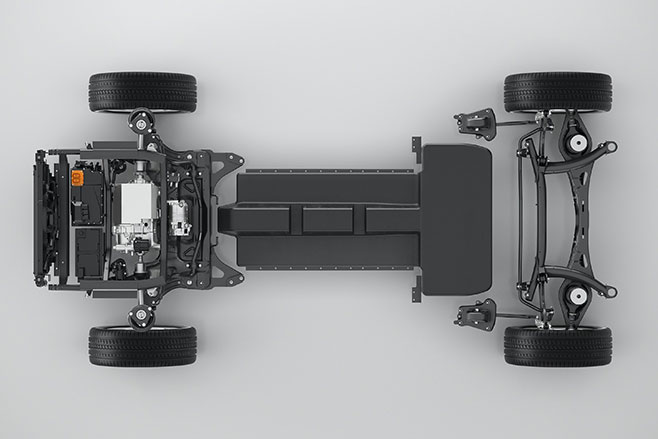
Codenamed V546 internally, the new crossover model could be one of the first Volvo vehicles to adopt its new naming structure, doing away with alphanumeric names starting with the Embla, a replacement of the next-gen XC90.
Future Volvo products are expected to gain a wide range of technology not seen before from the Swedish manufacturer, confirming last year its upcoming models would be equipped with the Ride Pilot autonomous system for a subscription fee.
As of 2022, Volvo only offers a sole fully-electric vehicle in the Australian market, the $76,990 XC40 Pure Electric, although it will bring a single-motor grade to local shores this year, starting at $72,990 before on-road costs while the dual-motor variant will jump to $79,990.
Nissan has announced it will end the development of petrol and diesel engines in most major markets.
During a financial call with investors, Nissan COO Ashwani Gupta said customer choice had driven the decision to reduce development of internal combustion engines (ICEs).
Gupta also predicted the cost of electric vehicles will become more affordable than fuel-burning cars after 2025, when Euro 7 emissions regulations come into effect.
“So what we have decided is that we will not develop the ICE engine in Europe,” Gupta said during the event.
“We do believe at the time of Euro 7, customers will have to pay much more for an ICE car than an electrified car.”
It’s believed Nissan will also end development of these engines in both Chinese and Japanese markets, though an exact timeline for the decision was not provided.

Gupta stressed it was new car buyers driving the decision to pivot away from petrol and diesel vehicles, but it would still continue to develop ICE vehicles for markets such as the United States where customers still favour fossil fuels.
“It is not us who [are] deciding, it is the customer who says the electric car has more value than the ICE car,” he said.
“Nissan has decided not to do ICE engines in Europe from Euro 7, but Nissan will continue to do ICE engines as far as it makes sense for the customer and for the business.”
The Euro 7 emissions laws are expected to come into force in 2025, with some industry analysts suggesting the strict rules will force the end of petrol and diesel engines in passenger vehicles in the European Union.
Australia’s ADR 79 regulations are based on the Euro 5 standard, which was originally introduced in 2009, and was superseded by Euro 6 in 2014 across the EU.
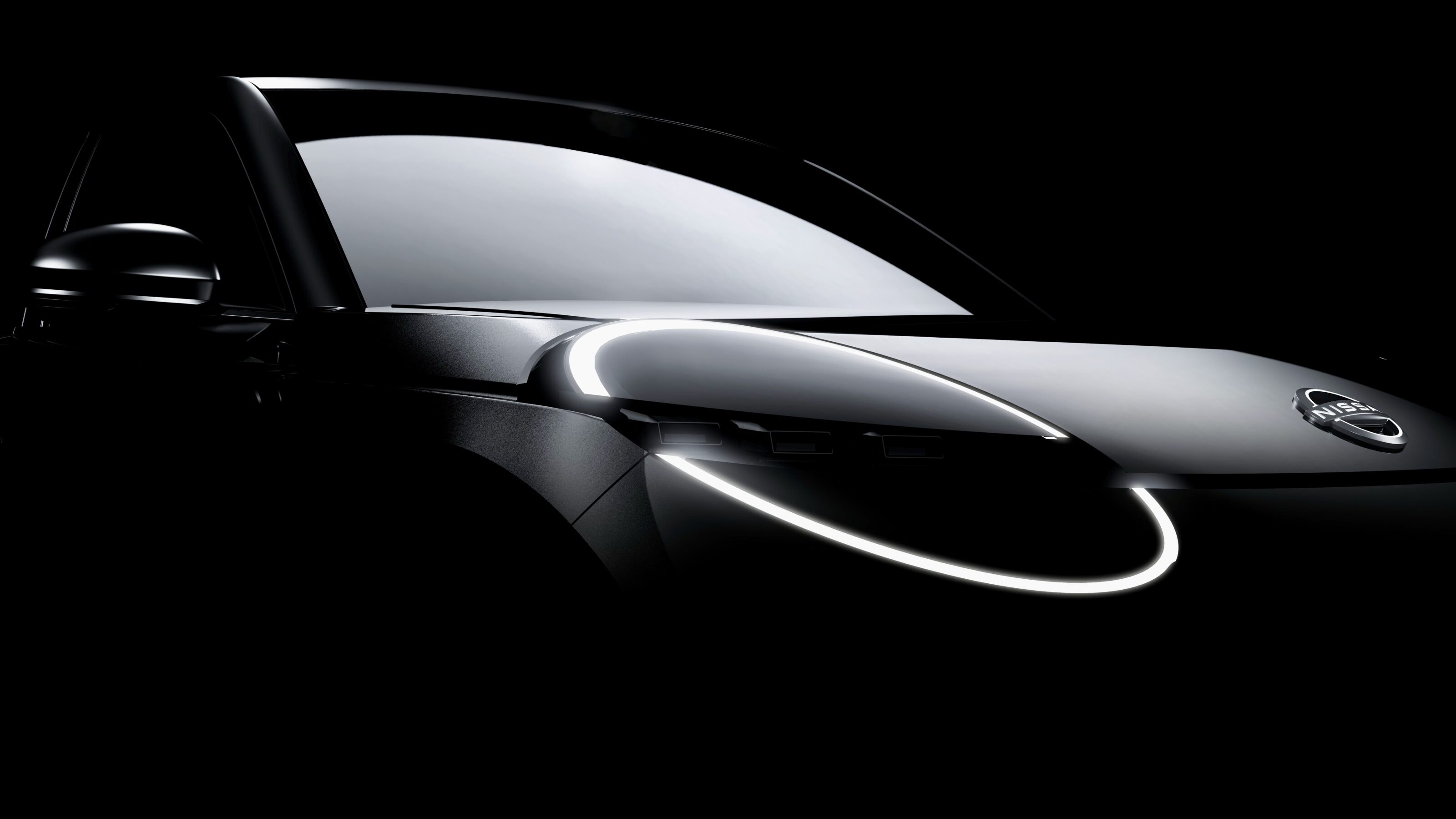
The announcement comes a week after Nissan teased its all-electric Micra replacement, which it says will “democratise” the electric vehicle when it’s released in 2024.
Earlier this week, rumours suggested the Japanese carmaker was developing an all-new twin-turbo V6 engine for the Nissan Patrol.
However, as the company is part of the Renault-Nissan-Mitsubishi Alliance, it means it could theoretically use future powertrains from its partners without having developed a new engine in-house.
Quietly competent, solidly built, and discreetly premium, the E-Class sedan has long been a heartland car for Mercedes-Benz, a car whose core values are a touchstone for the three-pointed star. But the E-Class’s days are numbered. With Mercedes committed to switching its entire mainstream vehicle line-up from internal combustion engines to electric power by 2030, the new electric-powered Mercedes-Benz EQE sedan is being positioned as the spiritual successor to the E-Class. No pressure, then.
So, has the EQE got what it takes? We took a ride in a pre-production car to try and find out.
It’s a bright but cold wintry morning in Stuttgart, last night’s snow still on the ground, when Holger Enzmann – the man responsible for Mercedes Benz’s EVA2 electric vehicle architecture – wafts into the hotel forecourt in a white EQE 350+.
It’s the EQ analog to the E 350 sedan, powered by a single e-motor that develops 215kW and 530Nm, mounted at the rear axle and driving the rear wheels.
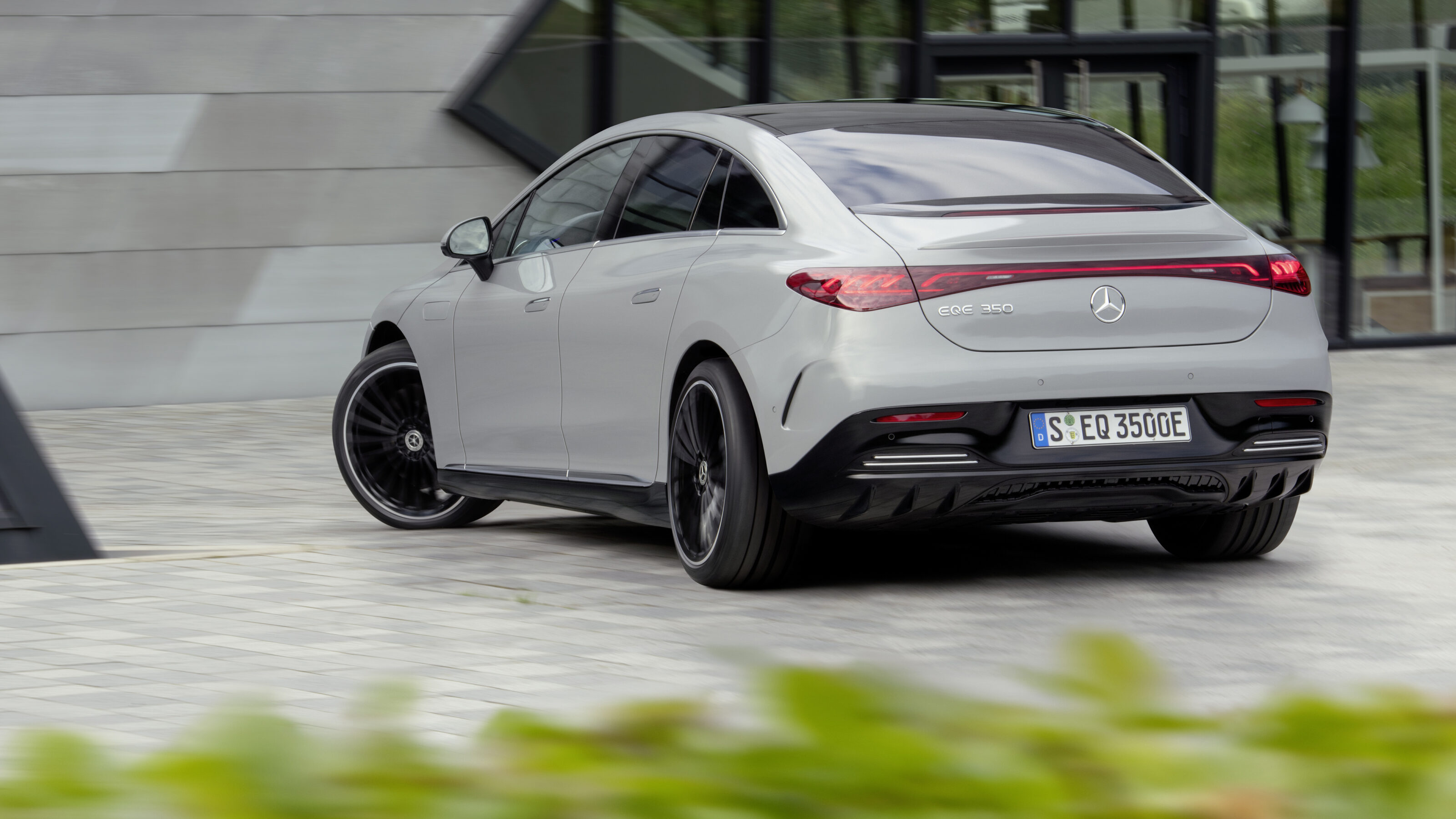
More powerful versions are coming, including a dual-motor, all-wheel-drive model, and an EQE AMG that will pump out about 500kW. Nevertheless, the EQE 350+ feels brisk enough when Enzmann punches it to merge onto the autobahn, despite the 2400kg mass.
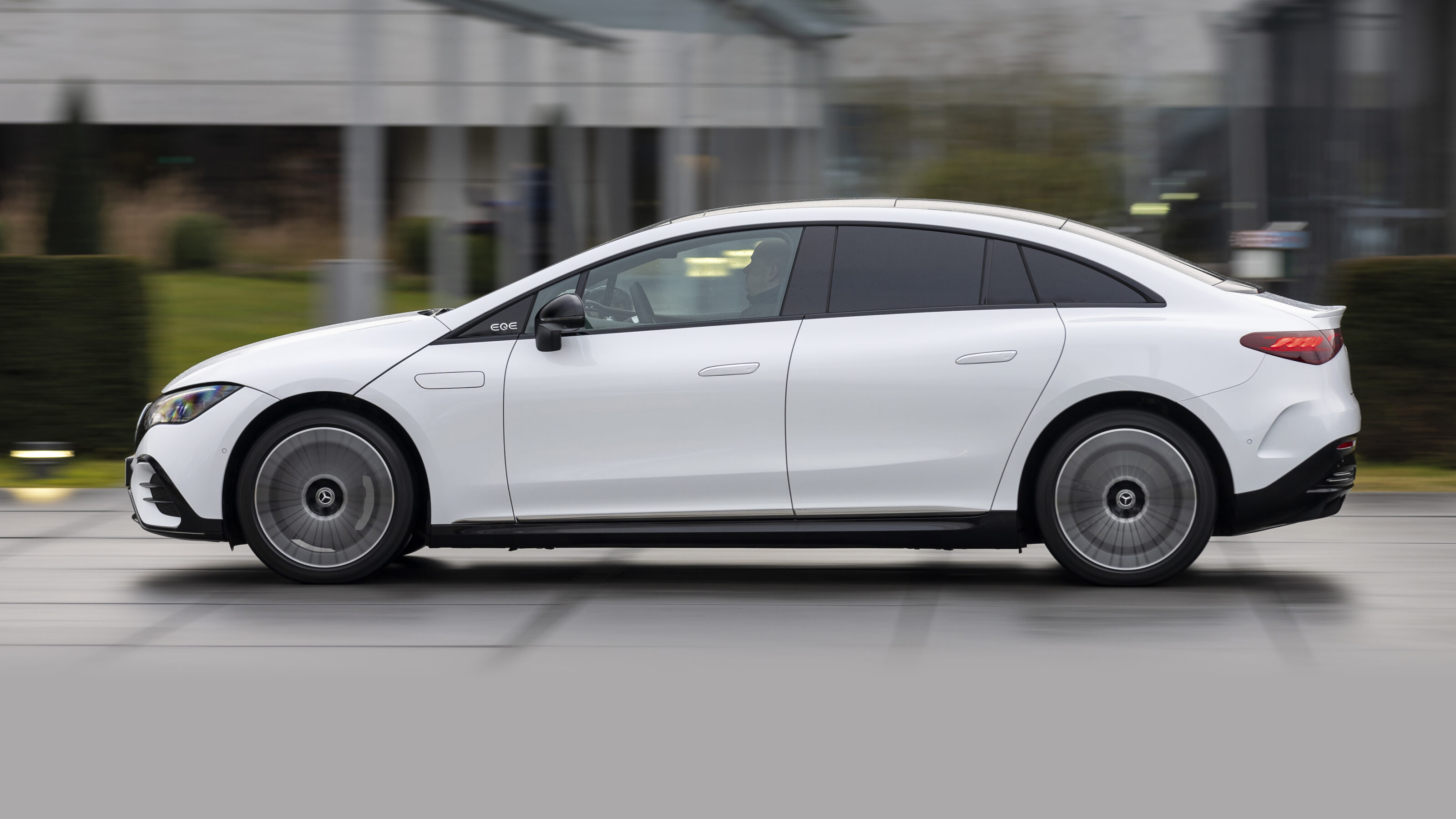
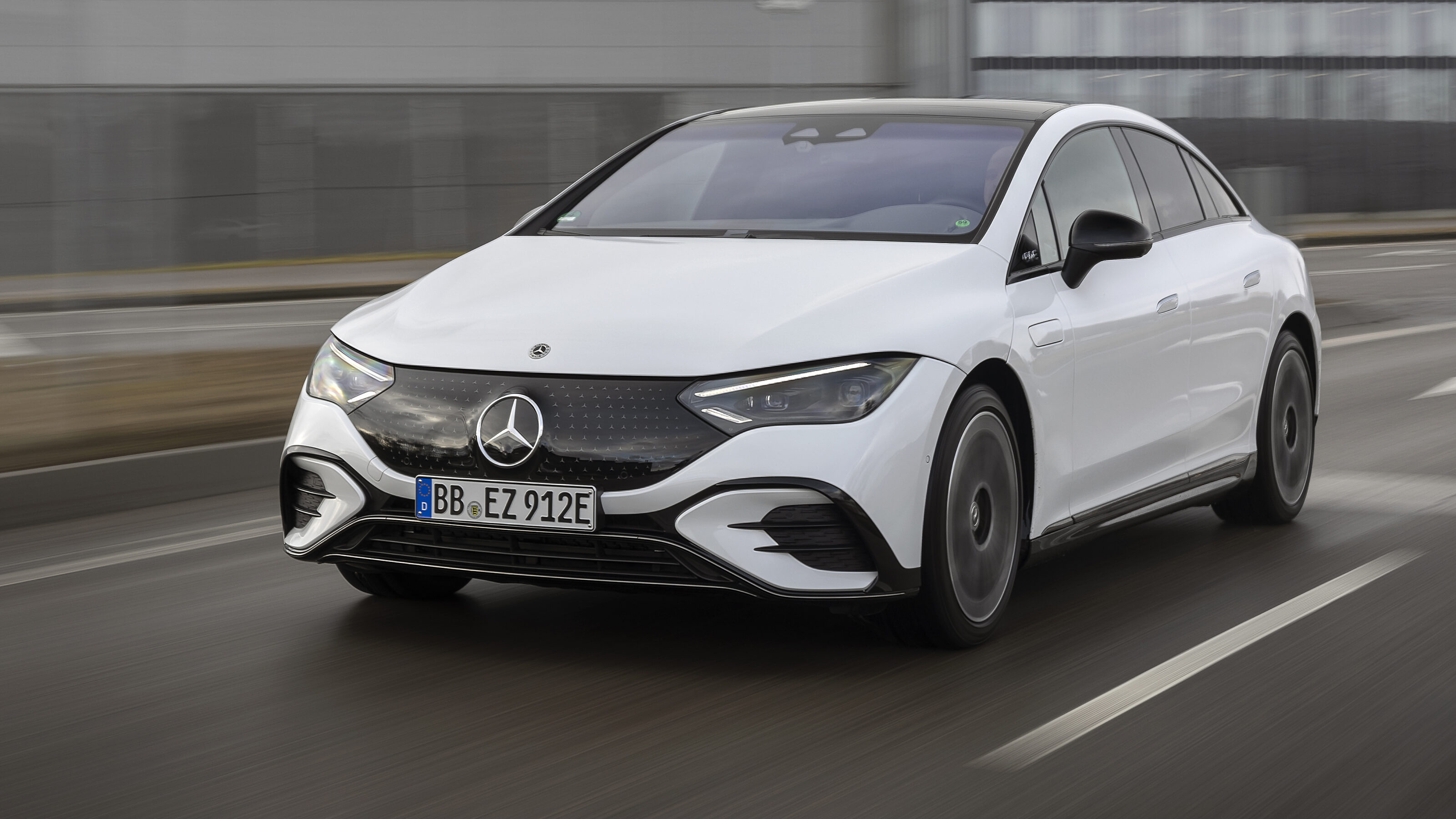
At first glance the EQE looks a lot like the EQS, but it’s more than just a shrink-wrapped version of the electric Mercedes flagship. At 4946mm, the EQE is 270mm shorter overall than the EQS, but, significantly, rolls on a 3120mm wheelbase that’s just 90mm shorter. The EQE has the same swoopy one-box profile as the EQS – at 1513mm its overall height is the same – but with the wheels pulled further to the corners of the car, it has a chunkier stance.
Apart from the different proportions, the front end is subtly different, with different headlight graphics, and while the EQS is a hatchback, the EQE has a conventional boot. The reason, says Enzmann, is to improve rear-seat headroom by eliminating the need to package the hatch’s hinges in the roof.
The more compact dimensions mean the EQE will only be available with the smaller 10-cell, 90.6kWh battery pack (the EQS is available with a 12-cell, 107.8kWh battery).
Even so, Enzmann says that in its most efficient specification – single motor, rear-drive on steel springs and standard 19-inch wheels – the EQE has a WLTP-certified 660km range. The car can handle fast charge rates up to 170kW, which means up to 35.55kWh (enough for 250km on the WTLP standard) can be added to the battery in just 15 minutes.
Enzmann has brought along a well-optioned car for my ride, fitted with the spectacular Hyperscreen dash that debuted on the EQS, a glass roof, rear-wheel steering, air suspension, and an AMG Line appearance package that includes a slightly more aggressive-looking front fascia and 20-inch alloy wheels.
The rear-steer system pivots the wheels through 10 degrees, cutting the turning circle from 12.5m to 10.7m. Order the optional 21-inch wheels, however, and the system will only turn the wheels 4.5 degrees, resulting in an 11.6m turning circle. Either way, the system delivers improved low-speed ability and high-speed stability.
Much of that technology is shared with the EQS. What you won’t be able to get on the EQE – for now, at least – is the Level 3 autonomous Drive Pilot system that debuted on the new S-Class and is now available on the EQS.
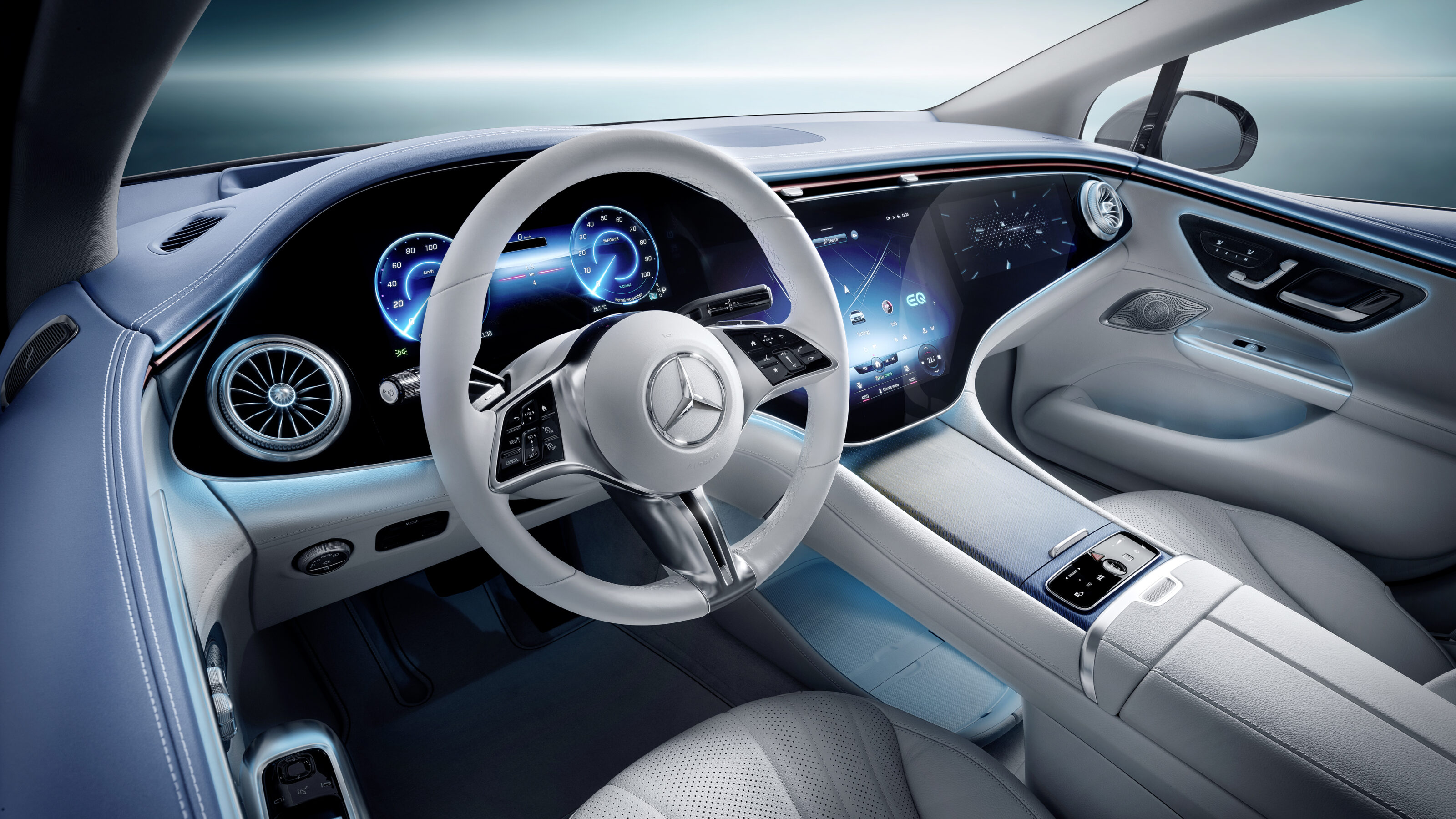
From the front passenger seat, at least, the EQE appears to retain many traditional E-Class values. In fact, in some areas, it’s noticeably better. You expect an electric car to be smooth and quiet, but the air-suspended EQE rides beautifully and is eerily silent, with nary a hint of a whine from the six-phase permanently excited synchronous e-motor, nor any harmonics from the 255/40 Pirelli SottoZero winter tyres.
Among the noise suppression features in the car is isolation of both the e-motor at the axle, and of the inverter and control electronics, which are packaged in a special sandwich sheet steel with a plastic central layer.
“An internal combustion engine masks all sorts of noise,” says Enzmann, “but in an EV there’s nowhere to hide.”
If you don’t want to waft along in near silence, the EQE offers three different sound experiences, artificial noisescapes piped through the audio speakers that rise and fall in concert with speed and acceleration, their intensity linked to whether you’re driving in Eco, Comfort, or Sport modes.
‘Silver Wave’ is some sort of gentle ambient sound; ‘Vivid Flux’ is a robotic electronic noise; ‘Roaring Pulse’ sounds like someone trying to suffocate an AMG GT Black Series under a giant pillow. And if that’s not enough interior entertainment, you can also select an ambient lighting mode that also changes with speed and acceleration.
Interlude…
Back to the EQE!
With the battery under the floor, the front seating position is 65mm higher than in an E-class, and there’s 27mm more shoulder room. It feels airy and spacious. In the rear seat, not so much.
Though the front and rear seat H-points are 80mm further apart than in the E-Class, which means there’s ample legroom, that swooping roofline means you must duck under the header rail to get in and out, and the view through the dramatically sloping rear window is like looking out of a letter box.
Once seated, however, headroom is fine for 190cm-tall adults, especially under the optional glass roof.
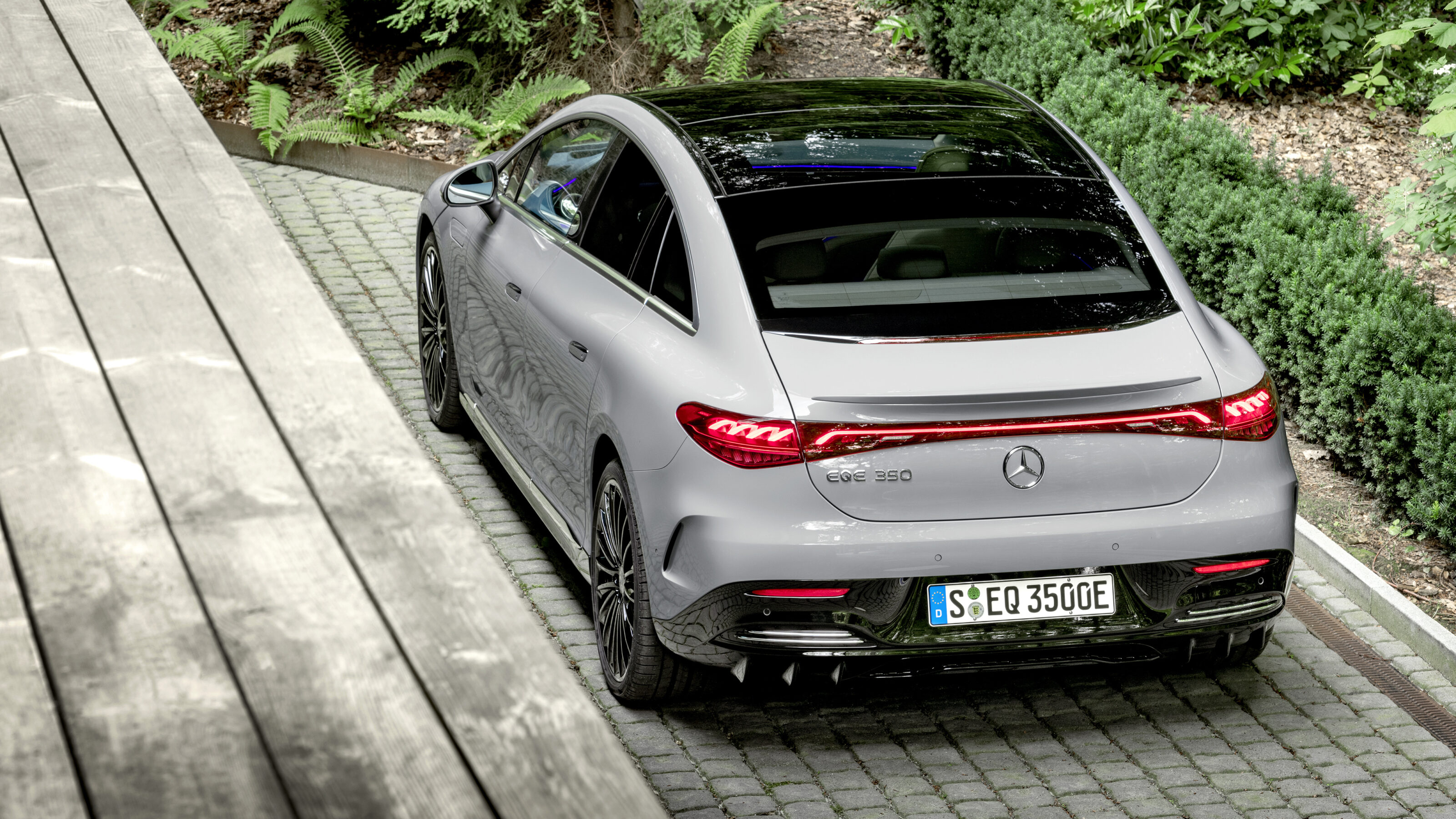
“It’s our expression of an electric E-Class,” says Holger Enzmann. And on first impressions, that’s a fair call. No, the interior package is not the same – though roomier up front, and with more rear seat legroom – that sloping roofline does make the rear feel slightly more cramped. But the EQE 350+ has the same overall demeanour of the three-pointed star’s touchstone car. And that’s a good thing.
But the E-Class, of course, is more than just a sedan – one-in-three E-Class cars sold in Europe last year was a wagon and in Germany, wagons accounted for 50 per cent of E-Class volume. And then there is the E-Class Coupe and its Cabriolet cousin, both still solid sellers. Will they simply go away when production of the internal combustion E-Class finally ends?
Though he won’t confirm details, Holger Enzmann hints EQ versions of those models are likely to appear towards the end of this decade, when the EQE’s EVA2 architecture is superseded by the new MB.EA architecture that’s currently under development in Stuttgart.
It’s no secret that powerful three-pedal cars are a dying breed, but in looking at what’s on sale – you’d have to class them as critically endangered.
A few years ago, our brothers at Wheels took a stab at listing out all of the vehicles on sale that were available with a proper three-pedal manual gearbox and produced over 250kW. There weren’t many back then, and the list has only grown slimmer in the interim.
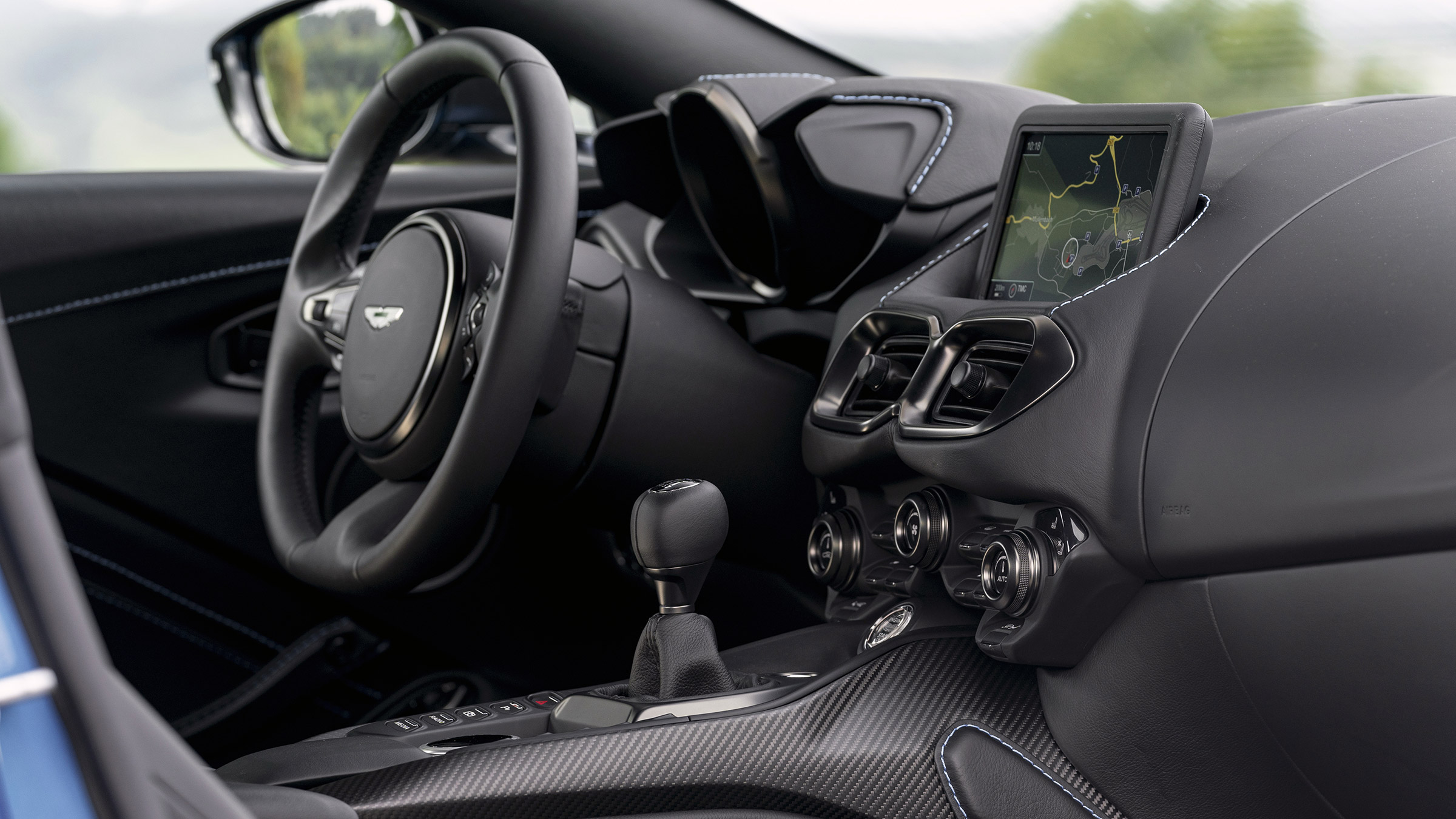
Four years on, you can pour one out for the H-pattern Aston Martin Vantage, discontinued Ford Focus RS, Jaguar F-Type, Lotus Exige and Evora, previous-gen BMW M2 and a raft of homegrown Holdens.
The 250kW cut-off eliminates some truly sweet steerers, such as the Hyundai i20 and i30 N, incoming Toyota GR 86, Subaru BRZ and Mazda MX-5. While we continue to cherish and celebrate those bastions of affordable performance, it’s the premium performance sector where manual cars are really giving ground to whizz-bang dual-clutches and advanced automatics.
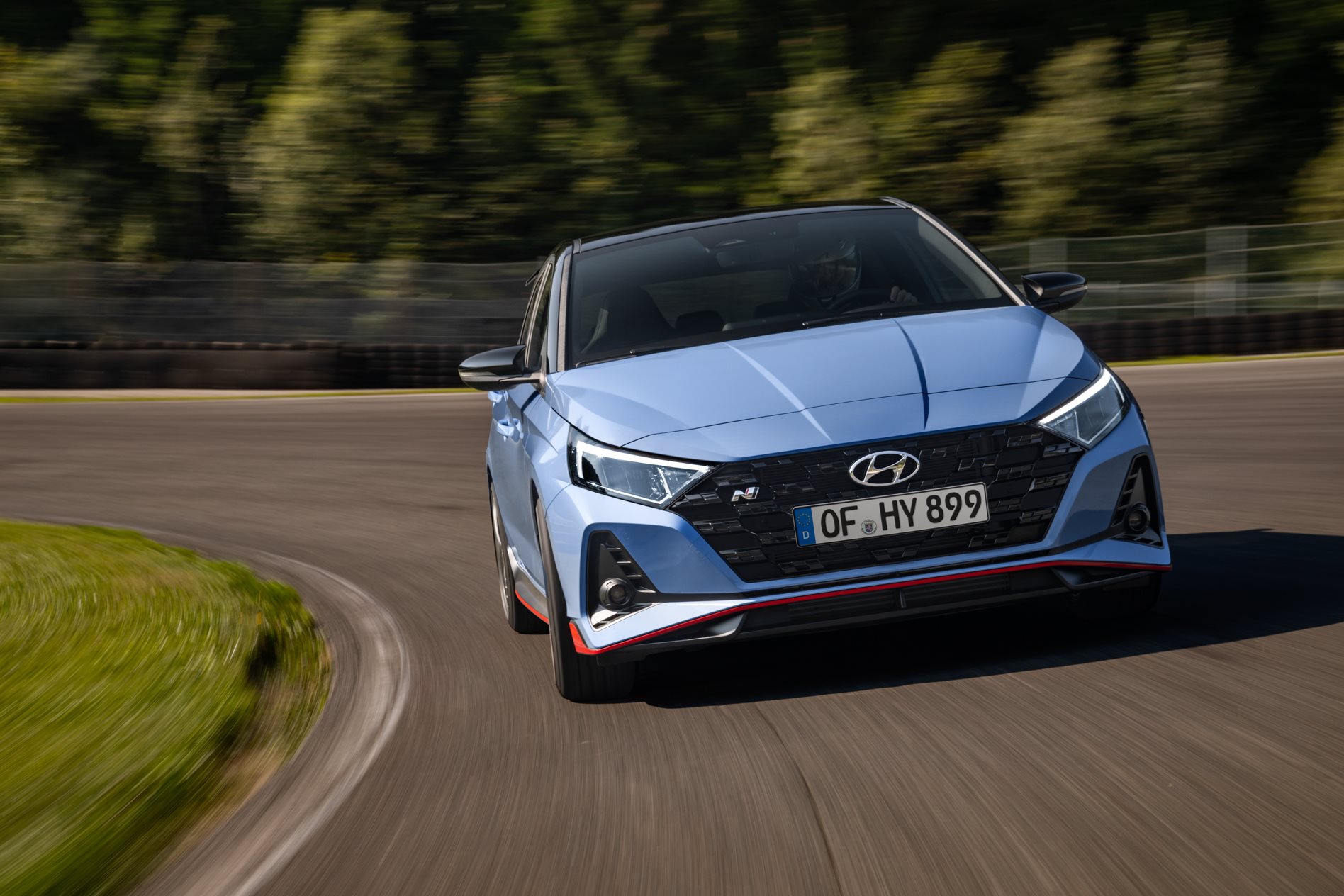
As a result, the manual cars on sale in Australia with over 250kW belong to a truly exclusive club. Going shopping today? Your choices are:
- BMW M3/M4
- Ford Mustang GT/Mach 1
- Porsche 718 Boxster S/Cayman S
- Porsche 911
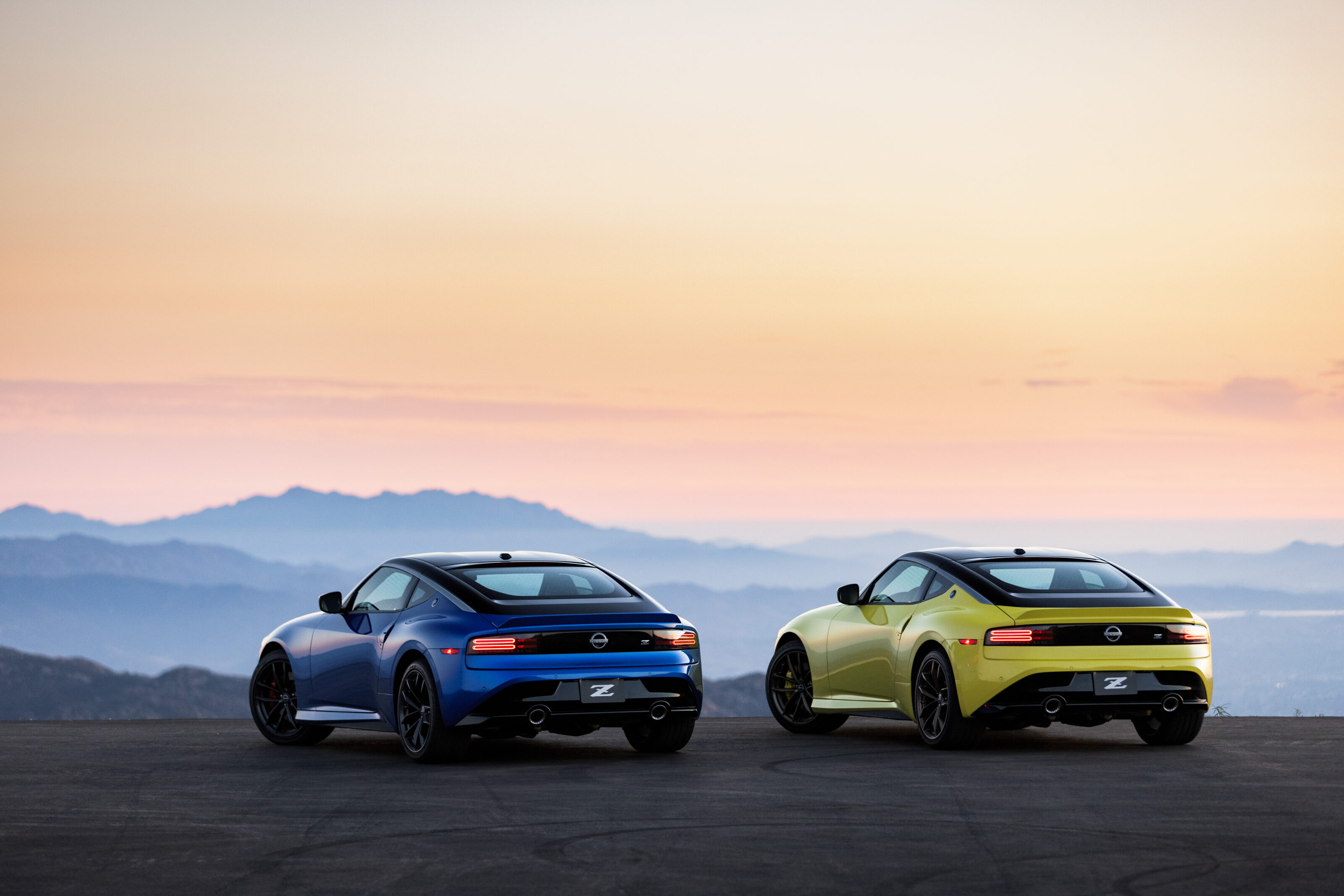
Nissan’s new Z has our interest piqued, slated to arrive this year with almost 300kW, a rear-drive chassis and a true manual gearbox.
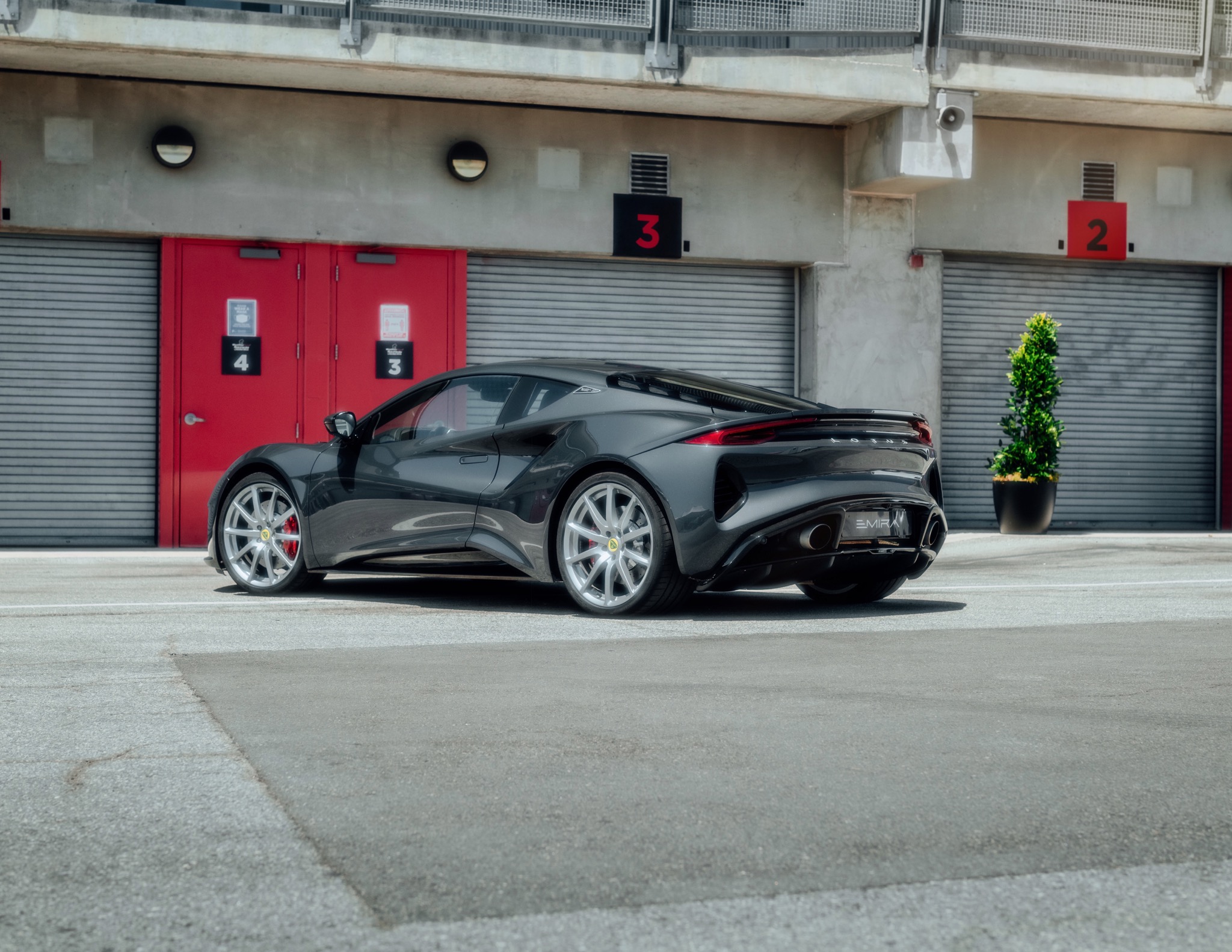
The Lotus Emira is also due mid-year, and will initially launch powered by the longstanding Toyota-sourced supercharged V6 and a traditional six-speed manual as standard. A new variant powered by the atomic Mercedes-AMG A45’s engine will also follow, but will solely be available with a seven-speed dual-clutch.
BMW has also committed to manual availability for its hotly-anticipated next-generation G87 M2 which is expected early 2023. The same, sadly, can’t be said for the rest of the 2 Series range, with 2 Series Senior Product Manager Emanuel Varga stating in November: “The 2 Series including the M240i will not be available as a manual. Not in the near future”.
Under the twilight of internal combustion motoring, the crop of manually-shifted sports cars is withering. Just a handful of manufacturers look set to keep the faith.
Are you a manual or bust driver? Or do you think that the rate of progress in modern cars is such that three pedals are best left in the past? There’s no right answer with cogent arguments to be made for both sides.
What are your thoughts on the state of the manual transmission? Leave a comment below or drop us a line at [email protected]
Snapshot
- Tonale is Alfa Romeo’s first small SUV
- Carmaker’s first EV u2013 hybrid and PHEV offered
- Comes with unique NFT to record its character
- Hybrid variants scheduled to arrive locally in 2023
Alfa Romeo has revealed its Tonale crossover, which is notable for being the iconic Italian carmaker’s first small SUV while heralding its “metamorphosis to electrification”.
Promising the agility and performance that buyers expect from an Alfa Romeo, the Tonale (pronounced, Ton-ah-leh) brings a number of brand-firsts – including hybrid and plug-in powertrains, as well as an all-new infotainment architecture.
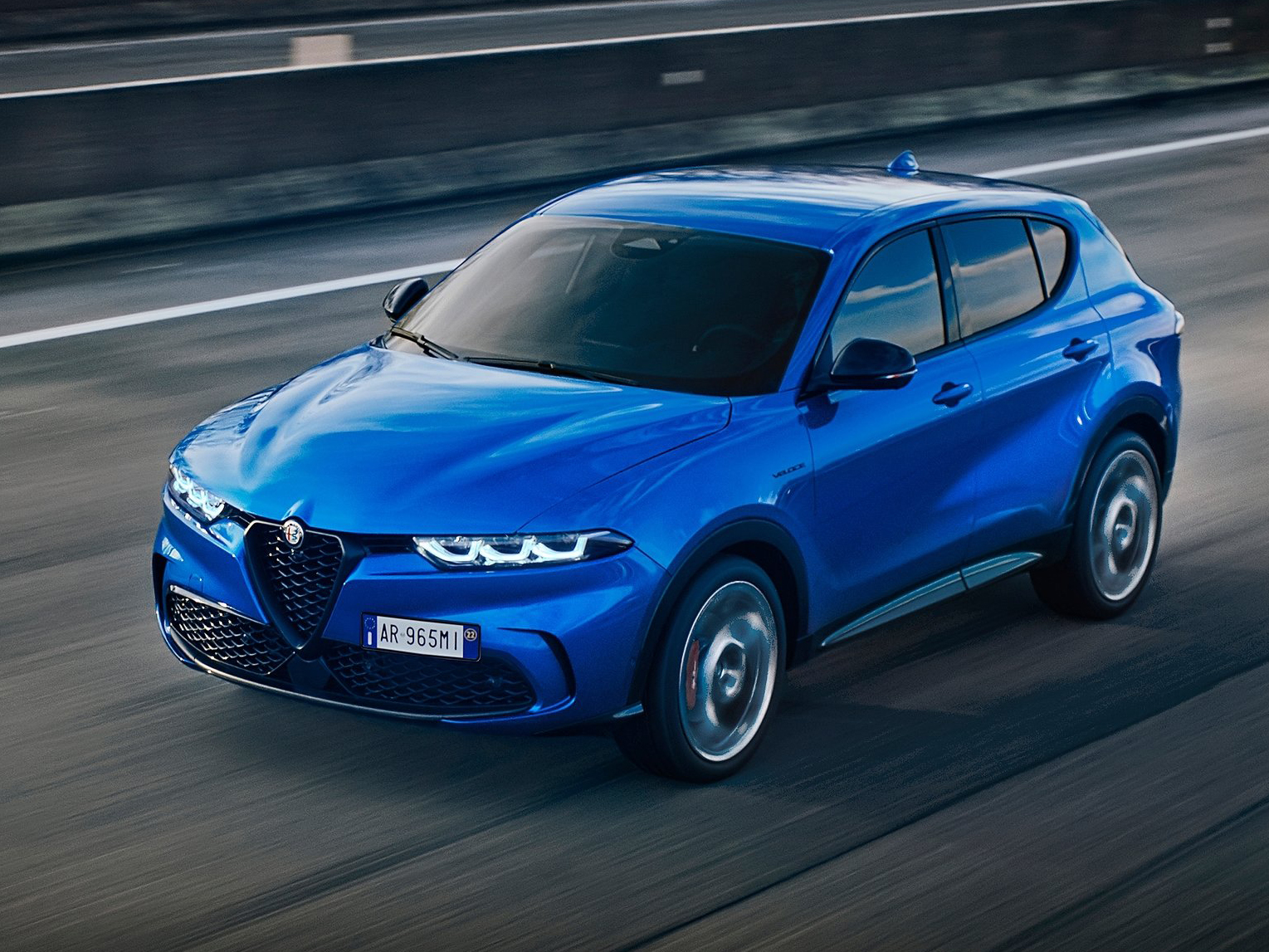
And in what is believed to be an industry first, each Tonale will come with its own unique NFT (non-fungible token) that over time will characterise the car.
Using blockchain technology, the NFT will be able to provide future buyers certification showing the car’s history including mileage, status, service and accident history in a non-corruptible file.
The current owner will be able to set what the NFT records, but Alfa Romeo believes it has the ability to add value to the vehicle, like a meticulously-recorded service history.
Design and features
According to the Italian marque, the Tonale has been penned in accordance with its La bellesa necessària, (The Necessary Beauty) design mantra, with a lean appearance that is meant to “look like it drives”.
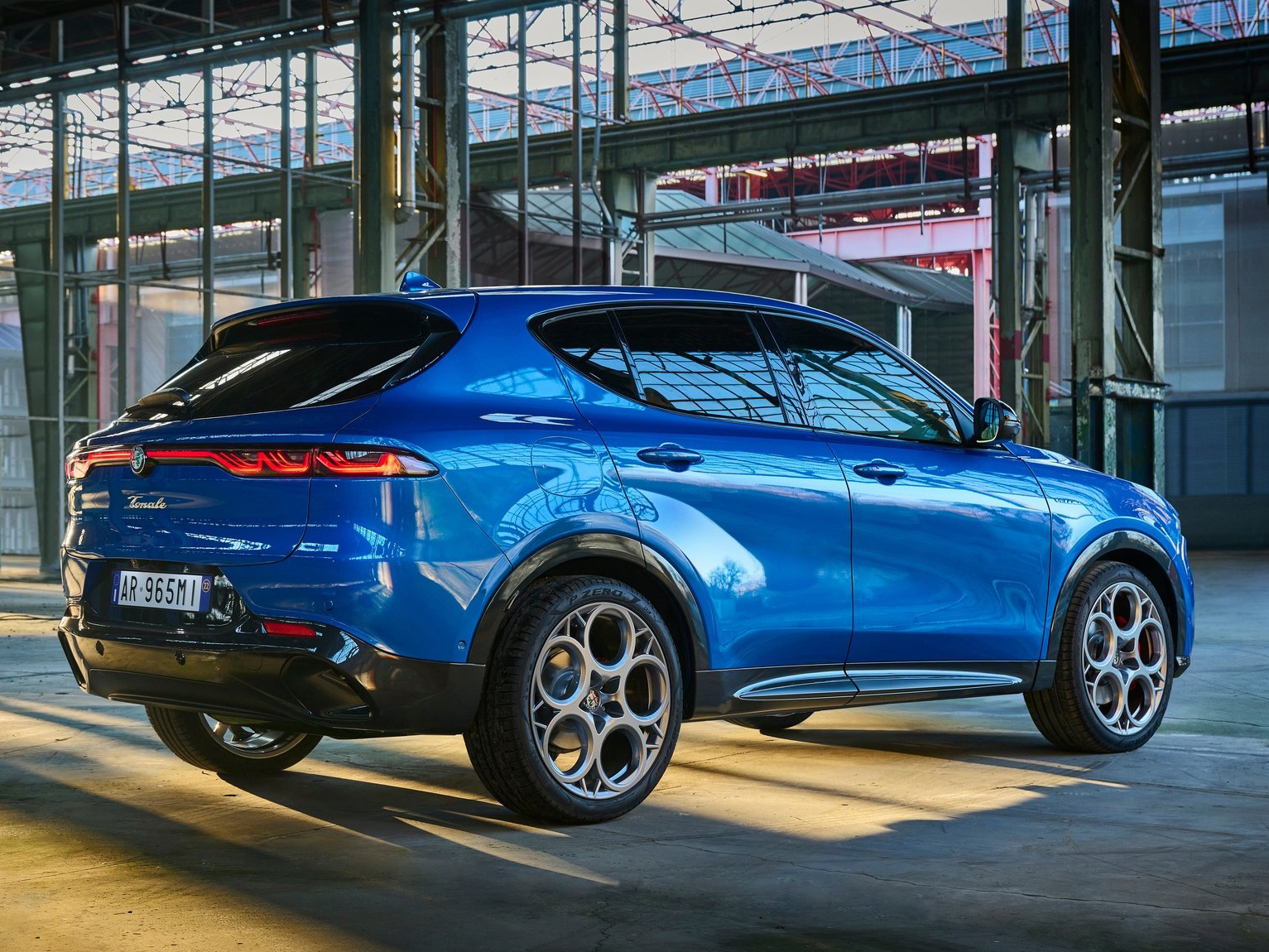
The side view features a simple single GT line, which runs from the front to rear lights, with contrast provided by the shadows cast along the curvaceous panels and doors.
The purists will appreciate a number of classic touches, such as the Trefoil grille, the 3+3 DRL signature (a nod to the SZ coupe), and the latest embodiment of the ‘teledial’ wheel design as seen on the Tonale concept.
Inside, expect a driver-focused cabin with sporty seats and a combined 22.5-inches of screen space which includes a 12.3-inch driver display with a bold, clear gauge cluster reminiscent of the GT Junior and Giulia Super.
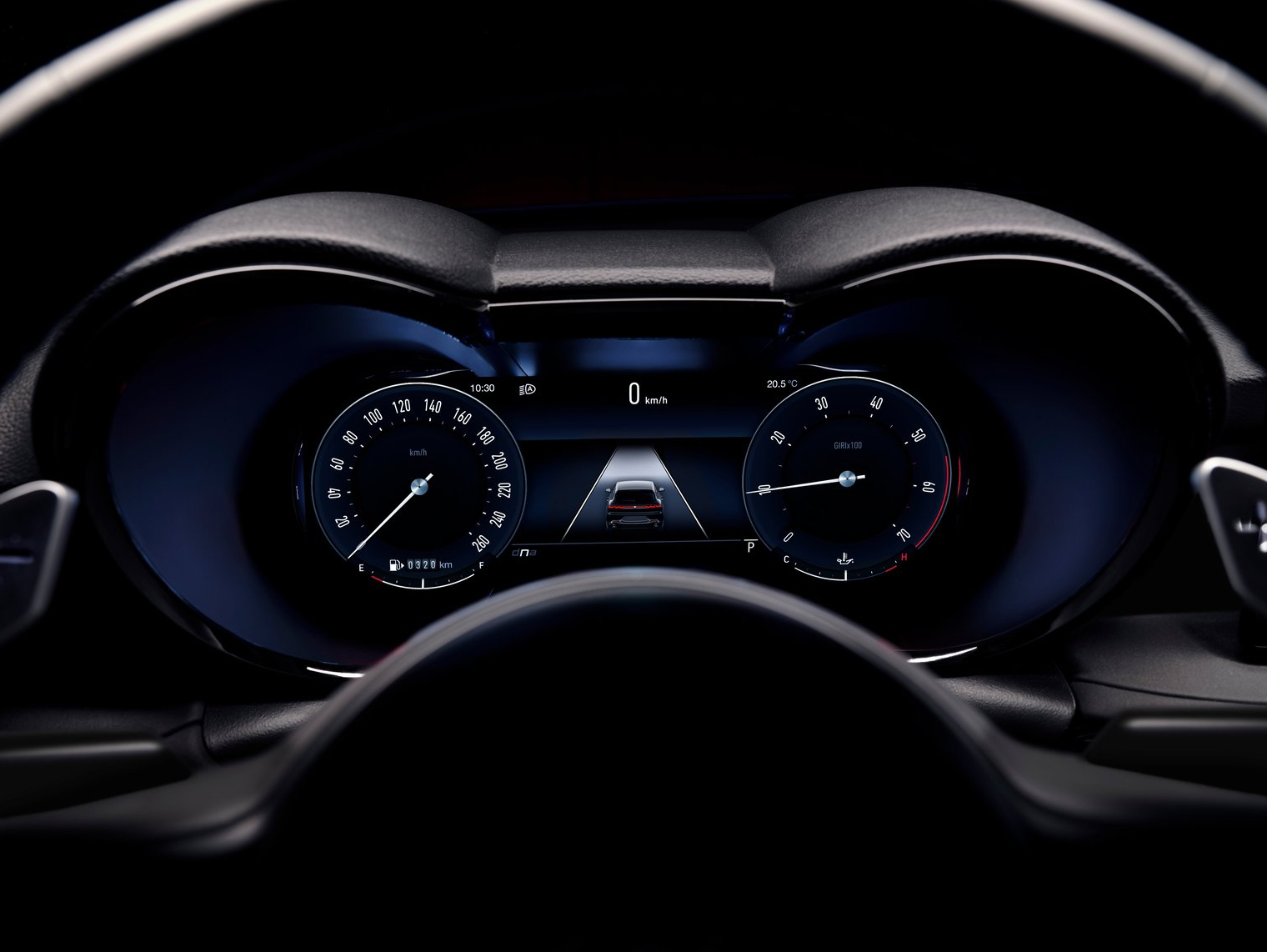
Other features include dual-zone air conditioning, ventilated and heated front seats, ambient lighting, and a 14-speaker sound system by Harman Kardon, wireless charging pad and a power-operated tailgate.
Alfa Romeo is yet to provide interior specifications, such as rear legroom or boot space.
Powertrains
The Tonale ushers in Alfa Romeo’s electric future with 48-volt hybrid and plug-in hybrid (PHEV) powertrains, designed with economy and performance in mind.
The hybrids feature a 15kW electric motor coupled with either a 97kW 1.5-litre direct-injection or 120kW 1.5-litre VGT (Variable-Geometry Turbo) petrol engine, both of which drive the front wheels through a seven-speed dual-clutch automatic transmission.
The Tonale Plug-In Hybrid Q4 AWD will provide all-wheel-drive traction, with a 134kW 1.5-litre engine driving the front wheels through a six-speed torque converter auto, and a 90kW electric motor at the rear axle.
The motor will be powered by a 15kWh battery capable of 100kW fast-charging and a combined driving range of 60 kilometres or 80km in urban conditions.
It’s quick too, with a 0-100 km/h time of just 6.2 seconds.
Turbocharged petrol and turbodiesel powertrains will be available for the US and Middle Eastern markets.
The Tonale is built on Stellantis’s Small Wide 4×4 Platform underpinning the Jeep Renegade and Compass small SUVs, meaning it’s capable of full electrification. That isn’t on the cards right now, but Alfa Romeo hasn’t ruled out a Tonale BEV if there ends up being a market for it.
Driving dynamics
Alfa Romeo promises a nimble, agile and sporty, but comfortable, driving experience with its independent MacPherson suspension system, with Frequency Selective Damping (FSD) shock absorbers as standard.

Dual-state valve electronic adaptive suspension is also available. It comes standard with the Veloce pack and is optional with all other spec grades.
The 13.6 steering ratio has been set for a more precise and direct sheering feel.
Stopping power includes Brembo fixed callipers with four pistons and ventilated front discs at the solid discs at the rear.
Safety and technology
The Tonale will come with the latest U-Connect infotainment system, which now features Amazon Alexa or Google Assistant voice control options and wireless Android Auto/Apple CarPlay. This system also works remotely, allowing the driver to get real-time data on things such as fuel status and tyre pressure.
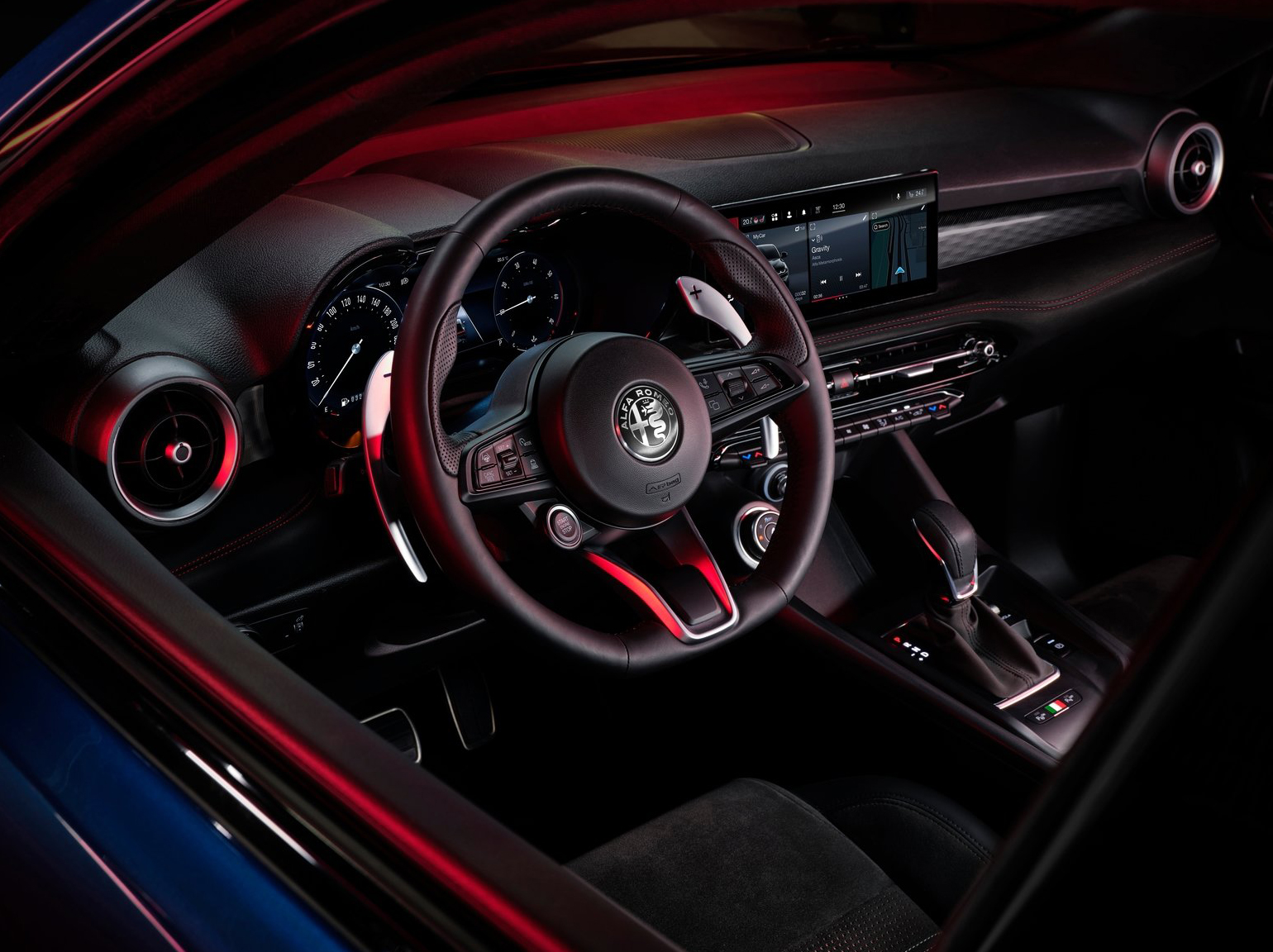
The 10.25-inch central touchscreen controls the infotainment, HVAC, and satellite navigation that features dynamic range mapping showing where you’ll end up based on current fuel/battery levels.
Advanced driver assistance tech includes; adaptive cruise control with lane-centring and traffic jam assist, 360-degree camera, blind-spot monitoring, rear-cross traffic alert, autonomous emergency braking with pedestrian and cyclist detection, and drowsy driver detection.
The Tonale also features “Semi-Automatic Parking” that indicates the space available to park in and steers the car into the parking spot.
Variants and local availability
The Alfa Romeo Tonale be available in two trim grades, Super and TI, and each will come with a choice of Sprint or Veloce equipment packages.
There are no plans for a high-performance Quadrofiglio variant yet, though Alfa Romeo hasn’t ruled out introducing one down the track.
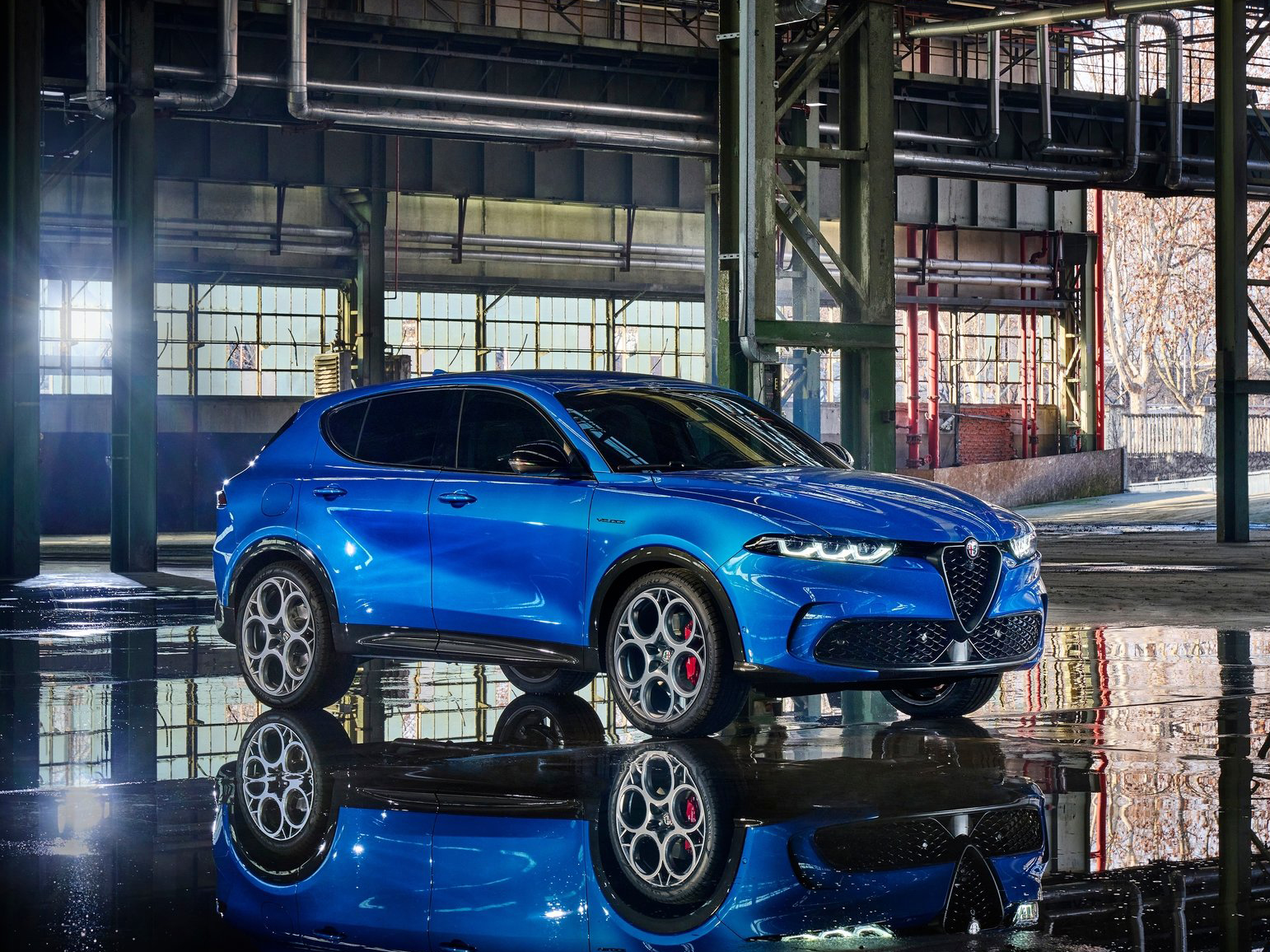
At this stage, only the hybrid version will be available in Australia, most likely with the 120kW engine, but the PHEV hasn’t been ruled out, pending demand.
A local Stellantis spokesperson said it is expected to arrive in Australia during the first half of 2023, with specifications and pricing announced closer to launch.
The story to here
January 31, 2022: Alfa Romeo has showcased a pair of teaser videos for the Tonale crossover, ahead of its reveal next week.
The first clip shows its digital instrument cluster, zooming in on an animation of the Tonale’s front end.
As is expected from an Alfa Romeo, the unique triangular grille of the Tonale is flanked by a pair of slim LED headlights – with each featuring U-shaped DRLs.
The teaser bows out with a quick glimpse of the steering wheel and paddle shifters, which are expected to look similar to the designs found in the larger Giulia and Stelvio.
Another video released by the Italian marque over the weekend places an emphasis on the materials found inside the SUV.
This includes a red Alfa Romeo badge that will be embroidered into the front headrests, as well as perforations on the steering wheel.
A mysterious Italian flag will also be placed somewhere on the Tonale.
January 25, 2022: Alfa Romeo has confirmed a launch date for its new Tonale, with covers set to come off the SUV next month.
The Italian marque’s latest SUV will be unveiled to the world on February 9 at 1am AEDT, signalling the start of a new era for the manufacturer.

December 16, 2021: Polish outlet Spider’s Web Autoblog has leaked purported details of the upcoming Alfa Romeo Tonale, the Italian brand’s newest SUV.
According to the report, the Tonale will arrive with traditional combustion engines, but also hybrid and plug-in hybrid drivetrains – just like the Jeep Compass and Compass 4xe.
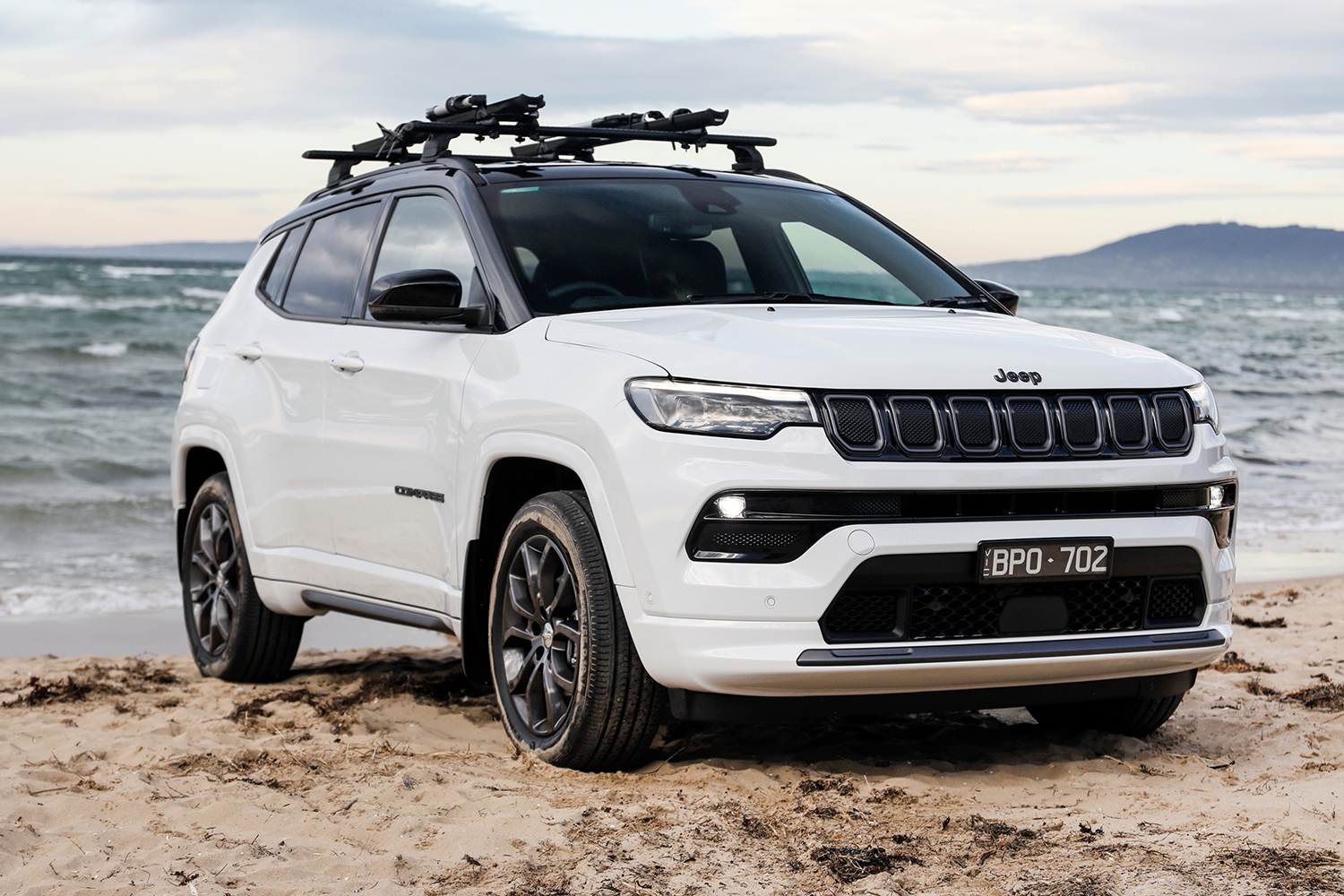
The details come from an internal presentation which shows the Tonale is longer than the Compass at 4528mm in length (compared to 4394mm) but shares the exact same wheelbase of 2636mm.
Following the vehicle’s launch next year, a potential pure electric version could be added to the mix, helping Alfa Romeo meet its EV-only promise by 2027. Again, this would likely spawn from an electric Jeep Compass or similar.
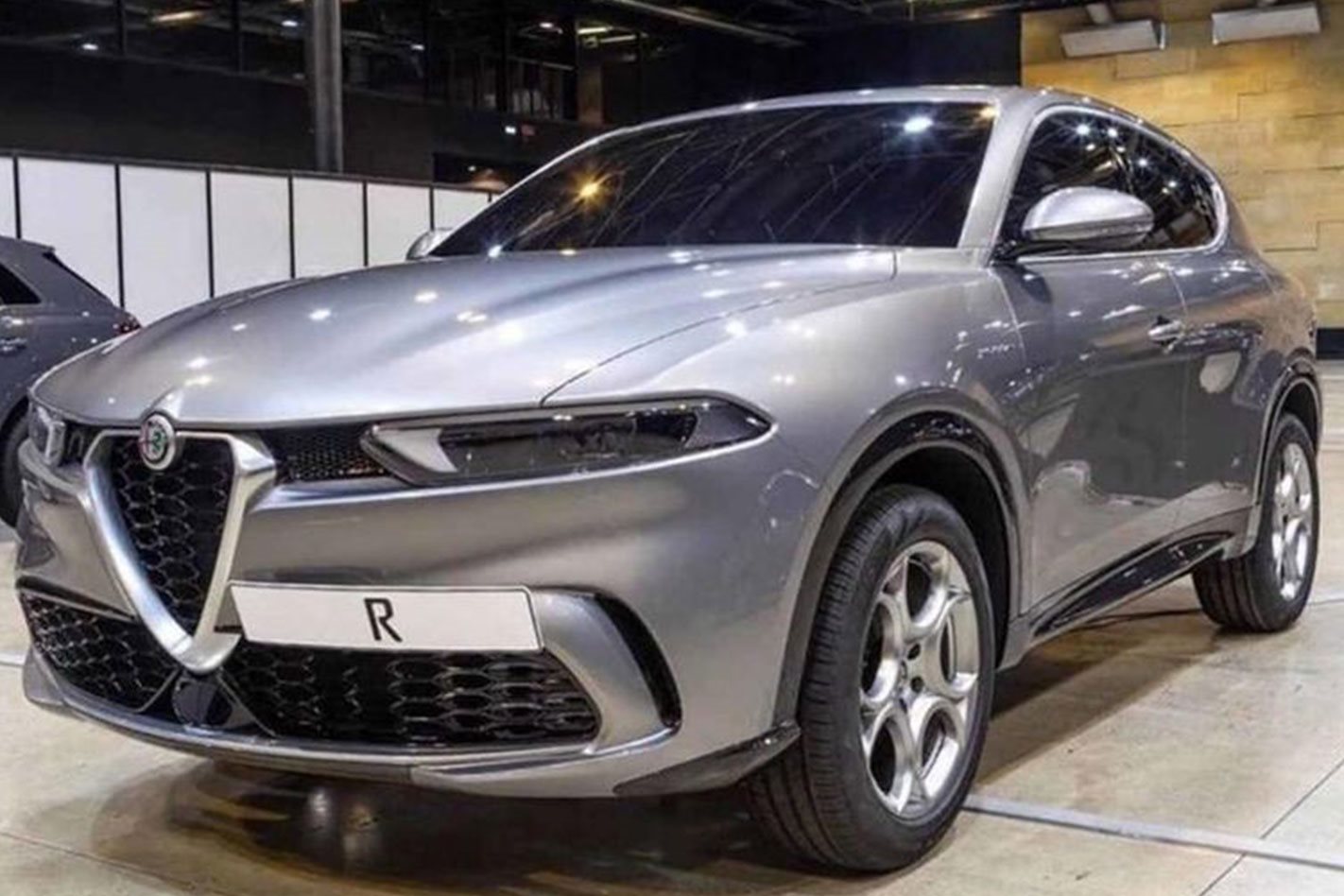
From the presentation, details of the drivetrains suggest only petrol engines with no diesel option, and the base level starts with a 1.3-litre turbocharged engine producing 95kW through a dual-clutch automatic transmission.
A petrol hybrid version will apparently produce around the same output but with the assistance and efficiency of a small battery and electric motor – it might more likely be a circa-150kW hybrid from Stellantis’ larger 1.5-litre hybrid unit in development.
For now, the range-topper will use the same 1.3-litre petrol plug-in hybrid system as the Jeep Compass 4xe which produces a total combined output of 177kW or more given Alfa Romeo’s sporty heritage.
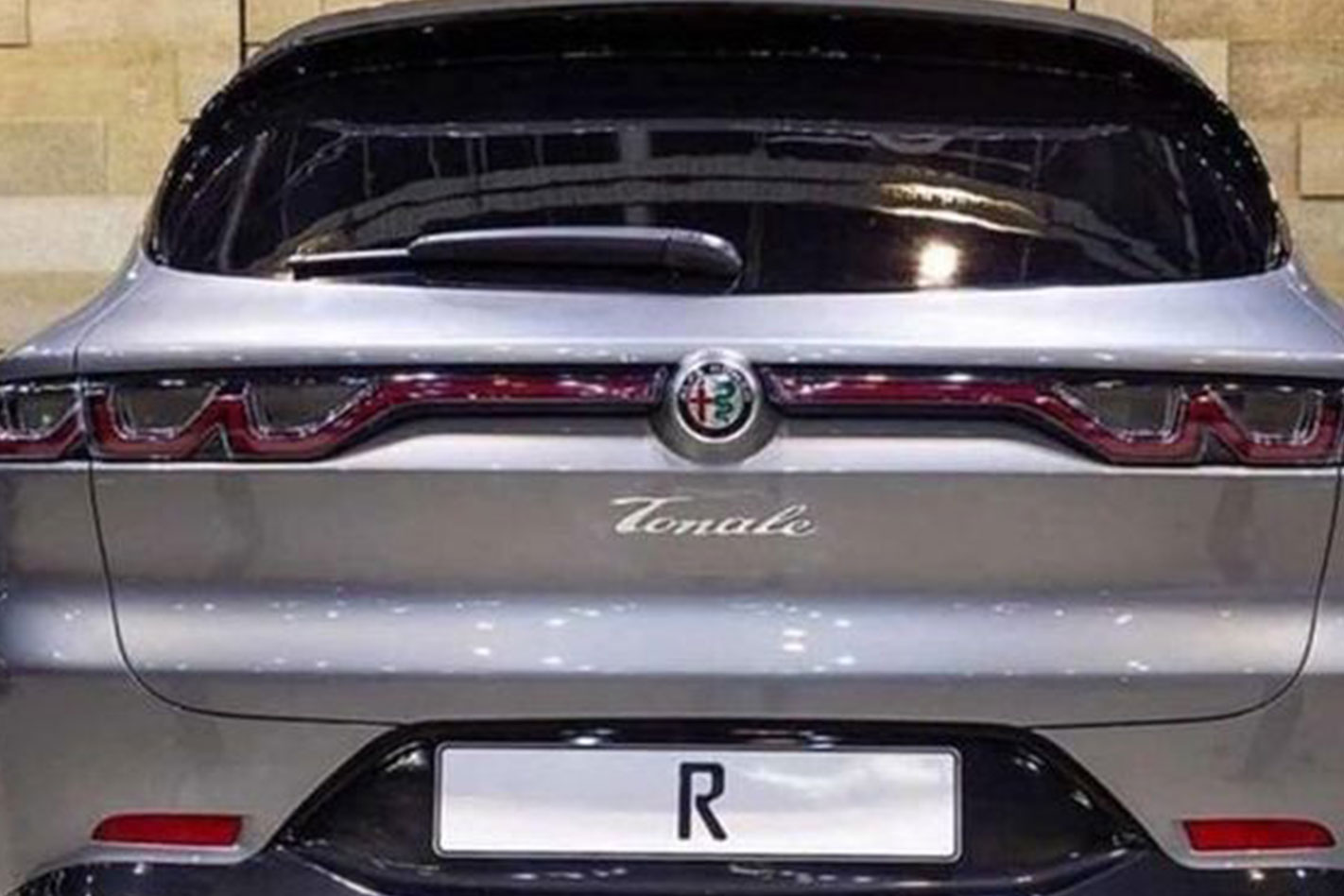
The Tonale concept unveiled at the Geneva Motor Show in 2019 shows typical Alfa Romeo styling, with narrow LED headlights, a large front V grille and Alfa’s iconic 5-hole design alloys. Spy pics recently suggest the concept’s blade-like door mirrors will be dropped for a conventional design and the flush-fitting door handles are gone also.
Around the back is a full-width light-bar which might live on in the top-spec version but be simplified in the entry-level versions for cost-cutting. The rear is slightly squared off, but with swopping lines that join the smooth hip line seen on contemporary Alfa Romeos.
When it arrives, the Tonale will be smaller than the Alfa Romeo Stelvio and rival small premium crossovers such as the BMW X1, Mercedes-Benz GLA, and Audi Q3.
The Tonale is set to launch next year and will be a crucial model for Alfa Romeo sales in Australia.
The brand here says that it is looking forward to the model’s official reveal, but timing cannot be confirmed – expect at least a late 2022 launch if things like semiconductors and stock shortages don’t impact its production.
Hydrogen truck maker Hyzon Motors will establish its Australian base at RACV’s Noble Park head office in Melbourne’s south east.
The move is part of a new and wide-ranging agreement between the two organisations.
The partnership also includes an order of three locally-made hydrogen-powered tow trucks for RACV subsidiary Nationwide Group, with a trial of the new vehicles expected to begin in late 2022. An imported HyMax prime mover is also included in the first order.
“Nationwide is keen to assess the performance of these vehicles in a real-world test for towing and transport, and is thrilled to be part of this new industry leading partnership,” Nationwide Group CEO Michael Stephenson said at the announcement.
Hyzon Motors Managing Director for Australia and New Zealand, John Edgley, said the opportunity to partner with RACV was an exciting prospect for the company.
“We are focused on generating new jobs, new manufacturing and technology facilities, and a fundamentally new industry in Australia and New Zealand, that will underpin a sustainable future for the region,” Edgley said.
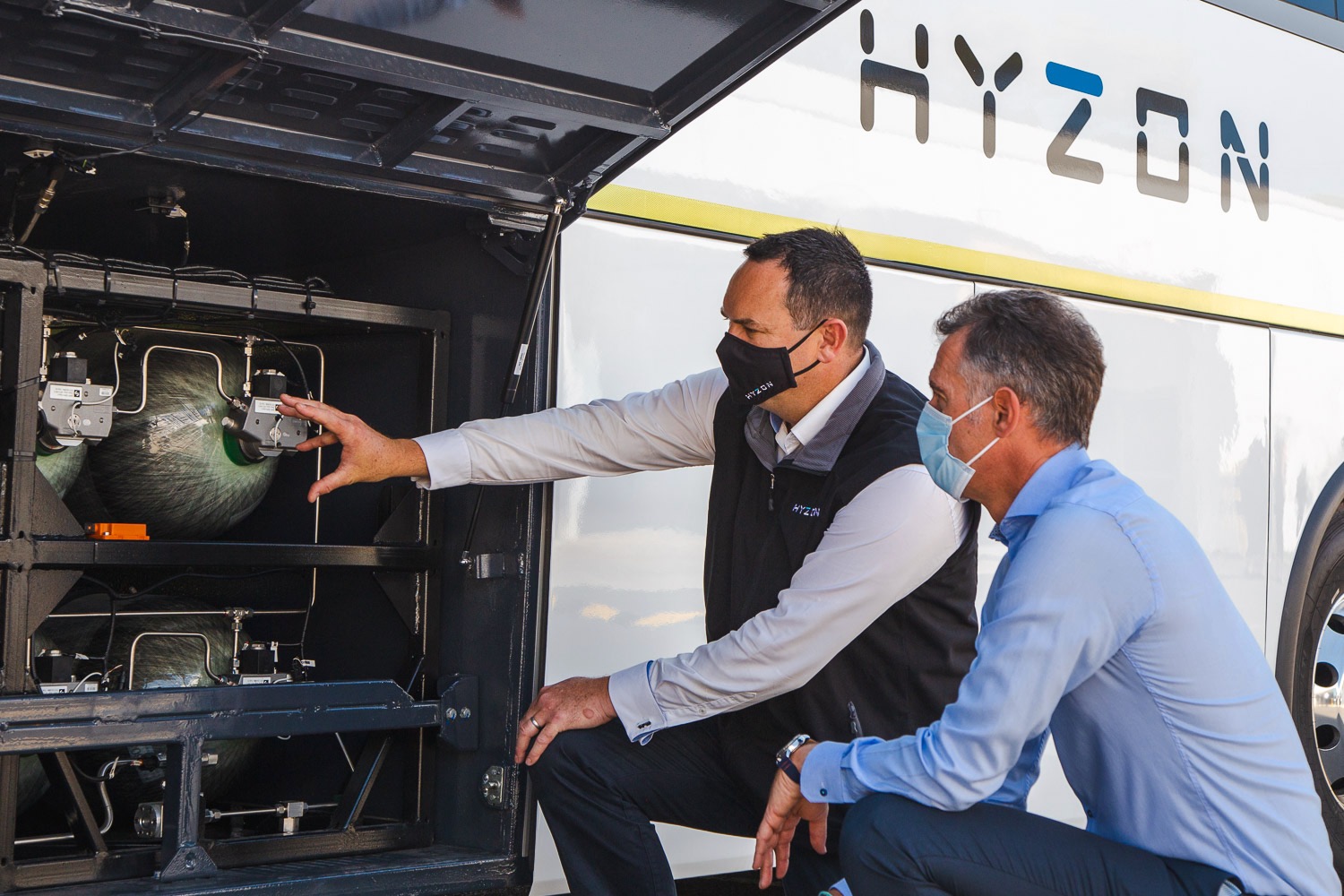
The partnership will mean Hyzon will build corporate offices, warehousing, a workshop, and a showroom at the Noble Park location, with more than 100 jobs expected to be generated directly.
“Hyzon has already hit the ground running in the region, with scheduled 2022 deliveries including; coaches to Fortescue Metals in Western Australia, prime movers to Coregas in NSW and TR Group in New Zealand, road train prime movers to Ark Energy in Queensland and the HyMax GSL garbage trucks with Superior Pak across the region.”
A top 10 list of Queensland’s worst intersections has been released, revealing the most common spots for serious crashes in the Sunshine State.
Compiled by the Department of Transport and Main Roads, the top spot was given to the intersection at Florence Street and Mulgrave Road in Cairns, with nine major crashes and 10 serious casualties reported between June 1, 2018, and May 31, 2021.
The Cairns intersection is the only entry from Far North Queensland, as all other major incident sites are limited to South East Queensland – with the most northerly site listed as the Denison Street and Derby Street crossing in Rockhampton.
| Ranking | Serious crashes | Serious casualties | Intersection | Suburb, LGA |
|---|---|---|---|---|
| 1 | 9 | 18 | Florence St – Mulgrave Rd** | Parramatta Park, Cairns |
| 2 | 8 | 10 | D’Aguilar Hwy/Dances Rd – Pumicestone Rd* | Caboolture, Moreton Bay |
| 3 | 7 | 12 | Diamond Jubilee Way/Mineral Sizer Ct – Boundary Rd | North Lakes, Moreton Bay |
| 4 | 7 | 11 | Denison St – Derby St | Rockhampton |
| 5 | 7 | 10 | Taylor St – Tor St | Wilsonton, Toowoomba |
| = 6 | 7 | 9 | Anzac Ave – Duffield Rd | Kallangur, Moreton Bay |
| = 6 | 7 | 9 | Chambers Flat Rd – Waratah Dr | Crestmead, Logan |
| 7 | 7 | 8 | Beaudesert Beenleigh Rd – Tallagandra Rd*** | Beenleigh, Logan |
| 8 | 7 | 8 | Wembley Rd – Mayes Ave*** | Logan |
| = 9 | 7 | 7 | City Rd – Logan St | Beenleigh, Logan |
| = 9 | 7 | 7 | Fryar Rd/George St – Distillery Rd | Eagleby, Logan |
*Intersection is being upgraded.
**Intersection may be considered for potential works as part of the Cairns Ring Road Project.
***Rankings are ordered by number of serious crashes, serious casualties, fatal crashes, and fatalities. Rankings 7 and 8 had a different number of fatal crashes or fatalities.

Of the remaining eight intersections, one is in Toowoomba, three are in the Moreton Bay region just north of Brisbane, and five are located in Logan, the city between the state’s capital and the Gold Coast.
Queensland insurer RACQ believes the data from these affected sites will spur on change from the State Government to improve local roads, with a number of the intersections already slated for upgrades.
“We want all levels of government to prioritise these intersections for safety upgrades,” said Susan Furze, RACQ’s head of public policy.
“We know investing in infrastructure projects helps reduce congestion, and, importantly, improves safety for all drivers in Queensland.
“We know many Queenslanders will have to navigate one of these intersections or other potential danger spots on their daily travels. That’s why it’s vital to not rush, pay extra attention to traffic signs and signals, give way correctly, and always leave a safe distance between you and the vehicle in front.”
Traffic collisions in Queensland last year attributed to the state recording a 10.2 per cent increase over the year prior in road fatalities, as 291 motorists died locally throughout 2021 with a total of 1126 killed across Australia as a whole.
The 2022 Mazda CX-60 PHEV has been teased ahead of its premiere early next month, with the company confirming the plug-in hybrid will be joining its Australian line-up.
While the CX-60 was spied during filming back in November, Mazda has released an image of the new model’s headlight, as well as revealing more details about its plug-in hybrid powertrain.
Mazda has announced the CX-60 PHEV will use a 2.5-litre four-cylinder petrol engine in conjunction with an electric motor to produce “in excess of” 223kW – which will make it one of the most powerful plug-in hybrid SUVs in its class when it eventually arrives on our shores. (The new Lexus NX450h+ offers 227kW.)
It’s expected the CX-60 PHEV will go head-to-head with the Kia Sorento PHEV, which produces a combined 195kW from its 1.6-litre four-cylinder engine and electric motor. The Kia promises up to 68km of pure-electric driving from its 14kWh lithium-ion battery pack, though there’s no word yet on the electric driving range for the upcoming Mazda.
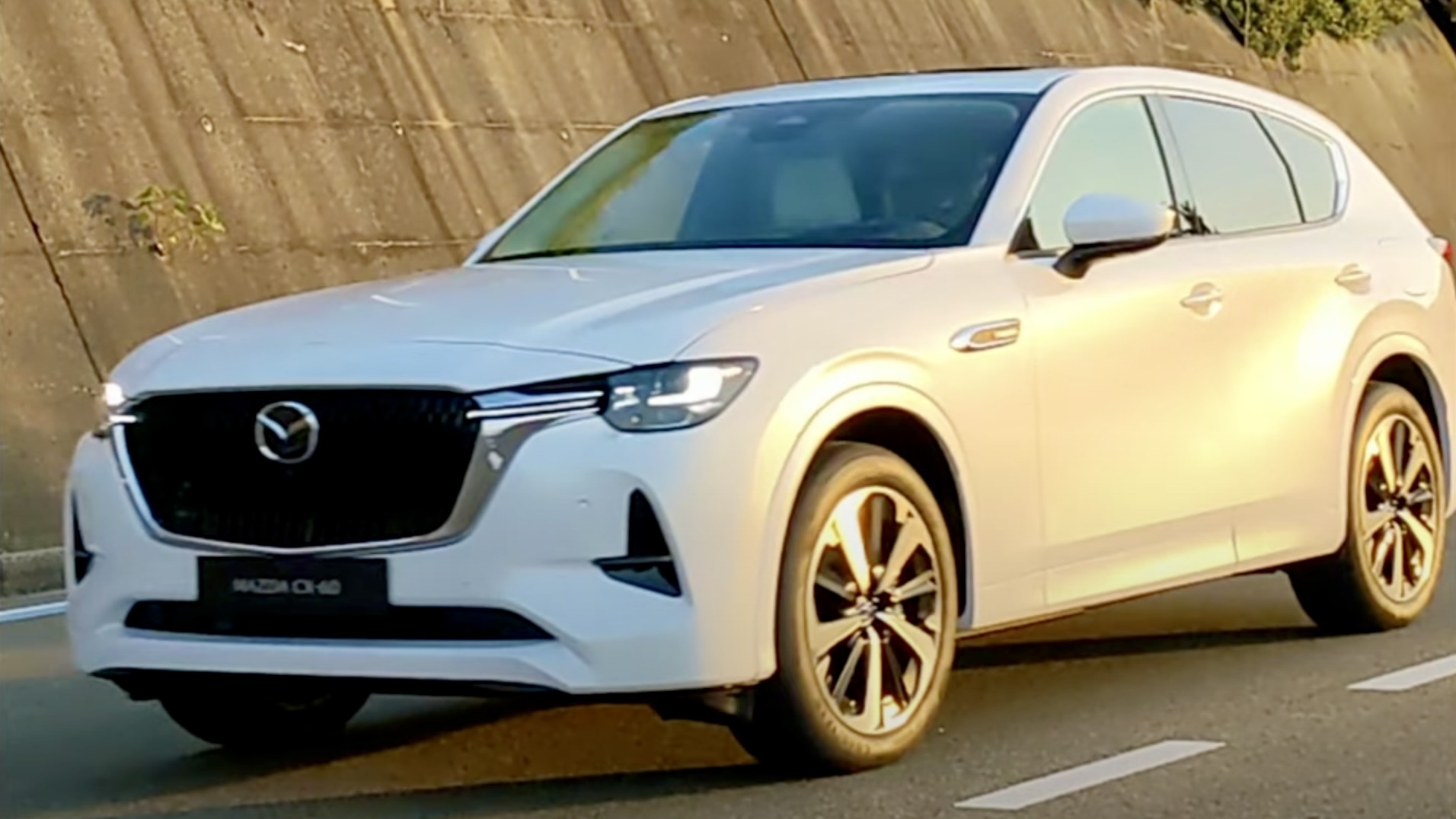
The five-seater CX-60 is the first of two plug-in hybrid models from Mazda’s ‘Large Product’ portfolio, with the three-row CX-80 also slated to offer a limited electric driving range.
For those who don’t require a PHEV powertrain, Large Product SUVs will also be offered with a range of all-new six-cylinder engines with 48-volt mild-hybrid assistance.
The 2022 Mazda CX-60 PHEV will make its debut on March 8, with timing for a local launch to be announced at a later date.
The yet-to-be-revealed Hyundai IONIQ 6 might be the Korean manufacturer’s sleekest electric vehicle yet, according to specs which emerged online.
As reported by the Korean Car Blog, the sweeping sedan is set to measure up at 4855mm in length, 1495mm high and 1880mm wide – riding on a slightly shortened E-GMP platform with a wheelbase of 2950mm.
Compared to the popular IONIQ 5, which was launched last year, the low-slung IONIQ 6 is 220 millimetres longer, 110mm lower and 10mm narrower than its sibling, with a 50mm shorter wheelbase coming thanks to modifications to its architecture.
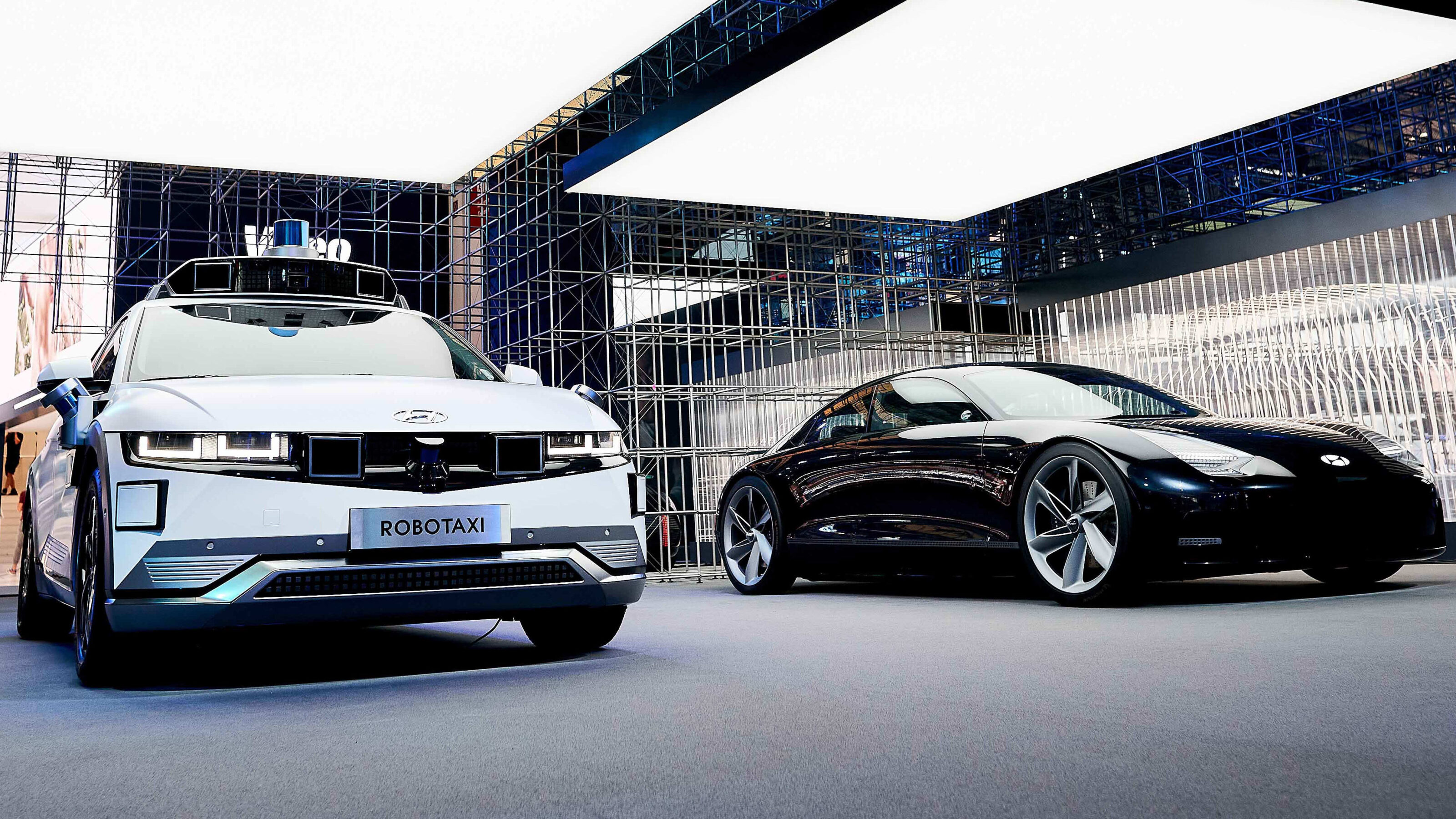
It’s understood the car’s size has grown by roughly 20mm in length from its original planned dimensions, with Hyundai’s head honchos wanting to create a more aerodynamic body for greater driving range.
Underneath the skin, the 72.6kWh battery pack from the IONIQ 5 is expected to be carried over, providing a driving range of up to 450 kilometres in the rear-wheel drive variants of the existing EV.
Hyundai hasn’t yet provided an official launch date for the IONIQ 6 although it was originally planned to be revealed in the first half of 2022, roughly two years before the SUV-sized IONIQ 7 hits the market in 2024.
Having already announced it will end development of internal combustion engine-powered vehicles from 2030, Hyundai has set 2045 as its target year to go carbon-neutral, around five years before a majority of legacy manufacturers.
