
A new-generation Ford Mustang could arrive as early as 2023, with the first electrified version of the coupe rumoured to follow.
According to industry analyst firm AutoForecast Solutions as reported by US industry news outlet Autoline, Ford is set to launch the seventh-generation Mustang in March of 2023 – although at this stage it’s unclear if we’ll see a heavily-revised version of the current model, or if it will be an all-new car.
In January 2021, AutoForecast was quoted as saying the “next-generation” Mustang wouldn’t launch until 2028, suggesting production of the current model will be extended – likely with the help of a significant facelift. Ford downplayed the reports at the time, but stopped short of denying the claim.
Some media outlets in the US are stating the S650 – the codename for the seventh-generation Mustang – will be based on the current-gen S550 Mustang. If true, Ford may be testing prototypes in broad daylight wearing the body of the current model, and could explain why we have yet to see a camouflaged S650 on the road.
While the more recent report from AutoLine suggests the hybrid version won’t arrive until 2025, a leak in October from a Ford engineer listed a 2.3-litre four-cylinder hybrid and a 5.0-litre V8 hybrid as powertrains for the 2023 Mustang.
A previously-uncovered patent filing shows Ford is looking at offering a V8 with dual electric motors mounted to each side of the engine, to create an all-wheel-drive layout.
“Ford has made no secret of the fact that we are electrifying our most popular nameplates,” Ford’s chief product development officer Hau Thai-Tang said at the unveiling of an electric Mustang coupe in 2019.
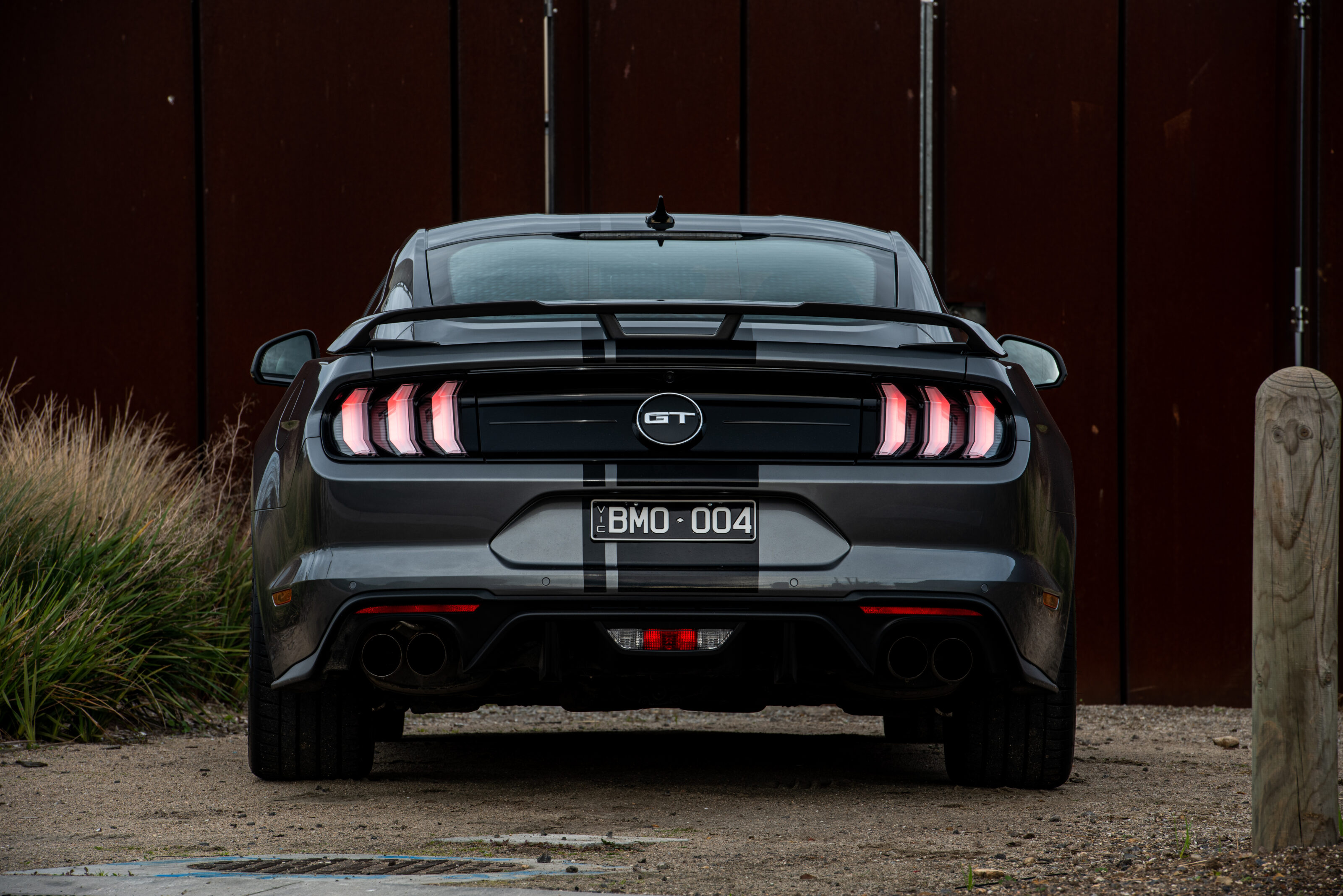
In November 2020, a representative from a Canadian auto workers’ union revealed during a press conference Ford was working on a new 6.8-litre V8 destined for the Mustang and F-150.
With the eighth-generation Mustang coupe looking likely to move to an all-electric powertrain when it arrives in the later part of this decade, the 6.8-litre could be the pony car’s swansong before the V8 goes extinct, offered alongside the hybrid 5.0-litre V8 and hybrid 2.3-litre four.
The mounting evidence points to a new-generation 2023 Ford Mustang on the horizon, with its unveiling possible before the end of this year.
Priced at $37,450 before on-road costs, the Volkswagen Golf R-Line is the most expensive Golf variant before graduating to the considerably more costly GTI and R hot hatches.
The Volkswagen Golf R-Line is a sheep in wolf’s clothing that comes with much of the Golf R hot-hatch’s styling features but lacks its stonking 235kW 2.0-litre engine, instead coming with the 110kW 1.4-litre turbo-petrol also found under the bonnet of the eponymous entry-level Golf and Golf Life variants.
So what does it bring to the table to make you spend more over the regular Golf and Golf Life variants that provide the same level of engine performance?
What is the Volkswagen Golf-R like to live with?

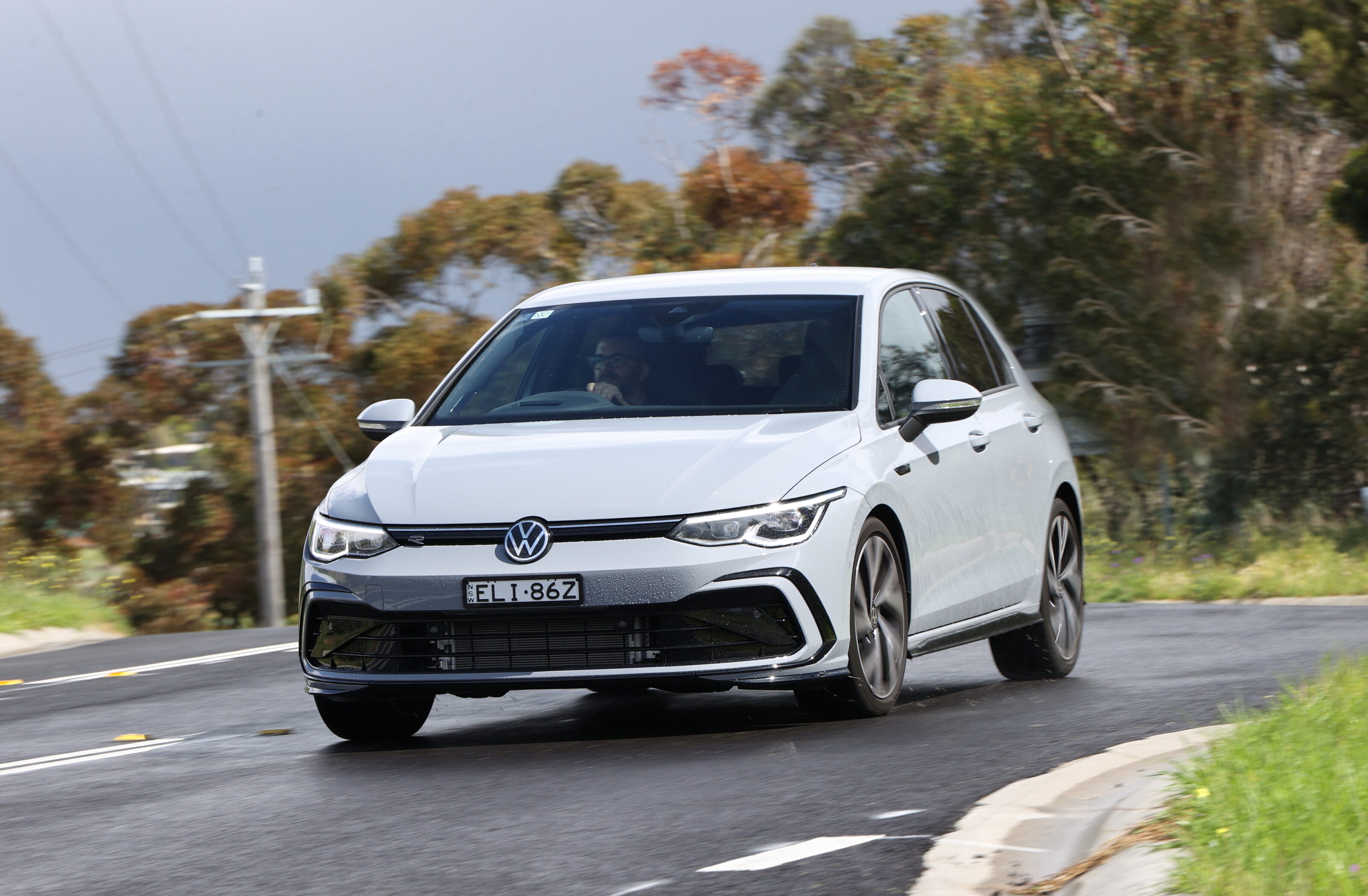
Volkswagen’s designers have a talent for making a conservative exterior design look very attractive, case in point the Golf Mark 8.
Creases along the bodywork are kept to a minimum, with a neat straight swage line running along most of the body and a corresponding contour along the door sill.
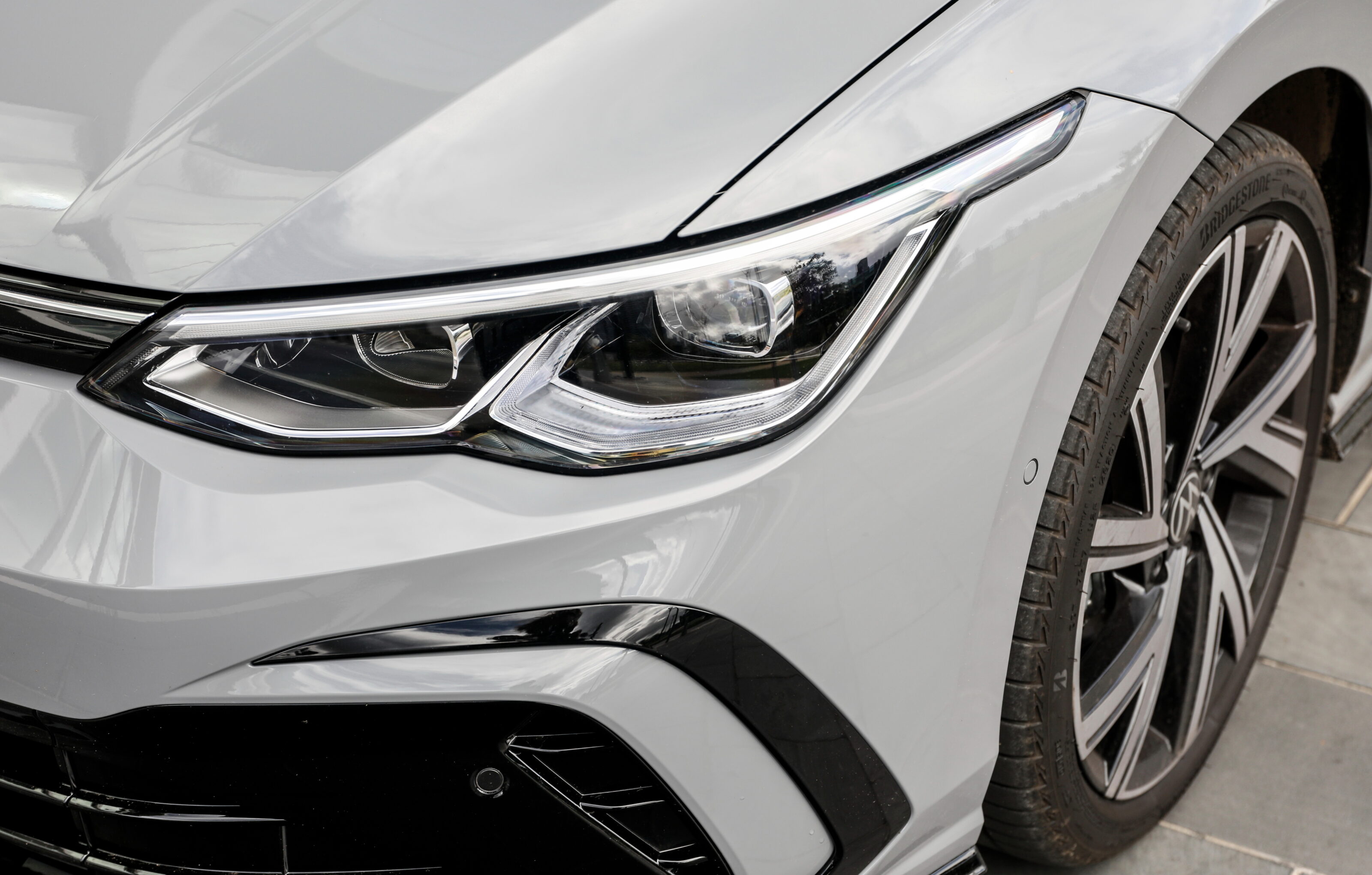
Up front, there’s a nice big sculpted bonnet that curves down to the slimline grille and sleek headlights that sit above the sports bumper and huge black diffuser, flanked by LED foglights and slimline scoops.
Priced at $37,450 + ORC, this is the most expensive Golf variant before graduating to the considerably more costly GTi and R.
This less-is-more treatment has also been handed to the rear end, with a sleek-looking indentation that that flows from the rear bumper up the tailgate.
The R-Line variant stands out from its siblings with a sportier front bumper, chrome highlights along the grille flanked by ‘performance headlights’, plus twin exhaust tips and piano black trim on the bumpers and side skirts.
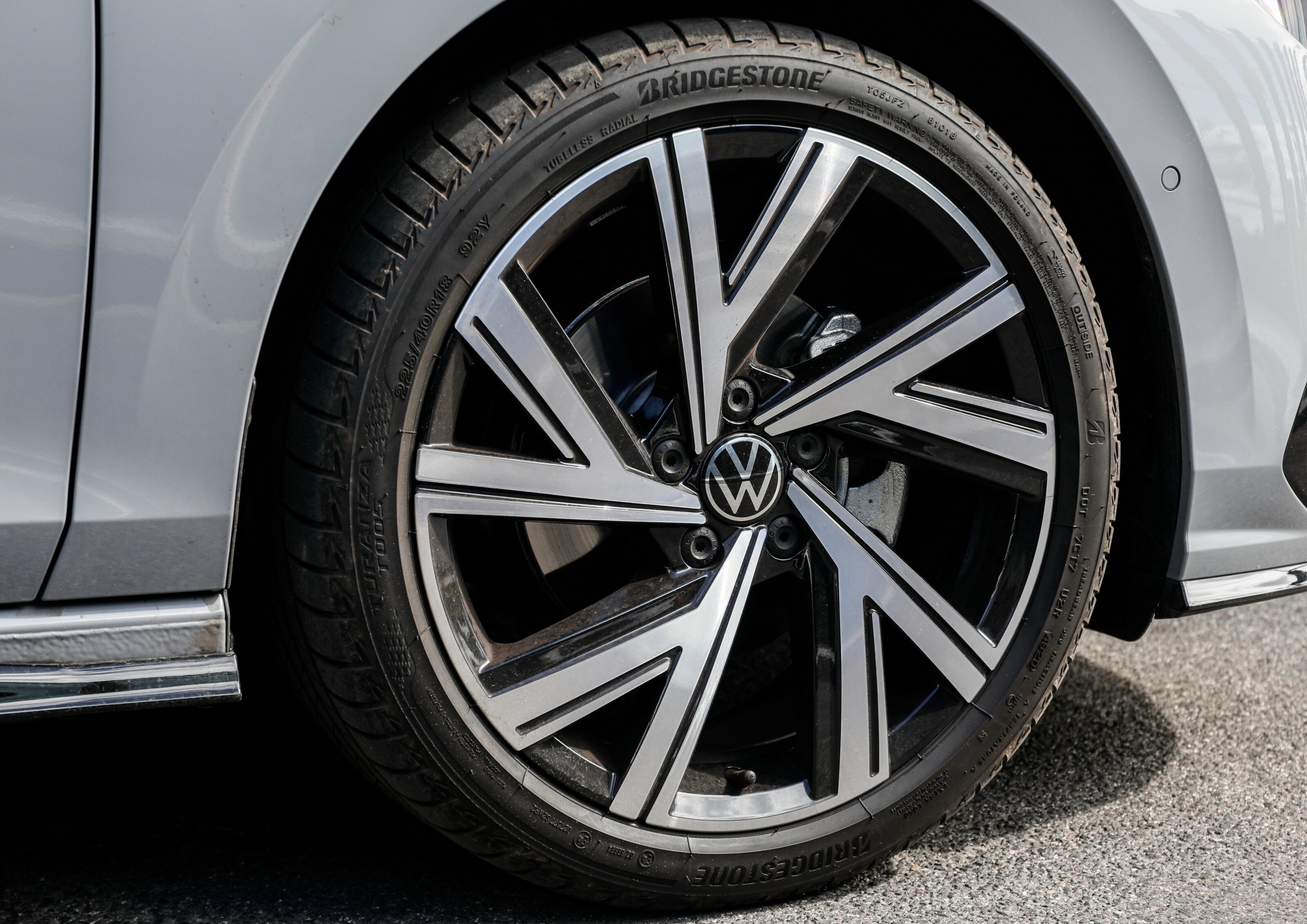
It also comes with two-tone 18-inch rims, bigger than the 16s and 17s on the Golf and Golf Life respectively. And the suspension has been lowered by 15mm, which gives it a more athletic stance.
Inside, the R-Line comes with monogrammed ‘R’ grey cloth and microfleece front sports seats with good side bolstering and a distinctive pattern that reminds me of the Golf GTI’s plaid trim. The seats are manually adjusted but there is an infinity dial so you can get the backrest exactly where you want it.
It otherwise shares many of the features found in the mid-spec Life, which costs $3200 less. These include a 10.25-inch digital ‘cockpit pro’ gauge cluster, 10.0-inch ‘Innovision cockpit’ infotainment system, wireless smartphone mirroring and charging, in-built satellite navigation, tri-zone climate control and keyless entry/start.
Our test vehicle also comes with a Sound and Vision package that for $1500 brings a head-up display and 480-watt Harmon Kardon premium audio with eight speakers, subwoofer and amplifier.

The most obvious change inside the Golf 8 is the lack of physical buttons and switches. Apart from the traditional start button and window switches, almost everything is controlled on the screen including most of the tri-zone climate control functions.
This can be a pain when you’re on the move, though Volkswagen has added a ‘smart’ climate control menu that offers one-touch commands to add demist, warm your feet or hands, or send cool air through the front vents.
You can also adjust the audio volume and cabin temperature using the touchpads that are quite sensitive, as are the buttons to the right of the steering wheel themselves that control the exterior lights and window demisters.
Touchpads on the steering wheels have a haptic feel that makes them easier to operate while driving, though I do prefer physical buttons and switches but thankfully the light and windscreen wiper stalks have been retained.

Selecting the Eco, Comfort, Sport and Individual driving modes is also done via the screen, which is a bit of a pain as well but at least there is a shortcut ‘button’ underneath the screen, so it’s only a two-touch operation.
The 10.25-inch digital driver display provides different functions and can be customised with different colours. It allows for different views including a navigation map and an active safety monitor that shows you vehicles in front and adjoining lanes as well as your adaptive cruise control settings.
The most obvious change is the lack of physical buttons and switches, almost everything is controlled on the screen including most of the tri-zone climate control functions.

Despite being a new model, the Golf 8 is built on the same MQB chassis as its predecessor, meaning there is no difference when it comes to back seat space, which is about average for a hatchback.
Leg and headroom are okay, and rear-seat passengers will find air vents with dedicated temperature control, two extra USB-C ports, multi-pouch map pockets and a fold-down centre armrest with cup holders.
The luggage area is a handy 374 litres, or 800mm long with the rear seats up and 1003mm wide between the wheelarches.
You can adjust the boot floor to be level with the load lip or a little deeper to carry more stuff and below the floor is a space-saver spare wheel with associated tools.

The 1.4-litre turbocharged petrol engine offers economical driving with an official combined fuel consumption rating of 5.8L/100km.
As well as being able to store longer items through the middle of the rear seat, the seatbacks fold down with a 60:40 split that provides up to 1493mm of load length behind the front seats, or up to 1293 litres.
The Volkswagen Golf is covered by a five-year, unlimited-kilometre warranty and has 12-month/15,000km service intervals. Each service at VW service centre costs $405 under the company’s Assured Service Pricing, or you can opt for three- or five-year ‘Care Plans’ for $1200 or $2100 respectively.
What is the Volkswagen Golf R-Line like to drive?
While it carries over the 110kW/250 Nm engine – otherwise known as 110TSI – from the Golf 7.5, the Golf 8’s powertrain differs with the inclusion of an eight-speed torque converter automatic gearbox in place of the veteran seven-speed dual-clutch auto.
This slightly affects performance, with the 0-100km/h time increasing from 8.2 to 8.5 seconds, and it’s not quite as quick through the gears as the DSG. However, it shifts seamlessly and you don’t get that low-speed hesitation when parking or stuck in traffic.
Despite its modest power output, this is quite a punchy engine with a strong mid-range that’s very useful for overtaking and negotiating hills – and it provides more than enough power to have a little fun.
It’s a fantastic engine with a manual gearbox, but sadly that’s only available in the entry-level variant that misses out on plenty of features found in this and the Life.

As well as the driving modes mentioned earlier, the R-Line also benefits from the 15mm-lower sports suspension and progressive steering that’s also found in the Golf GTi and R.
It’s plenty of fun to chuck around bends and roundabouts. You barely feel any body roll and the steering, which also tightens up in Sport mode, does exactly what you want it to.
Despite the stiffer suspension and 18-inch rims, the ride is generally comfortable and still absorbs bumps and inconsistencies across different road surfaces quite well.

That said, the low-profile Bridgestone Turanza tyres make a tinny noise over certain surfaces, which cuts through to the cabin. Wind noise, on the other hand, is well tamed.
In short, while it lives in the shadow of the hot hatch Golfs, this R-Line still brings plenty of driver enjoyment for a fraction of the cost.
It’s plenty of fun to chuck around bends and roundabouts. You barely feel any body roll and the steering, which also tightens up in Sport mode, does exactly what you want it to.
What is the Golf R-Line like for safety?

The Mark 8 Golf has a five-star ANCAP safety rating and each version is equipped with eight airbags including two frontal, two front-side, two rear-side, and front and rear curtains.
It also comes standard with Volkswagen IQ Drive technology that includes adaptive cruise control, lane-keep assist, rear-cross traffic alert and auto emergency braking that will also stop the car if you’re about to turn in front of an oncoming vehicle and includes both pedestrian and cyclist detection.
VERDICT

The Volkswagen Golf R-Line isn’t the sweet spot of the standard Golf range – that honour goes to the mid-spec Golf Life that shares the same performance and many of the features but is more than $3000 cheaper.
To me, where the well-equipped and nicely finished R-Line becomes a good value proposition is when you compare it to the premium hatchbacks costing several thousand dollars more, such as its Mercedes-Benz A200 and BMW 118i compatriots.
It is also an excellent and more affordable alternative to the similarly equipped and powered Audi A3 35 TFSI that isn’t yet available in Australia.
2021 Volkswagen Golf R-Line specifications
| Body | 5-door, 5-seat hatchback |
|---|---|
| Drive | Front-wheel |
| Engineu00a0 | 1.4-litre, 4-cylinder, DOHC, 16v, turbo |
| Bore/Stroke | 74.5 x 80.0mm |
| Compression ratio | 10.5:1 |
| Power | 110kW @ 5000rpm |
| Torque | 250Nm @ 1500-4000rpm |
| Transmission | 8-speed automatic |
| 0-100km/h | 8.5sec (claimed) |
| Fuel consumption | 5.8/100km (combined/claimed) |
| Weight | 1247kg |
| Power/Weight | 77kW/tonne |
| Front suspension | struts, coil springs, anti-roll bar |
| Rear suspension | torsion beam, coil springs, anti-roll bar |
| L/W/h | 4284/1789/1456mm |
| Wheelbase | 2636mm |
| Boot volume | 374/1439L (rear seats up/down) |
| u00a0Steering | Progressive electrically assisted rack-and-pinion |
| u00a0Brakes | Ventilated discs (f); solid discs (r) |
| u00a0Wheels | 18 x 7.5-inch alloys |
| Tyres | 225/40 R18 Bridgestone Turanza |
| Price | $37,490 + ORC |
The Ferrari 408 4RM is a fascinating car on multiple fronts. And not just because it’s the first all-wheel-drive offering to be bestowed the venerable Prancing Horse badge. If you thought it was the FF, you’d be wrong. That fact alone is interesting, but for all its genius, the famous Italian brand never planned to put the mid-engined, AWD supercar into production.
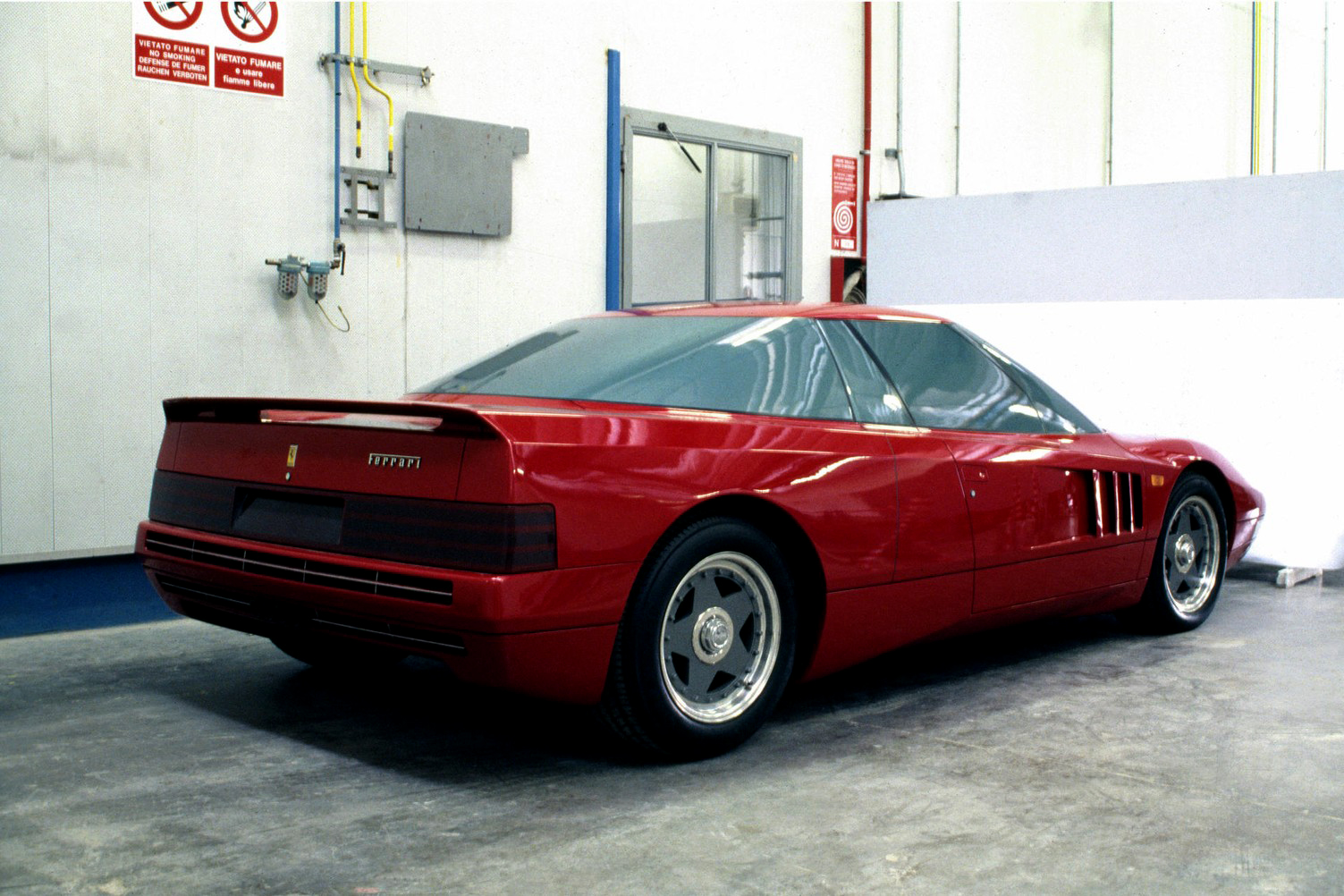
Instead, it was a mid-‘80s concept created to showcase the innovative technical prowess within the Maranello HQ to sell on to others. Also faced with AWD opposition from the likes of the Porsche 959 and Jaguar XJ220, Ferrari wasn’t going to be left behind. A group of top engineers were put together under the banner of Ferrari Engineering to build the 408 4RM. The Ferrari team even developed the AWD system in-house.
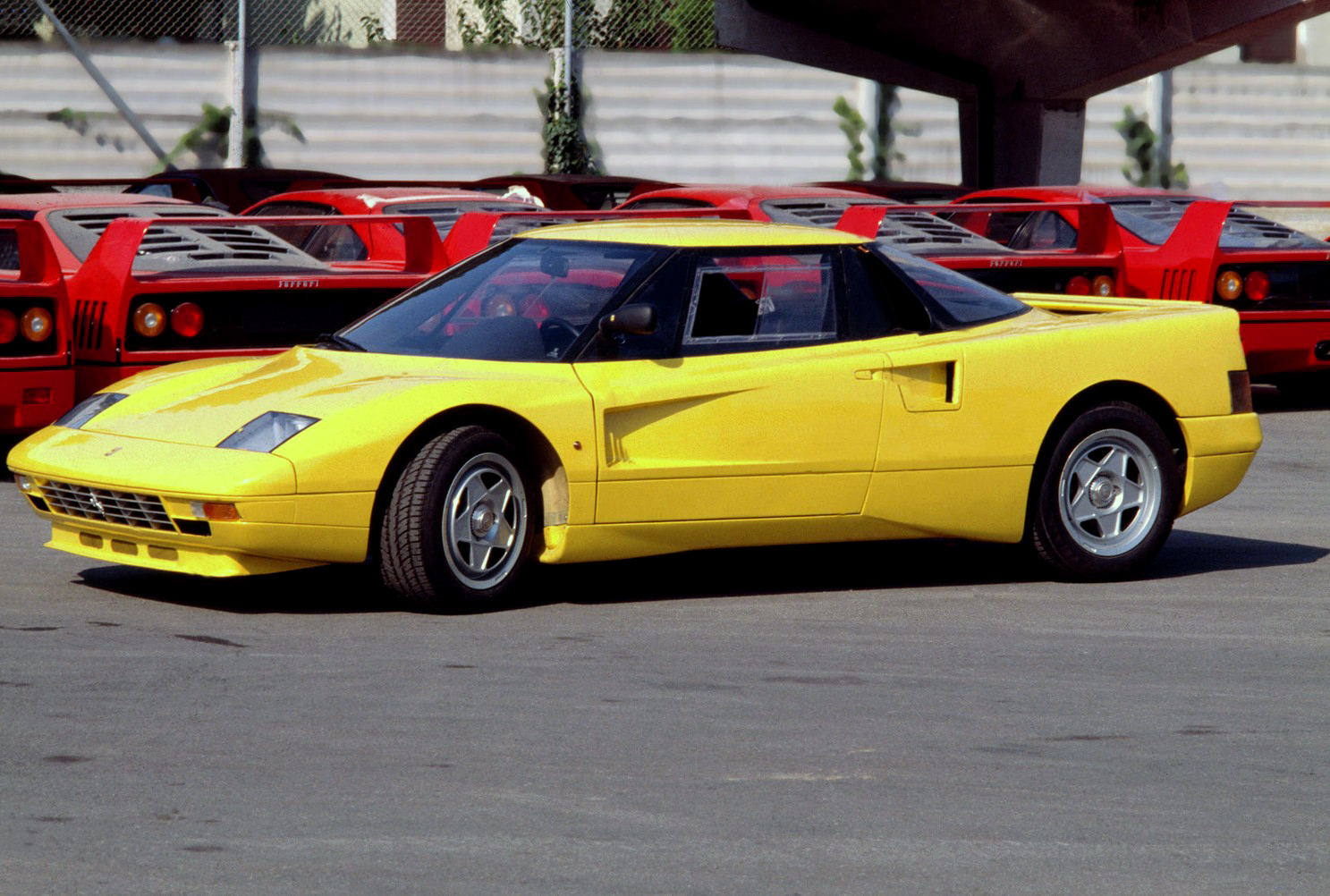
The red 408 4RM was the first example, completed in June 1987 with chassis number 70183. It was made out of stainless steel and welded together using laser techniques. The second yellow car is chassis number 78610. It’s on display in Maranello at Galleria Ferrari and is the more advanced of the two concepts. It is made out of aluminium and is joined not by welds, but via a bonding adhesive and rivets. Yet, it is also almost 30 per cent lighter than the original.
The all-alloy 4.0-litre V8 (revised from the 328) also broke new ground for the marque by being placed longitudinally (and further back in the engine bay so the gearbox could be placed ahead of it) with dual overhead camshafts and four valves per cylinder. What’s more, it was also offset to the right to accommodate the AWD system.
Punching out 221kW at 6250rpm and 373Nm at 4500rpm, the 3999cc unit provided decent grunt (for the time) to all four wheels with differentials on each axle. Up to 70 per cent of power went to the rear and 30 per cent to the front axle. It also used a five-speed manual gearbox with a twin-plate clutch.
While no official 0-100km/h figure is offered, given the 408 4RM’s 1343kg kerb weight, performance would be brisk. It also used a dry sump setup and with a 120-litre fuel tank, poor economy becomes less of an issue.
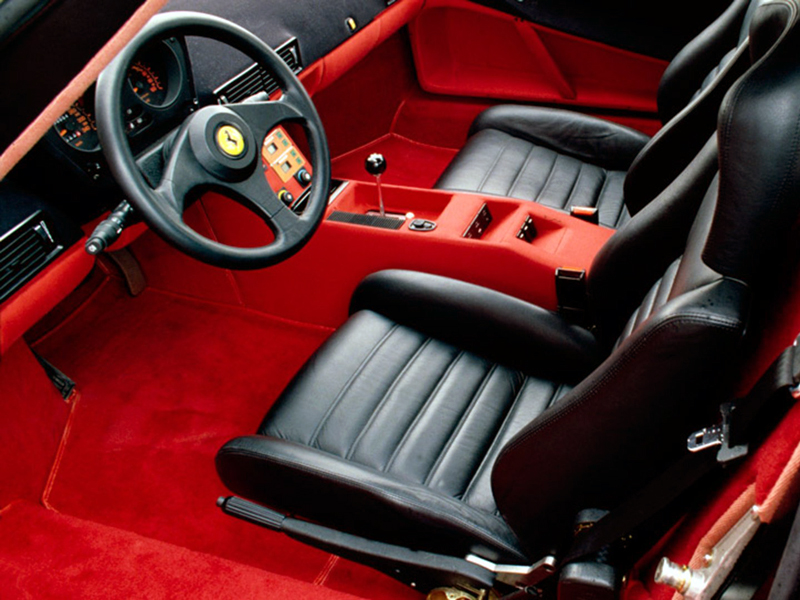
However, it isn’t solely the all-wheel-drive system that is of note here. The 408 4RM also featured electronically adjustable suspension, rear steering and a monocoque body shell. That construction also meant that getting in and out of the 408 4RM was more difficult than usual due to wide sills while the interior featured extensive use of red carpet.
Both prototypes featured detachable front and rear subframes with an elongated wheelbase to accommodate the forward-facing gearbox. The suspension was fully independent front and rear with electro-hydraulically adjustable dampers and anti-roll bars.
Tiny by today’s standards, the 408 4RM ran five-spoke 16-inch Speedline wheels with a centre-lock hub and concealed ventilated discs all-round. A speed-sensitive rear wing was also used with an electronic central section to aid aerodynamics.
For those wondering, the name has meaning, with the 40 standing for the engine displacement and the 8 referring to the number of cylinders – Peugeot has now nabbed the 408 nomenclature. The latter half of the name stands for 4 Ruote Motricic, which translates to four-wheel drive.
Ultimately, the plan to create Ferrari Engineering fizzled out and the 408 4RM stands as one of the most interesting Ferraris to never go into mass production.
Snapshot
- Toyota ended up on top of vehicle searches in 47 countries
- German manufacturers take second, third and fourth place
- Korean siblings beat Tesla
How can you rate the success of a manufacturer in the modern world?
Is it just by vehicles delivered or is there more to it than that? A connection with potential buyers perhaps? Why not both?
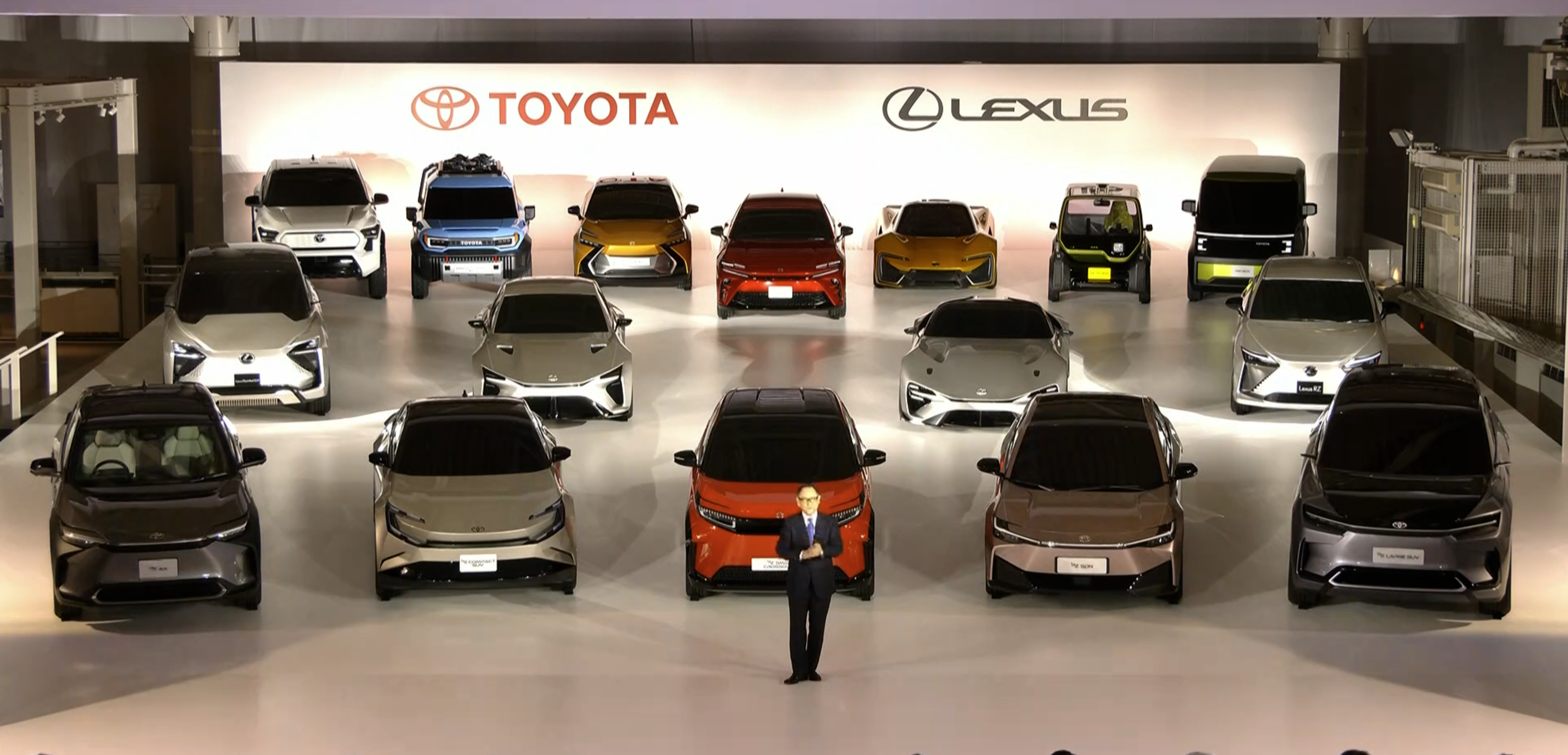
As one of the biggest automotive brands in the world, Toyota is coming off a high in 2021, having taken its 19th-straight year at the top of the Australian new car sales charts, as well as backing up its efforts to be the top-searched car maker across the most countries.
In data compiled by Compare The Market, the insurance comparison agency found Toyota was the number-one searched automotive manufacturer on Google in 47 out of 154 analysed, roughly 31 per cent of all searches.
On our side of the fence at WhichCar, this comes as no shock – four of the top six articles in 2021 came courtesy of the new LandCruiser 300 Series launch, while Toyota’s electric vehicle strategy reveal in December came as a surprise to the industry.
The three places behind Toyota were held by German rivals BMW, Mercedes-Benz and Audi respectively, as the three luxury marques continue to fight it out for premium sales in Australia – although only the Bavarians gained a significant number of new vehicle sales compared to 2020.
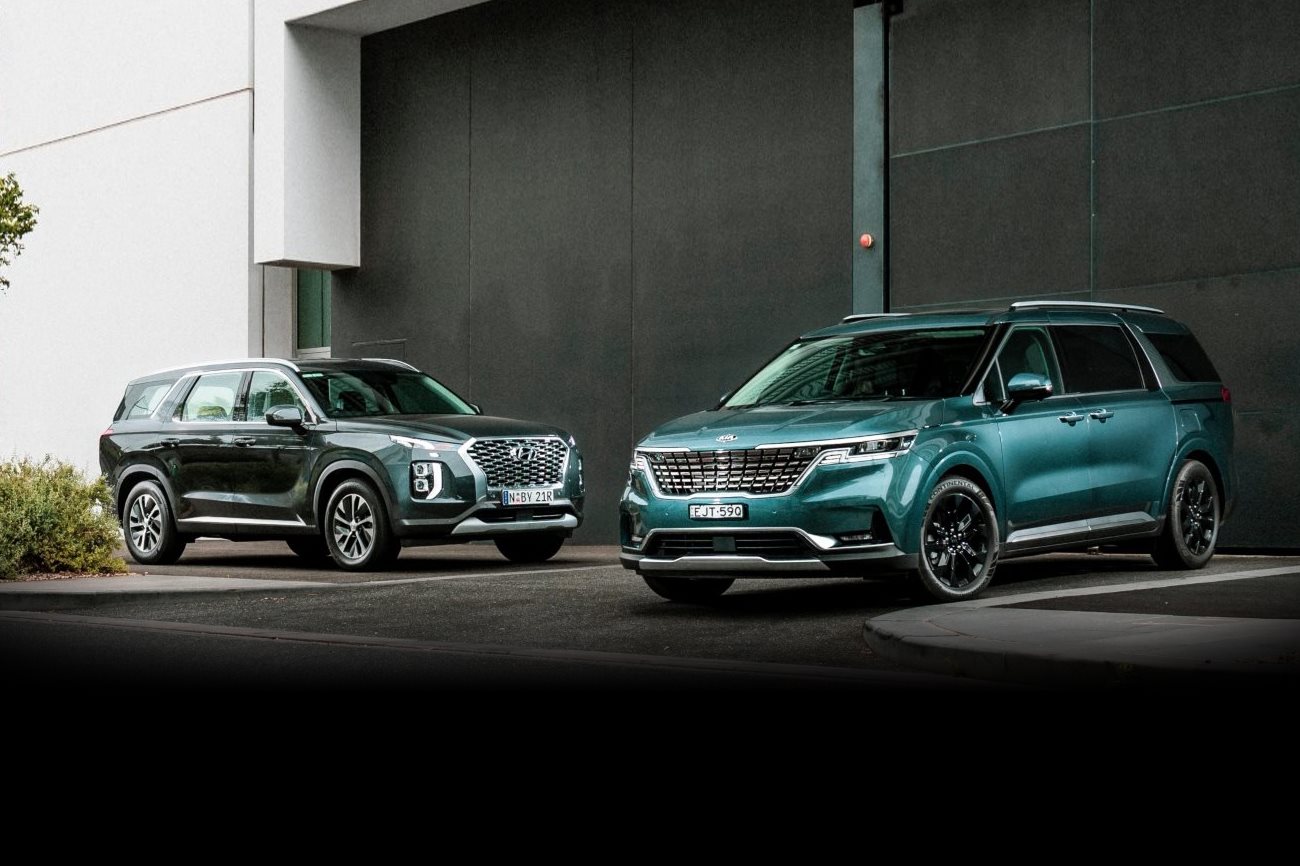
Tailing the Germans, Korean siblings Kia and Hyundai took fifth and sixth place respectively, having topped Google searches in a combined 13 countries – just two more than Audi’s total.
Electric vehicle pioneers Tesla were included in the list for the first time, topping the search results in five companies and looking to make up ground as it slowly but surely establishes itself as a mainstream manufacturer globally.
It’s somewhat of a surprise to see – or rather not see – Volkswagen and Chevrolet not feature in the top 10, given both are consistently in the top five players of global vehicle production and the biggest pieces of the Volkswagen Group and General Motors respectively.
With the world returning to some form of normality and a host of new cars expected to launch in 2022, will this affect last year’s results or are things going to remain unchanged?
| Rank | 2018 | 2019 | 2020 | 2021 |
|---|---|---|---|---|
| 1. | Toyota | BMW | Toyota | Toyota |
| 2. | BMW | Toyota | BMW | BMW |
| 3. | Mercedes-Benz | Mercedes-Benz | Mercedes-Benz | Mercedes-Benz |
| 4. | Volvo | Hyundai | Kia | Audi |
| 5. | Audi | Ford | Ford | Kia |
| 6. | Honda | Volvo | Volvo | Hyundai |
| 7. | Suzuki | Audi | Audi | Tesla |
| 8. | Ford | Honda | Honda | Renault |
| 9. | Hyundai | AvtoVAZ | Nissan | Ford |
| 10. | Volkswagen | Porsche | Renault | Honda |
Snapshot
- GLE, GLS, C-, E-, G-, and S-Class models affected
- Diesel variants impacted only
- Total of 8382 vehicles under recall
Mercedes-Benz has recalled just over 8000 vehicles in Australia, affecting a select number of models fitted with two diesel engines.
Covering a total of 8382 units, the recall affects owners of C-Class, E-Class, G-Class, S-Class, GLE-Class and GLS-Class models built between 2017 and 2021, impacting just the diesel variants which are powered by either the OM654 or OM656 engines.
An apparent leak may develop between the coolant pump and the vacuum circuit, allowing coolant to enter the circuit and affect components which will result in an increase in temperature, potentially leading to a fire.
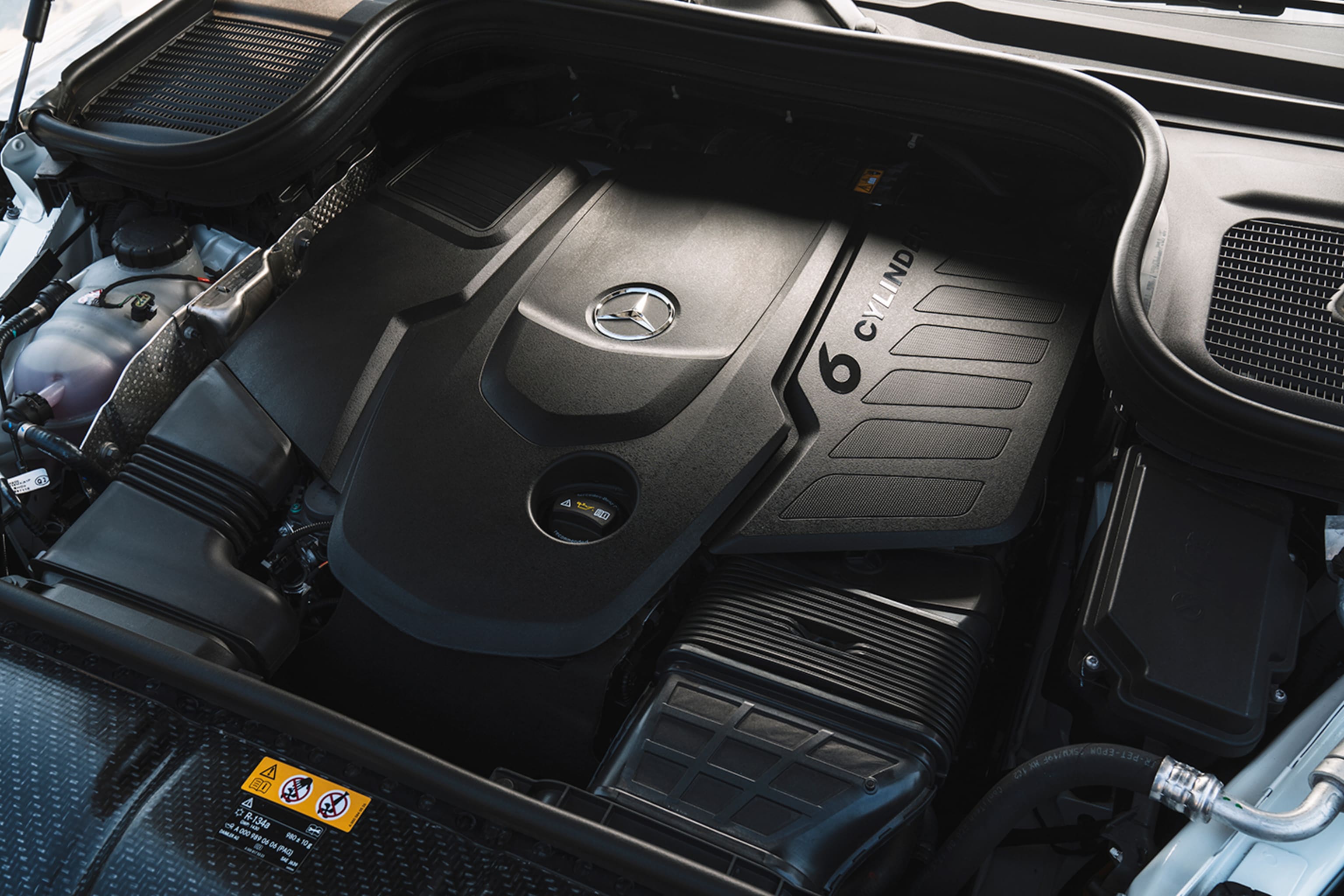
Mercedes-Benz says it will contact owners once parts become available to rectify the problem, free of charge at their most convenient dealer.
Alternatively, owners who are unsure as to whether their vehicle is affected can contact Mercedes-Benz’s customer assistance centre on 1300 300 896 or [email protected].
A list of affected VINs can be found here.
An all-new 2025 Nissan S16 Silvia is rumoured to be in the works, but may swap its typical turbocharged petrol engine for a fully-electric powertrain.
Better known in Australia as the 200SX, the Silvia is one of Nissan’s most iconic vehicles, being positioned as an entry-level sports car below its Zed models and the flagship Skyline GT-R.
Now, Japanese publication Best Car is reporting a new Silvia is on the drawing board from Nissan, just months after Europe design boss Matthew Weaver revealed retro concept drawings inspired by the original Silvia of 1964.
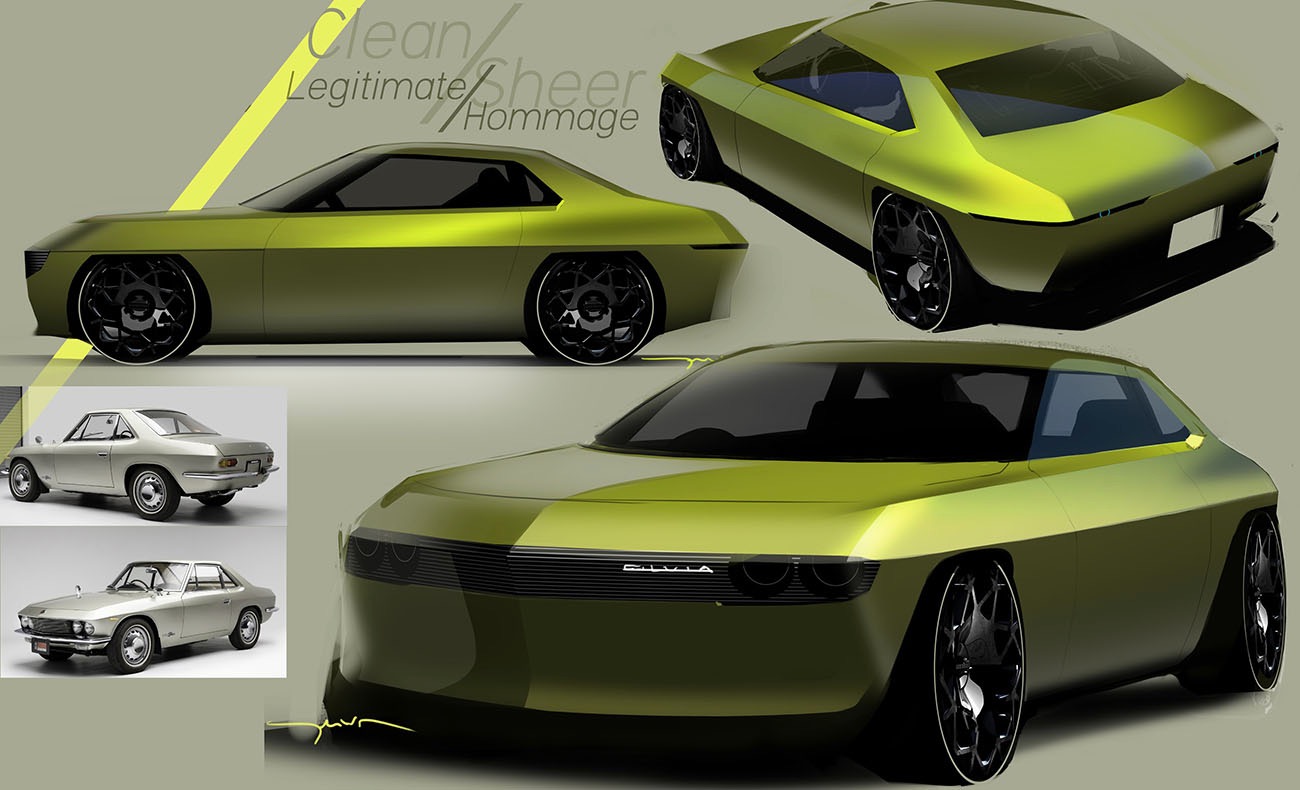
“By redesigning this car for the future, we wanted to pay homage to that heritage,” Weaver said at the time.
“Being an electric vehicle, it gave us the opportunity to extend the clean surfacing around the front because an electric powertrain has far lower cooling requirements, so there is no need for a grille where radiators are traditionally located.”
While details of the Silvia’s platform or powertrain have not been outlined, it’s possible the sports car could adopt the same electric motors from the upcoming Nissan Ariya. In two-wheel-drive form, the Ariya has up to 178kW and 300Nm – a healthy upgrade from the 147kW/265Nm offered in the S15 200SX sold in Australia up to 2002.
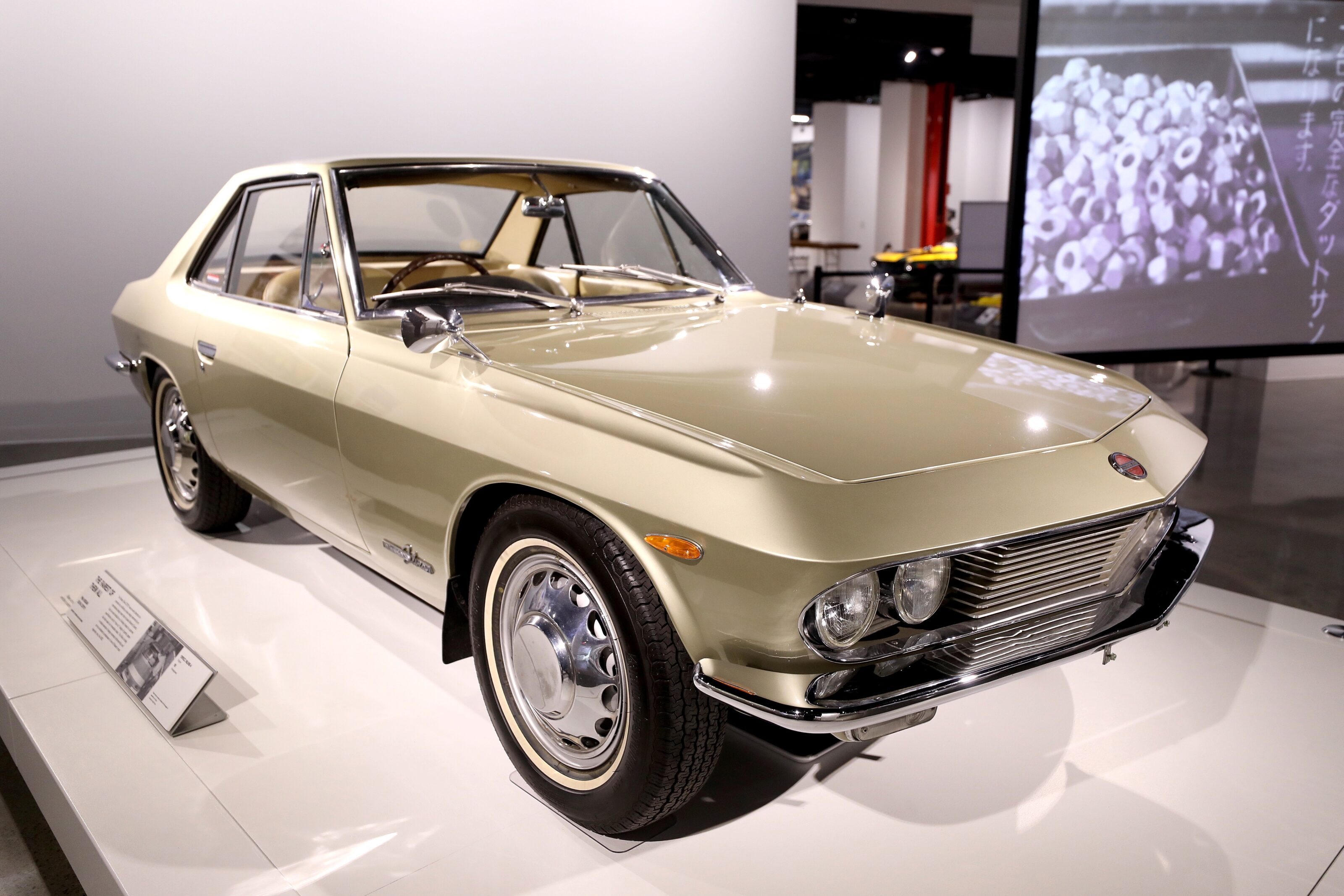
“The key components of an electric vehicle are quite different and they can be packaged differently, compared to an internal combustion engine car,” Weaver said.
“Consequently, the Silvia we’ve reimagined here would have a larger interior than its exterior dimensions would suggest.”
With the S12 Silvia of the 1980s (badged as a Gazelle in Australia) being a direct competitor to the Toyota AE86 Sprinter, perhaps Nissan is finally looking at bringing a car to market which can fight the AE86-inspired Toyota GR86 and Subaru BRZ.
Iconic Porsche restomodder Singer has reportedly signed a deal to source its future engines directly from one of the Stuttgart manufacturer’s many arms.
According to Top Gear, Porsche Motorsport North America has agreed to partner up with Singer to assemble modified flat-six engines to the bespoke brand’s specifications, allowing the reimagined 911s to deliver a different driving experience to their contemporary counterparts.
It’s the first time Porsche seems to have positively acknowledged Singer, after the giant German sports car manufacturer requested the Californian company to remove its name from the radical ACS off-roader released last year, wanting to distance itself from the project.
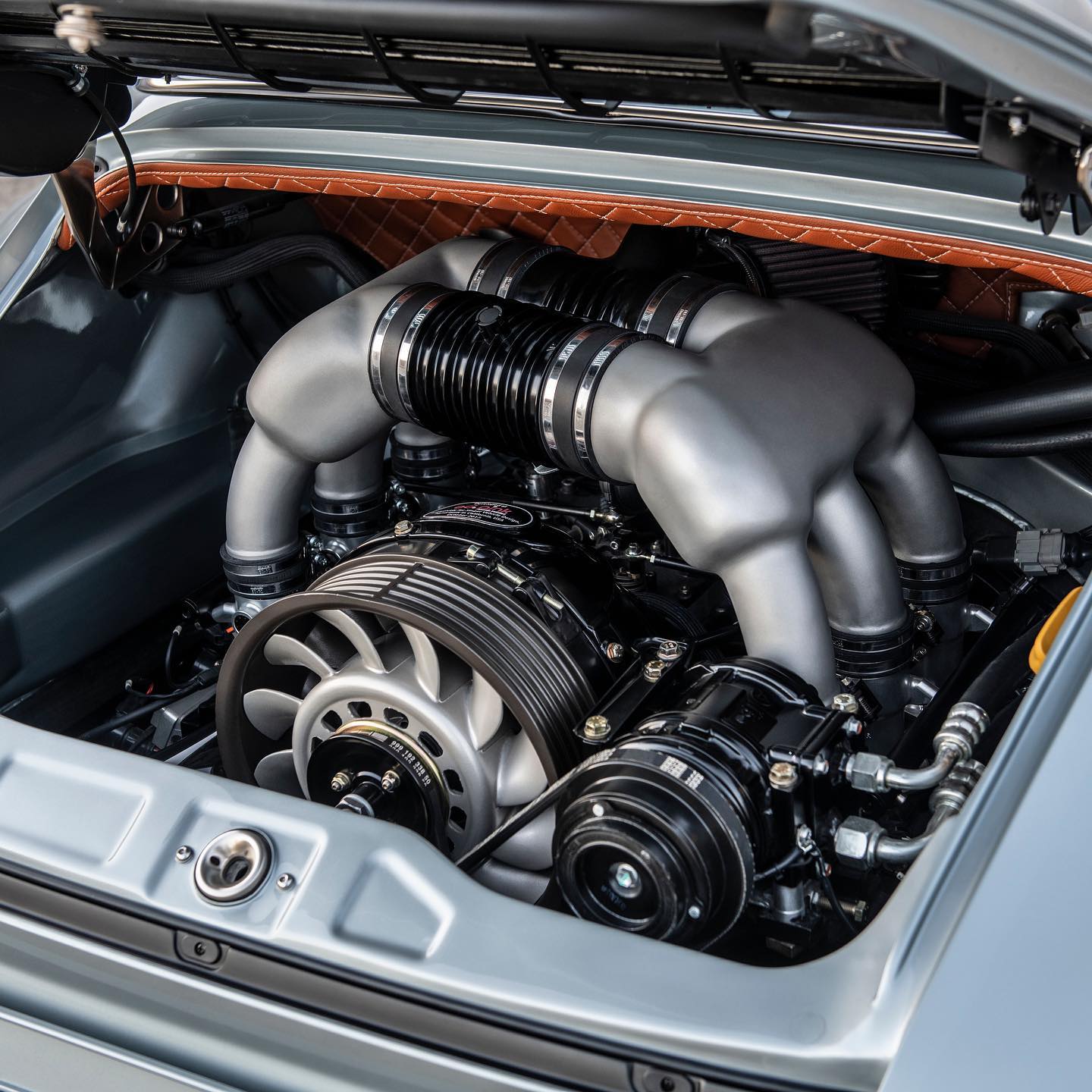
While Porsche Motorsport says “the new collaboration focuses exclusively on the assembly of remanufactured engines”, Singer has stated each motor will be noticeably different after the works outfit has developed them.
“The characteristics of the engines – very much at the core of every Singer car – will continue to be defined by Singer’s specification.”
Given both operations are based in Los Angeles, this could be a step towards a proper relationship between the two brands, as Singer could undoubtedly benefit from Porsche’s new engines for its next generation of reimagined vehicles.
It’s understood the deal will not impact production of engines for Singer’s DLS models which are assembled in the United Kingdom by Williams Racing, a subsidiary of the Formula One team.
Fresh patent filings from Mazda suggest the carmaker still has ambitions to offer a rotary-powered, rear-wheel-drive coupe.
The patent drawings, uncovered by Japanese blog Hatena, show a rear-driven coupe using a three-rotor engine mated to a hybrid system, in what could turn out to be the long-rumoured RX-9.
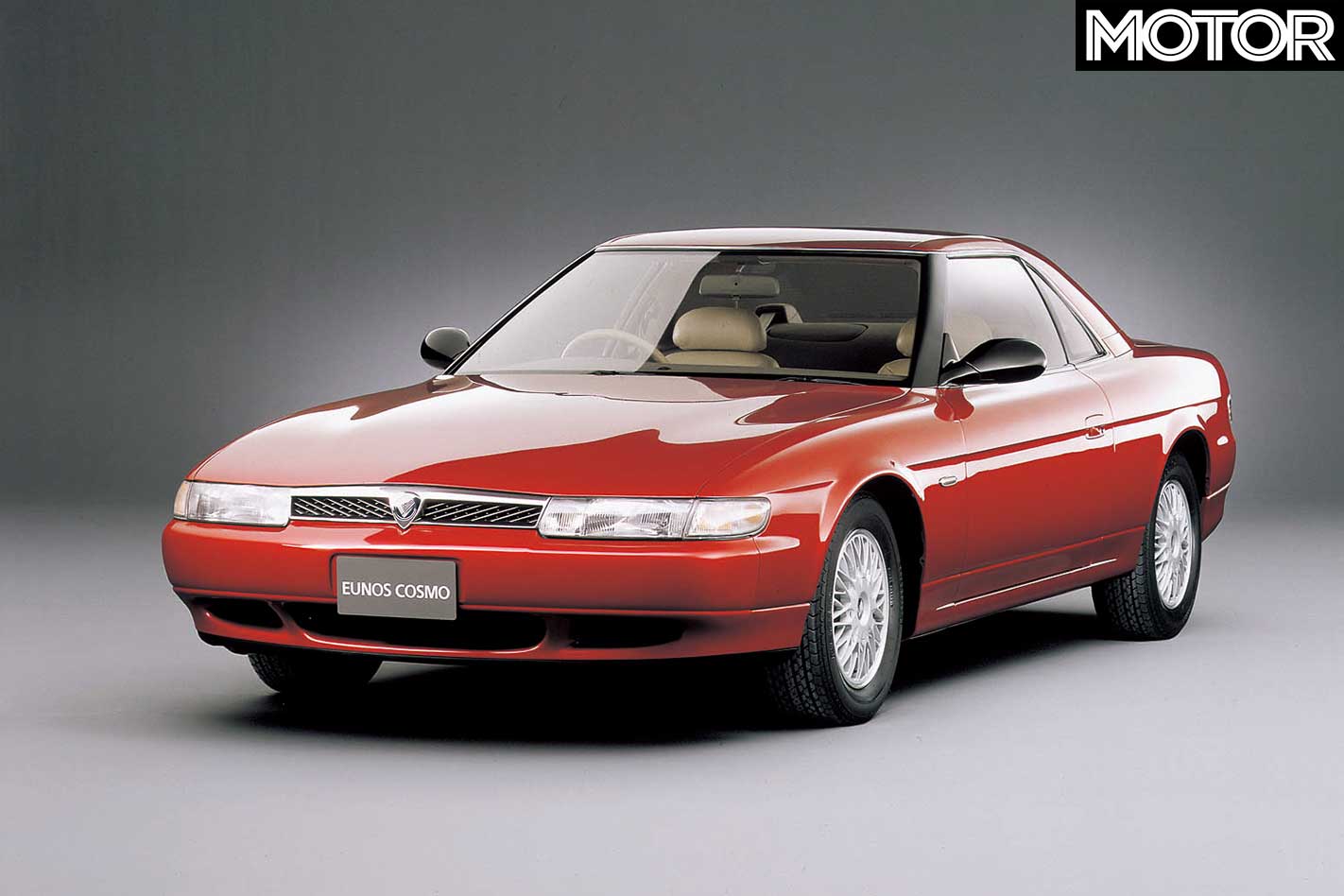
Mazda has only ever offered a production triple-rotor once before – an optional 20B engine available in the Japanese-market Eunos JC Cosmo, built between 1990 and 1996. The more common 12A and 13B engines offered in the RX-7 and RX-8 were twin-rotors.
In November, Mazda joined Toyota, Subaru, Kawasaki, and Yamaha in pledging to keep the internal-combustion engine alive by committing to the development of hydrogen fuel.
Unlike hydrogen fuel-cell vehicles, which convert the fuel to power electric motors, the Japanese manufacturers have been pursuing the development of hydrogen as a direct replacement for petrol and diesel. As hydrogen combusts with virtually no emissions, it would allow the rotary to be compliant with strict Euro 7 emissions laws, expected to come into force in 2025.
In July 2021, Japanese publication Best Car reported Mazda was working on a hydrogen-powered rotary engine – a concept the carmaker first began exploring back in 1991.
Mazda produced a limited run of RX-8 sports cars powered by hydrogen in 2008, as well as building a Premacy people mover with a hydrogen rotary engine with hybrid assistance.
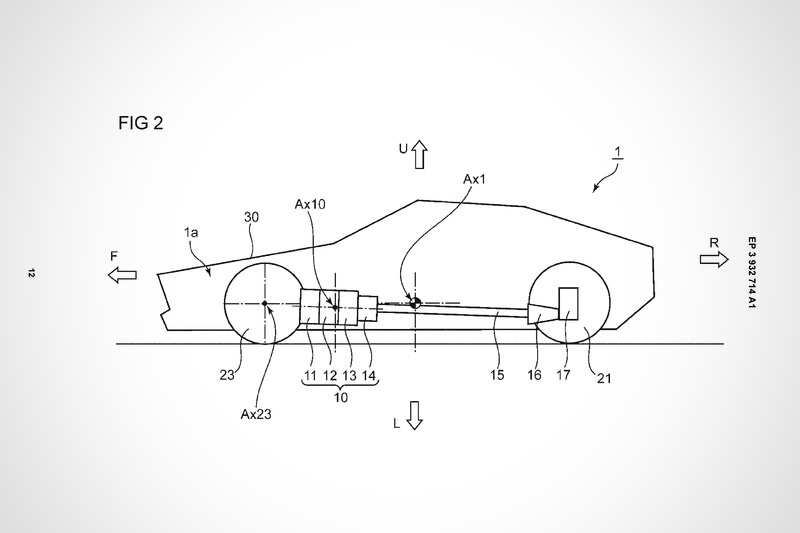
While patent filings are no confirmation these things will be made, in August, Hatena Blog revealed more patent sketches from Mazda showing a coupe with a strong resemblance to the RX-Vision concept shown in 2015.
The company has also trademarked a symbol in recent months which combine a rotor with an ‘E’ for electric, while another logo has similarities to the Spirit R – special variants of the RX-7 and RX-8.
Rumours of a new rotary-powered RX model have been circulating for years, but despite the many patents and trademarks, Mazda has yet to confirm whether such a model will be produced in the future.
There are some words that motorsport fans nearly universally hate. The worst being team orders. Now that I’ve mentioned it, you already have images flashing through your head. I’d wager it looks something like two red Ferraris swapping places in Austria, before the drivers ignominiously tried to save face by switching places again on the podium. When it comes to leaving a sour taste in the mouth of racing fans, team orders are the undefeated champion.
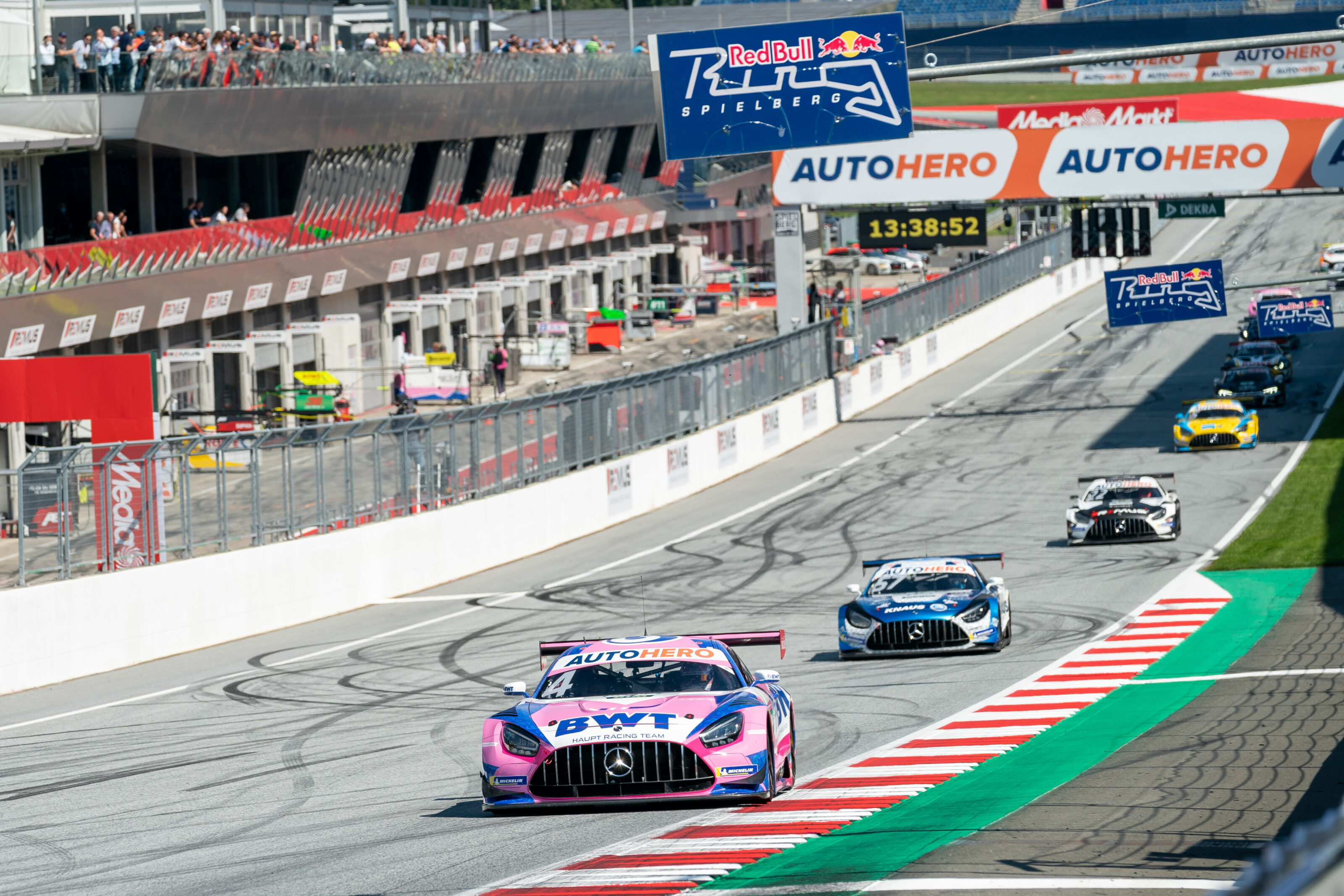
Last year’s most egregious example comes thanks to DTM, which won’t come as any great surprise to anyone who’s maintained a passing interest in the category. Now, the complete loss of what made DTM special, and its inability to find a discernible uniqueness with the new GT3 formula aside (throw BOP in the bin and go wild, Gerhard!), the ‘21 championship was a thriller right up to the final shambles of a race. I won’t get into the semantics of how it unfolded, but the result was Mercedes-AMG’s Maximilian Götz (great name) claiming the title after a trio of fellow AMG drivers – from different teams it should be noted – pulled aside in the closing minutes of the event to hand the German the race and championship victory. Making the corporate call even more galling was the fact the leader before orders were handed down held a 10 second-plus advantage over Gotz before slowing dramatically to allow the eventual champion through. Under DTM’s new sporting regulations this was all perfectly legal. Legality doesn’t stop fans feeling robbed.
But it’s not just on-track positions that are handed around as a result of team orders. Peter Brock has two Bathurst 1000 victories to his name as a direct result of team orders. In 1983, Brock’s teammates John Harvey and Phil Brock had qualified the eventual winning car, but The King of The Mountain’s #05 VH Commodore’s engine blew on lap eight, prompting himself and co-driver Larry Perkins to be transferred into the sister entry, which they drove to victory. A similar situation occurred in ’87, when Brock took his ninth and final Bathurst 1000 victory.
Team orders aren’t even a particularly new phenomenon. In Formula 1’s fifth ever season, Luigi Fagioli was told by Alfa Romeo to literally vacate his seat a la Brocky for Juan Manuel Fangio at the French Grand Prix in 1951. Remember that fact any time someone claims Hamilton only has his stats because of team orders. To Fagioli’s eternal credit, he quit grand prix racing on the spot in protest of what he rightly saw as an egregious slight.
Thing is, and I can’t believe I’m about to admit this, not all team orders are a bad thing. I need to be very clear here. There is a very wide line in the sand, with almost all popular examples of team orders (including those above) falling on the wrong side. But, in edge cases, team orders can and do result in a better product for viewers. In a tight title fight, the whole point of having teammates is so they can be ordered to assist when it gets to crunch time. This adds brilliant tension to the final stage of a championship, the distinction being that forcing a teammate to concede clear speed advantages to hand over position, or including racers from outside the team directly involved, turns what is an intrinsic part of racing into a dog and pony show.
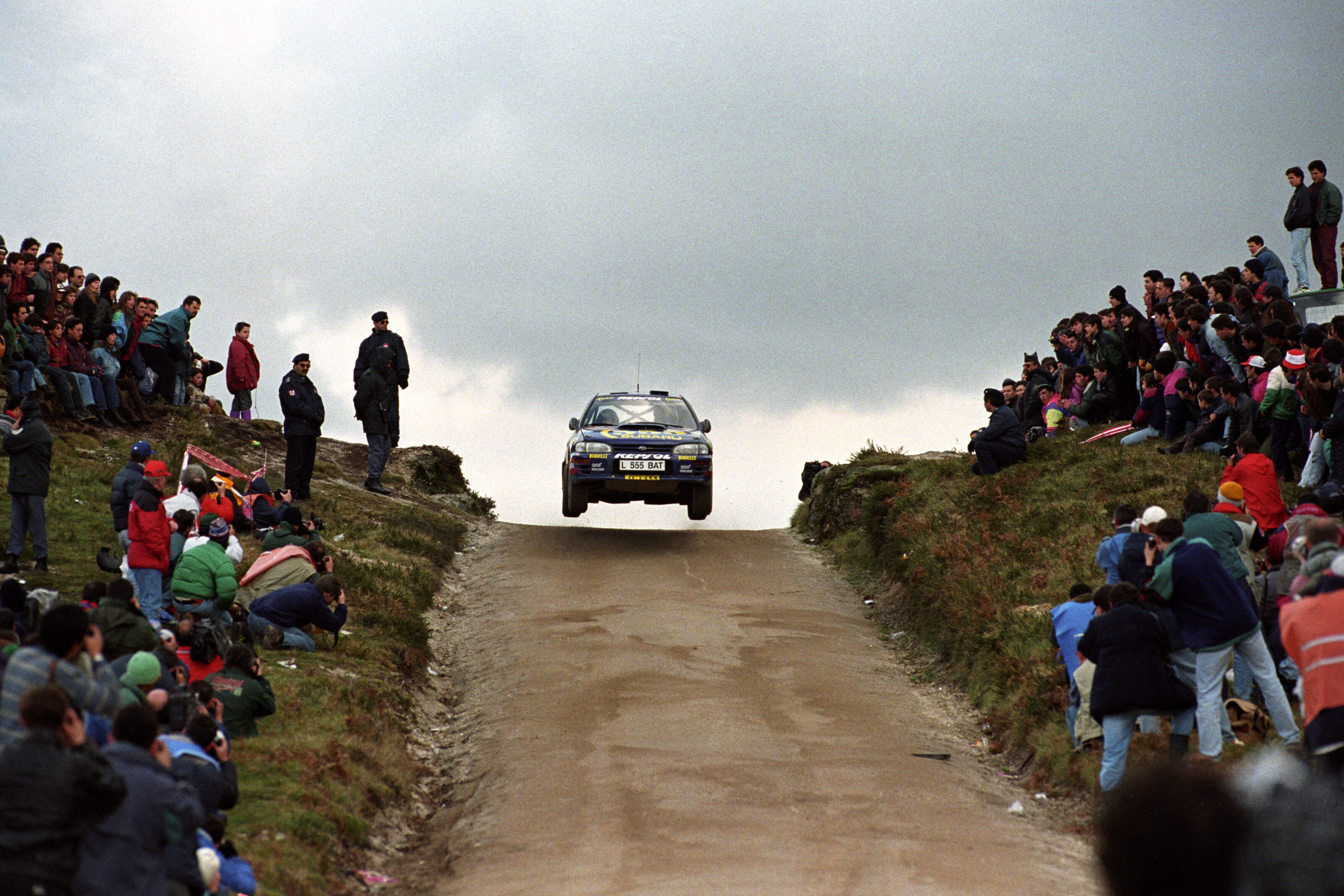
Then you have the situations where drivers ignore their masters. Colin McRae ignoring Subaru team management during the 1995 WRC championship is a prime example. Instead of sitting behind his teammate, the treacherous but brilliant McRae went all out to beat Sainz to the title.
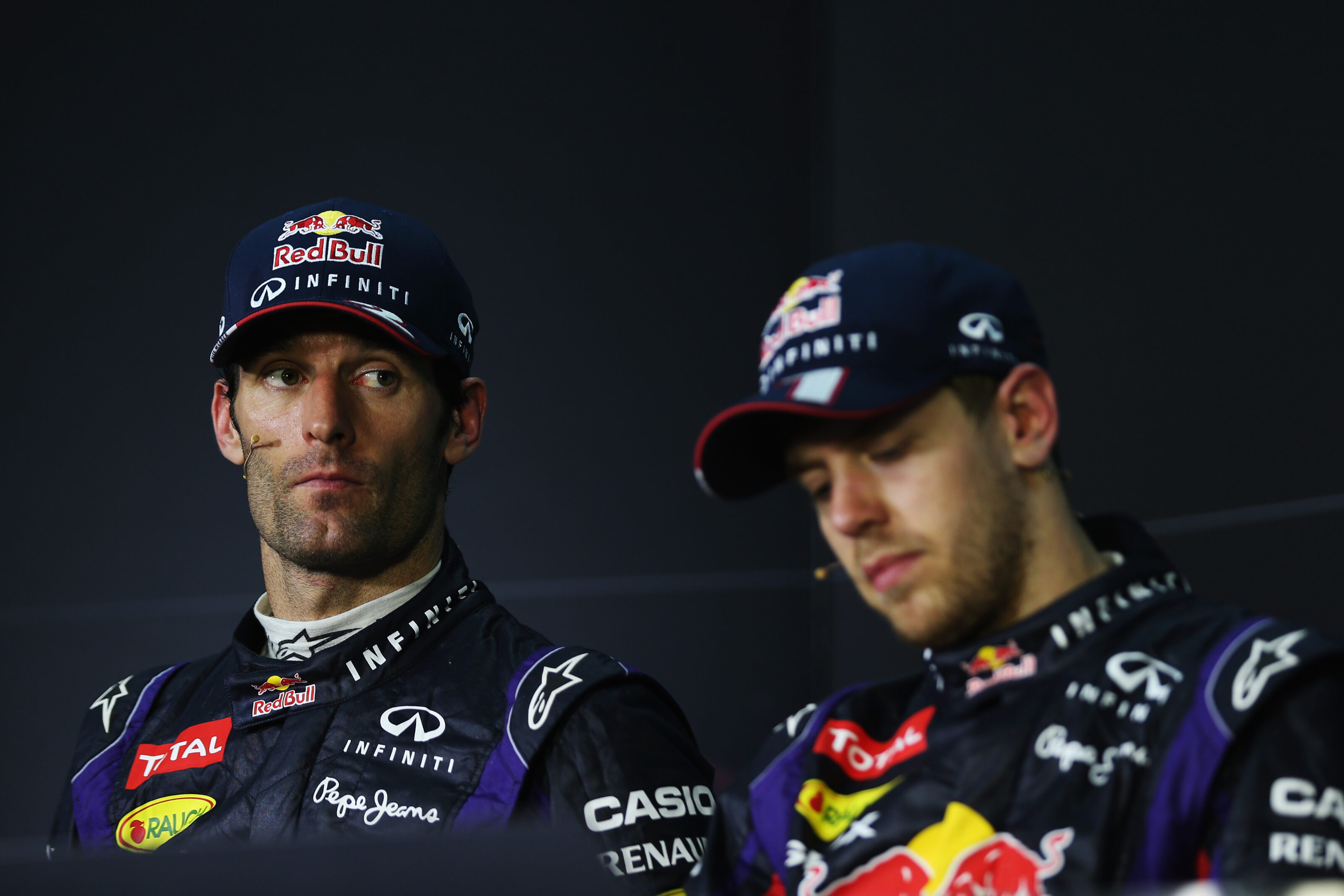
But to make Australian fans really uncomfortable, it’s time we discussed the infamous Multi21 incident at the 2013 Malaysian Grand Prix. Despite being told to plod along and let Mark Webber win the race, Sebastian Vettel went on the attack, all but ripping the trophy from the Australian’s hands. Pride demanded every Aussie racing fan burn an effigy of the German driver as a result of his transgression. But if we look beyond the misguided nationalism, the reality is that what Seb did was a more entertaining (and fair) outcome than a staged cruise to the finish.
While team orders are often used to usurp competition, we should appreciate the examples that benefit us, the fans.
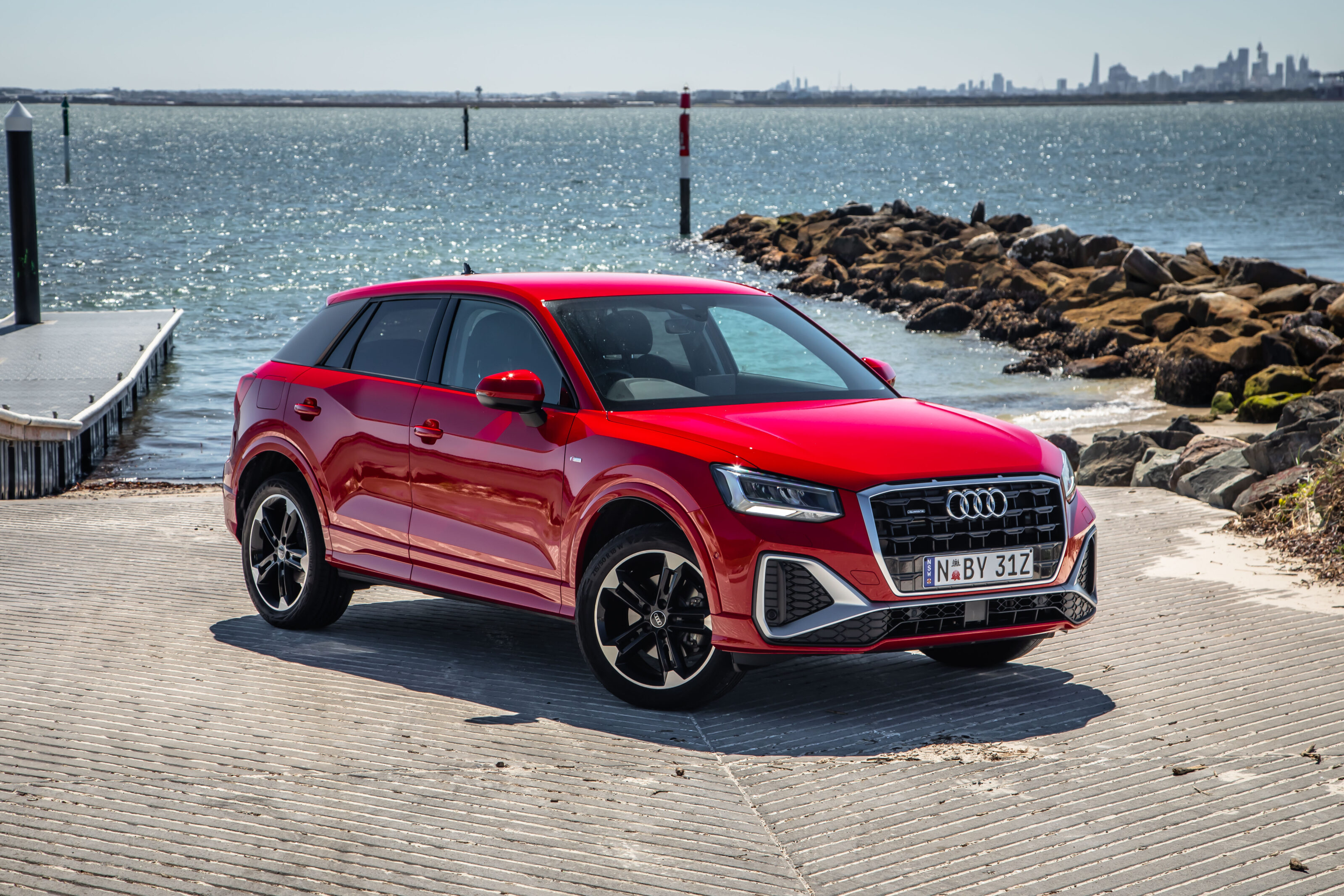
Audi’s Australian arm will offer a five-year warranty on all of its new vehicles starting in 2022, extending the offer which first appeared last year.
Prior to January 1, 2021, all new Audi models in Australia were sold with a maximum three-year/unlimited-kilometre warranty, extending out to five years after the new year began as a retail offer for private buyers.
The German manufacturer has now made the change permanent, applying to all 2022 model year vehicles which includes S, RS and E-Tron variants.
Paul Sansom, Director of Audi Australia, said the now permanent warranty offer is a boost to the brand’s customer base.
“We’ve listened to our customers and are proud to make our five-year warranty a permanent feature of the Audi ownership experience,” said Sansom.
“There are many aspects of Audi ownership that delight our customers, but we understand that the reassurance of a five-year warranty is very highly regarded. We are pleased to provide this valuable peace-of-mind for our customers.”
The new warranty period runs in line with Audi’s five-year/15,000km interval service plans, with scheduled servicing at Audi dealers giving owners the opportunity to reactivate their complementary Audi Experience and Roadside Assist packages every 12 months.
Volkswagen Group Australia now offers a complimentary five-year/unlimited-kilometre warranty across its three major brands – Audi, Volkswagen and Skoda.
