
Welcome to the MOTOR Awards 2021, where our team offer a tip of the hat to those that displayed automotive excellence in the last 12 months.
Biggest Controversy Winner: That letter from Gandini
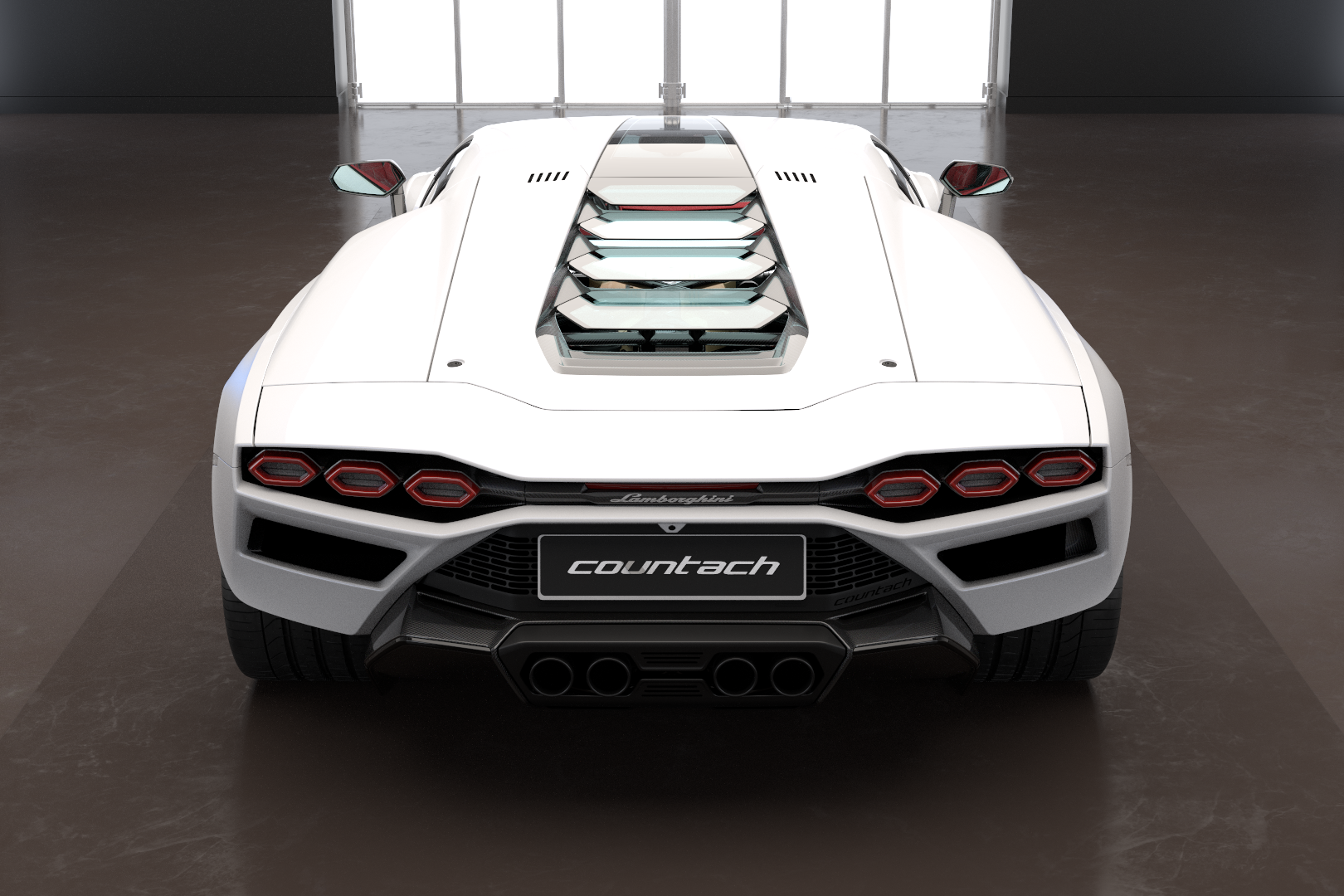
When Lamborghini revealed the new limited-run Countach LPI 800-4, there was one name that was left hanging in the air. Marcello Gandini, designer of the original Countach didn’t seem to have been involved in any particular way with the latest car. Current head of Lamborghini design Mitja Borkert’s work draws on the theme of the original but is not deliberately retro, instead aiming to imagine how the Countach would look today had it been in continuous production.
Marcello Gandini got a bit sniffy about the new car, releasing a statement through his daughter Marzia’s PR firm.
“Marcello Gandini clarifies that he has not participated in and does not approve the project, that he didn’t give his placet,” the release said.
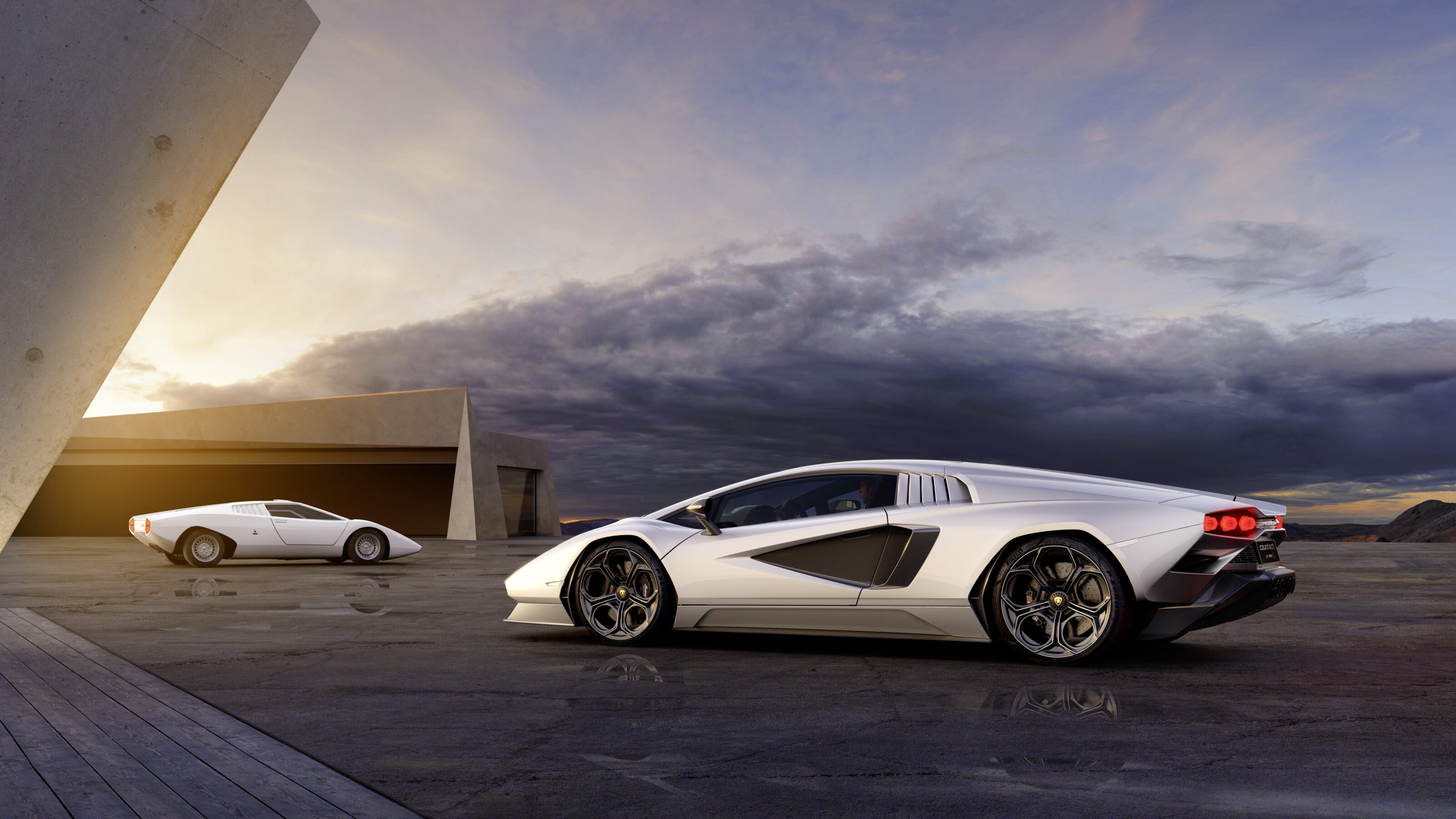
“I have built my identity as a designer, especially when working on supercars for Lamborghini, on a unique concept – each new model I would work on would be an innovation, a breaker, something completely different from the previous one. Courage, the ability to create a break without sticking to the success of the previous car, the confidence in not wanting to give in to a habit were the very essence of my work.
“It is clear that markets and marketing itself has changed a lot since then, but as far as I am concerned, to repeat a model from the past, represents in my opinion the negation of the found principles of my DNA.”
Ahead of the 50th anniversary celebrations for the Countach earlier this year, Gandini was invited by Lamborghini to be interviewed about his iconic supercar, where he was then presented with a scale model of the new Countach by Mitja Borkert, head of Lamborghini’s design department Centro Stile. According to Gandini, Lamborghini didn’t make its intentions of bringing the Countach back to life clear to its original designer.
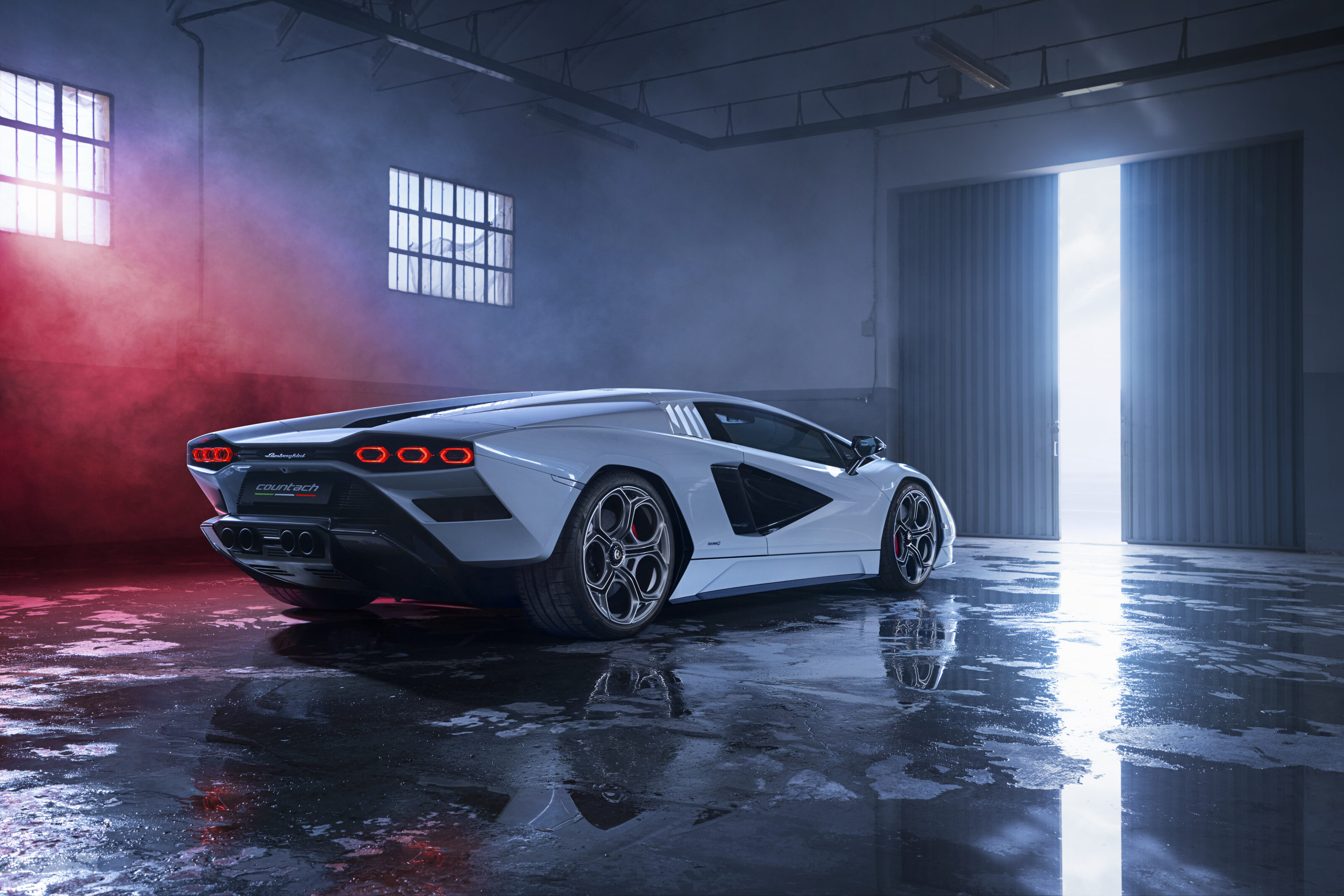
“Neither earlier, nor during the interview was it stated that the car was scheduled for limited series production.
“…when Mitja Borkert presented the scale model during the interview, [Gandini] did smile and acknowledge as would be customary to do so,” his statement added.
“Any assumption that this new Countach is coming out (even if only be way of assent) from Marcello Gandini is untrue”, the statement concludes, before signing off with a caustically proper, “Cordially, Marcello Gandini”. Revenge is a dish best served with a hefty side of snark. – AE
Honourable mention: The M3/M4 grille
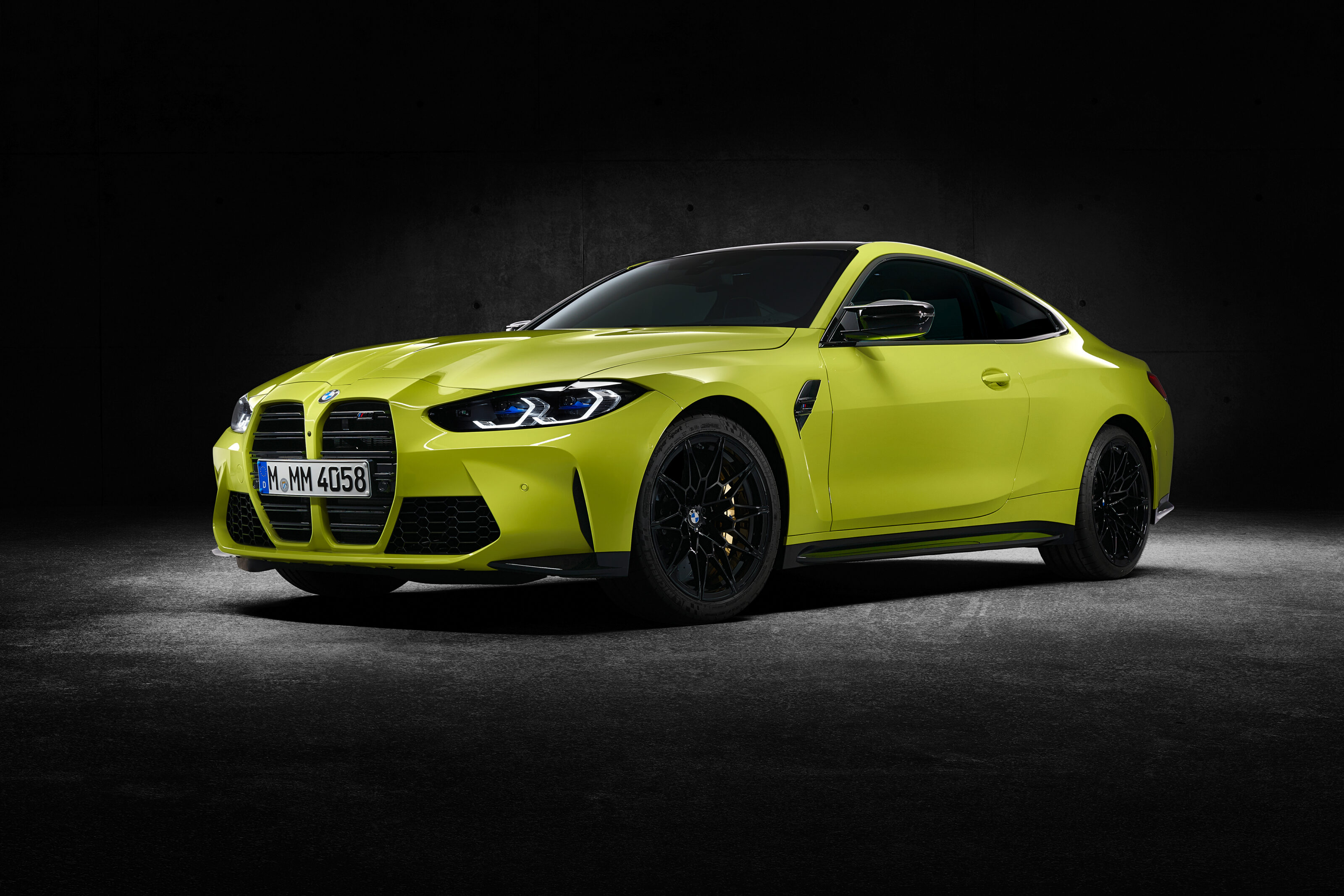
It looked like a bad joke when we first clapped eyes on the huge grille worn by the 3 and 4 Series, but putting it onto an M3 just sort of worked. We’re still not quite sure how, but it has definitely grown on us. Just think how many of the Bangle-era cars that looked so jarring then have aged so well today and maybe BMW is onto something.
Honourable mention: C63 ditches V8
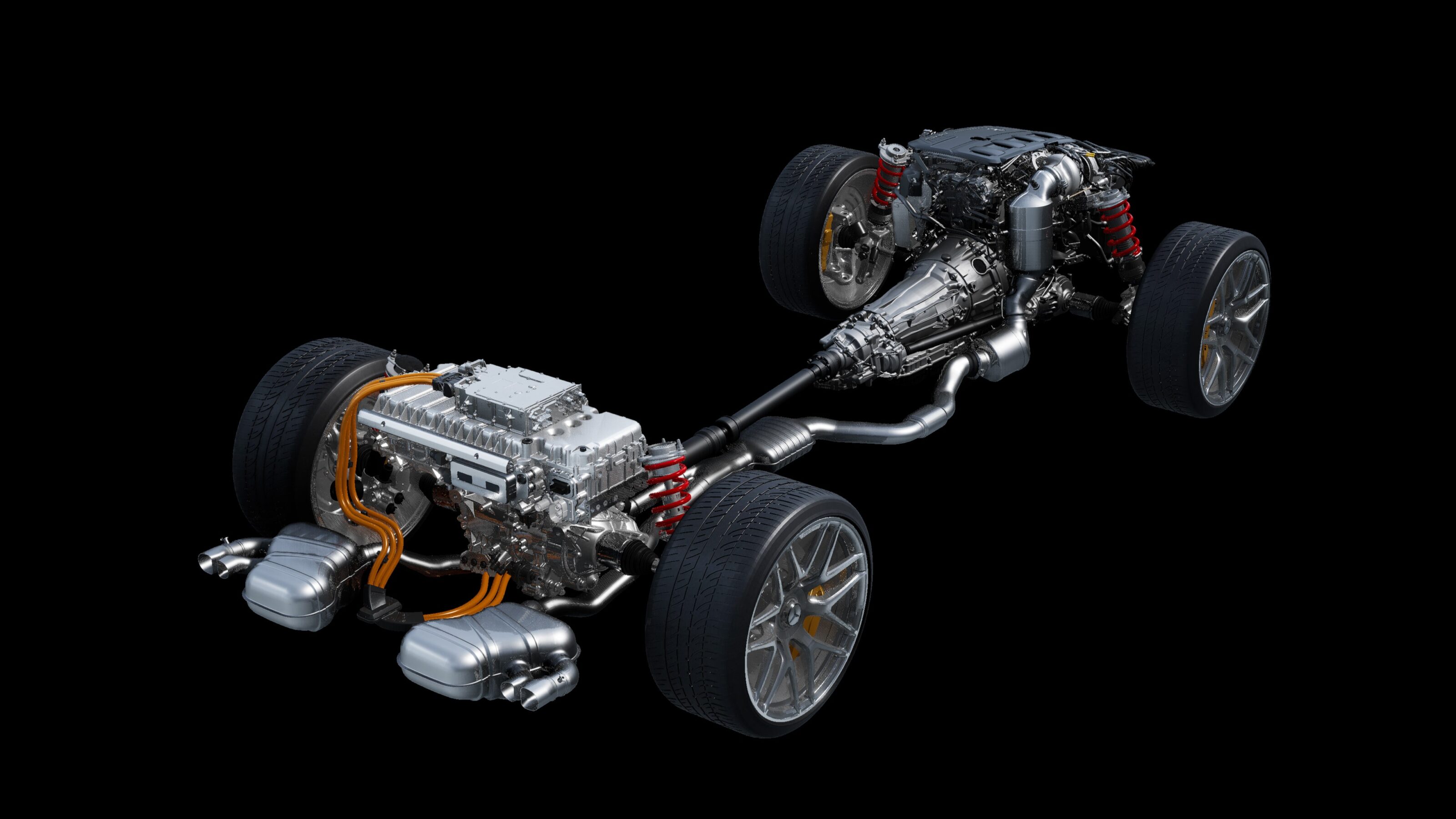
Think AMG and you probably think hulking great V8s that sound as if they’re gargling chisels. Yes, you can buy an A45 S with a four-pot, but that’s just the My First AMG diffusion line isn’t it? Not if Affalterbach has anything to do with it. The next-gen C63 ditches the V8 for a hybrid four-pot. Sacrilege or sage? We’ll have to wait to find out.
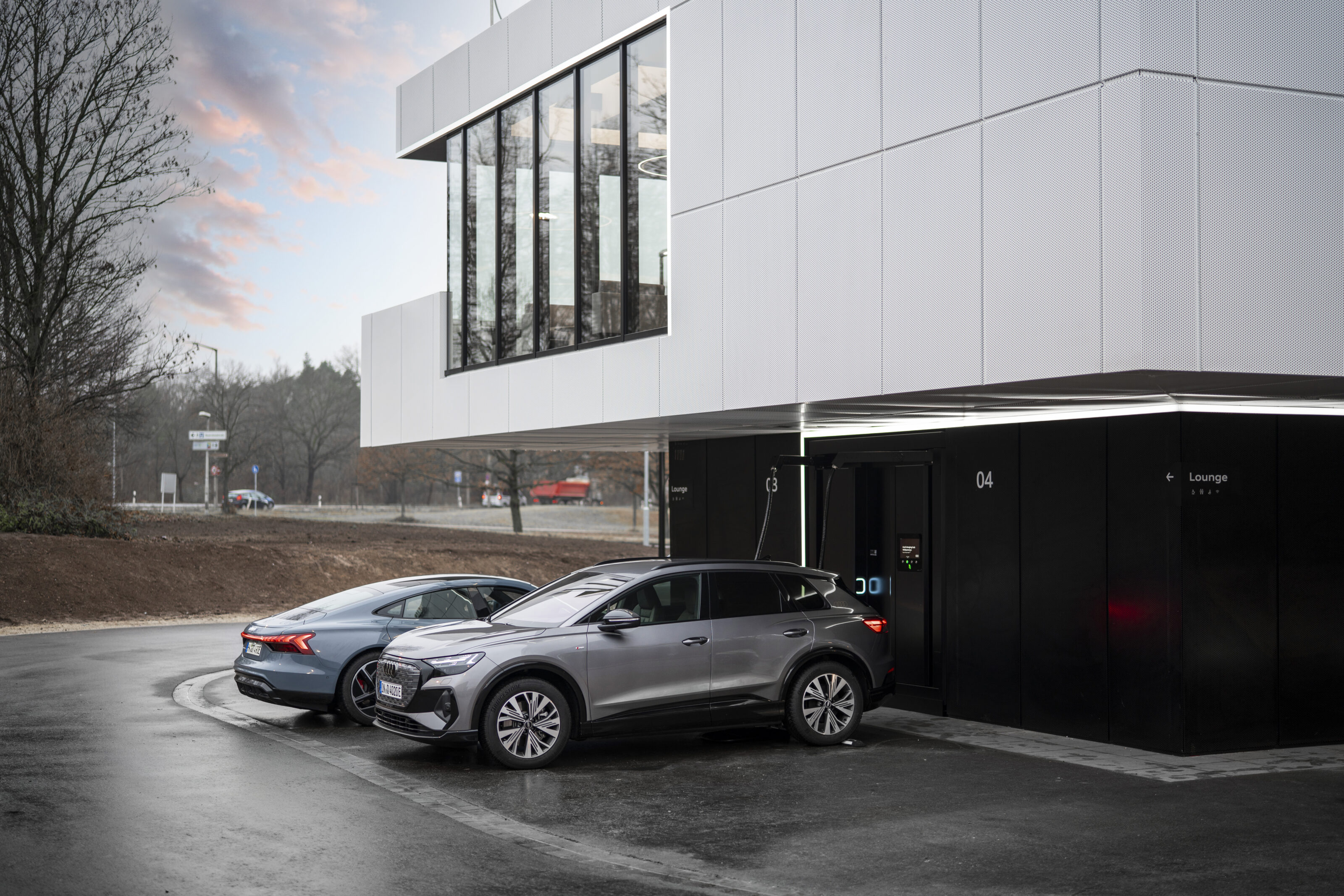
Audi is set to open the world’s first lounge-style electric vehicle charging hub in its home market of Germany.
It will complete Audi’s rollout of new rapid charging sites, although the inaugural EV lounge in Nuremberg is much different from usual drive-in spots.
Sitting close to the city’s exhibition centre, it is in a prime spot for business and connected travellers and will open its doors from December 23.
With the pilot location, Audi is road-testing this new charging concept for the first time. “We want to use it to test flexible and premium-oriented quick-charging infrastructure in urban space,” said Ralph Hollmig, Audi’s charging hub project manager.
“We’re going where our customers don’t necessarily wake up in the morning with a fully charged electric car and at the same time thinking about increasing charging demand in the future.”
The hub has a huge 2.45MWh (2450kWh) of electric storage to keep up with high charging demand, and the storage means the connection into the lounge is just a 200kW green power connection already available. The 200kW input continually fills the storage modules and solar panels on the roof additionally provide up to 30kW of green energy.
Peak charging rates of up to 320kW can be obtained at six charging points. A total of about 80 vehicles can be charged per day without reaching the limits of the energy storage system’s capacity combined with the hub’s 200kW power input.
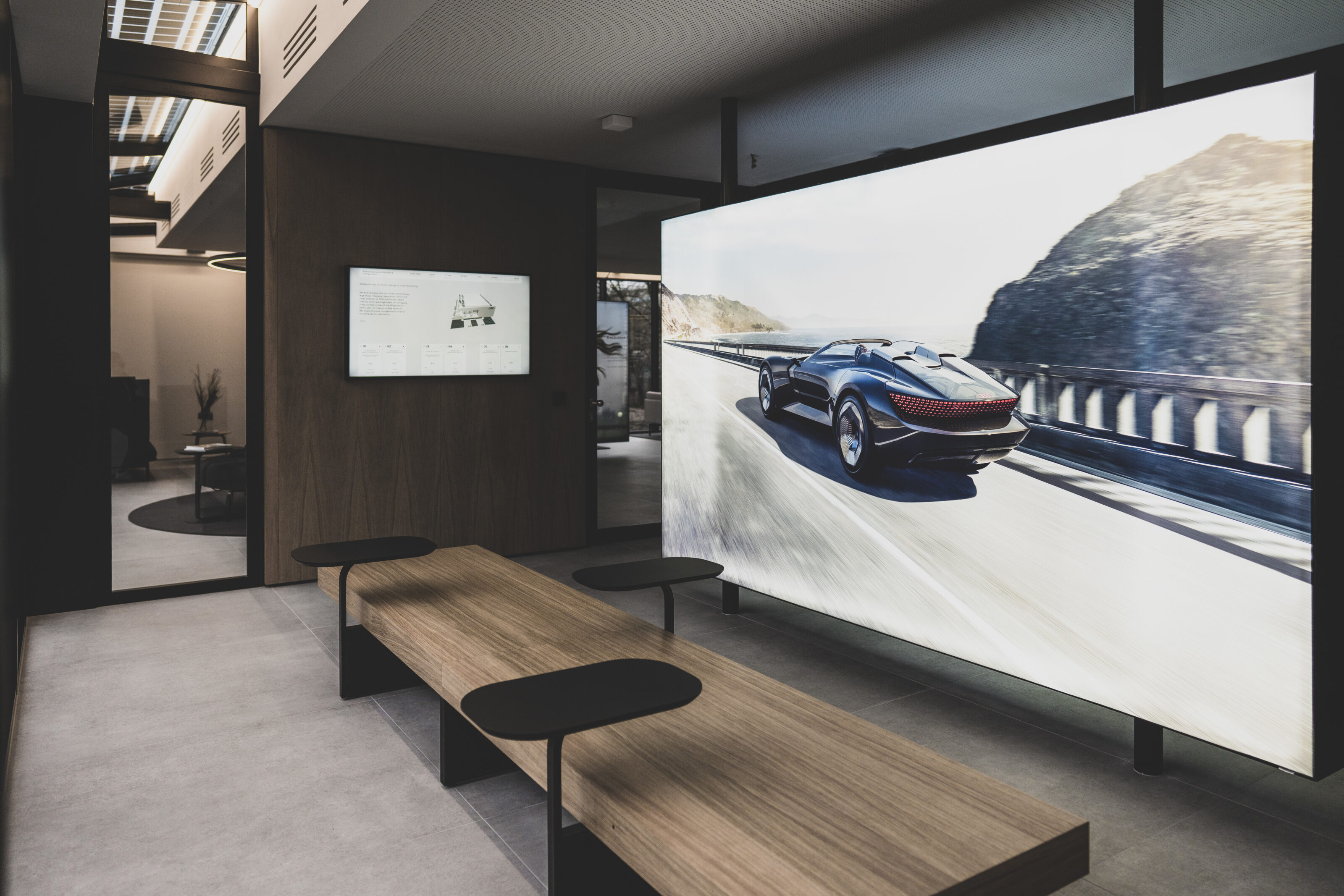
The Audi hub aims to meet “customers’ expectations of a premium charging experience”, with a fully staffed 200-square-metre business-style lounge they are expected to spend around half an hour at. The modernist building is produced from “flexible container cubes” that are moveable so it can be packed up and moved if required.
“Our customers will share multiple benefits,” says project manager Hollmig. “With an exclusive reservation option, a lounge area, short idle time thanks to high charging capacity, and a novel swivel arm to simplify handling the cable.”
Snapshot
- Mustang Mach 1 went on sale missing features promised to buyers
- Ford offered compensation to customers
- Combined penalties come to a total of $53,280
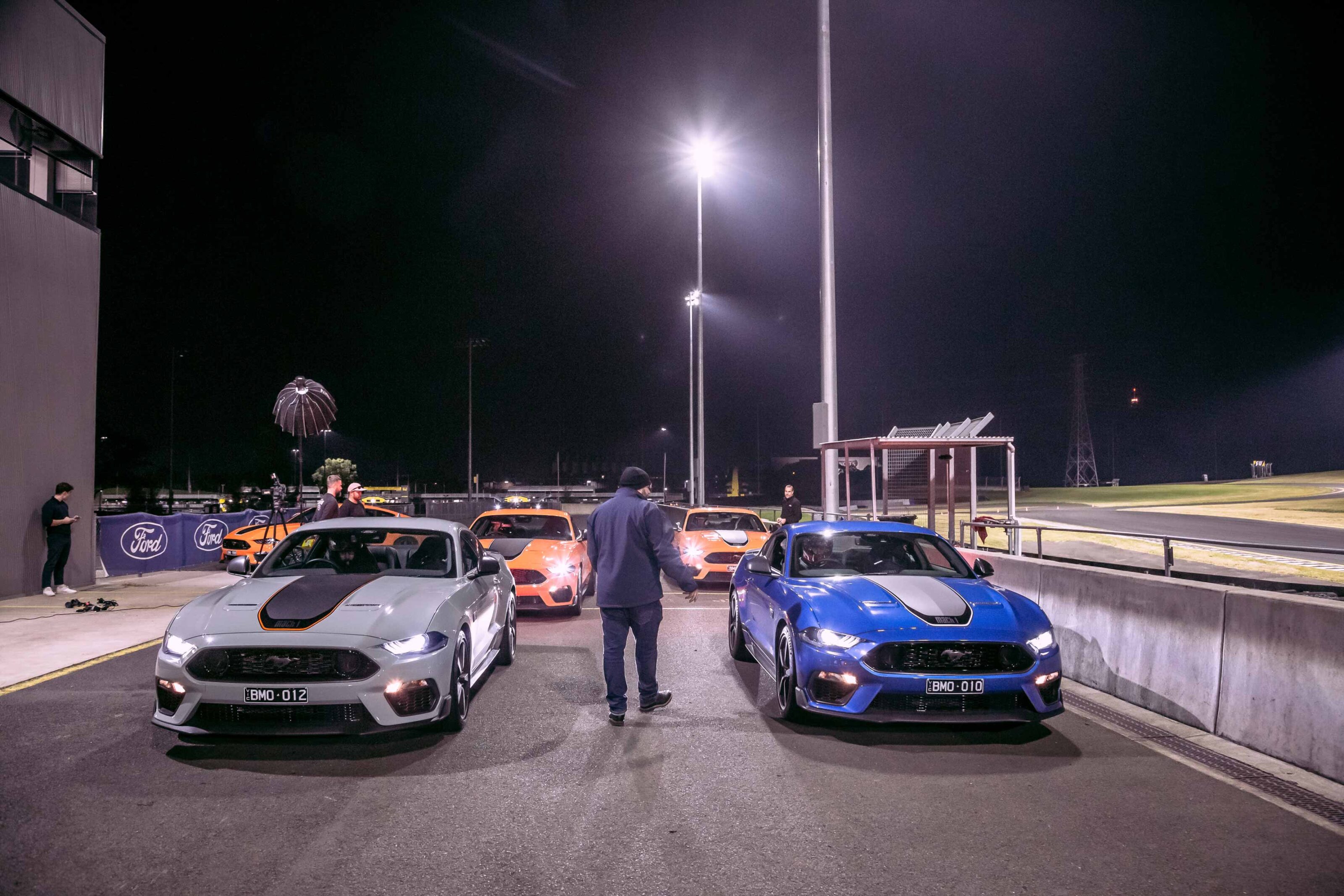
Ford’s Australian division has paid up after being served four infringement notices from Australia’s consumer watchdog relating to its Mustang Mach 1.
Physical and online brochures for the pony car were found to falsely represent equipment fitted to the Mach 1 including; rear parking sensors, LED fog lamps, Mustang Mach 1 floor mats, ambient lighting in door pockets and a Torsen limited-slip differential – none of which were available on Australian-delivered Mach 1s.
The Australian Competition and Consumer Commission (ACCC) handed Ford Australia four infringement notices relating to the missing equipment, with the total penalty of $53,280 paid by the Blue Oval in addition to direct compensation for its customers.
ACCC Chair Rod Sims said some of the missing features such as the Torsen LSD were major selling points of the Mach 1, with customer complaints and the ACCC’s involvement leading to improved compensation offers from Ford.
“We allege Ford made serious mistakes in its brochures outlining the features of the more expensive Mustang Mach 1, resulting in false claims being made to consumers in breach of the Australian Consumer Law,” said Sims.
“The performance characteristics of the Ford Mustang Mach 1 were an important selling point, so these claims about key features may have led some consumers to buy the car who may otherwise have opted to purchase another vehicle.
“We began investigating this issue after a number of consumers complained to us about the Mustang Mach 1 brochures and, as a result of ACCC intervention, Ford improved its compensation offer to hundreds of affected consumers.”
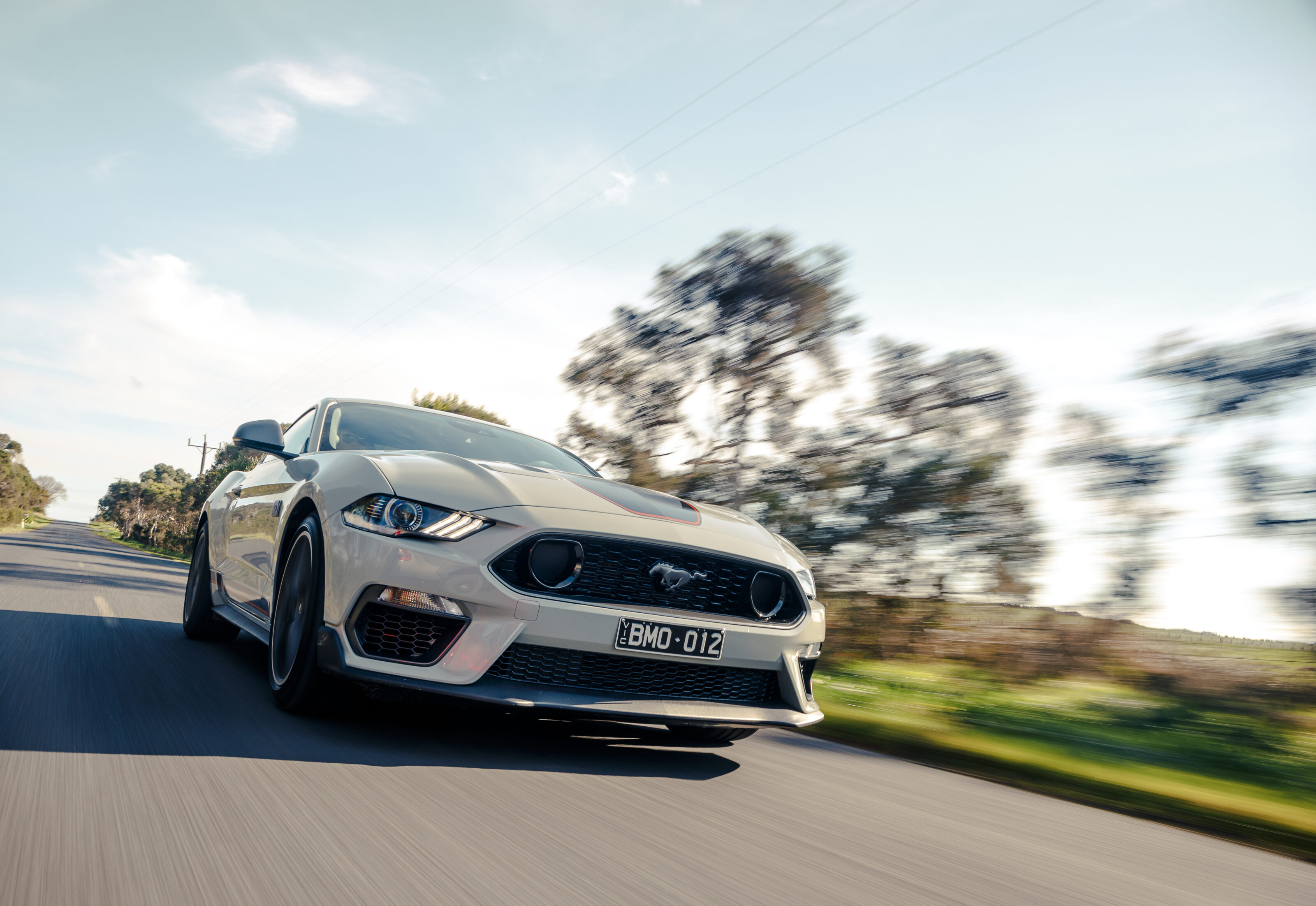
Ford has offered compensation to all Mach 1 buyers who purchased their cars before August 17, 2021, providing them with the opportunity to either receive a full refund of the car’s purchase price – in excess of $84,000 – or take $5400 plus three years free scheduled servicing, as well as a “track day experience at a Supercars event featuring, among others, admission to the event and a ride in one of Ford’s race cars”.
A spokesperson for Ford Australia told MOTOR the manufacturer was disappointed to let its customers down.
“There are always small specification differences between left-hand-drive and right-hand-drive Mustangs,” said the spokesperson.
“Not recognising a few of these differences specific to the Mach 1 – features that were never available to us – was an oversight by us as the local team. We didn’t catch these differences before the first rounds of brochures and the website were published, and for this, we are really sorry.
“We are especially disappointed that our loyal and engaged Ford customers and Mach 1 owners feel let down.
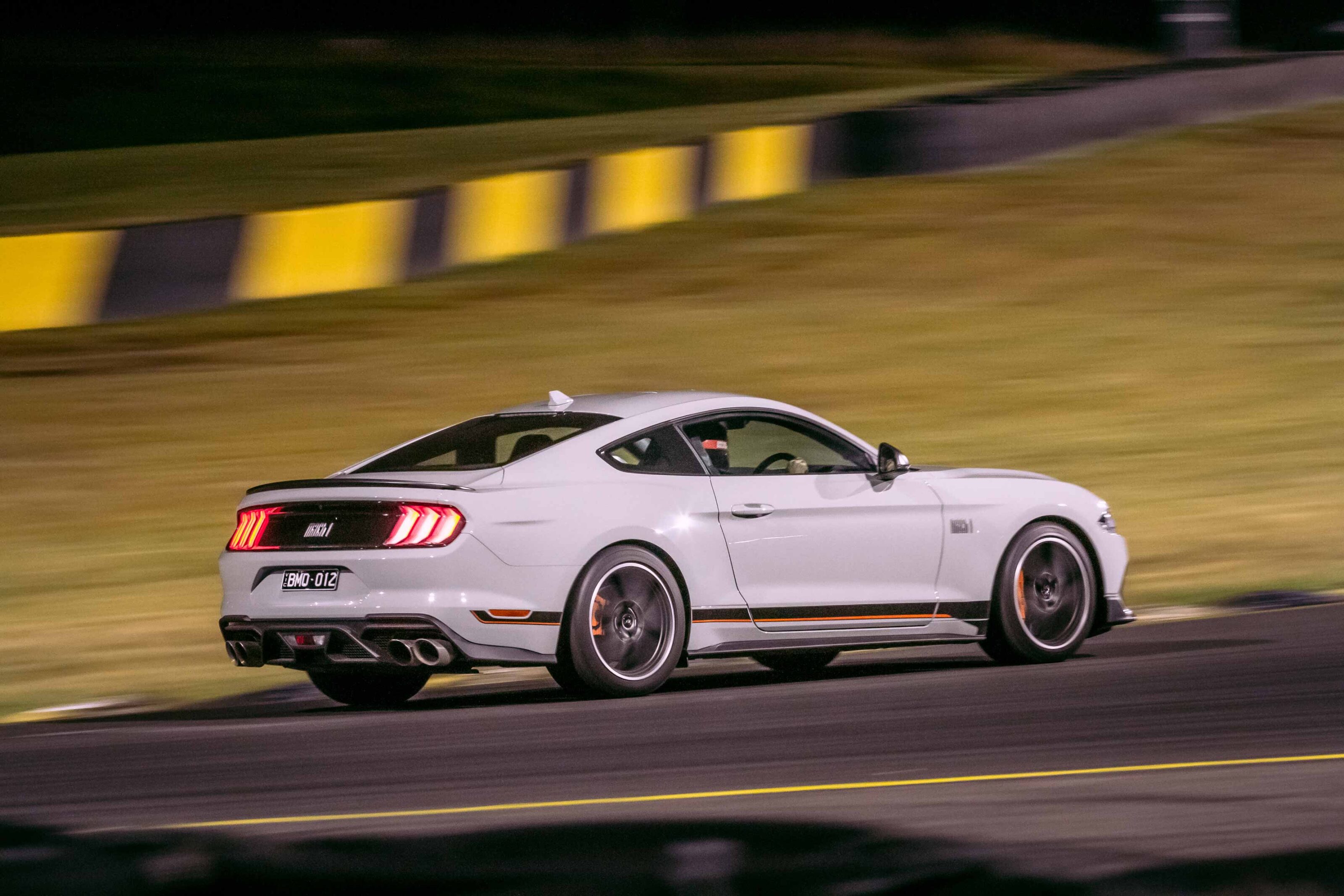
“We have undertaken a review of how the errors came to be made and implemented preventative measures to seek to ensure that the process causes leading to the errors are not repeated in future.”
Those who purchased a Mustang Mach 1 after August 16, 2021 have been given the latter option, but cannot return their vehicle to Ford under the compensation offer.
While Mach 1 buyers missed out on the Torsen LSD offered in left-hand-drive markets, all Australian Mach 1s are fitted with a Ford-built LSD, gaining an external differential oil cooler to increase its reliability.
Snapshot
- Line lock now available for all MY22 Mustang variants
- GT California Special comes to Australia for the first time
- All existing variants increase price by $900
Ford Australia has given its 2022 Mustang range a minor update for next year, with previously unavailable features and variants now on sale locally.
Headlining the 2022 Mustang update is the inclusion of the GT California Special, a version which is available on top of the GT in Fastback and Convertible guise, harking back to its first appearance in the 1968 line-up.
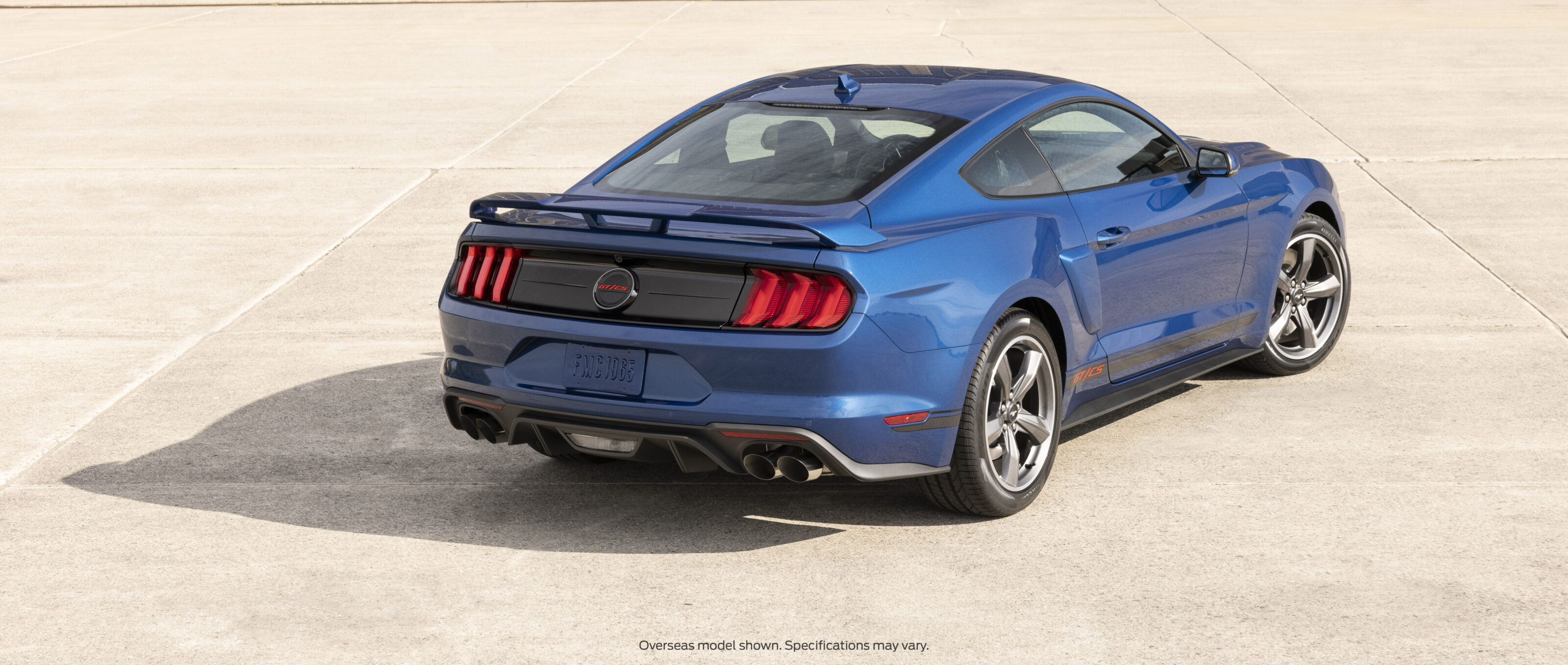
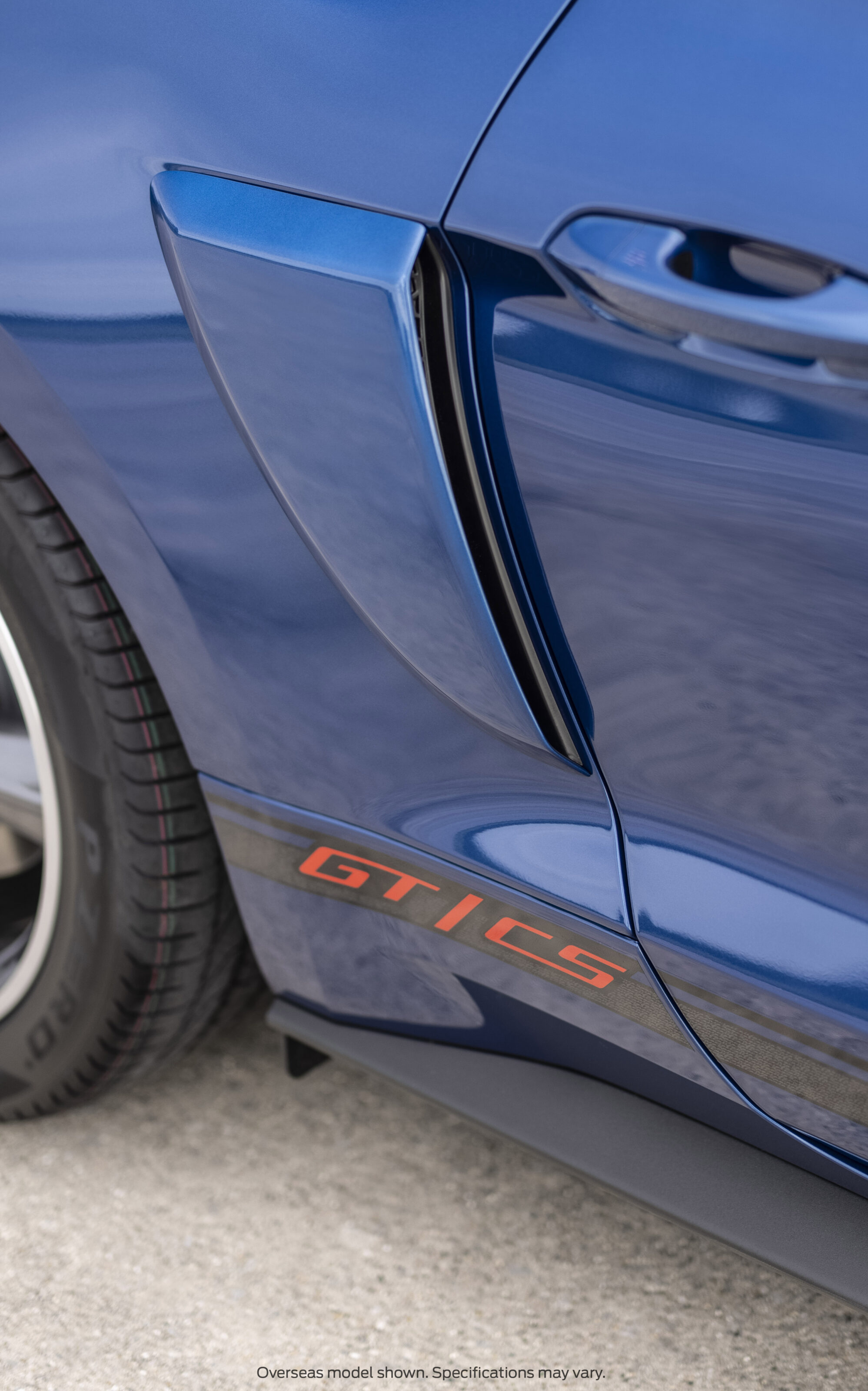
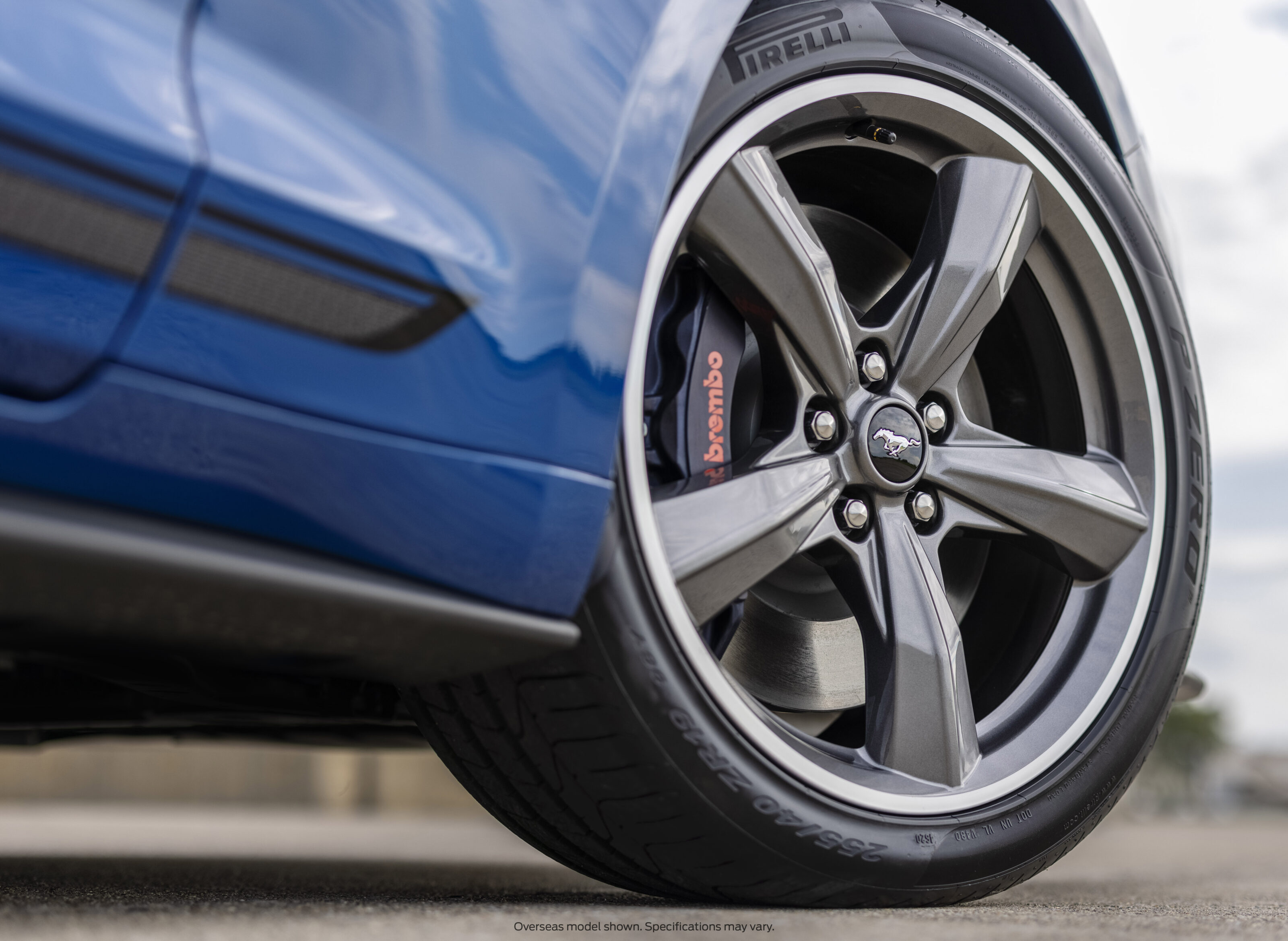
Largely a visual package, the GT/CS features; a blacked-out grille, lower bodyside accent stripe, rear wheel arch scoop, unique five-spoke 19-inch painted machined wheels, rich black Miko suede door trim inserts and suede-trimmed seats – with red contrast stitching and an embossed “GT/CS” logo.
With a carbon hex aluminium instrument panel and California Special script badging, buyers will be reminded they’ve bought more than just a GT no matter what part of the GT/CS they’re looking at, helping to justify its $2000 premium over the standard V8 – starting at $67,290 before on-road costs.
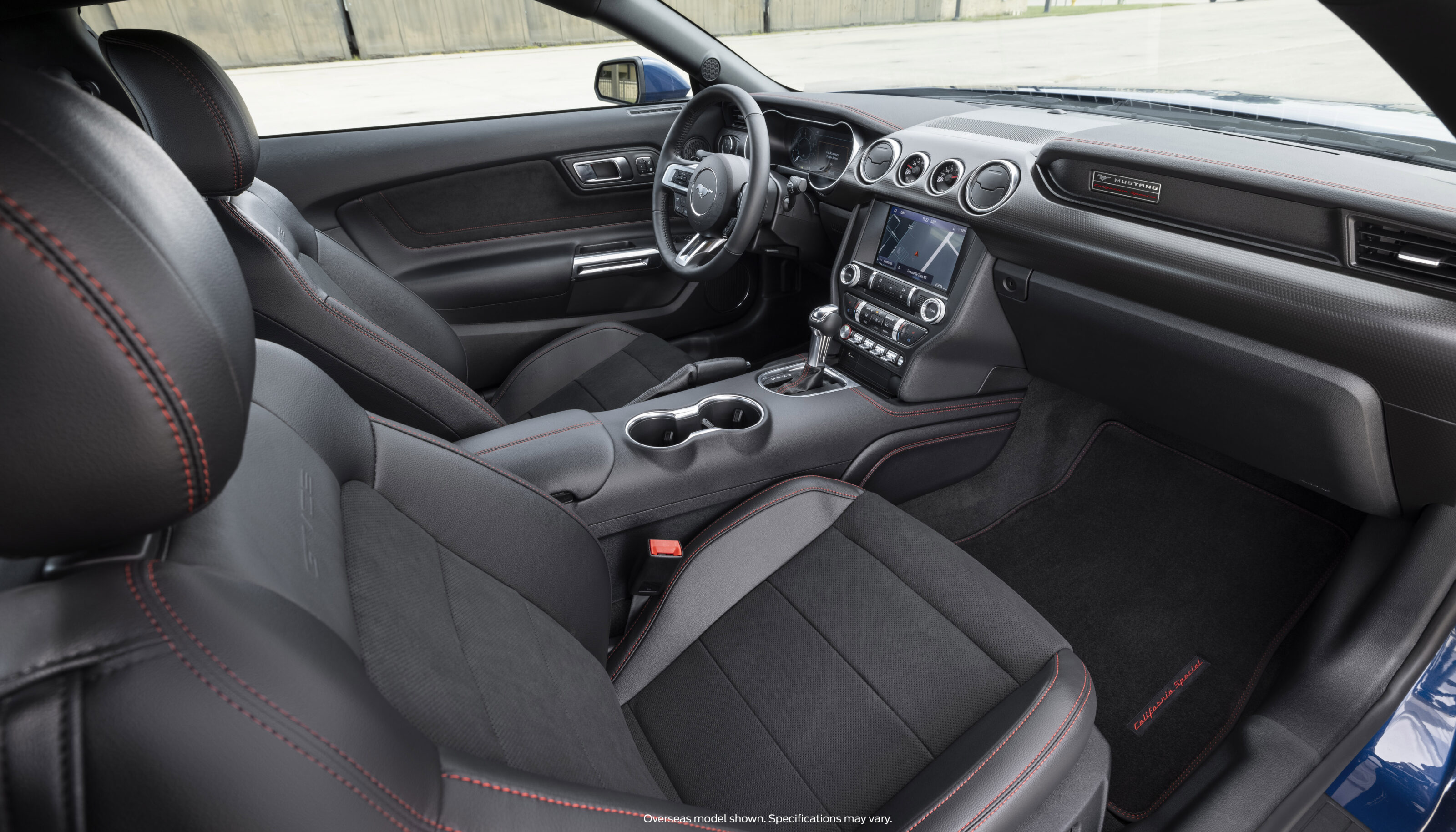
For the first time since the FN Mustang’s local launch in 2018, both the 2.3L High Performance and GT variants will be fitted with line lock under Ford’s in-car Track Apps, perfect for quick launches at the drag strip.
The minor revision has led to a slight price increase for the Mustang, with all variants now $900 dearer than their 2021 counterparts, as the range starts with the 2.3L High Performance manual for $52,590 before on-road costs.
Yellow peel, antimatter blue, velocity blue, twister orange and iconic silver have all been dropped as paint options for the 2022 Mustang, with mischievous purple and eruption green set to join the list of finishes from March next year.
Outputs remain unchanged with the High Performance producing 236kW/448Nm from a 2.3-litre turbocharged petrol four-cylinder while the GT’s V8 pushes out 339kW and 556Nm, both of which are available with a choice of a six-speed manual or 10-speed automatic transmission.
2022 Ford Mustang Australian pricing
Prices exclude on-road costs.
| Model | Price |
|---|---|
| 2.3L High Performance Fastback manual | $52,590 |
| 2.3L High Performance Fastback automatic | $55,590 |
| 2.3L High Performance Convertible automatic | $61,890 |
| 5.0L GT Fastback manual | $65,290 |
| 5.0L GT Fastback automatic | $68,290 |
| 5.0L GT Convertible automatic | $75,990 |
| 5.0L GT California Special Fastback manual | $67,290 |
| 5.0L GT California Special Fastback automatic | $70,290 |
| 5.0L GT California Special Convertible automatic | $77,990 |
Snapshot
- 2022 Ford Fiesta ST gets a minor facelift and new seats
- 1.5-litre turbo engine gains a torque boost of 10 per cent
- On sale from quarter one 2022 for $33,490 before on-road costs
UPDATE, December 21, 2021: Pricing for the 2022 Ford Fiesta ST has been confirmed, with the five-door three-pot hatchback going on sale for $1200 more than its outgoing sibling.
Set to arrive locally in the first quarter of 2022, the updated Fiesta will start at $33,490 before on-road costs, a minor increase over the current ST which retails for $32,290.
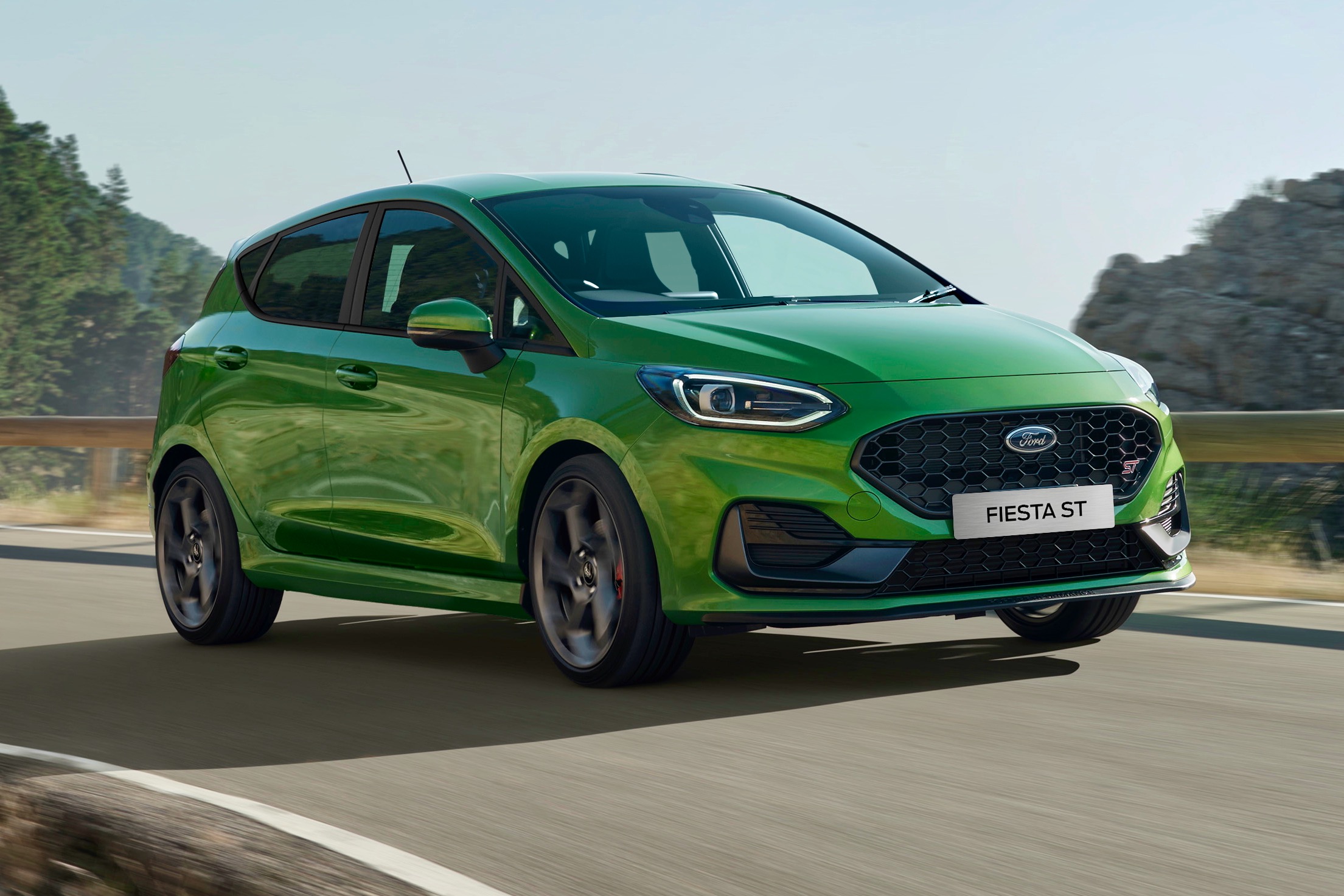
On top of this, buyers can option a black-painted roof for an extra $500, while the metallic paint choices of mean green, magnetic grey, moondust silver, boundless blue and agate black are offered at a $650 premium over frozen white and race red.
Read on below to find out what we know about the 2022 FiST.
The story to here
September 16, 2021: The 2022 Ford Fiesta ST has been officially revealed, mere hours after initial images of the facelifted vehicle leaked online.
Ford’s hot hatch receives exterior and interior updates, while the powertrain of the Fiesta ST gains a healthy 10 per cent torque boost in the low- to mid-range, which is expected to improve overall drivability and real-world performance.
The 1.5-litre turbocharged petrol three-cylinder engine maintains its 147kW power output (at 6000rpm), but sees torque jump from 290Nm in the outgoing model to 320Nm between 1600rpm and 4000rpm.
Ford hasn’t supplied a 0-100km/h sprint time at this stage, but expect the current claim of 6.5 seconds to drop by a couple of tenths, helped by the ST’s launch control system.
Power is sent to the front wheels exclusively through a six-speed manual transmission and a Quaife mechanical limited-slip differential. Underneath, the new Fiesta ST uses patented cold-formed, force-vectoring springs – coupled with Tenneco front shocks to aid ride and handling characteristics.
Drivers can choose between ‘normal’ and ‘sport’ driving modes, as well as a ‘track’ mode which disables traction control and provides a wider margin within the car’s electronic stability control.
The 2022 Fiesta gets an updated front-end, featuring new matrix LED headlights with ‘rail spike’ daytime-running lights. The company says the new headlights can change their beams depending on driving scenarios and weather, adapting to the conditions based on speed and rain to deliver superior illumination – but without dazzling other drivers.
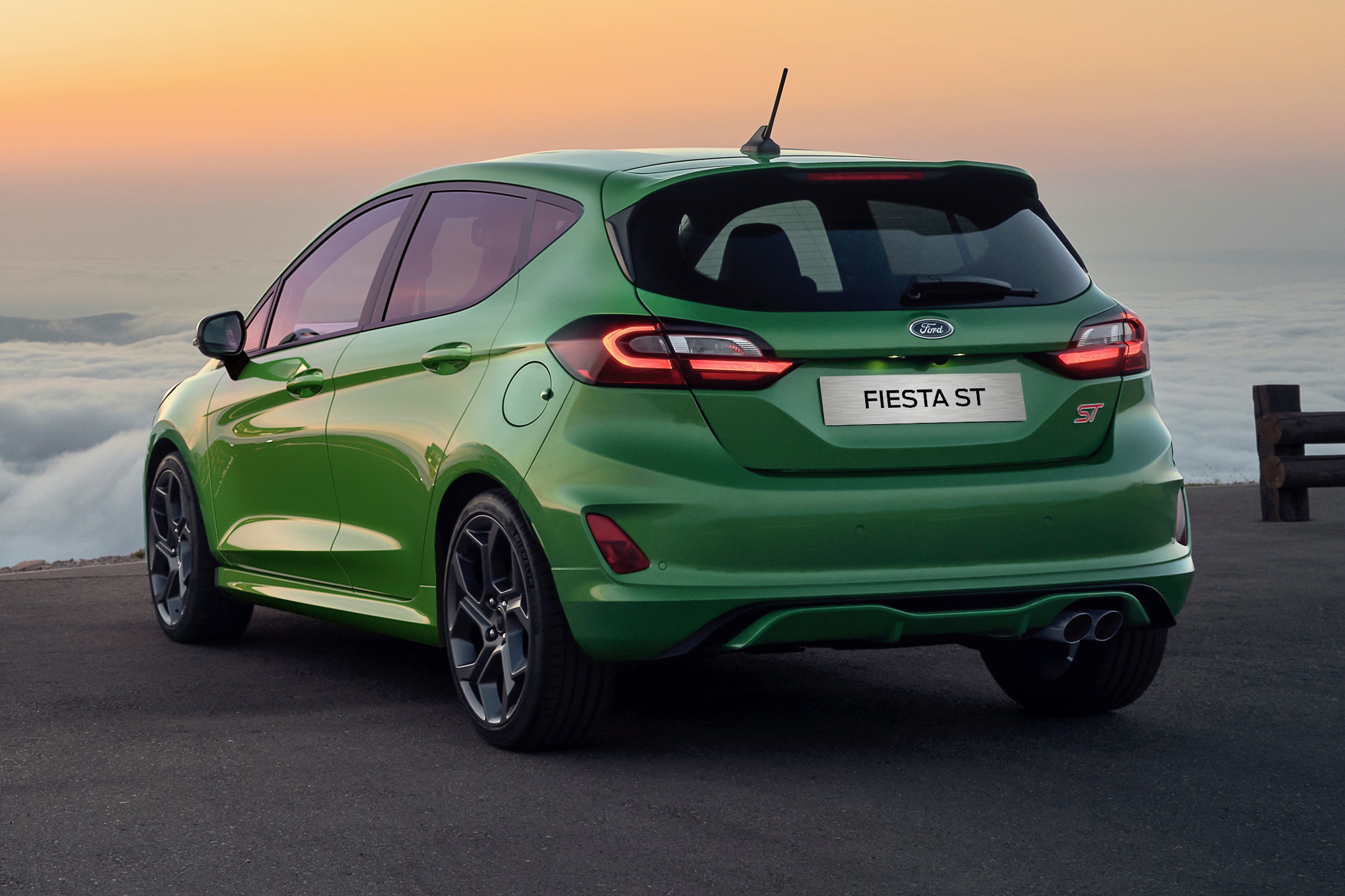
A larger honeycomb grille now features the Ford badge as well as the ST badge, and integrates into a more aggressive front bumper with intake blades finished in chrystaline grey. At the rear, black highlighting now surrounds the tail-lights.
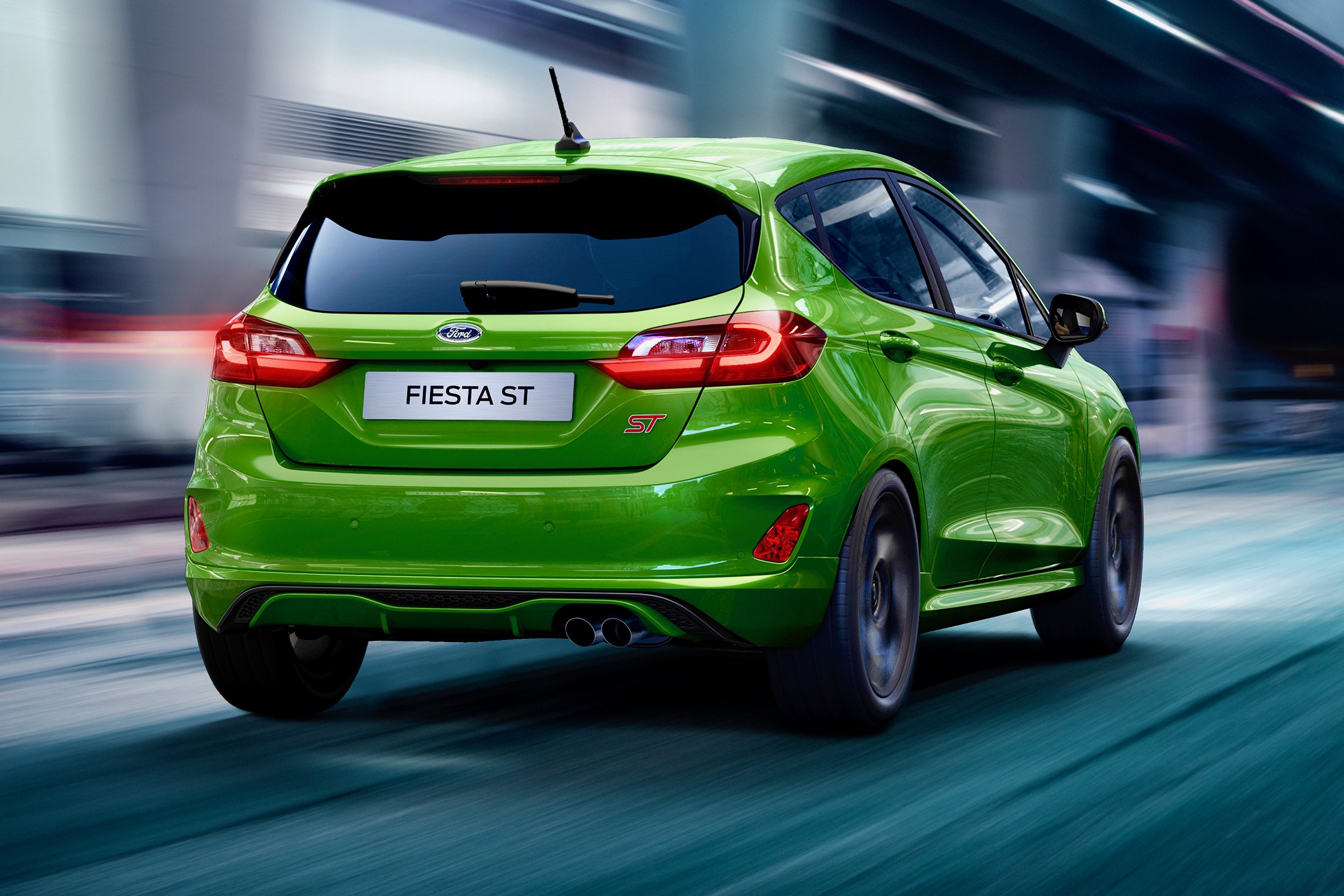
Ford has added boundless blue and mean green to the Fiesta ST’s colour palette – the latter borrowed from the Puma ST – together with 18-inch alloy wheels finished in magnetite grey, fitted as standard.
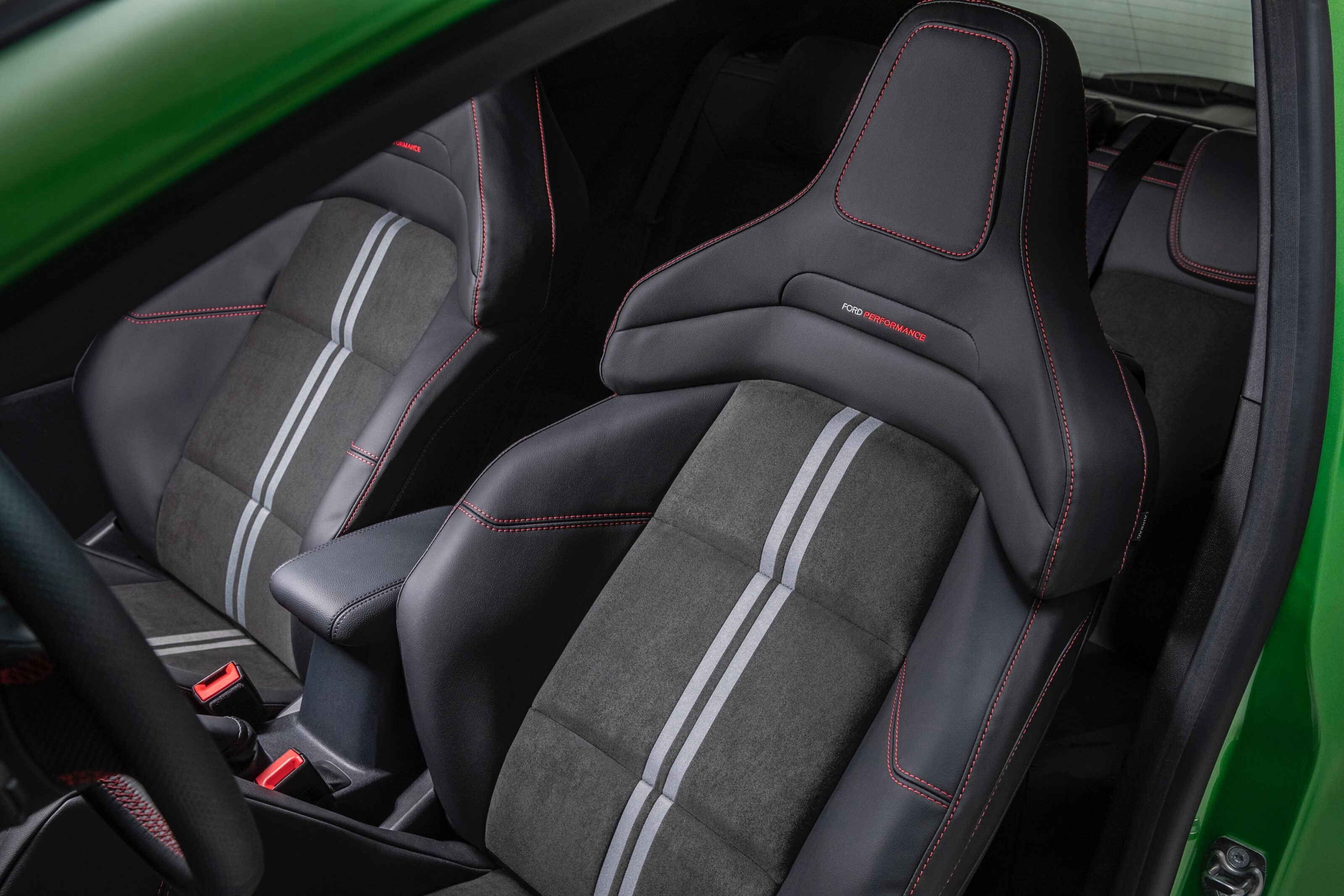
Inside, heated Ford Performance seats with integrated headrests and Sensico trim replace the outgoing model’s Recaros. Developed in-house, they are said to “provide even greater support during high-performance driving and additional comfort on the road”.
Occupants get an 8.0-inch infotainment touchscreen, with Ford’s SYNC3 connectivity and Apple CarPlay/Android Auto capability, as well as a 575-watt Bang & Olufsen 10-speaker stereo.
Ahead of the driver is a heated flat-bottomed sport steering wheel with red trim, and a new 12.3-inch customisable digital instrument cluster, which changes theme depending on the drive mode engaged.
Owners also get keyless entry and start, automatic headlights, wireless charging, ambient lighting, and a reverse camera. The vehicle can also be connected to the FordPass app, allowing the owner to locate the vehicle on their smartphone – as well as lock or unlock doors, check fuel level, tyre pressures, or the car’s alarm status.
Safety tech includes blind-spot monitoring, rear cross-traffic alert with emergency braking, pre-collision warning with emergency braking, and lane-keep assist.
Pricing will be announced closer to the local launch of the 2022 Ford Fiesta ST in the first quarter of 2022 (January to March inclusive), but expect a minor increase over the current model’s price of $32,290 before on-road costs.
Snapshot
- 2022 Ford Focus local pricing and features announced
- Focus Active and ST-Line axed, Focus ST and ST X make up the new line-up
- Arriving second quarter of next year, priced from $47,490 before on-road costs
The 2022 Ford Focus ST has been detailed for Australia, with the hot hatch joining the Ford Performance model line-up alongside the Fiesta ST and Mustang.
Ford has dropped the three-cylinder ST-Line and Active models from the Focus line-up, with Australian buyers now only given access to the sporting ST and new premium ST X variant.
The Focus ST is available with manual or automatic transmissions for the same price, while the high-spec Focus ST X is offered exclusively with an auto.
Along with a new look, Ford has added a number of tech and interior upgrades for the 2022 Model Year, detailed below.
A new 13.2-inch landscape infotainment touchscreen now features (up from 12.3 inches), running Ford’s Sync 4 operating system with wireless Apple CarPlay and Android Auto.
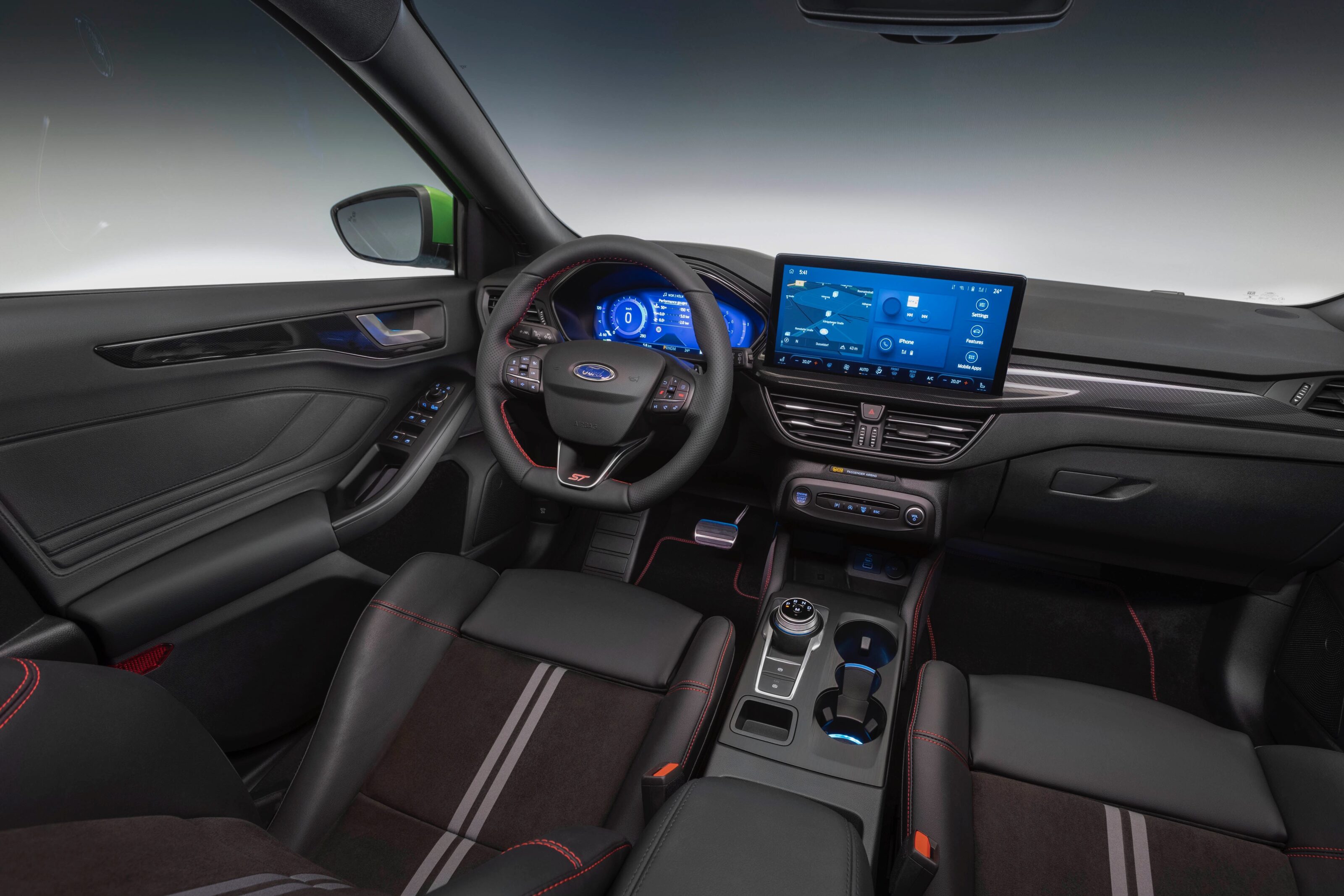
Like the recently-unveiled Fiesta ST, the company has swapped the long-running Recaros for a pair of heated Ford Performance sport seats, offering the driver 14-way power adjustability.
Slimmer LED headlights with surround daytime-running light signatures and integrated fog lights provide a fresh look, along with redesigned LED tail-lights with a loop light pattern that echoes the headlights.
Those who opt for the Focus ST X get upgraded to pixel LED headlights, which remove glare for oncoming traffic, as well as offering improved illumination in bad weather and on winding roads.
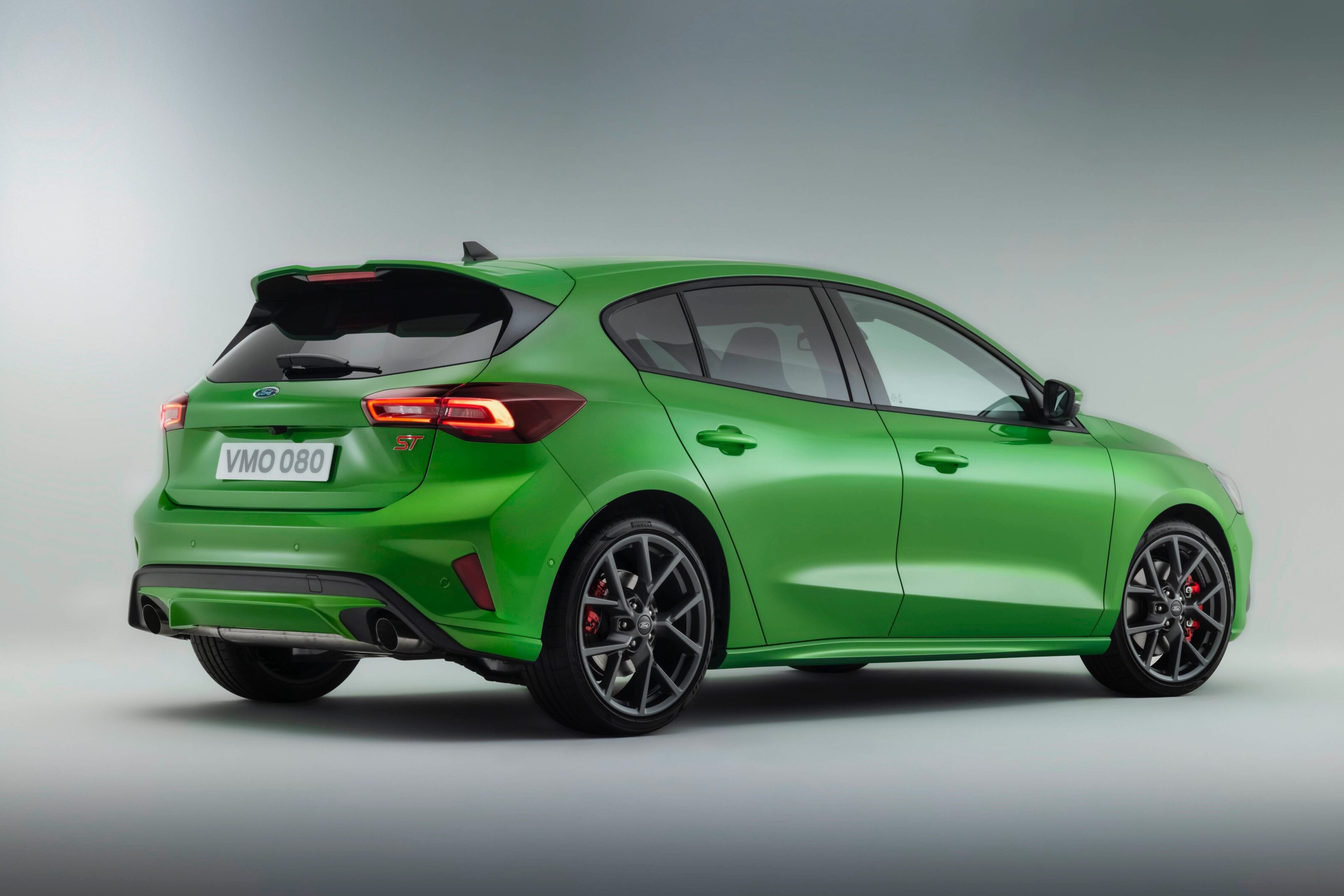
A set of 18-inch alloy wheels are fitted as standard to the Focus ST, while the ST X gets a set of 19-inch alloys. Ford has also added mean green to the exterior colour palette.
The current 2.3-litre turbocharged four-cylinder petrol engine will continue in the updated hot hatch, sending 206kW and 420Nm to the front wheels through either a six-speed manual or seven-speed automatic. Anti-lag technology helps to ensure immediate power delivery when being driven in sport and track modes.
Both versions of the Focus ST will come with an electronic limited-slip differential to aid traction under acceleration and cornering, while the ST X gets a new selectable drive mode for the track – allowing for a more aggressive throttle response and greater leeway from the car’s safety systems.
Ford has also updated the Focus ST’s safety tech, improving blind-spot assist and adding intersection assist.
2022 Ford Focus ST Australian pricing
The 2022 Ford Focus is on sale now, with the vehicle set to arrive into local dealerships in the second quarter.
| Model | Price |
|---|---|
| Focus ST manual | $47,490 |
| Focus ST auto | $47,490 |
| Focus ST X auto | $51,990 |
Note: Prices exclude on-road costs.
2022 Ford Focus ST features
| LED headlights |
| Electronic limited-slip differential |
| 13.2-inch infotainment screen with Sync 4 |
| Wireless Apple CarPlay and Android Auto |
| Wireless smartphone charging |
| FordPass Connect capability |
| Ford Performance heated and powered front seats |
| Blind-spot assist |
| Intersection assist |
| Seven paint options |
| 18-inch 10-spoke ‘torqued’ alloy wheels. |
Focus ST X adds:
| Dynamic Pixel LED headlights |
| Head-up display |
| Panoramic roof |
| Adaptive sports suspension |
| Six paint options |
| 19-inch alloy wheels. |
UPDATE, December 21: We’ve added a fun new video to this story, featuring Dan Gardner driving the 2022 Volvo C40 around Belgium, exploring the new EV’s styling, comfort, technology and driving qualities. Hit the play button above to find out more!
The story to here
For a company that has been foretelling the end of combustion-powered cars longer than most, Volvo has taken a surprisingly long time to bring its first pure-electric model to market.
The statement of intent started with the cull of all piston engines comprising more than four cylinders, then any that happened to displace more than 2.0-litres got the chop. Next, the electrification gene was administered in the form of plug-in hybrids, paving the way for full-fat EVs to succeed petrol and diesel for good.
But despite the beads of sweat forming on the forehead of Volvo’s remaining combustion engines, it was only last year that the first battery-powered Volvo finally made its debut.
Now though, it seems the 2021 Volvo XC40 Recharge has categorically opened a gate for the company, with a whole family of EVs jostling to get through the door and join the baby SUV pioneer.
The schedule is being dictated as much by demand as it is platform availability as respective generations of models mature, and the electrified version of the XC40 just happened to be the first model that could roll on the company’s new CMA architecture.
After it, however, will be the bigger XC60, the XC90 on the SPA platform and eventually every other model further down the line. All the time, high-performance sister brand Polestar is mirroring the Volvo EV roll-out with its own family of zero-emissions models on the same corresponding platforms.
But before the next SUVs, the Swedish company has slotted in a more esoteric but intriguing model based on the XC40 Recharge.
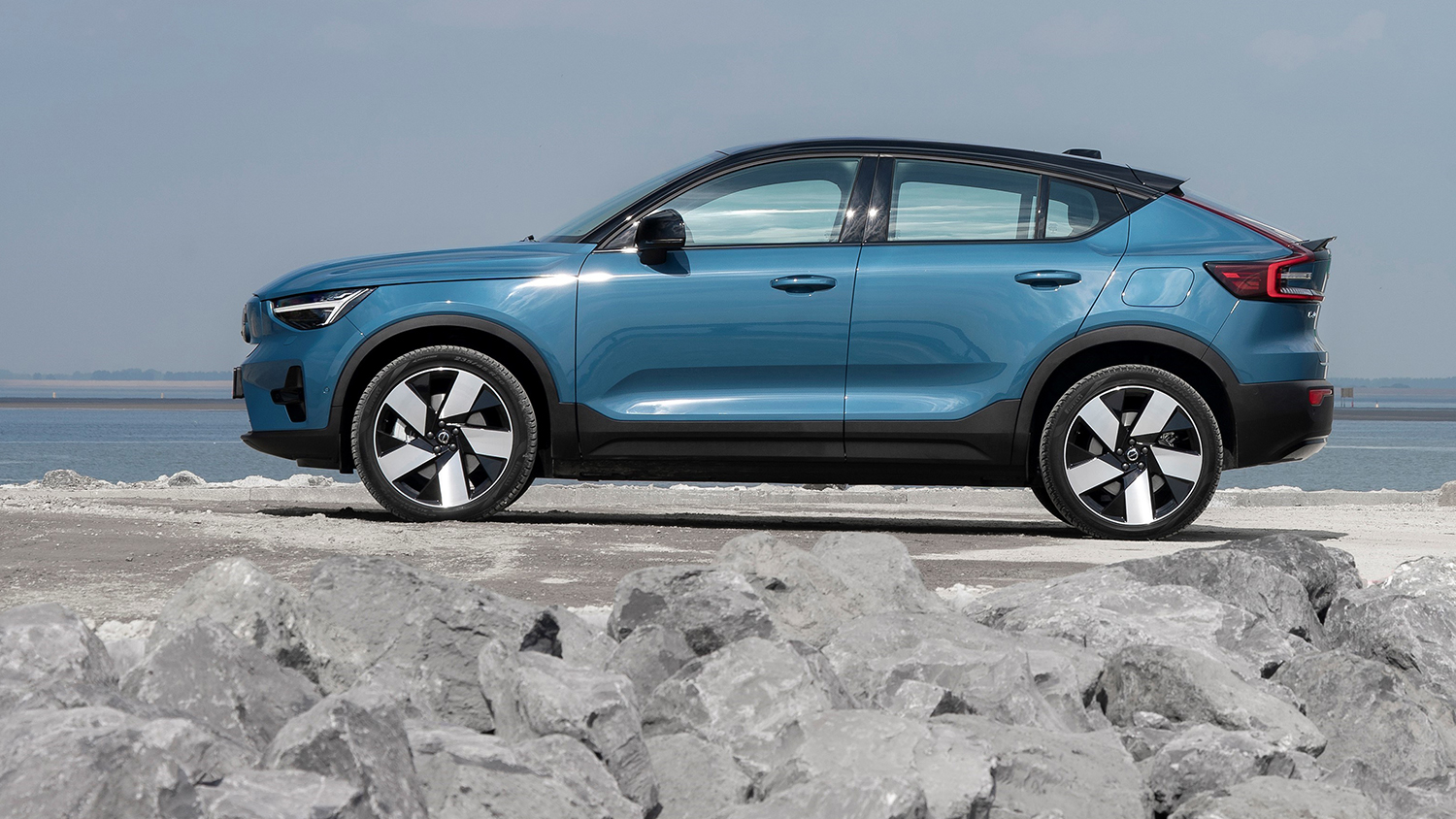
It’s called the C40 Recharge and it takes the same mechanicals as the high-achieving SUV but chamfers its tail for a more coupe-like, style-driven look.
Unlike the XC40 that is available globally as pure combustion-powered, mild hybrid, plug-in hybrid and Recharge EV, the C40 is, for now, only available as the latter.
A 78kWh lithium-ion battery feeds power to a pair of electric motors – one on each axle – and a ‘twin’ boot badge denotes the more muscular potential as well the inherent all-wheel drive.
The tail-end motor has the option to deliver a bigger chunk of the performance for a more rear-biased power feel, but the net output is 300kW and a chunky 660Nm.
In practice, it feels like more. Poke the pair of inverters for their full combined might and the C40 bolts like someone stamped on its charge cable. Rolling acceleration feels almost more aggressive than off-the-mark with a cleverly calibrated throttle that damps big inputs at low speed for smoother driving and lively responsiveness when up and moving.
The throttle also has another clever touch when decelerating too. Regenerative braking is also speed-dependent, offering the most aggressive effect at low speeds but limiting the braking when at higher speeds – again for smoother driving.
It also allows the C40 to coast at freeway speeds and, during more spirited driving, the driver can hover over the brake without the car slowing.
Finally, while most EVs cannot offer regen when the battery is full (there’s nowhere to put the regenerated power) the C40 actually applies brake force from the conventional caliper and disc arrangement, which means single-pedal driving is consistent and available 100 per cent of the time.
It’s small touches like this that set the C40 apart and highlight how thoroughly the model has been thought out.
The C40’s suspension tune also provides insight that this EV is not trying to be like all others. Rather than opting for the weight-taming stiffness that many other battery-powered models adopt along with the crashy ride that often comes with it, this Volvo is softly sprung and is impressively comfortable on bad roads.
There’s more body roll as a consequence but in a trade-off between relaxation and stimulation, we’d take the Volvo most days. That’s not to say the C40 is lacklustre on challenging roads because a glimpse of its full potential suggests it has a lot to give.
Unfortunately, the scenic route around Belgium for our time at the wheel offered little in the way of dynamic testing, but precious moments of full acceleration out of corners and late braking into others revealed impressive grip even in the wet.
Feeling the front and rear axles fight each other for torque as the C40 squirmed around in the rain was a hoot and a reminder of the fun EVs can offer. That said, tyre choices could unlock even more potential.
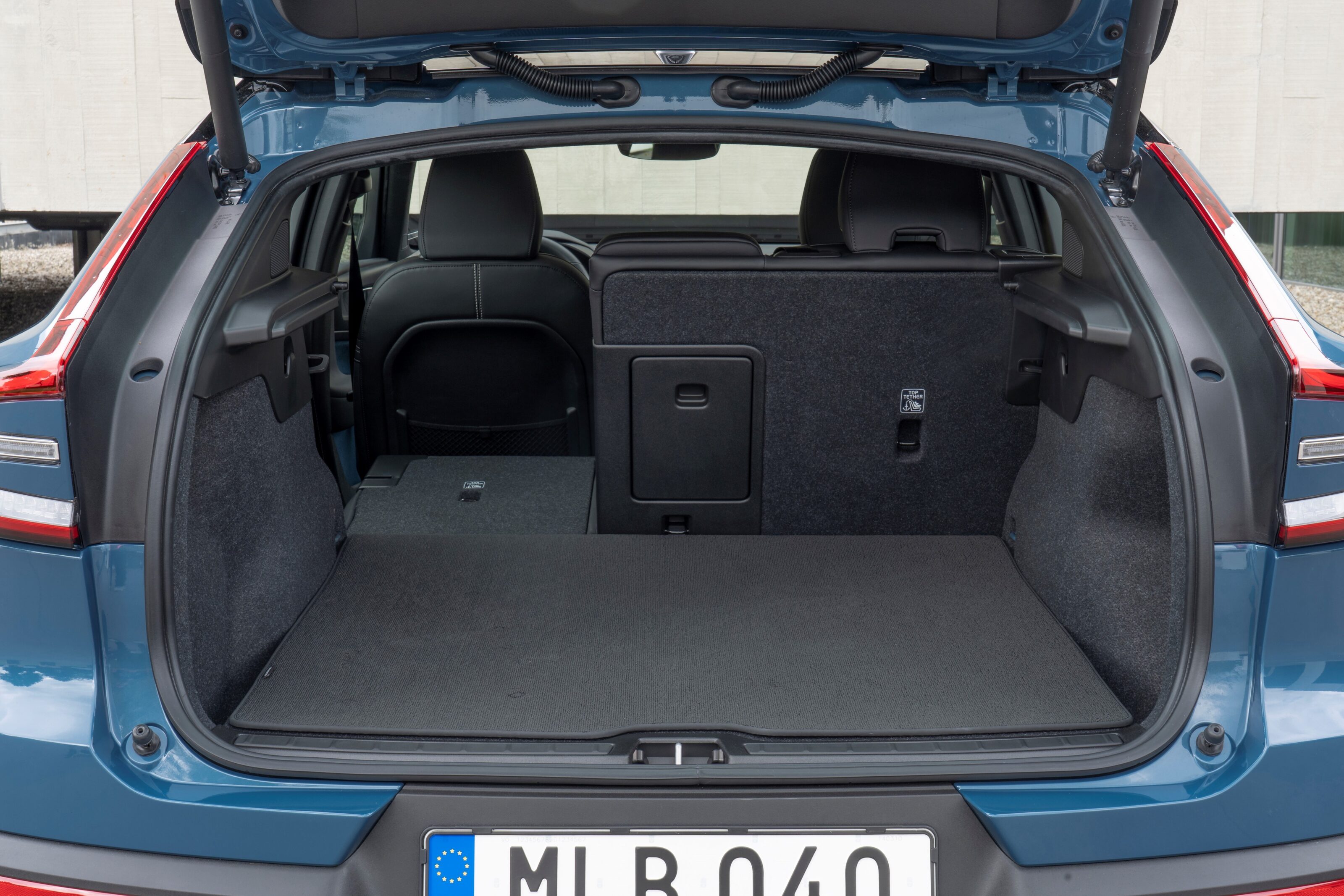
In Europe, the C40 Recharge will be shod in Pirelli Scorpion Allseason 2 Recharge tyres specially developed for the model but it’s easy to feel the limitations of this rubber with relatively little provocation. It’ll be interesting if Australia gets a different summer boot when the car arrives in late 2022.
Steering feel is the weakest part of the dynamic equation with a numbness that seems to be, as yet, insurmountable in the EV world. It doesn’t feel disconnected and the responsiveness is good, but feel is certainly lacking and no amount of synthetic weight can compensate for that.
Speaking of synthetic, the C40’s noise is also unusual. Quieter than most and what sound there is, is less supercharger whine and more high-speed train hum. At full noise, the dual-motor transmission emits a lovely deep rumble and is a fitting accompaniment to the bombshell acceleration.
Feeding the battery takes a little longer than some with a maximum 155kW DC charge rate and 400-volt system. Find the most forceful charger and you can pump up from 10 per cent to 80 per cent in about 35 minutes and a full charge will take you up to 444km.
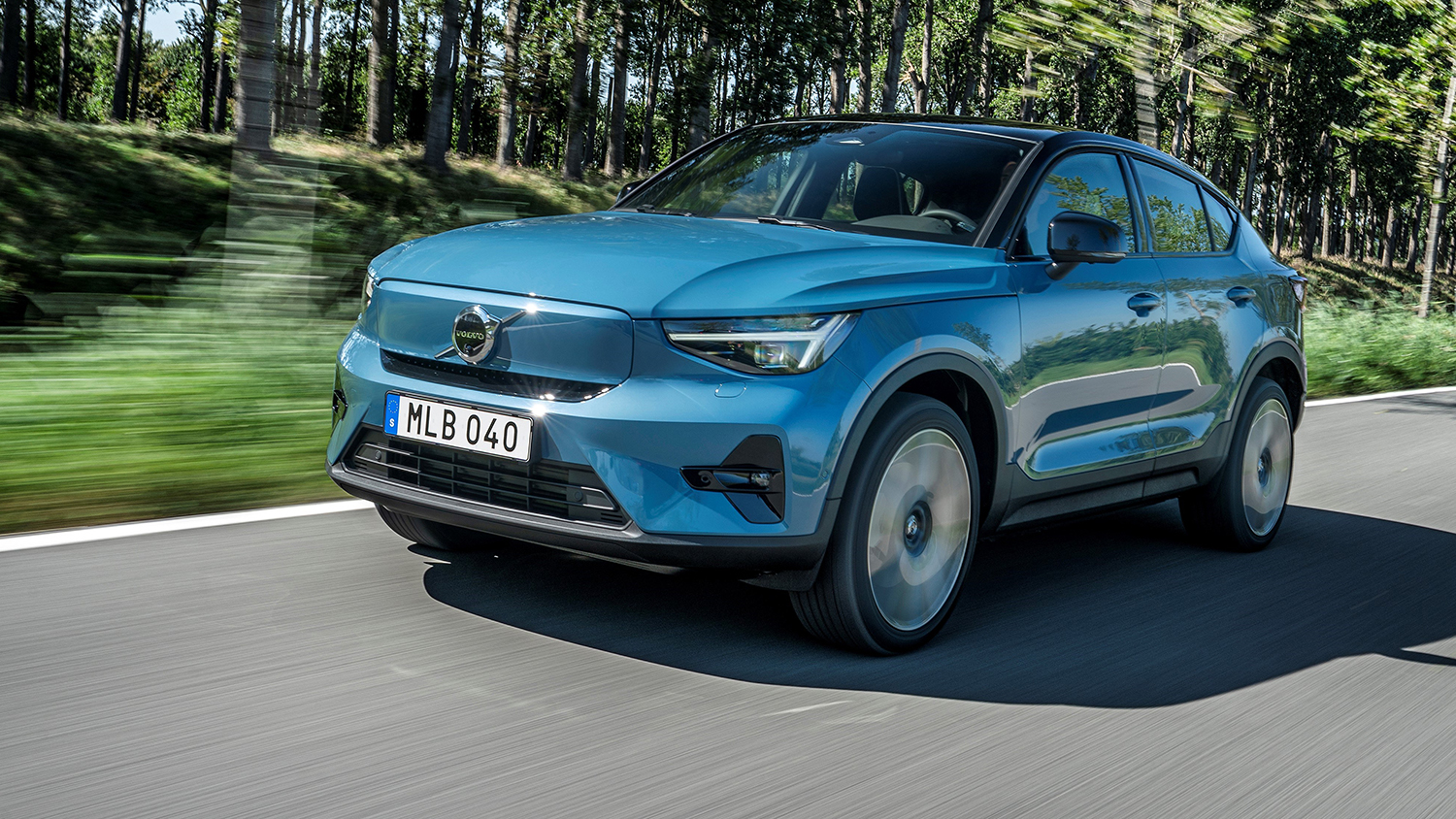
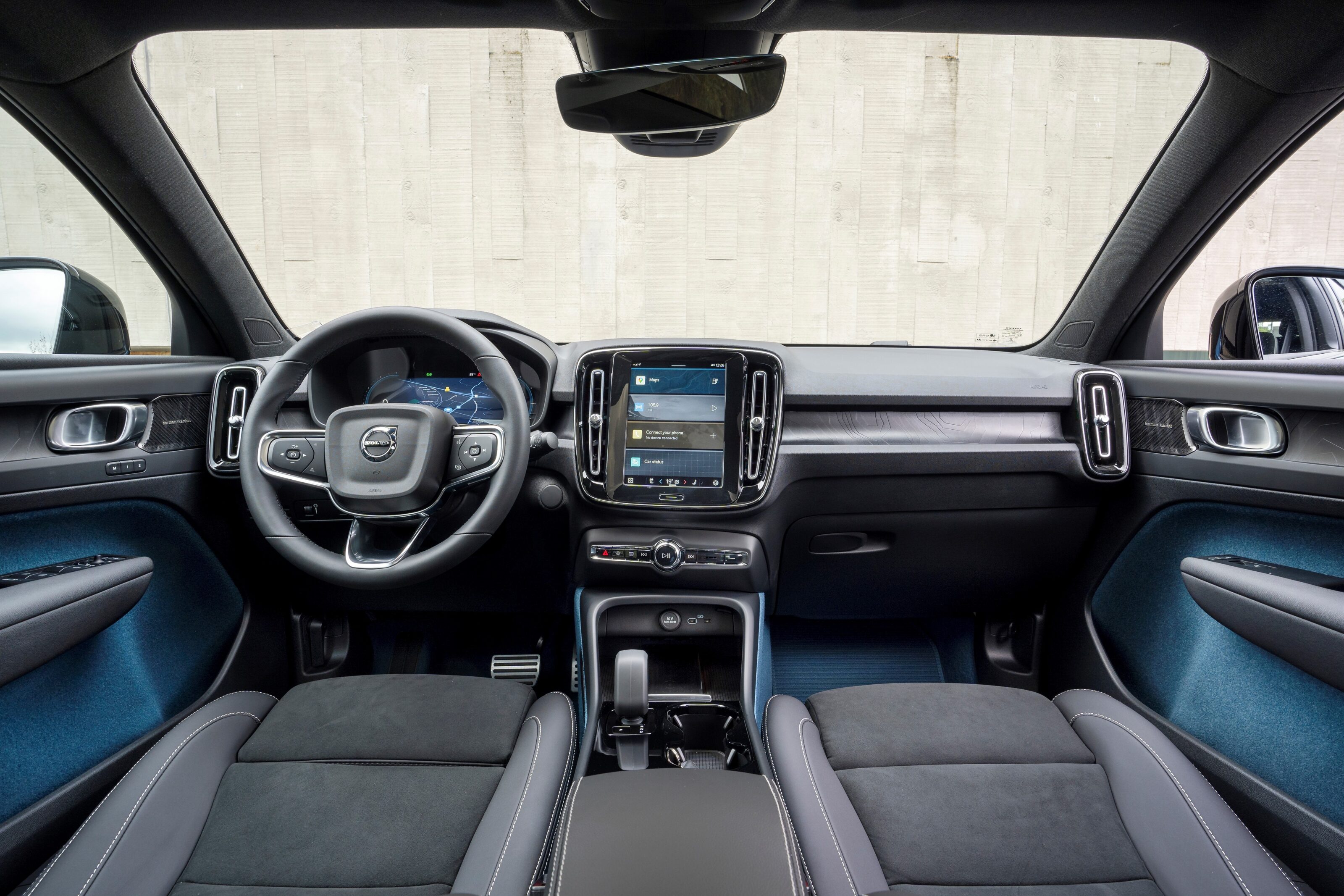
New to the model is Volvo’s latest information and entertainment system, which takes a big step forward as well. At a hardware and firmware level it’s all Volvo, but the operating system was jointly developed between Volvo and Google to bring the power of the tech company’s web search and mapping services for example, with the user feel and interfacing of a Volvo product.
Above that, third-party applications are supported along with over-the-air updates. But the icing is an e-sim permanently embedded in the system offering internet access and all the features without having to pair a phone.
Functionally, the result is a triumph with a powerful suite of applications and reliable operation – although there were the odd gremlins. On one occasion, this led us on an unplanned lap of Ghent. Not exactly a disaster.
In Europe, Volvo offers unlimited internet with the service but let’s not get too excited until Volvo Australia shows its cards. The same goes for the package of insurance, some charging and other bundled running costs that are offered as standard with each sale in Europe along with online sales.
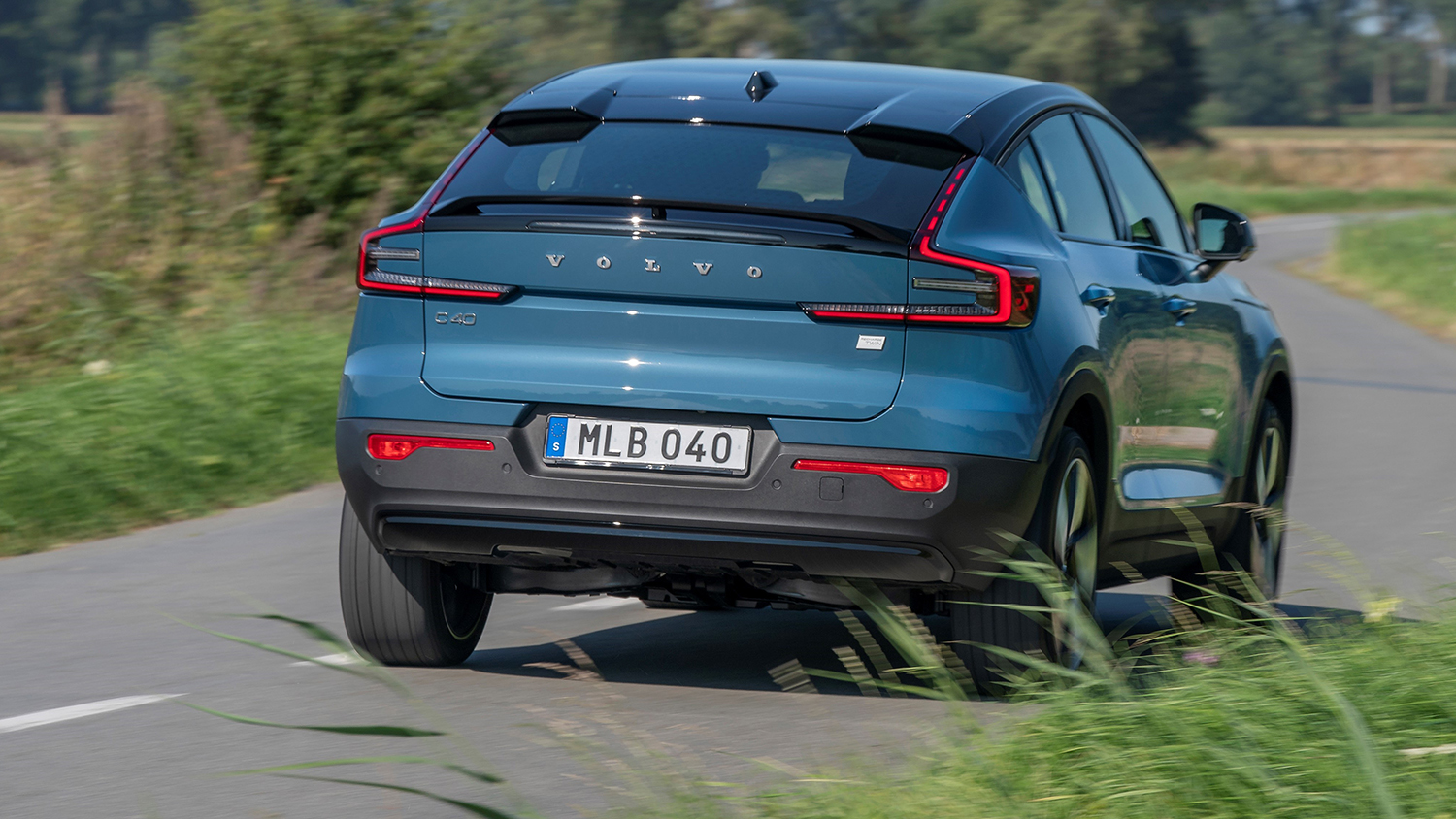
What will certainly come as standard is the same beautiful design throughout for which the XC40 has gained much-deserved acclaim.
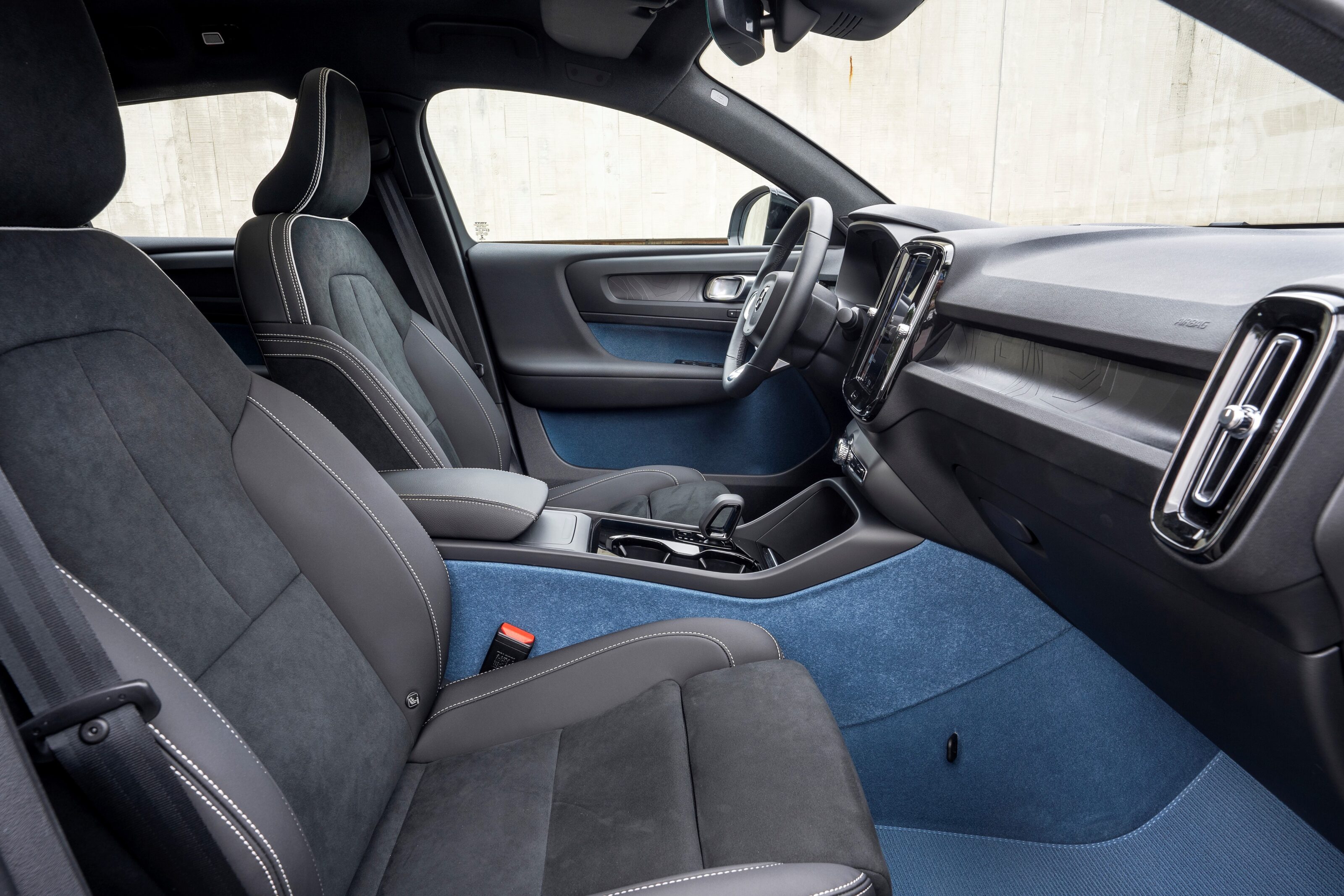
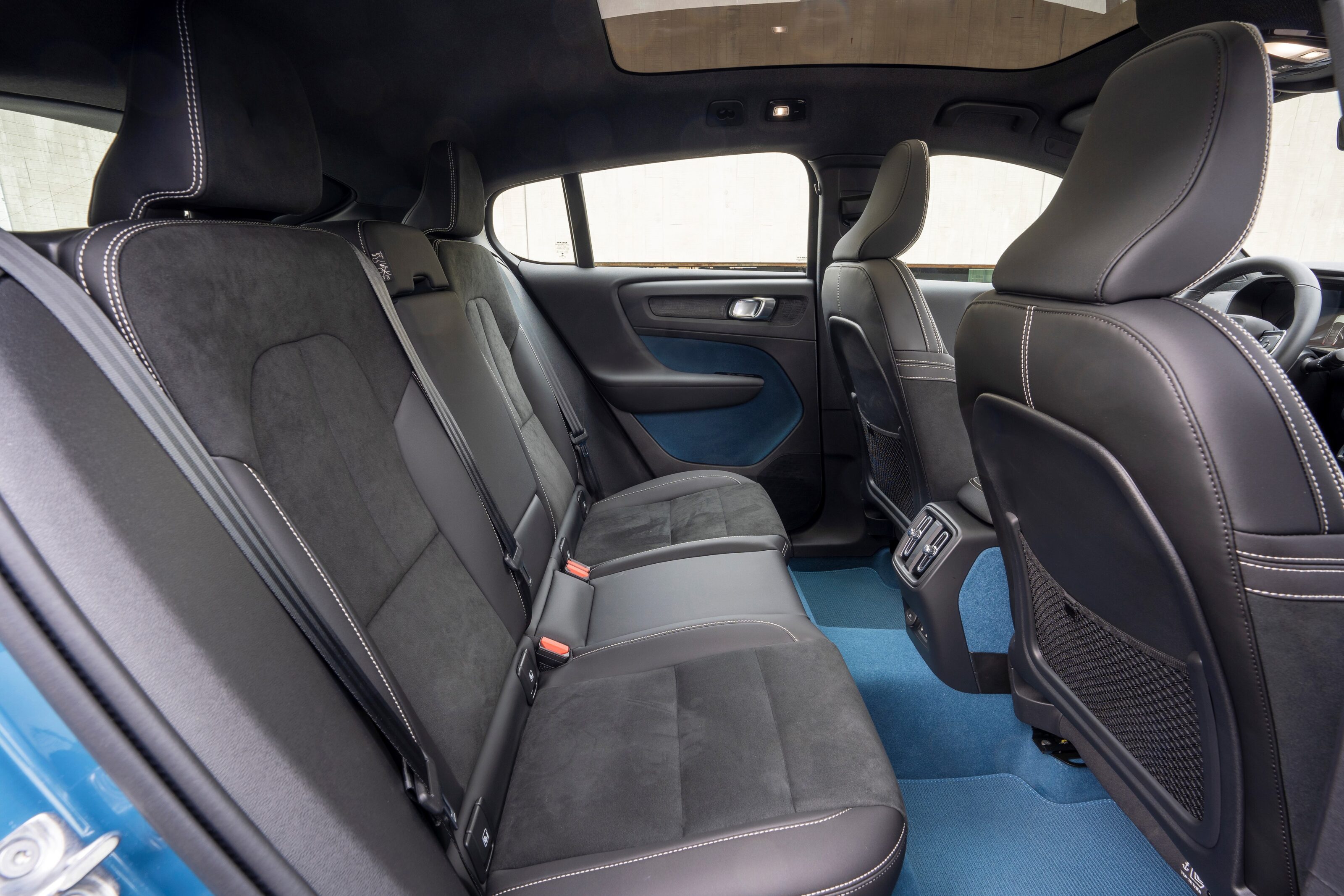
Veneered into the dash and door trims are a new topographical, LED-backlit texture inspired by the Abisco national park, leather-free upholstery and widespread use of recycled plastics. Like anything to wear the iron badge these days, the C40 is tremendously style-led and the first electric crossover from the company is compelling indeed.
Ultimately though, the model’s reception will come down to pricing, which is likely to be a shade more than the $76,990 XC40 Recharge.
Either way, this attractive and technologically advanced EV is not supposed to generate a vast fortune for Volvo with table-smashing sales. When it arrives, it’ll bolster the total local EV offering and broaden the choices available to those looking to dip a toe into the future, and Australia’s roads will be a better place for it.
2022 Volvo C40 specifications
| Motor | Twin |
|---|---|
| Max power | 300kW |
| Max torque | 660Nm |
| Battery | 78kWh |
| Transmission | single speed reduction |
| Weight | 2207kg |
| 0-100kmh | 4.7sec (claimed) |
| Economy | 20.7kWh/100km |
| Price | $79,990 (est) |
| On sale | Late 2022 |
Snapshot
- Nio ET5 unveiled in China
- Largest battery could provide driving range of 1000km
- Pricing could rival the Model 3
Nio has revealed its new ET5 electric sedan in an online presentation, detailing the Tesla Model 3 rival.
The Chinese car brand is beginning to push into new markets and has confirmed it will produce vehicles in right-hand drive. Not yet confirmed is if Australia will be part of its RHD market launches, but it has previously stated intent to come here.
The ET5’s styling is reminiscent of the larger ET7, which has slim LED running lights and a smooth look from the front. The front bumper features air curtain inlets that help channel air down the side of the car and reduce drag, along with the car’s flush door handles.
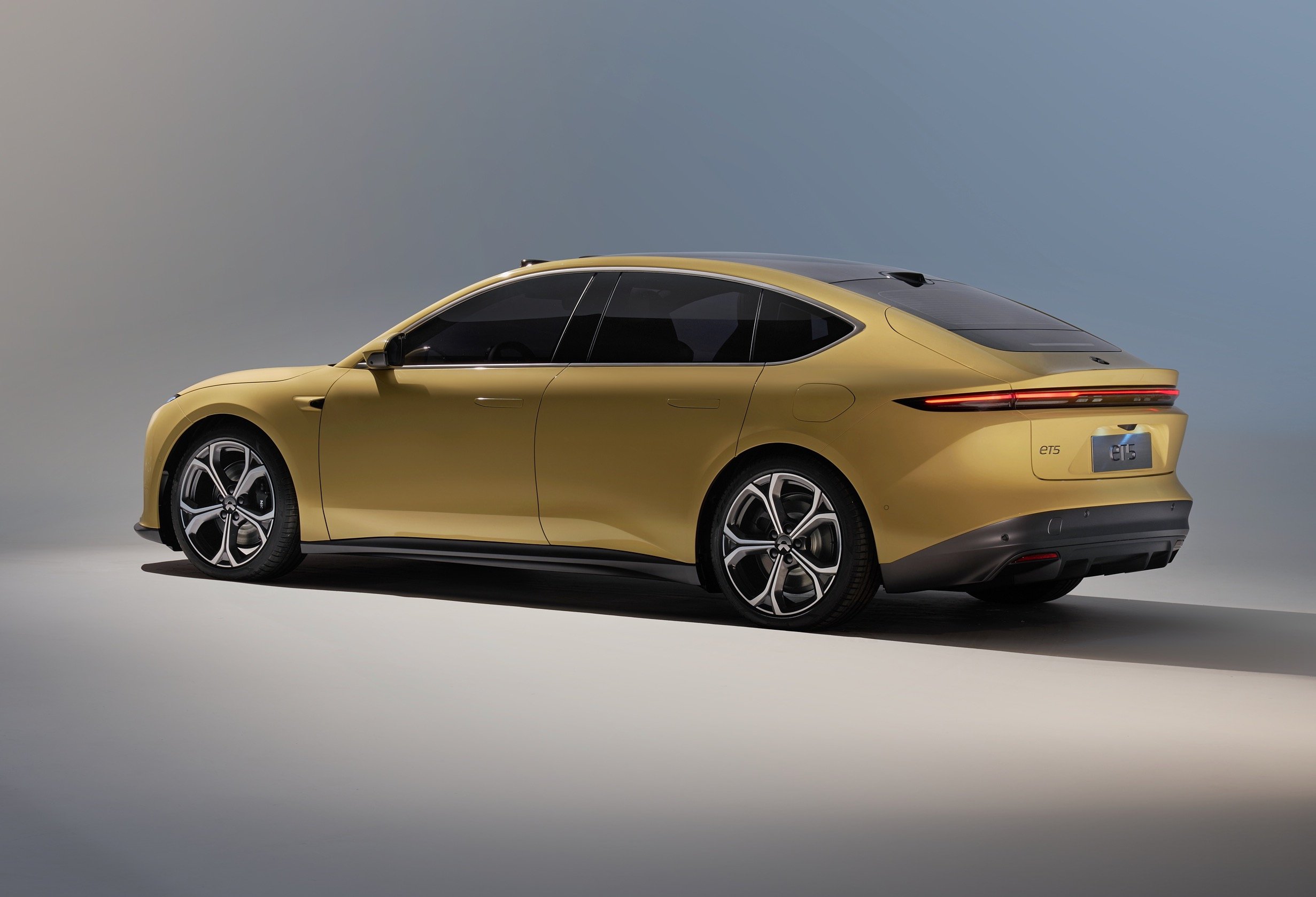
Revealed during the annual Nio Day event, the ET5 comes with 75kWh, 100kWh and 150kWh battery options for 550 kilometres, 700km and 1000km of driving range respectively.
While the 150kWh model offers a huge capability compared to current options, the predicted range figures for all models are based on the Chinese test cycle, so expect them to drop slightly once homologated through WLTP testing.
Based on Nio’s next-generation platform, which features a five-link rear suspension set-up, the ET5 features all-wheel drive with a 150kW electric motor mounted on the front axle and a 207kW motor on the rear axle, delivering a total of 359kW and 700Nm of torque for a claimed 0-100km/h time of 4.3 seconds.
At 4790 millimetres long and with a 2888mm wheelbase, the ET5’s more compact proportions mean the arching roof made with a full-piece glass sunroof tapers aggressively towards the rear, kicking up on the boot lid with a gentle ducktail spoiler that sits above a full-width LED light bar, spanning the boot and the rear wings.
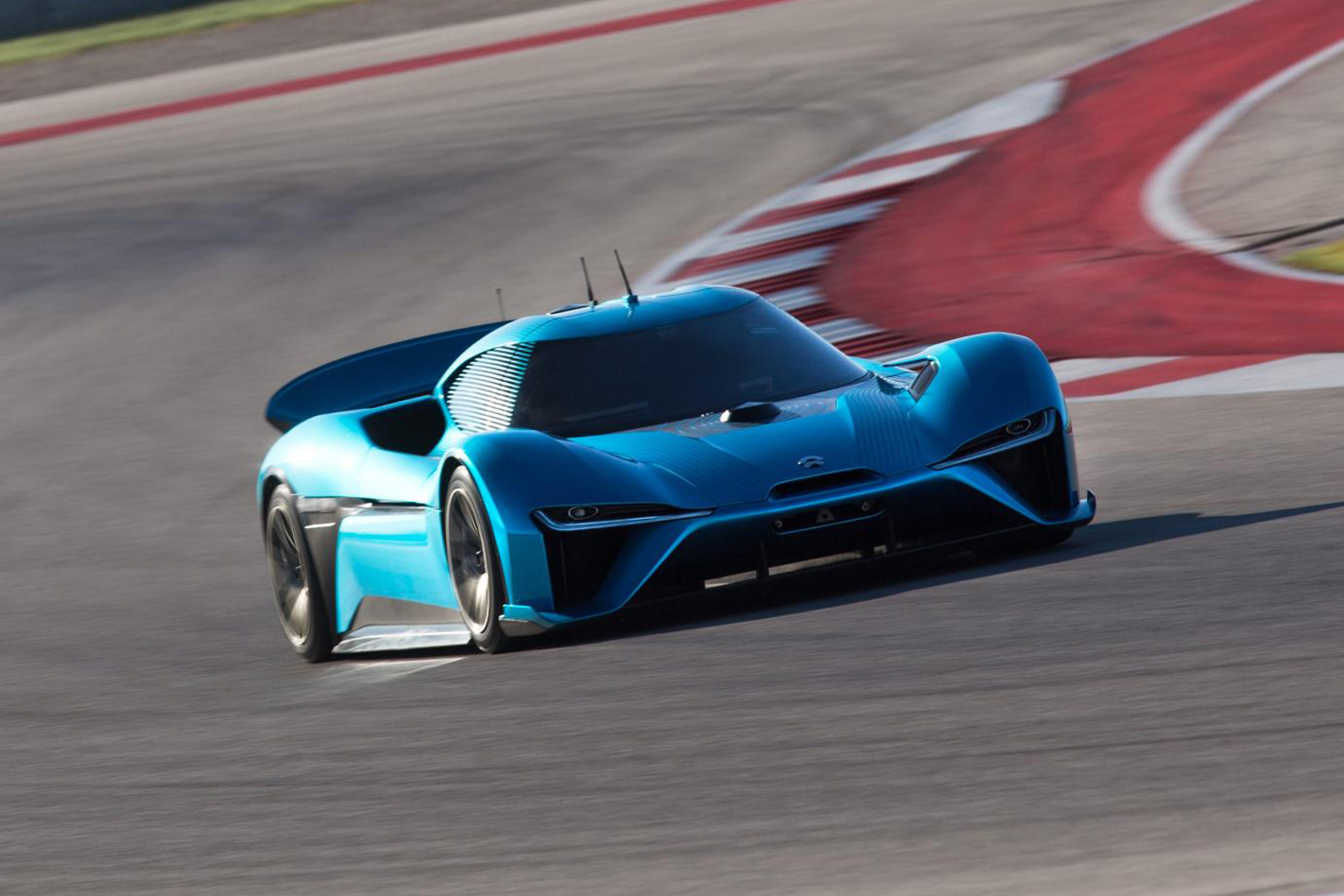
Inside, the ET5 boasts a minimalist design, with a 10.2-inch digital driver display joined by a 12.8-inch central touchscreen – 5G connectivity features, along with tech such as; Nio’s PanoCinema digital cockpit, full digital key technology and 19 safety and advanced driver assistance systems, according to the brand.
The ET5 will be available in nine exterior colours with six different interior themes. Nappa leather trim, as well as ventilated massage seats will be available as options.
Nio confirmed the ET5 features ultra-long-range and high resolution LIDAR sensors as part of its driver assistance tech to boost its autonomous driving capability.
Pricing is competitive too, in the equivalent range of $70,000 to $85,000 for the 75kWh and 100kWh models, which would make it a sharp rival for the Model 3 if Nio does launch locally.
Bentley has created three outdoor-themed bespoke variants of the Bentayga via its coachbuilding service, Mulliner.
Strictly limited and created on demand for outdoor-loving buyers, only 11 examples of the Bentayga ‘Outdoor Pursuits’ collection will be produced. The three themes are aimed at anglers, horse riders, and dog walkers.
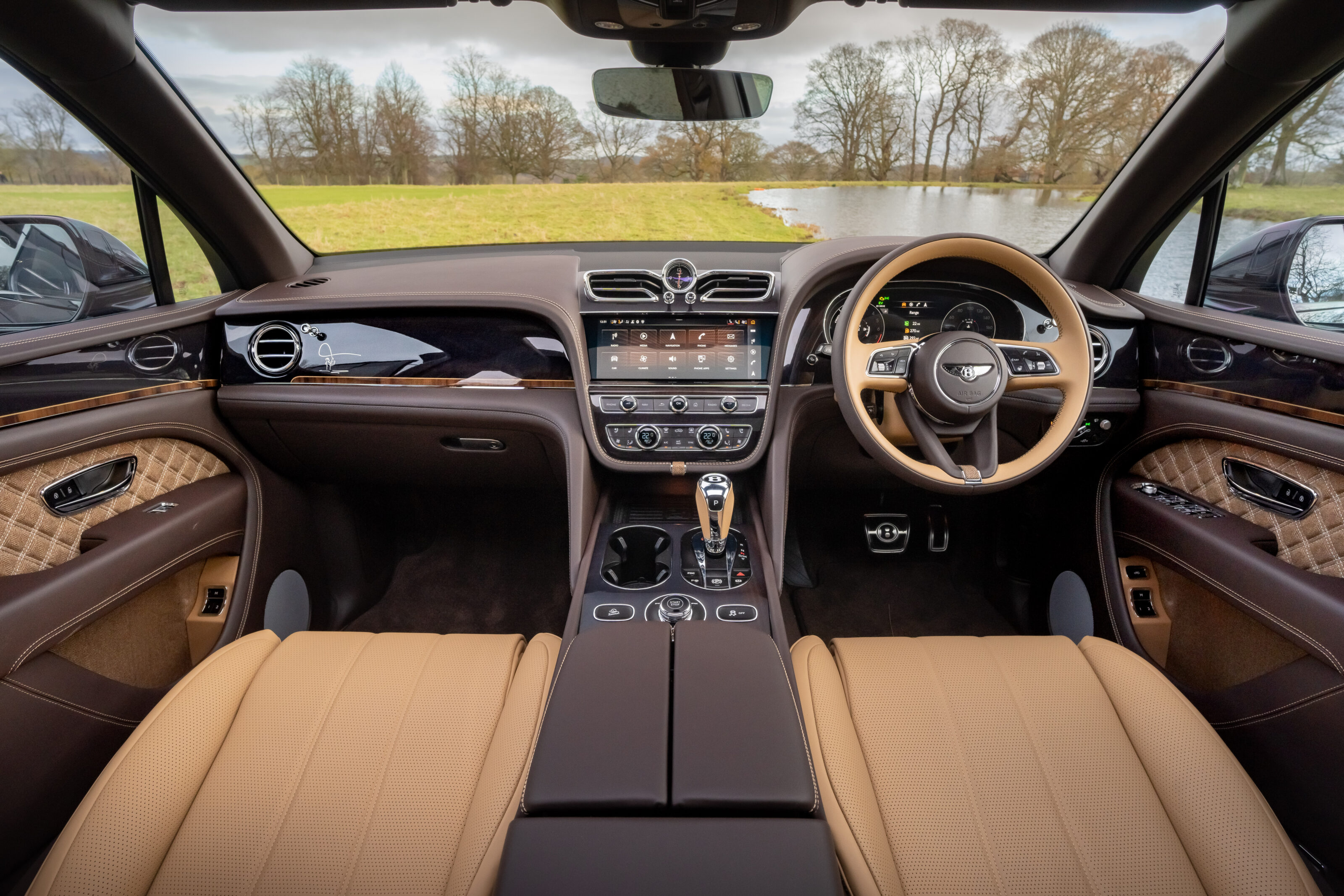
Each bespoke Bentayga gets a ‘woodland embroidery scene’ hand-stitched to the seat-backs, plus a unique chrome overlay on the passenger-side dash fascia. There is a jumping horse emblem, a fly-fishing silhouette, and British foxhounds. If these are not good enough for the discerning buyer, there are many other designs that can be chosen.
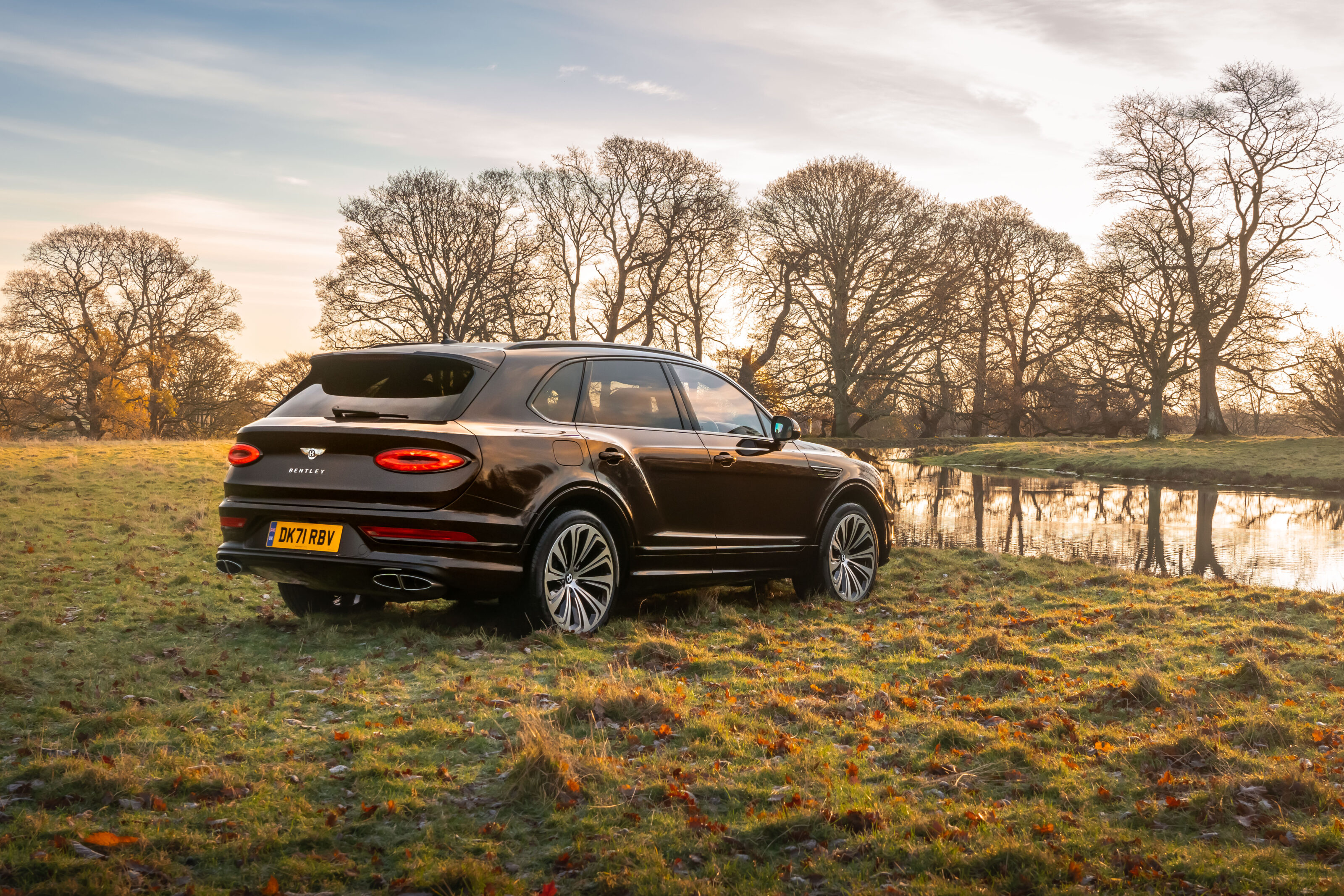
Beyond the normal Bentayga, there is also a woven wool finish on the door panels, seat-back pockets, grab-handles, and instrument panel. A very British-looking Sand Herringbone Tweed is splashed about the cabin, while unique timber veneers juxtapose a special leather hunter’s flask accessory.
Outside, the Bentayga Outdoor Pursuits can be finished in one of three paint colours: Havana brown, Cumbrian green, and magnetic grey, which is colour-matched on the large 22-inch alloy wheels underneath.
Like the price of market fish, no price has been given by Bentley, with clients given the bill after consultation on building their unique Bentayga with Mulliner.
Lotus has posted a video of the new Emira sports car sliding and carving up the track at its Hethel test circuit.
The Emira (pronounced ‘eh-meer-ah’) will eventually be priced from around $150,000 in Australia, although the First Edition Emira V6 sets buyers back $184,990 before on-road costs. It will come standard with a six-speed manual transmission while a six-speed auto with paddle shift is optional.
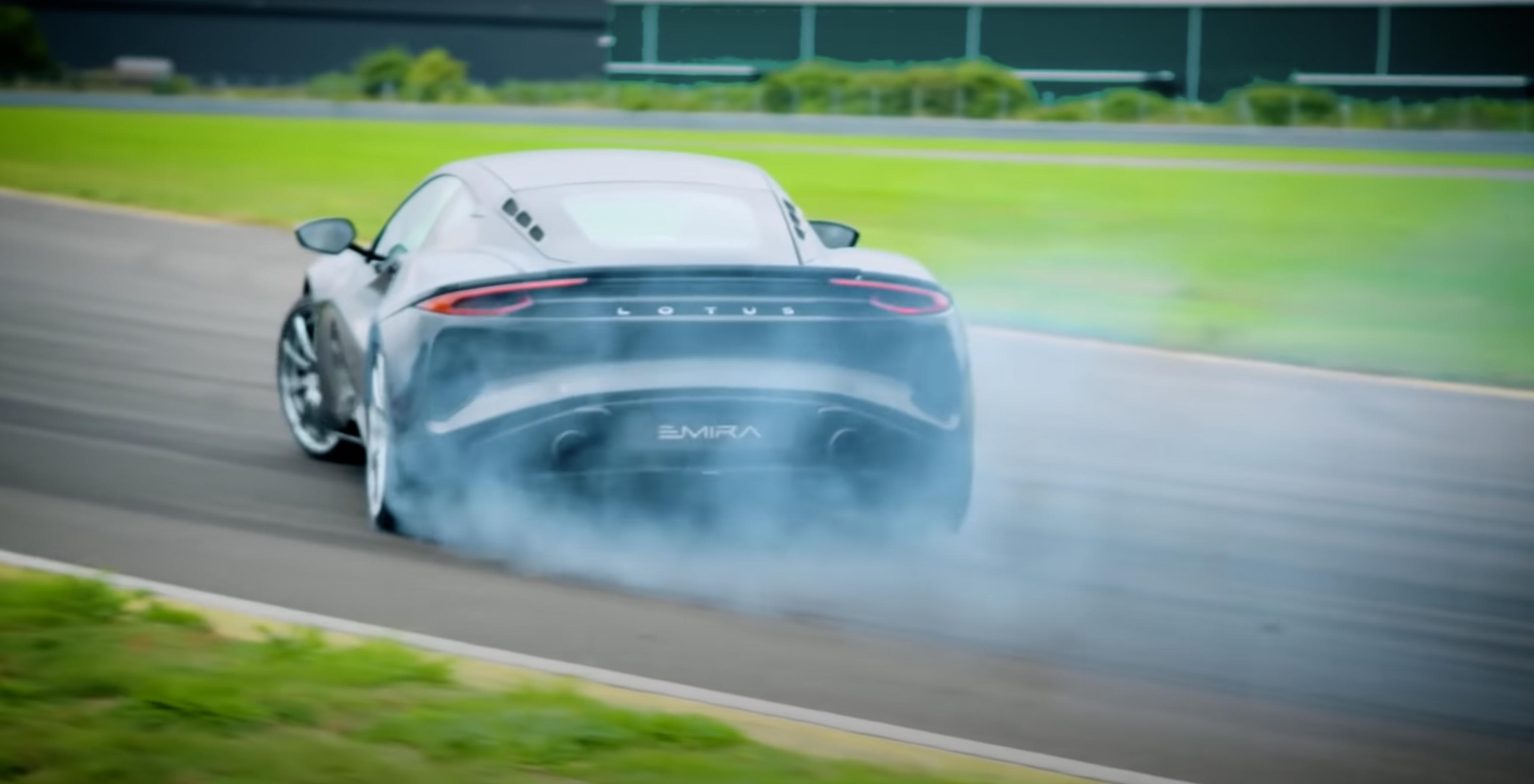
The natural Porsche Cayman rival is shown in the test video at the hands of Lotus’s Director of Attributes and Product Integrity, Gavan Kershaw, who walks us through some of the Emira’s traits and how the drive mode system works.
Tour Mode provides “maximum stability and control”, and Sport Mode gives more “body slip” with a sharper throttle.
The more aggressive Race Mode lets the Emira slip around even more with reduced traction and stability control, while the digital dash changes theme for the setting. There is also a Fully-Off Mode, which, as it suggests, turns the traction control off so it is “100 per cent controlled by the driver”.
We also hear about the interior, with Kershaw saying it is “really modern in feel” and talking further about the aerodynamic performance of the car.
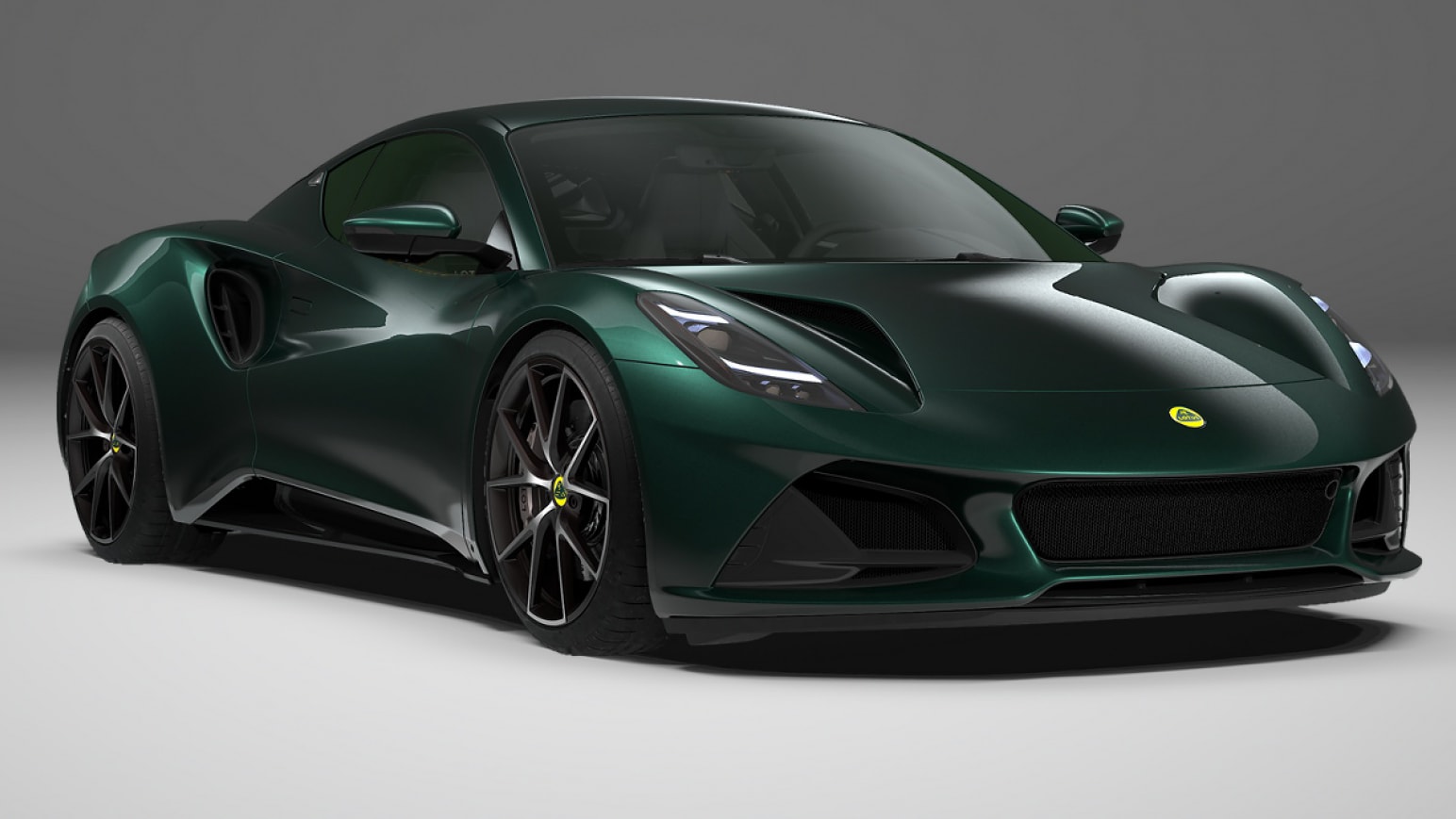
Powering the Emira is a Toyota-sourced 3.5-litre supercharged V6 engine producing 298kW of power and 420Nm of torque through the six-speed manual and 430Nm when attached to the six-speed automatic transmission.
That’s good enough for a 4.2sec 0-100km/h launch and Kershaw describes the drivetrain as offering excellent response down low with a revvy top-end while sliding the Emira on track.
First deliveries of the Lotus Emira V6 Edition will start around mid-2022, with the greater range expected to land here near 2023.
