
Key Points
- 2015-2021 Toyota HiLux recalled
- The issue relates to poor stiffness of the rear license plate bracket
- A total of 156,838 vehicles are affected by the recall
Toyota Australia has issued a recall for 156,838 examples of its 2015-2021 HiLux ute over concerns surrounding the rear license plate bracket.
The affected vehicles were produced between June 2015 and September 2021.
According to the recall notice issued by the Department for Infrastructure, poor stiffness of the rear license plate bracket around the single mounting point could lead to cracking due to metal fatigue when driving on corrugated roads.
The issue could result in the license plate dislodging from the vehicle and/or severed license plate lamp wiring, and could lead to potential injury for other road users.
Toyota says its dealers will inspect, and replace if necessary, the license plate bracket and tray bracket free of charge to vehicle owners.
According to the brand, inspecting and replacing the brackets will take approximately 30 minutes.
Toyota will contact affected owners, but the company can be contacted directly by calling 1800 987 366 or by visiting a dealership, found here.
A VIN list for the affected vehicles can be found here.
Aston Martin has teased the return of the V12 Vantage, indicating that a limited-edition model will debut in 2022 to send off the brand’s muscular nameplate, first introduced 12 years ago.
The British carmaker is giving little away at this stage however, stating: “You’ve heard about it. You will certainly hear it coming. V12 Vantage. It’s not just a Limited Edition, it’s a Final Edition. Returning in 2022”.
A teaser video uploaded to Aston Martin’s YouTube channel (watch above) emanates a sonorous V12 soundtrack with an array of overrun-induced crackles and pops, signing off with the tagline: “Never Leave Quietly”.
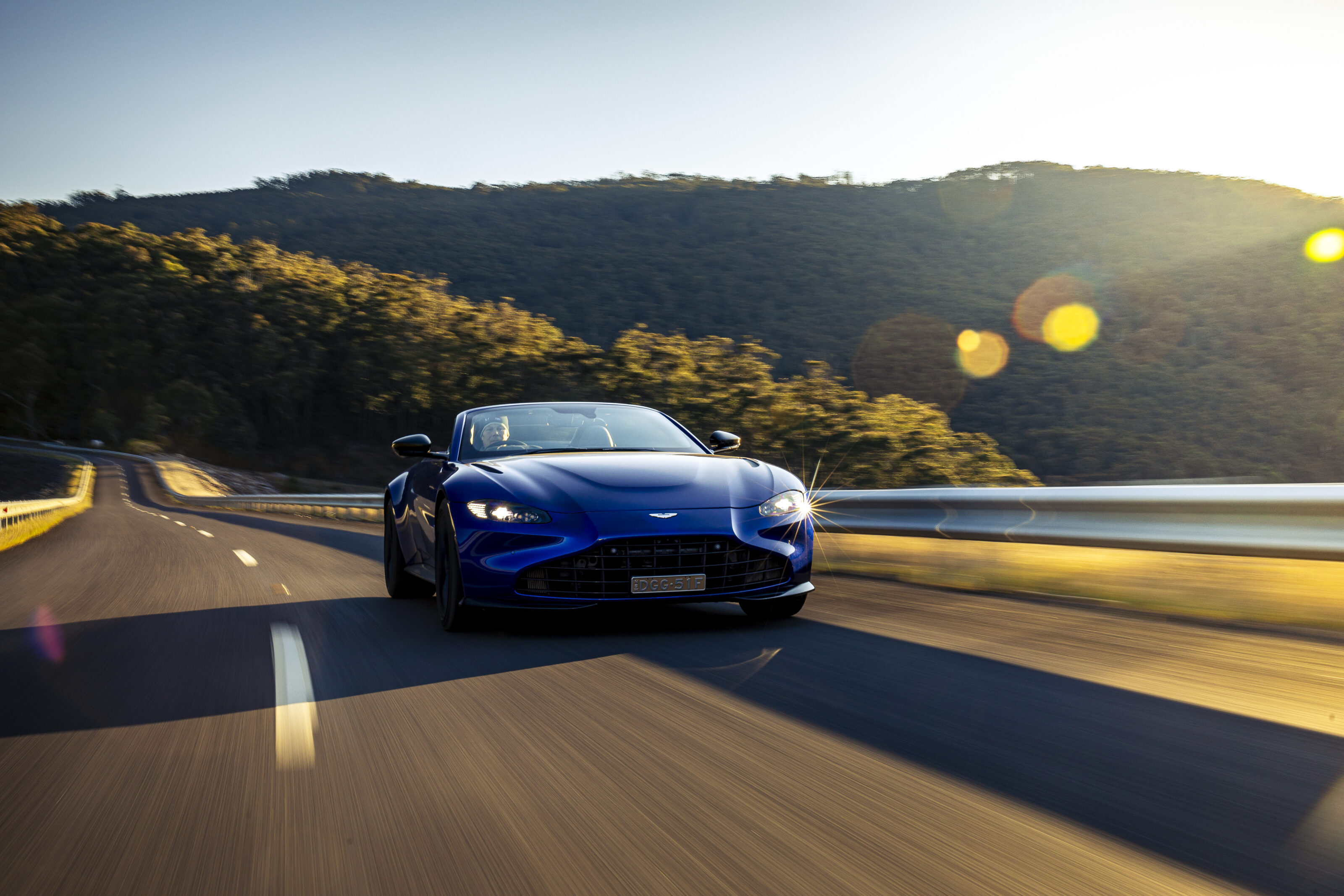
Given the current generation of Vantage came to market in 2018, and under the twilight of internal combustion, this may be the last V12-powered Vantage we ever see.
The exact mechanical package is yet to be revealed, however, the path of least resistance points to the existing 5.2-litre twin-turbo unit and the ZF eight-speed torque-converter auto found in the current DB11 V12 and DBS Superleggera.
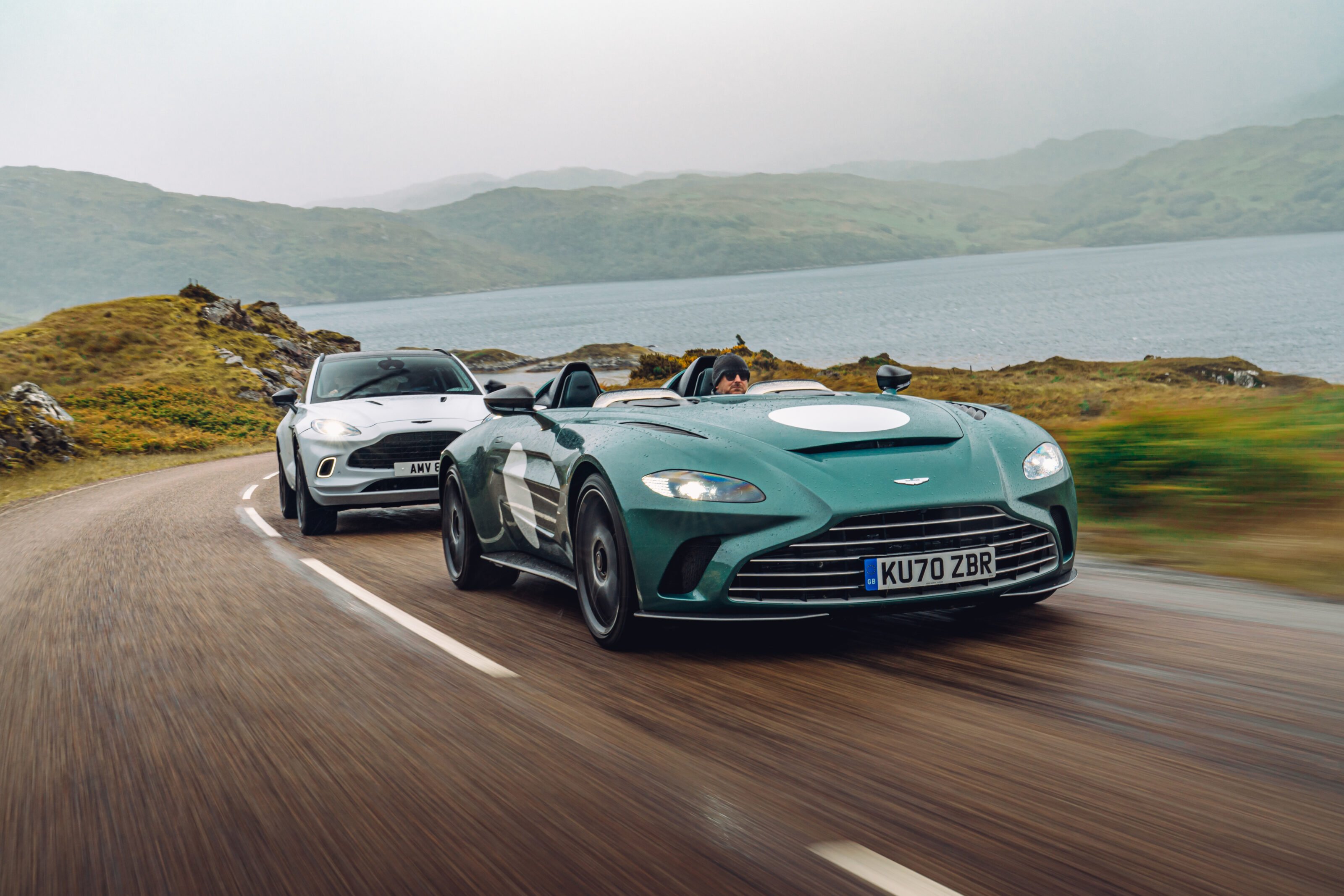
Giving further credence to the theory is the Aston Martin V12 Speedster we drove recently.
Limited to 88 units, the V12 Speedster is comprised of a blend of DBS, DB11 and Vantage architectures. Pertinently, however, the roofless two-seater shares its engine bay with the Vantage, so we know there is ample room to mount 12 cylinders and two turbines with minimal development.
Lightly disguised test mules seen at the Nürburgring earlier this year preview flared wheel arches, bonnet vents for heat extraction, an enlarged grille with extra ducting and dual central-exit exhausts.
The original V12 Vantage was first announced at the end of 2007 and saw production between 2009 and 2018, when the original Vantage was superseded by the all-new Mercedes-AMG V8-powered generation.
Exactly how many Aston Martin V12 Vantage Final Editions will be built, and for how much, remains unclear. We will update this story as more information comes to light. Stay tuned.
Key Points
- On sale now, priced from $49,000 MLP
- Eight-speed dual-clutch auto (DCT) standard, six-speed manual no-cost option
- 206kW/392Nm flat power tune 2.0-litre T-GDI four-cylinder
- Debuts Integrated Drive Axle (IDA) and brake pre-fill
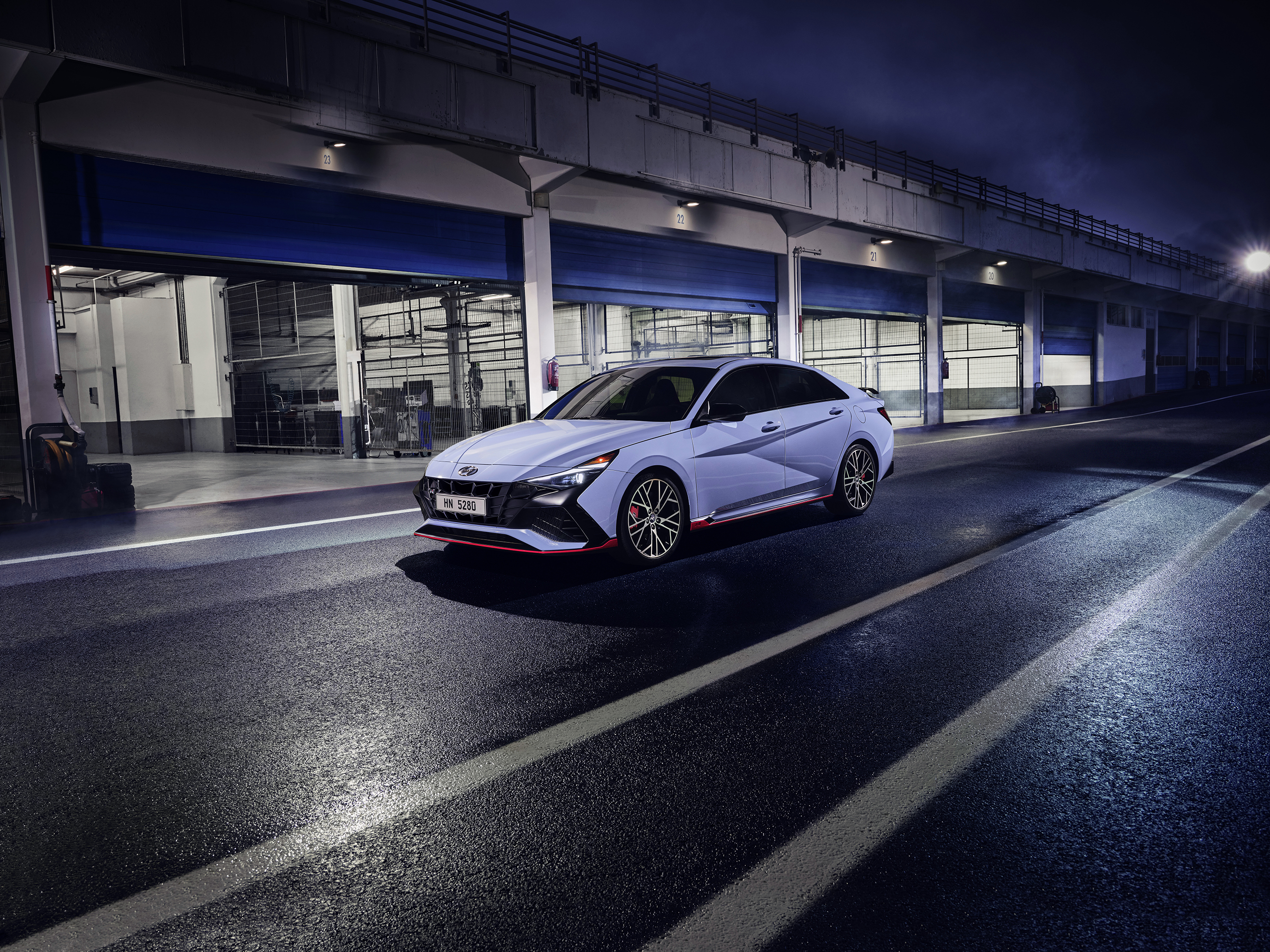
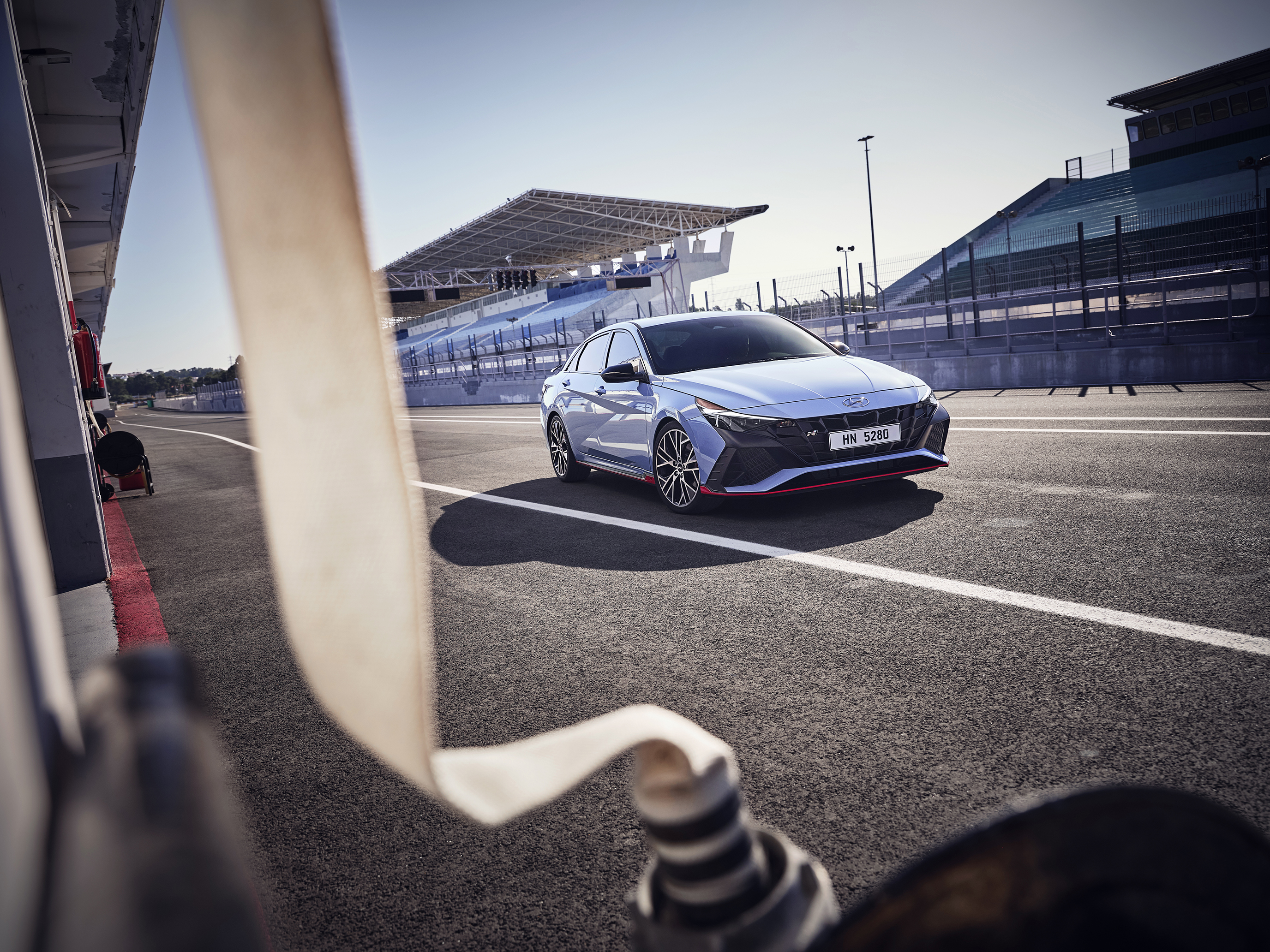
Hyundai’s N Division rounds out its multi-pronged assault on the Australian performance market this year with the launch of the 2022 i30 Sedan N.
Launching today as a single-spec offering, the i30 Sedan N joins N Division’s existing line-up of the i30 N hatch and Kona N SUV, and adds a booted four-door body to the fast family mix.
Pricing
Australian pricing for the i30 Sedan N begins at $49,000 (before on-road costs). A sunroof ($2000) and premium paint ($495) are the only cost options available on the keenly-positioned feature-rich sedan.
Features
| Rain sensing wipers |
| Power folding exterior mirrors |
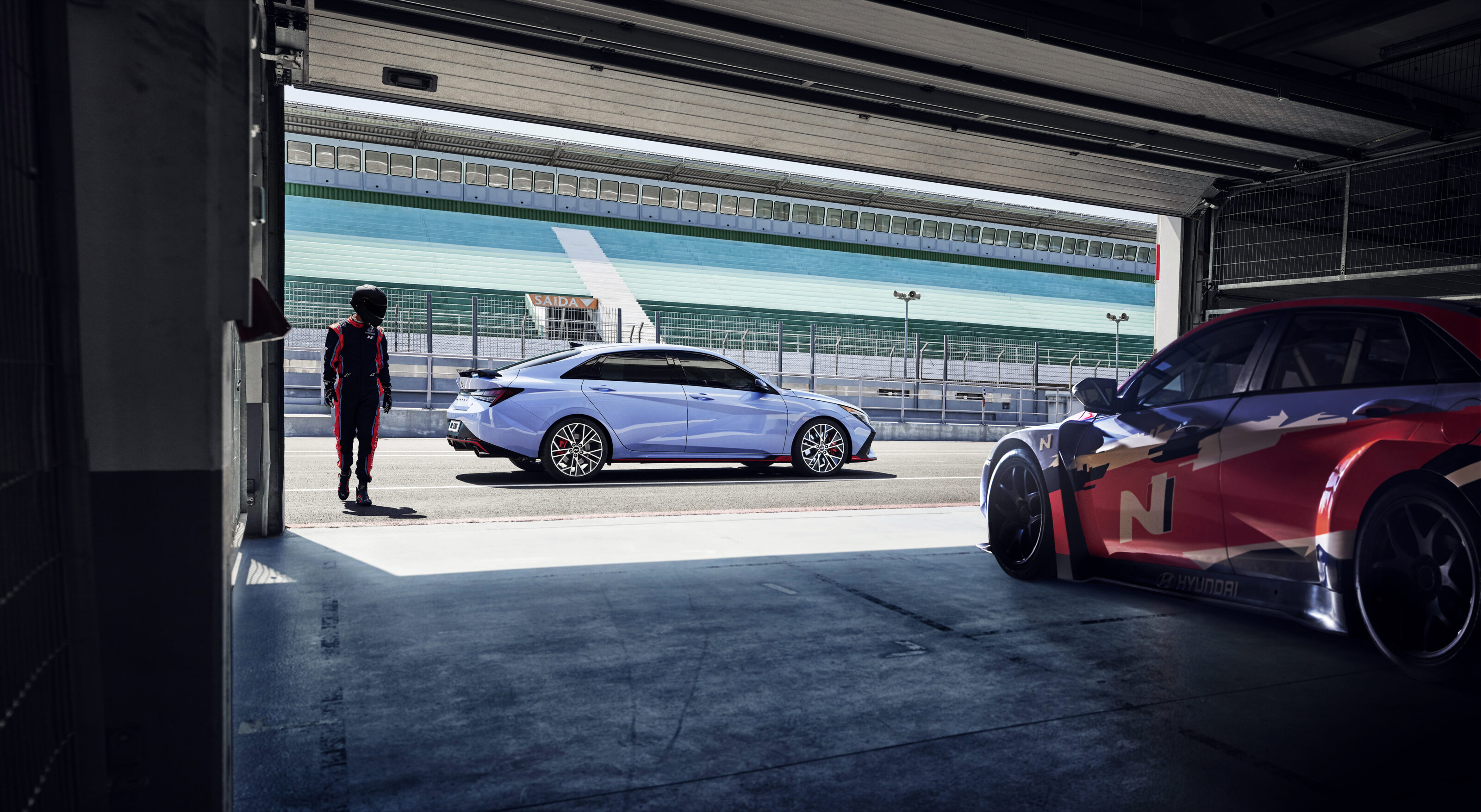
| N-exclusive body kit |
| Black mirror caps |
| LED headlights with daytime running lights |
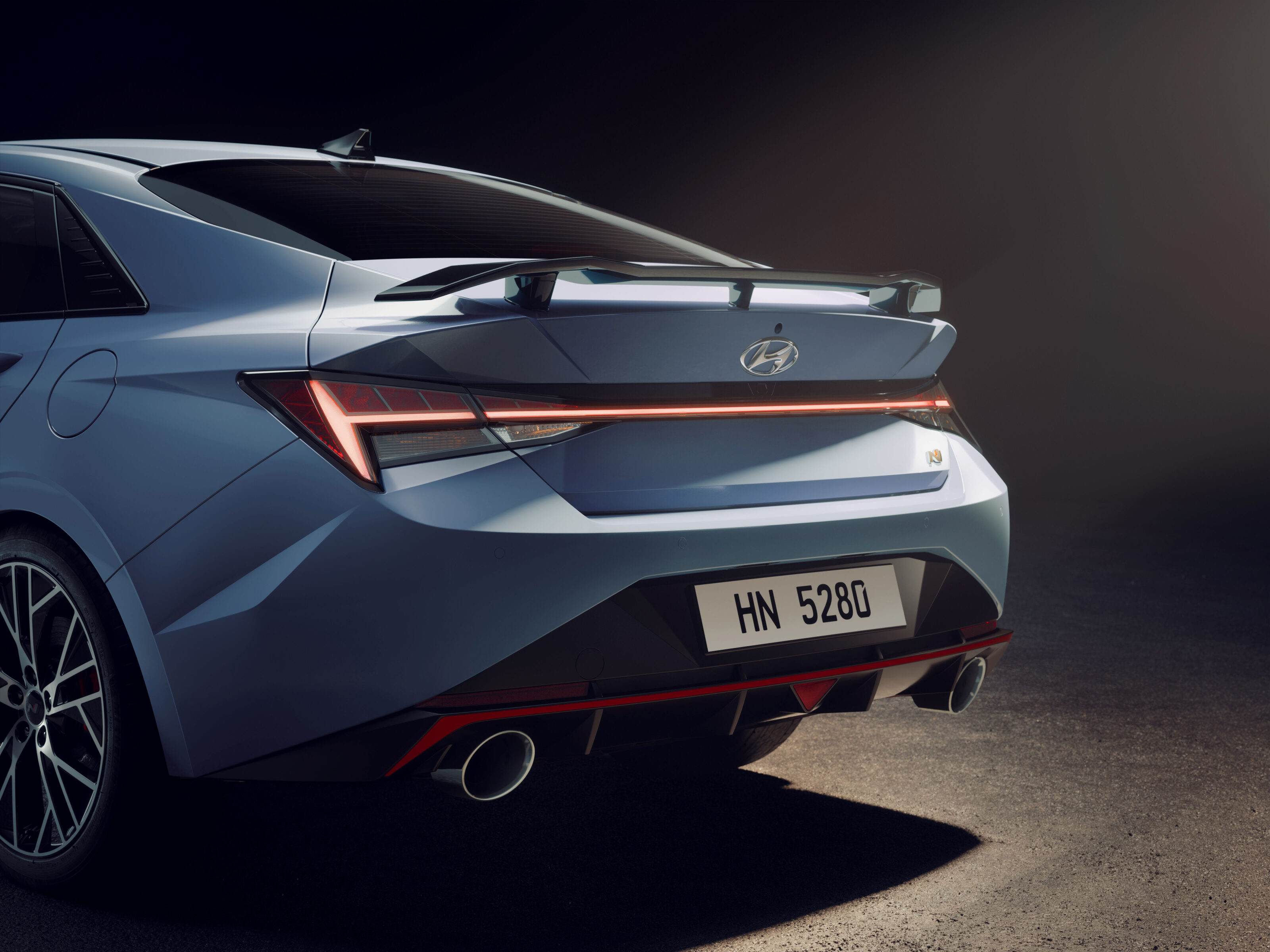
| LED taillights with light strip |
| LED N triangle rear fog lamp |
| Boot mounted wing-type spoiler |
| Michelin Pilot Sport 4S u2018HNu2019 tyres |
| Temporary space saver spare wheel |
| Active variable exhaust |
| Performance brake package |
| Rear stiffness bar |
| N Corner carving differential – E-LSD |
| N Grin Control drive modes (Eco, Normal, Sport, N and N Custom) |
| 10.25-inch N Supervision digital instrument cluster |
| 10.25-inch central infotainment screen |
| Bose Premium audio with DAB+ radio |
| Apple CarPlay/Android Auto |
| Track Maps function (with auto lap timer) |
| Smart key and push button start |
| Wireless charging pad (Qi) |
| Electrochromic mirror |
| N-specific cluster theme |
| N Performance driving display |
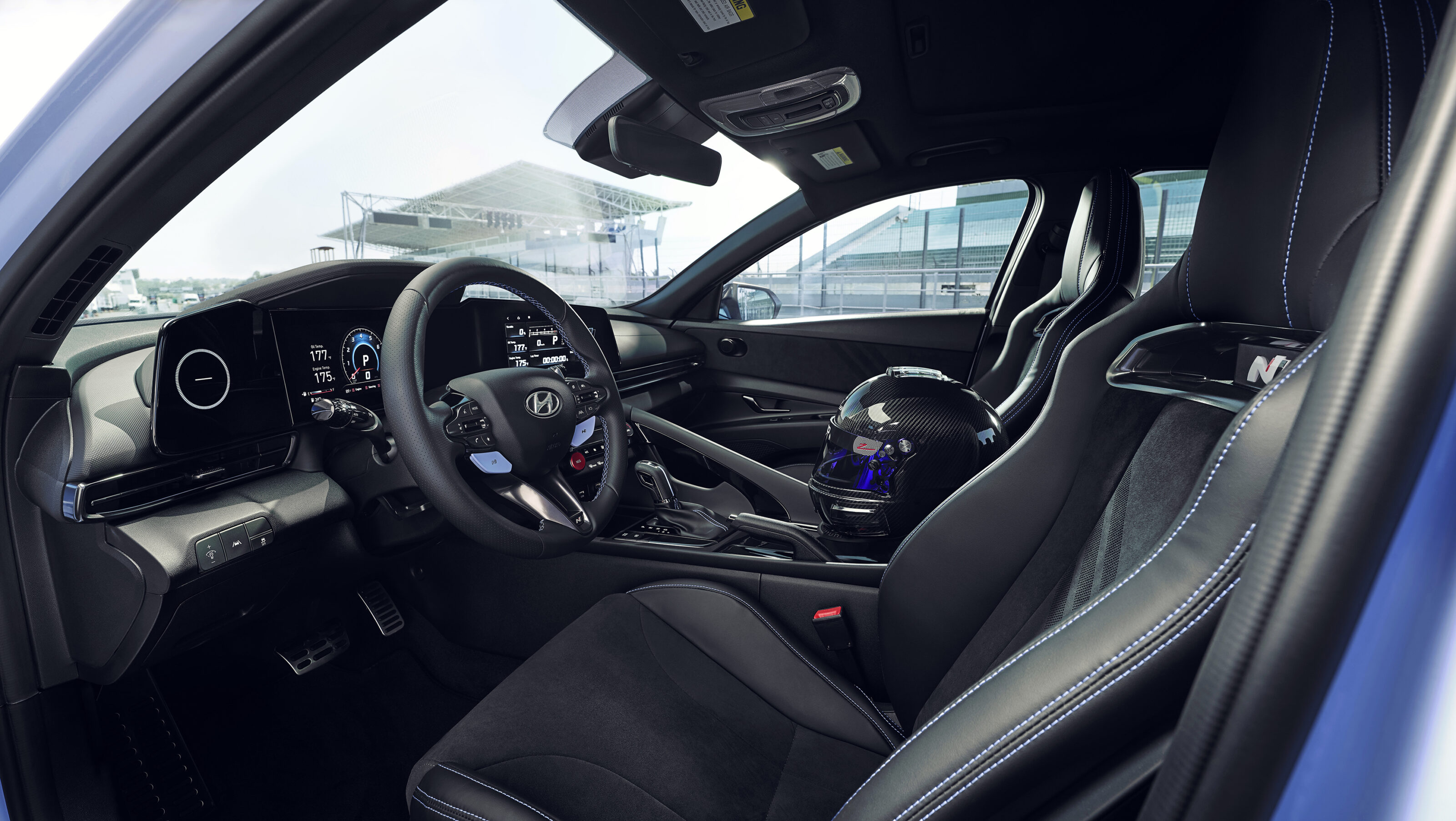
| N Sports front seats |
| Black leather upholstery |
| N leather steering wheel and gear knob |
| N metal pedals and footrest |
| Ambient lighting |
| Dual-zone climate control |
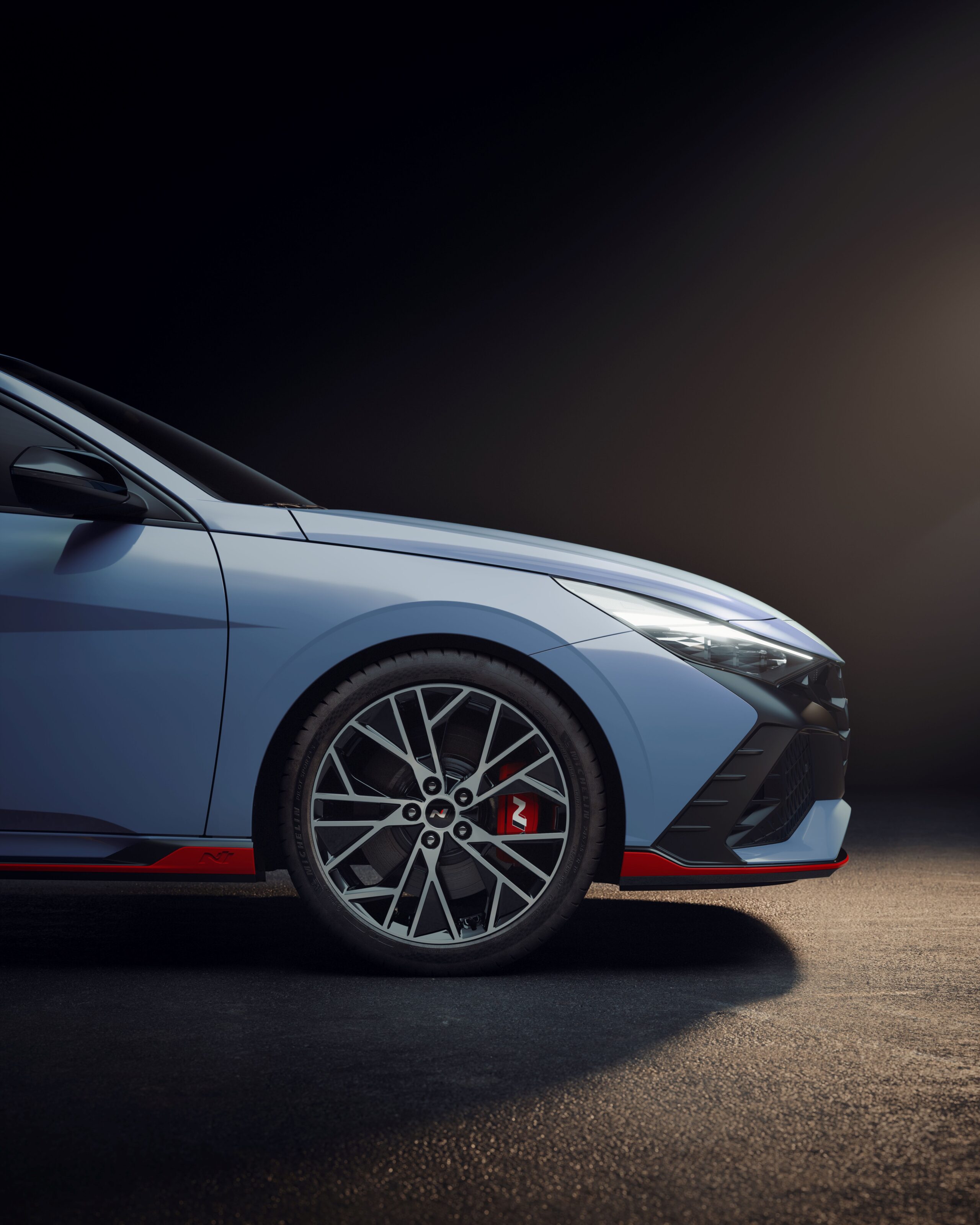
| 19-inch alloy wheels. |
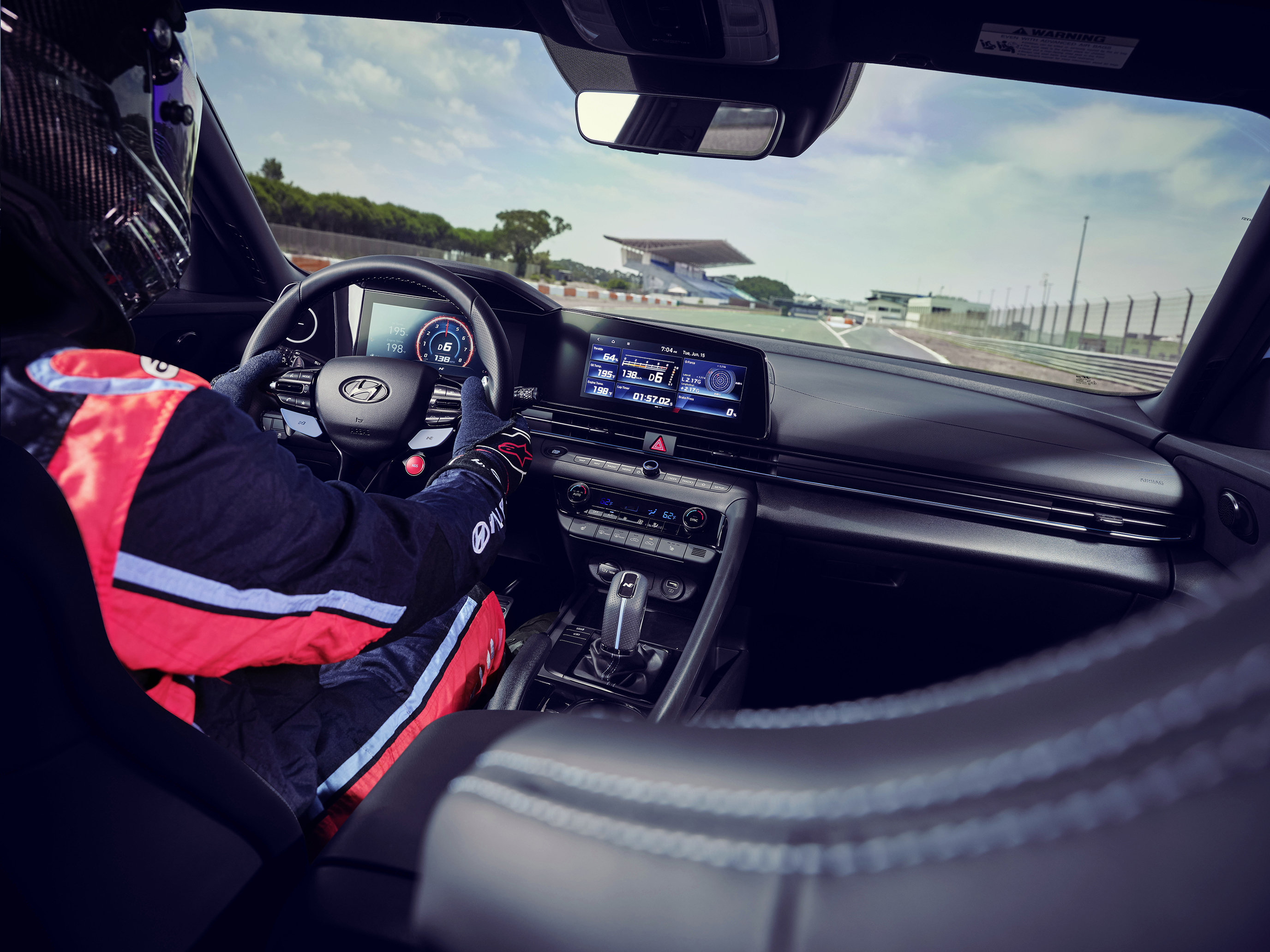
DCT equipped examples gain further driver functions, including:
| Creep Off u2013 disables u2018transmission creepu2019 inherent to gearboxes of this kind |
| N Grin Shift (NGS) u2013 Releases maximum power for 20 seconds |
| N Power Shift (NPS) u2013 Triggered by more than 90 per cent throttle application, NPS reduces torque drop-off between shifts to maximise acceleration |
| N Track Sense Shift (NTS) u2013 Intelligent self-shifting for the most dynamic of circumstances. |
Cost options include a sunroof ($2000) and premium paint ($495).
Paint options include:
| Polar white (solid, standard) |
| Performance blue (solid, standard) |
| Cyber grey (metallic) |
| Fluid metal (metallic) |
| Intense blue (metallic) |
| Phantom black (mica) |
| Fiery red (mica). |
Engine, drivetrain and fuel economy
Namyang’s newest star athlete boasts the tried and tested 206kW/392Nm T-GDI 2.0-litre turbocharged four-cylinder. The sedan body’s larger engine bay afforded the engineers room to fit an improved airbox, designed with optimised duct diameters and airflow paths, improving the engine’s linear torque delivery.
Maximum torque arrives early from 2100 to 4700rpm, before maximum power takes over between 5500 and 6000rpm.
The i30 Sedan N comes fitted standard with a wet-style eight-speed DCT, with a six-speed manual on offer as a no-cost option. Power is sent to the front wheels through an electro-mechanical limited slip differential. Equipped with the DCT, the i30 Sedan N claims 5.3-seconds from 0-100km/h (and 5.8-seconds for the manual).
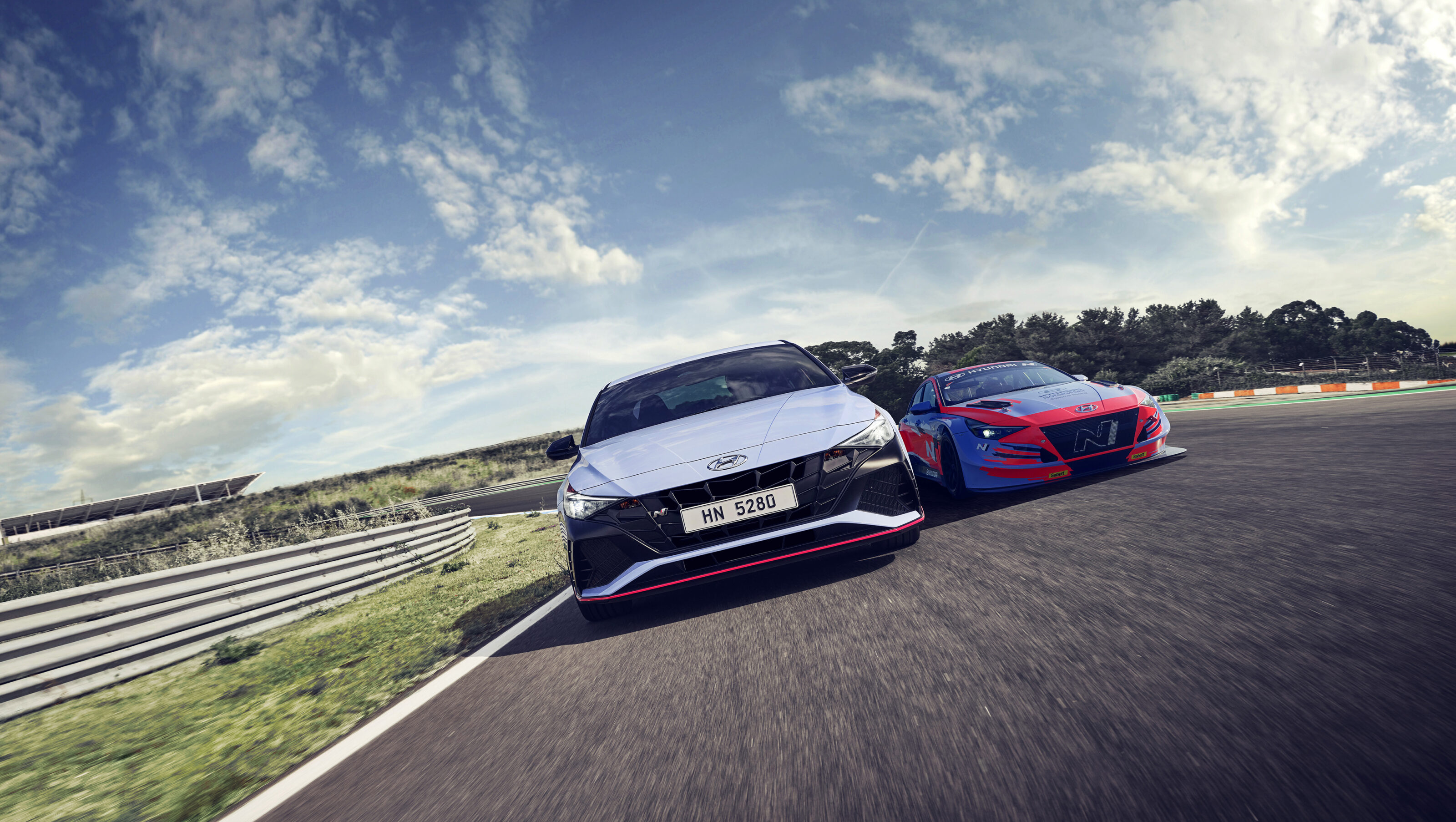
New innovations learned from N Division’s motorsport activities include a new World Rally Championship-derived Integrated Drive Axle (IDA) front-end that is 55 per cent more rigid and shaves off 1.7 kilograms of unsprung mass per corner. A brake pre-fill function also debuts, which reduces the caliper clearance gap in dynamic situations to improve braking response.
Locally-tuned Electronically Controlled Suspension (ECS) suspends 19-inch alloy wheels shod in square-set 245-section Michelin Pilot Sport 4S tyres. Big brakes, measuring 355 millimetres up front provide the bite, while a standard-fit active variable exhaust provides the bark.
Dimensions
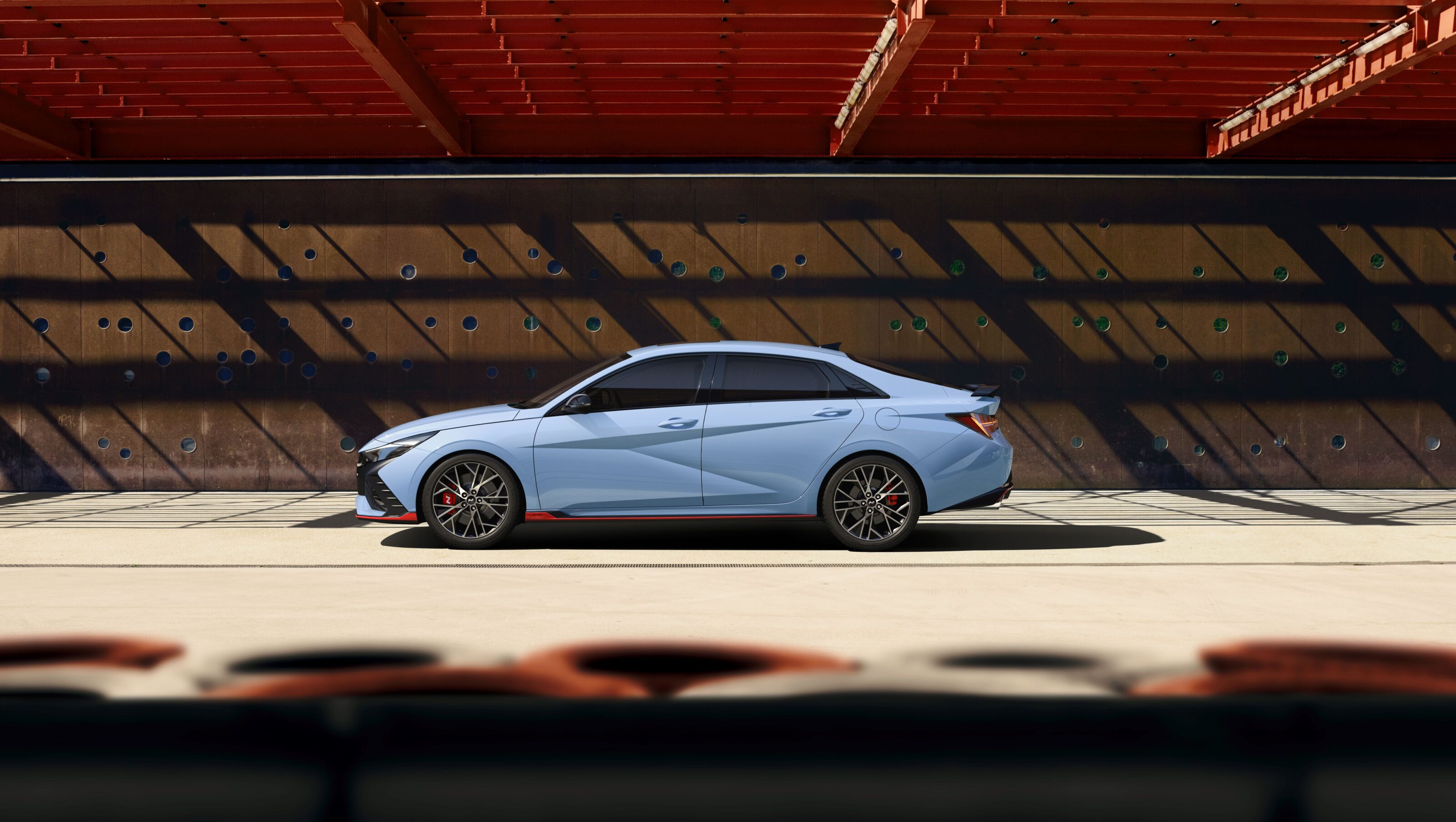
The Hyundai i30 Sedan N mirrors its mainstream sibling on size, measuring 4675mm in length, 1825mm in width and 1430mm in height, with a wheelbase of 2720mm.
Safety
The Hyundai i30 Sedan is currently unrated according to ANCAP. This is due to there being no existing European NCAP crash test data to draw upon, and a change in crash testing protocol introduced in 2020 saw Hyundai choose not to offer the vehicle to ANCAP for testing.
Despite this, the i30 Sedan N comes fitted with generous levels of safety equipment, with six airbags fitted and Hyundai’s SmartSense advanced safety suite.
The standard-fit safety suite, includes:
| Blind-spot collision avoid-assist u2013 rear (BCA-R) |
| Forward collision-avoidance assist u2013 city/urban/pedestrian (FCA) |
| Driver attention warning (DAW) |
| Lane keeping assist (LKA) |
| Lane following assist (LFA) |
| Rear cross-traffic collision avoidance-assist (RCCA) |
| Tyre pressure monitoring system (TPMS) |
| Parking distance warning u2013 front and rear (PDW) |
| Rear-view camera (RVC). |
Warranty and servicing
Hyundai i30 Sedan Ns are covered by Hyundai’s five-year unlimited kilometre warranty – which covers non-competitive track driving. Hyundai’s iCare Lifetime Service Plan is available for an extra cost.
Servicing is required annually, or every 10,000kms, costing $335 per service according to Hyundai’s Lifetime Service Plan.
Availability
The 2022 Hyundai i30 Sedan N is on sale now.
The first of three 2022 McLaren Daniel Ricciardo Edition 720S from MSO supercars has arrived in Australia, and one of its first stops was at Albert Park – home to the Australian Formula 1 Grand Prix.
Offered solely to the Australian market, the 720S was created by McLaren Special Operations (MSO) to celebrate Aussie F1 driver Daniel Ricciardo’s first victory with the McLaren team.
As an homage to Ricciardo’s race number, just three of the special 720S models will be built by MSO, finished in papaya spark orange and Burton blue – the very same colours used on the McLaren F1 race car.
“We’re delighted to see the first of this exclusive series arrive in Australia, as at home on the tarmac around Albert Park as its namesake Daniel Ricciardo,” George Biggs, Commercial Executive Director for McLaren Automotive said at the car’s arrival.
“Complete with the Australian flag adorning the front haunches, this special edition model is the perfect celebration of our Perth-born racer – we’re excited to see it out on Australian roads.”
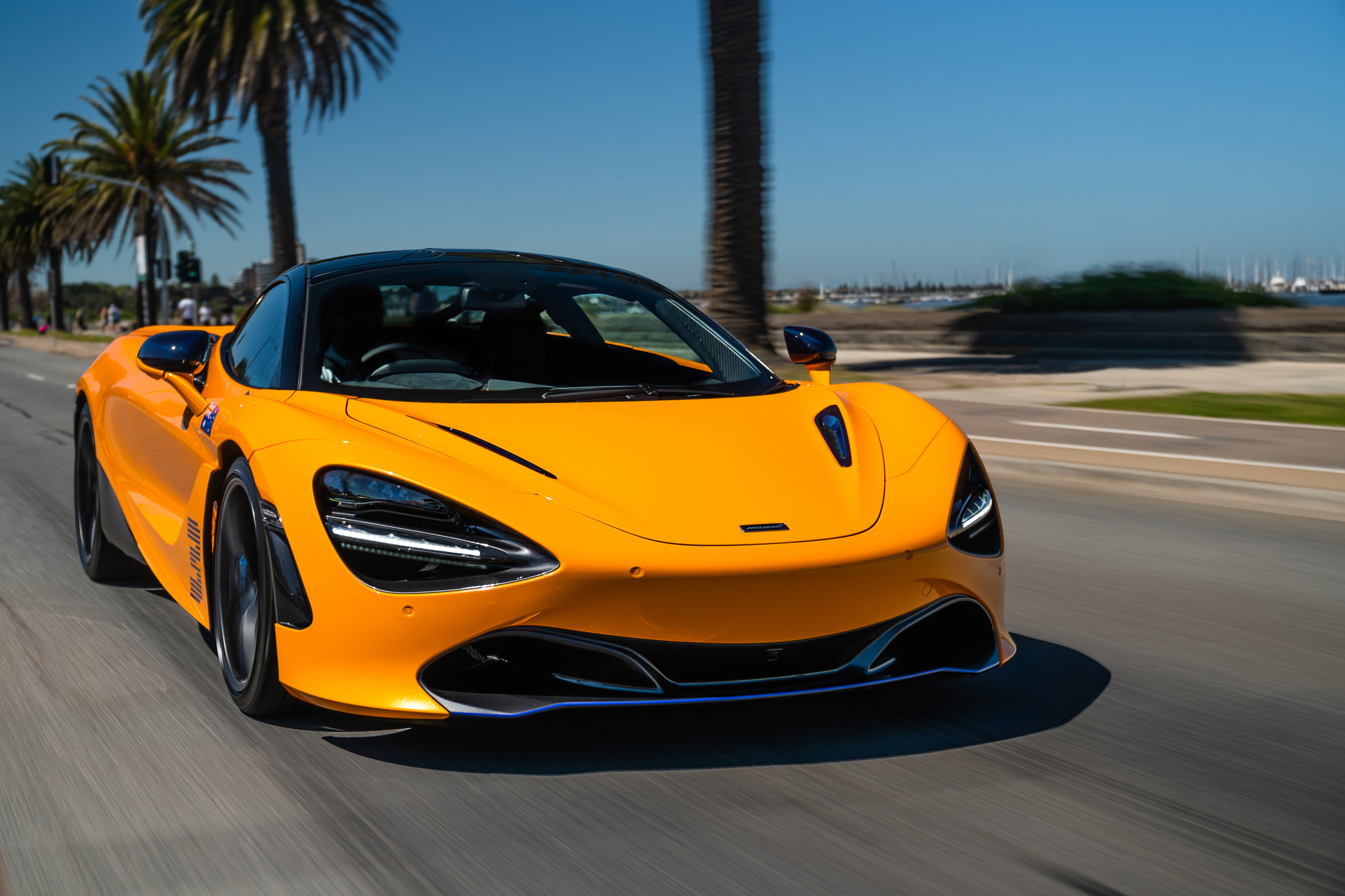
Announced in September, the Ricciardo Edition is powered by a 4.0-litre twin-turbo V8, with 530kW and 770Nm sending the car to 100km/h from a standstill in just 2.9 seconds.
While McLaren has not revealed pricing for the special edition, it’s expected the model will ask a premium over the base price of the 720S at $509,000 before on-road costs.
Key Points
- Companies sign five-year agreement
- Up to 99,000 metric tons of lithium hydroxide expected
- Stellantis signs another deal for solid-state battery tech
UPDATE, December 1: Adding to the deal between Stellantis and Vulcan (see below), the automaker announced on Tuesday it has signed a joint development agreement with Factional for the advancement of high-voltage solid-state battery technology.
The deal also includes a strategic investment from Stellantis, although no monetary figure was announced.
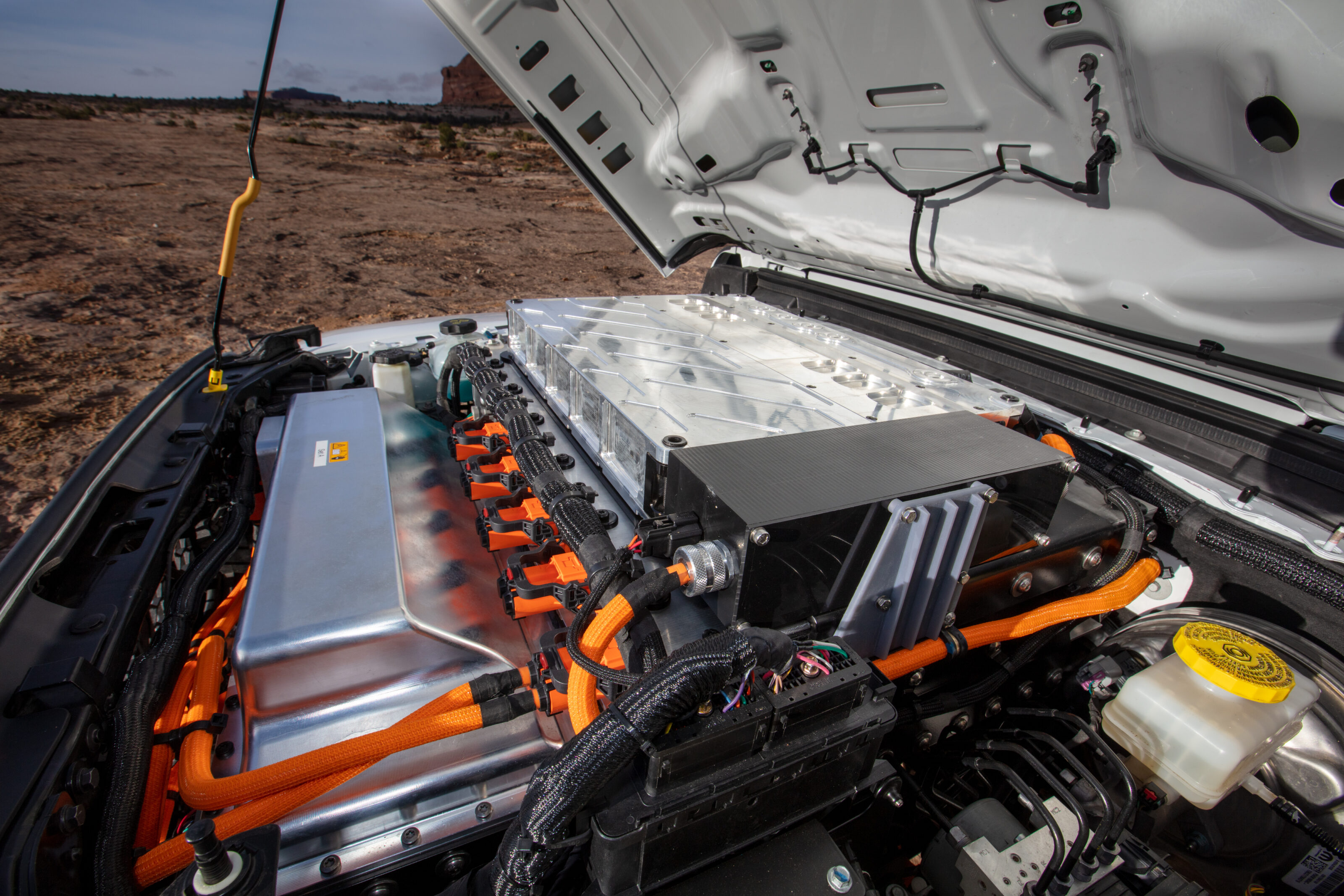
A solid-state battery is similar in overall structure and operation to the lithium-ion batteries seen in most electric vehicles, but with a solid electrolyte instead of liquid. This allows the batteries to be lighter with more energy density, bringing greater driving range, better safety, and quicker charging times.
Stellantis announced in July 2021 it plans to offer solid-state battery technology by 2026.
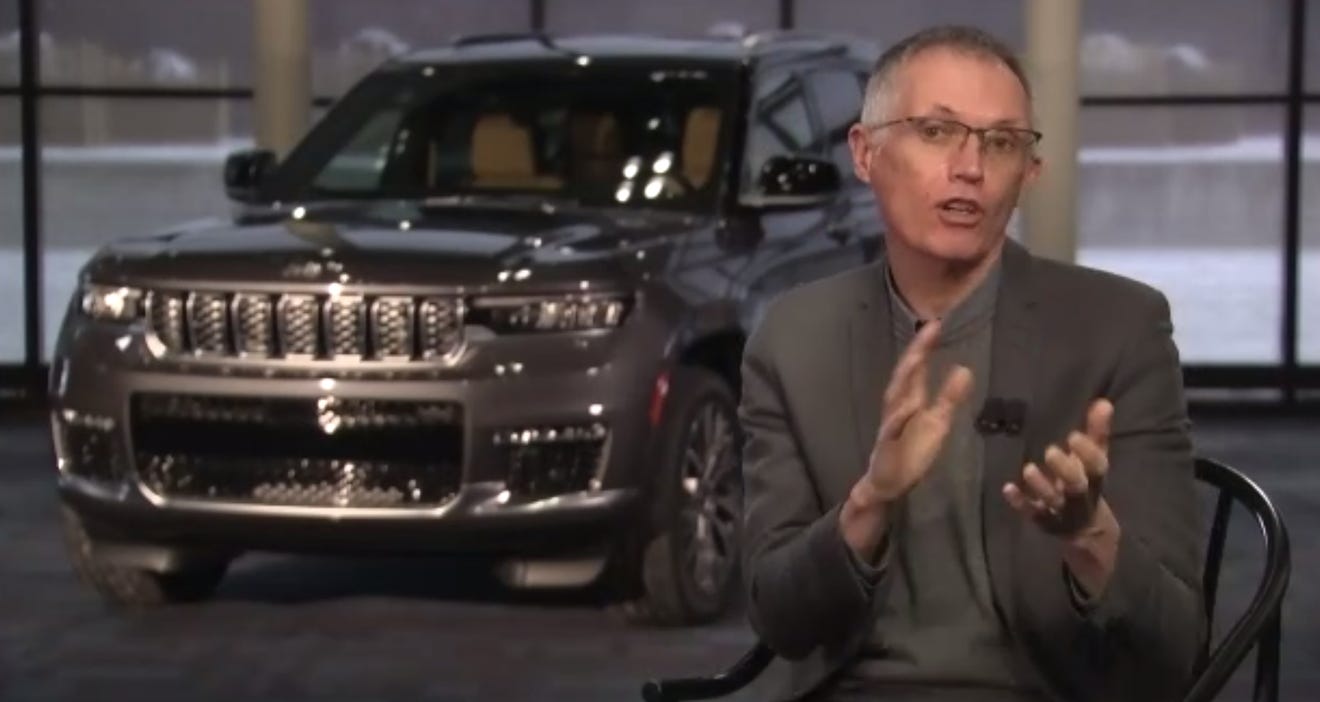
“Initiatives like these will yield a faster time to market and more cost-effective transition to solid-state technology,” said Stellantis CEO Carlos Tavares.
A similar agreement was also struck between Mercedes-Benz and Factional, with the companies hoping to begin testing prototype cells within the next year. The partnership will initially focus on cell development, before moving to entire modules and integration within vehicle batteries.
The story to here
Stellantis has teamed up with a German-Australian lithium supplier start-up to supply battery-grade lithium hydroxide for use in electric vehicles.
The Dutch-based automaker – formed out of the merger of Fiat Chrysler Automobiles (FCA) and Groupe PSA in January 2021 – is the latest company to sign on with Vulcan Energy Resources for the supply of battery metals, ahead of an expected surge in demand as the global transition towards electrified vehicles intensifies.
Vulcan is expected to supply a minimum of 81,000 metric tons and a maximum of 99,000 metric tons of lithium hydroxide to Stellantis over the term of an initial five-year agreement, beginning from 2026.
Additional details surrounding the deal, such as finances, are yet to be provided.
The agreement between Stellantis and Vulcan comes just days after the lithium supplier signed a binding purchase agreement with Renault to supply between 26,000 and 32,000 tonnes of lithium hydroxide over a six-year period.
“This agreement is further proof that we have the competitive spirit to deliver on our commitments,” said Stellantis chief purchasing and supply chain officer, Michelle Wen.
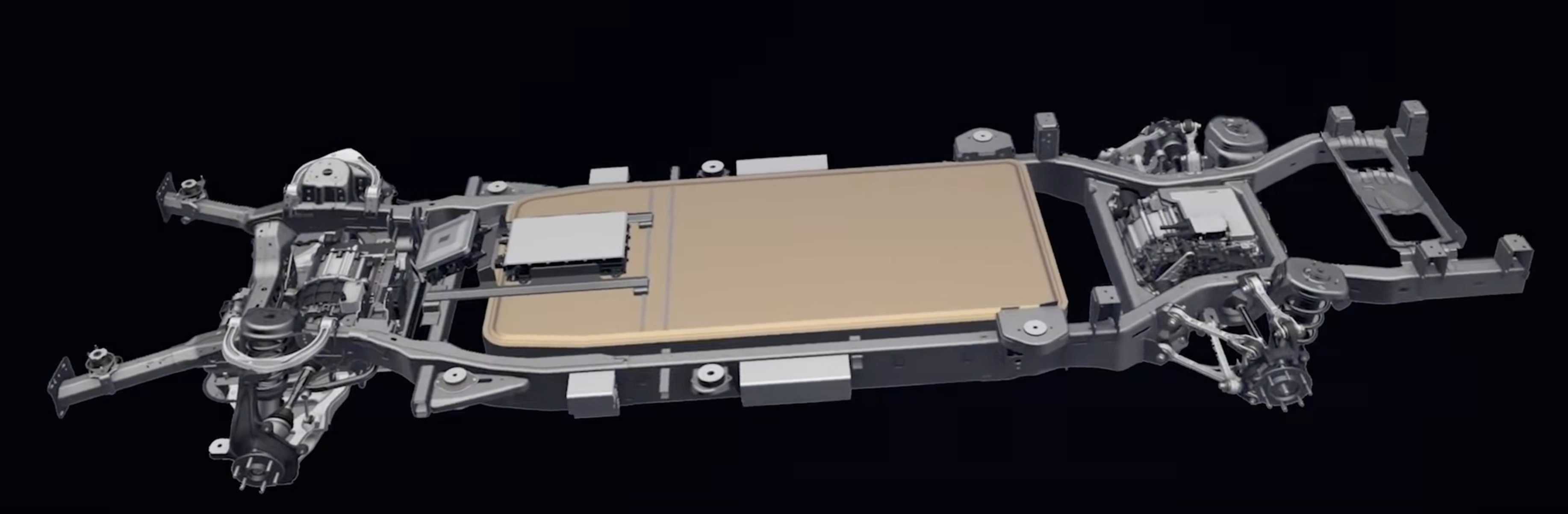
Lithium hydroxide is used in the production of cathode material for lithium-ion electric vehicle batteries, with Vulcan testing a direct lithium extraction (DLE) method that forgoes the use of fossil fuels with minimal water usage.
This helps to reduce the need for using existing open-pit mines and brine evaporation ponds, allowing for more-sustainable methods to obtain the material.
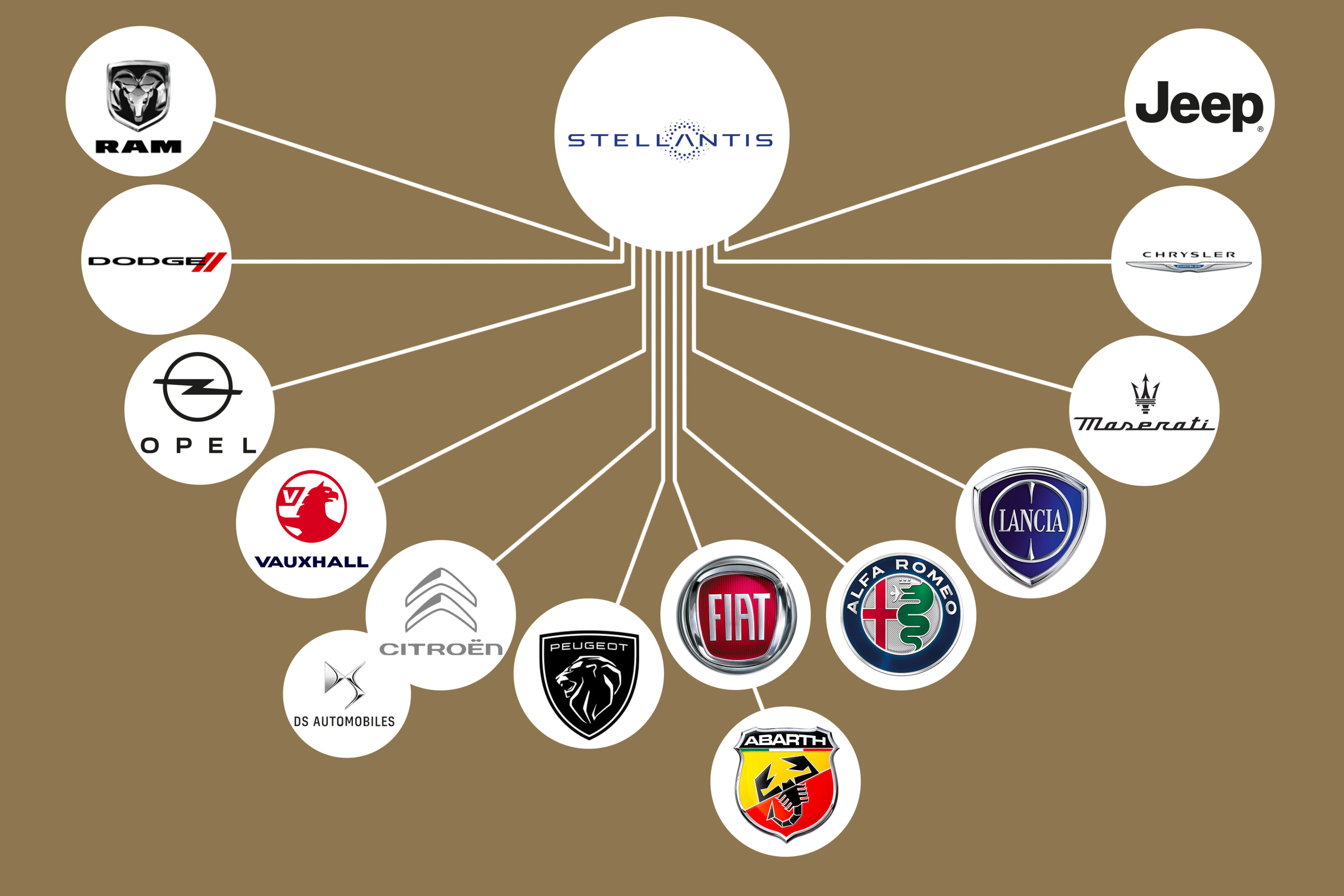
During its EV Day conference in July, Stellantis announced 70 per cent of its vehicle sales will be electrified in Europe and 40 per cent in the US by 2030. The company has stated it will invest more than €30 billion (AU$47.8bn) in electrification and software over the next five years.
As part of the plan, Stellantis also announced it will complete production on five ‘Gigafactories’ across Europe and the United States by 2030.
Key Points
- Reservations for the Polestar 2 open nationwide
- Test drives will be available in Sydney, Melbourne, Gold Coast and Brisbane
- Priority allocation can be secured for $500
Polestar is one step closer to officially launching in Australia, announcing customers can start to put down their name to reserve its sole model from today.
Although the fully-electric Polestar 2 won’t officially go on sale until the start of 2022, the Swedish electric vehicle manufacturer has started to take reservations, with a nominal and fully refundable deposit of $500 allowing customers to secure priority allocation.
Alongside its reservations opening, Polestar revealed it is getting ready for an Australian roadshow, travelling up and down the east coast to give prospective buyers a better look at its product.
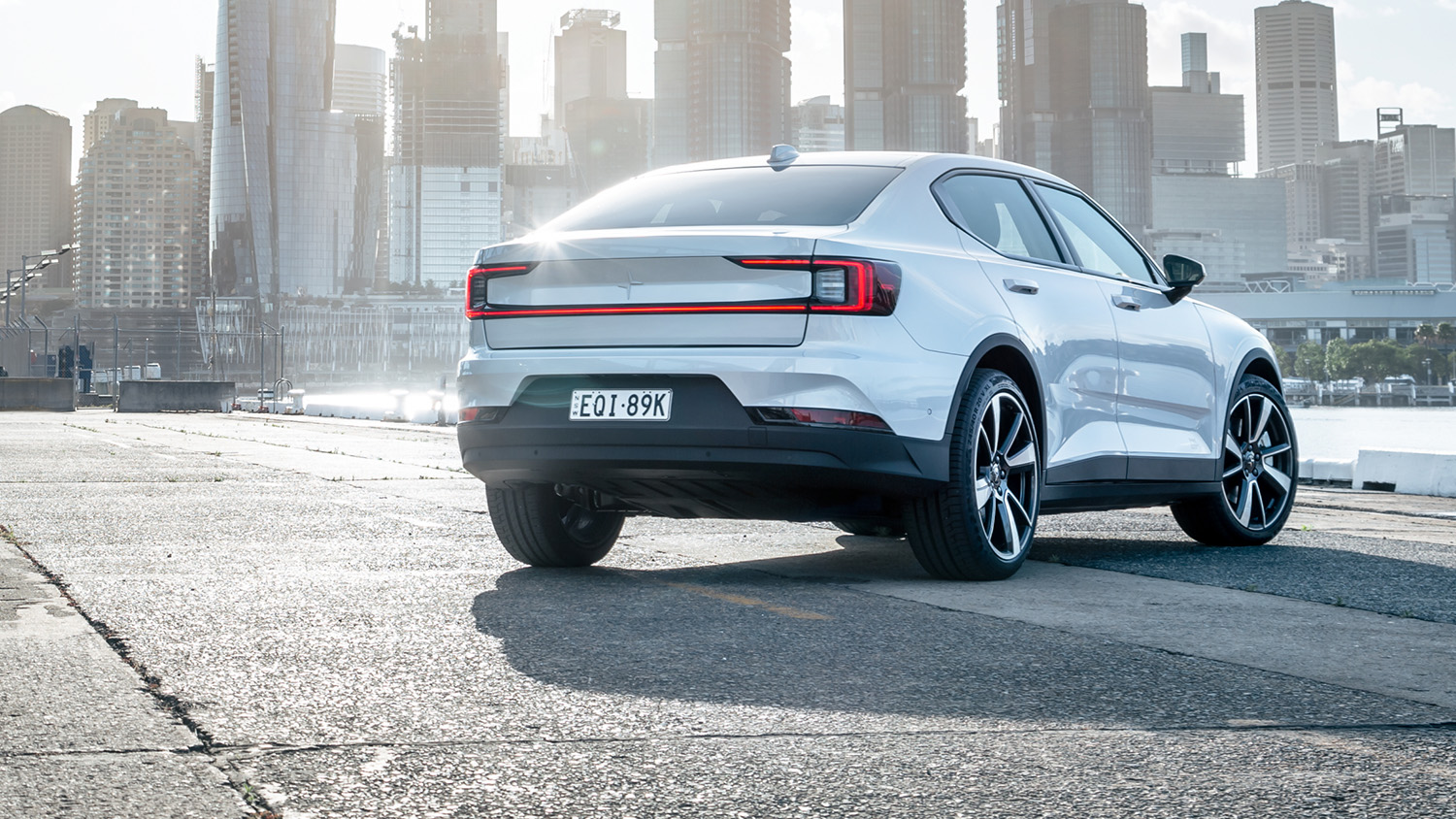
In addition to this, the roadshow will also incorporate test drives in Sydney, Melbourne, Brisbane and the Gold Coast, something which Polestar’s Australian boss Samantha Johnson believes will see a high amount of demand.
“We’re excited to open reservations for the Polestar 2 ahead of deliveries in February,” said Johnson.
“The demand we’re seeing for Polestar 2 test drives Australia-wide has exceeded even our most ambitious estimates, which is testament to the growing interest in electric vehicles locally, and the need for greater consumer choice in the market.
“The roadshow will offer customers their first physical experience of the Polestar brand, both in the manner that the events are activated to the exacting standards found in our bespoke Polestar Spaces and Destinations globally – and, of course, in getting to know the outstanding Polestar 2.”
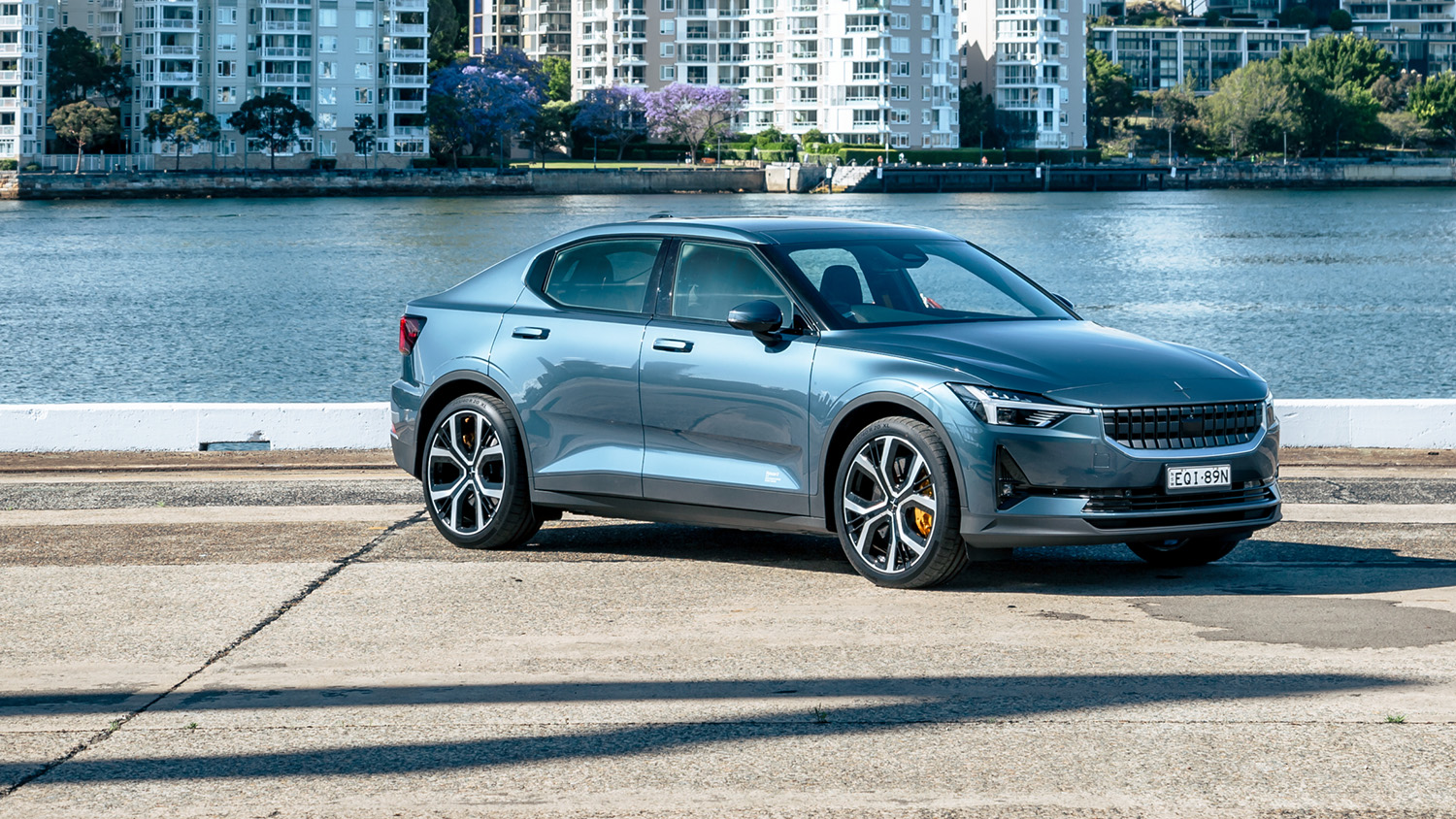
When it officially goes on sale in Australia, the Polestar 2 will be available in three grades – Standard Range Single Motor ($59,900), Long Range Single Motor ($64,900) and Long Range Dual Motor ($69,900), all prices are before on-road costs.
Below are the dates for Polestar’s temporary “showrooms” and test drive locations:
Temporary Showroom
- Bondi Beach, Sydney: December 2-16, 2021, 10am-6pm daily
- Queensbridge Square, Melbourne: January 13-19, 2022, 10am-6pm daily
- Pacific Fair, Broadbeach Waters, Gold Coast: December 6-19, 2021, 10am-6pm daily
- King George Square, Brisbane: January 31 – February 13, 2022, 10am-6pm daily.
Test Drive
- Moore Park Entertainment Quarter, Sydney: November 15, 2021 – January 16, 2022, 9am-6pm daily
- 5 Union St, South Melbourne: December 4, 2021 – January 28, 2022, 9am-6pm daily
- Pacific Fair, Broadbeach Waters Valet Parking, Gold Coast: December 18, 2021 – January, 16, 2022, 9am-6pm daily
- Brisbane Showgrounds, Brisbane: February 12 – March 13, 2022, 9am-6pm daily.
Volkswagen is, as you might imagine, well-known for its vans. One of them anyway. Tell people you’re driving a VW van and they immediately ask if it’s the new Kombi, as though the million teasing concepts over the past couple of decades haven’t resigned us to the idea that we will never see the retro funster in rebooted production.
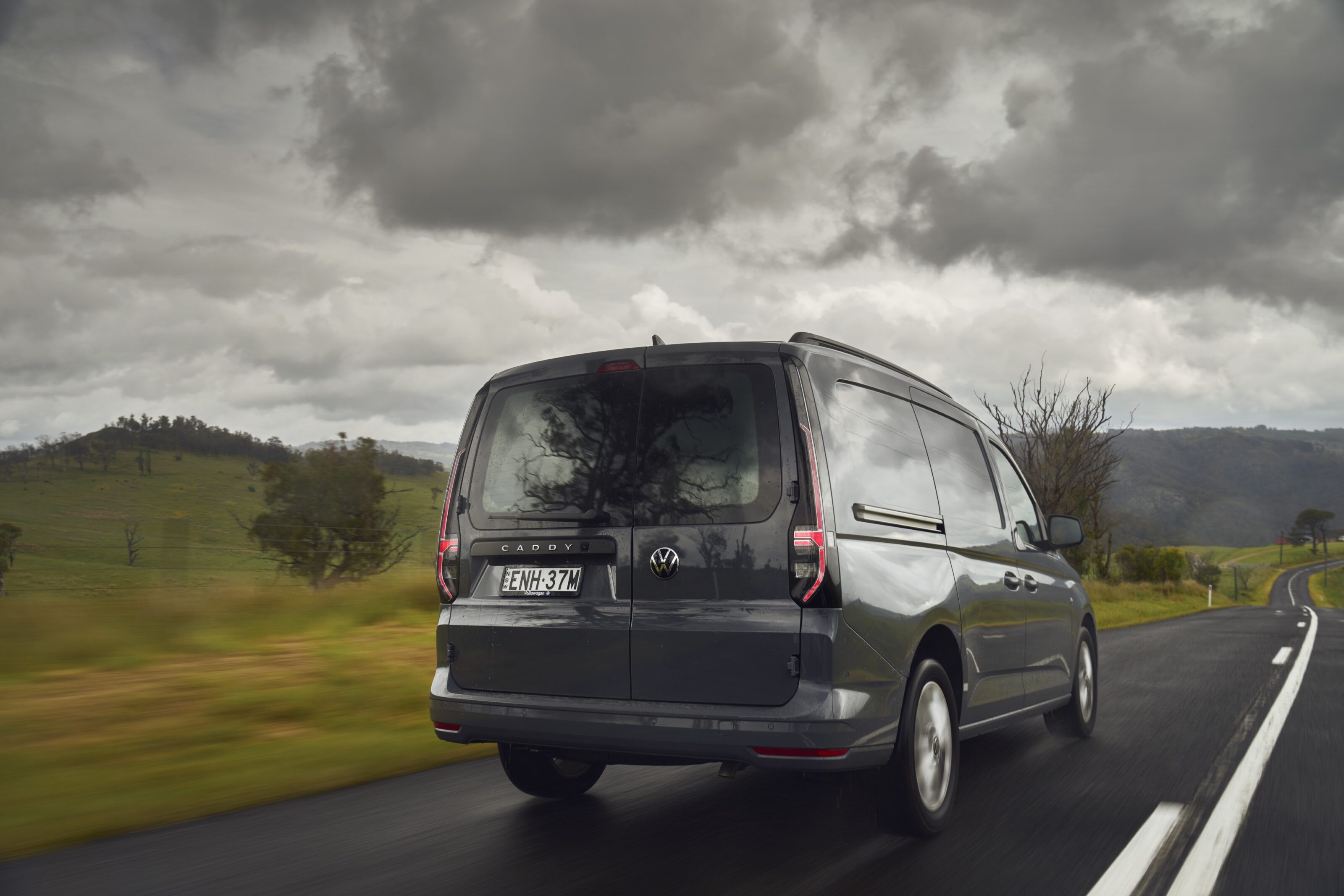
Most go a bit blank when I explain it’s a city van but a few will say, “Oh, yes, the Caddy. You see those everywhere.” And you do, because before COVID, seven out of 10 city vans sold in Australia were one of the marque’s Caddy 4 range. Since having this one in the driveway, I’ve realised just how ubiquitous they’ve become, outnumbering challengers from Renault, Peugeot and the dearly-departed Citroen Berlingo by a big margin. Only COVID and the knowledge that a new model is coming has interrupted its giant lead.
Caddy 5 is a big deal for Volkswagen. Renault has almost caught the German giant in the segment (at least it has in Australia) and, as is the way of things in commercial vehicles, it has been a decade since the last new model. A lot has happened in the last decade and so a lot has happened to create Caddy 5.
Pricing and Features
The Caddy Cargo comes in two wheelbase lengths, with the longer one known as the Maxi.
The entry-level SWB comes with 16-inch steel wheels, a hardy cloth interior, leather steering wheel, reversing camera, rubber flooring in the cab, LED interior lights throughout, a cabin partition made from a thick plastic grille and window and, if you buy a manual, the shifter is wrapped in leather.
From January 1, the SWB Cargo starts at $34,990 for the petrol manual, stretching to $39,990 for the TDI320 with a seven-speed DSG dual-clutch automatic, both prices before on-roads.
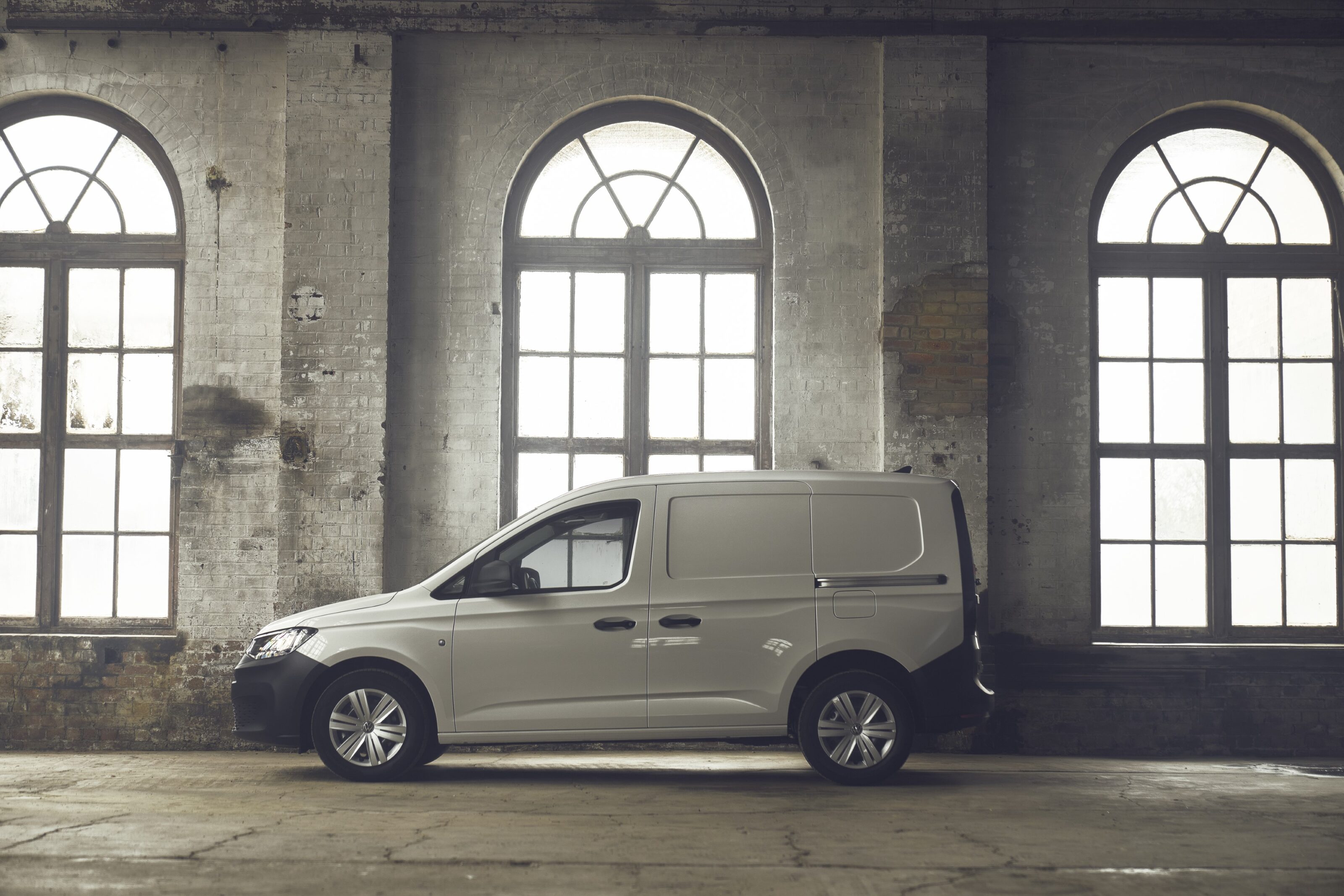
Moving up to the long-wheelbase Maxi, you get wider sliding doors on both sides as well as 17-inch steel wheels. Again, from New Year’s Day 2022, you’ll pay from $36,990 for the petrol manual to $41,990 for the TDI320 with DSG. Again, all pricing is before on-roads.
A further Cargo-based variant, the Crewvan, has a five-seat interior with additional curtain airbags for the back row of seating.
VW’s Composition spec media system is along for the ride, with an 8.25-inch screen familiar to the company’s passenger car owners. With four speakers in the cabin, it works well and is able to overcome the noise when you’ve got an empty cargo area. The $1660 Navigation package adds sat-nav and wireless Apple CarPlay (Android Auto remains USB-powered) to Cargo and Crewvan as well as two USB-C ports in the rear for the latter. It also upgrades to the larger 10.0-inch screen.
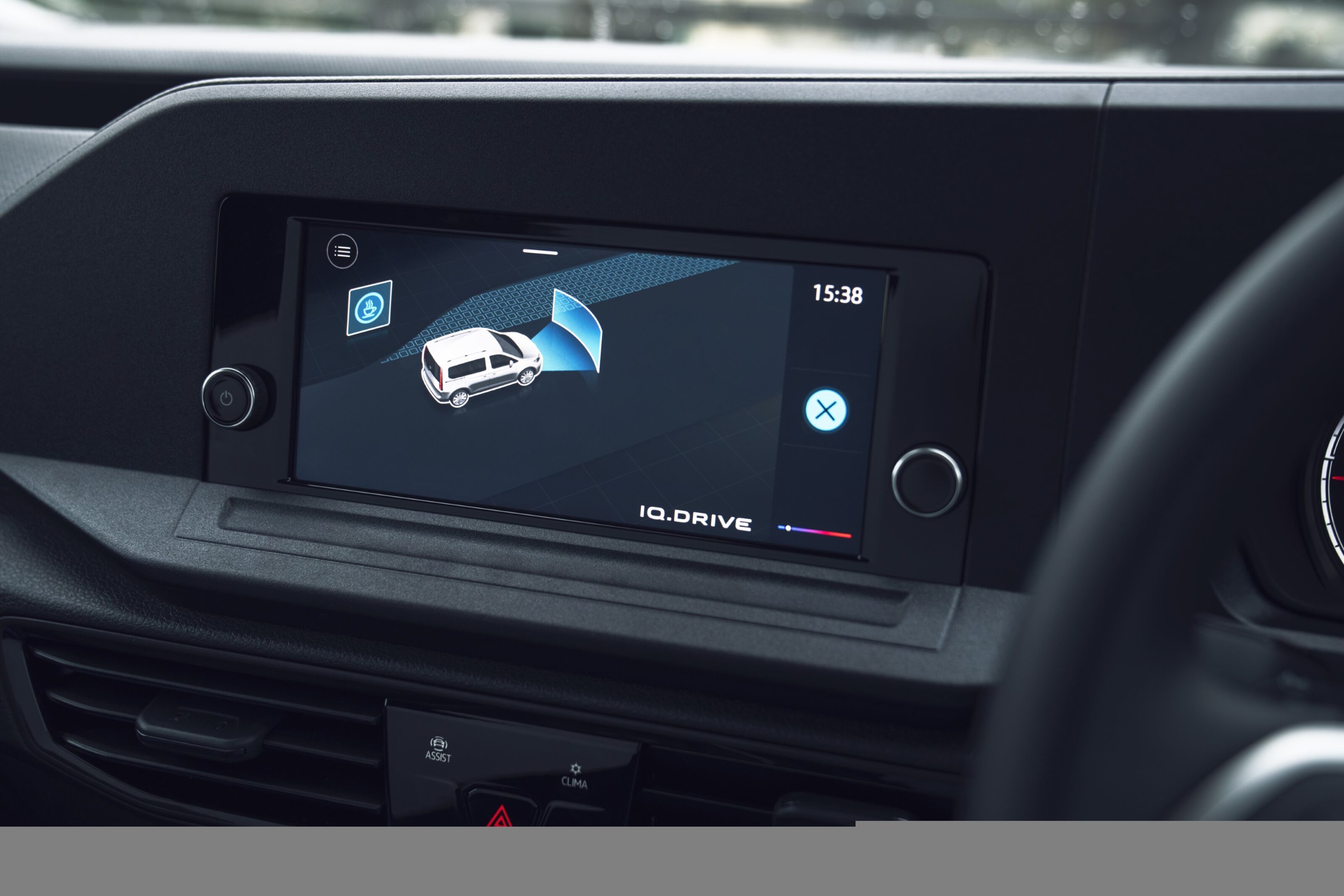
On the safety spec list, you’ll find low-speed forward AEB, driver fatigue detection and multi-collision braking support. The Caddy Cargo looks after just the front row because there aren’t any seats in the back but you get front, side and curtain airbags as well as a front centre airbag to avoid head clashes, which must be a first for the segment.
Sadly, there is no standard rear cross-traffic alert (RCTA) or rear AEB, which would be particularly useful in this class of car given the very limited rear vision, especially when loaded. RCTA is either $760 on its own or part of the $2795 Driver Assistance package ($2690 in the Crewvan) and only available on DSG-equipped vehicles.
Obviously, there aren’t any child seat anchors on the Caddy Cargo while the Crewvan has three top-tether and two ISOFIX points.
The Caddy range has, as of November 2021, not yet attained either an ANCAP or EuroNCAP safety rating.
Comfort and space
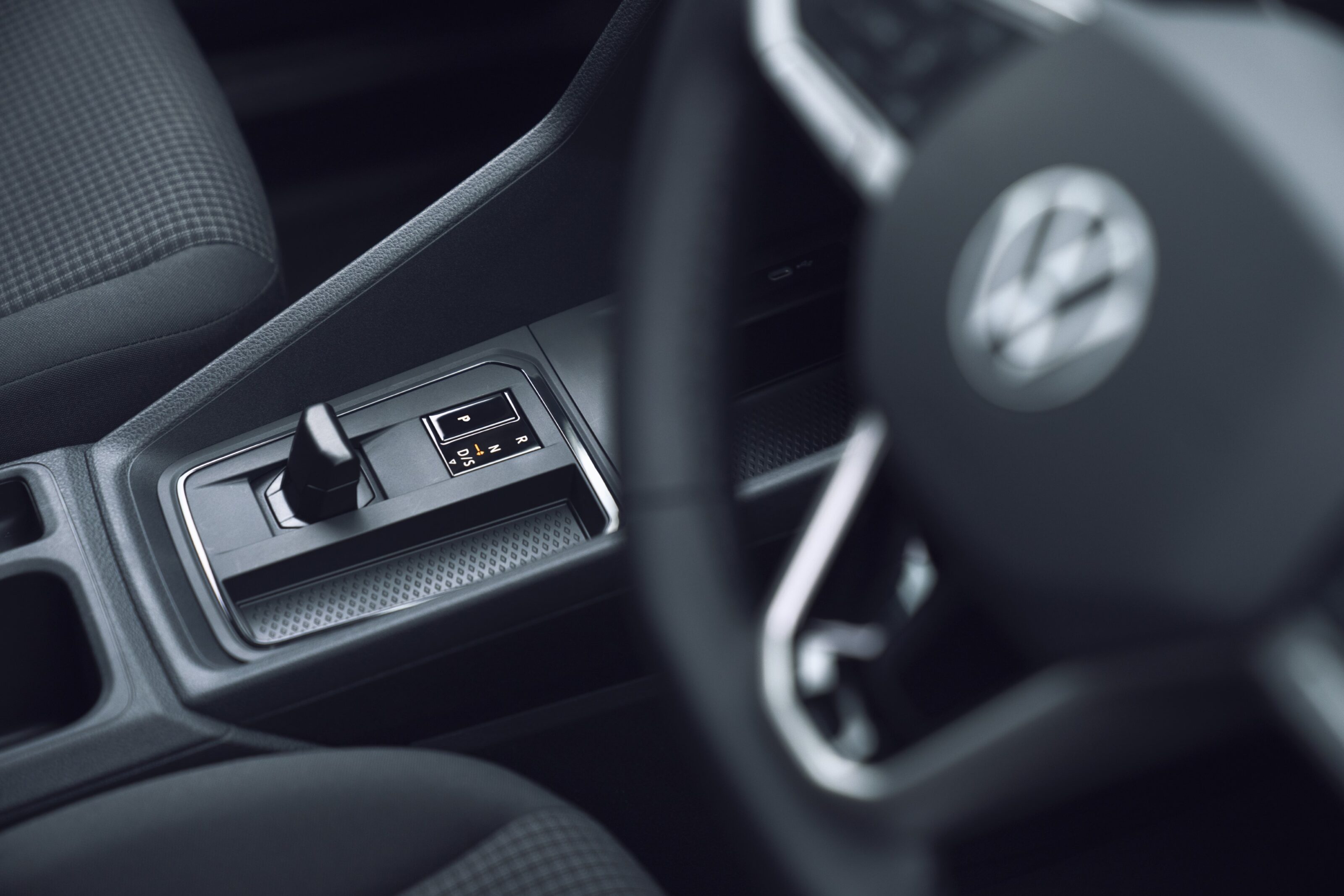
The driver’s compartment of the Caddy is a mighty fine place for a van. Modelled closely on the Golf’s but with a lot more space to play with, there’s a ton of storage that you won’t find in the hatchback. An overhead storage gallery is great for chucking odds and ends out away from prying eyes and is a good way to stop things rolling around on the floor.
You could even store an umbrella, but you’d need to find a way to secure it. The dash has a full-width slot that opens up over the driver’s side to allow storage of a tablet or papers and there’s a 12-volt charger for a device. The centre console hosts two USB-C chargers and there’s another 12-volt point in the load area.
The front seats are comfortable and don’t hinder entry or exit through the wide-opening doors.
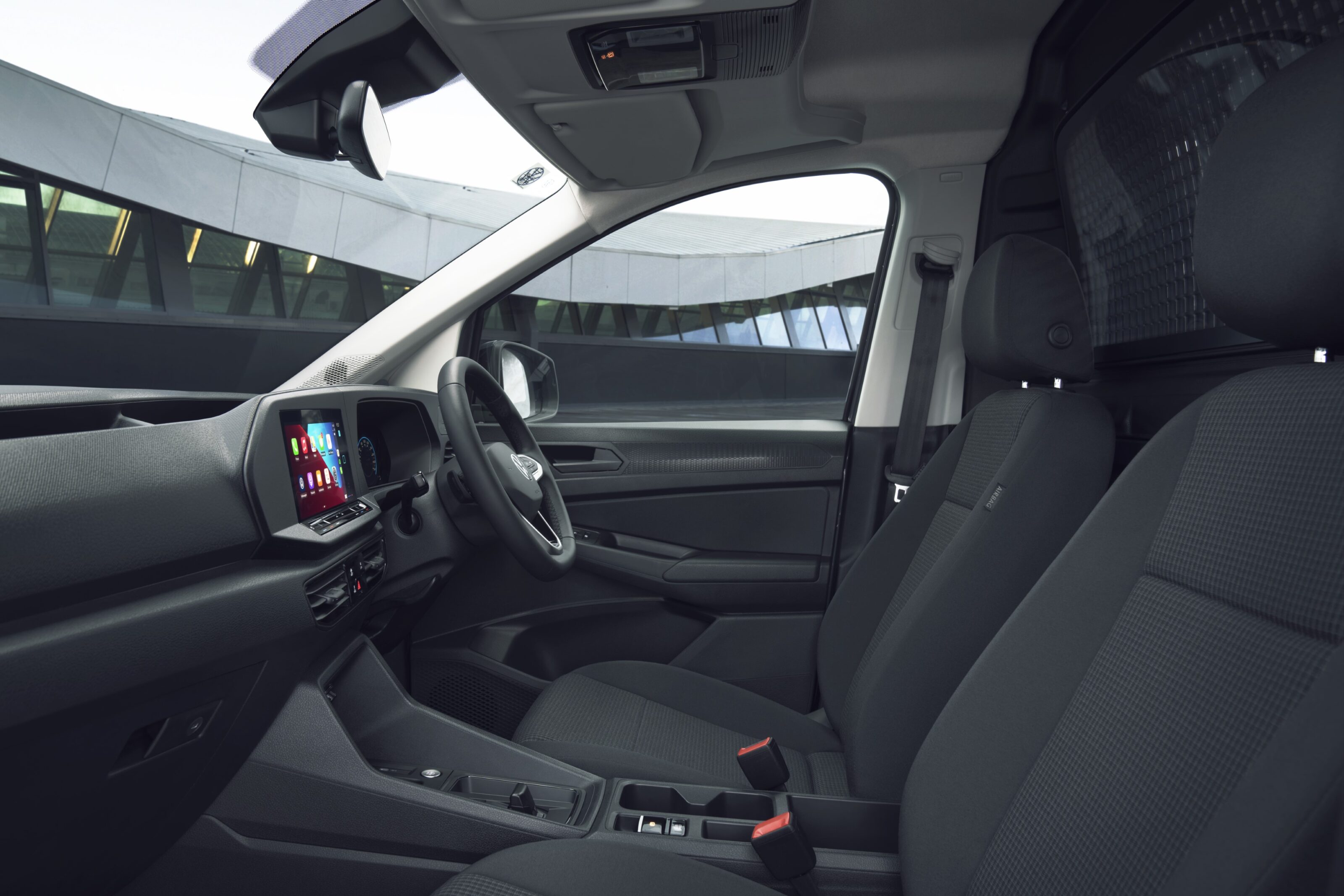
To access the load area, the standard Caddy has a single sliding door on the kerb side with a 695mm opening. At the rear are the classic asymmetric barn doors that open left and right. With the push of a lever, you can fold them a further 90 degrees so you won’t get trapped in a tight loading dock.
The 2755mm wheelbase and load compartment height conspire to offer 3.1 cubic metres of space.
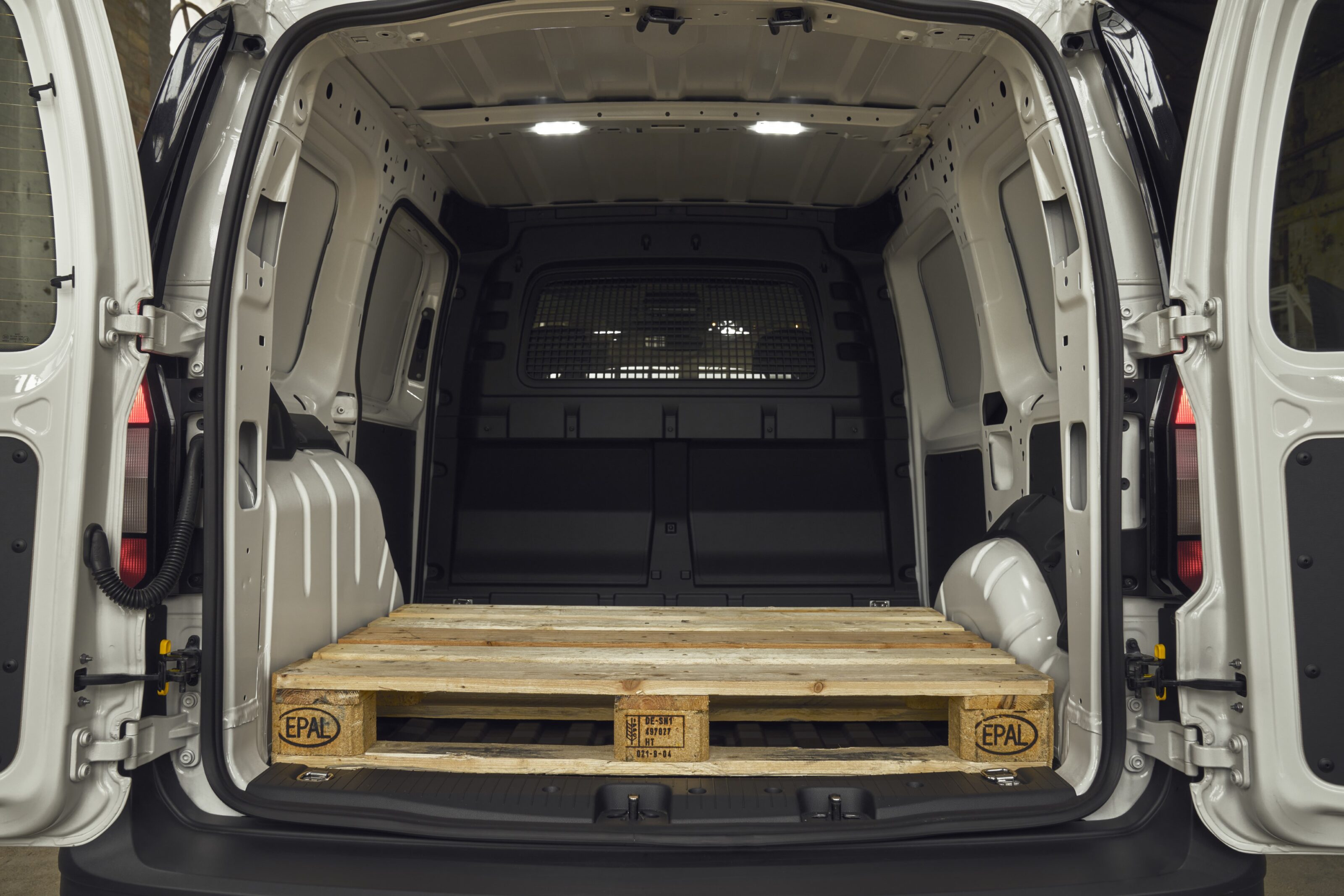
The Maxi adds a second sliding door and both have a larger 836mm opening compared to the SWB. The Maxi wheelbase is a further 215mm and the load height squeaks out another 3mm for a total volume of 3.6 cubic metres. Both will fit two Euro pallets, the main difference being it’s snugger in the SWB and in the Maxi you can load a pallet via the wider side doors.
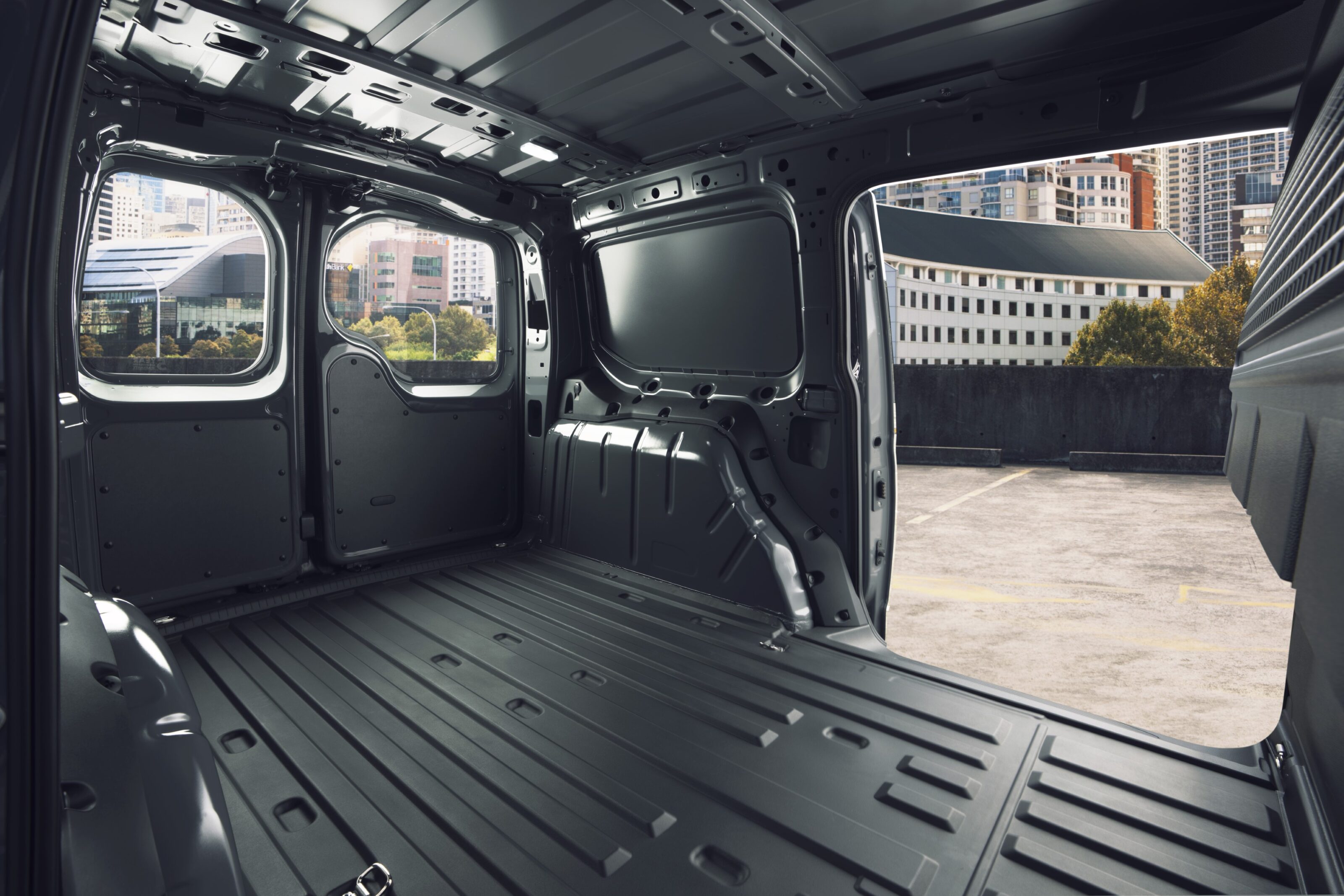
The Maxi will also hold two Euro 3 pallets, with the SWB managing a single but with a decent chunk of space to spare. Given the Maxi’s extra length, the turning circle is 12.1 metres against the SWB’s 11.4m.
SWB payload ranges from 692kg in the DSG petrol, rising to just over 720kg for all other variants. The Maxi allows from 725kg for the DSG petrol, rising to 754kg for the manual petrol and TDI320 DSG. Towing is rated at 1400kg for the manual petrol with every other Caddy Cargo and Crewvan able tow up to 1500kg braked.
The roof can take a maximum of 100kg within the payload figures. GVM ranges from 2150kg up to 2350kg for the Cargo Maxi and up to 2450kg for the Crewvan.
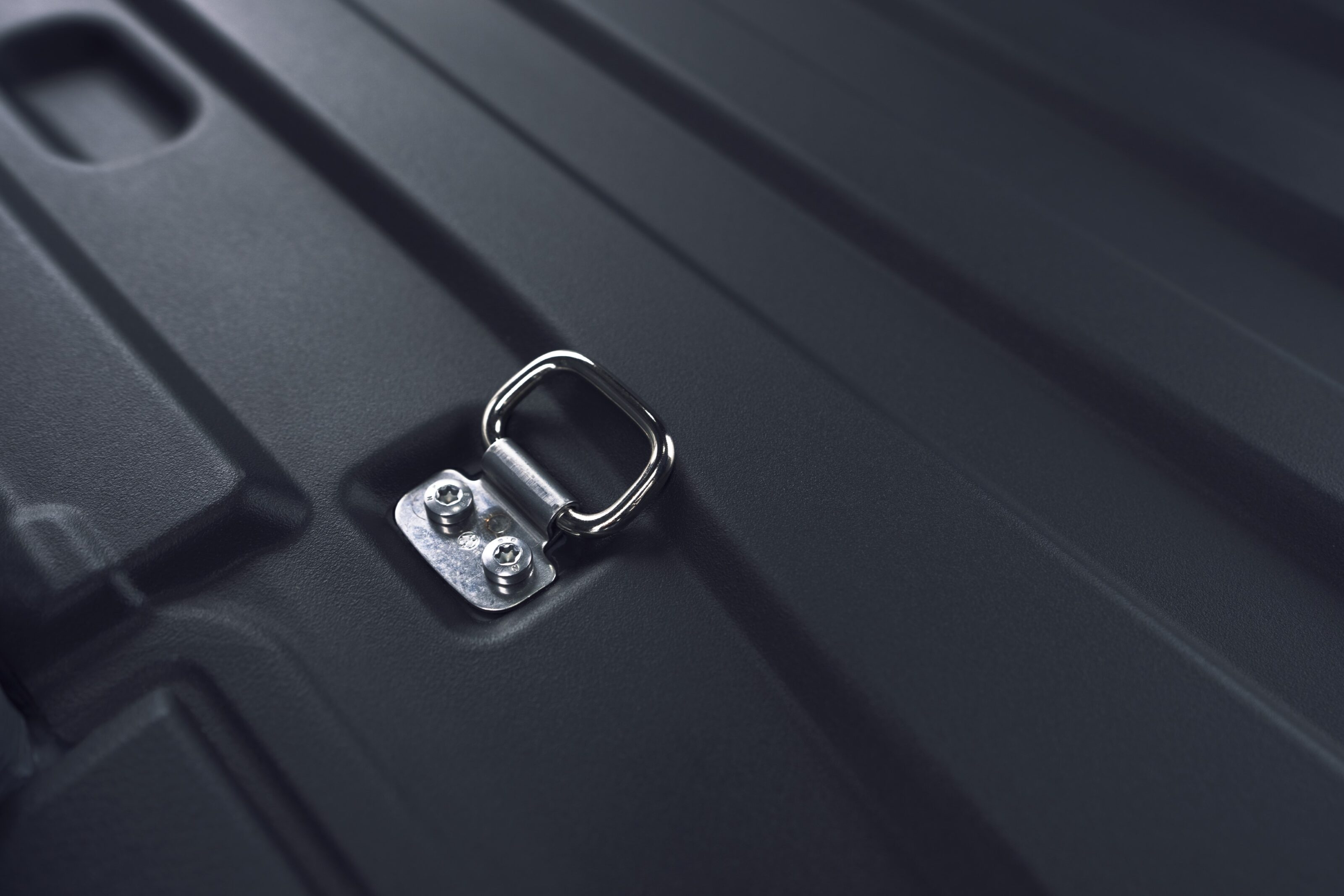
From the factory you get a body-colour metal floor as standard, with fixing points to secure your load. Options include a fitted plastic, rubber or plywood floor. The rubber floor gives you that rugged, hose-out vibe.
Caddy Cargo and Crewvan have barn doors with windows as standard and you can opt to delete the windows or fit a lifting tailgate. Big boxes are easy to load with the doors wide open and the low loading lip.
My wife’s ongoing mission to rotate every piece of furniture out of the house every two years to confuse both me and the dog was a perfect excuse for us to load the Caddy with a giant box that held one half of a two-seater couch. I wish I’d taken the $10 bet that it wouldn’t fit because the box went in with space to spare and it might have been possible to stack them two high.
On the road
The Cargo range has a trio of powertrains that are best summarised in a table. Like this one.
| TSI 220 (manual and DSG) | TDI280 (manual) | TDI320 (DSG) | |
|---|---|---|---|
| Power | 84kW @ 4500-6000rpm | 75kW @ 2750-4250rpm | 90kW @ 4250rpm |
| Torque | 220Nm @ 1750-3000rpm | 280Nm @ 1500-2500rpm | 320Nm @ 1500-2500rpm |
| Fuel economy (claimed) | 6.4 manual / 6.2 DSG | 4.9L/100km | 4.9L/100km |
The TSI petrols are not yet in the country and the vehicles available to test were fitted with the TDI320 DSG drivetrain.
Caddy 5 shares a good chunk of its mechanicals with the passenger car line of the VW Group, meaning it’s built around the MQB platform. That means it is a cheaper vehicle to develop than going from the ground up from nothing. It also gives engineers and product planners access to a wide range of technologies, particularly safety, that have been lacking in this segment. Some of the safety features might be optional, but at least they’re available if you want them.
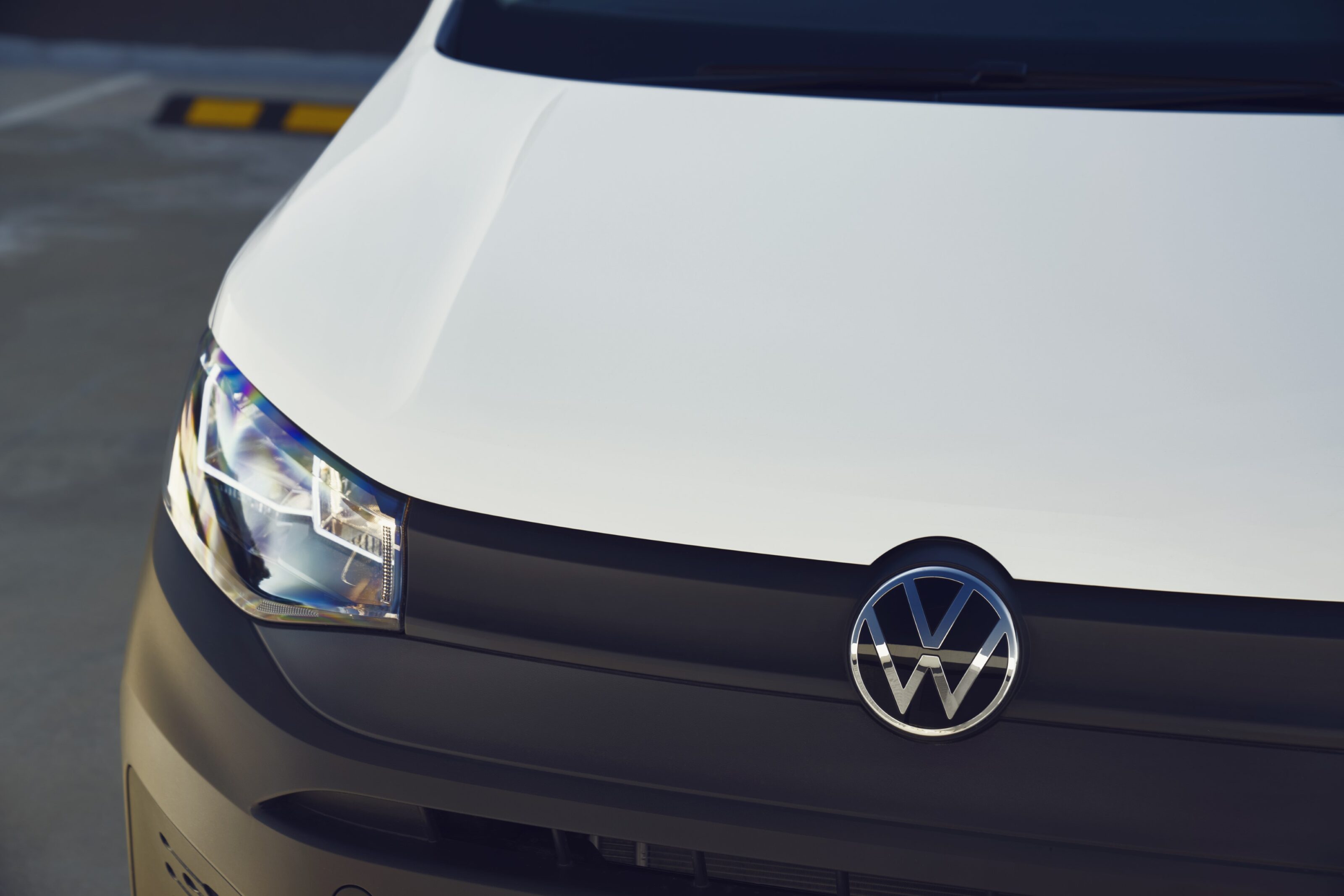
It also means that the driving experience is a great deal more refined than you might expect from a commercial van. The cabin is impressively quiet for a commercial vehicle, although an empty Cargo with a bare shell might be a bit noisier than the Crewvan, which itself is slightly noisier than the carpeted, seven-seat people mover.
With fewer seats and things to absorb noise as well as the giant megaphone of an open cargo area, it’s a battle to keep noise down without half a tonne of noise deadening.
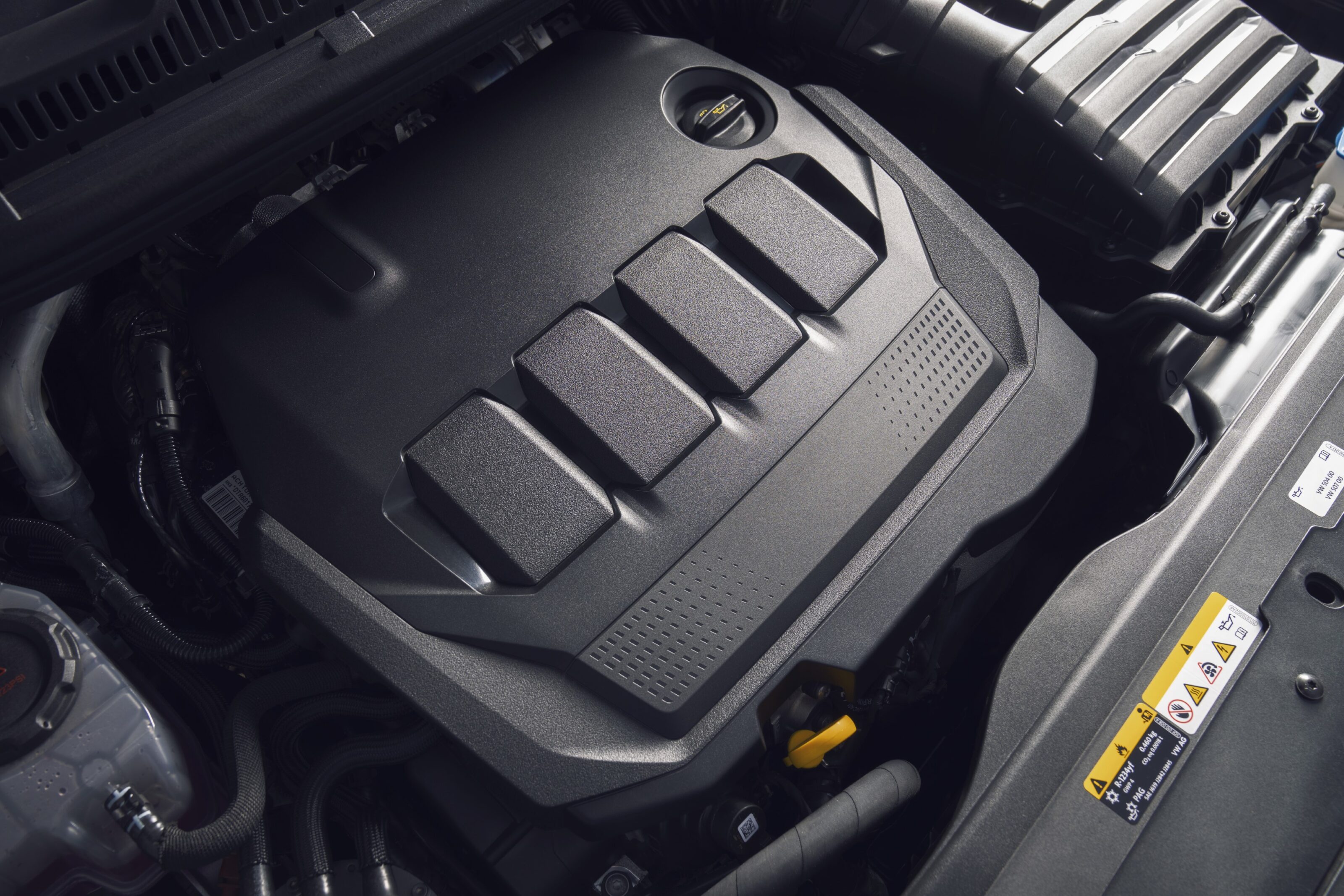
The diesel engine is also very quiet on the move, with hardly any clatter and absolutely no rattling. Performance is – perhaps unsurprisingly – strong, with the twin-clutch transmission playing ball most of the time and only really caught out in a quick on-off-on stop-start transition when rolling to a stop. The rest of the time it’s close to impeccable, shifting quickly and smoothly and there’s even a Sport mode if you’re not keen on the slower life.
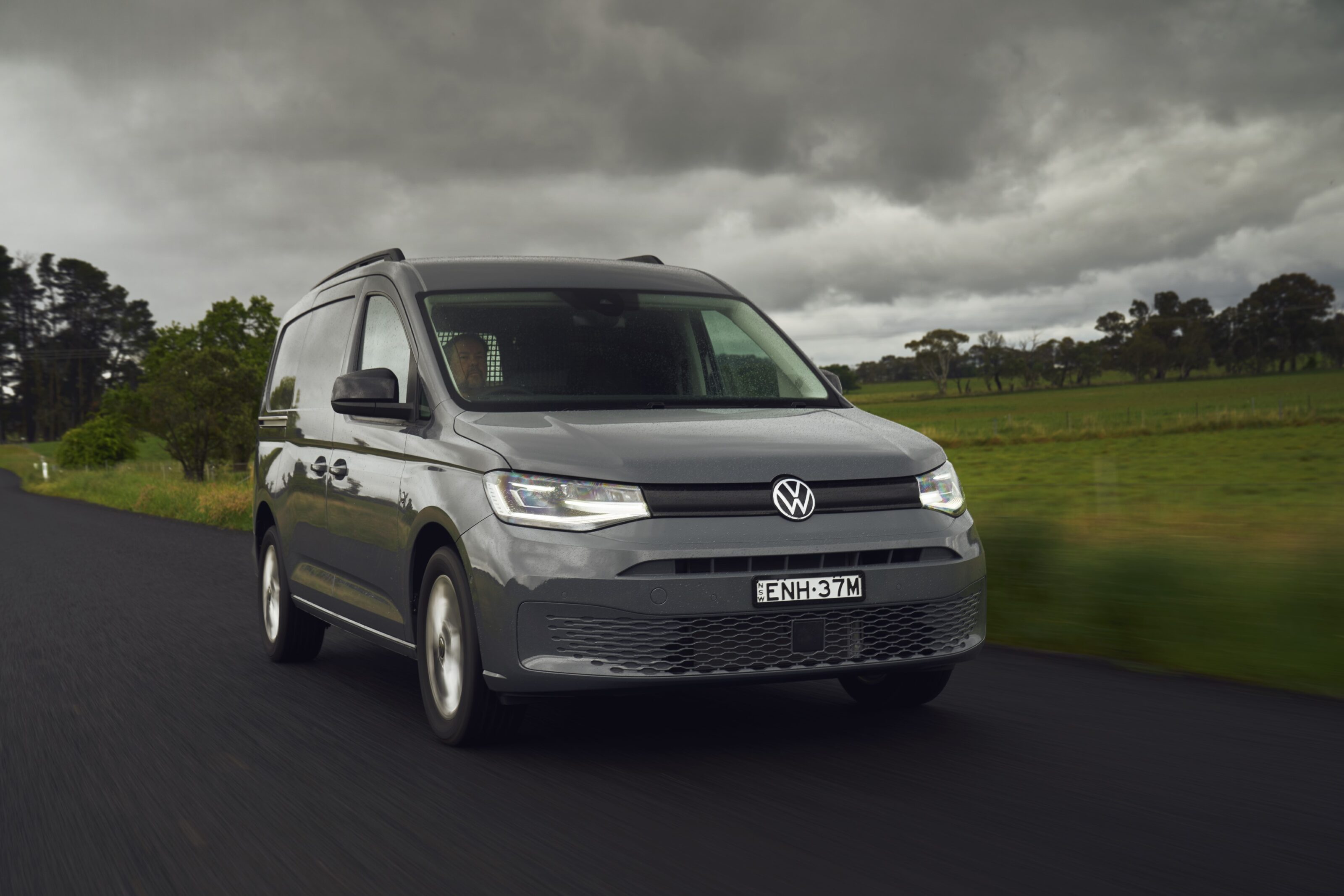
Steering is positive and light, but not so quick you’ll get into trouble. I had the misfortune of having to swerve quite sharply for an obstacle in the road and the Caddy handled the upset with controlled body roll and just a distant wail from the tyres. More importantly, I didn’t have to take a hand off the wheel to complete the manoeuvre.
As with the people mover version, the ride is excellent. The rear suspension has come in for a great deal of scrutiny, with Caddy 4’s leaf springs ditched in favour of coil springs. The rigid axle and Panhard rod remain, but in concert with the MacPherson struts up front, the unladen ride is quite something.
I’ve driven SUVs that can’t handle bumps and potholes as well as the Caddy, which bodes well for a loaded vehicle. Obviously, things will deteriorate on poor surfaces – like concrete with massive joins – but apart from Sydney’s hopeless motorways, that sort of surface is mercifully rare.
Ownership
The Caddy comes with the same package as the “normal” car range, with a five year/unlimited-kilometre warranty and 12 months of roadside assist.
VW offers two service packs. The first covers three years or 45,000km and costs $1300. If you pay as you go, VW reckons you’ll pay up to $265 more over the three services, so that seems like a handy saving. If you choose the five-year/75,000km package, you’ll pay $2100, saving up to $669 and getting the first service gratis. As you can probably tell from these packages, VW expects to see you back for a service every 12 months or 15,000km, whichever comes first. These service figures compare favourably with the aforementioned Peugeot Partner and Renault Kangoo.
If you service with an official dealer, you’ll also get a 12-month extension on the roadside assist.
Verdict
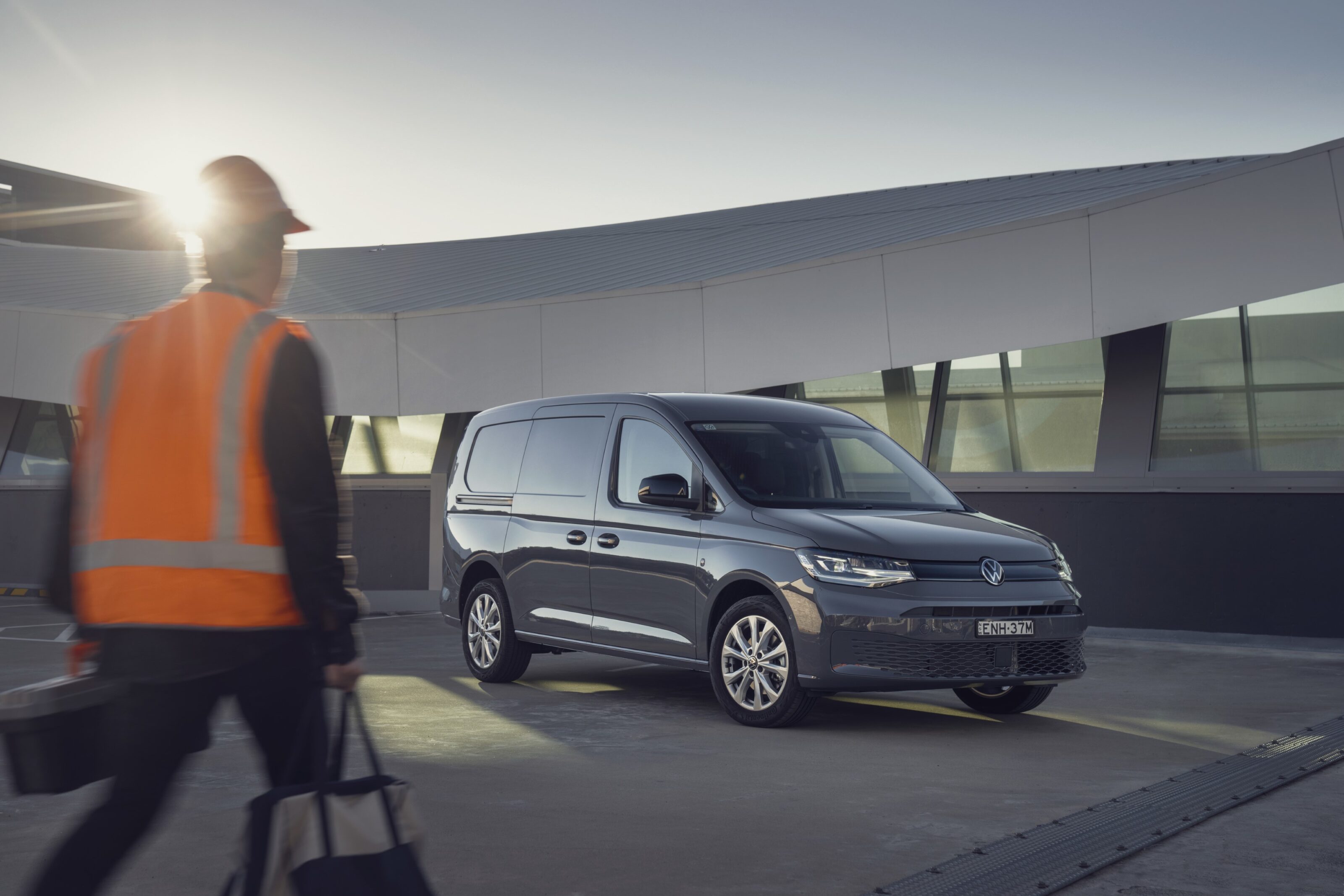
For someone who doesn’t necessarily appreciate the overall utility of a city van, the Caddy feels like a massive achievement. While I always enjoy a week bouncing around in one of its rivals, handing it back isn’t difficult. That was fun, back to more refined motoring, thanks. But quite honestly, if someone asked me if I would own a Caddy, I’d be tempted. While it would probably make the furniture swapping worse, I wouldn’t object to owning one because it’s so good to drive and so versatile.
This is an obvious result for prospective Caddy owners. The last two years have been punishing for people in logistics and trades and I bet the last thing they want is to get into a noisy van they have to endure rather than enjoy. Caddy 5, like the Golf before it, has moved the game on.
Volkswagen Caddy Cargo specifications
| Caddy Cargo/Cargo Maxi | TDI320 | TSI220 |
|---|---|---|
| Body:u00a0 | Three door panel van/five door panel van | Five-door panel van/five-door people mover |
| Drive: | FWD | FWD |
| Engine: | 2.0-litre turbocharged four-cylinder diesel | 1.5-litre turbocharged four-cylinder petrol |
| Transmission: | Seven-speed twin-clutch | Seven-speed twin-clutch |
| Power: | 90kW @ 2750-4250rpm | 84kW @ 4500-6000rpm |
| Torque:u00a0 | 320Nm @ 1500-2500rpm | 220Nm @ 1750-3000rpm |
| Bore stroke (mm): | 95.5 x 81mm | 74.5 x 85.9 |
| Compression ratio:u00a0 | 16.0 : 1.0u00a0 | 12.5 : 1.0u00a0 |
| 0-100km/h:u00a0 | 11 sec (estimate) | 13 sec (estimate) |
| Fuel consumption:u00a0 | 4.9L/100km (combined) | 6.2L/100km (combined) |
| Weight: | 1740kg | 1667kg |
| Suspension: | MacPherson struts/Longitudinally guided rigid axle with Panhard rod | MacPherson struts/Longitudinally guided rigid axle with Panhard rod |
| L/W/H:u00a0 | 4500mm/1855mm/1856mm4853mm/1855mm/1856mm | 4500mm/1855mm/1856mm4853mm/1855mm/1856mm |
| Wheelbase: | 2755mm/2970mm | 2755mm/2970mm |
| Brakes:u00a0 | NA | NA |
| Tyres:u00a0 | 215/55 R17 Continental EcoContact 6 | 205/60 R16 Continental EcoContact 6215/55 R17 Continental EcoContact 6 |
| Wheels:u00a0 | 17-inch alloy wheels (full-size spare) | 16-inch wheels (full-size spare)17-inch wheels (full-size spare) |
| Price:u00a0 | $49,990 (Nov 2021) $52,640 (Jan 2022) | $46,140+ ORC (Jan 2022) |
We love the Mercedes-AMG E53 sedan. In 2018, it almost marked a shift in engineering philosophy within AMG. A bit softer, a bit smoother, but still rabidly fast, the four-door E53 was a surprise packet more than the sum of its parts. And its new 3.0-litre turbo straight-six rocked. So we were keen to sample the same car, shorn of rear doors, a B-pillar and, well, a roof. Welcome, then, to the E53 Cabriolet.
The facelifted one has landed in Oz, sporting different-look headlights and tail-lights, the new 12-slat Panamerica front grille and a swanky new steering wheel. With outputs of 320kW/520Nm remaining as is – still boosted by a 16kW/250Nm electric motor starter/generator – the biggest mechanical change might be ‘revised suspension’ (which we’ll get to shortly).
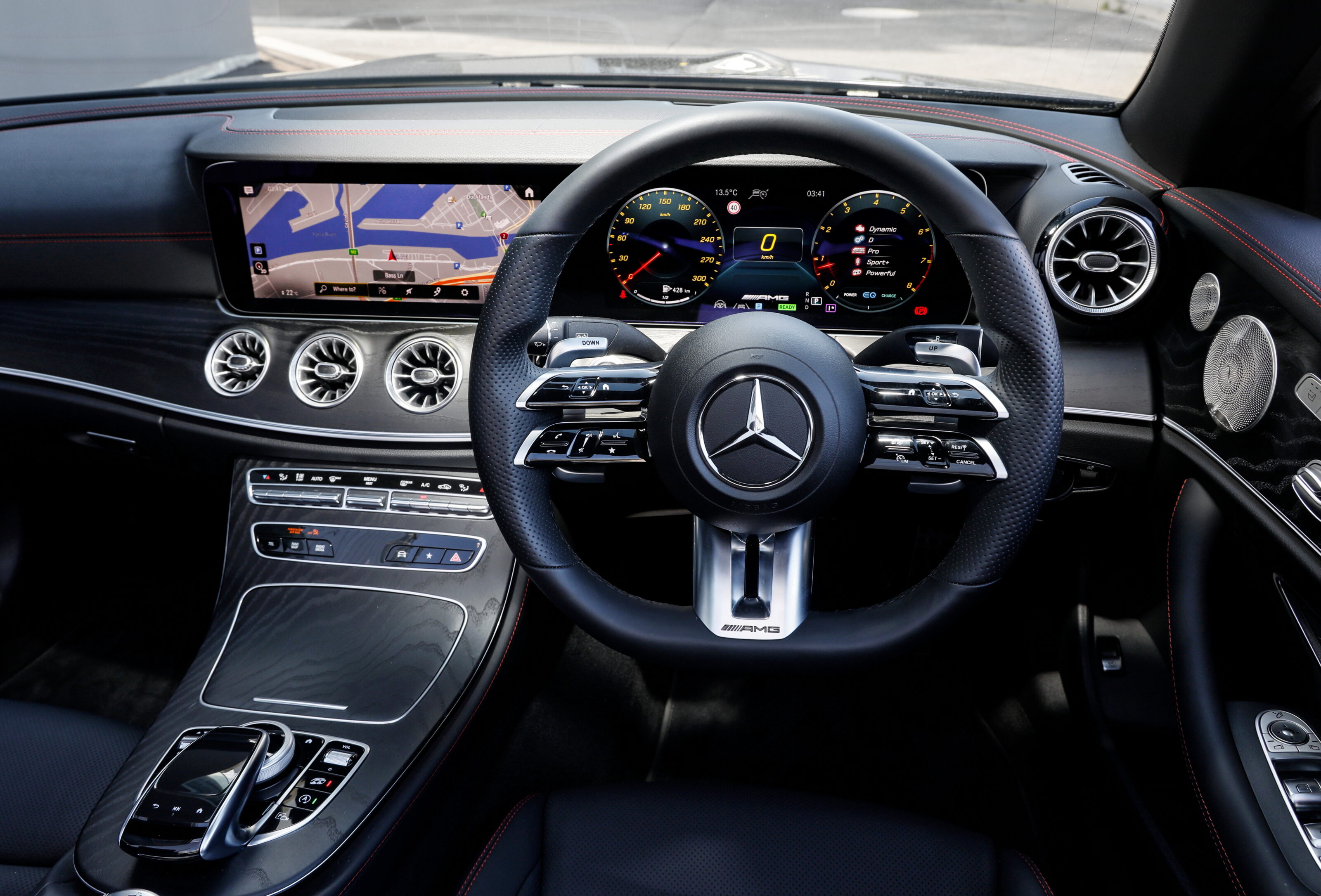
Inside there’s the new-generation four-spoke AMG steering wheel integrated with Mercedes’ clever and largely excellent MBUX infotainment.
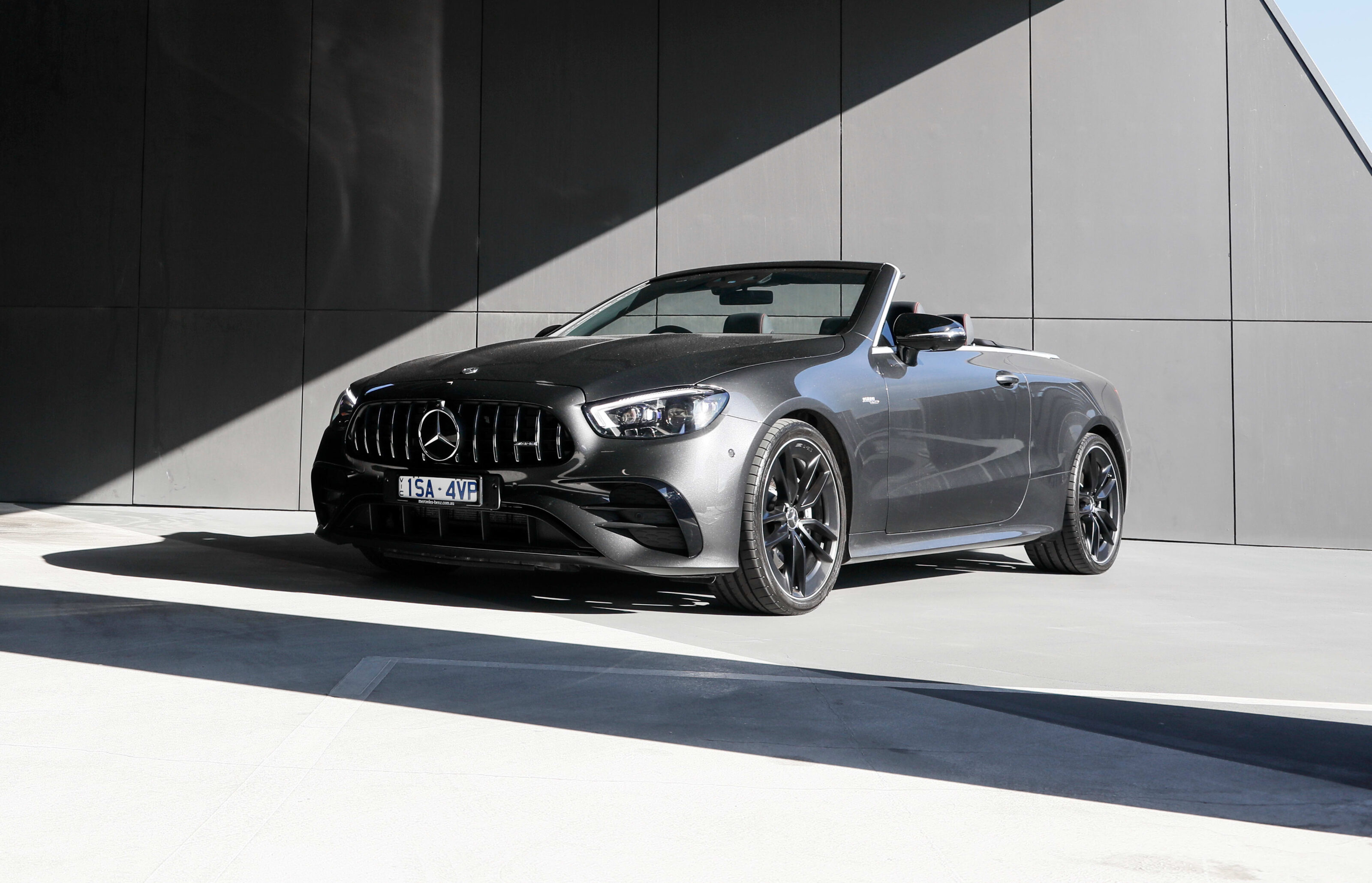
To this author’s eyes, this is a good-looking car, keeping its aggression subtle. You have to perv closely to spot the 370mm cross-drilled front rotors under the new-look AMG wheels; the unusually wide 275mm rear tyres; or the speedy, protruding rear diffusor flanked by quad exhausts.
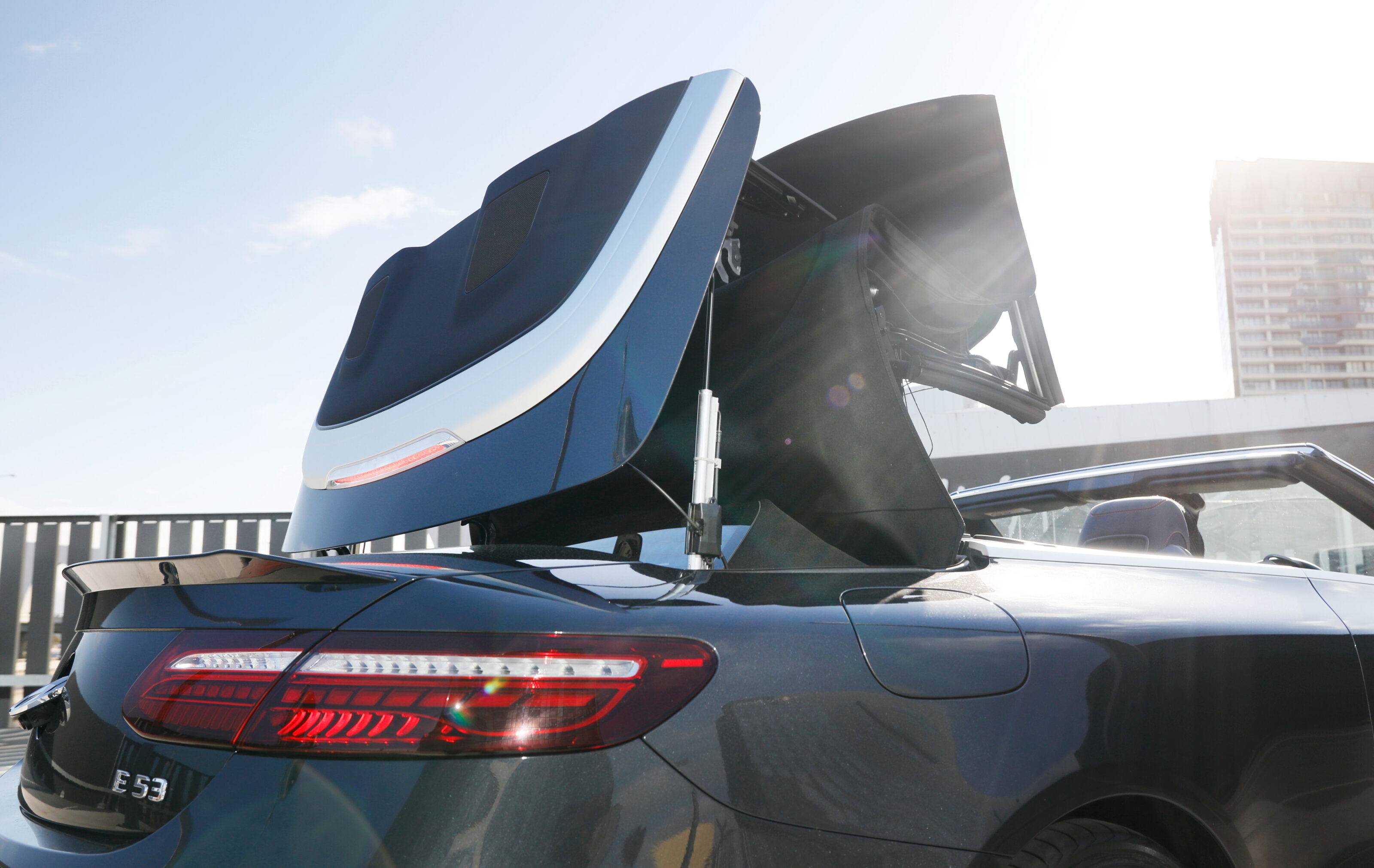
It helps that it looks great with the roof down, too. Disappearing in 18 seconds (we timed it) the E53 Cabriolet looks incredibly long and sleek – probably because, at 4.8 metres, it is. With a flag on the bootlid it could almost be, well, a boat.
Inside is as lovely as ever; two enormous 12.3-inch screens nestled in a windy jacuzzi of leather. The digital instruments are probably the best executed we’ve seen so far.
Hit the engine start button and the straight-six wakes up with an audible fuss, although unusually with basically zero starter-motor noise. And on the road the ride is very nice with next to no scuttle shake despite the huge hole where the roof used to be.
Motivate the right pedal towards the carpet and the E53 sprouts some serious horns. Its sizeable grunt is pumped through a nine-speed torque converter auto (as opposed to the Multi-Clutch Transmission) to all four wheels, meaning crisp and clean acceleration with not a trace of wheelspin. Utilising a polite launch control, the E53 Cab gets its 2085kg, currywurst-loving butt from 0-100km/h in just 4.5sec.
The powertrain, it must be said, is incredible. Silky smooth, punchy, responsive and almost lag-free, it packs a fat band of responsive torque low in the revs and yet an eagerness to reach right out to its 6500rpm redline.
And the nine-speed auto is a willing accomplice – despite some hesitation switching between cogs in a car park, once moving it’s buttery in Comfort mode, yet razor sharp and responsive in Sport Plus with a good spread of ratios to play with using the paddles.
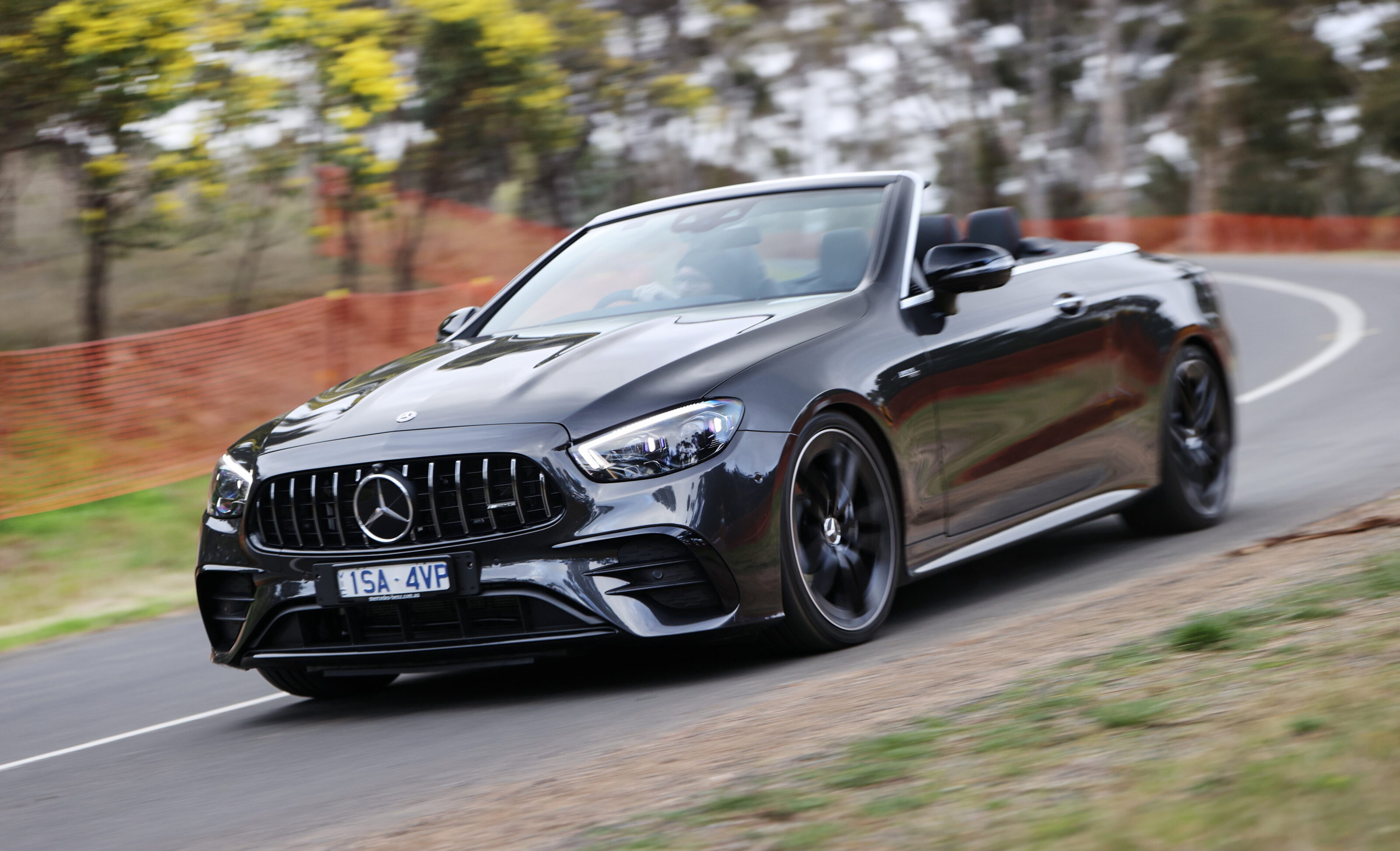
And the E53 Cabriolet invites exactly that sort of driving. Owing a little to its slight suspension softness, it wants you to get into a rhythm with it, tapping into the huge and immediate electric-assisted power, enjoying the loud exhaust note (with a good amount of overrun crackles) and hammering the big, reliable brakes.
Performance is vast, with a lot of car to ‘dig into’; actually, probably our only criticism as you do dig deeper is the E53 Cabriolet’s all-wheel-drive system feels very ‘Mercedes-Benz’ and nowhere as ‘AMG’ (ie, fun) as the 4MATIC+ system in its bigger V8 brother, the E63 S. The turbo inline-six would certainly be up for a front-axle decoupling Drift Mode.
Most of the other criticisms of the E53 Cabriolet are pretty mild. The interior is the biggest let-down for a $170K car. There’s a bit of a contrast between expensive and accountant-pleasing materials, although fortunately it errs a lot more towards luxe. Just don’t press on bits of that lovely looking dashboard, as it creaks horribly.
The E53’s interior is also a bit ‘last generation’ with its archaic COMAND hand controller not yet replaced by the excellent new MBUX touchpad. That bit they couldn’t facelift, it seems.
The rear three-quarter blind spots with the roof up are also… large. While it’s somewhere between a four-seater and a two-plus-two, with a surprising amount of rear-seat amenity, the roof eats up a lot of boot space, leaving about the same amount as a small hatchback. (Roof up, it’s huge.) And forget about all the performance you paid for if you want to get anywhere near the official fuel consumption figure, too – we saw 13.2L/100km.
There’s also a tendency for things like cat’s eyes to thump harshly through the whole superstructure of the car; enough for you to want to avoid driving over them. It’s been an AMG thing for a while now. Fortunately the ride quality is otherwise brilliant – soft, comfortable yet supportive when the cornering speeds ramp up.
And given how the E53 Cabriolet drives, that will be… often.
Mercedes-AMG E53 Convertible specifications
Key Points
- BMW expands zero-emissions prompt to 20 new European cities
- eDrive Zone exclusive to selected plug-in hybrid models
- Feature available in more than 130 cities across the continent
BMW has announced it will expand its eDrive Zone mode to cover an additional 20 city centres across Europe, bringing the total of zero-emissions locations to more than 130.
The mode works in certain BMW plug-in hybrid (PHEV) models by automatically deactivating the petrol engine and relying solely on battery power – just like a full-electric vehicle – when entering selected city centres.
The feature operates via a combination of geofencing and GPS technologies to ensure the vehicle can recognise designated areas, and prompt the driver to make the switch.
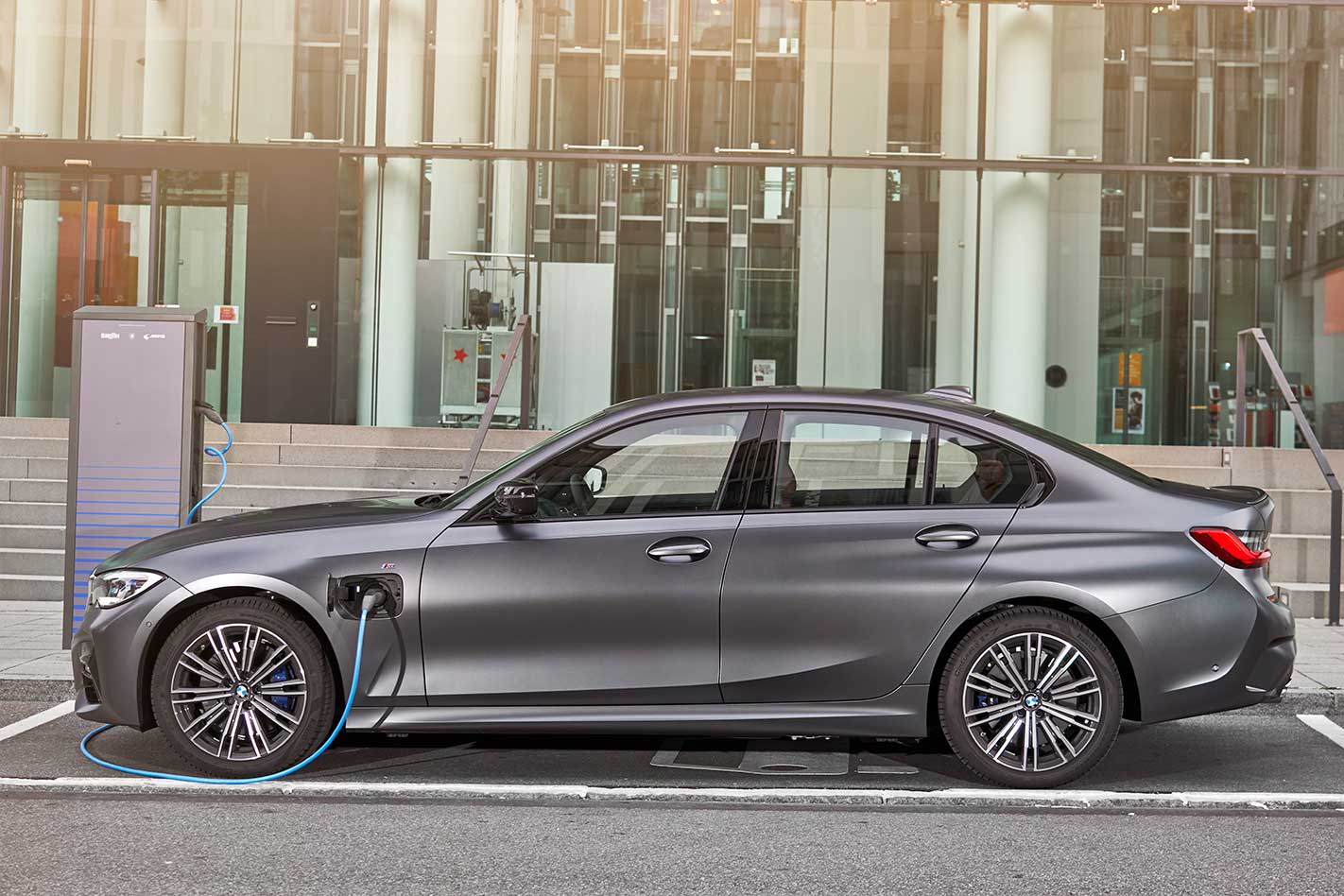
Those driving solely with battery power in these areas are rewarded with bonus points for each all-electric kilometre driven – worth double in an eDrive Zone – that can be redeemed for charging credits. Additional points are also available when the vehicle is charging.
The new cities included in the eDrive Zone include; Aberdeen, Bregenz, Brescia, Bristol, Cambridge, Cardiff, Copenhagen, Cork, Coventry, Florence, Klagenfurt, Lille, Matosinhos, Naples, Oeiras, Oxford, Sheffield, St.Pölten, Toulouse, and Verona.
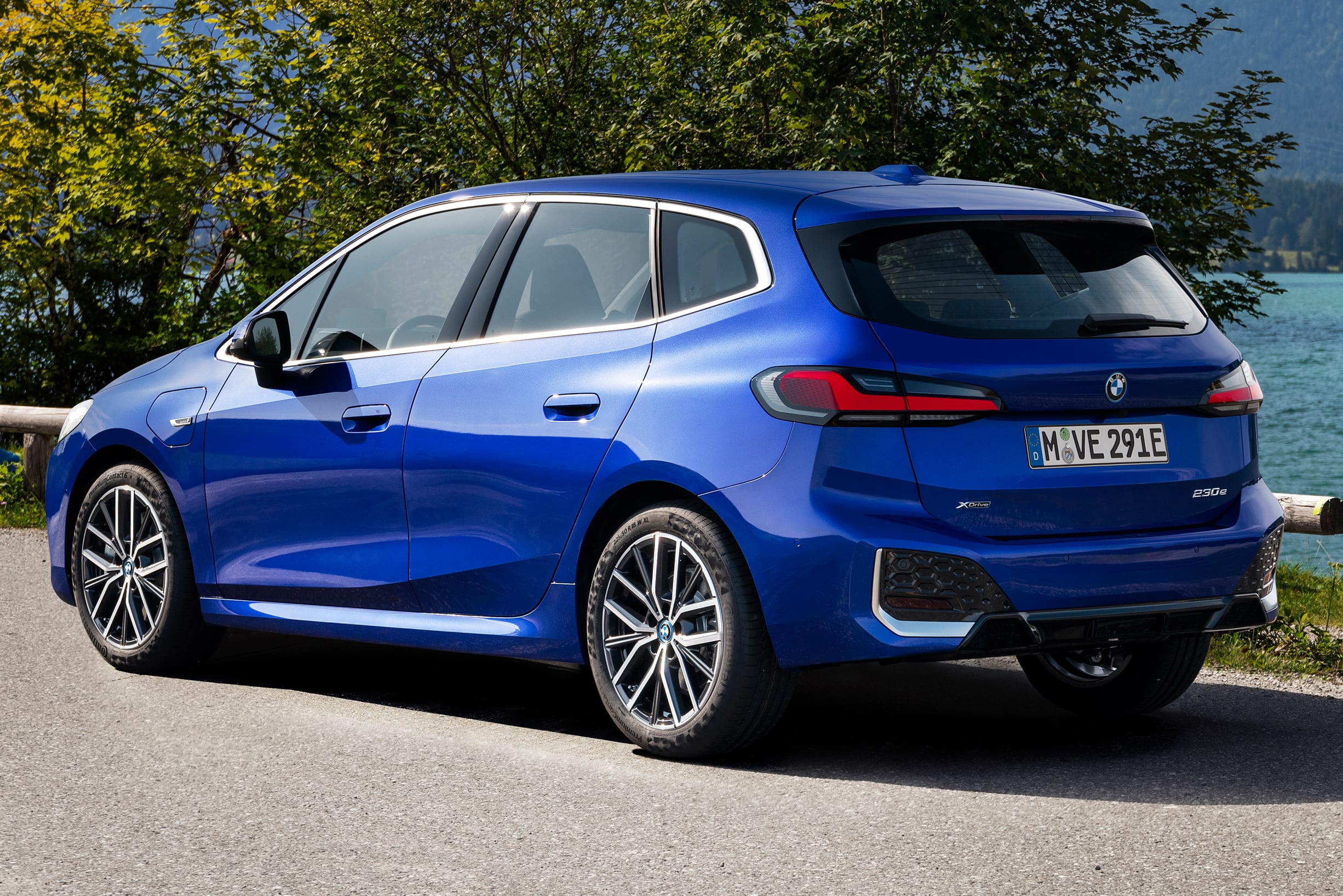
BMW says the all-electric driving mode is activated around 30,000 times per day across Europe, with around 40 per cent of drivers already travelling with the petrol engine deactivated prior to entering designated eDrive Zones.
Additionally, BMW also claims its plug-in hybrid customers have accumulated around 150 million points since the introduction of the eDrive Zone mode in mid-2020, with the German brand providing around 2.9 gigawatt hours of free charging – enough to power a 3 Series PHEV almost 250,000 times.
With no regulations surrounding zero-emissions city centres in Australia, BMW’s local plug-in hybrid models do not feature the ability to prompt drivers to switch to battery power using the eDrive Zone mode, however owners can still manually do so using the drive mode selector.
UPDATE: Honda has priced a Hybrid variant for Australia
Honda has confirmed pricing and specification for a Hybrid Civic, dubbed the e:HEV LX.
The Civic Hybrid is priced from $55,000 driveaway in Australia and will go on sale from the first of December.
It’s a $7800 upcharge over the petrol, but it also brings leather upholstery, a bigger digital driver’s display and connected services.
The Civic Type R hot hatch has also been given an Aussie starting price, it retails at $72,600 driveaway. See the full price list below.
| 2023 Honda Civic price list (national driveaway) | |
|---|---|
| Civic VTi-LX | $47,200 |
| Honda Civic e:HEV LX | $55,000 |
| Honda Civic Type R | $72,600 |
The story to here
November 29, 2021: Australian price and specs revealed
Honda Australia has announced the local pricing and features of its new Civic, set to go on sale from December 6 across the country.
At a drive-away price of $47,200, the Civic will be sold with just one variant, with the VTi LX set to be the sole offering until the e:HEV and Type R are launched next year.
Snapshot
- Power derived from Honda’s 1.5-litre turbo four-pot
- Drive-away price of $47,200 applies across all Honda dealers
- e:HEV (hybrid electric vehicle) and Type R model variants expected in 2022
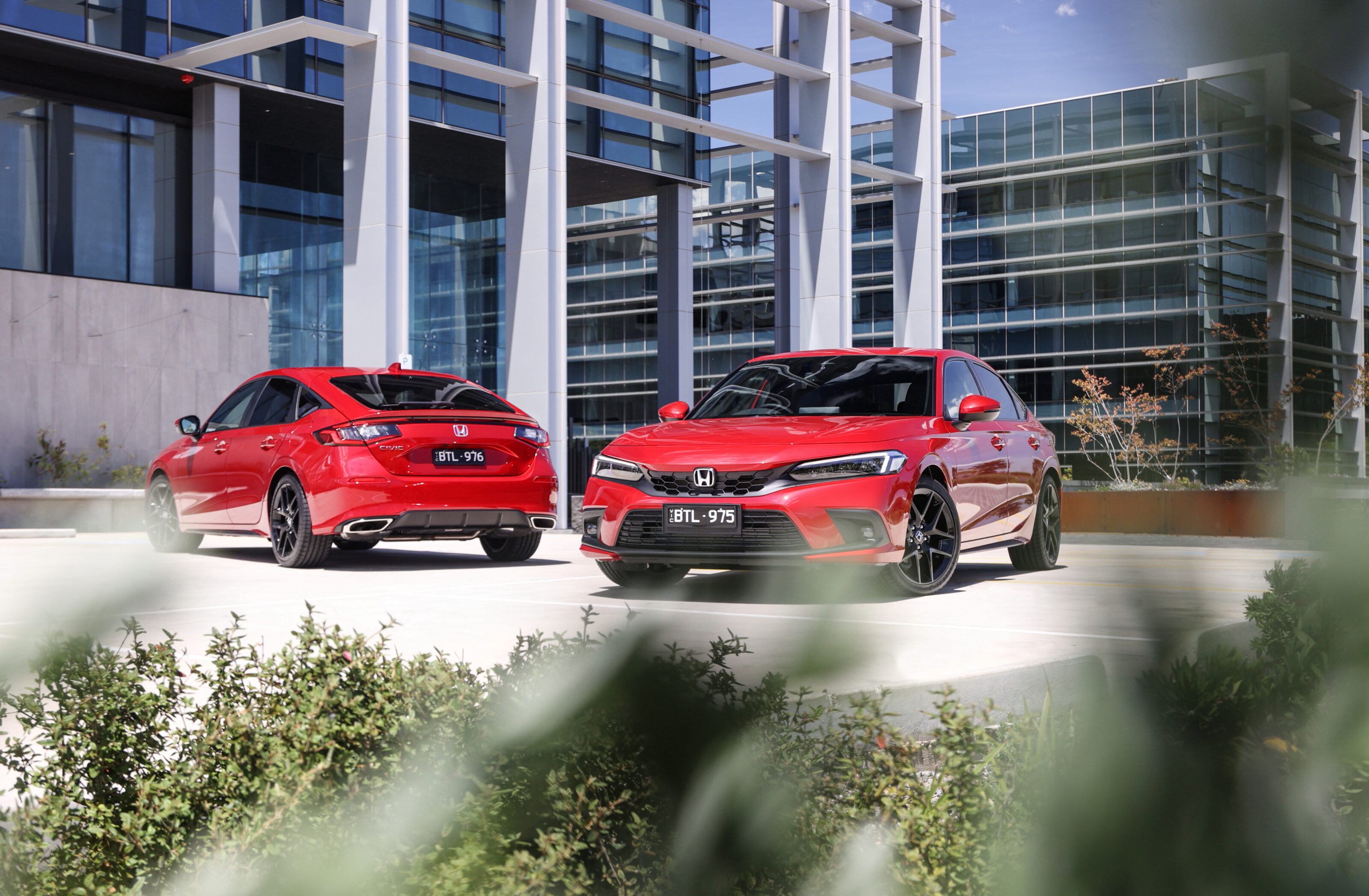
Read through our comprehensive list of local features which includes photos of the Australian-spec model.
October 26, 2021: Civic e:HEV spied
Set to go head-to-head with the Toyota Corolla Hybrid, the Civic e:HEV hybrid will be powered by a 1.5-litre, four-cylinder Atkinson-cycle petrol engine mated to a pair of electric motors to produce 96kW and 253Nm.
It’s expected the frugal variant will score some slightly different trim to the solely internal combustion engined Civic, although it won’t be too radical a departure from its sibling.
September 14, 2021: International first drive
Going on sale in North America with the option of a sedan body, as opposed to the hatch which is Australia’s only option, the Touring grade roughly reflects the equipment found in the local VTi LX.
Check out Brian Makse’s review of the Civic on its international debut.

June 24, 2021: 2022 Civic global reveal
The 2022 Honda Civic Hatch has been officially revealed by the Japanese automaker after months of leaks and teaser images.
The new liftback’s reveal follows April’s unveiling of its sedan counterpart, but the hatch shown here is the only version of the new Civic we’ll see in Australia.
Now in its 11th generation, Wheels has confirmed the latest iteration of the iconic badge will go on sale in quarter four of 2021.
Sporting a thoroughly refreshed and contemporary exterior and interior look, Honda says a great deal of emphasis has been placed on ensuring this new Civic is both a pleasure to drive and to spend time in.
The Tokyo firm also revealed an e:HEV (hybrid electric vehicle) model variant, and the eagerly anticipated 11-gen Type R, will be unveiled in 2022.
Details about locally delivered variants are still to be announced. However, Honda Australia told Wheels more information about pricing and features would be revealed closer to the car’s Aussie launch later this year.
From launch in Japan, the Civic Hatch will be available in two different guises – the entry level LX and higher-spec EX.
Both models will be powered by Honda’s turbocharged 1.5-litre four-cylinder VTEC petrol engine, which will produce 134kW and 240Nm.
Drive will be sent exclusively to the front wheels through a six-speed manual transmission or a constantly variable transmission (CVT) with a selectable drive mode switch. However, the six-speed manual has not been confirmed for Australia and will most likely not be available.
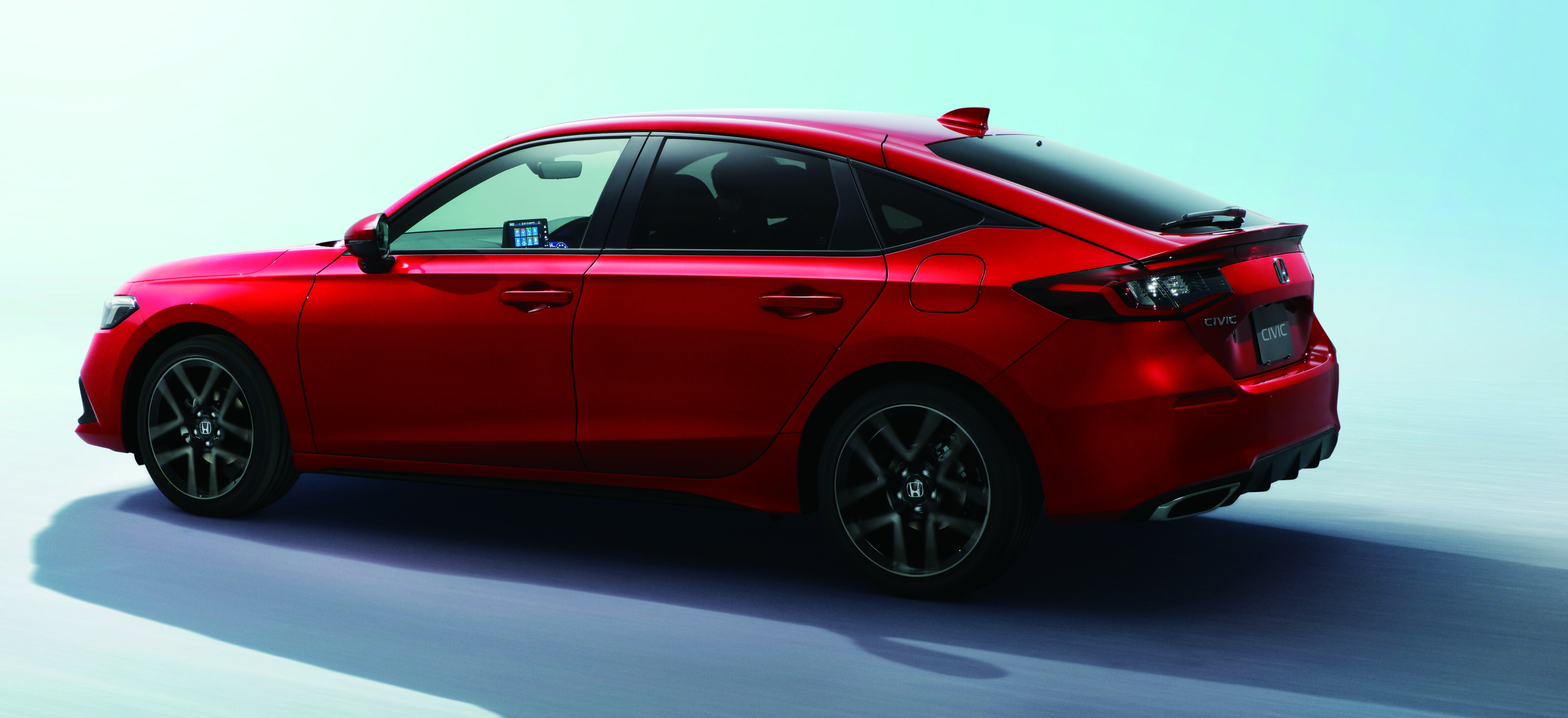
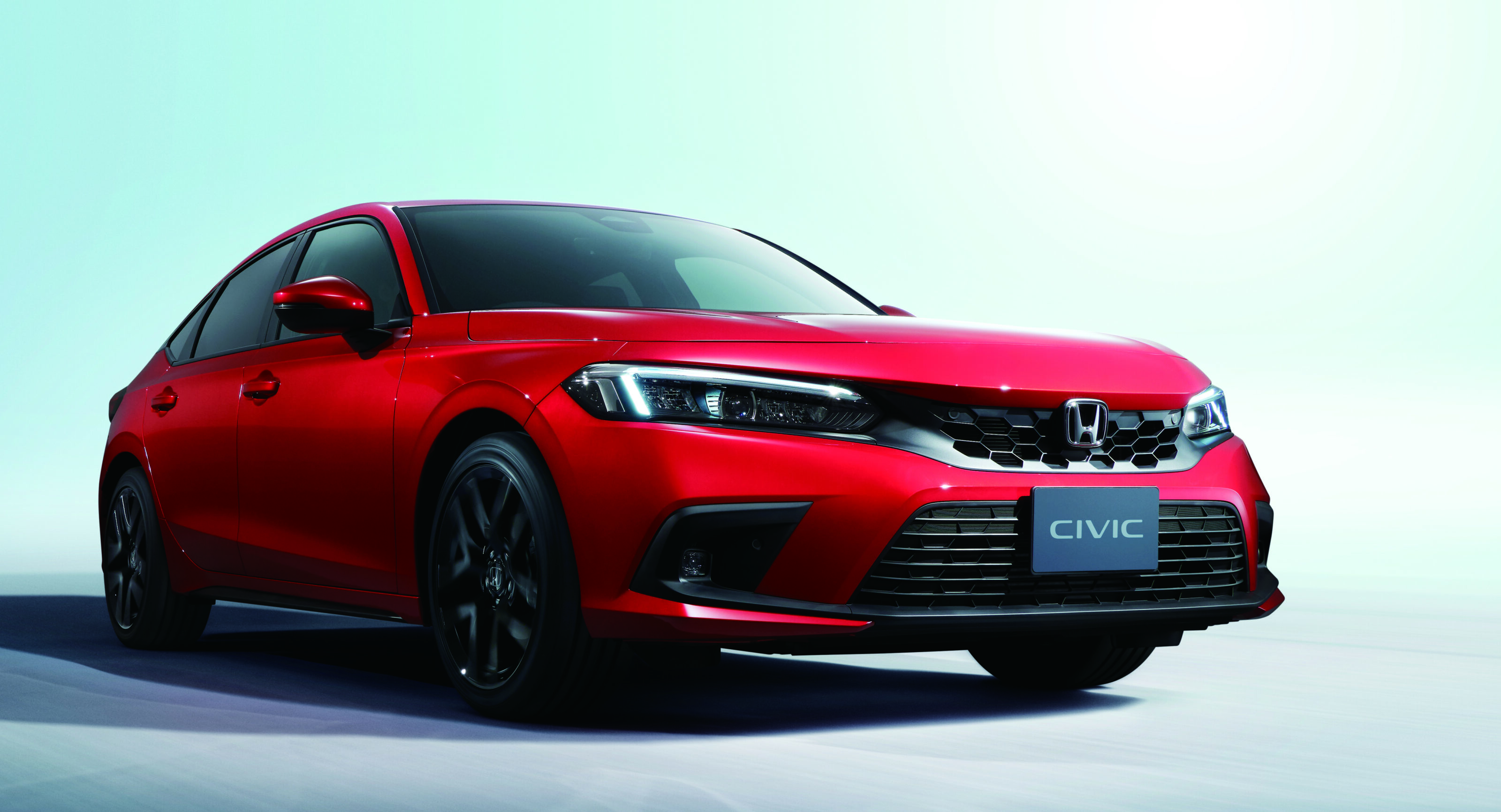
For the first time on a Civic, the new generation car will come equipped with full LED headlights and daytime running lights, including auto-levelling and auto-light control.
The rest of the Hatch’s front fascia is dominated by a new honeycomb-style grille designed for a sporty, dynamic look.
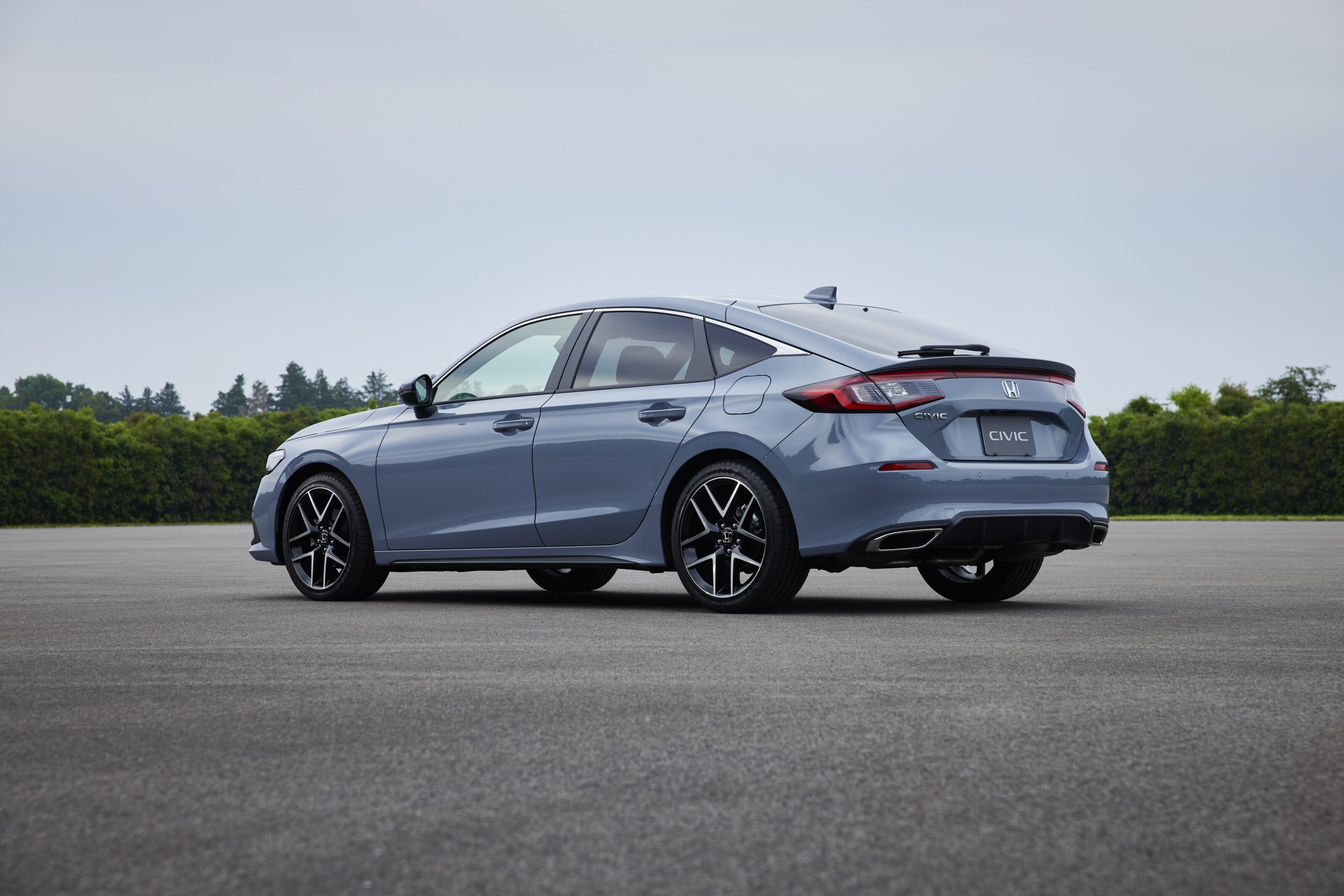
Judging the Civic from its side, the hatchback’s profile, especially from the rear three-quarter panel, appears sleek and low, providing an almost coupe-like look.
At the back, Honda’s designers have worked to improve the size of the hatch’s aperture, doing so by extending the liftback boot’s opening all the way out to the rear-side window line. The new hatch also benefits from a slim, modern LED taillight design.
Both the EX and LX variants will come equipped with twin five-spoke alloy wheels, which can be had in either silver or black.
Dimensionally, the new Civic is larger on all counts than its 10-generation Hatch predecessor, measuring 4549mm long, 1801mm wide, and 1415mm tall, with a wheelbase spanning 2736mm.
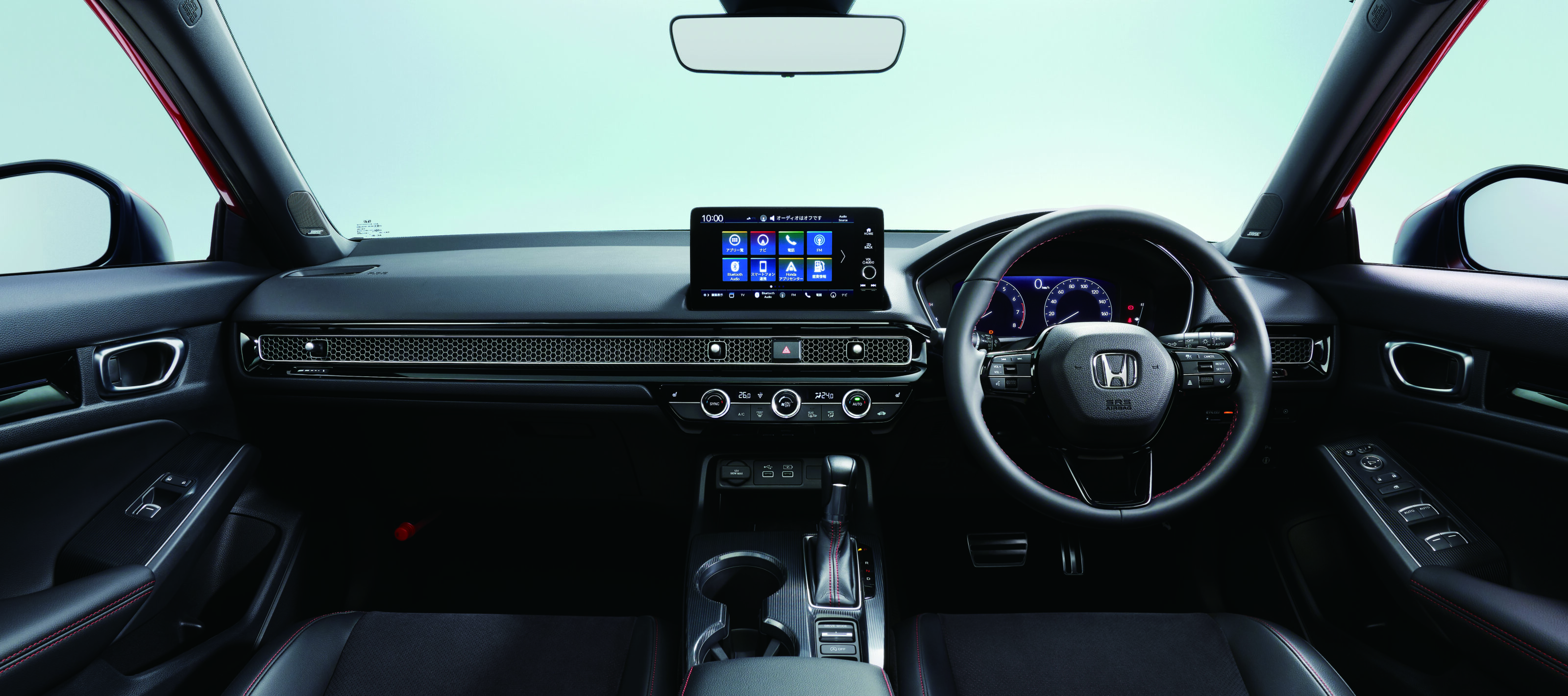
Inside, much work has been done to modernise the Civic’s interior while also providing continuity with the exterior aesthetics.
Dominating the new cabin is a slim honeycomb mesh panel, which lines almost the entire length of the dash, and seamlessly incorporates the front air vents.
The cabin also benefits from a large 9.0-inch Connect infotainment display, and for the LX variant, a 10.2-inch digital driver’s dash.
The entry-level Civic Hatch EX will come well-equipped with features such as dual-zone climate control, heated front seats, an eight-speaker sound system, and parking sensors.
Meanwhile, the higher-spec LX gains the benefit of LED active cornering, 12-speaker premium Bose sound system, powered and heated front seats, wireless charging, and wireless Apple CarPlay and Android Auto.
Standard safety equipment across the new Civic range includes; autonomous emergency braking, lane-keep assist, traffic jam assist, adaptive high-beam, traffic sign recognition, pedestrian detection, and adaptive cruise control.
Be sure to watch this space as Wheels brings you more information about the new 2022 Honda Civic Hatch closer to the car’s Australian launch.
