
Snapshot
- 2019-2021 Chrysler 300 sedans recalled
- The issue could result in the windscreen becoming detached
- A total of 32 cars are included in the recall
Fiat-Chrysler Australia (FCA) has recalled a total of 32 examples of the 2019 to 2021 Chrysler 300 sedan due to a potential issue with the vehicle’s windscreen.
According to a notice published by the Department of Infrastructure, the adhesive securing the windscreen in place “may not meet manufacturing specifications”.
This could cause the windscreen to potentially detach from the vehicle – particularly in the event of a road accident.
FCA will contact affected owners, but the company can be contacted directly by calling 1800 870 714 or visiting a dealership, found here.
You can check a list of all 32 VINs related to the recall by clicking here.
The 2022 Subaru WRX wagon may be set for an Australian appearance, with more rumours out of Japan pointing to a fast family hauler from the company.
Japanese publication Spyder7 says Subaru will likely drop the 1.8-litre turbo engine found in the Levorg wagon for the turbocharged 2.4-litre engine from the WRX, with the model to launch next month as the Levorg STI.
As first reported by WhichCar in February 2021, Subaru Australia may decide to offer the model as a WRX when it eventually makes its way to our shores, with the badge more familiar to local buyers.
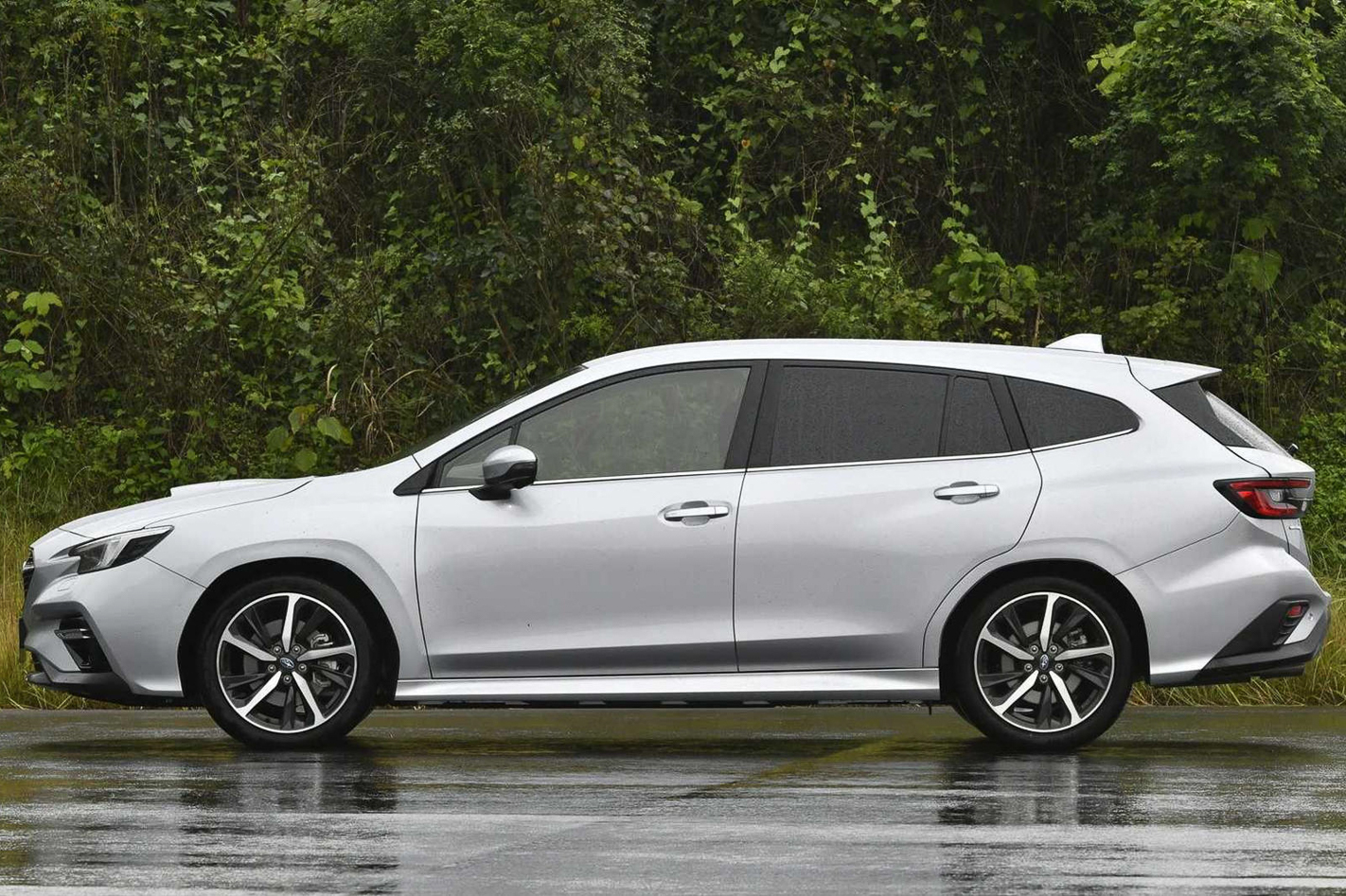
“It is very much a niche performance wagon, and it will offer a different level of excitement and performance in what it morphs into in Australia,” a spokesperson for the company’s local arm told WhichCar at the time.
“Just don’t confuse it with what you see in Japan necessarily in terms of specification,” they added, in reference to the 1.8-litre Levorg.
The recently-unveiled 2022 Subaru WRX has adopted a turbocharged version of the 2.4-litre engine found in the BRZ, producing 202kW and 350Nm – an increase of 5kW over the outgoing model, with torque remaining unchanged.
While a WRX STI is expected – with indications the high-performer could nudge 300kW – it’s not known whether a WRX STI wagon would follow.
Snapshot
- Updated GT-R coming to Australia as a limited run
- 2022 update the last for the 15-year-old model
- Two limited-edition variants gain midnight purple and millennium jade paint
UPDATE, September 21: Nissan Australia has confirmed the two new variants of the GT-R sportscar which will signal the end of R35 imports locally.
Known as the Premium Edition T-spec and Track Edition Engineered by NISMO T-spec in Japan, the Australian variants will simply be renamed to T-Spec and NISMO SV respectively, retaining the equipment from the Japanese domestic variants (more below).
While the R35’s local lifecycle has come to an end, Nissan has hinted at the potential for the GT-R name to carry on in the future, as managing director Adam Peterson said: “This isn’t the end of the GT-R story in Australia, but it will mark the closure of this chapter for this generation vehicle.”
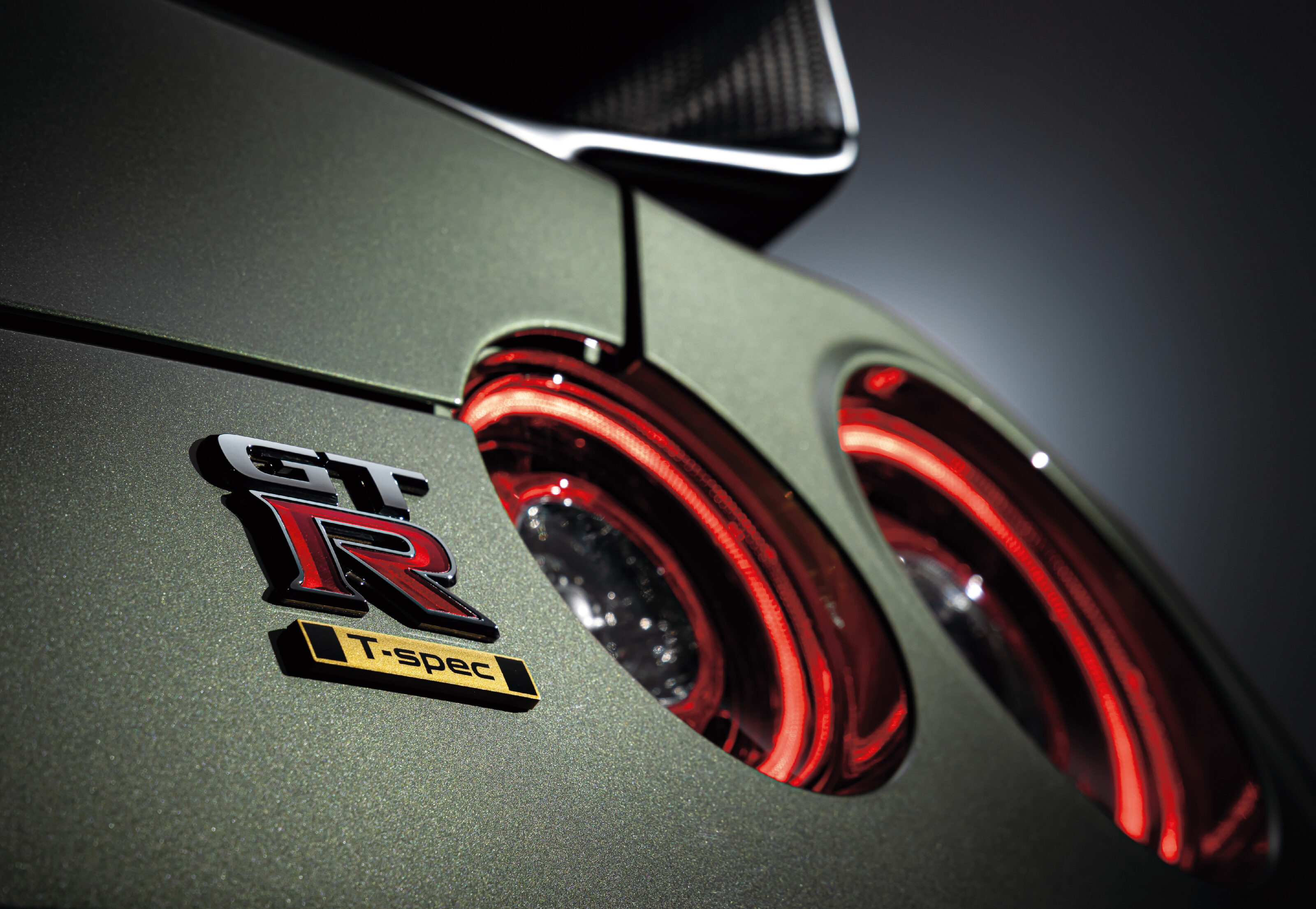
It’s the first time Nissan has officially made a comment regarding the future of the nameplate, which stretches back over 50 years, although no further details were provided regarding what we might see in the next generation of GT-Rs.
With confirmation of the two new variants, pricing has been released for the last GT-R examples to arrive in Australia.
2022 Nissan GT-R Australian pricing
| GT-R Premium | $ 193,800 |
| GT-R Premium Luxury | $ 199,800 |
| GT-R T-Spec | $ 256,700 |
| GT-R NISMO | $ 378,000 |
| GT-R NISMO SV | $ 393,800 |
Prices exclude on-road costs
The story to here
September 15: The Japanese-spec Nissan GT-R has been revealed – with two new variants joining the now five-strong line-up, both of which are expected to come to Australia.
Nissan Australia has confirmed to MOTOR it will be releasing local pricing and features for the T-spec models shortly.
Launched in its home market, the two grades – called Premium Edition T-spec and Track Edition Engineered by NISMO T-spec – will go on sale in Japan towards the end of October, limited to just 100 units each.
Previous reports have stated around 50 are set for release in Australia.
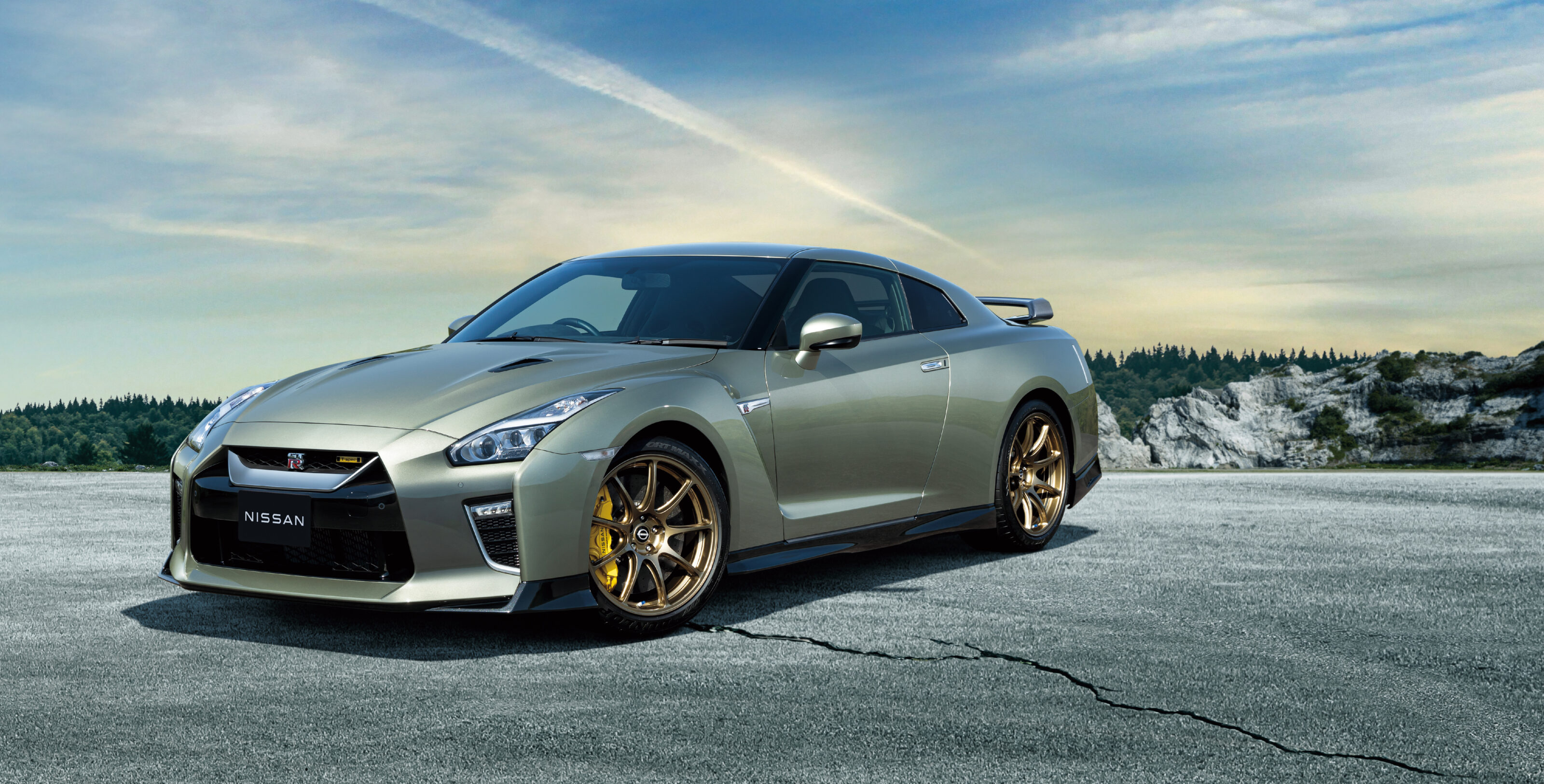
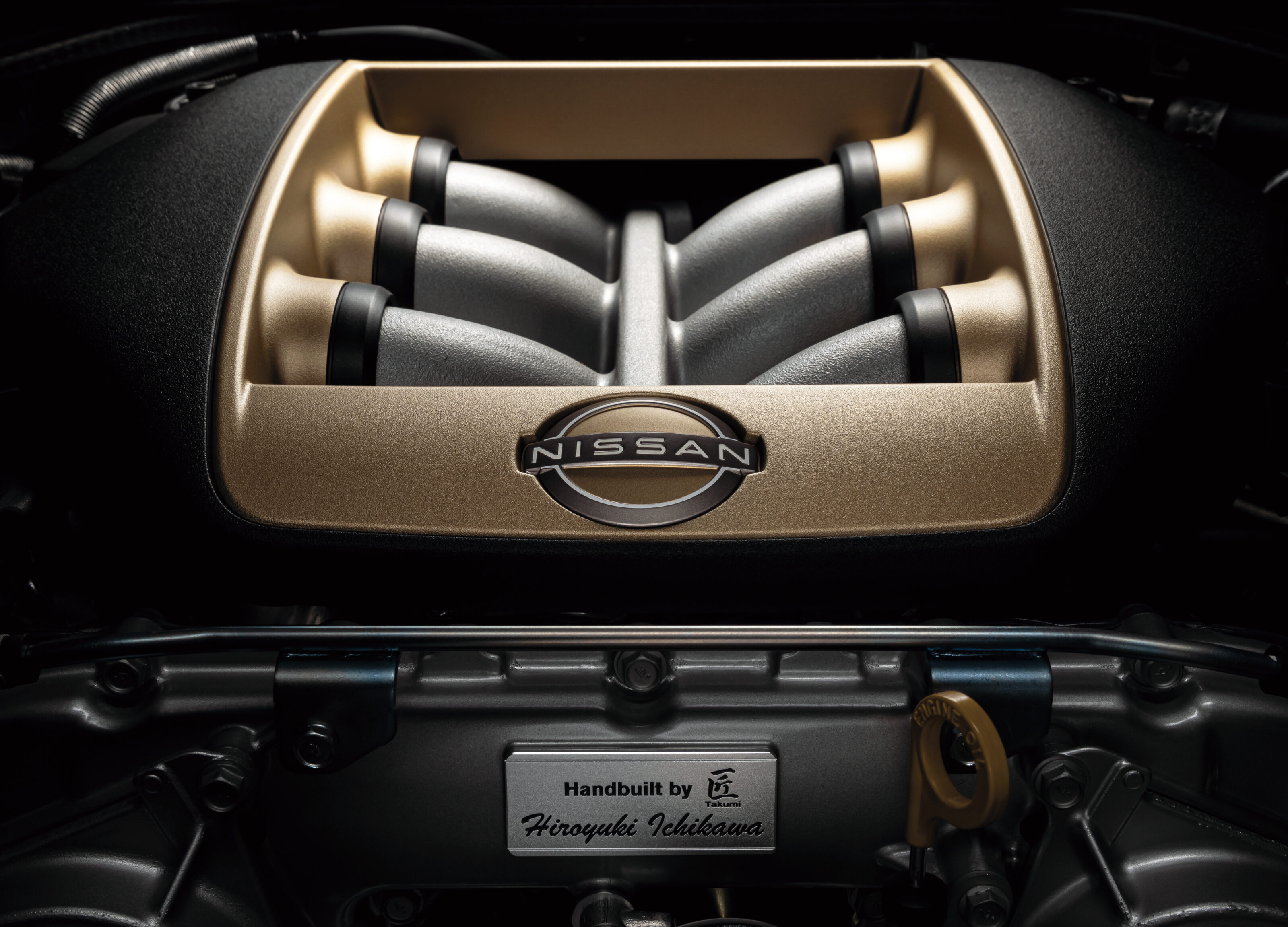
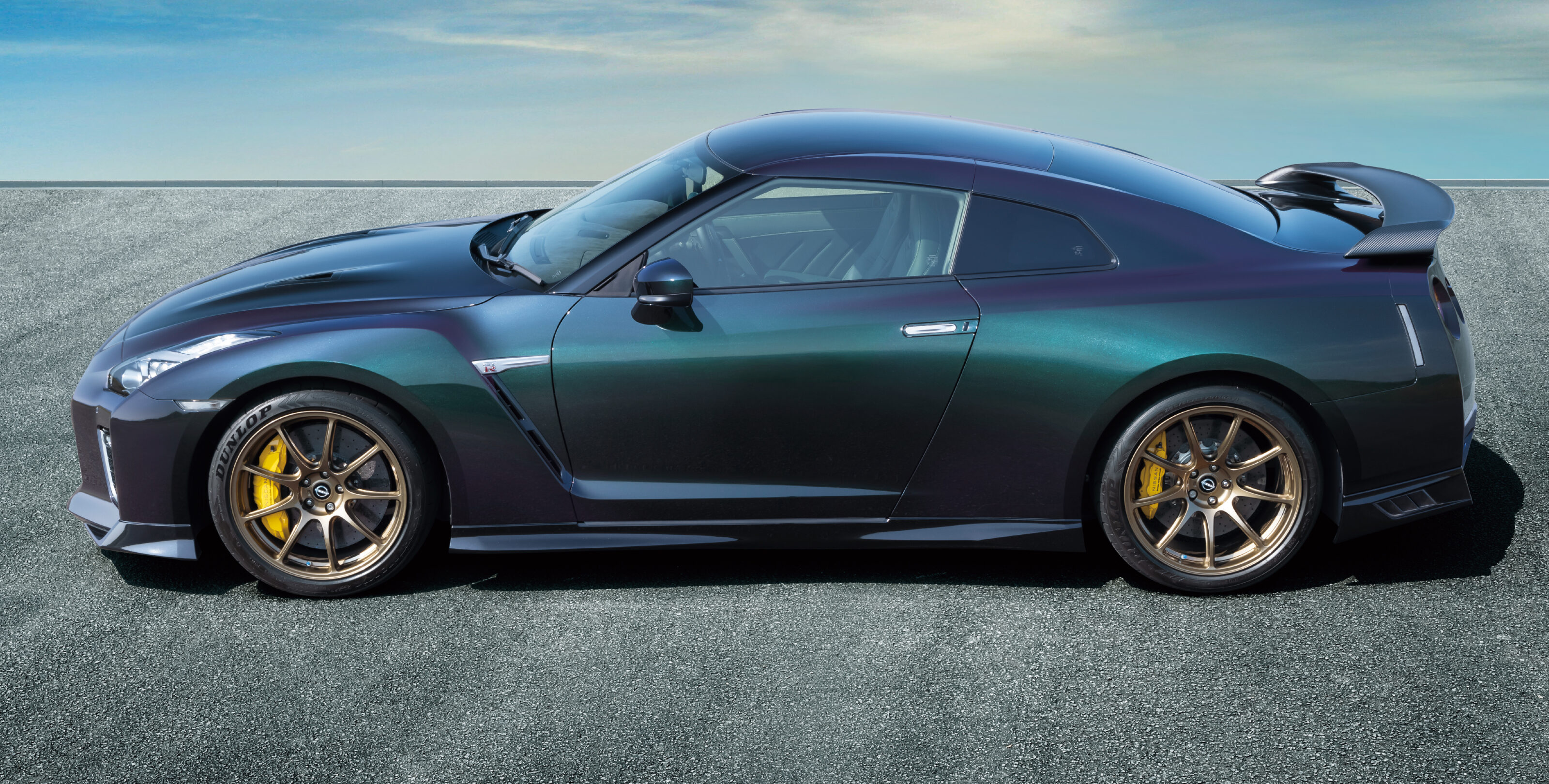
The biggest change to the two T-spec variants from the existing GT-R grades is the introduction of an exclusive carbon-ceramic brake package, limited engine cover, front and rear badging and a carbon-fibre rear spoiler.
Premium Edition T-spec specific upgrades include; a unique interior design, wider forged Rays alloy wheels in a bronze finish, and a revised suspension tune – while the Track Edition engineered by NISMO T-spec scores a carbon-fibre roof and boot lid.
GT-R fans will rejoice at two very special colours returning to the Nissan line-up, as each T-spec can be ordered in midnight purple or millennium jade – the iconic finishes featuring as options for the first time since the R34 Skyline GT-R.
With just 50 T-spec units expected to arrive in Australia, this allocation is more than double the number of sales for the GT-R locally this year, having shifted just 19 units from dealers until the end of August and a total of 50 across 2019 and 2020 combined.
According to reports, Nissan has previously confirmed the GT-R will not be imported to Australia after October 31 this year as the current generation model does not meet new side-impact crash test regulations (ADR 85), which are due to come into force from November 1.
Cars which don’t meet the new standard must be imported and certified for road use by that date, and registered by June 30, 2022 – making an Australian arrival for the latest GT-R necessary within the next six weeks.
In Japan, the GT-R Premium Edition T-spec will go on sale for ¥15,904,900 (AU$197,000), while the range-topping Track Edition engineered by NISMO T-spec starts at ¥17,881,600 (AU$221,600) before on-road costs.
The V12 engine is as synonymous with Ferrari as Rosso Corsa, being a mainstay of the Prancing Horse’s stable since the company’s first foray into road cars over 70 years ago.
However, tightening emissions regulations over the past decade have seen the V12’s lifecycle put on notice, with never ending threats of the iconic bent-12 soundtrack being relegated to make way for more efficient V8s and V6s.
According to Carscoops, the V12 may be thrown a lifeline – with Ferrari insiders claiming the next-generation engine will be turbocharged, providing the two-fold benefit of increased power as well as efficiency.
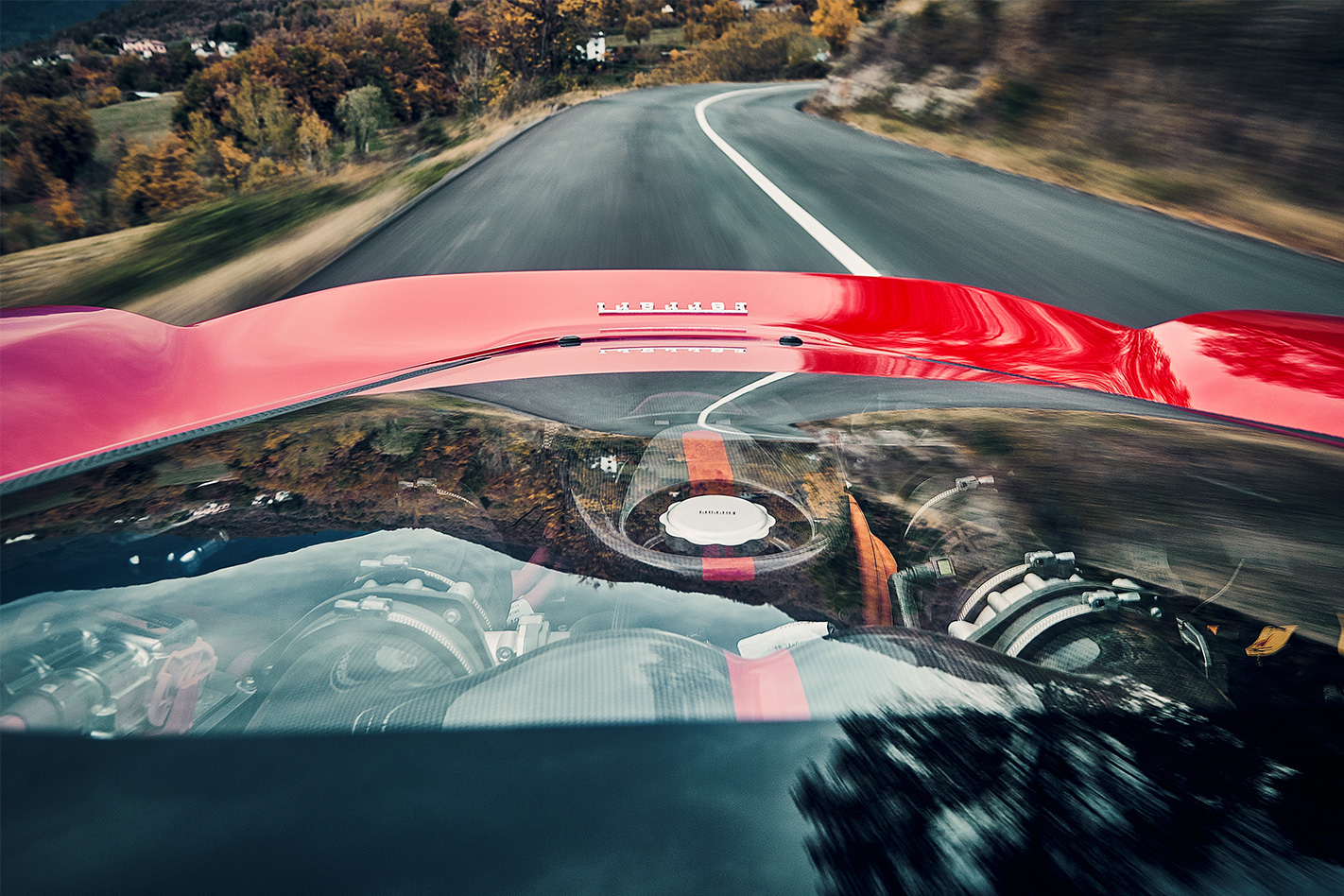
While it was initially tipped the next-gen V12 would by hybridised – in a similar vein to Lamborghini’s V12 plans – those inside Maranello believe the atmo engine will gain turbo assistance while also decreasing in capacity, dropping from the current 6.5-litre engine in the 812.
Some believe a turbo V12 could find itself in the Ferrari hypercar spied last week, potentially making it the quickest car to be tested at Fiorano yet, although this is all unconfirmed at this stage.
Despite the European Union pushing for a ban on internal combustion engined vehicle production by 2035, the Italian Government is understood to be fighting against the proposal – asking for exemptions to be provided to Ferrari and Lamborghini to protect them from regulations which target mainstream manufacturers.
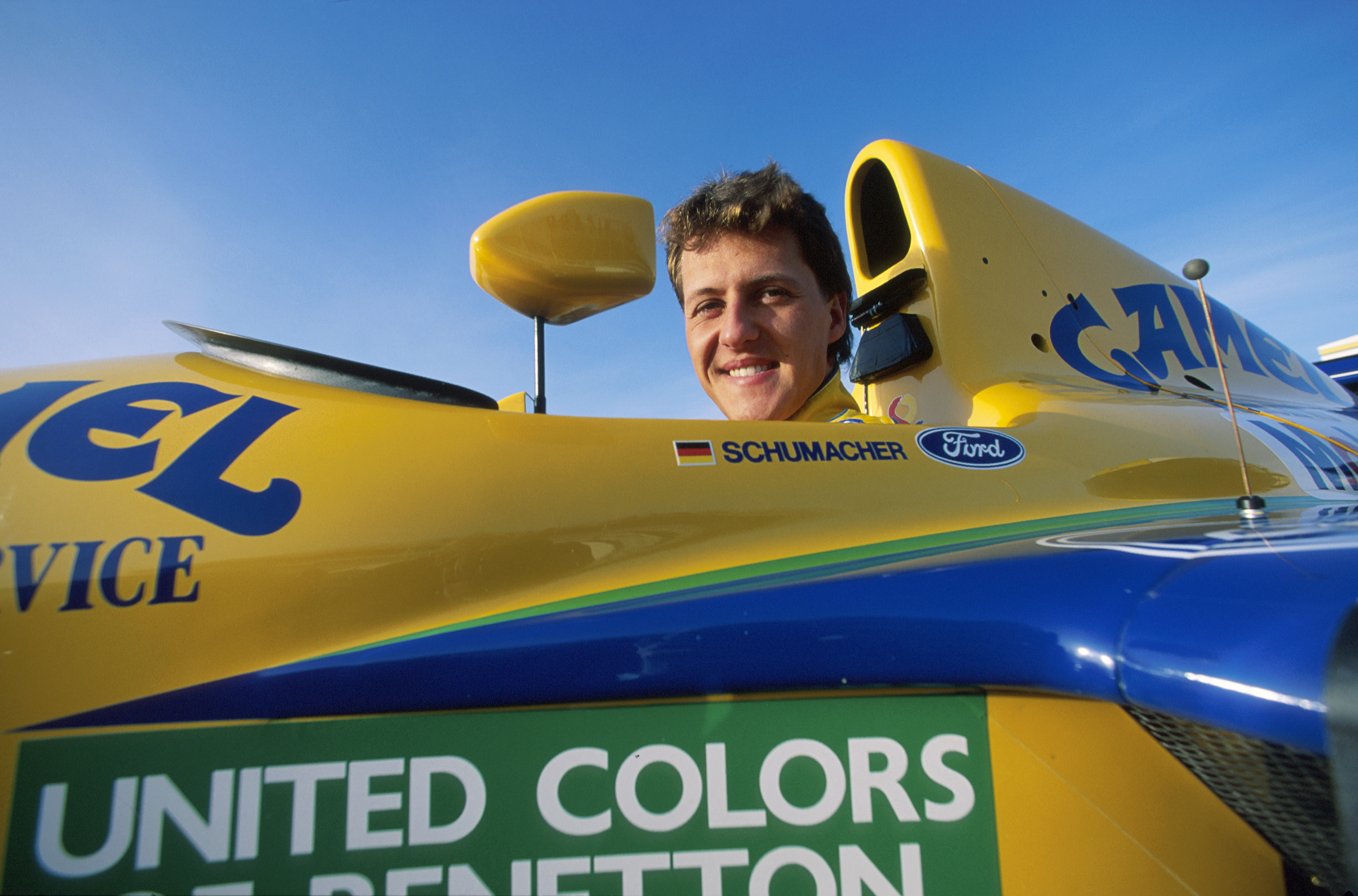
We all know the established narrative on Michael Schumacher: by and large a lovely bloke out of the car, unflinching bastard when behind the wheel. The skill of a documentary maker lies in teasing out the shades of grey, and in that regard Netflix’s feature length documentary, simply titled Schumacher falls a little short of greatness.
There are moments of course. Few of us would have suspected Schumacher of ever doubting himself, but according to his saint of a wife, Corinna, there were many times that Michael battled with the demons of self-doubt and, to a certain extent, paranoia and mistrust. But such was Schumacher’s determination to retain his privacy and his perceived shield of indomitability that his outward visage was that of an adamantine level of self-belief and, at times, arrogance.
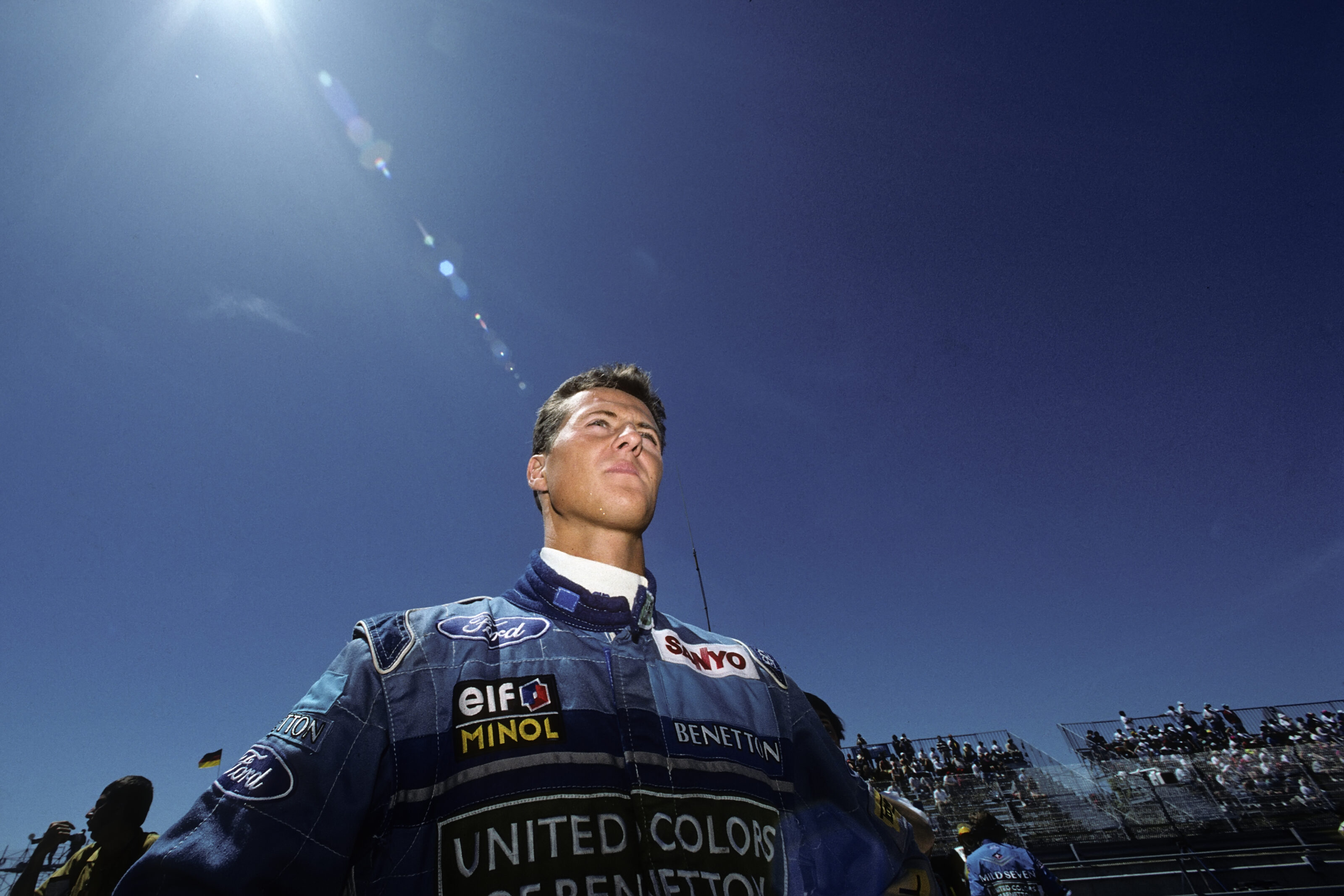
Co-directors Hanns-Bruno Kammertöns, Vanessa Nöcker, and Michael Wech seem to have found themselves pinned with a cleft stick, requiring the Schumacher family’s blessing and involvement for the project, delivering what Michael’s longtime manager Sabine Kehm described as “his family’s gift to their beloved husband and father.”
In that regard there was always going to be an element of the hagiography about Schumacher. It skips daintily over Michael’s sporting transgressions, with Ross Brawn offering a simple “he overstepped the mark that day” rebuke after Michael unsuccessfully tried to ram Jacques Villeneuve off the track at Jerez in 1997 to claim the title for himself.
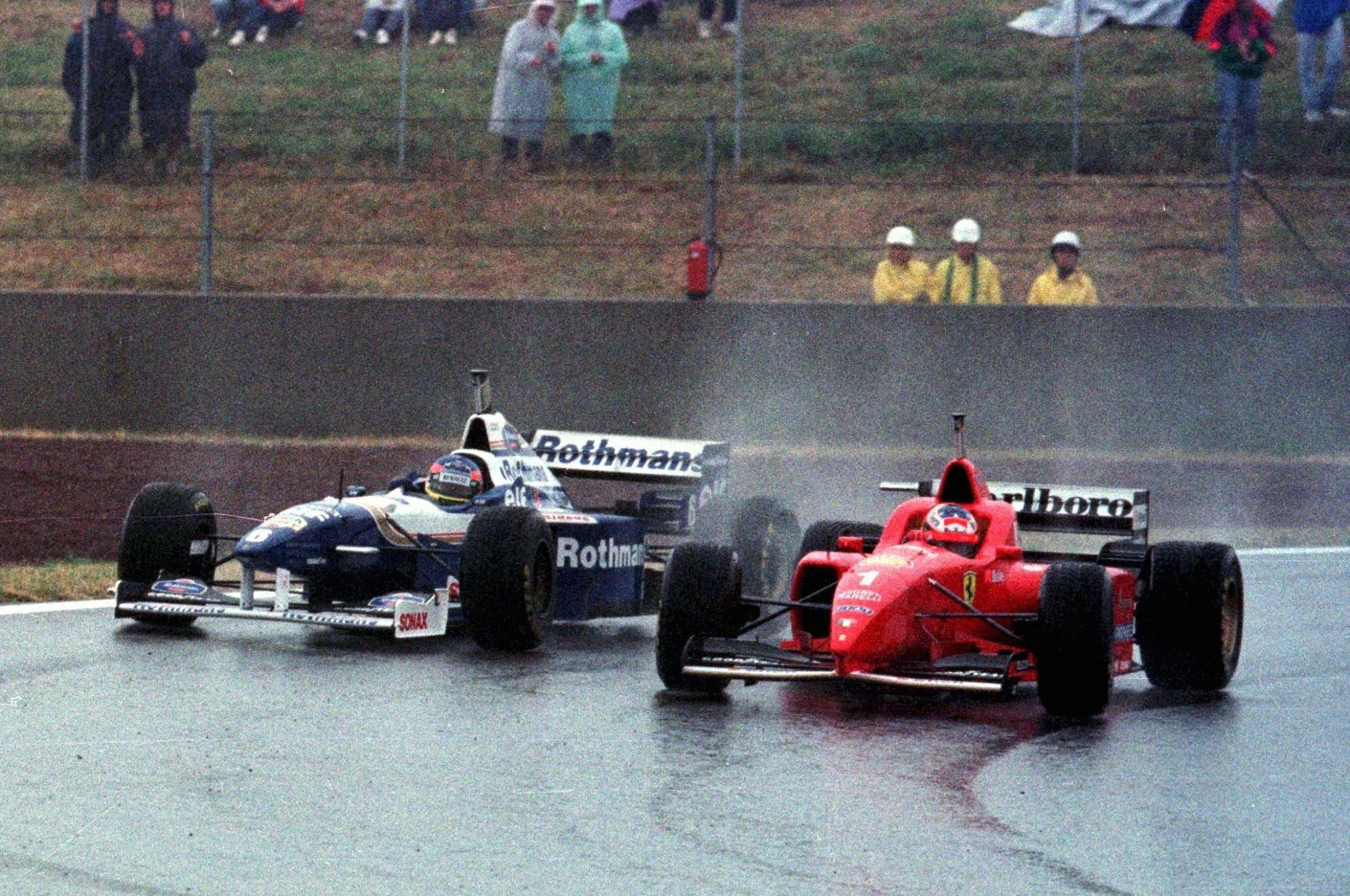
Schumacher’s own account of the actions are reduced to monotonous PR-speak, and more of the film seems to be devoted to images of Michael dancing at parties than the indelible incidents that marred his sporting legacy. The constant skipping of subtitle copy from the bottom to the top of the screen also proves wearing after a while.
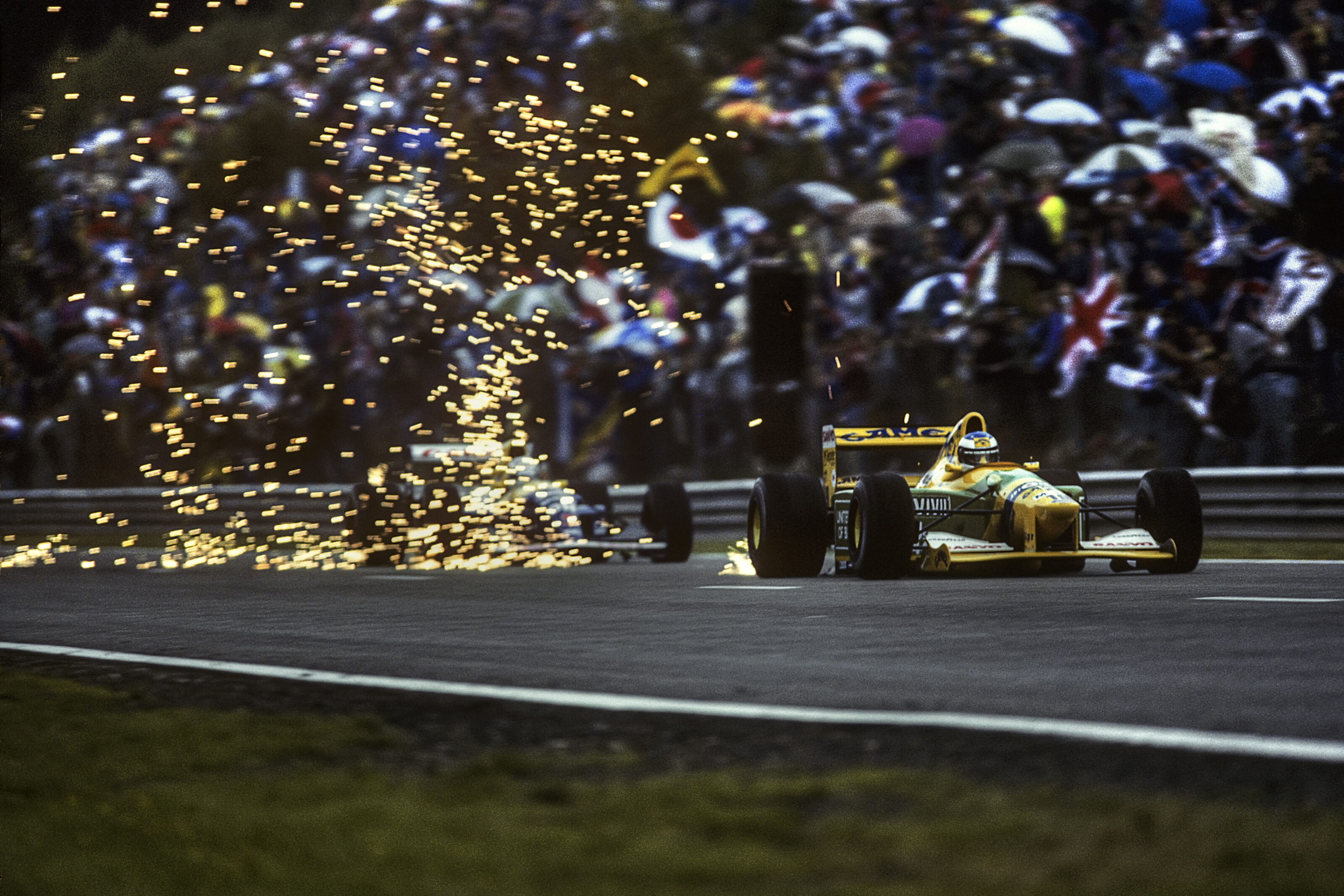
There was also little insight into what separated Schumacher as a driver from his peers. Yes, we know that he was phenomenally focused and hard working, but there was little to truly explain, either to the layman or the expert, what exactly he was doing behind the wheel of a Formula 1 car that elevated him above a very talented set of peers.
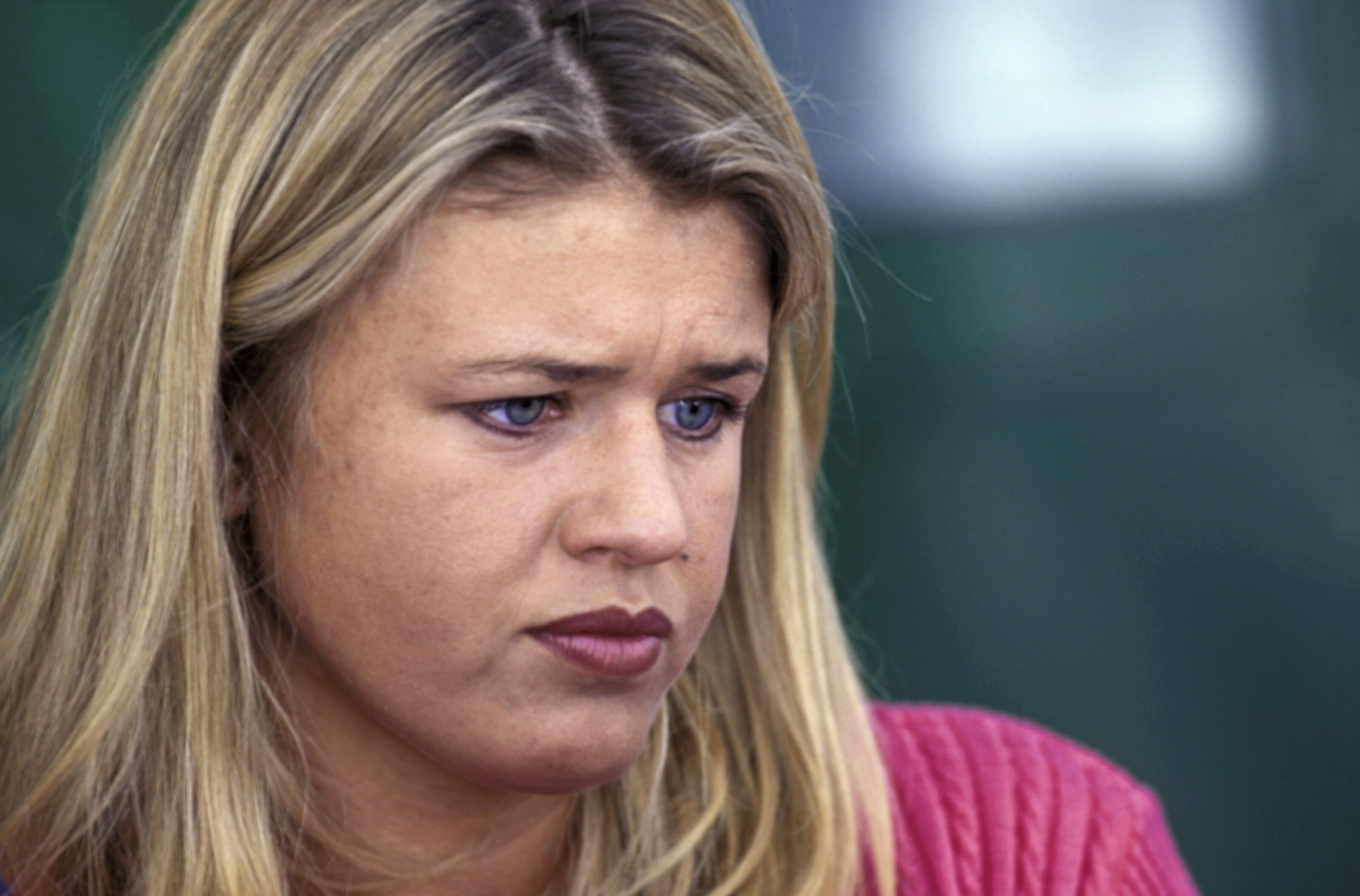
No stone was left unturned in the search for colourful characters to garnish the storyline. We get cameos from Bernie Ecclestone, Eddie Irvine, Flavio Briatore and Sebastian Vettel. More than anything else though, it’s the aching joy and pain in the eyes of wife Corinna and her children Gina and Mick that you can’t help but be moved by.
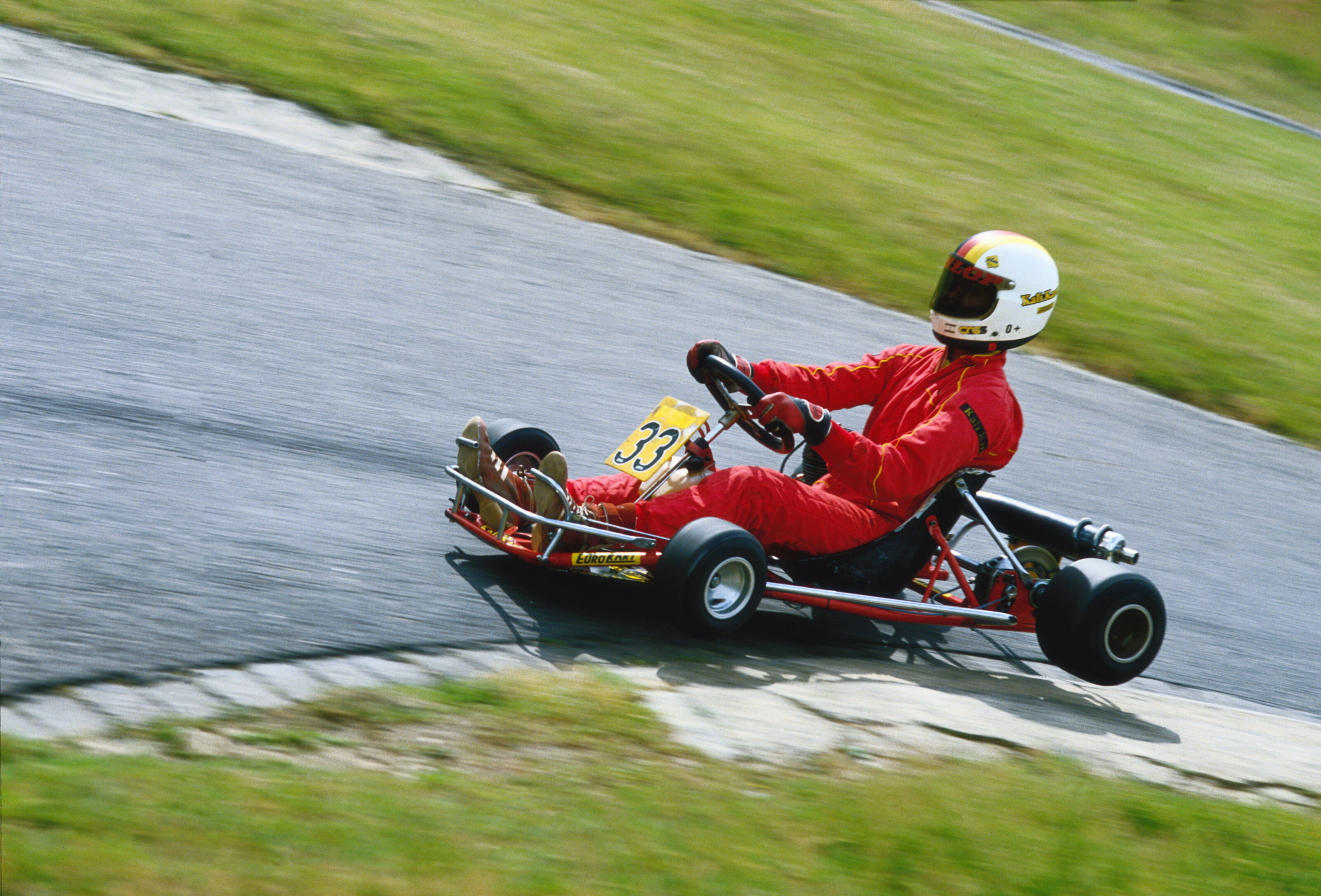
There’s some lovely footage of Schumacher’s early days, racing karts at Kerpen and the private footage of him goofing around at his family’s Norwegian ski lodge reveals a man far removed from the guarded character most knew. The child-like delight he derived from sky-diving in Dubai also showed a character who loved the adrenaline rush of speed.
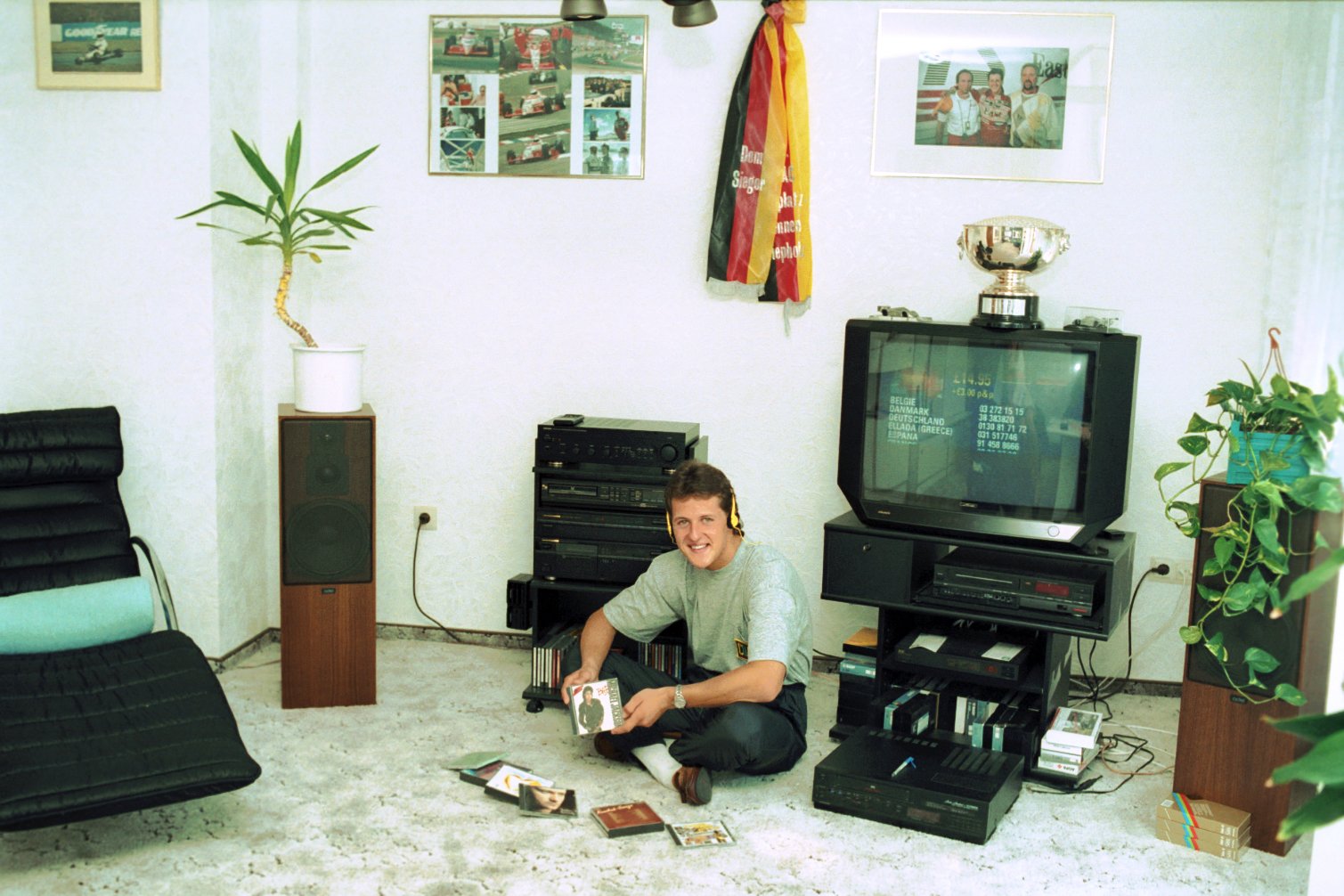
Just as your heart is lifted by the scenes of Michael and his family clearly loving life and considering where it would go post-F1, the scene cuts to the snow-capped mountains of the Trois Vallees in France and your own heart sinks. Because there is no happy ending to this story.
We quietly hope for any nugget of information that expands on what we know of Michael’s condition, while at the same time guiltily acknowledging that it’s not really our entitlement. It’s hard to even start to understand how young Mick Schumacher, who was skiing with his father at the time, saw this superman suddenly rendered so frail, so mortal. How does a child grow and prosper burdened with the weight of that cloak of secrecy?
Maybe it’s because the Schumachers are not people like us. Perhaps they can compartmentalise, focus and execute in a way that many of us will not and cannot comprehend.
So while morbid curiosity will remain unsated, Schumacher winds to its finale gently yet beautifully.
“I think dad and me, we would understand each other now in a different way now,” Mick says, yearning for a bond that has remained unfulfilled.
“Michael is here,” Corinna adds. “Different but here. He still shows me how strong he is every day.”
Different but here. And as long as he is still here, we wish him and his family all the best.
Keep fighting, Michael.
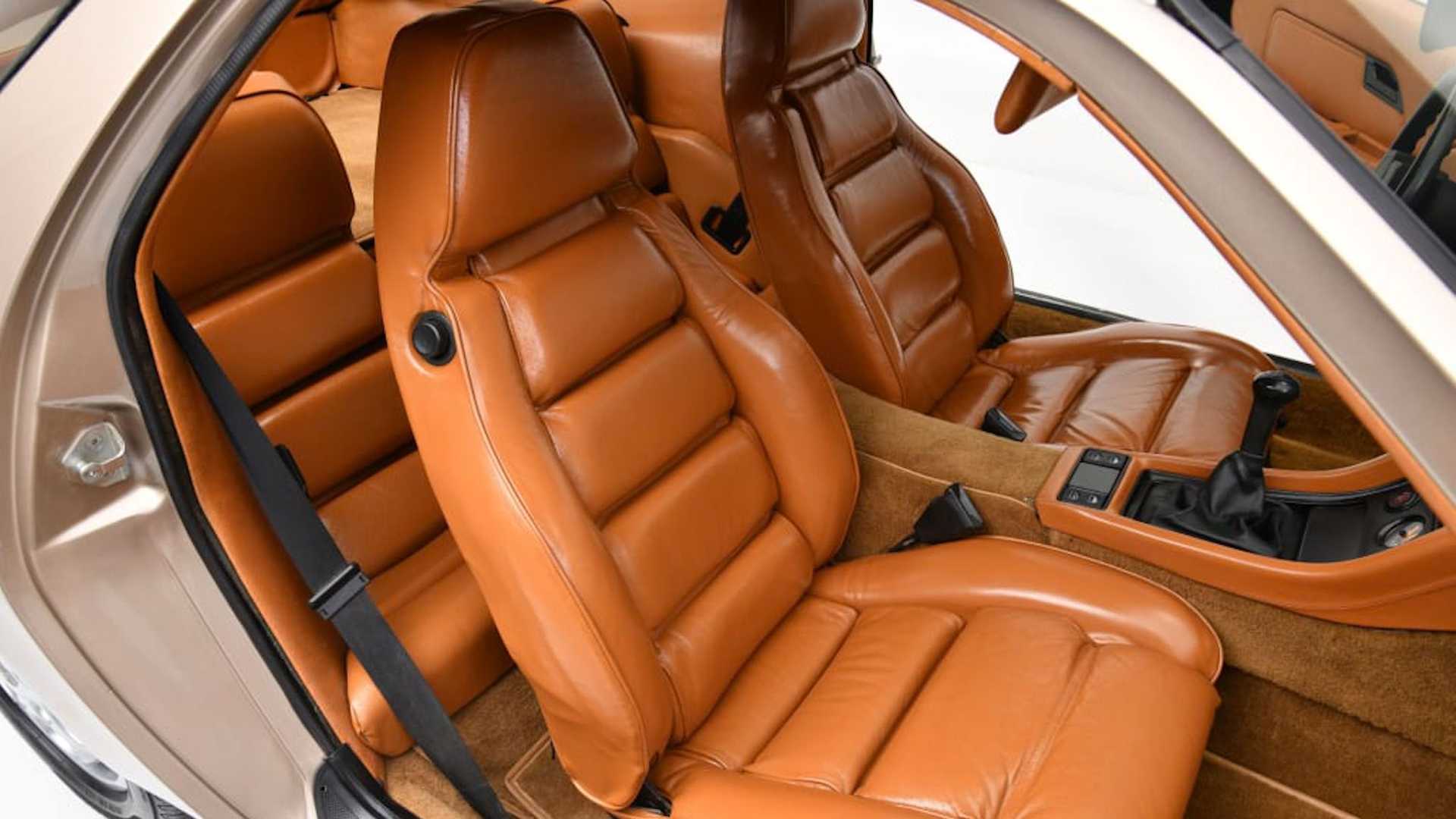
Almost 40 years after the release of ‘Risky Business’, one of the film’s iconic stars has set a new record amongst prestigious company.
This 1979 Porsche 928 was one of three cars used for filming in the movie, which led to Tom Cruise becoming a household name, playing a part in filming throughout 1983 where it was then moved to a climate controlled environment once production wrapped up.
At Barrett-Jackson’s Houston auctions, the 928 sold for an eye-watering US$1,980,000 (AU$2,737,140), which makes it the most expensive 928 ever – not a bad result given it was originally painted white before being resprayed gold for the movie.
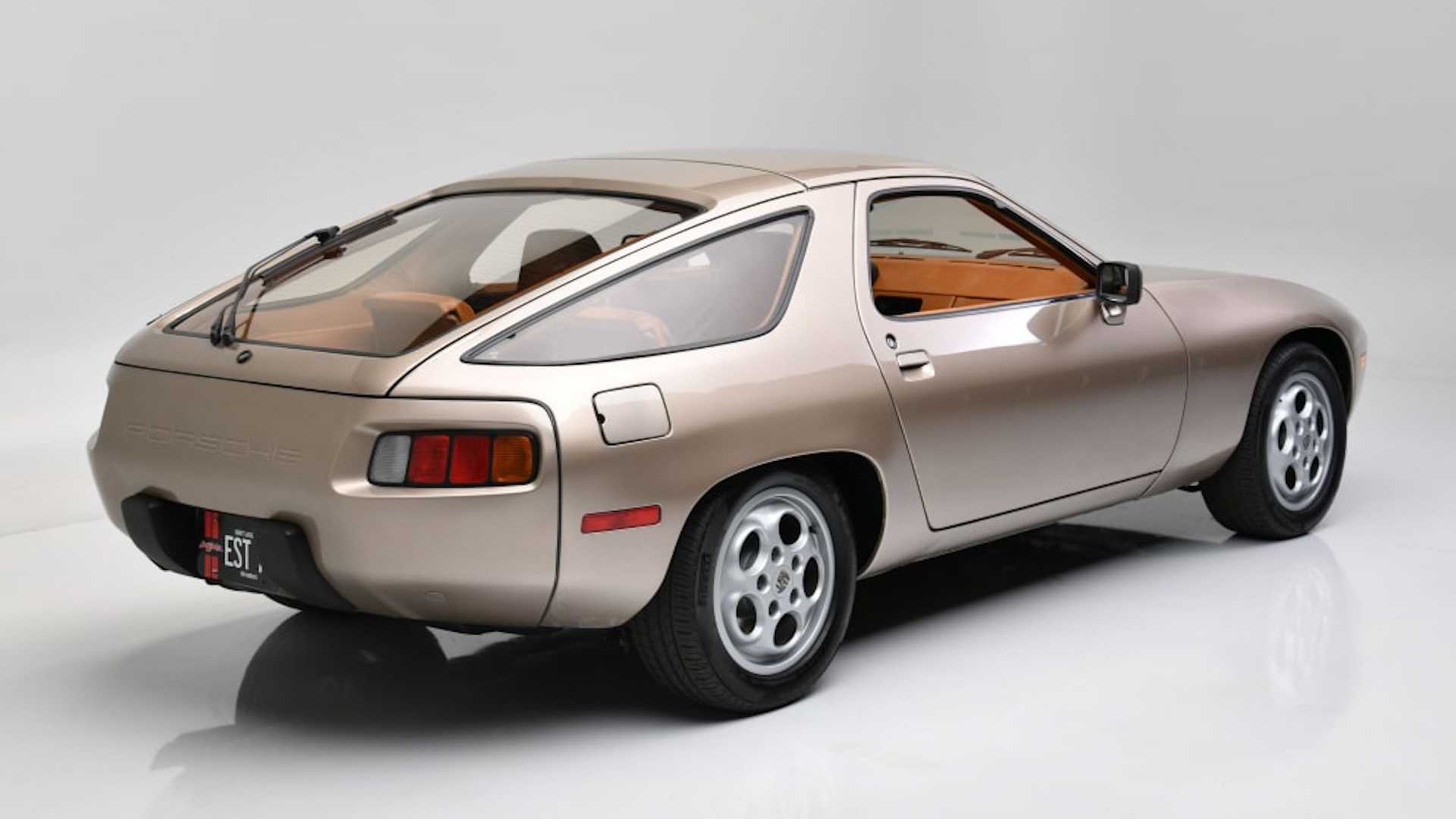
Included in the sale were photos of the car on set and signatures from members of the cast, plus the knowledge of this being the very vehicle in which producer Jon Avnet taught Cruise how to drive a manual.
Powered by a 4.5-litre V8 engine, the 928 was Porsche’s flagship front-engined grand tourer at the time of its release in 1977, remaining in production until 1995, selling just over 60,000 units during its run.
The most expensive car to be sold at this year’s Barrett-Jackson Houston auction, more than US$37.5m (AU$51.85m) was made during the course of the event – with 34 world-records being set and 100 per cent of cars sold.
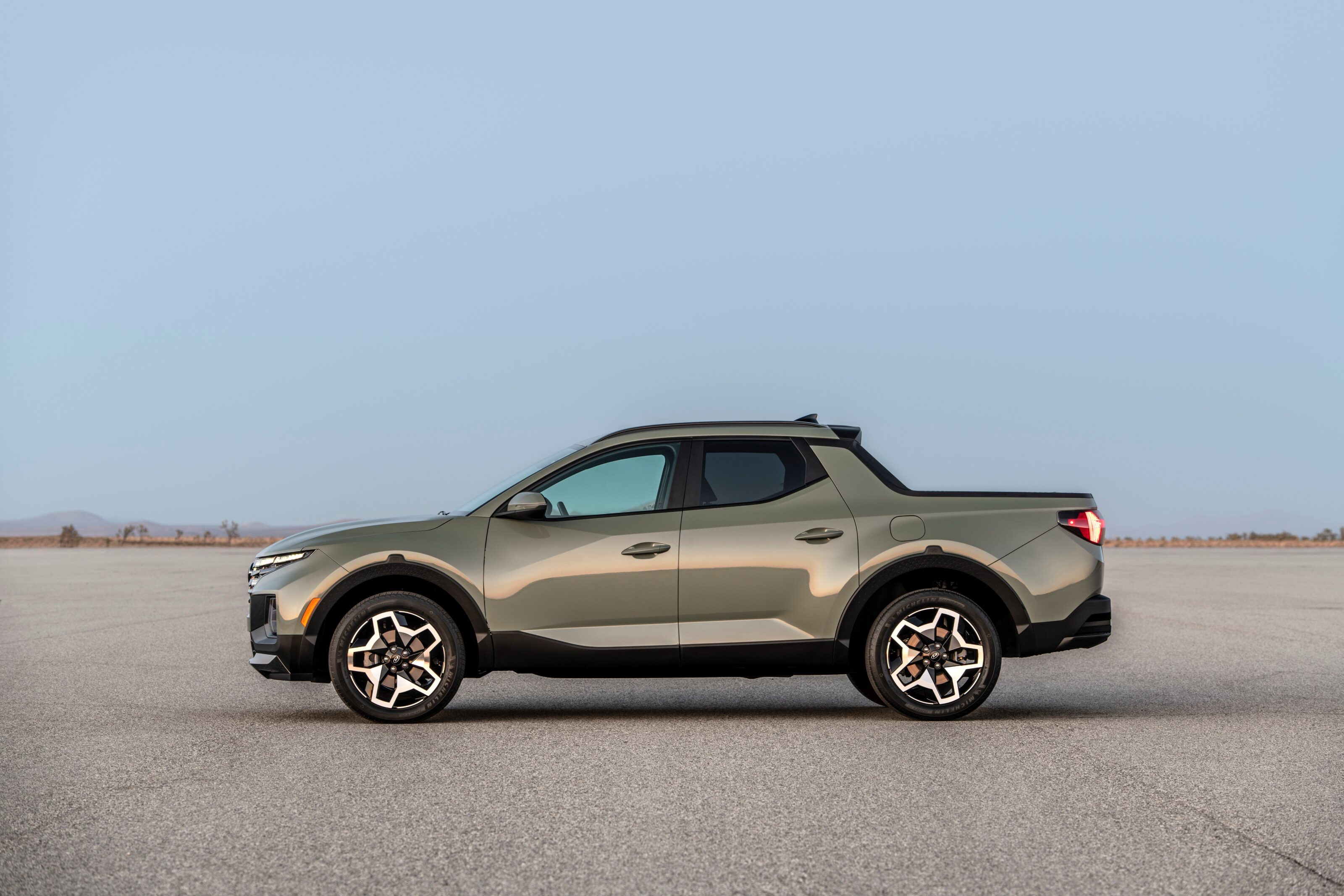
Hyundai is teasing us with the new Santa Cruz in all the wrong ways. It’s already on the ground in other parts of the world – and we’ve driven it – but they still haven’t even hinted whether this little ute may make the trek to Australia.
Careful eyes will immediately recognise that it shares much of its car-based DNA with the Tucson mid-size SUV, which offers some key advantages like proven infotainment and advanced driver-assist tech.
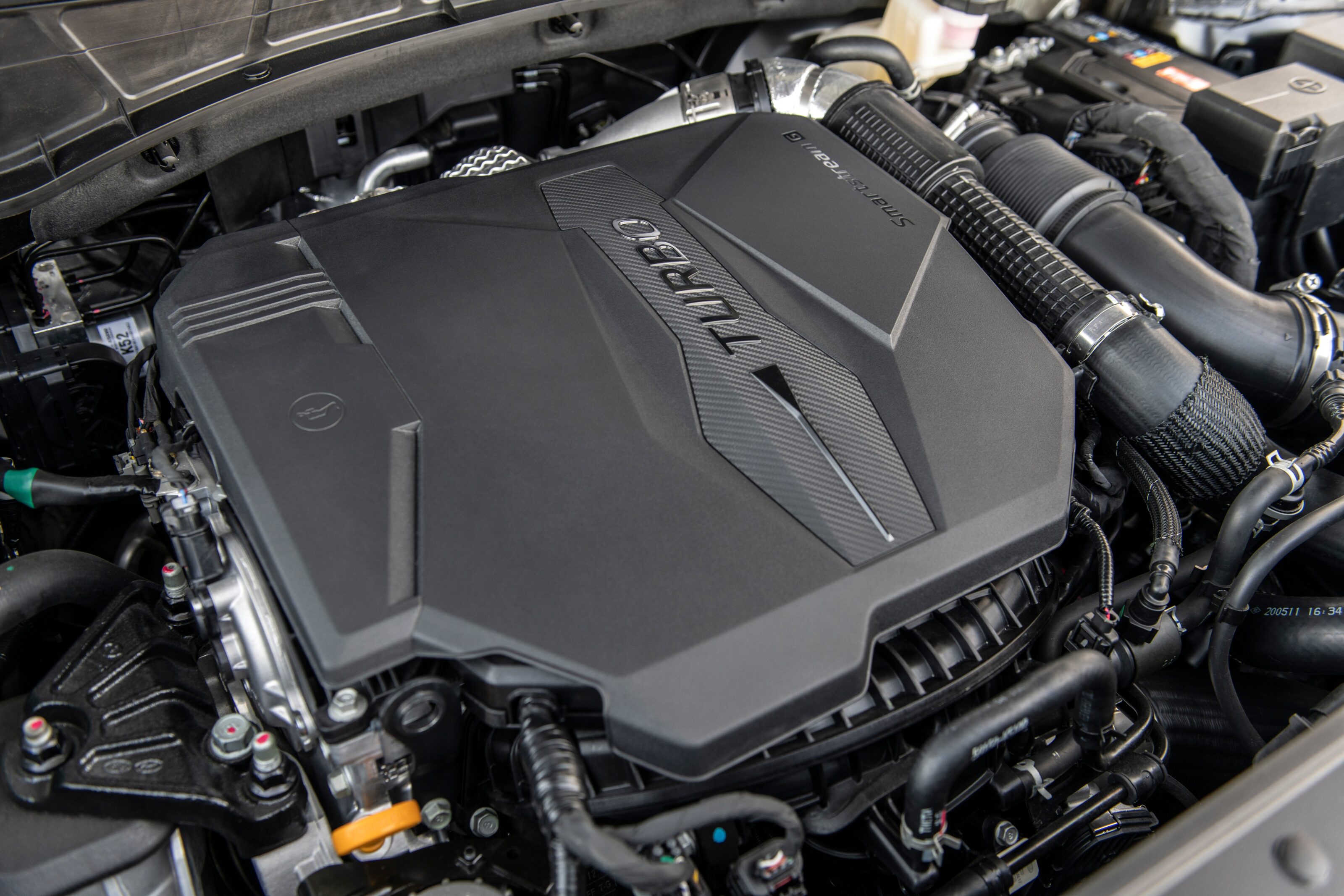
The Santa Cruz was designed in the United States primarily for North American drivers. It’s longer, wider, and taller than its SUV sibling, and for big power Hyundai has made the 2.5-litre turbocharged GDi petrol engine available.
In North America, the Santa Cruz has debuted in a class of one but will soon be joined by Ford’s Maverick, and if these two utes are any indication, that part of the world is about to experience a small truck renaissance.
The base engine is a 142kW, 2.5-litre, naturally aspirated GDi four-cylinder – but the optional turbo is the one to get. It produces 210kW at 5800rpm and an impressive 422 Nm from 1700 to 4000rpm.
Power gets to the ground through an eight-speed torque converter automatic in either front- or all-wheel-drive layouts with the naturally aspirated 2.5-litre.
The turbo engine is paired with Hyundai’s eight-speed wet dual-clutch automatic, exclusively with all-wheel drive. That’s a good thing, because asking a trucklet to put down 210kW and 422Nm through the front wheels might be a little optimistic. The all-wheel-drive system is Hyundai’s active, on-demand arrangement.
The turbo engine is paired to an eight-speed wet dual-clutch with all-wheel drive. That’s good because putting 210kW and 422Nm through the front might be a little optimistic
While the Santa Cruz’s wheelbase is 250mm longer than Tucson, the little ute uses a similar suspension configuration, based on MacPherson struts in the front and a multi-link design for the rear with self-levelling dampers. Power steering is via a column-mounted electrical assist unit.
325mm four-wheel discs are the name of the game and are vented at the front, solid for the rear, and clamped by single-piston calipers. The ABS uses four channels and sensors, which is helpful in all driving conditions, but particularly useful with the Santa Cruz’s downhill brake control system.
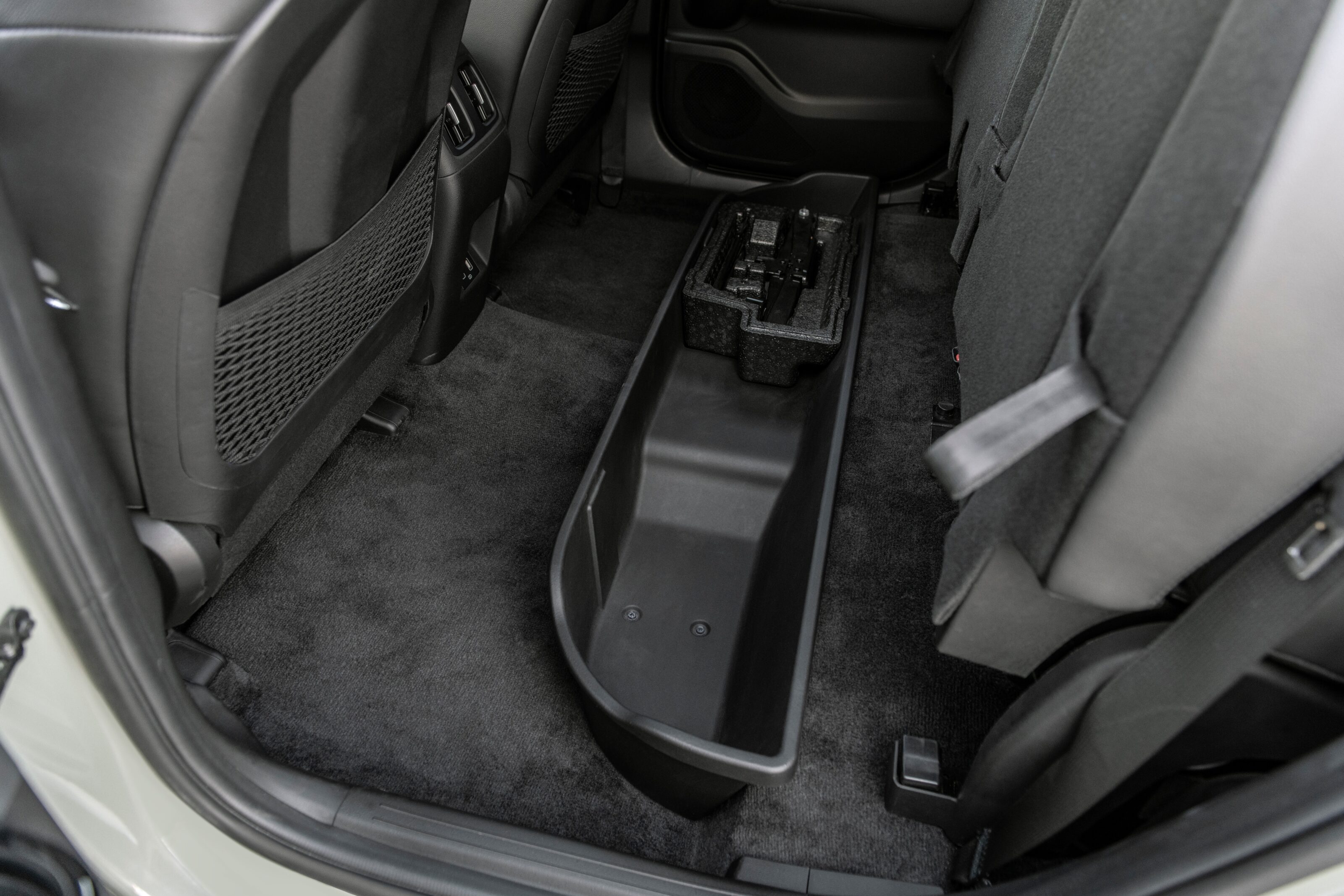
Interior design is a model of simplicity, with a completely flat cowl and the lack of an instrument binnacle creating an open and airy feel in the cabin. The second-row seats fold up to reveal storage underneath and the small rear window slides open for additional ventilation.
The Santa Cruz’s fascia is similar to the Tucson’s futuristic design, with different styling to suit the nature of the ute and fewer of those signature lights in the grille. Taking a cue from larger trucks, the rear bumper has an integrated step, which makes the climb up into the load bed a little easier.
The tub is primarily constructed of composites to keep weight down and is designed with utility in mind. The standard configuration includes tie-downs and cleats, and the tub is moulded to permit the addition of a half-height shelf if the Santa Cruz owner so desires.
Standard load area equipment includes an integrated retractable and lockable tonneau cover and LED lighting, as well as storage in the sides and floor of the bed. The in-floor storage compartment is sealed and has a drain plug, which supports that Aussie and American favourite pastime of tailgating at outdoor events.
There is also a 115-volt power outlet in the back of the bed. Accessories available through Hyundai dealers include everything that skiers, snowboarders and cyclists could wish for.

The front-drive Santa Cruz has a maximum towing capacity of 1588 kilograms, while the turbo all-wheel-drive models can tow up to 2268kg. While the tow hitch is a dealer-installed option, trailer sway control is a standard feature.
It’s worth noting that the Santa Cruz is 40mm wider than a Tucson and that 250mm of extra wheelbase combines with the tub to make it 340mm longer than its SUV sibling.
Given its light off-roading intentions, it also has 20mm greater ground clearance. The tub itself measures 1230mm in length, 1369mm in width exclusive of the wheel wells, and 488mm in height.
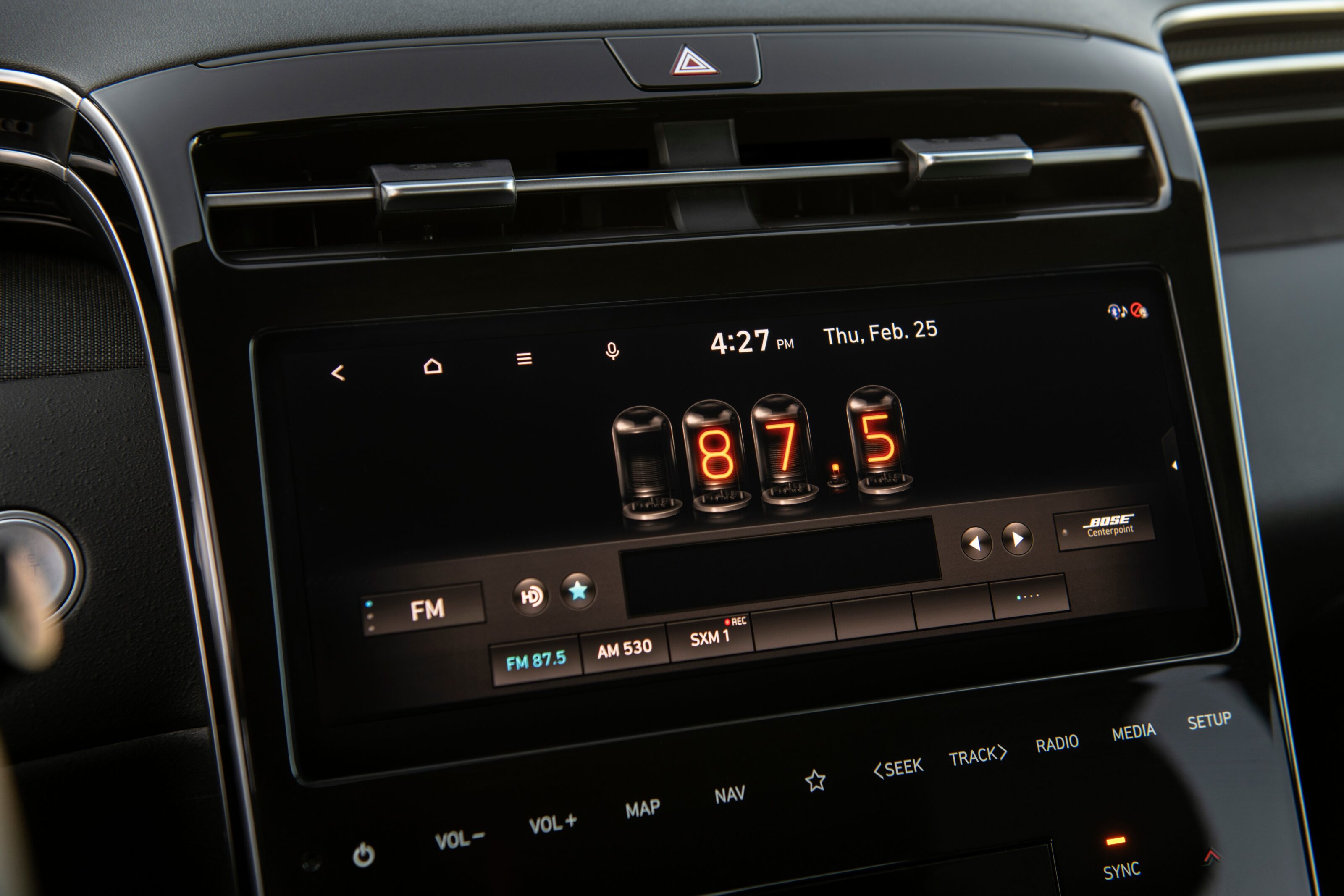
Lower trims make do with an 8.0-inch touchscreen for radio and audio control, while top trims enjoy a wide, 10.25-inch screen that fronts Hyundai’s latest infotainment tech including sat-nav with real-time traffic data. Wired and wireless Apple CarPlay and Android Auto are standard on all models, and wireless phone charging is available in the top trims.
Like the Tucson, Santa Cruz is available with a comprehensive range of driver-assist safety systems, including front collision warning, lane-keeping and adaptive cruise control, as well as the company’s semi-autonomous Highway Driving Assist.
Ergonomically, they’ve made the driver interface comfortable and effective. The driver’s seat has the right amount of support for longer drives and modest bolstering that suits the character of this little ute.
The seat has basic adjustments and with the adjustable steering column, a wide range of drivers are comfortable here.
Ergonomically, the driver’s seat has the right amount of support for longer drives and modest bolstering that suits the character of this little ute.
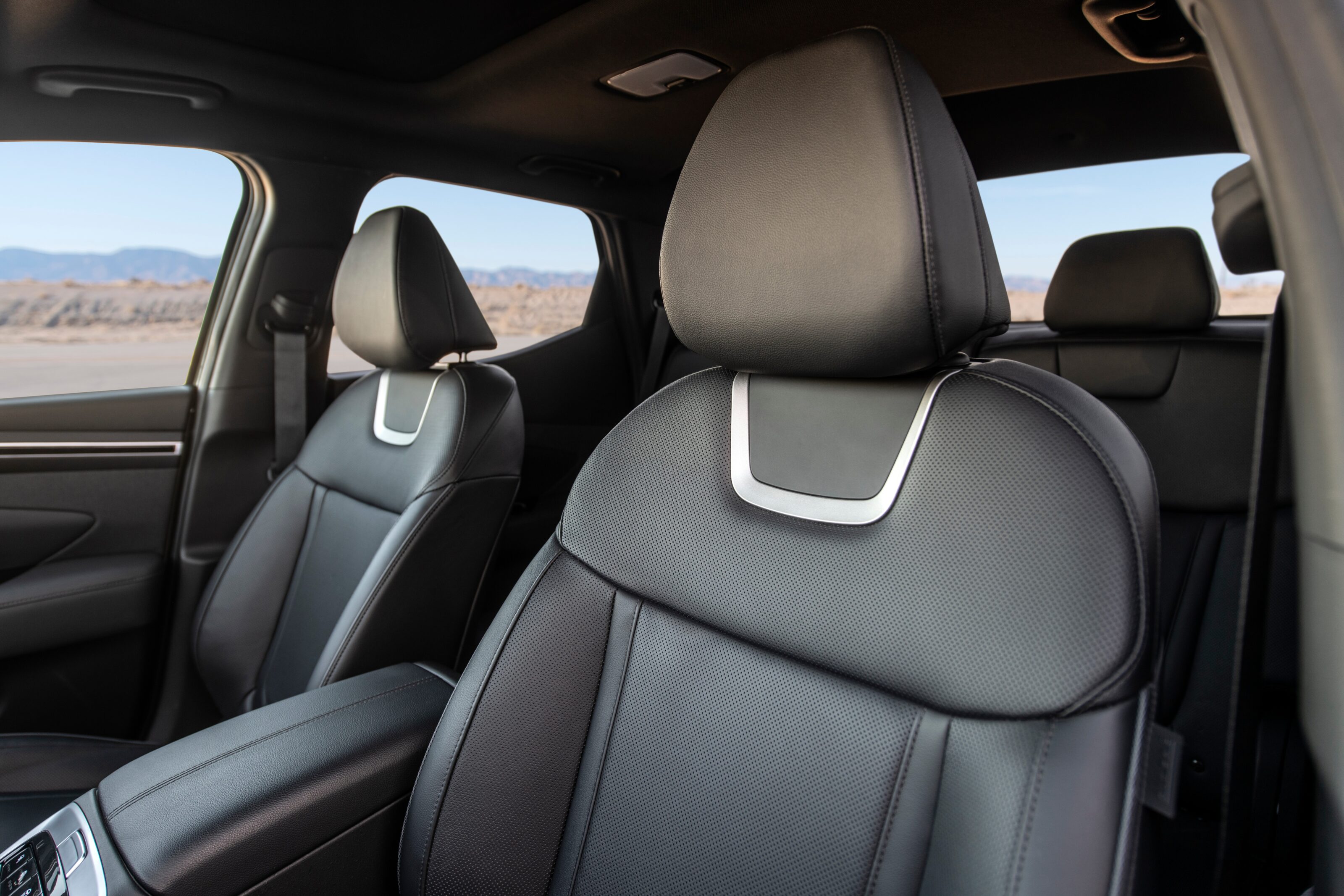
The top Ultimate AWD includes front seat cooling and heating, which made our 600km round trip comfortable for both driver and passenger. The hip point of the seat seems perfect, not too high, not too low, which is one of the reasons so many people buy SUVs in the first place.
Our seven-month-old doggo enjoyed the second row to himself, but human beings taller than 175cm will find themselves pressed for space. Think comfortable, but cramped.
The steering wheel is designed to encourage drivers to have their hands at 9-and-3 and the secondary controls are laid out logically, as are the rest of the secondary interior controls, save for the lack of a volume knob of the premium infotainment system.
The low, flat cowl makes for generous forward visibility, but your vision is limited out the rearview mirror simply due to the shape of the cabin’s rear window.
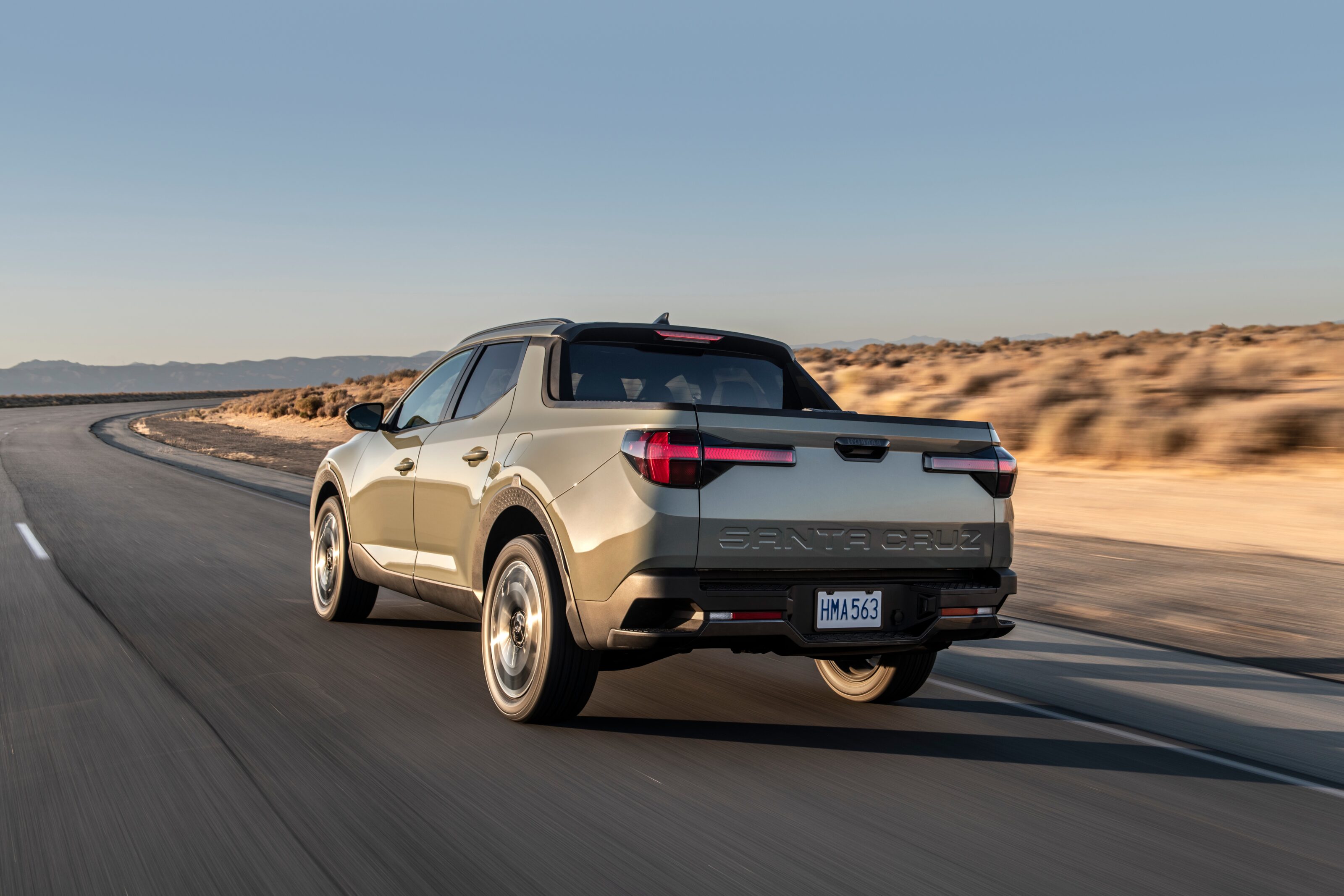
The rolltop tonneau bed cover is a snap to use – release the lever and it rolls to stow safely in its carrier. Hyundai has also conveniently included a strap to retrieve and close the cover.
Locking the cover closed is as simple as turning the under-mounted lock switch and the tailgate is damped so that it doesn’t slam down into its open position.
Given the dimensions of the bed, its utility is limited for those of us who travel with our bicycles or kayaks, which demands the installation of some dealer-fit accessories, but the bed’s height makes loading easy, as does climbing into the bed with the integrated bumper step.
Given the bed’s dimensions, its utility is limited for those who travel with our bicycles or kayaks, which demands some dealer-fit accessories.

With the 2.5L turbo motor and eight-speed dual clutch transmission, acceleration is brisk, with 0-100km/h possible in seven seconds, although with peak torque available not far from idle up to 4000rpm, you’ve got plenty of shove available everywhere in the engine’s normal operating range.
While this engine and gearbox combination is a little punchy in front-drive applications like the Sonata N-Line, it’s near perfection in the all-wheel drive Santa Cruz.
Torque is transferred to the rear axle imperceptibly and instantaneously, eliminating naughty front-drive vices like torque steer or inadvertent wheelspin. However, these eight-speed wet dual clutch gearboxes that Hyundai are producing do seem to exhibit one consistent and irritating peeve, which is a fraction of a second delay when shifting from drive into reverse.
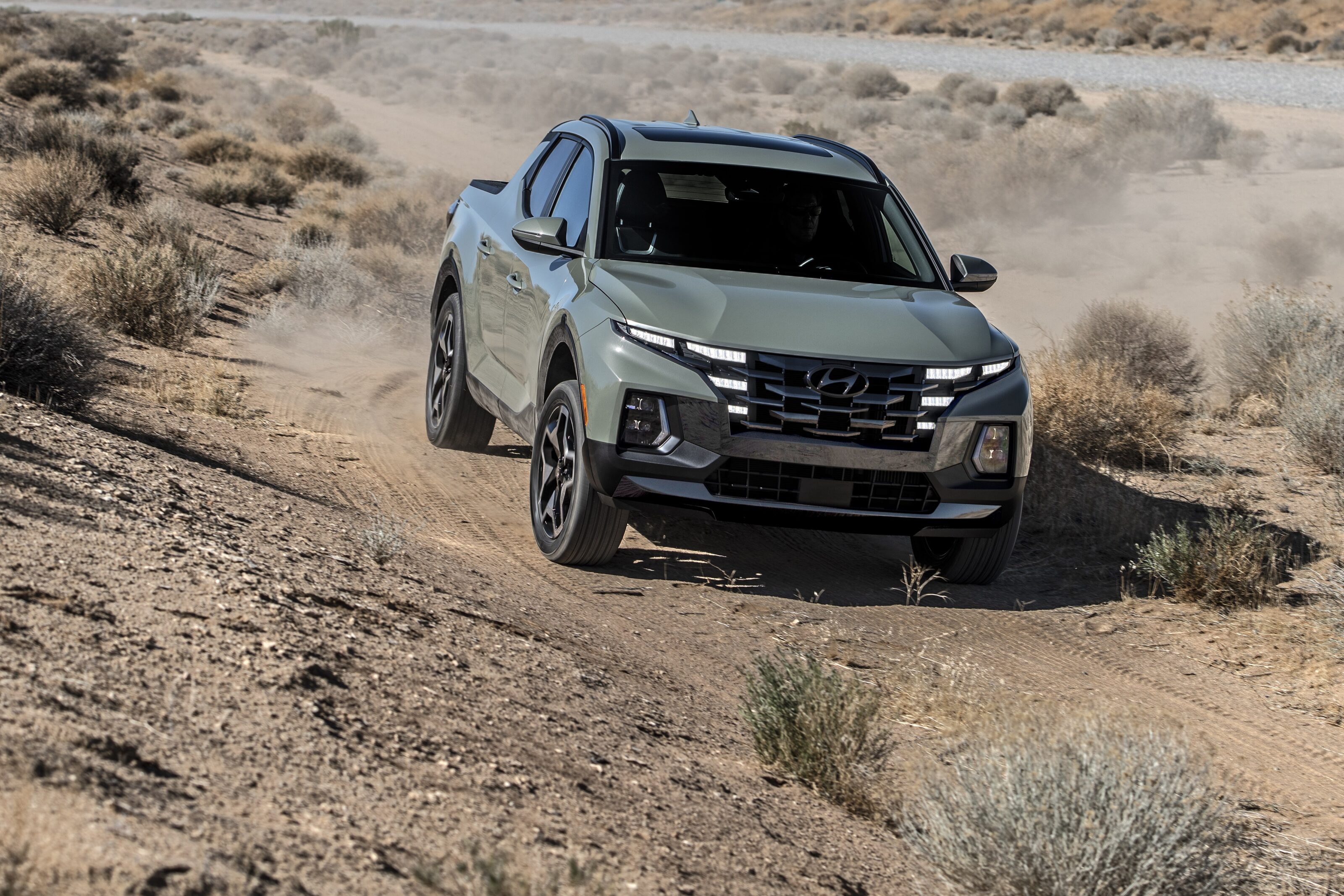
Hyundai’s advanced driver assist system, the Highway Driving Assistant, is impeccable in other applications like Sonata N-Line and even Genesis luxe sedans and SUVs, but in this pre-production Santa Cruz, the system’s lane-keep function was nervous and required frequent adjustments to maintain the ute’s line within its lane.
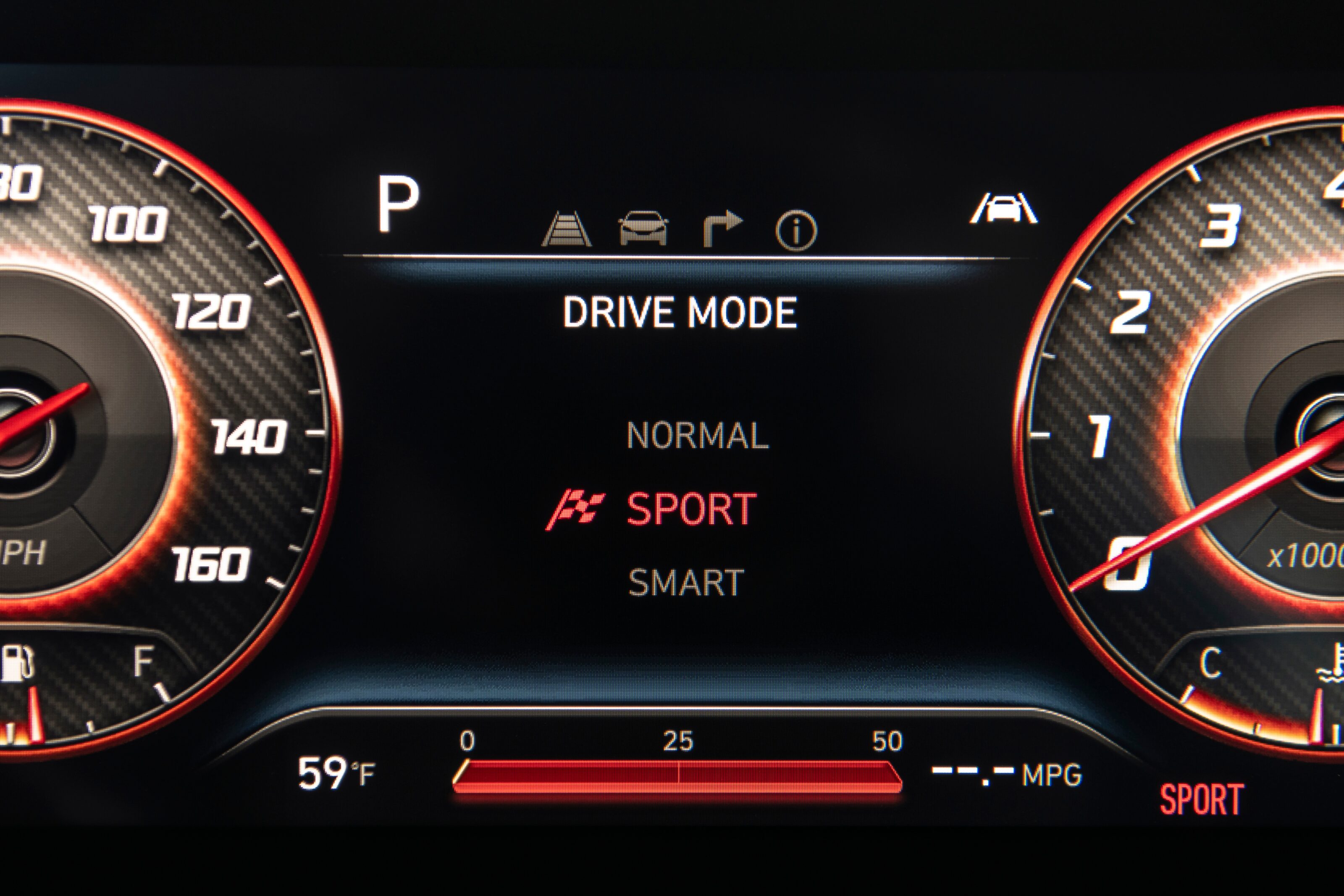
The drive modes are calibrated with some distinction from one another and while Sport is the most aggressive, it offers genuinely more sporting throttle and transmission settings without being over the top.
Steering feel is limited, as you’d expect from a little ute, though it is direct, precise and well-weighted. But where the Santa Cruz shines is with its ride and handling.
The driver has tremendous confidence while cornering and the suspension has all of the right moves. It soaks up bumps with excellent body and wheel control, corners relatively flat, and has limited dive under moderate to heavy braking. It’s an impressive first attempt for a little ute.
Brake feel, modulation and control is excellent, lending more confidence to the driver, even with a full complement of humans, one doggo, and their assorted luggage on board. Towing two thousand kilos might tax these brakes, but that calls for a subsequent test.
Steering feel is limited, as you’d expect from a little ute, though it’s direct, precise and well-weighted – but where the Santa Cruz shines is with its ride and handling.
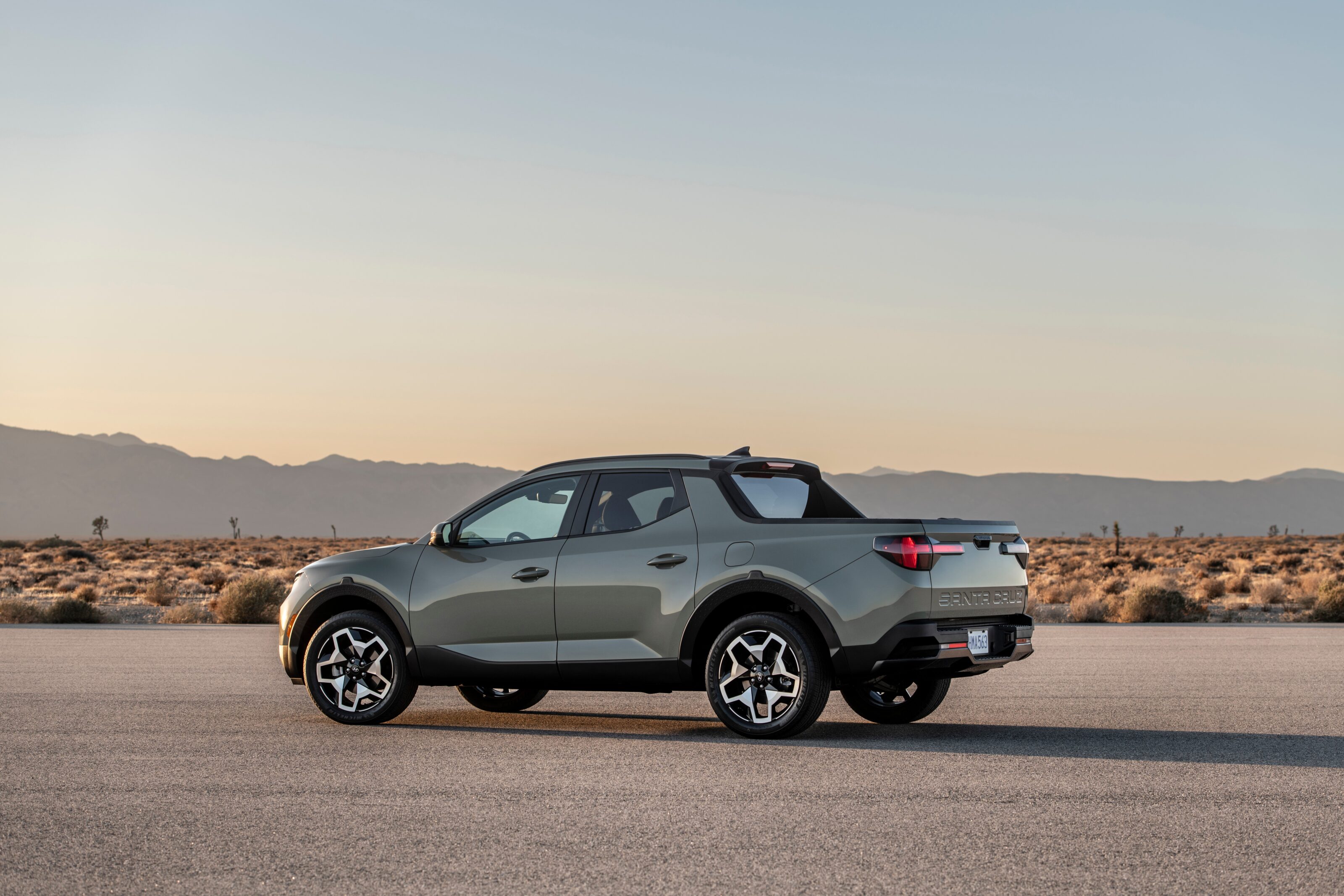
The Santa Cruz is so new in North America that it attracted attention similar to that of a supercar and passersby had questions at nearly every stop.
It’s distinctive in both design and scale, relative to conventional pickups, which puts it in a category of one for the time being, at least.
It’s remarkably satisfying to drive and live with, but being smaller than current offerings like Ranger, HiLux, and Triton, it has a clearly defined use case. We think Australian drivers would enjoy it, but the real question is does Hyundai? Only time will tell.
2022 Hyundai Santa Cruz Unlimited specifications
| Body | 4-door dual-cab ute |
|---|---|
| Drive | all-wheel |
| Engine | 2497cc I4, DOHC, 16v, turbocharged |
| Bore/Stroke | 85.5 x 101.5mm |
| Compression | 10.5:1 |
| Power | 210kW @ 5800rpm |
| Torque | 422Nm @ 1700rpm u2013 4000rpm |
| Transmission | 8-speed wet dual-clutch |
| 0-100km/h | 7.0sec (estimated) |
| Fuel consumption | 10.6L/100km (combined/claimed) |
| Weight | 1870kg |
| Power/weight | 112kW/tonne |
| Suspension | MacPherson struts, anti-roll bar (f);Multi-link, anti-roll bar (r) |
| L/W/h | 4970/1905/1694mm |
| Wheelbase | 3005mm |
| Tracks | 1643mm (f); 1648mm (r) |
| Steering | Electrically assisted rack-and-pinion |
| Brakes | 325mm ventilated discs, single-piston calipers (f); 325mm solid discs, single-piston calipers (r) |
| Wheels | 20 x 7.5-inch (f/r) |
| Tyres | 245/50R20 (f/r) Michelin Primacy LTX |
| Price | N/A |
Snapshot
- 2022 Hyundai Ioniq 5 goes on sale September 2021
- Launch Edition with two powertrain options available
- Priced from $71,900 plus on-road costs
The 2022 Hyundai Ioniq 5 has been detailed for Australia, with the all-electric model set to go on sale this month.
Hyundai says only one ‘launch edition’ variant of the Ioniq 5 will be available initially, though buyers will have the option to choose either a single electric motor sending 160kW/350Nm to the rear wheels, or a dual-motor version with 225kW/605Nm and all-wheel drive.
Pricing for the Ioniq 5 begins at $71,900 before on-road costs for the rear-driven model, with the higher-powered version costing $75,900 plus on-road costs.
Both powertrains utilise a 72.6kWh Lithium-ion polymer battery, with 451km and 430km of driving range available from a single charge respectively.
An entry-level 58kWh version with rear-wheel drive is expected to be added at a later date, with Elite and Limited trims also a possibility in the future.
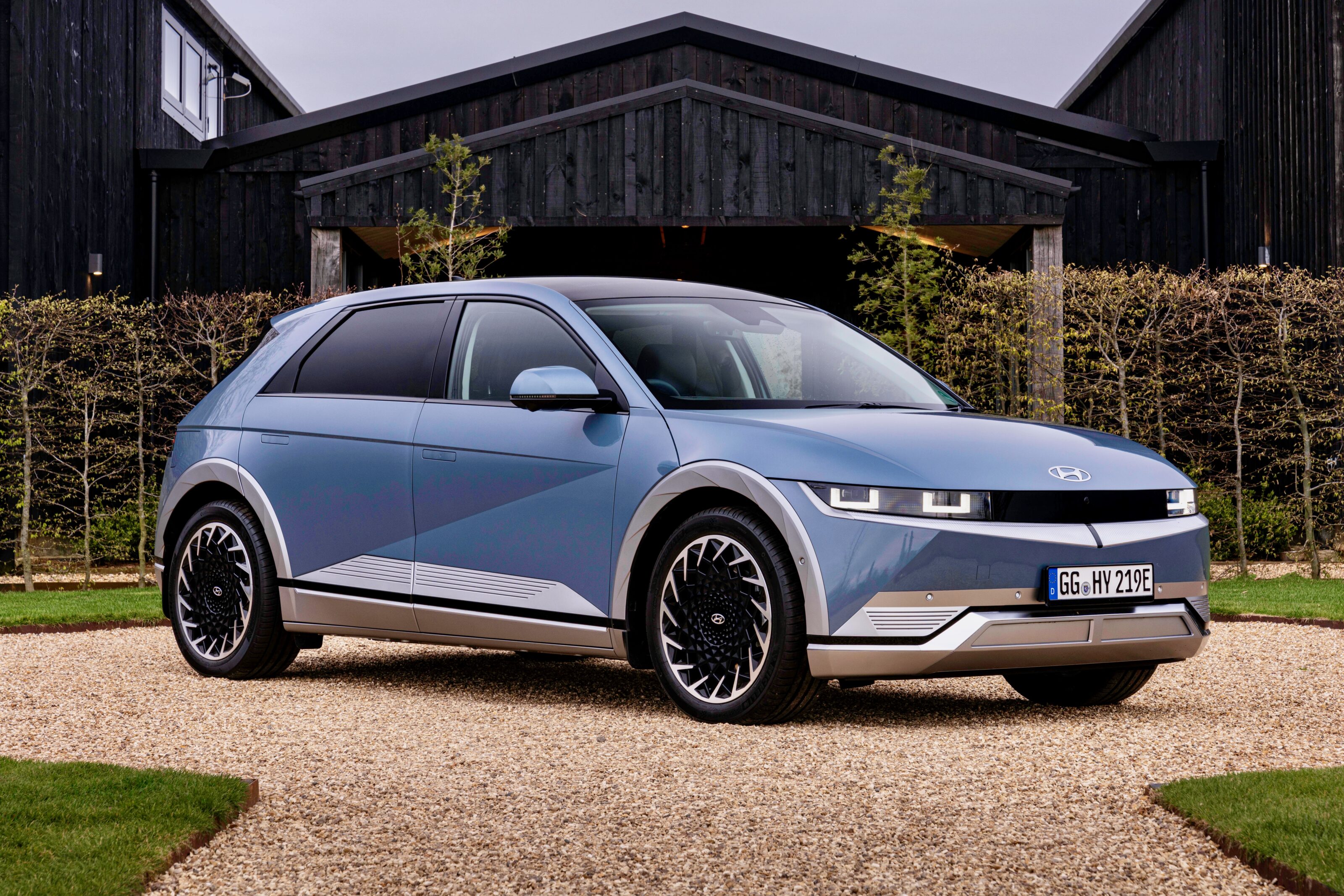
The Korean carmaker claims a 0-100km/h sprint time of 7.4 seconds for the rear-wheel-drive version, dropping to 5.2 seconds with the all-wheel drive Ioniq 5.
Using 400-volt and 800-volt capabilities, charging from 10 to 80 per cent takes just over six hours when using a 10.5kW standard AC charger, dropping to around an hour when a 350kW DC fast charger is used – allowing more than 340km of driving range.
When a 350kW ultra-fast DC charger is used, Hyundai says the vehicle can be recharged to 80 per cent (from 10 per cent) in just 17 minutes and 16 seconds.
The Ioniq 5 also has vehicle-to-Load (V2L) functionality, allowing owners to power electronic devices using a standard domestic plug, delivering up to 3.6kW of electricity to run power tools and camping equipment.
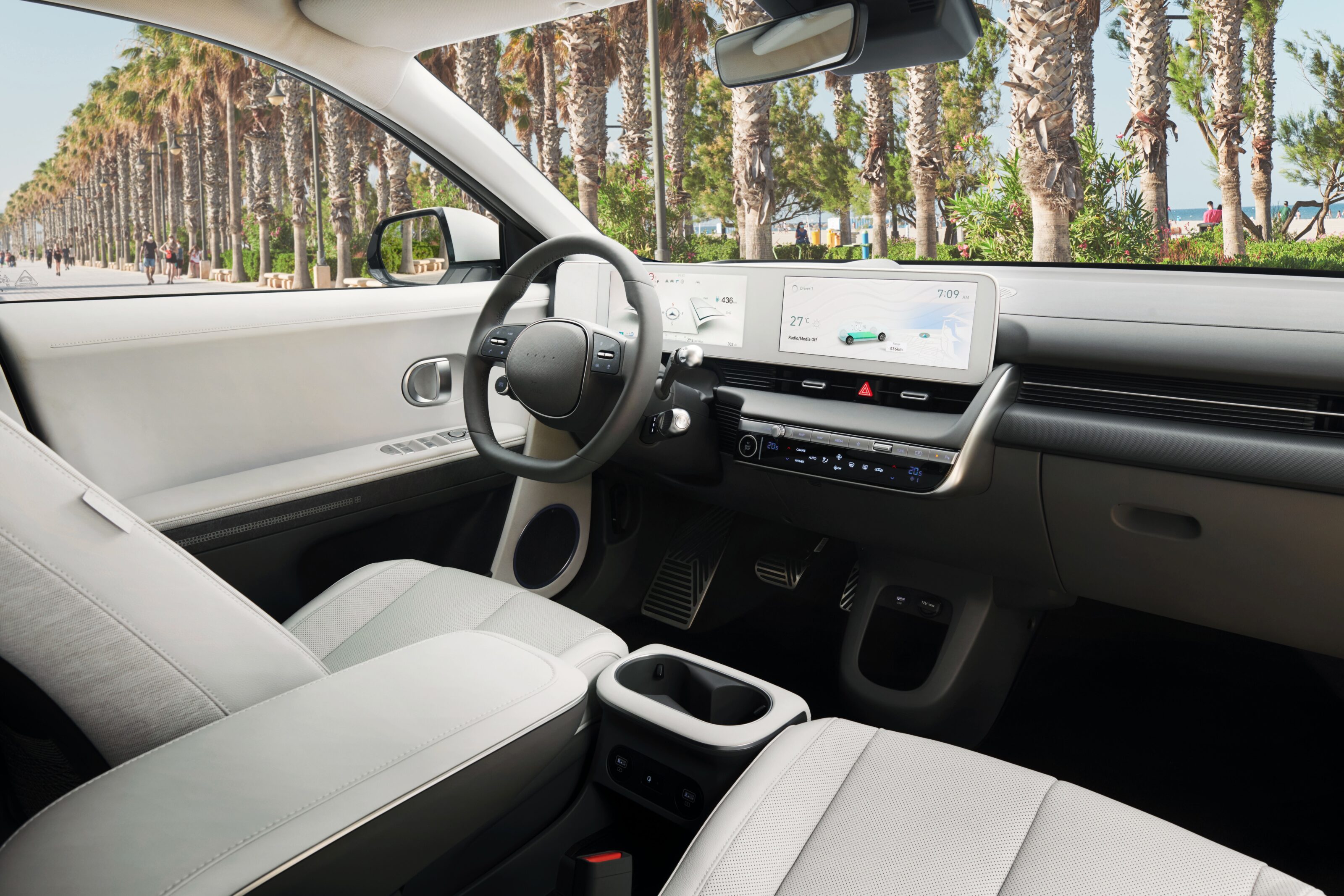
Inside, occupants get heated and ventilated 12-way power front seats, trimmed in “eco-processed leather” – with the choice of obsidian black, dark pebble grey, or dark teal. The front seats have a memory function and a ‘zero-gravity’ mode, while the 60:40 split row seats is also heated and powered, and features a memory function.
The driver gets a 12.3-inch digital instrument cluster – matched with a 12.3-inch infotainment screen with navigation and Apple CarPlay/Android Auto capability, running through an eight-speaker Bose sound system.
Also standard is a heated steering wheel, glass roof with power sunshade, and a smart power tailgate.
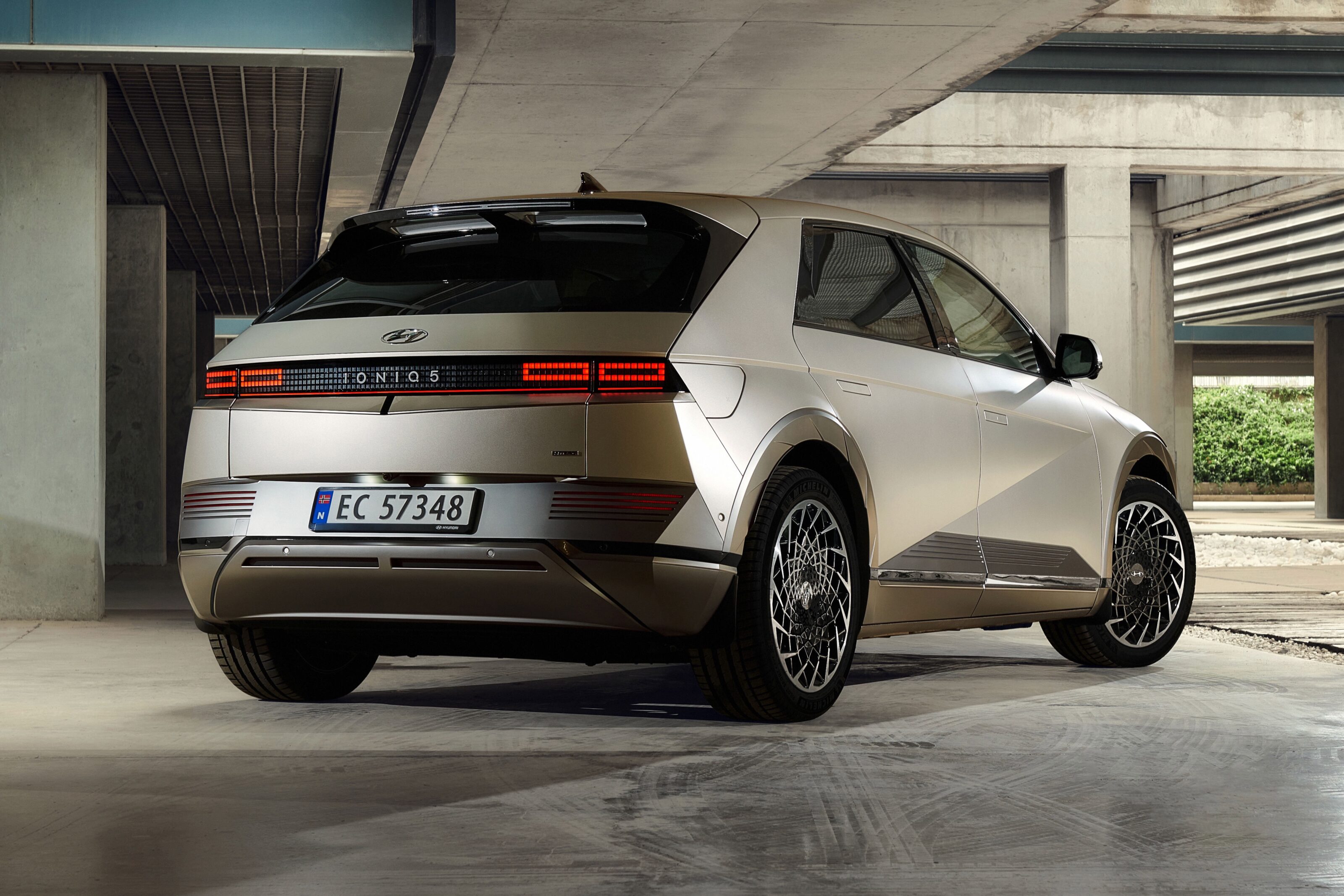
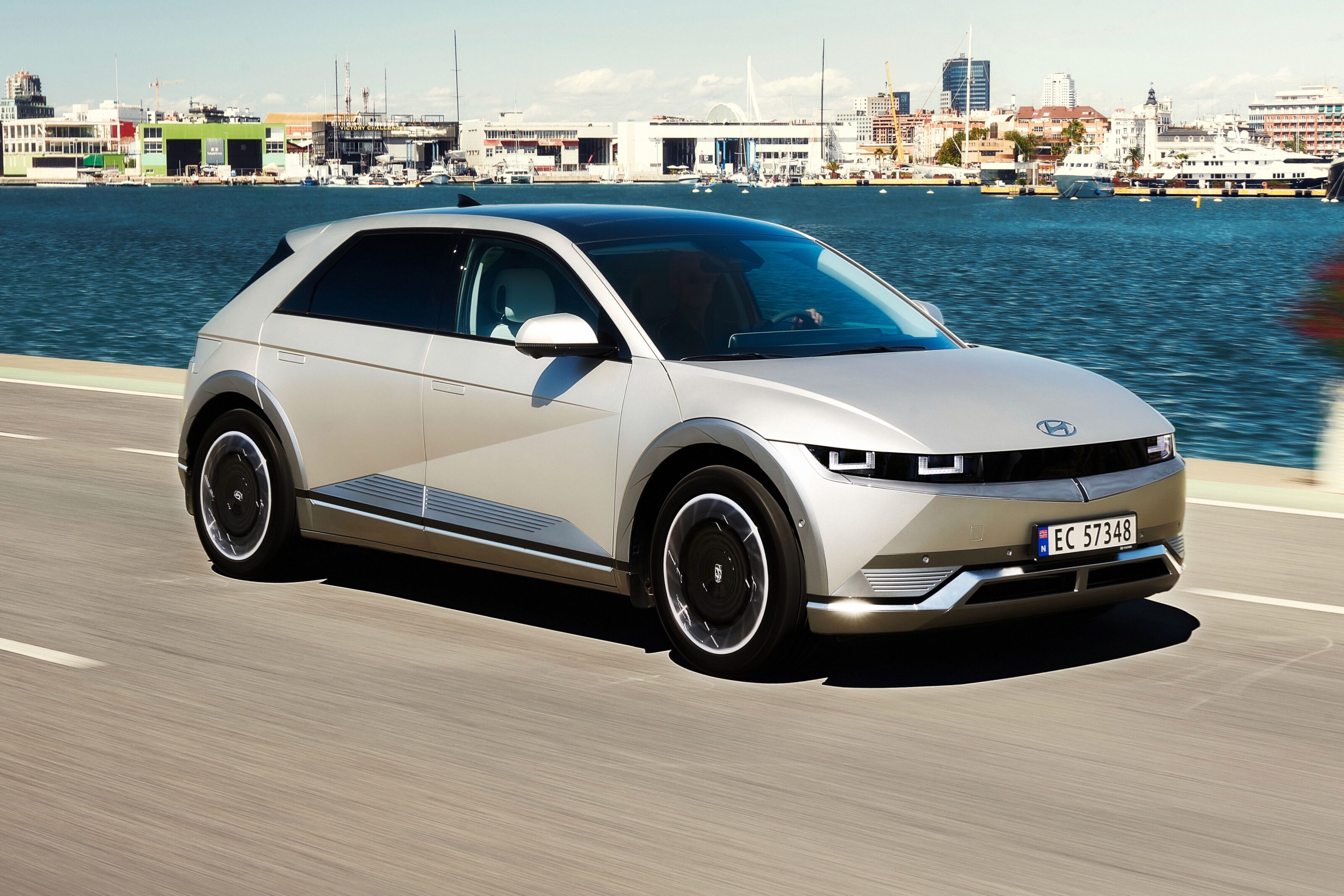
On the outside, buyers get to choose from atlas white, galactic grey, phantom black, digital teal-green, lucid blue, or a gravity gold matte paint option due later this year.
A set of 20-inch wheels, LED headlights with daytime-running lights and powered flush door handles are all standard.
Aside from the powertrain, there are no additional option boxes to tick, other than the gold matte paint for $1000.
With only 400 vehicles allocated to the Australian market for the time being, Hyundai has announced all sales will be conducted through its Australian website – cutting its dealerships out of the process and price negotiations.
2022 Hyundai Ioniq 5 pricing (excludes on-road costs)
| 2022 Hyundai Ioniq 5 160kW RWD Launch Edition | $ 71,900 |
| 2022 Hyundai Ioniq 5 225kW AWD Launch Edition | $ 75,900 |
Features
| 12.3-inch digital instrument cluster |
| 12.3-inch infotainment with sat nav, Apple CarPlay and Android Auto |
| Eight-speaker Bose audio system |
| Heated steering wheel |
| Heated and ventilated 12-way power front seats with memory |
| Heated power rear seats with memory and 60:40 split |
| Eco-leather interior |
| Glass roof with power sunshade |
| LED headlights with high-beam assist |
| 20-inch alloy wheels |
| Forward collision avoidance assist with pedestrian and cyclist detection |
| Evasive steering assist |
| Blind-spot collision avoidance assist |
| Blind-spot view monitor |
| Driver attention warning with vehicle departure alert |
| Intelligent/manual speed limit assist |
| Lane-keep assist |
| Rear parking collision avoidance |
| Front and rear parking sensors |
| Rear cross-traffic collision avoidance |
| Rear occupant alert |
| Safe exit assist |
| Radar cruise control with stop and go and machine learning |
| 360-degree cameras. |
Availability
The 2022 Hyundai Ioniq 5 goes on sale in Australia in September 2021.
UPDATE: Ford Australia has advised Wheels there was an error on its website, and the 2022 Ford Escape ST-Line PHEV is still on track to arrive in the second quarter of 2022 (April to June inclusive). The story has been updated below.
The 2022 Ford Escape ST-Line PHEV is due to arrive in early 2022, with some local specifications confirmed by the Department of Infrastructure.
On its Australian website, Ford has also detailed the plug-in hybrid (PHEV) Escape with features expected to be locked-in when pricing is announced later this year, ahead of its delayed arrival.
When the Escape was first shown in April 2019, early indications had the model arriving in 2020. More recently, that timeframe was pushed back to late 2021, and now we’re being told it will be the second quarter of 2022.
As mentioned, the Escape PHEV has already been certified by the Department of Transport, with details published on the Government’s RVCS website confirming it will use a 2.5-litre Atkinson Cycle non-turbo four-cylinder engine as part of its hybrid powertrain.
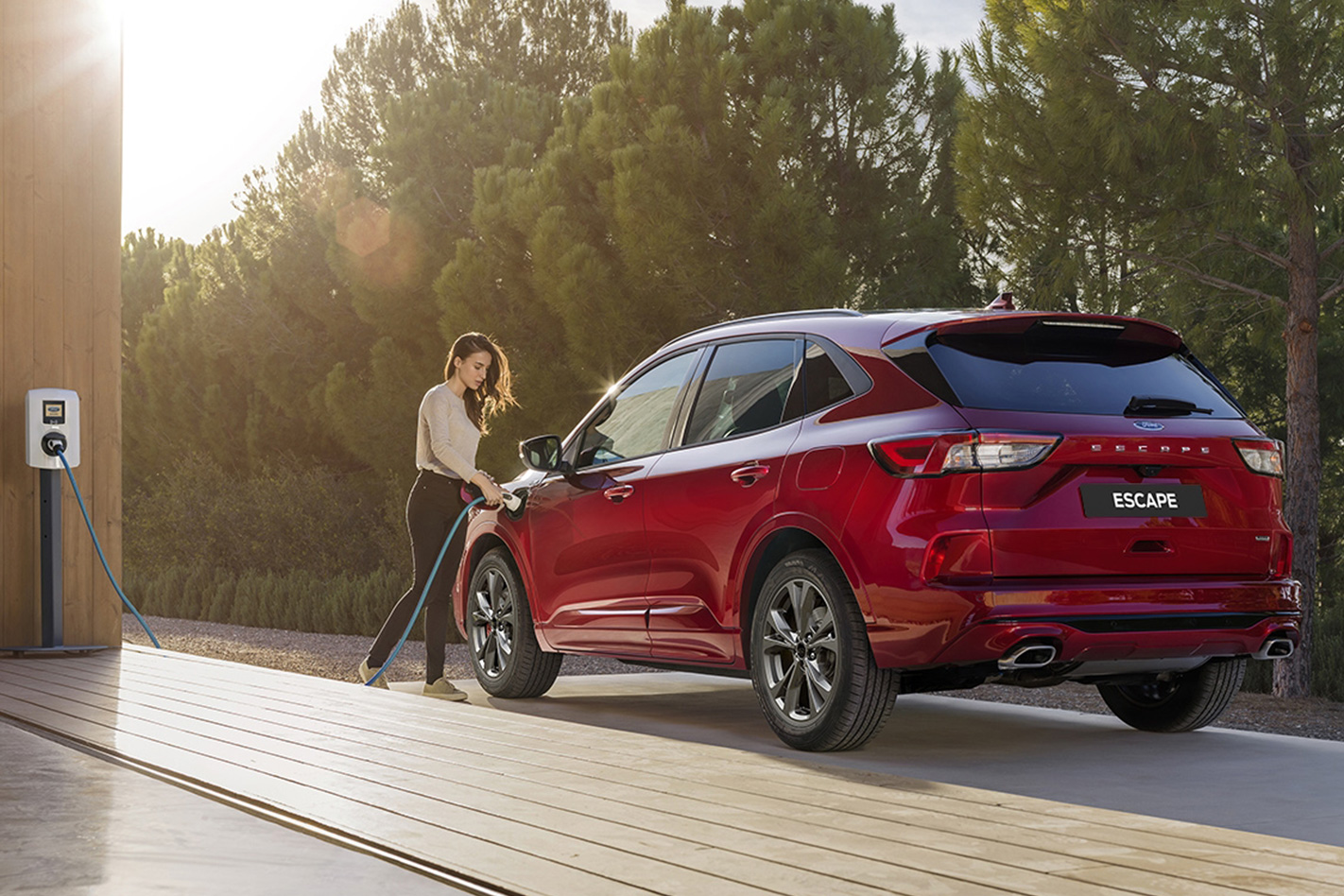
In combination with a 14.4kWh battery and an electric motor, the Escape PHEV will send a total output of 167kW to the front wheels through a PowerSplit e-CVT automatic, with a combined fuel consumption of 1.5L/100km listed for overseas markets.
Ford claims an electric-only driving range of 56 kilometres based on the WLTP test cycle, with charging taking around two hours using a 22kW AC unit.
The plug-in hybrid Escape will be offered solely as ST-Line trim, offering features such as keyless entry, hands-free power tailgate, wireless smartphone charging, heated front seats, heated steering wheel, 575-watt 10-speaker B&O sound system, 12.3-inch digital cluster, head-up display, and LED headlights.
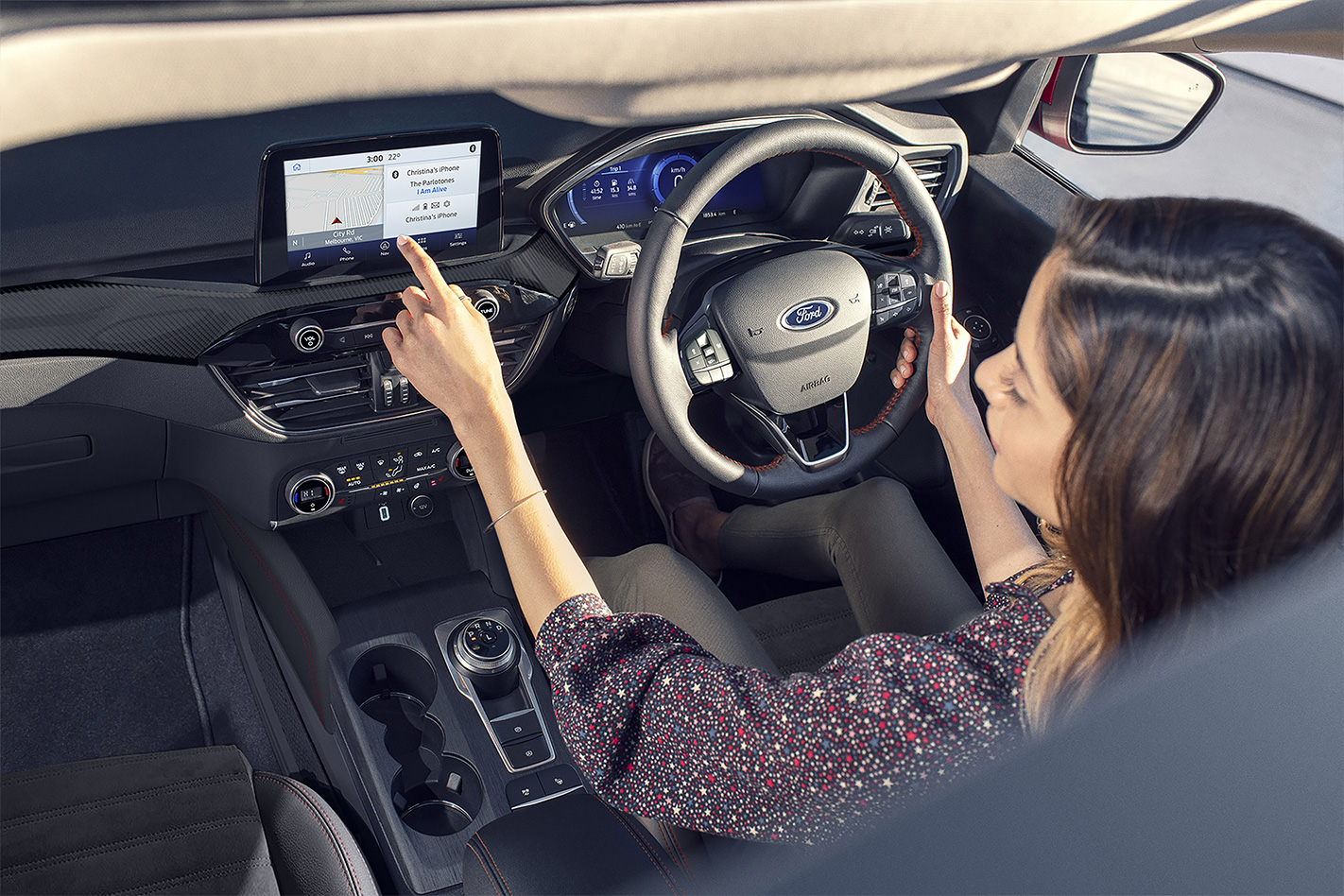
The Escape ST-Line PHEV also comes with autonomous emergency braking with pedestrian and cyclist detection, SYNC3 emergency assistance, a 180-degree parking cameras, traffic sign recognition, radar cruise control, rear cross-traffic alert, tyre-pressure monitoring, lane-keep assist, and semi-autonomous park assist when the Parking Pack is optioned.
Interestingly, the model is already available in New Zealand for NZ$66,990 (AU$65,000) – likely due to favourable government policies. Buyers over the ditch currently receive a subsidy of NZ$5750 (AU$5581), while plug-in hybrids are exempt from paying registration fees until 2024.
Australian pricing and specifications for the 2022 Ford Escape ST-Line PHEV will be announced in the coming months.
Snapshot
- iPhones use camera stabilisation systems for image quality
- Vibrations from motorcycle engines can lead to degradation
- Impact from some car engines unclear
Apple has issued a warning against mounting iPhones to motorcycles, advising users that certain vibration frequencies can damage to their camera systems.
In a recent post on Apple’s support page, the tech giant referred to optical image stabilisation (OIS) and autofocus (AF) technology used in some iPhone models.
OIS uses a gyroscope to sense and counteract device movement to help create a clear shot, while closed-loop AF ensures captured images are sharp.
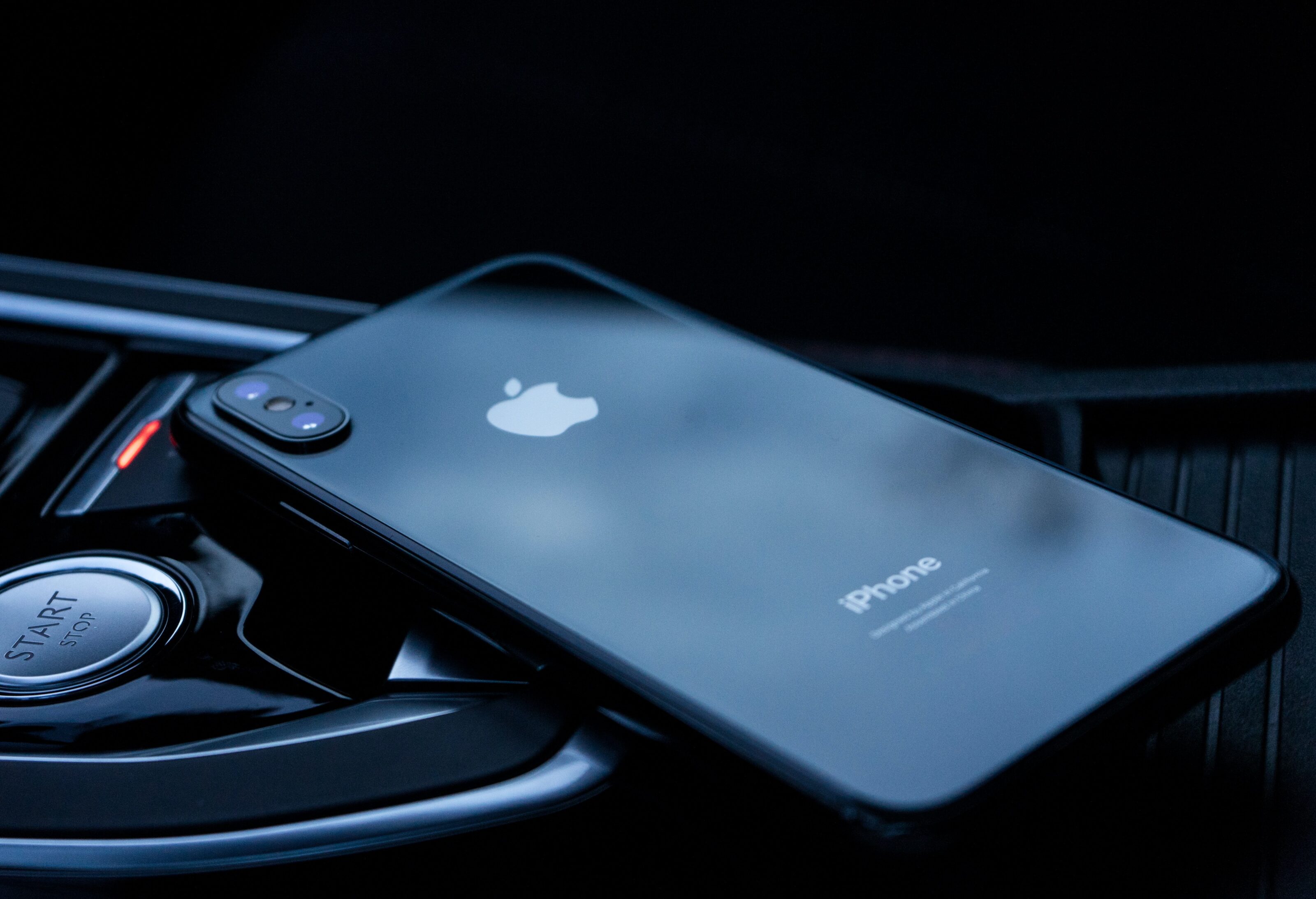
“The OIS and closed-loop AF systems in iPhones are designed for durability,” Apple’s post reads in part. “However, as is the case with many consumer electronics that include systems like OIS, long-term direct exposure to high-amplitude vibrations within certain frequency ranges may degrade the performance of these systems and lead to reduced image quality for photos and videos.”
The notice continues by saying “high-power or high-volume” engines in motorcycles are most problematic, as they transmit high-amplitude vibrations through the chassis and handlebars. Apple therefore does not recommend attaching iPhones to such vehicles, especially for prolonged periods.
Motorcyclists have seemingly been aware of this issue for some time, with Reddit discussions dating back as far as 2017. Users also pointed out other phones are prone to camera failures when mounted to handlebars, including the popular Google Pixel 2.
Apple says low-volume or electric engines, like those found in mopeds or scooters, cause fewer problems for its tech, but a vibration-dampening mount is still recommended to reduce the odds of OIS and AF damage.
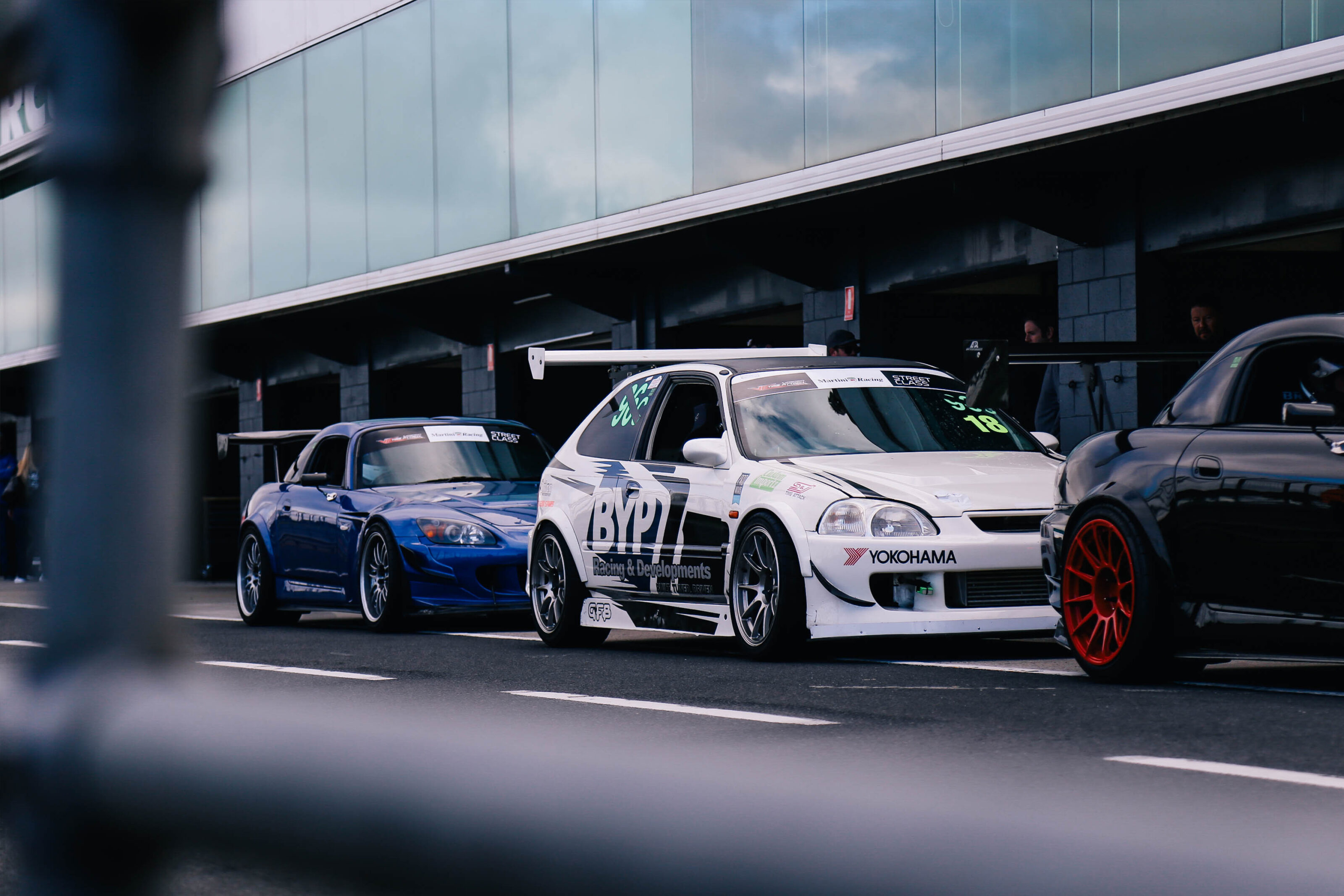
While most cars aren’t subject to vibrations of this type, it’s unclear if modified vehicles — race cars with high-revving engines, for example — could face similar issues if an iPhone is mounted to a point like a rollcage.
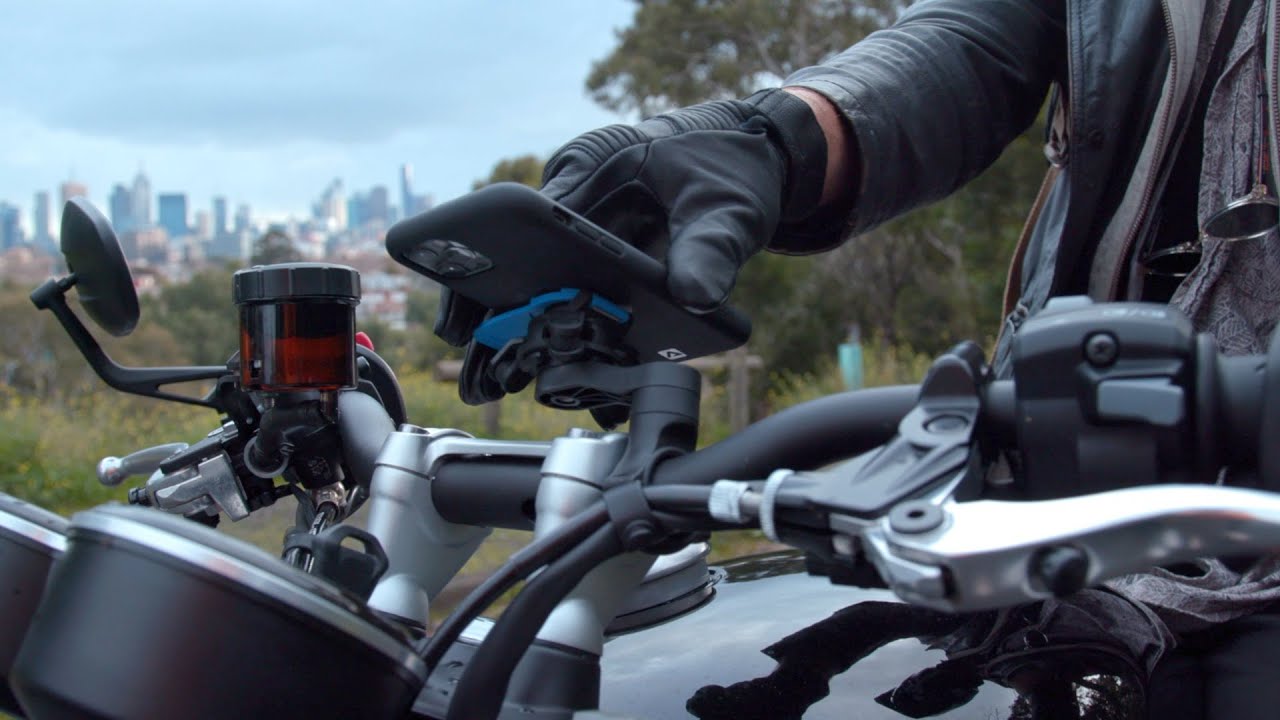
A number of brands offer phone mounts designed to reduce vibration, including Quad Lock and RAM Mounts.
