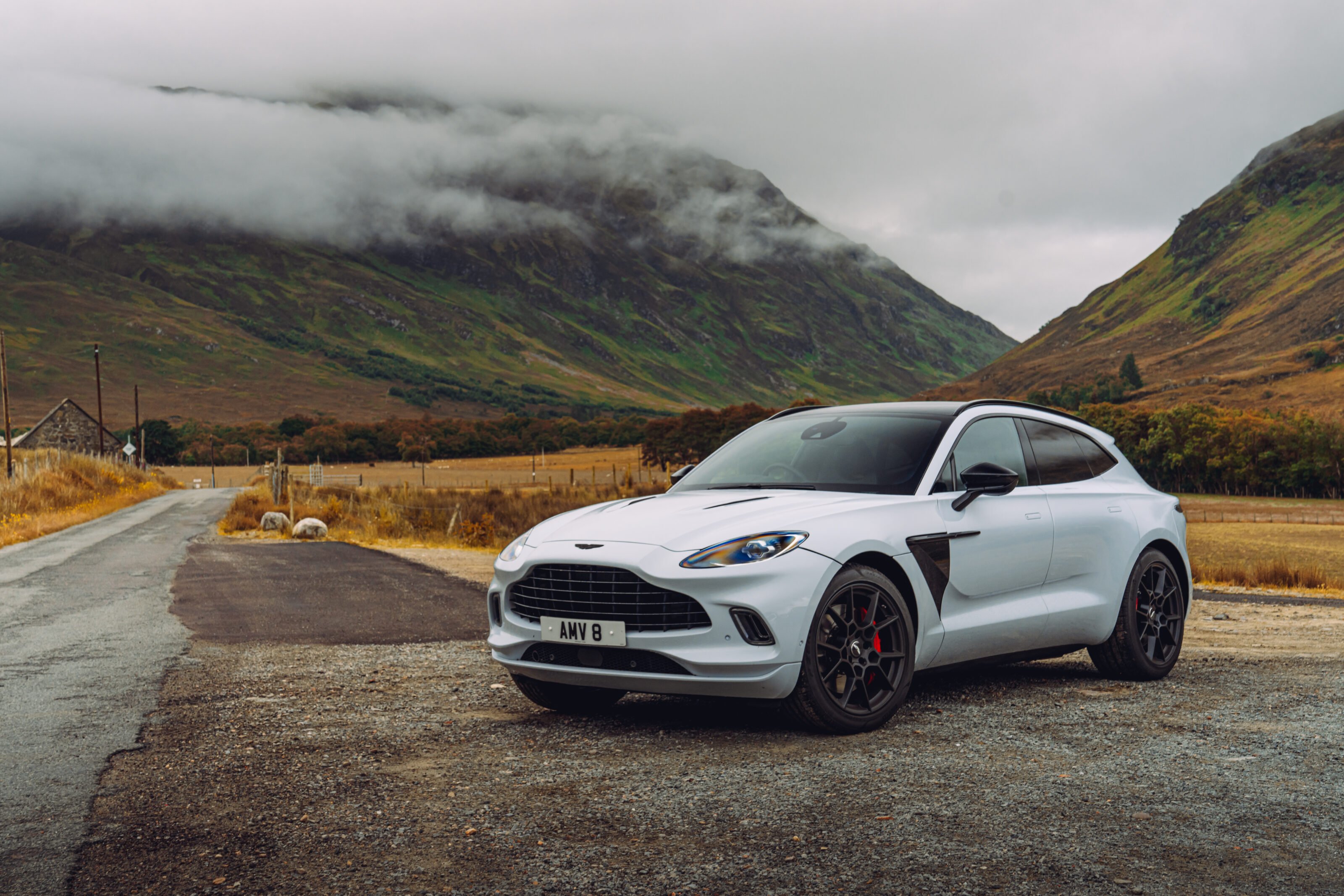
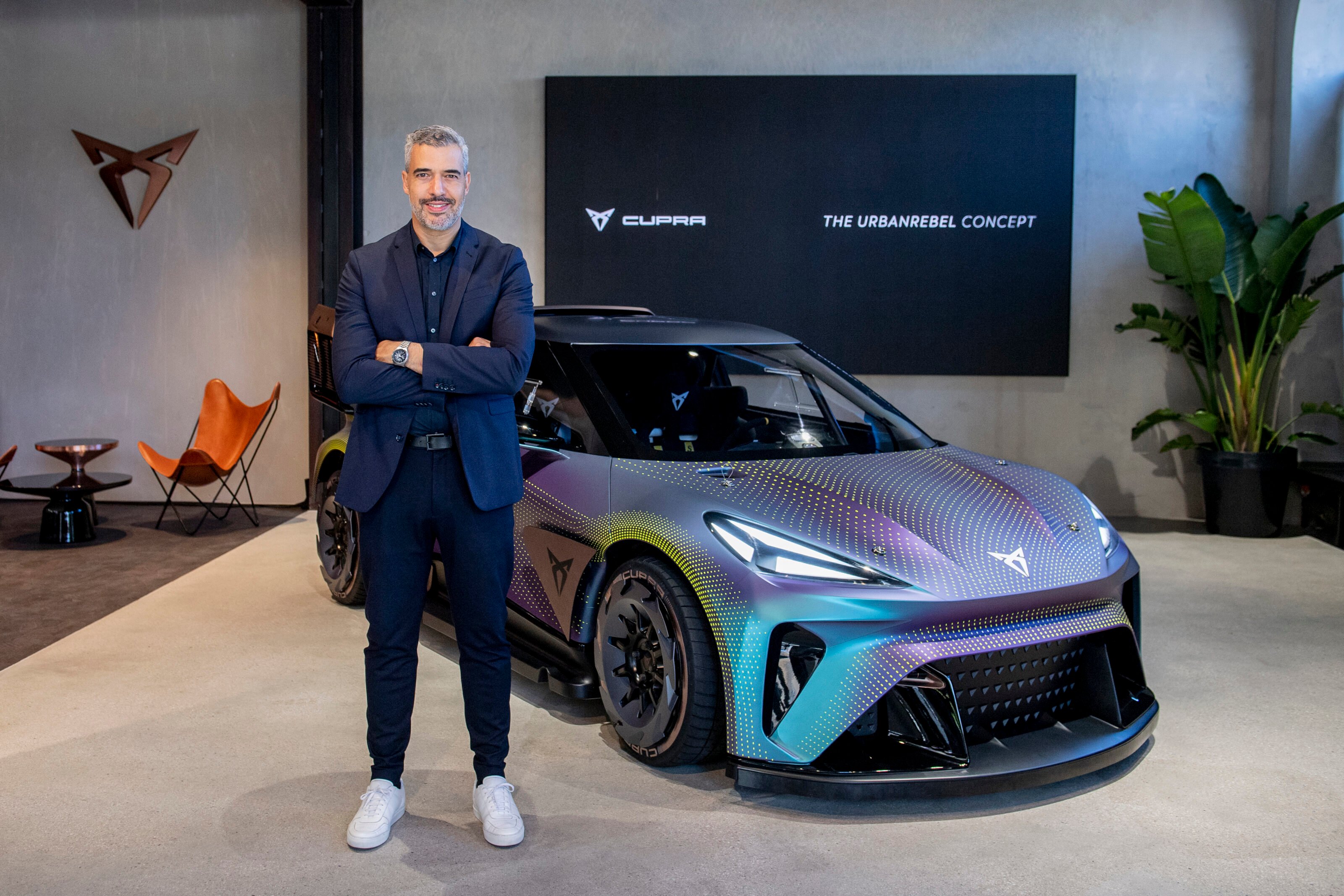
Last week’s IAA Mobility Show in Munich was the scene of many concept cars making their global debut, and among them was the striking Cupra UrbanRebel.
Based upon the yet-to-be-released Rebel EV, the UrbanRebel features design cues hinting at possible future vehicles from the company, such as its wrap-around windscreen, angular lines and the four corners stretched out to minimise overhang.
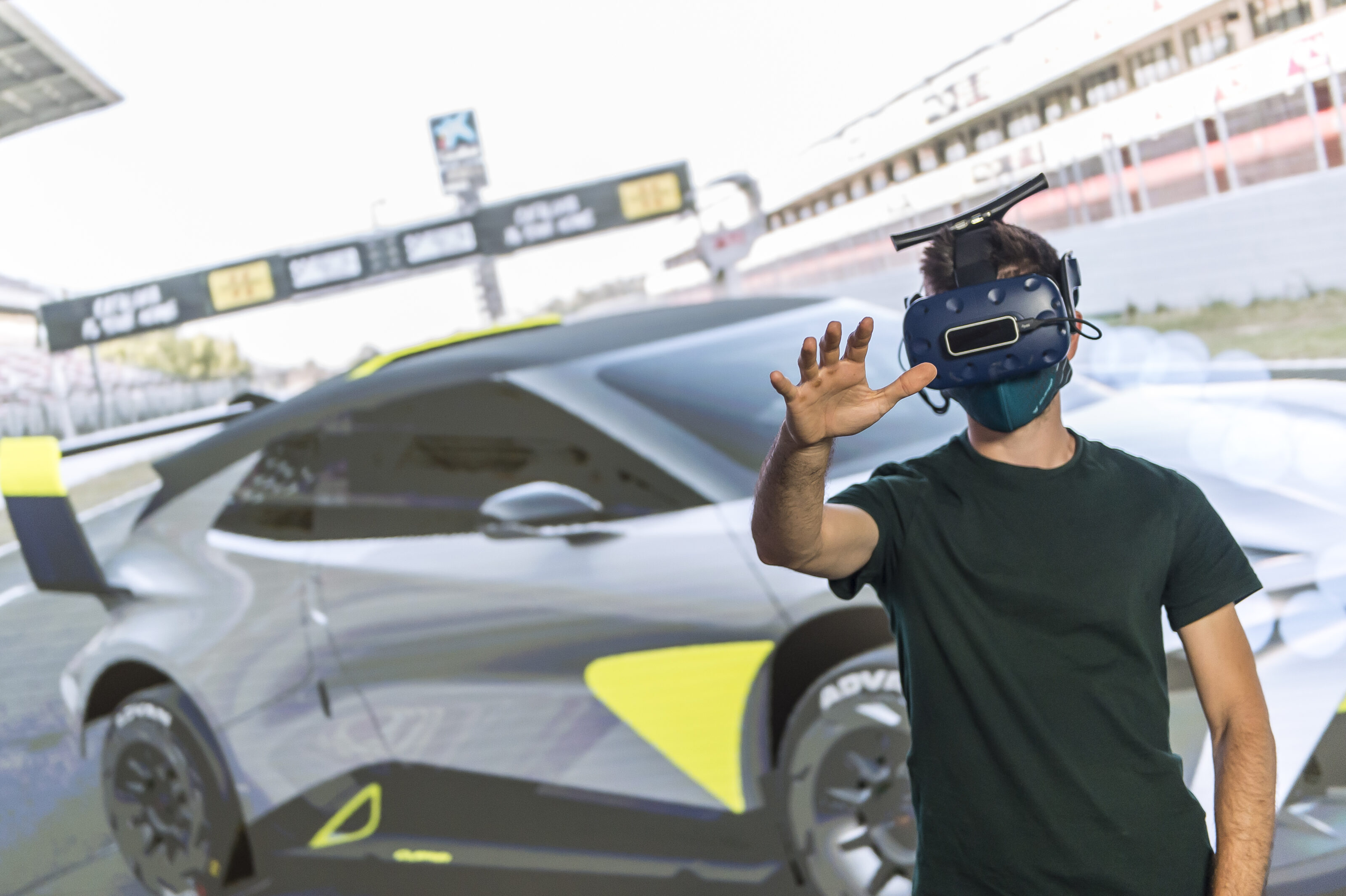
Cupra’s design director Jorge Diez says the track-focused concept takes inspiration from concept cars in video games, where regulations are almost non-existent, as well as from the vibrancy and creativeness of Generation Z.
“[In addition to racing] the design team was also inspired by Generation Z, a highly gamified generation,” said Diez.
“If you’re planning a visionary project, you have to factor in the mindset of the people who are going to enjoy it. The design they outlined from the beginning was highly digital.
“In parallel to this transgressive design, the colour and trim team made a revolutionary change in the brand’s aesthetics influenced by video games.
“That’s why the colours are more vivid. After hundreds of tests, they incorporated violet and fluorescent yellows and graphics, which are totally reminiscent of the pixels in video games. We also took inspiration from the human side, looking to the future.
“One example is the side line, which is dynamically positioned and points forward. The car, for example, doesn’t have a rear window either – because in our design philosophy we’re always forward-looking.”
Deiz also echoed the sentiments of Cupra CEO Wayne Griffiths, who last week said the brand had adopted a “love it or leave it” attitude – designing its vehicles to invoke a passion for driving.
“The message is: electric cars can be highly emotional. Life is emotion and you must enjoy it every day. It’s why we wanted to concentrate all the essence of Cupra in a compact format of just over four metres in length, with its essence and cornerstones united in a single object as a manifesto.
“This is the first time a compact model has been developed in such a sporty way, because we believe you have to have fun while driving in the city. At Cupra, we believe you can develop an emotional appeal even in four-metre proportions. The emotion which the vehicle transmits is what we like the most.
“We make cars which leave an impression on people; we want to be transgressive, even if it means not everyone likes it. We’ve attempted to crank up the volume of emotions as high as possible.”
While the UrbanRebel likely won’t ever make production in its current guise, its basic design will influence the Rebel – which will join the Born as Cupra’s second EV hatchback.
The 2023 Ferrari hypercar – known simply as Project F251 at this stage – has been snapped by a photographer while undergoing testing in Europe.
The new vehicle from Ferrari is expected to come with a version of the 6.5-litre V12 found in the 812 Competizione and mated to an eight-speed dual-clutch transmission, with power rumoured to be in the realm of 750kW.
While the model has been seen testing at the supercar maker’s Fiorano test track in previous months, the prototype was wearing the body from a LaFerrari to help disguise itself, albeit with minor changes.
These new images, posted by French publication Le Nouvel Automobiliste, are the first time the vehicle has been seen in public with its pre-production body – hidden under the heavy camouflage.
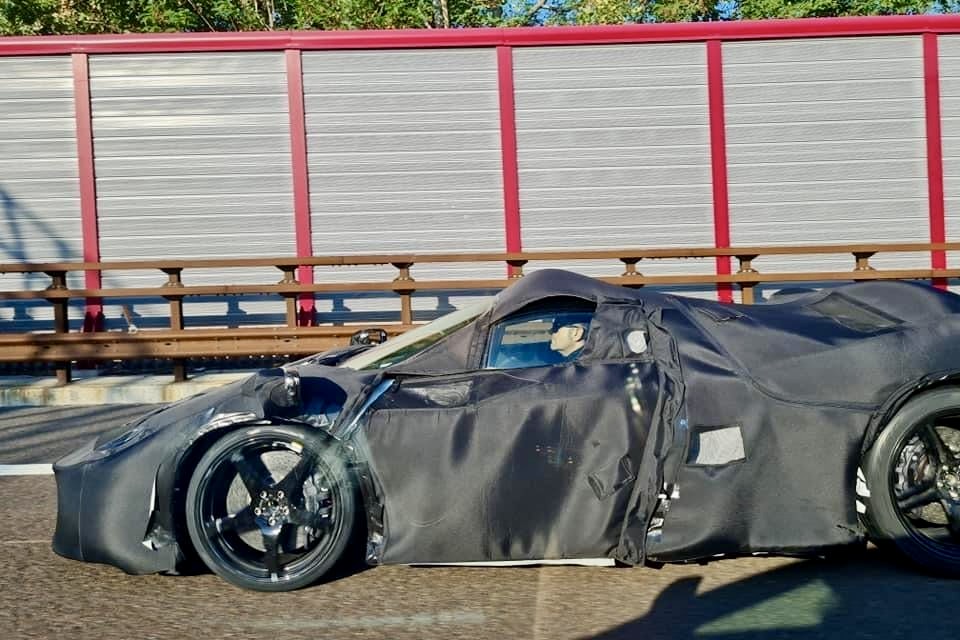
The rear mid-engined halo car is part of Ferrari’s Icona range (Italian for ‘icon’) – which invokes the company’s heritage, beginning with the Monza SP1 and SP2 in 2019.
A number of media outlets are reporting the new hypercar will forego electrical assistance. If true, the Project F251 could be one of the last pure petrol-powered V12 Ferrari models ever made.
The Ferrari is expected to be revealed to the public in late 2022, with deliveries to select customers to begin in 2023.
Nine pieces of Top Gear history are up for sale in the UK, with a handful of Suzuki Swifts driven by the famous trio finding their way online.
Listed on eBay, the seller claims the nine Swifts were used for games of car-football during the run of Top Gear Live stadium shows in early 2014 and 2015, just before an incident between Jeremy Clarkson and a producer saw the host fired – ending the Clarkson/Richard Hammond/James May era.
While the cars in the 2014 show were dressed up to represent England and Scotland, in 2015 the opposition changed to Argentina – referencing Top Gear’s recent stoush with the South American country in its Patagonia Special, which resulted in the production team being attacked.

As is expected, the Swifts are in various states of disrepair, although between them there are probably enough panels to make one pristine example.
With four days left to bid, the highest offer currently stands at AU$1600 – but it’s important to note this is for ALL of the cars, with transport costs to move them likely adding a few extra hundred dollars to the sale price.
Car-football was a consistent schtick in Top Gear’s catalogue, first executed in the opening show of series six with Toyota Aygos, followed by the Aygos up against the Volkswagen Fox in series eight, episode five.
When the Top Gear Live show came to Sydney in 2013, Clarkson and May were pitted against local hosts Steve Pizzati and Shane Jacobson in Reliant Robins, entertaining a packed crowd at Sydney Motorsport Park.
Local electric upstart ACE EV has pulled the covers off its new X1 Transformer van, designed for the commercial market and manufactured in Australia.
Based on a modular platform, the van can be converted to a long or short wheelbase, have a high or low roof or be turned into a van or ute in around 15 minutes, according to the company.
Born off the back of a $5million funding grant from the Federal Government, the X1 Transformer includes vehicle-to-grid technology – which allows it to connect via the Cloud to telematics, do software updates or to source emergency power.
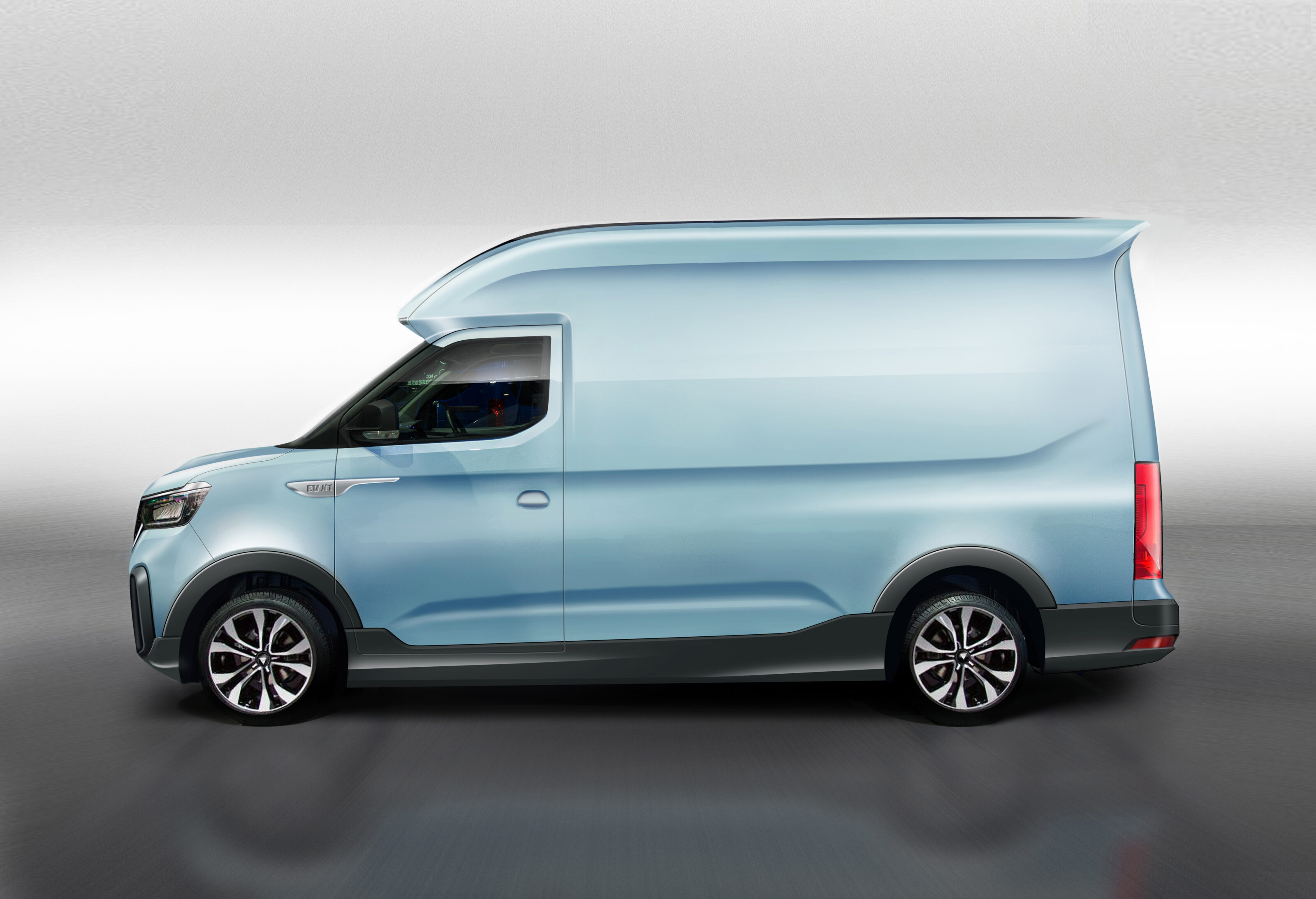
Powered by a 90kW/255Nm electric motor, the 1425kg X1 Transformer can reach a top speed of 90km/h and carry a payload of up to 1110kg, more than enough for most urban deliveries.
Supplying the motor is a 52.5kWh battery – which can be recharged in eight hours on an AC cycle, or topped up from five to 80 per cent in just 45 minutes with the 32A DC charger. It has also achieved a WLTP tested driving range of between 215-258km, with the figure extended to 303-354km in an urban cycle.
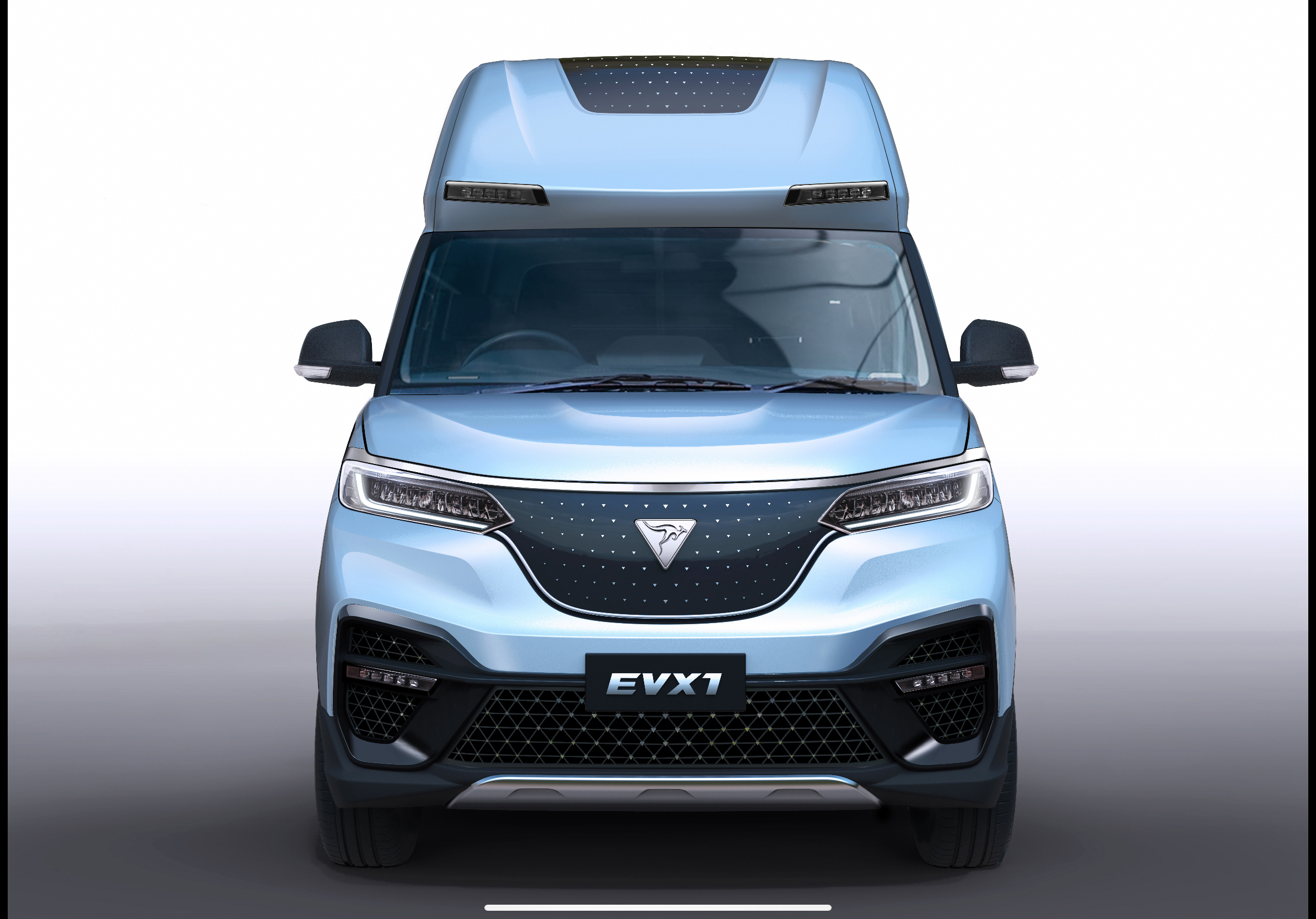
Riding on McPherson struts at the front and leaf springs at the back, the X1 sits on 15-inch steel wheels, although alloys are an optional extra.
Standard equipment on the X1 Transformer includes; air-conditioning, heated seats, cruise control, central locking, a 7-inch touchscreen infotainment system, Apple CarPlay, power windows and automatic on/off headlights to name just a few.
ACE EV plans to begin trials of the vehicle in November, with full-scale testing slated to begin in April 2022.
UPDATE, September 15: Honda tuner Mugen has released more dynamic shots of its new bodykit and trim package for the upcoming Civic, with the black highlights contrasting against the white body.
The new Civic is set to arrive in Australia towards the end of 2021, although this could be impacted by the global semiconductor shortage, which is delaying production for other manufacturers.

The story to here
August 9: The 11th generation Honda Civic may not yet have a performance variant, but this hasn’t stopped the company’s in-house tuner from making some alterations to the new model.
Mugen is best known for being Honda’s official performance division, providing mechanical and visual upgrades to its range of vehicles over the years – although none of its hotted-up hatchbacks have ever officially arrived locally.
Off the back of the new Civic’s launch earlier this year, the Japanese team has tweaked the exterior of the next-gen hatchback, including; a new bodykit with front and side skirts, a revised lower rear bumper and a low-set rear spoiler – all in black which contrasts nicely against the white paint as shown.

The Mugen-fettled Civic also features 18-inch wheels as an upgrade from the standard car’s 17-inch rims, teaming up with dark trim highlights around the windows to give a stronger, sharper appearance on the road.
In the process of reprofiling the lower section of the rear bumper, Mugen has removed the trapezoid-shaped exhaust tips in place of more traditional oval outlets, providing a visual difference to go with the car’s upgraded sports exhaust.
Set to launch in Australia later this year, the new Honda Civic will be powered by a 1.5-litre four-cylinder VTEC petrol engine, producing 134kW and 240Nm – a 7kW/20Nm increase over the outgoing Civic VTi-L which is also powered by a 1.5-litre turbo unit.

Snapshot
- Japanese-market Corolla Cross detailed
- Corolla Cross GR Sport unveiled for Taiwan
- Soft-roader arrives in Australia next year
The 2022 Toyota Corolla Cross has been officially unveiled in Japan, while a new GR Sport model has been revealed for Taiwan.
As the soft-roader version of the venerable Corolla, the new Corolla Cross gives buyers a raised ride height and optional all-wheel drive, and will sit between the more outgoing C-HR and below the larger RAV4 in the Toyota line-up when it arrives in the second-half of 2022.
After a number of leaks, details of the Corolla Cross have finally been announced for the Japanese market. Buyers there have a choice of either a 1.8-litre non-turbo petrol engine with 103kW and 170Nm powering the front wheels, or a hybrid version offering a lower total combined power output of 90kW.
The hybrid model can be optioned with either front-wheel drive or all-wheel drive, with only a CVT automatic available. It’s worth noting that the Corolla Cross gets a belt-driven CVT, rather than the widely-praised direct-drive CVT found in the 2.0-litre Corolla sold in Australia.
All-wheel-drive versions also get double-wishbone rear suspension, which is expected to provide superior handling (as well as added grip) over the two-wheel-drive models that use a torsion beam rear-end.
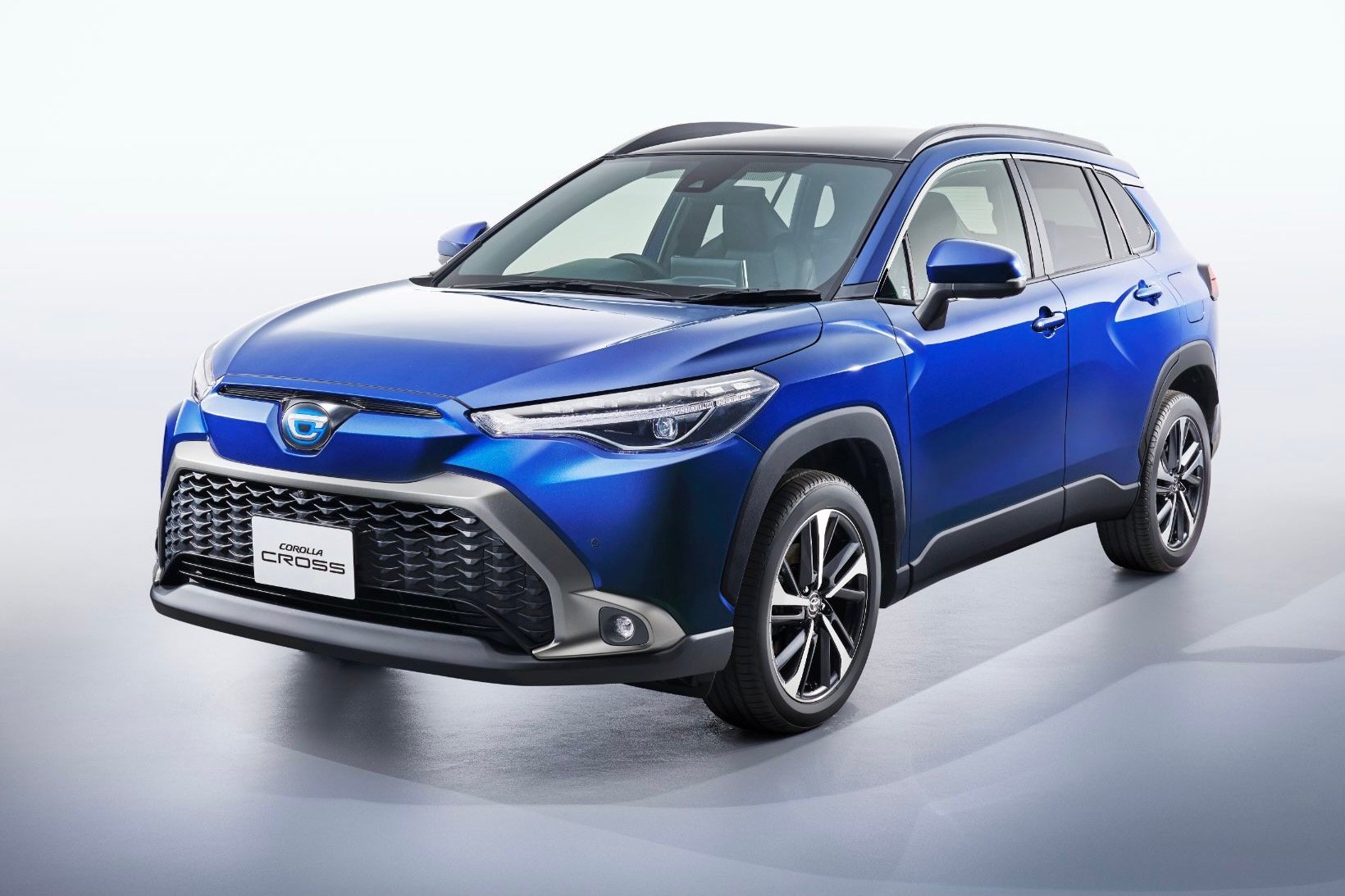
Hybrid versions sold in Japan also get a new protruding grille, revised front and rear lights, and feature an Emergency Power Supply Mode – allowing the vehicle to be used as an electrical generator to power appliances during a blackout.
While the engines carry over unchanged to the Corolla Cross GR Sport in Taiwan, the soft-roader gets styling updates and a new suspension tune, as well as chassis reinforcements for increased rigidity.
A new black grille, larger air intakes, integrated fog lights, aluminium-look skid plates and side skirts, and two-tone paint with a black roof provide a sportier look to the standard Corolla Cross.
Unlike proper Gazoo Racing models such as the Toyota GR Supra, GR Yaris, and GR 86, models with ‘GR Sport’ badging tend to add mild revisions – such as the LandCruiser 300 Series GR Sport, which gets extra goodies to improve its off-road abilities.
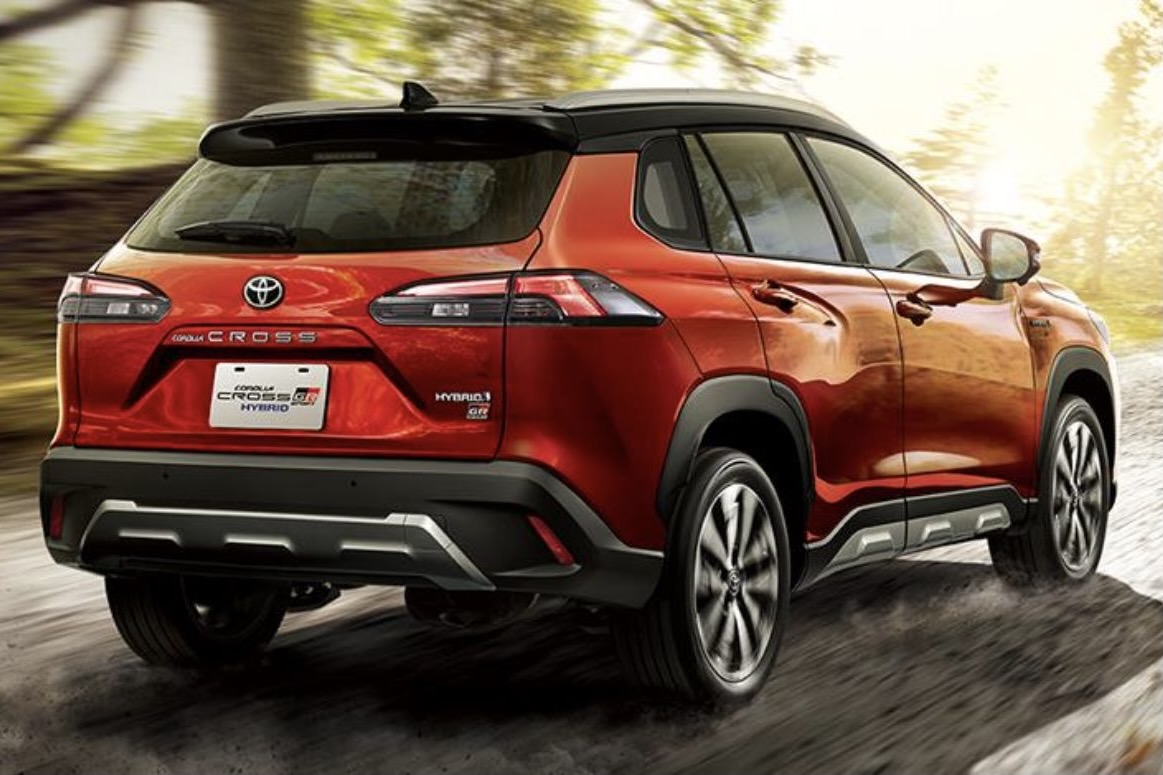
“Corolla Cross … delivers the superior practicality demanded by customers in this segment including the high driving position, great visibility, spacious interior and ample head clearance,” Toyota Australia Vice President of Sales and Marketing said at the vehicle’s global reveal in July 2020.
A spokesperson for the company’s local arm today confirmed to Wheels the Corolla Cross will arrive here in the second half of 2022, but has stopped short of saying whether Australia will get the Japanese model or a similar variant to those sold in other right-hand-drive markets, such as Thailand and South Africa.
Pricing and local specification for the 2022 Toyota Corolla Cross will be announced closer to the model’s Australian launch.
A luxury variant of the Land Rover Defender could find itself riding on the next Range Rover platform, adding depth to the off-roader’s range.
As reported by Autocar, Jaguar Land Rover (JLR) is plotting to use the MLA architecture from the all-new 2022 Range Rover in the Defender, setting it apart from the existing, Discovery-based Defender 90 and 110.
The move to the MLA platform will be crucial for the future of the Defender and other JLR products as it is the best equipped to be used in electrified applications, allowing mild-hybrid, plug-in hybrid and fully-electric setups.
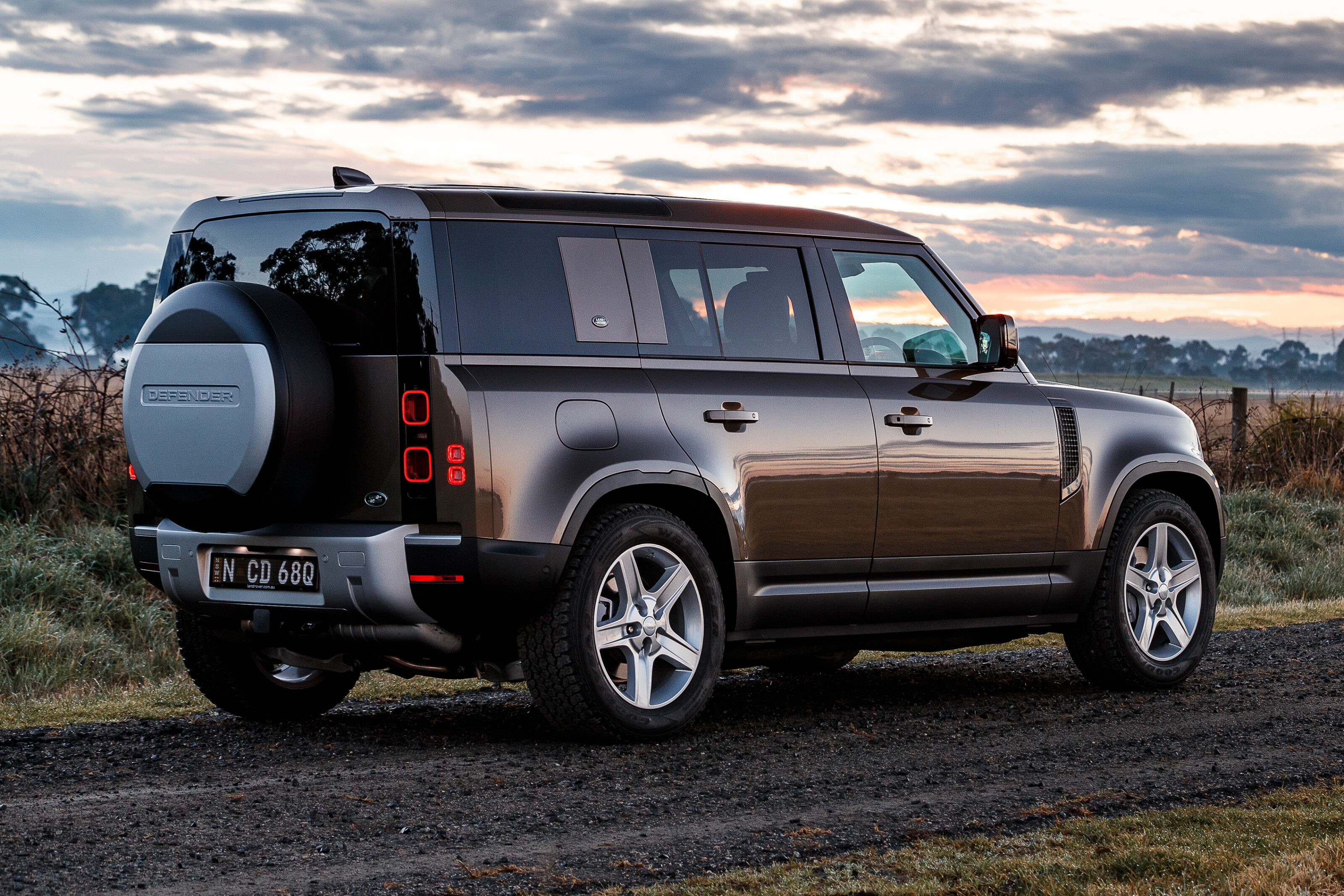
By offering the Defender as a retro-inspired alternative to the Range Rover, JLR can market it to a wider variety of customers, given the standard wheelbase variant ranges between $76,960 for the base P300 to $205,500 in range-topping V8 trim.
The usual Range Rover upgrades would be expected, with premium materials and bespoke styling likely to feature above the base Land Rover trim, while powerplants would likely remain unchanged, save for the aforementioned PHEV and EV options.
By utilising the MLA platform, the Defender could also accommodate a seven-seater version, although this would bring it into competition with the Discovery, potentially cannibalising sales of the Disco – which is already struggling locally in the Land Rover line-up.
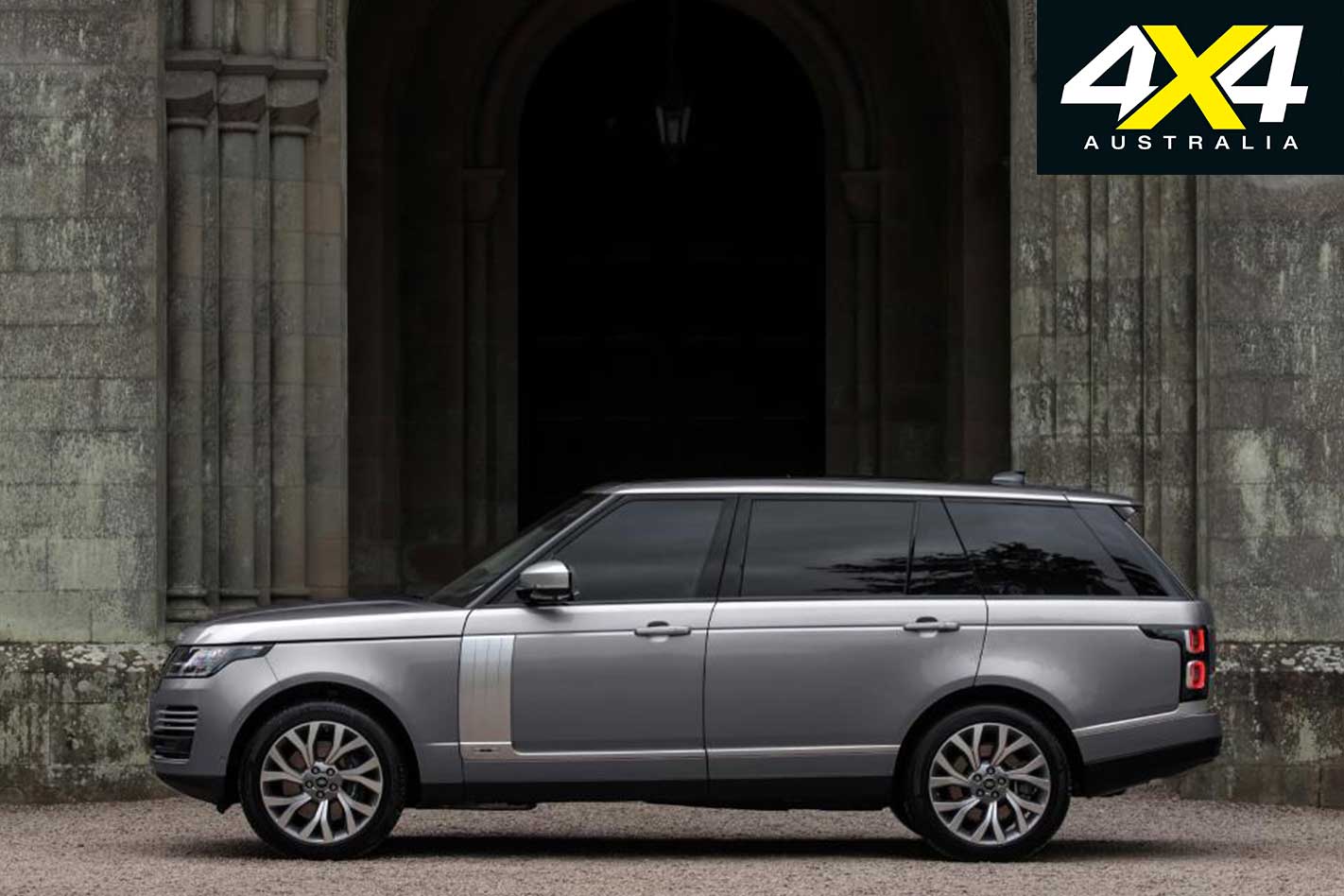
In Australia, Land Rover has been able to shift 1345 units of the Defender in 2021 to the end of August, edging itself ahead of the Range Rover Sport as the brand’s most popular model by just 26 vehicles.
On the flip side, the Discovery is the second-lowest selling Land Rover family model – with just 420 examples being sold this year – only ahead of the Range Rover, which has managed just 145 sales in 2021.
The Defender range could soon gain a third variant on top of the existing, short wheelbase 90 and standard wheelbase 110, as it is understood Land Rover is testing a long wheelbase Defender 130, adding over 340mm to the 110’s length to create a 5100mm long, eight-seat off-roader.
Snapshot
- First images of the facelifted 2022 Toyota RAV4 have been released
- New headlight signatures and LED fog lamps accompany interior updates
- Pricing to be announced in the coming months, deliveries to begin in early 2022
The 2022 Toyota RAV4 has been unveiled in Europe, previewing the model’s mid-life update ahead of its arrival into Australia early next year.
While Toyota originally announced the 2022 model changes back in June, these are the first images we’ve seen of the refreshed RAV4.
New LED headlights with daytime-running light signatures will be offered as standard on hybrid vehicles, a set of redesigned alloy wheels will be fitted on most variants, and new LED fog lights will be standard across the range.
All models bar the RAV4 GX will receive illuminated door switches, while the Cruiser gains ventilated power-adjustable front seats and a digital rear-view mirror.
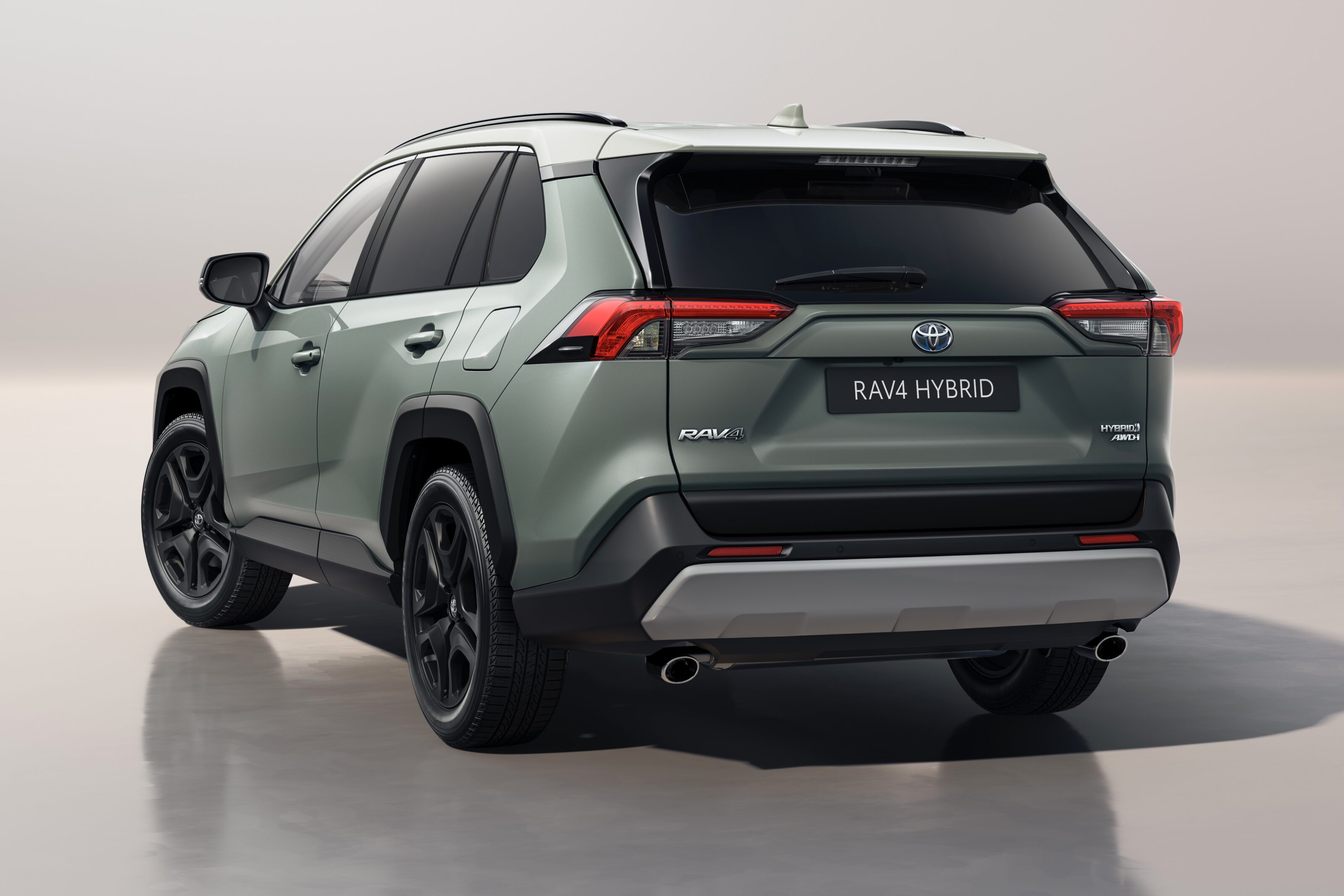
No changes have been announced for the engines themselves, but stop-start technology will feature for all petrol variants – reducing emissions and improving fuel economy – while the RAV4 Edge gains rear cross-traffic alert.
Final pricing and specifications have yet to be confirmed for Australia, but it’s expected the current powertrains will carry over.
Buyers currently have the option of a 127kW/203Nm 2.0-litre four-cylinder petrol engine, a 152kW/243Nm 2.5-litre four-cylinder petrol engine, or a 2.5-litre petrol-electric hybrid four-cylinder engine – the latter available with 160kW/221Nm powering the front wheels, or 163kW/221Nm and all-wheel drive.
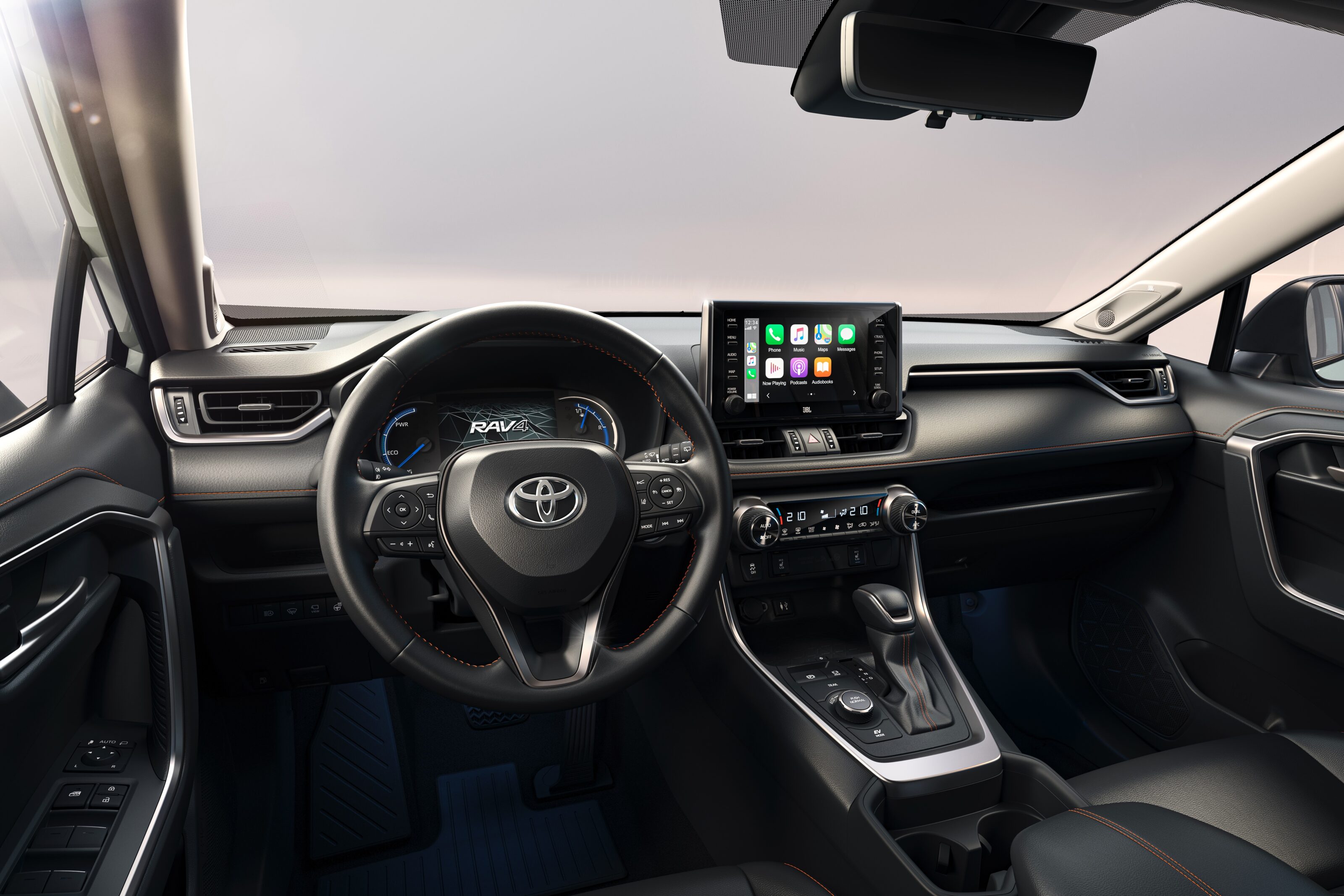
“While these updates won’t arrive until early next year, Toyota is committed to keeping its customers aware of upcoming improvements,” Toyota Australia Vice President of Sales and Marketing Sean Hanley said at the initial announcement in June.
“We encourage our customers to speak with their preferred Toyota Dealer about the upgrade on any orders placed.”
Production of the new model is slated to begin in December, but it’s not clear at this stage whether the carmaker’s semiconductor chip supply woes will push back timing.
It’s expected local pricing for the 2022 Toyota RAV4 will be announced when the updated model goes on sale in the coming months, with deliveries to begin in early 2022.
Snapshot
- Updated CX-5 features new-look front end
- Range-topping Akera ditches black exterior cladding for body coloured trim
- Mazda confirms early-2022 launch
The 2022 Mazda CX-5 has been revealed a week after leaked images previewed the new look of the mid-size SUV, as the carmaker looks to hunt down Toyota to top the market segment.
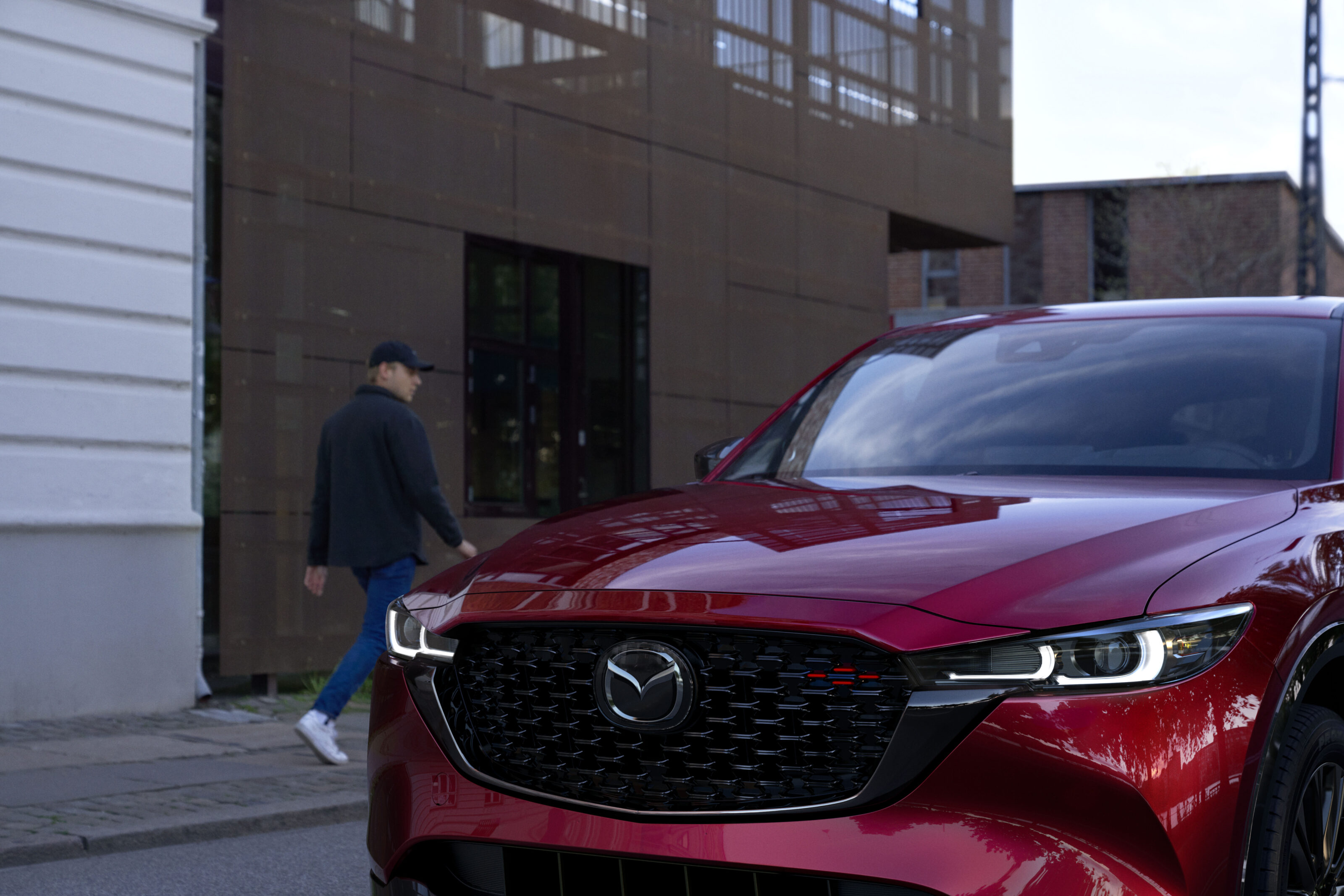
Featuring a redesigned front end, the 2022 CX-5’s front bumper is smoother than the previous model, with fog lights on both sides deleted – allowing an uninterrupted lower bumper, which adopts Mazda’s Kodo Design principles.
Gone are the traditional circular bulbs inside the slim headlights, instead the updated model shows off its new rectangular LEDs providing a sharper, more modern look for the slowly ageing front design.
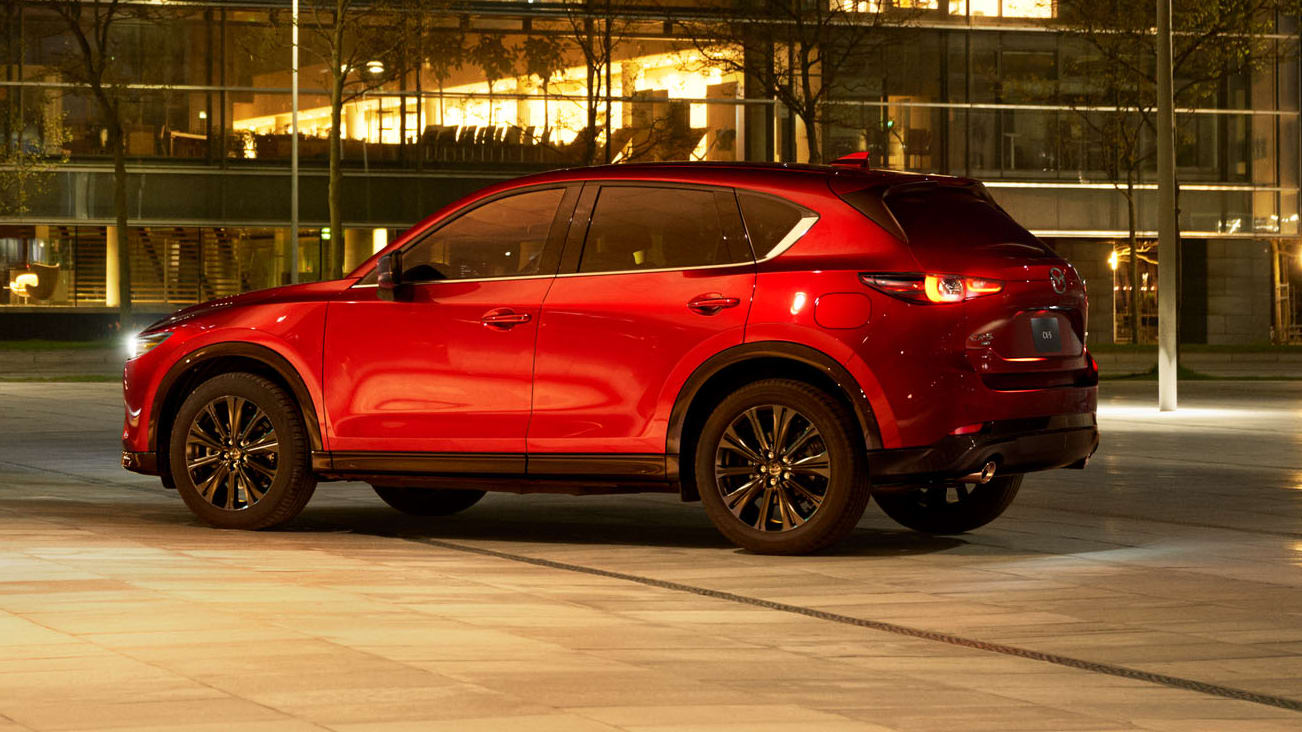
For the first time in the CX-5’s history, the range-topping Akera grade will feature body-coloured exterior cladding, replacing the traditionally flat black wheel arch and skirt surrounds.
The Akera will also provide a contrast to the body with bright silver finished wheels as well as a Nappa leather interior, setting it apart from the GT SP, which sits below it in the line-up. Meanwhile, the sports-focused variant now also features a gloss black wing, grille, mirror caps and wheels – tying in with its black interior with red accents.
One more step below the GT SP is the Touring – now available in Mazda’s new Zircon Sand Metallic finish – which stands out with its lime green accent on the grille, seat upholstery and interior louvres.
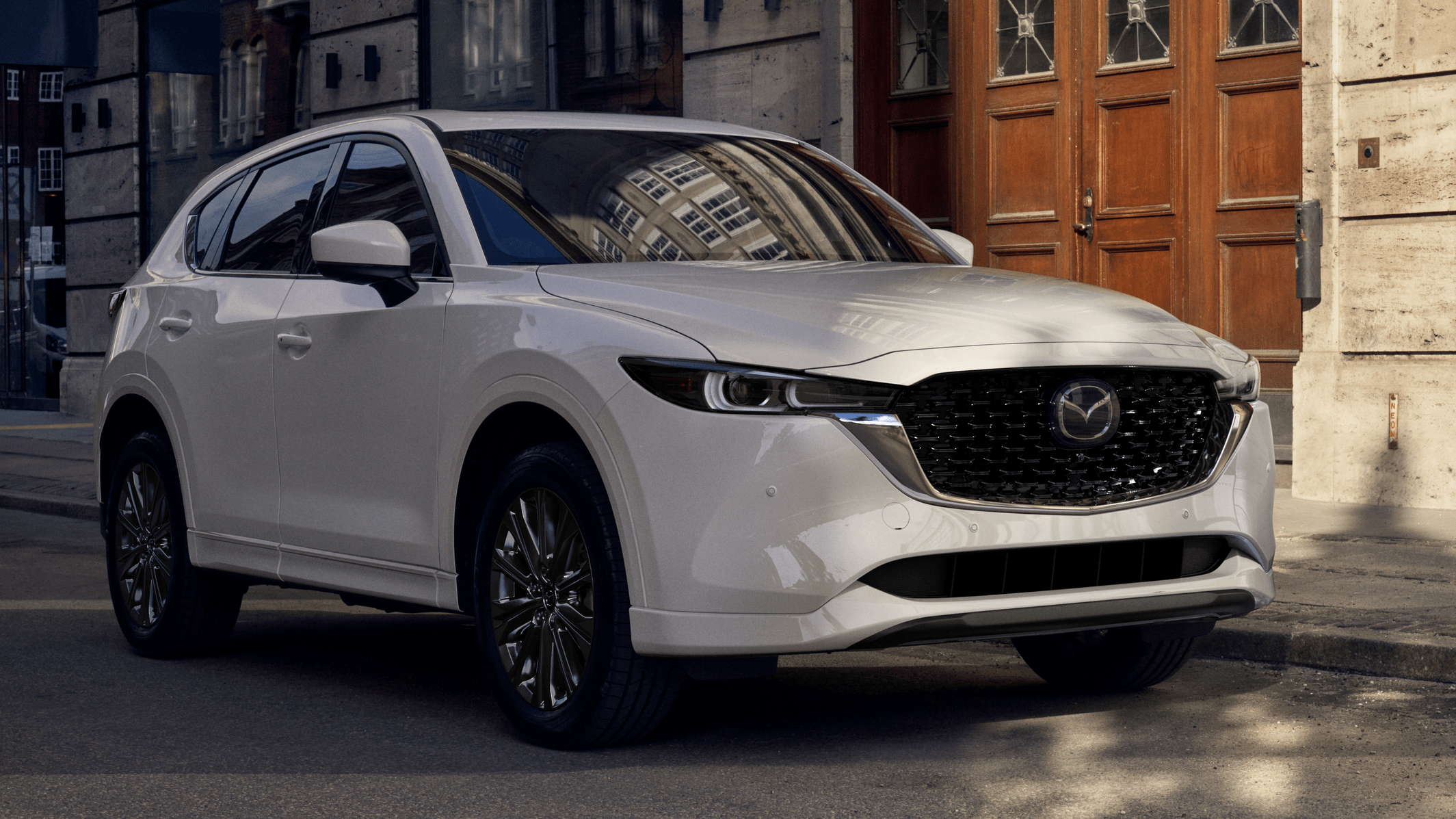
Mazda says all grades will benefit from redesigned seats, which provide greater support for the front occupants, in addition to improved dampers – helping to keep the vehicle under control while still retaining ride comfort.
The driving experience is also said to be improved, with a revised automatic transmission allowing smoother shifts, while Mazda’s intelligent Drive Select (Mi-Drive) will also debut on the CX-5 – allowing the driver to choose between a variety of driving modes to best suit the conditions.
Set to be launched in the first half of 2022, Mazda will confirm pricing and features about its local line-up closer to the CX-5’s release date.
To the end of August, Mazda has sold 19,918 CX-5s throughout 2021, making it the fourth highest selling vehicle in Australia and second in the medium SUV segment to Toyota – which has shifted 25,873 units of its RAV4.
Two cars. One an unhinged frivolity for the super-rich, the other a necessity for a car company’s survival. Aston Martin, Britain’s luxury sports car company has a perpetual history of under-performing, in relation to the bottom line, at least. There’s a change in mood, though, an optimism that the brand will not just survive, but flourish. That’s borne from the appointment of its recent CEO in the guise of ex-Mercedes-AMG boss Tobias Moers, but also financial clout and luxury brand know-how from Canadian Lawrence Stroll in the role of Executive Chairman.
The two cars here bookend the current breadth of the company’s product portfolio; a range that, if the new management team achieves as it promises via its so-called Project Horizon, will see that range expand. Both Moers and Stroll view the return to F1 as a pivotal asset in the company’s desired transformation. Prior to this season, the last time an Aston Martin competed in a Grand Prix was 1960.
In addition to its F1 ambitions, there will be more sports cars, more specials like the V12 Speedster as well as variations on the DBX SUV. Think a coupe, and hybrids, while full electrification’s coming, it won’t be until at least 2025, if not later. Aston Martin is streamlining its business, making key appointments in its management team with a wealth of experience in the super luxury and automotive spheres. The brand strength was never really in question, instead the core business needed work.
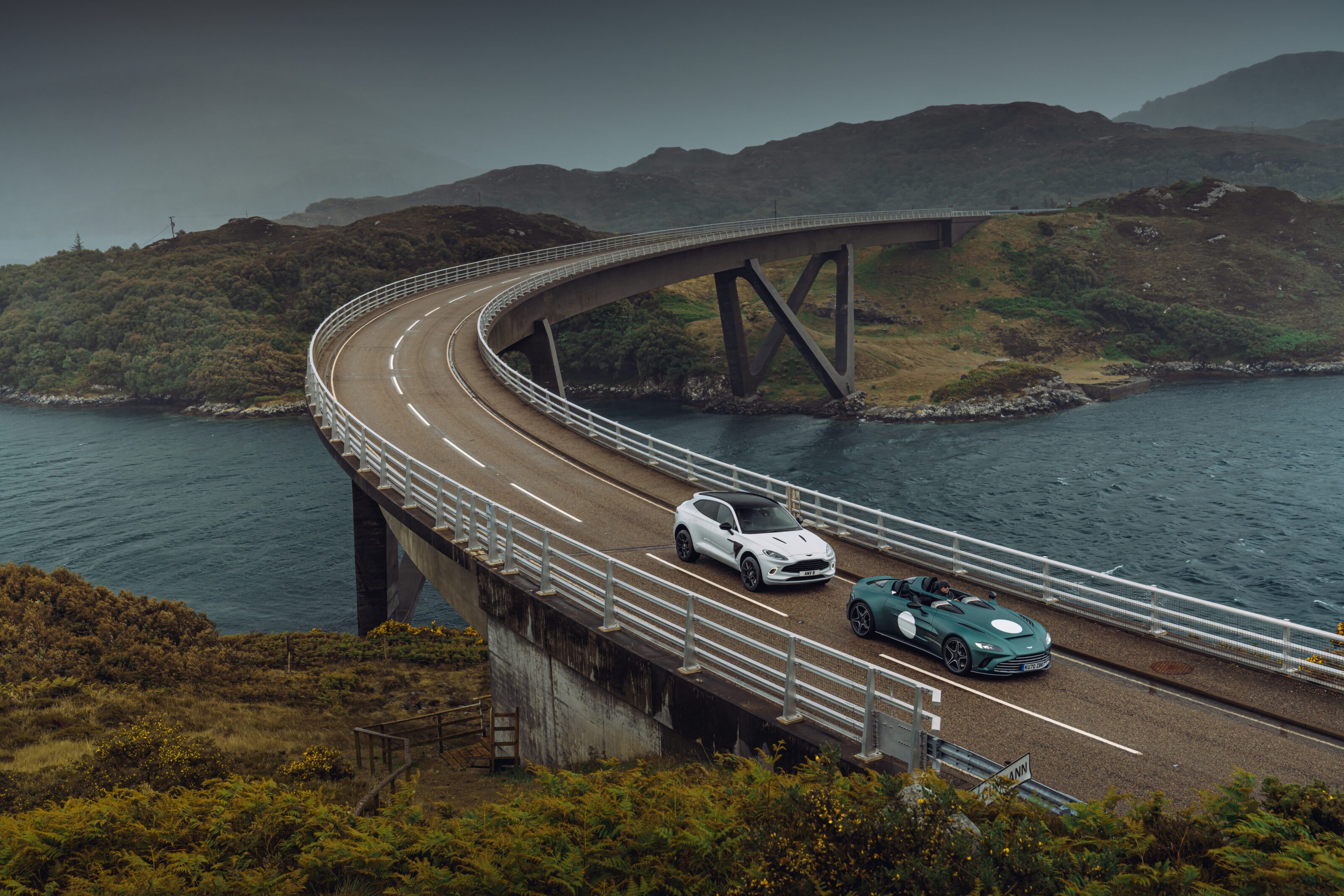
There’s reason for optimism, and these cars represent it. They might have been conceived and created largely under the old guard, though the Speedster, a one-of 88 special, using a combination of DBS, DB11 and Vantage architecture underlines the company’s core engineering capability and creativity. The DBX describes a market-driven pragmatism to give customers exactly what they want.
Yes, you can look at the V12 Speedster as a ridiculous plaything, but similarly, cars like this inspire and excite, both the designers and engineers who produce them; that and they’re not bad for the company’s bottom line. Brand awareness is another motivating factor, the Speedster also a useful distraction while Aston Martin readies the oft-delayed Valkyrie hypercar. Newey’s game-changing hypercar had its first public airing at Goodwood, not without issue, with first customer deliveries promised by the end of this year.
The DBX operates at the opposite end of the volume sphere to these tiny number image builders. It’s this, an SUV, not a sports, super or hypercar, that is touted as the model that will save Aston Martin, or at least underpin its future viability as a car maker. Only a few manufacturers exist today without an SUV in its portfolio, and while Aston Martin was late to the party, with the DBX it seems to have delivered. Indeed, of all the cars Aston Martin sold in the first quarter of 2021, 55 per cent of them were the DBX, built at its new St Athan, Wales, production facility.
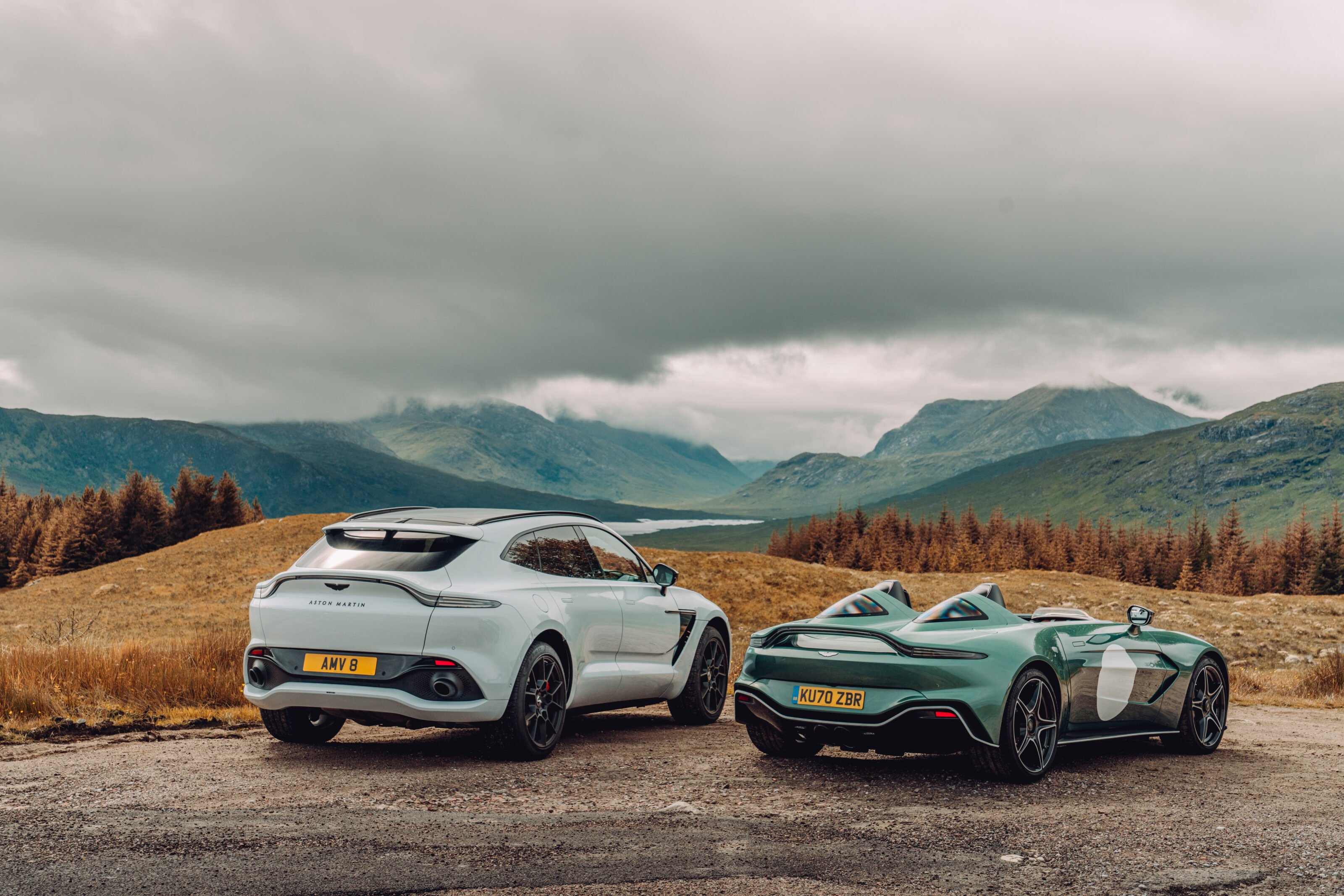
It’s not difficult to see why the DBX is working. Because of various lockdowns and restrictions, wanderlust is strong. So I decided to explore some of Scotland’s best roads. The DBX is the transport there, and back to the UK, as well as around, the plan being to rendezvous with a V12 Speedster DBR1 in Stirling on some epic roads.
It’s a journey of glorious isolation, well, as much isolation as is realistically possible in a car with the potential to draw a crowd as readily as the V12 Speedster does, usefully on some of the longest days of the British summer. The plan is rough, the weather, being Scottish, is equally so, but like Aston Martin itself, there’s a genuine feeling of optimism, so we’re off to enjoy it.
The DBX just chews through the miles heading up from Aston Martin’s Gaydon headquarters to our meeting in Stirling. Expansive, smooth tarmac on the route up, winding through the Midlands, the scenery getting bigger as the Lake District passes and we eventually reach the Scottish borders.
The DBX is the consummate cruiser, power, like that of the Vantage and Aston Martin’s future models, comes from Mercedes-AMG’s 4.0-litre twin-turbocharged V8, its 405kW giving it 291km/h potential and the ability to reach 100km/h in 4.5 seconds.
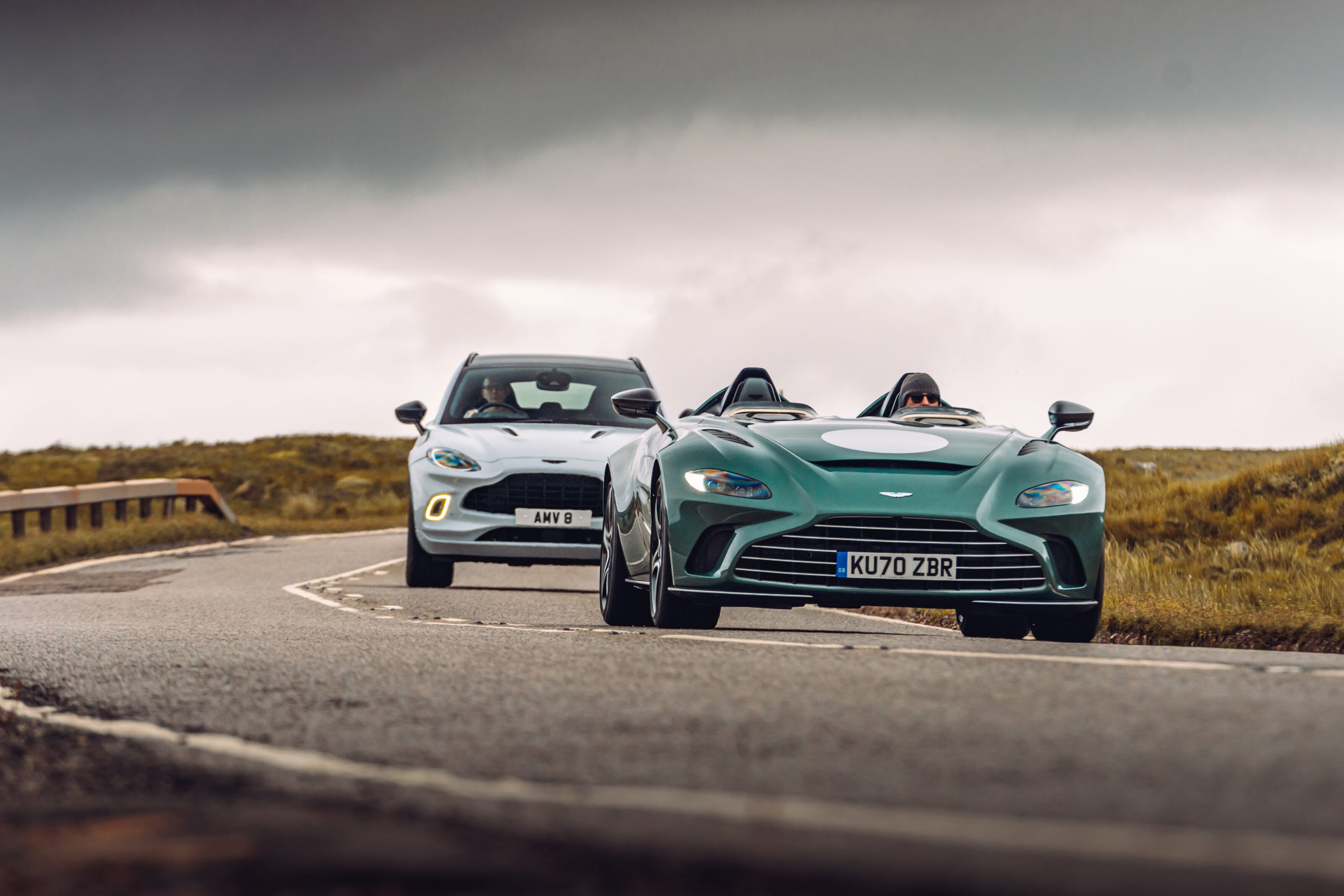
None of that matters here, as it’s barely ticking over at the 110km/h limit, the engine all but inaudible, the massive 22-inch wheels barely creating any road noise or busying the ride. As a machine to while away big miles effortlessly, it’s hugely commendable, desirable even, the cockpit sumptuously appointed. In the best traditions of Aston Martin, it conveys its lovingly hand-crafted finishes, from the neat, contrasting stitching to the fineness of the leather it joins. The DBX interior feels special, as it should given its $357,000 price point and the badge it wears on its sizeable nose.
With the traditional highs, there are the inevitable and familiar lows, as the infotainment and some of the switchgear is bought in. Somewhat unsurprisingly, given Daimler AG’s 20 per cent stake in the British company, these come from Mercedes-Benz. It’s regrettable that even with the closeness of their relationship the Aston is sired with previous generation software to power its infotainment offering.
Moers has promised that will change, having stated that the Aston Martin experience needs to be exactly that, with Aston Martin developing its own HMI (Human Machine Interface). While that’s admirable, it’s also something that, on the evidence of British compatriots McLaren’s attempts to do so, is a task mired in serious difficulty and expense, even to achieve something at a level that’s as good as even what Aston currently offers. There’s nothing wrong with bought-in tech, if it’s done well and it’s the latest generation. Perhaps the company’s efforts here are better spent negotiating earlier procurement of developed systems than setting out to create its own.
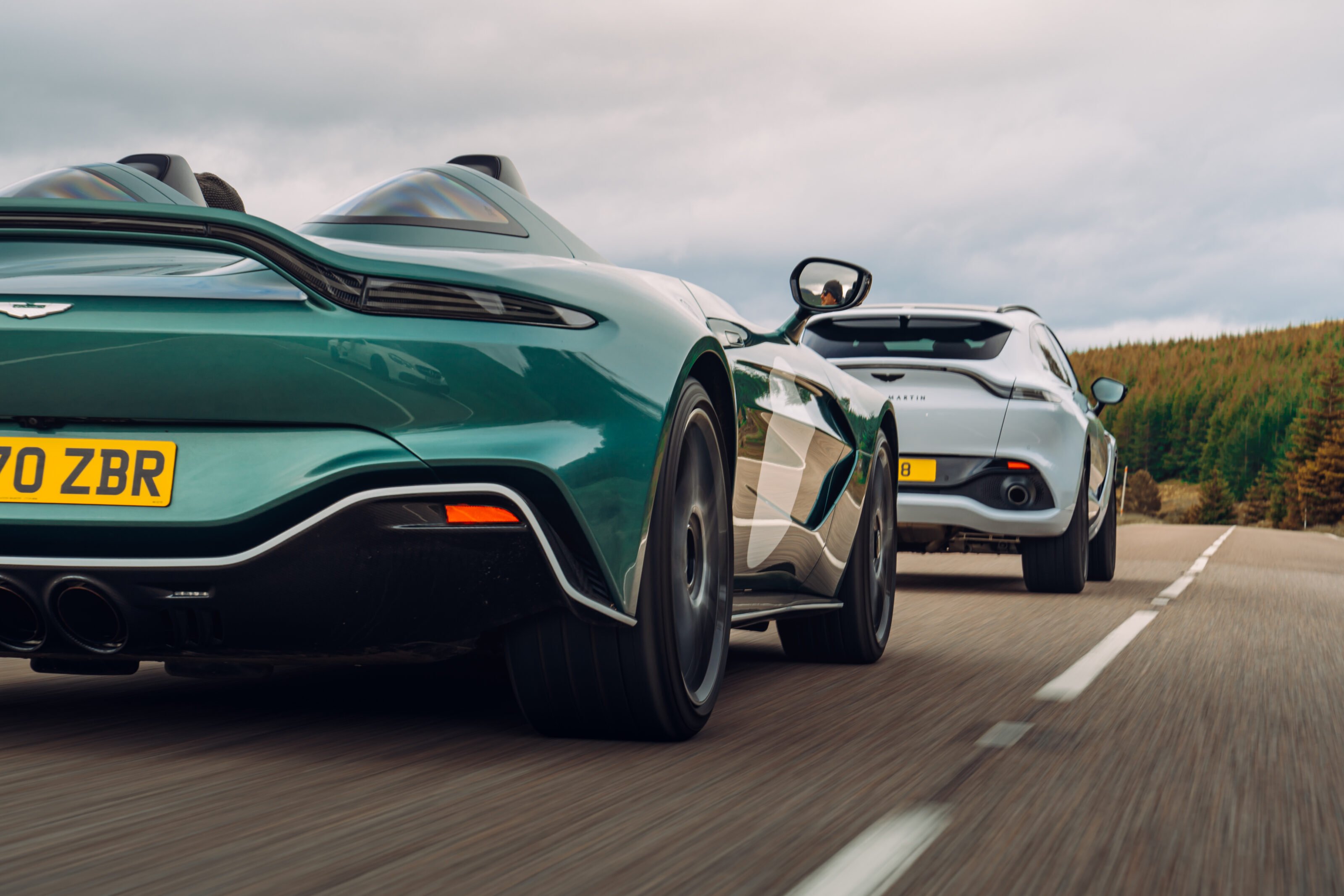
There’s a desire to take even more elements in house, too. Gaydon will feature its own engine shop for the Valhalla’s V8 hybrid powertrain, to which this unit is likely to expand with the product range. That’s in contrast to the V12 in the Speedster, which is built at Aston Martin Engine Plant (AMEP), in Cologne, Germany. That’s a throwback to Aston Martin’s time as a wholly owned subsidiary of Ford and an all too obvious reminder of Aston’s often turbulent past. In the V12 Speedster it’s a 5.2-litre twin turbo, with peak power of 515kW.
The car is something of a constructive greatest hits of Aston’s current model range. There are elements of DBS Superleggera, DB11 and Vantage in the Speedster’s underpinnings, clothed in an entirely bespoke, and undeniably beautiful fully open body. Uncompromising, ridiculous, even, and at AUD$1.5m it’s inexpensive – ludicrous as that sounds – when compared to its similarly non-windscreen alternatives, the McLaren Elva, and Ferrari’s recent Monza SP1 and SP2 twins.
The Aston Martin costs around half that of the McLaren and those Ferraris, and being built in fewer numbers it’s even more exclusive. That Ferrari can sell 500 SP1/2s is indicative of its brand clout, globally, though Aston Martin hasn’t had too much trouble finding homes for the 88 Speedsters it’s built.
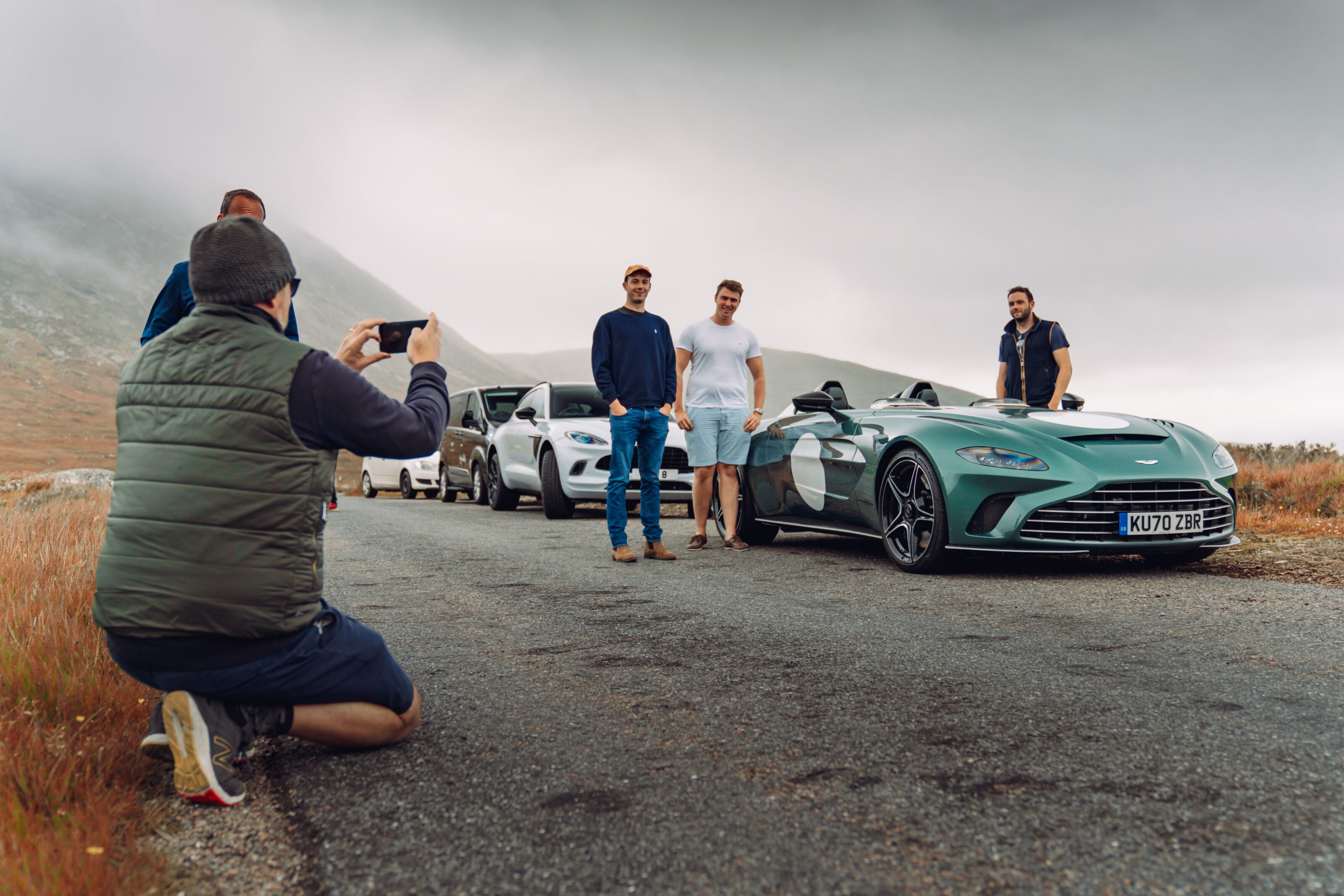
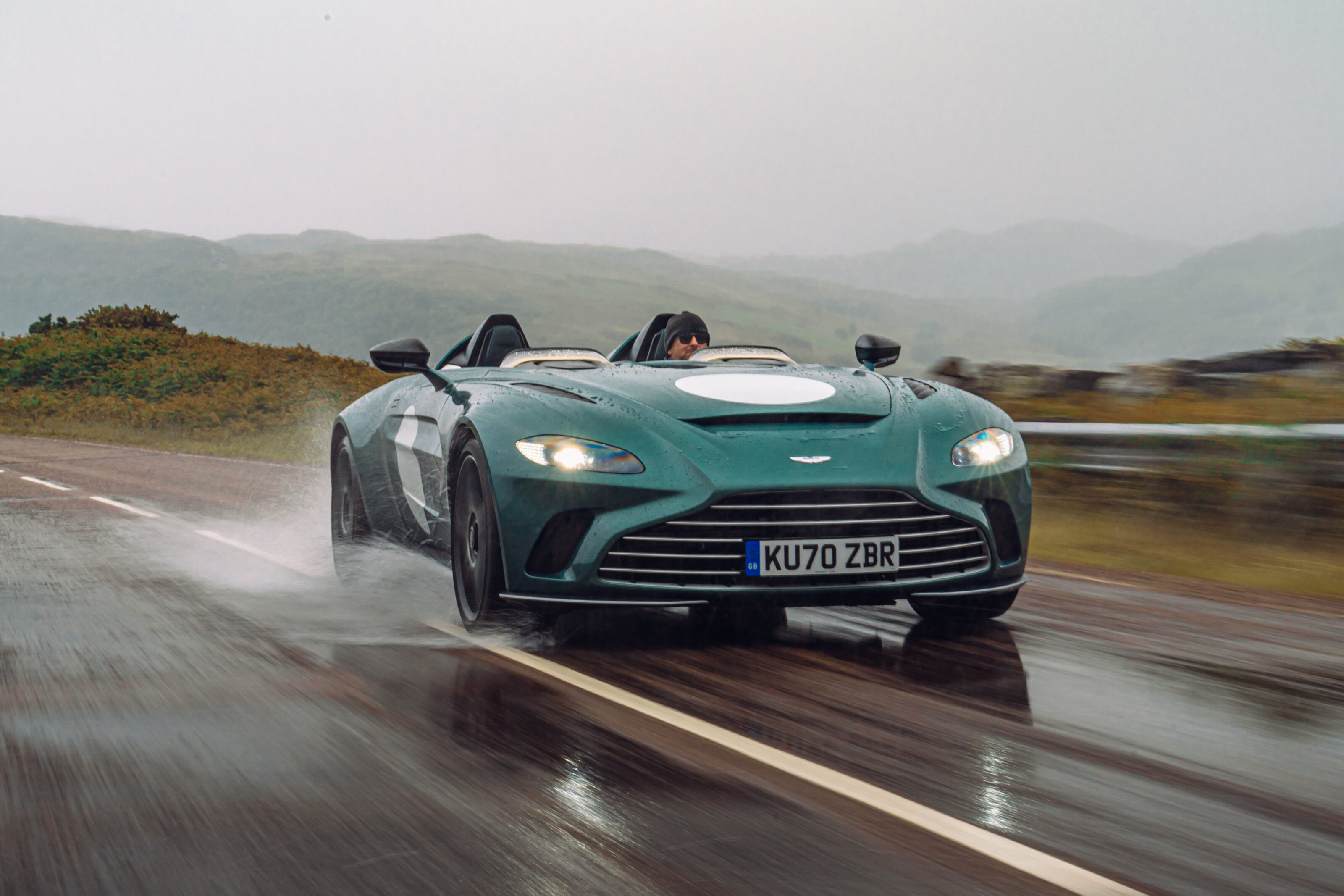
A week of weather forecast watching has done nothing to dampen the enthusiasm for the V12 Speedster, even for something without a windscreen, or, indeed, any protection from the elements at all. There’s a lid in a bag in the passenger footwell, just in case, but a brief drive with it on reveals it’s actually more uncomfortable, the helmet’s larger surface area only increasing buffeting, so it’ll stay in the bag on the floor.
A car cover for Mother Nature’s emergencies is stowed in the rear luggage compartment, so I’ll take the gamble with kicked up road debris or sizeable face-hurting insects. Sunglasses when it’s not raining, ski goggles when it is, a beanie for protection from either, from wind and sun, as opposed to those potential direct hits.
That exposure, so outlandish in concept, is utterly transformative. Visceral barely covers it, taking driving to an altogether different level, where your connection is so much greater with your surroundings.
The rush of the wind howling by does mean the more enticing notes emanating from the V12 engine are all but drowned out, but there’s the occasional rasp and bark echoing around you if you’re reaching for the upper revs and there’s a rock wall, tunnel or tight valley surrounding the road you’re on.
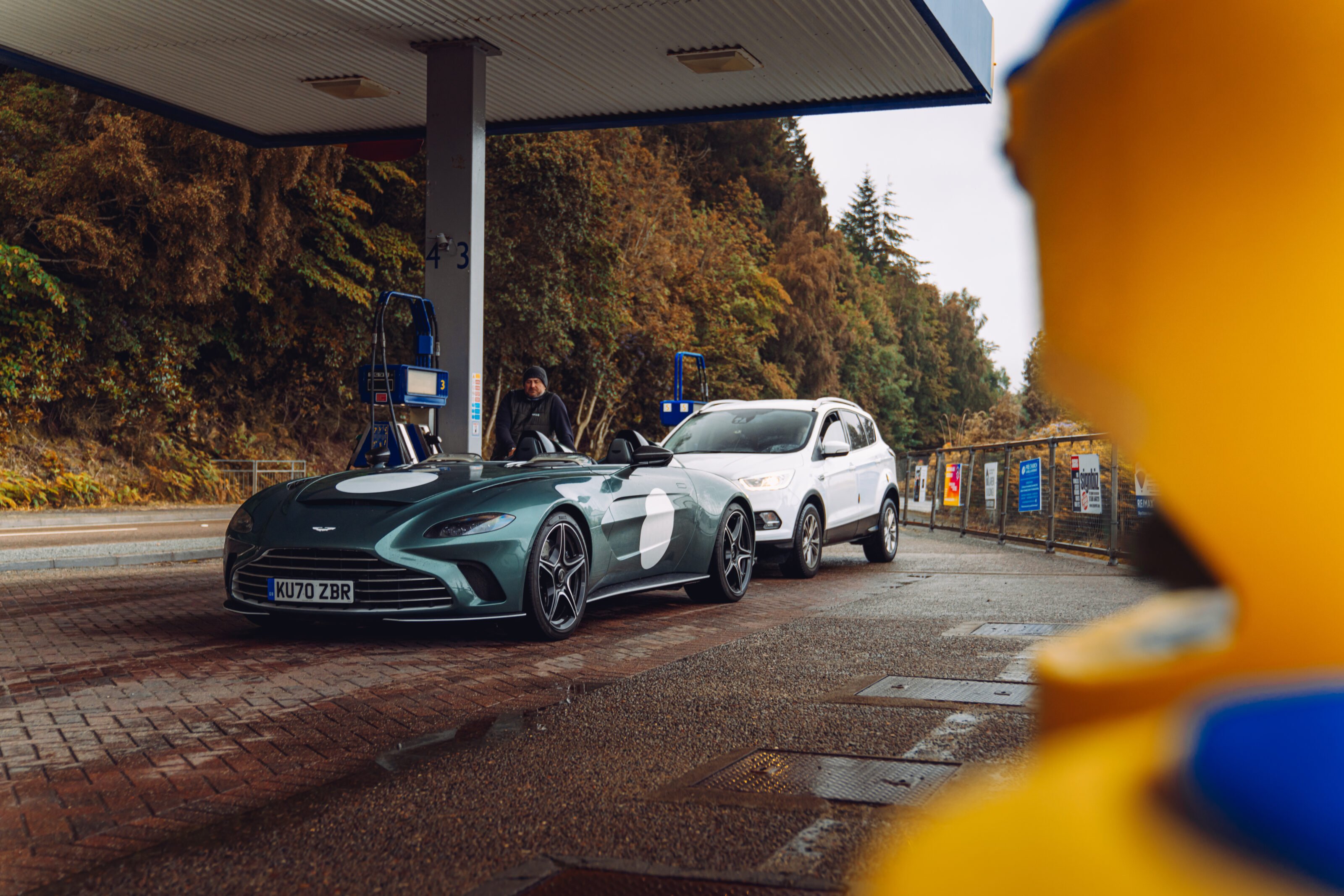
In Scotland there are a few, the journey not covering the all-too-obvious North Coast 500 route, but instead derived from roads I used to travel in my youth. Back then I drove them in a Volvo 240 wagon at breakneck speeds to reach Scotland’s ski resorts in time for the first lift. Had you told a youthful me that I’d be driving these roads many years later in a 515kW fully open Aston Martin I’d have never have believed you. It’s pinch yourself stuff, not least because the roads to Glencoe, Fort William, Ben Nevis, then up to Inverness, before heading up to Ullapool are all utterly captivating, both to drive, and because of the scenery surrounding them.
I’ve done so countless times, and they never look the same. Each visit reminds me I must come again. It’s mind-numbingly beautiful, and yet so quiet. We’ll take a diversion up to the Kylesku bridge, because the roads up and around it are so spectacular and similarly traffic free, before heading back past Inverness again, over to Grantown-on-Spey and heading on the snow road south through the Cairngorm National Park past the Lecht and Glenshee ski areas.
On the map it’s about 840km give or take, though in reality we cover over 1100km, the desire to explore being too great at times, not least because Mark Riccioni’s got his cameras and drone primed and is only too happy to use them with the sensational beauty of Scotland as the backdrop.
Driving at its purest, though not without luxury, the Speedster’s cabin is concept car in its styling, yet is reassuringly production car quality in its execution. In short, it’s excellent. It demonstrates that the tradition of craftsmanship that has long distinguished the company is alive and well.
Moers has paid tribute to Aston Martin’s traditions but recognises the fact that there needs to be a significant step-change in the ethos of the business. He admitted that before he arrived it was a ‘design led’ firm. While that’s not changed, going forward it’ll be in greater collaboration with engineering, the promise being that Aston Martins will always be beautiful, in a way some of its rivals’ more perfunctorily styled alternatives just can’t seem to muster.
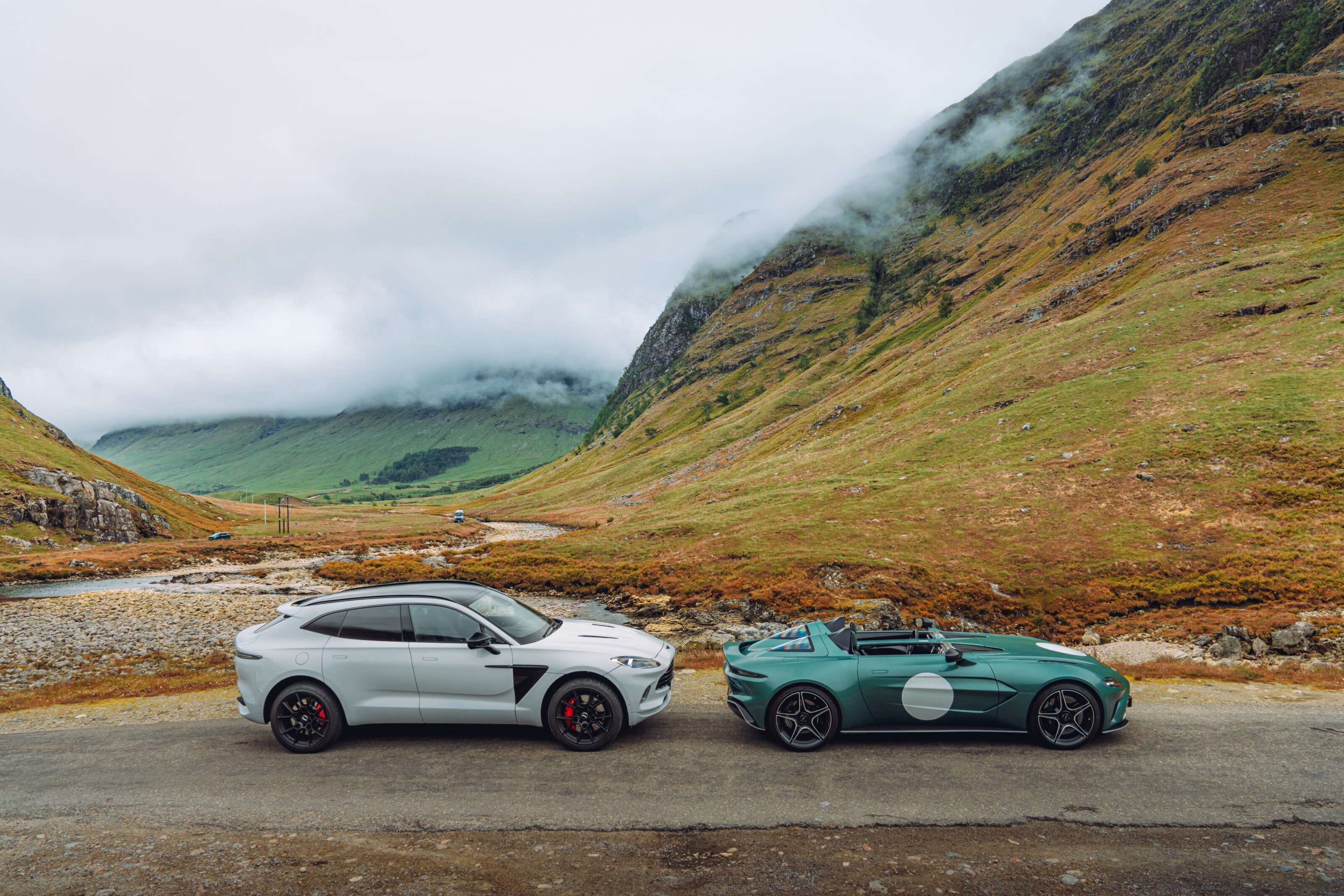
The way the V12 Speedster attracts attention is demonstrative of that. On the road you witness the initial look, the questioning and puzzlement of those occupants in the cars coming towards you. On the rare stretches of road near the cities where there are multiple lanes, passengers wave, smile, and more often than not film and photograph it.
There’s a genuine warmth to the reactions when stopping in it, the Aston Martin brand is one that’s always transcended any negativity, even when exhibited here in its most overt form. That warmth of feeling is something that the current management needs to retain, nurture and hopefully grow.
Weather was always going to be an issue, but like Scotland’s most famous comedian, Billy Connolly, says: “there’s no such thing as bad weather, only the wrong clothes.”
At times that means the ski jacket (and goggles) I’d be wearing if I were sliding down the mountains rather than driving around them. The rain, even when it’s sheeting down, is fine if the Speedster’s moving, which, mercifully with light traffic and sizeable distances between villages and towns, means there are very few occasions when it’s slowed to a dampening crawl.
The scenery’s big here, enjoyed at its best in the open car and not necessarily at speed, the V12 more often than not pulling a big gear and gently cruising, but equally adept when the temptation gets too much and the tempo increases. The DBX isn’t a lumbering companion in either situation. It keeps the wilder V12 very honest, particularly when there’s water between the tyres and the bitumen.
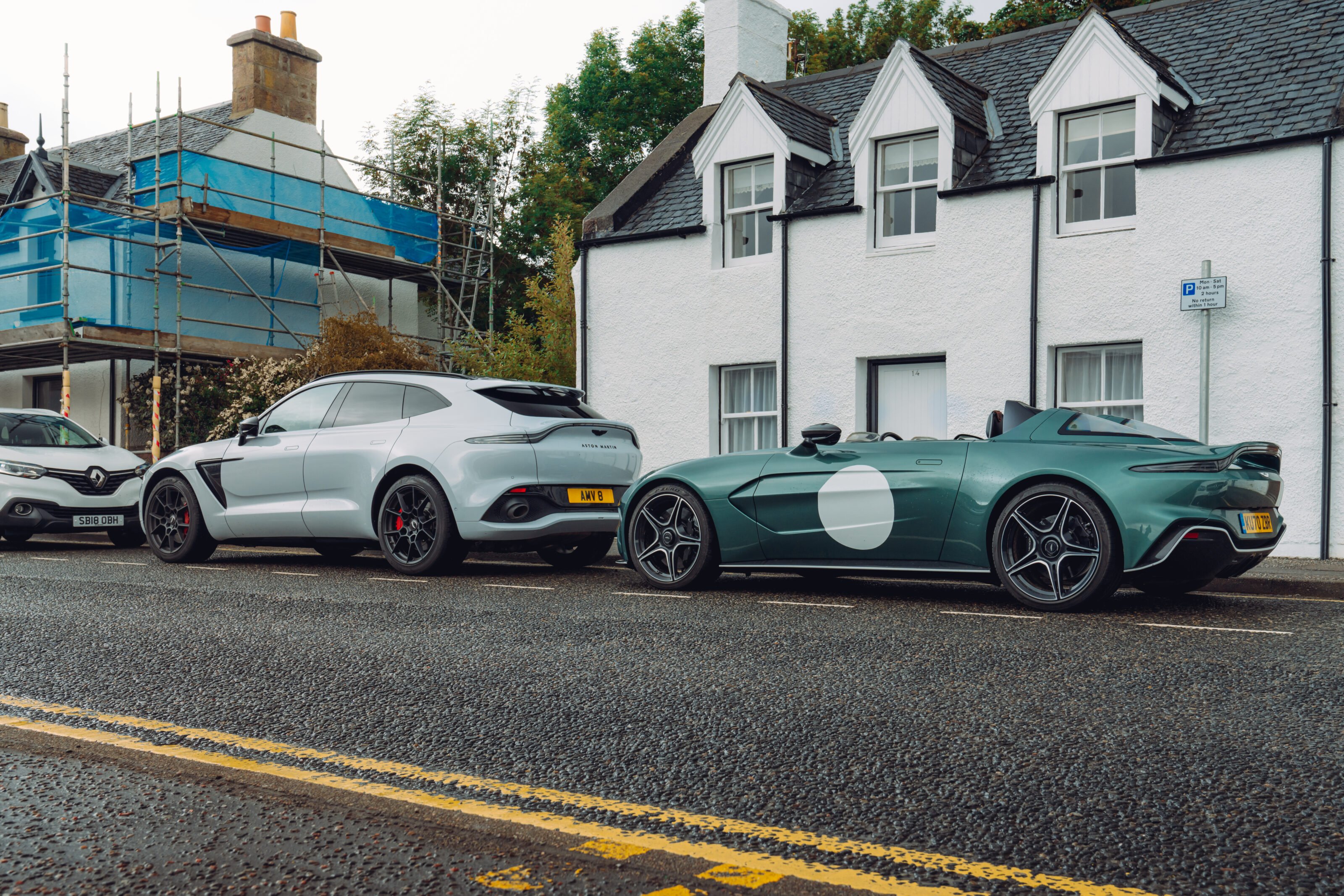
Initially the SUV feels big on tight roads, to the point of where you’d incorrectly imagine unwieldiness, but such is the precision of the steering, and its uncanny ability to feel genuinely sporting in its responses, that it disguises both its dimensions and mass with real ability. Wind the engine up and you hear it, too, that welcome after the largely mute soundtrack from the V12, from the driver’s seat at least.
The V12 Speedster is special, but the DBX’s breadth of ability and the appeal it has stands the company in good stead. As the foundation of a new Aston Martin? Time will tell, but whatever the future holds, there’s a genuine feeling of confidence.
With the DBX, and the creativity and can-do engineering the V12 Speedster demonstrates, there might be a brighter, and crucially, more predictable and stable future for Aston Martin in the coming years.
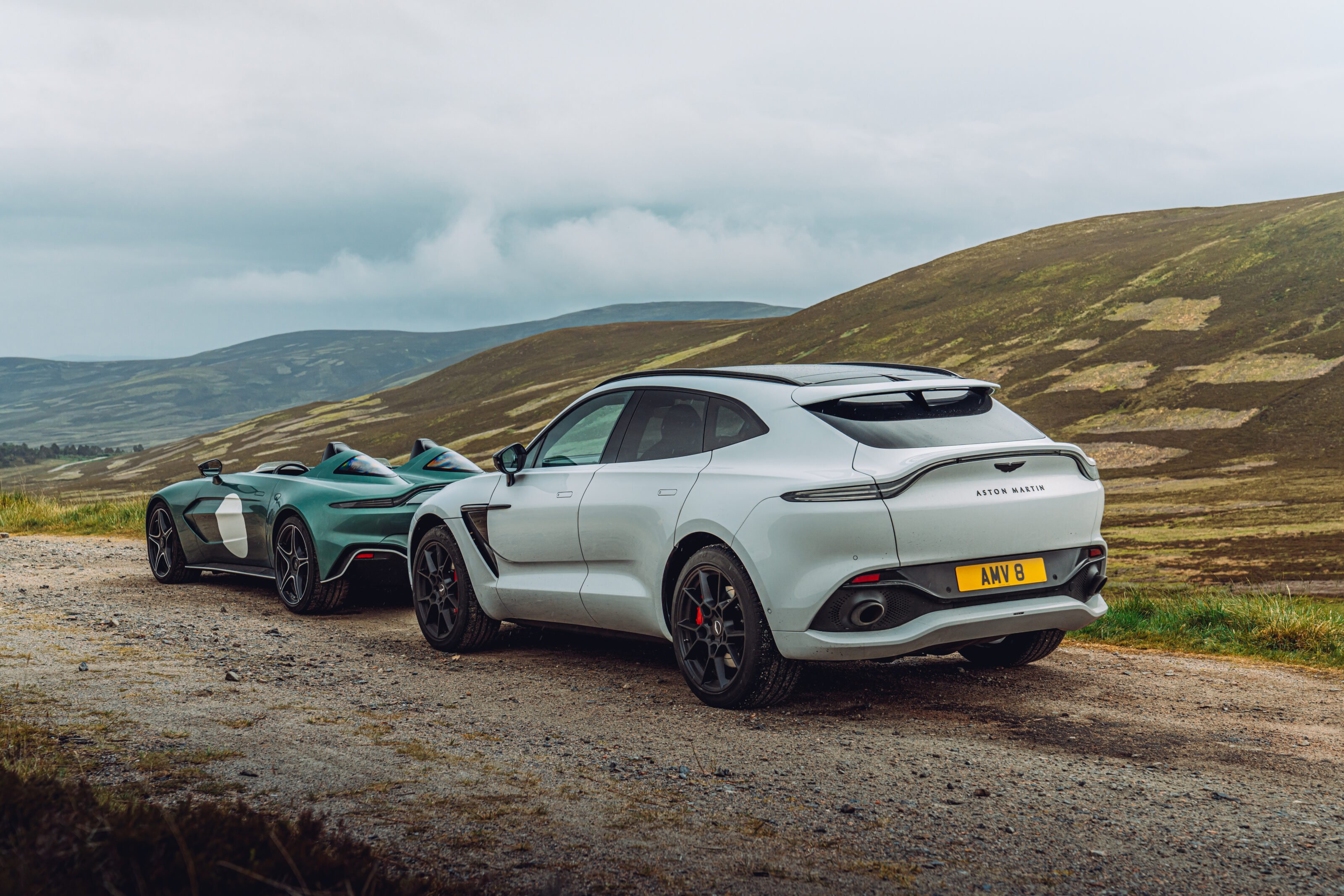
Aston Martin and electrification
The initial plan for Aston Martin was to produce its own V6 engine, but Moers is pragmatic about dropping that plan and retaining the AMG-derived V8 as its internal combustion engine choice.
Speaking at the launch of the Valhalla supercar, Moers said: “we could have invest in a new brand new ICE from scratch, or invest and put your money into the bowl of electrification because that’s becoming mandatory, we decided, okay, we can go for the V8 for that car, and we can establish an electrified, hybrid powertrain, it brings efficiency, it gives us the freedom to drive it purely electric,” adding that an electric-only range of 16-24km is possible.
There’s talk of fully electric cars, but the comments from Aston Martin seem contradictory, some stating around 2025, with others saying not until 2030…
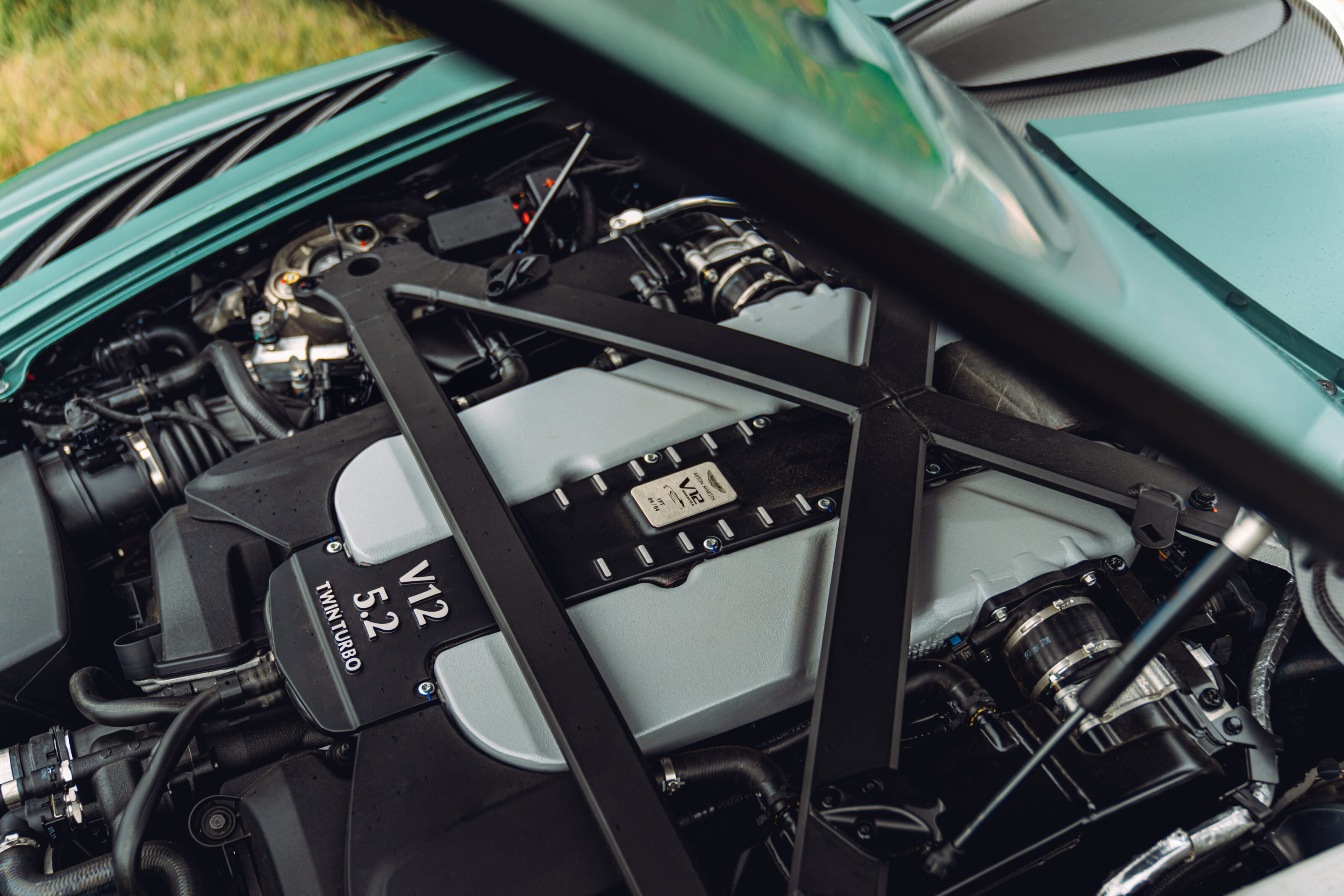
Aston Martin Speedster specs
| Body: | 2-door, 2-seat roadster |
|---|---|
| Drive: | rear-wheel |
| Engine: | 5204cc V12, quad-OHC, 48v, twin-turbo |
| Bore x Stroke: | 89.0 x 69.7mm |
| Compression: | 9.3:1 |
| Power: | 515kW @ 6500rpm |
| Torque: | 753Nm @ 1800rpm |
| Power/Weight: | 292kW/tonne |
| Transmission: | 8-speed automatic |
| Weight: | 1765kg |
| Suspension: | double A-arm, coil springs, adaptive dampers, anti-roll bar (f); multi links, coil springs, adaptive dampers, anti-roll bar (r) |
| L/W/H: | 4524/1989/1194mm |
| Wheelbase: | 2705mm |
| Tracks: | 1665/1645mm |
| Steering: | electrically assisted rack-and-pinion |
| Brakes: | 410mm ventilated discs, 6-piston calipers (f); 360mm ventilated discs, 4-piston calipers (r) |
| Wheels: | 21.0 x 9.5-inch (f); 21 x 11.5-inch (r) |
| Tyres: | 265/35 ZR21 (f); 305/30 ZR21 (r) |
| Price: | AUD$1.5m |
| Pros: | You canu2019t get much more open air; V12 grunt |
| Cons: | Only 88 are being built; must not have hay fever |
| Rating: | 4.5/5.0 |
Aston Martin DBX specs
| Body: | 5-door, 5-seat SUV |
|---|---|
| Drive: | all-wheel |
| Engine: | 3982cc V8, quad-OHC, 32v, twin-turbo |
| Bore x Stroke: | 83.0 x 92.0mm |
| Compression: | 8.6:1 |
| Power: | 405kW @ 6500rpm |
| Torque: | 700Nm @ 2000-5000rpm |
| Power/Weight: | 180kW/tonne |
| Transmission: | 9-speed automatic |
| Weight: | 2245kg |
| Suspension: | double A-arm, air springs, adaptive dampers, anti-roll bar (f); multi links, air springs, adaptive dampers, anti-roll bar (r) |
| L/W/H: | 5039/2220/1680mm |
| Wheelbase: | 3060mm |
| Tracks: | 1698/1664mm |
| Steering: | electrically assisted rack-and-pinion |
| Brakes: | 410mm ventilated discs, 6-piston calipers (f); 390mm ventilated discs, single-piston calipers (r) |
| Wheels: | 22.0 x 10.0-inch (f); 22 x 11.5-inch (r) |
| Tyres: | 285/40 R22 (f); 325/35 R22 (r) |
| Price: | $357,000 |
| Pros: | Dynamically talented for an SUV; plush cabin |
| Cons: | Underwhelming infotainment; rivals are quicker |
| Rating: | 4.0/5 |