UPDATE, April 21: A new 2022 BMW i4 M Sport variant has been revealed in China, debuting a more sporting look for the upcoming i4. We’ve included the only two available images below.
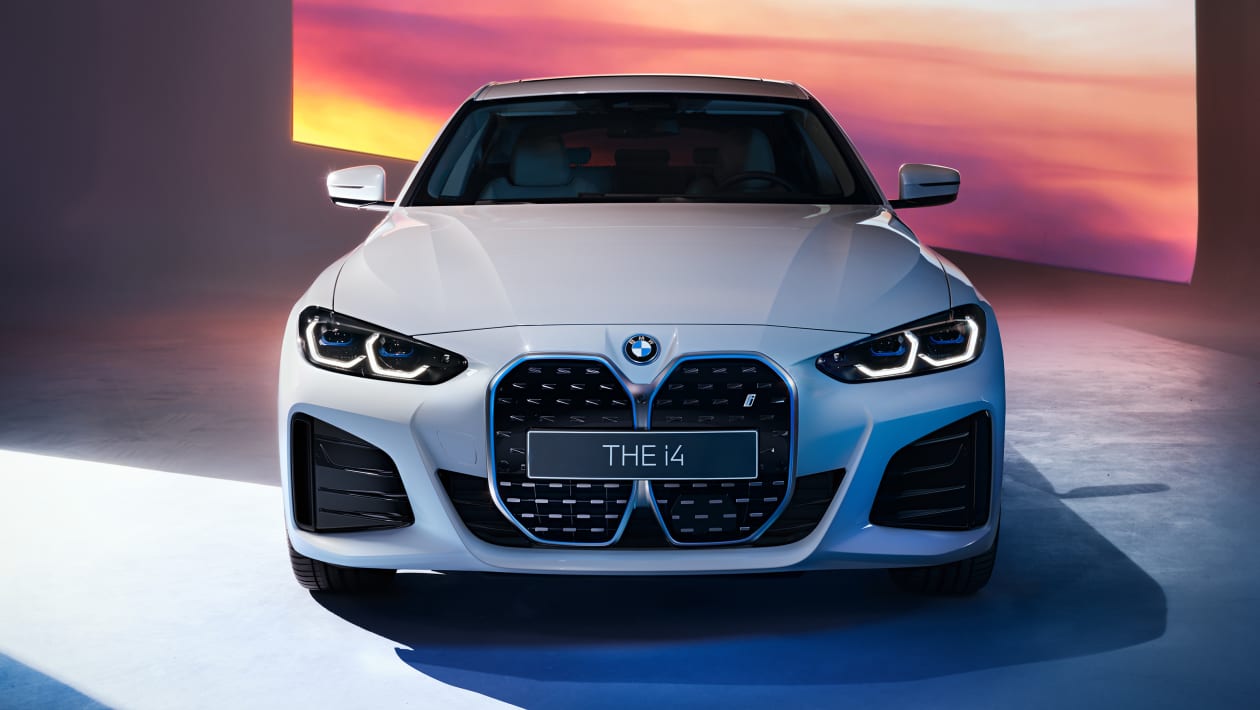
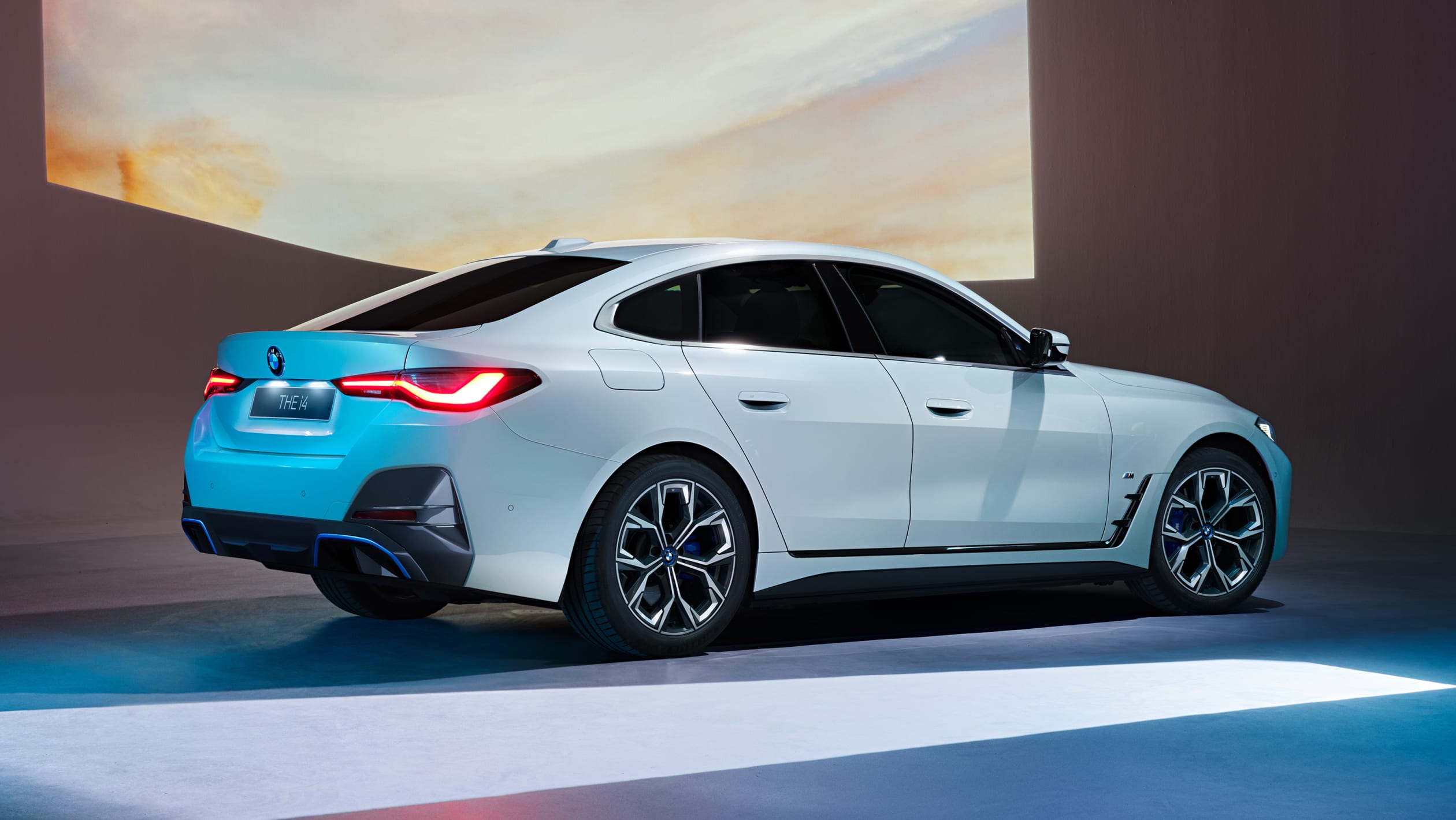
UPDATE, April 16: The 2022 BMW i4 is now available to reserve in Australia, with the company’s local arm confirming deliveries will begin early next year.
Interested buyers can place a $500 deposit to secure their place on the order list for the upcoming new electric sedan.
Local specifications are still to be announced, but it’s expected the i4 will launch in entry-level i4 eDrive35 and mid-range i4 eDrive40 form, along with a sports-focused flagship i4 M50 model.
Buyers can visit BMW’s reservation page to learn more and place their deposit.
UPDATE, March 19: BMW has announced the i4 will be launched globally three months ahead of schedule.
The all-electric four-door, which is being built in BMW’s Munich manufacturing facility, was thought to still be a while away from hitting the tarmac in production-spec, but the EV has now been confirmed for an earlier release.
There’s no word as to why the i4’s launch has been brought forward, but WhichCar can confirm there will be more information about the exciting EV in the coming weeks.
The story to here
March 18: The anticipated BMW i4 electric car has been revealed today, and polarising grille aside, it promises to be Munich’s biggest push yet at taking it to the likes of Tesla and its popular Model 3.
Interestingly, BMW refers to the i4 as a Gran Coupe model, but it isn’t actually called ‘i4 Gran Coupe’.
The fully-electric four-door was unveiled at the Germanic automaker’s 2021 annual conference, ahead of European and American debuts confirmed to occur later this year.
Local timing for the i4 is still to be confirmed, and indeed the brand has yet to announce plans at all – but we’d be surprised if it doesn’t turn up later this year or sometime in the first part of 2022.
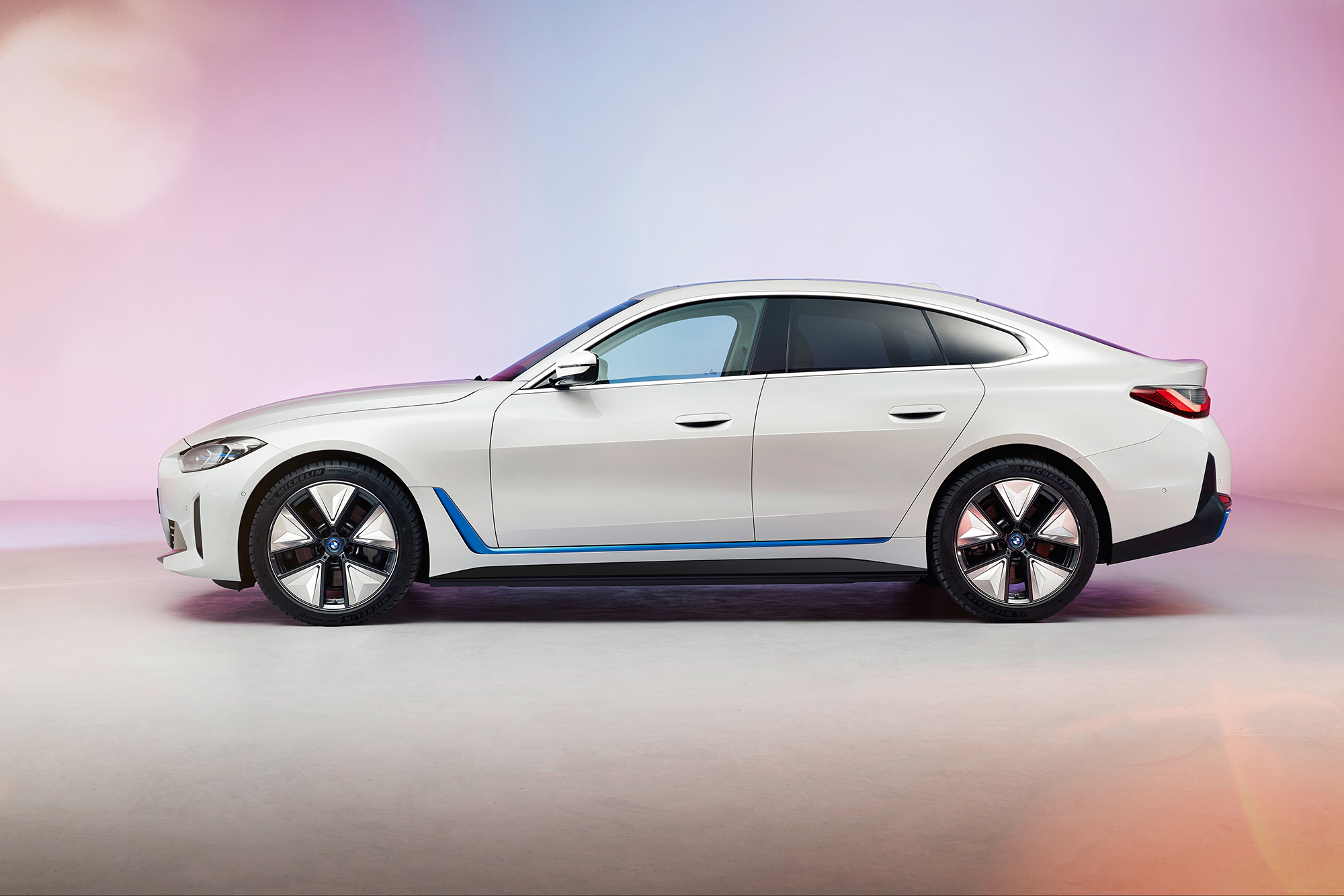
There will be a number of different models available from launch, and BMW has confirmed it is even working on an M Performance variant of the angular four-door. (Whether we’ll see a proper hero M version is unclear.)
The i4 is the fourth model to bear BMW’s electrified “i” badge, with previous models including the groundbreaking i8 and city-friendly i3, and the very recently detailed iX SUV.
As previously reported by WhichCar, the i4 will come equipped with a 80kWh battery pack and utilise the outfit’s fifth-generation eDrive electric motor setup.
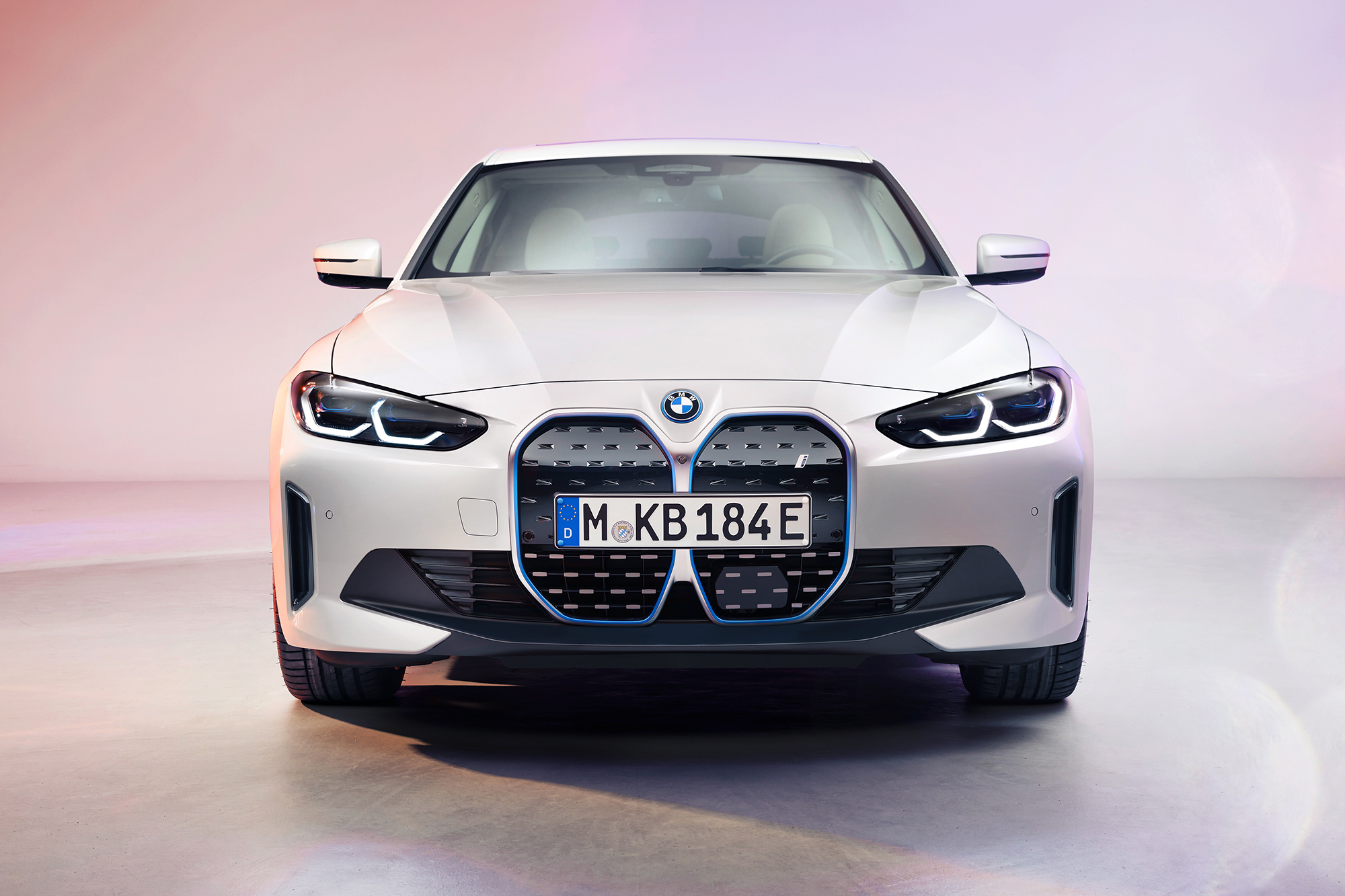
And while BMW is yet to unveil full details about the entire i4 model range, we do know the flagship variant will punch out a heady 390kW and be capable of sprinting from 0-100km/h in around four seconds.
The flagship model will also have a range rated at 590km (WLTP) and, thanks to the entire i4 line-up employing 150kW fast charging, owners can expect to charge the battery pack from empty to 80 per cent in around 35 minutes.
BMW claims this level of fast charging, translated another way, means 100 kilometres of range is added to the EV’s batteries every six minutes.
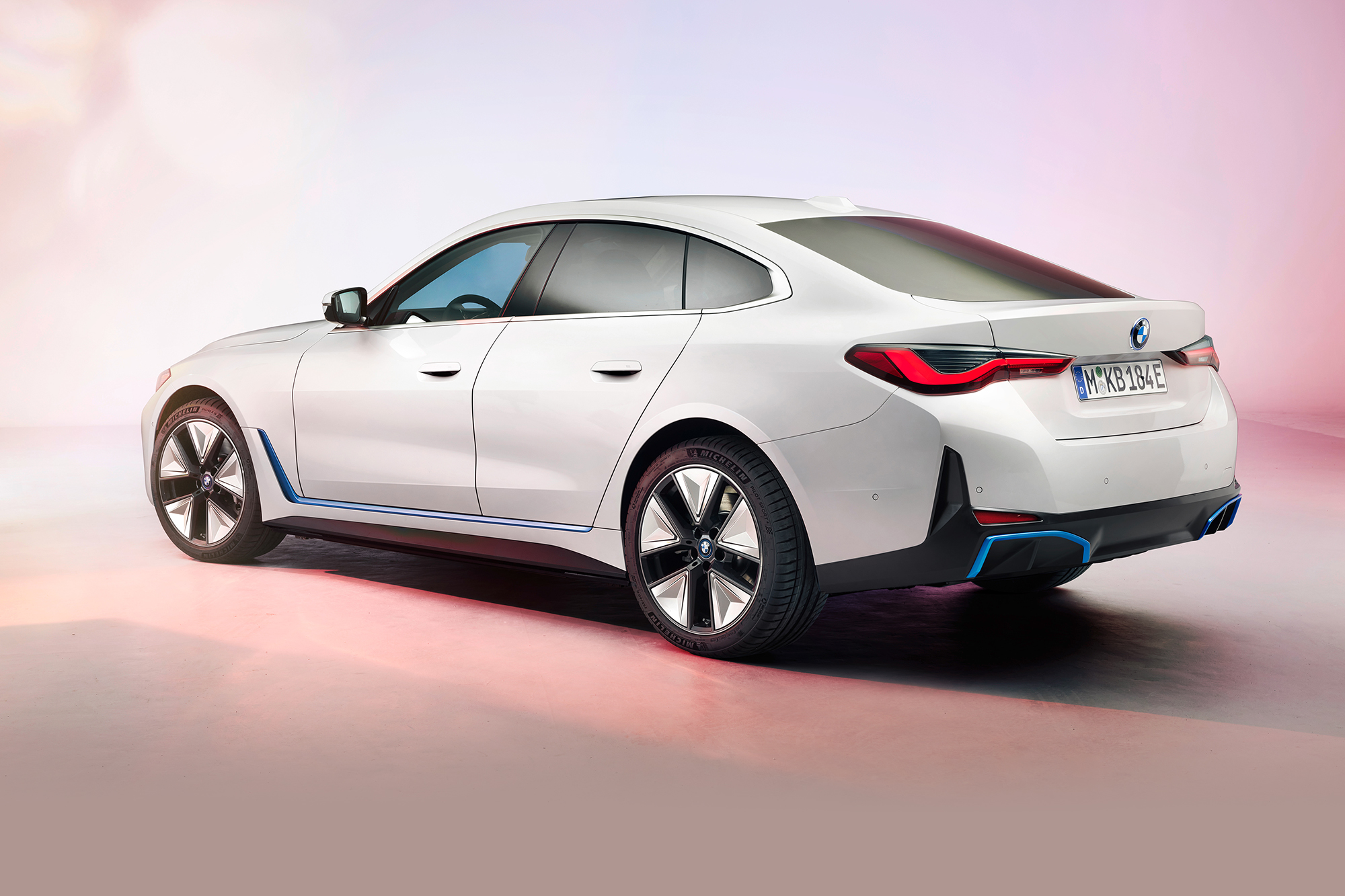
We also don’t have any details about what the car’s interior will look like (expect details in the coming weeks), but it’s safe to assume that BMW’s latest iDrive 8 infotainment system, launched only days ago, will be part of the contemporary cabin.
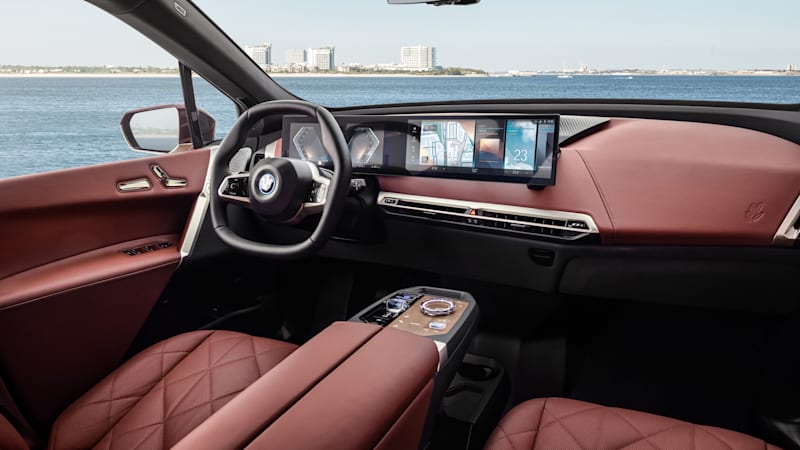
Interior styling could reveal a look similar to that applied in the new BMW iX electric SUV, or a slightly futuristic version of the existing 4 Series dash. Both are shown below.
Pieter Nota, member of the Board of Management of BMW AG responsible for Customer, Brands, Sales, said the i4 will handle like no other car in the segment, and embodies the brand’s push towards further electrification.
“With its sporty looks, best in class driving dynamics and zero local emissions, the BMW i4 is a true BMW. It makes the heart of the BMW brand now beat fully electric,” said Nota.
Will the BMW i4 come to Australia?
There’s no word yet about local pricing or how many different variants of the electrified model we can expect here, but we’ll keep you up to date with the latest information as it becomes available.
MORE: BMW i4 stories MORE: All BMW stories
Pictures of the unmasked 2022 Peugeot 308 have surfaced online ahead of the French hatchback’s full reveal.
The images, which appeared on the Worldscoop forum, provide more rear-end detail than spy shots of a partially obscured 308 that did the rounds last week. These images feature the same attractive green paintwork and the classy new Peugeot logo.
UPDATE, March 18: Peugeot has now revealed its new-generation 308 hatch, with the brand’s new logo taking pride of place. See the story here.
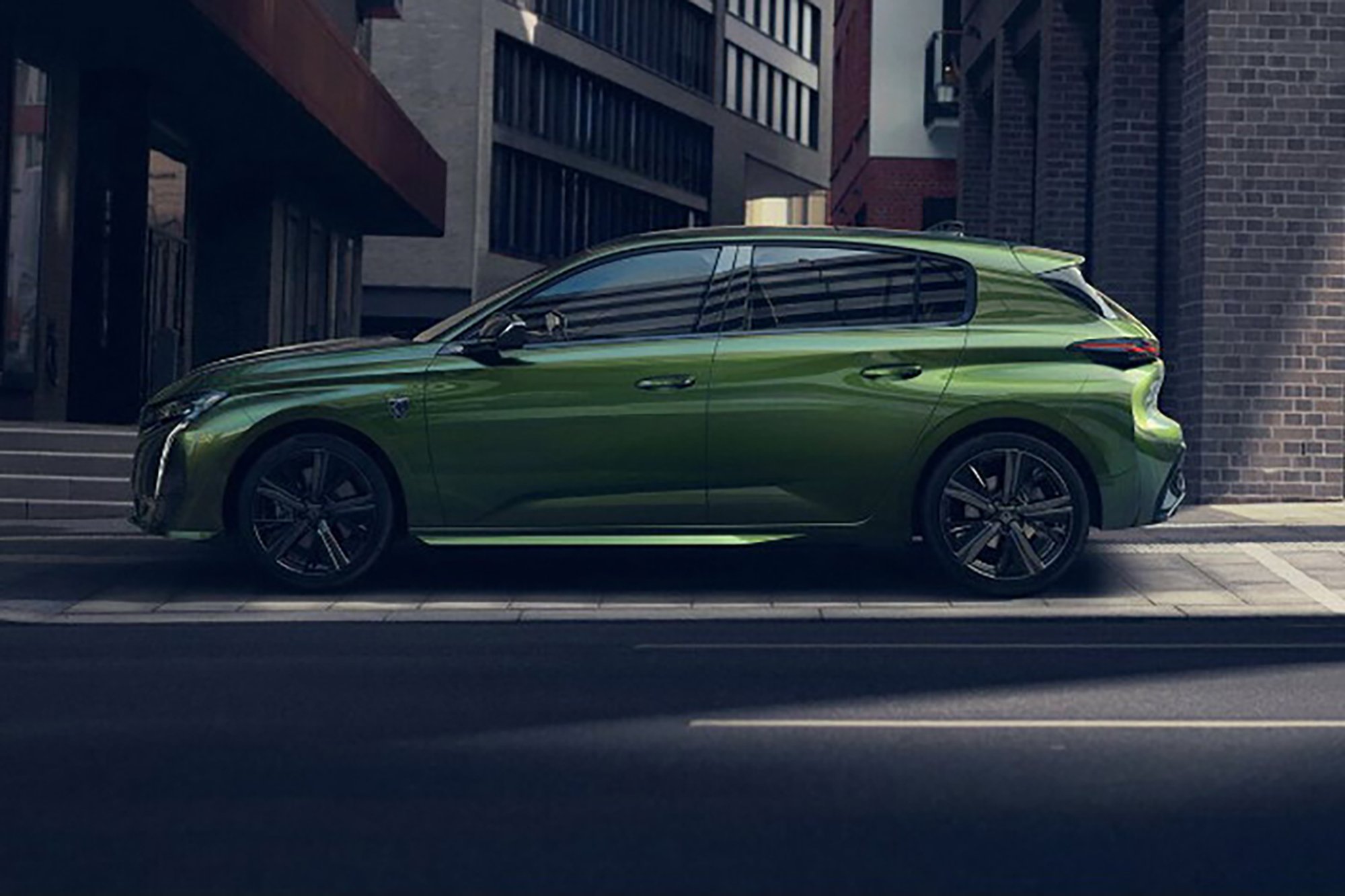
The third-generation Peugeot 308 looks rather voluptuous compared to it straight-bodied hatchback contemporaries, with a pronounced crease that runs from the tip of the LED headlight over the front fender. It flattens out along the doors but reappears over the rear door handle and flows around its bulging rear haunches.
Headlights also flow into the grille and sit above fang-shaped daytime running lights that provide a bolder look, adopted from the smaller 208 hatch.
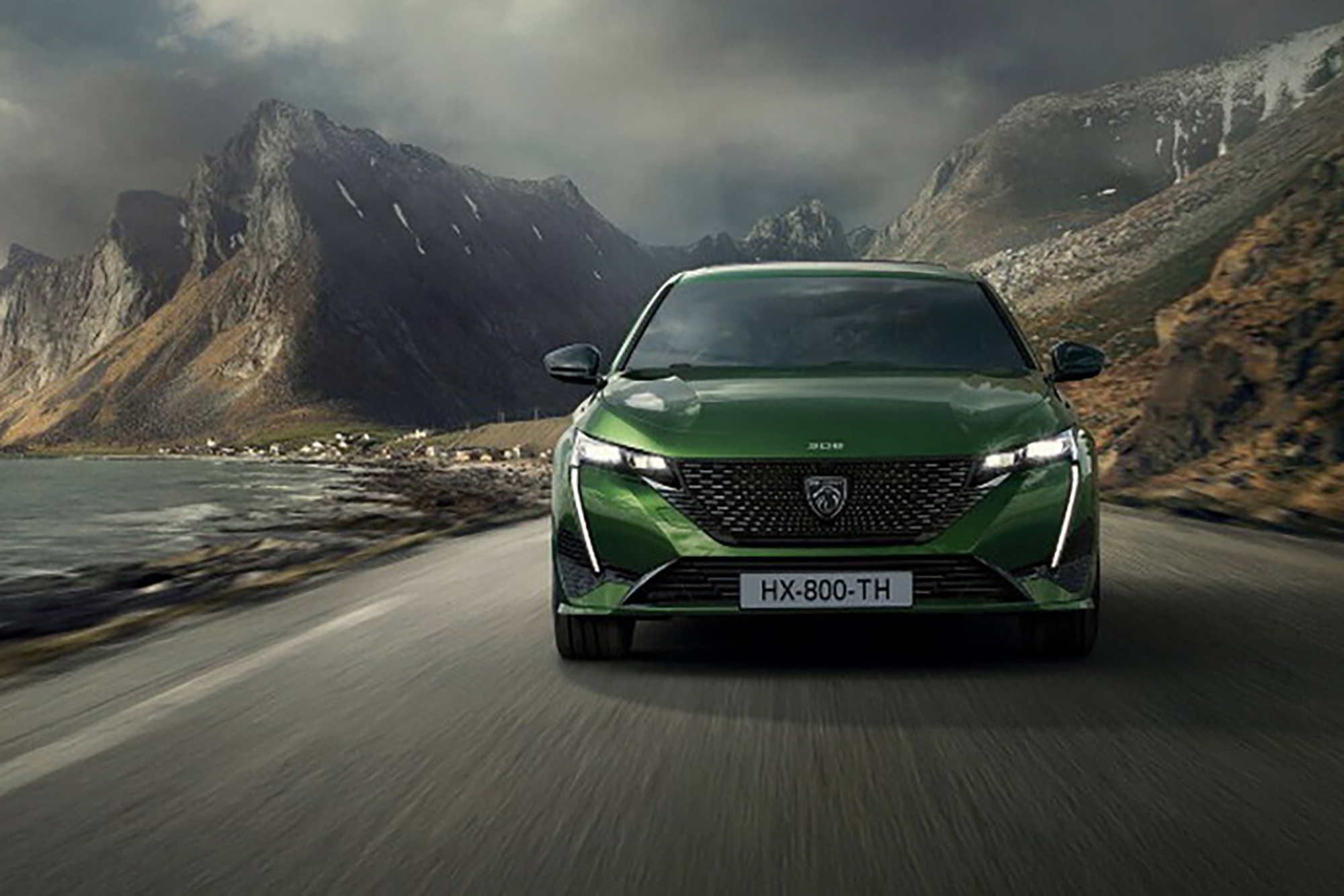
In this SUV-crazy world it’s nice to see an all-new hatchback design emerge – also exciting is talk of a 308 wagon currently undergoing tests.
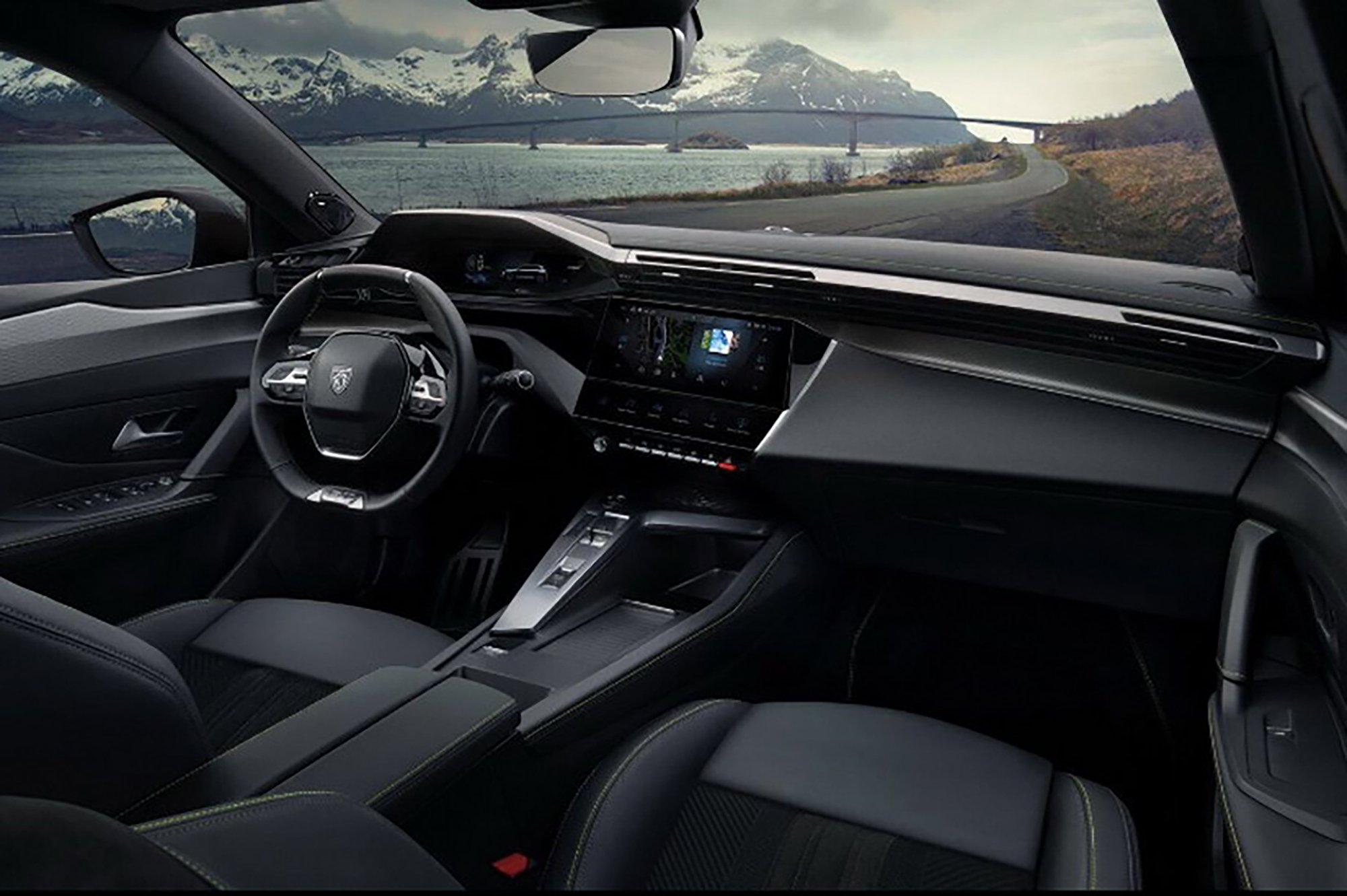
Inside, the new 308 retains Peugeot’s funky i-Cockpit driver display arrangement with small steering wheel and high-set instruments. The premium-looking dashboard sports edgy angular lines and a low-mounted panoramic infotainment screen.
It rides on an updated version of the EMP2 platform, which has been modified to accept electric and plug-in hybrid (PHEV) versions including the pictured car.
While specifications of the 308 PHEV has yet to be revealed, Peugeot already has a potent 265kW/520Nm plug-in powertrain in its Euro-market Peugeot 508 Sport Engineered sedans and wagons that feature a 147kW 1.6-litre turbo engine augmented by an 11.5kWh lithium-ion battery. Twin electric motors have 81kW on the front axle and 83kW at the rear.
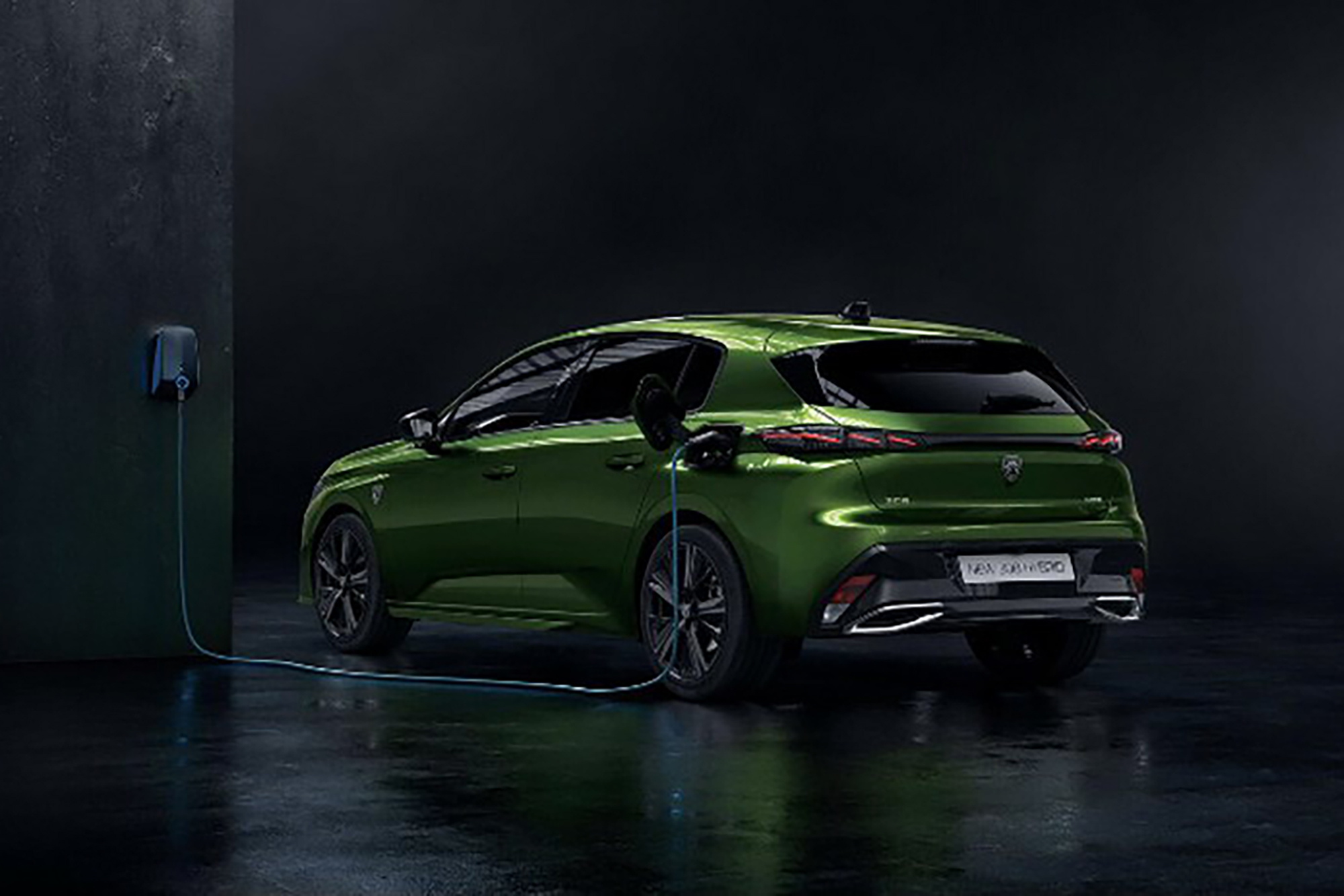
It’s PHEV powertrains like this that will power a 308 hot hatch version under Peugeot’s new PSE performance arm.
Peugeot is expected to unveil the third-generation 2022 Peugeot 308 soon.
GALLERY: Click on the main pic to see more Mk3 Peugeot 308 images
UPDATE, November 2022: ‘Abarth New 500’ electric hot hatch previewed
A first official teaser for the upcoming electric 2023 Abarth 500 – simply dubbed ‘Abarth New 500‘ – has been handed down. Get all the details, and watch the teaser, at the link below.
The story to here
Fiat looking to give cryptocurrency to responsible drivers
New Fiat 500 owners in Europe will soon be able to get paid in cryptocurrency for driving efficiently, according to the Italian marque’s new owners, Stellantis.
By downloading the Fiat app, drivers will have their commute rated from 0-100 and given an “Eco:Score”, and the more eco-friendly they are behind the wheel, the more they’ll get paid.
The cryptocurrency in question is called KiriCoin, and it comes from British-based sustainable tech start-up, Kiri Technologies.
The UK tech firm has been employed by Stellantis to create the bespoke tech system, which would suggest Franco-Italian-American firm may broaden the incentive program to its other brands in the future.
For now, owners of the new 500 will earn 1 KiriCoin for every kilometre that’s driven efficiently, and according to Fiat, with the average driver in Europe covering approximately 10,000km every year, that could equate to €150 (roughly $230 AUD).
Recipients will be able to spend their digital dosh at any web exchange that will take the coin, and drivers that receive the highest scores will also be gifted additional vouchers that can be spent on services like Netflix, Spotify, Apple and Amazon.
According to Fiat, the new all-electric 500 was the perfect vehicle to launch the innovative tech reward initiative.
“To support a program as innovative and ambitious as Kiri, a car like the New 500 really was needed,” Giorgio Neri, new 500 commercial launch manager & Fiat e-Mobility manager, said.
“An object with cult status, a connected icon that has become a mobility project to reward its customers with a cryptocurrency, to be spent in a dedicated marketplace made up of companies from the fashion, accessories and design industries, all of whom have a fervent belief in sustainability.”
MORE: Fiat 500 stories MORE: All Fiat stories
Jaguar Land Rover has been working on an in-car air purification system it claims inhibits up to 97 per cent of viruses and bacteria, including novel coronavirus (SARS-CoV-2).
Still in its prototype phase, the heating, ventilation and air conditioning (HVAC) system utilises Panasonic’s nanoe X technology.
According to Jaguar, the new nanoe X technology “uses a high voltage to create trillions of Hydroxyl (OH) Radicals enveloped in nano-sized water molecules. These OH Radicals denature the virus and bacteria proteins, helping inhibit their growth.
“The OH Radicals deodorise and inhibit allergens in a similar way to create a cleaner air environment for customers.”
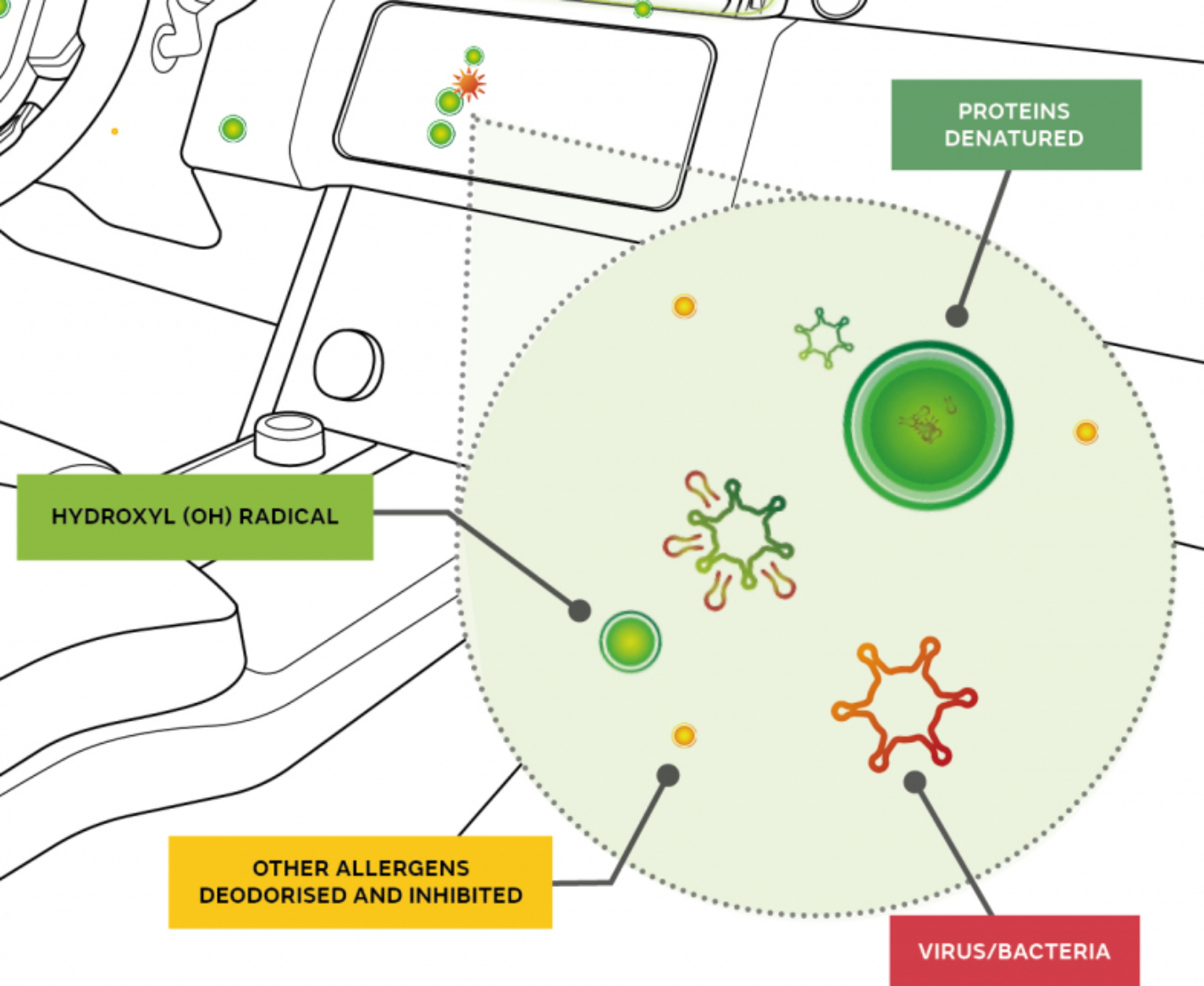
“This technology is a great example of being able to harness the power of nature and puts Jaguar Land Rover right at the forefront of this cabin technology,” Alexander Owen, research engineer at Jaguar Land Rover, said.
“Hydroxyl Radicals are one of the most important natural oxidants in chemistry and have been helping to clean our atmosphere for millennia, removing pollutants and other harmful substances.
“The creation of this technology and our advanced research, is the first step in deploying this scientific phenomenon within vehicle cabins of the future.”
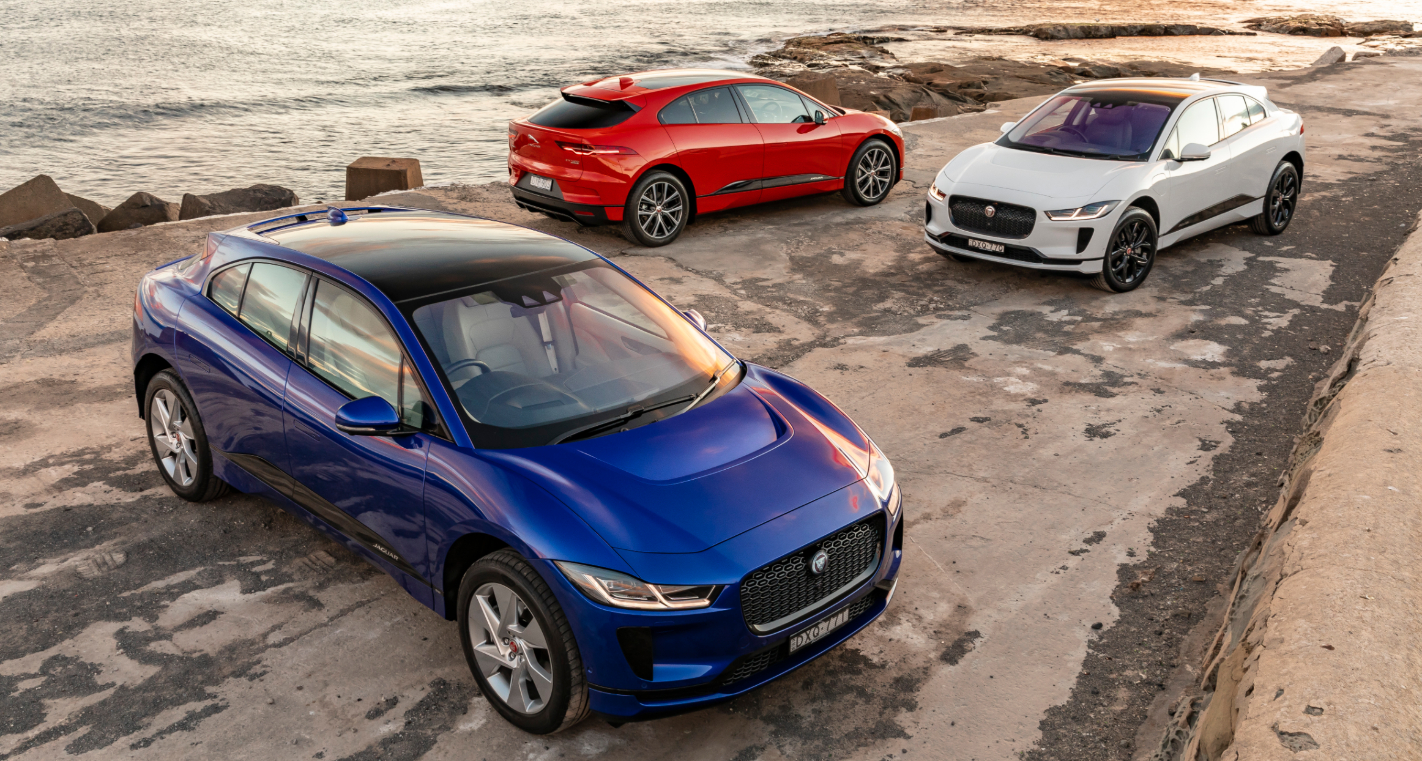
JLR hopes the new cabin air purification system will one day be implemented in all of its vehicles, and currently, models such as Jaguar’s I-Pace and Land Rover’s Evoque and Discovery already offer nanoe technology and PM2.5 filtration.
Cars will also be fitted with a pioneering pre-conditioning feature that will allow owners to pre-sterilise the vehicle before getting in.
The British automaker has partnered with Perfectus Biomed Ltd, a microbiology and virology laboratory, to assess the ingenious tech by conducting novel laboratory-based, sealed-chamber testing, which has been designed to simulate a vehicle’s ventilation system recirculating over a 30-minute cycle.
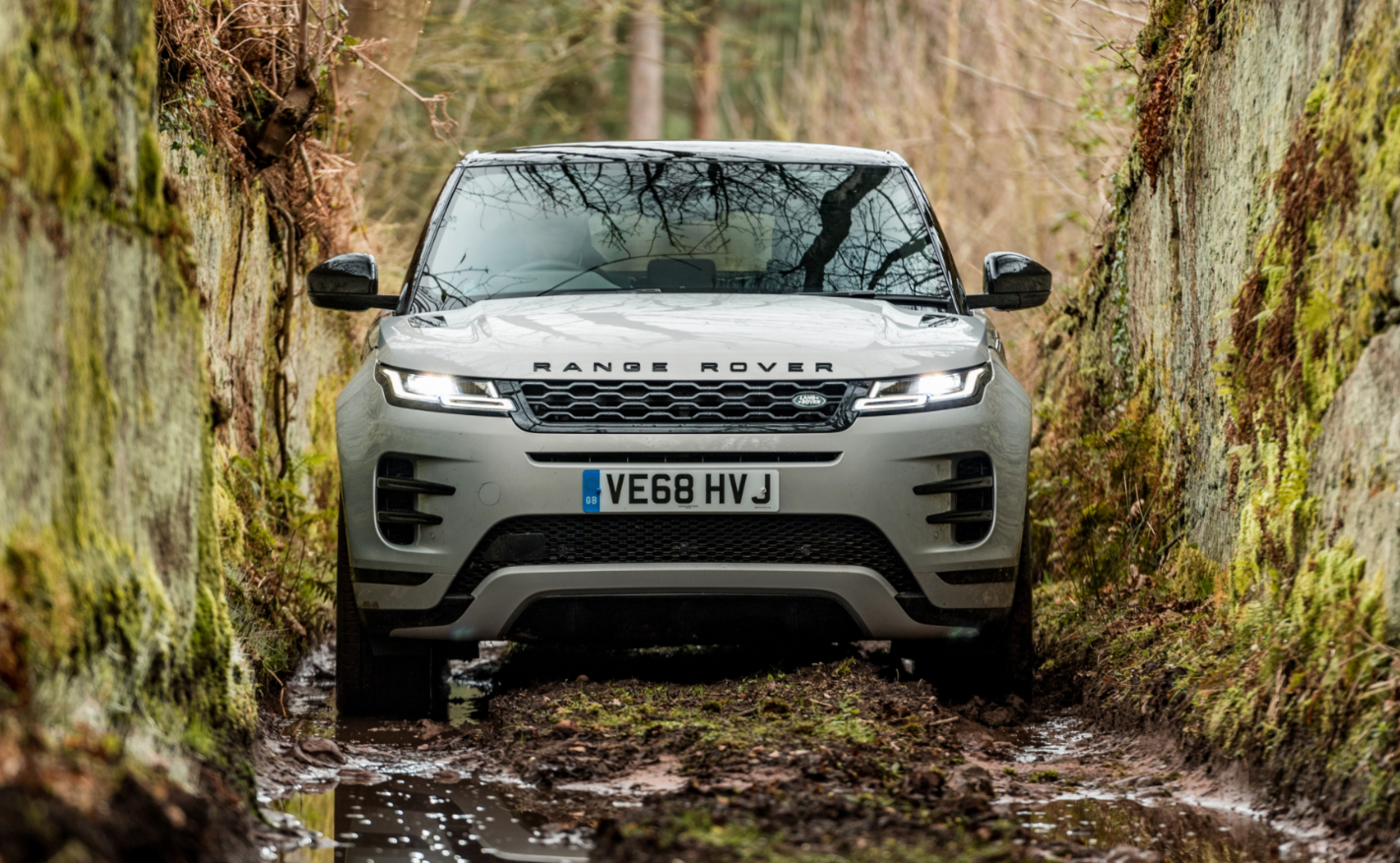
“Our customers’ well being is of paramount importance to us – and now, more than ever, we are all looking for technological solutions that can help take care of our loved ones,” Dr Steve Iley, Jaguar Land Rover’s chief medical officer, said.
“The independent research, developed and commissioned by our expert engineers, is just one of the ways we are working to assure our customers that harmful pathogens are being minimised, providing a cleaner environment for passengers inside the cabin and setting new standards in the ownership experience.”
MORE: All Jaguar stories MORE: All Land Rover stories
Mercedes-Benz Australia has just increased the price of 74 locally-sold models by an average of more than $2300.
It represents the third time since February last year the German manufacturer has raised the prices of locally delivered vehicles.
The cash hike will affect both Mercedes passenger cars as well as certain vans and performance-focused AMG models.
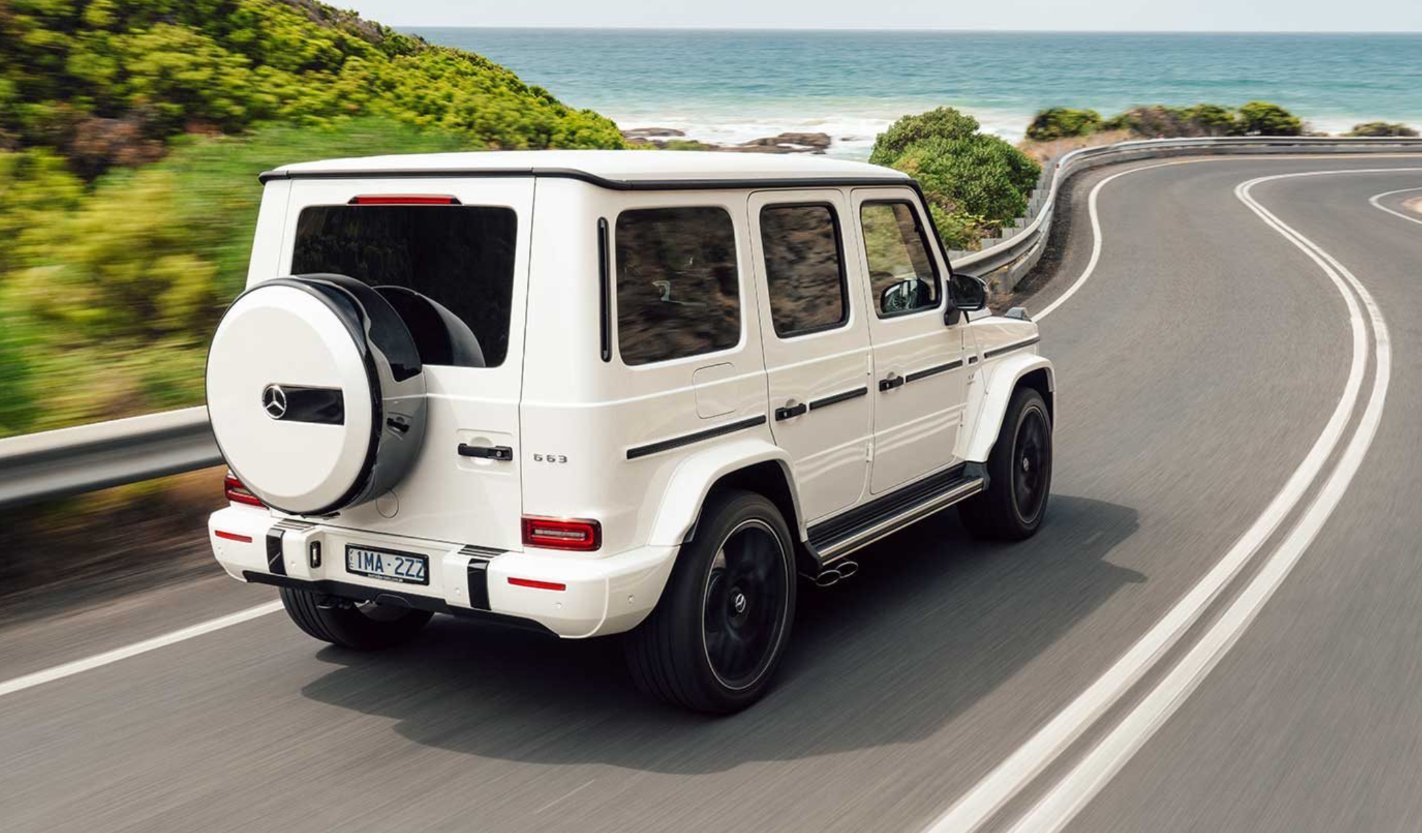
Of the shifting RRPs, the single biggest surge was Mercedes-AMG’s popular G63 performance SUV, which saw its sticker price increase by more than $30,000 to $289,900.
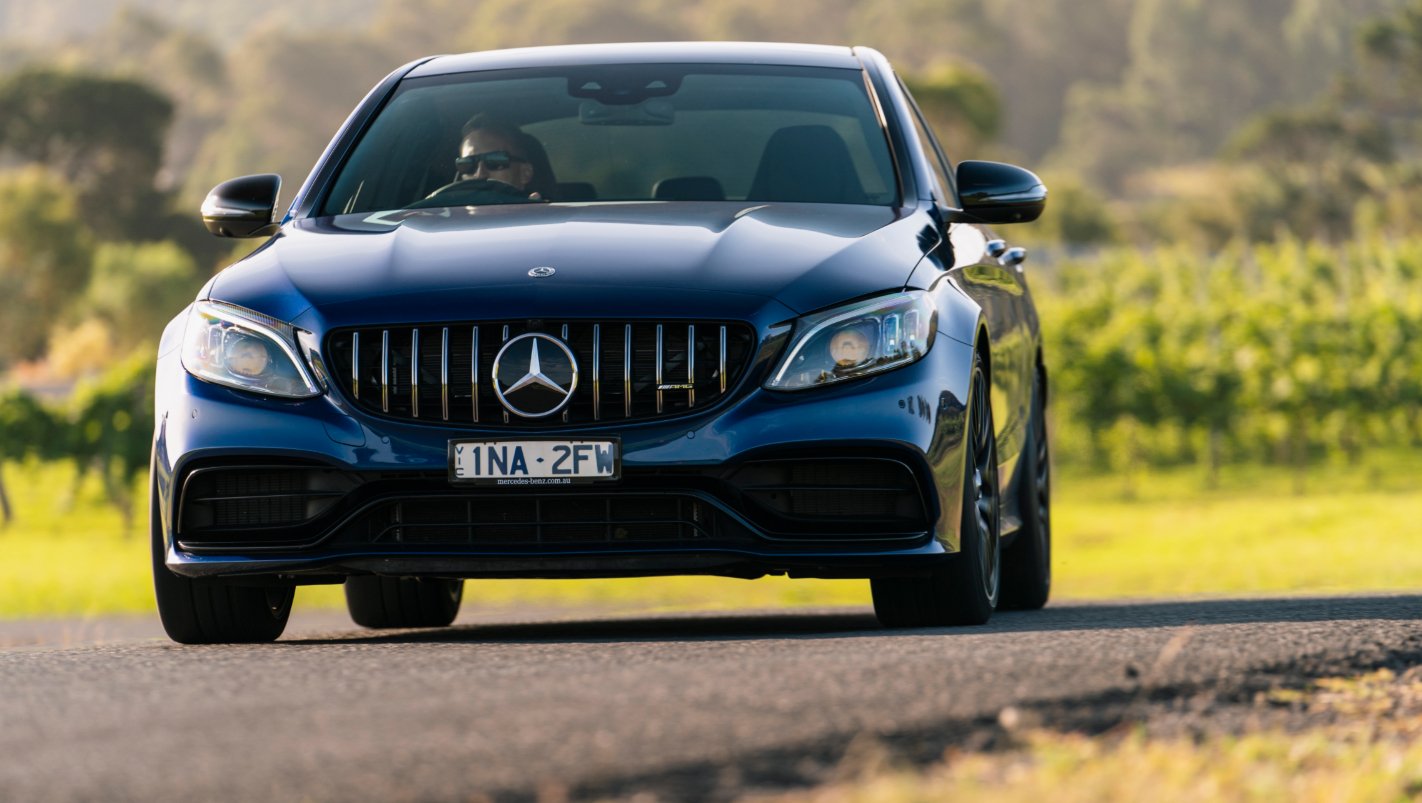
Other price rises include the Vito 119 LWB van (up $6700), Marco Polo Activity van (up $4130), the AMG E63 S sedan (up $3500) and the popular AMG C63 S coupe, sedan and wagon (all up by $2465).
Only two models in Merc’s model line-up saw their retail price drop – the AMG GLE 53 coupe (down $5300) and the AMG GLE 53 wagon (down $6635).
Speaking about the price increases, a spokesperson for Mercedes-Benz Australia said the price rises were made to account for a number of different reasons.
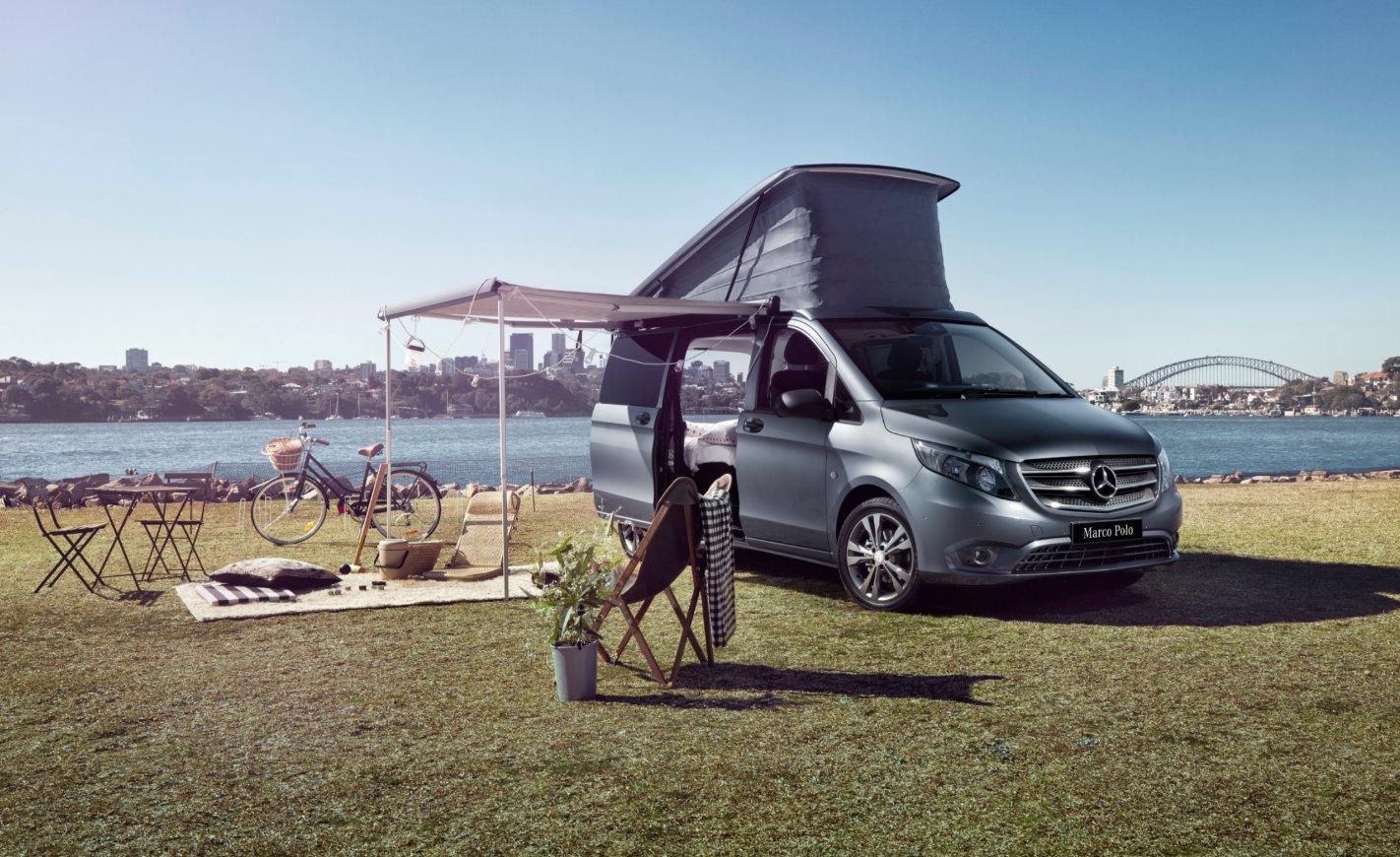
“Increases have been applied across various models in the Mercedes-Benz range to adjust for several factors, including Consumer Price Index (CPI) movement and exchange rate instability,” the spokesperson explained.
“Pricing and specification of vehicles is reviewed from time to time, and any adjustments are applied to variants individually based on different factors.”
When asked about the substantial price increase of the AMG G63, the spokesperson added that due to the global demand for the performance SUV, a price increase was needed in order to ensure its ongoing availability in the Australian market.
MORE: All Mercedes-Benz stories MORE: All Mercedes-AMG stories
Bentley is cooking up something special, promising the “most capable, performance-focused Bentley yet” in the form of its Continental GT Speed.
The British marque released a teaser overnight to build hype around its launch next week, scheduled for March 23. Not much can be seen from a shadowy profile teaser photo, but it’s the accompanying video clip that has us excited.
Sounding very aggressive with a throaty, crackling exhaust, the Continental GT Speed is expected to follow previous high-performance Bentleys by using a wicked-up version of the company’s 6.0-litre twin-turbo W12 engine.
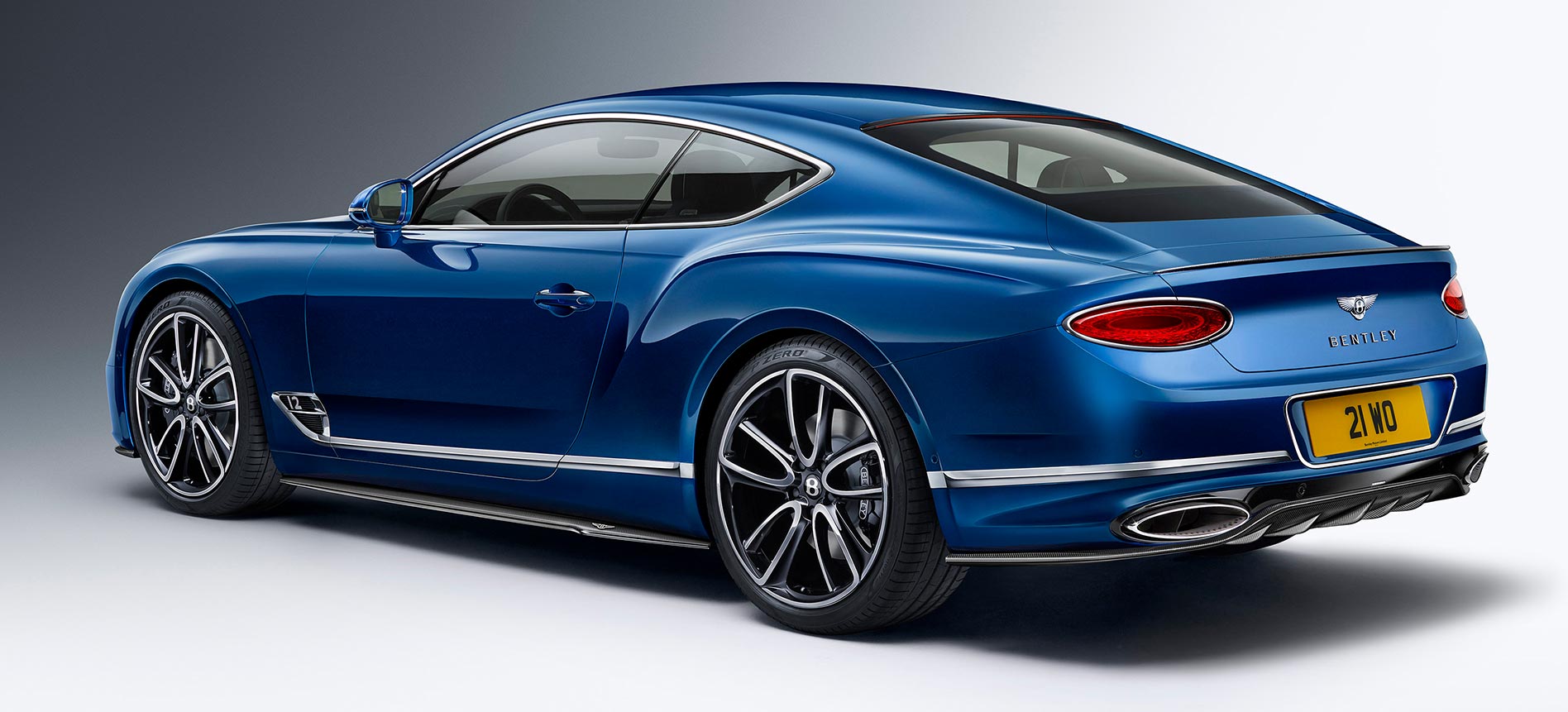
‘Speed’ versions typically up the stakes in the sports department – somewhat of a departure from Bentley’s luxurious modus operandi.
Bentley says it will feature “highly advanced chassis technology” so we expect specific changes to this hi-po version’s ride and handling too.
That said, Bentley has assured that it won’t suffer “compromise to comfort or luxury.”
Expect to see small styling enhancements to ensure the Continental GT Speed stands out from its regular Continental stablemates.
Bentley CEO throws down hybrid gauntlet to politicians
This will likely be one of the last non-hybrid petrol-powered performance Bentleys – the brand has announced its intention to go all-electric by 2026.
As for everything else, we won’t know more until it makes its debut next week. Stay tuned as we bring you the full reveal.
Volkswagen, owner of hypercar maker Bugatti, has announced that Porsche will be taking charge of the French marque and overseeing a potential partnership between Bugatti and EV manufacturer Rimac.
The rumour mill had been swirling for months with stories that Rimac was going to take a controlling portion of Bugatti, as part of a larger accord between Porsche and the Croatian EV brand.
And after last week’s announcement that Porsche had invested further into Rimac, pouring an additional $108 million into the EV firm’s coffers and increasing its stake in the company to 24 per cent, the rumour did seem founded.
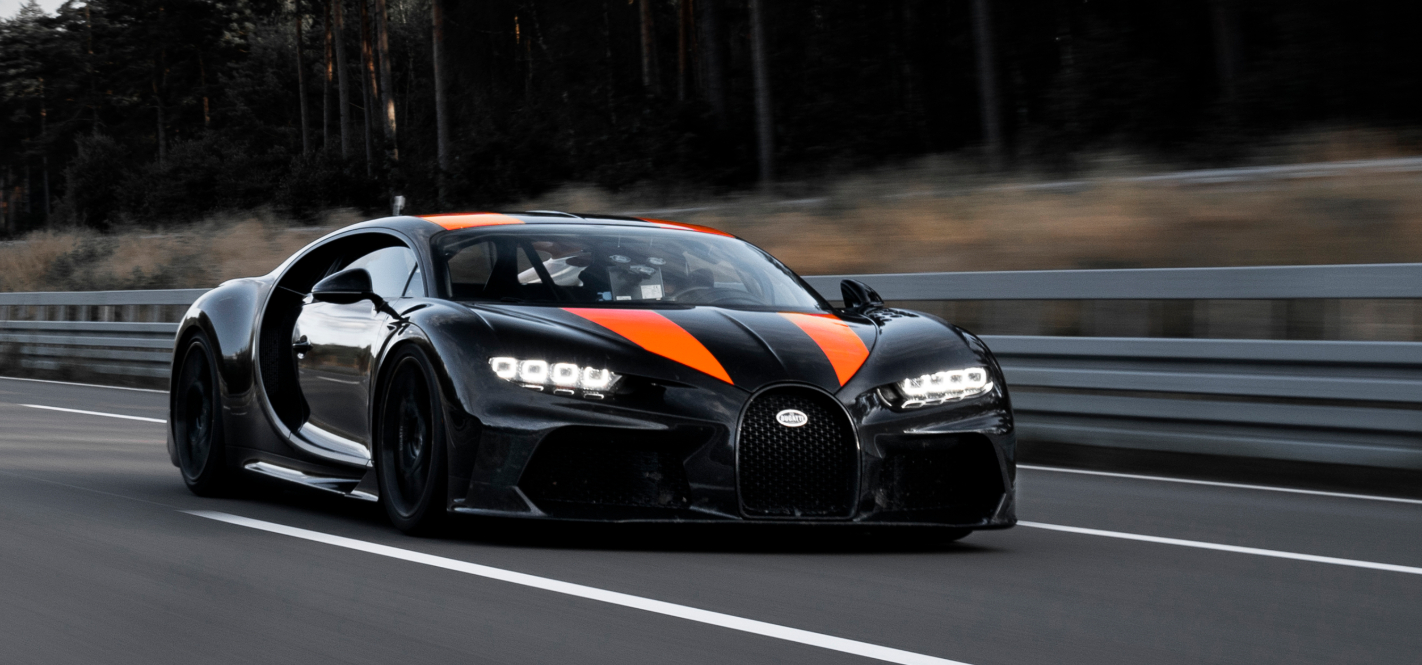
Now though, there’s finally been some clarity around the deal. VW Boss Herbert Diess confirmed in the company’s annual media conference that Rimac will not be purchasing a controlling stake in the company, but rather Porsche will be overseeing a potential collaboration between the two brands.
“Transferring (Bugatti) to Rimac isn’t true,” said Diess.
“Porsche is currently preparing a partnership that’s going to be under discussion with Rimac, and Porsche will be taking care of that.
“The whole thing isn’t yet finalised. What we want to do is transition responsibility of Bugatti to Porsche, and Porsche in all probability will establish a joint venture with Rimac, with a minority share of Porsche.”
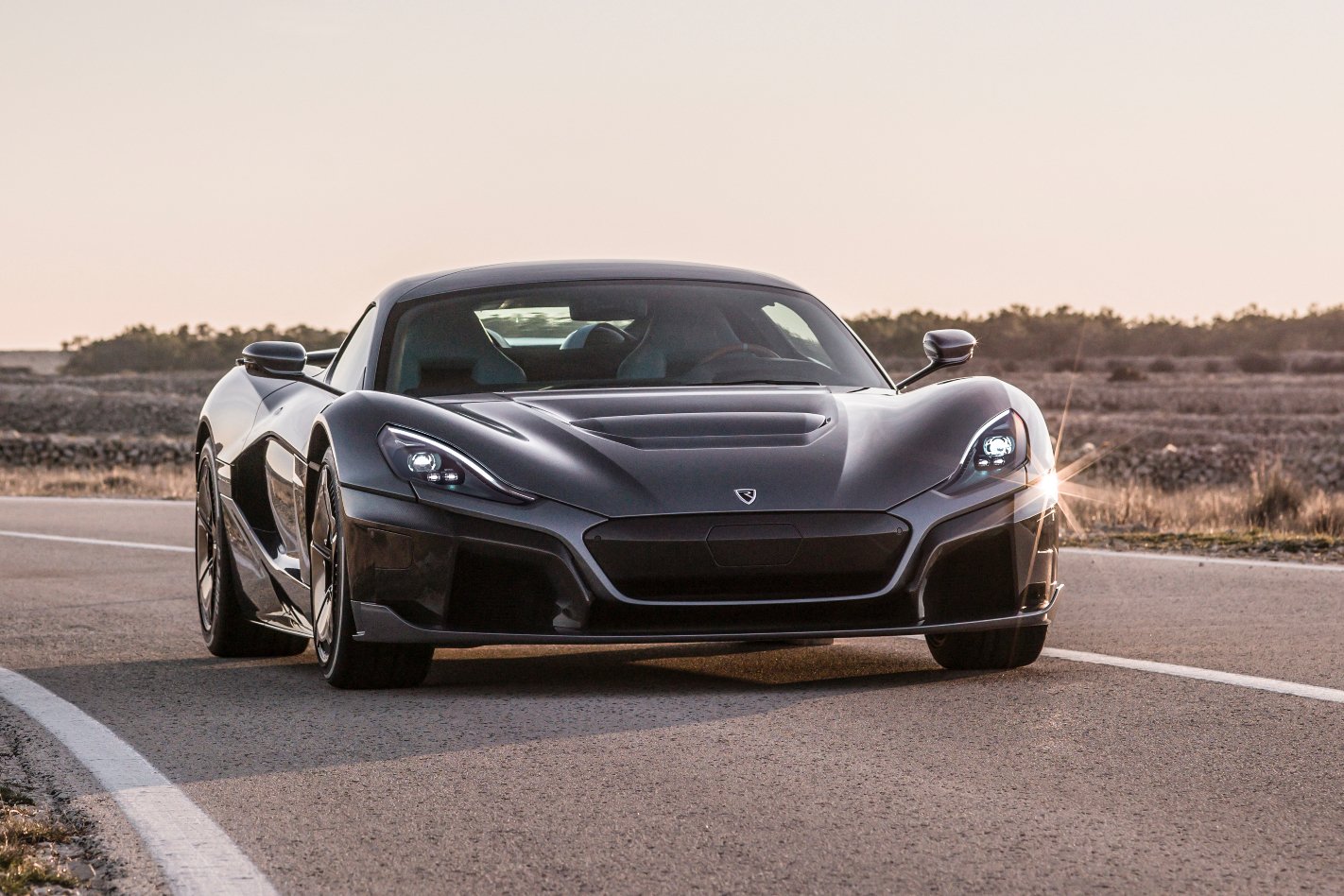
When asked why Porsche would be taking charge of Bugatti, Diess said the two carmakers were more closely aligned to one another in terms of materials used in the manufacturing process and technologies.
“We believe that Bugatti will get an environment that’s stronger than being here in Wolfsburg in the volume segment,” Diess said.
“We have more synergies (with Bugatti and Porsche) over there, such as carbon fibre bodies and high-performance batteries.”
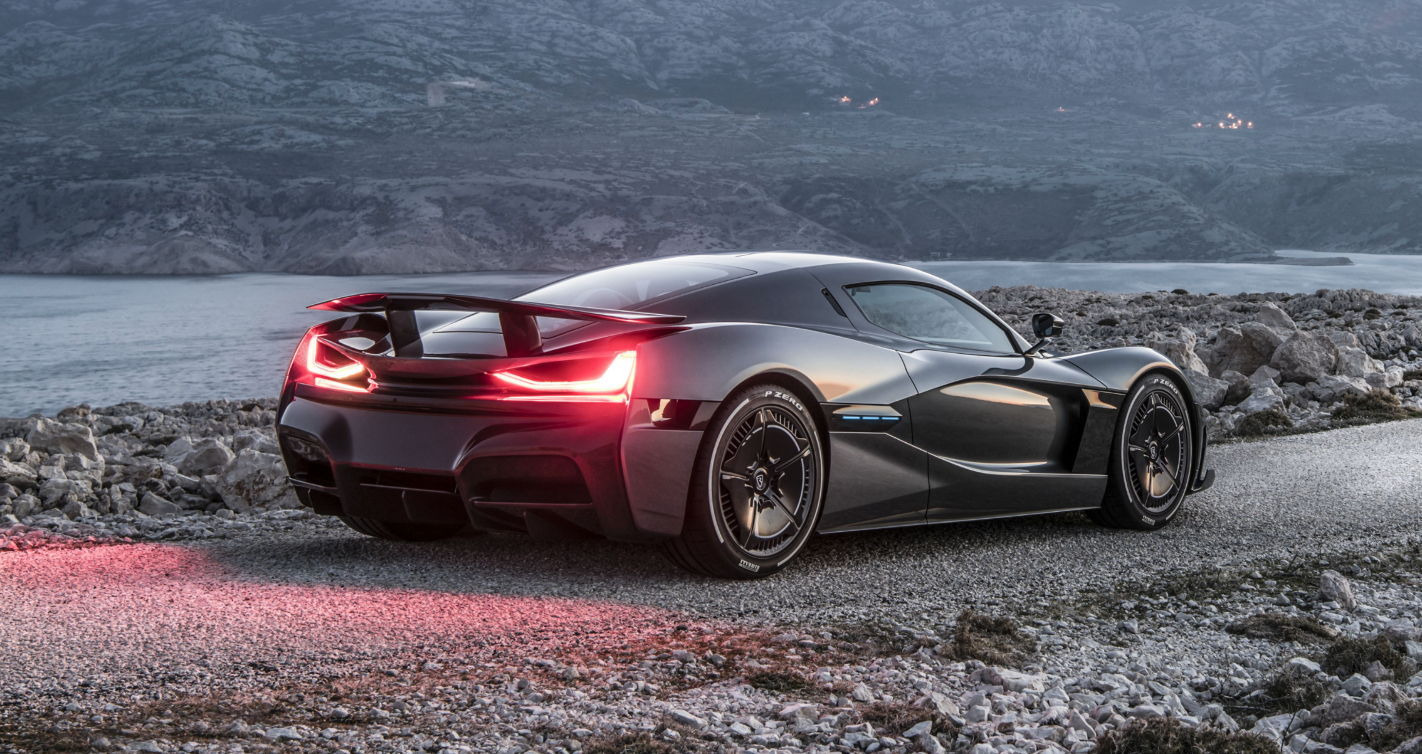
While these are still the very early stages of an alliance between Bugatti and Rimac, and anything on four wheels that’s been jointly made by the two manufacturers is probably years away, just the thought of what these brands could accomplish is exciting, to say the least.
MORE: All Bugatti stories MORE: All Rimac stories MORE: All Porsche stories
The brand-new BMW iX electric SUV will arrive in Australia in the fourth quarter of 2021 with two model variants.
Production examples are currently undergoing final testing in Europe, but we can expect a two-strong line-up consisting of the iX xDrive40 and iX xDrive50.

BMW stopped short of announcing pricing for the two model grades; we expect to find out how much each will cost closer to launch later this year.
It slides into the Australian market to compete against other large electric SUVs such as the Audi e-Tron, Tesla Model X, Mercedes-Benz EQC and Jaguar I-Pace.
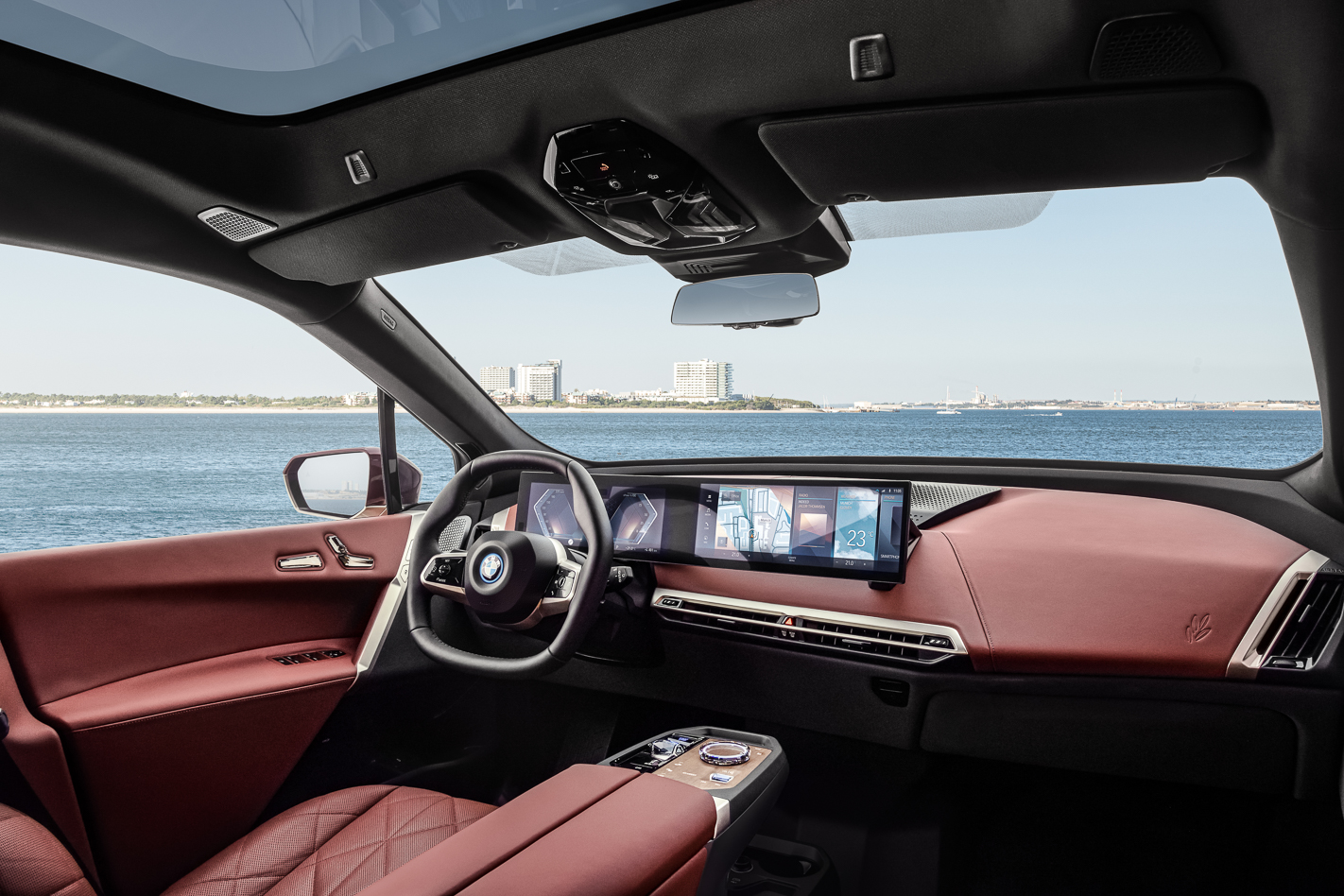
You can find out more about the BMW iX by reading through our reveal story, but as a quick refresher, the iX SUV is the next generation of BMW electric vehicles.
It shares much of its dimensions with the X5 large SUV, but sports a new styling language and a vastly different interior experience thanks to the inclusion of the new iDrive 8 infotainment.
The range begins with the xDrive40, which stocks a 70kWh battery and sends power to all four wheels, while the top-tier xDrive50 will do the same using a battery with “energy content in excess of 100kWh” – roughly equal to the top-spec Teslas.
The xDrive40 has 240kW and shifts from zero to 100km/h in six seconds and the xDrive50 has 370kW and does the same sprint in under five seconds.
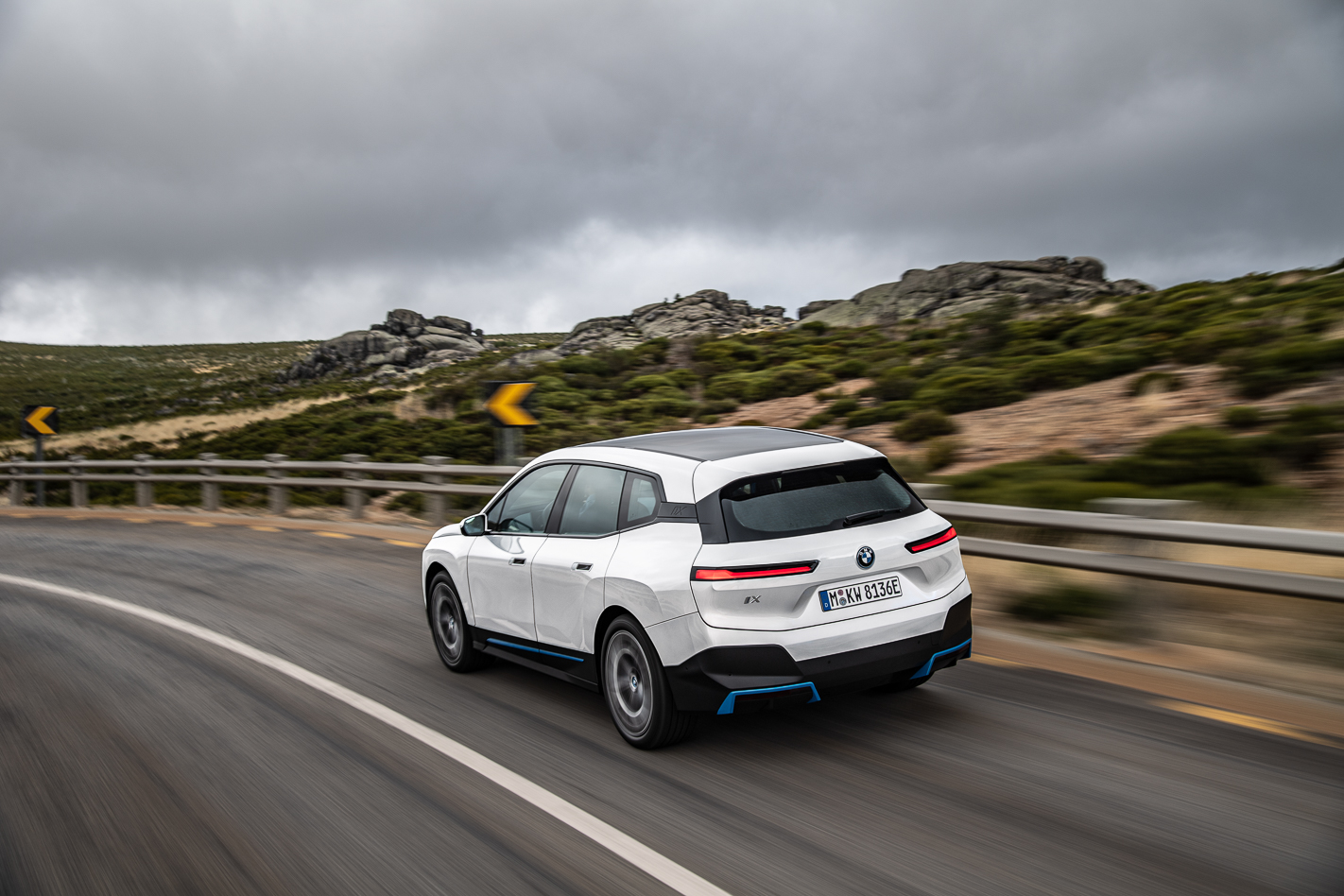
BMW says the xDrive40 can travel more than 400km (WLTP cycle) on a single charge and the xDrive50 will run 600km before needing to be plugged into the mains.
Speaking of charging, the BMW iX accepts fast-charging DC current at a rate of 200kW in the xDrive50 and at a rate of 150kW in the entry-level xDrive40.
In both model grades, BMW says the high-voltage battery can be charged from 10-80 per cent in less than 40 minutes.
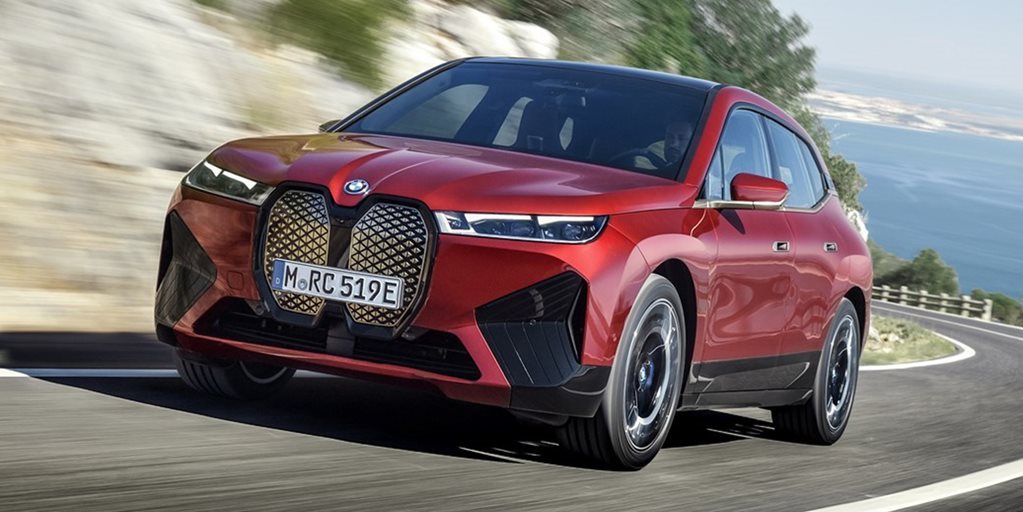
Levels of equipment have yet to be detailed, but expect to hear more about interior and exterior appointments as we get closer to the launch of the iX.
That said, we reckon the 14.9-inch curved iDrive 8 display will feature in both variants, as well as a similarly high spec of gear, considering its high position in the BMW line-up.
We do know that a swathe of natural materials will be used, such as floor mats made from recovered fishing nets and sustainably-sourced wood and leather will be used for trim appointments.
There are no slow cars anymore. Not in the performance realm, anyway.
The tail-end Charlie of this year’s Performance Car of the Year field was the Ford Fiesta ST, yet even this baby hot hatch hit 100km/h in 6.67sec and crossed the quarter in 14.73sec at 158.37km/h.
By coincidence I happen to stumble across the acceleration numbers from PCOTY 2004 and the Fiesta’s numbers put it ahead of the BMW Z4 3.0 and Subaru Liberty GT, lineball with the Nissan 370Z and fractions behind the Holden Commodore SS and Porsche Cayenne Turbo. Not bad, indeed.
It’s relatively straightforward to test, too. First-gear traction is frustratingly elusive with axle tramp an issue, but short gearing makes the most of the Fiesta’s relatively meagre grunt.
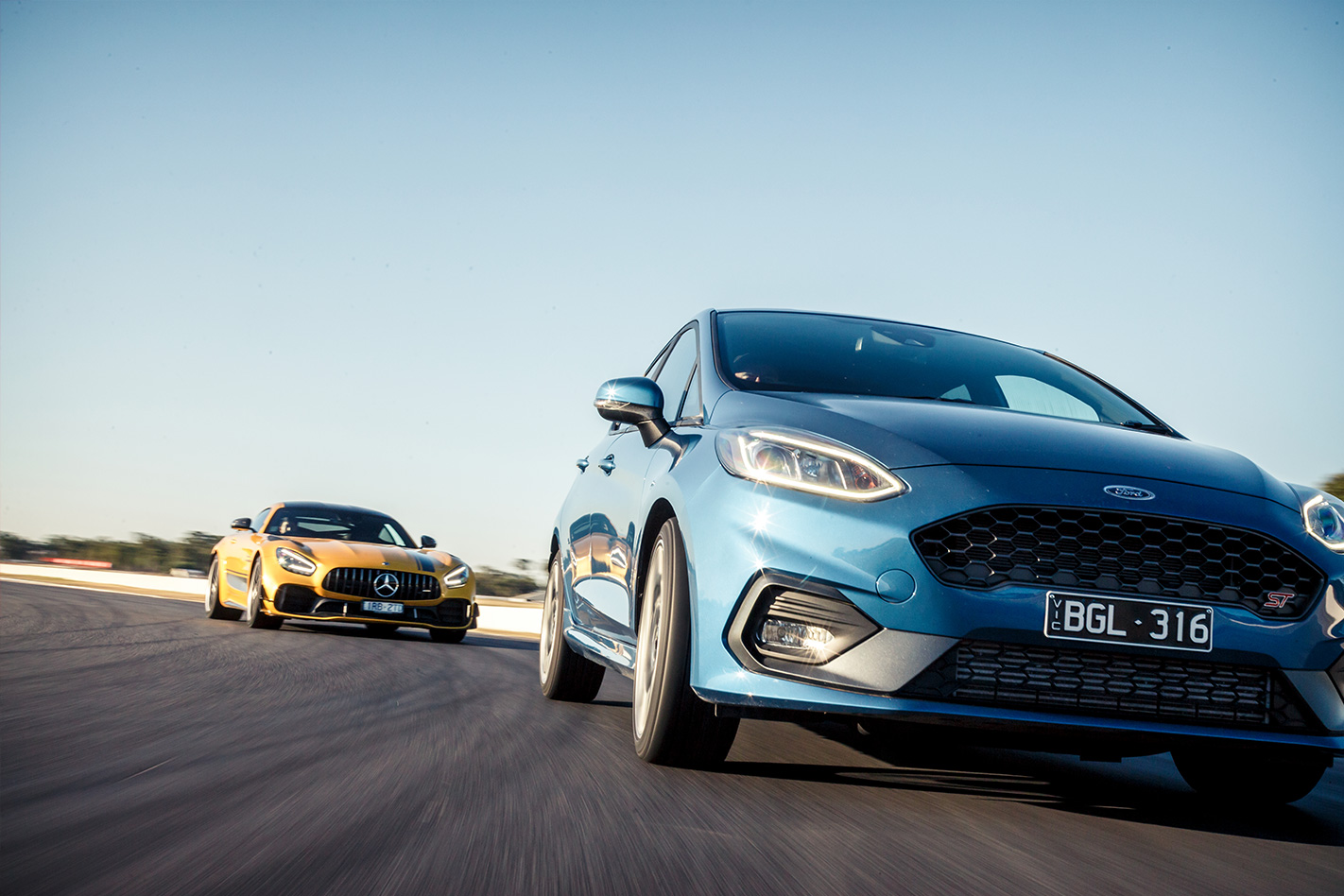
The 1.5-litre turbo triple is a great engine and the gearshift is slick, yet it’s the chassis that shines brightest. A 1min43.7sec lap time of Winton isn’t ground-breaking but the track was hot and slippery and that’s still 1.5sec quicker than its predecessor. There’s a ceiling to how hard it can be pushed but within that envelope it’s brilliant fun: agile and responsive and now with great traction courtesy of the LSD. Its only real weak spot are its brakes, which are just plain inadequate for a performance car and let down an otherwise fantastic package.
The Toyota GR Yaris has no such issues. It is one of very few road cars that is over-braked. Lap after lap they can be leant on at the latest possible moment without complaint. Toyota’s pocket rocket is equally impressive in terms of acceleration. The Fiesta’s three-cylinder is brilliant but the Yaris’s is verging on voodoo. Floor the throttle, release the clutch at 5500-6000rpm and you’ll shoot to 100km/h in 5.16sec and across the quarter mile in 13.2sec at 169.74km/h. Brisk. Sadly going around corners in an entertaining fashion isn’t such a Yaris strong suit, its front tyres yielding prematurely at every corner.
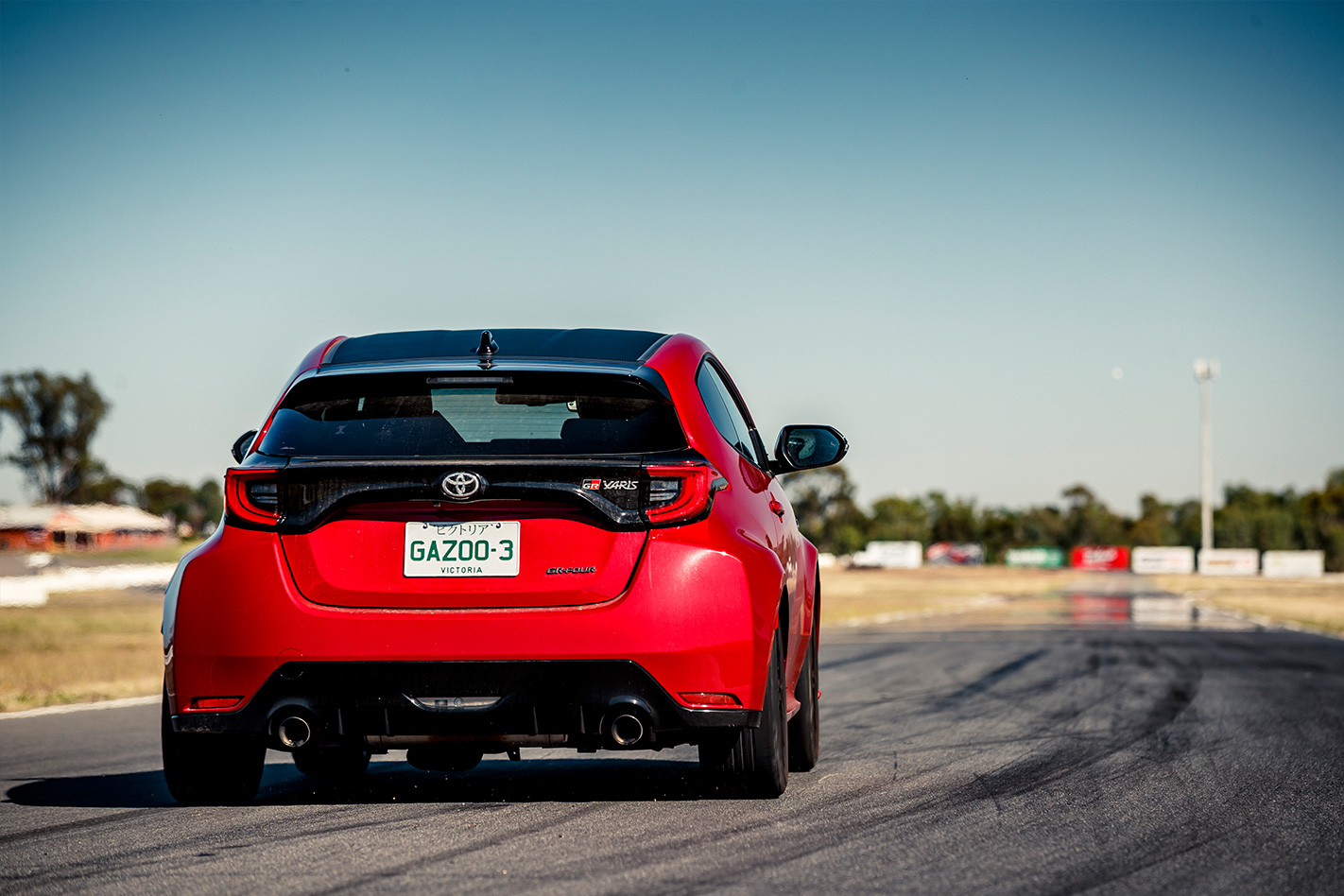
The tyres themselves don’t help – Dunlop SP Sport Maxxes aren’t known for their performance properties – squealing early and loudly but the drive system is also to blame. Even in the supposedly 30:70 Sport mode not enough drive is sent to the rear so you’re left with a frustrating wait at each apex before power can be applied again. Put simply, it wasn’t much fun and a 1min41.3 wasn’t that quick, either. Bring on the Rallye.
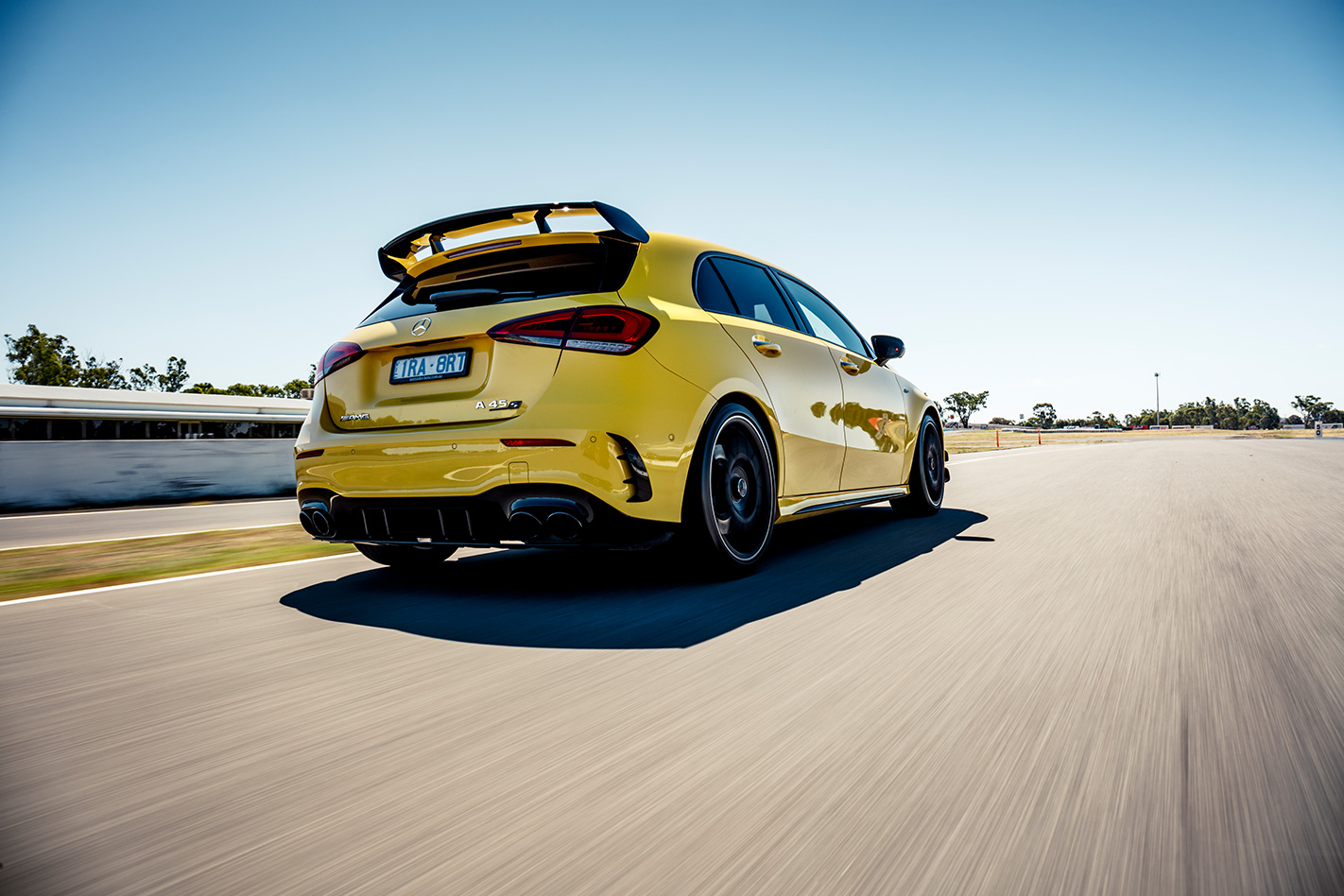
What was quick was the Mercedes-AMG A45 S. Launch control primed, it’ll hit 100kmh in 4.0sec all day long and jag a 3.9sec run if you’re lucky, our best run being a 3.96sec. It doesn’t peter out, either, continuing to charge across the quarter mile in just 12.09sec at 186.53km/h. And you thought the last A45 was fast! Its impressive run continued around the track with a 1:34.9sec lap, though this is with a couple of caveats.
On the plus side it was on the now-optional Pirelli P Zero Trofeo R tyres, however, on the negative there’s a suspicion that our pressure gauge might have been off, as there seemed to be too much flex in the tyre and the car felt imprecise. A switch back to the standard Michelins and the A45 S expressed its true personality. And what a personality. As well as having arguably the world’s greatest four-cylinder engine – its 155kW/litre specific output is miles ahead of anything else here – the gearbox is improved, the brakes hold up brilliantly and the chassis is lively. Trail the brakes and the rear slides on entry and then applying throttle continues to rotate the car mid-corner but with plenty of traction on exit. It’s fantastic.
Proof of the A45 S’s pace comes in the fact that it beat the 441kW Audi RS6 Avant to 100km/h, though in the Audi’s defence that’s purely because its launch control wasn’t playing ball. The process was right, the message on the dash confirmed launch control was activated but upon releasing the brake there was a substantial pause before those 600 horses took hold. Figures of 3.98sec 0-100km/h and 11.94sec at 193.67km/h certainly aren’t hanging about, but they’re a good half-second away from what the RS6 is ultimately capable of.
You might assume that a 2075kg wagon would struggle to feel at home on a race track… and you’d be right. Yet, the RS6 acquits itself better than you might imagine. It still feels big, heavy and remote to hustle, however the quick steering, adaptive dampers, clever all-wheel drive system (and all-wheel steer), massive brakes and plenty of rubber team up to make it impressively capable. When you consider that the last time an RS6/RS7 appeared at PCOTY its brakes lasted two laps and its tyres three, the fact the RS6 lapped all day without complaint is a victory.
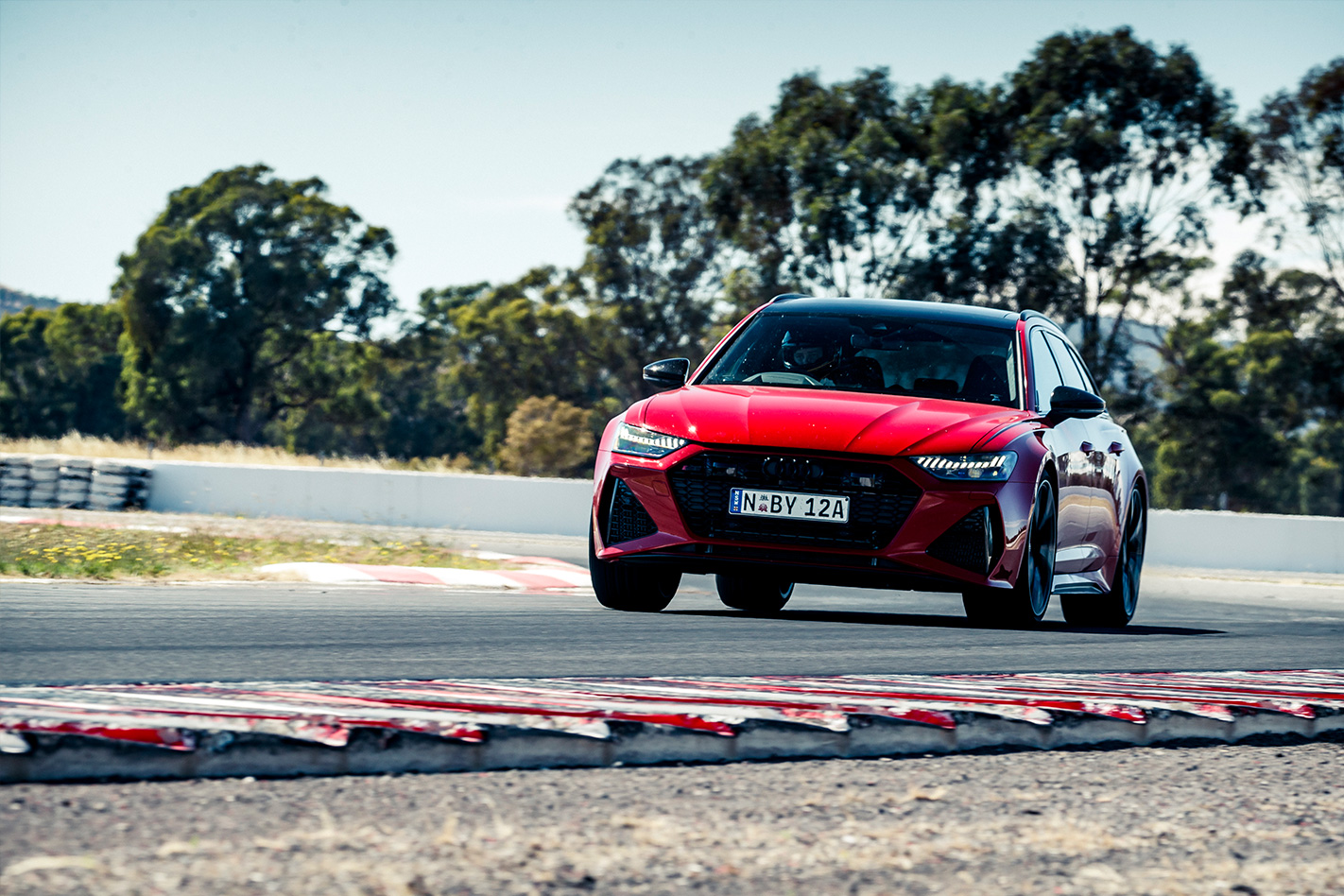
That said, a 1:36.2sec lap time isn’t too flash, particularly when you consider that the BMW M550i, a low-fat M-car that costs almost $100K less, managed a 1:35.4sec. What’s more, the BMW was more entertaining, too. The syrupy, inconsistent weighting of the steering make inputs at best an educated guess but the chassis itself has plenty of talent and the greater rear bias of the xDrive all-wheel drive system helps both alleviate the load on the front tyres and put a smile on your face. The engine is a cracker, too, with masses of torque and a juicy V8 soundtrack.
It too suffered from launch control gremlins, though. Once again all the right buttons were pushed and right messages displayed but the pause that occurred when the brake was released was so pregnant its waters had broken. As such the M550i’s figures of 4.27sec to 100km/h and 12.21sec at 193.86km/h over the quarter are again about a half-second away from its ultimate potential. Once rolling, the BMW was every bit the match for the RS6, which makes it somewhat of a performance bargain.
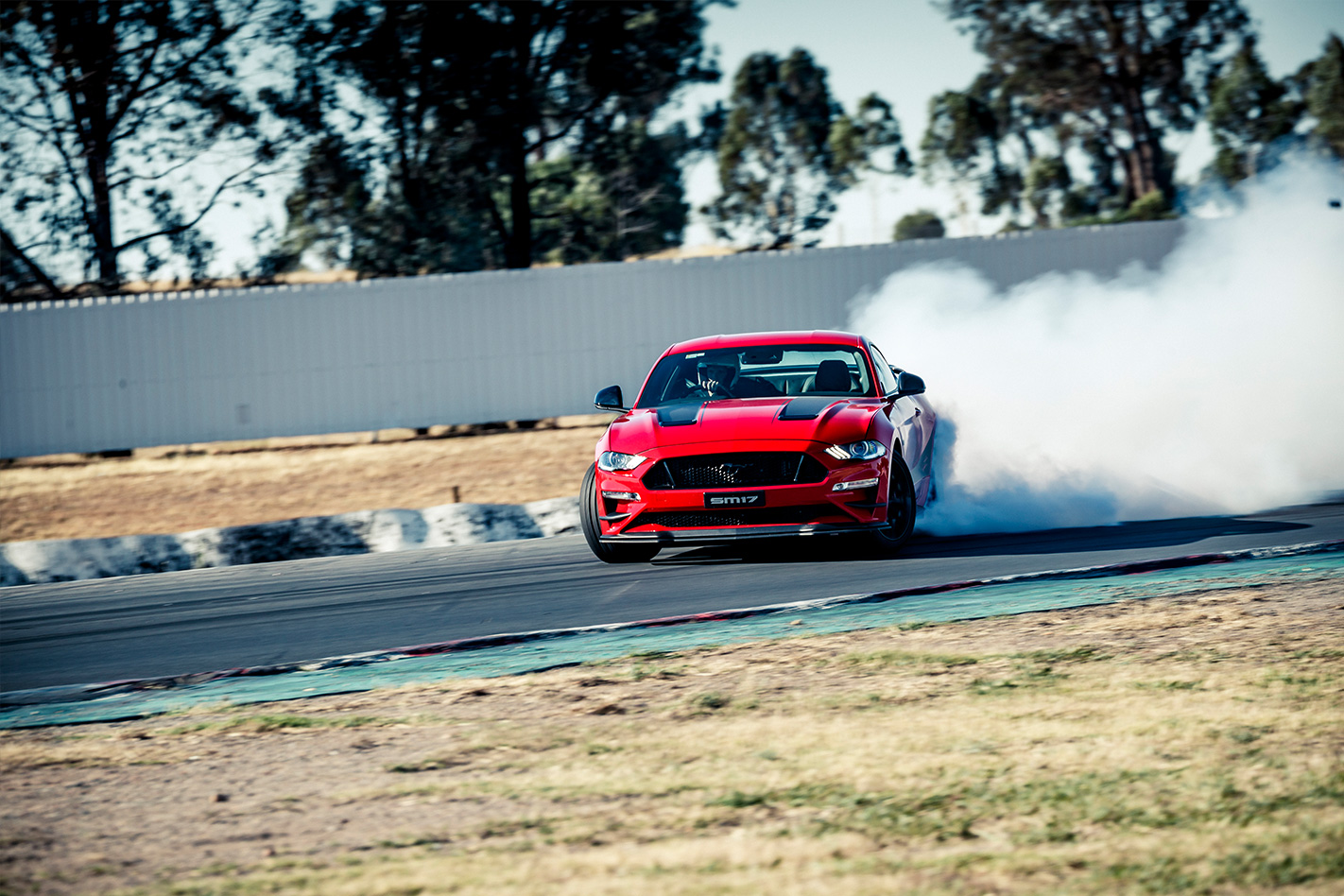
But when it comes to bang for buck, the Herrod SM17 is this year’s clear king. Yes, $125K or so is massive money for a Mustang but boy, does this thing deliver. Pre-testing fears of a good time literally and figuratively going up in smoke were unfounded, the fat rear Michelin Pilot Sport 4 S tyres struggling slightly in first but then hooking up completely in second. No car generated more theatre in a straight line, the supercharger shrieking, the engine screaming, the 10-speed gearbox eating ratios as fast as you can count and the rear end squirming on each shift.
The results were jaw-dropping: 0-100km/h in 3.70sec and an 11.42sec quarter mile at 206.95km/h, making it the quickest two-wheel drive car in this year’s event. Yes, quicker even than the AMG GT R Pro. Roll-on acceleration was equally berserk, the 80-120km/h sprint taking just 1.9sec, while it stops as well as it goes, its 31.20m effort from 100-0km/h the class of the field, pipping the Cayman GTS 4.0 by just seven centimetres.
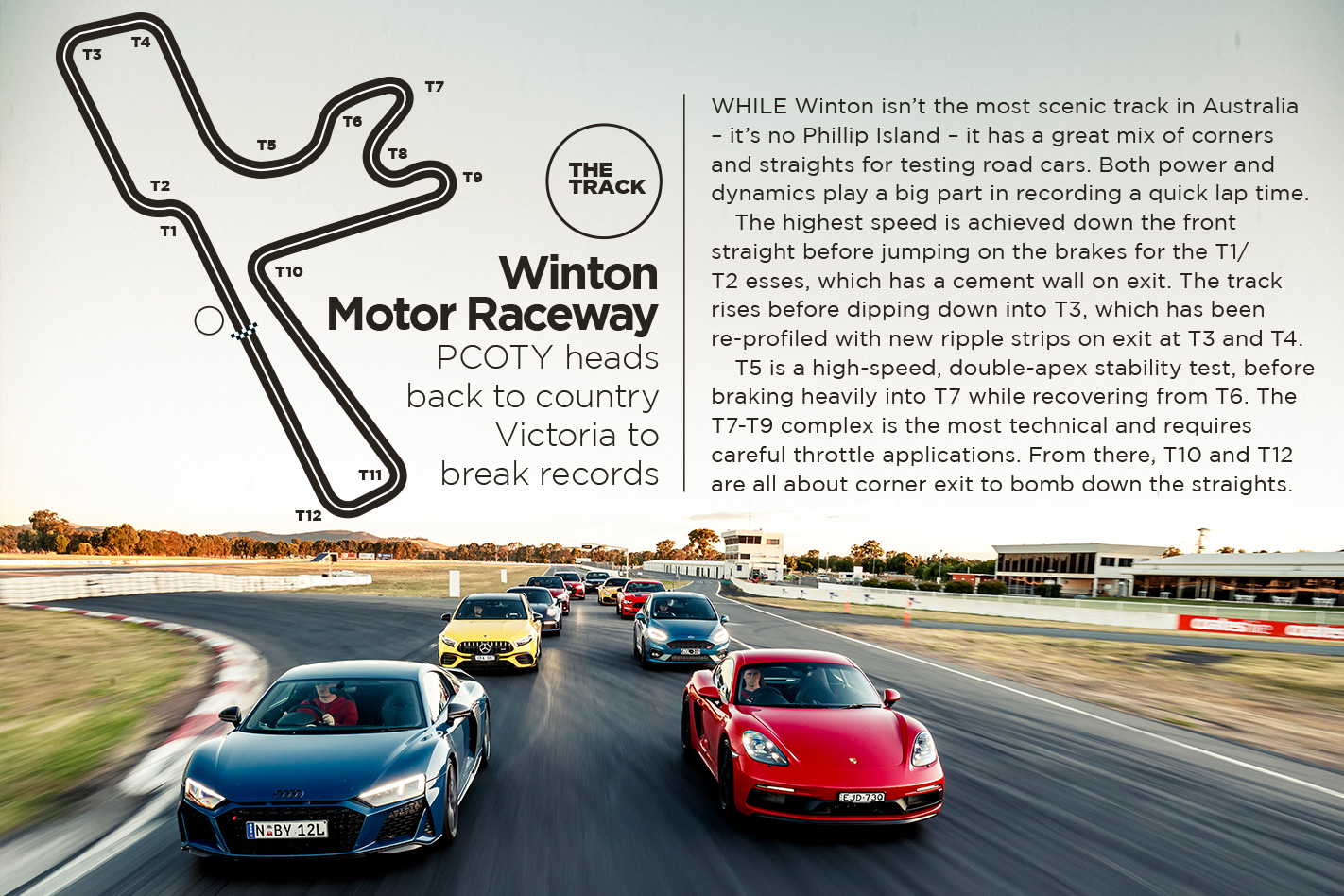
What’s more, the SM17 completed run after run with no thermal degradation, the trap speed remaining consistent. Sadly, this stamina didn’t last during the hot laps, the coolant temp skyrocketing after just one lap. This somewhat limited the enjoyment, but even so its 1:33.7 was easily fastest of the non-supercars and no car was better at the Plan B of making smoke clouds, which is just as well since Plan A – going fast – was scuppered so quickly. Even while at full power the Herrod wasn’t the handful you might expect; it would certainly oversteer at will and part-throttle response remained a challenge but it had enough ‘stop and turn’ to match its go.
The Porsche Cayman GTS 4.0 couldn’t have been more different, a scalpel to the Herrod’s broadsword. Beautiful steering, great balance, fantastic throttle response and one of the world’s greatest manual shifts makes it flattering of the novice, yet its mid-engined dynamics offer a challenge for the expert. You’d best be on your game if you’re lazy with a trailed brake or mid-corner lift in the GTS, as you’ll be dealing with oversteer before you can say “oops”, yet it’s beautifully rewarding at the limit.
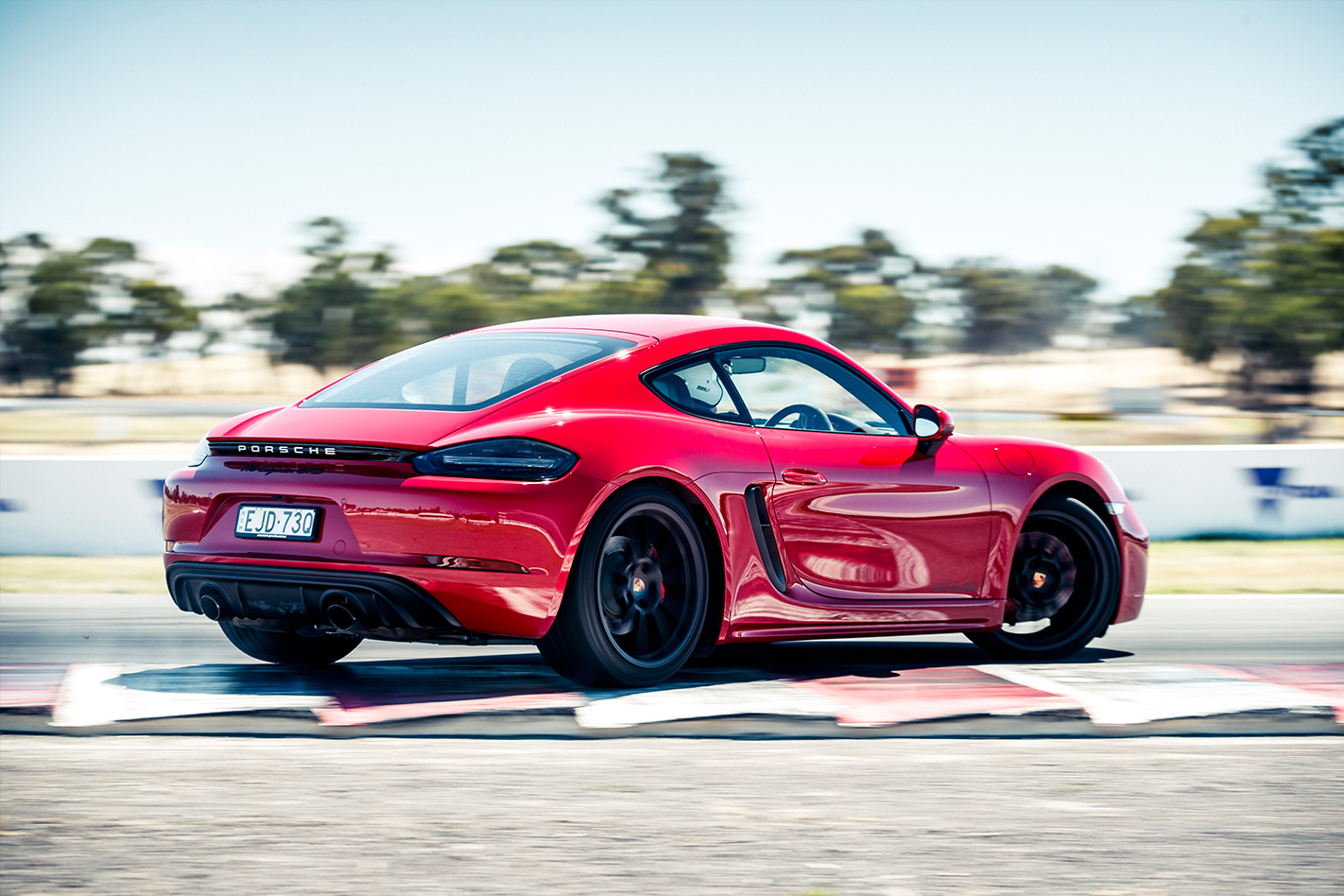
There are only two issues. The first is the inconsistent ESP, or perhaps more accurately, traction control. It’s frequently intervening even when deactivated on corner exits yet if the car develops a substantial yaw moment the electronics are nowhere to be found. The other problem is the age-old gearing; it’s so tall that it took a really good exit from the last corner to need fourth down the main straight and even then it dulls the power of the otherwise wonderful 4.0-litre atmo flat-six.
As a result, it’s not actually that fast. Its 1:35.4sec lap is two seconds slower than the 718 Cayman S achieved three years ago – in better conditions but before the corner modifications that result in a faster lap, so let’s call it even – and 4.68sec to 100km/h and a 12.67sec quarter at 181.43km/h certainly isn’t slow, but it’s hardly newsworthy in 2021, either. Purists will cringe, but the Cayman GTS 4.0 will be quicker, more engaging and more enjoyable with the seven-speed PDK.
And now, the heavy hitters. We must first apologise to the Audi R8 V10 Performance. Where possible we put the pro – in this case Monsieur Reindler – in the cars first so that they’re fresh, however, the schedule dictates that the judges must also drive something and it just so happened that a number of judges had sampled the R8 prior to Reindler. The R8 is a tough cookie and isn’t the least bit fazed by plenty of track laps, but it did mean the tyres were somewhat second-hand by the time the stopwatch started, leaving Karl with armfuls of opposite lock.
As such, cut its 1:32.9sec lap time some slack – its true potential is probably 1.5-2.0sec quicker. There’s a good reason those tyres were prematurely cooked, though, as the latest R8 is fabulous fun to drive. The carbon-ceramic brakes are massively powerful, you can adjust the car’s attitude using throttle or brakes and the engine is a thing of beauty, capable of catapulting Audi’s supercar to 100km/h in 3.27sec and across 400m in 11.11sec at 205.41km/h. These numbers are actually a little slower than its predecessor, which clocked 3.18sec and 10.93sec at 209.58km/h, but this latest R8 is much more pleasant away from the circuit. About the only criticism you can level at it is that if you’re sliding it around the quattro system can be a bit inconsistent, sometimes realising your intent, at others trying to pull the car straight.
As is so often the case, the Porsche 911 Turbo S shows what’s missing. A car can only ever react to the inputs it’s given, yet the ultimate 992 somehow seems to know what you want it to do before you ask. This is a half-million dollar supercar with 478kW and 800Nm that is happy to be skidded about like an MX-5. Obviously the speeds – and consequences – are somewhat more serious but it’s so biddable and transparent in its behaviour.
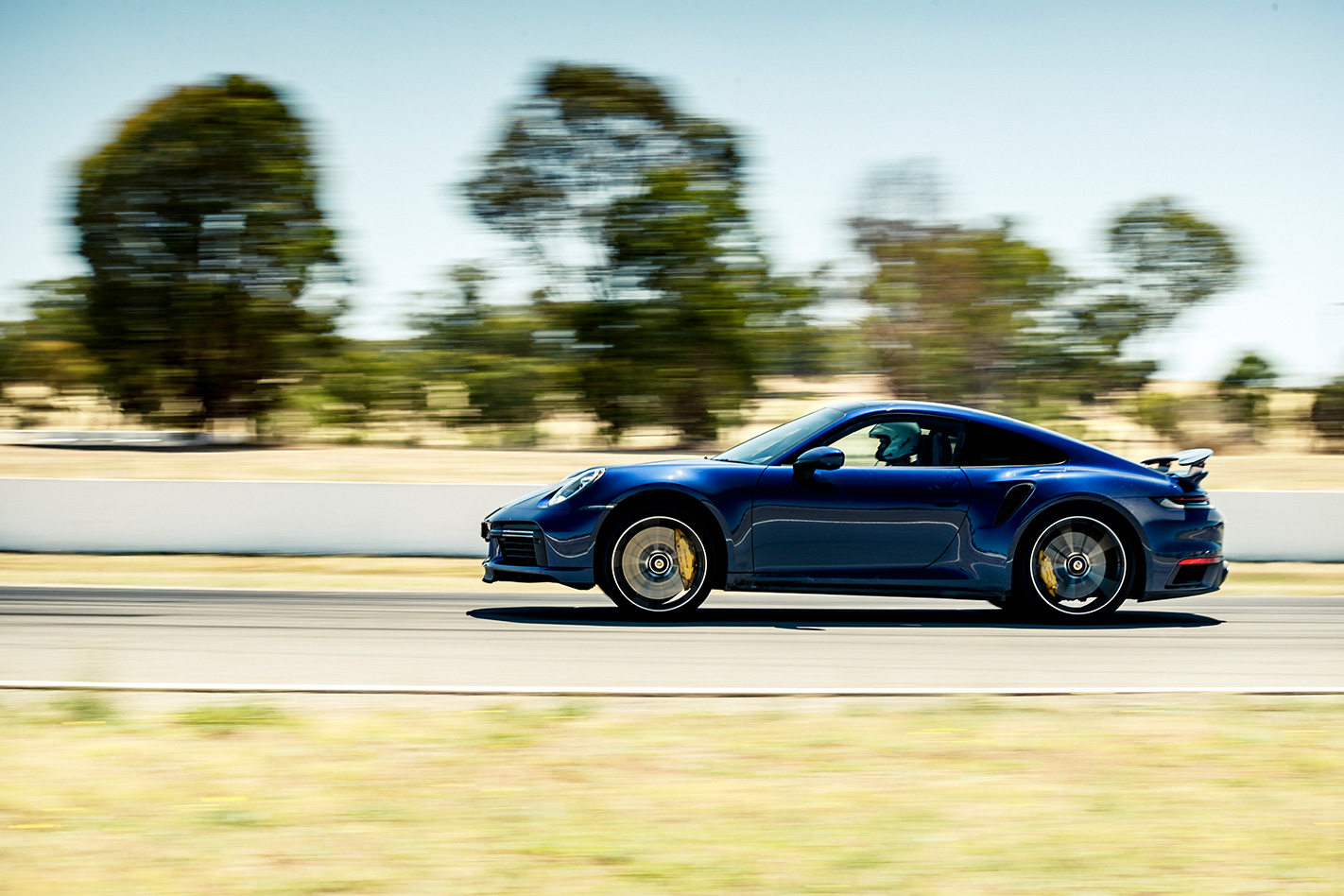
It’s also ludicrously fast. Unbelievably so, to the point that even now typing this I cannot comprehend the figures the latest Turbo S spat out. Extracting them is a piece of cake: start engine, flick to Sport Plus, ESP in Sport, press the brake, flatten the throttle and release the brake. You’ll reach triple figures in 2.58sec – a PCOTY record – pass 160km/h (the old metric ton) in 5.55sec and flash through 200km/h in 8.46sec. That last figure is more than two seconds clear of any other contestant and the 10.28sec quarter mile at 217.32km/h puts the Turbo S firmly in a class of one. Launching the Turbo S is akin to being rear-ended at speed, such is the violence.
Even on the move, the massive mid-range torque hit catapults you from corner to corner in an almost alarming fashion, yet the enormous carbon-ceramic brakes are more than up to the task. Add in incredible traction and mind-bending grip and the result is a 1:30.1sec lap. And it would do it with Apple CarPlay spinning your favourite tunes and the ventilated seats keeping your bum cool.
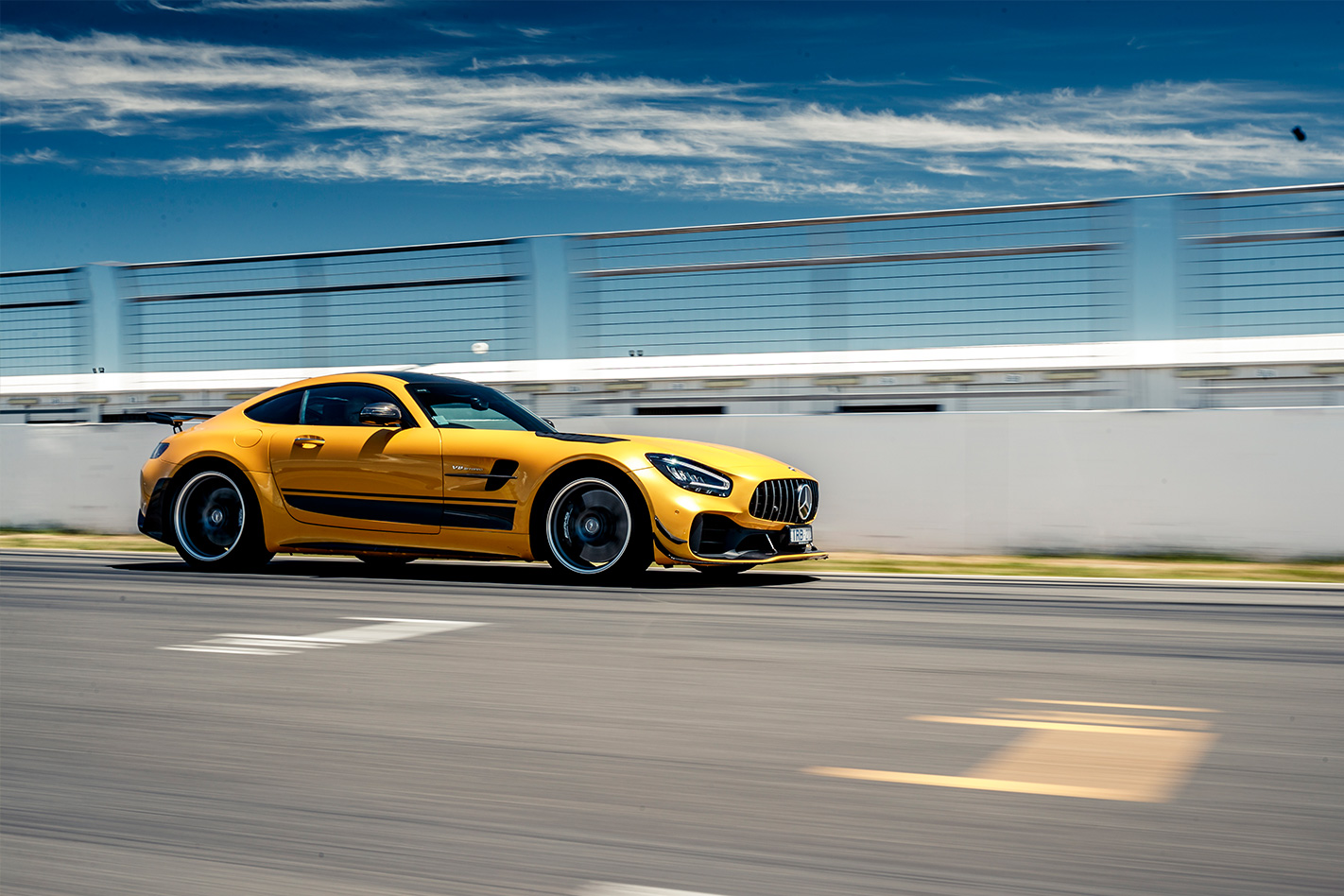
But it wasn’t quickest, that honour goes to the incredible Mercedes-AMG GT R Pro. It’s a testament to the Porsche’s ability that its luxury grand tourer gets within a second of AMG’s hardcore, track-focused, semi-slick shod weapon, but a 1:29.3sec is a victory and let’s face it, the GT R Pro is no stripped-out racer. Regardless of the lap time, this mega Merc is one of the most rewarding and exciting track cars ever to wear number plates and every person who drove it completed more laps than was necessary.
It’s monstrously fast, clocking 3.76sec to 100km/h and an 11.48sec quarter at 207.82km/h, but like the Fiesta we started with, the engine plays second fiddle to the chassis. The switch to manually adjustable coilover suspension has been an inspired one, giving the GT a stability and predictability it’s sometimes lacked.
There’s more weight and communication to the steering, too, while the nine-stage traction control is a useful circuit tool. It also feels utterly unflustered by track work – even its tyres hold up. Despite high temperatures and a slippery track, the GT R Pro is now the quickest car we’ve ever driven at Winton.
Today it feels like there are 11 rather than ten PCOTY finalists. On each run along our road route, the ten box-fresh contenders are joined by something a little more seasoned, a flash of red in the rear view and then a characteristic vibrant, buzzing rasp. The culprit bursts into view in a Mazda RX-8, wearing a grin about as wide as his exhaust tips.
He’s pinned hard on the throttle, and what he announces ever more clearly before he’s gone is that we’ve nailed our location. About 20 minutes ago, passing through the sleepy town of Whitfield, signs along the road suggested differently. They warned us kangaroos, wombats or something with antlers waited, while the speed limit, now lowered to 80km/h, introduced fears of much worse: traffic.
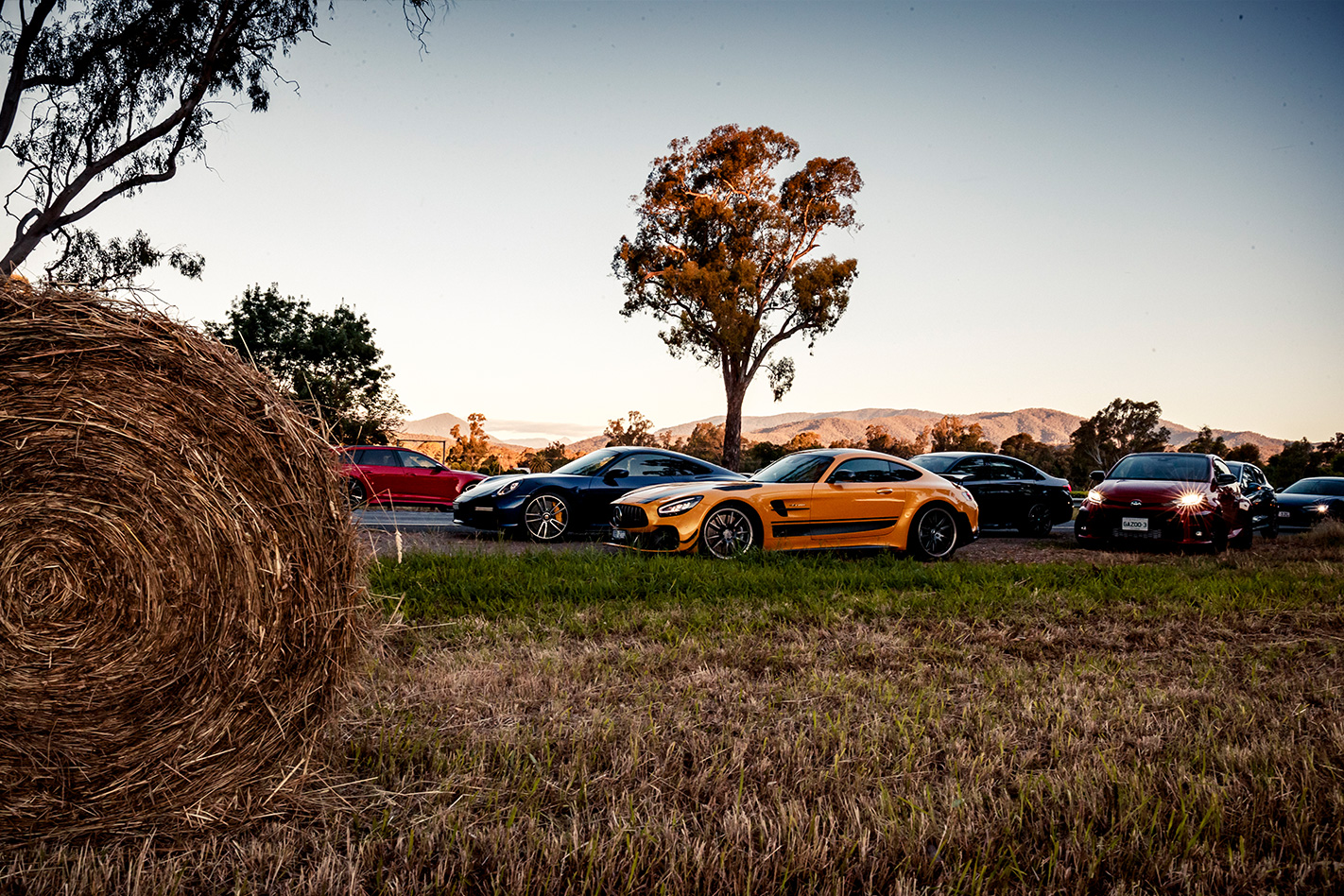
Yet the 10 beguiling drivers’ cars sitting on the side of the road at our turnaround point, waiting to be unleash, have lucked in on this cool, overcast Tuesday morning — the start of Performance Car of the Year 2021. Mansfield-Whitfield Road is dry. And, besides some sticks, or old mate in the Mazda, the tarmac, strewn over the north-western slopes in Victoria’s eastern Alpine region like a discarded shoelace, is empty.
And as a judging tool, the route is perfect. When the time comes for judges to saddle up, however, the closest thing we have to a rally car – in principle – is left abandoned. Hype for the Toyota GR Yaris has made it something to build up to for others, leaving its keys and strangely high, form-hugging seats for me.
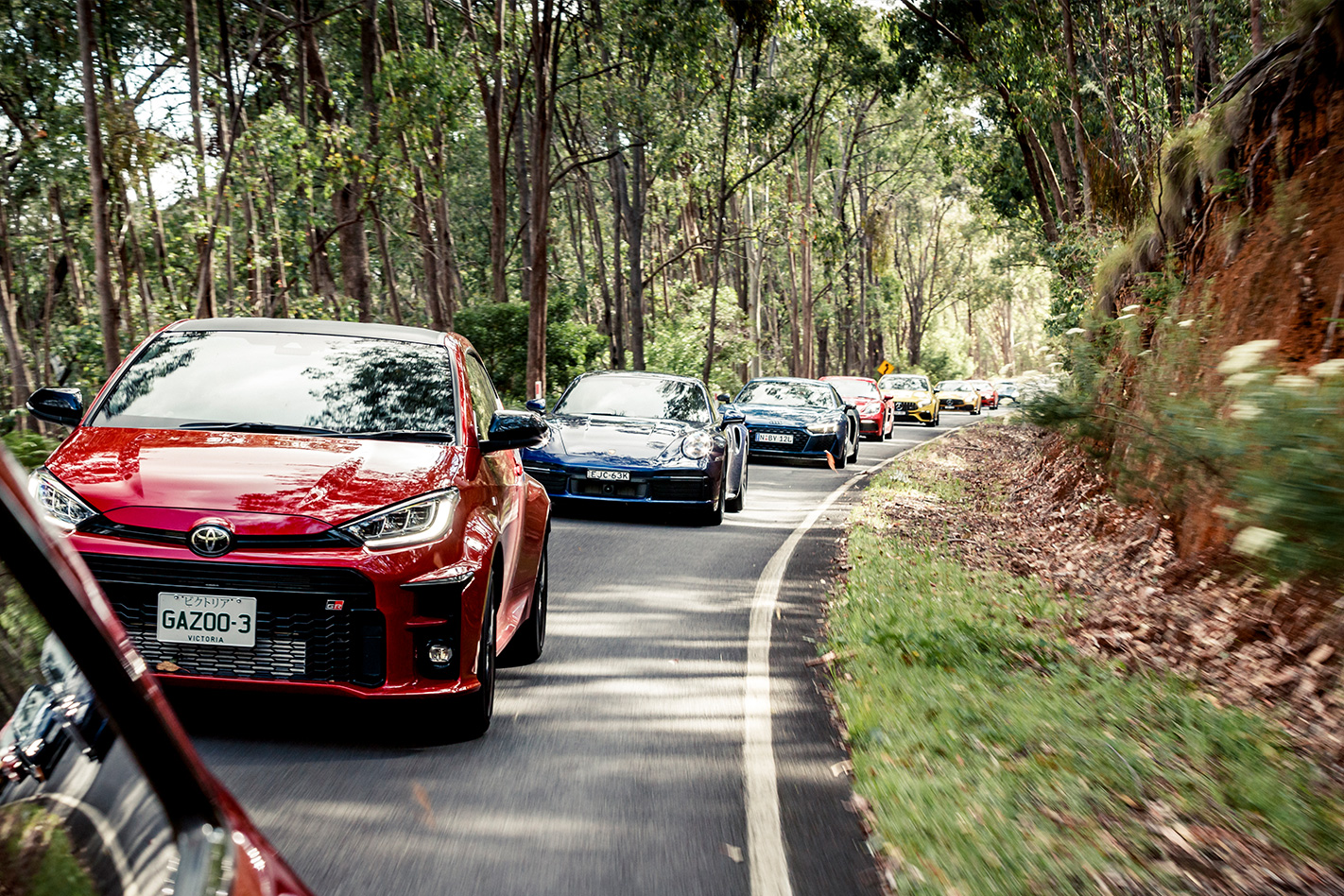
Its three cylinders warble to life without much drama … until we’re off down the road. It pulls wildly to its redline, lathering on torque as induction roar builds. Somehow, through witchcraft, or otherwise, it feels strongest, and sounds most feral, in the last 1500rpm. Ground-hugging heft and long-stroke damping distribute weight evenly across the Yaris’s short wheelbase. With so much cornering poise it ends up, despite only modest rubber and open differentials, unflappable almost to a fault.
The Yaris’s wide rear-track remains stubbornly planted even with 70 per cent of its grunt reaching the rear tyres in Sport mode. The nose will push before it relents. Maybe, a race track will expose its rally-bred wild side. But right now another small hatch bobs into my rear view. Ford’s new generation Fiesta ST only drives its front wheels and relies on a simpler torsion-beam out back.
Crucially, it scores an LSD, and it’ll happily demonstrate it’s keener to cock a leg than a small-bladdered terrier. This behaviour is nothing new, except the Fiesta’s rear-end antics now feel encouraging rather than threateningly hyperactive. Downhill it’s all over the Yaris, relying on its grippy Michelin Pilot Sport 4s to defy any power deficit. Sweet, syrupy weighted steering and the positive, but slightly notchy, gearshift only enrich the drive, making it easy to alight the ST’s excellent Recaro seats effusive, and almost certain that fun should not cost any more.
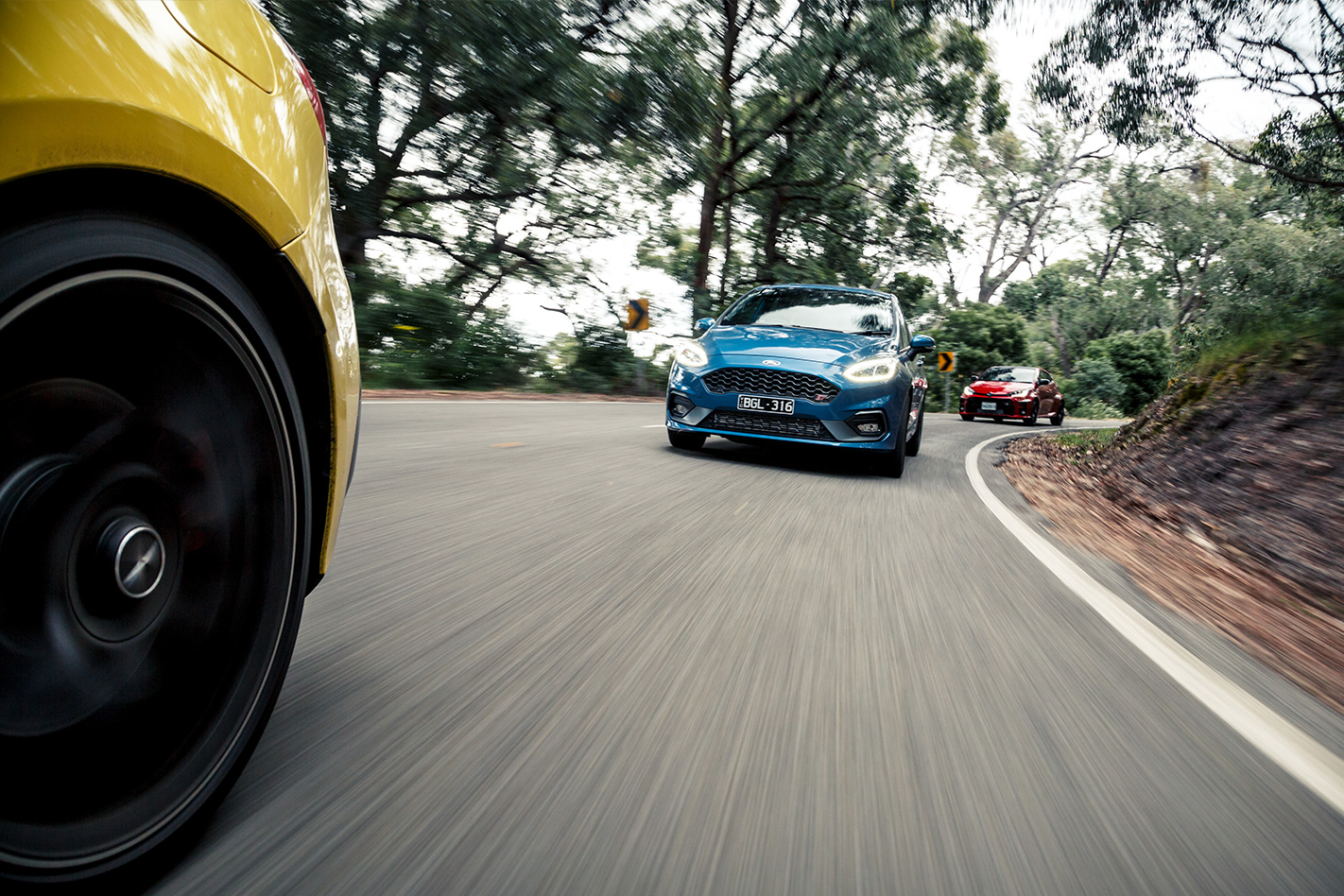
So anyone would approach the Mercedes-AMG A45 S with curiosity, wondering how it might justify a price almost three times as large. While there’s no manual, and instead an eight-speed DCT shifting gears, that’s for the best, because it’s hard to adjust to the way the A45 S gathers speed. It explodes forward, piling on torque as it unfurls through its rev range like it’s a litre larger than it is.
Military-grade engineering is present in the steering, as well, where pin-sharp accuracy offers feedback that filters out impacts and absorbs road information. Here, the A45 S makes rapid progress and underscores its giant-killing ability.
Luckily, there is no shortage of giants today, starting with the Audi RS6 Avant. And in some ways, the wagon is like a larger A45 S, since it also has an all-wheel-drive system and Twinster-style rear LSD underneath. The RS6 needs a few extra goodies, though, like optional carbon brakes, rear-wheel-steering and a variable steering rack to deal with its prodigious mass.
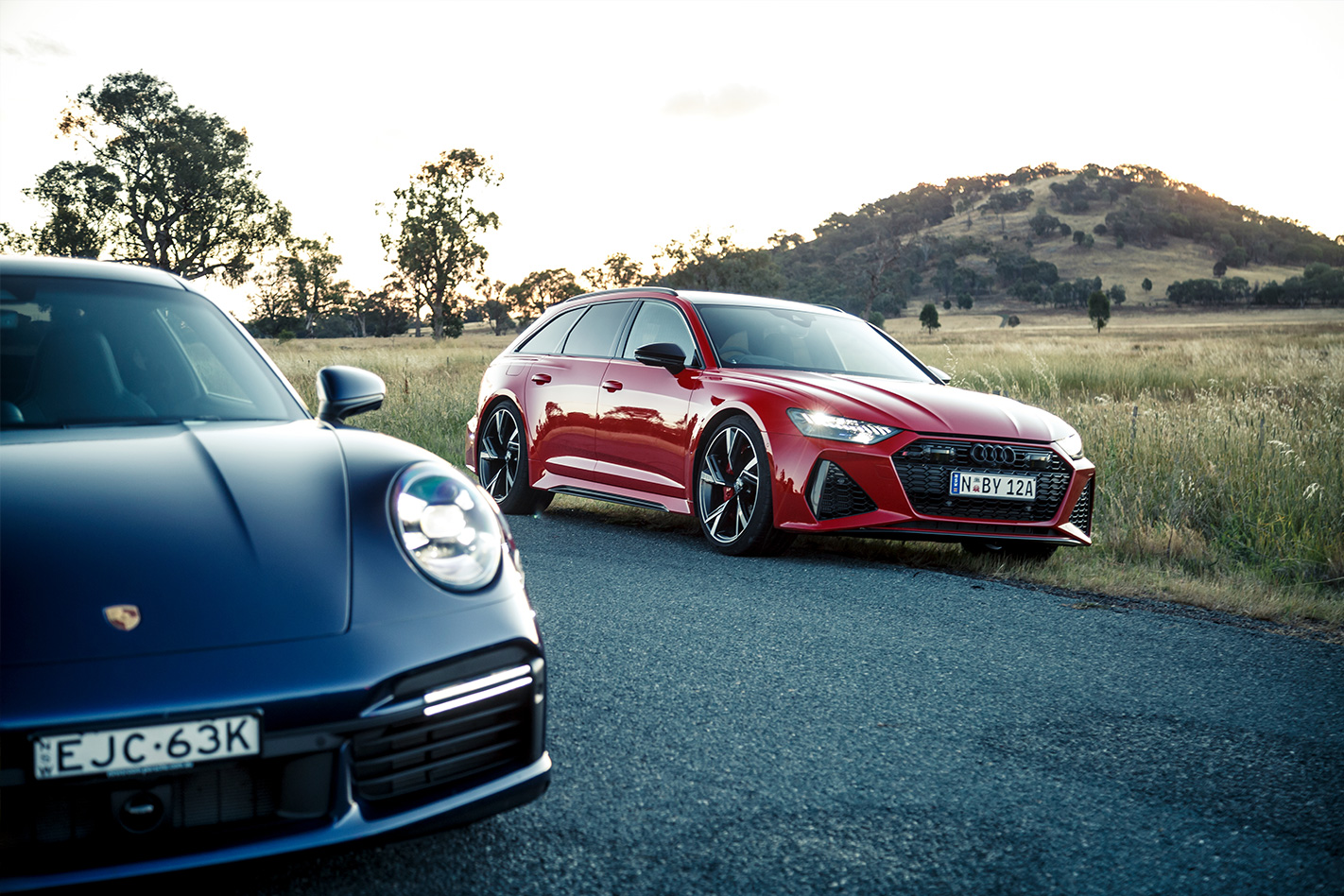
On these roads, I find it hard, even with the optional DRC suspension, to keep the RS6’s 22-inch wheels within the confines of one lane. Thankfully, the carbon-ceramic brakes bite hard and early, while the variable steering is also just as sharp, helping keep rule on the energy at play. However, a drive in the BMW M550i reveals you can’t substitute lightness.
Sure, it’s no feather, but at almost 300kg less than the RS6, it equals superior roadholding and balance. Steel springs steady the BMW well without penalising ride compliance, and its Bridgestone S007s easily paste its punch to the road. But Newman singles out its main problem when swapping over, saying he hates the steering, but loves everything else. I agree, the M550i’s steering is vague, heavy and laboured. But while rear-wheel steering feels superfluous in the M550i, it sharpens the Mercedes-AMG GT R Pro into a scalpel.
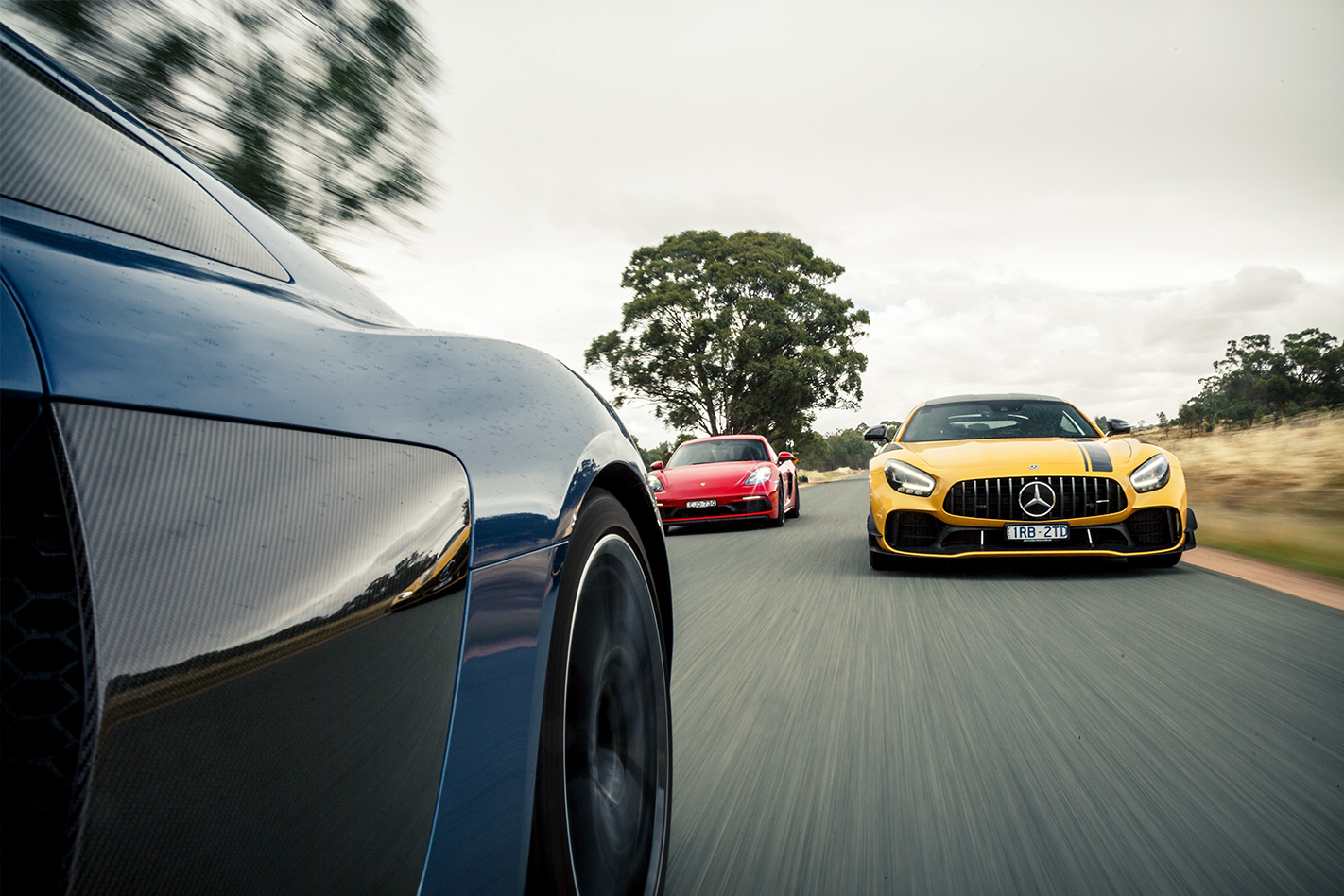
One corner is all you need to see why. This. Thing. Is. Serious. It reacts instantly, with so much response that most corners need less than a quarter lock of steering. And grip is tremendous on Michelin Pilot Sport Cup 2s. More surprising is how the Pro transitions from braking to steering and throttle more coherently than any GT before, leaving no doubt about what it will do.
Despite its hardcore track-bred suspension, you grow comfortable goading the Pro to its limits, enjoying being mashed into the sides of its one-piece carbon fibre bucket seats. The Herrod Performance SM17, meanwhile, presents a stark contrast of accessibility. No road seems long enough to deploy its power and with a relatively soft suspension tune, higher centre of gravity and long wheelbase, it always needs time to settle before powering out.
The SM17 has enough poise to stay straight when it breaks traction at high speeds, but its savagery is hard to finesse on precarious mountain roads. So I find relief in the equally dramatic, but less intimidating, Audi R8 V10 Performance.
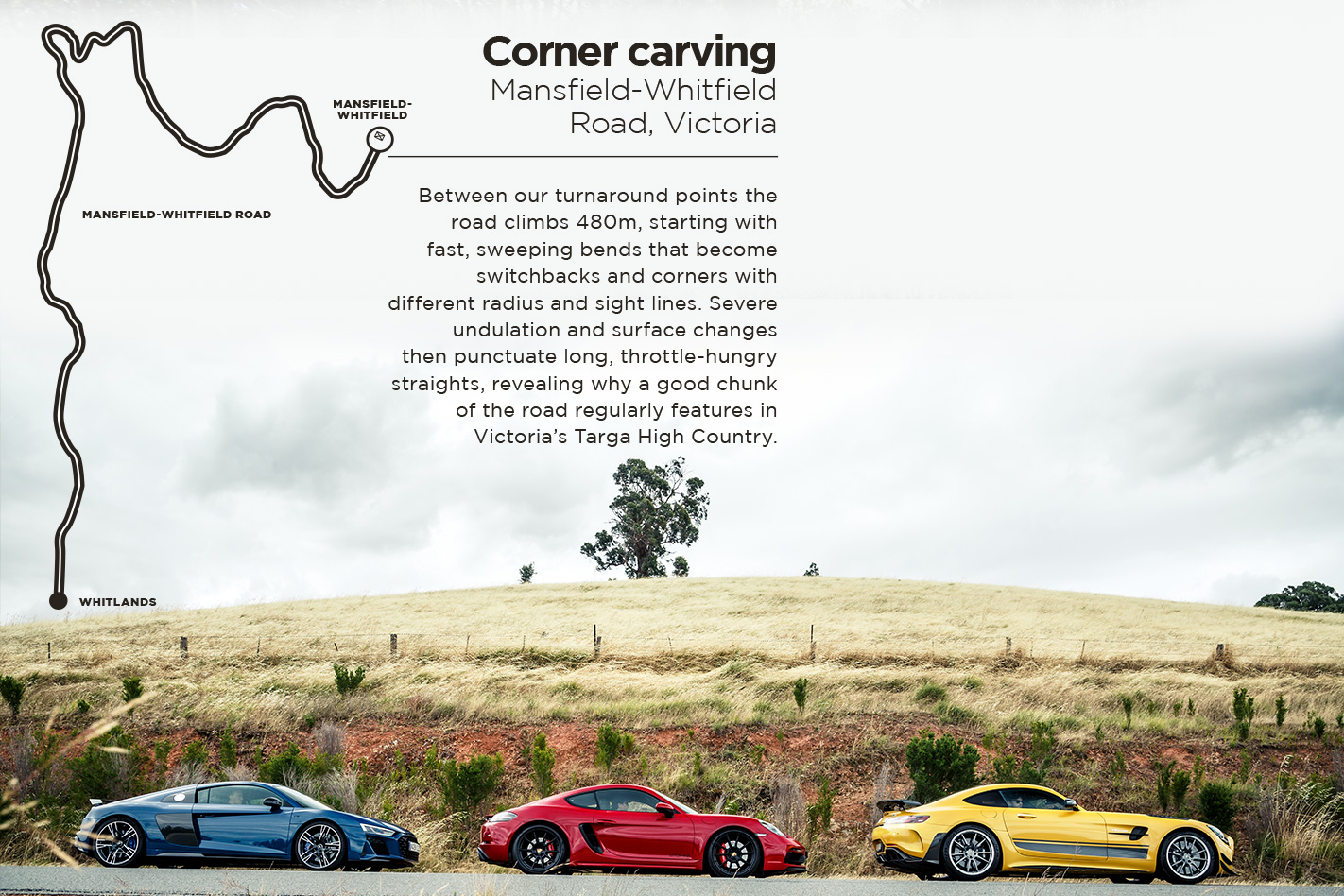
Chassis tweaks only broaden its scope of accessibility. Given the R8’s epic V10 layout and short-stroke dampers, the front-end follows the road with unwavering confidence that, when combined the balance of all-wheel-drive, equals surprising benignity. And it sounds incredible. Yet, while the R8 shrieks with a gravelly howl to 8700rpm, ending conjecture on which car sounds best, the Porsche Cayman GTS 4.0 envelops you in something soulful, mainly because it spends a long time climbing through gears.
Criticism on the Cayman’s tall gearing is well known. However, my joy for its manual goes beyond a precise and mechanical shift action or perfect heel-and-toe pedal placement. The Cayman’s centralised mass and lack of turbo grunt force you to maximise entry speeds, relying on its inherent balance to keep revs high.
That it keeps a Porsche 911 Turbo S in view downhill speaks to the Cayman’s light-footed ability. It’s an intoxicating car to rag and rewards commitment without fear of penalty. And it’s still ‘quick’ in a straight line. However, as I prepare to battle the Turbo S again uphill at the turnaround point, it disappears by the first corner.
In the Turbo S, acceleration is shocking in ferocity, and the engine’s explosiveness is matched with otherwordly all-wheel-drive traction. You get the feeling, however, that the Turbo S’s chassis is focused on deploying its power rather than mesmerising you. Its damping is excellent. Body control is resolute. But like a 992-series Carrera S the nose fights those huge rear tyres for grip at turn-in.
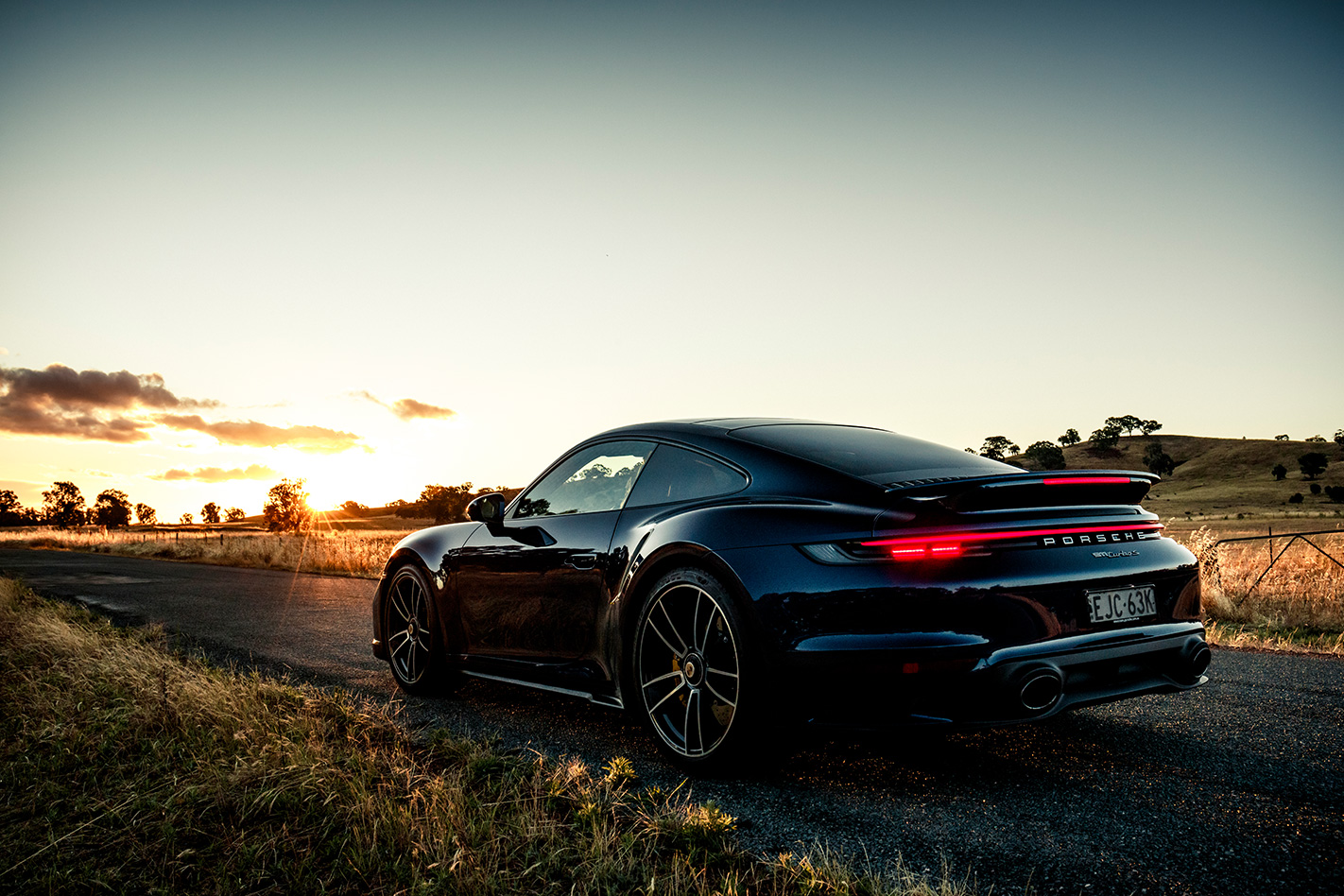
Never, however, does the novelty of its jet-like pace across country diminish. And craving more time with the Turbo S is a fitting way to finish.
With more action to come, some cars will get the chance to reveal a lot more about themselves, while others only need to reaffirm their case. So without further to wait, bring on the track.