
It’s a common refrain that if you like the idea of a supercar but just can’t stump up the cash, the next best thing is a much smaller version.
That’s just what Mercedes-Benz and Mattel are proposing with this latest edition to the Matchbox Collectors series: the G580 With EQ Technology – what you might know more simply as the long-promised electric G-Class.
Priced at $52 for Australian buyers, the special-edition Matchbox G580 is about 17 times pricier than a regular Matchbox car – but you might be better served to think of it as just 0.02% the price of what the real EQ G580 is likely to cost. (Mercedes hasn’t said, but reports out of America suggest it’ll be around US$150K over there.)
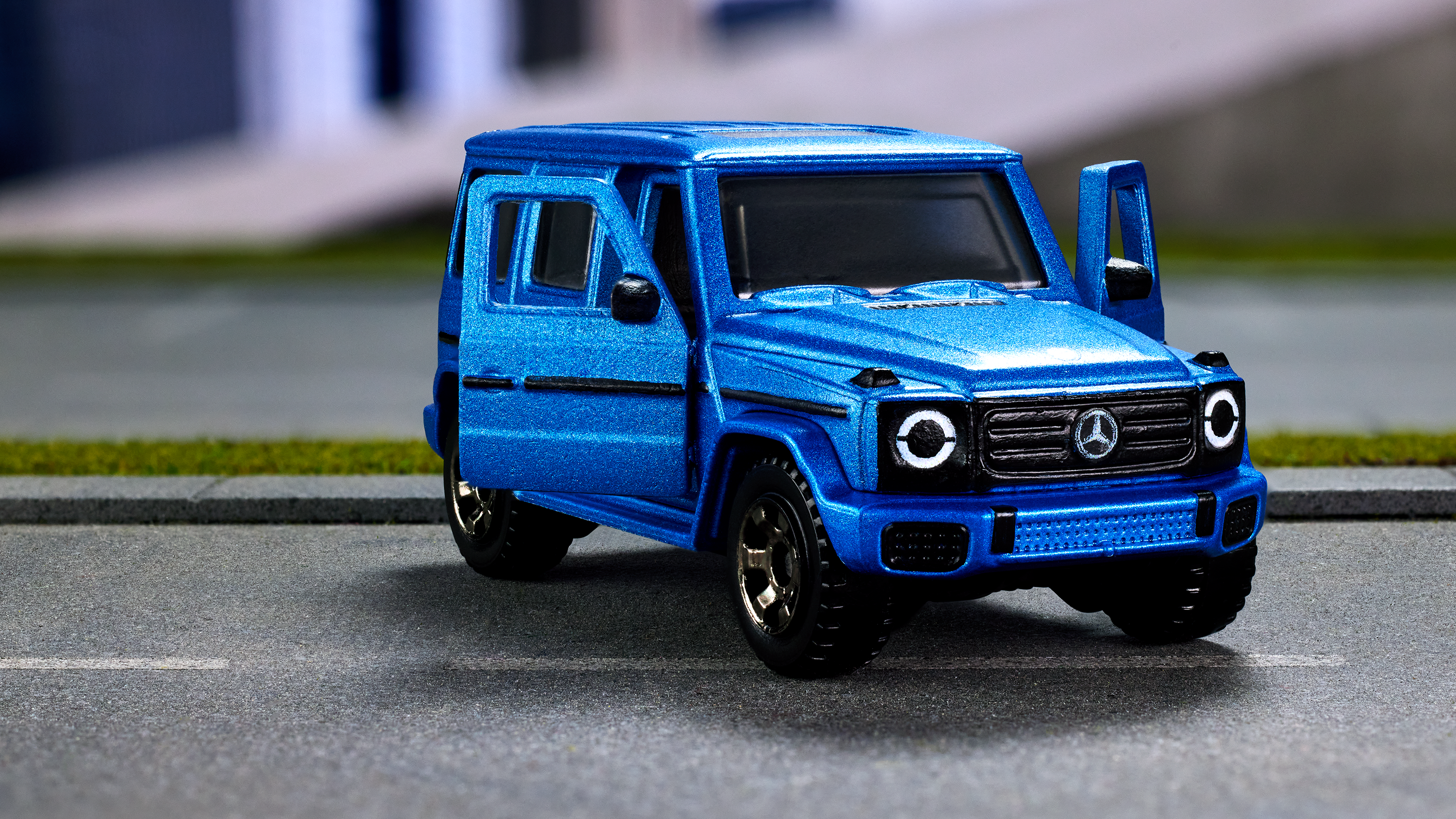
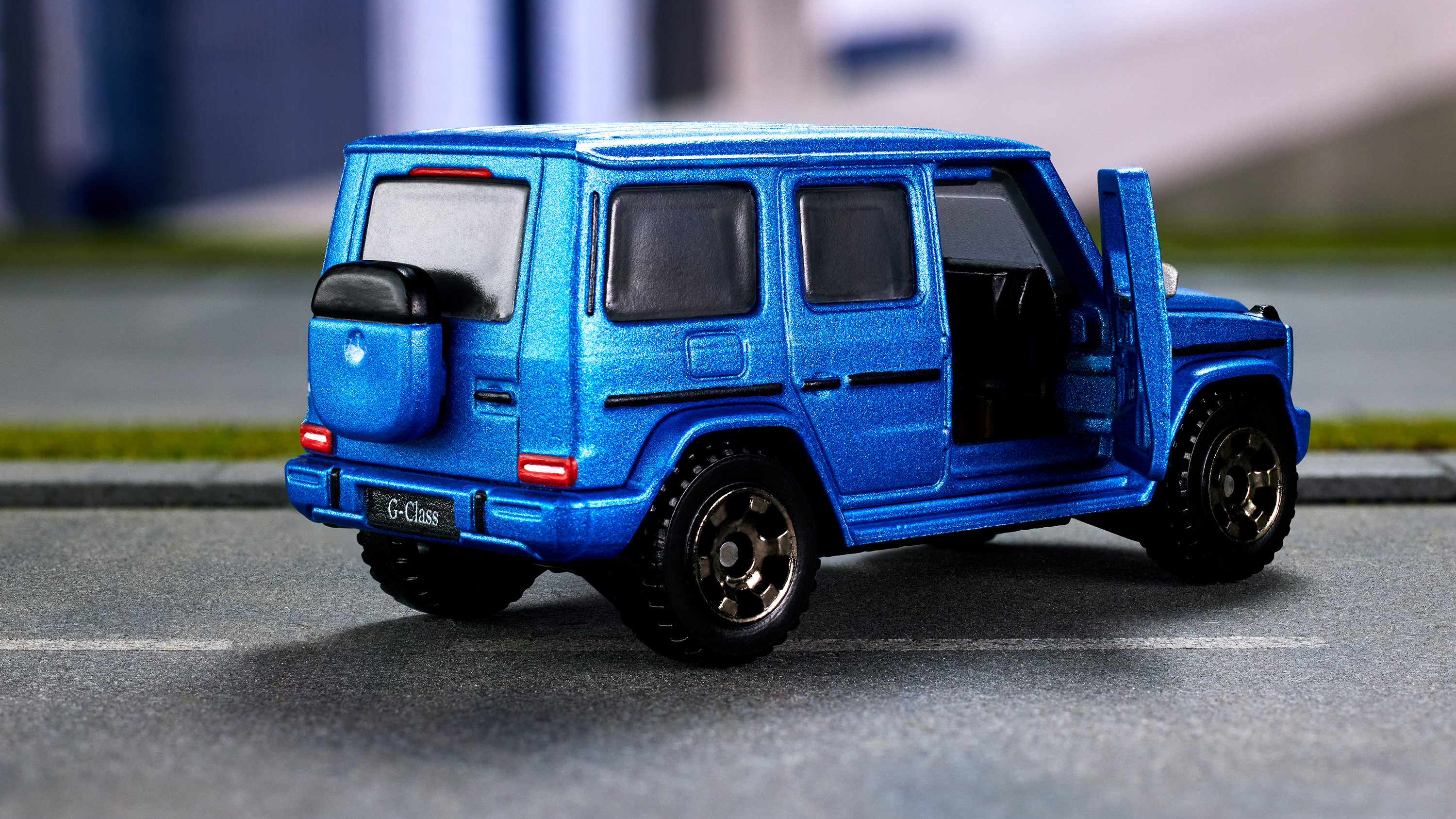
It genuinely is a bit more special than the usual Matchbox offerings, too.
That’s thanks to the use of 99.5% recycled metal (we’d love to know which part isn’t recycled), while the plastic elements are 81% recycled – and that’s specifically certified through the International Sustainability and Carbon Certification system in Germany.
It’s only available online, so you can pop over to the Mattel Creations site here to sweat over whether you’ll ever financially recover from buying one. And beware; they’re not shipping until late December.
NOTE: This story isn’t sponsored, and to prove it, here’s a vid by a fella who says it’s overpriced. (I’ll probably get one though, because YOLO!)
The Cupra Formentor VZe plug-in hybrid has been given the Spanish brand’s ‘Tribe’ special-edition treatment, bringing fancier design features from the flagship VZx.
Exterior upgrades comprise 19-inch black/copper alloy wheels and a new optional sunroof.
More is added to the cabin, which gains ‘petrol blue’ leather-appointed upholstery, door trim and dash, along with front seats that offer heating and an electric adjustment on the driver’s side.
A surround-view monitor and Beats audio system complete the equipment step-up for the VZe Tribe Edition that costs from $67,990 – $3000 more than the regular VZe.

Drive-away pricing varies between states and territories, ranging from $70,990 (ACT) to $73,990 (WA), and the VZe Tribe is limited to 300 units.
Cupra Australia says the VZe has replaced the VZx performance model as the most popular variant in the Formentor line-up, accounting for more than half of the compact crossover’s sales.
A facelifted Formentor is coming in the second quarter of 2025 with updated styling, cabin features and drivetrains. This includes a lift in power and range for the plug-in VZe, which increases output from 180kW to 200kW while the distance it can potentially go on electric power alone goes from 58km to more than 100km thanks to a larger battery.
Snapshot
- Cadillac returns to Aussie roads later this year after a 50 year absence
- First model to launch is the Lyriq SUV, likely in late October
- Unlike Genesis and Lexus, Cadillac wonu2019t undercut the established players on price
- Lyriq will be fully loaded with equipment in Australia; offer plenty of colour/trim customisation
Cadillac won’t undercut its luxury rivals on price when it launches in Australia later this year, saying Aussie buyers can expect to pay similar money to an equivalent BMW, Audi or Mercedes-Benz.
After a 50 year absence, Cadillac will return to Aussie roads when it launches the all-electric Lyriq SUV and we now have some rough retails on exactly when it will arrive, how much it should cost and how it will be specced.
The Lyriq is a five-metre long large SUV pitched to rival the Audi Q8 E-Tron, Mercedes-Benz EQE SUV and BMW iX. A single-motor variant is available in America but Aussie cars will only be offered in twin-motor, all-wheel drive guise and will be highly specified, with nearly every available option included as standard.
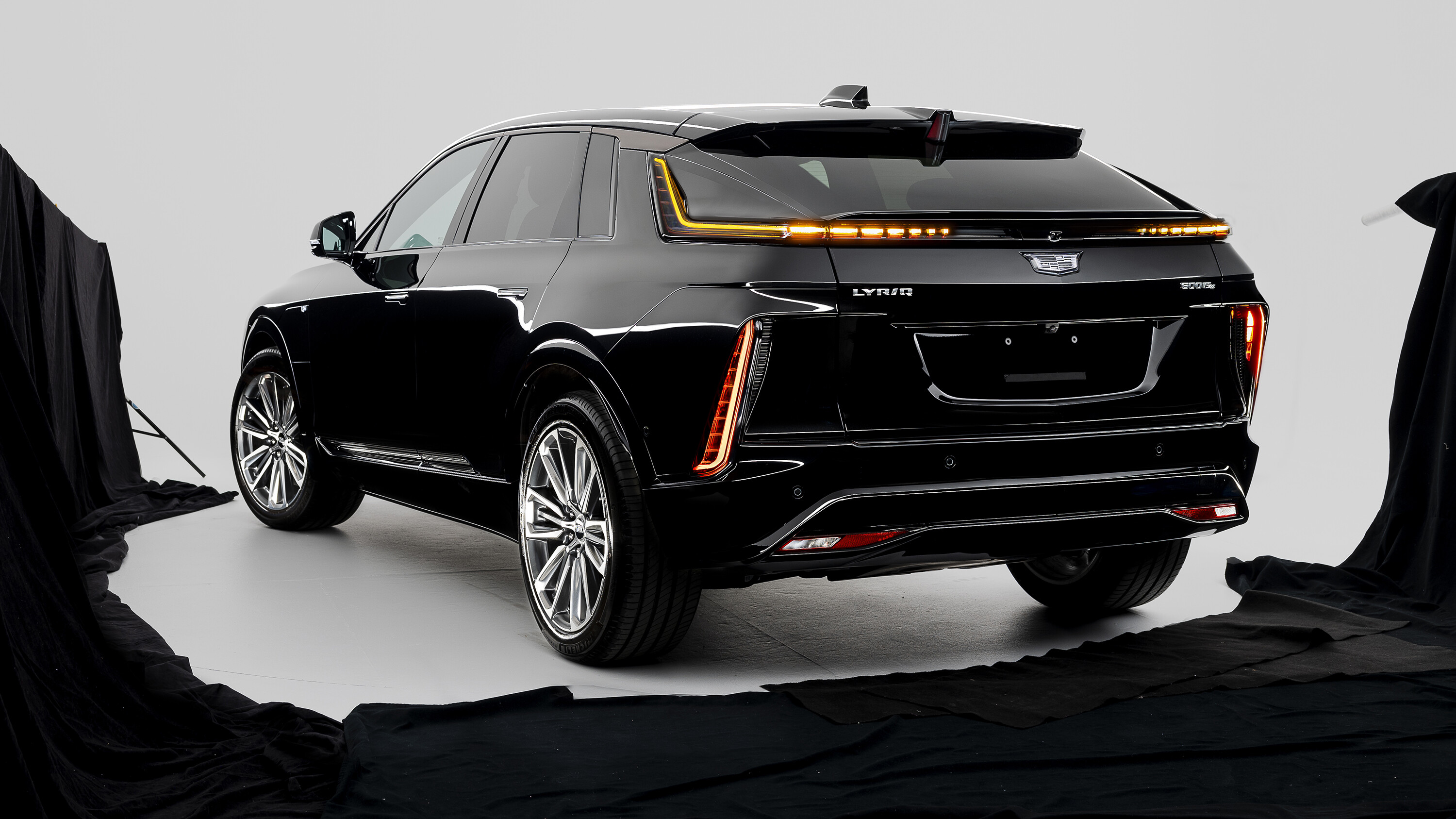
Such a rich specification will likely command a premium price, with Cadillac saying it has no plans to undercut its established rivals — similar to how Lexus and Genesis pitch their vehicles — in order the gain a foothold in the market.
“We are targeting the European luxury brands and our price will be right in the realm of where their entries or equivalent entries are,” said Jess Bala, GM’s managing director in Australia and New Zealand.
For reference, a comparable Mercedes-Benz EQE SUV is $145,000, while Audi prices the dual-motor Q8 E-Tron from $155,000. The BMW iX starts at $130,900, while the Polestar 3 range kicks off at $132,900.
Cadillac says it sees seven key brands as its core competition in the luxury segment globally: Audi, BMW, Land Rover, Lexus, Mercedes-Benz, Porsche and Volvo.
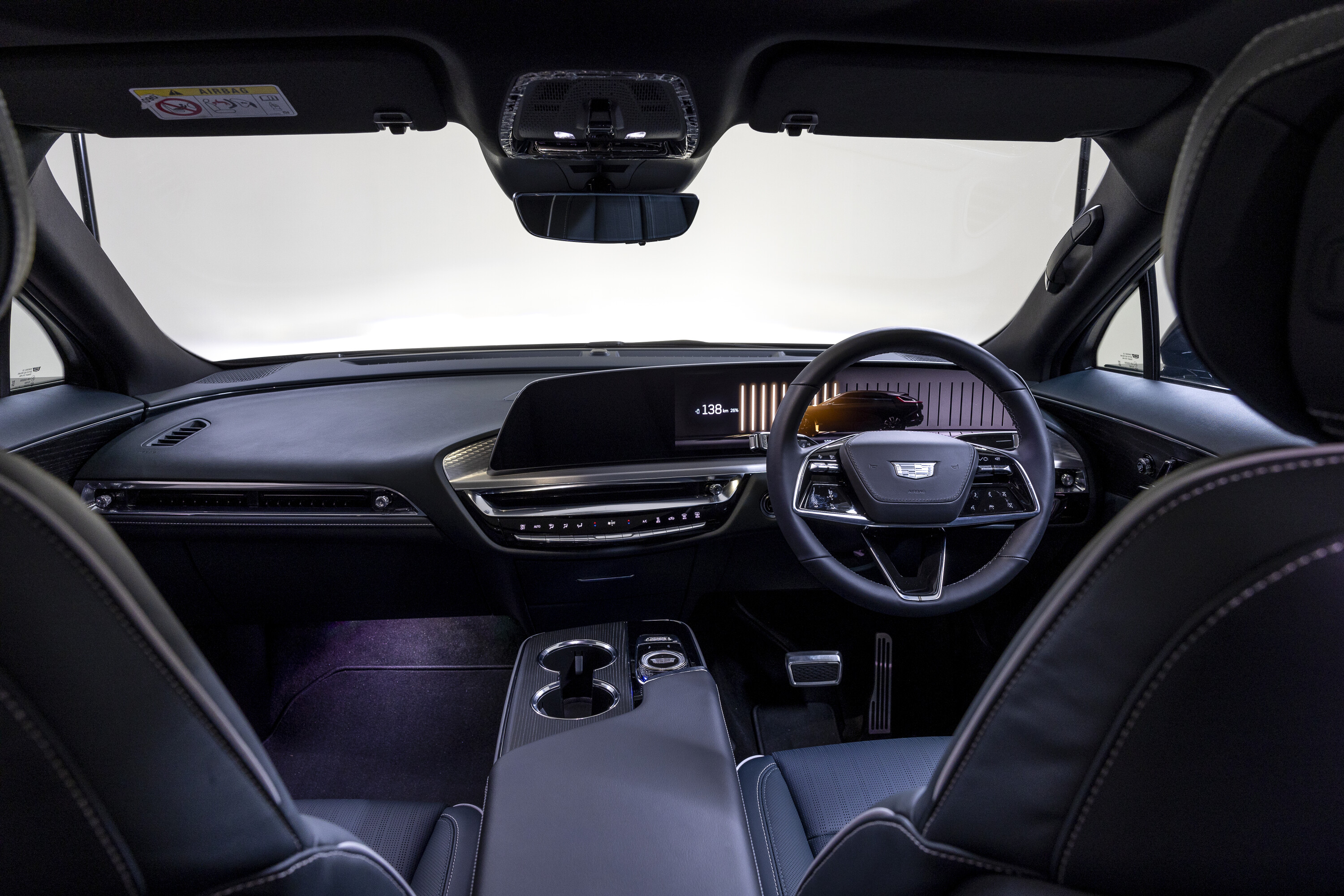
Timing wise, Cadillac revealed it’s targeting a local launch in late October however that date could shift pending any shipping or logistical delays.
“From a launch timing, we’re going to open our first stores later this year and then towards the end of the year, very early next year is when we will start having many more vehicles on the road,” confirmed Bala. “We actually have some of our own stock coming in within a couple of months and that will allow us to use more of the vehicles for our marketing events as well.”
Bala said Cadillac has already received “thousands and thousands” of expressions of interest in the Lyriq, which will be sold online or through boutique experience stores in a ‘direct-to-customer’ model similar to that used by Tesla and Polestar.
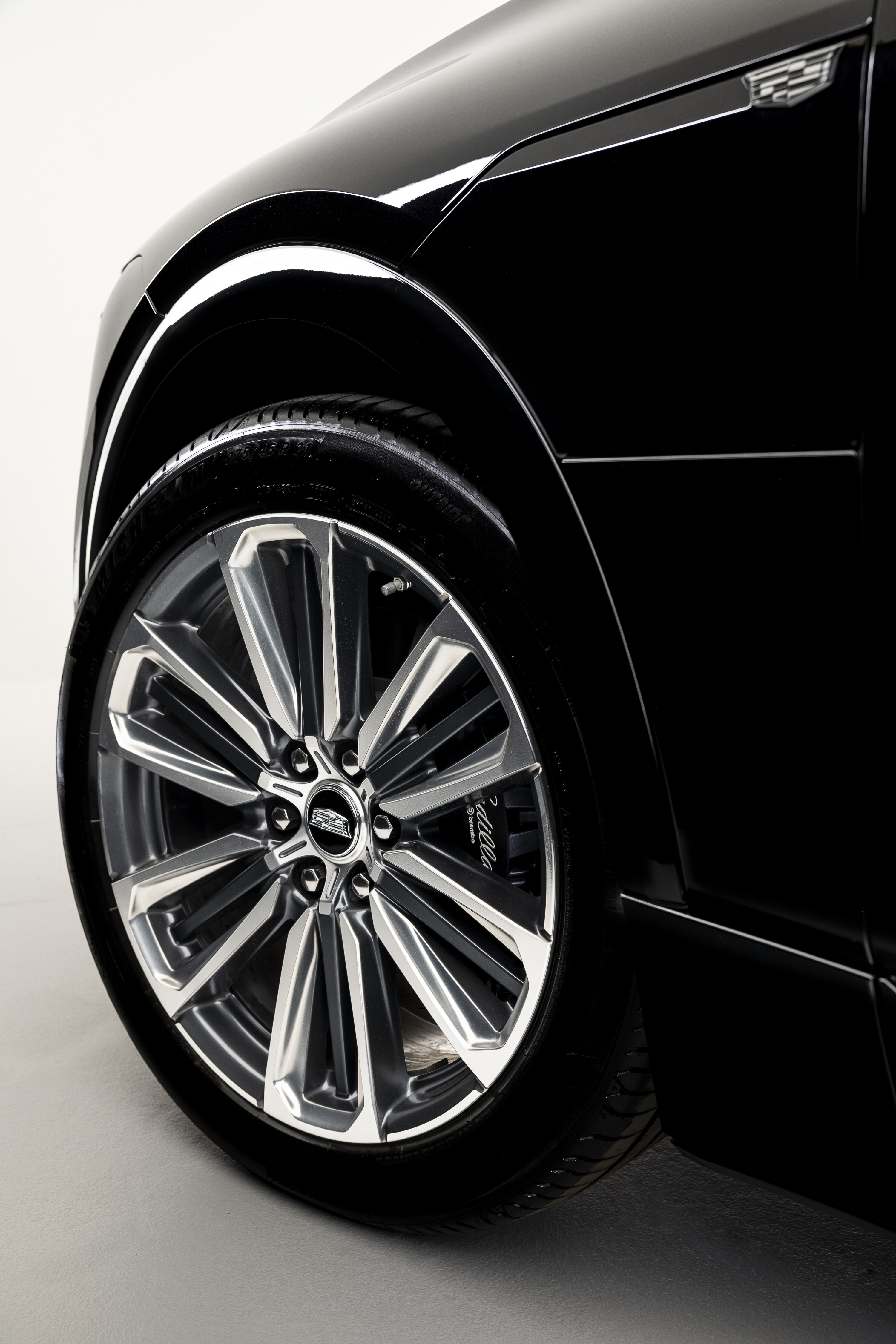
As for local specification, Bala confirmed Aussie cars will “basically have everything loaded on it”, although buyers will have the freedom to choose from a broad colour palette for their exterior paint and upholstery.
“The way that we’re really going after is allowing the customers to customise their vehicle more specifically in the design side,” said Bala. “So body colours and things like that.
“The way we’re looking at it is as from a luxury vehicle, it’s going to basically have everything loaded on it and the customisation will come in the in the colour palette instead.”
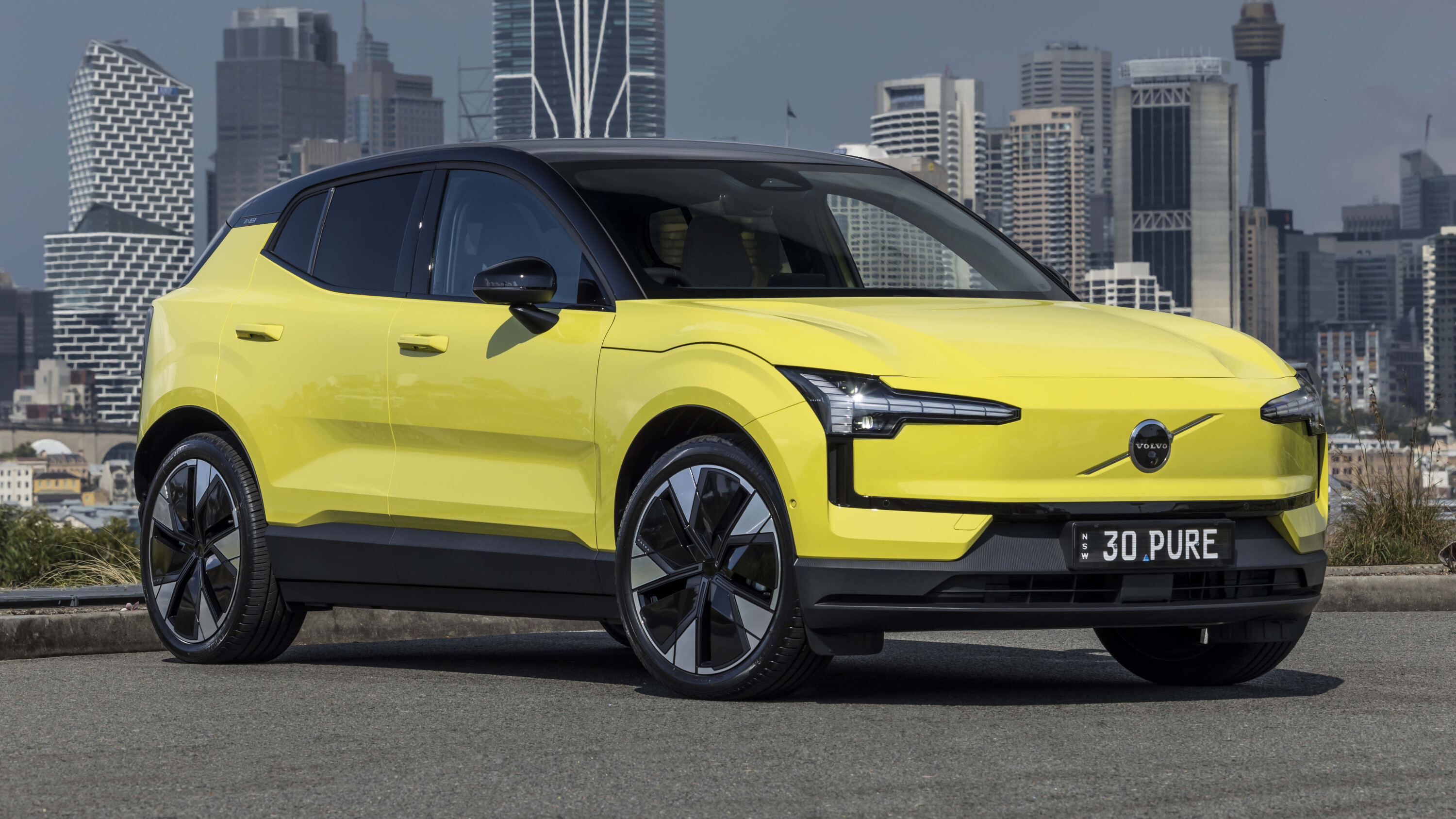
Volvo has been in a relatively quiet product period after delivering a cracking trio of SUVs between 2015 and 2019, but now comes a pivotal smaller SUV to sit below the XC90, XC60 and XC40.
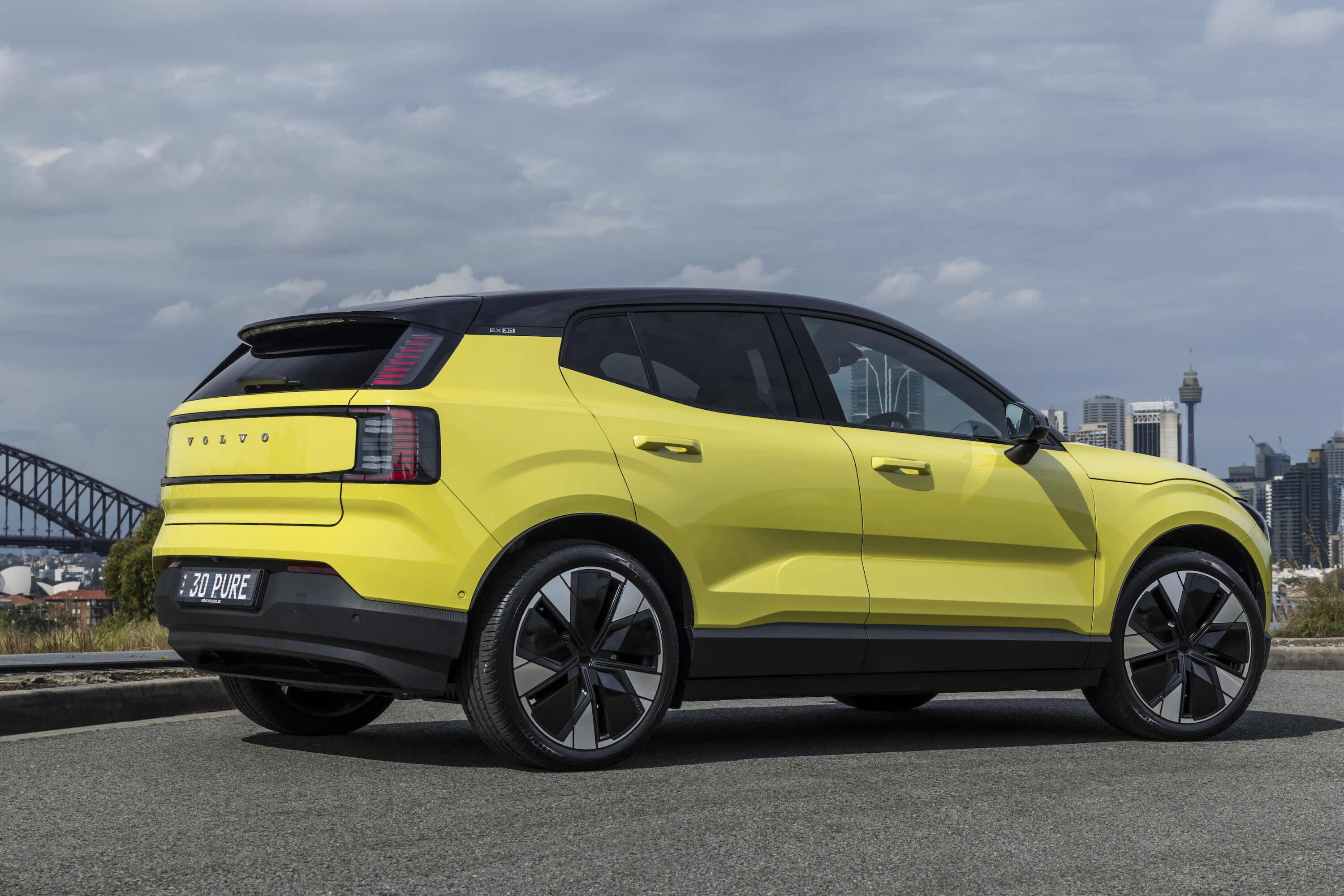
The EX30 is a battery compact SUV that will not only deliver greater sales volume than relatively niche models such as the S60 sedan and C40 coupe-SUV, but is predicted by the Swedish brand to become its best-selling vehicle.
Non-traditional colour options such as Moss Yellow and Cloud Blue reveal much about the EX30’s (younger) target audience, while Volvo says it’s pulling buyers from other brands.
The EX30 also continues the Swedish brand’s transition to an all-electric line-up – from 2030 globally and, even more ambitiously, 2026 locally.
Direct rivals aren’t in short supply. They include the Cupra Born hatch (and its forthcoming twin, the VW ID.3), Hyundai Kona Electric Premium, Peugeot E-2008, and Renault Megane E-Tech. There’s also the upcoming Mini Countryman Electric.
JUMP AHEAD
Pricing and features
Volvo’s smallest model isn’t its cheapest.
The EX30 starts from $59,990, positioning it five-grand above the petrol-powered entry-level XC40. Pricing was announced way back in mid 2023, though at launch Volvo announced increases for the other two variants that form a three-model line-up.
The mid-range Extended Ultra moves from $64,990 to $66,290; the flagship Performance Ultra shifts the other side of $70K, also up $$1300 to $71,290.
Every EX30’s power source is a 64kWh (useable) battery, with the Extended Plus and Extended Ultra models sharing a single-motor, rear-wheel-drive set-up. The Performance Ultra offers all-wheel drive via a dual-motor arrangement and is naturally the most powerful model, producing 315kW/543Nm to the single motor’s 200kW/343Nm, and is, somewhat bizarrely, Volvo’s quickest vehicle yet.
Volvo quotes 3.6 seconds for the 0-100km/h test, with the single-motor models hardly slow-coaches at 5.3 seconds.
They counter with longer WLTP battery ranges, though only 20km more than the 460km of the twin-motor Performance Ultra.
You can click on the feature link below for our detailed guide to the EX30’s pricing and specification, though we can also distill the highlights for each model here.
The Extended Plus entry model’s key features comprise auto tailgate, digital key, wireless phone charging, and an infotainment set-up incorporating a 12.3-inch touchscreen and a Harman Kardon audio system with soundbar.
Laying out another $6300 for the Extended Ultra adds heating function and electric adjustment for the front seats, heated steering wheel, rear privacy glass, fixed panoramic sunroof, and two major parking aids: a surround-view camera plus a new-generation version of Volvo’s Pilot Park Assist, which can now detect a wider range of parking spaces and controls acceleration and braking in addition to the steering.
The Performance Ultra replicates those features while swapping the Extended Ultra’s 19-inch wheels for 20s.
Interior
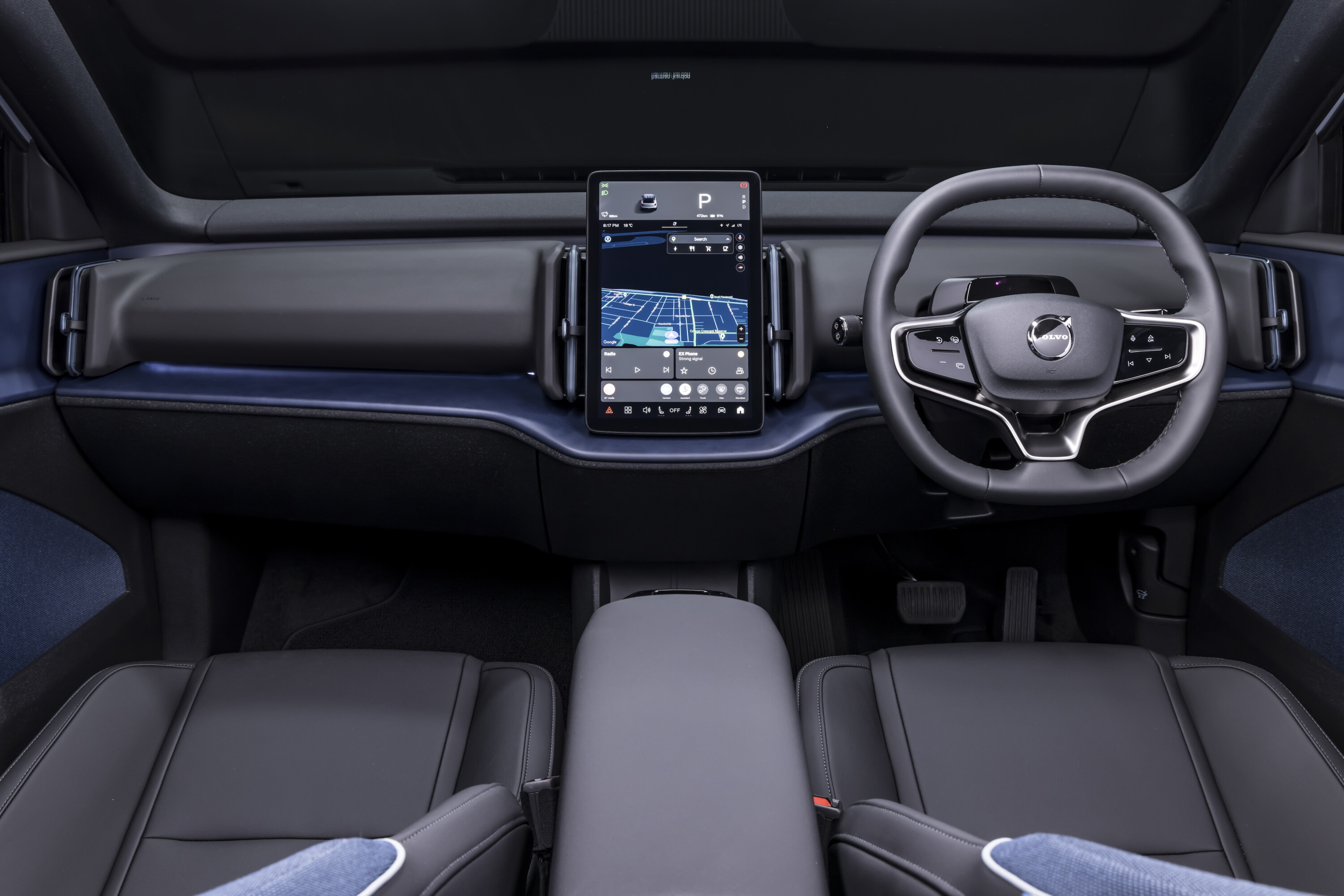
Mix a bit of inspiration from Tesla and Volvo’s own XC40 into VW Golf hatch-sized dimensions and you have a basic idea of the EX30’s cabin.
The XC40 nods include generously sized (and easily accessible) door pockets, enabled by an absence of door speakers – and instead a dashboard-spanning soundbar that’s linked to a standard Harman Kardon audio.
Then there’s the hugely versatile centre console system that comprises upper and lower sections.
Small bags or other items can be placed on lower, floor part, which includes flaps that open to reveal a hidden storage area that can keep wallets out of view, or keep cables neatly out of the way.
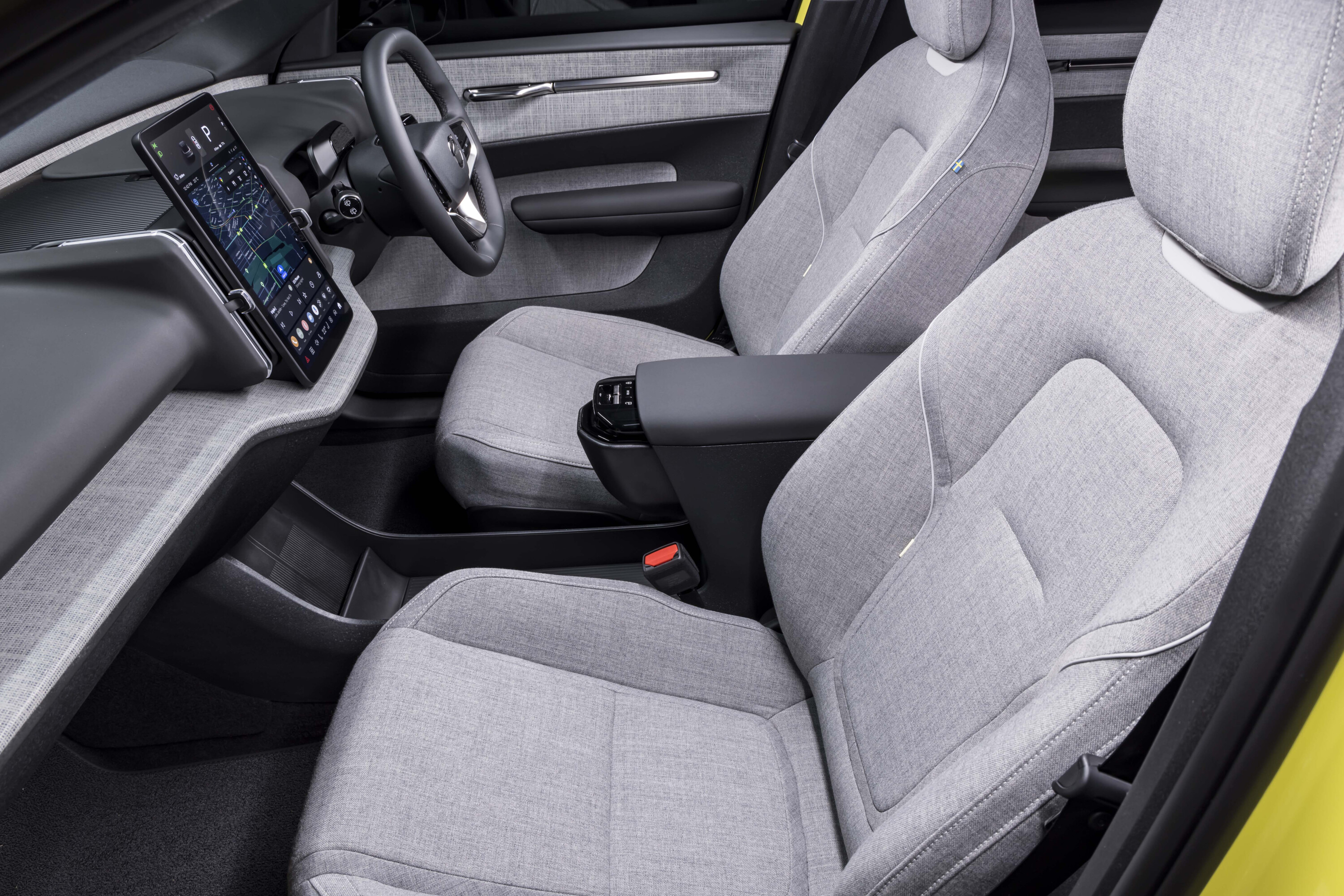
Ahead of the armrest (which in an automotive rarity doesn’t double as a console cubby in this car’s case), a protruding horizontal section features a top layer with octagonal-shaped cupholders – which can be slid back to create a wider storage box.
The cleverness doesn’t stop there as the whole protruding section can be pushed back partly to create a larger singular cupholder or pushed right out of the way to make access to the lower storage area even easier.
Less successful is the glovebox that opens from a central dash position rather than the conventional passenger side. It’s not a bad size but when it opens – via a touchscreen button (the first of the Tesla nods) – it has a habit of knocking the driver’s left knee.
Then what looks like a Model 3/Y-style angled dual phone charging tray turns out of offer inductive charging on the left side only.
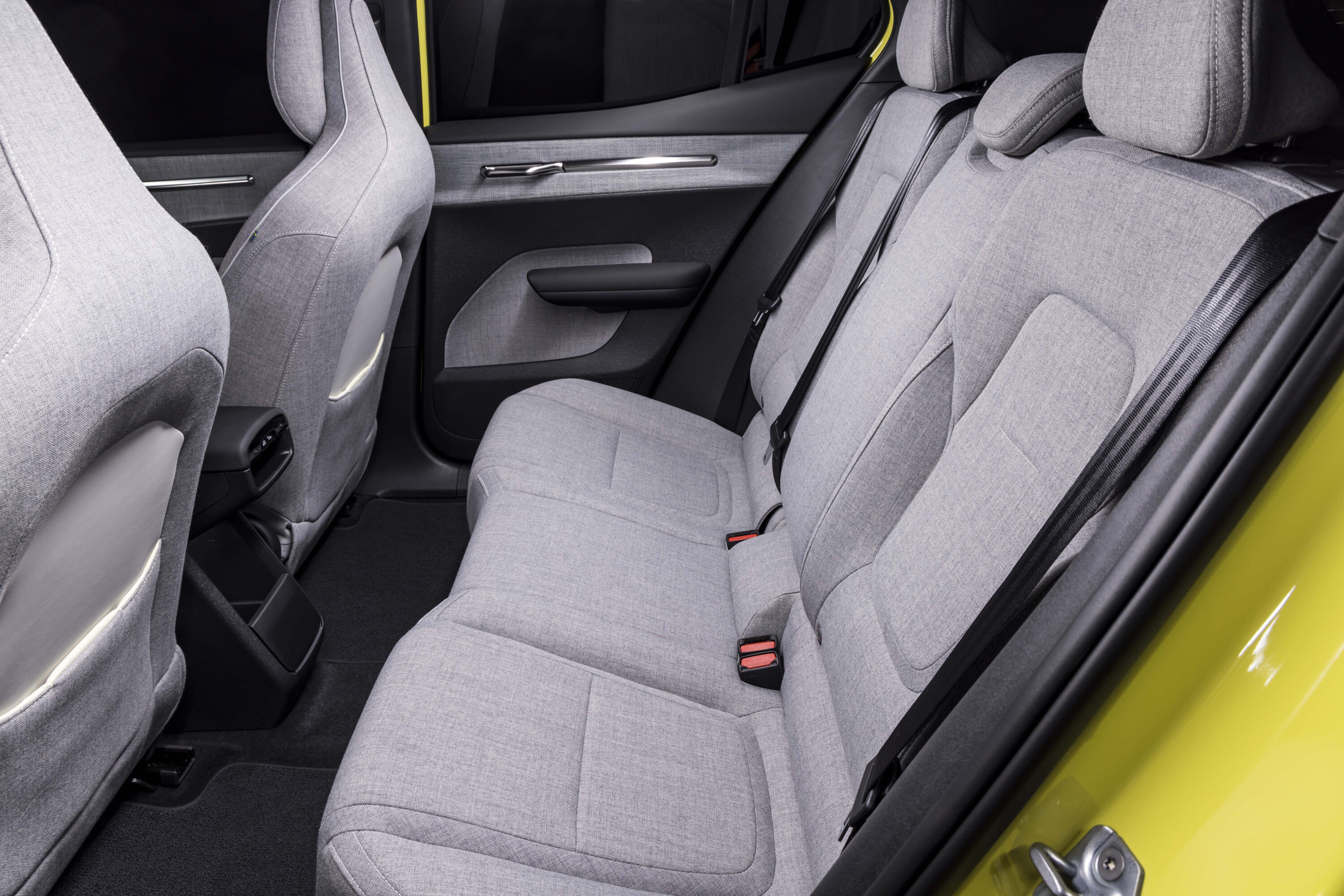
There are delightful design details such as the ‘floating’ door armrests and rectangular door handles, many surface trims are visually interesting, and while hard plastics are more widely used than in other Volvos they at least some are comprised of sustainable materials.
Just like Tesla owners, EX30 drivers can turn their smartphone into a digital key to lock/unlock and, after swiping over the NFC (Near Field Communication) readers, start the car.
Volvo seats have a long-deserved reputation for excellent ergonomics and the EX30’s pews – whether all-fabric or pleather/fabric – doesn’t betray that tradition.
Cleverly, Ultra models feature a single, squircle electric seat-adjust knob, with a middle button that can be pressed to cycle through movement options on the central touchscreen.
There’s also a squircle design for the steering wheel, though Volvo thankfully sticks to its favoured portrait shape for the 12.3-inch touchscreen.
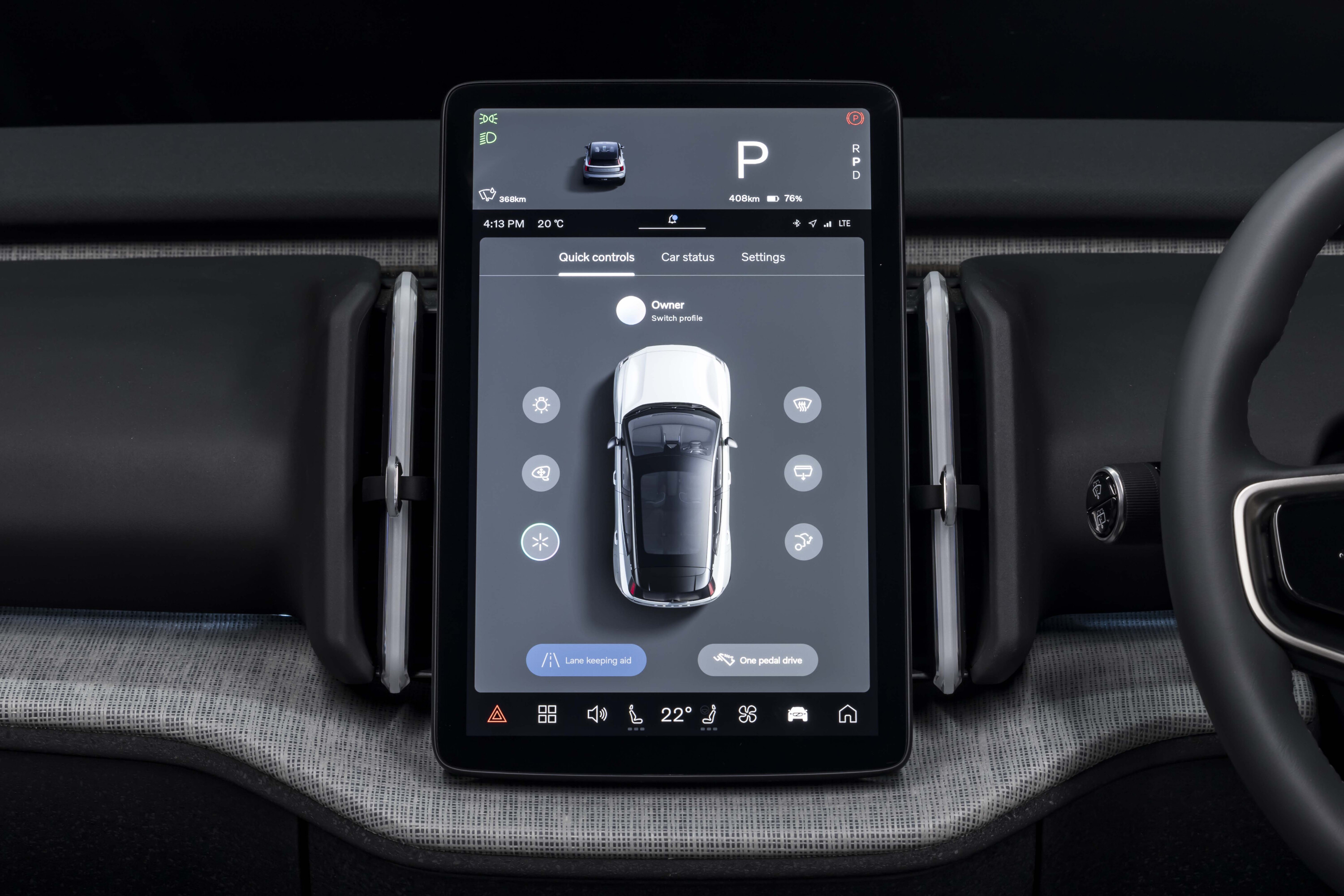
This is one of the biggest Tesla influences as it controls most vehicle functions and is the only display for vehicle information including speed. As with a Model 3 and Y, there’s no head-up display option.
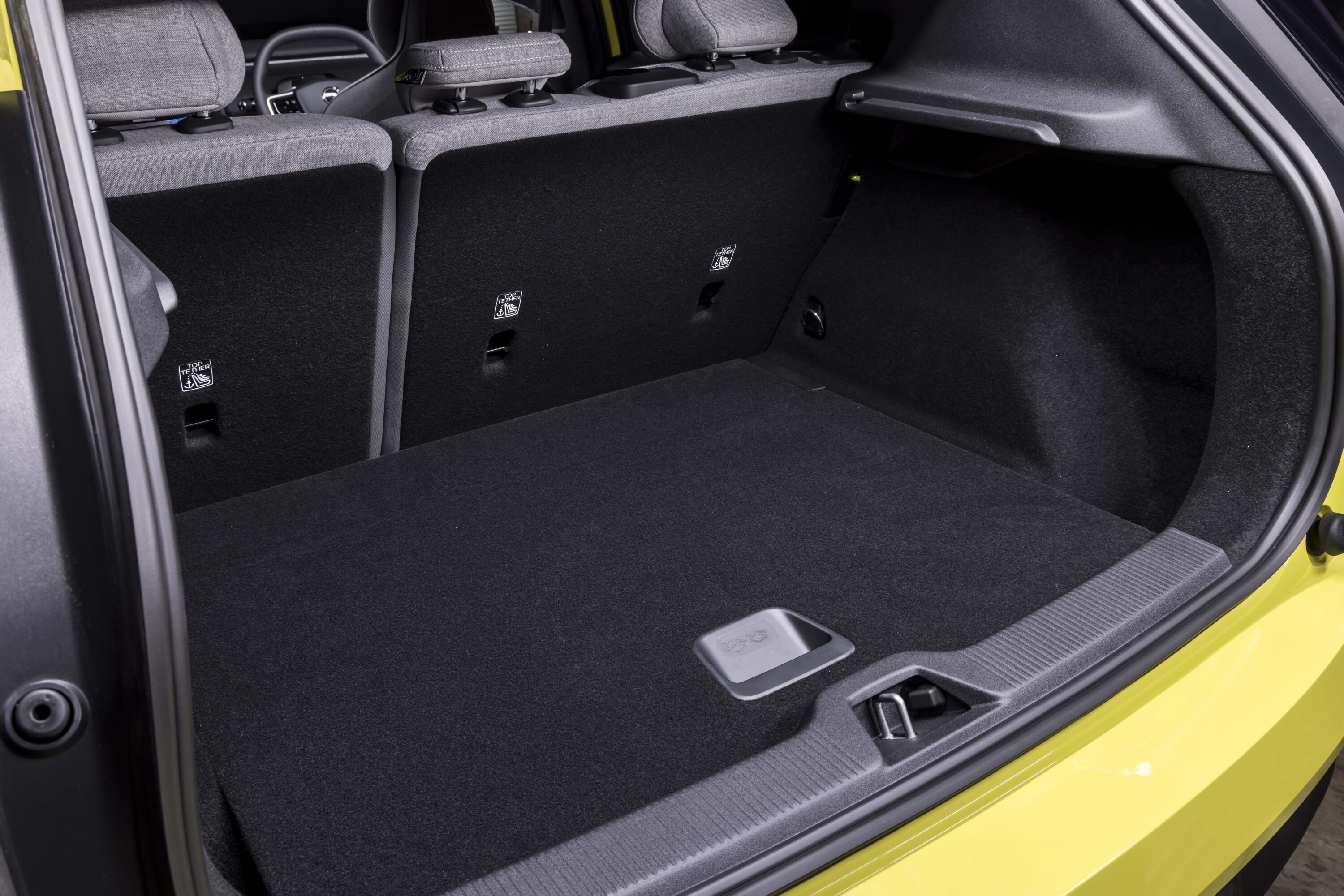
The EX30 isn’t a marvel of packaging. Despite its battery platform, there’s less rear-seat space and boot capacity (318 litres) than you’ll find in a similarly sized Golf hatchback – and this despite the fact that the EX30 also packs no spacesaver spare wheel, leaving you just a puncture kit.
Volvo admits the car is intended more for a two-vehicle garage or that some buyers who come to see the EX30 in a showroom may decide they instead need an XC40 or XC60.
On the road
We’ve regularly criticised the Model 3 and Y for their everything-in-one-display approach (and lack of standard HUDs), because they require the driver to avert their eyes from the road for more than a glance to find various functions. The same applies to the EX30.
Although Volvo has created some icon shortcuts for items such as mirrors and wipers on one of the menu pages, other functions/modes are more deeply buried – two or three menu pages away. It’s compounded by the steering-wheel-mounted driver monitor that will beep and warn the driver if it thinks they’re not paying attention for long enough.
The adaptive cruise function is a better Tesla copy, though, where it can be engaged/disengage simply by pushing down on the transmission stalk.
Wiper functions are also positioned conveniently on the left (indicator) stalk.
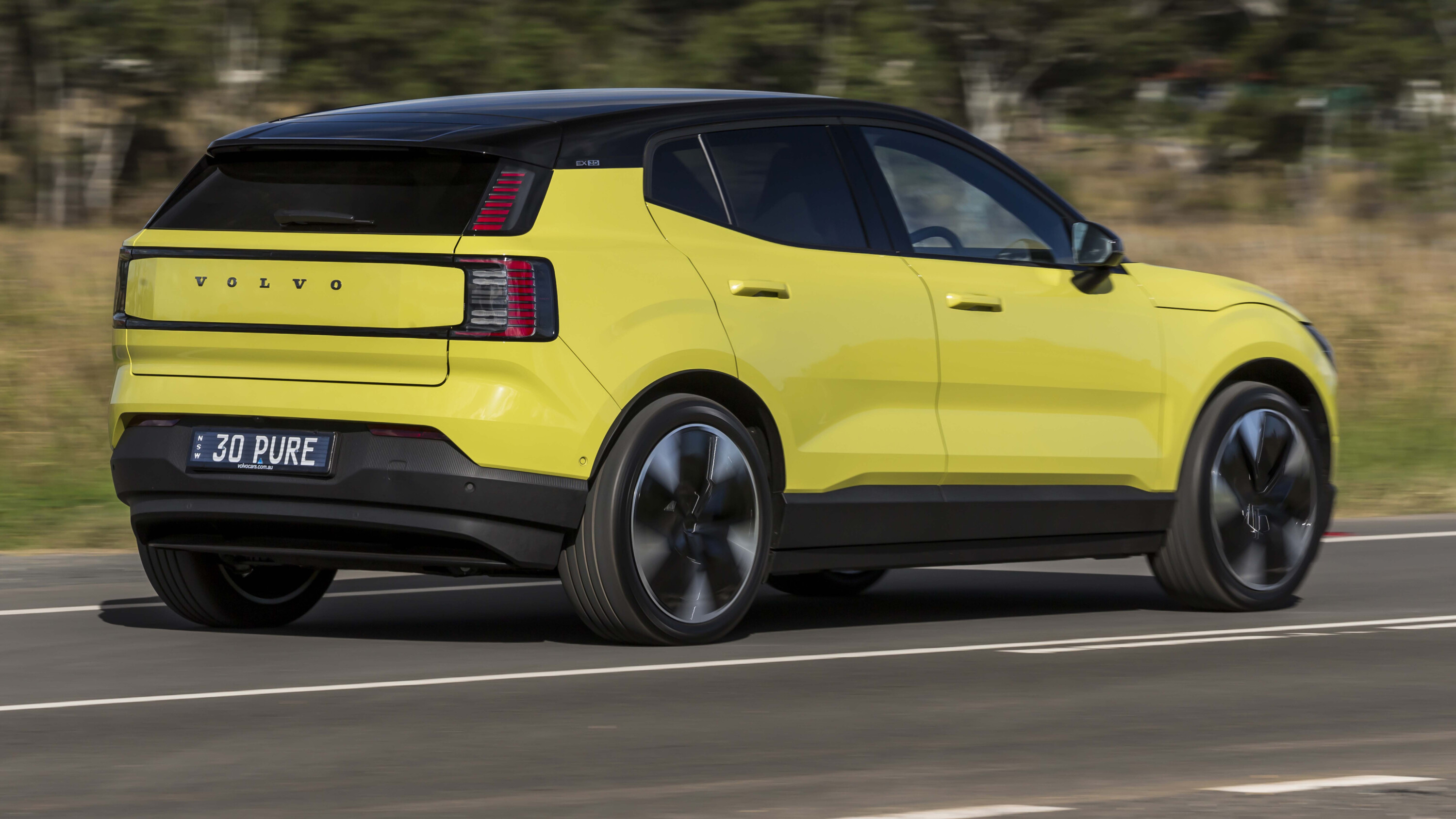
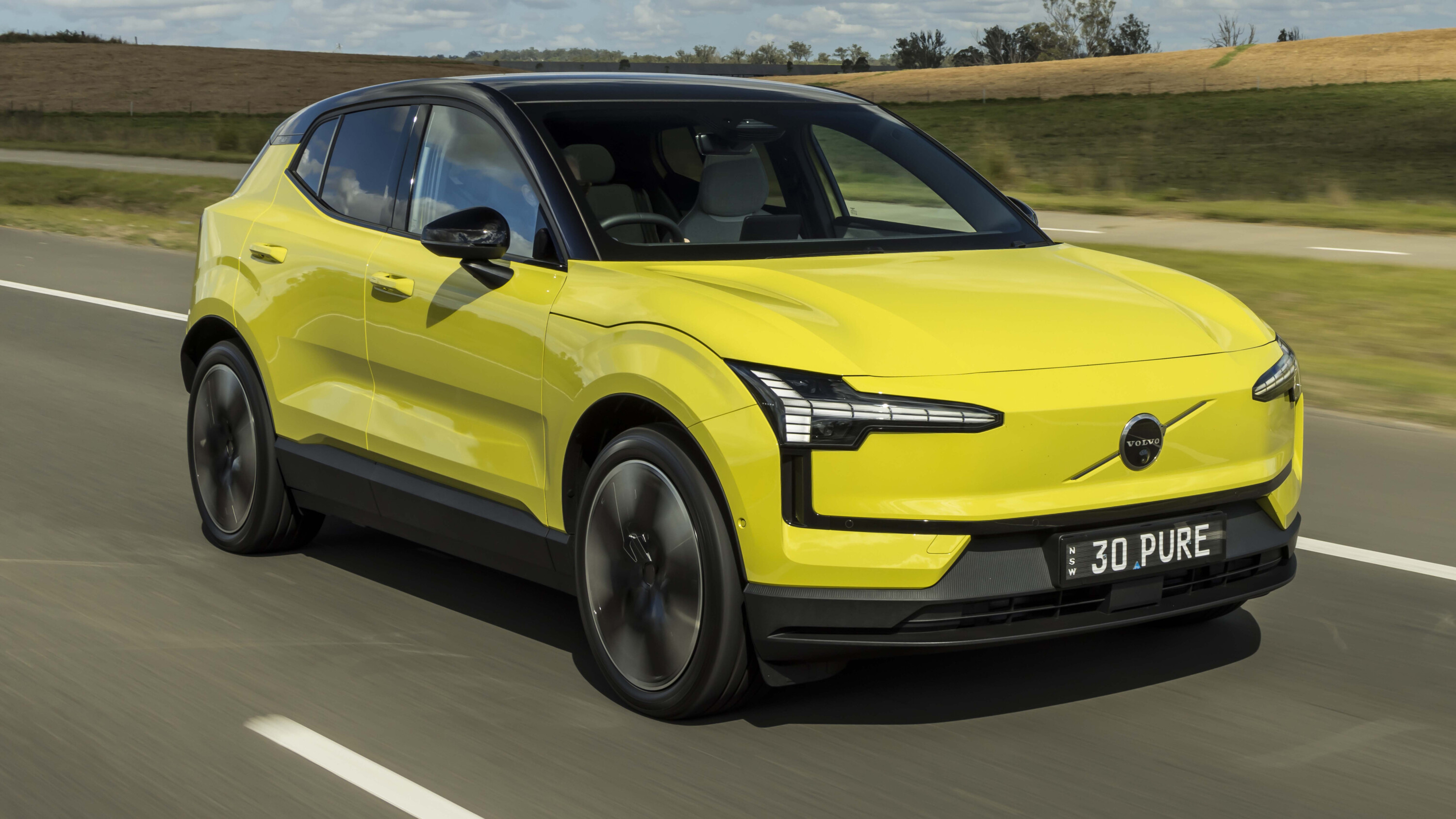
All-round vision is excellent and the EX30’s compact dimensions and sprightly performance – regardless of single or dual motors – make the smallest Volvo a wonderfully nimble urban runabout.
The 315kW/543Nm dual-motor, all-wheel-drive model has the unexpected label of being the company’s fastest-accelerating vehicle yet – quoted at 3.6 seconds for the 0-100km/h!
Such an unlikely car to boast that claim, though we guess there would be some fun in having a moss-yellow EX30 capable of outsprinting most AMGs.
Otherwise there’s ample pace provided by the 200kW/343Nm single-motor EX30s, evidenced by a no-slouch 5.3 seconds. In (non-timed) 50-80km/h and 70-100km/h runs we made, the less powerful, rear-drive model proved it can make easy work of overtaking.
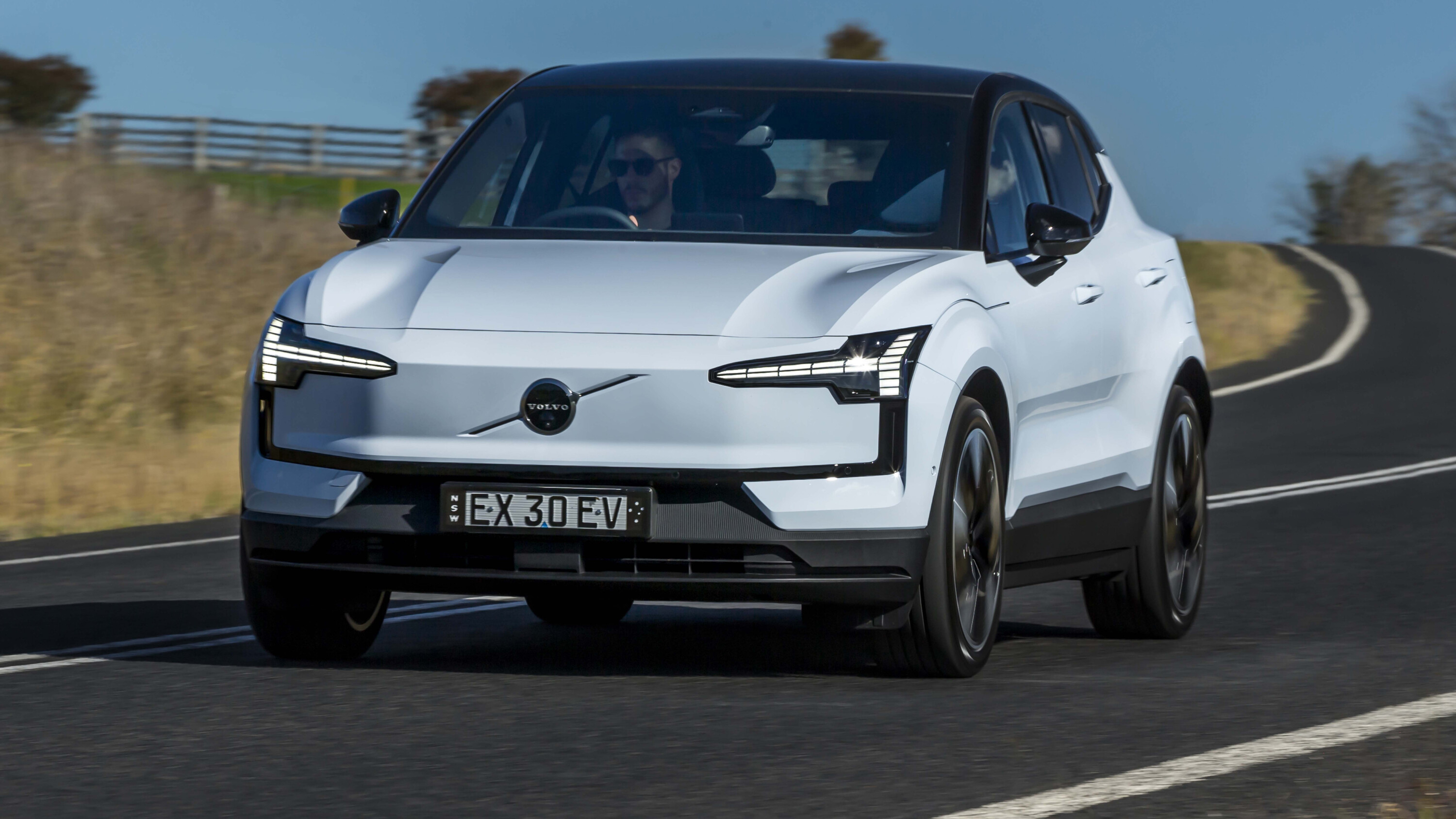
Battery ranges aren’t as different as would be expected for RWD and AWD variants, separated by just 20km in WLTP ratings – 480km for the Single Motor, 460km for the Twin Motor.
Volvo EV batteries have hitherto regularly failed to live up to their WLTP promises in the real world. We’ll have to wait for a full test of the EX30 to assess whether it can improve on the XC40 Recharge and C40 (soon to be renamed the EX40 and EC40).
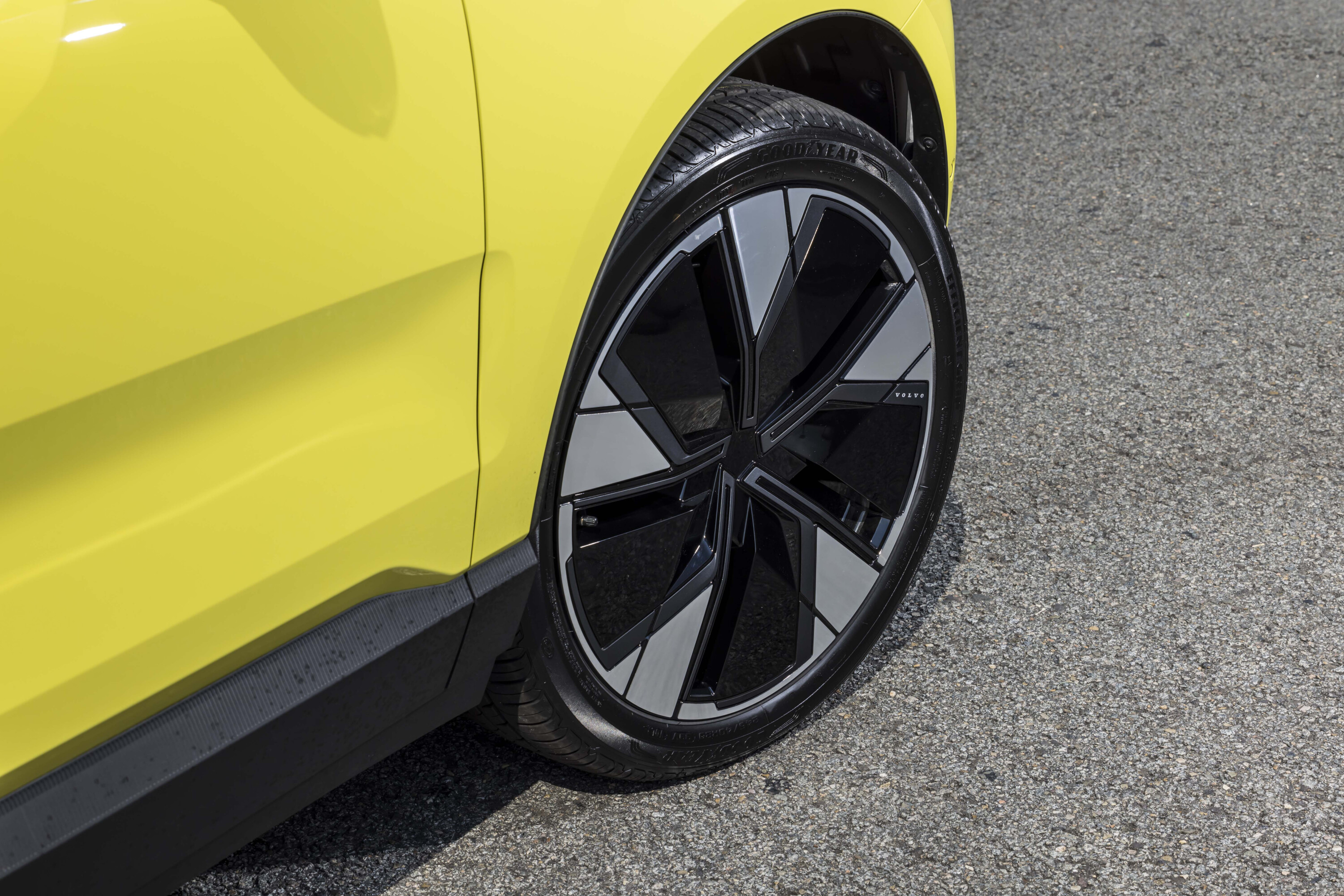
All test models on launch were fitted with 20-inch wheels. They’re standard on Ultra models, with the base Extended Plus sitting on 19s.
We can’t report the ride experience for the latter, but there’s a firmness to the way the 20s-shod EX30s roll without evidence of any jarring or crashing on the launch route.
The EX30’s suspension deals adeptly with pockmarked roads, though the heavier Performance twin-motor – which feels all its 110kg over the 1850kg Single Motor model – is prone to bouncing on undulating surfaces.
Three steering settings are available – buried distractingly in the infotainment system – with Firm our clear favourite over Soft and Normal for its preferable level of (heavier) weighting and accuracy.
This doesn’t quite help transform the EX30 Performance Ultra into an electric hot-hatch wannabe. Pushing the pace reveals a chassis that can get itself into a bit of a knot in tighter corners, not helped by an overly eager stability control nanny.
Dial the wick back from rapid to brisk, however, and the EX30 feels plentifully assured negotiating a country road, with the added bonus of 20-inch tyres that are respectably quiet on most surfaces.
First verdict
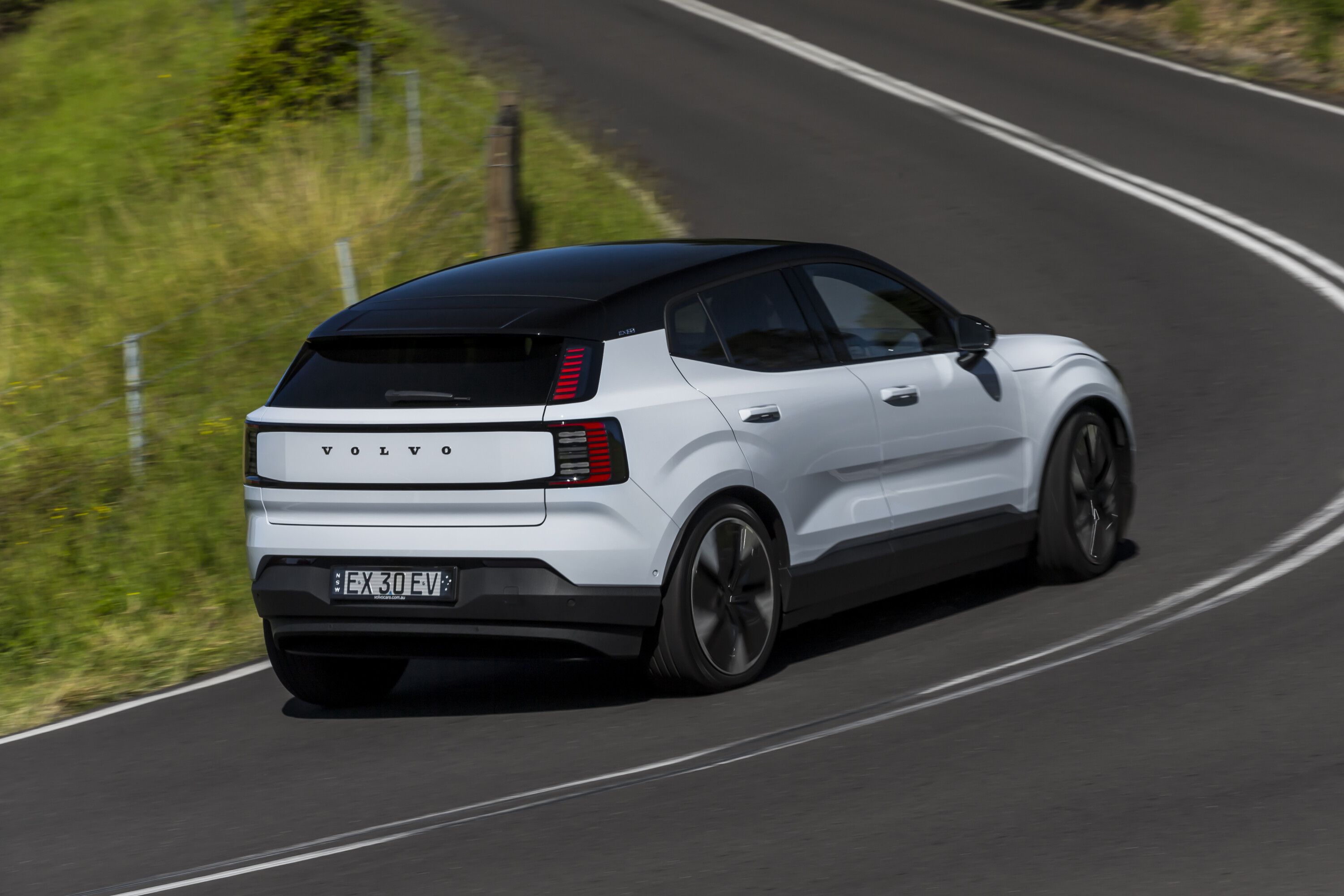
Relatively short stints behind the wheel of a Single- and Twin-Motor mean we need to wait for a longer, fuller test to delve deeper into the strengths and weaknesses of the EX30, yet it’s telling that we can’t wait to do so.
First impressions are that Volvo has played yet another strong SUV card, further broadening its appeal to a younger customer demographic following the XC40’s introduction.
While not perfect by any means, Volvo’s smallest model crucially remains big on the sophisticated, Swedish-luxury vibe that has made such a success of the company’s larger SUVs.
Mini’s refreshed and reinvigorated family is complete for at least the next few years, with no more all-new models planned until at least after the existing line-up gets a midlife update.
The confirmation puts a halt on the recent flurry of new models launched by the iconic British brand over the past year, which saw the arrival of the new three-door Cooper, Countryman SUV and Aceman crossover.
While a number of extra variants are expected to be added within the three key model lines, such as Countryman JCW Sport and Aceman JCW, there wont be a fourth new-gen model in the ranks for at least a few years.
Instead, Mini head of design Oliver Heilmer told Wheels that “We are considering a facelift” for one of the existing three newcomers before the launch of an all-new model.
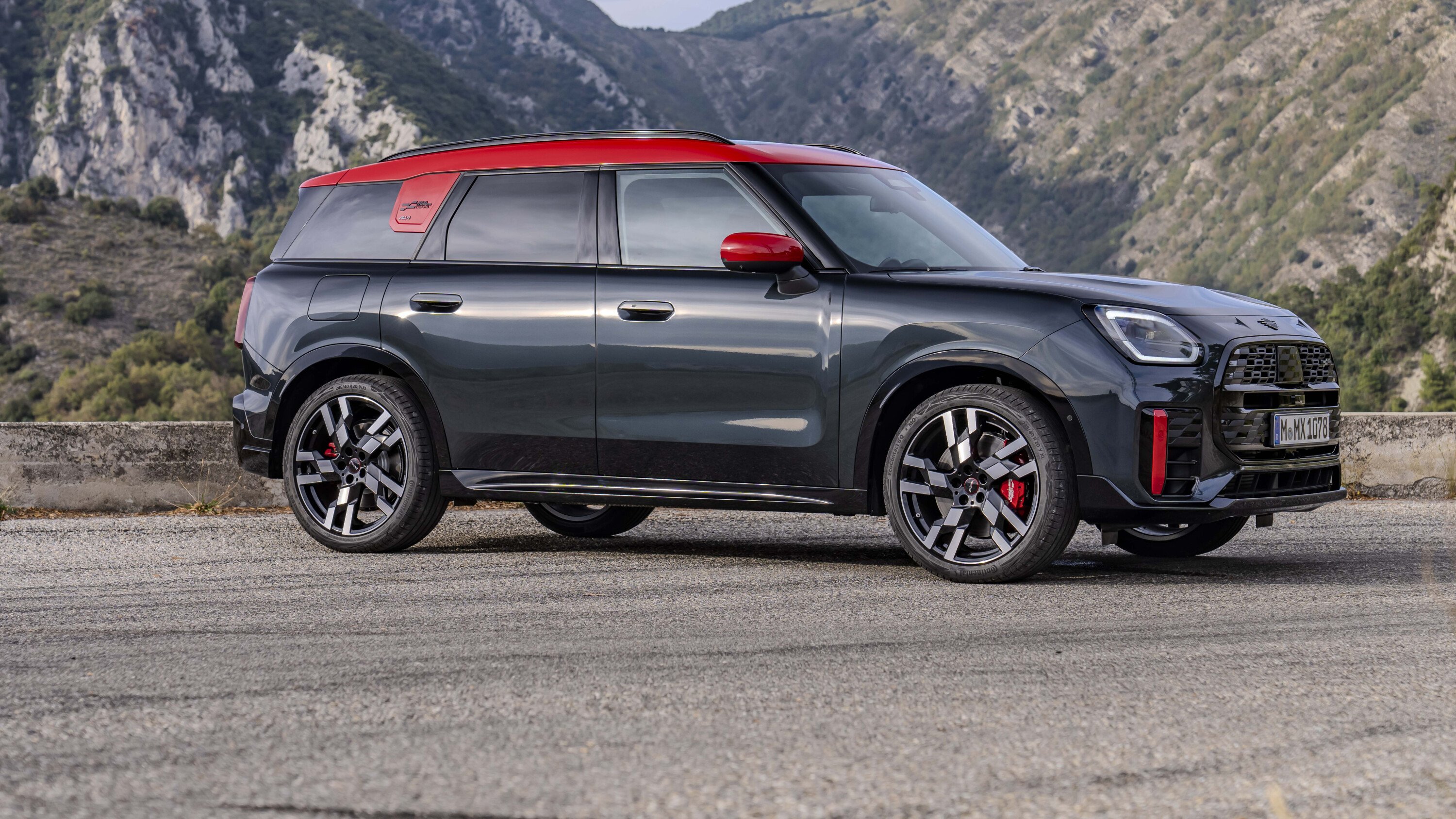
Exactly which of the three is in line for a refresh first is not yet known although chronology may offer a clue.
Both the new Cooper and Countryman were officially revealed simultaneously in September at IAA Munich 2023, but the Countryman launched earlier. If Mini follows its conventional ‘LCI’ lifecycle, the first update could be expected in about 2027 – most probably for the Countryman.
There are no significant updates planned for the current Mini runout range – including the Clubman, Five Door or Convertible – before they’re discontinued.
With the arrival of the new trio, Mini has embarked on its Charismatic Simplicity design language, introducing a pared-back and more simple aesthetic for all new models.
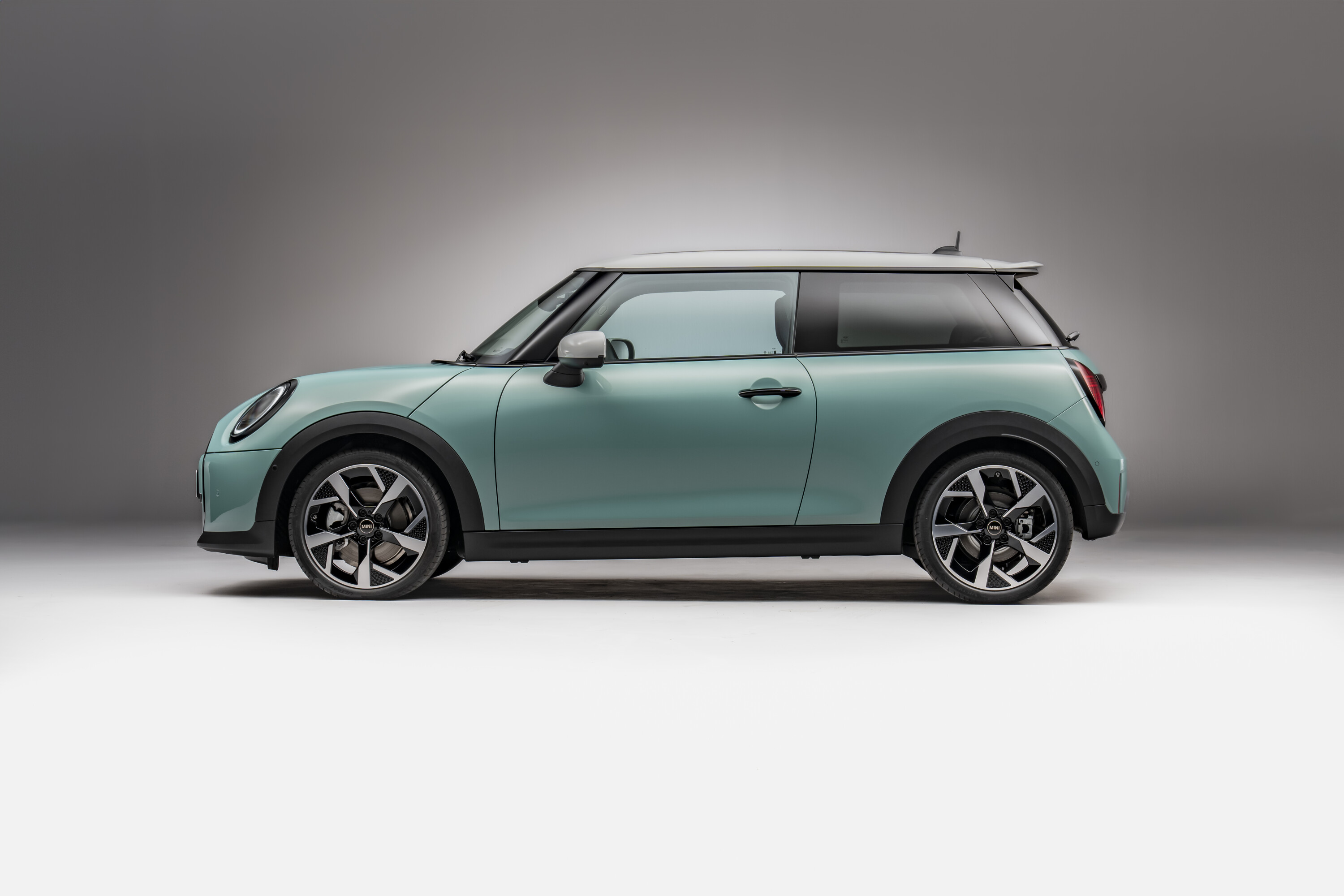
But, says Heilmer, the adoption of electrification has allowed engineering advantages as well its new styling, which was heavily function-led in the original Alec Issigonis-designed Mini.
“If Issigonis could have done the Mini today, he wouldn’t have considered anything else than electric,” he said.
“It (electrification) gave us more flexibility. We were able to adjust the proportions. The wheels are further in the corners and the original Mini had a really short bonnet. That’s what you find here.”
Heilmer demonstrated one of his key proportion benchmarks – being able to touch the base of the windscreen while standing in front of the Mini – something that wasn’t possible with previous models, thanks to lengthened bonnets.
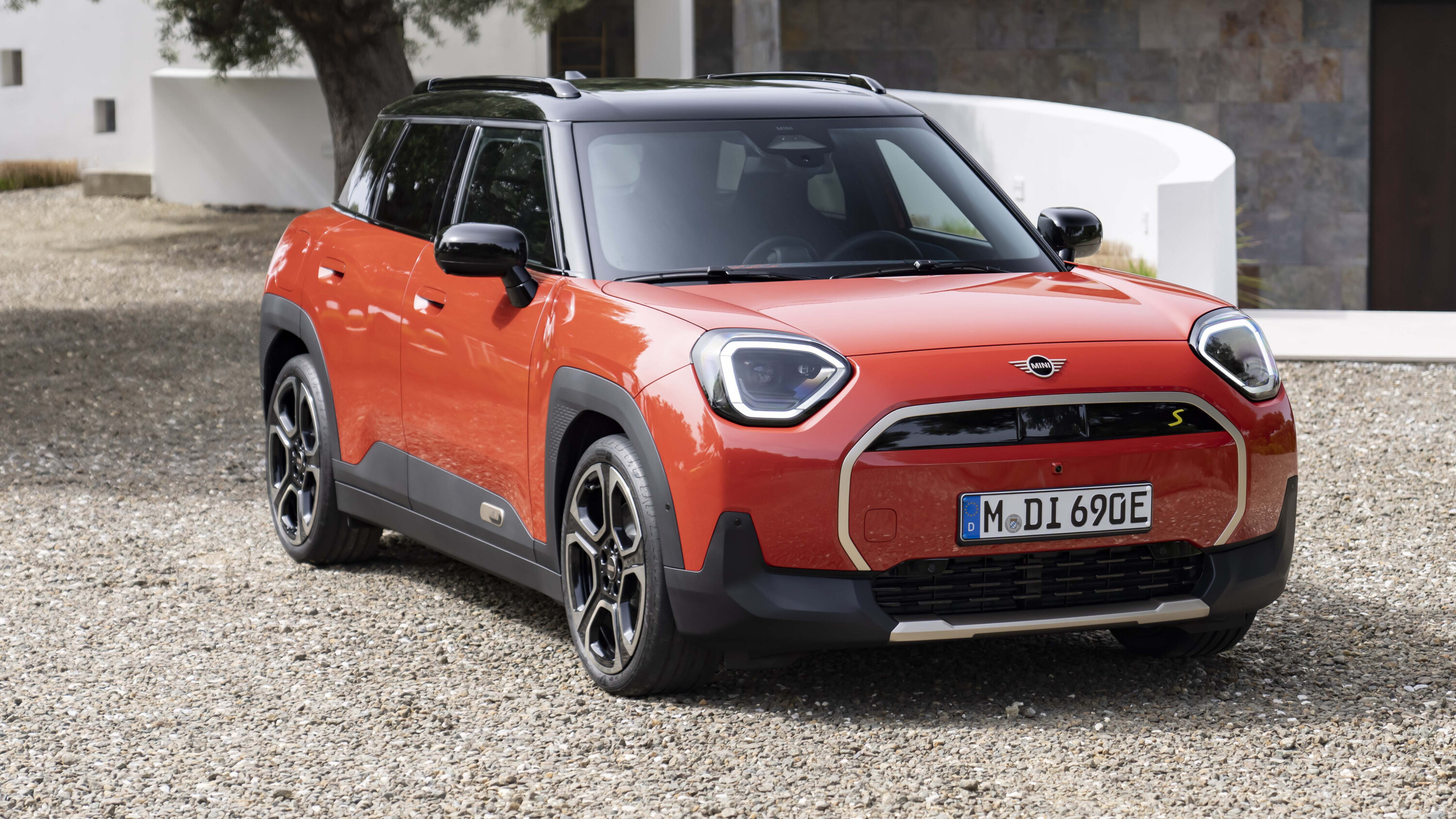
“That’s the improvement we had based on the electrification. This one is one centimetre shorter than the predecessor, but there’s almost two centimetres more space inside. This is exactly what we wanted to achieve for Mini.”
It’s not uncommon for a company to start developing a mid-life update many years in advance, but Heilmer explained why the team was looking at a Countryman or Cooper facelift just months after its launch.
“It really depends on how far you want to jump. The further you want to jump, the earlier you have to start”.
May 2024: Leaf blows in at $39,990 drive-away
For a limited time, that is.
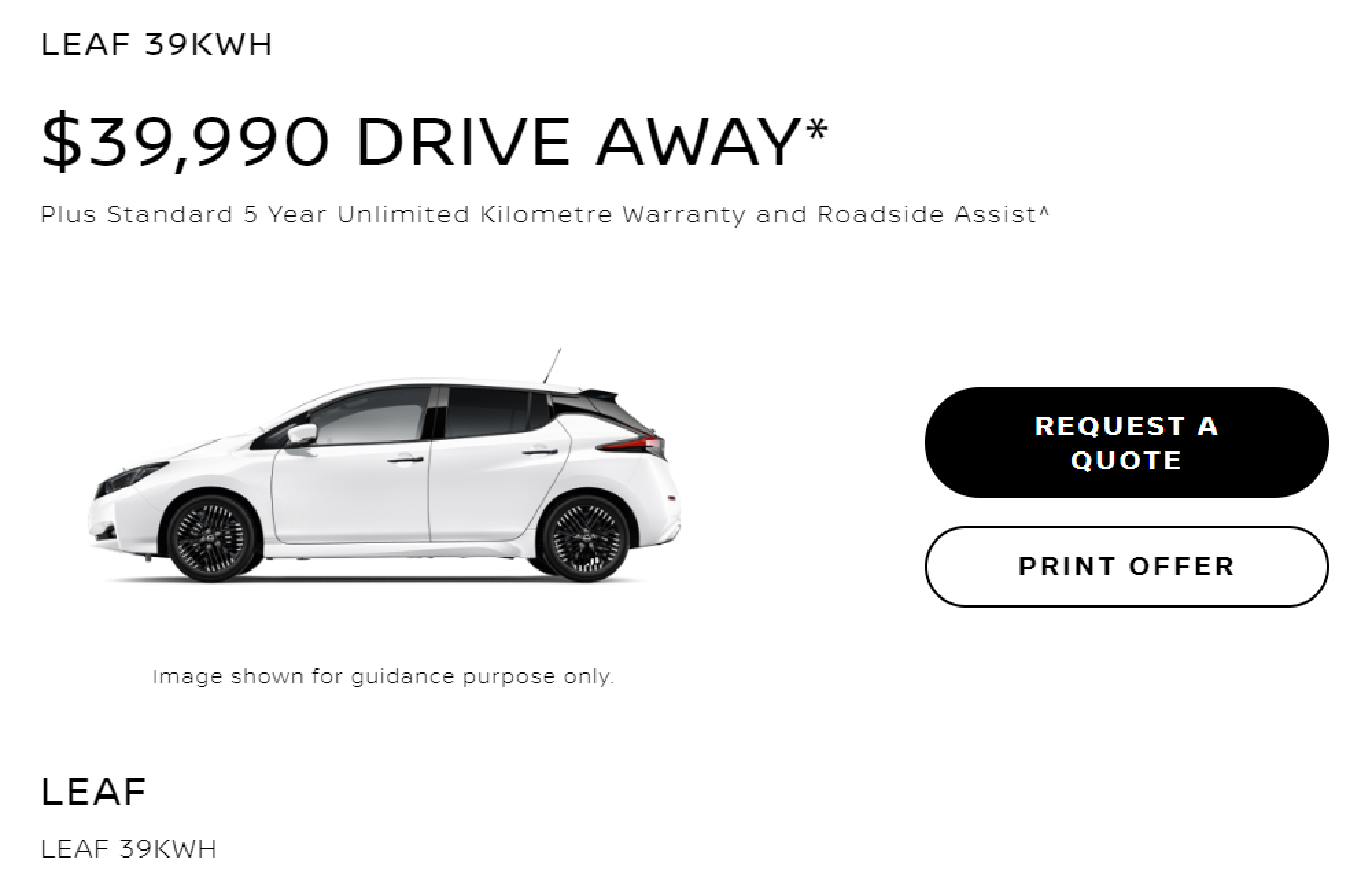
The 2024 Nissan Leaf comes with just one change over last year’s MY23 styling and tech update: a much, much sharper price – now starting from $39,990 drive-away.
It’s only for a limited time, however, running until May 31 as something of an EOFY (end of financial year) deal.
That entry price will put you into the standard Leaf 39kWh model, offering 270 kilometres of range, while those not looking for any anxiety on their next road trip can step up to a $49,990 drive-away spend for the Leaf E+ 59kWh model and its 385km claimed range.
Is it enough?
The Leaf’s temporary pricing deal is a sharp one, given it’s currently only the Chinese brands that have been able to go so low – thanks mainly, the EU says, to massive industry-wide subsidies from the Chinese government.
While buyers have been able to get into a BYD Dolphin, MG 4 or GWM Ora from just under $40K for sometime, the Leaf is now the first ‘legacy brand’ EV to dip below that magical barrier.
It remains to be seen if Nissan will make any permanent cuts to the Leaf’s pricing after that point.
Given the compelling alternatives that now exist from $38K to $55K and beyhond, a $40K starting point could certainly help Nissan move more of its once pioneering EV – still the only fully electric car it sells in Australia, with the Ariya still months away at best.
Nissan Leaf sales in 2024
The Leaf hasn’t quite disappeared from the sales charts, with 89 cars sold in Australia year-to-date, but that number is almost half the 159 moved over the same period in 2023 – and well down on the 408 sold in 2019 when this second-generation Leaf first arrived.
By comparison, 2024 has so far seen MG, BYD and GWM sell 1811 MG4s, 869 Dolphins and 362 Oras.
Continue reading below for a breakdown on the Leaf’s features.
April 2023: Facelifted Nissan Leaf launches from $50,990
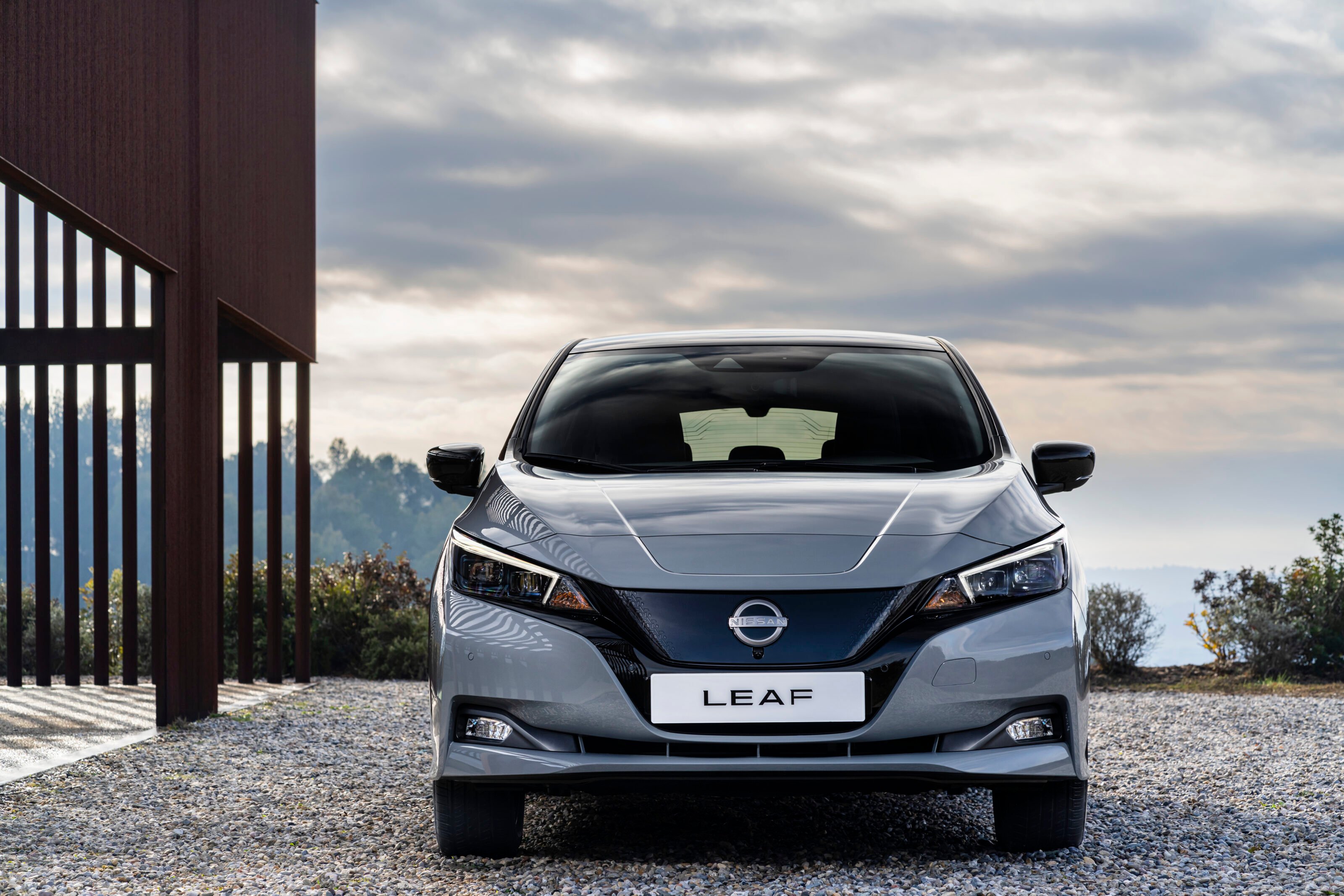
The 2023 Nissan Leaf electric hatch will arrive in August this year, with the updated model going on sale for $1000 more than the current version.
Snapshot
- Nissan brings new look to Leaf for MY23
- Base Leaf on sale from $50,990 before on-road costs, Leaf e+ starts at $61,490
- Coming to Australia second half of 2022
Powertrains for the 2023 Nissan Leaf carry across from the outgoing model with the 110kW/320Nm base model boasting a driving range of 270 kilometres from its 40kWh lithium-ion battery, coming in at $50,990 before on-road costs.
The same price increase has been applied to the MY23 Leaf e+, now set to go on sale from $61,490 with its 160kW/340Nm electric motor and 62kWh battery pack delivering a driving range of 385km.
Read on below for a breakdown of what’s new on the 2023 Nissan Leaf before it launches later this year.
February 23: Nissan Leaf launched for Europe, coming to Australia second half of year
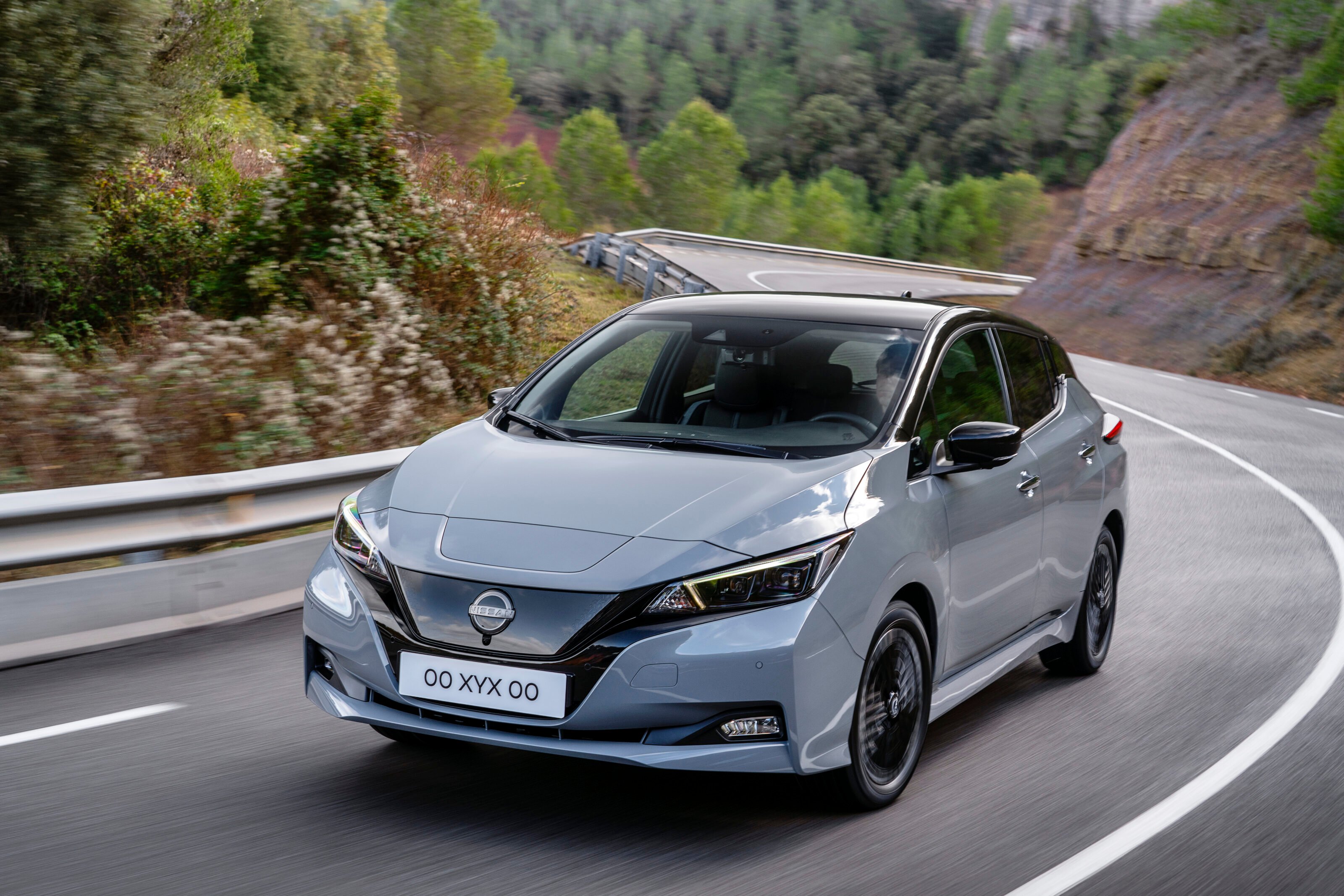
The 2022 Nissan Leaf electric vehicle has been revealed for Europe, featuring the brand’s new logo and identity.
Due to land on the continent in April, Nissan says it is preparing for a strong product offensive with a fully electrified line-up offering after the (European) summer.
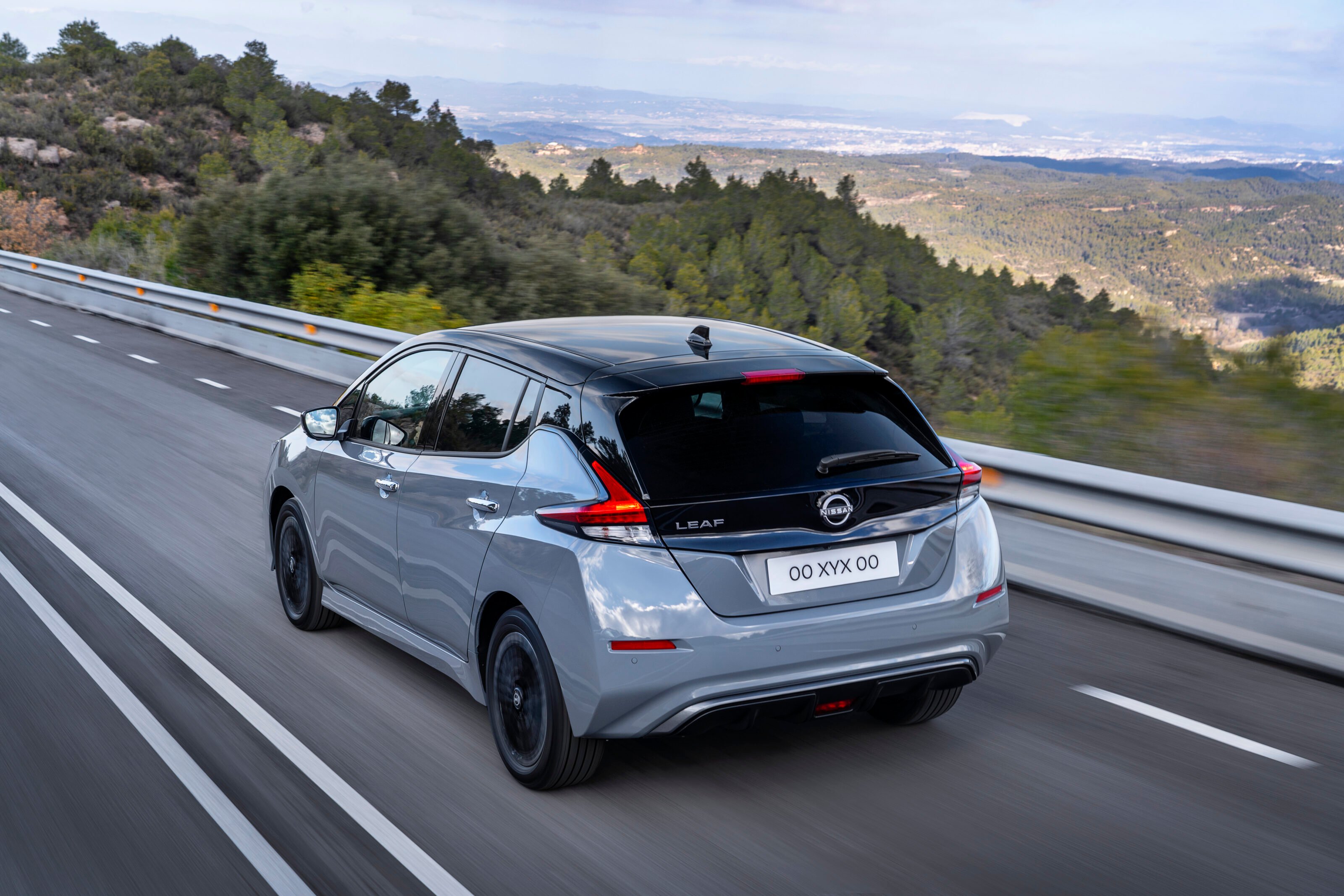
The updated Leaf will get a host of advanced driving and safety features such as ProPILOT, and infotainment tech such as an improved on-board NissanConnect system.
The ProPILOT technology enables the EV to automatically stop, start and maintain a safe distance to the vehicle in front, while the e-Pedal provides the option to accelerate, decelerate and stop with only one pedal on the move.
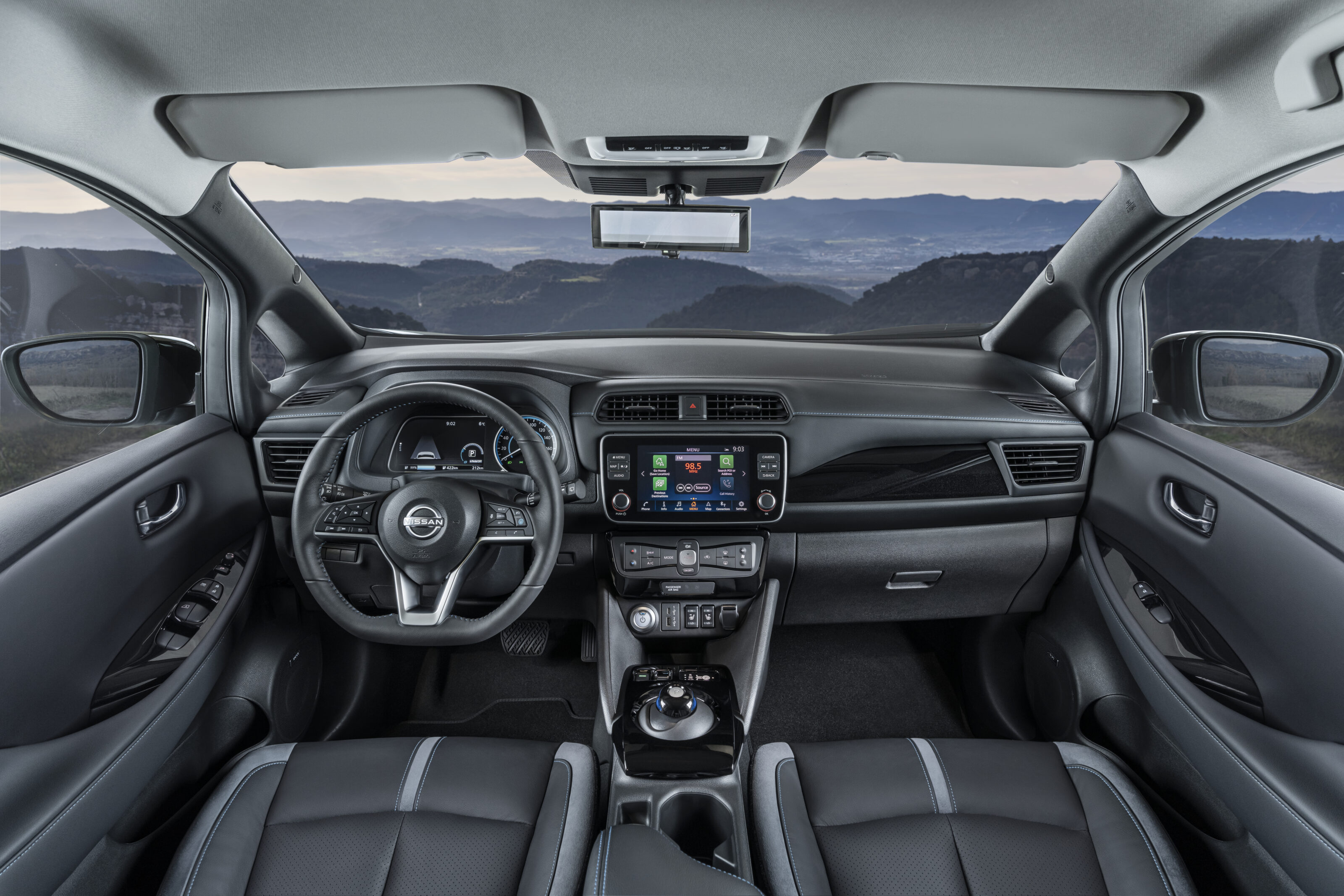
Additionally, Nissan has upgraded the infotainment features within the NissanConnect system, which features Android Auto and Apple CarPlay smartphone integration.
Remote operation of equipment such as climate control is also available through the NissanConnect app, and owners can now link their Leaf to their Amazon Alexa smart home device.
“The Nissan Leaf has always been about making advanced technology and the thrill of electric driving accessible to everyone, with over 577,000 customers worldwide. [The] Leaf has been designed around families’ needs to offer seamless connectivity and an efficient powertrain,” said Arnaud Charpentier, Vice President for Product Strategy and Pricing in the AMIEO region which covers Europe, Russia, Africa, the Middle East, India and Oceania.
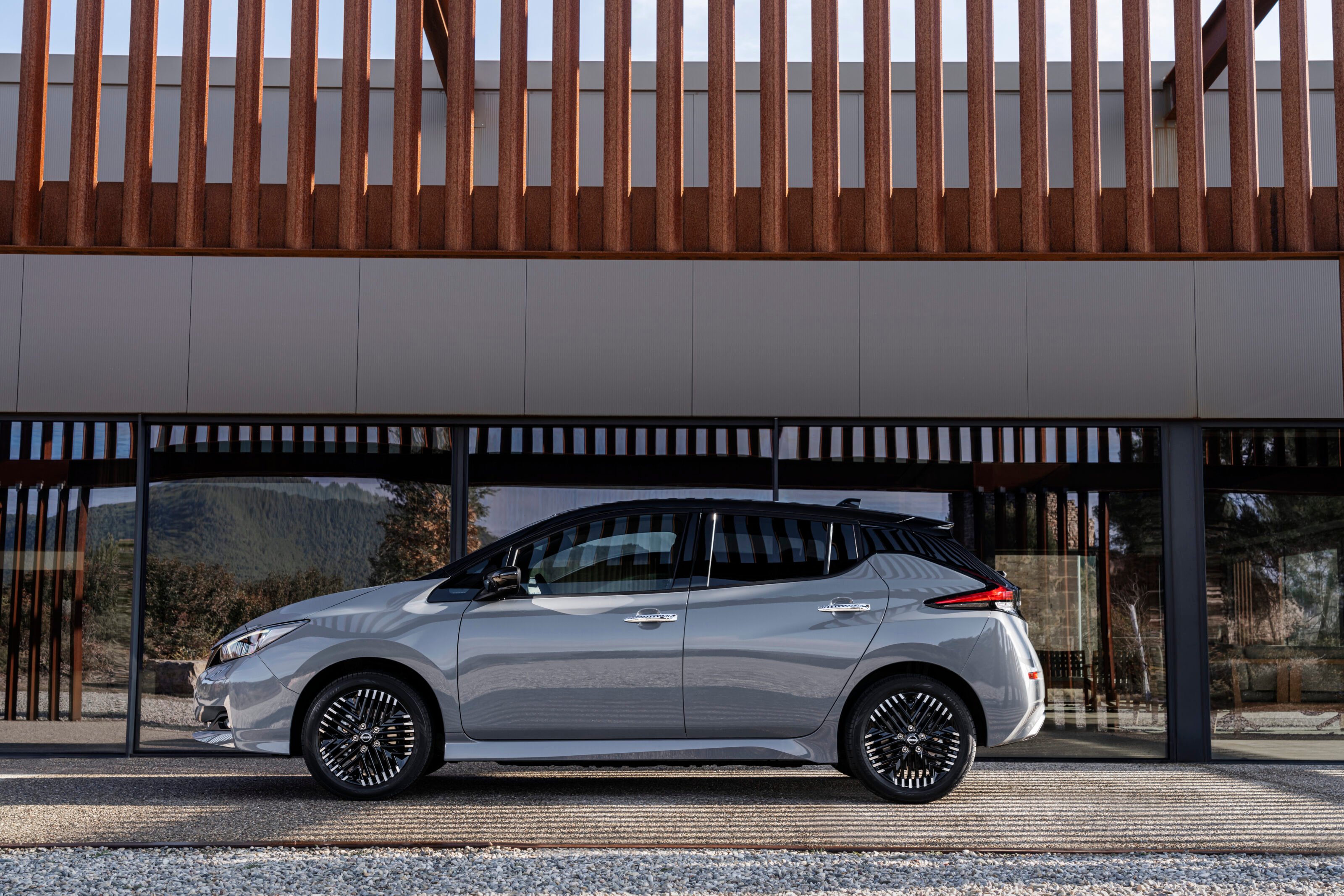
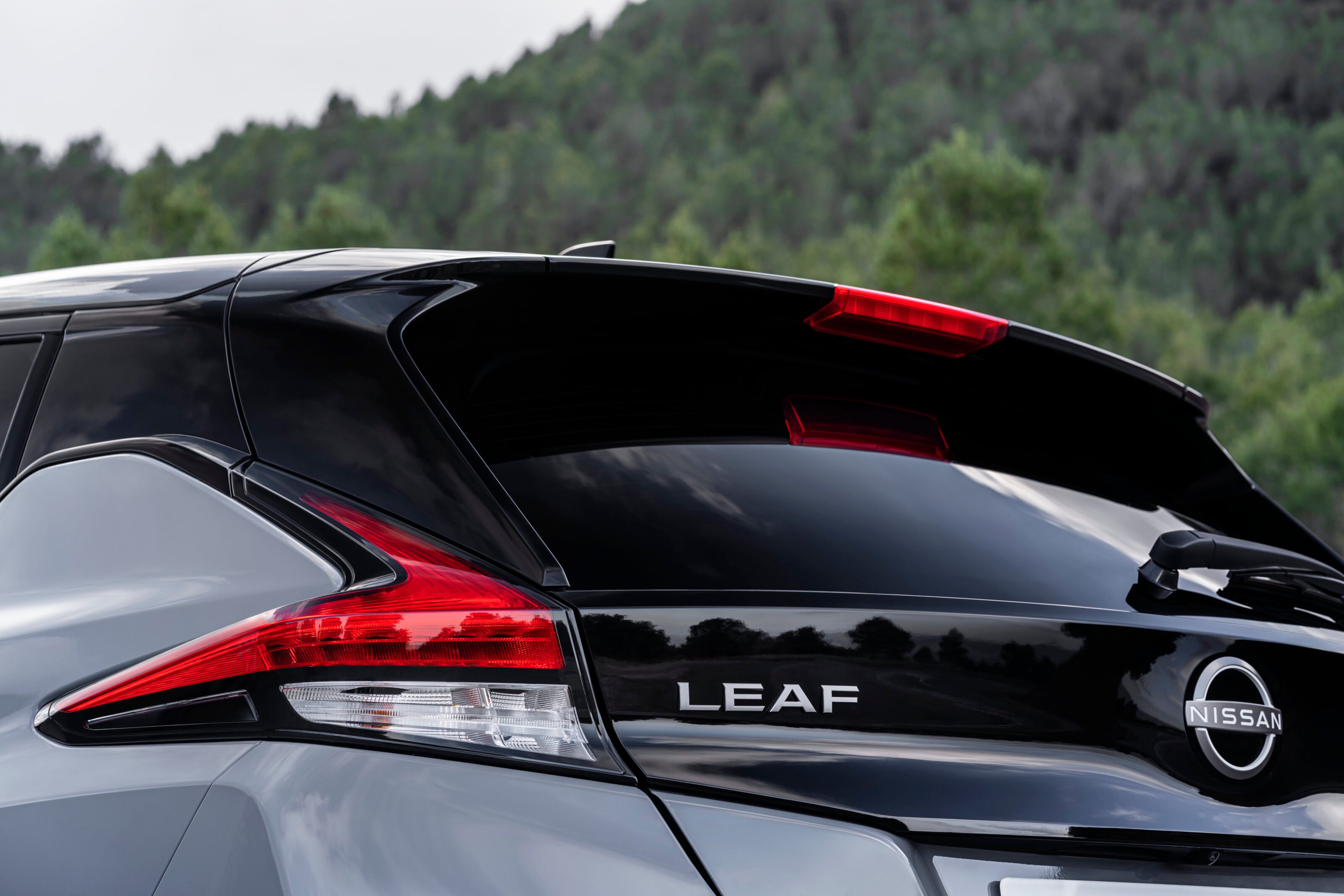
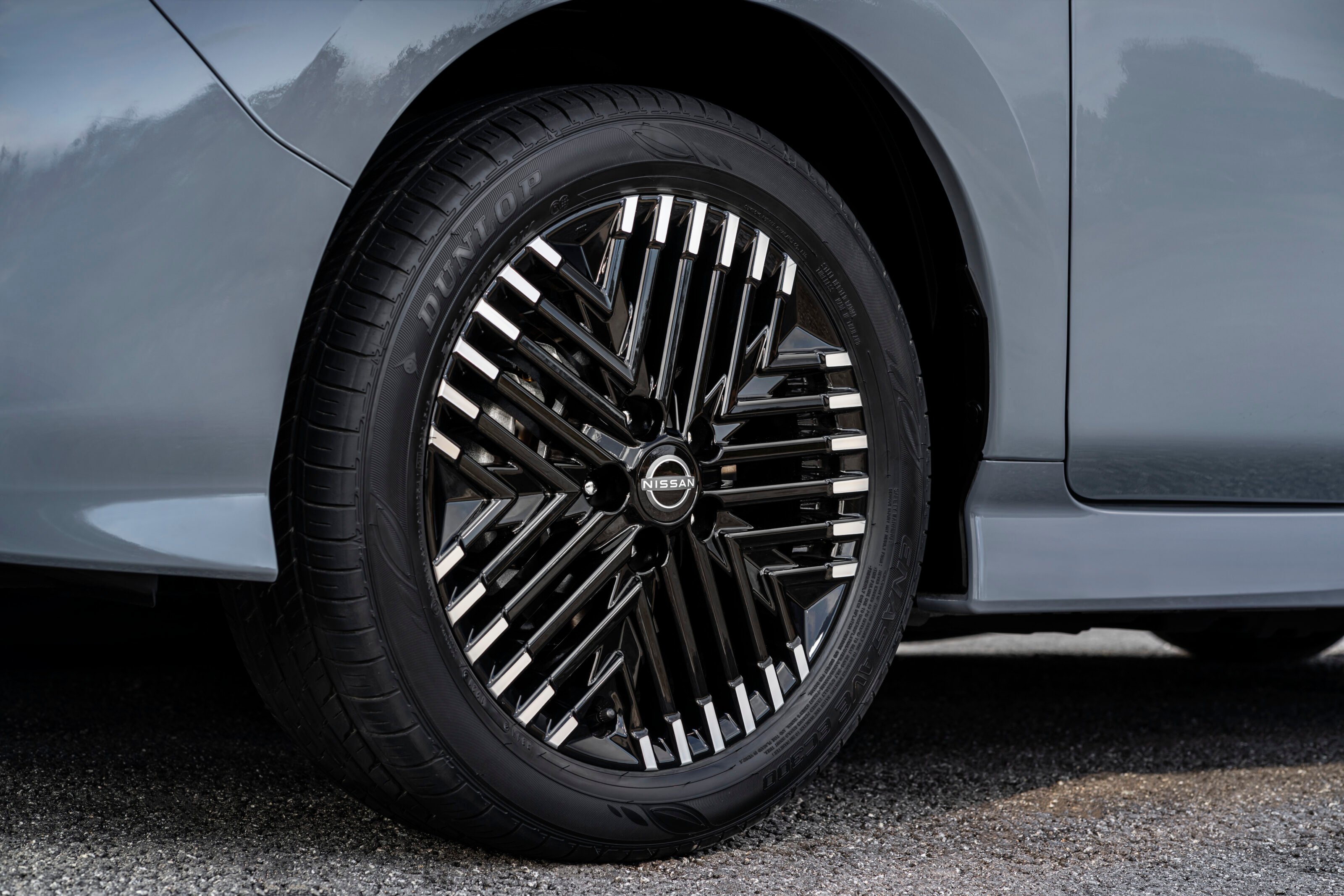
For MY23, the Leaf receives a refreshed exterior design, including intricate detailing and new 16- and 17-inch alloy wheel options for a more sporty and premium feel, and the model features Nissan’s new brand logo on the wheels, front grille and rear.
Buyers also get a refreshed line-up of exterior colours. Two new hues found on the Qashqai and Ariya join the existing range of six monotone and five two-tone options – universal blue and magnetic blue.
“As the popularity of electric vehicles continues to grow, Nissan is pursuing an exhilarating chapter in its electric mobility story. [The] Leaf has played a key role in shaping Nissan’s vision for empowering mobility and beyond, as we leverage our EV expertise to launch 23 new electrified models – including 15 full EVs – by fiscal year 2030,” said Charpentier.
The Leaf is offered with two battery options, that deliver up to 385 kilometres (WLTP) of driving range in the Leaf e+.
Snapshot
- Cadillac had previously announced it would be pure EV by 2030
- The brandu2019s global marketing boss now says it will u201cfollow customersu201d as it transitions away from ICE
- Cadillac will be EV only in Australia, with the brand reaffirming it has no plans to sell petrol models here
Aussie-bound luxury brand Cadillac is the latest carmaker to soften its stance on adopting an electric-only range, saying it will instead “give customers the choice” as global demand for EVs drops.
Cadillac had previously committed to selling only electric cars by 2030 but global chief marketing officer Melissa Grady Dias has today said the brand will instead be flexible as it transitions away from combustion power.
“We are going to have EVs available and we’re following customers at this point,” she told Australian media in an exclusive round-table interview. “If you look at the trajectory of the EV market, we’re gonna be following and we’re going to give customers the choice.
“The past 90 days have been a little insane. And if I look at 90 days and try to predict into what’s going to be happening in six years, I absolutely cannot.”
Today’s news follows similar comments from Cadillac’s global vice president John Roth, who recently told the Detroit Free Press that “EVs and ICE, we want to be clear, will coexist for a number of years.”
Cadillac is the latest in a growing list of brands to walk back from self-imposed hard deadlines for adopting ranges powered solely by electricity. Mercedes-Benz recently backtracked on its plans to be EV-only by 2030, while Ford and GM have both recently delayed major investment into new EV manufacturing plants.
“In Australia and New Zealand we are 100 percent EV for Cadillac”
“What I can tell you is that when the market is ready, whether that’s in two years or whether that’s in six years for EV, we have what I believe are absolutely the best and very competitive EV vehicles to meet those needs,” added Dias, acknowledging that the transition to electric power is likely to ebb and flow.
“We’re following customers,” she said. “And I think as any good brand does we listen to our customers and follow them.”
When asked if the change in sentiment could open the door for petrol-powered Cadillacs to come to Australia, GM’s managing director of Australia and New Zealand Jess Bala said: “No, in Australia and New Zealand we are 100 percent EV for Cadillac.”
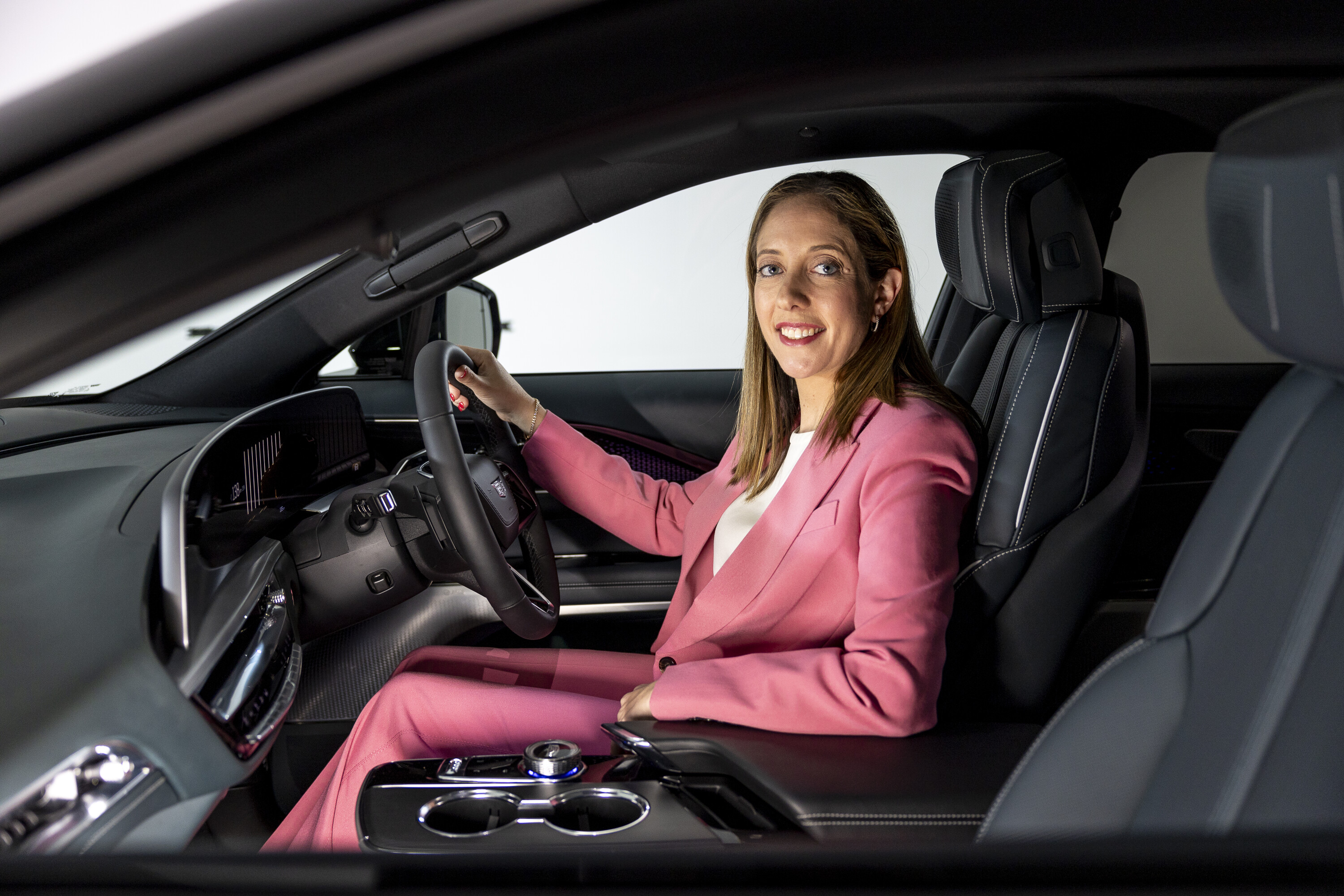
After an almost 50 year absence, Cadillac will return to Australia roads later this year when it launches the all-electric Lyriq SUV.
Set to be a rival for luxury players like the BMW iX and Audi Q8 e-tron, the Lyriq is planned to launch in late October and will be the first model in what is predicted to be a three-strong SUV range in Australia.
The smaller Optiq SUV and the larger seven-seat Vistiq are also tipped for Australia, with the Escalade IQ also a possibility.
Volvo Australia predicts its new EX30 will become its most popular model, saying the baby electric SUV is already snaffling buyers from other brands while also attracting younger customers.
The EX30 has gone on sale this week with a starting price of $59,990 for the most affordable version of the 4.2-metre-long SUV.The petrol XC40 remains the most attainable Volvo, priced from $54,990, though the EX30 is $17,000 cheaper than the company’s next electric model, the XC40 Recharge.It’s a pivotal part of Volvo’s ambition to became an all-electric car brand by 2026 in Australia, and 2030 globally.
“The [EX30] will represent probably about 30 per cent of our [total] sales,” said Volvo Australia MD Stephen Connor. “We’re about 40 per cent for our mix of EV [electric vehicles] at the moment, and by the end of this year we will be up to about 70 per cent EV [showroom share] – which of course gives credit to our long-term vision [to be all electric].“This [EX30] going to be an absolute [top] seller. It’s going to bring a new demographic to Volvo – we’re going to pull people from other brands but we’re also going to pull in younger demographic to the brand, which opens up our market completely.”“That’s the whole principle of having a fun car like this – that it pulls people into the brand and all of a sudden our brand is much more accessible across the range.“EX30 will also help our other models. We’re not going to be a one-car company. The EX30 is not a car for everybody – great car, great size – but that’s where we think we will naturally migrate people to XC40 electric. Or buyers have a family, so they will look at XC60, look at XC90, and EX90 when it arrives.“[EX30] really sets us apart from our competitors.”
Connor said its allocation of 1500 pre-orders for MY24 EX30s was sold out, with MY25 models now available to order. These bring a $1300 increase for both the mid-range Extended Ultra (now $66,290) and flagship Performance Ultra (now $71,290).About 40 EX30s are rolling out of Volvo Australia showrooms every week at the current rate, but Connor said he expects this to lift by up to 60 a week now the vehicle has officially launched.Healthy supply of up to 3900 units is available in 2024 for the model that was the best-selling Volvo in Europe in April.Volvo Australia has chosen to ignore a smaller-battery EX30 that would have had the potential for a price tag closer to $50,000.Instead, all three EX30 grades use the same 64kWh battery – powering either a single motor (Extended Plus and Extended Ultra) or dual motors (Performance Ultra).Volvo Australia believes 60 percent of buyers will opt for the most expensive EX30, the Twin Motor Performance Ultra, with the two single-motor models accounting for the other 40 percent.
Volvo Australia says it is not currently looking to offer models priced much below $60,000, confirming it had no plans to introduce the most affordable EX30 available in other markets.
The Swedish car maker has just launched the EX30 compact electric SUV in Australia. It’s priced from $59,990 with all three models in the range using a 64kWh battery.
A 51kWh EX30 is offered in the UK and Europe, which would offer the potential for an entry model priced closer to $50,000.
In the UK, there’s about a $9000 difference between the 51kWh Single Motor Standard Range EX30 and the 64kWh Single Motor Extended Plus that starts the range in Australia.

The cheaper 51kWh EX30 uses a more cost-effective lithium-ion phosphate (LFP) battery compared with the 64kWh nickel-manganese-cobalt (NMC) battery used in other models.
The Standard Range has the same 200kW/343Nm outputs as the other single-motor EX30 models, though its 344km WLTP driving range is notably shorter than the other variants’ 480km.
Volvo Australia said it firstly wanted to avoid over-complicating the EX30 range, but it also believed the greatest market potential was found above $60,000.
“Between $60K and $90K is the biggest segment we’re seeing at the moment in terms of [sales] volume, and that bracket is where we’re sitting nicely with EX30 at the lower end, the XC40 electric [small SUV] in the mid range, and the C40 [XC40’s electric-only coupe twin) slightly above that.
“So think we’re hitting the segments well in terms of price point.”
If your internal motoring clock is telling you it’s about time for an all-new version of the Mazda MX-5, then well done, you’re absolutely right.
Mazda tends to give us a new generation of its iconic roadster every 10 years or so (the original debuted back in 1989) but now, in an age where sports cars are harder to justify and Mazda has admitted it’s considering going pure EV for the next instalment, it seems the current ND MX-5 will solider on for a few years yet.
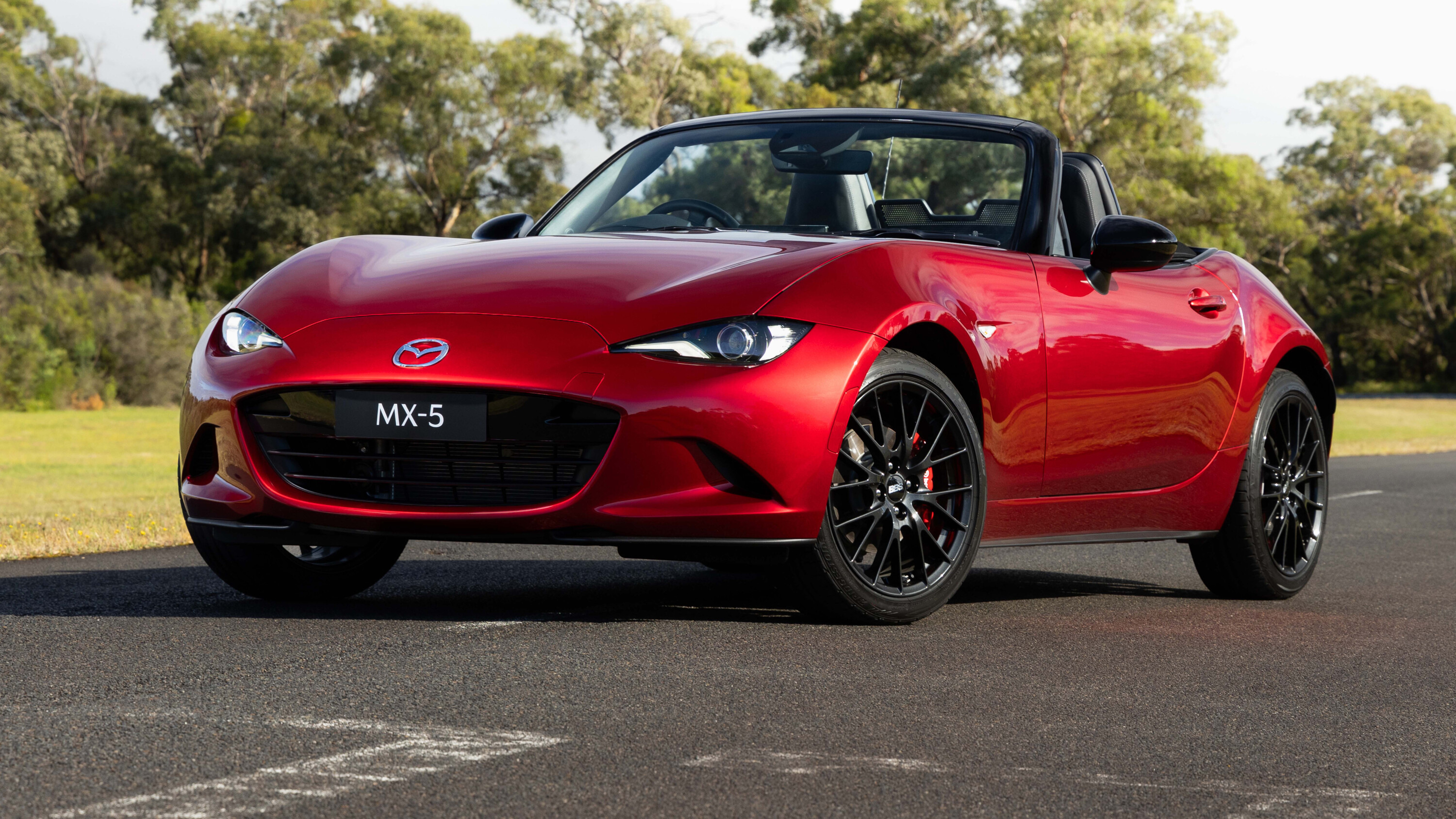
The good news is that despite it now qualifying for a Seniors Card, MX-5 sales continue to be unwaveringly strong and, even better, is that rather than sit on its hands, Mazda has given the MX-5 a facelift for 2024.
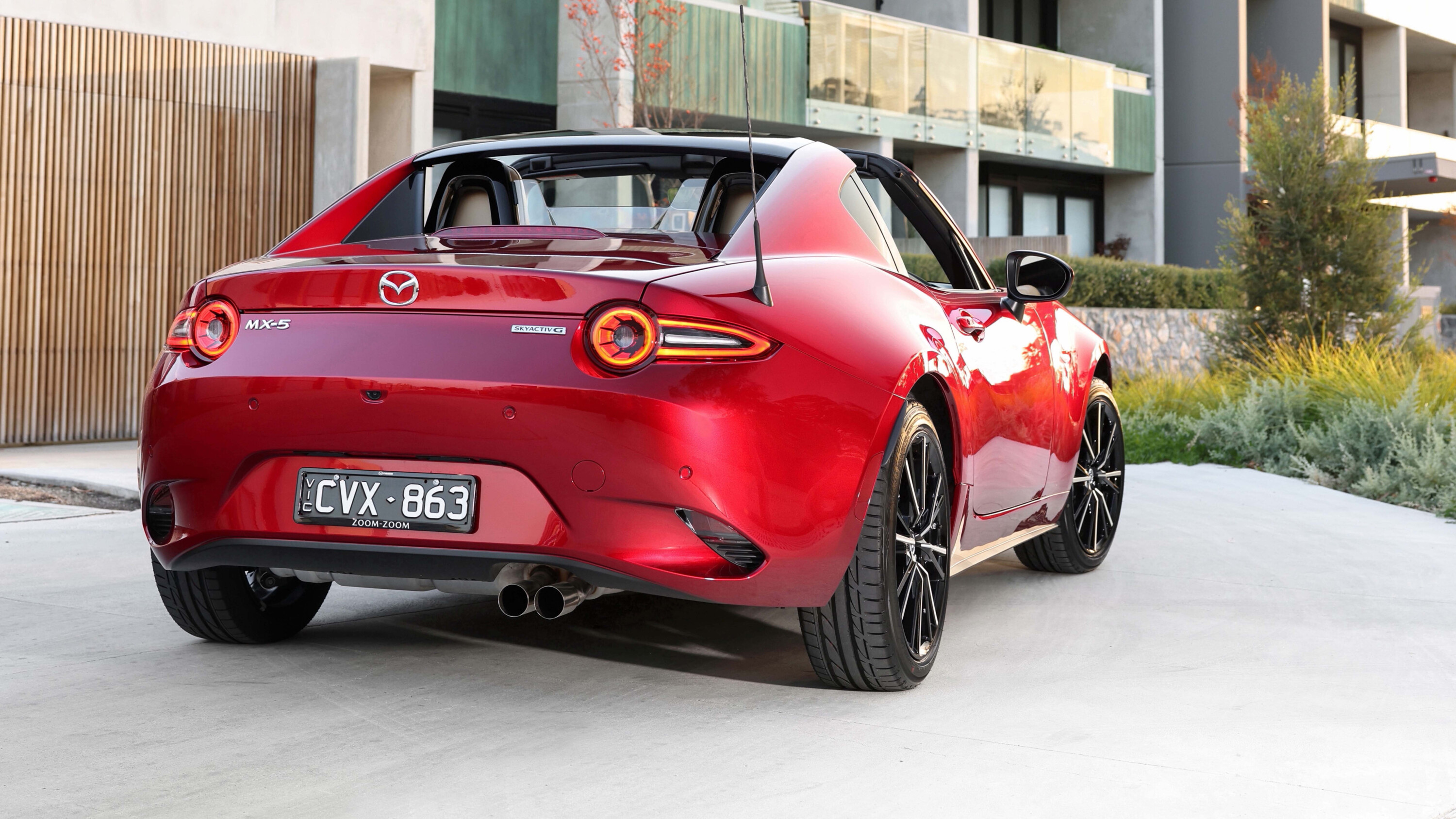
The promise there is greater freedom to let the lithe chassis move about
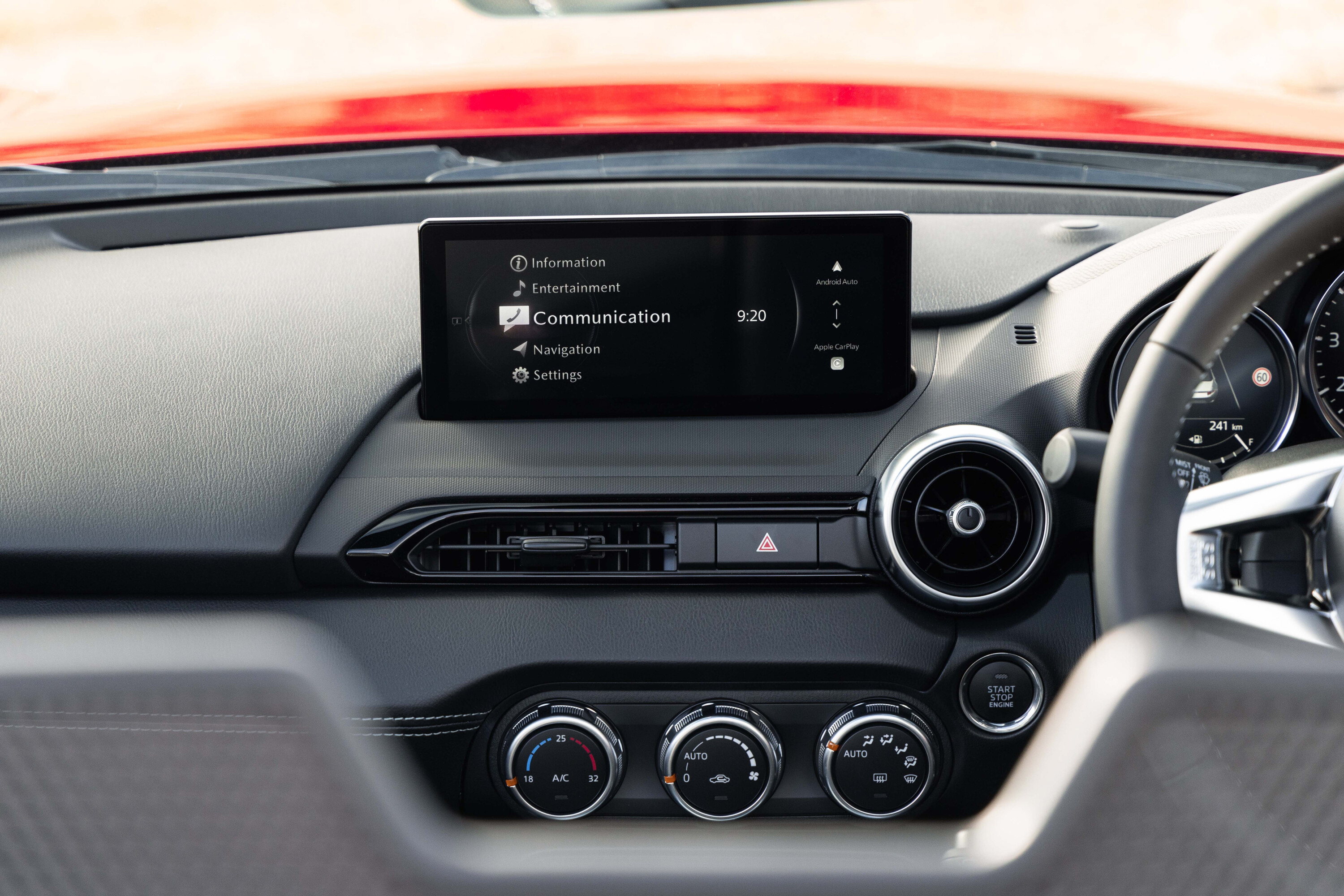
Outside there are new headlights and fresh taillights (notice how the DRLs and reversing light are now integrated into the light itself rather than the bumper?) and inside the seats are now trimmed in grippier material and there’s a fresh, and much larger, 8.8-inch touchscreen in the centre of the dash.
Of greater importance is a new asymmetric limited-slip differential that Mazda says should help quell some of the pre-update car’s tendency to oversteer on the way into corners and there’s also a new DSC-Track setting for the stability control in top-spec RS versions.
The promise there is greater freedom to let the lithe chassis move about while retaining enough of a safety net to save your ego (and your insurance premium) if you get it horribly wrong.
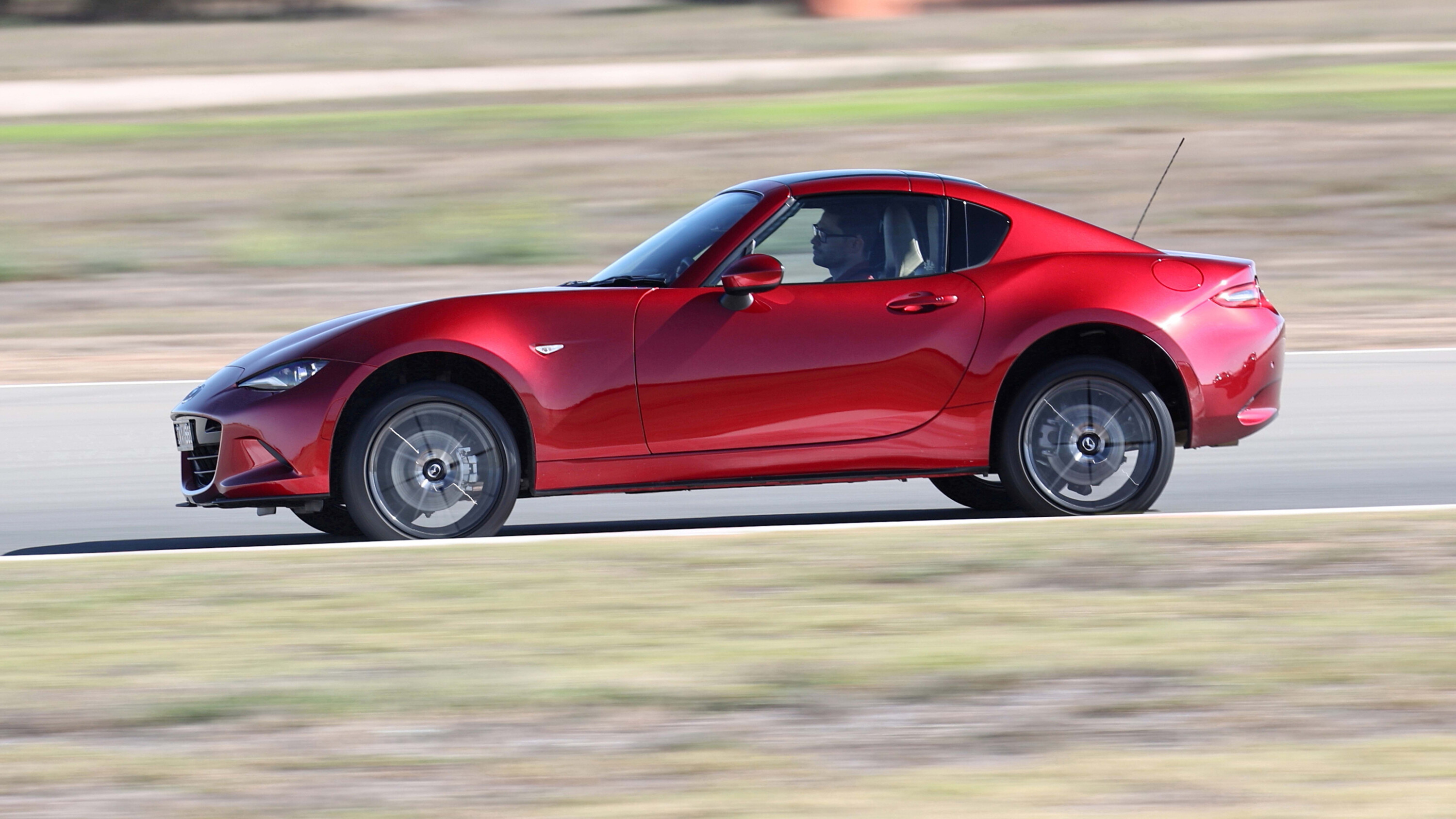
You probably won’t, though, because unlike most modern performance cars, which are increasingly heavy and complex, the dynamic fundamentals of the ND MX-5 are close to perfection.
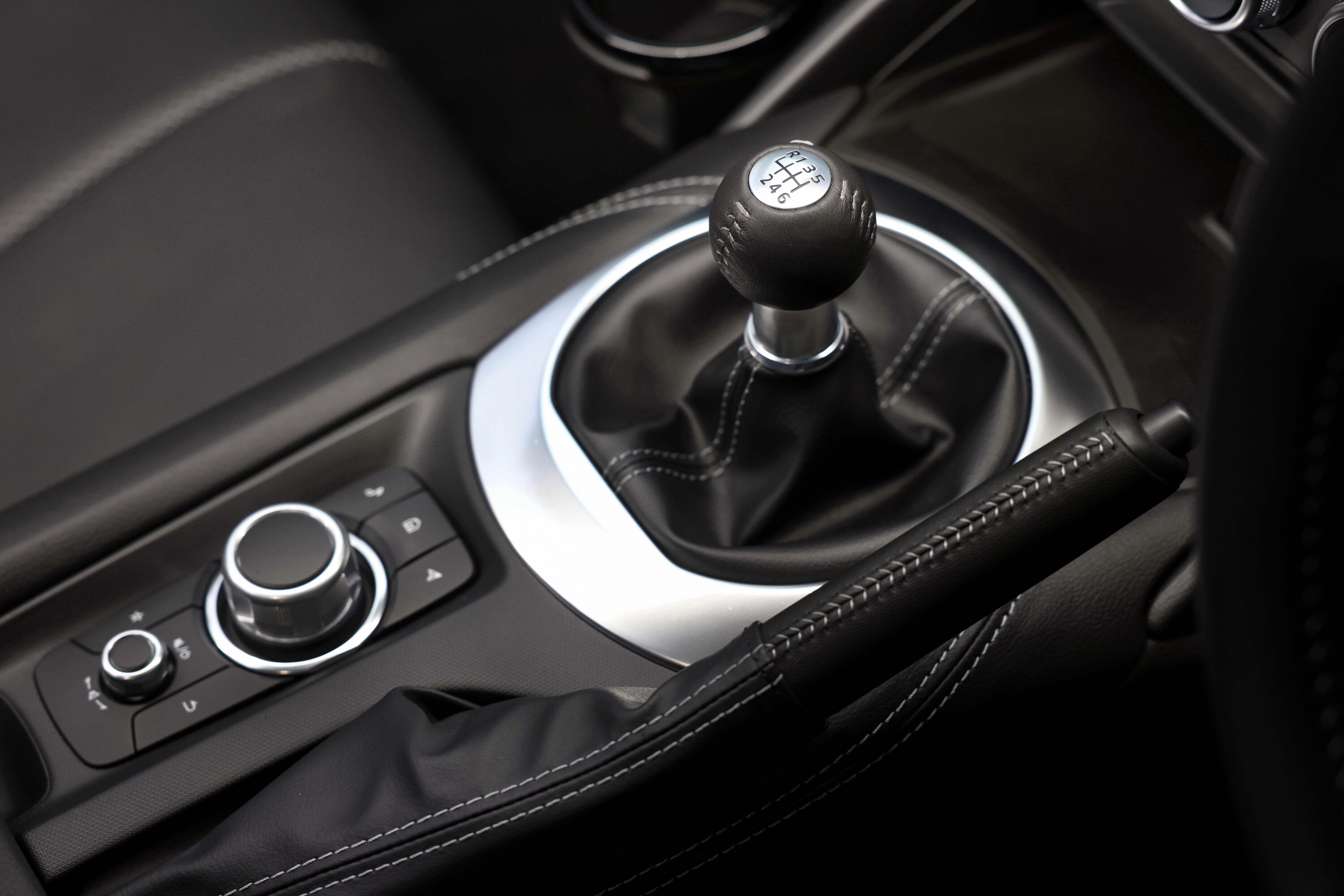
The steering is ideally weighted, the manual gearshift is a tactile delight, and because there is so little weight (kerb weights still hover at just over 1000kg), the handling is wonderfully agile and responsive.
The suspension is still improbably soft by modern standards, though, so there’s plenty of body roll to contend with but needing to manage dramatic weight transfer only enhances the sense that this is driving at its most basic and rewarding.
Plus, the benefit of a softly sprung chassis is tremendous ride comfort, especially in lower-grade models.
RS versions gain stiffer Bilstein dampers and 17-inch BBS alloys for a more steely eyed feel but even so, this remains a brilliantly supple sports car on Aussie back roads.
You’ll need a circuit to really notice the benefits of the new asymmetric diff. Mazda had an MY23 car for us to compare during hot laps around The Bend’s tricky, corner-heavy Eastern circuit, and the differences were noticeable. Where the old car falls readily into oversteer on the way into fast corners, the updated model is far more composed and confidence inspiring.
As ever, driving an MX-5 on track is about momentum and flow rather than shock and awe power.
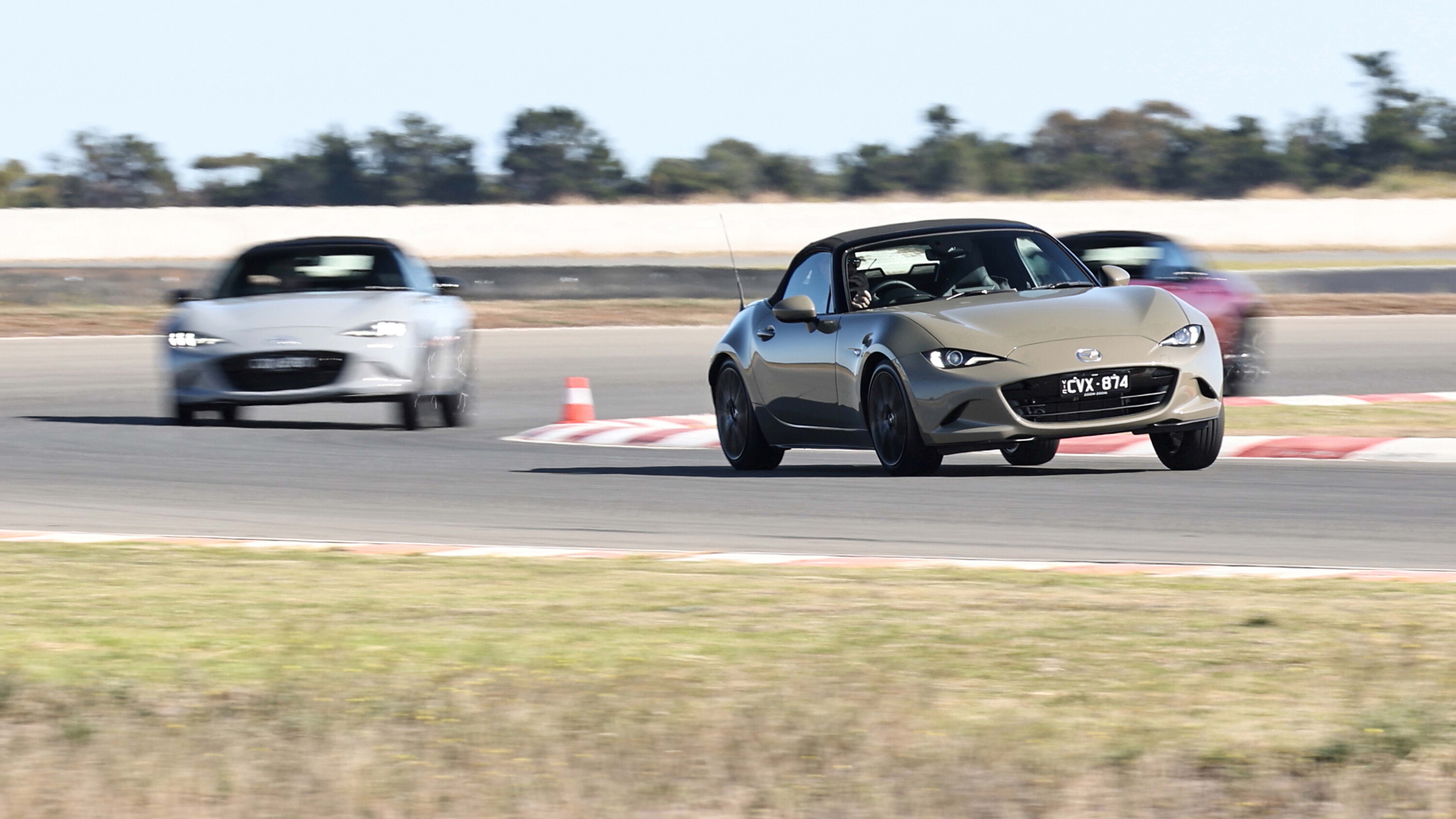
It can be an ugly feeling if you’re sloppy with your inputs, though.
The sole engine on offer continues to be the 2.0-litre naturally aspirated four pot (the revvy 1.5L was ditched due to low demand) and while its unchanged outputs of 132kW/205Nm are powerful enough to feel spirited, this isn’t a car that will perform huge, smoky drifts under throttle alone. At least in the dry…
Instead, you’ll need to use momentum and weight transfer to liberate slides which, thanks to the new DSC-Track setting, are now more readily accessible. It can be an ugly feeling if you’re sloppy with your inputs, though. Because the suspension is so soft and body roll is so pronounced, it pays to be patient and precise with the steering through fast changes of direction.
Give it a sloppy input and you’ll wobble offline or trigger the stability control. The same logic applies to the brake pedal. Hit it too hard initially and it’s easy to send the weight balance too far forward too quickly.
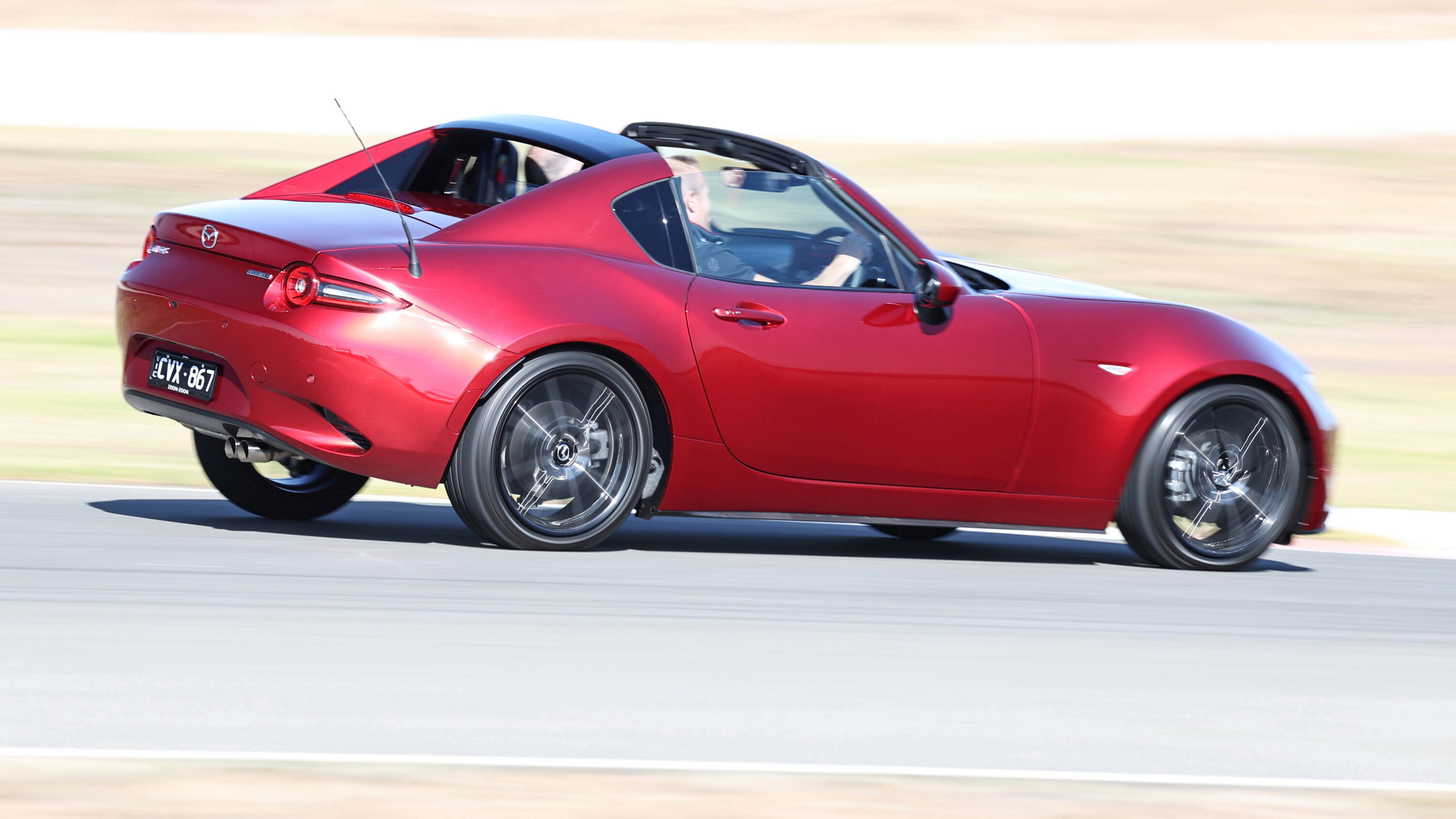
In that way, the MX-5 feels most rewarding just below its limits.
It’s fun on track and a rewarding challenge to pedal hard but it’s clear that unlike the more tied-down Toyota 86 and Hyundai i30 N, the MX-5’s happy place is on your favourite stretch of public road, the cabin flooded with sunshine, the wind in your hair.
Speaking of, dropping the roof continues to be satisfyingly easy. The roadster’s cloth top is so light you can practically raise and lower it with one hand in a matter of seconds, without the need to wait for an electric mechanism.
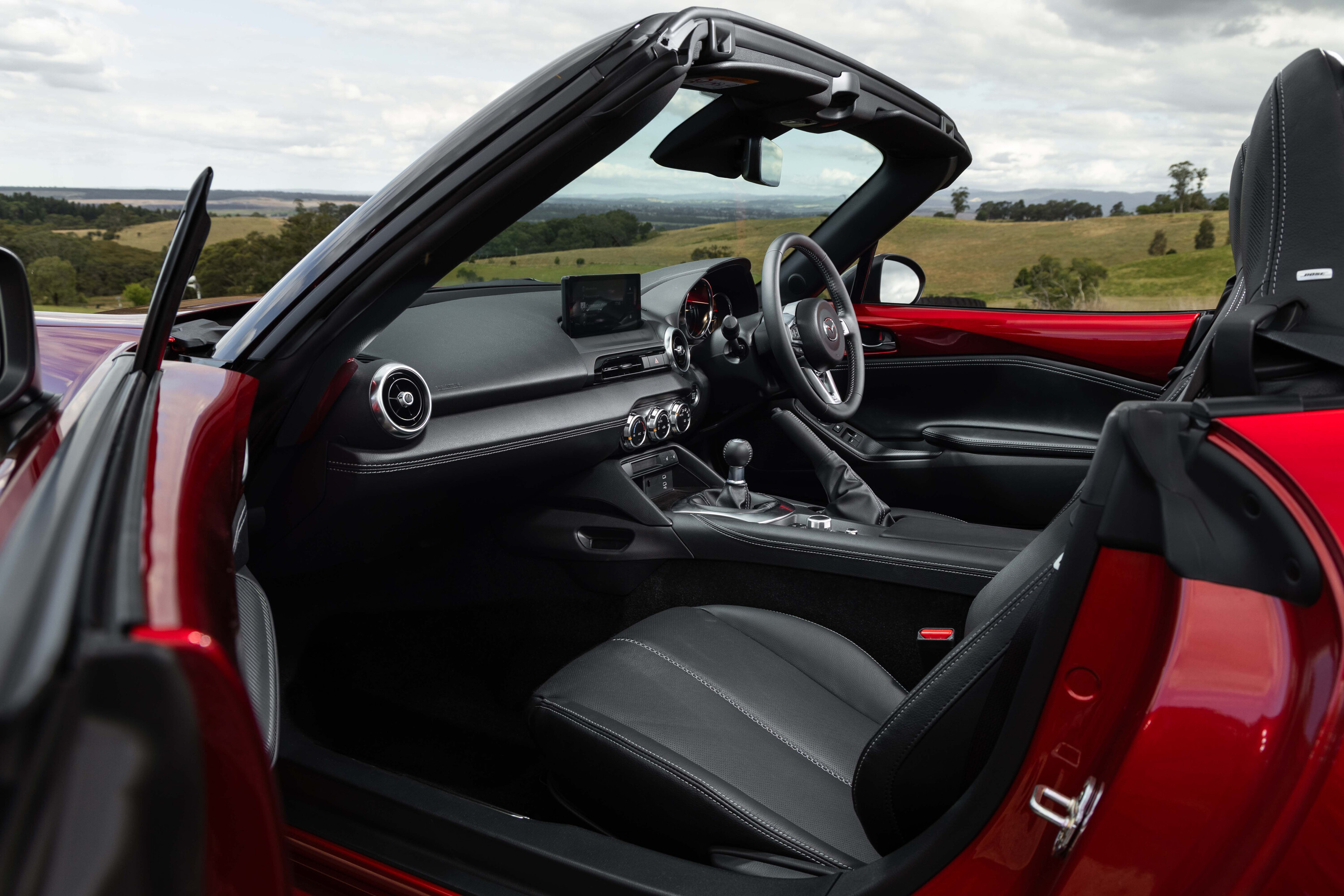
Of course, if such manual labour is unappealing, or your prefer a different silhouette with buttresses on the rear deck, Mazda continues to sell the Retractable Fastback (RF) version. Its metal hardtop folds away automatically, although it does add 45kg to the kerb weight.
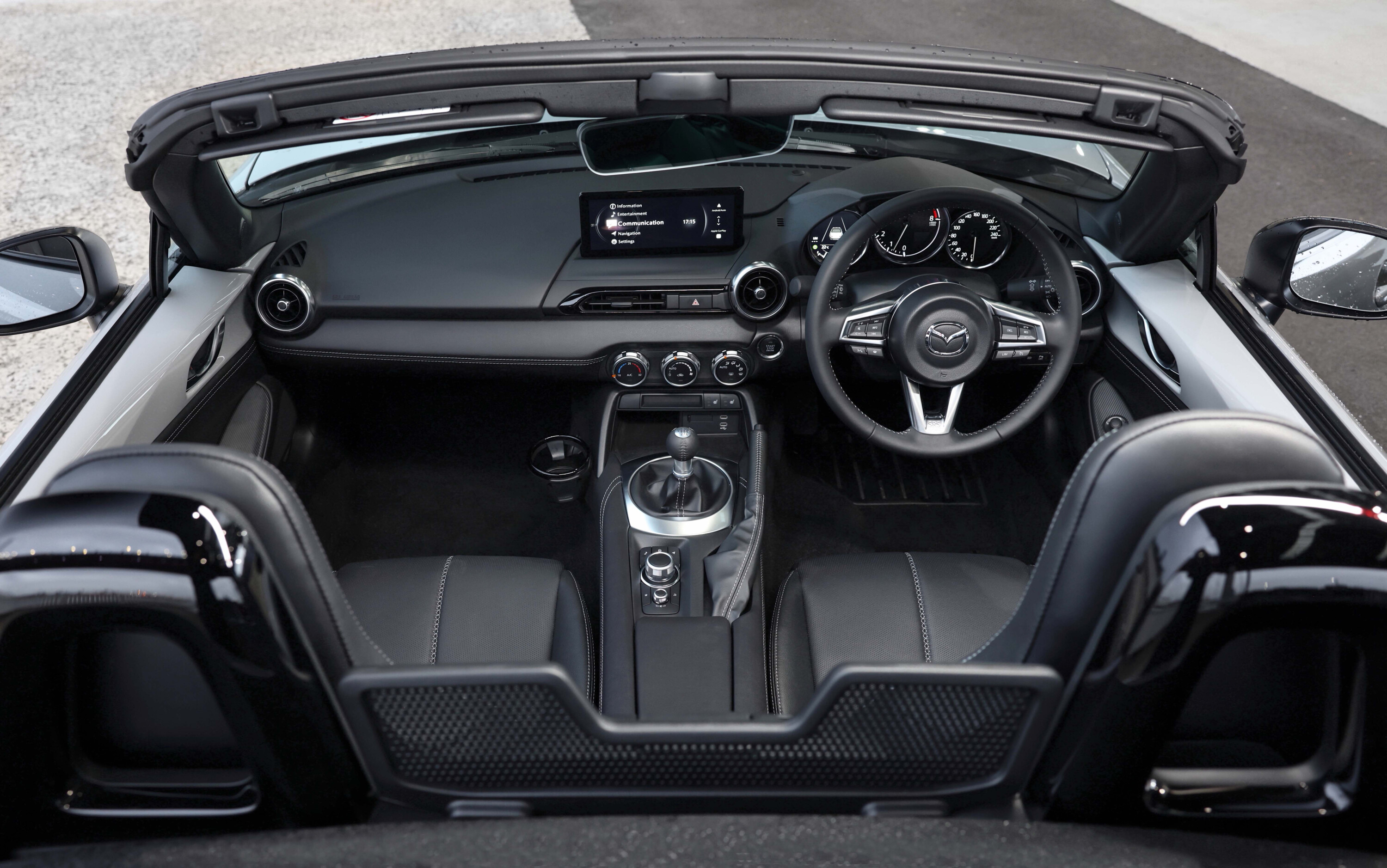
Like the rest of its recipe, the MX-5’s cabin is refreshingly simple. The layout is logical, there are easy to reach buttons and dials for key controls and the new touchscreen, which supports wireless Apple CarPlay/Android Auto and uses updated Mazda Connect software, is a welcome addition. It is a touchscreen, too, although it’s just as easy to navigate the menu structure by using the BMW-like rotary dial on the console and its accompanying hot keys.
It’s not exactly roomy inside, though. With an overall length of 3915mm and a width of 1735mm, this is a small car and cabin space is at a premium. Anyone over 6ft will need to push the driver’s seat all the way back to liberate just enough leg room.
And even then, they might struggle to find an ideal driving position because there’s no reach adjustment for the steering wheel. Being able to bring the wheel forward by 50mm would be welcome.
There are no door pockets, either, no integrated cupholders and no glovebox. Instead, cabin storage is limited to a lockable cubby at your left elbow and a smaller lidded compartment on the centre console.
But while the MX-5 will force you to pack light — the boot is 130L in the soft top, 127L in the RF — the fundamentals of the cabin are spot on. The seats are wonderfully comfortable, the gearshift is ideally placed and the dial cluster, which has been redesigned for 2024, is wonderfully clear and elegant. A digital speedo would be nice, though.
Of course, affordability has long been a core MX-5 attraction and for 2024 that equation isn’t quite as sweet as it once was.
Prices have crept up by between $2310 and $3220 with the range now starting at $41,520 for the manual Roadster and topping out at $56,140 for the RF GT RS.
That’s still cheaper than the Toyota 86, mind you, and even with the price bump, the MX-5 continues to feel like tremendous value. It’s a joyous car to drive and a reminder that sometimes, the best results are achieved by a simple recipe executed perfectly.
Cheap running costs and low-ish insurance premiums only underscore the MX-5’s appeal. So has Mazda changed enough to keep its iconic roadster relevant until its potentially radically different successor arrives? In short, yes.
The updates might sound small on paper but the core recipe was already so good that big changes weren’t required. This remains one of the best driver’s cars on sale.
| Mazda MX-5 GT Roadster specifications | |
|---|---|
| Body | Two-door, two-seat convertible |
| Drive | Rear-wheel drive |
| Engine | 1998cc inline 4cyl, DOHC, 16v |
| Power @rpm | 135kW @ 7000rpm |
| Torque @rpm | 205Nm @ 4000rpm |
| Transmission | Six-speed manual |
| 0-100km/h | 6.5sec (estimated) |
| L/W/H | 3915/1735/1230mm |
| Wheelbase | 2310mm |
| Track width | 1495/1505mm |
| Boot space | 130L |
| Weight | 1070kg |
| Economy | 6.8L100km |
| Wheels | 17 x 7.0 J |
| Tyres | 205/45 R17 |
| Price | $48,640 |
