
Features


Gallery 1
“Herr Rosche, wir brauchen einen sportlichen Motor für die 3er-Reihe.”
The words belonged to then BMW CEO Eberhard von Kuenheim and according to BMW folklore, he uttered them as he was leaving BMW’s motorsport headquarters in Munich’s Preussenstrasse some time in the early 1980s.
Translated: “Mr Rosche, we need a sporty engine for the 3 Series.”
Von Keunheim couldn’t have picked a better target for his parting aside. Paul Rosche, BMW’s renowned engine-building svengali, had built his reputation on engineering some of the finest motors to have ever come out of the Bayerische Motoren Werke. His roll call of engineering success stretched all the way to winning the 1983 Formula One world championship with Nelson Piquet and his Brabham-BMW BT52.
1
And it was motorsport that once again provided the impetus for Rosche and his team, transforming BMW’s regular 3 Series into what has become one of the most revered nameplates in modern automotive history – the BMW M3.
M3 turns 40 this year, and while there have been significant changes to the formula over the intervening decades and six generations, the spirit of von Keumheim’s vision of a ‘sporty’ 3 Series remains a cornerstone of BMW’s philosophy.
1986-1991: Gen 1 E30
2
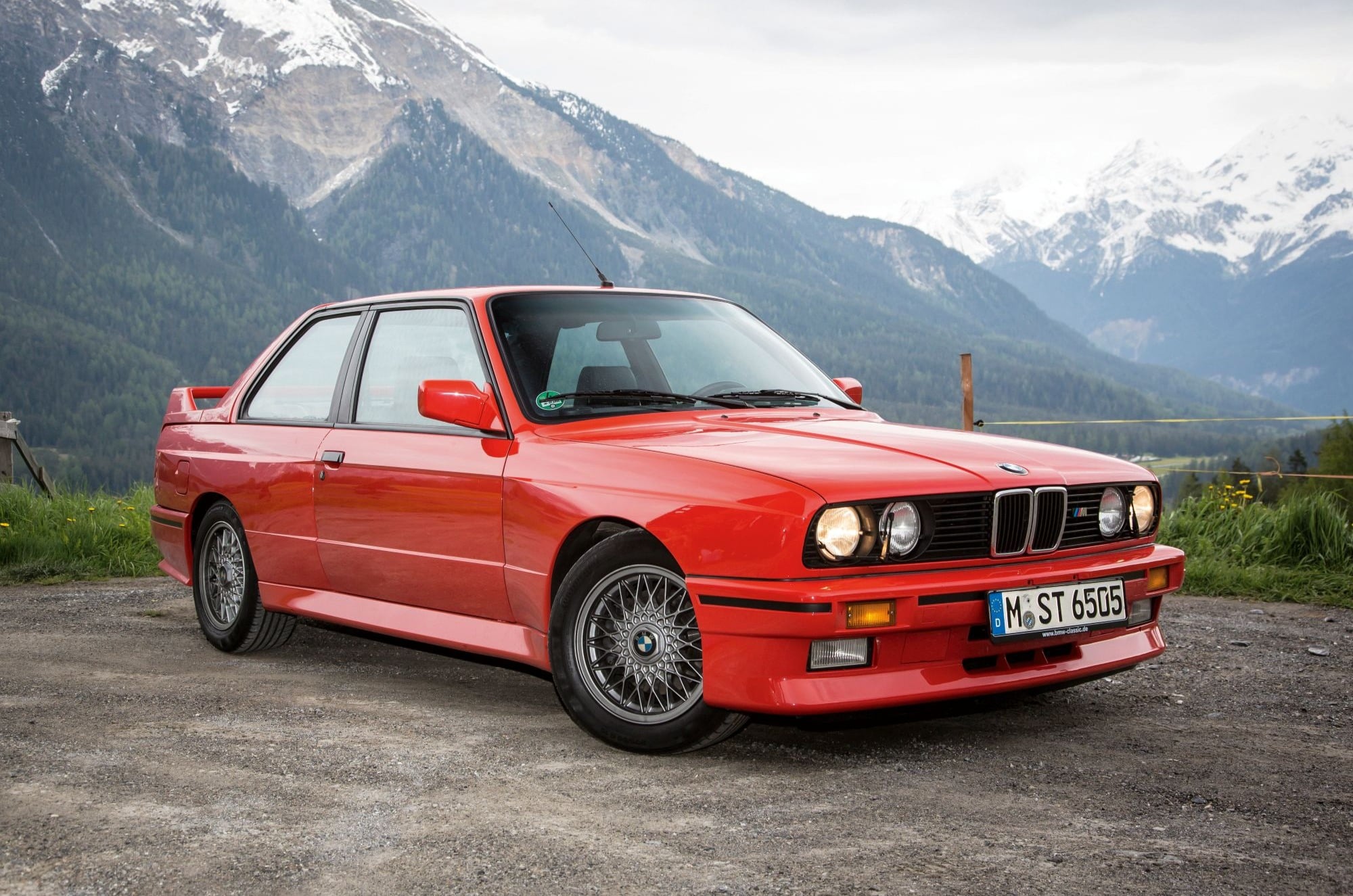
The OG M3 was born out of BMW’s desire to go motor racing in what was, in the mid-80s, the freshly-minted set of Group A touring car rules. The backbone of those regulations stipulated that any competing car must be available as a road-going version with a minimum requirement of 5000 road cars sold in a 12-month period.
BMW’s Motorsport Division (as M was known in those nascent days) went to work. As BMW later explained, having the ability to “develop the production and race versions of the car alongside one another presented the development team with a tremendous opportunity”.
That resulted in a road car that gave not just a passing nod to its race-bred sibling, but fully embraced it in a bear-like hug from a long-lost friend.
A lightweight body incorporated traditional sheet metal – on the body itself and those tantalisingly pumped-up wheel arches – with plastic panels draped on the bootlid, side skirts, front and rear bumpers, as well as the rear spoiler. Attention to detail ran high too, with BMW’s aerodynamic boffins reprofiling the regular 3 Series’ C-pillar to provide a shallower angle and broader base, the result improving airflow around the side of the car and onto the rear deck.
Under the skin, everything from the M3’s axle kinematics, uprated suspension components and larger and thicker brake discs with beefier calipers were engineered with both eyes firmly on the race track. So too the dog-leg shift pattern of the manual gearbox.
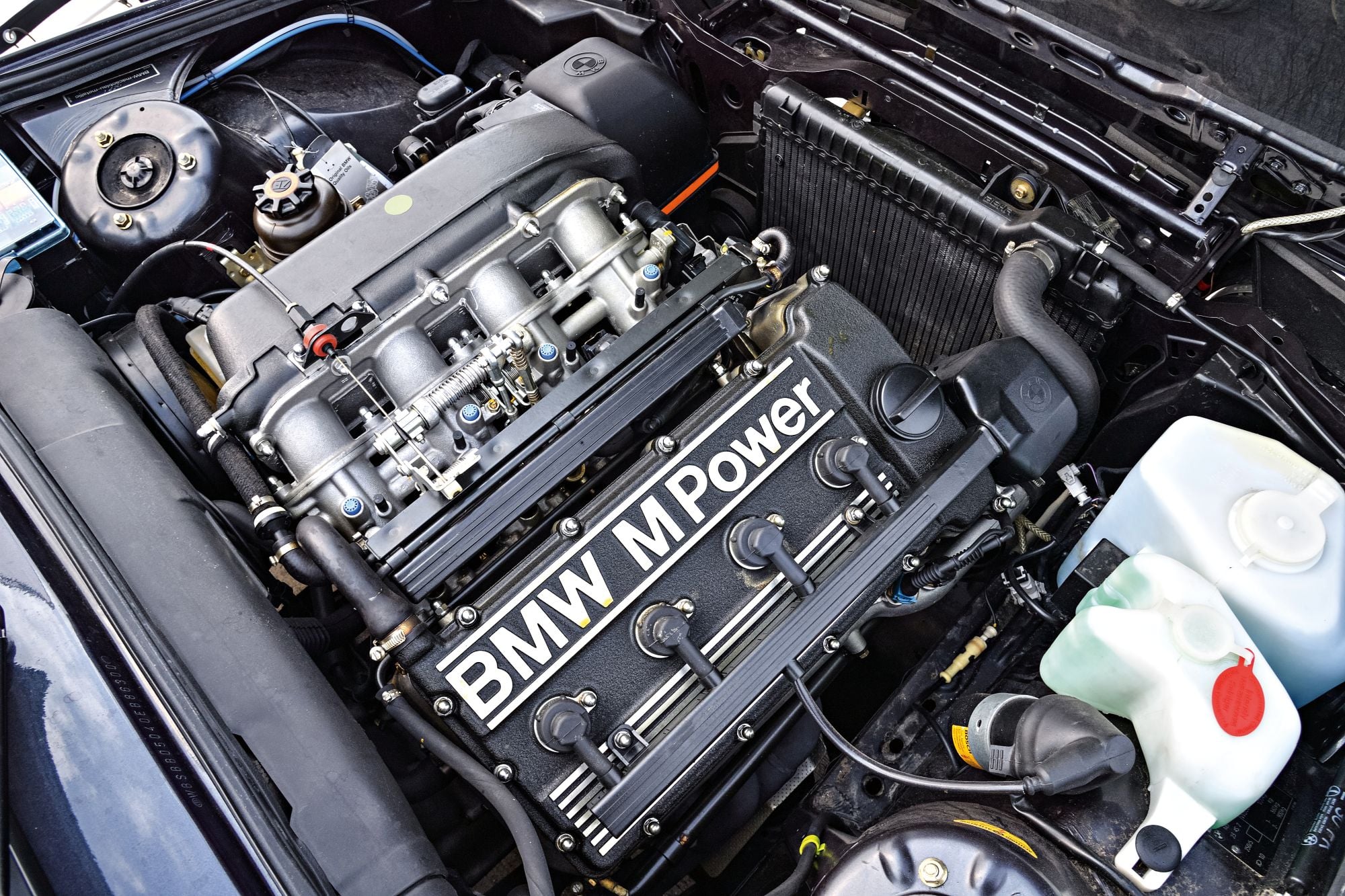
But the real magic was found under the bonnet where a 2.3-litre inline four-cylinder borrowed liberally from the Motorsport department’s back catalogue. Starting life as a 2.0-litre unit found in a slew of BMW road cars, Rosche and his team transplanted the cut down cylinder head from his legendary M88 inline-six from the BMW M1, which gave the benefit of four-valves per cylinder breathing room, added a stiffer crank designed to cope with 10,000rpm, and with a longer stroke that increased displacement to 2.3 litres.
In race trim, the newly-minted S14 pumped out 224kW at 8200rpm. In road car spec, the 2.3-litre
offered 147kW at 6750rpm and while those numbers seem meagre measured against today’s standards, in a car that weighed just 1198kg, it was perfectly monstrous.
1
As Wheels described in its October 1986 issue following a rare test drive, the M3 “is total fun on any track… you could thrash an M3 for uncounted laps with no engine heating, no brake fade and virtually no handling drama. [It’s] a sports sedan which will make every owner feel like a racing star. BMW Motorsport didn’t miss when they set up this one.”
A long, long list of racing success soon followed, the M3 racking up titles with monotonous abandon. World, European, Australian, Italian, German and Japanese touring car championship trophies kept the cleaning staff busy at BMW Motorsport HQ in 1987.
Special road-going editions were inevitable, with Evolution versions released in limited numbers. The apex predator E30 M3 came in 1990 with the Sport Evolution which now featured a bored and stroked 2.5-litre four putting out a respectable 175kW.
Despite BMW churning out a shade under 18,000 E30 M3s by the end of its life-cycle in 1991, none made their way to Australia. The reason? They were only produced in left-hand drive.
1992-1999: Gen 2 E36
1
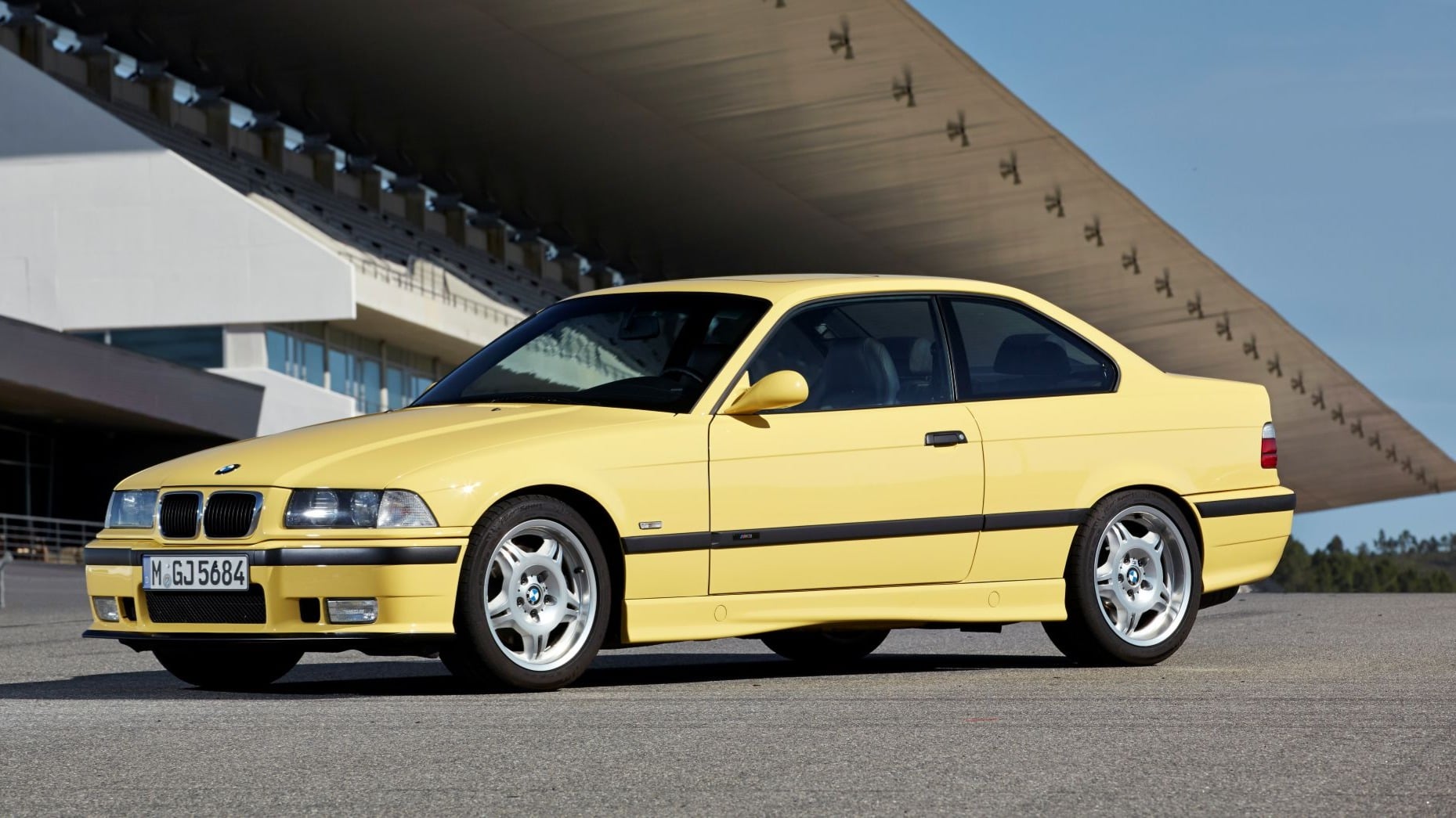
The original E30 M3 made no bones about its racing genealogy. But that all changed with the second-gen M3 which – no longer destined for race tracks around the world – was designed and engineered as a road car.
That meant engine restrictions were out, signalling the end of the heroic 2.3-litre four-cylinder from the E30. In its place, a free-revving 3.0-litre inline six with 210kW at 7000rpm and a claimed 0-100km/h time of six seconds.
Not only was it quicker than the E30, by around half-a-second to the benchmark sprint, but its road manners were vastly improved, the E36 an altogether more compliant and comfortable daily driver.
As the then managing director of BMW Motorsport, Karl-Heinz Kalbfell, told Wheels at the car’s global launch in 1992, “while the old car was an uncompromising driving machine, the new model is a civilised all-rounder which has a better drivetrain, a better chassis and a more modern, understated body.
“Because of the significant differences between the two cars, we even contemplated rebadging the new M3.”
Heavier than its predecessor (it weighed a comparatively portly 1457kg), the E36 was nevertheless a weapon, as quick as its M5 and 850CSi stablemates.
But its reserved styling didn’t exactly endear itself to BMW fanbois with only subtle differences between it and a regular 325i coupe. A deeper front splitter and longer rear diffuser combined with subtle side sills exclusive to M3 were about the sum of the cosmetic changes. There were no bulging wheel arches, no rear spoiler; the only visual cue that this E36 was something out of the ordinary, the M3 badging and tri-colour on the bootlid.
Australia received its first taste of the E36 (and the first locally-available M3) in 1994, Wheels’ reviewers immediately smitten by what was an extraordinary driver’s car, even if the M3 didn’t go about its performance in a flashy and shouty manner.
1
“One of the world’s great engines (powerful, flexible and not too thirsty) married to a great driveline with brakes and roadholding that are little short of sensational.”
A convertible and sedan M3 followed in 1994, along with a limited-run of M3 GT variants, built to homologate the M3 for motor racing in various GT and IMSA championships.
But the best was to come when in 1995, BMW gave the E36 a mechanical overhaul. The incumbent inline-six grew to 3.2 litres thanks to increased bore and stroke and higher compression. Power jumped to 236kW at a peak of 7400rpm while a new six-speed manual helped propel the E36 from 0-100km/h in 5.9 seconds.
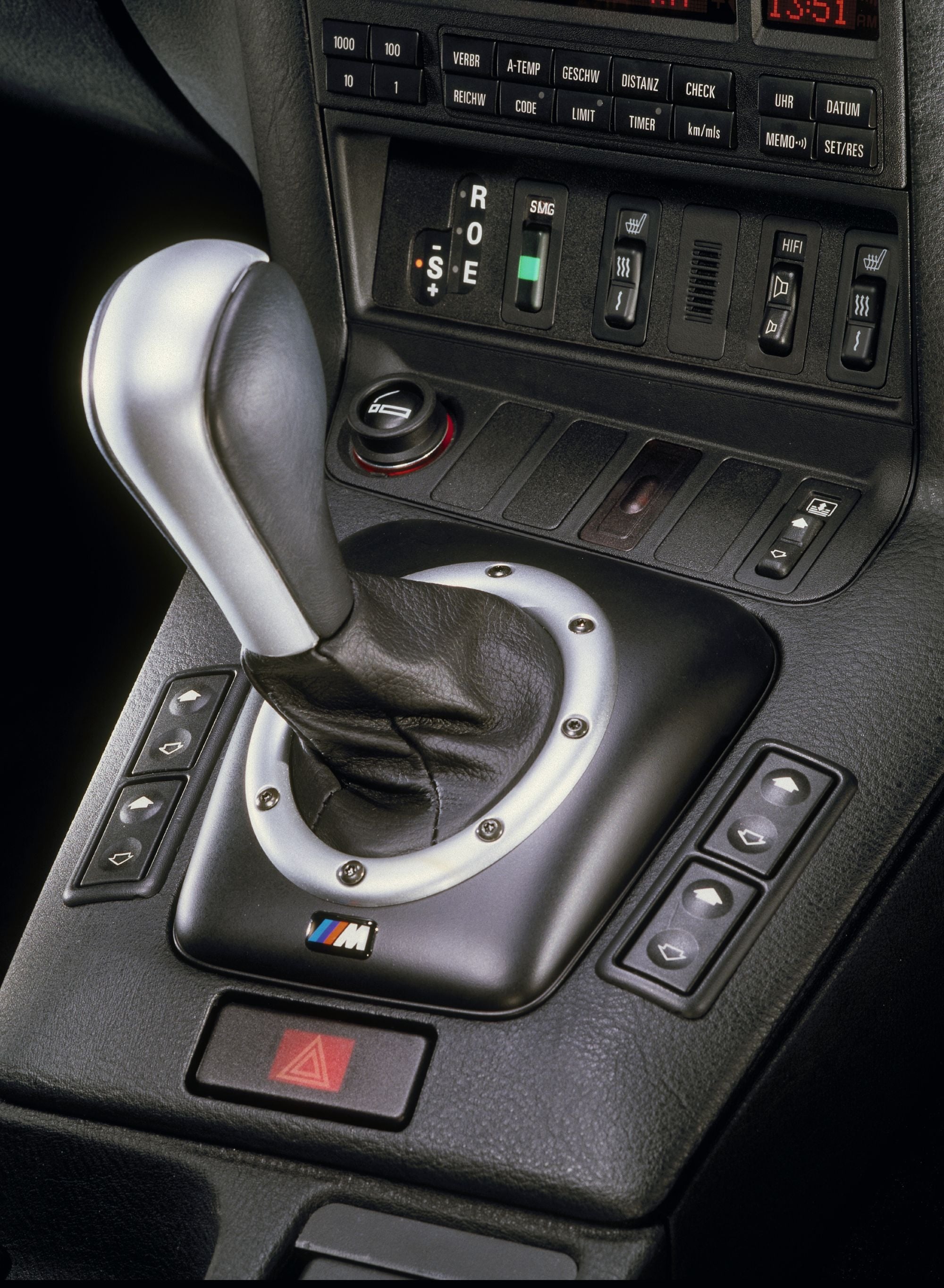
More updates came in 1997, with the introduction of a sequential gearbox (SMG) alongside the manual, the first BMW to feature the motorsport-bred tech. It wasn’t a hit with reviewers, derided for its clunky nature at slow speeds, but that mattered not one iota. Cashed-up buyers simply couldn’t get enough of ’em.
The E36 M3 can be considered nothing short of a success, with BMW producing around 71,000 cars over its life from 1992-99. Counted amongst that number, 15 of the most powerful road-going E36 M3 ever produced, made right here in Australia.
The M3-R came as a result of BMW Australia wanting to contest the Australian GT Production Car Championship. Built by racing legend Frank Gardner, the 15 road cars needed for homologation featured an uprated version of the 3.0-litre inline six, good for 242kW. Upping its power-to-weight ratio, the M3 went on a severe weight loss program, Gardner’s workshop stripping out niceties like rear seats and air conditioning.
The price tag of $189,450 represented a significant hike over the regular M3’s circa $130,000 when new in 1995. And if that wasn’t a big enough roadblock, BMW would only sell the M3-R to CAMS licence holders.
2000-2006: Gen 3 E46
1
While the headline data might have suggested BMW had rolled the arm over with its new M3 in 2000, the truth was very different. Sure, the inline-six looked familiar on paper, but under that bulging power-domed bonnet, an – almost – entirely new 3.2-litre was providing the E46’s mojo.
Bore and stroke had changed, resulting in 45cc more displacement, while the rev ceiling had lifted to 8000rpm. Featuring BMW’s famed Double Vanos variable valve timing system, the new 3.2-litre unit made more power than its predecessor, now rated at 252kW, resulting in a blisteringly quick 0-100km/h claim of 5.2 seconds.
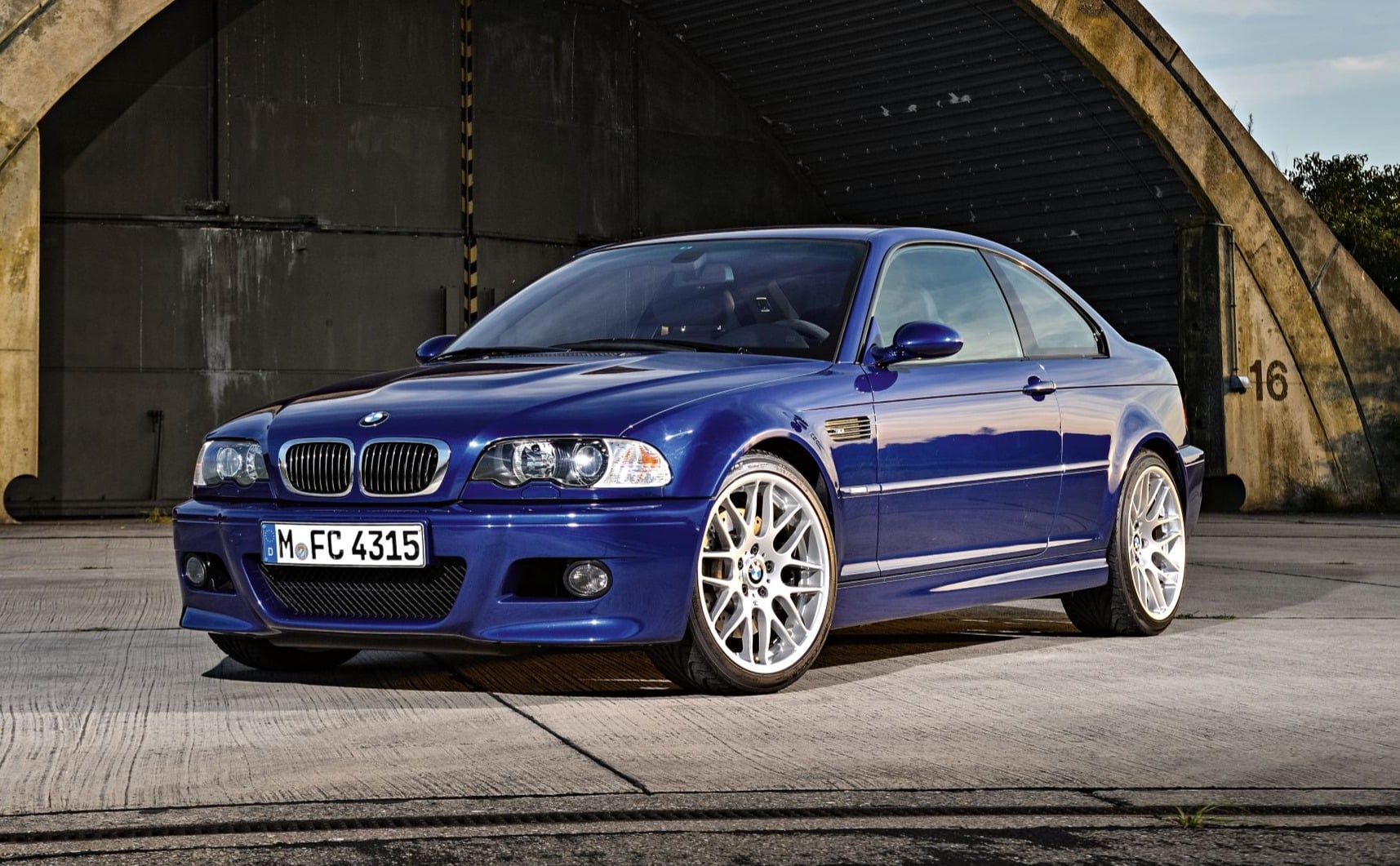
Externally – and perhaps feeling a little chastened by the E36’s lack of visual aggression – this new generation M3 wore its battle armour with muscular swagger.
Wheel arches were once again pronounced to accommodate the M3’s wider wheeltrack, while an
aggressive power dome on the bonnet left no doubts as to where the E46 M3 sat in the 3 Series pecking order. The front apron, jutting out from under the kidney grille, lent the E46 a snarling mien complemented by M-badged air intakes just behind those beefed-up wheel guards.
The E46’s dress suit looked the business, but what made this M3 a true great of the genre is that heroic inline-six under the bonnet, arguably the greatest atmo straight-six ever made.
Docile when it needed to be, the E46 exploded into life when pushed, eagerly climbing to its howling rev ceiling and offering, according to Wheels’ First Drive in 2000, “a level of performance that, in everyday terms, is probably unnecessary on the public highway… [it is] there in any gear, and at any phase in the rev range beyond 2000rpm.
“Below that the engine is merely strong. Above it performance is either blistering or verging on the
insane, depending on how close you’re prepared to go to the 8000rpm cut-out.”
A six-speed manual was once again offered as standard although most buyers, it’s said, opted for the second iteration of BMW’s SMG sequential gearbox. Still clunky, it was considered an improvement over the unit found in the E36.
The inevitable special editions beckoned and in 2003, the M3 CSL made its public debut. Sure, there were more kilowatts (13 of them) lurking under the bonnet, but the real gains came courtesy of BMW’s strict weight-saving regimen that saw composite materials liberally sprinkled throughout including the rear diffuser, front apron, and a smattering of internal features. The pressed steel bonnet gave way to an aluminium number while even the E46’s windows did not escape BMW’s razor gang, replaced by thinner glass panels in the CSL.
And, for the first time, a visible carbon-fibre roof sat atop the CSL, a feature that has gone on to become a signature of the M3 breed. All up, BMW’s Motorsport department shaved some 110kg off a regular M3 to land at a kerb weight of just 1385kg and a claimed 0-100km/h sprint time of just 4.9 seconds.
BMW produced around 85,000 E46 M3s in both coupe and convertible body styles (there was no sedan for this third-gen M3) including a very special unicorn that presaged the future, the V8-powered M3 GTR Strassenversion, a homologation special built to allow BMW to go racing in America.
2007-2013: Gen 4 E92
1
It seemed only natural that BMW’s M3 street-brawler would mature into a V8 monster. After all, the engineering boffins at Motorsport HQ had already crammed a V10 into its glorious E60 M5, a snarling beast of a thing which, when in full song, made the hairs on the back of your neck do a dance of delight.
The cylinder-count growth spurt of both the M3 and M5 was as a result of M Division’s then vice-president Gerhard Richter’s assertion that “to stay in the game we simply needed a bigger engine”.
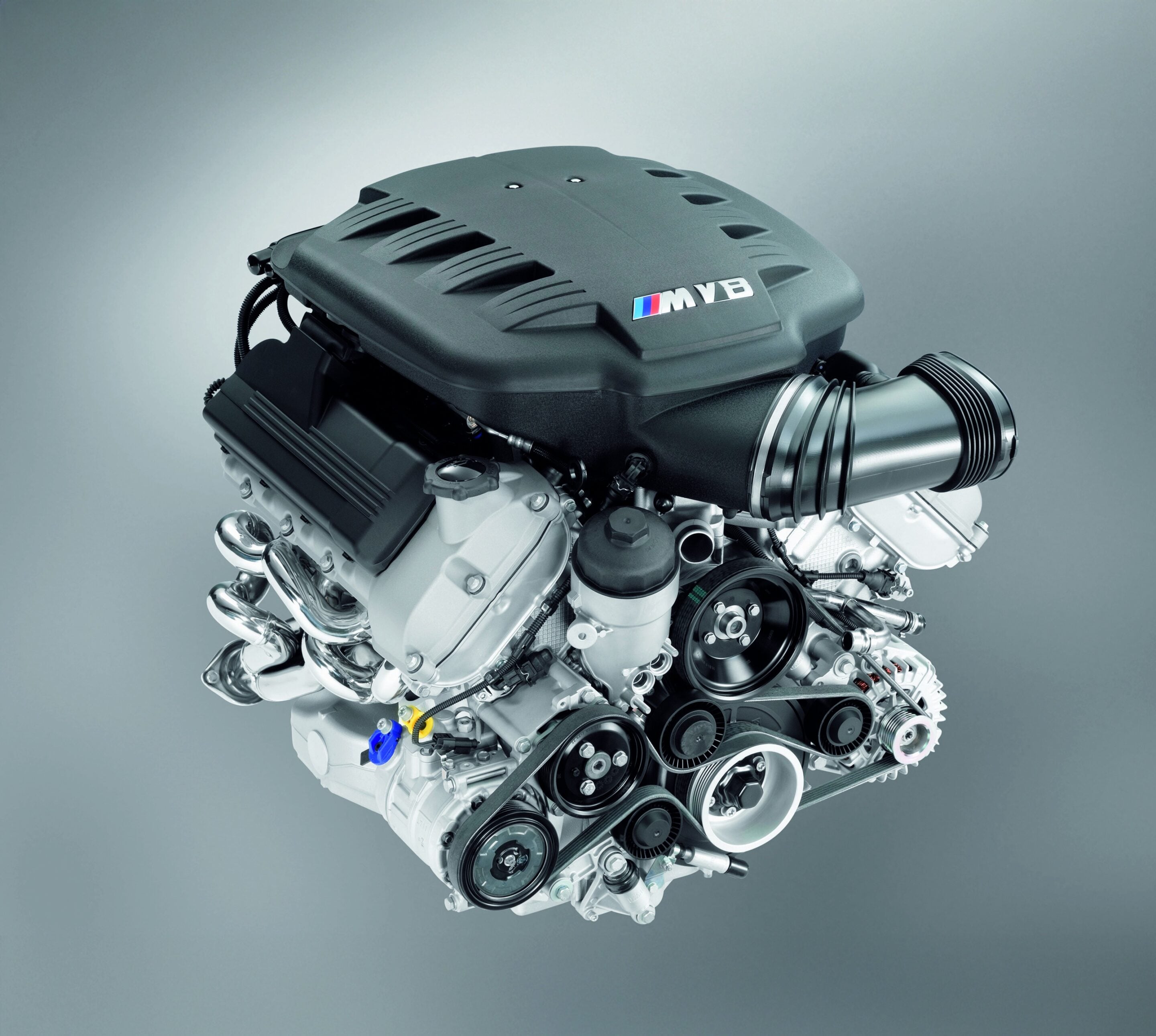
In the M3, that bigger engine took the shape of a 4.0-litre naturally-aspirated V8 pumping out 309kW at a delicious 8300rpm and 400Nm at 3900rpm. Essentially a cut-down version of the M5’s V10, the new bent-eight stayed true to the M3 high-revving philosophy.
As Wheels’ Peter Robinson noted after his first drive in September 2007, “It hits race-car stride at 5800rpm … but best of all is the ferocious way it then pulls to 8400rpm.”
The fierce responsiveness helped propel the now 1580kg M3 from zero to 100km/h in a claimed 4.8
seconds, quicker than its immediate 3.2-litre six predecessor despite gaining 85kg.
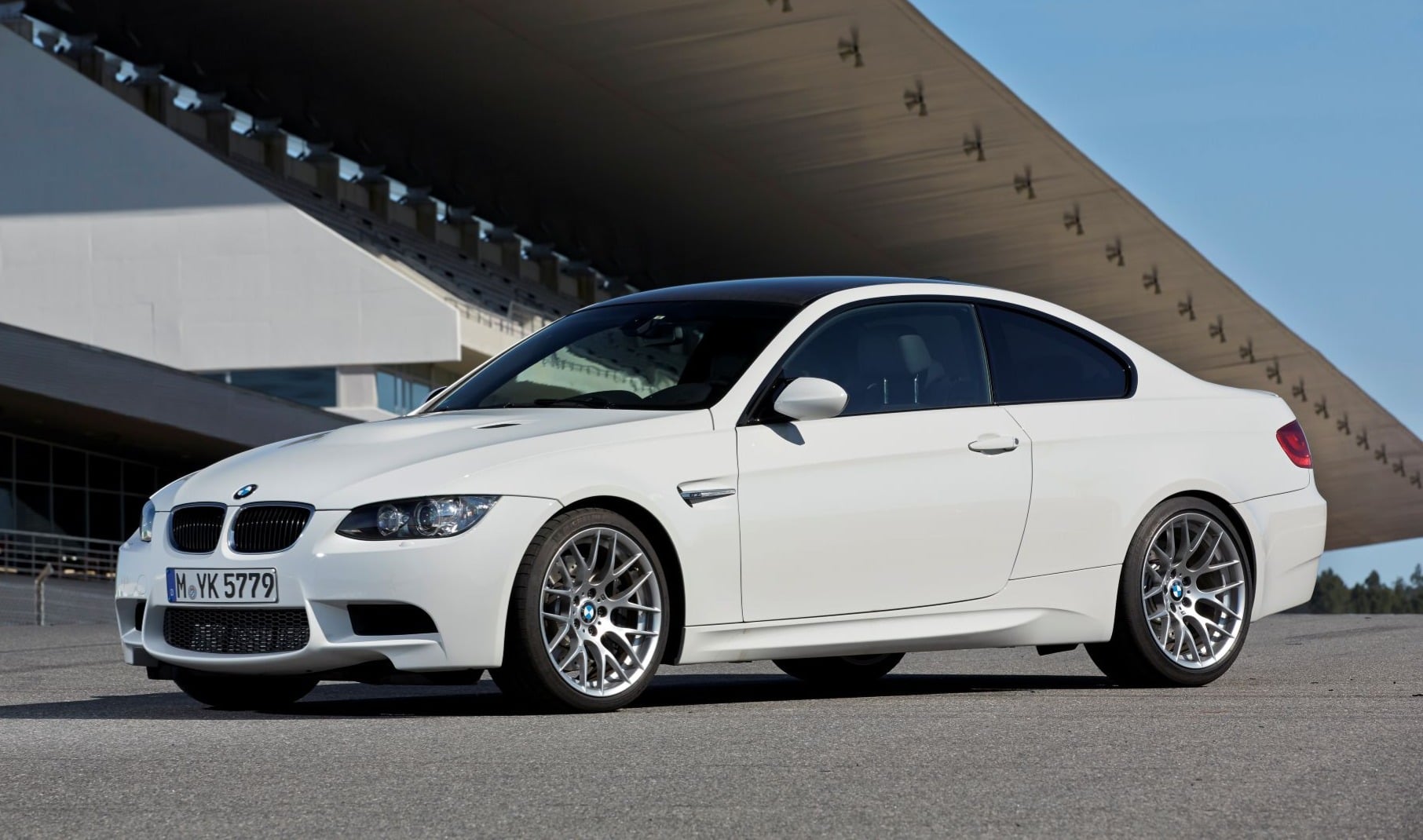
BMW worked hard to keep weight gains to a minimum. The new engine itself was lighter than the E46’s six while a carbon-fibre roof, first seen on the E46 CSL, was now standard fit. Aluminium panels replaced pressed steel in a muscular body that, while it resembled a regular 3 Series, was almost entirely new. Only the doors and bootlid carried over from the regular car.
But perhaps the biggest changes to this generation M3 remained unseen. The headline act was the option of a seven-speed dual-clutch transmission, a first for the M3. It replaced the cantankerous SMG found in E46 and E36 and proved a more amiable companion. As Wheels’ John Carey noted, the dual-clutch was “the transmission that finally made the two-pedal version of the M3 the one you wanted to drive”.
1
Other electronic wizardry offered drivers plenty of scope for adjustment with various engine, steering, and suspension settings as well as the responsiveness of the new dual-clutch, all available at one’s fingertips in a staggering 54 individual combinations, which Wheels described as just “plain silly”.
And yet, while the various settings in their most aggressive modes left drivers nursing kidneys and wondering what happened to steering feel on centre, when it came to race track, the M3 was brilliant. As Robinson wrote, “the near perfection of its refinement, performance and handling is overwhelming”.
As with the E46, the fourth-gen M3 range also featured convertible and sedan variants alongside the coupe while a seemingly endless array of special editions milked the M3’s haloed badge for all its worth. The most notable of these was 2010’s M3 GTS, a road-legal track-day weapon available only as a coupe. The changes across the board – bigger, more powerful V8, reduced weight, revised suspension, beefier brakes and adjustable aero – improved performance dramatically with a 0-100km/h claim of 4.4 seconds.
It was a fitting swansong for the M3 coupe which, despite accounting for around 60 per cent of total fourth-generation M3 sales, was consigned to the history books. By the time the fifth-gen M3 rolled around in 2014, the emblematic M3 coupe was no more.
2014-2018: GEN 5 F80
1
In September 2010, Wheels teased this about the then current E92 M3: “The E92 was almost not an M3. BMW considered changing the designation for the coupe (E92) and convertible (E93) to 4 Series, presumably to align with the 5 and 6 Series. The M version would have had to follow, but the plan was (sensibly) scrapped.”
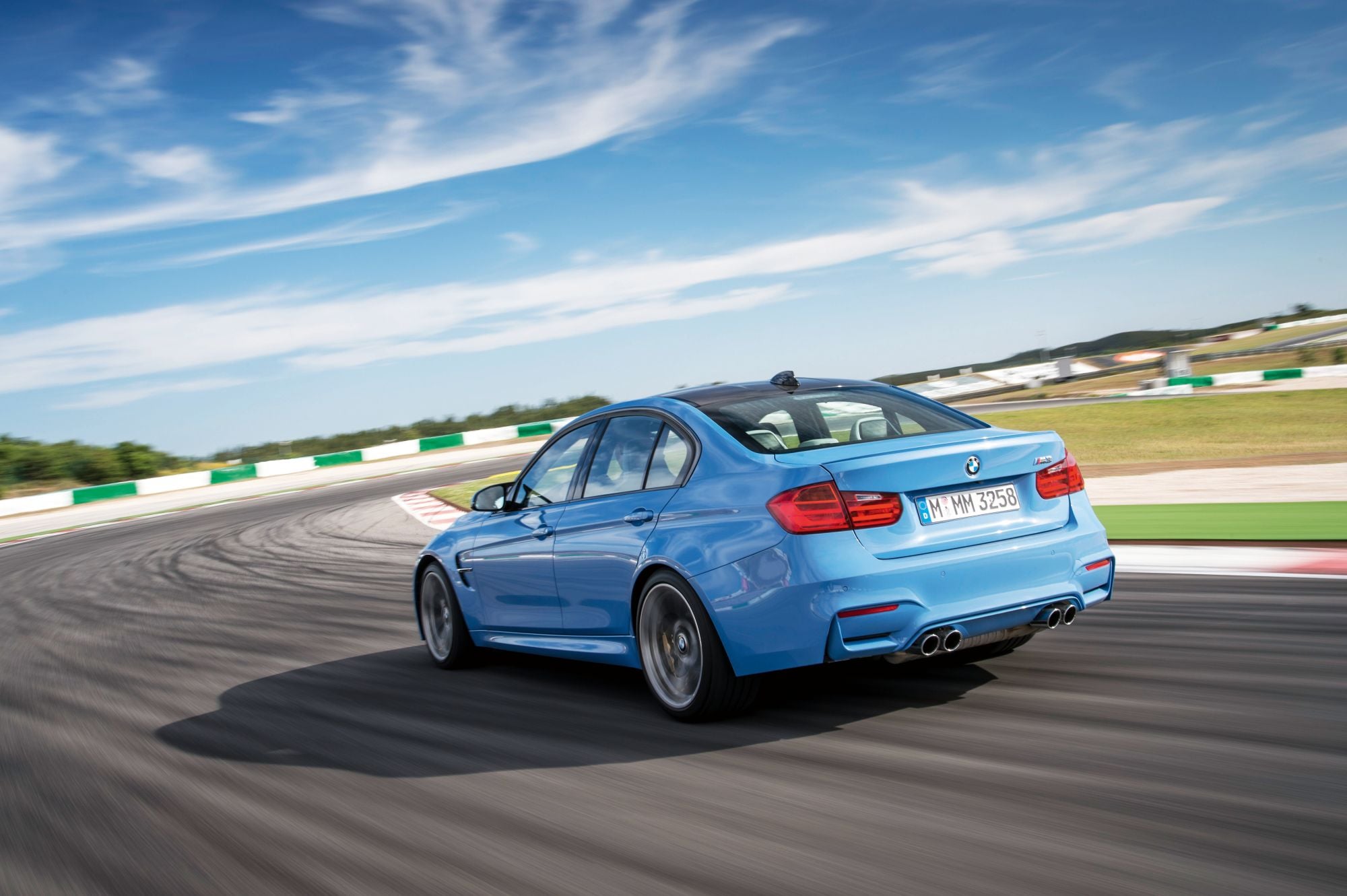
Four years after those prophetic words – which amounted to a stay of execution rather than a full pardon – the fifth-generation M3 made its debut as a sedan only, the M3 coupe having metamorphosed into – as Wheels had hinted four years earlier – the M4.
On the surface, the change made sense. After all, BMW had recently realigned the nomenclature of its stable of cars. Odd-numbered ranges (1, 3, 5, and 7 Series) were the domain of four doors while even numbers (2, 4, 6, and 8 Series) applied to coupes, convertibles and, shudder, gran coupes.
But emotion defies sensibility and while the M4 coupe was every bit the heroic sports brawler the M3 had always been over the previous 30 years, it wasn’t an M3 anymore.
That left the 3 Series sedan as the flag-bearer for the new F80 M3 and while the door count may not have been to everyone’s liking, it lost nothing for having said bye-bye to its two-door sibling.
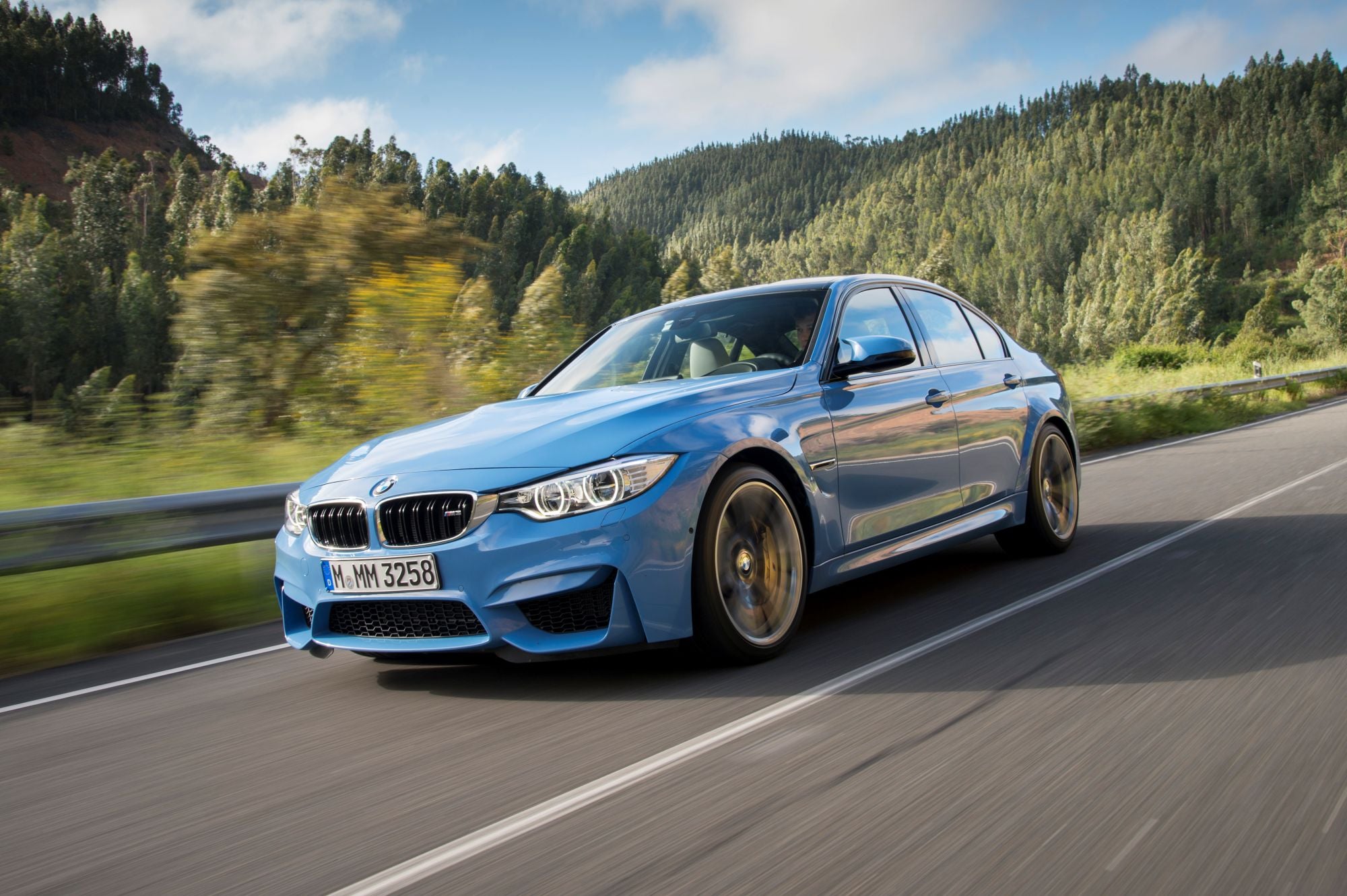
In keeping with the emissions-chastened and turbo-charged times, the V8 of the previous-gen M3 was gone and in its place a twin-turbo 3.0-litre inline-six that brought more of everything, despite dropping two cylinders and one litre of displacement. Modest power gains (317kW against the V8’s 309kW) didn’t tell the whole performance story. To find that, we needed to look at the torque figures and here, the twin-turbo six laughed in the face of the atmo V8 it replaced – 550Nm versus 400Nm. The end result? Try 0-100km/h in just 4.1 seconds, some 0.7s quicker than the V8’s benchmark dash.
The star of the F80 M3 show was undoubtedly M division’s new twin-turbo six (internal code S55) which not only retained the characteristics that forged the legend of M, but enhanced it – effortlessly powerful, eagerly high-revving and exactingly responsive. Throwing turbochargers into the mix only added to the M3 story, with more torque and crucially in those chastened times, a 25 per cent improvement in fuel consumption.
1
“From below 2000rpm to beyond 7000rpm is one lusciously long surge that never wavers in intensity,” wrote Wheels’ John Carey following his first taste of the new M3 in 2014. “And the noise it can make is remarkable for a turbo – a soulful mechanical wail that rises, approaching the 7600rpm cut-out, to a pitch suggesting mild hysteria.”
The usual smattering of special editions made their way to dealerships including the Australian-only M3 Pure. Offering an $11k saving over regular M3, the M3 Pure pared back on the equipment list, brought some black exterior styling elements but most tellingly, featured the more powerful engine tune and uprated sports suspension from the M3 Competition, 331kW against the regular M3’s 317kW.
BMW produced just under 35,000 F80s over its short four-year production run which ended in October 2018. Somewhat hearteningly for BMW, the M4 coupe remained in production until 2020, by which time over 57,000 of the two-door had been built. Swapping the badge on the bootlid had not hurt it one little bit.
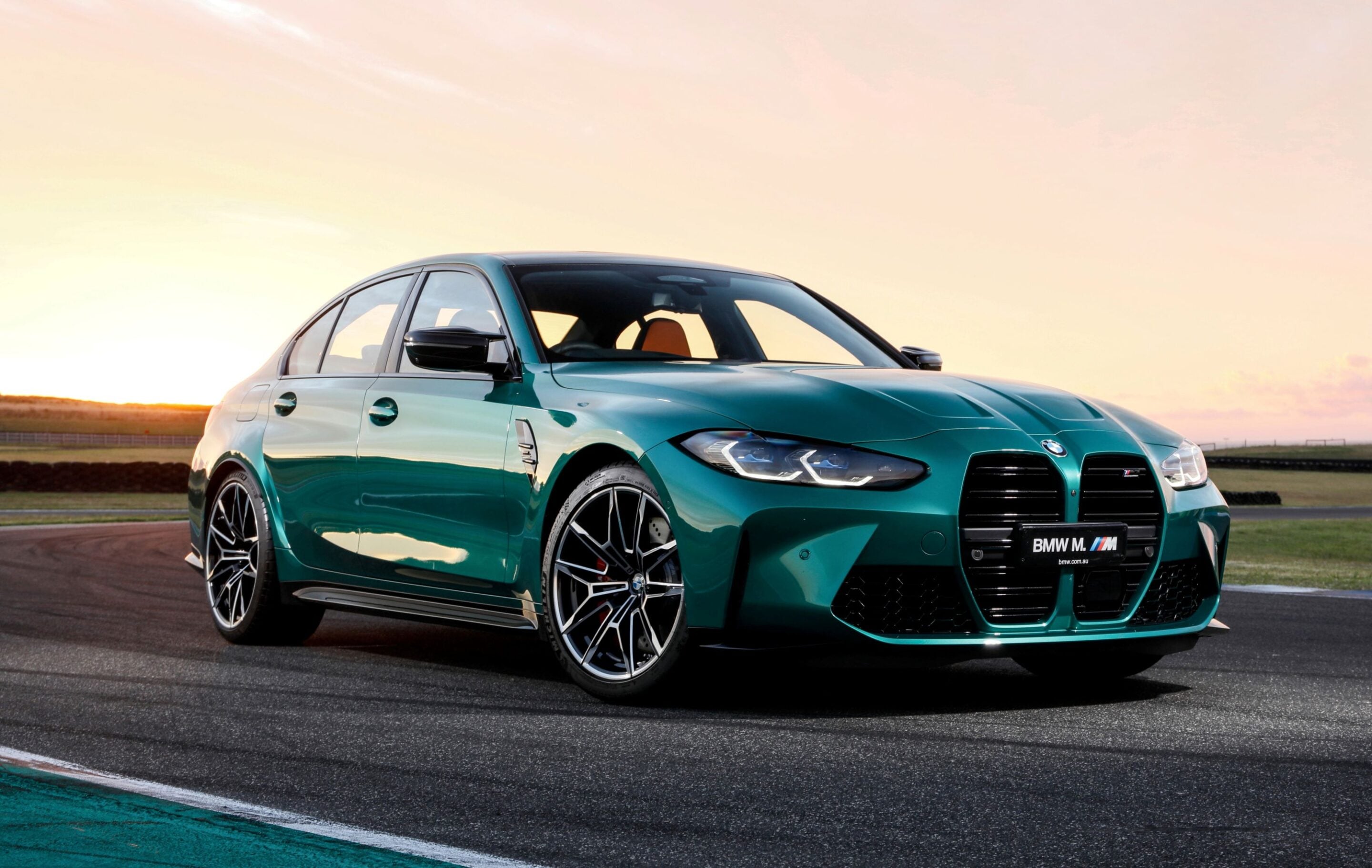
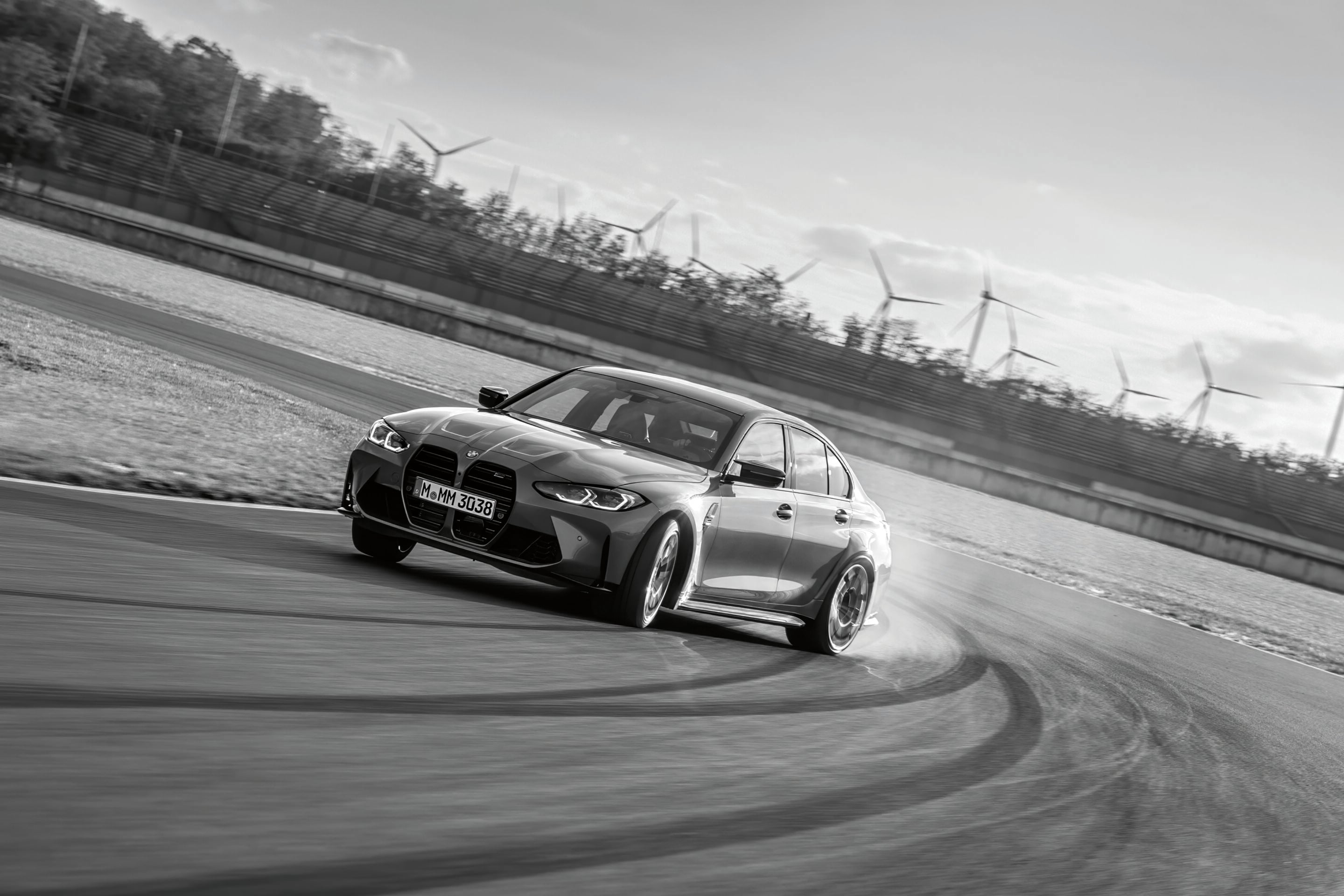
2020: Gen 6 G80
1
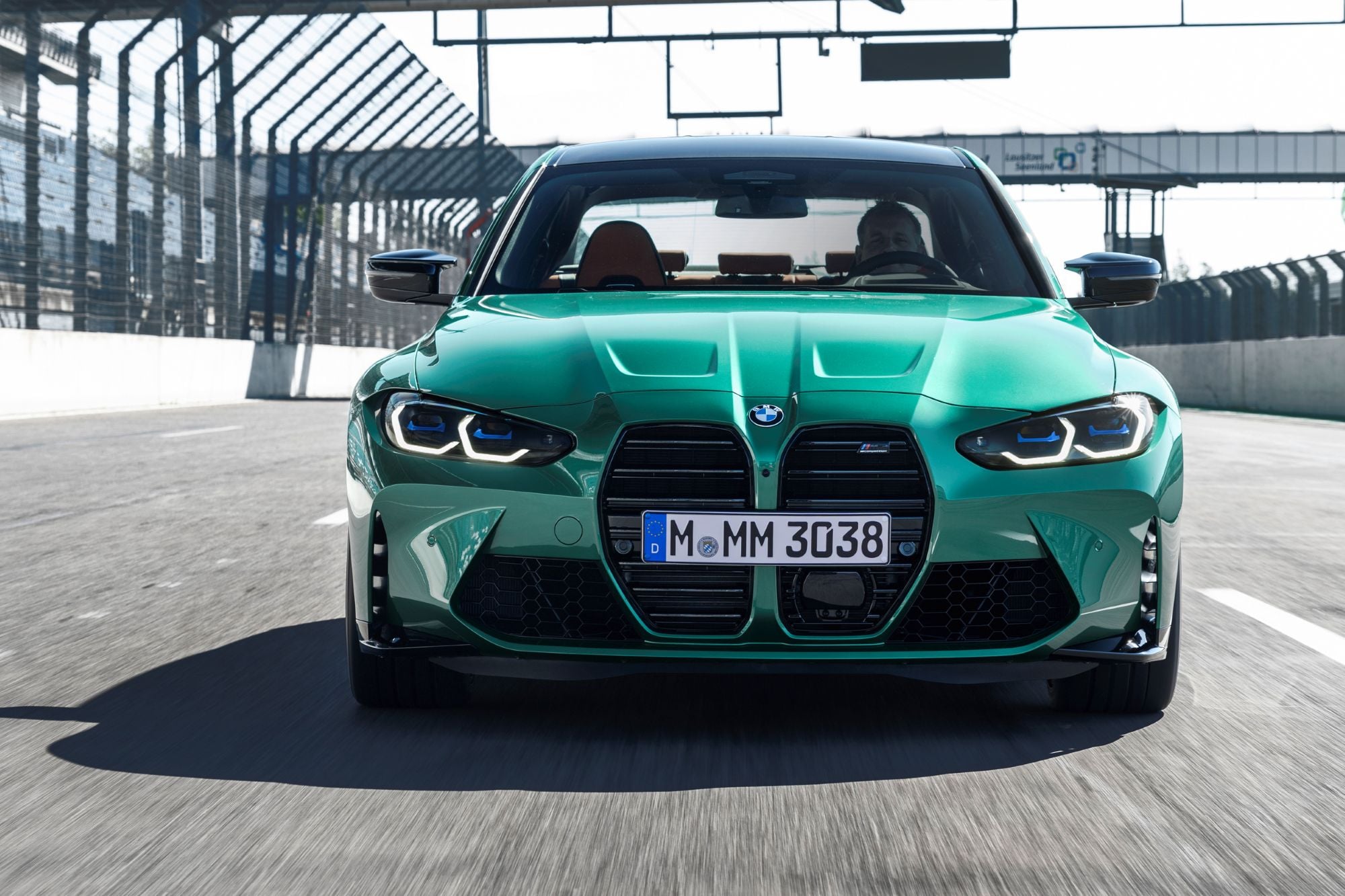
It’s perhaps fortuitous that the reveal of its new G80 M3 in Covid-19-ravaged September, 2020 happened via a global online event. That way, BMW executives were spared the collective grimaces and gasps when the M3’s new front end was revealed.
It’s hard not to talk about the G80 M3 without mentioning the grille, so stark, so obvious, like the mole on your grandpa’s chin you can’t tear your eyes from. Certainly a bold design, BMW has since said it has “no regrets” and that far from hindering sales, it has actually enhanced them, in particular in markets such as China. It’s here to stay then, for the foreseeable future.
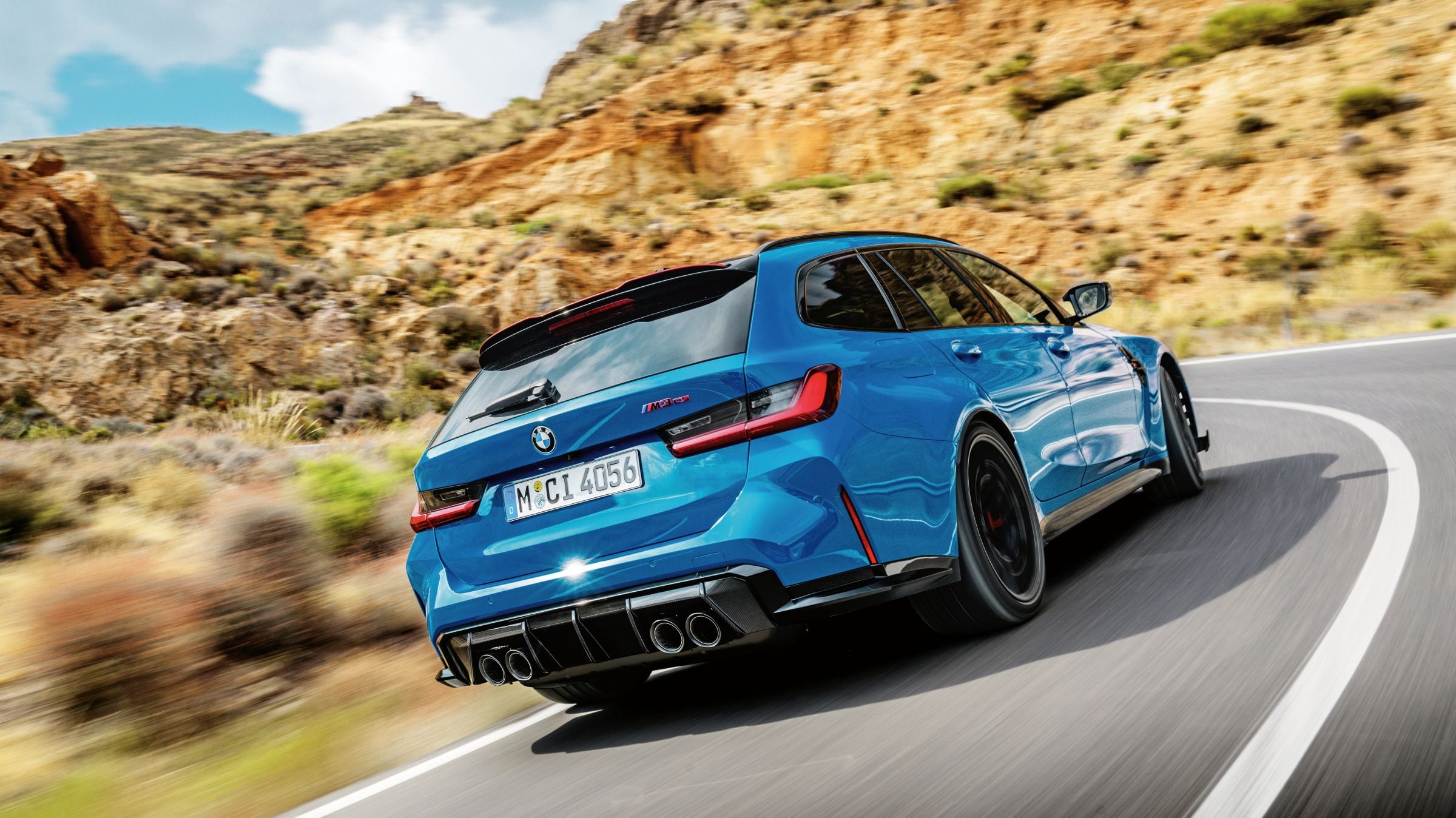
But the G80 M3 is more than just a grille, much, much more. For starters, a new twin-turbo 3.0-litre inline-six (code S58) ups the power stakes, and significantly. In standard M3 guise, the inline-six is good for 353kW. Step up to the M3 Competition and you have 375kW available under your right foot. Channeling all that turbocharged thunder to either the rear wheels or, for the first time in an M3, all four wheels, is a choice of a six-speed manual or an eight-speed torque converter automatic. Yep, BMW has added all-wheel drive to the M3 and ditched the seven-speed dual-clutch transmission. And it’s a significantly better car for those changes. And quicker.
The G80 has also enjoyed a significant growth spurt, now stopping the tape at 130mm longer than the F80 M3, 26mm wider, 14mm taller and sitting on a 45mm longer wheelbase. Weight? Up 11 per cent over the older model, now rated at 1730kg. Ouch!
1
It hasn’t hurt performance though – the M3 in Competition trim, hurtling from standstill to 100km/h in just 3.9 seconds. Option BMW’s xDrive all-wheel drive system and that improves to 3.5s. Stunning.
On the road the G80 is stupendous. M’s signature lust for torque remains in place with every single one of the 650Nm on offer available from a low 2600rpm all the way through to 6000rpm, helped along by super-slick shifts from the new ZF-sourced eight-speed auto, its responsiveness banishing any fondness for the previous model’s seven-speed DCT to the rear-view mirror.
Improvements to the suspension pays dividends on the road, where the G80 feels at once more composed and settled than its recent predecessors, a win-win if ever there was one.
Saving the best for last, in 2023 BMW added a station wagon version to the M3 range, the result nothing short of sensational. As well as its imposing muscular presence, the M3 Touring takes everything the sedan has to offer and wraps it in a family-friendly package. For mine, it’s the M3 to have.
So what’s next for the M3? No doubt there will be more special editions, like 2023’s M3 CS, which brought more power and less weight to the party.
Looking further ahead, BMW has revealed plans for an electric M3, with four motors – one at each wheel – with suggestions total power output will exceed 1000bhp, or around 750kW in our money. It’s likely to be revealed in 2027 with a launch date of 2028. But fear not fans of M3, for BMW is also bringing out a new petrol M3, keeping the combustion flame very much alive. We wouldn’t want it any other way.
The unlikeliest M3
1
BMW has never shied away from pushing the boundaries of what’s possible. And that carefree derring-do extends to the BMW M3 which has, over the years, afforded us a glimpse into what goes on behind HQ’s closed doors.
One-offs and concepts are nothing special in the car world – side projects for designers and engineers freed from the constraints of commercialism and bean counters.
BMW’s M department was no different and given some latitude, gave the world the unlikely sight of not one, but two, M3-based utes.
But more than just a curio, the small utilities served a practical purpose, designed and built to transport components around BMW Motorsport’s sprawling Munich complex.
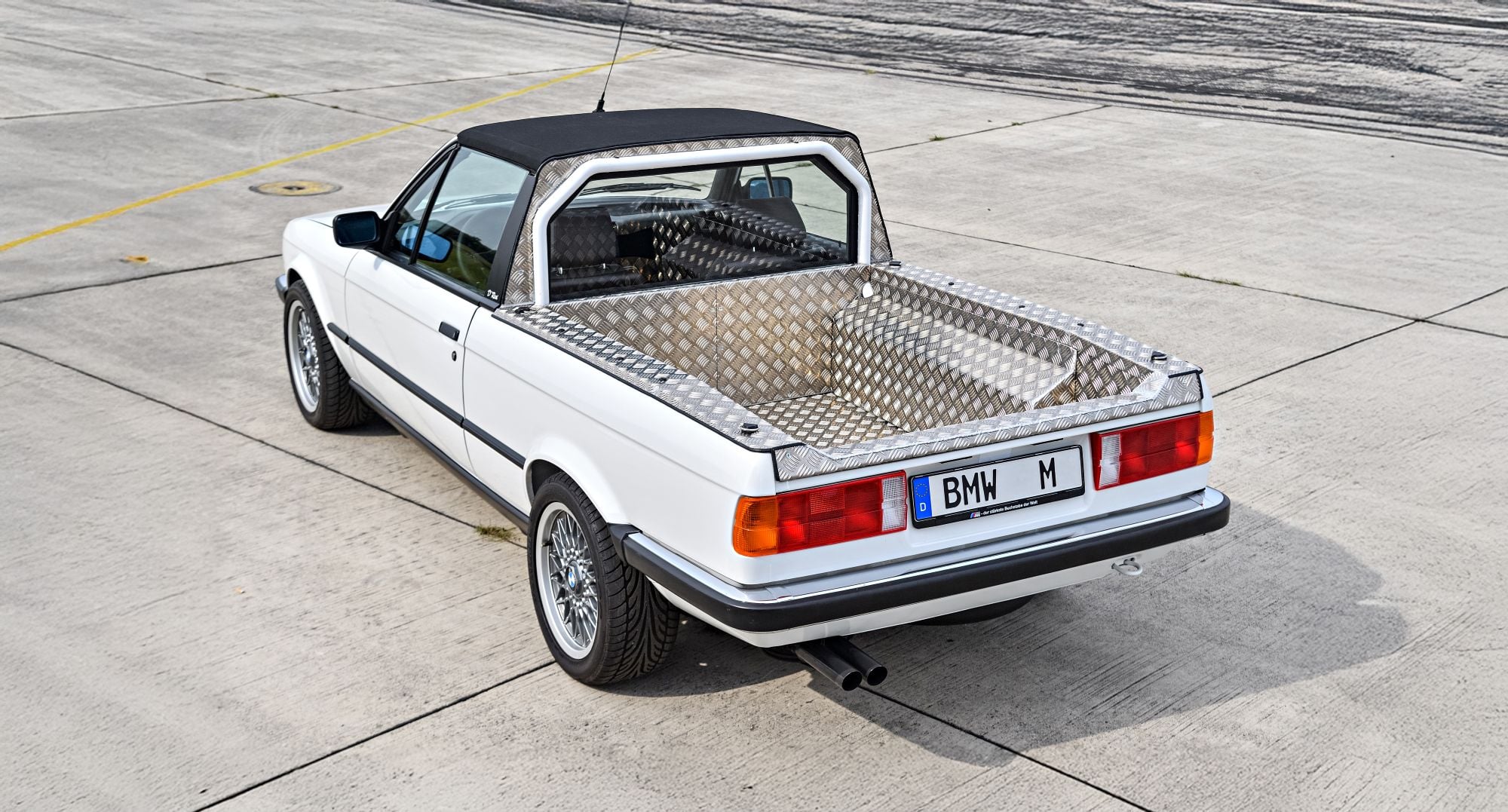
The first came in 1986. Starting life as an E30 cabriolet, the platform chosen, according to M Division’s Jakob Polschak, because “the convertible’s built-in bracing made it the ideal choice for a pickup conversion”.
1
Powered initially by an Italian-market 2.0-litre version of M’s S14 inline four making 147kW, it eventually received the full-cream 2.3-litre unit from the M3 catalogue.
The E30 M3 Ute fulfilled its role dutifully for 26 years, retired from active service in 2012 with a staggering 26,637km on the odometer.
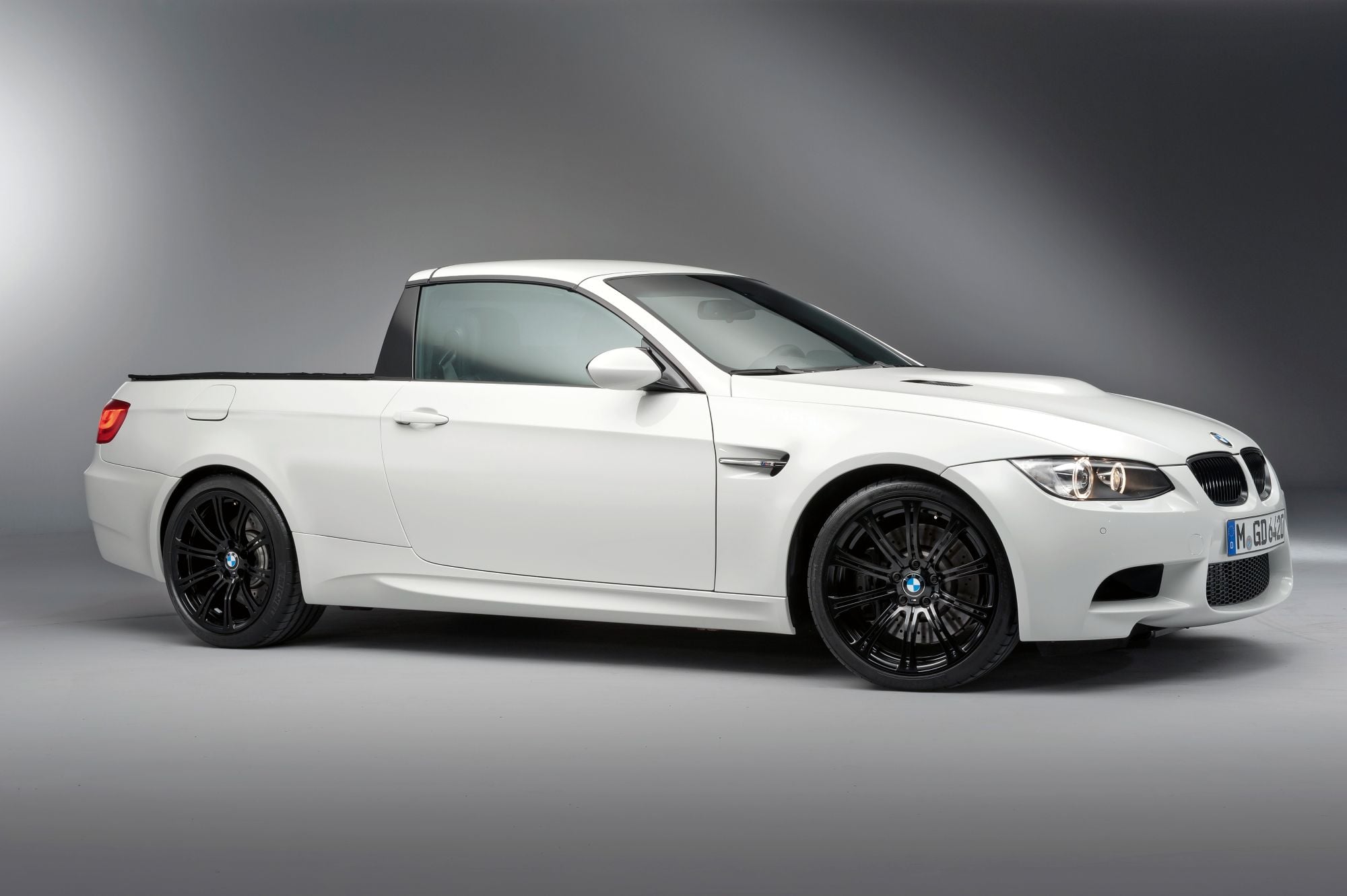
The second M3-based ute started life as a joke but the E92-based M3 Pickup served the same transportation role at M’s production facility as its E30 predecessor.
But, a 2011 release from BMW about the pickup sent M aficionados into a tailspin.
“Following the BMW M3 Coupe, BMW M3 Convertible and BMW M3 Sedan, a fourth body variant of this globally successful high-performance sports car is about to cause a stir,” it read. “Under the strictest secrecy, the world’s first high-performance pickup has been created at the BMW M GmbH development centre.
“The sportiest example by far in this vehicle category, the BMW M3 Pickup will fire the imaginations of all motorists…
“This unique vehicle has already completed extensive test and set-up drives on the Nürburgring’s Nordschleife in advance of its global unveiling on 1 April 2011.”
Note the date.
This article first appeared in the February 2026 issue of Wheels. Subscribe here and gain access to 12 issues for $109 plus online access to every Wheels issue since 1953.
Follow WhichCar/Wheels on Google
Click the button below to make WhichCar by Wheels a preferred source for your news.

We recommend
-
 News
NewsNext-generation BMW 3 Series nears reveal as electric i3 takes shape
Production-ready prototypes signal a major shift as BMW prepares its most advanced mid-size sedan yet.
-
 News
NewsBMW M performance division unveils major shift from 2027
As the Neue Klasse era approaches, BMW M plans to blend five decades of motorsport DNA with cutting-edge electric technology as it redefines its future.
-
 Classic Wheels
From the Wheels archive: The 250km/h test – Holden Group A v BMW M5 – One of them is the world's best sedan!
In September 1990, Wheels put the new Holden Commodore Group A SS up against the BMW M5 to find out which one was 'the best sedan in the world'.
