
Features


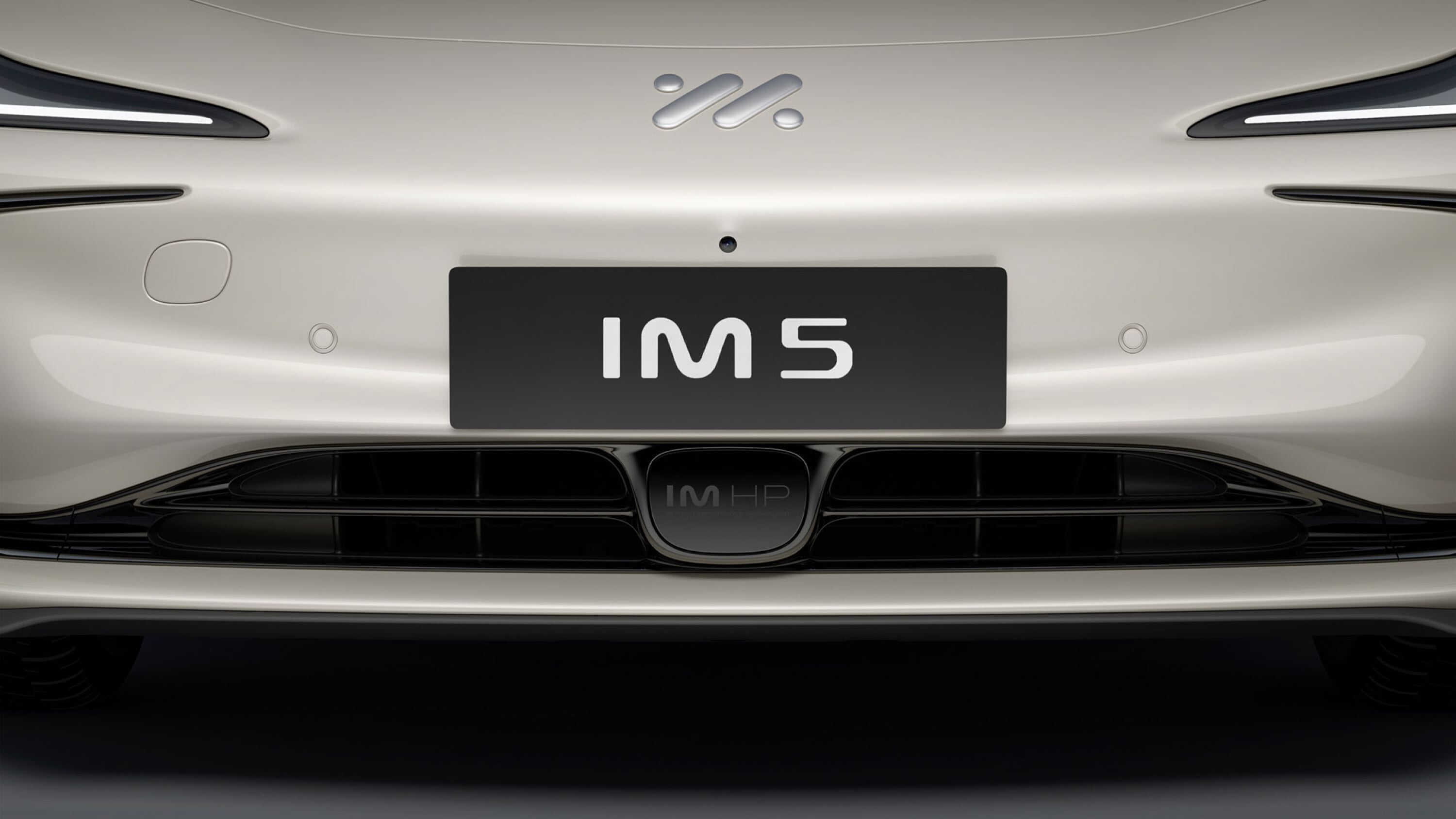
Gallery 1
The judges at Wheels COTY are a tough bunch – there’s no side stepping that fact. This year was my first as Editor, but the names Robinson, Gover and Morley carry the weight of combined decades of testing. As such, impressing them isn’t the easiest thing to do, no matter how good a vehicle is.
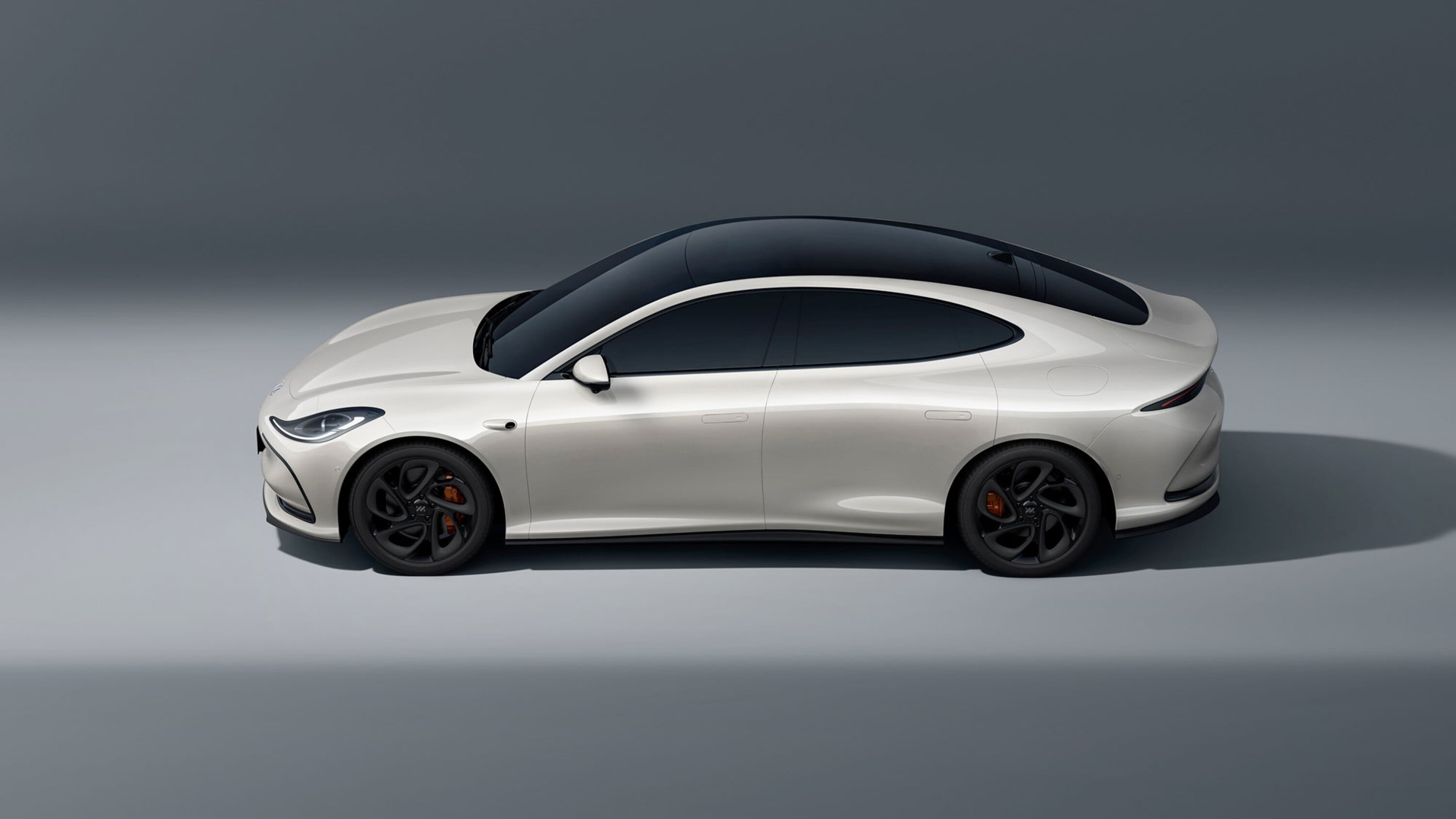
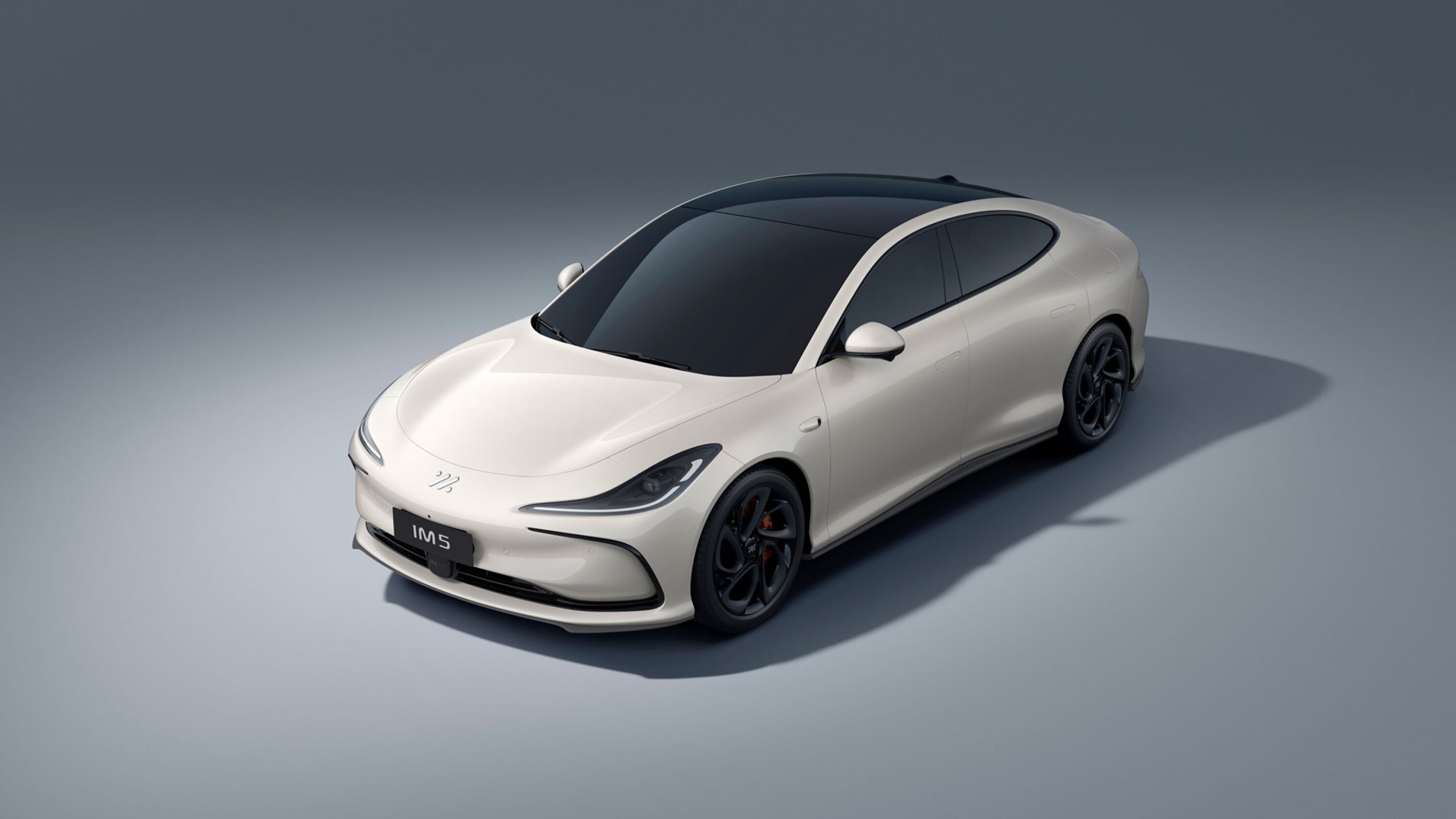
And yet, all of us, individually and collectively, drove the IM5 and were impressed – not just by the pace and performance on offer – but also the quality of the suspension system and the ease with which it dealt with Lang Lang’s notoriously difficult ride and handling test loop.
If you recall, the judging team had asked MG Motor, who backs the IM brand in Australia, for the entry-grade IM5 Premium, but unfortunately, that model wasn’t available and the much more hardcore IM5 Performance was provided. While it ultimately prevented the IM5 from going deeper into the COTY field, it did illustrate the quality of the chassis underneath, which is featured across the range of IM models and that’s why we’re taking a closer look this month at just what makes the system tick.
1
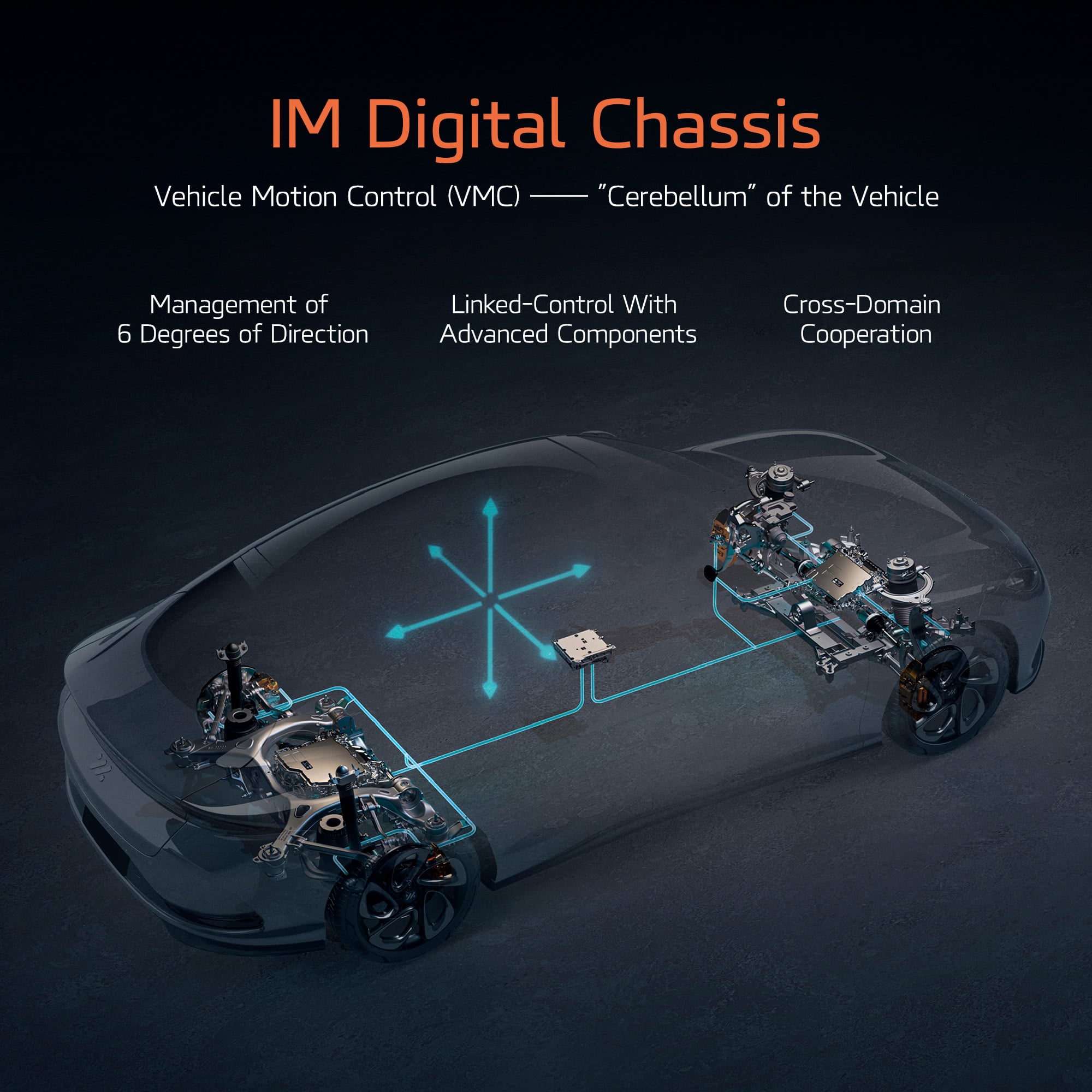
What makes up the IM Digital Chassis?
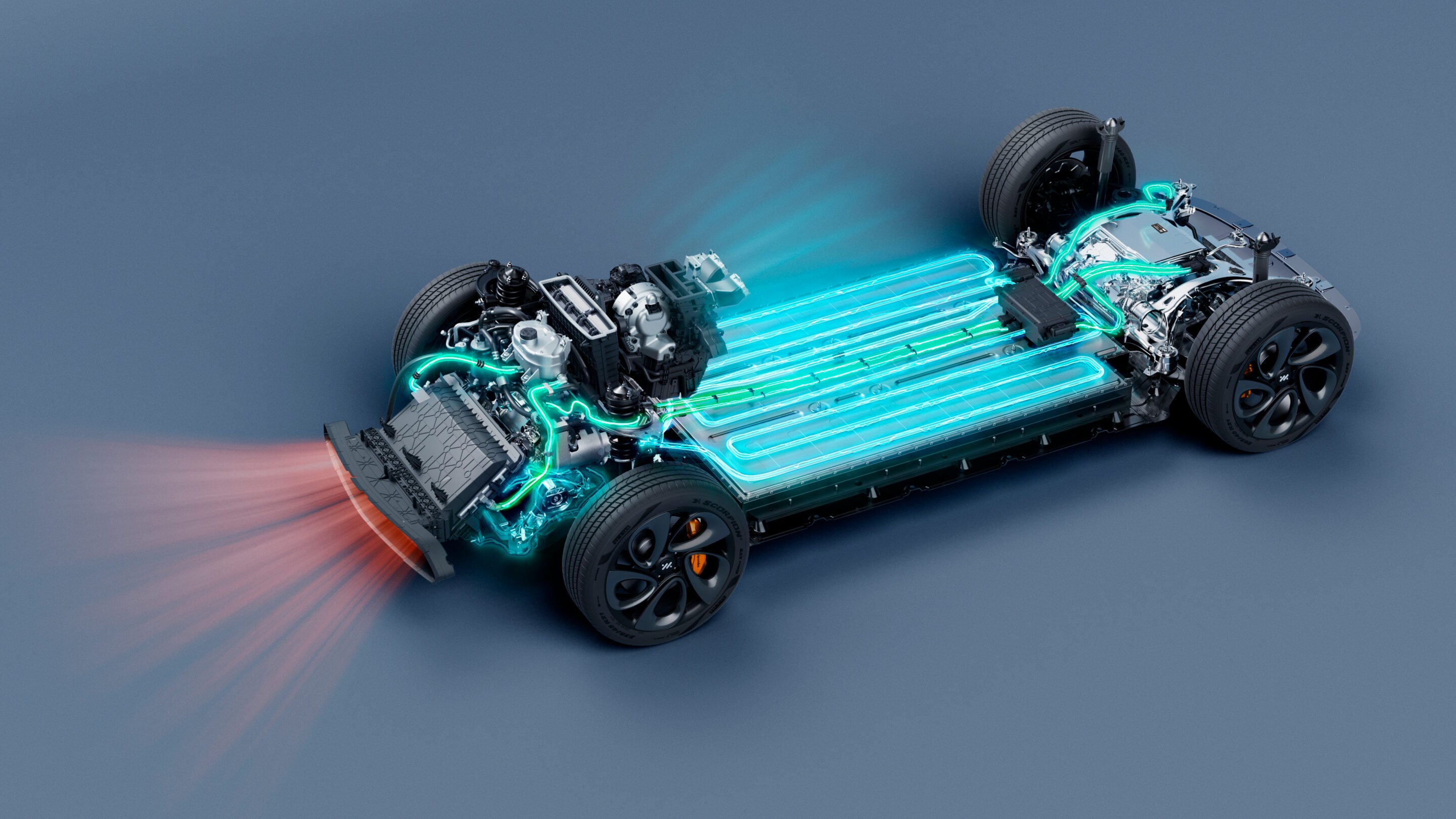
The crunching power beneath the skin is as deeply complex as you probably suspected. There’s 800-volt electrical architecture in keeping with the best of the pure EV world. But it doesn’t just power the IM in the traditional sense, as other systems do. That same 800-volt system delivers lightning-fast, real-time interaction between the powertrain, the suspension, the steering system, and braking at speeds that make the reaction times of even the fastest F1 drivers on the grid seem positively pedestrian.
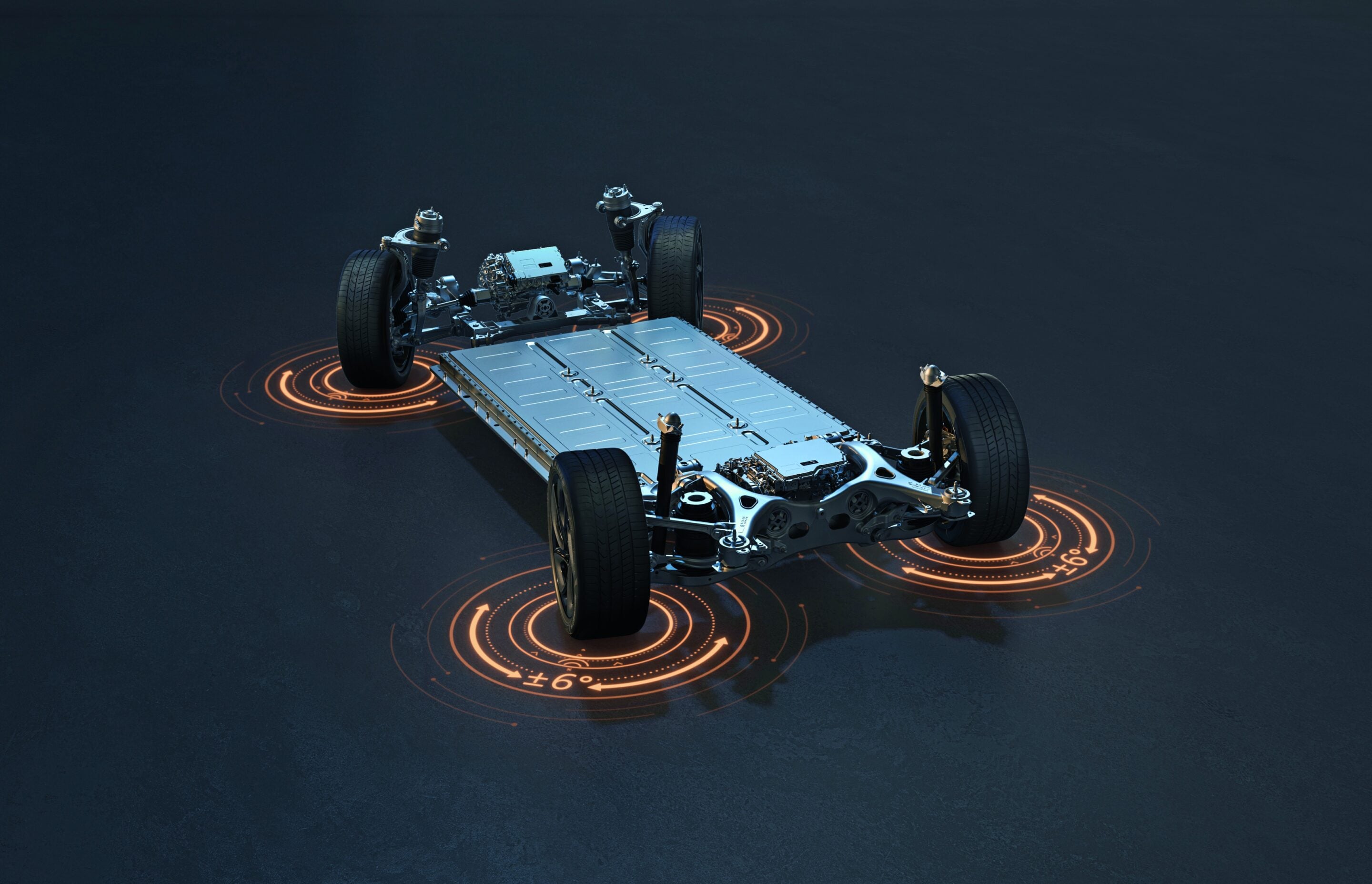
At each corner of the IM, the hardware comes into play – four-wheel independent suspension, which is nothing new – but you also get adaptive damping, and bi-directional rear-wheel steering which can move up to 12 degrees, making a significant difference to steering performance around town and combined with the VMC, provided the IM with enough high-speed swerve stability to beat a 25-year record in Europe’s famous ‘moose test’. Added to that, the IM features brake-by-wire, which has the processing power to modulate pressure to each wheel individually in what IM claims is milliseconds.
As you can see, then, what MG is working on is the concept of changing the relationship between the software and the hardware, and unleashing the capability that comes with such a clever computing brain. Within the software genius, the algorithms can intake and then process data from dozens of sensors around the chassis and use that data to predict what the vehicle is likely to do in super-fast time. It means, in theory, that the IM can turn that data into a response at the mechanical component with a speed that wasn’t previously possible.
IM’s engineers tell us the easiest way to think of the speed of the system is by considering traditional traction control – or stability control systems for that matter. Even the best can only react once you’ve either lost traction or started to slide, and then make the corrections via input from the brain that mitigate the slide. IM says that its digital chassis can read and identify the scenario that might otherwise have led to the slide and prevent it from happening in the first place. Clever.
How it works…
Despite the significant engineering advances in the world of automotive over the past decade or two, it’s still the modus operandi of four-wheeled transport to base itself upon a mechanical connection – that is, components connected to each other in the traditional sense. Remember the furore when electric power steering was first used? Or fly-by-wire throttle systems? You can understand why manufacturers are reluctant to change, cost aside.
And, while Wheels has seen and tested systems that can read and predict road surfaces, and make adjustments accordingly, what IM has delivered here, in the form of the IM5 and IM6, might just be the evolutionary step some of you have been waiting for. There’s complexity beneath the skin, no doubt, and some of you might question its durability, but there’s also the theory that reconfiguring the way the electronic or computer-controlled part of the vehicle communicates with the mechanical part is absolutely the way forward.
Beneath the skins of the IM5 and IM6 hide more than 3000 semi-conductors, which control everything from brake pressure and application to suspension behaviour. These two cars might be the first example of road cars anyone can buy that think significantly faster than even the best of us behind the wheel.
1
According to MG, the concept of the traditional chassis and the way it works is a tried and tested one. Mechanical components like the front wheels, for example, react to an input from the driver at the steering wheel and respond accordingly. That response is put into action via hydraulic actuation, pneumatic actuation, or an electronic system that does what it does in isolation of other control elements of the car.
You could even break that theory down further into the spring and shock absorber taking care of different things at one corner of the car. Extrapolate that out to the brakes working in isolation, the steering doing the same, and so on. In reality, you’ve got a lot of things happening independently beneath you. When you’re driving a car or SUV, IM has summed up these otherwise complex relationships as its ‘digital chassis’ ‘Vehicle Motion Control’ system – or VMC – enhancing both safety and performance.
What IM is bringing to production with the VMC is the concept of a central control brain, that – by way of computers, of course – operates every dynamic component in concert with all the others. It takes the concept of managing the chassis from an individual sport to a team sport, in other words.
There’s genuine complexity to a system that could change the way manufacturers think about controlling what a vehicle does with speed and precision that hasn’t been the domain of regular road cars. In the same way that our brain does things without us even realising it, so too could a digital chassis be working away beneath you, without you knowing what’s going on.
1
Road surfaces – whether in urban areas or on our notoriously patchy regional roads – are a bugbear of every tester who contributes to Wheels. On one hand, we like a testing route that delivers some shoddy surfaces so we can assess the chops of whatever car we’re testing, but on the other, the fact we have to test on such surfaces is required only because they exist. There’s no point in us recommending an SUV that rides like a sports car if your daily commute includes tens of sharp speed humps and countless potholes, or if you’re regularly heading off on road trips further from town on patchwork B-roads to visit your favourite winery or coastal holiday spot.
The issue with road surfaces, for example, is that in the cut and thrust of the daily commute, you spend much more time worrying about the cars in front, beside, and next to you, and what they’re doing.
Pedestrian crossings, traffic lights, your attention is on many more important things than the road surface beneath you. Imagine then, that your chassis is taking care of that, in a much more sophisticated way than even the most comprehensive traditional suspension systems can?
Across the range globally, IM has specified NVIDIA Orin-N or Orin-X chips, which to you and me is the automotive computing world’s equivalent of stage three hot rodding modification, which ‘integrates real-time machine learning’. If you think this is the stuff of science fiction, it certainly sounds like it. However, IM assures us it’s much more realistic and presents an opportunity to change the expectation of what our vehicles can do beneath us.
The process of learning takes place in milliseconds, as sensors keep an electronic eye on just about anything you could think of. They can watch the pressure that’s being put into the suspension for example, wheel speed, brake force, even the tyre pressure itself, which is highly influenced by road temperature, speed and air temperature, not to mention the force you’re putting into them under braking or turn-in. Those readings are then sent to processing units in lightning fast time, and turned into thousands of calculations each second.
3
Crucially, and this is perhaps the most important part, the digital chassis doesn’t wait for the driver to respond behind the wheel. Rather, if it detects any instance that requires mitigation – a loss of grip, understeer, oversteer, whatever that might be – it will then work rapidly to deliver a multi-layered response across as many systems as it deems necessary to call into action.
That could even be something as subtle as leaning into or out of a corner, or front-to-rear balance under braking.
We’re accustomed to electronics working to intercept traction, stability or braking issues. At Wheels COTY testing for example, our intention is to find the limits of the stability control systems, or entice a full ABS stop. Imagine though, that responses are being measured beneath the skin without you having any idea they are happening. Most of the time you won’t even be aware they are happening, according to IM.
MG tells us that one example of this is the way the rear-wheel steering works. We’re accustomed to the way these systems work at both low- and high-speed. One is to shorten the wheelbase, the other to improve high-speed stability. IM’s digital chassis can use rear-wheel steering to deliver enhanced stability, working to deliver better dynamics on any road, at any speed or steering input. It’s fascinating stuff – particularly considering that we’re at the inception. How smart can it get?
Safety guru Karl Reindler noted that the IM5 behaved impeccably through the swerve-and-avoid test during COTY. Where some vehicles fought their electronic safety systems, watching on, the judges could see how well balanced the IM5 remained, even as speeds increased.
1
According to IM that’s because emergency manoeuvres like that – most of them unexpected of course – are exactly the kind of real-world scenario where the digital chassis comes into its own. MG says that its IM systems can process and respond faster than the reflexes of even the best driver. Reindler, please don’t take that personally…
Even the least tech savvy of us can discern the safety benefits, but comfort is a big one in the real world, too, especially when the balance between ride comfort and handling prowess is such a fine line.
And it’s a line few cars nail perfectly. In theory though, a system that can read thousands or even millions of inputs and data points to deliver the most comfortable ride possible, makes for a much more serene experience around town at city speed.
That’s where the – sometimes daunting – reality of artificial intelligence comes in. IM says its iSMART app smarts and computing intelligence can adapt to different driving conditions, without the need to work your way through selectable driving modes.
Surely it can’t read my mind a split second before I decide to hook into a corner with gusto? Not yet, but maybe that isn’t too far away either.
What’s fascinating about this technology, from the outside looking in, is the ability for it to be updated as more smarts are perfected. Like a smartphone or computer that can be enhanced by updates and tweaks to the operating system, the digital chassis could – up to a point – be enhanced with flash updates as it comes online. In many ways, the sky really is the limit with what it can do.
It wasn’t so long ago that satellite navigation with live traffic updates, and the ability to steer you around that traffic to get to your destination faster, was the stuff of fantasy. Now, we accept it as commonplace every time we connect our smartphone to the car.
We’ve said for some time that the ‘car as computer device’ era is very much upon us. The modern buyer expects electronics – in regard to safety, connectivity and smarts – to be standard in even the most value-focused new cars. IM’s digital chassis steps the expectations up a notch with features most of us haven’t even thought too deeply about, if at all.
What’s fascinating for me – someone who loves driving, which is unsurprising given the masthead
I work for – is IM’s insistence that the concept of its digital chassis doesn’t remove the driver from the scenario. Certainly not now anyway. Which is good news for those of us who love driving.
What the digital chassis does, through its ability to think faster than us mere mortals, is enhance the driving experience in multiple different ways, most of them without intruding in a way you’d notice. I reckon that’s a good thing.
What do you think?
So, who exactly is IM presented by MG?
1
MG isn’t quite the MG we once knew – certainly not in terms of engineering might. What was once Morris Garages in England, is now very much a global company headquartered in China. MG still stands for Morris Garages, and IM stands for ‘Intelligent Mobility’. In MG’s own words, ‘IM is about intelligent and forward thinking electric vehicles’.
IM isn’t quite to MG what Lexus is to Toyota, for example, but the concept is similar. That is, offer a higher level, more upmarket and luxurious vehicle than the regular product line-up. The difference in IM’s case, though, is that each model is more than an ‘optioned up’ MG, they are completely different vehicles.
IM cars are built by a different arm of the MG conglomerate, aimed at attracting the kind of buyer who might otherwise look at a luxury European car, with a hint of Tesla’s forward thinking DNA. MG is part of the enormous SAIC Motors group, which purchased the British brand back in 2007. The group states that design is a huge element of its vision, with one design centre in Tokyo, and two UK-based centres – SAIC Advanced London and SAIC Design Advanced Birmingham – spearheading the work on some of the brand’s well-known models over the last few years. Vehicles are then built in the SAIC production facility in Lingang Shanghai.
Hurricane Motor
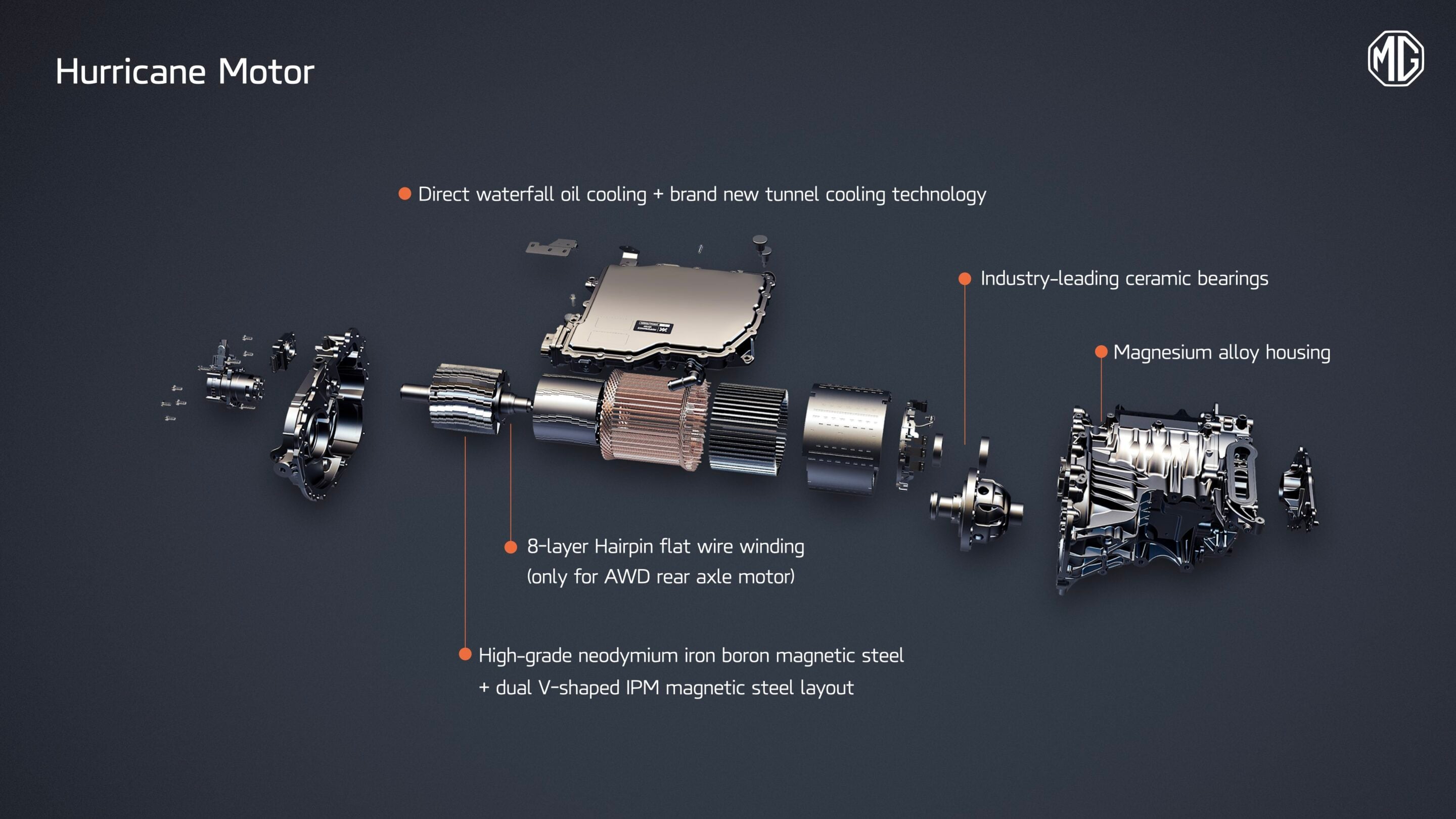
IM’s Hurricane Motor is the beating heart of the brand’s range of electric vehicles. Utilising 800-volt electrical architecture and spinning at 21,000rpm, it delivers 553kW and 802Nm in its most potent form in the IM5 Performance, good for a 0-100km/h.
1
Follow WhichCar/Wheels on Google
Click the button below to make WhichCar by Wheels a preferred source for your news.


We recommend
-
 Reviews
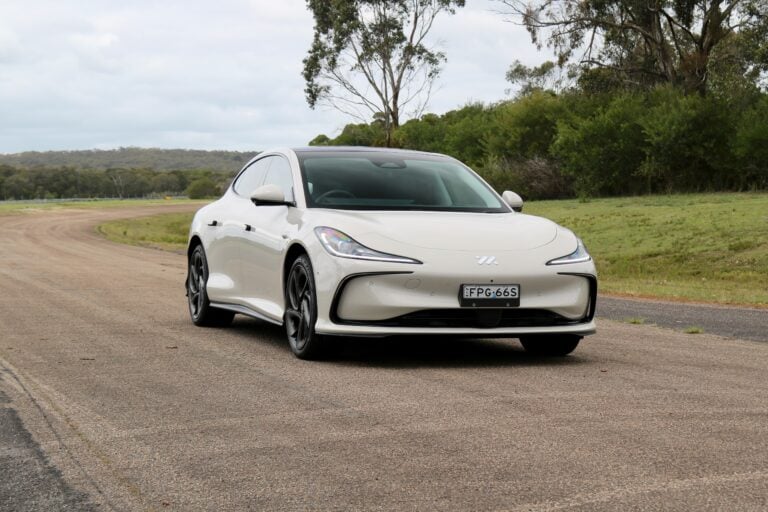
2025 IM5 Performance review: Electric sedan takes aim at Tesla’s Model 3... and almost bullseyes
A few months on from its launch, MG's IM premium brand is starting to gain sales momentum. Is the IM5 sedan a Tesla-killer?
-
 Reviews
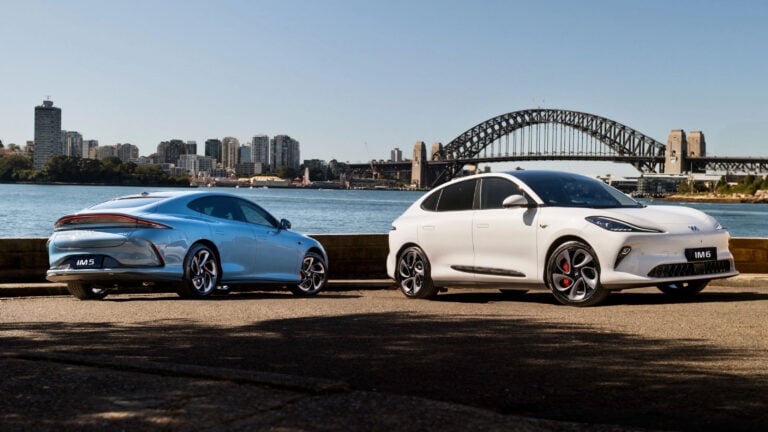
IM Presented by MG review: What the popular marque’s new premium brand is really like to drive
MG has launched its premium sibling brand in Australia, and we were among the first to drive it at the preview launch event.
-
 Reviews
MG HS Super Hybrid review: Mid-sized SUV is fuel efficient in just the way you want it to be
Plug-in hybrids are starting to find favour – and for good reason, given their inherent practicality, with more than a hint of EV sensibility
