Reviews

Gallery 1
7.5
/10
Score
Score breakdown
7.5
Safety, value and features
7.5
Comfort and space
7.5
Engine and gearbox
7.0
Ride and handling
8.0
Technology
Things we like
- Feels larger than rival dual-cabs
- Excellent legroom particularly in second row
- Coil-spring rear end delivers good unladen ride quality
Not so much
- Couple of poor design choices in the cabin
- Lack of volume dial on screen grates a little
- Not entirely suited to inner-city streets
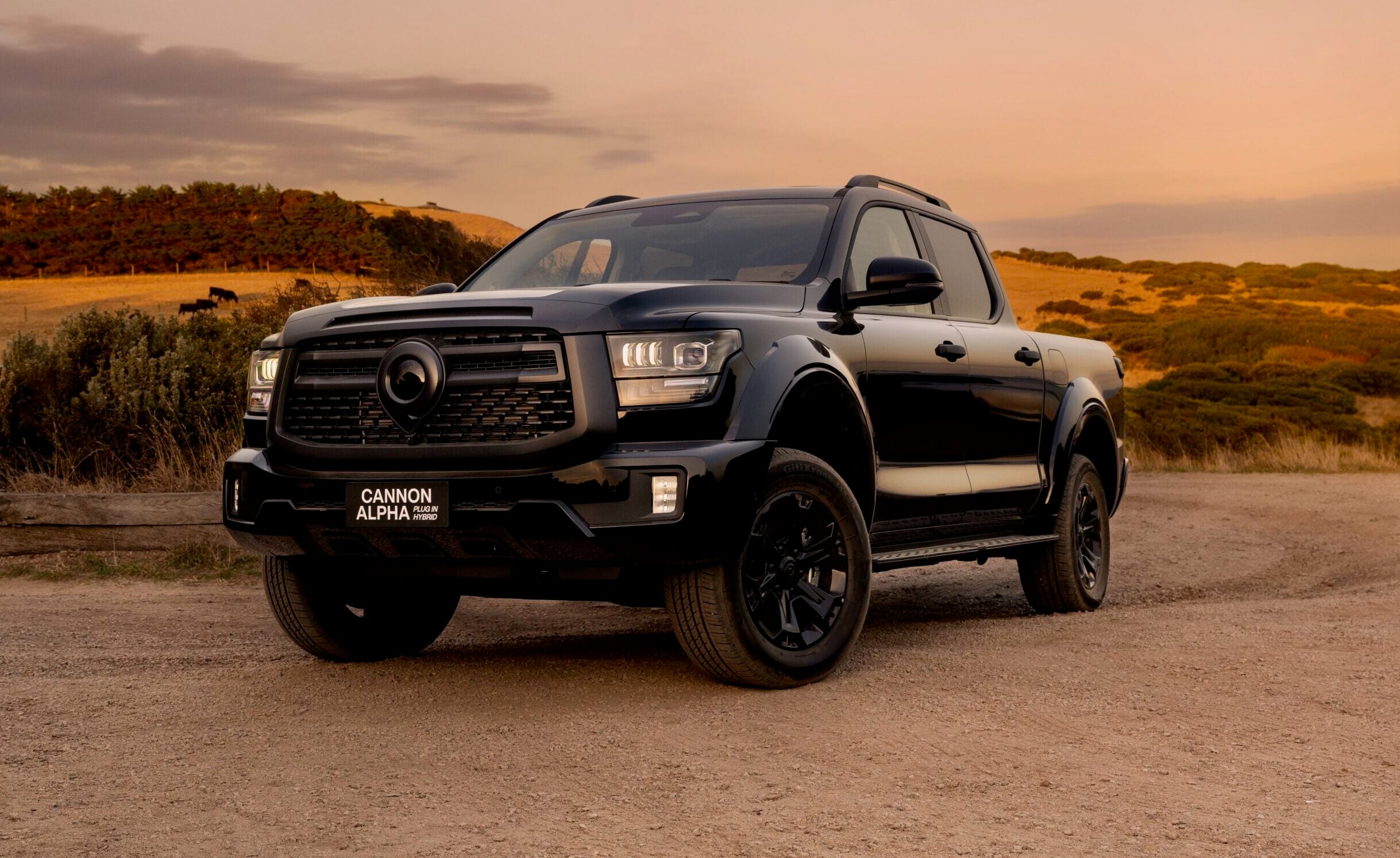
GWM offers regular dual-cab, cab chassis and now what it calls “large luxury utes” in Australia. And, that’s where the Alpha PHEV we’re testing here fits into the equation. According to the Chinese manufacturer, the Alpha PHEV is a “luxury hybrid ute, designed for both rugged terrains and refined comfort”.
Making its way into the Australian new car market as the second plug-in hybrid dual-cab available, GWM was able to see just how much interest there was in the technology, given the immediate popularity of the BYD Shark.
GWM has combined a 2.0-litre, turbocharged petrol four-cylinder with a nine-speed automatic, integrated electric motor and two batteries that deliver 37.1kWh. Cannon Alpha has a single electric motor integrated between the engine and gearbox, meaning the electric power is delivered through the transmission and transfer case to the front and rear wheels, as the case may be.
1
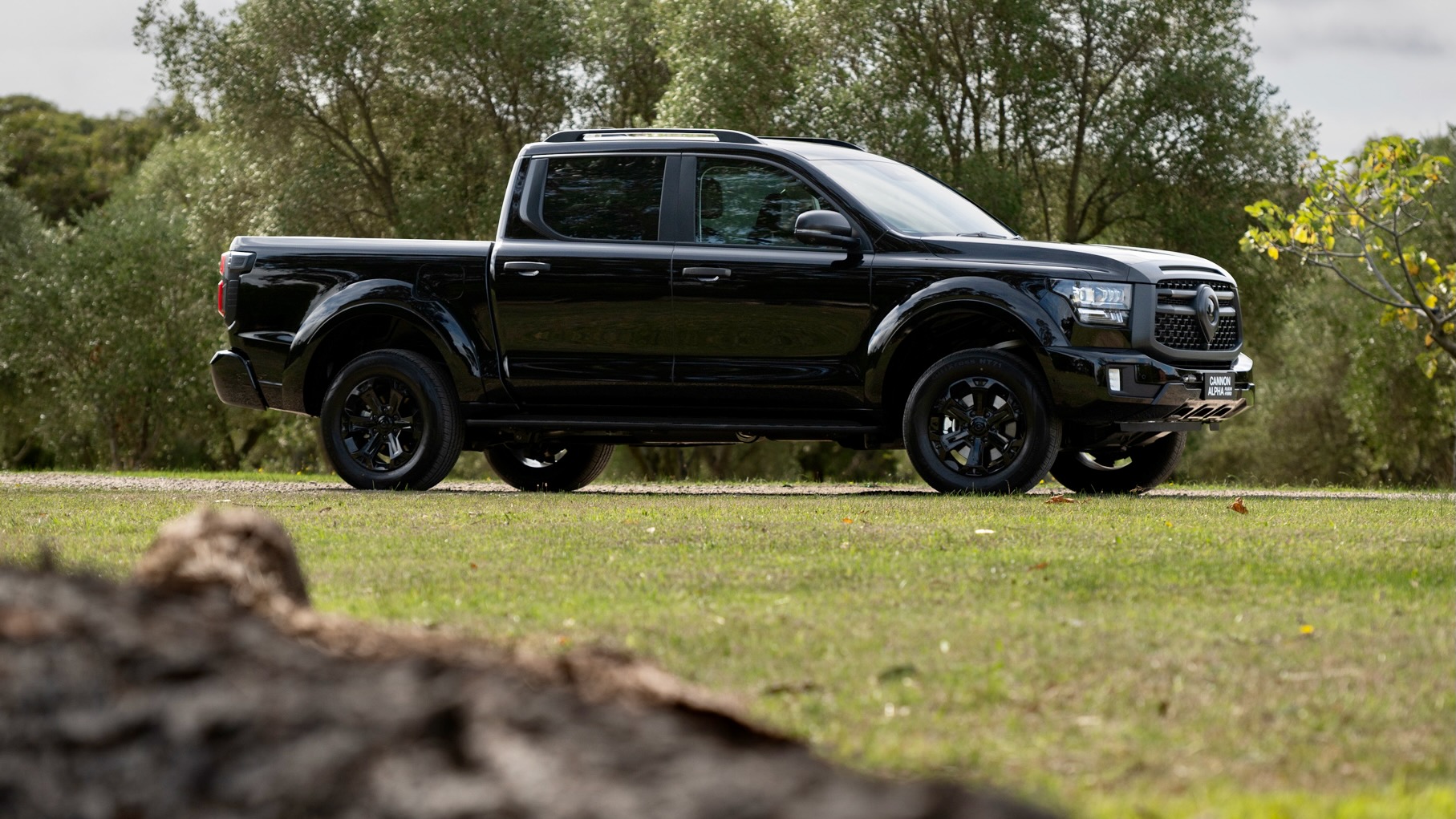
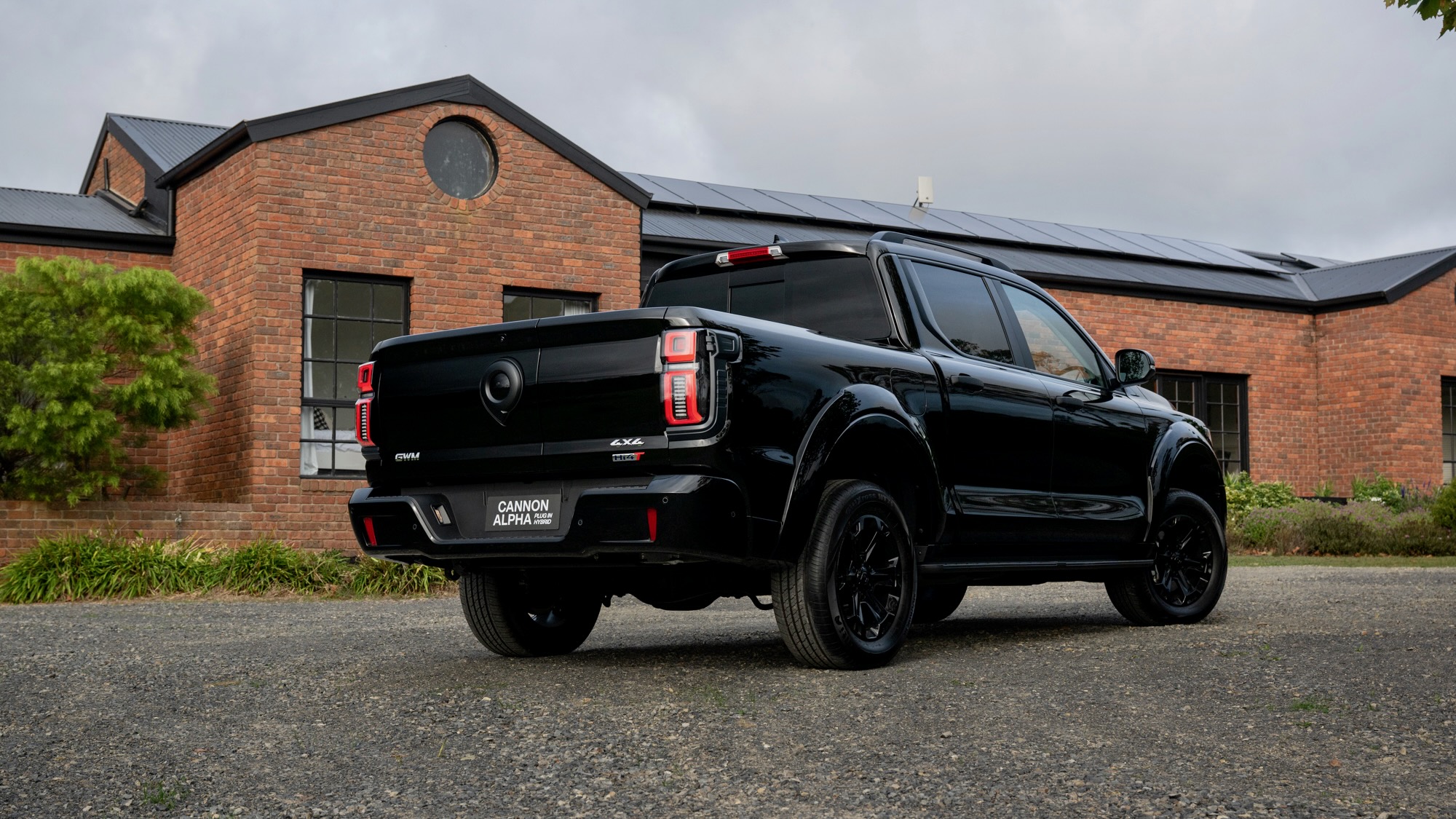
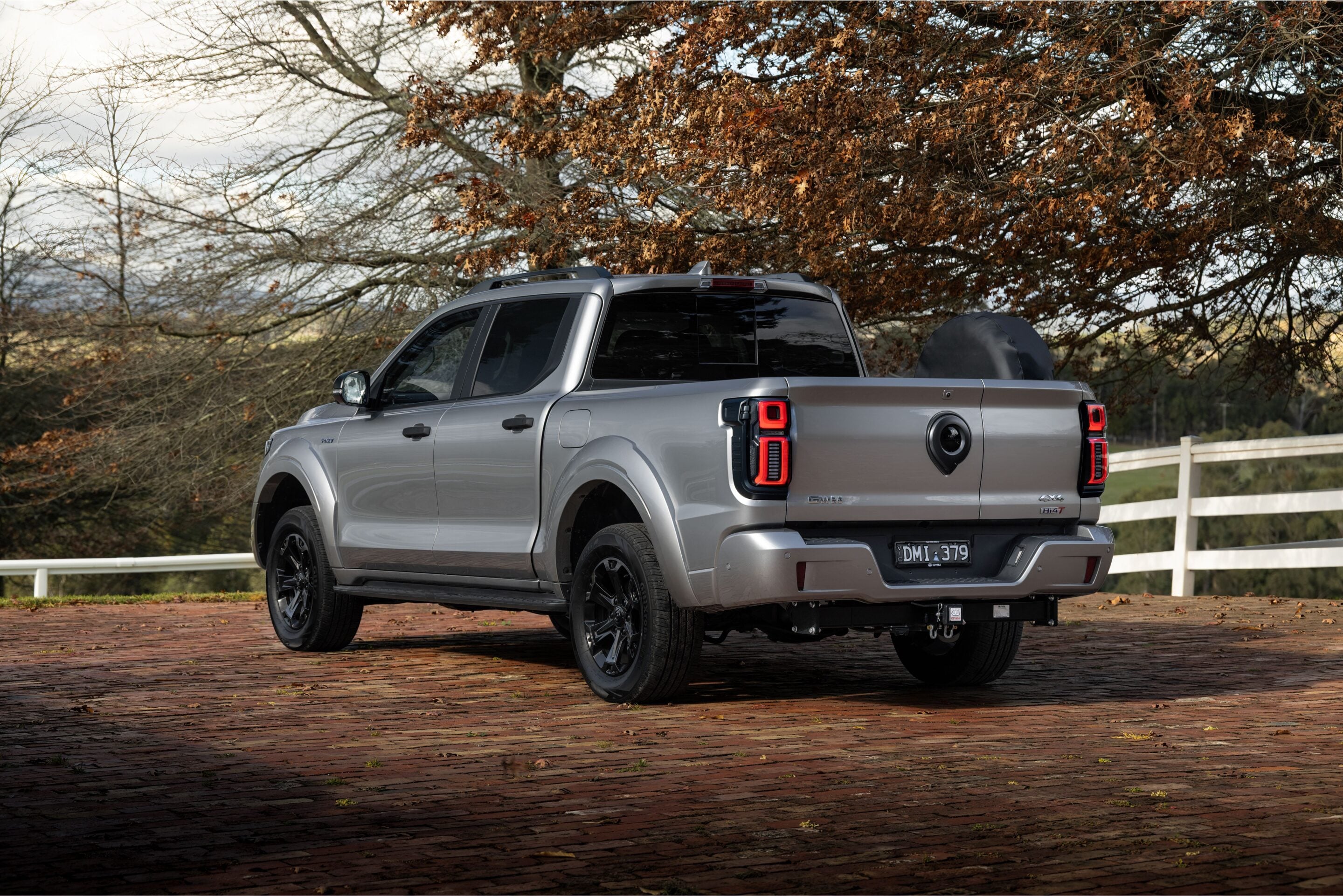
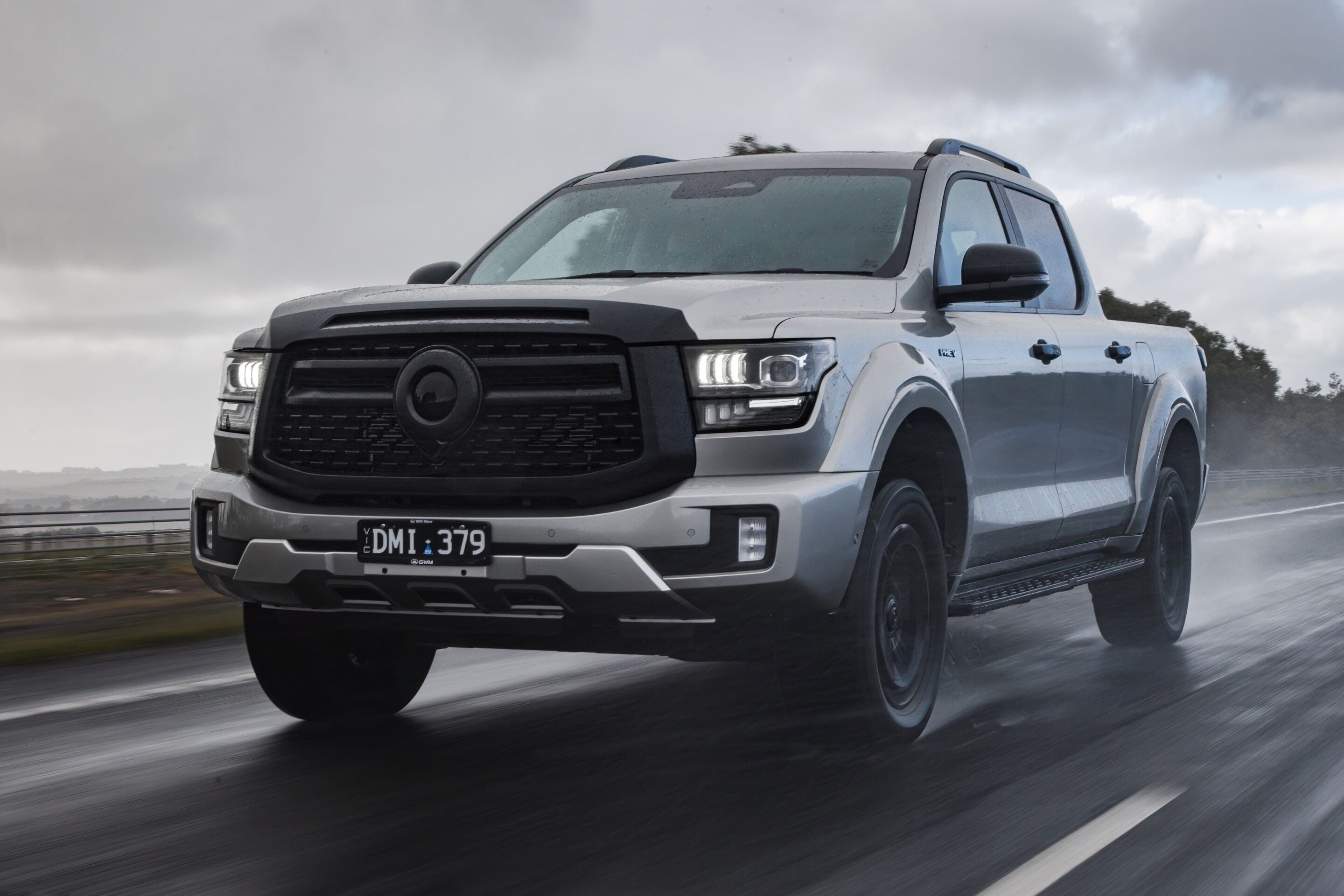
What’s most interesting from a testing perspective – beyond the PHEV capability – is the physical size of the Cannon Alpha. It looks – and feels – a few percentage points bigger than the regular dual-cab crowd, and as such, GWM can hang its hat on a larger tray than the standard model, along with an extensive list of premium equipment.
That’s where we’ll look first, because price is key at this end of the segment, and it’s the reason buyers will consider a dual-cab from a challenger brand.
Standard equipment
Buyers can choose between two specification grades of the Alpha PHEV – Lux and Ultra. Lux starts from $59,990 before on-road costs, just a few grand more than the BYD Shark. Step up to Ultra and you need to part with $66,990 before on-road costs. Even at Lux specification, there are plenty of standard equipment highlights including a 12.3-inch infotainment screen, 360-degree camera, digital driver’s clusters LED headlights, LED tail lights, dual-zone AC, selectable 4WD, a locking rear diff and electrically adjustable ‘leather look’ seat trim.
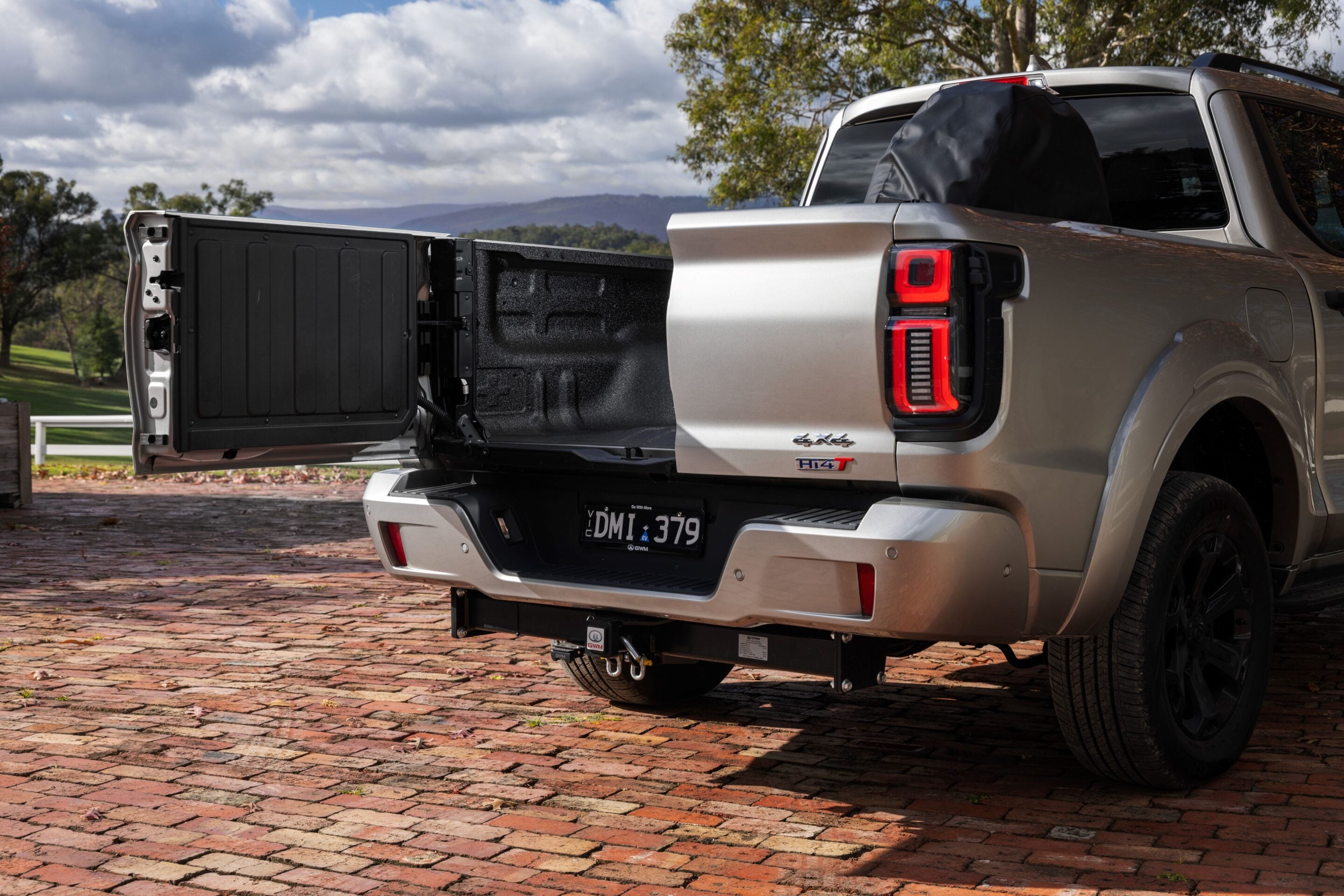
Step up to Ultra and GWM adds a switchable front diff lock, 60:40 split tailgate, panoramic sunroof, a larger 14.6-inch infotainment touchscreen, 10-speaker Infinity audio system, head-up display, heated and cooled front seats, heated and cooled rear seats, electrically adjustable rear seats, wireless smartphone charging front and rear, an opening rear window, heated steering wheel and ambient cabin lighting.
It’s fair to say that the ask to step up to the Ultra specification grade is justified by the added standard equipment, and while the PHEV Cannon is understandably more expensive than the sharply priced regular version, it’s still compelling value for money. In short, $66,990 positions it well beneath the top-spec variants of the established segment leaders.
The 2.0-litre petrol four-cylinder is turbocharged and generates a respectable 180kW and 380Nm. Combined that with the 120kW and 400Nm added by the electric motor though, and you get chunky outputs of 300kW and 750Nm – way beyond the offerings of the standard dual-cab brigade.
1
Interior and technology
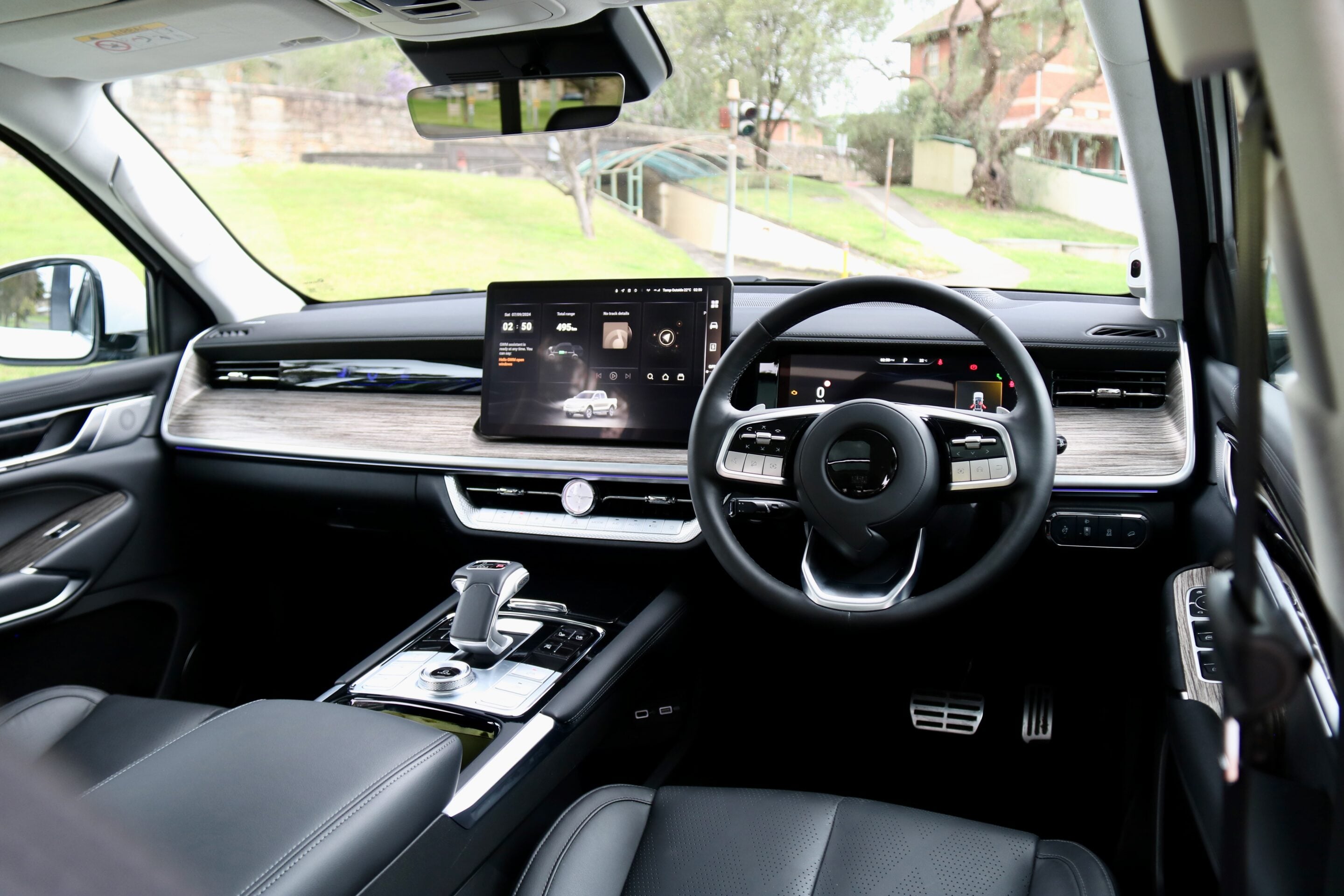
It’s here, inside the cabin, where the larger size of the Cannon Alpha PHEV is most noticeable. You’ll be in no doubt that its larger than a Ranger or HiLux for example, and it’s almost identical in dimension to the BYD Shark it goes head-to-head with. In the front section of the cabin, there are touches we don’t love – like the timber paneling along the dashboard – or the piano black trim, which is prone to showing fingerprints and dust no matter how hard you try to keep it clean. The analogue clock is a matter of personal taste, but broadly speaking, the cabin is well designed and well executed.
The wireless charging slots are in the right place to be out of the way and keep phones safe, and the cupholders are useful, but the power outlets are buried down near the driver’s ankle in a spot that isn’t the first place you look and not the most sensible spade for them.
There’s more room everywhere inside the cabin – the second row most noticeably and if you’re a family buyer with tall kids, you’ll love the flexibility and comfort of the Alpha PHEV’s second row. The seats, which are electrically adjustable, mean you can slide the base forward, to tilt the backrest back, thus not sitting as upright as you otherwise would. It’s a small addition, but it makes a big difference. The added cabin space means legroom is never an issue.
The heating and venting in the second row of our tester is a bonus, along with air vents and power for charging devices. Strangely, the Alpha PHEV doesn’t have a regular wall-type plug, despite offering vehicle-to-load capability.
1
The screen on our tester was crisp and responsive to commands, once you worked out that you had to put some pressure on the screen to register said command. No volume dial for the auto system is a minor annoyance, while swiping down from the top of the screen displays some useful shortcuts.
The smartphone connection was rock solid for us on test, and it’s really only the lack of a volume dial that grates. When you switch over to smartphone mirroring, you lose the swipe down shortcut function, so the lack of a dial is even more apparent. You can of course, use the stetting wheel controls if you want to.
What’s it like to drive?
GWM Cannon Alpha PHEV’s selectable 4WD system allows for all-wheel drive on sealed surfaces, which is a bonus in a segment that still doesn’t cater for it across all models. If you’re anything like me, you’ll put the Alpha in 4WD, and leave it there.
GWM claims 1.7L/100km on the combined ADR cycle, but keep in mind, the majority if that first 100km will be done on electric power, using no fuel at all until the battery is depleted. During our time with the Cannon, we used no fuel at all of course, whenever we drove in EV mode, but averaged 10.7L/100km in regular driving, with the battery depleted.
2
In regard to electric driving, GWM claims 115km – based on the NEDC testing regime – but expect to see closer to 100km electric range in the real world. What that means, for most of you, is that you could easily commute to and from work each day without using any fuel, and then charge back up overnight with a regular wall socket at home. It’s why, for so many drivers, a PHEV makes sense.
Given the Cannon Alpha PHEV has a coil-spring rear end – rather than leaf-spring – you’d expect a light and unladen ride quality, and GWM has delivered. Coil springs, especially around town without weight in the tray as so many of you use dual cabs, are demonstrably more comfortable, compliant and SUV-like than leaf springs, and you’ll like the ride of the Alpha PHEV if you’re coming out of a regular dual-cab.
While the 2810kg kerb weight is heavier – understandably – than the non-hybrid dual-cab options, the whopping torque figure means the Alpha PHEV actually feels quite punchy.
Nail the throttle from a standing start and it gets cranking with urgency, likewise if you need to roll up to highway speed from the on-ramp. It’s a big dual-cab, and you’re aware of it, but it’s also quite spritely.
Keep in mind the longer than dual-cab standard wheelbase means you need to be careful around town on tight inner-city streets, but the ride quality more than makes up for it. We found the steering, brakes and transmission to be excellent no matter what speed you’re doing. Whether you’re in traffic or on the highway, the Alpha PHEV behaves nicely, making it a solid daily driving option.
2
Should you buy a GWM Cannon Alpha?
As is the case with GWM’s non-hybrid dual-cab, the value proposition offered by the Cannon Alpha PHEV is compelling. Both grades offer sharp pricing, but the range topper is our pick – with enough added equipment other than justify the ask.
It makes a hell of a lot of sense to consider a PHEV if you’re the kind of buyer most Aussies are. That is, you live around town, undertake a pretty regular and repeatable weekly commute, but still want the flexibility of easy long-haul touring when the opportunity presents itself. And so far as PHEV dual cabs go, the Cannon Alpha PHEV is at the top of the pile.
Specs
| Model | 2025 GWM Cannon Alpha PHEV |
|---|---|
| Engine | 2.0-litre, turbocharged, four-cylinder petrol |
| Power | 300kW |
| Torque | 750Nm |
| Transmission | Nine-speed automatic |
| L/W/H/WB | 5445mm/1991mm/1924mm/3350mm |
| Kerb Weight | 2810kg |
| Tow rating | 3500kg (braked) |
| Payload | 685kg |
| Price | $66,990 (Ultra spec before on-road costs) |
1
7.5
/10
Score
Score breakdown
7.5
Safety, value and features
7.5
Comfort and space
7.5
Engine and gearbox
7.0
Ride and handling
8.0
Technology
Things we like
- Feels larger than rival dual-cabs
- Excellent legroom particularly in second row
- Coil-spring rear end delivers good unladen ride quality
Not so much
- Couple of poor design choices in the cabin
- Lack of volume dial on screen grates a little
- Not entirely suited to inner-city streets
Follow WhichCar/Wheels on Google
Click the button below to make WhichCar by Wheels a preferred source for your news.

We recommend
-
 News
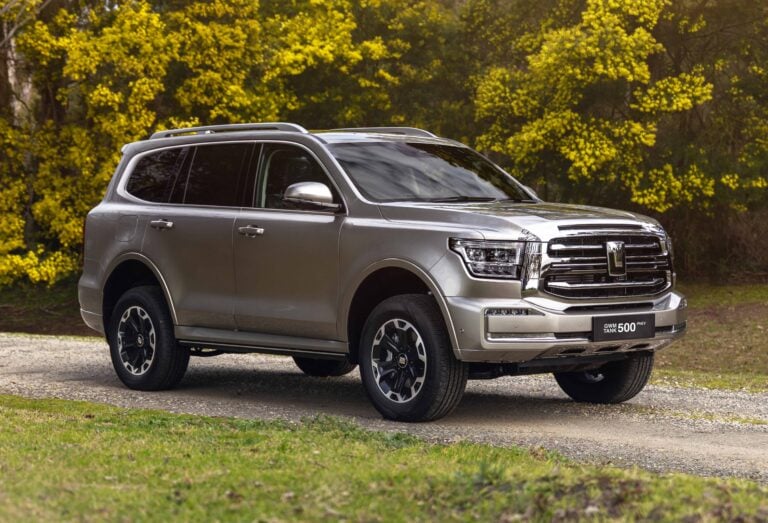
NewsGWM reveals pricing and specs for Tank 500 plug-in hybrid amid Aussie expansion plans
GWM details pricing and specs of the new Tank 500 Hi4-T plug-in hybrid while unveiling local tuning innovations and bold expansion plans for 2025 and beyond.
-
 Best Utes
Best Dual-Cab Utes 2025: Under $50K
Wheels names its best dual-cab utes on the Australian market for 2025, starting with models priced under $50K.