Reviews


Gallery 1
6.9
/10
Score
Score breakdown
7.0
Safety, value and features
7.0
Comfort and space
7.0
Engine and gearbox
7.0
Ride and handling
6.5
Technology
Things we like
- Aggressive pricing
- No-nonsense practicality
- Decent ride quality
Not so much
- 3-star safety rating
- Confusing trim structure
- AWD car requires premium fuel
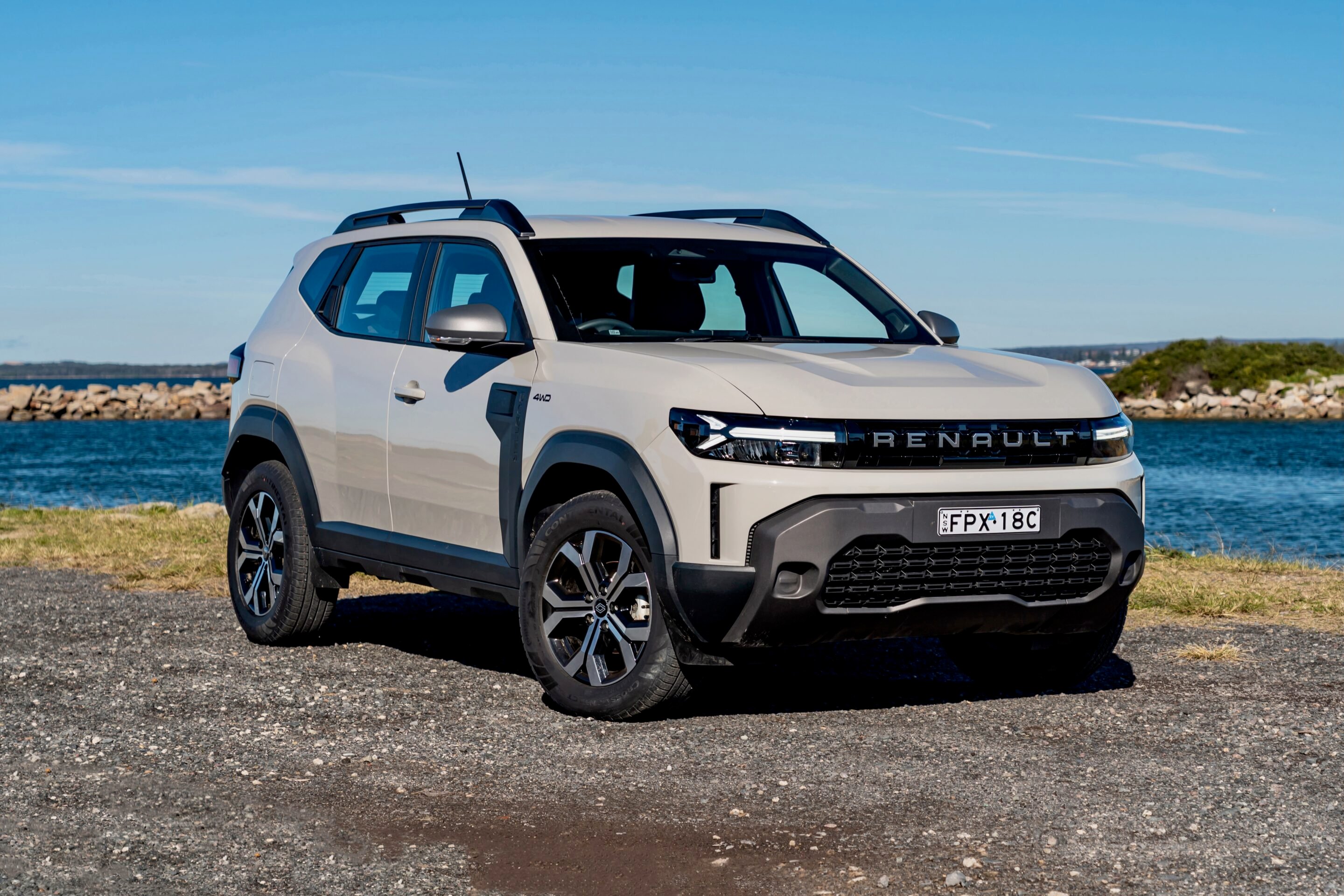
Better late than never. The Renault Duster has finally made landfall here in Australia, the Dacia-badged version having been a popular fixture in Europe for 15 years. Why the long wait? It’s actually a bit boring, but the potted version is that when third-party business ATECO, which also manages the imports of Maserati, RAM and LDV, took over the distribution of Renault vehicles down under, it set its sights on the Duster, a car that the previous importers had dismissed as not delivering the profit margins to make it worthwhile.
Now the more cynical among you might read that and, quite reasonably, expect ATECO to have padded the new Duster’s retail price with a hefty element of fat in order to justify its decision. I certainly did. When it was revealed that Duster pricing started at just $31,990, it’s fair to say that our attention was certainly piqued, especially as the range opens at £19,380 (A$39,762) in the UK. Aussies not being price-gouged for once? What’s all that about?
2
The Duster earned a reputation in Europe for being cheap, tough, purposeful and no-nonsense. If these sound like stereotypically Eastern European qualities to you, you’d be right, Dacia hailing from Romania before being acquired by Renault in 1999. Unlike prior offerings from the East, the Duster was good looking, decent to drive and didn’t rust. As a result, this modest crossover vehicle became a huge success, with production in Romania, Brazil, Colombia, Russia and India. It ran on a long wheelbase variant of the Renault-Nissan B-Zero platform, and spawned a second generation version in 2017 which was a modernised and rebodied development, running on the same old bones.
This third-gen Duster, first unveiled in November 2023 in Portugal, is a different thing, running on the far superior Renault-Nissan CMFB chassis. It’s stepped up in terms of ability and sophistication, which has naturally appalled a certain percentage of traditional Duster owners who only countenance an ascetic UN-spec white paint and steel wheels look, but a little added refinement might well bring even broader mainstream appeal. That’s certainly what ATECO is banking on, anyway.
Here in Australia, there are two powertrain choices and they’re a bit of an odd couple. The budget choice is a 113kW/270Nm 1.3-litre four-cylinder turbo engine that features a dual-clutch transmission and sends its power to the front wheels. Alternatively you can pay a bit more for the all-wheel drive car, in this case sporting a six-speed manual transmission and a weedier 1.2-litre three-cylinder 96kW/230Nm powerplant.
Technically this is a mild hybrid, but it’s so mild it could almost be classed as homeopathic. Fuel consumption is rated at 5.76L/100km (NEDC) for the 1.2-litre AWD version and 6.5L/100km for the 1.3-litre front drive variant. Real world fuel costs might well be fairly similar given that the 1.3-litre engine can drink 91RON fuel whereas the 1.2-litre unit requires you to search for the 95RON bowser.
3
Each of these powertrains is offered in an entry-level Evolution trim or a slightly better equipped Techno guise. The front drive Evolution is priced at $31,990 and the Techno equivalent is $36,990 before on-roads. The all-wheel drive Evolution kicks off at $36,490 and the Techno is priced at $37,990.
You sharp-eyed readers might well be wondering why there’s a $5000 price difference between the two front-drive trims and a mere $1500 variance between the 4×4 variants. It’s a good question, one that ATECO didn’t seem to have a ready answer for, and likely comes down to wanting to offer an eye-catching upfront price for the entry-level car. Spoiler alert: anyone looking to snag a bargain now knows which model to buy.
Unless you feel you absolutely need the all-weather traction of all-wheel drive, or are wedded to the idea of shifting your own gears, it’s hard to escape the realisation that the 1.3-litre front-driver is the better car. It’s markedly quicker for a start. The VBOX showed 8.7 seconds to 100km/h for the dual-clutch front driver and 11.1 seconds for the manual AWD model, not helped by the fact that you need to grab for another gear at 98km/h.
Another significant difference between the two versions is that the front driver rides on a torsion beam rear end, whereas the more sophisticated AWD model features a multi-link rear end. Drive the two down a proper piece of country road and there’s not a great deal of difference. Renault put a torsion beam in its best handling cars such as the Renaultsport versions of the Megane and Clio, so there’s a lot of in-house know-how in tuning these twist beams.
Both cars ride well, steer competently and have punchy brakes. Body control is relaxed without ever being sloppy and you’re never assailed by a volley of beeps and chimes. In that regard, the Duster feels like an old car, and that’s about the biggest compliment I could give it. It’s a low-maintenance, endearing thing to cover ground in. The more powerful 1.3-litre can scrabble its front treads if you gun it out of a junction, there’s a little slack in the steering about the straight ahead that you need to take up on corner entry, and the manual shifter is a bit knuckly in the AWD car, but there’s really nothing to be concerned about.
2
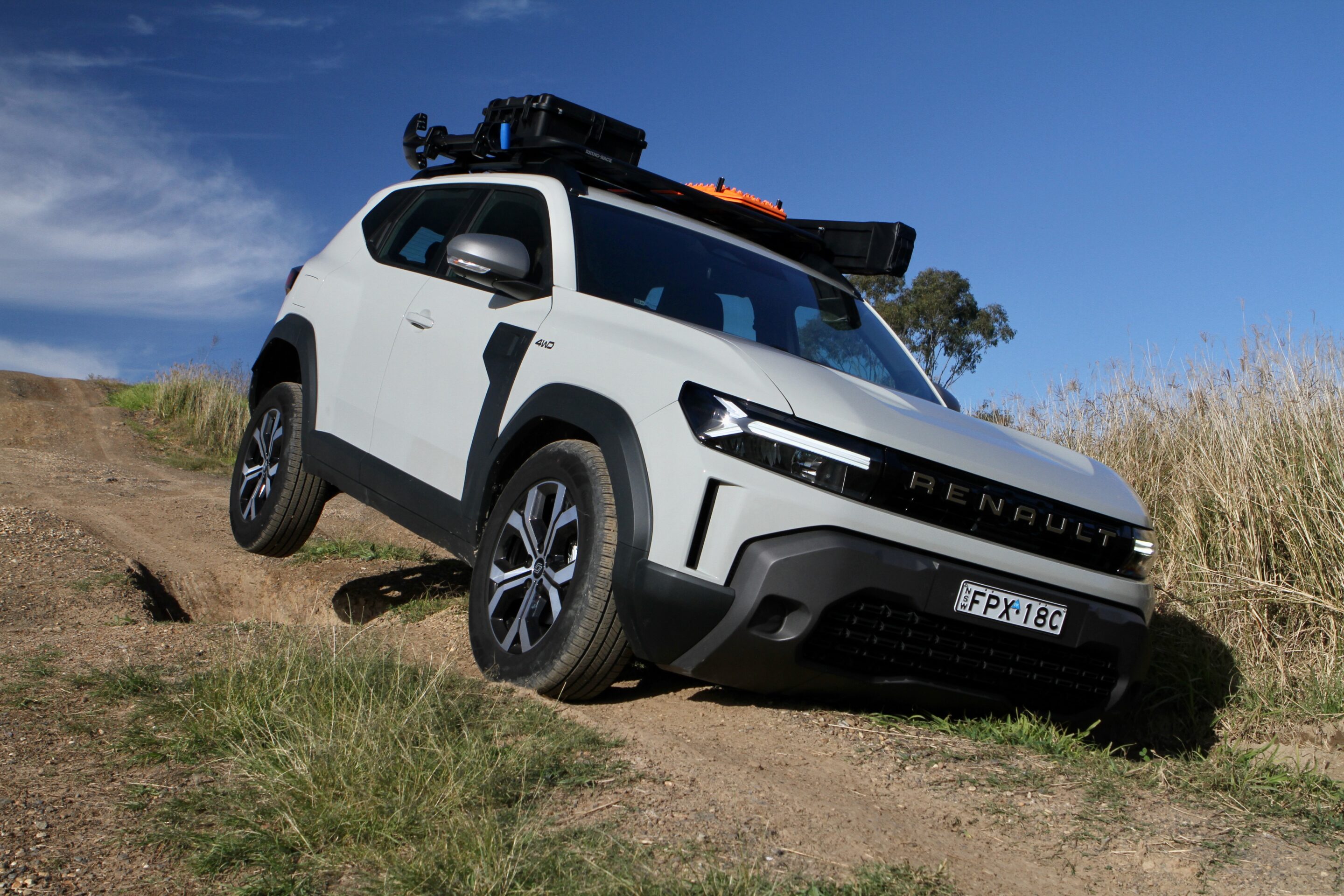
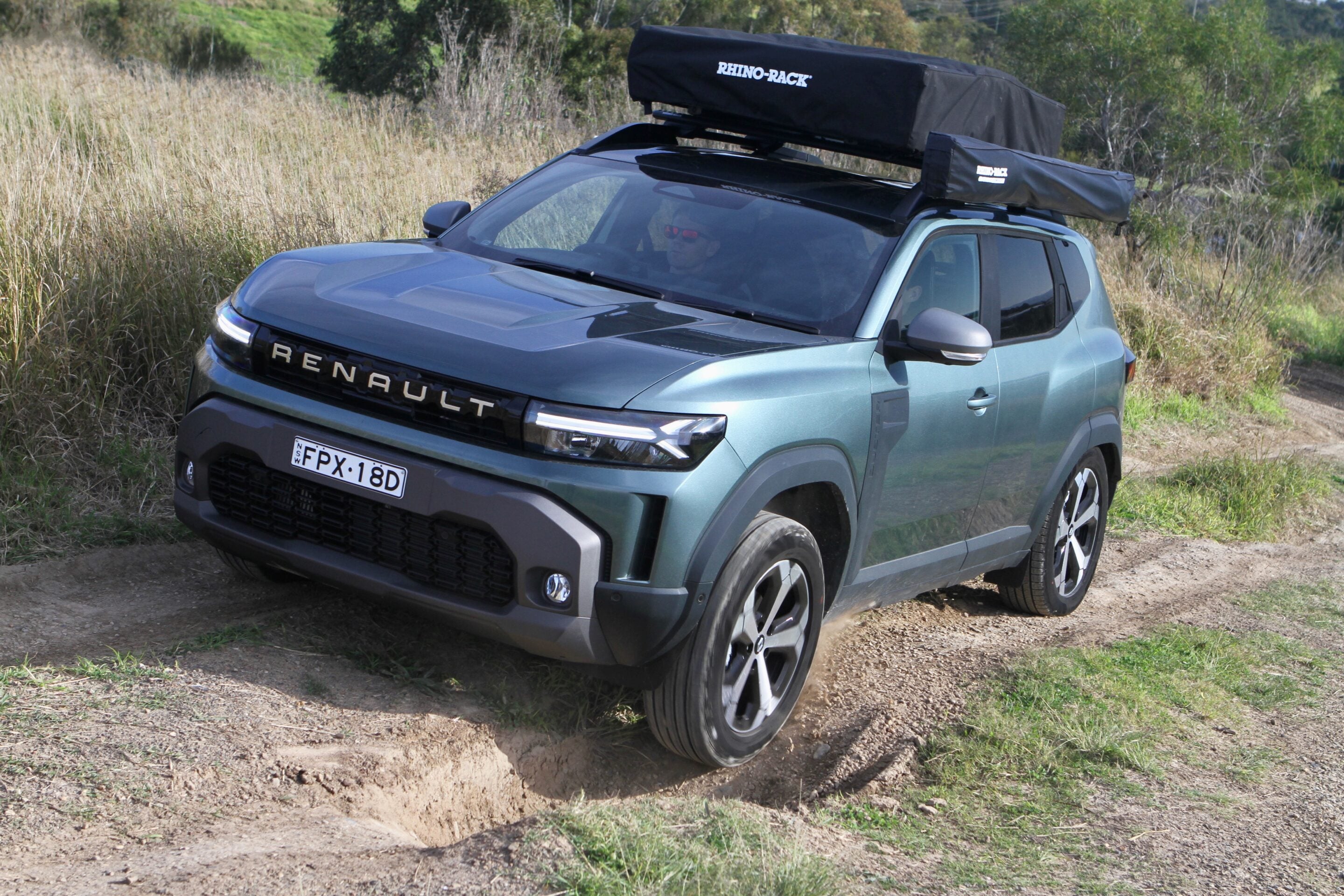
We got the chance to take both versions on a light off-road track and they fared well, although it should be noted that the AWD version was fitted with an aftermarket BF Goodrich All Terrain KO3 knobby tyre. Ground clearance for the front-drive cars is 212mm and 317mm for the AWD variants: not bad given that a Toyota Prado features 220mm of clearance. Naturally the AWD version is good in low grip situations, but it was interesting to see just what the base front-driver could also clamber over.
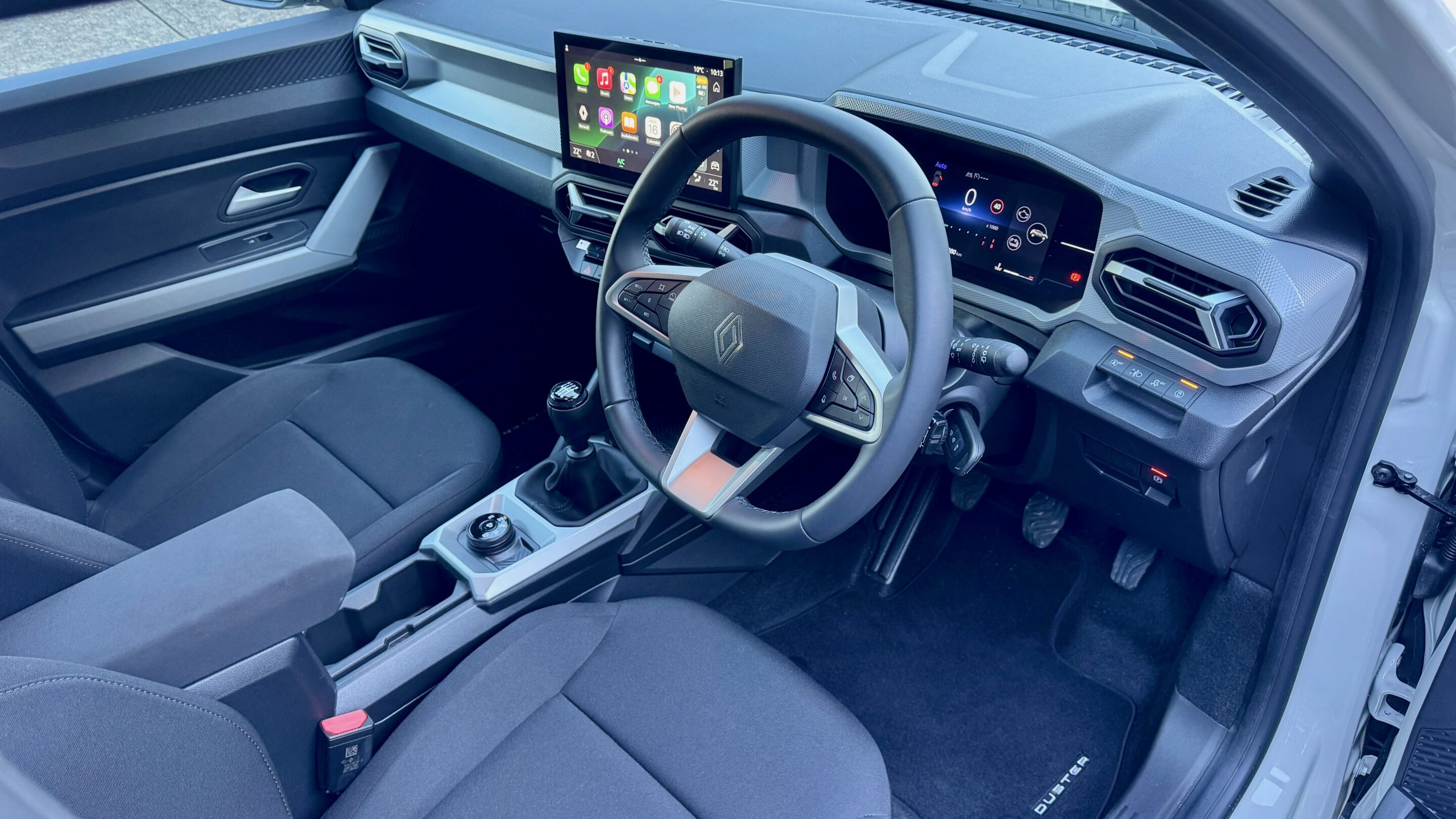
The cabin is refreshingly no-nonsense, with decent seats, plenty of stowage space up front, a modestly sized screen that’ll run Android Auto and Apple CarPlay wirelessly, and hard plastics nearly everywhere. At this price I don’t really care about that, as the actual interior architecture is quite pleasant. Climbing into the back reminds you that the Duster has a bigger brother in Europe, the Bigster, which might also end up in Australia. It’s a little pinched for large adults but kids will fit just fine.
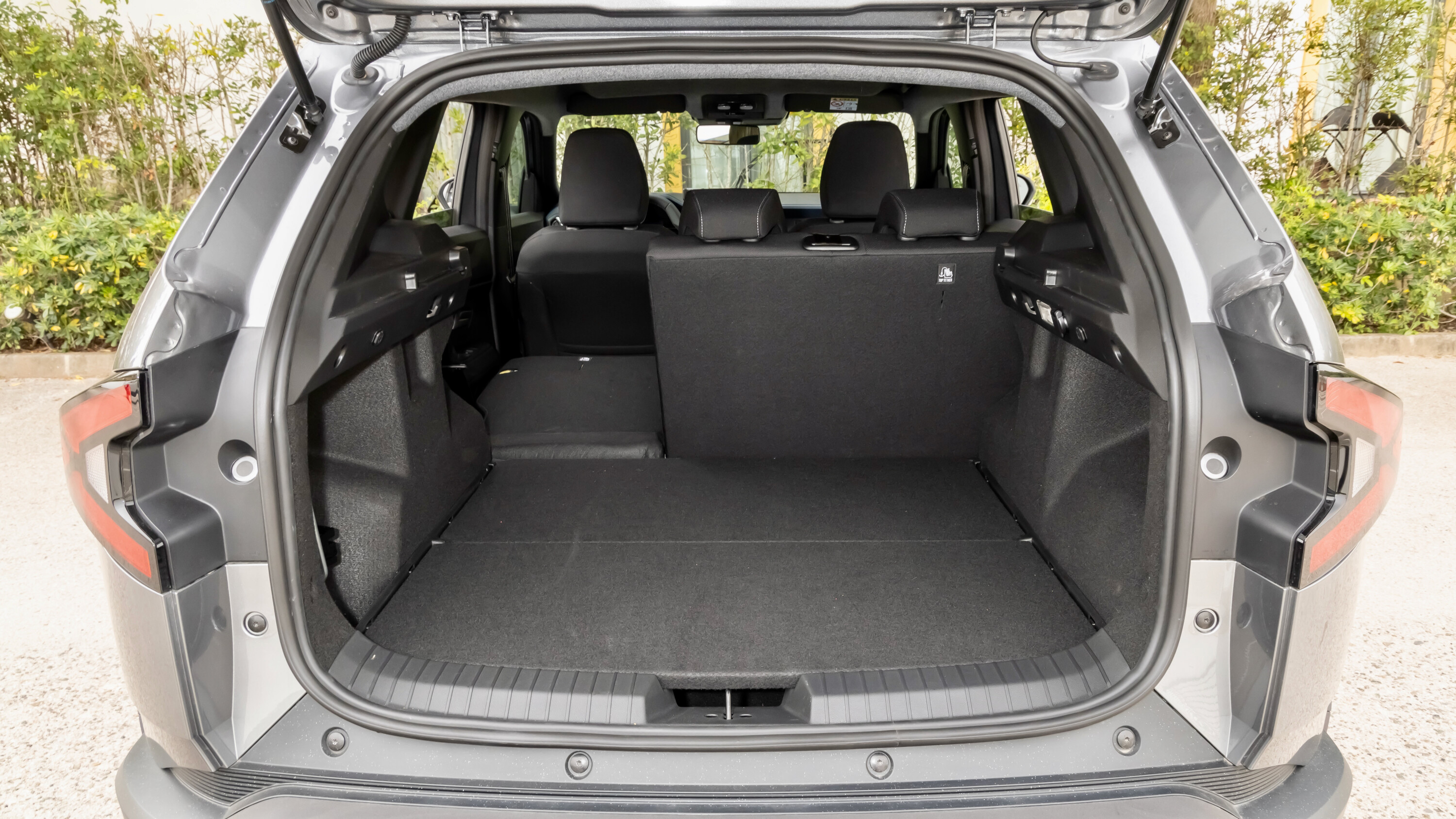
Because of the compact torsion beam rear, the boot of the front-drive model is much bigger than the AWD car. You get 472 litres of space behind the rear seats in the front-driver and a more modest but still respectable 358 litres in the AWD. Predictably, the front drive variants are lighter too, tipping the scales in Evolution trim at 1309kg, versus 1422kg for AWD Evolution variant.
1
Equipment levels are adequate, with the Evolution getting features like a 10.1-inch touchscreen, DAB stereo, a wireless smartphone charger, four USB-C charging ports, rain-sensing wipers, dusk sensing headlights, 17-inch alloy wheels, roof rails and a spare wheel and tyre set. The Techno adds premium cloth seats, rear privacy glass, a multi-view camera, a start button, blind spot warning, a key card, front parking sensors, auto high/low beam, 18-inch alloys and a modular roof rail system.
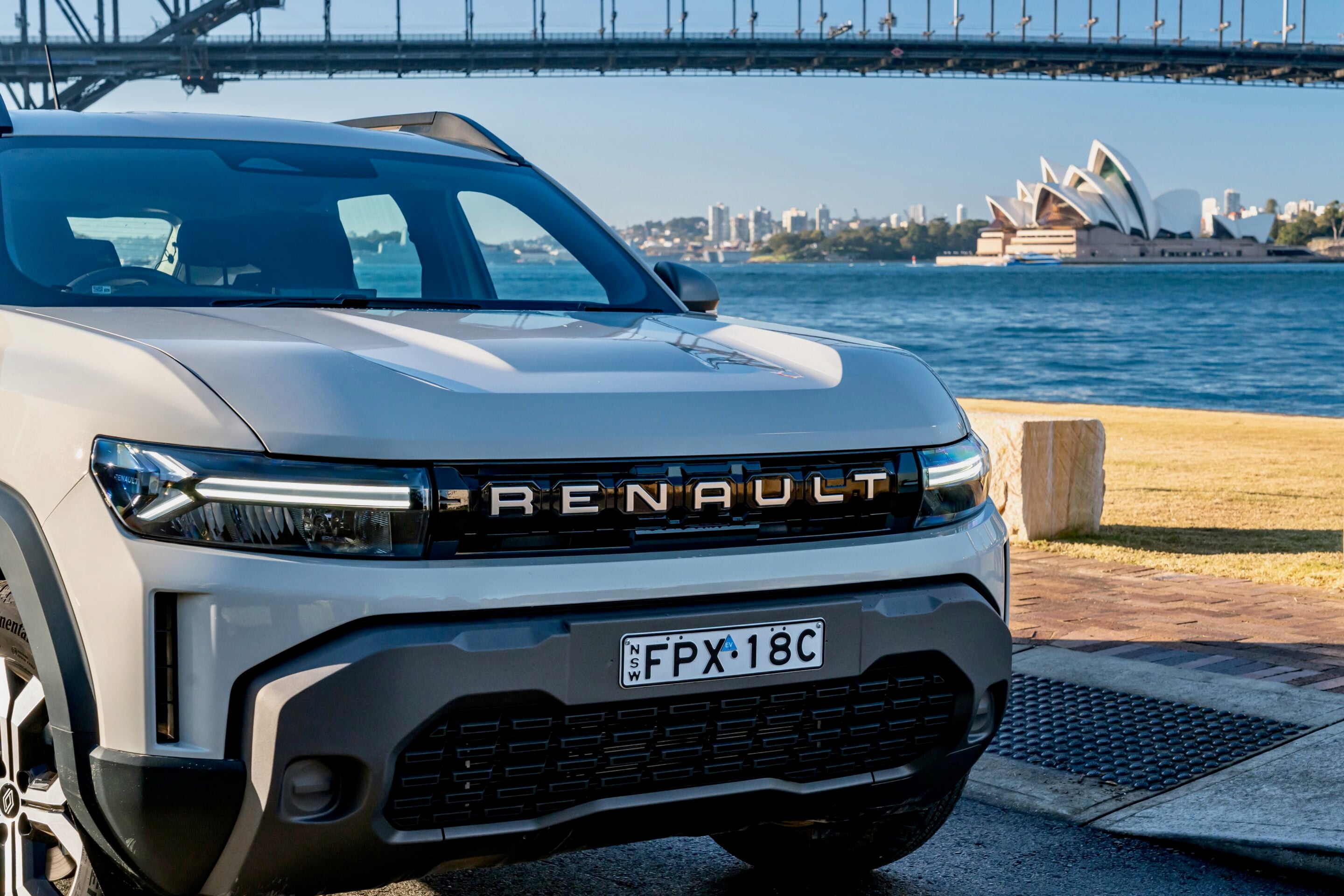
Somewhat unusually, the headlights on all models feature an LED dipped beam, but an old-school halogen main beam. Solid White is the only non-cost paint finish, with Cedar Green, Sandstone, Terracotta, Shadow Grey, Khaki Green and Pearlescent Black all adding $750 to your invoice.
Safety features across all models include lane departure warning, a suite of at least eight airbags, stability control, AEB with pedestrian and cyclist detection, traffic sign recognition, driver attention alert, cruise control, speed limiter, rear parking sensors, tyre pressure warning and an ADAS personalised settings button which you can set up once and then store your preferred setup. Renault’s version of this is the industry’s best.
What’s quite far from industry best is the Duster’s Euro NCAP crash rating which was assessed as three stars in 2024. It registered a score of 70 per cent for adult occupant protection and 84 per cent for child occupant protection but was downmarked for vulnerable road users (60 per cent) and safety assist (57 per cent).
The warranty is Renault-spec five years and unlimited kilometres, and there’s a five-year pre-paid servicing plan available that’s priced at $2100 for the all-wheel drive model and $2150 for the front drivers.
It’s an interesting vehicle, the Duster. There’s a lot to like. It drives well, it looks good, it’s decently practical and seems to offer all the things you’d need, but little of the flim-flam that makes so many modern cars so annoying. The $31,995 asking price for the entry-level model instantly makes that an easy recommendation, but there are some caveats to bear in mind.
3
Dacia has long held the opinion that chasing Euro NCAP stars merely adds unnecessary cost to cars that are adequately safe already. It’s been in a stoush with the safety body for some time over poor ratings being given to Dacia models that the safety body hadn’t individually tested. So there’s bad blood there. That the Duster wears a Renault badge in this country doesn’t change any of that backstory.
I quite like the fact that we’re entrusted to make an informed decision. If the Wheels mailbag is any indication, you may have a similar view to Dacia, in which case the Duster probably has more than enough safety provision for you. On the other hand, if you’re a parent and want the absolute safest, lowest-risk option for your growing family, you may feel more comfortable looking elsewhere.
There’s also the slightly odd trim walk-up to consider. On paper, it would seem to have made more sense for Renault to offer a basic, manual front-drive car with a lower powered engine, and then a ritzier, dual-clutch, all-wheel drive model with more power. Instead, there’s now a strange mish-mash of these attributes that doesn’t make all that much sense. The cheapest car is the most powerful and has the more sophisticated transmission. Figure that one out.
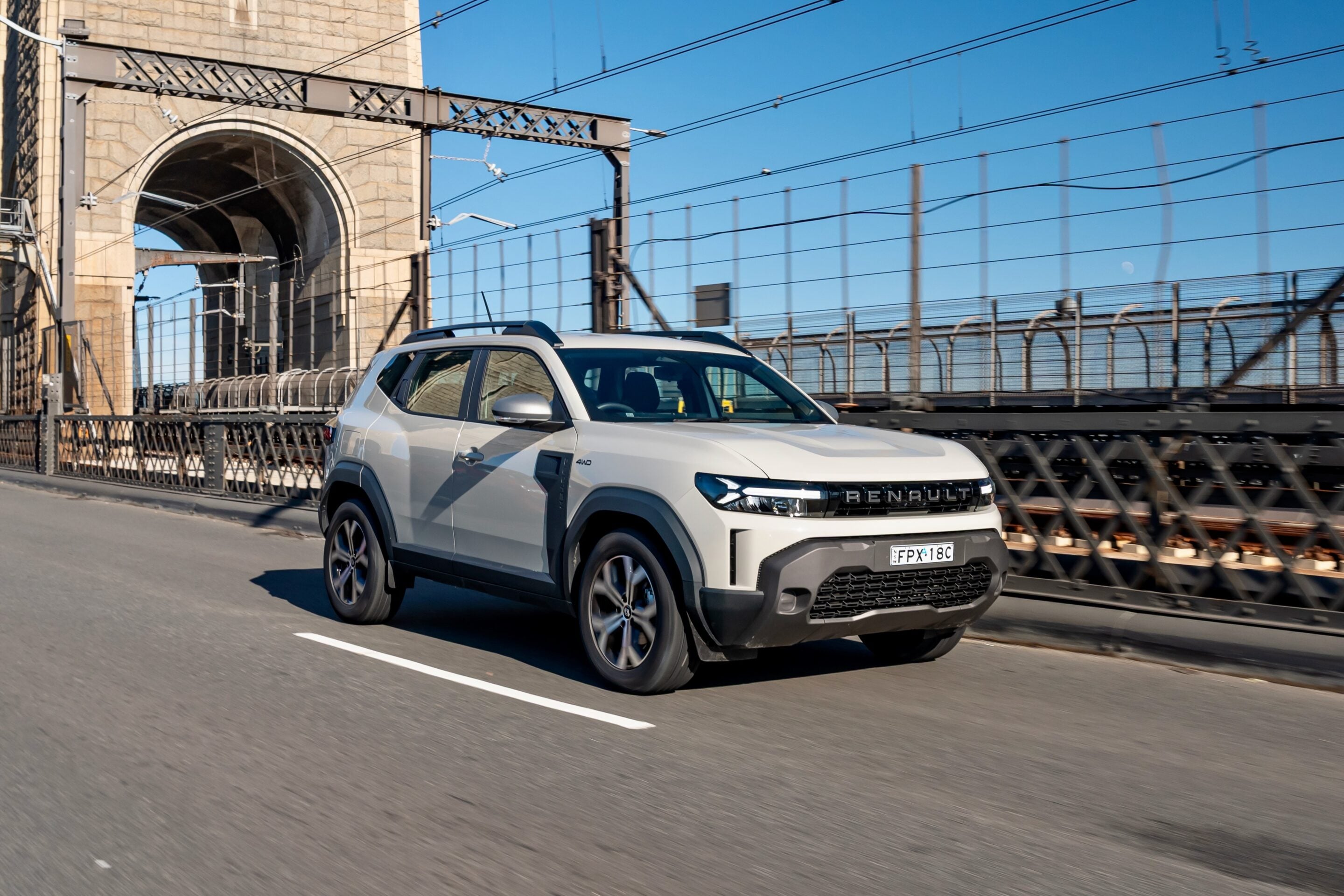
Ultimately, the Duster is a very welcome addition to Australia’s carscape. It feels well-suited to Aussie conditions, being rugged, simple, inexpensive and practical. It’s hugely endearing and deserves to sell well. If you’re looking for a budget offering that’s well proven and wears a respected European badge, put it on your shortlist.
1
Specs
| Model | Renault Duster 1.3 Evolution (FWD) |
|---|---|
| Price | $31,990 plus on road costs |
| Engine | 1333cc 4cyl, DOHC, 16v turbo |
| Transmission | 7-speed dual-clutch |
| Peak power | 113kW @ 5500rpm |
| Peak torque | 270Nm @ 2250rpm |
| Kerb weight | 1309kg |
| L/W/H/WB | 4345/1921/1650/2657mm |
| 0-100km/h | 8.7sec (tested) |
| Boot space | 472L/1564L |
| Available | Now |
This article originally appeared in the September 2025 issue of Wheels magazine. Subscribe here and gain access to 12 issues for $109 plus online access to every Wheels issue since 1953.
6.9
/10
Score
Score breakdown
7.0
Safety, value and features
7.0
Comfort and space
7.0
Engine and gearbox
7.0
Ride and handling
6.5
Technology
Things we like
- Aggressive pricing
- No-nonsense practicality
- Decent ride quality
Not so much
- 3-star safety rating
- Confusing trim structure
- AWD car requires premium fuel
Follow WhichCar/Wheels on Google
Click the button below to make WhichCar by Wheels a preferred source for your news.

We recommend
-
 News
NewsRenault Duster off-roader small SUV confirmed for Australia
Renault’s new off-roader small SUV is launching early in Australia with local sales due to commence from July 2025.
-
 Features
Modern Classic: Renault Clio Williams
Touched with greatness, but also with controversy, this was the hot hatch that finally deposed the Peugeot 205 GTI.