
Reviews

Gallery 1
7.3
/10
Score
Score breakdown
7.5
Safety, value and features
7.6
Comfort and space
7.2
Engine and gearbox
7.2
Ride and handling
7.0
Technology
Things we like
- Loaded with gear for the money
- Smooth (mostly) powertrain
- Spacious and feature-laden interior
Not so much
- Let's talk about safety tech
- Some lag when in petrol-hybrid mode
- Battery robs boot of valuable storage
Overview
In what could be a case of impeccable timing, Chinese auto giant GWM has launched another variant into its popular Tank 300 line-up. And it’s a plug-in hybrid.
The off-road focussed SUV has been a winner for the brand, last year alone accounting for over 5000 sales, a 27 per cent increase over 2024. This year, the Tank 300 is again poised to better its yearly result, already sitting at almost 1200 sales for the first quarter of 2026, up almost 39 per cent compared with the same period last year. Clearly, the Tank 300 has been a hit with buyers wanting off-road capability in a package that blends rugged looks with the current trend for boxy profiles. In short, the GWM Tank 300 looks the goods.
Adding a plug-in hybrid to the range only enhances its appeal, bringing fuel efficiency to a 4×4 segment not always known for it. So is the plug-in hybrid a case of right time, right Tank? Let’s find out.

1
How much is the Tank 300 PHEV?
Two trim levels, with sharp driveaway pricing, underpin the Tank 300 Hi4-T plug-in hybrid line-up. Pricing starts from $55,990 for the Tank 300 Lux, while the Ultra asks for $59,990. The four grand difference comes down to equipment levels, with both variants enjoying healthy lists of standard inclusions.
Exterior equipment highlights across both Lux and Ultra trim levels include 18-inch two-tone alloy wheels, side steps, roof rails, two-piece bash plate, LED head- and tail-lights, and keyless entry.
Inside, leather-appointed seats, an electric sunroof, power adjustable front seats, dual-zone climate control, rear privacy glass, and ambient interior lighting are standard across both Tank 300 grades. So too a 12.3-inch touchscreen, another 12.3-inch digital driver display, wireless Apple CarPlay and Android Auto, wireless smartphone charging, and a nine-speaker sound system.
A full suite of GWM’s advanced driver assist and safety systems along with seven airbags – including front centre – underpins the broader Tank 300 range’s five-star ANCAP safety rating, awarded in 2022.
The Ultra’s extra $4k spend brings some nice-to-haves such as Nappa leather seats, heated steering wheel, heated and cooled front seats, memory and massaging functions for the driver’s seat, and power-adjustable under-thigh support. The big ticket item, however, comes under the skin where the Tank 300 Ultra scores a lockable front-diff (the Lux has an open front diff) while both models feature a lockable rear differential. Other off-road goodies across both grades run to part-time 4×4 (with 2H, 4H and 4L), a low-range transfer case, and all-terrain and crawl drive modes.
3
What engine does the Tank 300 PHEV have?
GWM isn’t new to plug-in hybrid technology, the Tank 300 Hi4-T the third PHEV model in the brand’s line-up, joining the Haval Jolion and Cannon Alpha dual-cab ute.
The Tank 300 uses the same Hi4-T plug-in hybrid powertrain as the Cannon Alpha, a 2.0-litre turbo-petrol and single electric motor for combined outputs of 300kW and 750Nm. A 37.11kWh battery delivers, according to the more lenient NEDC laboratory testing, around 115km of range.
DC charging is capped at 50kW, meaning the NMC (nickel-maganese-cobalt) lithium-ion battery can be replenished from 30 to 80 per cent in around 24 minutes. AC charging on a home-installed wallbox is claimed to take around 6.5 hours from 15-100 per cent, suggesting AC charging speed is capped at around 5kW.
WhichCar by Wheels tested GWM’s DC charging claim and it came up trumps. Using a 55kW public charger, we topped up from 13 to 100 per cent in a smidge over 44 minutes. We noted that just over 30 minutes had elapsed when the battery’s state of charge hit 80 per cent, which suggests that GWM’s 24-minute claim from 30 per cent is bang-on the money.
The Tank plug-in hybrid’s off-road and camping focus means it’s also capable of powering small appliances and power tools, with a quoted 6kW vehicle-to-load capability.

3
Is there anything interesting about the Tank 300 PHEV’s design?
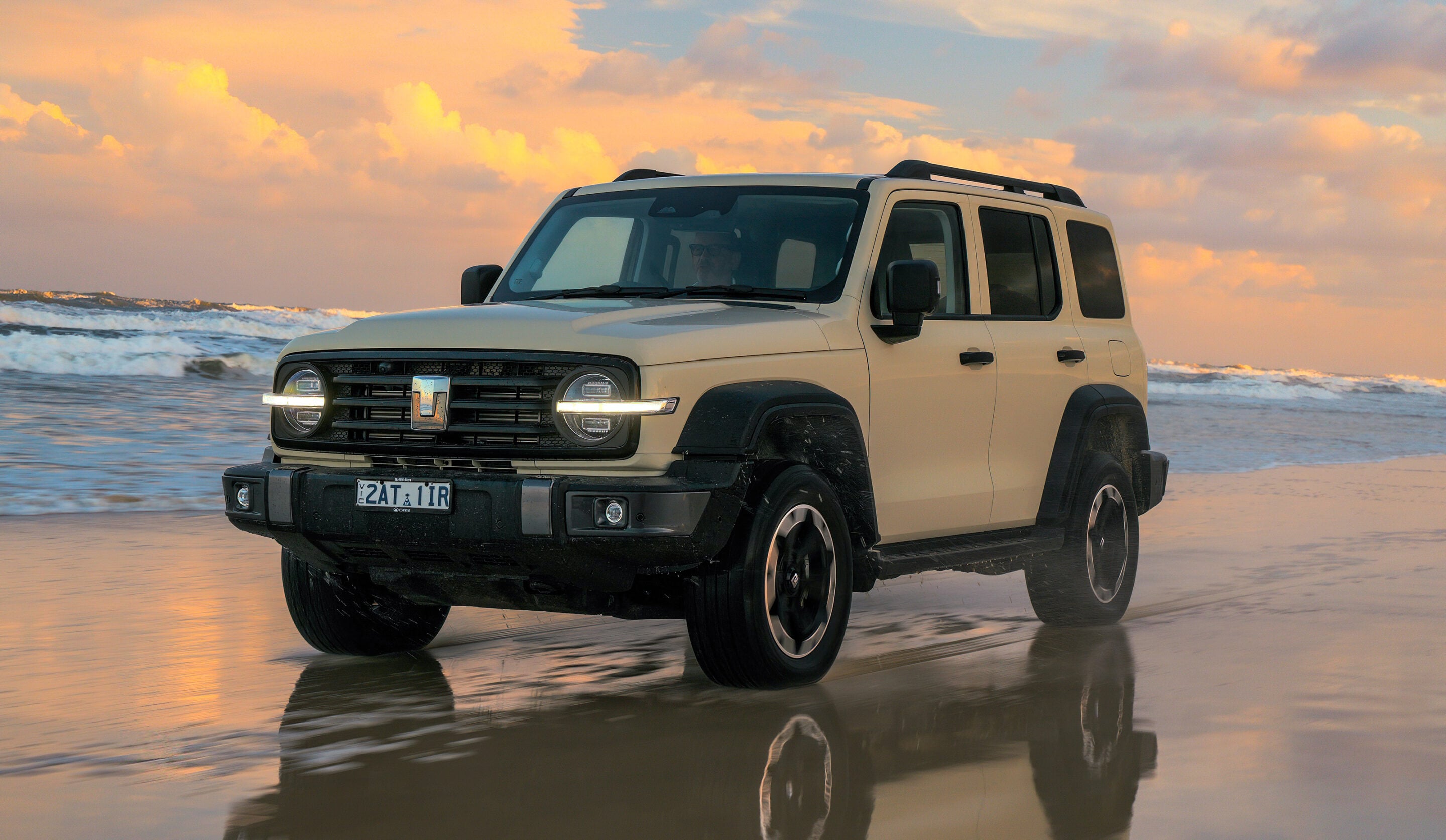
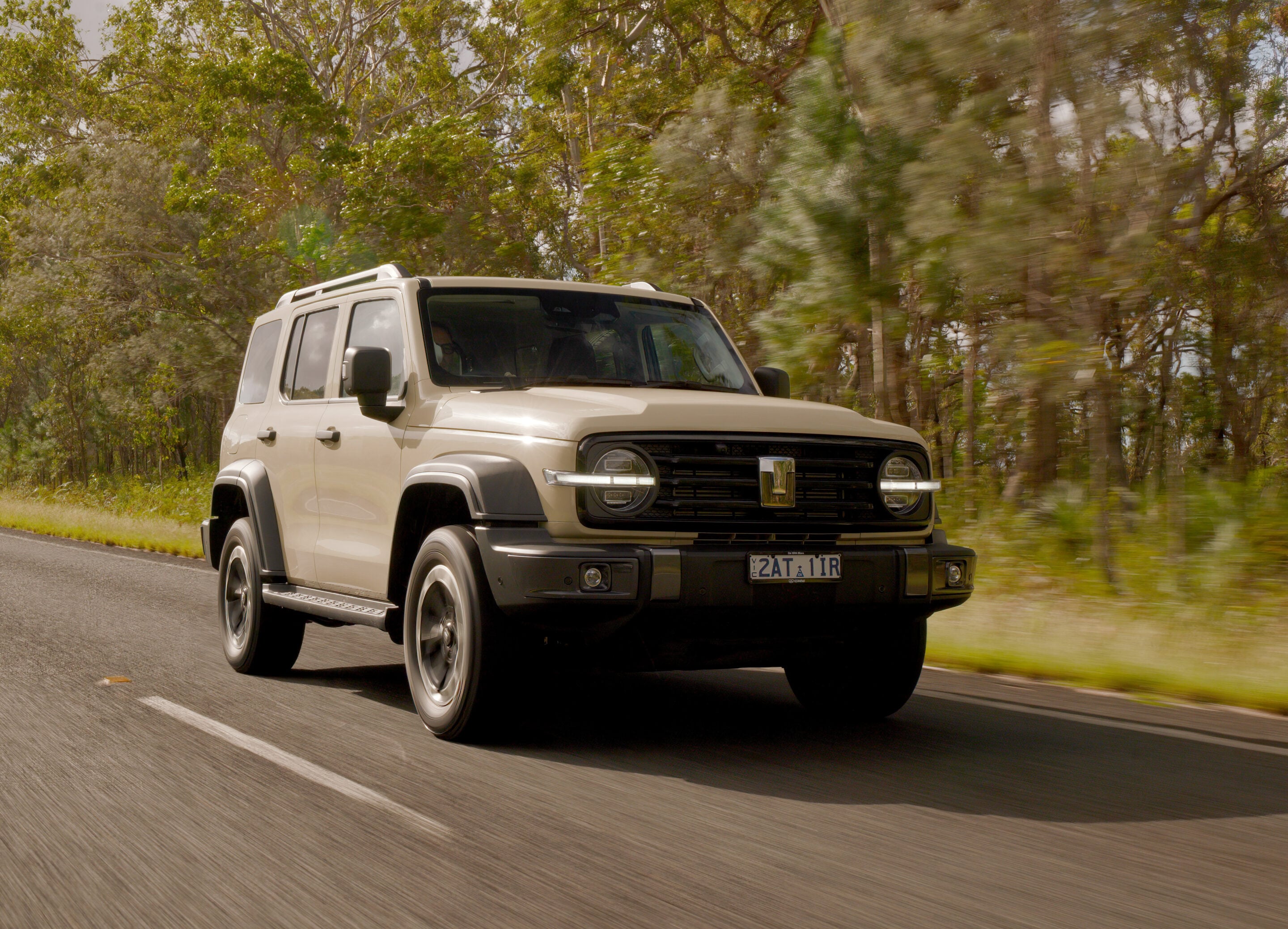
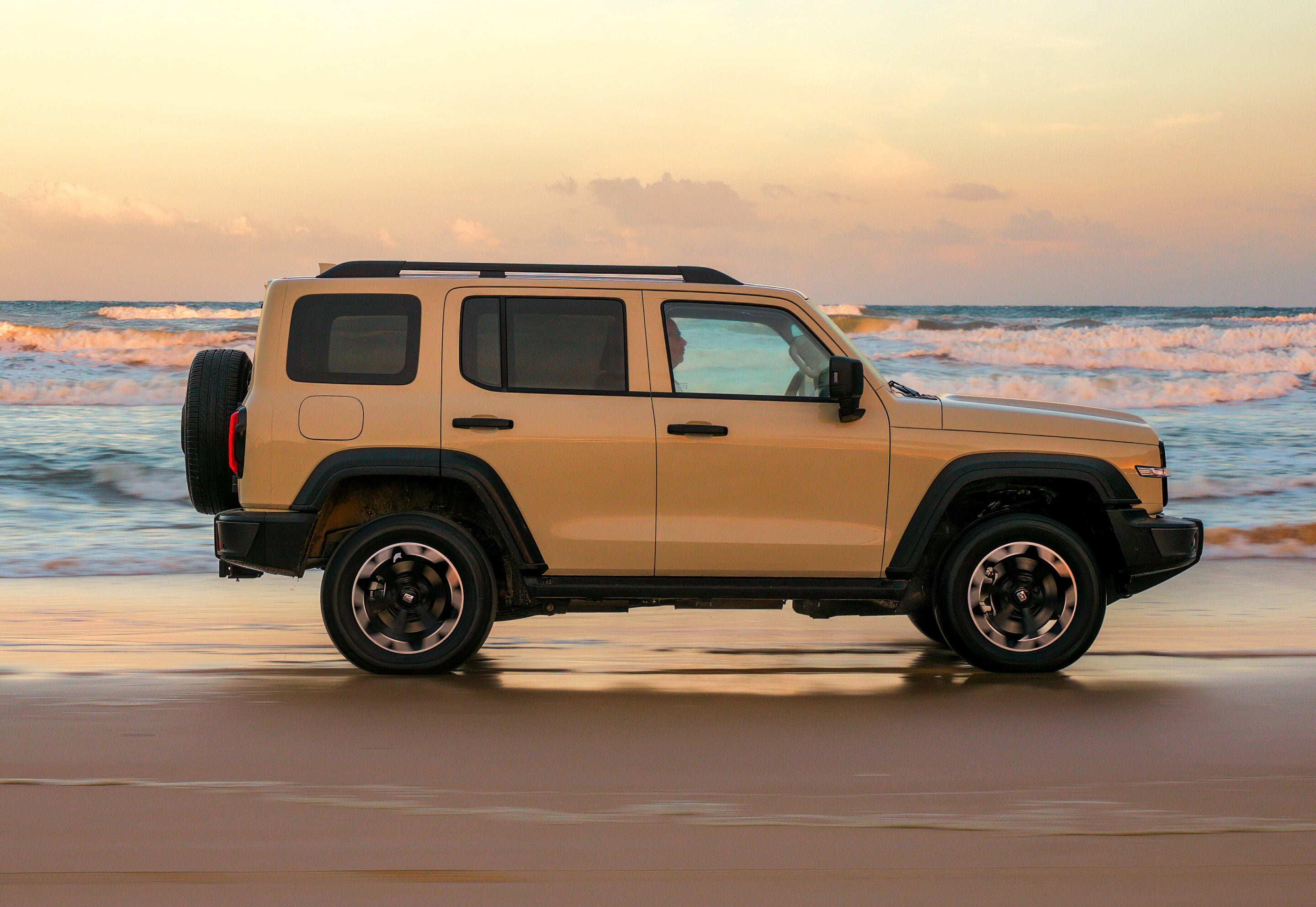
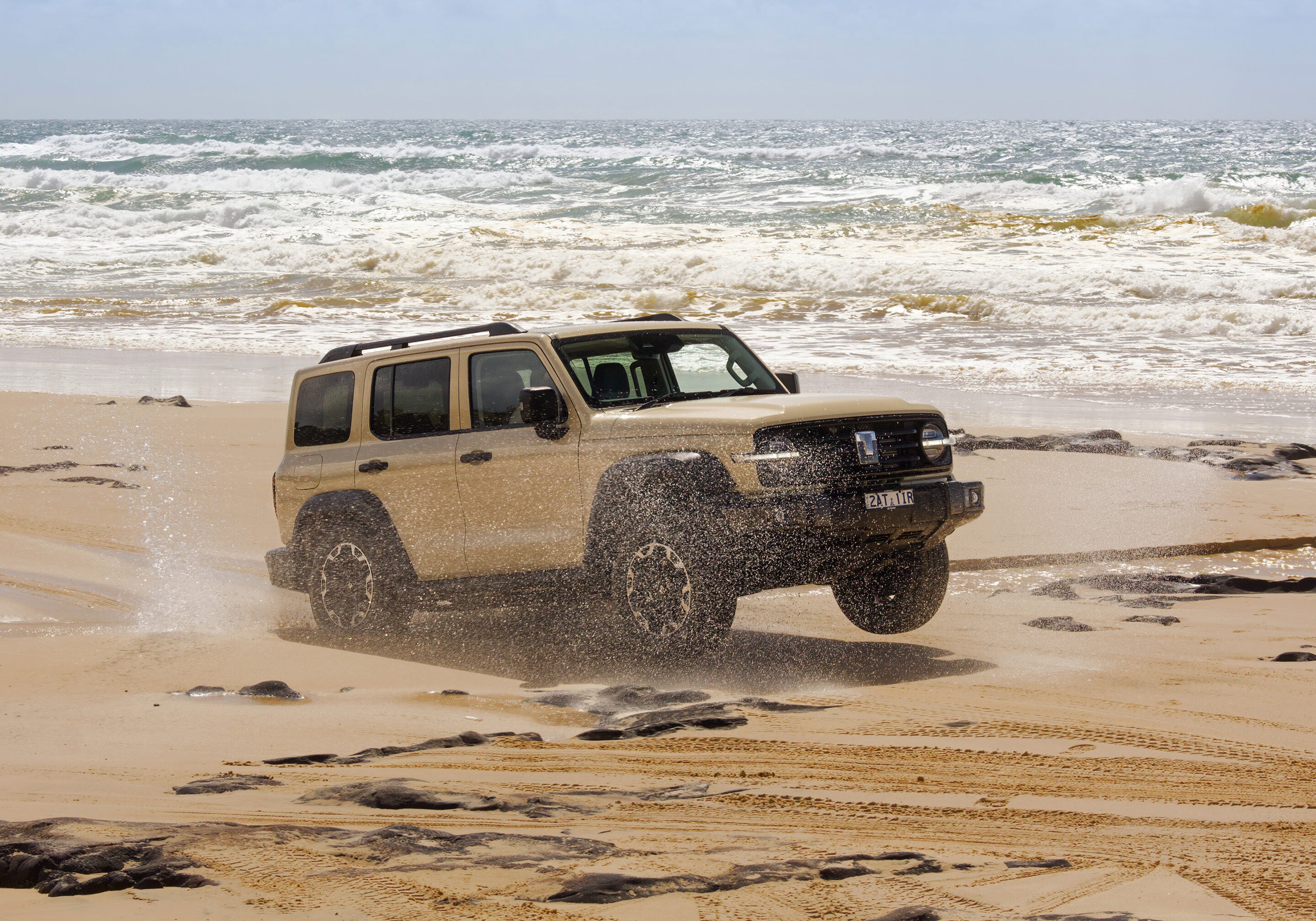
It’s in the name, because the Tank 300 looks and feels as solid as a, well, tank. Its boxy proportions tap right into today’s trend for rugged off-roaders, where blunt trumps sleek and utility overcomes cutting-edge design. This is no bad thing, the Tank 300 one of the better looking retro-inspired, off-road SUVs.
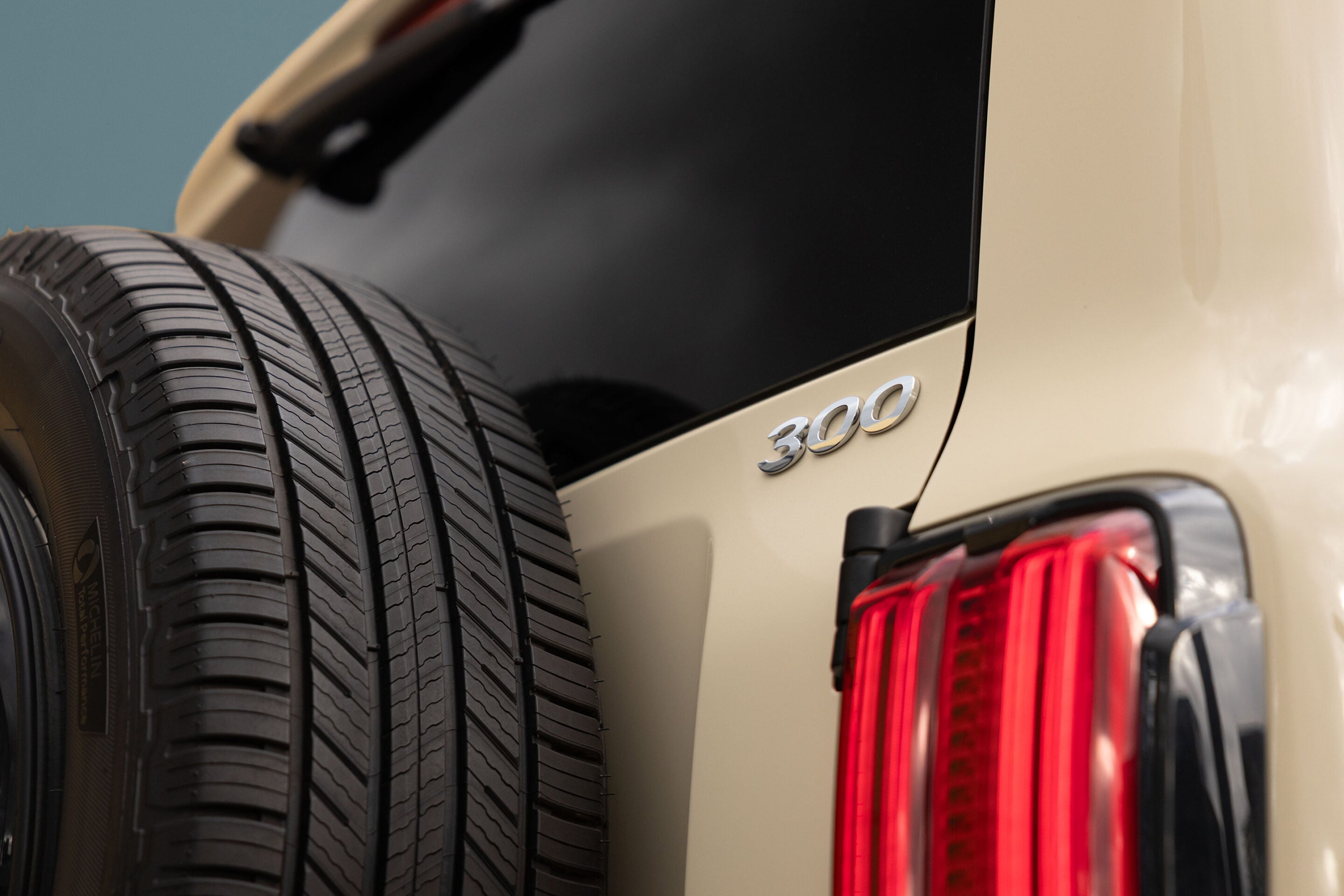
From its imposing face, squared-off bonnet, its unashamed height and near identical width (the Tank 300 is just 3cm wider than it is tall), the off-roader has the looks to match GWM’s claimed 4×4 show. Throw in chunky side steps, blacked out roof rails and a full size spare hanging off the tailgate, and it’s clear the intent of the Tank 300 is to tackle gnarly trails and imposing climbs.
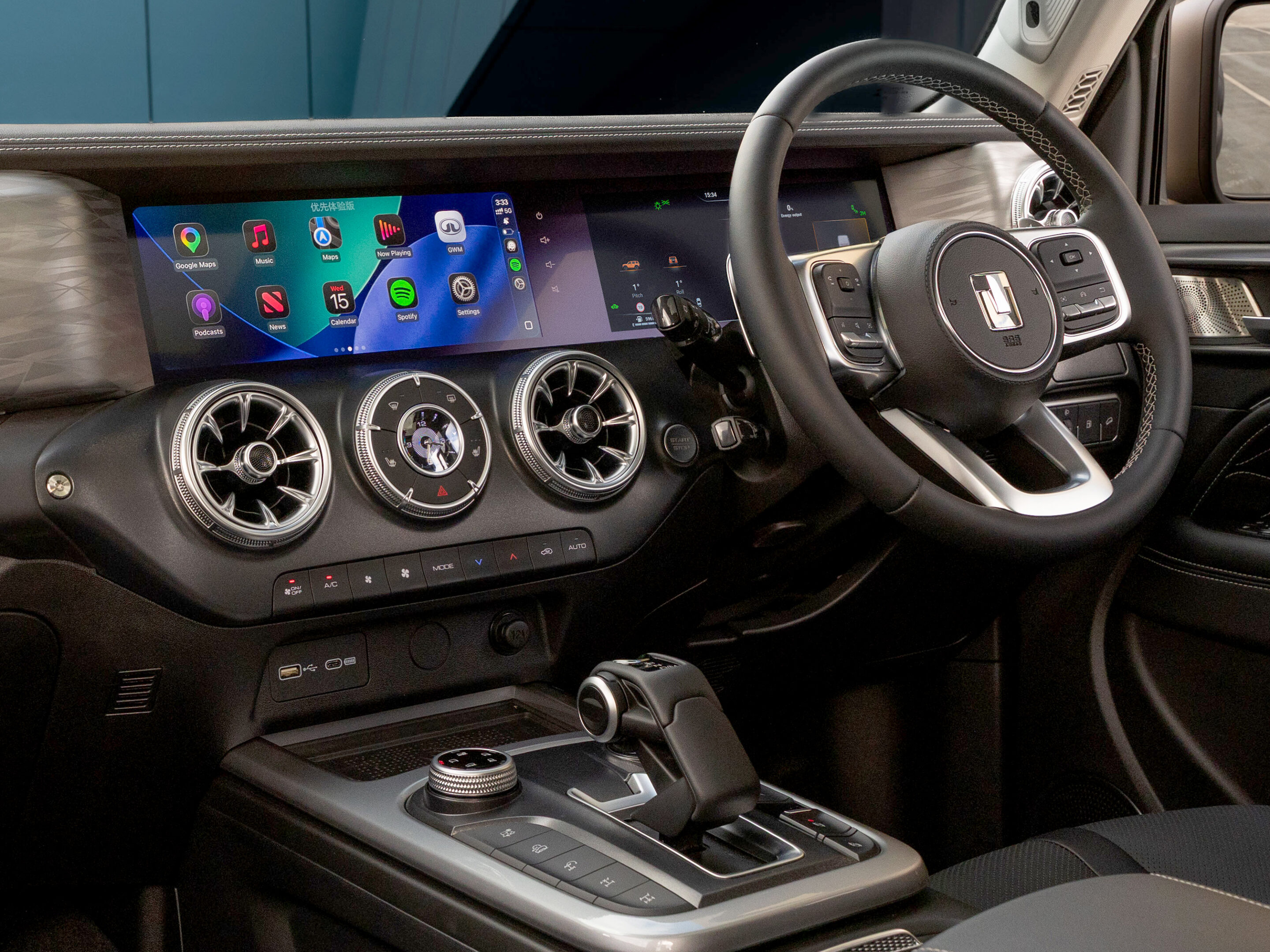
The theme continues in the cabin where GWM hasn’t messed with its macho formula, the design carried over from the regular Tank 300 range instead of adopting the more fashion-forward and sleeker interior found in some overseas markets. Case in point, the reassuringly tactile gear selector that looks like it’s been lifted straight out of a jet fighter. It remains in Australia, while some international markets now feature the gear selector on a steering-column mounted stalk.
The front seats, Nappa leather in the case of our tester, are comfortable and supportive, with decent bolstering including the oft-overlooked area of under-thigh. The seats are positioned nice and high in the cabin too, affording a commanding view over the Tank 300’s blunt bonnet.
4
Material quality throughout is good, although the dash fascia – fashioned out of a chintzy faux-metallic plastic – looks at odds with the rest of the cabin where soft-touch surfaces look a cut above.
Chunky switchgear and dials are a welcome inclusion including buttons and switches for climate controls, increasingly a novelty and throwback to simpler times. Nice one, GWM.
Second row comfort is good with ample room in all key areas. The second row bench sits nice and high too, affording decent visibility in all directions.
The cargo area is a bit of a letdown, with just 360 litres of storage capacity with the second row in use. The boot is a victim of the battery array located at the rear of the Tank 300, robbing the big SUV of valuable storage space. Fold the back seats away, and you’re greeted by 1520 litres. A 10-amp, 250V household socket in the boot is a welcome addition.
What technology comes with the Tank 300 PHEV?
While other markets receive a new and larger 14.6-inch infotainment screen, GWM has persisted with the incumbent 12.3-inch unit for Australia. And it’s a good one, with sharp graphics and a clear display and a mostly intuitive interface.
Wireless Apple CarPlay is standard as is Android Auto while smartphones are well-served by wireless charging. Using CarPlay wirelessly proved a breeze, the system quick to pair and then faster still to reconnect at every start-up.
1
An array of cameras cover all angles and GWM’s nifty see-through view, which projects a transparent view of the 300’s chassis onto the screen so you can see where the wheels are positioned and what’s happening underneath the big SUV, might seem like a novelty. But considering the off-road focus of the 300, it’s not hard to imagine this a useful feature.
Off-road specific screens offer a wealth of information including an Expert Terrain mode which offers detailed and real-time data for things like tyre pressures, a compass, the state of the differentials, altitude, atmospheric pressure as well as pitch and roll angles.
The 12.3-inch instrument cluster provides the usual array of information with several scrollable screens that toggle through critical driving data such as battery state-of-charge, fuel and energy consumption, and tyre pressures. We’d love a bit more configurability, but there’s enough data to hand to not leave you wondering.
What’s the new Tank 300 PHEV like to drive?
Breaking down the Tank’s 300kW and 750Nm combined outputs reveals a 2.0-litre turbo-four petrol engine good on its own for 180kW/380Nm. But it’s joined by a single electric motor making 120kW and 400Nm, located deftly between the petrol engine and the nine-speed automatic transmission.
And straight off the bat, in hybrid mode, where the Tank 300 drives and reacts like a regular closed-loop hybrid (such as those powering almost every Toyota), is a punchy and willing accomplice on the daily grind. Moving away from standstill is best described as brisk. GWM quotes a 0-100km/h time of just 6.3 seconds which is in the realm of some hot hatches. Certainly, moving away from traffic lights with some urgency highlights the 300’s straight-line mumbo as both the electric motor and petrol engine work together for maximum outputs.
2
But does it work as a hybrid? Certainly, being more judicious with the throttle at take off means the electric motor alone provides the motivation. But it doesn’t take too much pressure on the accelerator for the internal combustion engine to fire up.
But the system can be caught out, especially during a stab on the loud pedal for some rapid overtaking or merging into traffic. Here, the petrol engine can take a moment too long to fire up, leaving a big torque hole that can feel a little un-nerving for just a moment. There’s room for refinement.
Of course, the appeal of a plug-in hybrid lies in its pure electric abilities. And here the news is better, the electric motor when working alone more than enough for most daily driving scenarios. Power delivery is smooth and effortless while a sense of calm and quietude permeates the cabin.
Ride comfort is good without being a standout. There’s a propensity for the stiffly sprung Tank to skip over minor road imperfections such as expansions joints or patchworked road repairs which is at odds with the otherwise quite floaty nature of the big SUV over smoother surfaces. Here, the 300 remains nicely compliant, riding over undulations with composure while tackling bigger obstacles, such as speed humps, is done with minimal fuss, with body control kept nicely in check.
But perhaps our biggest complaint about the drive experience isn’t about the powertrain. Instead, the over-eagerness of the Tank 300’s many and varied driver assist systems proved intrusive and unwelcome. Being reminded – audibly and visually – to ‘Take a Break’ within five minutes of setting out on a drive is laughable. But the joke ends pretty quickly when the same reminder appears like clockwork every two minutes or so, despite remaining resolutely focussed on the road ahead. Worse still, Interspersed between the multitude of ‘Take a Break’ reminders, the alarmingly red warning to ‘pay attention to the road’ when again, eyes remained steadfastly forward, felt like a being scolded by that one teacher in high school who, no matter what you did, seemingly had it in for you.
Swiping and scrolling through multiple screens to disable both functions was an exercise in futility since despite setting the digital toggle to ‘off’, both systems continued to flash their alarming warnings at about one-minute intervals. For the entire loan period of the Tank 300. Even my shotgun-riding 11-year-old was moved to say, ‘this car beeps a lot’. And she wasn’t wrong.
It marred what was an otherwise decent and surprisingly refined driving experience – at least mechanically – and sadly, something that is becoming increasingly common in this modern age of techno-nannies where ticking the ‘included’ box seems to over-ride the efficacy of various driver assist and safety systems.
3
How much fuel does the Tank 300 PHEV use?
The beauty of any plug-in hybrid with a usable EV-only driving range is in its ability to cover most daily commutes on electrons alone, leaving the petrol tank in a state of stasis while the battery provides the propulsion.
In the case of the Tank 300 PHEV, a quoted driving range of 115km derived from the less-stringent NEDC laboratory testing when compared with WLTP, proved optimistic. Realistically, we powered through 70-75km on electrons alone before the turbo-petrol would waken from its slumber and chip in to help. That’s still enough to cover the daily commute for the vast majority of Australians, leaving the petrol tank on call for those longer drivers we all have to take sometimes.
In terms of raw numbers, with the electric juice [almost] running out at 72km, we saw an indicated 3.3 litres per 100km for the first hundred kays of driving, climbing to 5.5L/100km by the time the Tank came to rest in the driveway. That’s at once over and under the manufacturer’s claim, GWM quoting 1.9L/100km with the battery starting at 100 per cent, before dropping to 8.3L with the battery in a lower state-of-charge. Whichever way you look at it, those are decent numbers, especially considering the size and weight (2615kg kerb) of the Tank 300. As a bonus, the big SUV is happy drinking 91-octane regular unleaded.
What’s the verdict on the Tank 300 PHEV?
On the one hand, the Tank 300 plug-in hybrid does a commendable job of minimising fuel use, especially considering its size and heft. And that’s something to consider in these oil-shock times we find ourselves in.
It drives nicely enough on the road (off-road testing will have to wait) with punchy performance and mostly refined road manners while remaining pleasingly quiet inside the cabin.
The intrusion of safety alerts proved not only frustrating, but distracting, heightening the danger on the road rather than mitigating it. It spoiled what was an otherwise fuel-friendly and comfortable SUV on both urban duties and out on the open road. If GWM can find a remedy for these annoyances, then the Tank 300 PHEV is the answer to a lot of today’s fuel-starved questions.
3
Specifications GWM Tank 300 PHEV
| Price | From $55,990 driveaway |
|---|---|
| Engine | 2.0-litre four-cylinder turbo petrol plug-in hybrid |
| Peak power | 300kW (combined) |
| Peak torque | 750Nm (combined) |
| Transmission | 9-speed hybrid automatic. AWD |
| Battery | 37.11 lithium-ion (NMC) |
| Range | 115km (NEDC) |
| Peak charge speed | 50kWh |
| DC fast charge time (30-80%) | 24 minutes |
| Fuel consumption (claimed) | 1.9L/100km (battery full state-of-charge) / 8.3L/100km (low state-of-charge) |
| Fuel consumption (as tested) | 3.3L/100km (full state-of-charge) / 5.5L/100km (low state-of-charge) |
| Fuel type | 91RON |
| Fuel tank | 70 litres |
| CO2 emissions (claimed) | 43g/km (full state-of-charge) |
| Dimensions (l/w/h/wb) | 4760/1930/1903/2750mm |
| Boot space | 360 litres / 15020L |
| Kerb weight | 2615kg |
| Braked towing capacity | 3000kg (braked) / 750kg (un-braked) |
| Warranty | 7-year/unlimited km |
| Servicing costs | $2610 for first 5 years/70,000km |
| On sale | Now |
7.3
/10
Score
Score breakdown
7.5
Safety, value and features
7.6
Comfort and space
7.2
Engine and gearbox
7.2
Ride and handling
7.0
Technology
Things we like
- Loaded with gear for the money
- Smooth (mostly) powertrain
- Spacious and feature-laden interior
Not so much
- Let's talk about safety tech
- Some lag when in petrol-hybrid mode
- Battery robs boot of valuable storage
Follow WhichCar/Wheels on Google
Click the button below to make WhichCar by Wheels a preferred source for your news.


We recommend
-
 News
NewsGWM Australia doubles production of incoming Tank 300 plug-in hybrid in the face of surging demand
As fuel prices surge across the nation, GWM Australia has asked for a doubling of production of its new Tank 300 plug-in hybrid SUV.
-
 News
NewsGWM Tank 700 Hi4-Z: 635kW plug-in hybrid launches in China
GWM's flagship Tank 700 has received a new 635kW plug-in hybrid drivetrain and a facelift in its native China, with local sales yet to be announced.
-
 Features
Plug-in hybrid dual cabs? Limited choice, for now, but BYD Shark’s success will bring more competitors
Here's the WhichCar by Wheels rundown on the currently available options if you want to drive a dual-cab ute but use less fuel... with more options in the pipeline.
