Reviews

Gallery 1
8.2
/10
Score
Score breakdown
7.5
Safety, value and features
9.0
Comfort and space
7.5
Engine and gearbox
8.0
Ride and handling
9.0
Technology
Things we like
- Distinctive design throughout
- Quite spacious inside
- Good to drive for a large SUV
Not so much
- Calligraphy is well equipped but expensive
- Interior quality doesn’t feel $80k
- Doesn’t feel as punchy as the numbers suggest
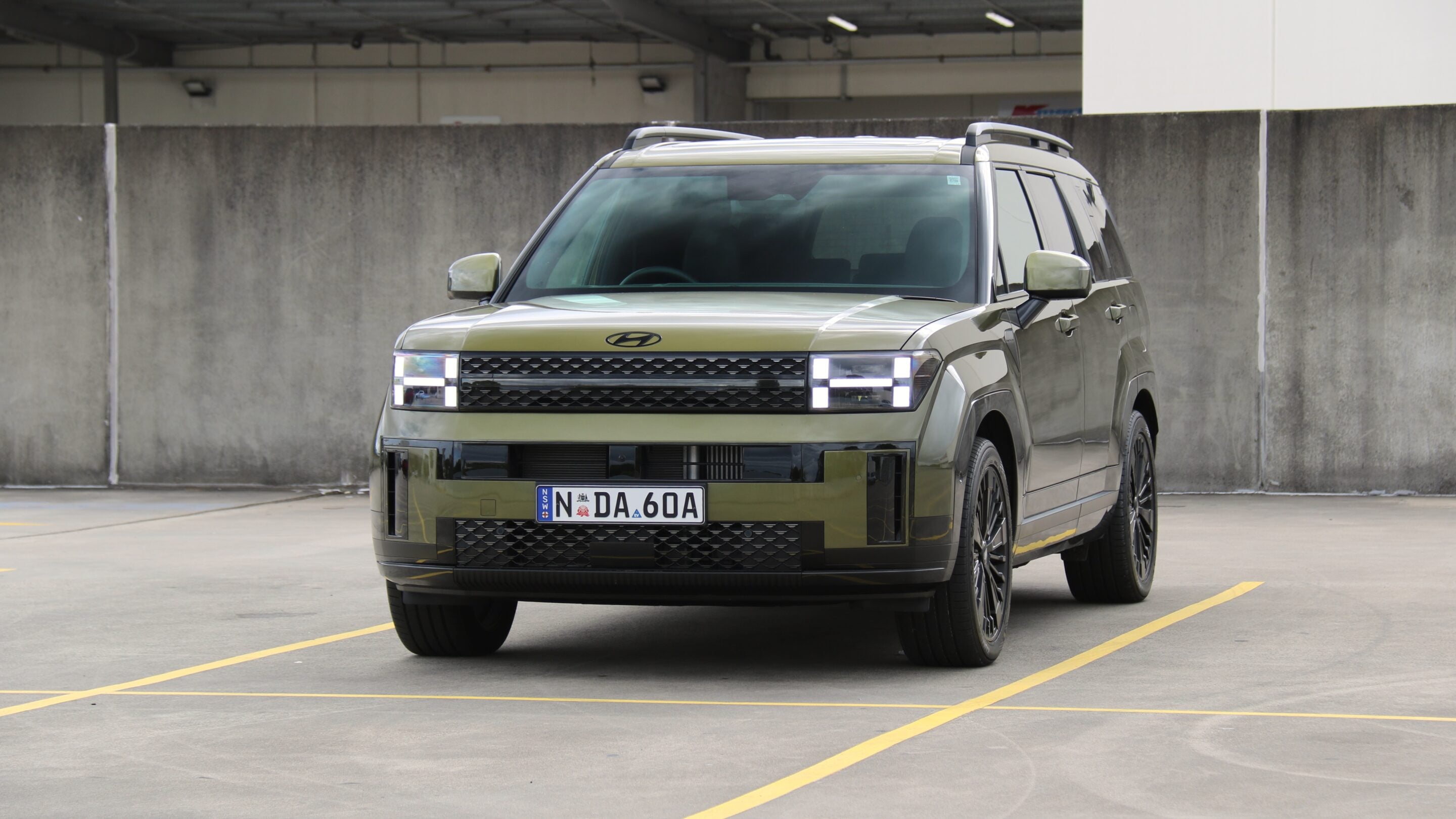
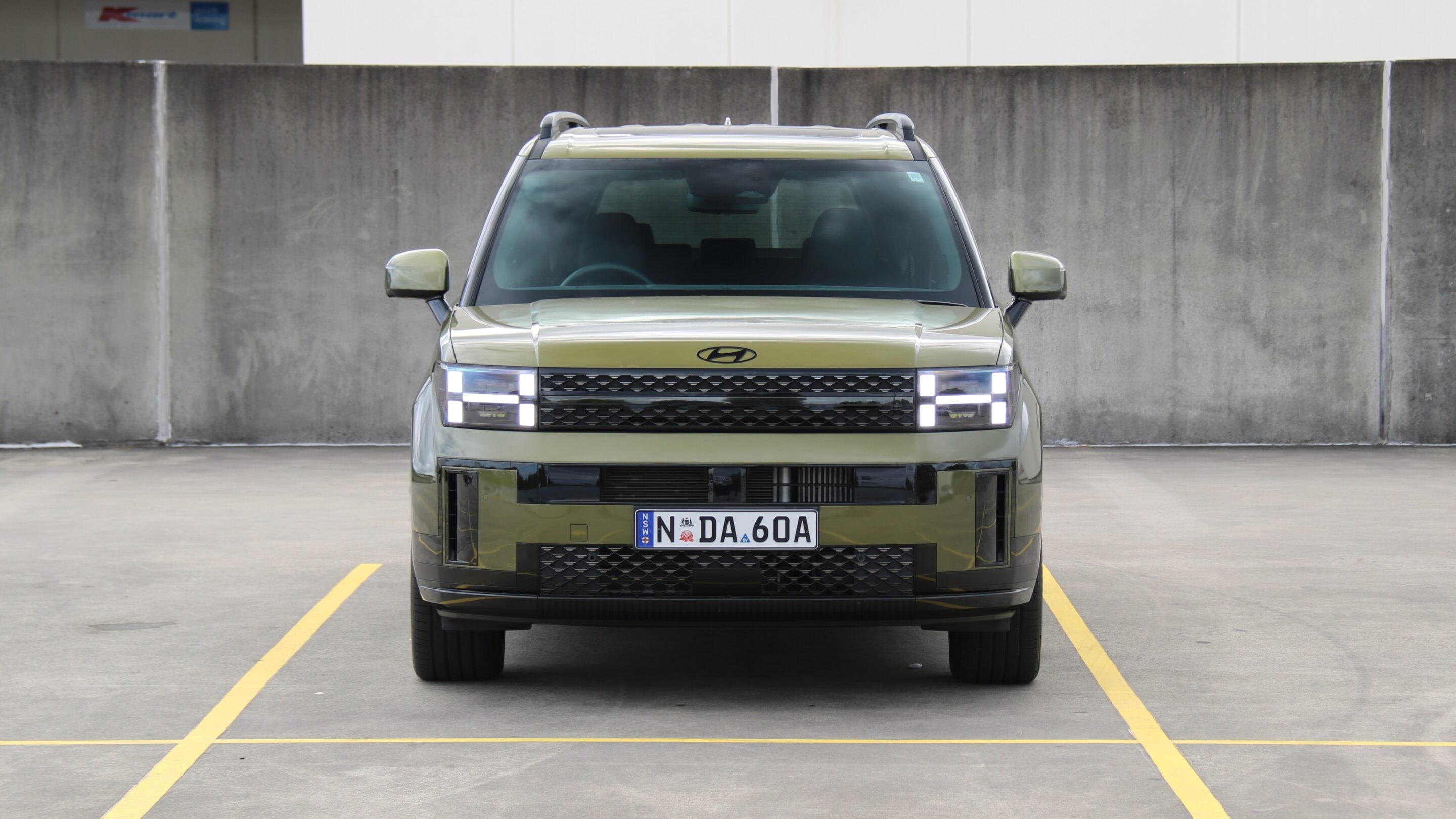
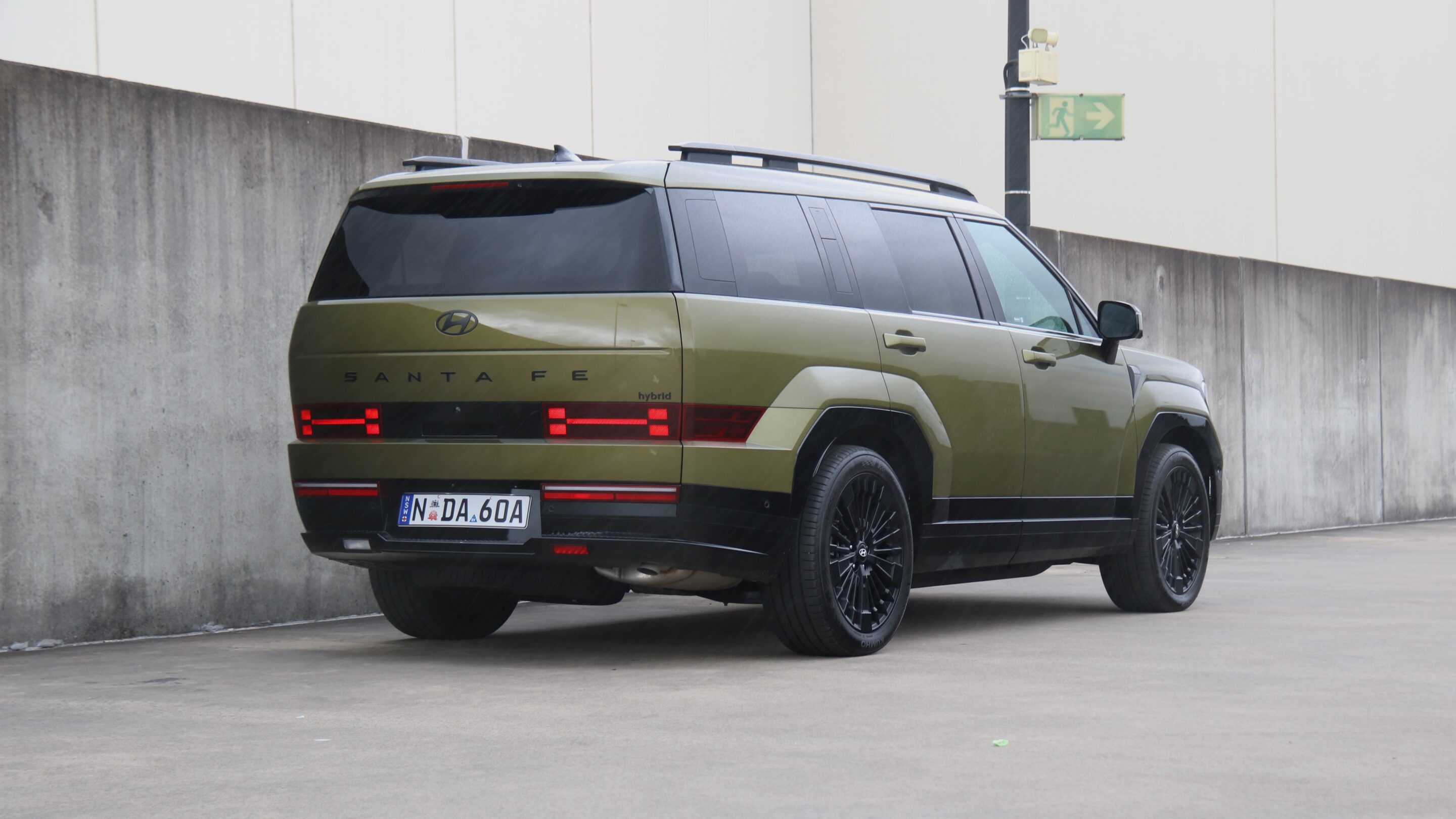
I can’t think of a car in recent memory that’s caused more stylistic controversy than the latest ‘MX5’ (that’s not a typo) generation of Hyundai Santa Fe. Upon its release, much both praise and hatred was thrown towards its design, with many online commenters – and they do tend to know everything – feeling that it was too boxy, or too ugly, or both. However, almost two years on from its local release, the Santa Fe is selling quite well sitting in third place in the large SUV under $80,000 segment. So have punters warmed to the styling, or is there more to this hybrid large SUV than meets the eye?
How much does the Santa Fe Calligraphy Hybrid cost to buy?
Prices for the Santa Fe range start at $54,000 plus on-road costs for the entry-level petrol, and $57,000 +ORC for the entry-level hybrid. Three models are available: base, mid-spec Elite and top-spec Calligraphy and our Calligraphy Hybrid test car sits at the top of the tree at $77,150 +ORC or currently $79,490 driveaway on a manufacturer special deal.
4
2026 Hyundai Santa Fe pricing (excluding on-road costs):
| Santa Fe petrol 2WD | $54,000 |
|---|---|
| Santa Fe Hybrid 2WD | $57,000 |
| Santa Fe petrol AWD | $57,650 |
| Santa Fe Hybrid AWD | $60,650 |
| Elite petrol AWD | $63,500 |
| Elite Hybrid AWD | $67,150 |
| Calligraphy petrol AWD | $73,500 |
| Calligraphy Hybrid AWD | $77,150 |
There are plenty of available hybrid competitors to the Santa Fe, including its twin-under-the-skin Kia Sorento, Mazda CX-80, Toyota Kluger and Peugeot 5008. In this company, the Santa Fe Calligraphy looks like good value for money. In particular against the Kluger, which is around $13,000 more expensive but less well equipped, less spacious and less premium-feeling inside.
Standard features on the Calligraphy include 20-inch alloy wheels, LED lighting, Nappa leather upholstery, electrically adjustable and heated/ventilated front seats, dual 12.3-inch displays, Bose audio, dual wireless phone chargers and a full suite of active safety features, including 10 airbags, autonomous emergency braking with a ride range of monitoring, adaptive cruise control, adaptive lane guidance, blind-spot monitoring with cameras, safe exit assist, tyre pressure monitoring and a 360-degree camera.
How fuel efficient is the Santa Fe Calligraphy Hybrid?
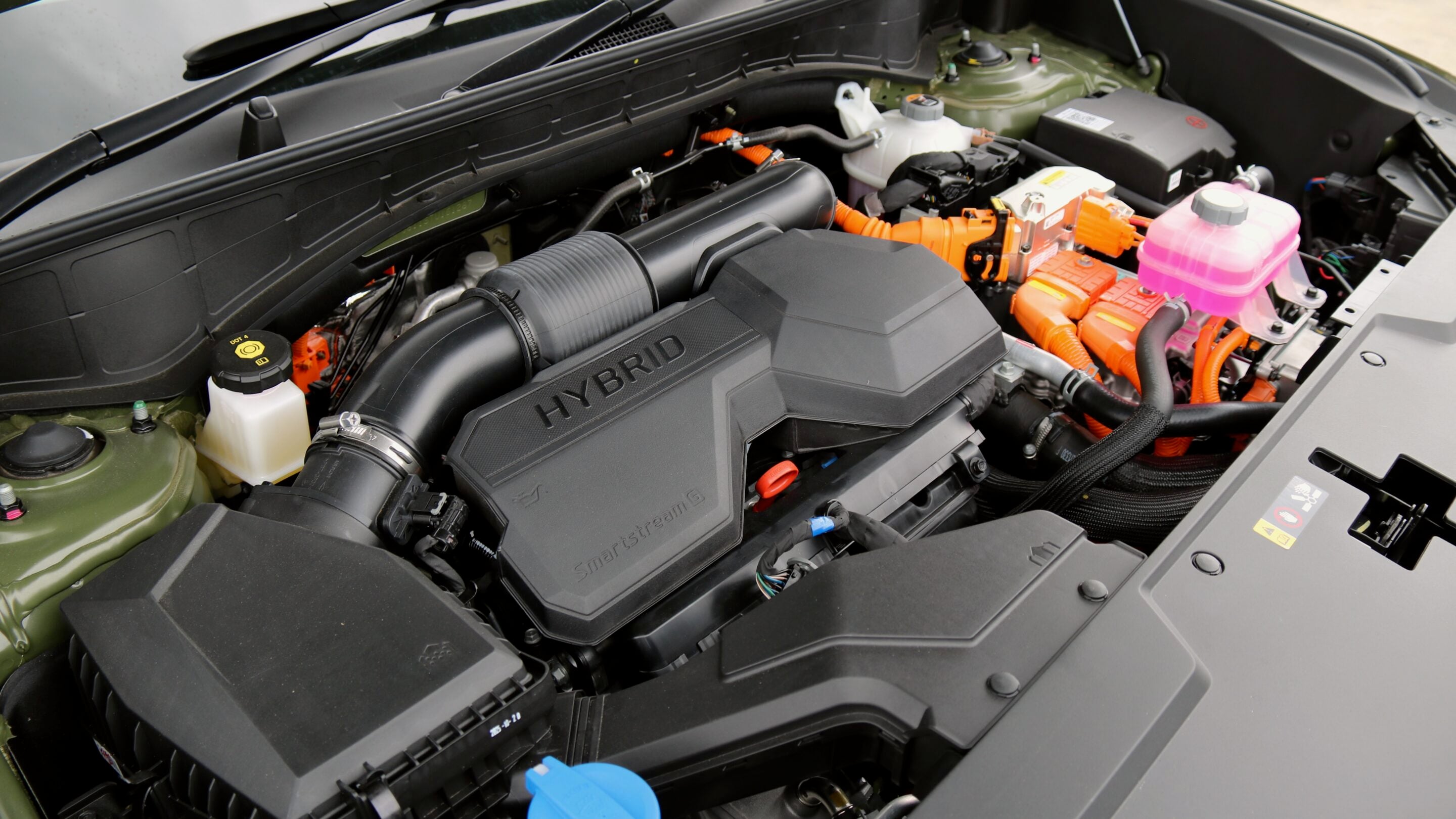
Two drivetrains are available in the Australian Santa Fe range: either a 206kW/422Nm turbocharged 2.5-litre petrol engine, or a 172kW/367Nm turbocharged 1.6-litre hybrid. The hybrid uses a six-speed automatic transmission – which is rare for hybrids as they typically use CVT-like transmissions – and all-wheel drive is standard on both the Elite and Calligraphy trims.
4
The hybrid Santa Fe is rated at 5.6L/100km on the combined cycle, with claimed CO2 emissions of 128g/km. In our testing, we achieved 6.8L/100km, though that was skewed towards highway driving where hybrids are typically less efficient. The Santa Fe Hybrid runs on 91 RON regular unleaded fuel, while it features a large 67-litre fuel tank.
Is the Santa Fe Calligraphy Hybrid good to drive?
As you’d expect for a modern day Hyundai product, the Santa Fe covers the driving bases well. It’s comfortable, easy to drive, reasonably refined and its active safety features are intuitively tuned with only the – easily defeatable – speed limit buzzer annoying. The adaptive lane guidance is particularly well tuned, actively assisting at highway speeds and reducing the load on long trips
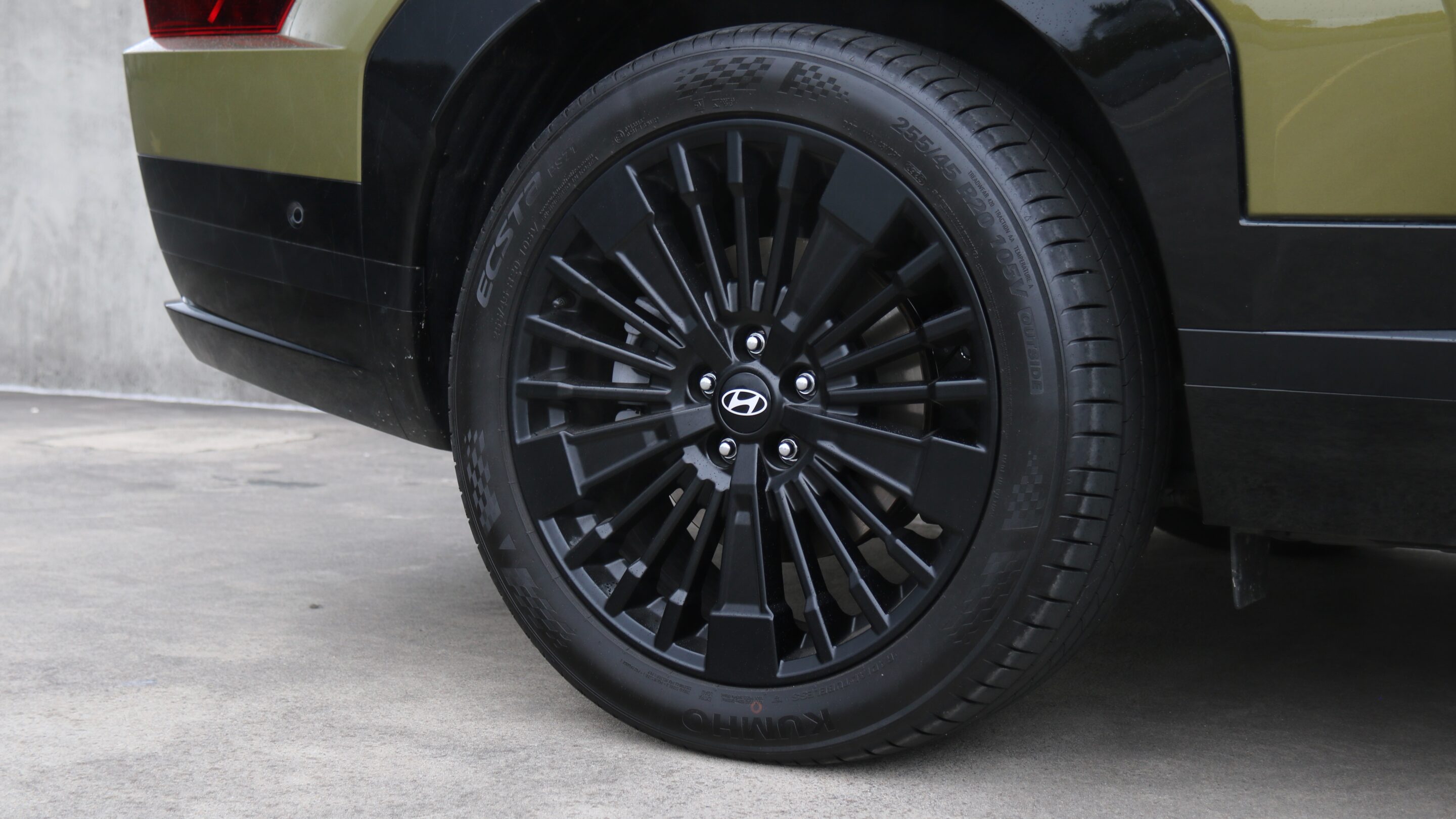
Hyundai Australia doesn’t tune the ride and steering in its products like it used to – and like sibling Kia still does – so that the Santa Fe’s ride quality isn’t quite as good as the previous model. It feels heavy, which the previous model didn’t, and the Calligraphy on its 20-inch wheels never feels truly settled in urban driving.
3
The Santa Fe is definitely still more comfortable than the too-firm CX-80, but a Kluger is more settled in a wider range of driving. On the handling front, the Santa Fe is a more composed handler than the Kluger, with a composed chassis and linear steering that weights up nicely in sport mode. There is a wide range of both regenerative braking settings and drive modes to better tailor the driving experience to a driver’s taste as well.
Hyundai is more than capable of making a good hybrid system, and the Santa Fe’s is a good example of that. It’s refined with switching between electric and petrol power, and the electric power is easy to keep on at lower speeds with a light foot. While Hyundai claims punchy 172kW/367Nm total outputs, the Santa Fe Hybrid doesn’t feel quite that powerful in real life and while an official 0-100km/h time isn’t claimed, quick research suggests that it will complete the sprint in around 9-10 seconds. It’s quick compared to the 107kW Peugeot, but some rivals like the six-cylinder CX-80 feel faster.
How luxurious is the Santa Fe Calligraphy Hybrid?
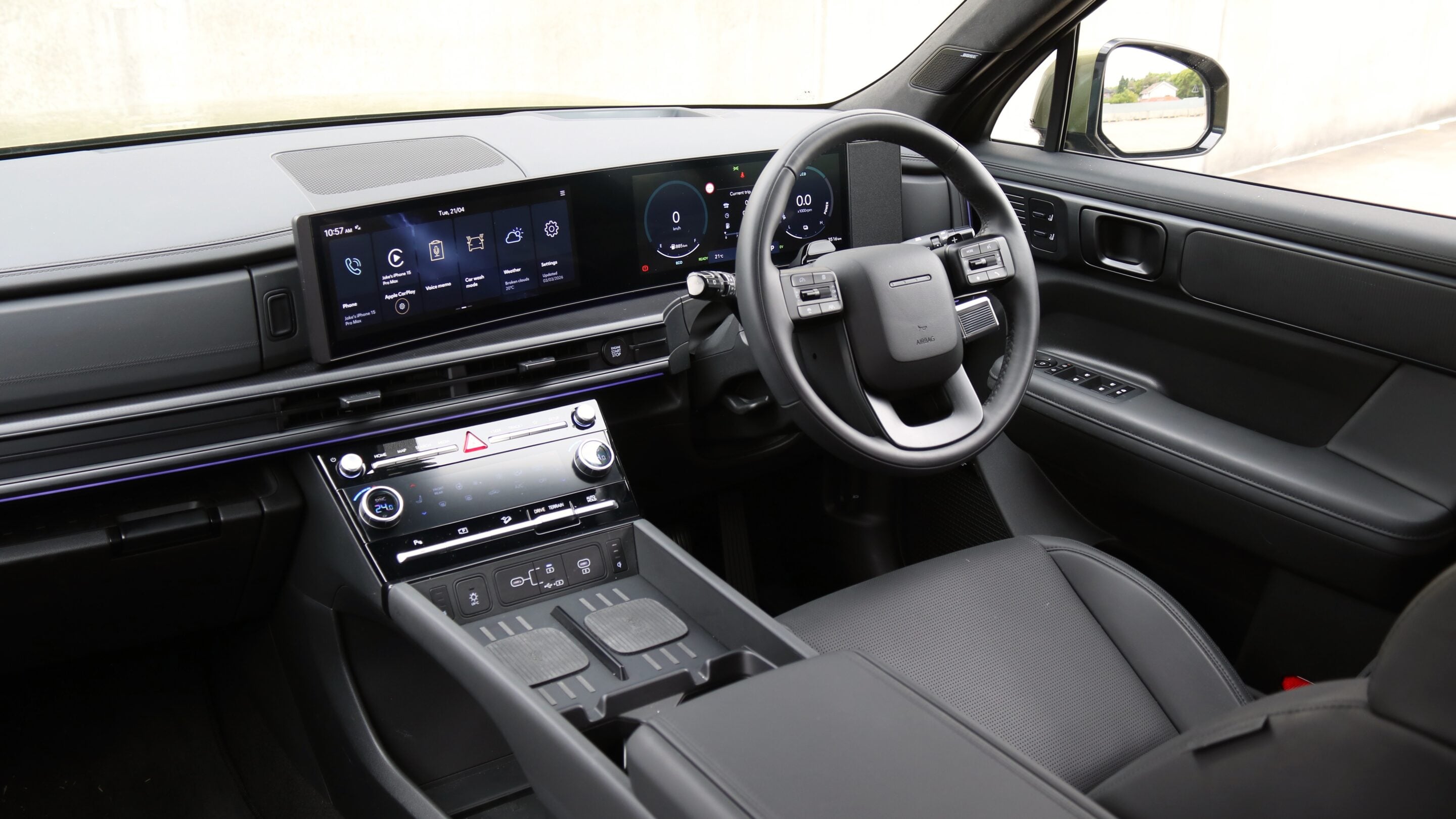
With the drastic change in exterior styling of the Santa Fe brought an equally large change inside, one that is still as successful today as it was when it was first released. There was nothing wrong with the previous model, but the current Santa Fe’s cabin is one of the best on the market thanks to its excellent design and practicality. While some may dislike the current model’s boxy styling, there’s no denying that it’s now far more practical than before.
4
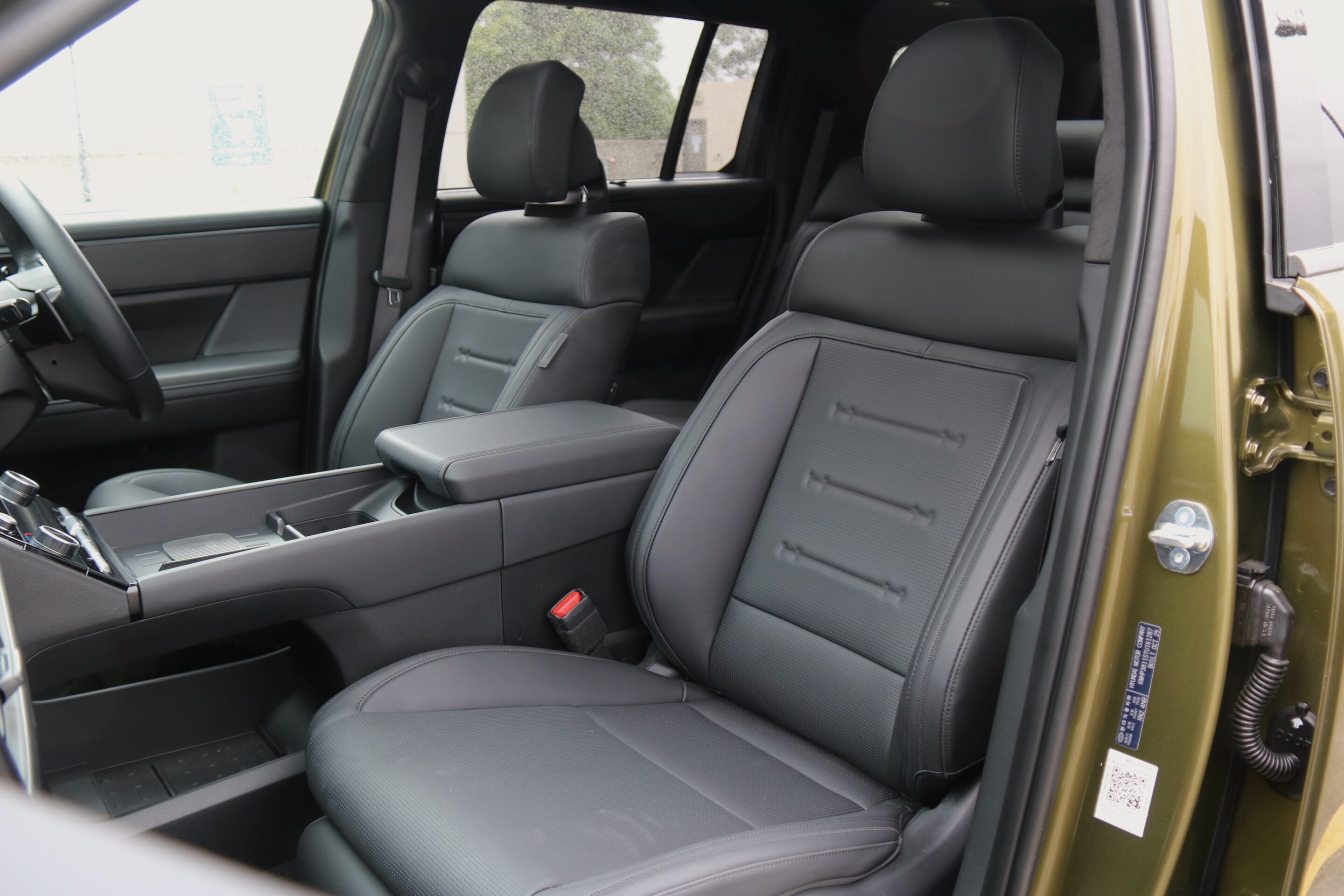
Where we think there is room for improvement is in the quality. The Nappa leather trim is rich and high quality, and feels like it will age well, while the padded and stitched materials on the door tops and upper dashboard also feel good. But some of the plastics used around the cabin do not feel like more than $80,000 once on-roads are included in the price, like the hard centre console plastics. An extra layer of finishing on some parts of the Calligraphy’s cabin would certainly add to its overall appeal.
Where the Santa Fe claws back points is with its in-car storage, which is best in class. The huge open centre console tray – which includes dual wireless phone chargers – also includes large cup holders, while a large second tray lies underneath. The box underneath the central arm rest is large, as are the door pockets and there’s even a second glovebox. Compared with the Mazda CX-80, the Santa Fe’s in-car storage is plentiful.
Hyundai’s current ‘CCnC’ infotainment software is projected through a crisp and bright 12.3-inch touchscreen that’s breathtakingly easy to use and loaded with features like live services, sat-nav, wireless smartphone mirroring and DAB+ digital radio. The Elite and Calligraphy models feature a 12-speaker Bose sound system, which is reasonably punchy.
6
Space in the second row of the Santa Fe is plentiful, even for taller adults with ample Leg- and headroom. The expansive second sunroof adds extra light and airiness, while amenities include a central armrest, bottle holders in the doors, two USB-C ports, air vents in the B pillar and even a large tray in the centre console. There are two ISOFIX points for child seats, as well as three top tether points.
Access to the third row is relatively easy, with the second row titling and sliding forward and once back there, headroom is great for a third row and legroom is fine too. There’s a fan speed controller, air vents, cup holders and two USB-C charging ports, plus both seats feature ISOFIX points, the latter of which is still rare in the industry.
What warranty covers the Santa Fe Calligraphy Hybrid?
The Santa Fe is covered by a five-year/unlimited km warranty, which can be extended up to seven years in total when serviced at a Hyundai dealership. The hybrid battery boasts separate eight-year/160,000km warranty coverage, which is pretty standard for the industry.
3
The Santa Fe requires servicing once annually or every 15,000km – whichever comes first – and five years/75,000km of servicing it costs a reasonable $2627 or $525 per year.
Should I buy a Hyundai Santa Fe Calligraphy Hybrid?
Overall, there’s quite a lot to recommend about the Hyundai Santa Fe Calligraphy Hybrid. It excels as a large family SUV, from its huge cabin space and plentiful storage to its comfortable seating, there is plentiful space for seven occupants – or six, if you choose the optional six-seat layout. It’s absolutely loaded with equipment, it’s thrifty in real life and covered by a solid warranty program.
Counting against the Santa Fe is that it doesn’t feel quick in real life, some parts of the cabin materials could be higher quality – it’s over $80,000 including on-road costs, after all – and its low speed ride quality could be improved. But aside from those potential issues, it’s clear why the Santa Fe is so popular in Australia and its strong attributes make it easy to get over potential styling hesitations.
Santa Fe specifications:
| Model | Hyundai Santa Fe Calligraphy Hybrid AWD |
|---|---|
| Price | $77,150 plus on-road costs |
| Drivetrain | 1598cc turbocharged DOHC four-cylinder hybrid, 1.49kWh lithium-ion battery |
| Engine outputs | 132kW/265Nm |
| Electric motor outputs | 47.7kW/264Nm |
| Peak combined power | 172kW @ 5600rpm |
| Peak combined torque | 367Nm @ 1000rpm – 4100rpm |
| 0-100km/h | 9-10 seconds (est.) |
| Transmission | Six-speed automatic, all-wheel drive |
| Combined fuel consumption | 5.6L/100km |
| Combined CO2 emissions | 128g/km |
| Fuel type/tank size | 91RON regular unleaded, 67 litres |
| Dimensions (l/w/h/wb) | 4830/1900/1770/2815mm |
| Boot capacity | 628 litres (all rows up), 1949 litres (second + third rows folded) |
| Kerb weight | 1990kg |
| Warranty | Five-year/unlimited km (extendable to seven years in total with dealer servicing) |
| Five-year/75,000km service cost | $2627 ($525 per year) |
| On sale | Now |
Santa Fe Calligraphy Hybrid standard features:
- 20-inch alloy wheels (with a full-size alloy spare wheel)
- Dusk-sensing automatic LED exterior lighting
- Front and rear LED daytime running lights
- LED rear fog light
- Rain-sensing automatic wipers
- Keyless entry with push button start, remote start and remote smart parking
- Roof rails
- Dual sunroofs
- Electric tailgate with easy open functionality
- Exterior mirrors with heating, auto-folding and auto-dropping in reverse
- Rear privacy glass
- Nappa leather upholstery
- Suede headliner
- 14-way driver/10-way front passenger electric seat adjustment
- Heated and ventilated front seats
- Heated leather-wrapped steering wheel with paddle shifters
- Heated outboard middle row seats
- Dual-zone automatic climate control with rear fan speed controller
- Head-up display
- Bluelink live services with over-the-air updates
- 12.3-inch digital driver’s display
- 12.3-inch touchscreen
- Satellite navigation with live traffic
- Wireless Apple CarPlay and Android Auto
- AM/FM/DAB+ digital radio
- Bluetooth calling and audio streaming
- 12-speaker Bose sound system
- 6x USB-C chargers
- 2x wireless phone chargers
- UV steriliser tray
- Interior ambient lighting
- 10x airbags
- Autonomous emergency braking (AEB) with pedestrian, cyclist and intersection assistance
- Lane keeping assistance with adaptive lane guidance
- Adaptive cruise control with stop and go functionality
- Blind-spot monitoring with rear cross-traffic alert (with braking)
- Blind-spot camera
- Safe exit assist
- Automatic rear braking
- Driver attention alert
- Auto high beam
- 360-degree camera
- Front, side and rear parking sensors
- Tyre pressure monitoring
- Anti-theft alarm
- Various drive modes such as eco, sport, snow and sand
8.2
/10
Score
Score breakdown
7.5
Safety, value and features
9.0
Comfort and space
7.5
Engine and gearbox
8.0
Ride and handling
9.0
Technology
Things we like
- Distinctive design throughout
- Quite spacious inside
- Good to drive for a large SUV
Not so much
- Calligraphy is well equipped but expensive
- Interior quality doesn’t feel $80k
- Doesn’t feel as punchy as the numbers suggest
Follow WhichCar/Wheels on Google
Click the button below to make WhichCar by Wheels a preferred source for your news.

We recommend
-
 Best Small SUVs
Best Small SUVs 2026: Hybrid
Hybrid small SUVs are drawing more attention from Australian new car buyers through a combination of improved efficiency, lower running costs and greater flexibility for everyday driving.
-
 Features
Our favourite hybrid medium SUVs to help you save money at the bowser
Despite high fuel prices, mid-size SUVs remain the most popular car segment in Australia. Here are our favourite hybrid models that will save you money.
-
 Features
Cars that will significantly reduce your fuel bill NOW
Our rundown of the best new car options to reduce fuel use significantly as Aussies endure record high petrol prices.