Reviews

Gallery 1
8.1
/10
Score
Score breakdown
8.5
Safety, value and features
8.0
Comfort and space
8.0
Engine and gearbox
8.5
Ride and handling
8.0
Technology
Things we like
- Cabin comfort and tech
- Excellent ride laden and unladen
- Price is impressive
Not so much
- Some hard plastics in cabin
- Seatbelts aren’t height adjustable
- No rear window available
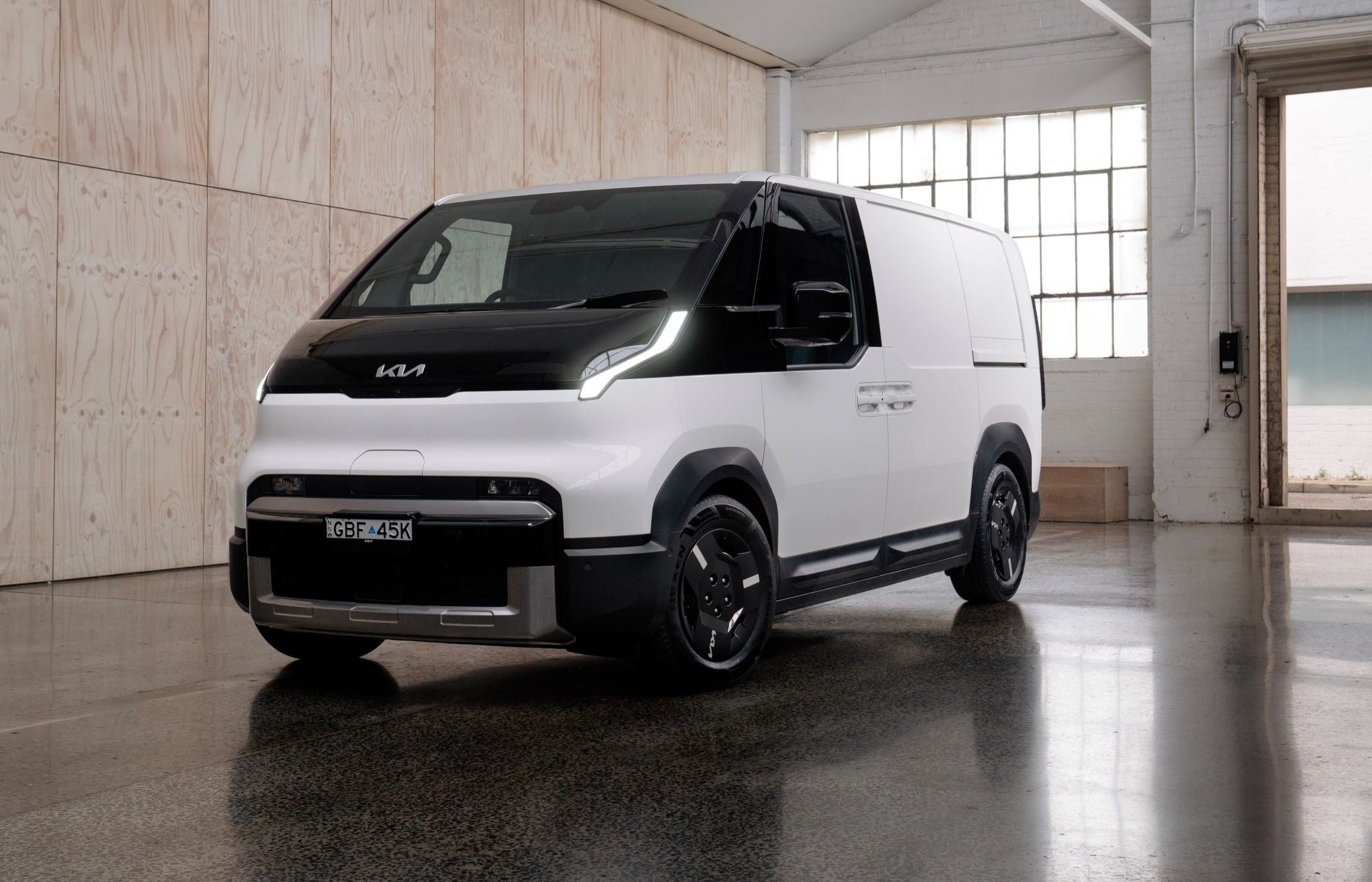
The headline story from the release of the new PV5 was always going to be price – and for business owners, that’s a good thing. Starting at $55,990 before on-road costs, the PV5 is very deliberately priced to go head-to-head with the likes of Toyota HiAce and Hyundai Staria – segment favourites that have diesel powertrains. It’s the first time a mainstream manufacturer has made that leap, with the PV5 some $14,000 cheaper before on-road costs than the ID. Buzz Cargo.
What that means is if you want an electric van, price isn’t the barrier it might have been. Post purchase, the cost of ownership is also a strong point for the PV5, sidestepping fluctuations in fuel pricing and with cheaper running costs across the life of the van. If you’re running a fleet, as many businesses are, that’s a good thing.
As the PV5 rolls out, there will be plenty of options available, not the least of which are specific load area fit-outs from local manufacturers tailored to suit your business needs. At the launch, we looked at a PV5 that had been set up for an electrician and the quality of the fit-out was excellent.
2
For comparison, at the time of the PV5 launching, Volkswagen had shaved $10,000 off the smartly-styled ID. Buzz Cargo, which now starts from $69,990 before on-road costs. Over in the conventional van segment, a HiAce diesel with an automatic transmission started from $55,990 before on-road costs and the Hyundai Staria started from $53,880 before on-road costs.
While an electric van won’t work for all tradies or small business owners, those who want one can avoid an eye-watering price tag to park one in the workshop or warehouse. It’s a smart move from Kia, determined to remove as many obstacles as it can from the purchase of an electric commercial vehicle.
Standard features include the Clear White exterior and Deep Navy cloth interior, 16-inch steel wheels with covers, LED headlights and DRLs, a 7.5-inch driver’s display, 12.9-inch infotainment screen, wireless phone charging, side-hinged rear doors, vehicle-to-load charging capability, over the air updates, a tyre mobility kit, and a comprehensive list of active and passive safety equipment.
How powerful is the Kia PV5 Cargo?
Available in one specification, the PV5 Cargo is powered by a front-mounted, single electric motor, and hence FWD. While some have opted for RWD, Kia is adamant that the FWD layout – on the manufacturer’s dedicated E-GMP.S platform, makes for a more flexible rear load space despite the presence of a hefty battery.
On that subject, there’s a 71.2kWh battery pack, with the electric motor sending 120kW and 250Nm to the front tyres. Claimed range is as far as 416km on the combined cycle, with a claimed energy consumption of 19.1kWh/100km. Unladen, around town in regular city traffic, we saw a live reading consistently in the low 17 range.
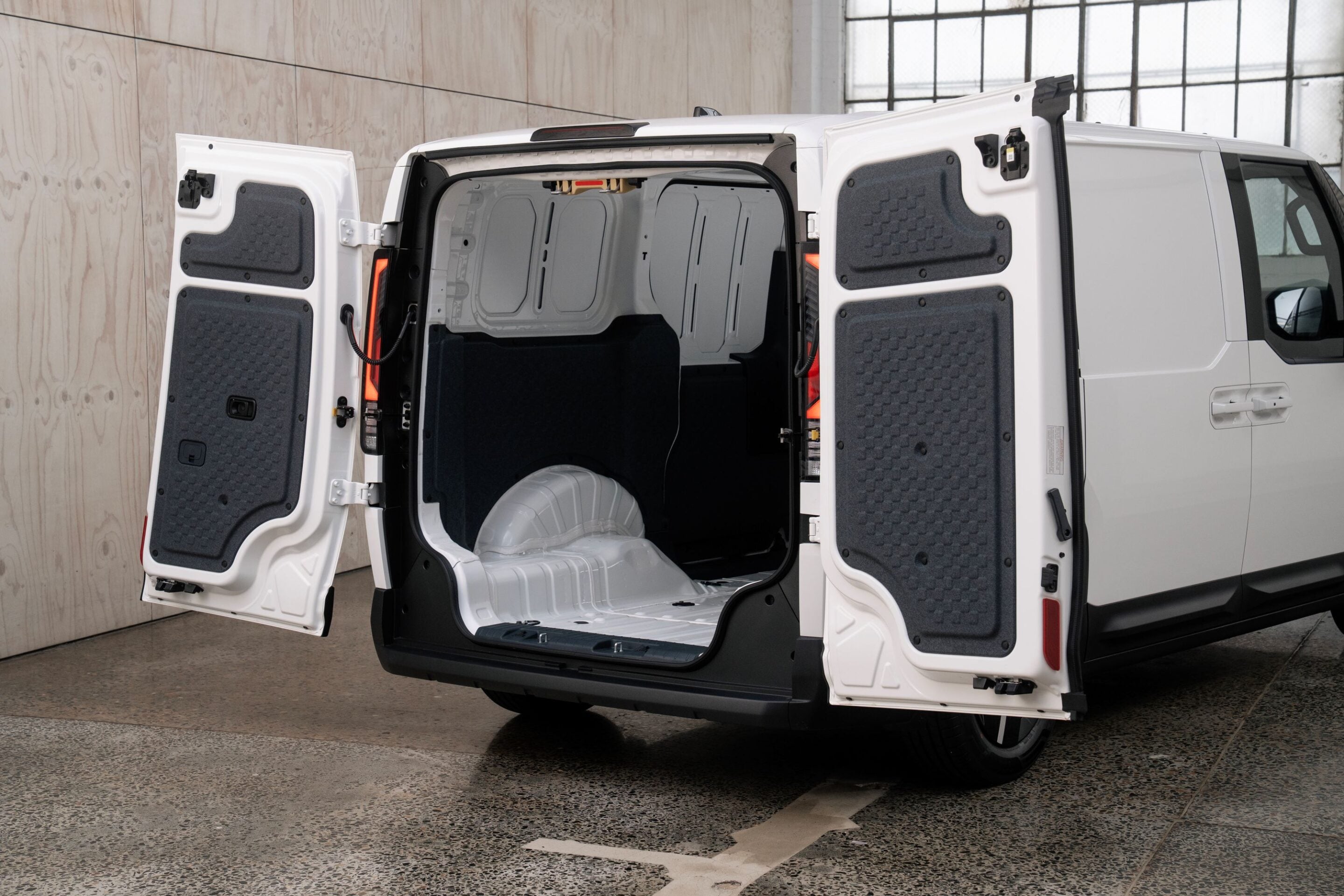
Kia quotes cargo space at 4420 litres of useable space, a kerb weight of 1910kg and a maximum payload of 740kg. Those numbers are competitive with the other electric vans – of a similar size – currently on sale.
3
How fast can the Kia PV5 Cargo charge?
The PV5 can be charged at home on a regular power point or wall box, or at a public fast charger. It’s a pretty hefty battery pack though, so if you’re parking the van at home overnight, we would recommend a wall box.
On a 350kW fast charger – at the PV5’s maximum intake rate of 128kW – you’ll be able to charge it from 10 to 80 per cent in around 30 minutes. With an 11kW wall box and AC charging, the PV5 will get from 10 to 100 per cent in approximately six and a half hours.
The wall box I use at home inputs almost 7kW regularly, so you could round that time out to nine hours or so on even the most cost effective home charging set up.
For the sake of the exercise, and because we get asked so often, if you plugged the PV5 into a regular powerpoint at home with the battery completely flat, given the 2.5kW average output rating it would take approximately 28 hours to get to 100 per cent. That said, if you own an electric van – or a fully electric vehicle of any kind really – installing a wall box at home is the smartest move you can make.
How energy efficient is the Kia PV5 Cargo?
As noted above, Kia claims a range of 416km from the 71.2kWh battery pack, with combined energy consumption of 19.1kWh/100km. You may better that claim around town in stop/start traffic, such is the smarts of the regenerative braking system (controllable via paddle shifters), but you’ll also use more on a prolonged freeway run. We saw live readings below the claim on the city part of our launch drive, indicating that those of you who drive primarily around town will potentially better the 416km range claim.
Interestingly, on public roads in Germany, the Kia PV5 set a Guinness-verified world record by covering 693.38km on a single charge while carrying its maximum permitted payload. I’m not suggesting you’ll achieve that in regular driving, but it’s a stat worth noting.
Is the Kia PV5 Cargo practical?
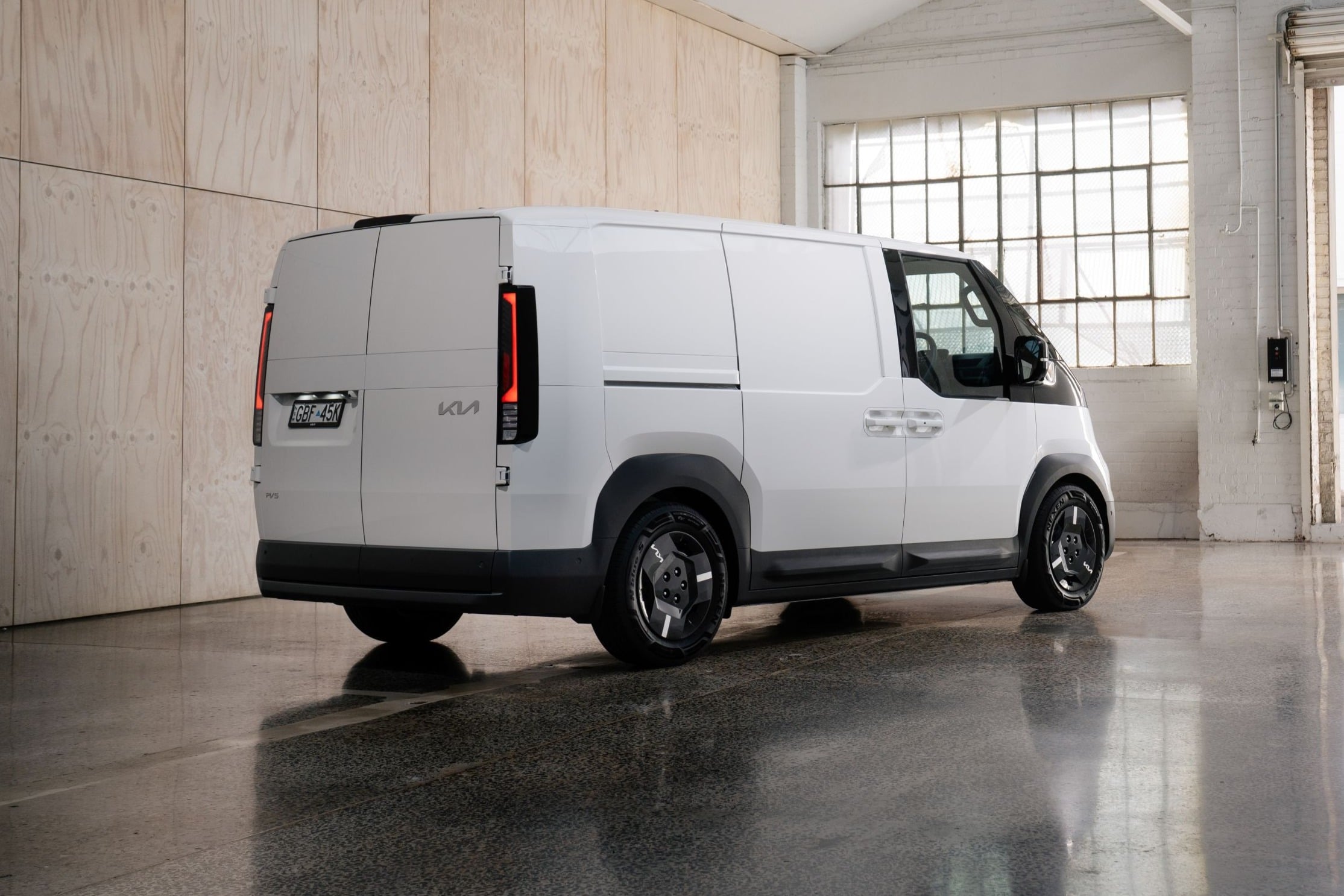
In short, yes. There’s a cleverness to the way Kia has designed the PV5 that maximises the space on offer, and hides, as best as possible, the heft and size of the battery pack. Some of that comes from the reality of using a dedicated electric platform, rather than an internal combustion platform modified to suit the application, but a lot of it comes down to the practicality of the design and execution.
5
Access to the load space at the rear is via side-hinged doors, which to my mind are more practical than the top-hinged version. As the owner of a Hyundai iLoad that I use to move heavy items often, I’m torn on the top-hinged door I have. It shelters me from the rain, but it’s a pain to tuck under and annoying when a forklift is required. If I had my time again, I’d go with the side-hinged doors that the PV5 has.
With a raised floor, you’ll be able to avoid the wheel arches, but even with them in play, space is useful. The taller door openings, side and rear, mean tall people can climb in and out easier, and combine with the lower floor height to make access as easy as it can be.
The rear cargo space measures in at 2255mm long, 1565mm wide and 1520mm high (maximum dimensions). Keep in mind that width measurement is narrower when you measure between the wheel arches.
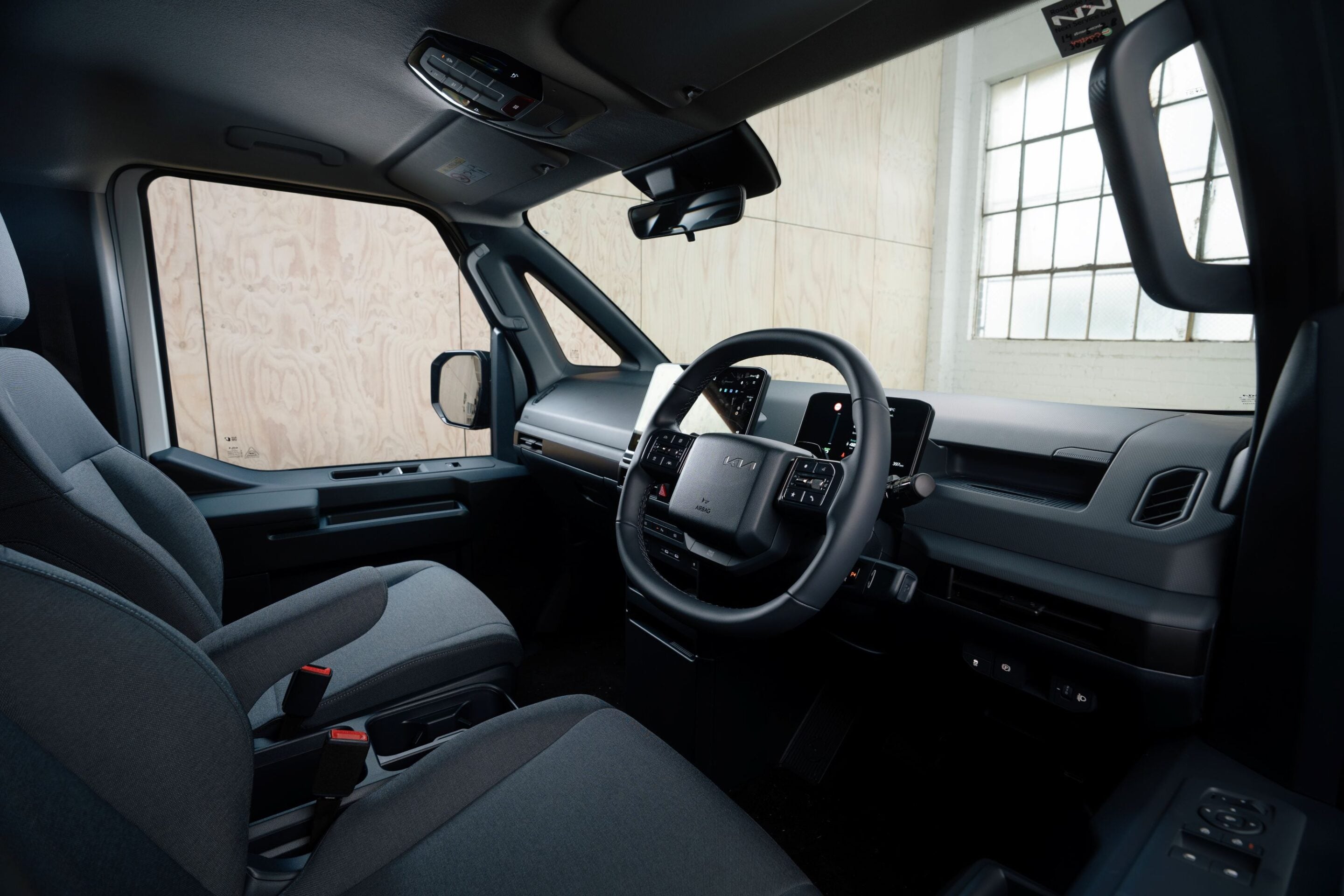
Cabin amenity and ergonomics are excellent, with only a couple of hard plastic surfaces and the lack of adjustable seatbelts letting the PV5 down. It’s an otherwise familiar Kia cabin execution from behind the wheel, ensuring the PV5 is as enjoyable to drive as it is practical. There’s storage where you want it, the infotainment screen is huge, and forward visibility is excellent.
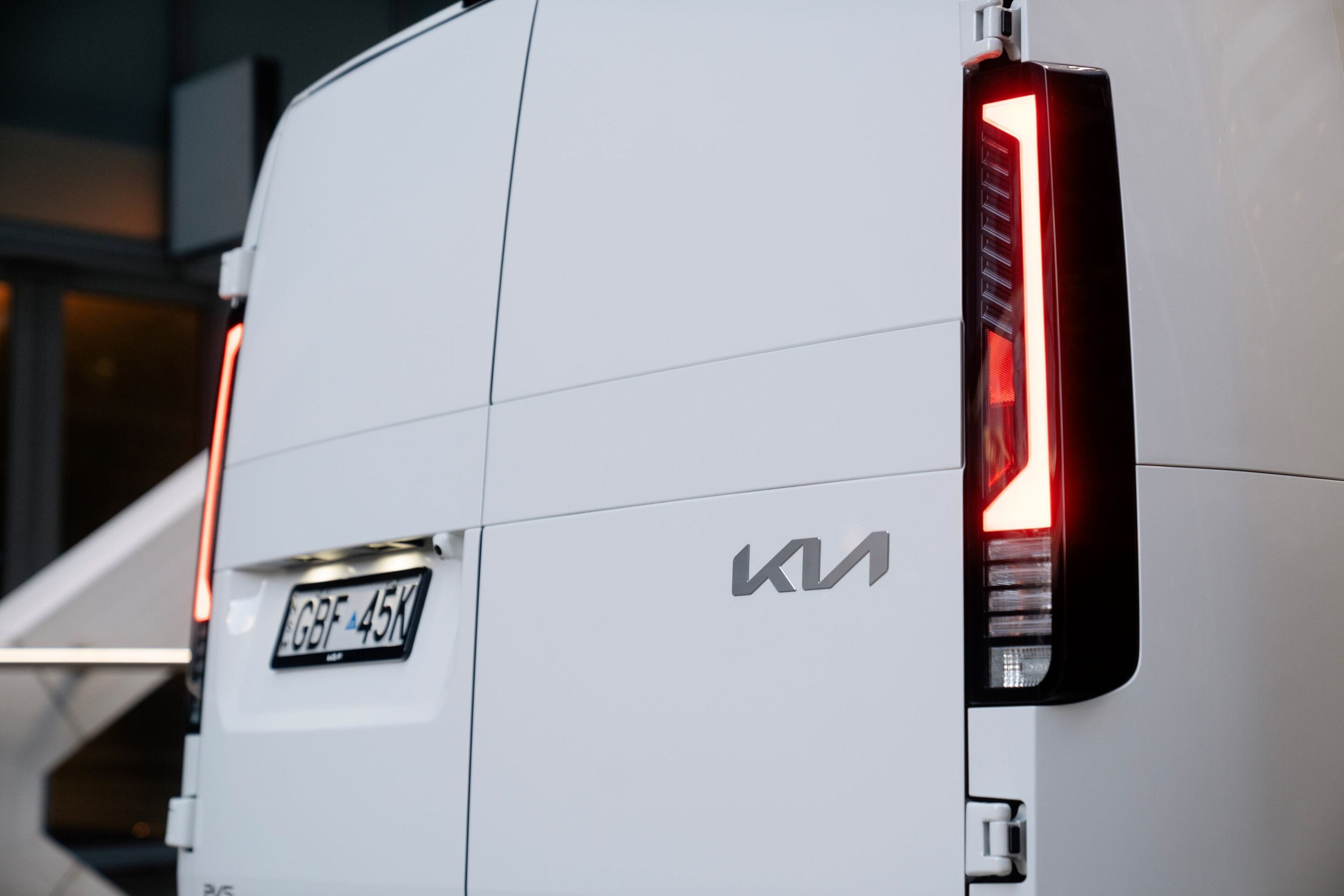
While the lack of a rear window – even as an option – might be a concern for some, the high-res camera system means you quickly get used to it. Parking and manoeuvring the PV5 is a cinch in town. PV5 is quiet inside the cabin, too, even at highway speed.
On the road, the headline 120kW and 250Nm power and torque figures are more than enough to tackle the daily grind faced by tradies, small businesses and delivery drivers.
With a WLTP-claimed 416km (which you should be able to get close to in the city), it’s useful, too, and the vehicle-to-load capability means tradies can charge their cordless tool batteries on the go.
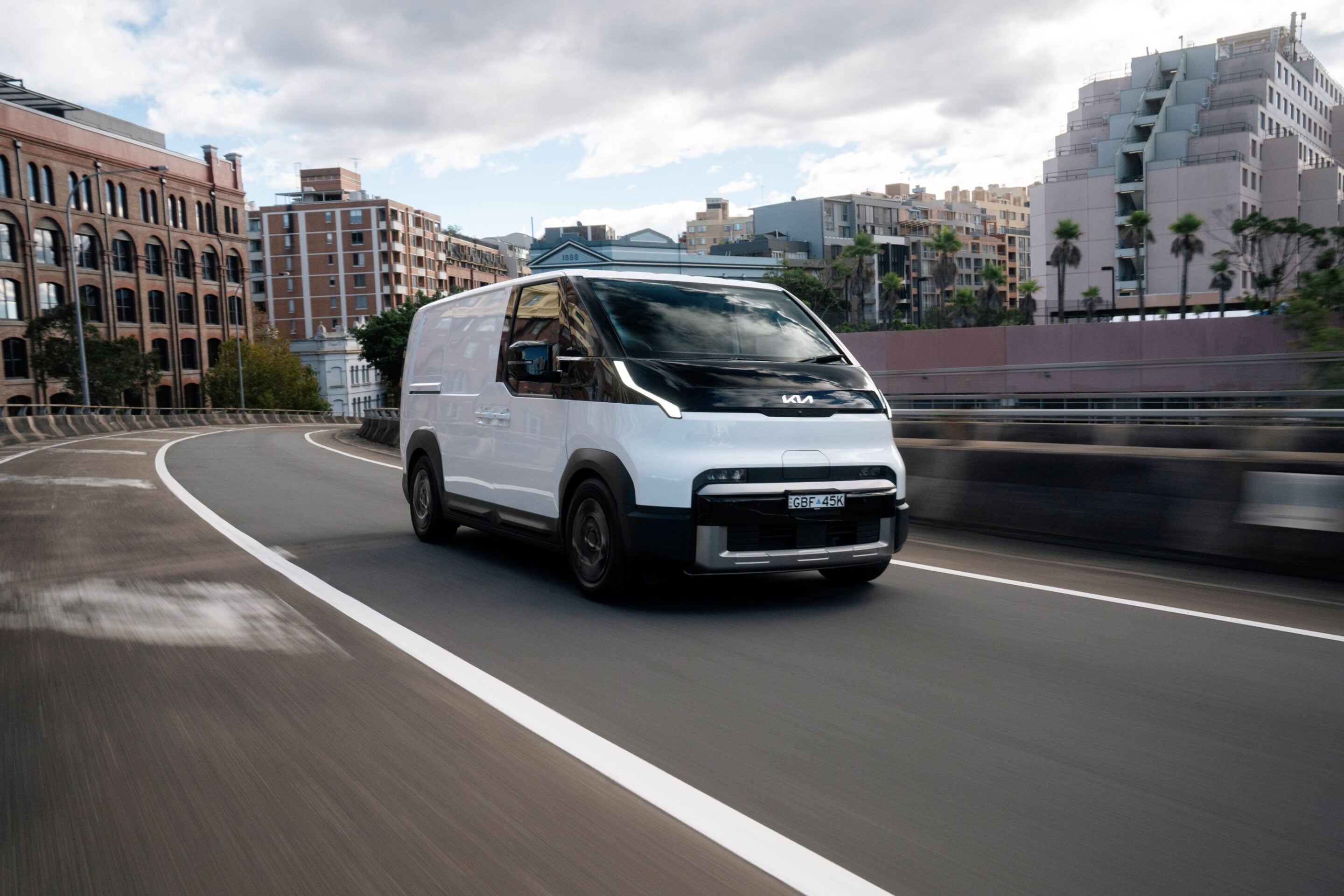
A factor that comes in for mention here is the local suspension tune – as per the Kia passenger car brief. Shocks, springs, bushes and electronic mapping have all been tweaked to deliver a more Australian-required ride and handling combination. Having not driven the PV5 without the tune, it’s hard to know what the Kia Australia engineering team started with, but the result is excellent. The steering has a heft to it that some electric vehicles lack, removing the computer-game disconnected feel you might expect. Low speed stuff is still easy, though.
1
On the road, the PV5 impressed unladen and then with 400kg strapped into the load space. It’s ability to soak up sharp edges and speed humps is as good as any conventional van I’ve tested, laden or unladen. The ride quality really did surprise, in what could otherwise feel like a heavy vehicle, given the weight of the battery pack.
PV5 remained comfortable and quiet at any speed, and those of you who don’t carry a lot of weight in the back, won’t feel like you need to in order to settle the ride down. We liked the steering and brake response at launch, and the regenerative braking – which you control via paddle shifter – doesn’t feel disconnected or too sharp. A van is a tool of trade more than enjoyment, but so far as commercial vans go, the PV5 is a good one to drive.
What warranty covers the Kia PV5?
The new PV5 gets a Platinum overall rating and a performance score of 91 per cent, so for the safety conscious buyer, it ticks that box. It’s covered by Kia’s seven-year/150,000km commercial vehicle warranty, which includes the battery pack and motor components. Kia also offers capped price servicing, which is required every 24 months or 30,000km, out to eight years. That will cost $2423 across the first eight years of ownership.
Should I buy the Kia PV5?
The new PV5 isn’t just a quality electric van. It’s a quality van in any company. And while the Volkswagen ID. Buzz set the tone for what an electric van could be, the PV5 has changed the game with much sharper pricing. Beyond that, it’s excellent to drive, and provides a strong life of ownership equation. With the price barrier removed, inner city businesses would be well advised to take a look at the PV5.
Kia PV5 standard equipment
- 16-inch steel wheels with hubcaps
- LED headlights
- LED DRLs
- 7.5-inch driver display
- 12.9-inch infotainment screen
- Cloth seats
- Driver seat lumbar
- Wireless phone charging
- Dual sliding doors (manual)
- Twin swing rear doors
- Paddle shifter region braking
- Column shifter
- Smart key and push button start
- Electronic park brake
- Two USB-C chargers
- Interior V2L outlet
- Rain sensing wipers
- Over the air updates
- Smart Cruise Control
- Surround View Monitor
- Blind-Spot Monitor
- Intelligent speed limit assist
- Highway driving assist
- Blind Spot Collision Avoidance
- Parking distance warning
- Rear view camera
- Driver monitoring camera
- Centre Side airbag
- Exterior V2L adaptor
1
Kia PV5 specs
| Price | $55,990 before on-road costs |
|---|---|
| Motor | Single electric motor |
| Drive type | FWD |
| Power | 120kW |
| Torque | 250Nm |
| Battery size | 71,2kWh |
| Range | 416km (WLTP) |
| Charge time | 30m (10-80% at max charge speed) |
| DC charge speed | 128kW |
| Payload | 740kg |
| Kerb weight | 1910kg |
| Warranty | Seven years/unlimited kilometres |
| Six-year service cost | $1650 |
8.1
/10
Score
Score breakdown
8.5
Safety, value and features
8.0
Comfort and space
8.0
Engine and gearbox
8.5
Ride and handling
8.0
Technology
Things we like
- Cabin comfort and tech
- Excellent ride laden and unladen
- Price is impressive
Not so much
- Some hard plastics in cabin
- Seatbelts aren’t height adjustable
- No rear window available
Follow WhichCar/Wheels on Google
Click the button below to make WhichCar by Wheels a preferred source for your news.

We recommend
-
 Best Vans
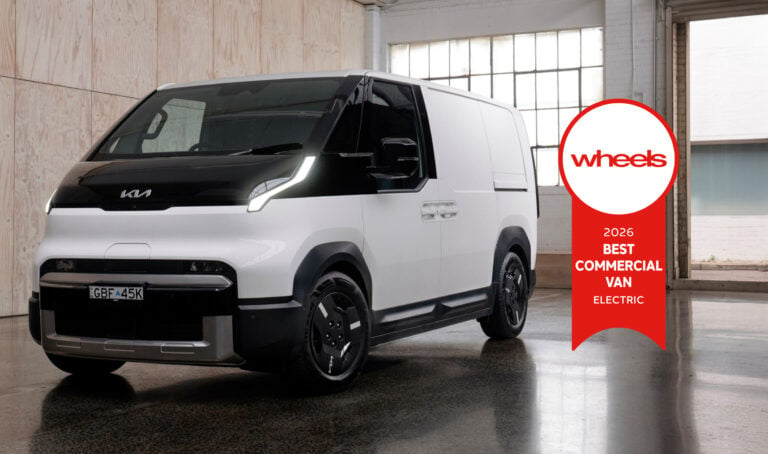
Best Commercial Vans 2026: Electric
The latest generation of electric vans offers genuine fleet appeal, but we found only one delivered the strongest overall package.
-
 Best Vans
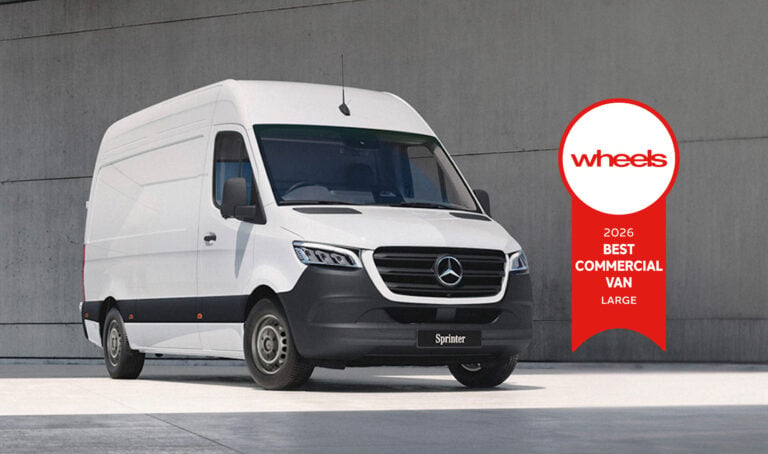
Best Commercial Vans 2026: Large
From fleet operators to owner-drivers, today’s large vans offer greater versatility, stronger safety and more car-like driving manners than ever before
-
 Best Vans
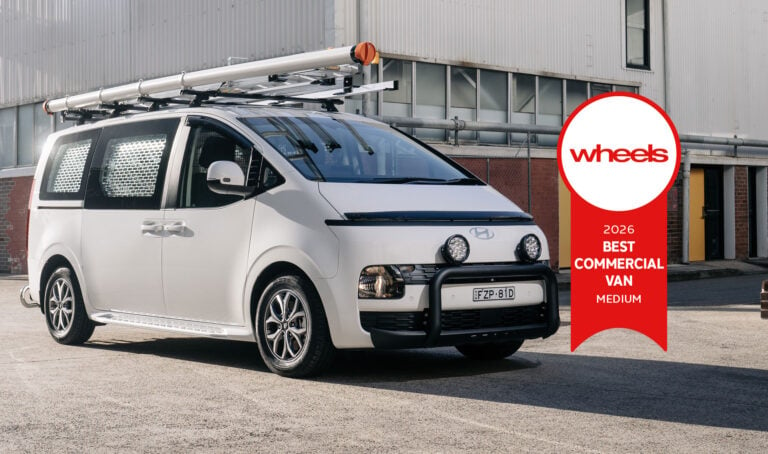
Best Commercial Vans 2026: Medium
Modern medium vans deliver far more than cargo space, combining SUV-like comfort, advanced safety and strong diesel performance for the demands of Australian businesses.