Best Medium SUVs

Gallery 1
Contenders
- Mazda CX-60
- Subaru Forester
- Honda CR-V
- Skoda Karoq
- Volkswagen Tiguan
- Peugeot 3008
- Toyota RAV4
- Geely EX5
- Tesla Model Y
- XPeng G6
- Nissan Ariya
- Zeekr 7X
- BYD Sealion 6
- BYD Sealion 7
- Kia EV5
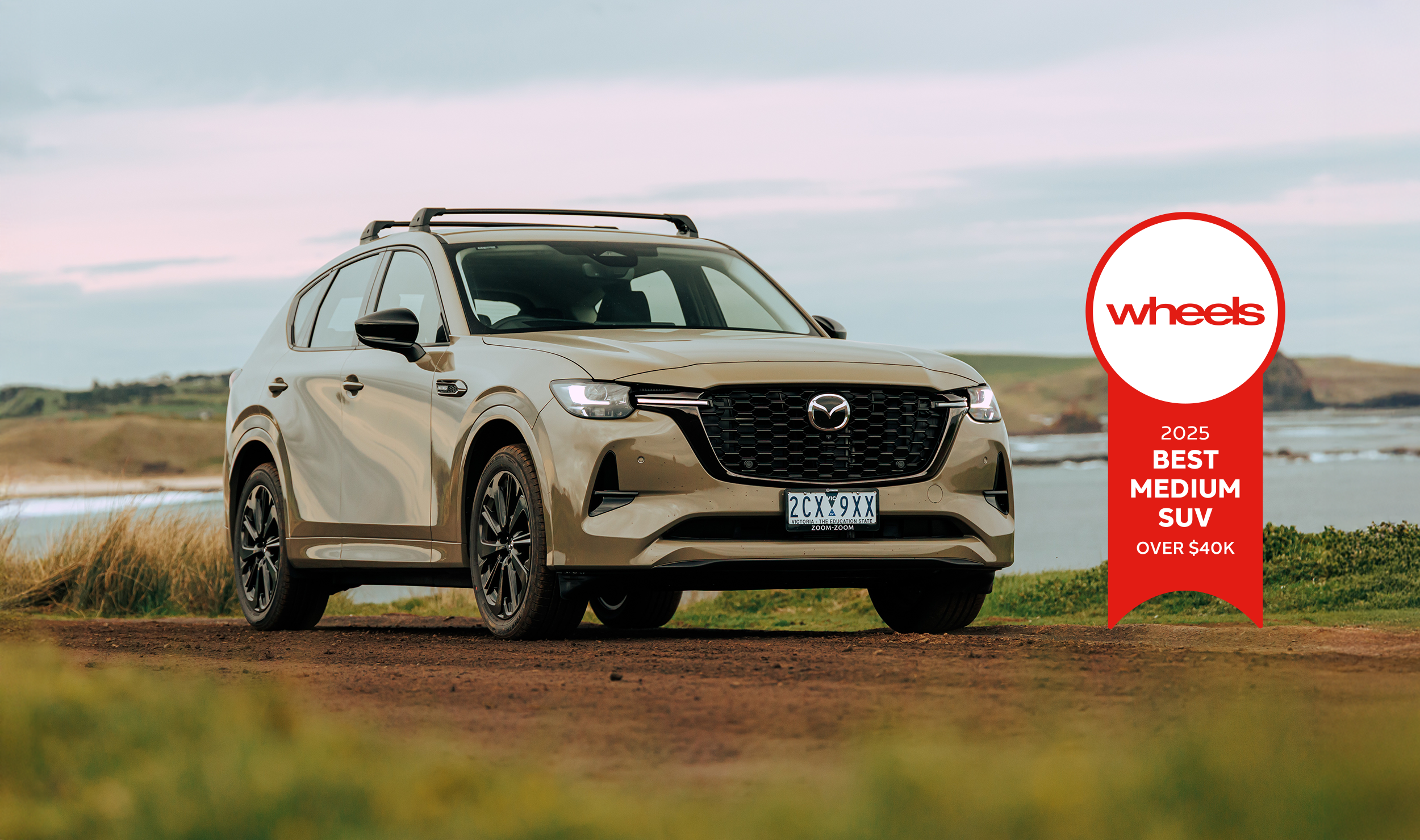
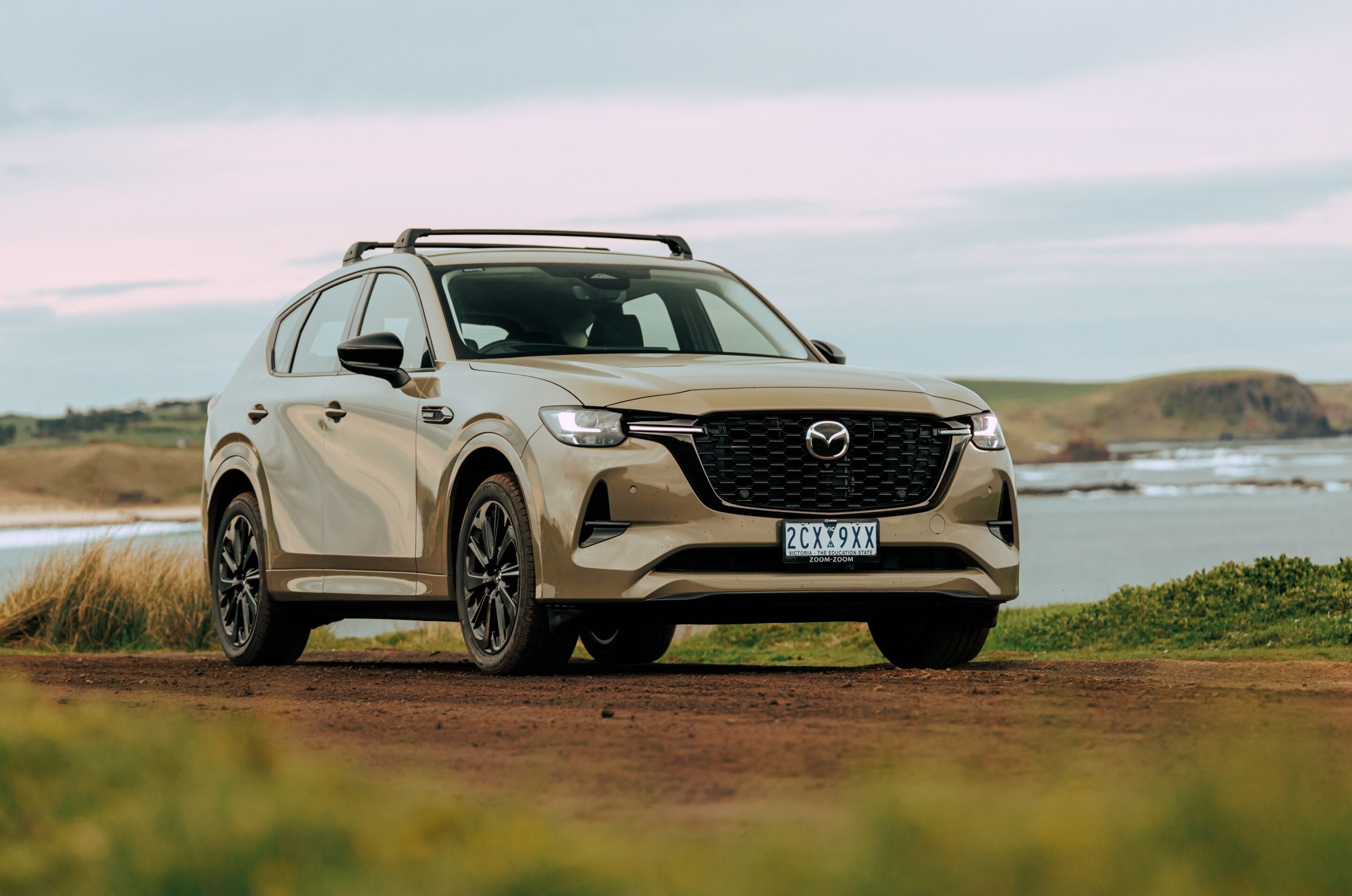
Winner: Mazda CX-60
1
Price: From $44,240 plus on-road costs
Drivetrains/fuel economy/CO2 emissions: 2.5-litre four-cylinder, 8-speed auto, 2WD, 138kW/250Nm, 7.5L/100km; 3.3-litre turbo six-cylinder, 8-speed auto, AWD, 209kW/450Nm, 7.4L/100km, 174g/km; 3.3-litre six-cylinder turbo-diesel, 8-speed auto, AWD, 187kW/550Nm, 5L/100km, 132g/km; 2.5-litre four-cylinder plug-in hybrid, 8-speed auto, AWD, 241kW/500Nm, 2.1L/100km, 49g/km
Dimensions (length/width/height/wheelbase): 4740/1890/1675/2870mm
Bootspace: 477L – 1726L
Warranty/roadside assistance/service intervals: Five-year/unlimited km, five years, annual/every
10,000km (diesel)-15,000km (other drivetrains)
Five-year service cost: $2737 ($547 – PHEV, up to 75,000km) – $3367 ($673 per year – diesel, up
to 50,000km) – $3544 ($708 per year – petrol six, up to 75,000km)
| Driving | |
| Interior | |
| Practicality | |
| Overall value | |
Things we like
- Keen handling from rear-biased chassis
- Wide drivetrain variety: petrol, diesel and PHEV
- Recent price cuts made it much better value
Not so much
- Very expensive servicing
- Further drivetrain refinement needed
- Boot and rear seat not huge
The Mazda CX-60 was launched in Australia in June 2023 and represented a new page for the brand thanks to its upmarket positioning. It was around the same size as the popular CX-5, but based on a new platform with a rear-biased all-wheel drive system, new mild- or plug-in hybrid drivetrains and even higher interior quality. A few years on, Mazda has made a number of revisions, including a new suspension set up, a new drivetrain and new models at the bottom of the range to keep it fresh in this segment.
Pricing for the CX-60 range starts at $44,240 plus on-road costs for the new entry-level Pure model with the new naturally aspirated 2.5-litre four-cylinder petrol engine, rising to $81,490 +ORC for the top-spec plug-in hybrid. While the CX-60 Pure is well equipped for the money, we’d opt for the second-model-up Evolve to get features such as synthetic leather trim, a 360-degree camera and adaptive lane guidance.
There are four available drivetrains in the CX-60 range, including the aforementioned new naturally aspirated four-cylinder petrol donk, two turbo mild-hybrid 3.3-litre sixes – one petrol and one diesel and a plug-in hybrid using the 2.5-litre petrol engine. Either one of the sixes is a good bet, as they were designed for the car, and both are capable of impressive fuel consumption numbers and a great example of that is that the 209kW 3.3-litre petrol six with all-wheel drive officially uses 0.1L/100km less of fuel than the new rear-drive 2.5-litre engine option. The driving experience of the CX-60 has been improved with latest suspension changes, meaning it still handles well.
Inside, the CX-60 presents a modern and high quality cabin across the range, particularly the top-spec Azami and its Nappa leather upholstery and wood trim. But the switchgear across the range feels great in the hand, and all the tech inside is very easy to use thanks to the plethora of physical buttons to control features. The rear seat of the CX-60is adequate and headroom is good. The boot opens up to a healthy 1726 litres with the rear seats folded.
The Mazda CX-60’s wide range of drivetrains and model variants, grunty but efficient engines, high quality cabin and fun handling make it a stand-out mid-size SUV at this price point.
Subaru Forester
1
Price: From $43,490 plus on-road costs
Drivetrains/fuel economy/CO2 emissions: 2.5-litre four-cylinder, CVT, AWD, 136kW/247Nm, 7.9L/100km, 180g/km; 2.5-litre four-cylinder hybrid, CVT, AWD, 145kW, 6.2L/100km, 140g/km
Dimensions (length/width/height/wheelbase): 4655/1830/1730/2670m
Bootspace: 496L – 1667L
Warranty/roadside assistance/service intervals: Five-year/unlimited km, 12 months, annual/every
15,000km
Five-year service cost: $2299 ($459 per year)
| Driving | |
| Interior | |
| Practicality | |
| Overall value | |
Things we like
- Hybrid’s improved torque and refinement
- More rugged than many rivals
- Good to drive, no matter the surface
Not so much
- No spare wheel on hybrid
- Sensitive driver monitoring
- Tech suite feeling a bit dated
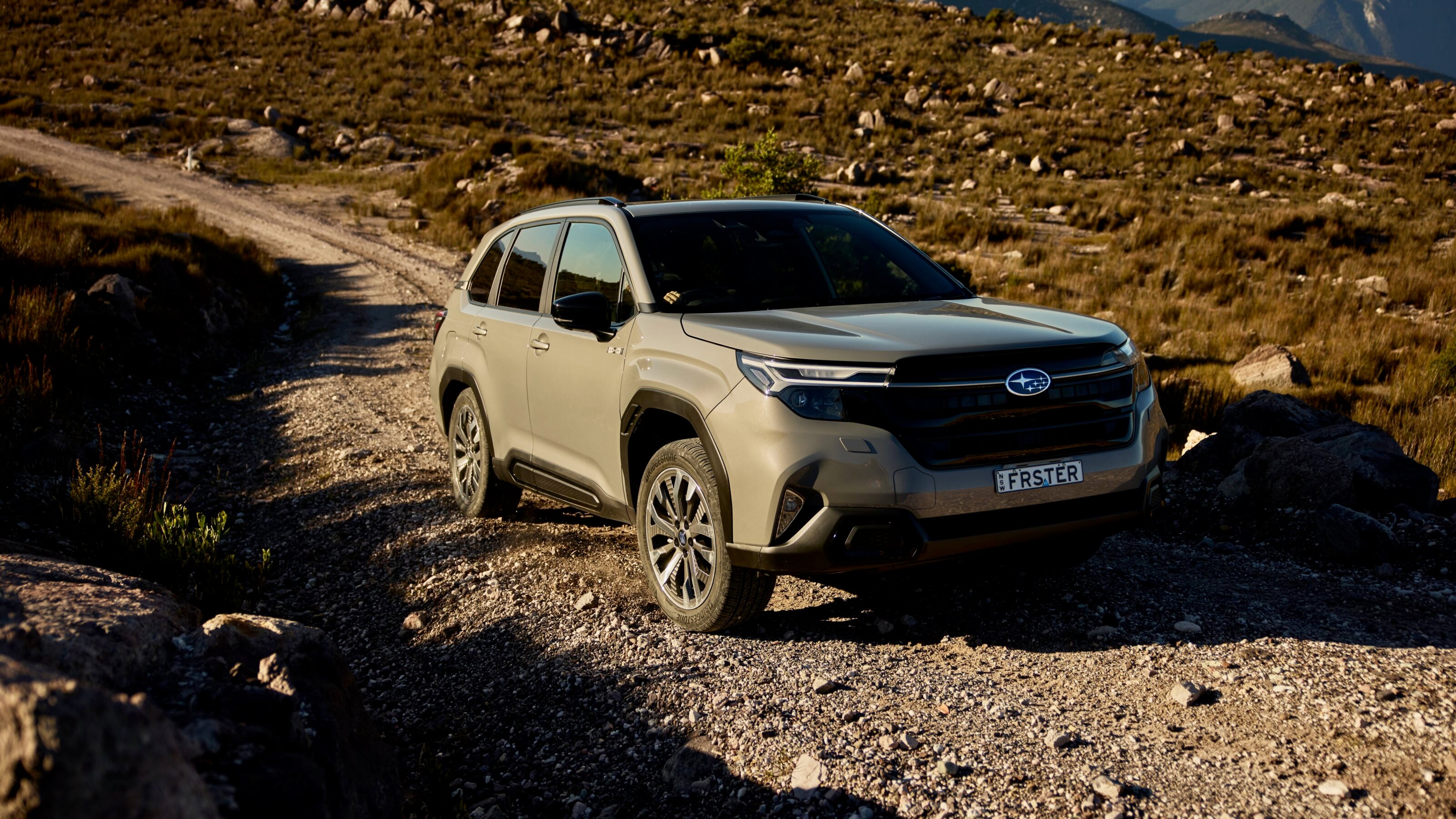
The sixth-generation Subaru Forester has just been launched in Australia to positive reviews and while it may not look like it at first glance, it’s been improved in a number of areas compared with its predecessor. Firstly, the Forester finally offers a proper hybrid drivetrain while maintaining its reputation for being practical, good to drive and highly capable. All up, the changes have made the Forester a serious contender in the mid-size SUV segment.
Prices for the new model start at $43,490 plus on-road costs for the entry-level model – add $3000 for the entry-level hybrid – and standard equipment is lengthy, even on the base car with features such as heated front seats, dual-zone automatic climate control, wireless smartphone mirroring, auto-folding mirrors and a comprehensive active safety suite.
Inside the Forester, function is the name of the game with a very practical feel throughout. Material quality is fine, though more hard wearing thanks to its adventure vibe. Centre of the cabin is a huge 11.6-inch touchscreen with sharp graphics, though it’s a bit slow, and below that are open storage options. The rear seat is quite spacious thanks to the tall roofline, and the while the 496-litre boot is smaller than many rivals, fold the seats down and it opens up to a more impressive 1667 litres.
With full electrification reserved for the Solterra EV, the Forester offers two 2.5-litre four-cylinder petrol engines, one with Subaru’s new ‘strong hybrid’ system. The non-hybrid variant makes 136kW of power and the hybrid slightly more at 145kW, though the hybrid’s fuel consumption is enough of an improvement to make back the extra cost in as little as 48,000km. That’s not counting the hybrid’s superior performance and refinement either, while on the road the Forester is comfortable and drives well.
Subaru’s five-year/unlimited km warranty looks average in an age where seven-year coverage is quite common, and only 12 months of roadside assistance is a little mean. But service costs aren’t too bad at $2299 over five years. Overall, the Subaru Forester has lots of appeal in its latest generation and Subaru has improved the areas that needed it, such as the lacklustre former hybrid system, and kept the best parts like the very practical cabin. If you’re after a mid-size SUV that can travel off the pavement, the Forester is one of the best options – but even if you stay on road, the Forester has plenty to like.
Honda CR-V
1
Price: From $41,900 drive away
Drivetrains/fuel economy/CO2 emissions: 1.5-litre turbo four-cylinder, CVT, 2WD or AWD, 140kW/240Nm, 7.1L/100km, 162g/km; 2.0-litre four-cylinder hybrid, eCVT, 2WD, 152kW, 5.5L/100km, 125g/km
Dimensions (length/width/height/wheelbase): 4704/1866/1681/2701mm
Bootspace: 589L – 1671L
Warranty/roadside assistance/service intervals: Five-year/unlimited km, five years, annual/every
10,000km
Five-year service cost: $995 ($199 per year)
| Driving | |
| Interior | |
| Practicality | |
| Overall value | |
Things we like
- Good value for money, big model spread
- Well presented and practical cabin
- Refined and efficient drivetrains
Not so much
- Sole hybrid model is at the top of the range
- Confusing model range
- Stepped boot with rear seats folded (5-seater)
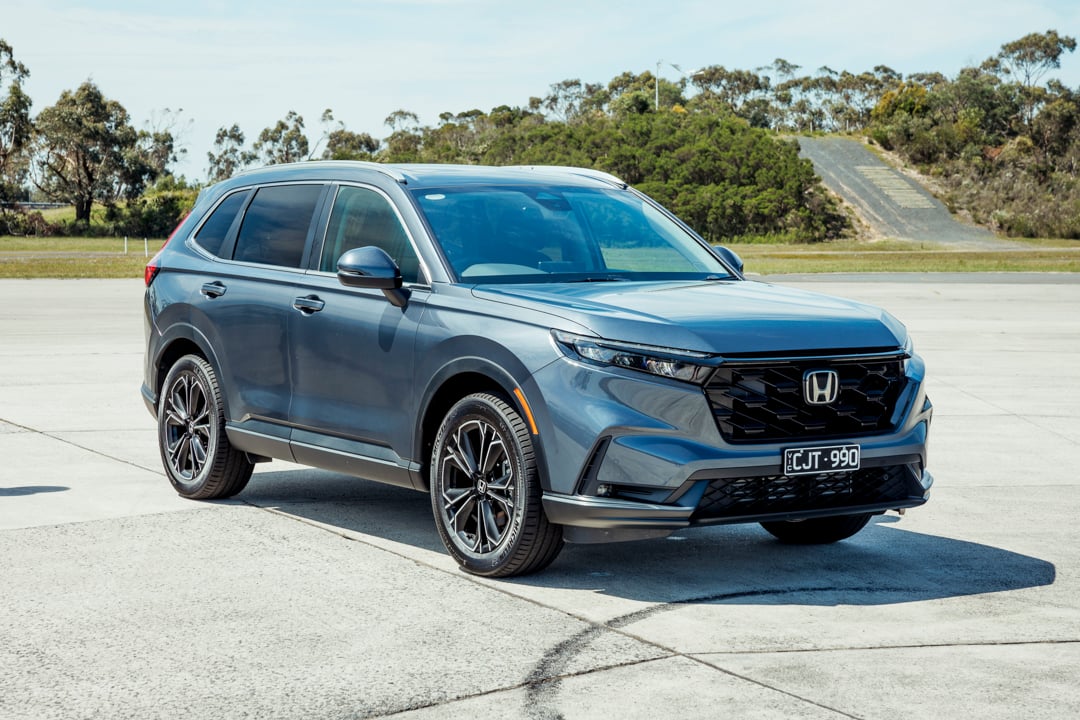
Now in its fifth generation, the Honda CR-V is Honda’s best-selling car globally, including in Australia, and offers an even wider range locally than ever before with both turbo-petrol and hybrid drivetrain options, five or seven seat layouts and a wide range of models to match a wide range of budgets. Is there more to the Honda CR-V?
As part of Honda Australia’s agency program, the CR-V’s pricing is both drive away and the same across the country. In bad news for those who like to lowball, it’s also non-negotiable, though at least you’re paying the same as the next customer. Pricing starts at $41,900 drive away for the entry level VTi X+, and ranges to $60,400 drive away for the RS hybrid. Both those models are five seaters and front-wheel drive, but in between are mid- and high-spec models, including the petrol five-seat all-wheel drive VTi LX and seven-seat front-drive VTi X7 and VTi L7.
Two drivetrains are available in the CR-V: a 140kW 1.5-litre turbo-petrol and a 152kW 2.0-litre petrol hybrid, while a plug-in hybrid also exists in some markets (but not Australia, currently). Annoyingly, the hybrid is only available at the top of the range and only with a five seat layout, so if you’re wanting all-wheel drive or seven seats, the petrol engine is your only choice. Regardless of the drivetrain, the CR-V’s driving experience is relaxing and refined.
The CR-V’s interior is spacious, practical and good quality. Even the entry-level VTi X+ is equipped with a 9.0-inch touchscreen with Honda Connect live services, while moving up the range adds features such as leather trim, heated and electric front seats, ambient lighting, sat-nav and a panoramic sunroof. There’s plenty of storage space in the front cabin, while the middle row of seating is spacious as well – the rear doors open 90 degrees too, helping entry and exit. If you choose a seven-seat model, the third row is surprisingly spacious and even includes features such as air vents. The CR-V’s boot is large, measuring from 589 litres to 1671 litres in five-seaters.
Honda’s five-year/unlimited km warranty covers the CR-V, and it also comes with five years of roadside assistance – though, currently, the brand is offering an eight-year warranty with eight years of roadside assistance as part of a special deal. Honda’s service pricing is very low at just $199 for the first five, though the 10,000km intervals are 5000km less than many rivals.
Overall, the Honda CR-V is an excellent family vehicle with plenty of practical touches, a spacious cabin, a long list of features and a wide spread of models. More hybrid availability would be great, as would a more streamlined model range, but the CR-V still represents a great choice for a mid-size SUV.
Skoda Karoq
1
Price: From $40,990 drive away
Drivetrains/fuel economy/CO2 emissions: 1.4-litre turbo four-cylinder, 8-speed auto, 2WD, 110kW/250Nm, 6.6L/100km, 149g/km; 2.0-litre turbo four-cylinder, 7-speed DCT, AWD, 140kW/320Nm, 7.2L/100km, 163g/km
Dimensions (length/width/height/wheelbase): 4390/1841/1603/2638mm
Bootspace: 521L – 1630L
Warranty/roadside assistance/service intervals: Seven-year/unlimited km, 12 months and then
service-activated, annual/every 15,000km
Five-year service plan cost: $3000 (1.4T, $600 per year) – $3450 (2.0T, $690 per year)
| Driving | |
| Interior | |
| Practicality | |
| Overall value | |
Things we like
- Excellent packaging
- Mature driving experience
- Refined and efficient drivetrains
Not so much
- Physically smaller than key rivals
- Sportline 140TSI is expensive
- Feels a bit dated against newer rivals
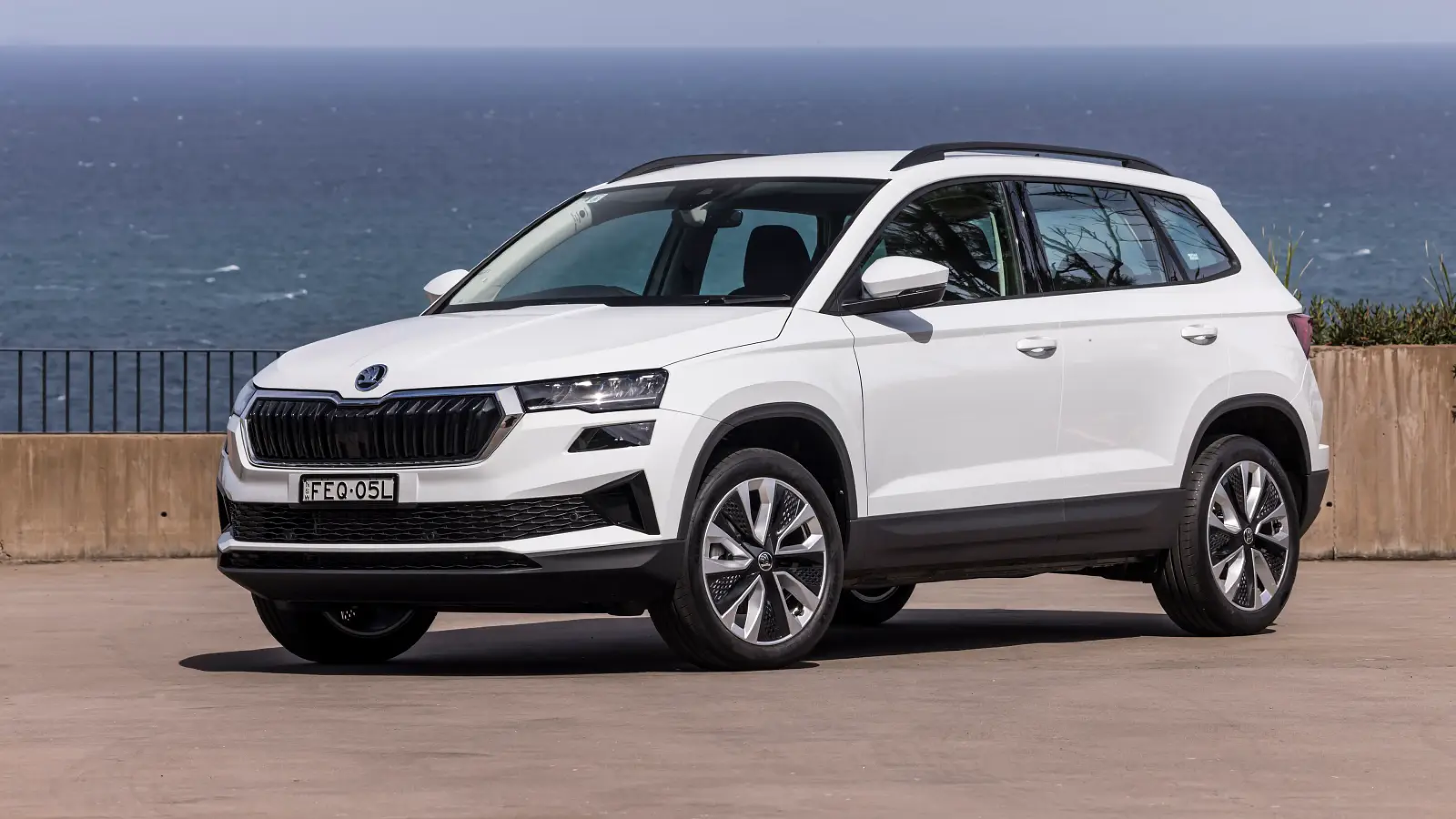
The Skoda Karoq launched in Australia in 2018 and has cemented itself as one of the brand’s most popular models ever since, currently priced from just $40,990 drive away for the entry-level Select. The Karoq is well equipped across the range, offers punchy drivetrains, is very practical for its size and is covered by a long warranty.
Skoda offers three Karoq models in Australia: entry-level Select, mid-spec Sportline 110TSI and top-spec Sportline 140TSI 4×4, with all featuring a long list of standard equipment. Features include 18-inch wheels, automatic LED lighting, keyless entry with push button start, dual-zone climate control, an 8.0-inch touchscreen with wireless smartphone mirroring and safety features such as AEB, adaptive cruise control and blind-spot monitoring. Move up the range and larger wheels, Matrix adaptive high beam, a larger 9.2-inch touchscreen and sports seats are added.
The Karoq’s cabin is good quality and practical, with plenty of storage solutions and comfortable seats as well. Two touchscreen sizes are on offer: a smaller 8.0-inch one or a larger 9.2-inch unit, with both quite easy and quick to use, though small by today’s standards. The digital driver’s display on each model adds a higher-tech feel though, and ergonomic excellence is key through the Karoq’s cabin as every feature is easy to find. The rear seat of the Karoq isn’t massive, however, and the 521-litre boot is average as well, though it opens up to a huge 1630L with the rear seats folded.
Two turbo-petrol drivetrains are available: a 110kW/250Nm 1.4-litre or a 140kW/320Nm 2.0-litre in the top-spec Sportline 140TSI, which provides warm performance. But even the 1.4L donk is more than punchy enough, and it’s mated to a smooth eight-speed automatic transmission – the 2.0L uses a seven-speed dual-clutcher instead. The Karoq is smooth and refined on the road, while the Sportline 140TSI is a great handler thanks to its 19-inch wheels, adaptive suspension and all-wheel drive system.
Skoda boasts the longest warranty in Australia for a European manufacturer at seven years, while the five-year service pack costs from $3000, which isn’t cheap. But overall, the Skoda Karoq is an accomplished and good all-round mid-size SUV. It drives quite well, is very practical, well equipped, good quality and covered by a long warranty. If you don’t mind its smaller exterior sizing, there’s plenty to like about the Karoq.
Volkswagen Tiguan
1
Price: From $44,990 plus on-road costs
Drivetrains/fuel economy/CO2 emissions: 1.4-litre turbo four-cylinder, 7-speed DCT, 2WD, 110kW/250Nm, 7.6L/100km, 173g/km; 2.0-litre turbo four-cylinder, 7-speed DCT, AWD, 150kW/320Nm, 7.6L/100km, 173g/km; 2.0-litre turbo four-cylinder, 7-speed DCT, AWD, 195kW/400Nm, 8.5L/100km, 194g/km
Dimensions (length/width/height/wheelbase): 4539/1842/1659/2681mm
Bootspace: 652L – 1650L
Warranty/roadside assistance/service intervals: Five-year/unlimited km, 12 months and serviced
activated afterwards, annual/every 15,000km
Five-year service cost: $3399 (110TSI, $679 per year), $3790 (150TSI, $758 per year), $4060
(195TSI, $812 per year). Service plan: $2880 (110TSI, $576 per year), $3320 (150TSI, $664 per
year), $3500 (195TSI: $700)
| Driving | |
| Interior | |
| Practicality | |
| Overall value | |
Things we like
- Lovely to drive, regardless of model
- Quality and practical interior now with more tech
- Punchy range of engines, even the base 1.4L
Not so much
- No hybrid options yet
- Infotainment takes familiarisation
- Quite expensive to service
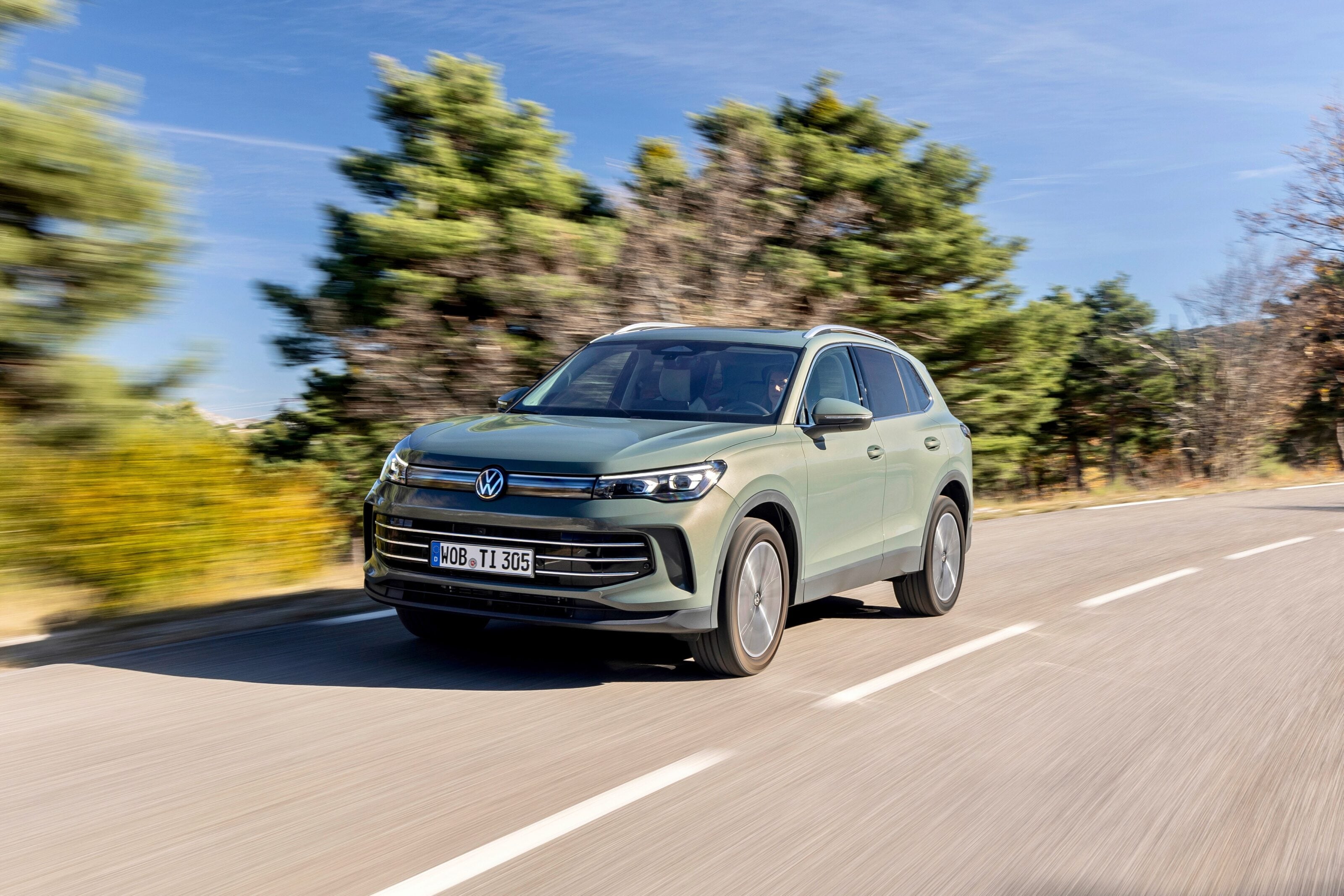
The 2025 Volkswagen Tiguan recently launched in Australia as the third generation of one of the best-selling Volkswagen products ever. Armed with new styling, a revamped interior, new drivetrains and more standard equipment across the range – and higher pricing – the new Tiguan promises to be an even better all-rounder than the previous model. Is it?
Pricing for the Tiguan range starts at $44,990 plus on-road costs and three models are available, each with turbo-petrol power. However, even the base Tiguan Life is well equipped with features such as 19-inch alloy wheels, tri-zone automatic climate control, a 12.9-inch touchscreen with a 360-degree camera and a lot of safety features. Upper-spec models add available features such as a larger infotainment system, leather upholstery, electric front seats with massaging, Matrix adaptive high beam, adaptive dampers and all-wheel drive.
For the moment, there are three turbo-petrol engine choices in the Tiguan range: a 110kW/250Nm 1.4-litre, a 150kW/320Nm 2.0-litre and a 195kW/400Nm 2.0-litre, with each giving a refined and punchy vibe, with the 195kW engine quite quick too. Each uses a seven-speed dual-clutch transmission, which is much improved compared with previous Tiguan models, though still gives a bit of low speed hesitation. The rest of the Tiguan’s driving experience is mature and refined, and it’s a good handler as well.
The interior of the Tiguan saw a big improvement for generation three with higher quality, more practicality and much more tech. Even the entry-level models use a large 12.9-inch touchscreen but from the 150TSI Elegance upwards is an even larger 15-inch display. Both are generally easy to use, and well equipped, though there are a few curiosities to wrap your head around, such as the menu layout. The rear seat of the Tiguan is comfortable and spacious, while the boot is large too at 652 litres with the rear seats up and 1650 litres with them folded.
A five-year/unlimited km warranty covers the Tiguan, also with 12 months of roadside assistance. That’s extended by a further 12 months with each dealer service. However, servicing is expensive across the range, at a minimum $3399 over five years/75,000km – a pre-paid service pack lessens that to a more reasonable $2880, but that’s still not cheap. Overall, the Volkswagen Tiguan is a good quality, tech-packed, practical and well equipped all-rounder. It’s not cheap to buy or service, and there’s no hybrid drivetrains (yet), but it’s still well worth consideration.
Peugeot 3008
1
Price: From $52,990 plus on-road costs
Drivetrains/fuel economy/CO2 emissions: 1.2-litre turbo three-cylinder, 6-speed DCT, 2WD, 107kW, 4.9L/100km, 113g/km
Dimensions (length/width/height/wheelbase): 4542/1934/1665/2730mm
Bootspace: 520L – 1480L
Warranty/roadside assistance/service intervals: Five-year/unlimited km, five years, annual/every
15,000km
Five-year service cost: $2781 ($556 per year, PAYG), $1995 ($399 per year, pre-paid)
| Driving | |
| Interior | |
| Practicality | |
| Overall value | |
Things we like
- Distinctive design inside and out
- Amazing interior quality
- Well equipped
Not so much
- Could be more powerful
- Sloping roofline affects rear headroom and visibility
- No spare wheel
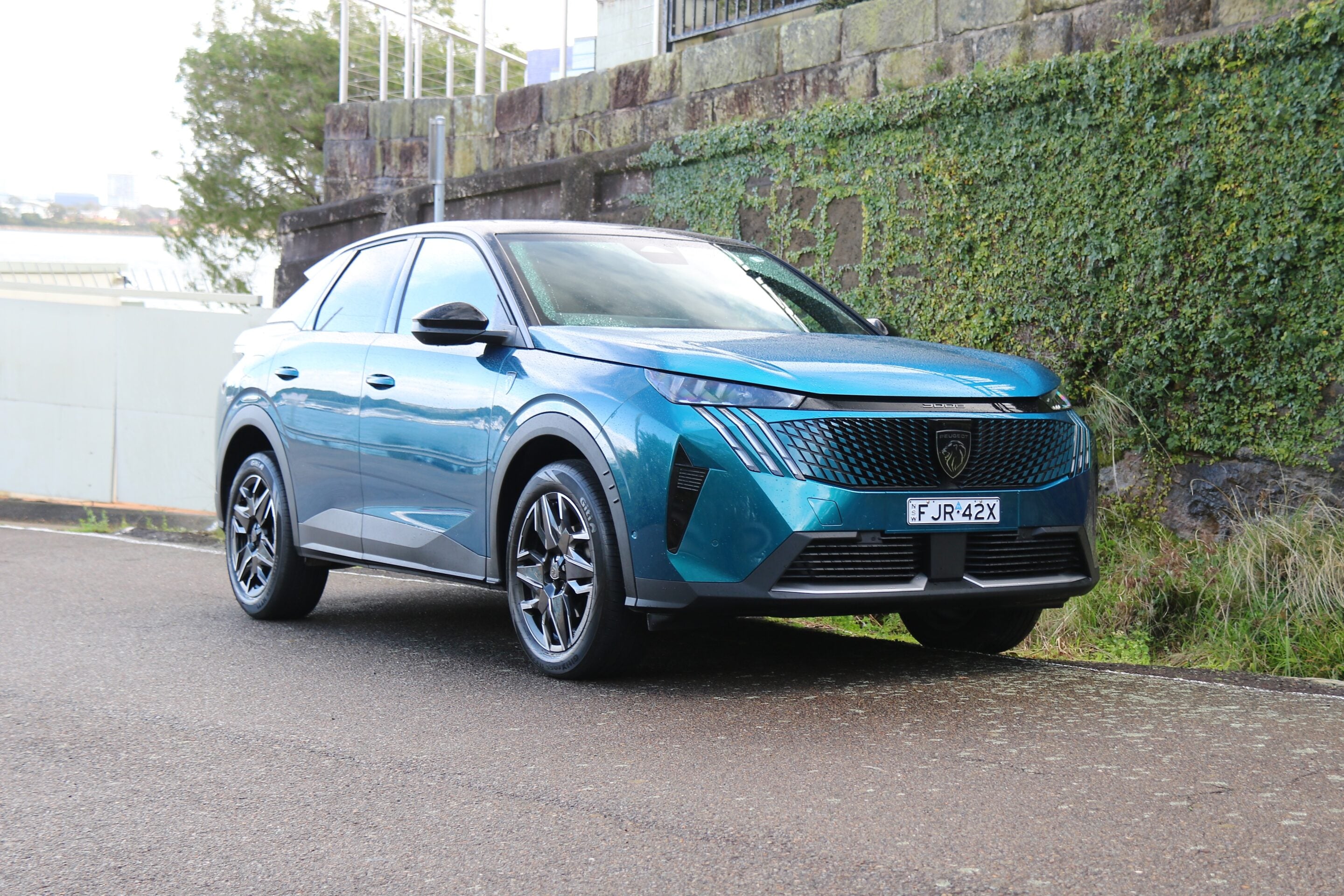
Despite its popularity in Europe, Peugeot is not a brand that many buyers consider in Australia and we think that’s a shame because it has a lot to offer. The brand’s local importer knows this and has recently launched a new product offensive with in-vogue hybrid drivetrains and not one but two new SUVs that will appeal to Australian buyers. The 3008 mid-size SUV was reasonably popular in its previous generation, so how about the all-new third-generation model?
Prices for the 3008 start at $52,990 plus on-road costs for the entry-level Allure with two models on offer locally – the top-spec GT Premium is priced at $64,990 +ORC, which means that the 3008 isn’t cheap. It is, however, well equipped, with even the Allure featuring a huge 21-inch curved screen, Peugeot’s ‘3 claw’ LED exterior lighting, cloth and leather trim and a full safety suite, with the GT Premium adding a panoramic sunroof, Matrix adaptive high beam, Nappa leather upholstery, electric and massaging front seats and a Focal sound system.
Just one drivetrain is on offer in Australia: a 107kW 1.2-litre turbocharged three-cylinder 48V mild-hybrid mated to a six-speed dual-clutch transmission. While its outputs are low for the segment, it’s surprisingly punchy in urban driving and can be driven at low speeds using only electric power, such as in reverse. The driving experience of the 3008 is refined and it feels light on its feet, though its low speed ride quality could be improved, likely due to the standard 19-inch wheels.
The 3008’s dashboard design is beautiful and feels bespoke in the industry with top notch interior materials around, even on the base Allure with its textile trims on the centre console and dashboard. The 21-inch curved display incorporates the infotainment system and driver’s display, and is well featured, though can be a bit difficult to use. The back seat of the 3008 is a bit tight, largely thanks to the coupe roofline, as both knee and headroom isn’t as commodious as many other mid-size SUVs. But the boot is larger than you’d expect, with 520 litres of space with the seats up and 1480 litres with them folded.
The 3008 is covered by a five-year/unlimited km warranty with five years of roadside assistance. What was a sore point for Peugeot models in the past, the 3008’s service costs are far more reasonable now at $2781 for five years of servicing, which can be reduced to $1995 (or under $400 per year) with a pre-paid service package. While there is better value to be had in the segment, the Peugeot 3008 impresses with its bespoke-feeling and high quality interior, thrifty hybrid drivetrain and stylish design. It’s not the fastest, roomiest or best value mid-size SUV around, but it still has appeal and should be selling better than it is.
Toyota RAV4

1
Price: From $42,260 plus on-road costs
Drivetrains/fuel economy/CO2 emissions: 2.5-litre four-cylinder hybrid, eCVT, 2WD or AWD, 160kW-163kW 4.7-4.8L/100km, 107-109g/km
Dimensions (length/width/height/wheelbase): 4600/1855/1685/2690mm
Bootspace: 542L – 1690L
Warranty/roadside assistance/service intervals: Five-year/unlimited km, none, annual/every 15,000km
Five-year service cost: $1350 ($270 per year)
| Driving | |
| Interior | |
| Practicality | |
| Overall value | |
Things we like
- Good at everything, a fabulous all-rounder
- Spacious and practical cabin
- Hugely efficient yet punchy drivetrain
Not so much
- There’s still a waitlist for them
- Far more expensive than when it launched
- A bit dated inside
One of the pioneers of the mid-size SUV segment as we know it, the Toyota RAV4 has been a massive success for its maker. The biggest-selling car in the entire world in 2024, the all-new RAV4 has already been revealed and will be launched locally next year, but the current model still sells well and still has a waiting list if you want one.
In terms of value for money, there are better options in the segment. Thanks to a hybrid-only line-up, prices for the RAV4 range start at an expensive $42,260 for the entry-level GX. That model doesn’t even have a leather steering wheel, and the most popular model – the Cruiser – is around $57,000 once on-road costs are included in the price. Want the full burger? The top-spec Edge is around $65,000 drive away. Yikes.
The former petrol options are no longer available thanks to hybrid popularity, so the sole drivetrain now available is a 2.5-litre petrol hybrid making 160kW in front-drive form, or 163kW with all-wheel drive, and claimed combined fuel consumption is rated from just 4.7L/100km. The RAV4 drives well: it’s quiet and comfortable, which is clearly what so many mid-size SUV buyers are searching for. For a sportier option however, look elsewhere.
The cabin of the RAV4 is typical Toyota: practical, comfortable and good quality, though hardly sporting the latest in technology. An 8.0-inch touchscreen features on the base GX and one-level-up GXL, which is upgraded to a larger and better looking 10.5-inch unit in the mid-spec XSE and upwards. Storage space is great, with a huge central bin, open tray and large cup holders. Back seat space is plentiful, and three adults will be fine. The RAV4’s boot is healthy at 542 litres, expanding to 1690 litres with the rear seats folded.
Toyota’s standard five-year/unlimited km warranty covers the RAV4 with no roadside assistance – that can be purchased separately – but if it’s serviced at a Toyota dealer, it gains an extra mechanical warranty up to seven years and if an annual battery check is performed, the battery warranty is extended up to 10 years in total. Plus, the first five years of servicing costs just $1350 or $270 per year.
Overall, it’s clear to see why the Toyota RAV4 has been so popular in this generation: it offers the usual Toyota practicality and low service cost, plus a very fuel efficient hybrid drivetrain and good performance. However, with the new model imminent, and the current model a lot more expensive than it used to be, it’s a judgement call on whether the RAV4 is right for you.
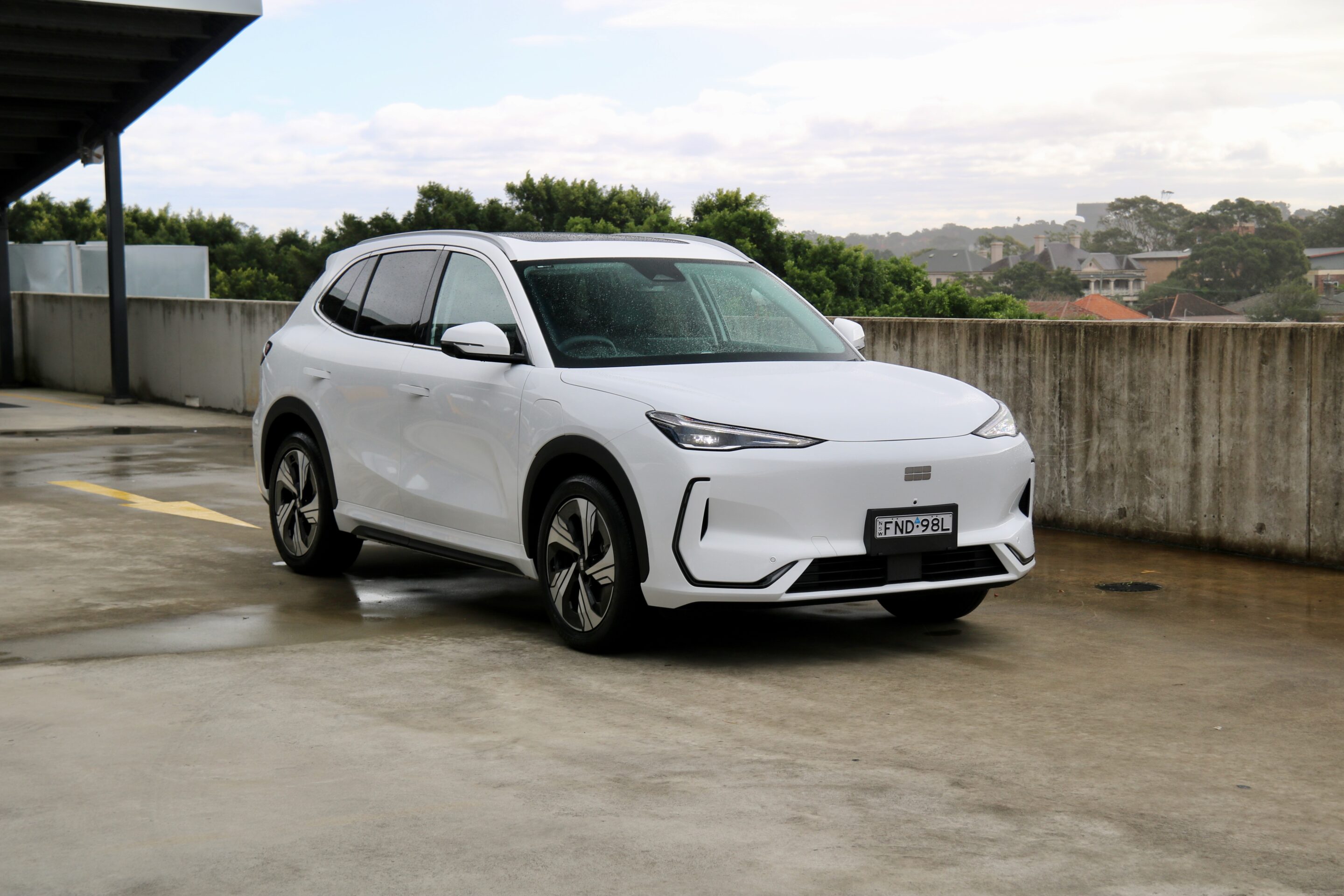
Geely EX5
1
Price: From $40,990 plus on-road costs
Drivetrains: Single motor front axle, 160kW/320Nm
Battery/peak DC charge rate: 60.2kWh LFP, 100kW
Claimed WLTP range: 410 – 430km
Dimensions (length/width/height/wheelbase): 4615/1901/1670/2750mm
Bootspace: 410L – 1877L
Warranty/roadside assistance/service intervals: Seven-year/unlimited km, service activated up to seven years, annual/every 20,000km
Five-year service cost: $1487 ($298 per year)
| Driving | |
| Interior | |
| Practicality | |
| Overall value | |
Things we like
- Low pricing, long equipment list
- Quite refined
- Practical, quality interior
Not so much
- Soft driving experience
- Touchscreen requires a lot of familiarisation
- No faster-charging or longer-range versions
Even though many of its sub brands have been on sale in Australia for decades, such as Volvo, Chinese brand Geely only launched its own brand locally earlier in 2025. So far, just one product is on offer: the EX5 electric mid-sizer, though there’s also a PHEV equivalent named the Starray that’s due to arrive soon. The EX5 is one of the cheapest EVs on the market, but does it have anything else going for it?
Priced from just $40,990 plus on-road costs, the EX5 is offered in two specifications: entry-level Complete and top-spec Inspire, with even the Complete equipped with 18-inch alloy wheels, a huge 15.4-inch touchscreen, electric front seats with heating, a 360-degree camera and a full active safety suite. The top-spec Inspire further adds a 13.8-inch head-up display, 16-speaker sound system, panoramic sunroof, larger 19-inch wheels and even massaging front seats for only $4000 more.
For now, there’s only a single drivetrain available in the EX5 range: a front single motor making 160kW of power and 320Nm, giving the EX5 reasonable pep off the line. That draws power from a small 60.2kWh battery, giving the EX5 a WLTP range of up to 430km and peak DC fast charging of 100kW. While that’s a great range for an urban EV, we’d like to see a longer-range version added.
The driving experience of the EX5 is, well, soggy – the ride is quite soft and even smaller bumps have its body control struggling to keep it in check. The interior of the EX5 is is fairly minimalist in design, with only a few shortcut buttons – and a volume knob, thankfully – but every other feature inside is controlled through the huge 15.4-inch touchscreen. It looks sharp and it’s quick to respond to touch as well, though its functionality could be better as some menus make little sense. The rear seat of the EX5 is huge, with ample room in all directions for taller people, and while the 410-litre boot may seem small initially, it actually features a large under-floor box that adds significantly to the size. With the seats folded, there’s a huge 1877 litres on offer.
Geely’s Australian warranty is a seven-year/unlimited km job with up to seven years of roadside assistance. The EX5 must be serviced annually/every 20,000km, and five years/100,000km of servicing costs just $1487 or $298 per year. Overall, while there are negatives to the EX5 such as the soft driving experience, lack of long-range battery option and a sometimes confusing touchscreen, but the pricing, long warranty and practicality will make some buyers look twice.
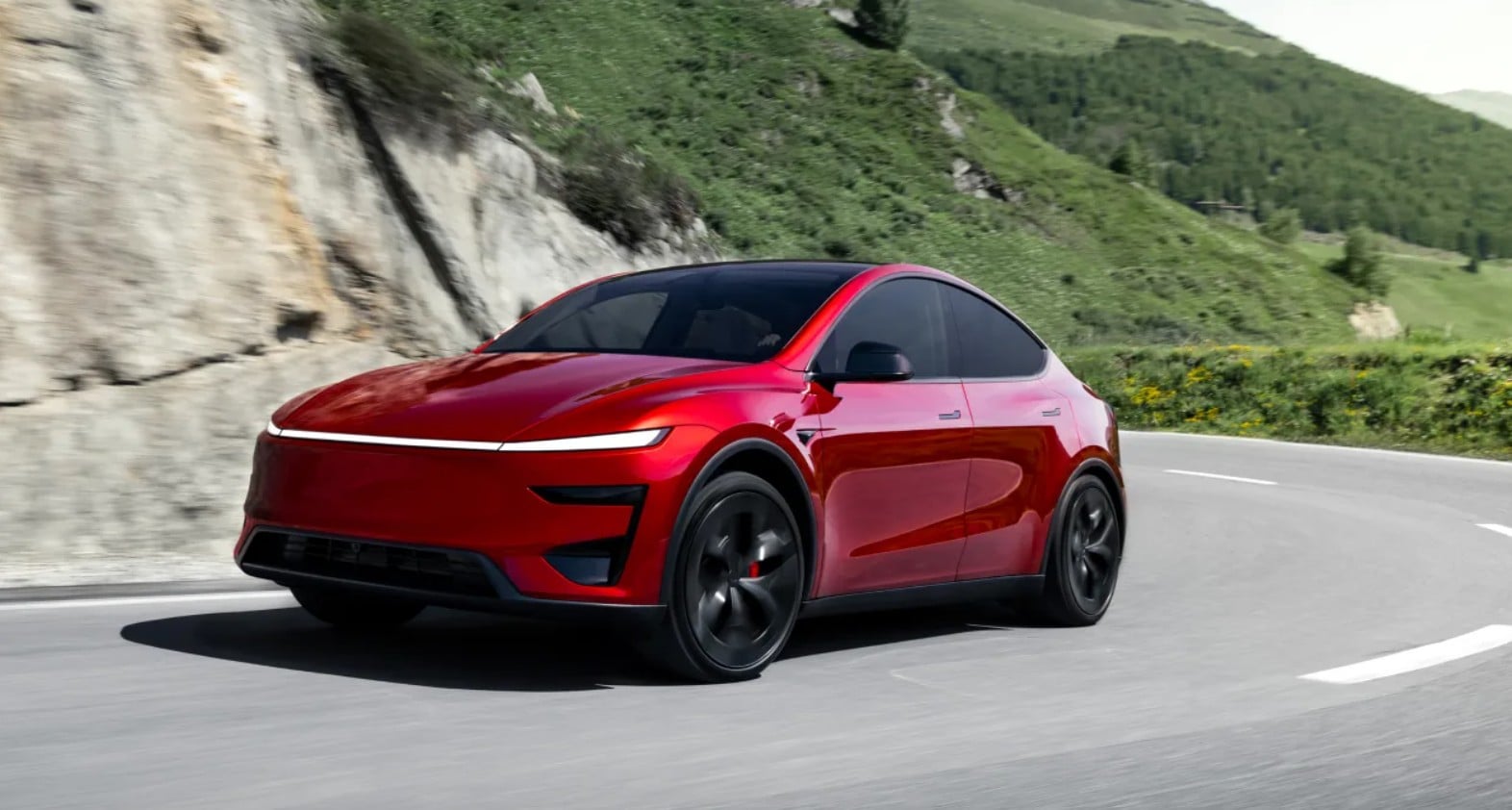
Tesla Model Y
1
Price: From $58,900 plus on-road costs
Drivetrains: RWD: Single motor rear axle, 255kW/450Nm; AWD: Dual motor all-wheel drive, 378kW/493Nm
Battery/peak DC charge rate: RWD: 60kWh LFP, 170kW; AWD: 75kWh, NMC, 250kW
Claimed WLTP range: 466km – 600km
Dimensions (length/width/height/wheelbase): 4792/1982/1624/2890mm
Bootspace: 854L – 2022L
Warranty/roadside assistance/service intervals: Four-year/80,000km, four years, condition-based
Five-year service cost: No capped price service cost guide available
| Driving | |
| Interior | |
| Practicality | |
| Overall value | |
Things we like
- Solid value for money
- Improved in every way compared to pre-updated model
- Very practical with huge boot and spacious rear seat
Not so much
- Short warranty
- Every feature is located in the touchscreen
- Performance not here yet
It’s clear that the people want mid-size SUVs. In this category of Best Medium SUVs are not one, but two of the world’s best-selling cars: the Toyota RAV4 and this one, the Tesla Model Y. Even in Australia, the Model Y was the best-selling EV with over 21,000 units sold in 2024, and that was before the major ‘Juniper’ update that launched here earlier this year.
The Australian Model Y range kicks off from $58,900 plus on-road costs for the entry-level RWD model, but standard equipment is generous throughout the range. Equipment on the RWD includes 19-inch alloy wheels, adaptive high beam, a panoramic glass roof, synthetic leather upholstery, 12-way electric front seats with heating and cooling, a 15.4-inch touchscreen and many active safety features, including adaptive lane guidance. The upper-spec Long Range AWD adds more power, a larger battery and a 16-speaker sound system.
For the moment, there are two drivetrains in the Model Y range, with the hi-po Performance due in Australia soon. The entry-level RWD uses a 60kWh battery mated to a 255kW/450Nm rear-mounted motor for 466km of WLTP range and the upper-spec Long Range AWD uses a larger 75kWh battery and 378kW/493Nm dual-motor drivetrain for a 600km WLTP-rated range. Charging is up to 170kW for the former and a fast 250kW speed for the latter. On the road, the Model Y has been improved thanks to retuned suspension and better dynamics.
Inside the Model Y is the same minimalist cabin as before, though it has been given an upgrade to make it more useable and refined. The material quality is good, including the new textile pattern on the dashboard, while the touchscreen still controls 99.9 per cent of the car’s features. It still doesn’t feature Apple CarPlay or Android Auto, but does have inbuilt apps such as Spotify and Apple Music. Rear seat space is still impressive, as is the 854-litre boot that features electric dropping and raising rear seatbacks. When done, over 2000 litres is unlocked – plus the 117-litre front boot.
Where the Model Y lacks in comparison to rivals is its four-year/80,000km warranty, which is short on both time and distance compared to every other vehicle in the segment. Overall, there’s plenty to like about the Tesla Model Y, particularly if you’re tech-savvy and keen to learn. It’s very practical, offers good range and performance stats, is much improved to drive and is still good value for money. The minimalist interior with the screen dominating the controls is a bit of a learning curve, however, and Tesla’s warranty is short as well. Still, it’s easy to see why the Tesla Model Y has sold so strongly, but just know that competition is fiercer than ever.
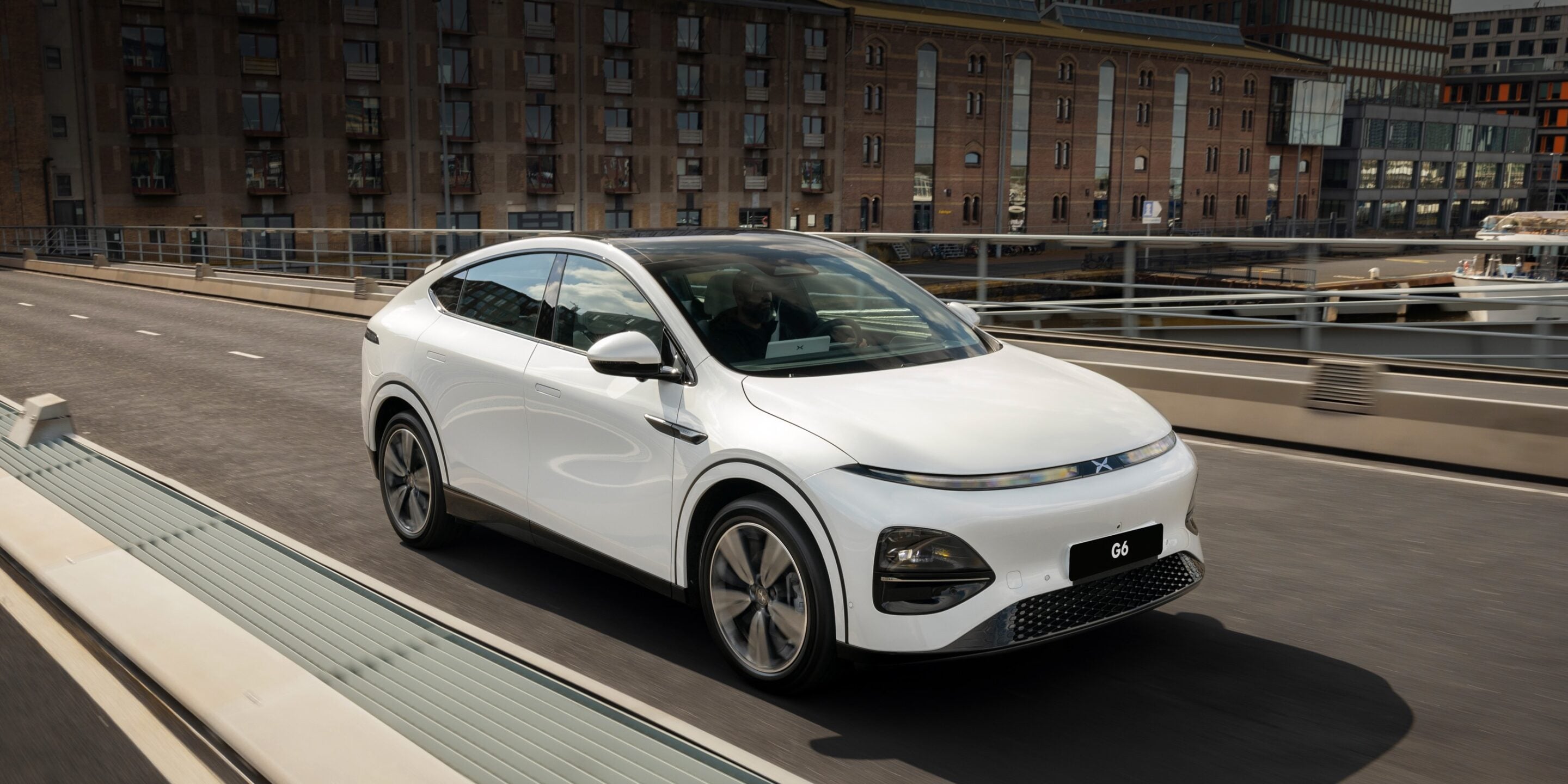
XPeng G6
1
Price: From $54,800 plus on-road costs
Drivetrains: Standard Range: Single motor rear axle, 190kW/440Nm; Long Range: Single motor rear axle, 210kW/440Nm
Battery/peak DC charge rate: Standard Range: 66kWh LFP, 280kW; Long Range: 87.5kWh, NMC, 280kW
Claimed WLTP range: 435km – 570km
Dimensions (length/width/height/wheelbase): 4753/1920/1650/2890mm
Bootspace: 571L – 1374L
Warranty/roadside assistance/service intervals: Five-year/120,000km, 12 months extendable by another 12 months with each service, annual/every 20,000km
Five-year service cost: $2064 ($412 per year)
| Driving | |
| Interior | |
| Practicality | |
| Overall value | |
Things we like
- Fast 280kW charging capability
- Well priced and very well equipped
- Good quality throughout
Not so much
- No AWD version yet
- Lacklustre standard warranty
- Worthy but doesn’t stand out from the crowd
It’s an exciting time in the Australian car industry as several new brands have launched locally, many of which are very unfamiliar to new car buyers. One such brand is XPeng. There’s only one XPeng model available in Australia right now, the G6, but more are on the way.
But what is an XPeng G6? Well, it’s a mid-size electric SUV with a coupe roofline that resembles many other electric SUVs, but there’s lot of sophistication on offer: an 800-volt platform for fast charging, for example. Pricing starts at $54,800 plus on-road costs, so right in the thick of electric mid-size SUVs, and standard equipment is lengthy, including 20-inch alloy wheels, panoramic glass roof, synthetic leather upholstery, electric front seat adjustment with heating and ventilation, a 15-inch touchscreen and an 18-speaker sound system.
Two drivetrains are on offer in the Australian G6 range, though neither is all-wheel drive. The Standard Range uses a 190kW/440Nm motor and 66kWh battery for 435km of WLTP range, while the upper-spec Long Range makes 210kW/440Nm outputs and uses a larger 87.5kWh battery for a 570km WLTP range. Peak charging is at 280kW, which is quite healthy in the market.
The interior of the G6 is good quality and looks good as well. It’s dominated by a huge 15-inch touchscreen, which is well featured and easy to use. The front cabin is quite practical, including dual wireless phone chargers and plenty of open space to store stuff. The rear seat is spacious and comfortable, while the 571-litre boot is large and opens up to a less impressive 1374 litres.
XPeng’s Australian warranty is a five-year/120,000km job with 12 months of roadside assistance that’s extended by a further 12 months with each dealer service. Its service intervals are annual/every 20,000km, and five years/100,000km of servicing costs $2064 or $412 per year. The Xpeng G6 is a glimpse of the future as more brands enter Australia, and while it doesn’t quite hit the same highs in some ways as the Model Y it will no doubt be compared to, it’s still a good all-rounder with impressive features such as 280kW super fast charging and good performance as well.
Nissan Ariya

1
Price: From $55,840 plus on-road costs
Drivetrains: RWD: Single motor front axle, 160kW/300Nm; AWD: Dual motor all-wheel drive, 290kW/600Nm
Battery/peak DC charge rate: RWD: 63kWh, NMC, 130kW; RWD Advance+ and AWD: 87kWh, NMC, 130kW
Claimed WLTP range: 385km – 504km
Dimensions (length/width/height/wheelbase): 4595/1850/1660/2775mm
Bootspace: 408L – 1350L
Warranty/roadside assistance/service intervals: Five-year/unlimited km extendable to 10 years/300,000km with dealer servicing, 12 months extendable by 12 months with each dealer service, annual/every 20,000km
Five-year service cost: $1498 ($299 per year)
| Driving | |
| Interior | |
| Practicality | |
| Overall value | |
Things we like
- Great value for money
- Exotic styling
- Excellent interior quality
Not so much
- Slow peak charging rate
- Only one all-wheel drive model offered
- Boot not huge
Nissan was the pioneer of the mass-production modern electric car with the first-generation Leaf hatchback that debuted in 2009, but as we know, things have moved on significantly from then and many more rivals now exist. While it’s been slow to market – it’s only just launched in Australia despite debuting overseas in 2020 – Nissan promises that the handsome Ariya coupe mid-size SUV has been worth it. How does it compare to rivals?
The Ariya surprised us with its low starting price; at just $55,840 plus on-road costs, the Ariya is priced lower than rivals such as the Tesla Model Y and is still quite well equipped. Kit on the entry-level Engage includes 19-inch alloy wheels, dual 12.3-inch screens, adaptive lane guidance, wireless smartphone mirroring and a full suite of safety features. Move up the range and features such as Nappa leather upholstery (in a fetching blue colour), a Bose sound system, heated front seats and steering wheel and a panoramic sunroof are added at the top.
Two battery sizes are available: a smaller 63kWh unit with up to 466km of WLTP range, and a larger 88kWh unit with up to 506km of WLTP range. Two drivetrains are available too, a 160kW/300Nm front-driver and a 290kW/600Nm dual-motor set up in the top-spec Evolve. Performance is healthy on either option, though charging speeds are average with a 130kW maximum for both battery sizes.
Recent Nissan products have shown big improvements in interior quality and the Ariya might just be the best in the line-up thanks to its lovely quality, cool touches and tech such as a 12.3-inch touchscreen. Attractive materials such as suede cover many surfaces, making it feel special, and we love the electric sliding centre console too. Rear seat legroom is massive too, though headroom isn’t great thanks to the sloping roofline. Boot space is average and measures between 408 litres with the rear seats up and 1350 litres with them folded.
Nissan’s five-year/unlimited km warranty can be extended up to 10 years/300,000km in total if serviced through a Nissan dealership, and the Ariya’s annual/every 15,000km service intervals are average for the market. Service pricing is yet to be confirmed. Overall, the Nissan Ariya is a curious and charming mid-size electric SUV that we think will sell well. It’s excellent quality and feels special inside, while it’s also good to drive, attractive to look at and well equipped as well.
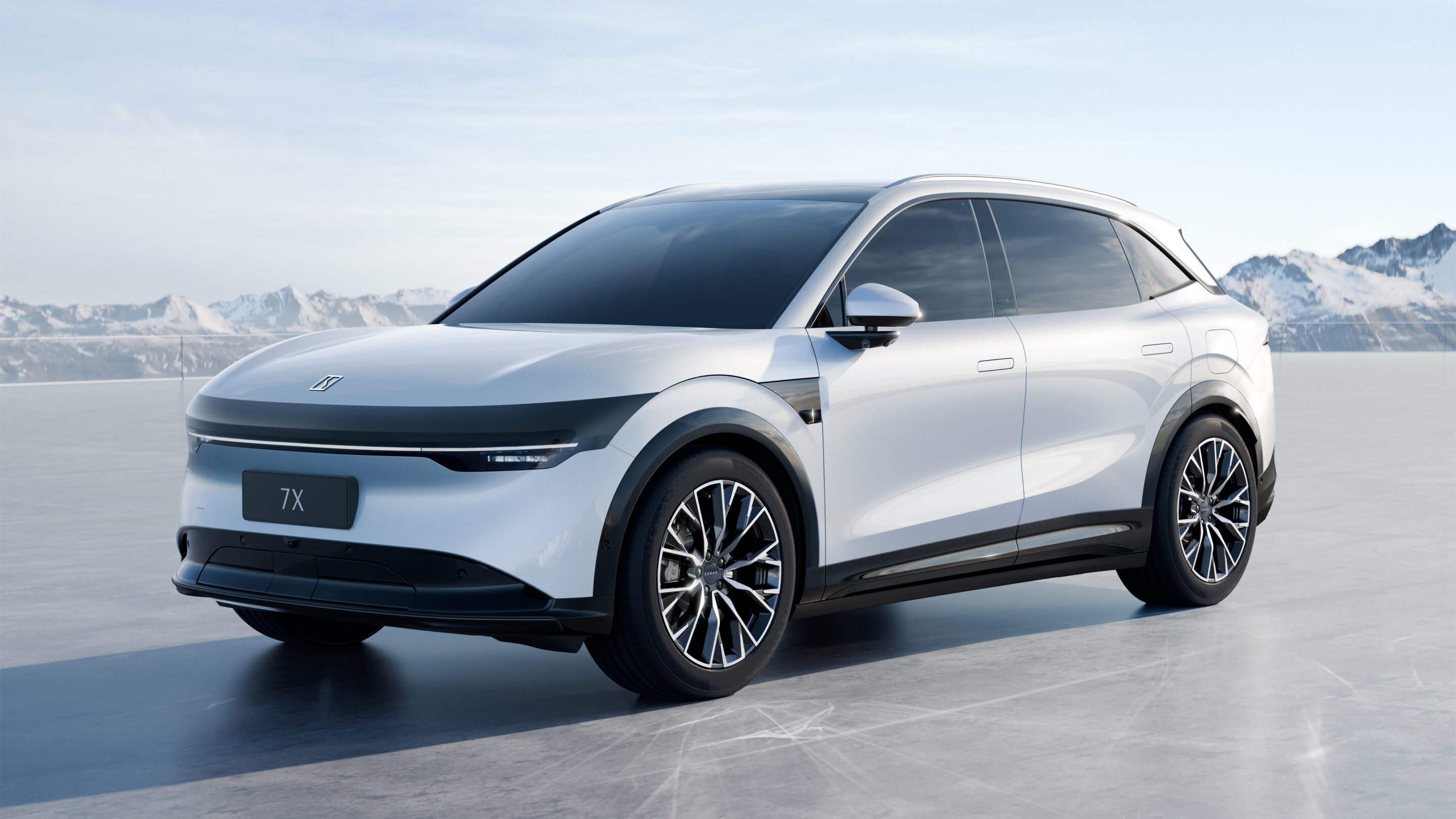
Zeekr 7X
1
Price: From $57,900 plus on-road costs
Drivetrains: RWD/RWD Long Range: single axle rear motor, 310kW/440Nm; Performance: dual motor, 475kW/710Nm
Battery/peak DC charge rate: RWD: 75kWh LFP, 450kW; RWD Long Range/Performance: 94kWh NMC, 420kW
Claimed WLTP range: 480km – 615km
Dimensions (length/width/height/wheelbase): 4787/1930/1650/2900mm
Bootspace: 539L – 1978L
Warranty/roadside assistance/service intervals: Five-year/unlimited km, five years, every two
years/40,000km
Five-year service cost: $2385 ($477 per year, including optional odd year servicing)
| Driving | |
| Interior | |
| Practicality | |
| Overall value | |
Things we like
- Very impressive charging capability
- Well priced and well equipped
- Strong performance across the range
Not so much
- Ride and handling need finessing
- More local dealers needed
- Quite heavy
Geely luxury sub-brand Zeekr has launched its most important and most relevant product yet in the 7X mid-size SUV. Previously limited to the X small SUV and 009 MPV, Zeekr’s appeal is about to be a lot more widespread to Australians as it will finally compete locally in the most popular segment. But what is the 7X and how does it compare to rivals?
Priced from $57,900 plus on-road costs, the Zeekr 7X is an electric mid-size SUV that offers three models, two battery sizes and two levels of performance. Even the entry-level model is well kitted with 19-inch alloy wheels, Matrix LED headlights, leather upholstery, 14-way electric front seats with heating, cooling and ventilation, a 21-speaker sound system, a 16-inch touchscreen with 5G connectivity, plus a full suite of active safety features.
The entry-level 7X uses a 75kWh battery mated to a 310kW rear axle electric motor for a claimed 480km WLTP-rated range, while the mid-spec Long Range switches the battery to a larger 94kWh unit for a 615km range. The top-spec Performance uses the larger battery and a 475kW/710Nm dual-motor drivetrain for a WLTP range of 543km and the 7X offers some of the fastest charging on the market: 450kW for the entry-level battery and 420kW for the larger one. The former is three times more than the BYD Sealion 7, for example. The 7X drives well, though the large wheels make the ride firmer than it needs to be.
Inside the cabin, the Zeekr 7X cements its position as Geely’s luxury brand with a generally richer level of fit and finish compared to rivals such as the Sealion 7 and XPeng G6. The 16-inch touchscreen is huge and well featured, and generally easy to use, while the cabin storage is impressive too. Rear seat room is good, especially the headroom, while the bootspace is average for the segment – but still big – at 539 litres with the seats up and a huge 1978 litres with the rear seats folded.
Zeekr covers the 7X with a five-year/unlimited km warranty with five years of roadside assistance, and its service intervals are long at every two years/40,000km (whichever comes first). Overall, the Zeekr 7X presents a very appealing prospect in the mid-size SUV segment and one that we think will give Zeekr a big sales boost locally. It boasts some impressive features such as up to 475kW of power and some of the fastest charging on the market, while it’s also quite well equipped.
BYD Sealion 6
1
Price: From $42,990 plus on-road costs
Drivetrains: Essential/Dynamic: 1.5-litre plug-in hybrid, 160kW/300Nm; Premium: 1.5-litre turbo plug-in hybrid, 238kW-253kW/550Nm
Battery/peak DC charge rate: Standard Range: 18.3kWh, LFP, 18kW; Extended Range: 26.6kWh, LFP, 18kW
Claimed WLTP range: 92km – 140km
Dimensions (length/width/height/wheelbase): 4775/1890/1670/2765mm
Bootspace: 425L – 1440L
Warranty/roadside assistance/service intervals: Six-year/150,000km, 12 months, annual/every
20,000km
Five-year service cost: $1648 ($329 per year)
| Driving | |
| Interior | |
| Practicality | |
| Overall value | |
Things we like
- Refined and relaxing to drive
- Very well equipped and low pricing
- Spacious and practical
Not so much
- Small boot
- Ride quality needs revising
- Slow peak charging speed
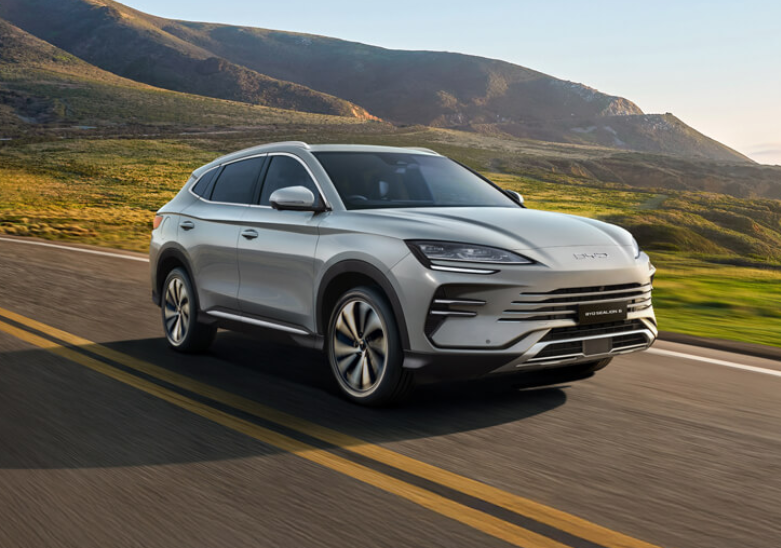
BYD’s rise to sales stardom in Australia in 2025 alone has been incredible. From launching on the local market in early 2022 to being placed in the top 10 manufacturers overall in 2025 to date is a meteoric rise, especially considering how BYD mostly sells EVs.
Priced from $42,990 plus on-road costs, the Sealion 6 PHEV is awesome value for money and is the cheapest plug-in hybrid on the market – it’s around $15,000 less expensive than the Mitsubishi Outlander PHEV, for example. Yet standard equipment is lengthy, including two battery sizes and two engines, with up to 140km of WLTP-rated range from a 26.6kWh LFP battery that can be charged at up to 18kW. Propulsion is handled by a plug-in hybrid drivetrain with both turbo and non-turbocharging, and up to 253kW of power and 550Nm of torque. Despite that, the Sealion 6 is hardly sporty and its ride quality could also be improved, but it’s got more than enough grunt for urban and highway driving.
Inside the Sealion 6 is a good quality cabin with a mix of leather-like and soft touch plastics for an upmarket vibe. Centre of the cabin is a huge 15.6-inch touchscreen with many features, which can also sit in portrait or landscape mode depending on your preference. The rear seat is roomy for two adults, with excellent head- and legroom, though the 425-litre boot is small for the class, though is boosted to 1440 litres with the rear seats folded.
BYD’s six-year/150,000km warranty covers the Sealion 6 and its annual/20,000km service intervals are long as well. Service pricing is reasonable too at just $329 per year. Overall, the BYD Sealion 6 is excellent value for money, and its position as the cheapest PHEV mid-size SUV on the market alone gives it plenty of appeal along with its high quality and spacious cabin, long electric driving range and long list of standard equipment.
BYD Sealion 7
1
Price: From $54,990 plus on-road costs
Drivetrains: Premium: Single motor rear axle, 230kW/380Nm; Performance: Dual motor all-wheel drive, 390kW/690Nm
Battery/peak DC charge rate: 82.5kWh, 150kW
Claimed WLTP range: 456km – 482km
Dimensions (length/width/height/wheelbase): 4803/1925/1620/2930mm
Bootspace: 520L – 1789L
Warranty/roadside assistance/service intervals: Six-year/150,000km, 12 months, annual/every
20,000km
Five-year service cost: $1543 – $1648
| Driving | |
| Interior | |
| Practicality | |
| Overall value | |
Things we like
- Handsome design in and out
- Well priced and very well equipped
- Strong performance across the range
Not so much
- Charging speeds and range are lacklustre
- ADAS systems need work
- Ride needs further refinement
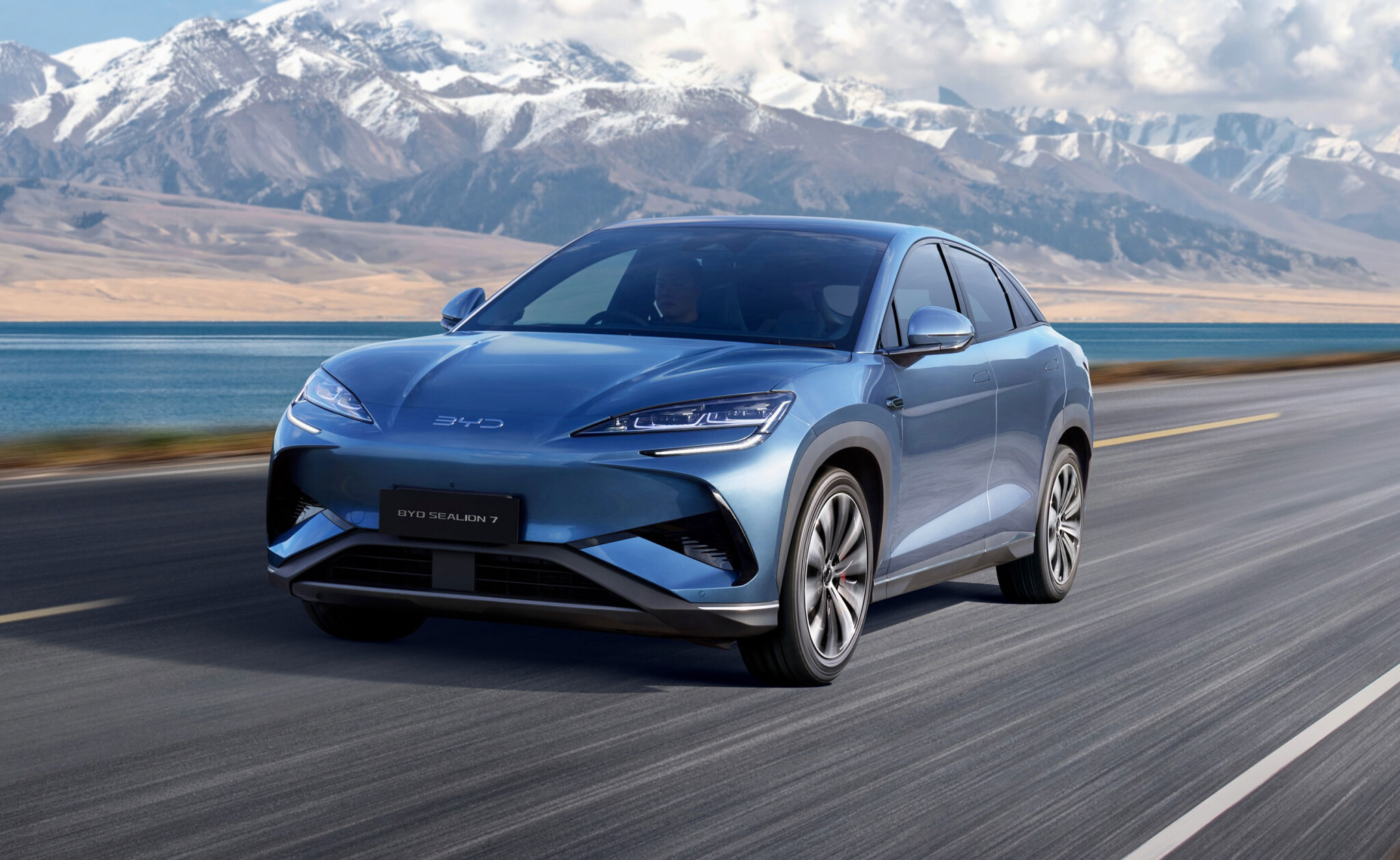
In addition to the Sealion 6 plug-in hybrid, BYD also launched the Sealion 7 EV to offer two medium SUVs to Australians earlier this year. Like its sibling, the Sealion 7 offers strong value for money including low pricing, a long list of standard equipment and, generally speaking, a lot of car for the money. Is it the electric mid-size SUV to buy?
Pricing for the Sealion 7 starts at $54,990 plus on-road costs and for now, there are two models on offer: the entry-level Premium and top-spec Performance. Standard equipment for the Premium includes a panoramic sunroof, a head-up display, a 15.6-inch touchscreen with wireless smartphone mirroring, a 12-speaker Dynaudio sound system and vehicle-to-load capability, with the Performance adding all-wheel drive, larger 20-inch wheels, a heated steering wheel and heated rear seats.
Two drivetrains are on offer, with both sharing a 82.5kWh battery that can be charged at up to 150kW, which is fine though some rivals such as the Model Y and 7X can charge much quicker. The Sealion 7 Premium uses a 230kW/380Nm rear-mounted single motor and is rated at 482km for WLTP range, while the Performance adds a second electric motor on the front axle for 390kW/690Nm outputs, though a range reduction to 456km. On the road, the Sealion 7 impresses with its smoothness and performance, even in the Premium, while the Performance is quite quick with a claimed 4.5 second 0-100km/h sprint time. The suspension needs retuning however, as it can be unsettled at urban speeds.
The cabin of the Sealion 7 is more upmarket and modern than the Sealion 6, again with the huge touchscreen dominating the cabin and the quality of the materials impressing throughout. The rear seat is one of the most accommodating in the segment with huge legroom and comfortable seats, while the 520-litre boot is smaller than some rivals, it’s still more than large enough. Folding down the rear seats unlocks a huge 1789 litres of space.
Like the Sealion 6, the Sealion 7 is covered by a six-year/150,000km warranty and its annual servicing requirements are long at 20,000km. Five years or 100,000km of servicing costs between $1543 for the Premium and $1648 for the Performance, which is reasonable. The Sealion 7 gets ticks for its upmarket feel, excellent value for money, reasonable range and excellent performance, regardless of which model is chosen. Marks taken away because it could be better dynamically and its peak charging speed isn’t class leading either, but it’s still a worthy SUV option in this segment.
Kia EV5
1
Price: From $56,770 drive away
Drivetrains: RWD: Single motor front axle, 160kW/310Nm; AWD: Dual motor all-wheel drive, 230kW/480Nm
Battery/peak DC charge rate: Standard Range: 64.2kWh LFP, 102kW; Long Range: 88kWh, LFP, 140kW
Claimed WLTP range: 400km – 555km
Dimensions (length/width/height/wheelbase): 4615/1875/1715/2750mm
Bootspace: 513L – 1714L
Warranty/roadside assistance/service intervals: Seven-year/unlimited km, service activated up to
eight years, annual/every 15,000km
Five-year service cost: $1535 ($307 per year)
| Driving | |
| Interior | |
| Practicality | |
| Overall value | |
Things we like
- Sharp value for money
- Interesting design
- Very practical
Not so much
- Slow DC charging speeds
- Inefficient drivetrain
- Annoying climate control panel
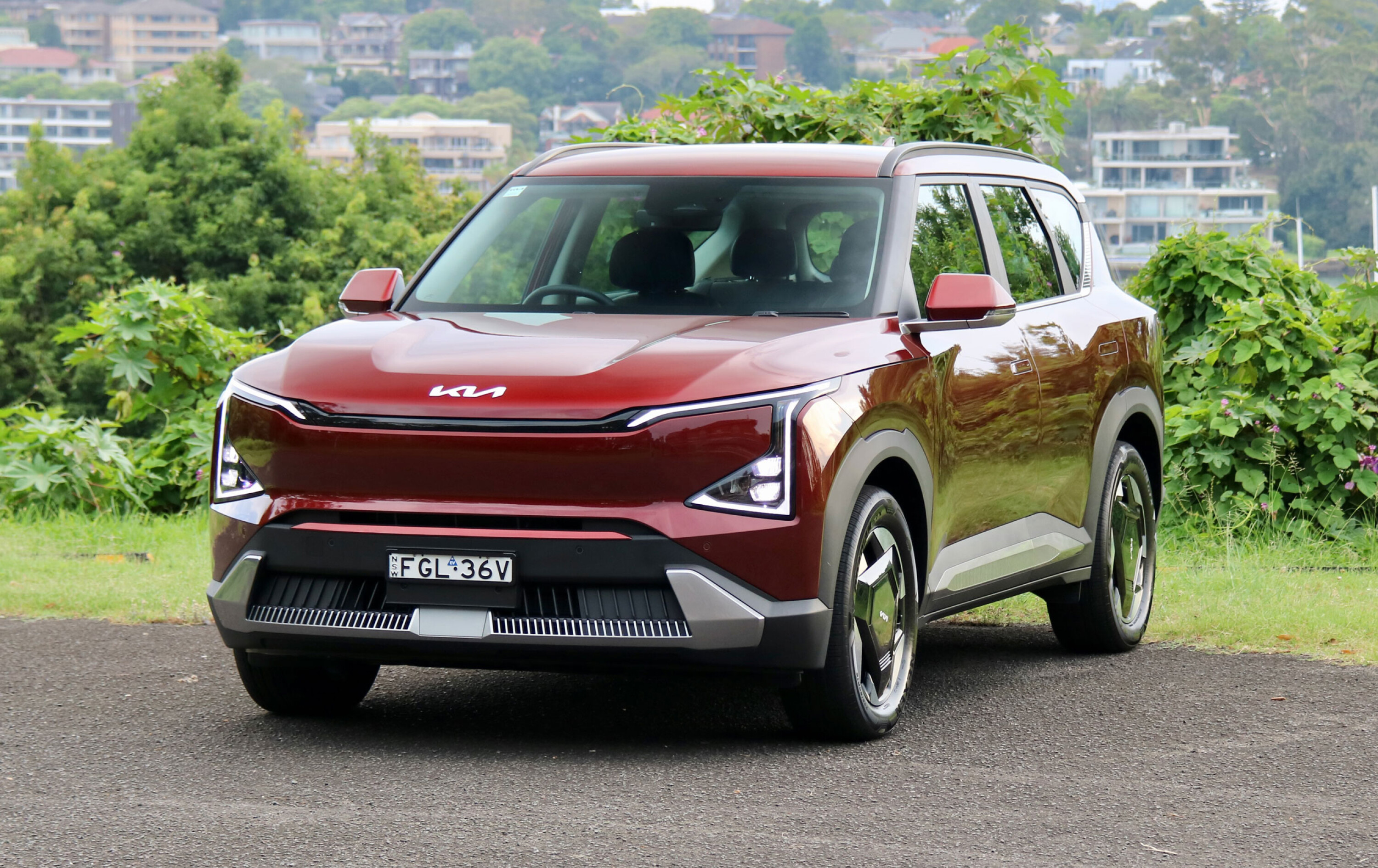
Kia’s third EV designed from the ground up arrived in Australia in late 2024 and marked a big shift in policy for the brand in Australia: it’s the first Chinese-built product the brand has sold here. In addition to that, the EV5 actually uses batteries made by BYD. According to Kia, that makes it cheaper to build and more competitive for Australia, and with pricing starting at $56,770 drive away, the EV5 is only around $7000 more expensive than the much smaller EV3.
So battery tech aside, what does the Kia EV5 have going for it? Well, as we’ve come to expect from Kia lately thanks to its excellent line-up, quite a lot. The EV5 is good value for money across the range but particularly the entry-level models, with equipment including LED lighting, cloth and synthetic leather trim, an electric driver’s seat with massaging, dual 12.3-inch screens with live services and a full suite of active safety features. Move up the range and longer range and all-wheel drive models are available with more features, but even the entry-level Air is quite well equipped.
Two battery sizes are available in Australia: a 64.2kWh unit in the base Air and a larger 88kWh one in every other model. Claimed WLTP range stretches from 400km for the Air to 555km in the Air Long Range, which are healthy, though peak charging speeds of just 102kW for the Air and 140kW for the other models is much less than Kia’s more expensive EVs such as EV6 and EV9. On the road, the EV5 drives generally quite well, though the larger-wheeled GT-Line isn’t as comfortable as the Air.
Inside the EV5 is a comfortable, good quality and very practical cabin that, in line with Kia’s other recent products, is futuristic and minimalist in its look. The touchscreen is easy to use and well featured, and storage is impressive, including the unique padded central arm rest. The rear seat is also impressive, though a Sportage is larger still, and the EV5’s boot isn’t as large as its sibling at 513 litres either. However, unlike most other mid-size SUVs, the EV5’s rear seats fold completely flat and there’s a large 1714L on offer when done so – plus, a 67-litre front boot as well.
As with the rest of its range, Kia covers the EV5 with a seven-year/unlimited km warranty with up to eight years of roadside assistance. It service intervals are annual/every 15,000km and five years/75,000km of servicing costs just $1535. Overall, the Kia EV5 deserves to be on your mid-size SUV shopping list. Starting from comfortably underneath $60,000 drive away, its value equation is strong and it also offers competitive efficiency and range, its interior is quite practical and it’s well equipped across the range.
Best Medium SUVs in Australia
Looking to get into a brand-new mid-size SUV? Our stories below will guide you to the model that best suits your needs:
Follow WhichCar/Wheels on Google
Click the button below to make WhichCar by Wheels a preferred source for your news.