Best Medium SUVs

Gallery 1
Contenders
- Hyundai Tucson
- Nissan X-Trail
- Kia Sportage
- MG HS
- Mazda CX-5
- GWM Haval H6
- Chery Tiggo 7
- KGM Korando
- Mitsubishi Outlander
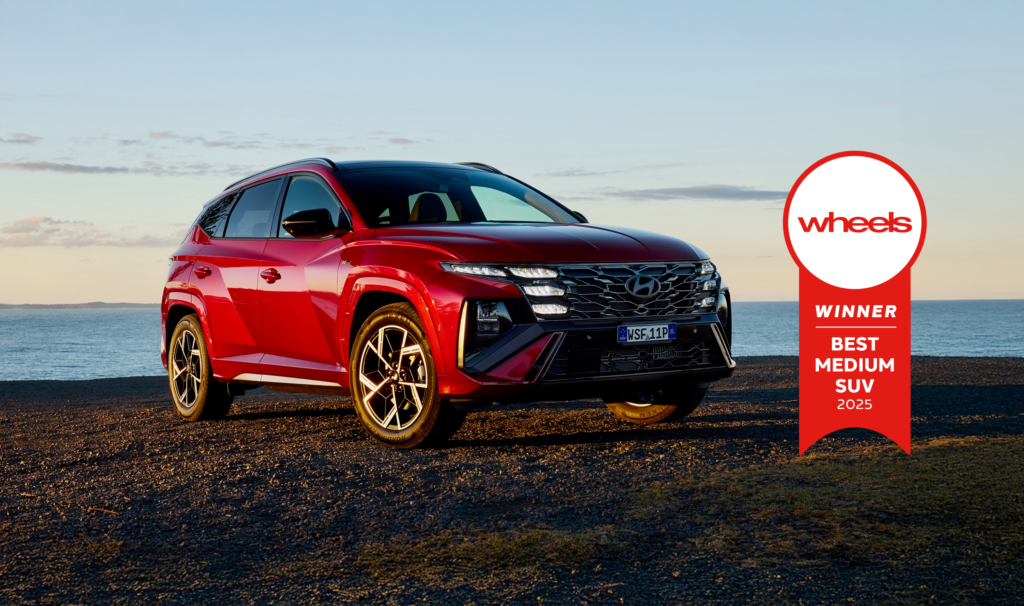
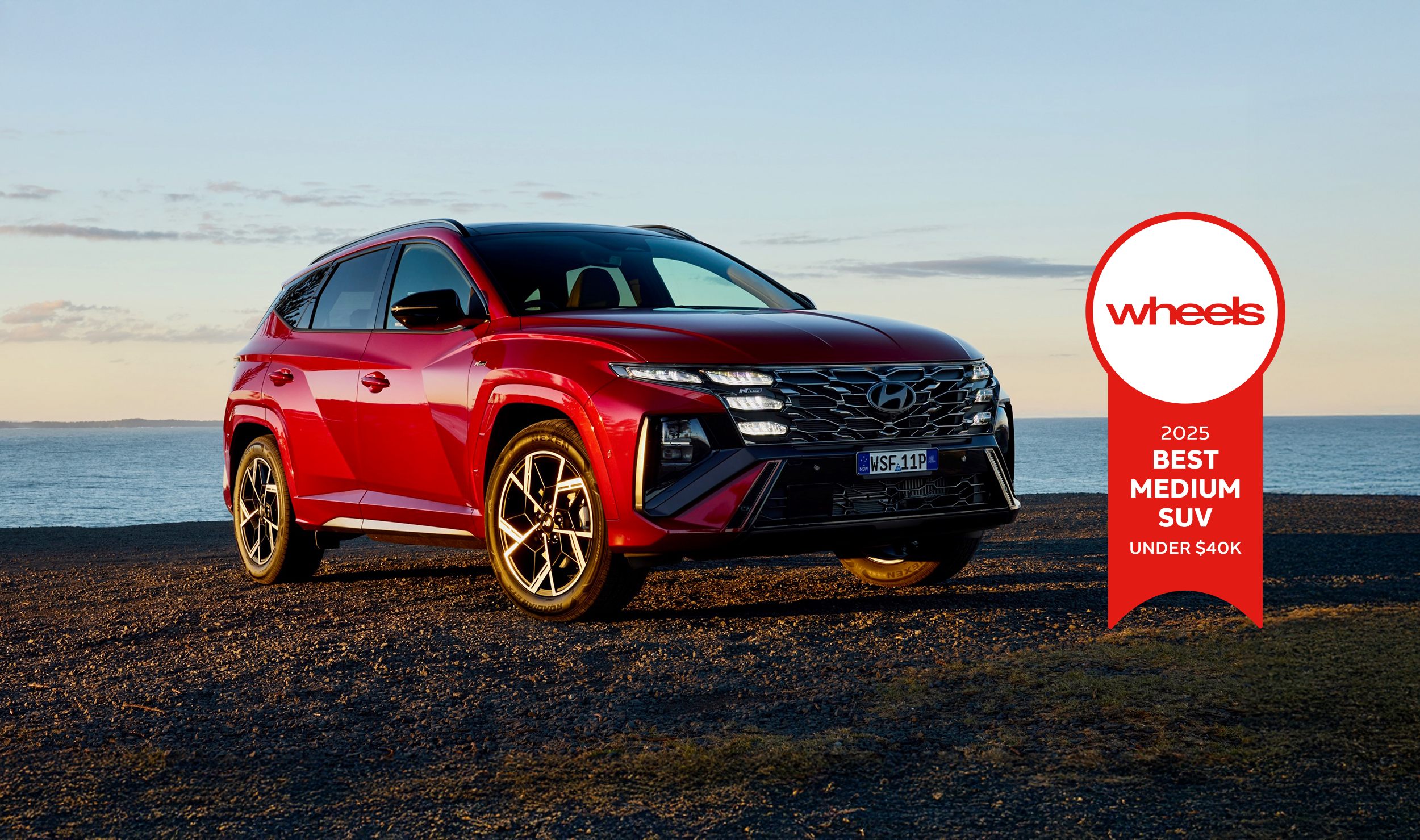
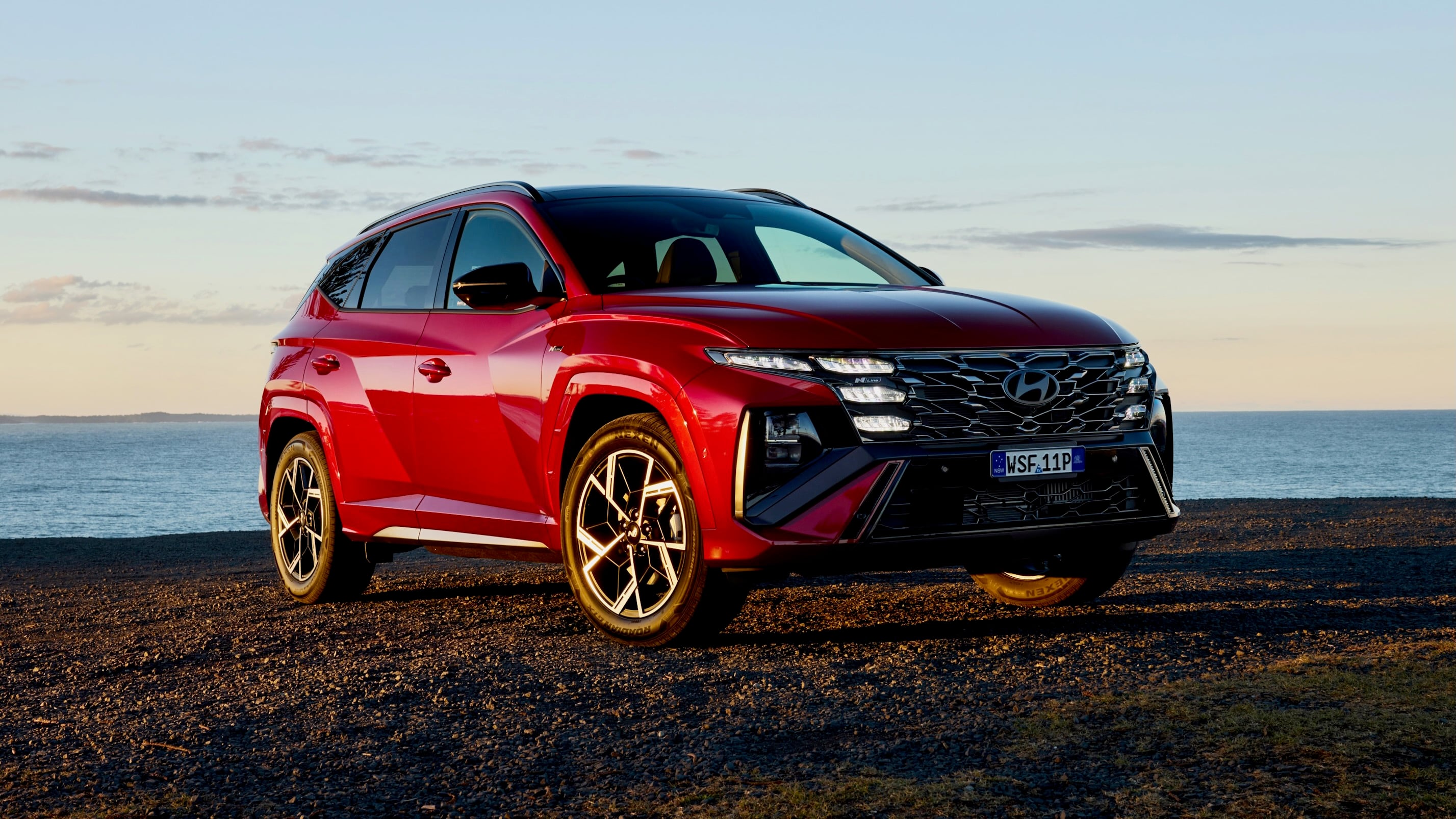
Winner: Hyundai Tucson
1
Price: From $38,100 plus on-road costs
Drivetrains/fuel economy/CO2 emissions: 2.0-litre four-cylinder, 6-speed auto, 2WD, 115kW/192Nm, 8.1L/100km, 184g/km; 1.6-litre four-cylinder turbo hybrid, 6-speed dual-clutch, 2WD or AWD, 172kW/367Nm, 5.3L/100km, 140g/km
Dimensions (length/width/height/wheelbase): 4640/1865/1665/2755mm
Bootspace: 582L – 1903L
Warranty/roadside assistance/service intervals: Five-year/unlimited km – extendable to 7 year/unlimited km through dealer servicing, service-activated, annual/every 10,000km
Five-year service cost: 2.0L: $1871 ($374 per year), hybrid: $2042 ($408 per year)
| Driving | |
| Interior | |
| Practicality | |
| Overall value | |
Things we like
- A great all-rounder
- Spacious and practical cabin
- Well equipped across the range
Not so much
- No more turbo petrol drivetrain
- Thirsty 2.0-litre petrol engine
- Hybrid’s shorter service intervals
Now in its fourth generation, the Hyundai Tucson is so far the brand’s second-best selling product in Australia and is also the fourth-best selling mid-size SUV in 2025. There’s clear appeal to the Tucson then, including its value for money, airy and spacious cabin and hybrid-focused model range. Pricing starts at $38,100 plus on-road costs and unlike its Kia Sportage cousin, the hybrid drivetrain is available in every specification.
In fact, hybrids make up the majority of the Tucson lineup with the former 1.6-litre turbo-petrol engine recently shelved, leaving just a naturally aspirated 2.0-litre petrol engine and the hybrid available. If you’re wanting all-wheel drive or the top-spec Premium, the hybrid is your only option and that’s a good thing because it’s powerful yet efficient, and also quite refined. The Tucson’s driving experience is one of the best in the mid-size SUV segment as well.
Part of the mid-life update to the Tucson range was a new 12.3-inch touchscreen featuring Hyundai’s latest ‘ccNc’ software. It’s well featured across the range, including wireless Apple CarPlay and Android Auto smartphone mirroring, live services and over-the-air updates. Front seat comfort, even in the entry-level model, is impressive and the rear seat space is spacious. Boot space is also quite large for the segment with 582 litres with the seats up and a massive 1903L with them folded.
For vehicles registered after June 1, 2025, Hyundai now offers a seven-year warranty, provided all scheduled services are carried out at an authorised Hyundai dealer. Prior to that date the Tucson is covered with a five-year/unlimited km job with service-activated roadside assistance and much less expensive servicing than its Kia cousin, despite the same drivetrains, from under $1900 for five years.
Overall, the Hyundai Tucson is one of the shining stars in the mid-size SUV segment and its recent update has only made it better, making it our pick of this year’s Best Medium SUVs and the best under $40K. Killing the former 1.6-litre turbo-petrol engine might have disappointed some, but forcing buyers wanting more power than the base 2.0-litre engine into the hybrid is great as its efficiency is far superior, while it’s also more powerful. The Tucson’s cabin is roomy for a family, and its boot is one of the largest in the segment as well. Add in reasonable service costs, good value pricing and long equipment lists, and it’s clear why the Hyundai Tucson has so many Australian fans.
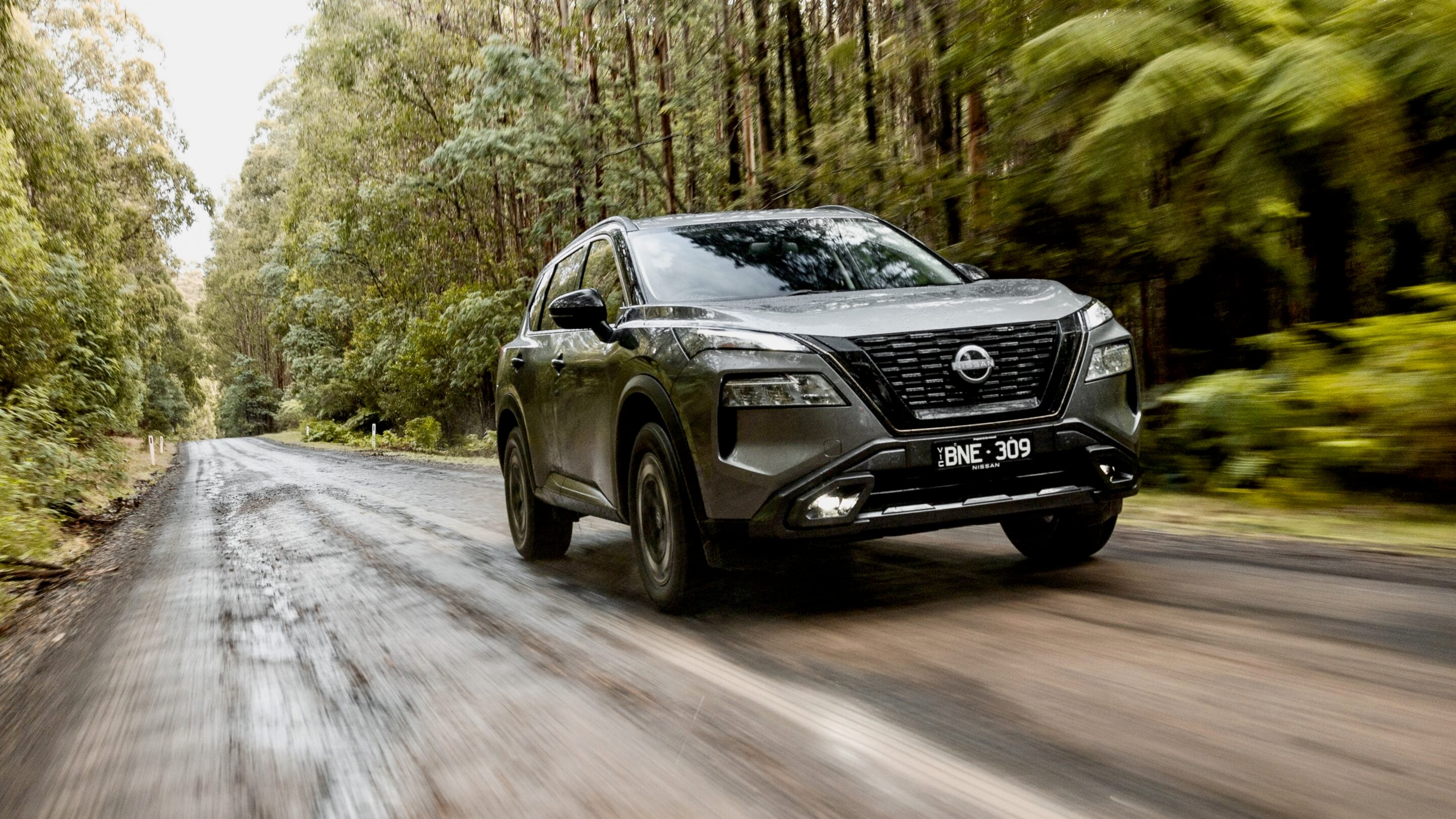
Nissan X-Trail
1
Price: From $36,990 plus on-road costs
Drivetrains/fuel economy/CO2 emissions: 2.5-litre four-cylinder, CVT, 2WD or AWD, 135kW/244Nm, 7.4-7.8L/100km, 180-183g/km; 1.5-litre three-cylinder turbo hybrid, CVT, AWD, 157kW/330Nm, 6.1L/100km, 174g/km
Dimensions (length/width/height/wheelbase): 4680/1840/1725/2705mm
Bootspace: 465L – 1667L
Warranty/roadside assistance/service intervals: Five-year/unlimited km – extendable to 10
years/300,000km through dealer servicing, 12 months, service extendable, annual/every 15,000km
Five-year service cost: $1995 ($399 per year)
| Driving | |
| Interior | |
| Practicality | |
| Overall value | |
Things we like
- Impressive cabin quality and design
- Pleasant and comfortable to drive
- Well equipped with features across the range
Not so much
- Optional third row of seating quite tight
- Hybrid only on upper-spec models, only with AWD and five seats
- Petrol engine is fine but nothing special
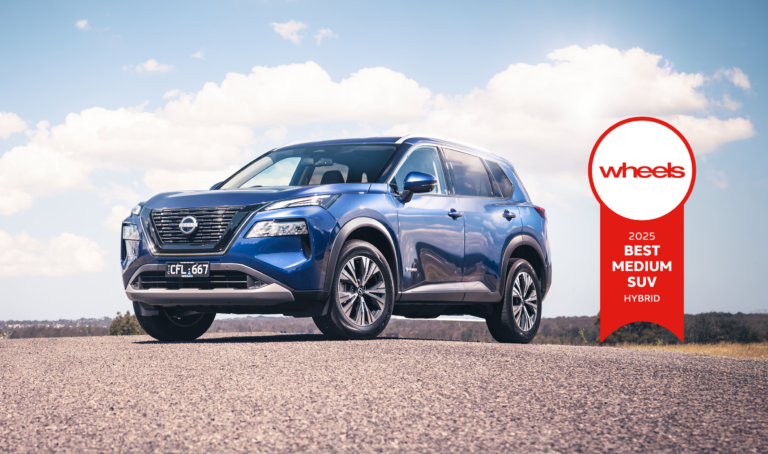
Nissan’s X-Trail has long been a family favourite, but it’s the brand’s clever e-Power hybrid technology that is helping to set it apart in today’s crowded medium SUV segment — and is a key reason it has been crowned Wheels Best Medium SUV 2025: Hybrid.
Unlike conventional hybrids, Nissan’s e-Power system uses a petrol engine solely to charge the battery, while the wheels are driven entirely by the electric motor. The result is EV-like smoothness and instant torque, but without the need to plug in. For a family, the obvious benefit is significantly improved fuel efficiency, lower emissions, and a refined driving experience, making the X-Trail one of the most economical choices in its class.
That efficiency doesn’t come at the expense of practicality. The hybrid X-Trail offers 575 litres of boot space, expanding to 1667 litres, more than enough for school runs, sports gear, or road trips. Rear doors that open almost 90 degrees make fitting child seats and loading kids a breeze, while the roomy second row ensures comfort for growing families.
Inside, the cabin feels more premium than its price suggests. Soft-touch materials, clear high-resolution screens, and smart storage solutions combine with a sensible layout that keeps physical buttons for essentials like climate control. It’s a user-friendly environment designed to reduce distractions while driving.
On the road, the e-Power system delivers a quiet, composed ride that’s tuned more for comfort than outright excitement — a welcome trade-off for families who value refinement. All-wheel drive adds peace of mind in wet or gravel conditions, while the compliant suspension smooths out the daily commute.
The package is sweetened by Nissan’s long warranty coverage — five years/unlimited km, extendable to 10 years/300,000 km with servicing — the longest in the new car market. Servicing costs remain competitive at $1995 for the first five years.
With its unique hybrid drivetrain, spacious and practical interior, premium cabin feel, and long warranty support, the Nissan X-Trail e-Power is a winning option as a family SUV.
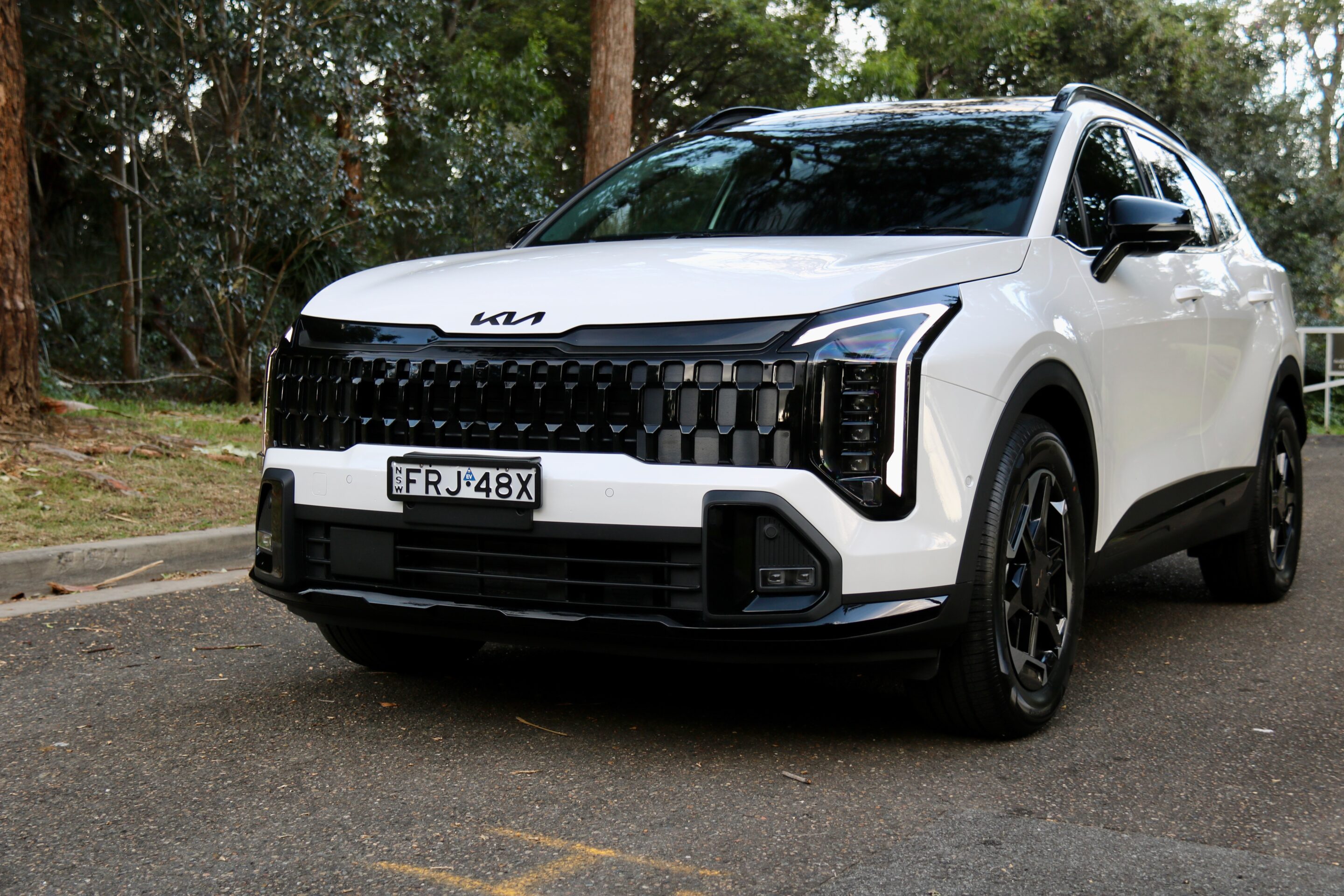
Kia Sportage
3
Price: From $37,990 plus on-road costs
Drivetrains/fuel economy/CO2 emissions:
2.0-litre four-cylinder, 6-speed auto, 2WD 115kW/192Nm, 8.1L/100km, 184g/km; 1.6-litre four-cylinder turbo-petrol, 8-speed auto, AWD, 132kW/265Nm; 1.6-litre four-cylinder turbo hybrid, 6-speed DCT, 2WD or AWD, 173kW/367Nm, 4.9-5.3L/100km 110-121g/km; 2.0-litre four-cylinder turbo-diesel, 8-speed auto, AWD, 137kW/416Nm, 6.3L/100km, 163g/km
Dimensions (length/width/height/wheelbase): 4685/1865/1665-1680/2755mm
Bootspace: 543-586L – 1829-1872L
Warranty/roadside assistance/service intervals: Seven-year/unlimited km, up to eight years,
annual/every 10,000km (1.6T and hybrid) or 15,000km (2.0L petrol and diesel)
Five-year service cost: $2467 ($493 per year – 2.0L petrol), $2562 ($512 per year – 1.6T), $2613
($522 per year – hybrid 2WD), $2666 ($533 per year – hybrid AWD), $2708 ($542 per year – diesel)
| Driving | |
| Interior | |
| Practicality | |
| Overall value | |
Things we like
- Huge drivetrain choice
- Recent facelift improved it further
- Big range of variants to suit many budgets
Not so much
- Big premium for hybrid drivetrain
- Expensive at the top of the range
- Expensive to service
Kia’s recently updated Sportage medium SUV is, like its Hyundai Tucson cousin, an excellent all-round mid-size SUV that brings a lot to the table: a big range of drivetrains – the largest range of the segment – and an excellent driving experience, as well as a very practical and spacious cabin.
Plus, being a Kia, it’s great value for money and is covered by a long warranty. Prices for the Sportage range start at $37,990 plus on-road costs for the entry-level S 2.0-litre petrol auto, rising to over $60,000 +ORC for the top-spec GT-Line hybrid AWD. Regardless of the model chosen, the Sportage is well equipped, especially in facelifted form. The least expensive Sportage Hybrid is the second-from-base SX, which is priced from $46,450 +ORC – we’d like to see the sophisticated hybrid drivetrain added to the base S for more accessibility.
Unusually in an era where car makers are cutting down on drivetrain options, Kia offers petrol, turbo-petrol, hybrid and even diesel powerplants in the Sportage. Which you should buy depends on your needs – the petrol options are thirsty, while the hybrid is efficient but expensive to buy and diesel fuel isn’t best suited to everybody. We’d go the hybrid, but it really depends on your driving.
In the cabin, the Sportage feels spacious thanks to its wide dashboard layout and huge curved display incorporating both the infotainment system and driver’s screen. Cabin storage is good, while the rear seat is quite roomy for two taller adults. Bootspace is minimum 543 litres in petrol and diesel forms (it’s a higher 586L in the hybrid because it lacks a full-size spare wheel), which is large in the segment.
Kia’s seven-year/unlimited km warranty was once the industry benchmark but has now been matched by a number of manufacturers – thankfully, seven years is still a long time. Service pricing, however, isn’t cheap – even the least technically impressive 2.0 litre petrol engine costs almost $500 annually to service. But while some aspects of the Sportage aren’t cheap, it’s still a surefire all-rounder that’s great to drive, practical and importantly for many, available with hybrid power.
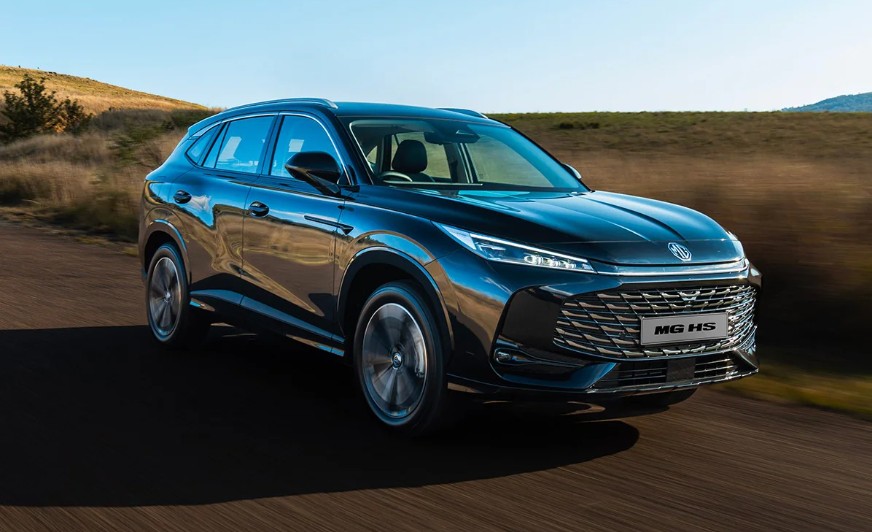
MG HS
1
Price: From $33,990 drive away
Drivetrains/fuel economy/CO2 emissions: 1.5-litre turbo four-cylinder, 7-speed DCT, 2WD, 125kW/275Nm, 6.9L/100km, 156g/km; 1.5-litre turbo four-cylinder hybrid, CVT, 2WD, 165kW/340Nm, 5.2L/100km, 119g/km; 1.5-litre turbo four-cylinder plug-in hybrid, CVT, 2WD, 220kW/350Nm, 0.7L/100km, 17g/km
Dimensions (length/width/height/wheelbase): 4670/1890/1655/2675mm
Bootspace: 507L – 1484L
Warranty/roadside assistance/service intervals: Seven-year/unlimited km – extendable to 10
years/250,000km through dealer servicing, up to 10 years, annual/every 15,000km
Five-year service cost: $2354 ($470 per year – 1.5T petrol)
| Driving | |
| Interior | |
| Practicality | |
| Overall value | |
Things we like
- A big improvement over the previous HS
- Excellent value for money
- Two available hybrid drivetrains
Not so much
- No wireless phone mirroring (yet)
- Boot space a little small for the segment
- Too many features buried in the touchscreen
MG’s new product roll in Australia continues at a rapid pace, with the brand completely renewing its Australian line-up in a very short period. The HS mid-size SUV is one of the latest additions, replacing the short-lived first-generation model with a massive glow up: it’s far more modern inside and out, it’s better equipped across the range and it also now has two hybrid options.
Prices for the HS start at just $33,990 drive away for the entry level Vibe, but even the top-spec Essence petrol model doesn’t get you far over the $40,000 mark. The most expensive HS, the top-spec Essence plug-in hybrid, is just over $55,000 drive away – or thousands less than an equivalent Mitsubishi Outlander PHEV. As we’ve come to expect from the modern MG brand, the value equation for the HS is strong.
The cabin of the HS is one of the most modern-looking in the segment, with plenty of soft leather-like materials covering the surfaces that are touched most commonly, including the sides of the centre console to rest knees against. It’s practical too, with plenty of storage solutions, though the 12.3-inch touchscreen could be easier to use with very little in the way of shortcuts to help access features such as the climate control. The HS’s 507-litre boot is a little smaller than most in the segment.
The HS offers three drivetrains in Australia, all centred around a 1.5-litre turbo-petrol engine: a regular petrol variant, a hybrid and then a plug-in hybrid. The regular hybrid is yet to go on sale but the plug-in hybrid offers a claimed 81km of EV range and low fuel consumption, even with its battery depleted. The HS’s driving experience is otherwise unremarkable, with a compliant but fidgety low-speed ride quality and a seven-speed dual-clutch transmission on the 1.5T.
MG’s standard seven-year warranty is extended to a total of 10 years/250,000km if serviced through an MG dealership, and service pricing for the first five years is reasonable at $2354 for the 1.5-litre turbo-petrol. Overall, the MG HS presents compelling buying in the medium SUV segment thanks to its value equation, well-trimmed cabin, long standard equipment list and range of drivetrains, including two hybrids, offsetting the confusing touchscreen and no wireless phone mirroring.
Mazda CX-5

1
Price: From $36,740 plus on-road costs
Drivetrains/fuel economy/CO2 emissions: 2.0-litre four-cylinder, 6-speed auto, 2WD, 115kW/200Nm, 6.9L/100km, 161g/km; 2.5-litre four-cylinder, 6-speed auto, 2WD or AWD, 140kW/252Nm, 7.2-7.4L/100km, 167-172g/km; 2.5-litre turbo four-cylinder, 6-speed auto, AWD, 170kW/420Nm, 8.2L/100km, 191g/km
Dimensions (length/width/height/wheelbase): 4575/1845/1680/2700mm
Bootspace: 438L – 1340L
Warranty/roadside assistance/service intervals: Five-year/unlimited km, five years, annual/every
15,000km
Five-year service cost: $2195 ($439 per year – 2.0L), $2227 ($445 per year – 2.5L), $2630 ($526
per year – 2.5L turbo)
| Driving | |
| Interior | |
| Practicality | |
| Overall value | |
Things we like
- Wonderful to drive with a fun chassis
- Excellent interior quality
- Loaded with safety features
Not so much
- Back seat and boot are small
- Thirsty drivetrains with no hybrid options
- Feeling a bit dated throughout
Despite an all-new model already revealed and many newer rivals, the Mazda CX-5 is still the second-best selling medium SUV in Australia, with almost 14,000 sold to the end of July.
Mazda’s sexy ‘Kodo’ design hasn’t changed much since the original CX-5 was released in 2012, but it gives it a sharp and distinctive look in the mid-size SUV segment. The long, shark-like nose and rich-looking available Soul Red Crystal colour only add to the CX-5’s stylistic appeal, as do details such as the all-LED exterior lighting and wheels up to 19-inches in size.
On the inside, while the CX-5 is feeling a bit dated against newer and more tech-heavy rivals, its quality is still among the best in the segment – especially the top-of-the-range Akera with its Nappa leather trimmings. But even in the entry-level Maxx, the switchgear in the cabin has excellent weighting and the bits of chrome add class to the cabin. It’s not the most practical mid-size SUV, however, with a tight back seat and a boot that’s one of the smallest in the segment.
Three four-cylinder petrol engines are available: a 115kW 2.0-litre, a 140kW 2.5-litre and a 170kW turbocharged 2.5-litre, all with a six-speed auto as standard and there’s no hybrid drivetrain yet available. Regardless of engine, the CX-5 drives sweetly, with a fun chassis and a connected driving feel that’s above its rivals. And the CX-5 still rides quite well, even on larger wheels of the more expensive models in the line-up.
Mazda’s five-year warranty is looking short these days, though at least it has roadside assistance for the full warranty duration and regardless of where it’s serviced. Service pricing is reasonable for the naturally aspirated engines, but expensive for the turbocharged donk and thanks to that and its thirsty real world fuel consumption, the CX-5 2.5T will be costly to run. But regardless, it’s clear why the Mazda CX-5 is an Australian favourite after all these years.
GWM Haval H6
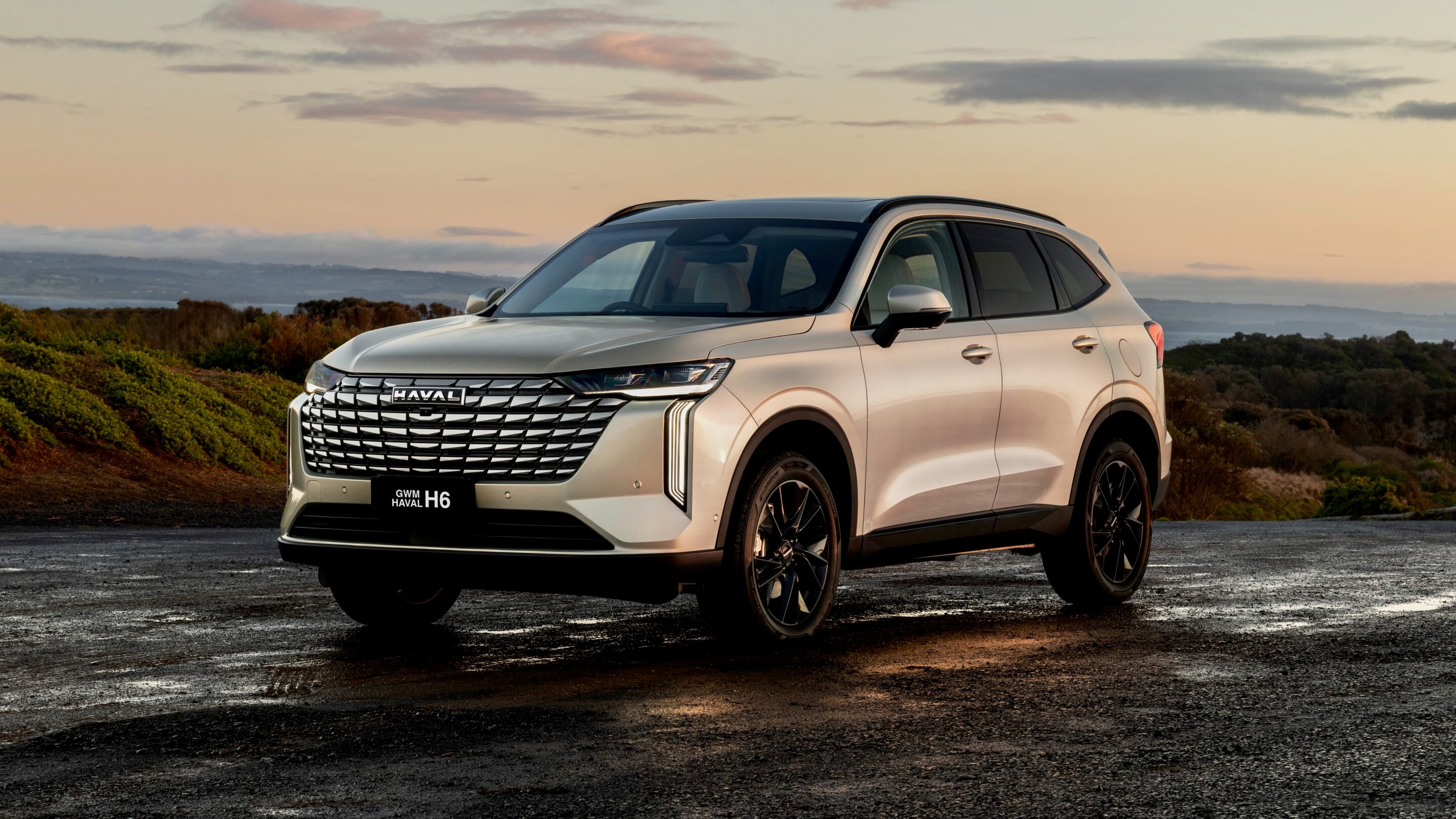
1
Price: From $35,990 drive away
Drivetrains/fuel economy/CO2 emissions: 2.0-litre turbo four-cylinder, 9-speed DCT, 2WD, 170kW/380Nm, 7.4L/100km, 170g/km; 1.5-litre turbo four-cylinder hybrid, CVT, 2WD, 179kW/530Nm, 5.2L/100km, 120g/km; 1.5-litre turbo four-cylinder plug-in hybrid, CVT, 2WD or AWD, 240kW/540Nm (2WD) – 268kW/760Nm (AWD), 1.0-1.1L/100km, 22-25g/km
Dimensions (length/width/height/wheelbase): 4703/1886/1730/2738mm
Bootspace: 560 litres – 1445/1485 litres
Warranty/roadside assistance/service intervals: Seven-year/unlimited km, five years, annual/10,000km for the first year and then every 15,000km afterwards
Five-year service cost: $2110 ($422 per year – 2.0T), $2145 ($429 per year – hybrid), $2220 ($444 per year – PHEV)
| Driving | |
| Interior | |
| Practicality | |
| Overall value | |
Things we like
- Effective facelift has improved the H6 throughout
- Punchy hybrid drivetrain the one to buy
- Large back seat for the segment
Not so much
- PHEV has more features than other drivetrains
- Ride and handling balance off the class pace
- Too much reliance on touchscreen
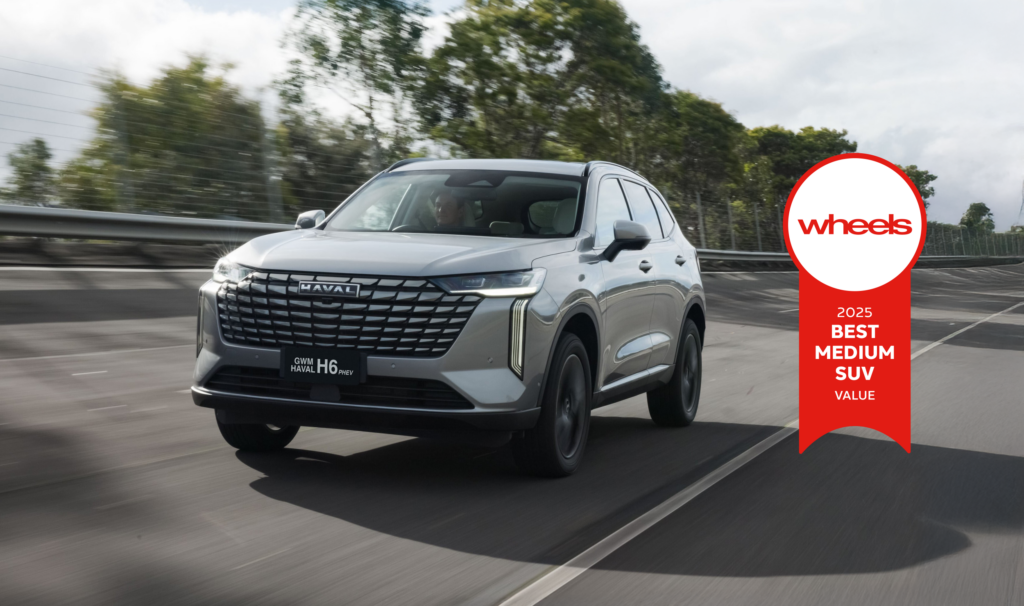
GWM’s Haval H6 was recently given a comprehensive mid-life update with updated styling, a new model line-up, value increases and not one but two new plug-in hybrid drivetrains making up to a massive 268kW of power.
The turbocharged 2.0-litre four-cylinder petrol engine remains the entry-level engine but now making 170kW of power, while the new plug-in hybrid drivetrains offer up to around 80km of electric driving range (WLTP) from their 19kWh battery. We’d choose the 1.5-litre turbo hybrid drivetrain, which makes a strong 179kW of power and 530Nm of torque – more than a RAV4 hybrid. Its claimed fuel consumption is higher than the RAV4 at 5.2L/100km, but still low.
On the road, the Haval H6’s ride is a little firm at low speed but go further and it quickly wins back points with those smooth hybrid drivetrains offering more than enough grunt and impressive refinement with little in the way of road and wind noise at speed.
The H6’s cabin saw a new 14.6-inch touchscreen added with the update, which added features such as wireless smartphone mirroring, though still no integrated sat-nav. Like the pre-updated model, the H6’s touchscreen controls the vast majority of functions in the car – including, now, even the headlights with the update – though a row of buttons below the screen help a bit with functionality. The rear seat is spacious for the segment and three adults will fit fine, while the bootspace is a large 560 litres with the seats up.
The H6 is covered by GWM’s seven-year/unlimited km warranty with five years of roadside assistance and five years of capped price servicing totalling only $2220 for the PHEV, which is the most expensive in the range.
In the end, it’s the bang for buck which ensures it wins the Value section of these awards: that hard-to-ignore price combined with strong equipment levels and three hybrid drivetrain options is so attractive in cash-strapped times.
Chery Tiggo 7

1
Price: From $29,990 drive away
Drivetrains/fuel economy/CO2 emissions: 1.5-litre turbo four-cylinder, 7-speed DCT, 2WD, 137kW/275Nm, 7.0L/100km, 163g/km; 1.5-litre turbo four-cylinder plug-in hybrid, CVT, 2WD, 255kW/525Nm, 1.4L/100km, 33g/km
Dimensions (length/width/height/wheelbase): 4513/1862/1696/2670mm
Bootspace: 356L – 1500L
Warranty/roadside assistance/service intervals: Seven-year/unlimited km, 12 months, annual/every
15,000km
Five-year service cost: $1445 ($289 per year – 1.6T), $1595 ($319 per year – PHEV)
| Driving | |
| Interior | |
| Practicality | |
| Overall value | |
Things we like
- Stunning value for money, priced from under $30k drive away
- PHEV’s impressive performance and fuel economy
- Well appointed cabin materials
Not so much
- 1.6T’s DCT low speed fumbles
- Unresolved ride and handling
- Not a true mid-size SUV in size
With cars such as the Tiggo 4 and the Tiggo 7, Chery is making a name for itself with some of the best value cars on the market. Priced from just $29,990 drive away for the entry-level SE, the Tiggo 7 gives buyers a mid-size SUV for the price of a small SUV and it’s been a long time since we’ve seen a mid-sizer priced at under $30,000.
Chery launched the Tiggo 7 Pro a few years ago with a larger line-up that also included an all-wheel drive variant, though it was rejigged not long afterwards with a mild update to just the SE and SE+, with both using a new 108kW 1.5-litre turbo-petrol engine and a six-speed dual-clutch gearbox.
Standard equipment on both variants is lengthy, including dual 12.3-inch screens, synthetic leather upholstery and a full range of active safety features.
The cabin of the Tiggo 7 feels modern thanks to the big screens and stitched synthetic leather trim on many surfaces, while it’s also more ergonomic than many rivals thanks to the inclusion of the touch panel on the lower dashboard to control the climate control instead of hiding controls in the touchscreen. There are many storage spots inside, though the back seat and boot aren’t as large as many rivals, so be sure to test that out to see if it suits you.
As for drivetrains, buyers can choose either a 1.5-litre turbo-petrol engine or new 1.5-litre turbo-petrol plug-in hybrid drivetrain making an impressive 255kW of power, but also claiming an impressive 1200km range and combined fuel consumption of just 1.4L/100km when charged. Of course, the Tiggo 7 PHEV is more expensive than the petrol model at $39,990 drive away, but it’s also the cheapest plug-in hybrid on the market.
The Tiggo 7 isn’t as good to drive as many rivals, however, thanks to an unsettled ride quality and a jerky transmission. The PHEV variant is also too powerful and its grunt can overpower the chassis. However, for the value-focused buyer, there’s lots to like: a good quality and modern cabin experience and the option of an efficient and quite powerful plug-in hybrid drivetrain. For many buyers, what more could you want?
KGM Korando
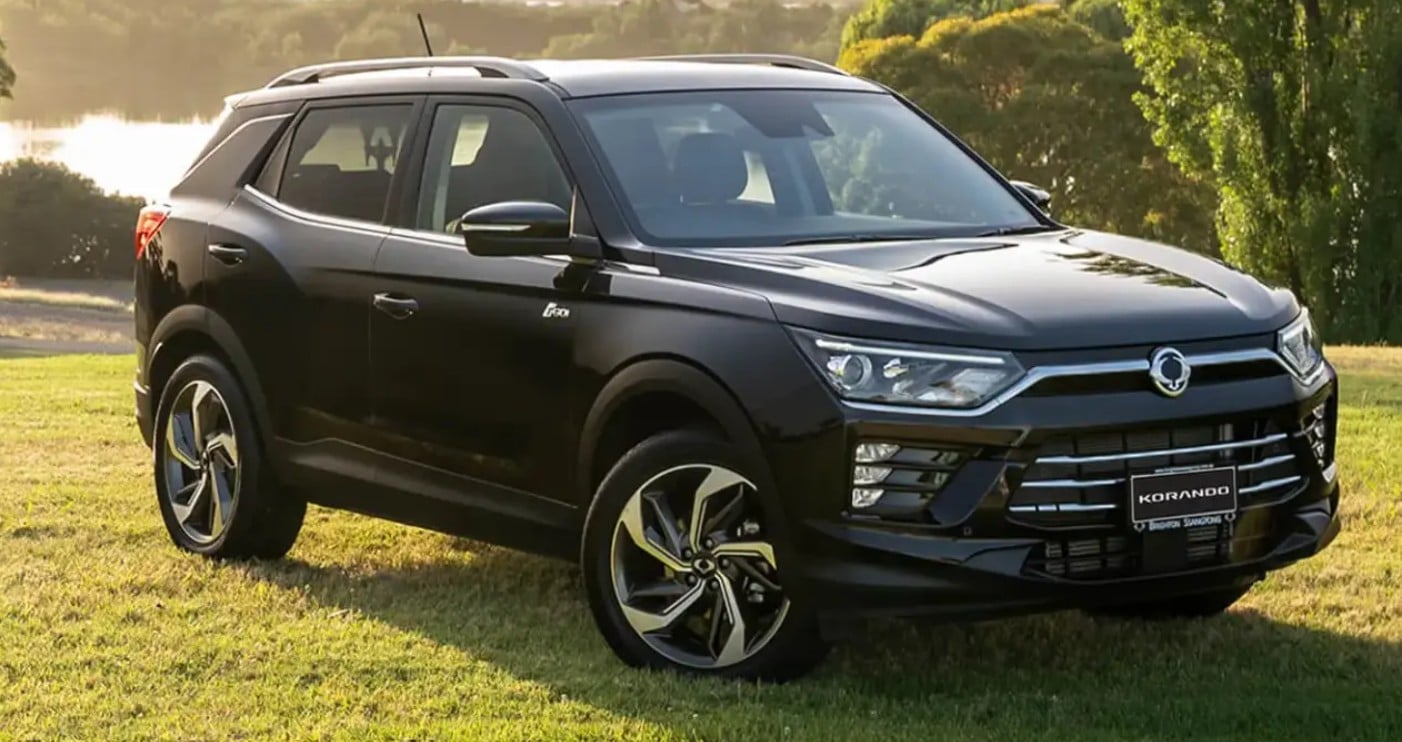
1
Price: From $33,000 drive away
Drivetrains/fuel economy/CO2 emissions: 1.5-litre turbo four-cylinder, 6-speed auto, 120kW/280Nm, 7.7L/100km, 179g/km
Dimensions (length/width/height/wheelbase): 4450/1870/1629/2675mm
Bootspace: 407L – 1104L
Warranty/roadside assistance/service intervals: Seven-year/unlimited km, five years, annual/every
15,000km
Five-year service cost: $1898 ($379 per year)
| Driving | |
| Interior | |
| Practicality | |
| Overall value | |
Things we like
- Excellent value for money
- Well equipped across the range
- Feels European to drive
Not so much
- Grunty diesel no longer available
- Many rivals are larger inside
- Some rivals feel more modern
The Wheels’ Best Medium SUV 2025 awards wouldn’t be complete without entrants from brands that we think you should be considering, and the KGM (formerly SsangYong) Korando is one such product. While some rivals are larger and offer more practicality, the Korando is a worthy option for a mid-size SUV, one that we think deserves more attention.
Priced from just $33,000 drive away, the Korando offers excellent value for money. Features on the entry-level ELX include 18-inch alloy wheels, dusk-sensing automatic headlights, LED front and rear daytime running lights, cloth and synthetic leather upholstery, autonomous emergency braking (AEB), lane keeping assistance, blind-spot monitoring and rear cross-traffic alert. The upper-spec Ultimate adds leather trim, larger 19-inch wheels, a sunroof, an electric tailgate, a 360-degree camera and 10.25-inch digital driver’s display.
Regardless of model chosen, the Korando features a turbocharged 1.5-litre four-cylinder petrol engine making 120kW of power and 280Nm of torque, which sends power to the front wheels through a six-speed automatic transmission. It’s a refined drivetrain, while the driving experience feels European thanks to taut suspension and a quick steering feel. We wish the former diesel option were still available, however.
The Korando’s cabin is well featured and good quality, including soft touch materials on the dashboard and door tops. The seats are quite comfortable and even feature heating on the ELX, with ventilation and driver’s electric adjustment added with the Ultimate. Rear seat space is plentiful for two adults, though three will struggle to fit. The 407-litre boot also shows the Korando’s smaller dimensions in the segment.
The Korando’s seven-year warranty is one of the best in the segment and the $1898 basic service cost over five years is affordable as well. Overall, the KGM Korando deserves to sell better in Australia thanks to its appealing size, strong value for money, willing turbo-petrol engine and taut ride and handling. While some rivals are more modern and more practical inside, and it could be more fuel efficient, the Korando is a very appealing product, especially for its bargain pricing.
Mitsubishi Outlander

1
Price: From $39,990 plus on-road costs
Drivetrains/fuel economy/CO2 emissions: 2.5-litre four-cylinder, CVT, 2WD or AWD, 135kW/245Nm, 7.5-7.8L/100km, 170-177g/km
Dimensions (length/width/height/wheelbase): 4720/1862/1742/2706mm
Bootspace: 485L – 1466L
Warranty/roadside assistance/service intervals: Five-year/unlimited km – extendable to 10
years/200,000km through dealer servicing, 12 months – extendable up to four years with dealer
servicing, annual/every 15,000km
Five-year service cost: $1700 ($340 per year)
| Driving | |
| Interior | |
| Practicality | |
| Overall value | |
Things we like
- Modern and high quality cabin
- Big model range, including seven-seat variants
- Well equipped across the range
Not so much
- Optional third row of seating nearly useless
- No regular hybrid available, PHEV is expensive
- Petrol engine is fine but nothing special
The Mitsubishi Outlander is a big selling product in Australia thanks to its practical cabin, long warranty (if serviced at Mitsubishi), cheap servicing, good value for money and modern styling. Recently given a mid-life update, the Outlander is now a better product for medium SUV buyers and offers some unique selling points, including new Yamaha audio.
For now, just one drivetrain is available: the same 135kW 2.5-litre four-cylinder petrol engine that was in the pre-updated model, again matched to a CVT automatic transmission and either front- or all-wheel drive. A 185kW plug-in hybrid drivetrain is yet to launch with the facelifted model, but will likely again offer more than 50km of all-electric driving range and DC fast charging capability.
While the update to the Outlander doesn’t look all that different – it added some revised lighting and new alloy wheel designs – under-the-skin changes are far more noticeable. A dynamic package rethink has seen its driving experience improve massively, with a more supple ride and more feelsome steering adding more appeal, even for keener drivers.
The Outlander’s cabin is modern and well featured, with even the entry-level ES now featuring a 12.3-inch touchscreen with wireless smartphone mirroring. The whole range also now features an eight-speaker Yamaha sound system, with the top-spec Exceed Tourer adding an upgraded and impressive 1650-watt 12-speaker unit, also from Yamaha. The rear seats of the Outlander haven’t changed with the update, with the second row still spacious and the optional third row still quite tight, just like its Nissan X-Trail cousin that it shares so much with.
The Outlander is covered by a five-year/100,000km warranty that looks short by industry standards, but can be extended up to a very long 10 years/200,000km in total if serviced though a Mitsubishi dealership. As before, the Mitsubishi Outlander’s appeal lies in its value equation and practicality, but its recent subtle and worthwhile update has made it more appealing than ever before thanks to revised suspension settings, more in-car tech and excellent audio systems.
Best Medium SUVs in Australia
Looking to get into a brand-new mid-size SUV? Our stories below will guide you to the model that best suits your needs:
Follow WhichCar/Wheels on Google
Click the button below to make WhichCar by Wheels a preferred source for your news.

We recommend
-
 Best Medium SUVs
Best Medium SUVs 2025: Hybrid
From Nissan’s innovative e-Power to Subaru’s new Forester Hybrid and MG's popular HS, these SUVs combine fuel efficiency, space and comfort, redefining practicality and performance for families in 2025.
-
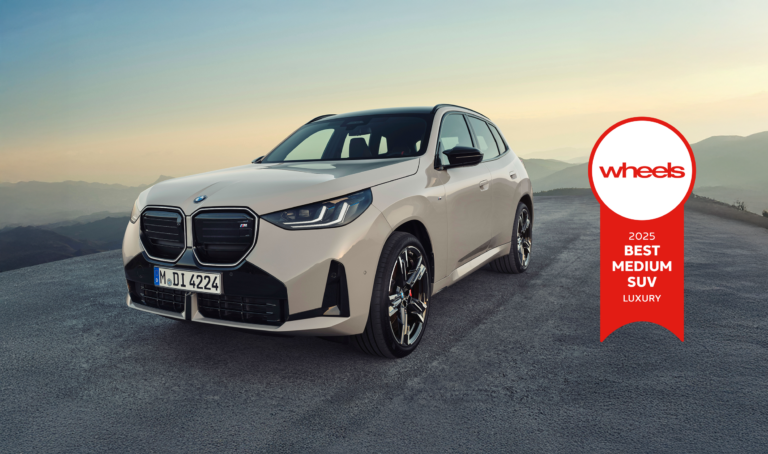 Best Medium SUVs
Best Medium SUVs 2025: Luxury
Luxury, where the quality of the cabin and the drive experience are as important as day-to-day practicality for what is often the default family vehicle.
-
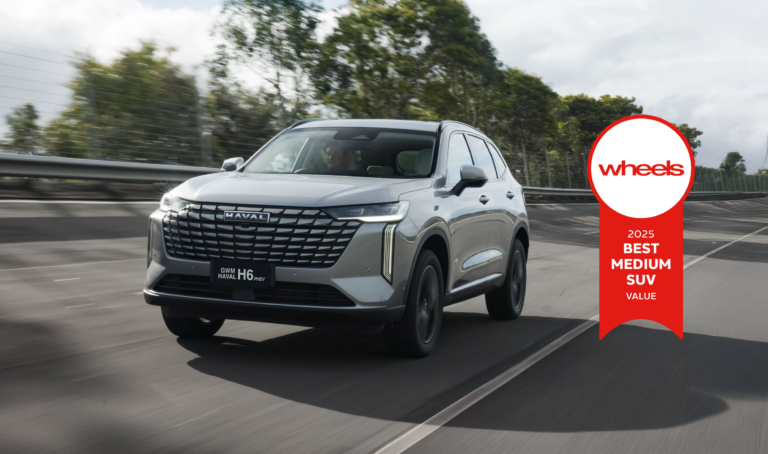 Best Medium SUVs
Best Medium SUVs 2025: Value
Blending affordability with substance, these SUVs are accessibly priced and deliver generous features, advanced safety and everyday practicality.