Best Medium SUVs


Gallery 1
Contenders
GWM Haval H6
1
Price: From $35,990 drive away
Drivetrains/fuel economy/CO2 emissions: 2.0-litre turbo four-cylinder, 9-speed DCT, 2WD, 170kW/380Nm, 7.4L/100km, 170g/km; 1.5-litre turbo four-cylinder hybrid, CVT, 2WD, 179kW/530Nm, 5.2L/100km, 120g/km; 1.5-litre turbo four-cylinder plug-in hybrid, CVT, 2WD or AWD, 240kW/540Nm (2WD) – 268kW/760Nm (AWD), 1.0-1.1L/100km, 22-25g/km
Dimensions (length/width/height/wheelbase): 4703/1886/1730/2738mm
Bootspace: 560 litres – 1445/1485 litres
Warranty/roadside assistance/service intervals: Seven-year/unlimited km, five years,
annual/10,000km for the first year and then every 15,000km afterwards
Five-year service cost: $2110 ($422 per year – 2.0T), $2145 ($429 per year – hybrid), $2220 ($444
per year – PHEV)
| Driving | |
| Interior | |
| Practicality | |
| Overall value | |
Things we like
- Effective facelift has improved the H6 throughout
- Punchy hybrid drivetrain the one to buy
- Strong value, especially the hybrids
Not so much
- PHEV has more features than other drivetrains
- Ride and handling could be sharpened
- Too much reliance on touchscreen
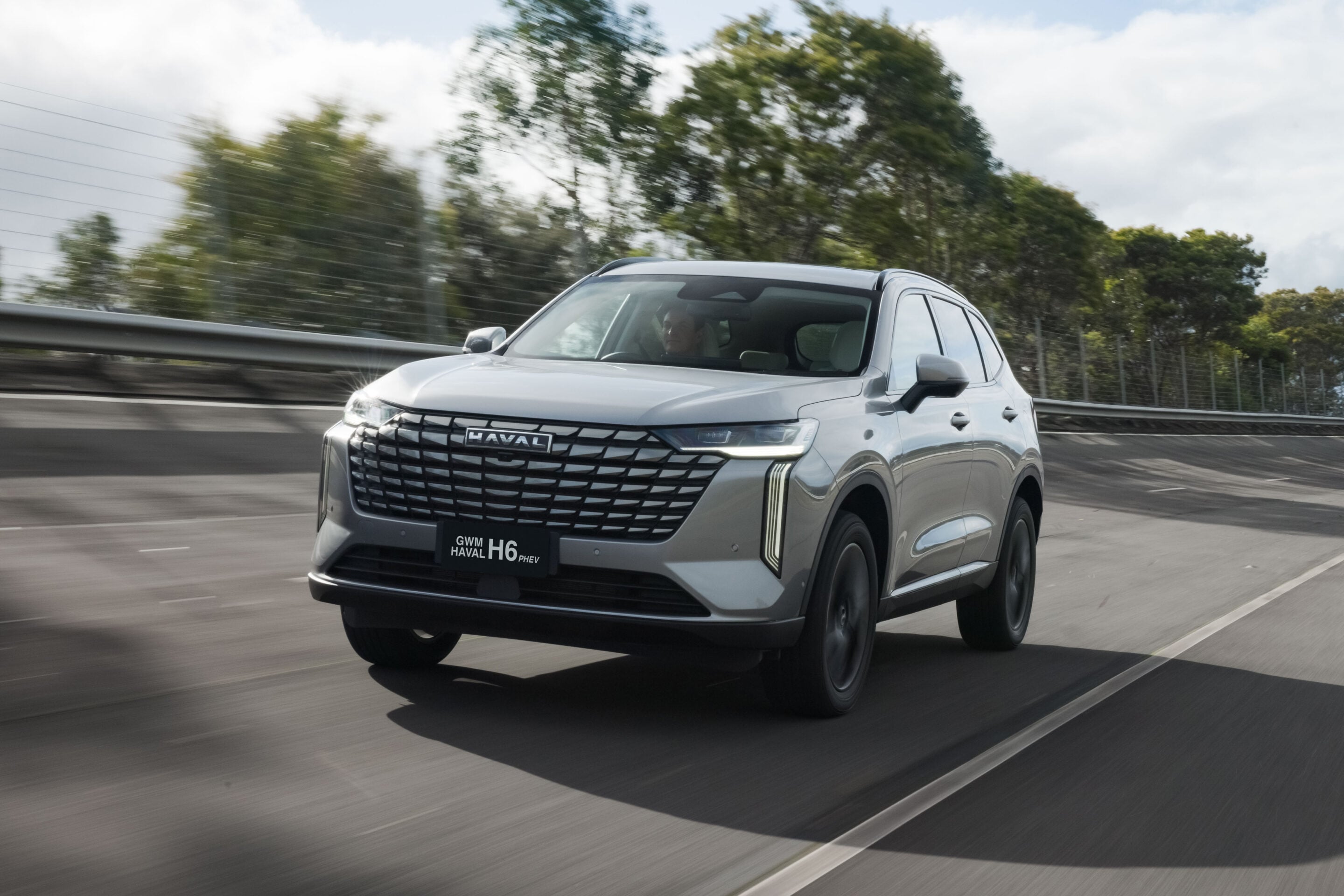
GWM’s Haval H6 was recently given a comprehensive mid-life update with updated styling, a new model line-up, value increases and not one but two new plug-in hybrid drivetrains making up to a massive 268kW of power.
The turbocharged 2.0-litre four-cylinder petrol engine remains the entry-level engine but now making 170kW of power, while the new plug-in hybrid drivetrains offer up to around 80km of electric driving range (WLTP) from their 19kWh battery. We’d choose the 1.5-litre turbo hybrid drivetrain, which makes a strong 179kW of power and 530Nm of torque – more than a RAV4 hybrid. Its claimed fuel consumption is higher than the RAV4 at 5.2L/100km, but still low.
On the road, the Haval H6’s ride is a little firm at low speed but go further and it quickly wins back points with those smooth hybrid drivetrains offering more than enough grunt and impressive refinement with little in the way of road and wind noise at speed.
The H6’s cabin saw a new 14.6-inch touchscreen added with the update, which added features such as wireless smartphone mirroring, though still no integrated sat-nav. Like the pre-updated model, the H6’s touchscreen controls the vast majority of functions in the car – including, now, even the headlights with the update – though a row of buttons below the screen help a bit with functionality. The rear seat is spacious for the segment and three adults will fit fine, while the bootspace is a large 560 litres with the seats up.
The H6 is covered by GWM’s seven-year/unlimited km warranty with five years of roadside assistance and five years of capped price servicing totalling only $2220 for the PHEV, which is the most expensive in the range.
In the end, it’s the bang for buck which ensures it wins the Value section of these awards: that hard-to-ignore price combined with strong equipment levels and three hybrid drivetrain options is so attractive in cash-strapped times.
Chery Tiggo 7
1
Price: From $29,990 drive away
Drivetrains/fuel economy/CO2 emissions: 1.5-litre turbo four-cylinder, 6-speed DCT, 2WD, 108kW/210Nm, 6.9L/100km, 158g/km; 1.5-litre turbo four-cylinder plug-in hybrid, CVT, 2WD, 255kW/525Nm, 1.4L/100km, 33g/km
Dimensions (length/width/height/wheelbase): 4513/1862/1696/2670mm
Bootspace: 356L – 1500L
Warranty/roadside assistance/service intervals: Seven-year/unlimited km, 12 months, annual/every
15,000km
Five-year service cost: $1445 ($289 per year – 1.6T), $1595 ($319 per year – PHEV)
| Driving | |
| Interior | |
| Practicality | |
| Overall value | |
Things we like
- Stunning value for money, priced from under $30k drive away
- PHEV’s impressive performance and fuel economy
- Well appointed cabin materials
Not so much
- 1.5T’s DCT low speed fumbles
- Unresolved ride and handling
- Not a true mid-size SUV in size
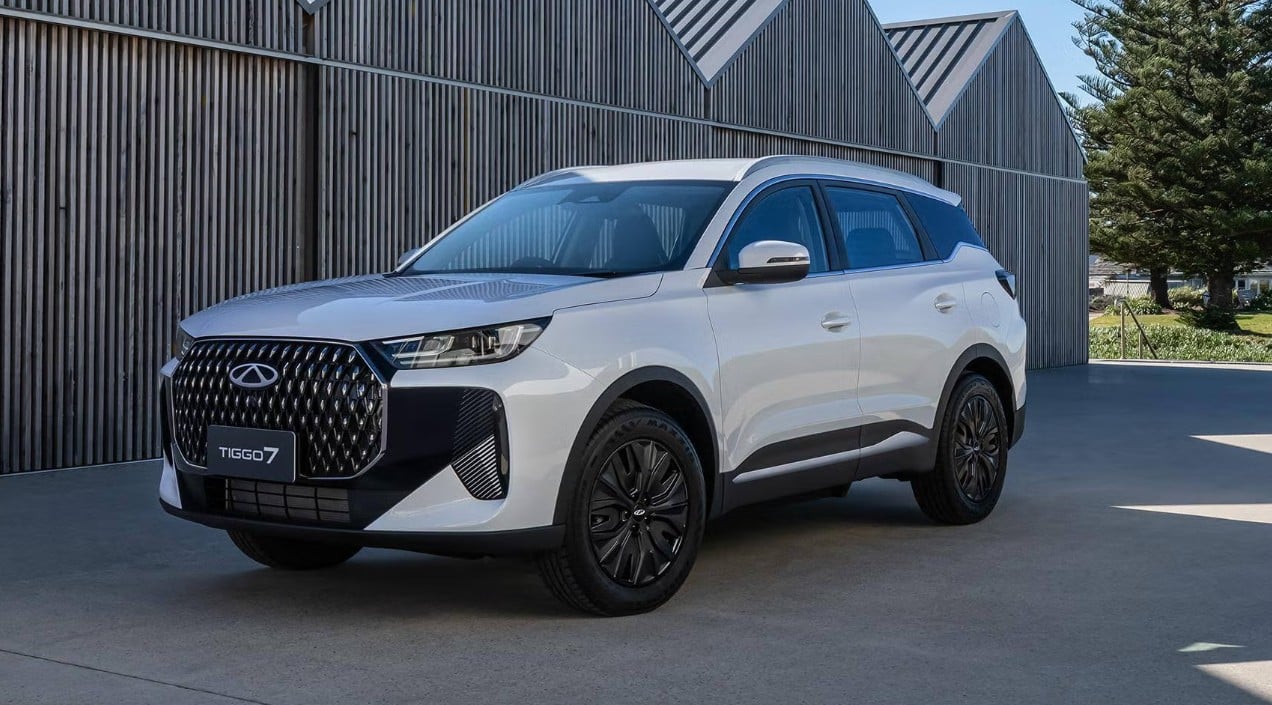
With cars such as the Tiggo 4 and the Tiggo 7, Chery is making a name for itself with some of the best value cars on the market. Priced from just $29,990 drive away for the entry-level SE, the Tiggo 7 gives buyers a mid-size SUV for the price of a small SUV and it’s been a long time since we’ve seen a mid-sizer priced at under $30,000.
Chery launched the Tiggo 7 Pro a few years ago with a larger line-up that also included an all-wheel drive variant, though it was rejigged not long afterwards with a mild update to just the SE and SE+, with both using a new 108kW 1.5-litre turbo-petrol engine and a six-speed dual-clutch gearbox.
Standard equipment on both variants is lengthy, including dual 12.3-inch screens, synthetic leather upholstery and a full range of active safety features.
The cabin of the Tiggo 7 feels modern thanks to the big screens and stitched synthetic leather trim on many surfaces, while it’s also more ergonomic than many rivals thanks to the inclusion of the touch panel on the lower dashboard to control the climate control instead of hiding controls in the touchscreen. There are many storage spots inside, though the back seat and boot aren’t as large as many rivals, so be sure to test that out to see if it suits you.
As for drivetrains, buyers can choose either a 1.5-litre turbo-petrol engine or new 1.5-litre turbo-petrol plug-in hybrid drivetrain making an impressive 255kW of power, but also claiming an impressive 1200km range and combined fuel consumption of just 1.4L/100km when charged. Of course, the Tiggo 7 PHEV is more expensive than the petrol model at $39,990 drive away, but it’s also the cheapest plug-in hybrid on the market.
The Tiggo 7 isn’t as good to drive as many rivals, however, thanks to an unsettled ride quality and a jerky transmission. The PHEV variant is also too powerful and its grunt can overpower the chassis. However, for the value-focused buyer, there’s lots to like: a good quality and modern cabin experience and the option of an efficient and quite powerful plug-in hybrid drivetrain. For many buyers, what more could you want?
Geely EX5
1
Price: From $40,990 plus on-road costs
Drivetrains: Single motor front axle, 160kW/320Nm
Battery/peak DC charge rate: 60.2kWh LFP, 100kW
Claimed WLTP range: 410 – 430km
Dimensions (length/width/height/wheelbase): 4615/1901/1670/2750mm
Bootspace: 410L – 1877L
Warranty/roadside assistance/service intervals: Seven-year/unlimited km, service activated up to seven years, annual/every 20,000km
Five-year service cost: $1487 ($298 per year)
| Driving | |
| Interior | |
| Practicality | |
| Overall value | |
Things we like
- Low pricing, long equipment list
- Quite refined
- Practical, quality interior
Not so much
- Soft driving experience
- Touchscreen requires a lot of familiarisation
- No faster-charging or longer-range versions
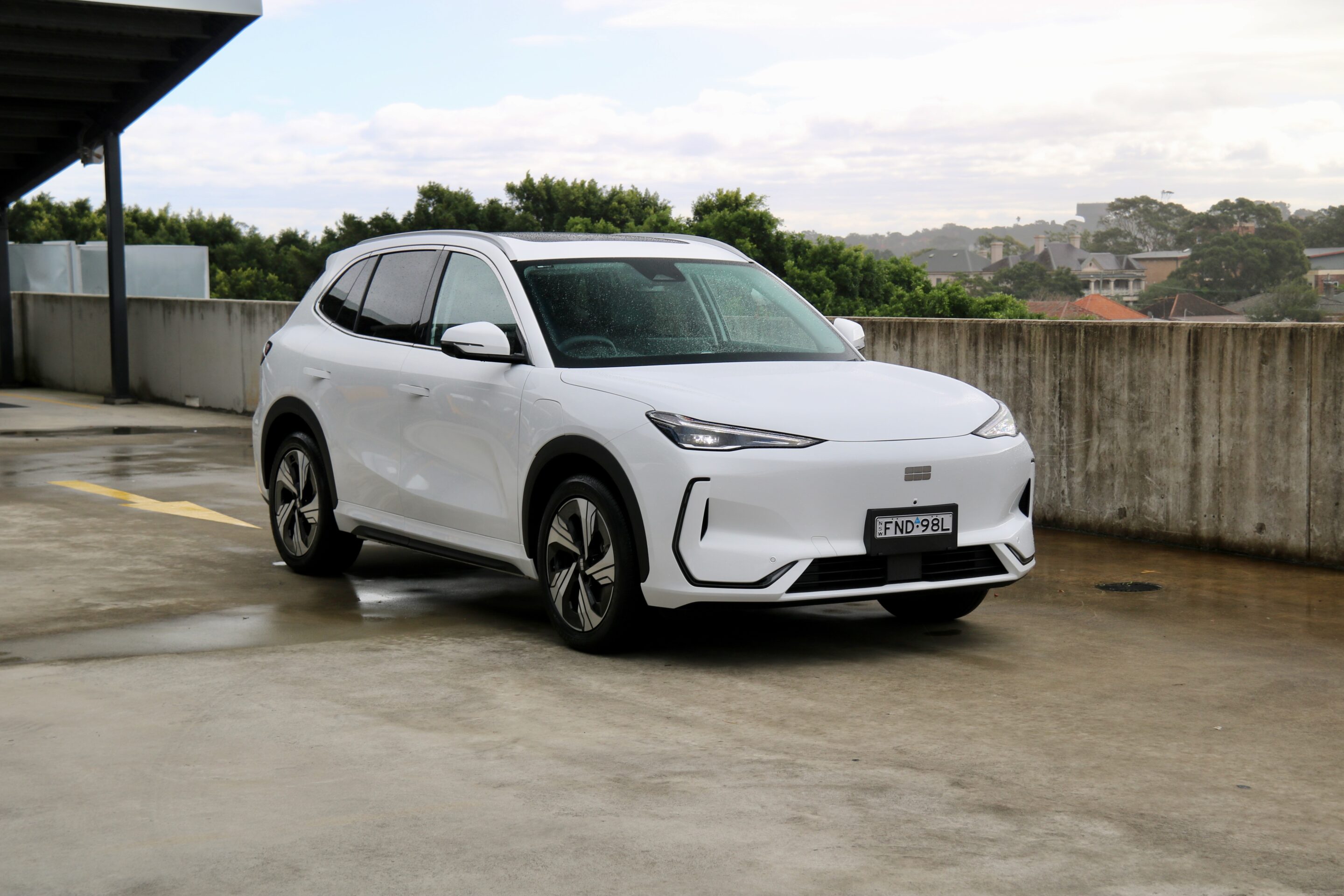
Even though many of its sub brands such as Volvo have been on sale in Australia for decades, China’s Geely only launched its own brand earlier in 2025. So far, just one product is on offer: the EX5 electric mid-sizer, though there’s also a PHEV equivalent named the Starray that’s due to arrive soon. The EX5 is one of the cheapest EVs on the market, but does it have anything else going for it?
Priced from just $40,990 plus on-road costs, the EX5 is offered in two specifications: entry-level Complete and top-spec Inspire, with even the Complete equipped with 18-inch alloy wheels, a huge 15.4-inch touchscreen, electric front seats with heating, a 360-degree camera and a full active safety suite. The top-spec Inspire further adds a 13.8-inch head-up display, 16-speaker sound system, panoramic sunroof, larger 19-inch wheels and even massaging front seats for only $4000 more.
For now, there’s only a single drivetrain available in the EX5 range: a front single motor making 160kW of power and 320Nm, giving the EX5 reasonable pep off the line. That draws power from a small 60.2kWh battery, giving the EX5 a WLTP range of up to 430km and peak DC fast charging of 100kW. While that’s a great range for an urban EV, we’d like to see a longer-range version added.
The driving experience of the EX5 is, well, soggy – the ride is quite soft and even smaller bumps have its body control struggling to keep it in check. The interior of the EX5 is is fairly minimalist in design, with only a few shortcut buttons – and a volume knob, thankfully – but every other feature inside is controlled through the huge 15.4-inch touchscreen. It looks sharp and it’s quick to respond to touch as well, though its functionality could be better as some menus make little sense. The rear seat of the EX5 is huge, with ample room in all directions for taller people, and while the 410-litre boot may seem small initially, it actually features a large under-floor box that adds significantly to the size. With the seats folded, there’s a huge 1877 litres on offer.
Geely’s Australian warranty is a seven-year/unlimited km job with up to seven years of roadside assistance. The EX5 must be serviced annually/every 20,000km, and five years/100,000km of servicing costs just $1487 or $298 per year. Overall, while there are negatives to the EX5 such as the soft driving experience, lack of long-range battery option and a sometimes confusing touchscreen, there’s also plenty to like such as the value equation, long warranty and practicality.
MG HS
2
Price: From $33,990 drive away
Drivetrains/fuel economy/CO2 emissions: 1.5-litre turbo four-cylinder, 7-speed DCT, 2WD, 125kW/275Nm, 6.9L/100km, 156g/km; 1.5-litre turbo four-cylinder hybrid, CVT, 2WD, 165kW/340Nm, 5.2L/100km, 119g/km’ 1.5-litre turbo four-cylinder plug-in hybrid, CVT, 2WD, 220kW/350Nm, 0.7L/100km, 17g/km
Dimensions (length/width/height/wheelbase): 4670/1890/1655/2675mm
Bootspace: 507L – 1484L
Warranty/roadside assistance/service intervals: Seven-year/unlimited km – extendable to 10
years/250,000km through dealer servicing, up to 10 years, annual/every 15,000km
Five-year service cost: $2354 ($470 per year – 1.5T petrol)
| Driving | |
| Interior | |
| Practicality | |
| Overall value | |
Things we like
- A big improvement over the previous HS
- Excellent value for money
- Two available hybrid drivetrains
Not so much
- No wireless phone mirroring (yet)
- Boot space a little small for the segment
- Too many features buried in the touchscreen
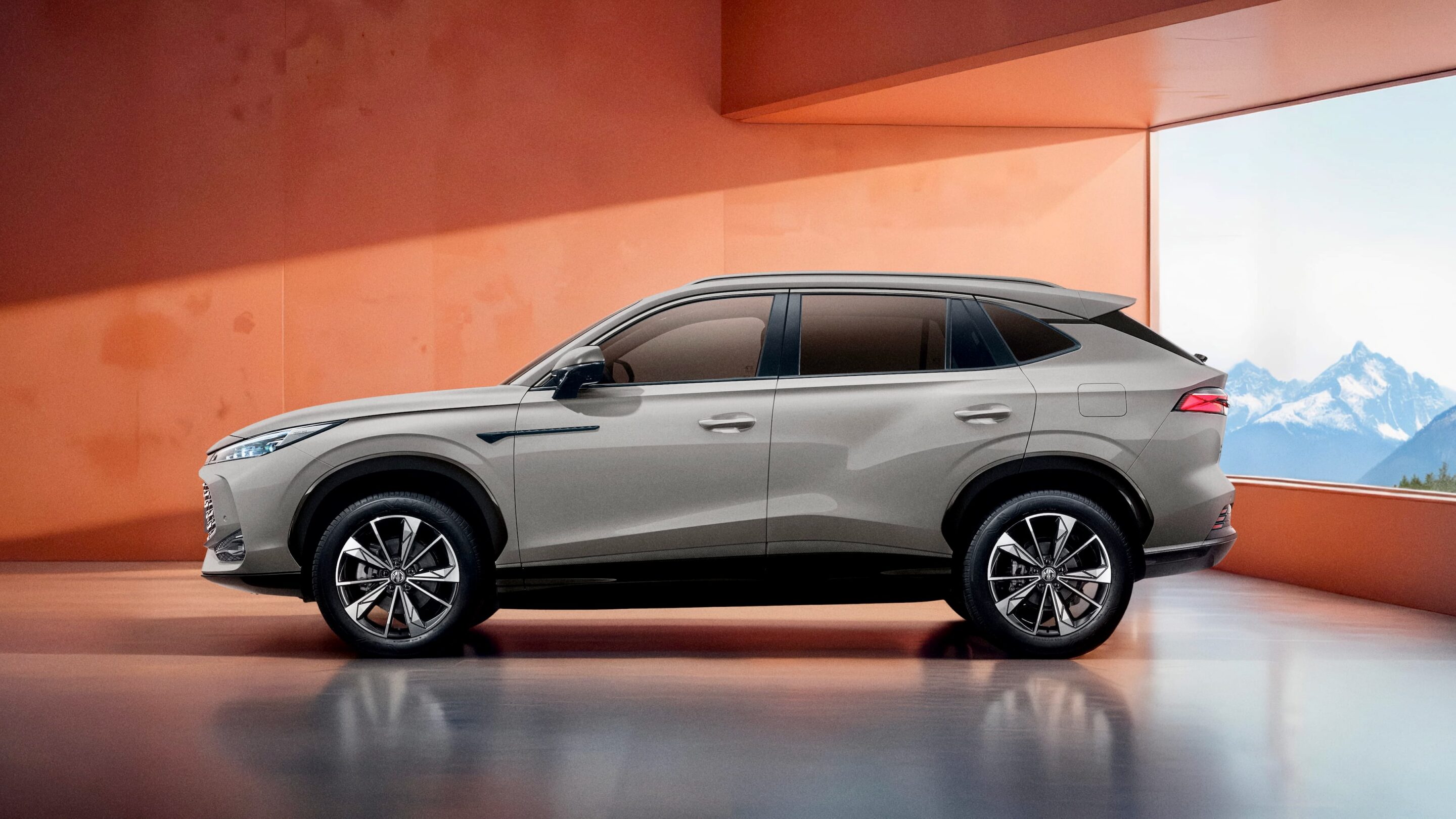
MG’s new product roll in Australia continues at a rapid pace, with the brand completely renewing its Australian line-up in a very short period. The HS mid-size SUV is one of the latest additions replacing the short-lived first-generation model with a massive glow up: it’s far more modern inside and out, it’s better equipped across the range and it also now has two hybrid options.
Prices for the HS start at just $33,990 drive away for the entry level Vibe, but even the top-spec Essence petrol model doesn’t get you far over the $40,000 mark. The most expensive HS, the top-spec Essence plug-in hybrid, is just over $55,000 drive away – or thousands less than an equivalent Mitsubishi Outlander PHEV. As we’ve come to expect from the modern MG brand, the value equation for the HS is strong.
The cabin of the HS is one of the most modern-looking in the segment, with plenty of soft leather-like materials covering the surfaces that are touched most commonly, including the sides of the centre console to rest knees against. It’s practical too, with plenty of storage solutions, though the 12.3-inch touchscreen could be easier to use with very little in the way of shortcuts to help access features such as the climate control. The HS’s 507-litre boot is a little smaller than most in the segment.
The HS offers three drivetrains in Australia, all centred around a 1.5-litre turbo-petrol engine: a regular petrol variant, a hybrid and then a plug-in hybrid. The regular hybrid is yet to go on sale but the plug-in hybrid offers a claimed 81km of EV range and low fuel consumption, even with its battery depleted. The HS’s driving experience is otherwise unremarkable, with a compliant but fidgety low-speed ride quality and a seven-speed dual-clutch transmission on the 1.5T.
MG’s standard seven-year warranty is extended to a total of 10 years/250,000km if serviced through an MG dealership, and service pricing for the first five years is reasonable at $2354 for the 1.5-litre turbo-petrol. Overall, the MG HS sells solidly in the mid-size SUV segment thanks to its strong value, well-trimmed cabin, long standard equipment list and range of drivetrains, including two hybrids, which offset issues such as a confusing touchscreen and no wireless phone mirroring.
Jaecoo J7
1
Price: From $34,990 drive away
Drivetrains/fuel economy/CO2 emissions:
1.6-litre turbo four-cylinder, 7-speed DCT, 2WD or AWD, 137kW/275Nm, 7.0L-7.8L/100km, 163-
181g/km; 1.5-litre turbo four-cylinder plug-in hybrid, CVT, 2WD, 255kW/525Nm, 1.0L/100km, 17g/km
Dimensions (length/width/height/wheelbase): 4500/1865/1680/2672mm
Bootspace: 424L – 1349L
Warranty/roadside assistance/service intervals: Eight-year/unlimited km, up to eight years,
annual/every 15,000km
Five-year service cost: $1725 ($345 per year – 1.6T 2WD), $1925 ($385 per year – 1.6T AWD),
$1895 ($379 per year – PHEV)
| Driving | |
| Interior | |
| Practicality | |
| Overall value | |
Things we like
- Handsome styling, attractive interior
- Loaded with equipment
- Well priced across the range
Not so much
- Smaller than rivals
- Driving experience needs improvement
- PHEV’s power overwhelms the chassis
You’ve probably not heard of the new-to-Australia Jaecoo brand – a combination of the German word “Jäger” (hunter) and cool – but thanks to its strong value equation, we think you soon will.
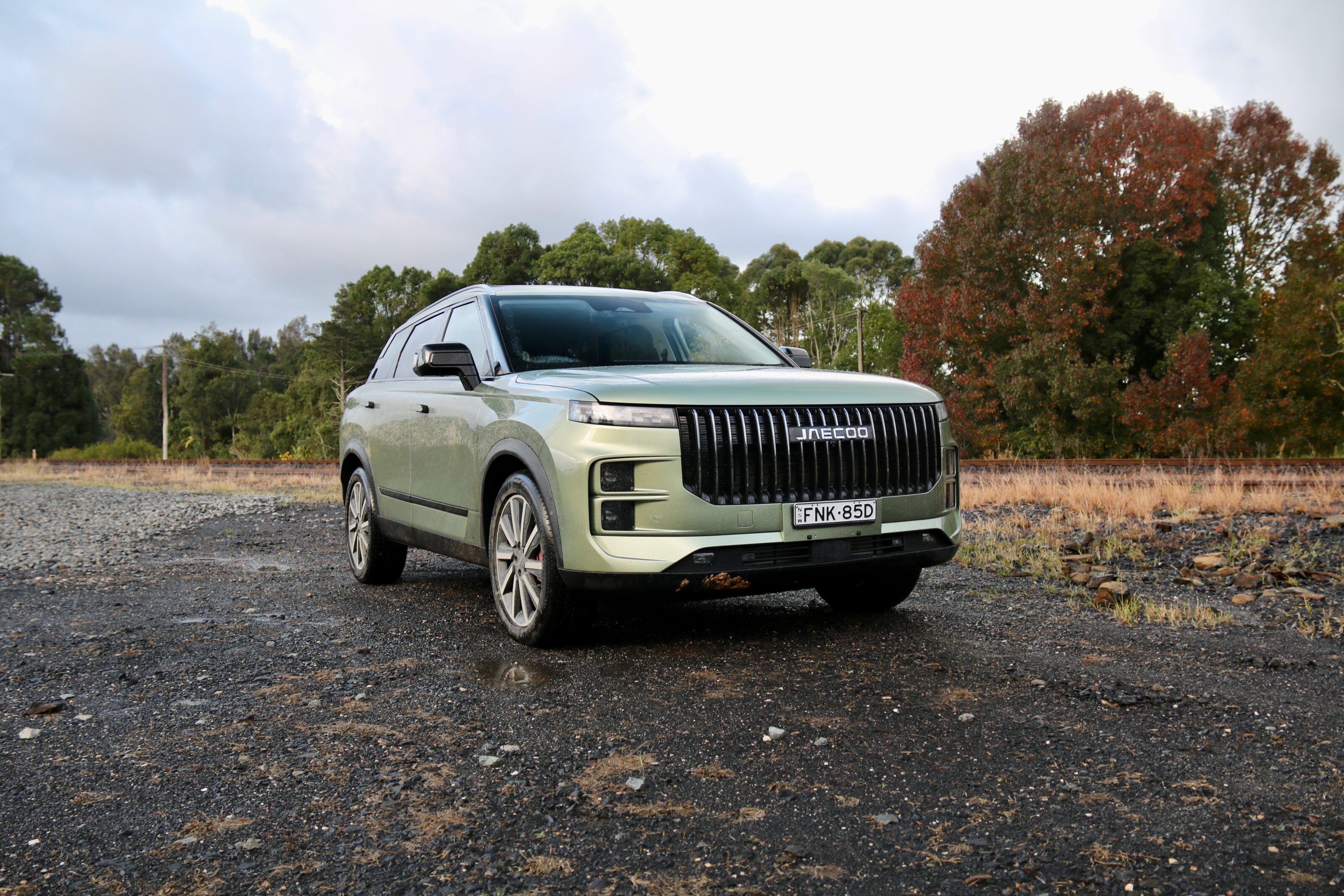
Jaecoo is Chinese giant Chery’s more premium sub brand and the mid-sized J7 is the first product it launched in Australia. The J7 is based on the Chery Tiggo 7, but is fancier to look at and touch, more expensive but better equipped and can be purchased with all-wheel drive.
Pricing for the J7 starts at $34,990 drive away, and there are four models on offer: petrol Core, Track and Ridge, and the SHS plug-in hybrid at the top of the range. Standard equipment, even on the Core, is impressive with synthetic leather, 18-inch alloy wheels and powered front seats as standard. We think the mid-spec Track ($37,990 drive away) is the variant to buy as it further adds a 360-degree camera, power tailgate, dual-zone automatic AC and a wireless charger.
Petrol models use a turbocharged 1.6-litre petrol engine making 137kW of power and 275Nm of torque, which sends grunt to either the front or – in the case of the Ridge – all four wheels through a seven-speed dual-clutch transmission. The J7 is not sporty and loves to roll in corners but it handles urban bumps well. The J7 Ridge AWD also provides some amount of off-road capability for a mid-size SUV, and the 255kW plug-in hybrid is quite rapid – more than enough to overwhelm the front wheels.
Centre of the cabin is a huge 14.8-inch touchscreen with features such as wireless smartphone mirroring and satellite navigation. It’s quick to use and quite bright, but it needs an extra layer of shortcuts as it can be distracting to use. The J7’s cabin otherwise displays a good level of quality with plenty of synthetic leather surfaces, excellent storage options and reasonable space for two adults in the rear seat. The J7’s smaller sizing in the segment means that its boot space isn’t huge, however, at just 424 litres with the seats up and 1349 litres with them folded.
Where the J7 adds value is its aftersales program with an impressive standard eight-year/unlimited km warranty with eight years of roadside assistance as standard. There’s also eight years of capped price servicing and the first five years of servicing ranges from $1725 to $1925, or $345 to $385 per year.
While there are cheaper alternatives, the Jaecoo J7 is still strong value for money if you’re after something a little bit fancier than the norm with its premium vibe, handsome styling and stacks of standard equipment. The driving experience could be improved, however, and it’s definitely at the smaller end of the segment, but still offers more than enough for value-focused buyers to consider.
KGM Korando
1
Price: From $33,000 drive away
Drivetrains/fuel economy/CO2 emissions: 1.5-litre turbo four-cylinder, 6-speed auto, 120kW/280Nm, 7.7L/100km, 179g/km
Dimensions (length/width/height/wheelbase): 4450/1870/1629/2675mm
Bootspace: 407L – 1104L
Warranty/roadside assistance/service intervals: Seven-year/unlimited km, five years, annual/every 15,000km
Five-year service cost: $1898 ($379 per year)
| Driving | |
| Interior | |
| Practicality | |
| Overall value | |
Things we like
- What we like: Excellent value for money
- Well equipped across the range
- Feels European to drive
Not so much
- Grunty diesel no longer available
- Many rivals are larger inside
- Some rivals feel more modern
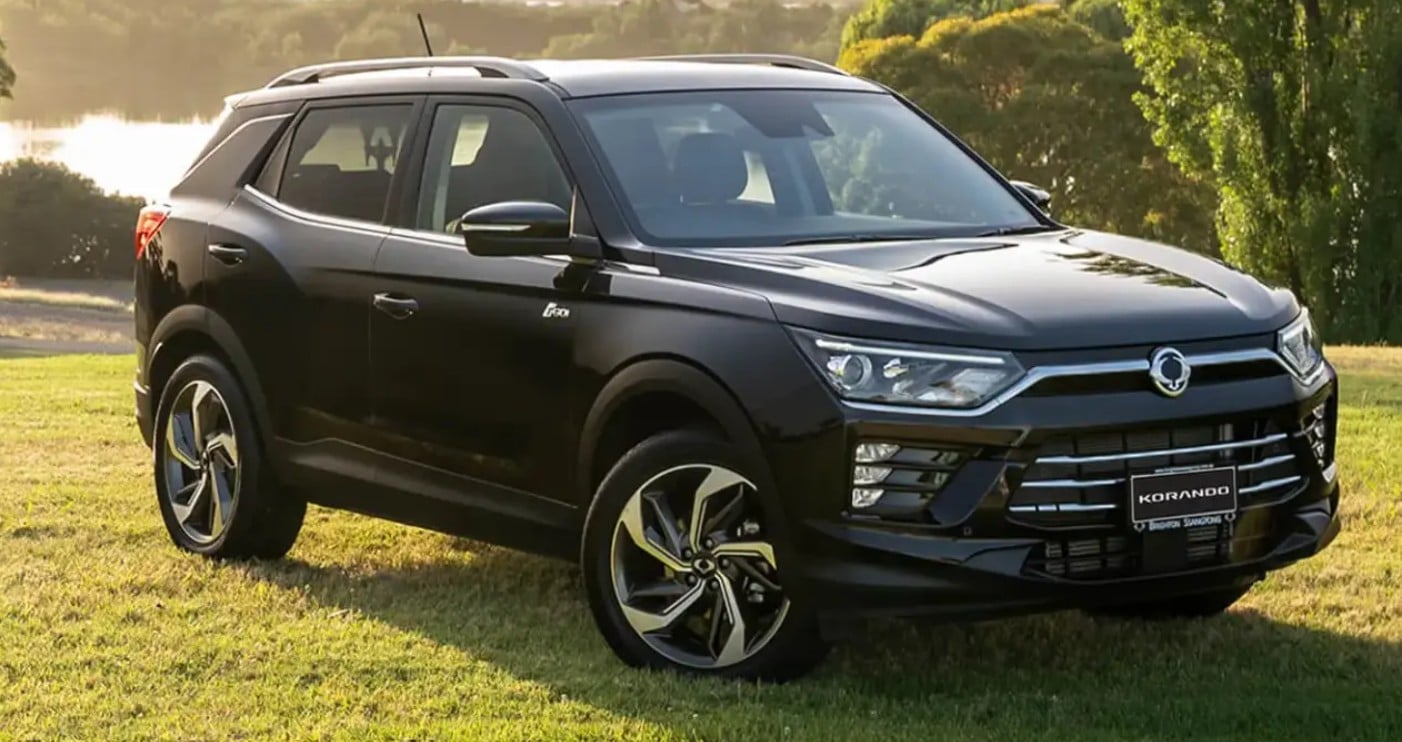
The Wheels’ Best Medium SUV 2025 awards wouldn’t be complete without entrants from brands that we think you should be considering, and the KGM (formerly SsangYong) Korando is one such product. While some rivals are larger and offer more practicality, the Korando is a worthy option for a mid-size SUV, one that we think deserves more attention.
Priced from just $33,000 drive away, the Korando offers excellent value for money. Features on the entry-level ELX include 18-inch alloy wheels, dusk-sensing automatic headlights, LED front and rear daytime running lights, cloth and synthetic leather upholstery, autonomous emergency braking (AEB), lane keeping assistance, blind-spot monitoring and rear cross-traffic alert. The upper-spec Ultimate adds leather trim, larger 19-inch wheels, a sunroof, an electric tailgate, a 360-degree camera and 10.25-inch digital driver’s display.
Regardless of model chosen, the Korando features a turbocharged 1.5-litre four-cylinder petrol engine making 120kW of power and 280Nm of torque, which sends power to the front wheels through a six-speed automatic transmission. It’s a refined drivetrain, while the driving experience feels European thanks to taut suspension and a quick steering feel. We wish the former diesel option were still available, however.
The Korando’s cabin is well featured and good quality, including soft touch materials on the dashboard and door tops. The seats are quite comfortable and even feature heating on the ELX, with ventilation and driver’s electric adjustment added with the Ultimate. Rear seat space is plentiful for two adults, though three will struggle to fit. The 407-litre boot also shows the Korando’s smaller dimensions in the segment.
The Korando’s seven-year warranty is one of the best in the segment and the $1898 basic service cost over five years is affordable as well. Overall, the KGM Korando deserves to sell better in Australia thanks to its appealing size, strong value for money, willing turbo-petrol engine and taut ride and handling. While some rivals are more modern and more practical inside, and it could be more fuel efficient, the Korando is a very appealing product, especially for its bargain pricing.
Leapmotor C10
1
Price: From $43,888 plus on-road costs
Drivetrains/fuel economy/CO2 emissions: 1.5-litre turbo four-cylinder plug-in hybrid, 2WD, 158kW/320Nm, 28.4kWh LFP battery, 170km range (NEDC) 0.9L/100km, 21g/km; Single motor, 160kW/320Nm, 69.9kWh LFP battery, 425km range (WLTP)
Dimensions (length/width/height/wheelbase): 4739/1900/1680/2825mm
Bootspace: 546L – 1375L
Warranty/roadside assistance/service intervals: Six-year/150,000km, eight years, annual/every 10,000km (PHEV)/20,000km (EV)
Eight-year service cost: $3000 ($375 per year – EV), $4000 ($500 per year)
| Driving | |
| Interior | |
| Practicality | |
| Overall value | |
Things we like
- Range extender PHEV or full electric drivetrain choices
- Comfortable driving experience
- Loaded with standard equipment
Not so much
- Overzealous active safety features
- No Apple CarPlay or Android Auto
- EV’s slow peak charging speed
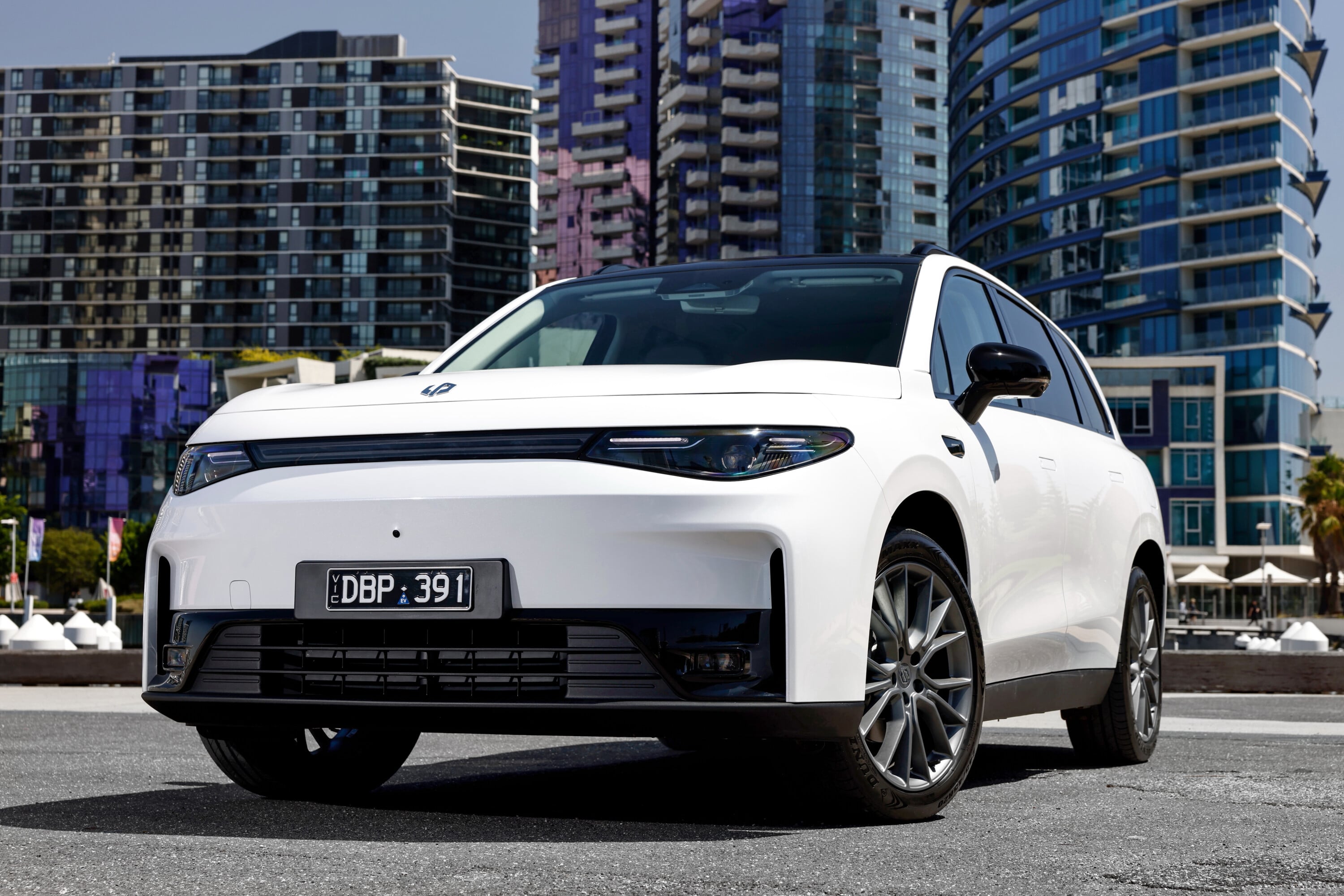
Are you struggling to keep up with the list of new brands to the Australian new car market? You’re not alone, but you should pay attention because many of these new brands are offering excellent value for money. Leapmotor, a Stellantis-backed Chinese brand, is one of them with this C10 mid-size SUV, starting from just $43,888 plus on-road costs for the entry-level Style REEV (the EV is $45,888 +ORC). But Leapmotor also offers both fully electric or range-extender plug-in hybrid drivetrains, and both are some of the least expensive on the market.
Standard equipment for the Style includes 18-inch wheels, LED lighting, a panoramic glass roof, synthetic leather upholstery, a 14.6-inch touchscreen with over-the-air updates, a 12-speaker sound system and a full active safety suite (but more on that later). The upper-spec Design (priced from $47,888 +ORC for the PHEV or $49,888 +ORC for the EV) adds larger 20-inch wheels, a power tailgate, heated and ventilated seats and fancier upholstery, and we’d stick with the Style for now.
There are two drivetrains to choose from in the C10 range: an EV with a 160kW/320Nm motor on the front axle that uses a 69.9kWh LFP battery for a claimed 425km range (WLTP) or a 158kW/320Nm 1.5-litre range-extender plug-in hybrid that uses a 28.4kWh battery for a claimed 170km of range (NEDC). The EV costs only $2000 more, but the range extender PHEV is fairly unique in Australia and according to Leapmotor, can travel up to 1150km per combined charge and tank. Both drivetrains provide ample performance, though their driving experience could be better thanks to underdamped suspension and overzealous active safety features.
The inside of the C10 is quite typical of modern Chinese cabin designs: lots of synthetic leather trim around, a huge central screen and not much else. Quality is good, though there’s not much in the way of texture. The touchscreen takes a while to get used to, and – somehow in 2025 – there’s no Apple CarPlay or Android Auto smartphone mirroring, which would increase usability significantly. However, cabin storage is excellent, and the rear seat space is ample as well. Bootspace ranges from 546 litres in the EV with the seats up (581L in the PHEV) to 1410 litres with the seats folded (1375L in the EV).
Leapmotor covers the C10 with a six-year/150,000km warranty with eight years of roadside assistance and capped price servicing, while the battery is also covered by an eight-year/160,000km job too. The battery in the PHEV can be charged at up to 65kW, fast for a PHEV, though the EV’s 84kW peak is slow. Overall, those looking for a comfortable, well equipped, efficient and cost effective mid-size SUV to buy will find lots of value in the Leapmotor C10 as it ticks a lot of boxes.
Genesis GV70
1
Price: From $78,700 plus on-road costs
Drivetrains/fuel economy/CO2 emissions: 2.5-litre turbo petrol four-cylinder, 8-speed auto, AWD, 224kW/422Nm, 10.3L/100km, 235g/km; 3.5-litre turbo petrol V6, 8-speed auto, AWD, 279kW/530Nm, 11.3L/100km, 257g/km; 84kWh lithium ion battery, dual-motor AWD, 360kW/700Nm, 462km range (WLTP)
Dimensions (length/width/height/wheelbase): 4715/1910/1630/2875mm
Bootspace: 503L – 1678L
Warranty/roadside assistance/service intervals: Five-year/unlimited km, five years, annual/every 10,000km
Five-year service cost: Included in the price
| Driving | |
| Interior | |
| Practicality | |
| Overall value | |
While some out there will no doubt think that value simply refers to the least amount possible, the Genesis GV70 proves that something can cost a reasonable of money, but still be great value for money. While Genesis’ products aren’t cheap – the plush interiors are the giveaway – they fly the value flag well with a loaded equipment inclusion list that doesn’t require any options ticking, included servicing for five years.
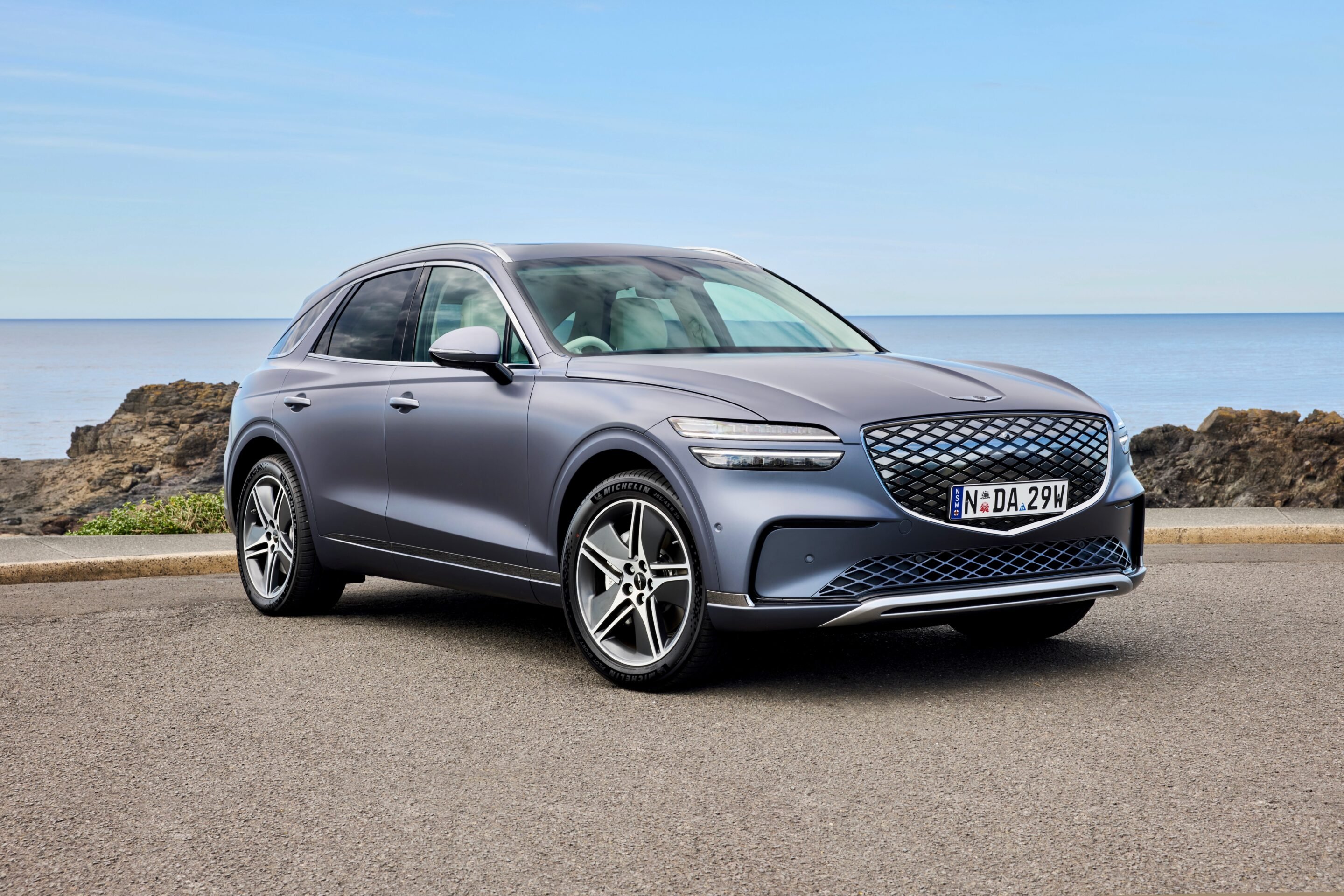
The mid-sized GV70 SUV is the brand’s best-selling product locally and pricing starts at $78,700 plus on-road costs for the entry-level 2.5T Advanced, making it at least $5000 better value than key rivals. Standard equipment on that includes 19-inch wheels, a panoramic sunroof, leather upholstery, heated and ventilated front seats and a 27-inch dashboard display. Move up the range to the $87,800 +ORC Signature and features such as Nappa leather upholstery, a 16-speaker Bang & Olufsen sound system, adaptive high beam and even an aroma diffuser are added. The top spec Signature Sport 3.5T is priced around $33,000 less than the equivalent BMW X3.
Inside the GV70 is one of the best cabins in the medium SUV segment with rich materials, excellent ergonomics and many features to keep occupants entertained. The huge 27-inch display handles both the infotainment and driver’s display, and can be controlled through either touch or using the controller wheel on the centre console. Cabin storage could be better, as could rear seat space, but the boot is large at 542 litres (503 litres for the EV) with the rear seats up and as much as 1678 litres with them folded.
For now, there are three drivetrains in the Australian GV70 range, all with all-wheel drive: the entry-level 224kW 2.5-litre turbo-petrol, 279kW 3.5-litre turbo-petrol V6 or a 360kW dual motor electric drivetrain that uses an 84kWh battery for a claimed 462km of range (WLTP). None of them are particularly efficient but they do provide good performance, with the 2.5T’s 224kW power figure eclipsing the 150kW Audi Q5 noticeable.
On the road, the GV70 impresses with a well sorted ride and handling balance, excellent sound insulation and subtle safety aids that are there to assist and not hinder.
Part of Genesis’ strong value equation is that five years/50,000km of servicing is included in the price of each GV70, and the brand will even pick up and drop off your car on service day and provide you with a loan car free of charge (if you’re within 70km of a Genesis service location).
Included servicing and they’ll collect your car for you and provide a loaner for five years: how’s that for value? The Genesis GV70 is not a cheap car, but it is excellent value for money thanks to its healthy standard features, price advantage over rivals, lovely cabin quality, sorted driving experience and aftersales experience.
Mahindra XUV700
1
Price: From $39,990 drive away
Drivetrains/fuel economy/CO2 emissions: 2.0-litre turbo four-cylinder, 6-speed auto, 2WD, 149kW/380Nm, 8.3L/100km
Dimensions (length/width/height/wheelbase): 4695/1890/1755/2750mm
Bootspace: 150L – 650L
Warranty/roadside assistance/service intervals: Seven-year/150,000km km, five years, annual/every 15,000km
Four-year service cost: $1781 ($445 per year)
| Driving | |
| Interior | |
| Practicality | |
| Overall value | |
Things we like
- Bargain pricing makes it great value
- Punchy turbo-petrol engine
- Comfortable driving experience
Not so much
- Odd service intervals
- Missing features such as proper blind-spot monitoring
- Only one drivetrain choice in Australia, with no hybrid, diesel or all-wheel drive options
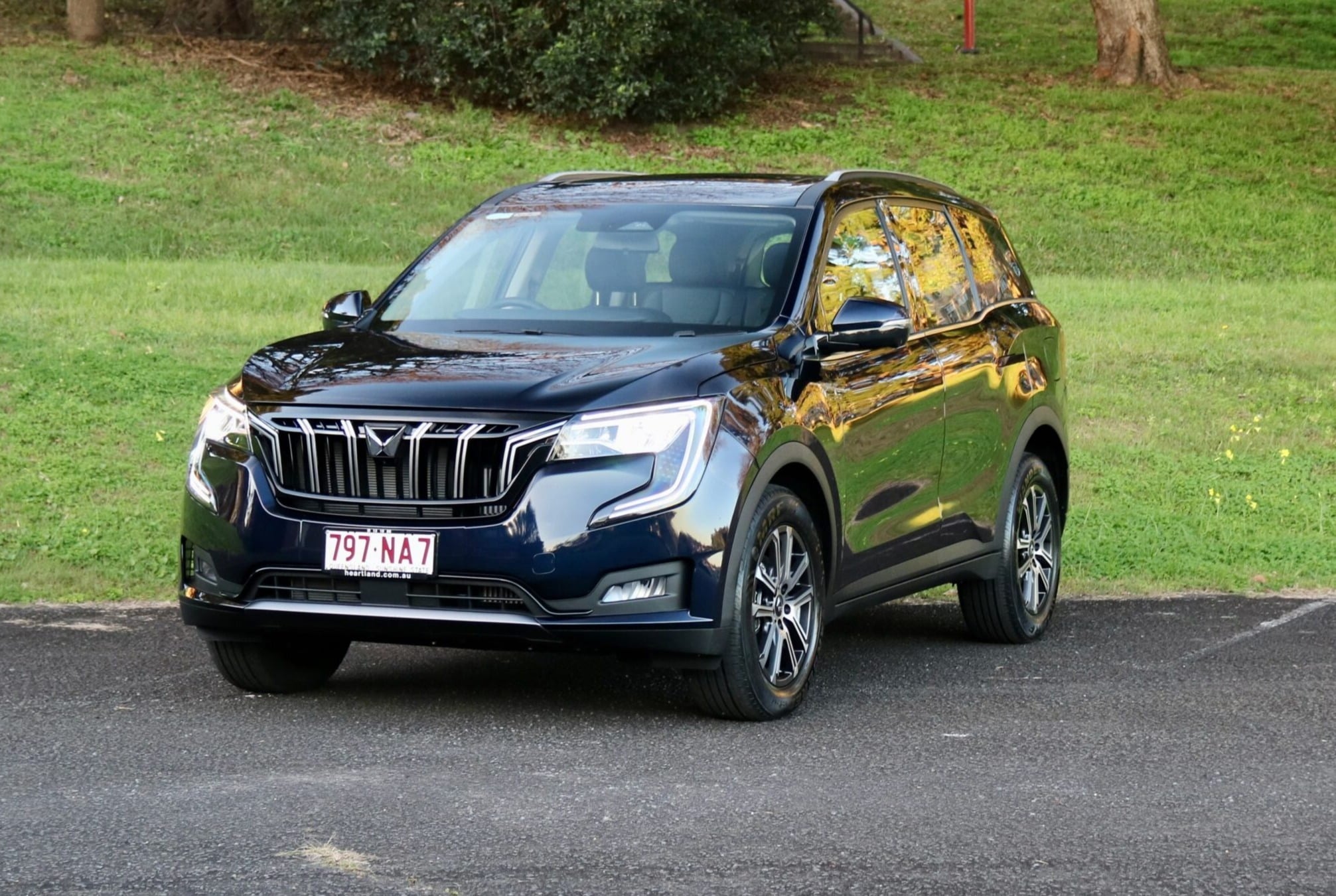
Indian giant Mahindra has earned a strong reputation for those wanting reliable workhorses to get their jobs done since it first went on sale in Australia in 2007. Nowadays, its top selling vehicle locally is the XUV700 mid-sizer SUV, which is one of Australia’s cheapest seven-seaters priced from just $39,990 drive away. But is there more to the XUV700 than its low pricing?
Two XUV700 models are on offer in Australia: the entry-level AX7 and the upper-spec AX7L, and both are very well priced – even the L is only $42,990 drive away. We’d recommend the AX7L as its standard features include 18-inch alloy wheels, LED lighting, a panoramic sunroof, synthetic leather upholstery, dual 10.25-inch screens and even a 12-speaker Sony sound system, with seven airbags, AEB, adaptive cruise with adaptive lane guidance, blind-spot monitoring and a 360-degree camera handling safety duties.
Just one engine is offered in Australia: a punchy 149kW/380Nm 2.0-litre turbo-petrol, sending grunt onto to the front wheels through a six-speed automatic transmission. It’s a really good unit that pulls the XUV700 well, though we’d like to see both hybrid and all-wheel drive options added to the line-up.
The XUV700’s driving experience is mature and refined, and while it’s not that sporty, it’s extremely comfortable and handles our rubbish roads well.
The XUV700’s interior is modern and clean, and very easy to use. Quality is fine for the price, especially the classy leather-like trims on the dashboard and doors. Storage is excellent, while the 10.25-inch touchscreen is sharp to look at but is a bit slow to use, and also lacks features such as satellite navigation. The second row is comfortable and relatively spacious, helped by the large side windows and massive panoramic sunroof, but the third row is definitely a kids-only zone. Still, unlike the majority of mid-size SUVs, at least the XUV700 has a third row. Behind the third row is 150 litres of bootspace, which opens up to a big 650 litres with the third row folded (no figure is available for the second row folded too, but it’s still quite a large and tall space).
Mahindra covers the XUV700 with a long seven-year/150,000km warranty, and while its service intervals are a little odd – the first yearly service is due at 10,000km while each one afterwards is then due at another 15,000km – four years of servicing costs just $1781. You can see why the XUV700 is Mahindra’s best-selling car in Australia as it’s excellent value for money, it drives well, it’s practical, good quality and well equipped. Sure, there are no hybrid or all-wheel drive options, and its service intervals are unusual, but there’s strong value for money on offer with the XUV700.
Best Medium SUVs in Australia
Looking to get into a brand-new mid-size SUV? Our stories below will guide you to the model that best suits your needs:
Follow WhichCar/Wheels on Google
Click the button below to make WhichCar by Wheels a preferred source for your news.

We recommend
-
 Best Medium SUVs
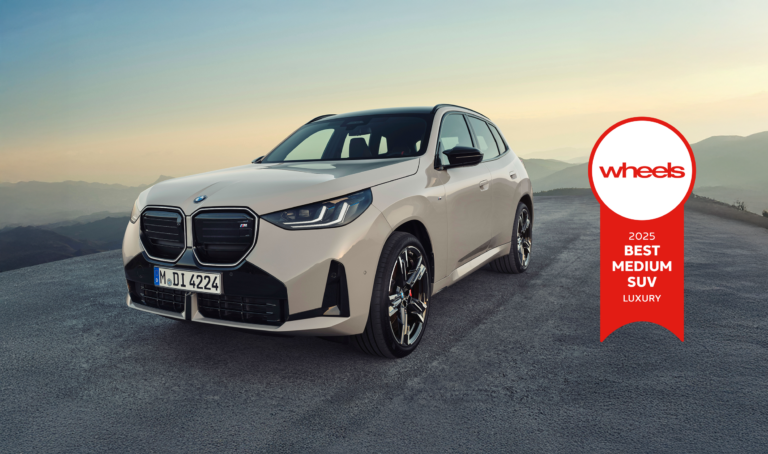
Best Medium SUVs 2025: Luxury
Luxury, where the quality of the cabin and the drive experience are as important as day-to-day practicality for what is often the default family vehicle.
-
 Best Medium SUVs
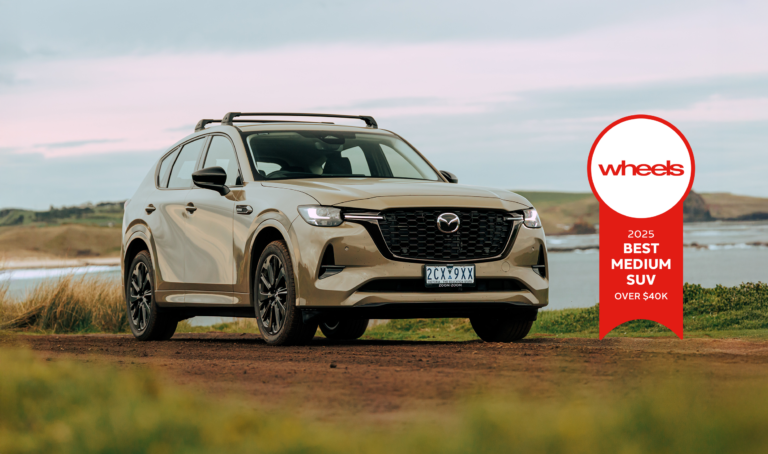
Best Medium SUVs 2025: Over $40K
From premium hybrids to tech-packed family haulers, these medium SUVs priced above $40K deliver the best balance of space, efficiency, features and driving refinement for 2025.