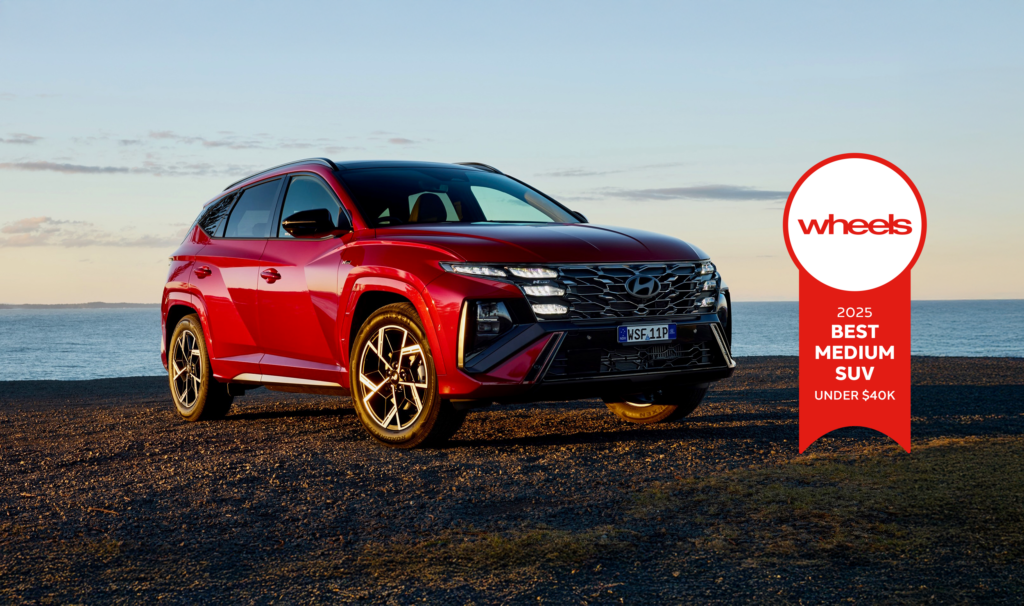
Best Medium SUVs

Gallery 1
Contenders
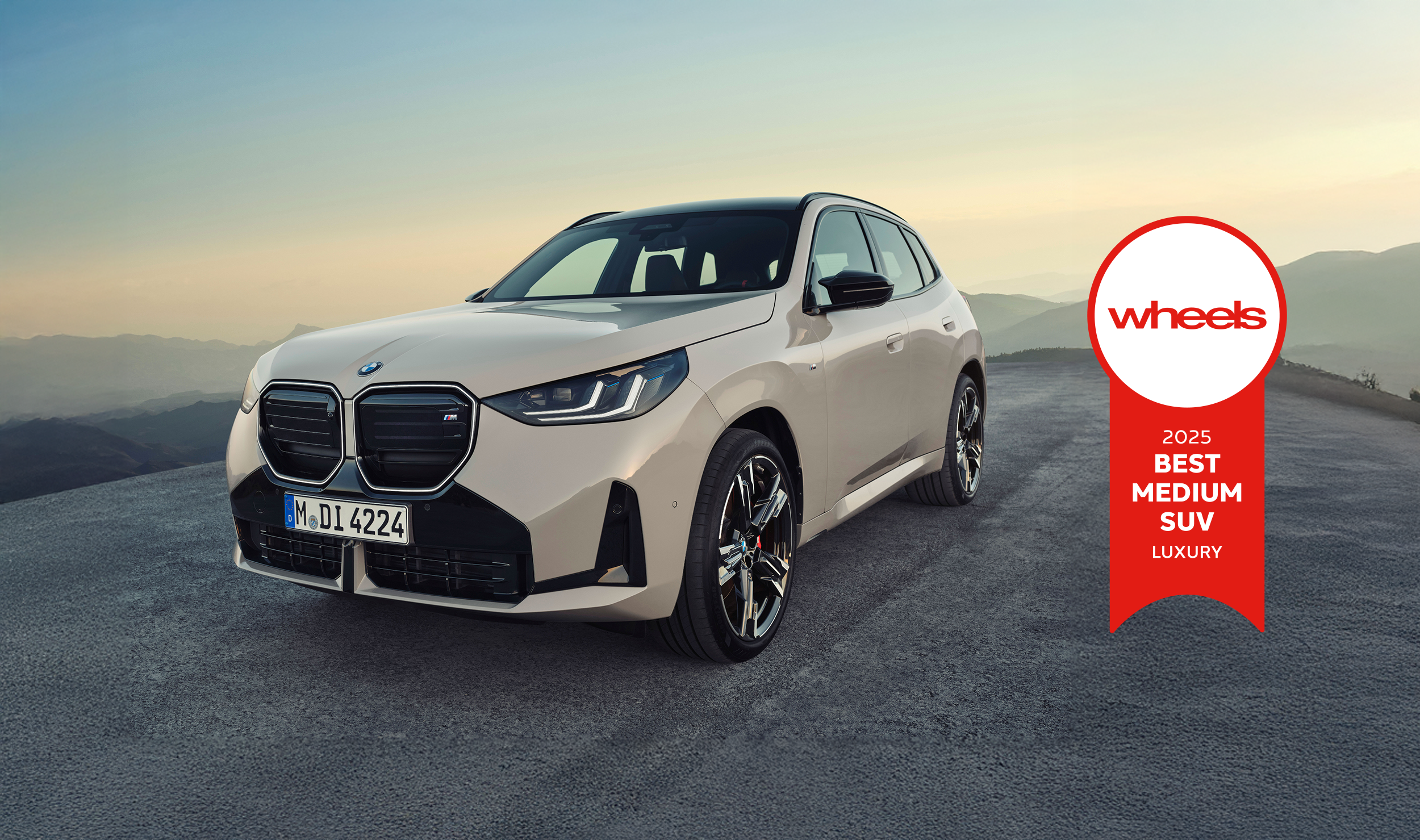
Winner: BMW X3

1
Price: From $86,100 before on-road costs
Battery size/claimed range: 7.5L/100km (20 xDrive), 91km EV range/1.6L/100km (30e xDrive), 6.7L/100km (40d xDrive), 8.2L/100km (M50 xDrive)
Drivetrain: 2.0-litre mild hybrid four-cylinder AWD/2.0-litre plug-in hybrid four cylinder AWD/3.0-litre inline six-cylinder turbo diesel/3.0-litre mild-hybrid V6 AWD
Dimensions (length/width/height/wheelbase): 4755mm/1920mm/1660mm/2865mm
Bootspace: 570L (second row up) 1700L (second row folded)
Warranty/roadside assistance/service intervals: Five-year unlimited kilometre warranty/condition based
Five-year service cost: $2475 (payable up front)
| Driving | |
| Interior | |
| Practicality | |
| Overall value | |
Things we like
- Realistic electric range for the PHEV
- Excellent cabin comfort
- Beautiful driving experience
Not so much
- Second row is tight for tall adults
- Infotainment controls are difficult to master
- Polarising styling endures
Imagine being an engineer at BMW – creators of ‘the ultimate driving machine’. That’s been the catch cry for decades now. Don’t forget the original X5 either, an SUV that completely reset the capability of the segment from the point of view of the driver. Delivering SUVs into a cookie cutter environment to live up to those standards is no easy task. And, hasn’t the segment come a long way since BMW launched the first X5. SUVs that drive more like a sports sedan are now available from a variety of different manufacturers.
In Australia, sales of BMW SUVs outstripped sedans a fair way back and as such, the X – which sits in the absolutely crucial medium SUV segment – needs to be all things to all people. Every manufacturer wants a slice of the medium SUV pie, and with good reason. Aussie new car buyers want them – and in big numbers.
The X3 is refreshed, too, having been launched in March of this year, with a strong, four-model lineup. Three are petrol-powered and feature all-wheel drive. Two are mild-hybrid, one is a plug-in hybrid as well as the diesel 40d xDrive. The entry grade 20 xDrive, starts from $86,100, the 30e xDrive PHEV starts from $102,500, next up is the 40d xDrive from $108,900 and the range-topping M50 xDrive starts from $128,900 all before on-road costs. Since launch, sales across all four models have been fairly evenly split making the pick of the range dependent largely on your budget.
As you’d expect from BMW, especially with the ‘ultimate driving machine’ mantra ringing in your ears, this new X3 is a fantastic SUV to drive on any road under any conditions. The experience from behind the wheel is more sports sedan than SUV, with excellent ride quality, handling and road holding, and occupant comfort whether you’re crawling around town or cruising the highway. The segment has grown, too, and this X3 is similar in size to the original X5.
There’s no doubt the BMW X3 is an exceptional medium SUV, with the styling chops to match the driving engagement and standard equipment. Pricing nails the segment expectation, and there’s a premium feel to the cabin whether you’re the driver or passenger. We’re not sure any SUV deserves to be called the ‘ultimate driving machine’ but a BMW with an ‘X’ badge on it, comes pretty close.
Audi Q5

1
Price: From $81,000 before on-road costs
ADR Fuel claim: 5.7L/100km (TFSI 150), 5.4L/100km (TDI quattro 150 and TDI quattro
150 Sport), 7.6L/100km (TFSI 270)
Drivetrain: 2.0-litre four cylinder turbo petrol mild hybrid, 2.0-litre four-cylinder turbo diesel mild hybrid, 3.0-litre turbo petrol V6 mild hybrid
Dimensions (length/width/height/wheelbase): 4682mm-4717mm, 1893mm-1900mm, 1634mm-1663mm, 2820mm
Bootspace: 520L (second row up), 1473L (second row folded)
Warranty/roadside assistance/service intervals: 5-year/unlimited km/12 months or 15,000km
Five-year service cost: $3520
| Driving | |
| Interior | |
| Practicality | |
| Overall value | |
Things we like
- Cabin tech is excellent
- Mild hybrid system works to improve efficiency
- Active safety technology works well
Not so much
- AWD with petrol power not available yet
- Entry-grade Q5 can’t match AWD competition
- Ride quality is firm on coarse surfaces
One of the reasons the medium SUV segment – in the luxury realm – is so fiercely contested is the quality of the competition. In regard to the new and upgraded Audi Q5, that’s never been more apparent, with the Ingolstadt manufacturer improving on an already high-quality product.
Q5 has been at or near the head of the segment for some time now, and Aussie buyers love the mix of cabin tech, comfort, premium design execution and driving engagement. If you want a silly fast SUV, there’s the SQ5 of course, but even the entry-grade Q5 (TFSI 150kW) feels like a high-quality SUV in a segment that is loaded with options.
Crucial to the updates for this model year, is a mild hybrid system that actually works as advertised, improving efficiency, which is crucial for budget-minded buyers. Audi’s system will even power the SUV on battery alone up to 20km/h as well as turn the engine off in coasting situations. The Audi Q5 drive remains seamless, smooth and enjoyable, on any road, in any conditions. This SUV is as much at home in city traffic as it is out on the open road covering longer distances.
Audi is keen to offer a variety of models to Australian buyers and as such there are four-cylinder petrol and diesel engines to choose from as well as a powerful V6 petrol engine, all with turbocharging and hybrid technology.
On the subject of the entry-grade feeling like a premium offering, standard equipment across the range includes matrix LED headlights, S line exterior trim and an electric tailgate. Leather trim, electric front seat adjustment and three-zone climate control is matched by heated front seats and ambient interior lighting.
Audi’s signature understated styling remains for this model update, but the Q5 is as attractive as ever and is key to the appeal to repeat Audi buyers who list the design as a vital selling point. It’s lower and wider than the model it replaces, but only ever so slightly longer. If you’re considering an Audi Q5, the other thing the brand has done in Australia is simplify its options into clever packages, making the decision process even easier.
Mercedes-Benz GLC

1
Price: From $89,000 before on-road costs
ADR Fuel claim: 7.5L/100km (GLC 200), 7.7L/100km (GLC 300)
Drivetrain: 2.0-litre four-cylinder turbo petrol mild-hybrid AWD
Dimensions (length/width/height/wheelbase): 4716mm-4763mm/1890mm/1605mm-1640mm/2888mm
Bootspace: 620L (second row up), 1680L (second row folded)
Warranty/roadside assistance/service intervals: Five-year/unlimited kilometre/12 months or 25,000km
Five-year service cost: $6455
| Driving | |
| Interior | |
| Practicality | |
| Overall value | |
Things we like
- Ride quality and bump absorption are excellent
- New base model pricing is sharp
- Cabin quality and tech are premium
Not so much
- No lane-centring as standard
- Servicing costs are higher than the competition
- Entry price more expensive than key competitors
If you’re factoring in the coupe body style and hot AMG models, the 2025 Mercedes-Benz GLC range is comprehensive. Here, we’ve focused on the core SUV wagon body style, which comprises three models – GLC 200, GLC 300 and GLC 300 AMG Line. Pricing is sharply-placed to take the fight right up to the segment heavy hitters.
GLC has always been one of the go-to offerings in this luxury segment thanks to its appealing array of style, technology and luxury cabin appointments. From the outset, completion came only from Audi and BMW, but now the alternatives are coming thick and fast, and as such, the GLC needs every but of Mercedes-Benz’ nous to ensure it remains competitive.
The GLC is a stylish alternative when you see one floating through the sea of SUVs on Aussie roads. The cachet that comes with the three-pointed star is a very real factor for buyers, and the list of standard equipment is comprehensive. The entry to the GLC range is the GLC 200 and it is loaded with standard equipment. Like Audi, Mercedes-Benz has rationalised its options into easy-to-understand packages, which make the buying process as simple as it can be.
The 48-volt mlid-hybrid system employed by ‘Benz adds 17kW and 205Nm of extra punch under hard use, and can also allow the petrol engine to shut down and coast under light throttle loads. The base GLC 200’s 150kW/320Nm ratings are solid enough that you won’t feel like you’re lacking if the most affordable variant is the one that appeals.
Euro SUVs can often feel too firm on our roads – especially rutted outer-urban or country roads. The GLC doesn’t suffer that malaise, with a suspension tune that preferences comfort over sporty handling, and the result is an excellent long distance tourer that easily tackles the poorly surfaced urban road network as well.
The Luxury segment offers more competition than ever before, but one of the original entrants retains its sense of style, quality and badge cache. Mercedes-Benz made the decision to return to a sharper pricing structure with the re-emergence of the GLC 200 model and its proven to be a popular option and the smart choice in the range.
Genesis GV70
1
Price: From $78,700 before on-road costs
ADR Fuel claim: 10.3L/100km (2.5L), 11.3L/100km (3.5L), 462km (GV70 Electrified)
Drivetrain: 2.5-litre turbocharged inline four-cylinder petrol AWD, 3.5-litre twin turbo V6 petrol AWD, 84kWh/twin motors/AWD
Dimensions (length/width/height/wheelbase): 4715mm/1910mm/1630mm/2875mm
Bootspace: 542L (second row up), 1678 (second row folded)
Warranty/roadside assistance/service intervals: Five-year/unlimited km warranty/12 months premium roadside assist
Five-year service cost: Up to five years complimentary servicing
| Driving | |
| Interior | |
| Practicality | |
| Overall value | |
Things we like
- Cabin quality is fantastic
- Powerful, sporty drivetrain
- Ride quality is excellent
Not so much
- Some wireless smartphone glitches
- Fuel consumption can get thirsty
- Some driver tech is too enthusiastic
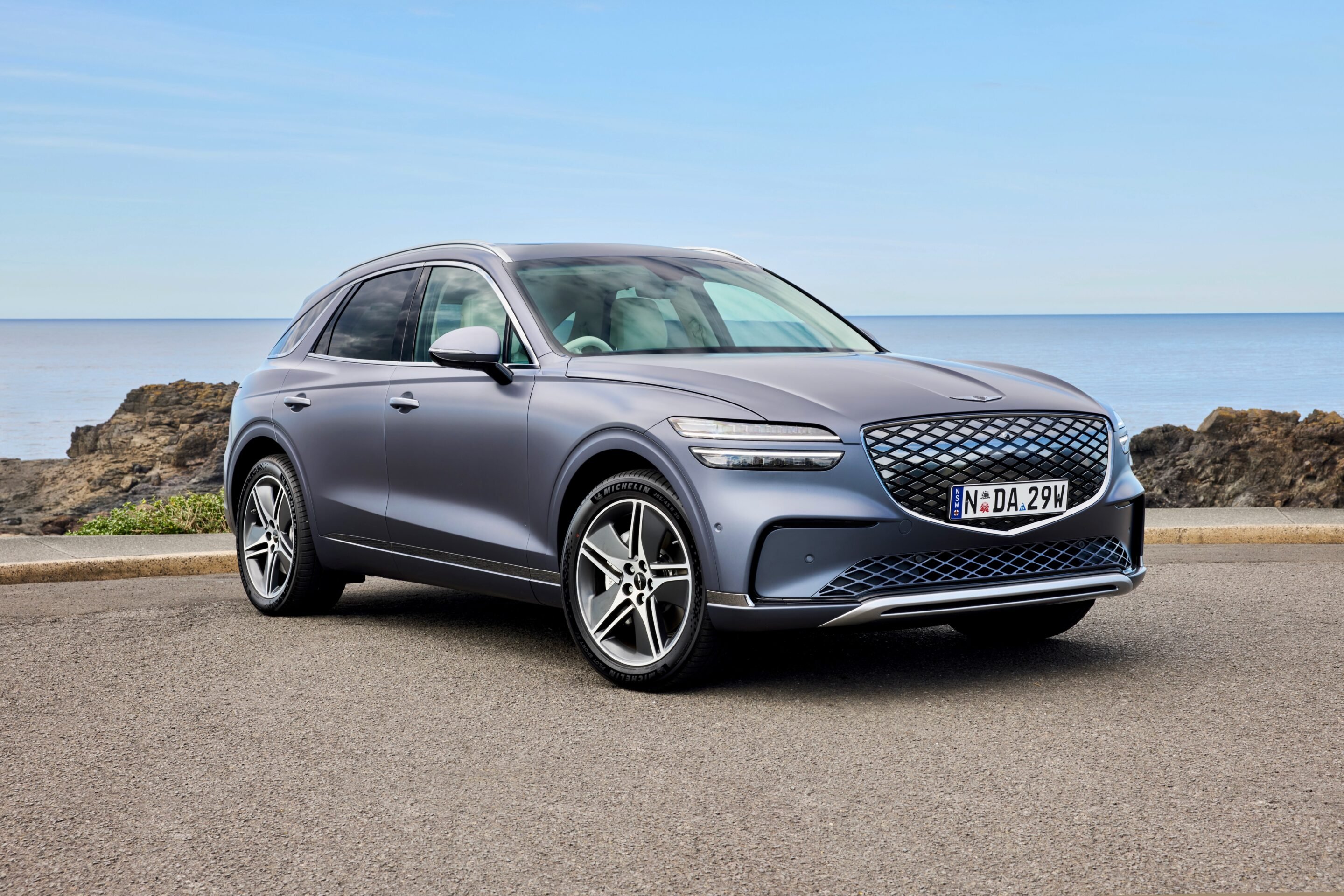
No one expected Genesis to enter the Australian new car market and be quite as successful as it has been. Lexus aside, a number have tried and failed (remember Infiniti), but Genesis has endured. Strong backing by Hyundai, a quality product from the get go, and a premium ownership experience have been the keys to Genesis’ immediate success.
Perhaps the best example of everything Genesis is doing so well, is the exceptional GV70. It looks the part, is significantly sportier to drive than you would expect, and benefits from an excellent after sales experience you would attribute to a more expensive brand. On that point, Genesis focused on sharp pricing to appeal to buyers, ensuring it was positioned as a genuine cost-effective alternative.
With two petrol powertrains offering sensible choice, and a fully electrified version should you prefer it, the GV70 covers off the needs of the Australian new car buyer in this segment. While the exterior styling is eye-catching and the driving experience is engaging, it’s the cabin ergonomics and quality that most impress. The recent mid-life update brought with it cabin refinement, new technology and more variants across the range.
GV70 buyers get the robust attention to detail we have come to expect from Hyundai, but with an added sense of style, flair and design quality to deliver the core expectations of a luxury vehicle buyer. Second row comfort is as good as the best in class, boot space is useful for family road trips and if a luxury SUV is your daily driver, you’ll love the practicality of the GV70. Infotainment tech is catered to beautifully, and cleverly, in the sense that what could be a too-sparse take on modernism, is actually an easy to use system that anyone can master.
The other string to the GV70’s bow is the driving experience. This is truly a sporty SUV in every sense of the word. From the steering and braking, to the road holding and handling at the limit, the GV70 rewards the enthusiastic driver with an experience few in the segment can match.
Volvo XC60

1
Price: From $73,990 before on-road costs
ADR Fuel claim: 1.6L/100km/81km electric (PHEV), 7.6L/100km petrol engine
Drivetrain: 2.0-litre turbocharged four-cylinder petrol or PHEV, 18.8kWh battery (T8 PHEV) AWD
Dimensions (length/width/height/wheelbase): 4708mm/1902mm/1655mm/2865mm
Bootspace: 613L (second row up) 1543L (second row folded)
Warranty/roadside assistance/service intervals: Five-year/unlimited kilometre/12 months or 15,000km
Five-year service cost: $3000
| Driving | |
| Interior | |
| Practicality | |
| Overall value | |
Things we like
- Signature cabin execution
- Powertrains are smooth and efficient
- Cabin tech works faultlessly
Not so much
- Time for a mid-life upgrade
- Cargo capacity is less than rivals
- PHEV is expensive
When Volvo announced that it would move to an all-electric showroom in Australia in 2026, four years before head office, mind you – it underestimated the popularity of the excellent XC60 in this market. And, as such, internal combustion powered Volvos will remain available in Australia. Since launch, the XC60 has found favour with those looking to tap into minimalist Swedish design smarts and clever ergonomics in a practical package. So much so, many XC buyers are retained Volvo owners coming back for a new version of the SUV they already own.
From June 2025, five variants of the XC60 are available with either a punchy petrol engine, or PHEV version of the same engine, and AWD across the range. The PHEV is more effective than you might think at first, with 81km electric range and super low fuel consumption across the first 100km courtesy of that.
For those of you with the regular Aussie commute, the PHEV XC60 could be the one to consider. It’s not cheap, with two of the PHEV models sneaking past the six-figure mark, but Volvo’s premium attention to detail goes some of the way to justifying the asking price. Opt for a model without the PHEV technology and you’re still using significantly less than 10L/100km.
Focus back on the regular petrol engine, though, and the XC60 is sharply priced in comparison to its luxury competition. The XC60 is more than the sum of its parts, however, with real substance to match the style. The cabin especially is a masterful execution of clean design, useful functionality matched by stylish design. A lot is made of ‘Swedish minimalism’ when it comes to reviewing Volvo vehicles, but that design ethos is at its best inside the cabin.
Volvo owners tell us that cabin space and seat comfort are high on the list of benefits of any Volvo SUV and the XC60 delivers strongly on that front. This platform is an excellent, family tourer for those of you leaving the city on a regular basis. While the PHEV Volvo XC60 is undoubtedly a solid option for those of you with the budget to stretch far enough, the entry-grade models provide excellent value for money and quality if you don’t have six figures to spend.
Polestar 4
1
Price: From $78,500 before on-road costs
ADR Fuel claim: 590km (dual motor), 620km (single motor)
Drivetrain: Single motor RWD/Dual Motor AWD
Dimensions (length/width/height/wheelbase): 4839mm/2008mm/1534mm/2999
Bootspace: 526L (second row up) 1536L (second row folded)
Warranty/roadside assistance/service intervals: Five-year/unlimited km warranty/five-year
free roadside assistance/24 months or 30,000km
Five-year service cost: Complimentary
| Driving | |
| Interior | |
| Practicality | |
| Overall value | |
Things we like
- Interior design and trim are exceptional
- Cabin space as good as best in class
- Driving experience is quiet and refined
Not so much
- No rear window is a pain in the real world
- Infotainment tech can be complicated
- Some models are firm on harsh surfaces
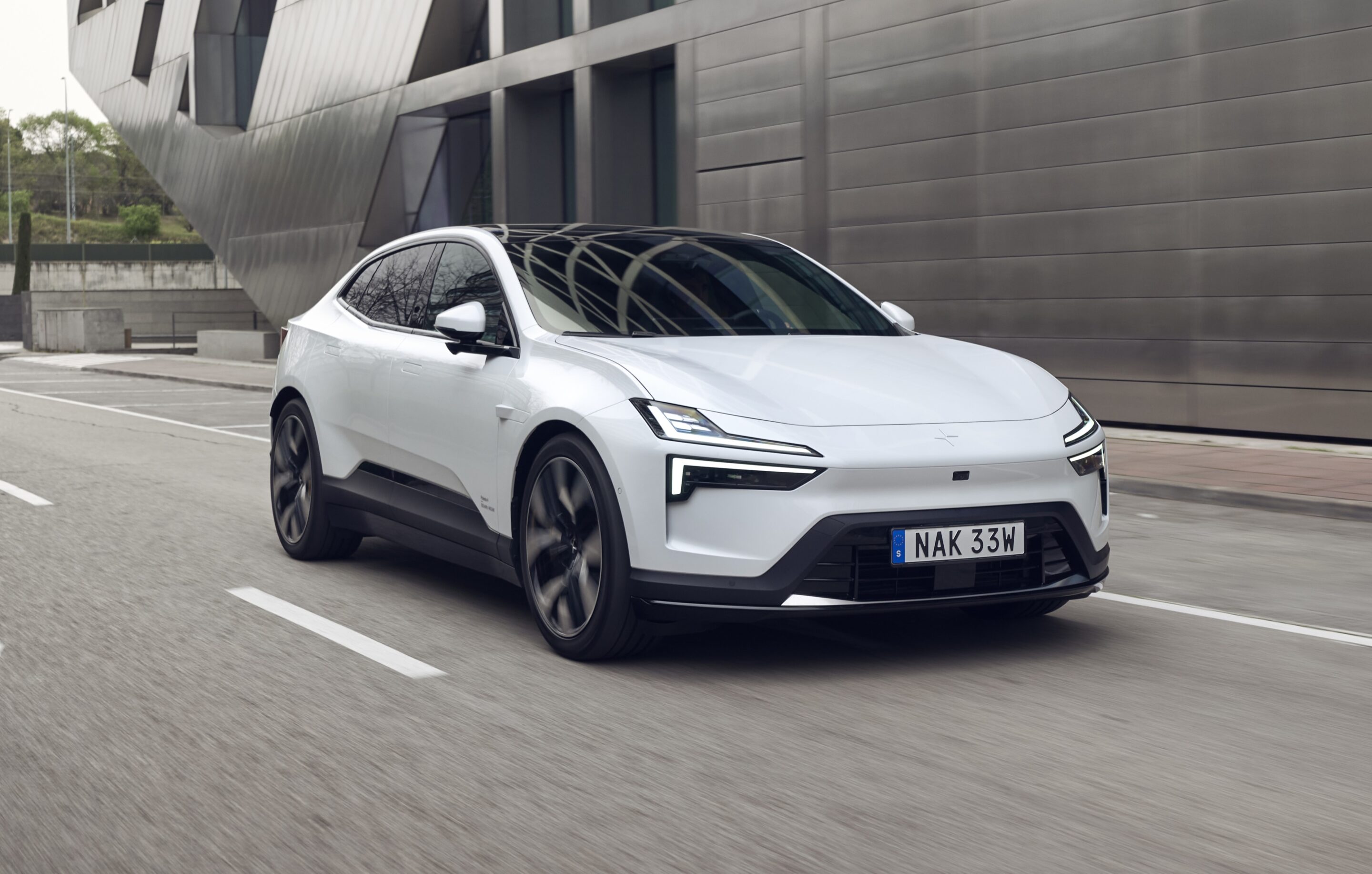
Single motor, dual motor, RWD or AWD, the new Polestar 4 has you covered if its drivetrain options you
want. Interestingly, all are ‘Long Range’ in our market, meaning the luxury Swedish manufacturer has
preferenced range over other features for a market fixated on driving distance for EVs. As such, you get up to 620km claimed range. Polestar also offers clever over-the-air updates – a common feature in the EV world – so that the Polestar 4 can be regularly upgraded and updated as tech changes come online. These updates tend to occur every six months or so. It’s a novel part of the EV ownership journey for those of you new to the game.
Polestar 4’s cabin design is restrained rather than edgy, with an attention to the basic but key details ensuring it’s a lovely place to spend your time on a longer drive. Every touch surface or choice of trim material appears premium and high quality. As it has been since the brand’s electric launch, seat comfort is a strong point.
Some of the control functionality is a little too confusing to work out, like the side mirror adjustment, steering wheel adjustment or even the HVAC controls, which are all within the infotainment screen, making them difficult to adjust on the fly.
Cabin storage and amenity – key for this segment – are both taken care of, with some of the storage more obvious than others, but the section under the centre console that you don’t see, is useful. Second row space is excellent, as good as anything in the segment, but the higher floor in the second row does eat into space for taller occupants.
The big selling point – certainly for most people we speak to – is the complete lack of a rear window. For some of you, it might be an anti-selling point. Whatever your opinion, it’s not annoying… until it is. It takes some getting used to, given the fact we’ve all learned to drive in cars that have rear windows. If you’re looking for a different alternative in this segment, though, one that stands out from the regular crowd, the Polestar 4 is worth a look.
Porsche Macan
1
Price: From $124,800 before on-road costs.
ADR Fuel claim: 100kW battery pack/591km claimed range
Drivetrain: Single or twin electric motors
Dimensions (length/width/height/wheelbase): 4784mm/2152mm/1622mm/2893mm
Bootspace: 480L-540L (second row up), 1288-1348L (second row folded)
Warranty/roadside assistance/service intervals: Three-year/unlimited km/12 months/10,000km
Five-year service cost: $2995
| Driving | |
| Interior | |
| Practicality | |
| Overall value | |
Things we like
- Cabin quality is excellent
- Drive experience is premium and insulated
- Electric range is realistic in the real world
Not so much
- No petrol alternative if you need one
- Price is higher than the competition
- Some of the personality is missing with an electric motor
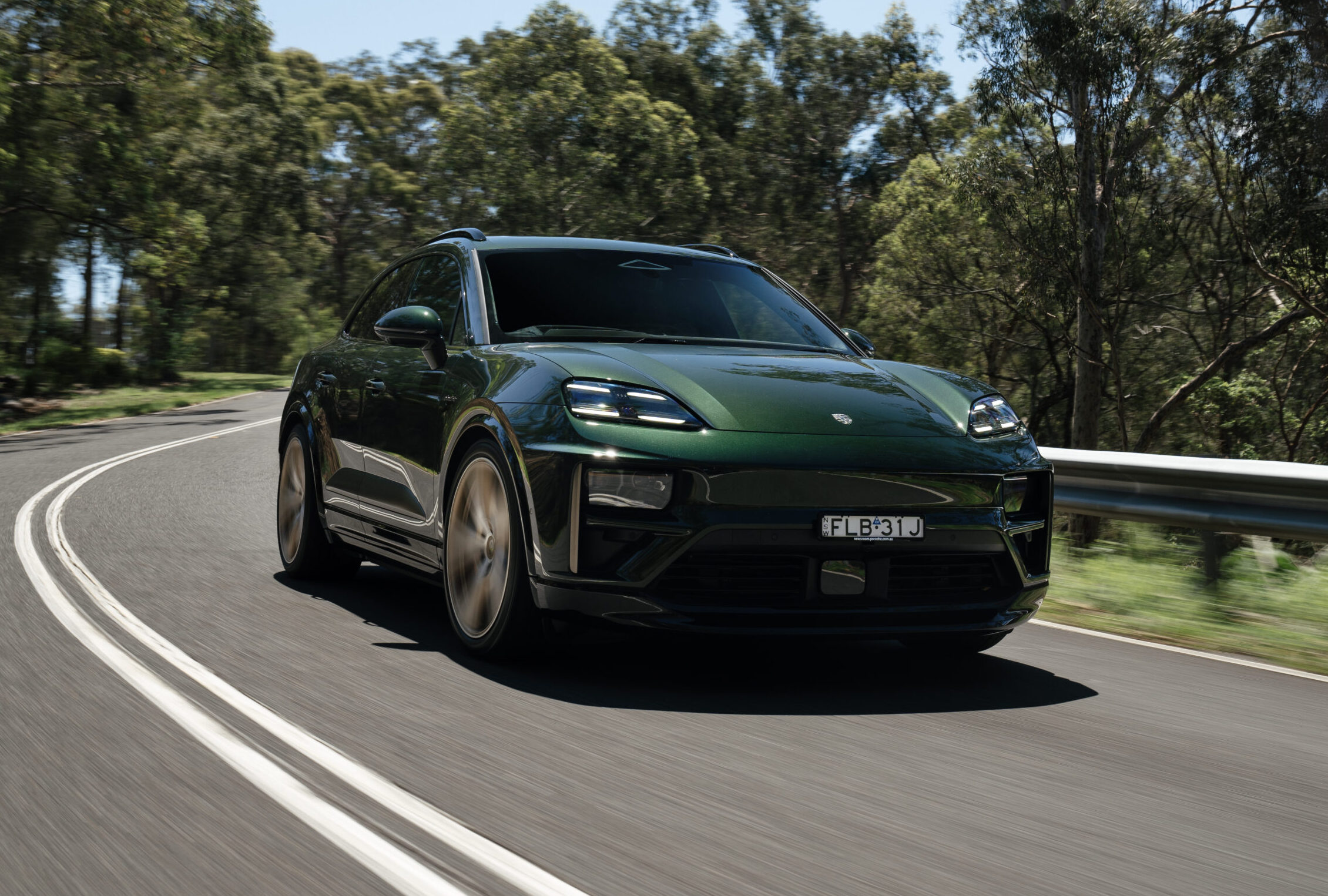
If there’s to be an SUV that steps out of the regular medium luxury segment, its this one, the electric Porsche Macan. Any vehicle with a Porsche badge on its snout brings with it a different level of credibility, expectation and curb appeal. It’s why so many people have parked a Porsche Macan in their driveway.
We all know the story of the Cayenne and Macan saving Porsche and thus the 911. A ravenous SUV-focused market, presented with a Porsche-badged SUV, lapped it up and what started as something of a hail Mary is now a legitimate model in its own right. And, it’s a model that gets better with every update or revamp. However, this one is different, because you can only buy an electric Porsche Macan.
The best aspect of any electric Porsche is how much it feels – and drives – like a regular Porsche. They tend not to exhibit any of the ‘weird for the sake of it’ characteristics that so many electric vehicles can. Rather, you take a seat in an electric Macan, and it feels every bit like a previous internal combustion Macan would have.
While it drives like a Porsche too, it does so with the silent refinement that only an electric vehicle can deliver. As ever, Porsche’s ability to make an SUV ride as comfortable as it can handle capably, is superb. Macan can iron out any nasty road surface, but fire into a corner like a sports car. In driving terms, it’s the standard setter for electric SUVs.
The cabin is, like any other contemporary Porsche, that perfect blend of class and refinement, with a deep layer of practicality that makes the electric Macan a practical daily driver as much as it is a luxury vehicle. The choice of materials, fit, finish and attention to detail are all excellent. The shift to electric power, also brought with it an increase in cabin space, making the Macan even more comfortable for occupants even if the second row is tight.
Like many of the others in this company, the standard equipment list is long, but the options list is also long and can be complicated. The new Macan isn’t cheap in electric form, but it’s still a hell of an SUV in this segment.
Lexus NX

1
Price: From $63,400 before on-road costs
ADR Fuel claim: 1.3L/100km to 8.1L/100km and 87km electric range (PHEV)
Drivetrain: 2.5L four-cylinder petrol, 2.4L turbocharged petrol four-cylinder, 2.5L with hybrid electric motor, 2.5L petrol engine plug-in hybrid (18kWh battery)
Dimensions (length/width/height/wheelbase): 4660mm/1865mm/1660mm/2690mm
Bootspace: 520L (second row up) 1141L (second row folded)
Warranty/roadside assistance/service intervals: Five-year/unlimited km/free roadside assistance/12 months or 15,000km
Five-year service cost: $2975
| Driving | |
| Interior | |
| Practicality | |
| Overall value | |
Things we like
- Cabin comfort is first class
- Plenty of standard equipment across the range
- Infotainment system is rock solid
Not so much
- Model break down can be complex to work out
- Isn’t as sporty as some or as comfortable as others
- Run flat tyres
If you’re uncertain as to which luxury SUV best suits your needs, enter the Lexus NX. There’s petrol, hybrid and plug-in hybrid variants available, as well as 2WD and AWD platforms. From the entry-level NX250 to the range-topping NX450h+ there really is something for everyone. The popularity of the plug-in hybrid model around the world was evidenced by the almost two-year wait for delivery from launch.
The order book for that model is back open now, but the good news is that if your budget doesn’t stretch to the most expensive variant, the NX SUV represents smart buying across the range. There are numerous aspects of the ownership experience that ensure Lexus sits right at the top of the segment and all of them are present in the NX.
The Lexus concierge program for example is the gold standard by which all others should be judged, and it makes owning and servicing your Lexus as effortless as it could possibly be. Being handed a loan car the same as the one you own, while yours is whisked off for service is certainly the definition of a premium experience.
When this current model was released, the biggest uptick was inside the cabin, where the infotainment system and controls had been brought into a much more contemporary realm. Even features like the ‘E-Latches’ as Lexus calls them, give it a technological, modern feel inside the cabin.
Lexus delivers seat designs and comfort that are as good as any in this segment, if not better, with long-haul touring ability that family buyers will love. If you’ve got super tall occupants in the second row, it can get a little tight for legroom, but the NX is otherwise a capable family hauler.
Across the range, the driving experience is excellent, too, comfortable refined, and insulated. Where the NX reaches the outer edges of its capability though, is the balance between ride and handling. That is, it’s not as sportily capable as the best, and not quite as cushy as the most comfortable. If you’re looking to strike a balance somewhere in the middle though, the NX is worth a look.
Best Medium SUVs in Australia
Looking to get into a brand-new mid-size SUV? Our stories below will guide you to the model that best suits your needs:
Follow WhichCar/Wheels on Google
Click the button below to make WhichCar by Wheels a preferred source for your news.