Reviews


Gallery 1
7.6
/10
Score
Score breakdown
7.0
Safety, value and features
8.0
Comfort and space
8.0
Engine and gearbox
8.0
Ride and handling
7.0
Technology
Things we like
- The whole range is now better value for money
- 1.4L turbo more than peppy enough
- Classy, practical and well appointed inside
Not so much
- Hybrid models not yet available
- Old engine surprisingly thirsty
- Touchscreen initially overwhelming
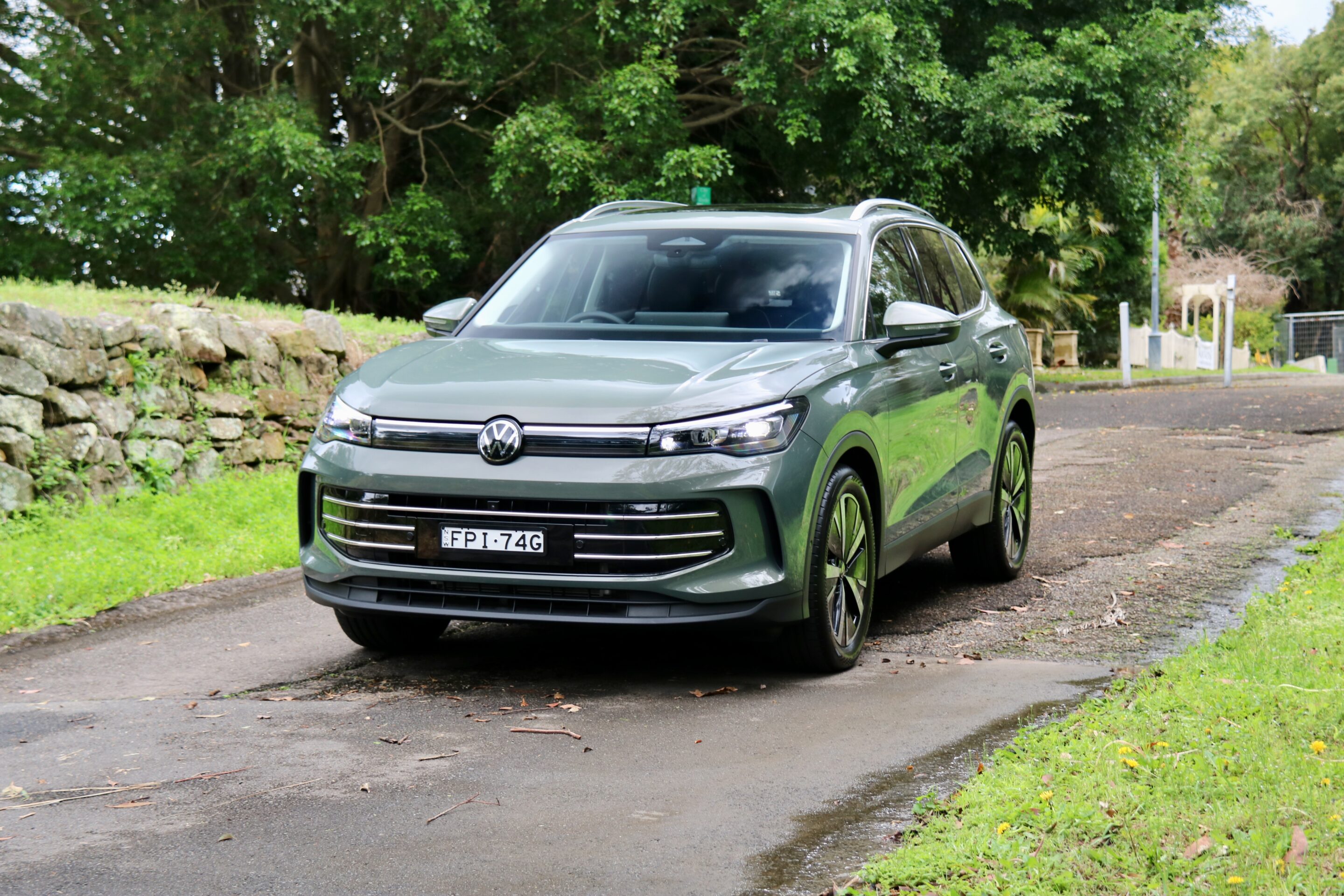
Positioned just under the premium space in the medium SUV segment, the Tiguan has been a strong performer for Volkswagen internationally, demonstrated by the popularity of the previous top-spec R-Line variants in Australia.
Now generation three has launched and there are a lot of changes: the design is softer, the model line-up has changed and there’s even more standard features – is it all enough to consolidate the Tiguan’s hard-won reputation?
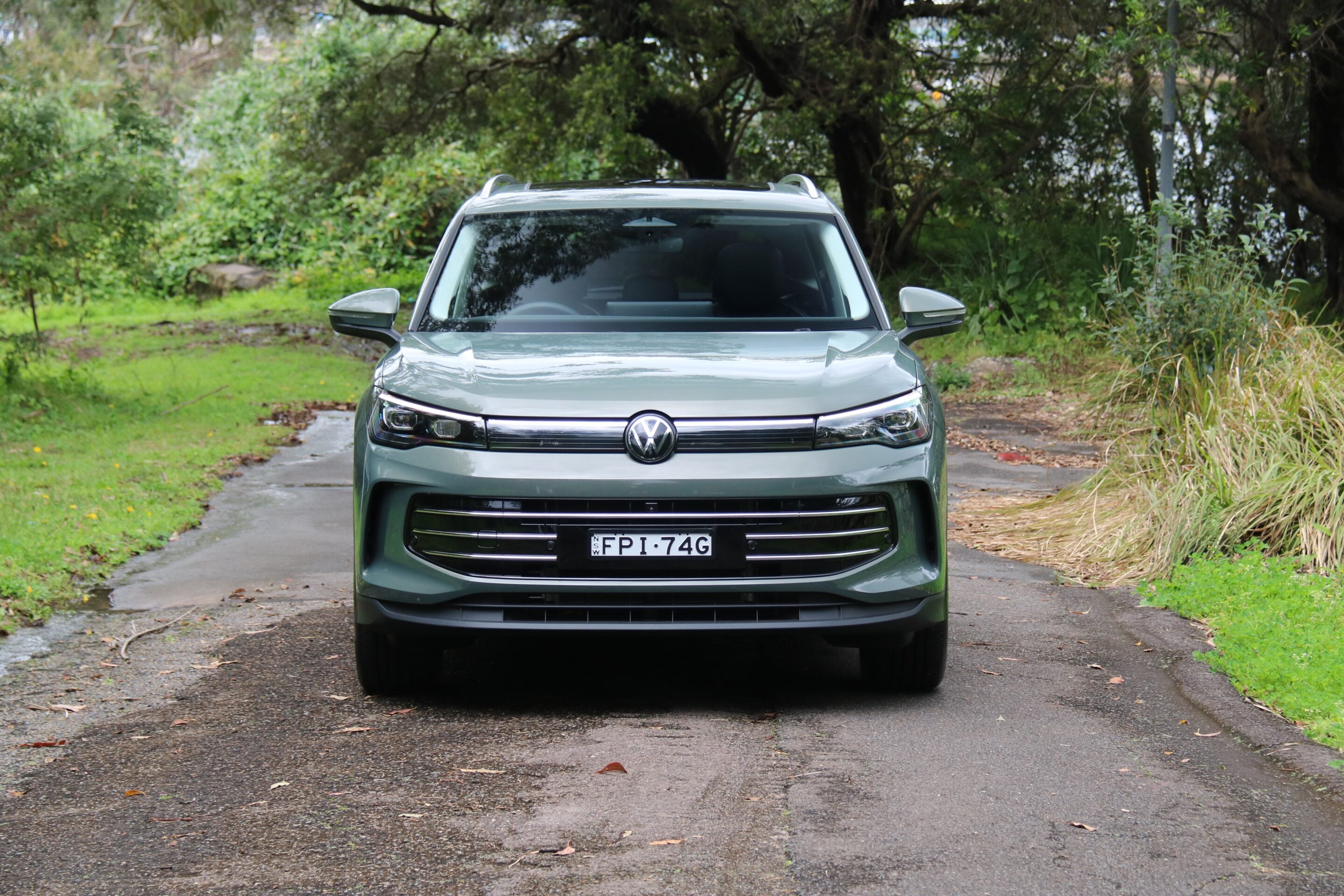
Pricing for the third-gen Tiguan kicks off at $44,990 plus on-road costs for the entry-level 110TSI Life, while we tested the second-from-base 110TSI Elegance, priced at $51,450 +ORC. Above that sits the 150TSI Elegance ($61,590), 150TSI R-Line ($56,850) and top-spec (for now) 195TSI R-Line ($71,550).
2
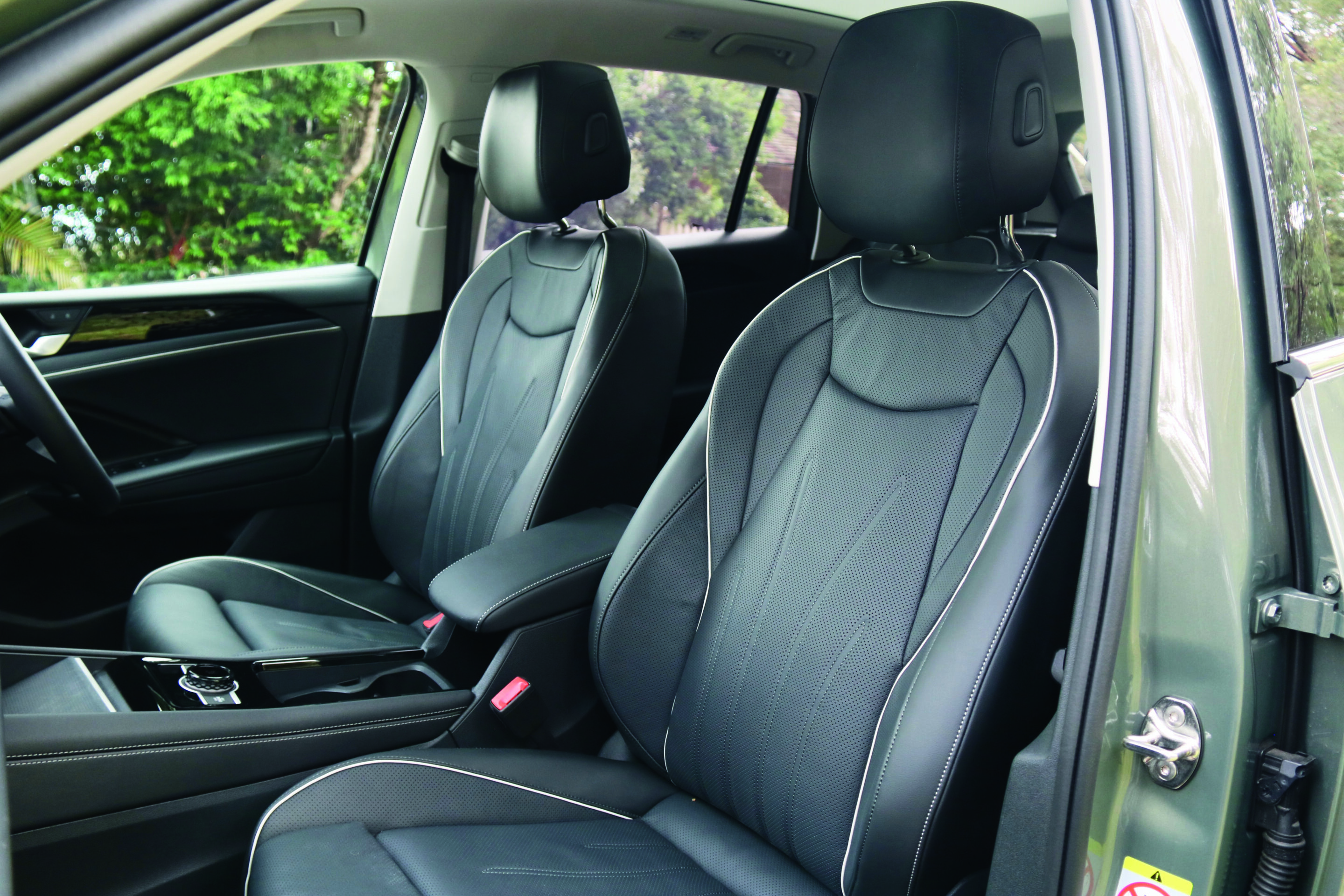
The 110TSI Elegance spec we drove undoubtedly offers the best value in the range, with standard equipment including 18-inch alloy wheels, an electric tailgate, tri-zone climate control, rear air vents, ‘Varenna’ leather upholstery, heated and ventilated 12-way electric front seats with 10-point massaging, a heated leather steering wheel, a 12.9-inch touchscreen, 10.25-inch digital driver’s display, wireless smartphone mirroring, dual wireless phone chargers and selectable ambient lighting.
The Tiguan received a five-star ANCAP rating in 2024 and key safety features include nine airbags, AEB with pedestrian and cyclist detection, adaptive cruise with stop-and-go functionality, traffic jam assist, adaptive lane guidance, speed sign recognition, blind-spot monitoring, front and rear cross-traffic alert with braking, driver attention monitoring and a 360-degree camera.
Options for the Tiguan 110TSI Elegance include a $2100 panoramic sunroof, $2700 Sound and Vision Package with 700W 10-speaker Harman Kardon audio, head-up display and a larger 15-inch touchscreen, and $800-$1100 premium paint. Our test car had all for a $57,350 +ORC price.
2
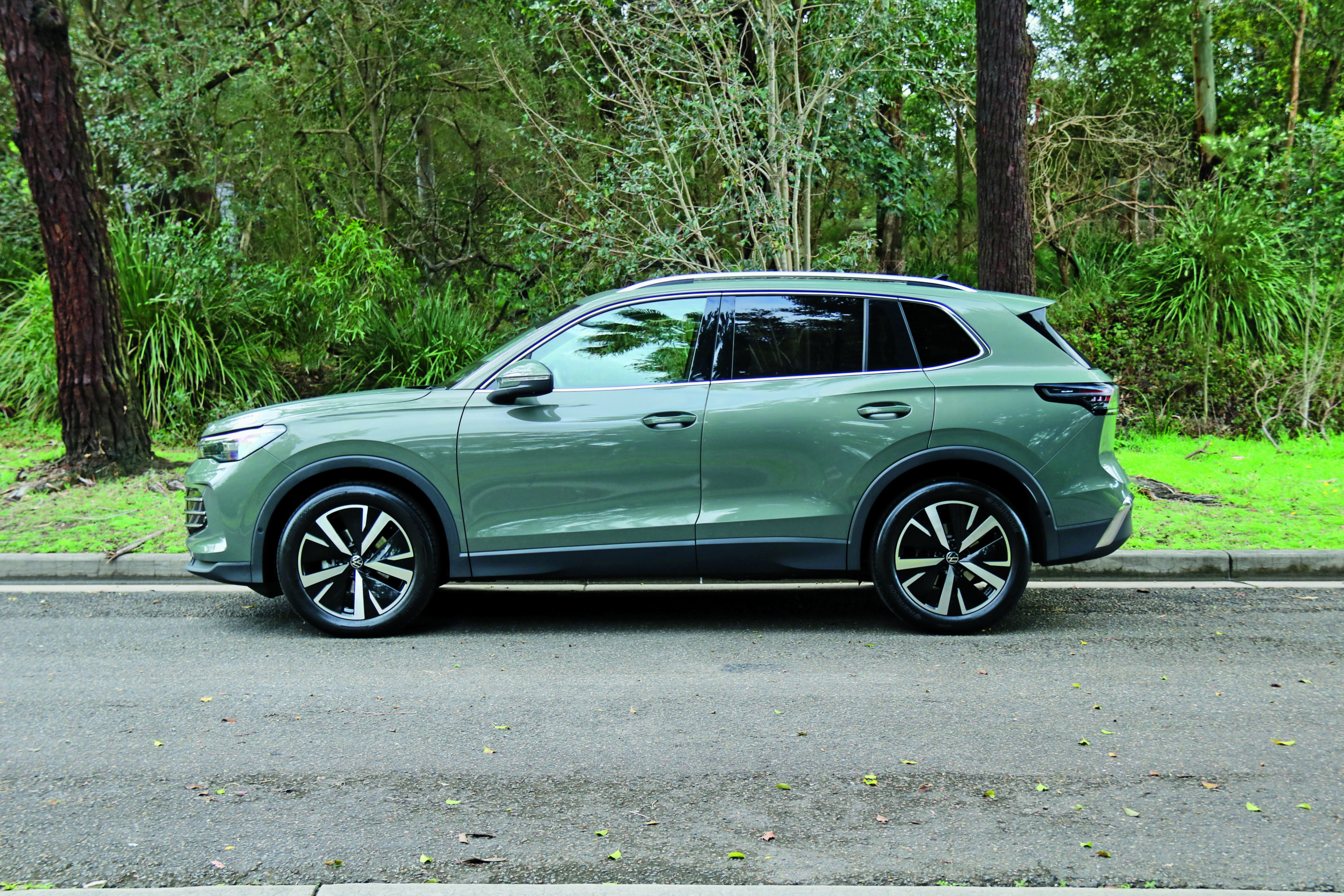
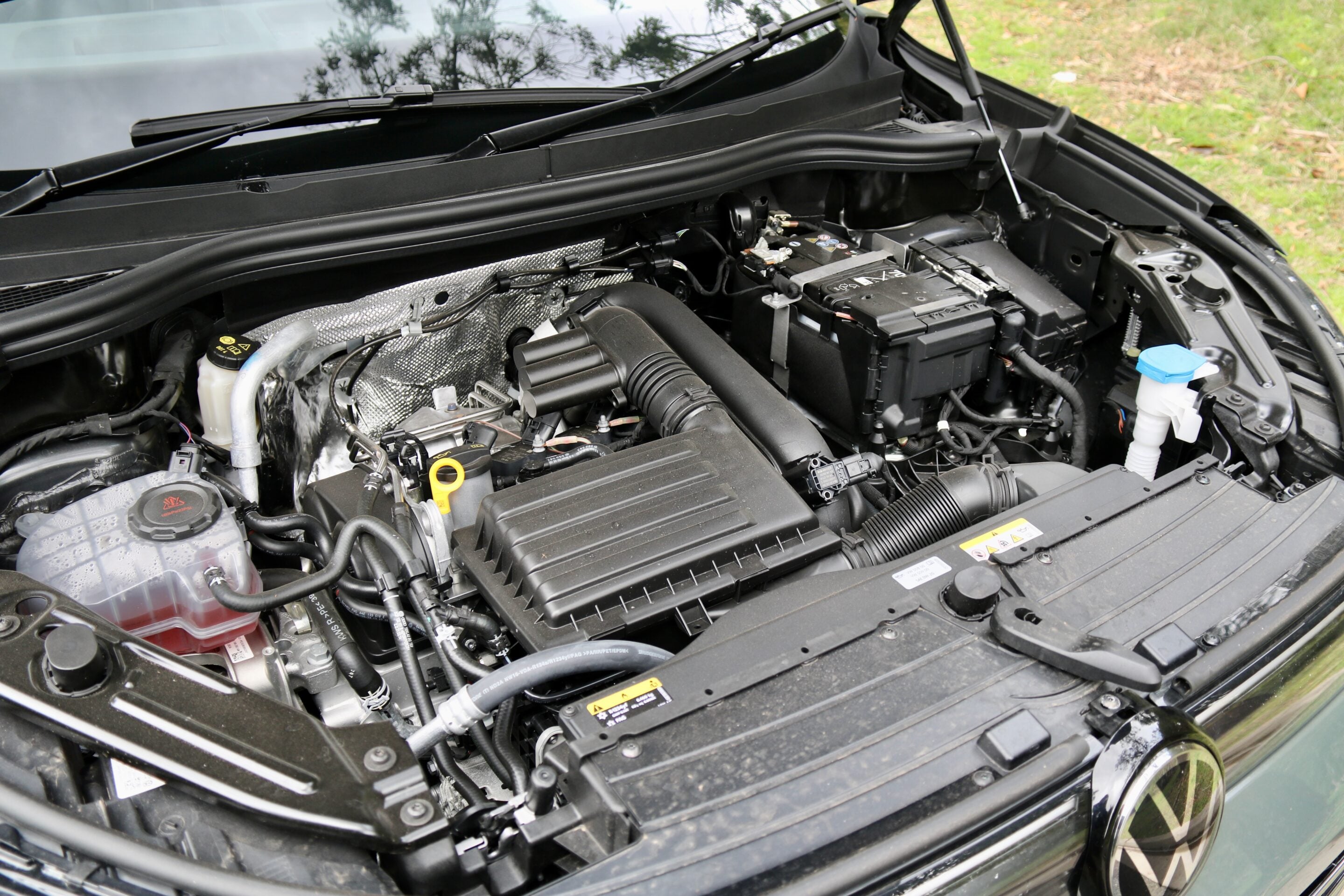
This Elegance is fitted with the entry engine in the Tiguan line-up, which is a 1.4-litre turbocharged four-cylinder unit making 110kW of power and 250Nm. It’s largely the same engine used in various VW Group products for the past 15 years but updated to Euro 6 emissions standards. It’s refined and more than quick enough, while the seven-speed dual-clutch transmission was well behaved too.
There are curiosities, however, like the fuel consumption. It’s actually rated at the same 7.6L/100km as the 150kW/320Nm 2.0-litre Tiguan 150TSI (which weighs more because of its all-wheel drive), and its 173g/km CO2 figure is also identical. In our testing, we achieved 9.2L/100km – not bad, but it could be better.
Given their popularity locally, it’s unclear why the hybrid Tiguan is not yet available in Australia, though a PHEV with over 100km of EV range is due in 2026. Even the mild-hybrid 1.5-litre ‘eTSI’ engine in Europe with the same outputs as the 1.4L is far cleaner at 5.9L/100km and 136g/km. Hopefully it makes its way to Australia soon.
There are fewer issues with the Tiguan’s dynamic package. It’s always been one of the best mid-size SUVs to drive, and generation three is no different, feeling similar to the larger Golf with which it shares its platform. Of course, the 195TSI R-Line is likely to be the driving superstar of the range, but even the 110TSI Elegance is a good handler with quick steering and tight body control.
2
The flip side is that it can be firm for urban driving, though our test car was the pre-updated model with larger 19-inch alloy wheels. Smaller 18s are now standard on the 110TSI Elegance, so the ride should be softer. Regardless, the adaptive dampers of the 2.0-litre variants make that engine a worthy upgrade over the 1.4 0and its passive units. The 150TSI R-Line is a very appealing package for those who like to have fun from behind the wheel – sure, it has less kit than the 110TSI Elegance, but it rides better, is much punchier and would likely be more efficient.
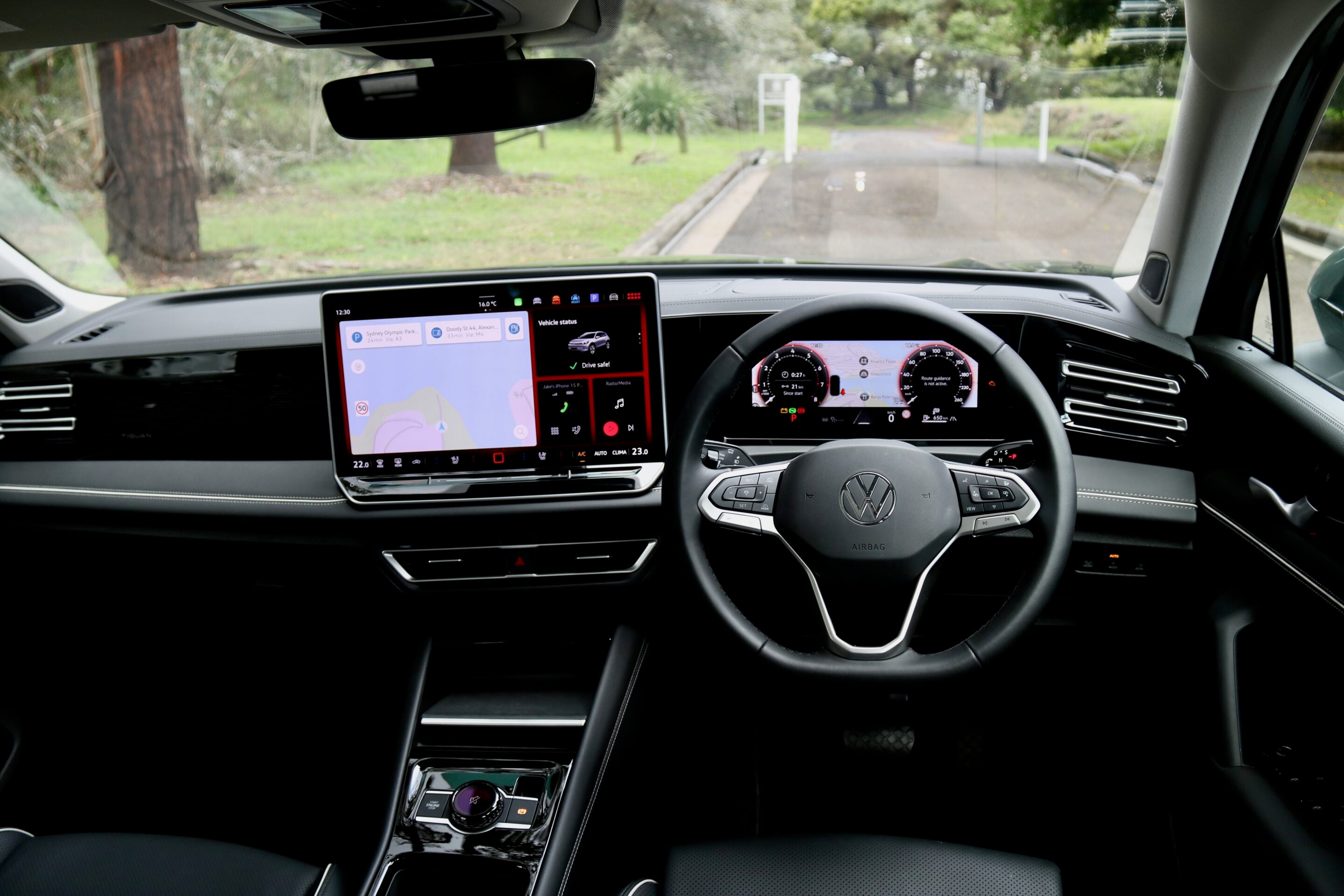
Generation three, especially in Elegance form with its rich leather trim, is also a step up in interior quality compared with generation two. Most surface materials are softer to touch than before, while the appearance overall is more premium. The ambient lighting is more extensive than before, creating a more high-tech vibe, while the central touchscreen (especially in cars with the larger 15-incher) is massive.
As we’ve come to expect from this model, generation three’s cabin is also full of practical touches. The centre console, for example, is essentially a large open tray with removable cupholders, while the open upper tray features two wireless chargers and two USB-C charging ports. There’s also a user-friendly controller wheel to switch between the volume, seat heating and driving modes.
4
The added convenience of the wheel is positive because it must be said the new model isn’t as ergonomic as the previous car. That’s because the majority of the buttons, including for climate control, are now located inside the touchscreen, like the Mk8 Golf. That decision creates an overall cleaner look inside but because it’s got so many features packed into it, the touchscreen takes some familiarisation. It is configurable so you can save your favourite functions more easily but just learning its menu structure will take a while. Otherwise, the graphics are sharp and it responds very quickly to touch.
The third-gen Tiguan’s dimensions have grown in both length and width compared with generation two, so it feels more spacious on the inside than before. Rear seat space is plentiful for two adults, though like the previous model, the bench is a bit flat. Rear seat amenities include a separate climate zone, two USB-C ports, multiple map- and door pockets, and even sliding/reclining seats.
1
Bootspace measures 652 litres with the seats up, though that’s measured to the roof. But it’s still a great boxy shape with a low load lip height, hooks to hang bags and a quick electric tailgate. The seats fold easily from the boot and a large 1650 litres of space is on offer. Some rivals like the Hyundai Tucson offer more (1903 litres), but the Tiggy is still more than large enough for most buyers.
The third-generation Volkswagen Tiguan presents a compelling case to the mid-size SUV buyers of Australia, especially those interested in a more premium feel. The caveats are its thirsty 1.4-litre engine, lack of hybrid options, stiff ride in our test car and complex touchscreen. Overall, however, it’s a step forward over the previous model that will undoubtedly find many fans.
1
Specs
| Model | Volkswagen Tiguan 110TSI Elegance |
|---|---|
| Price | From $51,450 plus on-road costs |
| Drivetrain | 1395cc turbocharged four-cylinder engine |
| Transmission | 7-speed dual-clutch, FWD |
| Peak power | 110kW |
| Peak torque | 250Nm |
| 0-100km/h | 9.5 seconds (est.) |
| Claimed combined fuel consumption/CO2 emissions | 7.6L/100km, 173g/km |
| Fuel type/tank size | 95RON premium unleaded, 55 litres |
| Dimensions (l/w/h/wb) | 4539/1842/1659/2681mm |
| Tare mass | 1603kg |
| Boot | 652 litres (rear seats up), 1650 litres (rear seats folded) |
| Warranty | Five-year/unlimited km with 12 months of roadside assistance (extended a further 12 months with each dealer service) |
| Service intervals/five-year cost | Annually/every 15,000km, $2984 ($597 per year) |
| On sale | Now |
7.6
/10
Score
Score breakdown
7.0
Safety, value and features
8.0
Comfort and space
8.0
Engine and gearbox
8.0
Ride and handling
7.0
Technology
Things we like
- The whole range is now better value for money
- 1.4L turbo more than peppy enough
- Classy, practical and well appointed inside
Not so much
- Hybrid models not yet available
- Old engine surprisingly thirsty
- Touchscreen initially overwhelming
Follow WhichCar/Wheels on Google
Click the button below to make WhichCar by Wheels a preferred source for your news.

We recommend
-
 News
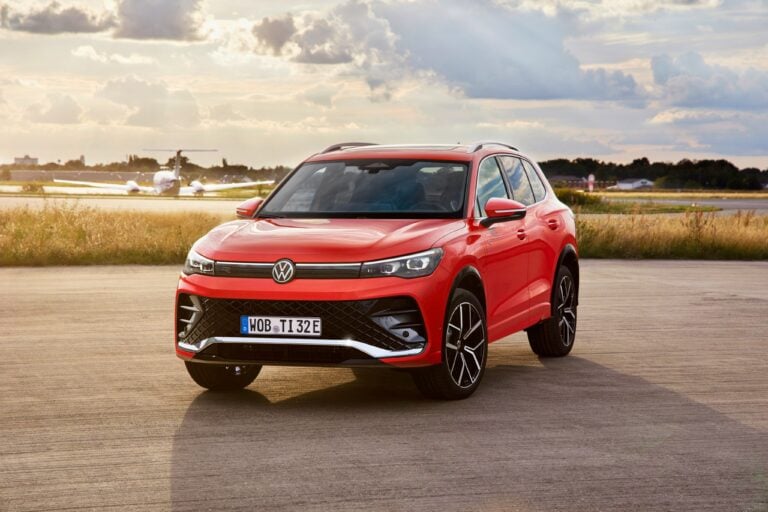
NewsVolkswagen prices Tiguan ahead of May Aussie debut
Crucial new mid-size SUV Volkswagen to launch locally in May priced from $44,990 plus on-road costs.
-
 News
NewsVW's new 2025 Tiguan details revealed for Australia
The bigger new Tiguan medium SUV arrives in 2025 with a five-variant range, more tech and a premium feel – but pricing is still to be revealed.